B uilding with Rammed Earth
Felix Hilgert
Felix Hilgert
Author
Felix Hilgert
Publisher
Editorial services:
Katja Pfeiffer, Anne Schäfer-Hörr (project management); Jana Rackwitz (layout, editing and writing the project texts)
Laura Traub (editorial assistance); Sandra Leitte (proofreading German edition)
Cover design based on a concept by: Kai Meyer
Drawings: Marion Griese, Julia Voitl, Barbara Kissinger
Translation into English and proofreading (English edition): Mark Kammerbauer, Landshut (DE)
Copy editing (English edition): Meriel Clemett, Bromborough (GB)
Production and DTP: Simone Soesters
Reproduction: ludwig:media, Zell am See (AT)
Printing and binding: Gutenberg Beuys Feindruckerei, Langenhagen (DE)
Paper: Peydur lissé (cover), Magno Volume (content)
Publisher: DETAIL Architecture GmbH Messerschmittstr. 4, 80992 Munich (DE) detail.de books@detail.de © 2026, first edition
ISBN 978-3-95553-676-3 (Print) ISBN 978-3-95553-677-0 (E-book)
Bibliographic information published by the German National Library. The German National Library lists this publication in the German National Bibliography (Deutsche Nationalbibliographie); detailed bibliographic data is available online at http://dnb.d-nb.de.
This work is subject to copyright. All rights reserved. These rights specifically include the rights of translation, reprinting and presentation, the reuse of illustrations and tables, broadcasting, reproduction on microfilm or any other media and storage in data processing systems. Furthermore, these rights pertain to any and all parts of the material. Any reproduction of this work, whether in whole or in part, even in individual cases, is only permitted within the scope specified by the applicable copyright law. Any reproduction is subject to charges. Any infringement will be subject to the penalty clauses of copyright law.
This textbook uses terms applicable at the time of writing and is based on the current state of the art, to the best of the authors’ and editors’ knowledge and understanding. [All drawings in this book were created specifically by the publisher.] No legal claims may be derived from the contents of this book.
Cover photo: Can Isik
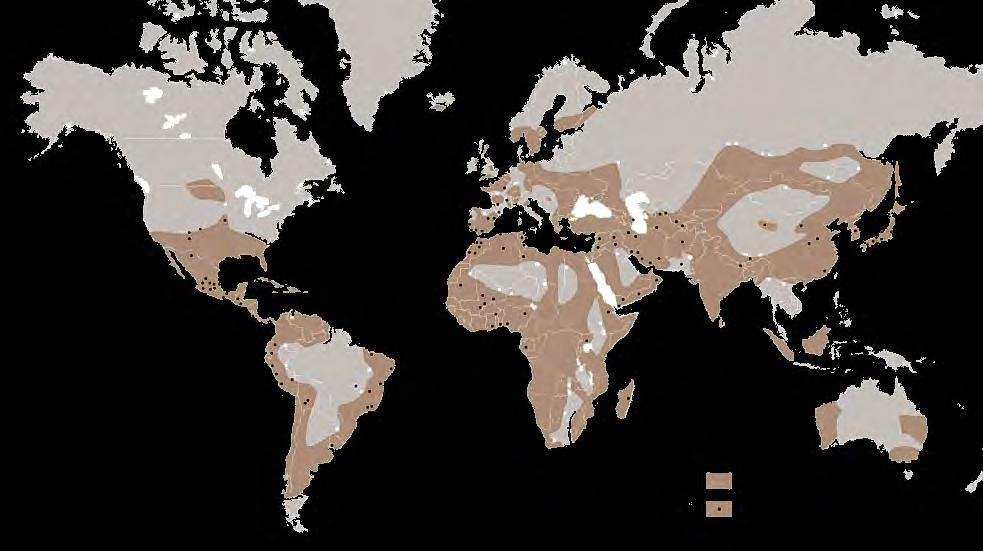
1 The world map shows the UNESCO World Heritage Sites made of loam and the regions in which earthen architecture is common.
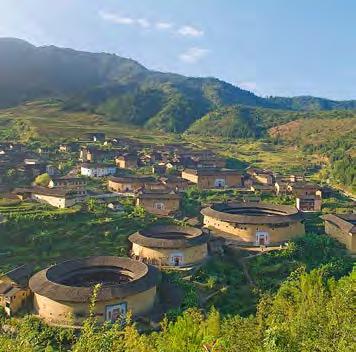
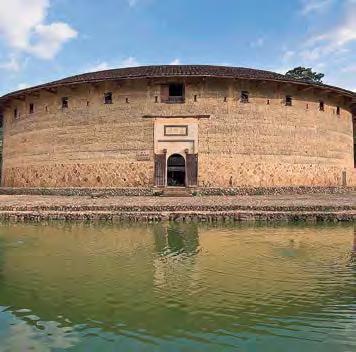
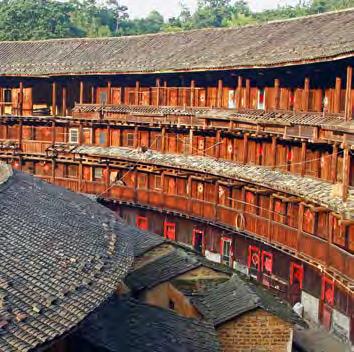
2 Fujian tulou, traditional loam building, Fujian province, southeastern People’s Republic of China (CN)
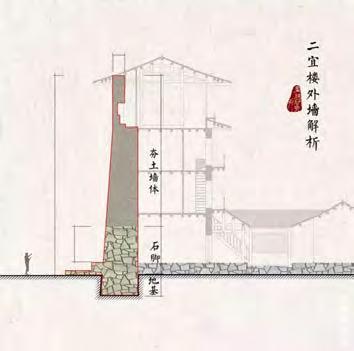
a The lower part of the loadbearing exterior walls consists of natural stone and gravel. Wall sections made of rammed earth are set on top of them. sectional drawing
b location of circular structures in the hilly landscape
c defensive wall made of rammed earth, exterior elevation
d On the inside of the circular rammed earth volumes, multistorey building structures consisting of timber are arranged along the loam walls. Access balconies provide circulation space. interior elevation
Loam is a globally available resource. It is created by geological processes and weather phenomena that erode rocky material and break it up. For millennia, people have built spatial enclosures with this simply accessible and pliable raw material. This includes rammed earth constructions. Durable buildings that are true to the material they were erected with have persisted to this day, given proper structural maintenance. The world map in Fig. 1 shows the distribution of earthen architecture and important historical loam edifices that are part of the UNESCO world cultural heritage. Example buildings from different regions of the world will be presented in the following section. For many centuries, despite challenging climate conditions, they have persisted. Due to different structural or societal reasons, or a combination of both, they are relevant. The presented selection is limited to China and the European countries of France, Germany, and Switzerland.
The Fujian tulou are traditional fortified dwelling structures in the mountainous regions of the southern Chinese province of Fujian. These enduring buildings were created between the 12th and 20th centuries and served for purposes of housing and defence for up to 800 people (Fig. 2 b and c). 46 of these buildings were recognised as a UNESCO World Heritage Site in 2008. They comprise exceptional examples of communal living and harmoniously fit into the surrounding environment [1]. The tulou are mostly circular or rectangular, featuring a central courtyard and a single, heavily secured gate. The upper floors originally comprised embrasures for defence against attackers. The foundations of these buildings consist of multiple layers of natural stone masonry walls. They are surrounded by a drain that keeps rainwater away from the rammed earth parts (Fig. 2 a). The lower section of the load
bearing walls was also made of natural stone and gravel. The upper and larger section, however, consists of rammed earth. The circular or rectangular basic forms are stiffened as such and by crosswalls, thus providing earthquake safety. The largest tulou have diameters of more than 80 m and a height of four to five storeys. The protective exterior wall was expanded in the interior by a timber structure that establishes rooms with specific functions (Fig. 2 d). The lower floors served for cooking and housekeeping purposes. The upper floors featured mostly bedrooms. The roof structures are also made of timber and display fired clay roofing tile. Roofs cantilever by about 2 m and afford the walls protection from rain and erosion [2].
A number of aspects are relevant for contemporary earthen construction: All materials – natural stone, wood, brick, and rammed earth – were used according to their availability, characteristics, and the requirements of the residents. The result is a timeless building type that has been in service for centuries in a nearly unchanged manner. It still finds use and receives appreciation today.
The method of rammed earth construction is much less known in Europe than in Asia, Africa, or the Middle East. Nevertheless, it can be found in different European climate zones. Its origins reach back to the Ancient Phoenician city of Carthage (814 BC). In the 1st century Pliny the Elder described how Hannibal used rammed earth in Spain. The Romans added lime to their earth mixture, leading to the development of Roman concrete. However, it remains unclear to which degree they influenced the distribution of rammed earth construction (French: pisé) [3].
From the 7th century onward, building with rammed earth experienced an upturn during the Muslim expansion in North Africa and Spain. In cities such as Córdoba, Seville, and Granada, especially in the Alhambra Palace, rammed earth construction found use. The method spread to Italy in the 8th century and later to France. In the medieval era, following frequent conflagrations in cities, loam became popular due to its resistance to fire and partially replaced timber construction. In Germany and Switzerland, the construction method prevailed only after the beginning of the 18th century, influenced by preceding French developments. In central and eastern Europe, rammed earth construction had already been common, in particular in regions such as Slovakia, where scarcity of timber played a role [4].
Contrary to widespread beliefs, building with rammed earth is not limited to rural regions or exclusively related to poverty. In France, for example, the construction method found use in urban as well as rural contexts. Architect Emmanuel Mille reflected on the use of rammed earth in Lyon. He discovered that the construction material was not only suitable for simple buildings, but also different types of structures, including representative and multistorey houses. His investigation covered more than 700 edifices in Lyon and its surroundings. He showed that rammed earth found appreciation due to its practical and costefficient characteristics. Compared to natural stone, an often used building material at the time, it was not necessarily equated to poverty. In the 19th century in Lyon, especially in the neighbourhood of CroixRousse, rammed earth was often used for the construction of “immeubles canuts”. These buildings were the dwellings and work
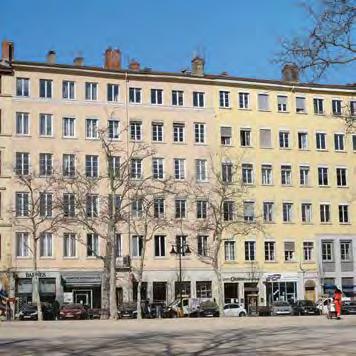
shops of the silk workers. Due to the new type of looms in use at the time, ceilings needed to be high. Rammed earth was mostly employed for nonloadbearing walls. It was costefficient and available on site. For loadbearing walls, natural stone was the material of choice. In the course of the development of this culture of building, the tallest known rammed earth walls were erected in Lyon. They reached a height of up to 25 m and still exist in part today.
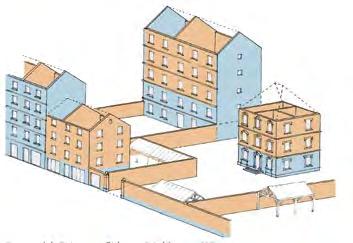
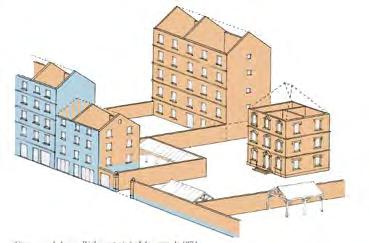
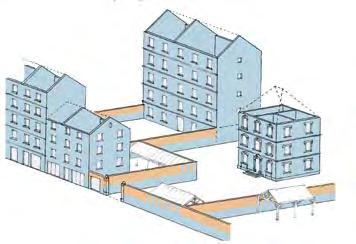
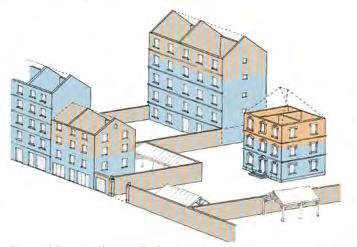
In addition, using rammed earth for construction led to formulating regulations comparable to contemporary standards. They determined where and how rammed earth construction was permitted in the city of Lyons (Fig. 5) [5]. It should be noted that an essential aspect of this development was the work of architect François Cointeraux. In the late 18th century, he comprehensively documented rammed earth construction in the city and made his investigations available to a broad audience in multiple publications [6].
Interesting in terms of using rammed earth in Lyons and its surroundings was its comprehensive implementation at the larger scale of the city and its society. A comparable process is necessary today in order to increase the popularity of the material in different fields of application with the potential of establishing a diverse range of infrastructures (see “Legal framework conditions and standards”, p. 32).
In Germany, possibly inspired by the buildings in the neighbouring country of France and the translation of the publications authored by François Cointeraux, rammed earth construction experienced a short, yet intense boom. It took place in the first half of the 19th century and in particular in the region surrounding
Weilburg. This local development was decisively influenced by the factory owner Wilhelm Jacob Wimpf and was motivated by the scarcity of timber resources and the difficulty in acquiring natural stone at the time. Wimpf commissioned the construction of buildings of different functions with rammed earth [7].
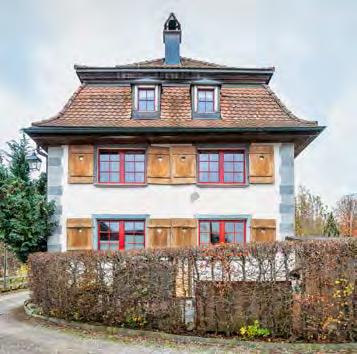
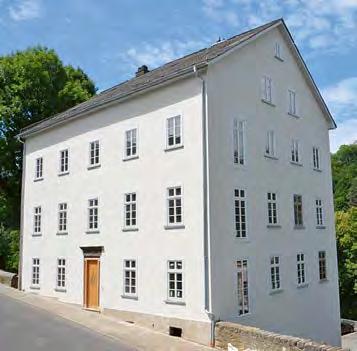
The house Hainallee 1 in Weilburg is world famous to this day (Fig 6). It is six storeys tall and, thus, one of the tallest rammed earth buildings in the world. With a height of 23.2 m and built between 1825 and 1828, Wimpf originally intended it as a home for his children. The building features a pitched roof and is situated on a steep slope. Facing the street, it displays three storeys. On the back, it is six storeys tall. Similar to Cointeraux, Wilhelm Jacob Wimpf also compiled the knowledge he acquired in a book, published in 1836. His construction projects transformed Weilburg into a local centre of rammed earth construction. Many buildings were realised with this method and in part still exist today [8].
In 2022 the Hainallee 1 house was comprehensively renovated according to historic preservation standards and remains in residential use for future gen
3 inner city situation in Lyon, fivestorey building with earthen interior walls, Place de la CroixRousse, Lyon (FR)
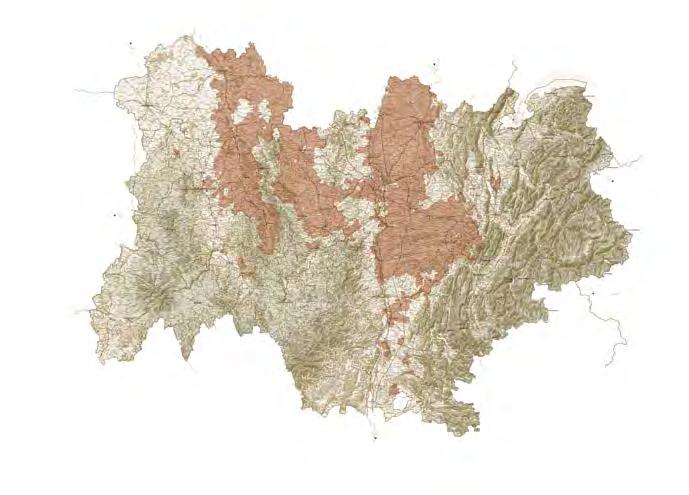
4 rammed earth deposits (pisé), region of AuvergneRhôneAlpes (FR)
5 example illustration, regulations on rammed earth wall construction in Lyon (FR)
6 eastern elevation after renovation, “House Rath”, Hainallee 1/ Niedergasse 22, Weilburg an der Lahn (DE) 1828, Wilhelm Jacob Wimpf
7 rendered loam facade with elaborate design, residential house “Gelbbau”, Hauptwil (CH) 1780
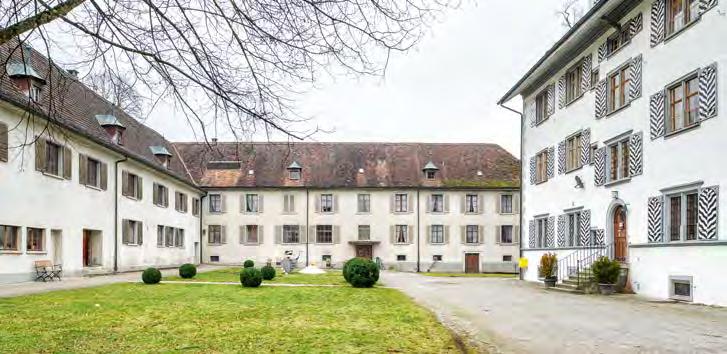
8 farm buildings of Hauptwil Castle, HauptwilGottshaus (CH) 1664, HansRüdiger Lahnelster
erations. The extraordinary building height displays the potential of rammed earth as a construction material. Nevertheless, it remains questionable whether current construction standards and required structural verifications would actually allow creating such buildings. Despite this circumstance, the houses in Germany are proof of the general potential of rammed earth construction and its durability and sustainability spanning multiple centuries.
Around the same time as the buildings in France and Germany, rammed earth structures were also created in Switzerland. The construction type reached cities and regions in geographic proximity to France such as Geneva. In addition, due to economic ties and the textile industry in particular, it became known in eastern Switzerland. Some resultant historical buildings continue to exist today and are in part still in use [9]. This includes a surprisingly large number of residential houses made of rammed earth in Hauptwil, a town in the canton of Thurgau (Fig. 7 and 8). Similar to Weilburg, these structures all feature rendered exteriors. This
was intended to improve weather protection and to conceal the loam facades and their image of low value. Some of these buildings were designed elaborately, received a painted finish, and are suggestive in formal terms of having been created from other materials. In conclusion, the broad awareness of the material vanished in these regions – an awareness that earthen construction methods with longstanding traditions could still find application today.
Annotations
[1] Dethier, Jean: Lehmbau Kultur. Von den Anfängen bis heute. Munich 2019, p. 127
[2] Colafranceschi, Elena et al.: Tulou: The Rammed Earth Dwellings of Fujian (China). Functional, Typological and Constructive Feature. Department of Architecture, Roma Tre University, Rome 2020
[3] Boltshauser, Roger: Pisé – Stampflehm. Tradition und Potenzial. Zurich 2020, p. 15
[4] ibid., p. 15
[5] Mille, Emmanuel: Rammed Earth of Cities: Lyon’s Heritage. https://topophile.net/savoir/pisedesvilleslepatrimoinelyonnais/ (accessed 21.11.2024)
[6] see note 3, p. 276f.
[7] see note 1, p. 195ff.
[8] RöderLöhr, Jonas: PiséHaus Weilburg an der Lahn. Bonn 2020, www.kuladig.de/Objektansicht/ KLD306522 (accessed 21.11.2024)
[9] see note 3, p. 100ff.
Currently there are two different procedures in place for the extraction of material for use as rammed earth:
• targeted extraction in loam or gravel pits
• reuse of excavation material from architectural or infrastructural construction sites
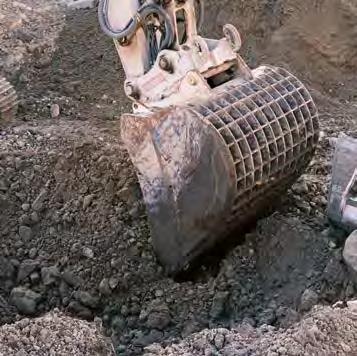
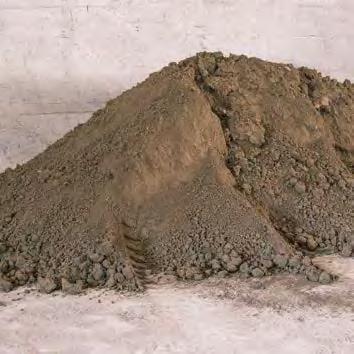
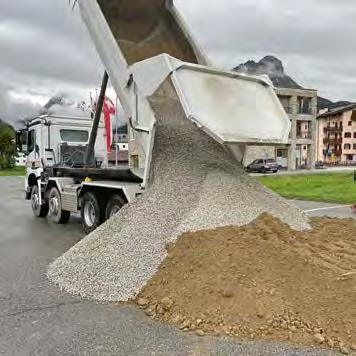
Targeted extraction comprises sourcing the material specifically for construction purposes (Fig. 2), processing it, and optimising it by use of additives as required. The advantage of this procedure is, to a major degree, the homogeneous quality of the raw resource. Homogeneous mineralogical and granulometric compositions (i.e., regarding grain size distribution and form, rocky grain surface characteristics, etc.) lead to defined and certifiable material characteristics, reproducible and familiar. This contributes to optimised processability, more constant and controlled mechanical properties, and eventually, greater efficiency and cost security during the construction process. Alternatively, the focus should be on reusing excavation material. This corresponds to the principles of circularity, by employing existing resources and reducing the quantity of material to be landfilled. However, the composition of the resource can vary strongly depending on its origin. This is why targeted analyses, screening, and optionally preparation are necessary in order to ensure material quality comparable to direct extraction. Nevertheless, the main sequence of steps is, for the most part, similar: The material is dried, crushed, sieved, and processed by introducing binding agents or additives in relation to specifications.
From a circular economy perspective as described in “Reuse, Processing, Disposal” (p. 60f.), the following will focus on the reuse of excavation materials. The required processes, materials testing methods, and adaptation measures will
be illustrated in detail with the aim of ensuring sustainable, economic, and sensible material usage.
The surface of the earth is structured into different geological horizons that differ in terms of their composition and material characteristics (Fig. 1). These layers significantly influence the suitability of resources used for rammed earth construction. The topmost layer, the A horizon, consists of humusrich soil with a large share of organic substances. It is created by the decomposition of plant and animal matter. It comprises an essential habitat for microorganisms, flora, and fauna. Due to the high degree of organic matter, the A horizon is unsuitable for extracting material intended for rammed earth construction. Organic substances contribute to changes in volume, reduced strength, and uncontrolled biological degradation. However, matter from this layer is highly valuable in ecological and monetary terms. It is typically directly reused in other locations, such as for the ecological restoration of construction sites or for soil improvement. Beneath this layer with its organic characteristics, the B horizon consists mostly of inorganic mineral matter, such as clay, sand, and gravel. Depending on how much clay this layer contains, the resource is typically described as “loam”, excavated earthen material or even, disparagingly, as “dirt”, commonly considered only suitable for landfilling. Another categorisation is whether excavation material is “fat” or “lean”. The more the material is described as fat, the greater the share of clay. The composition of this horizon can vary depending on location. This is why a targeted soil and materials analysis needs to be conducted early on, in order
to guarantee the suitability of the resource for use in rammed earth construction (see “Grain size distribution and test mixes”, p. 43f.). B horizons with a homogeneous composition of clay, silt, sand, and gravel are particularly interesting for rammed earth construction. They display an optimal grain distribution and cohesion, essential for the creation of earthen walls with the highest possible loadbearing capacity. The C horizon is located beneath it and mostly consists of unweathered or partially eroded parent rock. In many cases, the material sourced from the C horizon is extracted mechanically or by blasting, after which it is processed for different building purposes. In the context of rammed earth construction, this horizon is suitable as a source of mineral aggregate, such as coarse, gravelly material in order to optimise grain distribution. Differentiating between the three soil horizons is decisive to identify the suitable source of materials for rammed earth construction in a targeted way and, at the same time, ensure the sustainable use of soil as a resource.
Reuse of excavation material for rammed earth construction
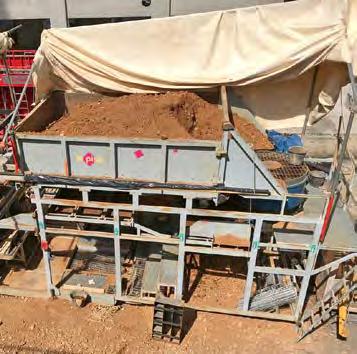
The composition of excavation material from the B horizon and, under certain circumstances, crushed material from the C horizon, decisively defines suitability for different applications in rammed earth construction. An efficient reuse is contingent on minimal expenditure for transport and handling. In order to ensure the final product displays required characteristics, the material needs to be tested and processed. The direct use of excavation material on the construction site can be supported by mobile processing units or temporary field factories (see “Advantages of prefabrication”, p. 20ff.). One
specific technical challenge is the processing of material containing clay. Its high degree of cohesion can lead to residue or deposits in the machines and, in the worst case, impact operations or lead to their cessation.
A decisive factor for the reuse of onsite excavation material is the time needed for search, analysis, and preparation. Requirements in terms of building technology, ecology, and aesthetics influence its selection. In many cases, clients or other decisionmakers express the desire to reuse the material excavated on site directly within the same project. If the resource meets basic criteria, for instance if it is free of organic matter, or if all grain sizes are present in a recognisable way, the excavation material is transported to
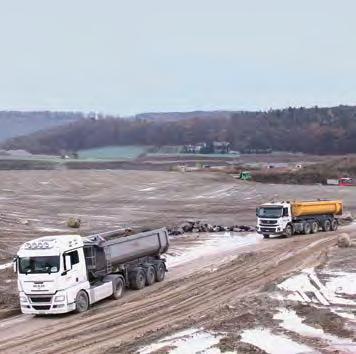
a nearby processing facility, such as a plant with related infrastructure, a rental property or a temporary field factory near the building site. For rammed earth construction, excavation material with a very balanced ratio of clay, silt, and gravel is particularly advantageous. In an ideal case, clay and silt should comprise a volume share of 20 to 35 % in order to achieve a classification of sufficient coherence [1]. The grain structure of the material is equally important. Crushed grain with rough surfaces is an advantage. It mechanically bonds with other
2
3
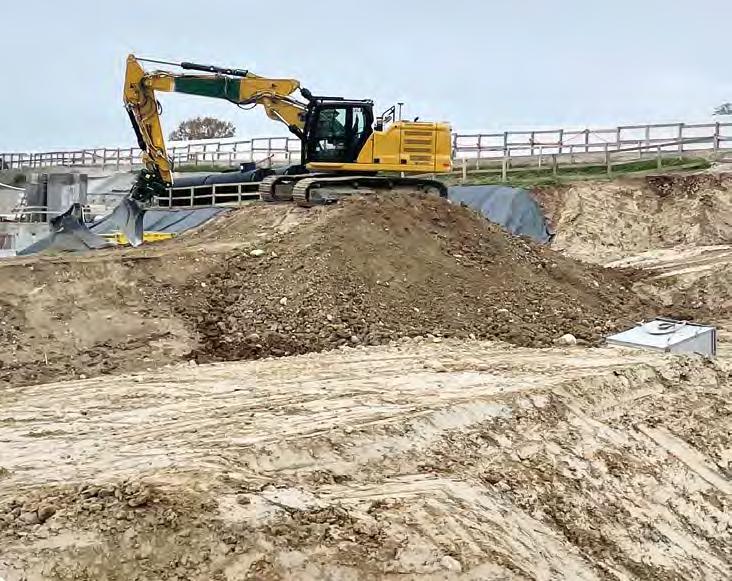
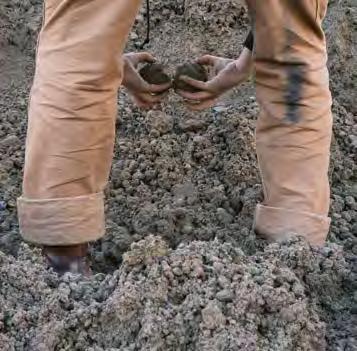
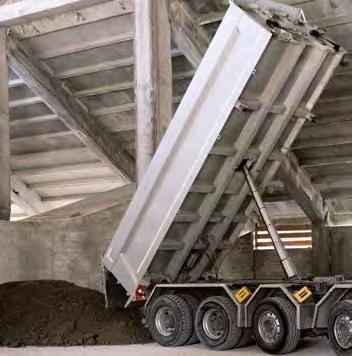
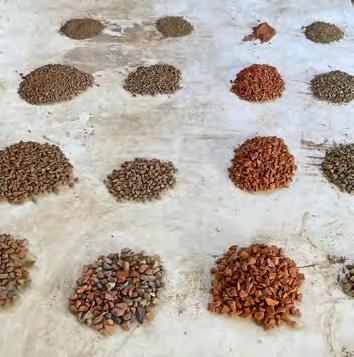
components to better degrees, thereby increasing the compressive strength of rammed earth.
Aesthetic criteria such as colouration also play a significant role in material selection. Due to geological processes, the resource extracted from different sites has a corresponding and individual colouration depending on respective and different mineralogical composition.
Geological layering and material availability
For economical and technologically sensible reuse, the excavation material should display a composition as homogeneous as possible and be available in sufficient quantities in order to ensure supply throughout the entire construction project. Soil often consists of many geological layers. Thus, suitability varies between different excavation sites. Important information on layer composition and depths can be provided by a ground survey and soil analysis. Typically, they are conducted for all building projects in early planning phases to support foundation work. In addition, civil engineering contractors can offer information based on longterm local experience of soil structure in a particular region.
4 materials testing sequence
a visual and manual testing of excavation material
b a sieve shovel is used to separate coarse rocks from finer grain components in the excavation material
c delivery of sieved material to the production facility
d material storage in the production facility
e sieve analysis (grain size distribution curve), four different excavation material types
f based on the analysis, missing grain sizes (aggregate) are added
5 grain diameter, material components as per DIN EN ISO 14 688 (previously DIN 4022)
6 colour mockup (round) and finished element (below), H 1 Zwhatt highrise, Regensdorf (CH), Boltshauser Architekten
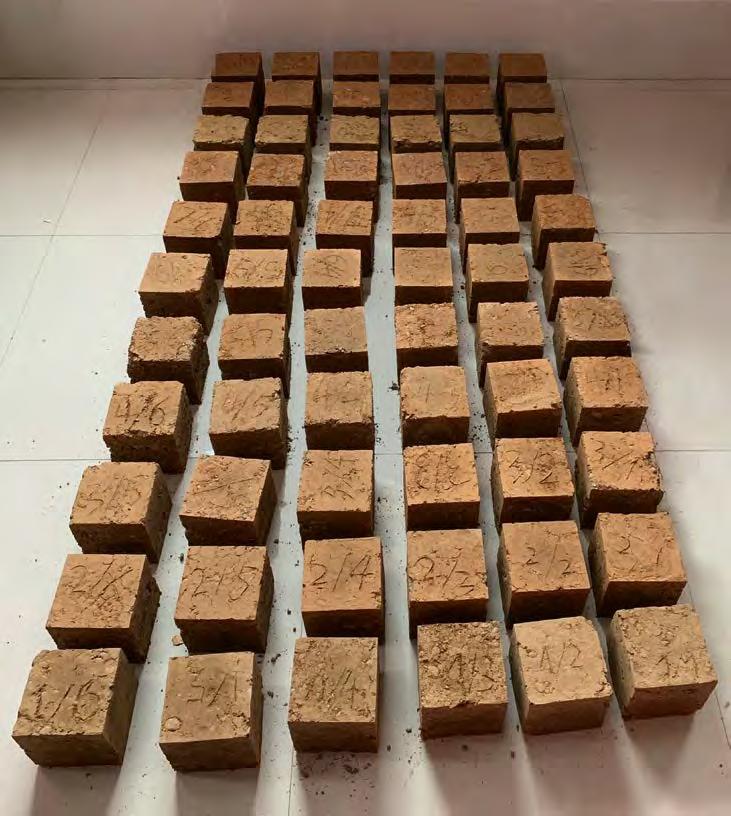
7 testing of eleven possible material composition types based on six test cubes per type
Material composition and standard specifications
Following the selection of suitable excavation material, a detailed material analysis identifies grain size distribution. The categorisation of grain sizes takes place according to DIN EN ISO 14 688 (Fig. 5). In rammed earth construction, the smallest dimension of a building part determines the target value for maximum grain size. It should not exceed 10 % of the smallest component dimension. For instance, a 50 cm thick rammed earth wall should not contain rocks with a diameter of more than 5 cm. Excessively large grain fractions and extraneous objects such as roots or other organic matter can be removed using screening machines or sieve shovels during extraction of the excavation material.
Grain size distribution and test mixes
In order to guarantee the desired material characteristics, in particular regarding compressive strength, smaller test mixes are created. For this purpose, representative material samples are collected and used for a detailed sieve and slurry analysis in order to define grain size distribution. The results are illustrated in socalled grading curves that show the share of screened components as a percentage of the overall mass. These values are displayed in a cumulative manner: A steeply rising curve in a certain area indicates a high weight fraction according to grain size range. Missing grain fractions can be added in a targeted manner. The required additives are homogeneously admixed in a small forced action mixer. Missing clay content can be balanced by adding clay powder. The curves in Fig. 3 a (p. 9) are an example for this procedure: The grade curve of the first excavation sample features a clay content of about 17 % and a very high silt content of additionally 67 %. After adding about 50 % fine and medium gravel, the
mass content of clay and silt is reduced. As a result, the grade curve approximates the ideal grain size distribution for rammed earth. After adapting the grain size composition, the material is provided with the optimal moisture content. The aim is to simulate a realistic manufacturing situation and in follow create four to six samples in the form of compacted test cubes measuring 20 ≈ 20 ≈ 20 cm. They are smoothed on their top and bottom
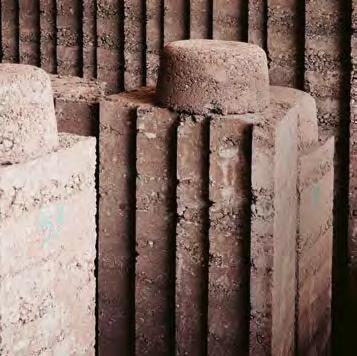
in order to achieve extensively planar load transmission. After drying them under controlled conditions, the cubes are tested for their compressive strength by an independent testing laboratory. If the values achieved do not correspond to specifications, the recipe is adjusted and the new mix is used to create a new set of cubes. The entire process is repeated until the desired material characteristics have been reached.
Material processing
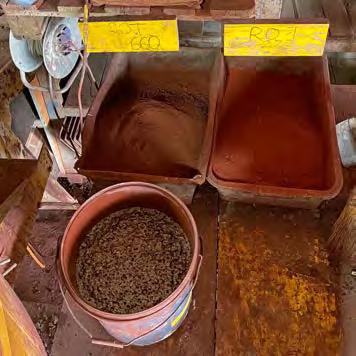
For the efficient screening and mixing of a large quantity of excavation material, it should be supplied in a condition as dry as possible. Moisture can negatively impact the efficiency and quality of the preparation process. If the resource is too moist, it is first evenly distributed across a large, paved surface using a wheeltype loader and subsequently airdried. The drying process can be accelerated by regularly turning the material, which contributes to quicker evaporation. As soon as the moisture level has decreased, the actual mixing process begins. For this purpose, the required additives (for instance, sand, gravel or clay powder) are distributed in layers in predefined volume shares on top of the spreadout excavation resource. After layering, a meticulous mechanical mixing process takes place using excavator or wheel loader shovels until the mix is homogeneous. Sufficient mixing is decisive in order to achieve the desired mechanical characteristics, such as compressive strength, shrinkage behaviour, and surface texture of the finished construction component. This ensures stable quality throughout the building process.
Colour and surface examination
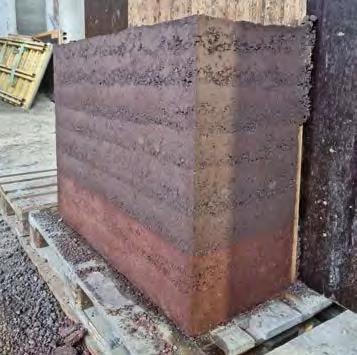
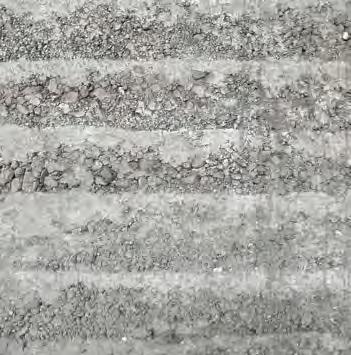
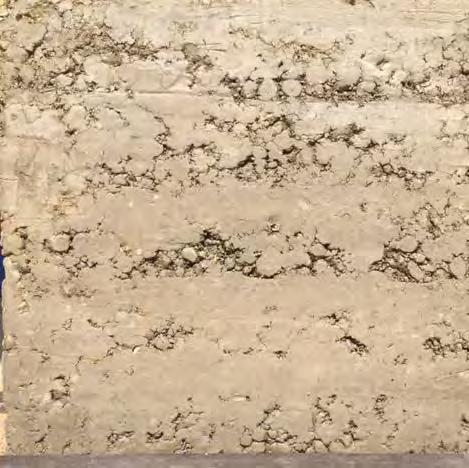
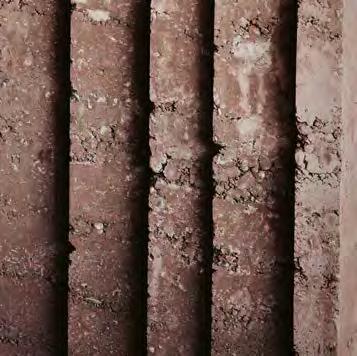
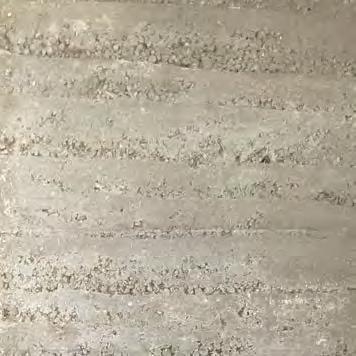
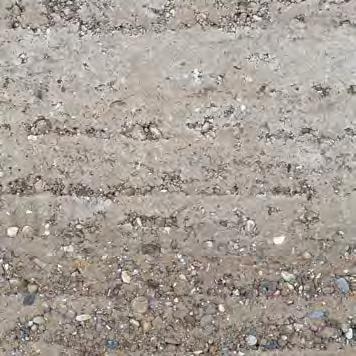
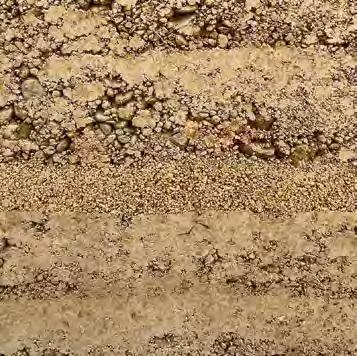
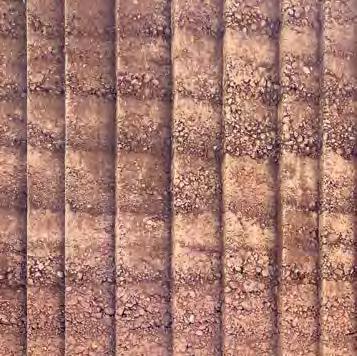
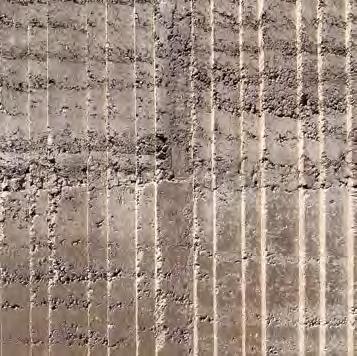
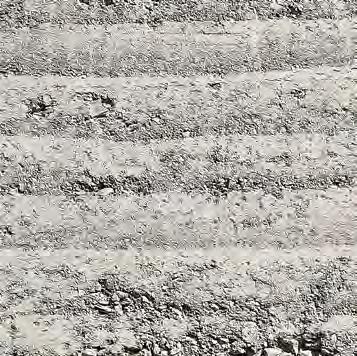
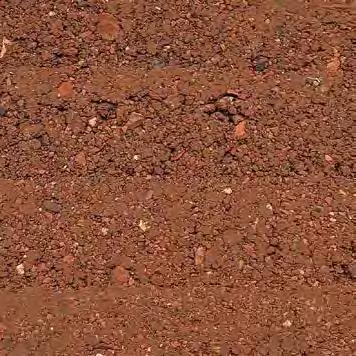
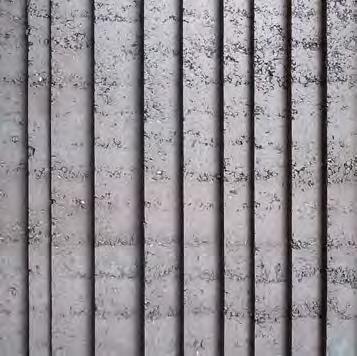
The final colouration of the material is often revealed by the first test cubes, since it is directly influenced by the composition of the raw resource. Additives such as clay, silt, sand, and gravel, stabilisers such as lime or cement, as well as colour pigment all influence the final appearance of the material (Fig. 9 –13).
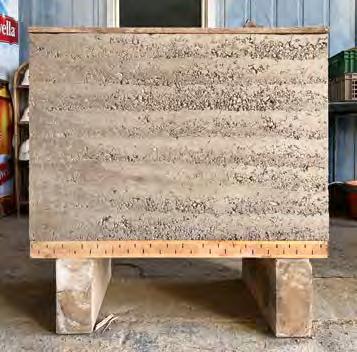
For a precise evaluation and to convey a realistic notion of the final product to the client and the architect team, largescale mockups are created using the final mix. These offer the opportunity to
examine the hues on a larger scale and evaluate the impact of the mix on the surface structure and the compaction pattern. Further, mockups can serve to test and visualise particular details, such as weather protection measures or connections to other building components (see “Stabilising erosion barriers” and “Connections to other building parts”, p. 23). For this purpose, it is helpful to use samples to simulate the effect of different weather conditions (for instance, rain, sun) and test the resistance of the material to external influences. This comprehensive set of examinations ensures that the aesthetic and functional project requirements are met before the actual construction work begins.
Annotations [1] Schroeder, Horst: Lehmbau. Mit Lehm ökologisch planen und bauen. Wiesbaden 2013, p. 138.
8 mockup, single sided stabilised trass lime corners (left), residential rammed earth building, Altendorf (CH) 2025, Roskothen Architekten
9 iron oxide pigment, raw material, dissolved in water, added to the loam mixture
10 material sample pigment test: two to three layers each were rammed using one specific mixture (altogether three different mixtures found use)
11 different pure or natural rammed earth mixtures
12 materials testing for pigment composition including relief, rammed earth stabilised with trass lime, H 1 Zwhatt highrise, Regensdorf (CH) 2025, Boltshauser Architekten
13 rammed earth stabilised with trass lime
Hybrid construction parts and methods unite complementary characteristics of different materials within one structure, thereby optimally benefitting from their synergy. The targeted combination of rammed earth and other building materials can contribute to improvements regarding stability, loadbearing capacity, thermal insulation, and efficiency during the construction phase. Creating hybrid structures is a long-standing tradition, employed for centuries. The following examples show current and individually developed solutions that were created within specific framework conditions to formulate a particular architectural design.
Improving mechanical stability and loadbearing capacity
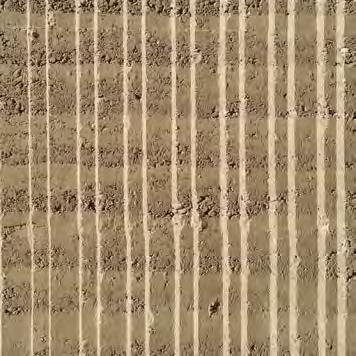
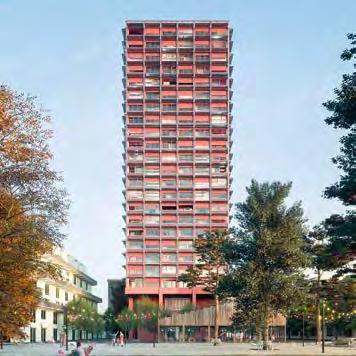
Due to its specific material characteristics, rammed earth displays limited loadbearing capacity, most of all when subject to tensile and bending stress. To compensate for this weakness, structural reinforcement consisting of wood, concrete, steel, or plastic can be incorporated into hybrid parts. For instance, reinforcement such as geotextile mesh, steel rebar, entire timber beams, reinforced concrete members, or brick lintels can be integrated in rammed earth components in order to bear tensile loads in a targeted way. This enables the general loadbearing capacity of the structural system to be increased and the realisation of more complex geometries or spanning greater widths above openings in walls. One example is the combination of rammed earth and other materials aimed at improving the loadbearing capacity of the plinth facade of the H 1 Zwhatt high-rise by Boltshauser Architekten in Regensdorf north of Zurich (Fig. 1 a – e). The loadbearing structure behind the plinth facade, which encloses the first
three floors of the timber high-rise building, consists of in-situ concrete. It ensures the direct transmission of loads and stiffening of the building through the concrete structure. The concrete plinth is covered in mineral insulation material and features projecting window frames that are bordered by prefabricated loam elements. The loam facade clads all three plinth storeys. The longest rammed earthen elements span the window openings. The entire plinth facade is slightly recessed. This led to specific challenges in terms of transport and assembly, since construction cranes were not capable of accessing these facade sections from above. Due to these preconditions, the stabilised rammed earth parts were combined with prefabricated concrete base strips, supporting the manufacture of components. Prior to introducing and compacting the rammed earth mix, stabilised with trass lime, threaded steel rods were set into the concrete strips. While they obstructed the production process, they allowed hanging the rammed earth parts in combination with the concrete strips from a crane device. The rammed earth components had reached their finished height at this point, yet were still soft. The procedure supported safe and efficient transport for drying and assembly on the construction site. Once built into the structure, the concrete plinth integrated in the rammed earth component serves as a window lintel above the window frames. The vertical threaded rods were used to anchor the individual components and, hence, the entire facade through the insulation layer to the loadbearing concrete structure. Each threaded rod was equipped with two steel sections at its top featuring slotted holes oriented in two directions. They were intended to allow for minimal movements of the completed facade. The concrete plinth, the threaded rods, and the anchor connection ensured the structural
feasibility of the facade. They remain invisible, since the architectural design called for a consistently monolithic appearance that harmonised with the other building materials. For this purpose, pigment was added to the earthen mix in order to create a homogeneous mineral appearance in combination with the concrete, dyed in corresponding hues. The elements were also adorned with a relief pattern in order to simplify retouching the gaps for visual purposes and providing the facade with an optimally homogeneous appearance (Fig. 7 a – c, p. 66). The individually designed relief patterns were created by attaching silicone templates specifically created for the project to the formwork interior. The robust material can withstand the significant forces exerted during ramming.
The natural characteristics of loam, especially its high thermal storage capacity and hygroscopic effect (absorption of moisture), contribute significantly to the energy efficiency and pleasant indoor climate of a building (see “Specific material characteristics”, p. 54ff.). The high density of rammed earth, however, leads to an insufficient U value (heat transfer coefficient). Thus, additional measures are necessary along exterior walls in order to efficiently meet insulation requirements
1 timber hybrid building, H 1 Zwhatt high-rise, Regensdorf (CH) 2025, Boltshauser Architekten
a visualisation, facade elevation
b floor plan, ground floor, plinth area
c axonometric illustration: rammed earth elements with specific surface texture, concrete plinth
d element wall anchor, plan and section, scale 1:10
e southern elevation, plinth facade, subdivision of rammed earth cladding elements (the different colours indicate the different element formats)
rammed earth element, stabilised, textured surface, 240 – 270 mm
threaded rod, � 16 mm, with threaded sleeve and slotted hole
Plan
insulation strip, mineral wool, 15 mm, above, below, lateral mineral insulation, rigid, 210 mm
threaded rod, � 16 mm, in threaded sleeve
� 16 mm facade anchor
concrete element / ring anchor, 150/170 mm
bearing joint reinforcement, ferritic stainless steel, � 5 mm, 200 mm in mortar layer
d Section
loadbearing structure, in-situ concrete, 250 mm
concrete screw, 12/130 mm
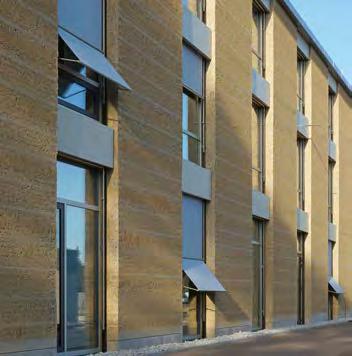
for wall constructions. The integration of additional insulation materials such as cork, straw, hemp fibre or conventional materials in hybrid building components allows optimising thermal characteristics accordingly. For this purpose, it is particularly important to achieve an improved thermal insulation effect without obstructing the breathability of the material. A realised example with such hybrid building parts is the Alnatura company headquarters in Darmstadt (see p. 102ff.). The rammed earth facade was created with prefabricated elements into which an insulating layer of glass foam gravel and, oriented inward, building component activation were integrated. The self-supporting wall sections with building component activation border the interior, which is sensible in terms of loadbearing function
and energy efficiency. The insulation and the thin facing shell are oriented outward (Fig. 2 a – c). Arranging the mass on the inside is decisive for the effective regulation of the indoor climate. Here as well, a monolithic impression of the overall facade was requested and, hence, the horizontal joints were retouched. Vertically, the rammed earth facade borders the window reveals.
The production processes for rammed earth are highly labour intensive (see “Production of rammed earth”, p. 46ff.). A promising approach for increasing efficiency is the integration of so-called sac-
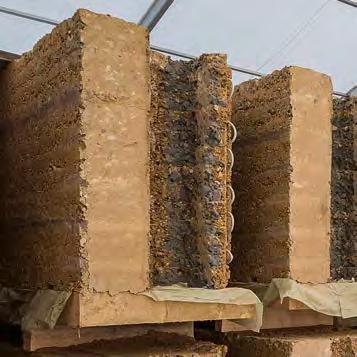
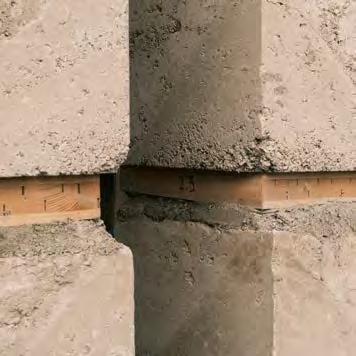
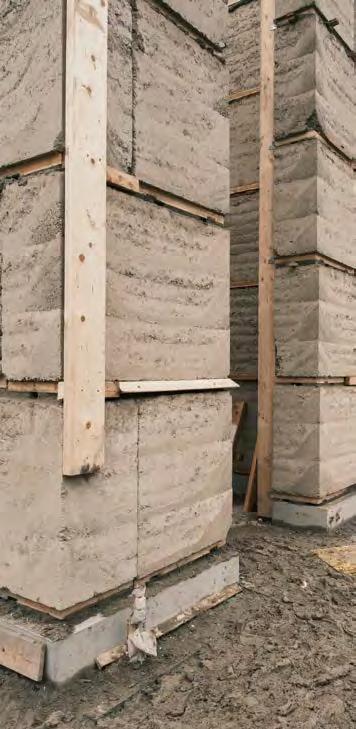
rificial formwork. Such elements can, for instance, serve as a base plate for loam formwork during production. They also offer opportunities for the assembly of built-in elements, anchors (see “Improving mechanical stability and loadbearing capacity”, p. 76) and temporary or even final weather protection measures such as weatherboard or drip edges. As a result, the entire construction process can be accelerated, since the subsequent work steps can be omitted. Elements can be assembled more quickly and, in ideal cases, receive long-term protection from weather impacts. A descriptive example is the kiln tower and its elements (see p. 94ff.). The 60 cm thick base plates consisting of threelayer wood panels were foundational for prefabrication. The three sides of the
2 Alnatura corporate headquarters, Darmstadt (DE) 2009, haascookzemmrich Studio 2050
a elevation, facade sections, prefabricated rammed earth elements, retouched joints
b prefabricated rammed earth elements
c element composition, earthen facing shell, insulation layer, loadbearing rammed earth element
3 industrial building, Ticino (CH), competition entry, Boltshauser Architekten
4 kiln tower, Cham (CH) 2021, Boltshauser Architekten, in collaboration with students of TH Munich and ETH Zurich
a composition, rammed earth element, axonometric illustration
b After the removal of temporary placeholder slats integrated during manufacture, the base plate displays a 30 mm recess.
c Spruce erosion proofing elements (weather bars) were then attached to the recessed base plate with screws (shown here with temporary vertical rear fasteners).
building exposed to the weather and the base plates received circumferential slats as placeholders. They were removed after completion and disassembly of formwork. On each of these sides, the plates are recessed by 30 mm. In order to achieve a force-fit connection with the loam mass, the base plates remained rough-sawn and their roughness was increased by use of a hatchet. After drying and assembly, spruce drip edges were attached to the recessed areas of the plates with screws (Fig. 4 a – c). This structural solution is an innovation – in this project and in this form, it was realised for the very first time. It has proven its general effectiveness in practice. After a specific period of use, the observation was made that the wood drip edges needed to meet particular quality demands: They had to be free of knotholes and a groove of at least 5 –10 mm depth was required on their underside (Fig. 8 a, b, p. 22). Otherwise, facade rainwater runoff can flow back to the earthen wall surface and lead to unwanted traces of erosion.
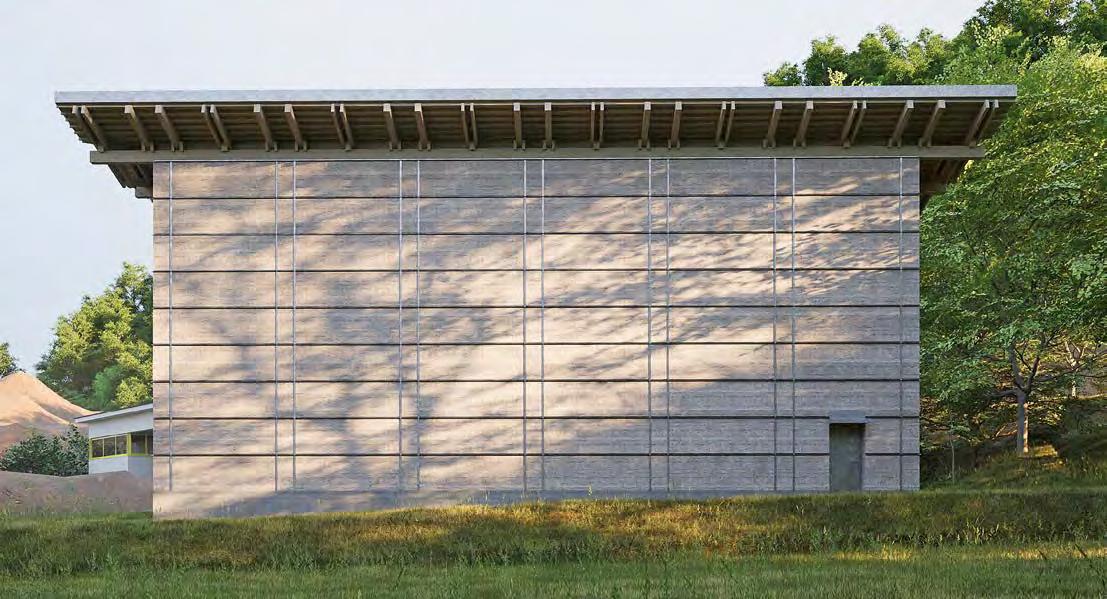
Aside from technical aspects, hybrid construction methods offer a broad range of design opportunities for contemporary modern rammed earth architecture. The targeted combination of different materials allows transferring traditional earthen construction methods into a contemporary and innovative context. The interplay between material and feel can be particularly aesthetic and expressive if rammed earth is combined with other materials. The juxtaposition creates an immediate sense of tension that is hardly attainable otherwise and provides architecture with a specific notion of depth. For example, the competition entry for an industrial
building in Ticino by Boltshauser Architekten combines rammed earth with wood and metal (Fig. 3). The project refers to a number of principles realised in the kiln tower in Cham and advances on them. This includes the timber base plates. Weather bars are attached to them once more, only this time consisting of metal. The elements are supposed to feature identical dimensions, suitable for efficient prefabrication, and receive a 50 cm deep recess, supporting their assembly into large wall surfaces. The recess corresponds to the component thickness and enables continuous assembly across corners. The vertical joints are intended to receive flat caps, also made of metal, thereby emphasising the additive character of assembly and reducing the need for retouching. The top edge of the building, about 12 m tall, is delineated by a timber roof structure.
In principle, the field of hybrid rammed earth construction is still in early stages of development. Thus, it offers ample potential for future innovations and design approaches, even if certain types of hybrid rammed earth ceiling systems have already been realised (see “Ceilings with visible rammed earth infill”, p. 75).
One area of research in the field of hybrid rammed earth constructions is the optimisation of prefabrication processes and modular building methods aimed at increasing the efficiency and economic feasibility of earthen parts in hybrid structures. Another aspect is the integration of hybrid construction methods and digital planning technologies. They support increasingly precise planning and more efficient use of resources, further reinforcing sustainability and design quality. New binding agents and additives also play significant roles for the improvement of the strength and durability of loam in hybrid construction components.
erosion line
a three-layer panel, rough-sawn, 6 cm trass lime corner, large
Architecture: Clément Vergély Architectes (Stefan Jeske), Lyon (FR), in cooperation with Diener & Diener Architekten, Basel (CH)
Structural engineering: Batiserf, in cooperation with Jean-Claude Morel (University of Coventry) and Antonin Fabbri (ENTPE)
Earthen construction: Le Pisé (Nicolas Meunier and Camille Announ), Chambles (FR)
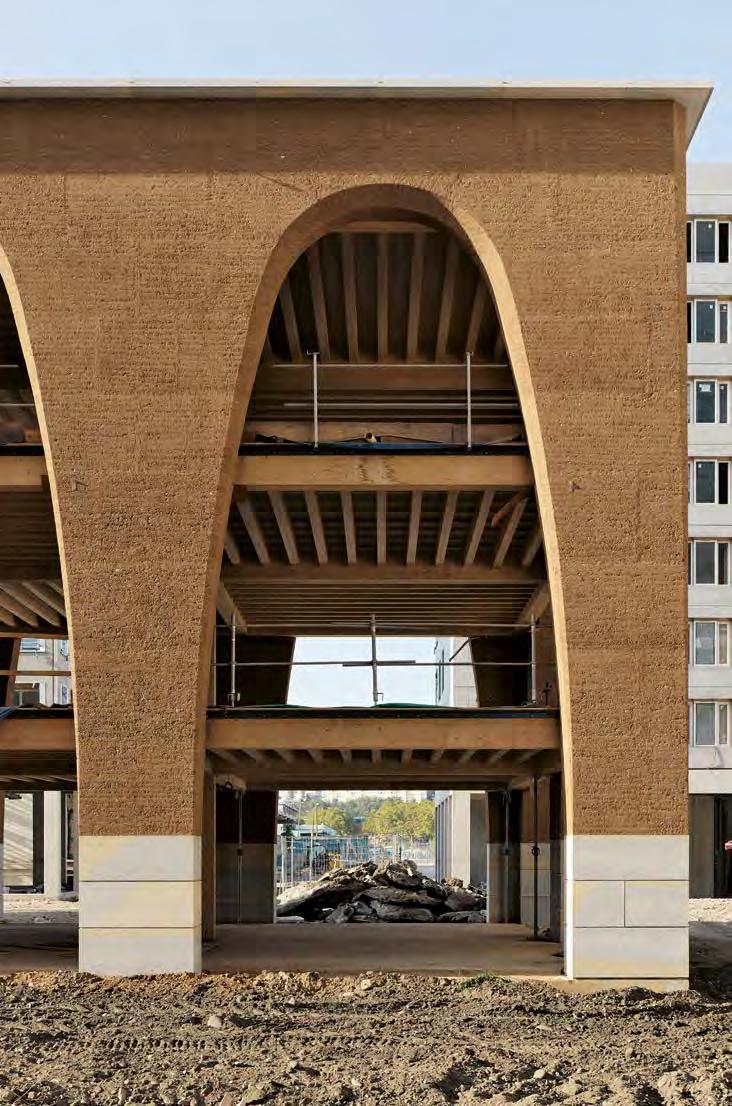
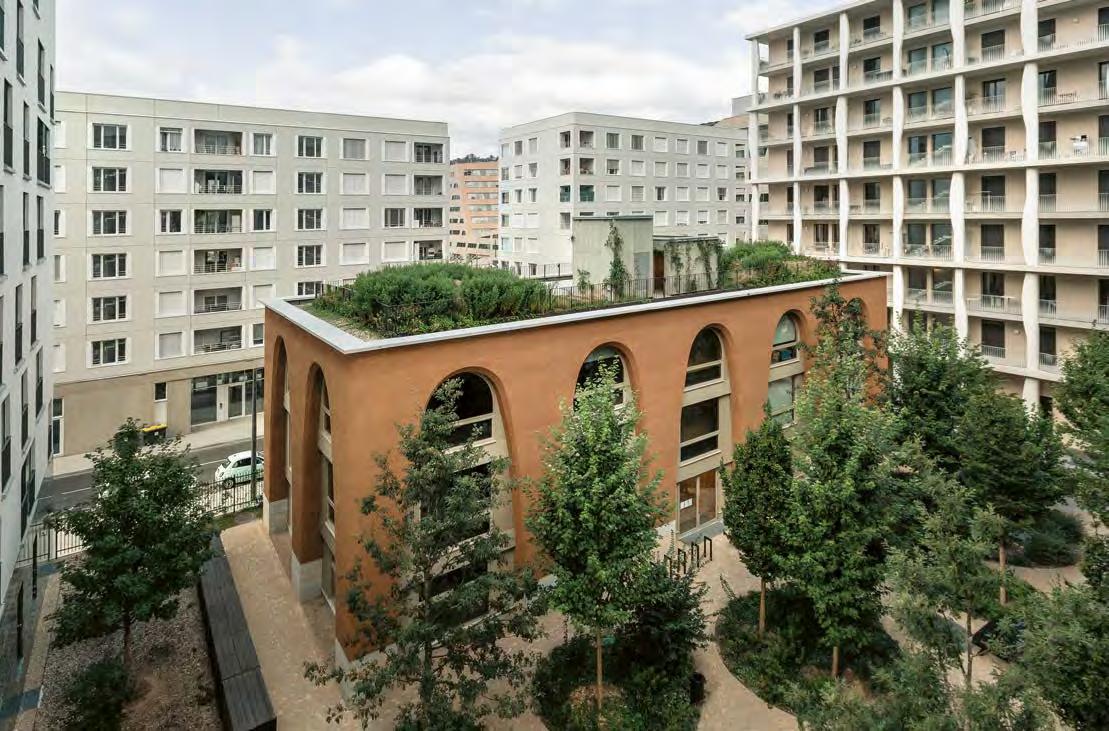
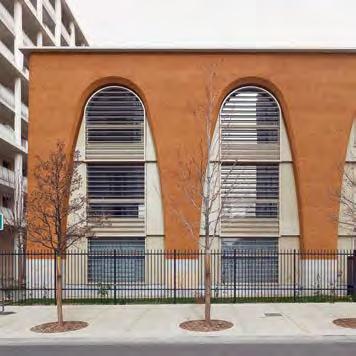
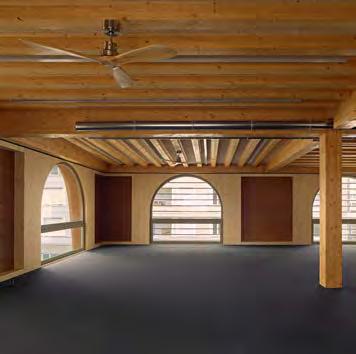
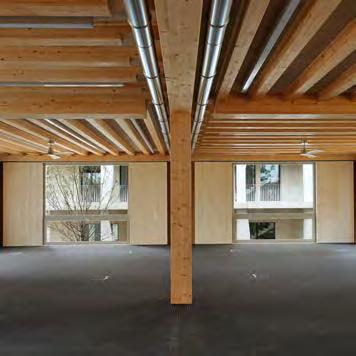
L’Orangerie is an office building located on the peninsula between the Rhône and Saône rivers in the new urban district La Confluence in Lyon. The three-storey building contains coworking spaces, sheltered in the urban context on a property surrounded by tall residential structures. The planning team paid homage to the many examples of the rammed earth construction tradition of the Rhône-Alpes region: It combined earthen materials for loadbearing exterior walls with cross laminated timber for the ceilings, the interior loadbearing elements, and the access core. Altogether 380 t of the material were sourced from a
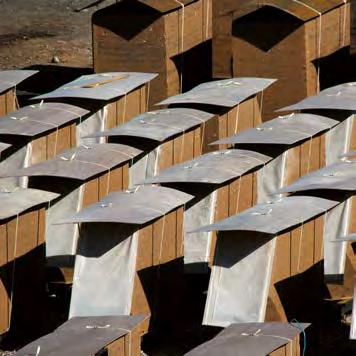
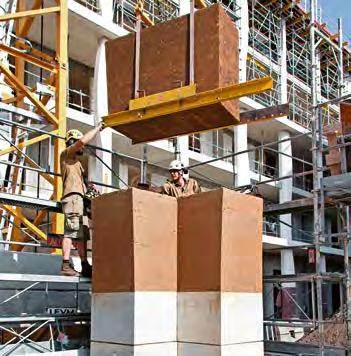
construction site 30 km away. The renowned loam building expert Nicolas Meunier rammed it on site with his semi-automated production equipment, creating 286 wall elements without any additives. They were stored on a property near the site in order to air-dry. The elements, weighing up to 4 t and with heights ranging from 79 to 113 cm, were set into a layer of loam mortar by use of a crane. The joints were then retouched. The thickness of the blocks decreases storey by storey, from 80 to 65 and eventually to 50 cm. While the exterior remains flush, walls are recessed by 15 cm on the interior, from one floor to the next. As a result,
both their thickness and their dead load decrease. The building demonstrates that a wall consisting of 14 ethereal arches can be created with loadbearing and unstabilised rammed earth. The timber beam ceiling is directly connected to the metal bearings embedded in the rammed earth elements, enabling an even distribution of loads. The walls are set on top of a plinth comprised of three layers of natural stone blocks. The parapet coping also consists of natural stone. The earthen walls are not insulated, yet regulate the indoor climate naturally, allowing for mechanical climate control to be omitted.
Vertical sections scale 1:50
1 roof construction:
intensive roof greening
300 mm substrate layer
separation layer
40 mm filter and drainage layer
2-ply bituminous sealant
200 mm thermal insulation, 3 % to falls
100 mm cross laminated timber
120/240 wood blocking (secondary beam)
300/480 mm CLT panels between beams
2 100/900 mm limestone parapet coping in mortar bed, 3 % to falls, projecting by 250 mm
3 960/500 mm prefabricated rammed earth
exterior wall
4 insulation glazing in larch frame, glazed finish
5 fixed sun protection (brise soleil), facing south: larch, glazed finish
150 or 100/60 mm larch frame, glazed finish
100/30 mm larch slats, glazed finish
6 1130/650 mm prefabricated rammed earth exterior wall
7 first and second floor construction:
5 mm sisal
60 mm heating screed /underfloor heating
PE film separation layer
30 mm rigid impact soundproofing
30 mm screed
40 mm mineral wool panel
22 mm cement-bonded particle board
140/320 mm glulam ceiling beams
(secondary beams)
35 mm inlaid acoustic panel connected to 18/18 mm wood slats
8 1120/800 mm prefabricated exterior rammed earth wall element
9 800 mm solid natural stone plinth, total height 1595 mm
10 ground floor construction:
5 mm sisal
65 mm heating screed /underfloor heating
PE film
30 mm rigid impact soundproofing
50 mm insulation
200 mm reinforced concrete floor slab
100 mm perimeter insulation
11 180/300 mm metal plate and flange, set into timber ceiling beam head
12 ceiling bearing: 10 mm custom metal hollow box, embedded in 260/400 mm rammed earth elements