

150th Silverton Anniversary Edition
Summer/Fall 2024




150th Silverton Anniversary Edition
Summer/Fall 2024
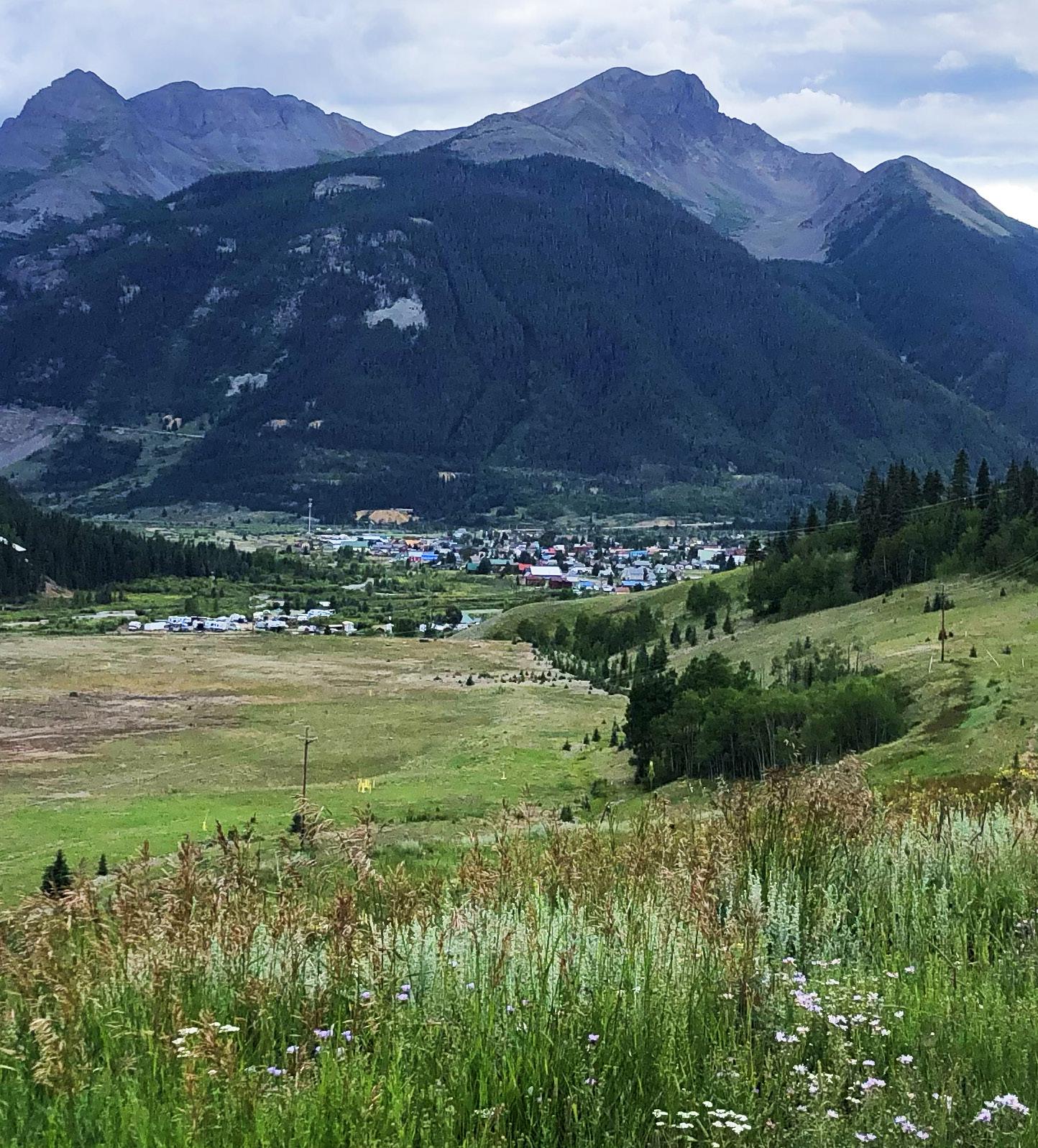
As you flip through the pages of this 2024 Summer Destination Silverton Guide, get ready to celebrate a milestone with us – 150 years of untamed spirit, rugged beauty, and mountain magic.
Since 1874, our historic town nestled in the heart of the San Juans has captivated visitors and locals alike. This summer, we’re throwing open our doors, dusting off our cherished stories, and inviting you to join the festivities!
Silverton in the summer is unparalleled. Our landscapes boast thrilling adventures for all levels, while our history is as rich as the veins of gold once mined. Silverton is one-ofa-kind. Whether you’re a seasoned Silverton local or a first-time visitor, there’s something to celebrate for all in Silverton this summer.
As we celebrate our rich history and stunning mountain scenery, we’re also gearing up for an unforgettable summer season packed with adventure.
Imagine yourself hiking through vibrant wildflower meadows, casting a line in a crystal-clear stream, or taking a thrilling ride on the iconic Durango & Silverton Narrow Gauge Railroad. History buffs will delight in exploring our historic streets, museums, mills, and mines, while those seeking thrills
can conquer epic mountain biking trails or embark on challenging off-road adventures.
Silverton offers something for everyone, from families seeking quality time together to solo travelers yearning for a wilderness escape. So, mosey on in, partners, and let’s make this a summer to remember in Silverton’s 150th year! We guarantee memories that will shine brighter than a San Juan Mountain sunset.
Editor | Heather Hendricks • Katey Fetch
Creative | Gina M. Rosato & Katey Fetch
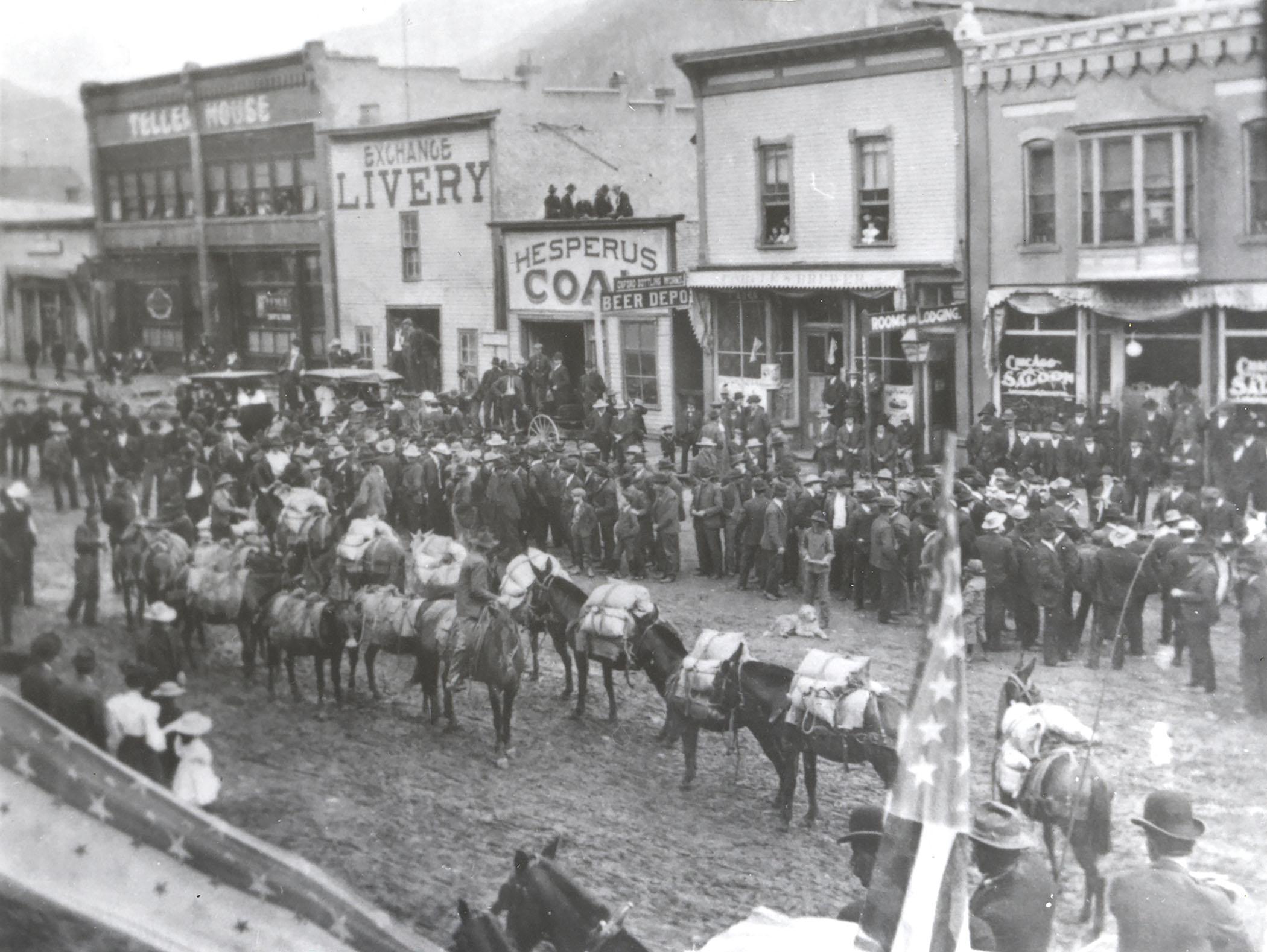
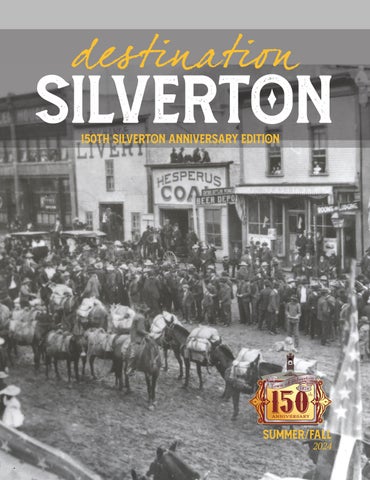
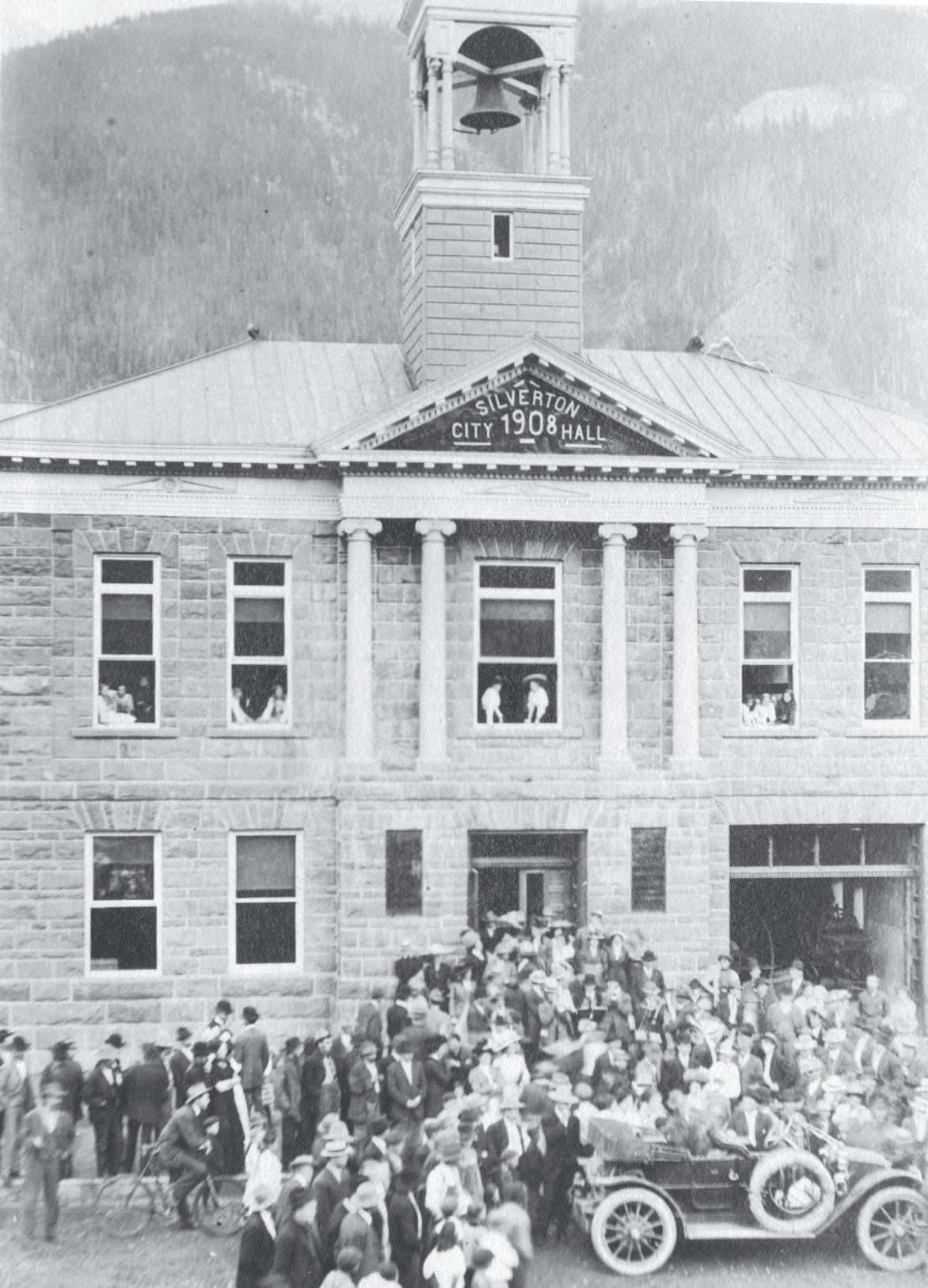
Cover Photo | Silverton July 4th, 1905 San Juan County Historical Society E sjchistoricalsocietysilverton


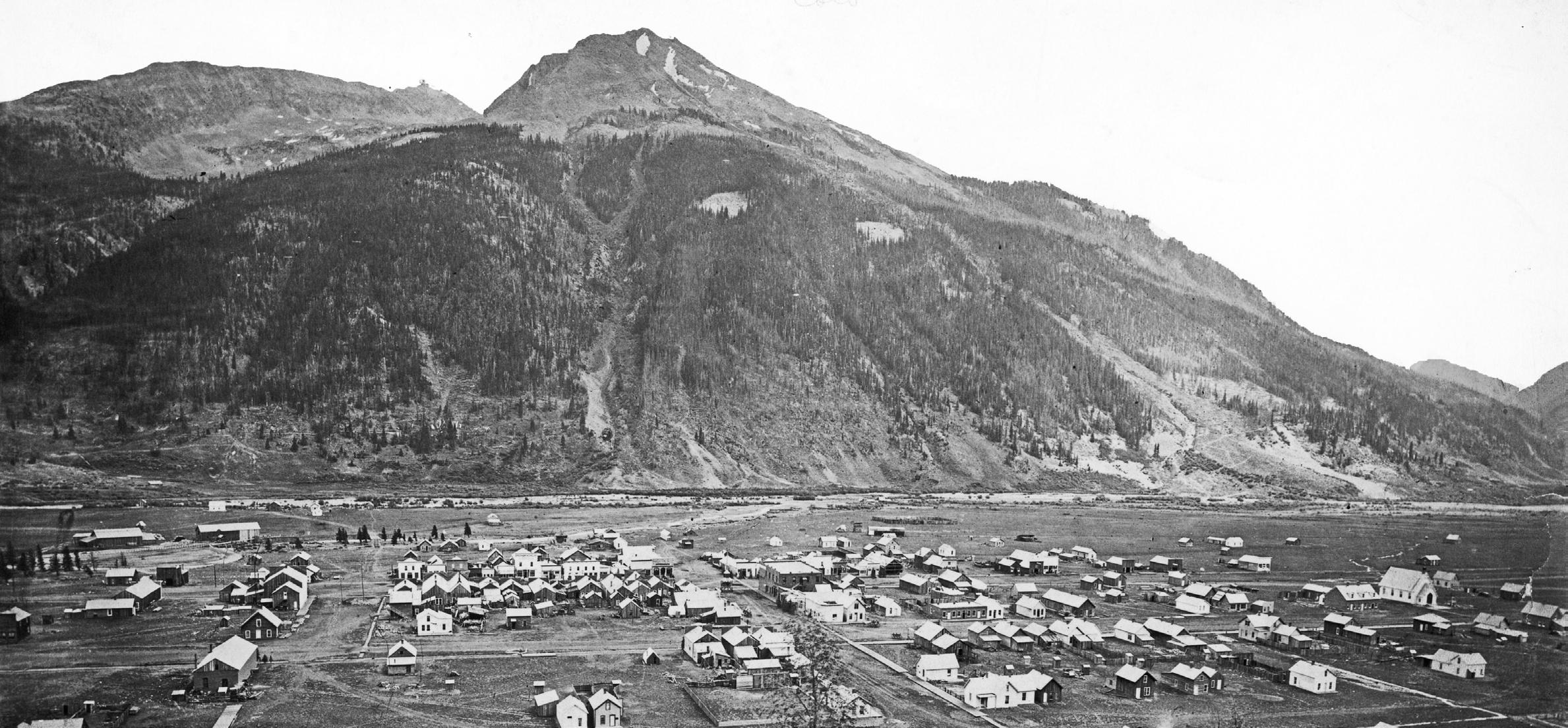
In 1860, Charles Baker and several prospectors entered the San Juan Mountains in search of wealth. They soon found deposits of gold and silver along the Animas River in an area later called “Baker’s Park.” The San Juans belonged to the Utes, but it was just a matter of time before the Brunot Treaty was negotiated with Chief Ouray and the mountains were opened to settlement. In 1874, Silverton’s town site was platted in the Park. Soon, immigrants from every country in the world arrived. The earliest structures were canvas tents and log cabins or a combination of the two. With the arrival of the Denver & Rio Grande Railroad in 1882, the ore was easily sent to the smelters, and supplies were easier to get.
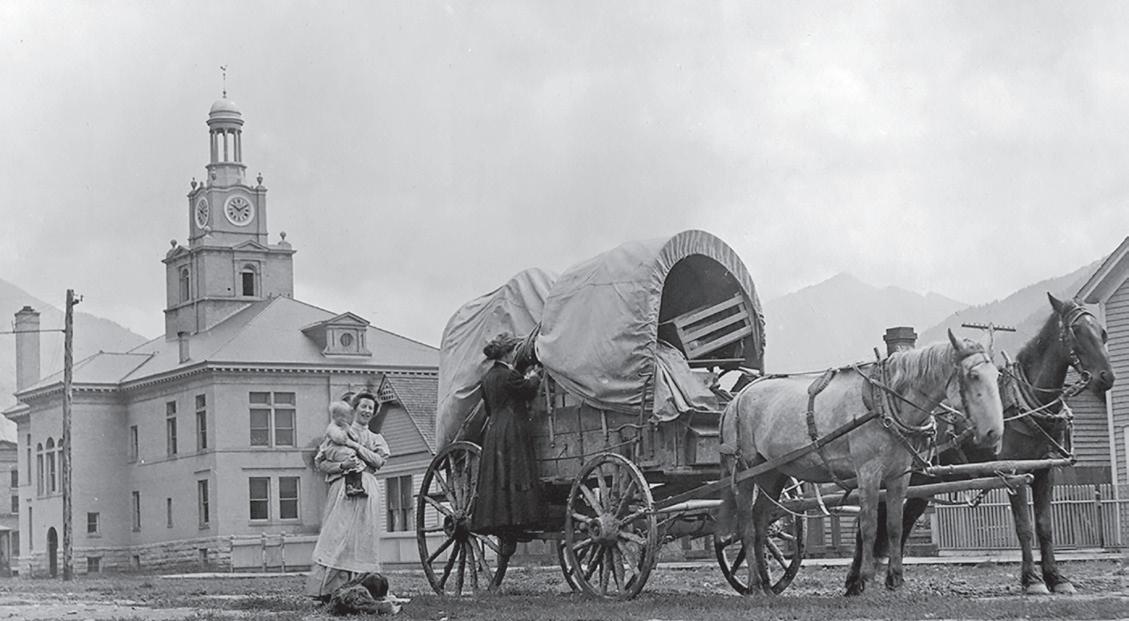
During the glittering decade after the turn of the century 19001910, San Juan County was at its apex of wealth. The 1900 census reported a little over 2300 people in the county, and in 1901, there were 137 telephones in Silverton. Silverton saw the construction of not just the Courthouse and Jail but the rose-colored sandstone Town Hall, recently restored after a disastrous fire in 1992. In that decade also the Miner’s Union Hospital and the jewel-box Carnegie Library were built, important contributing structures to the Silverton National Historic Landmark. Water and sewer were put in, concrete sidewalks were installed, and a municipally owned light plant provided electricity to the burgeoning town where you could purchase anything from a new wagon to a beer brewed in Silverton.
Silverton was a symbol of the great industrial revolution and the
center of commerce of the San Juan mining region and, with its four railroads and three smelters, served gold and silver mines with names like the Sunnyside, the Gold King, and the Old Hundred high up in the mountains. Men worked and lived at these remote locations year around, living in boarding houses seven days a week, coming into town via tram bucket over long cable tram lines designed to carry the ore from the mine to the mill several thousand feet below in the canyons.
When the miners took a break from their work, often after weeks or months of working and living at the mines, many headed for Blair Street in Silverton. In a three-block area, there were 29 saloons, dance halls, and houses of ill repute, designed to inspire men to “blow” their entire paycheck in one big spree. Saloons sported colorful names, such as Tremont, Bon-Ton, Diamond Bell, Monte Carlo, Bellevue, Piemonte, Chicago, Senate, and Frog. From its earliest days, the street was infamous for its loud music and dance halls. In fact, the people on the south end of Blair Street were so mortified by its reputation that they petitioned the Silverton town council to have their end of the street renamed “Empire Street,” which it is to this day.
Although illegal, gambling and prostitution were tolerated in early Silverton as long as the “Ladies” stayed behind an invisible line in the middle of Greene Street, separating them from the more “respectable” part of town. The old saloons on Blair Street were reborn in the 1950s as movie sets where Westerns such as Run for Cover, Across Wide Missouri, and True Grit were shot, with the train as its “star.”
In the years since that glittering decade, several of the boom and bust cycles typical of the mining industry happened, making fortunes and then sending them plummeting. The boom cycles saw influxes of people from every ethnic group on Earth, and the bust cycles saw towns turn into ghostly reminders of themselves. Today, Silverton is the only town left in the county, with a population of 600, and it is supported by tourists who come to see the magnificent scenery and experience the incredible history of the area.
Railroad Art by Scotty 1257 Greene Street • 970.387.5580 www.silvertontrainstore.com • trainstore3@gmail.com



Silverton is a vibrant arts destination with many talented artists calling our community home. Founded in 2019, the Silverton Creative District [SCD] is a non-profit organization formed by local artists for local artists. We recognize the many ways the arts enrich quality of life and serve as an economic driver. We believe developing a stronger arts presence in Silverton will create a diversified economy in our mountain caldera. We strive to cultivate creativity and community with a variety of arts and culture programs.
Silverton Summer Sounds
2nd Friday from June - September
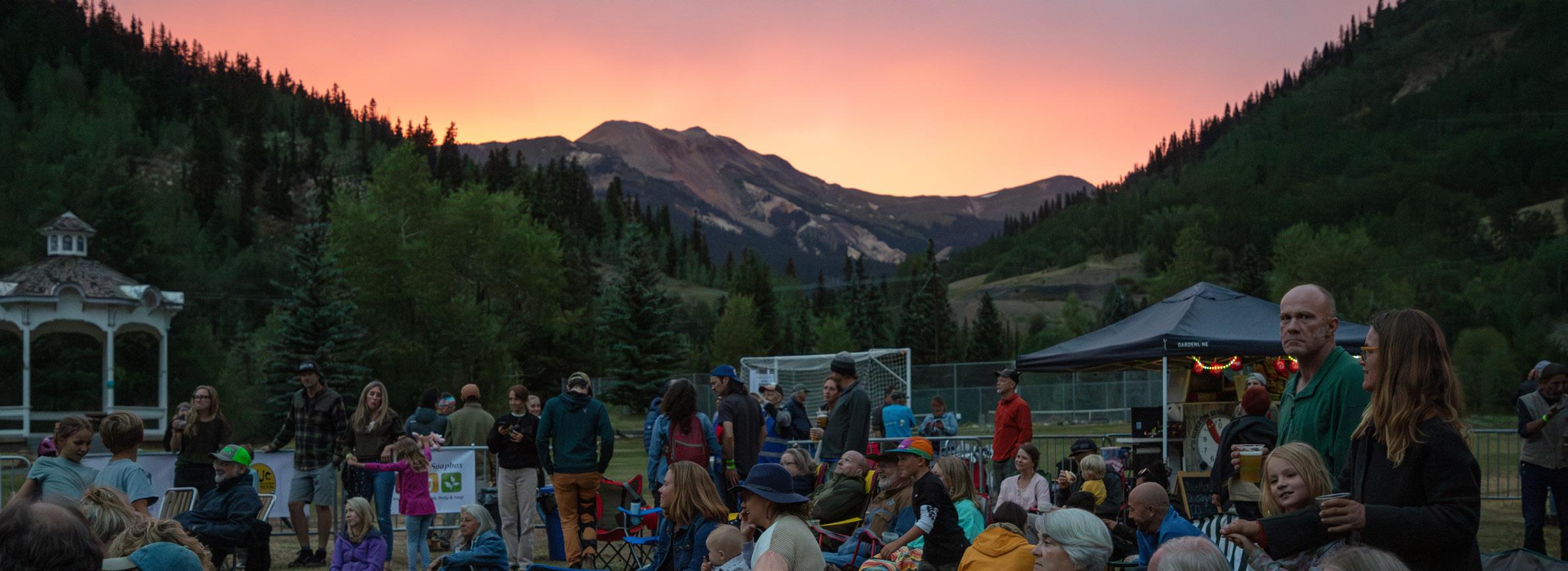
Now in its seventh season, Silverton Summer Sounds 2024 is a free open-air music series that features live music, food, and libations in Silverton’s Memorial Park. Concerts occur rain or shine at 6 p.m. every second Friday from June through September, with two high caliber musical acts at each show.
Silverton Creates Arts Festival • September 6th -14th
We’re evolving the Silverton Arts Festival to reflect our unique arts community better! Silverton Creates: A Celebration of the Arts is a week-long celebration showcasing local artists and creatives through a variety of events, including an Open Studio Tour, live performances, workshops, demos, and more. Join us for crisp mountain air, vibrant fall foliage, and a uniquely Silverton Creative experience!
First Friday Art Walks • 1st Fridays | June - September
Great art is found in more than just museums and metropolitan areas. In the tiny hamlet of Silverton, Colorado, you’ll find original art, creative workspaces, and glimpses of our community’s unique mountain heritage. Silverton’s bustling historic business district will celebrate on the first Fridays of June, July, August, and September 2024 from 5 -8 pm. More than a dozen shops and galleries will open their doors for an eclectic evening of art demonstrations, kid’s activities, live music, shopping, and refreshments.
We also curate a community arts calendar that is a great source of information about artistic happenings around town: www.silvertoncreativedistrict.org/event-calendar
More information on Silverton Creative District can be found on our website: www.silvertoncreativedistrict.org.

LIVE MUSIC IN MEMORIAL PARK


































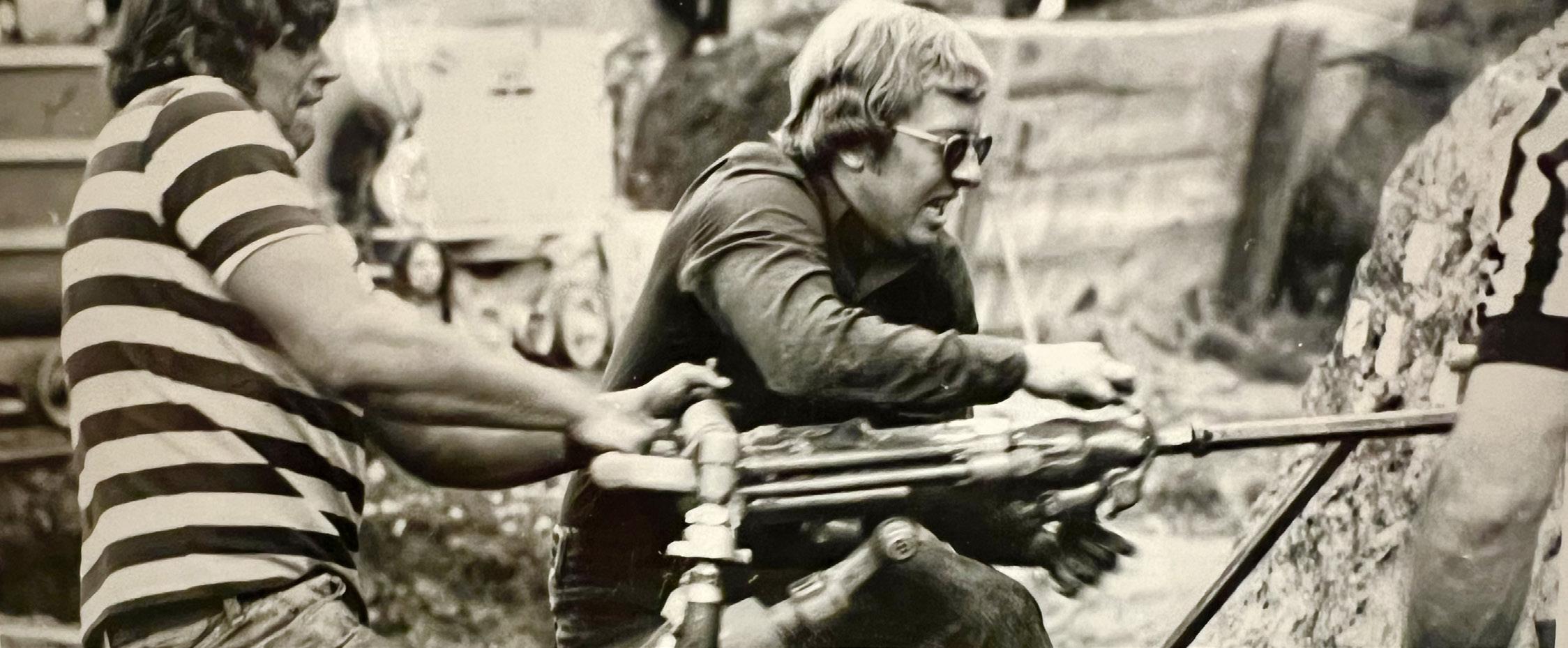
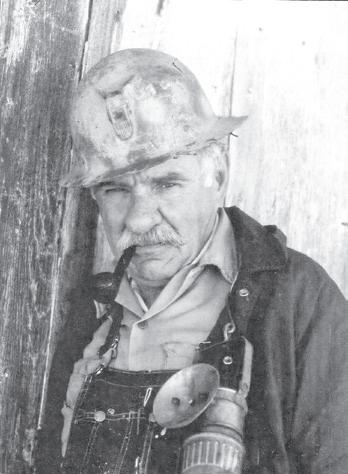
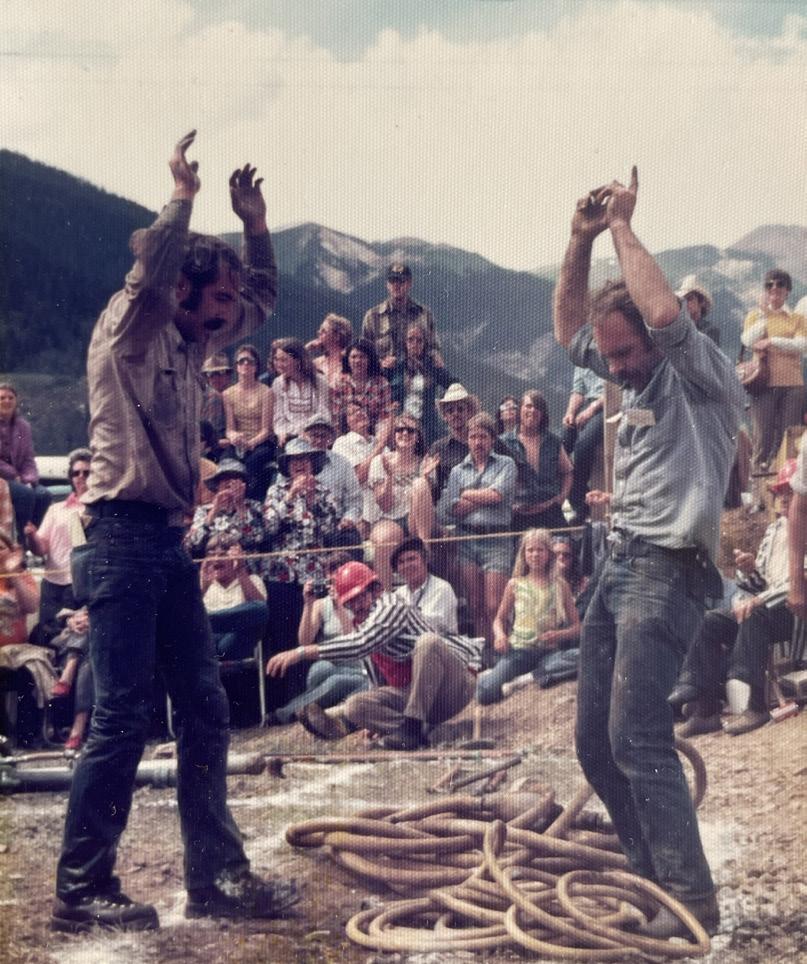
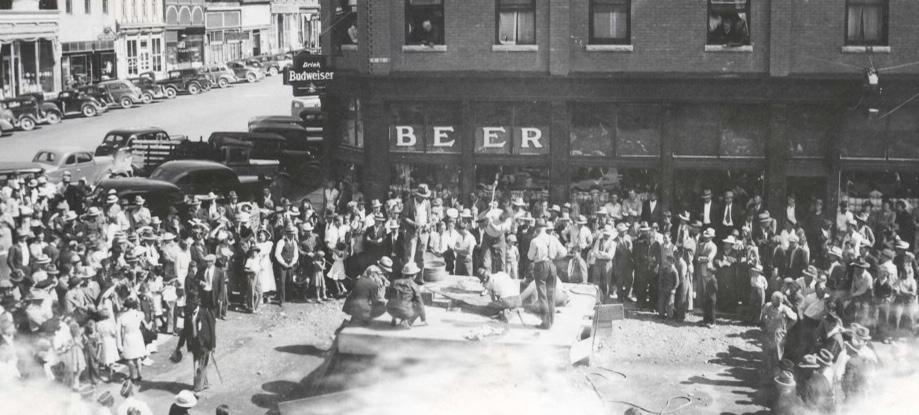
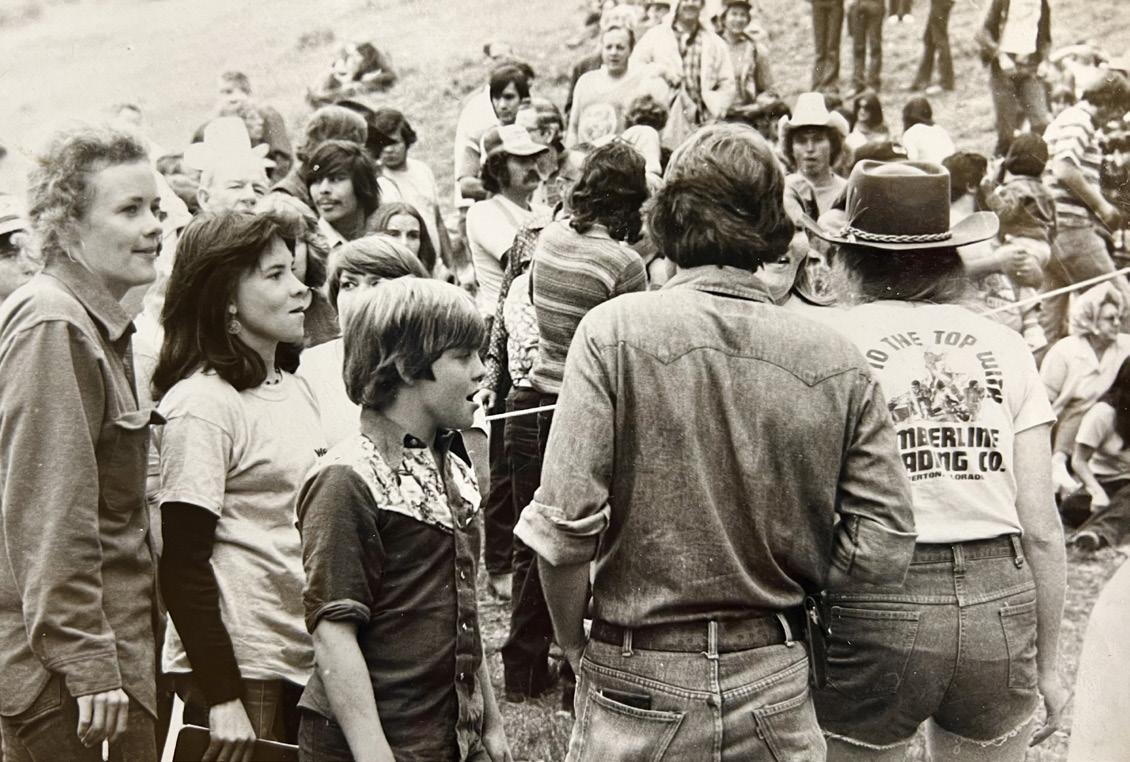
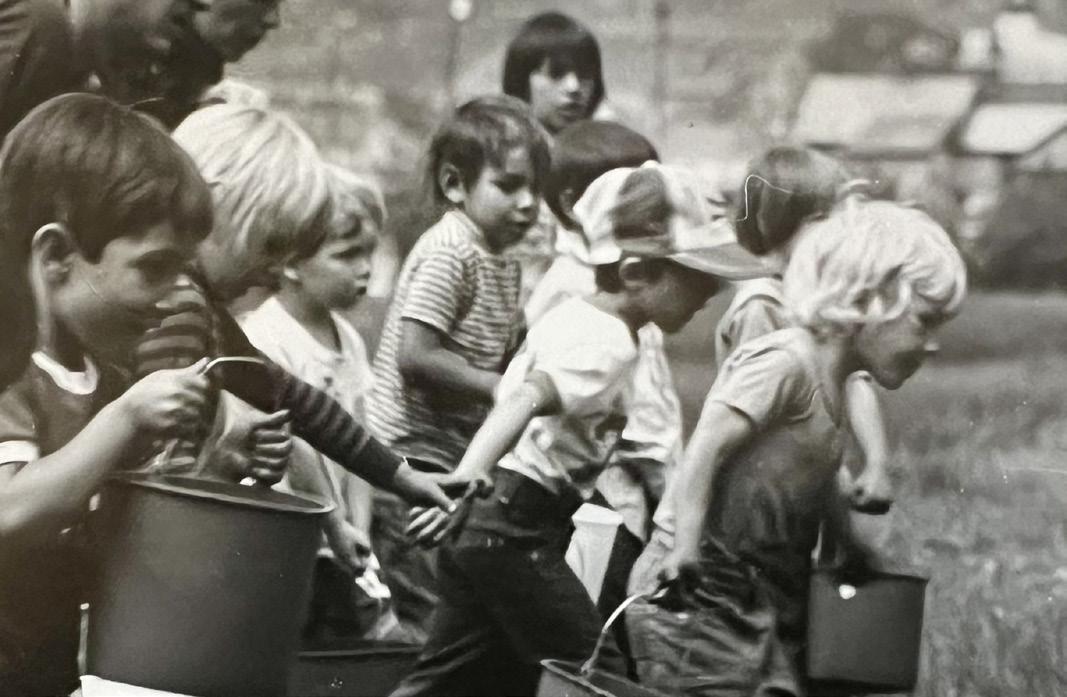
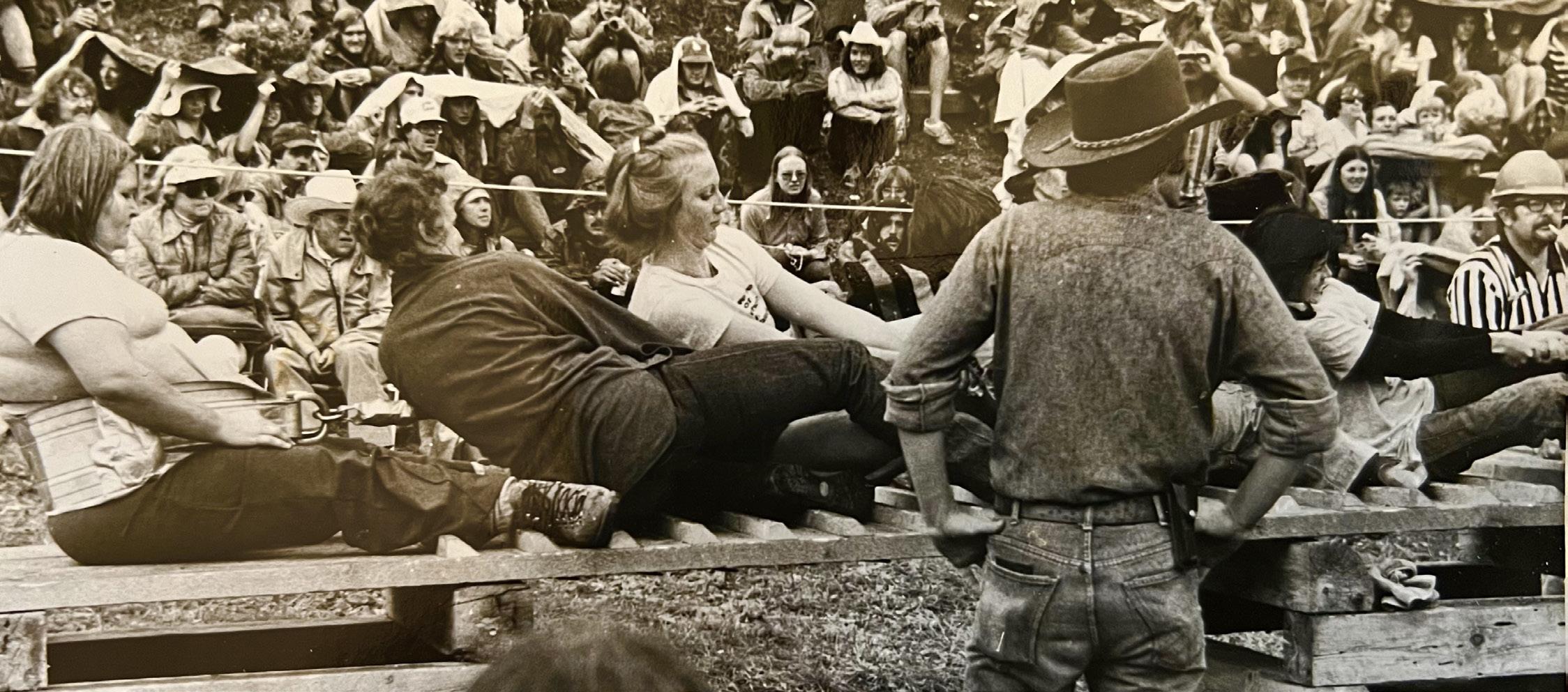
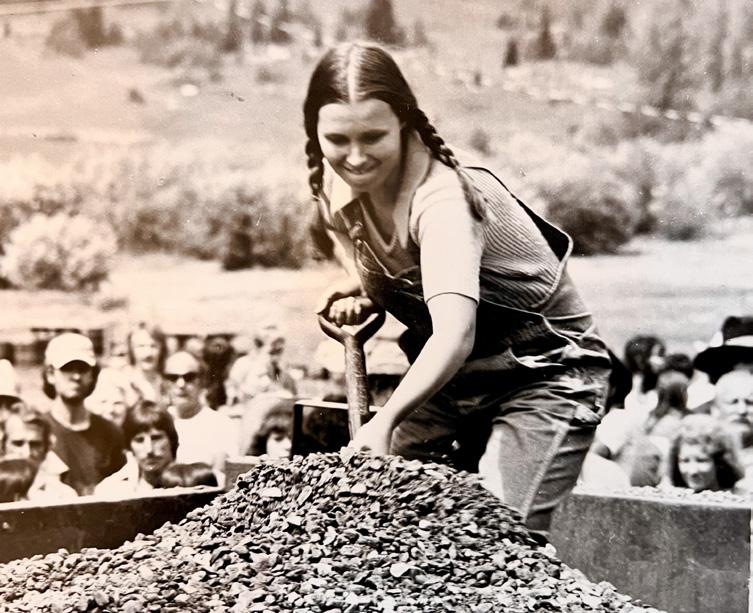
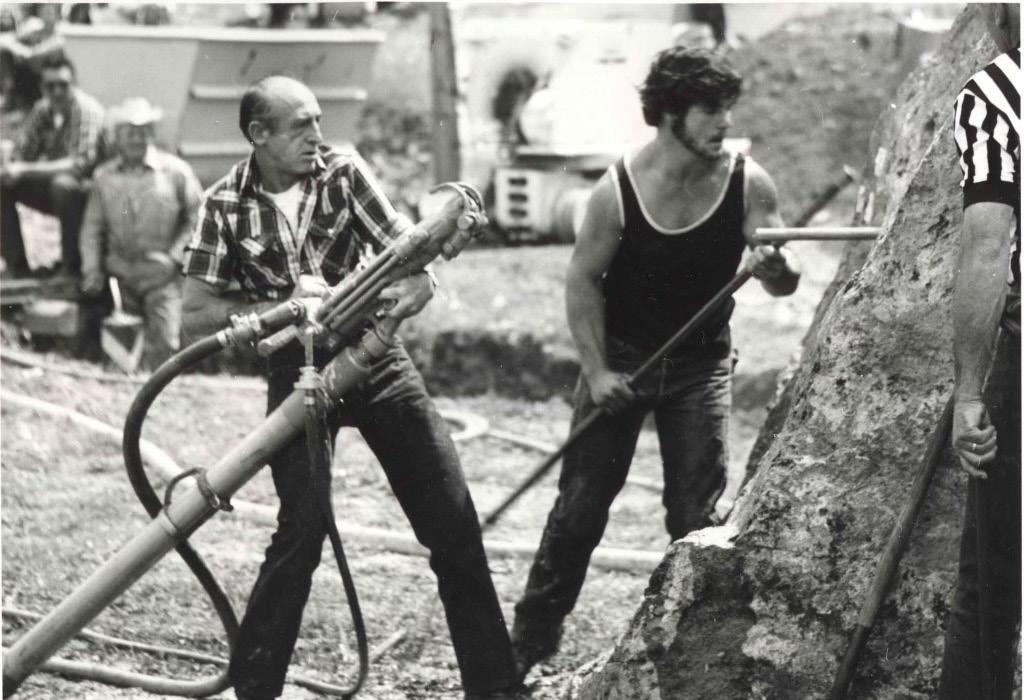
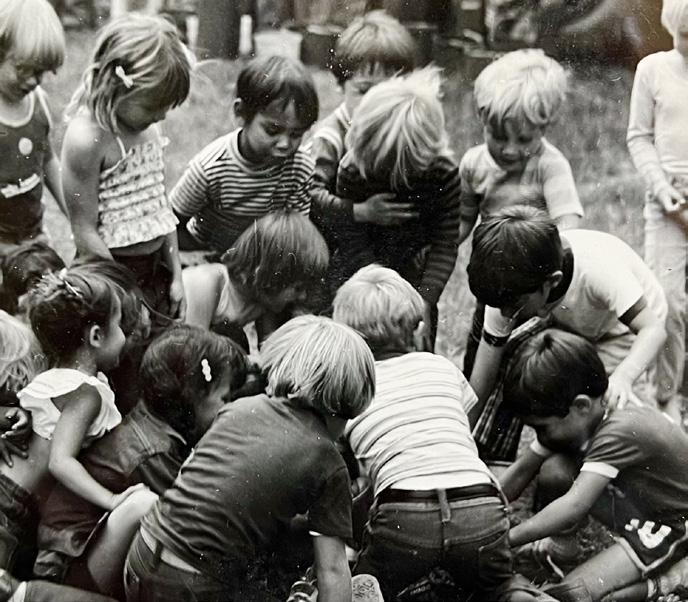
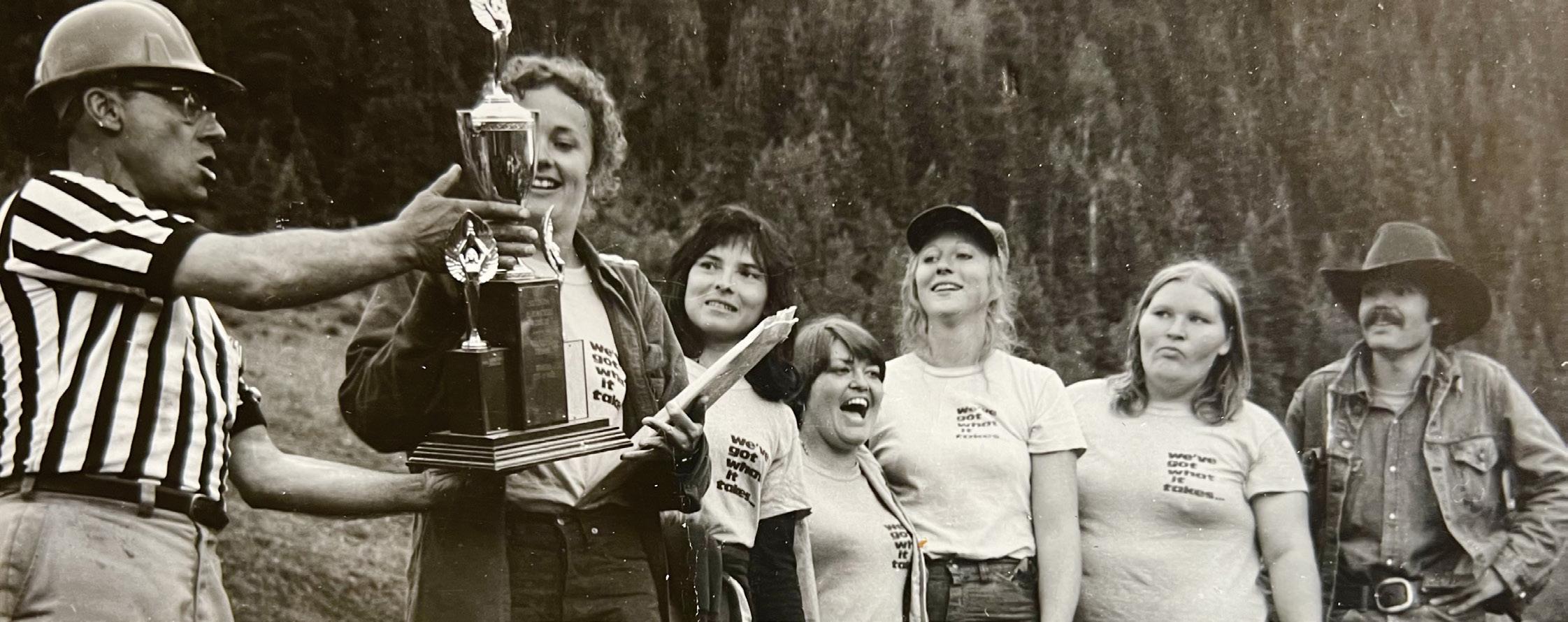
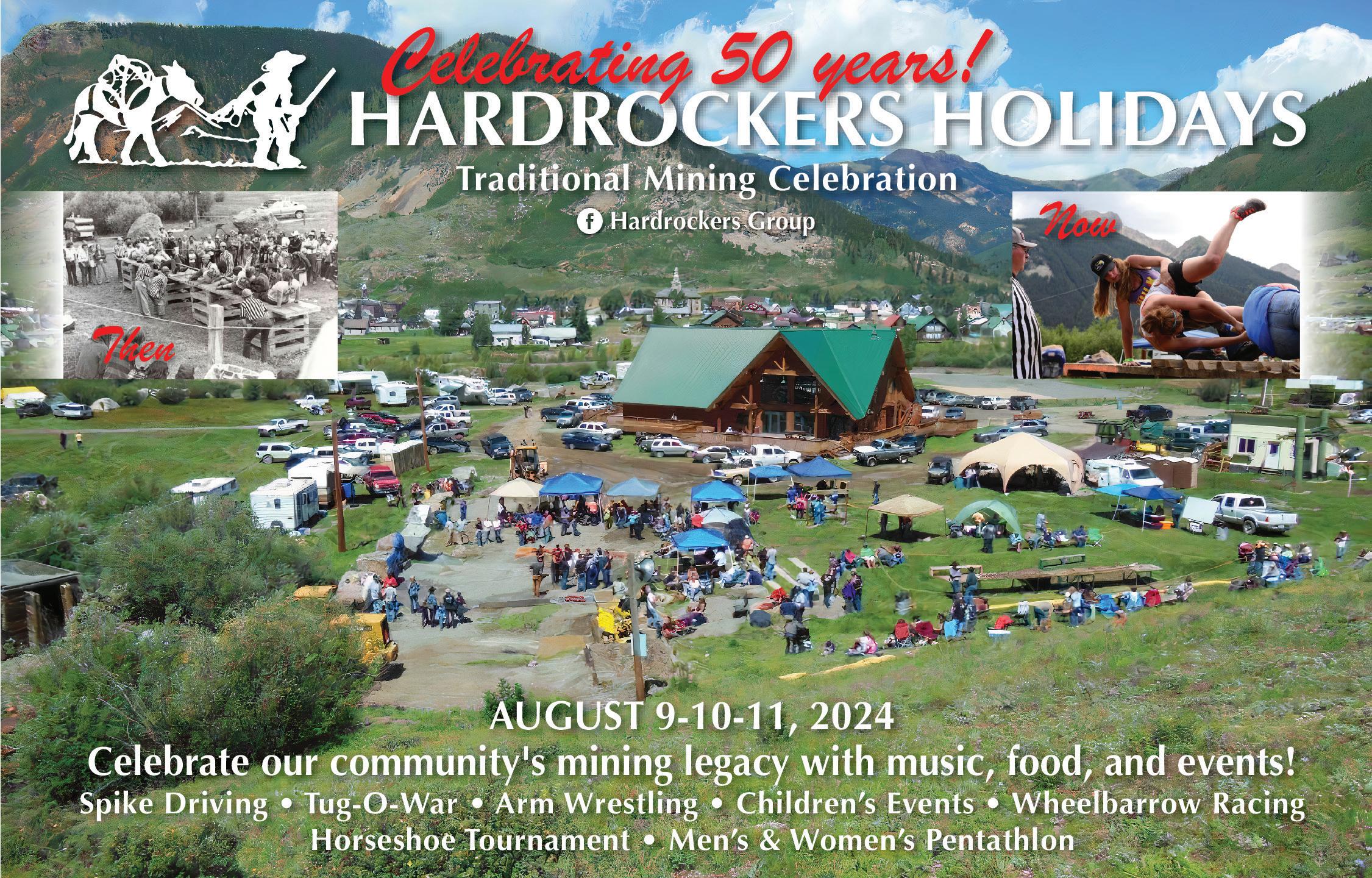
Hardrockers Holidays will celebrate their 50th anniversary this August 9, 10, and 11 at Kendall Mountain Recreation Area in Silverton, Colorado. Hardrockers is an annual mining competition that started back in 1974, and according to the current event organizer, Judy Kuhlman, “It is a three-day event full of wheelbarrow races, Tug-o-War, kid’s events, drilling, mucking, hand steeling, horseshoe’s, and Arm-Wrestling Competition’s. This year, we are pushing for both men’s and women’s Tug-O-war teams. Round up 6 team members and a coach, and hop up on the tug board! Spectators are also needed so we can fill the hillside as in by gone days!”
Back in 1974, brothers Zeke and Tom Zanoni came up with the idea of bringing back the mining competition that used to take place during Labor Day weekend around the turn of the century. Those events went away in the 1950s, and the Zanoni brothers brought it back to the baseball field in the summer of 1974, then moved to a private property on the east end of town for 1975, and then found its final home at Kendall Mountain in 1977. Kendall Mountain Recreation Area is lined with all the giant boulders of decades past with drilling holes in them like time capsules. If only they could tell us what each year was like, but instead, we interviewed the event organizers now and then about their memories of competitions and of the past Hardrockers Holidays.
Born and raised in Silverton, Tom Zanoni co-founded the current version of Hardrockers Holidays. He said, “My brother Zeke and I rejuvenated the event in 1974, there used to be a mining event like Hardrockers that ended in the 50’s. My brother Zeke was researching mining history in Silverton, and we got to talking about the old days of the mining competition. We thought it would be a lot of fun to recreate them, so we did, and we started Hardrockers Holidays that summer of 74.” Tom Zanoni recalled that the Tug-O-War was a newer addition added to the historical mining events like drilling and mucking and became a big hit for the event. There were teams that traveled around to different competitions, and they took TugO-War very seriously back then.
The platform on which it still competes today was built so that the audiences of 1000 or more people in attendance back in the day could see the Tug-of-War teams more clearly. Judy and Ernie Kuhlman, who have been competing and helping the event since the 1970s, are still the event organizers. Judy, who still participates in the Tug-of-War, hand-mucking, and wheelbarrow competition, is just as serious about it as she was then.
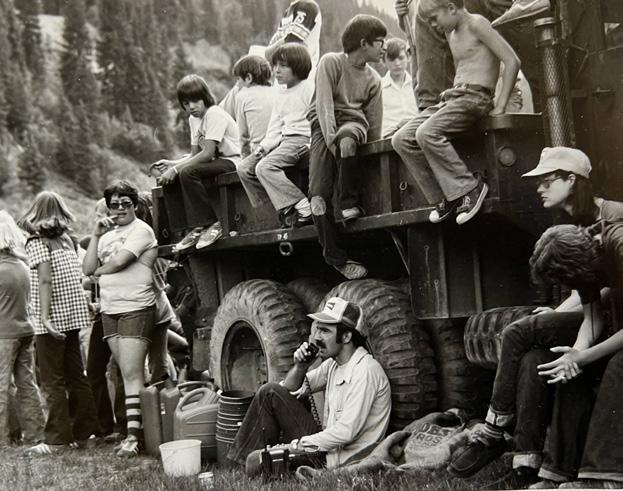

“Ernie started out as timekeeper back then and is still Master Judge,” Judy tells us. “And this will be my 49th year competing in the Hardrockers. This should have been my 50th year, but back in 1975, I was just about to go up and volunteer to be a puller. Peggy Crawford just beat me to it,” recalled Judy, laughing heartily about the memory.
She continued to recall the 1970s tough Tug-O-War competitions: “I started in 1976, and we didn’t have a very good anchor that year, but then Brenda Ray came into the picture in ‘77. Then in 1977 is when we had our beginning of a seven-year run of first-place winnings for the Timberline Tubbies.”
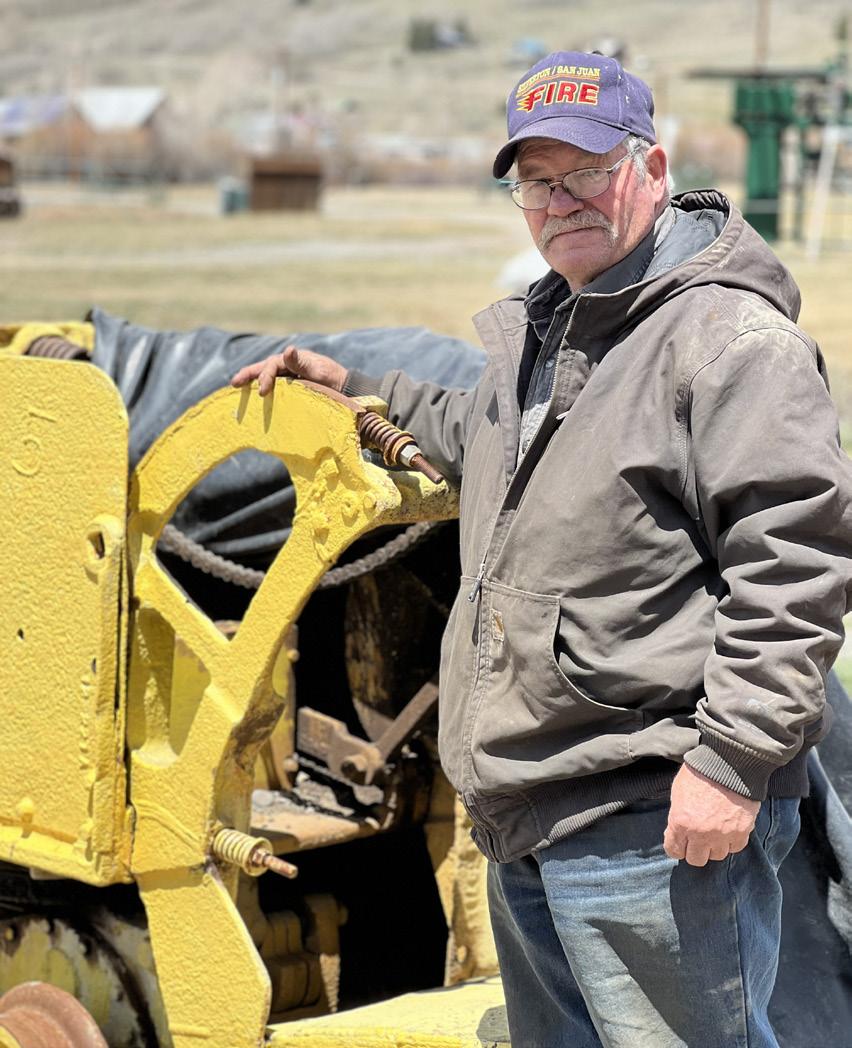
Terry Rhoades, who was also born and raised in Silverton, is the only person who has competed in all 49 years of the Hardrocker’s competitions and plans on being there this year for his 50th year of competing. I got to hang out with Terry over by the mucking machine and drill rocks at Kendall and talk about the last five decades of his competitions. I asked him where all these life-size drilling boulders had come from, and he said, “Quite a few of them came from down below the Pittsburg Mine, and the state gave us some from the Lime Creek area. The bigger boulders last about three years of competitions, and the smaller ones only last one year.”
Terry was only 18 years old the first time he competed in Hardrockers in 1974, which was also the same time he started working in the mines. His Dad Bill Rhoades was his drilling partner and his son Trent Rhoades has also been his drilling partner honoring the family tradition. . He continued, “My favorite event is the 12B Mucker; the others are just what you had to do for the Pentathlon. My dad also ran that event, and it was a good time,” Terry continued. “Foz (Roy) Andrean won the best mucking usually and was one of the best muckers we had over the years.”

Ernie Kuhlman recollected his timekeeper to Master Judge roles as “I started with a whistle, but the crowd got so big that we had to go to more volume, so I went to a 38 special shooting blanks in the air, and then the crowds increased more so I had to go to a 357 magnum that was Dave Andrews as a matter of fact.”
Although Judy Kuhlman still runs the event today, she has a list of people who have helped organize it over the years, volunteered endlessly, and ensured that Hardrockers Holidays remains today. That list was too long to print for this article, but nonetheless, she knew each and every one of them and exactly what they had done over the last 50 years.
So, from the Kuhlman Family, “THANK YOU. We cannot express our gratitude enough.” Hardrockers Holidays will be the second weekend of August 9, 10, and 11 and will feature events like kids’ events, drilling, hand mucking, Tug-O-War, hand steeling, wheel barreling, arm wrestling, horseshoes and so much more.
Check out silvertoncolorado.com calendar of events for this year’s schedule. If you would like to donate or contact the non-profit Hardrocker’s Holiday, please send it to PO Box 613 Silverton, CO 81433










“Silverton...Where the past is not dead. In fact, it’s not even past.” - Allen Nossaman
After officially opening to the public in 1995, The San Juan County Historical Society continues to maintain and fund the archive research center. It was constructed with the goal of preserving Silverton and the surrounding area’s material history. The building hosts a substantial archival collection of books, historical maps, diaries, letters, newspapers, photos, and more. Please call and make an appointment before visiting. More information at www. sanjuancountyhistoricalsociety.org.
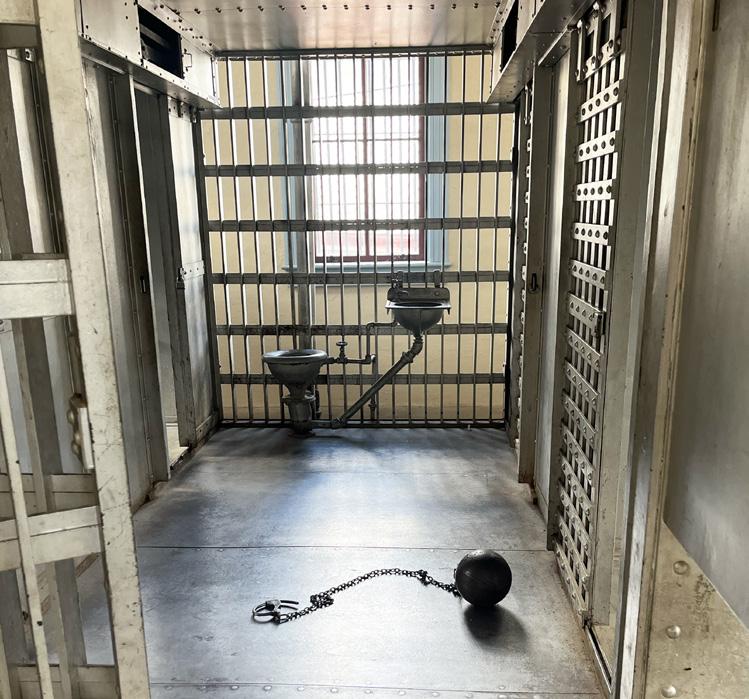
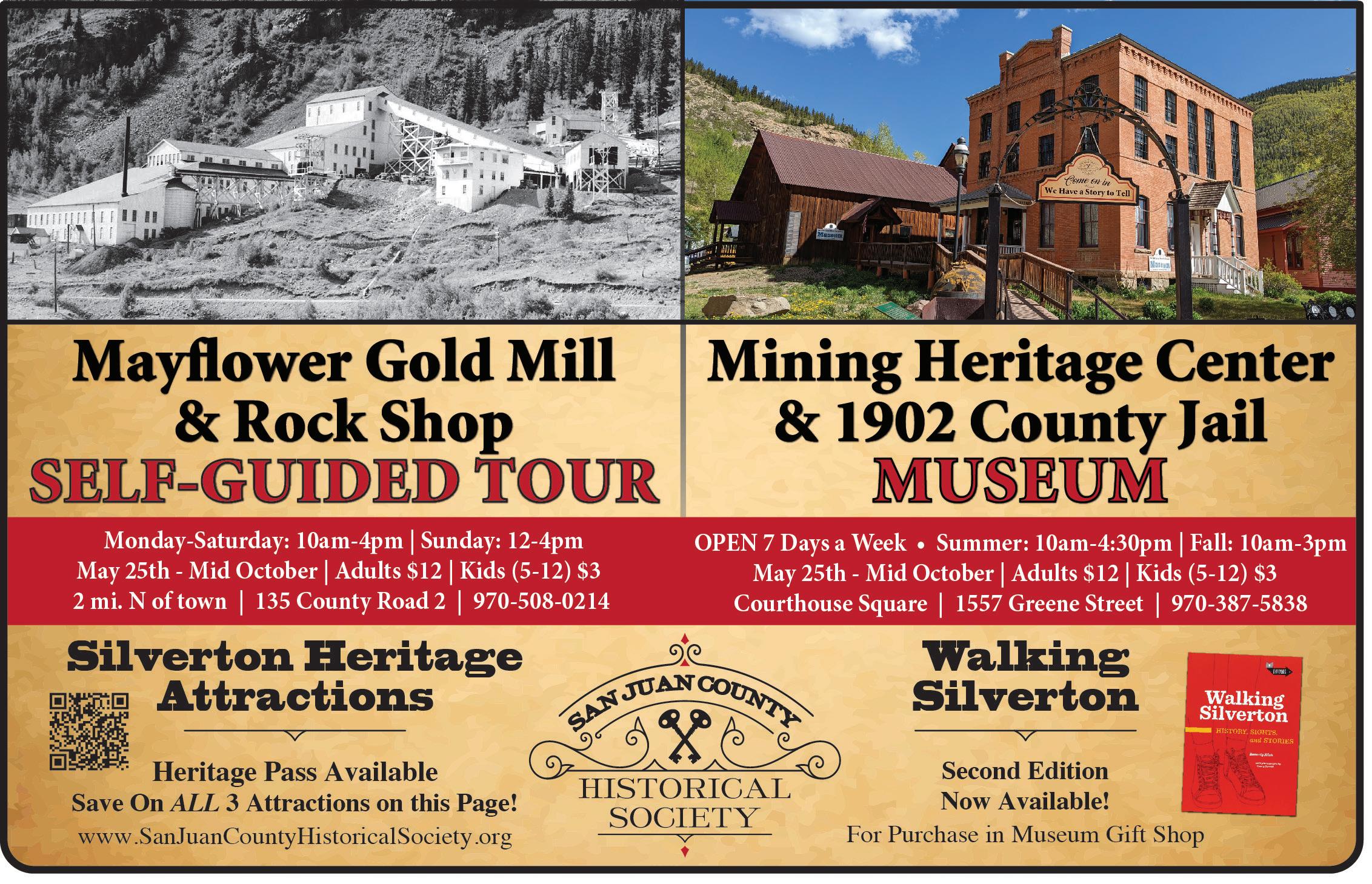
Built in 1902, this former jail is now a museum. Original cells remain inside, which are fun for all ages to explore. The basement of the museum has a stunning mineral collection and an authentic assaying office on display, along with core drilling equipment. More information at www. sanjuancountyhistoricalsociety.org.
Mining Heritage Center
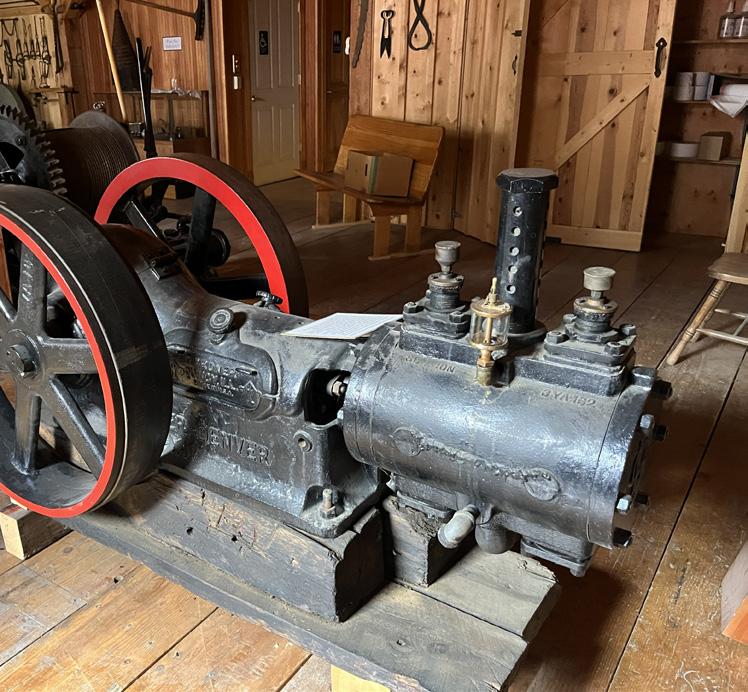
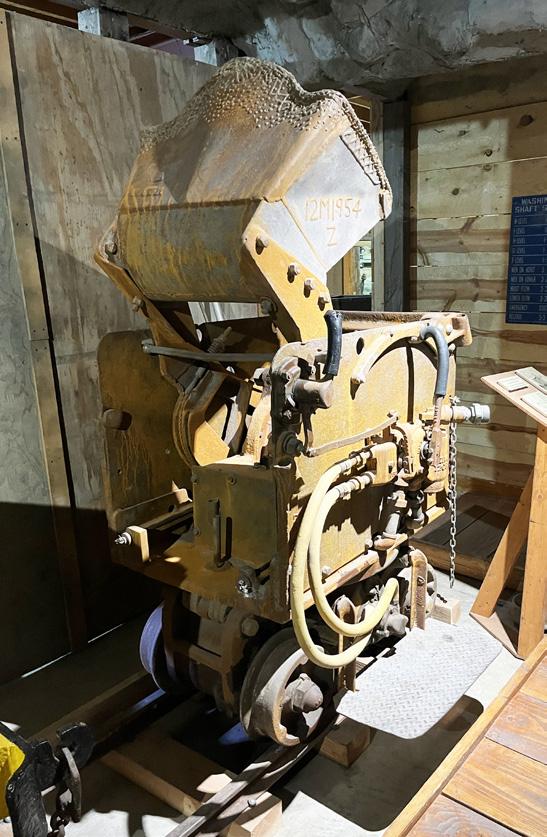
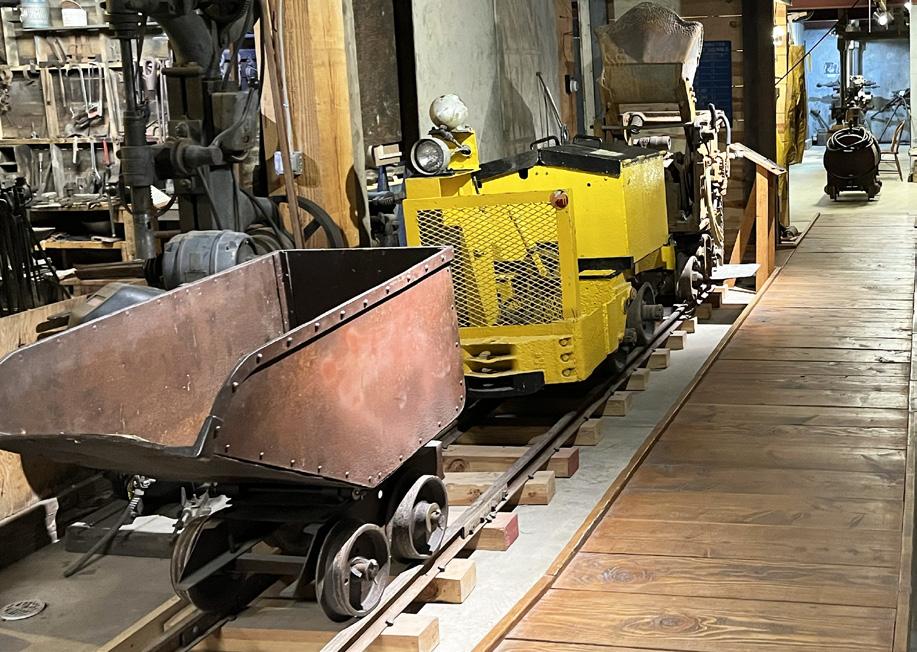
Connected to the 1902 Country Jail Museum, The Mining Heritage Center is the platform for a massive collection of mining relics from the San Juan region. The frontispiece of the museum is constructed of original timbers from the Caledonia
Boarding House. With incredible and painstaking effort, the Caledonia was salvaged and hauled from Minnie Gulch to Silverton, where it was carefully restored by The San Juan County Historical Society. Boasting multiple levels of displays, including an immersive mine exhibit complete with a tunnel that visitors can venture through, Silverton’s Mining Heritage Center is considered to be one of the best mining history museums in the country and is definitely a must for visiting. More information at www.sanjuancountyhistoricalsociety.org.
Located in town, at the railroad depot near Cement and 10th Streets, the Historic Railroad Park hosts the newly restored Silverton Northern Engine House along with train cars and other railroad equipment. It is a fun stop for anyone interested in the vital role of rail transportation in the American West, as well as for kids and adults who are just looking to explore.
The Mayflower Mill was built in 1929 to process ore from the Mayflower Mines. It resides just outside Silverton, across from the stunning Arrastra Gulch. After closing its doors in 1991, the mill was donated by Sunnyside Gold Company to the San Juan County Historical Society. The SJCHS preserves and maintains the original milling equipment to demonstrate the processes of an operational mill, all of which visitors can observe on self-guided tours. Highlights of these tours include the impressive aerial trams spanning the expanse of Arrastra Gulch, with buckets still intact, along with moving machinery depicting how gold, silver, and other metals were processed. The Mayflower Mill is a must for anyone interested in how milling was done in the past. More information at www.sanjuancountyhistoricalsociety.org.
Located outside Silverton near the ghost town of Howardsville, the mine was discovered in 1872 by the Niegold brothers, who
were originally from Germany. Today, 150+ years later, visitors can experience the thrill of what mining was like. The tour starts with an open-air mine train taking guests 1500 feet underground into Galena Mountain. Once inside, the guides, often former miners themselves, will demonstrate how different drills, mucking machines, and other equipment were used. There is free gold panning outside the mine, and if you look up the mountainside, you can see the Old Hundred boarding house high on the cliffs above. More information is available at www.minetour.com.
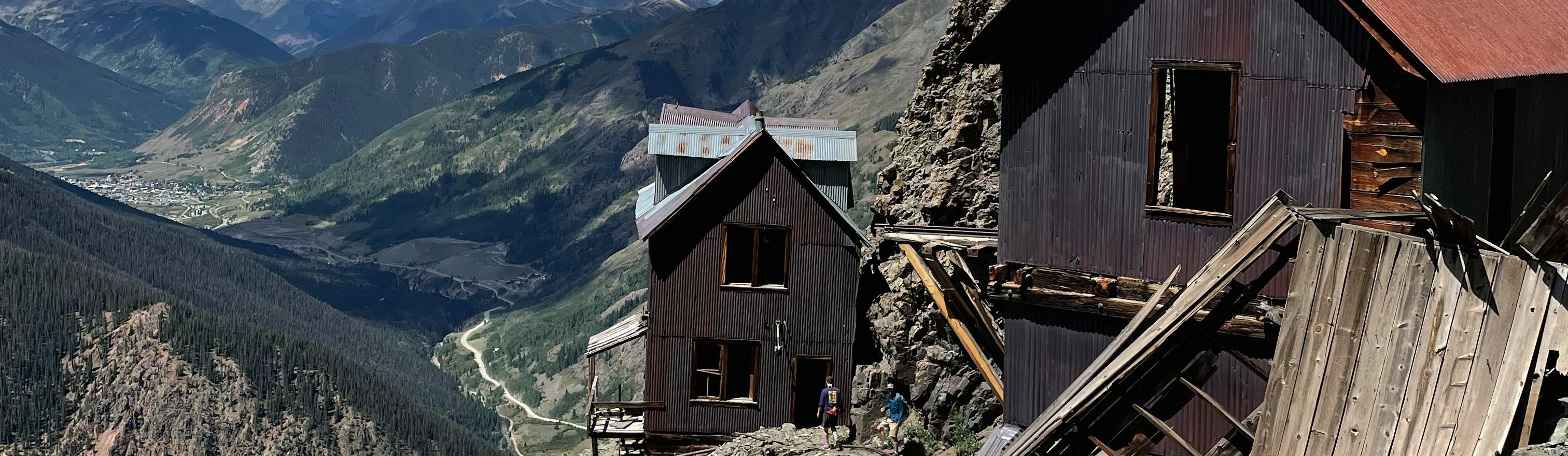
Following the old Silverton Northern Railroad grade, now a 4x4 road, visitors can travel to the ghost town of Animas Forks. It is a true relic of the past, with wooden houses, all of which can be explored, nestled between towering peaks. The ruins of several mills and mines are also still visible along the journey. It is worth taking a day or half a day trip from Silverton to visit.
The San Juan County Historical Society 2024 is a year for anniversaries in Silverton. The San Juan County Historical Society, responsible for much of the preservation efforts in Silverton, is turning 60. The society was founded in 1964 with the goal of focusing on heritage-based tourism. The society has undertaken many important projects, notably the incredible preservation efforts that saved The Old Hundred Boarding House, preservation efforts at Animas Forks, maintaining the Mayflower Mill, managing the Hillside Cemetery, restoring the Silverton Northern Engine House, and even saving the Silverton Town Hall after a fire destroyed it, plus many more. To learn more about the society, donate, or become a member, please visit www.sanjuancountyhistoricalsociety.org.
This year’s Destination Silverton is dedicated to George Darnell Zanoni, aka “Zeke.” One of the legacies Zeke has left us with is his dedication to history. He was an anchor of support for our local museum and historical society.


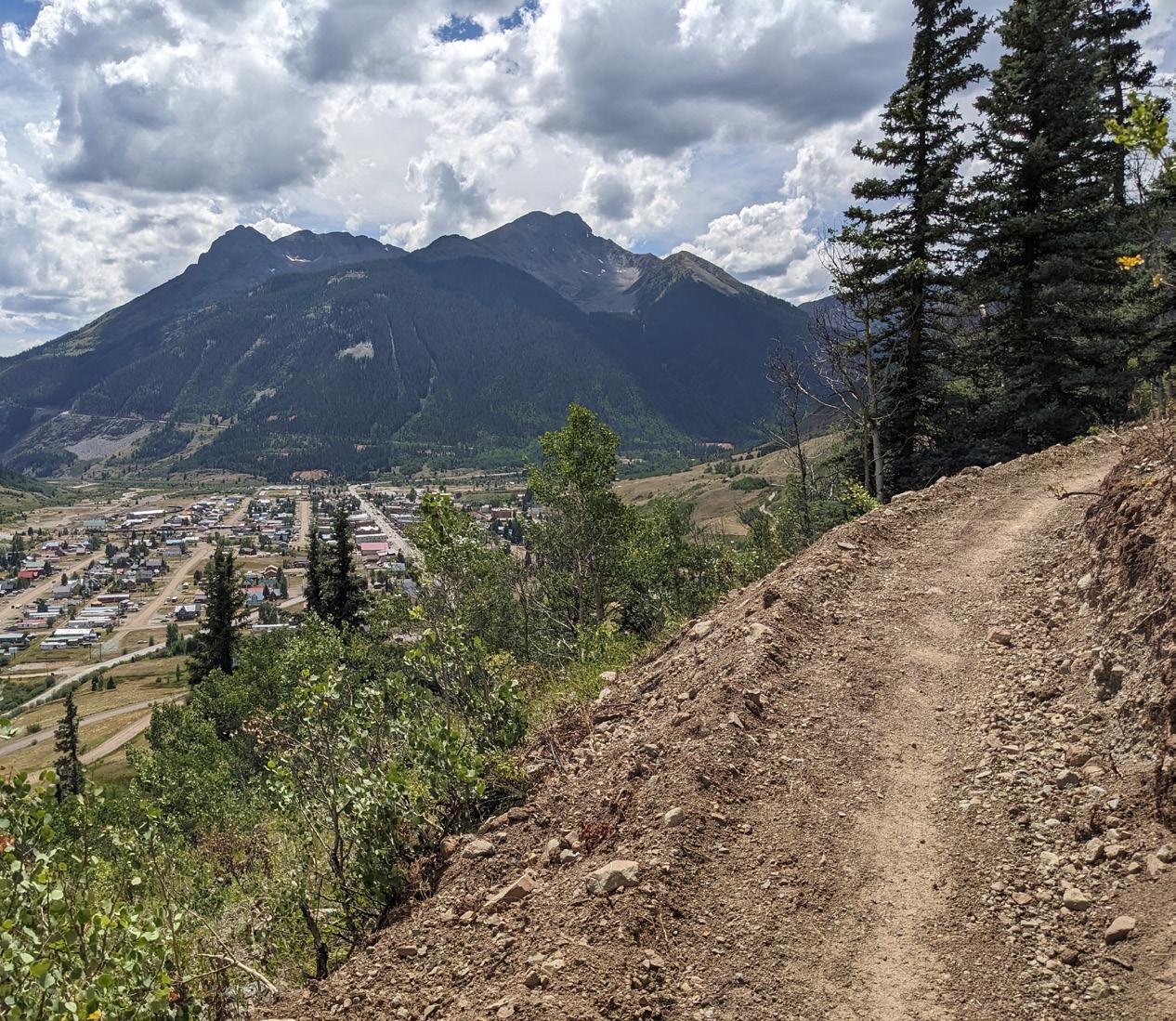
If you’ve ever ridden the Colorado Trail or the myriad other mountain bike trails between Molas Pass and Cascade Creek, then you’ve experienced some of the sweet singletrack that southern San Juan County has to offer, with its stunning vistas, manageable climbs, and thrilling descents.
But closer to Silverton, the only incorporated town in the county, the riding becomes more rugged. Many of the trails are abandoned railroad grades and pack mule trails - vestiges of Silverton’s mining heyday. They are steep, poorly maintained and highly technical, appealing to expert riders only. Silverton Singletrack Society aims to change this with the Baker’s Park Trail System.
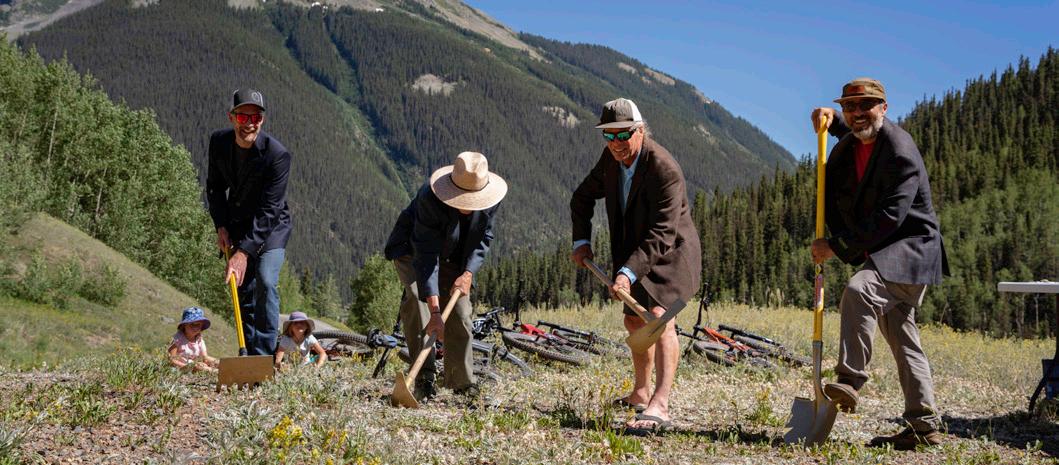
Born from the passion of local mountain biking enthusiasts, the dream of Baker’s Park began nearly a decade ago when members of Silverton Singletrack Society, a local nonprofit dedicated to promoting mountain biking in the area, became inspired to create purpose-built bike trails close to home. Now, after years of planning and collaboration with community members, local government, and federal land management agencies, the idea is finally bearing fruit.
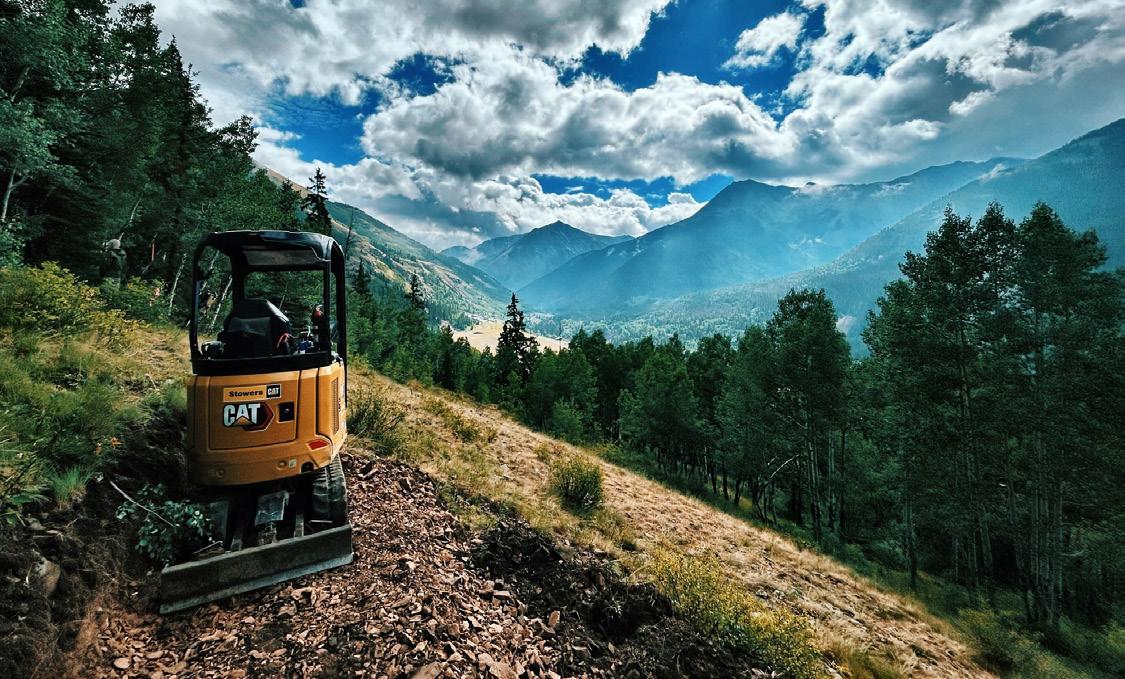
Named in homage to Charles Baker, the pioneering prospector who put Silverton on the map during the 19th-century gold rush, this ambitious project aims to establish over 30 miles of trail weaving through the majestic landscape. The
first phase of development, totaling 10 miles, will offer accessible green and blue-rated trails suitable for riders of varying abilities, set amidst the scenic splendor of aspen groves and conifer forests.
While the trails will be bike-optimized, Baker’s Park is designed to be a multi-use recreational haven, inviting hikers, trail runners, and even Class 1 e-bike riders to explore the high country above Silverton. The trail system will provide a well-rounded experience for riders of all abilities, with something for everyone, from green beginner trails to challenging features that will appeal to the most advanced riders.
With fewer than 10 miles of trail open to mountain bikes on Bureau of Land Management lands in San Juan County, Baker’s Park promises to enhance the quality of life for residents while bolstering tourism and stimulating economic growth, offering a compelling reason for outdoor enthusiasts to explore the rugged charm of Silverton on two wheels.
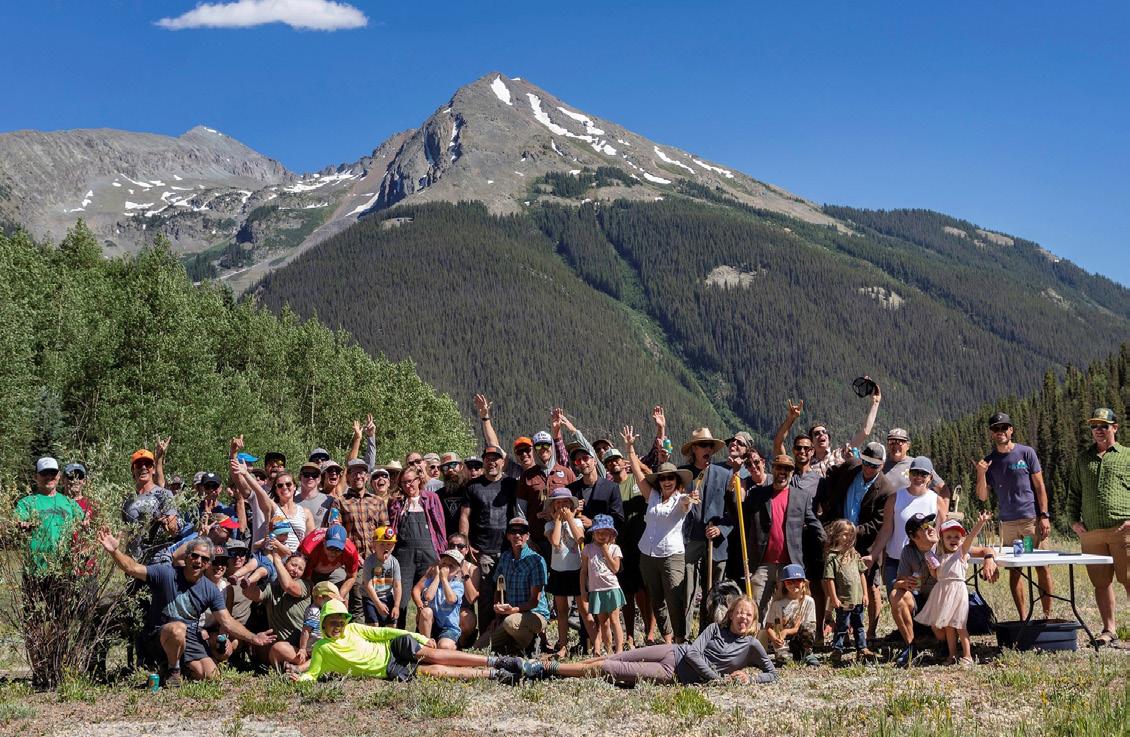
The momentum behind Baker’s Park continues to grow, and the groundbreaking on this much-anticipated project was celebrated in July of 2023. Construction of Phase One will continue this summer, and fundraising efforts are ongoing. Stay tuned for announcements when the first portion of the trail system opens to the public, which is expected in 2025!
As Silverton embarks on this transformative journey, all are invited to be part of the adventure. You can help realize the vision of Silverton as a world-class mountain biking destination with a donation to the “Boost Baker’s Park” GoFundMe campaign. Every dollar counts and helps make this dream a reality. Visit www.silvertonsingletracksociety.org to learn more or get involved.



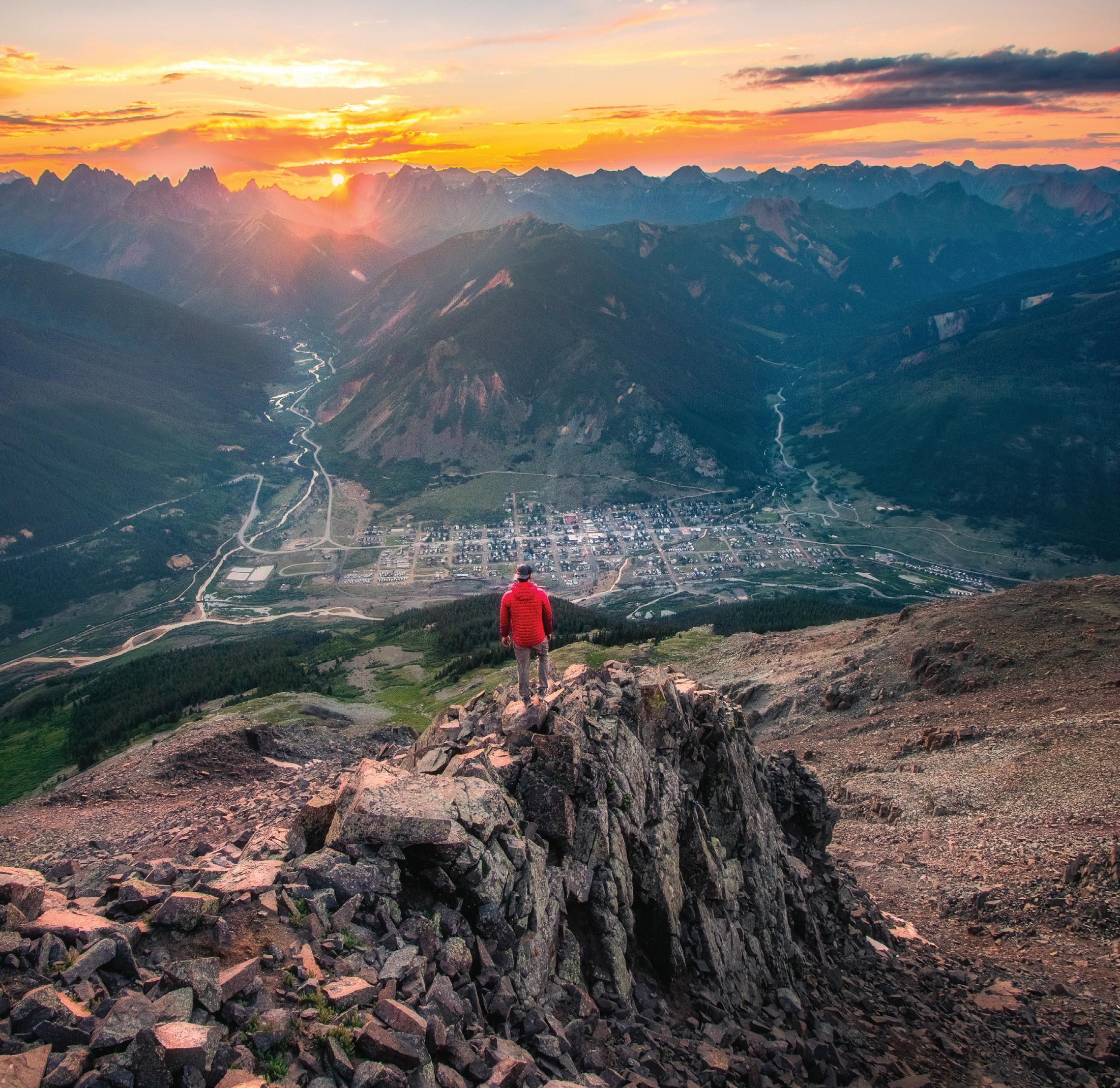
Nestled high in the San Juan Mountains at a staggering 9,318 feet, Silverton, Colorado, is a town steeped in history and natural beauty. Founded in 1874, it rose from a humble mining camp to a bustling center of the region’s precious metals boom.
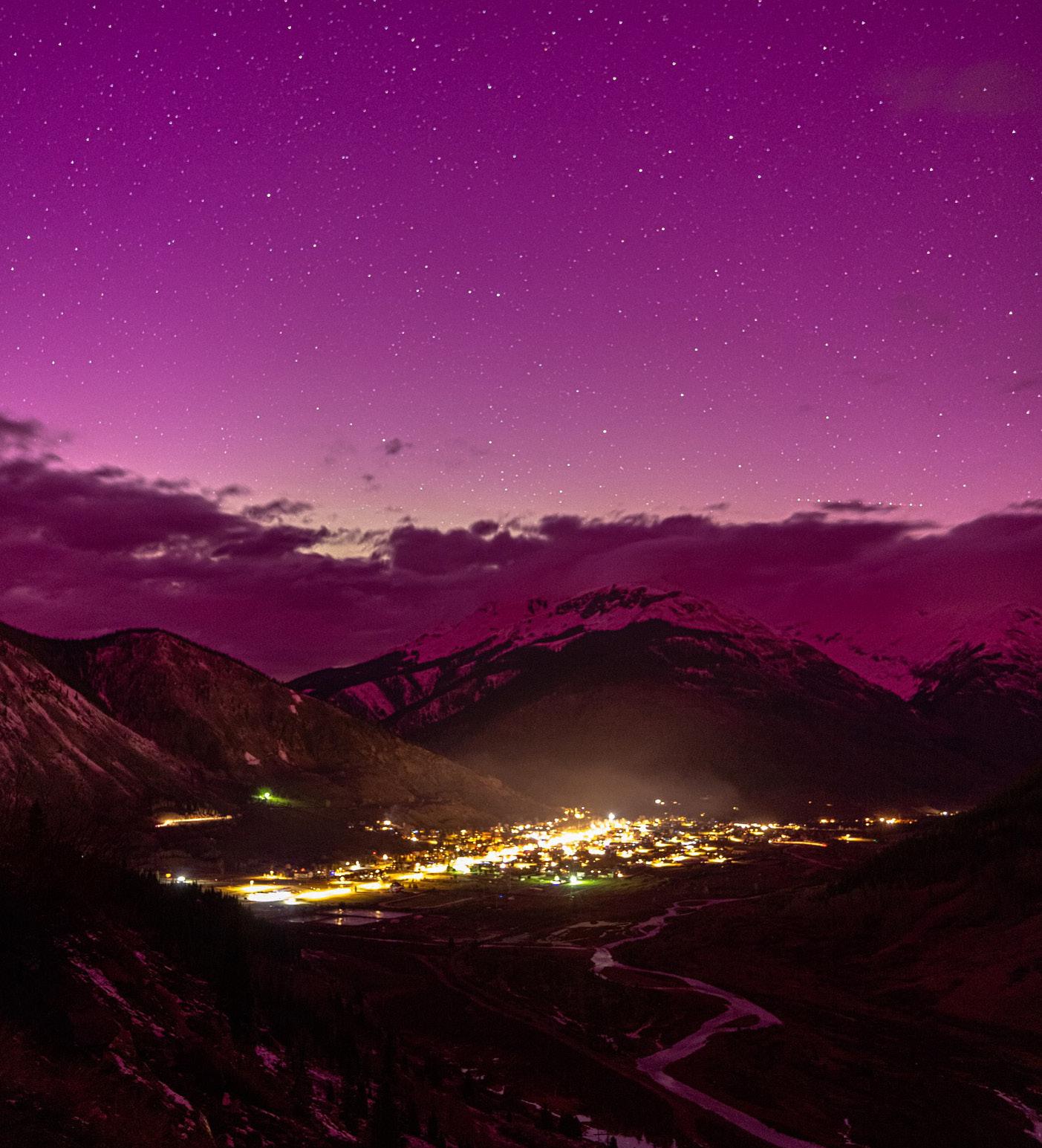
Today, Silverton is the last active mining camp in San Juan County, a testament to its enduring spirit. The town’s well-preserved historic buildings offer a glimpse into its colorful past, while the surrounding mountains beckon with stunning scenery and exciting outdoor adventures.
Founded in 1874: Silverton’s roots trace back to the 1860s, when prospectors arrived in the San Juan Mountains searching for gold and silver. The town was officially laid out in 1874 and quickly became a center for numerous mining camps.
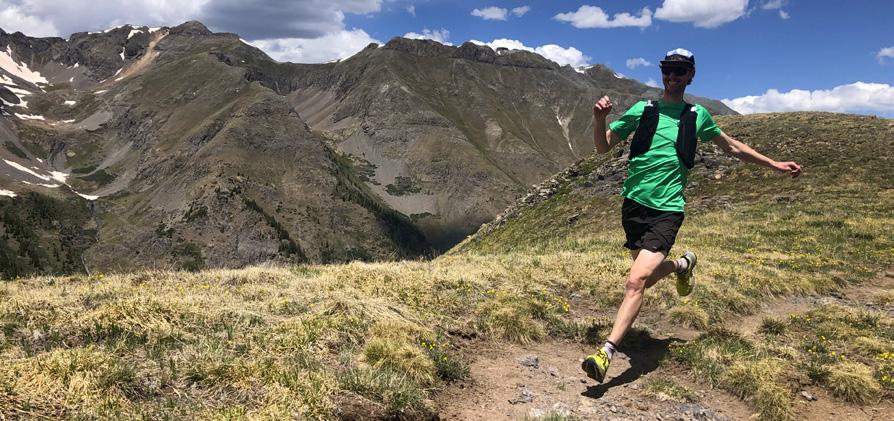
A Historic Mining Town: Silverton’s rich history is deeply tied to mining. During its peak in the late 19th and early 20th centuries, the town boomed with a population exceeding 2,000 people. However, mining activity declined in the mid-20th century, and the last active mine closed in 1991. More on mining check out the feature about Hardrocker’s Holiday on page 12.
High-Altitude Gem: Nestled in the San Juan Mountains, Silverton boasts a staggering elevation of 9,318 feet, making it one of the highest incorporated towns in North America. This high altitude contributes to its stunning scenery and cool summer temperatures. Read about Flowers and Foraging on page 34.
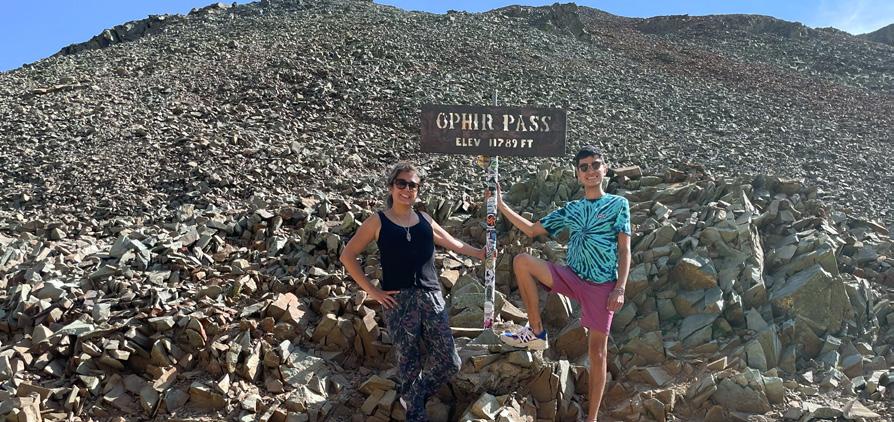
San Juan County Seat: Silverton is the seat of San Juan County, Colorado. As the most populous community and the only incorporated municipality in the county, it serves as the center of local government. Read about Silverton’s thriving Creative District on page 8!
A National Historic Landmark District: Silverton’s well-preserved historic buildings and rich heritage earned it recognition as a National Historic Landmark District in 1966. Walking through the town today is like stepping back in time to the Wild West era. Read about Silverton then and now, 150th Year of Silverton on page 6.
Famous Narrow Gauge Railroad: The iconic Durango & Silverton Narrow Gauge Railroad, established in 1882, is a significant draw for visitors. This coal-fired, steam-powered train takes passengers on a scenic journey through the breathtaking San Juan Mountains, offering a glimpse into Silverton’s mining past.
Outdoor Recreation Paradise: Despite its mining history, Silverton has transformed into a haven for outdoor enthusiasts. Hikers, trail runners, mountain bikers, boaters, and jeep riders flock to the area to explore the vast network of trails that wind through the mountains, offering stunning vistas and opportunities for adventure. The Singletrack Society info can be found on page 20.
Sesquicentennial Celebration in 2024: This year marks Silverton’s 150th anniversary, and the town is gearing up for a year-long celebration filled with special events, festivals, and historical reenactments.
YEAR-ROUND RECREATION DESTINATION:
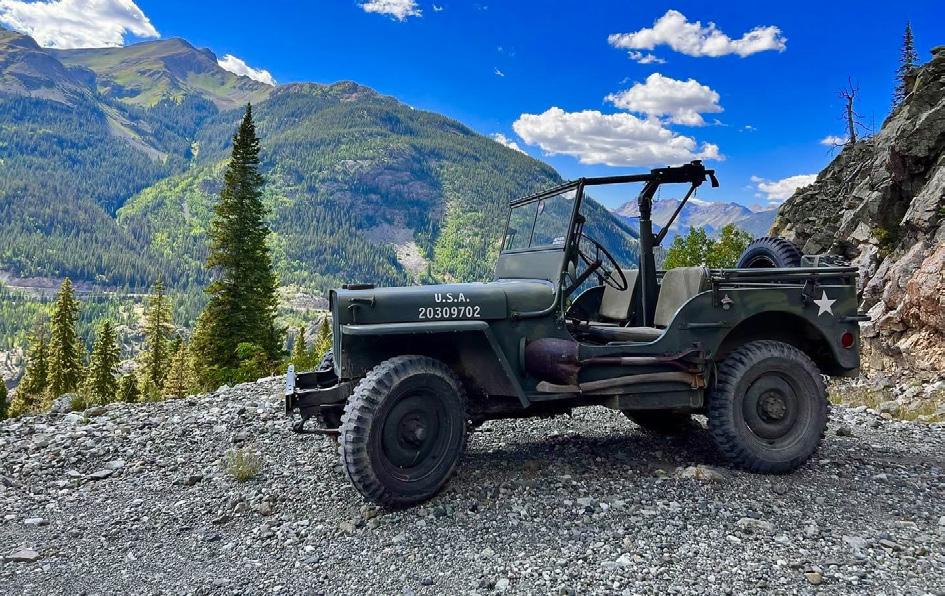
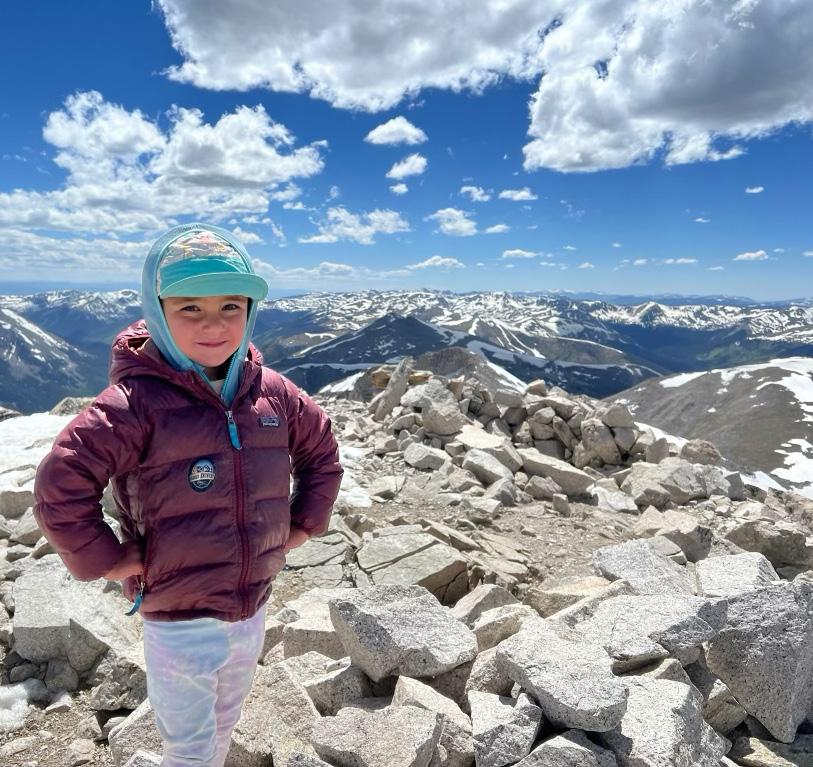
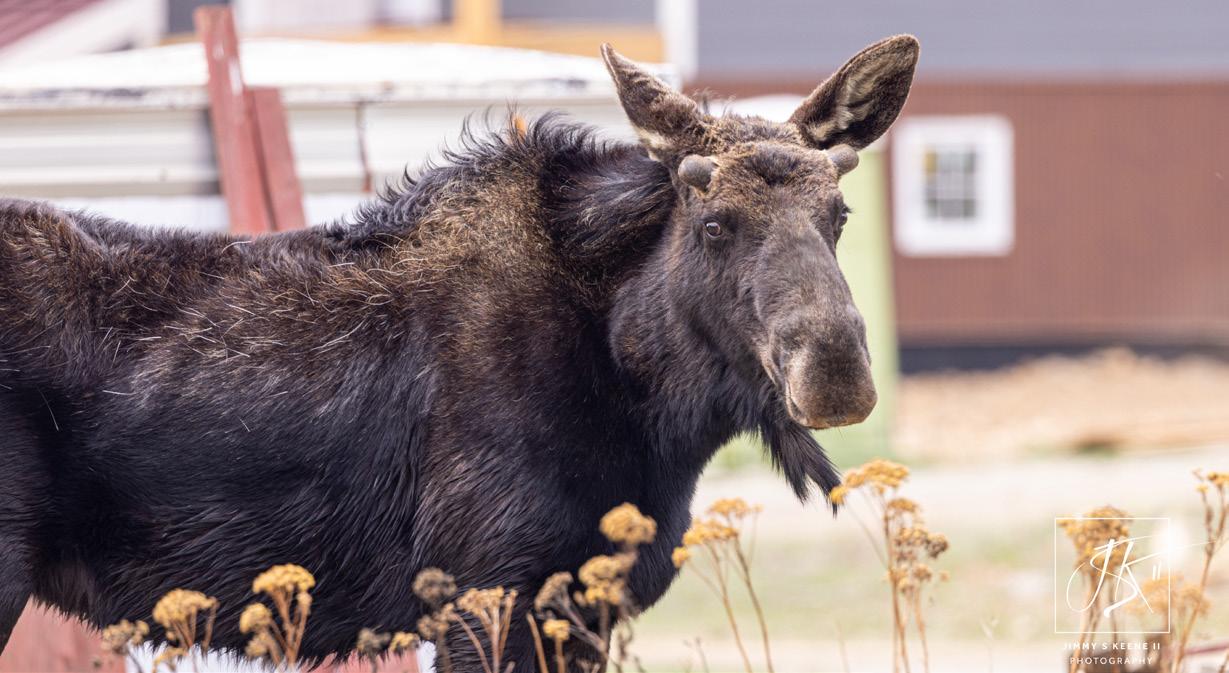
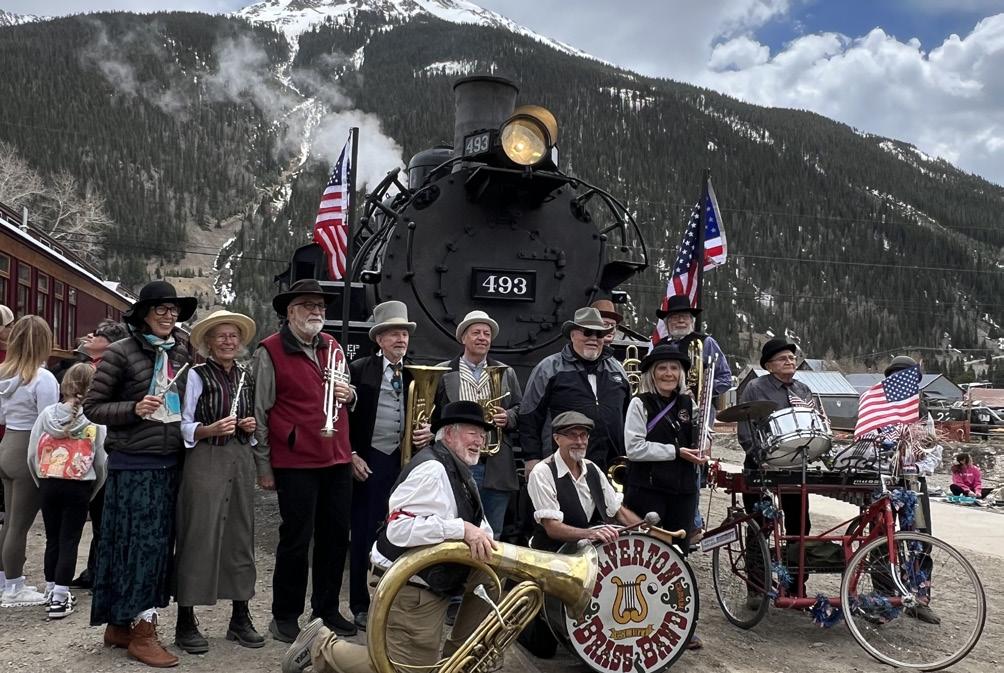
SUMMER ACTIVITIES Hiking • Biking • Durango Silverton Narrow Gauge Train • Jeeping • OHV & Dirt Bike Trails • Camping • Rafting • Fishing • Canoing • Nature Photography • Horseback Riding • Rock Hounding • Amazing Museums & Tours • Brass Band • Ride the Alpine Loop • Wild Flowers • Wildlife Watching • Paragliding • Panning for Gold • Access the Colorado Trail & Weminuche Wilderness Area • Backpacking • Scenic Motorcycle Rides • River Rafting •Trail Running • Wild Mushroom Hunting • Prospecting • Paddle Boarding • Gold Mines • Mill Tours • Ghost Towns • Mountaineering • Star Gazing • Million Dollar Highway •

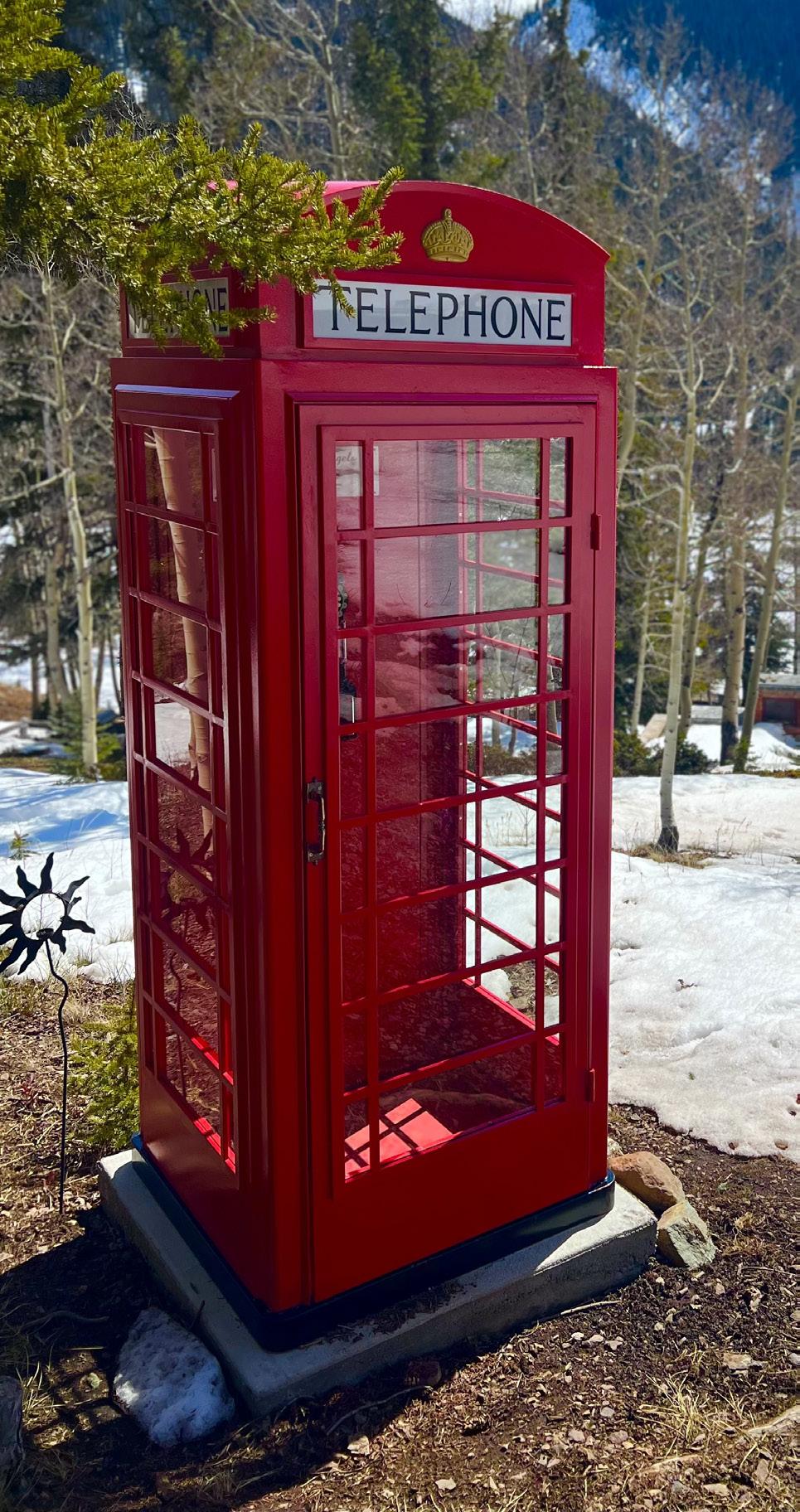
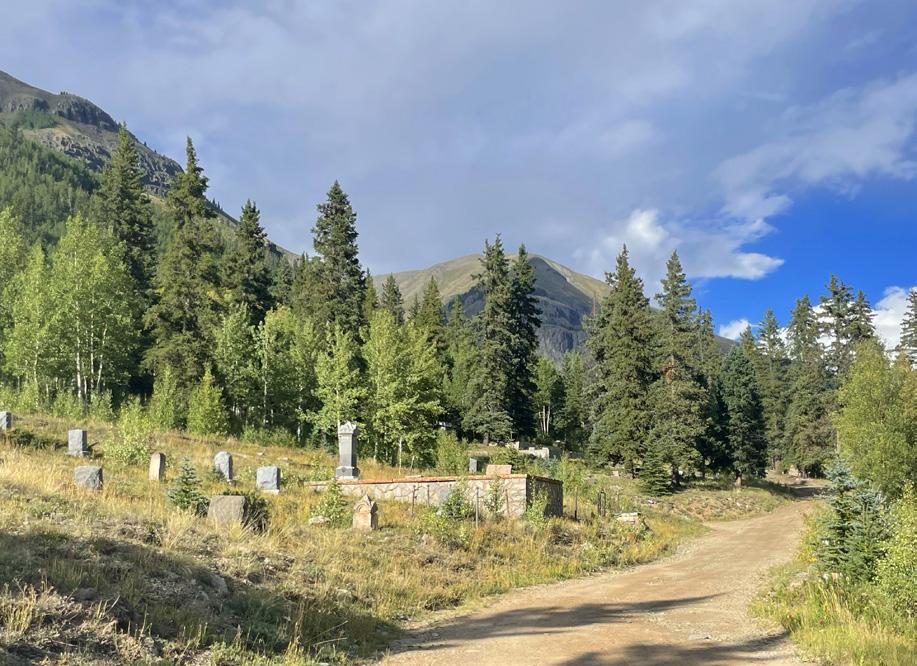
The Silverton Cemetery’s Hillside Wind Phone was an installation done this last fall by a local woman who has a terminal illness, Nancy Brockman. She said, “I envisioned the Hillside Wind Phone not as a monument to me when this cancer kills me, but as a gift to those who visit the cemetery, including my friends and family, but more importantly to all.” The Wind Phone is a concept that started in Japan, and now it is all over the world. It can be found on mywindphone.com.
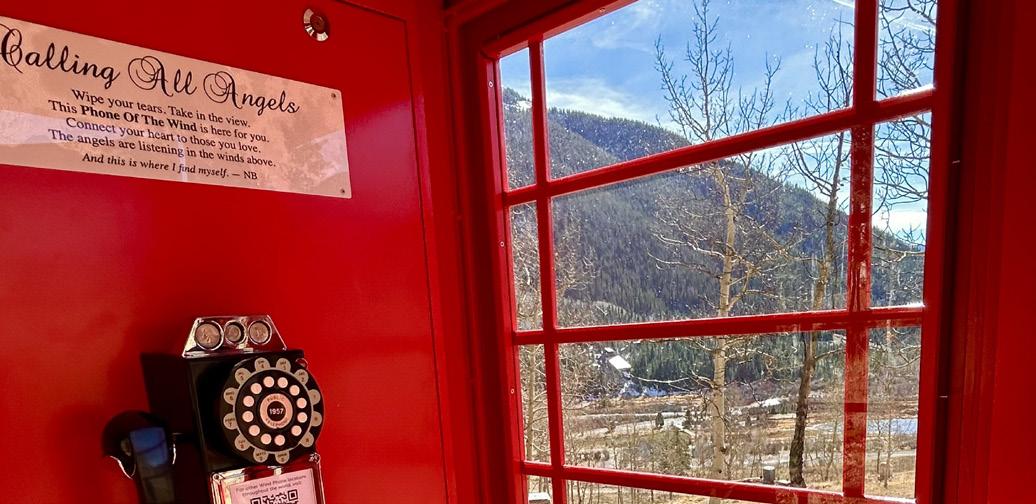
The Hillside Wind Phone is a connection to the stars and heaven and a line to our loved ones who have passed with the retro phone located inside of it. The plaque on the front reads, “Calling All Angels, wipe your tears, take in the view. This Phone of The Wind is here for you. Connect your heart to those you love. The Angels are listening in the winds above. NB.”
A “line to heaven” has already been given to a local man, Rick Noble, who lost his doggy companion, Kora, the Blue Healer, this winter in a sudden and tragic manner. On the winter afternoon of February 10th, 2024, Rick was doing his Saturday chores and was finishing up at the dump when he got an overwhelming urge and an inner voice telling him to visit the Hillside Wind Phone just eight days after Kora had passed away.
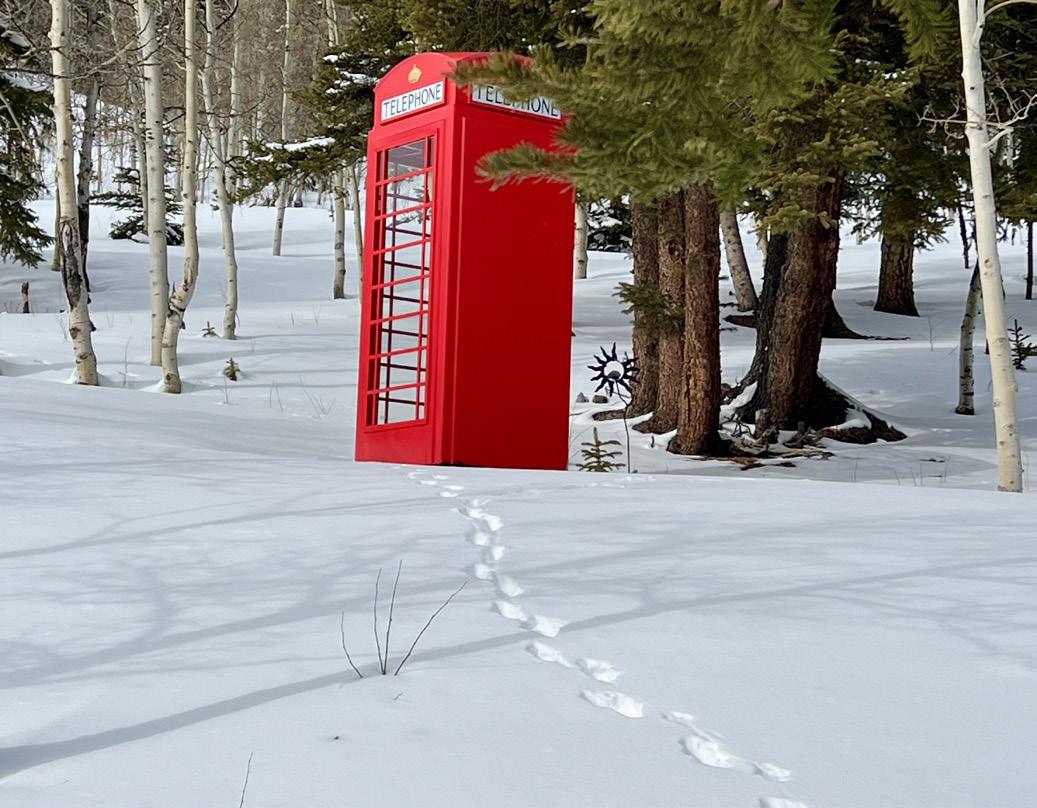
The Cemetery is not a regular part of his walking routine, but he immediately drove up there and hiked onto the snowy road, where he began to look for the Red Wind Phone. “Something just told me to go there; I am not an over-thetop spiritual person, but something inside of me just said to go to that phone booth.” At some point, he recalled noticing distinct paw prints alongside the trail he was blazing through the snow and noticed that there was no human, or any other animal track headed up to the phone booth.
“I walked up the hill and then noticed prints in the snow that looked like a dog, but they did not return. They went straight up to the booth but did not come back,” recalled Rick Noble. He entered the phone booth and could tell no one had been there after the last snowstorm and he was the first human tracks.
Noble continued with “I didn’t think anything of the paw prints at first, but then when I realized there were no return paw prints, I thought that was strange.” The single line of paw prints caught his attention, so he entered the booth and made a call to Kora in heaven. “I went into the booth and did the communication as the sign said to and shed some tears. It was like I felt that she was telling me that she was ok,” said Noble.
He expressed that after that moment, it took some time to process his day and experience, but he realized that something magical happened in the Wind Phone, and it has since given him peace with his companion Kora’s abrupt passing.
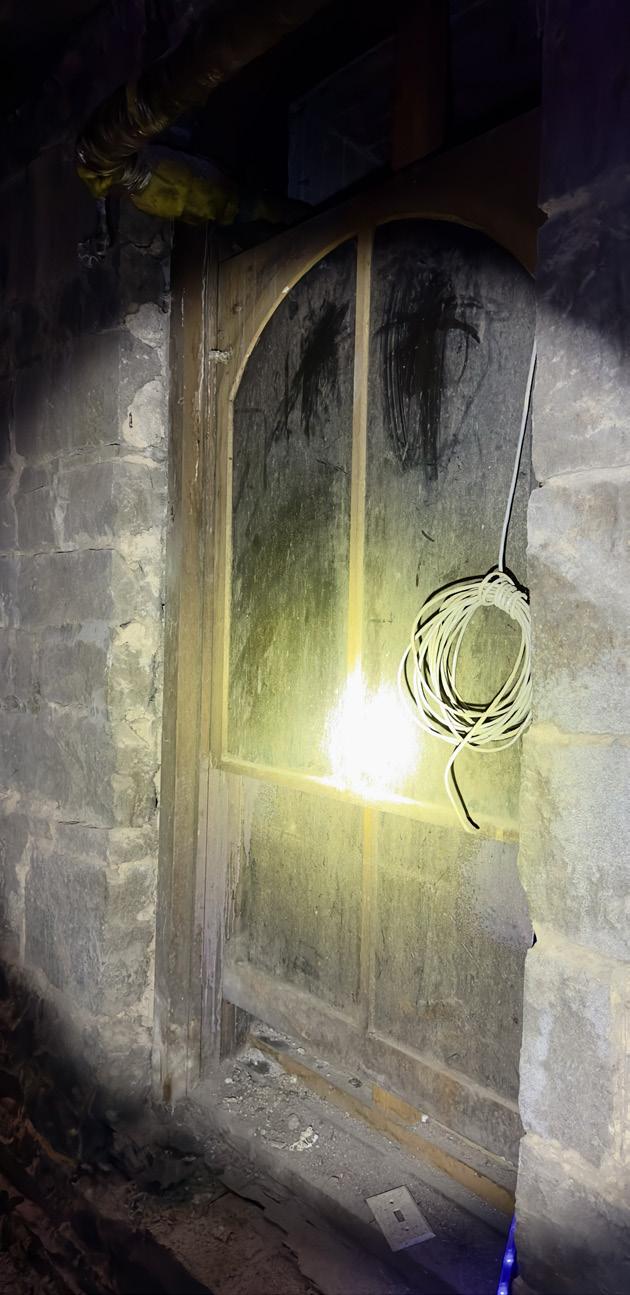
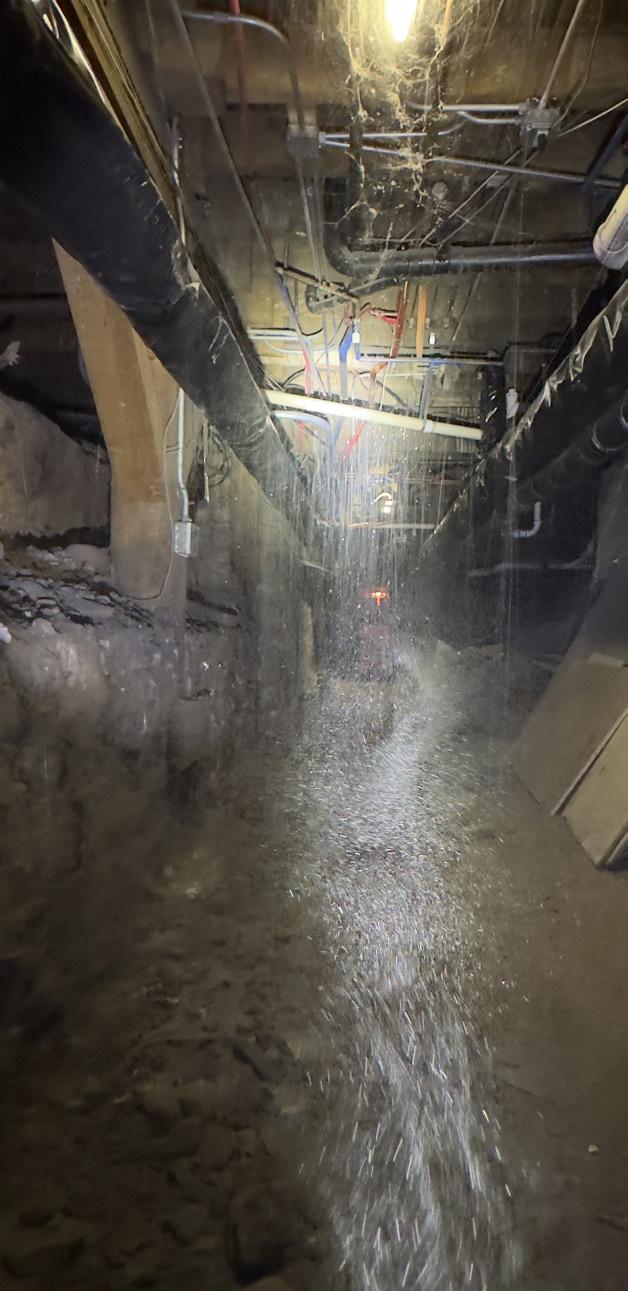
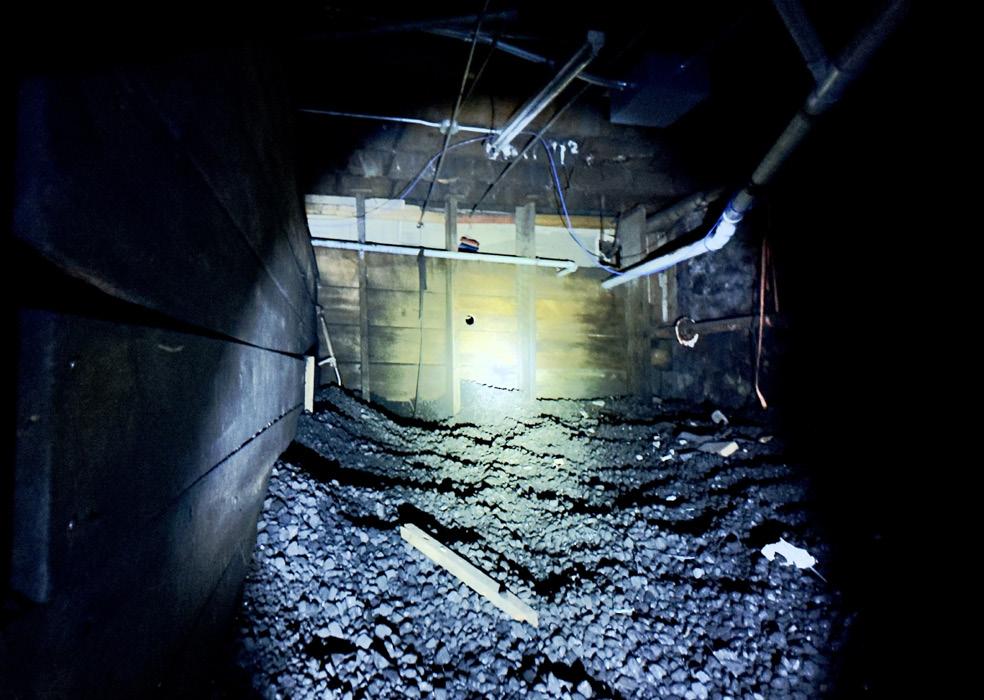
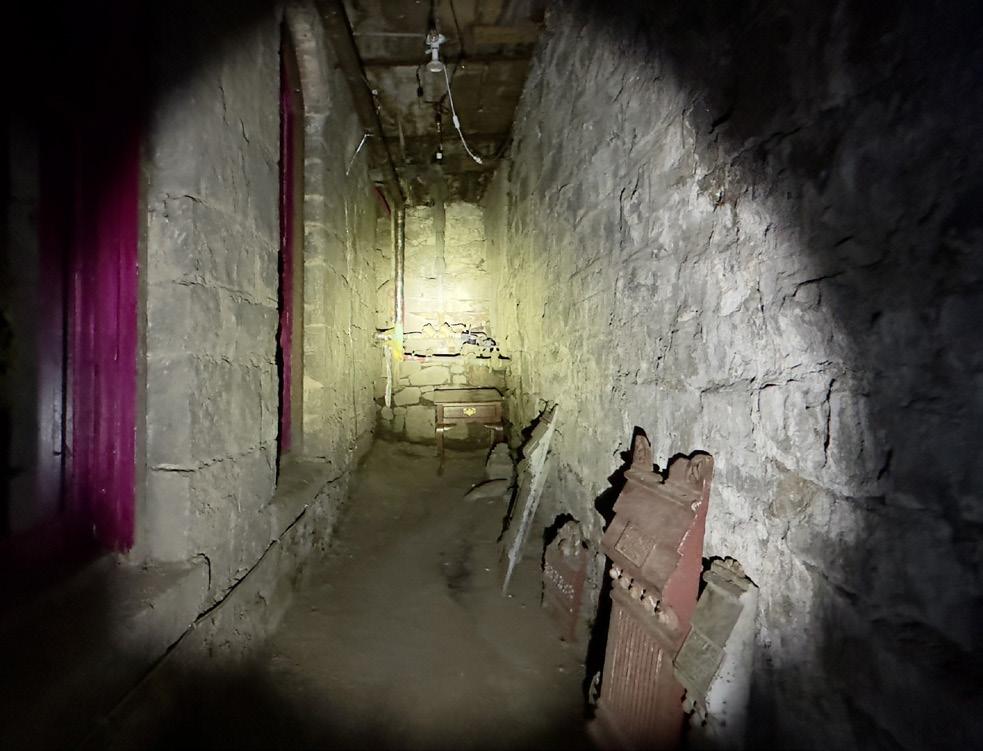
On a sunny May day, I join a small tour to explore a cool, dimly lit tunnel, examining the stone walls with flashlights and hushed intrigue. It is musty and cool. Windows on one side peer into an intimate theater, and gangplanks above make up the ceiling. Silverton’s downtown Greene Street is just several feet above.
Jim Harper leads the tour, telling us the history of this tunnel, the theater, and the connected hotel of which he owns. We are underneath the sidewalk of the Grand Imperial Hotel, exploring a fascinating piece of history. However, we are looking for clues that are not recorded in history, namely the tunnels that led across town to the once wild Notorious Blair Street. One such tunnel came out of this very underground sidewalk but was filled in only a few years ago.
When were these tunnels built, and what were they for? Exploring the town’s history and buildings gives us a few clues.
A perfume importer from New York named W. S. Thomson commissioned the building in 1882, and 10 months later, it was finished. Called the Thomson block, it was hailed as “the largest standing building south of Denver.” It housed a myriad of different businesses, town offices, and a hotel. A hub for business and government, it also had an underground saloon accessible from the street by stairs leading to an underground sidewalk.
The same year that Thomson built his building, the town would also indict 116 prostitutes and outlaw prostitution
on its main street the following year, moving the industry one street over to a red light district known as the Notorious Blair Street.
The message was: Greene Street was for upstanding business. Prostitution, gambling, and the people who supported those things would remain on Blair Street. There needed to be a way to cross back and forth without risking status, a secret way.
On one Monday morning in 1885, townspeople found an alarming trail of blood down Main Street. As the story goes, a bar owner named Frank Cooper had enraged a prostitute named Nell Castell the night before, and she’d stabbed him. Cooper survived the incident and, one year later, moved his bar, the Hub, into the saloon underneath the illustrious Thomson Block, separating himself from Blair Street and all it had to offer. The street access to the stairs and underground sidewalk was capped off. Evidence shows a tunnel was built facing Blair Street.
Men like Frank Cooper might have wanted a tunnel to Blair to ensure discretion for him and his patrons to access the red light district.
One could walk into the respectable Thomson block and walk out into the bawdry Blair Street. Tunnel entrances are found beneath many of Silverton’s businesses, mostly caved in and without a clear origin, but stories like Frank Cooper’s paint a picture of a mining town trying to preserve its values and all of the industrious and creative ways to get around it.
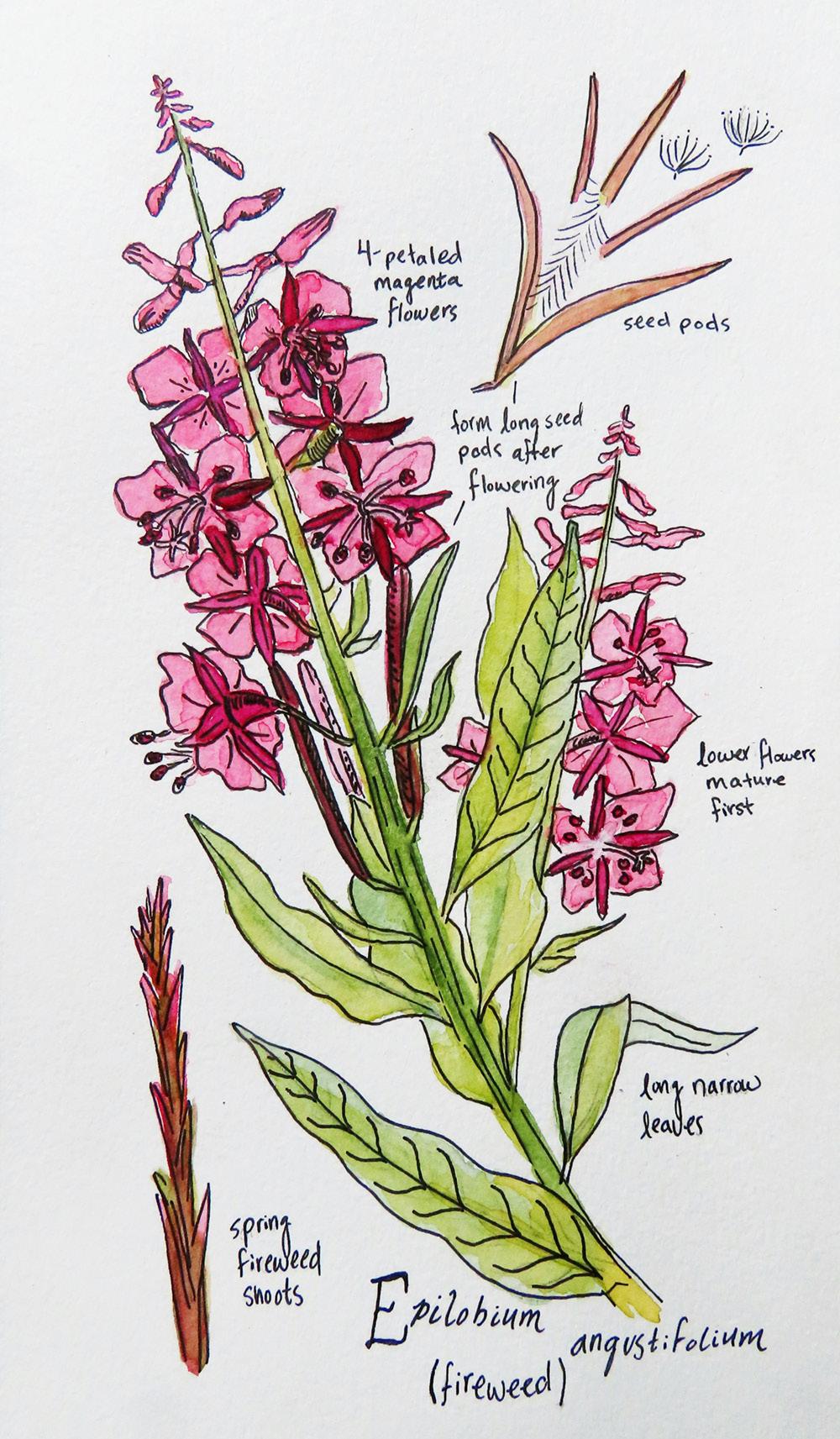
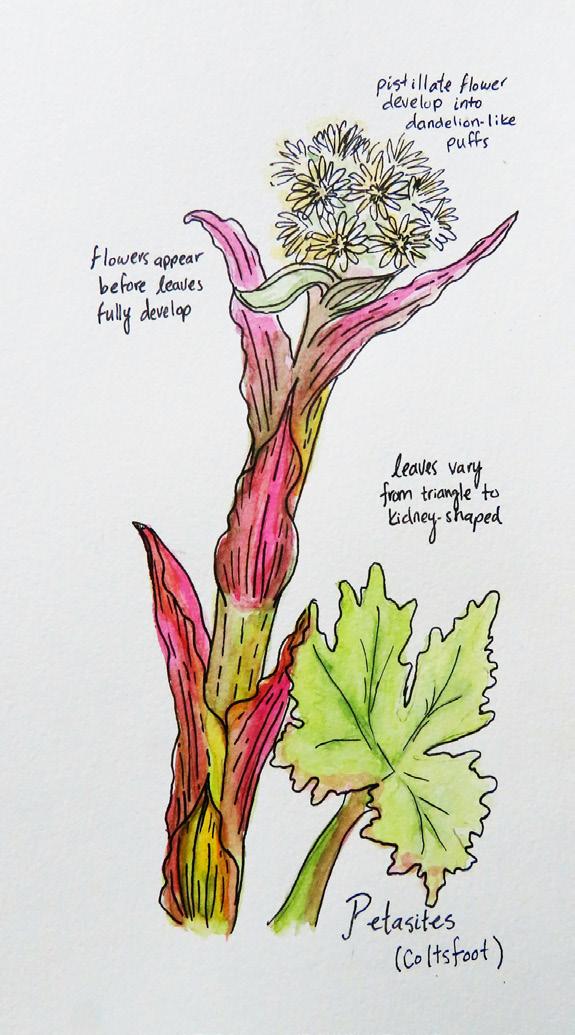
Art/Illustrations: Krista Beyer www.kristabeyer.com
like the dandelion plant. Easy to identify with its yellow flower, the dandelion greens are rich in antioxidant properties, said to aid digestion and support liver and kidney health. There are those foods that are everywhere but overlooked, like spruce trees. Spruce tips are edible with each tree having unique flavors. Spruce tips can be used in cocktails and medicinally for coughs. You might already recognize the flowers of fireweed. What is lesser known is that before the flowers bloom, stalks can be harvested and eaten in salads. Just over the mountain at lower elevations, you can also find wild asparagus, another easy-to-identify and delicious plant. Other medicinal plants in our area include mugwort and sweet coltsfoot, both of which can be used to treat colds and coughs.
As you venture into nature, it is important to prioritize safety. Take the time to learn from expert foragers and learn to identify wild edible plants along with their benefits and uses. Start with a small selection and always be able to identify with 100% certainty before eating a plant. It is also helpful to learn to identify “lookalike” plants, those that look like safe, edible plants but are actually toxic, poisonous, or deadly.
Local experts advocate Leaving No Trace principles while on our trails and adopt sustainable harvesting practices. These can include only harvesting a portion of the plant to allow for future growth and being aware of preserving the habitat while collecting wild foods. Generally, the gathering of small amounts of forest botanical products (medicinal plants, berries, mushrooms, and seeds for personal use) is allowed without a permit. Please check with the forest service or your local ranger station before foraging.
Words by: Andreana Karabotsios
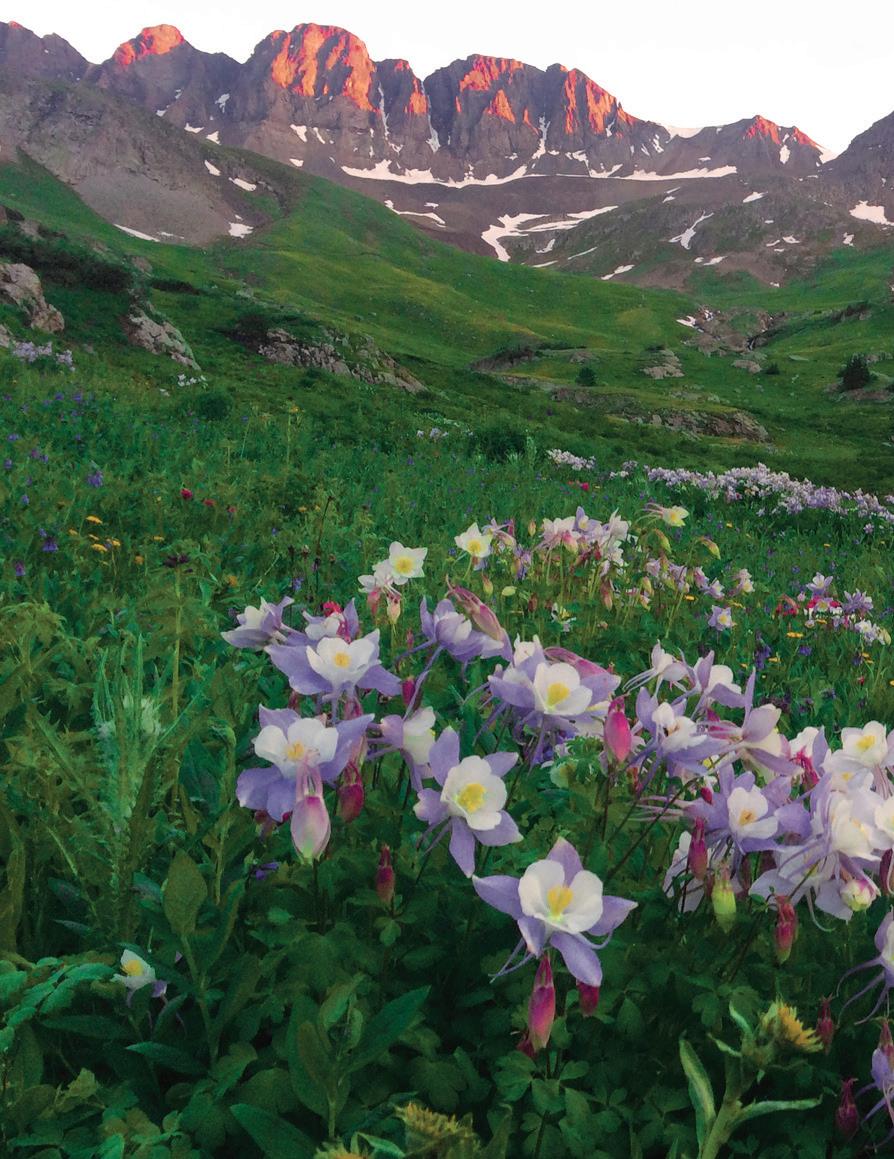
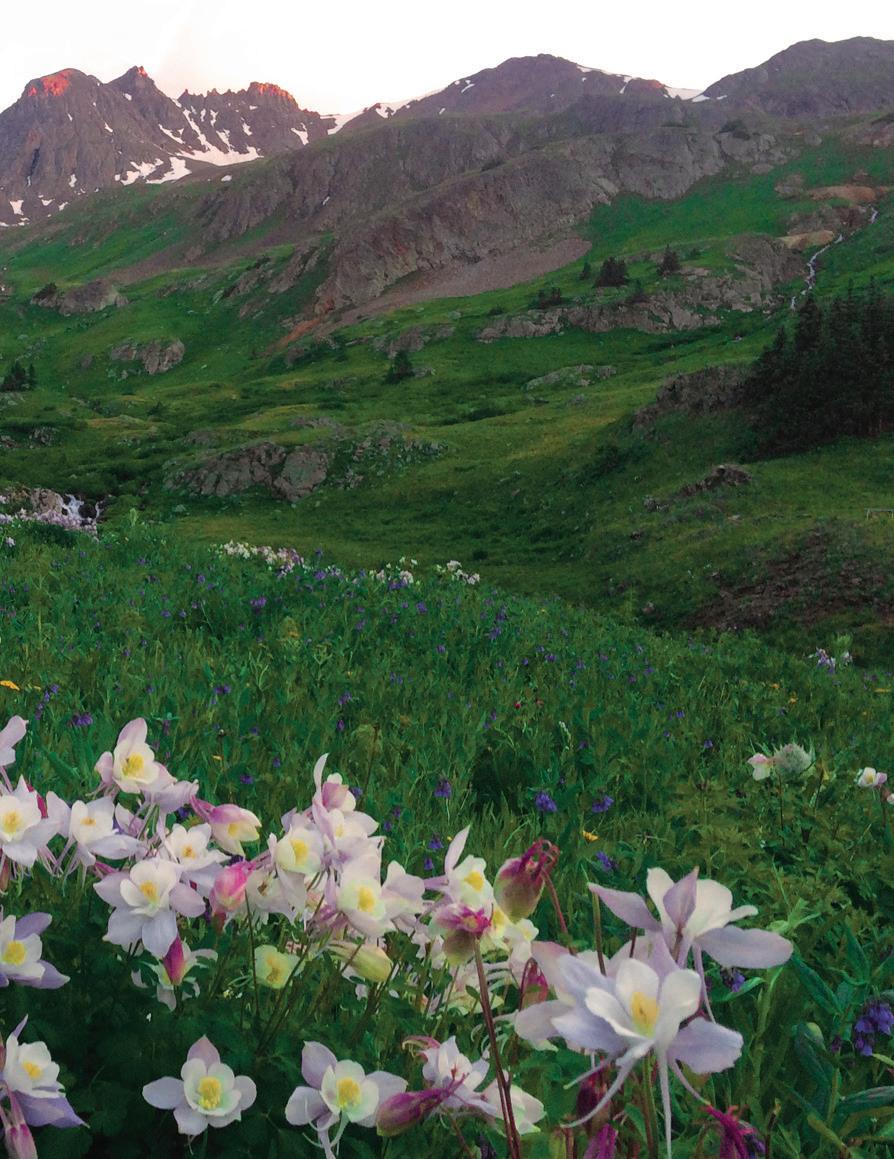
Silverton, Colorado, and the San Juan Mountains, with their breathtaking beauty and stunning vistas, are not just a feast for the eyes. They also hide a treasure trove of wild edible and medicinal plants and flowers waiting to be discovered. The land around us was a vital resource for the Utes, who spent the mild summers foraging local plants for food and ceremonies. In the 1930s, herders in our mountains gathered high-altitude plants in meadows, bringing them back to their villages in New Mexico. Whether you are already an experienced forager or just starting out as a nature enthusiast, there is a wealth of nutritious foods in our backyard, adding a sense of adventure to your exploration.
If you aren’t sure where to begin, here are a few ideas of what is growing in our mountains in the spring and summer seasons. There are hidden gems, like wild strawberries. Small and sweet, these are easy to miss but can often be found growing close to the ground in forests with small white flowers. There are the weeds,
Once you’ve gathered your wild harvest, the culinary possibilities are varied and surprising. You can experiment with using foraged ingredients in your favorite dishes, while many others can be used in salads, soups, teas, and desserts. Wild mushrooms can be included in many savory dishes, and there are even recipes for spruce tip or nettle pesto.
Foraging for edible plants is not just about the food; it’s also about the unique opportunity it provides to experience the mental and physical benefits of connecting with nature. Taking the time to walk through our forests, meadows, and mountains changes our relationship with the natural world, promoting relaxation and improving mental well-being. This emphasis on the holistic benefits of foraging will inspire and motivate you to explore the wild.
The untamed beauty of Silverton is the perfect location for foraging wild edible and medicinal plants. Each plant unveils a unique connection to this remarkable land and its history.