COVER STORY:

COVER STORY:
ENERGY ENGINEERING: Fundamentals and safety imperatives of nuclear power generation
DATA CENTRES: When power becomes the bottleneck
JUNE 2026 MDDI (P) 002/03/2026
WORKPLACE SAFETY & HEALTH: Reducing exposure before it begins
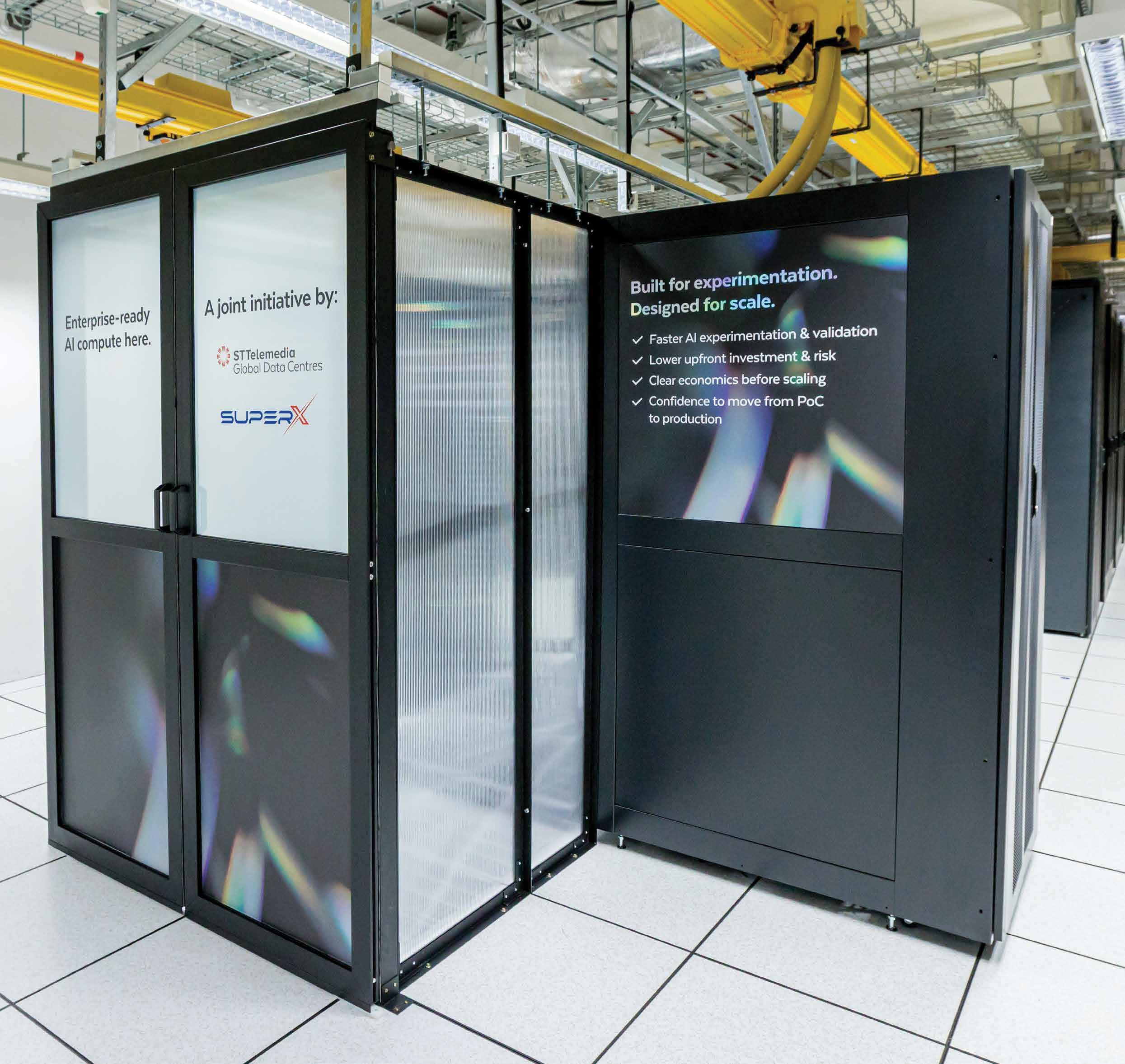
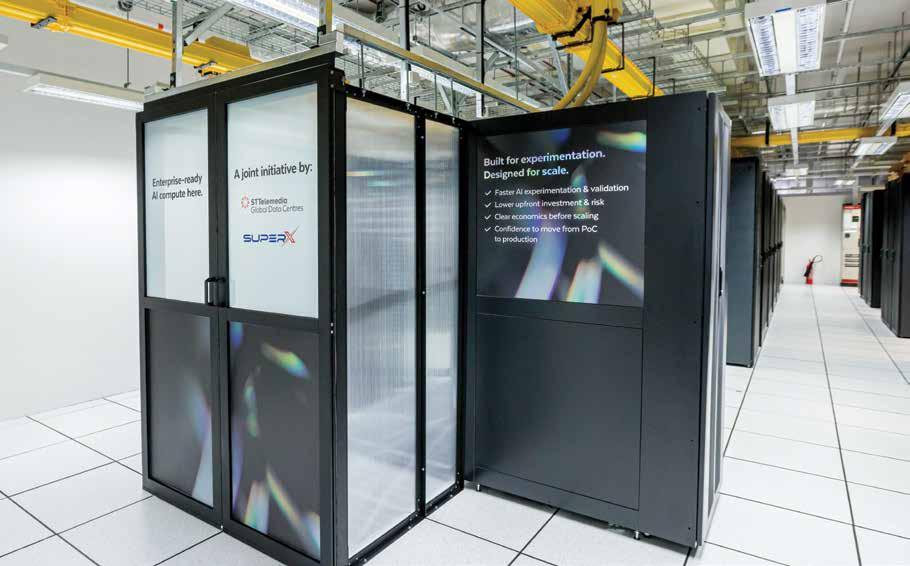
ST Telemedia Global Data Centres and SuperX debut AI Innovation Centre in Singapore



THANK YOU FOR SIXTY YEARS OF UNWAVERING SUPPORT AND COMMITMENT
TO ENGINEERING EXCELLENCE. WE ARE HONOURED TO CELEBRATE THIS DIAMOND
JUBILEE MILESTONE WITH YOU AS WE BUILD A RESILIENT AND INNOVATIVE FUTURE TOGETHER.

w w w . i e s . o r g . s g




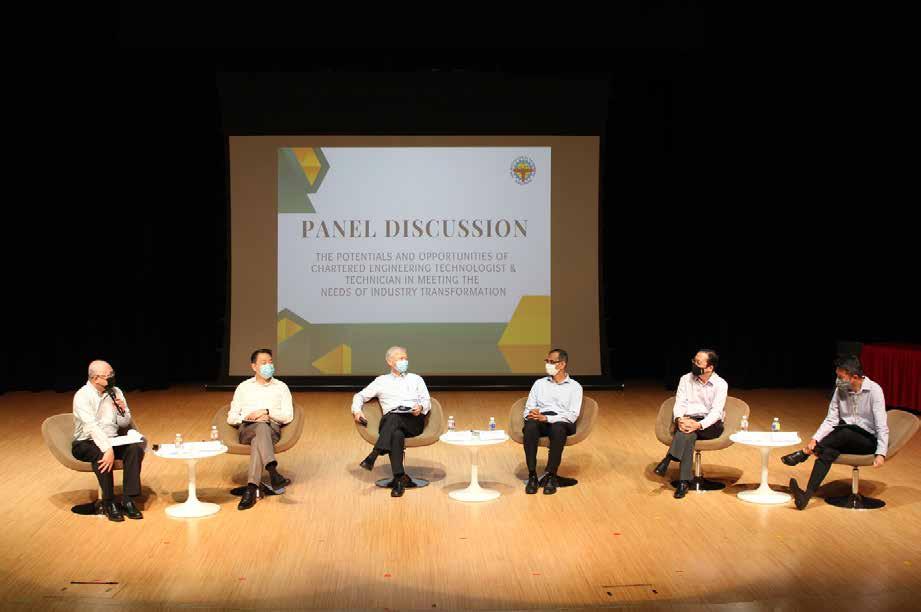
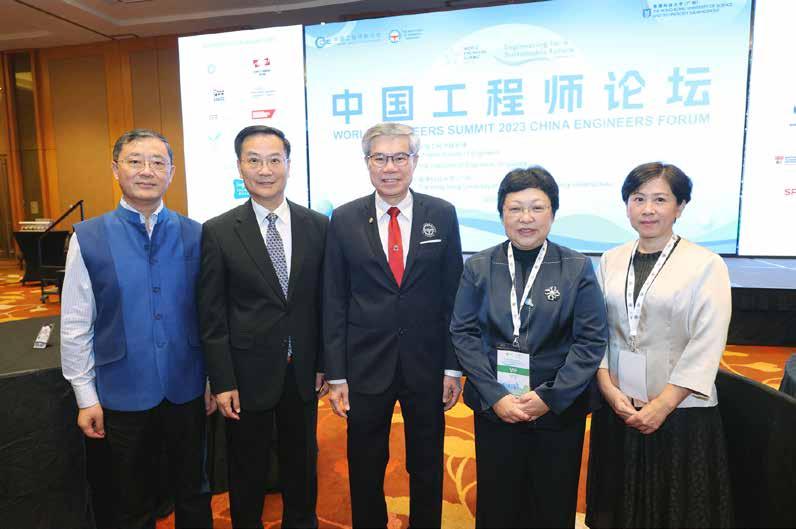
The Chartered Engineering Registry aims to provide professional recognition to qualified Engineers, Technologists and Technicians across all sectors.
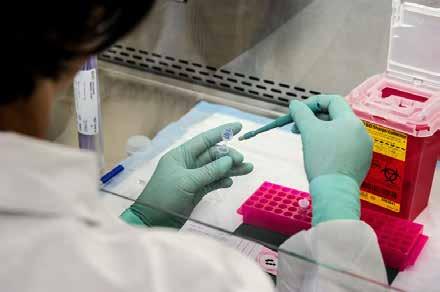
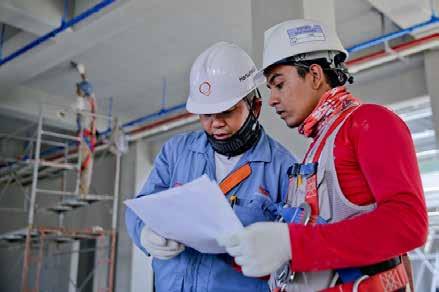
Being registered as a Chartered Engineering Professional will be an external validation of your experience, expertise and practising competence; and is a quality mark to differentiate your professional standing in the following sectors of engineering:







04 Celebrating a milestone in Sustainable Engineering!
05 Elevating the Civil Engineering landscape
06 Addressing urban liveability and sustainability
07 New initiatives launched at Catalyst 2026
08 Research centre to address residue and toxic industrial waste management
09 New trade exhibition in Singapore for cleaning and environmental solutions
10 SIWW2026 closes with strong momentum in advancing global water resilience
12 ARC Industry Leadership Forum 2026 returns to Singapore
13 Innovation zone at EuroBlech 2026 to spotlight the future of advanced manufacturing
14 Pointing the way to a competitive future
16 AHR Expo 2026 highlights innovation, community and the future of HVACR
18 ST Telemedia Global Data Centres and SuperX debut AI Innovation Centre in Singapore
22 Fundamentals and safety imperatives of nuclear power generation
President
Mr Mervyn Sirisena
Executive Director
Mr Syafiq Shahul
Chief Editor
Mr T Bhaskaran
t_b_n8@yahoo.com
Editorial Panel
Er. S Yogeeswaran
Dr Chandra Segaran
Dr Ang Keng Been
Dr Aaron Sham
Mr Jaime Vega Bautista Jr

28 The role of precious metal functional materials in clean energy technologies
30 When power becomes the bottleneck
32 Reducing exposure before it begins
34 The introspective engineer DIGITALISATION
36 How Artificial Intelligence-driven Enterprise Resource Planning software is powering Singapore’s Manufacturing 2030 vision
38 New research highlights trends in the state of security and identity
39 Readiness to face AI-driven identity threats
40 Advancing real-time automated NDT
The Singapore Engineer is published monthly by The Institution of Engineers, Singapore (IES). The publication is distributed free-of-charge to IES members and affiliates. Views expressed in this publication do not necessarily reflect those of the Editor or IES. All rights reserved. No part of this magazine shall be reproduced, mechanically or electronically, without the prior consent of IES. Whilst every care is taken to ensure accuracy of the content at press time, IES will not be liable for any discrepancies. Unsolicited contributions are welcome but their inclusion in the magazine is at the discretion of the Editor.
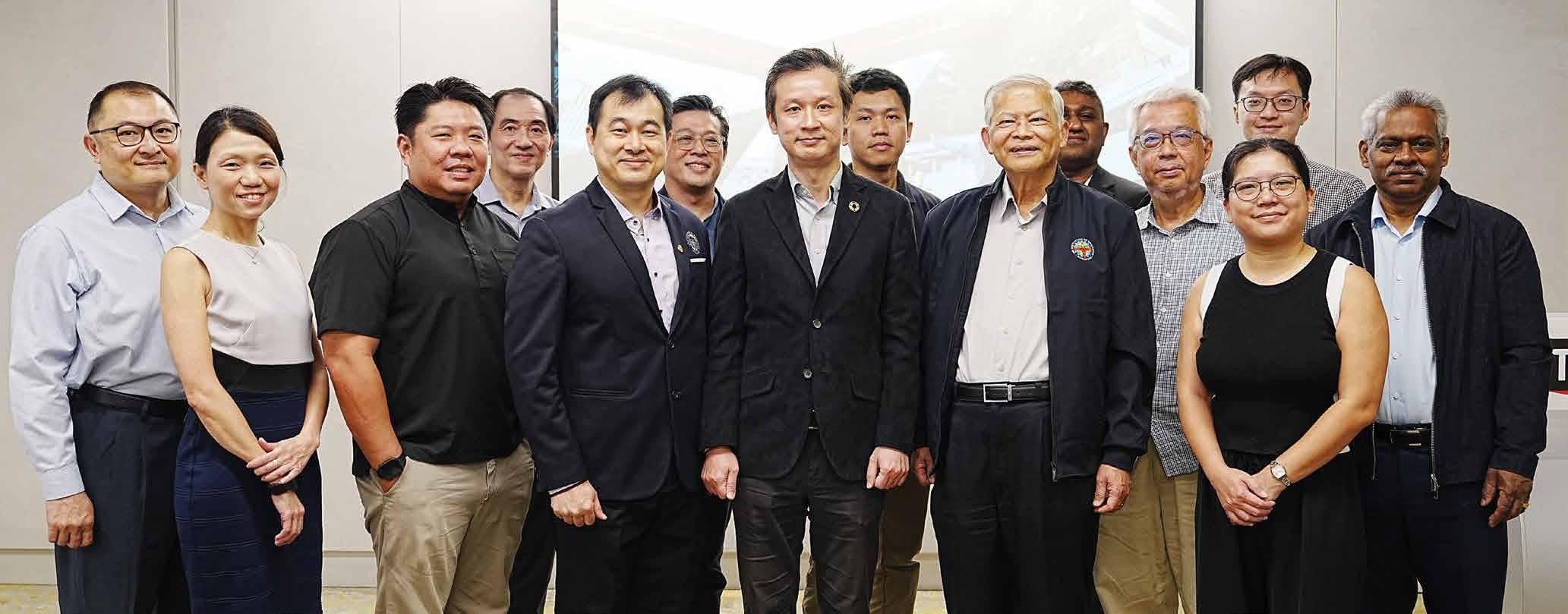
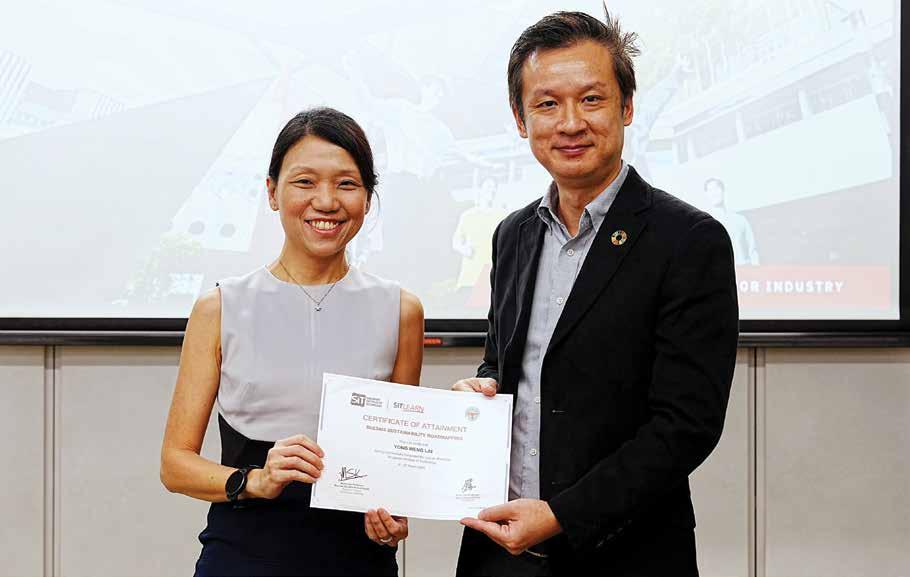
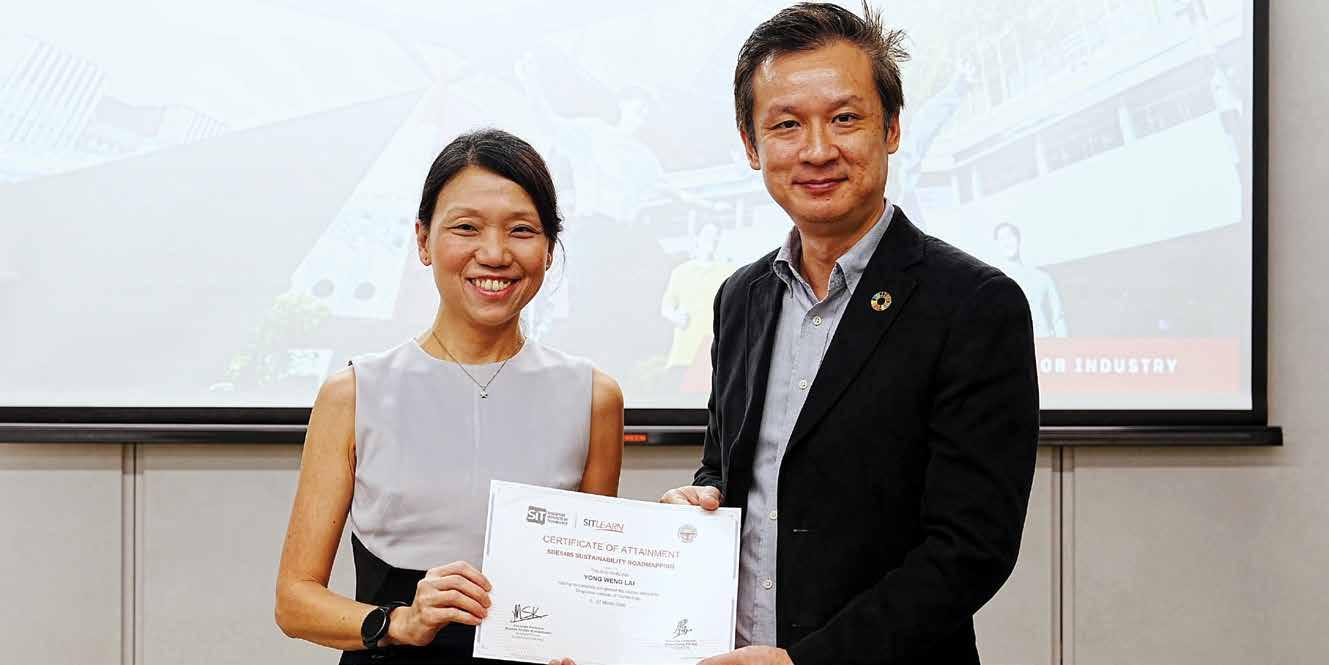
On 5 June 2026, IES Academy and the Singapore Institute of Technology (SIT) proudly celebrated the graduation of the first cohort from the Graduate Certificate in Sustainability Principles and Practices programme.
This pioneering programme serves as a vital pathway for engineers aiming to achieve the IES Chartered Engineer (Sustainability) certification – a key step in shaping the future of our industry.
The ceremony was marked by inspiring insights from industry leaders:
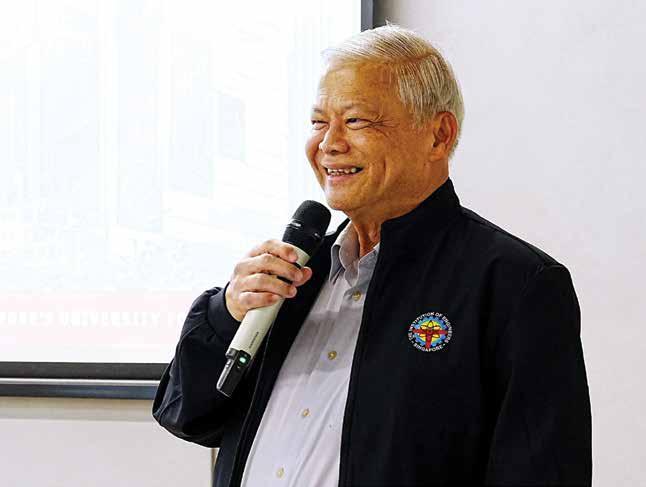
• Er. Dr Tan Seng Chuan, WFEO President and IES Emeritus President, who shared on the global shift towards sustainability and how this partnership empowers our graduates to lead the charge.
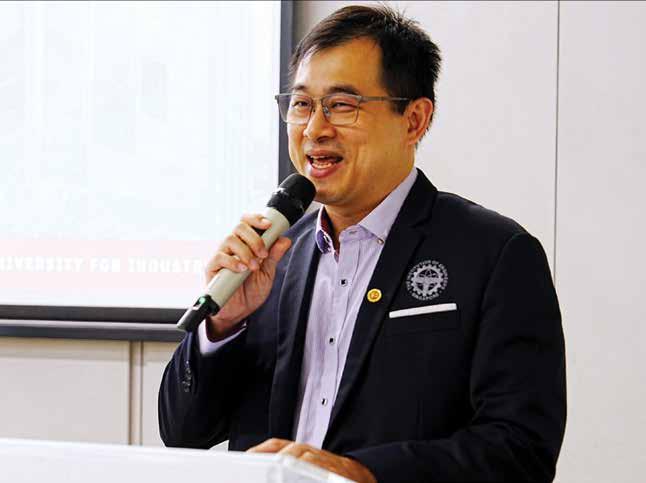
• Dr Harry Lim, Vice President of IES & Chairman of Systems Sector, CEB, who highlighted the engineer’s critical role in turning net-zero goals into practical as well as innovative solutions.
The ceremony also included heartfelt experience-sharing from graduates Edna and Marc, and closing remarks by A/Prof Ethan
Chong from SIT. Congratulations to all our graduates! We are excited to see
you drive sustainable innovation and contribute to Singapore’s netzero ambitions.

The Institution of Engineers, Singapore (IES) hosted a highly collaborative dialogue with the leadership delegation from the American Society of Civil Engineers (ASCE), on 9 June 2026. The session served as a valuable platform to exchange industry insights and map out future strategic synergies between the two associations.
The ASCE delegation, led by President Dr Marsha D Anderson Bomar, brought a wealth of knowledge from ASCE’s expansive global network. With over 160,000 members worldwide – 25% of whom are based outside of North America – ASCE shared highly successful strategies, particularly regarding its youth-focused outreach.
The conversation highlighted several vital pillars for the advancement of the profession:
• Next-Gen Engagement: Pioneering vibrant social media frameworks to captivate and inspire the next generation of engineers.
• Academic Evolution: Resolving structural bottlenecks within compressed undergraduate engineering curricula.
• Agile Governance: Adopting nimble and responsive Technical Committee models.
Additionally, both delegations examined fresh pathways for
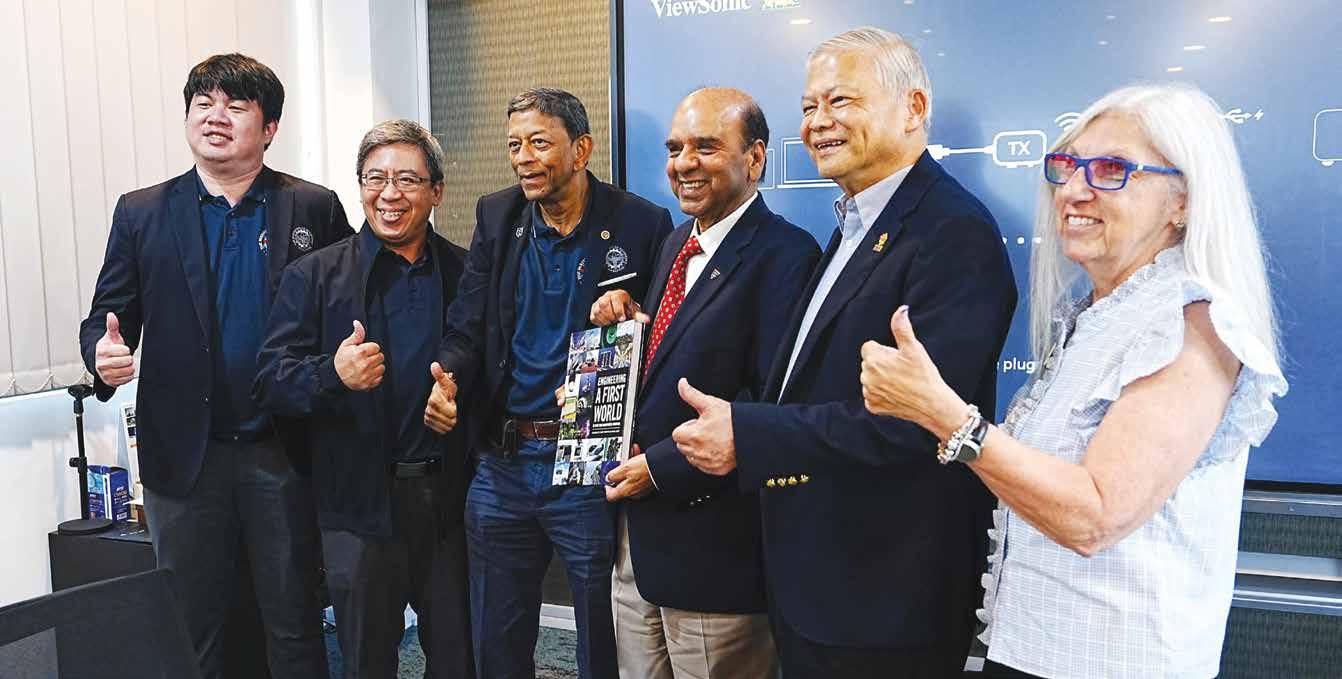
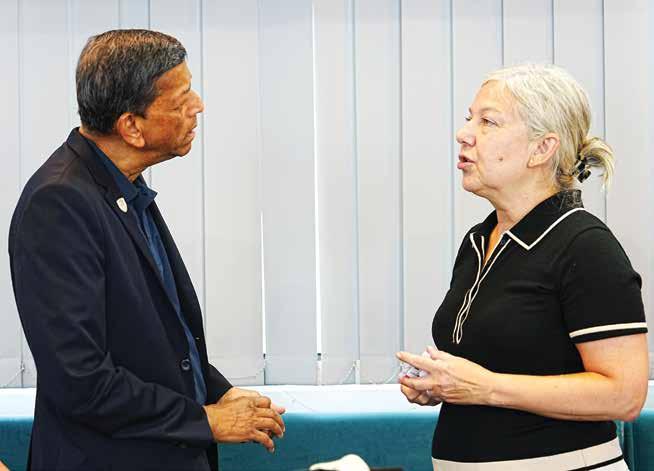
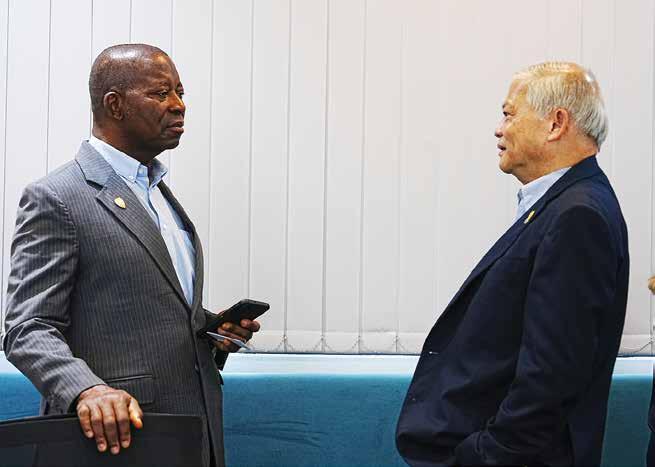
Mr Mervyn Sirisena (on left of image on left), President of IES and Er. Dr Tan Seng Chuan, WFEO President and IES Emeritus President (on right of image on right), converse with members of the ASCE delegation.
regional cooperation through the Asian Civil Engineering Coordinating Council (ACECC) to better serve and strengthen the broader engineering ecosystem.
This engagement provided an excellent touchpoint for both institutions to align on common
objectives and uncover new avenues for meaningful collaboration.
IES is excited to cultivate this ongoing relationship with ASCE, working hand-in-hand to deliver impactful initiatives that uplift and support engineering professionals in Singapore and across the region.
The milestone 10th edition of the World Cities Summit (WCS) 2026 was held at the Suntec Singapore Convention & Exhibition Centre, from 14 to 16 June 2026. The event was attended by close to 4,200 delegates and trade visitors from 263 unique cities, including 112 mayors and city leaders who attended the Mayors Forum.
The summit brought together global leaders, industry experts, academia, young leaders, innovators, start-ups and entrepreneurs, who engaged in conversation and exchange of ideas, on cities, and addressed urban liveability and sustainability challenges.
This year’s theme ‘Liveable
and Sustainable Cities: ACT Now! – Accelerate, Collaborate, and Transform’, enabled attendees to also share integrated urban solutions and forge new partnerships to accelerate the shift from dialogue to the delivery of sustainable urban outcomes.
Over 40 international exhibitors and presenters showcased a diverse range of innovative projects and practical urban solutions through interactive physical booths and concept pitches at the WCS exhibition.
The World Cities Summit Mayors Forum 2027 will be held in the second half of 2027, hosted by Mexico City, the Lee Kuan Yew World City Prize 2024 Laureate.
The next edition of World Cities Summit will be held from 11 to 13 June 2028 in Singapore.
The biennial World Cities Summit (WCS) is a platform for government leaders, industry experts and academia to address liveable and sustainable city challenges, share integrated urban solutions and forge new partnerships.
Jointly organised by Singapore’s Centre for Liveable Cities (CLC) and the Urban Redevelopment Authority (URA), WCS brings together a diverse urban ecosystem to share integrated solutions, showcase real-world case studies and forge impactful partnerships.
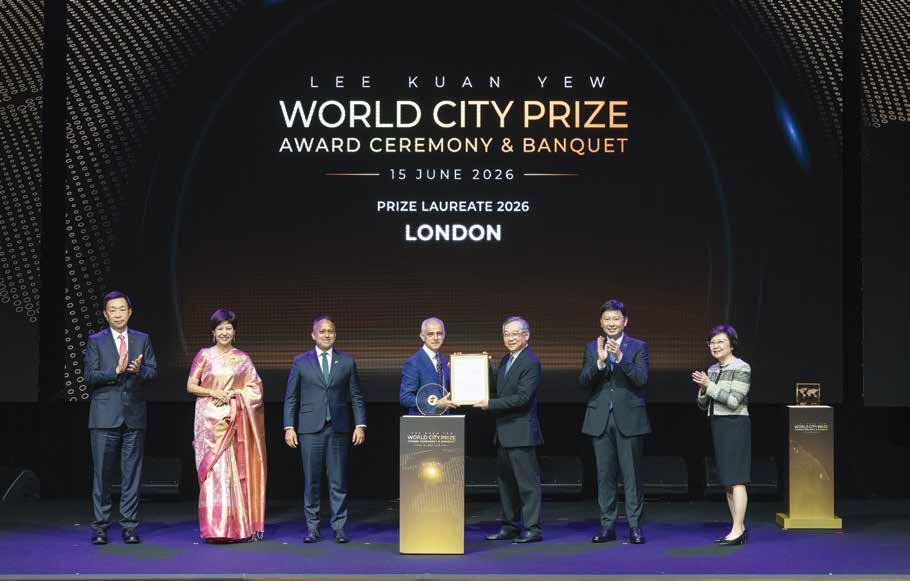
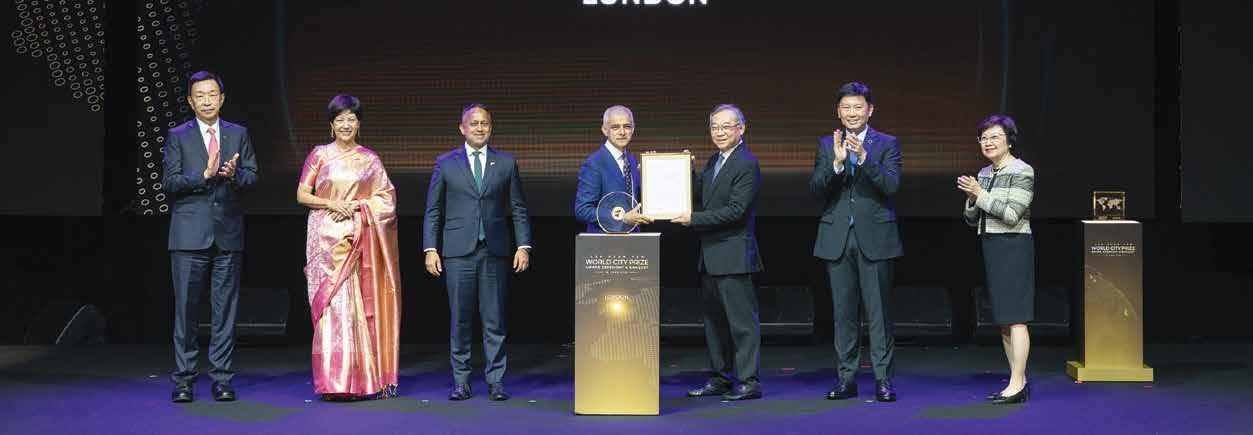
Mr Gan Kim Yong, Singapore’s Deputy Prime Minister and Minister for Trade and Industry, presented the Lee Kuan Yew World City Prize 2026 to London, at the Lee Kuan Yew World City Prize Award Ceremony & Banquet, held on 15 June 2026.
Sir Sadiq Khan, Mayor of London, received the Prize on behalf of the city.
The Lee Kuan Yew World City Prize Award Ceremony & Banquet was held at the Capitol Theatre this year as part of the World Cities Summit 2026, with international industry leaders, mayors and city leaders in attendance.
London was named the Laureate of the 2026 Prize for its exceptional capacity to reinvent itself and deliver transformational change for the bustling metropolis. Despite the complexities of governing more than nine million residents across 32 boroughs and the City of London Corporation, London
Development,
His Excellency
British High Commissioner
Singapore; Sir Sadiq Khan, Mayor of London; Mr Gan Kim Yong, Deputy Prime Minister and Minister for Trade and Industry, Singapore; Mr Chee Hong Tat, Minister for National Development, Singapore; and Professor Cheong Koon Hean, Chair, Lee Kuan Yew World City Prize Nominating Committee. Image: World Cities Summit 2026.
has demonstrated resilient leadership and coordinated governance in its approach to urban development.
Antwerp, Budapest, Guangzhou, Taipei and Tianjin received Special Mentions at the award ceremony for their innovative approaches to addressing urban challenges and advancing city transformation.
Jointly organised by the Urban Redevelopment Authority and
the Centre for Liveable Cities, the Lee Kuan Yew World City Prize honours outstanding achievements and contributions to the creation of liveable, vibrant and sustainable urban communities around the world.
The Lee Kuan Yew World City Prize Award Ceremony & Banquet was one of the key highlights of the World Cities Summit 2026.
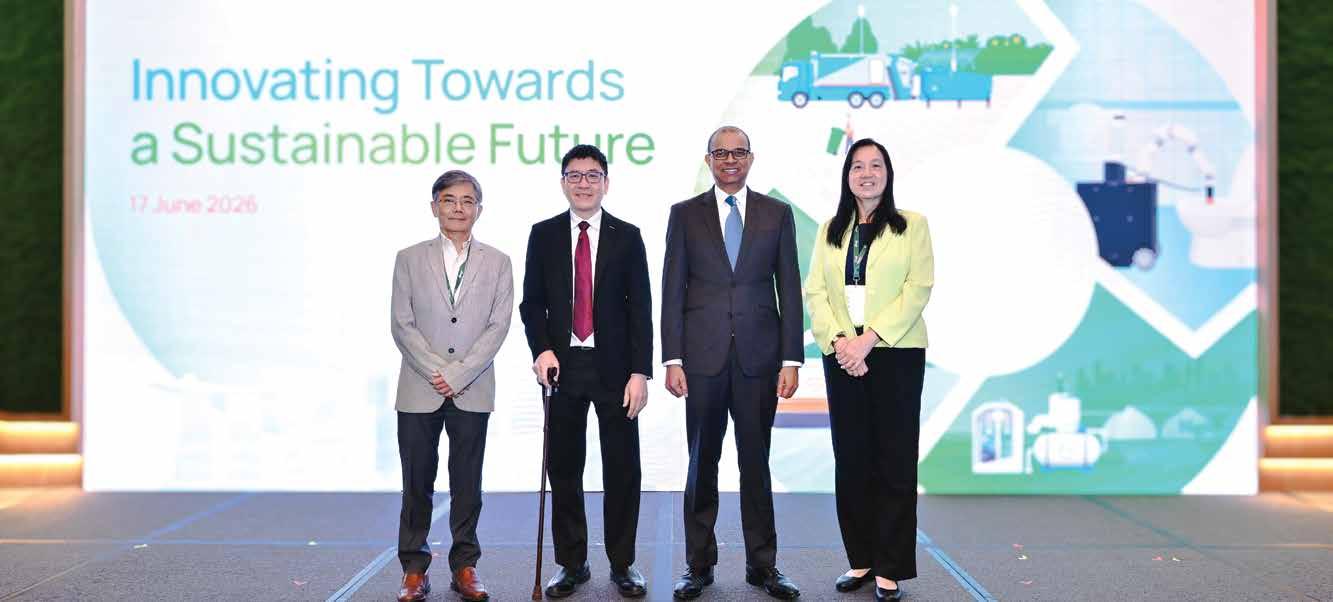
Catalyst 2026, organised by Singapore’s National Environment Agency (NEA) and held on 17 June 2026, brought together about 300 industry leaders, global policymakers, technology innovators and academics, in the Environmental Services (ES) ecosystem. They exchanged ideas, explored cutting-edge technologies and forged meaningful connections, that accelerate the shift towards a greener, more resilient future.
Themed ‘Innovating Towards a Sustainable Future’, Catalyst 2026 shaped discussions and partnerships that will influence the future of the ES industry.
The event, which took place at Marina Bay Sands, leads up to CleanEnviro Summit Singapore (CESG) 2027 which will deepen international collaboration and industry engagement, and showcase notable innovations. As a global platform for environmental action, CESG goes beyond dialogue to drive impactful, real-world solutions that matter.
Senior Minister of State, Ministry of Sustainability and the Environment, Dr Janil Puthucheary, delivered the opening remarks at Catalyst 2026. SMS Janil outlined Singapore’s vision for the future of the ES industry, including strengthening circularity, advancing Reduce and Reuse efforts, driving innovation in waste management and building industry capabilities.
Launch of TREASURES
SMS Janil announced the launch of Towards Resource Efficiency and Sustainability for Urban Environments (TREASURES), Singapore’s first Research Centre for Residue and Toxic Industrial Waste Management, jointly established by NEA and Nanyang Technological University (NTU) Singapore, with participation from the National University
of Singapore (NUS) and other Institutes of Higher Learning.
TREASURES will bring together researchers, industry and government to recover value from complex waste streams and transform Semakau Landfill from a waste disposal site into a future resource recovery hub. TREASURES also launched its inaugural grant call which is open until 17 August 2026, focusing on toxic industrial waste management and landfill transformation.
In line with these priorities, SMS Janil provided an update on Singapore’s Zero Waste Masterplan 2030, highlighting progress made since its launch in 2019, key gaps in recycling outcomes, and plans to refresh the masterplan to further strengthen circularity and shift efforts upstream towards Reduce and Reuse.
SMS Janil also unveiled the refreshed Environmental Services Industry Digital Plan (ES IDP), jointly developed by NEA and the Infocomm Media Development Authority (IMDA). The refreshed IDP moves away from segmenting solutions by stages of digital readiness and is redesigned to organise solutions around business touchpoints, covering operations and scheduling, on-site service delivery and corporate functions.
This enables companies across the Cleaning, Waste Management and Pest Management subsectors to quickly identify and adopt the right digital tools for their specific business challenges.
Beyond addressing current needs, the refreshed IDP also positions companies ahead of the technology curve by incorporating the nextwave of AI-enabled innovations such as Toilet Cleaning Robotics, which
directly tackle manpower constraints and evolving industry demands.
For example, RS Facilities Services has deployed Hivebotics’ Toilet Cleaning Robot at Our Tampines Hub, reducing the reliance on manual cleaning for routine tasks and enabling its cleaners to focus on areas that require human intervention and quality assurance. The solution is expected to improve manpower productivity by 50% and achieve consistent hygiene standards of more than 80%, across shifts.
As part of Catalyst 2026, a Partnership Agreement was also signed between Mr Ng Keng Wei, Group Director (Joint Operations and Technology Group) and Chief Artificial Intelligence Officer, NEA and Mr David Ruetz, Senior Vice President, Messe Berlin to announce the refreshed CESG, which will pave the way for deeper partnerships and new opportunities.
This builds momentum towards CESG 2027, as the event for the first time will be organised in partnership with CMS Asia, a new Asia-Pacific B2B trade exhibition and industry platform organised by Messe Berlin Asia Pacific, covering environmental services and sustainability innovations, facility management, hygiene and pest management, and resource circularity solutions.
Catalyst 2026 featured keynote speeches by global and regional leaders on sustainability, innovation and transformation, as well as a first-ever innovation showcase segment, where participants got a front-row seat to the cuttingedge solutions in sustainability, the circular economy and environmental technology.
The event also offered valuable opportunities for networking and cross-sector collaboration, strengthening partnerships that will drive future innovation and impact.
Singapore has launched its first national research centre dedicated to advancing science and innovation in residue and toxic industrial waste management.
Senior Minister of State, Ministry of Sustainability and the Environment, Dr Janil Puthucheary announced the launch of the TREASURES (Towards Resource Efficiency And Sustainability for URban EnvironmentS) research centre, at Catalyst 2026.
TREASURES is a national research and innovation platform jointly established by the National Environment Agency (NEA) and Nanyang Technological University, Singapore (NTU Singapore). It brings together the broader Singapore research ecosystem, with the National University of Singapore (NUS) and other Institutes of Higher Learning as key partners.
The centre is supported with SGD 35 million under the Closing The Resource Loop Funding Initiative (RIE 2025), with NTU as the host institute for TREASURES, from 1 January 2026 to 31 March 2030. NTU has also committed dedicated facilities to support the centre’s operations. Beyond being a national research platform, TREASURES connects academia, industry and government to accelerate the translation of research into practical, scalable solutions.
TREASURES was established to strengthen Singapore’s capabilities in managing residue and toxic industrial waste, as part of broader efforts to build a more resourceefficient and resilient waste management system. As waste streams become more complex and land constraints persist, the centre will focus on advancing science and innovation to enable more sustainable, circular approaches to waste management, beyond disposal.
The centre’s research efforts are organised across four dedicated nodes:
• Waste flow analytics which maps and models waste streams across Singapore to identify opportunities for resource recovery.
• Landfill transformation which develops technologies to recover and repurpose materials currently sent to Semakau Landfill.
• Toxic industrial waste solutions, with the focus on advanced treatment and recovery methods for complex industrial waste streams.
• Risk assessment and standards which ensures that repurposed materials meet stringent safety and environmental requirements for broader adoption.
To drive research and innovation in these areas, TREASURES has launched its first grant call, open to all Institutes of Higher Learning, research institutes and companies, and will support projects that advance practical, scalable solutions for residue and toxic industrial waste management, while strengthening collaboration across academia, industry and government agencies.
Beyond its core research,
TREASURES will build a collaborative innovation ecosystem to support the translation of research to full-scale adoption. This will be achieved through close industry engagement, access to test-bedding and regulatory platforms, capability building, and encouraging knowledge sharing and exchange through local and international partnerships.
These efforts will support longer-term goals, including the transformation of Semakau Landfill to enable more sustainable and circular approaches to waste and residue management, while reducing reliance on landfilling over time.
Mr Ng Keng Wei, Group Director (Joint Operations and Technology Group), NEA, said, “TREASURES strengthens Singapore’s capabilities in managing complex waste and residue streams by bringing together our Institutes of Higher Learning, industry partners and government agencies to co-develop innovative, scalable solutions. Over time, this will support our transition towards a more circular and resource-efficient waste management system, including our long-term ambition to transform
Semakau Landfill.”
Professor Chu Jian, Co-Director of TREASURES and Chair of NTU’s School of Civil and Environmental Engineering, said, “Waste management is a long-term challenge for Singapore given our limited land size, and research has an important role to play in developing more sustainable and practical solutions.”
“NTU is honoured to host TREASURES and work with NEA, Institutes of Higher Learning,
industry partners and government agencies to develop and advance innovative technologies that can help Singapore reduce waste, recover resources and strengthen the resilience of its waste management system,” he added.
Professor Karina Gin, Acting Head, Department of Civil and Environmental Engineering, College of Design and Engineering, NUS, said, “As a key partner in the TREASURES initiative, the National University of Singapore
looks forward to contributing our multidisciplinary expertise to address Singapore’s pressing landfill capacity challenges by translating scientific advances into practical environmental solutions.”
“We aim to accelerate the transformation of Semakau Landfill from a conventional waste disposal site into a hub for circularity, extending its operational lifespan and ensuring a more resilient, resource-efficient future for Singapore,” she added.
The inaugural edition of Messe Berlin Asia Pacific’s CMS Asia will take place in Singapore from 8 to 10 June 2027, organised in partnership with the National Environment Agency’s (NEA) CleanEnviro Summit Singapore (CESG), a global platform that brings together stakeholders in the environmental services industry to exchange ideas, showcase cutting-edge technologies and forge partnerships.
This marks the start of a milestone 12-year partnership between NEA and Messe Berlin Asia Pacific, spanning up to six biennial editions of CESG from 2027 to 2039.
As cities across the Asia Pacific continue to urbanise, demand is growing for smarter, more efficient and sustainable solutions in urban cleaning, public hygiene, facility operations, waste management and environmental resilience.
Together, CMS Asia and CESG will form an integrated regional platform for business exchange, innovation and policy dialogue, connecting innovators, technology providers, service operators, policymakers, asset owners and large-scale buyers, across the environmental services ecosystem.
CMS Asia
Developed by Messe Berlin Asia
Pacific and adapted from the globally recognised CMS Berlin brand, CMS Asia is set to become a leading Asia Pacific business platform for cleaning, facility management and environmental services.
As part of the integrated regional platform, the CESG exhibition component will be branded as CMS Asia and organised by Messe Berlin Asia Pacific, leveraging its exhibition expertise and international industry network. It will encompass industry solutions across cleaning and hygiene, smart facility management, waste and resource recovery, pest management, environmental monitoring and sustainability technologies, as well as public health technologies.
Attuned to the realities of Asia Pacific’s dense urban environments, tropical operating conditions and evolving sustainability requirements, CMS Asia will focus on practical and scalable solutions for cities, transport systems, healthcare facilities, public buildings and commercial infrastructure.
Visitors can expect a mix of country and city pavilions, themed exhibition areas and live demonstrations, offering hands-on insights into innovations ranging
from robotic and autonomous cleaning systems to smart technologies for transport hubs, healthcare facilities and public infrastructure.
CleanEnviro Summit Singapore
Through this partnership, CESG will provide the policy and thought-leadership dimension to the integrated regional platform, reinforcing Singapore’s role as a hub for environmental policy exchange and innovation.
Biennially, CESG brings together the world’s policymakers, regulators, industry leaders, innovators, and academics to discuss environmental governance, regulatory developments and practical solutions, for sustainable and climate-resilient urban management.
The summit also fosters the development and cross-sharing of innovative and scalable solutions to address environmental challenges, supported by formats such as the Sustainability Summit; Sustainability and Clean Environment Convention, covering Waste Management and Resource Circularity, Cleaning and Public Hygiene as well as Pest Management; and curated site visits.
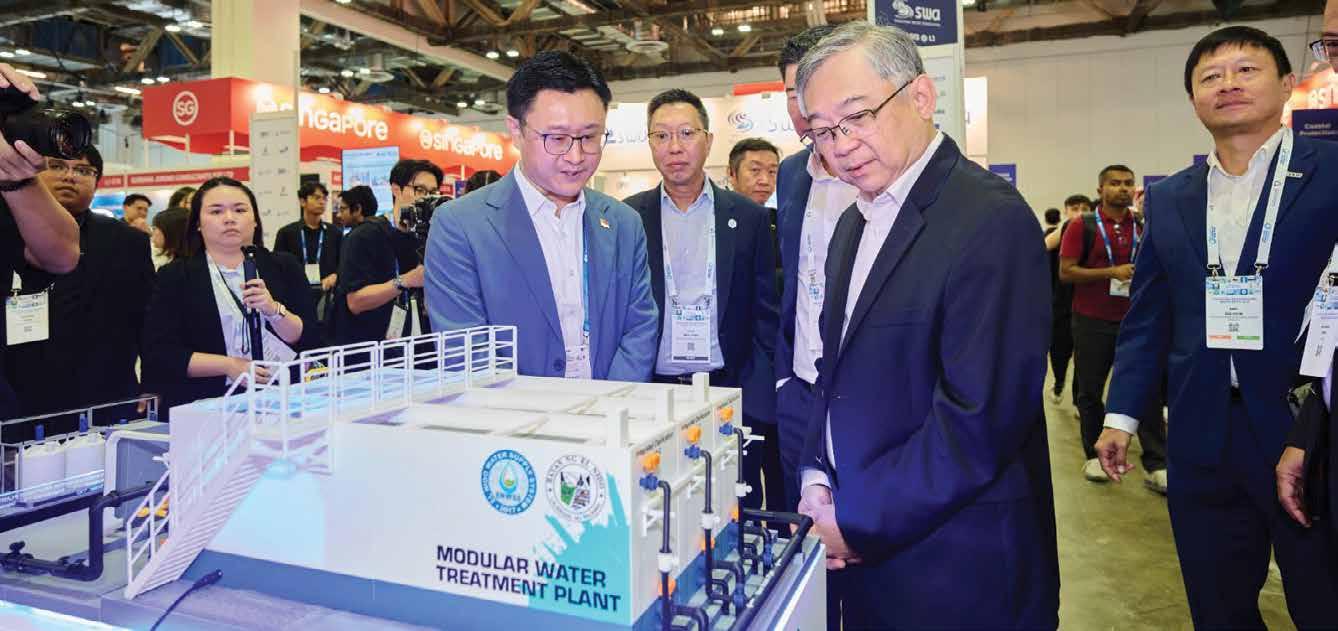
The 11th edition of the Singapore International Water Week (SIWW2026) concluded on a high note, drawing 2,000 delegates, including 800 leaders and 21,000 trade visitors from over 71 countries and regions, to the Sands Expo and Convention Centre, Marina Bay Sands, from 15 to 18 June 2026. Centred on three key themes – Municipal Water Solutions, Industrial Water Solutions, and Coastal and Flood Resilience –SIWW2026 brought together governments, cities, utilities, academia and industry to exchange insights, showcase innovations and forge partnerships that advance water security, climate resilience and sustainable urban water development.
Delivering the opening address, Guest-of-Honour, Mr Gan Kim Yong, Singapore’s Deputy Prime Minister and Minister for Trade and Industry, said that water is fundamental to the economy, society and life itself – and in a world facing climate change and growing uncertainty, a matter of resilience. He called on the international water community to make collective progress across three fronts – investment, innovation, and international cooperation.
At the Lee Kuan Yew Water Prize 2026 Award Ceremony, American microbiologist Professor Joan Bray Rose was honoured as the 2026 Laureate for her pioneering work in Quantitative Microbial Risk Assessment (QMRA) – a sciencebased approach to safeguard the quality of drinking water and water for reuse.
A global gathering of government, utility and city leaders
SIWW2026 drew strong participation from leaders across governments, water agencies, utilities and cities worldwide. Attendees included H E Retno Marsudi, United Nations Secretary-General’s Special Envoy on

Water; ministers and vice ministers from the People's Republic of China, Thailand, Nigeria, Armenia, TimorLeste and Sarawak; as well as the Chairman of the Department of Energy, Abu Dhabi, UAE.
Leaders from some 30 cities, including Copenhagen, Rotterdam, Hong Kong, New York City, Antwerp, Dubai, Jakarta, Melbourne, Quezon City and Tokyo, also attended the event, reflecting SIWW’s continued relevance to cities managing complex urban water challenges.
They were joined by leaders from nearly 60 utilities across Asia, Australia, Europe, the Middle East and the United States, as well as senior representatives from leading international organisations, including the Intergovernmental Panel on Climate Change (IPCC), Asian Development Bank, World Bank Group, C40 Cities and the International Water Association.
Together, they exchanged peerto-peer lessons on integrated water management, utility transformation and long-term resilience planning, augmenting the broader programme that followed.
This high-level participation was supported by a broad high-quality programme designed to deepen
dialogue and practical learning across the sector. SIWW2026 featured more than 100 sessions, where participants discussed practical and scalable approaches to strengthening water resilience in the face of growing climate, resource and urbanisation pressures.
Comprising plenaries, summits, workshops and technical sessions, topics covered AI and digitalisation, water and resource circularity, treatment and reuse technologies, industrial water management, nature-based solutions, coastal and flood resilience, and financing and delivery models, reflecting the breadth of challenges and opportunities in the global water sector today.
The SIWW2026 Water Expo, the marketplace for urban water solutions for municipal and industrial users across Southeast Asia, was organised in cooperation with IFAT.
The expo was the largest in SIWW’s history, occupying six exhibition halls across two floors and 23,000 m2 of exhibition space.
The 2026 edition attracted 500 exhibiting companies, with 56% overseas exhibitor participation, and featured the largest Singapore Pavilion to-date. Connecting
technology providers, project owners and capital to accelerate deployment across the region, the expo catalysed new opportunities and partnerships, and saw 53 product launches, 35 project announcements, and a series of MoU and contract signings.
Key announcements and highlights Across the week, SIWW2026 drove a series of landmark announcements and partnerships spanning, innovation alliances, commercial partnerships, research funding, as well as guidelines and frameworks. Key highlights include:
• Nearly SGD 100 million in funding awarded under the Research, Innovation and Enterprise (RIE) 2030 Urban Solutions & Sustainability Domain, for PUB to advance research and development of municipal and industrial water solutions.
• Over 15 MoUs and partnerships at SIWW2026. Among them were MoUs between PUB and multiple stakeholders to form the Industrial Water Solutions Innovation Ecosystem Alliances for the data centre and wafer fabrication sectors.
• SGD 14 million in funding awarded by PUB to five projects under the Living Lab pillar of the Coastal Protection and Flood Management Research Programme, supporting the test-bedding of coastal protection measures at selected locations along Singapore’s coastline.
• Launch of the Coastal Protection Code of Practice to guide landowners and industry in fulfilling their coastal protection obligations, and the FloodResilient Developments Guidebook to help developments better manage flood risks.
• New partnerships to support the development and international deployment of water technologies. These included a new global cross-sector partnership involving Ramboll, Henning Larsen, the Royal Danish Academy and the University of Canberra, to explore the use of wastewater treatment by-products as feedstock for low-carbon, circular building materials, as well as a strategic collaboration between Netatech,

Dassault Systèmes and YellowScan to support next-generation coastal protection, digital twin intelligence and autonomous environmental monitoring capabilities.
• Launch of the 3rd addendum to the 4th edition of the WHO Guidelines for Drinking-water Quality, which updates guidance across areas including small water supplies, sanitary inspections, water safety plans, microbial water quality risk management, priority waterborne pathogens, pesticides used for vector control in drinking water and supporting resources for implementation.
“SIWW2026 has shown what is possible when the global water community comes together with urgency, purpose and ambition. The ideas, partnerships and solutions advanced this week reflect the momentum needed to strengthen water security, climate resilience and sustainable urban development," said Mr Ryan Yuen, Managing Director of SIWW.
The next edition of SIWW, the 12th Singapore International Water Week (SIWW2028), will be held from 12 to 15 June 2028 at the Sands Expo and Convention
Centre, Singapore.
Singapore International Water Week Singapore International Water Week (SIWW) is one of the world’s premier platforms to share and cocreate innovative water, coastal and flood solutions, to meet urban water and associated climate challenges.
Organised by Singapore International Water Week Pte Ltd, a subsidiary of PUB, Singapore’s National Water Agency, the biennial SIWW delivers a range of flagship programmes and platforms that gathers stakeholders from governments, cities, utilities, academia and industry, to share best practices and solutions, showcase the latest technologies and harness business opportunities.
SIWW2026
Held in cooperation with IFAT and organised by Messe Munich, SIWW Water Expo showcases the latest solutions, technologies, products and services for cities, utilities and industry in Asia.
All images by Singapore International Water Week
ARC Advisory Group has announced that the ARC Industry Leadership Forum Singapore 2026 (ARC Forum Singapore 2026) will bring together senior industry executives, technology leaders, and innovators from across Asia for its third edition which will explore the next wave of industrial transformation.
ARC Forum Singapore 2026 will be held on 27 August 2026.
Under the theme ‘How AI Is Driving the Future of Industrial Operations and Supply Chain’, ARC Forum Singapore 2026 will serve as a premier platform for business and technology leaders to exchange insights, strategies and real-world experiences, on the adoption of advanced solutions across Artificial Intelligence (AI), Automation, Robotics, Asset Management, OT Cybersecurity and other areas.
Actionable insights and best practices
Singapore, recognised as a leading global technology and innovation hub, provides the ideal backdrop in Southeast Asia for the ARC Forum.
The event will highlight how organisations across the region and beyond are navigating rapid change while maintaining operational resilience and sustainability.
“The ARC Forum 2026 in Singapore represents a critical gathering at a time when industries are under pressure to transform faster than ever. This event will enable delegates to gain actionable insights, share best practices and build partnerships, to facilitate the next decade of industrial innovation,” said Bob Gill, General Manager, Southeast Asia, ARC Advisory Group.
Presentations and panels
The 2026 programme will include presentations and panel discussions covering the following key themes:
• Industrial AI: From Strategy to Solutions to ROI
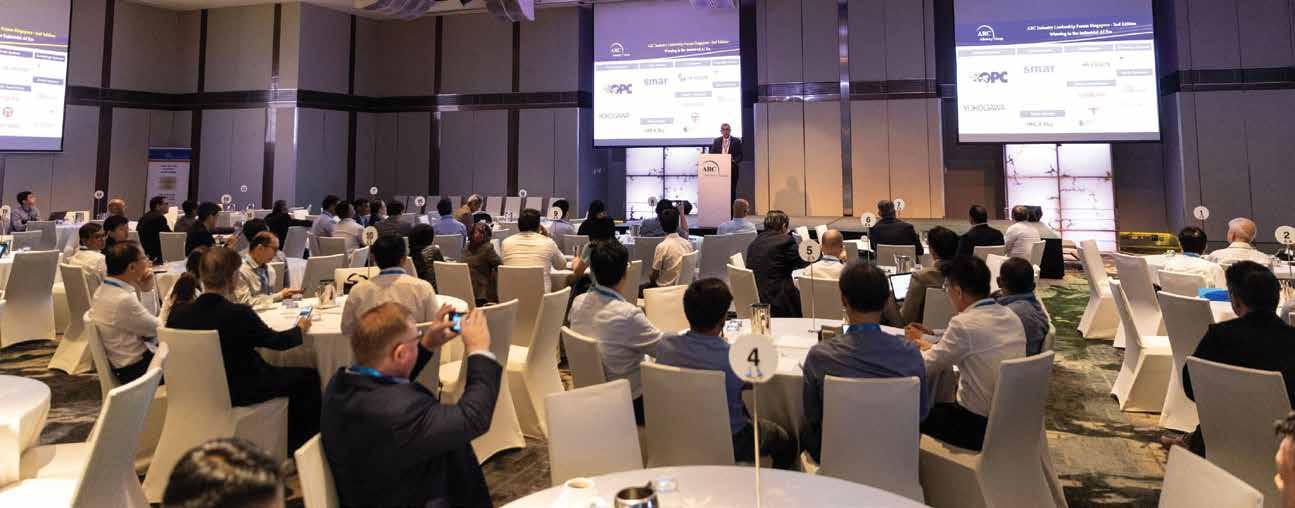
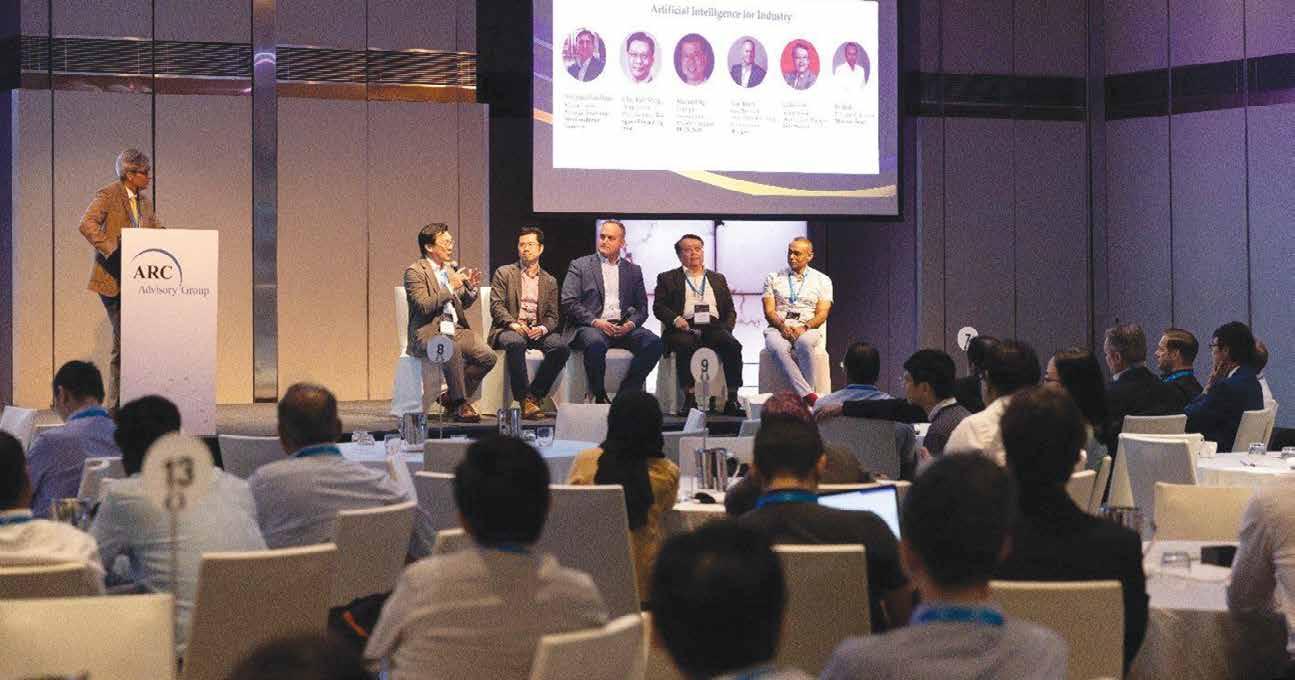
Last year’s event, ARC Forum Singapore 2025, which was held on 7 August 2025, was attended by close to 200 industry leaders, technology providers, automation end-users and innovators.
• Automation Advances and Innovations
• Physical Intelligence: NextGeneration Robotics
• Driving Excellence in Operational Resilience and Asset Performance
In these sessions, attendees will hear from industry leaders, end-users and technology providers, who will share case studies demonstrating measurable business impact from technology deployments.
Aside from these insightful sessions, forum delegates can see some of the latest technology on show, in the exhibition area.
Who should attend
ARC Forum Singapore 2026 is designed for:
• C-suite executives and business leaders
• IT and OT decision-makers
• Operations and plant managers
• Technology innovators and solution providers
Driving the future of industry
As organisations continue to adapt to a rapidly evolving technological landscape, ARC Forum 2026 aims to provide a comprehensive roadmap for navigating disruption while capitalising on new opportunities.
“Businesses that successfully integrate digital technologies with strong operational strategies will lead the future. ARC Forum Singapore 2026 will help organisations develop the right vision and turn that vision into execution,” said Mr Gill.
ARC Advisory Group
ARC Advisory Group is a technology research and advisory firm for industry, infrastructure and cities.
EuroBLECH 2026 is set to take a significant step forward in showcasing the future of sheet metal working, with the launch of the ‘Innovation Zone | Advanced Manufacturing’. Designed as a high-visibility feature at the heart of the exhibition, the new zone will bring together the technologies and solutions redefining modern manufacturing.
Taking place from 20 to 23 October 2026 at the Hannover Exhibition Grounds, EuroBLECH, organised by RX, continues to evolve in line with rapid industry transformation.
As manufacturers increasingly invest in automation, digitalisation and intelligent production systems, the Innovation Zone showcases the technologies driving efficiency, precision and competitiveness, alongside live machinery, new product launches and real-world demonstrations taking place across exhibitor stands.
The zone’s emphasis on advanced manufacturing reflects the industry’s ongoing demand for greater efficiency, flexibility and resilience. Bringing together technologies such as automation, digital production systems and precision engineering, it provides a clear and focused view of the solutions driving sheet metal working, today, and in the years ahead.
“EuroBLECH has always been a platform where the future of sheet metal working comes into focus. With the Innovation Zone, we are placing advanced manufacturing technologies firmly at the heart of the visitor experience. It is about making advanced manufacturing developments more accessible, more visible and more actionable for the global manufacturing community,” said Ms Evelyn Warwick, Exhibition Director for EuroBLECH, on behalf of RX.

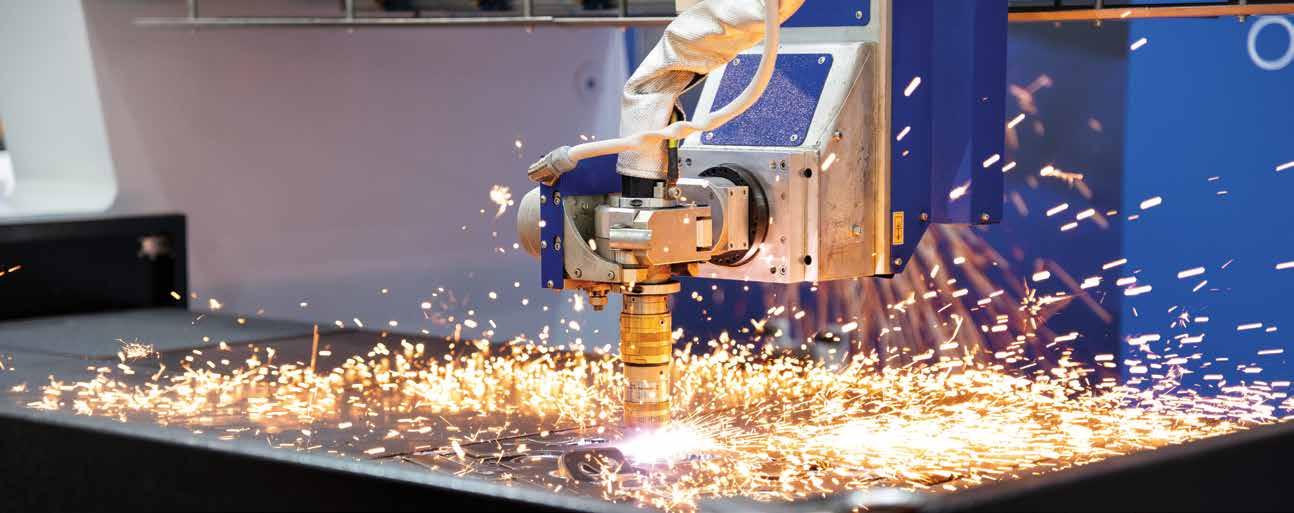
To ensure a strong focus on the latest developments, only technologies launched between 1 November 2025 and 20 October 2026 will be featured. In doing so, the Innovation Zone reinforces EuroBLECH’s position as the leading global platform for sheet metal working, connecting manufacturers with the solutions enabling smarter and more sustainable manufacturing.
For exhibitors, the Innovation Zone offers a focused platform to highlight a single breakthrough technology within a high-traffic, curated environment. With two participation formats, Showcase Podiums and Discovery Panels, companies can present their solutions through physical displays or visual storytelling, depending on their application.
At the same time, the feature is designed to support a more efficient
and inspiring visitor journey. Guided tours will conclude in the zone, bringing targeted groups directly to the latest developments. Integrated access to technical data, case studies and product information enables faster identification of relevant technologies and suppliers. This creates a seamless journey from discovery to exhibitor stands and on to informed decision-making, making time at the exhibition more productive and outcome-focused.
As part of ongoing enhancements to the exhibition experience, EuroBLECH 2026 will also introduce an optimised hall layout designed to better reflect how visitors navigate the show and evaluate technologies. This includes the repositioning of surface and joining technology exhibitors into Hall 16, creating closer proximity between complementary technologies and supporting a more intuitive visitor journey.
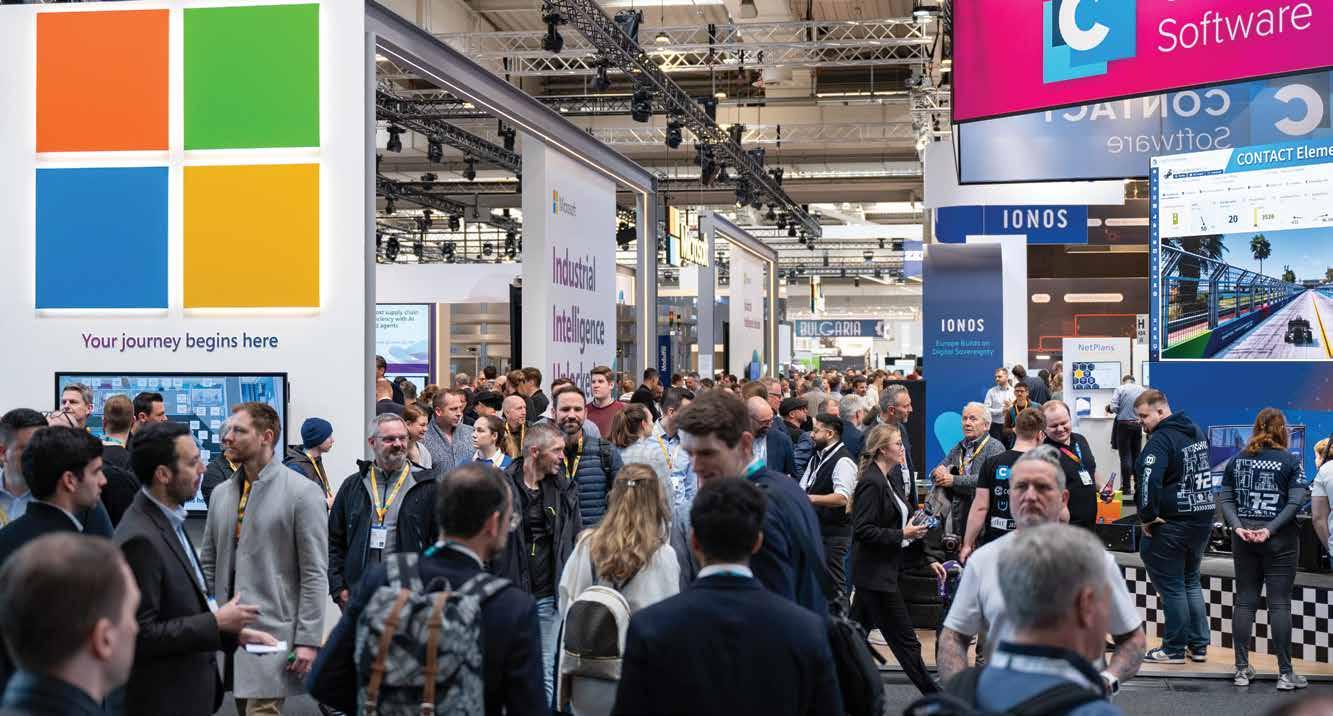
HANNOVER MESSE 2026, the world’s leading trade fair for the manufacturing industry, was held from 20 to 24 April 2026, in Hannover, Germany.
The main areas covered by the exhibiting companies from the electrical engineering, mechanical engineering, digital, and energy sectors included Automation & Digitalisation, Energy & Industrial Infrastructure, and Research & Technology Transfer.
The topic of Artificial Intelligence (AI) was a common thread that ran through all exhibition areas. A diverse conference programme enhanced the fair.
The event demonstrated that industry is delivering concrete solutions even in challenging times and, in particular, that AI, automation, and digitalisation play a key role in making production processes more efficient and boosting competitiveness.
A total of 110,000 visitors from all over the world attended HANNOVER MESSE 2026. Although the attendance figure was below the previous year’s level of 123,000 visitors, due to airline and public transportation strikes complicating travel, the quality of the encounters and the dynamic atmosphere in the halls clearly showed that the technologies are in place, the approaches have been tested, and now it is a matter practising them consistently.
Despite the difficult conditions in general, the trade fair once again presented highly international characteristics. Around 40% of the attendees came from abroad. The countries contributing the most overseas attendees were China, Brazil, the United States, Japan and South Korea.
“This year’s HANNOVER MESSE was both a technology show and a source of inspiration. The companies showed that Germany and Europe possess the necessary tools to remain competitive. What
is crucial now is to decisively take advantage of this potential and put the pedal to the metal,” said Dr Jochen Köckler, CEO of Deutsche Messe AG, organisers of the event.
HANNOVER MESSE 2026
demonstrated that AI, robotics, automation and energy infrastructure are at the heart of the industrial future and are key technologies for transforming industry.
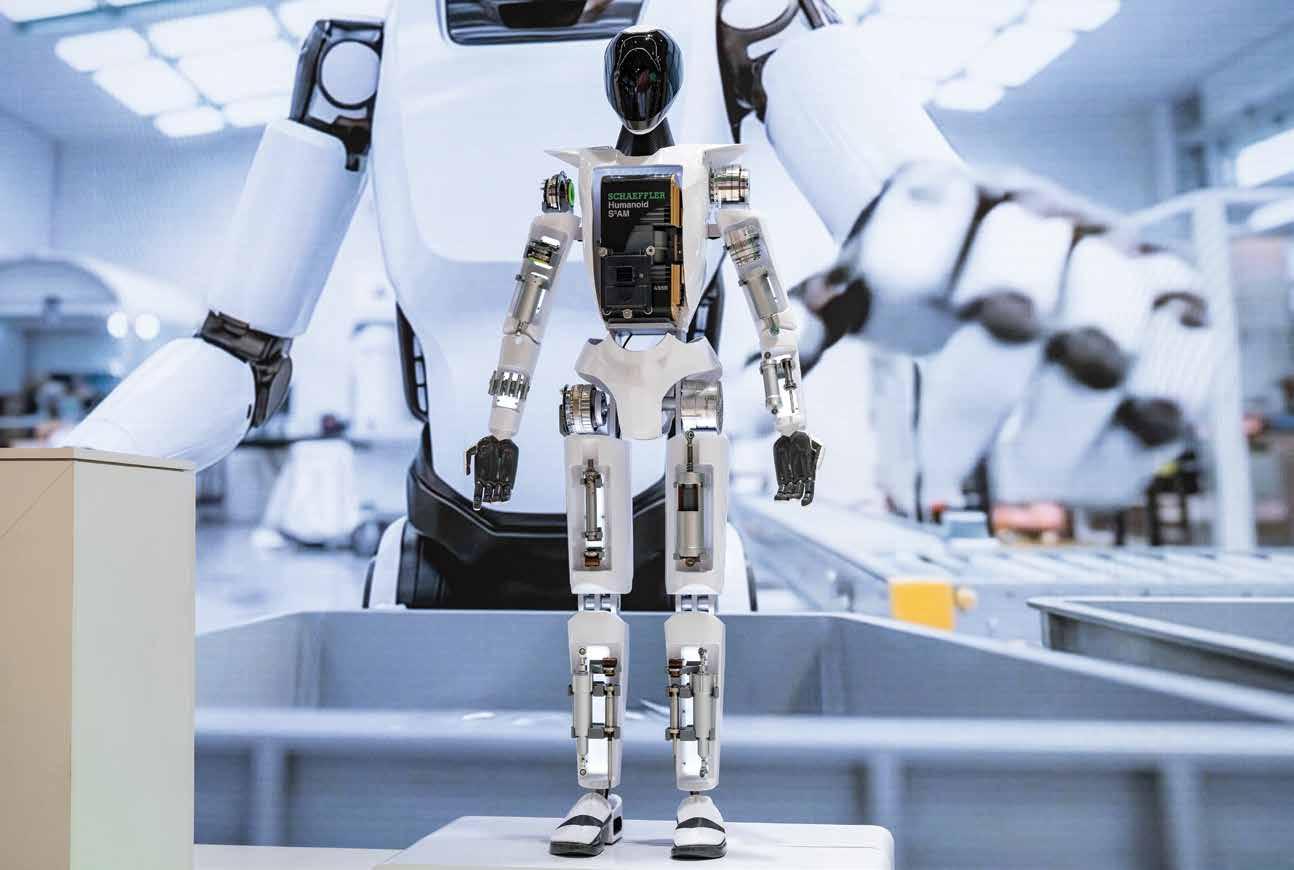
Products and solutions that companies presented include AIsupported production systems and tools that can automate processes and predict failures; humanoid robots that have already mastered complex motion sequences and will work in the production and service sectors, in the future; and new solutions for energy efficiency and grid expansion, that pave the way to a carbon-neutral industry.
Top representatives of the business and political communities were present at the trade fair.
VIP attendees included German Chancellor Friedrich Merz, Brazilian President Lula da Silva, Dr Roland Busch of Siemens, Christian Klein of SAP, German Minister of Economics Katherina Reiche and German Minister of Defence Boris Pistorius. Mélanie Joly, Canada’s Minister
of Industry and Stéphane Séjourné, from the European Commission, also visited the show.
Leading representatives of industry made it clear that Europe is under pressure as a location for doing business. Inflated costs, excessive regulation and geopolitical upheaval are leading to growing uncertainty and are noticeably impacting companies’ competitiveness.
But HANNOVER MESSE showed that solutions are available. Companies are investing in future technologies, driving innovation and opening new markets. Exhibitors reported intensive discussions, specific projects and great international interest.
“The new HANNOVER MESSE concept is a success. The Center Stage was especially well received. This strengthens our profile as a place for high-level exchange, particularly with politicians,” said Dr Gunther Kegel, President of ZVEI (Association of the German Electrical and Digital Industry) and Chairman of the HANNOVER MESSE Exhibitor Advisory Board.
“HANNOVER MESSE sends an unmistakable signal, in terms of content. We urgently need rapid deregulation so that we
can assert ourselves as a location amidst international competition, especially in the field of industrial AI. Companies have impressively demonstrated the potential of the technology. Now Berlin and Brussels need to eliminate barriers to progress,” he added.
“HANNOVER MESSE and the companies from the machine and plant building sector strikingly demonstrated that they are meeting the challenges of a world characterised by multiple crises. Digitalisation of our industry is progressing at a rapid pace, while AI and humanoid robotics represented the defining themes at this trade fair,” said VDMA Managing Director Thilo Brodtmann.
Brazil as the Partner Country Partner Country Brazil was a strong addition to HANNOVER MESSE and a driving force at the right time. With a broad spectrum of industrial, energy and digitalisation topics, Brazil presented itself as a dynamic growth market and dependable partner for international cooperation.
“Especially in a time of global upheaval and shifting trade relations, this partnership sends an important message – for greater diversification, more resilient supply chains and closer cooperation between Europe and Latin America,” said Dr Köckler.
He added that the Mercosur agreement, which will soon come into force, has given a significant boost to the partner country’s participation and provided new impetus for economic cooperation.
A new trade fair concept
HANNOVER MESSE 2026 not only featured strong content, but also presented an enhanced trade fair concept. The new hall plan provided clear orientation.
The new networking formats also proved popular, with the Masterclasses delivering real added value for exhibitors. In compact, practical sessions, companies presented their expertise in a targeted manner and engaged
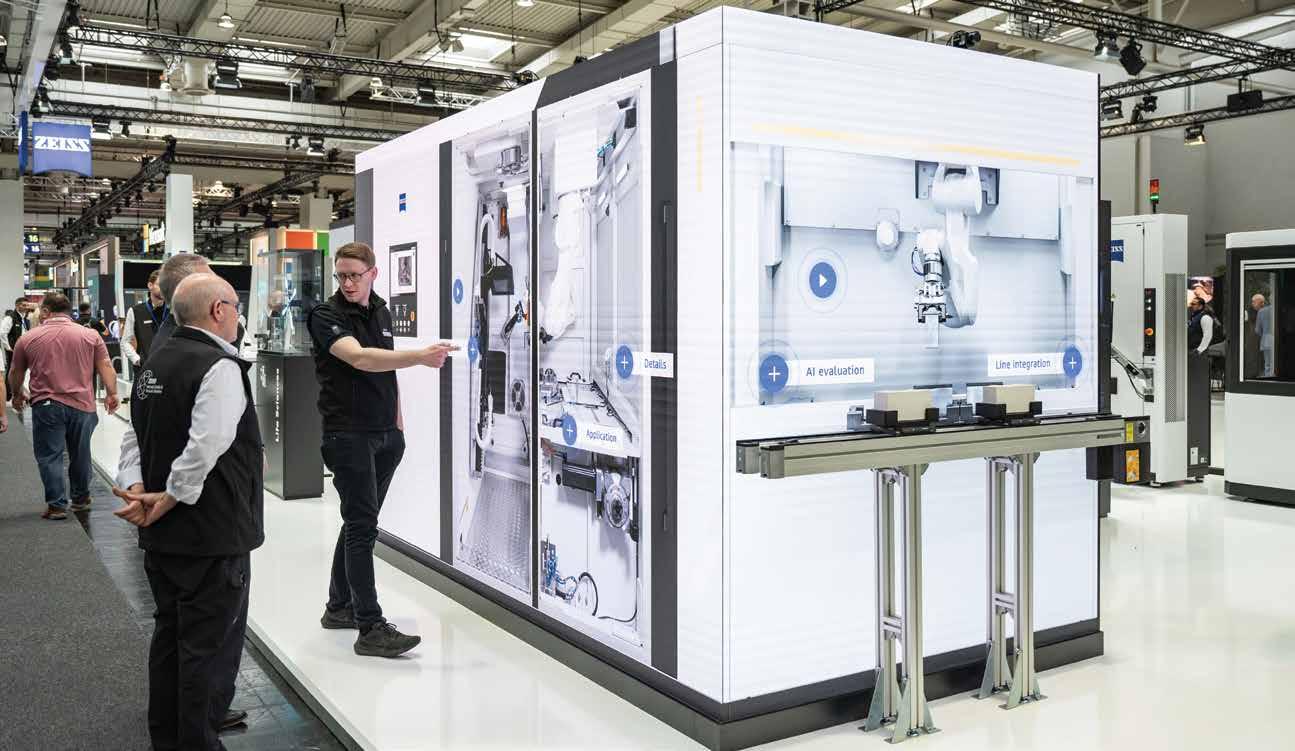
directly with potential customers.
The Center Stage established itself as a central platform for knowledge transfer, discussion and inspiration, and was a magnet for crowds. It attracted around 30,000 visitors with a top-tier programme across all days of the fair.
The organisers have stated that HANNOVER MESSE 2027 will be even more efficient and attractive.
For instance, the new ‘Europe Energy Week’ will run parallel to HANNOVER MESSE. In cooperation with the event organiser, dmg events, the show will bring together energy producers, industrial companies, infrastructure operators and political decision-
makers, while promoting exchange around Europe’s energy future.
HANNOVER MESSE 2027 will run from 5 to 8 April 2027, with Spain as the Partner Country.
“HANNOVER MESSE continues to develop consistently and will be more focused, more efficient, and closer to industry. Thematically, the specific application of AI as well as its physical implementation are moving into focus. The combination of Artificial Intelligence with real machines and production systems will shape HANNOVER MESSE over the coming years and mark the next major step in the development of industry,” said Dr Köckler.
AHR Expo 2026, the International Air-Conditioning, Heating, Refrigerating Exposition, was held at the Las Vegas Convention Center in Las Vegas, Nevada, USA, from 2 to 4 February 2026.
The event attracted 53,315 professionals, including engineers, sales channel partners, owners, contractors, installers and more. The attendees came together to experience the latest offerings of 1,956 exhibitors who presented their products and solutions over 578,980 ft2 of exhibition space.
“This industry just keeps getting more exciting. We are proud to serve as the place where HVACR professionals come together to tackle emerging challenges and discover new opportunities,” said Show Manager, Jeff Stevens.
“As the pace of change continues to accelerate, our work together is more important than ever, in shaping a built environment that is comfortable, safe and efficient. AHR gives our industry the opportunity to connect with the technologies, ideas and partnerships, that move us forward,” he added.
The HVACR industry continues to move ahead into smarter ways to provide heating, cooling and refrigeration to the built environment. The steadfast application of legacy technologies, all the way through the introduction of novel products and practices, allows professionals to converge and refresh their knowledge, discover new paths and expand a network to help align and achieve goals.
“AHR Expo is three days of productive engagement with valued customers, suppliers and partners. We wrapped up a truly energising week in Las Vegas, where the team at AHR Expo and our incredible team put on an amazing show and customer reception,” said Steve Ribaudo, VP & GM, Commercial HVAC Americas at Carrier.

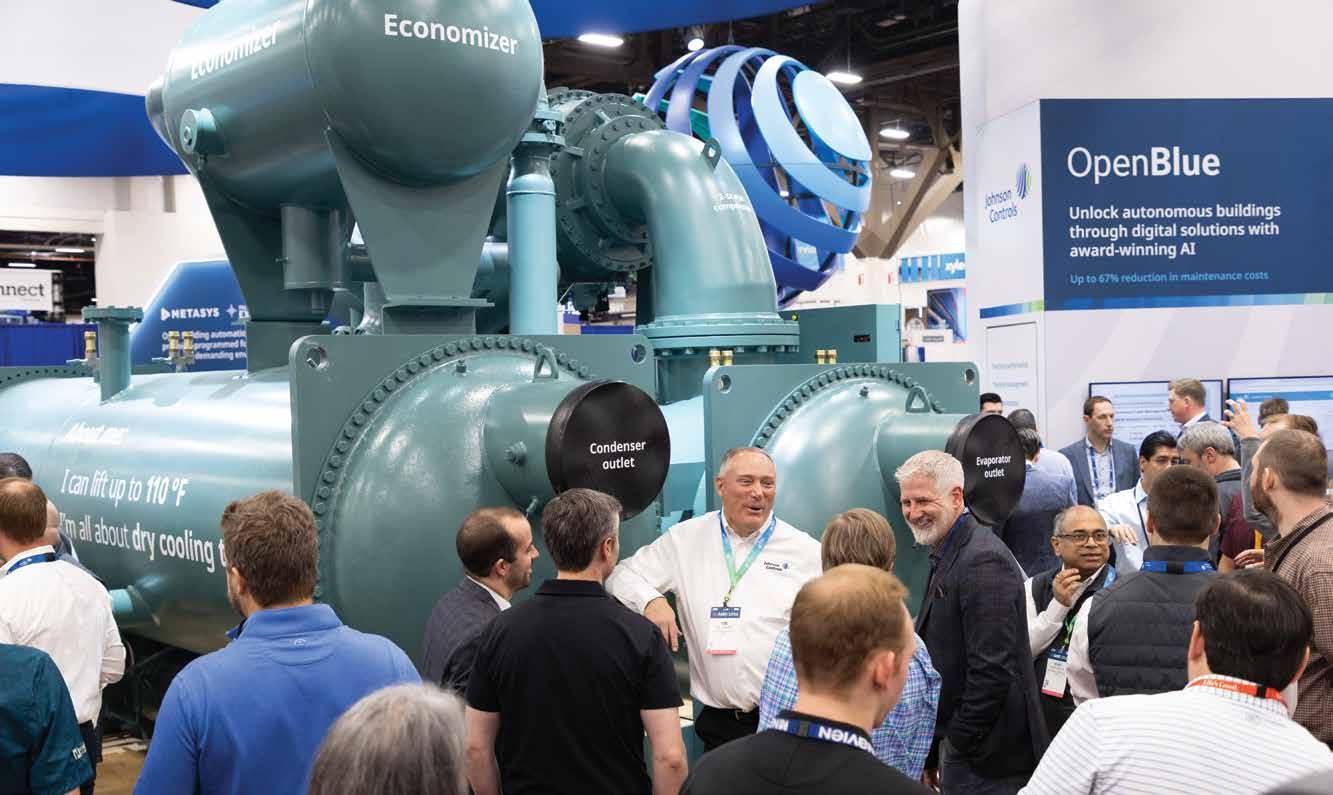
During the week, the conversation covered data centres, methods to strengthen workforce development initiatives, discussions on steadying refrigerant shortages coupled with a push towards new refrigerants, updated regulations and more.
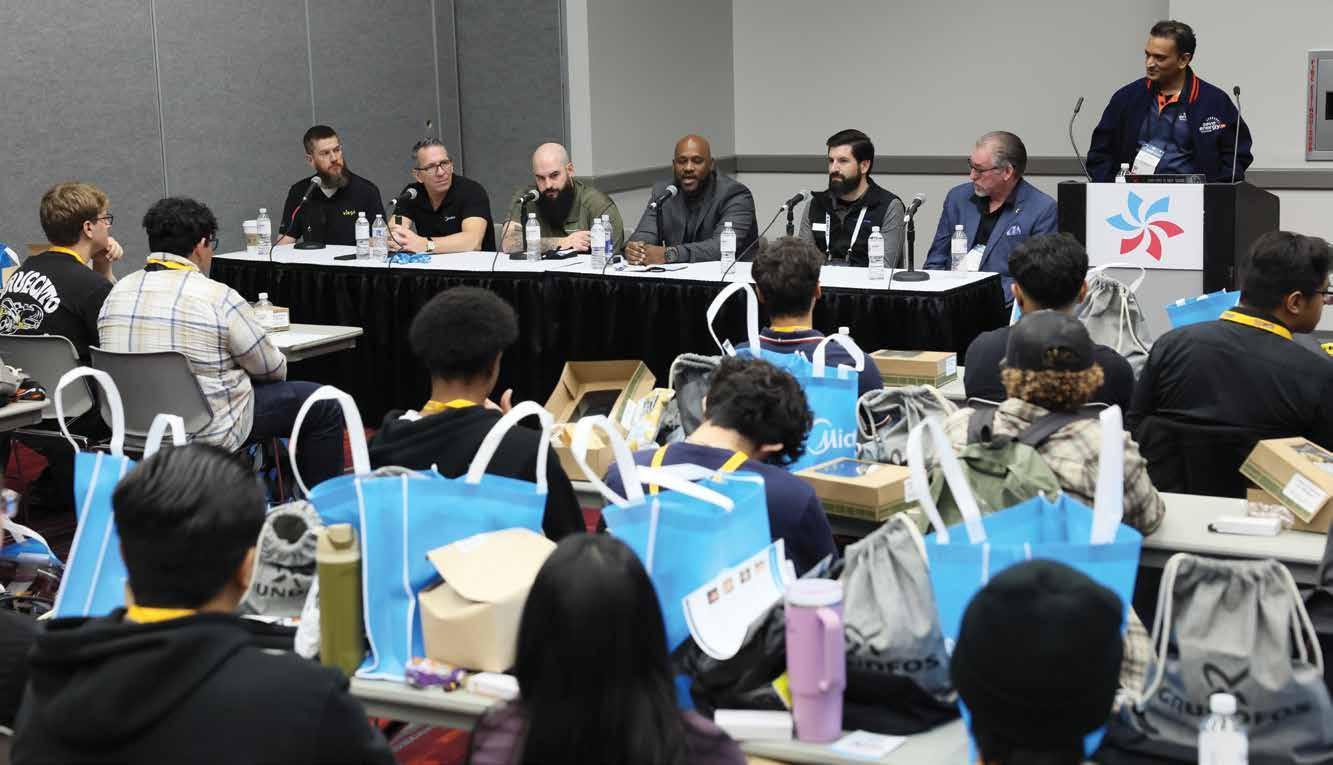
In addition to the free industry programme, already packed with sessions on all points of interest, the Education Program featured the 2026 Panel Series which included a series of ‘standing room only’ discussions on topics including refrigerants, data centres, workforce development, industry communication channels, heat
pumps, ERV systems and the annual State of the Industry Panel.
Ryan Sen, who moderated the panel on ‘Data Center Demands: Cooling Solutions, BMS Advancement and the Next Generation of HVAC’, said of the session, “Our Data Centre Demands panel was certainly one of the most heavily attended sessions at AHR Expo 2026, and with good reason. Given the speed, scale and investment being made in this vertical, it was timely for the engineering, HVAC, and BAS communities to come together to hear from real subject matter experts helping to shape standards and technology adoption.”
Recognising innovation
During a closed ceremony, the winners of the 2026 AHR Expo Innovations Awards were honoured, for their contributions to HVACR and its future.
Blue Frontier took home the prestigious 2026 AHR Expo Innovation Product of the Year Award.
“When it was announced that we won Product of the Year, I could only think of the audacity of my team at Blue Frontier. A tiny group of people with the seemingly naive conviction that we can do things better and without compromises. This award marks a recognition and an encouragement for us to continue to find ways to align people, science, engineering, product and customer experience to create products that seem magical,” said Dr Daniel Betts, CEO of Blue Frontier Inc.
Each year, the Innovation Awards receive hundreds of submissions from manufacturers putting forward their breakthrough designs for new solutions or as improvements on existing products and technologies.
Entries are then closely reviewed by a panel of third-party judges, made up of distinguished ASHRAE members. Evaluations are based on overall innovative design, creativity of the product or service offered, product or technology in realworld application, as well as overall potential market impact.
An exciting added benefit of
flourishing innovation driving entries to the Innovation Awards is the ability to strengthen the industry through funding attributed to the AHR Expo Workforce Development programme.
AHR Expo 2027 will be held in Chicago, Illinois, USA, from 25 to 27 January 2027, concurrently with ASHRAE’s Winter Conference.
AHR Expo is the world’s premier HVACR event, attracting a comprehensive gathering of industry professionals from around the globe each year. The show provides a unique forum where manufacturers of all sizes and specialities, whether major industry brand or innovative start-up, can come together to share ideas and showcase the future of HVACR technology, under one roof.
Since 1930, the AHR Expo has remained the industry’s best place for OEMs, engineers, contractors, facility operators, architects, educators and other industry professionals to explore the latest trends and applications and to cultivate mutually beneficial business relationships.
AHR Expo is co-sponsored by ASHRAE (an international society of heating, refrigerating and airconditioning professionals) and AHRI (Air-Conditioning, Heating, and Refrigeration Institute).
The show is produced and
managed by International Exposition Company Inc.
All images by International Exposition Company Inc
WINNERS OF THE 2026 INNOVATION
Building Automation
Winner: Honeywell
Innovation: Honeywell Connected Solutions
Cooling
Winner: Daikin Applied Americas Inc
Innovation: Magnitude WME-C Quad
Heating
Winner: Copeland
Innovation: Copeland heatingoptimised modulating vapour injection portfolio
Indoor Air Quality
Winner: Sharp Corporation
Innovation: Airest
Plumbing
Winner: IDC Fluid Control Innovation: LeakStop III
Refrigeration
Winner: Copeland
Innovation: Copeland transcritical CO2 scroll compressor with dynamic vapour injection technology
Software
Winner: Rebar Innovation: Rebar
Sustainable Solutions
Winner: Blue Frontier Innovation: BF-DOAS
Tools & Instruments
Winner: CSG Compressors (Houston & American Hermetics)
Innovation: SAMMi
Ventilation
Winner: ABB Motors and Drives
Innovation: ACH580 Variable Frequency Drives
Strategic partnership to enable enterprises to move from idea to pilot in weeks.
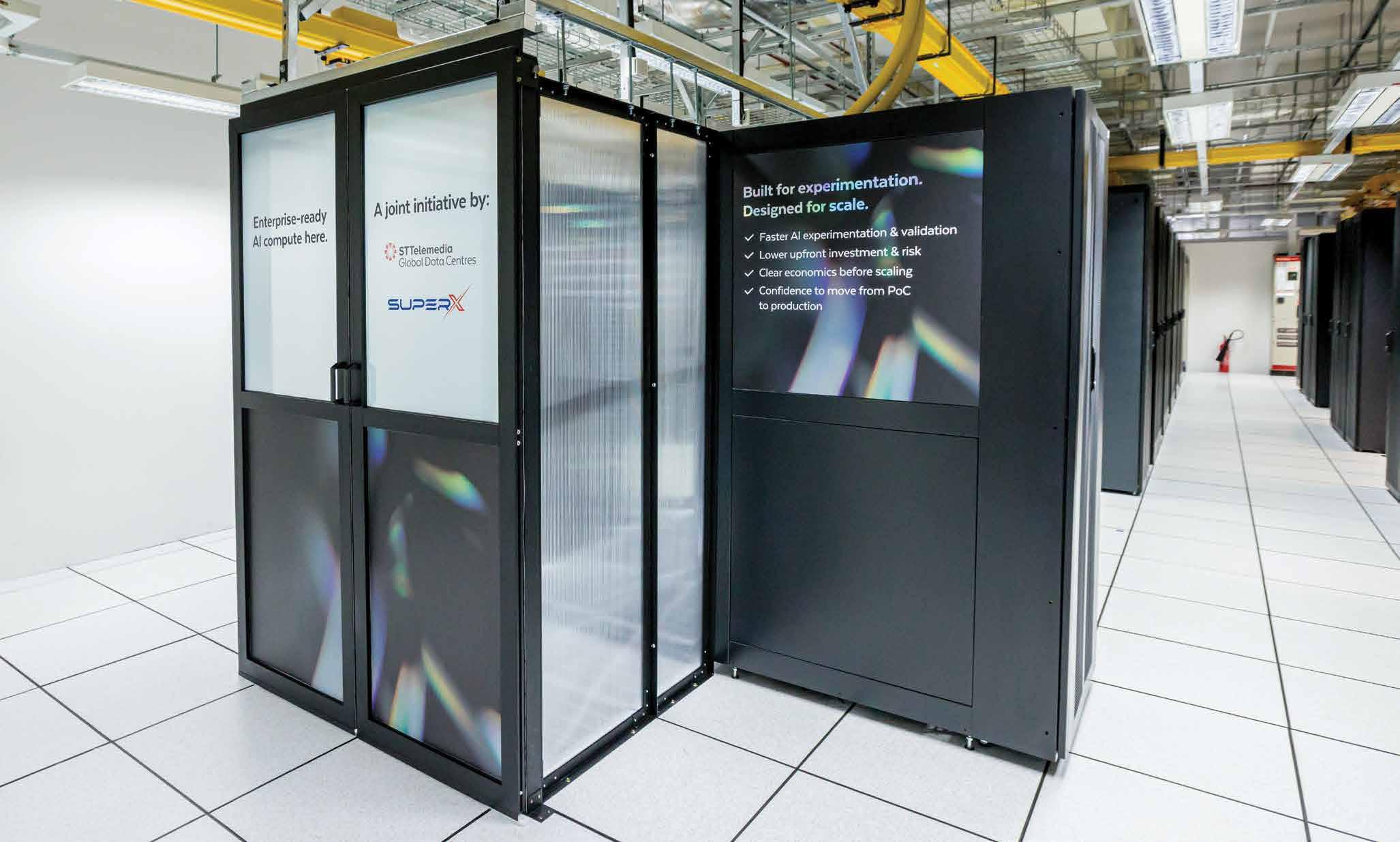
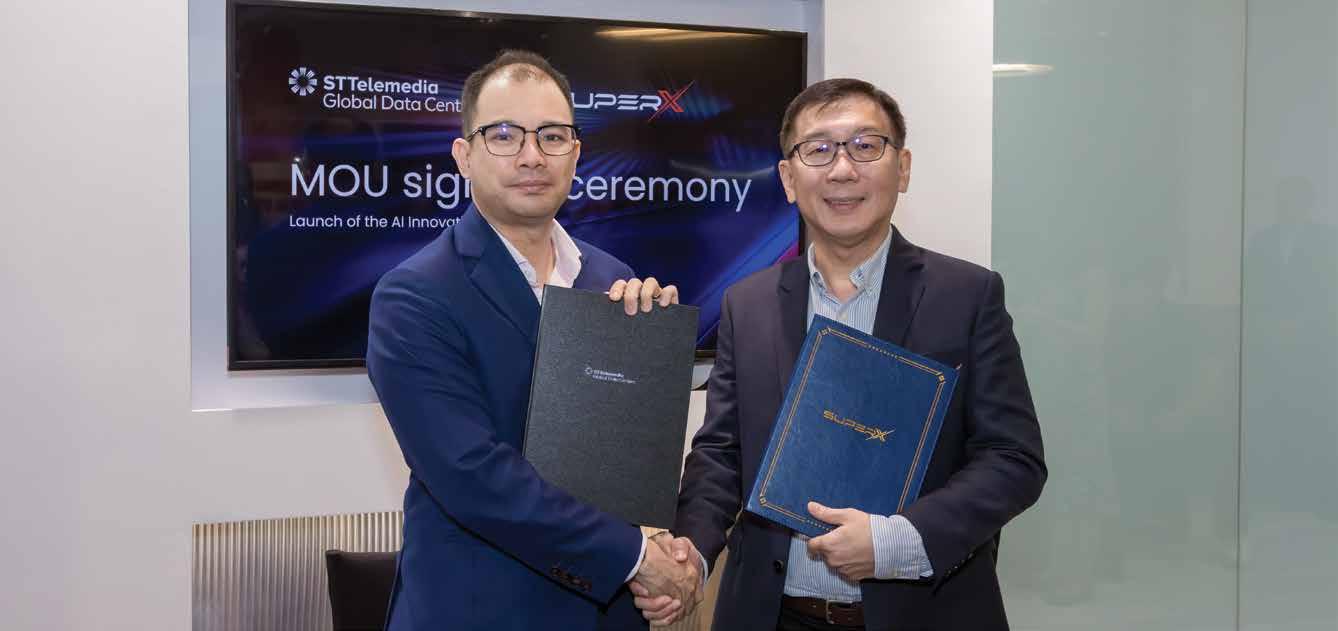
ST Telemedia Global Data Centres (STT GDC), one of the world’s fastest growing data centre colocation providers, headquartered in Singapore, and SuperX AI Technology Limited, an emerging full-stack AI Data Centre infrastructure solutions provider, recently announced the launch of an AI Innovation Centre in Singapore, following the signing of a Memorandum of Understanding (Mou) between the parties in January.
Hosted at the STT Singapore 5 facility in Tai Seng, the centre provides a dedicated environment designed to help enterprises fast-track their AI journey from experimentation to productionready scale. Reflecting immediate market demand, the centre has already onboarded an initial cohort
of users. These early adopters are leveraging the centre’s highperformance compute for complex workloads such as advanced modelling and large-scale data simulations.
The partnership arrives as new research from STT GDC indicates a critical AI infrastructure gap across Singapore as well as Asia.
The study, titled ‘Mind the Gap: Bridging the AI Infrastructure Divide’,
surveyed more than 600 leaders across nine Asian markets and found that the majority of organisations are stalled in the ‘Building’ phase of AI maturity, due to a lack of foundational infrastructure. The AI Innovation Centre directly addresses these bottlenecks by providing ready, local and enterprise-grade AI compute.
Enterprise-grade infrastructure for rapid innovation
Engineered for short-term AI workloads, including pilots, proof of concepts (PoCs), and model benchmarking, the centre combines STT GDC’s resilient, AI-ready facilities with SuperX’s AI hardware and software. This reduces the operational complexity that often causes AI pilots to stall, while enabling enterprises to innovate with significantly lower upfront investment and risk.
Key features of the AI Innovation Centre include:
• Next-Gen Compute: Direct access to the latest NVIDIA Blackwell GPU infrastructure, featuring 192GB HBM3e VRAM per GPU.
• High-Performance Architecture: Servers configured with Intel Xeon Gold 6767P CPUs and 400G InfiniBand networking for highspeed data processing.
• Frictionless Deployment: A dedicated User Portal and Service Catalogue that allows teams to rapidly provision standard GPU plans.
• Data Sovereignty and Security: All workloads run locally in Singapore within a secure, resilient environment, meeting the data residency requirements of regulated industries.
• Pilot Access Program: Qualified customers receive a 14-day, free trial to validate performance, compatibility, and cost efficiency –enabling confident, low-risk decisions before scaling to production.
“The foundation of any successful AI strategy is dependable, scalable infrastructure. By combining our operational excellence with
SuperX’s advanced orchestration capabilities, we are providing a strategic blueprint for organisations to move past the pilot phase. This centre is more than just a testing ground, it is a launchpad for enterprises to achieve measurable return on investment and long-term AI leadership,” said Mingcheng Lim, Country Head, Singapore at ST Telemedia Global Data Centres.
“Our goal is to provide immediate AI capability. Many enterprises struggle with the cost and complexity of setting up dedicated AI environments. The AI Innovation Centre reduces that friction, enabling teams to deploy models from a built-in catalogue or third-party marketplaces, in days, not months. We are bridging the gap between infrastructure and real-world AI outcomes,” said Kenny Sng, CTO of SuperX AI Technology Limited.
From pilot to production-ready scale
The AI Innovation Centre is now open to enterprises, regional businesses and Institutions of Higher Learning (IHLs), offering a 14-day, free trial to validate performance, cost and feasibility. This showcase facility allows organisations to launch a pilot in weeks, providing the secure, enterprise-grade foundation necessary to move from testing to measurable outcomes with confidence.
Beyond initial validation, the centre offers options for full production, hybrid and private AI deployment models, as well as flexible scaling options within STT GDC’s global footprint. This enables organisations to establish a longterm infrastructure partnership that ensures continued innovation and operational resilience.
ST Telemedia Global Data Centres
ST Telemedia Global Data Centres (STT GDC) is one of the fastestgrowing data centre providers, with a global platform serving as a cornerstone of the digital ecosystem that helps the world to connect. Powering a sustainable digital future, STT GDC operates across Singapore, the UK, Germany,
India, Italy, Thailand, South Korea, Indonesia, Japan, the Philippines, Malaysia and Vietnam, providing businesses a foundation that is built for their growth anywhere.
SuperX AI Technology Limited is an AI infrastructure solutions provider, offering a comprehensive portfolio of proprietary hardware, advanced software and end-to-end services for AI data centres. The company’s services include advanced solution design and planning, cost-effective infrastructure product integration and end-to-end operations and maintenance.
Its core products include highperformance AI servers, 800 Volts Direct Current (800 VDC) solutions, high-density liquid cooling solutions, as well as AI cloud and AI agents. Headquartered in Singapore, the company serves institutional clients globally, including enterprises, research institutions, and cloud and edge computing deployments.
Earlier this year, STT GDC, announced two significant initiatives that strengthen Singapore’s position in the global digital and energy transition. One is the launch of the FutureGrid Accelerator, Southeast Asia’s first live High Voltage Direct Current (HVDC)powered AI infrastructure testbed. The other is a suite of strategic Memoranda of Understanding (MoUs) with four Institutes of Higher Learning (IHLs) to advance skills development and expand internship and early career pathways for Singaporeans entering the workforce. These initiatives align with national efforts to support talent graduating into a challenging job market, while building the specialised capabilities required for next generation power and digital infrastructure.
ST Telemedia Global Data Centres (STT GDC), recently announced the findings of a new regional research study, ‘Mind the Gap: Bridging the AI Infrastructure Readiness Divide.
Commissioned by STT GDC with research partner Ecosystm, the study surveyed more than 600 enterprise and digitalnative leaders across nine Asian markets – India, Indonesia, Japan, Malaysia, the Philippines, Singapore, South Korea, Thailand and Vietnam.
Adoption and readiness
The report reveals that AI ambition across Asia is high, with nearly 90% of organisations having embarked on their AI journeys. However, a significant 71% remain in the ‘Builder’ stage of maturity, where initial AI pilots struggle to scale into production environments capable of delivering consistent and measurable ROI.
In contrast, only 17% of organisations are considered ‘future ready’, having invested in scalable infrastructure, mature data governance and specialised operational expertise, highlighting a readiness gap.
Challenges faced by the builders Across Asia, the research identifies a reinforcing cycle that keeps many organisations stuck in pilot mode. AI initiatives are often launched on infrastructure that cannot scale to production, limiting their ability to demonstrate measurable ROI and making it harder to justify further investment in purpose-built, high-density environments. This challenge is compounded by gaps in in-house expertise, with many organisations lacking the specialist operational skills required to manage complex AI infrastructure at scale.
Despite rising energy and cooling demands driven by AI workloads, sustainability considerations remain secondary for most organisations when evaluating infrastructure options. Although 27% of organisations say ESG goals will actively shape or be central to their future plans, 64% of organisations across Asia continue to prioritise performance or cost, even as power density, thermal efficiency and long-term total cost of ownership become increasingly critical factors in scaling AI responsibly.
The study also highlights a persistent disconnect between how organisations evaluate infrastructure partners and the capabilities they actually need to scale AI. Across Asia, organisations continue to prioritise baseline requirements like security and reliability, despite identifying operational expertise, scalability and cost efficiency as their most significant challenges.
These challenges are visible across the region, but they manifest differently in more mature markets. Singapore stands out against the regional baseline, with a larger share of organisations having progressed beyond earlystage pilots. While only 17% of organisations across Asia are considered future-ready, 40% of Singapore organisations have reached the Integrator stage, reflecting stronger early execution and deployment capability. However, the study also finds that the final step to leadership remains the most difficult. Only 3% of Singapore organisations have reached the ‘Leader’ stage of AI infrastructure maturity,
signalling that even in Asia’s most mature AI market, the transition from integration to full leadership remains difficult.
In Singapore, where adoption is more advanced, the constraints have shifted. Limited infrastructure headroom, shortages in specialised operational expertise and continued investment discipline are now emerging as the primary barriers to scaling AI workloads and sustaining leadership.
Infrastructure choices
In Singapore, regulatory expectations have driven relatively high awareness of sustainability issues. However, sustainability continues to rank among the lowest priorities when organisations evaluate infrastructure providers, highlighting a gap between awareness and action, even as power density, thermal efficiency and long-term cost efficiency become increasingly important to scaling AI responsibly.
As with the wider region, Singapore organisations continue to evaluate infrastructure providers, based on familiar baseline criteria, even as their scaling challenges point to a growing need for specialist expertise, speed to scale and sustainable, high-density infrastructure capability.
These findings suggest that Asia’s next phase of AI progress will be defined not by ambition alone, but by execution capability. For Singapore, sustaining regional leadership will depend on strategies that support scale, resilience and speed.

by Er. Dr Jahangeer K Abdul Halim, Founder & CEO,
An energy option of significance to Singapore.
Global power generation systems are undergoing rapid transformation, driven by decarbonisation, digitalisation, industrial growth, electrification of transport, and increasing energy demand from data centres and advanced manufacturing. These trends are especially relevant to highly urbanised and technologydriven economies such as Singapore.
Nuclear energy offers a unique combination of attributes – low operational carbon emissions, high energy density, reliable continuous power generation and reduced dependence on fossil fuel imports. For these reasons, many countries continue to rely on nuclear power, as part of a balanced energy portfolio. At the same time, nuclear power requires rigorous engineering safeguards to prevent radiological release. Public confidence depends not only on technical performance, but also on transparent governance, emergency preparedness and strong regulatory institutions.
Electricity in a nuclear power plant is produced using the heat released from the controlled fission of heavy atomic nuclei such as uranium-235. When a uranium nucleus absorbs a neutron, it splits into smaller nuclei, releasing large amounts of heat energy and additional neutrons which induce fission of nearby nuclei, producing a chain reaction and releasing even more heat energy. The generated heat
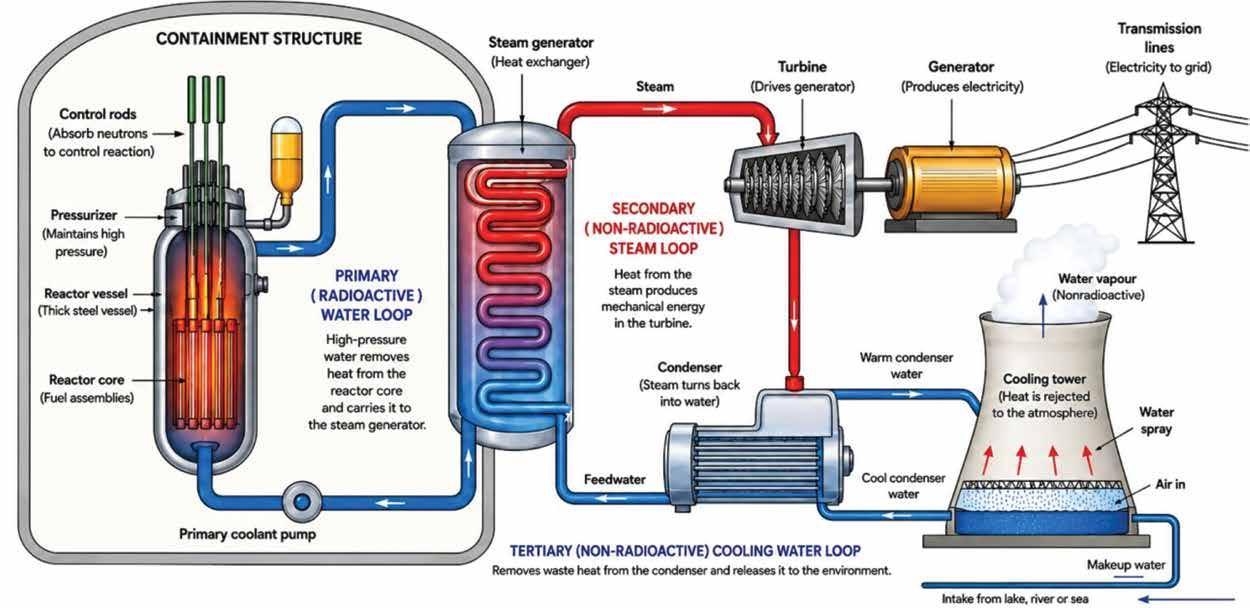
is transferred to water or another coolant, producing steam that drives a turbine connected to an electrical generator, producing electricity.
The main operational system in a nuclear power plant comprises the reactor core, coolant system, steam generator, steam turbine, electrical generator, condenser and cooling system, as shown in Figure 1. The reactor core is the heart of a nuclear power plant and the primary source of thermal energy. It contains fuel assemblies made of uranium or mixed oxide fuel, where atoms undergo controlled nuclear fission.
The coolant system circulates a working fluid – commonly water, heavy water, gas or liquid metal –through the reactor core, to absorb and transport the generated heat. This system prevents overheating of the fuel and maintains safe operating temperatures. In many reactors, pressurised water is used so that it remains liquid even at
elevated temperatures. Pumps, piping networks, heat exchangers and safety valves form critical parts of the coolant loop. Reliable coolant circulation is essential for both plant efficiency and reactor safety.
The steam generator or boiler section transfers heat from the reactor coolant to a secondary water circuit, converting water into high-pressure steam. In pressurised water reactors, radioactive primary coolant remains isolated from the clean secondary side, enhancing safety. The steam produced carries substantial thermal energy and becomes the driving force for the turbine-generator system. Proper design of heat-transfer surfaces, pressure control and water chemistry management are vital for long-term performance and reliability.
The steam turbine receives highpressure superheated steam from the steam generator and expands it through multiple stages of blades mounted on a rotating shaft. As steam flows across the blades,
its thermal and pressure energy is converted into mechanical rotational energy. Modern turbines are highly efficient and may consist of high-pressure, intermediatepressure, and low-pressure sections. The turbine shaft is directly coupled to the electrical generator, enabling continuous, large-scale power production.
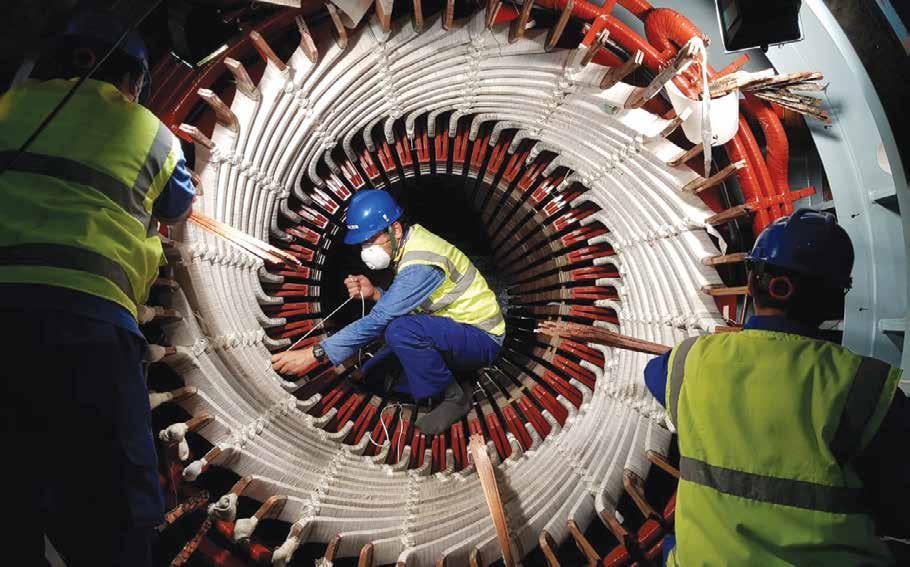
The generator converts the mechanical rotational energy from the turbine into electrical energy through electromagnetic induction. As the rotor spins within a magnetic field, alternating current is produced in the stator windings. This electricity is then stepped up in voltage using transformers before transmission to the power grid. Large nuclear power station generators are designed for stable, continuous baseload generation with high reliability and efficiency.
After passing through the turbine, low-pressure exhaust steam enters the condenser, where it is cooled, condensed and converted back into liquid water. This condensation process creates a vacuum at the turbine outlet, improving overall cycle efficiency. Cooling water from cooling towers, rivers, seawater systems or air-cooled condensers removes the rejected heat.
The recovered condensate is pumped back to the steam generator as feedwater, completing the closed-loop Rankine cycle and conserving water resources. As can be understood from the above description, the operating principle of a nuclear power plant is similar to that of conventional steam power plants, except that the heat source is nuclear rather than combustion-based.
The main types of nuclear reactors are Pressurised Water Reactor (PWR), Boiling Water Reactor (BWR), Pressurised Heavy Water Reactor (PHWR), Fast Reactors and Small Modular Reactors (SMRs).
The PWR is the most widely used design globally. In the PWR, water under high pressure circulates through the reactor core without

boiling. Heat is transferred to a secondary loop where steam is generated.
In the BWR, water boils directly inside the reactor vessel, and steam is generated. In a BWR, ordinary light water serves as both the coolant and neutron moderator. Water enters the reactor vessel and boils directly within the core, as heat is produced by controlled nuclear fission. The steam generated inside the vessel is separated, dried and sent directly to the turbine-generator system without the need for a separate steam generator.
This direct-cycle arrangement simplifies plant design and can improve thermal efficiency by reducing intermediate heat-transfer losses. BWR technology has been widely used in several countries due to its proven operational history and comparatively straightforward system layout.
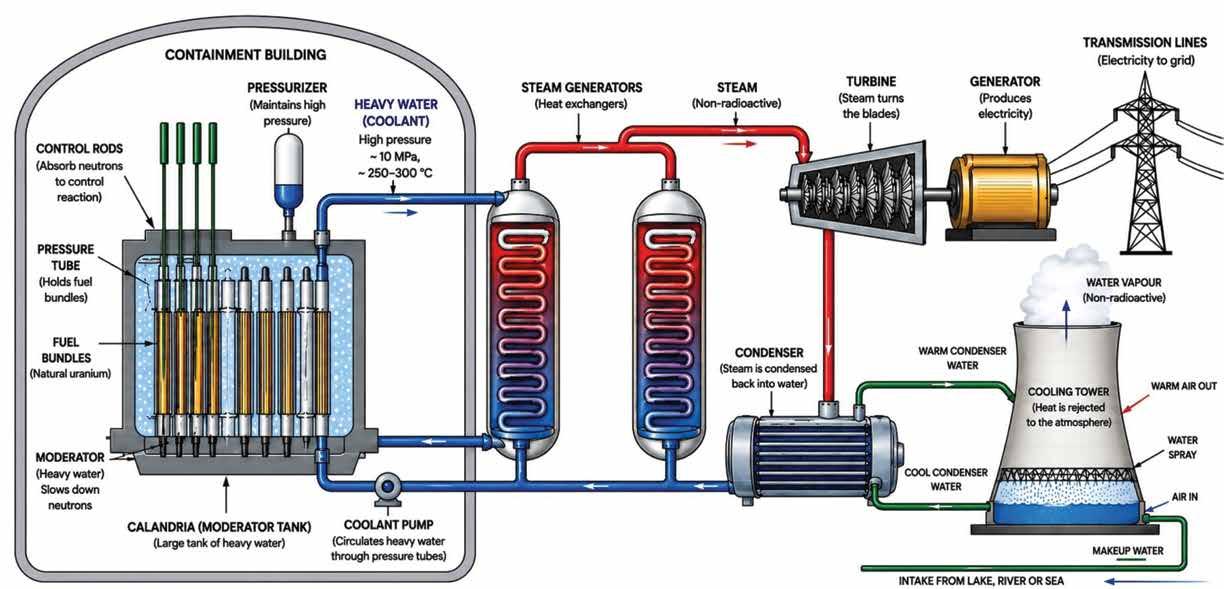
In the PHWR, pressurised heavy
water is used as moderator and coolant. A moderator slows down the fast neutrons released during nuclear fission, increasing the likelihood of further fission reactions and thereby sustaining the nuclear chain reaction. A PHWR can be operated using natural uranium fuel. Heavy water is highly effective in slowing neutrons while absorbing fewer of them, allowing the reactor to operate efficiently using natural uranium fuel without enrichment. This feature can reduce fuel processing requirements and diversify fuel supply options.
In a Faster Reactor, as the name suggests, fast neutrons are used, which can improve fuel utilisation. Faster Reactors are technically advanced but less common. Unlike conventional reactors, they do not require a moderator and typically use liquid metal coolants such as sodium or lead, or sometimes gas cooling systems.

These reactors can extract more energy from uranium resources and may also convert fertile materials such as uranium-238 or thorium into additional fissile fuel, significantly improving long-term fuel utilisation.
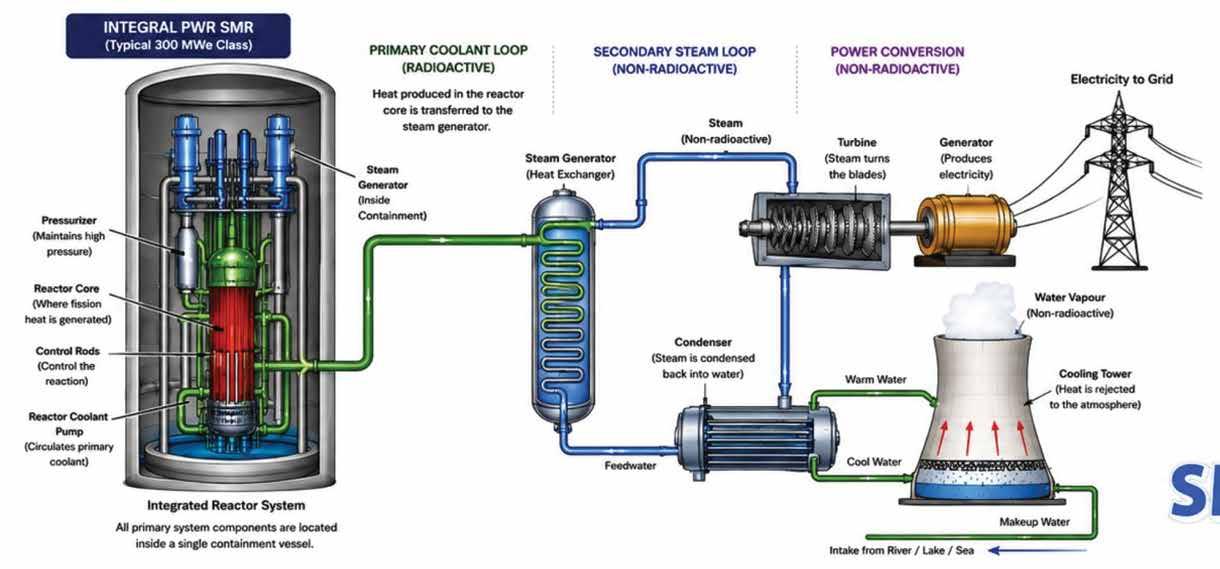
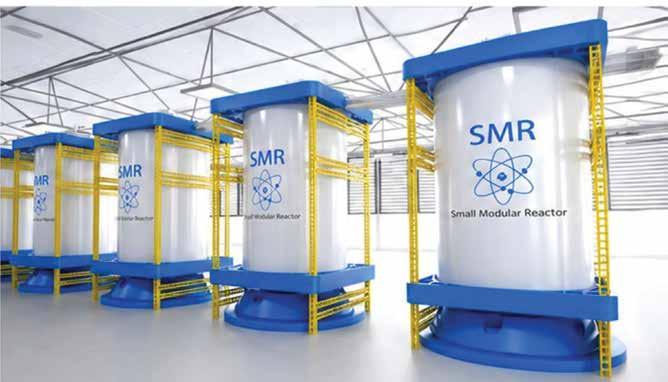
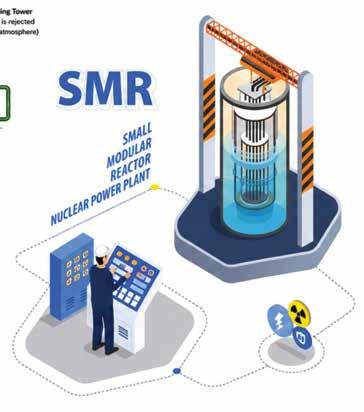
The SMRs are next-generation nuclear systems, designed with lower unit capacities than conventional large reactors, typically ranging from tens to a few hundred megawatts. They are intended for factory fabrication and modular assembly, which can shorten construction schedules, improve quality control and reduce upfront capital requirements.
Many SMR concepts incorporate
passive safety systems that rely on natural circulation, gravity and inherent heat removal, rather than extensive active equipment. Their compact size makes them suitable for smaller grids, remote regions, industrial applications, desalination and data centre power supply. SMRs are increasingly viewed as a promising pathway for flexible, low-carbon future energy systems in countries like Singapore.
Nuclear energy is considered one of the reliable, low emission power generation technologies in the modern era because of the following underlying reasons:
Low-carbon electricity generation
Nuclear power plants produce electricity with very low direct carbon dioxide emissions during normal operation because no fossil fuel combustion is required in the generation process. This makes nuclear energy an important option for countries seeking deep decarbonisation of their power sectors while maintaining grid stability.
Over the full life cycle, including construction, fuel processing, operation and decommissioning, emissions remain comparable to other low-carbon technologies. As a result, nuclear generation is frequently considered in national strategies aimed at achieving net-zero emissions and long-term climate targets.
Reliable baseload power generation
Unlike variable renewable sources such as solar and wind, nuclear power plants can operate continuously for extended periods with very high capacity factors.
The capacity factor refers to the ratio of the actual electricity generated over a period, relative to the maximum possible electricity generation, if the plant were operated continuously at full rated capacity during the same period. Nuclear power plants typically achieve capacity factors exceeding 90%, significantly higher than for typical combined-cycle power plants (CCP) (approximately 50% to 70%) and solar photovoltaic systems (typically 10% to 25%, depending on location and climate).
Refuelling outages for nuclear power plants are infrequent and carefully scheduled, allowing reactors to deliver steady electricity output, day and night, across all seasons. This dependable performance supports grid reliability, industrial demand and critical infrastructure requiring uninterrupted power supply. For many countries, nuclear energy has traditionally served as a strong baseload generation source within diversified electricity systems.
For countries with limited land availability (e.g. Singapore) and high electricity reliability requirements, high-capacityfactor generation technologies can offer significant advantages in maintaining grid stability.
Nuclear fuel possesses exceptionally high energy density compared with conventional fossil fuels. A relatively small quantity of uranium can release an enormous amount of energy through fission, producing substantial electricity over long operating periods. This reduces fuel transport volumes, storage space requirements and frequency of fuel deliveries. High energy density is one reason nuclear plants can sustain large-scale power generation with comparatively modest fuel inventories.
Nuclear energy can strengthen national energy security by reducing dependence on continuously imported fossil fuels such as coal, oil or natural gas. Nuclear fuel can be procured in advance and stored safely for long durations, allowing utilities to maintain strategic reserves. This lowers exposure to short-term geopolitical disruptions, shipping interruptions or volatile fuel market prices. For countries with limited indigenous energy resources, nuclear generation can provide a stable and diversified long-term supply option.
Safety is the defining engineering requirement in nuclear power generation plants. Modern plants apply a defence-indepth philosophy, with multiple independent layers of protection, as described below:
The first barrier in nuclear safety is the fuel matrix itself, where radioactive fission products are initially retained within, commonly,
dense uranium dioxide ceramic fuel pellets. These pellets are engineered to withstand high temperatures, radiation exposure and long operating cycles, while maintaining structural integrity. Most radioactive materials generated during normal reactor operation remain trapped inside the crystal structure of the fuel. This inherent retention capability forms the foundation of the defence-indepth safety philosophy used in modern nuclear power plants.
Fuel cladding provides the second physical barrier between radioactive fuel and the reactor coolant. Typically made from zirconiumbased alloys or other corrosionresistant metals, the cladding encloses the fuel pellets in sealed tubes, to prevent release of fission products during normal operation.
The cladding must withstand high temperature, pressure, radiation and chemical interaction with coolant, over extended service periods. Maintaining cladding integrity is essential for reactor performance, fuel reliability and radiological protection.
The reactor pressure boundary consists of the reactor vessel, connected piping, pumps, valves and associated components, that contain the pressurised coolant and radioactive inventory. This robust engineered boundary is designed to operate safely under demanding temperature and pressure conditions, while resisting corrosion, fatigue and mechanical stress.
Strict inspection, testing and maintenance programmes are applied throughout the nuclear plant life to preserve integrity. The boundary serves as a major protective barrier preventing leakage of radioactive coolants.
The containment building is a heavily reinforced concrete and steel structure surrounding the reactor system and key safety
equipment. It acts as the final physical barrier against the release of radioactive materials during abnormal events such as pipe ruptures, equipment failures or severe accidents.
Containment systems are designed to withstand internal pressure loads, external hazards and environmental events such as storms or seismic activity. Filtration, isolation valves and pressure management systems further enhance containment effectiveness.
Emergency core cooling systems
Even after reactor shutdown, residual decay heat continues to be generated and must be removed safely. Active cooling systems use pumps, valves and powered equipment to circulate coolants and maintain safe temperatures. Passive cooling systems, increasingly adopted in advanced reactors, rely on natural circulation, gravity-fed water, convection or stored cooling capacity, without requiring external power.
The combination of active and passive systems significantly improves resilience under emergency conditions.
Redundant power supply
Reliable electrical power is critical for operating control systems, instrumentation, pumps and emergency safety equipment. Nuclear plants therefore incorporate multiple and independent power sources, including external grid connections, onsite diesel generators, battery banks and, in newer designs, passive safety features requiring minimal power.
Redundancy ensures that if one source fails, others remain available to support safe shutdown and cooling functions. This layered approach strengthens plant resilience against external disturbances and station blackout scenarios.
Human factors and training
Technology alone cannot ensure nuclear safety. Competent
personnel and a strong safety culture are equally essential. Reactor operators undergo rigorous education, licensing, simulator training, procedural exercises and regular emergency drills, to prepare for both routine and abnormal situations.
Human factors engineering is applied to control room design, alarms, interfaces and procedures, so that operators can make clear and timely decisions. Continuous training, oversight and learning from operating experience help maintain high standards of safety performance.
The Fukushima accident in Japan occurred on 11 March 2011, following a major earthquake and subsequent tsunami, that disrupted offsite power, damaged onsite backup systems and impaired cooling functions at the plant.
The event became one of the most significant nuclear accidents in modern history, prompting worldwide reviews of nuclear safety standards, emergency preparedness and plant resilience. A number of important engineering and operational lessons emerged from this event, as described below:
External hazard reassessment
Natural hazards such as earthquakes, tsunamis, flooding, storms and other site-specific threats must be reassessed regularly, using updated scientific data and modern risk methodologies. Historical assumptions may become outdated as new geological, climatic or probabilistic information becomes available. Periodic reassessment helps ensure that plant protection measures remain aligned with actual risk conditions throughout the operating life.
Beyond design-basis protection
Plants should be prepared not only for design-basis events originally
specified during licensing, but also for more severe low-probability scenarios that exceed those assumptions. Protective measures may include higher seawalls, watertight doors, diversified cooling water access, strengthened structures and additional seismic margins. Designing for resilience beyond minimum requirements improves accident prevention capability.
Backup power redundancy
Emergency diesel generators, switchgear, batteries and electrical distribution equipment should be physically separated and protected so that a single
flood, fire or structural event cannot disable multiple backup systems simultaneously. Diverse and geographically separated emergency power sources greatly reduce common-cause failure risk and strengthen recovery capability during extreme events.
Residual heat removal
Even after reactor shutdown, decay heat continues to be generated and must be removed for an extended period. Plants therefore require reliable long-duration cooling strategies, including portable pumps, mobile generators, alternate water injection paths, passive cooling features and
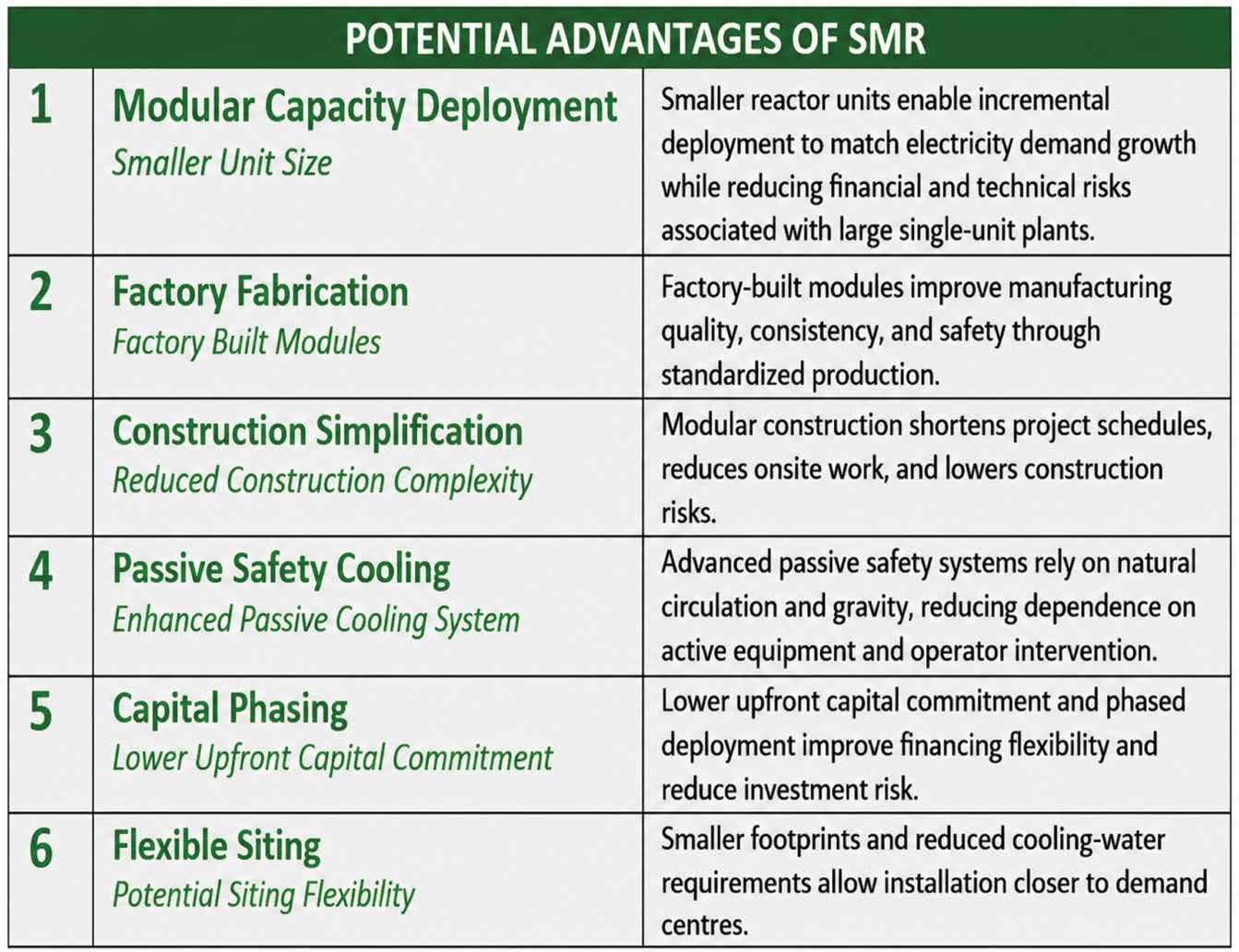
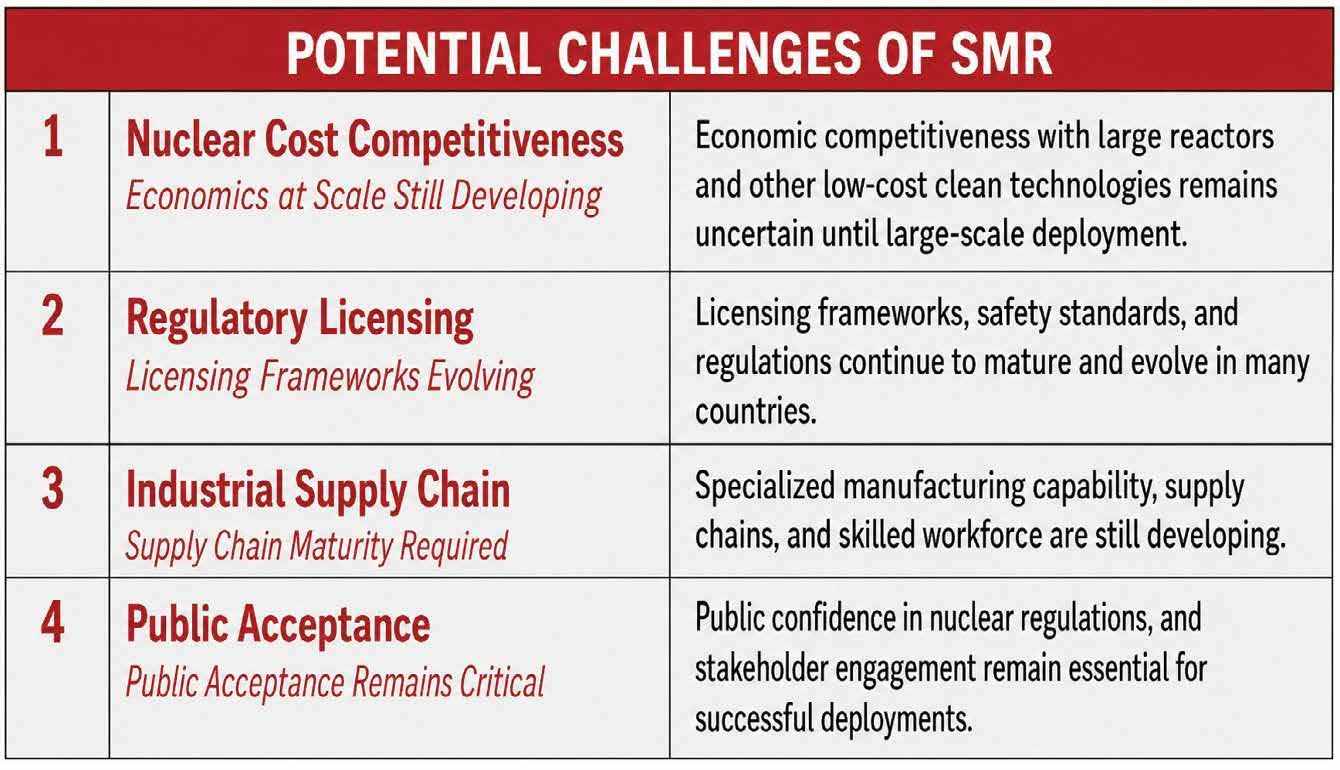
replenishable water supplies. Sustained cooling capability is critical to preventing fuel damage.
Hydrogen mitigation systems
Under severe accident conditions, chemical reactions at high temperatures can generate hydrogen gas. If allowed to accumulate, hydrogen may ignite or explode and damage plant structures. Modern safety enhancements include passive autocatalytic recombiners, filtered venting systems, igniters and improved containment monitoring to manage hydrogen safely.
Emergency preparedness
Clear communication between plant operators, regulators, emergency responders, government agencies and the public is vital during crisis situations. Wellrehearsed evacuation routes, sheltering plans, transport logistics, public alert systems and realtime information-sharing help protect surrounding communities. Strong emergency preparedness is an essential complement to engineering safety systems.
Small Modular Reactors (SMRs) are increasingly being considered as a future nuclear energy option for countries with smaller electricity grids, land constraints, remote demand centres or the need for phased capacity expansion. Unlike conventional large reactors, SMRs
are designed with lower unit capacities and greater modularity, allowing deployment in smaller increments. Their compact footprint and advanced safety concepts have attracted global interest, as part of low-carbon energy transition strategies.
Singapore currently relies heavily on imported natural gas for electrical power generation, using Combined Cycle Power Plants (CCPs), which has supported reliable and efficient power supply for many years.
However, long-term energy planning must consider future challenges such as rising electricity demand, decarbonisation commitments, fuel diversification and resilience against external supply disruptions. In addition, growing demand from digital infrastructure, advanced manufacturing and data centres is increasing pressure on the national power system. In this context, advanced nuclear technologies may warrant continued technical study as part of a broader long-term energy options assessment.
Nuclear energy remains one of the few proven technologies capable of delivering large-scale, reliable and low-carbon electricity generation, while supporting energy security and long-term decarbonisation objectives.
Although modern reactor technologies have achieved significant improvements in safety, passive protection systems and operational resilience, nuclear deployment continues to require rigorous engineering standards, strong regulatory frameworks, comprehensive emergency preparedness and sustained public confidence.
For Singapore, future energy planning is becoming increasingly complex, due to rising electricity demand, industrial growth, digital infrastructure expansion, decarbonisation commitments and land constraints.
While nuclear energy may not represent an immediate solution, advanced technologies such as Small Modular Reactors (SMRs) warrant continued technical evaluation, as part of a diversified long-term energy strategy.
Ultimately, the role of nuclear energy in Singapore will depend not only on technological maturity, but also on economics, regulatory readiness, societal acceptance and alignment with national energy priorities.
References
[1] Nuclear Engineering Handbook, CRC Press, edited by Kenneth D Kok, 2009.
[2] Power Plant Engineering, Tata McGraw Hill, P K Nag, 2008.
[3] Energy Market Authority Singapore, www.ema.gov.sg
[4] National Environment Agency, www. nea.gov.sg
The International Atomic Energy Agency (IAEA) recently led a team of international experts to collect samples of Advanced Liquid Processing System (ALPS) treated water stored at the Fukushima Daiichi Nuclear Power Station (FDNPS) prior to the water’s dilution with
seawater and its discharge to the sea, to confirm that the discharge remains in line with international safety standards. Experts from China, the Republic of Korea, the Russian Federation, and Switzerland joined IAEA staff to conduct the sampling.
The mission is the eighth implemented as part of the Additional Measures under the framework of the IAEA, which aim to broaden international participation and enhance transparency in the IAEA’s sampling and independent analysis.
by Dr Tomoyuki Tada, Chief Operating Officer, TANAKA PRECIOUS METAL TECHNOLOGIES Co., Ltd.
A wide range of applications.
The global transition towards clean energy is accelerating, driven by decarbonisation targets, evolving market trends and the need for long-term energy security. Across sectors, such as power generation, transportation and industrial manufacturing, new technologies are being developed and deployed to reduce carbon emissions while maintaining system efficiency and reliability.
While much of the attention is focused on infrastructure and end-use applications, the materials that enable these technologies are equally critical. Among these, precious metals play a foundational role, particularly in systems where catalytic performance and durability directly determine overall efficiency and lifecycle cost.
The term ‘precious metals’ refers to a group of eight metallic elements – platinum (Pt), gold (Au), silver (Ag), and platinum group metals (PGMs) including palladium (Pd), iridium (Ir), rhodium (Rh), ruthenium (Ru) and osmium (Os).
These elements are distinct from rare earth materials and are characterised by exceptional catalytic, electrical and chemical properties. Their ability to perform reliably under extreme operating conditions makes them essential functional materials in a wide range of clean energy technologies, particularly in electrochemical and catalytic systems where reaction efficiency is material dependent.
Driving efficiency in hydrogen technologies
Hydrogen is increasingly attracting attention as a promising option
for achieving a low-carbon society, particularly in hard-to-decarbonise sectors such as heavy industry and long-haul transport.
Applications such as fuel cell electric vehicles, stationary power generation and industrial hydrogen use are gaining traction globally. However, the efficiency and scalability of these technologies depend on advanced materials, particularly in catalytic systems.
In polymer electrolyte fuel cells (PEFCs), also commonly referred to as proton exchange membrane fuel cells (PEMFCs), platinum and platinum-based alloy catalysts are used at both the anode and cathode, to facilitate the electrochemical reactions that convert hydrogen into electricity.
At the anode, these catalysts support the hydrogen oxidation reaction, while at the cathode they enable the oxygen reduction reaction which is more kinetically demanding.
The high catalytic activity of platinum and its alloys supports efficient operation and is critical for
achieving high power density and system efficiency, while ongoing material optimisation focuses on reducing platinum loading without compromising performance or durability.
Similarly, in water electrolysis systems – referred to as PEM electrolysers – precious metals play critical catalytic roles. Iridiumbased catalysts are widely used for the oxygen evolution reaction at the anode, while platinum-based catalysts are typically used for the hydrogen evolution reaction at the cathode.
These processes require materials that can operate under highly oxidative and acidic conditions while maintaining long-term stability. Iridium, for instance, is widely used due to its exceptional corrosion resistance under high anodic potentials, making it one of the few materials capable of sustaining long-term operation under such conditions.
Beyond hydrogen production and conversion, precious metals also play a role in hydrogen purification

and separation. Palladium-based membranes enable highly selective hydrogen permeation, supporting the production of ultra-high purity hydrogen required for applications such as fuel cells and hydrogen purification systems.
Enabling emerging decarbonisation pathways
In parallel with hydrogen, other materials are gaining traction, as part of broader decarbonisation strategies. Ammonia is emerging as a promising hydrogen carrier and potential carbon-free fuel, supported by its relatively high energy density and existing infrastructure.
Precious metal catalysts are used to improve efficiency across ammonia synthesis and decomposition processes, particularly as next-generation systems aim to operate under milder and more energy-efficient conditions, where catalyst selectivity and stability become increasingly important.
Carbon utilisation technologies are also evolving, focusing on converting captured carbon dioxide into useful products such as synthetic fuels and chemical feedstocks. These processes rely on highly selective catalytic reactions, where precious metals play a key role in improving conversion efficiency and product yield.
For engineers, these applications reinforce the importance of material selection in determining system performance. The choice of catalyst or functional material directly influences reaction kinetics, energy consumption and operational stability.
Material properties that enable performance
The role of precious metals in clean energy technologies stems from their unique material properties. Their high catalytic activity enables faster and more efficient chemical reactions, contributing to reducing energy losses and improved overall system performance.
Equally important is their
Their ability to perform reliably under extreme operating conditions makes them essential functional materials in a wide range of clean energy technologies, particularly in electrochemical and catalytic systems where reaction efficiency is material dependent.
resistance to corrosion. Many clean energy systems operate in harsh chemical environments, such as acidic electrolytes and high-pressure conditions. Precious metals maintain their structural and functional integrity under these conditions, supporting long-term durability and stable operation.
Thermal stability further enhances their suitability for demanding applications. In hightemperature processes, materials must retain consistent performance without degradation. Precious metals provide the stability needed to sustain reliable operation over extended periods, even under cyclic thermal and operational stresses.
In electrochemical systems, their excellent electrical conductivity also supports efficient electron transfer, contributing to improved system performance at the component and system levels.
From materials science to realworld application
Translating material properties into real-world performance requires not only scientific understanding, but also advanced engineering and manufacturing capabilities. The optimisation of precious metal usage – through approaches such as nanoparticle catalysts, alloy development and coating technologies – has become a key area of focus in improving both performance and resource efficiency.
Organisations with deep expertise in precious metals have played an important role in advancing these innovations.
Companies such as TANAKA have contributed to the development
of high-performance materials tailored for applications in fuel cells, electrolysers and catalytic systems, leveraging accumulated expertise in precious metal refining, processing and material design. Through ongoing research and collaboration with industry partners, such efforts help bridge the gap between laboratoryscale breakthroughs and scalable industrial solutions.
This type of material innovation is particularly relevant as clean energy technologies move towards wider deployment. Ensuring consistent quality, performance and supply of critical materials will be essential to supporting long-term adoption, especially in the context of increasing demand for platinum group metals and the need for resource efficiency.
As Singapore and the broader region advance their clean energy ambitions, the role of enabling technologies and materials will continue to grow in importance. Initiatives in hydrogen, sustainable fuels and carbon management are expected to expand, placing greater emphasis on system efficiency, durability and scalability.
Precious metals, as functional materials, will remain central to these developments. While often operating behind the scenes, they are critical to enabling the performance and reliability of many clean energy systems.
For the engineering community, understanding how these materials function and how they can be effectively integrated into system design will be key to advancing the next generation of energy technologies.
In this context, continued innovation in precious metal materials will not only support technological progress, but also help accelerate the transition towards a more sustainable energy future, with material science playing a central role in overcoming current performance and scalability limitations.
by Joko Sutopo, President Director – Head of Services Southeast Asia, Sulzer
Why reliability is the lynchpin in ASEAN’s data centre boom.
Across Southeast Asia, data centres are driving economic growth, innovation and digital transformation. Yet this potential increasingly hinges on a single factor – dependable power.
Electricity demand from data centres across APAC is projected to rise by more than 140% to around 780 TWh by 2030 [1]. As new capacity takes time and significant cost to build, existing generation infrastructure will shoulder the burden. This places reliability at the centre of the region’s ambitions.
Ageing infrastructure under intensifying strain
Much of ASEAN’s mainstream power generation fleet, whether coal- or gas-fired, was designed for steadier operating conditions. Today, these assets are exposed to relentless baseload demand from always-on computing, intense cooling requirements and rising utilisation levels.
Data centre clusters create concentrated hotspots of demand that can potentially overwhelm existing power generation infrastructure. Under such conditions, inefficiencies can accumulate quickly. Turbines, generators and pumps originally engineered for predictable load profiles are now subjected to frequent ramping, thermal cycling and higher vibration levels. Over time, this accelerates fatigue and increases the likelihood of outages. Cooling systems are also more sensitive in humid climates.
Corrosion, leakage and mismatched hydraulic performance can reduce efficiency and narrow safety margins. Electrical components face similar degradation. Insulation systems, windings and protection
equipment may deteriorate under fluctuating loads and environmental stress, raising the risk of unplanned trips.
When outages occur, operators often fall back on emergency generation, driving up operating costs and undermining long-term efficiency goals.
To address this, data centre operators are turning to behindthe-meter (BTM) solar panels, on-site generation equipment, batteries and efficiency tweaks, to offset rising power demand and also bridge the gap in power supply for new builds.
However, land constraints, solar intermittency, storms and limited large-scale battery capacity mean that BTM solutions are not perfect. That gap makes the performance of existing grid-connected power generation assets the critical variable.
Power plant operators need not wait for new capacity to ease the supply crunch. Targeted engineering interventions can restore performance, extend asset life and reduce outage risk within existing plants.
Prime examples include precision overhauls of turbine rotors, shaft realignment, coupling repairs and generator rewinds, which can support the recovery of lost efficiency and stabilise output. Pump retrofits, hydraulic re-rating and improved sealing systems can reduce energy losses and improve flow reliability in cooling circuits.
Condition monitoring and customised interventions enabled by predictive maintenance allow operators to detect degradation early and schedule work before
issues escalate into failures. In one case, in the Philippines, a cracked rotor coupling was repaired and realigned within weeks, avoiding, potentially, months of outage. Precision work of this kind restores output quickly while minimising unplanned downtime and strengthening confidence in supply.
Cooling and pumping systems offer another high impact opportunity. At a 400 MW Indonesian power plant, a corroded cooling pump threatening output was replaced with a custom unit in under three months. Retrofitted with redesigned hydraulics and corrosion-resistant materials, the replacements improved throughput, cut energy losses and lowered lifecycle costs, compared to a full system swap.
Whether through hydraulic re-rating, improved seals or flowcurve matching, these efficiency measures also lower maintenance costs, reduce water and energy waste, and support compliance with tightening ESG standards on emissions and water use.
The importance of targeted engineering becomes even clearer when speed-to-market is the priority. In the hyperscale world, waiting for entirely new generation capacity simply is not feasible. Our work supporting one of the world’s largest greenfield data centres in the US showed that, at this scale, the pressure for generation assets to deliver sufficient power reliably and on schedule becomes even more acute.
The solution was a targeted engineering approach –refurbishing and repurposing
three existing power generators (approximately 40 MW each). By modernising these existing assets and their control units, the project ensured that the cluster would be operationally ready on schedule. This proves that repurposed assets – when engineered to a ‘like-new’ standard – are the fastest way to bridge the speed-to-power gap. These gains could have a positive network effect. Stronger availability and reliability at generation level supports onsite microgrid stability, strengthens supply confidence for co-located facilities and reduces systemic stress during peak demand.
Small percentage gains in uptime or efficiency represent substantial megawatt-hours saved annually, translating to lower operating risk for data centre operators and greater resilience for the surrounding power network.
Reliability to be a competitive lever
For ASEAN, where data centre capacity is expanding rapidly, such as in the Johor-Singapore Special Economic Zone (JSSEZ), engineering precision at power plant level needs to scale to deliver economic impact regionally. As digital infrastructure becomes foundational to finance, manufacturing, healthcare and public services, power reliability will become a strategic differentiator.
Cloud providers and hyperscale operators will evaluate infrastructure resilience when selecting sites, while investors will scrutinise uptime records and asset condition. Regulators will examine energy efficiency, water use and emissions intensity.
Ensuring existing assets operate at their highest-attainable performance is one of the most immediate and practical levers available, reducing the risk of unplanned outages, improving resource efficiency and enhancing long-term competitiveness.
In this context, partnering with service providers, who can support multiple equipment types and
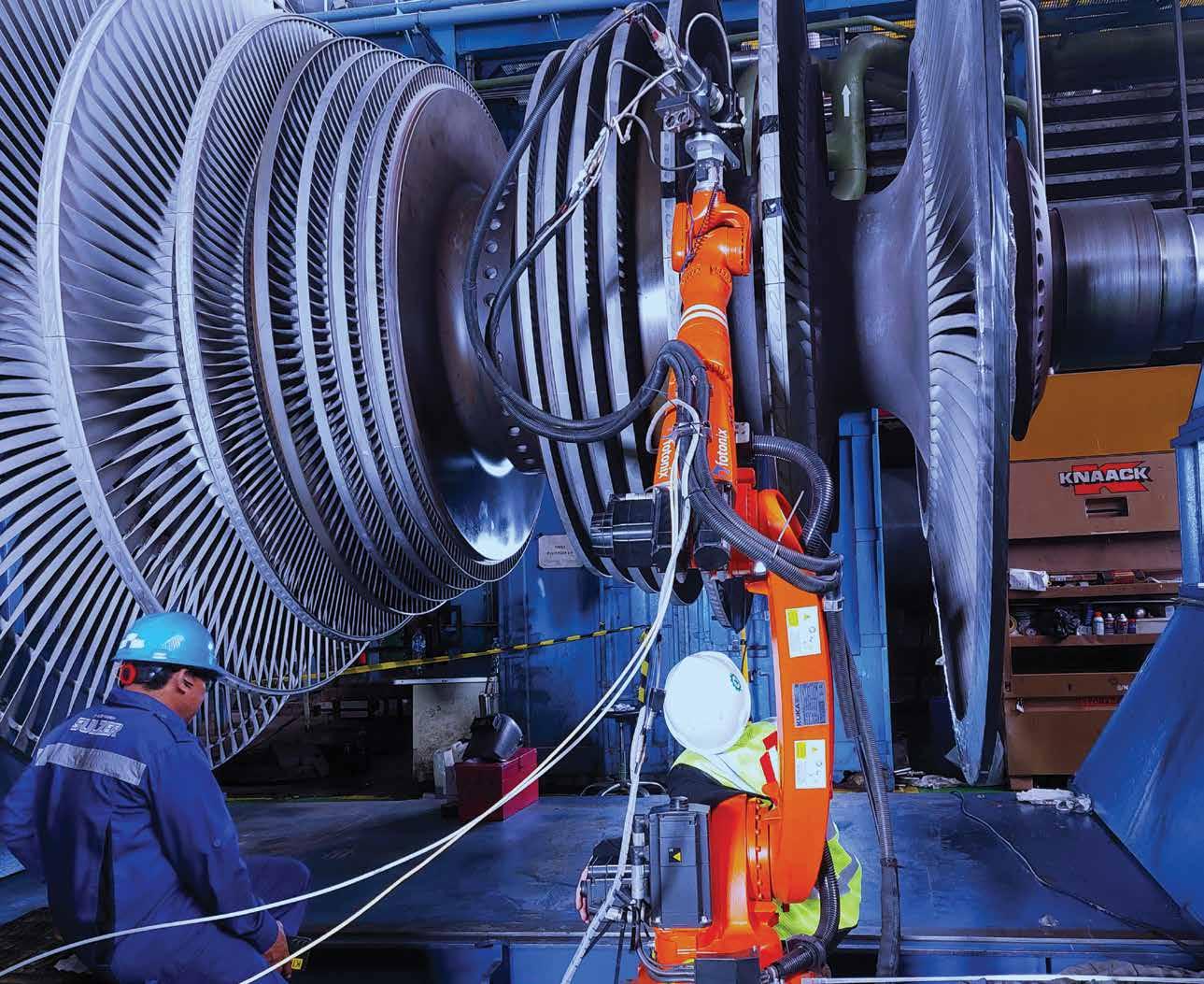
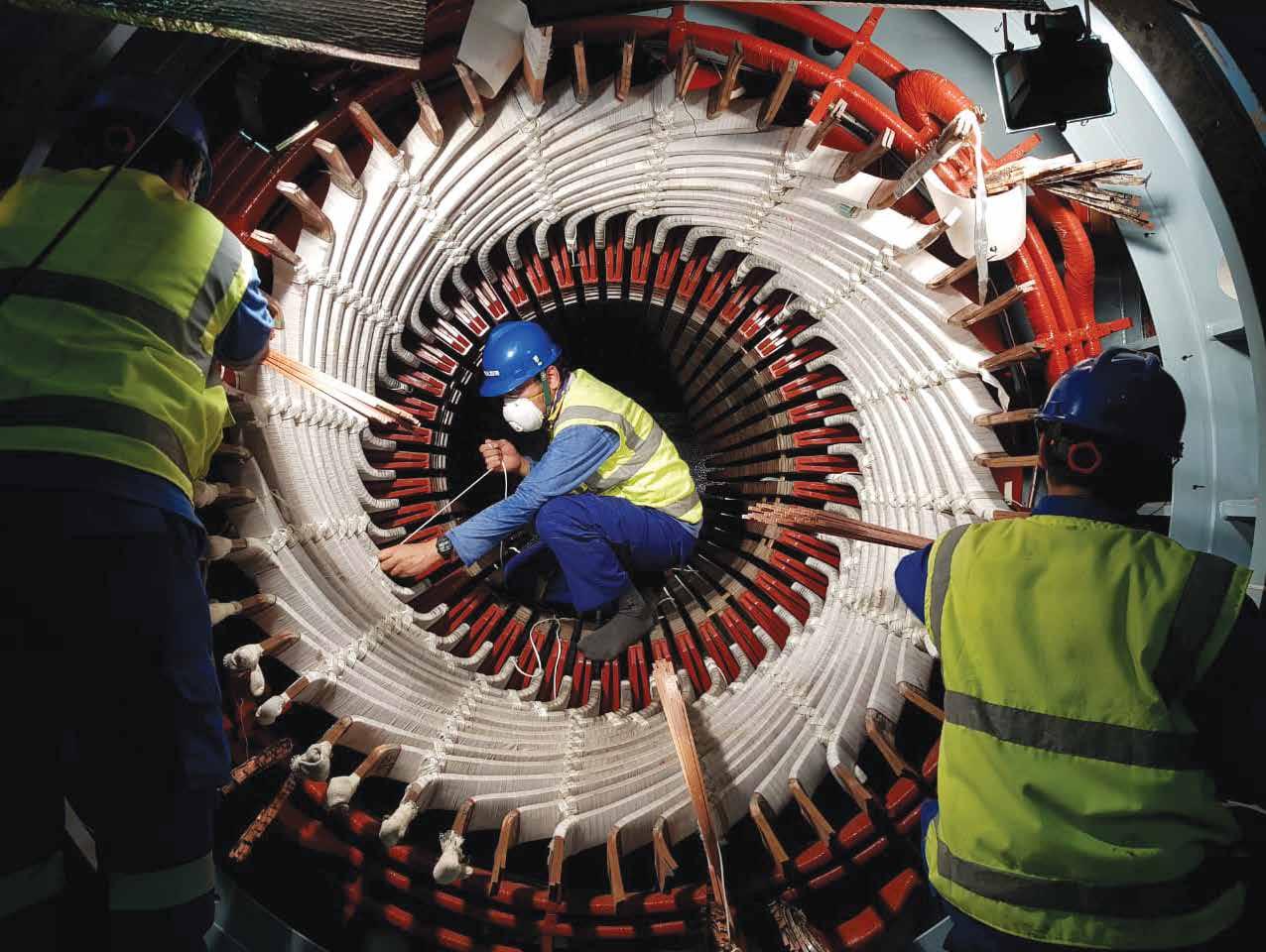
Targeted engineering interventions, including precision overhauls of turbine rotors, shaft realignment, coupling repairs and generator rewinds, can restore performance, extend asset life and reduce outage risk within existing plants.
having local expertise across the full power chain, enables effective prevention strategies and rapid mobilisation to stop failures before they emerge.
References [1] https://www.pwc.com/gx/ en/about/pwc-asia-pacific/asiapacific-blogs/closing-the-cleanenergy-gap.html#:~:text=Driven%20
by%20soaring%20demand%20 for,cooling%2C%20will%20also%20 be%20essential
(Through a network of over 100 service sites around the world, Sulzer provides parts as well as maintenance and repair solutions for pumps, turbines, compressors, motors and generators, for the company’s own original equipment and also for associated third-party rotating equipment.)
by Roger Tan, Business Development Director, Tech Onshore MEP Prefabricators Pte Ltd
Engineering work-at-height safety.
In many engineering and installation environments, safety controls are applied when risk becomes visible, as when a worker is about to climb, lift, access a confined area or begin work near moving equipment.
These controls are essential. However, in line with the principle of controlling risks at source, the most effective safety decisions are made much earlier, when designers, engineers and other relevant stakeholders determine how work will be designed, fabricated, sequenced and installed.
By the time a worker is standing on a platform, reaching overhead with a tool, the risk of working at height has already been embedded in the method of work. The focus should not be limited to protecting workers while working at height, but should also include minimising the need for work at height or eliminating it altogether.
When risk is embedded in the workflow
Traditionally, mechanical, electrical, and plumbing (MEP) services are installed at height, with workers using ladders, scaffolds or elevated work platforms depending on the height, site access and complexity of the installation.
Services are installed in ceiling spaces that can be congested, dusty and noisy, with multiple trades working in close proximity. A single bracket, pipe section or cable tray may not seem especially hazardous in insolation. But when the same tasks are repeated hundreds or thousands of times, the cumulative exposure becomes significant.
Each task can involve a combination of risks – awkward reaches, manual handling, dropped
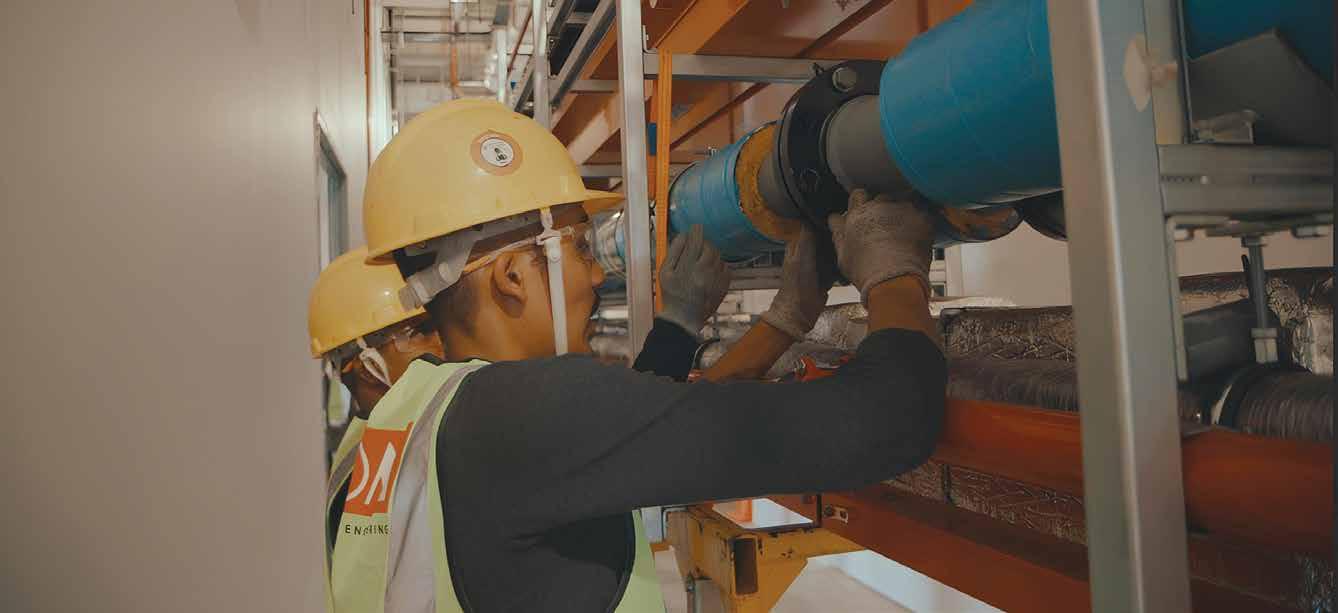
objects, restricted visibility, changing site conditions and fatigue after a long day. Risks increase further when workers must make adjustments in constrained spaces, resolve clashes between services or carry out rectification at height.
Many MEP activities are still treated primarily as site installation tasks. Components arrive separately, and different trades coordinate around each other during construction. Adjustments are often made in real time, as workers encounter challenges such as differences between design drawings and actual site conditions, access constraints or sequencing issues.
From an engineering and workflow-design perspective, this can place a considerable amount of uncertainty on the workforce. It raises a simple but important question – what if more of the coordination, assembly and checking could be completed before the work reaches the ceiling?
DfMA as a safety strategy
Design for Manufacturing and Assembly (DfMA) is commonly associated with productivity,
manpower optimisation, quality and construction speed. These are important benefits. However, DfMA should be recognised also as a workplace safety strategy.
Prefabrication can reduce the amount of hazardous work that must be performed onsite, since coordination, fabrication, assembly, inspection and testing are moved to controlled, ground-level work areas or offsite fabrication facilities.
More importantly, prefabrication enables many tasks, that would traditionally be carried out at height or in other challenging site conditions, to be completed in a safer and more controlled environment. This reduces workers’ exposure to work-at-height hazards, manual-handling risks and other site-related hazards. Defects or installation issues can also be identified and rectified before the modules are delivered and installed onsite.
This does not mean prefabrication removes all risks. It introduces its own engineering requirements. Modules must be designed to accommodate allowable variations between drawings and
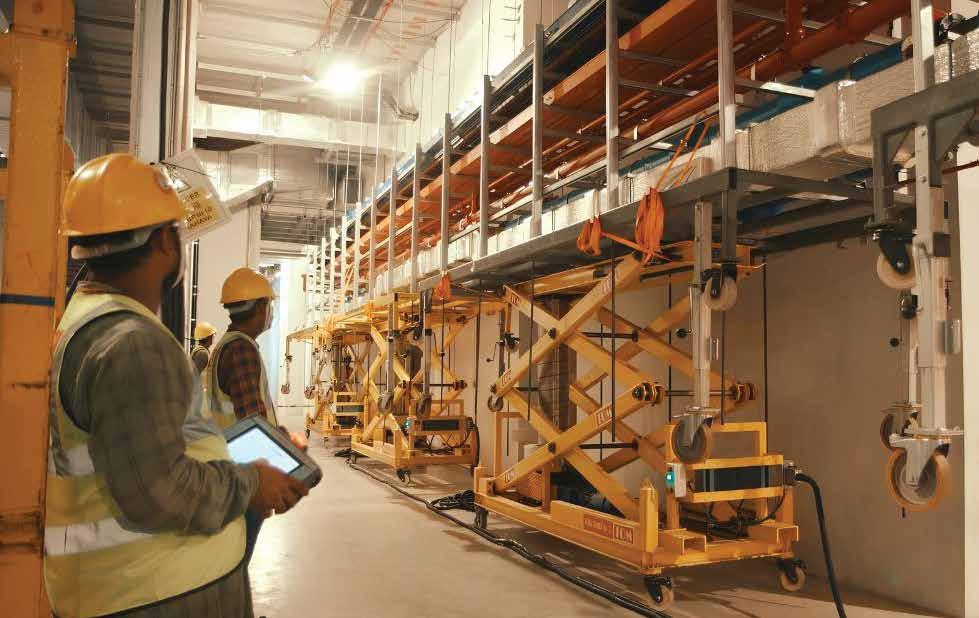
actual site conditions, as well as transport, lifting, installation access, final connections and future maintenance.
Weight distribution, lifting points, lifting sequence and interfaces with other trades must be carefully considered. If these factors are not addressed early, risks may simply be transferred from one stage of the process to another.
When designed and executed well, DfMA enables engineers to treat safety as a design parameter alongside manufacturability, quality, cost and project timelines.
Small design choices can have major site consequences I have learnt that small design decisions can have effective safety implications downstream. A connection point positioned to reduce overhead adjustment can reduce awkward work at height. A standardised module can reduce repeated manual work. Better digital coordination can prevent workers from having to resolve service clashes at height. A suitable lifting aid can allow a heavy assembly to be positioned with fewer workers and greater control. Together, these decisions can reduce the frequency and duration of exposure to height, awkward posture, manual handling and rework.
This is the thinking behind our approach at Tech Onshore MEP Prefabricators. For suitable applications, prefabricated MEP modules are manufactured in a safer and more controlled environment before being installed onsite.
With the Helical Elevator system, the installation process is designed so that the need to carry out assembly, adjustment or securing work at height is significantly reduced. Instead, these activities are completed at ground level before the modules are lifted into their final position. Work at height is further reduced by securing the modules to the soffit by workers at ground level with our Magnetic Wrench.
The technology itself is only one part of the solution. Its effectiveness depends on proper engineering design, competent operators, routine inspections, maintenance, training and clear installation procedures. Engineering controls must always be supported by disciplined safety management to ensure effectiveness.
The hierarchy of controls prioritises elimination and substitution over administrative controls and personal protective equipment. In practical terms, this means that employers should look beyond making risky
work safer and consider, where practicable, whether the work can be eliminated, substituted or redesigned to reduce risk at source. If the problem is defined as “how do we make overhead installation safer?”, solutions will naturally focus on supervision, access equipment and personal protective equipment. These remain necessary. But if the problem is defined as “how do we reduce the amount of overhead installation required?”, a different set of engineering solutions becomes possible.
This is where designers, engineers and other relevant stakeholders have significant influence. Every drawing, module detail, connection point, lifting arrangement, installation sequence and coordination decision affects how someone will eventually build, lift, install, inspect or maintain the work. Decisions made upstream can either reduce risk or pass it down to the worker onsite.
As engineering and project delivery become increasingly industrialised through modularisation, prefabrication, digital coordination and other advanced methods, safety, quality and productivity should be seen as interconnected outcomes of better work design.
For companies seeking to redesign work processes, the Workplace Safety and Health Council has programmes for strengthening their WSH capabilities and identifying areas for improvement.
Ultimately, better equipment, supervision and safety procedures will always have an important place. But one of the most effective ways to improve work-at-height safety is to design work processes so that exposure to height is reduced before installation begins. By combining safety capabilities with better engineering and work design, companies can make a meaningful difference in protecting their workers.
by Er. Michael Chew Lean Huat
A little over 50 years ago, I embarked on my journey, as a blueeyed engineer. Now, at the ripe old age of 83, having hung up my boots about a year ago and retired from my engineering practice, I find new meaning in the phrase ‘Life is a journey, not a destination’.
I came from a humble family and, after high school, in choosing a career, I unhesitatingly chose to go for engineering. I was born in Malaysia, a former British colony and country that was not very developed at that time. Engineers were in great demand and would be useful to society, but my only dilemma was how to achieve that dream – to be an engineer.
Becoming an engineer
Although we had a national university, Malayan University, I decided to try for an overseas education. My primary consideration was, of course, cost, as I came from a not-so-well-to-do family. My secondary consideration was that the degree must be recognised by the government, meaning that it had to be from British Commonwealth countries like the United Kingdom (UK), Canada, Australia and New Zealand. After thorough research, I quickly narrowed down my selection to New Zealand, since the degree was recognised by the Commonwealth, and cost-wise, New Zealand had the distinct advantage of readily available and good-paying vacation jobs during school holidays. In 1964, I managed to gain admission to the four-year Bachelor’s degree programme in Mechanical Engineering at the University of Auckland. I headed to New Zealand and took my very first steps towards an engineering education and career. I quickly
settled down in this new learning environment and western culture. I made new friends and managed to secure vacation jobs, in addition to the necessary industrial practical training for students. It was a very exciting and enjoyable four years of university experience.
Upon graduation in 1968, I started looking for a suitable engineering position in our immediate neighbouring country, Singapore, which was more developed. My first job was as a Sales Engineer with Caterpillar engines, which was a good starting point for a greenhorn engineering graduate. I practically stripped through the entire engine fundamentals and sold engines to shipyards and tin mines in the region. After two years, I decided I had learned enough and should start on something else.
I then joined a manufacturing company, Hume Industries, involved in the fabrication of steel pipes and pressure vessels. This was my first exposure to the precious American Society of Mechanical Engineers (ASME) SECTION VIII pressure vessel design and fabrication codes.
In the process, I was very fortunate to get to know other fellow engineers who encouraged me to join professional societies, including the Institution of Engineers, Singapore (IES), Institution of Engineers, Malaysia (IEM) and Institution of Mechanical Engineers (IMechE) in the UK where I eventually qualified as a Chartered Engineer (CEng).
These were among the most fulfilling and rewarding years of my engineering career. I worked hard, contributing to process improvements while benefitting from valuable learning experiences. I remained in my job as a Works Manager for five years.
Then an opportunity arose, when I was headhunted by an American company, Johns Manville, to manage the fibreglass plant in Singapore. That was a great period of my ‘working life’, both in terms of working and life experiences. I was sent to the United States for the first time in my life and it really opened my eyes. I went to Johns Manville’s headquarters in Denver, Colorado and got to visit their seven to eight plants scattered around various states.
I underwent a complete transformation, becoming extremely proactive and independent. I recall being dropped off at various plants with nothing but a plane ticket, car rental and hotel reservation. With only a map to guide me – no GPS, yet! – I was left to fend for myself.
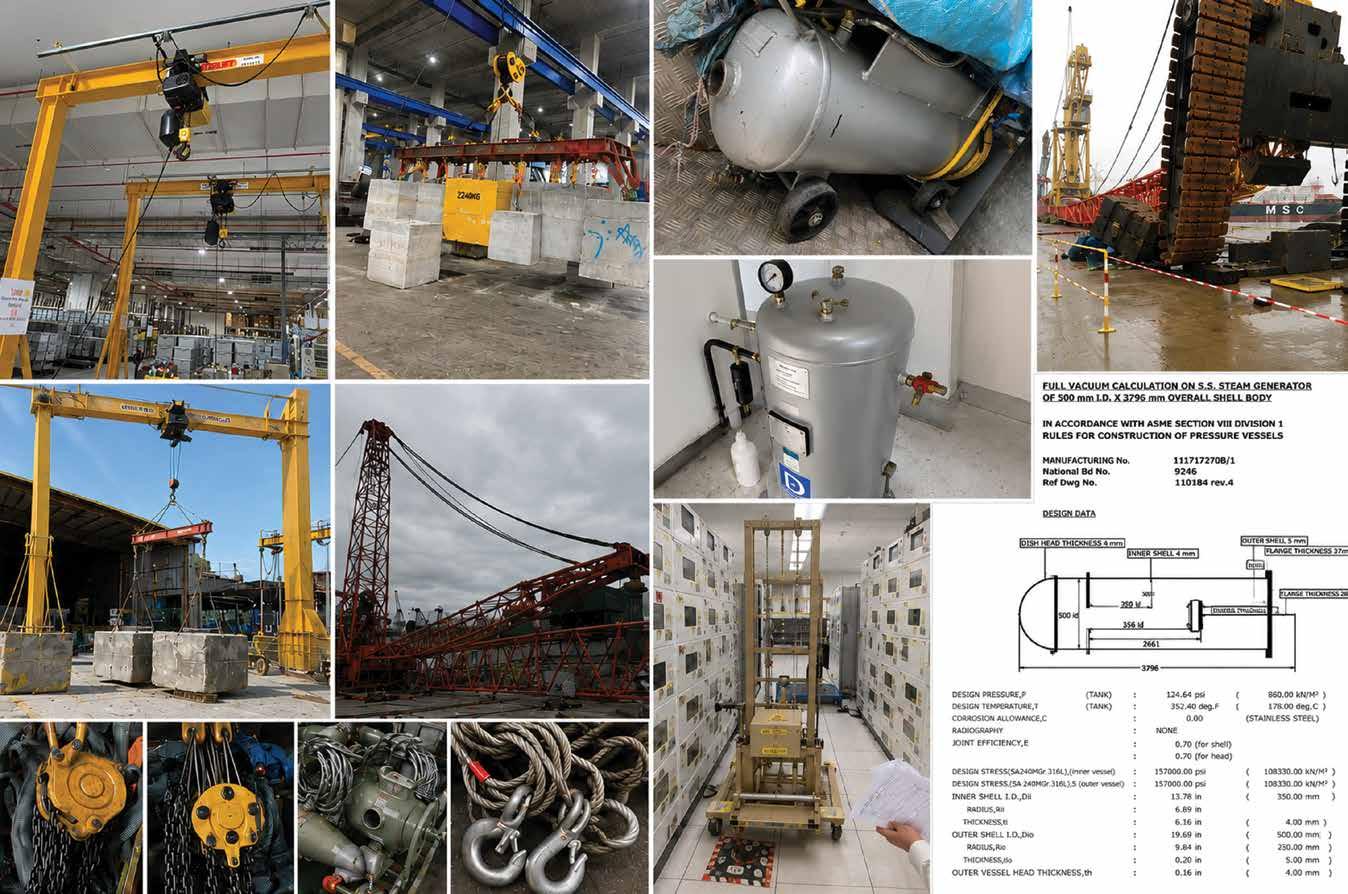
Good luck, indeed! It was a real wake-up call and from there on, I learned to be more down-to-earth which is so essential for an engineer.
Independent practice and professional registration
Four years later, I left Johns Manville, no doubt with some regrets, to set up my own professional engineering practice, AdMech Engineering Services.
Singapore regulations required all licensed engineers to be registered Professional Engineers (PEs), under the Professional Engineers Board Singapore (PEB). At that time, I had already obtained all my engineering institutional memberships, went through all the necessary procedures, training and tests, under professional engineering mentorship, and obtained the qualifications necessary to register as a PE in 1972.
The PEB not only specifies the required qualifications, training, experience, tests and examinations, it also makes provision for continuous training and learning requirements for subsequent, yearly licence renewals, so that regular attendance of relevant conferences and courses becomes part of your working life.
Being a PE carries with it, a tremendous sense of duty and responsibility. The government
legislations on PEB are both thorough and strict. The punishments for wrongdoing are also severe. During this time, while working in factories, I had also been busy familiarising with the requirements and legitimising my education and experience, for qualification as an Authorised Examiner with Singapore’s Ministry of Manpower (MOM), under the Factories Act (later replaced by the broader Workplace Safety and Health Act).
My two main areas of engineering involvement were pressure vessels and lifting equipment. Pressure Vessels include air receivers, steam receivers, refrigerating receivers, boilers, reactors and heat exchangers. There are various codes for their design and fabrication, and the most wellknown are:
• The ASME Boiler and Pressure Vessel Code (BPVC) which is the international standard for the design, fabrication, inspection, testing and certification of boilers and pressure vessels.
• BS 5500 (now published as PD 5500) which is the comprehensive British Standard for the design, manufacture, inspection and testing of unfired fusion-welded pressure vessels.
Lifting Equipment includes cranes, lifts and elevators, piling machines, escalators, lifting gears,

platforms and conveyors. On these aspects, my job scope covered the design, inspection, testing and certification work, along with accident investigation.
A career marked by resilience
My engineering career started long after the industrial revolution. Even so, I started my university days with, maybe, just a calculator and a slide rule, and certainly without a computer, notebook or smartphone. Every calculation was done by hand, from first principles, which may sound primitive to today’s generation of engineers who cannot live without a computer or a phone. But change will not just stop there. The recent widespread proliferation of Artificial Intelligence (AI) has triggered another unpredictable revolution. My reassurance to future engineers is that engineering fundamentals will never change. In mechanical engineering, bolts and nuts, wire ropes and cables have been in use, since the 1800s, and will likely withstand any engineering revolution.
Recently, I was on a trip to San Francisco and visited the unique cable car which has been in operation for 153 years. Imagine a closed-loop, wire rope cable running continuously beneath the road surface, and a wooden carriage on the road surface rail track, that simply latches onto the cable, through a slit on the road surface, dragging the carriage along. This is the cable car story. This is the epitome of mechanical engineering principles at their finest!
by Vincent Tang, Vice President, Asia, Epicor
Engineering resilience.
The Singapore Engineer (TSE): How does Artificial Intelligencepowered Enterprise Resource Planning (AI-powered ERP) solve talent gaps and accelerate workforce upskilling?
Vincent Tang (VT): When I speak with manufacturers in Singapore today, there is no doubt that the Manufacturing 2030 vision has set the right direction – a 50% uplift in manufacturing value-add, a clear ambition to be a global hub for advanced, sustainable production and strong policy support around innovation, talent and internationalisation.
We see that translating into real momentum in areas like advanced electronics, precision engineering and semiconductors, where Singapore continues to attract frontier investments and anchor ‘lighthouse’ factories that set the benchmark for Industry 4.0 and now Industry 5.0 practices. What is working well is the combination of strategic infrastructure, ecosystem partners and testbeds, that make it relatively easy for global manufacturers to pilot new technologies here, then scale them across the region.
Epicor is riding that wave as more mid-market manufacturers in Southeast Asia choose Singapore as their digital command centre.
A consistent message I hear from local customers is that it is more challenging in the ‘long tail’ of small and mid-sized manufacturers who still struggle to move from
isolated automation projects to true end-to-end digital transformation.
Many of these firms have modern machines on the floor but rely on spreadsheets and disconnected systems to run planning, scheduling and reporting, which limits visibility and makes it difficult to hit the productivity, quality and ESG expectations, baked into Manufacturing 2030.
Talent constraints remain a real bottleneck as well, As has been highlighted, Singapore cannot rely on low-cost foreign labour, so the only way forward is higher-skilled roles, faster innovation cycles and higher-value products.
Five years on, with shorter worker tenures and intense competition for digital skills, this pressure has only increased, which is why we see so much interest in cloud ERP and AI as a way to ‘encode’ best practices and give every worker access to the same level of insight as your most experienced people.
For me, the next phase of Manufacturing 2030 will be defined by how quickly we can close this adoption gap and make modern, industry-specific ERP and data platforms as fundamental to a Singapore factory as its production lines.
TSE: How can manufacturers operationalise ESG and meet sustainability mandates without slowing down?
VT: Across Asia, and especially in

manufacturing hubs like Singapore, the conversation has shifted from “Do we need AI?” to “How do we use AI to keep our factories running when we simply cannot hire enough skilled people?”
Over the last two years we have seen that workforce tenure shrinks and institutional knowledge walks out of the door faster than ever, and that traditional approaches like long apprenticeships or classroom training cannot keep up with the pace of change on the shop floor.
This is exactly the challenge Epicor set out to address with Epicor Kinetic and Prism AI. By embedding AI-powered intelligence inside the ERP software that manufacturers already use to run their businesses, we can turn the system from a passive record-keeper into an active co-pilot for every role, from planner to machine operator.
Practically, this starts with centralising and structuring knowledge.
Epicor Kinetic gives manufacturers a single system to store SOPs, work instructions, troubleshooting guides and training materials, and Prism AI then makes that knowledge instantly accessible in context –surfacing the right steps, checks or recommendations directly within the screens people are using to schedule jobs, record production or resolve exceptions.
New hires no longer need to memorise thick manuals or rely solely on shadowing a senior
colleague. The system guides them through tasks, flags potential issues based on past incidents and, over time, adapts to their role and proficiency.
For managers, real-time performance and competency data helps identify emerging skills gaps and target upskilling where it will have the biggest impact, turning learning into an ongoing, data-driven process rather than an annual exercise.
The other benefit, which our customers in Southeast Asia emphasise, is automation of routine work. AI-driven workflows can take over repetitive tasks like data entry, basic approvals and standard reporting, freeing scarce talent to focus on continuous improvement, problem-solving and customer collaboration –the higher-value activities that align perfectly with Singapore’s Manufacturing 2030 emphasis on innovation and higher-skilled manufacturing roles.
As we move through 2026 into 2027, I expect AI-powered ERP to become a baseline requirement rather than a ‘nice to have’ solution because without it, manufacturers will simply not be able to scale their operations, with the talent they can realistically secure.
TSE: What should CIOs prioritise in the next 12 months, to align with Industry 5.0?
VT: Sustainability has moved from a marketing slide to a board-level, and increasingly regulatory, mandate for manufacturers in Singapore and across the region. Customers, investors and governments are asking very pointed questions about carbon footprint, energy use, waste and supply chain ethics, and the days of treating ESG as a separate reporting project, run on spreadsheets, once a year, are over.
The manufacturers that are coping best are the ones who have made ESG ‘live’ inside their operational systems, especially
ERP, so that the same data used to run production, purchasing and logistics, also underpins their sustainability metrics.
With Epicor, for example, we see customers instrumenting their factories so that data on energy consumption, scrap and rework, material provenance and transport is captured in real time and linked back to specific jobs, suppliers and customers.
Once you have that integrated view, ESG stops being a drag on productivity and starts to reveal efficiency opportunities. Analytics can highlight which lines, shifts or products have the highest energy intensity or waste, allowing you to target process changes, equipment upgrades or operator training, that both lower emissions and reduce cost.
Standardised, digital workflows and automated checks within ERP help ensure that sustainabilityrelated practices, such as material handling, maintenance routines or documentation for audits, are followed consistently across sites, which simplifies compliance with tightening regional and global standards.
What I stress to customers is that you do not have to solve every ESG metric at once. Start with the topics that are most material to your business – often energy, waste and supplier practices. Capture them rigorously in your core systems and then scale from there. Done this way, ESG becomes part of operational excellence instead of a trade-off against it.
TSE: What must next-gen factories do in the next 12 months to align with Industry 5.0 and build resilience?
VT: Industry 5.0 has become a key theme in Singapore’s manufacturing discussions this year, and I welcome that because it captures something we have believed at Epicor for a long time. The future factory is not just smart and automated, it is human-centric, sustainable and resilient by design.
This is the time to connect the dots. Connect your people with better tools, connect your machines and systems with a modern ERP backbone, and connect your factory to a more dynamic, ‘living’ supply chain that can flex with disruption. On the shop floor, that means giving operators mobile access to real-time data and AI-driven guidance, so they can make faster, better decisions without waiting for end-of-day reports.
In the back office, it means using ERP as the single source of truth for orders, inventory, capacity and supplier commitments, then applying scenario planning and predictive analytics to test how your operations would respond to shocks, from demand spikes to logistics bottlenecks, and building playbooks around those insights.
In Singapore, specifically, I see Industry 5.0 as the natural evolution of the Manufacturing 2030 journey, leveraging world-class digital infrastructure and talent to build factories that are not only efficient, but also safe, attractive workplaces and credible stewards of the environment.
Over the next year, I would urge manufacturers to move beyond isolated pilots and commit to a clear digital roadmap anchored on an industry-specific ERP and data platform, because that is what gives you the flexibility to plug in new technologies without having to rebuild your core every time.
This is also the moment to strengthen your partner ecosystem. At Epicor, we are investing heavily in regional partners and skills so that customers in markets like Singapore, Malaysia and Vietnam can implement, extend and support these solutions with local expertise and domain knowledge.
If manufacturers can use 2026 to get these foundations in place – human-centric tools, connected systems, data-driven resilience and strong partnerships, I am confident that Singapore will not just meet its Manufacturing 2030 goals, but set the standard for Industry 5.0 in the region.
They help to determine the strategy.
HID, a part of the ASSA ABLOY Group and a global leader in trusted identity solutions, has released its 2026 State of Security and Identity Report, revealing how organisations worldwide are fundamentally reshaping their approach to identity management.
Based on insights from more than 1,500 security and IT professionals, end-users and industry partners, the research shows that security leaders are focused on how to manage identities in ways that build trust, strengthen protection and preserve user choice, across increasingly converged physical and digital environments.
“Security leaders are clearly under pressure to modernise access and identity infrastructure, but our research shows they are equally focused on the governance, protection and transparency, that build lasting trust,” said Mr Ramesh Songukrishnasamy, Senior Vice President and Chief Technology Officer at HID.
“The organisations succeeding in 2026 are those giving stakeholders meaningful solution choice while maintaining robust security,” he added.
The report identifies seven key trends that collectively illustrate how trust, protection and choice are reshaping security strategy:
• Identity management now dominates strategic planning: Nearly three-quarters of respondents (73%) identified identity management as a top priority, the highest category in the study. Organisations are moving beyond standalone credential systems towards unified identity governance that spans physical
access and digital systems.
The shift reflects a market-wide consensus. The question is no longer whether to consolidate identity platforms, but how to do it in ways that reduce friction, ensure compliance and deliver a measurable return on investment (ROI).
• Mobile credentials have reached critical mass: Mobile credentials adoption is now driven by security improvements (50%) rather than convenience (34%) – a notable shift as organisations recognise the protection advantages of mobile credentials. Hybrid credential environments remain standard, with 84% of end-users maintaining physical credentials within their mobile deployment, reflecting diverse user groups and operational needs that require flexibility over time.
• Biometrics are expanding beyond Multi-Factor Authentication (MFA) into core access control: Biometric technologies continue to gain traction (45% view them as strategic), with fingerprint (71%) and facial recognition (50%) the leading modalities. Yet, ethical and privacy concerns more than doubled year-over-year, from 31% to 67%. This is driving organisations to implement safeguards and it reinforces the need for transparency and compliance during deployment.
• Real-Time Location Solutions (RTLS) are moving into mainstream use cases: RTLS adoption continues to expand, particularly in healthcare, manufacturing and logistics. About 42% of endusers identify RTLS as a strategic priority, while 40% report active deployments. Yet barriers persist. Costs (33%), privacy concerns (29%) and
integration complexity (29%) slow progress, while 38% of partners report customers remain unfamiliar with RTLS capabilities, signalling substantial education needs.
• Physical and digital identity convergence is accelerating: Unified identity solutions are moving mainstream, with 75% of organisations either having deployed (29%) or are actively evaluating (46%) unified identity solutions. While single credentials spanning buildings, networks and applications deliver efficiency and stronger security, budget constraints (51%), complexity (37%) and expertise gaps (34%) remain persistent barriers.
• Radio Frequency Identification (RFID) adoption continues to grow steadily: RFID is now infrastructure, not innovation. RFID adoption is growing steadily, with 54% of respondents reporting active use for asset tracking, inventory management and loss prevention. Once viewed as niche technology, RFID is now increasingly treated as core infrastructure for asset visibility, inventory control and operational intelligence. Security leaders cite faster tracking (62%) and improved visibility (41%) as key benefits.
• Investment patterns are shifting decisively towards integrated platforms: The era of point solutions is ending. Organisations are prioritising integrated identity and security platforms over standalone point solutions to improve visibility, efficiency and resilience, across increasingly complex environments. Yet integration complexity persists as the primary barrier (52% for identity systems and 37% for physical-digital convergence).
Ethics and privacy concerns
Beyond individual technology trends, the report highlights a defining concern for 2026. Ethical considerations and privacy concerns are at an all-time high. For biometrics, 67% of end-users expressed high or moderate concern about ethical and privacy implications.
Alongside location tracking and converged identity platforms, organisations are navigating the tension between stronger protection and individual rights. Many respondents report actively developing policies, governance frameworks and technical controls, to address these concerns, signalling a broader maturity in
A maturity gap exists between perception and execution.
Ping Identity, a leader in securing digital identities for the world’s largest enterprises, released independent research showing that organisations that have operationalised continuous, contextual identity verification materially outperform peers across revenue growth, fraud reduction, compliance readiness and workforce productivity, as AI-driven interactions scale.
The white paper, produced by International Data Corporation (IDC) and sponsored by Ping Identity, highlights a clear maturity gap between perception and execution. While more than half of organisations believe they lead in digital trust, only a small fraction has operationalised continuous, contextual identity verification at scale.
Based on a global survey of 794 organisations, IDC found that enterprises meeting verified trust criteria delivered statistically significant performance advantages across core enterprise metrics:
• Customer registration conversion: 51% higher
• Compliance readiness: 44% stronger
• Fraud losses: 43% lower
• Workforce onboarding time: 47% faster
The importance of verified trust IDC defines verified trust as “a continuous assurance that every
digital interaction, whether human or machine/AI agent, is tied to an independently verified identity and remains trusted over time.”
Verified trust enforces continuous, contextual verification for every identity-sensitive event using signals such as zero-knowledge biometrics with liveness detection, device posture, behavioural intelligence and AIaware risk analysis.
According to the white paper, this model “transforms identity from a static gate into a dynamic trust fabric.”
This shift moves identity from a perimeter authentication event to a runtime control plane governing every authorisation decision.
“This research confirms that organisations embracing continuous, contextual verification reduce risk while unlocking measurable business value.
Verified trust is how enterprises close the gap between confidence and control in an AI-driven world,” said Peter Barker, Chief Product Officer at Ping Identity.
Despite the measurable gains, IDC found a significant maturity gap between perception and reality.
The study highlights several critical divides between leaders and early-stage adopters:
• Perception versus reality: 51% of organisations believe they are
how security decisions are made. In the production of the 2026 report, responses were obtained from a wide range of industries, including healthcare, education, government, finance, manufacturing and critical infrastructure, with perspectives from both end-users and the partners who design, deploy and support security systems.
ahead of peers in establishing trusted digital identity, yet only 9% meet IDC’s criteria for verified trust leaders.
• Verification coverage: 69% of leaders verify 75%-100% of trust flows, compared to 16%-19% of early-stage adopters.
• Adoption at scale: 94% of leaders operate at enterprise scale across trust flows, while early-stage organisations remain confined to pilot deployments.
• Passwordless maturity: Leaders embrace biometrics, passkeys and digital wallets, at 80%-83%, while starters hover below 30%.
“Verified trust is no longer a design choice – it is the prerequisite for operating at scale in AI-driven environments. As AI increases autonomy and complexity, identity becomes the mechanism for control, accountability and confidence. Organisations that establish this foundation early will move faster with less risk. Those that do not will accumulate cost, friction and regulatory exposure over time,” said Emanuel Figueroa, Senior Research Analyst at IDC.
Ping Identity enables enterprises to operationalise verified trust across workforce, customer, partner and AI identities – establishing a unified trust control plane that adapts in real time as risk, behaviour and machine interactions evolve.
Flir, a Teledyne company, is highlighting a new advancement in automated non-destructive testing (NDT), through a technical collaboration with edevis GmbH, a leader in active thermography.
Together, the companies demonstrate how the Flir A6450 long-life cooled MWIR camera integrates seamlessly into automated inspection workflows to detect structural anomalies in real time, enabling manufacturers to identify defects that traditional point-based methods or standard sensors often miss.
Across industries such as automotive, energy and advanced manufacturing, hidden flaws like grinding burn, coating delamination, adhesion failures and subsurface irregularities can compromise product integrity.
Conventional inspection techniques typically examine only small areas, leaving critical defects undetected. The Flir-edevis approach introduces a new standard for full-surface, high-speed thermal inspection that delivers actionable results within seconds.
At the core of the system is the Flir A6450, engineered for continuous 24/7 operation in demanding industrial environments. Its long-life cooler, rated for 27,000 hours, and its high-speed MWIR imaging capabilities allow precise temperature measurement and rapid thermal response capture –key requirements for identifying subsurface defects during active thermography.
When paired with edevis’ laser-based excitation and advanced thermography software, the system reveals structural anomalies that are invisible to the
human eye and difficult to detect with conventional sensors.
“Manufacturers are under increasing pressure to automate more of their quality assurance processes while maintaining absolute reliability. The A6450 is designed for exactly these environments. Combined with edevis’ active thermography, it delivers real-time insight into structural behavior that helps customers catch defects earlier and keep production moving,” said Mathew Hasty, Global Vertical Director at Flir.
edevis’ active thermography platforms are widely used for structural inspection of metals, composites, battery components, and precision-machined parts.
By integrating Flir thermal imaging, these systems provide deeper insight into material behaviour under thermal excitation and support automated decision-making directly on the production line. The result is a reliable, contactless and repeatable
inspection process that scales to modern manufacturing throughput.
“Our mission is to make high-precision NDT fully automated, fast, and easy to integrate. Flir’s A6450 gives us the thermal performance and long-term stability required for continuous industrial use. Together, we are enabling manufacturers to detect defects that would otherwise remain hidden and to do so at the speed their production lines demand,” said Alexander Dillenz Managing Director at edevis GmbH.
As industries accelerate their adoption of automated inspection technologies, the combination of Flir thermal imaging and edevis active thermography offers a scalable, future-ready solution. Whether applied to brake discs, composite structures, battery cells, or semiconductor components, the integrated workflow provides manufacturers with a powerful tool to ensure product integrity and reduce scrap.