THE SINGAPORE ENGINEER
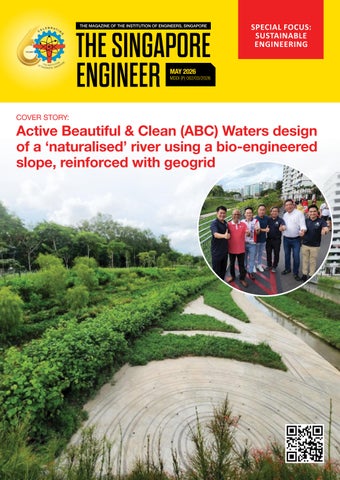
COVER STORY:
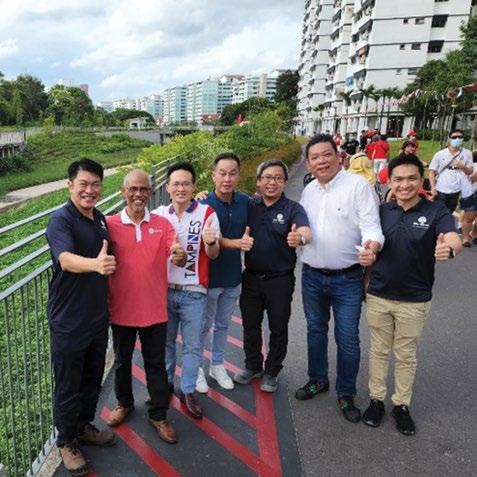
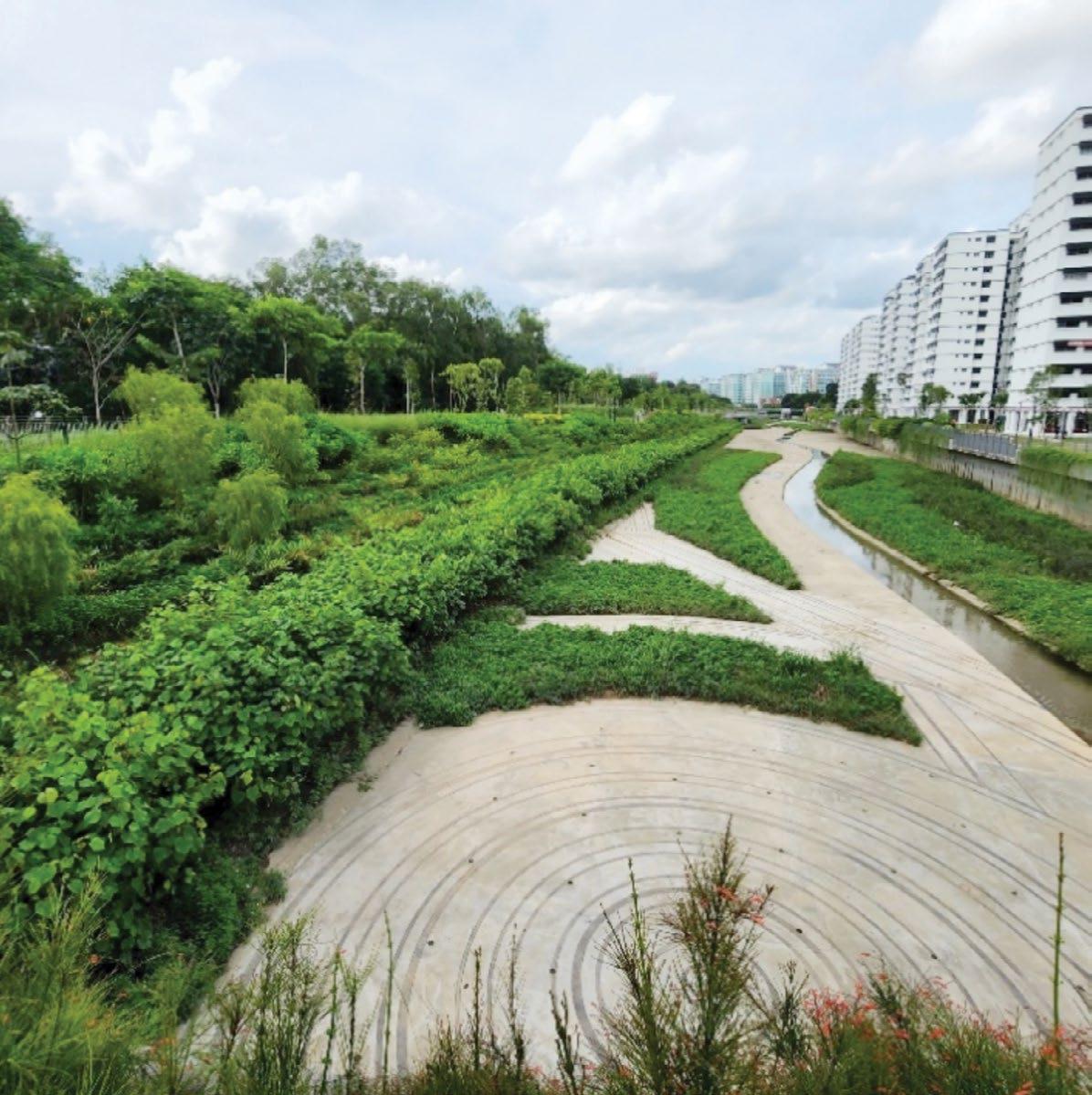
Active Beautiful & Clean (ABC) Waters design of a ‘naturalised’ river using a bio-engineered slope, reinforced with geogrid





IES UPDATE
06 IES inaugurates aviation veteran Mervyn Sirisena as 31st President
07 We are finally on TikTok!
08 IES successfully organises joint seminar
NEWS & EVENTS
10 Circle Line Stage 6 to open for public preview on 4 July 2026
12 UNEP releases report on sand and sustainability
13 bauma SHANGHAI 2026 expands to a ‘One Show, Two Venues’ format
14 Environmental technologies are becoming a key global industry
COVER STORY
16 Active Beautiful & Clean (ABC) Waters design of a ‘naturalised’ river using a bio-engineered slope, reinforced with geogrid
SPECIAL FOCUS: SUSTAINABLE ENGINEERING
20 How EC fans can unlock greater energy efficiency in projects without compromising on Indoor Air Quality
22 Addressing Singapore’s advanced engineering challenges
President Er. Chan Ewe Jin
Chief Editor T Bhaskaran t_b_n8@yahoo.com
Publications Manager Desmond Teo desmond@iesnet.org.sg
Editorial Panel
Ms Jasmine Foo
Dr Chandra Segaran
Dr Ang Keng Been
Dr Aaron Sham
Mr Jaime Vega Bautista Jr


THANK YOU FOR SIXTY YEARS OF UNWAVERING SUPPORT AND COMMITMENT
TO ENGINEERING EXCELLENCE. WE ARE HONOURED TO CELEBRATE THIS DIAMOND
JUBILEE MILESTONE WITH YOU AS WE BUILD A RESILIENT AND INNOVATIVE FUTURE TOGETHER.

w w w . i e s . o r g . s g

RAILWAY & TRANSPORTATION ENGINEERING
24 Competence, succession and the shrinking pool of MRT renewal experience
WORKPLACE SAFETY & HEALTH
26 Record-low workplace fatality and major injury rates in 2025
PROJECT APPLICATION
28 Lessons from Jakarta’s Pinisi Crossing Bridge
31 Ensuring a strong foundation for a high-speed rail line in Türkiye
32 Dismantling a large tower crane under time and space constraints
34 Diaphragm walls and heavy-duty work for the new Paris metro network
36 Breakthrough at the Gotthard Road Tunnel in Switzerland
PRODUCTS & SOLUTIONS
37 Caterpillar updates Cat AP1000 and AP1055 pavers
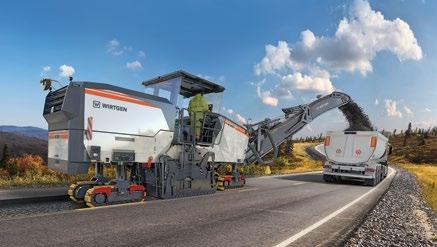
38 Large milling machine combines smart machine control with automated documentation
39 Volvo Construction Equipment unveils its largest demolition excavator
40 The new 90HD vibrodriver from PTC
The Singapore Engineer is published monthly by The Institution of Engineers, Singapore (IES). The publication is distributed free-of-charge to IES members and affiliates. Views expressed in this publication do not necessarily reflect those of the Editor or IES. All rights reserved. No part of this magazine shall be reproduced, mechanically or electronically, without the prior consent of IES. Whilst every care is taken to ensure accuracy of the content at press time, IES will not be liable for any discrepancies. Unsolicited contributions are welcome but their inclusion in the magazine is at the discretion of the Editor.
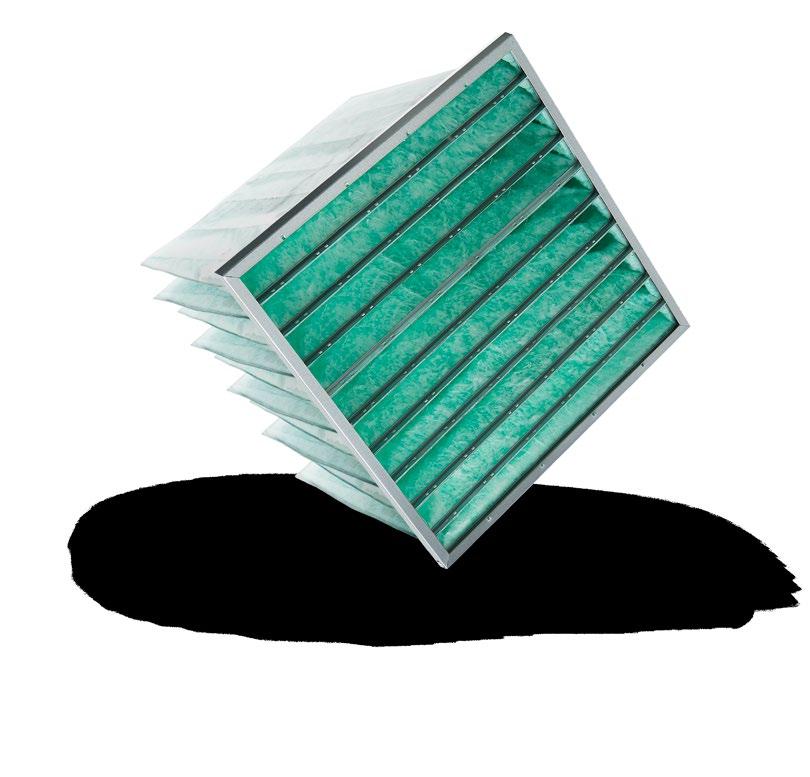
Hi-Flo NEXT GENERATION BAG FILTERS
DESIGNED TO WORK WITHOUT A PREFILTER
The Hi-Flo Next Generation bag filters have been developed with performance and sustainability in mind. Performance means long service life, low energy consumption and stable filtration efficiency throughout its lifetime.
ADVANTAGES
Extended operating life with the best Total Cost of Ownership (TCO)
Lowest energy consumption and initial pressure drop
Reduced energy consumption
12% vs old Hi-Flo generation 30% vs industry average
Superior indoor air quality
Particle efficiency meets requirements according to the European Standard EN779 and ISO16890 for indoor air quality (IAQ)
Reduced labour cost
25-50% Longer filter lifetime, compared to synthetic bag filters
Improved air flow
Conical and tapered pocket shape allows better airflow through the filter
Optimised design for high performance Fully incinerable with the plastic frame
BIG SAVINGS WITH CLEAN AIR
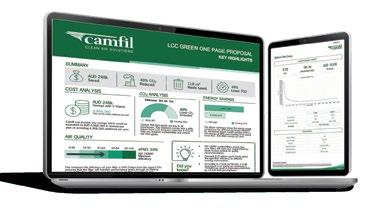
Using Camfil Life Cycle Cost (LCC) Analysis software, our experts conduct a comparative analysis of different air filters to provide you with a comprehensive report on potential savings.
Camfil offers a complimentary Life Cycle Cost analysis and supports you in selecting the right air filter solution.
SCAN THE QR CODE to complete the survey. Accuracy is subject to information provided.

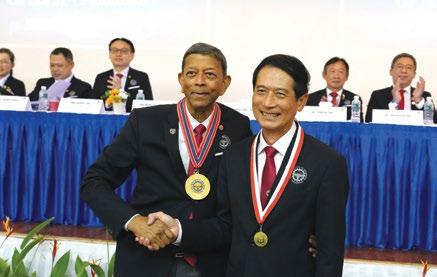
IES inaugurates aviation veteran Mervyn Sirisena as 31st President
Held on 23 May 2026 at the IES Auditorium, the 60th AGM gathered nearly 120 members to celebrate the institution’s achievements over the past two years and chart a visionary path forward for Singapore’s engineering community.
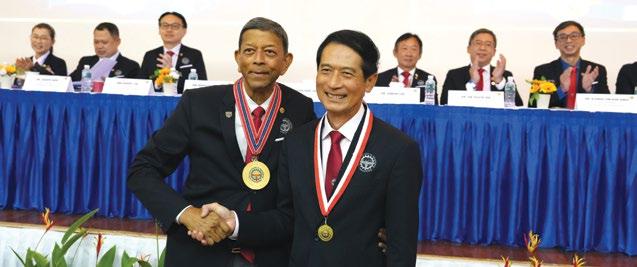
The afternoon marked a historic transition as Er. Chan Ewe Jin officially handed over the IES Presidency to Mr Mervyn Sirisena, who was inaugurated as its 31st President. Mr Sirisena will lead the institution for the next two years. Whilst warmly congratulating Mr Sirisena as he steps into his new role, IES also expressed its appreciation to Immediate Past President Er. Chan Ewe Jin for his contributions over the past two years. During his term, Er. Chan strengthened IES’ four core pillars of Engineering Excellence, Professional Development, Professional Registration and Internationalisation, while advancing initiatives in accreditation, membership growth and outreach.
In his inaugural address, Mr Sirisena outlined his vision for a more connected, future-ready and member-centric institution dedicated to uplifting and empowering engineers across generations.
As Singapore’s engineering sector faces rapid technological disruption driven by Artificial Intelligence (AI), cybersecurity and automation, Mr Sirisena outlined plans to strengthen IES’ role in preparing engineers for the future while deepening engagement with younger generations entering the profession.
A former President and Chief Operating Officer of SIA Engineering Company and former Senior Vice President Engineering at Singapore Airlines, Mr Sirisena brings more than four decades of engineering and aviation leadership
experience to the role.
Under his leadership, IES will focus on four key priorities –strengthening engagement with young engineers, helping members navigate emerging technologies, enhancing membership engagement, and expanding resources and partnerships.
Strengthening engagement with young engineers
A major focus under Mr Sirisena’s leadership will be the refreshed ‘The Young IES’ movement aimed at better engaging students, fresh graduates and younger engineers. Plans include deeper outreach to fresh graduates, a Young Engineering Leadership Forum for engineers below 35 years old, expanded student engagement programmes and the formation of a dedicated Youth Wing guided by
younger Council Members.
Working closely with its Young Engineers Committee, IES also aims to shape programmes, mentorships and interest groups that better resonate with younger engineers, while leveraging social media platforms such as TikTok to strengthen outreach and community engagement.
Helping members navigate emerging technologies
Another key priority will be equipping members to better understand the opportunities and risks brought about by emerging technologies such as AI, cybersecurity and space technology. IES plans to organise dialogues and knowledge-sharing sessions with external subject matter experts to help engineers stay current and future-ready.
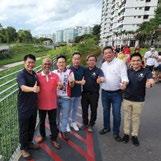
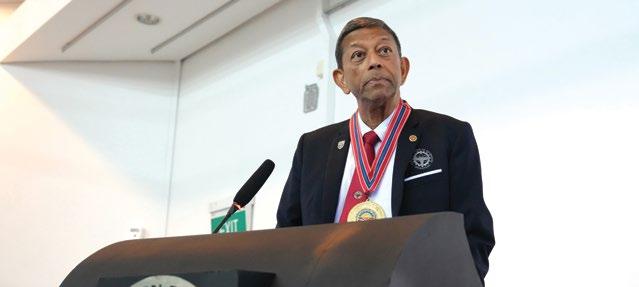
Mr Mervyn Sirisena is inaugurated as the 31st President of IES, taking over from Er. Chan Ewe Jin.
Mr Mervyn Sirisena delivers his inauguration address.
Enhancing membership engagement
On membership development, IES plans to strengthen alignment between members’ professional interests and the institution’s activities, by categorising members according to industry sectors in addition to engineering disciplines. The institution will also review its committees to streamline efforts, reduce overlaps and better align with evolving industry needs.
Expanding resources and partnerships
To enhance resources available to members, IES plans to progressively develop a reference library and research repository database, deepen partnerships with organisations including NTUC PME, the Academy of Engineering Singapore and the Singapore Army, and enhance its events management and sponsorship processes.
Celebrating IES60 and engineering’s contributions to nation-building
In conjunction with IES60, IES will
roll out a series of commemorative initiatives celebrating the engineering profession’s contributions to nation-building. These include a Family Day, a tree-planting initiative symbolising sustainability and legacy-building, and the annual IES Gala Dinner bringing together industry leaders, members and partners.
Mr Sirisena said, “I am deeply humbled and honoured to be elected President of IES as
We are finally on TikTok!
From exclusive technical visits to the fine print of certifications, we are pulling back the curtain on Singaporean engineering by teaming up with our partners to
highlight the little-known facts of the industry.
Follow us @ies.sg and tell us what you would like to see next.
we celebrate IES60, marking six decades of engineering contributions to Singapore’s progress. As the world enters a new era of rapid technological transformation, engineers will play an even more important role in shaping the future. My hope is for IES to continue inspiring engineers across generations, strengthening our professional community and creating new opportunities for innovation, leadership and impact.”

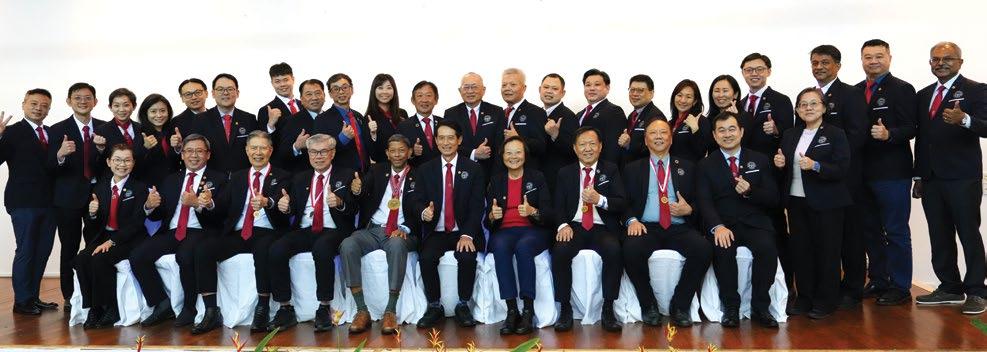
IES Council Members at the 60th AGM.
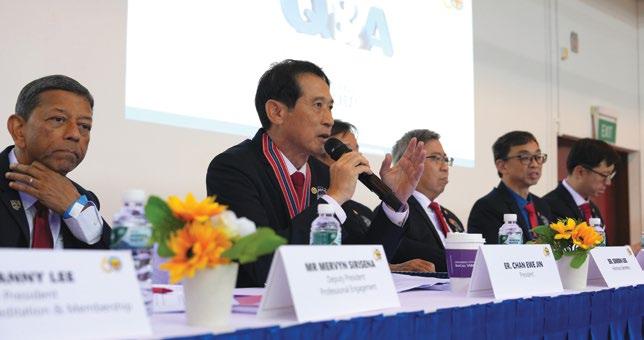
The Q&A session in progress at the AGM.
IES successfully organises joint seminar
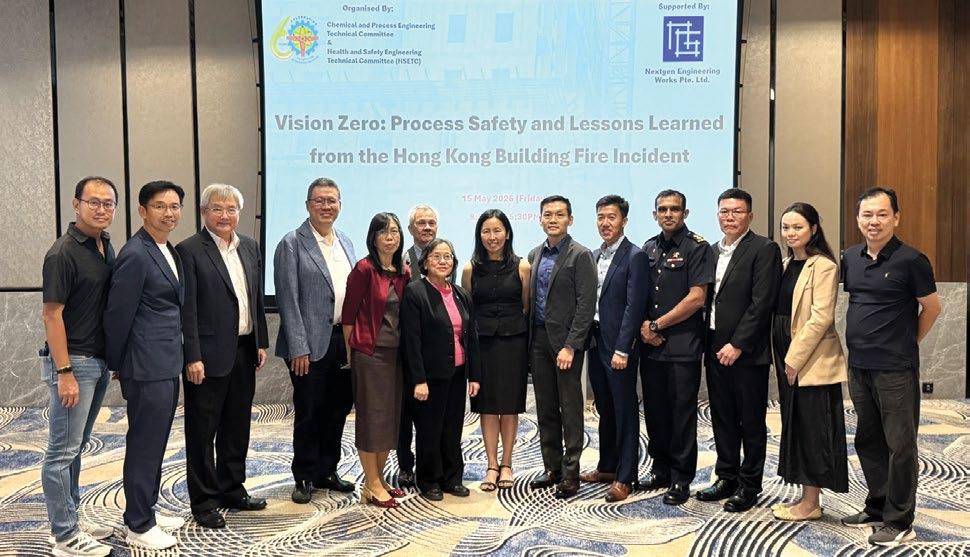
On 15 May 2026, IES successfully hosted a seminar on ‘Vision Zero: Process Safety and Lessons Learned from the Hong Kong Building Fire Incident’.
Jointly organised by the Chemical & Process Engineering Technical Committee (CAPETC) and the Health and Safety Engineering Technical Committee (HSETC), the event was supported by Nextgen Engineering Works Pte Ltd.
The seminar brought together engineers, regulators, safety professionals and industry leaders, for a timely discussion on applying robust process safety principles beyond chemical plants – extending them to buildings, urban systems and emerging risk areas. Through expert presentations and dynamic panel discussions, participants explored critical themes shaping Singapore’s industrial ecosystem, including the following:
• Regulatory frameworks and risk assessment
• Engineering controls and
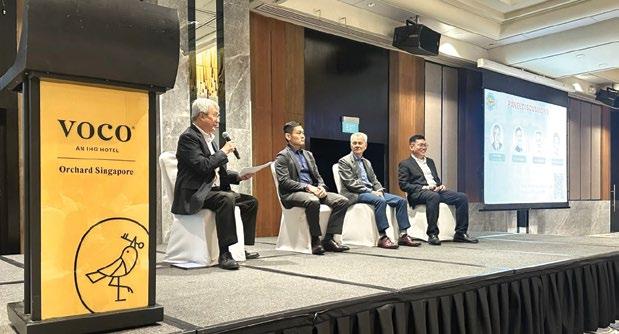
At the seminar on ‘Vision Zero: Process Safety and Lessons Learned from the Hong Kong Building Fire Incident’, organised by IES, participants explored critical themes shaping Singapore’s industrial ecosystem, through expert presentations and dynamic panel discussions.
emergency preparedness
• Human factors and cultivating a proactive safety culture
• Mitigating lithium-ion battery hazards and driving continuous improvement
A key takeaway was clear. Achieving Vision Zero requires the industry to move beyond mere compliance, strengthen crosssector learning and take collective ownership of safety, as risks
become increasingly complex and interconnected.
IES extends our deepest appreciation to all speakers, moderators, panellists, partners and organising committee members, for contributing to this vital conversation.
Together, we continue to advance engineering excellence and uphold our shared responsibility as custodians of public trust.
Circle Line Stage 6 to open for public preview on 4 July 2026
Commuters will be able to preview and enjoy free travel between Keppel, Cantonment and Prince Edward Road stations during the CCL6 public preview on 4 July 2026, from 9.30 am to 9.00 pm.
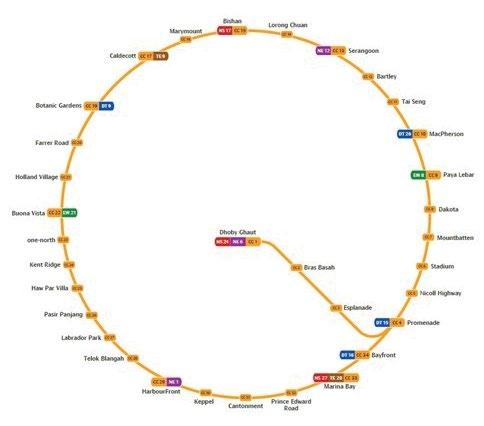
Following the public preview, Circle Line Stage 6 (CCL6) will open for passenger service on 12 July 2026. The opening of three new stations – Keppel, Cantonment and Prince Edward Road – will complete the Circle Line by connecting HarbourFront station to Marina Bay station.
The completed Circle Line will span 39 km across 33 stations, with 12 interchange stations connecting commuters to all existing MRT lines – the North-South and East-West Lines (NSEWL), North East Line (NEL), Downtown Line (DTL) and Thomson-East Coast Line (TEL). This will provide more convenience for commuters, strengthen connectivity and resilience across the rail network, and improve access to key employment nodes, residential areas and lifestyle destinations.
Commuters will enjoy shorter travel times between areas in the west, such as Pasir Panjang and Kent Ridge, and the Central Business District and Marina Bay, in the city centre, as well as areas in the east, such as Paya Lebar and Mountbatten.
For instance, today a commuter travelling by train from Telok Blangah to Marina Bay needs to transfer between the CCL, NEL and NSL. With the completion of CCL, the same journey can be completed without any transfers, on a single train ride, saving around 10 minutes of travel time.
The three new CCL6 stations are designed for commuter convenience and accessibility, offering barrier-free access, lifts, escalators and tactile guidance systems to the key touchpoints.
They also incorporate energyefficient technologies in their design and operations, such as smart lighting, motion-sensor
controls and hybrid cooling systems.
Bicycle parking lots and sheltered linkways further support sustainable
Circle Line system map.
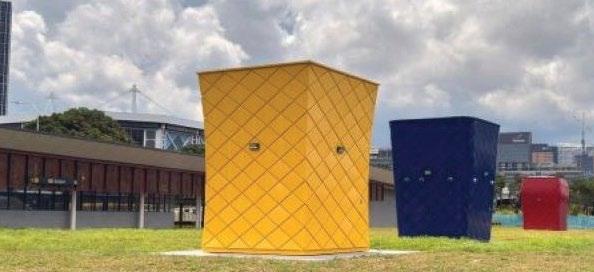
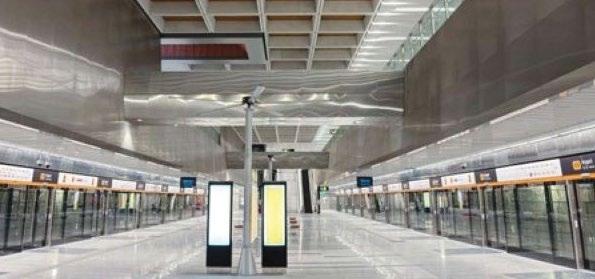
Keppel Station: Vent shafts and platform.
mobility by encouraging cycling and walking. The stations’ architecture and streetscape integration were designed to complement the surrounding urban and heritage character of the areas.
Keppel Station (CC30)
Situated along Keppel Road, Keppel Station will serve future residential and commercial developments in the Greater Southern Waterfront, while improving accessibility to nearby business hubs such as PSA International and Keppel Distripark.
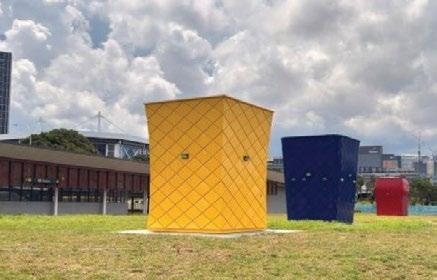
The 20 m deep station –equivalent to the height of a 6-storey HDB block – is accessible via three entrances, with a 24-hour underpass linking Entrances 1 and 2. Its design draws inspiration from the energy of the port, with blue, yellow and red vent shafts, inspired by the iconic cable cars.
Cantonment Station (CC31)
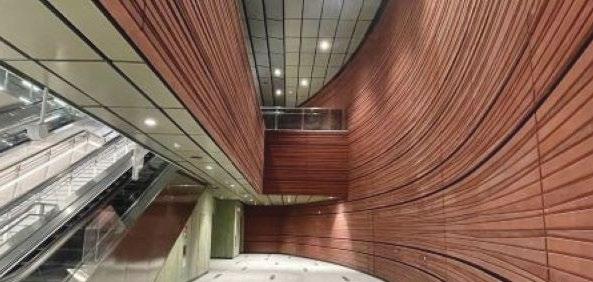
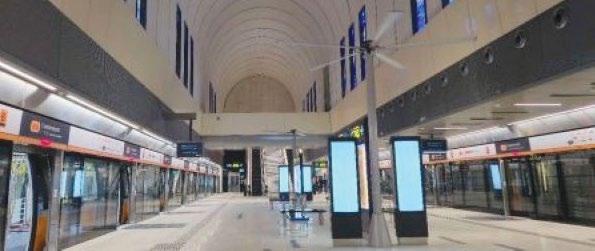
Located below the old Tanjong Pagar Railway Station, Cantonment Station will serve the historic Tanjong Pagar area, providing convenient access to existing residential estates and heritage sites. It enhances connectivity for both residents and workers in the vicinity.
The 28 m deep station is accessible via four entrances, linking to the Singapore Art Museum (Tanjong Pagar Distripark), Spottiswoode Park Estate, Everton Road and the rejuvenated Tanjong Pagar Railway Station, when it is ready.
With the integration of Tanjong Pagar Railway Station’s original design and the new station, commuters will get to enjoy a unique blend of the past and present, reflecting the rich historical value of the national monument.
Prince Edward Road Station (CC32)
Positioned in the Shenton Way area, Prince Edward Road Station will improve connectivity for nearby office workers and visitors. The 30 m deep station is accessible via two entrances. One entrance connects directly to nearby residential and office developments, while the other provides access to landmarks
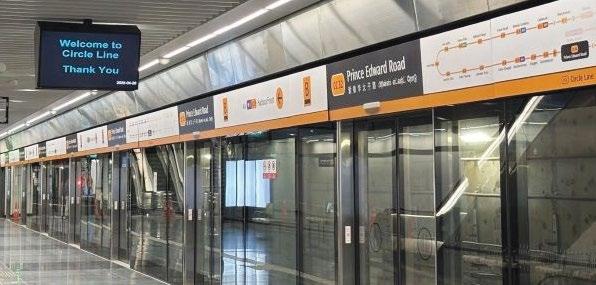
and platform.
such as Hock Teck See Temple and Masjid Haji Muhammad Salleh.
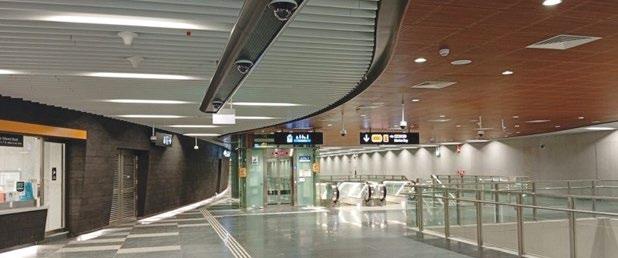
The station’s design pays tribute to the site's maritime
history, drawing inspiration from Singapore's old waterfront and the seafaring communities that once shaped the nation's development.
Prince Edward Road Station: Concourse
Cantonment Station: Curved wall at the concourse and the station platform.
UNEP releases report on sand and sustainability
Surging global demand for sand, driven by population growth, economic growth, urbanisation and infrastructure growth, is outpacing sustainable sand supply, threatening the ecosystems and livelihoods on which we depend, according to a new United Nations Environment Programme (UNEP) report, ‘Sand and Sustainability: An Essential Resource for Nature and Development’.
Sand is extracted for various infrastructure needs that underpin modern society and development. It took nature hundreds of thousands of years to generate sand through gradual, geological erosion processes. Yet we are using sand at the staggering rate of 50 billion tonnes per year. Its use for buildings alone is projected to rise by up to 45% by 2060. We are extracting it faster than it replenishes – this is the ‘sand gap’.
Sand also provides critical habitats for fish, turtles, birds, crabs and countless other species, supporting biodiversity and maintaining ecological balance –also key for growth in tourism and fisheries. It is essential for nature, food and water security. Leaving sand within ecosystems can help achieve the Kunming–Montreal Global Biodiversity Framework goal to conserve and manage 30% of land, waters and seas (terrestrial, inland water, and coastal and marine areas).
UNEP’s just-published third Sand and Sustainability report calls on governments and industry to recognise sand’s essential value to development and nature, and to fully integrate biodiversity considerations in sand governance. A strategic approach is needed for this resource, that underpins our built environment and economic development while sustaining biodiversity and ecosystem services. “Sand is sometimes referred to as the unrecognised hero of
development, but its essential role in sustaining the natural services on which we depend is even more overlooked. Sand is our first line of defence against sea level rise, storm surges and salination of coastal aquifers – all hazards exacerbated by climate change,” said Pascal Peduzzi, Director of the UNEP Global Resource Information Database Geneva (UNEP/GRID-Geneva).
Sand: Transformed and lost, or left to last
The report highlights a fundamental tension. Once extracted and transformed into concrete, asphalt, glass etc, sand is effectively lost from natural systems (it becomes ‘dead’ sand).
In contrast, sand in rivers, deltas and coastal zones (‘alive’ sand) continues to sustain the stability of our landscape and essential ecosystem functions, by filtering water, regulating river flows, protecting shorelines from erosion and storm surges, preventing salinisation of coastal aquifers and sustaining biodiversity. In nature, sand lasts.
Demand therefore exists for sand in both its ‘dead’ and ‘alive’ states, but these uses are in direct competition. Deciding whether to take it or leave it requires better data, mapping and monitoring, to identify areas of high ecological value and assess cumulative impact. It also calls for greater transparency in extraction permits, project approvals and financing flows.
Recognising sand as an integral part of nature and an essential asset would require coordinated governance across sectors and scales, supported by long-term planning to balance supply needs with ecosystem protection.
The report highlights evidence from many parts of the world where unsustainable sand extraction is causing supply shortages and resulting in both environmental
degradation and growing opposition from affected communities.
Data from UNEP’s Marine Sand Watch shows about half of dredging companies are operating within Marine Protected Areas (MPAs), accounting for 15% of the volume dredged. Ensuring that protection translates into meaningful ecological outcomes will require robust impact assessments, transparent decisionmaking and effective long-term monitoring, to prevent MPAs from becoming de facto extraction zones.
Early and coordinated intervention on sand sustainability remains possible and cost-effective. As a globally used resource, addressing sand sustainability would require enhanced regional coordination and, possibly, global governance mechanisms. The report also calls on countries to develop national and sectoral roadmaps for responsible sand management, building on existing UNEP tools.
The report, co-written by 27 experts from across the world, concludes with actionable policy measures and an assessment tool to support more sustainable sand management at local, national and regional levels. Be it for development or nature, sand is an essential resource for our future. We need to choose wisely and use it with care.
United Nations Environment Programme
The United Nations Environment Programme (UNEP) is the leading global authority on the environment. UNEP’s mission is to inspire, inform and enable nations and peoples to improve their quality of life without compromising that of future generations.
Through cutting-edge science, coordination and advocacy, UNEP supports its 193 Member States to achieve the Sustainable Development Goals and live in harmony with nature.
bauma SHANGHAI 2026 expands to a ‘One Show, Two Venues’ format
bauma SHANGHAI 2026, the International Trade Fair for Construction Machinery, Building Material Machines, Mining Machines and Construction Vehicles has announced the launch of its ‘One Show, Two Venues’ concept.
The trade fair will be held across two venues in Pudong, Shanghai – at the Shanghai World Expo Exhibition & Convention Center (SWEECC), from 23 to 26 November 2026 and at the Shanghai New International Expo Centre (SNIEC), from 24 to 27 November 2026.
“The expansion to two venues marks a defining milestone for bauma SHANGHAI. Beyond increasing scale, the new venue (SWEECC) creates a dedicated platform for next-generation construction solutions – bringing together global innovators, accelerating knowledge exchange, and actively shaping the future of the industry,” said Stefan Rummel, CEO of Messe München, who is responsible for the event.
“The construction machinery industry is rapidly moving toward intelligent, electrified, green, and international development. Leveraging world-class trade fairs to foster technological innovation, global cooperation, and crossindustry integration will effectively drive the industry to achieve highquality growth,” said Su Zimeng, Chairman of the China Construction Machinery Association.
“The dual-venue expansion of bauma SHANGHAI 2026 represents far more than an increase in exhibition scale. It continues our longstanding commitment to quality, professionalism and industry leadership,” said Evan Sha, President China & Chief Executive Officer of Messe Muenchen Shanghai.
“Operating under a unified brand identity and show concept, both venues will integrate to deliver a
more comprehensive, full-spectrum ecosystem platform that strengthens global collaboration across the entire construction machinery value chain,” he added.
Dual-venue expansion
After a period of cyclical adjustment, China’s construction machinery industry has returned to solid growth. According to the China Construction Machinery Association, key enterprises recorded a 10.5% year-on-year increase in revenue in 2025, while maintaining a steady growth rate of 8.44% in the first quarter of 2026.
Against this backdrop, demand from exhibitors for bauma SHANGHAI 2026 has surged, with applications for booths from both domestic and international companies exceeding expectations.
Industry leaders, including Komatsu, LiuGong and Sunward Intelligent, have already confirmed their return. The launch of the ‘One Show, Two Venues’ format has generated significant interest and active participation from leading brands in the sector.
The new venue’s programme will open with the inaugural bauma SHANGHAI 2026 Construction Machinery Technology & Innovation Conference, coorganised with the China Construction Machinery Association on 23 November.
Both venues adhere to the same exhibition concept and product portfolio, providing a broader platform for industry showcases, networking, and business exchange. The addition of SWEECC will not only significantly increase exhibition capacity but also create more opportunities to present cuttingedge technologies and innovationdriven solutions.
Key highlights will include dedicated exhibition zones for new energy technologies, intelligent equipment, and digital solutions that will shape the future of
construction machinery. These will be complemented by live demonstration areas, high-level forums and an extensive lineup of industry networking events.
Integrated operations to enhance visitor experience
In order to provide comprehensive support for the dual-venue format, bauma SHANGHAI will strengthen its integrated operational framework in several key areas, including visitor promotion, inter-venue coordination, and on-site services.
The aim is to improve operational efficiency, attract high-quality trade visitors and enhance the overall experience for attendees. Visitor promotion strategies will shift from broad-based outreach to more targeted engagement.
Leveraging the bauma NETWORK, the organiser will actively invite trade buyer delegations from Southeast Asia, the Middle East, Africa, Europe and the Americas. Within China, promotional efforts will also be expanded across the entire upstream and downstream industrial supply chain.
To ensure seamless access between the two venues, bauma SHANGHAI 2026 will implement a ‘One Badge, Two Venues’ policy. Complimentary shuttle bus services will run regularly between the two locations, supported by enhanced metro guidance and upgraded onsite wayfinding.
Official digital tools, such as the WeChat Mini Program and 24/7 AI customer service, will further help visitors plan their routes efficiently.
As it enters a new stage of expansion and strategic development, bauma SHANGHAI 2026 will continue to strengthen its role as a key driver of innovation, collaboration and value creation, within the industry. This November, Pudong in Shanghai will once again become the focal point for Asia’s construction machinery industry.
Environmental technologies are becoming a key global industry
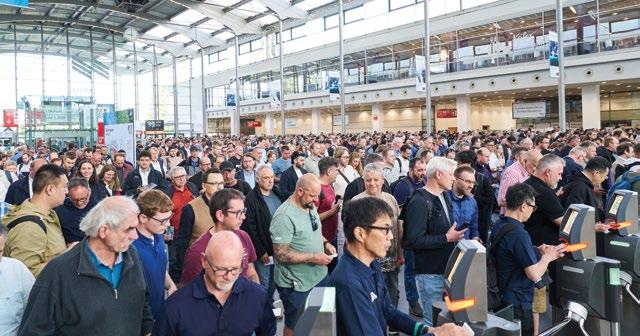
Since 1966, IFAT Munich, organised by Messe München, has been the global meeting place for the environmental technology industry. In its 60th anniversary year, IFAT Munich 2026, held from 4 to 7 May 2026, in Munich, Germany, featured the presentations of around 3,400 exhibitors and attracted some 142,000 visitors – these are new record figures for the event.
Companies from around 60 countries and regions showcased innovative solutions for water, recycling and circularity, across 300,000 m2 of space – offering answers to some of the most pressing global challenges.
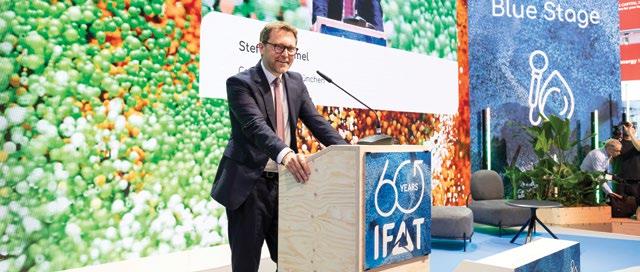
Stefan Rummel, CEO of Messe München said, “The record participation at IFAT Munich 2026 clearly demonstrates that the circular economy and water management are of systemic importance and represent the next global key industry. This makes IFAT Munich all the more important as a platform. It enables crucial knowledge transfer and provides the industry with the visibility it needs to engage in dialogue with policymakers and help set the right course for the future.”
Platform for exchange between industry and policymakers
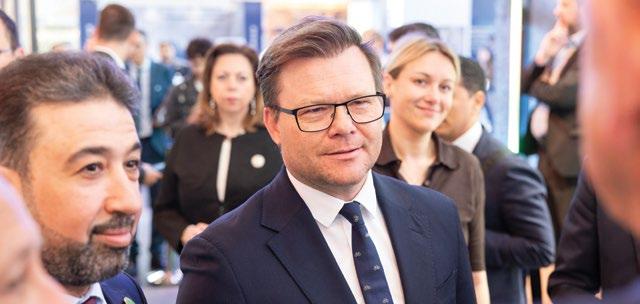
At the trade fair, Germany’s Environment Minister Carsten Schneider stressed that environmental technologies were essential for sovereignty, security and prosperity.
“IFAT is the central platform for this important topic. This is where companies, policymakers, municipalities and associations can network and coordinate their efforts,” he said.
Dr Johannes F Kirchhoff, Chairman of the Advisory Board of IFAT Munich, added that the transformation to a circular and resource-efficient economy was
a prerequisite for stability, raw material resilience, growth and competitiveness.
“IFAT Munich 2026 has impressively demonstrated how this change can be achieved in practice
– solution-oriented, across sectors and globally networked,” he said.
Study on the circular economy
A study conducted by Boston Consulting Group, on behalf of the
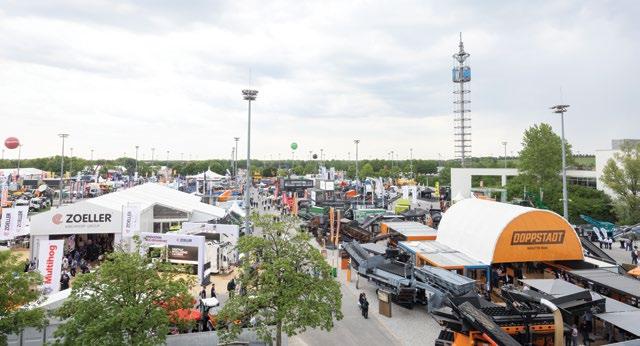
Around 142,000 visitors attended IFAT Munich 2026 which featured the products and solutions of around 3,400 exhibitors.
Messe München CEO Stefan Rummel welcoming the attendees.
Germany’s Environment Minister Carsten Schneider tours the exhibition.
Federation of German Industries (BDI), highlights the significant economic potential of the circular economy. The study, supported by IFAT Munich, was presented at the world’s leading trade fair.
According to the findings, circular gross value added in Germany could more than double from the current EUR 60 billion to as much as EUR 125 billion by 2045 – and this, within existing industrial and value creation structures. Additional cumulative value creation could amount to as much as EUR 880 billion by 2045. Recycling and reuse could replace between 20% and 40% of strategic raw material imports by 2045.
Closed material cycles
IFAT Munich 2026 was decisively shaped by the geopolitical and economic significance of the circular economy. The focus was on the efficient use of resources, closed material cycles and reduced dependence on primary raw materials.
“IFAT shows that we in Germany are capable of not only defending our position as a global leader in the circular economy, but even expanding it. After all, exhibitor numbers are now higher than they were before the coronavirus pandemic, so we work in a real industry of the future. That should encourage us all to look to the future with confidence and optimism,” said Remondis Board member Thomas Conzendorf.
Resilient water infrastructures
The resilience of pipelines and water systems is also one of the major challenges of our time. What is needed, on the one hand, is effective protection against targeted attacks on the infrastructure, such as physical sabotage or cyber attacks, but also resilient solutions in view of heavy rain, flooding, extreme heat and water shortages.
“IFAT Munich 2026 once again demonstrated impressively how valuable it is as the world’s leading trade fair for the exchange and
further development of key futureoriented topics,” said Rainer Köhler, Chief Technology Officer at Huber SE.
“The water and wastewater sector, as well as the waste management and recycling industry, play a key role in sustainably strengthening the circular economy and climate resilience. Water, energy, the environment and climate are among the most pressing challenges of our time – and this is precisely where IFAT provides important momentum,” he added.
Six decades of innovation, exchange and growth
Despite the current energy crisis and geopolitical conflicts, the international share of exhibitors and visitors remains consistently high, at over 50%. The top three exhibiting countries in 2026 after Germany were Italy, China, and the Netherlands.
“In its 60th anniversary year, IFAT Munich not only impressively demonstrates how strongly it is internationally established, but also records peak figures and efficiency gains for both visitors and exhibitors despite a shortened duration,” said Philipp Eisenmann, Exhibition Director, IFAT Munich.
“Contrary to the trend in many other industries, environmental technologies represent a significant growth market – and for six decades, IFAT Munich has been the central platform for it,” he added.
The next IFAT Munich will be held at the exhibition center in Munich from 29 May to 1 June 2028.
IFAT Munich
IFAT Munich is the world’s leading platform for environmental technologies. Every two years, it presents solutions for water, recycling and circularity.
IFAT worldwide
In addition to IFAT Munich, IFAT is currently the world’s largest network for environmental technologies with 11 trade fairs.
The global IFAT network includes IE expo China in Shanghai, IE expo Chengdu, IE expo Guangzhou and IE expo Shenzhen as well as IFAT Africa in Johannesburg, IFAT Eurasia in Istanbul, IFAT India in Mumbai, IFAT Delhi in New Delhi, IFAT Brasil in São Paulo, SIWW Water Expo (in cooperation with IFAT and organised by Messe München) in Singapore and, from 2026, IFAT Saudi Arabia in Riyadh.
Together, the events of the IFAT network are driving the transformation towards sustainable technologies worldwide.
Messe München
As a leading trade fair organiser, Messe München has a portfolio of around 90 international trade fairs, including bauma, BAU and IFAT.
All images by Messe München GmbH
More than 110 machines and vehicles were in operation in the outdoor area of the exhibition.
Active Beautiful & Clean
(ABC) Waters design of a ‘naturalised’ river using a bio-engineered slope, reinforced with geogrid
by Er. David Ng, Prof Er. Victor Ong and Mr LG Lee, One Smart Engineering Pte Ltd
Urban drainage for storm water management in Singapore.
Many cities like Singapore are being exposed to the increasing threat of floods, due to rising sea levels induced by climate change and the increased frequency of extreme rain events, as well as increased urbanisation resulting in more impervious areas and water runoffs. This is especially true of Singapore, a tropical island that has undergone rapid urbanisation over the past few decades despite its land constraints. The city state has an area of about 719 km2.
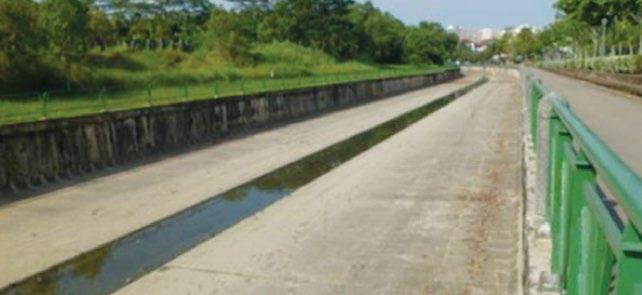
The conventional approach of building wider and deeper concrete lined drains, as shown in Figure 1, to quickly collect and channel rainwater runoff away from the urban catchments, is not sustainable as it is unable to cope with the large, often unexpected downpours of rain resulting from climate change, against a background of limited land area and increasing urbanisation.
One of the drainage upgrading projects of PUB, Singapore’s National Water Agency, at Sungei Tampines, included the creation of a naturalised river, using soil bio-engineering and geogrids to construct a vegetated river bank.
The SGD 30 million Active, Beautiful, Clean (ABC) Waters project at Sungei Tampines, completed in July 2022, transformed a 1.4 km concrete canal between Tampines Avenue 7 and the Tampines Expressway (TPE) into a naturalised, biodiverse river.


It features lush, native landscaping, a cantilevered bridge and lookout decks that connect residents to the adjacent Tampines Eco Green park. A 1.4 km upstream section of Sungei Tampines from Tampines Avenue 7 to TPE has been upgraded to serve new HDB estates in Tampines North.
Under the ABC Waters Programme, new features have been introduced along the waterway to enhance the overall liveability of the surrounding area. Under the makeover, the concrete canal was transformed into a naturalised river with new recreation and community spaces for residents and enhanced connectivity to Tampines Eco Green.
The existing 17 m to 20 m wide and 1.4 km long waterway was widened by up to 4.5 m and deepened by 0.5 m, to increase its capacity by 30%, in order to convey more storm water effectively. This
greatly enhances flood protection in the surrounding area of Sungei Tampines waterway, in the event of an intense rainstorm.
Sungei Tampines is the first PUB project to include an extensive stretch of naturalisation (about 1 km) along one bank of the canal (at Tampines Eco Green), using soil bio-engineering techniques similar to the project at the Kallang River –Bishan-Ang Mo Kio Park, and at the canal base.
The other bank is integrated seamlessly with a concrete cantilevered park connector, adjacent to the nearby housing estates, along with lookout decks to bring the public closer to the waterway.
Together with ABC Waters enhancements, such as rain gardens and greening of the canal’s base, these features have created a vibrant and liveable space for all to enjoy.
Figure 1: Conventional concrete-lined drain for storm water management.
Prof Er. Victor Ong Mr LG Lee
Er. David Ng
Soil bio-engineering is the use of living plant materials to provide some engineering functions such as erosion control and it is an effective tool for treatment of a variety of unstable slopes or sites.
Geogrids, made from high density polyethylene (HDPE), are used for reinforcement and stabilisation of ground structures. It is commonly used to construct steep slopes, retaining walls, bridge abutments and, further, to repair failed slopes and construct geocell structures.
Geogrids are manufactured using select grades of HDPE resins that resist elongation (creep) when subjected to high loads for long periods of time. The geogrids carry large tensile loads applied in one direction (along the roll), and their open aperture structure interlocks with natural fill materials.
Figure 2 show a typical HDPE geogrid. Soils pull apart under tension but geogrids are strong in tension. As a result, the stability of soil bio-engineered slopes is enhanced by the presence of geogrids.
Figure 3 shows the typical crosssection of a geogrid-reinforced, soil bio-engineered slope.
Under this system, storm water runoff is expected to be managed in a more sustainable manner via the utilisation of natural systems consisting of plants and soil, that are able to detain and treat rainwater runoff before discharging the cleansed runoff into the downstream drainage system.
The geogrid-reinforced, soil bioengineered slope is an innovative and sustainable design option that has been adopted to line the canal. The geogrid can enhance the stability of the slope and, together with the geotextile facing and the plants, it can prevent soil erosion of the river bank.
The bio-engineered slope is designed and constructed utilising Tensar’s Uniaxial (UX) Geogrids. This is a good alternative to the construction of a reinforced concrete retaining wall for the canal and it also provides a good opportunity for greening the river
bank, without having to worry about soil erosion.
Figure 4 shows the laying of the unrolled geogrid before commencement of the work to build the geogrid-reinforced, soil bioengineered slope. The process of installing the geogrid is a relatively easy process, as it comes in rolls that the workers can handle easily, and the laying process does not require heavy machinery or cranes.
After the geogrid has been laid, the soil backfill is placed on top and compacted, to achieve the relative density requirement. The process is repeated until the height of the slope is achieved. Besides the main reinforcement geogrid, there is also a facing geogrid and geotextile used in this project.
There are many possibilities for the facing of geogrid-reinforced slopes or walls, such as keystone
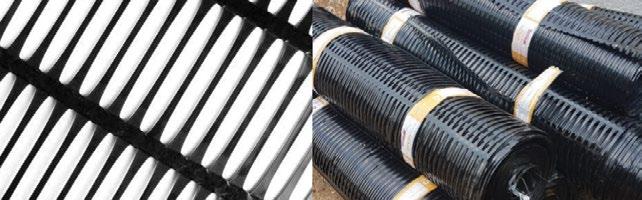
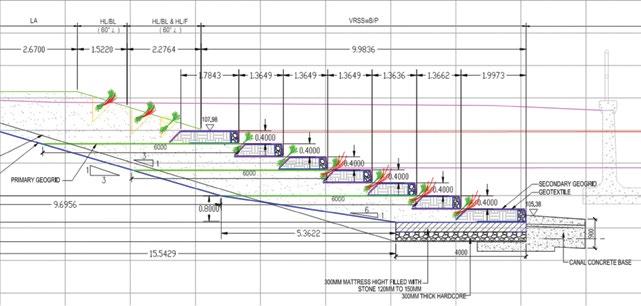
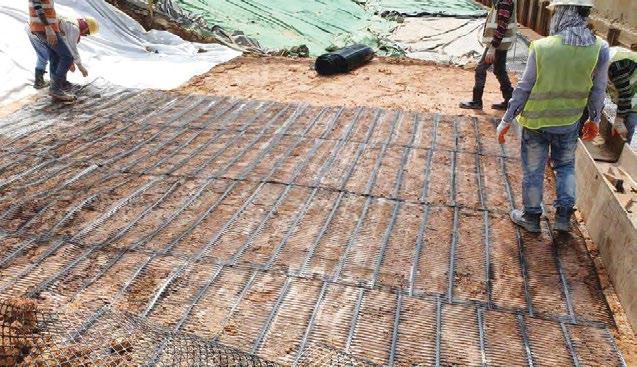
Figure 2: Typical design of an HDPE geogrid.
Figure 3: Typical cross-section of a geogrid-reinforced, soil bio-engineered slope.
Figure 4: Laying of the unrolled geogrid before commencement of the work to build the geogridreinforced, soil bio-engineered slope.
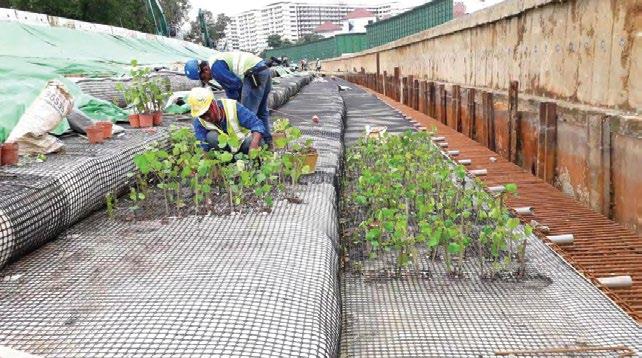
facing and geobags facing. In this project at Tampines Avenue 9, the facing design is based on a type of geogrid in combination with a geotextile wrapped around the facing and with soil back-fill inside. This is to prevent soil erosion at the facing and yet allow plants to grow from the facing.
Figure 5 shows a geogrid-geotextile combination facing that has been completed in the project, with plants starting to grow on it.
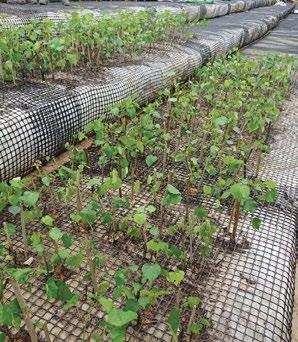
Figure 6 offers a close-up look at the plants growing out of the geogrid reinforced bio-engineered slope.
Once the plants have grown well and have covered the whole slope, it will appear totally green and the geogrid-geotextile facing will be invisible.
Singapore’s implementation of the Active Beautiful Clean (ABC) Waters concept exemplifies an innovative and sustainable approach to water management in a high-density urban environment. By integrating green infrastructure solutions, such as the bio-engineered slope, as river bank with natural vegetation, Singapore has effectively addressed the challenges posed by rapid urbanisation and climate change. These systems not only manage storm water runoff and reduce flood risks but also enhance water quality and contribute to the aesthetic and ecological value of urban spaces.
bio-engineered, sloping river bank during construction and
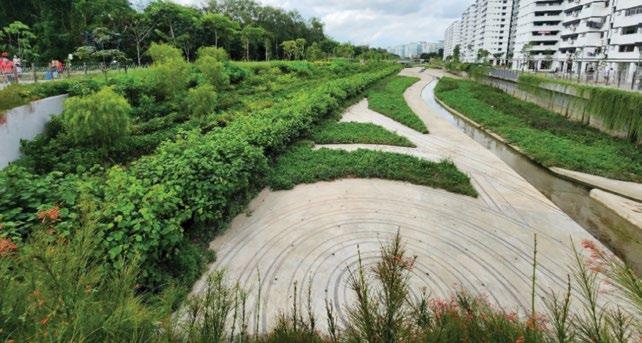
8 shows the bio-engineered, sloping river bank after completion, with fully grown vegetation.
The common plants that cover the canal base and river bank include Digitaria Longiflora, Hydrocotyle sibthorpioides, Kyllinga polyphylla, Ruellia spp and Soirpus muoronalus.
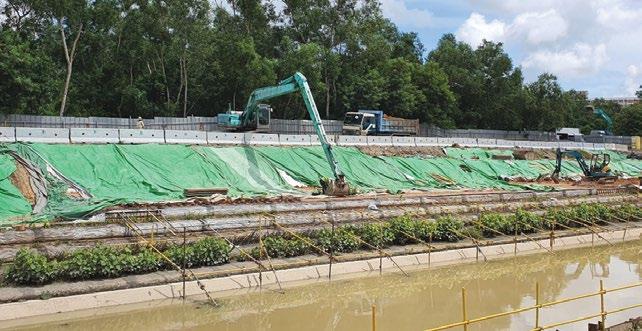
Figure 7 shows the
Figure
Figure 5: Geogrid-geotextile combination facing that has been completed for the project, with plants starting to grow on it.
Figure 6 offers a close-up look at the plants growing out of the geogrid reinforced bioengineered slope.
Figure 7: View of the bio-engineered, sloping river bank during construction.
Figure 8: Bio-engineered, sloping river bank after completion, with vegetation fully grown.
Figure 9 shows the photos of these common species of vegetation used for the bio-engineered slope and base of the waterway.
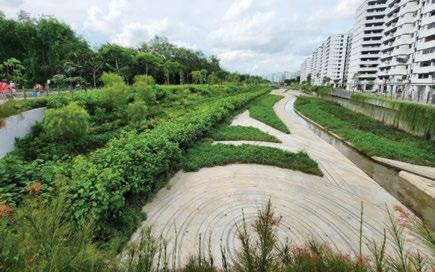
Figure 10 presents an aerial view of the completed ABC water project at Sungei Tampines with the innovative implementation of the bio-engineered slope reinforced with geogrid, with vegetation as a natural river bank.
This has clearly demonstrated the success of the ABC Waters programme and the importance of a holistic approach to urban planning, that considers environmental, social and economic factors. Singapore’s proactive measures, including continuous improvement of storm water management systems and the incorporation of natural elements into urban design, serve as a model for other cities facing similar challenges.
As climate change continues to impact global weather patterns, the principles and practices established by the ABC Waters programme will remain crucial in creating resilient and sustainable urban environments.
Looking ahead, further advancements in green infrastructure and water management strategies will be necessary to meet the evolving demands of urban development and climate adaptation.
Singapore’s commitment to these principles underscores its leadership in sustainable urban planning, providing valuable insights and lessons for cities worldwide.
Conclusion
The advantage of using geogrids in construction is in the fact that they are good in tension and have high ability to distribute load across a large area. The changing climate and damaging effects of CO2 on the environment, including climate change, have led to an awareness, throughout the construction industry, of the need to deliver more sustainable solutions.
The use of a geogrid as reinforcement in a naturalised slope, is a greener and more sustainable
method for slope construction and is therefore a good alternative to the construction of a reinforced concrete wall as canal lining.
Acknowledgement
This study, by One Smart Engineering Pte Ltd (Consultant for the bio-engineered slope), would not have been possible without the support from PUB, Singapore’s


National Water Agency (Owner); AECOM Singapore (Principal Consultant); Eng Lam Contractor Co Pte Ltd (Main Contractor), Nature Landscape Pte Ltd (Landscape Designer) and all parties involved in the construction work.




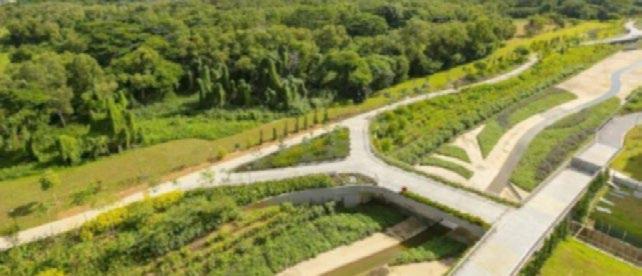
Figure 9: Common species of vegetation – Digitaria Longiflora, Hydrocotyle sibtharpiodes, Kyfinga polyphylla, Ruella spp and Soirpus muoronalus.
Table 1: Overall distribution and percentage coverage of the various plant species used as vegetation for the
and bio-engineered slope of the water body.
Figure 10: Aerial view of the completed ABC water project at Sungei Tampines, highlighting the innovative implementation of the geogrid-reinforced, soil bio-engineered slope with vegetation, as a natural river bank.
All images by One Smart Engineering Pte Ltd
How EC fans can unlock greater energy efficiency in projects without compromising on Indoor Air Quality
Technology solutions to support climate change mitigation actions and healthy buildings.
An Energy Reset initiative is a key pillar of the Singapore Green Plan 2030, which was developed to advance sustainable development and achieve net zero emissions by 2050. Efforts focus on improving energy efficiency through legislation, incentives and public education, with the Building and Construction Authority (BCA) enforcing sustainability standards for both new and retrofitted buildings.
Similarly, the importance of Indoor Air Quality (IAQ) has become especially clear, notably since Singapore’s Ministry for Sustainability and the Environment officially launched the ‘Industry Guidelines for Indoor Air Quality’ to raise public awareness of its importance.
It is critical to note that energy efficiency does not have to come at the expense of good IAQ. It can and should coexist. For instance, EC fans, driven by energy-saving EC motors with built-in electronic control, operate within an optimal range, offering economical energy use and straightforward demandcontrolled ventilation.
These solutions provide numerous advantages. Beyond reducing energy consumption and lowering energy costs, they also contribute to lower CO2 emissions, thus supporting efforts to mitigate global warming. Furthermore, they are easily controlled via a 0-10 V signal, allowing the ventilation rate to be adjusted according to actual needs, all the while maintaining a low sound level throughout the entire fan performance range.
The benefits of energy-efficient products are evident for both new constructions and retrofits. This
is demonstrated by a case study in which Systemair upgraded the ventilation system at Beckstein winegrowers’ cooperative, founded 1894 in Germany, by replacing an old axial fan with modern MUB fans featuring EC technology.
This upgrade saved valuable space, reduced noise levels and, most importantly, achieved significant energy savings. The initially projected energy saving of 30% was quickly achieved, and depending on the previous system, up to 50% energy savings are possible with such fans.
Opting for solutions from a single supplier can further enhance efficiency. For instance, Systemair’s range of EC fans includes EC Basic, a range of controllers specifically developed to meet simple control requirements when using EC fans. These controllers are simple to connect, install and set up, offering economical and affordable demand control when used in a system with Systemair EC fans.
The integrated sensor (or an external sensor for the universal controller) measures current conditions, allowing the fans to slow down when demand
decreases automatically. This is because the software controls the motor’s operation, enabling customers to optimise and integrate the motor, fan and controller, with the application. Data communications, constant volume control and variable speed can also be incorporated.
Undoubtedly, maintaining good IAQ and energy-efficient solutions is crucial. These dual objectives enhance occupant health and comfort while reducing energy consumption and CO2 emissions. Technologies like EC fans show that superior air quality and significant energy savings coexist, making sustainable and healthy building environments achievable.
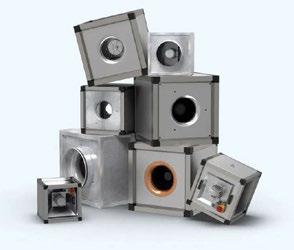
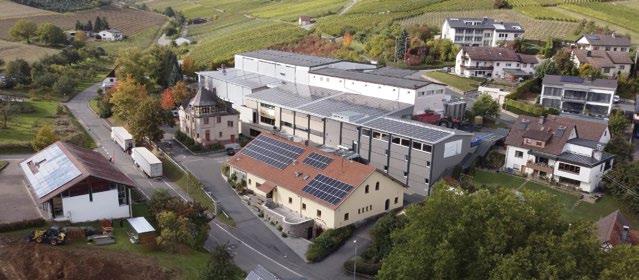

Systemair upgraded the ventilation system at Beckstein winegrowers’ cooperative, founded 1894 in Germany, by replacing an old axial fan with modern MUB fans featuring EC technology.
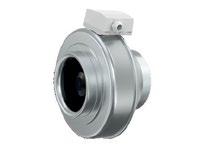
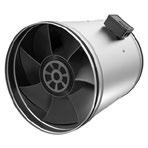
Modern MUB fans featuring EC technology.
Economical and reliable
Our EC fans are your first choice when it comes to the economical use of energy and simple demand controlled ventilation.
These fans are driven by energy-saving EC motors with built in electronic control to keep them running in the optimal operating range.

✓ Less energy use, resulting in lower energy costs and lower CO2 emissions
✓ Easy to control and adjust ventilation rate to actual need
✓ Low sound level throughout the entire fan performance
✓ All control and protection electronics are integrated in the motor
Affordable and easy-to-use controllers
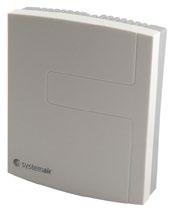
EC-Basic controllers are specially designed to meet simple control requirements when using EC fans.
✓ Simple to connect, install and set up
✓ Economical and affordable demand control
✓ Designed with sensors to measure current conditions, enabling the fans to automatically slow down when there is less demand
to Fit Any Project:
Addressing Singapore’s advanced engineering challenges
by Vijay Kalyarasu, Marketing and PR Officer, igus
Overcoming unique constraints to create high value.
Engineering plays a central role in Singapore’s economy. The manufacturing and engineering ecosystem accounts for around 20% to 22% of national GDP, placing Singapore on par with advanced industrial economies such as Germany and Japan.
The country is a global hub for semiconductors, electronics, biomedical manufacturing, precision engineering, logistics, and infrastructure projects, supported by long-term national strategies such as Research, Innovation and Enterprise (RIE) 2030 and Industry 4.0 adoption.
However, Singapore engineers operate under unique constraints:
• Land and space scarcity, driving compact and modular machine design.
• High labour and maintenance costs, amplifying the impact of downtime.
• Cleanroom and reliability demand, particularly in semiconductors and pharma.
• Sustainability and regulatory pressure, aligned with net-zero ambitions.
Against this backdrop, igus, a global specialist in motion plastics, has gained traction in Singapore by aligning its engineering standards, material science and digital innovation, with these national challenges.
Predictability by design
At the heart of igus' engineering philosophy, as a core standard, is dry-running, lubrication-free motion. The company’s drytech® tribopolymer technology eliminates the need for grease or oil. This addresses a leading cause of industrial failures worldwide – improper lubrication which
contributes to over 50% of machine breakdowns.
For Singapore engineers, this directly translates into:
• Reduced maintenance manpower
• Cleaner operation in controlled environments
• Lower lifecycle cost in high value facilities
These advantages strongly resonate in Singapore’s semiconductor and pharmaceutical sectors, where contamination control and uptime are critical.
Rigorous, data-driven validation igus establishes its engineering standards through extensive in-house testing, conducting over 8,000 wear and tribology tests annually. These tests cover:
• Load ranges from 0.25 MPa to 150 MPa
• Multiple temperature bands
• Various shaft materials
• Linear, rotating and oscillating movements
The results feed into predictive service life models, allowing engineers to calculate component lifespan before installation – an increasingly important capability as Singapore advances towards digital and simulation-driven engineering workflows.
Aligning with engineering trends
Singapore has positioned itself as a leader in advanced manufacturing and smart factories, with strong public-private collaboration led by EDB, A*STAR and SIMTech. Engineers are expected to design systems that are:
• Digitally validated
• Highly automated
• Predictable and repeatable
igus supports this approach through standardised data sets, online calculators and configurable design tools, reducing engineering time and iteration – especially critical for SMEs transitioning into Industry 4.0 environments.
Cleanroom and semiconductor engineering
Singapore produces around 11% of global semiconductor output and hosts major fabs and equipment manufacturers. In these environments:
• Oil or grease contamination is unacceptable.
• Humidity and corrosion risks are high.
• Maintenance access is limited. igus polymer bearings, linear guides and energy chains are widely used in cleanroom-rated applications, due to their dry operation, corrosion resistance and low particle emission characteristics.
Engineering under labour constraints
With tightening manpower availability, Singapore increasingly relies on automation and robotics to maintain productivity.
igus contributes to this shift by offering:
• Maintenance-free linear motion systems
• Lightweight polymer components that reduce drive energy
• Modular motion solutions for rapid deployment
These features reduce dependence on manual maintenance and support scalable automation strategies.
Sustainability and compliance
Singapore’s sustainability roadmap
Mr Vijay Kalyarasu
places strong emphasis on:
• Carbon reduction
• Cleaner production
• Environmental compliance across supply chains
In response, igus has accelerated development of PTFE-free and PFASfree materials, without compromising wear performance. These materials help Singapore-based manufacturers meet increasingly strict international environmental regulations, particularly for export-oriented industries.
Additionally, lubrication-free systems reduce oil disposal, leak risk and environmental contamination – supporting Singapore’s long-term green manufacturing objectives.
Latest igus innovations
At Hannover Messe 2024, igus unveiled 247 new products, underpinned by the igusGO AI platform. The tool aggregates
decades of test data and millions of application cases to guide engineers towards optimal lubrication-free solutions.
This aligns closely with Singapore’s push towards AI-enabled engineering and decision-support systems under Smart Nation initiatives.
Lowcost automation for SMEs
To support wider automation adoption, igus has expanded its low-cost automation (LCA) portfolio – covering linear robots, delta robots and mobile platforms. These systems lower capital barriers for local manufacturers seeking productivity gains without large upfront investments.
Smart plastics and predictive maintenance igus also integrates sensors into bearings and energy chains under its smart plastics initiative, enabling
condition monitoring and predictive maintenance. This capability aligns with Singapore’s strong emphasis on high equipment availability and data-driven asset management in critical infrastructure and manufacturing environments.
The next phase
Singapore’s engineering future will be shaped by automation, sustainability, digitalisation and reliability, under constraints. igus engineering standards –centred on lubrication-free design, validated data and intelligent materials – fit naturally within this landscape.
By addressing Singapore’s specific challenges of manpower, cleanliness, cost and sustainability, igus positions itself not just as a component supplier, but as an engineering partner aligned with the nation’s long-term industrial vision.
Tech up, Cost down Engineering for better movement
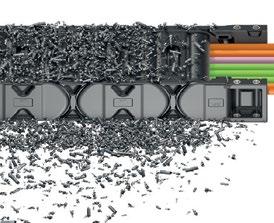
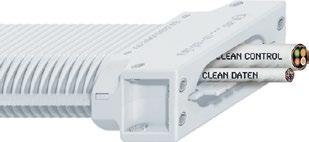
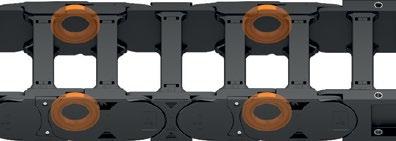
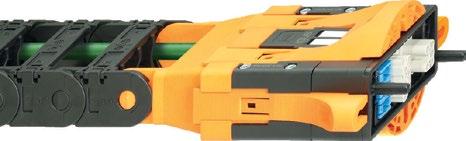
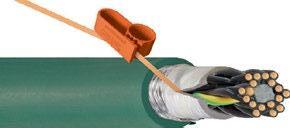

igus® delivers smarter, cleaner, and reliable movement for modern machines. Our energy chains, the “umbilical cord of modern machines”, ensure safe, durable cable management for automation. iglidur® plain bearings provide lubrication-free, long-life operation across 10,000+ variants. chainflex® cables withstand continuous motion for dependable power and data transmission. drylin® linear guides deliver smooth, quiet, lubrication-free precision movement. *www.igus.sg/guarantee
igus® Singapore Pte Ltd 84 Genting Lane #06-03 Axxel Innovation Centre, Singapore 349584 Tel. +65 6487 1411 sg-info@igus.net motion plastics®
Competence, succession and the shrinking pool of MRT renewal experience
by Daniel Woods, Project Director, Metro Transit Solutions (Singapore)
The challenges and approaches to address them.
Across mature railway networks, renewal programmes increasingly depend on the judgement of experienced engineers working in complex, constrained environments. While designs, standards and technologies continue to evolve, it is professional competence – the ability to assess risk, adapt safely and lead under uncertainty – that ultimately determines renewal outcomes.
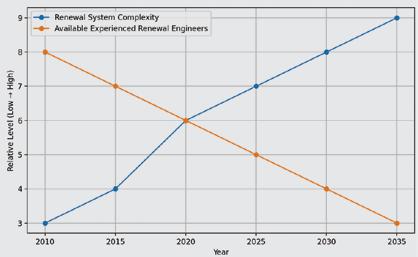
In practice, competence is often equated with qualifications, certifications or years of service. For MRT renewal work, this is rarely sufficient. Renewal engineering demands experience developed through exposure, mentoring and decision-making in live railway conditions. As senior engineers rotate away from delivery roles or retire, there is a growing risk that this capability is being diluted faster than it is being replaced.
Renewal engineering
Renewal engineering differs fundamentally from new-build MRT work, in both context and judgement required. New-build activities are typically delivered against defined designs, within controlled environments and with limited interaction with live systems. Installation tolerances are often tight, but conditions are generally predictable and interfaces are planned from the outset. Renewal work operates in a different reality. New assets must frequently integrate with legacy systems that may have been in service for decades. Assumptions made at the design
stage may no longer hold true, and asset condition is not always fully visible. Engineers must balance new-build standards with maintenance realities, operational constraints and uncertainty around degradation. This requires a broader, more holistic mindset than that demanded by installation work alone.
Knowledge
that cannot be documented
One of the most significant risks facing MRT renewals is the loss of tacit knowledge. While drawings, standards and procedures can be archived, the practical judgement developed through years of experience is far harder to capture. Much of this knowledge is transferred informally – through conversations on site, observation of how senior engineers conduct themselves, and exposure to rare or abnormal situations that do not occur every day.
These moments shape how engineers assess risk, communicate under pressure and decide when to escalate or adapt. When experienced practitioners leave delivery environments without structured succession in place, this knowledge can disappear quietly.
The limits of formal training
Formal training remains essential. It provides foundational knowledge, shared language and technical consistency. However, classroombased assessment has clear limitations in preparing engineers for live railway environments, particularly night works and

constrained possessions.
Passing an examination demonstrates understanding, but it does not necessarily equate to readiness to lead a team or manage uncertainty in real time. Leadership and decisionmaking under pressure develop through exposure, mentoring and responsibility over extended periods. Some individuals progress quickly, while others require longer pathways. Recognising this variation is critical to building resilient renewal teams.
When plans unravel
Renewal works rarely proceed exactly as planned. Access may be delayed, interfaces may not align and time can be lost quickly. In these moments, differences in competence and engagement become visible.
Some engineers actively seek to understand the problem, ask questions and contribute to solutions. Others may disengage, wait for instruction or focus narrowly on their assigned task. Over time, it is this level of curiosity, ownership and situational awareness that distinguishes engineers who are likely to develop into effective renewal leaders. Organisations must be careful that progression and responsibility reflect these capabilities, rather than surface indicators such as tenure alone.
Procedures versus judgement
Procedures and method statements are essential for safety and consistency. Most
Mr Daniel Woods
qualified engineers are trained to follow them well. However, renewal environments often present scenarios that fall outside anticipated conditions.
The engineers who make a difference are those who understand what must not change, and what can be adapted safely. They apply procedures intelligently, rather than rigidly, and recognise when judgement is required. This ability cannot be taught solely through formal instruction. It is developed through guided experience and exposure to consequence.
Assessing competence beyond the CV
Assessing competence for renewal roles therefore requires more than reviewing CVs, certifications or years of service. Organisations need mechanisms that explore how individuals think, communicate and respond to complexity.
Competence-based interviews, scenario discussions and short technical presentations can provide valuable insight into confidence, clarity of thought and depth of understanding. These approaches often reveal far more about readiness for responsibility than informal recommendations or tenure-based progression.
Mentorship as a capability multiplier
Mentorship plays a vital role in transferring judgement, not just technical knowledge. Observing how experienced engineers manage uncertainty, interact with stakeholders and lead under pressure builds confidence and professional maturity in those who are willing to learn.
This form of development cannot be replicated through documentation alone. It requires time, access and deliberate pairing of experience with opportunity.
Leadership appointments and organisational risk
Risks emerge when leadership
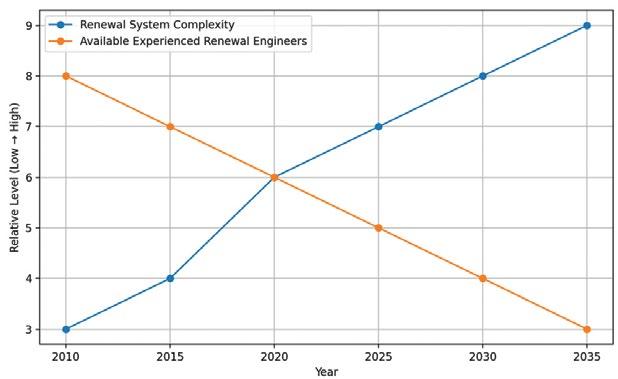
Indicative trend illustrating the widening capability gap in long-term MRT renewals.
roles are filled primarily based on availability or length of service rather than suitability. Teams led by individuals without the necessary competence or credibility often experience reduced morale, limited learning and hesitation during critical moments.
Over time, this weakens the organisation’s ability to respond effectively to complex renewal challenges and undermines the development of future leaders. Leadership appointments during renewal programmes therefore deserve the same level of scrutiny as technical design decisions.
Creating space for learning
Many organisations are now investing in internal academies and structured development programmes to support knowledge transfer in a controlled environment. These initiatives provide safe spaces for discussion, mentoring and reflection.
Rotational placements across disciplines such as rolling stock, track, signalling and civil engineering are particularly effective. They help engineers understand the railway as a system rather than a collection of assets, and build the breadth of knowledge required for renewal leadership.
Protecting renewal capability
Renewal programmes are often planned years in advance, but capability development must be continuous. Organisations should identify critical renewal skills, ensure mentoring relationships are in place and provide opportunities for exposure even when specific activities are not immediately underway.
Protecting renewal capability requires deliberate planning. Continuous learning, knowledge sharing and succession should be treated as core elements of asset management, not secondary considerations.
Closing reflections
The success of MRT renewals will depend not only on materials, technologies or processes, but on the competence and judgement of those entrusted to lead them. As experienced engineers step back from delivery roles, there is a professional responsibility to ensure that their knowledge does not step back with them.
By valuing experience, investing in mentorship and assessing competence with care, Singapore can sustain the capability required to renew its MRT network safely and confidently for decades to come.
Image: Daniel Woods.
Record-low workplace fatality and major injury rates in 2025
Singapore’s workplaces among the safest globally.
Singapore’s Workplace Safety and Health (WSH) performance improved in 2025, with the workplace fatal injury rate falling to a record low of 0.96 per 100,000 workers. The workplace major injury rate excluding platform workers (PWs) also declined to an all-time low of 15.7 per 100,000 workers.
With the inclusion of PWs, the rate was 17.7 per 100,000 workers. This is the first year that non-fatal injury data on PWs is available and included in this report, since the Platform Workers Act (PW Act) came into effect on 1 January 2025.
These achievements place Singapore’s workplaces among the safest globally, alongside leading countries such as the Netherlands, the United Kingdom, Germany and Sweden, which have consistently achieved fatality rates below 1.0 per 100,000 workers. This progress was made possible through the sustained, collective efforts of unions, employers and industry partners, in building a strong culture of WSH excellence.
Sectoral performance
While the Construction, Manufacturing, and Transportation & Storage sectors accounted for more than half of workplace fatal and major injuries in 2025, continued improvements were observed in these sectors.
The Construction sector’s workplace fatal and major injury rate per 100,000 workers fell from 31.0 in 2024 to 26.3 in 2025, continuing the improvement in safety performance in the sector in recent years. This reflects stronger WSH ownership in the sector and heightened vigilance, following two safety time-outs called by the Multi-Agency Workplace Safety and
Health Taskforce (MAST) [1] and its agencies, alongside stepped-up enforcement by the Ministry of Manpower (MOM).
Small-scale construction works [2] continued to account for over 60% of fatal and major injuries in the sector. To address this, MAST will continue to explore upstream measures under the ongoing review of the bizSAFE framework to place greater emphasis on companies’ WSH performance.
The Manufacturing sector recorded an all-time low fatal and major injury rate of 28.8 per 100,000 workers in 2025. This improvement was driven by a reduction in major injuries, particularly in the Metalworking industry, where the fatal and major injury rate per 100,000 workers fell by 22%, from 46.4 in 2024 to 36.0 in 2025. The improvement follows targeted enforcement operations focusing on machinery safety and noise hazards, since 2024, as well as increased industry awareness of WSH requirements.
The Transportation & Storage sector recorded a workplace fatal and major injury rate of 23.8 per 100,000 workers in 2025, compared to 18.4 in 2024. Slips, Trips & Falls and vehicular incidents remained the leading causes of fatalities and injuries. MOM will continue working with industry partners to strengthen vehicular safety practices, including improving fleet safety management, promoting safer driving behaviours, and reinforcing compliance with safe vehicle operation requirements.
Platform worker safety
In 2025, there were 2 fatalities and 74 major injuries involving PWs, translating into a fatal and major injury rate of 84.6 per 100,000
PWs. Most injuries involved PWs performing delivery services.
The high injury rate among PWs reflects the risks involved in platform work and underscores Singapore’s decision to enact the PW Act.
Singapore is among the first few countries to provide statutory protections for PWs, which took effect on 1 January 2025. These include injury compensation under the Work Injury Compensation Act (WICA) and safety protections under the Workplace Safety and Health Act (WSHA).
With the collection of specific data on PWs’ injuries, MOM has recently set up a Platform Worker Safety Workgroup.
Strengthening a culture of WSH excellence
Singapore’s workplaces remain among the safest globally, but continued vigilance is needed as economic activities and workplace risks evolve. Sustaining this progress will require employers, contractors and workers to continue prioritising safety and embedding it in their daily work culture and habits.
MOM will continue working with tripartite partners to strengthen safety capabilities, including through the adoption of WSH technologies and better risk management practices.
References
[1] The Multi-Agency Workplace Safety and Health Taskforce (MAST) was formed in September 2023 to strengthen workplace safety and health outcomes in higher-risk sectors through coordinated enforcement, engagement and capability-building efforts across government agencies.
[2] Small-scale works include Addition & Alteration works and Renovations.

Singapore’s Workplace Safety and Health
Record-low workplace fatality and major injury rates in 2025
Singapore workplaces among the safest globally with record-low* fatal and major injury rates in 2025.
Fatal injury rate at record low 0.96 per 100,000 workers (2025), down from 1.2 in 2024
Major injury rate at all-time low 15.7 per 100,000 workers (2025), down from 15.9 in 2024, excluding platform workers.
Sectoral Fatal and Major Injury Performance (per 100,000 workers)
CONSTRUCTION
MANUFACTURING TRANSPORTATION & STORAGE

Singapore is also one of the first countries to publish workplace safety data for platform workers (PWs)
Majority of PWs’ injuries were sustained while they were operating vehicles or active mobility devices, with PWs on two-wheeled vehicles such as motorbikes and bicycles being more prone to injuries.
The high injury rate among PWs reflects the risks involved in platform work and underscores Singapore’s decision to enact the PW Act
MOM has established a Platform Worker Safety Workgroup involving comprising representatives from relevant government agencies, platform operators, NTUC and platform work associations
We will strengthen protections for PWs in these areas:
improving detection of dangerous driving or riding behaviours, recognising and rewarding safe behaviours when performing platform work,
raising awareness of safe practices and road safety concerns
*Comparisons exclude 2020, when COVID-19 disrupted work activities . Singapore’s Workplace Safety and Health performance in 2025.
Lessons from Jakarta’s Pinisi Crossing Bridge
by Rianna Lawrence, Architectural and Design, Global Strategy Lead, Trimble
Bridging heritage and high-performance
design.
In Southeast Asia’s fast-changing urban centres, infrastructure is no longer judged by its function alone. Today’s architecture, engineering and construction (AEC) teams are expected to deliver projects that serve the public, reflect local culture and identity, and stand out as landmarks in crowded cities. At the same time, project teams are under pressure to maintain schedules, coordinate across disciplines and minimise disruption in dense urban environments.
That tension between ambitious design and buildable execution has become one of the industry's biggest challenges. Rework continues to be a major source of lost time, rising costs and shrinking margins, on large projects. In many cases, the issue is not poor design but rather, breakdowns in coordination, communication and shared understanding, between teams, as the project moves from concept to construction.
To overcome this issue, many firms are turning to modeldriven workflows to centralise conversations and data, and ensure that what is designed can be built.
Jakarta’s Pinisi Crossing Bridge is an example of how digital tools are helping AEC professionals navigate complex urban projects while preserving architectural intent.
From transportation link to urban landmark
The Pinisi Crossing Bridge was conceived as more than just a pedestrian and cyclist crossing. From the beginning, Indonesian design firm Arkonin intended the project to function as a modern mobility landmark that would improve connectivity while reflecting Indonesia's maritime heritage.
Before the bridge opened, cyclists
travelling along the busy Jalan Sudirman to Simpang Senayan corridor had no safe or efficient way to turn around, near the roundabout. The lack of dedicated cycling infrastructure created long detours and added friction to an already congested urban corridor.
Jakarta’s Governor pushed for a solution that would give cyclists a dedicated, safe and accessible U-turn route while improving mobility through one of the city's busiest urban corridors.
The bridge’s design draws inspiration from the Pinisi ship, a traditional Indonesian sailing vessel from South Sulawesi, that reflects Jakarta’s historical ties to the Sunda Kelapa Port.
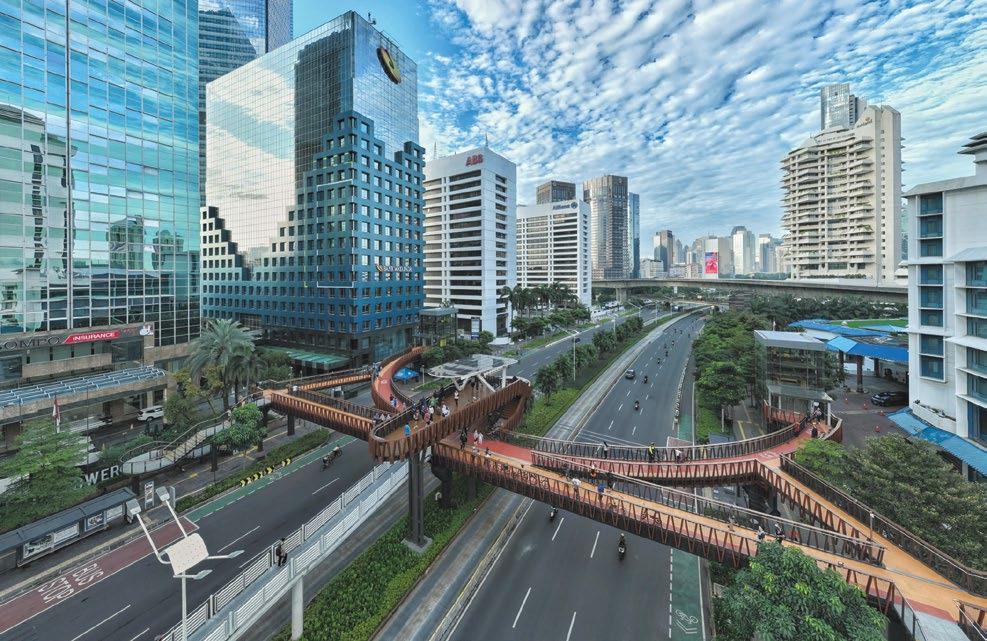
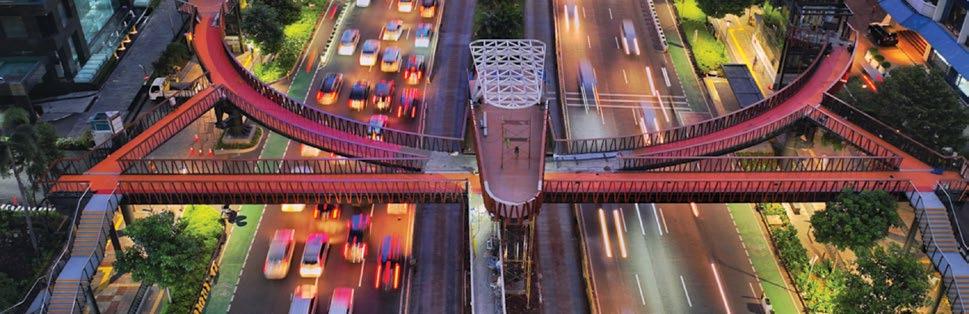
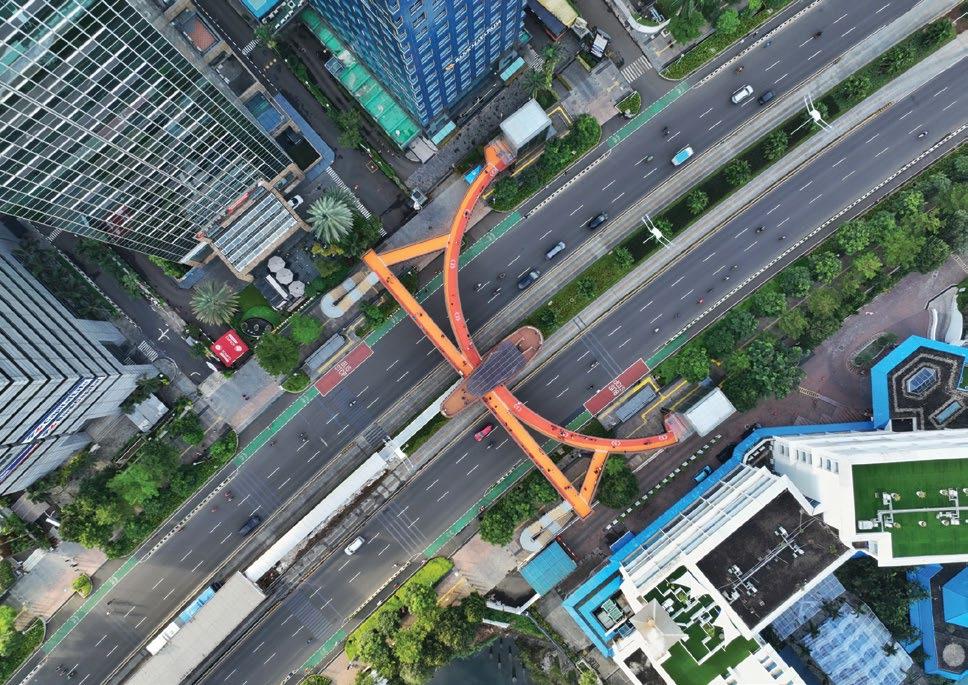
From above, the bridge takes on a ‘K’ shape designed around a dedicated bicycle lane. The open structure also allows pedestrians and cyclists to take in views of Jakarta’s surrounding high-rises as they move through the space.
Opened in 2022, the bridge has since become one of Jakarta’s most recognisable public spaces and a popular gathering point.
Designing within tight constraints
The project came with significant engineering and construction challenges. The structure sits directly above an active MRT tunnel, requiring the project team to carefully manage structural loads without compromising the underground transit system below. Construction activities were also restricted to a narrow five-hour window each night, from midnight until 5 am, to minimise disruption to traffic.
Those constraints forced the team to not only think carefully about the bridge’s appearance, but also how it could realistically be
assembled on site.
To meet those demands, Arkonin adopted a hybrid engineering strategy that combined prefabrication, lightweight structural systems and space-efficient design solutions. Prefabricated components accelerated installation and reduced the need for extensive scaffolding on site. The team also integrated hollow-beam steel structures with prestressed concrete to create a lightweight yet structurally sound design that balanced durability with efficiency.
Accessibility presented another challenge. Early concepts explored long ramps for cyclists, on both sides of the bridge. However, those ramps would have required approximately 250 m of additional space which was impractical in Jakarta’s dense urban environment.
Instead, the design team chose high-capacity elevators that could transport up to eight bicycles at a time. The solution reduced the bridge’s footprint and improved accessibility for cyclists navigating the corridor.
Using 3D visualisation to streamline coordination
For Arkonin, resolving those challenges required close coordination between architects, engineers and project teams.
The team used Trimble SketchUp as a collaborative design platform to support coordination across disciplines throughout the project lifecycle. Early conceptual models allowed architects and engineers to study the bridge’s geometry, visualise how the new structure would connect to the existing bridge and evaluate how different structural systems would affect the overall form.
The models also helped the team communicate structural changes more clearly across disciplines and stakeholders. As the bridge evolved from a concrete and steel composite concept into a lighter steel structure with concrete bicycle platforms, the design platform allowed architects and engineers to study material interactions and refine structural relationships in real time.
The ability to iterate quickly was especially important, given the project’s tight construction schedule and complicated site conditions.
Arkonin developed a structured workflow built around a shared base model that became the central reference point for engineers, contractors and consultants, throughout the project. Once the base model was established, teams divided the project into separate work scopes that could be developed simultaneously while maintaining
shared coordinates and positioning systems.
The firm also implemented a ‘copy and paste in place’ workflow that allowed different teams to work on separate portions of the model simultaneously without losing alignment when the sections were reassembled. This process
helped maintain consistency across disciplines while reducing coordination issues later in construction.
As the project progressed, the assembled models were regularly reviewed to identify clashes and resolve conflicts before construction activities began on site.
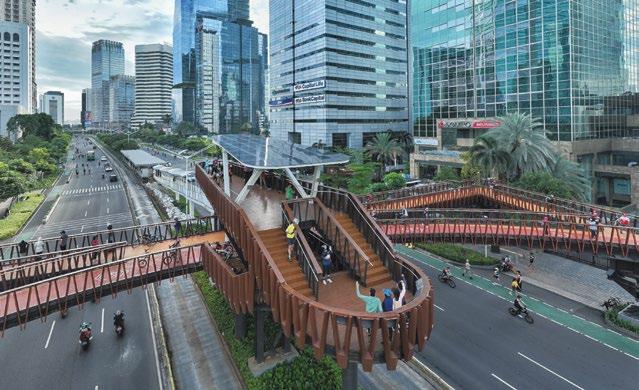
A close-up view of the bridge.
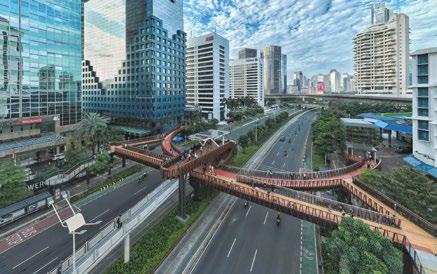
The Pinisi Crossing Bridge, with high-rise buildings in the background.
Infrastructure that connects more than places
Beyond its engineering accomplishments, the Pinisi Crossing Bridge also serves as a civic and cultural landmark.
The bridge includes a memorial gallery honouring 37 healthcare workers who lost their lives during the COVID-19 pandemic. That human element has helped transform the structure from a
simple transportation crossing into a public gathering space and symbol of resilience in the city.
For the broader AEC industry, the project demonstrates that infrastructure can serve a larger purpose than simply moving people from one point to another. When supported by collaborative digital workflows and modeldriven coordination, teams are better positioned to manage
complexity, reduce rework and deliver projects that are both technically ambitious and culturally meaningful.
The Pinisi Crossing Bridge reflects a broader change in urban construction. Infrastructure projects are no longer judged only on function or speed of delivery, but also on how well they fit into the surrounding city and community.
Aerial views of the ‘K-shaped bridge.
Ensuring a strong foundation for a high-speed rail line in Türkiye
A total of 28 Bauer units, including drilling rigs, pile drivers as well as mixing plants, are being deployed.
Türkiye is making major investments in the expansion of its railway network. In Central Anatolia, a new two-rail high-speed line, 142 km long and designed for train speeds of up to 250 km/h, is currently under construction between the cities of Yerköy and Kayseri.
Travel time between the two cities will drop from three and a half hours to less than one, and passengers from Ankara can even reach Kayseri in just around two hours instead of seven hours in the past.
Fifteen tunnels, 118 underpasses and 18 bridges will be constructed along this line, in addition to two stations. The groundbreaking took place in July 2022. After completion and commissioning, the line is expected to transport up to 11 million passengers each year and approximately 650,000 tons of freight – dramatically reducing travel times, improving regional accessibility and generating new momentum for economic development.
Bauer machines and mixing plants
A joint-venture, comprising the companies Doğuş, Çelikler and Özkar, was awarded the contract to execute the specialist foundation engineering works for the entire line.
A fleet of 28 machines from BAUER Maschinen GmbH is used for pile installation and ground improvement measures – BG 33, BG 36 and BG 45 drilling rigs, RG 22 S and RG 27 S pile drivers, and CMS 30 mixing plants from BAUER MAT Slurry Handling Systems.
Two methods
The drilling rigs are installing piles down to a depth of 30 m, using the
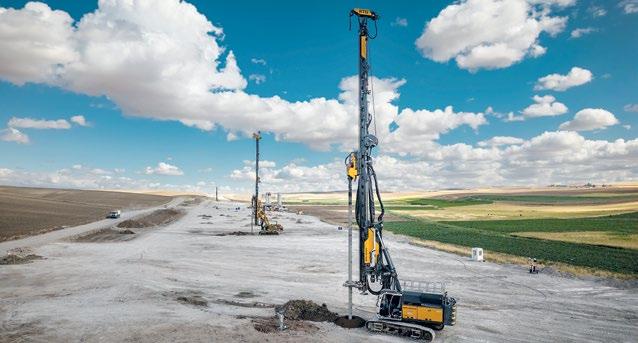
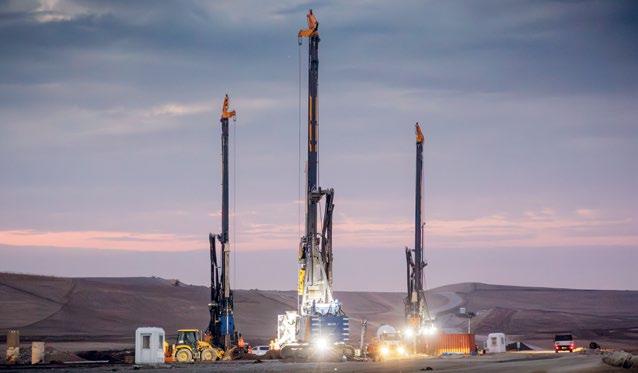
Kelly drilling method. These piles provide ground improvement for the rail line and serve as foundation elements for bridges and viaducts.
In parallel, the single column mixing (SCM) method is used to improve the soil. A mixing tool blends the in-situ ground with a binding agent injected during penetration. One notable aspect of this project is that the SCM columns are being installed up to a depth of 31.5 m.
Fast delivery and comprehensive support
A decisive factor was the swift availability of the equipment. Within just a few months after receiving the order, the machines were manufactured at Bauer’s Aresing plant and delivered, some even ahead of the contractual deadline.
On site, Bauer, together with service and sales partner Karun Makina, are providing support for the project.
In the resource-efficient single column mixing method, the existing in-situ ground is mixed with a binding agent. Single columns are produced after hardening.
A whole fleet of Bauer rotary drilling rigs, pile drivers and mixing plants is being used for the new high-speed rail line in Central Anatolia.
Dismantling a large tower crane under time and space constraints
A mobile crane from Liebherr was used for the job in Paris.
The new Liebherr LTM 1400-6.1 mobile crane owned by Montagrues demonstrated its performance capabilities during its first job in Paris. The task was to dismantle an 80 m high construction crane under time pressure and in limited space. The 400 t crane impressed in all respects – especially on account of the quick and efficient self-assembly of the Y-guying system.
“The new way of assembling the complete Y-guying system, which we call Superlift, really saves us an enormous amount of time. And speed is the decisive factor on our construction sites here in Paris,” explains Mr Daniel Pereira, Managing Director of Montagrues.
“The quick assembly of the Superlift represents a real innovative step,” he said.
Once the crane has been precisely positioned on the limited footprint, the set-up work begins, which is supervised by a Liebherr service technician. Self-assembly of the ballast frames and all counterweights is quick and easy.
The LTM 1400-6.1 then lifts the complete Y-guying system from the low-loader and places it on its undercarriage. The subsequent luffing of the boom then ensures that the hydraulic quick coupling connects automatically with the telescopic boom. Bolting is ultimately carried out hydraulically and is controlled by the crane operator. Only the electrical connection is established manually.
Solidlink makes it happen
This time-saving process is made possible by a technology that Liebherr has successfully adapted from the earthmoving sector. The fully automatic Solidlink quick coupling system has been used there for a long time to quickly
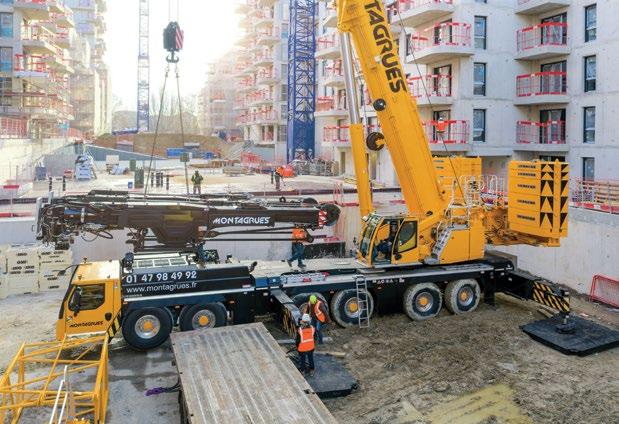
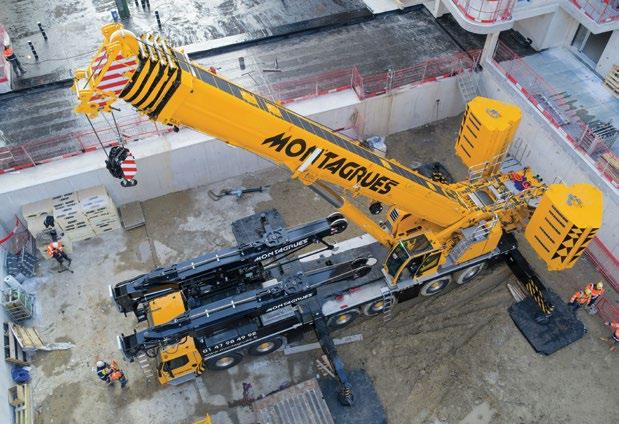
With a single lift, the LTM 1400-6.1 places the Y-guying system on its undercarriage and can then attach it fully automatically to the telescopic boom by luffing it down, using the Solidlink quick coupling.
change attachments.
Solidlink is now being used for the first time on the LTM 1400-6.1, for the fully automatic connection of the Y-guying system and telescopic boom.
Once the crane has been positioned, the crane operator and
set-up personnel need only around two hours, in total, to place the 90 t of ballast and install the Y-guying system ready for use.
“The Superlift was installed in less than an hour – and that was the very first time it was set up,” said Mr Pereira.
An LTM 1060-3.1 then takes care of the attachment of the lattice jib.
The subsequent deployment of the mobile crane runs just as smoothly as its assembly.
“We have to dismantle a large Liebherr top-slewing crane with a hook height of 75 m. About a year ago, we assembled this construction crane with our LTM 1450-8.1,” explained Mr Pereira.
“Because this crane is not currently available to us, the new LTM 1400-6.1 with Superlift and a 17.5 m long fixed jib is now being used here,” he added.
Mr Daniel Correia, who is responsible for dismantling the large tower crane, with his team, said, “We have to make do with a very small footprint for the crane here, but the LTM 1400-6.1 can still be used brilliantly.”
Mr Correia is the head of STME Grues, a company specialising in the assembly of large tower cranes with two sites south of Paris.
“With around 25 employees, we have a great deal of experience in this segment. Our largest mobile crane, an LTM 1300-6.2, is too small for the job. This is why we are cooperating with Montagrues here. At STME, we only have Liebherr cranes. We appreciate the quality of the machines as well as the reliable support,” he said.
Montagrues has also been using only mobile cranes from Liebherr for decades.
“Our fleet of around 40 machines ranges from 30 t cranes to the LTM 1450-6.1 and covers all lifting capacity classes in between. There are also numerous tractor units and around 30 trailers,” said Mr Pereira.
“We have had a close partnership with Liebherr for some 40 years now. The cranes from Ehingen are becoming more and more efficient and their jib lengths – extremely important for us here in Paris –are getting longer and longer,” he added.
Liebherr-Werk Ehingen GmbH
Liebherr-Werk Ehingen GmbH is a leading manufacturer of mobile and crawler cranes. Its range of
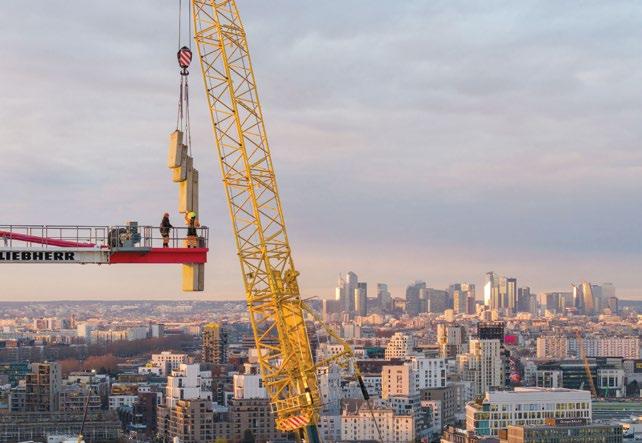
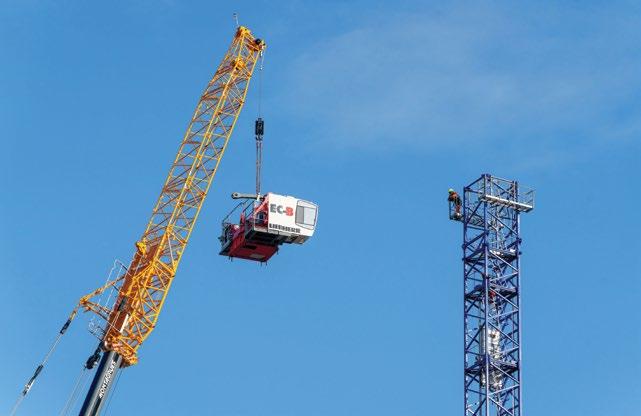
mobile cranes extends from 2-axle, 35 t cranes to heavy duty cranes with a lifting capacity of 1200 t and a 9-axle chassis. Its lattice boom cranes on mobile or crawler travel gear deliver lifting capacities of up to 3000 t.
With universal boom systems and extensive additional equipment, they can be seen in action on construction sites throughout the world. The Ehingen site has a workforce of 5,000. An extensive, global service network guarantees the high availability of Liebherr
mobile and crawler cranes.
Liebherr Group
The Liebherr Group is a family-run technology company with a highly diversified product programme. The company is one of the largest construction equipment manufacturers in the world. It also provides high-quality, user-oriented products and services in a wide range of other areas. The Liebherr Group includes over 150 companies across all continents. In 2025, it employed more than 55,000 staff.
At a height of almost 80 m, the fitters hang four ballast blocks of the construction crane on the hook block of the LTM 1400-6.1.
The slewing ring and cab hang on the hook of the LTM 1400-6.1. The fixed lattice jib of the new 400 t crane can be set up to a length of 45.5 m. The longest luffing jib measures an impressive 80.5 m. This enables the mobile crane to reach lifting heights of up to 120 m.
Diaphragm walls and heavy-duty work for the new Paris metro network
Cranes from Sennebogen are being used.
Special civil engineering work for the future Grand Paris Express underground network is in full swing. On Line 15 West, teams from NGE FONDATIONS are working on several construction sites simultaneously, using multiple SENNEBOGEN cranes and duty cycle cranes for both foundation and lifting work.
The Grand Paris Express is a new underground transport network for the Greater Paris area, which has been under construction since 2016 and is scheduled for completion in the early 2030s.
The infrastructure project is one of the largest currently underway in Europe and comprises six fully automated metro lines that will expand the existing Paris metro system, including 68 stations and seven technical centres. A new, sustainably designed network
of lines is being created, which is primarily intended to improve connections and exchanges between the surrounding communities.
Once completed, the new Line 15 West will be the longest metro line in France and, as a bypass route around the city centre, will cross a total of 45 municipalities and four departments in the Île-de-France region.
Together with general contractor Webuild and French engineering services provider Equans France, French civil engineering company NGE FONDATIONS, as a group, was given the fourth and final government contract for the design and construction of the western section of Line 15.
The project is worth EUR 1.38 billion and is scheduled for completion by the end of 2031. This final section will ultimately complete
Line 15. It will connect Bécon-lesBruyères Station with Saint-Denis - Pleyel Station and includes 7 km of tunnels, four new stations with connections to the existing network, and major building blocks (apartments, offices, shops etc).
TWO SPECIALISED CIVIL ENGINEERING PROJECTS
Earlier, NGE FONDATIONS teams began work on the diaphragm walls to create the foundations for the first two construction projects of the consortium led by NGE.
This concerns, on the one hand, the ‘Les Caboeufs’ service tunnel in the municipality of Gennevilliers. This site will be the entrance shaft or service structure for the tunnel boring machine (TBM) which will drill a 7.5 km long tunnel.
The special feature of this
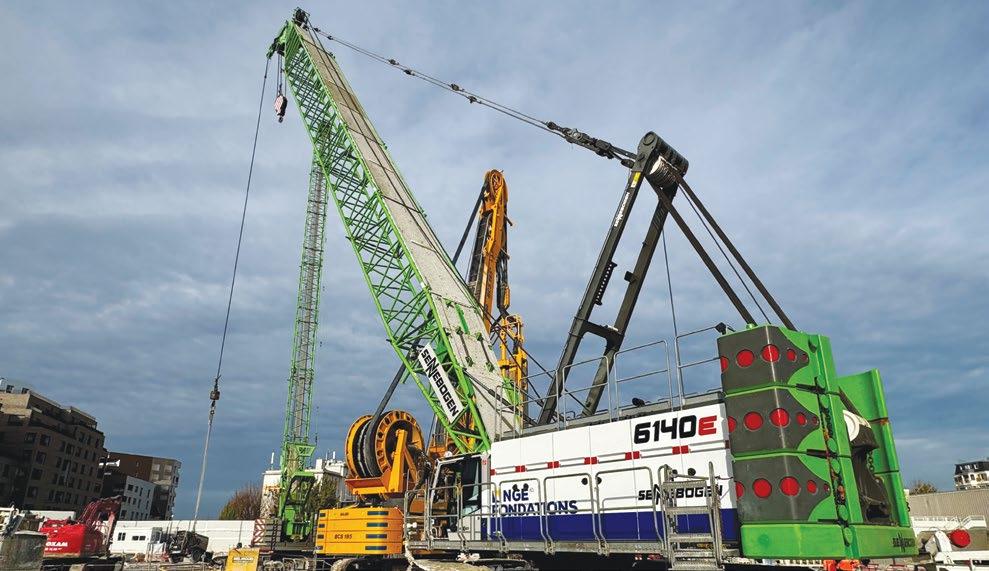
SENNEBOGEN duty cycle cranes during the construction of the entrance shaft for the tunnel boring machine (TBM) – the 6130HD with diaphragm wall grab in tandem with a hydro cutter and the 6140HD during heavy-duty lifting.
construction phase is the TBM’s operating method which works in two consecutive steps. A first section of 1.2 km will be built in an easterly direction to Saint Ouen, and a second section will then connect to the ‘Bécon les Bruyères’ business district in the direction of Courbevoie / La Défense.
Foundation work
In preparation for the upcoming tunnel boring, NGE FONDATIONS is constructing the 1200 mm thick diaphragm walls. This is being carried out using a SENNEBOGEN 6130HD duty cycle crane with a STEIN diaphragm wall grab and a
hydro cutter.
The diaphragm wall elements are 50 m deep, with the outer walls measuring 1,000 mm and the central partition wall measuring 1,200 mm in thickness. Two closure plates – one at each end – complete the structure and act as shielding in both directions, preventing any major water leakage that may be generated by the TBM.
Heavy-duty lifting with crawler cranes and duty cycle cranes
The lifting work required, particularly that involving the reinforcement cages, is being carried out using a SENNEBOGEN 3300 crawler crane
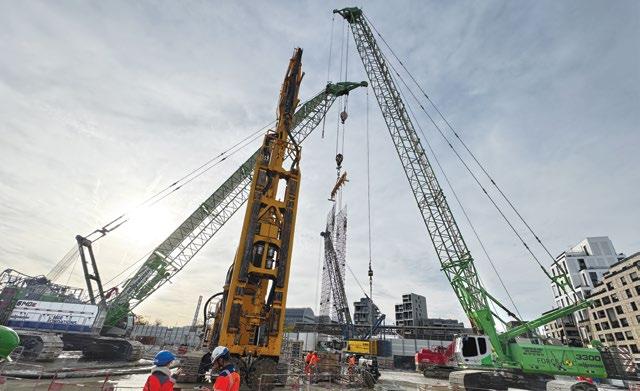
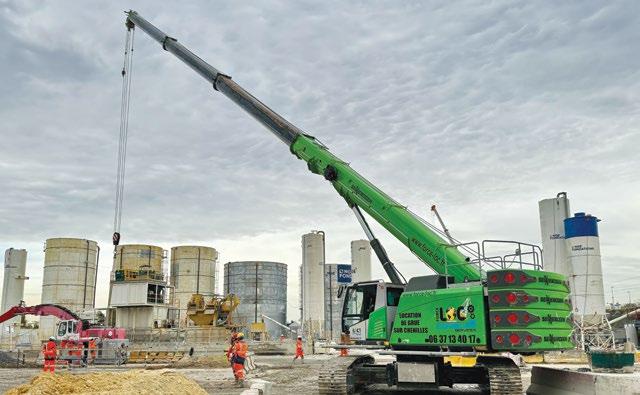
with a lifting capacity of 125 tons, which was provided by FORCE-LOC.
Equipped with a main winch and an auxiliary winch, the crane ensures that the steel mesh is lifted safely so that the welded metal structures remain undamaged. The heavy-duty lifting work is carried out by the 140 t SENNEBOGEN 6140 HD duty cycle crane which is also used on the construction site. Equipped with two 350 kN freefall winches, it will also be used in civil engineering work on the next construction site of the Gare des Agnettes railway station.
Once the diaphragm walls have been completed, the construction company will hand over the project as planned to the earthmoving and civil engineering teams, who will excavate the material and create the actual construction pit so that the TBM can be used from fall 2026.
Flexibility on difficult terrain
The second construction project in Gennevilliers is the future Les Grésillons Station. This will be the first construction site that the TBM will pass through as it advances westward at a depth of 27 m. The dimensions of the excavation pit in which the future station will be built are 25 m x 108 m. The most delicate technical challenge in constructing these foundations lies in the immediate proximity to the existing RER C railway line.
This is because Les Grésillons Station will become the junction for the railway line and will carry around 60,000 passengers a day. Another complexity arises from the proximity to the Seine River. This makes the subsoil somewhat unstable, requiring exceptionally thick walls to support the structure, i.e. the walls must be up to 67 m deep and 1500 mm thick.
On this construction site, the civil engineering work is being carried out by two carrier machines with diaphragm wall grabs and hydro cutters, while the heavy lifting is being handled by a crawler crane. All other lifting and loading work is carried out by the SENNEBOGEN 673E telescopic crawler crane with a lifting capacity of 70 t.
The SENNEBOGEN 673E crawler crane supports the concreting work, the preparation of the reinforcement cages, and various loading tasks at the Les Grésillons train station construction site in Gennevilliers.
The SENNEBOGEN 3300 crawler crane from FORCE-LOC is used to assemble the reinforcement cages for the service structure for the TBM.
Breakthrough at the Gotthard Road Tunnel in Switzerland
Milestone reached with a Herrenknecht tunnel boring machine.
After advancing about 3.8 km through rock that was, at times, extremely hard and, at times, brittle, the miners working on the northern section of the second tube of the Gotthard Road Tunnel reached their first milestone with a Herrenknecht tunnel boring machine (TBM).
On 29 April 2026, they celebrated the precise breakthrough into the previously excavated section of the northern fault zone. From here, they will tackle another, approximately 4 km of tunnel construction under the Alps, heading south.
The ‘secondo tubo’ consortium, consisting of partners Implenia and Frutiger, began tunnelling in February 2025 in Göschenen in the Swiss canton of Uri, on behalf of the client, the Federal Roads Office (ASTRA).
On behalf of ASTRA, the tunnel construction specialists are excavating the northern section of the new second tube parallel to the road tunnel that has been in operation since 1980. For this purpose, Herrenknecht engineers designed and delivered, on schedule, a Single Shield TBM (diameter 12,225 mm) specialised for hard rock.
High power required
The cutterhead of the machine, christened ‘Alessandra’, is driven by 15 motors with a total output of 5,250 kW – which is roughly seven times the power of a current Formula 1 race car. The hydraulic thrust cylinders press the rotating cutterhead against the rock face with up to 95,000 kilonewtons (kN).
The target of the first tunnelling stage – the northern fault zone –had been excavated conventionally in advance. For this approximately
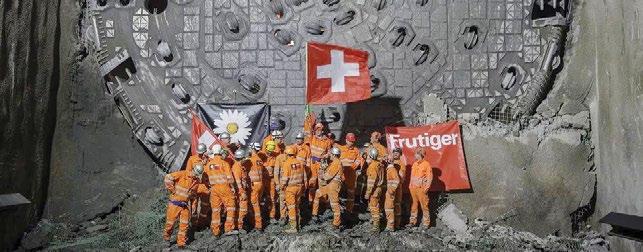
400 m long tunnel section, planners had predicted geological conditions not suited for efficient mechanised tunelling.
After the breakthrough, the tunnel builders will transport the machine – which is about 100 m long in total – through this cavern, before tackling the remaining approximately 4 km to the south. The cavern will also serve to thoroughly overhaul the Herrenknecht machine after it has navigated the most challenging rock formations to-date.
In addition to the sections where the miners were able to achieve peak performance with the TBM, there were stretches, with zones rich in quartz or hard, blocky granite that pushed both man and machine to their absolute limits.
Progress on the south side
Working towards the northern construction section, a tunnelling operation coming from the south is advancing for the second tube of the Gotthard Road Tunnel. Here, the TBM manufactured by Herrenknecht and operated by specialists from Marti AG had been brought to a controlled stop to excavate a defined tunnel length using conventional methods. This work is now largely complete, so that mechanised tunnelling
towards the north could resume.
From 2003 to 2011, construction consortia at the Gotthard used four Herrenknecht machines to excavate a total of 85 km of tunnel for what was then the world’s longest railway tunnel.
PROJECT DATA
Project Gotthard Road Tunnel (second tube) Lot 241 North
Client
Federal Roads Office (ASTRA)
Contractors
ARGE secondo tubo (Implenia, Frutiger)
Application Road
Tunnelling length
6,885 m
Geology
Granite, gneiss, slate
MACHINE DATA
Machine type
Single Shield TBM
Diameter
12,225 mm
Cutterhead drive power
5.250 kW
Torque 26,767 kNm
Celebrating the breakthrough by the Herrenknecht TBM on 29 April 2026.
Caterpillar updates Cat AP1000 and AP1055 pavers
Caterpillar has announced multiple design enhancements for the Cat AP1000 wheel and AP1055 track asphalt pavers, targeting increases in reliability and longevity, as well as simplified maintenance.
Plus, customers now have a choice between two innovative SDX Screed Plate System designs – original Textured SDX plates and new smooth SDX plates – that perform like conventional screed plates, with the added benefits of long life and quick-change capability.
Maintenance simplified
The updated AP1000 and AP1055 paver models move the engine oil filter and drain to the left side compartment near the DEF tank to simplify service. Previous designs required accessing these items through swingout doors located at the back of the hopper. The new, easier access filter lessens the complexities associated with hopper inserts and material build-up around the access doors.
Additionally, relocation of the hydraulic charge pump to the propel pump stack provides easier access and improved reliability.
When fine asphalt particles accumulate in the cooling fins over time, engine temperatures can rise. To help mitigate this, a new optional prefiltration system is available for the AP1000 and AP1055 pavers. Located in the centre housing on the top deck for easy access, the four interchangeable filters help prevent fines build-up and simplify routine maintenance.
Additionally, the fan drive motors are now located beneath the fan blades to further assist with easier cleaning from above.
Caterpillar first introduced the AP1055B asphalt paver with Mobil-Trac Undercarriage in 1996. Providing travel speeds like wheel pavers with the flotation benefits of track pavers, the exclusive
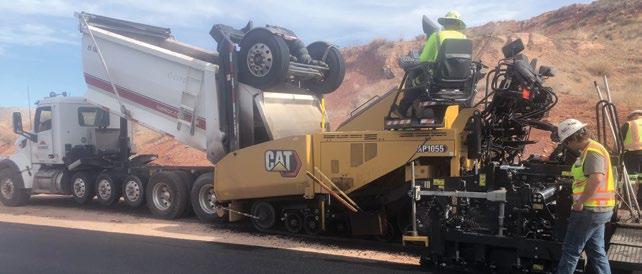
Mobil-Trac system was designed to increase jobsite mobility.
Since that time, there have been a number of design innovations, such as the introduction of a smooth belt in 2007, oscillating bogie design, Electronic Control Modules (ECMs) enabling proportional control for the material feed system and elimination of flow gates for material flow, and dual operating stations with settings that transfer from side to side with the flip of a switch to provide enhanced control and visibility.
Long-life SDX screed plating system
The Cat SDX Screed Plate System can meet contractors’ biggest challenges by delivering the density and smoothness required for interstate paving with quick-change capability, to be used on a wide range of applications.
Two SDX plate designs are now available for contractors. Textured SDX plates feature angular grooves that promote increased density and smoothness behind the paver to help meet the toughest density specifications. Performing like traditional screed plates, smooth SDX plates deliver the added benefit of modular, quick-change capability.
Built with chromium alloy materials, Cat SDX plates deliver significantly more abrasion resistance than Cat standard and cladded extended-life screed plates.
Advanced technologies for asphalt compaction
Enhancing situational awareness when operating the compactor, the now available Cat Detect – Collision Mitigation System features an integrated, intelligent sensor array to provide forward and reverse collision warnings, people detection, motion inhibit and automatic braking.
Visible in real-time and recorded for future analysis, critical zone detection events transmitted to VisionLink enable organisations to mitigate potential hazards, enhance operational safety and identify improvement opportunities.
The Collision Warning radar system targets collision potentials in front of and behind the compactor, using audible and visual alerts that allow the operator to see, manage and mitigate hazards that may otherwise go undetected. Leveraging smart cameras, People Detection alerts the operator when people are detected near the compactor. With manual override capability, Motion Inhibit prevents compactor movement when the machine is stationary for at least two seconds and the detection system identifies a collision potential. When the compactor is in motion and critical zone detection occurs, Automatic Emergency Braking activates if the operator fails to act. When the critical zone detection clears, compactor control returns to the operator.
The enhanced Cat AP1000 wheel and AP1055 track asphalt pavers offer several advantages.
Large milling machine combines smart machine control with automated documentation
The Wirtgen cold milling machine W 200 F is a powerful and simultaneously cost-efficient solution for a broad spectrum of tasks in road construction, from surface layer rehabilitation to full-depth removal of road pavements. It combines high milling performance with innovative automation solutions and addresses the needs of users looking for efficiency and flexibility in a compact machine concept.
Productivity and ease of use
A key feature of the W 200 F is the MILL ASSIST machine control system. It automatically adapts key parameters, such as the speed of the engine and milling drum, the travel drive, the water system and the machine advance rate, to the respective operating conditions.
The operator can also pre-select one of the three operating strategies – ‘ECO’, ‘Performance-optimized’ or ‘Milling pattern quality’ – for the upcoming application. The result is consistently maintained milling quality with simultaneously lower operating costs and reduction of the machine operator’s workload.
Real-time documentation
In addition to the MILL ASSIST machine control system, the automated documentation of milling tasks with Wirtgen Group Performance Tracker Milling, WPT Milling, also plays a major role. Maximum efficiency is achieved by the combination of both of these digital solutions.
The operator is kept constantly informed about the current machine and job parameters. On completion of the work, the data is transmitted to the machine owner who can then make use of them for quick and precise billing. In addition to displaying construction site and machine data, the automated documentation also shows the CO₂ emissions for the
entire construction site. The John Deere Operations Center presents all information in real time.
Simplifying exchange of milling drum assemblies
The milling drum of the W 200 F can be exchanged for a Multiple Cutting System (MCS) milling drum within just a few minutes. The ability to rapidly change to applicationspecific milling drums with different tool spacings considerably increases machine productivity.
At the same time, the choice of the ideal milling drum for a specific application also reduces wear-related costs. Wirtgen offers a range of milling drums for the W 200 F, that meet the requirements of all possible milling applications. Exchanging the milling drum assembly enables the realisation of milling widths ranging from 1.5 m to 2.2 m. With the aid of the quickchange system, the entire milling drum assembly can be exchanged in less than one hour.
Precise grade and slope control
The LEVEL PRO ACTIVE grade and slope control system was developed by Wirtgen specifically for cold milling machines. Clearly readable control panels provide information and measured values from all currently connected sensors and reduce the machine
operator’s workload.
The system is fully integrated in the control system of the cold milling machine and, as essential machine functions are directly interconnected, enables a high level of automation and precise milling results. The system also offers numerous automatic and additional functions that make the machine operator’s job easier, for instance, automatic lifting for driving over manhole covers.
Performance and sustainability
The machine is powered by a highperformance diesel engine that already delivers high torque at low engine speeds. The combination of smart energy management, an extended range of engine speeds and an improved cooling system lowers fuel consumption.
This enables a reduction of the CO₂ emissions per cubic metre of milled material by up to 20 %. Other measures include demandregulated water dosing, reduced noise emissions and an efficient extraction system.
Ergonomics and user-friendliness
The spacious design of the operator’s platform with improved visibility, a flexible operating concept and powerful LED lighting ensure a comfortable and safe working environment.
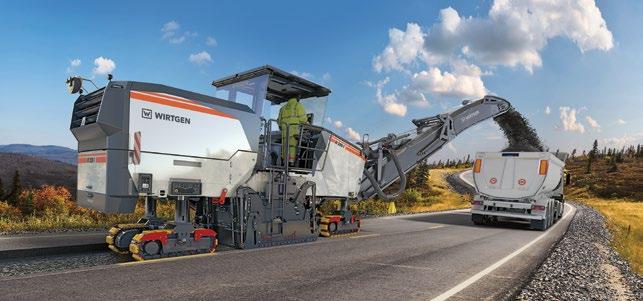
The W 200 F combines high milling performance with innovative automation solutions.
Volvo Construction Equipment unveils its largest demolition excavator
Volvo Construction Equipment has launched the EC950 High Reach – the largest high-reach excavator in the Volvo portfolio. It joins the EC400 High Reach, EC500 High Reach and EC750 High Reach machines.
Modular design for ease of transportation
A key concern for customers operating machines at this scale is the challenge of transportation. Volvo has considered every element of the EC950 High Reach’s design –including weight, height and length – to ensure that it remains within standard transportation dimensions. Central to this is the modular multi-configuration, boom and arm concept, which allows for simple assembly and disassembly. This is complemented by a series of innovative solutions for easier transportation, including hydraulic removable counterweight, detachable side tracks, modular boom and arm sections and hinged walkways. The modular design of the undercarriage with hook-on track units further reduces the transport weight of the separate parts of the machine.
With a maximum transport height of just 11 ft 9 in (3.6 m), hook-ontype modular joints and hydraulic cylinder-type pins, the machine can be quickly configured on-site to suit the specific job requirements. Not only does this flexible design reduce the cost and complexity of transportation, it also enables demolition contractors to use the same machine across multiple applications, with a variety of pin heights and allowed tool weights helping to minimise initial investment and maximise return.
Stability and strength
Built to meet Volvo Ultra High Reach (UHR) stability criteria, the EC950 High Reach has good stability even when operating with heavy
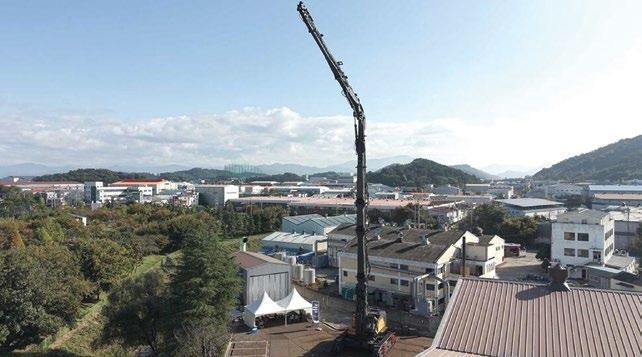
attachments and extended reach.
The durable Volvo undercarriage, plus a purpose-built upper frame with boom adapter and larger boom and cylinder pins, provide the strength and durability required for high-stress demolition environments. This is combined with a specially developed ring gear that is able to withstand the enormous forces a machine of this size creates.
Advanced demolition features
The EC950 High Reach is equipped with a comprehensive suite of demolition-specific features designed to improve operator comfort, enhance visibility and increase jobsite safety. A tilting cab with up to 30° of tilt provides upward visibility, while the removable 84,000 lb (38.1 t) counterweight and new undercarriage design support safer handling of heavy loads.
Real-time safety monitoring is delivered through the Volvo total moment indicator (TMI), providing operators with continuous feedback to help prevent tipping or overloading and ensuring safer, more efficient demolition operations. Volvo Smart View cameras with optional obstacle detection enhance safety for
operators and site teams.
The high-visibility cab is fitted with P5A certified polycarbonate windows and a frame-mounted falling object guard (FOG), helping to protect operators from falling debris.
CareTrack standard telematics and ActiveCare Direct advanced telematics provide real-time machine health data and predictive maintenance alerts to keep fleets productive and protected.
Comfortable operator environment
Inside the spacious, low-noise cab of the EC950 High Reach , all machine interfaces – including joysticks, keypad and LCD monitor – are ergonomically positioned for intuitive and efficient operation. Easy cab access is provided via a wide door opening, while hydraulic dampening mounts and soundabsorbing lining reduce shock, vibration and noise levels.
Cleaner and safer worksites
The EC950 High Reach comes complete with an integrated dust suppression and cleaning system. Dual water spray nozzles effectively control airborne dust, while a high-pressure washer helps keep components clean during operation.
The EC950 High Reach is the largest high-reach excavator from Volvo Construction Equipment.
PRODUCTS & SOLUTIONS
The new 90HD vibrodriver from PTC
PTC announces the launch of the new 90HD vibrodriver, the latest addition to its Heavy Duty (HD) range. Positioned between the 65HD and the powerful 130HD, the 90HD answers a clear demand from the market – a machine offering greater power than the 65HD while preserving its agility, without stepping into the dimensions of the 130HD.
Designed as the ‘big brother’ of the 65HD, the new 90HD retains the slim central profile of the 65HD. This characteristic design ensures optimal versatility, enabling operators to drive sheet piles as well as tubular piles, even on restricted or complex job sites.
More power
At the heart of the 90HD lies the 2500 kN of centrifugal force, delivering the performance required for demanding piling applications. Despite this significant increase in power, PTC engineers have succeeded in maintaining a low operating weight – under 9 t (without accessories).
This weight advantage makes the 90HD compatible with mediumcapacity cranes, ensuring broader deployment possibilities while maintaining ease of transportation. The machine can be shipped using a standard truck or standard container, without any disassembly – a logistical benefit for contractors working across multiple sites.
A 100 t extraction capacity
A standout feature of the new 90HD is its 100 t extraction (pulling) capacity. This capability enables contractors to extract longer, larger and more resistant piles, with
ADVERTISERS’ INDEX
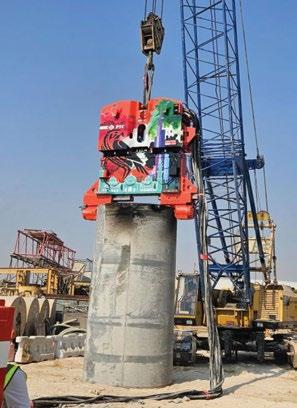
ease, boosting productivity and broadening the range of possible applications. The combination of strong driving power and high pulling strength positions the 90HD as one of the most versatile vibrodrivers in its class.
New side brackets for greater flexibility
The 90HD introduces a new generation of lightweight, removable side brackets – a significant design improvement inspired by customer feedback. These brackets enable the machine to drive tubes up to 2.46 m in diameter, while maintaining the same overall width as the 65HD. Operators benefit from increased versatility without compromising on accessibility or manoeuvrability.
First 90HD already delivered and commissioned
The launch of the 90HD is already marked by a major milestone. The
Key features of the PTC 90HD
• Centrifugal force: 2500 kN
• Operating weight: < 9 tonnes (without accessories)
• Extraction capacity: 100 tonnes
• Design: Slim central design for sheet pile and tube driving
• Accessories: New lightweight, removable side brackets for driving tubes up to 2.46 m diameter
• Transportation: Fits standard trucks and containers without disassembly
• Compatibility: Compatible with medium-capacity cranes
first unit has been successfully delivered to PTC Middle East. Delivered in early December 2025 and commissioned with complete success, this first 90HD is now fully operational on site – demonstrating the machine’s readiness, reliability and immediate value for contractors in the region.
A new benchmark in the HD range
“With the 90HD, we wanted to bridge an important gap in our HD lineup. The market was asking for a vibrodriver that was stronger than the 65HD but easier to handle and transport than the 130HD. The 90HD delivers exactly that – a perfect balance of power, compactness and operational efficiency. It reflects PTC’s ongoing commitment to engineering solutions that respond directly to real-world challenges on jobsites,” said Thierry Braud, Technical Expert at PTC.
The new 90HD vibrodriver from PTC.