DE SMET 1973

And here’s the rest of the story ...

Class of 1973 — 50th Reunion Yearbook Page 1
50th Reunion Yearbook
Committee Members
Bob Backer
Tim Dolan
Franc Flotron
Rick Fox
Steve George
Don Hiemenz
Tom Klein
Pat Morris (Director of Alumni Engagement)
Rick Murray
Wally Pfeffer
Paul Schnoebelen III
Rick Sudekum III
Lee Taylor
Tim Trout
Special thanks to the following contributors who assisted us in contacting classmates or in putting this book together. Kevin Buckley, Mike Buncher, Greg DiBlasi, Bruce Donnelly, Frank Furlong (whose company printed this book, class of ‘71), John Goessling (’71), Tom Goessling, Meg Hinkley, Mike Josias, Jim “Fuzzy” MacDonald, Chris Mess, Yvonne Fernau Mess, Dan Thomann.
Thanks to those who wrote stories or shared their special stories and remembrances with us.
Randy Aselage, (’72), Mechelle Childers, Gary Clark (’74), Joe Duggan, Tom Dunlavy (’75), Rich Grawer, Ray Harter, Paul Heck, Pam Held, Fr. Ralph Houlihan, S.J., Greg Hoy, Jim Kennedy, Kevin Kohler, Tim LaPresto, Mike Leonard, Ann Lucas, the McCullough Family, Matt Riffle, Tony Roldan, Joan Sale, Mary Simon, Celeste Sprung, Greg Vitello.
Debbie Higgins (De Smet Director of Communications), Stephen Kempf, Class of 2001





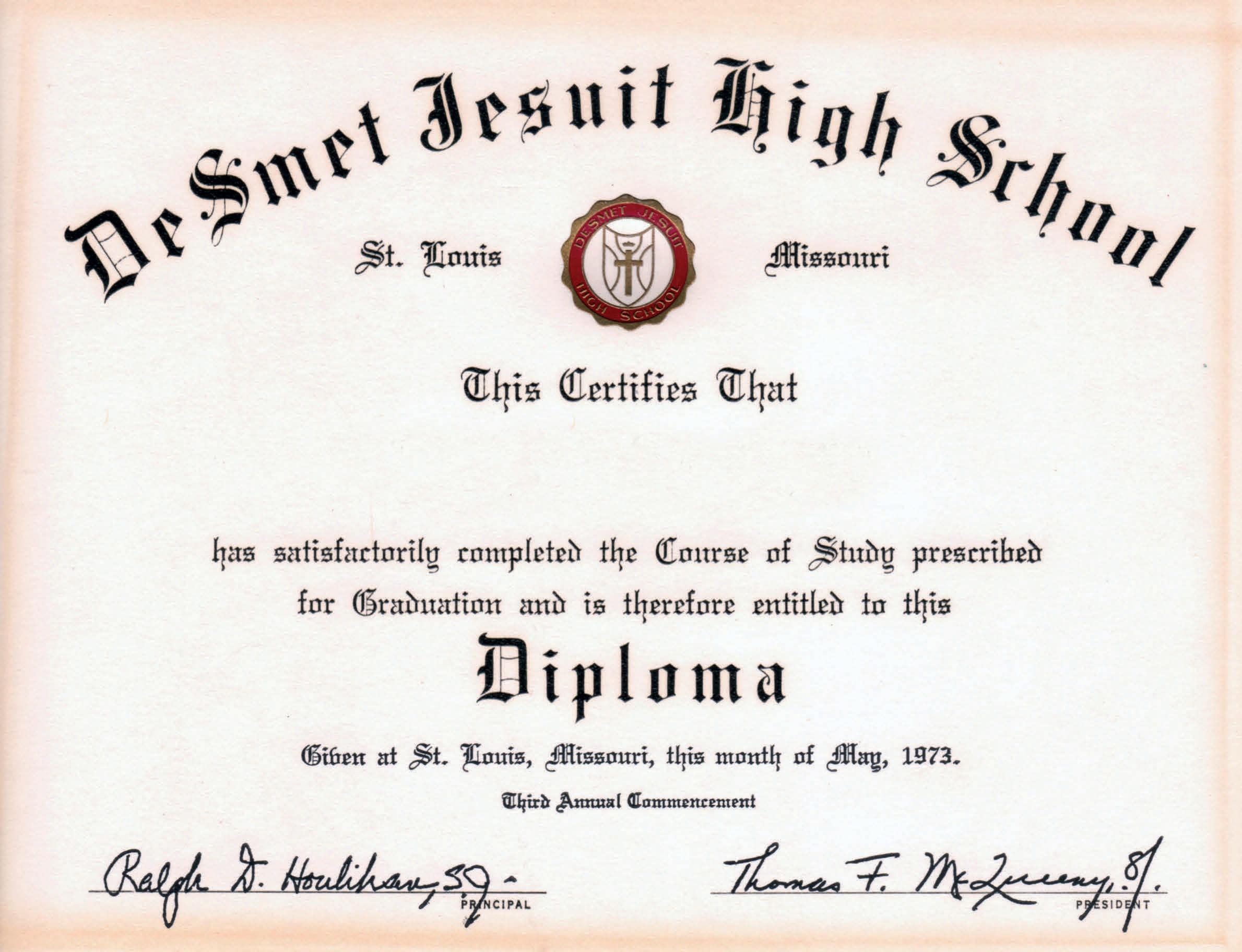
In the spring of 1973, nearly 100 years to the day after the death of missionary Father De Smet, your class became the third to receive a diploma from our still-young alma mater. Over four years, you contributed greatly to some traditions — and inaugurated others, such as the combined parent-student council to oversee various school enterprises.
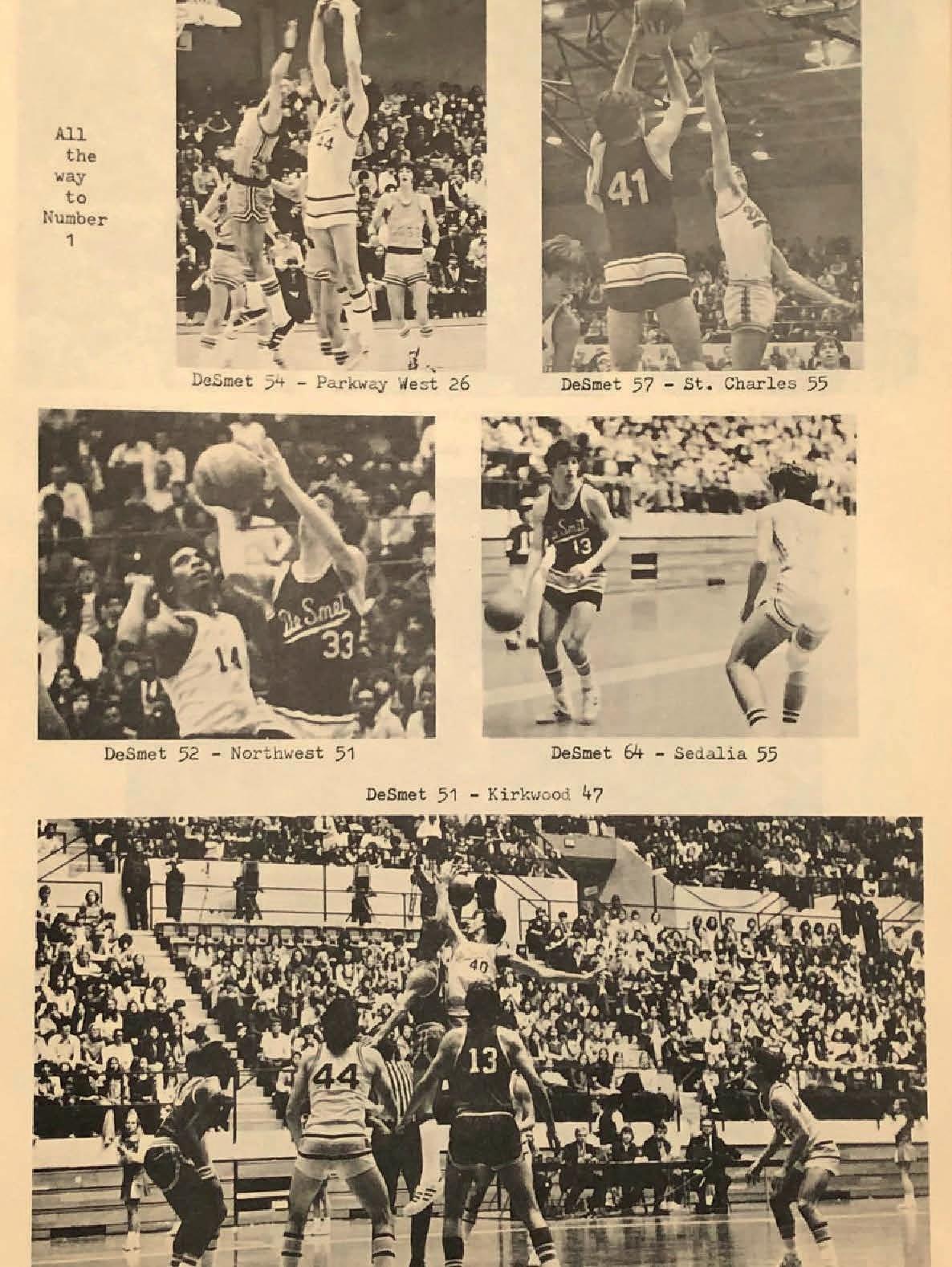
You were championship-caliber! Who can forget the clutch victory over Northwest, or the brilliant zone of Coach Grawer at Parkway West and in the state title game against Kirkwood — a win the coach considered most important because it brought all types of students together.
Another source of pride that evening was winning the good sportsmanship trophy, at least partially because one of your classmates, Glen Bellinger, assisted in seating our large, rousing contingent of fans. Glen enlisted cheerleaders to urge standing students to temporarily sit, which revealed open space for the incoming crowd.
You achieved strong academic, artistic, cultural and spiritual goals in the classroom, on retreats and in a wide range of activities and events. The “spirit” with which you realized these successes was outstanding, aptly captured in a sung school cheer: “When you say ‘Deeee Smet,’ you said it all!” This reflected a quest for quality beyond simply athletics.
One of your classmates recently recalled a great example: The start of a Mass in the school library began with a lackluster attempt at singing, which prompted the celebrant to stop and remind you that excellence was the standard. The assembly followed with a rousing musical response, illustrating the commitment to lofty ideals.
A quick review of your ’73 yearbook reveals the youth of both administrators and teaching staff, a group that was talented, creative and flexible enough to innovate. The emphasis on “cura personalis” (“care of the whole person”) by men and women faculty was outstanding and unselfish. Teachers, coaches and the school hierarchy supported each other.
The “climate” of ’73 was fresh — a mixture of innocence, relaxation, mutual respect between faculty and pupils, and the realization of your growth from naïve, nervous freshmen to self-assured leaders of the institution. Those seniors of ’73 were born from hard-earned achievement. Most were prepared for the transition to college life, grateful to their parents — and to Almighty God for support during their high school journey.
As you celebrate your golden anniversary, your former teachers tend to be white-haired, older men and women, qualities many of you share. But the time we spent a half-century ago interacting in play, study and prayer helped enhance all of our lives.
God bless all of you. May He shower you, your loved ones and families with abundant grace and happiness in the years ahead.
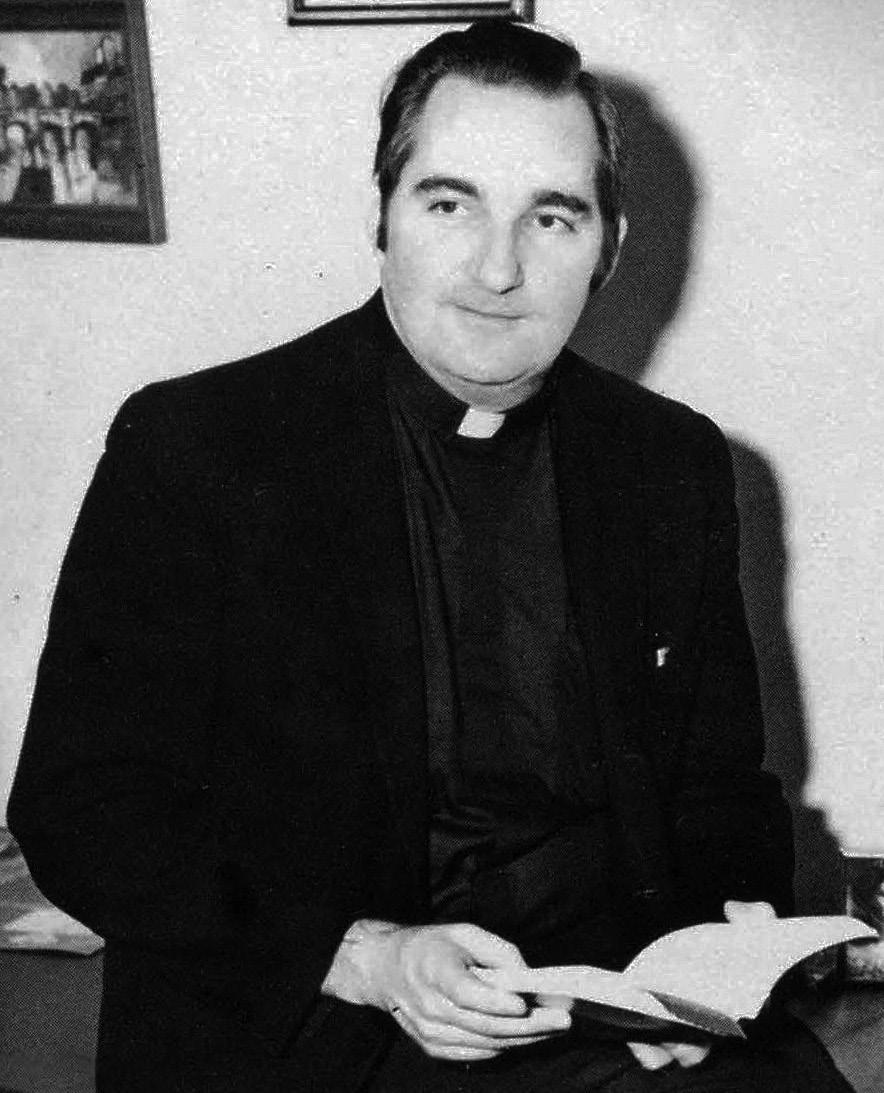
Fr. Ralph Houlihan, S.J. was born in St. Louis in 1934 and attended St. James School in Dogtown, where he grew up. He joined the Society of Jesus in 1952 after graduating from St. Louis University High School. He was ordained to the priesthood in 1965. After completing theology studies, he spent the following year in Belgium, then a year in special studies in Chicago before being sent on mission to De Smet in 1968 for six years – five of them as principal. Fr. Houlihan then moved to SLUH for five years as principal, leaving for Regis Jesuit in Denver in 1979 and serving as president for 16 years. He returned to St. Louis U. High in 1996, where he still serves.
Welcome all to the De Smet Jesuit High School Class of 1973 50th Reunion Yearbook!

And for the rest of the story ...
The purpose of this yearbook is to celebrate and memorialize a big, formative part of our lives. It contains biography pages from those 1973 classmates who chose to submit one, sharing details of their lives during the past 50 years and various memories of their experiences at De Smet. Although the biographies are a key feature, the yearbook also includes a wealth of nostalgic editorial content that the committee agreed would be of interest and amusement.
The members of the 50th Reunion Committee and other contributors have put a yeoman effort into 12 months of planning reunion events. They’ve accumulated information and anecdotes on De Smet’s history, and persuaded classmates to provide yearbook contributions. Information was gathered from classmates, faculty, family and many friends. We believe the result is a yearbook apropos of the third graduating class, a group that established significant firsts in school history.
As you flip through the pages, take yourself back in time, and re-imagine your younger self at De Smet 50 years ago:
• As freshmen, we were part of an enrollment that was up to nearly 700 – even without a senior class. Many juniors already were competing in varsity sports. New faculty continued to fill the ranks, with Jesuits on staff rising to 21. Infrastructure continued to be built, with President Fr. Gregory Jacobsmeyer at times serving as both carpenter and landscaper. A room leading to the cafeteria sold De Smet merchandise. Business was booming!
• In our sophomore year, we had a fully formed high school with 900-plus students, 27 full-time Jesuits in residence, and yet more new lay faculty members. We had the chance to take courses that we never imagined would be taught in high school, such as Film Techniques, Anthropology, Black Studies, Mechanical Drawing and African History.
• Our junior year saw the coming of incremental but significant triumphs, as the football team scored a dramatic win over SLUH, and De Smet won the title in the first season of the then eight-team Mid-States Club Hockey Association. The baseball team finished in the state final four. There were notable plays by the Dionysian Players under the direction of John Faust. We narrowly averted a tragedy: Brother Schmitt was burned on his face and hands when a power panel exploded while he was adjusting it. The MIRROR began its run as the student newspaper. There were dances with live bands like Jake Jones, which also played at the Senior Prom.
• As seniors, we saw a successful carnival despite Mother Nature’s attempt to intervene with a deluge, and the cross country team won its third Bi-State title in a row. Several ex-Augustinian students brought new faces to our class, and the Flood of ’73 tested our volunteer mettle. The hockey team placed third in the Mid-States playoffs; exhaustion ended the soccer team’s lofty state chase in the semifinals; and our best distance runner won the school’s first individual state championship. And yes, the basketball team capped a momentous season with two magical weeks that ended in triumph in Columbia!
Our class of ‘73 certainly left its mark and shared a bond that was created and developed over four bustling years. Thanks to all who helped put this book together, for it commemorates significant benchmarks in the birth of a proud institution -- and the rest of our lifelong journeys!
A half-century? Really? Five decades? Can it really be 50 years since we concluded our education here, leaving the lobbies bordering Emerson or New Ballas roads as students for the last time?
The physical evidence, of course, would suggest as much. A few waistlines have spread, most of our hairlines have receded or changed color.
But for a great many of us, the lifelong education never stopped. And most of the foundation started here, which is why it’s fitting that we return for this special weekend. Since graduation, we’ve had chances to reconnect via reunions every five years. And now, 50 years after getting our diplomas, a school that’s been a cornerstone institution brings us back again.
To be candid, much of life is about separation: Death takes loved ones -- sometimes at a painfully young age; couples break up; marriages often grow apart. Even our favorite next-door neighbors, the ones we always count on, frequently move away.
Life’s many inevitabilities made me feel doubly fortunate when given the chance to spearhead the 50-year yearbook project. I was able to renew acquaintances with classmates, many of whom I hadn’t seen since graduation. In writing and editing tales from a much-too-distant past, I had a chance to hear about and from our favorite teachers and buddies. In virtually every instance, they greeted me with gratitude and friendship that helped make this project special. The old “war stories” of our teen years came flowing back.
The inaugural Class of 1971 and their successors in ’72 made major contributions to the De Smet legacy. We stood on the shoulders of our predecessors, but our class also used that platform to reach higher.
The school took significant strides on our watch. The Class of ’73 produced the first state team and individual champions. Just below those plateaus, our soccer squad was a state semifinalist, hamstrung by a weeklong playoff journey into the bizarre. Two other teams (golf and tennis) were state qualifiers. The hockey Spartans, who’d won the first Mid-States title in ’72 (on the way to a current 15!) with a solid core from our class, finished third in ’73.
But beyond the athletic fields, other activities and personalities of student life made De Smet one of the state’s best schools. A great many of us left here with a discipline that would transcend most of what we faced later.
I’d like to thank the Reunion Committee and all who assisted in the production of this book, especially Stephen Kempf (Class of 2001). Bruce Donnelly and Wally Pfeffer also made important contributions in proofreading and research.
I hope the final product does justice to a great school and a special class. Welcome back!
Tom Klein Class of ‘73 De Smet 50th Reunion Yearbook Editor
Betty Simpson getting stuck in the elevator, furiously ringing SOS on alarm bell. … Teachers on first floor, looking up … And then closing their doors because of noise.
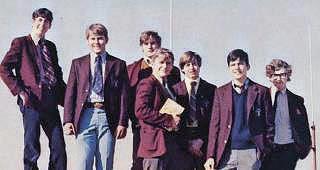
Students in blazer could not remove them without faculty permission.
Basketball at Kiel vs. Vashon, State Quarterfinals: Many observers didn’t have a clue as to the who, the what or the where of De Smet… Radio announcer said they would try to get info at halftime.
JUG: Dean of students & discipline, Larry Morgan, would allow seniors to get out of JUG detention if they could best him in free throw shooting or a game of HORSE.
Students’Maroon Blazers after 4 years of
wear. Question: Did they ever go home for cleaning?
Complaints from residential neighbors about our students – “boys and girls” – walking in neighborhood, and sometimes leering at women. Fr. Bone: “We have only boys in blazers.”
Faculty had to wear coats as long as students wore blazers.
Bleachers only on one side of gym. “That’s all we need, may not ever fill those,” a Jesuit said at the time.
Teachers instructed not to call each other by their first names in presence of students. Use “Father, Mr., Mrs. or Miss.” Rule often ignored by faculty.
First literary magazine. Synthesis, 1970 – Jim Pollock SJ as coordinator; first school paper, Spartan, 1970 – Mr. Robert McEvoy as coordinator.

1970 or so Prank – Juniors placed beer in soda machine for their lunch period. Schedule was changed. Freshman lunch had a surprise!
Students could only go to their lockers when they arrived in the morning, before and after lunch and at end of day.
Penalty: demerit.
Demerit Cards
Twenty or more code violations listed on cards. Most popular code was “Z” for “other.”
Faculty dining room in cafeteria – small with one long table. Later became an office for food service.
Teachers were told not to let students go to lockers if they forgot class material. Were instructed to give a demerit instead.
55-minute classes Three minutes between periods. Limited locker access, no running. One demerit for being late. Some students slid into class to beat the bell, and teachers gave demerits for both being late and sliding (for other). Faculty rule book said student had to be seated in their desk at the bell.
CarnivalCoffee House–folkmusic, coffeeandfood.
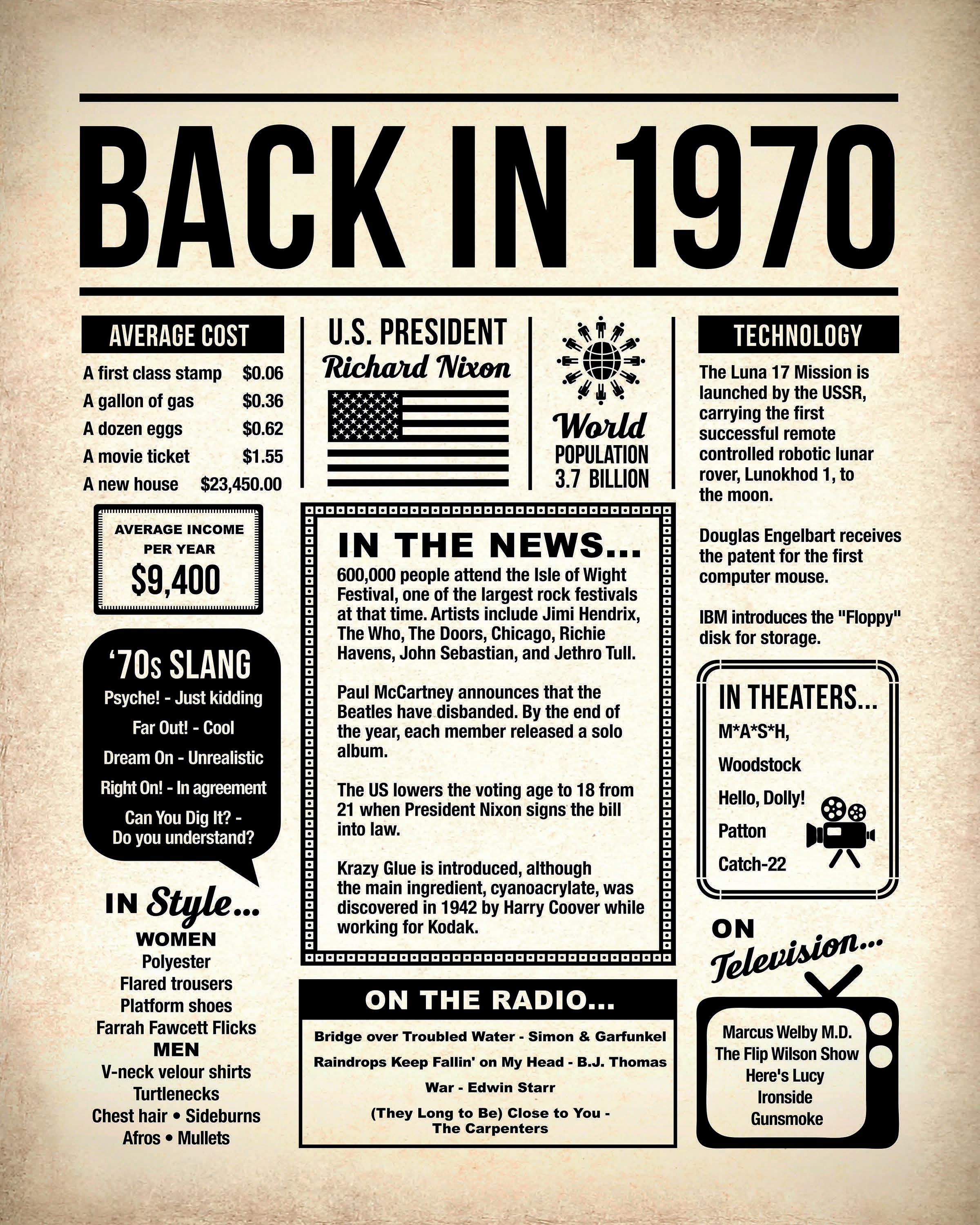
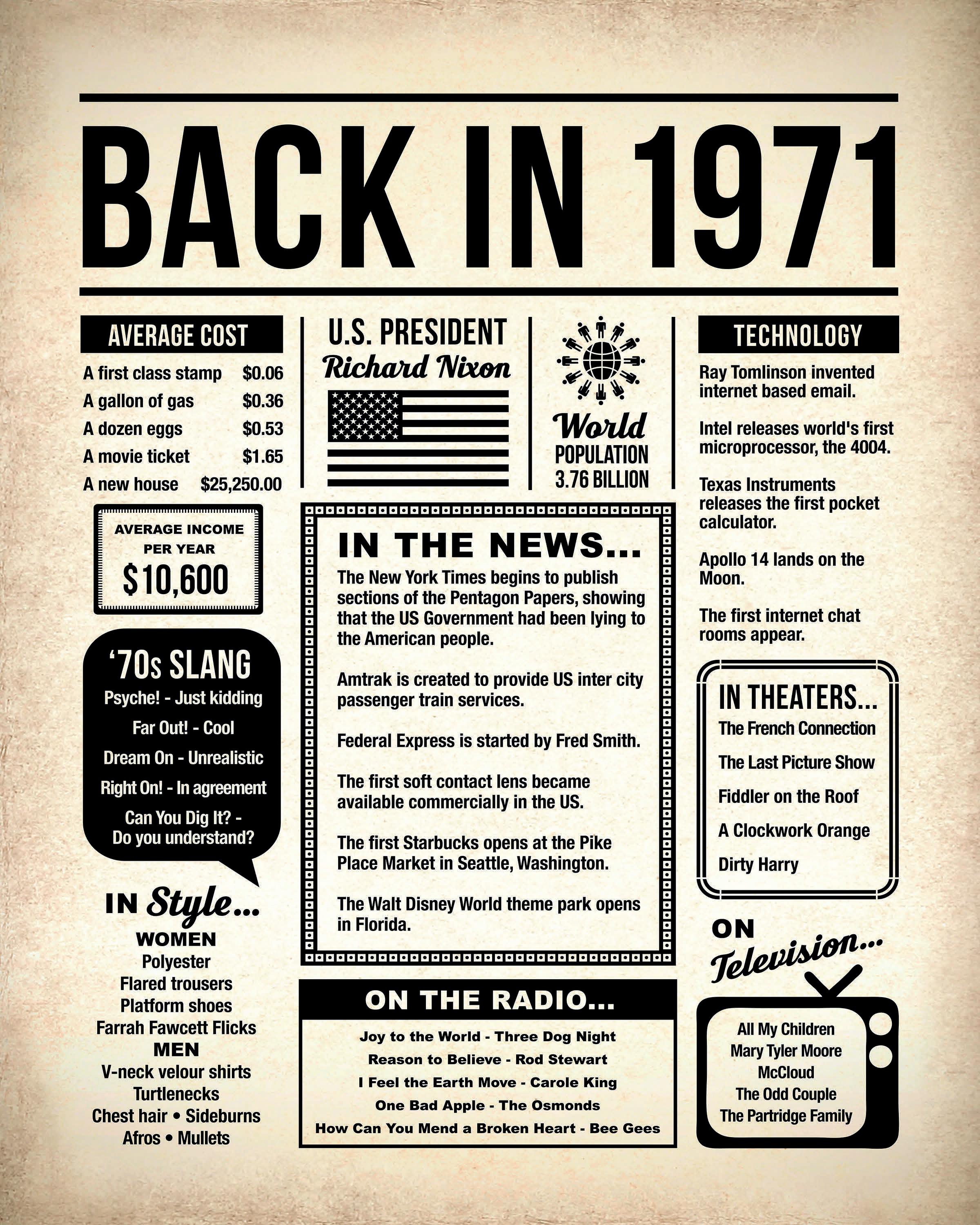
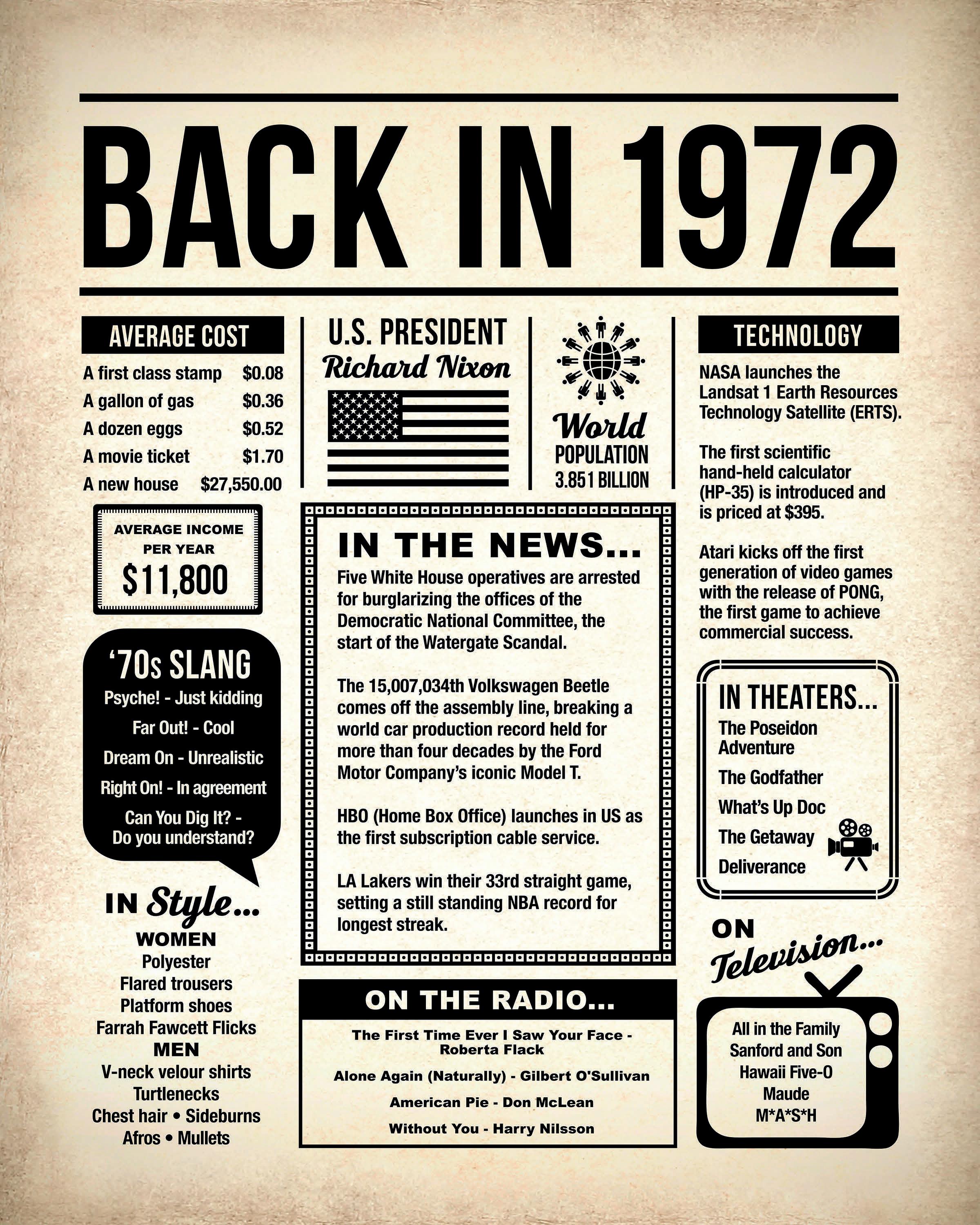
Globally: As our freshman year begins, America remains locked in the Cold War with the Soviet Union, and is stil bogged down in Vietnam.
• By the end of 1969, U.S. military fatalities in Vietnam reach 48,736 (out of 58,000-plus).
• In May 1970, four Kent State University anti-war protestors are killed by gunfire from the Ohio National Guard.
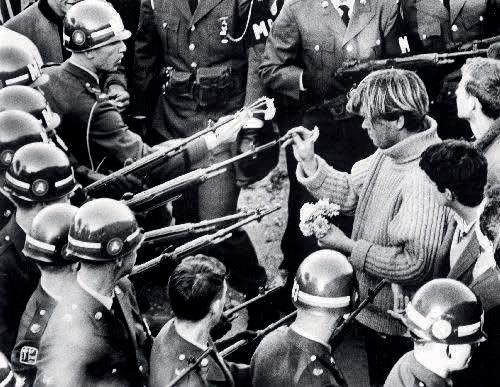
• U.S. military engagement in Vietnam officially ends with the signing of the Paris Peace Accords in January 1973.
• The Yom Kippur War, the largest conflict between Arabs and Israelis, takes place Oct. 6-25, 1973.

• The Organization of Petroleum Exporting Countries (OPEC) declares an oil embargo against pro-Israel countries during the war, triggering an energy crisis.
Domestically: In an era before cable TV’s boom, Americans digest stories largely through a much narrower funnel than today.
• Local TV consists of the three major network affiliates, public Channel 9 and Channel 11. Channel 30 joins the lineup in 1969.
• Print news is delivered by two major metros – the conservative Globe Democrat (a.m.) and the liberal Post-Dispatch (p.m.).

• The space race reaches a climax with the Apollo 11 moon landing on July 20, 1969. But the national mood changes about investment in space, and America’s last manned moon mission, Apollo 17, takes place halfway through our senior year.
Politically: Vietnam and the turmoil of 1968 help elevate a new occupant into the White House. Richard Nixon is in his first year in office in 1969, but by our senior year scandal would be consuming him.
• The release of the Pentagon Papers in 1971 by the New York Times is a flashpoint for Nixon’s turbulent relations with the media and his obsession with leaks.
• On June 17, 1972, five are arrested for a break-in at the Watergate office building – a scandal that would move toward the Oval Office.
• 1973 comes to a close with Watergate bombshells on many fronts: the resignations of top Nixon advisers H.R. Haldeman and John Ehrlichman; testimony about Nixon’s Watergate involvement by former White House counsel John Dean; and reports of an 18½ minute gap in a Watergate-related tape.
• Two Department of Justice officials are dismissed in late 1973 after refusing a Nixon order to fire Watergate special prosecutor Archibald Cox. A third Justice official relieves Cox of his duties in the “Saturday Night Massacre.”
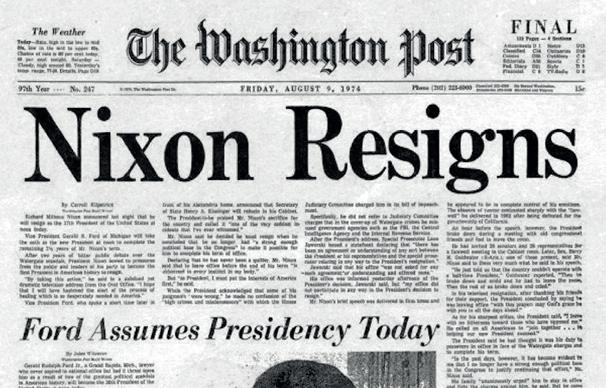
• Vice-president Spiro Agnew resigns in 1973 and pleads no-contest to income tax evasion. Gerald Ford is confirmed as VP. He would be president in less than a year.
Economically: The economic expansion of the 1960s buckles under increasing inflation. In late 1969 the economy enters an 11-month mild recession that paves the way for disastrous inflation of the 1970s.
• The S&P 500 Index stood at 94 in September 1969. By June of 1973 it had inched up to 105.
• In 1970 the unemployment rate jumps to 6.1 percent.
• Nixon imposes wage and price controls in 1971. The controls worked during the 1972 election year, but once removed they help ignite double-digit inflation as individuals and businesses overadjust.
• In 1971, Nixon breaks the link between the dollar and the gold standard.
• Inflation reaches an 8.8 percent rate in ’73, and would hit 12.9 percent by the end of the decade.

Culturally: The rock explosion turns to free-form expression as FM stations take chic status away from the simplistic Top 40 AM format. Social activism continues to swirl, and Hollywood churns out some memorable movies.
• Mirroring a national trend, local FM stations KSHE and KADI experience their glory days, as DJs are given freedom to play albums and long cuts of songs.
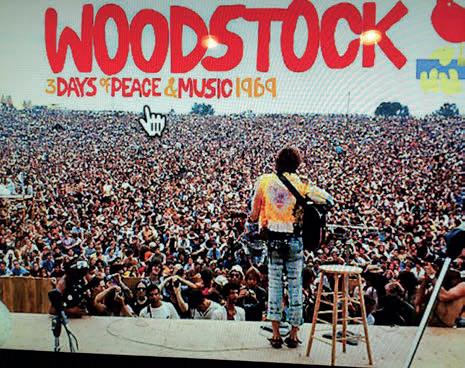
• The legendary Woodstock concert takes place in August 1969 in upstate New York, with an attendance generally estimated to be at least 400,000.
• In September 1969, the Beatles release Abbey Road, which stays on the U.S. and U.K. charts for 80 weeks.
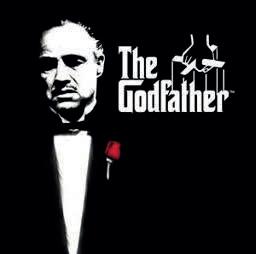
• Bookending the era as Oscar winners are 1969’s Midnight Cowboy and 1972’s The Godfather -- generally regarded as one of the five greatest motion pictures in history.
Technologically: Strides are taken that still reverberate a half-century later.
• In 1969, the first license is granted for smoke detectors to be sold for home use – a move that has saved an incalculable number of lives.
• ARPAnet (Advanced Research Projects Agency Network) is first used in 1969 and is the precursor to the Internet.
• After the 1967 development of dynamic random access memory (DRAM), the first true microprocessor (the Intel 4004) is launched in 1971.
• The first hand-held cell phone call is made in April 1973 by Motorola engineer Martin Cooper in New York City.
Sports: The fall of our freshman year gave us the World Series champion Miracle Mets. By our senior year of ‘73, we’d be witnessing astounding events on a regular basis.
• On Jan. 14, the Miami Dolphins defeat Washington in Super Bowl VII, capping the only undefeated season and postseason (17-0) in NFL history.
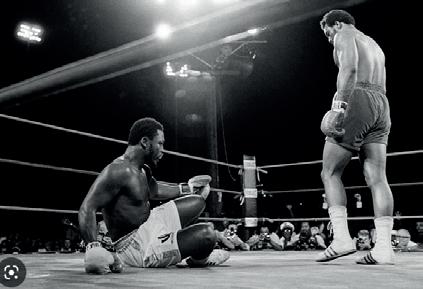
• Eight days later, “DOWN GOES FRAZIER! …“DOWN GOES FRAZIER!” George Foreman stops Joe Frazier with a second-round TKO after six knockdowns to win the Heavyweight boxing title.
• The designated hitter debuts in the American League, with first at-bat by Yankees’ Ron Blomberg.
• The legendary Secretariat wins the Belmont Stakes by 31 lengths to capture the first Triple Crown since Citation in 1948. There have been four since.
• The Oakland A’s rally from a 3-2 deficit in games to defeat the Mets and win their second of three straight World Series.
Locally: Greater St. Louis is undergoing a major demographic shift from the city to the county and other outlying areas. A smaller tax base accelerates a downward spiral of what was America’s fourth-largest city from 1870 to 1920.
• A wave of the Greatest Generation’s postwar sons is approaching high school age facing a shortage of Catholic high school capacity in St. Louis, particularly the county. De Smet had been founded to address this need and relieve pressures on St. Louis University High, the only Jesuit secondary school in St. Louis.
• The Blues reach their last of three straight losing Stanley Cup finals in 1970, bowing in four straight to Boston, including in OT in Game 4 on Bobby Orr’s flying goal.
• A coach who wasn’t a household name arrives from San Diego State in 1973 to take control of the woebegone Football Cardinals. It takes a year to get things moving, but the five-year run of Don Coryell’s “Cardiac Cardinals” is renowned in team history.
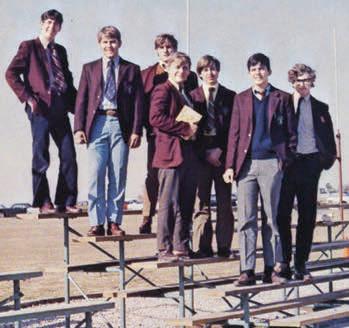
Business Casual Maroon Blazers with Tie
~ $20,000
40% (partial or full)
150 (2023-24)
165 (2023)
600 (2023)
90
2
• English
• Algebra
• World Language
• Science
• Religious Studies
• Computer Science
• Fine Arts
• Physical Education
• English
• Math
• Social Studies
• Portfolio Project
• Electives: Film Appreciation, World Religions, Forensic Science, International Studies, Modern European History, Best Novels, Computer Applications, Government, Psychology, Statistics, Instrumental Jazz, Economics, American Society, Web Design
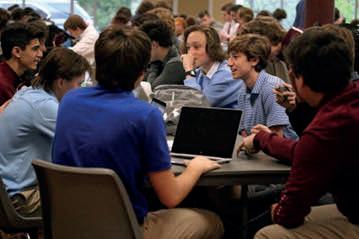
Spanish, Chinese, Latin. Also yearly immersion trips to Spain, Taiwan, Italy
Annual Tuition
Scholarship % Freshman Class Senior Graduates
Total Enrollment Faculty & Staff Faculty Jesuits
Typical Freshman Curriculum
Typical Senior Curriculum
$600
<5%
216 (1969)
174 (1973)
~ 740 (start of ’72-73)
62 (1973)
32 (1973)
• English
• Algebra
• Foreign Language
• Latin
• Ancient History
• Religion
• Typing (on manual typewriters)
• Physical Education
• English (Satire, or Contemporary Novels)
• Calculus (as elective)
• Foreign Language
• Mechanical Drawing
• Religion (“Contemporary Thinkers”)
• Science electives: Physics, Physiology, Adv. Biology
• Social Studies electives: American Problems, Black Studies, Western Civilization, Anthropology
• Art electives: Studio Art or Film Techniques
World Languages Offered
• Senior Project Spanish, French, German, Japanese, Latin
Bowling, Cross Country, Football, Soccer, Swim & Dive, Basketball, Ice Hockey, Racquetball, Wrestling, Baseball, Tennis, Golf, Track & Field, Inline Hockey, Ultimate, Lacrosse, Volleyball, Water Polo, Rugby
• New classroom wing 2003-04 –an additional 24 classrooms
• Thomas Hunter Memorial Theatre, built in the mid-90s
• Chapel, built in the late ‘80s
• Full-sized track, turf field, press box, with stadium lights
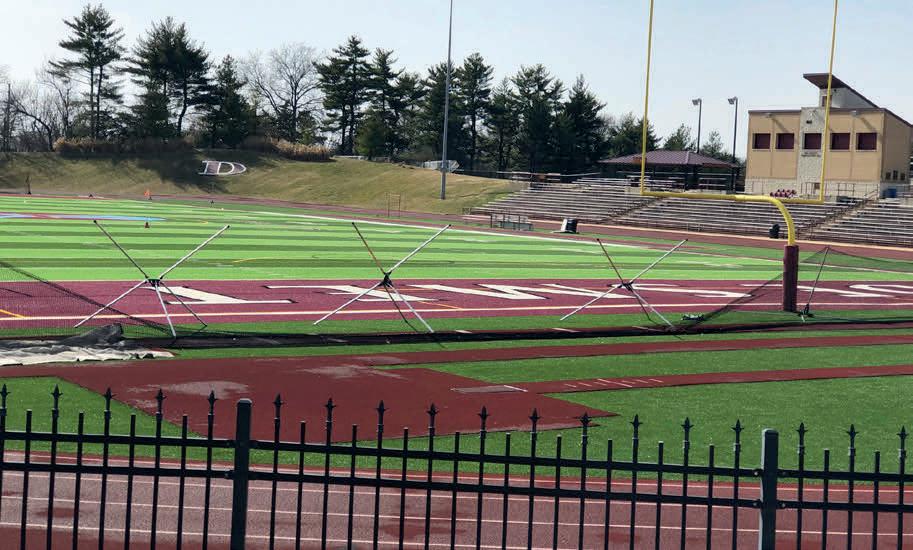
• Alumni Pavilion
• Concession stand
• Emerson Lobby (built in the 1980s)
• Library (now the “Innovation Center”) with a few books, and the Robotic Center
• Student Government Office
• Admissions Office
• Campus Ministry
• Baseball field and dugouts
• North practice fields (with an “Alumni House” and practice facilities for lacrosse and track/field shotput)
• Expanded parking on Emerson Lot
• Visitor’s locker rooms and band room (underneath the theatre)
Regularly broadcasts live De Smet sporting events, assemblies, liturgies on a student-run media network.
Cross Country, Football, Soccer, Basketball, Bowling, Wrestling, Ice Hockey, Baseball, Tennis, Golf, Track & Field
• 33 Classrooms
• Grass football field with some metal stands
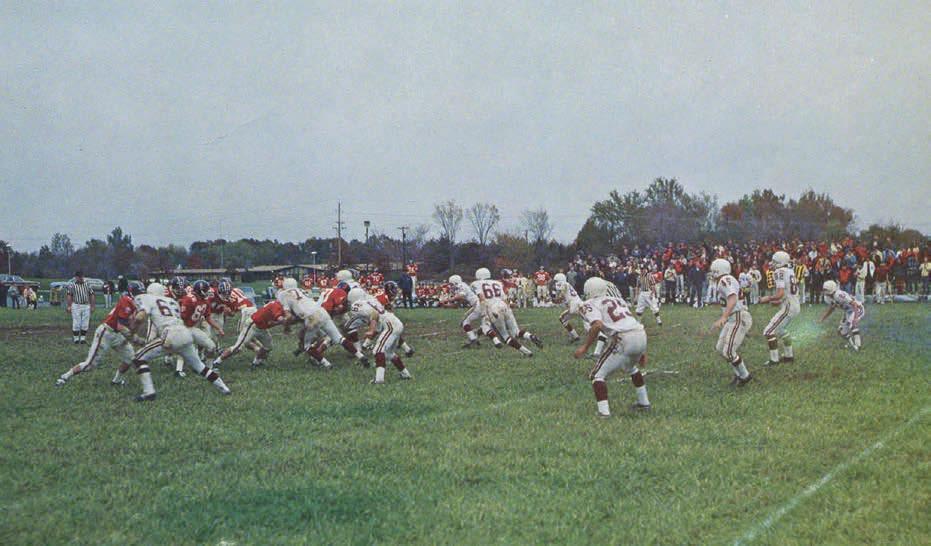
• Gymnasium – doubling as wrestling practice room
• Cafeteria
• Locker rooms
• Small “weight” room
• “Smoking room” (now a maintenance room)
• Small auditorium/theatre on first floor with stage (now a music/choir/band room)
• Basic baseball field with metal stands
Would have been unimaginable. (No video broadcast network on Earth had this capability, until CNN in the late 1980s.)
When De Smet captured the 1973 state basketball crown, it set the bar high for the school’s overall athletic program. Rich Grawer, De Smet’s first basketball coach and author of that title, discusses the team and its impact.
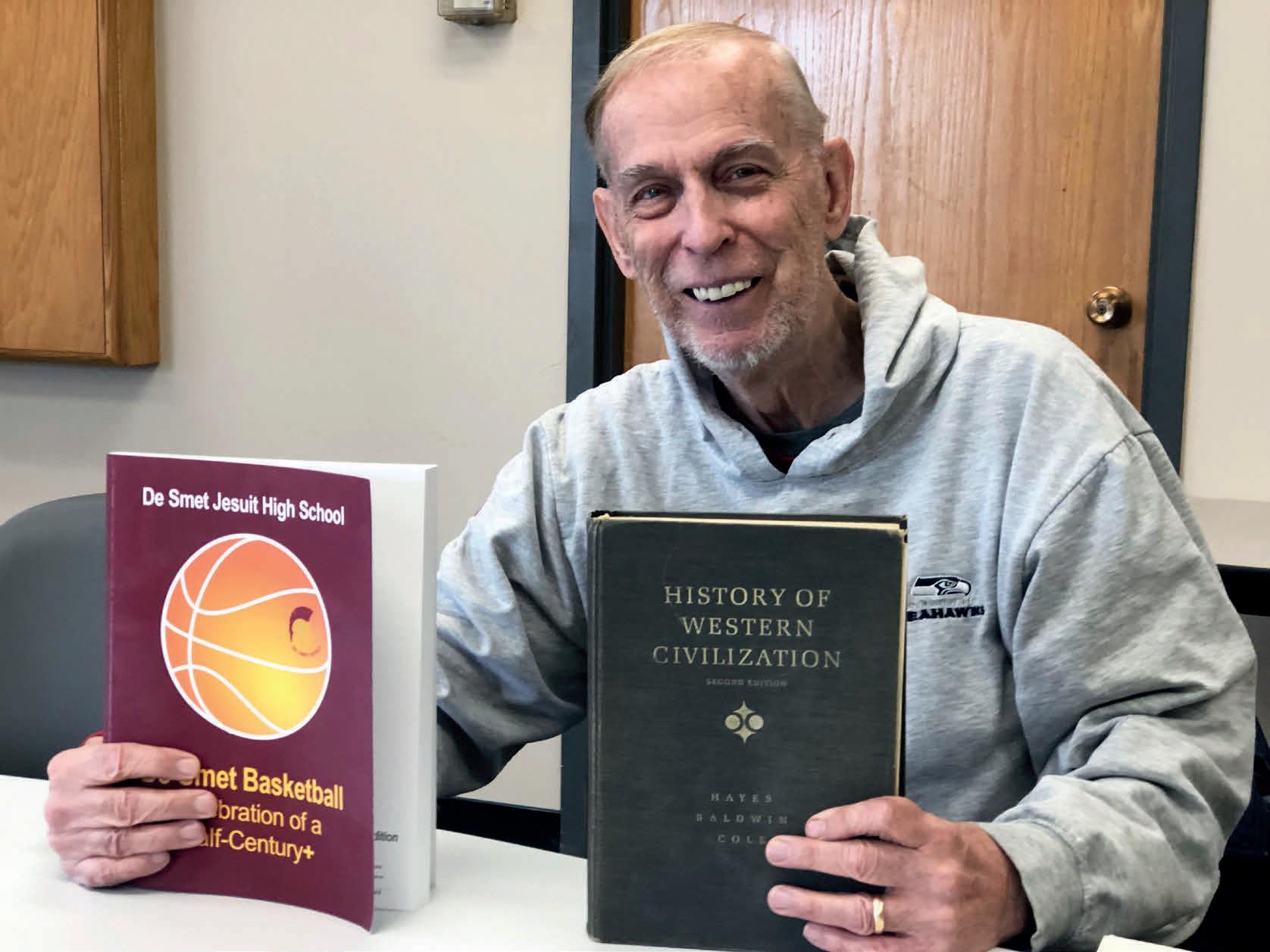 By Tom Klein Class of ‘73
Fifty years later, it’s still a whirlwind: 12 nights in late February and early March – a dozen-day ride to destiny for an academic institution on New Ballas Road.
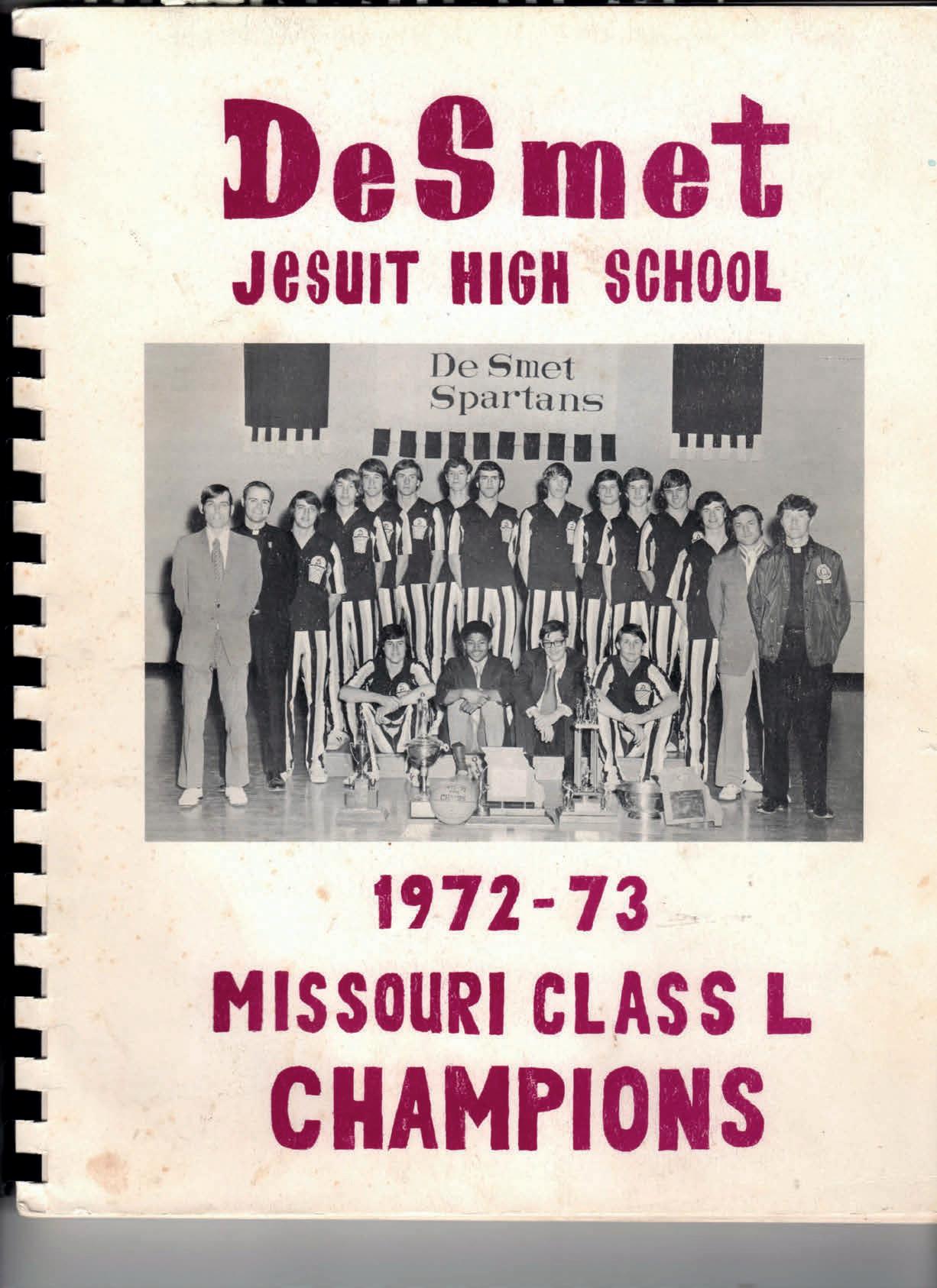
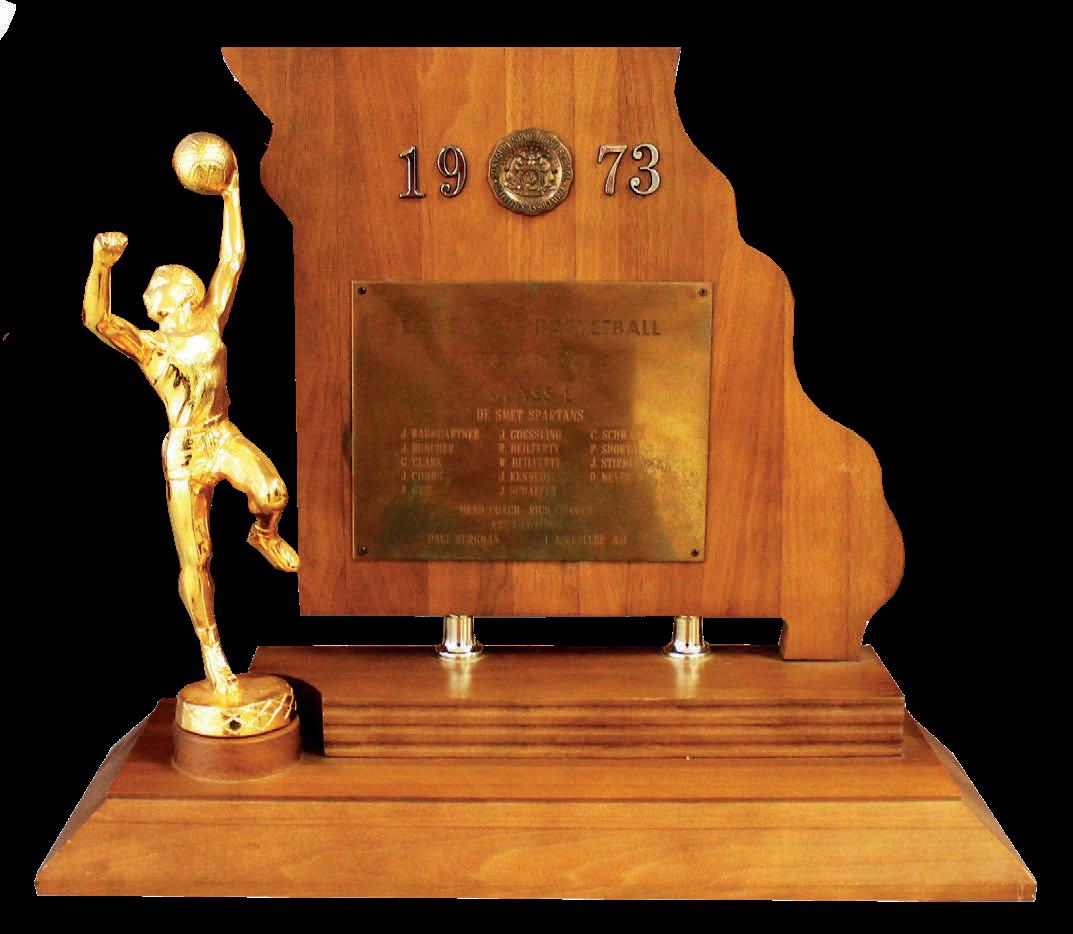
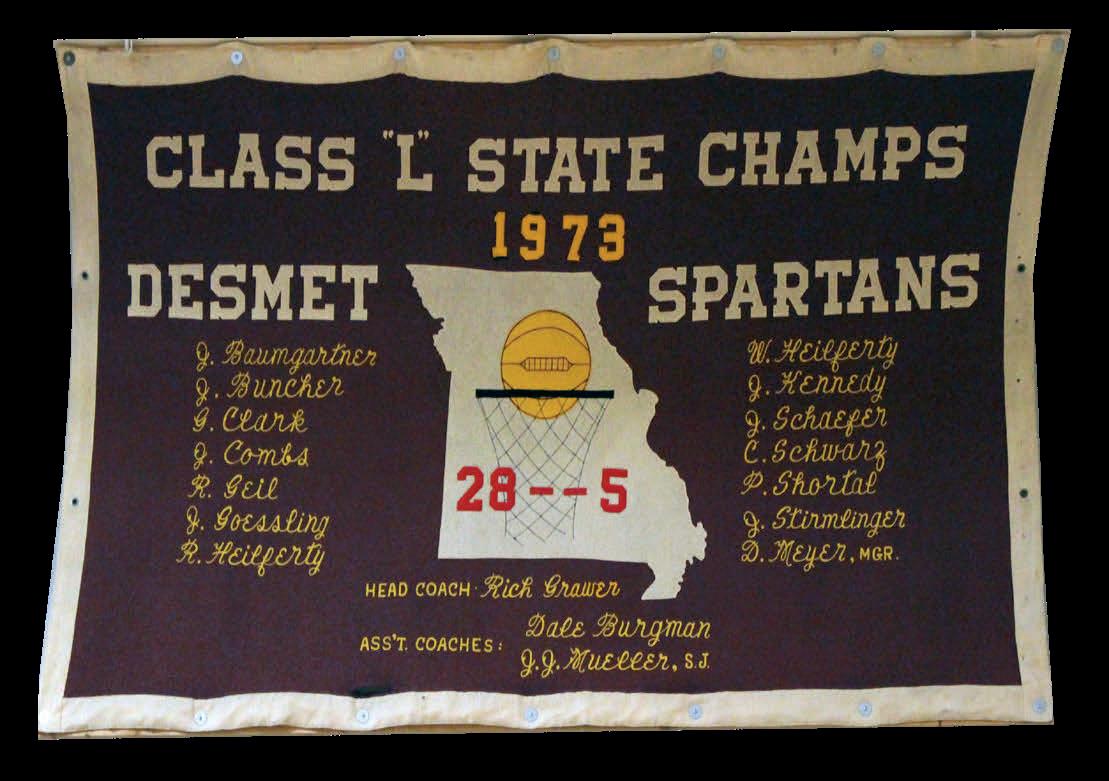
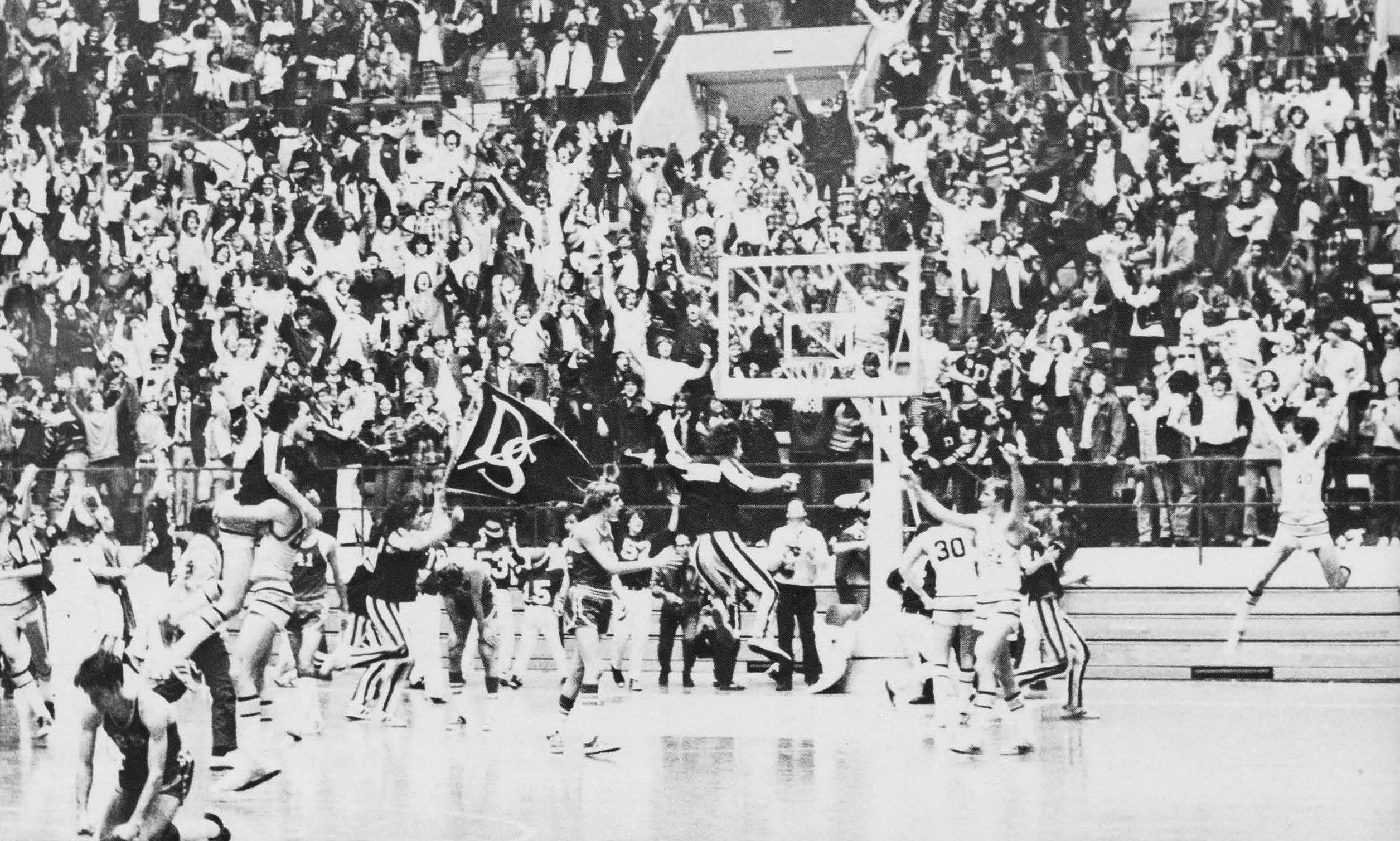
From Feb. 27 to March 10, 1973, De Smet Jesuit High’s basketball team withstood seven playoff challenges, reaching the pinnacle in Columbia, Mo. with a 51-47 victory over Kirkwood in the state title game.
A school’s championship calling had just been placed on speed dial.
In only its fourth season of varsity competition – and just the third with a senior class – De Smet laid claim to the school’s first-ever Missouri title.
During their run, Rich Grawer’s Class L champs (28-5) avenged two regular-season losses and eked out two heart-pounding state victories on dramatic late shots.
Most of their victims were prominent: Parkway West, St. Charles, St. Louis Northwest, Sedalia Smith-Cotton with 6-8 All-Stater Kim
Anderson, and finally Kirkwood – in the first televised Missouri basketball title game.
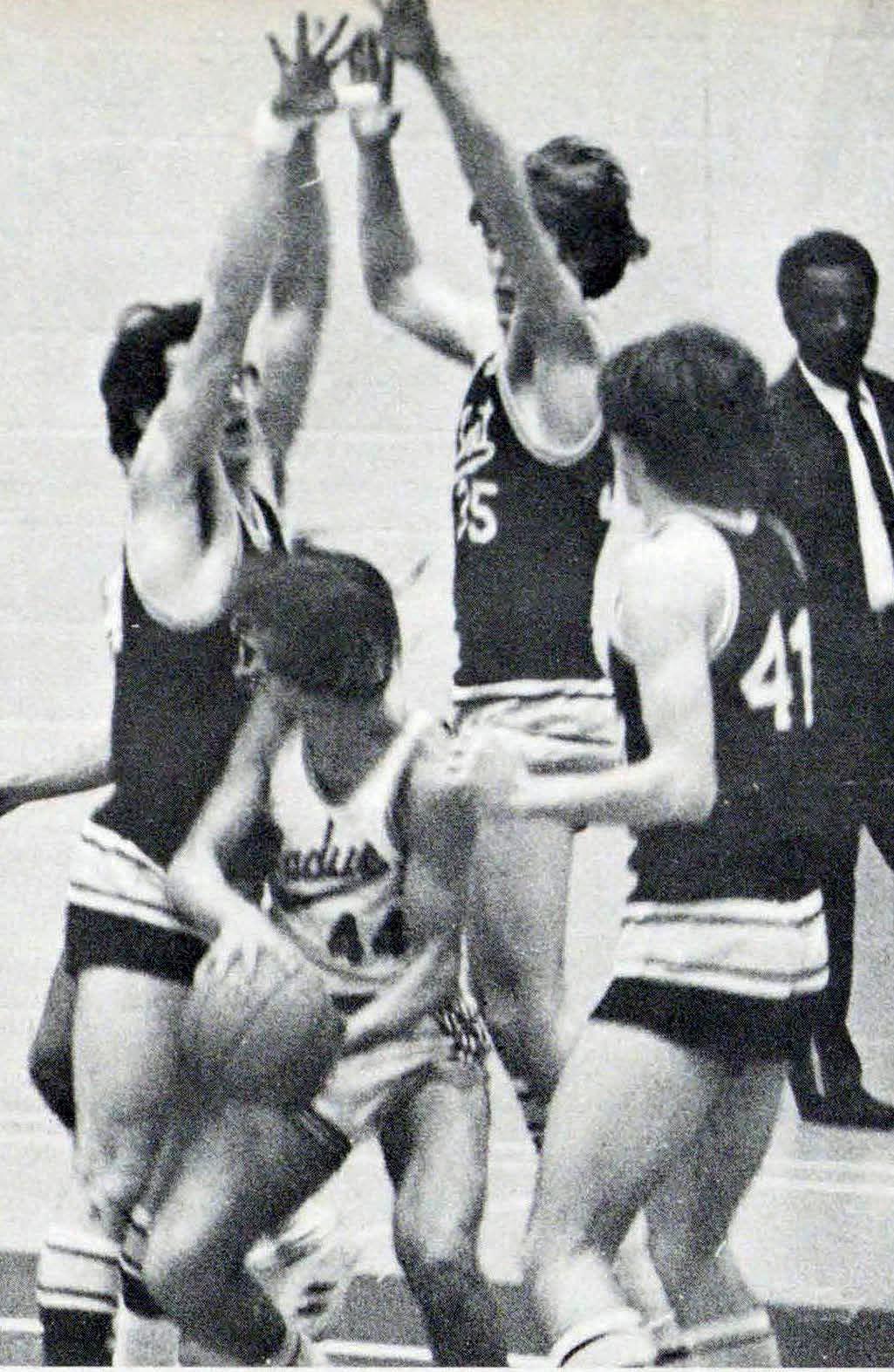
The key names of the victors have a special resonance in De Smet hoops history, with Jim Kennedy, an All-Stater and soon to be Mizzou star, pacing a group of three double-figure scorers, four other members of the supporting
cast who played a lot and two brothers who could play in a pinch.
Perhaps the most recognizable name of all, though, was the coach himself. Grawer, who played point guard on a state title team at St. Louis U. High in 1961 and an NAIA champion at Rockhurst in 1964, briefly taught and coached at SLUH before
building De Smet’s program from the ground up.
He had bachelor’s and master’s degrees in history from Rockhurst and St. Louis U., respectively. And he brought a cerebral, structured approach to De Smet basketball – a method that provided the mechanics of De Smet’s first title.
On that special championship Saturday night in Columbia, he celebrated with parents, alumni and his team. Less than 36 hours later, he walked into his “Western Civilization” class at De Smet, still a month shy of his 30th birthday, and received a hearty ovation.
Grawer, as much teacher as coach, took the applause in stride, then politely reminded the class that even amid celebration, more than two months of school remained, and students would be expected to stay on track.
But while studies were the immediate focus, the first-ever title had a telescopic reach.
“That set up the future of De Smet,” said George Hasser, a De Smet teacher for 40 years, alumni director for 20 and coach for 13. “I know academically we were doing very well, but academics doesn’t get you a lot of students – athletics does. That helped populate the school. I think it made the future much brighter for the school.”
De Smet’s inaugural title wasn’t some cute darkhorse story. It had been built amid adversity early in the season, was battle-tested against a difficult schedule in midseason, and survived every haymaker foes could throw in the postseason.
Less than six years earlier, De Smet’s first class of freshmen walked into a gymnasium that featured only four rows of bleachers. The ‘73 state champs regularly played before overflow home crowds that easily eclipsed 1,000.
The school with a name often mispronounced (sometimes profanely) suddenly had a gigantic statewide profile.
By climbing to the mountaintop, De Smet had changed the topography of Missouri basketball and athletics. Within a decade of winning their first title, Grawer’s Spartans won two more titles before he moved on to an assistant’s job at the University of Missouri in 1981, then became coach at St. Louis U.
Grawer left De Smet with a
269-88 record, including a state large-school record 63game winning streak.
The program has gone on to five Missouri titles and 14 Final Four trips, and its championship spirit became infectious. In 54 years of varsity play, De Smet has 24 Missouri state association-sanctioned team banners -- including 15 combined in basketball, soccer, football and baseball – and 76 topfour finishes. The school also has 26 individual titles, and numerous championships in
sports that don’t have “state” sanction.
Grawer discusses the special ’73 team in an interview with the De Smet 1973 Reunion Yearbook.
Other than “state champion,” what adjectives best describe your ’73 team?
Grawer: I think we had great balance, and obviously made great effort. The kids were basketball-smart. They could adapt to different styles. They could play up-tempo; they could slow it down.
You were quoted several times in that era about their “poise.”
Grawer: You have to have a lot of luck to win a championship. We beat St. Charles on a last-second shot by Kennedy; we beat Northwest on a last-second shot by Gary Clark; we beat Kirkwood in the championship game by four. So that shows you a lot of poise, to win games on last-second shots.
One facet of your personal “basketball philosophy” concerns being a “gracious loser.” That means being a good self-evaluator – taking inventory of mistakes after a loss. This team epitomized that. Your message didn’t fall on deaf ears.
Grawer: It didn’t fall on deaf ears because the kids learned how to play different ways. They learned how to execute a game plan. And their basketball intelligence – I guess their overall intelligence –was a key factor. They were smart kids.
Clark’s father, Robert Clark, was a World War II veteran in Germany. Gary has said many players back then had parents who’d served in World War II -- parents who didn’t want to hear excuses. Was that a factor in your success?
Grawer: I think that’s true. I used to tell my kids, “Hey, don’t complain to me about your coach or a teacher. You have to do something about it on the court; you have to do something about it in the classroom.” And I was bless ed to have parents of players like that, who had that same philosophy.
What were your expectations for 1972-73? In 1970-71 you reached the state quarterfinals, but followed that with a rebuilding year. Coming off 1971-72, what kind of talent did you think you had?
Grawer: I knew I had two good front-liners in Kennedy and Jim Goessling. I didn’t know about our guard situation. We had two key transfers, Joe Baumgartner from Augustinian and (junior) Bill Heilferty -- who had moved from New York with his (senior) brother Bob. I didn’t know how good they would be. And then I knew I had Clark and Paul Shortal and Jeff Combs, all coming off the JV or B team.
We had a nucleus of about eight or nine players who could be competitive with each other and make each other better. How good they could be ended up revolving around the unknown of Joe Stirmlinger, who came along and played center
and allowed Goessling and Kennedy to play forwards. If Stirmlinger hadn’t played center, one of those two would have had to play inside. I was able to move them a little bit further out, which was very important.
Sketch out a quick synopsis of your key contributors.
Grawer: Kennedy was a scorer, the best athlete on the team. Goessling was the emotional leader and, as I’ve said many times, the MVP of that team -- because he rebounded, he got assists and he scored double-digit points. Stirmlinger was our inside presence who enabled the
Grawer: I had the luxury of guards that I could trust and put in at any time –Baumgartner, Shortal, Clark, (Bill) Heilferty. And then it all began to mesh. And even at times we used Combs as a guard. Guards are the backbone of your team. If they can’t get the ball up — can’t get you into your offense and spearhead your defense — you’re not gonna win. Well, I had five guys who could do that.
You had incredible scoring balance – with three guys in double figures and seven who averaged more than six points
Grawer: And that’s a credit to the fact that they accepted their roles and worked as a team. But I want to emphasize: I certainly know that deep down inside each one of them wanted to play every minute of every game.
other two to do their thing. Shortal was the quarterback. He wasn’t expected to score a lot. Clark came off the bench and was always a good scorer – could shoot the ball and score a basket for you. Baumgartner was a defensive stopper, although he could score. Good outside shooter. Combs wanted to start, I know that. He came off the bench though, and could shoot perimeter shots. He wasn’t overly big or a strong rebounder, but he could spell Goessling or Kennedy and give us quality minutes.
Your backcourt really blossomed.
That’s a challenge for you, finding ways to channel that competitiveness.
Grawer: I can’t give you one, definitive answer as to how I did that. Everything was just based on what I needed in a particular game -whether it’s defense, offense, ball skills, whatever. I could just say, “You get in there and do this” to the guys on the bench, and they did it. And we were involved in a lot of close games, particularly as the playoffs started.
You’ve always praised the bench players who didn’t play, but still worked hard.
Grawer: Well, first of all, those three (key) guys who
didn’t start, really played hard in practice -- because they wanted to start. And John Schaefer, John Buncher, the Heilfertys, Chris Schwarz, Rich Geil -- those guys motivated our other guys to perform. Without those guys, you can’t have a good practice. We were blessed there, too.
Let’s talk about Kennedy’s freak preseason touch football injury, a fractured collarbone that probably cost you some early games. You were quoted as saying, “I should have my head examined if I ever let that happen again.”
Grawer: I said that and yet, I did not discourage Kennedy from playing football. He was a good football player -- a good tight end, and at 6-6 he made an imposing target. I can understand Bob Christian’s dismay when Kennedy told him (about playing only basketball). I was a little bit facetious when I said I should never let him play intramurals. I would never stop a kid from playing football or playing intramurals.
It was a blow to start the season. But our goal was always the same: You play the season for the postseason and to get to the state championship, to get to the Final Four. If you’re 10-10 when district (play) starts, but you win the district, you have accomplished your goal. And you get to that district (title) playing your best basketball, by playing the best competition. If it means losing some games, so be it. The losses early, the 3-3 start … as a coach you’re disappointed.
But at the same time, it gave us an opportunity to play Baumgartner more, to play Combs, to play Clark a little bit more. Yeah, I wanted to win those games, but it wasn’t the end of our season because we were 3-3 without Kennedy.
You played 24 games against teams that finished with a winning record, including five against teams with at least 20 wins. How important was that?
Grawer: The Bi-State (Conference) that year was gonna be really good. St. Louis U. High and CBC were really good. We knew automatically we had 10 games that were gonna be tough. Going on the road to Althoff and Assump-
timeouts and everything. (That) wasn’t just what we did in the ’73 season, but in 1968-69 when I started (at De Smet) and a freshman team I coached at St. Louis U. High.
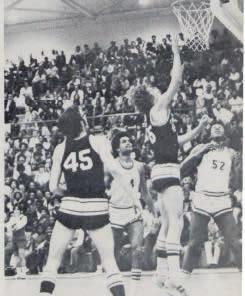
The routine is just part of establishing in players’ minds that, hey, we’re organized. Being organized is really important as they go into a game: They know the coaches are organized, that they’re organized, and if they follow through there’s a plan, there’s a system. Everybody’s got a duty, an assignment. That was all part of it.
Did your discipline come from your father (Tony) and mother (Helen)?
tion is not easy. We were in the Normandy Tournament. And we were to have Northwest and Vashon (regular season), but we didn’t play them because of the (city) teachers strike. It was the best schedule we could put together. And it toughened us up.
How important were your efforts to establish a culture and set procedures for everything in building a program?
Grawer: My whole life was one of structure, obviously. And I thought that’s what you had to do to inculcate a winning attitude with your team. They had to have set routines that you followed religiously -- before the game, after the game, at halftime,
Grawer: Mom and Dad, I don’t even think they had a high school degree – certainly no college degree. But Dad worked for Rawlings Sporting Goods. He was involved in making uniforms, stuff like that. I remember he used to bring home baseball gloves for me, baseball bats. He’d bring in a baseball jersey.
He was basically a cloth maker. Mom was a home-worker. She raised me and my sister (Patricia).
They were both strict. We had to go to church every Sunday; we had to go to confession almost weekly. I remember if I did something really bad while Dad was away, he’d take me down to the basement after mom complained and would lecture me. He wouldn’t beat me, but he would scare me. So we were always brought
up with trying to do the right thing and be disciplined.
Is that where your “teaching gene ” kicked in?
Grawer: The desire to teach came from St Louis U. High I was blessed with a lot of really good teachers when I was a student there. And I was particularly impressed with the history teachers They made it interesting; they made it something that I liked to study. I was exposed to all kinds of history: American history, European history, ancient history. I just liked to research the past and to know present.
Anyone who has been in one of your classes knows it’s impossible to separate teacher from coach. How seamlessly did teaching translate into coaching?
Grawer: The techniques used in teaching … making things as simple as possible, explaining as simply as possible, establishing routines, getting kids to expect discipline in the classroom -- I carried those over to the basketball court. I tried to prepare just like I prepared my classes. I tried to prepare a practice plan every day. Just like you challenge kids in the classroom by giving them assignments, we challenge kids by giving them an assignment in the game. All of that is part of good teaching. I just thought it came natural and that’s the way everybody should do things
After a game in the locker room, I would give the kids an immediate feedback of
De Smet’s ’73 team title wasn’t that year’s only honor for Jim Kennedy, who also
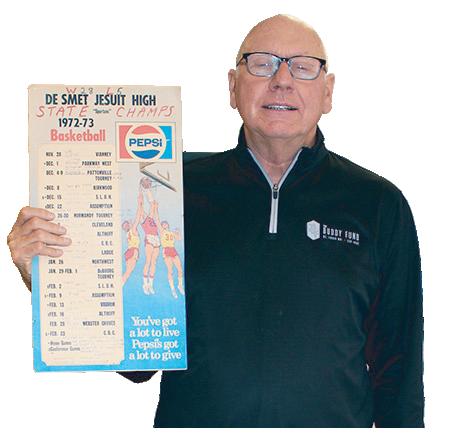

A 6-foot-6 frontliner, Kennedy paced the team in scoring and rebounding average (15.5 and 10.1, respectively) as well as
And more big moments lay ahead. Over the next four years he’d start three seasons at Mizzou, win All-Big Eight honors and be drafted by the NBA’s Detroit Pistons.
But De Smet’s groundbreaking title run wasn’t entirely turbulence-free. Here’s Kennedy’s impressions of the season’s ups and downs.
A multisport athlete, Kennedy had put football behind him by the fall of 1972 except for a non-contact, casual version in intramurals. No harm there, right? And so it happened that virtually on the eve of the basketball season (Nov. 1), Kennedy and was home free. He outran the pursuit, but couldn’t outrun himself or the eventual irony. On his way to a TD, he stumbled and fell (best illustrated recently by the pratfall of Georgia’s Kenny McIntosh as Ohio State defenders frantically gave chase in last
“That’s exactly what happened,” Kennedy remembered. “I went down and just landed on my shoulder.”
The jarring news: a fractured collarbone, which sidelined him at the start of the season. His shoulder ached and his psyche was a little bruised. Kennedy immediately remembered coach Bob Christian’s wrath months earlier when he told him he was opting only for hoops. “I didn’t want to
Once
run into Bob Christian because that was just mortifying, to think I gave up football because I didn’t want to get hurt.”
With Kennedy seeing limited time in the them, De Smet opened the season 3-3. Christian, nicknamed “The Bear,” showed his teddy bear side years later, when he crossed paths with Kennedy and said, “You know I love ya!”
By early December, Kennedy was still groping for top form when De Smet lost 66-64 to the host school in the Pattonville
Kennedy missed with De Smet down by a point in the closing seconds.
“It’s a team we oughta beat,” Kennedy said.
It was a shot that should have fallen. Kennedy beat his man to the spot along the glass. This was no brick. It barely nicked the rim, rolled all the way around, and fell out of the cylinder.
Kennedy was distraught, but made his peace with it. “I felt very awkward in that tournament. I didn’t feel comfortable because I really wasn’t in great shape. I
“I always look at those kind of shots … there were shots that went the other way, where I didn’t feel like I had a good look and it goes in. So it all evens out.”
highly ranked Lovejoy in a hastily scheduled makeup game after both squads had games canceled against St. Louis city schools. Kennedy had 23 points, 10 rebounds and several blocks as De Smet cruised 87-70. Kennedy never would have imagined it after watching Lovejoy warm up.
“It wasn’t the old, typical just two lines, a rebounder and a guy doing layups,” Kennedy said. “It was this choreographed. I remember being somewhat mesmerized by how cool this was. I thought, “If those guys play as well as they perform this pregame warm-up drill, we’re in for a long night.”
As it turned out, Lovejoy was a rehearsthat game that we can beat anybody, because we just drilled those guys. There was no fear factor left as far as I was concerned.”
With Kennedy sidelined, Parkway West had visited De Smet, controlled play and won early in the season. In West, De Smet turned the tables. Controlling the tempo with a solid game
Miller and 6-7 John Nichols.
Kennedy scored 21 points and outjumped Litzau by about six inches on the game’s opening tip. That set the tone for a 54-26 rout. “They were weaknesses,” Kennedy said.“It didn’t
take long to really understand that with their size there was not a lot of quickness.”
As usual, archrival St. Charles took of state play. With the score tied at 55, Grawer executed one of his bedrock precepts – always design a play for your great players. In this case, it was a fallaway turnaround jumper by Kennedy from the right baseline – and a 57-55 victory. -
dence,” Kennedy said “If you can get the ball clean, you really feel like you’re gonna make a basket. That was the baseline. I really worked hard on the fadeaway baseline jumper.”
The season’s most spine-tingling game
UMSL, over Northwest of the Public High League, on Gary Clark’s late jumper (related story, Page 27). Kennedy had fouled out with his team trailing in the fourth quarter. After he departed, he didn’t expect his team to be around much longer, either.
“I was sitting on the bench (watching) the game – and I’m not saying this because I’m on the bench -- but I’m like, ‘This is not gonna end well.’ I didn’t think we were gonna win the game. After the game, you had to go down the stairs into the basement to the locker room. There was a Northwest player sitting on the stairs, just crying. I felt so bad for the guy, I really did.”
Far beyond the magic of ‘73, Kennedy friend, teammate Jim Goessling, and coach Rich Grawer.
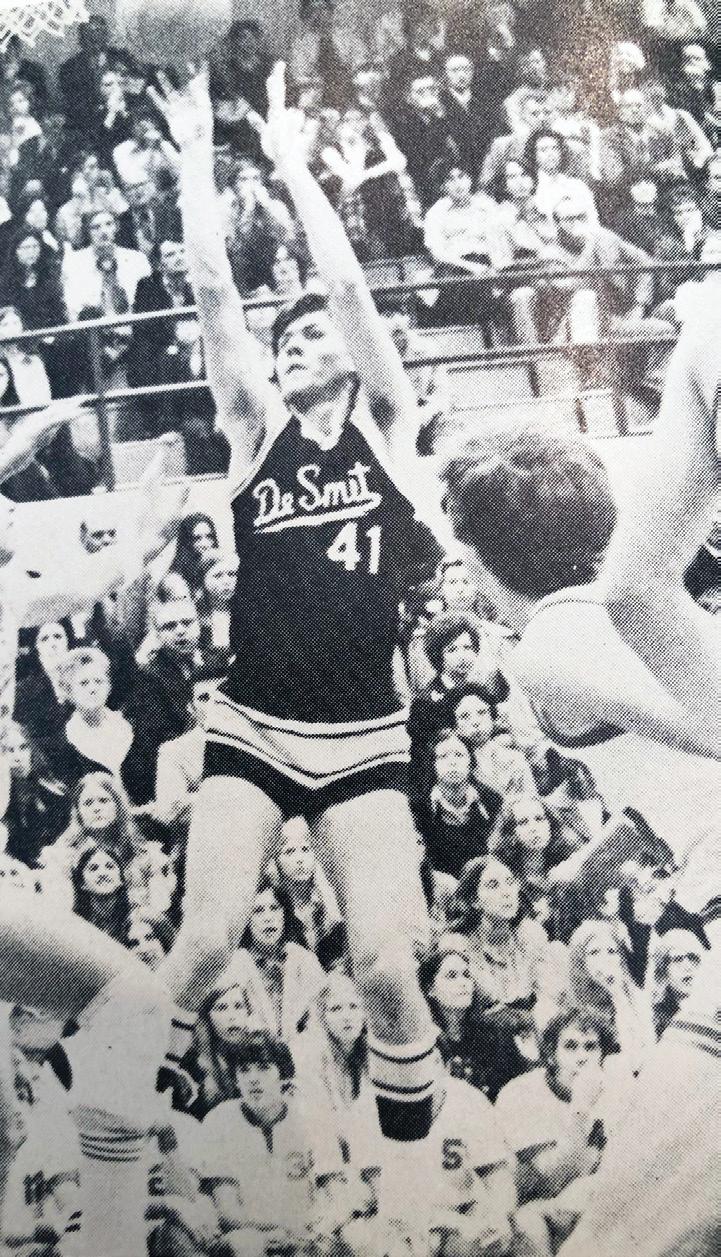
First, Grawer: “He probably can break down a game as well as anybody. I
remember hanging out with (Rick) Majerus at the MAC downtown. I know the game, but I don’t see things that guys like Rich Grawer and Majerus do. Rich was able to do that at a young age. Norm (Stewart) and Rich are similar guys — more oldschool, fundamentals, high standards. Norm hired Rich (as a Mizzou assistant), and he told me Grawer ran some of the best practices that he’d ever seen.”
And in Goessling, an ex-grade school rival whom Kennedy said he “hated” teammate. “Jimmy was a tough guy. He was willing to do anything that was needed for a particular moment. Jimmy couldn’t care less about getting his points. I’m not sure I’ve met anybody, maybe Larry Linkul, that loved De Smet and loved De Smet basketball as much as Jimmy Goessling.”
five minutes. Never longer, never 30 minutes in the locker room. Then the next day, after I had a chance to analyze the game and film, we’d give them feedback in practice: “You did this wrong, you did this well.” The correlation between teaching and coaching was just natural to me.
Students often would marvel at how you conducted a disciplined class, yet channeled that into intense participation through creative teaching methods. Can you explain that process?
Grawer: I think you give me too much credit for the nature of the classroom: No. 1, I was closer in age to the kids than many of the teachers; No. 2, I think I came prepared where some teachers weren’t. And I think to a certain degree maybe the kids were a little bit afraid. But it was easy to establish classroom discipline. The fact that I was a successful basketball coach helped. They had respect for me.The kids didn’t give me any trouble really.
Playing the devil’s advocate, one might think being young was a negative that students would turn against you. No?
Grawer: I know when I was a student, I had a couple of Jesuits at St. Louis U. High who were in their 60s and 70s. And we just made fun of them all the time. They were slow-moving, slow-talking, just their whole mannerism … they weren’t vivacious. So in that sense my youth did help. I came in bouncing and vivacious and organized, and
generally gave back papers and tests the next day. I think kids respected that.
Which of your coaches helped instruct you in the game?
Grawer: (Longtime SLUH coach Emmet) Hanick was a smart guy. He taught physics. Very cerebral. Never lost his temper. He taught us more structure and discipline than X’s and O’s. I remember his calmness, his poise, his intelligent analysis of the team we were playing. (Rockhurst College and eventual SLU coach Joe “Buddy”) Brehmer was more the X and O
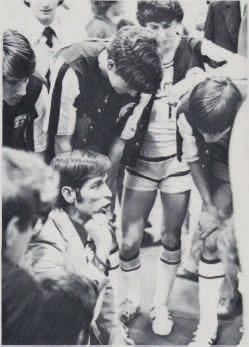
guy. Brehmer was more of a strategist. A lot of my offensive and defensive tendencies came from him.
And I learned a lot of X’s and O’s by being a voracious attendee at clinics during the offseason. I read as much as I could. When games were on TV, I would take notes. I became a great student. I was never afraid to copy. If I saw a coach run a good inbounds play, I would steal it. I had no shame in that. I was very much a copycat.
How much coaching acumen was framed by being a point guard – an orchestra-
tor -- as a player?
Grawer: I think that did help, being the point guard. But what also helped, I did not start on my high school team until my senior year. I sat on the bench as a junior and was very observant. I was not a screw-around on the bench. I always watched the game and listened attentively to what the coach said. In college I was never a starter until my senior year. And so the same thing happened.
I think Brehmer knew something, because Brehmer got the job at St. Louis U. my senior year – we had just completed the season – and he asked me if when I graduated I wanted to come and be his assistant. I had at that point a job at St. Louis U. High. And although I learned a lot from Brehmer, he was a tough guy and I was scared of him. I did not go there. But I think he saw something in me because he knew my attention to the game.
De Smet students frequently thought it was tough being assigned two hours of homework a night. But you had chores that took much longer: lesson prep, running practices, scouting and helping with your kids at home.
Grawer: When I got home, I would take care of the academic stuff first, if I had papers to grade, lessons to prepare. Then if I had anything basketball-related, which I always did, I would do that. I turned to my wife (Theresa) this morning and said, “Well, when did I help you with the kids?” She said, “rarely.” That made me feel
bad. Her ability with raising the kids allowed me to do the teaching and coaching.
You’ve said she was the most influential person in your career.
Grawer: My coaching career -- because she let me do it and didn’t complain a lot. She even reminded me about tests, where there were multiple-choice questions, and (the student) had to blacken in No. 1, 2, whatever. I would hole-punch those answers out. She reminded me, “Do you remember Shelly (oldest daughter) helped you grade a lot of those?” She could mark the ones that were right or wrong.
And then in those days with Super-8 film of a game that I put on at home, the boys would watch it. I think that helped bind our family together. I remember taking the kids to our high-school practice on Saturdays, to try to help (Theresa) get some time off. It helped them become better players, because as they were sitting on the sidelines they’d pick up a ball and start dribbling it.
I tried to be a good father –probably could have been a better one. But academics came first when I got home, then I’d work on basketball, then the family. My wife would have preferred family first.
So this is pretty much wallto-wall duty for you when you leave school. When did you sleep?
Grawer: Most of the time it was late, 11 o’clock. If I scouted, I got home about 9 and that would push every-
thing back. So now I’d be getting to bed at midnight or so. It was a tough go. It’s much easier today because you don’t have to physically go to the games. They exchange through technology.
And there was another thing I did. (Coaches) Bob Benben from Pattonville and Phil Noser from Augustinian were dear friends. I had established a rapport where we would share scouting reports. I would even give them a scouting report on their team after we played them, and they would give me one on my team.
You’ve always been acclaimed for your game preparation. Describe your scouting reports and procedures.
Grawer: Probably four or five pages (scouting report). You start with a general overview of the team you’re about to play: “We’re facing a team that’s hot right now; they fastbreak.” So a general description, and then a three- or four-line statement on each player. Their offense, their defense and then our game plan. It always ended with special situations: outof-bounds plays, last-second plays etc.
The first thing we did after a Tuesday game would usually be to come in and review video with the kids on Wednesday and try to work on the things we did not do well. Thursday we’d come in, have the scouting report, and prepare specifically for the opponent we had Friday.
"I turned to my wife this morning and said, 'Well, when did I help you with the kids?' She said, 'rarely.' That made me feel bad. Her ability with raising the kids allowed me to do the teaching and coaching. ... I tried to be a good father -- probably could have been a better one. But academics came first when I got home, then I'd work on basketball, then the family. My wife would have preferred family first."The Spartans were duly decorated at season’s end, as the adversity of a 3-3 start ended with a 25-2 rush to a title.
Let’s look at a couple of key regular-season games. Kirkwood and Parkway West were important as learning experiences.
Grawer: We played Kirkwood early and got beat (83-70). I remember thinking, we can’t let teams get in the 80s if we’re gonna be really good. I remember Denver Miller coaching them and having a fastbreak-type offense, run-and-gun almost like Loyola Marymount.
Important games beyond that were all the SLUH games…
Grawer: Yeah, we beat ‘em three times that year.
… The second Ladue game.
Grawer: We got revenge on ‘em. (Editor’s note: A 71-66 win at Ladue after losing to the Rams in the Normandy Tournament title game.)
And of course Lovejoy.
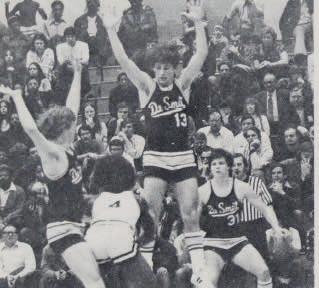
Grawer: The Lovejoy game was important because it was against a really good, athletic team from the East Side who had a tremendous player, Darryl Winston, 6-7, averaging about 36 a game and he ended up playing at K-State. I think he got 32 in that game, but we won 8770. Lovejoy was a game we played fast. That was a makeup game because of the (city) teachers strike, and Lovejoy was one of the best teams in the state of llinois.
You were leading by 30 before you cleared your bench in the final minutes.
Grawer: And (looking
at schedule), we had 100 against St. Mary’s (102-58). We had 91 against Assumption. So those games in February showed me we could play fast -- with the very athletic teams. If we happened to go against some city teams and they wanted us to play fast, we could do that.
Right before postseason play, you made a personnel move worth noting, moving Baumgartner -- a very good player -- from the starting lineup and putting in Clark, which would prove critical. What did you see in Clark?
Grawer: Baumgartner was a defensive player primarily, although he could score. He was a star at Augustinian. But Baumgartner hit a streak where he just wasn’t shooting the ball well. We needed more offense and Gary always could score. Baumgartner was more of a guy who would score off (others’) penetration and they would
pass him the ball. Gary could take it one-on-one, back in and shoot the jumper over you.
But we still played Baumgartner a lot. Knowing the competitor he was, he was not happy with that. But he didn’t show it. I would have been disappointed if he was happy with the move. It motivated him to work harder in practice, and when he got in the game he was more tenacious than ever.
Let’s look at the state playoffs. The 54-26 win in the regional final vs. Parkway West was a masterpiece of game management. You forced their big guys to shoot from the wings. West missed 36 of 49 shots from the field.
Grawer: To have a chance to win a state championship, you have to get out of the regional (now called “districts”). And Parkway West was in the regional. They
were tremendously big – 6-7, 6-7, 6-8 – and beat us pretty handily early in the year without Kennedy. When we won that regional championship game and held them to 26 points at their place, I thought, not only can we score, but our defense can be really good. That’s when I knew we could win it all. I realized we could play fast or slow – and the kids were willing to do either.
Then came St. Charles. With the game tied at 55-all in the final seconds, you run a play specifically for Kennedy along the right baseline. His fallaway 15-footer wins it 57-55. (Related story, Page 22.) You have said, “Coaches design plays for their great players.” Classic example?
Grawer: Yeah, he was our star. We were gonna win or lose with him.
Next was the Northwest state quarterfinal and Clark’s famous shot (related story, Page 27). But before that, game management – your coaching credo -- was virtually obliterated when you found your dressing room locked for most of halftime at the University of Missouri-St. Louis.
Grawer: We couldn’t get in. I know I was frustrated because it threw off our routine. In the back of your mind you’re thinking, “Is this deliberate? Do they want to throw us off?” I kinda remember trying to use that as motivation to our kids: “Look, they’re trying to take this away from us.”
We were up 11 (35-24 at
The most famous shot in De Smet basketball history has engendered quite a bit of good-natured ribbing between two buddies through the years
“I’ve had to listen to Gary Clark tell me for 50 years how he hit the winning shot against Northwest,” Jim Kennedy has said, more than once
“We’ve had so much fun. That shot has lived in infamy. It never goes away. He tells me, if he hadn’t hit the shot I probably would have been playing at Fontbonne instead of Mizzou. And I tell Gary, ‘I owe you my whole life. I owe everything to you.”’
slight amendment to Kennedy’s joke. “No, he would have gone to UMSL, then Goessling would have probably gone to Tarkio,” he said.
For the record, Kennedy did indeed go to Missouri and became an All-Big Eight performer, and rugged senior forward Jim Goessling landed at UMSL. Clark, a shooting guard from the class of 1974, went on to play at Drake.
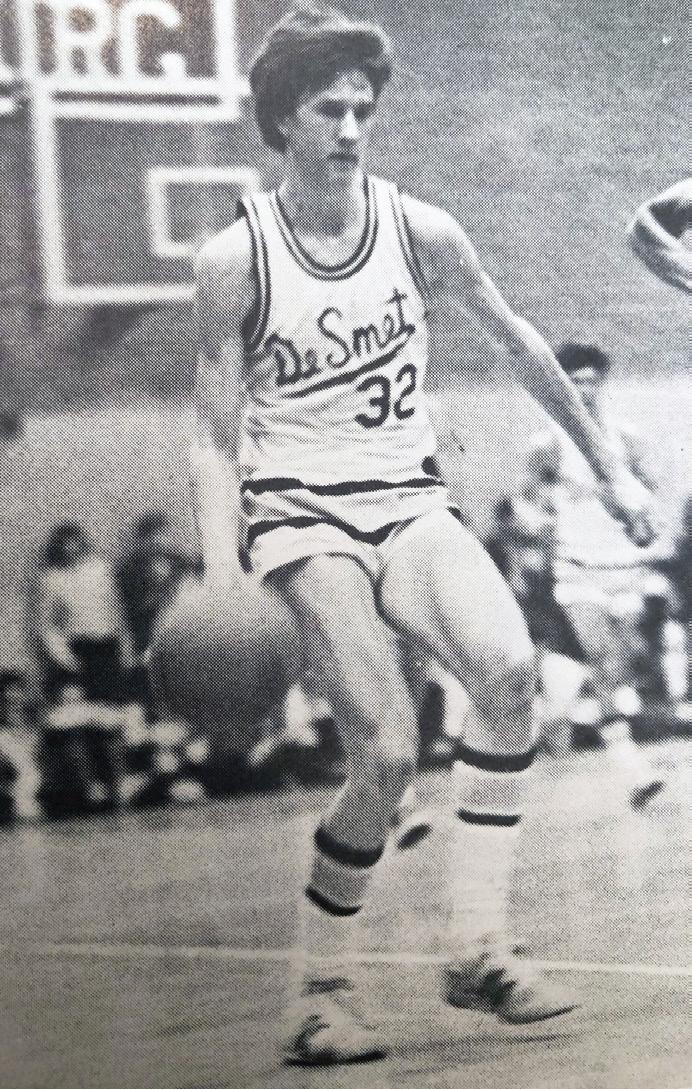
One can argue that much of De Smet’s hoops tradition hinges on the shot, which came with the Spartans barely clinging to life in a 1973 state quarterpower Northwest, at the University of Missouri-St. Louis.
De Smet, up by 11 at half, had seen at one point in the fourth quarter – and was down 51-50 with 13 seconds left. After the Blue Devils’ Stanley Stevenson missed the front end of a one-andone free throw chance – his third such an outlet pass in the backcourt. He coolly worked his way into the front court and hit the game-winner
with 6 seconds left. De Smet had a
The “most famous shot” discussion isn’t really important to Clark. But he said it’s “absolutely” the biggest shot of his life, and his feeling of pride about it goes hand in hand with a sense of humility.
“Oh my gosh …” he said. “My success at the high school level was all based on the ability to hit the open shots. It wasn’t like I was any type of super athlete.”
Clark’s shot was the gem that emerged from the intense pressure of the -
er for the season (53.4 percent), had fouled out in the fourth quarter after guarding Northwest’s best player most of the night. That left Clark (46 3 percent) as the next-best option
“I remember Jim Kennedy was up against Reuben Shelton,” Clark said. “He would have been the go-to guy, but he had fouled out.”
Clark said Coach Rich Grawer and assistant Dale Burgman had conferred shortly before the game-winning sequence. If the opportunity arose, they’d run “the 1-4,” an isolation play designed
“The 1-4 was they take four of the on the baseline,” Clark said. “And then it was my responsibility to come up and take my man one-on-one. During the previous summer I had spent a lot of time on those type of skills.”
Clark needed every facet of his dribble-drive game. Stevenson had gotten back, picked Clark up at half-court and was all over him every step of the
way. Clark deked each way and used a series of crossovers before stopping about a foot shy of the foul line.
to exist. Accounts are foggy on several details. Some believe they saw Clark pump-fake, getting Stevenson airborne drive jumper. Clark doesn’t remember using a fake, but Grawer said “that was in his bag of tricks.” It’s also worth noting that in Grawer’s pregame scouting report, he had written, “A good
“I get kidded about the shot all the time,” Clark said. “It wasn’t the most athletic or anything else, but it did give De Smet momentum when we needed it.”
Added Kennedy: “Plain and simple, if Gary doesn’t make the shot we don’t go to Columbia.”
And with that cornerstone removed, who knows what the course of De Smet history might have been.
Tom Kleinhalf) so that would frustrate me even more, being locked out of our locker room. Our routine was certainly disrupted. Because of the frustration, I bet we started the second half pretty poorly. (Editor’s note: They did, as Northwest outscored De Smet 19-9 in the third quarter.)
Then came Clark’s shot with 6 seconds left. He still maintains the play was called for him only because Kennedy had fouled out in the fourth quarter.
Grawer: That’s probably right. (laughs) Throughout practice, Gary literally was a guy who could come down, could deke you, turn and shoot a fadeaway. He was obviously our first choice without Kennedy.
That brings Columbia and the state semifinals (Sedalia Smith-Cotton) and then Kirkwood again for the title. Describe the pressure during those games
Grawer: The strongest memory was the win against Sedalia Smith-Cotton on a Friday night. That’s the game we had prepared for, because they had Kim Anderson, All-State player, 6-foot-8, etc. After we won that, the players were celebrating. I told (assistant Dale) Burgman we had to go back to the hotel room and start plotting for Kirkwood. I believe we had the previous Kirkwood (Super-8) tape to look at.
That was the real stress, because we stayed up awful late plotting the Kirkwood game plan: how to stop (star guard Bill) Moulder and how
not to let what happened the first time happen again. We had to plot that out, type up the report (and) make copies of it – I think we had to have the hotel make copies. I remember getting no sleep that night, realizing we were on the cusp of the state championship.
You slowed the tempo and used a 1-1-3 zone defense against Moulder, a lefthander who was weaker going to his right. It was one of several times you used that fairly rare zone in state play.
Grawer: No. 1, it’s unorthodox. No. 2, it does enable you, if Moulder gets by this guy (the first guard), then there’s another guy, and it’s a guard. A guard, trying to guard Moulder, was better than Goessling trying to guard Moulder, because of the quickness. If we use a 2-1-2 and he split us, then Goessling, Stirmlinger or Kennedy would have to
pick him up and he dishes to somebody else. They tried to attack it with a 1-3-1 offense. That’s not the way to attack it. We kinda knew that’s how they’d do it, because this was an untraditional zone in 1973 – no one did a 1-1-3.
It’s funny, Moulder and I are in the same Bible study. He always refers to us beating him in the state championship game. I think he was 1 for 14. I had the luxury of Baumgartner and Shortal, both great defensive players — two guys who could put the clamps on a point guard. We made him go right and we did not let him penetrate. We forced him to shoot.
And foul shooting (15 of 18) won the title game. During the season it had occasionally been a problem, but you “encouraged” the team to shoot free throws during lunch period.
Grawer: I was fortunate
that the administration did not put a nix on that. It was voluntary, but … peer group pressure is a wonderful thing, and so when three or four guys go in here everyday and shoot, it forces the others to do it. I was smart enough to realize peer pressure, player on player, is often the best motivator.
Describe your emotions after winning the title.
Grawer: The exhilaration was great. I think we had a get-together in the hotel. The parents had rented several suites and they had liquor and everything. But I remember being so worn out from the preparation. I remember Burgman was just the opposite. Dale was funny. He had a big cigar and more beers than you would want. I was just relieved, glad it was over and tired.
In less than a decade after ’73, you took De Smet to
five straight Final Fours, winning two and finishing as runner-up in 1981. That ’81 team went on to win the championship in 1982 under your successor, Burgman. How much was the example of ’73 a cornerstone for that success?
Grawer: (Current De Smet coach) Kent Williams said the other day that he feels pressure to get to the state championship – to win one to emulate what Burgman and I and (Bob) Steiner did. I put pressure on myself to always achieve that. I remember when I was offered the assistant’s job at Missouri, one of the factors was, what more could I do here at De Smet? I took a pay cut to go to Missouri – because I had my camps here at De Smet, and De Smet allowed me to keep all the money.

As Theresa and I talked about whether we should move our family to Columbia, where we didn’t know anybody, I said, “Theresa, I just feel so much pressure to always get to Columbia.” Not necessarily to win it — but to get there, because the papers called it the “De Smet Invitational.” I think that was one of the deciding factors. Not that the administration of De Smet would say anything – that was pressure that I put on myself.
I remember the first year at Missouri, we were really good. I felt no pressure going into a game. I wanted us to win, but if we lost I just came home to Theresa and the kids. It’s the head coach that feels the pressure. I would notice Norm Stewart before
a game against Kansas, nervously pacing and smoking, and I’m sitting there relaxed. I remember that year at Mizzou being the most relaxing of my coaching career.
You’ve had 50 years to assess ‘73. How would you quantify that team’s contribution to this school and your career?
Grawer: The 1971 team put us on the map to a certain degree. This one not only put us on the map but got us beyond that. I think you’d have to ask the other coaches – and I think I know what the answer would be – they all felt some pressure to emulate what we’d done. The fact that we did the (postseason) year-
And your buddy George Hasser mentioned that was the future of the school.
Grawer: I’m glad he said that, but again I think that’s the pressure on these guys now to try to emulate that. So what have we won, five state championships?
Yes, the last one in 1999.
Grawer: Well contrast that now: We haven’t won a state title since 1999. St. Louis U. High has not won a state title since we won it in 1961. Not since ’61 -- an illustrious program. The point is, it’s so hard to do. You have to have a lot of luck. There’s so many extenuating circumstances.
books, the scouting reports. We set up some of the models that future teams would use. Do I want to take credit for that? No. I just did what I thought had to be done. I didn’t do it to think, “I want to live in posterity here at De Smet.” That wasn’t my intent.
Your quote at the time was, “This is the greatest thing that’s ever happened to the school in terms of exposure. Some people had probably never even heard of De Smet before.” People used to mispronounce the name.
Grawer: Even Norm Stewart at times would call it Dezmit. (laughs)
You have to give De Smet credit for trying to remind students today of the great rich history of De Smet basketball. I think today, since they haven’t won one since 1999, people forget. It’s natural to forget. I started every one of my history classes with the question, “Why take history?” I said, “Man’s basic desires are food, shelter, clothing, sex.” I also said, “There’s another desire: the desire to remember.”
If you can’t remember your past, you’re lost. So I’ll give De Smet credit for trying to have the alumni come back, for trying to get people to remember. Not that these are bad days, but those were really good days. The desire to remember is really important in trying to inculcate a spirit, a vision for the school.
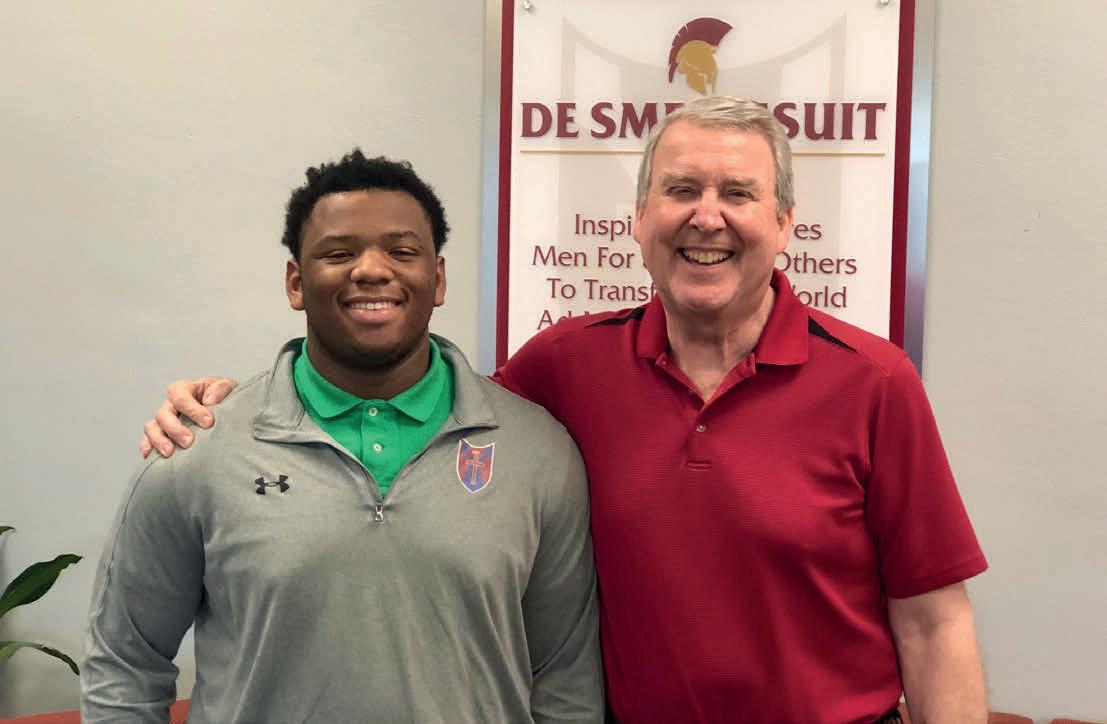
Venker showed up at De Smet this spring to congratulate Phillips. It was an appropriate passing of the torch, and a fitting end to a field competitor’s long record run.
A high-powered offense (St. Louis U. High) met a rugged defense when SLUH visited De Smet with both undefeated in Bi-State Conference play in the fall of 1971. This was the junior year for the ’73 class, but classmate Jim Kennedy figured prominently in a gigantic Spartan win.
With SLUH leading 13-7 in the final two minutes, De Smet faced fourth and long from near midfield.
Center Don Vogt (Class of ’72) picks up the story of the famous “double pass.”
When Paul Venker became aware he held the De Smet shot put record, he figured it was nice – but hardly significant. He thought the 51-foot, 6-inch throw he put on the school’s leaderboard in the early 1970s would fall faster than a 12-pound metal ball descending through thin air.
“To be honest with you, I knew at the time, this was not a great record,” said Venker, who described himself as “middle of the pack” among St. Louis shot-putters back in the day.
The school’s official records credit Venker with achieving the mark in 1972, but he swears it actually happened in his senior spring of ’73. Regardless, it began to develop equity over time – lots of time. Venker held the record until All-Stater Mike Phillips bested it with a toss of 52-11½ in 2022.
That’s a lot of equity – about five decades worth if you’re scoring at home, making it the longest-standing track and field record in De Smet history.
Venker, who was 6-2½ and weighed 195 pounds when he competed, thought the shot was merely a nice springtime change of pace after grinding away at football in the fall. The former lineman said there was “no way” he thought he’d possess the mark for virtually 50 years. “From time to time, people would talk to me about it,” he said. “After about 15 or 20 years, people would say, ‘Oh, you still have the record for the shot put.’ And I was like, ‘You’re kidding. I still do?’”
“We had practiced that play all week with Dan Welsh at wide receiver, who would receive the first pass and then throw the second pass,” Vogt said. “When (coach Bob) Christian called the play, Welsh was nowhere to be found, so he sent out Bernie McGuire, our backup quarterback.” Vogt snapped the ball, setting in motion a wild string of events. Quarterback Brian Lavin tossed an overhand lateral to McGuire that seemed precariously close to being a forward pass.
The deception prompted SLUH’s secondary to dramatically overcommit, and Kennedy was floating alone downfield. Standing near the left sideline, McGuire uncorked a 51-yard TD bomb to the Spartans tight end.
“I run the route, and there was nobody close – by 10 yards,” Kennedy said. “Bernie threw a nice ball. I was so wide open, and it was such a critical part of the game … I just thought the ball was never gonna come outta the air.”
And yes, Kennedy remembers the phrase “please don’t drop it” floating through his head. “Yeah, because I’d have to deal with Bob Christian for the rest of my time at De Smet,” he said.
Ted Zink kicked the decisive extra point, but the game was far from over: After the ensuing kickoff, SLUH’s hurry-up offense reached De Smet’s 26 in three or four plays. With a small army of Junior Bills fans assembling on the south end zone hill awaiting a game-winning field goal, SLUH’s talented Tim Gibbons missed not one, but two (after an offsides call on De Smet) potential game-winners.
“There was a dance up in the gym after the game. Christian was walking around, and he wouldn’t let go of the (game) ball,” Kennedy said, laughing. “He wouldn’t let anybody touch it.”
The “double-pass” lives on as legend, the perfect surprise reserved for precisely the right time. “I don’t remember us ever running that play either before or after,” Kennedy said.
Once was enough.
3) Running on empty: the soccer stalwarts
Officially, De Smet had one state team champion in 1973. The school could have had two, were it not for a series of unfortunate developments that beset the soccer squad.
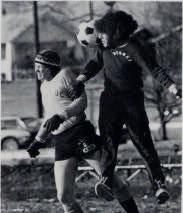
By the time the postseason began, it was obvious the Spartans were one of the state’s quality teams. They’d beaten traditional power CBC three times, and had two wins and a tie against eventual state titlist St. Louis U. High.
But the playoffs brought a series of bizarre challenges.
The problems started after a 3-0 district win over Country Day. De Smet won the next round against University City –1-0 in three overtimes. But U. City protested and was granted another chance after it was ruled the referees had mishandled the overtime. The game resumed the next day in OT and De Smet again prevailed 2-0.
That was a mere warm-up for what came next: With no rest, the Spartans faced Normandy in the district final — and didn’t escape until they’d played three days, and three separate games that included 14 overtimes, in what is believed to be the longest high school soccer “match” in Missouri history.
De Smet’s eventual 2-0 win brought a state semifinal berth against Rosary, but no relief and total exhaustion. Rosary beat De Smet 1-0 in what was the Spartans’ sixth competitive soccer encounter in seven days.
“It was just so obvious during the game that we were a step behind. And Rosary was fresh, and they were all over us,” said coach Greg Vitello, whose team had tied Rosary 1-1 during the regular season.
Vitello would go on to win five state soccer titles at De Smet, but he was left with a special admiration for a team that played totally spent.
“My thought at the time was our kids were just playing their ears off,” he said. “… Whatever they got left in the tank. You step back as a coach and you go, ‘How can you ask any more of a group of individuals?’ You can’t.”
De Smet finished 19-5-6, with goalkeeper Steve Otis notching a school-record 20 shutouts and Frank Vinciguerra and junior Don Aubuchon pacing the offense with 40 combined goals.
A state banner escaped them (Rosary lost the title game to SLUH in seven overtimes), but a special team had been exemplary across a blustery winter, earning the admiration of the school in the process.
“I remember being so admiring and respectful of guys who would go outside in that kind of weather and play a sport,” said basketball All-Stater Jim Kennedy, who took note of the soccer players every day as they trudged in from practice. “These guys would literally come in, and they’d be sweating, and then it would freeze and they’d have icicles hanging from their stocking caps.”
Some of the particulars have been lost to history. Even the surviving members can’t pinpoint whether “Heavy Chevy & The Carburetors” were the featured sensation at a De Smet pep rally only once – or two or three times in early 1973.
Another musical friend of the group, Tony Roldan, a former player on the ’72 basketball varsity, remembers subbing in for McKeague on drums during one of their gym jams.
That would suggest at least two appearances by “Chevy.” But absent some Dead Sea Scrolls document that could provide an exact number, the Carbs will forever be a comet that lit our lives an imprecise number of times.
The core of the group got its start with four or five guys – including Don Tlapek -- simply strumming in a Warson Woods garage a couple of years earlier. They never played under the “Heavy Chevy” moniker except in front of the De Smet audience, and Kohler isn’t even sure how the name stuck –probably an impromptu suggestion from a band member or classmate.
Later in the ‘70s, Kohler, McKeague and De Smet alum Tom McCarthy went on to form “Kip Niven,” a group that played to sizable crowds locally and regionally -- even cutting a .45 record.
As for “Heavy Chevy,” complete memories of the group’s evolution are both elusive and precious.
But during one magical playoff run, the musical quartet rocked and a special state champ rolled.
What is certain is this: The garage-band foursome turned up the volume like never before in the school gym and became a virtual soundtrack for the ’73 state basketball champions.
Pep rallies at De Smet had been evolving in participation, sophistication and comedic value since the 1969-70 school year. The jammers of “Heavy Chevy” pushed our afterschool assembly quotient to the top of the charts.
“I can’t remember the exact circumstance, but the gym was packed,” said Kevin Kohler, the group’s guitar player. “That was by far the largest crowd any of us played in front of to that point.”
The official quartet consisted of Kohler, Joe Vacca on vocals, plus juniors Mark Vacca (bass) and Dan McKeague (drums).
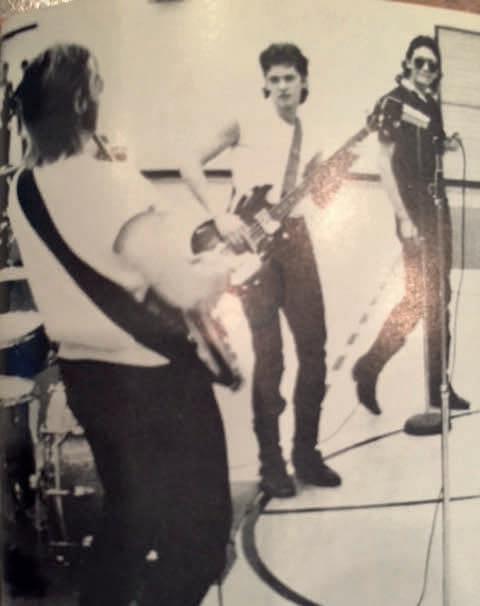
Complete with slicked-back hair, sleeveless T-shirts and tucked-in cigarette packs, the group kicked the student body into high gear with tunes like “At the Hop,” “Blue Suede Shoes,” “Johnny B. Goode” and “Rock Around the Clock.”
“It gave us a sense of pride that we were part of bringing the school together for a common purpose – to cheer on our sports teams,” Kohler said. “And evidently it worked for the basketball team that year.”
Despite the fact that De Smet had a great cross-country program virtually from Day One, track meets were a figurative uphill climb. And for good reason: The still-young school had no track facilities on which to train. All meets were considered “away.”
So when De Smet was contending for the title in the 1972 Bi-State meet, it already rated as significant. It would become even more significant if the Spartans could deliver a nexus of opportune finishes in the last two events.
Just before the second-last event, the 2-mile run, Rick Murray was told by coaches Greg Vitello and Brother Jim Marheineke that he needed to finish second. (Senior De Smet star Chuck Korte was a solid favorite for first.) De Smet also needed to finish at least third in the last event, the mile relay.
The immediate issue: Murray had never beaten two other competitors in his race, Rick Fitzpatrick and Tom Paino of SLUH, in either cross-country or track. “I still had painful memories of both of them passing me in the final yards of that fall’s cross-country championship,” Murray said.
Murray found himself in fifth place for most of the race, and entering the eighth and final lap, still trailed the SLUH twosome and a runner from Assumption by about 10 yards. “I figured that I was not going to beat those guys with conventional tactics, so I decided to surprise them.”
On the final lap’s second turn, Murray opted to pass on the curve – typically a distance no-no. He swerved to the outside lane in stealth mode, and went into a full sprint.
“I imagine Brother Jim thought I had lost my mind,” Murray said. “I passed all three runners, and tried to get a 20-30 yard lead so they wouldn’t have time to catch me. I never looked back, and just ran as fast as I could. I kept thinking I would see Paino and Fitzpatrick again, but I never did.”
After Murray’s second-place finish, De Smet ran a distant fourth for most of the mile relay -- until the last 200 yards, when CBC’s anchor-leg faltered with a pulled hamstring and had to leave the race. De Smet finished third, netting 61 points overall, compared to 60¾ for SLU, and delivering the school’s first Bi-State track and field title.
The ’73 class, then juniors, contributed more than half the points, including Paul Heck (first) in the mile, Gary Keleher (second) in pole vault and Venker (fourth) in the shot put. Mike McGuire dominated in sprints, on his way to a fourthplace finish at state in the 100-yard dash.


In the late fall of 1967, it was determined that the first freshman class would nominate and then vote on the school mascot. The class came up with several candidates, including “Raiders” and “Spartans.” “Spartans” seemed to be relevant at the time for three reasons: (1) the Michigan State football team was ranked and had a highly celebrated 10-10 tie with Notre Dame in 1966; (2) there was a rather forgettable early 1960s sword-and-sandals Hollywood film The 300 Spartans that many of us had seen, and it glorified the story of the outnumbered Spartans defending Greece from the invading Persians; and (3) many of us took Ancient History in fall 1967 that included a class or two on the story of Sparta. The Spartan emphasis on military prowess and physical development appealed to us 14-year-olds. The vote was overwhelmingly in favor of “Spartans.”
(Editor’s note: The current Spartan logo differs from one often used in the early years, which was modeled on the Michigan State Vintage “Sparty” logo. A more conventional Spartan mascot was rejected by many students as being an “insufficiently masculine and tough” image for our new school.)
As with the school mascot vote, the first freshman class nominated and voted on the school colors. The class came up with the following candidates: green and white (because these were the same colors as the Michigan State Spartans); green and gold; and maroon and white (to match the maroon De Smet blazers that we all had, which in turn was an idea of the Mothers Club to distinguish the school). The only colors not eligible were blue and white, since those were SLUH’s. Maroon and white won, over green and white.
This was the second meeting of the year between the teams. It was the last home game for seniors Mike Faddis, Steve Kohnen, Larry Linkul, Greg Combs, Pat Ward and Bob Kuelker. Assumption High of Illinois was led by 6-foot-10 All-American Rick Suttle, who would go on to play in the Final Four with Kansas. Both Assumption and De Smet were ranked in the top 10 of their respective states. We lost the first meeting badly (69-47) on the road, and coach (Rich) Grawer was wary that we did not have enough firepower to play a wide-open game with the Pioneers, so he devised a “slow-down” plan.
As Faddis tells the story, the opening tip was one of the keys, because the team with the lead (or tied) could hold the ball (unlike today with a shot clock). “We really wanted to get the tip so we could control the tempo. Winning the tip
against a near 7-footer was going to be a tough task, so Coach Grawer devised a play on the tip for us to steal it and turn it into an initial possession.”
Faddis’ job was to read where the tip was going, make it look like they had an opening, and then to step in and steal it. “I succeeded in doing that and scoring a layup to give us a 2-0 lead!”
On defense, De Smet forced a funneling of the ball down one side (the right side) of the floor, knowing Suttle would set up on the low post. Grawer had Kohnen fronting him and Ward behind him on a double-team. “We did not guard the weak side and made sure someone was in the face of the player with the ball so they could not make the long pass to the weak side,” Faddis said. “They really had trouble getting the ball to Suttle.
“Every time we got possession we ran the four-corners offense, slowing the ball and passing -- and only looking to make back-door layups. Each possession took several minutes. The game went on like this for all four quarters. I still remember that even though we held the ball and slowed the pace, the De Smet student body was awesome and loud and wild. Everyone was into the game to see if we could make this game plan work. We had great support in the stands!”
The game was tied 15-all at the end of regulation time. In overtime, Assumption tried to hold the ball and get a last
shot but turned it over and Faddis got fouled. “I made a free throw to give us the lead with eight seconds left,” Faddis said. “Assumption did not get off another shot and we had a 16-15 win! Our student body emptied onto the floor. It was a weird and wild night!”
Linkul was the leading scorer with eight points and Kohnen chipped in with five. The loss cost Assumption the Bi-State championship, giving SLUH the title. Suttle scored only two points, his lowest point total ever. “After the game, as we were gathering in our dressing room, the door burst
open and it was the Assumption coach raising heck and calling Coach Grawer and all of us all kinds of names and using every four-letter word in the book,” Faddis said. “It was the perfect capper on a wild evening. It was also the springboard to send us to the upcoming state tournament.”
(Editor’s note: The opening tip of the game, which turned into the layup by Faddis, can be viewed today online, thanks to Dave Muckerman. http://muckermanracing. com/desmet-jesuit-highschool-film-techniques-classmovie-project/. The link also shows footage of De Smet running the four-corner

offense against Assumption, footage from another game, and Larry Linkul shooting far too many free throws. Originally shot in 8-millimeter. Amazing nostalgia. Thanks Dave!)
Mike Buncher, David Bussman (’71), Mike Faddis (’71), Jim Kennedy, Tom Klein, Kevin Kohler, Rick Murray, Wally Pfeffer, Paul Venker, coach Greg Vitello and Don Vogt (’72) contributed information used in this roundup.
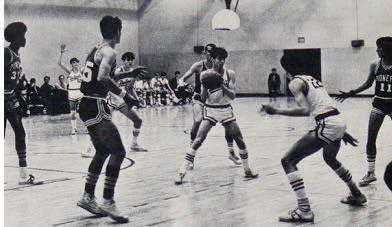
Paul Heck gave up running, by competitive or most any other standard, decades ago. In life, as on the track and cross country courses for De Smet in the early ‘70s, Heck doesn’t look back –because he rarely has had to – even when he won the school’s first individual state championship.
“Yeah, but I’m an old man now of 68,” he says, laughing.
Heck still checks in at a trim 155 pounds, though he says he does relatively little to work out.
“I lift my elbow.”
Perhaps hoisting a 12-ounce curl of a cold, frosty one?
“I didn’t say all those words,” he says, his booming voice and laugh raising slightly, “but I’m smiling.”
And so it goes for the state’s 2-mile track champion of 1973. Currently living in Elmsford, N.Y. – he attended Columbia University and has remained in New York – Heck takes life at walking speed, but it is still one great ramble, and he imbibes deeply of all its experiences.
“You had to make your points to graduate, but I definitely enjoyed life,” Heck says.
All of this joviality shouldn’t obscure the fact that Heck was a deadly serious cross country runner – almost
always breaking fast and staying at a hard pace. “I would take them out, and if you wanted to win the race, you had to be willing to hurt more than me.”
That makes Heck’s most famous high school race a portrait in irony. Heck didn’t break quickly that day at Mizzou’s Faurot Field – on the advice of distance coach Brother Jim Marheineke. “Brother Jim had told me, ‘If I see you in the first 220 in under 30 seconds I’m gonna take you off the track myself.’”
Heck didn’t lead after 220, but the first split still felt too fast, so he throttled back until the half-mile mark, when he methodically built a lead that he sensed was between 40 and 70 yards. It almost wasn’t enough. Heck finished in 9 minutes, 29.4 seconds. Steve Welch of Hannibal used an intense finishing kick to make it uncomfortably close (9:30).
“The competitors were used to me trying to (start) all-out,” Heck says. “It was a change of pace -- a negative split. I went out probably 4:45 and came back at 4:44. I came back a little bit quicker than I went out.
“They were not used to the way I ran that day.”
Teammates would tell you Heck was seemingly born to run, but he came to De Smet with no competitive experience. His presence at the front of the pack in soccer and basketball grade school workouts earned him a “natural” label. He ran varsity cross country and track all four years at De Smet.
Heck was a cross-country All-American his junior year at Columbia. After graduating, he ran in the 1978 New York City Marathon, finishing 38th in a respectable 2:24.16.
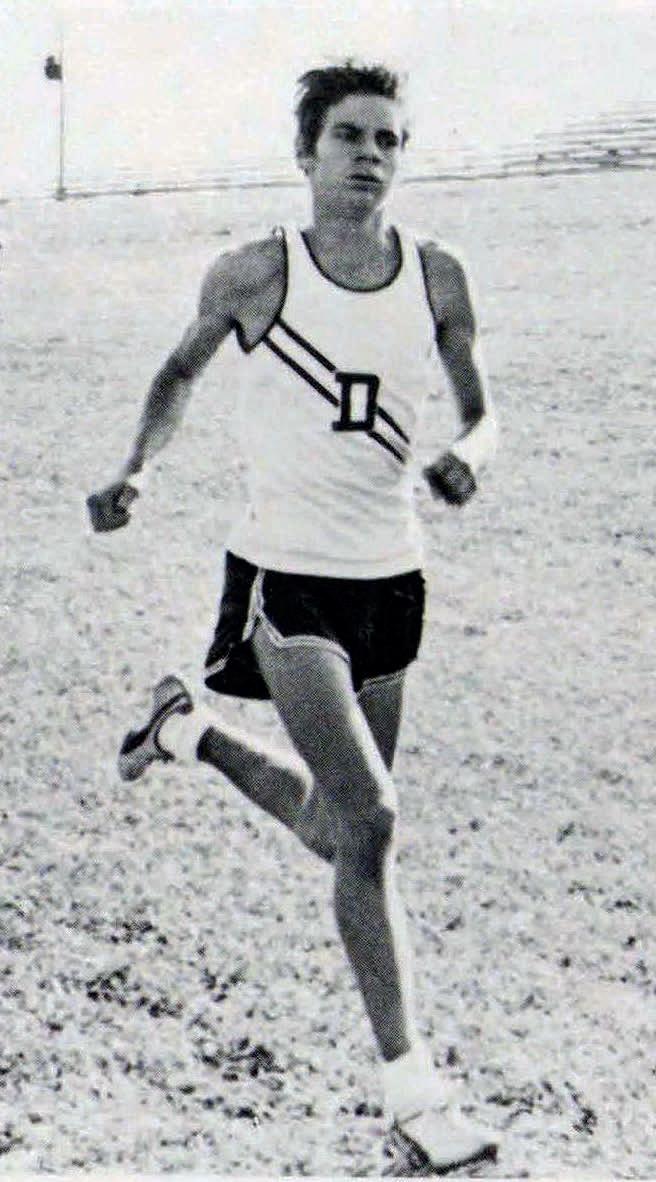
Discuss any of this with the affable Heck, and he’ll take you on a verbal distance trek, complete with hills, gentle dips and good-natured, laughing side-steps into brief anecdotes. At one point, while searching for a bit of memorabilia, he says, “I may be organized, but what pile did I put it in?”
During an hourlong phone conversation, Heck pauses on a 1970s Columbia campus newspaper feature headlined, “The All-American Nut,” a Heck profile dotted with offbeat, humorous quotes. But the bottom line eventually
emerges in the story. “You don’t get to be All-American by sitting on your ass,” Heck reads aloud. Later in the article, when asked his philosophy of life, his quote was, “I don’t have one. … Life is an experience, and every experience you learn something from. I try to get as many experiences as possible.”
Heck left Columbia with a bachelor’s degree in history and held a series of jobs, including 15 years with Frito-Lay as a salesman and manager, before retiring six years ago. He still works three days a week, mainly to keep busy.
He went on to compete until he broke his hand when he fell while running in the early ‘90s. That was enough of an excuse for him to throttle down for good. His wife (Lydia) made the suggestion and Heck didn’t argue.
“I was a cross country runner. I enjoyed running up hills. I enjoyed the hard work,” he says. “Listen, if I felt I was capable, I’d still be out there doing it.”
Not much need to, though. In the long run, the man of many experiences has achieved a nice balance.
While De Smet had a couple of state titles in 1973, those weren’t the only signature achievements of the third graduating class. The school was a bustling place during our senior year. Among the highlights:
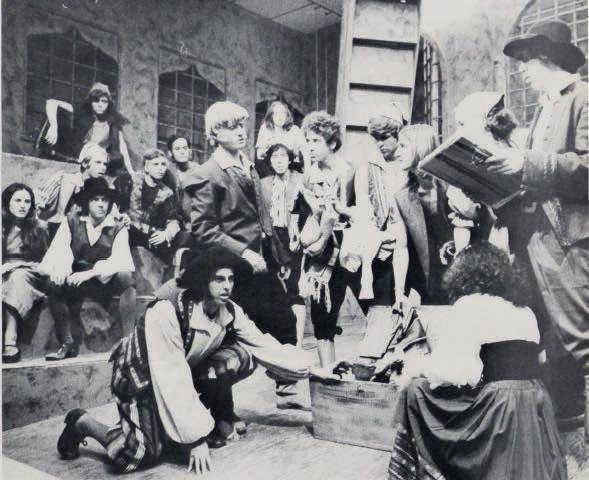
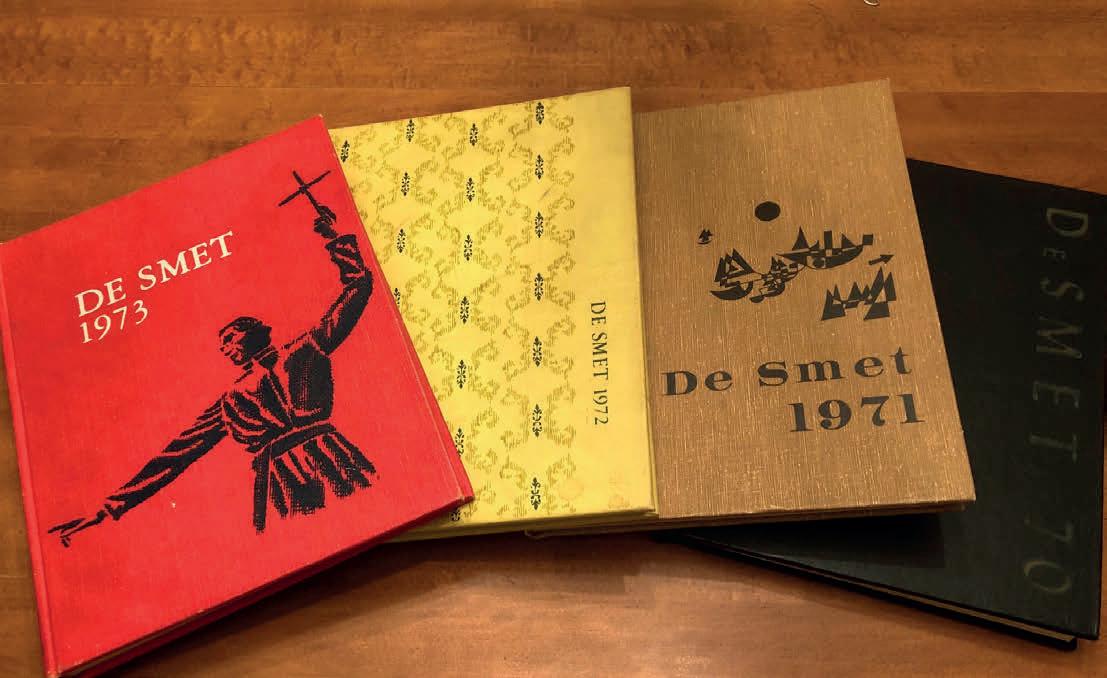
Any reunion yearbook would be incomplete without mention of the original product, which became progressively more polished in the early years, including our senior effort of ’73.
Building on the success of the two previous years (what with “Stalag 17,” the first stage performance worldwide of “Love Story,” “A Funny Thing Happened on the Way to the Forum,” “The Man Who Came to Dinner,” “Indians” and “Fiddler on the Roof”), the Dionysian Players, under the direction of John Faust, were enthusiastic about their third season.
Gary Keleher was cast in the lead role of Newton Fuller in the fall production, “George Washington Slept Here.” The winter saw a powerful performance of the musical “Man of La Mancha,” led by Greg White as Don Quixote and Mark Mongold as Sancho. The final play in the spring, Thornton Wilder’s “Our Town,” included only two of our number –Steve Meyer and Bill Norfleet.
Among our classmates, Tom Bahn, Tim Doody, Dennis Elze, Terry Fitzgerald, Greg Gottfried, Paul Heck, Greg Hoy, Greg Johans, Adam Jones, Len Kosakowski, David Meyer, Mulvihill, Murray, Pfeffer and Lee Taylor were other members of the troupe, working on stage or behind the scenes. All quickly realized that when the casting call required actresses, they’d get to meet girls!
Each yearbook required persistence. From September all the way into the following summer, the staff persevered. There was some midnight pizza in July, and one or two all-nighters.
John Hsueh, Bill Norfleet and Stan Mulvihill were among the photographers, joined by Mr. Jack Renard in creating thousands of photos.
Yearbook moderators Mr. Neil Kimmel and later Mr. Rich Weiman, who also shot many photos, deserved much praise. They guided and cajoled Paul Hakenewerth, Steve George, Jim Burke, Tim Trout and Rick Murray, among others, plus four-year players Bob Henderson, Bruce Gnade, John Huenneke and Bruce Donnelly.
The students designed layouts, cropped photos and created copy. Wally Pfeffer and other classmates were excellent sources of info for soccer games and other activities.
By June, an all-star lineup of typists would arrive, sometimes including Mr. Chris Mess, Mr. Gerhardt Lemkuhl, even Miss Yvonne Fernau, along with Frs. Robert Holmes, John Zupez, James McFarland or others.
And yes, typing teacher Miss Fernau was the best.
The cast of “Man of La Mancha” (ABOVE) played to a chorus of rave reviews, particularly the lead duo (BELOW) of Mark Mongold (left) as Sancho and Greg White as Don Quixote.
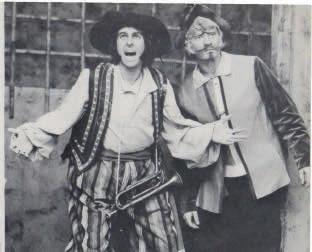

Not surprisingly, in De Smet’s early years it took time for a school newspaper to gain traction. But the stars finally aligned with the birth during our junior year of The MIRROR, which remains the school paper to this day.
Prior to The MIRROR’s November 1971 launch, there had been several other newspapers: The Spartan started before our days at the school, but was often short-staffed and the 1971 Yearbook noted it “began floundering in waves of criticism over a controversial first issue” when we were sophomores. Depression became dominant during our freshman year, but by the next year had stopped publishing due to “pushing the envelope” with the administration. Another paper, the Informer was also briefly on the scene.
Members of the class of 1972 deserve some credit for The MIRROR’s birth, but our fellow class members were big contributors. Joe Duggan, the son of a distinguished St. Louis newspaperman, became the first news editor and a member of the editorial board, and Mark Johnston was the associate editor. Mulvihill was a staff writer and also the first business manager. Other original staffers included Don Wernert, Hsueh, Franc Flotron and Tim Tynan.
Conrad Dunn’s contributions were noteworthy. A gifted writer, Conrad also contributed heavily to the school’s literary magazine, Synthesis. Conrad’s review of a school play, “The Man Who Came To Dinner,” included the word “verisimilitude” and was The MIRROR’s first front-page article.
The first few editions were typewritten, but by February 1972 a more polished print edition emerged. The MIRROR proved consequential in years 1 and 2. A regular feature was a conversation with a faculty member. An editorial brought a swift
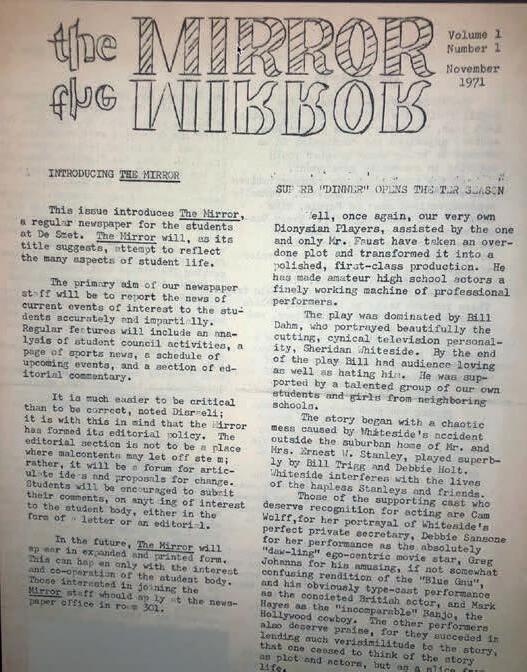
response after it argued for more resources for non-athletic extracurricular activities. Within a week, the Director of Extracurricular Activities post was created, first filled by John Faust.

“The paper cultivated talent in photography, design, writing, editing, meeting hard deadlines — and perhaps most of all, pushing to see how much we could get away with,” Duggan said.
We’re bound to miss something, but let’s not forget our Senior Retreats, along with the always interesting real-life lessons provided by our Senior Projects. And then there was the ultimate in community service: When one of the biggest floods of the century hit in the spring of ’73, a cadre of classmates scurried to the levees to sandbag. “Men For Others,” indeed!
Bruce Donnelly, Tom Klein, Rick Murray and Wally Pfeffer contributed to this roundup.
A candid and wide-ranging conversation with seven eminent St. Louis high school educators from our 1969-73 era.
(Editor’s Note: The following questions and faculty answers, posed by the 1971 50th reunion committee, were also deemed appropriate for several classes in De Smet’s early years. A few references have been altered to reflect a multiyear experience.)
We bring you an interview with seven living faculty who taught at De Smet Jesuit a half-century ago, during its founding period of 1967-71 and beyond. They are all now in their late 70s and 80s.
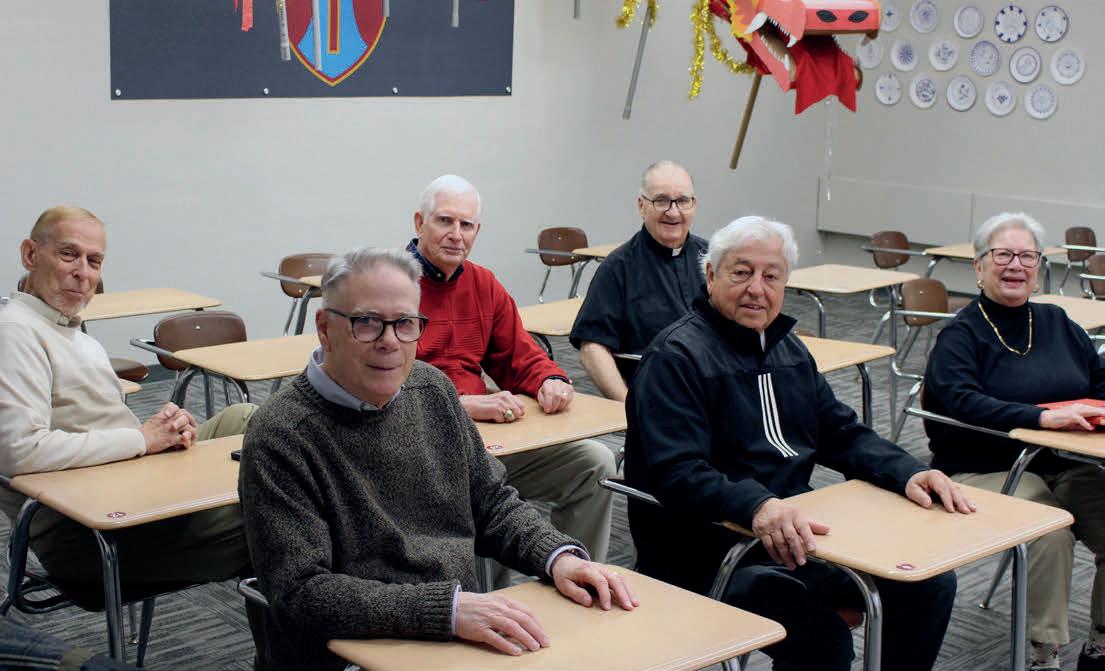
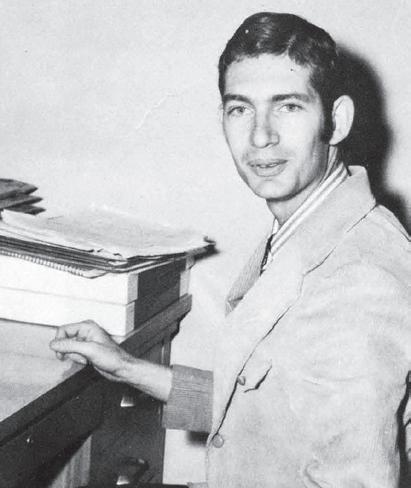
It’s unlikely many high schools boast as high a proportion of living faculty from 50 years ago as De Smet, which when founded needed to recruit new, young teachers. For many it was the start, or near-start, of their teaching careers. This discussion touches on a range of subjects, including classroom instruction, student culture of the era, JUG, demerits, pranks, sports and coaching -- with some of the most celebrated educators in the school’s history. The participants are: Kevin Buckley, Greg DiBlasi, Rich Grawer, Fr. Ralph Houlihan, Chris Mess & Yvonne Fernau Mess and Greg Vitello.
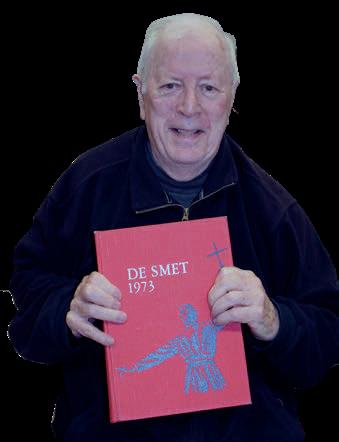
Yvonne Fernau Mess: Sister Jane de Chantal was my teacher and mentor at Fontbonne University, and she told me this school in West County was looking for a typing teacher (typing was my minor) with a French major, so I came out, interviewed, and got hired by Father Bone on the spot. It was one of those things where life just throws something at you when you take a chance. I started in 1969.
Greg Vitello: I started in 1968, and was also hired by Gerry Bone. I’m from Chicago and knew very little about St. Louis. But I went to school with a lot of guys from St. Louis and played soccer with them, and I wanted to get into coaching. They said if you want to coach soccer, you gotta go to St. Louis.
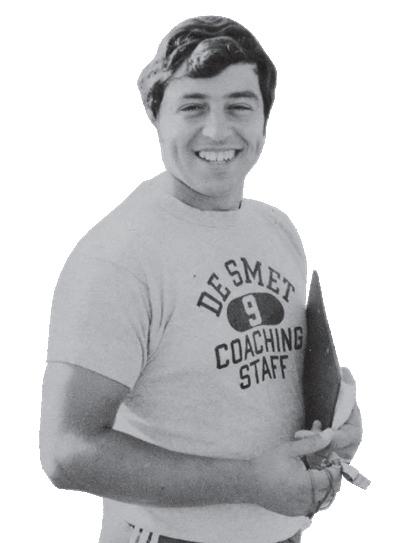
So I came to St. Louis for an interview with Hazelwood School District, and they had science teaching openings but no coaching openings, so I was pretty disappointed and I thought my next step would be to go back to Chicago. But I was staying with a close friend here in St. Louis whose sister was the Visitation Principal at the time, and she said there’s a new school down the street from us, and you might want to give them a call. So that afternoon I call and talk to Gerry Bone, and he said we’re in the process of hiring and we may be interested. The following week Gerry Bone offered me a contract. I said wow, and when I told St. Louis friends at school they all want to know what was De Smet all about, since they had never heard of it.
Greg DiBlasi: In 1969, I had been teaching part time at Rosary High School for three years. I was in graduate school at SLU at the time; was also working part time at Kroger and had twin boys, so I accepted a (boring) job at McDonnell Douglas on the F-15 project. But I really missed teaching, so when I saw a teaching position open at De Smet, I applied, got the position, and came during the freshman year of the Class of ‘73, and stayed and loved it.
Kevin Buckley: I taught at CBC from 1965 to 1969 -- great kids but they cussed a lot and I was used to kids from the South who would not cuss. I have kept in touch with several of those students to this day. In 1969, there was an opening at De Smet to teach Middle and Far Eastern History -- a semester of each. Fr. Bone hired me. I left in 1980 but always loved teaching, and enjoyed teaching young men. I loved the subjects and I loved my students I taught. I hated to leave, but my family was more important and the reality is with five children I needed to better provide for my family. I got into the insurance business with Mass Mutual. My three sons went to CBC, SLUH, and De Smet and both daughters to St. Joe’s.
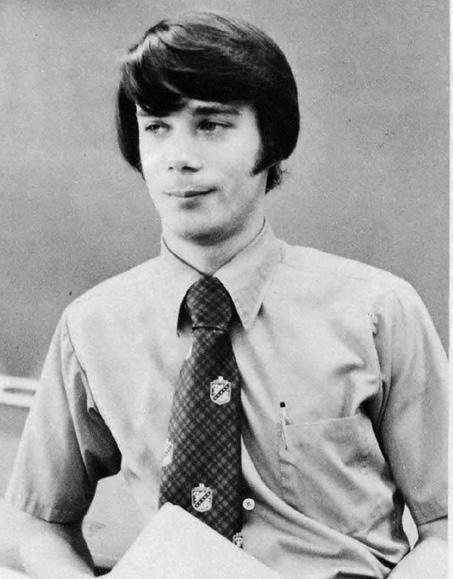
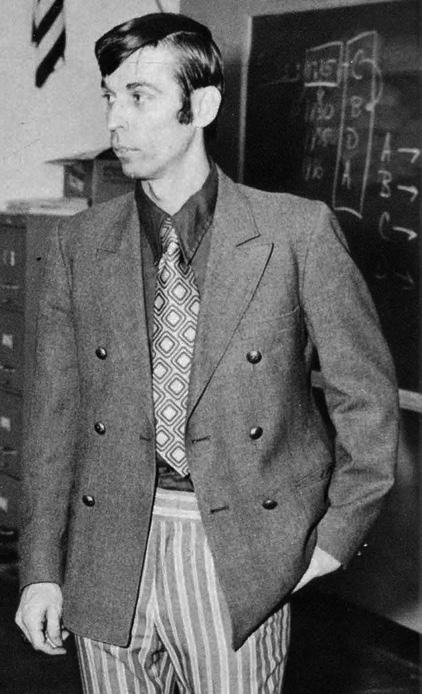
Rich Grawer: In 1968, I had been at SLUH for three years, as a history teacher, varsity baseball coach, and freshman basketball coach. My first love was baseball, not basketball. But in the three years at SLUH, I grew to love coaching basketball, partly because it was indoors. I was coaching baseball where we practiced and played at Forest Park, where it was windy, dusty and cold, next to a noisy highway, and it was driving me nuts with my contact lenses.
One day, I was told about this new school that had opened up that was looking for a varsity basketball coach, and I was approached, and Gerry Bone offered me the job. It so happened that I signed the contract to join De Smet in the locker room cage at De Smet in the hour before my SLUH freshman basketball team played De Smet for the first time, when we slaughtered the Spartans, coached by Larry Morgan.
So the reason I came to De Smet was that offered me the chance to be the varsity coach, and I would have needed to wait a decade or more before the SLUH varsity coach position opened up. SLUH was a great situation at a fine Jesuit high school, but De Smet offered me essentially the same thing, but with the varsity basketball coaching job immediately. When I went to the SLUH principal to tell him I was leaving, he said, “If you stay here, you’ll eventually be the head basketball coach,” but for me that was a long time down the road.
Fr. Ralph Houlihan: I came to De Smet because I was assigned by the Provincial. In those days, you did not interview, you were told, and then you just went. Fr. Sheehan and Fr. Paul Reinert were the Provincial’s consultors, and they pushed him to build De Smet because of all the complaints from SLUH alumni that they could not get sons into the U High. I was 35, and the oldest of a cohort that had joined SLUH in the years before. At the time, the Order thought they could get 20 vocations a year from the new school.
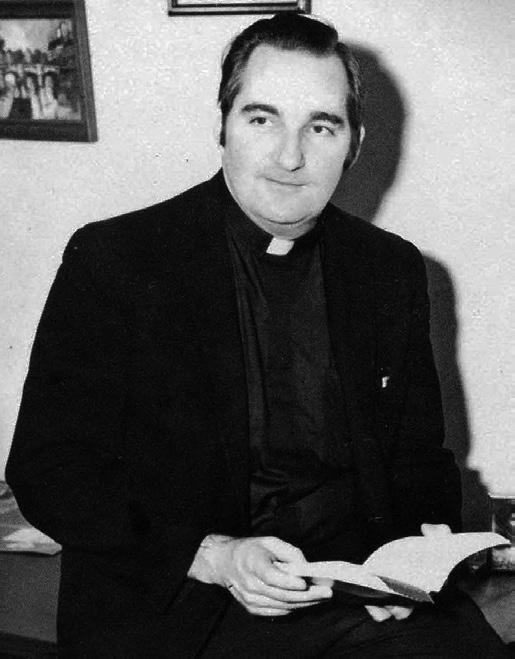
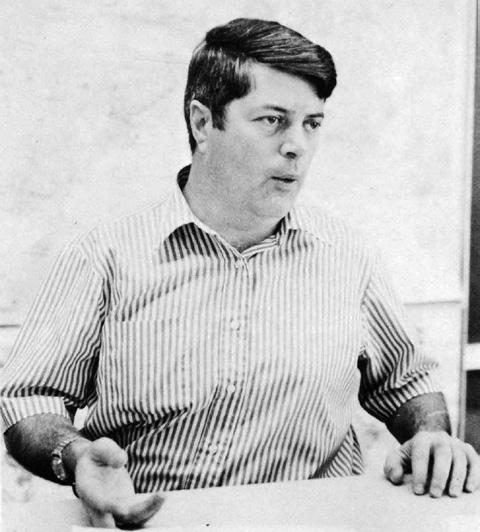
Chris Mess: Thank you Ralph, for hiring me! I was finishing my graduate degree, and made a bunch of applications to high schools, and invitations to interview came from some -- one of them from Fr. Houlihan.
I drove out, met with Fr. Houlihan and Jack Bergin. We’re in the office having an interview and the school looks nice. OK, let’s see what they have to say, I thought. The first question I have for Ralph was, “You have a question for De Smet teaching positions, asking if the applicant is lefthanded or not. I am lefthanded.” Ralph is smoking a cigar, holding it in his left hand, and he said, “I don’t know. I just inherited the application.”
Jack Bergin then comes in, and two things I found out: (1) Jack Bergin’s brother knew my father, who was in the plumbing business, and (2) Jack wanted out of teaching Far Eastern History and Middle Eastern History. He brought in the Middle Eastern History textbook used, and it was the same one I had when taking Middle Eastern History, so Jack said, “Hire him! And I’ll go back to teaching American History.”
Awhile later, when I went to sign the contract on the weekend, it needed to be signed by the De Smet president, and we went to find Fr. Jacobsmeyer. He was in the football bleachers, scraping them down, in overalls, preparing them to be painted. I looked at this man, with paint all over him, and said this is going to be interesting.
Greg Vitello: A side note on Jake. I’m in gym class and I have 90 guys in class and parent-teacher conferences are coming up I think that night. I see Jake walking into the gym with two chairs in his hand, sets them on the wall, walks out and comes back he’s got two more chairs. He does this like four times and I’m thinking, what’s that guy doing? So I ask, and he says, “I’m bringing the couple hundred chairs for tonight.” Well, I got 90 guys in gym class, and say, “Jake, I think we can do that in about five minutes.” But that’s how that guy was. He was the president of the school, has a white shirt on, but I think he rarely set foot in the president’s office – he was always doing something somewhere around the building.
Are there any particular memories that stand out during your first few years at De Smet?
Grawer: Parents were supportive of whatever a coach or teacher needed to do. They were very into the school and that was a very special thing.
Yvonne Fernau Mess: The MacLeods used to have chili parties after the football games and invite the faculty.
Fr. Houlihan: The parent parties were great. It was a fairly young group of parents and the faculty was young as well.
Yvonne Fernau Mess: Mrs. Holland and the other mothers in the Mothers Club. They ran the whole place.
Fr. Houlihan: The golf tournament. I was running the student council and we didn’t have any scoreboard or bleachers. Dottie Henschke says, “Why don’t we have a golf tournament at the old Creve Coeur Golf Course?” I said that was a great idea and we did it. We made enough money to buy the scoreboard and bleachers. Mrs. Kosakowski would sell popcorn outside the end zone. If there was any left over, she would buy the bags and donate the money to the fund. That is an example of the parents being supportive and that really stands out to me.
Grawer: One thing that I remember is every Friday night one of the parents would throw a party after the game. The coaching staff would go and we would get along well with everyone. I am not sure that would be the same today. The parents would give us some friendly ribbing about who we played and didn’t play. The point was that coaches and parents, and teachers and parents, got along so well. I am not sure that you could say that about parent relationships today. When I think back on that time at De Smet, the relationship with parents is what I remember the most.
Fr. Houlihan: Another thing that I remember is my first year and Bone was still here and the principal. The room at the end of the first floor was the Jesuit Rec Room. One night, it was a school night, he looked out the window and said it was snowing, implying that school might be called off next day. He closed the blinds and went to his room, and got a bottle of Scotch or bourbon and came back. So we all have a couple of drinks. No one got drunk, but about 1 a.m. he opens the blinds and there is no snow. Oh my goodness, we have to get to bed, and teach soon. So the next day a bunch of Jesuits are walking around with dark glasses.
Vitello: I was a first-year teacher and trying to figure out what to do. I remember how tight-knit the faculty was. We used to play basketball twice a week. (Pointing at Houlihan) I remember his lefthanded shot.
Fr. Houlihan: (laughing) It never went in.
Vitello: There was a special bond with the faculty. For the first two years when there was a Friday afternoon football game we all gathered in a third-floor classroom that we weren’t using at the time. The Bashwiners and Larry Morgan would provide adult beverages for the faculty. The wives were invited also. We would just socialize and form bonds that made this faculty so unique.
Rich mentioned the parents. Back then, whatever that coach said or that teacher said, well, that’s it. I remember that last couple of years I was here. I caught a kid cheating for the third time. I called his mom and explained the situation and her reply was, “Well, maybe I ought to get my son’s side of this.” I told her that this conversation was done. That was the difference between the parents in the ‘60s and ‘70s and the parents of the 2000s. But again, to me it was the bond of the faculty. We used to have parties and it was a fantastic atmosphere to be around.
We used to have “pimp” posters. Certain people would take pictures from the yearbook and put silly little sayings in them. We would then post them in the faculty room. That continued until further down the line some people began to take offense. So we had to stop them. We could laugh with each other and at each other. It was great.
I remember the date (Brother) Jim Marheineke called me and said that Gerry Bone was gone and that (pointing to Houlihan) you were the new principal. I am not sure you were ready for that.
Fr. Houlihan: Let me tell you a story about that. Father Sheehan, the Provincial, came to me when we were meeting for our annual visit. He said to me, “I am thinking about sending Jake to Denver to build a new high school.” Remember, I am only the third-oldest Jesuit at De Smet. “Bone will be president and principal and I want you to be Superior of the Community.” I stammered, and he said that I have been in the Society for 13 years and knew what the drill was. I said OK, but he didn’t tell me that Bone was leaving. I am not sure he knew at that time. In the spring we are having a meeting here in the library and he brings me into Betty Simpson’s office.
He told me then that Father Bone was going out of town. He wasn’t going to move Jake to Denver, so he was going to stay and continue as President and Superior. I said, “great!” As I was leaving he mentioned if I ever thought about being principal. I thought it was a joke. I told him no, that I wasn’t trained to do that. I went downstairs and over to the residence and went to bed.
The following Sunday morning the phone rang and it was Father Sheehan. He said to me, “We have not resolved that administrative problem at De Smet.” I said that he was correct. He then told me, “Well, I have!” That was that.
Sheehan simply said that I shouldn’t do anything overtly stupid. If I had questions that I could call him, Rich Bailey at SLUH or Jim Reinert in Wichita. I then started to keep score on the area grade school principals. I figured out who gave you good advice about kids and who didn’t.

Vitello: Those early years we had that second fire in the gym. It was right after lunch in ‘71 or ‘72. I went up there and the building was rattling. I went into the gym and (Brother) Frank Schmitt was in front of the electric panel and was literally on fire. His hair was on fire. I sprinted over to him and am literally trying to put the flames out with my hands. His glasses were shattered. The whole panel was on fire. He told me to get the fire extinguisher. I ran to the other side of the gym -- but he said not that one but to get the one out of the kitchen.
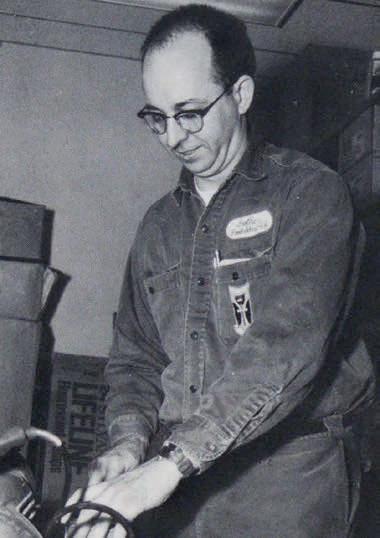
By the time I got back upstairs the fire had pretty much subsided. Now here is Frank, his shirt is burned off, his glasses are crystallized, his hands are burnt. I said to him, “Frank, we have to go to the hospital.” He said, “No, I am OK.” By that time someone had pulled the alarm and the fire department was on the way.
Grawer: The Province sent us two great people in Brother Frank and Brother Jim. They were really good people and worked hard. The brothers we had were tremendous.
Houlihan: (turns to Grawer) Tell him the story about Ed Shortal and Gibault.
Grawer: The parents were very supportive and they would get on the officials. They thought it was all in good fun. But we were at Gibault High School in Waterloo, Illinois. We were playing a very good basketball team. Ed was really on the officials -- so much so that they came over to me and said if we didn’t do something about him we were going to forfeit the game. We went to Ed and he agreed to leave the gym, but as he was walking out he threw his coat across the gym floor a la Bobby Knight. Ed then stayed outside but looked inside. I couldn’t get upset with Ed. That was so great about the parents being supportive.
Fr. Houlihan: Rich was extremely thorough in preparing for a game. Gibault had about five different lines of tape on their floor. In order to prepare our kids, Rich put the same number of lines on the gym floor to get them used to it.
Chris Mess: Greg said earlier how close the faculty was. I was not a coach but all of my peers coached and taught. Greg said how special it was. I felt very much a part of the camaraderie. We were all teachers first. We were all going to sink or swim together. This was very beneficial to me as a new teacher right out of graduate school. That is what made De Smet so special as we were all involved in the activities of the school. We worked games, chaperoned dances and worked with the club activities. Everyone helped out. This continued on and made it part of the reason kids and teachers wanted to come to De Smet. Everyone wanted to be here and we were all on the same page.
Yvonne Fernau Mess: When you think about it, we were not that much older than the kids we were teaching. We enjoyed their music and it was as much fun for us as it was for them.
Vitello: We didn’t have any traditions here when we started. I was 21 years old and new to St. Louis. I wasn’t aware of traditions at high schools. I had a Jesuit tell me that at “THE High School” they did this or that. I asked him what THE high school was and he said St. Louis University High School. The first year we had a lot of “SLUH does this” or “SLUH does that.” I finally said that this isn’t St. Louis U. High, this is De Smet! We had an opportunity to formulate our own traditions. This is something that the Class of ‘71 did really well. We didn’t have to have other schools to tell us what to do. We had the ability to make our own mistakes. One of the things that kids enjoyed was the creativity to try new things. We didn’t have 40 years of constraints put on us. Some ideas worked and others were horse crap. That was very unique.
DiBlasi: I feel like an insider and outsider with (the ’71) class. When I came they were juniors. I taught very few of their classes. The teaching today is a lot different with the Internet. Rich and I would assign an obscure person to research and identify. We gave students three clues and a week to figure it out. Today you would just go to Google.
Grawer: The History Department was tasked with teaching library usage. It

“The first year we had a lot of ‘SLUH does this’ or ‘SLUH does that.’ I finally said that this isn’t St. Louis U. High, this is De Smet! We had an opportunity to formulate our own traditions.”
- Greg Vitello
wasn’t the English Department, it was the History Department. We would find the name of the man who drove Kennedy’s limo. We would give a clue of Dallas, Texas and tell students to figure out who he might be. At the end of the week we would give them another clue, and so on until they researched it to the answer.
What were some of the biggest differences between the classes of the late ‘60s and early ‘70s compared to the early 2000s, or just prior to your retirement?
Vitello: One of the differences is the emergence of the tablet computer, the iPad. It made a big difference later in the 2000s, where as a teacher you were required to use a computer tablet and smart boards in class, and we weren’t brought up that way. I was still demanding that guys take notes in class, and I’m getting a lot of raised eyebrows, especially from parents about how come you’re not using the Internet and fancy technology more. I responded that it is because I believe in my own mind that this is how you actually learn. There were kids who resisted things no matter what we did. Every answer was in that computer. There was no thought process at all – “I gotta go to the computer and there is where I’m going to find this answer,” when the answer was not in the computer. I used to have students in my biology class do summaries after a biology lab. It was simply, “Hey what did you just do, or just find?” Well, rather than think that out, they thought the answer was just going to be on the Internet. Yeah that was tough.

You’re looking here at several of the best teachers that ever taught at De Smet. Year in and year out, I sat in parent-teacher conferences, and parents would tell me these are fantastic teachers. Students would tell me years after these guys had graduated that these teachers were some of the best teachers they ever had. I used to watch Rich Grawer coach, especially when I was a first-year coach. In many instances I was clueless, and I watched him and Bob Christian coach to figure out how to coach, because although I played baseball and soccer in college, I had not coached those sports when I was at college. I think that was part of the growing process when I got here. There wasn’t that mentor that many new teachers have when they come into a situation -- we had to figure that stuff out ourselves.

I’ll never forget when somebody said go and put together your playing schedule with other teams, and I said, how do you do that, and was told you get on the phone and you start calling other coaches. But I already was teaching six classes and thought I just don’t have time to do that. No, you must make the time.
Chris Mess: In psychology classes, an ongoing assignment in my later years was sometimes very specific: You need to go home and talk to your parents about what we just talked about in psychology class. I wanted to talk to them about a certain topic such as adolescent identity. And then I follow up, and turns out only two or three students actively engaged with their parents on the topic, with others saying “I’m too busy” or “they’re too busy,” or offering excuses. If we had the same request in the ‘70s, it was just done. Inside households, a different dynamic emerged over time -- families back in the ‘60s and ‘70s had dinner together every night, and this has faded a lot.
The other thing was when computers came to De Smet. I confess that I am not a computer expert. The entire time I was here I wrote with a fountain pen. But when I saw that coming in, I saw that there were changes in attitudes. I would counsel kids, saying that you would do better if you paid attention in class and took notes, but many kids resisted, and were enamored with computers so much that they felt all the answers were somewhere on the computer. It shifted from the perception that the teacher knew what he was talking about, to he doesn’t know what he’s talking about in various respects.
Vitello: How many times have you heard, “Well, you know I’m paying $18,000 for my kid to go to school. You should be taking care of him”? Well, you know there are some things that maybe they can get from home. Or I can’t tell you how many times I’ve asked at a parent-teacher conference, “Do you ask him what’s going on at school, and what he is involved with daily?”
Chris Mess: And study skills changed. We had to teach the kids about website reliability and veracity, and how to use them properly. They would just call up any website and say that since it’s on the computer, it must be true. We had to teach them what is a good website, and how you approach and use them. Parents’ expectations previously were always the same – they wanted for their sons a good education, faith-based, and getting into college. By the 2000s it becomes, “My son needs to go to this college or this kind of college.” Our specialist college counselor always had discussions with every parent and their child about what college or type of college would suit the student and his abilities and interests, and increasingly the reaction was, “No, he must go to this top school or else.” And it is clear that in reviewing the kid’s record and test results, their target college would challenge him beyond his capabilities, and so forth.
Denny Dietz, who taught physics for a year (1970-71), mentioned to me recently that one of the enjoyable things was the camaraderie of the Faculty Lounge, where -- unknown to us students -the faculty would talk about the ways students were always looking to get at the teachers or the system, and that to catch a clever ruse would be great fun for the teachers. Did you find this to be the case? Any clever ruses that you uncovered that you can tell us about?
Fr. Houlihan: As one senior prank, students overnight got a key to the school, and somehow moved a Volkswagen Beetle, owned by the school, into the Emerson Lobby. But Jesuits caught on when (Fr. Ralph) Passarelli went to say early Mass at 6 a.m. at the chapel, so Passarelli and me and another Jesuit were able to find the key to the car, and moved it out. So, we were standing around as the seniors were coming in, most of whom were expecting a Bug in the lobby, and it was fun noticing the looks on their faces, since we ended up pranking the senior pranksters! It was sheer luck that we discovered it.

Vitello: Yeah, there were some pretty good senior pranks and some awful ones. They brought geese from Des Peres Park and put them all over the school one time. Another one they filled the assistant principal’s room with shredded paper. They also got the Shoney Big Boy and marched up and down Ballas Road.
Yvonne Fernau Mess: And Ernie Beutenmiller let his goat loose. I was teaching typing on the first floor, and I could hear this strange noise in the hallway, and went to close the door, and there is this goat running and yelping down the hallway with a student chasing it. OKaaaayyy ... Another day at De Smet!

Fr. Houlihan: And one day, students put beer in the vending machines in the cafeteria.
Chris Mess: I had a prank on me using one of the classroom podium desks that teachers used. You could roll them around. One day, there is a student who has crawled into it, and is kind of sitting there, and I pretended not to notice, and just rolled it into the wall, and went on lecturing with the student silently stuck there for the whole class.
Buckley: When I taught, I had maps on all of the walls. One day, I walked into a very quiet classroom, unusually quiet, so I knew there was something up. I figured that there was something on the map that would cause a stir when I pulled the map down. Usually, I would walk to the main map and then say let’s look at the map to see where such and such a place was. So I then stopped and said, “Better yet, turn to a specific page in your book to find the location.”
I did this the entire class and they caught on that I knew there was something posted on that big main map. Class was dismissed and the boys kept looking in to see if I was going to pull the map down to reveal what they had put up there. I did not give them that satisfaction until much later. I finally pulled the map down that revealed a picture was posted on the map. Yes -- that kind of picture ...
Vitello: And then one guy got himself on the intercom system and made a comment about “Houli” one time -- you member that? I didn’t have too many pranks in the classroom; I don’t remember anything really.
Chris Mess: Another one involved me going to my American Problems class – I guess the name sums it up -and being the only one there. On another day, going to the same American Problems class and finding the room empty of students and desk. The bathroom next door was very crowded on both occasions. On another day, I was going from my third-floor American Problems class to the first floor for the next class and then suddenly was picked up by the elbows by two senior football linemen, Gibbons and Hake, and carried back to the third floor – with me desperately intoning, “Give me your cards … give me your cards …” and they are going “Haha … Haha …” And this was my first year teaching, and I am thinking Fr. Houlihan is going to fire me!
Yvonne Fernau Mess: There was some problem of theft going on in the locker rooms, and Larry Morgan decided he would have student leaders take charge of this problem and get to the bottom of it. So one day two big football players, John O’Guin and Henry Autrey, came to my classroom and said they would like to have a “word” with so-and-so. Looking at these big, imposing guys, I said, “You can have anybody you want!” So they took this kid out, and he never came back.

Vitello: And one time, Larry Morgan decided to put a couple guys in lockers for punishment of some kind. Those days, the student lockers were these tall lockers that students shared, but he found a couple of empty ones to use. For “a better student life” I suppose! Remember that campaign slogan when Rooney and Rife ran for class leaders? “For a better student life, it’s Rooney and Rife.”
Related to this, was there anything about the faculty when we were at De Smet together that students wouldn’t know about? Any “behind the scenes” faculty stories that are particularly interesting or humorous from the era?
Vitello: First of all, most didn’t know what Dale Burgman was all about. That was probably a good thing! And sliding down the stairs on cardboard on your belly, that was one of our activities. And there was “Belly Busting” with George Barhorst. George was a unique individual, who liked to live naturally, and so never used deodorant, but he was a great teacher.
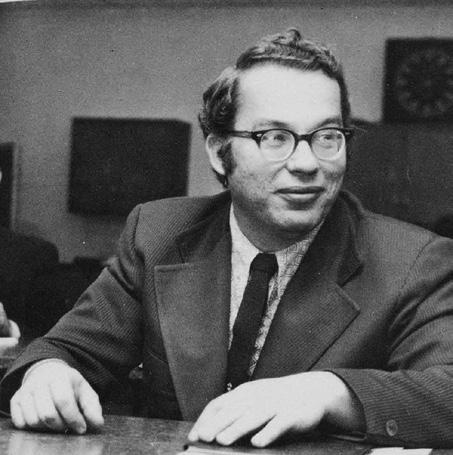
Chris Mess: George was a naturalist, who was ahead of his time. He devised these third-floor Belly Busting contests by faculty members. He would stand at one end of the third floor, challenger at the other end. They would run toward each other and hit bellies, winner was who was still standing. George had a large belly. On one occasion a young teacher, Denny Dietz, challenged and was knocked out cold.
There was also Art teacher Bill Christman and his antics. Christman had an art exhibit, but used helium balloons to carry the art skyward. And he tried to create a living rosary – a whole group of students buried up to their necks in the football field in a rosary formation. He also collected money to create wings to fly off the roof of the school.
Yvonne Fernau Mess: And Larry Morgan sent Christman home one day, because he was dressed in knickers and had an artistic tie with a nude figure on it.
Vitello: Has anybody contacted Larry Morgan?
Interviewer: We can’t find him. Last we heard he was in the Tampa area, and some guys have run into him in Florida in years past.
Yvonne Fernau Mess: You could hear Larry coming down the hall because he had these taps on his shoes. … Click, click, click … I remember the day he was let go, I’m standing at the mailbox, and he opens the door and says, “I’m outta here.” And I said, “You can’t leave!”
Vitello: When Morgan was made assistant principal, the administration said he should not coach or run PE, so that’s one reason I was hired – to run PE.
Grawer: And that’s how I got the basketball job – he was the freshman basketball coach, and the school wanted an experienced basketball coach. So I was hired to replace him in the role of basketball coach.
What did you think of the pros and cons of the demerit system?
Grawer: I think it was a very good and effective system, especially for younger teachers and female teachers. It helped protect them. I’m not so sure that’s true today. The demerit system helped both the younger faculty and the kids to the extent that it generally took five incidents for them to go to JUG. In the old days when I was a kid at SLUH in the 1950s, if you were talking in class or something you went immediately to JUG.
Yvonne Fernau Mess: Unless you were John Faust, who would give a kid five demerits and write “insolence” on the card!
Fr. Houlihan: That is where the assistant principal would say, “John, you can’t do that.”
Vitello: I think it was effective at the time, and then JUG really meant something too. But later it just evolved to the point where nobody wanted to stay after school to run the Juggees, so they tried to take them outside, asking the maintenance director to put them to work. But you had to have somebody monitor it, so that became a nightmare. And then JUG simply became sitting around for an hour and doing a puzzle or math problem, not memorization, and it was diluted.
Chris Mess: In the ‘70s, demerit cards were given out every quarter, unlike later when it was every semester. Demerits were given liberally: Your collar wasn’t buttoned. Your tie was not tied right. You were talking in class. You were a minute late for class. Your hair was too long. It took 30 demerits and had an “S” at the end, when you were suspended if you got there. It was a very effective system. When they instructed new teachers on use of the system, they said be sure to mark it with a pen, not a pencil, since some students might try to alter the card. And put the code underneath – there were dozens of categories, including the last one, “Z” for “other,” and use this one if you’re not sure which category to use.
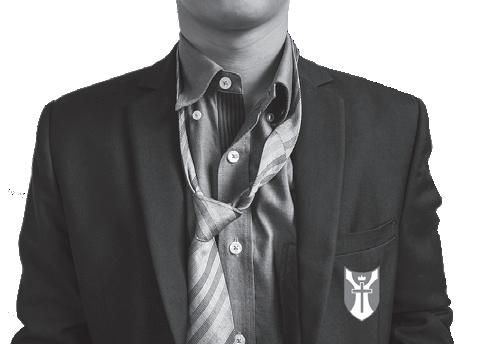
Buckley: I never used the demerit system. I taught for too many years and I knew what was going on and knew and understood young men. If a student acted up I would call him up after class, saying I wanted him to write one sentence very neatly from the textbook and turn it in the next day. The student would come in the next day and ask, “Is that all?” I explained I was on their side, wanting them to learn and was not interested in crushing them, not wanting to persecute them, and they then would react appropriately. Years later I was told I was different. I was told I respected my students and commanded respect.
“The demerit system helped both the younger faculty and the kids to the extent that it generally took five incidents for them to go to JUG.”
--Rich Grawer
Vitello: Some kids were really creative in trying to game the demerit system. Like trying to get extra cards to use, or you get a guy’s card and it was obvious that he tried to erase some demerits, since the card was just a mess.
Grawer: So what is JUG today?
Vitello: I don’t know how it is run today. In my last year here it consisted of sitting in a room where you had to be there for an hour busy with something.
Editor’s Note: The “demerit system” has survived the turn of the century and continues to the present day – albeit with one concession to technology: Instead of holding demerit “cards,” students now have demerits tracked through an app on their cell phones. JUG remains an hour-long, after-school detention in which students either do service work or math problems.
Interviewer: We remember a story of Fr. Timothy Lawless, in a Far Eastern History class, where during a test he would slowly walk around and sometimes out of the classroom. … One day Lawless strolls out of the room, and a guy suddenly asks a fellow student what’s the answer to number 7? The fellow student immediately notices Lawless suddenly standing in the doorway, and is trying to look like he is ignoring (the other guy), who is getting more impatient. Suddenly the guy turns to look back at the front and sees Lawless staring right at him: “Your card!”
Grawer: Fr. Lawless was really ahead of his time. He was the head of the History Department in the early years of De Smet and had a Ph.D., and he had a keen interest in all aspects of world history. He insisted that to prepare students for the postwar world we lived in that we offer history courses in nearly every region of the world. I just noticed that Illinois passed a law, due to the anti-Asian incidents recently, requiring that Asian history be taught in schools. Well, we taught Far Eastern History back beginning in 1969, and also Middle Eastern History, Latin American History, etc. I myself taught Canadian History, and I even taught African History! That was the Lawless’ curriculum. He wanted the student not just to learn American or European or Ancient history, which they did, but all world histories.
Chris Mess: Every semester from freshman year on was a different history course, and it went on for the full four years with a different part of the world each year or semester.
Grawer: I remember being called in, and Lawless saying, “We’re going to start teaching African History.” And I said hey that sounds really great! And then he said, “Well, you are gonna teach it!” I didn’t know anything about African history, or Canadian history. I joked, “What should I do, bring in a hockey player?” But you spend the time and effort and learn how to teach it.
Chris Mess: Basically, I was hired because Fr. Lawless was transferred to another school in 1970. I took over his Far Eastern and Middle Eastern history courses. At De Smet, we used the same textbook for Far Eastern History that I used when I took the same course at SLU.
Grawer: In those early years, I remember how fluid some of the teaching assignments were. In addition to teaching history, one year I was asked to teach Religion, as a layman. One year I actually taught typing, believe it or not, because whoever was the typing teacher suddenly took leave or something, so I took over a typing class.
To motivate the students, I created a game called “Typewriter Football.” I drew a big football field on the blackboard, and separated the class into two groups, and selected captains, and they would each pick a student
“Fr. (Timothy) Lawless was really ahead of his time. He wanted the student not just to learn American or European or Ancient history, which they did, but all world histories.”
--Rich Grawer
to do a round of typing in competition. I put footballs at each end and if one student typed 15 words per minute, I put it on the 15-yard line, and if his successor did 20 words per minute, I moved the ball up 5 yards, and so forth. And the kids were screaming and ranting and raving as the competition proceeded. And one day, we are playing Typewriter Football, and there is all this commotion, and the principal comes by, and asks me, “What’s goin’ on here? This is a typing class?” My point is, back then, we taught a lot of things, and it was part of the deal of being part of the faculty. You taught what needed to be taught.
Chris Mess: My first impression of teachers at De Smet was when I went to my first History Department meeting in 1970. I walk in and see Grawer, Buckley, DiBlasi, Christian and Bergin, and I go, “Good Lord, this is some major cranial firepower here.” I sat in the corner and didn’t say a word.
Yvonne Fernau Mess: Talk about your first encounter with Larry Morgan.

Chris Mess: At my first general faculty meeting, Larry Morgan threw me out, saying, “This meeting is for teachers, not students!” I said, “But I am a teacher!” And he asks, “Just who are you?” And I say Fr. Houlihan and Fr. Bergin hired me, and he says are you sure? I said yes.
Grawer: We were all young at that time. I was 24 or 25 when I started at De Smet.
In what ways do you think an incoming student’s expectation of a private college preparatory school is different today than when De Smet opened in 1967?
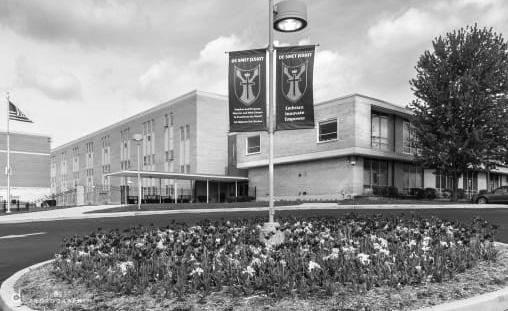
Vitello: Your time at De Smet was a different era, and you were not expecting all the bells and whistles that kids are expecting these days. I remember driving up to the entrance on my first visit to De Smet and there was only a single goalpost on the football field. The building was pretty sparse initially, and I remember the biology lab did not have a whole lot of stuff that you would have today. And for PE equipment I had almost nothing when we started. I remember giving President Jake a list of stuff needed, and he came back with a budget, and turns out I could buy about $30 worth of stuff. I don’t think you students at the time were interested in lots of fancy stuff.
Interviewer: We didn’t know any better. When we were freshman, if you were a football player, you had to cut the football field with push mowers, since the school did not yet have a tractor. The football and soccer fields had all this sharp-edged hay that would cut you up when you fell.
Vitello: We did not have a proper weight room or even universal machine. We finally got a single universal machine that we put in this small room for strength training. Today there is a huge weight room with all kinds of advanced equipment unimaginable back then.
Fr. Houlihan: At the beginning, we were financially really limited. One summer, Fr. Jake said you can have either soda or beer, not both – the scholastics said we’ll take beer!
Grawer: The amazing thing to me about the faculty is how long they stayed at De Smet. Many could have made more money going elsewhere, but it shows their commitment to the ideals of De Smet to stay their entire careers. I left after 14 years here, not because I was dissatisfied, but rather I had an ambition to try coaching basketball at the Division I college level. But then after a decade of seeing what it was like, I went back to high school when I joined Clayton. Something has to be said about the faculty’s commitment to the school and its philosophy. So many that came in the late ‘60s and early ‘70s stayed a very long time, and that is complimentary to De Smet.
Fr. Houlihan: I think the Jesuit high schools are academically better these days, with their large lay faculty. You generally have a more diverse faculty.
Vitello: But my son who went to De Smet really appreciated the Jesuits on the faculty.
To what extent should the De Smet curriculum be focused on career-oriented and narrow college prep subjects, or on a wider range of diverse subjects/viewpoints that expand the mind -regardless of impact on future work life? Are there subjects not taught currently that you think maybe could be?
Chris Mess: My philosophy is that De Smet and other good high schools should expose the student to many things, many different things, not necessarily stuff that is focused narrowly on a particular career subject. That is what college is for. At high school, you should expand a student’s horizons, be it in English, writing, poetry, history, math, science, and the like – it should be more like a liberal arts college to give a foundation to learn at the university level.
Now you see so many kids who go to college, and they have to declare their major early in their freshman year – I think that might be too soon for some. Parents want high schools to teach more college-level courses to maybe shorten the college period, and I can understand that. But they seem to want to have students take college AP courses that are very narrowly career-related, rather than more generalist or wider in approach. In the 1970s, as mentioned we taught eight semesters of history, of all the major world histories and cultures. I remember I had former students telling me that later when, for example, the Middle East would blow up, them saying they already understood the background and issues, since they learned that in class at De Smet -- something not typical high school students would learn.
Fr. Houlihan: You can ask the question differently. What are we really teaching the students in the end? They forget a lot of details and narrow facts and the Latin and such. I think we teach students how to take a lot of data, analyze it, and draw a logical conclusion. How to write, how to use the library, appreciation of beauty, religious values, and so on. If you can find ways to do this with newer disciplines, then try it. The stuff that kids do at De Smet with robotics is amazing. But you sometimes run into issues with state accreditation in trying new approaches, so you don’t have complete freedom to change the curriculum.
“I think we teach students how to take a lot of data, analyze it, and draw a logical conclusion.”
DiBlasi: I think we have to be a school that teaches values, and this is a big difference between going to De Smet -- or another Jesuit school. Today, at a public school you are very constrained from (taking) a position on many ethical issues. So many things are off-limits in terms of saying this is wrong or this is right. That is what we do differently. If we are not doing that, I am not sure that we are doing much that is different from good public high schools.
Fr. Houlihan: If you get a chance, check out Bishop Barron on YouTube on a presentation he recently made to the National Council of Bishops, and he talks about how kids don’t go to church, etc. But it is broader than that --- it is the culture. He has this concept of five paths to get them back, and it is very interesting.
Interviewer: You guys taught us love and respect. You were tough on us, but you teachers were really respected, and it was obvious you had our best interests at heart.
Grawer: Do today’s students at De Smet talk about the faculty the way your class does?
Vitello: I don’t think they do. I think they see the faculty in a different way. They see the faculty as someone they need something from, and if you can’t give it to me the way I want it, then I don’t care for your approach.
- Fr. Houlihan
DiBlasi: Isn’t that a reflection of how the society has changed?
Vitello: Yes, for sure. The word “values” was used a couple of times here. The term “Men For Others” is overused a lot, but you know there are other people in the world besides yourself. I prided myself on when I was here to teach people that there’s other people in the world besides me, and the respect thing.
Grawer: Obviously a class of ‘71 had that, but does the class of 2021 say that? I would probably say no.
Vitello: Well that’s the way the society is now.
One aspect of being a high school student in those early years is that we were taught by a lot of coaches and teachers that were “old-school” -- tough, demanding, and sometimes almost “Marine drill-sergeant” disciplinarian. Are there any ways you might need to modify the approach you used back then to teach and coach kids today?
Chris Mess: It is hard to make the comparison since it is a very different world. The norms of education changed. It is hard to express negativity now.
Vitello: You can’t tell no to anyone anymore. You can’t be negative, everything has to be positive, even if one does not fully deserve it. It’s the same thing with athletics too.
Grawer: I always asked myself, could I teach De Smet today the way I taught and coached back in the ‘70s? I don’t know. I had to make some adaptations as my career progressed, especially when coaching at the college level.
Houlihan: Rich, you would adapt if you needed to. The way you would do it would be different. Good teachers adapt. You did it with your Typewriter Football story earlier.
DiBlasi: The lecturing part would have to change. I think also you couldn’t say certain things today that you said back then. But hey, I never saw myself as a Marine drill sergeant!
Vitello: But when Grawer coached, he had a style that he could bring, and get a lot out of kids in his own way. We all knew that there was one thing we had to do -- to try to bring the best out of each and every individual whether we were teaching in the classroom, or as some part of athletics. And you know the way you went about that obviously was different, but that was your goal. And I think right now you could adapt because you were successful at that particular time to do it the way you did, and I think that you would figure it out that you can’t do that anymore, can’t say that anymore.
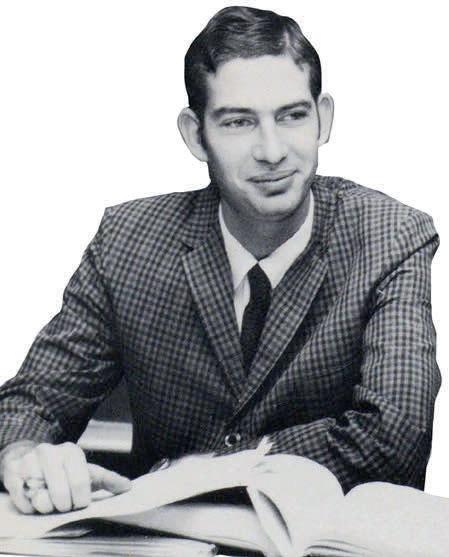
DiBlasi: In the classroom, if somebody was causing some disturbance, or was doing something to interfere with what we were doing, I might call out some student named John and simply say, “You know, John, sometimes it’s better to remain silent and not speak, and be suspected being a fool, rather than speak and remove all doubt.” And you know today that would be considered unacceptably insulting. You can’t do that today. At the time it kind of shut the troublemaker up.
Yvonne Fernau Mess: You would get an email from their parents and all kinds of complaints, if you did that. Maybe even a threat of a lawsuit!
Grawer: When I went to the public school system, I was athletic director, but was asked to take over a class for the semester. So at my class, I found that kids would be strolling in late, and I got so ticked off that I shut and locked the door after class started, and kids were banging on the door, and I wouldn’t let them in, because they were late for class, and I wanted to show them the price for being 10 minutes late. Well, I just ignored them. Next thing I know, the principal calls me, and said you can’t do that. I had to figure out another way to deal with kids for coming late.
“The norms of education changed. It is hard to express negativity now.”
- Chris MessGreg DiBlasi
Vitello: So you adapted. Some teachers can’t do that. Some coaches can’t do that. I remember first-year teachers coming in here to De Smet and wanted to be everybody’s friend and then when a student crosses the line and they try to discipline him, the student complains, “But I thought we were friends!” That’s a difference.
If you were the principal of De Smet in those first few years, what would you have done differently, if anything?

Vitello: I was still just trying to get my coaching and teaching legs, so I really didn’t think about how things could have been done differently then. But a key thing to emphasize is at that time nothing was set in stone at De Smet, and we were creating our own precedents and styles. There wasn’t an already established way in many matters, and I thought that was great.
All of the sudden, the students decided that green was not our color, it was going to be maroon. Michigan State green is not good enough for us, we want something different. Hey, why not? You think they would have done that at SLUH? No way.
And by the way, speaking of SLUH, what is this thing with the new powder blue that is in the De Smet colors? Come on, gimme a break!
Grawer: My son was the principal of Maplewood high school for more than a decade. But it’s a school of 400 kids, a small school, and he just got me thinking about how he could visit every family in the school in their home during the school year. It’s not a fair comparison, Maplewood high school with De Smet; the size of the enrollment is different. But I have thought, what would be the impact if the principal visited every freshman class family each year? I know that would be a monumental task, but my son says that when the parents see the principal visit a home it makes a huge impact. There is a bond and camaraderie that emerges. But what if the De Smet principal visited the freshman homes every year? Would it be acceptable to De Smet parents? How would they react?
Chris Mess: I was on a committee a few years ago at De Smet, dealing with school identity, and a consulting company was giving a big presentation on ideas for the school. The meeting was wrapping up and I was asked if I had anything to say. I had been sitting in the meeting, and getting madder and madder, but not yet saying anything. So I said, not once did I hear the word Catholic; not once did I hear the word Jesuit; not once did I hear the word values. And I thought our identity was Catholic Jesuit with values, but everything said was talking about how students succeed, and it seemed to lean toward materialistic goals. Why don’t you emphasize Jesuit traditions, customs, practices? And their biggest contribution was this new seal or logo with powder blue color. The meeting was supposed to be on values and identity.
Grawer: I’ve got 19 grandkids and the youngest is in sixth grade, and the oldest is out of college. I don’t think I have ever heard them talk about one of their teachers. That’s sad. The good news is they don’t talk about their teachers in the negative way, but they don’t really mention them.
Yvonne Fernau Mess: Something else that was different about those days, in talking about visiting people’s homes. We were invited to students’ family homes. We knew them on almost an equal basis; it wasn’t like they only called when the kid was in trouble. We socialized regularly with some parents. We used to have dinner after carnivals, and people just opened their homes to us.

“What would be the impact if the principal visited every freshman class family each year?”
- Rich Grawer
On the following pages are images of the younger versions of ourselves, preparing to leave the campus in the spring of ’73, and ready to apply lessons learned here.


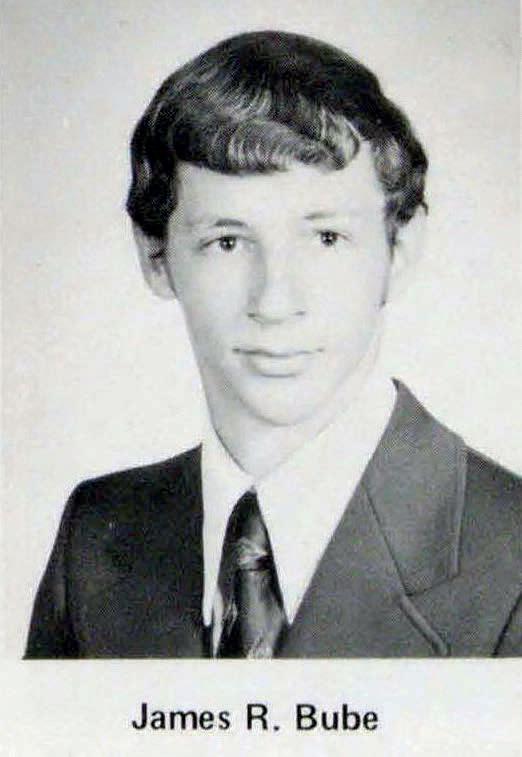
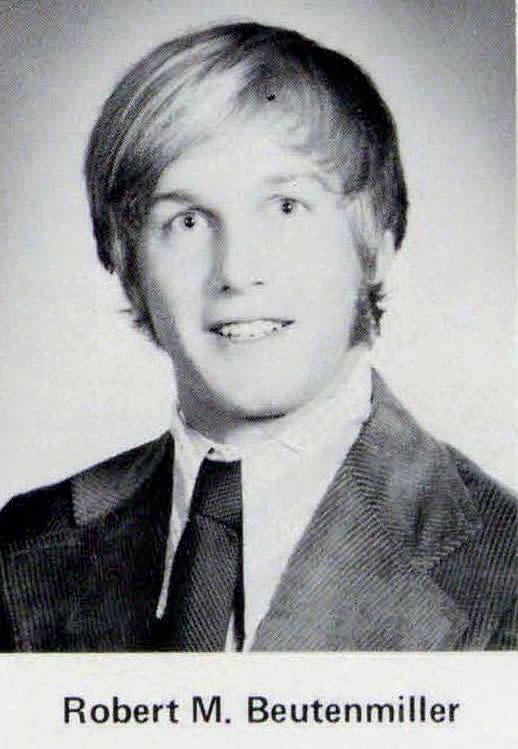
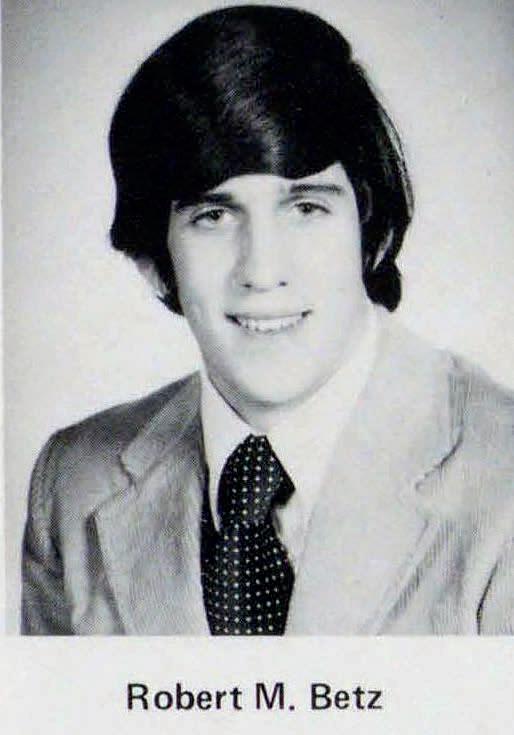
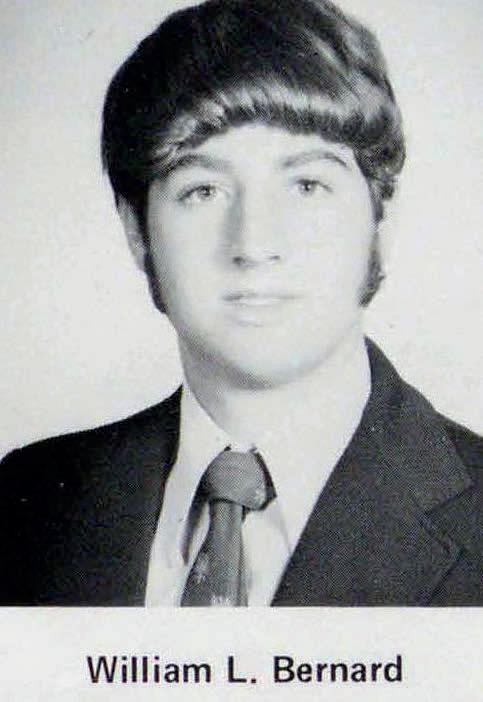
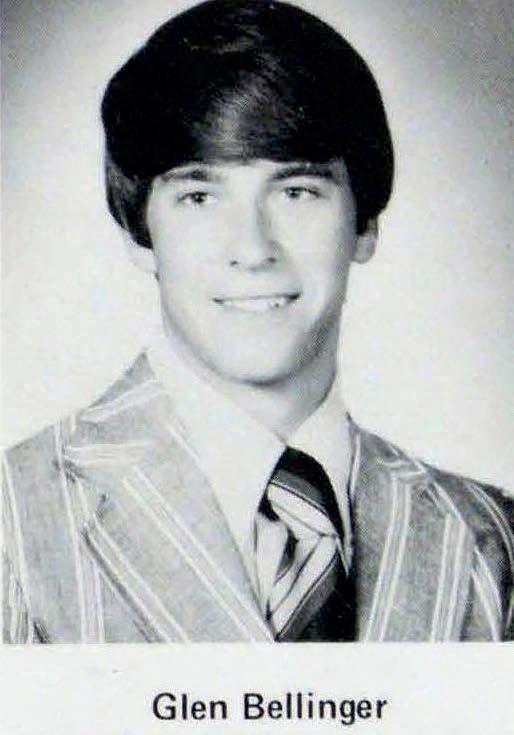
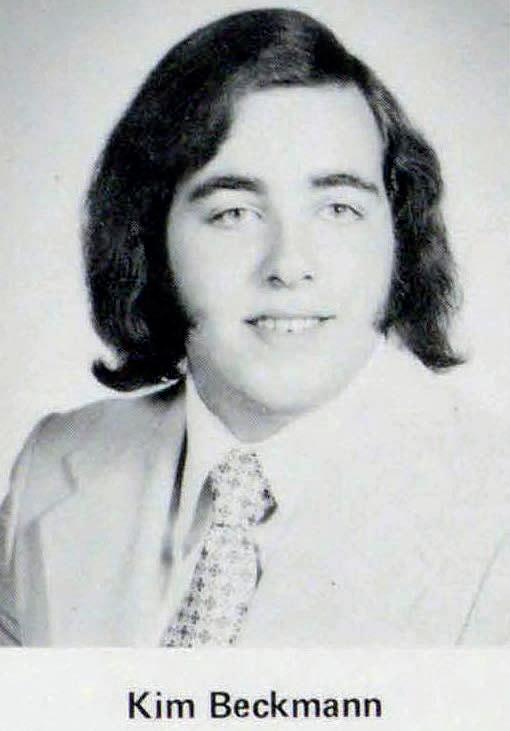
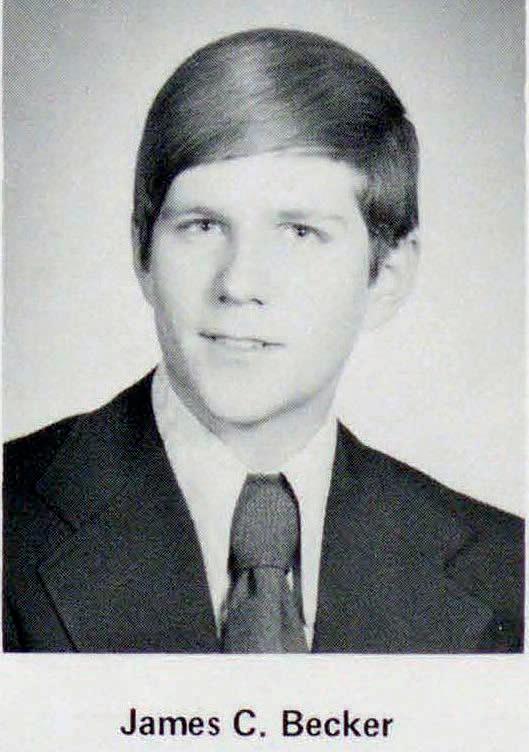
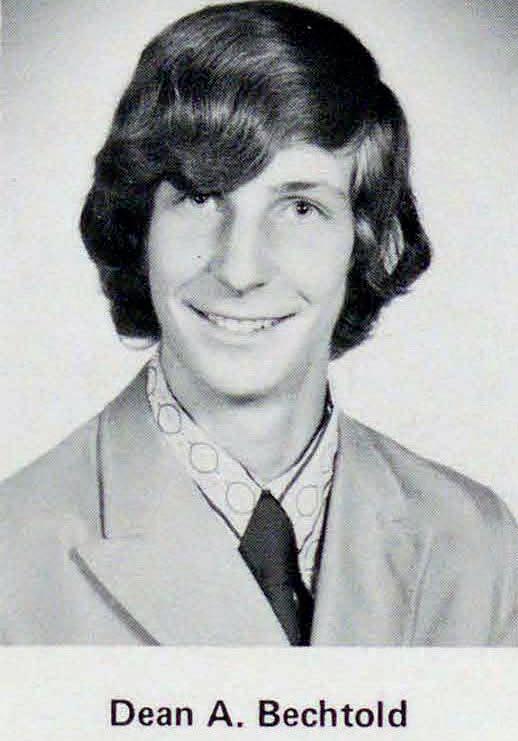
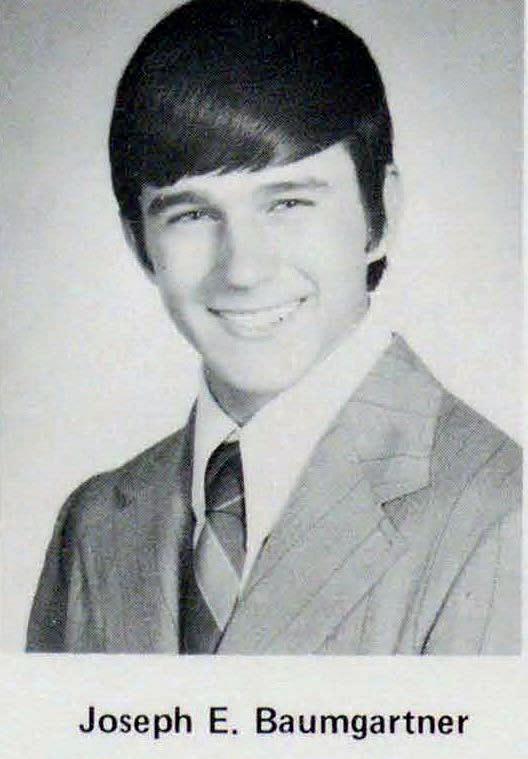
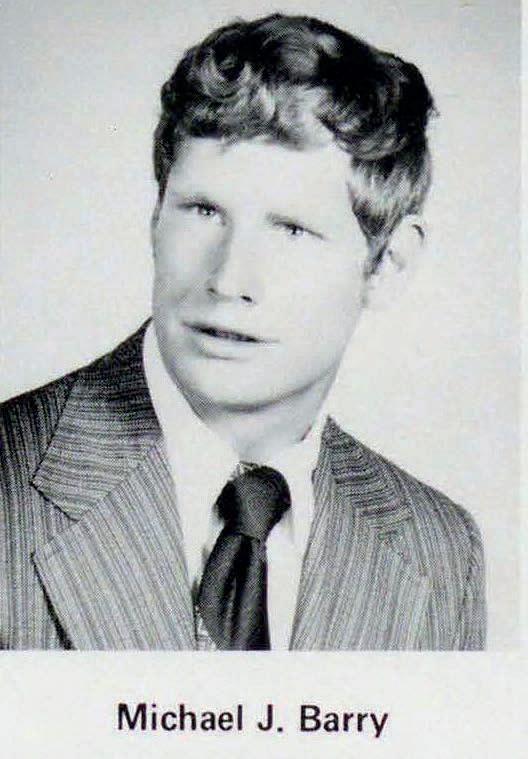
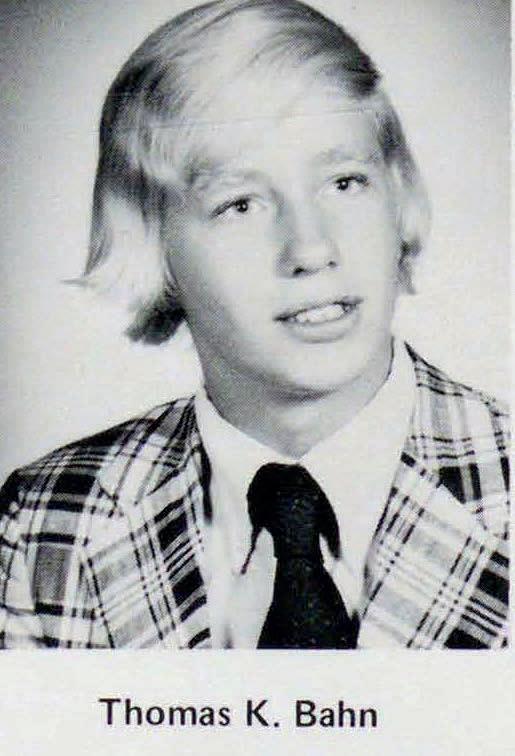
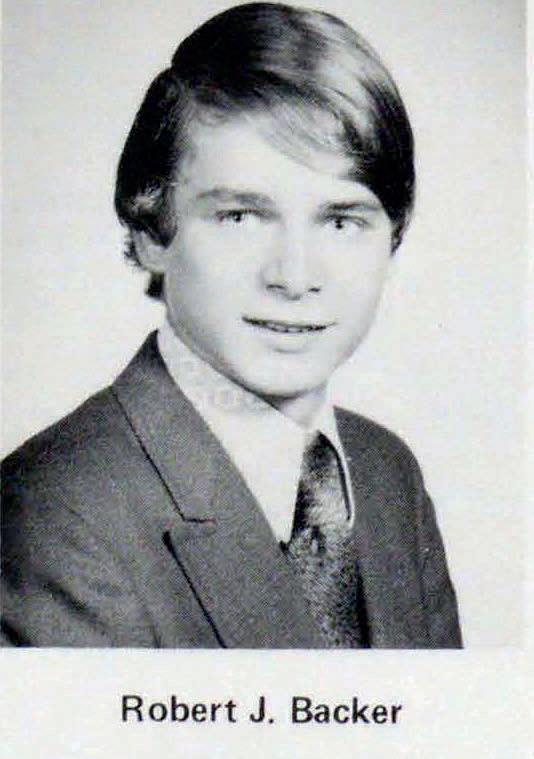
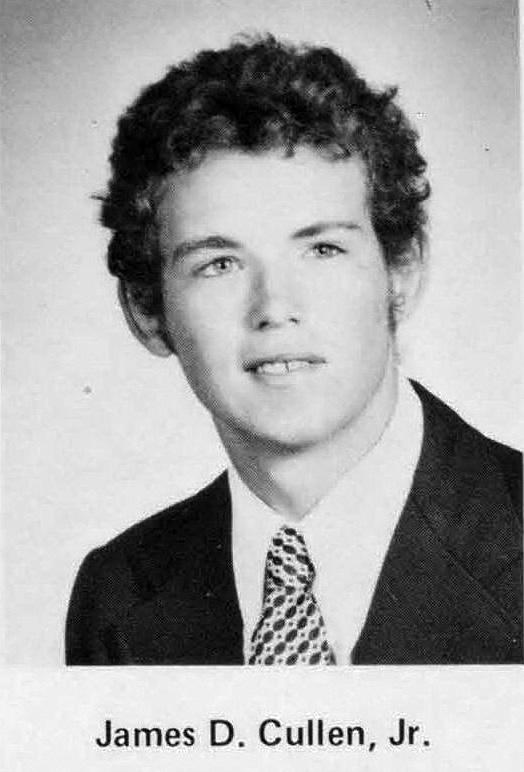
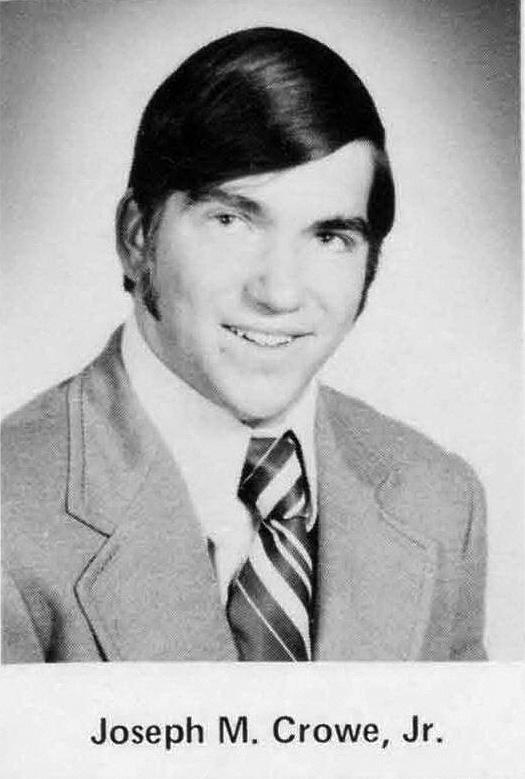
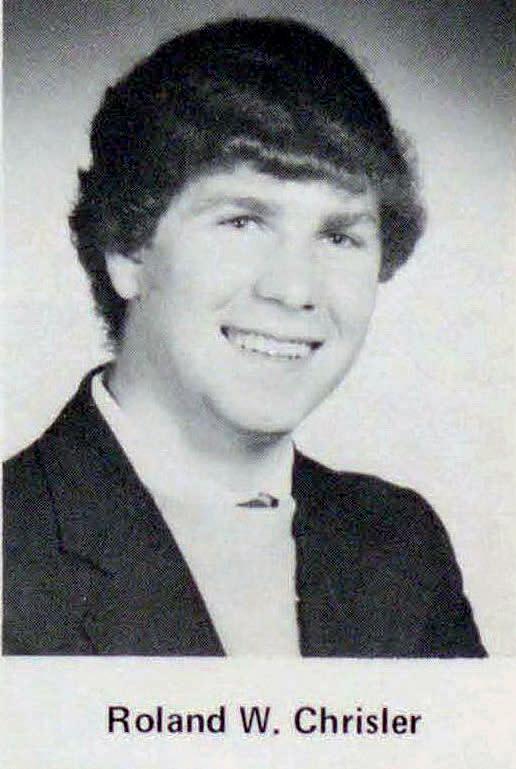
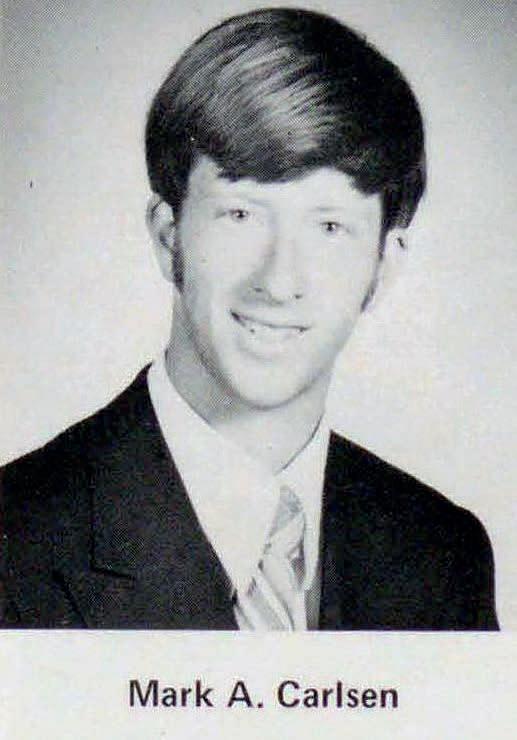
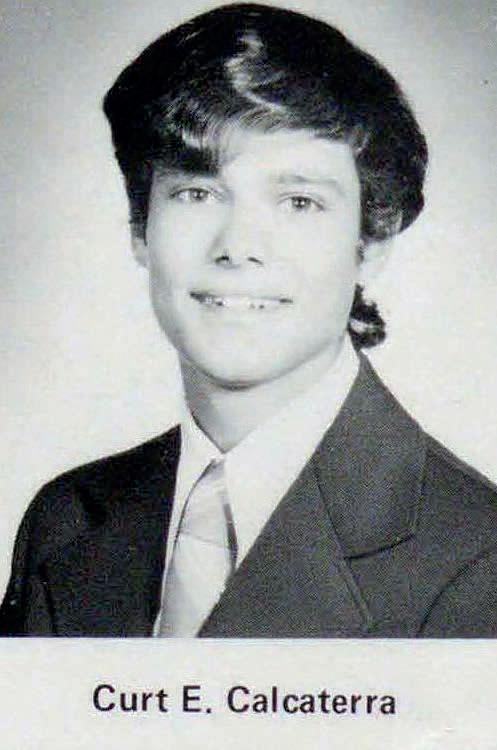
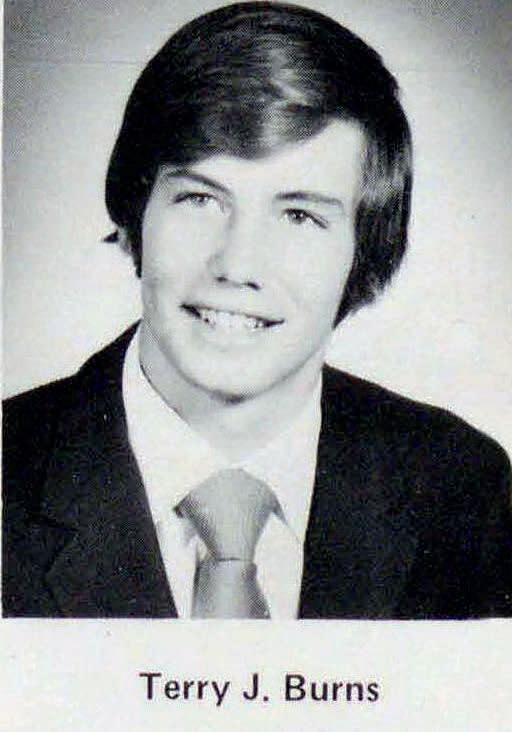
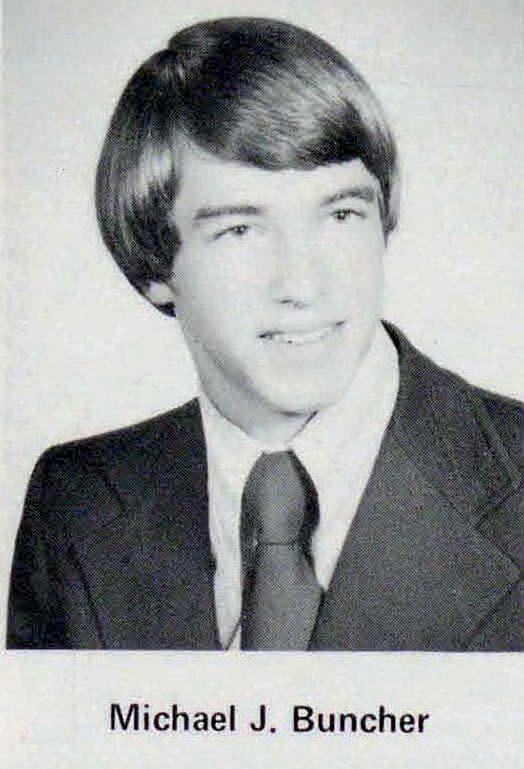
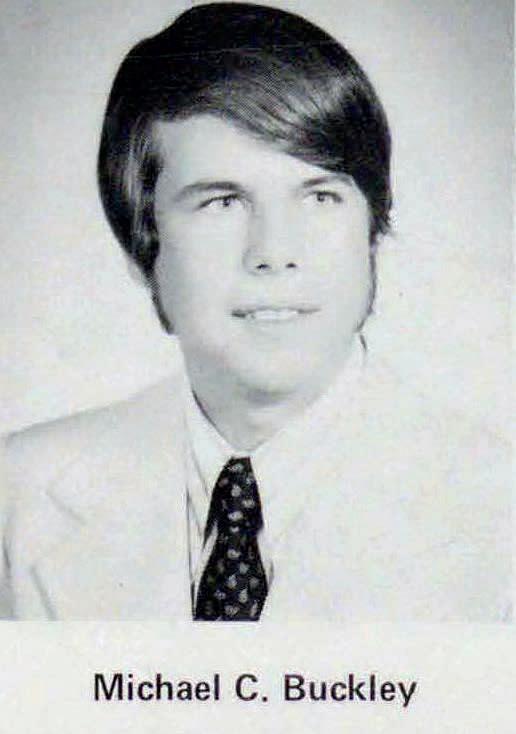
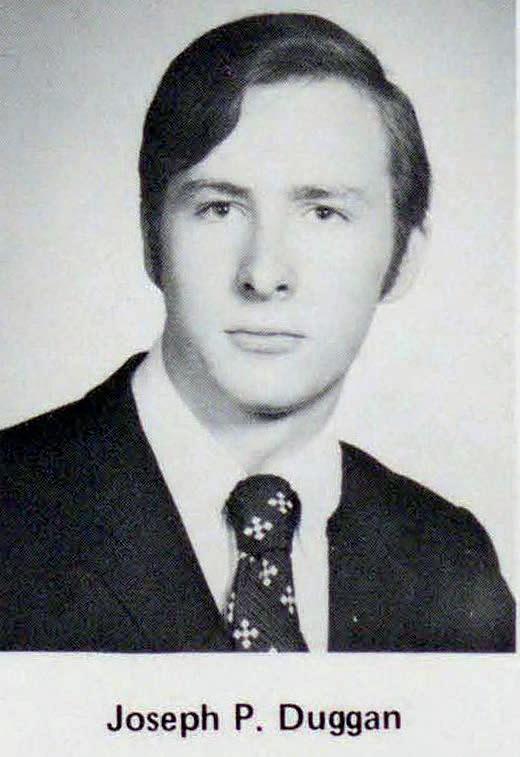
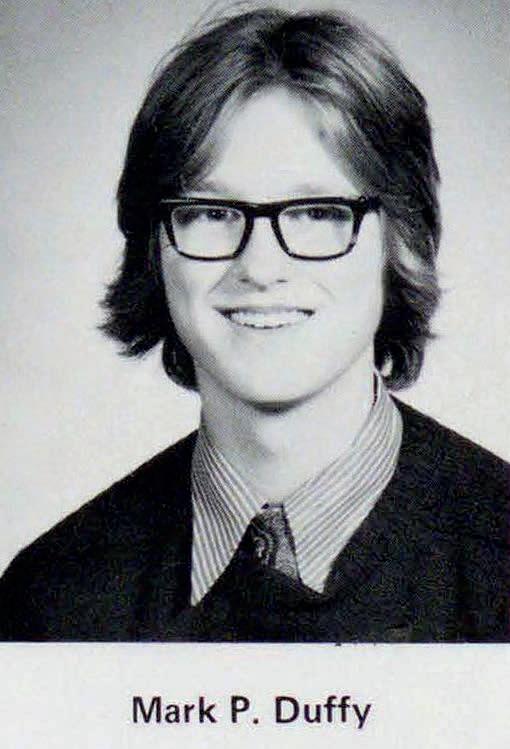
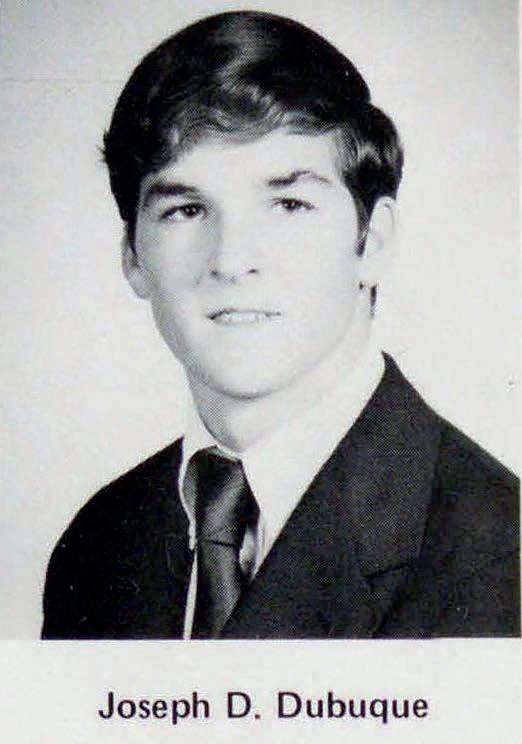
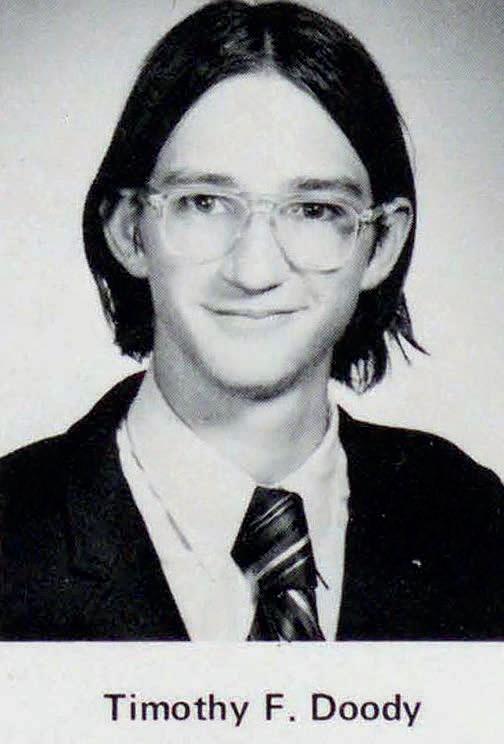
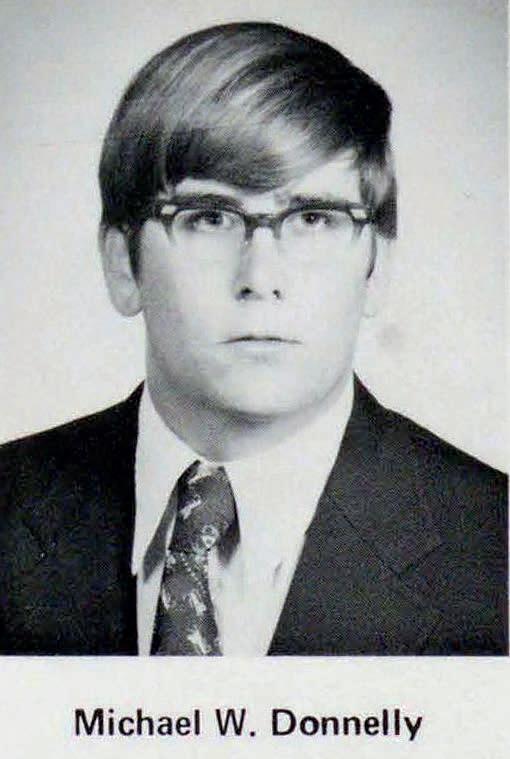
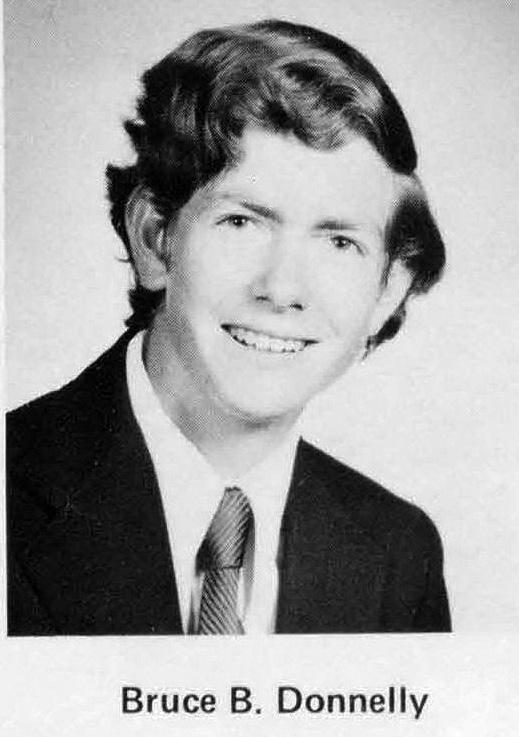
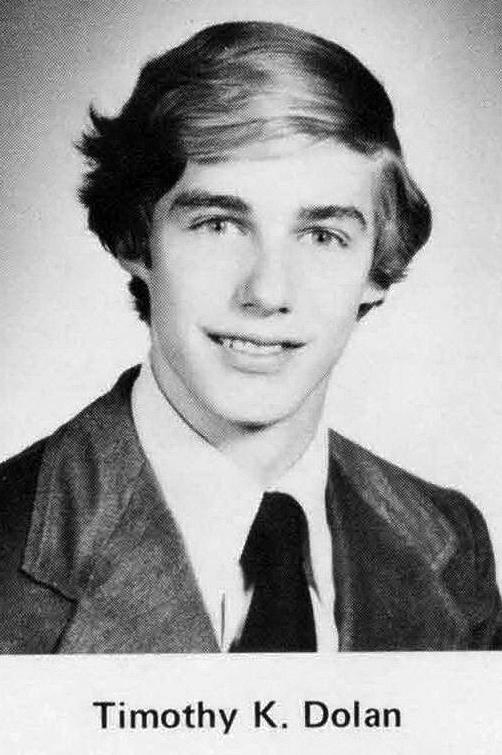
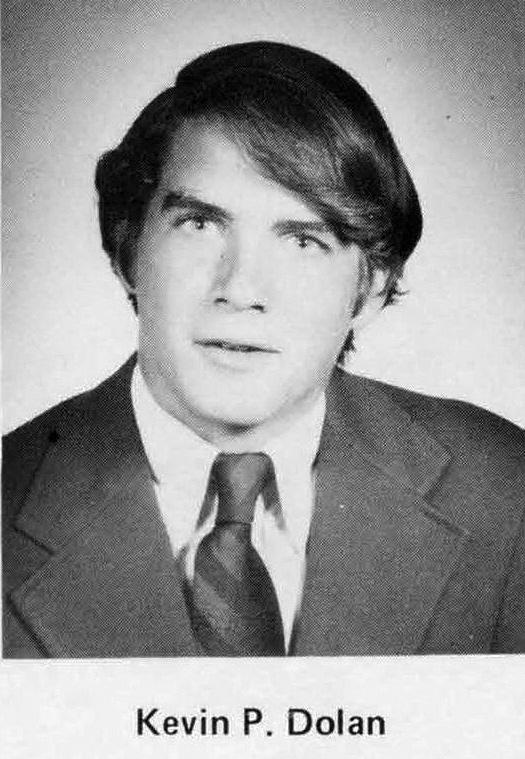
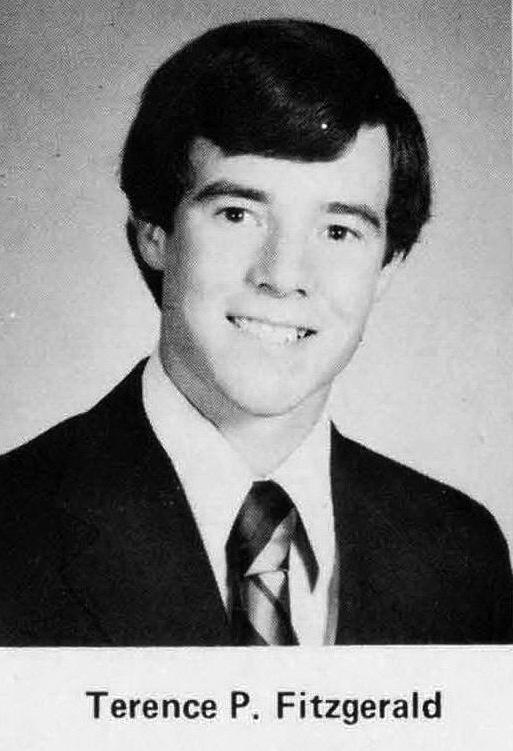
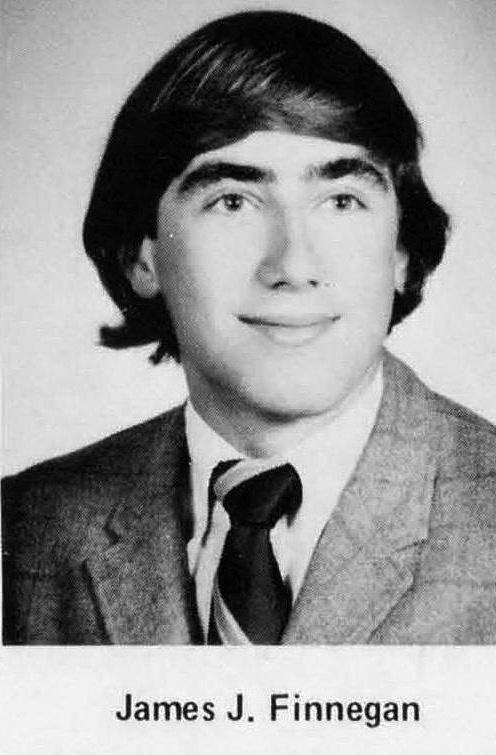
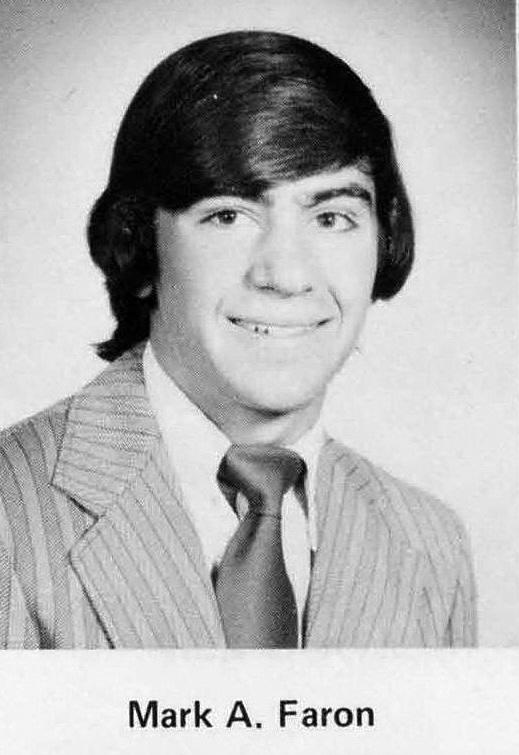
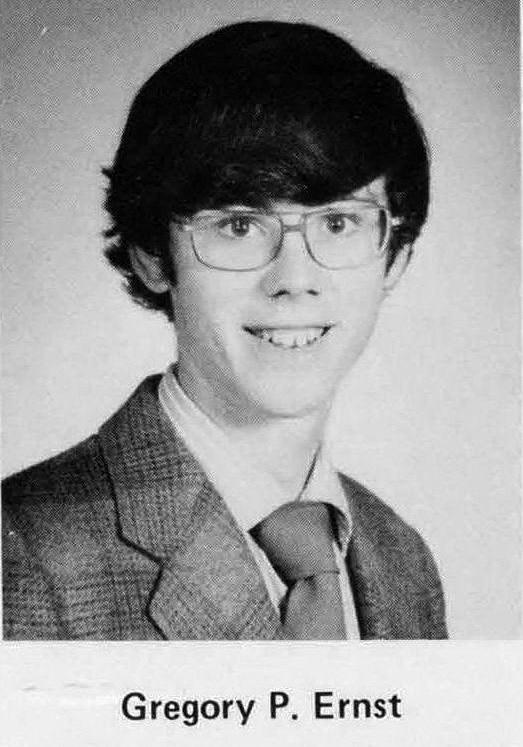
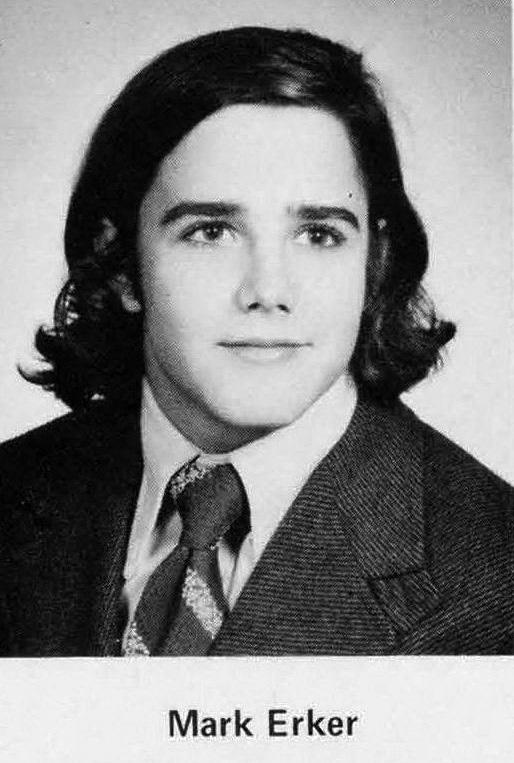
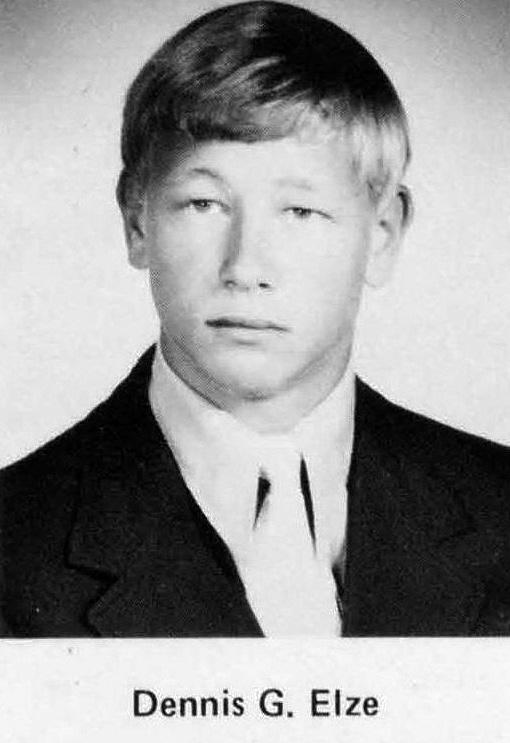
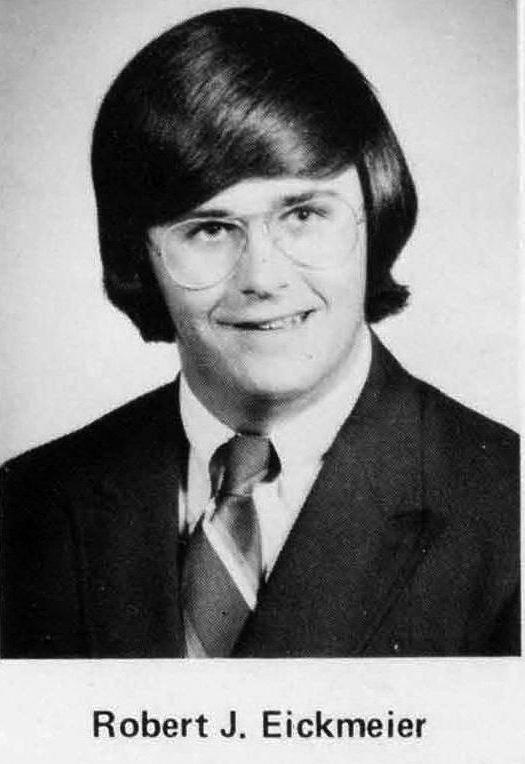
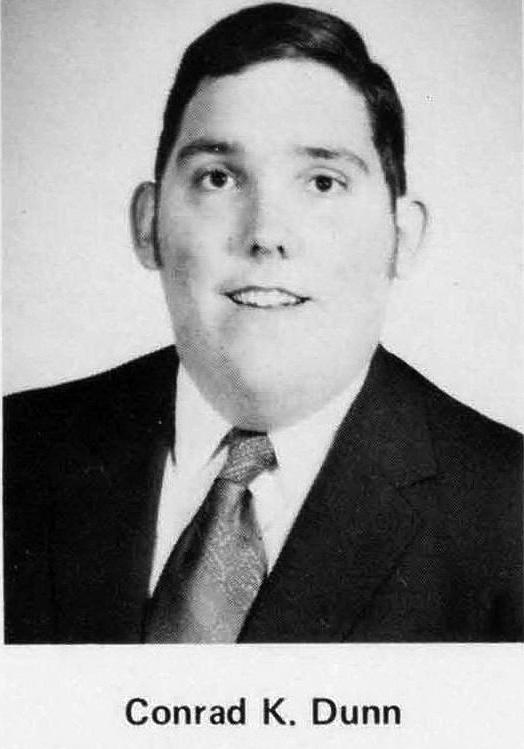
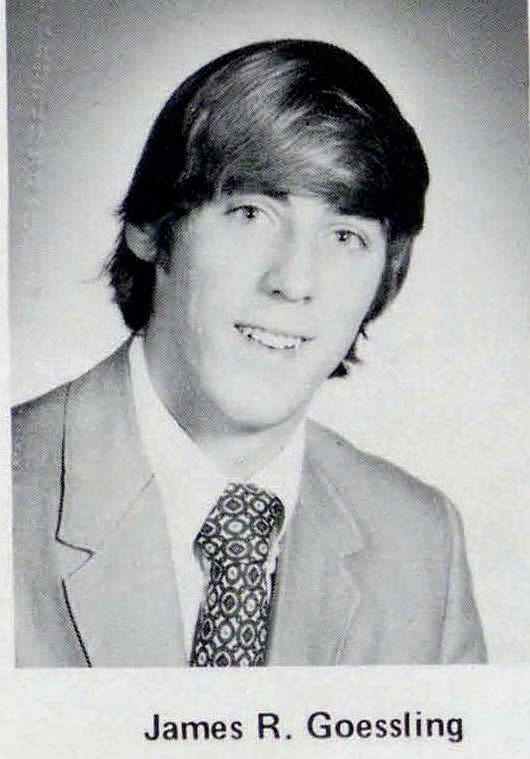
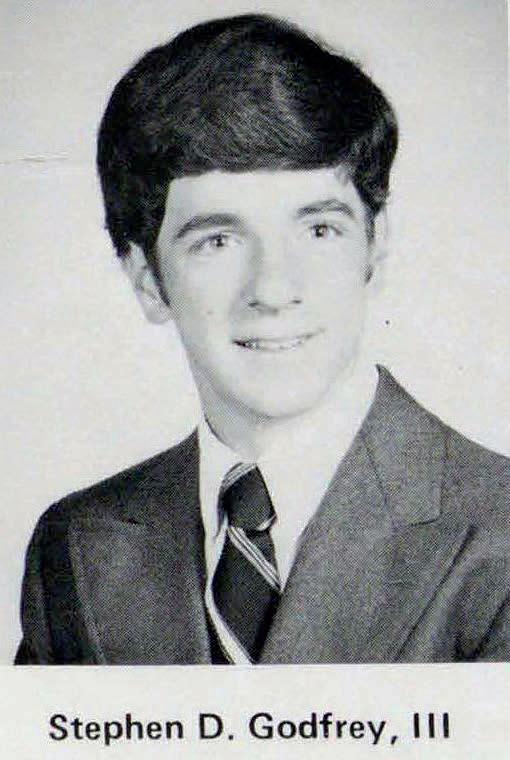
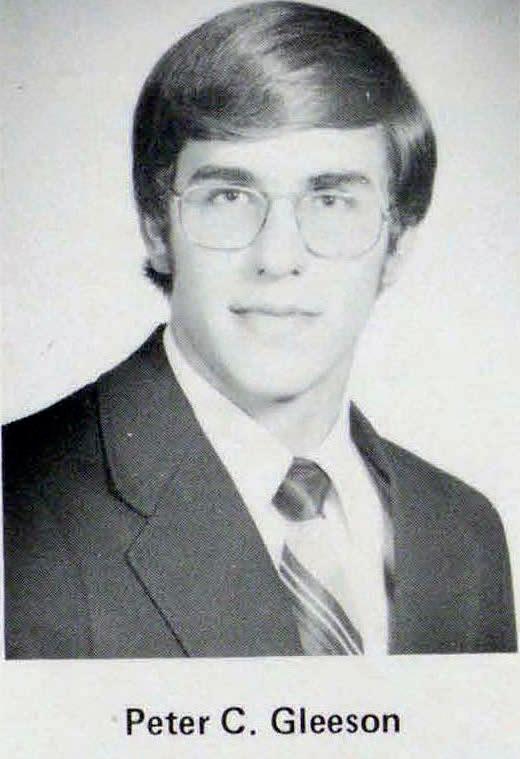
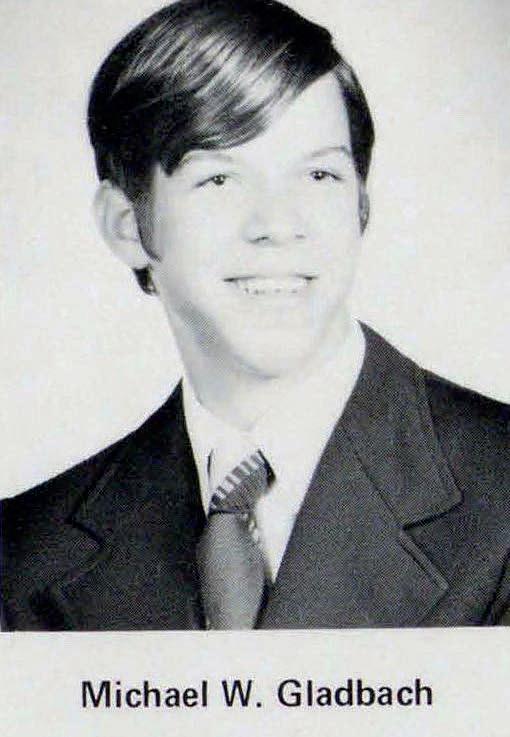
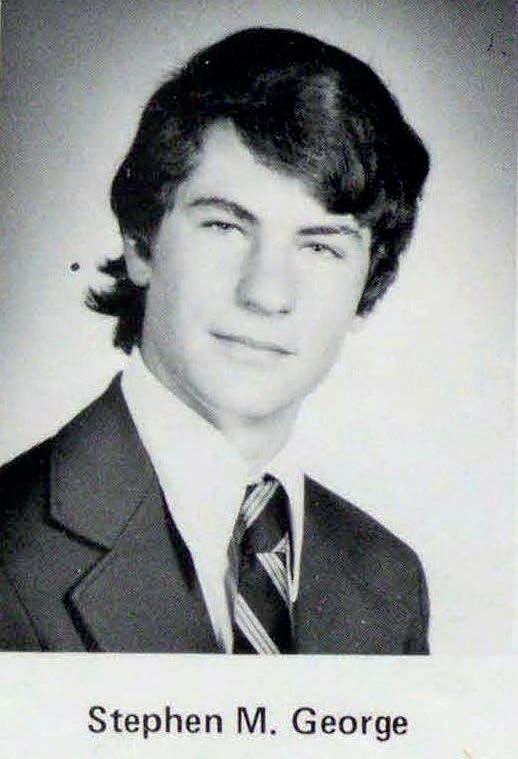
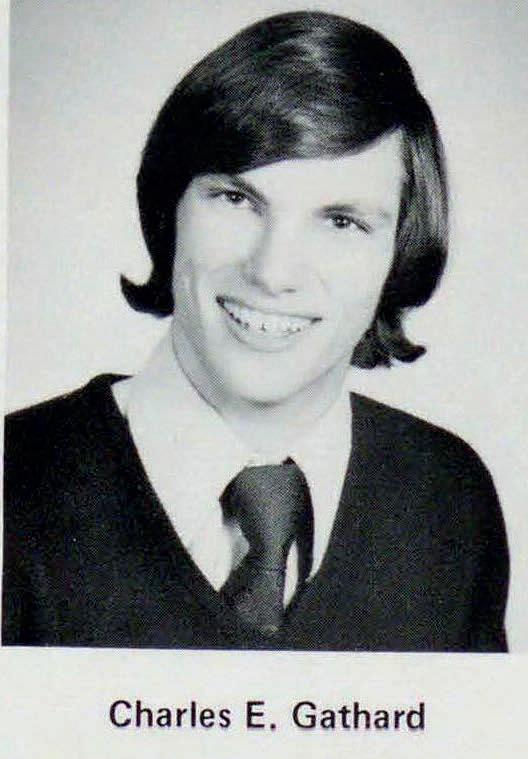
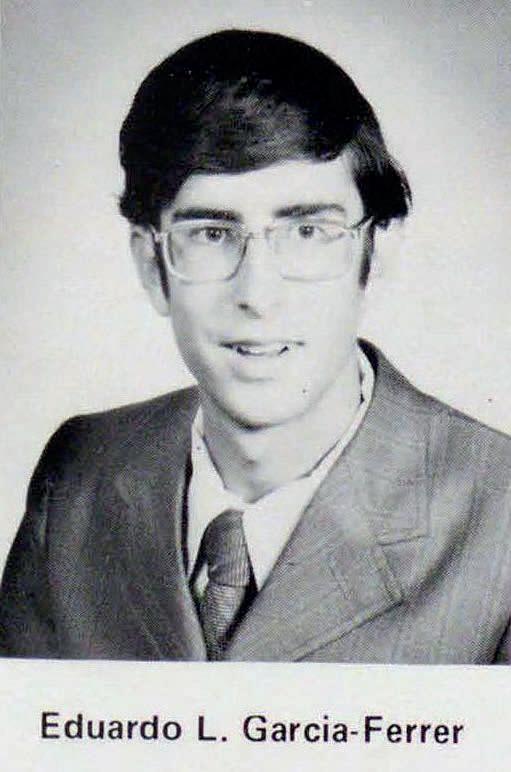
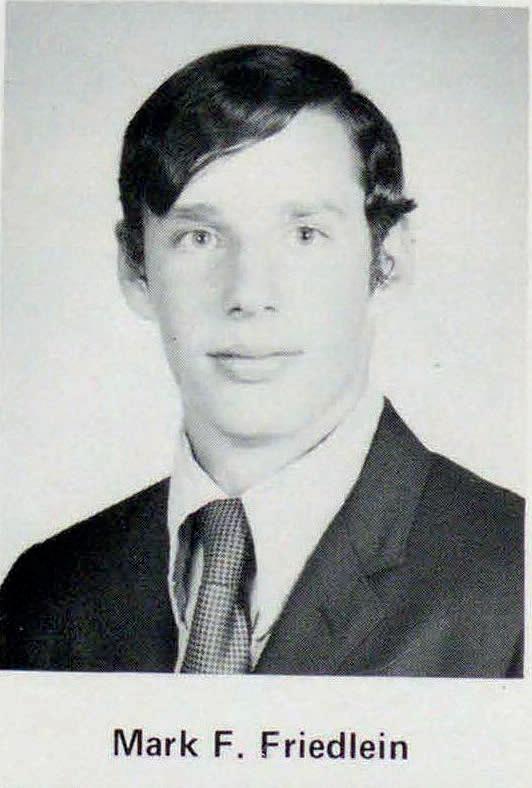
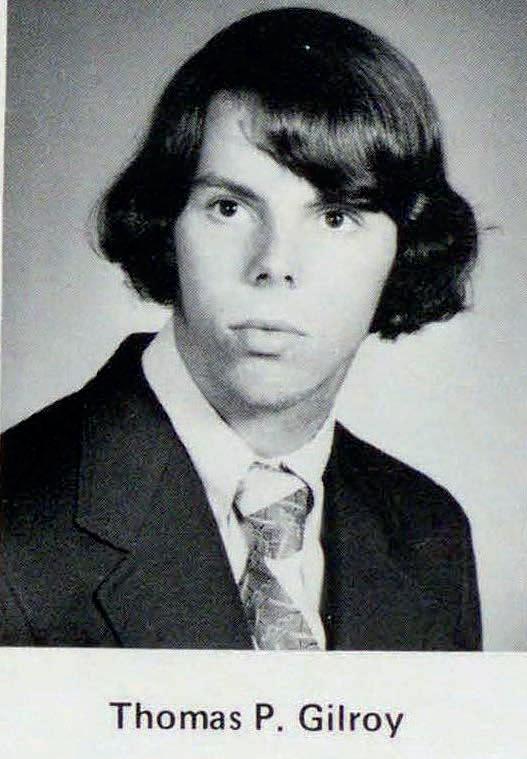
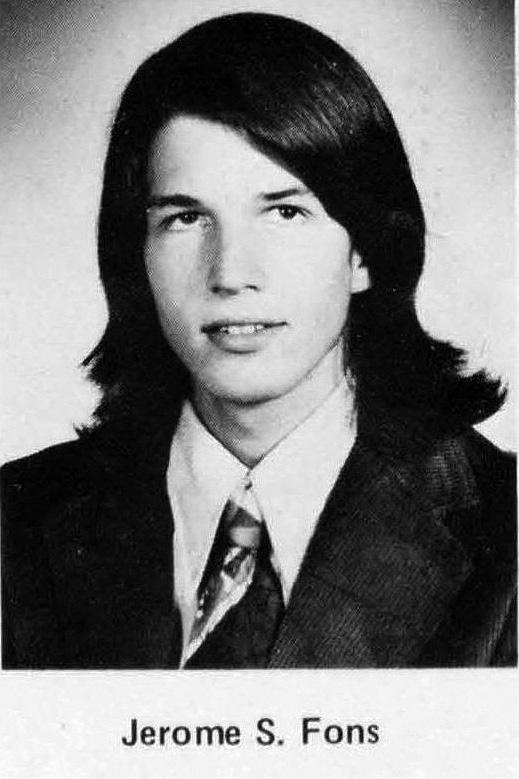
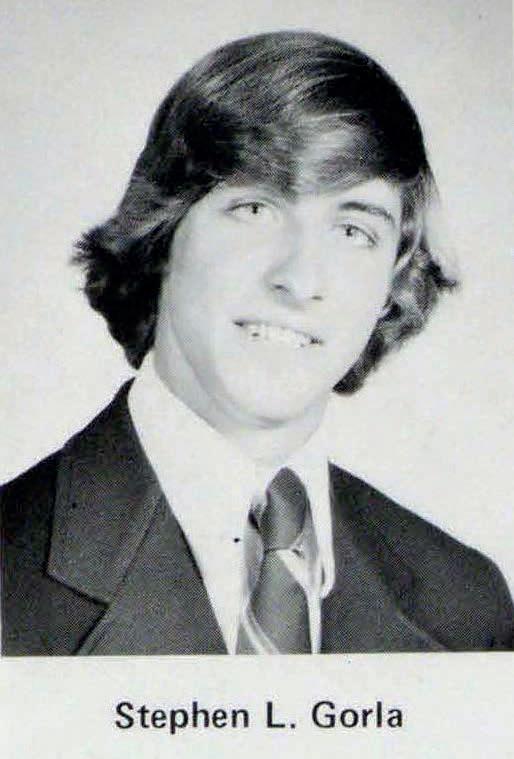
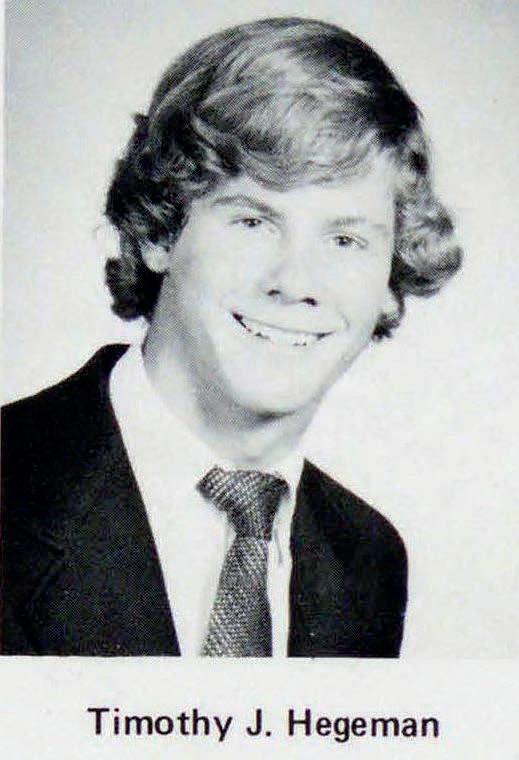
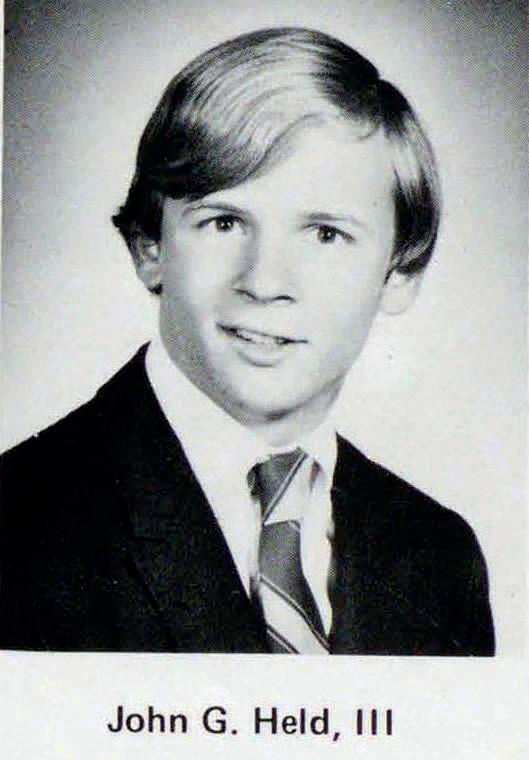
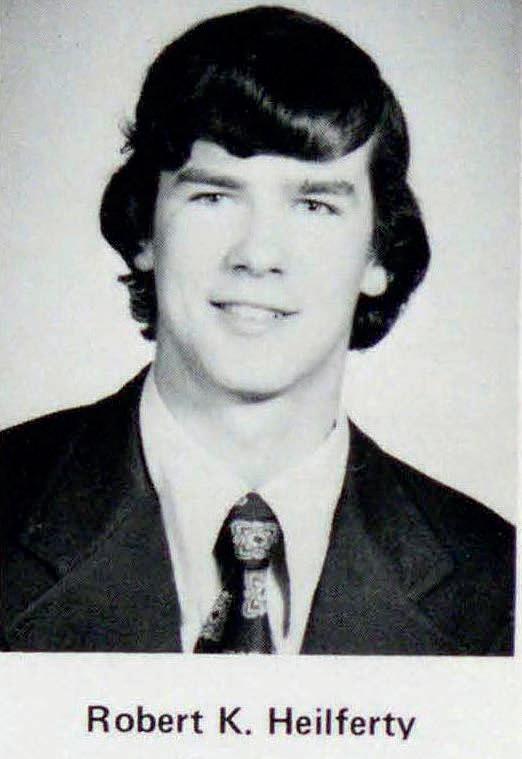
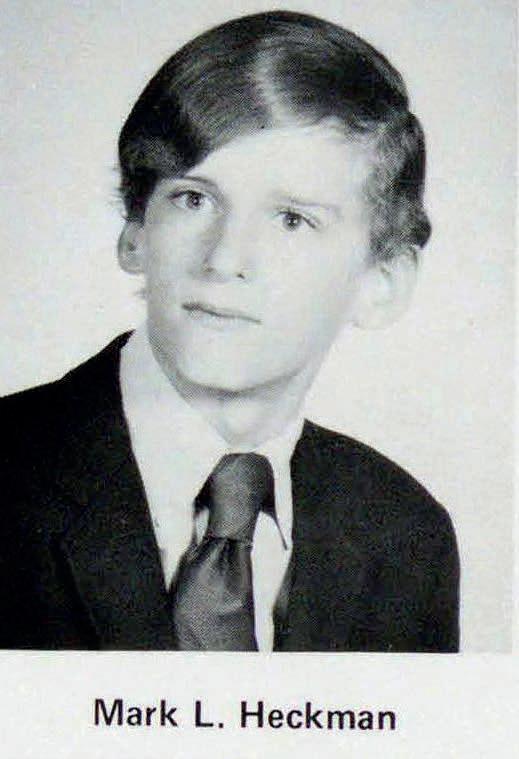
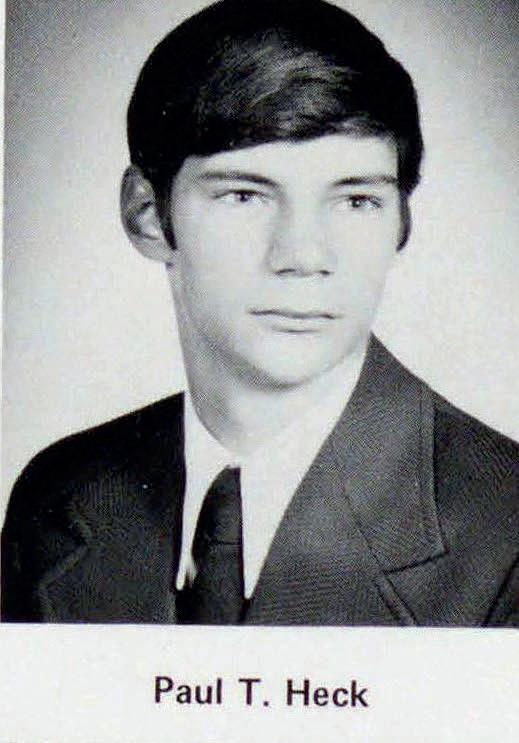
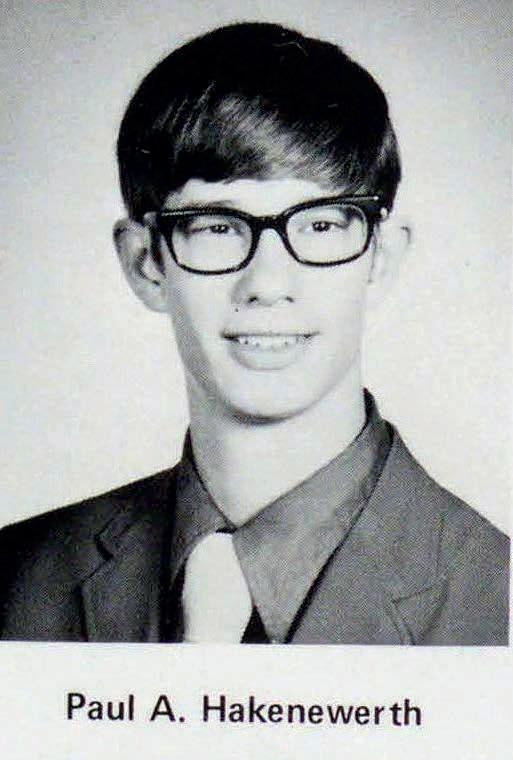
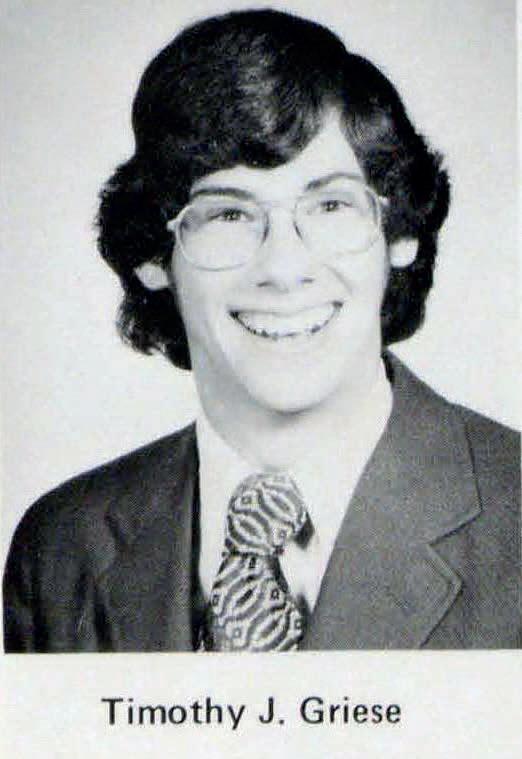
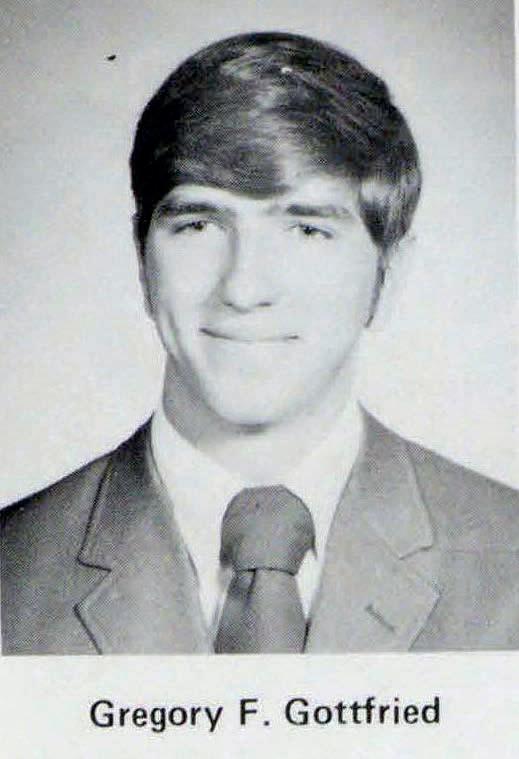
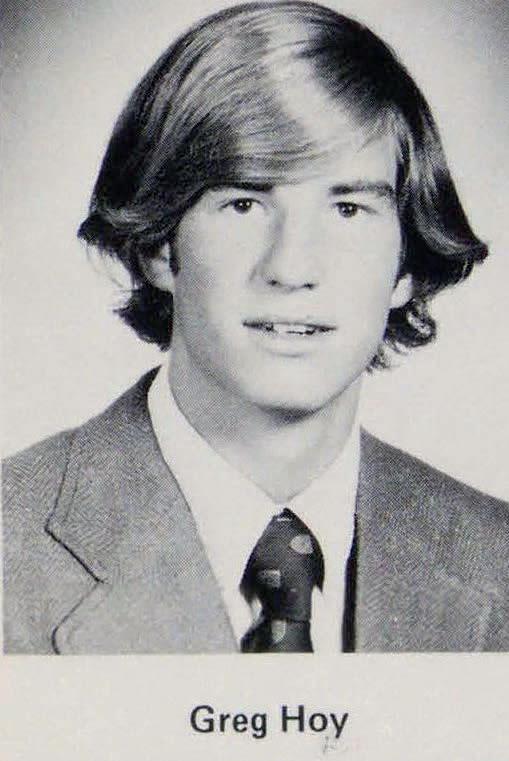
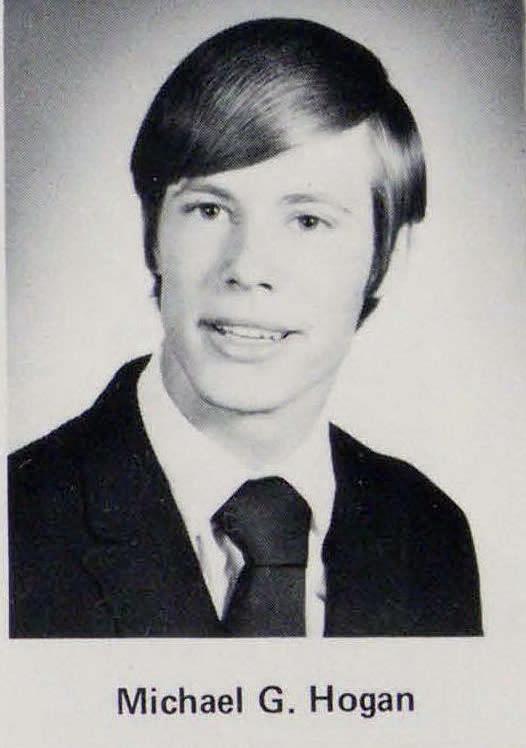
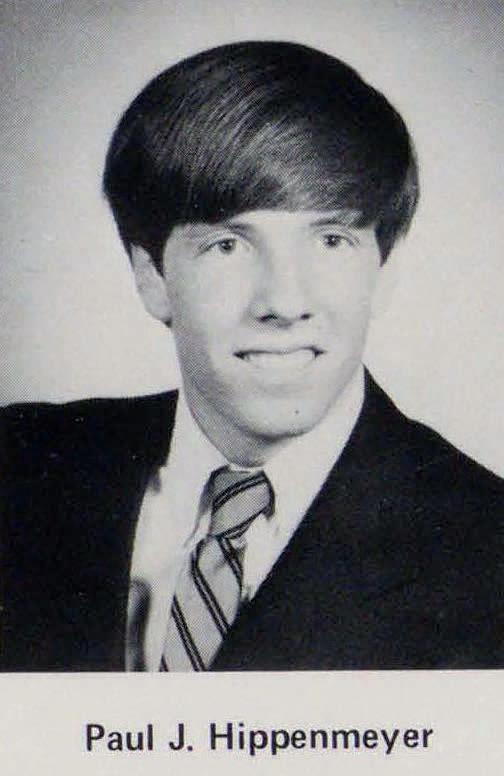
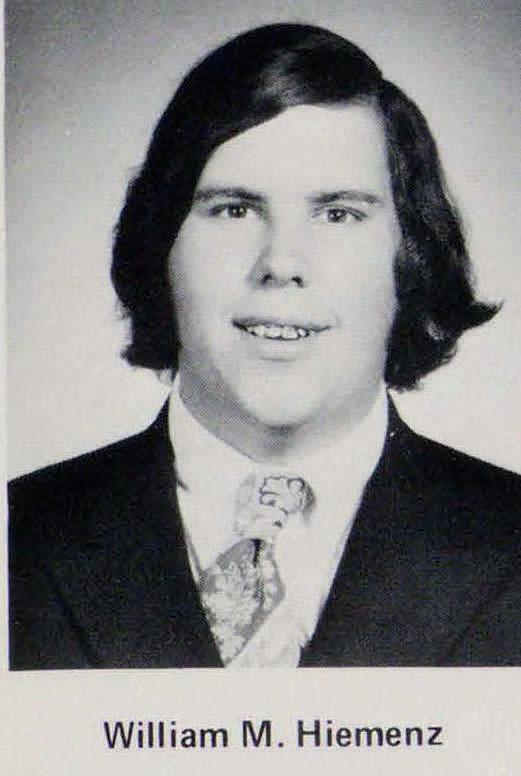
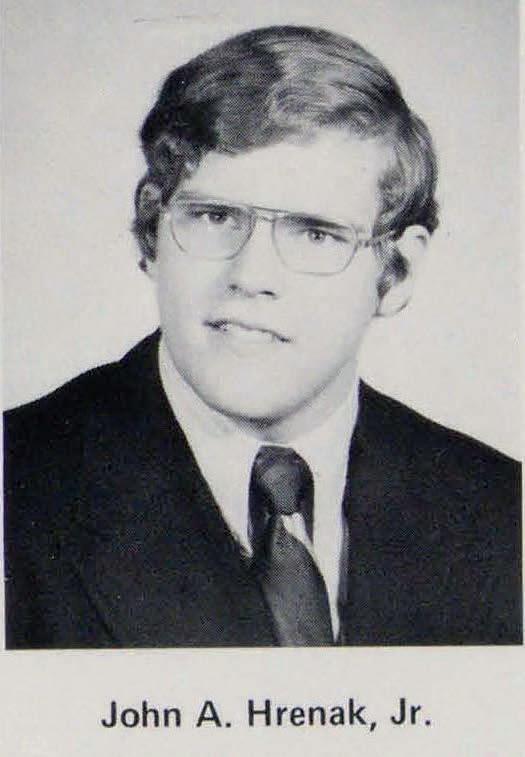
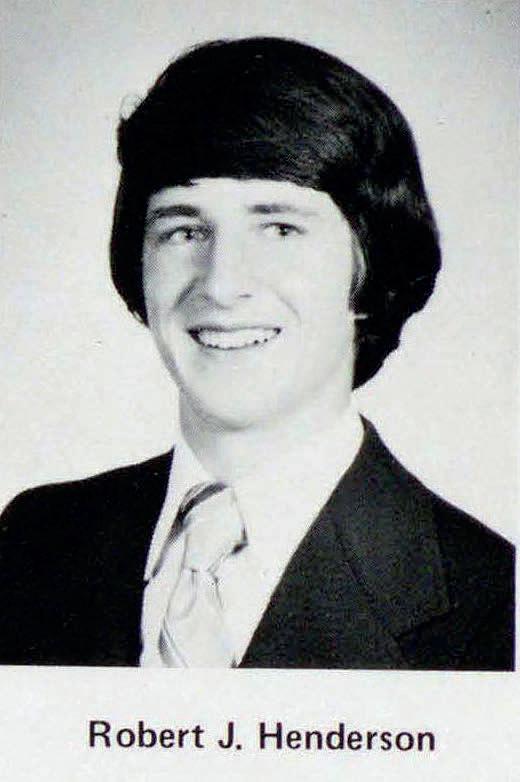
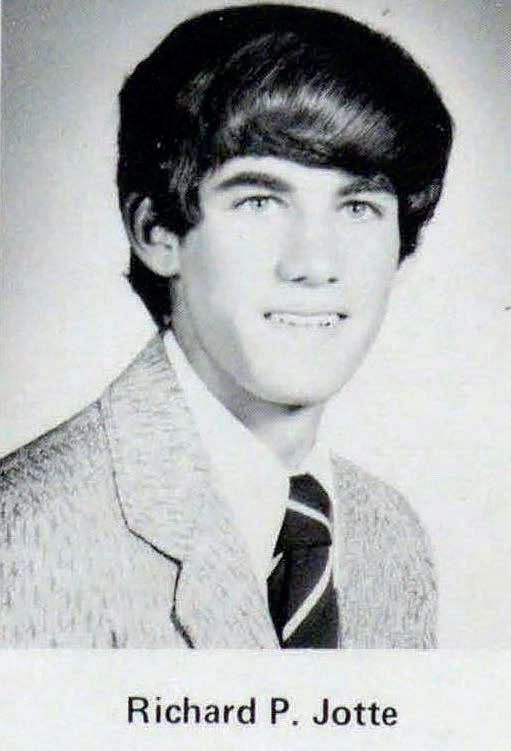
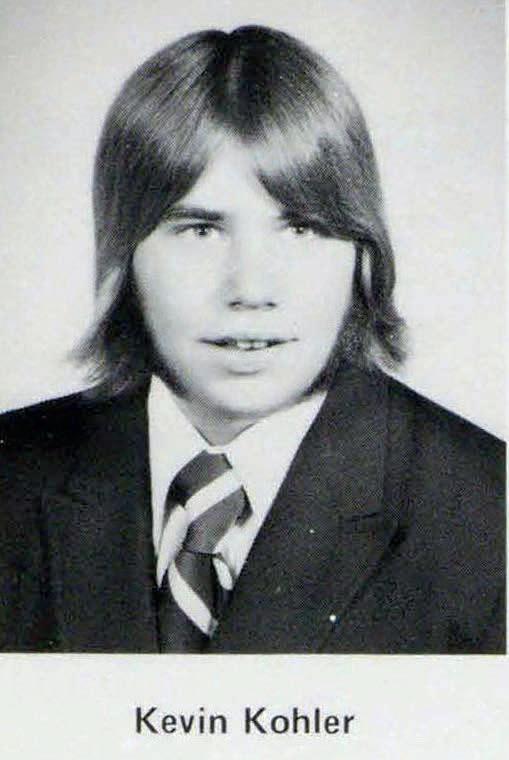
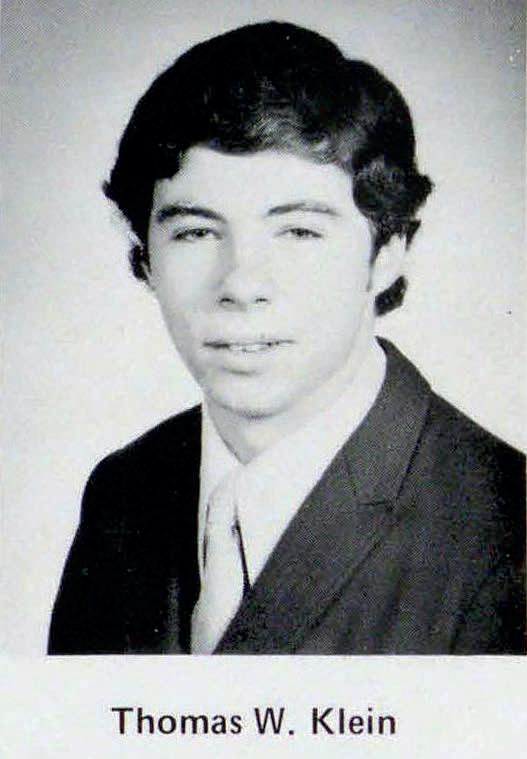
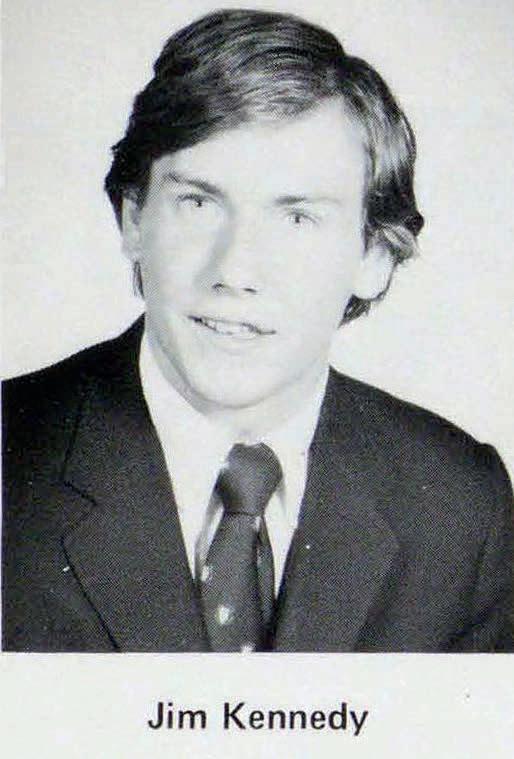
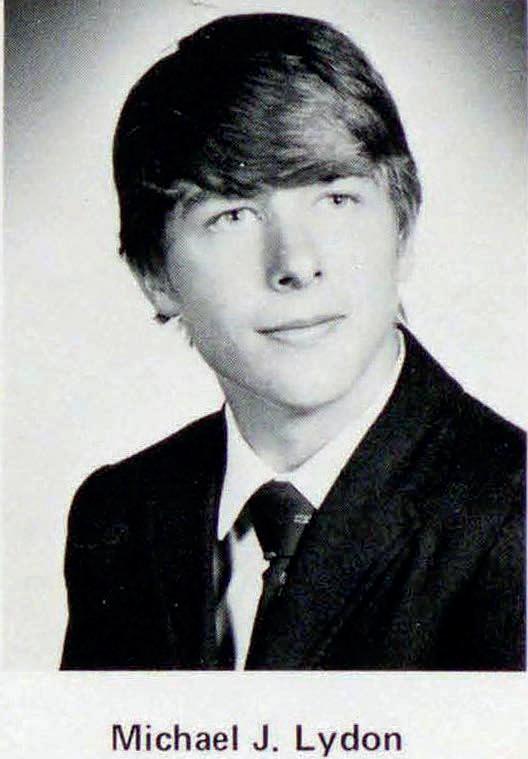
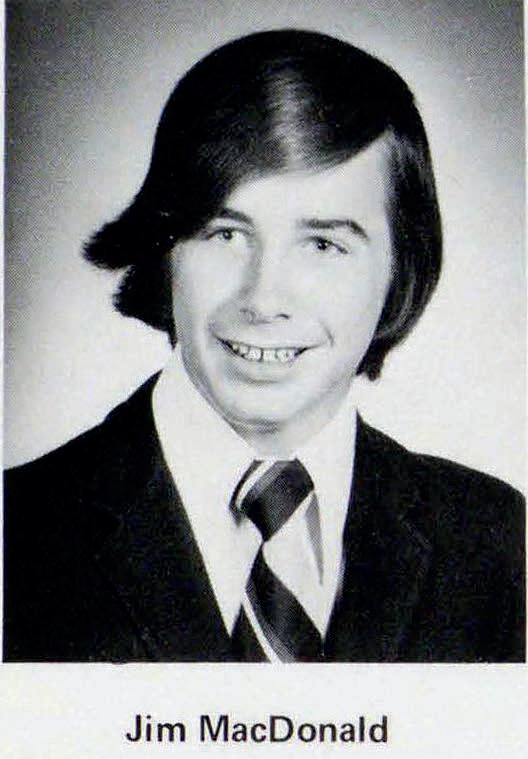
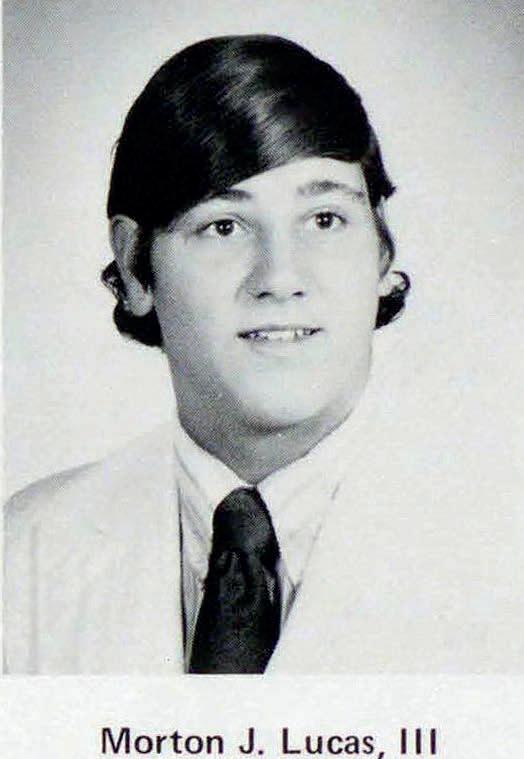
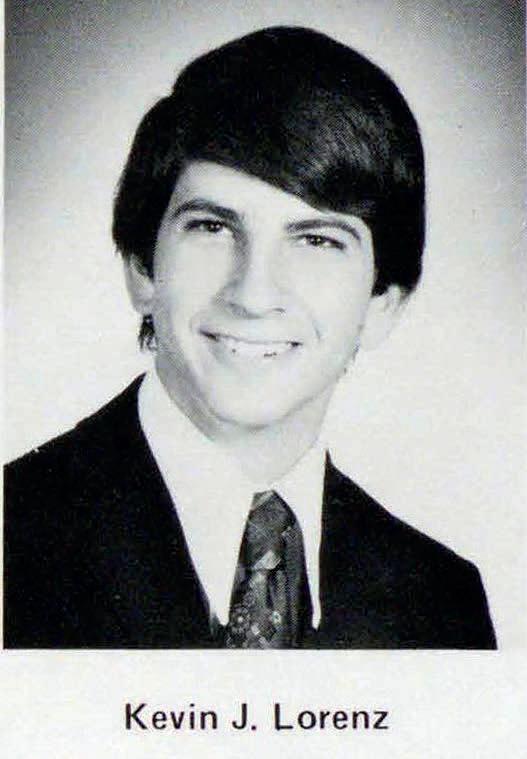
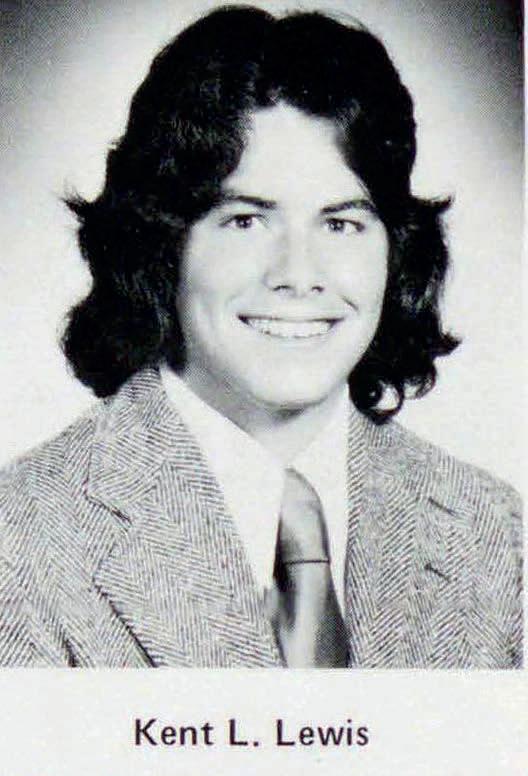
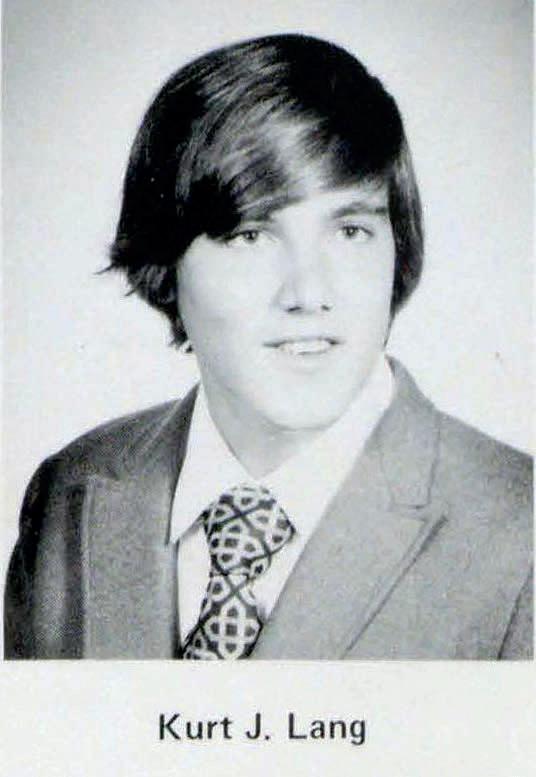
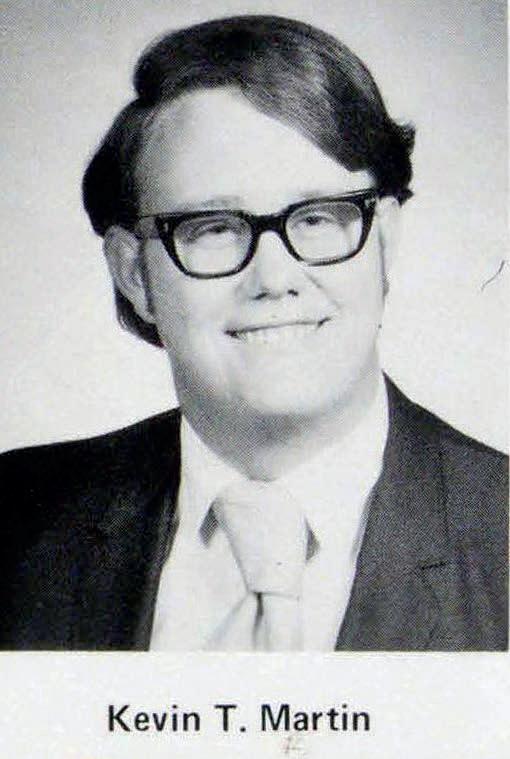
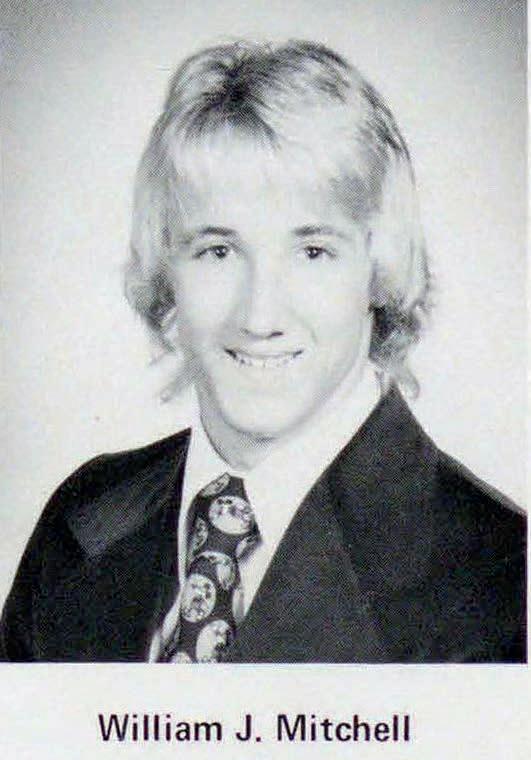
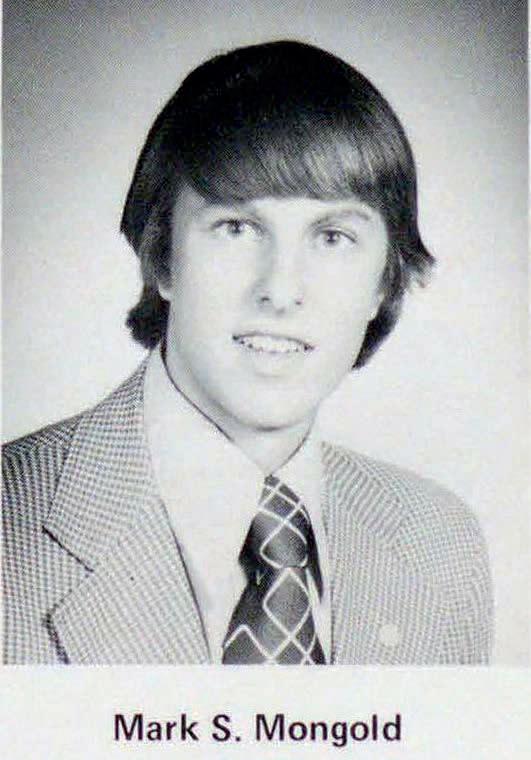
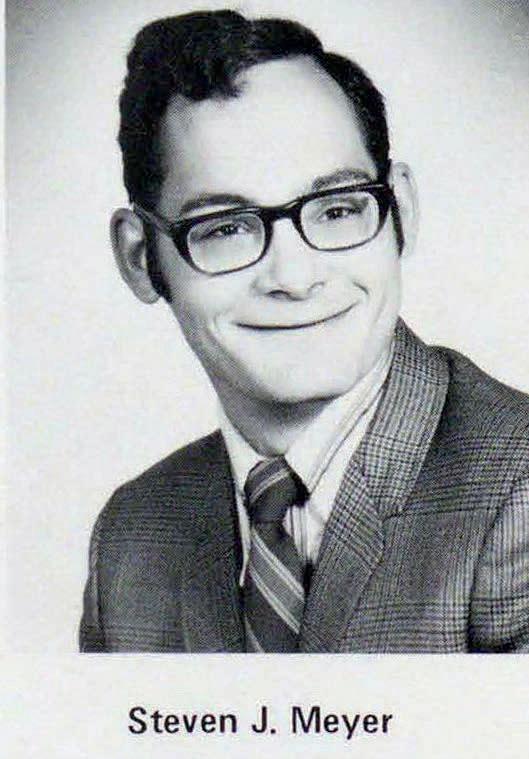
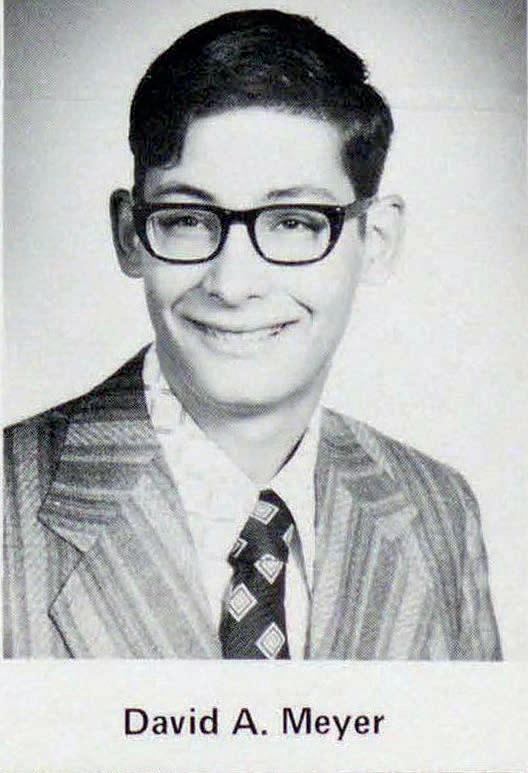
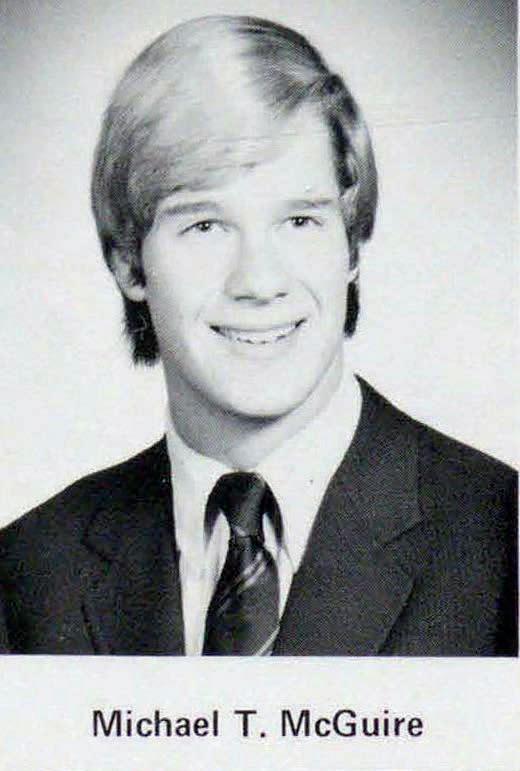
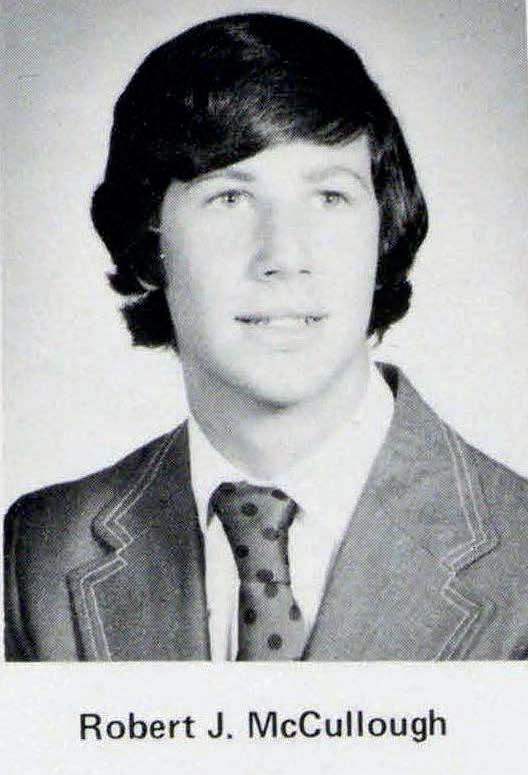
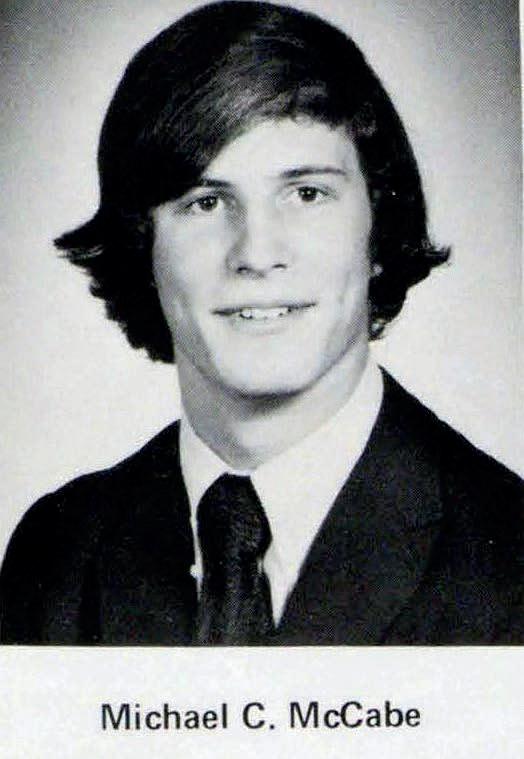
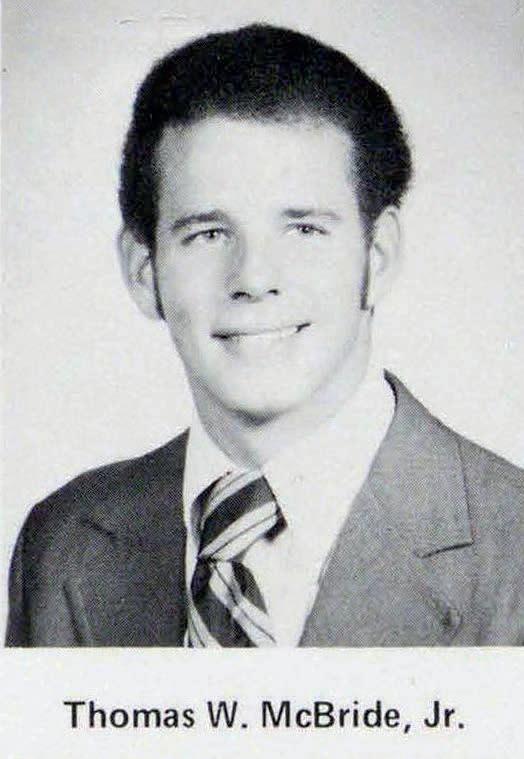
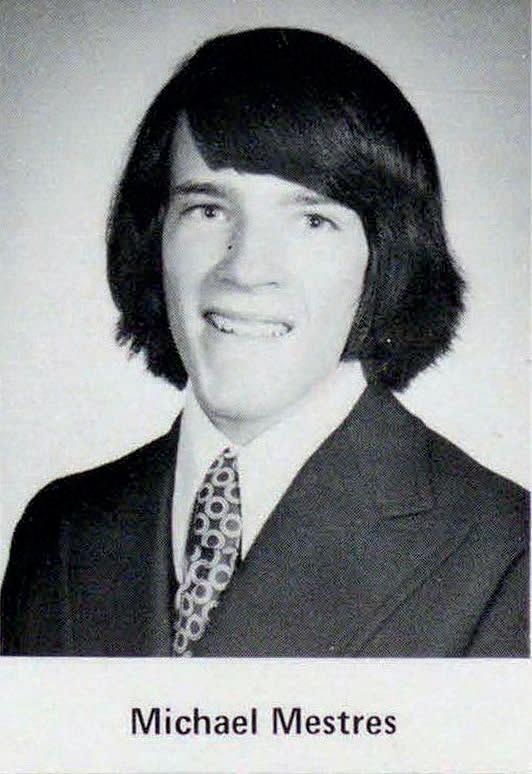

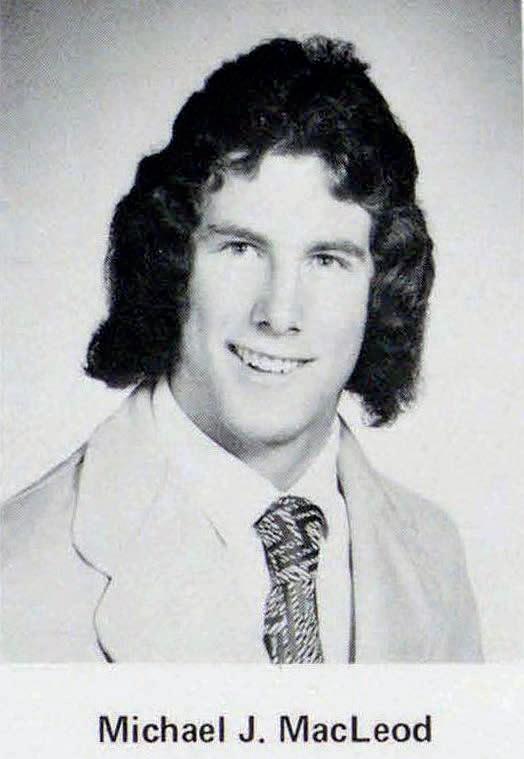
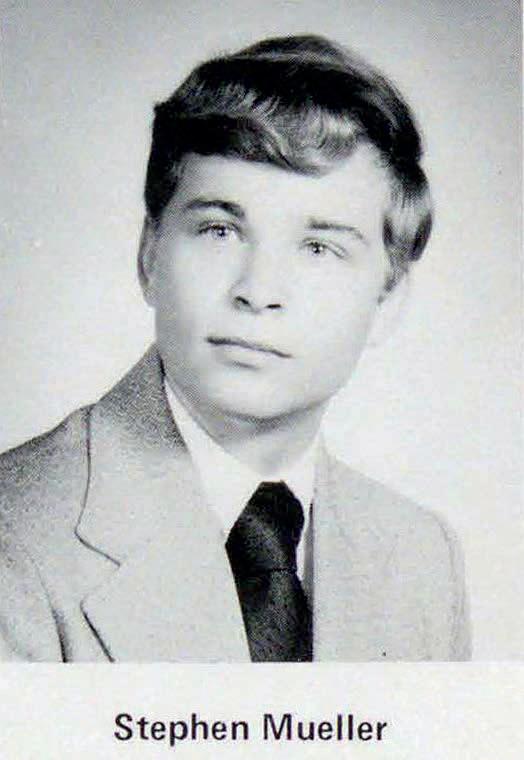
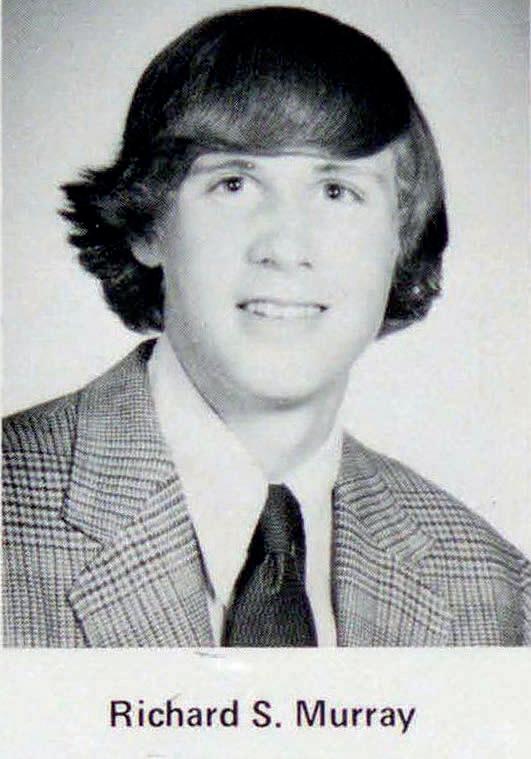
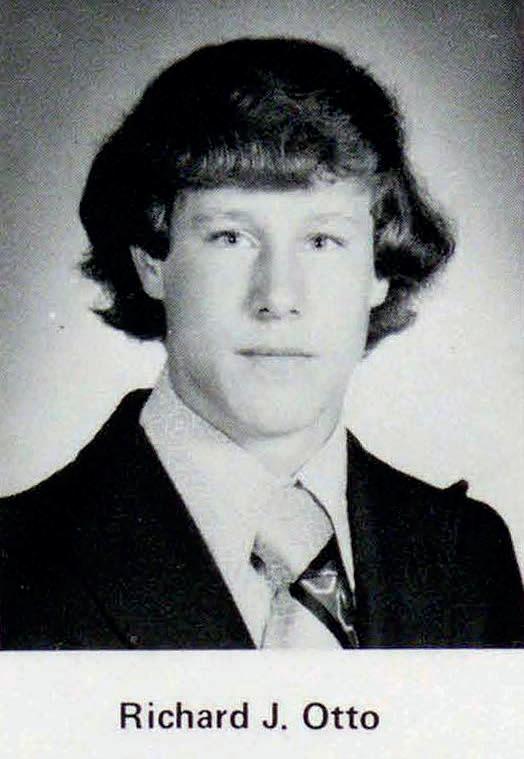
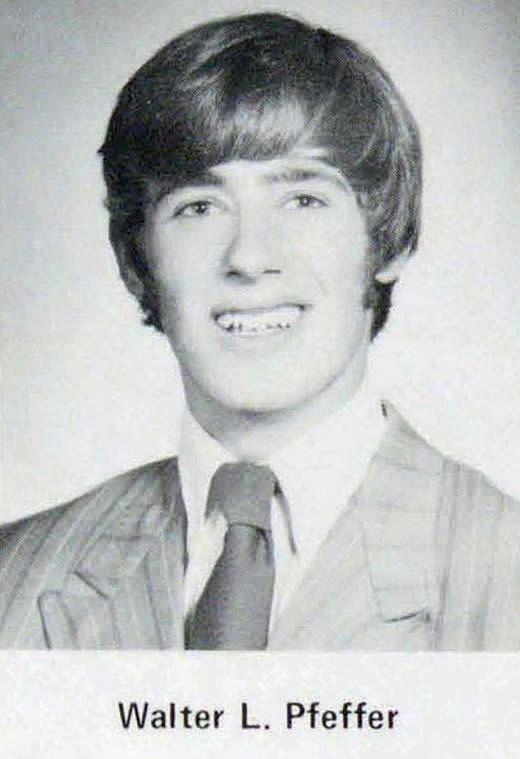
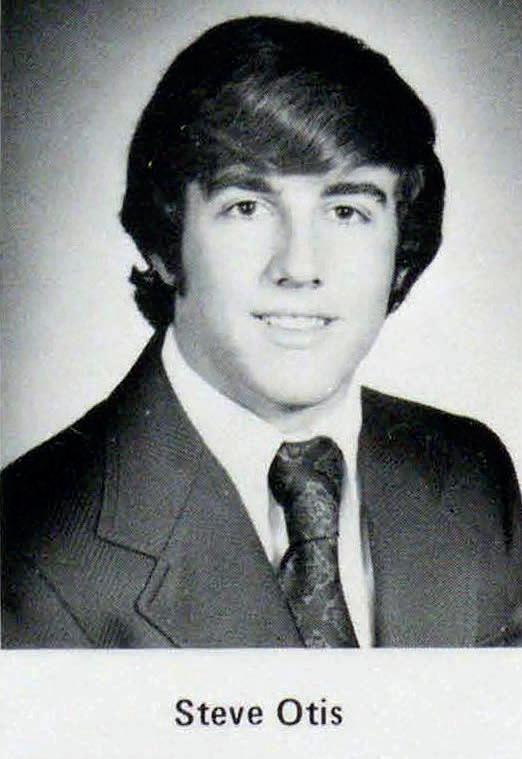
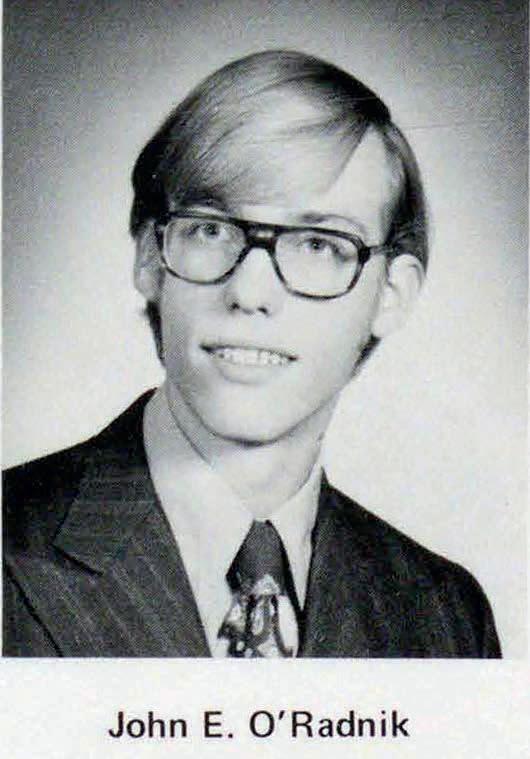
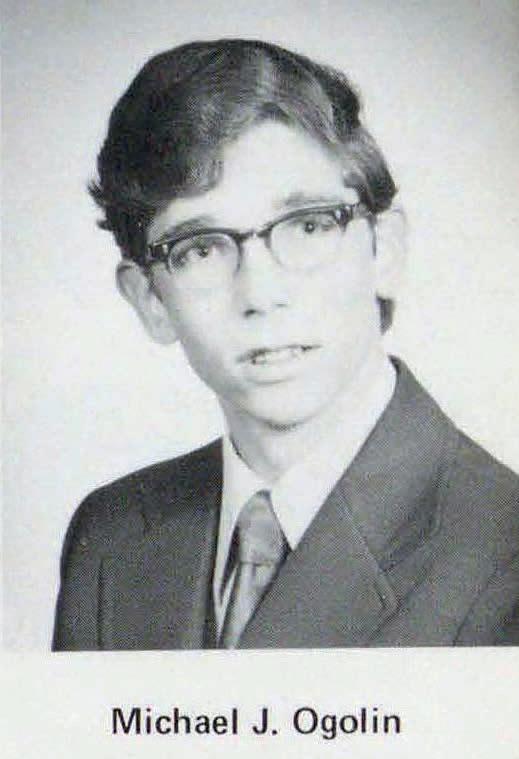
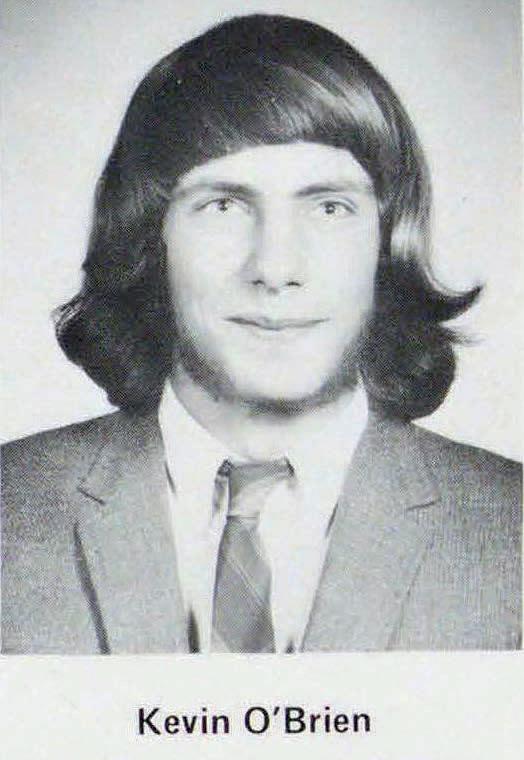
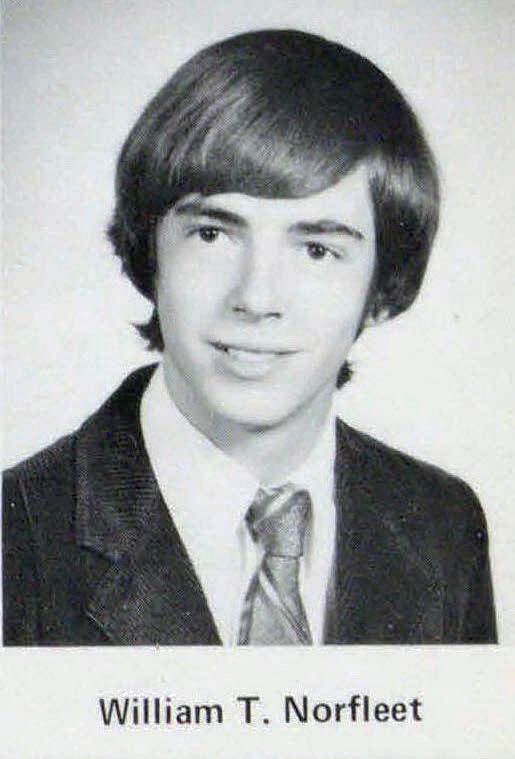
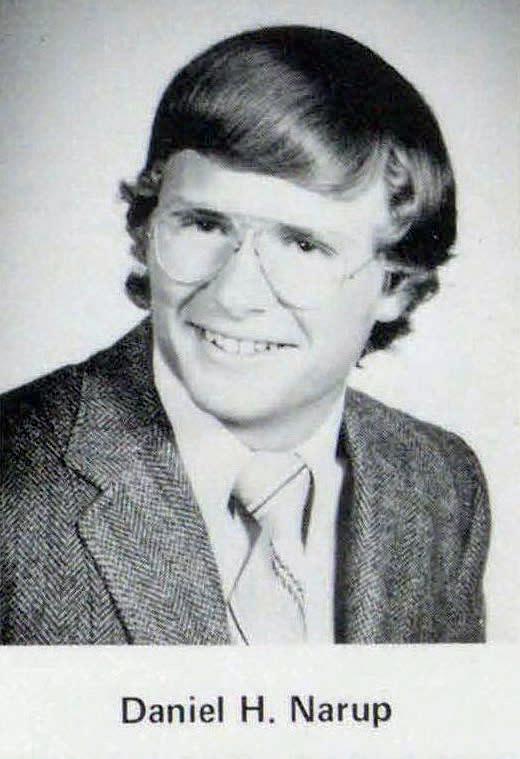
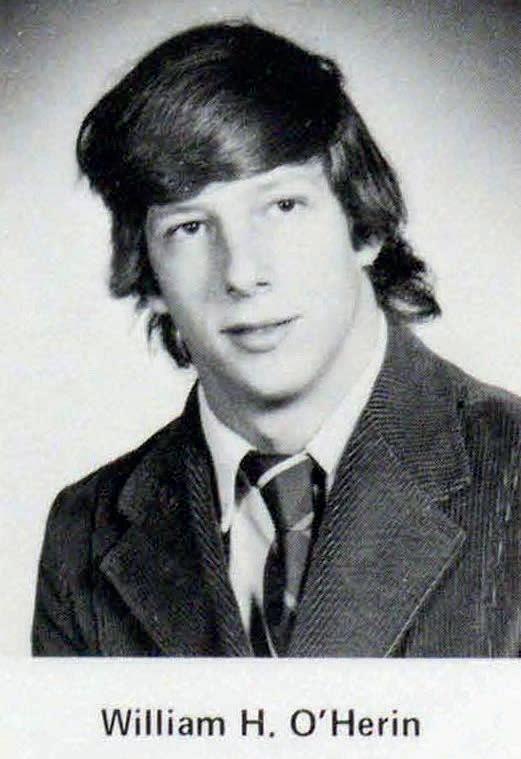
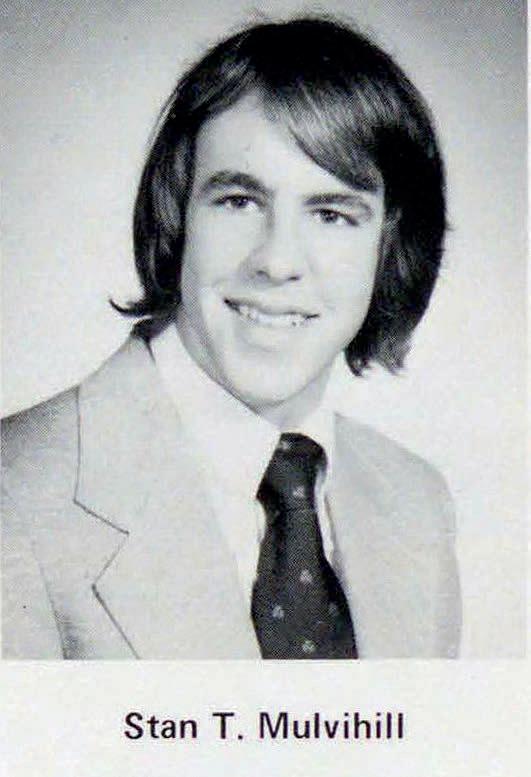
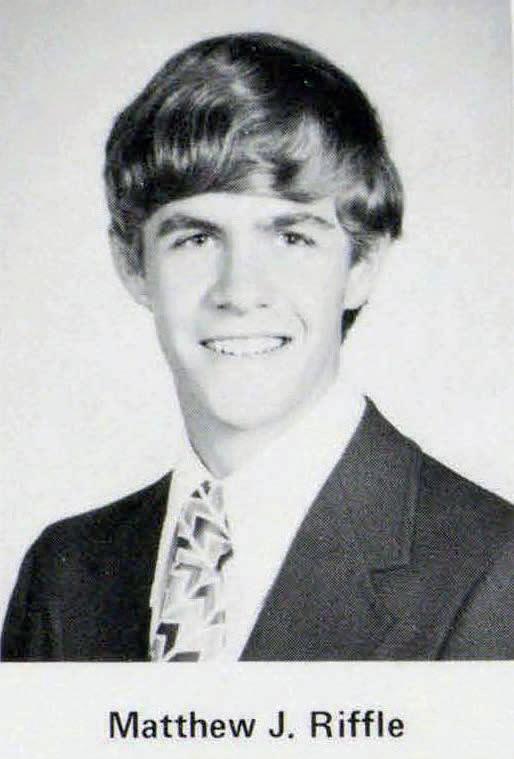
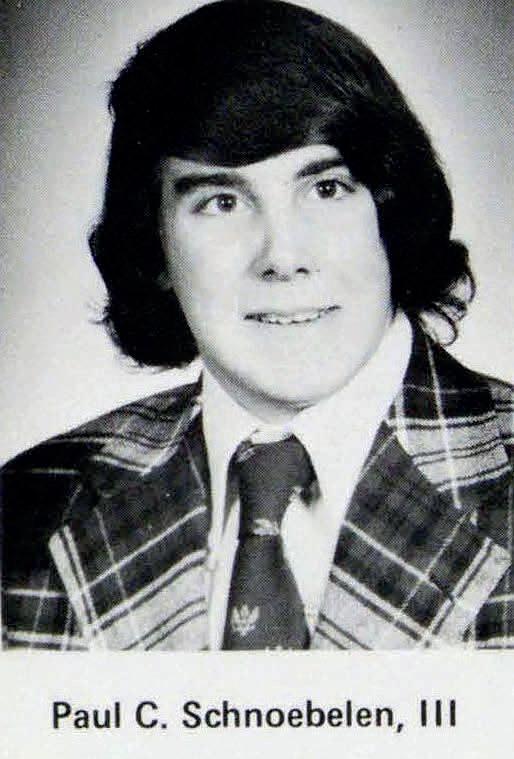
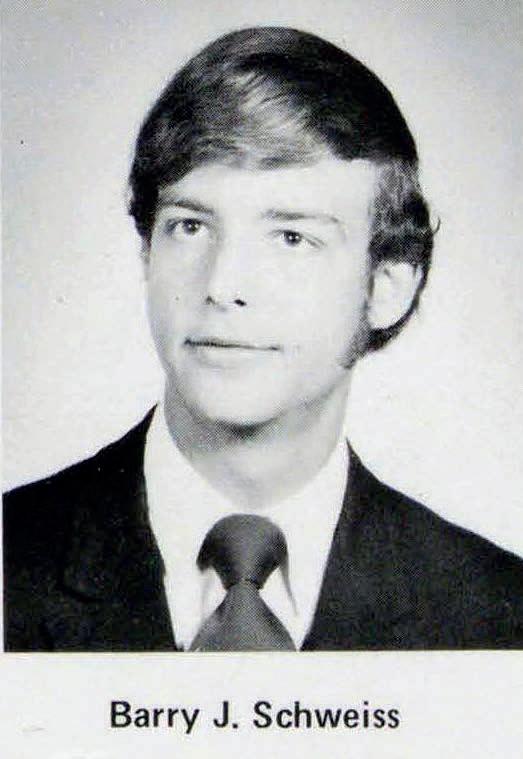
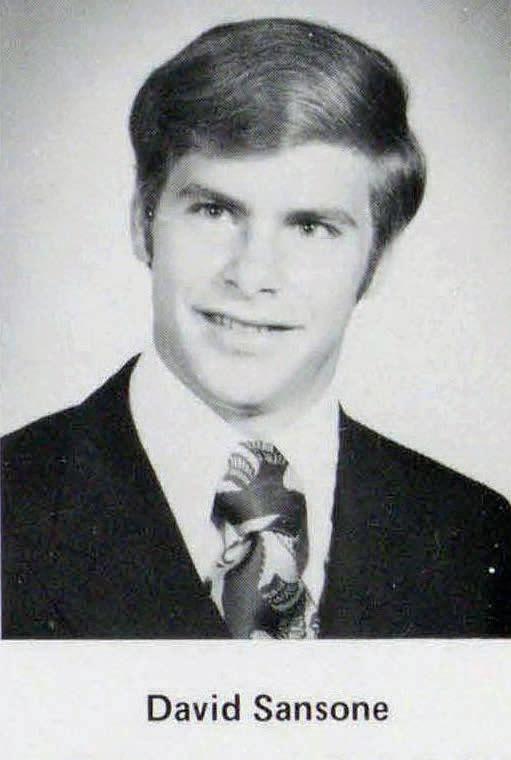
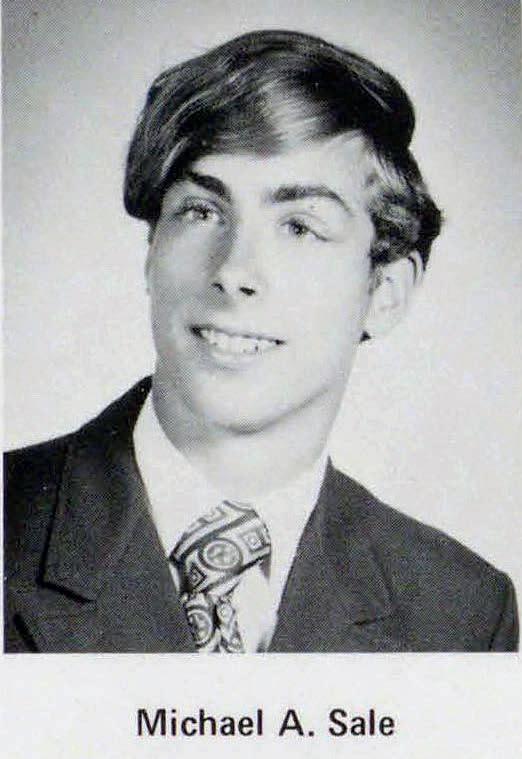
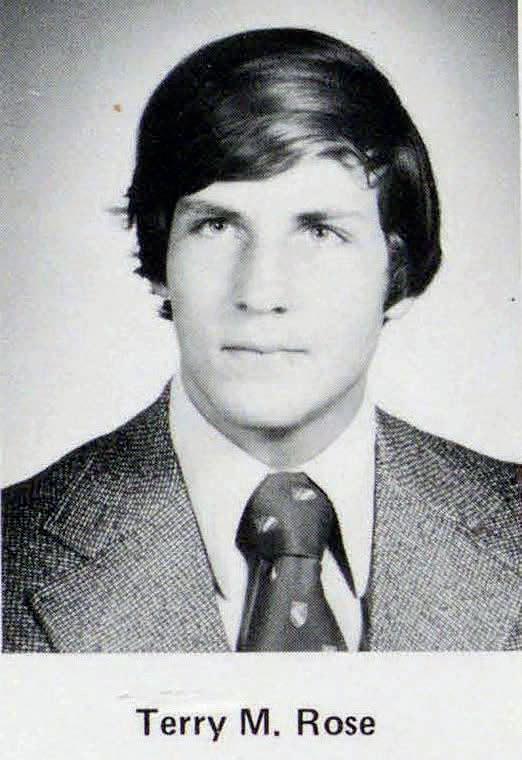
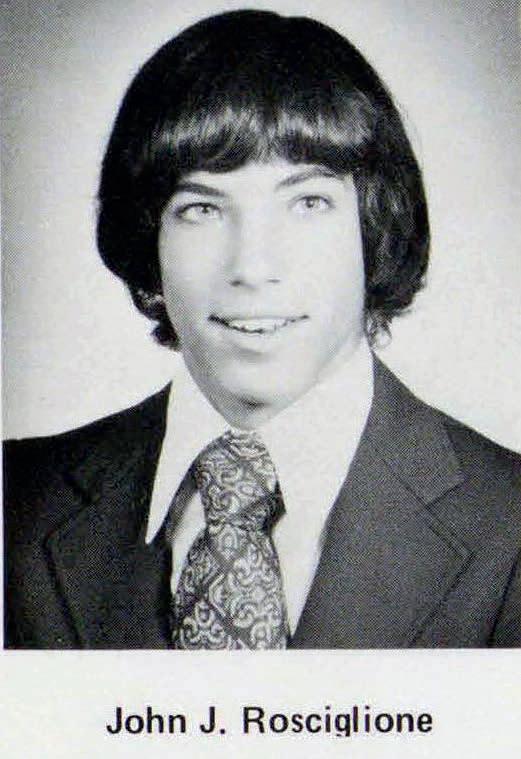
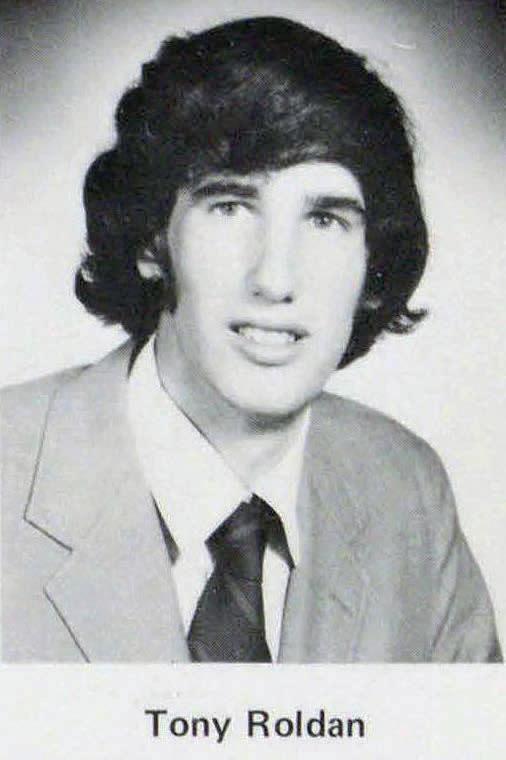
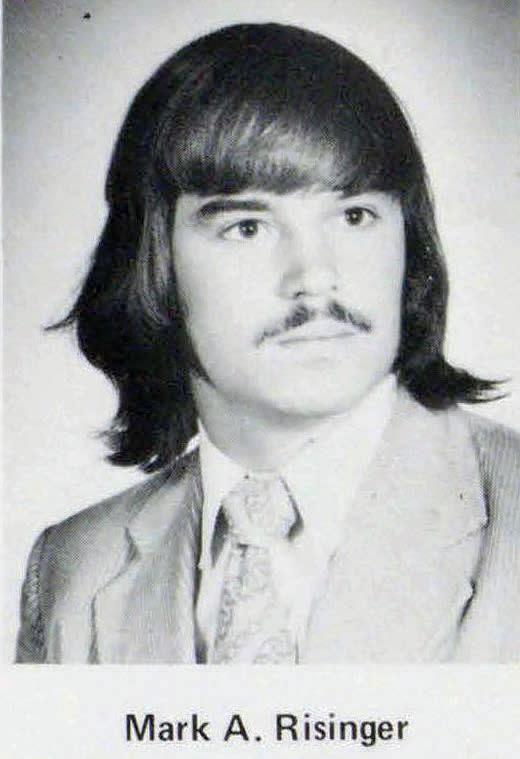
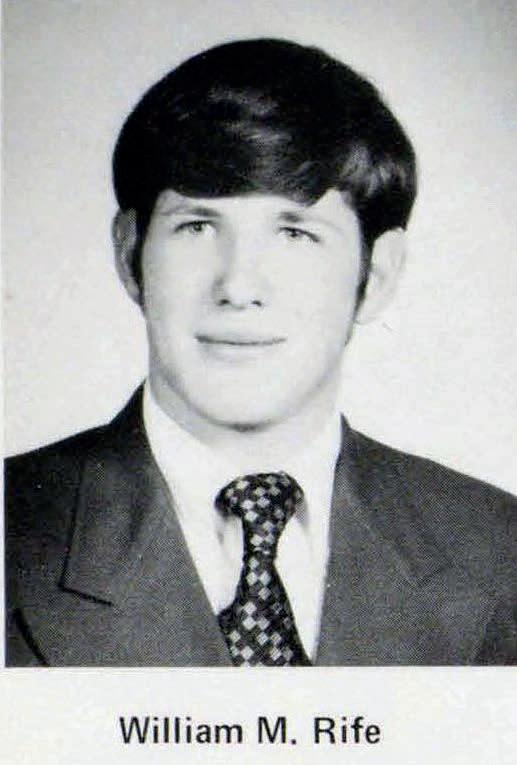
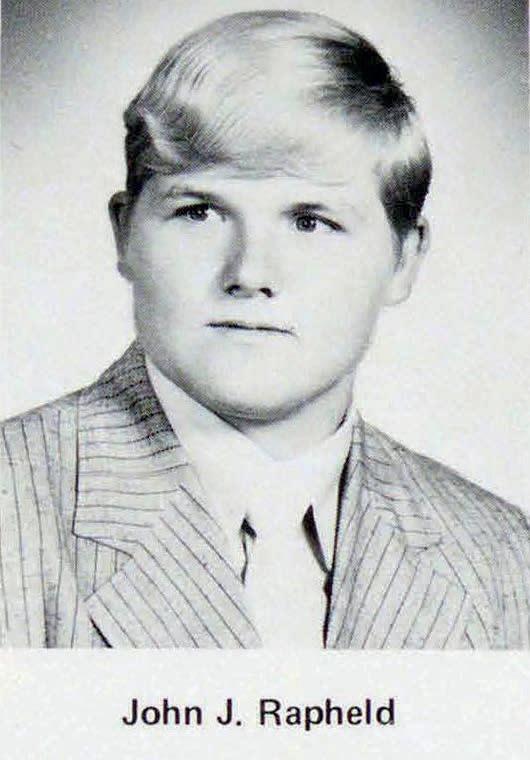
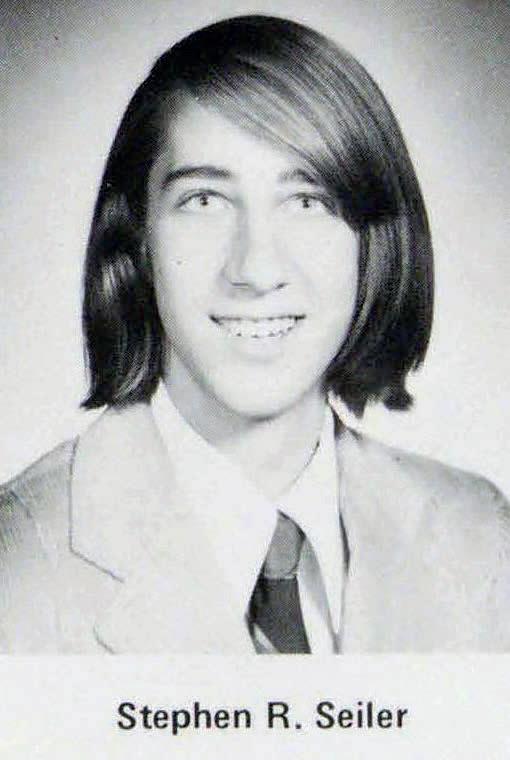
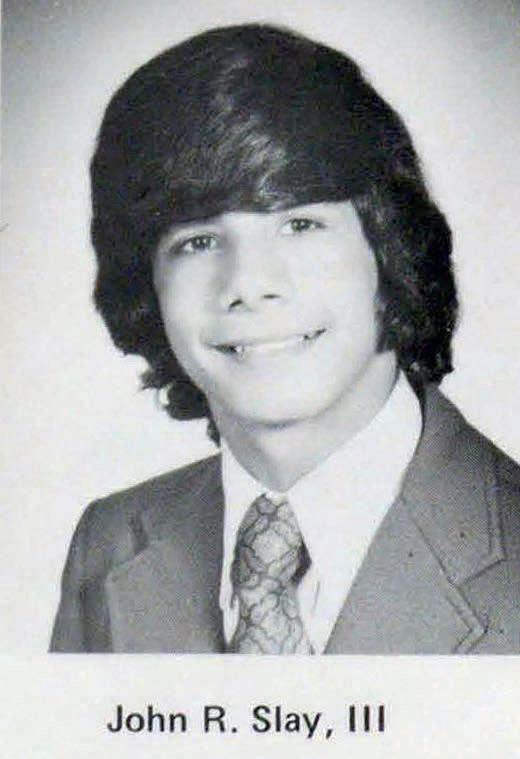
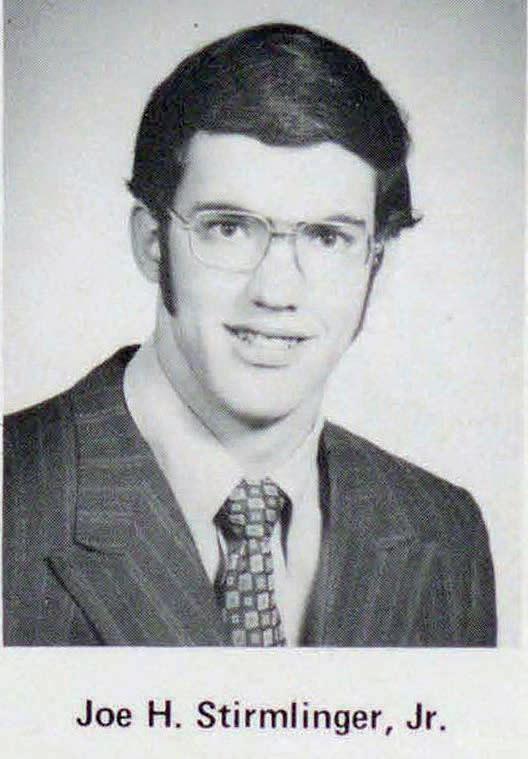
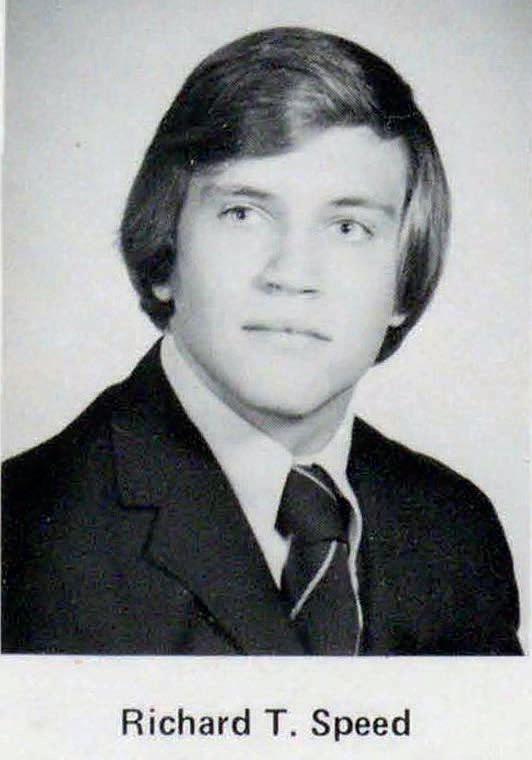
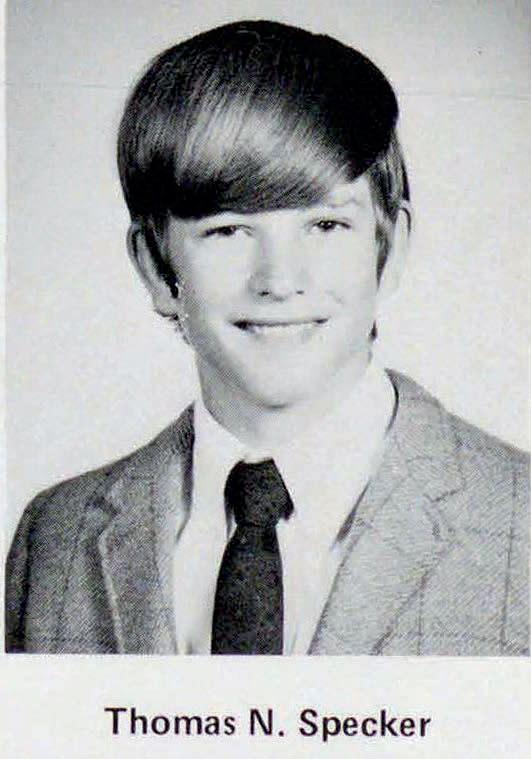
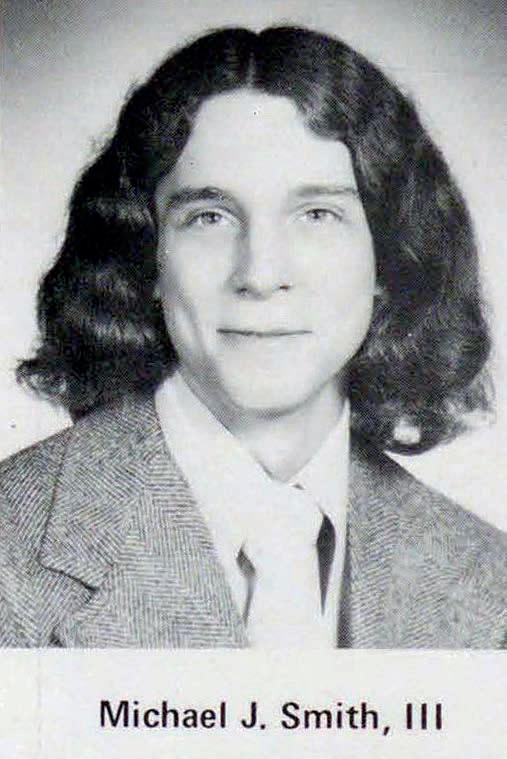
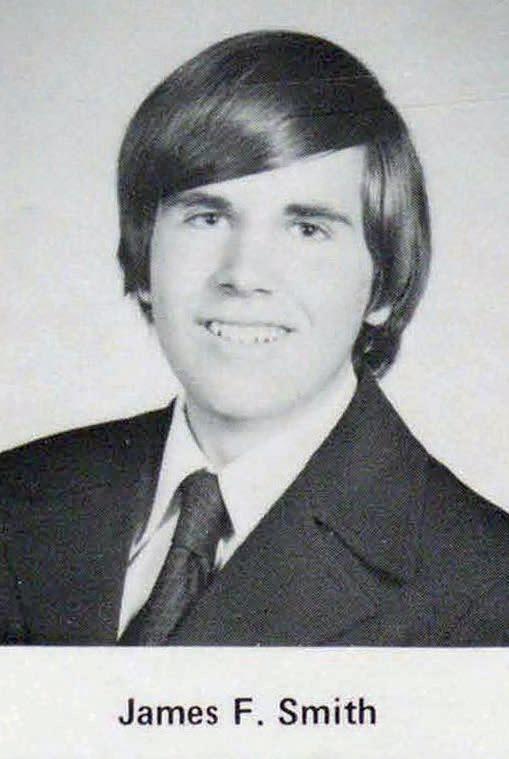

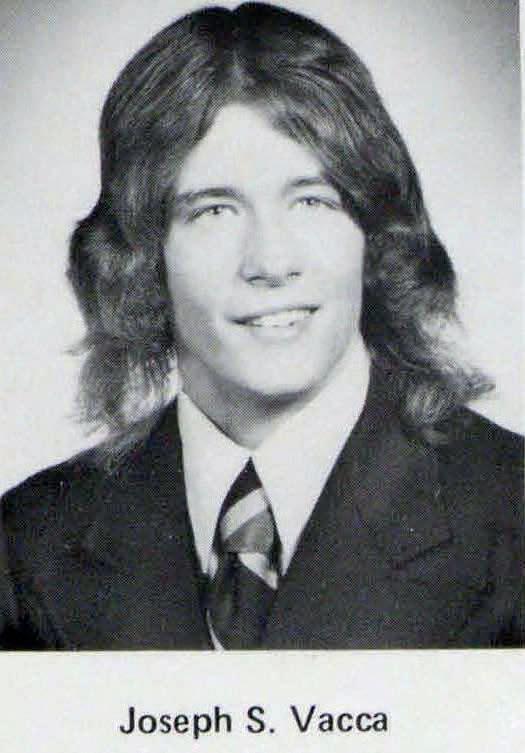
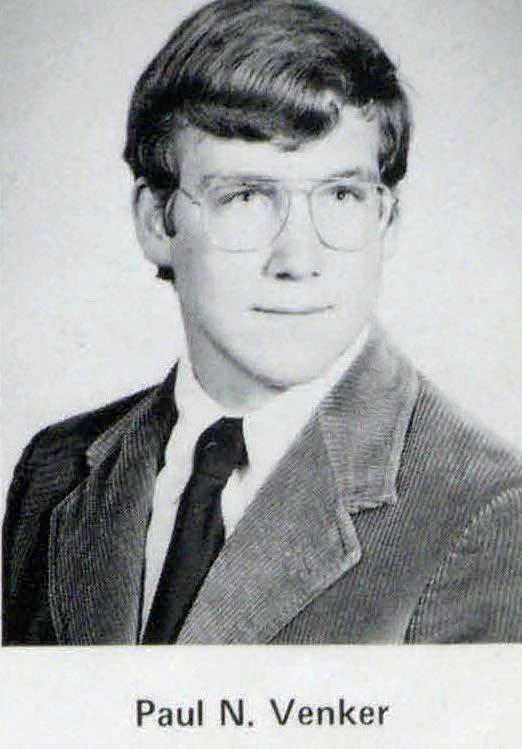
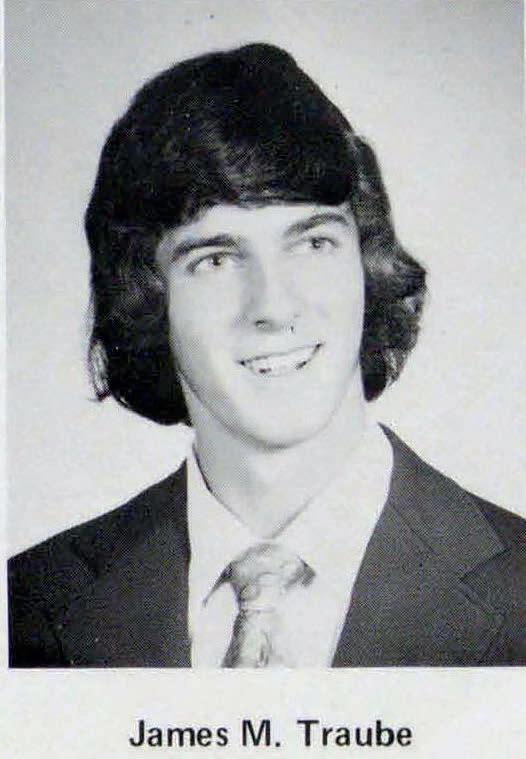
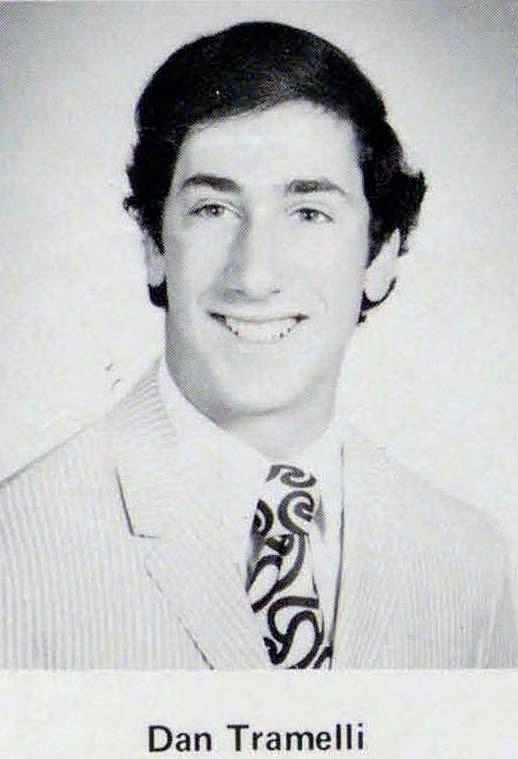

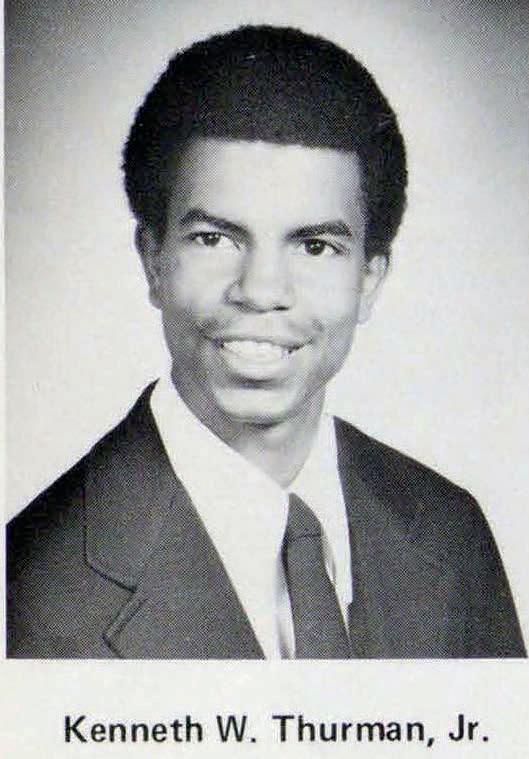
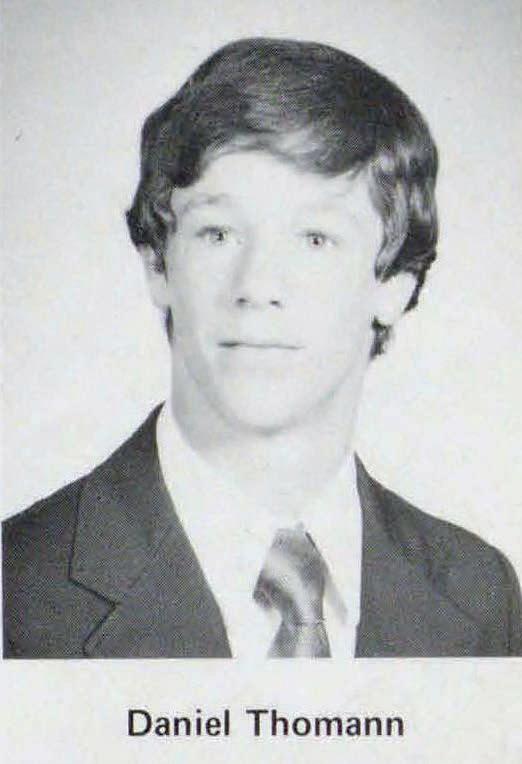
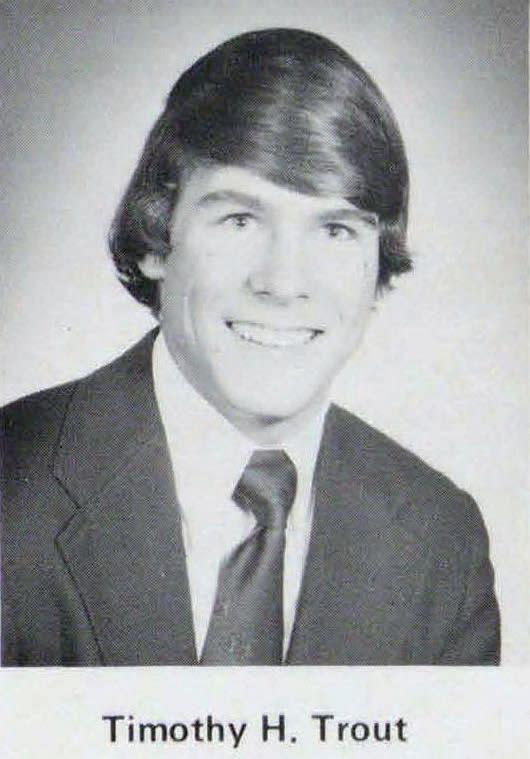
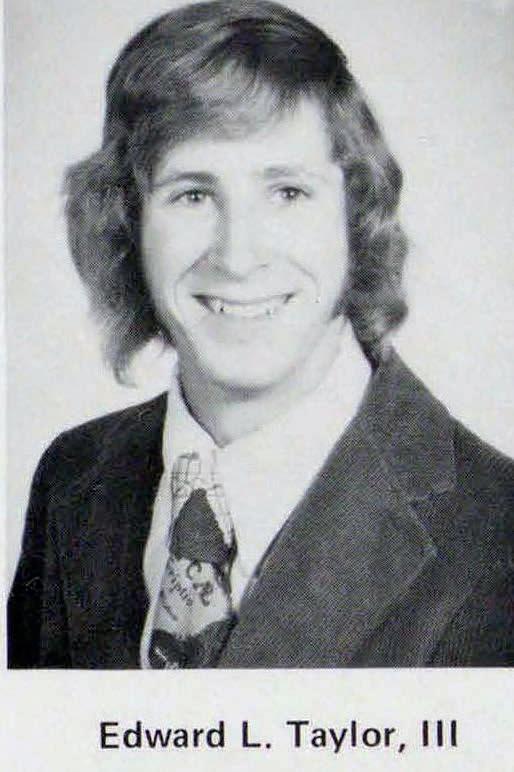
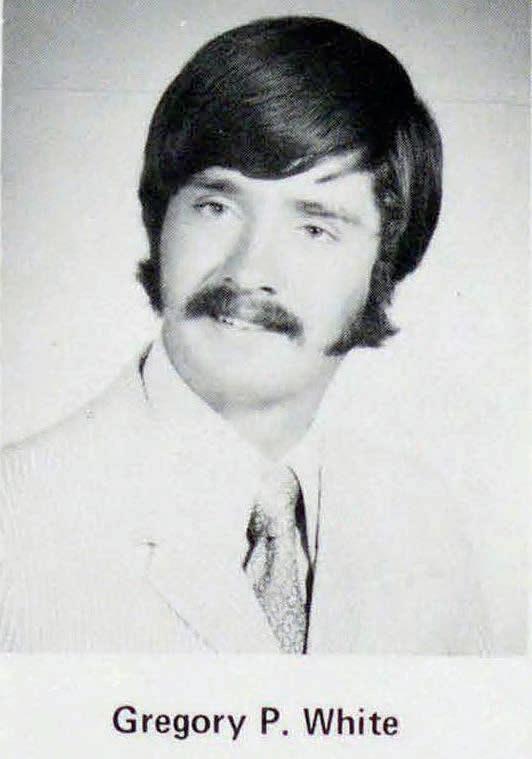
Some classmates did not have senior year portraits. We used their junior photos.
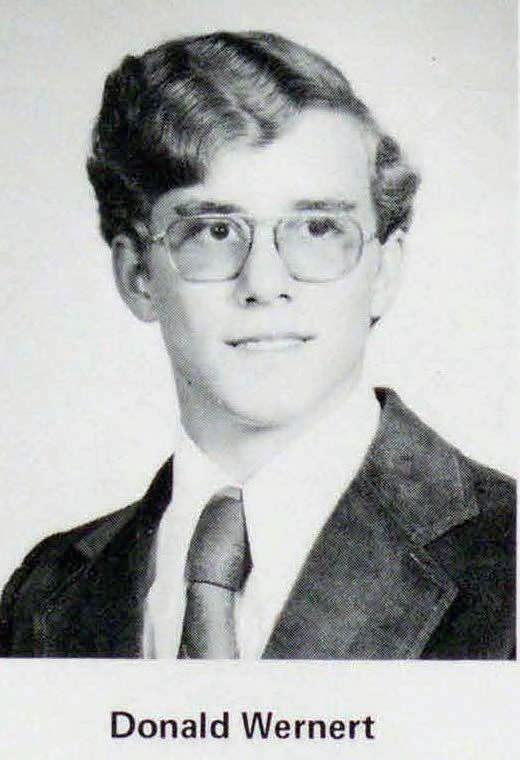
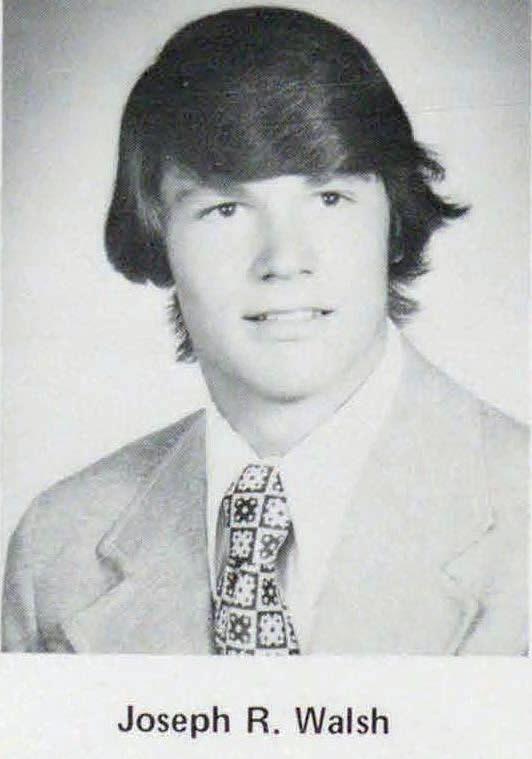
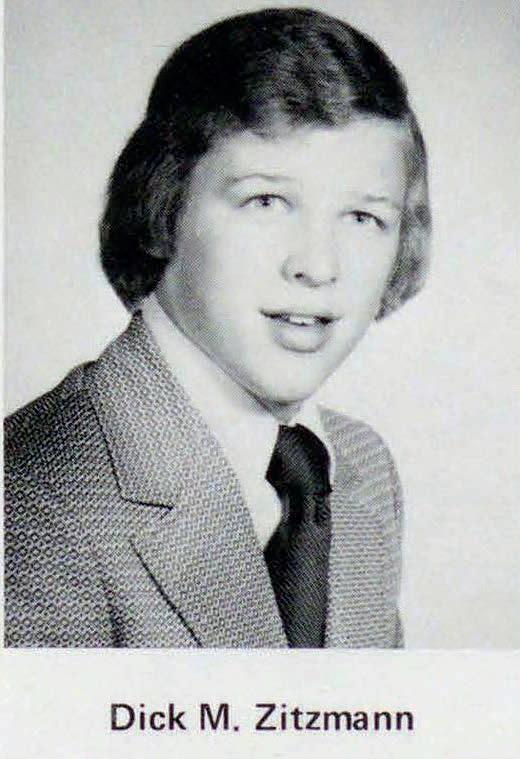
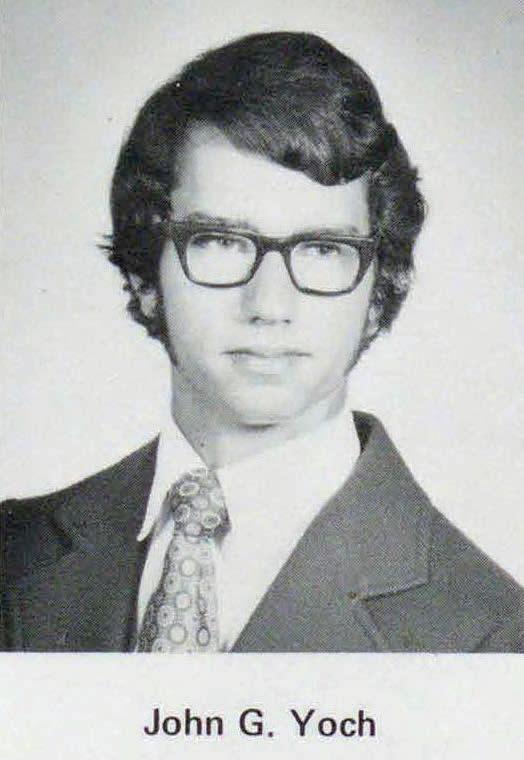
The tradition of a fine Jesuit education continues. Here is the list of classmates who have had sons graduate from De Smet.
“Death is nothing else but going home to God; the bond of love will be unbroken for all eternity.”
Lives Completed, but Not Forgotten
Leonard J. Simon Jr. 07/16/1973
John G. Held III 07/16/1978
Ivy Thompson 03/03/1996
Robert J. McCullough 01/22/2000
Peter C. Gleeson 04/06/2006
Conrad K. Dunn 01/20/2010
Michael A. Sale 08/16/2010
Terry M. Rose 08/28/2012
James R. Goessling 10/21/2012
Timothy F. Doody 12/24/2014
John G. Huenneke
01/29/2016
Terry J. Burns
08/13/2016
Morton James “Jimbo” Lucas III
08/30/2017
Mark A. Carlsen
04/25/2019
Joseph S. Vacca
06/26/2021
William M. Rife
07/09/2022
Kevin P. Dolan
07/13/2022
Donald Wernert 08/06/2022
Joseph D. Dubuque
10/28/2022
Pat Dunlavy
11/25/2022
- Mother Teresa

We were able to contact 86 classmates and obtain single-page profiles of their lives after graduating from De Smet. They offer brief glimpses into life accomplishments, activities and hobbies. Also included are favorite memories of their time at De Smet as well as favorite teachers/coaches. We also have included tributes or obituaries for our 20 fallen classmates.
The 1973 Reunion Committee hopes that you will enjoy a look into these fellow classmates’ last half-century.
314-973-2306
rbacker1@att.net
Favorite De Smet Memories
1973 state basketball championship. My father had a Cadillac, and he was the only person who drove it. The Saturday night of the championship game, I was working at a local supermarket, getting off work at 5 p.m. When I arrived home, my father offered me his car so I could drive to Columbia to see the game. Only stipulation was to call if not coming home until Sunday. Call made.
Marital Status
Married
Spouse Name
Sally
Children

Michelle and Michael (Christopher, born with spinal muscular atrophy, died at age 4)
College, Degrees, Current Profession
Mizzou B.A. 1977
St. Louis University School of Medicine, M.D. 1981
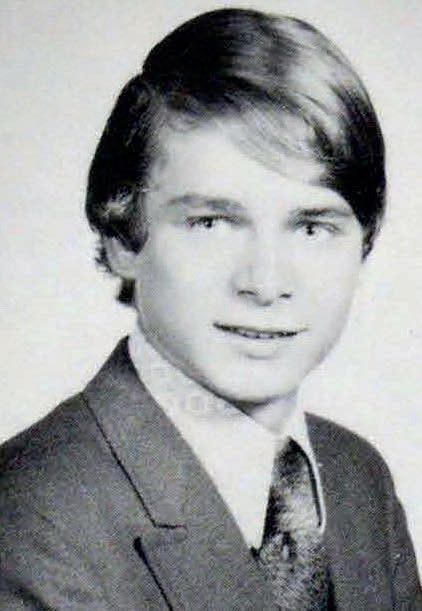
What Did You Do After High School and What Are You Doing Now?
Armed Forces Scholarship paid for last three years of medical school. Internship, Naval Hospital, San Diego, 1981-82. General medical officer, Naval Air Station, Whiting Field, Milton, Fla., 1982-83. Residency, Neurological Surgery, St. Louis University Hospital, 1983-88. Staff neurosurgeon, Brooke Army Medical Center, San Antonio, Texas, 1988-90. Private practice, St. Louis, 1990-2014.
Noteworthy / Interesting Accomplishments
Private pilot license, 1982. Built an experimental airplane completed in 2019: two-seater with retractable gear and aerobatic capabilities. Currently volunteer at Wings of Hope in Chesterfield, Mo., and Sts. Peter and Paul in Soulard neighborhood, St. Louis.
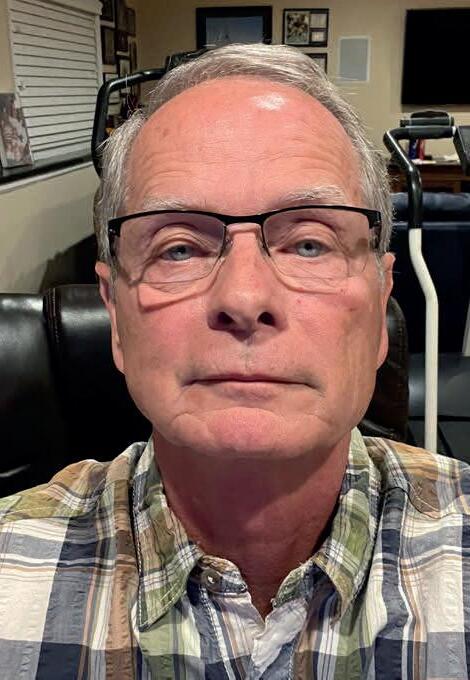
How Would You Like to be Remembered?
Compassionate physician who never said no when called about a potential patient in need.
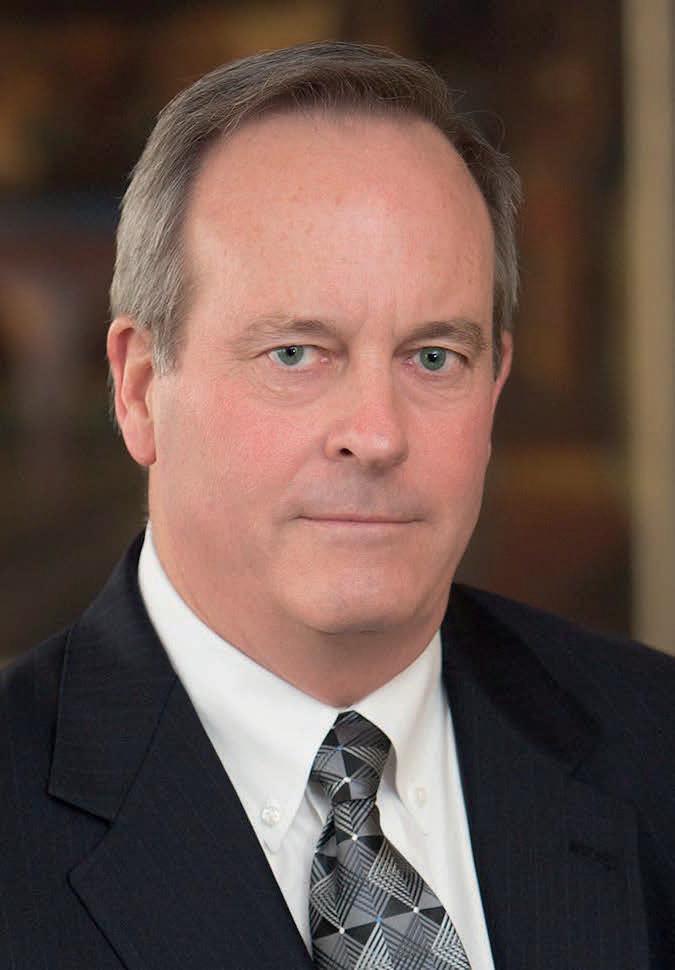
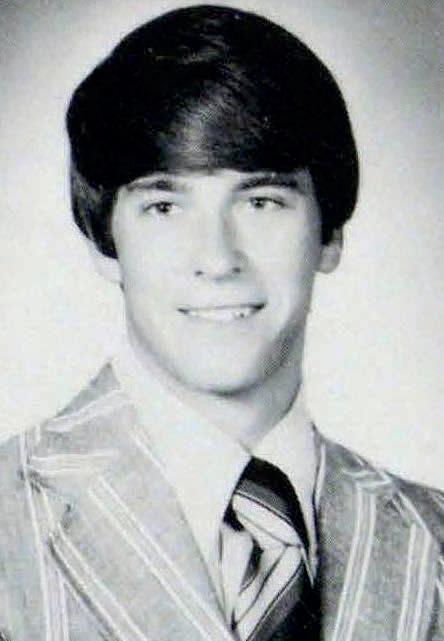
3605 Ranchero Rd. Plano, Texas 75093
972-816-9000
gbellinger@bellingersuberg.com
Favorite De Smet Memories
Playing Baseball; Getting “Legally Detained” in Griese’s station wagon with 10 of my best friends; Going to the State Basketball Championship; summer float trips.
Marital Status
Married
Spouse Name Patty Boland Bellinger
Children
Christopher (Paige), Matthew (Kathleen), Thomas, Elizabeth (Scott), Michael and Stephen

College, Degrees, Current Profession
University Of Missouri, B.S. in Accounting. St. Louis University, Master of Finance. St. Louis University, J.D. Law
What Did You Do After High School and What Are You Doing Now? College, Work, WORK, WORK, WORK!
Named Founding Partner in Law Firm
Partner in 2 Home Building Companies
Partner in Real Estate Development Company & Projects
Partner in numerous other businesses & created numerous opportunities for young people.
Noteworthy / Interesting Accomplishments
My wagon is still full, with no end in sight. Patty and I have raised 6 kids, none of whom is still dependent on us. Our mission now is to create memories and have fun with our 8 grandkids and hopefully many more in our future. Our house is known as the “Bellinger Compound,” and has been the center of countless memories for our kids, grandkids and their friends.
How Would You Like to be Remembered?
As a great husband, father, grandfather, friend & mentor.
443-786-4471
wbernard594@gmail.com
Favorite De Smet Memories
Learning how to communicate and especially write. Typing was thought to be a lost skill but helped in every part of my life. Learning Spanish was great until I actually moved to the Dominican Republic and found that I had to start over. All of the math and science courses put me a semester ahead of my freshman class at the University of Miami (the one in Florida).
Marital Status
Married
Spouse Name
Katherine Bracy Bernard
Children
Michelle McClure, Lauren Dorenkamp
College, Degrees, Current Profession
B.S., U. of Miami; MBA, Marymount U.; USFG Captains License, retired NAUI instructor.
What Did You Do After High School and What Are You Doing Now?
U. of Miami, Marine Biology & Chemistry; Peace Corps Philippines; Marymount University, Wash., D.C.; Smithsonian Institution Marine Field Biologist and Research Manager; Wife (and U.S. Coast Guard Captain) Kathy. Daughters and grandkids in Denver and New Orleans. Started 8 businesses in commercialization of technology. Now we are working, sailing and traveling, but not in that order.

Noteworthy / Interesting Accomplishments
NAUI scuba instructor; USCG Captain; MBA in Research Management; marine biologist with Smithsonian for 10 years; husband; parent; grandparent.
How Would You Like to be Remembered?
As a kid from St. Louis who always wanted to be a marine biologist and do research at sea.
5856
Weldon
rmbetz@gmail.com
Favorite De Smet Memories
First and last day at De Smet. Jim Goessling’s performance in the state championship game!
Marital Status
Married
Spouse Name
Susan
Children
Bobby, Jeff, Eric, Sarah and Casey
College, Degrees, Current Profession
Graduated from the University of Missouri with a B.S., Business Administration. Currently retired.
What Did You Do
After High School and What Are You Doing Now?
Went to college, got married, raised a family, and worked at various companies. Now I’m retired but still looking for an opportunity!
Noteworthy / Interesting Accomplishments
Married for almost 45 years!
Raised 5 kids that are all doing well!
Have 4 daughters-in-law and 1 son-in-law!
Nine grandchildren, with another on the way as of this past summer.
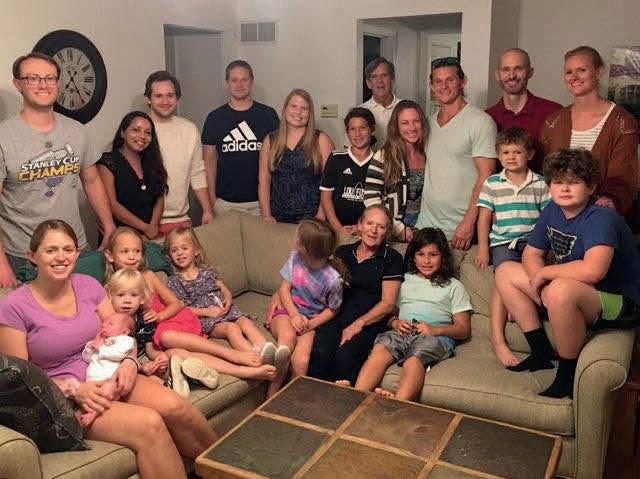
How Would You Like to be Remembered?
As a good husband and father
314-606-6422
mikethebuck2003@yahoo.com
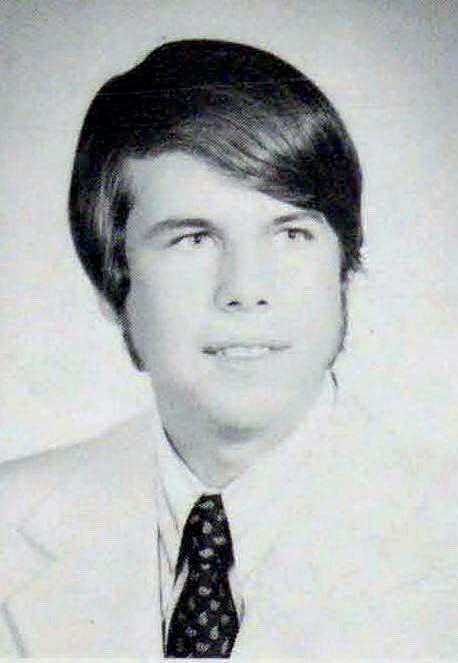
Favorite De Smet Memories
Summer 1971. New York trip. Four of us (you know who you are) getting “picked up” (we were barely 16) by four 18-year-old girls in the hotel elevator.
Marital Status
single
Spouse Name
Children
None that I know of College, Degrees, Current Profession
Retired. Part time delivery driver.

What Did You Do After High School and What
Are You Doing Now?
Hobbies: Photography, writing, golf, chess.
Noteworthy / Interesting Accomplishments
Nothing much
How Would You Like to be Remembered?
Not sure I understand the question. I’m not dead, yet.
80 Forsythe Street
Asheville, N.C. 28801
513-503-1231
michaelbuncher@gmail.com
Favorite De Smet Memories
1. Watching Brother Jim play one on one with Larry Linkul.
2. Attending Chris Mess classes and watching De Smet theater productions.
3. Playing Spartan soccer.
4. Spending time with my close classmates.
Marital Status
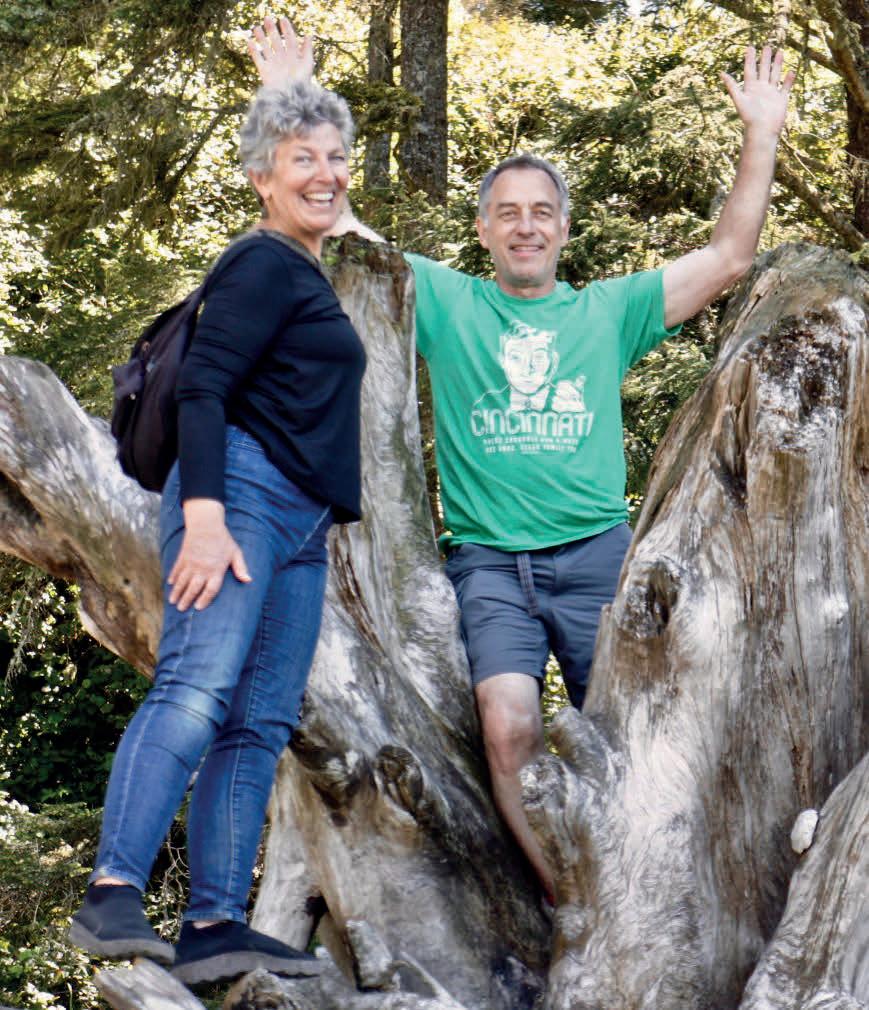
Married
Spouse Name
Marta Donahoe
Children
Chris, Kelon, Chelsea
College, Degrees, Current Profession
B.A. Business Administration; MBA / MSPH in Health Care Administration; retired medical administrator
What Did You Do After High School and What Are You Doing Now?
Benedictrine College (1977) and Mizzou for graduate school (78-79). Worked at U of L, married a Xavier U. alumna Montessori educator with two sons. Had our daughter and eventually, moved to and worked in Cincinnati for 30 years. Frequently visit St. Louis. Moved 2013 to Asheville, N.C. to work and to be near daughter and grandchildren.
Retired May 2022. Hobbies: fishing, hiking, biking, reading.
Noteworthy / Interesting Accomplishments
Attended Stan Musial’s last game at Sportsman’s Park.
Eighth-grade Ping-Pong champion, Our Lady of Fatima
Missouri All-State honorable mention, soccer, De Smet, 1973
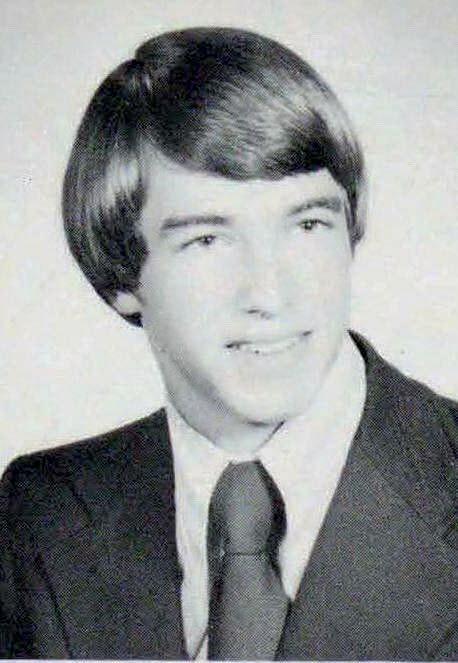
3rd in NAIA soccer, 1974 National Championships, Benedictine.
Dean’s List, Benedictine College
2nd-shift Orderly, Atchison County Hospital, 1974-77.
20 years, Emergency Services Director, Cincinnati Children’s Hospital
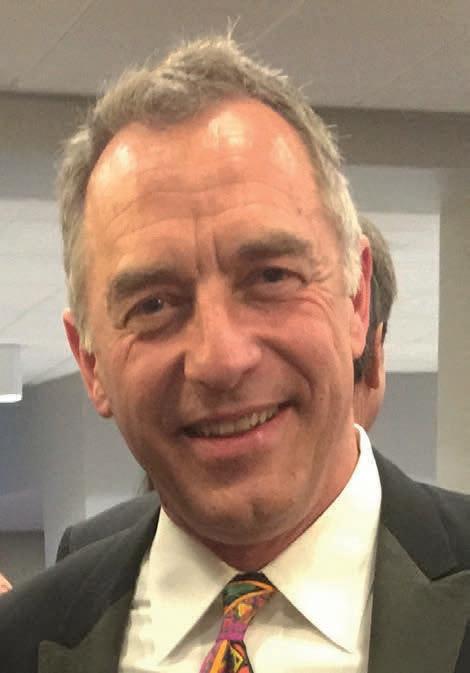
Husband to 1 since 1981, Father of 3, Grandfather of 6.
How Would You Like to be Remembered?
My dedication to family and to assisting health professionals in delivering quality care to their patients.
Date of Birth: June 1, 1955
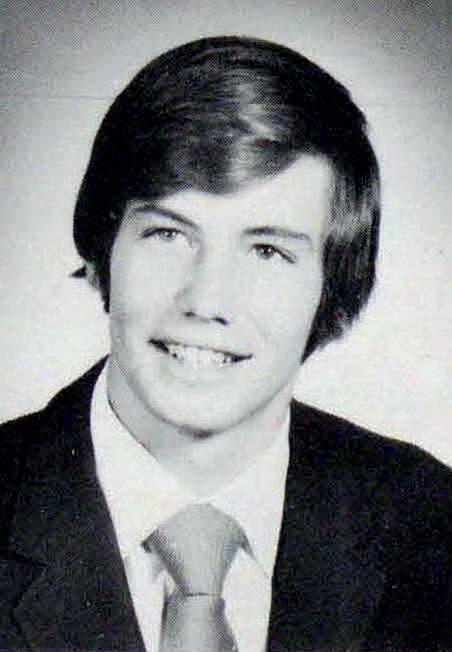
Date of Death: August 13, 2016
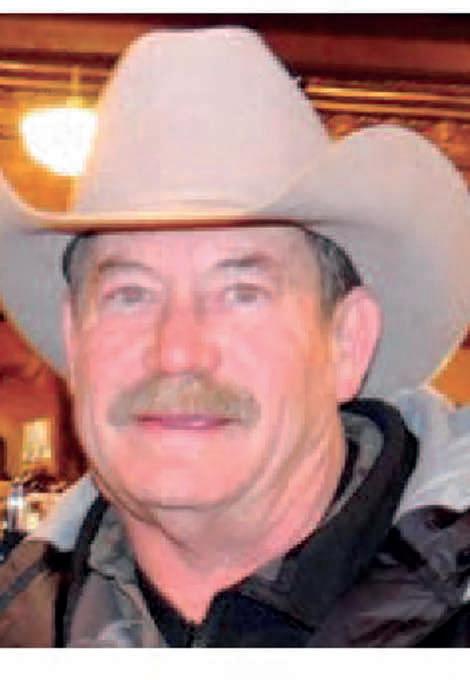
Unfortunately, many of us lost contact with our classmate Terry through the years. According to Brian Vogelbach of the Carpenters Union in St. Louis, Terry worked as a carpenter, superintendent and project manager for a number of companies, including Sundermeyer Ltd., Holland Corporation and ICS Construction Services.
From 2007-14, Terry worked as a carpenter for O’Shea Brothers Construction, where he is recalled fondly.
“He was a gifted carpenter and did beautiful work,” said former O’Shea Brothers president Timothy O’Shea, whose wife Melinda added, “Terry was a good friend to all employees at O’Shea Brothers. He tried to work as long as possible with his (unspecified) illness.”
(Editor’s Note: Tim Dolan contributed information to this remembrance.)
2015 Black Bear Lane
Steamboat Springs, CO 80487
314-303-4711
curt.calcaterra@gmail.com
Favorite De Smet Memories
Judo Club!? My very best memories were hanging out with buddies. Johans, Keleher, Bellinger, Fitzgerald, Jotte, Backer and others.
Marital Status
Married
Spouse Name
Bev
Children
Four daughters, Six grandkids College, Degrees, Current Profession
Mizzou undergrad and Medical School. Retired.
What Did You Do After High School
and What Are You Doing Now?
After Med School, I practiced Internal Medicine in south St Louis county for 35 years. I now do a little part time work for our local Search and Rescue team and spend the rest of my time being a grandparent or cruising through the forest on my skis or mountain bike.
Noteworthy / Interesting Accomplishments
Not much. I have spent some time in Africa, fell in love with the continent while trekking up Kilimanjaro and now run a small charity that funds sanitation work in Kenya.
How Would You Like to be Remembered?
As a good father and grandparent.
Date of Birth: July 14, 1955
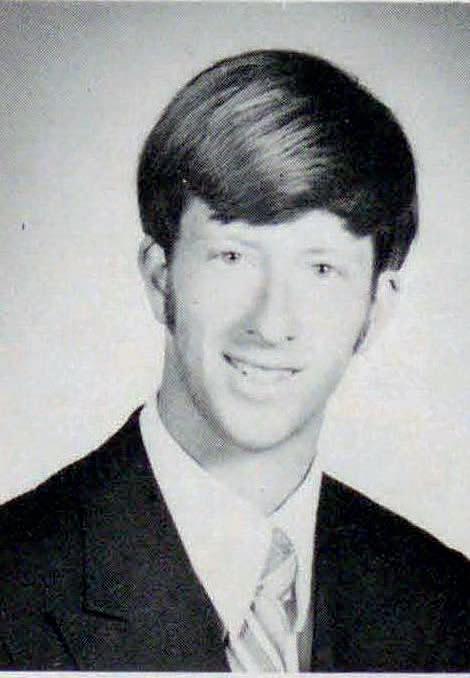
Date of Death: April 25, 2019
MARK A. CARLSEN: A remembrance by Ray Harter
Mark reminds me of that old Irish Proverb: “A good friend is like a four-leaf clover - hard to find and lucky to have.”
Mark and I became good friends in high school. He lived down the street from my freshman girlfriend in Berkley Manor, which is when I really got to know him. Mark was in and out of my core group of high school friends, but he was always in attendance with us at the school sporting events, carnivals, mixers -- or at poker games. He’d be laughing and telling tall stories, habits that continued throughout his life.
Mark was “the smart guy.” After all, he took Japanese, and that was only for the smart ones at De Smet. A kind and extremely generous person, he’d give you the shirt off his back if you asked for it.
Later in life, I remember Mark shared an interest in the hospitality business and got a job with Marriott out of town. He flew into town every few years, got together with some old high school classmates, and as fast as he came in, he left.
I lost touch with Mark, as with so many old friends, but he always seemed to check in with me and others as if he had been gone only for a week. When we talked, we simply picked up where we left last time and shared tall stories, cold beverages and loud laughs.
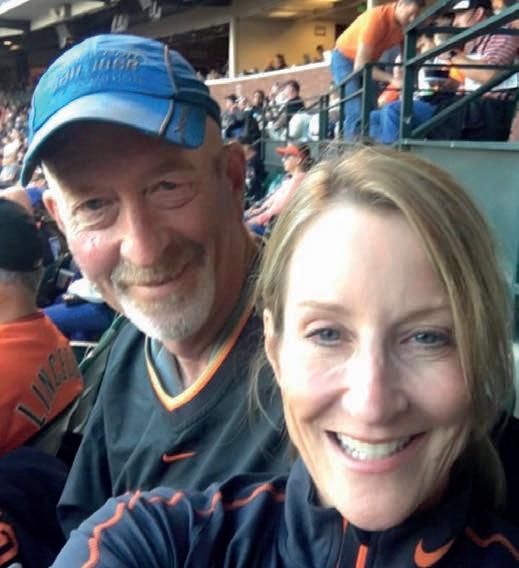
It was a privilege to have Mark as a friend.
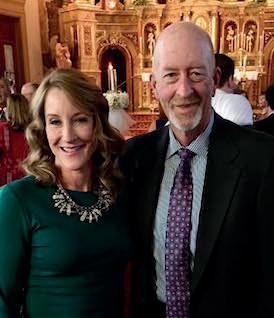
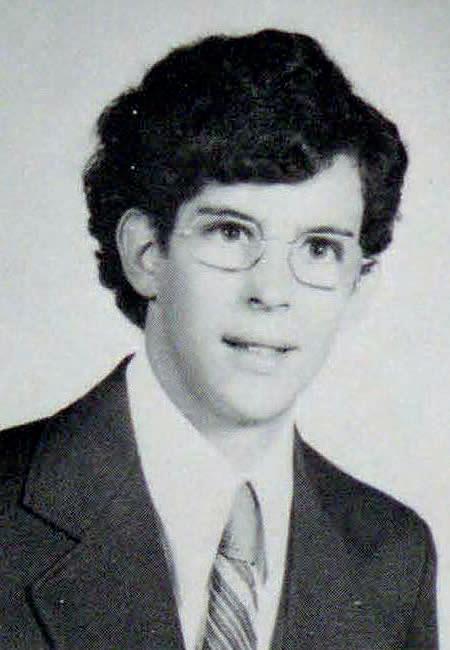
314-313-0827
johncordeal@gmail.com
Favorite De Smet Memories
Attending the football game when De Smet beat SLUH at home in our junior year. Also the 1973 State Basketball Championship was great fun. I watched the cross country race when Paul Heck and Chuck Korte tied for 1st place in the Bi-State Championship (this is one of my best sports memories ever). My favorite teacher was Mr. Ron Snyder.
Marital Status
Married
Spouse Name
Sarah
Children
3 Boys: Henry, Charles and Alex College, Degrees, Current Profession Retired in 2021
I attended UMSL and had a few “odd jobs.” Then in 1987 I became a partner in our family plastics business until 2002. Subsequently, I worked as an accountant at a produce company in downtown St. Louis until my retirement.
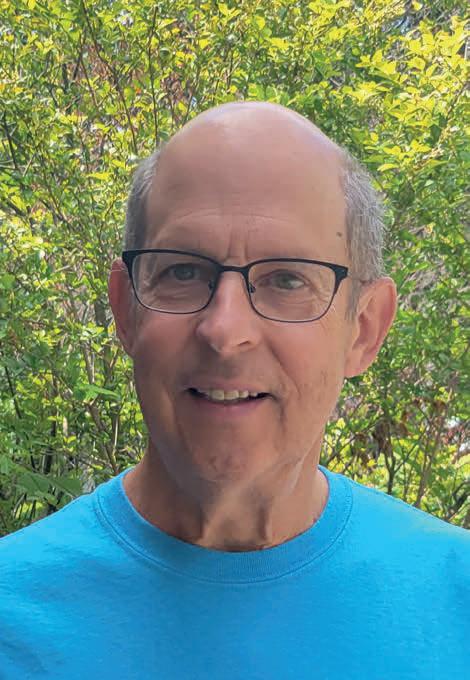
Noteworthy / Interesting Accomplishments
I most enjoy hanging out with my family when we get together. My hobbies include: playing golf, riding my road bike, playing the piano, and attending Cardinal baseball games.
How Would You Like to be Remembered?
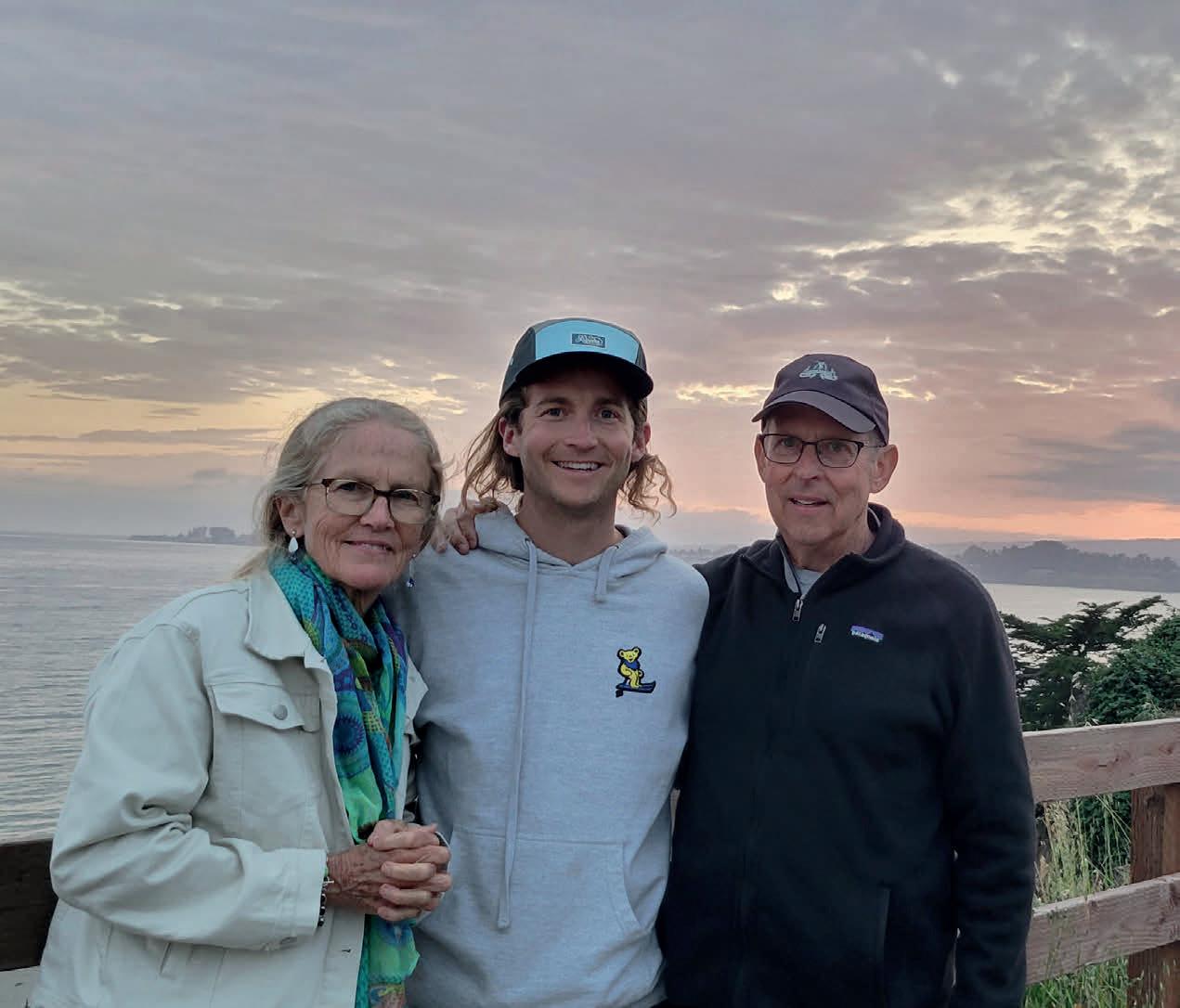
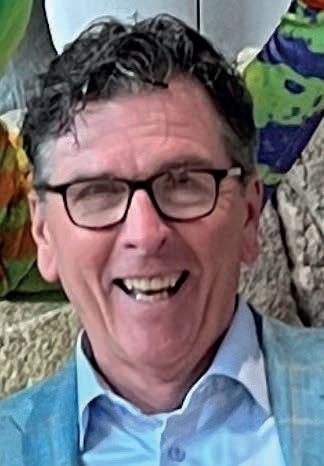
9409
al.cross@pgav.com
Favorite De Smet Memories
1972 Mid-States High School Hockey
Championship win over Vianney - lost my front tooth. In 1973, morning homeroom announcements included me for a goal I scored. Mr. Vitello said he guessed I now thought I was pretty cool. I said, “Yes.” Got a good laugh. 1973 Basketball Championship win. I thought Jim Kennedy had achieved total coolness.
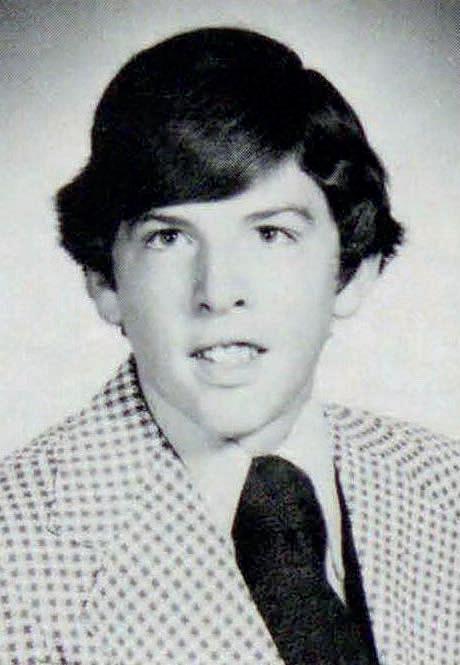
Marital Status
Married March 26, 1977
Spouse Name
Barbara Ann Cross
Children
Jamie, Allen III (De Smet 2003), Lucy College, Degrees, Current Profession
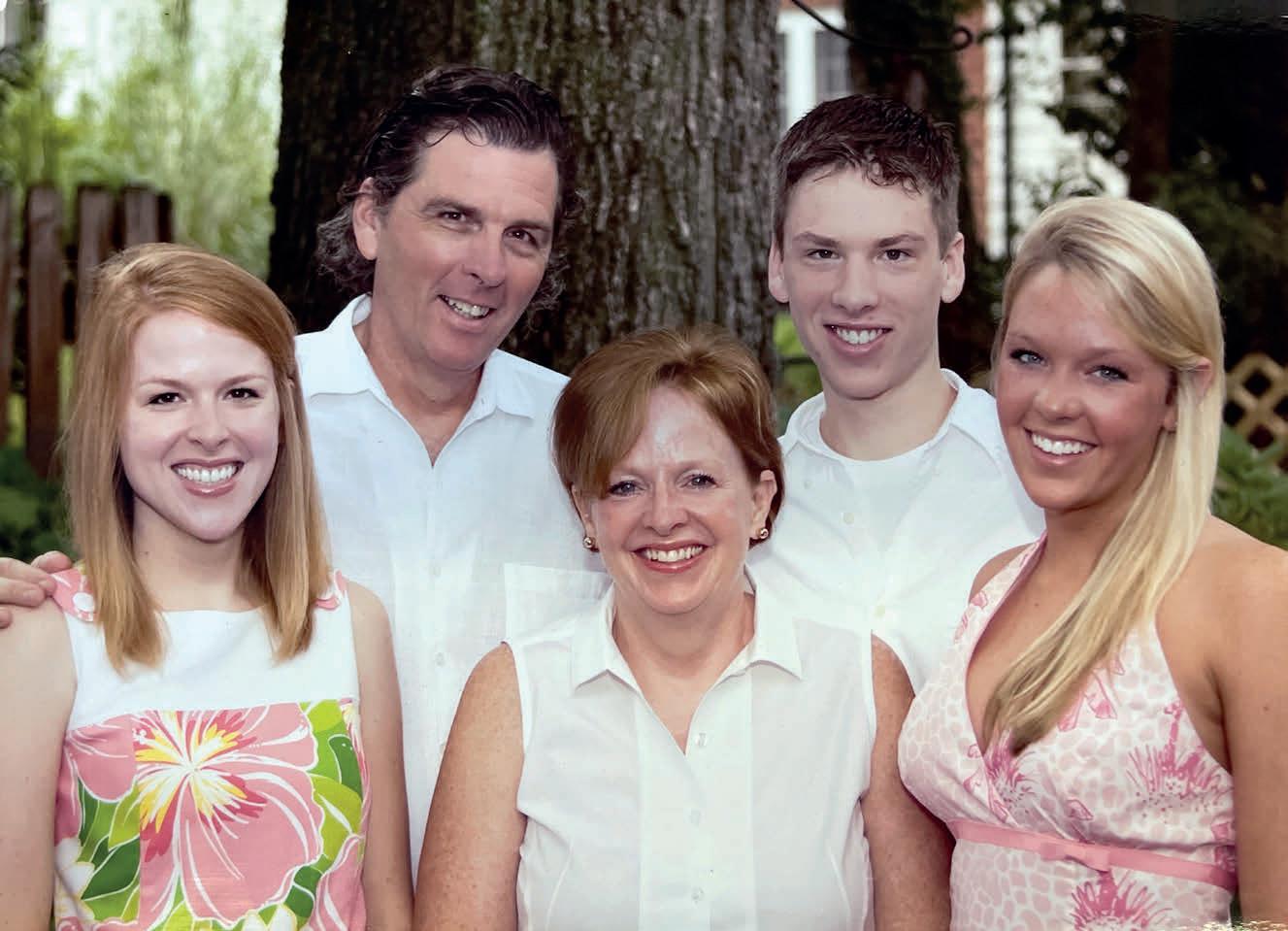
Washington Univ., Bachelor of Science (Major in Architecture), Master of Architecture, Architect
Although we considered moving to Baltimore, Chicago, and San Francisco, we chose to remain in STL. I’ve been in Architecture continuously, working for Chiodini Associates, Stone Marraccini Patterson, and finally with PGAV Destinations, where I’ve now been for 30 years. We design themed entertainment (theme parks & attractions), museums, hotels, and branded destinations.
I led the design for the recently opened (May 2023) SeaWorld Abu Dhabi, a major Middle East theme park containing the largest aquarium in the world. This is the 3rd time I’ve led the design of the largest aquarium in the world, including Chimelong Ocean Kingdom in China (2014) and Georgia Aquarium in Atlanta (2005). I’m also proud of leading the design of Discovery Cove in Orlando, and Evanston Hospital Women’s and Children’s Health Building in Evanston, IL.
As a good husband & father, and a loyal, selective friend.
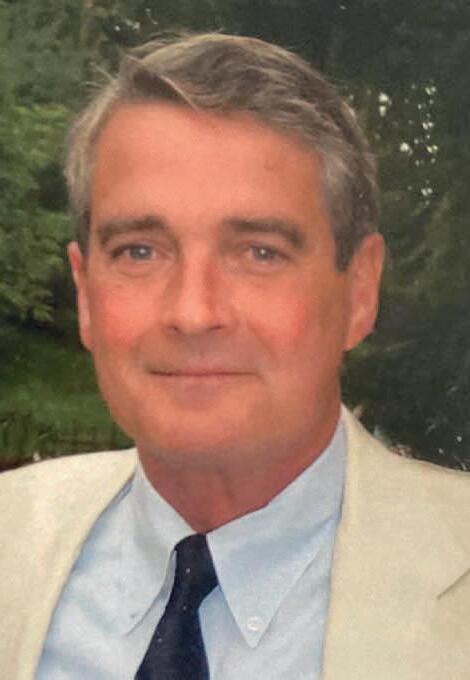
Date of Birth: January 21, 1955
Date of Death: July 13, 2022
A remembrance by prep golf teammate and longtime best friend Randy Aselage (’72)
Kevin Dolan was definitely a “cool kid” in high school. He was a sharp dresser; he drove MGs, Triumphs and an Austin-Healey. And his Cougar was also kind of cool, with Barry White crooning from the 8-track. The cars didn’t make Kev cool – they confirmed it.
His instantly likable personality and movie-star good looks helped round out the cool persona of “Doles.” His Irish eyes and quick smile melted the hearts of many a young lass.
Kevin started golfing with his mother as a young lad, and he arrived at De Smet as a talented golfer. He was medalist for De Smet at many matches and tournaments. Ball-striking, short game, bull’s-eye putting – he had it all.
Back in the early 1970s, golf wasn’t the “cool” sport it is today. However, if you saw “Doles” play, you saw golf in its coolest form.
But at the end of days, none of the cars, physical attributes or God-given talent made Doles “cool.” It was because he was a “good guy” and true friend.
A remembrance by Greg Hoy
Kevin always will be remembered as a great friend to many Spartan classmates. Known as “Dolesy” to those close to him, Kevin’s legacy is not only his overall kindness, but also as one of De Smet’s best golfers in the decade of the 1970s. He competed all four years on varsity and won his fair share of matches along the way.
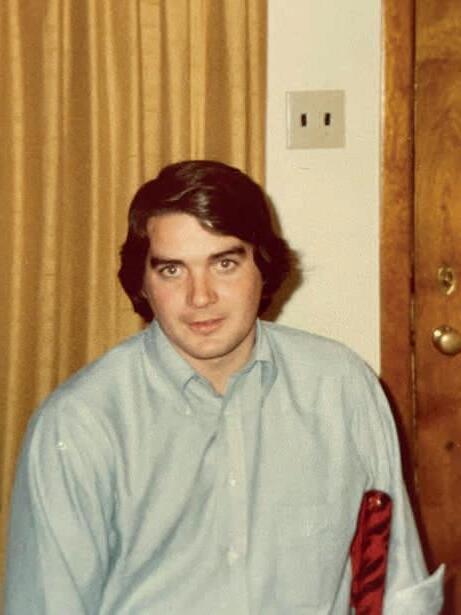
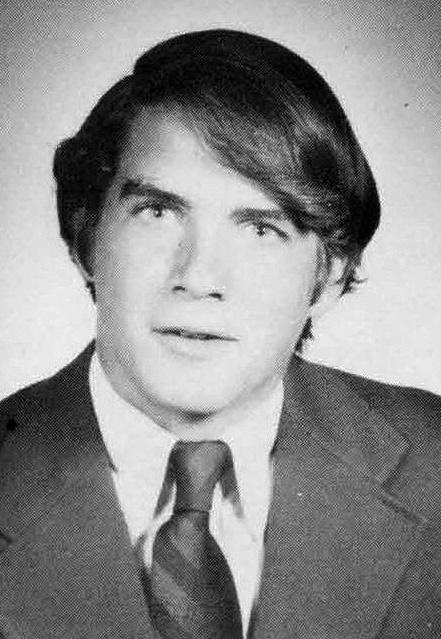
Golf coach Dale Burgman paid Kevin a great tribute recently when he recalled Kevin’s natural talent and the ease Kevin showed playing the game. “Kevin could calmly walk up to the first tee, sit down, lace up his shoes, put his glove on, take one practice swing and hit the ball 250 yards straight down the middle without warming up,” Burgman said. “There were some good players back then, and he was up there with the best.”
Kevin went on to work in the printing industry, and naturally found time during his work career to compete in local and Missouri state amateur events.
6 Spinney Bough Ct. Wentzville, Mo. 63385
314-283-5812
timothykdolan@hotmail.com
Favorite De Smet Memories
B-Team Soccer team, 1972/1973 Hockey Team, State Basketball Champions 1973, Pep Rallies, Lunch with friends, Bob Christian Home Room, George Hasser
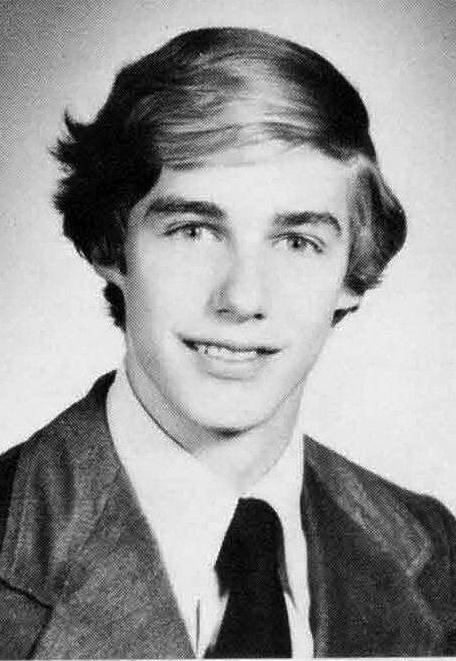
Spanish class, Fr. Apel Chemistry, Going to State Football Championship game in 2005 at Dome with son, 2009 De Smet Father/ Son Golf Champions, De Smet Christmas Tree Lot, Bingo, Auctions, Phone-athons
Marital Status
Married
Spouse Name
Terry
Children
Ryan, Natalie, Kyle
College, Degrees, Current Profession
SLU Chemistry 1977, PyroTechnician Certificate 2004, Retired from Utility Service & Maintenance
What Did You Do After High School and What Are You Doing Now?
SLU. Carboline 1977-96, Industrial Painting Industry through 2020. Lived in Baton Rouge for 13 years. Retired in 2020 -- playing golf, traveling, fishing, wine, eradicating invasive honeysuckle
Noteworthy / Interesting Accomplishments

2 Sons through De Smet. U.S. patent. Sales Awards.
Published coatings articles. Hole in One Wentzville Golf Club, 116 yards, pitching wedge, #16.
How Would You Like to be Remembered?
Dad, husband, grandfather, friend, a man for others. “We never realize how good we have it. Folks, we have it good!”
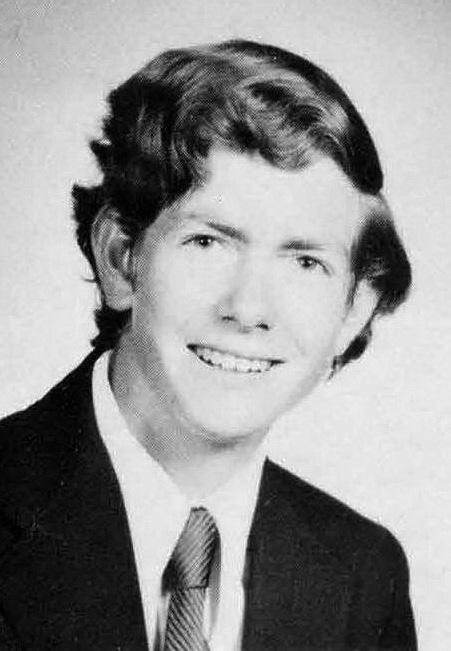
Manchester, Mo.
swtdnly@charter.net
Favorite De Smet Memories
The student cheering section. Pickup basketball games. Handball games
Marital Status
Married
Spouse Name
Sharon Sweet
Children
College, Degrees, Current Profession Mizzou. Bachelor of Journalism. Retired.
What Did You Do After High School and What Are You Doing Now?
Lived in Chicago, Denver, Colorado Springs.
Many years in the Import Business, helping bring Cheez Whiz to a grateful nation -- plus electronics and other goods. Now retired.
Noteworthy / Interesting Accomplishments
Spartan trivia: In 1996, De Smet’s Dionysian Players performed a play I wrote. It was fun fiction about a football franchise moving. It was part of The Alumni Play Festival, during the first year of the Hunter Theater.
How Would You Like to be Remembered? Cardinals fan.
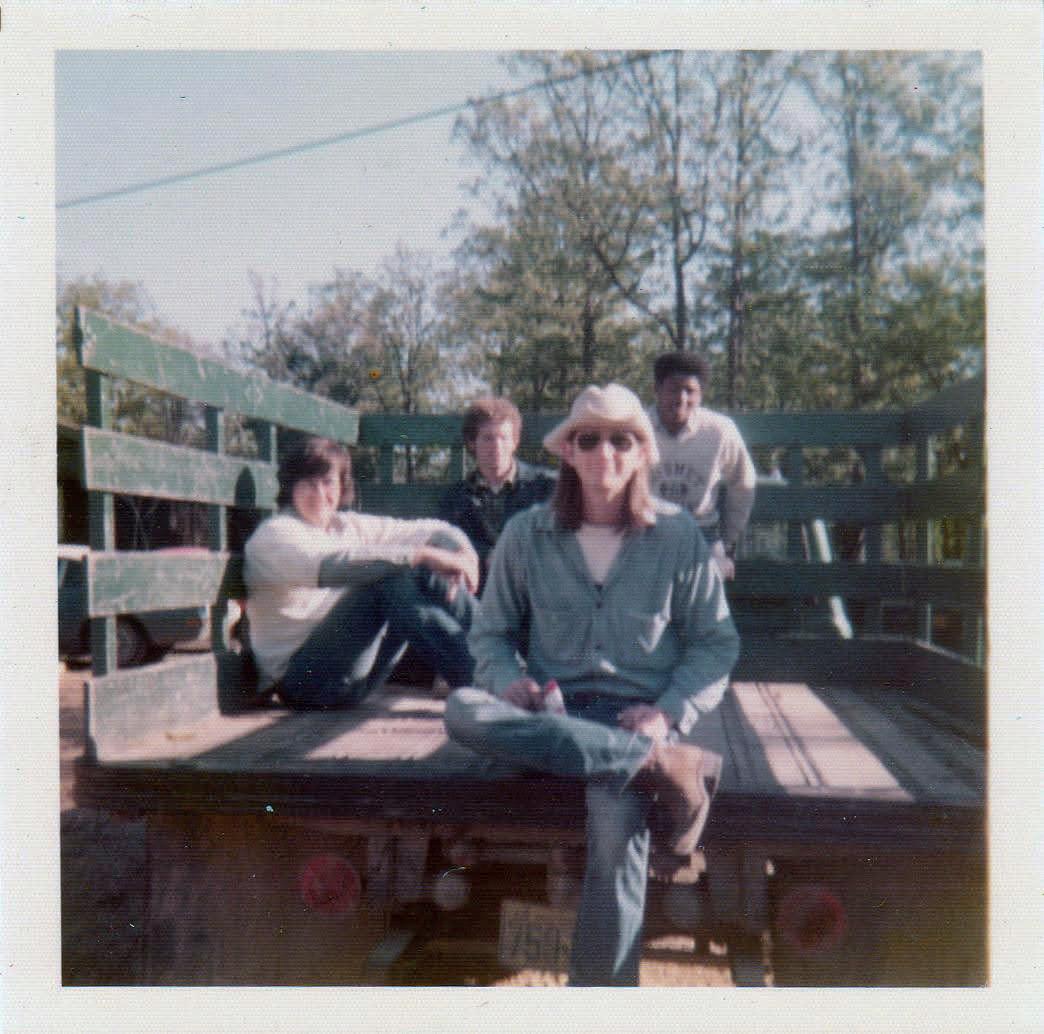
Date of Birth: February 19, 1955
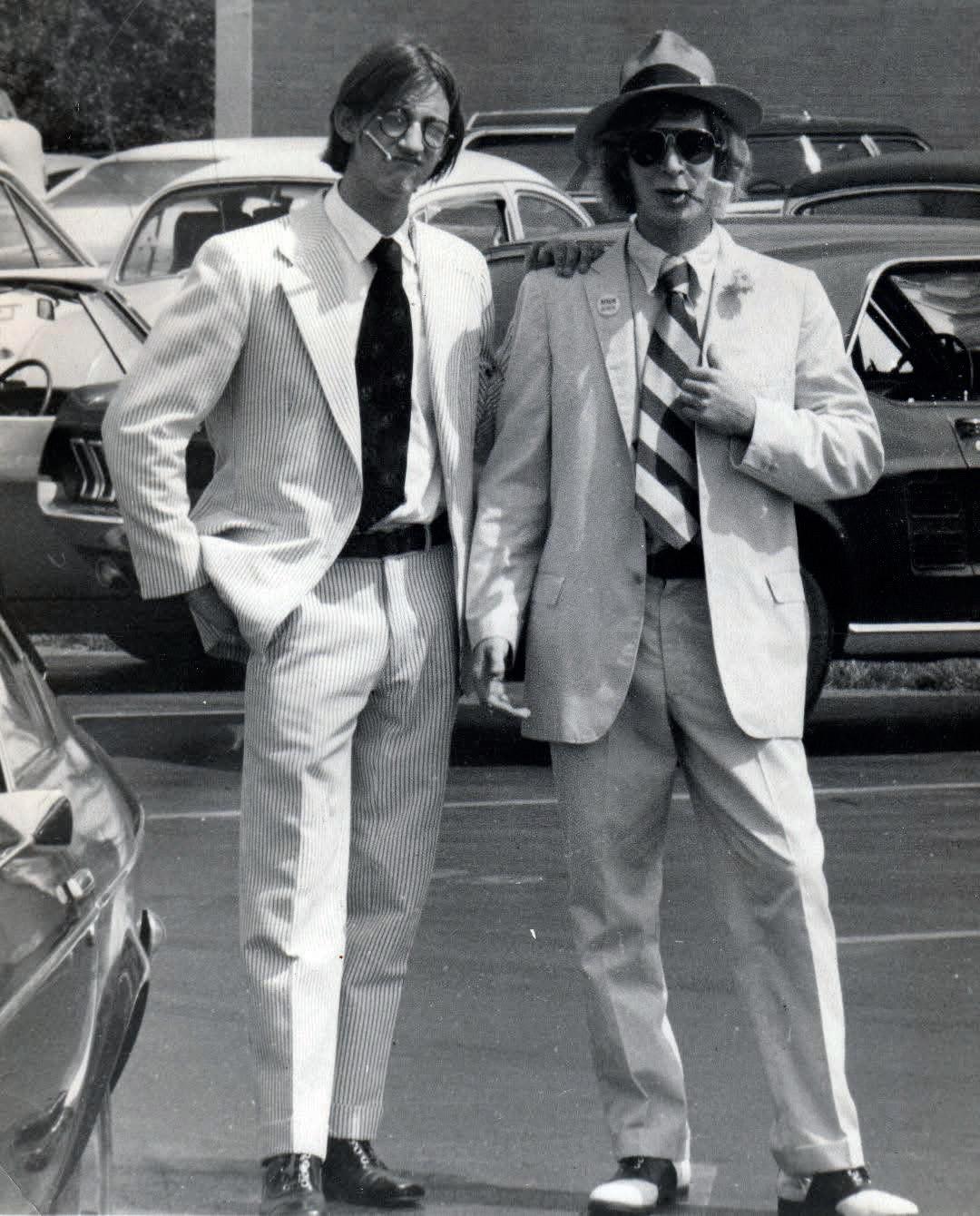
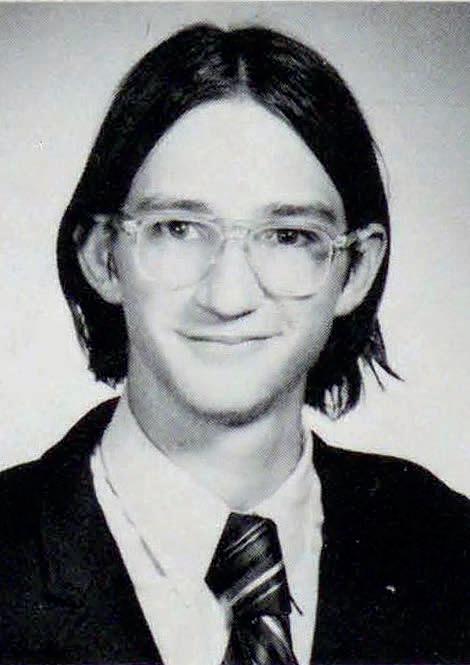
Date of Death: December 24, 2014
Tim was a great pal to many fellow Spartans, and he always made his friends laugh. Tim had a way of turning anyone’s so-so day into a better one by always giving someone a pat on the back or doing the high-five while passing you in the hallways. He wore a constant smile and was good to every one of his mates. Unbeknownst to many classmates, Tim was skillful on the basketball court. His slick dribbling skills confounded most who tried to guard him, and he made the cut to play on the “C” team his freshman year. He later dominated PE basketball with his quickness and savvy ball-handling. He used to say he only needed to play a few minutes each day between classes and that he’d leave the heavy lifting to others!
Date of Birth: November 6, 1954
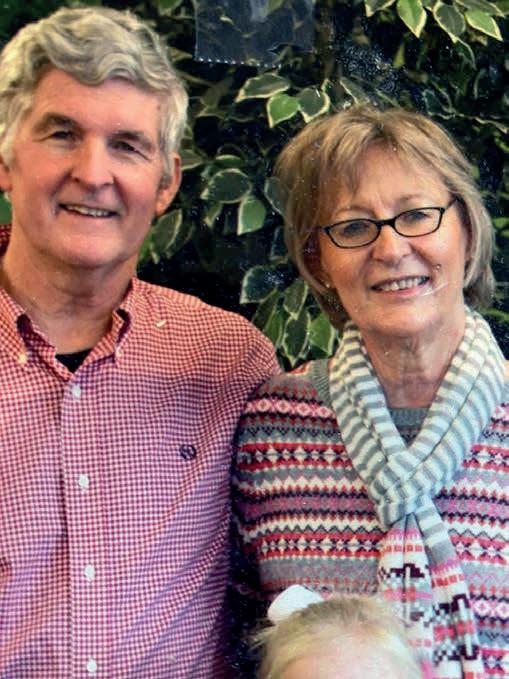
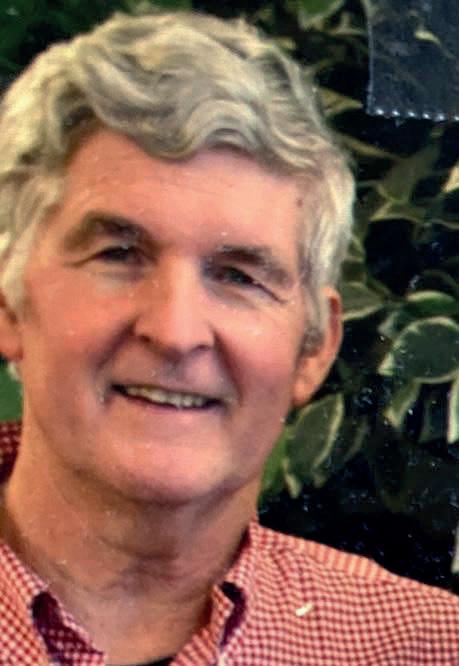
Date of Death: October 28, 2022
Joe Dubuque was a talented student athlete at De Smet and a friend to many. As a lifelong learner, Joe enjoyed most academic challenges. He was a part of cross-country, track, tennis and wrestling teams. He loved talking about sports cars, maybe influenced by his dad’s 1966 Ford Shelby GT350 or his brother’s 1954 Austin Healey 100-4. Friends and classmates might remember that he brought a sports car to school occasionally.
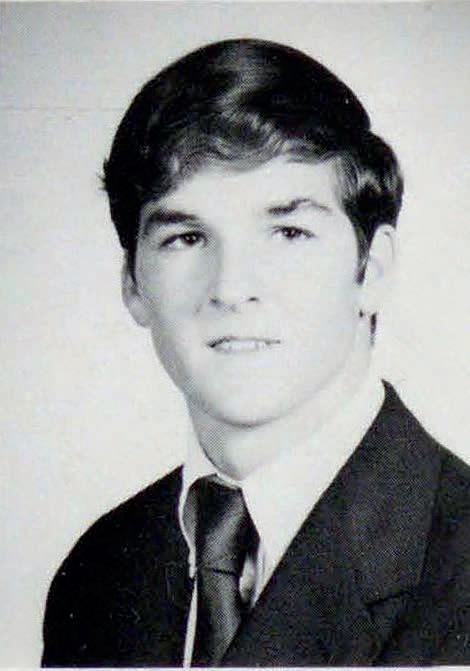
Joe went on to Washington and Lee University in Virginia, where he discovered a love of khaki pants, suede bucks, dancing and music – and graduated with a bachelor’s degree in history. Upon returning to St. Louis, Joe joined the family business in sales with his two older brothers. But almost immediately after college, he became fascinated with rehabbing historic and older homes, especially in the Central West End. Some years later, he went off on his own to become a full-time investor, rehabber, landlord and property manager.
Joe always seemed to maintain his great sense of humor and a love of people throughout his life, which explains his kindness to so many. God blessed Joe later in life with his loving wife Sandy, whom he met at the Choir at the Cathedral Basilica. They even sang for Pope John Paul II on a visit to Rome. Sandy remained a great support to Joe at the end of his life with all of his health challenges and he died in late October 2022. Besides Sandy, Joe is survived by his son Devoy, his stepson Chris and three grandchildren.
500 Estelle Avenue St. Louis, Mo. 63135
314-560-1844
dugganstl@gmail.com
Favorite De Smet Memories
I enjoyed hanging out with friends including but by no means limited to Franc, Conrad, Wally and Mark Johnston. I really appreciate that Bob Christian demanded that I serve as statistician of the varsity football team senior year. Defeating Stone Phillips at Parkway West was a treat.
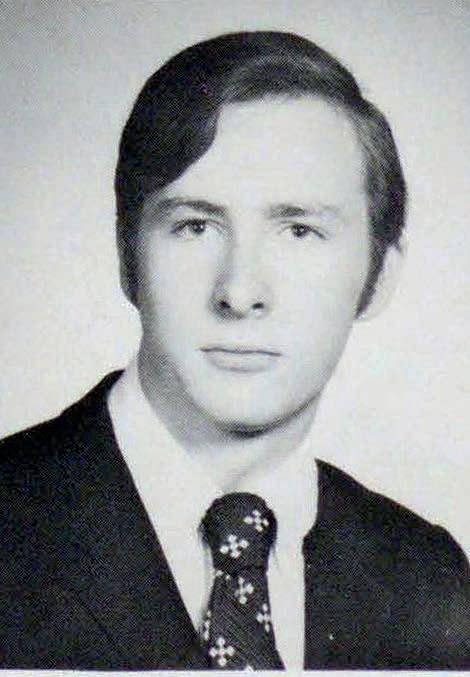
Marital Status
Married
Spouse Name
Lucía Landa
Children
Rita, Wilson and Lawler
College, Degrees, Current Profession
University of Dallas, B.A.; Institute of World Politics, M.A.; currently entrepreneur
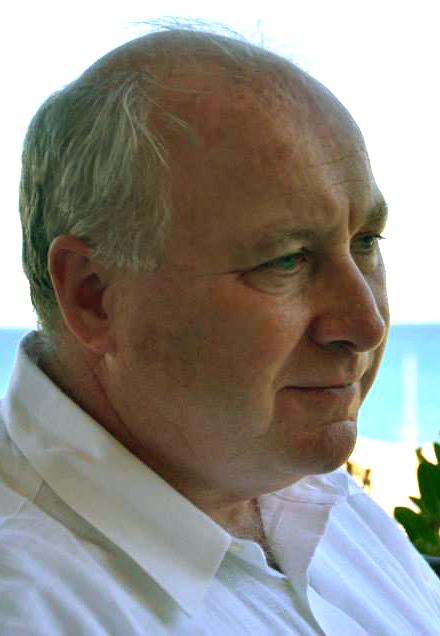
What Did You Do After High School and What Are You Doing Now?
I went to college in Texas, wrote for daily newspapers in Virginia and North Carolina, worked in the State Department and White House in Washington, lived in Saudi Arabia for six years while working for the Saudi oil company, and made my way back to St. Louis.
Noteworthy / Interesting Accomplishments
Being a father of three children is a privilege. Living for six years in Saudi Arabia and traveling in that region was a great adventure. Spending a lot of time in Mexico with my wife and her family is a wonderful experience.

How Would You Like to be Remembered?
I should be remembered as the guy who never, ever surpassed Rick Murray in grades.
Date of Birth: August 16, 1955
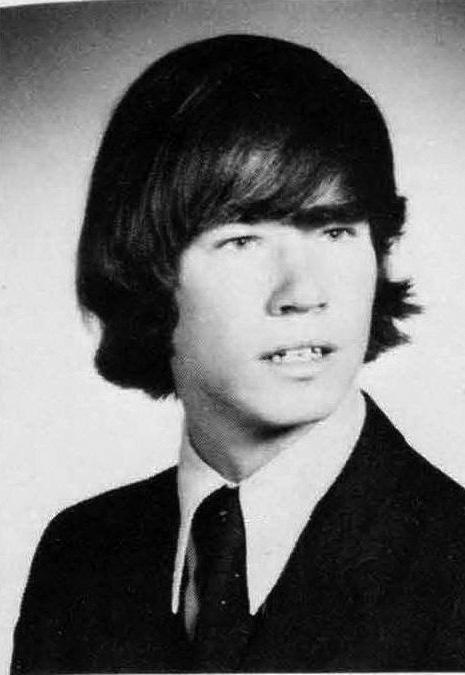
Date of Death: November 25, 2022
PATRICK DUNLAVY: A remembrance by Pat’s brother Tom, Class of ‘75
Pat passed away on Nov. 25, 2022 after a three-year battle with pulmonary fibrosis. After graduation, Pat moved to Houston to work for his family friend’s Houston Auto franchise. After a 10-year stay in Houston, Pat went to work for the Pat Ryan Insurance Company, which specialized in automobile dealership finance and insurance products. He was assigned to the Tulsa area, and subsequently went on to work full-time, for the rest of his career, for a Cadillac dealership in Tulsa. Pat grew up in St. Ann and went to St. Kevin Grade School. He was proud to be a De Smet graduate. While at De Smet, Pat ran cross country as a freshman and played B-team soccer. But his true sports passion was baseball. He had a good glove, strong arm, good speed and not so great hitting skills.
Undeterred by the latter, Pat tried out for the baseball team four years in a row, only to be denied each time. Ironically, if asked, Pat always said that George Hasser was his all-time favorite teacher!
Pat’s enthusiasm for baseball never waned, as he was a passionate Cardinals and Houston Astros fan. Pat passed his enthusiasm for baseball on to his oldest son, who did not have the eyesight challenges of his father. His son went on to play on his high school’s two Class 6A Oklahoma state championship teams, then played four years on college baseball scholarships and led both his junior college and university teams in hitting. Just prior to Pat’s passing, he had the thrill of watching his beloved Astros win the World Series, as he was surrounded by his two sons, daughter-in-law and two granddaughters, all of whom he dearly adored!
Date of Birth: February 19, 1955
Date of Death: January 20, 2010
by Joe Duggan
Conrad Dunn was one of quite a number in our class who came from St. Monica School, just across Interstate 270 from our campus. His large size startled many when they first encountered him. Those who took the occasion to discover the person inside that big frame were rewarded.
Conrad had an aptitude for friendship, and many fortunate classmates had the privilege to be his friend. His big smile was genuine. He was a gifted writer and storyteller. In fact, Conrad wrote the front-page story in the very first edition of The Mirror, which remains the school newspaper today.
He had a sly sense of humor, clever but never mean. His humor included practical jokes and other tricks. Not surprisingly, he grew up to make his living as a performing illusionist or “magician.” Conrad was also a skilled hypnotist.
He died too soon, in 2010, less than a month before what would have been his 55th birthday, leaving behind a loving wife, Linda.
denniselze@msn.com
Favorite De Smet Memories
Too many good ones to remember!
Marital Status
Married
Spouse Name
Elizabeth Kemp Elze
Children
2
College, Degrees, Current Profession
B.S. Criminal Justice Management
What Did You Do After High School and What Are You Doing Now?
I went into the U.S. Marine Corps 1973 until ’77, then a few different schools. I went on to the St. Louis County Police Department in 1979 and retired in 2010. My wife and I currently run a Country music joint in Wildwood called “Stovall’s Grove.” I have been part of that place since 1988!
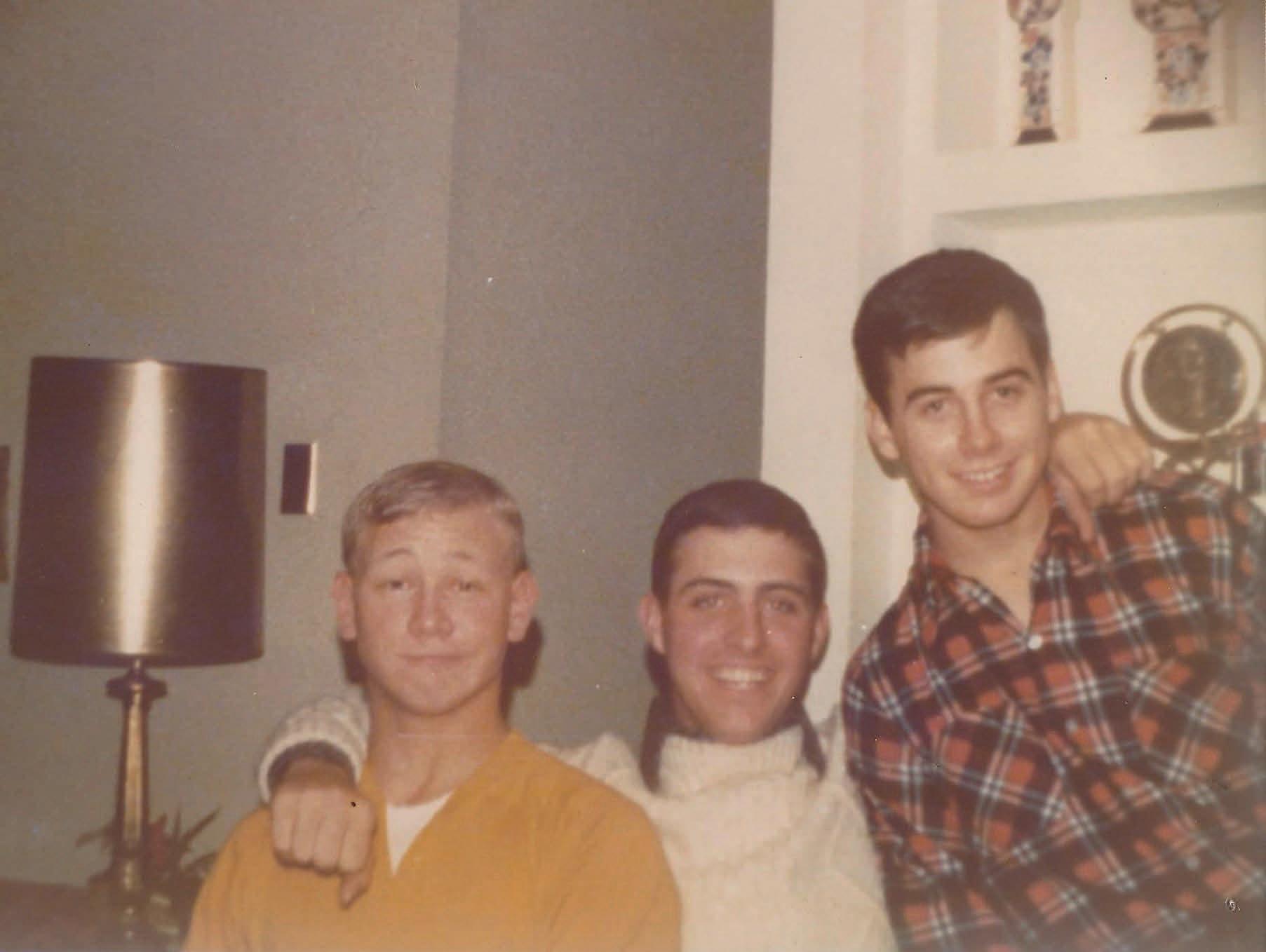
Noteworthy / Interesting Accomplishments
Nothing noteworthy for sure!
How Would You Like to be Remembered? It depends on by who ??
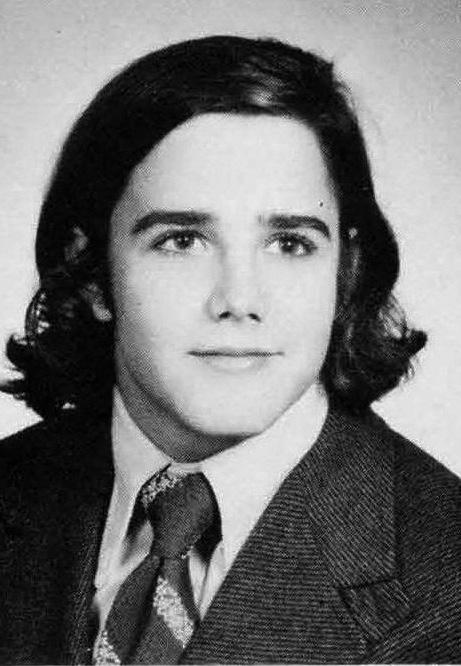
5327
314-486-0125
merker@caterstl.com
Favorite De Smet Memories
Marital Status
Spouse Name
Children
Matt, Libby, Maria and Anna
College, Degrees, Current Profession
University of Missouri-St Louis, Culinary Institute in Hyde Park, N.Y. Profession: Food Service/Chef
What Did You Do After High School and What Are You Doing Now?
After a degree at the Culinary Institute I started my own company, Catering St. Louis Events. We are food service contractors at places such as Missouri Botanical Gardens, Visitor Center in Forest Park, Whittemore House Faculty Club at Washington University, The Marketplace on the Hill, La Verona, Oliva, City Cottage, Three Barn Farm and other places in the St. Louis region.
Noteworthy / Interesting Accomplishments
Member of Vistage International over the past 20 years. Longtime past board member of the St. Louis Artist Guild. Earthdance Organic Farm Apprenticeship.
Recipient of the Kathryn Nelson Keeper of Forest Park Award. Most Enhanced Award for architectural preservation by the St. Louis Landmark Association.
How Would You Like to be Remembered?
2311 N. Sunrise Lane
Liberty Lake, Wash. 99019 208-659-9398
Greg@LoneWolfh-d.com

Favorite De Smet Memories
I don’t have one favorite. It was a great school and a great education. The greatest thing De Smet did for me was send me to Honduras for three months to build houses from a Jesuit mission. That was a phenomenal experience — the summer after our freshman year. Great friends with the departed Bob McCullough, whom I miss very much.
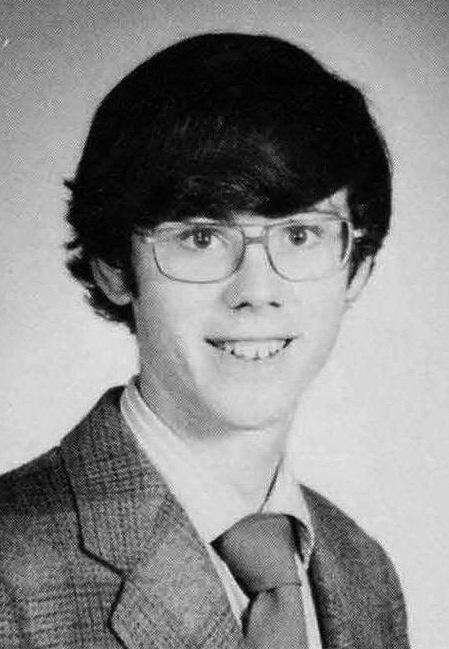
Marital Status
Married
Spouse Name
Hollie
Children
Twin sons, 38-year-old Bill and Chris College, Degrees, Current Profession BSBA with a major in accounting from St. Louis University.
Own a number of Harley-Davidson dealerships in the Pacific Northwest.
Noteworthy / Interesting Accomplishments
Currently I breed Clydesdales, and also collect Harleys, as well as classic and exotic cars. How Would You Like to be Remembered?
1312 Countryside Manor Place
Chesterfield, Mo. 63005
636-537-2597
mfaron@charter.net

Favorite De Smet Memories
Playing hockey and winning the first Challenge Cup
Marital Status
Married
Spouse Name
Stephanie
Children
Brent and Nicholas
College, Degrees, Current Profession
What Did You Do After High School and What Are You Doing Now?
Notre Dame University, St. Louis University Medical School, and currently internal medicine physician
Noteworthy / Interesting Accomplishments
How Would You Like to be Remembered?
fitz.tb@gmail.com
Favorite De Smet Memories
John Faust screaming “THAT’S 5, FARON!!!”
Rich Grawer flipping the pencil in his hand over and over without looking. Bob Christian’s roar on and off the field. Chris Mess’ good humor and matching sideburns
Marital Status
still
Spouse Name
Beth
Children
Four kids, all grown, married, and parents as well

College, Degrees, Current Profession
Notre Dame (’77); Stanford Law (’80); Real estate development consultant
What Did You Do After High School and What Are You Doing Now?
Grew old and growing older still…
Noteworthy / Interesting Accomplishments
Hmmm….
Since leaving St. Louis in 1995, lived in the Washington, D.C., area and then on to Southern California in 2005. Still trying to forget our five-year interlude in Detroit.
How Would You Like to be Remembered?
Fondly
14 Arrowhead Est. Lane Chesterfield, Mo. 314-220-2091
franc@govconsultants.com
Favorite De Smet Memories
Building a bunch of friendships to last for a lifetime.
Marital Status
Widowed
Spouse Name Dorothy Anne Lewis
Children
none College, Degrees, Current Profession Washington University, St. Louis, B.S. in Business Administration, 1977. Government Affairs Exec.
What Did You Do After High School and What Are You Doing Now?
I was involved in various business start-ups, served six years in the Missouri House of Representatives and 12 years in the Missouri Senate. I am co-founder of the Missouri State Government Affairs business Flotron McIntosh, LLC. Now I am mostly retired and spend a lot of time rowing on Creve Coeur Lake and serve on a few boards.
Noteworthy / Interesting Accomplishments
I served as the Missouri Senate Republican Leader and as the Missouri House Republican Assistant Leader.
How Would You Like to be Remembered?
He worked hard to make Missouri a better place to live.
2211
917-653-7877
jerryfons@comcast.net
Favorite De Smet Memories
Mr. Barhorst’s physics class. Playing with my band at our ring mass.
Marital Status
Married
Spouse Name
Michele
Children
College, Degrees, Current Profession
University of California, San Diego, Ph.D. (economics); San Diego State University, B.A.;
Retired
What Did You Do After High School and What Are You Doing Now?
Attended several colleges before moving to San Diego in 1976. Earned a doctorate in economics and worked for the Federal Reserve and then held positions at a large bank and then Moody’s. Helped launch a company that is still going strong. My wife and I moved to Naples, Florida in 2014. I enjoy playing tennis, music and travel.
Noteworthy / Interesting Accomplishments
Testified before Congress in the wake of the 2008 financial crisis. Appeared in an Oscar-winning documentary on the financial crisis. Authored numerous papers on financial topics.
How Would You Like to be Remembered?
An honest, caring and loving man.
314-225-5326
rjmfox@charter.net
Favorite De Smet Memories
Traveling to Columbia and being in the Hearnes Center for the state championship basketball victory. Graduation at Powell Symphony Hall with water pistols and the graduation party at Creve Coeur Park. Setting a fire in Fr. Apel’s chemistry class junior year, although my friend and lab partner Tony Lange might have also had a hand in that.
Marital Status
Married
Spouse Name
Karen
Children
Cristina, Sara and Richard (De Smet, 2014) College, Degrees, Current Profession
B.S. Business, St. Louis University
What Did You Do After High School and What Are You Doing Now?
Bartended for several years on the Admiral and President river boats. Worked for Emerson for 25 years in finance and management. Finished up working for Boeing here in St. louis for the last 13 years. I retired two years ago and am enjoying life, playing golf, tennis, bocce, and skiing whenever I get a chance.
Noteworthy / Interesting Accomplishments
Graduated magna cum laude from St. Louis University. Served for seven years as a trustee for Town and Country, Mo. Was in the Cardinals clubhouse after they won Game 7 of the 1982 World Series and got to meet and talk to the players and get some autographs.
How Would You Like to be Remembered?
A caring and loving husband and father; a loyal friend; a good Christian; and a man for others.

350 Loring Lane
Peachtree City, GA 30269
678-888-6011
mafriedlein@outlook.com
Favorite De Smet Memories
History classes with Mr. Chris Mess, running track for coach Fr. Passarelli, working with Brother Jim and Brother Schmitt and the Meyer brothers over the summers to get the school ready for the new school year.
Marital Status
Married
Spouse Name
Aileen
Children
Nick and Keith
College, Degrees, Current Profession
B.S. (dual major) Economics and Agriculture, M.A. Management
What Did You Do After High School and What Are You Doing Now?
Retired from The Coca-Cola Company in 2016 after 21 years working in supply chain; last 10 years as the Group Director of International Supply Chain Development for the Freestyle Fountain program.
Noteworthy / Interesting Accomplishments
In February, celebrated the 10th anniversary of my ordination to the Permanent Diaconate in the Archdiocese of Atlanta. Working as a deacon in a large parish has been an incredibly challenging and rewarding experience, right up there with raising a family.
How Would You Like to be Remembered?
A good husband, father and deacon.
12933 S. Topping Estates
Town & Country, Mo. 63131
314-795-9380
garce1@charter.net
Favorite De Smet Memories
The trip to Mexico because I made a lot of new friends and met my wife, Chris. I also enjoyed the car rally and our first state championship in basketball.
Marital Status
Married
Spouse Name
Chris
Children
Elizabeth
College, Degrees, Current Profession
M.D., Distinguished Fellow, American Psychiatric Association; Psychiatrist
What Did You Do After High School and What Are You Doing Now?
I went to Medical School. I was in private practice for 33 years. I am working as a hospitalist at Mercy Hospital St. Louis. I am trying to get better at golf and enjoying time with my wonderful wife and grandkids.
Noteworthy / Interesting Accomplishments
I was chief resident in Psychiatry at St. Louis University. I am Chairman of Department of Psychiatry at Mercy Hospital St. Louis for past 20 years. I am an Associate Clinical Professor at St. Louis University.
I have a beautiful daughter & two wonderful grandkids Jason (18) and Vivian (14)
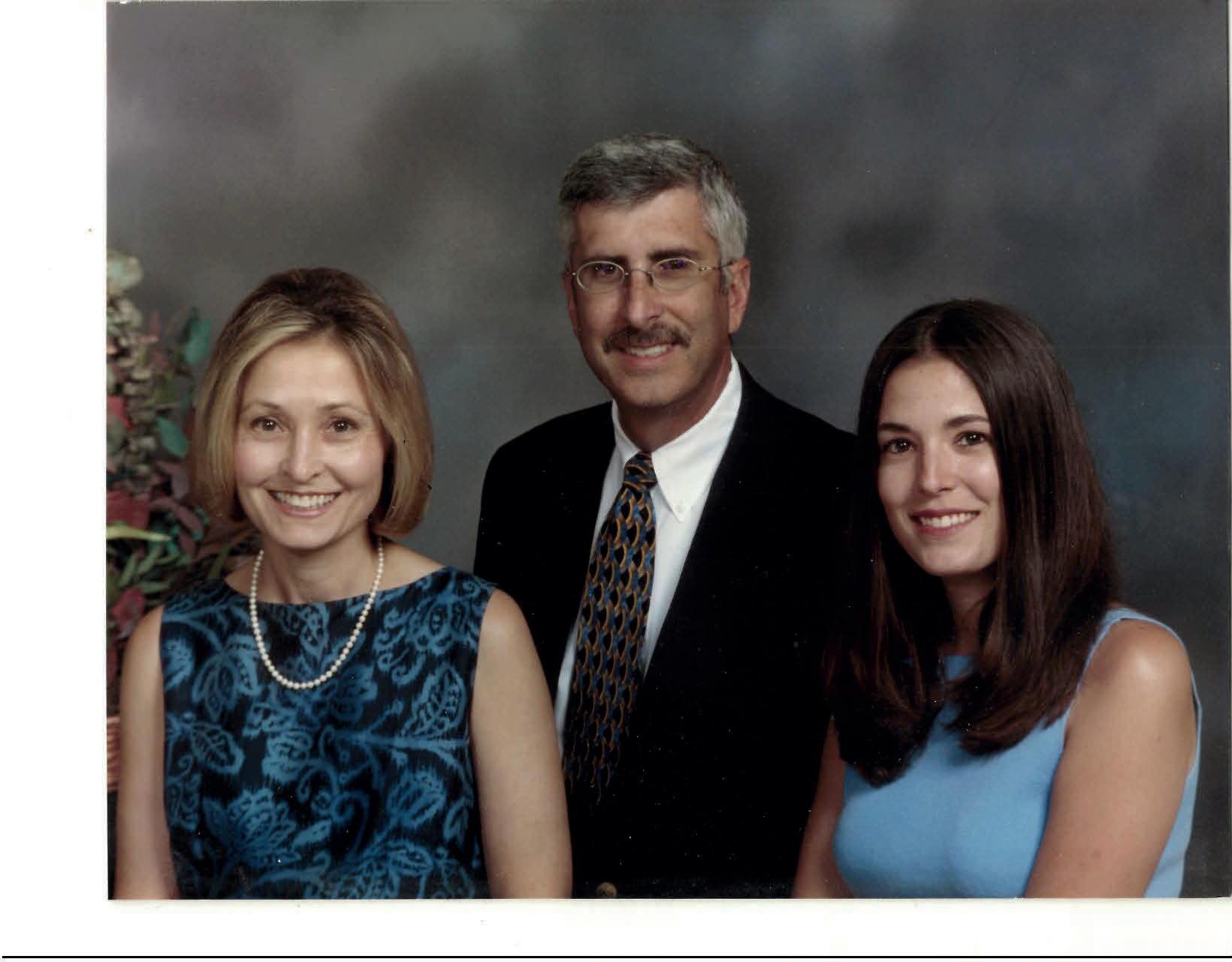
How Would You Like to be Remembered?
I hope I am remembered as a kind human being.
231
314-605-0180
stephenmdg@gmail.com
Favorite De Smet Memories
Missouri state basketball championship run senior year! Handball games at lunch time. Fr. Lawless freshman year. I was the “lowest common denominator” in Haskins’ math class. Miss Clemons’ French class. Mr. Barhorst’s physics class.
Marital Status
Married
Spouse Name
Charlotte Gnade
Children
Paul (M.D.), Emily (Pharm D), Alexander (M.D.), Micheal (Electrical Engineer)
College, Degrees, Current Profession
Georgia Tech, Bach. of Chemical Engineering, Professional Engineer, retired
What Did You Do After High School and What Are You Doing Now?
College, work, came back to St. Louis to work at the family business, The P. D. George Co.
Visiting grandkids and children in Denver, Nashville, Atlanta and West Palm Beach. Great places to visit but jealous of all you who get to spoil your grandkids close to home.

Noteworthy / Interesting Accomplishments
Helped build and start up polymer coating plants in Mexico, Italy and China. Built up the family business for sale to German firm, oops.
Visited our children in Namibia, Uganda, Costa Rica and Peru as they volunteered and did research abroad. Got to spend several nights on Lake Titicaca (still fun to say).
Clearly, I married well even though it was to our classmate Bruce Gnade’s sister.
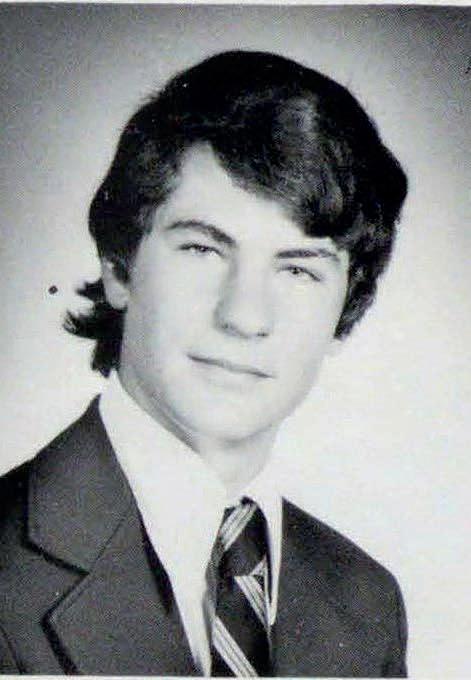
How Would You Like to be Remembered?
Luckier than I have a right to be!
Date of Birth: November 26, 1954
Date of Death: April 6, 2006
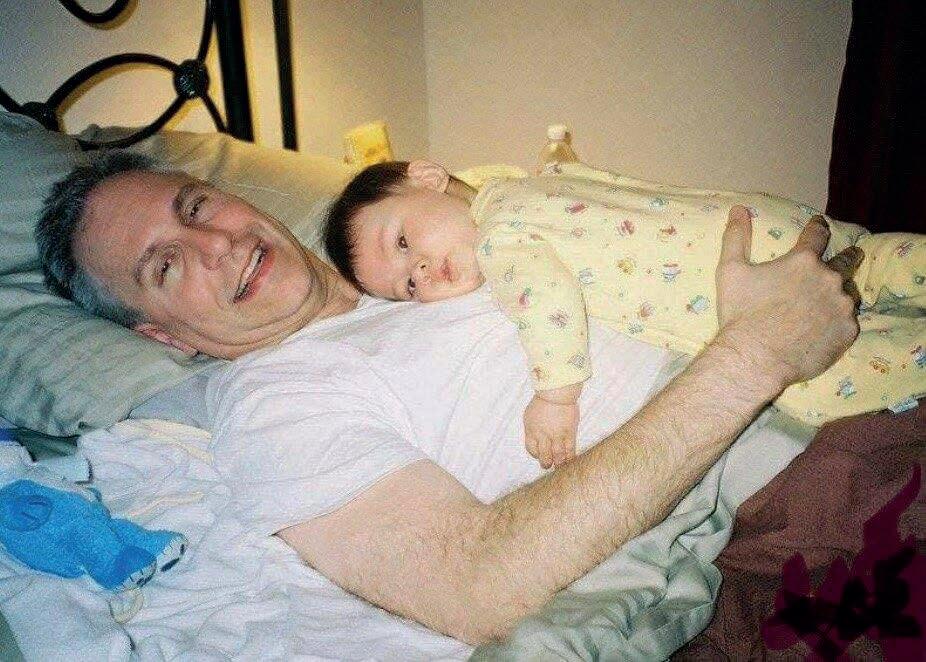
I can’t remember if I met Pete Gleeson on the football field or in Japanese class. We had many classes together our first year. Pete and I became quite close at De Smet, awkwardly trying to accept the twin challenges of staying on top of our academics and being socially active as we grew. We were both “off the radar” introverts –removed from the comfort zones of Catholic grade schools that we’d occupied for eight years. Pete played football and threw the discus on the track team. On weekends, he was probably the only reason that we stayed out of trouble. I remember how he was always analyzing, trying to come up with the best option for everyone. He was the “grown-up in the room” – most of the time (though this assertion is disputed by his sister, Anne).
But he also had a great sense of humor and adventure, and at times was willing to “push the envelope” with us. He had a great laugh and was a fun-loving guy -- although he wasn’t laughing when the police were pouring our libations into the bushes at a Nerinx Hall dance! Peter grew up near Tilles Park just off McKnight Road. He went to Immacolata grade school, where he was an excellent student. He loved fishing, a lifelong source of recreation. He played Khoury League baseball, where he became a fair all-around player who had a habit of making a clutch fielding play behind his team’s ace lefthander, friend and fellow De Smet ’73 graduate Tim LaPresto. After high school, Peter went on to the University of Arizona, where he graduated with a bachelor of arts in oriental studies. He completed work on a master’s degree at Washington University and spent the rest of his life on the West Coast, except for a brief stint in which he returned to St. Louis to help care for his parents. Peter went to work for PACTEL, where he quickly advanced to upper management (no surprise). He and his wife, Connie, finally started a family when Peter was 49. They had a son named Brandt. Brandt is now 19 and lives in Danville, Calif. with his mother.
Unfortunately, I lost track of Pete when he went to Arizona and I attended St. Louis University along with approximately 30 of my high school classmates.
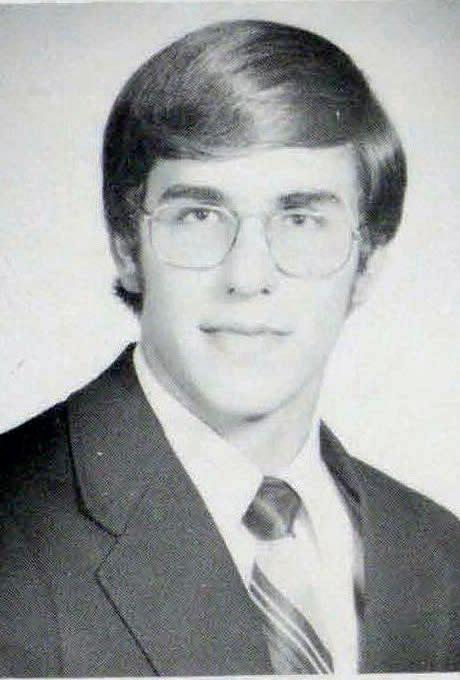
According to Anne, Peter returned to visit many times from California. He had two brothers and two sisters and several nieces and nephews. The Gleeson clan, extremely close, would get together for long family events in which the older Gleesons would stay up for hours -- singing songs (several were musicians), playing PingPong, or playing basketball in the backyard.
Anne describes Peter as an extremely compassionate person who loved to interact with the elderly, the downtrodden and children. He was, of course, a great father and spouse. Peter passed away in April 2006 at the age of 51. He left his mark on this world in many ways and is greatly missed.
Favorite De Smet Memories
I made many lifelong friends at De Smet, including my brotherin-law Steve George. I still remember lunchtime and after-school handball matches that went on for days. De Smet taught me how to study and the value of hard work. Any success that I might have had in my career are in part due to lessons learned at De Smet.
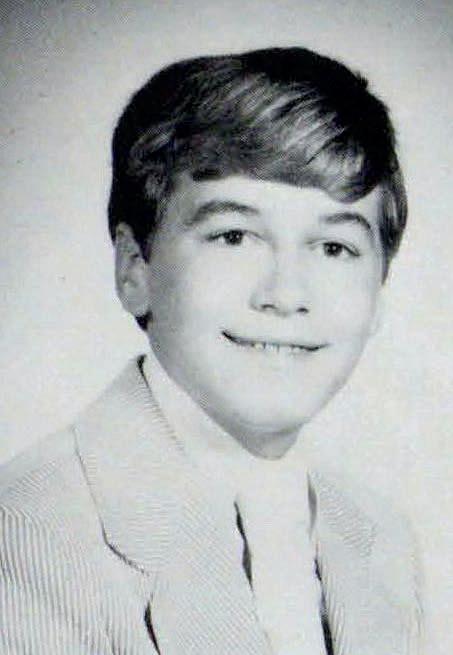
Marital Status
Married
Spouse Name
Linda
Children
Andrew
College, Degrees, Current Profession
B.A., Chemistry, St. Louis University, 1976. Ph.D. Nuclear Chemistry, Ga. Tech, 1982
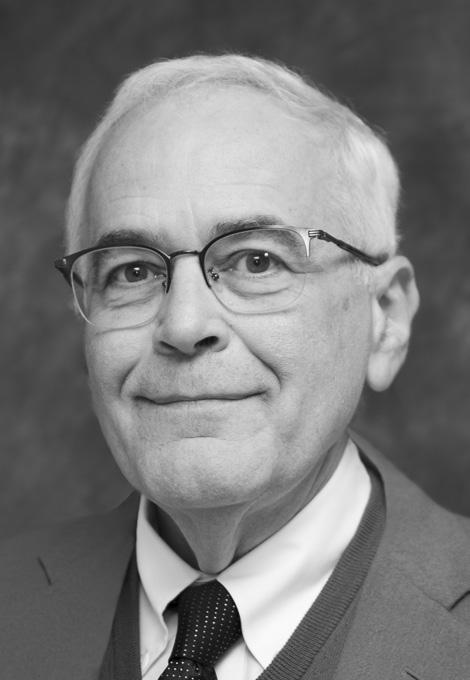
What Did You Do After High School and What Are You Doing Now?
After finishing graduate school I worked at Texas Instruments from 1982-1996. I was a program manager at DARPA from 19961999. I was a Prof. at the Univ. of Texas at Dallas from 2003-2017, and VP for Research and Distinguished Chair in Microelectronics from 2006-2017. I am currently Prof. Emeritus at UT Dallas and Chief Scientist at Mustang Optics.
Noteworthy / Interesting Accomplishments
Linda and I have been married 40 years, have 1 son, Andy, daughter-in-law Allison and 3 wonderful grandchildren, Bennett, Caroline and Davis. We started Mustang Optics in 2021, and as a small business we currently work on research projects for the U.S. DOD. I am a Fellow of APS, IEEE, and National Academy of Inventors, and was Chair of the Board of Directors of Oak Ridge Associated Universities from 2020-2022. I was awarded the 2021 IEEE J.J. Ebers award.
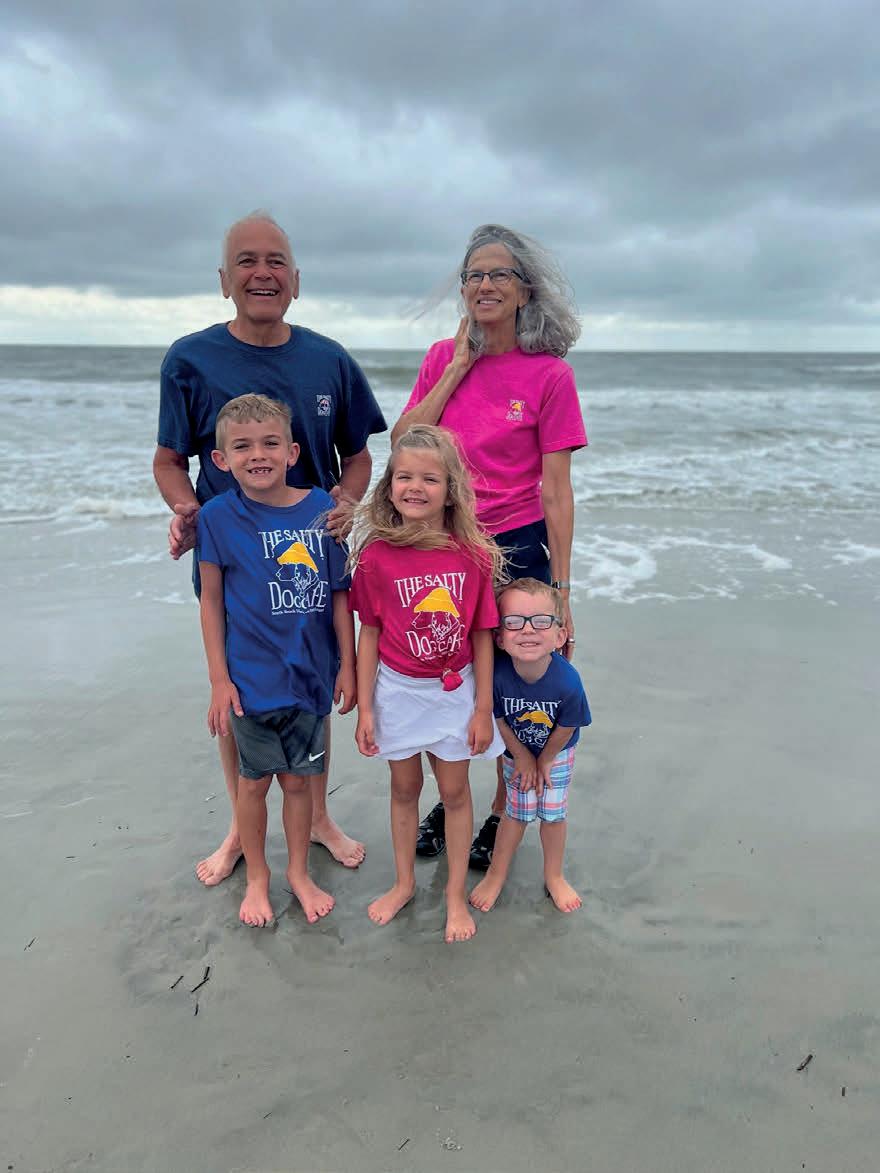
How Would You Like to be Remembered?
Hopefully as a person who treated everyone with respect.
Date of Birth: July 19, 1955
Date of Death: October 21, 2012
Official obit offered by the Goessling family
James “Jim” Richard Goessling passed away peacefully at the age of 57 after a courageous battle with cancer. Jim was an adoring husband to his wife of 27 years, Patricia (Patty) Hauser Goessling. Jim was the son of the late John (Jack) Goessling and the late Bette Anne Goessling, brother to Anne (Tom) Herrmann, John (Anna) Goessling, Tom (Pam) Goessling, Bob (Patsy) Goessling and Julie (Tom) Matheny.
Jim, known as “Goose” or “Bubba,” went to Christ The King grade school, was a prominent member of De Smet’s 1973 Missouri state basketball champions, and attended the University of Missouri-St. Louis on a basketball scholarship. He was a member of Halls of Fame at De Smet, UMSL and the Missouri Athletic Club. After starting his career as a Sales Exec with Faber-Castell, he moved into the sports marketing arena – working for the St. Louis Football Cardinals, KMOX Radio and the St. Louis Blues. He also worked for, and was a part owner of, KTRS and KFNS radio stations.
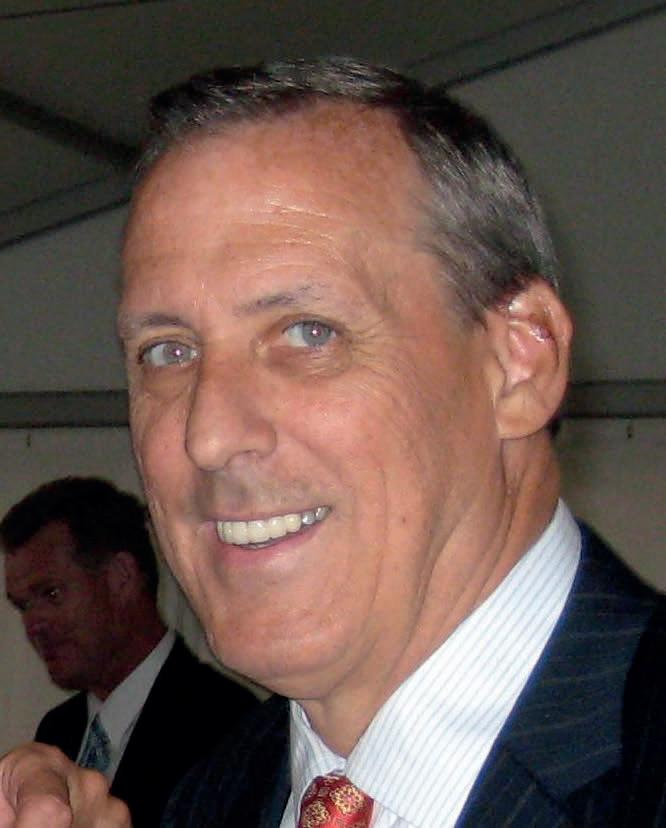
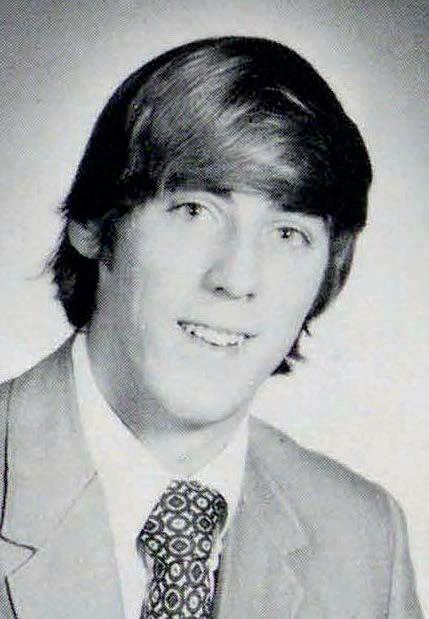
He was a member of the 1-2-3 Club, Knights of The Cauliflower Ear, served two terms as Governor for the Missouri Athletic Club, and was a member of the Veiled Prophet organization. Bubba, also known as “America’s Guest,” lived with integrity and laughter and made everyone feel special. He was the MVP to many but a great friend to all. Jim left us a lifetime of great memories.
In our post-high school years, I’d often razz Jimmy Goessling about the “most underrated shot in De Smet basketball history.” He’d grin and never offer embellishment, but he always remembered.
De Smet was losing by five midway through the fourth quarter in the ’73 state quarterfinals vs. Northwest. The Spartans had blown a big first-half lead, and De Smet wasn’t even getting a good look at the hoop against a talented, tenacious city team. The game was slipping away.
That’s when Goessling took the ball on the wing, drove to the basket and, with Northwest’s great jumpers all around, banked in a reverse layup. Equilibrium restored, De Smet won minutes later on a more heralded shot by Gary Clark. That rescue in many ways epitomized “Bubba,” who always knew when to let the game come to him and when to impose his will.
I was privileged to be in the same homeroom with Jimmy for four years. He was easygoing and affable, but a ferocious competitor who would meet any challenge. Jim Goessling had an almost perfectly proportioned sense of justice. Bullies always had a bad day when Bubba was around. But he brought out the best in the rest of us.
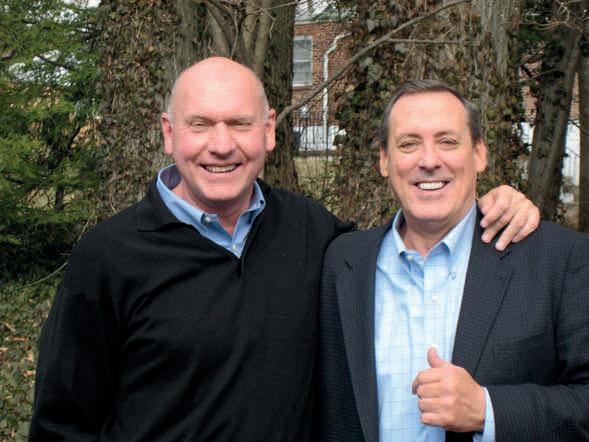
706
314-258-3584
tgoessling20@gmail.com
Favorite De Smet Memories
All the great teachers — they were all good. Playing on the soccer team that reached the state semifinals. Beat CBC three times and eventual state champ SLUH twice.
Marital Status
Married
Spouse Name
Pam Children
College, Degrees, Current Profession St. Bernard College; University of Missouri-St. Louis
What Did You Do After High School and What Are You Doing Now?
Hadco Chemical Corp., Plant Manager; Schaeffer Manufacturing, Sales Representative; Secure Energy, Director, Business Development
Noteworthy / Interesting Accomplishments
I’m still alive.
Have been fortunate to travel a little — Switzerland and Canada (Banff, Alberta) being my favorites. I’ve also traveled to Germany, France, Italy, Hungary and Austria.
How Would You Like to be Remembered?
I hope I put a smile on your face.
6gorlas@crescentparts.com
Favorite De Smet Memories
All the sports activities. Hanging with a great group of guys and forming lasting relationships.
Marital Status
Married
Spouse Name
Mary Children
4 - 2 boys/2 girls
College, Degrees, Current Profession
Ranken Technical College
What Did You Do After High School and What Are You Doing Now?
Went into the service, got married, working in the wholesale distribution business in sales.
Noteworthy / Interesting Accomplishments
Raised a family of four kids. All doing well and living the good life.
How Would You Like to be Remembered?
Good guy, helped wherever needed and enjoyed life.
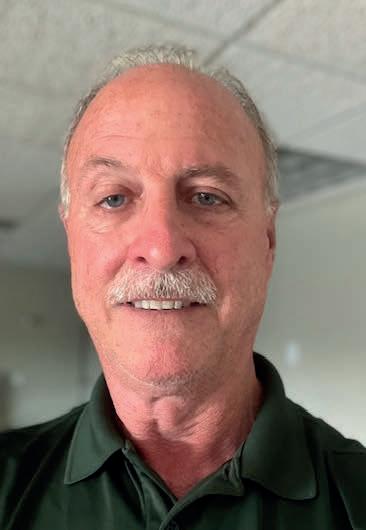
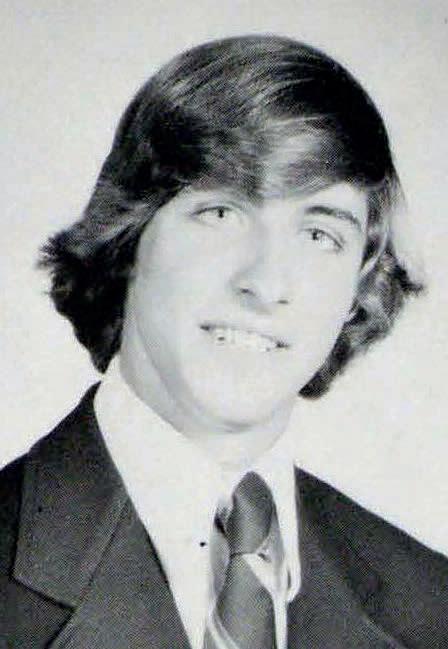
2324 Wertherson Lane
Raleigh, NC 27613
919-757-8116
phakenewerth@gmail.com
Favorite De Smet Memories
Playing handball on the courts out back. Watching the basketball team win the state championship. Carnivals in the fall and Football games. Working on the yearbook. All the Dionysian plays were great. Senior Prom. The great faculty and staff, and just hanging out with my friends. I have lots more great memories, I just can’t remember them. :)
Marital Status
Married
Spouse Name
Meg
Children
Katherine and Mary
College, Degrees, Current Profession
Georgia Tech, BSME; UNC-Charlotte, M.S. Engineering. Mechanical Engineer.
What Did You Do After High School and What Are You Doing Now?
Married Anne Kuensting in 1977 and moved to Colorado to work for IBM. Lived in Boulder, Colo., Charlotte and Raleigh, N.C. Retired from IBM in 2009. Spent 2 years in Austin, Texas, then moved back to Raleigh. Currently working part time for Porticos, Inc. Anne died in 2019, and I married Meg in 2022. Enjoy travel, hiking, bicycling, and pickleball; woodworking, gardening, and eating out.
Noteworthy / Interesting Accomplishments
I have 2 daughters (Katherine and Mary) and 4 grandchildren. Author of 5 patents and 4 publications.
I am fortunate to have traveled to Asia, Europe and South America.
How Would You Like to be Remembered?
As a kind person and a good friend, always optimistic and ready for the next adventure.
9133 North Swan Circle
St. Louis, Mo. 63144
314-570-3413
rayharterjr@gmail.com
Favorite De Smet Memories
The ski trip to Colorado, the Florida and Michigan trips with friends, the mixers, the De Smet basketball and football games and the De Smet friends.
Marital Status
Married
Spouse Name
Sharon
Children
Ray (De Smet grad) and Colleen
College, Degrees, Current Profession Saint Louis University, B.A., M.A. Retired (marketing and advertising).
Went to Saint Louis University, got married two years out of college.
I picked up painting and sculpting full-time after retirement, exhibiting at local galleries and marketing my art online at Saatchiart.com/rayharter
Noteworthy / Interesting Accomplishments
Married 44 years, 5 grandchildren, Great friends.
How Would You Like to be Remembered?
A good husband, a good father, a good grandfather, a good friend and an interesting painter/sculptor.
914-345-5960
bigapple1122@aol.com
Favorite De Smet Memories
I enjoyed immensely getting to run both cross country and track for four years. Also enjoyed my association with the Dionysian Players. I was not involved in a play during the outdoor track season of my senior year — because my parents thought it would affect my running. But I maneuvered around that obstacle by being the business manager for the last performance, which allowed me to be involved in the project and the cast parties.
Marital Status
Married
Spouse Name
Lydia
Children
Jessica, 42; Samantha, 37; Joshua, 33; Jonathan, 30.
College, Degrees, Current Profession
B.A., History, Columbia University, 1977; Now retired.
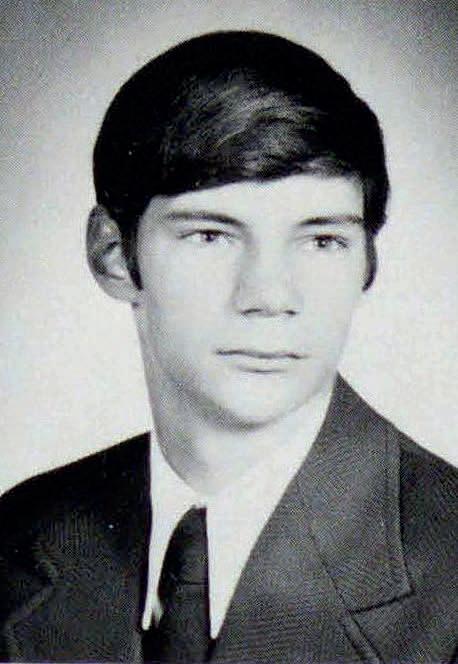
What Did You Do After High School and What Are You Doing Now?
After college, I worked for Columbia University residence halls for two years as service coordinator. A series of jobs followed before I worked for Frito-Lay from 1983 to late 1990s. Hired as a sales person, then became a facility operations manager. Left there with two pensions. Worked in a number of other jobs both part-time and full-time until I retired from full-time work in 2017.
Noteworthy / Interesting Accomplishments
I’m still alive!
Finished 38th in New York City Marathon in 1978 (2:24.16). Senior year at Columbia, qualified for NCAA and AAU national track meets. … Named All-America as a junior in cross country. Wife and I enjoy our three grandchildren. Life is great as long as Paul behaves.
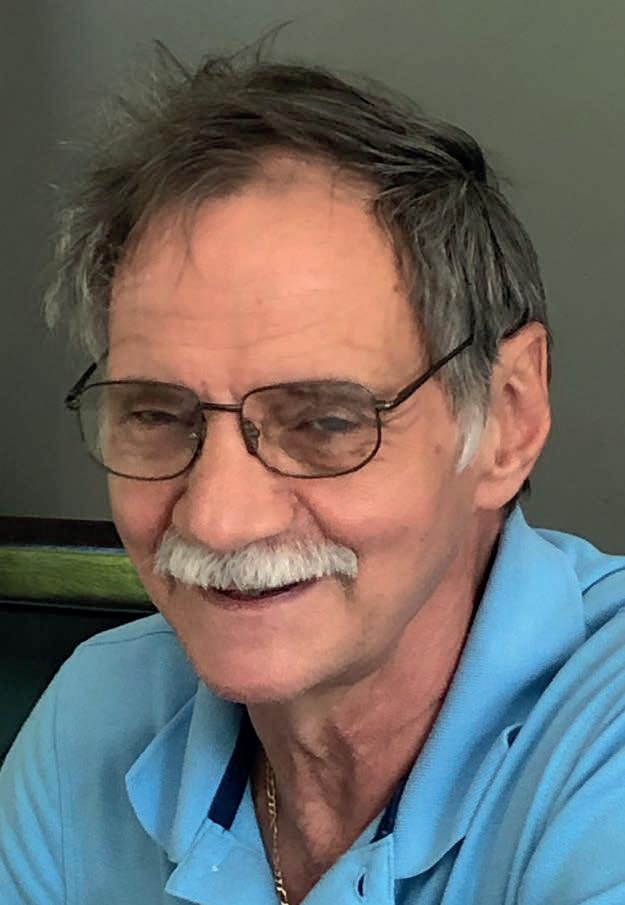
How Would You Like to be Remembered?
With a smile on my face.
314-560-3156
thegeman@sbcglobal.net
Favorite De Smet Memories
Good friends and great times. Also, the Jesuits put context and meaning to Christianity for me. They were good at demonstrating how Christian values should be applied every day to have a successful and happy life.
Marital Status
Married
Spouse Name
Katie Children
None College, Degrees, Current Profession
SMU, 1977 Business degree; Currently financial consultant with Byrne & Jones
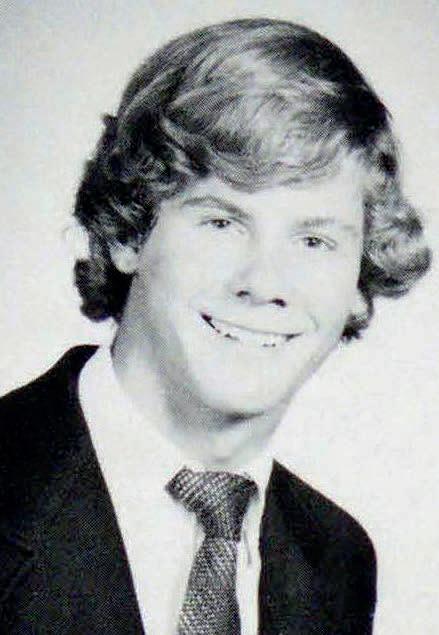
Attended SMU in Dallas for four years. Came back to St. Louis and went into the family business, Hegeman Motors, with my dad and uncle. We sold the business about 20 years later. My brother opened a small family office and I worked with him managing money for about 10 years. Currently doing consulting work for Byrne & Jones.
Noteworthy / Interesting Accomplishments
Didn’t get married until I was 51. Took a long time to find the right girl.
How Would You Like to be Remembered?
Date of Birth: September 23, 1954
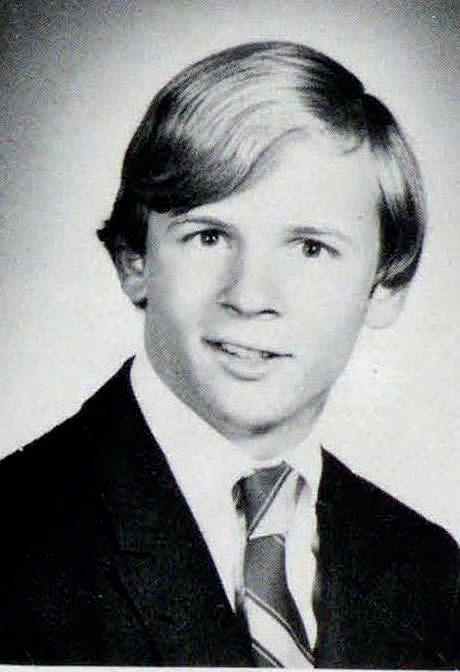
Date of Death: July 16, 1978
JOHN G. HELD III: Reflections by family and a classmate
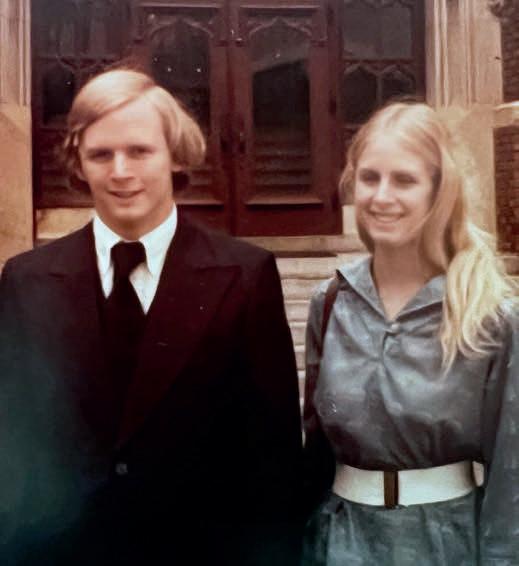
After John graduated from De Smet, he attended Benedictine College in Atchison, Kan. John graduated with a degree in computer science. Summers were spent working at his father’s lumber company. In addition, John enjoyed shooting handguns and rifles, boating on the Mississippi River, and riding his motorcycle. After graduating from college, John began work as a computer programmer for Commerce Bank. It was shortly after that John perished in a motorcycle accident.
Of course, as is typical of men his age, he was not above terrorizing his little sister and her friends. He would pile us into the car and drive us to Zombie Road (in Wildwood). We’d get out of the car and he’d proceed to tell us scary stories and act like he was going to leave us. It was, of course, all in good fun. And it doesn’t take much of an imagination to visualize our reaction.
As John’s little sister I remember him as caring and protective. John was the person I went to if I needed help. I knew I could count on him. John is still with me today and greatly missed. His life was ended much too early.
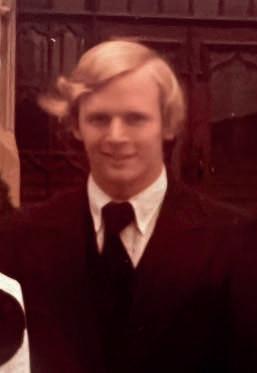
John Held did not live long into adulthood, and he will be remembered forever as the sort of character one found in John Hughes movies. John was the cast member with the dry sense of humor, the one who was a reliable practitioner of teenage mischief. Many will remember his old Army Jeep, which he navigated along the highways and city streets, with neither roof nor doors: a vehicle for fresh-air fanatics. Motorcycles were another of John’s plein-air passions. He attended and graduated from a very good school, Benedictine College of Atchison, Kan.
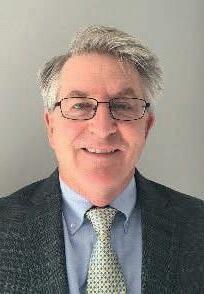
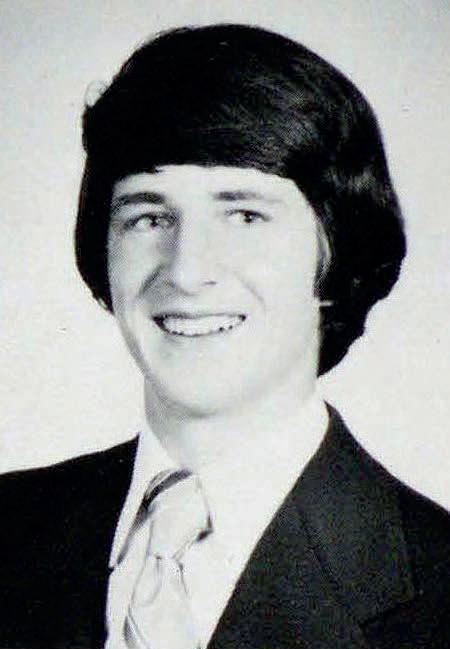
662 Island Rd.
Grass Lake, Michigan 49240
248-866-1998
repgroup@comcast.net
Favorite De Smet Memories
I recall the night a few of us drove to SLUH to kidnap the Billiken mascot statue. Mr. McMahon had provided intelligence where the Billiken was located. We drove to SLUH, parked next to the hallway exit door, and got out of the car to snatch him. To our surprise, it was Parent-Teacher Conference night! The place was crawling with teachers, administrators and parents. Operation cancelled.
Marital Status
Married
Spouse Name
Debra Barker
Children
2 boys, Bob III and Tom; 3 grandchildren, Bob IV, Will, and Lelynd.
College, Degrees, Current Profession
BSME-EE Kettering University (aka, GMI); MBA University of Virginia; “Serial” Entrepreneur.
What Did You Do After High School and What Are You Doing Now?
In June of 1973, I left St. Louis. My job was assembling Pontiacs on an assembly line in Detroit. This three months of on-the job training reaffirmed my decision to attend college in the fall! I had a varied career in the auto industry. Now, late in my career, I own a 3D printing medical company, Xyresic LLC, that makes titanium implants and metal instruments for orthopedic surgeons.
Noteworthy / Interesting Accomplishments
Family: I met my wife Debbi at Sunday Mass. The priest knew us both and was quite touched. Our two sons are chugging their way through life with their families.
Career: I designed and manufactured a wide range of products, from Trans Ams, to gas turbines, to medical devices. The coolest item was the electronic housing of the Mars helicopter Ingenuity. It is “out of this world!” Faith and Friends: I carry the De Smet Jesuit spirit of being a “man for others”; so, hey, my life is not about “me”!
How Would You Like to be Remembered?
The person who creatively navigated life’s ups and downs, never forgetting my faith, family, and friends.
806 Camino Zozobra
Santa Fe, N.M. 87505
505-920-8058
jmhickey505@gmail.com
Favorite De Smet Memories
1818 Program; State Basketball Championship; Senior Project; Squirt guns at graduation; and noticing the sleeves on our blazers kept getting shorter from freshman to senior year.
Marital Status
Married
Spouse Name
Sharon Salazar Hickey
Children
Theodore J. Hickey, John S. Hickey, Margaret M. Hickey
College, Degrees, Current Profession
B.A., Tulane University, 1977; Cal Western School of Law, J.D.,1981; NYU School of Law, LLM (In Taxation), 1982
What Did You Do After High School and What Are You Doing Now?
Professionally: Private law practice for 40 years (Tax, T&E, Corp. law) in Santa Fe, N.M.; Currently in-house General Counsel for Brewer Oil Co., Santa Fe, N.M.
Personal: Married 39 years, raised three children. Actively involved in various civic, charitable and religious organizations.
Noteworthy / Interesting Accomplishments
Fellow, American College of Trust & Estate Counsel (Retired); Best Lawyers in America (T&E since 2006); SW Superlawyers (2008); Martindale Hubbell AV rating since 2002; Knight Commander with Star, Equestrian Order of the Holy Sepulchre of Jerusalem. Camino de Santiago Pilgrimage walk of 500 miles; Tour du Mont Blanc walk; West Highland Way walk; Dingle Way walk; and numerous bicycle trips with Paul Schnoebelen and his engineering friends from Rolla.
How Would You Like to be Remembered?
The guy with the back brace who did not always have to wear a tie during high school.
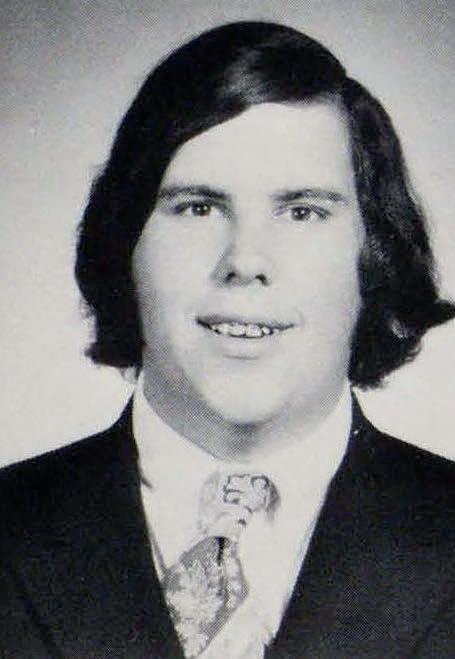
12755 Conway Lake St. Louis, Mo. 63141
314-486-6006
DanielHenry.Don @Gmail.com
Favorite De Smet Memories
JUG ~ Father McQueeny ~ Chris Mess ~ Ice Hockey (Optioned to Whitfield) ~ Lifelong Friendships
Marital Status
Married
Spouse Name
Melanie
Children
Will (36) & Taylor (35)
College, Degrees, Current Profession
Bachelor Degree - SLU // MBA - SLU // Partner at The Daniel & Henry Insurance Company
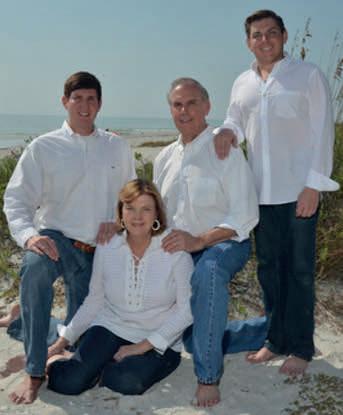
What Did You Do After High School and What Are You Doing Now?
Off to University - Got a Job - Married - Bought a HouseCurrently a Partner at The Daniel & Henry Insurance Company
-Hit-The-Road to our Resort Condo on Sanibel Island, Fla., and reconnected with old friends. Visiting our Son, (Will) in St. Petersburg, Fla., and our other son, (Taylor and his wife, Kristina) in Denver, Colo.
Noteworthy / Interesting Accomplishments
Began my career at BHN Advertising Agency (1979-86). Became Executive Vice President at Donovan Supply Corporation (1986-2000). Founder & President of StrataForce, Ltd. (2000-01). Merged with Red Rock Communications (2001-02). Executive Vice President of BusComm Technology Solutions (2002-06). Partner at The Daniel & Henry Insurance Company (2006-Present).

Served on the boards of Catholic Charities, Independence Center, Cancer Research
How Would You Like to be Remembered?
Optimistic and had mostly good days. A friend you could trust that would always be there for you.
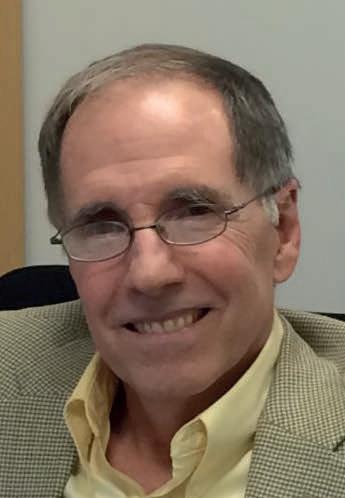
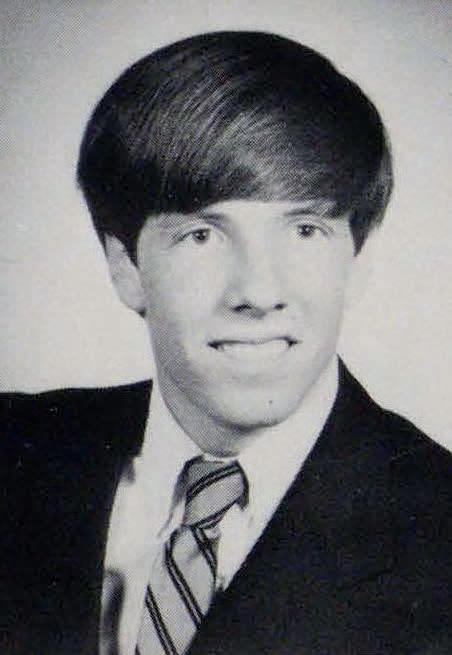
4865 Cedar Oak Way
Sarasota, FL 34233
314-650-0122
hippenmeyerp@yahoo.com
Favorite De Smet Memories
State basketball championship. Bowling ball rolling up the aisle in Mr. Gibbons’ math class during a test. Opportunity to take Japanese. Jesuit teacher shooting a student with a gun (with blanks) during pre-law class. Point made. Great camaraderie on the football, wrestling and track teams though I was average at best. Great faculty who put up with a lot. Graduation!
Marital Status
Married
Spouse Name
Carol Children
3 College, Degrees, Current Profession
Creighton University, B.S.; St. Louis University, Ph.D. in Cellular and Molecular Biology; UMSL, MBA
After Creighton, worked as a lab tech before going back to school. Worked for Monsanto/ Searle/Pharmacia doing R&D for 19 yrs. Headed to Boston as Dir. of Research for a startup. Switched to the academic side by helping faculty at Mizzou and Washington University commercialize their inventions. Now, CEO of a startup advancing cure for Type 1 Diabetes.
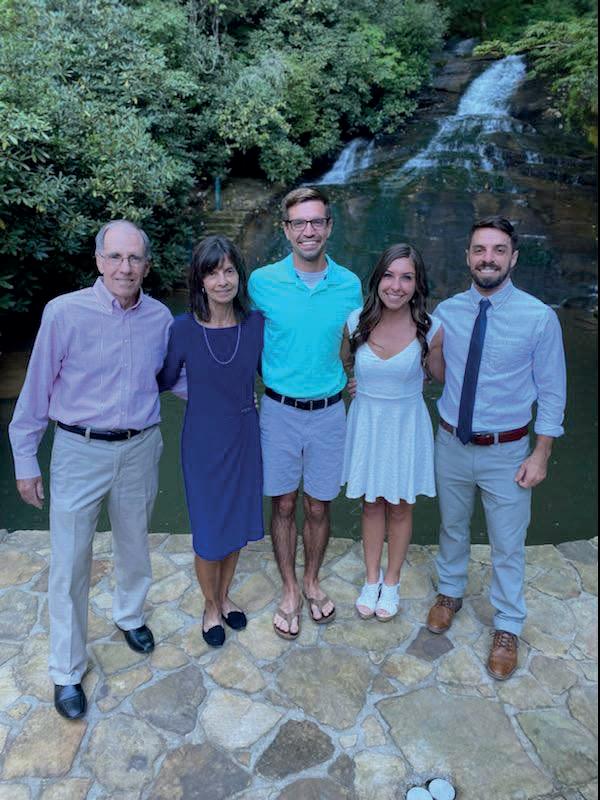
Umm? Ran one marathon, have always taught as a sideline, at Washington U. (biology) and currently at Mizzou (management). Hopefully inspired/helped some students. Lead inventor on a couple of patents.
Probably punched above his weight (still weigh 135 lbs) :)
304 Toulouse Lane Keller, TX 76248
817-528-5533
gregory.j.hoy@gmail.com
Favorite De Smet Memories
My first day of school - 1969 freshman year - in homeroom 207. Bob Christian was my homeroom teacher; never short on words, he says: “I’ve never been in a classroom with 30 freshmen where it’s quiet. Someone say something!” Not a word was uttered. Christian went on to say: “This is my first day at DeSmet too, and why am I doing all the talking?” Then followed by his classic grin …
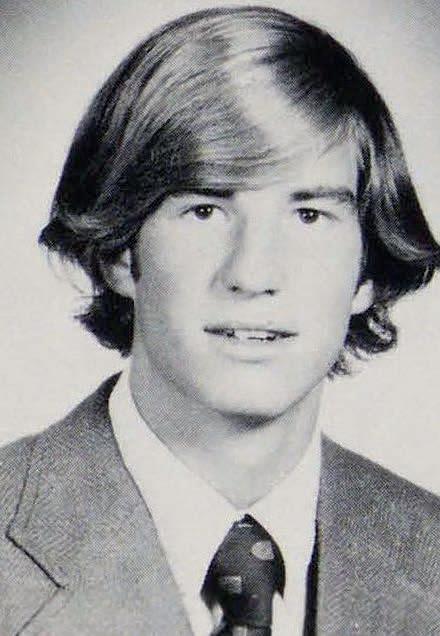
Marital Status
M
Spouse Name
Paula Children
Michael and Sarah.
College, Degrees, Current Profession Missouri Bachelor Journalism. Retired.
What Did You Do After High School and What Are You Doing Now?
Went to Mizzou, graduated Journalism School.
I am retired in Dallas area, working as a club fitter for people purchasing new golf clubs.
Noteworthy / Interesting Accomplishments
My wife still likes me, I think. My kids still call me and I get to see my grandchildren every week.

How Would You Like to be Remembered?
My dad once told me when I was young ... “Just be a good guy and things usually work out ...”
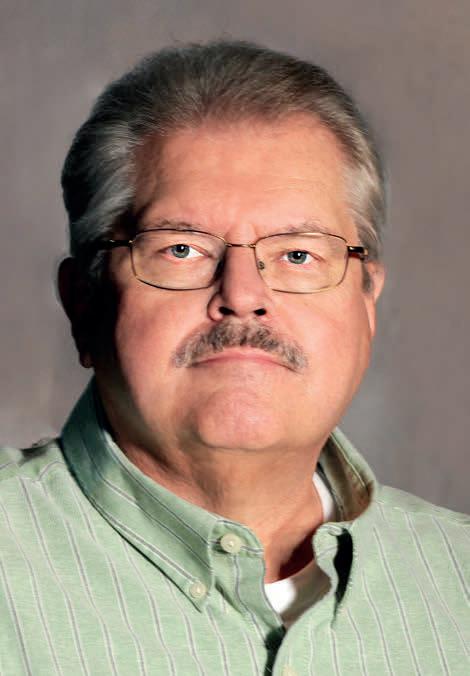
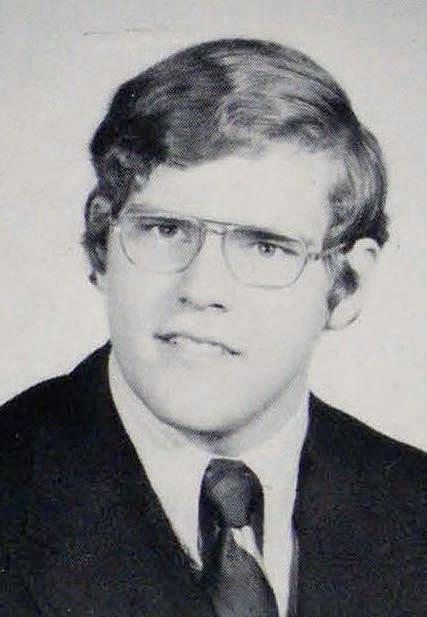
2201 S. Margrave
Ft. Scott, KS 66701
620-224-9809
jahrenak55@gmail.com
Favorite De Smet Memories
Football games, the state playoff runs in basketball, and the “death matches” on the handball courts during lunches.
Marital Status
Widowed in 2022
Spouse Name
Children
None College, Degrees, Current Profession
B.S. in Civil Engineering from the University of Missouri-Rolla. Civil Engr. (Highway Const/Maint)
What Did You Do After High School and What Are You Doing Now?
Two semesters at Florissant Valley CC before transferring to UMR for my degree. Took a job with the Kansas Dept. of Transportation in 1979 and continue with them to this date. Currently serving as the District Maintenance Engineer for SE KS., where I manage our $9 million operations budget and coordinate the maintenance of 1,500 miles of highways in 17 counties.
Noteworthy / Interesting Accomplishments
Hobbies include fishing, bowling and auto racing. Along with my wife (Sandy), we participated in the sport of dirt track racing for 15 years as the owners of an “A-Modified” race car. With two close friends serving as driver and pit crew, we competed on various tracks in western Missouri and eastern Kansas. Of note, we raced alongside the likes of Ken Schrader and Kenny Wallace on more than one occasion, holding our own, but eventually finishing behind these two NASCAR legends who grew up in St. Louis.
How Would You Like to be Remembered?
Knowledgeable, well-organized, a good problem solver with a good sense of humor.

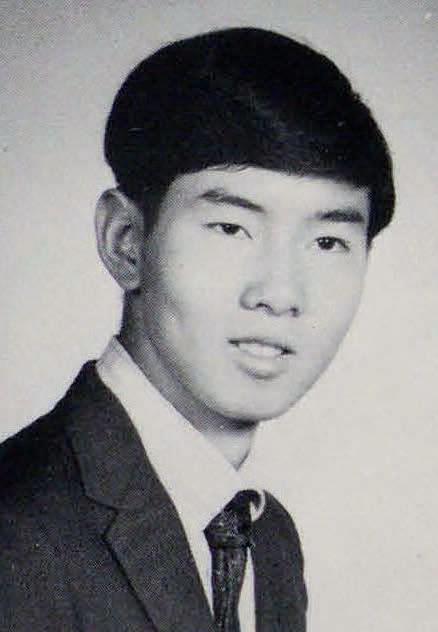
3119 East Menlo Street
Mesa, Ariz. 85213
480-250-9257
shoe1705@hotmail.com
Favorite De Smet Memories
Marital Status
Married
Spouse Name
Nancy
Children
College, Degrees, Current Profession
Attended UMSL for two years; three more years at St. Louis U., degrees in biology and chemistry.
What Did You Do After High School and What Are You Doing Now?
Worked for Chevron Chemical in the Ortho Pesticide Division for about a year, then hired by Seven Up, U.S.A. After Seven Up was purchased by Dr. Pepper, I moved on to work for New York Seltzer and Pepsi before leaving the corporate environment. Employed thereafter with the City of Phoenix, first in the Water Services Dept. and finally in the crime lab for the Phoenix Police Department. I’m now retired.
Noteworthy / Interesting Accomplishments
While with Seven Up, I was transferred to the Phoenix area and worked as a Quality Assurance Manager for the southwestern United States.
How Would You Like to be Remembered?
Date of Birth: February 14, 1955
Date of Death: January 29, 2016
John was easygoing, friendly, and had an understated, subversive sense of humor, which always played well at De Smet. He was always ready with a good-natured line; treated everyone fairly, and with respect. He was a four-year member of the yearbook staff, and was the lead student editor his senior year.
John was a member of the freshman tennis team, and during his four years, he sometimes trained with cross country runners. Informally, he participated in pickup basketball games at De Smet, as well as gym hockey games, touch football, bottle cap baseball in the lobby, and marathon handball matches. Often simply called by his surname, Huenneke added to the size and volume of the student cheering section at many football and basketball games, along with hockey, soccer and wrestling matches. During his senior year, John attended every Spartan varsity basketball game, home and away, to support the team.
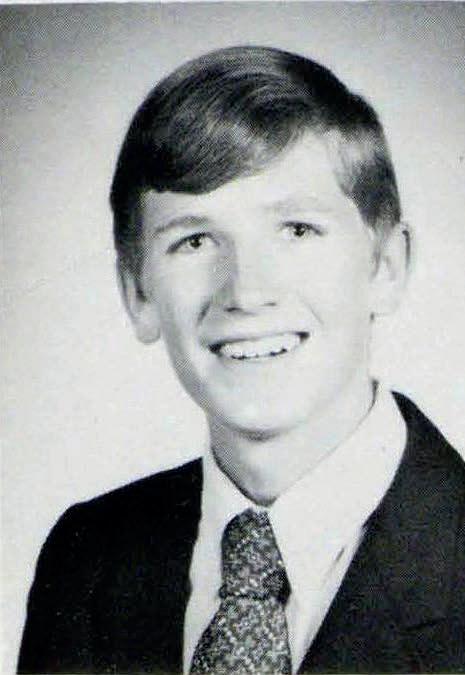
John further boosted his rep among De Smet grads with some mammoth home runs during friendly college softball games, powered by his earlier days lugging two golf bags at a time while caddying at Algonquin Golf Club, as well as sessions helping his brother Steve practice his wrestling moves after dinner on the kitchen floor of the family home in Webster Groves.
His yearbook skills led to a journalism degree at Mizzou, and a career as a newspaper copy editor/reporter/page designer in Ithaca, N.Y., Augusta, Ga., Palo Alto, Calif., and 20 years at the El Paso Times in Texas. He also earned a master’s degree in education at New Mexico State, and taught English, English as a Second Language (ESL) and Communications for eight years in middle school and high school.
Above all, John was a dedicated family man, a devoted husband to Rebecca, and a loving father to Connor, Anneliese, and also Rebecca’s daughter Mandy. Rebecca said John always spoke well of his time at De Smet and the many friendships he established there
717-576-5149
gregjohans55@gmail.com
I thoroughly enjoyed my time working in the theater department. Those roles on stage helped me to feel comfortable performing in front of other people. That prepared me well for my future career as a TV sports and news anchor for 30 years. Going to all of the sports events back then was so much fun, especially the 1972-73 De Smet basketball team. The excitement generated by that team was wonderful.
Married
Spouse Name
Susan
Children
One son, Chris, living in Chicago College, Degrees, Current Profession University of Missouri-Columbia Journalism degree. Currently own a sales company that provides credit card processing
TV sports anchor for 20 years in Wilmington, N.C., Memphis, Tenn., and Ft. Wayne, Ind. Then, I transitioned to a news anchor for 10 years in South Bend, Ind., Toledo, Ohio, and Harrisburg, Pa. I won dozens of journalism awards, including an Edward R. Murrow in Toledo. Currently semi-retired after starting a sales company (19 years ago) that provides credit card processing for businesses all across the country. I play a lot of golf and enjoy the beautiful low country in S.C.
I met many great people, including President Gerald Ford. In 1977 at the Danny Thomas Memphis Classic, he scored a hole in one at the Pro Am. When I asked for an interview, the Secret Service patted me down, displaying machine guns and attack dogs, with security helicopters overhead. I was so nervous. “Ladies and gentlemen, Greg Johans reporting live from Colonial Oaks Country Club, where President Hole just shot a Ford-in-one!” The camera widens out and Mr. Ford puts his arm around me and says: “That’s all right son, I’ve made a few mistakes in my time, too.”

As a kind man who puts his faith in Jesus Christ, our Lord.
314-800-8205
markbjohnston@sbcglobal.net
Favorite De Smet Memories
Too many to recall
Marital Status
Married

Spouse Name
Eva
Children
Will (De Smet class of 2009) and Beth College, Degrees, Current Profession Mizzou undergraduate and law; retired
I went to Mizzou, served in the Army in Germany and Korea, went to Law School, clerked for two judges and then to Blue Cross/Blue Shield where I practiced law and became a lobbyist. Afterward I worked at the National Association of Mutual Insurance Companies, a property/casualty trade, where I handled its lobbying in the Midwest and Rockies. I retired in 2022.
Noteworthy / Interesting Accomplishments
Plenty that I don’t mind discussing over a drink.
How Would You Like to be Remembered?
Good question which I hadn’t thought about before. Being part of a great family with friends from the community.
226 Fieldspring Ct. O’Fallon, IL 62269
618-960-3322
mjosias7@hotmail.com
Favorite De Smet Memories
The fun and excitement of following the basketball team as they won the state title in ‘73.
Marital Status
Married
Spouse Name
Jill
Children
Jake, Paul, Joe, Clint
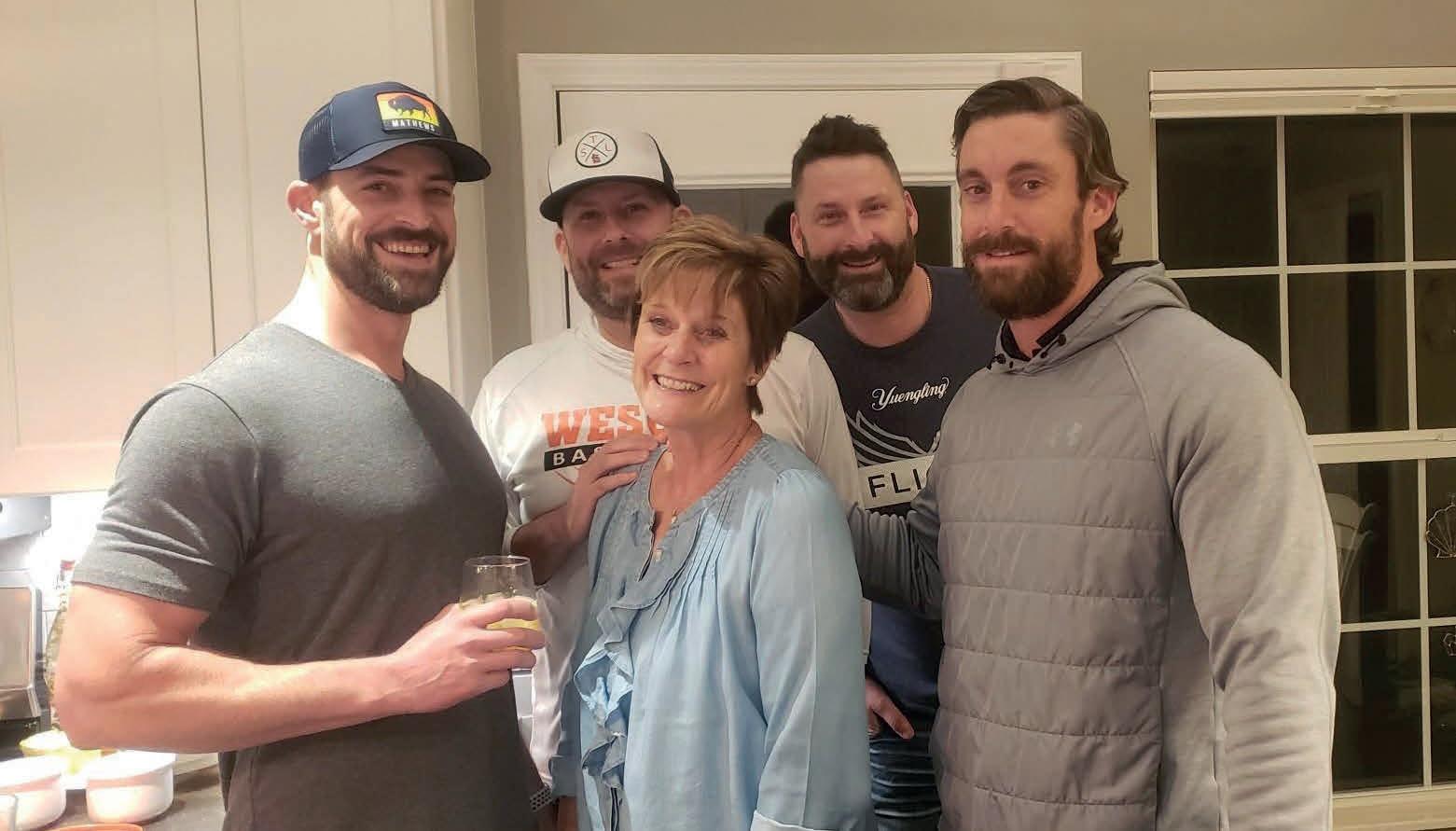
College, Degrees, Current Profession
MBA Embry-Riddle University
What Did You Do After High School and What Are You Doing Now?
20-year Air Force career
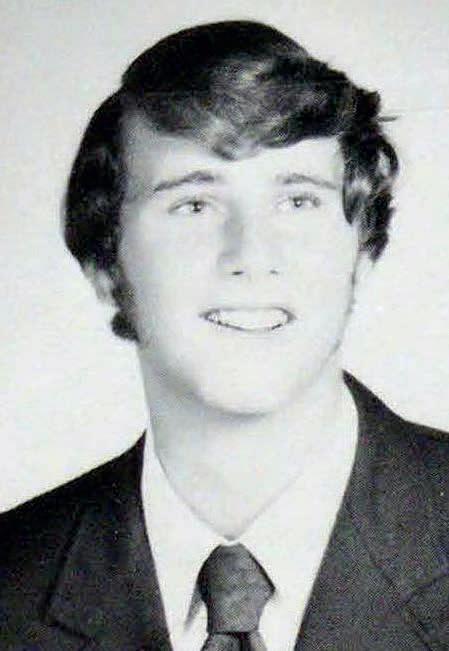
Retired from Centene Corp in 2016
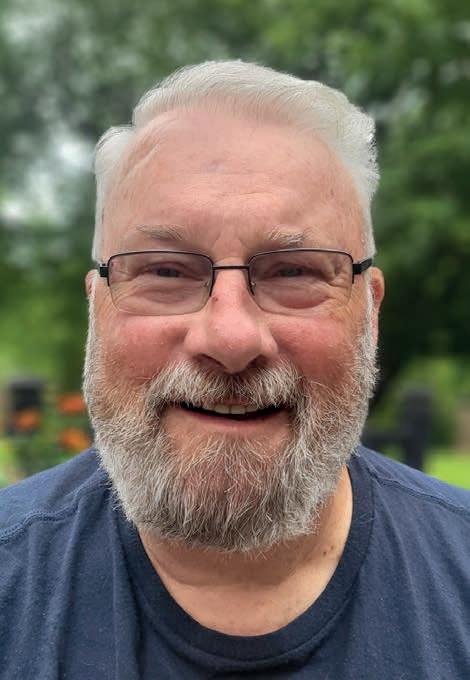
Noteworthy / Interesting Accomplishments
How Would You Like to be Remembered?
As a good husband, father, and grandfather
314-614-9691
rickjotte@gmail.com
Favorite De Smet Memories
Traveling to Columbia for the state basketball championship and the excitement associated with the victory.
Marital Status
Married
Spouse Name
Mary
Children
Michelle, Kevin, Andrew
College, Degrees, Current Profession
St. Louis University, School of Medicine, M.D.
What Did You Do After High School and What Are You Doing Now?
I am now retired after spending my career in the practice of Internal Medicine. I remained independent of the hospital systems throughout my career. Presently I am enjoying the opportunities to travel, play golf, fish and perform work around my home and in the yard.
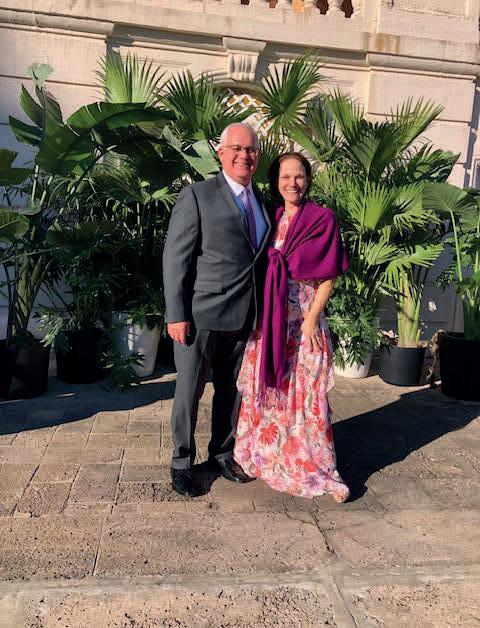
Noteworthy / Interesting Accomplishments
How Would You Like to be Remembered?
That I was a Man for Others.
403 Clover Springs Drive
Cloverdale, Calif. 95425
310-924-1417
garkel403@gmail.com
Favorite De Smet Memories
1973 Basketball State Championships with Coach Grawer
Marital Status
Married
Spouse Name
Ellen
Children
Chris and Lauren
College, Degrees, Current Profession
B.S., J.D, LLM...Retired
What Did You Do After High School and What Are You Doing Now?
Corporate Attorney for Emerson Electric, TRW and Northrop for 25 years, and senior executive for Unify Federal Credit Union for 10 years. My wife and I divide our time between homes in Sonoma County wine country and the Mendocino coast.
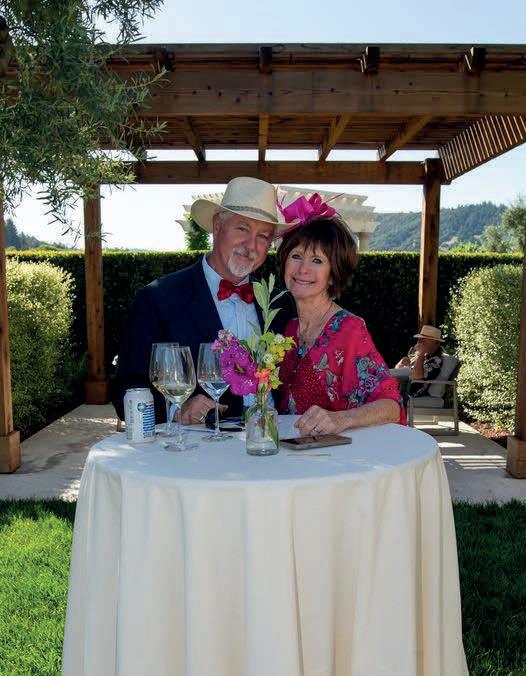
Noteworthy / Interesting Accomplishments
Father of two wonderful adult children
How Would You Like to be Remembered? For my service to others
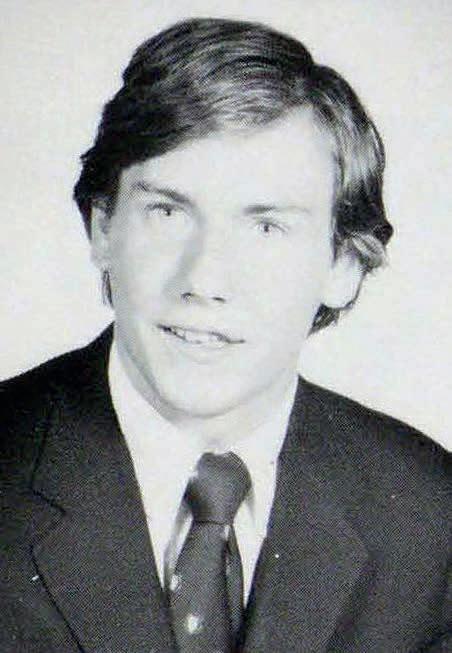 Kennedy St. Louis, Mo. jgk35@att.net
Favorite De Smet Memories
Meeting so many great new friends. Coaches and teachers were so meaningful as well.
Marital Status
Married
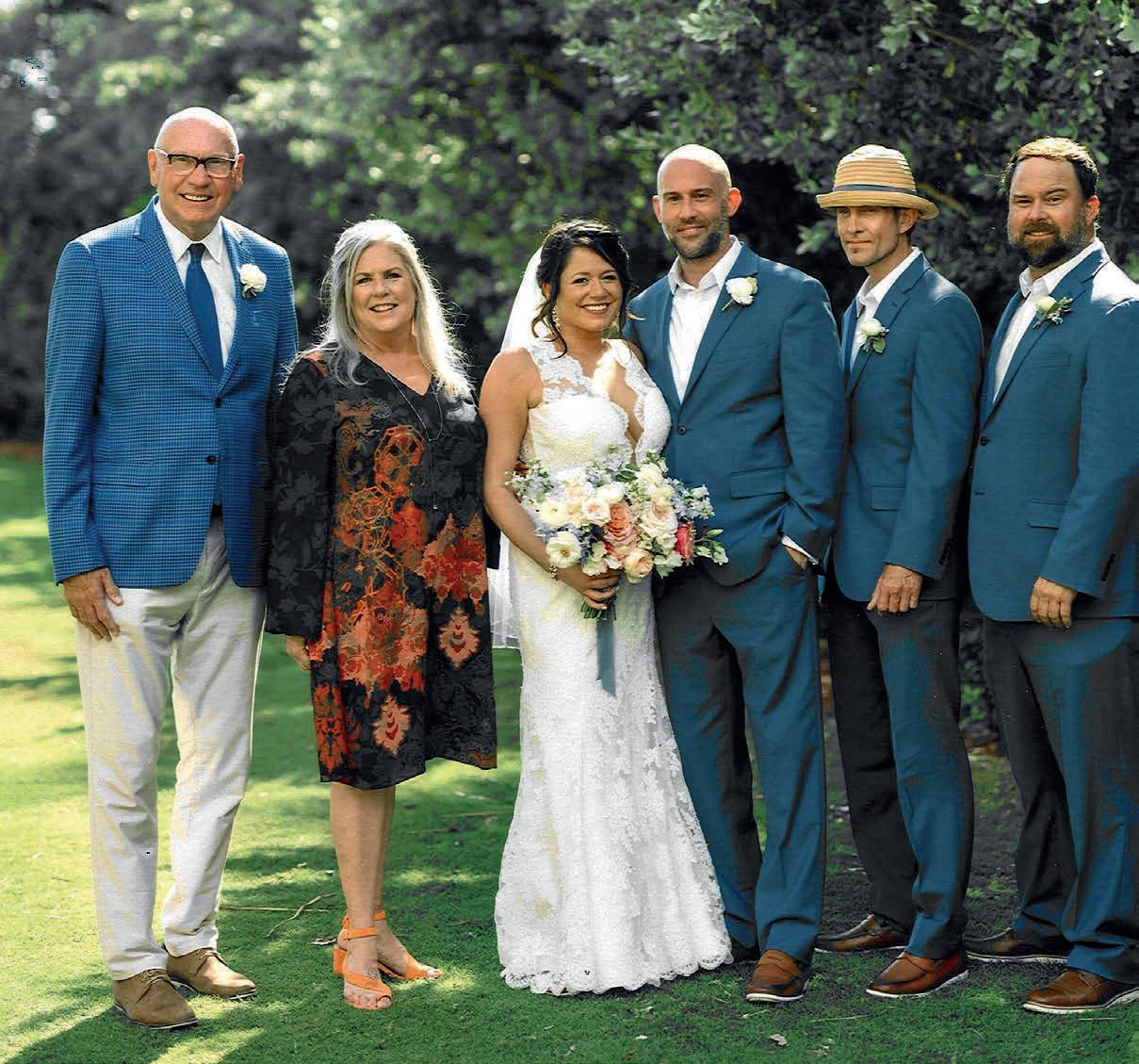
Spouse Name
Janis
Children
Jimmy, Liz, Ryan, Sally, Michael
College, Degrees, Current Profession
B.S. Business - University of Missouri. Insurance Industry
What Did You Do After High School and What Are You Doing Now?
Went to Mizzou. Tried out in the NBA after college then went into the Insurance Industry.
Noteworthy / Interesting Accomplishments
Awesome family and friends. So many great memorable moments in my life.
How Would You Like to be Remembered?
I’ll let those around me answer that one!
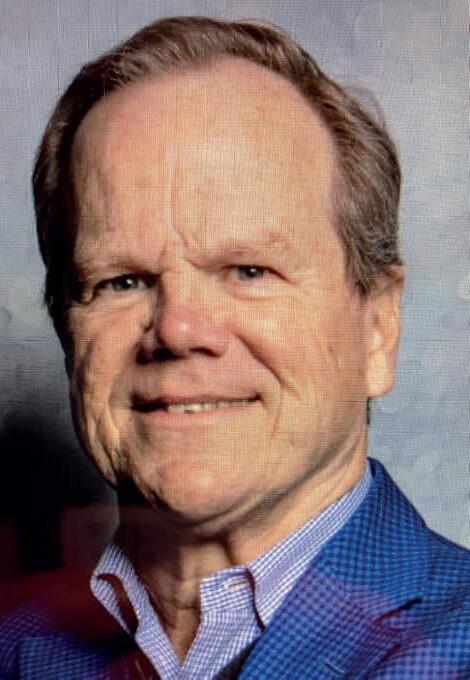
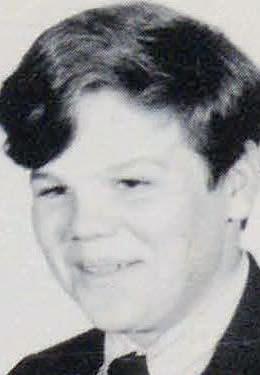
2856 N. Burling St., #2 Chicago, IL 60657
773-988-2015
g.kinsella@comcast.net
Favorite De Smet Memories
Cross country, tennis, football games, Villa girls, battle of the bands, live bands at mixers
Marital Status
Married
Spouse Name
Shannon
Children
2 girls: Riley 32, Olivia 26

College, Degrees, Current Profession
Loyola University, New Orleans, B.A., Communications. Current position: Business Development for Informa Connect.
What Did You Do After High School and What Are You Doing Now?
Graduated from Loyola University New Orleans.
Worked in media in San Francisco, New York and Chicago. Played drums in various bands, also active with Chicago’s Old Town School of Music. Currently working at Informa Connect on their restaurant and food group properties. Longtime board member of AYSO youth soccer for the Chicago Lakefront region.
Noteworthy / Interesting Accomplishments
How Would You Like to be Remembered?
636-288-8221
tomklein@sbcglobal.net
Walking into the Emerson Lobby daily, knowing I was a small participant in something special. All things basketball: Gary Clark’s shot, the Columbia trip, the state title. Any Rich Grawer or Kevin Buckley class. Working the levees when the ’73 flood hit. Getting a 28 (yes, out of 100) on Mr. Bick’s Analysis final. Mindful that I’d tried hard all year, Bick said, “Klein, this is disappointing, but you’ll pass.” (Proficiency in math and chemistry gave my career a gentle nudge toward journalism.)
Marital Status
Single
Spouse Name
Christine (Significant Other)
Children
College, Degrees, Current Profession
B.J., University of Missouri, 1977; Sports reporter-writer and copy editor for nine newspapers/magazines until my retirement in 2016.
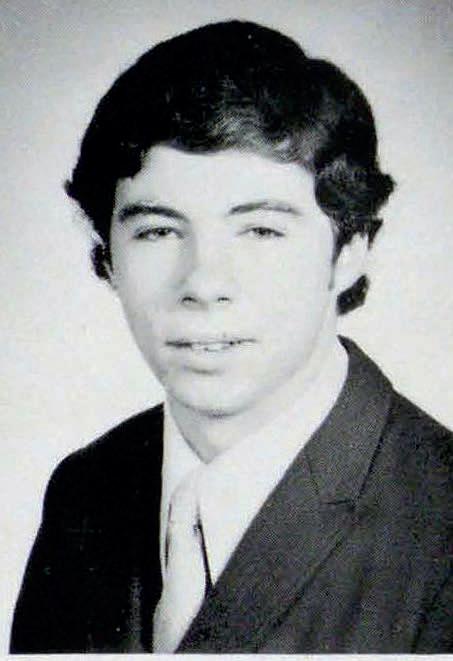
Those traditional retirement things: reading, a bit of writing and some traveling. To get there, I put in 39 years in a career that traversed five cities. Worked for publications such as the Amarillo Globe-News, Palm Beach Post, The Detroit News, St. Louis Globe-Democrat and, later, the St. Louis Post-Dispatch (for 20 years) and The Sporting News. Concluded my career as writer and editorial coordinator for six years with St. Louis Cardinals Magazine.
Noteworthy / Interesting Accomplishments
Blessed to have a career in which I was able to interview and write about stars like Albert Pujols, Tony La Russa, Whitey Herzog, Bob Gibson, Mickey Mantle, John McEnroe and Bobby Orr — among many others. Served as chief editor on books about Mark McGwire’s pursuit of the home run record, and the “St. Louis” Rams’ Super Bowl title season.
Unofficially, believed to be one of just two people who’ve worked for foursome of Globe-Democrat, Post-Dispatch, The Sporting News (part time) and the St. Louis Cardinals.
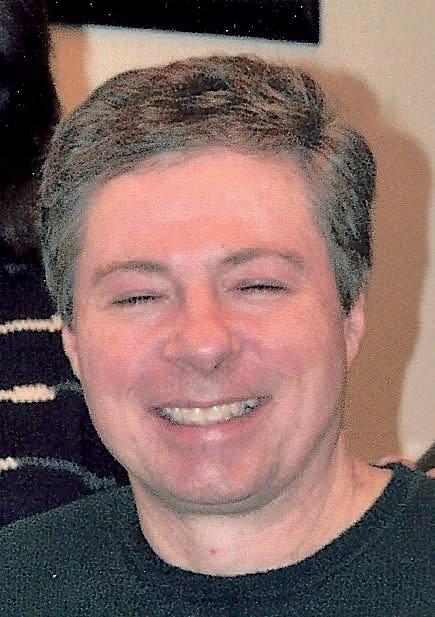
How Would You Like to be Remembered?
As a guy God mercifully allowed to outlive his mistakes — and learn from many of them.
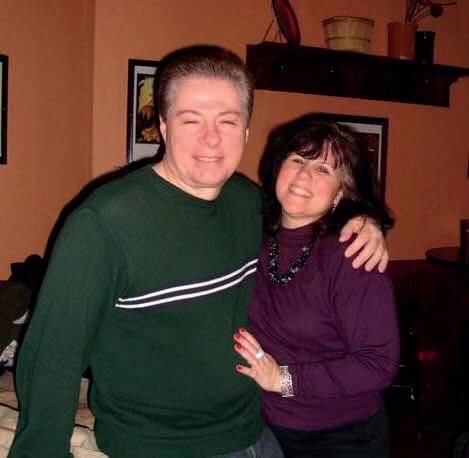

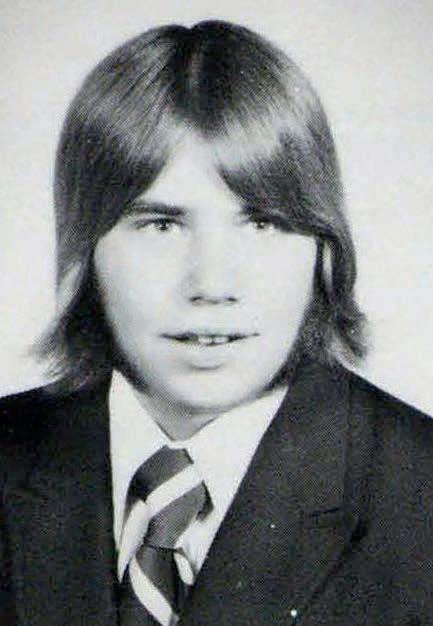
319 Waverly Place Ct. Chesterfield, Mo. 63017
314-753-1636
kevin.c.kohler@gmail.com
Favorite De Smet Memories
-First varsity football victory vs. SLUH
-First hockey championship (1972)
-First varsity basketball state championship
-Senior Project traveling theater show “James and the Giant Peach”
Marital Status
Divorced
Spouse Name
Partner Maria Tucci
Children
Lisa Kohler, Sarah Kalicak (husband, Mike ‘04)

College, Degrees, Current Profession
St. Louis U., B.A., Communications.
Current musician, retired print marketing communications
What Did You Do After High School and What Are You Doing Now?
-Formed classic rock cover band Kip Niven
-Career with family business Kohler Print Group
-Current performing musician with reunited Kip Niven and sub-group The Kip Duo
-Current volunteer music therapy instructor for wounded military through Veterans Administration
Noteworthy / Interesting Accomplishments
-Hockey league season goals-against average 0.86
-Led family business to 8 consecutive years of Best Workplace in America Award by national industry
-Led family business to a Mississippi Valley Family Business of the Year Award
-Proud father of two beautiful and successful daughters
How Would You Like to be Remembered?
Having left some kind of value upon the lives I’ve touched
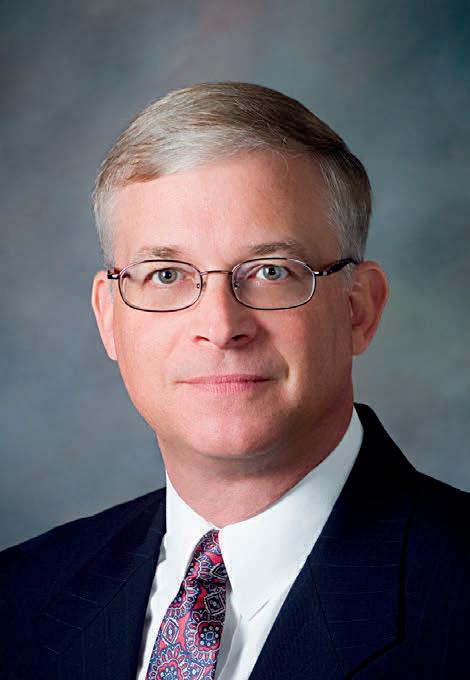
7991 S. Oak Hill Court
Centennial, Colo. 80016 (303)880-2882
LenKosakowski@gmail.com
Favorite De Smet Memories
Friendship, School Spirit, Quality Education. Thank you, De Smet. Thank you Mr. Faust.
Marital Status
Married
Spouse Name
Tomoko
Children
Two College, Degrees, Current Profession Georgetown University, U. of Maryland, U.S. Army General Staff College, Master’s Degree
What Did You Do After High School and What Are You Doing Now?
Cryptologist (1975-2000), U.S. Army, Department of Defense, National Security Agency, Japan, Korea, Hawaii, Arizona, Maryland, Colorado. Lieutenant Colonel, U.S. Army, Retired. Realtor, Small Business Owner (2001 to Present), Colorado, Hawaii.
Noteworthy / Interesting Accomplishments Service to our country.
How Would You Like to be Remembered?
“Dave’s Little Brother.” Dave Kosakowski was in the first graduating class. He passed away in 2017.
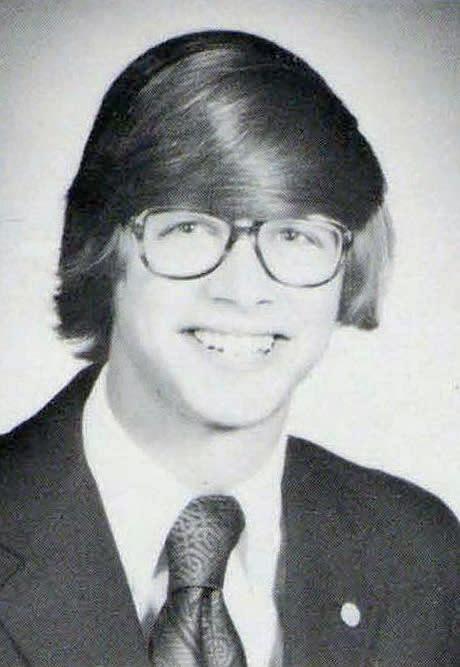

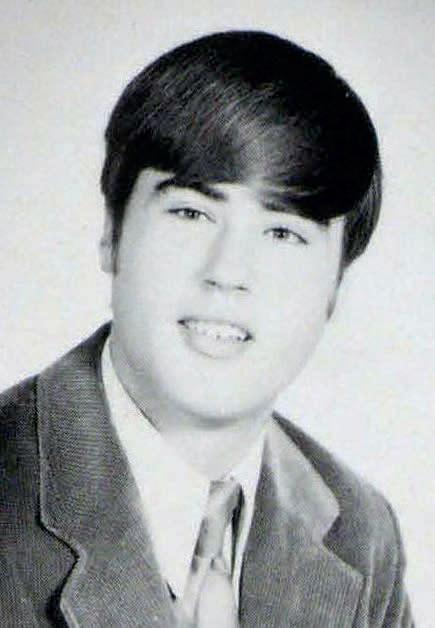
1801
314-965-9971
funtime001@outlook.com
Favorite De Smet Memories
We had a retreat with some friends at my dad’s farm that was given by a great Jesuit priest whose name escapes me. My Catholic faith was well supported by my friends and teachers. Senior year we won state in basketball, with a great win along the way against St. Louis Northwest at UMSL in the quarterfinals.
Marital Status
Happily Married
Spouse Name
Mary Pat
Children
Maureen, Meghan, Sean, Erin, Shannon
College, Degrees, Current Profession
I had graduated from Washington University Dental School by the time of our five-year reunion.
What Did You Do After High School and What Are You Doing Now?
I joined my Father, Dick Landgraf, in his dental practice. Like many of us De Smet boys, I married way above my grade/class to my beautiful wife Mary. Our five children were fortunate to look like their mother. My son joined the family business and then became my boss. He lets me work a couple of days a week as I continue to return the gift God has given me: caring for people through dentistry.
Noteworthy / Interesting Accomplishments
Husband to my beautiful wife, Mary; father to my five children and now grandfather to my 8 grandchildren. Several years ago, Archbishop Carlson asked me to add dentistry services to the existing Rural Parish Clinic Medical van service. Volunteers assist on our dental van so we can treat the rural poor in our archdiocese. Past addictions have created painful and disfiguring dental conditions that we try to correct to allow our patients to comfortably re-enter society. Can you help us?
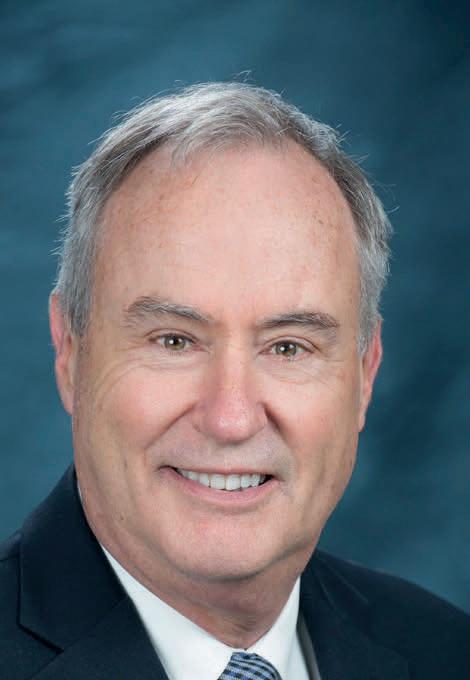
How Would You Like to be Remembered?
Grateful4gifts received. Hopeful I have given them back!
Favorite De Smet Memories
Mike McCabe running from the police and hiding under a vendor booth during one of our carnivals.
Sneaking beer into the dance we had in the gym.
Watching Bob Christian telling Joe Walsh to wake up.
Watching our seniors win the basketball state title.
Marital Status
Married
Spouse Name
Pat Children
Blended family of 7 College, Degrees, Current Profession
Chartered Property and Casualty Underwriting Insurance degree -CPCU
What Did You Do After High School and What Are You Doing Now?
Started working for an insurance company and am still working in the insurance world.
Noteworthy / Interesting Accomplishments
Having 4 children; didn’t see that coming.
How Would You Like to be Remembered?
Someone who stayed out of trouble because my father was a lawyer

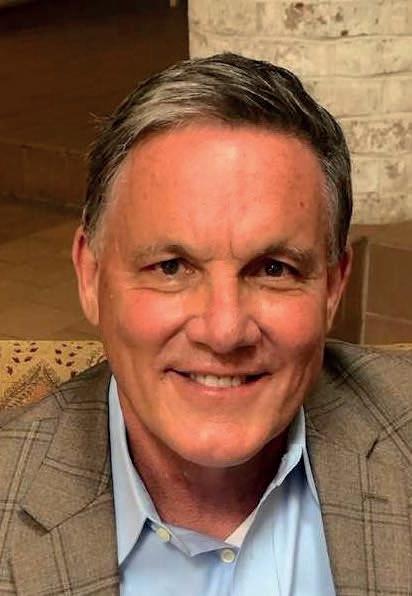
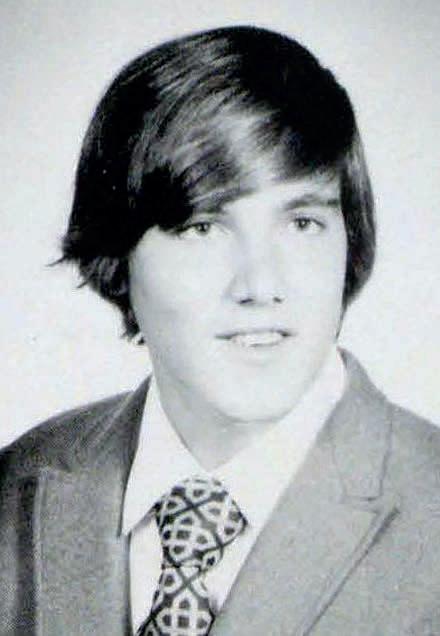
47 Port Royal Way
Pensacola, Fla. 32502
609-209-0099
Dlavin2706@aol.com
Favorite De Smet Memories
Winning the 1973 state basketball championship!
Marital Status
Widowed/Remarried
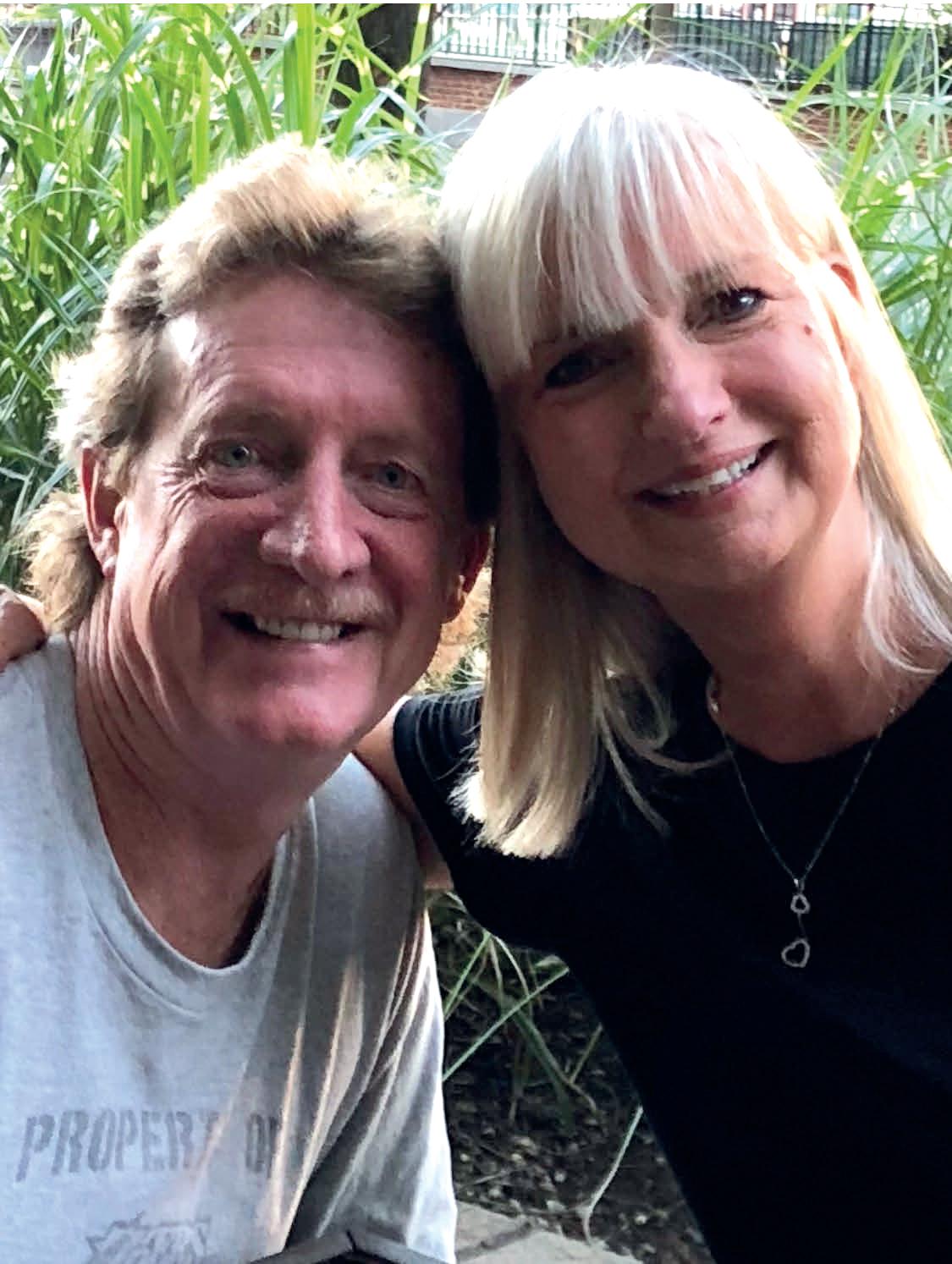
Spouse Name
Kathryn (Married March 2023)
Children
No children.
College, Degrees, Current Profession
Currently retired, following a 40-plus-year career as an executive in the automobile business.
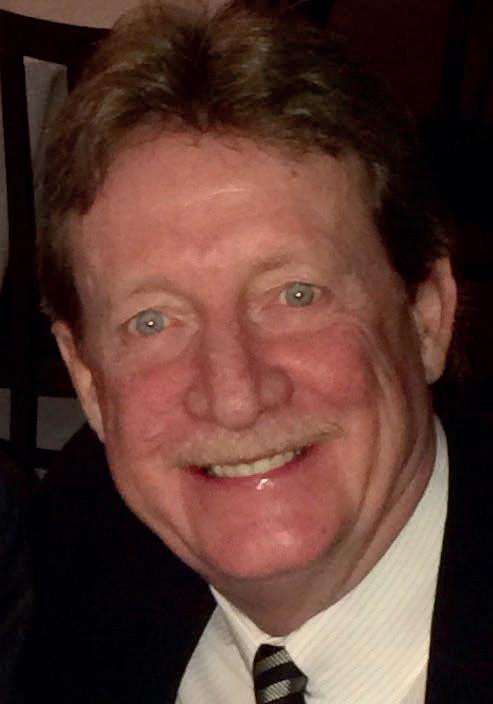
What Did You Do After High School and What Are You Doing Now?
Bachelor of Arts Degree, Spring Hill College, Mobile, Ala.
Noteworthy / Interesting Accomplishments
Came to De Smet for my senior year and became friends with many of the guys — as evidenced by the fact that three classmates, including the best man, were in my first wedding. Best man was Frank Vinciguerra, with Joe Walsh and Dick Zitzmann as groomsmen.
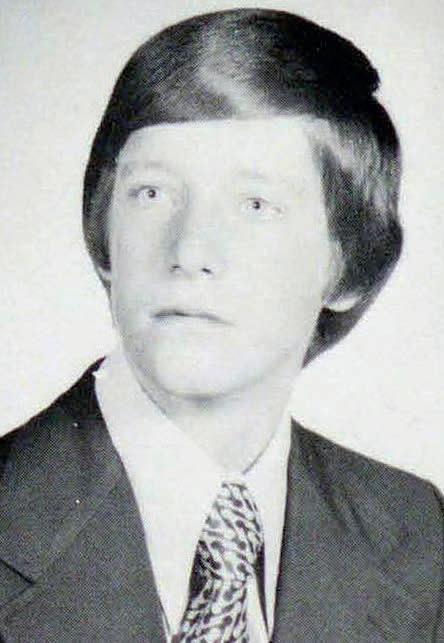
How Would You Like to be Remembered?
As a guy who made a lot of lifelong friends at De Smet in a very short period of time.
Favorite De Smet Memories
- Graduation
- Burning my blazer in the parking lot on the last day of school
- Co-masterminding the senior skip day kegger with Mike McCabe
- Every moment with the people who became lifelong friends
Marital Status
Married
Spouse Name
Beth A. Davis
Children
Christopher and Rachael
College, Degrees, Current Profession
St. Louis University, B.A.; Florida Institute of Technology, MBA
What Did You Do After High School and What Are You Doing Now?
- College at the University of Missouri and St. Louis University
- Spent 20 years as a United States Air Force pilot flying high-performance fighter aircraft
- Worked in commercial aviation for 20 years piloting FedEx Express cargo aircraft around the world
- Currently teaching Air Force pilots how to fly at Vance AFB, Okla.
Noteworthy / Interesting Accomplishments
- Have over 50-plus combat missions in the F-16 over Iraq
- Served as the exchange pilot to the Bahrain Air Force
- Was a joint staff officer at NORAD/Space Command
- Lived a “pubs of the world” lifestyle at FedEx
- Resided abroad in Europe and the Middle East
- Married to the same wonderful woman for 35 years
How Would You Like to be Remembered?
As an adventurous soul who lived a challenging lifestyle.
Date of Birth: March 29, 1955
Date of Death: August 30, 2017
He usually was referred to as “Jimbo.” Officially, he was Morton James Lucas III. But as so aptly put at his eulogy, “Who would name a kid that anyway?” His heart was as big as he was, and he called everyone he met his friend. The stories, the interactions, the number of people he touched are too many to count. As my son reminisced -- “a legend, the type of guy who cared more about your handshake than the car you drove or the watch you wore.”
Jimbo came into this world in Quebec City and was adopted and brought to St. Louis, where he cut a wide swath through the grade school crowd -- Barat Hall and Our Lady of Lourdes – as well as his many Clayton neighbors. Jimbo and I dated through high school, on and off through college, married and have three wonderful boys.
Jim spent the majority of his career in finance, then switched gears to become a shopkeeper at Baumann’s Fine Meats. I joined him in this endeavor, and must say it has been a grand run. Jim left this world doing what he loved most -- with the people he loved most.
Jimbo’s first love was ice hockey, a sport he played and coached through the Clayton Ice Hockey Club, and then as an assistant at Whitfield (some parent had to step forward!). In the 1970s, De Smet was a founding member of the Mid-States Club Hockey Association (eight illustrious members in all). In fact, De Smet won the first Challenge Cup in 1972.
As great as this was for De Smet, it was not so great for Jimbo and a few other Spartans (among them Don Hiemenz and Steve George) who didn’t make the team. Not to be dismayed, they donned Whitfield Warrior green rather than Spartan maroon and white. (After all, it’s a “club” sport.) Jimbo loved the experience, and as a result his network of friends grew well beyond the De Smet campus.
Jim died in 2017 of acute cardiac failure … his heart always big enough to engage all he met. Ann and Jim were married 37 years and have three boys -- John, William and Hunt -- and as of this writing, three wonderful granddaughters -- Margot, Eleanor and Sophie.
The best tribute I can give to him is his mantra “to have a friend, be a friend.”
314-630-0885
mjlydon55@gmail.com
Favorite De Smet Memories
Senior Retreat at White House — confession with Fr. Apel. Senior Service at a place where developmentally disabled children were housed.
Marital Status
Single
Spouse Name
Children
College, Degrees, Current Profession
B.A., Political Science, University of Missouri-St. Louis; Kenrick Seminary, Archdiocesan Catholic Priest
What Did You Do After High School and What Are You Doing Now?
Attended University of Kansas for one year, then transferred to UMSL, worked in campus ministry as a pastoral minister before entering Kenrick Seminary. Graduated from Kenrick in 1984. Have been a Catholic Priest for nearly 39 years. Currently, Episcopal Vicar (for Archbishop Rozanski) in the Southern Vicariate.
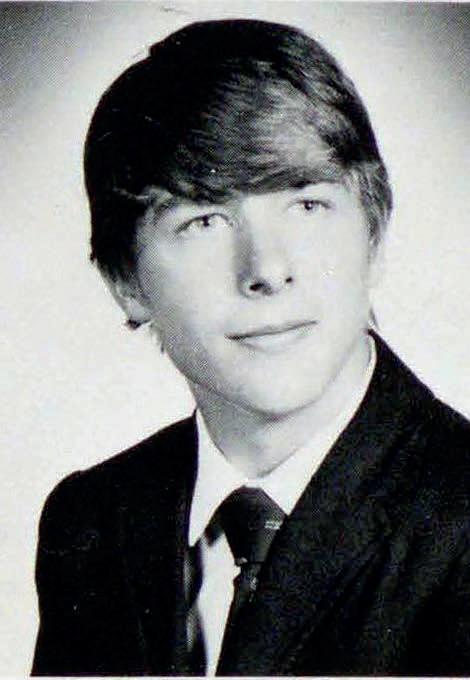
Noteworthy / Interesting Accomplishments
Worked as priest-teacher-coach-class coordinator, VP for Faith Formation, and President of DuBourg High School over 21 years.
Pastor of St. Pius V on South Grand for 11 years and Sacred Heart in Troy, Mo. for 4 years.
While at St. Pius, merged schools to form “St. Frances Cabrini Academy” in south St. Louis. While at Sacred Heart, helped form “Bridge of Hope-Lincoln County,” which is an emergency shelter for unhoused people.
How Would You Like to be Remembered?
As an impactful preacher, compassionate priest and responsive pastor.
240 Parkwood Circle
Niceville, Fla. 32578
850-240-4320
suejim1@cox.net
Favorite De Smet Memories
Playing soccer, going to pep rallies before big sporting events, meeting so many good guys who have become lifelong friends
Marital Status
Married
Spouse Name
Susan
Children
Lesley, Lindsey (twins), Wyatt (Grandson)
College, Degrees, Current Profession
B.A. Psychology, MPA Organizational Management, Air Force Civilian Contractor
What Did You Do After High School and
What Are You Doing Now?
Enlisted in the Missouri Air National Guard (Lambert Field) 1973-76, graduated from UMSL with commission in USAF in Dec. ’78. Served from 1978-98, trained in Soviet Air-to-Air Tactics, Command and Control, assigned to fighter squadron at Nellis AFB that flew MiG-21 & MiG-23 aircraft. Working as civilian contractor flight-testing new satellite communications.
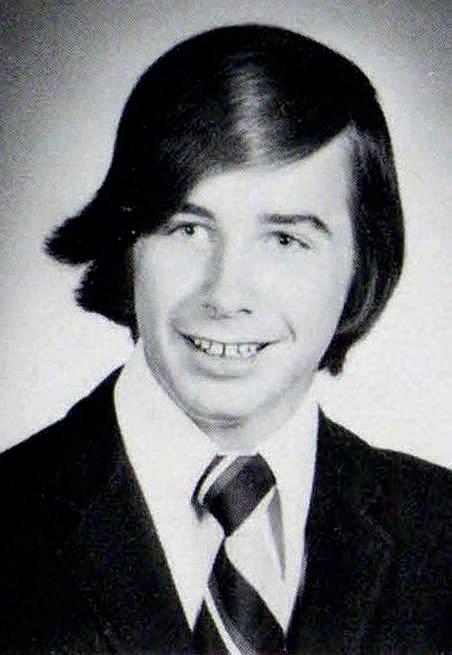
Noteworthy / Interesting Accomplishments
Married for 40 years, with twin daughters, one grandson. 20 years as an Air Force Officer. 25 years as a civilian contractor for Department of Defense. Still playing soccer.
How Would You Like to be Remembered?
One of a handful of guys who enlisted in military after graduation.
4442
314-960-1058
davisva@stlouis-mo.gov
Favorite De Smet Memories
The opportunity to attend De Smet, and to meet others outside of my environment, helped build my confidence and beliefs in my own abilities.
Marital Status
Married
Spouse Name
Valerie Russell-Marshall
Children
Candace, Elliott, Evin
College, Degrees, Current Profession
Retired after 35 years as Vice President of RFMS.
What Did You Do After High School and What Are You Doing Now?
Explored multiple interests outside of jobs — such as music and religion. Played guitar and sang with several local groups in St. Louis, New York & Alabama. Was asked to join a startup company in 1984 in Alabama as the first employee for RFMS, and remained with the company as Vice President of Research and Software Development until retirement in 2019.
Noteworthy / Interesting Accomplishments
Did not attend college. Abilities in math and coding caught the attention of the owner of a startup software development company, Resident Fund Management Service (RFMS), specializing in the flooring industry. Helped grow the company from one employee to now over 150 employees, with clients in the U.S. and abroad. Before retirement and ill health, traveled with family, was a philanthropist supporting numerous charities, and helped families in need.
How Would You Like to be Remembered?
I saw no limitations in my own abilities and went for it.

1200 Gulf Shore Blvd. N. Naples, FL
michaelcmccabe@hotmail.com
Favorite De Smet Memories
Favorite memories were the football games, Carnival on the upper parking lot, dances with the all-girls schools and the excellent education that enabled all that followed.
Marital Status
Single
Spouse Name
Children
College, Degrees, Current Profession
Graduated St. Louis University. Currently retired
Had a career in business and achieved VP level within companies such as Xerox and Service Master. Went on to be an individual brought in to make changes to achieve goals. I retired early to enjoy life but recently re-engaged to help manage issues in my adopted hometown, Naples. I ran for office and now am on City Council. Me … in politics. Who would have ever thought!
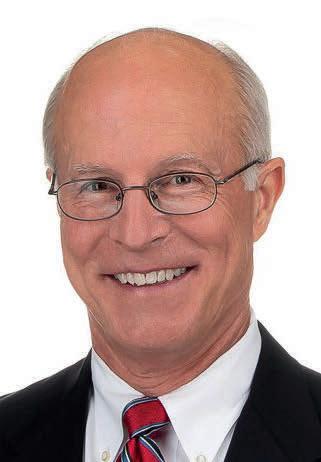
I have been involved in training Golden Retrievers to be service dogs for combat wounded veterans. I have been cycling the world. I have cycled across the U.S. I have cycled the length of Africa, Cairo to Cape Town. I have cycled Europe north to south and east to west. There is a quote that sums it up for me: Hunter S Thompson: “Life should not be a journey to the grave with the intention of arriving safely in a pretty and well-preserved body, but rather to skid in broadside in a cloud of smoke, thoroughly used up, totally worn out, and loudly proclaiming, ‘Wow! What a ride!’”
I would like to be remembered as a good man who cared.
Date of Birth: April 16, 1955
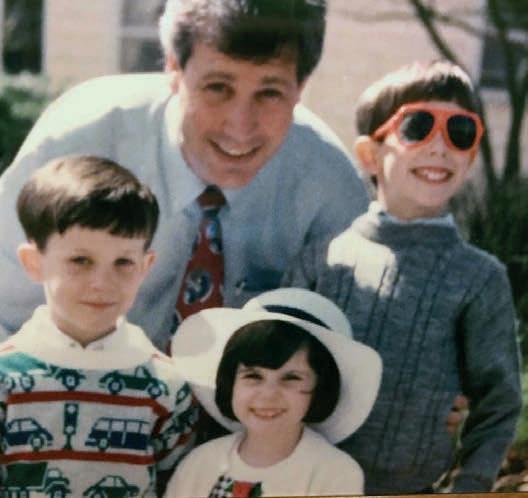
Date of Death: January 22, 2000
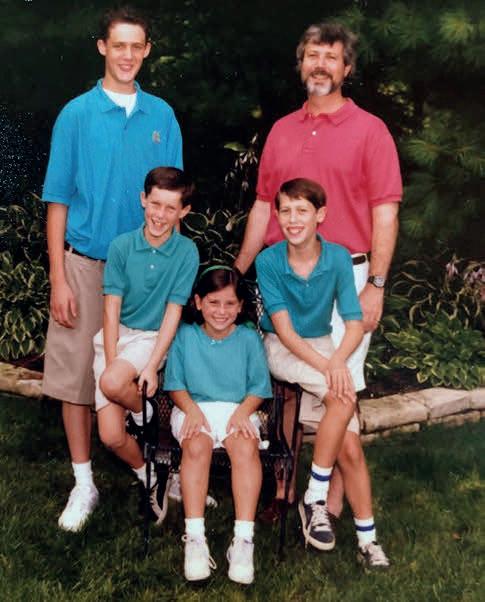
A remembrance by Bob’s sisters, Janet & Joan, and his brother, Jim Robert John (Bob) McCullough graduated from De Smet in 1973. He went on to Rockhurst College in Kansas City, joined SAE fraternity, and graduated in 1977 with a BS in Biology. After that, he earned a degree in Respiratory Therapy, and then an MBA from Rockhurst. He remained in Kansas City, was married in 1979 and had four children. In the 1980s, Bob began his career as a staff Respiratory Therapist at Baptist Hospital, became an instructor in the Respiratory Therapy program, and eventually became the Director of Pulmonary and Radiology Services for the hospitals of Health Midwest, a local Kansas City hospital group. He held that position until he died, suddenly, on Jan. 22, 2000 at age 44. Bob always had a wonderful sense of humor and a compassion for others. His outlook on life was always positive. He was a loving and involved Dad to his children, whether it was coaching their soccer teams, creating Halloween costumes, or dancing with them to the Irish songs he so loved. He enjoyed close relationships with his college buddies, and was beloved by them and his work colleagues as well.
Bob McCullough is remembered by his 1973 classmates as a friendly guy who loved to laugh. He was a very talented cross-country and track runner in the early years, and was a great teammate, but his career was ended during his sophomore year due to knee problems. He continued to be involved in other aspects of De Smet life, and was a fine student and friend to many.
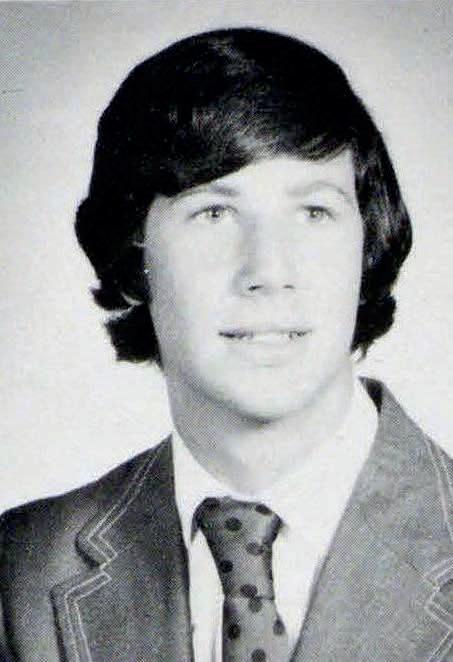
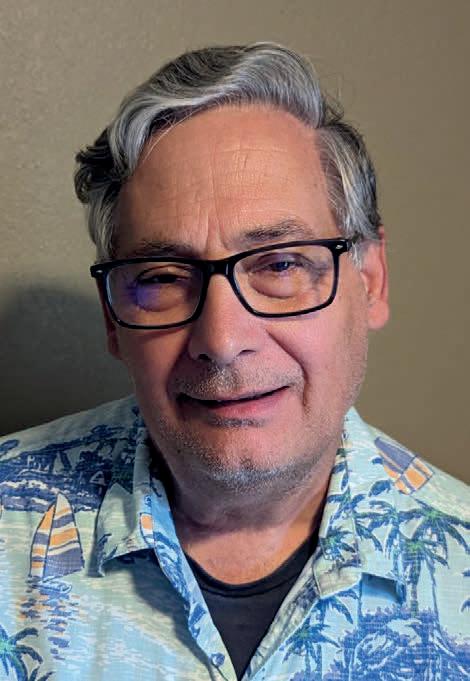
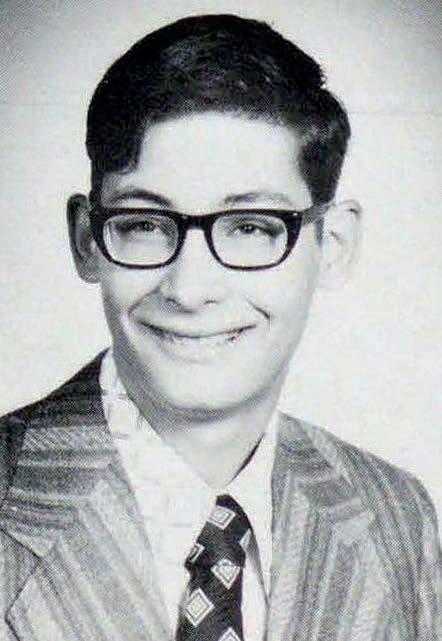
6487 S. Dunkirk Ct. Centennial, CO 80016
303-396-5102
davidmeyergm@gmail.com
Favorite De Smet Memories
De Smet Dionysian Players. De Smet basketball championship.
Marital Status
Married
Spouse Name
Lucinda
Children
Theresa, Daniel, Louis, Anthony, Analisa, Kathleen, Alexander, Susanna
College, Degrees, Current Profession
BSEE, Northwestern University; MSEE, Northwestern University; Systems Engineer
What Did You Do After High School and What Are You Doing Now?
Moved to California, obtained pilot’s license, moved to Colorado, started a family, homeschooled eight children, through college.
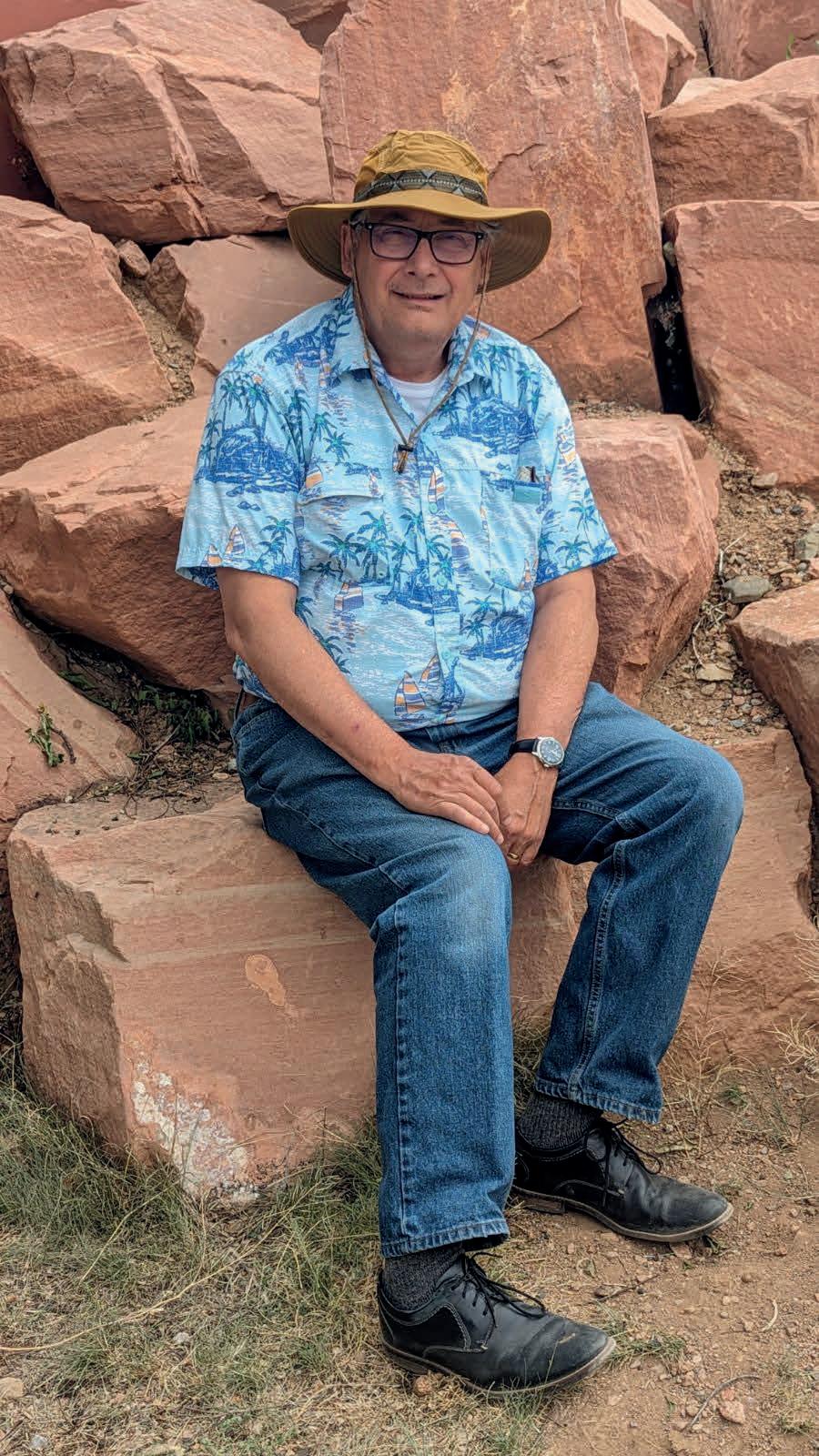
Noteworthy / Interesting Accomplishments
24 years, 9 months, 2 days at Boeing. Recently retired, planning to build a light airplane.
How Would You Like to be Remembered?
As a father, engineer.
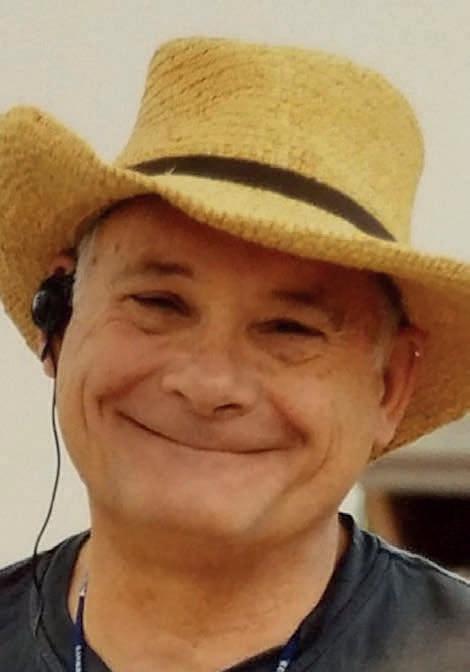
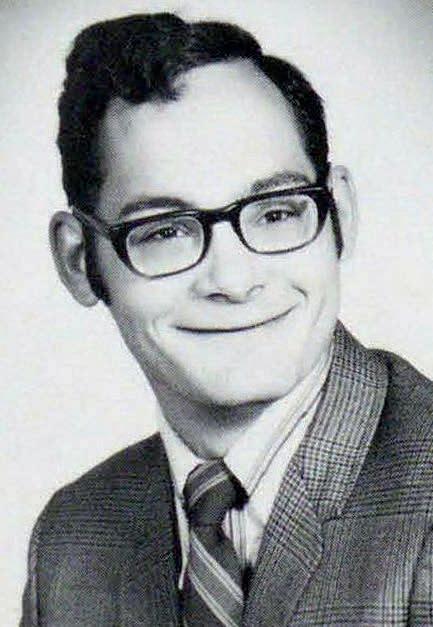
2495 Stoneridge Drive
Colorado Springs, Colorado 80919
719-661-1931
steven.j.meyer2495@gmail.com
Favorite De Smet Memories
Being on the wrestling team; being part of the Dionysian Players; the camaraderie of the student body; working for Brother Schmitt in the summer
Marital Status
Married
Spouse Name
Jewel Meyer
Children
Jeff Meyer (deceased) and John Meyer College, Degrees, Current Profession
B.A. Physics - Carleton College; M.S. Materials Science - Columbia University; retired Engineer
What Did You Do After High School and What Are You Doing Now?
After college and interesting summer jobs during college, ended up in Colorado Springs working as an Engineer for Hewlett Packard / Agilent Technologies / Keysight Technologies. Now retired for a little over a year. Love snowboarding and bicycle riding; traveling the world; and playing with a granddaughter and grandson, both under 2 years old.
Noteworthy / Interesting Accomplishments
Was a Master Scuba Diver Instructor and certified over 500 open water divers. Through a Hewlett Packard program, outside of my regular engineering job, worked for a few years with science teachers as a Senior Scientist -- helped them learn how to better implement hands-on science learning curricula.
How Would You Like to be Remembered?
I would like to be remembered as a memorable spouse, parent, mentor and leader.

518 Gregory Ave. #A406 Weehawken, NJ 07086
201-583-1470 / cell: 917-776-6430
mark@mongold.org

Favorite De Smet Memories
Working on shows for the Dionysian Players and modifying/fixing up the multipurpose space / Theater / class room. Running Cross Country.
Marital Status
Married
Spouse Name
Arlene Yu
Children
None College, Degrees, Current Profession
Northwestern University, Chicago, B.S. in Theater Stage Design (minor in Electrical Engineering). Technical Production Manager for theater (retired).
What Did You Do After High School and What Are You Doing Now?
I worked in Show Operations at Six Flags Park, went to college in Chicago at Northwestern University, worked in professional theater in Chicago then moved to NYC. Worked designing lighting and production management for multiple companies for 43 years, including New York City Ballet, Twyla Tharp Dance, New York City Opera, New York City Center Theater, and multiple smaller companies. Toured the world and all 50 states. Retired in 2022; now teach sailing.
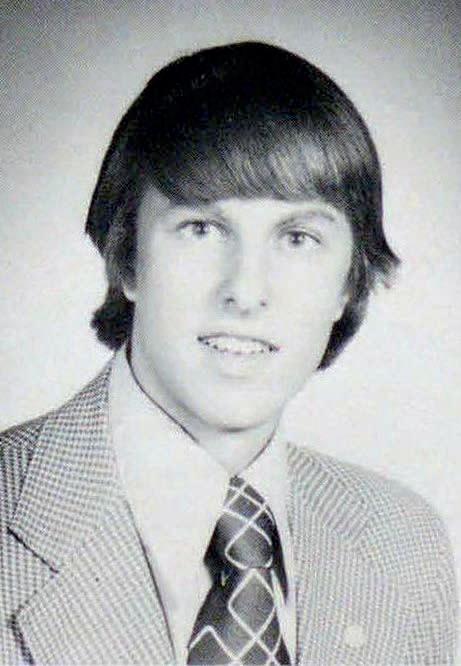
Noteworthy / Interesting Accomplishments
Worked with companies touring to all the major continents and all 50 states. Was 21 years as the Director of Production at New York City Center. I also hold a USCG 50-ton masters license and teach sailing part time in NY Harbor. I recently sailed my 38-foot sailboat from the Virgin Islands in the Caribbean to New York.

How Would You Like to be Remembered?
I don’t really know. I guess as an accomplished professional, but nice, caring person.
16 Arundel Place
St. Louis, Mo. 63105
Stan.Mulvihill@att.net
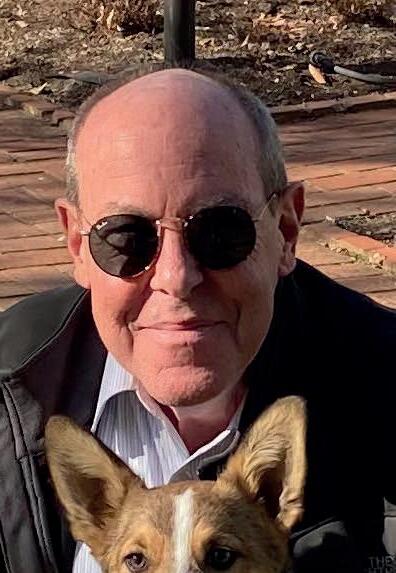
Favorite De Smet Memories
Of course the ’73 state basketball championship. But don’t forget that ’72 Mid-States hockey title.
As the third class to enter, everything at De Smet was more or less new. Thus, we had a hand in many beginnings — the sports, the media, the theatre, the clubs. … I left looking forward to more starts.
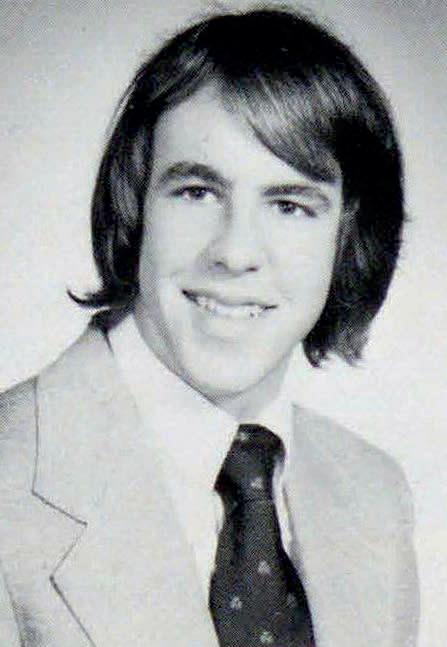
Marital Status
Married
Spouse Name
Emily
Children
Isabel, Ian
College, Degrees, Current Profession
B.A., History, Tulane University; University of Granada
What Did You Do After High School and What Are You Doing Now?
I’ve enjoyed working broadly in community redevelopment and institutional/civic philanthropy. I have worked for two universities, a couple of cities and a national developer of mixed-income communities. I’ve lived in New Orleans, New York City, New Haven (Conn.) and Spain (Granada and Barcelona). I continue to consult for foundations on select redevelopment concepts.

Noteworthy / Interesting Accomplishments
Most of all, building a home with my wife and children. If I “accomplish” nothing else, it’s all right. As for work, I’ve helped to rebuild mixed-income communities in some very distressed places of America. It’s allowed me to indulge my curiosity about local histories and leadership approaches. I have also been further educated by many different outlooks.
How Would You Like to be Remembered?
I’ll leave it to my classmates. Temper your recollections knowing just how much growing-up we did.
Favorite De Smet Memories
I’d have to say my best memories are from athletics. I participated in varsity track and cross country all four years. Also remember the great relationships with some of the teachers, particularly Joe Snyder, Jerry McMahon, and Fr. Apel. Was proud of my academic accomplishments, but also the fact that I did just about every extracurricular, including time on the yearbook and newspaper and, after I got injured senior year, I got involved in theater, and directed a one-act play.
Married
Spouse Name
Leslie Murray
Children
Clare (born 1984), Monica (born 1986), Cecilia (born 1991)
College, Degrees, Current Profession Knox College in Galesburg, Illinois: B.A. Chemistry major, Art History minor; Rush Medical College in Chicago: M.D.
Went to college at Knox, where I met my wife. We got married in 1979. Did my Internal-Medicine residency and a chief residency at the University of Minnesota. Moved to Saint Charles, Mo., in 1984, and had a primary-care internal-medicine practice for the next 36 years. Currently retired, and very much enjoying it. My wife and I have a second home in Sturgeon Bay, Wis., on the coast of Lake Michigan. We split our time between our St. Charles home and our Wisconsin home.
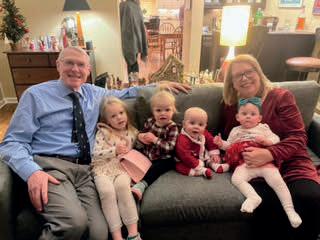
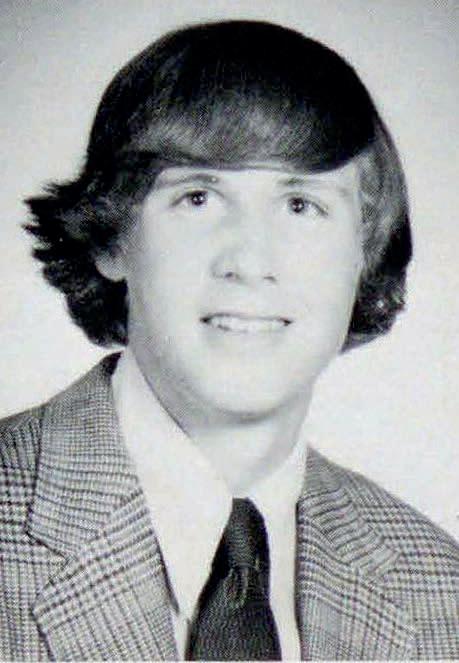
Noteworthy / Interesting Accomplishments
Had a good academic career: was valedictorian in college, and Phi Beta Kappa. Biggest accomplishment is raising our three great daughters. Have four grandchildren, all of whom thankfully live in the St. Louis area. Hosted exchange students from France, Spain and Mexico, and all my girls studied abroad and speak 2 or 3 languages. Had a rewarding medical practice: primary-care medicine suited my personality. Enjoy hiking, biking, kayaking, fine wines, craft beers. Also reanimated my childhood hobby of model railroading. Have been to 48 states and 46 countries, with hopefully more to come.
How Would You Like to be Remembered?
Friendly, good sense of humor, well-rounded. Dedicated physician. Good husband, father, and grandfather.
232 Oakhurst Circle
O’Fallon, Mo. 63368
314-954-2121
dnarup@yahoo.com
Favorite De Smet Memories
Father Apel
Marital Status
Married
Spouse Name
Pamela Children
4
College, Degrees, Current Profession
UMSL-Chemistry, UMKC School of Dentistry, DDS
What Did You Do After High School and What Are You Doing Now?
Practiced dentistry for 40 years; now retired.
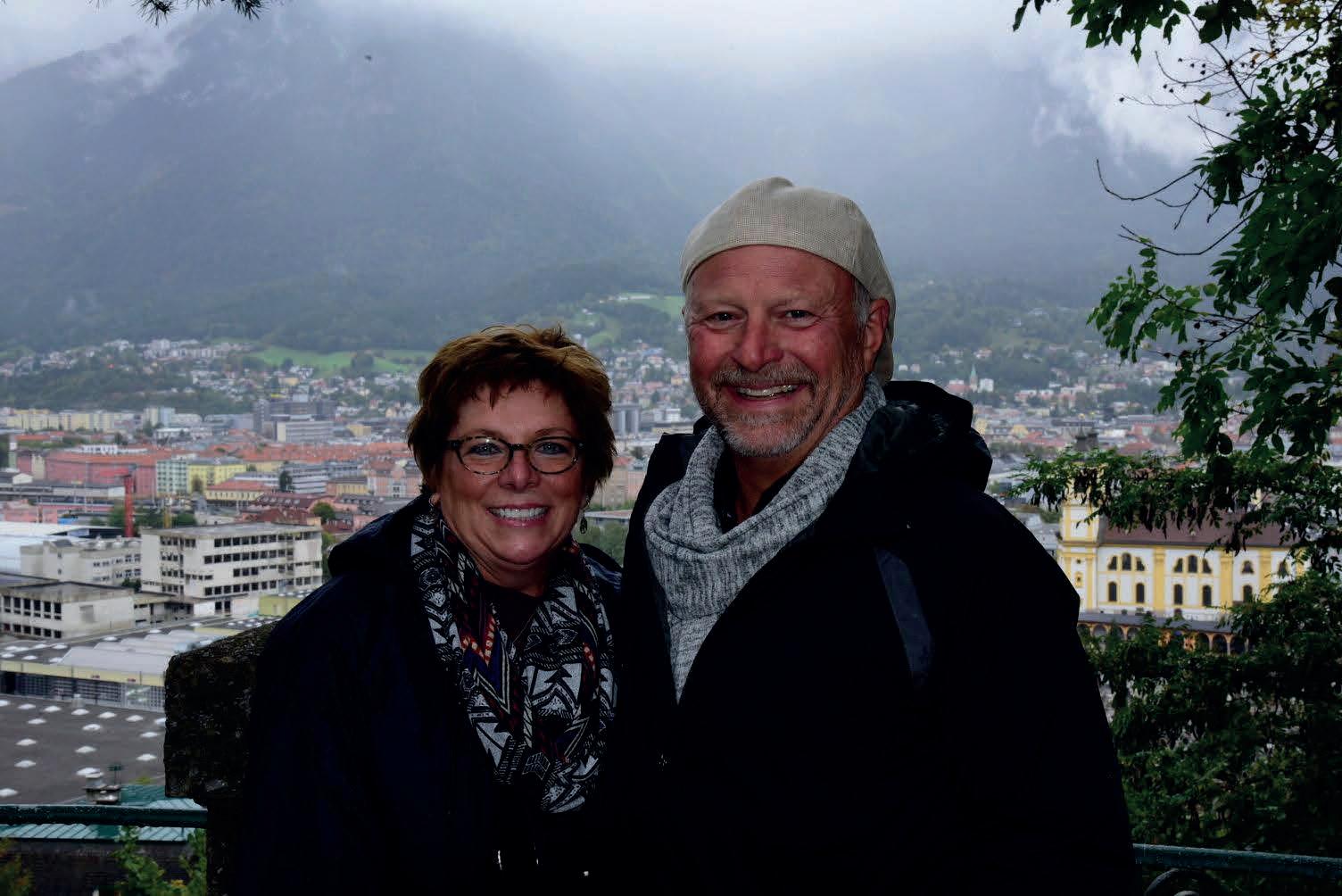
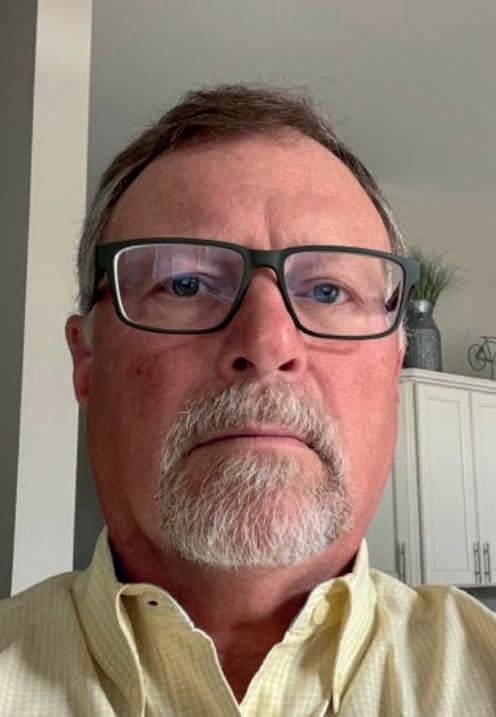
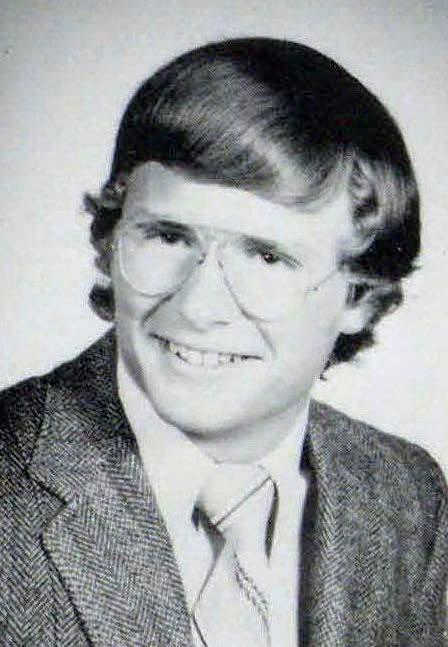
Noteworthy / Interesting Accomplishments
How Would You Like to be Remembered?
As a transfer from McBride High School.
79 Youngtown Rd. Lincolnville, ME 04849
207-951-1237
wtnorfleet@gmail.com
Favorite De Smet Memories
The good, enduring friendships I made there.
Marital Status
widower
Spouse Name
Children
none
College, Degrees, Current Profession
Attended New College, U. of Mo. School of Medicine, Virginia Mason Medical Center, Dept. of Anesthesiology.
Currently retired. While attending De Smet, I developed an interest in diving medicine, not as a means of earning a living, but as a sort of hobby. Surprisingly, one little job has led to another, and I have ended up working for some interesting organizations such as NASA, NOAA and the U.S. Navy.

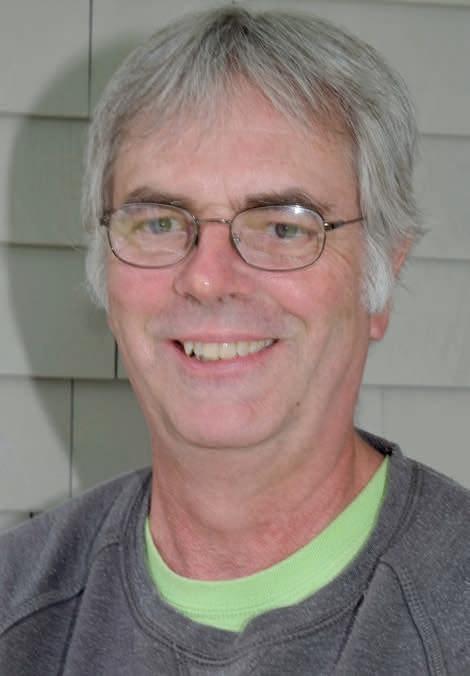
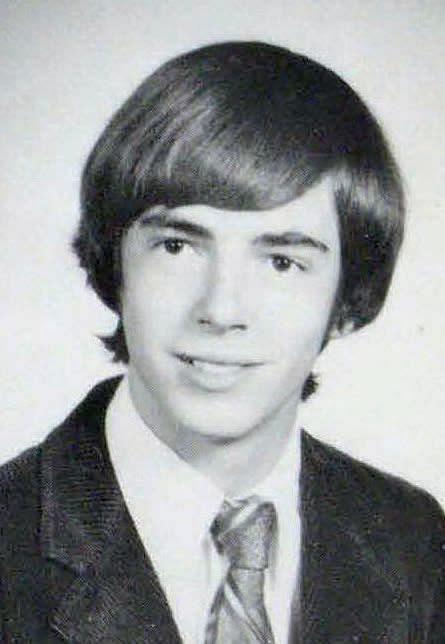
Noteworthy / Interesting Accomplishments
NASA Exceptional Achievement Medal 5/94
How Would You Like to be Remembered?
Lucky.
6429
314-608-7950
jkevinobrien@hotmail.com
Favorite De Smet Memories
Gratitude for the wonderful teachers we had. Mr. Duggan always pushing the envelope and driving the administration crazy. Running on the cross country and track teams. The football team beating SLUH junior year. The basketball team beating Northwest to send us to the final four in Columbia and winning the state title against Kirkwood.
Marital Status
Married
Spouse Name
Cheryl Grassi O’Brien
Children
None
College, Degrees, Current Profession
UMSL English Degree; Residential Painting Contractor
What Did You Do After High School and What Are You Doing Now?
Started O’Brien Painting & Decorating, Inc. in 1980. Working to stay young.

Noteworthy / Interesting Accomplishments
Player/manager for my softball team (1976 - 2006) and winning several championships. Became Softball Commissioner for the Webster Groves Parks & Recreation Dept (2008 to date).
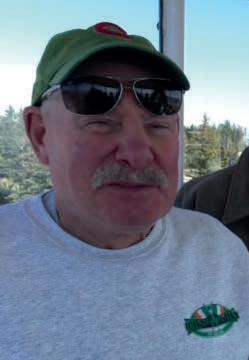
Enjoyed two trips of a lifetime: Ireland in 2011 and Italy in 2016.
Took up snow skiing at 28 and still enjoy it.
How Would You Like to be Remembered?
Sports enthusiast, music fan/concert goer, book lover, beer aficionado, progressive liberal, and proud Spartan.
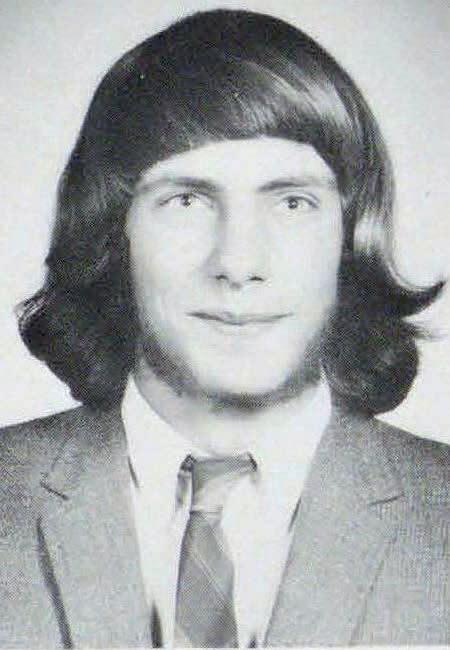
265 Halldale Rd. Montville, ME 04941
207-323-8072
boherin1954@gmail.com
Favorite De Smet Memories
Wind sprints at football practice.
Marital Status
Partnered
Spouse Name Lisa Newcomb
Children
1 College, Degrees, Current Profession
B.S. Secondary Education, M.S. Environmental Studies
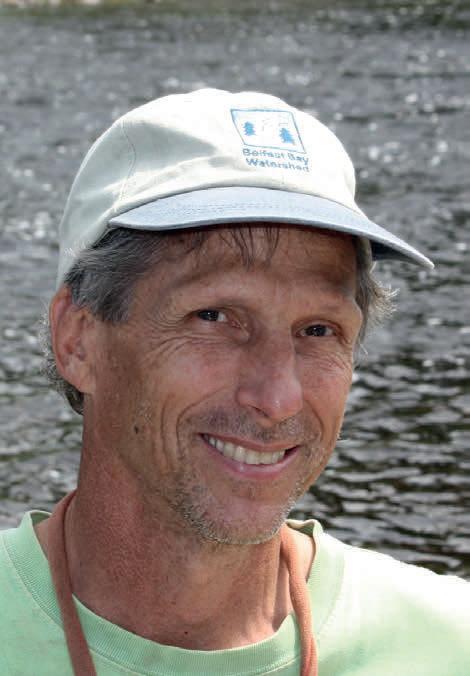
What Did You Do After High School and What Are You Doing Now?
A lot of traveling and college in Missouri (graduated from SMSU) and played rugby for 8 years. After college more traveling and work-related travel and teaching. Currently doing conservation work, fundraising and recreational trail development.

Noteworthy / Interesting Accomplishments
Backpacking inside the Arctic Circle.
How Would You Like to be Remembered? Not for much of my behavior in high school.
14151 S. 86th Place
Orland Park, IL 60462
708-460-5277 (Cell) 708-789-0130
john.oradnik@gmail.com
Favorite De Smet Memories
When the FBI visited De Smet.
Marital Status
Married
Spouse Name
Kathy
Children
Laura College, Degrees, Current Profession Bradley University, MET, Retired
What Did You Do After High School and What Are You Doing Now? Bradley University, Employment: LTV Steel (Hennepin, IL.), Avon Products (Glenview, IL.), Innophos Inc. (Chicago Heights, IL.). I currently help my wife with her business, REMAX 1st Service (Orland Park, IL.)
Noteworthy / Interesting Accomplishments
While in high school, I achieved the Eagle Scout rank and enjoyed working at Coronet Dodge.
How Would You Like to be Remembered?
The Cook County guy that likes gooey butter cake and listens to KSHE 95.

309 Shallowford Place
Louisville, KY 40245
502-744-6533
sotis2105@gmail.com
Favorite De Smet Memories
Four years of camaraderie. A great education and set a foundation for life. Senior year our sports prowess across every team sport … from soccer, golf, cross country, hockey, wrestling, tennis to football -- and we’ll never forget basketball and our first state championship.
Marital Status
Married
Spouse Name
Althea
Children
5 daughters, 7 grandchildren
College, Degrees, Current Profession
St. Louis U., B.S./B.A., major-Finance; Director of Business Development-National HME
Went to St. Louis University, majored in Finance, and was extremely fortunate in 1973 to be on the NCAA Championship Soccer Team. In 2023 our 1973 Team was honored and inducted into the Billiken Hall of Fame. Forty-plus years and counting -working in the Medical Equipment Industry
Noteworthy / Interesting Accomplishments
Married to a beautiful and wonderful woman, Althea, the last 25 years. 5 daughters and 7 grandchildren. I’ve been blessed with my family, jobs and life. …
How Would You Like to be Remembered?
That I’m God-fearing, love my wife and family and have never taken anything for granted.
555 Westonridge Ct. Wildwood, Mo. 63021
314-322-7543
richardotto@sbcglobal.net
Favorite De Smet Memories
As an Augustinian transplant, it was nice to be accepted by the students and soccer and baseball teammates during my senior year.
Marital Status
Married
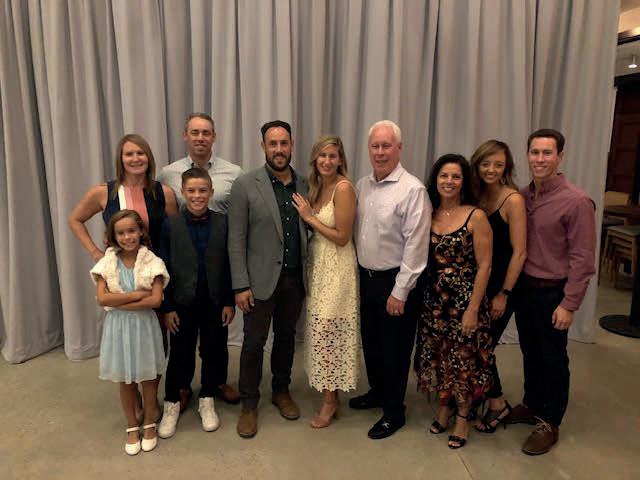
Spouse Name
Pam
Children
Three
College, Degrees, Current Profession
Benedictine College, Business Administration, Sales Manager
What Did You Do After High School and What Are You Doing Now?
Attended Benedictine and roomed with fellow Spartan Mike Buncher. Worked in the financial services and consumer goods industries as a salesman and sales manager. I am currently a semi-retired National Sales Manager for a company located in Chesterfield Valley. I thoroughly enjoy attending my grandson’s and granddaughter’s baseball, soccer, basketball, softball and volleyball games.
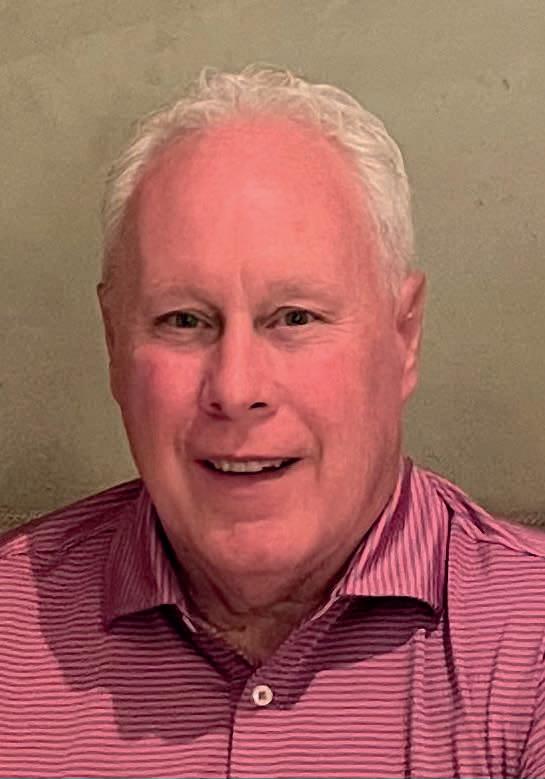
Noteworthy / Interesting Accomplishments
I attended De Smet for only my senior year, but my three sons as well as 10 other (Otto) family members also attended De Smet.
How Would You Like to be Remembered?
Someone who liked to get involved and have fun.
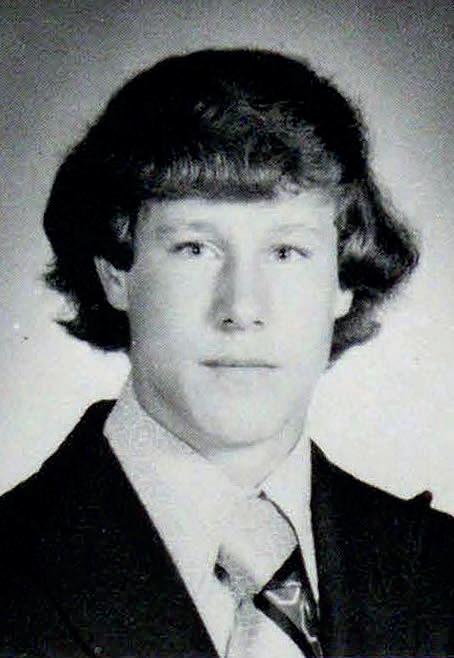
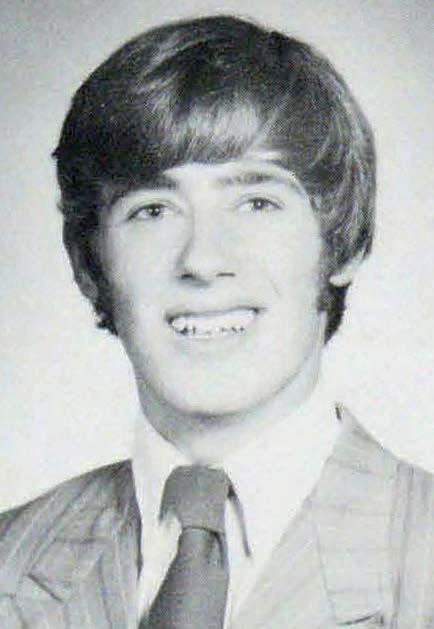
P.O. Box 1706
Columbia, Mo. 65205-1706
573-881-1260 (mobile)
mizzouwally@compuserve.com
Favorite De Smet Memories
Singing “Hey Jude” at an all-school assembly. Carnival. Doing stats for baseball, managing football and soccer, playing soccer senior year and scoring a goal! Dionysian Players (the girls were great!). Student Council. Model UN. Letterman’s Club. Manning the switchboard senior year for $1 an hour. Conrad Dunn, Joe Duggan, Mark Johnston, Greg Gottfried, Tim Tynan, Franc Flotron
Marital Status
Have a loving partner
Spouse Name
Nancy Toalson
Children
Hillary Taylor Pfeffer
College, Degrees, Current Profession
University of Missouri, Bachelor of General Studies (BGS), Insurance Advisor
What Did You Do After High School and What Are You Doing Now?
Attended Mizzou on an Evans Scholarship. Started my professional career with Mutual of Omaha in 1978 and am continuing to help my friends and clients to this day. Volunteer regularly for a number of local groups (Mizzou Alumni Association, Chamber of Commerce, etc.). Photographing charitable events has become a part of my efforts here in Columbia.
Noteworthy / Interesting Accomplishments
1980 nominee for Secretary of State (first De Smet alum to run for statewide office); Legacy Award from the Mizzou Alumni Association; Legacy Award from the Columbia Chamber of Commerce; Faculty-Alumni Award from the University of Missouri; One of 29 advisors with Mutual of Omaha to earn 40 or more honor clubs in the history of the Company.
How Would You Like to be Remembered?
Mizzou, Chamber of Commerce and Community Volunteer
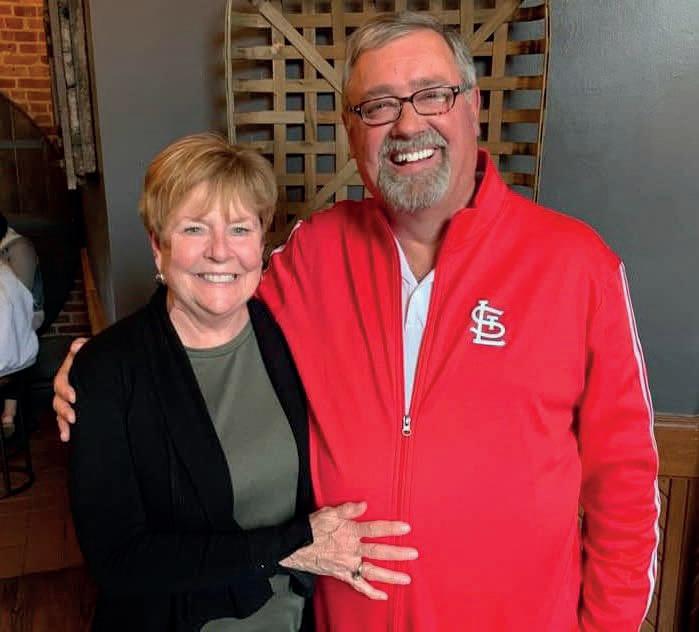
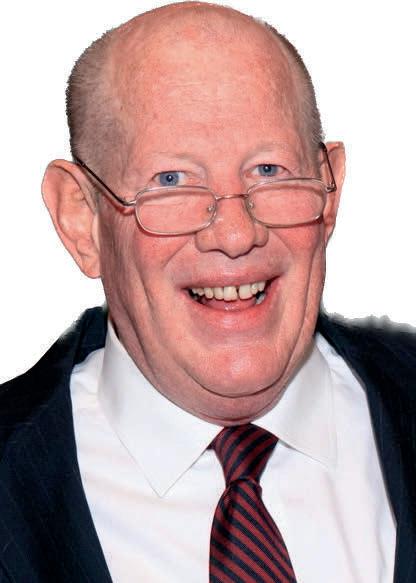
Date of Birth: June 8, 1954
Date of Death: July 9, 2022
After Bill graduated from De Smet, he went on to the University of Missouri-Columbia, earning a degree in business. He was a proud member of Phi Kappa Psi fraternity. Bill for a time remained in Columbia, where he enjoyed considerable success with Northwestern Mutual, before deciding to move back to St. Louis as a stock and bond broker.
His entrepreneurial mind-set was well-utilized during his 30-plus years as a broker. If Bill was not in his office, he was more than likely floating the Meramec River, enjoying “just one” at Blue Springs Ranch in Bourbon, Mo.
He always lived life to its fullest, enjoying each and every moment. He had a HUGE heart, loved people, and was a loyal friend to many. I will always remember that infectious smile, solid handshake and never-ending energy.
When Bill Rife arrived at De Smet on the first day of school freshman year, classmates knew he’d make his mark somewhere, and that mark was in wrestling. Freshman wrestling coach Jim Haskins always would say how Bill was dominant in his weight class -- so much that when the freshman season concluded, Bill took his undefeated record up to varsity, where he stayed until graduation. For the remainder of Bill’s high school days, he was a standout in his weight classification, and will be remembered as a standup kind of guy.
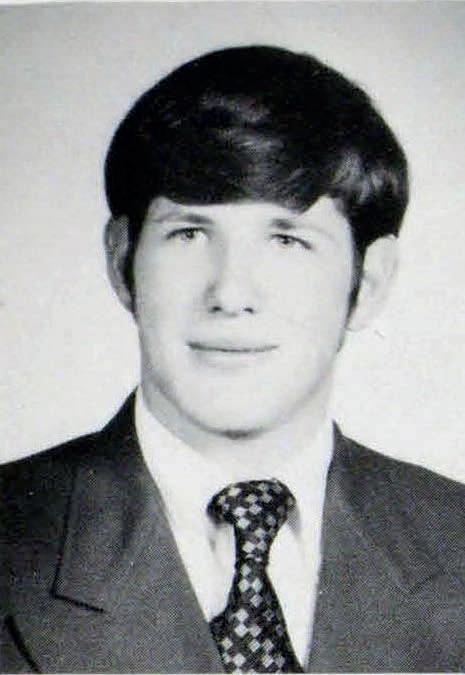
1228 County Road 467
Poplar Bluff, Mo. 63901
573-776-4735
mriffle@sfmc.net
Favorite De Smet Memories
Being a member of EXTREMELY competitive soccer teams each year with some great guys and great players. Japanese classes. Hanging out with the Jesuit faculty, especially the Scholastics (Bob Snyder and Ron Snyder, Duggan, McMahon, etc). History classes (Grawer). The championship basketball weekend in Columbia.
Marital Status
Married
Spouse Name
Suzanne
Children
Lindsay (34); Alex (31)
College, Degrees, Current Profession
St. Louis University - B.A. (Biology/Chemistry); St. Louis University - M.D.; Internal Medicine Physician
What Did You Do After High School and What Are You Doing Now?
After graduating from De Smet, I went to St. Louis University, where I majored in Biology and Chemistry; Graduated from St. Louis University School of Medicine; after Residency in Internal Medicine in the Air Force, I settled in Poplar Bluff, Mo., where I still practice Internal Medicine. I also enjoy golfing, cycling, traveling, and hanging out with my kids and extended family in St. Louis.
Noteworthy / Interesting Accomplishments
I started an Internal Medicine Residency training program in Poplar Bluff, Mo., in 2021, which is occupying much of my time now. All other such programs in Missouri are in much larger cities and/or affiliated with large teaching institutions.
Raised 2 great kids along with my bride of 35 years who are my best friends!

How Would You Like to be Remembered?
Hard-working; loyal; great father and spouse
314-304-5621
xtlxlg@sbcglobal.net
Favorite De Smet Memories
Great basketball years and being recognized by Coach Grawer as one of his hardest-working players. Our Senior Project playing drums in the play, “James and the Giant Peach.”
And of course starring in the cult classic “Gort Snort” short film, co-starring classmates Kevin Kohler, Joe Vacca, Allen Cross and Jim Finnegan. Tim Griese handled animation and was film director.
Marital Status
Married
Spouse Name
Merry Children
Nick and Ryan - Both went to De Smet College, Degrees, Current Profession SLU Bachelor’s Degree - Business
What Did You Do After High School and What Are You Doing Now?
Worked at KSHE 95 radio and KADI radio on the air while attending SLU. Worked for the family export business 30plus years.
Today working part-time at retirement center as concierge.
Noteworthy / Interesting Accomplishments
Became KSHE radio’s first traffic reporter, working on a 10-speed bicycle, calling in reports from a phone booth: aka “Thumbs Thornhill.” So fun.
How Would You Like to be Remembered?
The Tall Man.
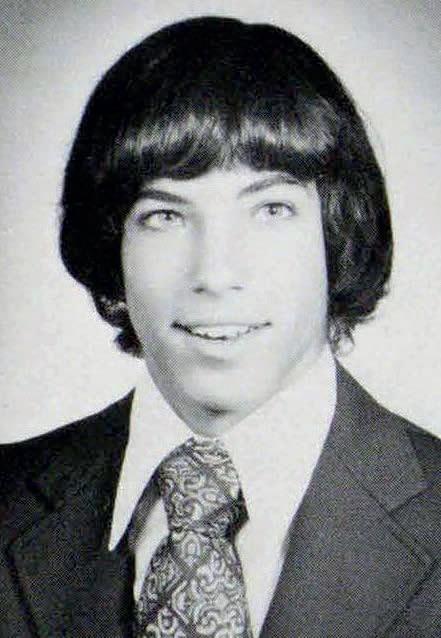
314-503-5531
jonnyrosh@yahoo.com
Going to the basketball games when we won the state title.
Wrestling days with Dan Thomann and the team. The camaraderie we all had. Going to what would become one of the best high schools in Missouri! Meeting some young men who would become lifetime friends!
Divorced
Spouse Name
Children
Son JP, June 14, 1984 - Feb. 4, 2005. Daughter Amanda, 32, married with a son Max.
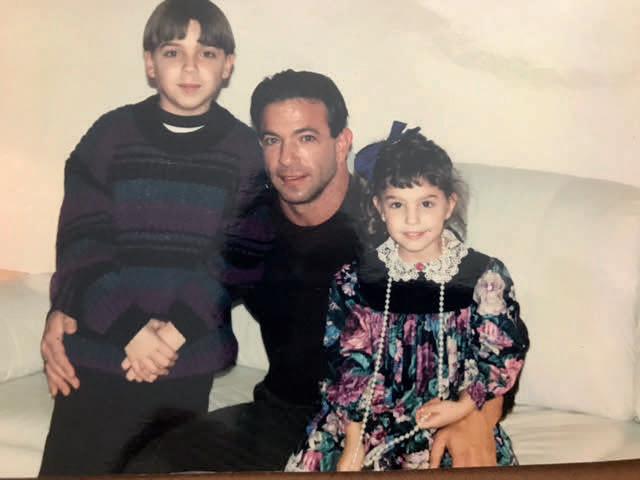
College, Degrees, Current Profession
2 yrs at UMSL no degree. Currently the Warehouse Operations Manager for Ozark Assemblies, a local wire harness company.
Started working at family-owned business Rosciglione Bakery; became co-owner with my brother Pete. Worked there from 1973 till 2002! The business is still thriving since the early 1900s. Was married in 1979 to Terre Falloon and had 2 children, John Peter (JP) in 1984 and Amanda in 1990. My son JP was killed in a car accident, hit from behind. He was 20 years old.
In 1976 I joined George Turner Gym to get in shape. During that time I began competing in the sport of powerlifting. I became quite addicted to it, and by 1982 won my first national title in the lightweight division. I moved up to the middleweight class and won 2 more national titles in 1993 and 1996. After the 1993 Nationals, I went on to win the World Championships in Macon, France. At the 1996 Nationals, I set a world record in the Squat at 766 pounds in the 165-pound class! After being on five USA World teams, I retired in 1996!
As a loyal friend, brother, son and loving father!
Date of Birth: January 29, 1955
Date of Death: August 28, 2012
A remembrance by Terry’s wife, Carolyn
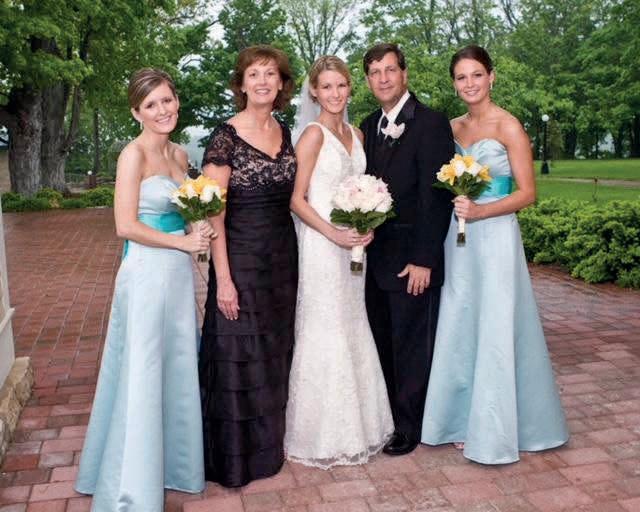
Terry’s greatest love was his family. Terry and I have three tremendous daughters who brought great joy to our lives. He was a compassionate and caring father to Stephanie, Leslie and Kelly. His sense of humor, kindness and curiosity were always on display while parenting the girls. Terry relished the time our family shared at our waterfront cabin as the girls were growing up. Particularly pleasing for Terry was the pride he experienced in watching our girls move through life’s milestones. Each first date, graduation, engagement and wedding produced endearing moments. Terry was a doting grandfather to three grandchildren – he was particularly playful and always cherished time spent with them. Terry always will be a presence in our lives.
After leaving De Smet, Terry continued his academic excellence at the University of Missouri, where he attained a bachelor’s degree in microbiology while competing for the MU track team. His rich college experience included being a member and officer of the Phi Kappa Theta fraternity.
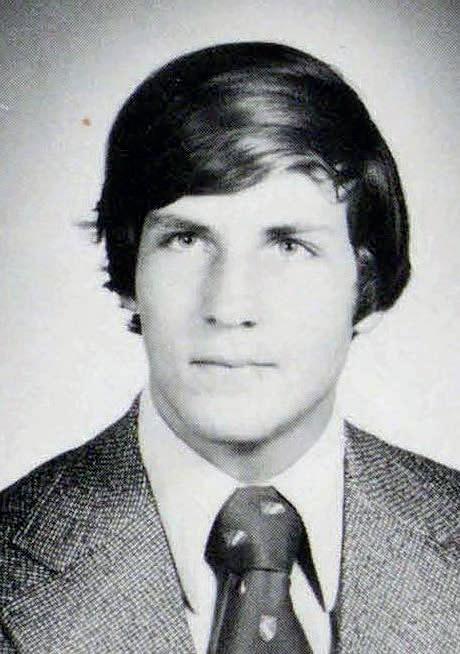
Following college graduation, Terry altered his career path, enrolling in the Master of Hospital Administration (MHA) program at St. Louis University. Upon receiving his degree from SLU, he joined the Mercy Hospital Association and moved to Hot Springs, Ark., as the Mercy assistant hospital administrator. During his post-graduate life, Terry met the lovely Carolyn Perl, and they married in 1980. The Roses moved to Washington, Mo., where Terry was the chief hospital administrator at Mercy Hospital Washington for many years.
Rather than accept promotions that would require leaving his Washington home, Terry eventually chose to open a private business providing consulting and management services to local business owners.
Our friend Terry will be remembered for his quick wit, booming laugh, affinity for cheap cigars, love of thick steaks, taste for expensive Scotch, and the Sperry topsiders he constantly wore. He was gregarious, charming, funny, approachable, and friendly to a fault. I miss him greatly but appreciate our shared, lifelong friendship.
Date of Birth: May 23, 1955
Date of Death: August 16, 2010
by
After Mike graduated from De Smet, he received his bachelor’s degree in mechanical engineering from the University of Missouri at Rolla. His career included many positions, starting with the utility company in Beaumont, Texas, and Lake Charles, La. The majority of his career was spent as a plant manager for International Paper in St. Louis and Seymour, Ind. He ended his career with Smurfit-Stone as a regional manager based in Rogers, Ark. Mike would often say, “I can’t believe they are paying me to do this.” He truly loved what he did and he was a loyal and hard-working man who was known for his friendly “Hi buddy! How are you doing?” He was always looking out for others and always trying to set them up to be successful.
Mike’s greatest love and priority was his family. In June 1978, Mike married his high school sweetheart, Joan. He was an amazing, loving husband and best friend for 32 years. They cherished their ordinary moments together. His proudest moments were the birth of their two children, Michael (1983) and Jaclyn (1986). He was an awesome dad whose eyes lit up with a twinkle whenever he was with them or spoke about them. He was beaming when he witnessed Michael’s marriage to Sara, whom he called his “bonus kid!”
He truly loved his mom and dad and siblings, Cris, Nance (deceased), Patrick (deceased) and Juli. Some of his most joyful times were spent at his parents’ lake house in Bonne Terre, Mo., where his family and his siblings would gather for great laughs, competitive card games and water fun. Hiking with his dad in creeks was an all-time favorite activity for Mike.
Mike was a soft-spoken man, with a booming, contagious laugh that filled the room. His sense of humor and playfulness will never be forgotten. He had a balance of a calm and gentle demeanor with a wild passion and zest for life. He was inclined to seek out adventures like jumping off cliffs into the water, slalom water skiing, scuba diving, and grocery cart riding. He chased his interests, including becoming a black jack dealer for a short while. He could always be counted on for great conversation and good perspectives. Anyone who knew Mike Sale liked him. Friends remember his generosity, kindness and how effortless it was to be with him.
He always had a positive outlook on life even while he was battling for his own. He reflected that his life had been a “good gig.” He told his son that he might have punched his last fun ticket. His family thinks he punched more fun tickets in his life than most. He said he regretted that he would miss walking his daughter down the aisle and meeting grandchildren. His presence and pride were felt by everyone when Jaclyn married Greg, another engineer. Mike now has six beautiful grandchildren who are hearing and sharing Angel Grandpa stories. Mike is dearly missed every day. He often said, “Life isn’t fair, but you have choices.” We have chosen to carry him in our hearts and live with our favorite memories and the many things we learned from his beautiful life.
His family, friends and the world were brightened by Mike Sale’s 55 years of life.
26 Midpark Lane
St. Louis, Mo. 63124
314-608-7826
pcs@fortunegrp.com
Favorite De Smet Memories
Successful bid for state basketball championship. Ray Harter’s mural in the Senior Lounge. Leaving a De Smet mixer by exiting the Emerson parking lot, proceeding down a steep hill and across the varsity football field, with Joe Dubuque behind the wheel of his father’s 1968 Shelby Mustang. … General shenanigans with John Hickey. … Carpooling with Kennedy and Trout. … An amazing faculty: Hasser, Mess, Fernau Mess, Grawer, Barhorst, Bick, Padre Hoyer, Father McQueeny.
Marital Status
Divorced
Spouse Name
Children
Maura, 37, married, 2 children; Paige, 32; and James, 31, married, 2 children.
College, Degrees, Current Profession
B.S., Civil Engineering, University of Missouri-Rolla (Missouri S&T); MBA, Harvard Business School; Investment banker, advising businesses on mergers, acquisitions.
For the last 28 years, I’ve been managing partner of The Fortune Group, a firm that advises owners of privately owned companies on sale or recapitalization of their businesses. My first eight years after De Smet were filled with hard work, some academic success and much self-discovery. I came out of grad school and landed on Wall Street. From New York, I moved to Minneapolis and eventually back to St. Louis, and The Fortune Group, in 1995.
Noteworthy / Interesting Accomplishments
My crowning achievement: 3 children and 4 (soon to be 5) grandsons. … Spent 6 years as a De Smet Board member. … As a triathlon participant, swam from Alcatraz Island to St. Francis Yacht Club (1.5 miles) in San Francisco Bay (2011 and ’18). … Graduated top of my class from Missouri-Rolla. … Over 10 years, made numerous goodwill/charitable appearances as “Spiderman.” … For three years in NYC, had an office on 105th Floor of Two World Trade Center. Also a cancer survivor. Count your blessings.

To have lived with purpose, integrity, gratitude, a sense of adventure, and yes, as a “man for others.”
617-852-8272
sseiler@windpar.com
Favorite De Smet Memories
State basketball championship 1973. Senior prom and after-party. Dr. Buckley’s history classes.
Marital Status
Married
Spouse Name
Bessie Sze
Children
Two daughters: Morgan and Blair
College, Degrees, Current Profession
B.A., Notre Dame, 1977; J.D., Georgetown, 1980; Current profession, biotech
After Law School I practiced law for a few years, then went into investment banking. Joined a banking client in the biotech industry and have been doing that for over 25 years now.
Noteworthy / Interesting Accomplishments
Lived in London for 7 years and Dublin, Ireland for 5. Founded a biotech company to develop a therapeutic for sickle cell disease and sold it to a Fortune 250 pharma company. Just started a new biotech company last year.
How Would You Like to be Remembered?
Loving husband and father. Good teammate.
Date of Birth: November 21, 1954
Date of Death: July 16, 1973
For those of us in the Simon family, 2023 marks not only the 50th anniversary of De Smet’s third graduating class, but also the loss of our dear brother, L.J. Simon. Less than two months after graduation, L.J. was working for the Missouri Highway Department when he was hit and killed by a driver while picking up trash along the highway. He was trying to make extra money for college, and was planning on attending St. Louis University that fall, where he wanted to study medicine. He often said he hoped to become a doctor.
L.J. was the oldest of six children, four sisters and a brother, who also attended De Smet. His sudden, far-too-early passing stunned not only his family, but a great many of his classmates. Several of them have told us he was among the most popular students in his class, with a picture-perfect smile and an effervescent personality that seemed to attract everyone, and he was solid as a rock on the football field, where he played both JV and varsity for the Spartans.
One of his close friends, Jim “Fuzzy” MacDonald, remembers L.J. as a “chick magnet.”
“I always stayed close to him at the high school dances and parties, hoping to meet one of his many girlfriends,” MacDonald said.
The very social L.J. had the distinctive ability to carry on conversations as easily with his teachers as he did with his classmates – and the late Fr. John Apel was a special mentor to him. Their banter provided an almost daily flurry of light moments in chemistry class during his junior year.
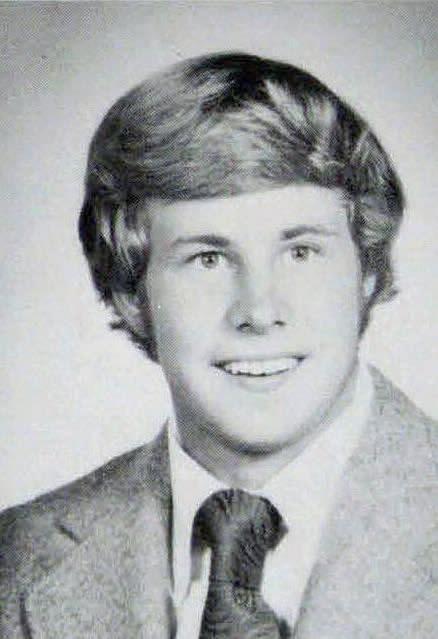
L.J. was a fine athlete who got so involved with football that after playing North County Athletic football he became an assistant for the North County Athletic Association junior boys. At De Smet, he won the Bob Christian Award (as the team’s most unselfish, giving player). “I always remember how fast he was,” MacDonald said. “He would run on the tips of his toes and was very quick and agile for his size.”
But L.J. was more than a great athlete and “life of the party.” De Smet’s mantra is “men for others,” and our brother was an early epitome of that. He volunteered at Christian Hospital Northeast, where he worked in the emergency room. And when massive flooding hit the St. Louis area in the spring of 1973, L.J. was one of a cadre of De Smet seniors who rushed to the levees to sandbag.
He has been gone for five long decades -- since that awful day, our mother and father have been reunited with him – but L.J. remains a living presence in our memories. I can speak for the entire family when I say we all miss him very much.
I’d like to thank the Class of ’73 for giving myself and the remaining Simon crew – Jo Ann Meyers, Barbara L. Moss, Jim M. Simon and Kathleen M. Kloeber – the chance to honor our brother.
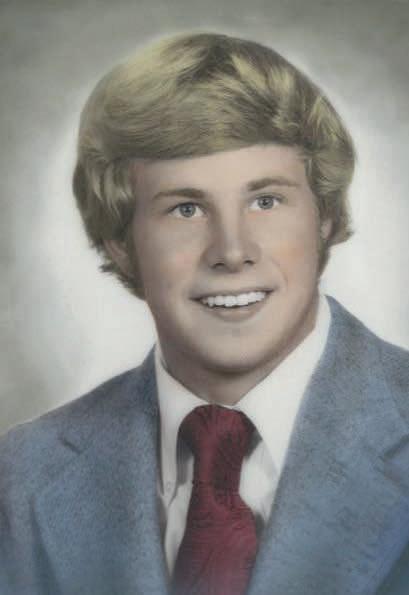
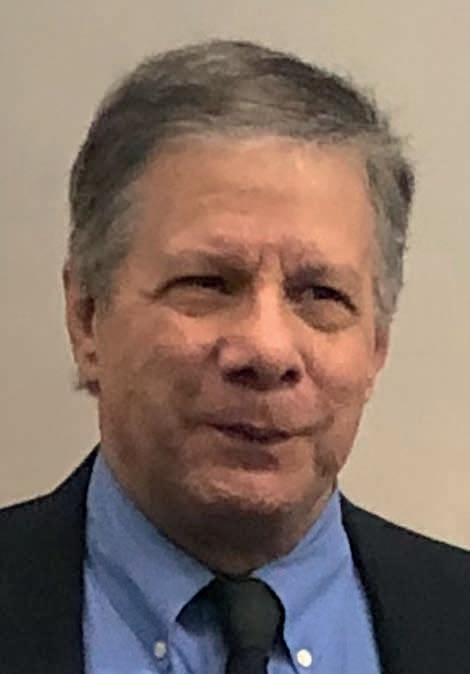
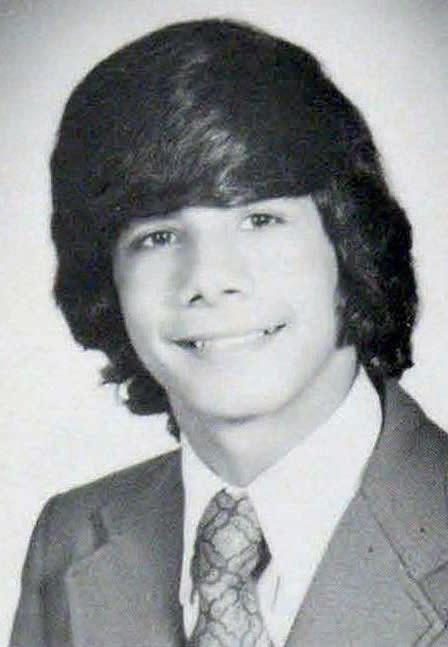
2812 Championship Blvd. St. Louis, Mo. 63129
314-795-5967
JohnSlay@charter.net
Favorite De Smet Memories
The friends that I made and have to this very day. … Watching our basketball team win the state championship, and that whole weekend in Columbia.
Marital Status
Married
Spouse Name
Patricia
Children
Sophia
College, Degrees, Current Profession Business Administration, St. Louis University; Business Consultant
Opened several restaurants and businesses. Over 35 years restaurant experience
I opened several restaurants that I individually owned, and worked for 16 years for Darden Restaurants Olive Garden, the largest casual dinner house chain in America. Currently do restaurant consulting.
Noteworthy / Interesting Accomplishments
Past President & Board member, Missouri Restaurant Association, St. Louis
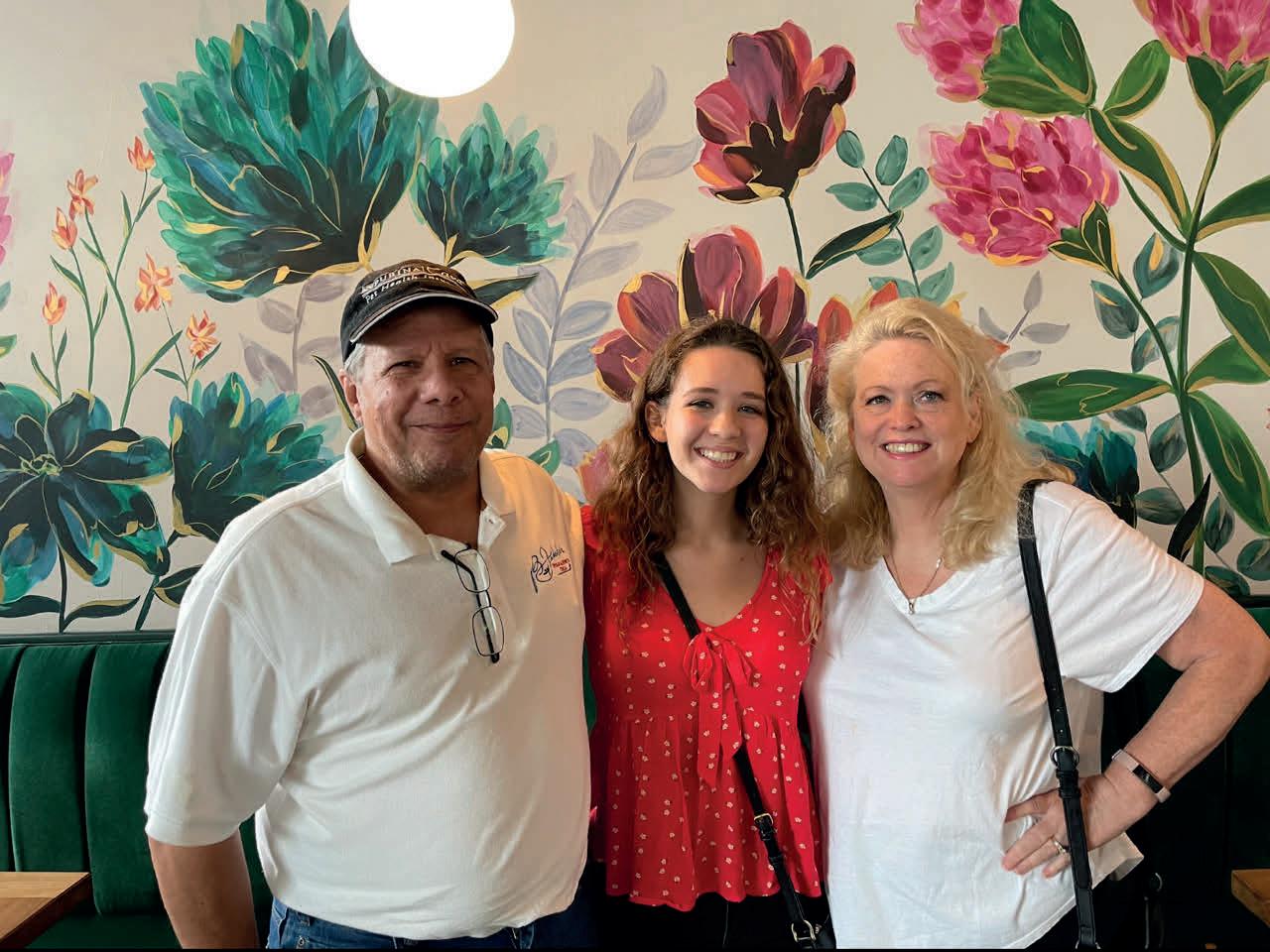
How Would You Like to be Remembered? Live for God, family and country.
2155
Florissant,
314-837-2790
Laurasteinmann@yahoo.com
Favorite De Smet Memories Tennis team. Great Teachers.
Marital Status
Married
Spouse Name
Laura Steinmann
Children
Jennifer, 1986-2009. Was Pediatric Oncology Nurse at National Institute of Health Bethesda.
College, Degrees, Current Profession
John Carroll University, B.S., Psychology. Master’s level Business courses at SLU and Webster.
What Did You Do After High School and What Are You Doing Now?
Married for 42 years to my lovely wife, Laura. Member of Blessed Teresa of Calcutta Parish — Usher/Greeter and Men’s Club Member.
Noteworthy / Interesting Accomplishments
Travels to Egypt, Central Europe, Scandinavia, Russia, Alaska, Canada, Hawaii, Mexico, Caribbean, Bahamas, Israel, England and Greece.
How Would You Like to be Remembered? Good husband, good father, De Smet Spartan
1514 Papillon Dr. St. Louis, Mo. 63146
jlstirm@gmail.com
Favorite De Smet Memories
Basketball, Coach Grawer and my teammates. My Art classes with Mr. Burns. Fr. Apel, who believed in us when others would not. The discipline that De Smet provided that helped me immensely.
Marital Status
Married
Spouse Name
Laura Children
3, and 2 grandchildren
College, Degrees, Current Profession
B.A., Tarkio, 1977; Master of Arts, Teaching, Webster University, 1982; retired
Went to college, played four years of college basketball. Got married in 1975. I taught and coached for seven years before leaving education for the business world. We lived in Iowa, Missouri, Oregon and Minnesota, then back to Missouri in 2016.
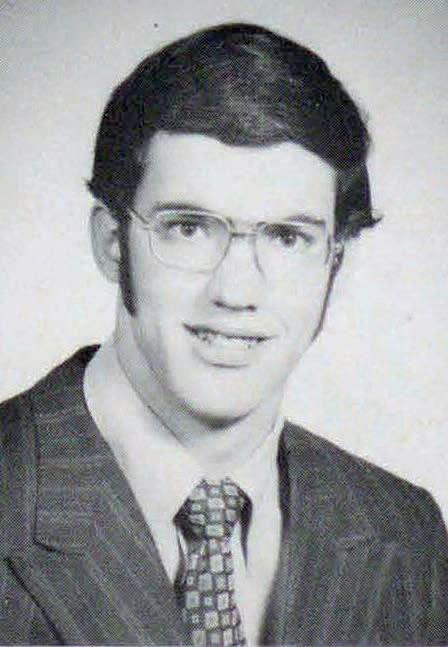
Noteworthy / Interesting Accomplishments
I’ve been active in volunteer positions for most of my life and donate my time to people who can’t always afford to pay for the help. The lessons that Coach Grawer drilled in us each practice taught me the tools that I used to excel in my careers. My wife and I have been married for 48 years and worked hard to be able to enjoy our retirement. We are starting to travel and work on our bucket list.
A “people person” who learned hard work gets results. Optimistic, always looking for the best in everyone.
1124 Gilbert Ave. Rock Hill, Mo. 63119
314-452-0521
krstrothkamp@gmail.com
Too many to remember, but if attending class was fun, my favorites are Barhorst’s Physics, Fr. Apel’s Chemistry, and of course hippie Bill Christman’s Art class. Cheerleading the Spartans from time to time with Don Hiemenz and Ray Harter was always a good time; and of course, down time in the smoking lounge. Unbelievable: I won a Pioneer 8-track automobile tape player at sophomore year homecoming carnival!
Married
Spouse Name
Nancy Lusk Strothkamp
Children
1 Daughter, 36 College, Degrees, Current Profession
Attended several universities around the state, no degree but I did complete the United Brotherhood of Carpenters Apprenticeship program. Currently, I am a retired carpenter superintendent.
I worked at Essen Hardware on and off, some college, but my main thing was making money young, and construction work was always promising. I traveled west, working different jobs from picking walnuts, milking Holstein cows, and finally working in the construction labor union in Portland, Ore. The economy was bad in the West; construction dropped off in 1979 and I came home to Missouri to try for the Carpenter’s Union, working in central Missouri saw mills until I got my call.
I worked primarily in the commercial construction trades, and after the 9-11 terrorist attack on New York, the work for the next two years shored up security for the utilities, defense contractors and public venues. I and others were moved by the work, and proud we were there to do it.
In 1990, I was recognized as a Master Commercial Carpenter by the Associated General Contractors of America (AGC). Two years later the Carpenters dropped from this organization.
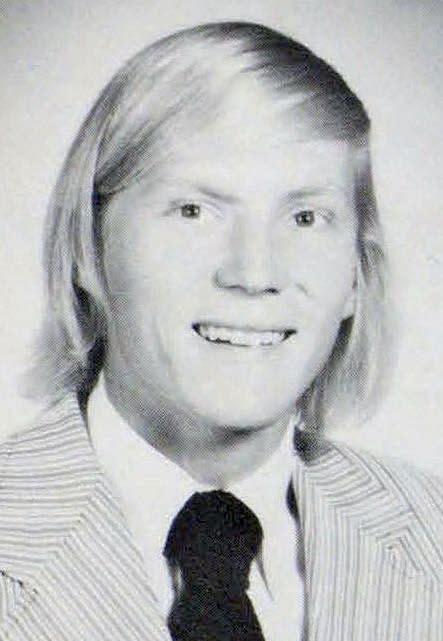
I would like to be remembered as a great husband and father as well as a good carpenter.
850 ElDorado St. Winnetka, IL 60093
312-925-2831
fjs@scslegal.com
Favorite De Smet Memories
My single best memory is that De Smet prepared me for college and life. I deeply appreciate what I learned from our teachers and classmates. I also have great memories of: 1973 Missouri State Basketball Championship; cross-country and track meets; Rich Grawer teaching us how to outline (I have used this for the past 50-plus years); and being with a great group of men.
Marital Status
Married
Spouse Name
Margaret A. Sudekum
Children
Lauren (37), Bobby (33) and Johnny (30)
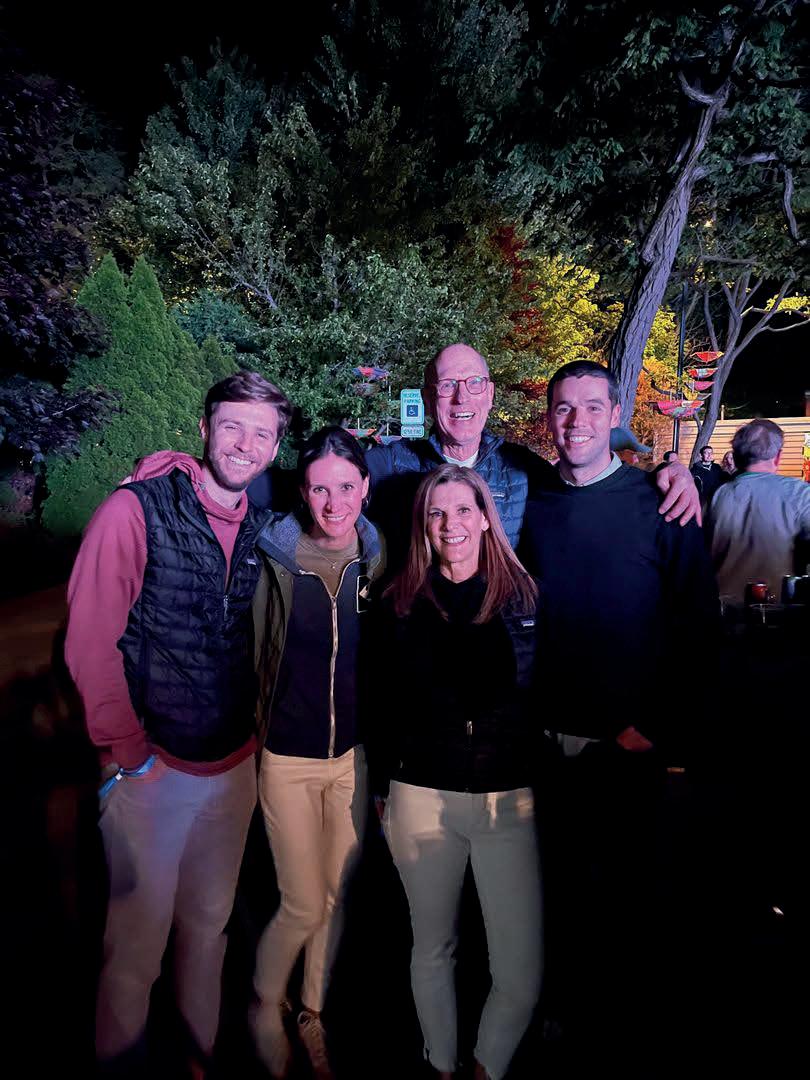
College, Degrees, Current Profession
B.A. Political Science, University of Missouri, 1977; J.D., Saint Louis University, 1980
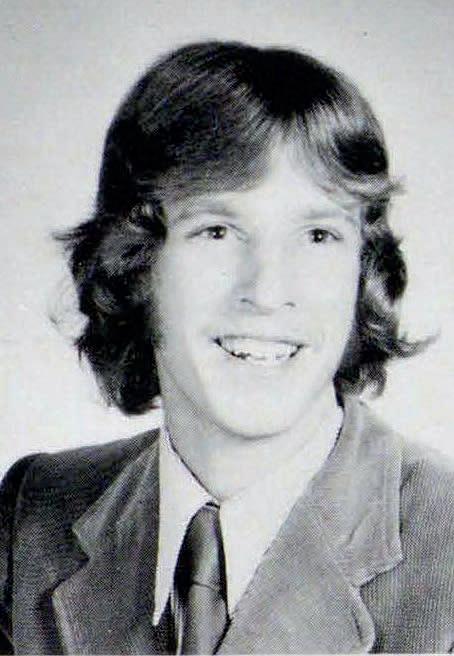
What Did You Do After High School and What Are You Doing Now?
Law Clerk to the Hon. James A. Pudlowski, Missouri Court of Appeals (1980-81); Associate Attorney at Epton, Mullin, Segal & Druth (1981-87); Partner at Querrey and Harrow, Ltd. (1987-93); Senior Partner at Sudekum, Cassidy & Shulruff, Chtd. (1993-present).
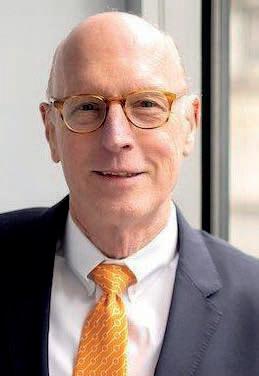
Noteworthy / Interesting Accomplishments
Married for 43 years and counting.
Three incredible and successful children. Senior partner of my law firm for 30-plus years.
How Would You Like to be Remembered?
I would like to be remembered as a man for others.
455 West Jackson
Webster Groves, Mo. 63119
314-882-2212
ltaylor@redrockcomm.com
Favorite De Smet Memories
Fr. Koesterer kicking me out of German class for having my blazer folded up and bound by a rag from my previous art class. George Barhorst starting physics class by standing on his desk and jumping off, saying he was falling at 10 meters per second squared. Senior retreat. Leaving school early to go to Grateful Dead concerts. Hitchhiking to get around before I got my Hodaka motorcycle. Never getting luck at Mixers. Demerit cards.
Marital Status
Married
Spouse Name
Peggy
Children
Kimberly (39), Emily (36) - (4) Grandkids
College, Degrees, Current Profession
University of Missouri School of Journalism - Advertising Sequence
What Did You Do After High School and What Are You Doing Now?
Worked as an AE at Waterbury-Keim & D’Arcy-MacManus ad agencies, a Marketing Manager at 7-Up Bottling Co., and as a DOM at Ralston Purina / Continental Baking Co. After that I served as the Deputy General Manager/ Sr. Vice President at McCann-Erickson Event Marketing. In 1995, I founded Pro Motion, Inc., an event marketing agency, and sold it five years later. Currently I own Red Rock Communications, which provides outsource marketing services for mid-size companies.
Noteworthy / Interesting Accomplishments
• Developed multiple highly successful new products at Continental Baking (Hostess Pudding Pies, ChocoBliss, Fruit & Cream Twinkies, Hostess Lights, Teenage Mutant Ninja Turtle Pies).
• Turned McCann Erickson Event Marketing from losing $1 million/yr to making $1 million/yr in one year.
• Building Pro Motion from ground up to a $5 mill. company
• Repositioning of Red Rock as an “outsource marketing company.”
• Being married for 41 years; had kids that turned out well.
How Would You Like to be Remembered?
As an experienced and creative marketing professional with a good business acumen and sense of humor.

2862
214-500-9540
daniel.thomann22@gmail.com
Favorite De Smet Memories
Classes with Chris Mess (a wonderful mentor and friend). The camaraderie and friendships with members of the wrestling team. Watching the 1973 basketball team win the state title under Coach Grawer. The incredible Jesuit education -- I believe it prepared me for a life of learning.
Marital Status
Married
Spouse Name
Lydia
Children
Ryan Michael (40) and Matthew Alan (38) College, Degrees, Current Profession
Ph.D. Applied Organizational Psychology from Saint Louis University; B.S. Psychology from UMSL.
What Did You Do After High School and What Are You Doing Now?
After completing my doctorate at Saint Louis University I was a professor in management at SIUE. I subsequently worked for several different talent management consulting firms (Right Mgmt., Korn Ferry, Leadership Worth Following and BTS). I also trained more than 600 police chiefs and members of their command staff on Racial Profiling Prevention. Now semi-retired and living in Benton Park.
Noteworthy / Interesting Accomplishments
Held senior leadership roles in talent management consulting firms with an emphasis on executive assessment and coaching. This allowed me to travel around the world working with different industries and numerous accomplished leaders.
Married my best friend Lydia and raised two sons who have led incredibly successful lives. Ryan is an Art Director for a children’s book publisher. Matt is an Assistant Professor in Anthropology at Maryland University.
How Would You Like to be Remembered?
As a loving husband, father, family member and friend.
Date of Birth: June 6, 1953
Date of Death: March 3, 1996
Ivy started high school at McBride before arriving at De Smet as a junior. He was an early, courageous frontiersman entering our mostly white, middle- and upper-class student body. Those who knew Ivy well don’t define his time at De Smet according to race or financial means. He is remembered and loved for his strong work ethic, his sweet soul, and his gratitude for life’s opportunities, including the opportunity to attend De Smet High School.
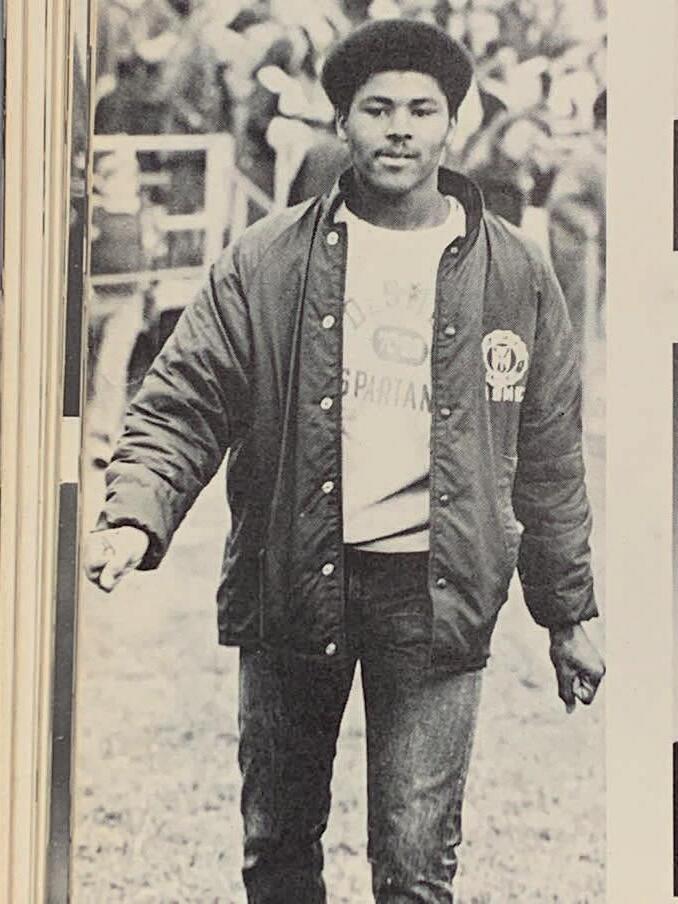
Ivy was a beloved and valued classmate and varsity team manager. While the rest of us sat in the stands watching the basketball, football or soccer games, Ivy was on the team bench at ground zero. Immersed in the lives and intimate details of our varsity teams and coaches, Ivy was a direct witness to emotional locker room outbursts, team successes and failures, and the laundering of sweaty, grimy uniforms. Coaches describe their time with him as an honor. Ivy stood out for his dedication and readiness to serve coaches and players alike. It was typical that Ivy worked evenings and weekends supporting his teams. To get to and from school on those late nights and weekends, Ivy became an expert in our local public transportation system. Coaches appreciated Ivy so much they frequently provided him rides home.
Referring to Ivy, Greg Vitello stated, “This was the guy behind the scenes. Ivy attended De Smet for two years, but in those two years it would be very hard to find a more dedicated individual. Our program at De Smet owes a great deal to this fine young gentleman. If there were an ‘all-league’ or ‘All-State’ managers team, this guy would be at the top of every list.”
Following graduation from De Smet, Ivy went on to attend Benedictine College in Atchison, Kan. While in college, Ivy again worked as equipment manager for the Benedictine Athletic Department supporting men’s soccer and basketball.
Players, coaches and classmates always will remember Ivy Thompson as our quiet warrior, our extra player, our secret weapon, our beloved brother.
Ivy passed away on March 3, 1996 after a battle with liver cancer and is buried in Calvary Cemetery.
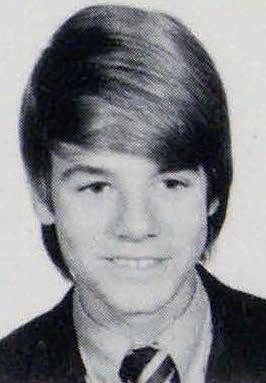
1655 Copper Ridge Ct. Steamboat Springs, CO. 80487
303-847-3026
dtlapek@gmail.com
Favorite De Smet Memories
Marital Status
Single
Spouse Name
Children
College, Degrees, Current Profession
Attended St. Louis University. Own & operate group of radio stations (Blizzard Broadcasting/ Steamboat Radio) in NW Colorado.
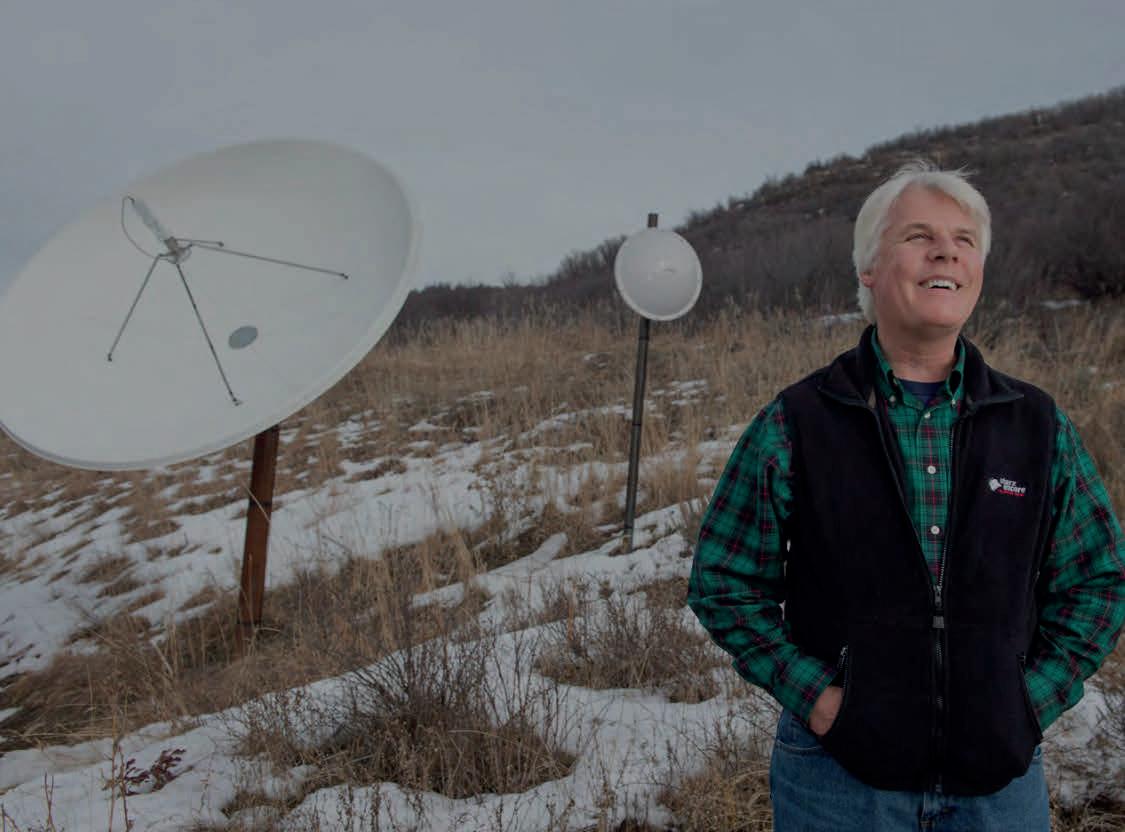
What Did You Do After High School and What Are You Doing Now?
Still working. Live part of the year in Steamboat and part of the year in Santa Fe.
Noteworthy / Interesting Accomplishments
Worked in TV and radio ad sales in St. Louis, Denver & Salt Lake City. Affiliate sales and marketing at Starz/ Encore 12 years.
How Would You Like to be Remembered?
tim@timtrout.com
Favorite De Smet Memories Student Council. Meeting new friends, spending time with the Jesuits.
Marital Status
Married 11/27/1976
Spouse Name
Lynn F. Trout
Children
Katie (husband Doug Ackerman), Timothy Jr., Colin; Grandchildren: Sally, Billy.
College, Degrees, Current Profession
B.S., St. Louis University, 1977; Aetna School of Insurance, 1980
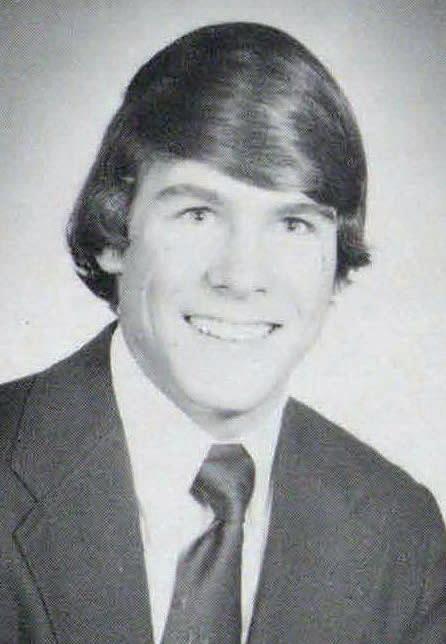
Worked for a boring and tunneling contractor through college, then went into the insurance business as a broker. In 2001, started a medical professional liability insurance company. Currently retired.
Noteworthy / Interesting Accomplishments
Lynn and I have been blessed with 3 children and 2 grandchildren. We have enjoyed designing and building houses — nine so far. Have served on the board and volunteered for multiple charitable and religious organizations.

How Would You Like to be Remembered?
As a Man For Others.
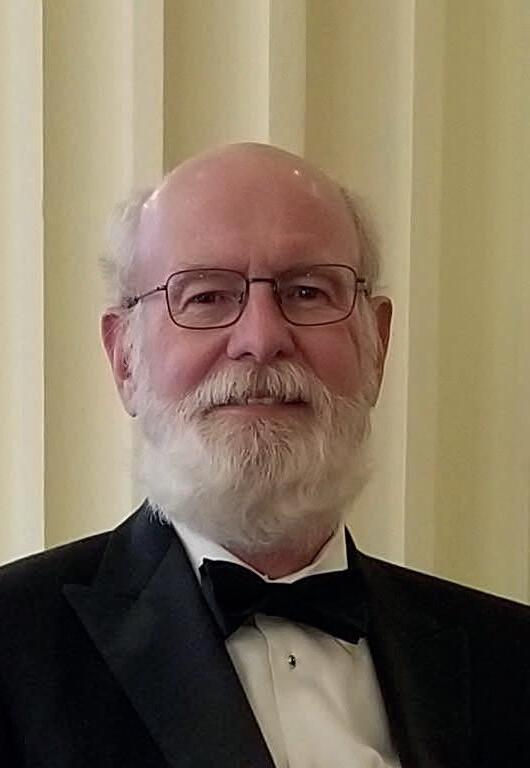
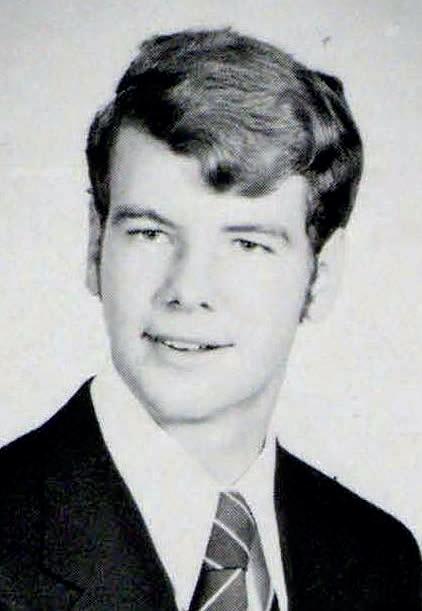
5125 Donovan St. Louis, Mo. 63109
314-255-9573
tgtynan@gmail.com
Favorite De Smet Memories
Winning the state basketball championship. English class with Mr. Faust
Marital Status
Married
Spouse Name
Laura
Children
Two adult children
College, Degrees, Current Profession
Undergrad and MBA from St. Louis University
What Did You Do After High School and What Are You Doing Now?
Long and successful career as CPA/ Controller/CFO.
Currently have the best job ever: railroad engineer at the St. Louis Zoo.

Noteworthy / Interesting Accomplishments
Visited the broadcast booth to see Jack and Joe Buck. Met Stan Musial and had a drink with him.
Interrogated by Israeli security.
How Would You Like to be Remembered?
I am the only guy who ever got kicked OUT of JUG. (That really happened).
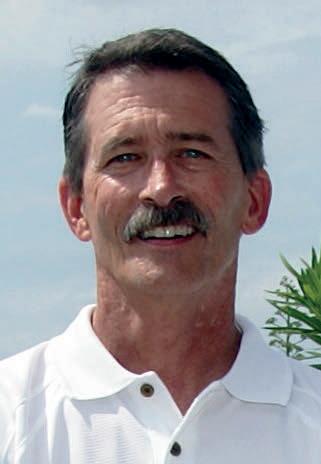
Date of Birth: July 27, 1955
Date of Death: June 26, 2021
We unfortunately lost our friend and classmate Joe Vacca far too soon at age 65 in June of 2021. Joe was one of those kind souls who would drop everything for anyone in need, always starting with his signature greeting, “What’s goin’ on?”
We might need to stretch our memories a bit to remember Joe as a member of the first-place B Team basketball squad in 1971. And of course Joe was a proud member of De Smet’s first championship hockey team in 1972. And who could forget Joe as the front man in the wildly popular “Heavy Chevy & the Carburetors!”
A little-known fact was Joe’s skill in acting. He starred in Tony Roldan’s comedy film Gort Snort, which is currently featured on YouTube. Joe’s talent then culminated in a leading role in our renowned senior project, James and The Giant Peach, a musical that toured area parochial schools and high schools during our final senior semester.
Joe was one of a kind and dearly loved by all. These special memories will remain in our hearts forever.
Joe loved to work outside and enjoyed repairing or improving anything. Nothing was ever too daunting for him to try. He had a kind soul with anyone or anything that was less fortunate than him. His adoration for animals was paramount, from helping a turtle cross the road, to donating money for an animal in need. He was also there for anyone who asked for his help and said, “Yes, I’ll be there,” and he was. Movies, motorcycles, firearms and playing the drums were his favorite pastimes, and he could easily quote movie lines and use them in his conversations. However, spending time with those he loved was his most valued treasure.

1200 S. McKnight Road
St. Louis, Mo. 63117
314-954-6103
paulvenker00@gmail.com
Favorite De Smet Memories
Too many to list, but some great ones involving Mr. Faust, Denny Duggan, S.J. Great to be on the football team that beat SLUH and shared the Bi-State Conference title. Really enjoyed Rich Grawer’s and Kevin Buckley’s classes. Also mechanical drawing with Mr. Burgman.
Marital Status
Married
Spouse Name
Diane Venker
Children
Ben, Drew, Eric and Brett
College, Degrees, Current Profession
B.A., in history from U. of Missouri-Columbia 1977; J.D. from U. of Missouri-Columbia 1980
What Did You Do After High School and What Are You Doing Now?
Started using my law degree in 1980, clerking at Missouri Supreme Court; started family in 1981; started practicing law in 1983 and only recently on a “glide path.” Happy and busy now with three granddaughters and one grandson.
Noteworthy / Interesting Accomplishments
This is a tough one because I feel I have been so fortunate. I’ve been blessed with a great wife and four sons, and we have four wonderful grandchildren. I’ve done well in my career as a trial and appellate attorney. During the last seven years, I have been very involved in something called the Freedom Suits Memorial, which honors freedom suits plaintiffs, such as Dred and Harriet Scott, as well as the lawyers and judges involved.
How Would You Like to be Remembered?
As someone who cared about others and did the right things for their own sake.
314-520-4833
Favorite De Smet Memories
Soccer with players and Coach Vitello
Marital Status
Married 41 years
Spouse Name Judy
Children
Ryan, 37, Katie, 32, Connor, 27 College, Degrees, Current Profession
Tulane University, International Business Degree 1977.
Retired 2018. Owned Walsh Schreiber & Associates, Manufacturer’s Rep, 40 years
What Did You Do After High School and What Are You Doing Now?
Graduated Tulane University 1977.
Manufacturer’s Rep 40 years in Building Materials Industry. Retired
Noteworthy / Interesting Accomplishments
Coached son Ryan’s soccer team, elementary through middle school
Managed daughter Katie’s Club soccer team numerous years
Involved with son Connor, MDA (Muscular Dystrophy Association) and with DASA (Disabled Athlete Sports Association)
Attended New Orleans Jazz Fest for 40 years
How Would You Like to be Remembered?
Genuine and fair in dealings with people and in my work environment. Dedicated to family, love music and travel.
Date of Birth: March 23, 1955
Date of Death: August 6, 2022
DONALD WERNERT: A remembrance by Rick Murray
Classmates remember Don Wernert as a kind, friendly person who was always active in the cheering section at various Spartan events. He was also an original member of The Mirror newspaper staff at its founding in 1971. But more than anything, he is remembered for his keen intellect.
This intelligence was a key asset during his entire life. He graduated from the University of Missouri-Rolla in 1976, just three years after his high school graduation. He later attended the Michigan Institute of Technology, and became an aeronautical engineer. He settled in Wichita, Kan., and had a distinguished career working for Boeing, Airbus and other major firms.
But perhaps more importantly, he met his wife, Glenda, a self-described “farm girl.” Don became interested in farming initially as a hobby, but soon became very involved in growing wheat, milo, grapes, and raising cattle. In addition to being both a farmer and an engineer, Don also was very involved in his church, serving as president of the parish council at St. Anthony of Padua.
Farmer, engineer, churchman … But there’s more. He was also a devoted husband and father of three, one daughter and two sons. In Glenda’s words: “The measure of a man is the strength of his marriage, and if his kids do well. Each of our kids have advanced degrees – our daughter in bioethics, our first son in law, and our second son in geology.”
Glenda points out that in addition to their academic achievements, each of their children was also inspired by Don to “know how to turn wrenches” and to “get their hands dirty.” He would always tell his children: “Now go and do great things today.”
Don left us on Aug. 6, 2022. It was comforting to hear Glenda’s words about Don’s memories at De Smet. “He was very proud to have been in one of the first classes at De Smet. He spoke very highly of his time there and of his friends.”
gregorypwhite@yahoo.com
Favorite De Smet Memories
Josias imitating Tom Jones in English class. Making Venker laugh uncontrollably in French class. Doing the Greg White morning announcement show — it was awful. Going to a Blues game with Mitchell and having young fans think he was Garry Unger, signing autographs. Calling Bob Christian “Gomez” after winning state basketball championship. Sandbagging during the floods for free beer.
Marital Status
Married
Spouse Name
Pat (Schoeck) White
Children
Katie, Paul and Matt
College, Degrees, Current Profession
B.A., Economics, Mizzou (1976); J.D. (Juris Doctor), Nebraska (1981); Attorney
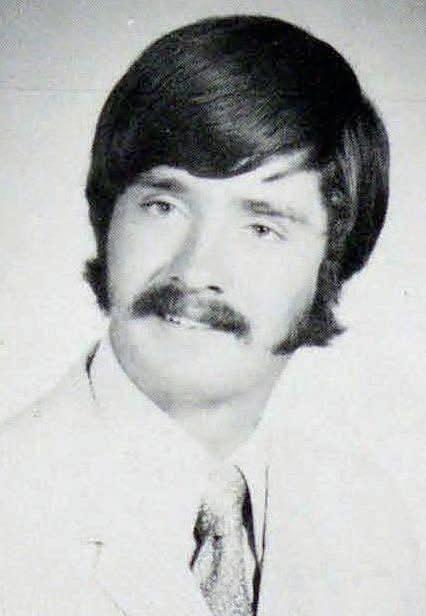
What Did You Do After High School and What Are You Doing Now?
Graduated from Mizzou and took a job with the Department of Labor. Attended Law School in Lincoln, Neb., then got married to my wonderful wife and had three great kids. Have practiced law for over 40 years and continue to practice and mediate cases in Clayton.
Noteworthy / Interesting Accomplishments
There are few things I enjoy more than fly fishing for trout in the Ozarks. It is interesting to note that I actually catch a fish once in a while.
On a serious note, I have been able to save a number of homes for people who are the victims of wrongful foreclosures and evictions, and have done so pro bono. It is rewarding to keep a family together.
How Would You Like to be Remembered?
Obituary: “Stay home, get some rest, don’t go to work, don’t bother coming to my funeral. I won’t know the difference.”
First state team championship. Most victories in a season (28), to that point a program record. Two 10-game winning streaks, to that point a program record. The two highest career rebounding totals in program history, to that point: 547 and 493, by De Smet Hall of Famers Jim Kennedy and Jim Goessling, respectively. Jim Kennedy, first-team All-State.
First time ever in the state final four, losing in the semifinals. Steve Otis, 20 shutouts in the 1972-73 season, a school record that still stands. Frank Vinciguerra, first-team All-State.
Won third Bi-State Conference title in a row.
First state qualifying team, finishing 13th.
First-time state qualifiers.
Paul Heck, school’s first individual state champion, in the 2-mile run. Paul Venker, 51-6 throw in the shot put, a record that lasted until 2022.
Third-place finish in the Mid-States playoffs, after winning the title the year before.
As juniors, contributed greatly to the formation and leadership of The MIRROR, still the school newspaper.
A definitive history of De Smet’s founding remains to be written. Unfortunately, a proper archive wasn’t established in the decades following the school’s inception, so after 50 years almost no documentary evidence remains Nonetheless, here are some basic historical notes. (Editor’s note: Class of 1971 Reunion Yearbook editors sought any and all information and documents related to De Smet from both the school and the St.Louis Jesuit archives, but there were no financial records, board minutes, board memoranda, letters, photos or other documentation that might have enabled us to write a proper history.)
1. On Aug 15, 1962 - Fr. John Choppesky, SJ, was appointed rector of St. Louis University High, with a mandate to build another Jesuit high school in St. Louis. The plan was endorsed by then Archbishop Joseph Cardinal Ritter, who ambitiously stated he would like to have two or three more Jesuit hi gh schools in his archdiocese. (By the early 1960s, more than 800 boys were applying to SLUH for the 230 available seats.) SLUH was traditionally a feeder of vocations to the diocesan and religious priesthood. It was hoped the new school would do the same. De Smet has been a significant source of vocations, although obviously not the original hope of 20 per year.
2. The name chosen for the new school was De Smet, in honor of Fr. Pierre-Jean De Smet, who was one of the chief founders of the Missouri Province and of the Society of Jesus in mid-America. The building of De Smet Jesuit was the first time SLUH called on its friends and alumni for financial aid for new construction. In addition, it was decided that SLUH would give De Smet $500,000. “It is given solely and exclusively for setting up a scholarship fund for students attending De Smet Jesuit High School, but only as long as De Smet is a Jesuit -sponsored high school.”
3. Early planning for De Smet in the 1963 -66 period took place mainly among Jesuits on Friday afternoons in booths at neighborhood Irish pub McDermotts (now The Pat Connolly Tavern) down the street from SLUH on 6400 Oakland Ave.
4. The plan was to build on a 30- to 50-acre tract in St. Louis County (the original location was on Weidman Road but changed to the North New Ballas Road location). The school facility would consist of an academic wing, cafeteria, auditorium-c hapel wing, gymnasium and faculty residence. The academic wing was to be built first and the others added as funds became available.
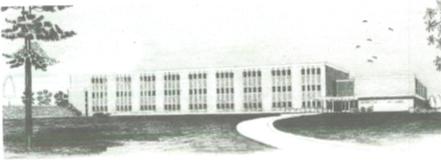
5. Total cost of the new school was estimated to be $3 million. In 1964, a fund-raising drive was initiated, focused on alumni, parents and friends of SLUH, to raise the additional money beyond the SLUH $500,000 grant, and by January 1966 pledges had reached $1.2 million.
6. Fathers of 20 incoming freshmen agreed to serve on a provisional Board of Trustees. They advised the school administration in matters of public relations, school policy, operations, budget, and the solicitation of future gifts (corporate and individual). Bill Holland, SLUH 1943, , was the chair of the Board. Fr. Greg Jacobsmeyer, SJ, was the first president of De Smet and Fr. Gerry Bone, SJ , was the first principal. Both sat on the Board as ex officio members. Groundstone was laid in 1966.
7. On Sept. 5, 1967, De Smet Jesuit celebrated its first day of classes. The initial faculty in fall 1967 had 17 members. There were five laymen and 12 J esuits six priests, four scholastics and two brothers. The course of studies was modeled after that at SLUH with minor exceptions. The freshmen took a modern foreign language (French, German, Spanish, Japanese); chose an elective from Latin, a second modern foreign language, or geography/government; along with English, algebra, ancient history, typing, religion and PE. Some of the core courses were one semester only.
8. A permanent Board of Trustees was formed with Fr. Jacobsmeyer as chairman. The school was formally dedicated on Feb. 25, 1968. With each new year, De Smet added another class to the student body, so that the initial freshman class of September 1967 had the unique experience of “being seniors” for four years in a row.
9. In July 1969, Jesuits finally moved into their residence. Up to this time they had been living in the school building itself, and there were 27 Jesuits at De Smet at the time of the school’s First Annual Commencement on June 2, 1971.