STEPHEN KHAMIS
READING INFORMALITY: INTERPRETING THE UNPLANNED IN DESIGN
MAPPING AND ENGAGING WITH INFORMALITY
PROMPT
Generate an image of an informal settlement that is set, with little identifying characteristics, a small, concise scale, compact structures, top-down, viewpoint, established for generations. How certain people act in the way the infrastructure is laid out, the correlation of this zoned-area to that of a well established settlement. The practices define the typical nature.
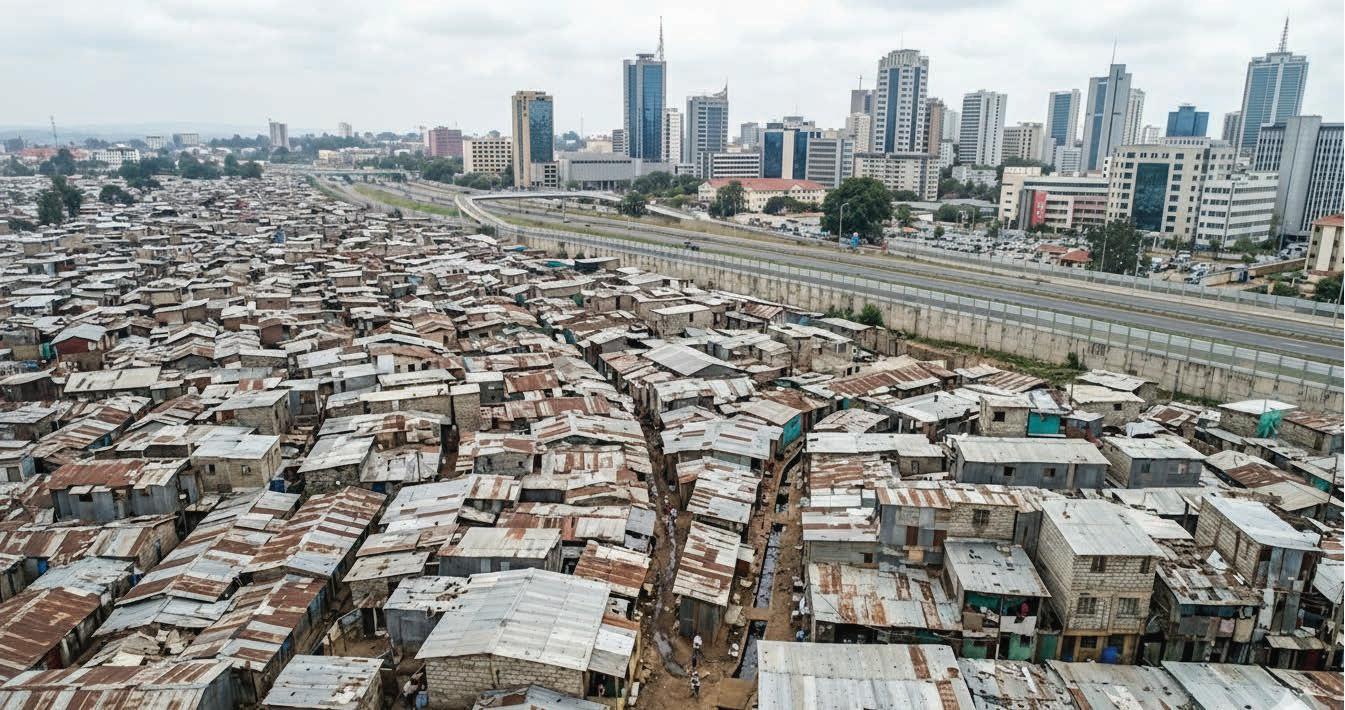
IMAGE 1: BASED ON INITIAL UNDERSTANDING
STEPHEN KHAMIS
READING INFORMALITY: INTERPRETING THE UNPLANNED IN DESIGN
MAPPING AND ENGAGING WITH INFORMALITY
Based on the prompt, this image didn’t establish the longevity of this settlement. Without examining the inner-workings of the street level or housing structures, it generalizes the character of the residents.
The scale of this settlement is pretty extensive, opposite the prompt. It shows a major difference in building height, assuming the well-established settlement was a city.
How Gemini understood the division as the zoned-out area was assuming that the highway was raised and had fencing all along it. This implies how this settlement is “backed-up against” a physical boundary, which isn’t always the case.
IMAGE 1: BASED ON INITIAL UNDERSTANDING
STEPHEN KHAMIS
READING INFORMALITY: INTERPRETING THE UNPLANNED IN DESIGN
MAPPING AND ENGAGING WITH INFORMALITY
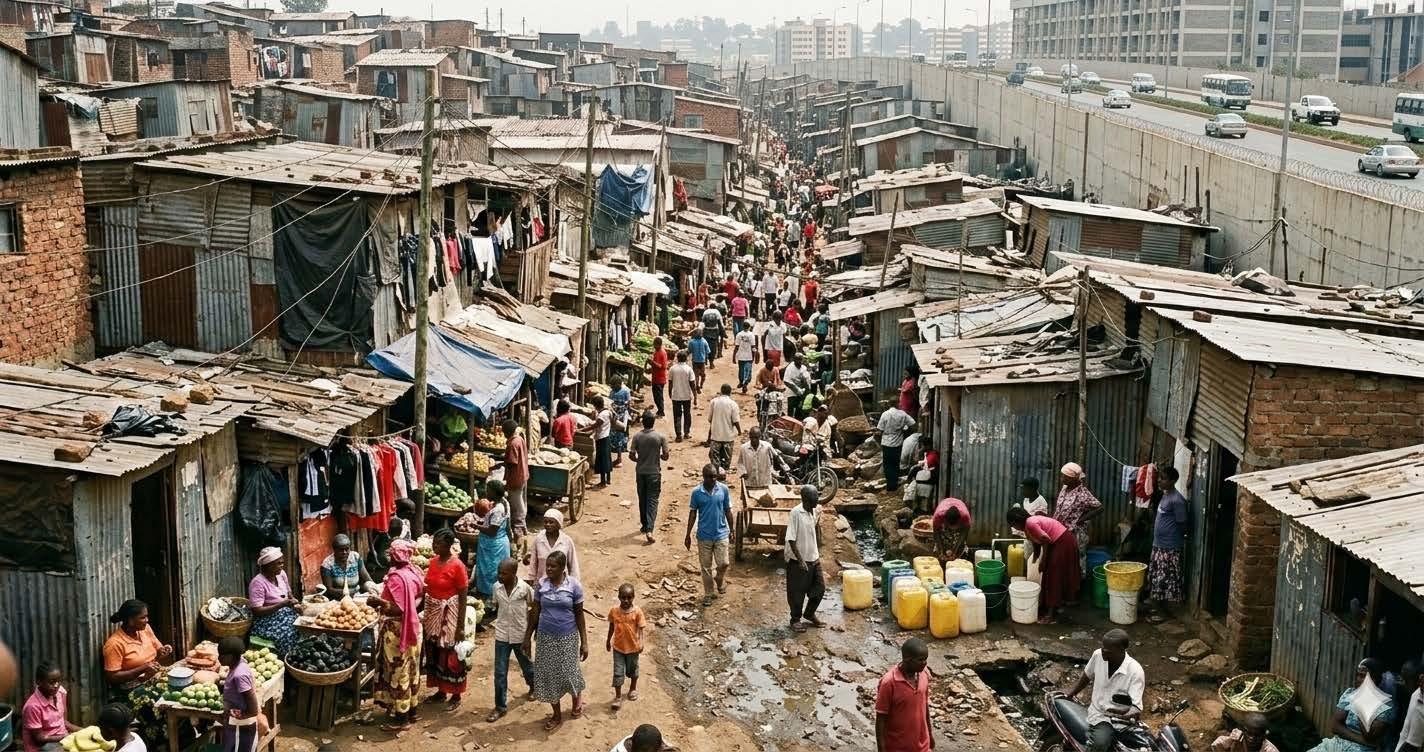
Urban informality refers to settlements that have conglomerated together, with high densities of people living in often poor living conditions. The structures are often make-shift, with people living in close proximity to each other. The relationships between the occupants are close-knit, where a system of organization, commercialization, and everyday living is formed. There are often clear boundaries to where these settlements are formed or backed up against, often by more formal settlements or infrastructure. The conditions are often dire, with little access to water and clean sanitation. The streets within offer a way for occupants to interact with each other beyond simply transportation.
IMAGE
2:
BASED ON REVISED UNDERSTANDING
STEPHEN KHAMIS
READING INFORMALITY: INTERPRETING THE UNPLANNED IN DESIGN
MAPPING AND ENGAGING WITH INFORMALITY
01 02 03
The bias that Gemini had with this image was assuming the nationality or ethnic group that was occupying this informal settlement.
The barbed wire shows the dire nature that AI was implying these settlements are in. It assumed a need to make this settlement secure, enclosed around the people living here.
As the prompt clearly listed the structures being often “makeshift,” structures created in this image look to be more established, with little hierarchy of materiality and stability.
IMAGE 2: BASED ON REVISED UNDERSTANDING