Designing the Informal: A New Perspective on Spatial Practice
Ogechi Oseji
Ogechi Oseji
SEEING AND INTERPRETING INFORMALITY
Generate a realistic image based on the following description of urban informality sparsely spaced, densely packed coastal areas made up of buildings that are constructed with mid quality materials. The streets do not follow a specific grid or pattern but follow the most efficient directions to get to destinations. I imagine that the vegetation in this community is sparsely placed and made up of unique plant species and not uniform. The structures don't follow specific guidelines but just built to the taste of the owners.
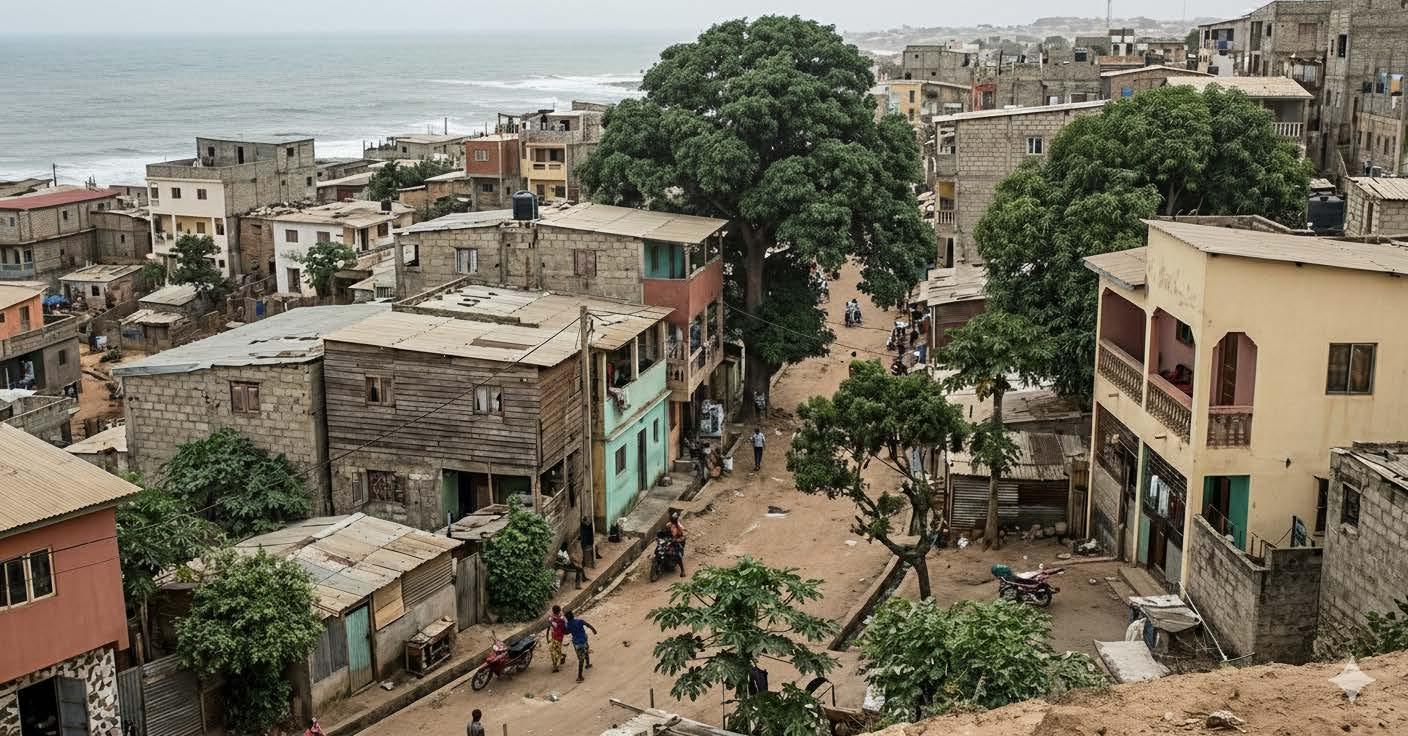
IMAGE 1: BASED ON INITIAL UNDERSTANDING
SEEING AND INTERPRETING INFORMALITY 01
The prompt does not specify the specific group of peope that reside in this settlement but the image shows a bias towards a secific group oof people. and part of the world.
02 03
The reflection of density in the image based on the prompt is lacking and inaccurate.
I became a tool not only for visualization but also for reflection, revealing how my own perceptions of urban informality had been shaped.
IMAGE 1: BASED ON INITIAL UNDERSTANDING
Generate a realistic image based on the following description of urban informality: A town just outside of a city. Multi level story homes that are occupied by multiple generations of families. This should be a high density town with mid-lower level infrastructure, narrow roadways with the building spilling into the roads. People in the image should consist of multiple generations and the activities going on should be community oriented. the image should be from street view
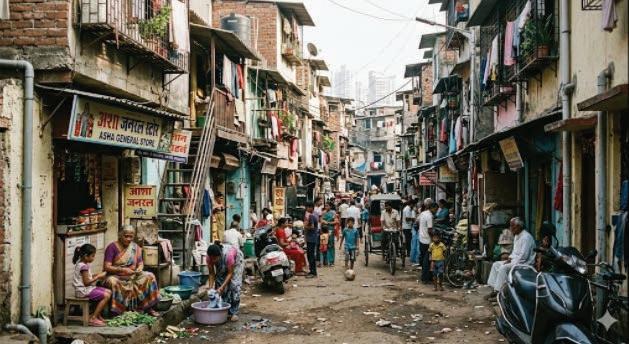
IMAGE 2: BASED ON REVISED UNDERSTANDING
Rather than spaces shaped by abscense informality is being defined by community and social interaction.
Again, software is representing a region of the world that was not specified in the prompt, showing bias.
Lack of sanitation.
IMAGE 2: BASED ON REVISED UNDERSTANDING