Designing Flexible Learning Environments: Adaptive Furniture & Reservable Spaces for Diverse Study Needs
Ideation, Prototyping & Final Design Solution
CONCEPT STATEMENT →
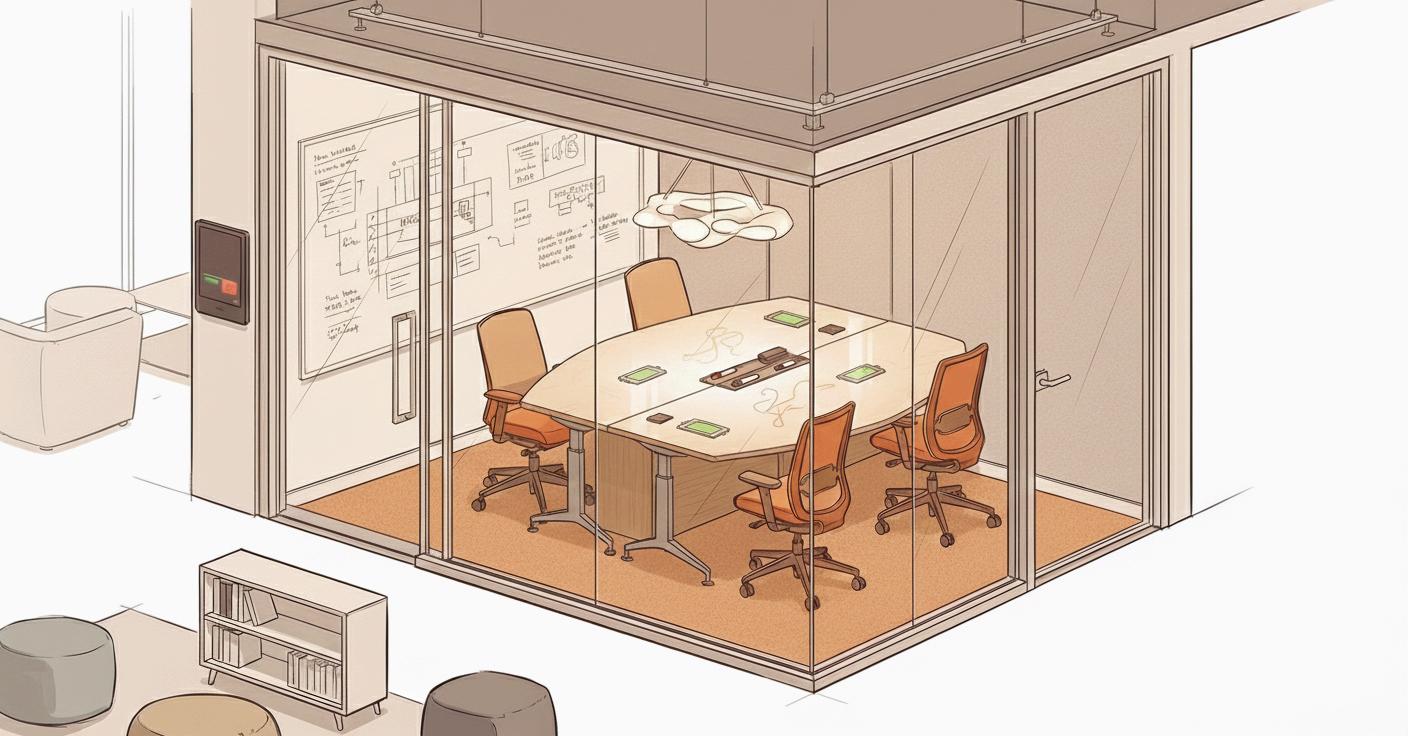
We propose implementing flexible spaces with furniture that promotes adaptability and ergonomic comfort. These spaces involve reservable and soundproof rooms, modular tables with integrated charging stations, whiteboard surfaces, and comfortable seating.
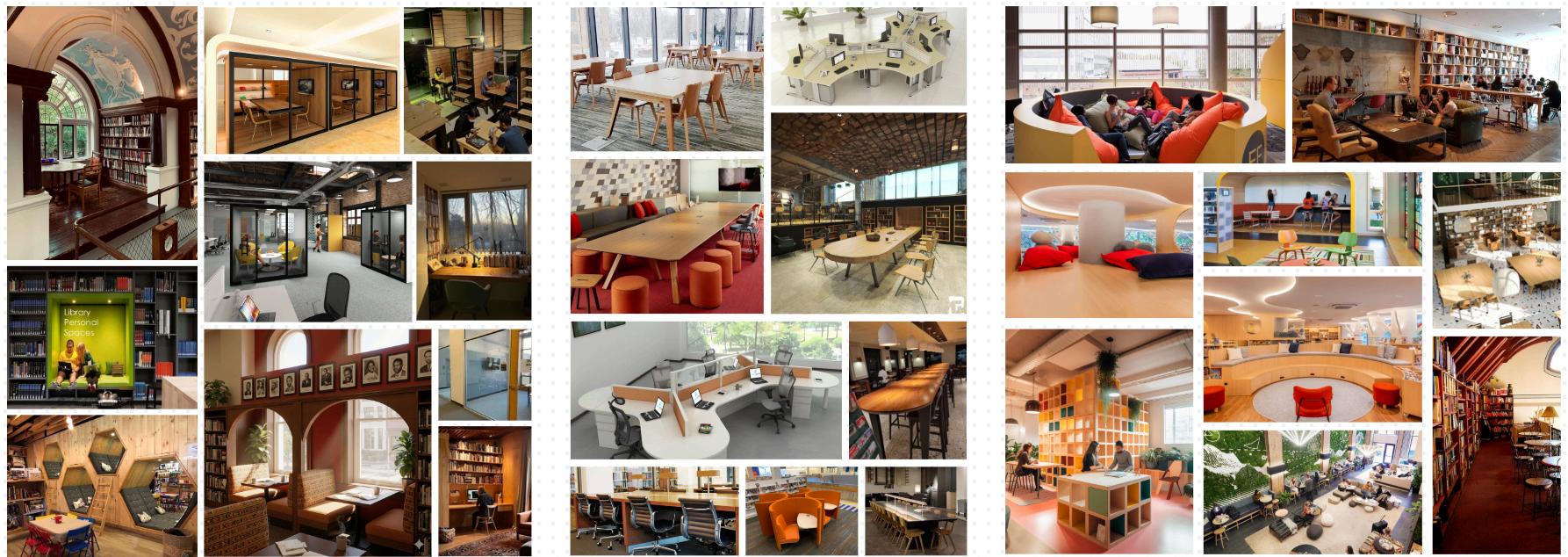
COLLAGE & IMAGE BOARDS
PROTOTYPING
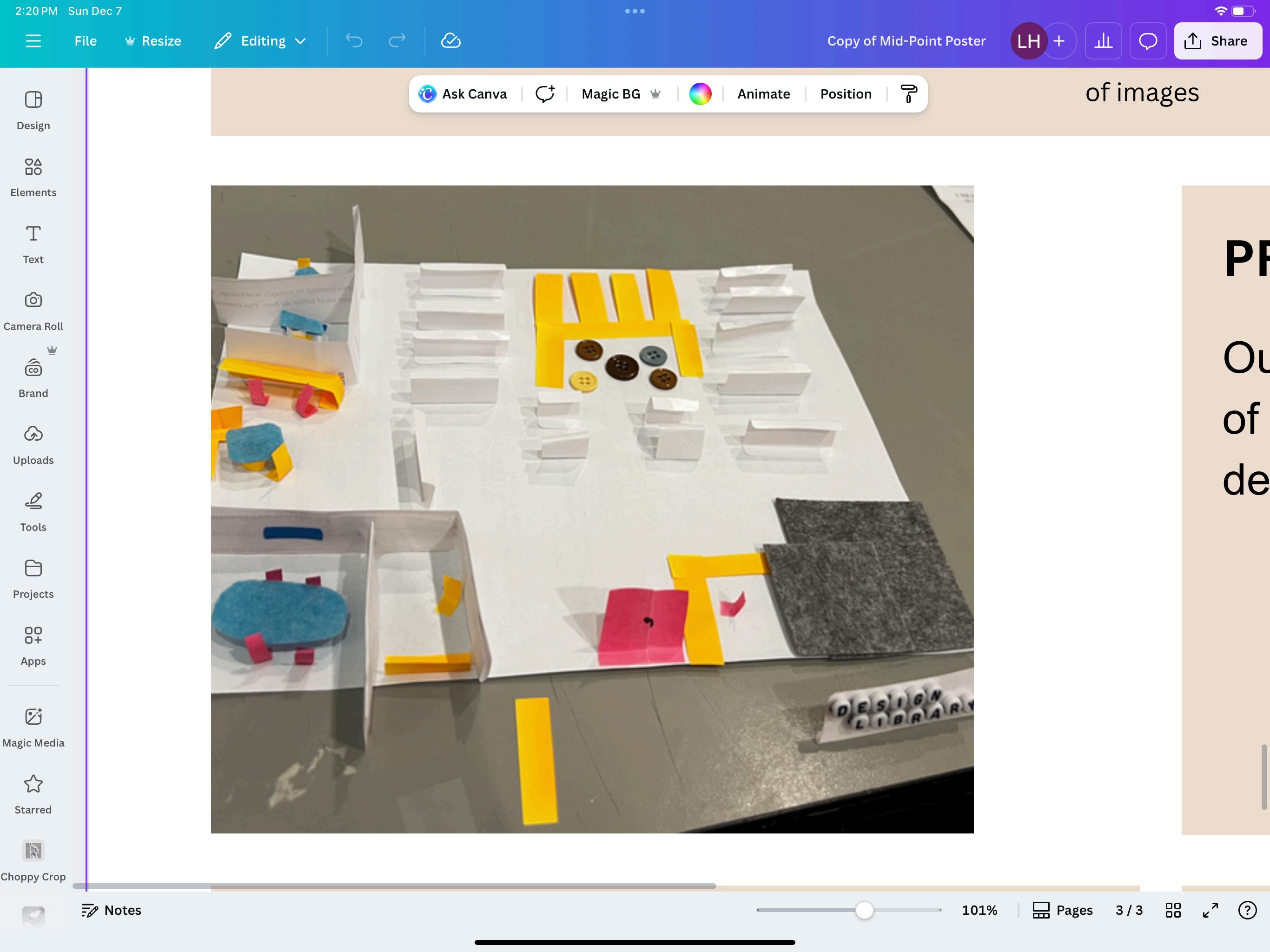
Our prototype was a low-fidelity model of the design library to highlight how our reservable rooms would redefine space and interact with the existing design The blue pieces highlight the new integrated modular furniture that will provide users with plenty of table space There will also be rooms added to provide a private work setting with an additional common area
FINAL DESIGN SOLUTION
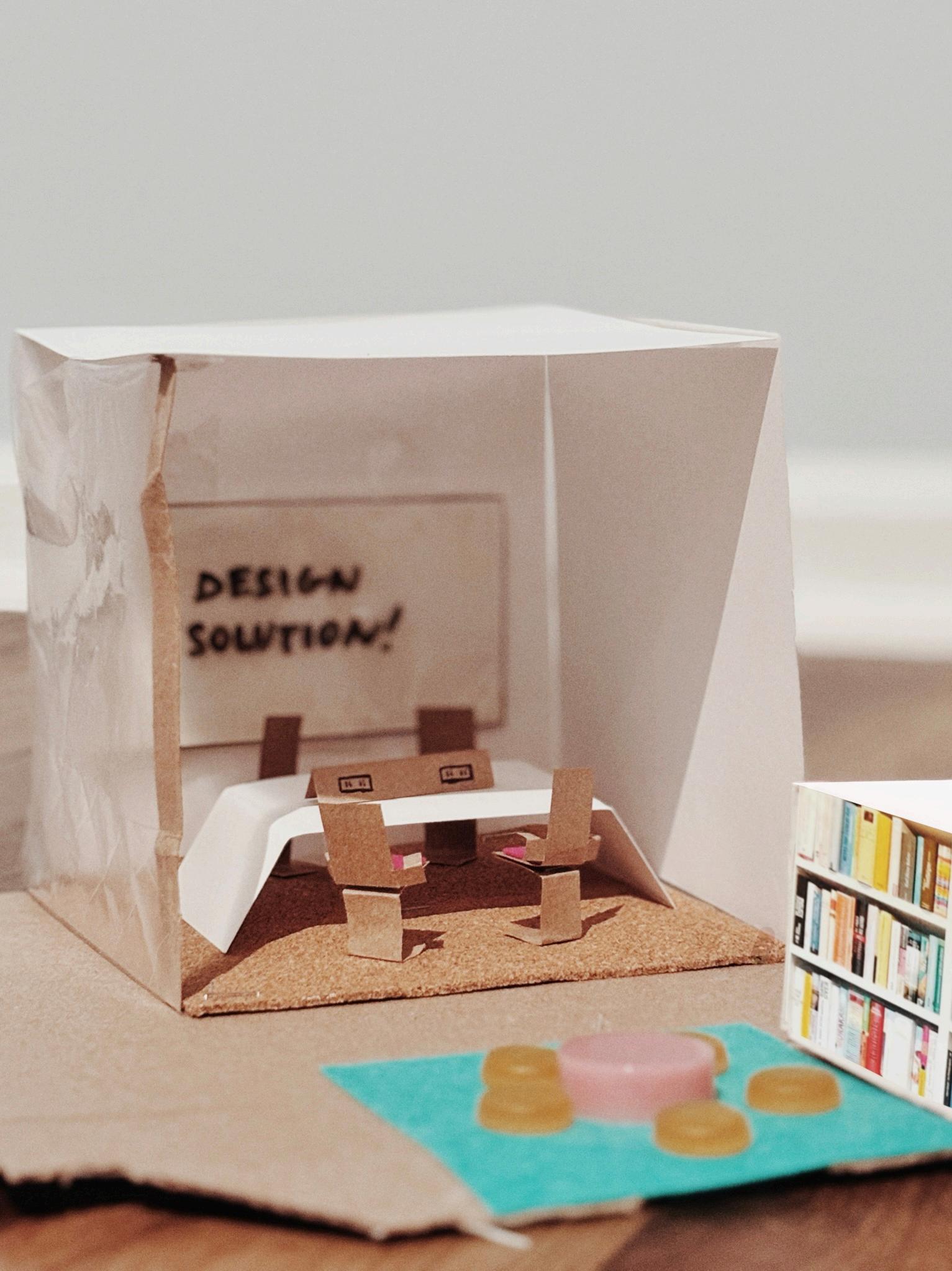
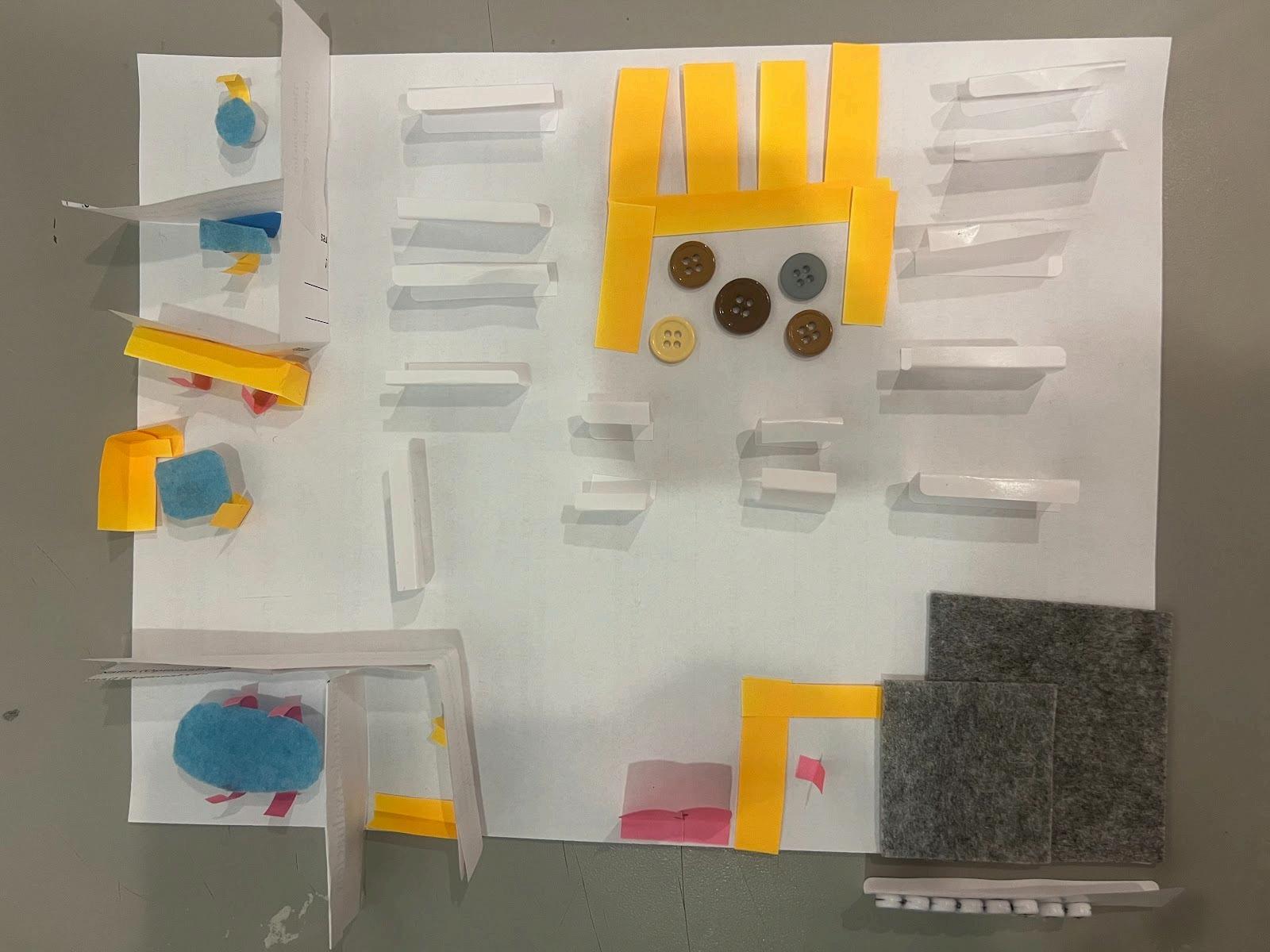
Enhancing the quality of the workspace will enable various studio-based majors to engage with modular furniture, providing ample workspace for large-scale projects Incorporating interactive elements, such as whiteboard tables and ergonomic furniture, will support user productivity and improve overall performance Additionally, creating designated collaboration and individual zones with flexible seating arrangements will promote teamwork and innovation among users By prioritizing functionality, the workspace can become a dynamic environment that can facilitate creativity and learning
Creating the persona & empathy map created new perspectives, streamlining the path to our solution Exchanging ideas and feedback was essential, giving us the idea to combine our three concepts into one ideal solution: a solution that will provide flexibility and diversify the space to accommodate users, providing the option of an intimate space to work individually or collaboratively