Interpreting Informal Urbanism Through AI
JATAIYA TAYLOR

JATAIYA TAYLOR
In my initial understanding of informal urbanism, I was unfamiliar with terminology, but once I was introduced briefly to the concept it began to feel familiar.
I realized I had encountered these spaces in my everyday life both in the small city where I grew up and the in the larger cites I have visited. I had also see examples of informality represented in the media.
At first, I imagined informal settlements as places that had grown faster than manage. I pictured dense neighborhoods shaped by rapid expansion, filled with strong community ties.
I associated these spaces with natural and makeshift materials such as wood and stone. With lively streets influenced by music, sports, and social interactions. In my mind, people moved through these areas on foot because walking was practical and accessible due to density.
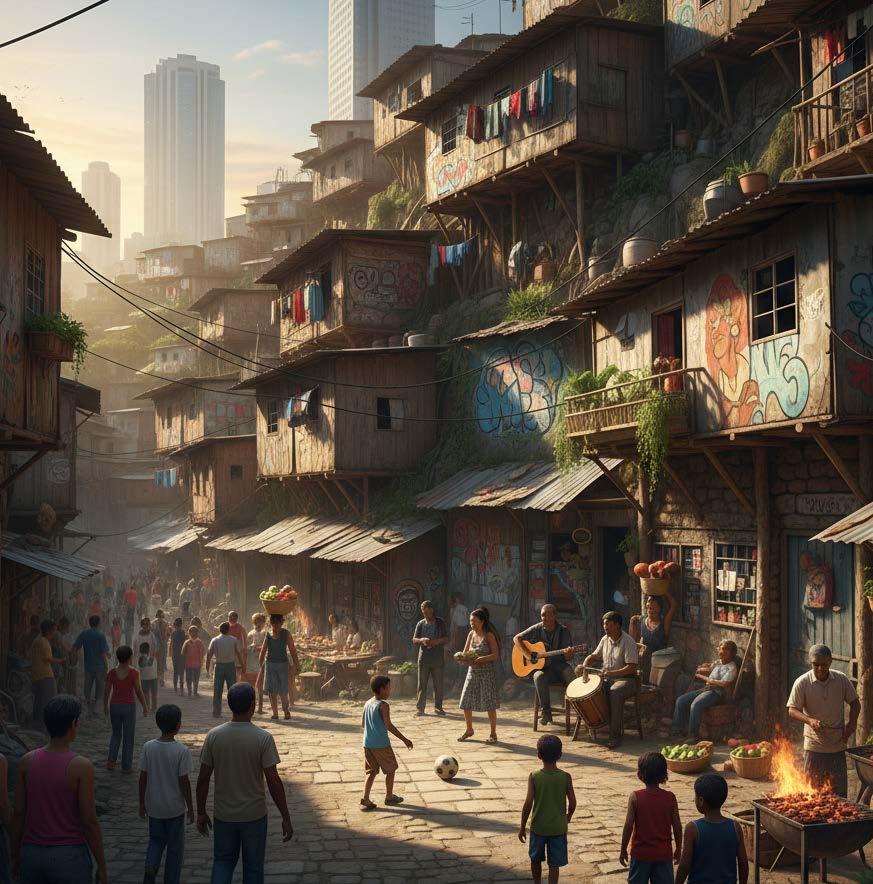
IMAGE 1: BASED ON INITIAL UNDERSTANDING




AI made assumptions on the type of people who would live in an urban village and their culture.
AI made assumptions about the site and materials, showing stone or uneven paved road. It possibly showed an underused site for informal housing.
AI did well in showing how makeshift materials can be used to build housing quickly.
AI displayed the housing structure with signs of graffiti.
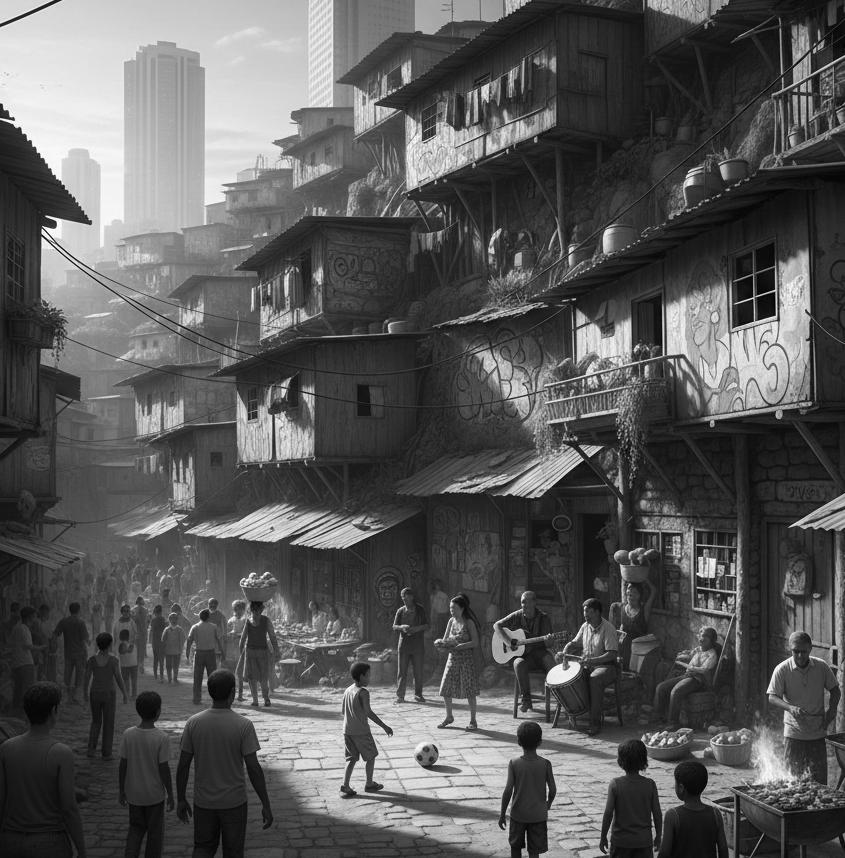
IMAGE 1: BASED ON INITIAL UNDERSTANDING
My understanding of informality deepened as I explored where, how, and why it manifest in larger cities.
I realized informal settlements often develop due to gaps in affordability, access, and opportunity.
This shifted how I think about representation and influence of media. Informality is not limited to one place but appears wherever cities lack sustainability and adaptability for different incomes and lifestyles.
When I used Google Gemini’s image generator, I noticed bias in how residents were depicted, reflecting stereotypes and its inability to depict an informal settlement without assuming characteristics of its residents.
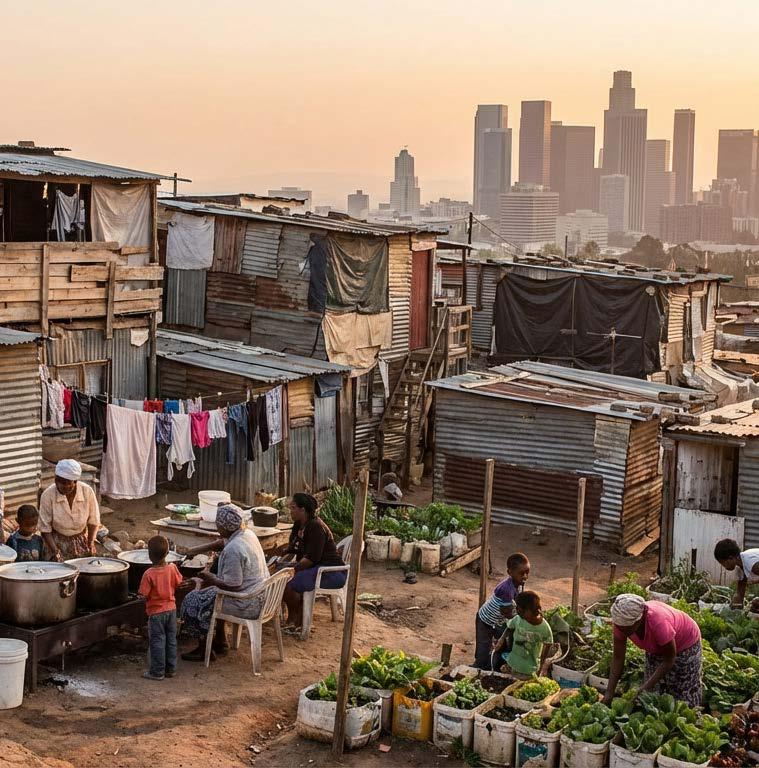
IMAGE 1: BASED ON INITIAL UNDERSTANDING
AI assumed the type of people living in the informal site and their clothing.
AI did well in showing environmental conditions and the informal nature of the environment.
AI did well in showing the how people will self-serve by growing their own food.
AI did in showing the use of recycled materials in the housing structure.
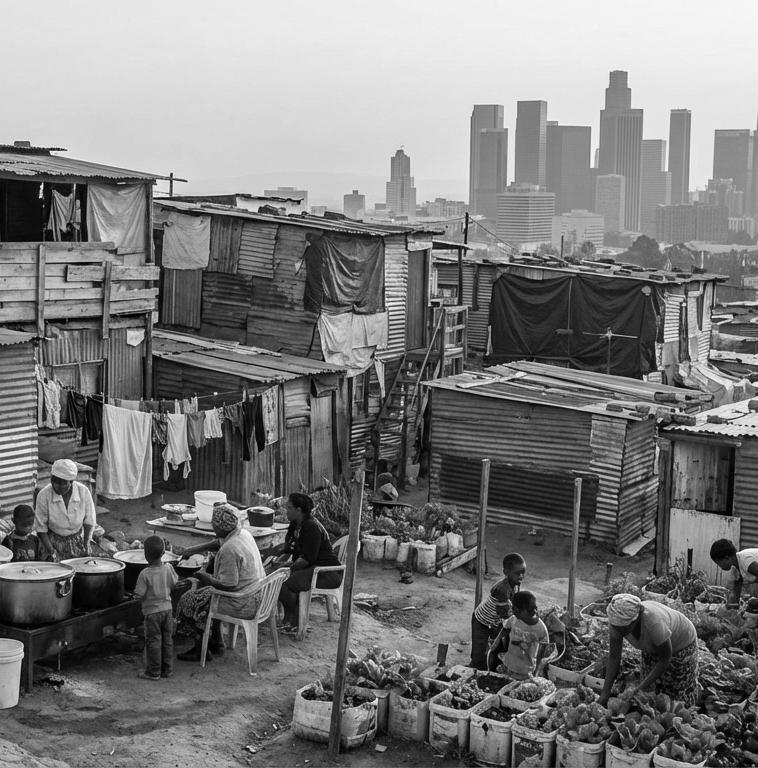
IMAGE 2: BASED ON REVISED UNDERSTANDING