NC State University promotes equal opportunity and prohibits discrimination and harassment based on one’s age, color, disability, gender identity, genetic information, national origin, race, religion, sex (including pregnancy), sexual orientation and veteran status.
Connect with the College
NC State University College of Design
Spring 2026
Stay connected with the College of Design! Whether you’re analog, digital or somewhere in-between, learn about all of the ways our students Think and Do the Extraordinary.
Attend
Dean
Mark Hoversten PhD, FASLA, AICP
Editor Christine Klocke
Designers Amber McCullough
Krista Padilla
Faculty Design
Advisor Jarrett Fuller
Contributing
Photography Max Cohen
Contributing Writers Miriam Antelis
Max Cohen
H'Rina DeTroy
Sam Gunnels
Christine Klocke
Erin Zanders
Please join us on campus for an upcoming event, lecture or symposium! For a list of upcoming events, visit design.ncsu.edu/events
Hire
We may be a little biased, but our graduates are some of the best in the business. Consider hiring our recent alumni as well as current students to provide experience both inside and outside the classroom.
Update
Want to stay connected with the College of Design? We would love to hear about new projects, promotions and awards. Email Christine Klocke at chklocke@ncsu.edu to share your good news with us. Want our newsletter or other publications? Visit go.ncsu.edu/design-news to sign up!
Share
We’re a social bunch. Like, share, and engage with @ncstatedesign on Facebook, Instagram and LinkedIn.
Ways to Support the College of Design
Every gift, no matter the size, has an impact on the faculty, staff and students of the College of Design. Private support provides design students with unparalleled opportunities for innovative learning and academic growth while preparing them for a bright future to live a Designlife. Every gift has an impact on the faculty, staff and students of the College of Design. There are many ways donors can support the college through a gift, whether through annual giving, creating an endowment or a lasting legacy of a planned gift.
For more information or to have a confidential conversation regarding ways to support the College of Design, please contact a member of the development team by scanning the QR code below.
Direct comments or questions to:
Christine Klocke
Director of Communications and Marketing
NC State College of Design
Campus Box 7701
Raleigh, NC 27695-7701
@NCStateDesign
A Decade of Vision
Miriam Antelis
Designing with Sustainability
Old Tree Gets New Life in Urban Wood Course
When a dying oak tree in the Brooks Hall courtyard had to be taken down, Audrey Barnes ’03 decided to give it new life.
“I joke that I need sawdust for survival,” said Barnes, head of the Department of Graphic Design and Industrial Design.
“When I saw they were taking a tree down in the center of the College of Design, I said, ‘Can I have that tree?’”
Barnes partnered with David Hill, head of the School of Architecture, the NC State Sustainability Office and the College of Natural Resources to prepare the tree for use. The process of milling, air drying and kiln drying the wood took about a year. In spring 2026, the tree was ready to begin its next chapter. Barnes introduced the inaugural Circularity & Narrative: Stories in Urban Wood course, where she challenged students to build something out of the oak tree, incorporating the concepts of circularity and narrative.
“My heart is focused on ideas of circularity — designing cradle-to-cradle versus cradle-to-grave,” Barnes said. “And thinking not only about the sustainability of the materials, but the sustainability of end of life, when products are no longer useful in their current context.”
The urban wood course included three components. Students began by
researching the history of the tree and the College of Design — the tree stood adjacent to Brooks Hall for the entirety of the college’s 75-year history — and writing a narrative based on their findings.
“Their narratives explore the ways in which the tree might have experienced moments in history — design movements, maybe even social or political movements — throughout its lifetime,” Barnes said. Students welcomed the chance to tap into different sides of their creativity.
“I used to write songs more. I used to write more in general, but as life gets crazy and fast, I have done less of that,” said Lindsey Dotson ’22, a master’s of industrial design student in the course. “Bringing that back into my life has been really fun.”
Then, Barnes had students write personal design manifestos.
“I wanted them to think about their design principles specifically for circularity and sustainability,” she said. “You very rarely get to design in a way that’s completely unencumbered by commercial influence, but if you got to, what would it be?”
The final component involved each student designing an artifact inspired
top: Master of Industrial Design Student Lindsey Dotson prepares a piece of wood taken from the felled oak to craft into a piece of furniture.
bottom: The felled tree is cut into logs before being prepped into planks.
by their narrative and personal design manifesto, with the course culminating in an exhibition.
Dotson sees the value in incorporating circularity into her work. Prior to returning to NC State for graduate school, Dotson worked for a commercial playground manufacturer.
“What’s going to happen in 50-100 years to all those playgrounds I designed out of powder-coated steel and plastics? That pulled on my heartstrings,” she said. “Designers can make a difference in how they design their products and have an end-of-life plan for them. I'm excited to learn more about it and prove that it’s possible.”
Circularity is something Barnes hopes to ingrain in her students — and into NC State’s culture.
“Infusing the future generation with some of this knowledge and letting them build their own design philosophy is my way of being more sustainable,” Barnes said.
She hopes to continue offering the urban wood course, but she doesn’t plan to stop there. Barnes’ vision is to create a robust urban wood system at NC State and she’s working with partners across campus to make it happen.
“We’re a land-grant institution. What a model of sustainability it would be if some of the things we’re building come from our own land,” she said. “Imagine if people could purchase lumber from a tree milled at NC State, and then utilize that for furniture-making or architectural installation? There’s all kinds of ways you could use that material. And it would come with a connection to history and a reverence for place.”
The idea is already starting to take root.
“It's funny, because now, every time a tree gets taken down across campus, I get an email about it,” Barnes said.
Students ideate on possible furniture designs utilizing joinery techniques learned in studio.
Old Tree Gets New Life in Urban Wood Course
Designing for Extreme Conditions
Ted Givens and Discovering Tomorrow's Hidden Season
Max Cohen
For alumnus Ted Givens '95, architecture has never been about staying in one place, either physically or creatively.
Before he was leading projects across continents, Givens was a second grader wandering through the College of Design’s studios, captivated by students turning unexpected materials into something new. That early exposure sparked a lifelong instinct to question, experiment and draw. Habits that continue to shape his work today.
Now based between Asheville and a global network of projects spanning the Caribbean, Asia and the Middle East, Givens has built a career defined by movement. His path hasn’t followed a traditional trajectory, and has been primarily driven by instinct, timing and a willingness to take risks. That meant turning down stable opportunities, relocating his family overseas and stepping into unfamiliar environments to learn firsthand.
“I always wanted to see the world,” he says. “That was the mission from the beginning.”
That mindset led him to becoming a founding partner of 10 Design in Hong Kong with three other partners in 2010, where he spent over a decade working on international projects and collaborating with teams representing dozens of nationalities. The experience reshaped
how he approaches design. Navigating cultural differences, varied building practices and complex global contexts pushed him to think beyond aesthetics and toward adaptability.
Today, that perspective is central to his work in architecture that is designed to thrive in extreme conditions.
Givens approaches every project with a simple but urgent understanding: there is no longer such a thing as a “safe” site. Rising sea levels, extreme weather and shifting environmental conditions have made risk unavoidable. Instead of treating sustainability as an add-on, he sees it as the foundation of good design.
“Everything is at risk,” he explains. “So every building has to respond to that.” His work reflects that philosophy. From cliffside homes engineered into fragile
landscapes to projects in coastal and storm-prone regions, Givens leans into complexity. These aren’t just technical challenges, but opportunities to rethink how buildings interact with their environments.
In many cases, that means designing structures that evolve rather than resist change. Inspired by natural systems, his projects often incorporate materials that weather over time, allowing buildings to age, adapt and blend into their surroundings. Some are intentionally designed to nearly disappear, prioritizing harmony with the landscape over visual dominance. At the same time, Givens is pushing the boundaries of how architecture is created.
While his firm uses advanced digital tools to bring out-of-this-world concepts
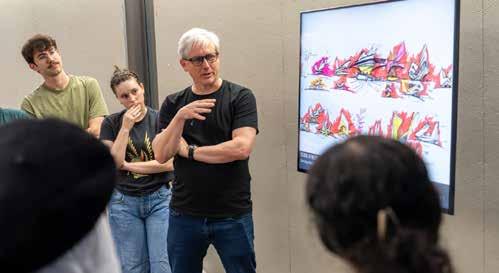
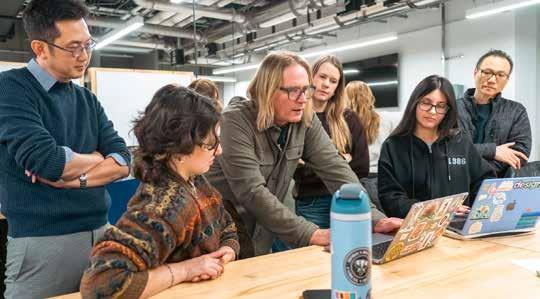
Givens hosting a drawing workshop with architecture students in Leazar Hall.
to life, he’s found that the most meaningful moments in the design process often come from something much simpler: sketching.
Sitting down with clients, drawing ideas in real time and translating abstract thoughts into physical form has become a defining part of his practice.
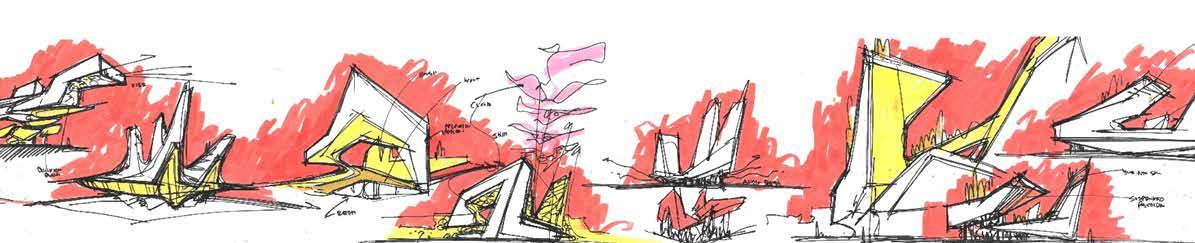
“Even sketching causes a project to morph as you continue to sketch,” reflects Givens. “It’s like what Emerson said about ‘discovering tomorrow’s hidden season.’ That’s what we’re after.” That openness to interpretation has led to unexpected collaborations, including recent work with graffiti artists. In one evolving concept, Givens creates initial sketches, then invites artists to layer their own ideas directly onto the drawings – challenging, reshaping and expanding the design before it’s ever built. The result is a more fluid, collaborative process that blurs the line between architecture and art.
It’s an approach rooted in experimentation, something Givens
believes is essential for young designers. Reflecting on his own career, he encourages students to seek out different perspectives early on, move between firms, learn new systems and resist the urge to settle too quickly.
“You have to see how different people work,” he says. “That’s how you figure out your own path.”
Now, Givens is focused less on scaling up and more on refining his approach. After leading a large team at 10 Design, he’s intentionally keeping his new practice at Ted Givens + Partners smaller and more agile, allowing for deeper collaboration and creative freedom.
His goal is simple: to continue creating work that connects architecture, nature and human experience in meaningful ways while staying open to wherever the next opportunity leads.
If his career is any indication, Givens’ outlook teaches that the most meaningful work happens just beyond the edge of what feels certain.
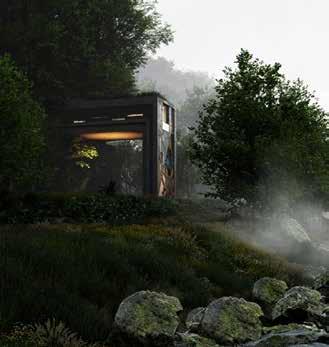
above: A home designed to both blend and adapt to extreme weather conditions in the North Carolina mountains.
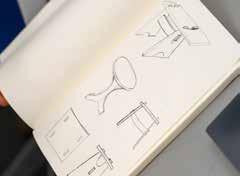
below: Givens' process sketches make difficult-toexpress ideas more tangible.
Investing in Future Designers
Design Pathways Supports and Empowers Students
Sam Gunnels
For many college students, earning a degree isn’t just a matter of hard work; it’s a matter of access. The Design Pathways Program — established in 2024 by a generous gift from alumnus Jerry Cook and his wife, Marilyn — was created to provide that access for students in the College of Design.
An extension of Pack Promise, which supports the financial needs of NC State students from low-income North Carolina households, Design Pathways is open to eligible design students starting sophomore year. The program funds enriching opportunities that help students excel inside and outside the classroom.
Supporting the Creative Journey Mac Dameron, a junior in media arts, design and technology, is passionate about using animation to tell stories. Design Pathways gave her the tools to get the job done in her tech-heavy animation courses, where the right hardware is a prerequisite for professional-grade storytelling.
“I got my first iPad when I came to college, but it was secondhand and not in the best condition,” Dameron said. “Design Pathways allowed me to get one of the best available, as well as a drawing tablet, which has helped me in my classes.”
She put those tools to good use in a recent class project that required groups
of students to produce short animated commercials advertising fictional products. Her group devised a product called Creative Juice, a performance supplement for people in creative fields.
“With the new tablet, I was able to use a program that works really well for animation and has a great workflow,” she said. “I pushed out the animation a lot faster than I could with the tools I had before.”
Design Pathways also helps students embrace life-changing experiences, like studying abroad.
Autumn Tate, a junior in graphic & experience design, used her funds to take part in a summer program in Japan. The two-week, seven-city itinerary sent her on an “exploration of Japan’s visual culture,”
with stops at natural wonders, like Nachi Waterfall, and cultural sites, like the Tokyo Photographic Art Museum.
“I like to blend my artistic side with graphical techniques, and the trip influenced me to try new things beyond just the techniques I’ve learned in the classroom,” Tate said.
Penelli Yang, a senior who’s also in graphic & experience design, used funds from Design Pathways to study at the NC State European Center in Prague. As part of the center’s Spring Classic Program, she spent early 2026 immersed in the deep well of European design history.
“Design Pathways allowed me to commit to the full semester abroad without the huge burden of financial stress,” Yang said. “They paid for my plane
ticket and they helped pay for my food — those little things you don’t think about until you’re there.”
Nurturing a Culture of Belonging Beyond funding, Design Pathways offers a close-knit community to help students navigate the pressures of college life and prepare for their careers.
“The people running the program are amazing,” Dameron said. “They help you understand that the challenges you’re going through are normal, and they’re here to help you deal with them.”
Monthly meetings give students a safe forum to discuss important topics — like mental wellness and professional development — and share how they’re using their funds.
“It’s really cool because it’s not just students from one specific major,” Tate said. “I like hearing the stories of students throughout our college. They inspire me.”
The program’s mentors provide career guidance and encourage students to explore professional opportunities such as conferences and internships. Tate is excited to connect with working creatives at the upcoming CreativePro Week in Nashville — an experience she’s paying for with Design Pathways funds.
“Having the support to do things outside of the regular classroom experience — things that help us in our careers — is crucial,” Tate said.
The first cohort of Design Pathways students had a chance at the end of the 2025 academic year to meet the people at the program’s heart: Jerry and Marilyn Cook. The full-circle moment only enhanced the students’ appreciation for the support they’ve received.
“Just getting that face-to-face connection — it helps you to know there are people out there who believe in you,” Yang said.
opposite page: Senior Penelli Yang poses in front of a landscape in Český Krumlov, Czech Republic during her study abroad experience.
center (bottom): Mac Dameron used her funding to purchase an iPad, an essential tool for bringing her animations to life.
center (top): Junior Autumn Tate (center) poses with a group of her peers in front of Osaka Castle while studying abroad in Japan.
Marilyn
right: Jerry and
Cook founded the Design Pathways program in 2024 to aid students annually with the hidden costs of college.
Building a Collaborative Design Process
Designing Together: Inside the First GXD+ID Joint Studio with Lenovo
Max Cohen
For decades, design education has largely followed a familiar structure: disciplines separated, projects contained, collaboration encouraged but not always embedded.
Taking place amongst desks covered in prototypes and sketches in Lampe Hall, a new studio is challenging that model. In the studio, named Envisioning Future Experiences, students from industrial design (ID) and graphic & experience
design (GXD) are brought together to work as unified, holistic design teams.
Envisioning Future Experiences is the college’s first joint studio of its kind, developed in partnership with Lenovo. The studio asks a fundamental question: what happens when hardware and software designers learn to think and build together from the start?
According to Lenovo’s design leadership, that question reflects a broader shift already underway in the field.
“The role of the designer is changing,” said Brian Leonard, Lenovo’s vice president of design. “Traditionally designers would be focused only on hardware design, software design or user experience. Now, collaboration between those disciplines is creating the experiences of the future, especially in the era of AI.”
That future is rooted in experience. Not just how something looks or feels, but how it functions across physical and digital touchpoints. For students, that meant moving beyond familiar workflows and into a more integrated and at times unpredictable process.
“It was the first time for us doing this in the same timeline,” said Assistant Professor of Industrial Design, Byungsoo Kim. “We were also figuring things out as we were moving toward different phases, and kind of making a roadmap as we were going.”
That uncertainty was by design. Rather than prescribing solutions, the studio emphasized open-ended problemsolving. Students were asked to identify opportunities in the growing space between physical products and digital systems, or “phygital” experiences, and then develop concepts that addressed both simultaneously.
“It wasn’t about what we thought should exist,” said Katie Gray Jackson, Lenovo’s design chief of staff. “We wanted the the students to find a user’s problem then work collaboratively to find solutions organically. And that’s really what they’ve achieved.”
The process was supported by an unusually high level of industry engagement. Hardware, software and UX designers from Lenovo regularly joined critiques, offering feedback from multiple perspectives. For faculty and students alike, that access created a more immersive learning environment.
“Anytime design experts come to our studio, they bring a whole new level of energy and motivation with them,” said David Oh, an assistant professor of graphic & experience design. “It was apparent that students really appreciated the time and effort from Lenovo’s leadership.”
For students, the impact was immediate
and, at times, challenging. Working across disciplines meant navigating different design languages, priorities and processes.
“I think at first it was a bit of a challenge, just because the GXD and ID processes are very different,” said Danielle Varner, a senior in graphic & experience design. “But it was really helpful to think about a broader design perspective rather than working in silos.”
That shift in perspective often led to stronger outcomes. Projects evolved through continuous dialogue between hardware and software considerations, resulting in more cohesive and realistic solutions.
“Our product would not have been anywhere near as effective without graphic design being involved in the process,” said Sarita Schneider, a senior in industrial design. “And I feel like they would say the same.”
Faculty observed the same trend. In post-studio feedback, students reported that their final projects were significantly improved compared to work developed within a single discipline. “The overall sentiment was that better interaction leads to better outcomes,” Kim noted.
What made the studio particularly notable, however, was not just the quality of the work but the nature of the collaboration itself. While crossdisciplinary teamwork is often discussed in professional settings, it remains difficult to implement even at the industry level, let alone the educational level.
“I hear often that it’s really challenging for even professionals to work with hardware and software together,” Kim said. “Some companies try, and it doesn’t work.”
In that context, the studio offered something rare: a space where emerging designers could experiment with collaboration before entering the workforce. Without the constraints of established roles or rigid processes, students were able to adapt more fluidly, learning how to design together.
“Students felt more comfortable working together,” Oh said. “I thought it would be harder, but it was probably much easier than professionals coming from different disciplines.”
For Lenovo, the experience was equally valuable. “It’s not just about what the students learn from us, we learn a lot from them as well,” Leonard said. “Seeing the students work so well together reinforced
the importance of collaborative design. Design is a team sport!”
As the College of Design continues to evaluate and refine the studio, one thing is clear: this model represents more than a one-time experiment. It points toward a broader evolution in design education that mirrors the realities of contemporary practice.
“I had to learn really quickly how to be a bit of a translator,” Jackson said, reflecting on her own experience entering a multidisciplinary design team. “You have to understand different design perspectives and languages to find that harmony.”
opposite page: Student Sarita Schneider presenting with her team at Lenovo's HQ.
top left (left to right): Byungsoo Kim, student Sam Lesser, Brian Leonard, Katie Gray Jackson, student Danielle Varner and David Oh.
top right: Student project sketches.
From Campus to COP30
How Landscape Architects Are Leading Climate Action
Christine Klocke
Heat islands, urban deserts, dwindling biodiversity. Increased extreme weather events. As the world continues to experience the rapidly increasing effects of climate change, landscape architects like Meg Calkins, FASLA, FCELA are emerging as shaping solutions to the challenges affecting our physical environments today.
Calkins, a professor of landscape architecture and environmental planning at the NC State University College of Design, chaired the task force for the American Society of Landscape Architects (ASLA) that considered how to provide practicing landscape architects with opportunities to combat climate change — encouraging not just carbon neutrality, but a carbon-
positive approach. The result: the LA 2040: Climate and Biodiversity Action Plan.
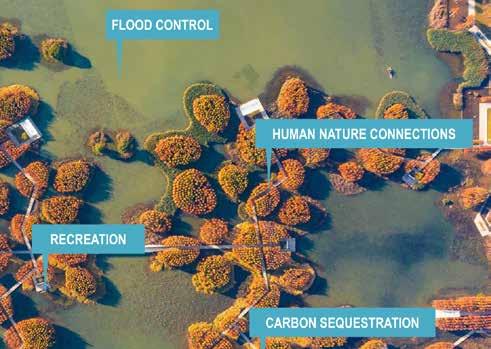
"Landscape architects employ naturebased solutions to reduce the impacts of climate change on our environments," says Calkins. "We have a unique opportunity in this profession to be able to offset our own carbon footprint. It's literally a mathematical calculation – calculating the carbon footprint of building and maintaining the site through activities like powering the lights, mowing the grass, blowing the leaves, etc. – then offsetting those greenhouse gas emissions with plants that can reduce the carbon impacts through carbon sequestration."
The updated plan added one important issue to previous iterations: biodiversity considerations. Responding to feedback that the 2022 plan wasn't actionable for the everyday practitioner, Calkins and her team revised the benchmarks for 2030.
From Vision to Action
The new plan acts as a "living" document with routine updates and multiple detailed supporting documents for implementation. "We're not going to shift radically overnight, but there are opportunities for low-hanging fruit that we can target," Calkins adds.
The plan provides concrete actions
As a delegate from ASLA, Calkins shared the financial, environmental and health benefits of designed landscapes in two presentations at COP30 in Belem, Brazil. This project is Fish Tail Park in Jiangxi Province by the landscape architecture firm Turenscape.
throughout — from building smaller and tapping into local supply chains to recommending native species to improve biodiversity. Meaningful actions don't require radical steps; many professionals choosing thoughtfully across individual sites can compound into real change.
Nature-Based Solutions: Designing for Adaptation, Health and Equity
Calkins is insistent that pairing climate and biodiversity in practice should be the status quo. "This isn't the far-out future of practice," she states. "It's the now-future of practice." Students graduating from NC State's program are well-equipped to carry these challenges into their careers, having grown up witnessing catastrophic climate disasters and trained through lenses of public policy, community and social equity.
"Good design isn't thrown out the window with climate-positive design. We still have to design compelling, beautiful places, and it's a double-win when we can do that and create a climate-positive site," Calkins says.
Collaboration Across Borders
Calkins recently represented ASLA as a delegate to the 2025 United Nations Climate Change Conference (COP30) in Belém, Brazil, sharing with representatives from the World Economic Forum, the World Bank, the UN Human Settlements Programme and others on how landscape architects can address climate adaptation through nature-based solutions — stormwater mitigation, improved water quality, reduced heat islands, improved air quality and more.
The benefits extend beyond the physical, affecting the social and emotional well-being of the people who inhabit these places — improved mental health, reduced healthcare costs and healthier communities. Calkins was heartened to see sub-national leaders from across the United States, from small-town mayors to statewide governors, participating in the discussion.
Within the department, those borders are shrinking as students embrace a more global approach to their studies. The College of Design has embraced partnerships worldwide, most notably with the National Autonomous University of Mexico (UNAM) in Mexico City.
Department Head María Bellalta has expanded the focus of landscape
architecture across territories — both as a leader in the International Federation of Landscape Architects (IFLA) Americas and by leading students in a studio focused on Mexico City in partnership with Gabriella Carillo. Students traveled to Mexico City to see the challenges of urban growth firsthand.
One big focus of the Climate and Biodiversity Action Plan is learning from indigenous cultures as the experts in managing those lands. "As the college expands its partnerships worldwide, students have increased access to learn from a wide array of cultures and experiences, which will inform and enhance their work as designers," says Bellalta.
The work doesn't stop in the classroom — alumni and practicing landscape architects can further support the bold goals of ASLA's Climate and Biodiversity Action Plan through their practice, research, advocacy and personal support. Landscape architecture isn't just responding to climate change — it's helping to shape the path forward to a more climate-positive future for all.
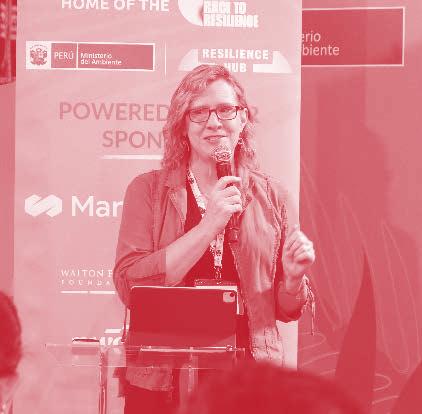
above: Calkins spoke at Peru’s Resilience Hub during the COP30 conference in a presentation entitled “Public open space as equitable, nature-based solutions for urban climate resilience.”
Playing Is Learning Making the Case for Going Outside
Erin Zanders
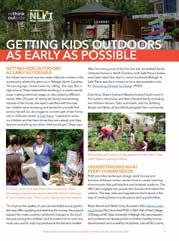
The Natural Learning Initiative (NLI) got its start after two global children’s rights activists each found their way to NC State. For 25 years, co-founders Robin Moore and Nilda Cosco have been using their combined expertise in landscape architecture, urban planning and the psychology of learning to bring back outdoor environments that support child development.
The two met as members of the International Association for the Child’s Right to Play, years before their paths led them to NC State.
“We both come from the field of play,”
said Moore. “I was president of that organization for almost 10 years. I’m passionate about children's play as a way of learning about the environment. That goes back to my own childhood as a kid in the woods in the south of England, doing my own thing.” Cosco, similarly, spent her childhood freely roaming her hometown in the grasslands of Argentina.
Being a kid in the woods or the grasslands, it turns out, has a lot of benefits: self-confidence, cognitive development and a stronger immune system, to name a few. But when Moore was pursuing his master’s degree in city planning from the
left: Pursuing its mission, “Creating environments for healthy human development and a healthy biosphere for generations to come,” NLI has co-led countless state policy initiatives, including with the NC Division of Child Development and Early Education.
Massachusetts Institute of Technology in the 1960s, there was no research literature available about child development and the outdoors. That has changed significantly in the last 25 years. This growing body of research, including work by members of the NLI team, has provided Moore and Cosco with a foundation to grow NLI.
“We look upon play as learning; in fact, we call it ‘playful learning,’ especially with young children,” said Moore. “It's not a separate entity — it's part of the learning process. It's very much tied to the natural world, which is the big motivator of play, because nature is constantly changing. It's not a fixed entity that looks the same day after day. It's always got something new to offer.”
What sets a natural learning environment apart from a traditional playground is that it’s less structured, less predictable and more like, say, playing in the woods. But it isn’t just about introducing children to nature in a vacuum. NLI takes a holistic, community-based approach to developing play spaces and, ultimately, influencing policy to support healthy child development.
From NLI’s very first project in the late 1990s — the Southern Pines Discovery
Park primary school — involving the community has been integral to their process. The group employs co-design processes to engage stakeholders and train them to creatively use and manage the finished playscapes.
In 2007, in collaboration with the N.C. Division of Child Development, NLI launched a signature program, Preventing Obesity by Design (POD), that combines the naturalization of outdoor playful learning spaces with opportunities to conduct research that can inform future work. Ultimately, POD’s goal is to reduce childhood obesity by introducing children to environments that support physical activity, healthy eating and outdoor learning early in life.
“When we started, there was not much research on children’s environments that was high-quality and based on evidence,”
said Cosco. “We did a lot of design assistance work to create demonstration sites that we could use for teaching and for showing how these environments grow, how people manage them.”
The demonstration sites allow researchers to observe how children interact with the play environment, creating a feedback loop between design and research. That work informs their professional development program and feeds new projects, becoming one of the secrets to NLI’s success over the years.
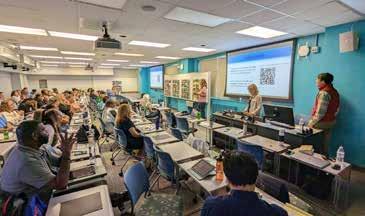
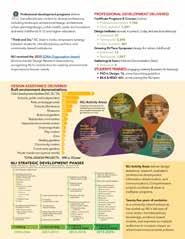
NLI’s professional development program, which includes the annual NLI Design Institute, has now served more than 2,300 participants, including public health professionals, nutritionists, teachers, child care center owners and others. NLI also offers a popular course
on teaching children to garden — an easy, cost-effective program that can improve children’s physical activity levels and their interest in eating fruits and vegetables.
“The idea is to reach out, to disseminate these ideas, to show how they can be done,” said Cosco. “We have passion for that and a very, very strong commitment.”
NLI collaborates with the International Union for the Conservation of Nature (IUCN) Education Commission to improve spaces where children spend time — such as parks, greenways, residential areas, streets, childcare facilities, schools, botanical gardens, museums and zoos — reminding all involved that children have a right to play, learn and access nature.
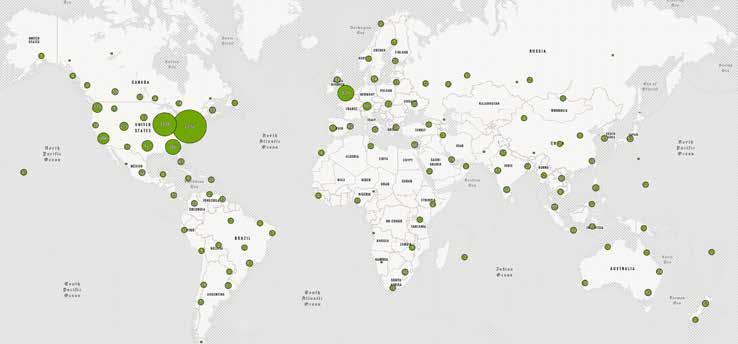
The impact of NLI extends far beyond the bounds of NC State – spreading knowledge across six continents, including working with designers at IKEA on a line of playful children’s furniture.
Today, NLI is an award-winning national leader in the development of healthy outdoor play environments. The Centers for Disease Control (CDC) appointed NLI as a national provider of technical assistance to serve CDC state funding recipients, expanding NLI’s impact nationally.
True to Moore and Cosco’s roots, the organization remains a dedicated advocate for policies that support natureconnected childhoods. This is an area
where Moore hopes NLI continues to have a meaningful impact.
“Most groups write their scientific papers and get them published and they’re happy,” said Moore. “But we’re not. We want to change things out there in the world in a more direct way. For example, our communications team does an excellent job of translating research into easily digestible print and media resources for practitioners.”
Over the years, NLI has been able to work with more than 60 graduate students on design and research projects. “Our work spans many disciplines, both within and beyond design,” said Soolyeon Cho, associate dean of research, doctoral programs and global engagement, and NLI’s interim director. “We hope to see NLI become a hub where students from our college — but also from social science, psychology, implementation science, communication science — can come together to shape the future of this field.”
Moore and Cosco both agree that rooting childhood in nature is the essential heart of the NLI mission — healthy human development and a healthy biosphere for generations to come. Ultimately, they see their work as defining a subfield of landscape architecture that supports healthy children who become stewards and protectors of our planet.
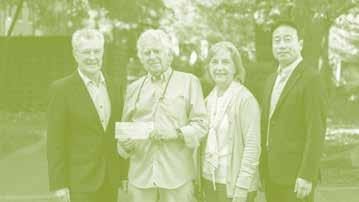
opposite top: To support the continuing work of NLI, Robin Moore generously funded the position of a postdoctoral scholar in childhood biophilic design. Pictured, left to right: Dean Mark Elison Hoversten, NLI Research Professor and Professor Emeritus of Landscape Architecture Robin Moore, NLI Research Professor Nilda Cosco, and Associate Dean of Research, Doctoral Programs and Global Engagement Soolyeon Cho.
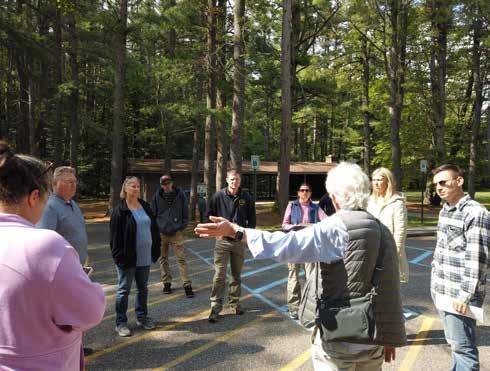
opposite bottom: Michigan State Parks partnered with NLI to create design guidance for system-wide implementation of natural plan and learning spaces. The Hartwick Pines State park pilot project will serve as an example for other parks.
below: The NLI website serves as an educational hub, providing free resources, including guides, how-to videos, webinars, publications, a bimonthly newsletter and even a children’s book.
2,300
Students supported since NLI’s inception 60 Communities served 168 Individuals have participated in the annual Design Institute offered by NLI
192
Preventing Obesity by Design communities served
Preventing Obesity by Design (POD) was launched with support from the Blue Cross and Blue Shield of North Carolina Foundation (BCBSNC), to revolutionize the way the design and management of early childhood outdoor environments. POD communities create compelling, naturalized spaces that pull children and teachers outside to enjoy higher levels of physical activity, hands-on gardening and outdoor learning.
NLI's vision for the future is to remain a global hub where design, health and education converge. Your support sustains this work for the next generation and helps NLI serve as a vital resource to children worldwide. Consider making a donation to support the next 25 years.
Reviving a Student Legacy
Design Council’s Momentous Push
Max Cohen
When Pearson Foster talks about Design Council, he doesn’t start with policy or programming. He starts with people.
A third-year architecture student, Foster’s path to the College of Design wasn’t exactly linear. He transferred into NC State, applied to architecture more than once and kept going after a couple of “no thank you” responses. That persistence is now part of how he leads. “This is my third time applying to be an architect,” he recalls during his interview. If nothing else, it proved he wasn’t going anywhere.
That same determination is shaping the return of Design Council.
The student government is rebuilding from the ground up, after a slowdown in the 2010s and near-extinction during the pandemic. There were no neatly organized binders to inherit, no step-by-step transition. Just scattered archives, old photos of packed courtyard parties in the early 2000s and stories from faculty who remember when Design Council was “massive.”
Now, Foster and his team are writing the next chapter.
“We have two wings,” he explains. One is student-focused: events that pull people out of studio and remind them they’re
more than deadlines and desk crits. The other is advocacy: representing students in administrative spaces and speaking up about real concerns.
That balance has already been tested. When a proposed undergraduate
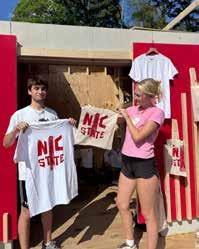
Students screenprinted their own t-shirts and built a shack as part of the university’s ShackA-Thon, a studentrun fundraiser that brings awareness of affordable housing and supports Habitat for Humanity of Wake County.
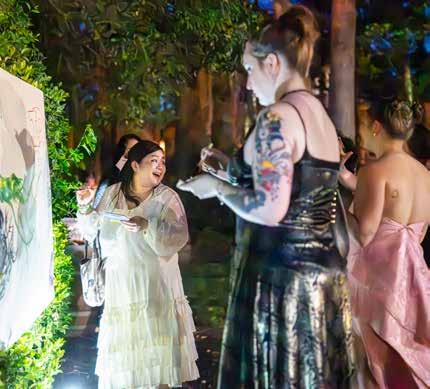
For spring 2026, Design Council revived the Beaux Arts Ball, an evening celebrating the art and atmosphere of Monet. Students were able to enjoy music, dancing and outdoor activities, including a painting station.
right: Students from the 2019 cohort of Design Council pose in the Court of North Carolina.
returned to administrators with specific concerns and alternatives. That input will inform administrators as they continue to consider the implications of an undergraduate fee.
At the same time, the council is working to rebuild trust internally. After a long hiatus, momentum doesn’t magically reappear. Students have to believe that if they show up, something meaningful, or at least fun, will happen. Faculty expectations add another layer. Many remember Design Council in its heyday, complete with legendary events like the Beaux Arts Ball. Reviving traditions in a new era requires creativity and, occasionally, navigating university red tape.
Still, the vision is forward-looking. Foster sees a Design Council that unites disciplines across Brooks Hall and beyond. Architecture, industrial design, graphic and experience design, media arts and landscape architecture: each major operates in its own intense ecosystem. But the college’s foundation is interdisciplinary learning. Design Council, he believes, can model that collaboration outside the classroom by bringing clubs together for shared
initiatives and large-scale events.
“The main goal,” he says, “is bringing people together.” It’s a simple statement, but it carries weight in a college known for long studio hours and high expectations. Through mentorship programs, committee representation and community events, Design Council is creating more entry points for students to connect with each other and with leadership.
Foster’s advice to students is refreshingly straightforward: try things. Run for something. Go to the meeting. Make the thing even if it flops. The College
of Design, he says, is one of the few places where experimentation and failure are not just tolerated but expected.
Design Council’s return isn’t about recreating 2003. It’s about building something that fits now: a studentled bridge between studios and administration, tradition and change. And if Foster’s journey is any indication, it’s proof that sometimes the third try is the one that sticks.
A Slice of Life
The College of Design in Photos
From Midwifery to Systems Thinking: Designing Change in Maternal Health
Meghan Bausone thought she wanted to be a midwife. Now, she’s exploring complex problems in maternal health as part of her Doctor of Design dissertation, using systems thinking to find answers to wicked problems.
Early in her career, Meghan used her women’s studies and anthropology degrees to prepare for becoming a midwife - she was passionate about the model of practice that supported women in home births. Becoming involved as a founding co-designer with Squat Birth Journal in 2010, she jumped feet-first into graphic design, taking courses at community college until her instructor encouraged her to pursue a formal master’s degree.
After earning her master’s degree from Kent State, she became a user experience designer for a number of startups. “What I realized was that a lot of the problems that we were trying to solve for, and what I was trying to contribute to as a user experience designer, were more deeply rooted problems,” she said. In trying to solve a problem for somebody, she was looking deeper into organizational and system design, rather than just digital interface problems.
The focus on a larger systems design approach brought doctorate degrees within her radar, and the Doctor of Design (DDes) program within the College of Design was the perfect fit. As a full-time professional, the DDes program allowed
her the flexibility of earning her doctorate while still maintaining her career.
Her experiences are moving full circle, as she refocuses her academic work back on rural maternal health access and how she can apply a systems thinking lens to the issues mothers face in that space.
“I went into my dissertation knowing that the system [of maternal health] was broken,” Bausone says. “But it’s so broken, some people don’t even feel like they are a part of a system.” She realized that while systems thinking can help map out and understand some of the dynamics of the problem, the issues on the table to be solved are at a deeply human and cultural level that would require a significant paradigm shift, making it what designers often call a “wicked problem.”
As part of her doctoral work, Meghan often talks to those part of the broken system, realizing that many women across the country are falling through the cracks in what are known as maternal healthcare deserts – areas where women aren’t getting prenatal care, postnatal care, or even making it to a hospital in time to have their baby.
“And we haven’t gotten to the point where we say, ‘we really need to change
left: Squat Birth Journal issues Bausone worked on as co-designer.
Christine Klocke
the system in order to solve the problem,’” she adds. That focus on systems design and exploring ways to tackle large, societal problems led her to interview Professor Richard Buchanan about the Four Orders of Design.
When she started the DDes program, she didn’t realize the overlap that existed between the design disciplines – graphic design, architectural design, landscape design, interactive design, virtual reality – but the program helped her understand the design theory interwoven through each discipline, and has made her work on the Design Issues editorial board more valuable.
So when Buchanan invited her to apply for an editorial role on the Design Issues editorial board, Meghan was prepared. Design Issues examines design history, theory and criticism through articles written by professional and scholarly contributors.
The board collectively reviews submissions for each issue, and being able to understand the design theory, lend her expertise and recommend suggestions for inclusion has been rewarding to her personal and professional work.
“When I started the DDes program, I had a narrow view of what design is and can do,” she says. “What I’m really taking away from this program is that design is much
bigger and broader than I thought it could be, and the work that I can do in maternal health and other areas is much bigger and broader than what I thought it could be.”
Meghan is now working with a community of professionals with a similar goal of improving the system, ranging from physicians to epidemiologists to medical anthropologists, standing at the forefront of radical change.
“I didn’t realize until later how intertwined my interest in maternal health was with my development as a designer,” Meghan adds. “But now, I’m unapologetic – it was there all along.”
Investing in the Future of Design
With your support
$460,024
Your generosity contributes to over $460,000 awarded to 127 undergraduate and graduate students this academic year who, in many cases, would not be able to pursue higher education or complete a College of Design degree without this kind of investment. With ever-increasing need, your financial support truly makes a difference in the lives of our students.
As we reflect on Dean Hoversten’s decade of leadership in the College of Design, we’d like to take a moment to celebrate the generosity of support from our donors and friends. Working together, we’ve raised over $44.5 million in the past 10 years to support our students, faculty and programs in the college.
Think and Do the Extraordinary Campaign
38%
The number of undergraduate students with demonstrated financial need each year continues to rise, with 37.9% of students showing demonstrated need for the 2025-2026 academic year. On average, an undergraduate student who has applied for financial aid is seeking $23,224 on average for that academic year.
The college surpassed its $13 million goal for the Think and Do Campaign, raising an extraordinary $23.2 million. This milestone strengthened scholarships, faculty support, facilities and programmatic excellence.
We still need your help. While we are extremely grateful for the generosity of our alumni and friends, we still need your support to close the gap and provide every student requesting financial aid with the resources to succeed within our college.
College of Design Student Body
With another record-breaking year of applications received, we continue to be impressed by the many successes and accomplishments of the new students pursuing our Wolfpack from across the globe. NC State received over 49,450 firstyear applications and admitted 39.46% of the fall 2025 applicant pool. The university has 39,259 enrolled students, with 27,885 undergrads and 9,347 graduate students. The College of Design received over 1,300 applications for its fall 2025 class for a target class size of just 166 undergraduate seats. The College of Design makes up 2.5% of the total number of NC State student population.
The ReDesign Library Project
A Cross-College Collaboration to Reenvision the Design Library
H’Rina DeTroy
The Design Library in Brooks Hall is due for an update. For design students, a renovation project on their own campus is a rare chance to apply what they're learning to a real-world scenario. The ReDesign Library Project is exactly that — an opportunity for College of Design classes to explore creative possibilities and leave a lasting legacy.
Reclaiming Place and Purpose
When senior Morgan Fazio received her fall 2025 assignment, it wasn't the typical design brief. She and her classmates were tasked with conducting research, gathering data and designing a prototype to help the renovation of the Design Library in Brooks Hall.
The assignment was for an elective class called Design Process. But before Fazio and her classmates could dive in, one thing needed to be established: Most of them had never set foot in the space they were redesigning.
"Unless you used the Design Library for a specific project, no one knew much about it," said Fazio, who is majoring in design studies with a business concentration.
Her instructor, Assistant Professor Andrés Téllez, was struck by how few students were familiar with a resource he once relied on daily as a College of Design student himself. He attributes students’ unfamiliarity to their reliance on digital tools accessible from anywhere, and to the fact that few classes are held in Brooks Hall.
"This project was a great opportunity for students to become familiar with our library system," Téllez said. "So often
focused on their classes, they can forget that they're part of a huge institution with hundreds of different programs and wonderful resources. Our own library is an important resource for them — or at least it can become one."
With that awareness came clarity of purpose. "We started off with the problem that not many people know about the Design Library's existence," Fazio said. The class rallied around a central question: How do you redesign a space to make it more useful to patrons?
Students reviewed user feedback surveys gathered by a steering committee for the renovation plans, then broke into groups to tackle different design aspects. Some used floor plans to reimagine furniture arrangements. Fazio's group focused on ambiance — lighting, acoustics, atmosphere. Ideas for the space included a catwalk, an art gallery, multipurpose rooms, quiet study areas and a café.
ReDesigning for the Future
Téllez's class was only the beginning. Many students and faculty got to roll up their sleeves and work on the ReDesign Library Project in studio classes — an exciting opportunity for the larger
Senior McKinnon Stewart works on a model of the Design Library as part of Téllez's Design Studies class.
community of the College of Design to come together and help shape what this space could become.
Two questions, "What is a library today, and what should it finally become tomorrow?" drove advanced architectural design studio classes in a course called Library Un-Deferred from EVOKE Studio, led by Billy Askey and Edwin Harris.
"Libraries are one of architecture's most enduring public institutions," said Billy Askey, one of the instructors leading the course. For the project, Askey had students explore the historical and sociocultural roles of libraries before reimagining the Design Library as a space that is bold, welcoming and transformative — one built for how future users will discover and share knowledge.
Through the Media Arts, Design
and Technology (MADTech) program, students took a different approach, using storytelling and "what-if" scenarios to imagine the library of tomorrow. The advanced multimedia production class produced a short 2D film that vividly imagines the College of Design’s library of the future.
The ReDesign Library Project looks to innovate what’s possible for the Design Library. It has also provided students with the skills to re-imagine possibilities — and prepare them for future careers.
“The industry landscape is shifting,” said Marc Russo, a MADTech professor of animation and interactive media. “With the ReDesign Library Project, students are building a portfolio that appeals not only to Pixar or DreamWorks but also to innovation labs and R&D departments.”
“It proves they can visualize complex, nonexistent concepts and make them understandable to a general audience.”
Student work from all participating courses will be shared with the architecture firm overseeing the library renovation. While it will be difficult to implement all the ideas, the ReDesign project has been an invaluable opportunity for students to creatively make a mark on NC State’s physical campus.
“I think about what an honor it is to leave a legacy and be able to come back in a couple of years when it is finished and say, 'I played a part in this,’” said Fazio.
Master of Architecture Student Ogechi Oseji explains her concept of the reimagined library to Askey and Harris’ class, Library Un-Deferred.
Senior Simran Patel created a model to reimagine the exterior of the Design Library with stairs into the courtyard below.
In Memoriam
Kevin Kane 1960-2026, BEDA ‘83, B.ARCH. '87
Kevin Michael Kane, AIA, passed away on January 9, 2026, at the age of 65. Kevin met his wife Myra while they were both students at the College of Design and they were married in 1986.
Kevin served as a longtime principal at Davis Kane Architects in Raleigh, just a short walk from the college. His remarkable life and work shaped not only his firm but also the architectural landscape of communities across North Carolina. Over more than 30 years, he led the design of schools, public safety facilities, recreation centers, university buildings, workplace projects and civic projects, reflecting his deep commitment to thoughtful, human-centered design and community service.
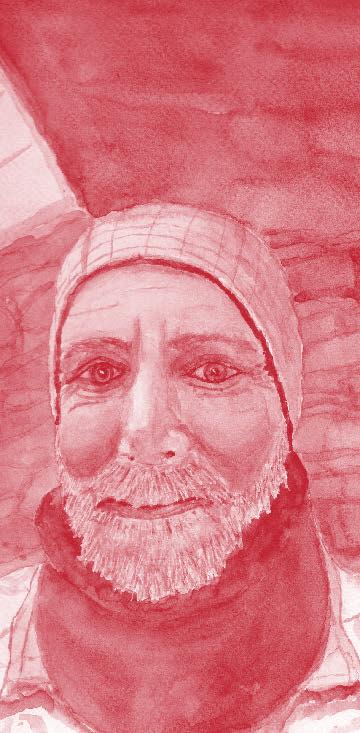
Kevin had a longtime dream of hiking the Appalachian Trail, setting out shortly before the trail closed due to Covid. He began a series of watercolors from his
journey thus far, using the trail name “Sketch” when he resumed his hike in 2023. He made it to Vermont before realizing he might need a new knee, and had plans to resume his hike in May 2026.
With wife Myra, he was a generous donor to the Coastal Dynamics Design Lab, and was always looking for ways of making a far-reaching impact. The two earned the Wings on Wings Award in 2018 for their support of the lab.
Kevin’s legacy extends far beyond the buildings he helped create. He was a devoted husband and father, a mentor to colleagues, and a steward of nature whose curiosity and passion for life inspired those around him. Kevin’s influence on both the built and natural environment, as well as on all those who knew him, will endure for many years to come.
William Blackman..........................BEDP '71
Larry Deese.......................................BLA '71
Richard Rice.................................B.Arch. '72
Austin Lowrey
1933-2026
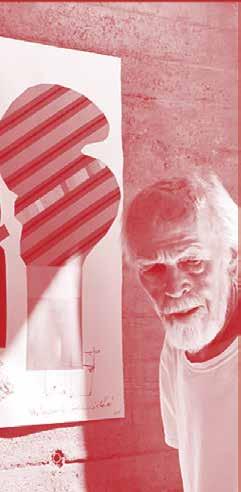
Emeritus Professor Austin Lowrey passed away on February 20, 2026. Austin was hired by the College of Design to develop “visual design” offerings in the Bachelor of Product Design program in the 1970s and continued as a pivotal member of the graphic design faculty from the department’s inception in 1991 until his retirement in 1999.
Austin and his artist/designer wife Lida (who died in 2020) moved to Los Angeles after his retirement and established dual studios in a 6000 square foot commercial building in the port of San Pedro. They later built a remarkable house in San Miguel de Allende, Mexico — featured in Dwell Magazine — where Austin continued to work until his death.
Austin was a prolific artist for whom making was second only to breathing. His body of work is a fulsome record of mature artistic sensibility, active
imagination and personal sense of humor. Austin’s website documents a recent exhibition of more than 300 works produced across six years, curated by his daughter Sheridan.
For many College of Design graduates, study under Austin defined their NC State experience. He shrugged off ordinary expectations of accomplishment and asked students to dig deep. Despite eclectic professional experiences that bridged the international worlds of art and design, his roots allowed him to understand the Southern student in ways that other faculty never could.
And Austin’s commitment to opening minds and to questioning the obvious extended to faculty colleagues. He was a provocateur. The Graphic Design program could not have had a better founder.
Written by Meredith Davis, Professor Emerita of Graphic Design
Robert Jackson..............................BEDA '79
Kevin Kane..................BEDA '83, B.Arch. '87
Nelson Blackwell..............................BGD '92
Frederick Jr Surrett........................BEDA '94
Campus Box 7701
Raleigh, NC 27695-7701
Change Service Requested
Things We Like
This Guy Turns
In September 2025, industrial design student Kai Kuwata crafted a hand-turned oak bowl, which Chancellor Howell then presented to President Sugiyama of Nagoya University in Japan. Made as a gift to commemorate 40 years of partnership with Nagoya University, the piece reflects patience, process and the power of design to connect across borders.
Design Den Crowns COD Student as Winner in T-Shirt Contest
The 2026 Spring Student T-Shirt Design Contest introduced an exciting twist with a Design Den Pick winner being announced alongside the highest-voted winner. Sutherland Webster (pictured), a first-year Design Studies student, was named overall t-shirt design champion, while Jojo Smith, a freshman planning to enter the MADTech program, won the Design Den Pick.
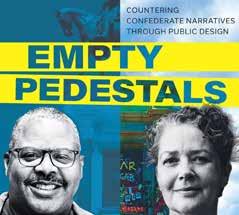
Through Public Design, co-edited by professors Kofi Boone and M. Elen Deming, received national recognition for using design and planning to transform spaces marked by prejudice. Contributors included landscape architects, architects, artists, historians and philanthropic leaders engaged in the public realm.
Nonprofit Organization
U.S. Postage PAID
Raleigh, NC
Permit No. 2353
It's a Bassinet, Baby Industrial design students partnered with Couplet Care, Inc. and UNC Chapel Hill to rethink the postpartum experience, designing a bassinet that removes barriers so parents can stay connected with their babies right after a C-section.
The result? A winning design that earned the Red Dot Design Award.