6 minute read
Shaping Light for Museums

from Oct/Nov 2025
Kai-Di Peng’s 3D-Printed Optics
By Randy Reid
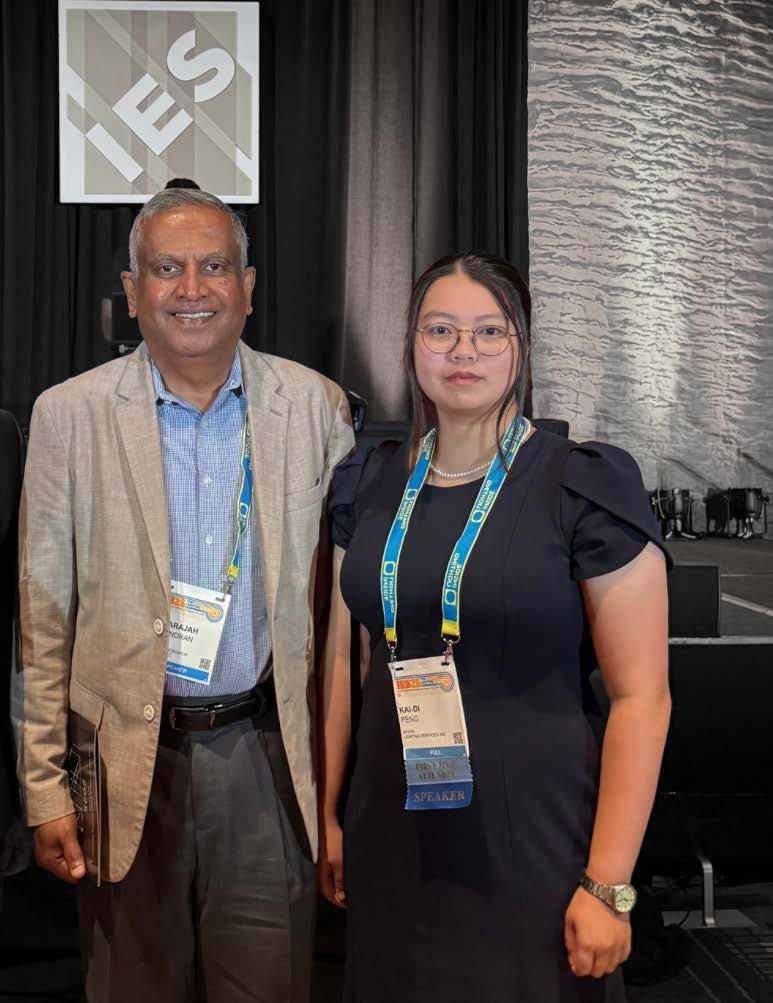
When lighting designers think of innovation, they often picture breakthroughs in LED sources, controls, or materials. At this year’s IES25 The Annual Conference in Anaheim, attention turned to an emerging professional and her pioneering work in optics. Kai-Di Peng, a graduate student at Rensselaer Polytechnic Institute’s Lighting Research Center (LRC), presented her master’s thesis: a 3D-printed secondary lens designed to confine light precisely to art objects in museums. The project not only demonstrated technical ingenuity but also suggested a new path for how lighting design can serve conservation, aesthetics, and efficiency.

The Problem with Wasted Light
Museum lighting is a delicate balance. As I have learned from my many interviews with lighting designers, conservators demand strict limits on illuminance to protect artworks, while curators want accurate color rendering, and designers seek visual impact. Traditional framing projectors help by shaping light to the contours of an artwork, but they do so inefficiently. As Kai-Di explained, “At first I thought the framing projector must just block off light—and I was right. But that means you’re wasting a lot of it.” In fact, her estimates showed 36% of flux is typically lost when trying to confine a circular beam into a square frame.
Kai-Di and her advisor, Professor Nadarajah Narendran, posed a simple but powerful question: Could optics redirect light instead of wasting it? With the advent of advanced 3D printing and available ray tracing software, they saw an opportunity to test the idea quickly and affordably.
Designing a New Lens
Kai-Di’s concept was to use a custom 3D-printed optic that bends light rays into a square or rectangular distribution, aligning with the square or rectangular shapes of most paintings. She turned to LightTools, a ray-tracing software package, to simulate designs. “Our education program included physics of light, including photometry and optics, combined with lighting design and human factors,” Kai-Di said. “That gave me the foundation to attempt the novel optic design for a light fixture that can cater to a lighting application, and help the viewers to see the displayed object clearly without negative effects, even though my own background is in architecture prior to joining the lighting program at the LRC.”
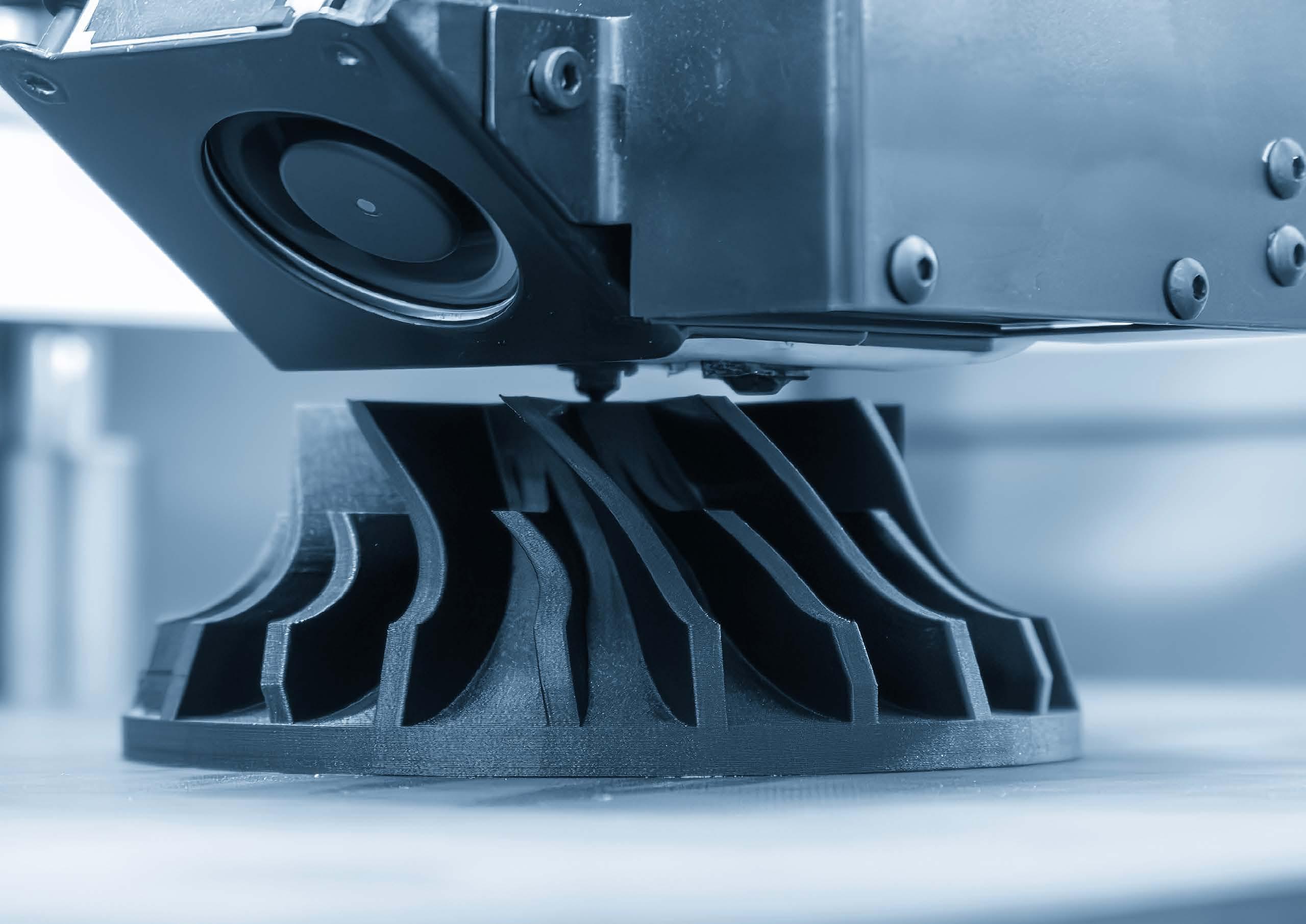
The final lens was anything but flat. Kai-Di described it as “pyramid-shaped, but curved,” with a thickness approaching two inches. Printed in a clear photopolymer resin called VeroClear, it required painstaking hand-polishing to achieve clarity. She crafted jigs lined with sandpaper to ensure the curvature wasn’t distorted, moving through finer grits before applying a clear spray coating for reducing the light scatter and improving transparency.
From Prototype to Proof
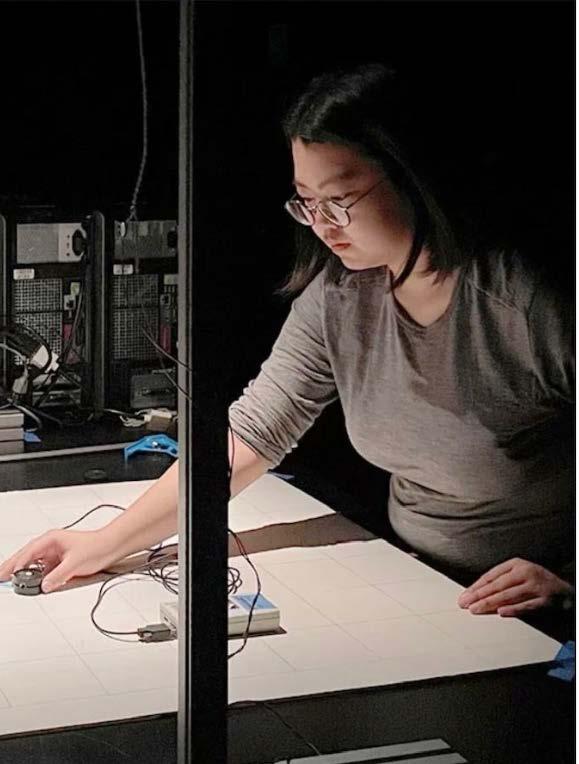
Mounted to a test fixture with a compatible LED module, the lens successfully reshaped a round beam from an LED source into a square with even distribution. LightTools ray tracing showed an application efficiency greater than 70%, light within the target area compared to the flux emitted by the LED, an improvement over the waste typical of framing projectors. When the total flux on the target was measured, the efficiency was much less. On further analysis, Kai, found the light loss was much greater due the material. Kai’s hope is with better materials for 3D printing optics becoming available in the near future it is possible to achieve the higher application efficiency.
The audience at the IES conference responded with enthusiasm. Despite being presented on the final day of the conference—often a quieter time—the room was full. Experts from institutions like NIST praised the clarity of KaiDi’s work and the professionalism of her answers. “For a student project, it did very well,” said Narendran. “She went out there, got everything across, answered questions well, and people understood.”
A Path Toward Application
While the current lenses are prototypes, the work has already been recognized. RPI has filed a patent on Kai-Di’s behalf, with the aim of licensing the technology if manufacturers show interest. The potential goes beyond museums. Any application requiring tailored light distributions—retail displays, architectural accent lighting, even outdoor environments—could benefit.
For museums, however, the implications are immediate. By shaping beams with higher efficiency, designers can meet conservation limits without over-lighting surroundings. The approach also aligns with sustainability goals by reducing wasted energy.
The Role of 3D Printing
One of the striking aspects of Kai-Di’s project is the way 3D printing enabled innovation. “You wouldn’t build this for mass production with a 3D printer, unless the quantity required is small” she acknowledged. “But if you want to prototype and test something quickly before committing to molding, it’s ideal.” Instead of months-long tooling and high upfront costs, Kai-Di could design one evening and hold a working optic the next morning.
This agility makes advanced optics more accessible, especially for smaller manufacturers or niche applications. It also empowers designers and researchers to test bold ideas that might otherwise never leave the sketchbook.
Instead of wasting light, we’re rearranging it.
Looking Ahead
Kai-Di has since joined Tillotson Design Associates in New York, after a 3-month internship at LSI (Lighting Services Inc in NY), bringing her architectural and technical background into practice. Her Master’s degree project, however, stands as a reminder of the creativity emerging from the next generation of lighting professionals.
Rensselaer’s Lighting Research Center (LRC) now offers a new opportunity within its MS in Lighting degree, a threemonth paid internship with a leading lighting design firm or lighting manufacturer so that the students get the needed experience before serving the lighting industry.
It also points to a larger truth: In lighting, innovation doesn’t always come from reinventing the source. Sometimes it comes from rethinking how we shape the light we already have. As Kai-Di put it, “Instead of wasting light, we’re rearranging it.”