

DYNAMIC LIGHTING CONTROL




PERI, the smallest integral driver perimeter fixture, delivers 1000+ lm/ft at 90+ CRI and multiple optic options. Ideal for shallow plenum spaces, it’s compatible with multiple ceiling types, and its modular assembly allows for easy installation.
IALD ENLIGHTEN AMERICAS 2023
With just the right combination of education and adventure, IALD Enlighten Americas 2023 at the Fairmont Banff Springs in the heart of the Canadian Rockies is sure to reignite your creativity with sessions that get you moving and networking opportunities that elevate your professional prowess — all in one of the most magnificent settings in the world.


BANFF, ALBERTA, CANADA 2 - 4 NOVEMBER 2023
Get full access to valuable seminars on critical industry topics, hands-on workshops, specifier and manufacturer roundtable discussions, receptions, and more. Secure your badge today and come rise and shine with the professional lighting design community.
Register now at iald.me/ea23


a complete range of 1.5" aperture downlights
■ Very small-aperture, low-brightness downlight for general and accent illumination.
■ High-lumen output and excellent color rendition for all applications.
■ Multiple housing styles for mounting into all ceiling types.
■ Very shallow ceiling depth required for both integral and remote drivers.
■ 20º, 25º, 35º, 50º beam angles and Wallwash.
■ Interchangeable optics and accessories.
■ L70 (TM21 Projected 85ºC) = Static White 33K hours, Warm Dim 55K hours.
■ Downlight UGR <16 meeting WELL Building criteria.
FIALD
Carol Jones
By Mariana G. Figuiero,
and David Pedler, BA
CONTRIBUTORS


David Warfel
Stefanie Schwalb
Mariana G, Figueiro, PhD
Carol Jones
David Martin
Shirley Coyle, LC
James Benya, PE, FIES, FIALD
David Pedler, BA
Craig DiLouie, LC, CLCP CONTRIBUTORS
David Warfel
Stefanie Schwalb
Mariana G, Figueiro, PhD
Carol Jones
David Martin
Shirley Coyle, LC
James Benya, PE, FIES, FIALD
David Pedler, BA
Juan Davila
Craig DiLouie, LC, CLCP

Highlight Heritage
Northport is modern traditional lighting that illuminates the spirit of place.
Designed by Robert A.M. Stern Architects
Landscape Forms | A Modern Craft Manufacturer
Northport
The
David K. Warfel
Craig DiLouie,
Shifting
How
How


Photo credit: Martin Hidalgo for designing
(dl)
CONGRATULATIONS
TILLOTSON DESIGN ASSOCIATES for creating yet another iconic vista.

PERELMAN PERFORMING ARTS CENTER GROUND ZERO - NYC

Editorial Director: Randy Reid
Publisher: Cliff Smith
Director of Audience Development: Angie Hullfish
Contributing Writers:
James Benya PE, FIES, FIALD Benya's Art & Science Contributor Principal at Design Services, Inc. and The Benya Burnett Consultancy
Shirley Coyle Up Close Contributor Principal at RELEVANT LIGHT Consulting Inc.
Craig Dilouie
Juan Davila
Get Control Contributor Principal at ZING Communications
European Lighting Contributor CEO & Founder ICARUS Global Consulting
Stefanie Schwalb
Craig Dilouie
Hospitality Lighting Contributor Interim Managing Editor at Boston Magazine
Get Control Contributor Principal at ZING Communications
David Warfel
Stefanie Schwalb
Hospitality Lighting Contributor Interim Managing Editor at Boston Magazine
Residential Lighting Contributor Founding Designer Light Can Help You
David Warfel
Staff Writers:
Parker Allen
Residential Lighting Contributor Founding Designer Light Can Help You
Staff Writers:
Published by EdisonReport 1726C General George Patton Dr. Brentwood, TN 37027
Parker Allen
Phone: 615-371-0961 designinglighting.com
Published by EdisonReport
1726C General George Patton Dr. Brentwood, TN 37027
Phone: 615-371-0961
designinglighting.com

Happy Circadian Hour: Our Biological Clocks and Lighting
designing lighting is focused on the Business of Lighting Design™ and provides business information to the lighting design community. In addition to the website, designing lighting publishes bi-monthly online magazines featuring original content, interviews within the community and highlights successful award winning lighting designs. While designing lighting is based in the U.S., it has contributors from Europe and is developing a global presence.
(ISSN 2693-9223)
designing lighting is focused on the Business of Lighting Design™ and provides business information to the lighting design community. In addition to the website, designing lighting publishes bi-monthly online magazines featuring original content, interviews within the community and highlights successful award winning lighting designs. While designing lighting is based in the U.S., it has contributors from Europe and is developing a global presence.
On 20 November, designing lighting global (dlg), in collaboration with Dr. Shelley James, will unveil Happy Circadian Hour in London. Dr. James will share her pioneering insights on circadian rhythms and lighting to 100 lighting designers in this CPD-approved discussion.
Understanding our circadian rhythms, or biological clocks, is more than just knowing when we feel sleepy or awake. The evening’s agenda will delve deep into:
• Current understanding of circadian rhythms and how light plays a pivotal role.
• Recent discoveries, including the non-visual pathway in the visually challenged and the centers responsible for our circadian control.
• Intricate connections and distinctions between visual and non-visual pathways.
Dr. James will moderate a panel discussion with notable figures Ulysse Dormoy, Colin Ball, and Jesse Lilley
Dr. James commented, “Scientific understanding of how light affects the body clock is moving at warp speed. This session will be an opportunity for professionals to discover the ‘known knowns’ and the ‘known unknowns’ so that they can interpret standards and specifications with a critical eye.”
While there is no complete agreement on circadian entrainment metrics, there is widespread consensus on the benefits of brighter days and darker nights. The current moment is opportune for lighting designers to incorporate circadian principles into their work.
Lighting designers at the event will also explore spectra, intensity, distribution in the visual field, and how prior exposure affects light sensitivity in the evenings.
The event is hosted by Atrium, LTD and sponsored by Lumenpulse and LMPG. Seating is limited to the first 100 lighting designers, and there is no cost to attend.
Sign up at circadianlighting.eventbrite.com
(ISSN 2693-9223)
Statements and opinions expressed in articles and editorials in dl are the expressions of contributors and do not necessarily represent the policies or opinions of the EdisonReport. Advertisements appearing in the publication are the sole responsibility of the advertiser.
Statements and opinions expressed in articles and editorials in dl are the expressions of contributors and do not necessarily represent the policies or opinions of the EdisonReport. Advertisements appearing in the publication are the sole responsibility of the advertiser.


NARROWEST SPOTLIGHT
120/277V
4º Fixed Beam Angle Up To 70,000 CBCP 4 5/16” Diameter, 10 5/16” Length COB, 13 Watts, 810 Lumens
The latest expansion of the wildly versatile LX2044 Series is the ZE3 version. We’ve combined three powerful 4 degree spotlights into one clean, crisp package for unsurpassed optical performance, unleashing 70,000 CBCP of power. With the addition of various accessories, changing the beam from 4 degrees to wider distributions is as simple as adding a lens, making the LX2044 / COB / ZE3 Spotlight the most powerful tool in your space.
Lighting Services Inc The premier specialty lighting manufacturer


The Controls Layer

Even in the most basic of lighting situations, providing manual control of lighting is fundamental. Giving choice to the user permits a light source or scene to be energized.
Photo Credit: Prasanth - stock.adobe.com

In my June 2023 column, I revisited my personal design theory of lighting by layers, which I believe is a good fundamental technique that can be taught and eventually becomes innate with experience. But, as I noted, my layers were unveiled in the late 1990s when major changes in lighting controls were underway, and more importantly, long before LED lighting was efficient enough and practical for general lighting. Lighting controls had advanced considerably since the first generation of what we now call lighting designers began to employ lighting controls as a design tool. Yet, compared to today, little was possible, and the user interface was limited. My, we have come a long way.
For indoor architectural lighting purposes, it’s probably best to differentiate among the over-arching “controls strategies” that lighting controls might employ in a particular space or building. These strategies are not standardized – heck, this article caused me to come up with them, and others might not agree. But I think that these fit the majority of approaches to controls.
Energy Codes and Efficiency
This strategy is a slave to energy efficiency codes and standards like California Title 24 and ANSI/ASHRAE/IES 90.1 that have specific requirements including automatic shut-off (motion or time based), dimming controls, and daylight harvesting. Manual controls and manual overrides are permitted in some cases. Compliance is mandatory for government projects and in states that have adopted it. But we can get carried away with automation. For example, in Title 24 proceedings, I argued against certain automatic switching in homes and hospitality environments that could cause safety or security problems and successfully limited the locations where Title 24 requires motion sensors.
Convenience, Hospitality and Identity
Even in the most basic of lighting situations, providing manual control of lighting is fundamental. Giving choice to the user permits a light source or scene to be energized. This strategy employs manual control stations and is particularly important in residential and hospitality spaces where automatically switched lights would be a distraction and detract from the quality of the environment, day or night. For example, the lighting for a hotel lobby should be inviting and speak to the character of the property, even at 3 a.m., and hotel room switching should be left to the occupant.

Functional and Occupant-Selected Scenes
Lighting scenes are an important part in the artistry and/or functionality of the lighting in many space types. Until energy codes mandated controls, scene controls were, from my experience, the primary reason to have more than dimmers and switches, as they enabled a lighting design intent to be realized with the push of a button. I still use this approach, except codes will now require an automatic “off” function, usually using a time function to ensure lights are turned off during periods when the facility is closed. I think the most difficult spaces to design are performance venues where both theatrical controls and architectural controls have to (hopefully) work in unison.
Wellness
As we learn more about the role of light in what we now know as “wellness,” there is an increasing demand for lighting that
Photo Credit: Harry Marvin, Pexels
provides positive reinforcement to circadian systems. Wellness controls may be highly integrated with daylight and shading controls to ensure proper directionality, intensity, duration, timing and spectral control of light exposure to occupants of a space. As I see it, the broad concept of wellness can also be applied to lighting in indoor agriculture, animal husbandry and zoos, medical facilities, and other indoor environments, and it is not just limited to human work and living environments.
Common Sense
When all else fails, electric lighting is an integral part of living for most people. As the efficiency of LEDs has increased, the waste of electrical energy has fallen dramatically. But energy should only be part of the reason for lighting controls of the right type and reason for the situation. That’s my job and yours.
I have generally not included theaters and similar spaces where there is a clear link between management and lighting operations, but even that is changing with the house lighting control being tied to an automated projection system. My primary concern with automated environments is what happens when things go wrong. Having an effective and accessible override is essential in any public building for emergencies, and of course it should be designed to provide emergency lighting in power outages. In this capacity, the more manual, usually the better.
Pre-set scenes date to the use of theatrical lighting systems and then, after dimmers and motion sensors, were among the first lighting controls to gain wide acceptance in every application from residential living rooms to hotel function spaces and board rooms. What I particularly appreciate about scene dimming is that is preserves my design intent for the layers of lighting in the room it controls. In some rooms, it is essential for creating the right ambience or mood, as in a restaurant; in others, the scenes are coordinated to accommodate video environments that can change to become paper-intensive work or meeting environments, or perhaps to support the action in a concert or nightclub facility. Gone are the days of projected video and its low luminance needing a dark room, but lighting controls are still a tool for changing the luminance balance of a meeting space for recording or dramatic effect. All of this is good, as it expands the role of the lighting designer to more closely resemble that of the lighting designer in the theater. You create scenes and moods that can change with occupancy, time of day, daylight, and other factors like media. So, as you might imagine, the latest innovations in lighting controls expand and, for many projects, spread, the same challenges.
There is of course, one big movement gaining strength that involves lighting controls. In today’s market, there is an over-arching temptation to integrate building energy systems with lighting control systems. In an email blog I got the other day, our Editor, Randy Reid, presented his take on “Unlocking
the Potential of Networked Lighting Controls: Insights from the DLC Controls Summit 2023.” Today, David Shiller wrote in LightNOW, “Here Comes the Lighting-HVAC Integration Tsunami.” The idea is to employ the lighting control system to provide additional information to the HVAC system, and with the added connectivity, HVAC systems can operate more efficiently.
This idea is not new. I call your attention to my February 2023 column, “What Could Possibly Go Wrong,” in which I describe a new-in-2015 energy management system for a school that could not turn the lights off – ever. The system itself had failed, and because it was so highly integrated with all building systems, became a massive liability because the manufacturer was bankrupt and gone. To prevent this, I tend to specify systems from reliable, established and yet progressive companies, so I can sleep at night…
Personally, I am torn. The integration of lighting controls and HVAC controls has been a dream since the first programmable energy management systems of the 1970s, but the truth is, the electrical industry speaks a different dialect from the HVAC industry. David Shiller makes the point that LED “socket saturation” has reduced lighting power density in commercial buildings so much that sophisticated penny-pinching controls are hardly warranted. But extending their role to better manage HVAC systems is worth looking into – and perhaps, may serve as the foundation for completely integrated building controls including the management of solar energy systems, battery storage, vehicle charging, and other energy uses. I think the lighting industry, our government agencies, and our industry organizations have done a superb job of reducing the energy consumption and carbon footprint of lighting with LEDs and control systems that are robust and reliable, but the integration with other energy uses in a manageable building is still evolving. I hope David’s “tsunami” is a friendly one that resolves the many problems and challenges of lighting and HVAC living and working together in ever more efficient and pleasant buildings of all types.
Finally, the layer system breaks down outdoors, and new issues and meanings are needed. I’ll save that for future thoughts on outdoor lighting. As one might guess from my years of service with the Board of the International Dark Sky Association, I will try to explain how a host of environmental concerns and protecting the night sky are on track to collide with increasingly capable outdoor lighting and special effects, and how design professionals might address the challenges. P

King, Ryan. Smart Home System. Canva. 15 Oct 2023


Photo Credit: Ilker - stock.adobe.com
Webster defines an era as "a period identified by years in lighting, it wasn't hard to identify distinct controls features. There has been awareness, buzz, and a sliver of good examples—but if we are honest
were real estate professionals, with a decent level real estate executives and contractors from sophisticated real estate leaders. According to inventory in the country, totaling 366 million SF of data has been collected, cleaned, and properly

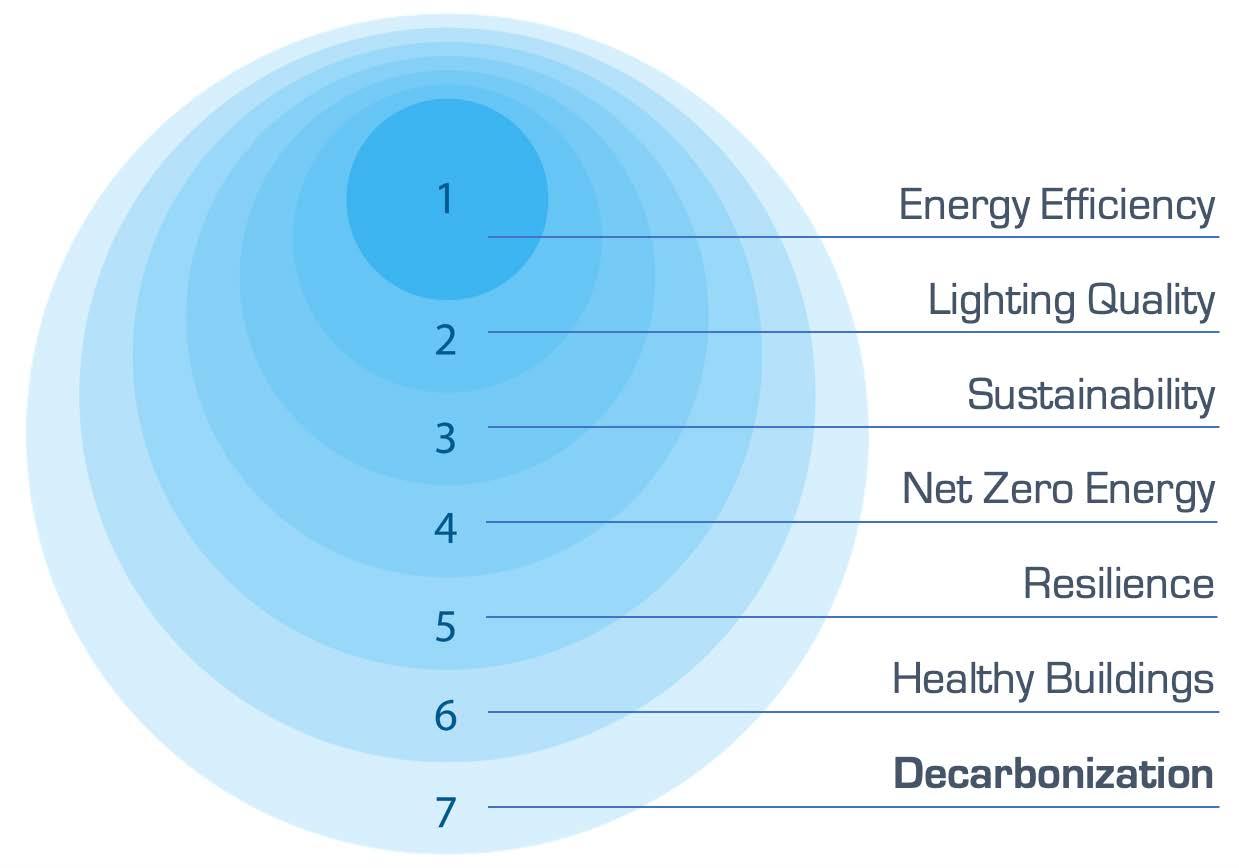
It helps to clarify the priority criteria for customer success. Building owners and managers want a global open protocol that enables interoperability between sensors and drivers and delivers data in a standardized format to support APIs and integration with multiple controls and buildings systems.
Michael Amato, a Systems Sales Specialist at Signify and formerly an integrator at FSG, says: "Digital solutions and system integration is the future, and end-users want interoperability and smooth operations for the long-term. Meeting their needs builds trust, expands markets, and allows our innovations to deliver their full value. Isn't it time for the lighting industry at large to make this a priority?"
The global DALI Alliance delivers on these requirements. DALI-2 is now capable of providing data about luminaires, energy measurement, color control, fault diagnostics, and emergency. Most recently, the release of the D4i specification now extends to wireless technology and supports integral sensors and controllers when paired with the Zhaga Book 20 standard. Critically important, interoperability is verified through testing and certification. Efforts are ongoing to enable functionality with multiple wireless communication protocols including Bluetooth mesh, Zigbee and Thread.
The elephant in the room is us, and it's a lonely place to be. We do not have a seat at the decarbonization table. Our ongoing competition between proprietary controls technologies has made us irrelevant in the eyes of most decision-makers. I submit that our focus should be on industry alignment to expand opportunities overall,
rather than competing with each other using an offering that is compromised in the eyes of the decisionmakers. Huge money is being invested into decarbonizing buildings, and as it stands, we will not get a meaningful slice of that pie.
Putting aside the most well-known integration use cases (e.g., realtime feedback from sensors to room reservation systems and HVAC systems), there are a multitude of new market drivers. For example, the highly nuanced dimming of individual luminaires in consideration of their room type and occupant needs enables maximum load shedding at peak hours. Digital interaction with Grid-interactive Efficient Buildings helps to manage electrification including integration of renewable energy and batteries. Monitoring lighting energy consumption in real-time helps owners to report progress and compliance with the rapid proliferation of Building Performance Standards (BPS) such as Local Law 97 in New York City, where the consequence of non-compliance with carbon reduction requirements will be heavy fines. LL97 has received the most visibility, but according to the National BPS Coalition, there are 40 municipalities that have adopted similar requirements.
So how do we make this happen? Spec it. Defend it. Learn, and teach. For many years I've heard our specification community pleading for interoperability and reliability. Avraham Mor, CLD, IALD, says it well: "The world is going digital all around us with every kind of technology imaginable, yet the industry is still defaulting to 0-10V dimming. It's way past time for the lighting industry to make the shift to digital, addressable, and interoperable controls technology. Designers have the responsibility to commit to the learning curve and advocate for this in our specs. Morlights can't do it alone, but we can be part of the solution."
The next era? Considering decarbonization is mission critical to mitigating the climate change crisis, it's difficult to imagine the next era. Whatever it is, I can guarantee that digital and interoperable technology will be central to success. P


The next generation of the Parscan spotlight range means 3x more!


More effectiveness
- More light to the target surface (Fc/W)
More flexibility
- 6 sizes
- 30 spectra + tunable white + RGBW - 12 interchangable distributions - Extensive accessories
More digitality
- For 120V and 48V - Casambi Bluetooth and Zigbee wireless control

Americans Museum
Photography: Ryan Linton
Be Creative! Three Approaches to a Tailored Lighting Intervention for Improving Sleep-Wake Cycles in Dementia Patients
By
MARIANA G. FIGUEIRO AND DAVID PEDLER
In previous Light and Health Research Center (LHRC) contributions to designing lighting (dl), we described studies employing tailored lighting interventions using circadian stimulus (CS) to improve sleep using single devices among nursing home residents living with ADRD and home-dwelling patients living with a related neurodegenerative disorder, Parkinson’s disease (PD). Those studies showed that, despite the difficulties commonly encountered when delivering therapeutic lighting interventions in the field, the simple principle of promoting brighter days (i.e., high CS), dimmer evenings (i.e., low CS), and darker nights can significantly improve objectively and subjectively assessed sleep outcomes. Because patient compliance can pose formidable challenges to the efficacious application of nonpharmacological light therapies in controlled settings, the key to success in field studies lies in being able to deliver the treatment as participants go about their daily activities.
This study followed the same general approach described in our previous two articles but differed in its use of three separate lighting systems/devices among 14 cognitively impaired participants with sleep disturbances residing in three separate assisted living and memory care facilities in Westborough (5 participants), Northborough (4 participants), and Medway (5 participants), Massachusetts.
Study Method
Following specifications proven in previous studies,1, 2 we delivered a tailored lighting intervention (TLI) designed and specified to provide a robust light–dark pattern to maximally stimulate the human circadian system based on the mathematical model of CS developed by Rea and colleagues.3, 4 Our research has shown that providing a criterion CS value of 0.3 improves sleep, mood, and behavior in ADRD and PD patients.5, 6 The TLI employed

Light and Health Research Center at Mount Sinai
Figure 1. The TLI modes used in the study: light table (left), light tray (middle), and retrofitted ambient room lighting (right).

were used at the Northborough site. Custom built by the LHRC, the trays house an LED array and measure (l × w × h) 64 cm × 53 cm × 4 cm. The participants were assigned to seats facing the tabletop light trays for breakfast and lunch over the course of the study. As measured in the laboratory at eye level when seated with a single dinner plate occluding the tray's surface, the active intervention delivered 602 lx and a CS of 0.456 and the control condition delivered 65 lx and a CS = 0.064. As the trays could deliver only a single condition, they were alternated between the active intervention and the control.
three device modes (light tables, light trays, and retrofitted ambient room lighting [Figure 1]) over two 8-week intervention periods separated by a 4-week washout. The TLI’s (high CS) efficacy was compared to that of a non-therapeutic placebo (control) lighting intervention (low CS), and both lighting conditions were compared to baseline data collected in the existing facility lighting at the beginning of each 8-week intervention period (Figure 2). The study participants wore actigraphs on their wrists and completed questionnaires assessing depression, sleep quality, and sleep disorders during the first (baseline) and final assessment weeks of the two intervention periods.
TLI Modes
Light tables. Custom-built light tables (XtraLight, Houston, TX, USA) were used at the Westborough site. The tables measure (l × w × h) 156 cm × 99 cm × 13 cm, with a luminous area on the tabletop measuring 137 cm × 79 cm and sitting 76 cm above the floor. The light is provided by 13 lightemitting diode (LED) strips measuring (l × w) 61 cm × 6 cm (model BB0040, ver. 001.1, XtraLight) recessed 9.5 cm beneath the tabletop and covered by a 1 cm thick diffused acrylic lens that serves as the table's durable work surface. The active TLI (measured in the lab) provided 1887 lx and a CS of 0.625 at eye level, and participants were encouraged to sit at the light tables whenever they were using the facility’s dining/community room.
Light trays. Light trays serving as light-emitting dining/work surfaces and fashioned after a conventional cafeteria tray
Ambient room lighting. The retrofit of the dining/community room lighting at the Medway site was performed with assistance from the researchers. In the area that received the retrofitted lighting, the mean illuminance measured at the eyes for occupants seated at the tables was 307 lx and the mean CS value was 0.28. The retrofit employed six 30-in diameter dimmable, direct/indirect circular (5-in lens aperture) ring pendant lighting fixtures (3000 K; Sketch, Axis Lighting, Lasalle, QC, CA) suspended over the dining/community room's six tables and four 4-ft linear dimmable, direct/indirect (2-in lens aperture) (3000 K; Beam 2, Axis Lighting) fixtures mounted on adjacent, opposing walls. The retrofitted system was driven by a programmable power/relay pack and on-screen controls (Acuity Brands, Conyers, GA, US) to deliver a CS of 0.4 from 07:00 to 17:00, gradually transitioning (from 17:00 to 18:00) to a CS <0.1 from 18:00 to bedtime. As confirmed via spectroradiometer, the actual average vertical illuminance (measured at eye level when seated at the table) was 520 lx (mean CS = 0.37) for the intervention lighting and 135 lx (CS = 0.1) for the control condition.
Results
The actigraphy data showed that participants slept significantly longer under the active condition after the TLI compared to baseline (p = 0.02) and sleep start time was significantly earlier after the TLI compared to baseline (p = 0.01). The questionnaires revealed that sleep quality scores improved significantly after the TLI compared to baseline under the active condition but not under the control condition (p = 0.01 and p = 0.24, respectively). Depression scores also improved after the intervention compared to baseline under the active condition but not under the control condition (p = 0.01 and p = 0.48, respectively), as did the sleep disturbance frequency and severity scores after the intervention compared to baseline under the active condition (p = 0.02). The sleep disturbance frequency and severity scores also increased after intervention compared to baseline under the control condition (p ≤0.03). The results are summarized in Table 1.
Figure 2. The experimental protocol followed at the Medway facility. The experiment at the Westborough and Northborough facilities followed the same protocol and occurred between July and December 2022.

Table 1. Summary of results. The bold arrows enclosed in circles represent statistically significant results. Better outcomes are shown in green, worse outcomes are shown in red.
Takeaways
The key takeaways from this study are:
• Bright days, dim evenings, and dark nights improve sleep and mood in dementia patients, regardless of what metric you use or how you deliver light to the eyes.
• Don’t start with the lighting system, start with the patient’s daily activities and tailor the intervention so that the light is being delivered to each person passively.
• Ceiling lights delivering direct/indirect light can be used to deliver circadian-effective light. If the budget does not allow for tunable systems, simply use dimmers so light levels can be increased during the day and reduced in the evening.
References
• Be creative and think beyond the ceiling! The smaller size and flexible characteristics of LEDs can help designers create innovative ways to deliver circadian stimulus in a comfortable and effective way.
Acknowledgments
The authors wish to acknowledge Barbara Plitnick, Allison Thayer, Charles Jarboe, and Rohan Nagare of the Light and Health Research Center at Mount Sinai for their technical assistance, Diane Tonelli of Salmon Health & Retirements for logistical assistance, and the participants and their families. This research was funded by the National Institute on Aging (R01AG034157 and 2R44AG060857).
1. Figueiro MG, Plitnick B, Roohan C, Sahin L, Kalsher M, Rea MS. Effects of a tailored lighting intervention on sleep quality, rest–activity, mood, and behavior in older adults with Alzheimer’s disease and related dementias: A randomized clinical trial. J Clin Sleep Med. 2019;15(12):1757-67. doi: 10.5664/jcsm.8078
2. Figueiro MG, Sahin L, Kalsher M, Plitnick B, Rea MS. Long-term, all-day exposure to circadian-effective light improves sleep, mood, and behavior in persons with dementia. J Alzheimers Dis Rep. 2020;4(1):297-312. doi: 10.3233/ADR-200212
3. Rea MS, Nagare R, Figueiro MG. Modeling circadian phototransduction: Retinal neurophysiology and neuroanatomy. Front Neurosci. 2021;14:1467. doi: 10.3389/fnins.2020.615305
4. Rea MS, Nagare R, Figueiro MG. Modeling circadian phototransduction: Quantitative predictions of psychophysical data. Front Neurosci. 2021;15:44. doi: 10.3389/fnins.2021.615322
5. Figueiro MG, Plitnick BA, Lok A, Jones GE, Higgins P, Hornick TR, et al. Tailored lighting intervention improves measures of sleep, depression, and agitation in persons with Alzheimer's disease and related dementia living in long-term care facilities. Clin Interv Aging. 2014;9:1527-37. doi: 10.2147/CIA.S68557
6. Figueiro MG, Hunter CM, Higgins PA, Hornick TR, Jones GE, Plitnick B, et al. Tailored lighting intervention for persons with dementia and caregivers living at home. Sleep Health. 2015;1(4):322-30. doi: 10.1016/j.sleh.2015.09.003


TELEVISION HISTORY
RANDY REID By
Photo Credit: Jorrit Lousberg
The Beeld & Geluid (Institute for Sound and Vision) in the Netherlands is not just a museum. It's an intricate media archive and event hub situated in Media Park in Hilversum. This unique location is home to many working broadcast studios, including news and special events studios, creating a media city of sorts.
The design of the museum is a testament to the evolution of television. To preserve the culture and heritage of this important medium, the museum incorporates daily archiving systems, implemented through interactive installations, gamification, and other activities happening in the studio.
The project was a collaborative effort involving several parties, each contributing their unique expertise to create an immersive and interactive experience for visitors. Michel Nols and Koert Vermeulen of ACT Lighting Design were responsible for the comprehensive lighting design, which included all light sources in the museum, including those integrated into the furniture and functional lighting in the ceiling. The lighting for the furniture was provide by Ata Tech. Pharos Architectural Controls supplied the dynamic lighting controls which were integrated and guided by Rutger van Dijk.
The interactive content was designed by Kiss the Frog and was integrated with the lighting to create an engaging and interactive experience for visitors. Tinker Imagineers was responsible for the complete spatial and exhibition design, as well as the audiovisual design.


MEETS INNOVATION
The ACTLD lighting strategy was developed in three parts, with the screen being the protagonist in the media studio, as the content and screens were the primary storytellers throughout the experience. The second part of the strategy involved creating a counterweight to bring forward the image. This was achieved by implementing lighting that grazes and gives an architectural context in which the screens can come forward. The third part involved meticulous integration of lighting in all the furniture, creating graphics throughout the whole experience.
This three-level approach allowed for easy control of these layers as desired. The team had full control over color temperature and light, enabling them to create different moods and effects. However, due to changes in some of the rooms, they had to adjust their design several times.
Media Reactor
The museum incorporates a unique feature called a 'media reactor,' designed by Richard Vandy of Tinker Imagineers. This innovative element fetches video content from the media archive in real-time and projects it onto various screens throughout the space. The video clips move across the different screens, travelling through the space.
The media reactor itself is composed of video projections displayed on black frames. The lighting design included an aluminum frame with LED lines mounted on different levels, creating a pixel strip behind a fabric. These frames are then translated into pixelated LED strips, diffusing the image while maintaining the integrity of the original video content. The team had to carefully position the lights to create the desired moods and effects. This flow of real media images, a combination of video
and pixel mapping, creates a one-of-a-kind visual experience.
The audio component of these stories is delivered through a surround system integrated throughout the museum. This space is multifunctional and located next to the media exhibition. Upon entering the museum, visitors receive an avatar that accompanies them throughout their visit. The entirety of interactive experiences are synced with the visitor, through an app and facial recognition systems as the visitor travels throughout the space.
Layers of Light
The ceiling area was crowded, making it a challenging puzzle for the design team to find optimal spots for mounting luminaires. The ceiling features curved lights and small Rosco cubes, and spotlights were added to supplement the functional lighting. Together this design created various layers of light.
The Pharos DMX-controlled system allowed full control over color temperatures, enabling the team to create different settings for various scenarios such as regular museum operations, events, and maintenance work. This flexibility was crucial in ensuring that the lighting could be adapted to suit different needs and create different atmospheres as required. The Pharos system allowed the user to have a digital schedule with all fixtures mapped out, providing a seamless way to control and program the lighting for each area.
Furniture Integration
One of the unique features of this project was the furniture lighting. Tapelight mounted to the bottom of furniture created a soft glow on the floor, contributing to the ambiance.

Michel also shared some images of the welcoming space where visitors can take pictures against a green screen and create a digital passport. This passport can be used to log into every interactive installation or screen in the museum, providing a personalized and immersive experience for each visitor, in addition to the many interactive features triggered by the facial recognition system.


This system was particularly beneficial because the design was developed in different phases. The focusing happened in four or five stages, providing the team with the flexibility to come in with no more than a laptop and handle everything.
One of the challenges faced by the team was balancing the general lighting moods with the effectiveness of video projection installations and face recognition implementations. Too much light could diminish the impact of these installations, so careful consideration was needed to strike the right balance.
One such installation is a newsroom where visitors can become newscasters in a television studio. The lighting in this room was designed to mimic the clinical brightness of a broadcast studio. Another studio is designed to resemble a stage and theater performance, allowing visitors to become directors of their own movie scenes. A third space is inspired by a Tokyo supermarket shop, featuring vibrant colors and dynamic lighting.
One of the highlights of the museum is a game room, inspired by 1980s arcades. The room features UV lights to create a glowin-the-dark effect on the scenery, and an interactive video floor adds another layer of engagement for visitors.
The project’s success hinged on the flexibility and convenience of its installation setup. The team could simply plug in, open the Pharos system, and everything was up and running. The lighting scenes and programming were all controlled from the files control system. If adjustments needed to be made, it was just a matter of making a few easy changes to the software.
One of the key points Michel emphasized was that this project was very much a collaborative effort. Six to seven different parties put their heads together to make everything work - from lighting to interaction design, video content, gamification, server systems, and developing archiving systems.
The Beeld & Geluid (Institute for Sound and Vision) faced several delays due to the Covid-19 pandemic, extending the design process to several. Despite these challenges, the team managed to create a stunning and interactive space that is both educative and immersive, standing as a testament to the power of resilience, adaptability, and the magic of storytelling through light and media. P testament to
FIXTURE SCHEDULE
Controls: Pharos Architectural Controls
Track & LED Linear: Ata Tech
Ceiling: Rosco, Elation, Chauvet, Rogue, luxlumen

Low Voltage Showcase Lighting Made In Germany


Royal Costumes from the Wardrobe of August the Strong (1670-1733)
Dresden State Art Collections
Photo: David Brandt




LINEAR XTR SPECTRUM FOUR
Color Mixing

INCREDIBLY DURABLE
IP66 • IK10 • 3G
INFINITE COLOR MIXING UP TO 1400’ RUN


SCAN ME
SCAN ME
SCAN ME
LIGHT WITHIN


Exploring the Translucent Facade of The Perelman Performing Arts Center
RANDY REID By
Photo Credit: Martin Hidalgo for designing lighting(dl)

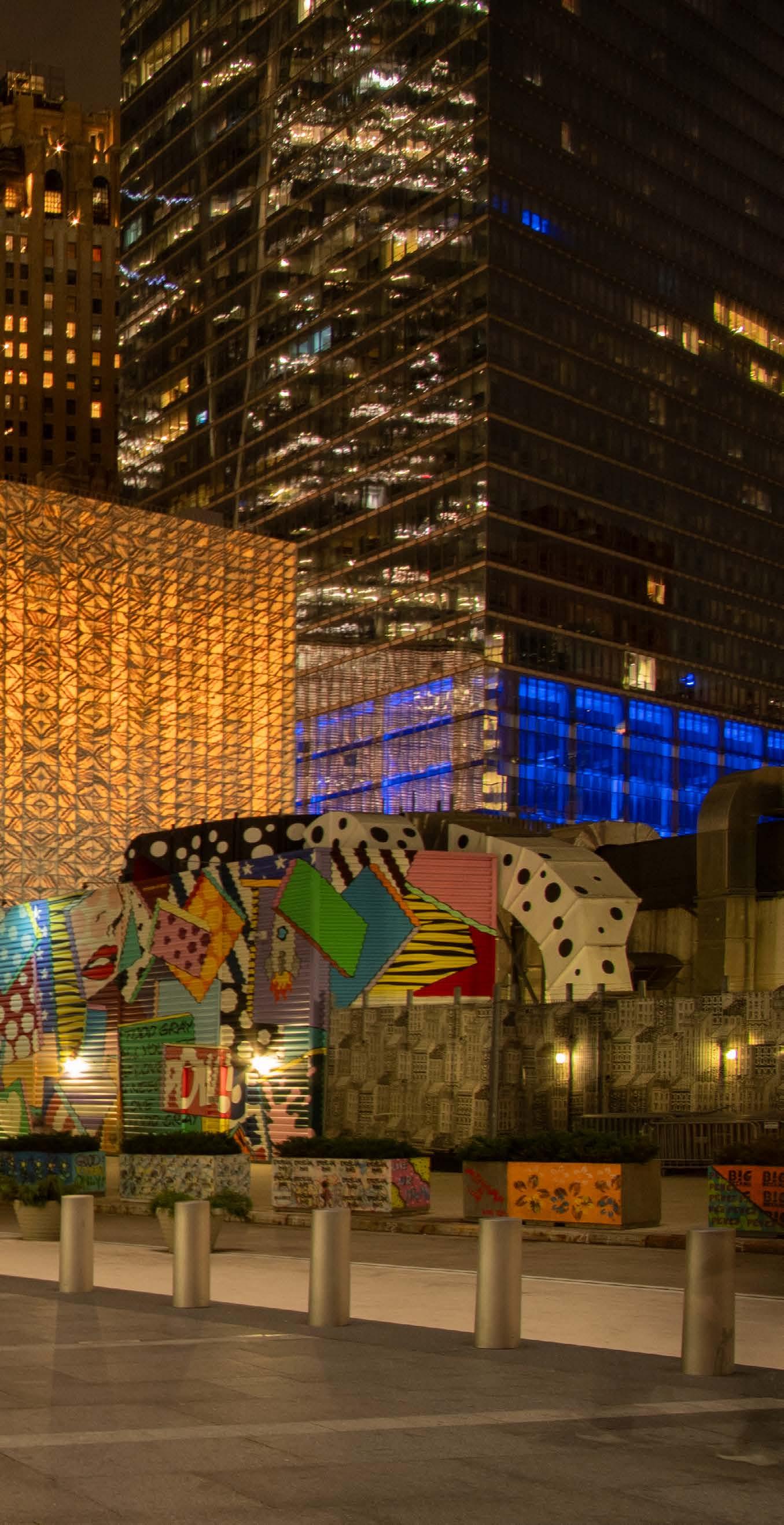
The world of architectural design is constantly evolving, with innovations emerging that redefine our understanding of space, materials, and aesthetics. Recently, a novel approach to lighting building facades has surfaced, characterized by the ingenious use of translucent marble as a primary material. This has the potential to change the way we perceive buildings, especially during the evening hours.
The Perelman Performing Arts Center (PAC NYC) in Manhattan chose this unique approach for their facade. This project not only showcases the possibilities of contemporary design but also the challenges that come with it.
Suzan Tillotson of Tillotson Design Associates discussed this architectural marvel. The conversation revealed the practical aspects of the design process, the hurdles faced, and the final impressive outcome.
At first glance, the building facade captivates observers with its luminous glow. This isn’t a result of external lighting fixtures shining on the surface. Instead, the light originates from within the facade itself, emanating a soft, consistent illumination that highlights the building’s unique structure and design. It’s a scene that can make passersby stop and admire, pondering the techniques behind such an illumination.
To achieve this luminosity, the facade employs a special construction technique.
The building is adorned with translucent, veined marble, giving it an elegant appearance in the day with its bookmatched stone. This marble, sourced from the same Vermont quarry as the U.S. Supreme Court Building and the Thomas Jefferson Memorial, is a key component of the high-performance facade.


The marble used is half an inch thick, a deliberate choice to highlight the depth of the veining. Any thicker would risk delamination due to the stone’s natural expansion and contraction.
To counter this, a layer of glass is laminated to each side of the stone, creating a seal that prevents any moisture from reaching the marble. This precaution stops the stone from hydrating and dehydrating, which could cause it to bow.
The result is a translucent sandwich of glass-stone-glass. Each sandwich unit measures 3 feet in height and 5 feet in width. The outermost piece of glass has a microtexture similar to honed stone. So convincing is this texture that many people don’t realize the outer surface is actually glass, not stone.


This three-layered composition is often referred to as an insulated glass unit (IGU). The unique composition allows interior light from chandeliers to pass through the marble, creating a mesmerizing effect that is crucial to achieving the kind of radiant glow that sets this design apart from conventional structures.
Custom-made chandeliers were designed and aimed at the IGU from the inside. The lighting was carefully calibrated to create an even illumination across the facade. The assembly of the chandelier was made by Flos, while i2Systems was responsible for creating all the LED boards, furnishing the drivers and optics, and making all the slab edge fixtures.
The chandeliers, which are five-foot-long bars of LEDs in a highly

provided had to be absolutely precise.”
The color temperature of the light was 3000K, chosen to complement the amber tint of the marble. The lighting remains constant, creating a mesmerizing effect on the facade.
The building is separated by a 4-foot floor slab/plenum; a 9’ floor slab/plenum exists at the top. Obviously, the light could not penetrate the structure separating the two floors. Supplemental lighting from i2Systems was used to create an illusion of light bleeding through the floor. From an exterior point of view, these slab edge lights prevented any unwanted shadows.


polished stainless steel finish, are arranged in a V-shape. There are ten chandeliers per side, per level, totaling 80 chandeliers for the entire project. Each one has a specific angle of light emission. The team had to calibrate all the optics to ensure light reached all areas of the facade evenly, including down to the floor and slab edges.
If the angle and dimming was not perfect, it would affect the illumination on the facade. A 9-degree beam of light might be perfect for a particular chandelier, but a 13-degree beam would cause too much glare or miss the wall entirely. Bars positioned at a direct angle to the glass were dimmed more than those angled downward. The downward-facing bars maintained full brightness for consistent lighting. Suzan emphasized, “There was no room for error, and every product
The timing of the lighting was also crucial. This building, illuminated by its own skin, stands out, especially during twilight hours. As the sun sets and natural light dims, the building begins to shine, serving as a beacon of modern architectural prowess. The team spent many hours observing the sunset to program the perfect timing for the lights to come on. As the sun sets, especially on the west facade, the light on the material is much brighter than the light that can be pushed through it due to energy code limitations. Hence, they needed to wait for the ideal moment when the sun had completely set before they could turn the lights on to their maximum brightness.
Another challenge was dealing with the refraction off the glass from wayward light trespassing from streetlights and other buildings. This is where close collaboration between the lighting design team and the owner prevented a problem. While the interior glass has a very high specular reflectivity, the exterior has more of a matte finish to help diminish the reflection of stray lumens.
Despite not being able to conduct a full-scale mockup prior to construction, the team was able to successfully execute their vision. They tested uniformity using a white fabric scrim in a theater but only had one small piece of marble for testing. They were able to overcome these limitations to achieve their desired outcome.
The project began in 2016 and was recently completed. The facade did not turn out to be a completely luminous box. This was expected by Tillotson’s team, as each 3’ x 5’ marble slab was unique. Despite this, they were extremely satisfied with the outcome.
Thoughtful design and intricate planning are ushering in a new era for architectural facades. These exteriors, previously just shields against the elements, now serve as evocative canvases that narrate tales and highlight human creativity.
The Perelman Center's facade exemplifies sustainable lighting, embedding the light source within the structure. This innovation leads to significant energy savings, less light pollution, and a seamless blend of architecture with its environment.
Translucent marble, central to this innovation, heralds exciting potential for future architectural designs, envisioning cities where buildings internally illuminate, reflecting culture, history, and achievement.
Tillotson's pioneering work on this facade is not merely an architectural achievement but signifies the progressive trajectory of design. As design horizons expand, our urban spaces become not only functional but also mirrors of our collective aspirations and creativity. P

The Norton Museum, located in West Palm Beach, FL, stands as a testament to the confluence of architecture and lighting.
George Sexton Associates was brought on board by the museum in collaboration with Foster + Partners George Sexton and Owen Brady of George Sexton Associates shed light on the careful thought that went into illuminating both the interior and exterior of this museum.
The history of the museum is quite fascinating. Originally constructed in the 1940s, the building was designed in an art deco style. However, it underwent a significant transformation in the 1990s during a period of widespread museum construction.
The museum commissioned Foster + Partners to design an addition and his approach was radical. He transformed the 1990’s addition and reorganized the spaces in a more classical manner. This process also involved renovating the original art deco building. The result was a completely new museum that maintained its historical
roots while embracing modern design principles.
One of the most significant changes was the relocation of the entrance to face the Dixie Highway, one of Palm Beach’s main roads. This gave the museum a prominent presence in the community and made it a visual landmark for those entering or leaving Palm Beach.
Starting with the exterior, George emphasized the intricate balance of the lighting. The exterior of the Norton Museum is a testament to the power of subtle illumination. Rather than floodlighting the building, the design team opted for a more nuanced approach, allowing the interior of the building to glow from within and serve as a lantern. The approach was not only aesthetic but also aimed at addressing issues like light pollution, light trespass, and energy conservation. Features such as sculptures, water elements, and landscaping added layers to the external illumination. This approach endowed the museum with a distinct nighttime identity. A major highlight of the museum's architecture is the banyan tree. Owen pointed out that the building’s exterior
The new façade of the Kenneth C. Griffin Building, designed by Foster + Partners, as seen from S. Dixie Highway.

design respected the tree, a much-loved feature, preserving its presence. The tree was illuminated using both ground-mounted uplights and tree-mounted downlights. This illuminated the internal branching structure and the canopy, creating a breathtaking visual.
The idea of capturing the building's glow from within was crucial. The walls seen through the glass facades were washed in light, their reflection captured in the metal roof canopy overhead and mirrored once more in the water feature below.
A standout feature is the Claes Oldenburg sculpture, which, with the careful use of ambient light, stands out without the need for dramatic spotlighting.
George specified B-K Lighting fixtures for the banyan tree at 3000K. An outdoor rated, ETC fixture illuminated the Oldenburg sculpture,

while a linear luminaire from Acolyte wrapped around the base of the museum for site lighting.
Inside the museum, the lighting design continues to impress. The walls seen through the glass facades are washed with light, creating a reflection in the metal roof canopy overhang and in the water feature below. This creates a beautiful interplay of light and reflection that enhances the architectural features of the building.
The gallery lighting system was designed keeping flexibility in mind. With museums often rotating exhibits, the lighting system should easily adapt to the evolving displays. The design foundation was a pattern of lighting tracks in the ceiling, providing angles of light to reduce glare, and control both quantity and distribution of light.
In the realm of minimalist architecture, as exemplified by Norman Foster’s designs, lighting integration presents a significant challenge. The architecture’s discreet and highly refined nature necessitates an unobtrusive yet effective lighting solution. This hurdle was overcome through a close collaboration with LightLab, leading to the utilization of ‘Museum Line’ track and monopoint luminaires. George has a deep-rooted connection with this product, having contributed to its development with LightLab for the Museum of Modern Art, New York design many years ago. The ’Museum Line’ fixtures, an LED track system, ingeniously integrate the transformer into the track. This design innovation allows for fixtures that are not only smaller but also more discreet, seamlessly blending into the minimalist aesthetic.
One of the standout spaces inside the museum is the Shapiro Great Hall. The hall boasts concealed elliptipar® uplighting around its four sides and highlighting the complex vaulted ceiling. The lighting design was carefully executed to be invisible to the naked eye, yet impactful in its illumination. Tivoli luminaires are at the base and a skylight in the center add to the hall's allure.
Acuity’s nLight control system is used throughout the museum utilizing a variety of scenes for different occasions, from daily use to special events.
The Norton Museum stands as a glowing beacon in the heart of West Palm Beach, a fusion of historic architectural elements and cutting-edge lighting design. The collective vision of George Sexton Associates and Foster + Partners has transformed it into a radiant masterpiece that continues to captivate visitors and experts alike. It is an example of what can be achieved when thoughtful design meets innovative execution. It’s not just about illuminating a space; it’s about enhancing an architectural experience through light. P
FIXTURE SCHEDULE
Controls: nLight
Downlights: Gotham, Lucifer, Portfolio, 3G Lighting
Track: Lightlab
Linear and Cove Lighting: elliptipar, Tivoli, EcoSense, PureEdge Lighting, Focal Point, Electrix Illumination
Outdoor and Site Lighting: B-K Lighting, Acolyte, Hess, Kim Lighting, WE-EF, ETC


Brown Gallery showcasing an exhibition of Nick Cave sculptures.
Photo credit: Nigel Young / Foster + Partners
Refurbished Nessel Wing
Photo credit: Nigel Young / Foster + Partners
Baum Gallery – the earlier lecture hall has been carefully adapted to become a gallery space.
Photo credit: Nigel Young / Foster + Partners


• Fiber Optic & LED solutions
• Individually dimmable and focusable fixtures
• Large range available
• High CRI
• Easy to retrofit into existing cases

Peary-Macmillan Arctic Museum @Catherine Forand Design & production: GSM Project
Lighting designer: LightFactor
Fabricator: Kubik Maltbie
WATCH VIDEO
The Smithsonian


AMERICAN ART MUSEUM’S

Lighting Curator Shares
RANDY REID By
Images courtesy of Smithsonian American Art Musem
Photo by Scott Rosenfeld

The Smithsonian American Art Museum (SAAM) is one of the most prestigious art museums in the world, with a collection spanning from colonial portraits to contemporary installations. The museum is also a leader in using innovative and energyefficient lighting solutions to enhance the visitor experience and preserve the artwork. The museum’s lighting curator, Scott Rosenfeld, shared some of his secrets as a lighting expert for SAAM.
Rosenfeld has been working in museums for 30 years and has participated in several lighting transformations within the Smithsonian.
One of the most recent and significant of these was the renovation of the Lincoln Gallery, which displays dynamic and interactive artworks that use light, sound, and motion. The gallery was previously lit by an MR16 halogen system that had
reached the end of its life. It no longer provided sufficient illumination for the works of art. Rosenfeld decided to upgrade to a state-of-the-art LED system.
To do so, he hired renowned architectural firm Selldorff Architects, who in turn hired Eileen Pierce of Pierce Lighting Studio as the consultative lighting designer. Drawing on his 30 years of experience, Scott did much of the lighting fixture work, with input from Pierce Lighting Studio on the concept design, proof of concept, calculations, modified specifications and mounting details for the (4) custom pendant configurations of the track layout and fixed focus fixtures.
"How do we create bright, even light with low glare?" Scott asked rhetorically, highlighting the central challenge of lighting the museum. Showing a photograph of the gallery, he explained, "You can observe that the lights aren't blinding or

overwhelming. There's an abundance of light, but the sources are almost invisible to the viewer. This is achieved because our light sources are deeply baffled, employing both reset and cross-baffling methods. The uplighting we've integrated contributes significantly to the ambient lighting of the space."
The Lincoln Gallery is dynamic – the works of art change and interact with each other. Scott directed my attention to a painting, explaining, "If you turn to the artwork on your left, you'll notice that the neon plays a pivotal role in its illumination. The discontinuous spectrum emanating from the neon display on the opposite wall enhances the vibrancy and colorfulness of the artwork itself."
The gallery’s uplighting provides ambient light and enhances the spatial perception. The Lighting Services Inc (LSI) luminaires throughout have a high color rendering index of 90 and a color temperature of 3000K, which are suitable for displaying artworks with vibrant colors and contrasts. Pierce Lighting Studio's track layout allows for flexible and adjustable lighting for different artworks and exhibitions. Scott worked with Ken Kane of LSI to design the track heads, which involved selecting the internal optics and focusing the adjustable track fixtures.
The Lincoln Gallery lighting system was part of a much larger lighting renovation of the entire building, which involved replacing over 10,000 luminaires throughout the museum. Rosenfeld noted that these two projects dovetailed nicely – he was able to use some of the products that he had bought for the whole building in the Lincoln Gallery.
Rosenfeld also shared some of his insights and challenges as a lighting curator for SAAM. He has developed a unique vocabulary of light for working in museums, which is based on an old vocabulary of floodlights and spotlights. He uses different types of LEDs from a variety of manufacturers, such as Xicato or Bridgelux, depending on the application and the artwork. Using a combination of reflectors and lenses, he can focus the light anywhere between 10 and 60 degrees. He explained, “In 2015 and 2016, we did some upgrades to save energy, but we sacrificed quality. With this retrofit, I was so pleased that we were able to go from the energy hogs of incandescent to energy efficient lighting while dramatically increase the quality of light.”
On the subject of controls, Rosenfeld noted that they are important, but not as important as distribution. Distribution is about being able to put the light where you want it and take it away where you don’t. This requires a tremendous amount of skill and craftsmanship. What you see in his galleries is handcrafted light – every fixture is carefully adjusted and aimed to create the best possible effect.
Rosenfeld showed some examples of how he uses light to create contrast and harmony between different works in the same gallery. For instance, he showed a picture of a Basquiat painting next to a folk art painting, explaining how he used different angles and intensities of light to highlight their differences and similarities. He also showed a picture of a projection artwork that creates a ghostly effect on a red curtain, using bright light to define the edge of a bench where a visitor was sitting. Occasionally, the effects he creates with light are unintentional but welcome, such as making the visitor’s hand appear as another ghost in the projection.
Rosenfeld uses a Xicato Bluetooth Low Energy (BLE) system for controlling the lighting. He chose Xicato because they had an open and documented API that was reasonably well built-out. Working with a hub-based system rather than a mesh-based system provided more flexibility and reliability. Using an iPad app to control the system, he can dim, switch, group, or schedule his lights remotely and quickly. The problem with mesh, he noted, is that it is like popcorn, with lights randomly turning on and off.
Paramount to his role as a lighting curator is respecting the artist’s vision and intention, while also taking into account the conservation needs and the visitor experience. It’s a delicate balance, requiring years of experience to perfect. Rosenfeld commented that he is always learning new things and facing new challenges as a lighting expert for SAAM.
One of the unique features of SAAM is that it mixes different types of artwork and artists, from the most renowned contemporary artists to those from folk and indigenous traditions. Rosenfeld does not differentiate between the provenance or the pedigree of the artist, but treats all art as art, no matter what. And, he uses his expertise to masterfully light every piece. P


NO MORE LIMITATIONS!
Discover VAST Static, Dynamic White, and Palette for your cove lighting solutions


Installation is a snap with an optional auto-addressable function or RDM protocol for a customized setup. All VAST cove and grazer units feature a dual dimming system with built-in ELV and 0-10V protocols, plus a self-ballasted 120V-277V AC.
JUST IN...
New architectural lighting products available for specification


PureEdge introduces the Lazer Line Lens. With a 30-year track record, this product enhances ambient uplighting and general illumination with a 0.8" diameter polycarbonate diffusing lens. It offers dynamic mounting options and can be positioned up to 60 degrees relative to the mounting surface, creating a striking 3-dimensional effect. This innovative lighting solution is part of Pure Smart™️, offering dynamic lighting control options.


Alloy LED has launched the PowerLine™ 200 Gen 2, a next-generation driverless LED tape light. This ETL Listed tape light offers custom lengths in 12-inch increments, allowing continuous runs up to 164 feet. It's available for both hard-wire and plug-in installations, features a tight diode pitch for reduced hot spots, and offers various color temperature options. The product has a 94.5 color rendering index (CRI), IP65 rating, and is dimmable.

The STENOS Gen 2 micro-optic platform is brought to you by Luminii. This innovative system features proprietary CSP technology for high performance. It offers micro-downlights in 1" square, 3", 5", and 12" linear profiles with adjustable tilt and various beam options. STENOS also includes micro-track systems with a one-of-a-kind micro-optic form factor, available in multiple configurations and two-channel track systems. The products are field-configurable, Title 24/JA8 compliant, and have a long lifespan, along with standard finishes in black and white.
Tivoli Lighting introduces the TivoTape™ Full Roll Program, offering 164 feet of LED tape light with quick connectors. Available in standard brightness (SB) and high output (HO) versions, it provides 90+ CRI in various color temperatures. SB offers 227 lumens per foot, while HO provides 393 lumens per foot. Both versions feature 0-100% dimming options and come with an ultra-thin protective coating. TivoTape maintains 70% of its lumens for 60,000 hours and has a five-year warranty.


DMF Lighting introduced the iX Series 2-inch Retrofit Conversion Kits, expanding retrofit options for custom integrators. These kits convert existing 4-inch, 5-inch, and 6-inch fixtures into a 2-inch opening without the need for ceiling tear-up. They offer three configurations, including round and square options, compatible with various iX Series trims. The iX Series provides precision trims in architectural finishes, dimming compatibility with all major lighting control systems, and Warm Dim feature for flexible lighting.

Lumenwerx's Aera Inflex Cylinders offer versatile lighting solutions with a modern aesthetic. These fixtures come in 3" and 4" sizes and are designed for both pendant and surface mounting. What sets them apart is their adjustable optics, which allow for a tilt of up to 35 degrees and rotation of 355 degrees, all while the cylindrical housing remains in a fixed position. This feature enables precise lighting direction, making it easy to highlight specific areas or add visual intrigue to your lighting design.


Meteor Lighting, introduces the Atria 8 Cylinder to its award-winning Atria cylinder line, suitable for indoor and outdoor applications with dynamic color-changing capabilities. Delivering a versatile lumen package ranging from 11,000 lm to 20,000 lm, it offers precise dimming options and a variety of optics choices. The Atria 8 also features dynamic color-changing technologies, including ColorFlip™️ Tunable White and ColorFlip™️ Warm Dim, along with Archi-Color W+RGB and W+Hue.


Inter-lux has expanded its Whitegoods downlights range to include a compact 1.5-inch option. These low-brightness downlights are designed for both general and accent lighting, featuring a deep baffle design to minimize glare. With high lumen output, excellent color rendition, and various housing styles, they suit various applications and ceiling types while requiring minimal ceiling depth. These downlights also boast long life spans and meet the UGR <16 criteria for WELL Building compliance.

The Miniflux Linea Wall, a product jointly crafted by NEMO Lighting and Reggiani, is a wall-mounted LED system designed for indoor use. It features a high-emission LED strip within an aluminum profile, boasting a remarkable CRI>97. This product is available in two color temperatures and can be dimmable upon request, with a power supply included. Choose from versions in 2700K or 3000K to illuminate your space.

Landscape Forms presents Ashbery Area Light, a versatile outdoor lighting series that combines advanced LED technology with traditional American-style design. It's suitable for various outdoor spaces, including streetscapes, parks, and campuses. Ashbery offers single or dual configurations, with various pole heights and distribution options. It features visual comfort and high output light engines that adapt to different illumination needs, along with field retrofitting. The lights are made of cast aluminum and come in various colors. This product is Buy America compliant and International Dark-Sky approved.


The EXTEND Outdoor Series by Axis Lighting incorporates its renowned Beam luminaires, celebrated for their indoor aesthetics. These luminaires offer all-weather performance while maintaining architectural consistency on building exteriors. They are rated IP66 for water resistance and feature IK10 for robust outdoor as well as wet indoor environments. Designed to ensure visual continuity between indoor and outdoor spaces, the series offers five glare-free optics for further customization.


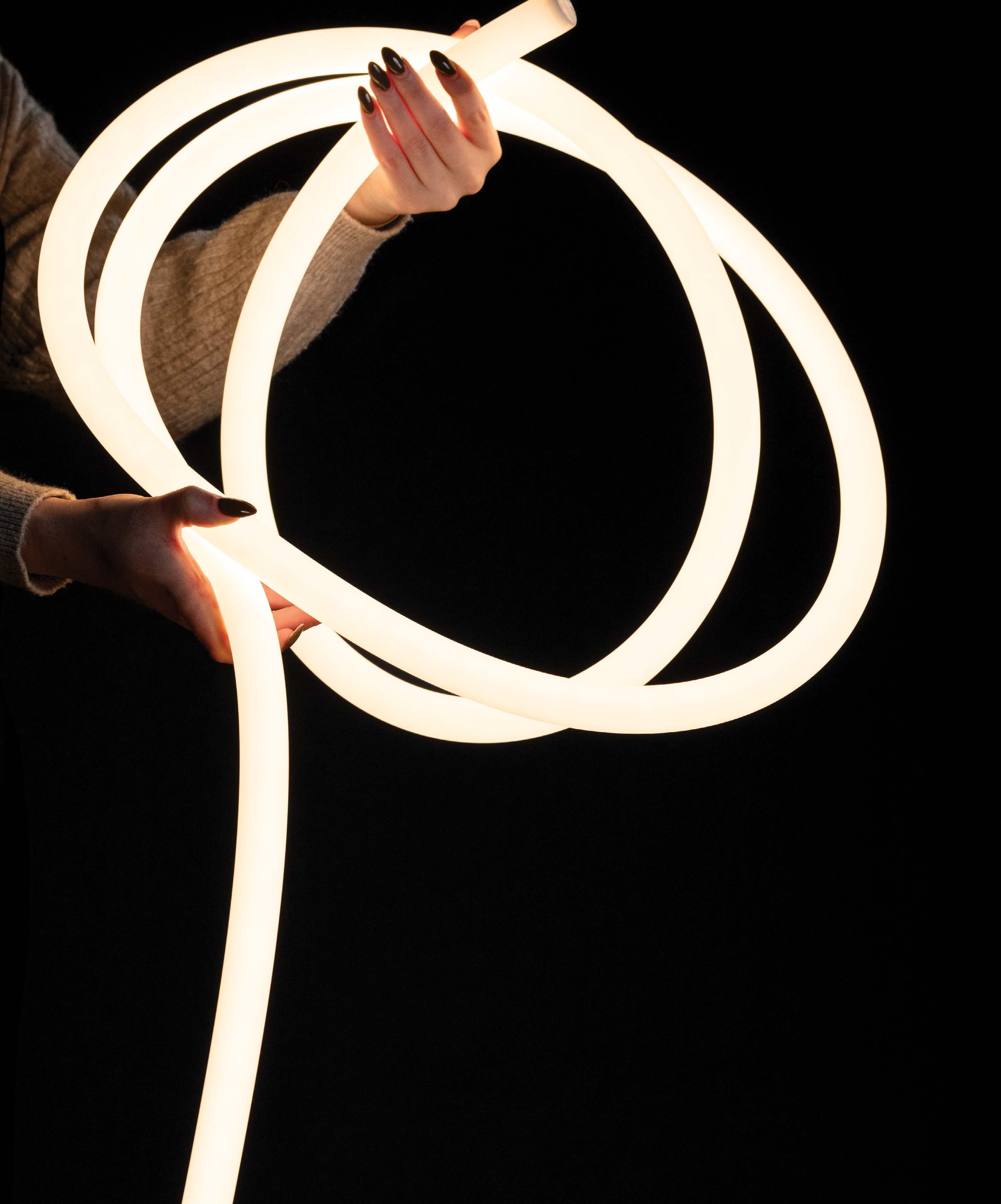
Prizm's NeoFlux Pro 360 Series is a versatile linear LED neon luminaire for interior and exterior accent lighting, offering a 360° lighted surface with no shadowing. It comes in RGBW, single color, and static white options, with customizable lengths and up to 155 lumens per foot (RGBW), 213 lumens per foot (static white), or 10-59 lumens per foot (single color). This 0.98-inch diameter luminaire has IP65 rating for wet applications, a bending radius of 200mm, and operates on 24-volt DC power with precise dimming control. It comes with a five-year limited warranty.


along the spine wall of the double-sided dining banquette feature handmade ceramic shades with leather wrapped detailing at the vertical steel supports. “These fixtures were inspired by lamp posts,” she says, “that might be seen along a pedestrian pier.” Serving as distinct pieces of art within the restrooms and the adjacent corridor were custom-shaped LED neon fixtures from Luminii. “Their shapes use the same geometries employed at the black ‘icon’ walls of the private dining room.” Additionally, Lunar pendants from Virginia Sin add a pop of warm terracotta at the vanities in the otherwise darkly colored restrooms. Above the bar lounge area, large Wireflow chandeliers from Vibia were selected to reinforce the architectural, geometric feel of the space, and Grain Drum pendants from Brendan Ravenhill create a more intimate, warm light at the round dining booths in the bar area. To soften the concrete-textured perimeter walls of the main dining room, Wood Eclipse sconces from Allied Maker were installed, and then on the patio outside, Jaima pendants from Marset add a focal point above the round booths found there.
Of course, the role of lighting and choice of fixtures played into the project’s overall design approach as an important part in the process. “As a primarily evening dining establishment, the lighting of Saizon needed to be ‘sexy,’ capable of low dimming and a softness conducive to the dinner experience,” Becheanu reveals. “To this end, we desired architectural light fixtures with great low-end dimming and more focused beam spreads to illuminate table surfaces and highlight specific moments and features in the space as a way to help tell the overall design story.” And lighting choices go hand-inhand with overall interior design choices, she adds, so that they are supporting and bolstering one another.
In terms of what Becheanu and the team were looking to for inspiration in design and lighting for Saizon, the designer says that “they were inspired by the meeting between nature and manmade structure that occurs at an ocean pier, and the tension this meeting creates between permanence and fluidity.” Additionally, the client envisioned incorporating graffiti-inspired art in the space, she adds, which informed the style and direction of the colorful murals that captivate guests’ eyes upon entry. “Much of our inspiration for Saizon came from the desire to explore a range of tactility in surfaces and finishes (emphasized with lighting),” Becheanu concludes, “in order to create a richness of depth that could support a variety of dining experiences and rhythms throughout the room.” P


A Luminary Vision
Lighting the Way in Modern Residential Design
REID By

When one envisions a masterpiece of contemporary residential design, the play of light—both natural and artificial—often stands out as the crowning touch. Here, Todd Walling, Principal, LIGHTWORKS, sheds light on the nuances of lighting design, its challenges, and the beauty it brings to a La Jolla waterfront residence.
The House with a Vision
It's not just any home, but a creation by Blue Heron, a significant player in the Las Vegas housing market. Breaking into the California domain, they crafted a home built on spec, infused with their characteristic grandeur. Although built to sell to an
RANDY
Photographer: Austin Ashline, Future Home Photo

unknown buyer, the house carries the unique hallmark of Blue Heron's design and standards.
Integrating Smart Systems
One of the distinctive elements of this projects is that it was designed with a full Savant smart house system, including Savant Lighting and audio-video control. While the natural light control and shading solution was courtesy of Lutron, Savant held the reins for lighting control.
A noteworthy aspect of the project was its shift towards Savant lighting control commissioning. While Lutron is more familiar territory for Todd's team, they found Savant's approach to be quite user friendly. The main distinction lies in the programming angle and how different loads are assigned. While this might seem nuanced and intricate to the uninitiated, from a homeowner's perspective, the controls are intuitive, with touchscreens offering an interface reminiscent of Lutron's palladium keypads. Todd explained, “It was a bit unusual to commission for an unknown


FIXTURE SCHEDULE
BLUE HERON: Chelsea - Architectural Lighting Materials
R3D: 3" SQUARE FLANGELESS BEVEL DOWN LIGHTFIXED DOWN
USAI: B3SDL-15X1-30KH-45-NCIC-120V-D19 / FIXED DOWN HOUSING / FLANGELESS - Phase Dimming
USAI: B3SDL-S-WH TRIM / FIXED DOWN TRIMLESS TRIM W/ NATARORIUM FINISH
R3DW: SQUARE FLANGED BEVEL DOWN LIGHT -FIXED DOWN W/ NATARORIUM FINISH
USAI: B3SDF-15X1-30KH-45-NCIC-120V-D19 / FIXED DOWN HOUSING / FLANGED - Phase Dimming

buyer as the client is usually there to tell us their preferences. In this case, we just made common-sense assumptions.”
As the conversation moved outdoors, Todd described the minimalist yet impactful landscape lighting. The floating fire features, a recessed exterior sofa set with underlighting, and a distant bar with knee space lighting are some of the prominent elements. The underlighting for the fire pit and the couch was supplied by Q-Tran. On the landscape lighting front, FX Luminaire was the chosen brand, with a particular emphasis on uplights.
The house’s location on a cliff overlooking the ocean with direct exposure to the elements presented another challenge. USAI's three-inch bevels were chosen because of their natatorium finish which is resistant to the salty air constantly blowing through the open house. All their trims are lensed and sealed, which was an important consideration.
The deck was graced with square lights, also from USAI. The wine bar, on the other hand, was adorned with tape light from the top, uniformly lighting up the area, courtesy of Q-Tran.
Todd indicated that the project encountered minimal supply chain disruptions. What were once three-to-four-week lead times extended to six to eight weeks, but these delays were still within manageable limits.
One of the biggest challenges on this job was working with a remote developer a state away. The project involved many parties, including Blue Heron and their design team, their project management team, the investors, and the builder. Each party had different opinions, so it was crucial to be solutions-driven and find the best outcome to please everyone.
You have to be wondering what does a house like this cost?
It sold last year for $22,500,000! P
USAI: B3SDL-S-WH TRIM / FIXED DOWN TRIMLESS TRIM W/ NATARORIUM FINISH
R3A: 3" SQUARE FLANGELESS BEVEL DOWN LIGHTADJUSTABLE
USAI: B3SAL-15X1-30KH-20-NCIC-120V-D19 / ADJUSTABLE HOUSING / FLANGELESS - Phase Dimming
USAI: B3SAL-25-S-WH TRIM / ADJUSTABLE TRIMLESS TRIM
S3D: 3" SQUARE FLANGELESS BEVEL SURFACE MOUNT DOWN LIGHT - FIXED DOWN
USAI: BLSD5-16C3-30KS-50-S-WH-RB-120V-DIML19
IGU: IN GRADE UPLIGHT
MP LIGHTING: L01 2W W302H 30° FROST HB 0° NO BOX BT0 BACK BOX/STANDARD MOUNTING FLANGE
MP LIGHTING: EBX-OCT1-CSMA
MP LIGHTING: LED12W700IB 120V INPUT. PHASE DIMMABLE
LED1-8: LINEAR STATIC WHITE TAPE LIGHT
Q-Tran: SW24 Series Static White LED Tape
Q-Tran: QZ Series LED Drivers
EW1: EXTERIOR WALL / DOWN
WE-EF: 131-9503-RAL9004 / LED Wall Fixture -3/6w 3000k Medium Beam down only
EW1: EXTERIOR WALL / UP - DOWN
WE-EF: 131-9515 (N/N) RAL9004 / LED Wall Fixture2x3/12w 3000k Narrow Beam Up / Down
LSU1: EXTERIOR LANDSCAPE UP LIGHTING - LOW LEVEL
FXL: C-UL-NL-AS-AB / FXLUMI C LINE BRASS UP LIGHT NO LAMP ANTQ BRONZ
LSU1.5: EXTERIOR LANDSCAPE UP LIGHTING - MID LEVEL
FXL: C-IN-LED35WFL-AB / FXLUMI C LINE BRASS IN GROUND 5W LED ANTQ BRONZ
LSU2: EXTERIOR LANDSCAPE UP LIGHTING - WALL WASH
FXL: C-WWL-NL-AB / FXLUMI C LINE

TruCurve
By PureEdge Lighting
Illuminate Your Space in Any Shape, Any Color
Let the drywall be your canvas and enjoy total design freedom with TruCurve: our curved recessed lighting system. Our patent pending TruCurve bends left to right allowing for curved, organic shapes to be designed on any flat ceiling or wall plane and recessed into 5/8” drywall with no framing modification required. TruCurve is featured in our Pure SmartTM TruColorTM RGBTW (1500K-6500K) lighting collection giving designers over 16+ million colors and 85,000 white tones to choose from. Pure Smart lighting offers easy-to-use, intuitive controls with use of the WiZ PRO software suite including the WiZ Pro setup app, the WiZ Pro dashboard, and WiZ app giving designers access to a near-infinite palette of color tuning options.


Shown : Pure Smart TruCurve 1A (Ceiling) and TruLine 1A (Wall) in TruColor RGBTW
DEEPER Darkness; BETTER Doing

Better living through light begins not with task, ambient, or accent light, but with beneficial darkness and light for our hands. Our next evolution as a profession begins when we understand that clients cut the lighting budget because we failed to establish appropriate value, instead scaring them or boring them with terminology that should stay in the studio.
We know that the right light can transform lives, that thoughtful lighting design can make architecture look and function better, and that the wrong light or lack of light can lead to both short- and long-term negative outcomes for those who live, work, and rest in our buildings. Clients do not have this
knowledge, nor the time and energy to acquire it, and that gap leads to countless decisions made against their own best interest. Schools cut dynamic white light from the budget to save dollars. Businesses cut layers of light that could increase productivity and employee wellbeing. Homeowners cut nearly all architectural lighting, convinced that anything unusual must just be unnecessary expense.
“Let’s trim the flooring budget so we can spend it on lighting.”
As a meme would conclude: “…said no client ever.” It is very rare for a client to cut other areas to increase their investment
DAVID WARFEL By
Layers of light help spaces look and feel great, but vague or technical terminology can lead to clients less willing to invest.
in lighting. In our residential work, it is not unusual to see a client spend twenty thousand dollars on kitchen appliances and less than two thousand on architectural lighting for the entire home. I can offer a bit of hope from my own work with clients, and the best part is that you only need to change your words. What we know about light is critically important; how we talk about light more often determines what lighting gets purchased and installed.
For an introduction into the power of language in lighting design, read the introductory article in the previous issue of designing lighting (dl)
How we talk about light determines how clients value light itself. If we are to set aside dry technical terms like task and ambient and let go of fanciful language like play of brilliants, at least when talking to clients, we need language that allows us to effectively communicate both purpose and value. In this article I will look at beneficial darkness and light for our hands; future articles will dig into light for our bodies, minds, faces, places, lives, and values. As I wrote in the introduction to the series in the previous issue of dl, there is nothing sacred in my language, nor am I hopeful that I will gain followers who use my terminology. Instead, I simply want to encourage you to rethink how you talk about light and find a way that works for you—and
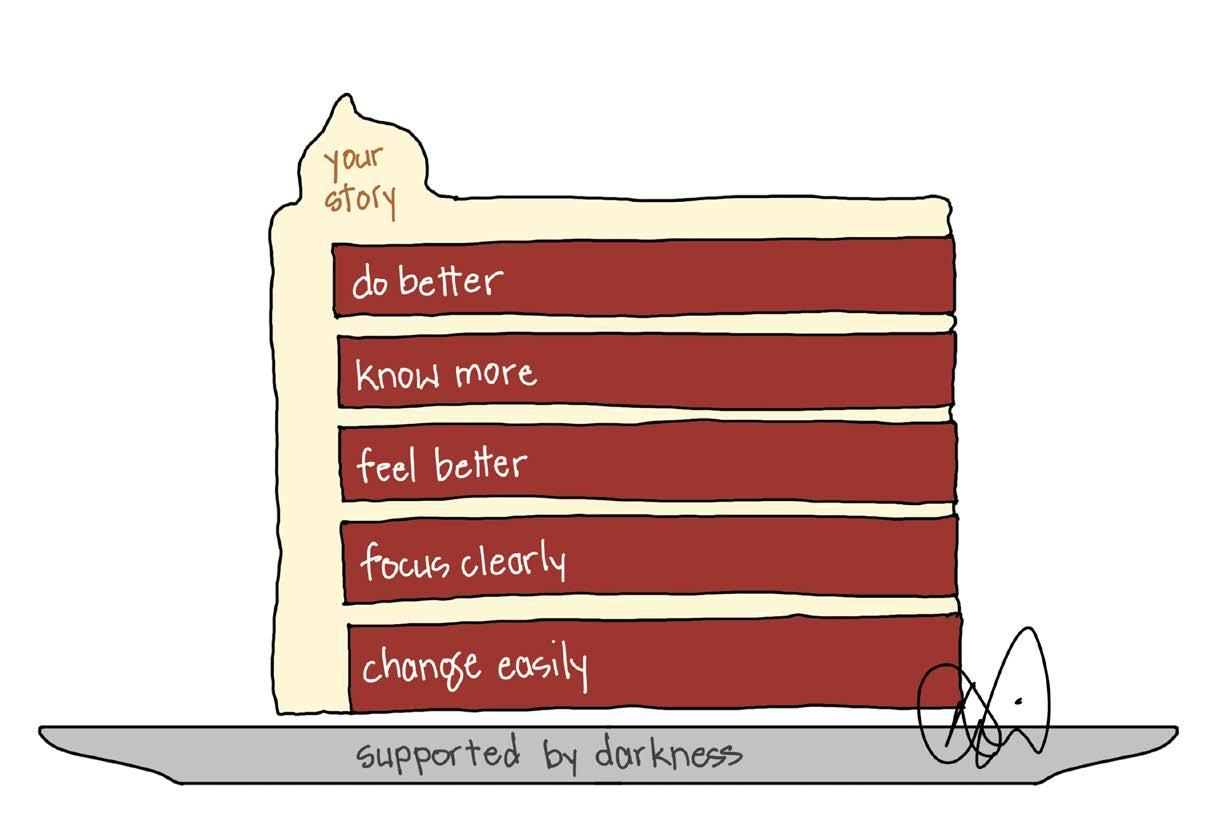
A full, rich, satisfying lighting experience reminds me of red velvet cake. Each layer, bonded with the right amount of icing, serves to make the whole piece taste great. What analogy can you create that clients will inherently understand?
For a number of years I shared a whimsical red velvet cake theory of lighting with my clients. A rich, satisfying lighting experience is something like a rich, satisfying piece of red velvet cake: done in layers with just the right amount of icing. Only recently have I started thinking about the plate that holds the cake, the foundation that holds all lighting: beneficial darkness.
I picked up the term beneficial darkness from Edward Bartholomew, Lya S. Obsborn, and Mark Loeffler when they so eloquently pointed out how those with less power and money often lack access to good darkness. I like the term for its simplicity and clarity and its ability to communicate both what we need and why we need it. We need a certain kind of darkness, and we need it because it has benefits for our lives.
I am no expert researcher and make no claim to fully understand all the nuances of darkness and how a lack of it leads to harm. Of course, neither are our clients, nor should
they be. If we can boil beneficial darkness down into something that both we and our clients can readily grasp, we can effectively communicate the need for good dimming and controls, lightfiltering and light-blocking shades, and low-glare cutoff fixtures. And boiling it down need not be difficult: excess light at night (LAN) is bad for our wallets, our planet, and our bodies.
Our clients pay for every lumen produced on their property, useful or not. So many homes are graced with brass-and-glass “coach house” lanterns that direct a majority of lumens into the skies or into our eyes. Besides discomfort, the end result is that our clients pay money to send light upwards that serves no practical purpose unless they often fly home on a broomstick. Why waste money when there is a better way to achieve light with respect for darkness?
The light we waste at night is staggering—and staggeringly bad for the only habitable planet in our solar system. Light sent into the sky disrupts animals and plants, all while requiring the generation of electricity for no useable purpose. The end result is endangered wildlife and plants, along with increased pollution and resource extraction. Again, much of this light at night is completely wasted. Who sees the trees in your backyard after you go to sleep?

I have not used this whimsical illustration with clients, at least not yet. But the next time I endeavor to explain the benefits of darkness, this might just be more understandable than many alternatives.

Light at night can be bad for our wallets, hard on the planet, and painful for our bodies. Less light can be the best lighting design strategy after dark.


Finally, we need beneficial darkness for our bodies. I am astounded at the continual release of research that points to the harm of light at night light at night, from potentially carcinogenic effects to sleep disruption and nearly every kind of modern disorder. It turns out that after thousands of years of dark nights, our newfound perpetual state of twilight just is not good for us.
When we talk about darkness in terms of its benefits – for our wallets, planet, and bodies – we are more likely to convince our clients to allocate resources of time and money towards preserving it. But complete darkness is not always the answer, and at some point we must introduce electric light to help us live our lives.

Simple illustrations can help convey the limited value of typical light fixtures to clients, most of whom have far more important things to do than get a PhD in lighting.
Simplifying terminology makes it possible for us to rebuild our presentations and communications around something the clients can grasp.

Once the need for light for our hands is established, a conversation with clients about how to achieve it is much easier to begin. Too often, we skip the step that establishes value and go straight to solutions.
The first layer of electric light, for no other reason than it is most often first in our minds, is light for our hands that helps us see what we are doing so we can do it better. We might call it task light or focal glow, but simplifying the terminology to light for our hands makes it instantly understandable to most of our clients, and understanding leads directly to value. It is easy for a client to say “Let’s cut the task light” when they do not fully understand what it does. It is much harder for a client to say “I don’t need light for my hands” or “I don’t want to do better.”
Simplifying terminology makes it possible for us to rebuild our presentations and communications around something the clients can grasp. I have recently begun to dabble, in my rather untrained way, with illustrations that attempt to simply communicate the value – and place – of light for our hands.
For example, this first cartoonish illustration conveys that we need good strong light for our hands but that the strongest light is often lost above our heads. Showcasing lighting fixtures people know allows us to point out inherent weaknesses, thereby preparing the client for better alternatives. Historically-styled chandeliers, modern disk lights, and torchiere uplights will always put better light on the ceiling than our hands. Even the most unskilled client can usually recognize that this is misplaced effort and expense.
The second sketch shows a few alternatives like recessed downlights, desk lights, and table lamps. I find it useful to illustrate a series of tasks, from which a client might see something that is important to them. If they value knitting, or cooking, or reading, then the light I propose for their hands automatically has more value. When lighting has more value, it is more likely to be funded.
I hesitate to include a plan-view illustration in an article aimed at simplifying communication for clients. In most cases, I try to avoid showing plans to clients. Without proper training, their only ability to feel good about their decisions is to make an uninformed judgement about quantity of fixtures shown on a plan, or whether or not they are in tidy rows. This serves neither the client nor the designer.

There is a fine line between educating clients enough that they make informed decisions and so much that they tune out. That line is different for everyone; the rare technically or graphically inclined client may appreciate a plan illustration.
For a more experienced client, however, this simple plan illustration points out the weakness in strict grids of recessed downlights when lighting for their hands. The only practical way to make this work is to illuminate an entire space like a gas station canopy or big box retailer: light everywhere. If words are the key to unlocking value in lighting design, then graphics and pictures must be supportive of those words, not tangential or superfluous.
A recent collaborator told us, “Nobody talks about light the way you do,” and it was meant as a compliment. This is not because we are better than other lighting designers – we have our strengths and weaknesses like every studio – but because we do talk about light differently, and deliberately so. When we talk to clients about light, the notable absence of “task, ambient, and accent” or “play of brilliants” allows space for us to talk about beneficial darkness and light for our hands.
We do not have the perfect language of light. It grows even as I write this. We do not have all the answers to lighting design’s challenges. But I can say with confidence that changing the way we talk about light helps many of our clients understand and appreciate the value of what we do. Maybe the flooring budget will get trimmed after all. P
Harness the convergence of connected technologies
Get expert help with certification and testing.
Smart lighting reaches beyond traditional functional illumination. Combined with internet connectivity, network controls and new technologies, commercial and industrial lighting systems is one of the most diverse segments in the industry. Meet testing and certification challenges for connected ecosystems with UL Solutions.
From lighting safety testing and certification to performance testing, global market access, sustainability and beyond, we have commercial and industrial lighting knowledge you can trust.
Find out more at UL.com/lighting

LED Revolution 2.0
CRAIG DILOUIE, LC, CLCP By
Craig
DiLouie, LC,
CLCP serves as education director for the Lighting Controls Association (www.LightingControlsAssociation.org), a council of NEMA dedicated to educating the public about lighting controls.
Everywhere, we see signs the LED revolution has won. An argument can be made, however, that this mature lighting technology is simply entering its next phase of market opportunity. Call it the LED Revolution 2.0.
Over 20 years, this technology utterly transformed lighting and control and the industry at large. It dominated new product development, first matching the performance of traditional luminaires and then exploring entirely new designs and capabilities to add value. Energy was always the main driver, however, resulting in a race for efficacy that has been largely realized.
Utility lighting rebate programs embraced the technology. The latest energy codes assume heavy, if not exclusive, use of it. In the residential market, the Biden Administration’s decision to eliminate the Energy Independence and Security Act of 2007’s exemptions and enforce its backstop provision is eliminating the large majority of remaining incandescent (halogen) general-service lamps. In the nonresidential market, a movement to ban mercury has resulted in seven states targeting fluorescent mercury-containing lamps.
Due to its advantages, LED has been widely adopted in both new and existing construction. The latest Department of Energy (DOE) solid-state lighting energysavings forecast in December 2019 estimated 72 percent
LED penetration in the installed U.S. commercial building lighting stock by 2025 (93 percent for outdoor).
In regions of the country where energy costs are higher, there are signs this has already been reached or even exceeded. For example, rebate program evaluation reports by utility consulting firm DNV projected LED share of the linear ambient lighting market to be 83 to 94 percent in 2023 in Connecticut, Massachusetts, New Jersey, and Rhode Island.
This is of course great news for the United States and its economy. Lighting once consumed 40 percent of the average commercial building’s energy budget; today, it is closer to 10 percent. Overall, the DOE estimates that LED lighting has reduced overall electricity demand in the country by about 5 percent.
It’s also great news for new buildings. Lighting is no longer a costly utility but instead a potential building asset. Today’s LED lighting systems are highly precise, controllable, and flexible, providing a menu of capabilities and fresh benefits that 20 years ago would have been highly costly, complex, or unachievable.
For lighting practitioners doing projects in the existing buildings market, however, it may feel like the party’s coming to an end. Rebate providers are re-evaluating lighting, generally the largest part of their programs.
"Lighting is no longer a costly utility but instead a potential building asset."
ENERGY STAR recently announced it is sunsetting its listing for many residential LED products. The DOE has grown selective, supporting individual applications more than the category as a whole.
Coming out of the pandemic into 2023, there was a feeling the industry was at a crossroads, leading many to ponder the question: What’s next?
One answer is the LED Revolution 2.0. Though this time the revolution may be more about opportunity resulting from a shift in market dynamics than a change in technology. Nonetheless, it would certainly be as exciting if not more so, as it will give lighting in America opportunity to realize the technology’s full potential.
It’s an optimistic outlook for lighting based on the thesis outlined below. As with the LED Revolution 1.0, the next phase once again starts with energy.
The LED installed base is currently a mishmash of solutions. These range from new fixtures to retrofit kits to basic-grade retrofits using replacement lamps like TLEDs.
Lighting controls, meanwhile, are not widely installed in existing construction, with the most popular control strategy, occupancy sensors, being installed in only 17 percent of commercial buildings as of 2018, according to the DOE’s Commercial Buildings Energy Consumption
Survey. In its 2019 SSL energy-savings forecast, the DOE estimated connected lighting—LED lighting systems with integrated and networked sensors and controllers— would achieve a 7 percent penetration in the installed lighting stock by 2025 based on current conditions.
The reason for slower adoption of lighting controls is simple economics. Despite offering the utility of high energy savings, these savings are applied against a smaller LED load, which impacts direct return on investment.
Upgrading first-generation LED systems to secondgeneration LED systems with advanced controls would save large amounts of energy. This includes customized lighting designs, new luminaires, networked lighting controls, luminaire-level lighting controls, tunable lighting, and integration with other building systems such as HVAC and plug loads.
Looking at networked lighting controls alone, the DesignLights Consortium (DLC) has estimated that widespread adoption could reduce average lighting energy consumption by nearly one-half. In 2023, the DLC published a study that underscored the energy savings potential of networked controls and recommended revising energy efficiency incentive models to capture the full benefits of controlled lighting, including pairing with HVAC systems in large buildings.

Using Connecticut and Arizona as regional models, the study concluded that the benefits of acquiring all cost-effective savings from networked lighting controls would be significant enough to make a noticeable impact on utility efficiency program budgets.
Businesses in Connecticut could receive almost $1.2 billion in net benefits by 2030, while businesses in Arizona could receive net benefits of $217 million.
Currently, roughly a third of lighting rebate programs incentivize networked lighting controls based on the DLC’s Qualified Products List for NLCs, with the majority encouraging networked control via a luminaire rebate adder.
Lighting rebate programs evolve with market changes to capture significant energy savings. As rebate program administrators find increasing LED saturation in their territories, they are likely to examine new sources of energy savings. Likely candidates include those listed earlier: upgrading first-generation LED systems to second-generation technology, networked lighting controls, luminaire-level lighting controls, integration with other building systems such as HVAC and plug loads, and possibly lighting design approaches. Some rebate programs may tie these concepts together as requirements or packages.
Rebates are a venerable tool for lighting practitioners to gain acceptance on lighting upgrade projects by reducing initial cost. As such, they are highly influential in market demand for retrofits.
Decarbonization will enhance the incentives for deep retrofits. An increasing policy focus on decarbonization may lead to premium lighting and control options becoming more financially attractive.
At the national level, electrification of transportation
is predicted to impose increasing demand for electric power. At the more local level, requirements for reporting carbon emissions and either offsetting or paying financial penalties for exceeding carbon caps may further incentivize energy efficiency and building data. Where they exist, these policies tend to focus on achieving net-zero by 2030. As these policies may be enacted at the city level, we may see a distinct market differentiation between urban and non-urban areas.
Among leading commercial properties, there is a sentiment that minimizing energy costs and the carbon footprint can generate significant value in terms of attracting and retaining high-quality tenants. Meanwhile, energy codes may evolve to become more focused on carbon savings and/or performance.
As this meta trend develops, the most robust lighting and control options may become more attractive when the ROI calculation includes all associated costs and incorporates applicable value that does not provide a direct ROI.
The LED Revolution 2.0 is a big opportunity for quality lighting, lighting controls, data, and the full range of LED capabilities. The primary purpose of lighting systems is to serve people and realize the owner’s organizational goals. As such, upgrading remaining traditional and existing LED installations with today’s state-of-the-art lighting and control offerings represents a major opportunity. This opportunity includes designing lighting and control systems that take advantage of the full range of today’s LED capabilities and benefits, from circadian lighting to precise optics to color tuning to data to advanced controls and more.
Overall, the LED revolution may have won, but market conditions may be setting the stage for its next exciting phase. P

DON’T MISS OUT

Serving the Lighting Design Community
How Do Manufacturers’ Sales Representatives Illuminate the Path to Lighting Design Success?

In the captivating world of lighting design, a hidden powerhouse operates behind the scenes – the manufacturer’s sales representative. Often underestimated yet profoundly influential, these unsung heroes bridge the gap between manufacturers, customers, distributors, and innovative design teams. With diverse duties, lighting representatives play a pivotal role in lighting projects, ensuring success from conception to completion. This article explores how sales representatives contribute to the seamless flow of orders, products, and knowledge within the lighting design community.
The Power and Purpose of Manufacturers’ Sales
Representatives
Manufacturers’ sales reps act as trusted agents hired by
lighting manufacturers to champion their brand and products in various markets. They serve as a bridge between all stakeholders involved in a lighting project, facilitating effective communication and ensuring no detail is overlooked.
Product Selection Expertise
One of the primary roles of the sales rep is to assist design teams and customers with product selection. They bring indepth knowledge of the manufacturer’s catalog, helping clients choose the right products based on project requirements, including the Critical Items of Need (CIN) and Statement of Objectives (SOO). This expertise ensures that the selected lighting solutions are aesthetically pleasing and functionally optimized for the project.
DAVID MARTIN By Western Lighting and Energy Controls
The 103 stores at The Shoppes at Carlsbad are intricately lit thanks to a collaboration between Western Lighting and Energy Controls, Lumascape and JK Design Group. | Image courtesy of Lumascape
Streamlining Documentation
Creating a comprehensive lighting plan requires thorough documentation. Sales reps step in to assemble cut sheets for submittal approvals. This crucial task streamlines the approval process by providing all the necessary information and specifications to ensure the proposed lighting solutions meet regulatory and client standards. This meticulous attention to detail ensures that the lighting design process flows seamlessly from concept to execution.
Logistics Management
Managing delivery dates is a crucial aspect of any lighting project. These representatives help coordinate product deliveries, ensuring that components arrive on time and in the right quantities. This level of logistics management is essential to prevent project delays and keep everything on track. Efficient management of the supply chain ensures that the project stays on schedule and within budget.
On-site Verification and Support
Sales reps often go the extra mile by providing on-site verification of product application and installation. Their presence on the job site helps ensure that products are used correctly and that any unforeseen issues are promptly addressed. This hands-on approach contributes to the overall quality of the installation, reducing the likelihood of errors and costly rework.
Lighting Control Plans and Programming
In the realm of modern lighting design, control systems play a pivotal role. Lighting representatives work closely with manufacturers to prepare lighting control plans that align with project specifications. Moreover, they assist in programming lighting control systems to optimize energy efficiency and meet the project’s unique requirements. Their expertise in this area ensures that the lighting system functions seamlessly, enhancing both aesthetics and functionality.
Ensuring a Successful Installation
To ensure a successful installation, reps provide detailed installation instructions to the contractor responsible for the project. This comprehensive guidance is instrumental in achieving an efficient and error-free installation process, significantly reducing the need for additional cost.
Startup and Commissioning Assistance
As lighting systems become increasingly sophisticated, startup and commissioning become critical project phases. Lighting representatives assist in the startup process, ensuring all components function correctly and according to the design intent. They also collaborate with commissioning providers to streamline this essential phase, guaranteeing that the lighting system operates at its peak performance from the moment it is activated.
Financial Management
Managing the money flow between the distributor channel and the manufacturer
is another vital role these representatives undertake. They help facilitate financial transactions, ensuring that payments are made promptly and that manufacturers are compensated for their products and services. By efficiently managing financial matters, reps contribute to the financial success of both manufacturers and distributors, fostering strong and enduring partnerships.
Price Margins and Discounts
Well-versed in pricing structures and discounts manufacturers offer, they play a significant role in managing price margins and ensuring customers receive competitive pricing while manufacturers maintain profitability. This balance between affordability and profitability is crucial to the sustainability of the lighting design industry and the satisfaction of all stakeholders involved.
Helping to Illuminate the Path to Lighting Design Success
In the world of lighting design, manufacturers’ sales representatives play a pivotal but often underestimated role in ensuring the success of projects. Their multifaceted responsibilities encompass product selection, documentation, logistics management, on-site support, control system expertise, installation guidance, financial management, and more. Reps act as the essential bridge between customers, distributors, and manufacturers, ensuring that the intricate dance of lighting design proceeds without a hitch.
Moreover, it’s important to note that these experts are equally adept at assisting with both new and retrofit projects. Reps’ comprehensive knowledge extends beyond product selection; they understand the intricate web of codes and regulations governing the lighting industry. Whether navigating the complexities of a new construction project or the intricacies of retrofitting existing spaces, reps are well-equipped to enable success for all involved. Their dedication to excellence and commitment to seamless project execution make them indispensable members of the lighting design community, illuminating the way forward for every project they touch. P

Western Lighting and Energy Controls worked with Lutron to install their Vive Wireless Lighting Control system at Radiology Partners in Southern California.
Image courtesy of Lutron | Photo credit: Kim Rodgers Photography
ART BEYOND
Boundaries

PARKER ALLEN By
A Conversation with Artist Adam Frelin
Adam Frelin began his artistic career as a teenager creating graffiti projects in his hometown of Grove City, Pennsylvania.
The scale and openness of creating art this way attracted him - it was art free from the restrictions of a classroom. Surely unbeknownst to him at the time, he was laying the groundwork for his future career.
In the mid 1990s, Frelin completed a Bachelor of Fine Arts at Indiana University of Pennsylvania. Art school was an informative experience, he noted, but not exactly what he was looking for. “The thing about going to school for art is they are teaching you how to make art for galleries. I got redirected, in a way. When I finished my undergrad, I was actually planning to switch and go into landscape architecture,” he explained.
But, landscape architecture wasn’t quite the right fit either. It seemed good on the surface, but the degree of his ambition and scale was a better fit for the artistic field.
His ideas were grandiose, and colleagues told him, “You’re never going to have that realized in this field.”
And so he went back to school, earning his Master of Fine Arts from University of California, San Diego.
His artwork began naturally gravitating towards creating pieces
out in the landscape. His breakthrough with light came in 2005 during an artist residency on a cattle ranch in Wyoming.
He was drawn to two perfectly shaped hills on the ranch that created a symmetrical valley in between and thought, “Something needs to go between the two to bridge the gap.” The natural darkness of the ranch led him to the idea of employing lighting.
Several hundred feet of aircraft cable and 80 four-foot fluorescent lights later, White Line was born, a subtle but spectacular bowing line of light that bridged the valley between the two hills.
“In this darkened, dramatic landscape, here was this illuminated element that did two things. It drew attention to itself, but it also drew attention to everything around it,” said Frelin. The fluorescent light outdoors was reminiscent of moonlight, and the piece created an amazing play of light and shadow on the surrounding landscape. “It was both a thing to look at and an effect machine, in a way.”
From that point forward, light became an integral part of his artistic repertoire. “I am not strictly a light artist,” he clarified, “but it is an important part of my work, and it seems to be the work that I get a lot of attention for now.” He uses it as a tool to create a particular effect that functions metaphorically to draw attention to a place or an issue.

White Line, Wyoming, 2005 | Photo courtesy of Adam Frelin.

The best example of this was a 2016 project called Breathing Lights, a multi-city installation in the Capital District of New York. Bloomberg Philanthropies was looking to fund projects that drew attention to civic concerns. In a meeting with a local architect and the deputy mayor of Troy, Frelin asked, “What is the specific concern or idea this could be about?” They both simply responded, “Vacancy.”
Frelin wanted to incorporate the vacant buildings in the installation itself. Architect Barbara Nelson, his partner on the project, suggested using light. Frelin loved the idea, but remembers thinking that the light can’t be solid – that would just give the appearance that the vacant buildings are occupied. It has to change in some way.
And so he and his team created thousands of LED light boxes, spread across 200 buildings, that slowly “breathed,” waxing on and off. The breathing lights spoke to an “underlying life force that was beneath the entire region, as if the life force was coming out in these particular nodes of the abandoned buildings.”
Many of his pieces, like Breathing Lights, have an underlying story to tell – they touch on some relevant socioeconomic issue. Other pieces don’t necessarily address a pressing issue but nonetheless connect with the local environment and resonate with the people there. A great example is Extended Sunset at Penn State University.
“I grew up in Pennsylvania, and I know that it can be pretty dreary in the winter,” Frelin explained. He took an image of
a sunset taken in that location and had it printed on film that was put in the windows of an auditorium. The windows were lined with LED strips, and the entire thing was hooked up to an astronomical timer so that it turned on at dusk and stayed on all night. “It was a sunset for everyone who doesn’t get to see sunsets there.”
Frelin is constantly seeking out new artistic opportunities and currently has several projects in the works. As for incorporating light, he usually lets the project details dictate the direction in which he goes. The use of light is an artistic tool he has developed over the last two decades, and, like any master of his craft, he knows when and where to use it.
The thing that excites him the most nowadays are different festivals that happen around the world, like a recent lantern festival he attended in Japan. He finds inspiration in the objects and props he sees and in how they become an integral part of a much a larger experience.
“As an artist,” he explained, “you are often taught to make things in seclusion that are then put in a specific place for the initiated. How do you create something that is part of larger, enriching experience that affects people who aren’t necessarily seeking art out?”
That is the question that drives Frelin to create beautiful works of art that can be experienced by everyone.
To learn more about Adam Frelin and his work, visit his website or follow him on Instagram
Breathing Lights, Cities of Albany, Schenectady and Troy, NY, 2016
Photo courtesy of Adam Frelin.

The ACR Series is designed for short to medium throw applications. Now offering customization through Casambi Bluetooth technology. The Casambi app serves as a userfriendly interface for dimming control, compatible with iOS and Android devices, and is accessible to users of all technical levels.

Photographer: Austin Ashline, Future Home Photo

CONFERENCE SCHEDULE
1 NOVEMBER 2023
18:00-21:30 Pre-Conference Reception (Sponsored by Axis Lighting)
RECEPTION
2 NOVEMBER 2023
09:00-13:00 BOL X IALD Presents: Zweig GroupAn Interactive Workshop
WORKSHOP | VAN HORNE A
Speakers: Justin Smith - Project Management and Leadership Expert Zweig Group | Business of Light
From Project Management to Project Leadership: Unlocking High Performance Session
• Module 1 - The Project Value Equation: Identifying critical drivers of project value.
• Module 2 - Foundations of Business Intelligence for Project Managers
• Module 3 - Introduction to Project Leadership
13:45-15:45 LIRC Member Meeting SESSION
The meeting, open to all members of the lighting design community, will highlight key updates from the LIRC community, an overview of current LIRC committees and initiatives, and a look at the year ahead.
16:00-17:00 IALD Member Townhall
VAN HORN A
IALD President Monica Luz Lobo on membership changes proposed by the IALD Board of Directors.
17:00-18:00 Emerging Professionals Reception (Sponsored by LIRC)
RECEPTION | VAN HORNE C Admission by invitation only.
18:30-21:00 President's Opening Reception (Sponsored by Cooper Lighting) RECEPTION | ALHAMBRA ROOM
3 NOVEMBER 2023
07:30-08:15 Friday Breakfast MEALS
08:30-10:00 Opening Welcome + Keynote Address: Bruce Munro (Sponsored by ETC)
Speaker: Bruce Munro - Light Artist, Bruce Munro Studio
10:00-10:30 Friday Morning Networking Break + Table Top Exhibits MEALS | FOYER
10:30-12:00 Achieving Focus: How Lighting Designers Can Successfully Navigate the Lighting Channel
SESSION | VAN HORNE A
Speakers: Alexis Arnoldi - Senior Associate, Cline Bettridge Bernstein | Jimalee Beno - President, Focal Point Lighting | Steven Rosen - Available Light | Nancy Stathes - President, Specialty Lighting Industries.
As a follow-up to an extremely well-received session in Palm Spring last year, the “Unfinished Business” session will extend exploration into how designers can learn about successfully working the greater lighting supply channel.
10:30-12:00 Dark Infrastructure: A Tool for Preserving Biodiversity in Lighting Masterplan
SESSION | PRESIDENT'S HALL
Speaker: Maxime Brunois - Lighting Designer, CONCEPTO
In 2009, Rennes launched a competition to create a climate plan for reducing electrical consumption. CONCEPTO, established by Roger Narboni in 1988, won and introduced the concept of dark infrastructure to balance lighting. They incorporated biologists' advice in their projects, analyzing the nightscape and aligning with lighting regulations. They've created dark infrastructures in various locations globally, supporting over 150 lighting masterplans. Dark infrastructure addresses 21st-century challenges like global warming and energy consumption, reconnecting people with nature at night, inspired by France's Grenelle Environment Round Table from 2007.
12:00-13:00 Friday Lunch MEALS | VAN HORNE B-C
13:00-14:00 Kirchhof & Ohm, Not a Law FirmLessons From the Field
SESSION | PRESIDENT'S HALL
Speakers: Nick Downham | Shoshanna Segal - Hartranft Lighting Design
In this discussion between a lighting designer and a manufacturer, the focus is on understanding how wiring schemes and drivers can affect illumination levels. They'll use real-life examples to demystify this technical subject, providing designers with tools to ensure that their specifications and installations align with the intended results.
13:00-14:00 Digital Interactive Placemaking
SESSION | VAN HORNE A
Speaker: Robb Pope - Founder
Technology has revolutionized architectural placemaking, incorporating LED, sensors, projection, and digital control
systems globally. Robb Pope and Nick Moser will offer distinct insights from their diverse backgrounds in advanced fabrication and digital installations. The presentation aims to showcase compelling examples of interactive technology and foster dialogue between the presenters and the audience.
14:10-15:10 An Abbey, A Cathedral, a Church, a Quire, a Monastery, a Mosque, a Buddhist shrine
SESSION | VAN HORNE A
Speaker: Philip Rose - Speirs Major
The presentation, aimed to inspire, investigates the importance of a brief; how this can be developed throughout the design process through continued dialogue and respond to changes. The session explores what can be learned from history and looks at the sensitivities of illuminating places of worship where the historic buildings are of national and international significance.
14:10-15:10 Modeling Light SESSION | PRESIDENT'S HALL
Speaker: Dan Weissman - Lam Partners
This presentation explores the evolution of digital visualization tools in the context of modeling light, offering insights into avant-garde lighting design practices, upcoming opportunities, and challenges, and encourages critical thinking in a fast-paced client-driven environment.
15:10-15:40 Friday Afternoon Networking Break + Table Top Exhibits MEALS | FOYER
15:40-17:40 Lighting Cross Talk WORKSHOP | VAN HORNE B-C
In this popular interactive session, multiple groups of lighting designers meet face-to-face with select manufacturers in a randomly generated table rotation. In this zero-pressure environment, companies receive candid feedback about the lighting industry, hear specifiers' wish lists for future products and services, share their latest offerings, and discuss topics and issues of mutual interest.
15:40-17:40 Student + Educator Workshop WORKSHOP | PRESIDENT'S HALL Designing with Luminance and Exitance
17:45-18:45 IALD Education Trust Networking Reception + Student Portfolio Review RECEPTION | THE OAK ROOM
17:45-18:45 Young Professionals Reception (Sponsored by Sourcery) RECEPTION | MT. STEPHEN HALL
19:00-22:00 Friday Evening Party: "Camp Light" (Sponsored by Acuity Brands) RECEPTION | OFF SITE
4 NOVEMBER 2023
08:30-09:30 Saturday Breakfast MEALS
09:30-10:30 Tackling Light Poverty: Light Reach Network and a Cultural Shift for Philanthropy in Lighting SESSION
Speakers: Tina Aghassian - Senior Principal, HLB | Jenny Werbell - NYC Studio Director, Essential Light Design Studio
This presentation will include programs in Puerto Rico and Lebanon as case studies and related topics for field research; showcase a path for lighting design activism to empower all with lighting equality; and propose what philanthropy, social engagement, and corporate responsibility can look like in the international lighting community.
09:30-10:30 The New Historical: Lighting the Fairly Recent Past SESSION | VAN HORNE A
Speakers: Conor Sampson - Owner, CSDesign, Inc. | Alicia Davila - Senior Project Manager, CSDesign, Inc.
This session examines the original context, intent and methods deployed in the lighting of three modern skyscrapers in Montreal.: the renovation of Place Victoria, an iconic Montreal skyscraper designed by famed Italian architect Luigi Moretti; the CIBC Tower interior redesign; and the replacement of the iconic Place Ville Marie beacon.
10:30-11:00 Saturday Morning Networking Break + Table Top Exhibits
MEALS | FOYER
11:00-12:30 Lighting Design for the Development and Protection of Outdoor Space SESSION
Speakers: Rick Utting - Clanton & Associates | Randy Burkett| Nancy Clanton - CEO, Clanton & Associates
This workshop will explain how new ANSI/IES standards are working together to assist clients, like the U.S. National Park Service, with their outdoor lighting design process. Since the presenters helped write these new standards, they will be able to answer any questions regarding the meaning or how to use them. Attendees will be guided through the different characteristics of outdoor space, why we light, when we can un-light, and thoughtful design examples of how to make the nighttime environment more understood using environmentally responsible, yet artful lighting design.
11:00-12:30 "Infunstructure": from Functional to Iconic to FUN (Sponsored by Garden Light LED)
SESSION | PRESIDENT'S HALL
Speakers: Chip Israel | Matthew Bates - Designer, Lighting Design Alliance
A discussion on how to take the creative brush strokes of lighting, and how to blend it in with the more rigid constraints of the architectural framework of city structures. Come away with the tool kit of how to look at a city feature, determine the most suitable design narrative for it, and then how to work with the architect to achieve what the city ultimately wants in a key feature of its landscape.
12:30-13:30 Saturday Lunch MEALS | VAN HORNE B-C
13:30-14:30 Don't F-up! One Firm's Take On Succession Planning
SESSION | PRESIDENT'S HALL
Speakers: Helen Diemer - Principal, The Lighting Practice | Michael Barber - Principal, The Lighting Practice | A. Pomme Lee - Associate / Director of Strategic Human Resources, The Lighting Practice | Darcy Veneziale - Marketing Director, KSS Architects
This leadership-focused panel discussion will pull back the curtain revealing one firm’s experience navigating significant leadership, structural, and philosophical changes, including those that were planned and others that were unanticipated. Panelists, representing different perspectives and roles within the 30+-year-old firm, will share insights and lessons learned from a multi-year period .
13:30-14:30 Natural Light Is the Best Teacher
SESSION | VAN HORNE A
Speaker: Ulrike Brandi - Director, Ulrike Brandi Licht GmbH
The presenter has selected five examples of the physical phenomena of natural light and will use them to demonstrate how they are applied practically in projects.
14:30-15:00 Saturday Afternoon Networking Break + Table Top Exhibits
MEALS | FOYER
15:00-16:00 Living Light: Developing a Living Building
SESSION | VAN HORNE A
Speakers: Shea Sterner - Controls Specialist, ALR Inc. | Zach Suchara| Molly Stowe
Luma Lighting Design's new office is a fully certified Living Buildings. This presentation chronicles the journey Luma traveled to get from concept to operation. We will discuss the approaches taken with the daylight and electric lighting systems to meet rigorous energy, control, and red-list-free material requirements. In addition to designing the project, Luma was a partner in the development side of the process and will discuss the process required to meet the aesthetic vision as well as the project proforma.
15:00-16:00 The Influence of Lighting Design in Cinematography - Lighting for the Cinema
SESSION | PRESIDENT'S HALL
Speaker: Osvaldo Sepulveda - Senior Lighting Designer, Mulvey & Banani Lighting Inc.
This session demonstrates the history and uses of lighting design specifically for the cinema, and how there are fundamental links to our work as architectural lighting designers. We will learn about the unique ways cinematographers use light and the different stages of illumination from natural to artificial. We will learn about how the pioneer lighting designers of cinema influenced the lighting industry all over the world.
16:10-17:30 Once Upon a Time in Lighting Design (Sponsored by Q-Tran)
SESSION | VAN HORNE B-C
Speaker: Dr. Emrah Baki Ulas - Associate Professor of Practice, The University of Sydney
This talk will explore the esoteric aspects of the history of light and lighting, and take a thought-provoking, enlightening and inspiring journey into how lighting technologies and lighting applications have evolved over time and the future legacy of the modern-day lighting designers.
18:00-20:00 IALD Education Trust "25 for the Trust" Jubilee Party
RECEPTION | OFF SITE
Formoredetaileddescriptionsofthesesessions, visitIALD.org
LIT Design Awards
FINAL SUBMITTAL DATE 22 October 2023
ANNOUNCEMENT DATE EST November 2023

NLB Tesla Awards ™
FINAL SUBMITTAL DATE 22 January 2024
ANNOUNCEMENT DATE 14 March 2024
Middle East Awards
FINAL SUBMITTAL DATE Est November 2023
ANNOUNCEMENT DATE EST 18 January 2024
AOLP Lighting Awards 2024
FINAL SUBMITTAL DATE 15 December 2023
AWARD PRESENTATION EST March 2024
FINAL SUBMITTAL DATE Closed
AWARD PRESENTATION EST 15 or 16 August 2024
IESNYC Lumen Awards 2024
FINAL SUBMITTAL DATE 12 January 2024
AWARD PRESENTATION 20 June 2024 Lumen Gala, NYC
The IALD Lighting Design Awards 2024
FINAL SUBMITTAL DATE TBD
ANNOUNCEMENT DATE EST September 2024


PEOPLE ON THE MOVE


Hartranft Lighting Design
Diane McNabb Rodriguez and Shoshanna Segal have been appointed to firm Principal positions.
Parson School of Design – The New School
Kacie Stigliano started a new position as Part-time Faculty.

Anne Rainbow Savage started a new position as Senior Lighting Designer.


Brad Nieukirk started a new position as Associate.
Eddy
started a new position as Senior Associate.
Amanda (Valdez) Garcia-Miranda started a new position as Senior Lighting Designer.
Miyoung Song started a new position as Senior Associate.
Shelby Allen started a new position as Associate.
Garcia
Fisher Marantz Stone
HLB Lighting Design

salutes and thanks its advertisers for their support. We applaud the achievements of lighting practitioners and recognize the importance of their work in architecture and design.
salutes and thanks its advertisers for their support. We applaud the achievements of lighting practitioners and recognize the importance of their work in architecture design.




Illuminating Masterpieces at The Munch Museum
Oslo, Norway, the birthplace of the renowned Norwegian artist Edvard Munch, is now home to a stunning new waterfront museum that houses the world’s largest collection of Munch’s works.
The 60m-high tower, designed by Spanish architect Juan Herreros of estudio Herreros, features 13 floors and 11 gallery spaces. This flexibility allows for a versatile lighting system that caters to the diverse needs of individual exhibits and spaces.
The museum's design team, spearheaded by Oslo-based Zenisk, faced the task of ensuring visitors didn't feel a stark difference between natural and artificial lighting. They aimed for an environment where the artificial lighting remained unnoticeable, creating a space that felt natural and intuitive to navigate.
Kristin Bredal, CEO and creative director of Zenisk, a pivotal figure in the lighting design, emphasized, "The objective was to have the artwork seem naturally illuminated. The museum's guiding principle was to prevent the exhibition halls from


STAFF REPORTS By
Photography by Tomasz Majewski © ERCO GmbH, www.erco.com

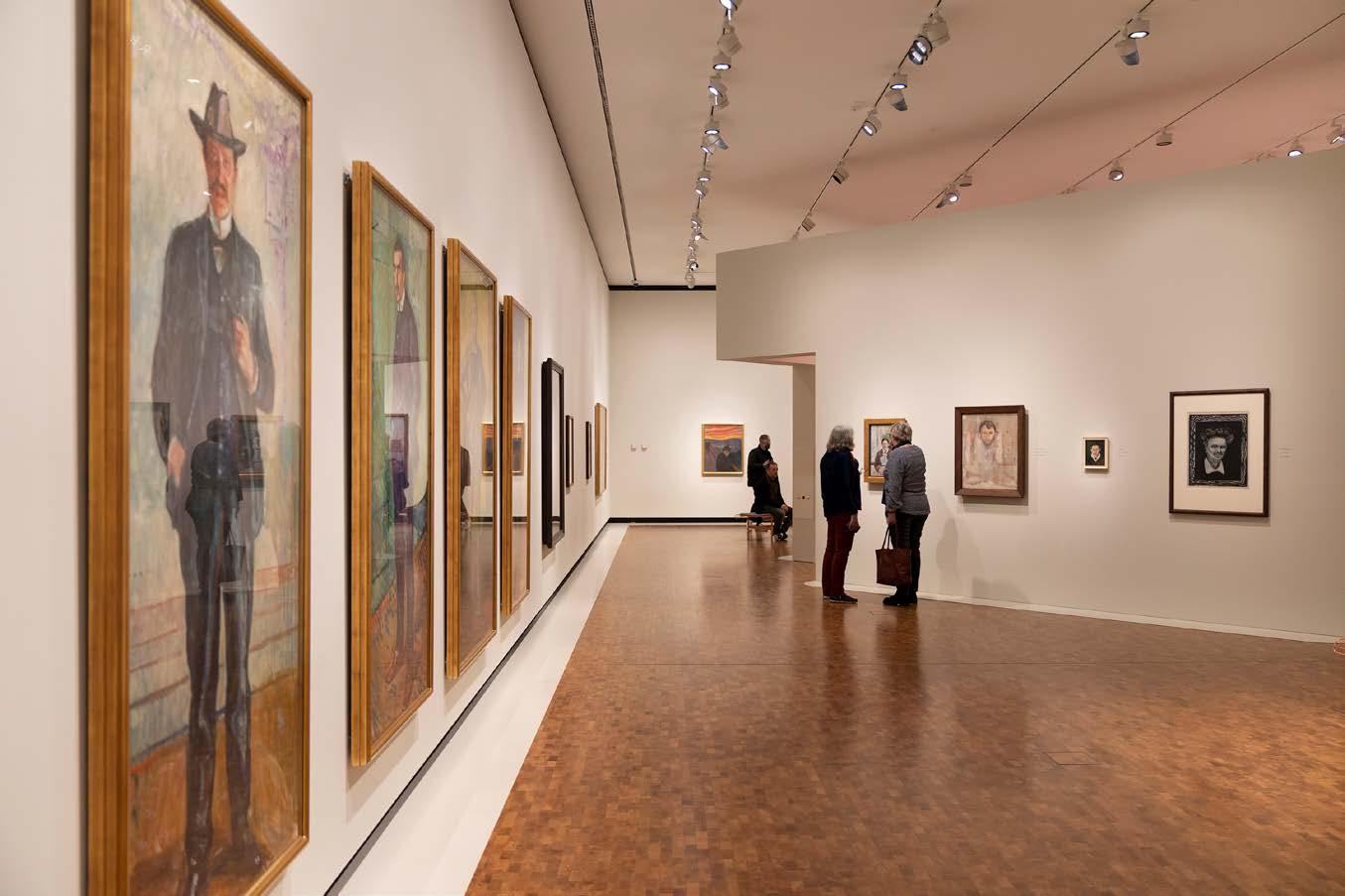

appearing shadowy, where artworks stood out like isolated icons." Instead, the museum desired its halls to exude a sense of brightness and comfort.
A significant concern was to retain the authenticity of the colors in Munch's masterpieces. Bredal added, "The essence was to accentuate the purity of colors in Munch's artworks." This necessitated an emphasis on superior light quality, accurate color rendering, and precise distribution and angle of lighting.
Recognizing the importance of color rendition, Bredal remarked on the exceptional quality provided by ERCO, alongside other features like seamless light distribution and the ease of optics replacement.
The Innovative Lighting Approach at the Munch Museum
Divided into two zones, static and dynamic, the static zone is devoid of daylight to protect the art. The dynamic zone is more open, with ample glazing to showcase views of Oslo. Visitors transition from areas of daylight into closed, artificially lit spaces, a design choice that required careful consideration to allow for daylight to low light transition necessary for the art.
The lighting creates an illusion of natural illumination without visible focus, reflections or glare. The exhibition halls feel bright and comfortable, not dark with artworks appearing as icons.

Warm white 3000K, utilizing 2,500 DALI-controlled Parscan fittings from ERCO, was installed throughout the museum. The centerpiece of the exhibition is The Scream, one of Munch’s and the world’s most iconic works, described by American journalist/art critic Arthur Lubow as “the Mona Lisa for our times.”
More accurately, three versions of the artwork that Munch created are featured, mounted in cabinets that are alternately open during the day due to their fragility and sensitivity to light exposure. The gallery housing these works is completely dark with black-painted cabinets.
The collection is illuminated to just 2.32fc with precisely adapted framing using ERCO’s Eclipse spotlights. The effect is that the art seems to “emerge from the darkness.” The remainder of the exhibition is lighted so that this main work does not appear dim in comparison.
Bequeathed to the Norwegian government by Munch upon his death in 1944, the collection includes more than 26,700 works, around 1,200 paintings and over 42,000 museum objects. The individuality of the collection, their visibility, the narratives in their curation, and how the room and organization of exhibits are perceived were all factors in the lighting design. P
UP CLOSE WITH Lee Brandt
SHIRLEY COYLE, LC By
During year three of a five-year architectural engineering program at Penn State, someone passed Lee Brandt an issue of LD+A, the IES’s monthly magazine on lighting, design and application. “I thought, wow, this is perfect – this is what I wanted! I had wanted to be an architect, but this is where I could use my nerdy math/engineering brain and combine it with the art side!” Coming from just outside Philadelphia, Lee had two amazing summer internships with a small lighting design firm in Philadelphia, but she knew, even before becoming a lighting designer, that she wanted to move to New York City – “kismet for lighting design!”
After interviewing in NYC with almost every lighting design firm possible, Lee decided that HLB was the right fit and joined in 2000. “I kind of go by gut a bit – it felt right, and it definitely worked out!” Lee is now a Principal of HLB’s New York Office, these days combining her architectural lighting design work with a strategic role that focuses on employee growth across HLB’s eight locations. Active in both IES and IALD, Lee makes the time to contribute to the broader lighting community, serving on committees related to light pollution, sustainable design and energy codes.
And how did the move to New York City go? “That was ones of the best part early on – it was so exciting to be in the city, the commuting – kind of Mary-Tyler-Moore type stuff!” Lee found it great coming into HLB and working with people with backgrounds in interiors and theatre, people having so much more experience than she had been exposed to in the more controlled university environment.
Soon after joining HLB, Lee was tapped to use the thennew lighting design modelling software, Lightscape, for a Disney project – “It was pretty great, I felt useful early.” Lee’s technical skills brought a lot of work her way in computer modelling, especially sports facilities, and she remembers a fun challenge with a pool having issues with light levels impacted by obstructions. “The site was in Pennsylvania, near my parents’ home, so I went home, got my brother and Mom to come with me to help, and there I was in the water with a kickboard and my light meter in a plastic bag to keep it dry, taking measurements and calling out light levels for them to write down!” Lee also remarks on HLB being generous with opportunities; when someone left

the firm, Lee was given the chance to take over a large resort hotel project. “It was kind of a rite of passage project” over 4 years, finishing just as she gave birth to her first son.
Asked about her concerns over the current state of our lighting community, Lee says, “For me, it’s about feeding the machine - we need to get students exposed to lighting design and to find diverse educators to teach lighting design. So many of our amazing educators are going to retire soon, and I don’t know if we have a pipeline. We have to get the lighting industry known among a broader audience.”
Reflecting on what has made her successful in her lighting career, Lee offers a few things: “Staying curious and engaged, taking opportunities when they come. HLB was an amazingly supportive. When I became a Principal, HLB pushed me toward recruiting. They saw a natural talent there – I want people to be happy. I’m grateful that I had a firm and people with me that supported me, saw some natural talents and helped me fill in the rest. Keeping up is important – you can’t rest in this world. It’s changing so much; you have to stay on top of things.”
Lee’s advice to those coming into the lighting community: Stay curious, ask questions. “I don’t think we’re an industry of wallflowers, but you have to find, within yourself, how to stay engaged and get yourself out there, find ways to connect and express yourself. There’s a definite professionalism needed: look people in the eye, communicate properly, both verbally and in writing. You don’t have to be a Type A or natural extrovert, but be authentic – and you need to advocate for yourself. It can be done quietly.” During Lee’s most recent couple of recruiting trips to schools, she found that many of the students wanted to be able to collaborate in person and were looking for roles where they would have the opportunity to work in-person with others.
When Lee is not working on the many aspects of building HLB and the lighting community, you many find her at one of many sports events involving her teenaged sons. During rare downtime, perhaps she will be taking in some reality TV for a well-earned mental break, or digging into pop culture, especially movies. Lee’s family loves to travel – the most recent big trip to Ireland and London was a hit. Now, the planning starts for the next trip, with Paris heading the list of options! ■



join WILD in BANFF November 4th!

saturday - nov 4th @ 8:30 - 9:30 am
all are welcome to our WILD meet up at IALD Conference breakfast to join us for some early n beautiful Banff! We look all our friends and allies ustry! #WILDatIALD


EdisonReport.tv serves as a hub for all digital content in the lighting industry. A premier source for critical information surrounding lighting, EdisonReport.tv is dedicated to delivering industry news by way of video and serving its audience by spotlighting product launches and up-to-date educational videos, as well as information about upcoming webinars.
Q-Tran | PERI, the Smallest Integral Driver Perimeter Fixture


Pharos Architectural Controls | Expert


Getting the Job Done Lighting for the New Office Paradigm


Axis Lighting | The All New Extend
Inter-lux | LineaLight Dwave
Verozza | Moduline