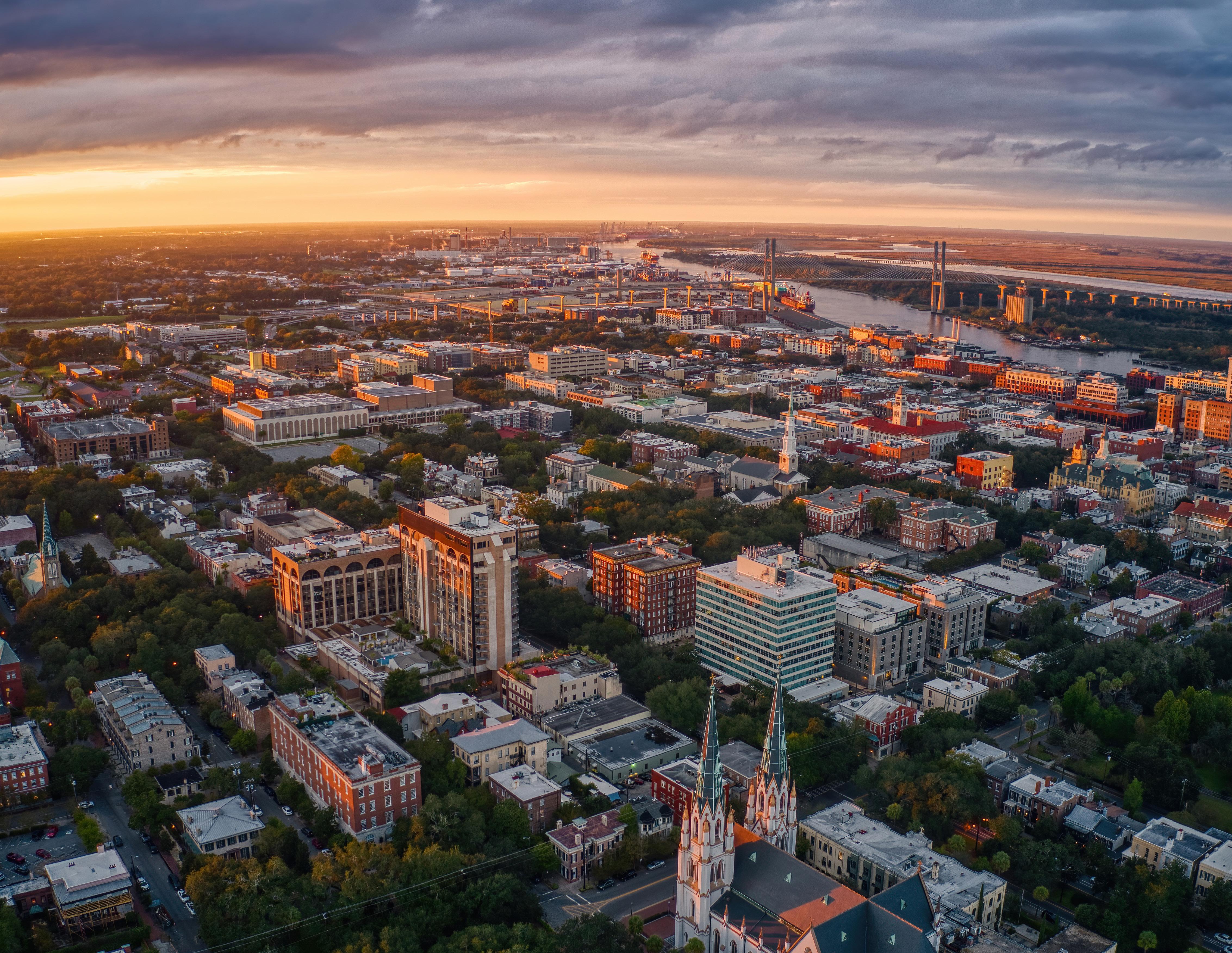
PUBLIC ART MASTER PLAN
“Art is important. Allowing creativity among all people helps to unite us and understand others.”
SURVEY RESPONDENT
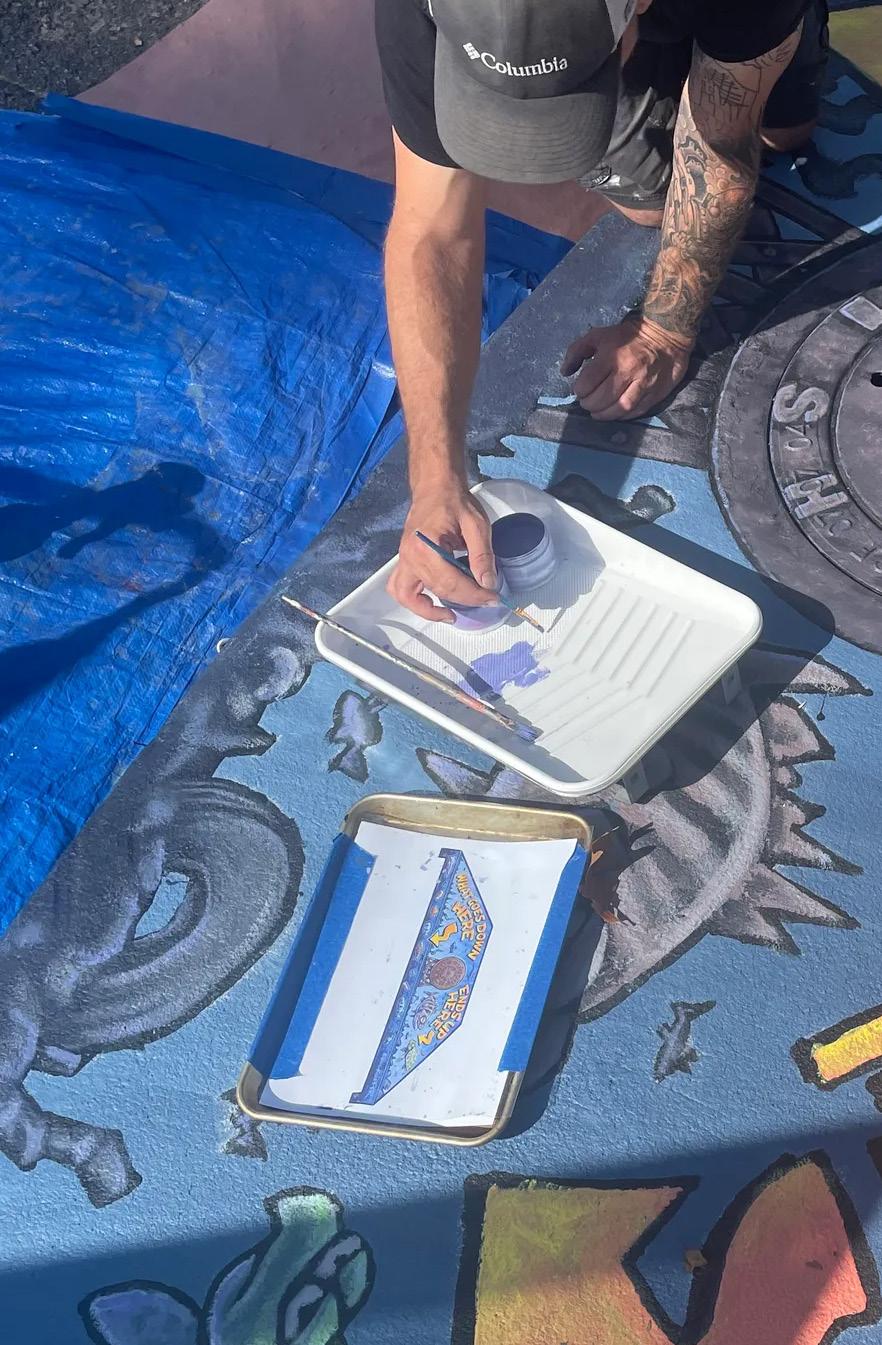
Storm Drain Mural, Savannah, Georgia
What is a Public Art Plan?
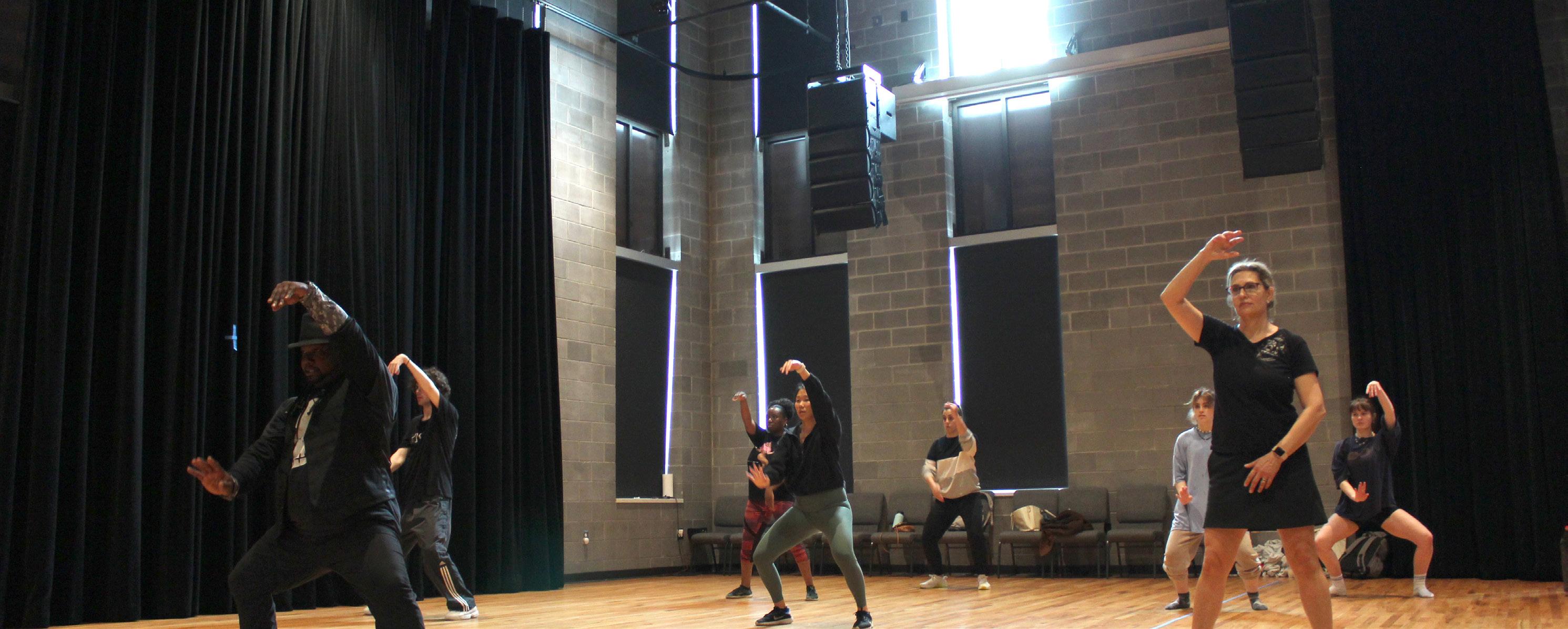
A Public Art Plan is a dynamic tool, serving as a comprehensive roadmap for exciting new projects and offering a diverse menu of public art types and strategies. More importantly, it acts as a snapshot of a community's desires, reflecting what its public art should express, celebrate, and honor. Savannah's Public Art Master Plan, in particular, is designed to be
a catalyst for collaboration and connection across City administration, diverse neighborhoods, and the cultures that shape Savannah. This visionary and forward-thinking document will equip and empower the City of Savannah with innovative project ideas, practical tools, and inspiring direction for the next decade.
Why is now the right time for a Public Art Plan?
Since Savannah’s establishment nearly three centuries ago, livability, beauty, and creating a thriving community have always been at the center of Savannah’s identity. As cities have grown in response to changing cultural conditions, public art has become an integral part of urban life today. The Savannah Public Art Plan is designed to be a living document that will evolve with the city over the next decade. It will reflect community desires for public art, provide strategic project recommendations, and establish a clear framework and vision for the program's growth. By recommending policies rooted in national best practices, this plan ensures efficient and responsible stewardship of the public art collection and project administration. As Savannah continues its vibrant growth, attracting new residents and businesses, its public art will powerfully convey the city's values, identity, rich history, and aspirational future.
Are Savannah’s historic Monuments part of the public art process?
Existing monuments are not a part of the Public Art Master Plan; however, monuments are an important form of public art. Savannah’s unique history and methodical processes for the review, installation, and care of monuments set it apart from most cities in the United States. The City of Savannah supports the creation of new kinds of monuments across the City, but recommendations to do so should carefully observe the existing processes designed to preserve and oversee monuments throughout the city. As Savannah continues its vibrant growth, attracting new residents and businesses, its public art will powerfully convey the city's values, identity, rich history, and aspirational future.
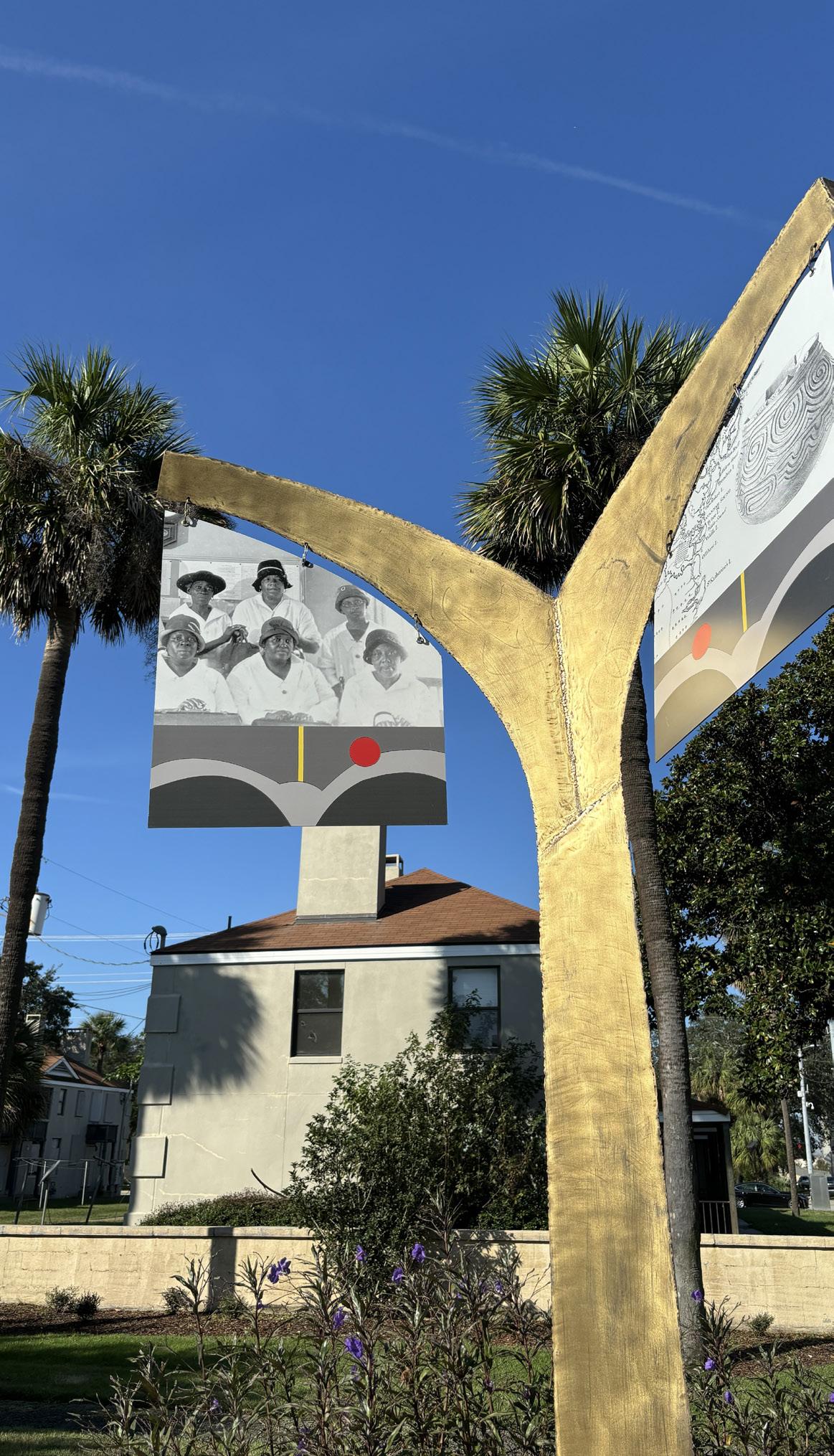
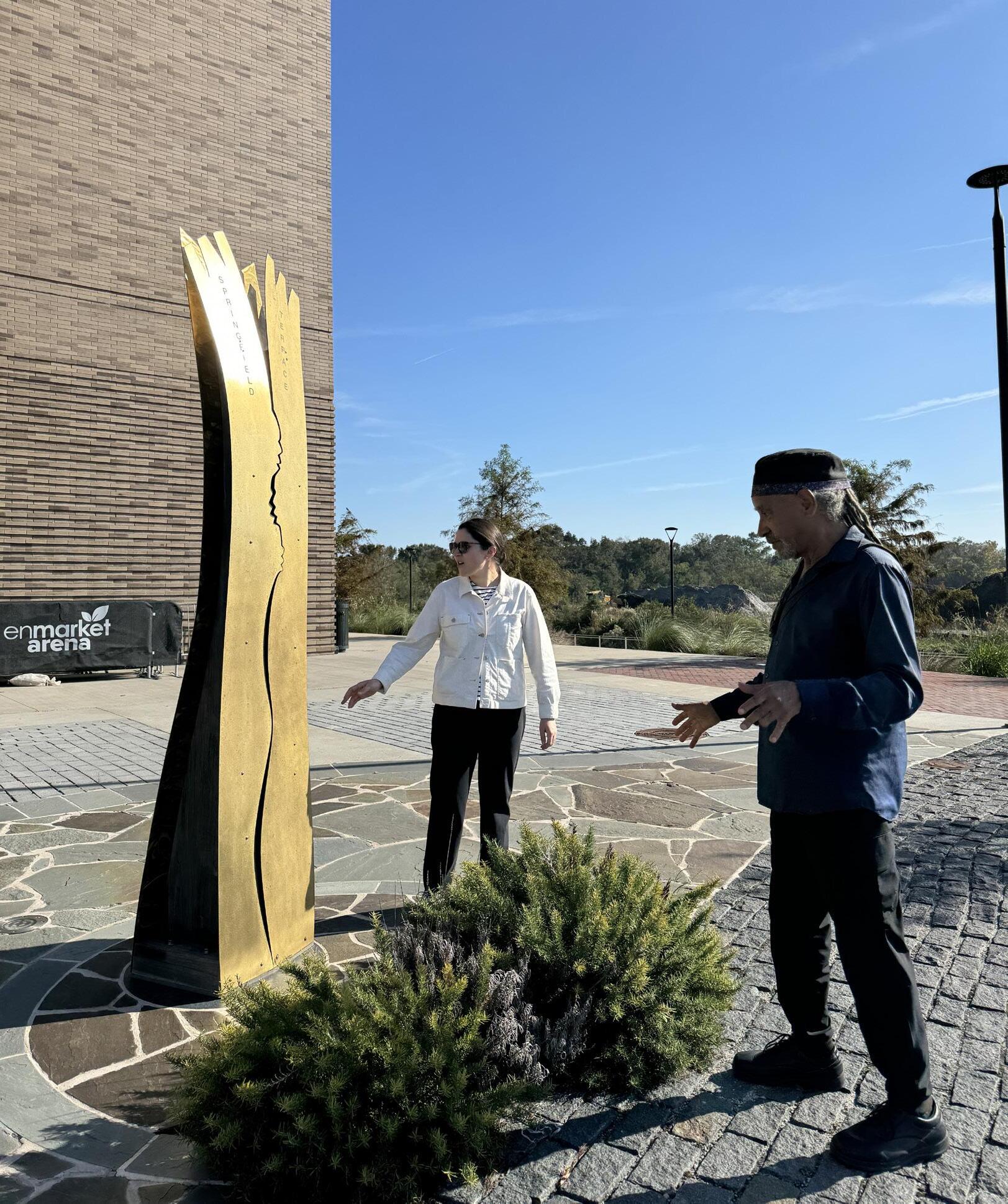
Jerome Meadows, Yamacraw Square
Stakeholder & Focus Group Report
At the outset of the planning process, the Planning team spoke with 24 individual stakeholders in the city of Savannah, whose backgrounds and professional affiliations include City administration, the arts, non-profit organizations, museums and cultural institutions, and beyond. Each stakeholder was asked about:
• Their individual vision for public art in Savannah;
• Their understanding of the challenges and opportunities facing the growth of public art in Savannah; and
• Their unique perspective of what is special about Savannah and its community.
A Steering Committee was gathered by City of Savannah staff to guide the overall direction of the plan from its inception in November 2024. Members of the 11-person Steering Committee included City staff and Cultural Affairs Commission members. This group advised the Planning team's efforts at three key milestones during the process: during the initial Discovery Visit, at both the kick-off and conclusion of Community Engagement, and upon delivery of preliminary and final plan recommendations. In their advisory capacity, the Steering Committee served as a sounding board for the plan's overall direction, outreach, and strategic approach.
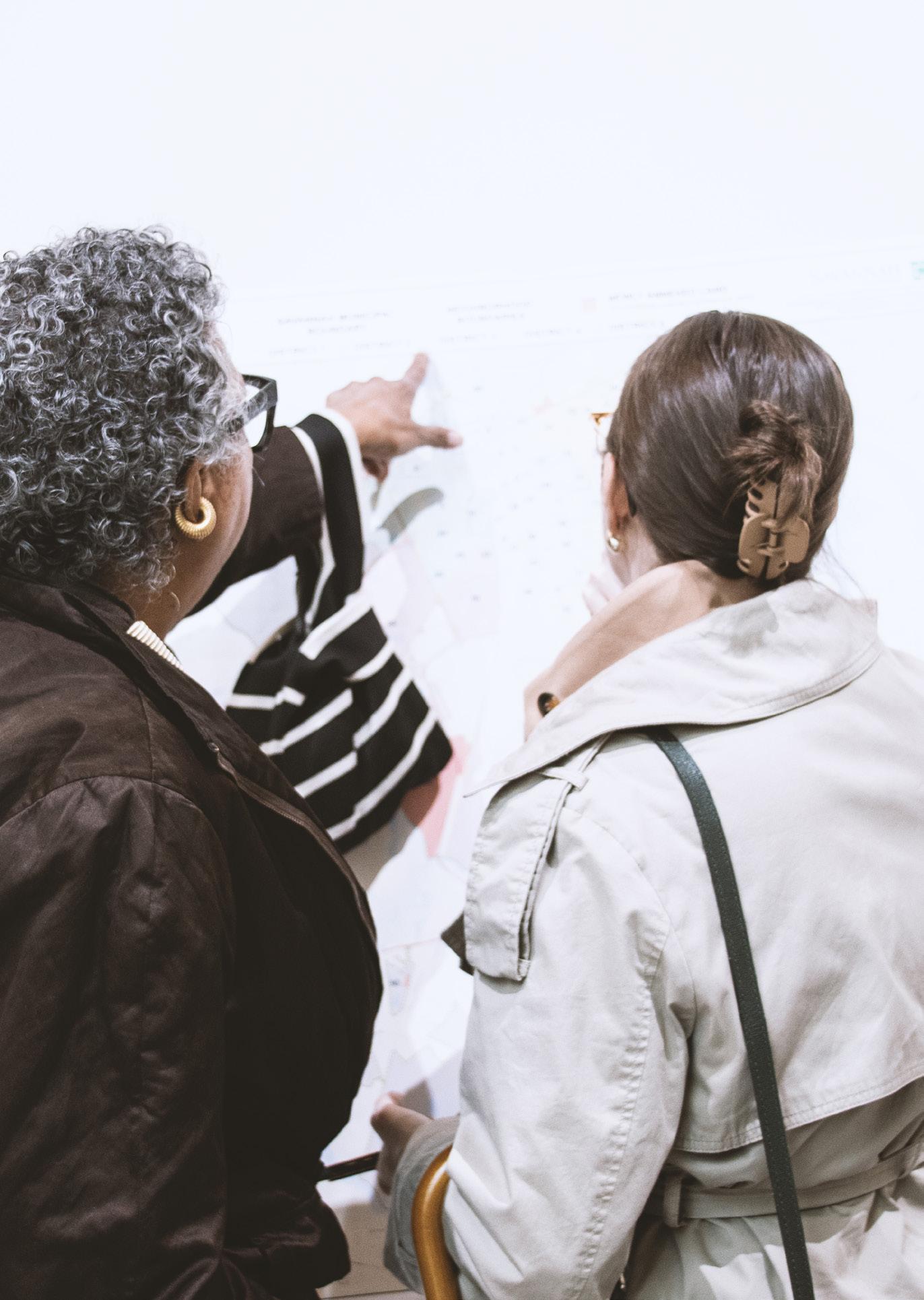
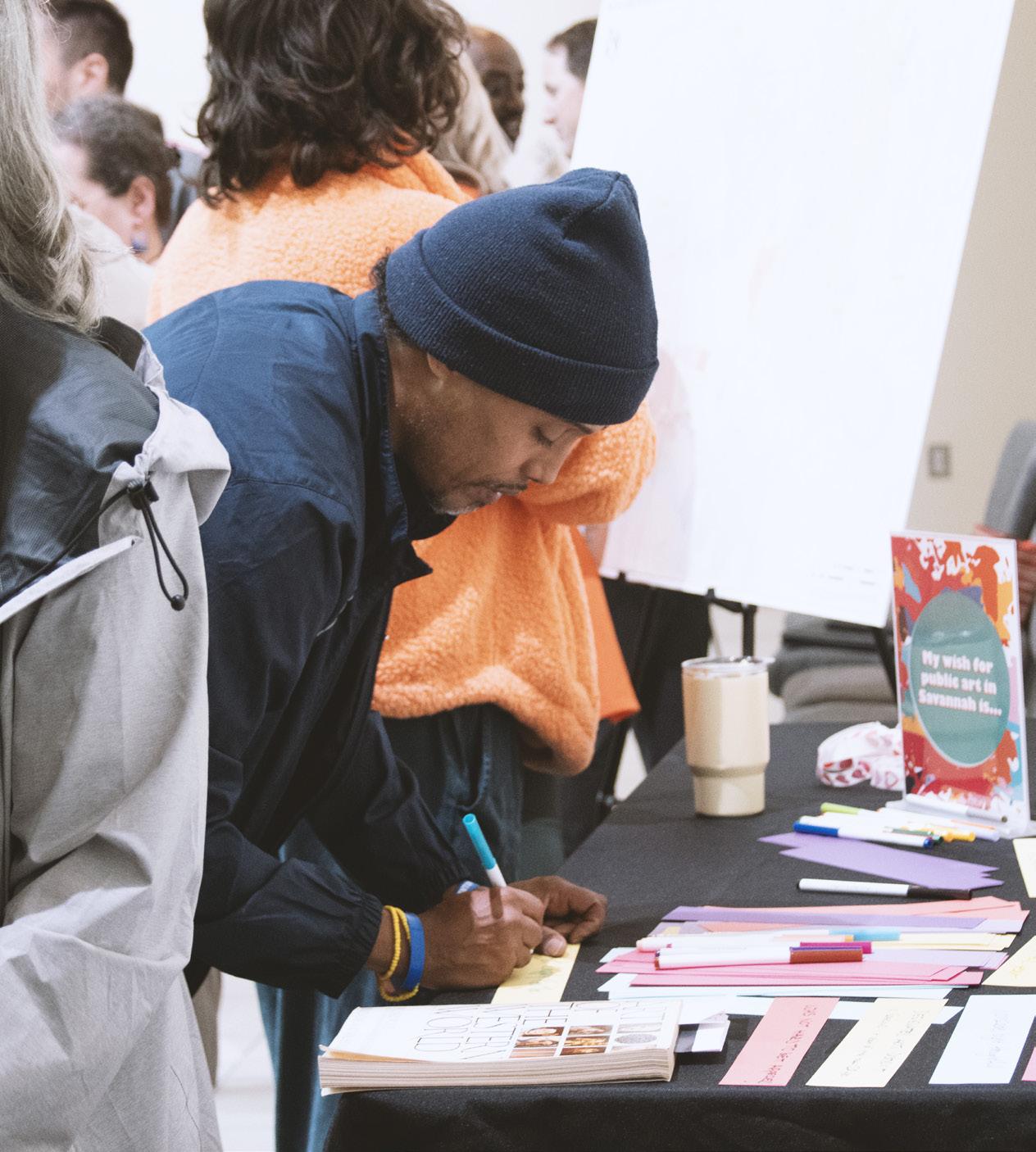
Additionally, the Planning team hosted 6 virtual focus groups and 6 in-person community workshops within each of Savannah’s 6 Districts. More than 100 community members shared the input and vision for public art in Savannah.
Virtual District Focus Groups
District 1 Tuesday, February 18, 2025
District 2 Wednesday, January 29, 2025
District 3 Monday, February 17, 2025
District 4 Thursday, February 20, 2025
District 5 Friday, February 21, 2025
District 6 Monday, January 27, 2025
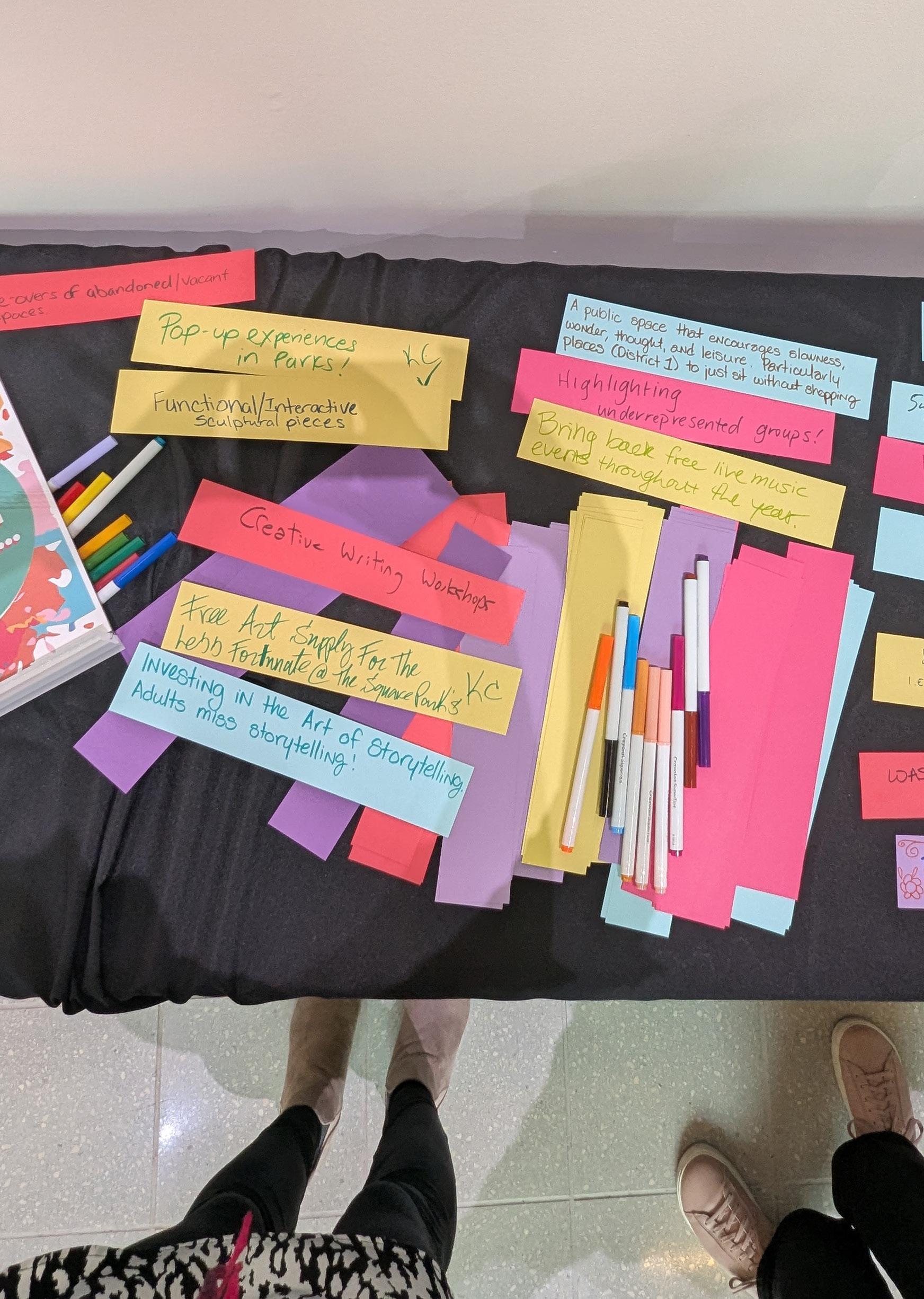
The planning team offered a virtual focus group opportunity to each of the City’s six districts. Information about these events was shared in social media and with Neighborhood Associations. The virtual focus groups began with a roadmap of the planning process, the goals of the public art plan, and an overview of public art typologies. Focus Group participants then engaged in an interactive polling platform called Mentimeter, which gathered responses to each of the following questions:
What is your favorite public artwork in Savannah?
Where do you want to experience public art in your District?
In Savannah, public art should feel…
What are the biggest challenges for public art in Savannah?
If you had the power to make one big change for public art in Savannah, what would it be?
What are the biggest opportunities for public art in Savannah?
Vision Statement for the Savannah Public Art Master Plan
Public art in Savannah will be inspired by what makes Savannah unique: its history, hospitality, parks, diverse community, and vibrant culture. Savannahians’ vision for public art embraces community, meaningful storytelling, fun, and creating connections with neighbors. As the city connects its treasured traditions with its bold future, public art will reveal the community’s spirit and character.
What is the identity of Savannah?
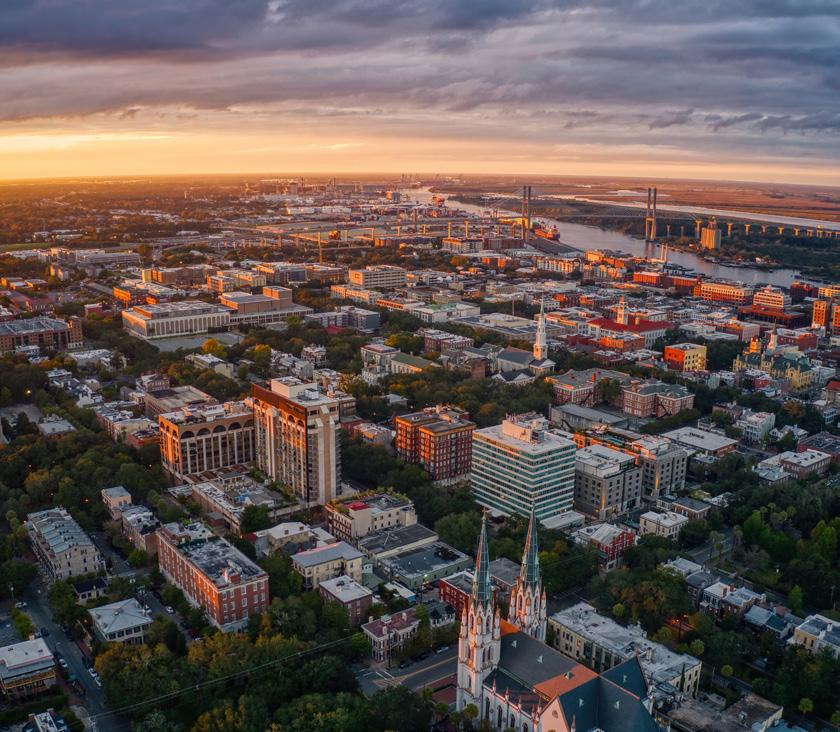
Savannah brings together a vibrant blend of historic, coastal, artistic, and culturally rich experiences. From its iconic tree canopy and historically significant city center, to its generous parks and close-knit neighborhoods, Savannah has retained its small-town charm as it has grown to be one of Georgia’s most populous cities in one of the state’s fastest growing regions.
Leaning In
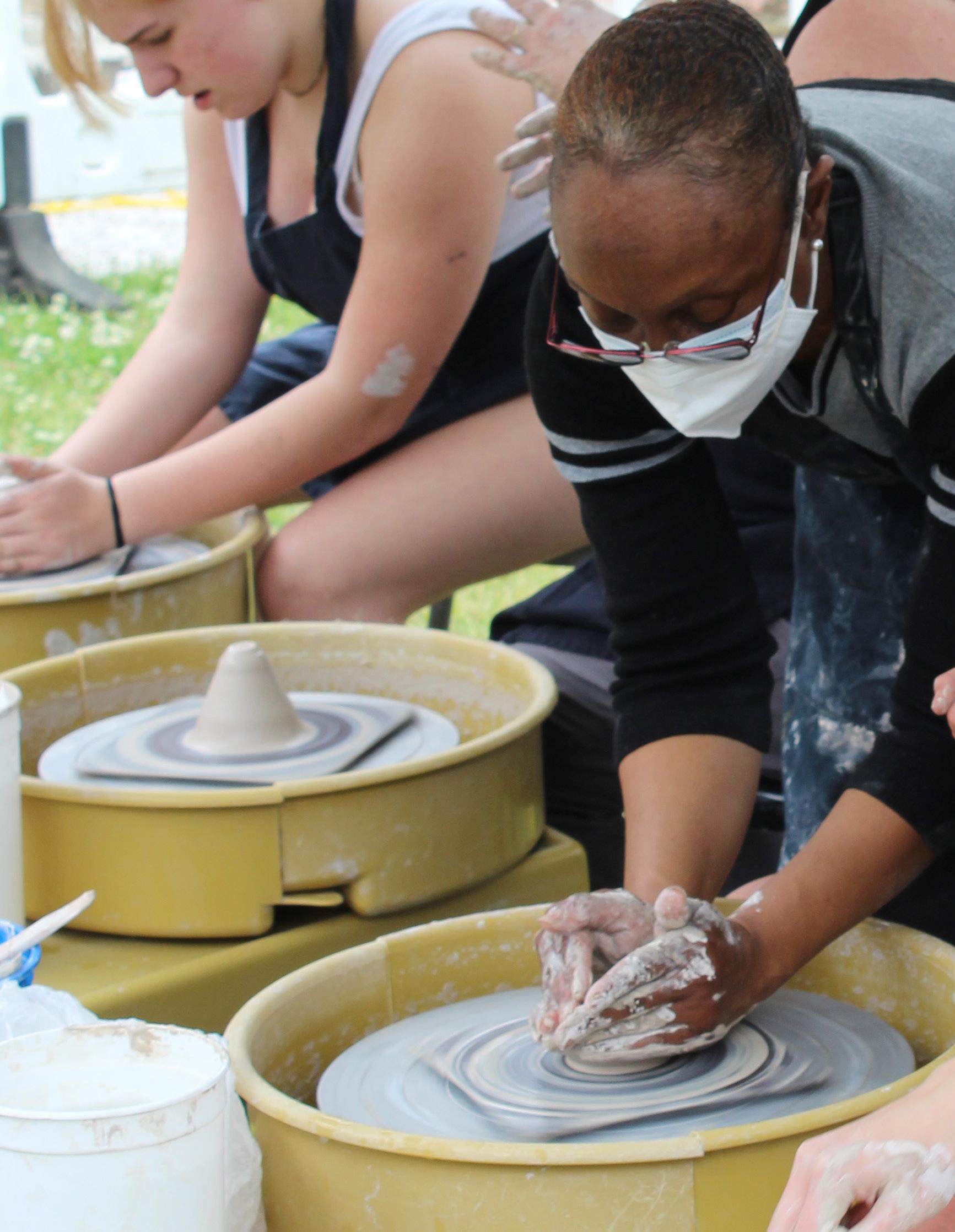
Public Art in Savannah will identify and leverage the unique characteristics that make the City special. Unconventional, non-traditional canvases for public art will support city-wide goals for the program, while enlivening existing spaces and infrastructure to reimagine everyday life in Savannah. Public Art in Savannah will also lean into the community’s needs, desires, and stories while building a collection that meets the community where they are.
Propose Sustainable Funding
The Public Art Master Plan will recommend multiple options for sustained public art funding in order to reach both short and long-term goals.
Collaboration, Process, and Policy
The Public Art Master Plan will build on existing public art policies to shape a strategy that will govern public art processes, responsibly steward the collection, and ensure clarity.
For residents to lead, they need access to the full range of what public art can be. City staff will begin each community engagement process by sharing examples of public art from other cities — celebrating the wide variety of forms it can take. Public art can be bold and colorful, subtle and reflective, or functional and woven into everyday spaces. It can be shaped to fit the environment, the history, and the vision of the people who will see it every day
There is a wide variety of public art types available as can be found in the Public Art Plan. Residents choose the art that best fits their vision and needs. For example, public art is an effective storytelling device, and residents might choose to commission a mural or sculpture that relates to the history or culture of their community. Or they might choose functional art that brings creativity to everyday infrastructure — benches, bike racks, or planters — that the whole neighborhood uses. City staff will advise residents on types and scale of art that are suitable options for the approved budget.
Finally, residents will select a desired location for their artwork. Public art through this program will be sited on City-owned property.
“Public art plays a huge role in our public spaces by making them more enjoyable, fun, and a great environment."
SURVEY RESPONDENT
SECTION 03
Curatorial Guide 03
Curating a meaningful, successful public art project begins with a clear understanding of a project’s overall vision, audience, timeline, budget, resources, and location. The following is a guide to determine a curatorial course of action, which can inform the Public Art Committee’s annual work plan, or advise projects on a caseby-case basis.
PHASE 1: Project Ideation & Planning
1: Define the Vision & Goals
What is the purpose of this public art project?
When Savannah’s Public Art Committee begins to explore possible public art project opportunities, the Public Art Plan will be a helpful resource for inspiring project direction. However, the most successful projects will begin with a strategic approach setting project goals that will yield the greatest public benefit. Public art projects can have overlapping goals, including:
• placemaking, or creating gathering spaces;
• celebrating history or honoring underrepresented narratives;
• fostering community identity or building pride;
• economic development;
• traffic calming or enhancing walkability;
• creating an event to draw the community together.
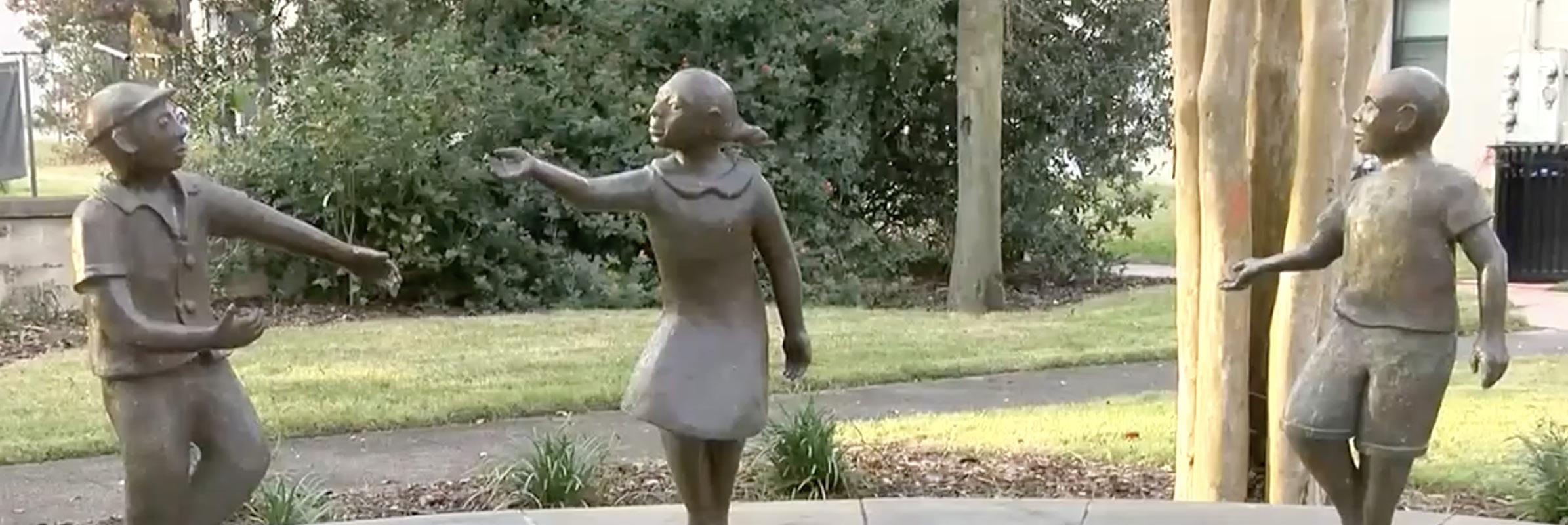
Jerome Meadows, Yamacraw Square
Does this project align with the vision for public art in Savannah?
The Committee should assess how a project might be defined in order to reflect the Public Art Plan’s vision for public art in Savannah:
Public art in Savannah will be inspired by what makes Savannah unique: its history, hospitality, parks, diverse community, and vibrant culture. Savannahians’ vision for public art embraces community, meaningful storytelling, fun, and creating connections with neighbors. As the City connects its treasured traditions with its bold future, public art will reveal the community’s spirit and character.
What specific needs or goals will it address?
Referring to the public art plan, any new public art project should satisfy at least one of the objectives or goals of the public art plan, as captured above in the Community Engagement section:
Storytelling Daily Life
Savannah is a deeply historic city with a diverse community, but so many of its stories have yet to be told. Public art can reveal the City’s past, present, and future through vibrant, inspiring storytelling and engaging narratives.
As a thriving, year-round tourism destination, Savannah is beloved by many visitors. However, stakeholders revealed their desire for the City’s public art to serve as an asset primarily for residents, and reflect the daily journeys and routines of its local population.
Dynamic Experiences Creative Placemaking
Savannah is many things: historic, familyfriendly, culturally engaged, diverse, and coastal. Its public art should similarly honor and reflect the range of experiences offered across Savannah’s neighborhoods.
Public art can be more than sculptures and murals; it also can provide opportunities to create engaging public spaces, enhance safety, and serve as a focal point for communal gathering. When planning public art projects, the City should consider the ways public art can be leveraged in order to achieve these goals.
What is the desired aesthetic or feel?
Depending on project goals, placement, or desired outcomes, a public art project can feel differently from project to project. One opportunity may desire a whimsical, family-friendly outcome, while another may desire a reverential, or somber tone. Community engagement opportunities, conversations with neighborhood associations, or other pathways for input can be useful in shaping the Committee's understanding of what might make a project as successful as possible.
Who is the audience?
Understanding the audience, community, or stakeholders will heavily influence a project’s direction. What do they need or want to gain from this experience? Why is public art the most appropriate vehicle to address this audience’s need? If the audience is identified as a specific group in a neighborhood or other site, the Committee should ensure that this neighborhood or group is represented throughout the planning process.
How will it "lean into" the unique characteristics of the location?
Consider how a site’s unique attributes can contextualize or shape a public art project—which, if any, of these are necessary for achieving a successful project? Does this site have a unique history, use, or context that would enhance the project?
2: Site Identification and Analysis
Identify potential locations: Consider both traditional (parks, plazas) and non-traditional canvases (electrical boxes, bridge underpasses, sidewalks, vacant buildings, trail systems, retaining walls). The Public Art Plan is also a reference for these locations.
Conduct thorough site analysis: Working closely with City staff, the Public Art Committee should carefully consider how a public art project will be sited. Depending on the project type, City staff may need to facilitate detailed planning meetings with other City staff or departments early in the planning process. Having a clear vision for public art projects will streamline these conversations.
PHASE 2: Artist Selection & Proposal Recommendation
1: Define Artist Criteria
Local vs. National/International:
Is the project appropriate for a local, national, or international search? Are there any restrictions around who may not apply? According to the draft public art policy, a “local artist” is an artist who resides in Chatham County, Georgia.
Diversity: Who should be telling the story conveyed through this artwork? Does the public art project address histories, narratives, or contexts that require cultural translation or sensitivity?
Community Engagement: Will this artist be required to work with the community at any point during their project? If so, evidence of past experience conducting community engaement activities or working with the community will be required.
Qualifications: How will the artist’s background be assessed?
How will the artist’s background be assessed? Some examples of qualifications are below:
Artistic Excellence: The aesthetic quality of the artwork, including distinctive qualities in the work and the overall visual impact of the artist’s or artist group’s practice.
Quality and craftsmanship of product as exhibited by past work.
Public safety and compliance with Americans with Disabilities Act.
Technical Feasibility: The artist must provide convincing evidence of his or her ability to lead the technical aspects of the project in compliance with local and state laws and regulations.
In some cases or settings, the community's involvement or participation in the public art process may be integral to the artwork's overall direction. If this is desired for a specific project, it should be clearly stated as part of the artist call process. Community involvement in a project could take place through:
• Artist led conversations or workshops
• Co-creation of certain artwork elements with the community
• Community-sourced stories, narratives, or input that would shape the overall project direction.
2: Develop the Selection Process
Call for Artist Method: City staff should collaborate with the Public Art Committee to determine the most appropriate selection method. Savannah’s Public Art Policy should be consulted to best understand the various methods for acquiring art. The project timeline, scope, and budget will support this decision making. Additionally, the Commission should recommend if purchase of an existing artwork is appropriate for the project, or if commissioning a new artwork is the most suitable option.
Selection Juries/Committees: Establish clear, transparent, and unbiased processes for selecting artists, involving community members, art professionals, and City staff. An outside jury may need to be formed, depending on the project budget. For some projects, the Commission may serve as the selection committee. In most cases, an artist selection committee will be formed to manage the process.
Reviewing Proposals: Require artists to submit detailed proposals, potentially with physical models, to ensure clear understanding. Determine honorarium for proposals, as it is national best practice to compensate artists who have submitted proposals for consideration. The following considerations should be observed when reviewing artist proposals:
Artistic Excellence: The aesthetic significance and quality of the artwork, including the artwork's transformative and distinctive qualities.
• Context: Artwork’s appropriateness to surrounding architecture, topography, local history, and community attitudes and concerns of both the residents of Savannah and the surrounding community.
• Durability, Safety and Permanence: The artwork is resistant to weathering as well as structurally sustainable. The artwork must be examined for unsafe conditions, materials, or factors, as well as the potential for excessive maintenance.
• Technical Feasibility: The artist must provide convincing evidence of his or her ability to complete the artwork as proposed.
• Past Performance: The Selection Committee will consider the artist’s performance under previous contracts including success in meeting established timelines and budgets.
• Meets Criteria: The artwork most closely aligns with the project’s goals, vision for public art in Savannah, and complies with Savannah’s public art policy.
Once selected, the artist must design and create artwork that:
• is of high artistic quality,
• is appropriate to the project site,
• is of durable design and uses durable materials that require minimal maintenance,
• provides maximum resistance to vandalism, and
• enhances the physical environment and experience of Savannah.
Securing Approval: The Public Art Committee will recommend their artist selection to the City staff, including the City Manager. Following staff review, the recommendation will advance to the Savannah City Council for their approval, depending on the project budget and scope. If an outside Selection Committee is formed, then their recommendation will first be reviewed by the Public Art Committee for support. If public art is placed in a historic district, then additional approvals from HSMC, HDBR, or HPC may be required.
PHASE 3: Implementation
1: Contracting & Permitting
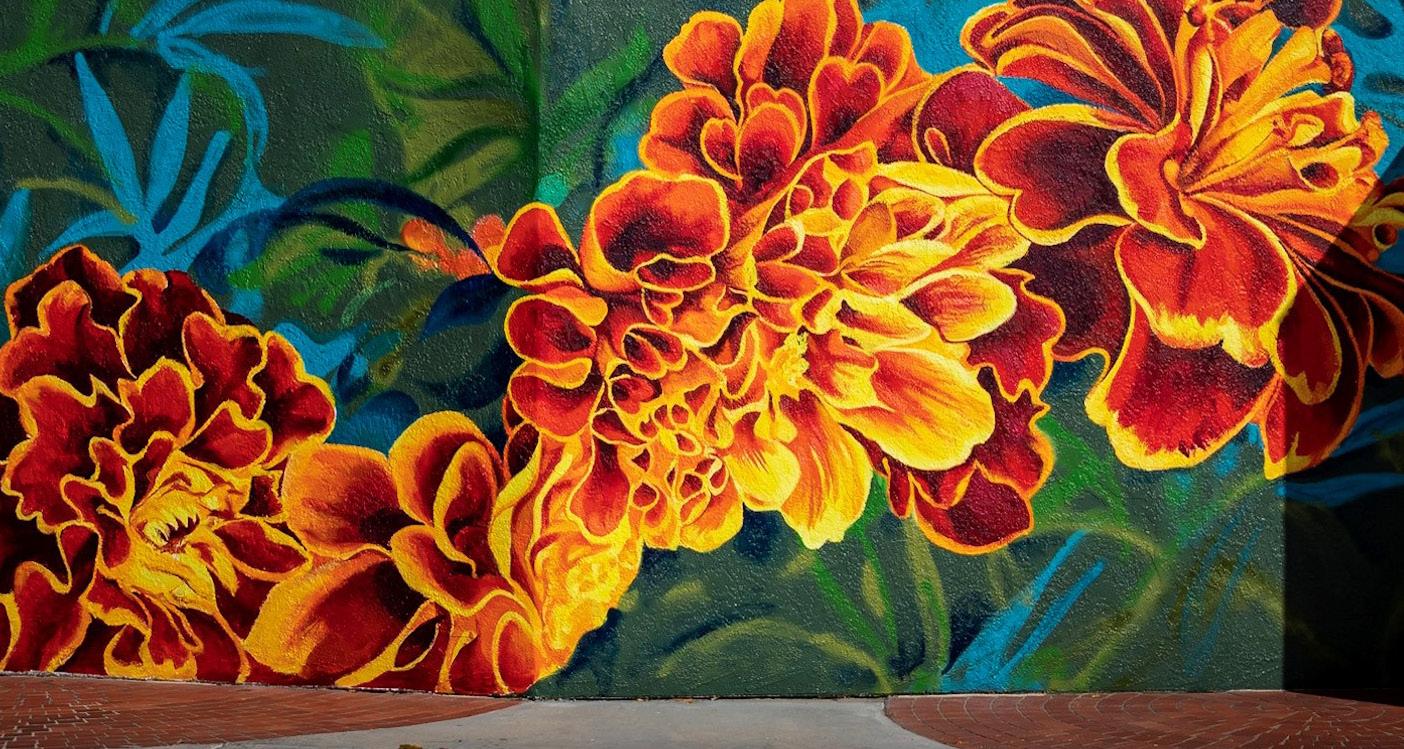
Nicole Ponsler, Bloom (2023)
Artist Contracts: Detailed agreements outlining scope of work, fees, schedule, materials, maintenance requirements, and ownership/copyright (e.g., granting appropriate City licenses for reproduction, waiving VARA rights if appropriate).
Savannah’s City Attorney should always be consulted on any matters pertaining to contracts.
What is VARA?
Established as part of the United States' copyright law in 1990, the Visual Artists' Rights Act establishes rights that protect artists' legacy and reputation as it is connected to their artwork. Public art created under "work for hire" conditions is not protected by VARA, as the copyright owner is the commissioner of the public art, not the artist. An artist may or may not waive their VARA rights. If they do not waive their VARA rights, then diligent communication between the artwork owner and the artist must be observed, especially if a public artwork is potentially subject to removal (for any reason) over the course of its life. If an artist does waive their VARA rights—a very common practice in municipal public art processes—then artists may not bring forth claims that their public art has been mutilated, damaged, or altered without their consent.
When creating agreements with artists, municipal public art administrators should always consult the City Attorney's office to ensure that appropriate measures are taken to avoid VARA claims; at the same time, cities are responsible for the appropriate care of their collections to ensure that all objects and object records are well-maintained.
Permit Acquisition: Navigate City, county, and state approval processes. As written above, Capital Projects Management would be consulted for structural approvals or permitting for any projects requiring this review.
Insurance: While an artwork is being fabricated and until it is accepted by the City of Savannah, insurance liability typically remains with the artist. Upon acceptance of the artwork by the City, the object will be accessioned into the City’s public art collection and will be insured by the City.
2: Installation Oversight
Coordination: Manage logistics, schedules, and communication between artists, fabricators, City departments, and contractors. The Cultural Resources Director will ensure that projects are completed on time and on budget, in accordance with the existing agreement.
3: Maintenance and Conservation
Long-Term Plan: For commissioned artworks, artists will provide a long-term maintenance manual, including information about appropriate treatments, approximate costs, treatment schedule, and routine care. Artists should also provide this information for existing artworks that are acquired.
Dedicated Resources: Artworks will require annual funding consideration to ensure the City provides for ongoing care and maintenance.
Documentation: Maintain comprehensive records of materials, processes, and past conservation efforts. Capturing photographs of objects on a regular basis can support understanding of how artworks are wearing over time, and can also be a valuable record if an insurance claim is filed.
Training: For non-specialized, routine artwork care, ensure that the appropriate training and protocols are executed with Park and Tree, or other maintenance provider.
4: Promotion and Education
Informational Materials: Plaques, brochures, digital maps, social media campaigns.
Public Events: Unveilings, tours, lectures, workshops to engage the community and build appreciation.
Storytelling: Use the art to tell the community's unique stories and connect different areas of Savannah.
PHASE 4: The Artwork’s Life After Installation
Collection Inventory: Gather all project documents, images, etc. and ensure they are appropriately filed with the Cultural Resources Director for record keeping best practices. Ensure that the artwork is populated into the digital public art database.
Monitor Impact: Assess how public art is being received by the community and if its stated goals are being met.
Gather Feedback: Conduct surveys, focus groups, and public meetings to understand community perceptions and preferences.
By following these steps, a public art project can be successfully curated to be impactful, meaningful, and a lasting asset to the Savannah community.
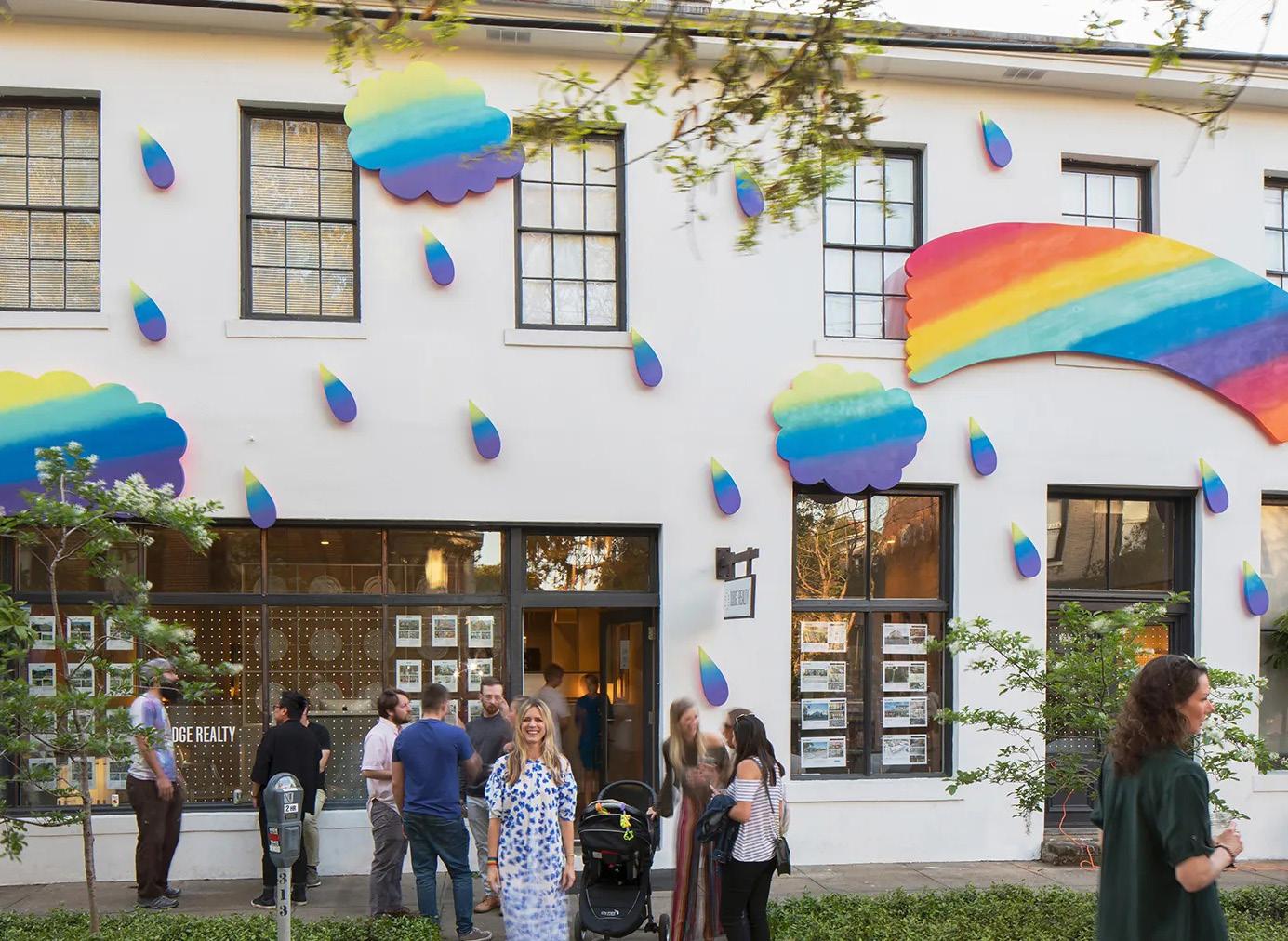
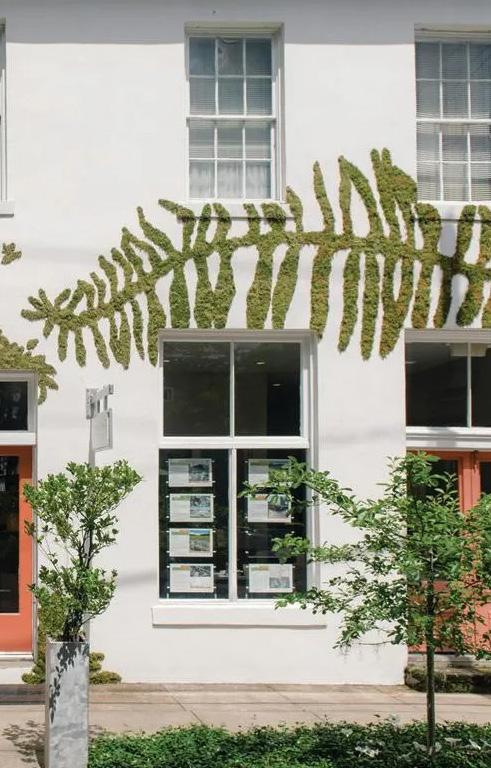
Elmer Ramos and Ben Tollefson, Judge Realty Installation
"With such a rich artistic history, art schools and vibrant art scene, Savannah could be an art destination as part of the tourist attractions."
SURVEY RESPONDENT
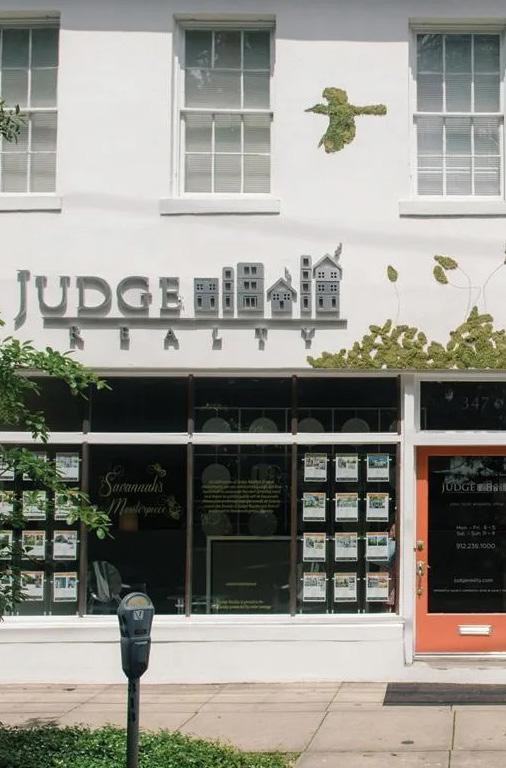
Mossterpiece, Judge Realty Installation
SECTION 04 Art Everywhere: Public Art Projects for Savannah 04
This section begins with an outline of public art typologies, mediums, approaches, and strategies, which may serve as a helpful reference beyond the life of this plan. The section ends with a robust, thoughtful set of public art project themes and recommendations that are specific to the desires articulated by Savannahians and are shaped by culturally-responsive strategies.
Public Art Typologies
Public art projects can have a range of positive, impactful outcomes in public spaces and communities.
This section outlines some different types of public art interventions, engaging opportunities for public involvement in art, and strategies to select public art sites. Private entities or other partners may find that this guide is a helpful resource when pursuing privatelyfunded public art projects.
Public Art Media
Sculpture
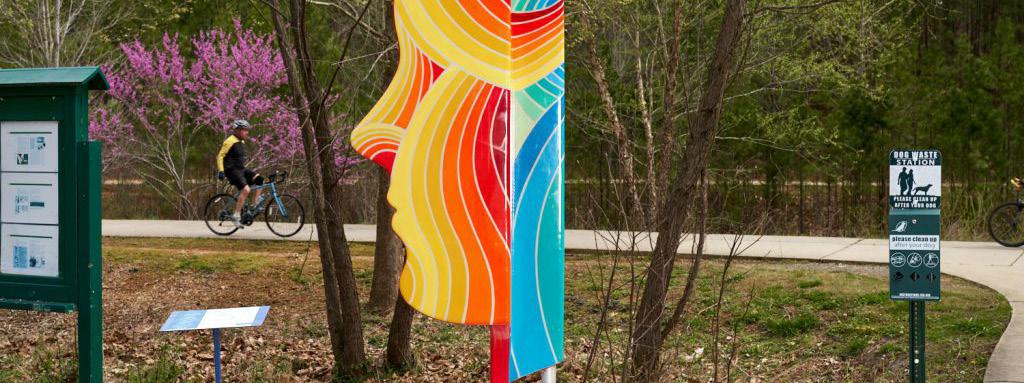
Sculptures are three-dimensional original artworks that can be made of any material that offers structural stability and durability. Permanentlyplaced sculptures are scaled to their surroundings and typically do not move from the location in which they are installed, but temporary sculpture displays can be mounted on a concrete foundation with a pre-cast bolt pattern. Whether contemporary, whimsical, traditional, or something else, sculptures are often the focal points of civic art. Sculptures may commemorate and celebrate our history, express civic pride, or be installed as culturally-defining showpieces for the town.
Sculptures can take on many shapes and sizes and often fit well when created in or alongside gateways, parks, gathering spaces, and community centers. Because sculptures allow communities to celebrate and enhance their civic identity, they are especially appropriate in parks and downtown settings.
Environmental Art
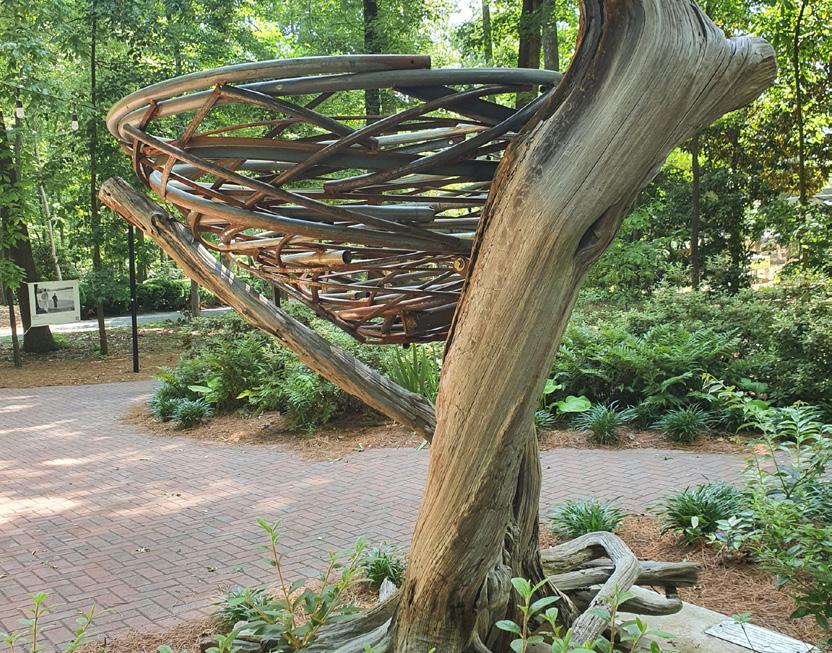
Environmental art is any kind of outdoor public art that uses materials with a direct connection to nature, landscaping, or organic materials. Environmental art can be temporary or permanent, and its scale can vary. Its thematic context often addresses environmentalism and sustainability, but it can also call attention to the City’s existing landscape and natural settings.
Cecilia Lueza, Dual Nature
Richard Herzog, Nesting
Public Art Media
Fiber
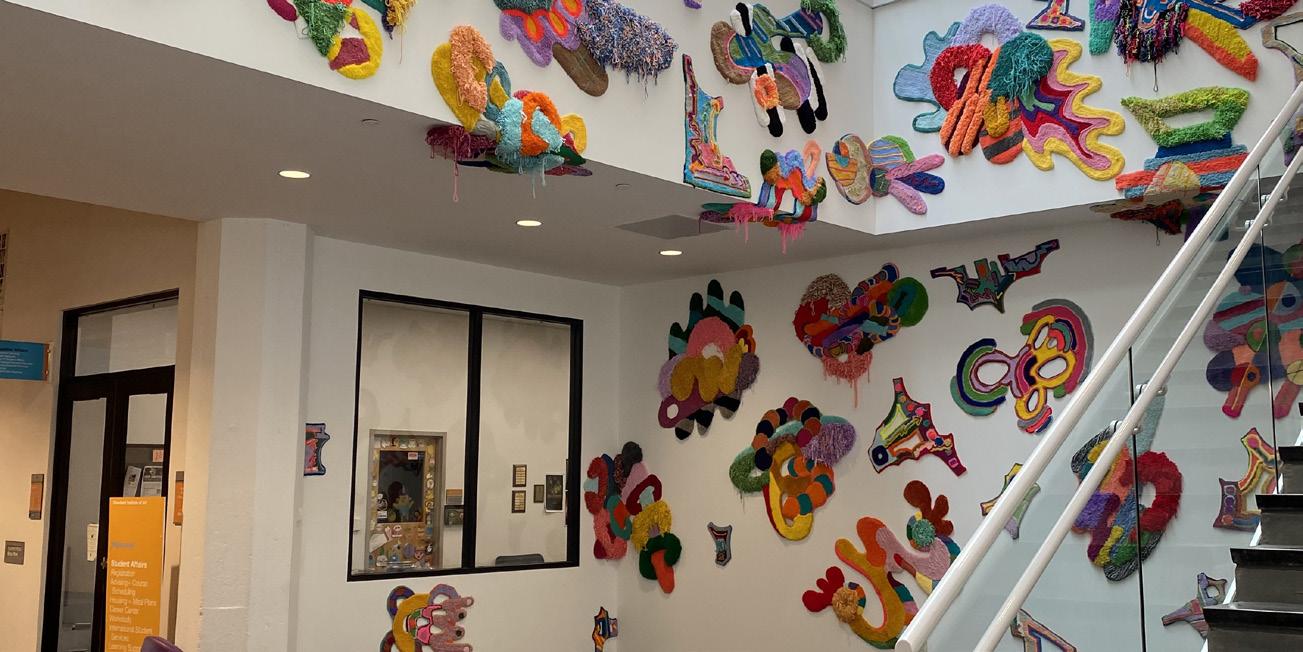
Fiber art is any kind of artwork that uses natural or synthetic fiber materials as the primary component of its overall composition. Fiber art can take forms including wall hangings, tree wraps, suspended sculptures, or screens. Examples of fiber materials include fabric, yarn, polyurethane materials (like tarp), and mesh.
Functional Art
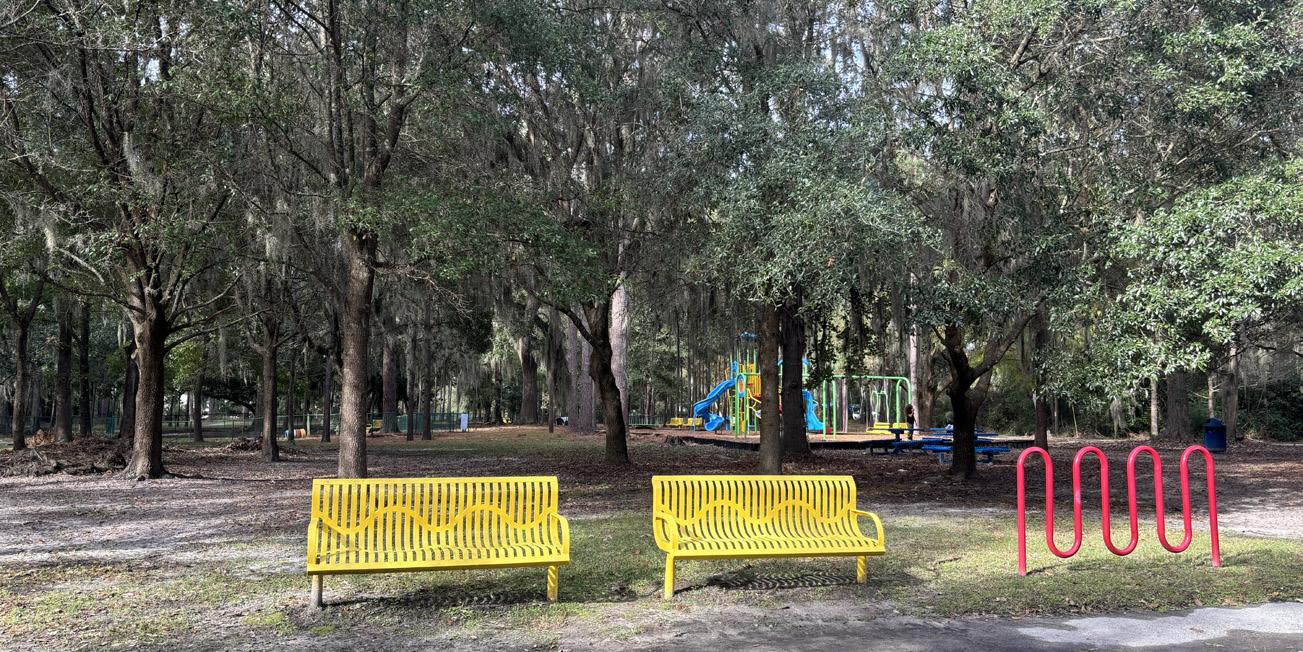
Functional art is ordinary infrastructure that has been reimagined and designed by an artist. Integrating unique designs into infrastructure may be an affordable and efficient way to create a major visual impact. Some possible options for functional art installations include bike racks, planters (either suspended or installed on the ground), benches, play equipment, medians, subdivision walls, trash cans, transit stops, storm drains, manholes, monument signage, sidewalk treatments, and more.
Loraine Lynn, JOY(full) (2022), Cleveland, Ohio Savannah, Georgia
Public Art Media
Murals
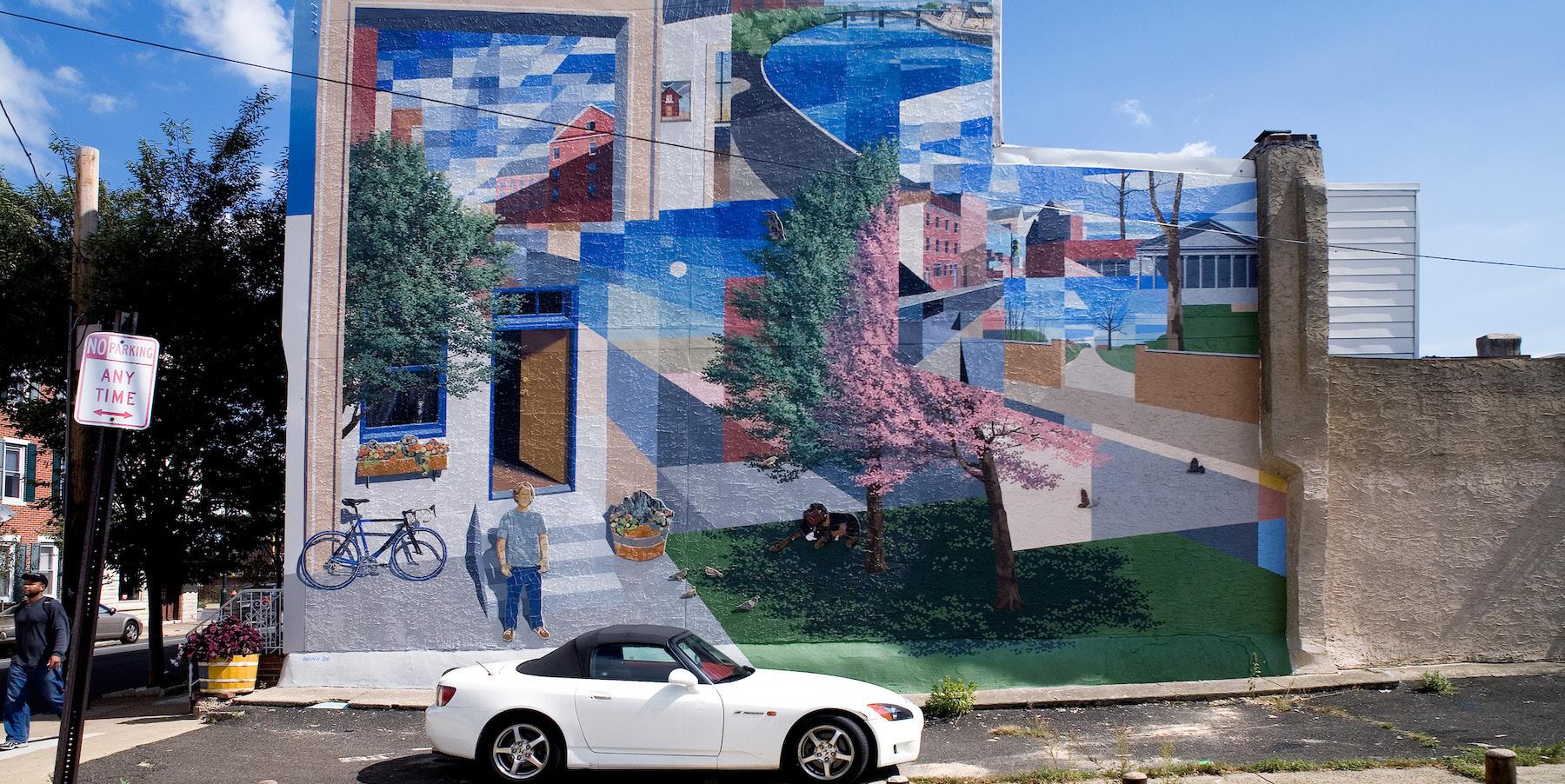
Murals are two-dimensional compositions that can take many forms, including paint or tile applied directly onto a surface, graphic reproductions printed onto vinyl adhered to a surface, or created on a panel that is affixed to the building. Environmental conditions, artwork display duration, artist ability, timeline, and budget are all considerations that affect which mural application style is suitable for a project. While curating permanent works of art as part of the collection is important, ephemeral works such as murals allow for the exposure of many artists over a short period of time rather than a few artists over a long period of time.
Light Installations
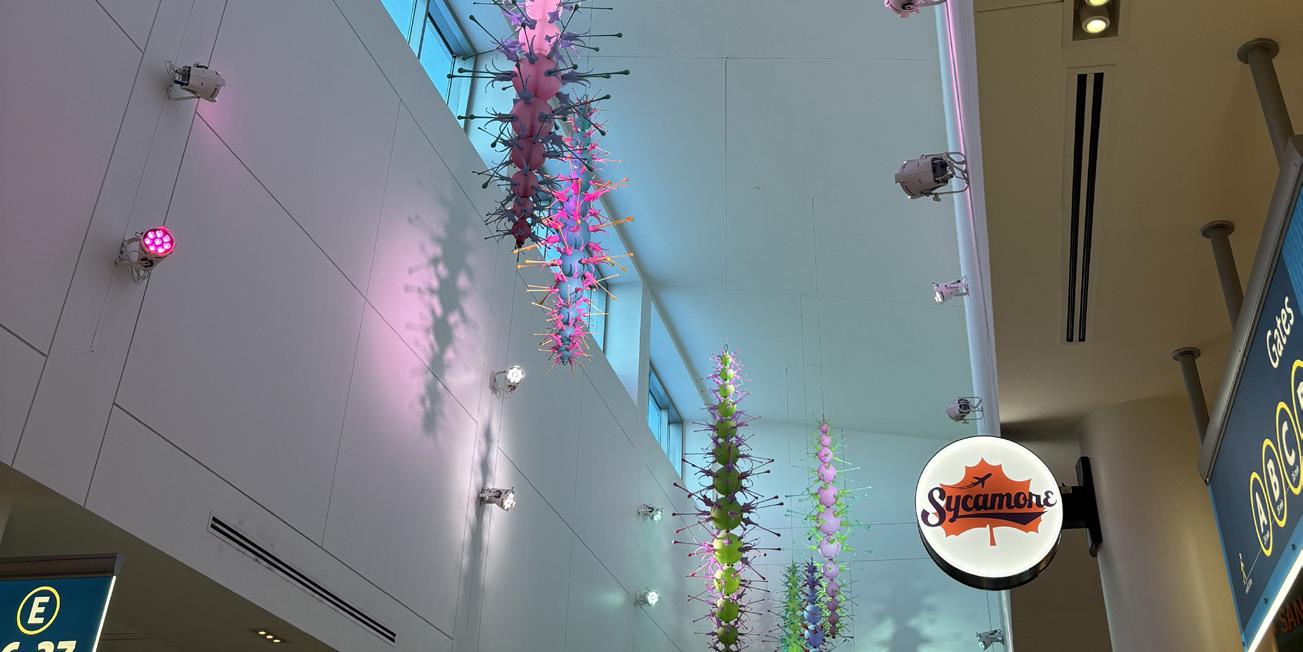
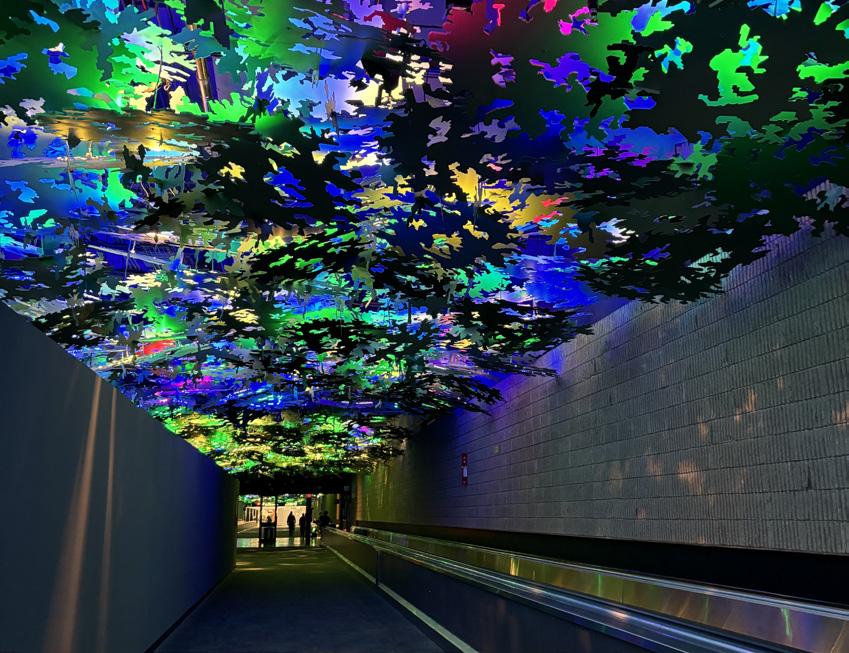
Artists use lighting in creative and interesting ways in order to manipulate the built environment with limited physical impacts. Light installations may be used on existing buildings, in parks on substantial landscape features, or as part of a larger installation of sculpture. They may be especially useful and impactful when used in infrastructure projects.
David Guinn, Welcome to the Neighborhood (2004)
Jonathan Michael Davis, Antimonmies, Charlotte-Douglas International Airport
Public Art Media
Mosaics
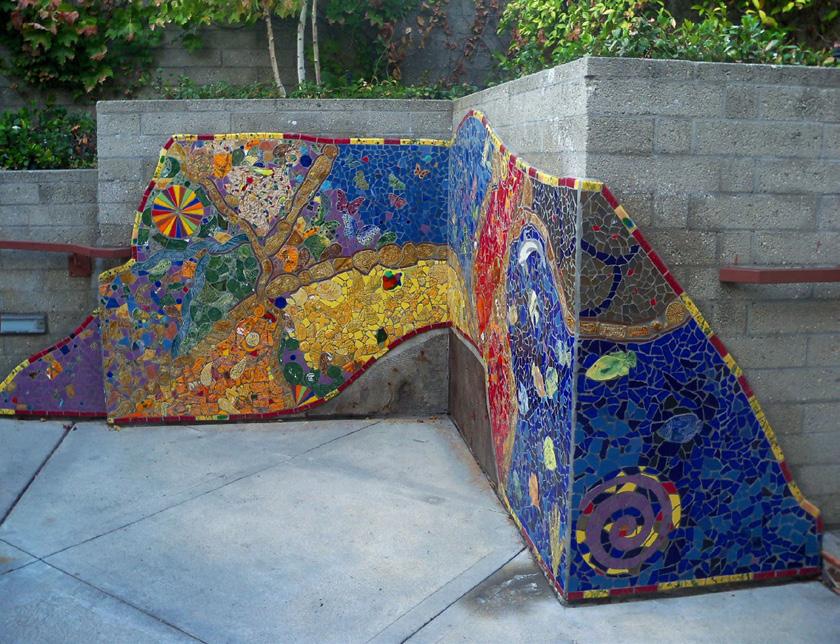
Mosaics come in many shapes and sizes and include glass or ceramics. The relative flexibility of the application of mosaics responds well to many art contexts. Mosaics can be inlaid for flooring or wall elements, or they may be a component of a sculpture.
Multimedia
Multimedia installations may combine many other art types in ways that expand the imagination. Video, lighting, sculpture, murals, and more can be combined to make multimedia installations. Multimedia installations are especially useful for temporary or pop-up installations.
Time-Based Media
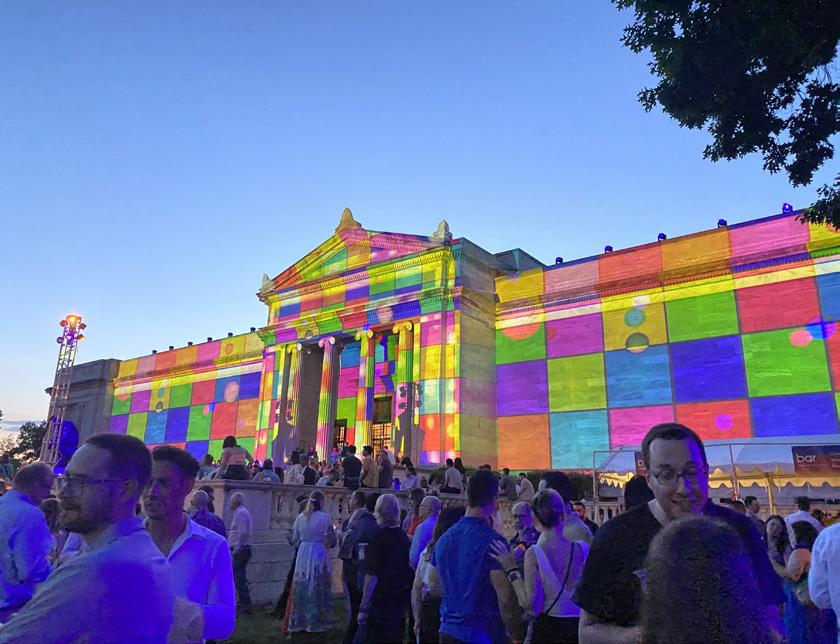
Time-based media is art that is created using photography, video, film, and/or audio whose composition transpired over a period of time. Time-based media artwork has clearly-defined beginning and ending points. This kind of artwork may run on a loop and is suitable for environments whose conditions are not suitable for traditional artwork materials. Time-based media typically assumes the form of projection mapping onto buildings, or soundbased artworks.
William Crite, Mosaic Tile Mural (1995) Pasadena, CA
Steve Waldeck, Flight Paths
Cleveland Museum of Art
Public Art Placement Strategies
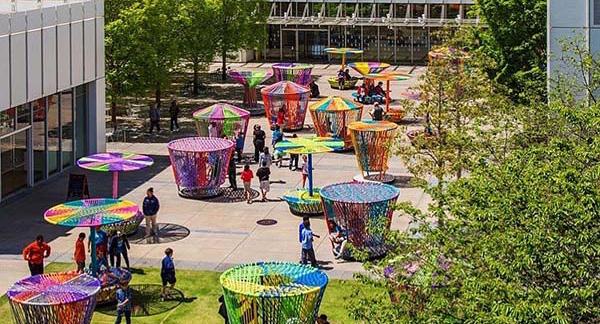
Iterative Public Art Projects
An iterative project is one that has many parts united by the same theme. For example, the City may commission an artist to create a series of sculptures placed in various locations around the park, united by the theme “Larger Than Life Flowers.” Iterative projects establish a “trail” for the community to follow across a predetermined area, making them a great option for retail areas, parks, or historic town centers.
Single-Presentation Public Art Projects
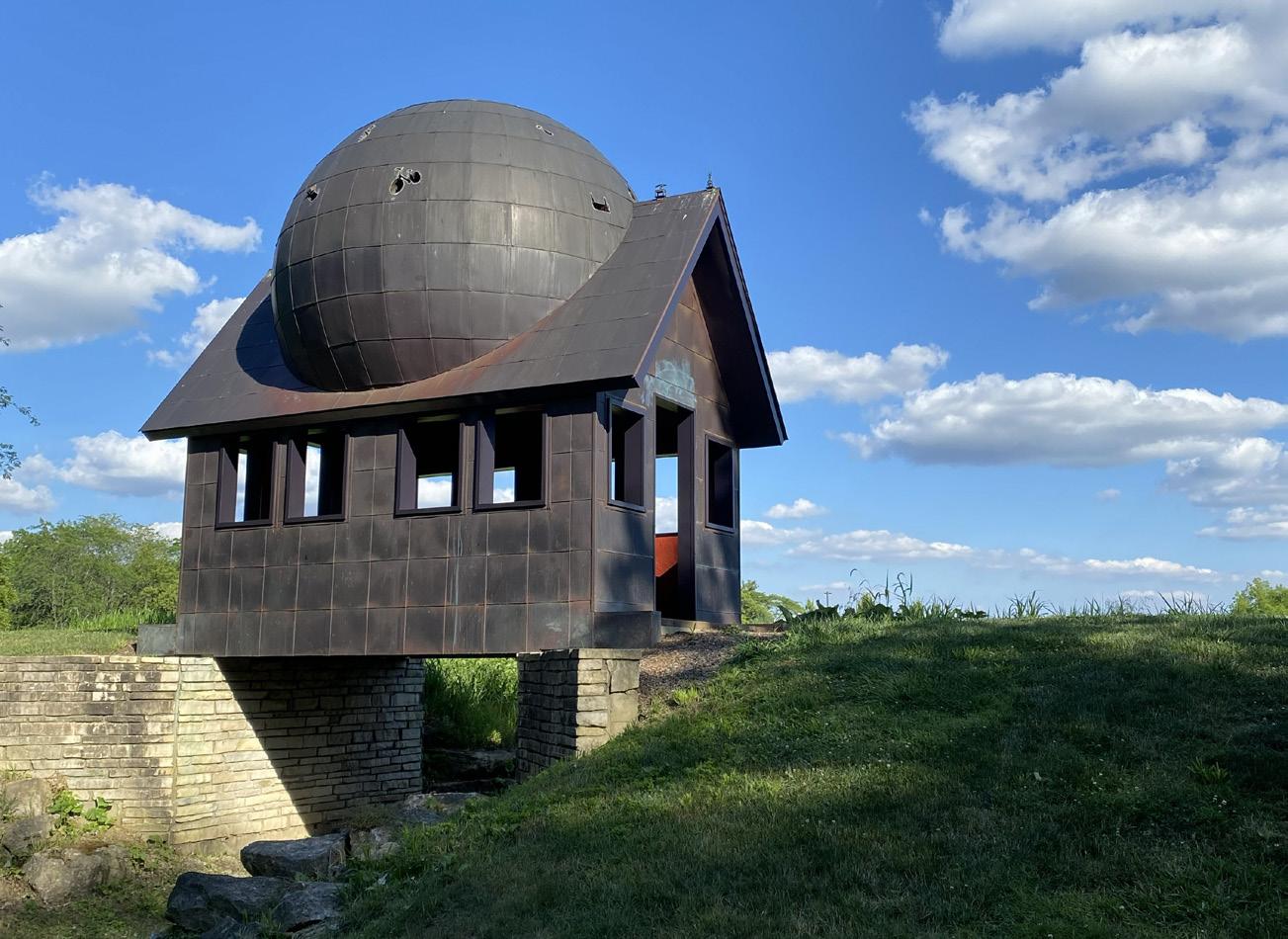
Single-presentation public art projects are those that do not repeat in multiple locations and their compositions are limited to one site. Examples of these kinds of projects include a large-scale sculpture commissioned for a City facility; a unique mural on the facade of a community center; or light installation that is engineered to complement the detailed architecture of a historic building. Singlepresentation projects may be temporary or longterm, and they are primarily characterized by their function as a landmark in public space.
Esrawe + Cadena in collaboration with Creos, Los Trompos
Todd Slaughter, Watch House and Circle Mound, Dublin, Ohio
Public Art Approaches
Public Art Approaches
Interactive
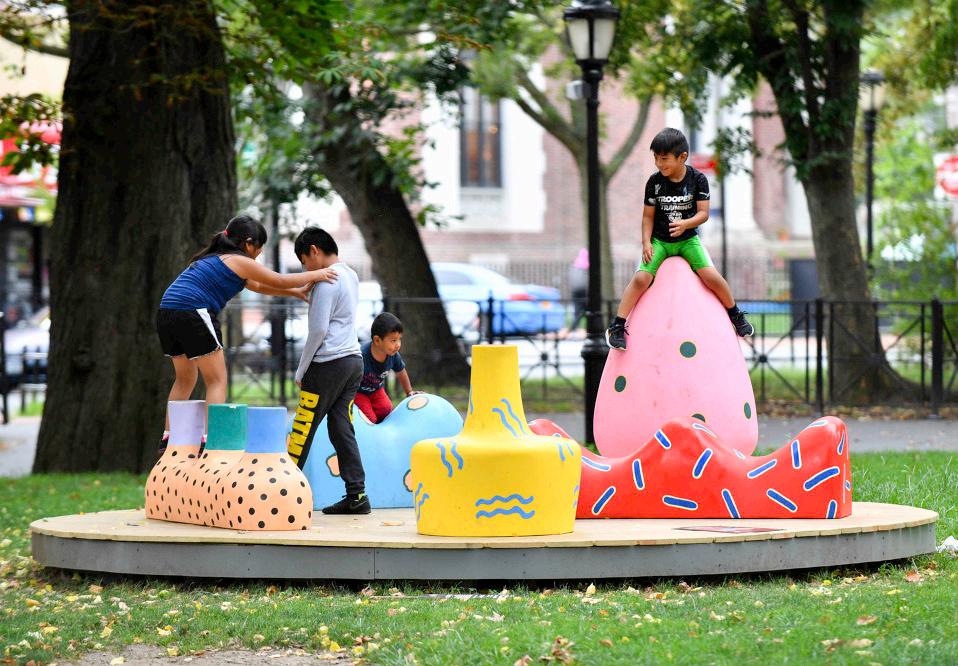
Interactive art is not a medium but rather a way for artwork to be designed with people in mind. Artwork can be defined as interactive if it aims to create a dynamic experience, where the public are not just onlookers, but they can experience the artwork through senses beyond sight. Interactive art may use traditional media or new technology, but interaction is always at the center.
Public Performances
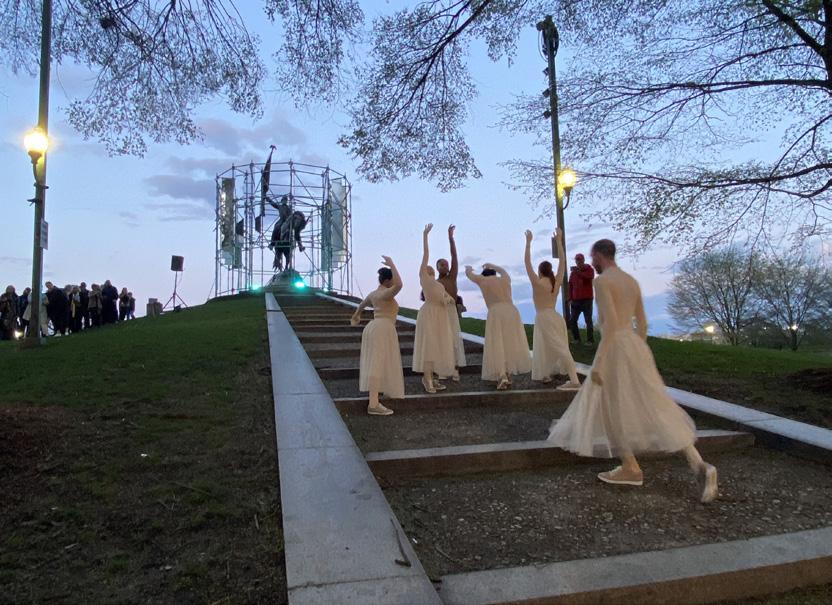
Dance, theater, spoken word, or another type of public performance can be staged in public space or alongside public art. These displays have a particular relevance when staged at the unveiling of public artworks.
Site-Specific
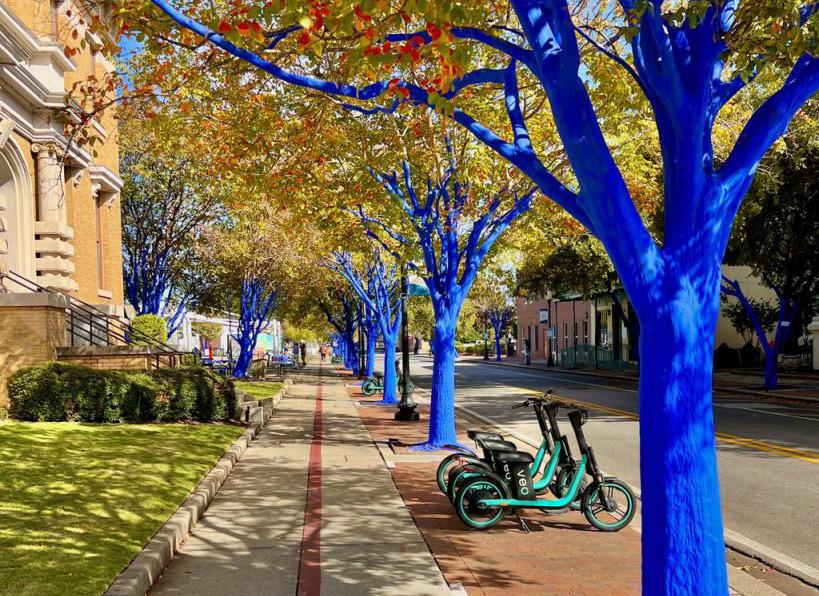
Site-specific art is artwork that is aesthetically, conceptually, and/ or thematically connected to the unique circumstances, culture, history, and environment of a particular site. Site-specific art can take many forms, and may be permanent or temporary. In this approach to art-making, artists extensively research the place, site, or area where the sitespecific artwork will be placed. Site-specific art tells the story of a place through its surroundings, enriching the experience of the place itself.
Chiaozza, Lawn Lumps, Photo by Daniel Avila, NYC Parks
Konstantin Dimopoulos, The Blue Trees (2024) Pensacola, FL
Brendan Fernandes, New Monuments (2024), Logan Monument, Chicago, IL
Public Art Approaches
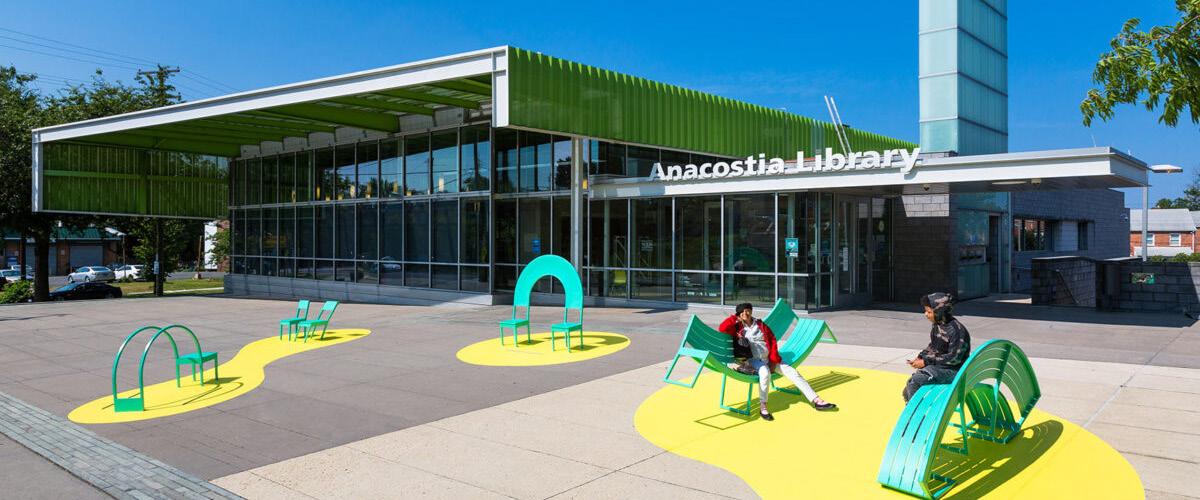
Pop-up & Temporary Art
Pop-up and temporary art are public art opportunities that exist in a community between one day and two years. Though temporary art is not intended to live for a generation, it can have a lasting impact on a community by creating a sense of surprise and joy in unexpected places. Some ideal locations for temporary installations include construction sites, sidewalks, lanes, parks, and temporarily empty spaces and storefronts. Photography, chalk art, and artworks made using natural materials are ideal mediums for temporary, rotating experiences. Temporary art can be cost effective and easy to execute, providing opportunities for additional artist engagement. In whatever form, its short lifespan gives energy to the space and drives excitement among the community. Temporary art may also invite collaboration, be it with local schools or community groups, to rotate artwork over short periods of time.
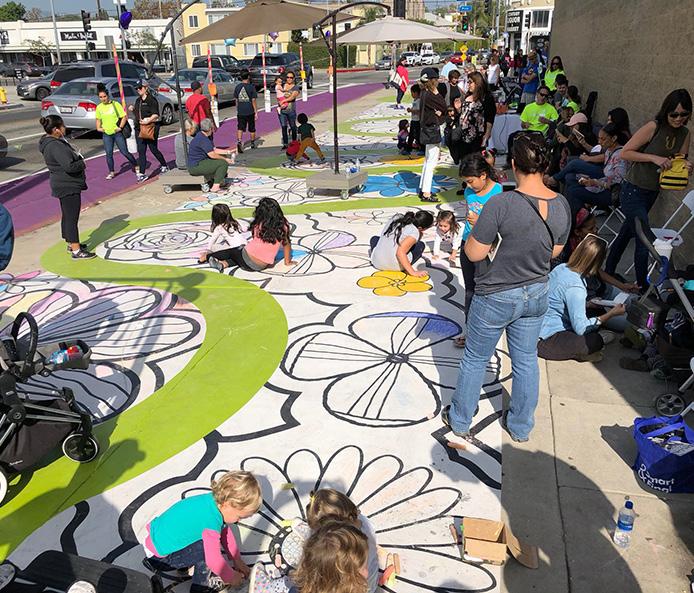
Community Participatory Art
Participatory art involves the community or a public group in the process of art-making, as guided by an artist. Artwork that emerges from a participatory experience enhances and celebrates its process and participants over short or long periods of time. Collaborative art pieces engage people to generate feelings of community pride and ownership.
Public Mechanics, The Chairs (2020)
Urban Rock Studio, Coloring Book Plaza, Pico Neighborhood, Los Angeles, CA
Public Art Project Recommendations for Savannah
Introduction: Expanding our Collective Narrative
This section outlines a Savannah-specific vision for future public art projects, informed by the local history, landscape, desires, and community engagement. Savannah's upcoming public art projects will expand our collective story, inviting diverse voices to shape a shared future while honoring our evolving history. The following projects will use this theme to guide ideation and development.
Project recommendations address a range of community desires for storytelling and connection through public art projects, but several project concepts also leverage public art as a placemaking tool to enhance safety, elevate gathering spaces, and enliven ordinary fixtures of civic infrastructure. Creative placemaking projects are more often temporary than they are permanent and can be exciting pathways to collaborate with local partners and organizations.
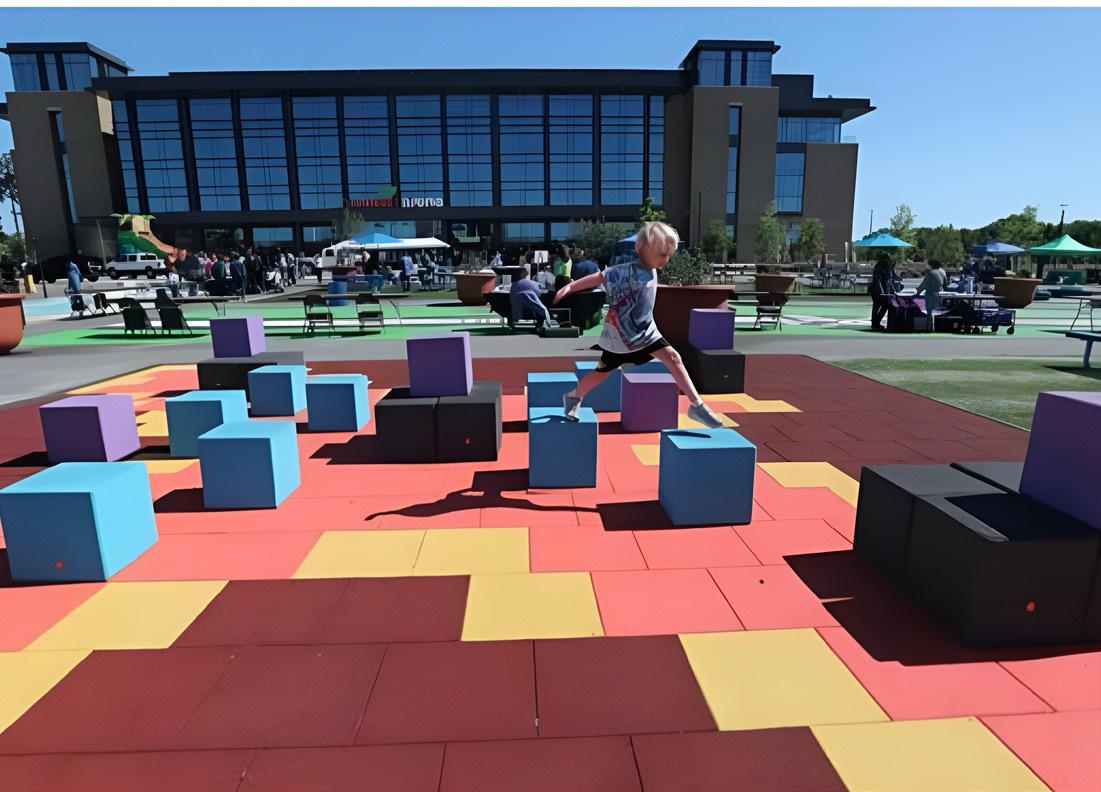
Alfredo Martinez, EnMarket Arena
Public Art Projects across the City
The following public art projects are highly impactful opportunities that can be implemented across the City to bring vibrancy, connection, and visual interest to every corner of Savannah.
Passive Parks
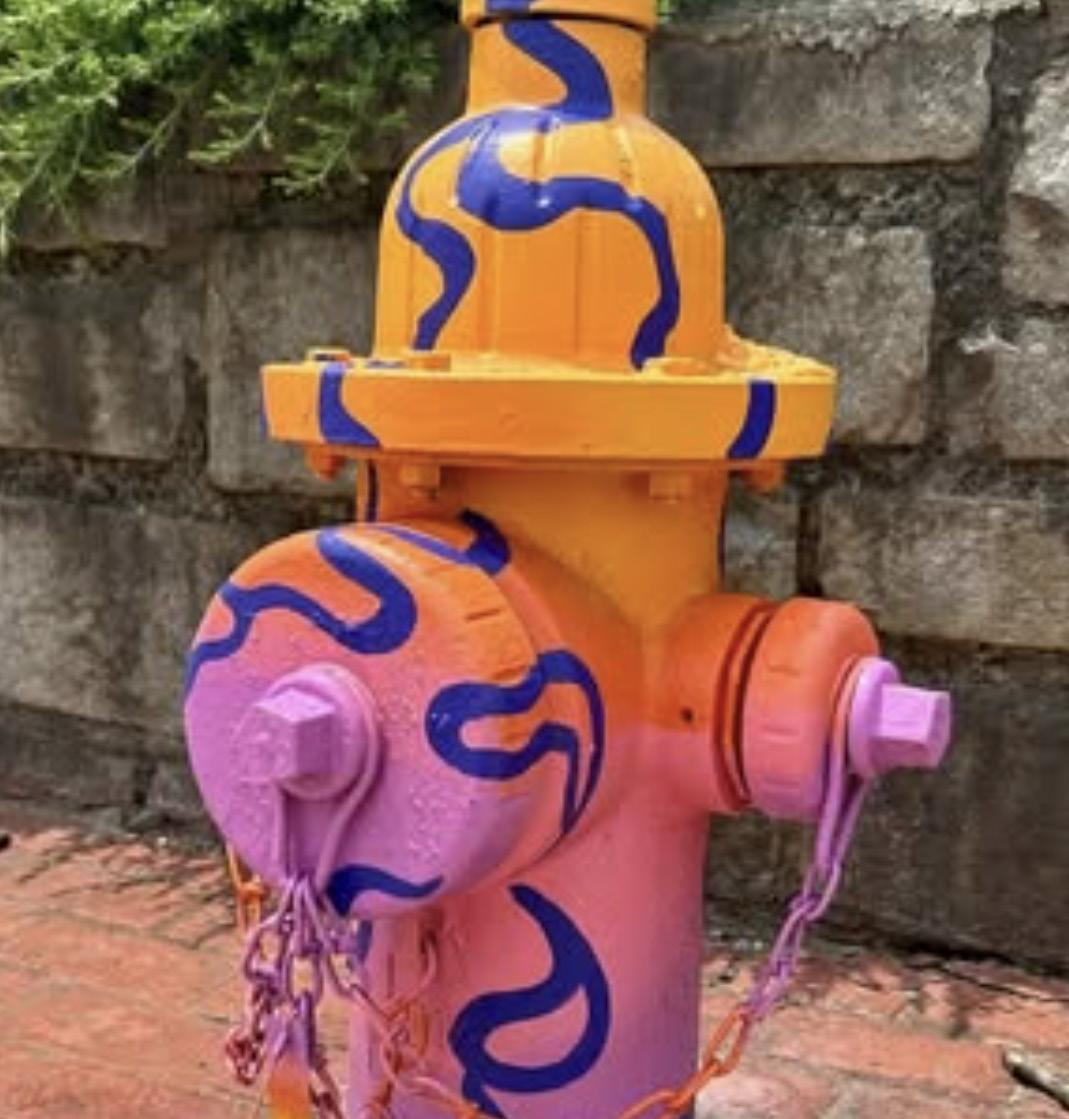
Painted Fire Hydrants and Storm Drains
Painting fire departmentapproved fire hydrants is an excellent way to highlight local artists and bring immediate vibrancy to ordinary settings. This cost-effective project can replace regularly-scheduled fire hydrant painting for maintenance purposes. A similarly-scaled project is painted storm drains, which the City of Savannah has previously implemented in its parks.
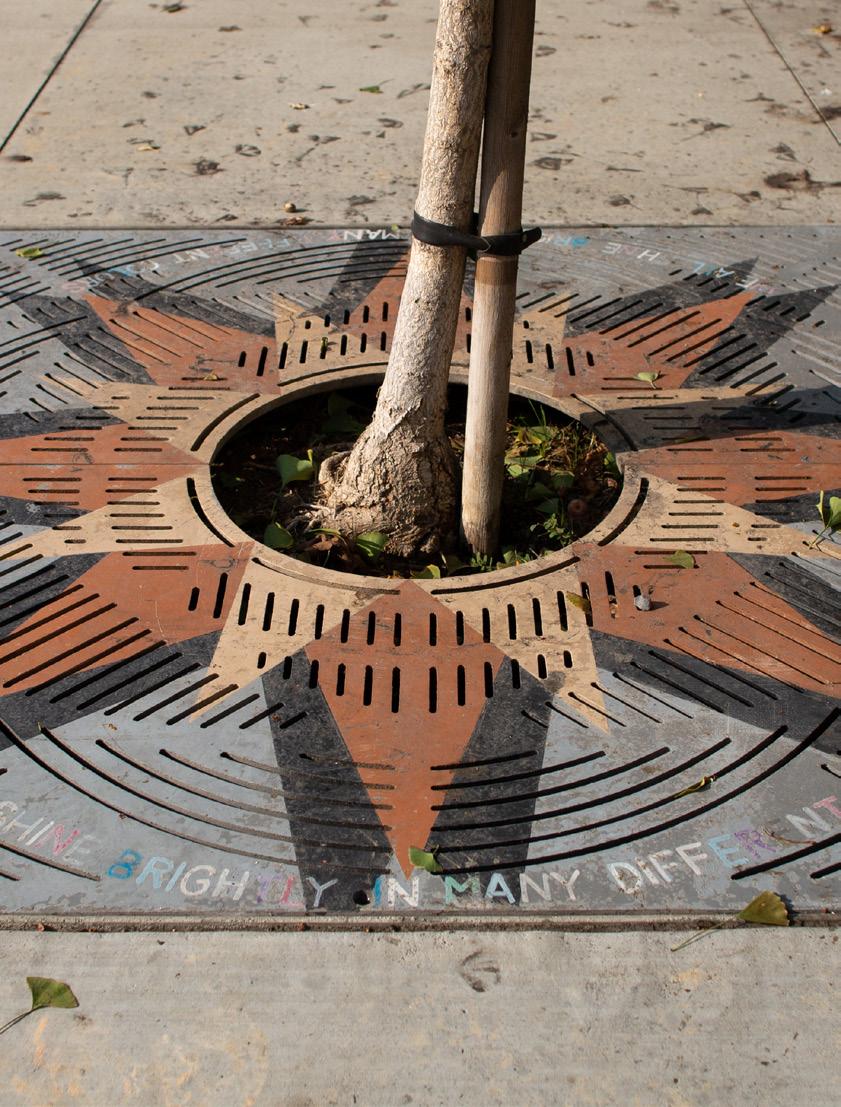
Tree Guard Projects
Tree guard interventions through public art are a high-impact strategy for improving walkability and showcasing Savannah’s vibrant culture. From painted tree guards to installing artistdesigned, heavy duty railing, these enhancements can transform ordinary civic fixtures into extraordinary, iconic local landmarks.
Jaliyah Nicole, Euphoria (2025), Smyrna, Georgia
We All Shine Bright in Many Different Colors, Anaheim, CA
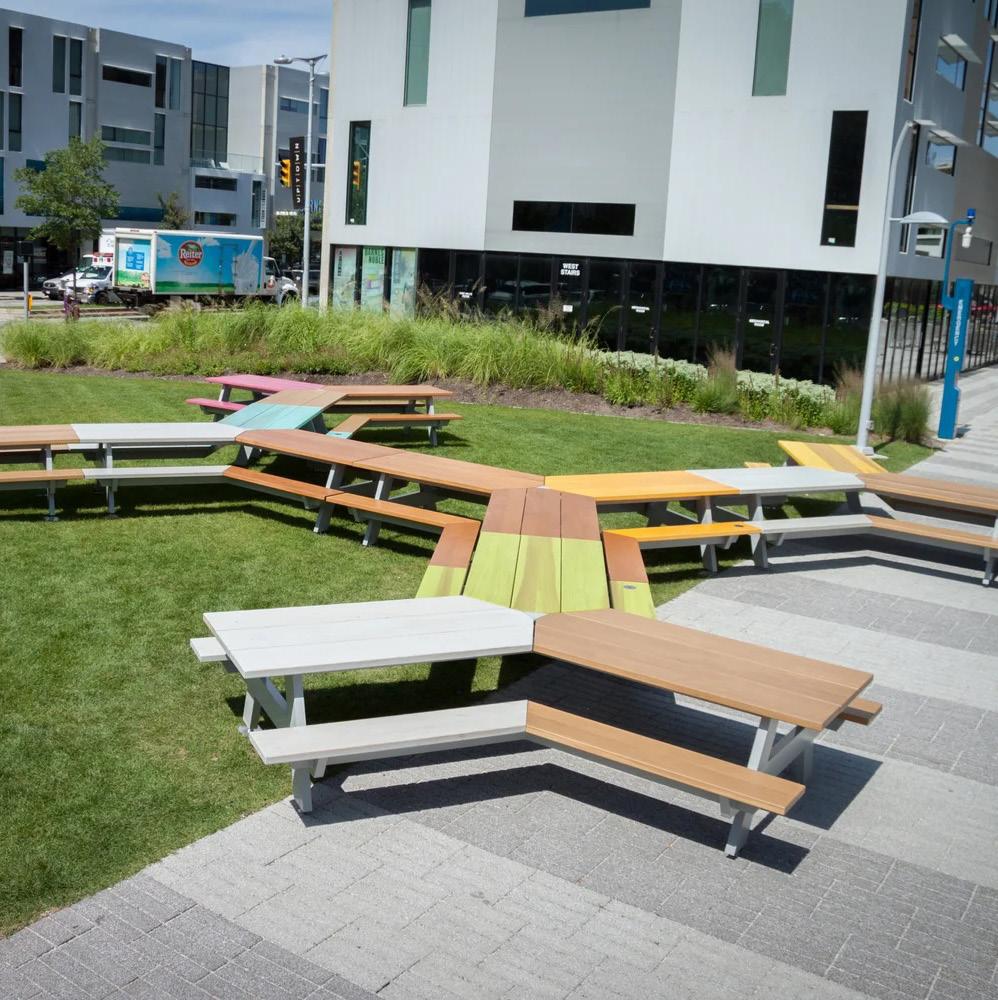
Sculptural Seating Elements
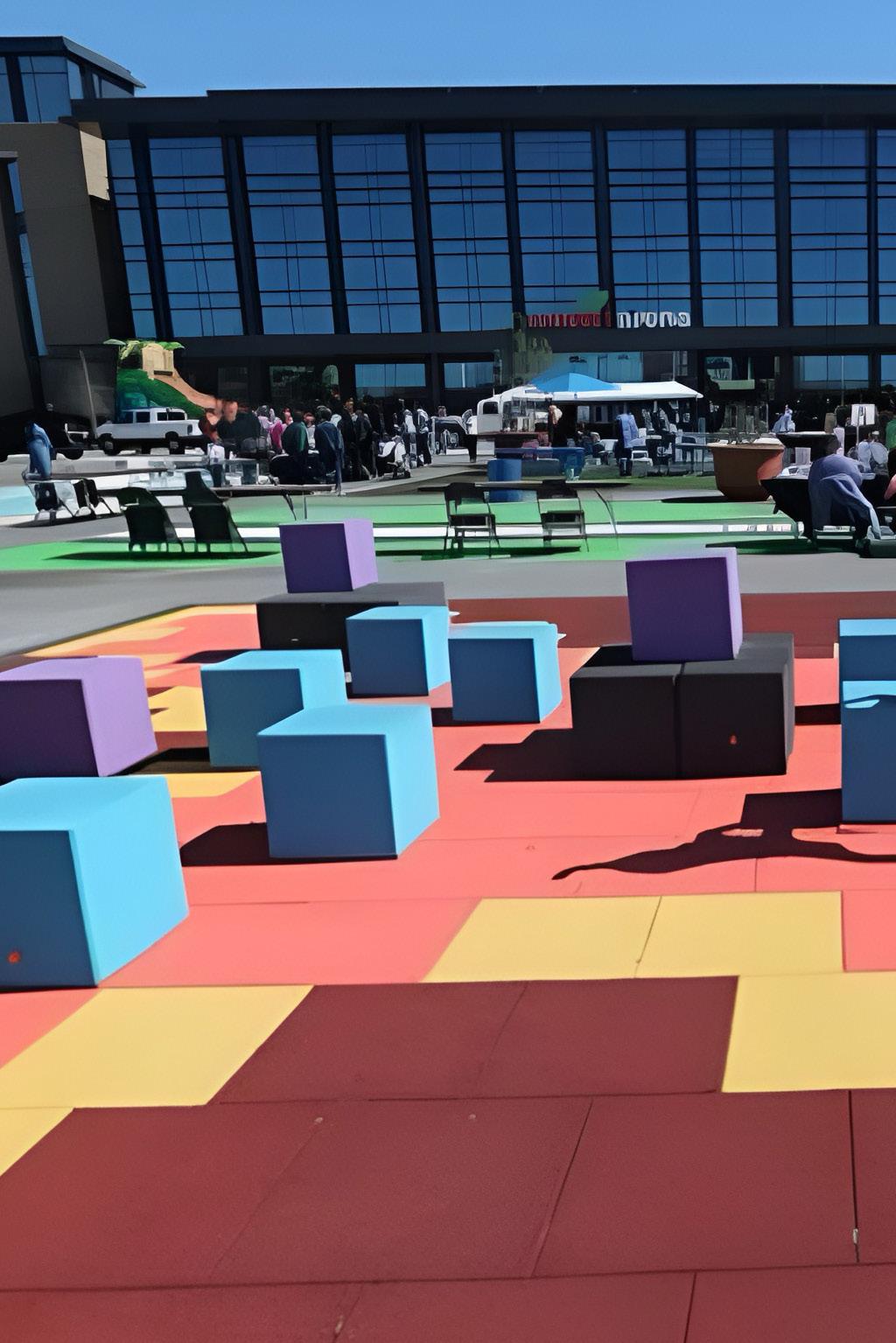
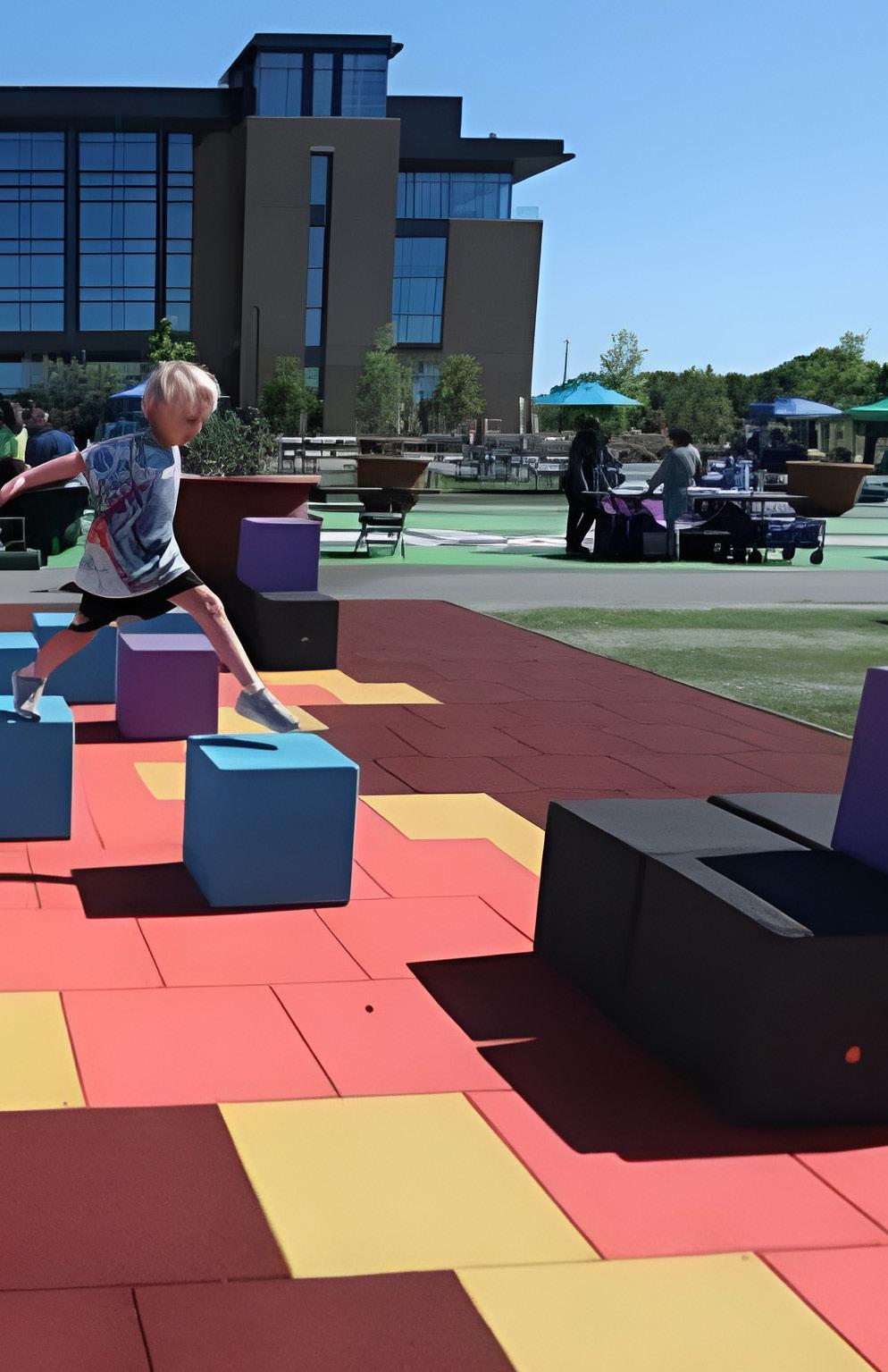
Passive Parks are ideal locations for modular, creative artistdesigned furniture. Savannah’s passive parks could feature a series of brightly colored, interlocking sculptural seating elements, each subtly patterned with motifs representing different cultural groups that have influenced Savannah. The arrangement would encourage interaction and conversation.
Immersive & Reflection Portals
Passive parks are designed as spaces that provide a reprieve from urban surroundings, and offer opportunities for quiet contemplation. Reflective or immersive installations that serve as portals to these serene and calm worlds could invite a peaceful moment for rest or connection amidst the business of the built environment.
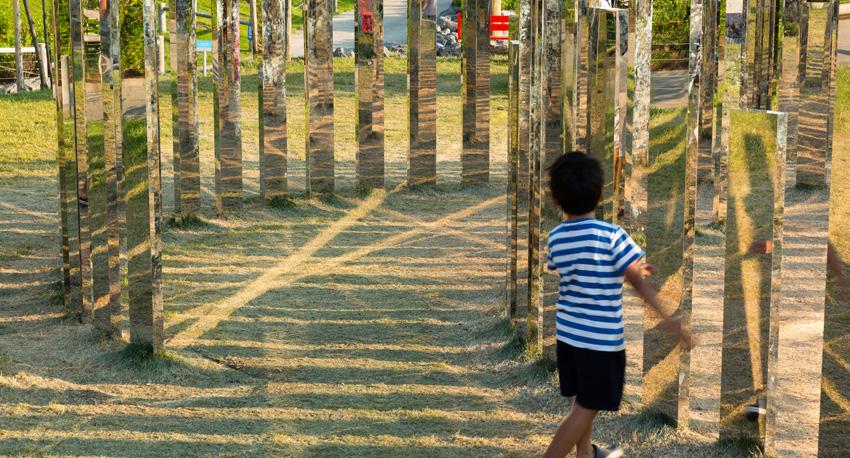
Mark Reigelman, The Great Picnic (2014), Cleveland, OH
Jeppe Hein, Please Touch the Art, May 17,2015 – April17, 2016; Brooklyn Bridge
Commercial Corridors
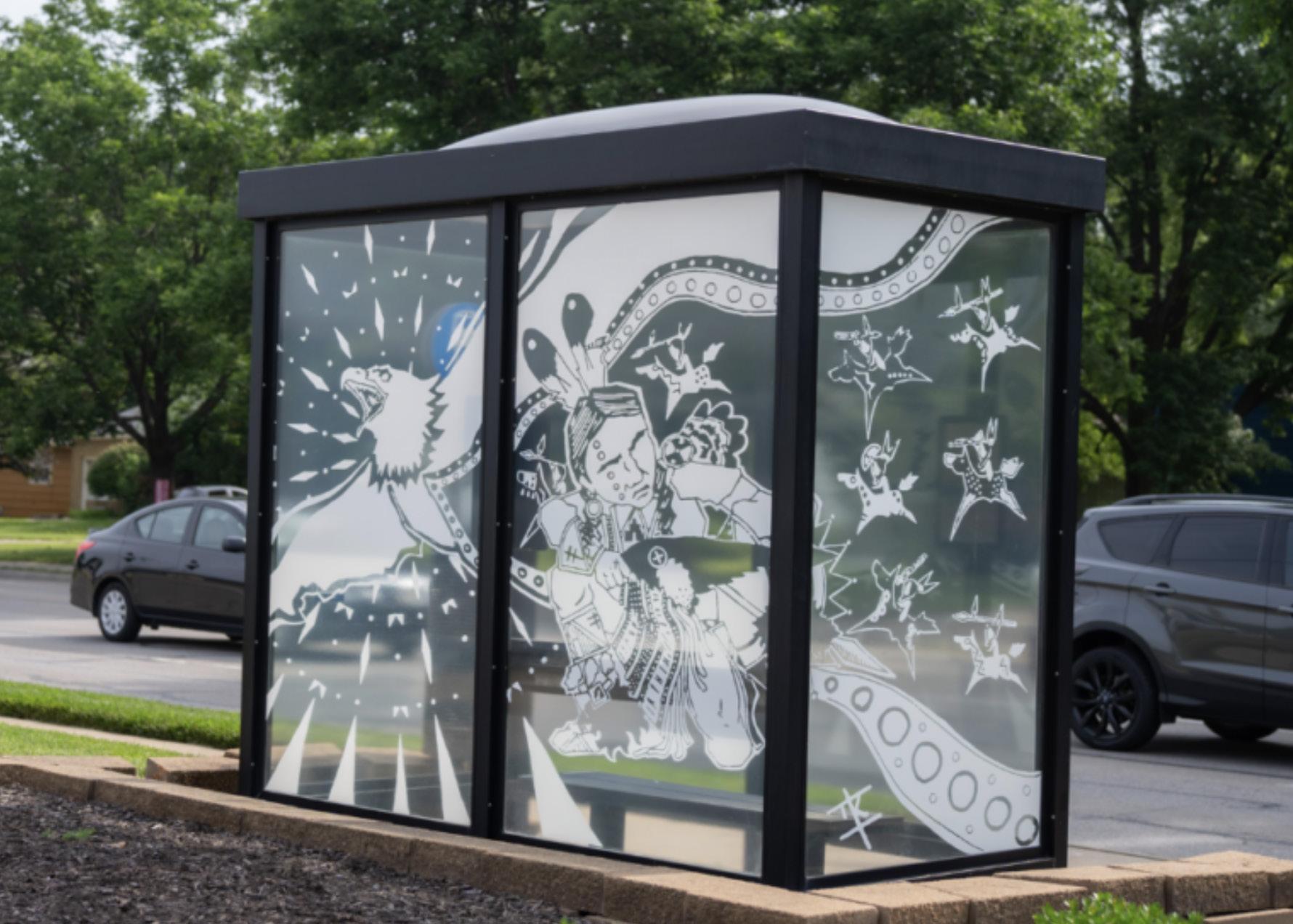
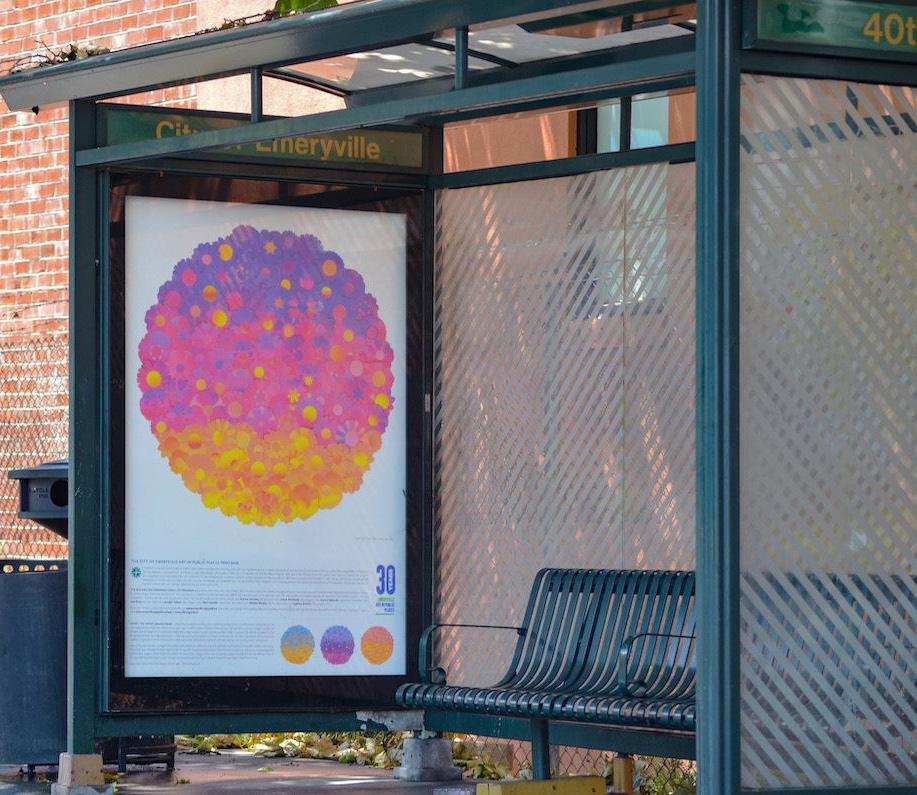
Transit Stop Public Art
In partnership with Chatham Area Transit, the City of Savannah can enhance rider experiences while simultaneously creating public art opportunities for local and regional artists by including opportunities for two-dimensional public art across Savannah. Rotating sites for public art can be placed where typical advertisement opportunities may be located, as a low-cost, but highly impactful way to bring vibrancy to the region’s mass transit system.
Tokeya Waci U (Comes Dancing First) Richardson, Less’ Riiide!, Lawrence, Kansas
Jessalyand Aaland, Emeryville, CA
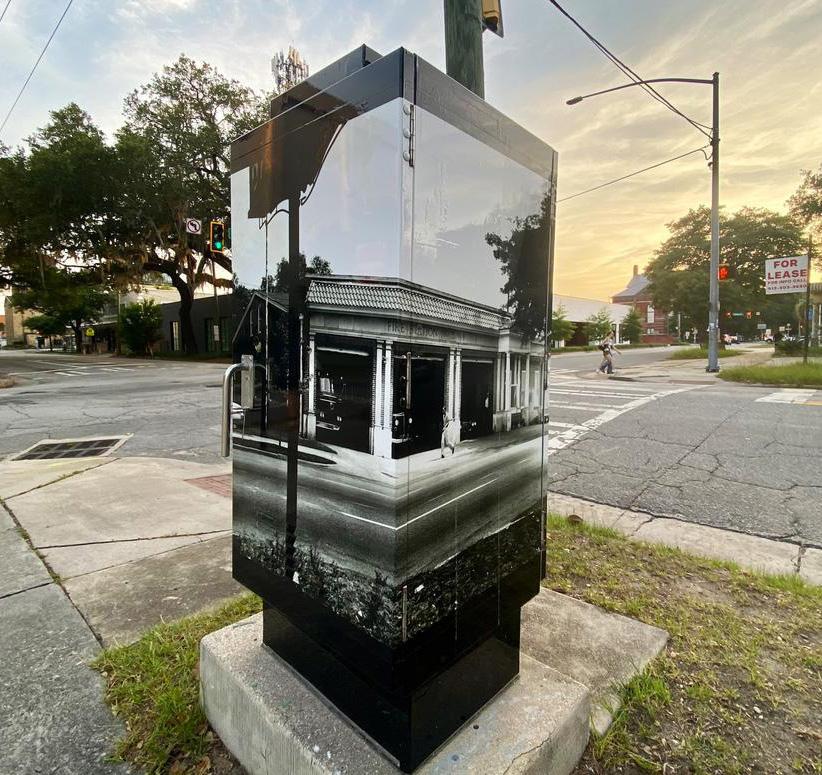
Utility Box Program
Utility Box art remains one of the most high-impact, costeffective approaches to public art and placemaking, and vinyl wrapped utility boxes featuring historic photographs of Savannah popped up around the City in 2024. There are many Cityowned utility boxes that are prime opportunities for public art. Printing artworks on largescale vinyl offers a greater range of project possibilities, while also offering a more maintenancefriendly solution, compared to painted utility boxes.
Utility Pole Activations
Utility poles feature spaces for standard banners, which are typically utilized for local event advertising and other marketing purposes. City-owned utility poles throughout the City could be activated to create a surprising public art trail above walkways and roads, and along park paths.
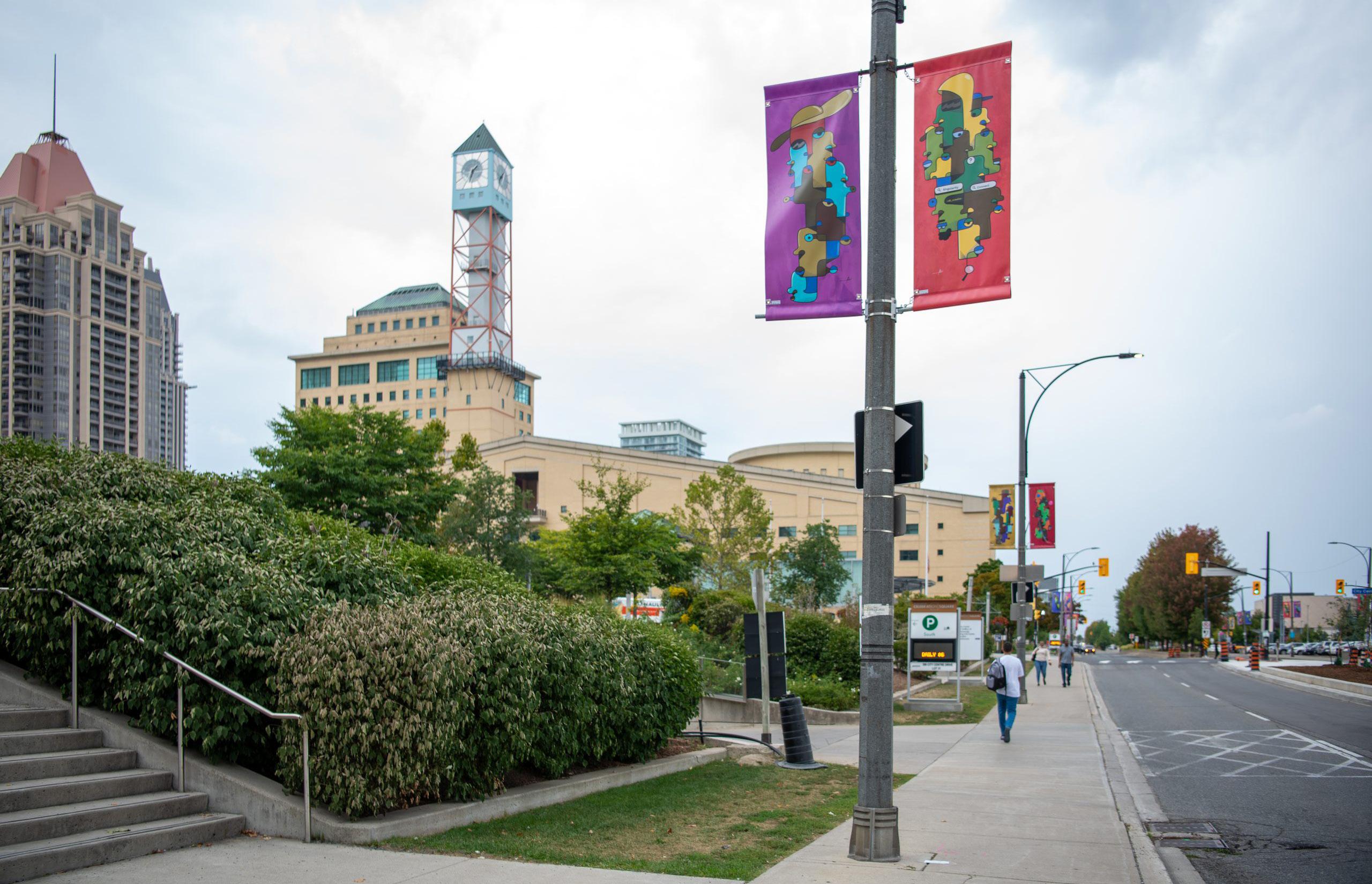
Ai, Summer Connections, 2022. Photography by Tori Lambermont, Mississauga
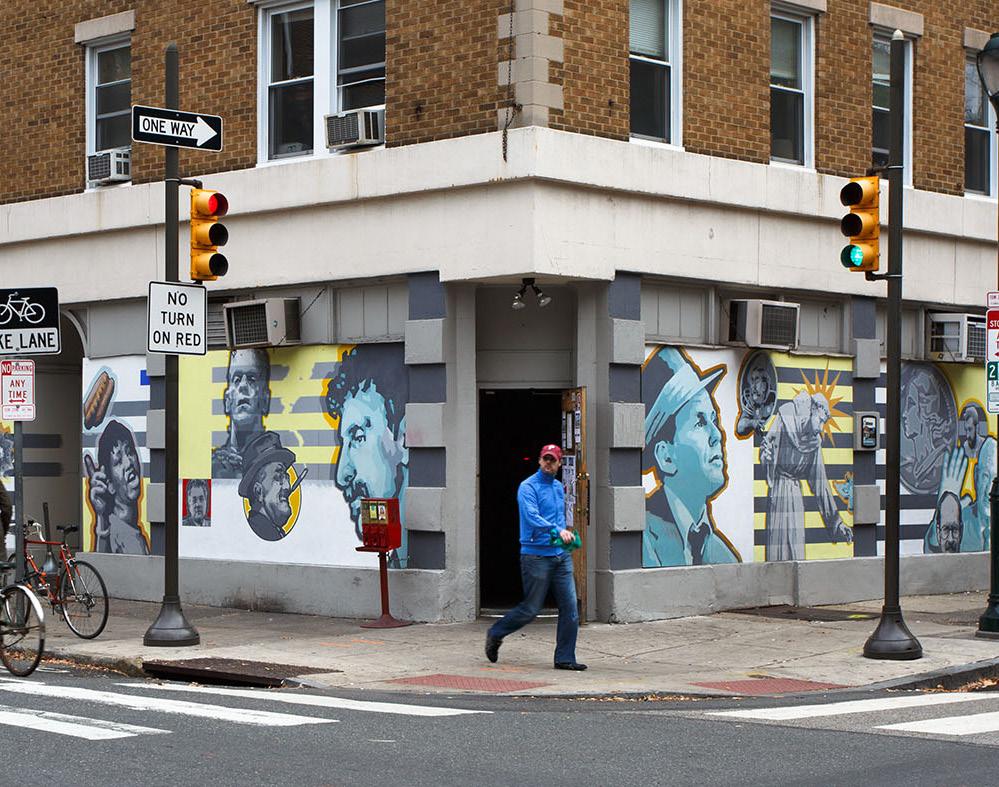
Murals
Murals throughout commercial corridors are an exciting and scalable way to create a strong sense of place and iconic landmarks throughout these areas. The Savannah Public Art Master Plan includes a recommendation for a Matching Mural Grant Program to encourage the implementation of murals around Savannah, particularly in commercial, hightraffic areas.
David McShane, Famous Franks (2001), Philadelphia, PA
Creative Crosswalks
These alternative mural sites can greatly enhance safety for pedestrians and drivers alike, while also enlivening the neighborhood with vibrant public art. For murals on concrete or asphalt, thermoplastic or trafficgrade paints should be used, in order to increase the mural’s lifespan. Creative Crosswalks are best suited for areas outside of Savannah’s Landmark Historic District, as evidenced in the success of the painted Cloverdale neighborhood crosswalk.
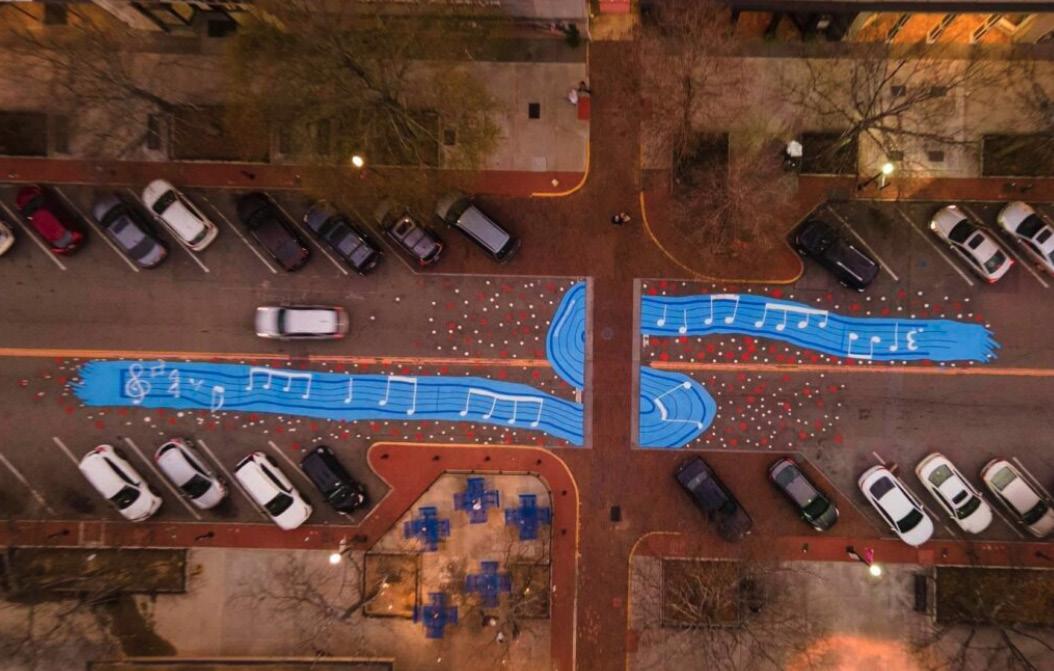
Mama Hawk Draws, Erin Hawkins, 2021, Cherry Street Crosswalk (Macon, GA)
Recreation Parks/ Playgrounds
Sound Installations
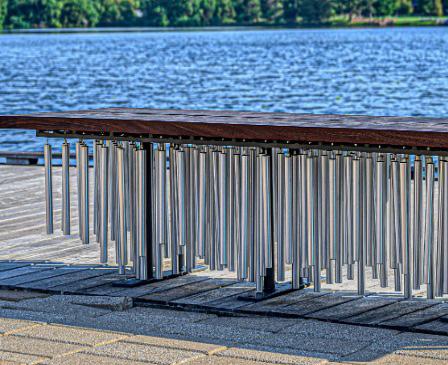
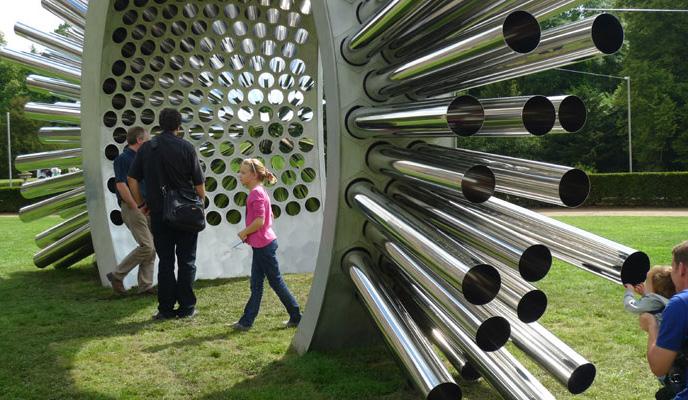
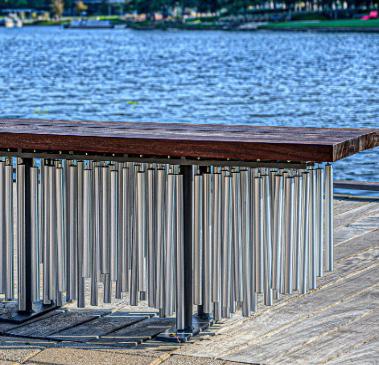
Soundscapes, or sonic art, offer limitless opportunities to immerse site visitors in an array of audio formats: oral histories, sound collages, musical performances, spoken poetry, environmental sounds, water vessels, and beyond. Depending on their placement and project parameters, public art sound installations can convey Savannah’s history through oral narratives, or serve as an ambient backdrop to daily life. Despite their seemingly “invisible” presence, sound installations are a soulful, immersive way to transform a public environment.
Luke Jerram, Aeolus
Michelle Old, Kevin Giuseppetti, Stacy Moore, and Derek Giuseppetti, Sound of Healing
Artist Designed Play Structures
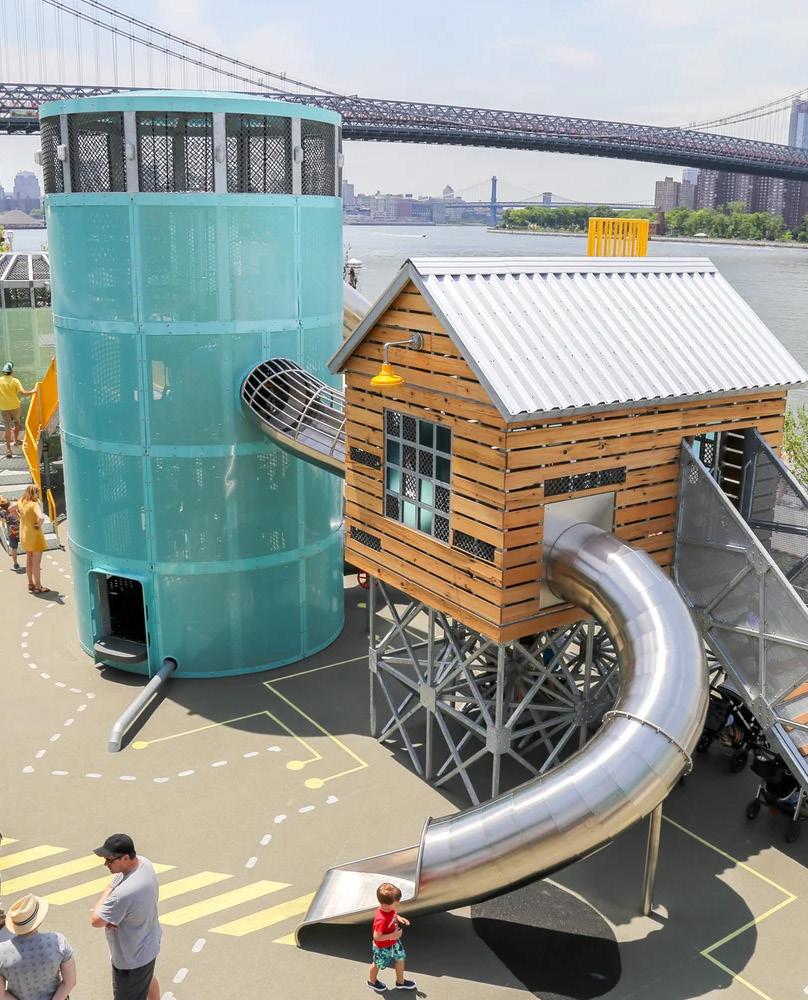
Play structures designed by artists offer a unique, unconventional play experience for children and adults alike, and can be responsive to the distinct characteristics of a neighborhood. For example, an artistdesigned play structure in Coffee Bluff could whimsically interpret the neighborhood’s coffee transportation legacy, whereas a splash pad or water-play intervention in Daffin Park could feature images and structures that speak to Savannah’s love of bees.
Functional Art
A historic City with a dynamic downtown requires civic fixtures that are anything but ordinary. From artist-designed benches to elaborate, whimsical play structures, artist-designed fixtures have the presence of permanent sculptures, but the durability and function of traditional city furniture. Ideal options for Savannah include artist-designed benches, shade structures, and painted planter projects.
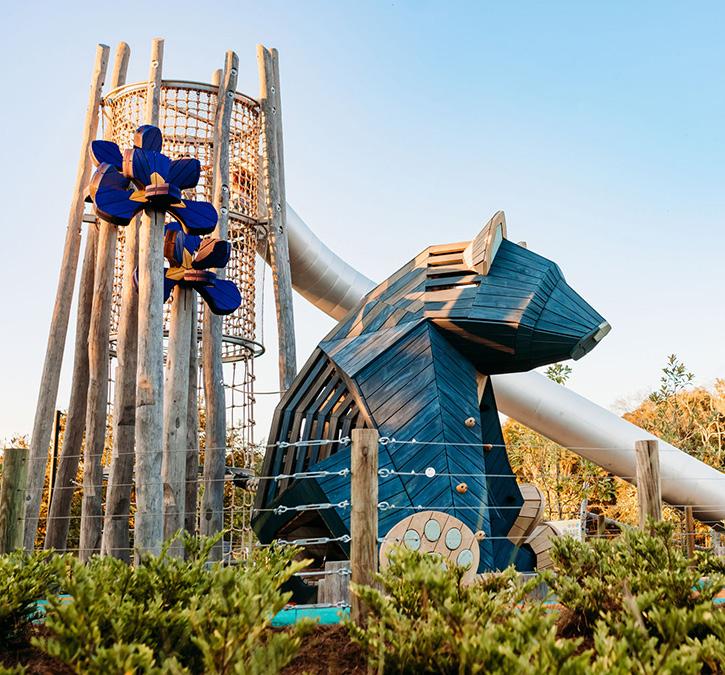
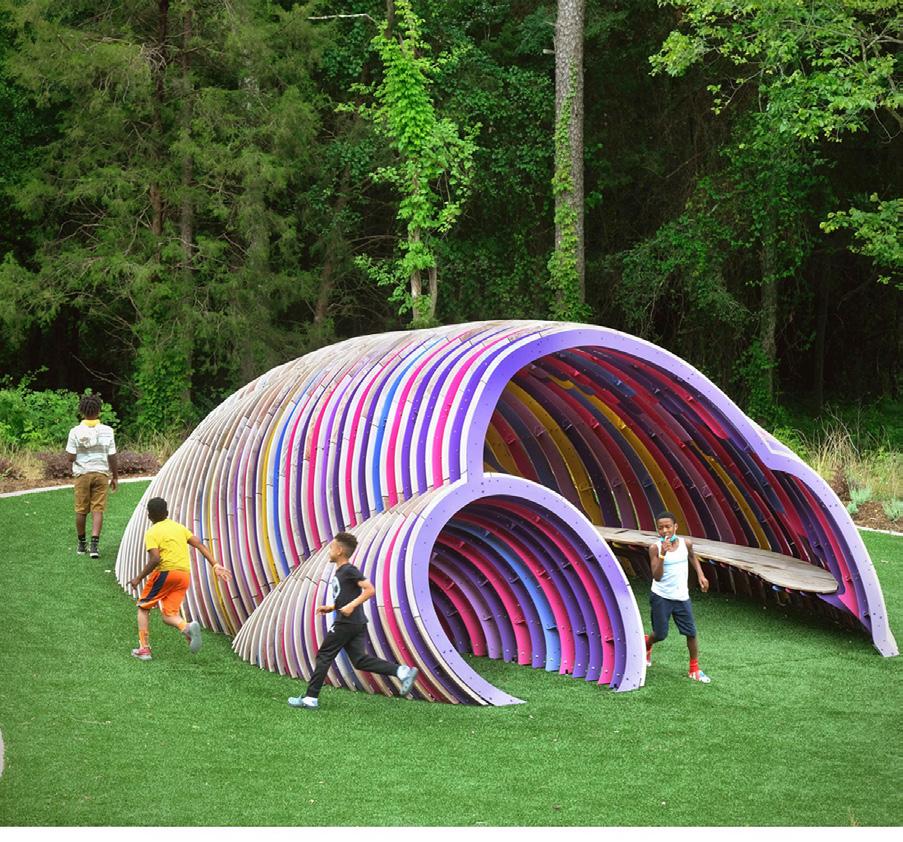
Mark Reigelman, Domino Park (2018), Brooklyn, NY.
Greenwood Park and Zoo Playground, Baton Rouge, LA, Earthscape
RE-site, Nested Hive, Charlotte, NC, 2021
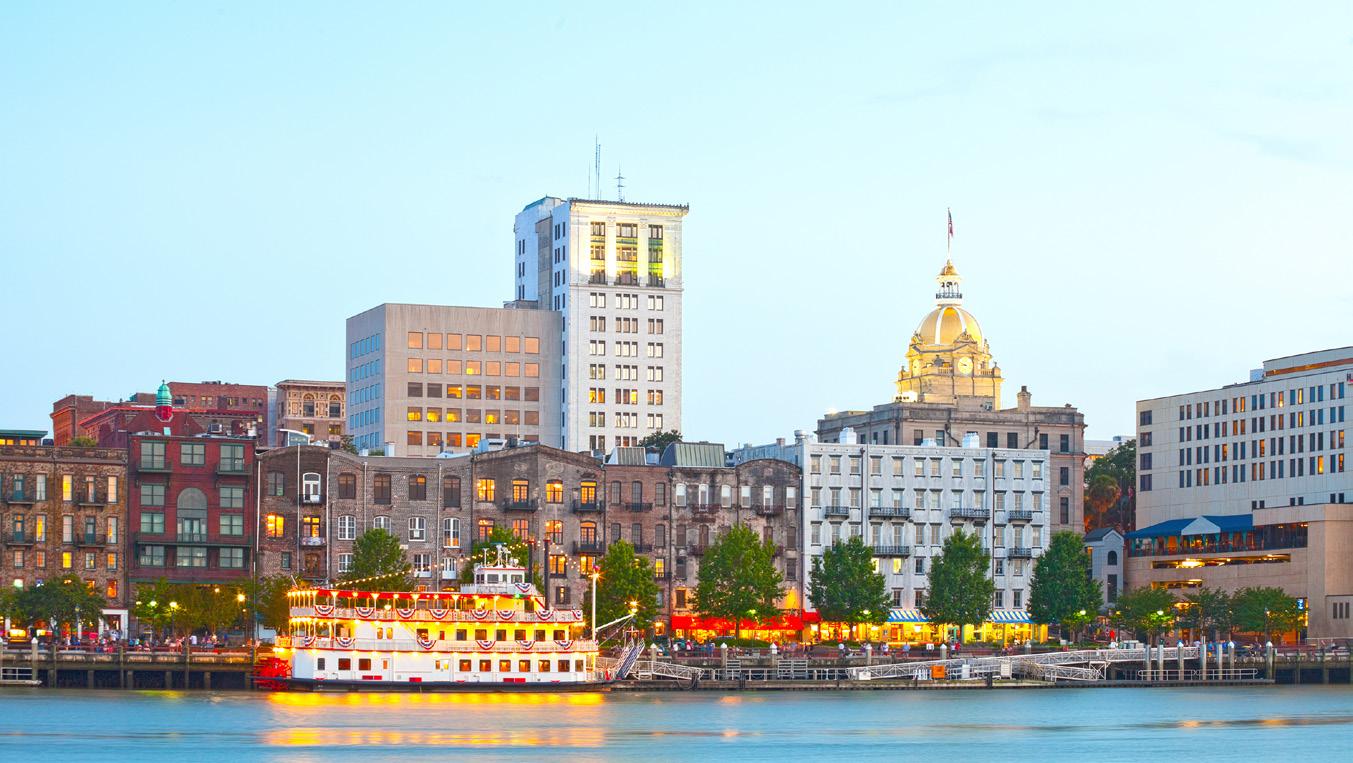
Waterfront
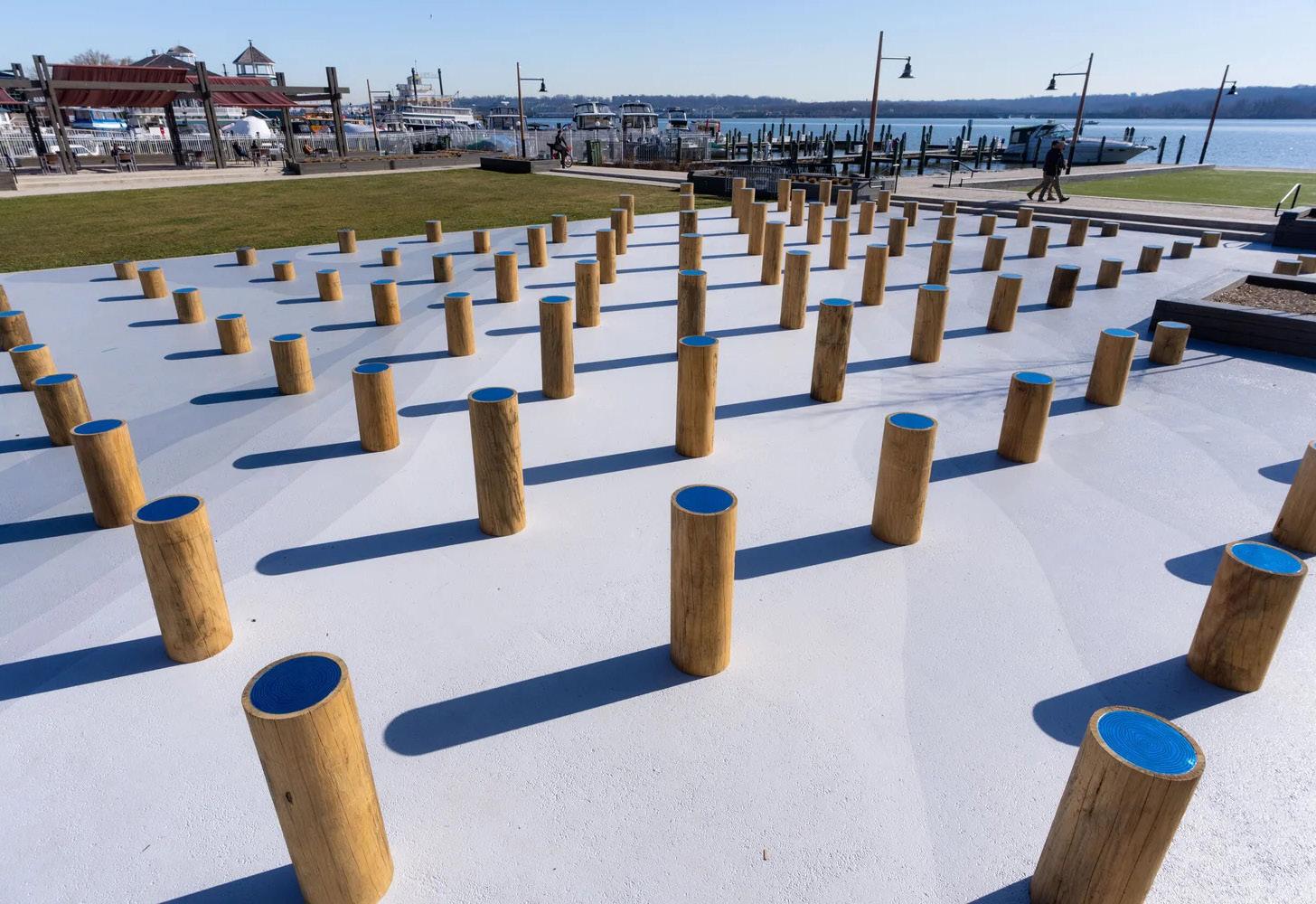
Water Lookout & Framing Interventions
Savannah’s waterfronts vary greatly in their geographic differences and proximity to the built environment. In both settings, public art can foreground and celebrate the richness of this resource, and its ancient and contemporary connections to Savannah. This could include abstract sculptures echoing cargo bales or ship masts, or subtle installations on the cobblestones using light projections or embedded materials that shift with the current. Artist-designed lookout points could anchor experiences at these sites and provide a deeper connection to the natural world.
Mark Reigelman, Groundswell (2021), Alexandria, VA
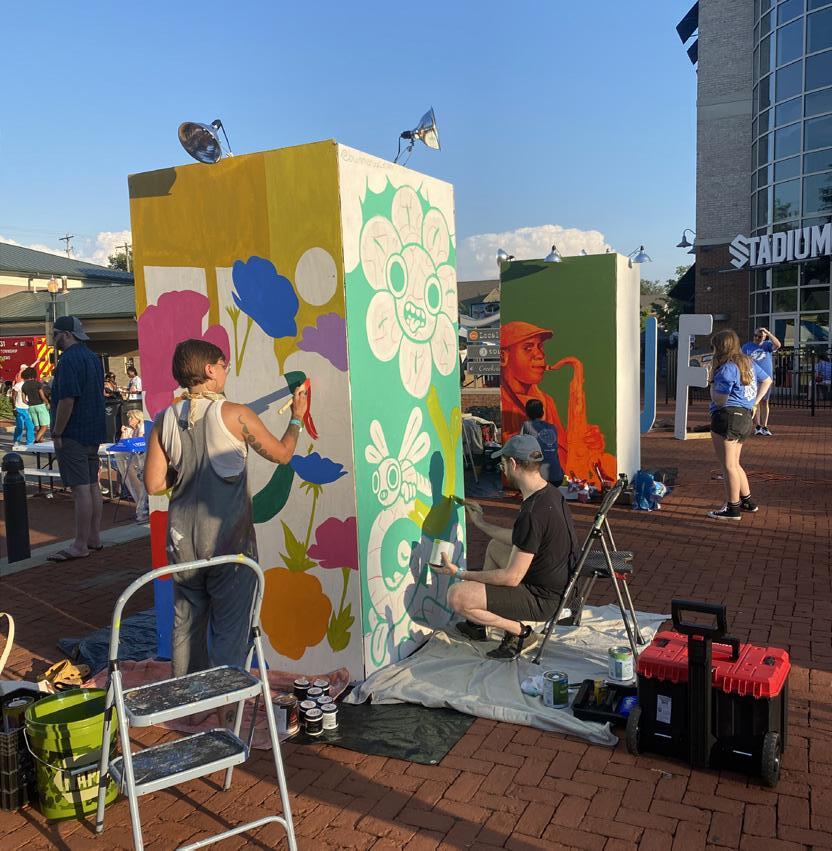
Temporary Public Art Festival, or Open-Air Gallery
The City could host at its waterfront an annual open air public art gallery, bringing together local and national artists to create a diverse collection of installations, performances, and interactive experiences in unexpected public spaces. From ephemeral sculptures and captivating live performances, the temporary public art festival invites discovery and surprise in everyday surroundings.
Sculptural Interventions
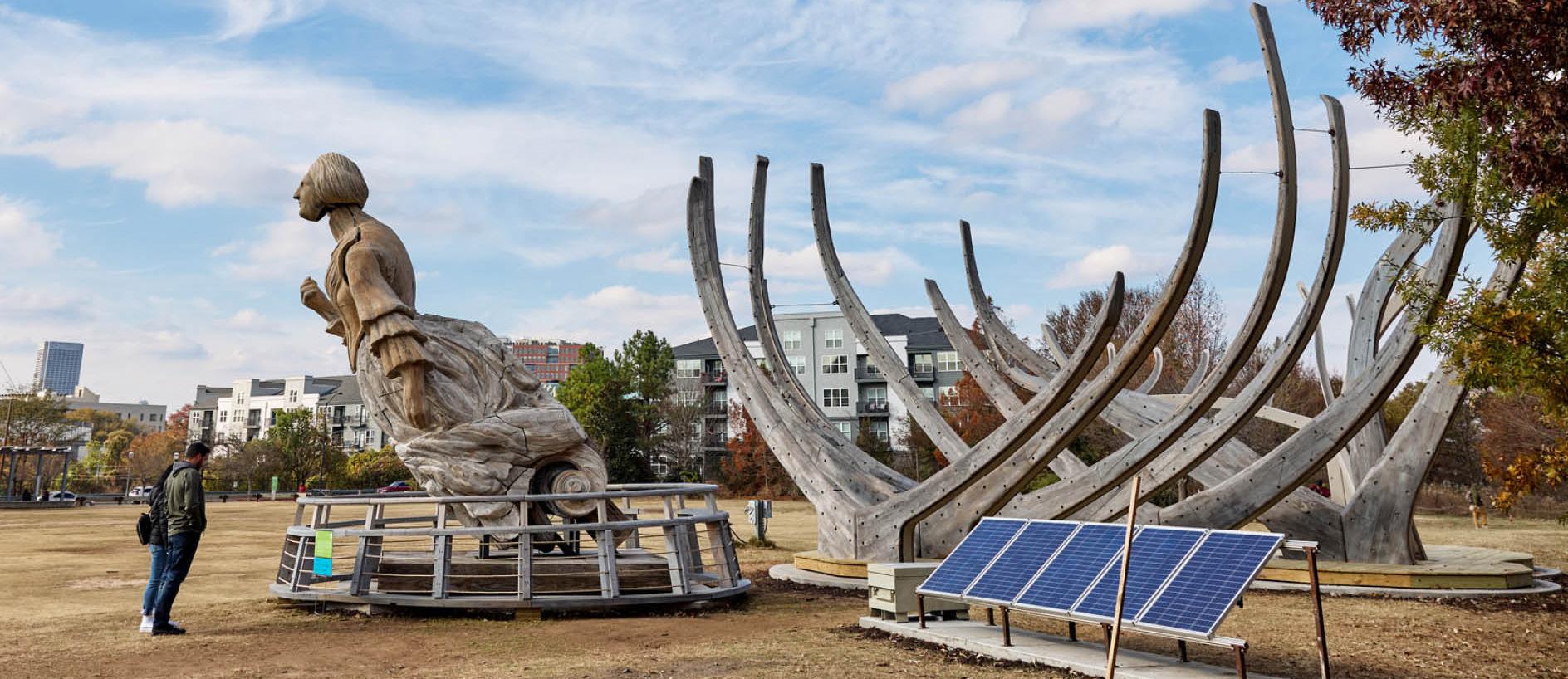
Kinetic sculptures along waterfronts could respond to the wind and tide, mimicking marsh grasses swaying or the movement of fish. Translucent panels could feature etchings of native flora and fauna, or illustrations of historical maps showing the river's changing course. Subtle lighting at night could simulate the moonlight on the water, linking the natural rhythm to timeless beauty.
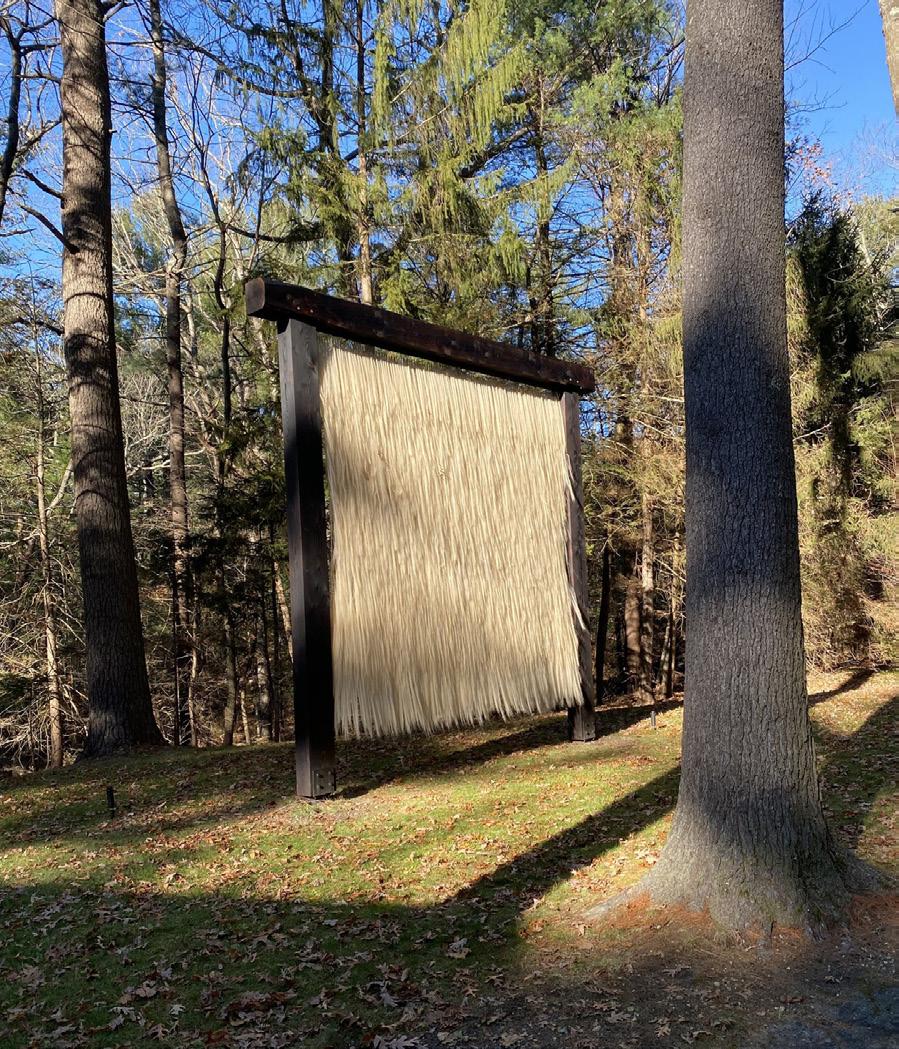
Plein Air Painting Day
Mel Chin, Wake (2023), Atlanta, GA
Nancy Winship Milliken, Pasture Song II (2021)
Walking Trails
Trail and Path Projects
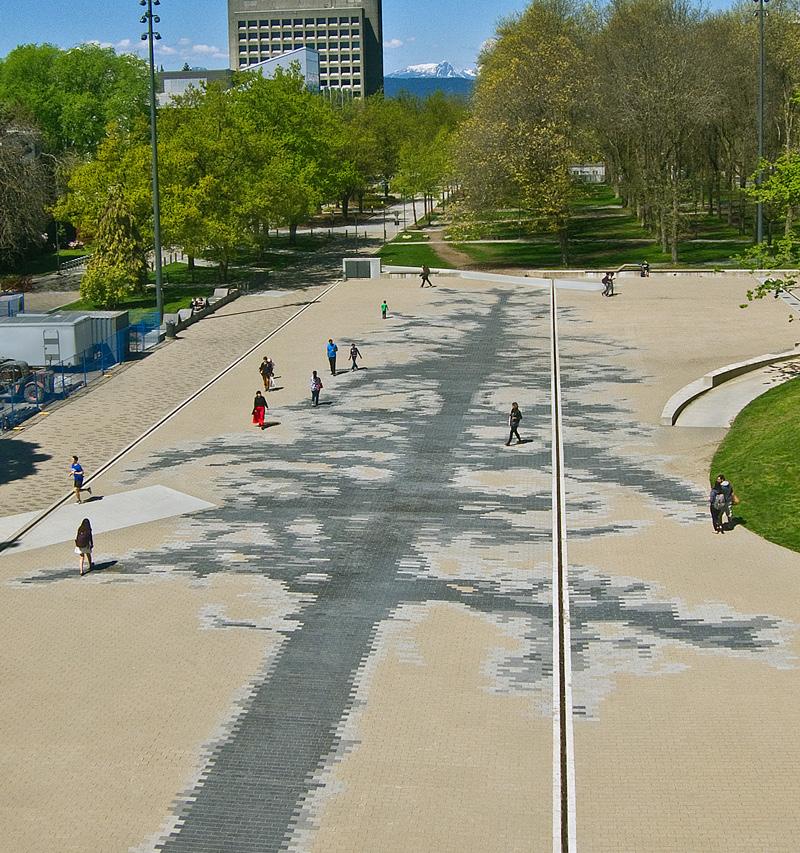
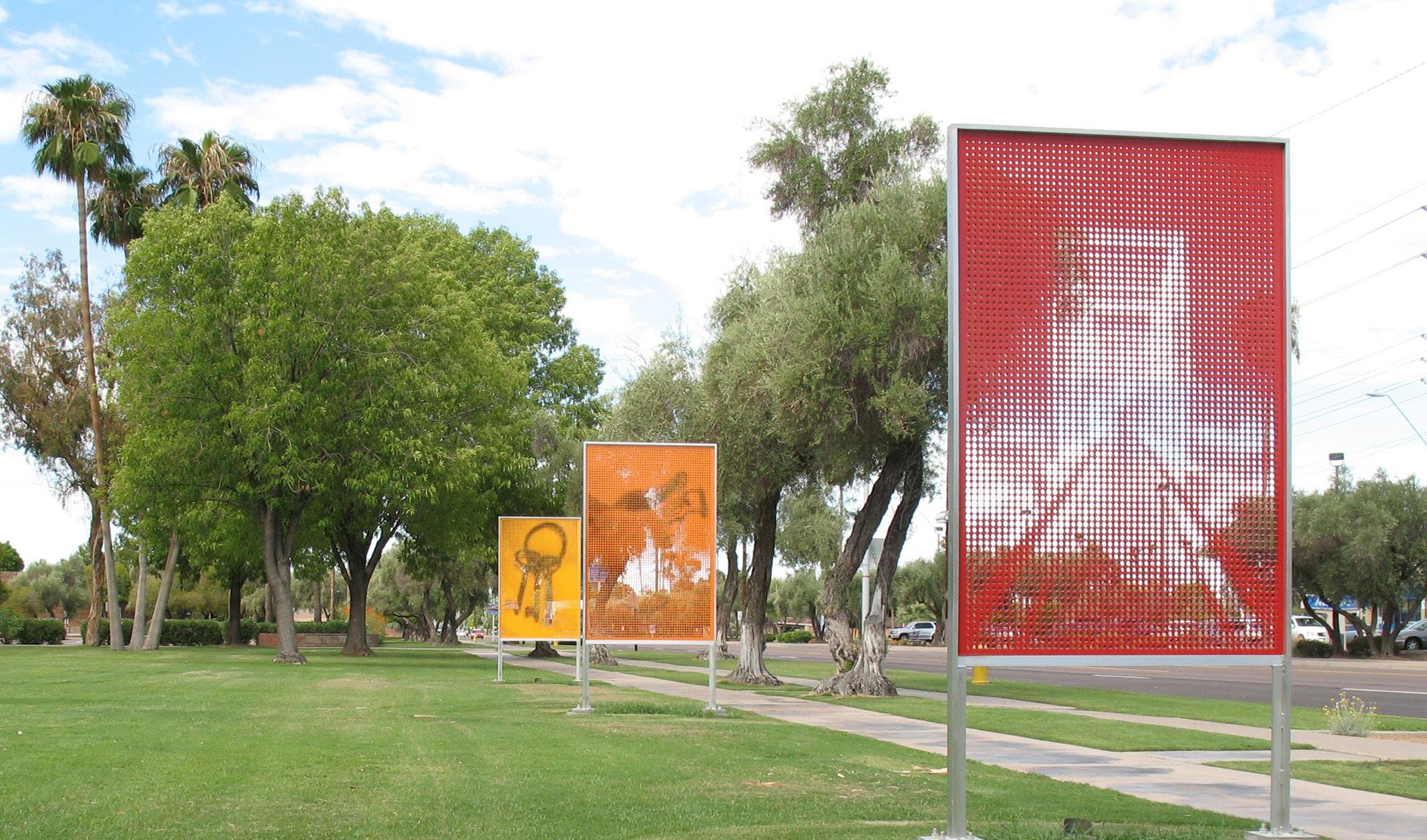
Art that is integrated into infrastructure can take many forms including sandblasted or inlaid concrete sidewalks, mosaic walls, and artist-designed architectural features. These larger-scale permanent investments can elevate walkability, visual interest, and communicate the character of the community. These eye-catching, unique projects are also an exciting catalyst for economic development and tourism.
Urban Rock Design, Looking Through the (2009), Tempe, AZ
Esther Shalev-Gerz, The Shadow, 2018 (University of British Columbia, Vancouver, Canada)
Community Quilts
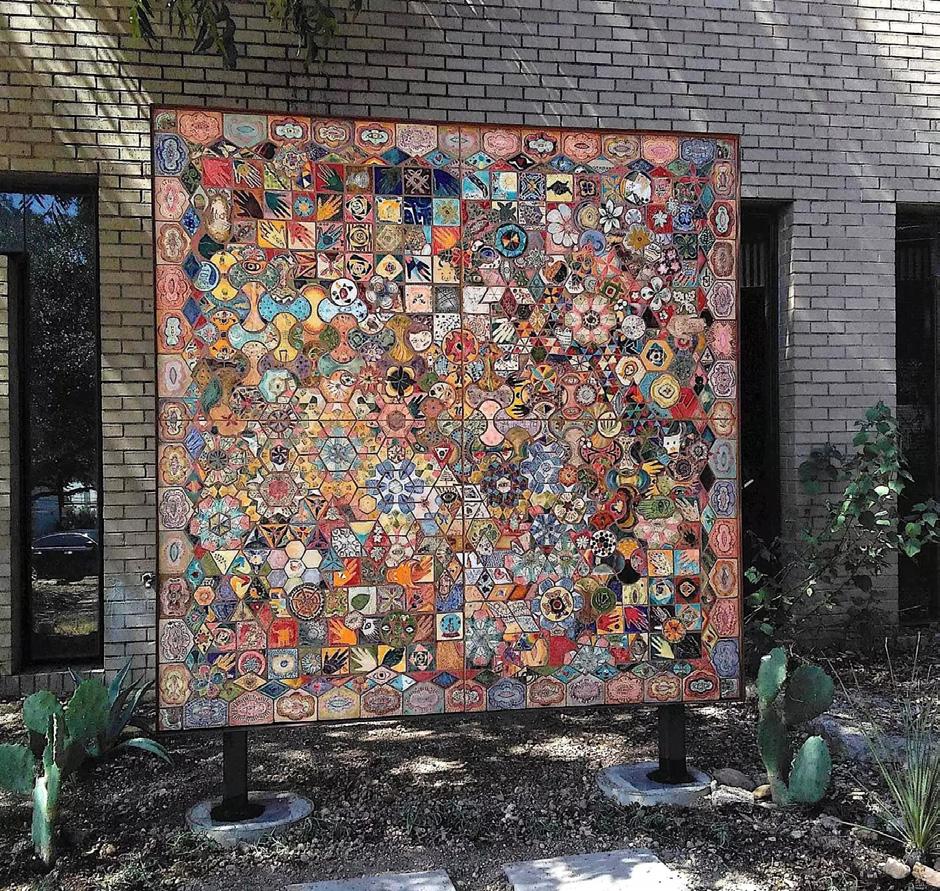
A series of neighborhood-specific quilts could be featured along highly visible trail points. Created through community workshops, each "patch" or panel of these "quilts" would represent a family story, a local tradition, a significant community event, or a personal aspiration. Residents could contribute drawings, photographs, or written memories to be translated into the artwork.
Sidewalk Interventions
To enhance pedestrian experiences along non-primary streets and sidewalks, temporary sidewalk interventions could be implemented through chalk or rain-activated artwork materials. This medium offers an ideal opportunity for local artists to contribute to the area’s vibrancy and highlight local ecology, plant life, and natural characteristics.
Sculpture Trail
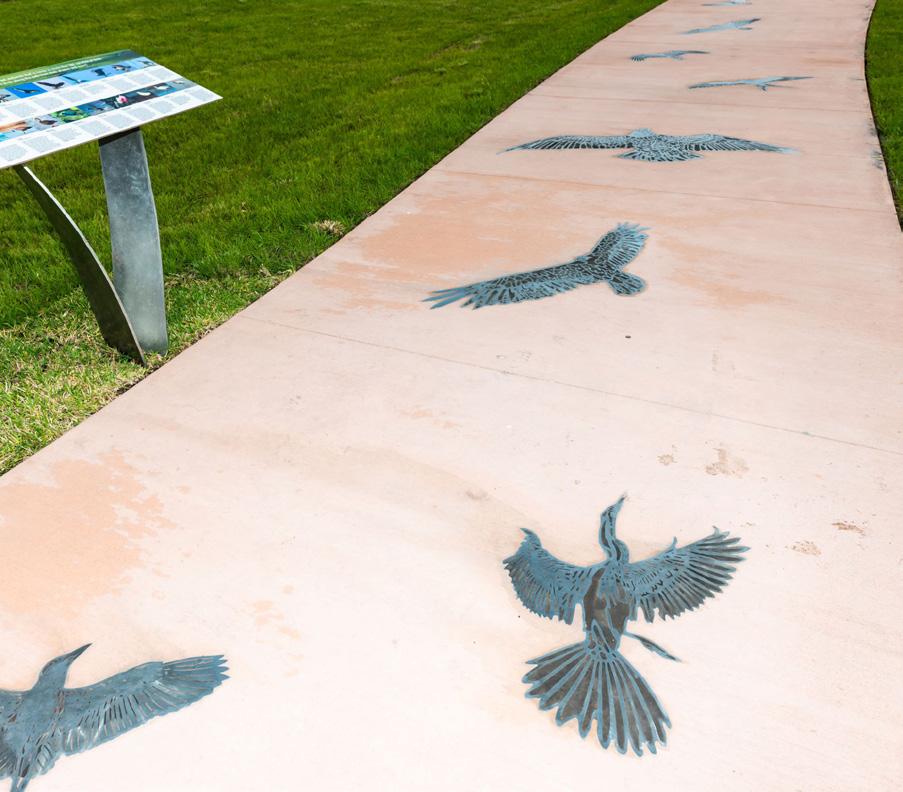
Strategically placed art along trails can transform pedestrian routes and park spaces into captivating, continuous experiences. This approach not only enhances the journey for walkers and bikers but also helps drive recreation, boosts public interest in local parks, and supports community wellness. This strategy could be implemented into many City-supported parks projects around Savannah, especially the Tide to Town trail initiative.
Ryah Christensen, The Community Quilt (2019), Austin, TX
Reed Madden Designs, Flight Path (2025) Broward County, Florida
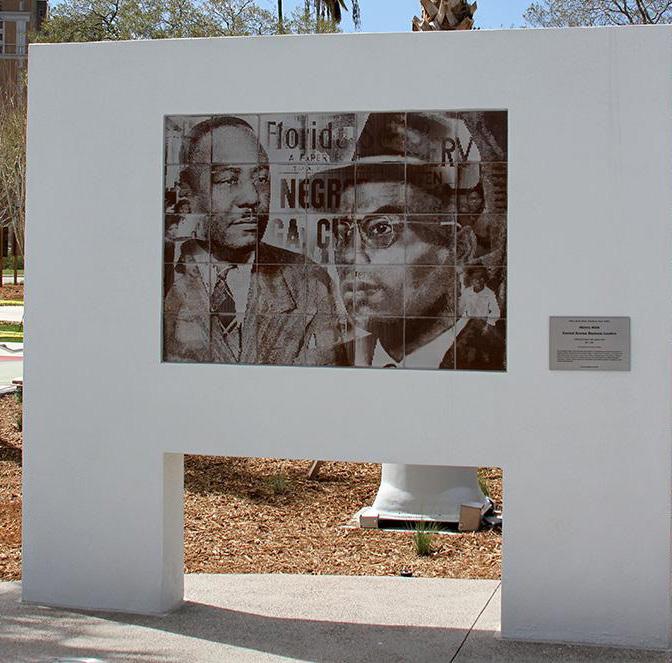
Rufus Butler Seder, History Walk LIFETILES, Tampa
Community Recreation Centers and Human Services Centers
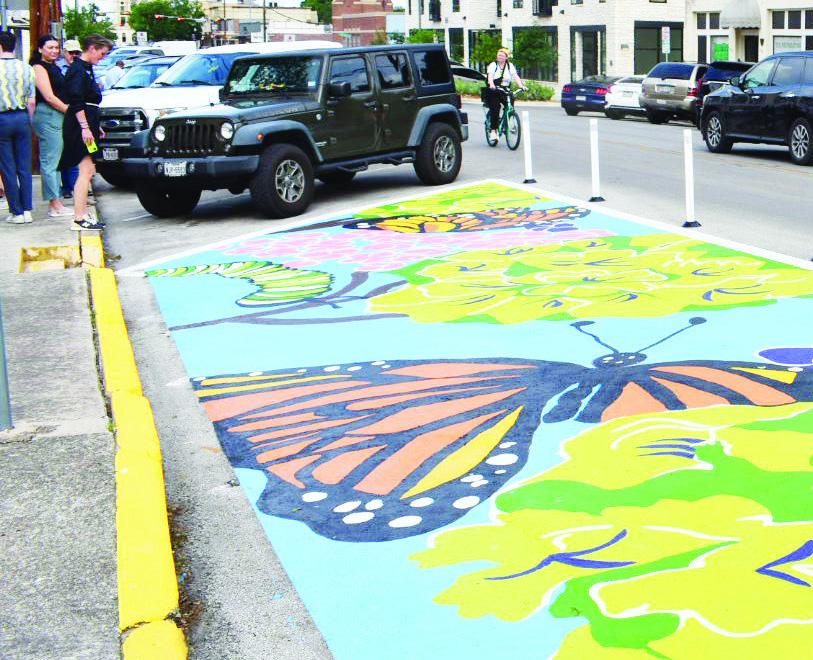
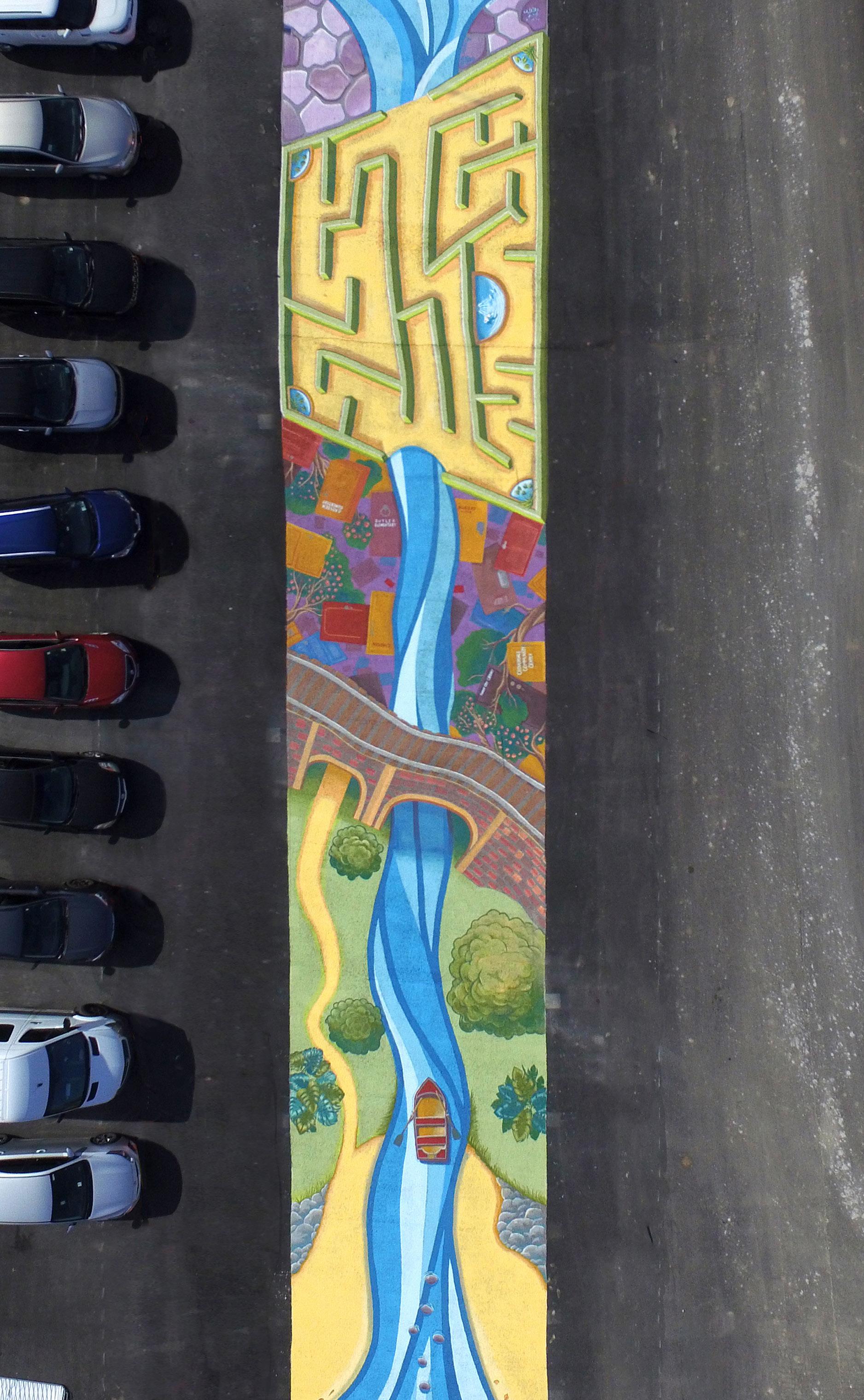
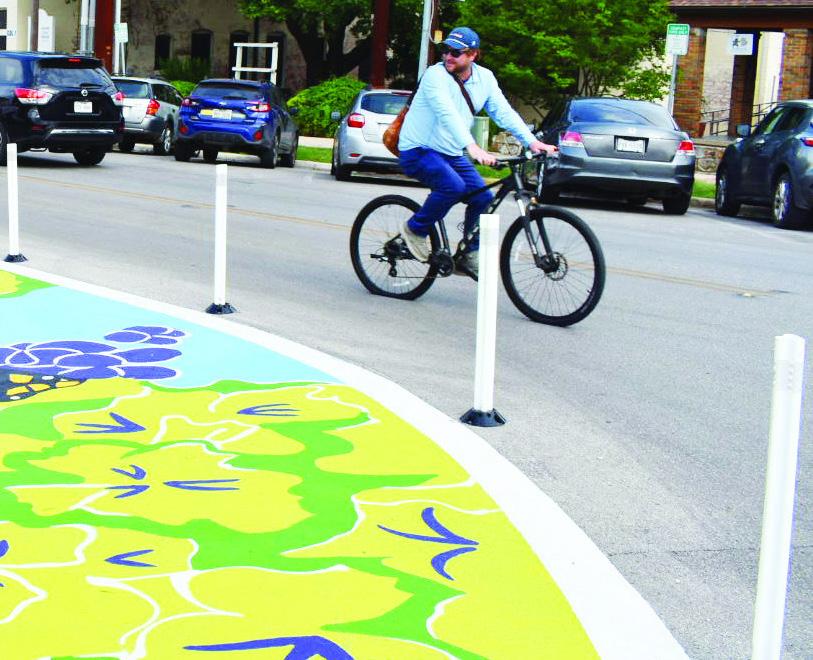
Ground Murals
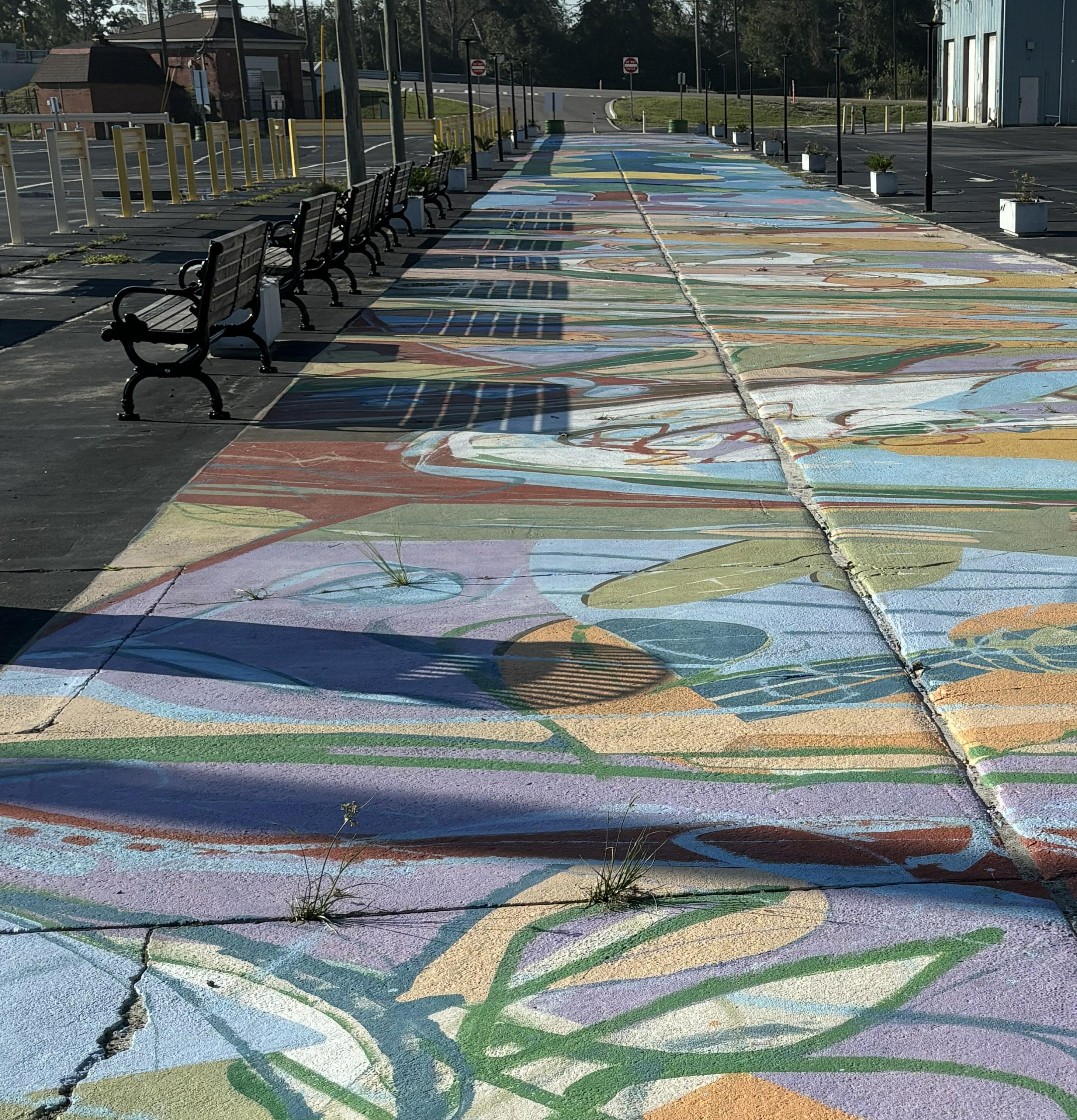
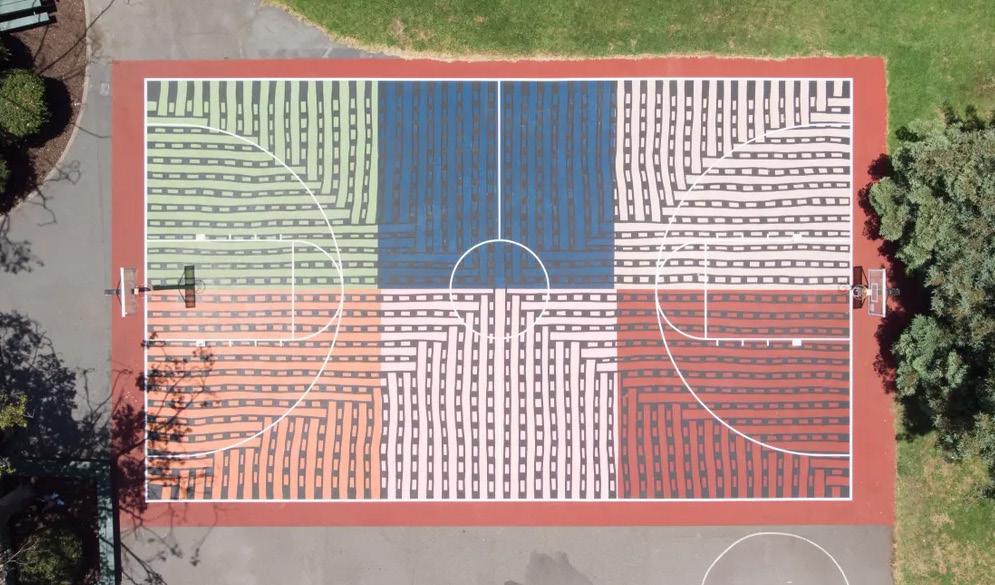
Placing murals on unconventional surfaces like basketball courts, crosswalks, curb bump-outs, and roundabouts can transform public spaces and neighborhoods through vibrant public art. Savannah has implemented ground mural projects in recent years, and should continue this intervention in order to enliven the urban landscape and enhance safety for both pedestrians and drivers. To ensure the longevity of these projects on concrete or asphalt, thermoplastic or traffic-grade paints should be used. For murals on walls and other vertical surfaces, an anti-graffiti coating with UV protection will prevent vandalism and protect against sun damage.
Alicia McCarthy, FM Smith Park, Oakland, CA (2019)
Michelle Wilson, San Marcos, TX
Window Activations
Activating windows in City-owned buildings transform an ordinary window into a dynamic canvas, inviting pedestrians to pause and engage. Utilizing the window as a frame, a temporary artwork in any medium creates a captivating visual experience that changes with the light, time of day, and viewer's perspective. It offers a unique and accessible display, blurring the lines between indoor and outdoor spaces and bringing an unexpected moment of beauty and contemplation to the streetscape. This project idea could be explored with private property owners through execution of appropriate easements and agreements.
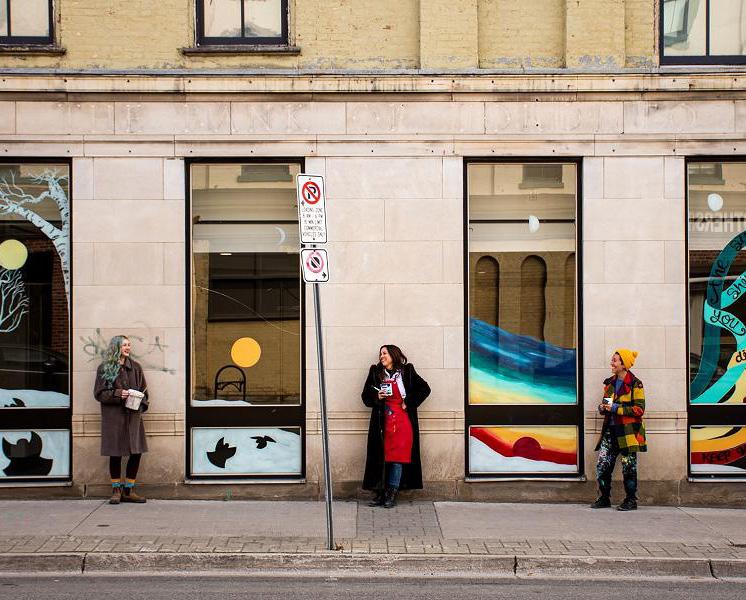
Peterborough, Canada window activations
Sites for Rotating Sculpture
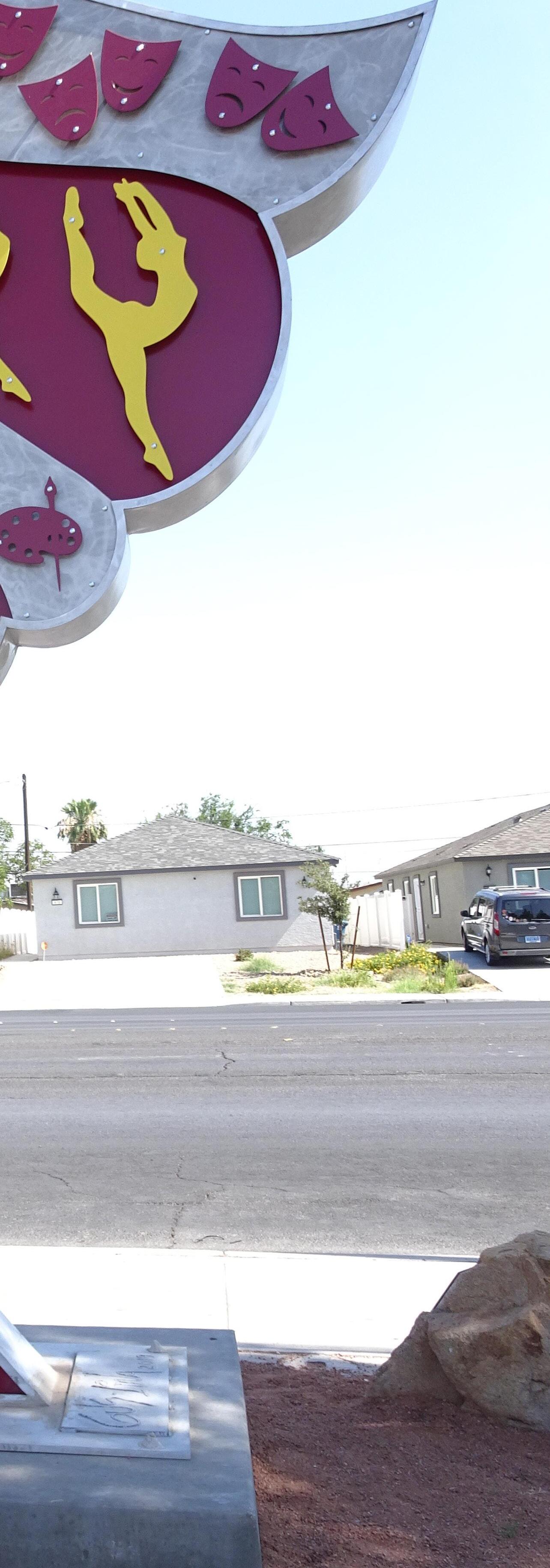
Rotating sculpture sites offer surprising and fresh opportunities for neighborhoods to outwardly convey identity, values, and community stories. Following a one-time investment of placing concrete pads on public sites, Savannah can establish a rotating temporary sculpture program. Existing artworks (non-commissioned) would be borrowed by the City for 18-24 months, and lending artists would be provided a fixed honorarium for the duration of the loan. In some years of the program such as 2033, Savannah’s tercentenary, the rotating sculpture sites could be united by a common theme, approach, material, or story.
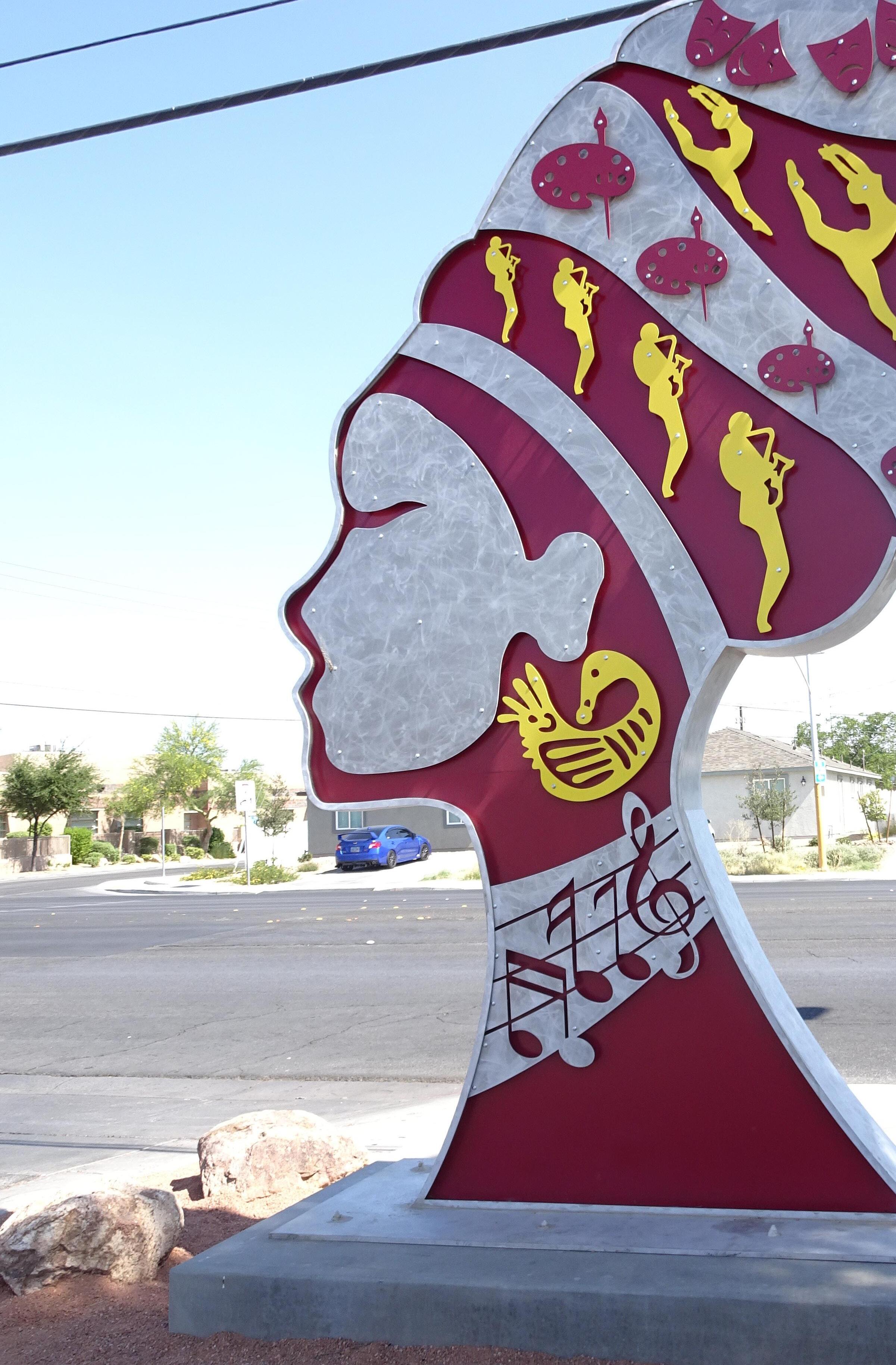
Gus Ocamposilva, Queen of the Arts (2019), Las Vegas, NV
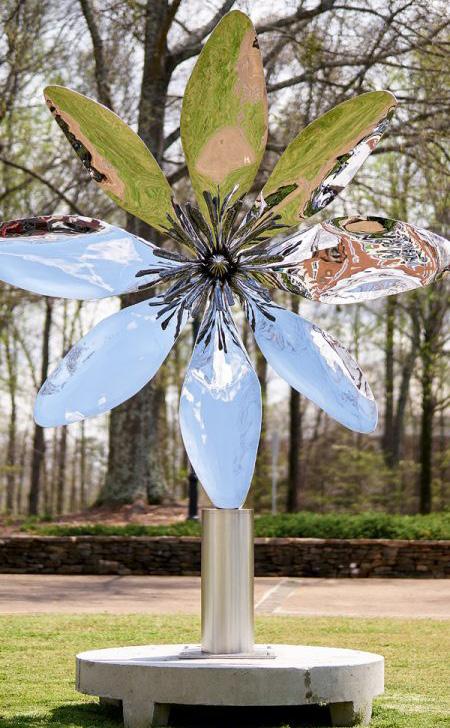
David Landis, Sentinence
“Savannah
has so much potential to be as engaging as other cities, and to create a better environment through public art. There is a lot of diversity here, and public art can help celebrate it and connect people to one another and the land. Public art is vital to the soul of a city."
SURVEY RESPONDENT
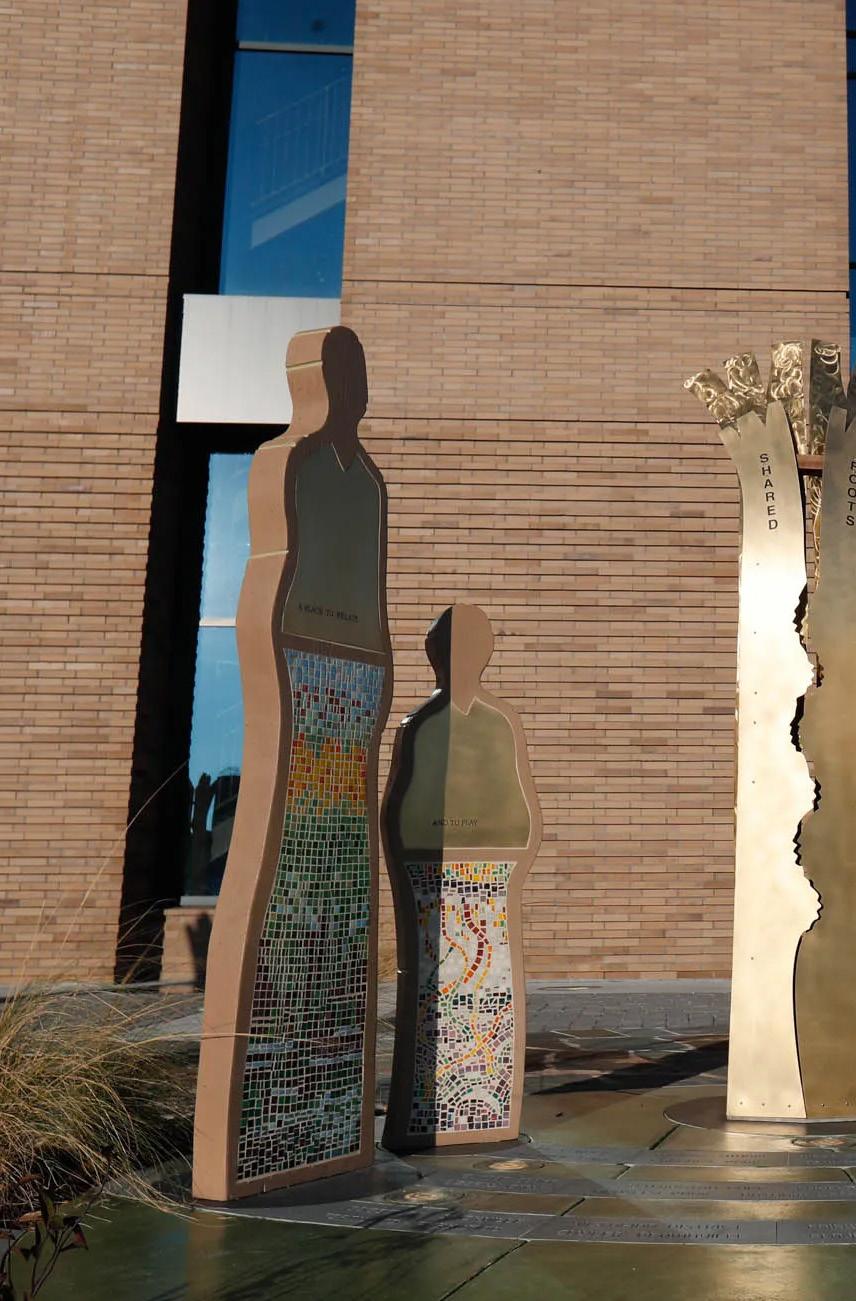
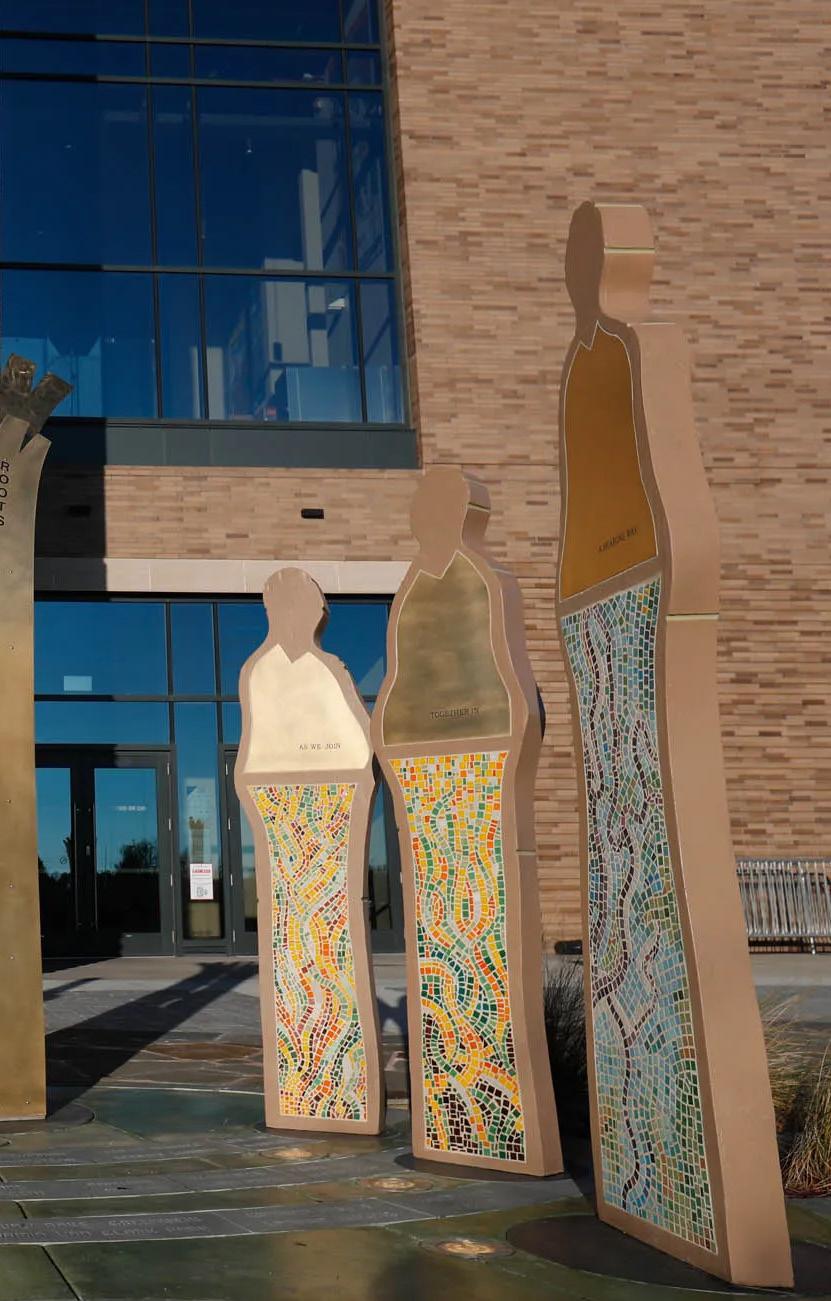
Jerome Meadows, Of Communities And The Land And The Trees That Bear Witness To Them
SECTION 05
Policy and Process Recommendations
Section 5 provides an administrative guide to successfully launch and implement the public art program. It begins with an overview of how Savannah’s elected officials, City staff, and community members support the public art process, and concludes with a three-year strategy for program development.
Roles and Responsibilities in the Public Art Process
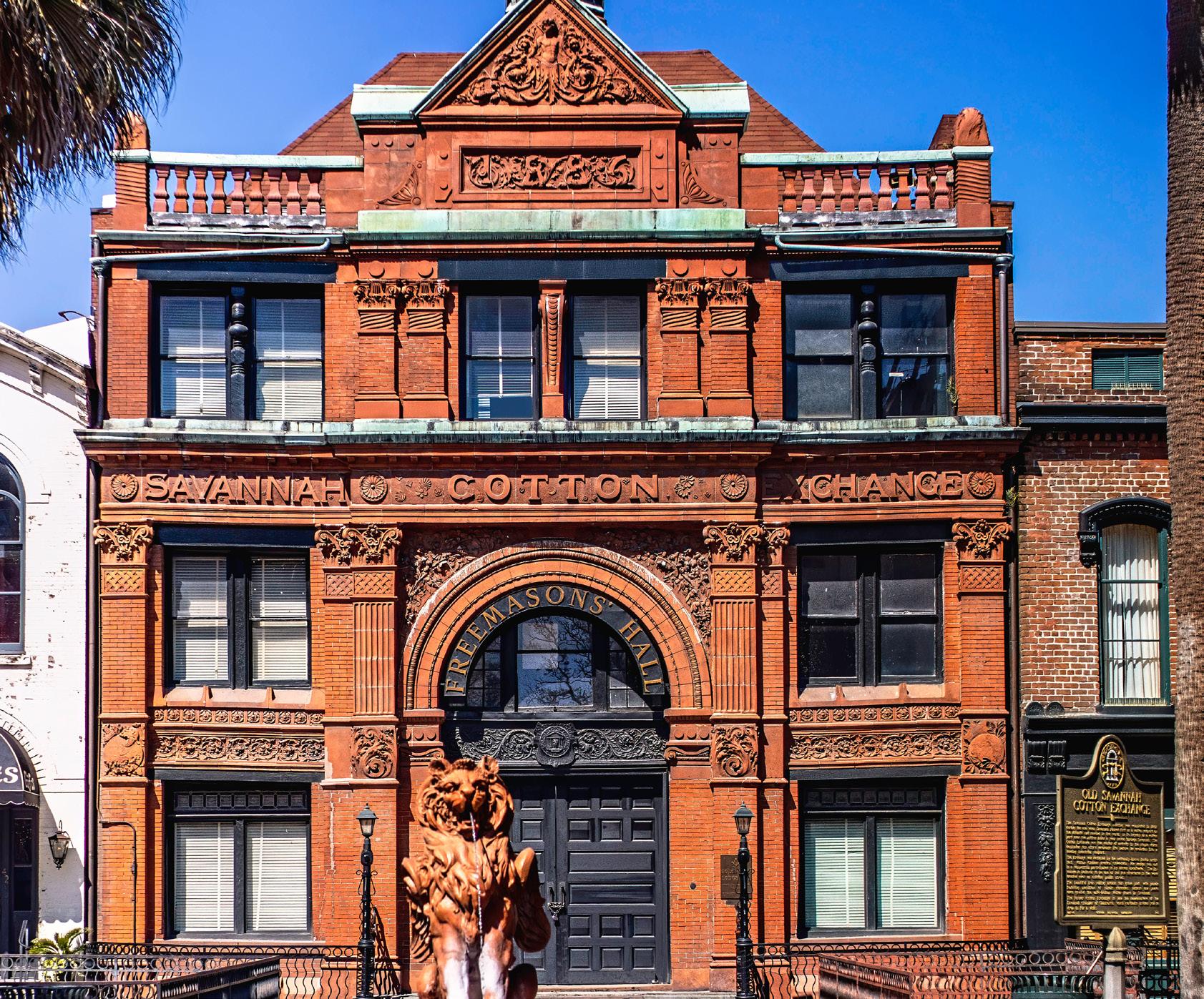
Public Art Committee of the Cultural Affairs Commission
The Public Art Committee, created from the existing Cultural Affairs Commission, advises on matters pertaining to the City of Savannah’s Public Art Collection and related programming, wherein the City is funding the creation or acquisition of new artwork in public space, as defined in the City’s Public Art Policy. The Public Art Committee serves as a recommending body to the City staff and to City Council.
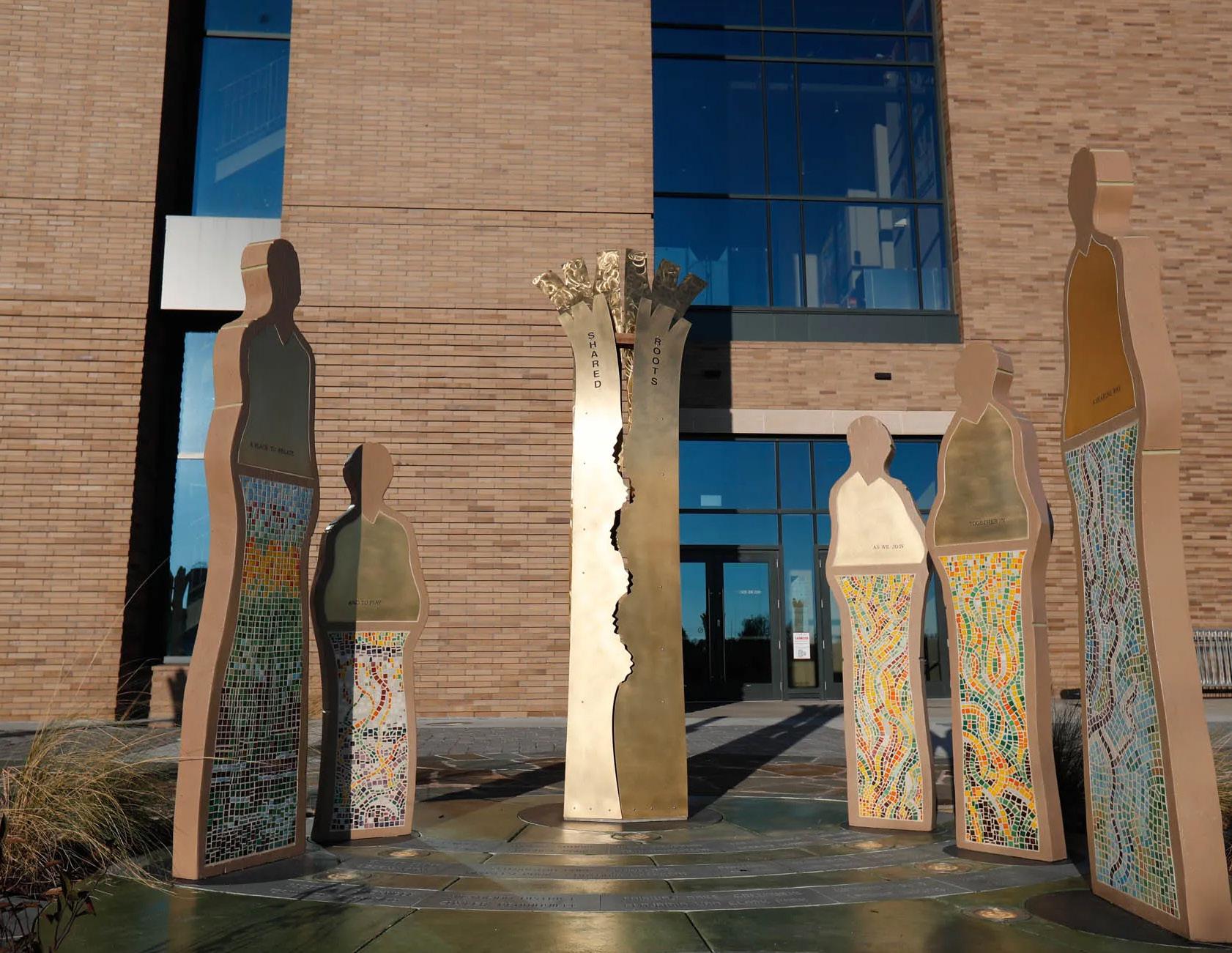
HSMC Review of Public Art
Currently, Savannah’s Historic Sites and Monuments Commission (HSMC) reviews all public art proposed in the City of Savannah. These duties were established by The Markers, Monument and Public Art Master Plan and Guidelines for the City of Savannah. This document, the Savannah Public Art Master Plan, recommends that a newly created Savannah Public Art Committee advise and assist the City in its implementation of policies, and processes pertaining to any public art funded by the City of Savannah and/or public art that will be sited on City-owned land. HSMC, HDBR, and/or HPC should continue to review public art that is privately funded and proposed for placement on private property. These groups should also be consulted if public art that is publicly funded is proposed for placement in the Landmark Historic District or any of Savannah’s local historic districts.
City Offices and Departments
Public art will connect many City offices and departments through the routine administration of public art processes. Specific departments will intersect with these processes in the following ways, but their roles could expand as needed:
Department of Cultural Resources
Cultural Resources will serve as the lead agency for guiding a project’s overall direction, shaping the goals of the project, and involving the community as needed. This office will also facilitate the Public Art Plan and the City’s Public Art Policies, as adopted by City Council. The City Manager and Chief Community Services Officer will determine appropriate staffing structure to oversee citywide public art activities and manage the Public Art Programs.
Department of Park and Tree
For artwork sited in parks or community facilities, Park and Tree will be a valuable partner. Park and Tree may also support routine maintenance of public art in the City’s collection. Park and Tree’s maintenance fund will house public art maintenance funds, which shall be transferred from the Public Art Fund at the discretion of the City of Savannah.
Department of Planning and Urban Design
Planning and Urban Design will be an instrumental part of processes pertaining to artwork site selection, zoning, installation, and any required permitting for privately funded public art on private property (as appropriate). Planning and Urban Design may also advise proposals for artwork donations for matters pertaining to artwork siting and placement.
Department of Capital Projects Management
Similarly to the Department of Planning and Urban Design, Capital Projects Management may similarly support processes pertaining to artwork site selection and installation. Capital Projects Management may also be responsible for collaborating with the Department of Cultural Resources to determine if a capital project necessitates allocations for a public art component.
Other Agencies
As public art projects evolve, other agencies and departments may be necessary partners for processing payments, procuring services, providing legal counsel, or supporting decision making.
Savannah Boards and Commissions Partner Organizations
The Public Art Committee may seek approval, review, or input, as appropriate, from other Savannah Boards and Commission, including but not limited to:
• Savannah Historic Design Board of Review (HDBR)
• Historic Preservation Commission (HPC)
• Savannah-Chatham County Historic Site and Monument Commission (HSMC)
• Savannah Cultural Affairs Commission (CAC)
Partner organizations in Savannah, including Savannah’s neighborhood associations, historic preservation organizations and societies, tourism bureaus, community improvement districts (including Savannah’s Waterfront CID), and other partners, should actively promote the public art activities and the collection. Other local and regional partners who may have existing intergovernmental agreements with the City should collaborate as is appropriate to identify and implement opportunities for public art placement and display.
Establishing the Public Art Program
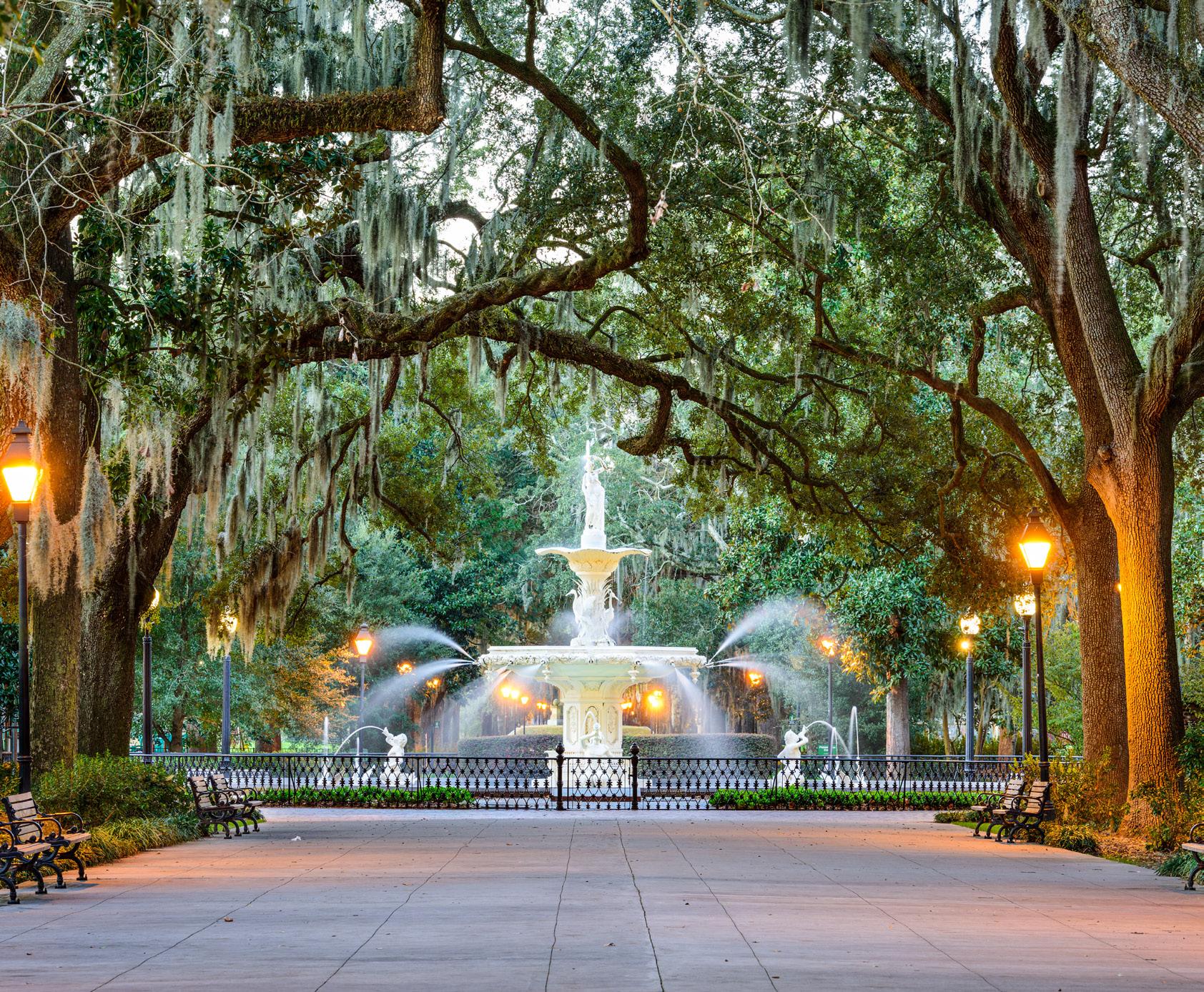
The following steps are recommended to launch the public art program with sound policies and clear priorities:
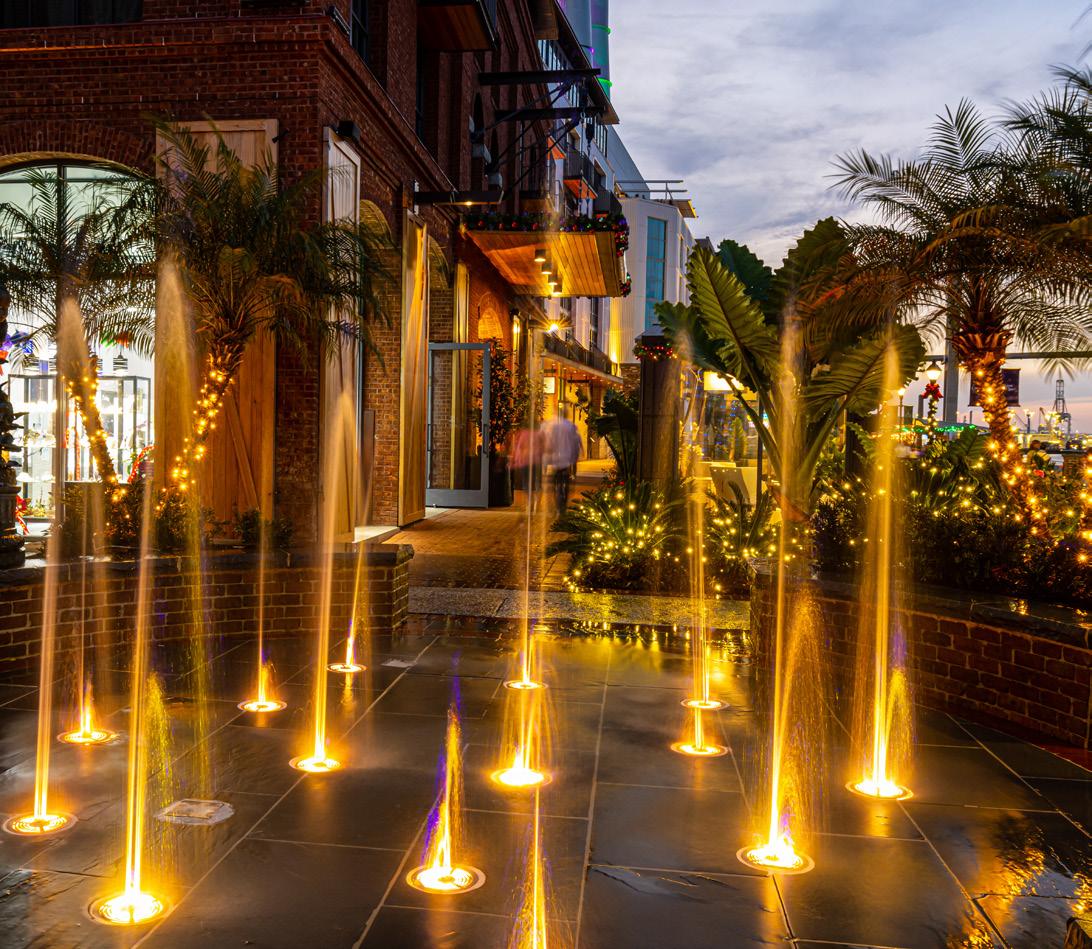
01 / Establish a Public Art Committee
within the Cultural Affairs Commission
The Savannah Public Art Committee advises on matters pertaining to the City of Savannah’s Public Art Collection and related programming. The Public Art Committee serves as a recommending body to city staff and Council. Designated City staff will oversee the Public Art Committee, organize meetings, and prepare agenda items for review. The Commission’s general responsibilities include:
• Support City Staff as they execute the vision, projects, and processes created by the Savannah Public Art Master Plan.
• Promote the City’s public art to residents and visitors.
• Propose public art projects for the City to consider.
• Recommend sites for public art projects.
• Review and make recommendations on Citycommissioned or purchased artwork, donations, or loan submissions.
• Review and make recommendations for relocation or removal of artworks in the City’s public art collection, excluding monuments, historic markers, and privately-funded public art on private property.
• Provide input on public art policies and procedures.
• Support City staff’s development of an annual Public Art Work Plan that outlines what projects will be initiated in the coming fiscal year.
The Committee will consist of at least six (6) members. Every Aldermanic district must be represented by at least one member, which may be members of the City Council appointed Cultural Affairs Commission. The following qualifications should be considered when appointing the members of the Committee.
The following qualifications should be considered when appointing the members of the Committee.
1. One or more artists;
2. One or more arts professionals;
3. One or more members of local arts organizations;
4. One or more community member(s) with an interest in the arts; and
5. One design professional.
While serving on the Public Art Committee, no member may participate in a discussion, decision, or recommendation on any matter affecting a person, entity, or property in which that member has a financial interest, including situations where the member is reasonably likely to receive a direct or indirect economic effect or consequence. Any member with a conflict of interest relating to any public art proposals, submissions, or inquiries will declare such a conflict and recuse themselves from any discussion on the subject including discussions outside of scheduled meetings. Any member serving on the Committee is ineligible for a public art project by the City of Savannah during their membership and for an entire year following the termination of their service.
02 / Appoint the Cultural Resources Director or their designee to Administer the Public Art Program
The City Manager will determine appropriate staffing structure and assign staff to oversee citywide public art activities and manage the Public Art Program. This staff will collaborate with various City departments to ensure the processes outlined in the Public Art policy are carried out efficiently and appropriately. Responsibilities encompass various aspects of public art processes, including planning, collaboration, artist selection, project management, and art acquisition.
Additional staff resources or outside consultants may be required to assist in implementing projects, particularly those of a larger scale. Responsibilities shall include, but are not limited to:
• Work with various departments to develop potential projects for inclusion in the Public Art Program Update.
• Liaise and collaborate with the Metropolitan Planning Commission and their respective boards and commissions, as needed.
• Coordinate with other city planning efforts.
• Present the Public Art Program Update as part of the City’s regular budget process to the City Council.
• Coordinate and manage the Public Art Committee and its monthly meetings.
• Coordinate with the Public Art Committee to ascertain advice on any matter pertaining to public art, including, but not limited to:
1. preparing and presenting the Public Art Program Update to the Public Art Committee and City Council;
2. artist selection juries and process;
3. purchase of artworks;
4. commission and placement of artworks; and
5. public art programming.
• Coordinate the hiring of an outside consultant or agency to administer public art projects as needed.
• Ensure various City departments are following the City’s Public Art policy.
• Develop and maintain an inventory and documentation of the City’s collection of public art.
• Coordinate with the City’s graffiti code enforcement officer.
• Assist with periodically surveying public art to determine if works require maintenance or other attention.
• Assist with periodically surveying public art to determine if works require maintenance or other attention.
03 / Develop a Public Art Policy
In order to establish a successful public art program, the City of Savannah should develop a public art program policy. In addition, the City should adopt guidelines for murals.
The Public Art Policy and guidelines will do the following:
• Establish a definition for public art;
• Develop processes for public art to be acquired or commissioned; and
• outline the procedures for public art collections management and mural guidelines
These procedures are integral to the success of the Savannah Public Art Program. Each ensures the City is following consistent procurement practices, maintaining its collections through long-term planning and maintenance, governing the program with strong public trust, and providing clear direction for artists and donors to follow when participating in the program.
Public Art Program Introduction
This policy section establishes the mission, vision, and guiding principles for the program as well as overall definitions for the policy.
Notable newly recommended definitions are as follows:
Public Art, broadly includes sculptures, murals, integrated architectural elements, digital media, and even temporary installations or performances, while excluding things like mass-produced decorations or purely functional elements.
Mural means a singular work of Public Art hand-painted, hand-tiled, or digitally printed (with property owner approval) on a building, structure, fence, or other object within public view. Its primary intent is to be artistic in nature, rather than purely informational, such as creative signage or commercial signage. The work shall not contain text, graphics, or symbols that specifically advertise or promote a business, product, or service, and shall not promote a specific political party or candidate.
Graffiti is defined as “unauthorized writing, drawings, or other markings on public or private property that has been placed without property owner consent or knowledge.”
[Historic] Monument is defined as any permanent or semipermanent object (including statues, fountains, obelisks, planters, etc.) installed specifically to commemorate or memorialize an event, place, or person. A Historic Monument is one that is located within the City of Savannah’s local historic district and is of fifty (50) years of age or older.
Public Art Collection Management
This policy establishes the management practices of artworks acquired through the solicitation and donation processes. These pieces are considered part of the City’s Permanent Collection and must be cared for in accordance with the Policy and Procedure for Maintenance Policy and the Collection Management Policy. The Collection Management Policy is intended to maintain the value of the City’s Permanent Collection and guard against inappropriate disposal of any of its pieces.
Public Art Donation
This policy establishes the donation process for artworks not commissioned by the City of Savannah. Each proposed donation must come with a plan to fund and deliver ongoing maintenance, or the resolution accepting the public art must identify how maintenance of the donated public art will be funded. Donation requirements, responsibilities of the donating party, and the process for donating a piece of public art are outlined in this policy.
Public Art Maintenance
This policy establishes the procedure for maintenance of the future art collection. Direction for surveying the collection, working with future artists to establish a maintenance plan for any commissioned work, and inspection guidelines are included.
Public Art Acquisition
This policy establishes approaches to public art acquisition for both commissioned and existing artworks. The method for selecting artwork for acquisition may vary in response to project budget, scope, and timeline.
Mural Guidelines
The Mural Guidelines offer guidelines for both publiclyowned murals on public and private property and consider the process for approval. The guidelines consider the ownership of the building in which the mural will be sited.
04 / Consider a Public Art Ordinance
To formalize the administration, funding, and framework for the City of Savannah’s public art program, the City may want to consider adopting a Public Art Ordinance, in consultation with City staff and City Council. Public art ordinances help address and define funding mechanisms and formalize definitions, governing procedures, and criteria.
Purpose and Vision
It outlines the goals for public art, such as enhancing the aesthetic environment, promoting cultural understanding, fostering economic development, celebrating local identity and history, and enriching the lives of citizens.
Funding Mechanisms
It considers funding options to support public art and sustain the public art program. The ordinance also may outline the process for ensuring public art projects will be planned each year, in conjunction with appropriate capital projects. The ordinance also may include provisions for public art funds from private development, grants, donations, the general fund, or other sources.
05 / Program Kick Start Funding
In order to jump start the program until permanent funding is secured, a General Fund allocation may be considered annually as part of the City of Savannah budget proposal process.
06 / Develop an inventory of existing public art in Savannah
In order to best assess the ongoing collection management of public art in Savannah, the City should establish a baseline understanding of its existing public art assets. The following steps outline the process to be undertaken.
1. Photograph, document, and inventory public art in the City of Savannah.
2. Collaborate with HSMC and other MPC partners to distinguish the City’s monuments and historic markers collection from its public art collection.
3. Formally accession objects into the City’s public art collection.
07 / Conduct a Collection Assessment to evaluate the maintenance needs and overall condition of objects
Once the Savannah Public Art Collection has been formalized, a collection assessment should be commissioned to evaluate the overall condition of objects, and any maintenance treatments that should be performed by a trained fine art conservator. The collection assessment should identify a rough order of magnitude (ROM) for objects in the collection, based on the quality of their overall condition. A collection assessment should be conducted on a regular basis, as defined by the City’s Public Art Policy.
08 / Appraise the Public Art Collection
Appraisals are conducted on public art collections in order to generate an accurate value for insurance purposes. An accredited artwork appraisal firm should be contracted to perform an appraisal of the City’s collection. This work should not be performed by the firm performing the collection assessment, as it is an ethical conflict of interest.
09 / Implement Permitting Procedures
1. Instead of using the Technical Advisory Committee to review public art proposals, Development Services, in consultation with HSMC, should oversee private public art permit approvals for public safety purposes
2. Capital Projects may oversee public art installations for projects funded with public funds and on public property.
10 / Incentivize Public Art Development
In order to encourage the installation of privately funded murals in the City of Savannah, options the City may consider include a matching grant program, public/private partnerships, or other incentives for privately funded murals on private property. Murals on private property receiving grant dollars would need to be approved under the Public Art Ordinance with review by the Public Art Committee, HDBR or HPC (depending on location), and City staff.
