EIKO OJALA
EIKO OJALA
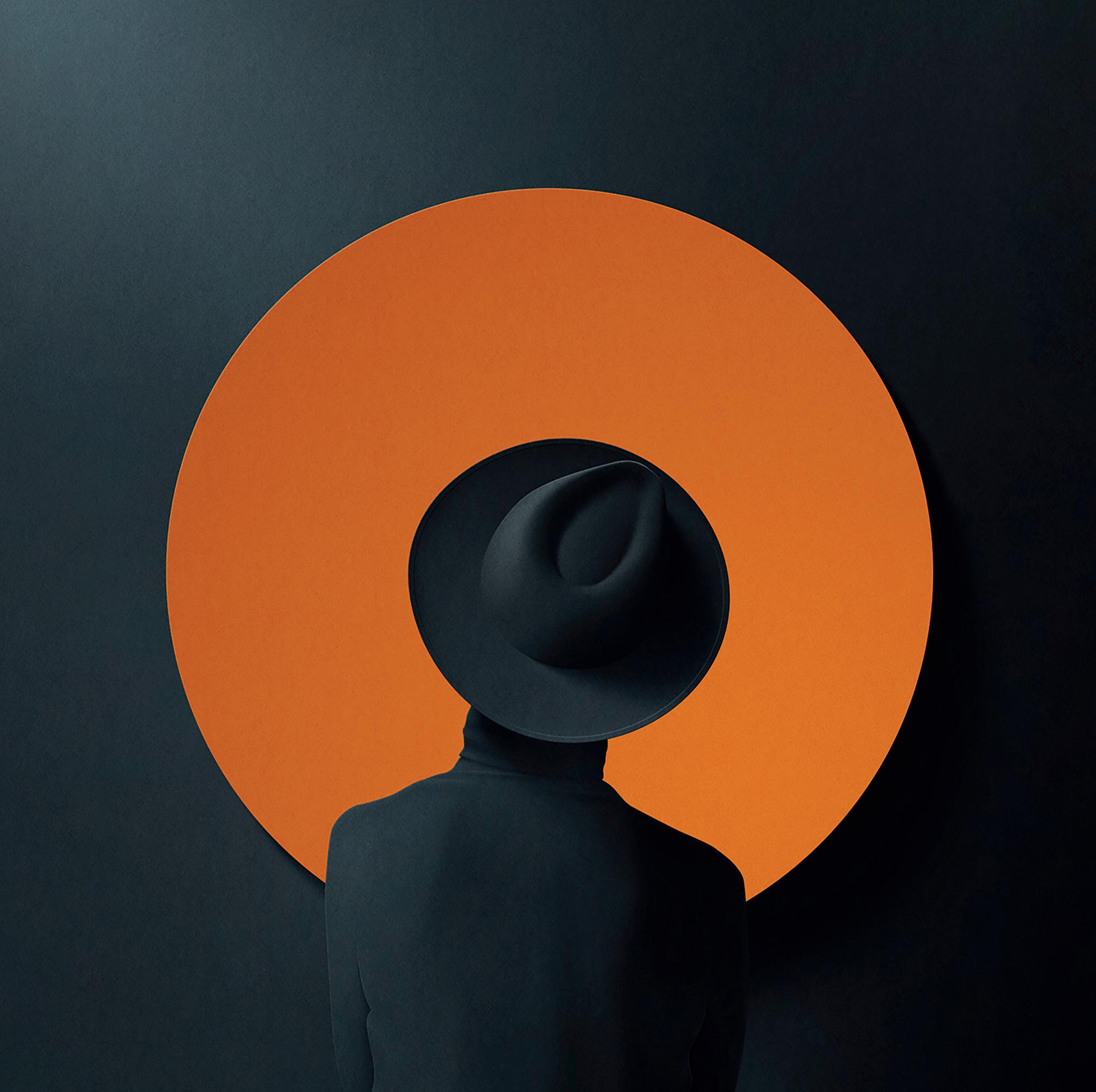
Dreamer (Series : I found my silence)
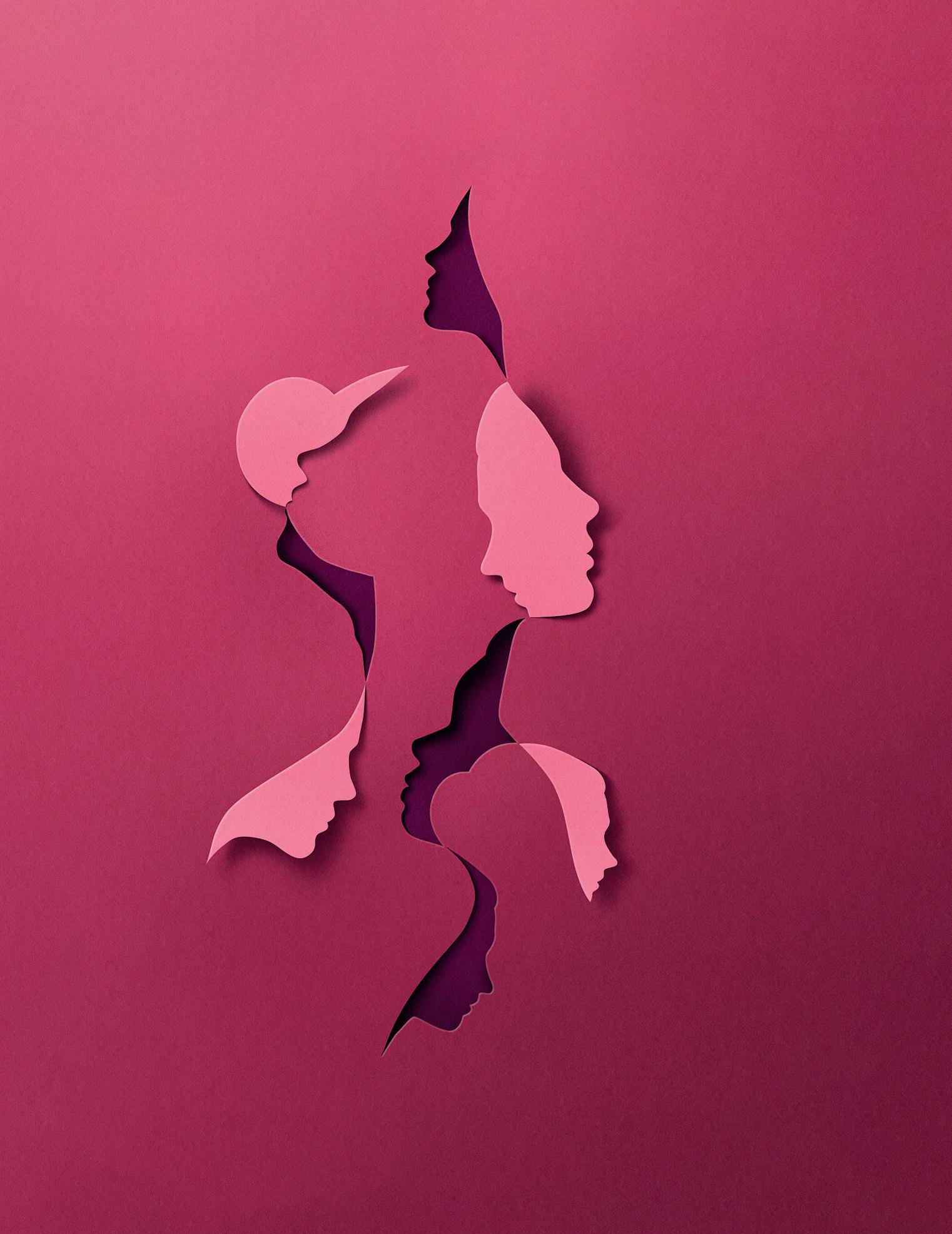
[Back cover] Opinion I ‘We Travel Together’ Inside illustration for The New York Times.
[Cover]
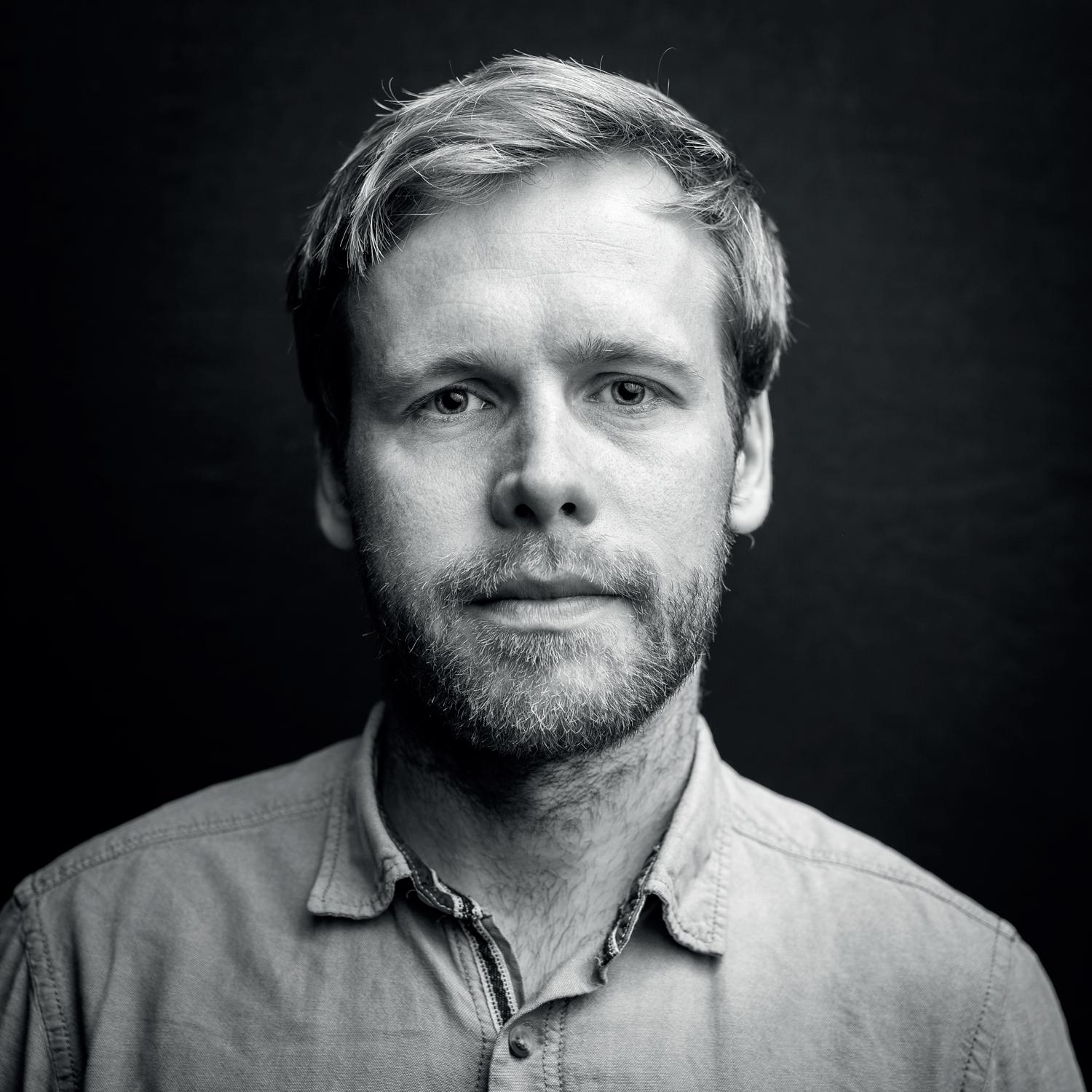
Portrait: Eiko Ojala
SE ARC FOR PERFECT M ETAPHOR
ARCHING FOR THE PERFECT ETAPHOR
What’s keeping you busy at the moment?
I have an agent in France, I’m working with her on some book covers. Jane Austen and some other classical titles, which is nice. And I have to leave for school later.
Are you studying or teaching?
I'm studying at the moment. Humanities and philosophy. It's very interesting. For years I’ve been doing illustrations and visuals but, not so much talking or writing. So it's a nice practice to learn to write as well.
Are you building philosophy into your work?
Going forward, I would like to. At the moment, it's just general history, which is a bit tricky to incorporate into the visual world. But as I progress, I think it will get easier to link those two paths together.
[Photo Left] Book cover for Patricia Sweeney-Bairds
'The End of Men'
Is the goal a kind of philosophical foundation that you can use on your visual work?
I'm not sure if the philosophy supports the visual part, or the visual part will start to support the text and philosophy. We'll see. At the moment, I’m just trying to understand the whole structure.
It's like thinking about a new metaphor. In medieval times, you had this metaphor of ‘going towards the light’, but I think at the moment, the bigger metaphor is a circle.
I’m trying to write or think about this because, when I went to school, I had a lot of projects which were about the environment and climate and I just ran out of metaphors for this quite quickly.
« My main school was the advertising business »
Did you study design or illustration?
I studied interior design years ago. But I started working in advertising quite early, when I was 19 or something. So my main school was the advertising business. There I learned to be precise, to have a message, and to say it quickly and clearly. I think these lessons have translated quite well to my illustration work.
So you developed the ability to work fast, because you had to?
The big question is always the inspiration. I see inspiration as something like a muscle. You train it, so that you are always ready. You don't wait for the inspiration. You don't wait for something to come. You always have ideas in the back of your head. Then, when there's an assignment, you can just take those pieces and put them together and act quite quickly.
I remember working for New York Times years ago. They had this kind of standby illustrator role. You have to be ready at short notice. And when you get the e-mail, you have six hours to make an illustration. Maybe you’ll end up doing three or four illustrations in a week, and then it's over.
I think the best illustrations came from this, from those high pressure weeks. Because you have to be really quick, you put everything you have into the job, then you send it. Just a few days later, you don't even remember thinking about it.
[Photos Left]
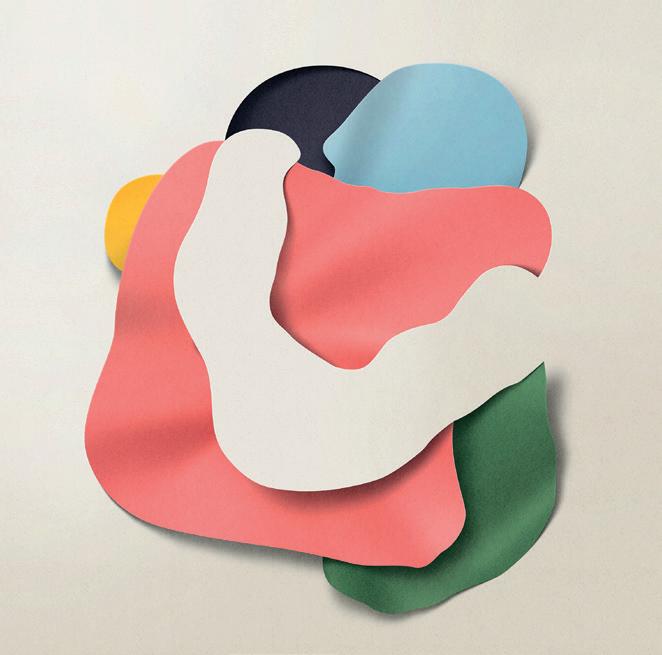
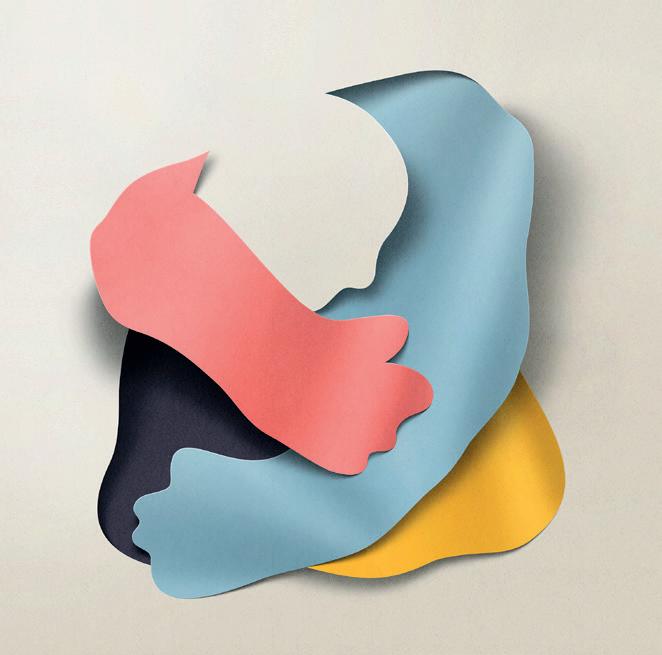
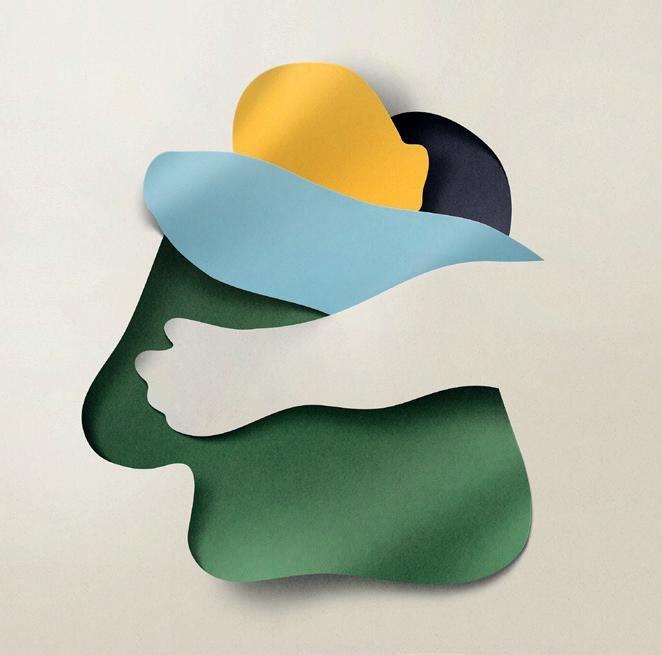
Limited edition of 10 prints 60x60cm from the series “Hugs”. Signed and numbered. They are made support www.peaasi.ee who promotes mental health of Estonian youth.
[Photo Top]
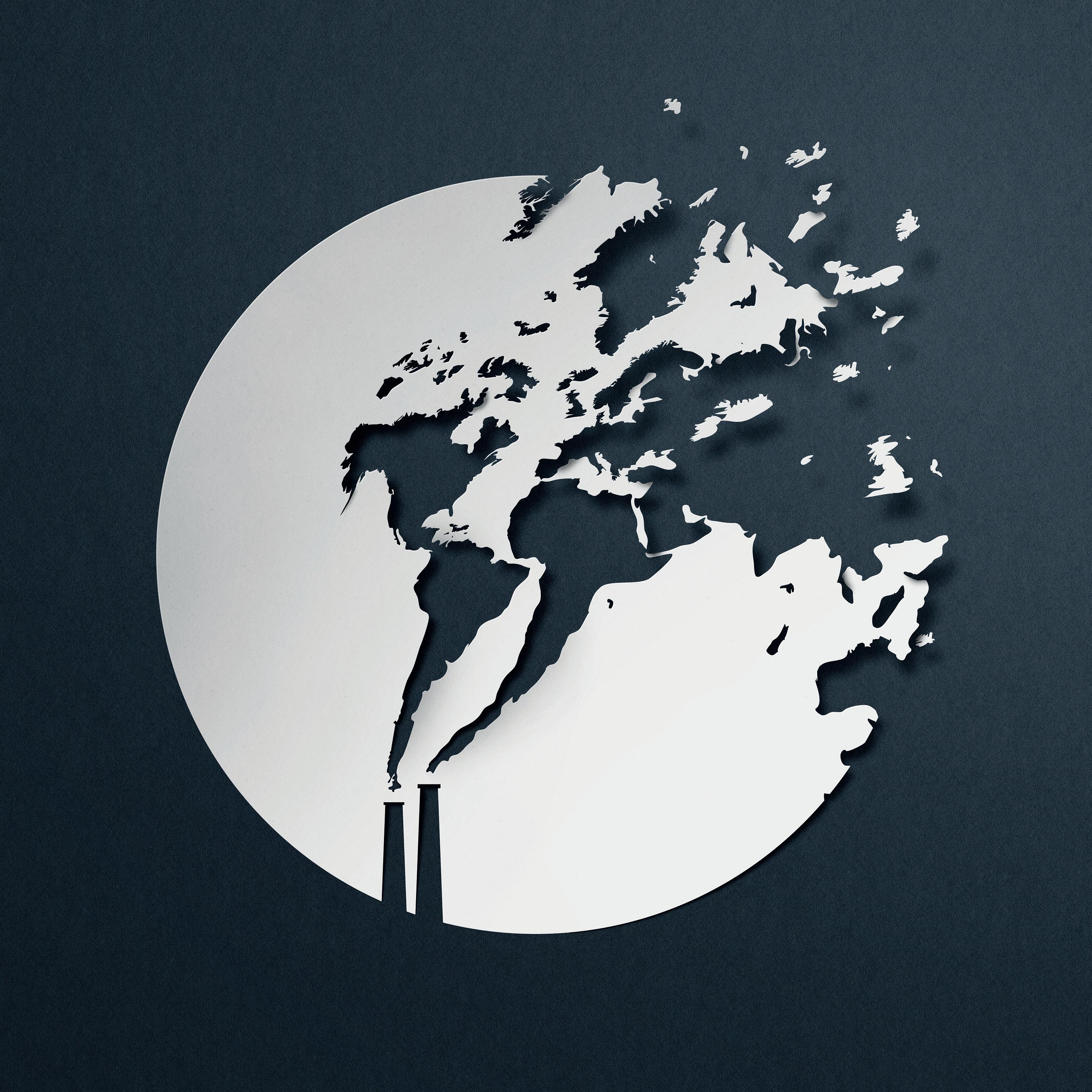
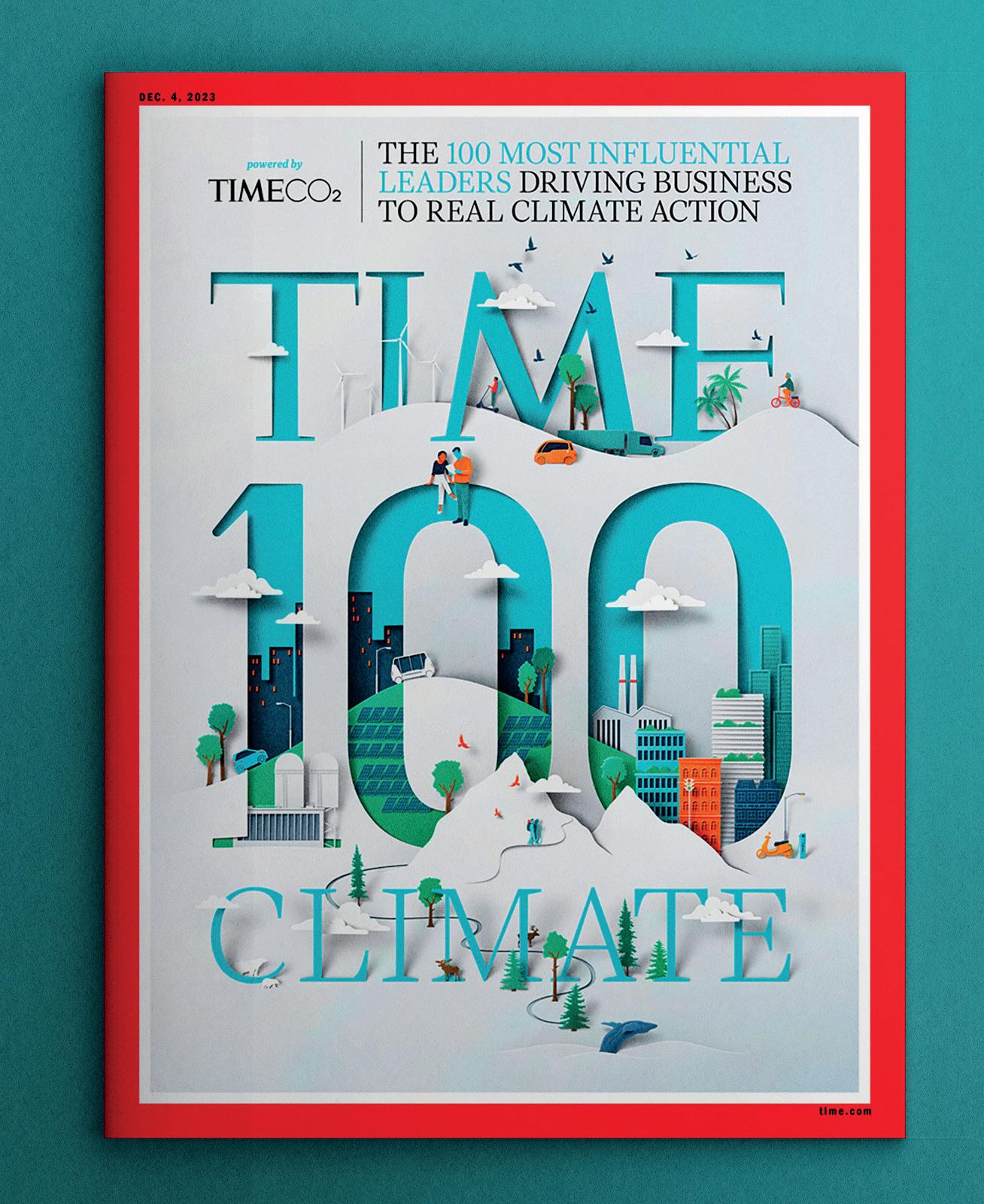
Cover Illustration for TIME100 Climate
Over-thinking is the enemy!
Yes, but at the same time, I always like to have extra time before I send things. For example, I always like to finish my project a day before, or a few days before. Because before I send it, I like to see it with a fresh eye. When you do this, you see it as a stranger would. And maybe you add something or take some ideas away.
I'm not going to start changing the ideas I already have. But, finishing things a few days early just takes the pressure off. It gives me some time to think up some extra concepts, without the pressure.
What was your role in the advertising business?
I was an Art Director for Saatchi & Saatchi in Estonia. I worked for this global brand, but the Estonian branch. That means I did everything. I worked with a copywriter, and I started from the idea, from the sketch, and took projects all the way to the final execution.
We didn’t have designers, junior designers and so on. We had basically an art director or designer who starts and finishes the project.
« For me, it was quite natural not to make decorative illustrations. »
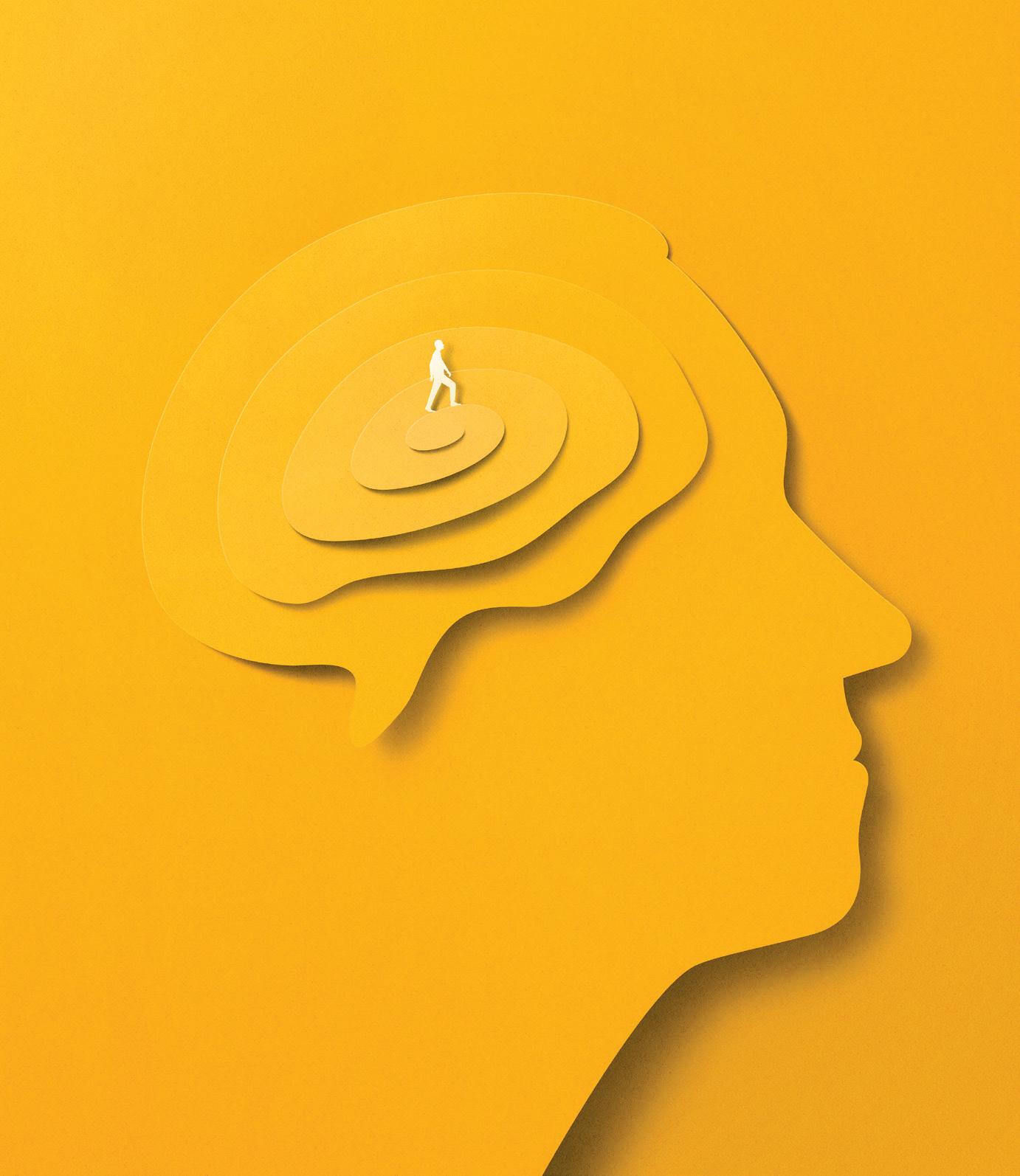
The Hidden Power of the Brain for BBC Science Focus
What made you switch to becoming an independent creative?
I always had some personal projects going on, I always kept some things in my drawer. But the main push was that I quit my job, took a year off from ad work and spent the time in Australia doing simple laboring work. This was a quite popular thing to do at that time.
I just stopped all the creative work and after maybe six months or so, I started to think about new things. And then the new style came quite naturally. I just needed to wipe the slate clean. But when I went back to Estonia, I went back to work as a graphic designer while I started to develop my style more precisely. Then, once I had some clients, and I was financially secure, I went full time as an illustrator.
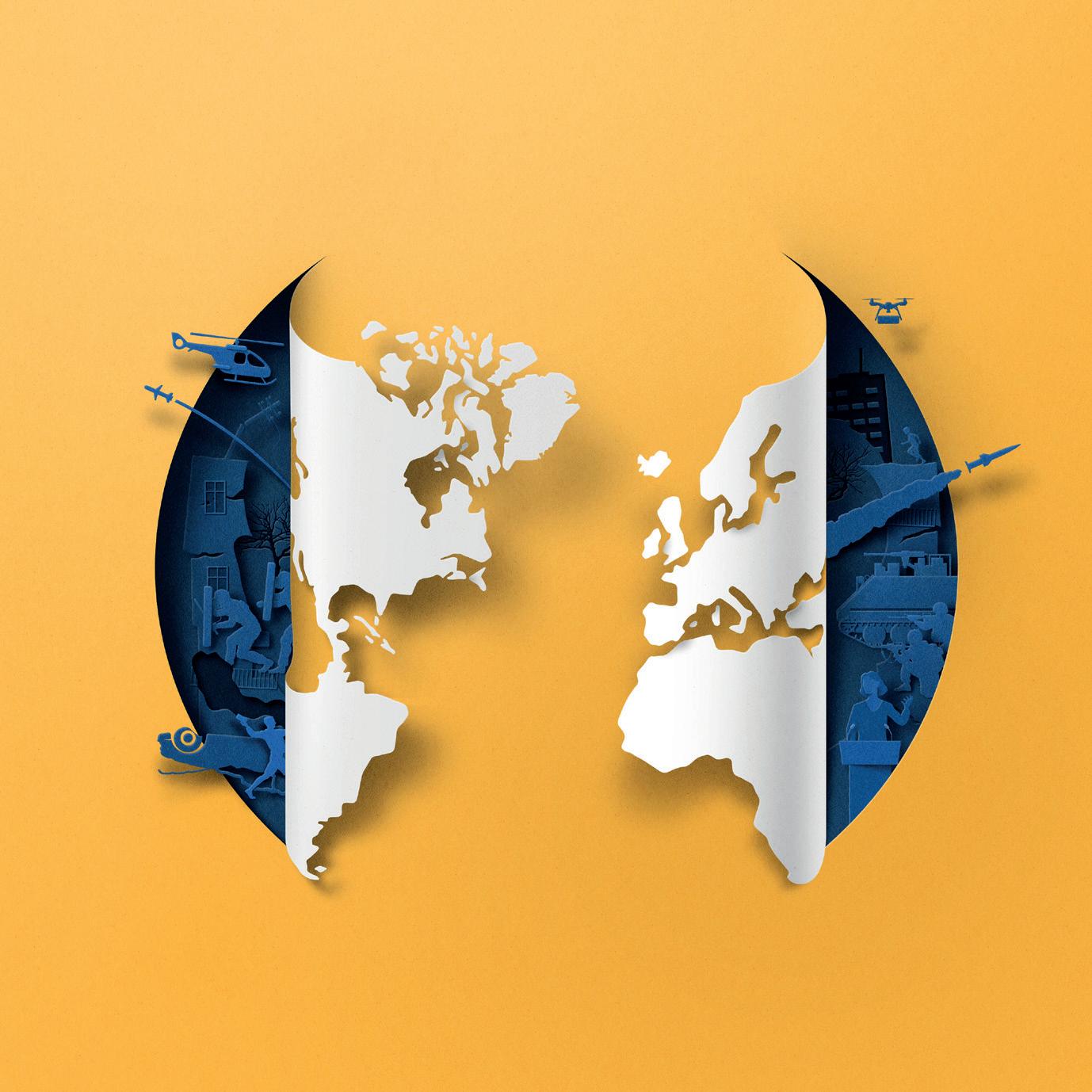
'We shall go forward together' for Diplomaatia Magazine
So you conceived of your amazing visual style while hammering in fence posts in the outback?
It was quite a personal thing. I started to do portraits of my friends, and at some point I even thought maybe I could do an exhibition of the portraits. You can see them in my portfolio.
I never finished the exhibition project. But I started to get commissions from newspapers to make portraits for magazines in Estonia. Then I started to do some food illustrations, and later, more complicated illustrations.
For me, it was quite natural not to make decorative illustrations. Coming from the advertising background, I always put some concepts in there. That was always part of my work.
This is an unconventional career path
That is at least partly due to the nature of Estonia. In the ‘90s or even the 2000s, Estonia was still a young country. A society where it was quite easy to get on. There weren’t older generations of designers or advertising people. So everybody was able to make their own career.
For example, our first prime minister was 32 years old. So, young people were really hands on, in business, in government, everywhere. I think that mentality is still here. There’s real social mobility. There's no predetermined career path. A lot of people of my age have changed careers. It's not taboo as it might be in old Europe. You can just reinvent yourself in later years.
« My working process involves reducing details, editing things down. »
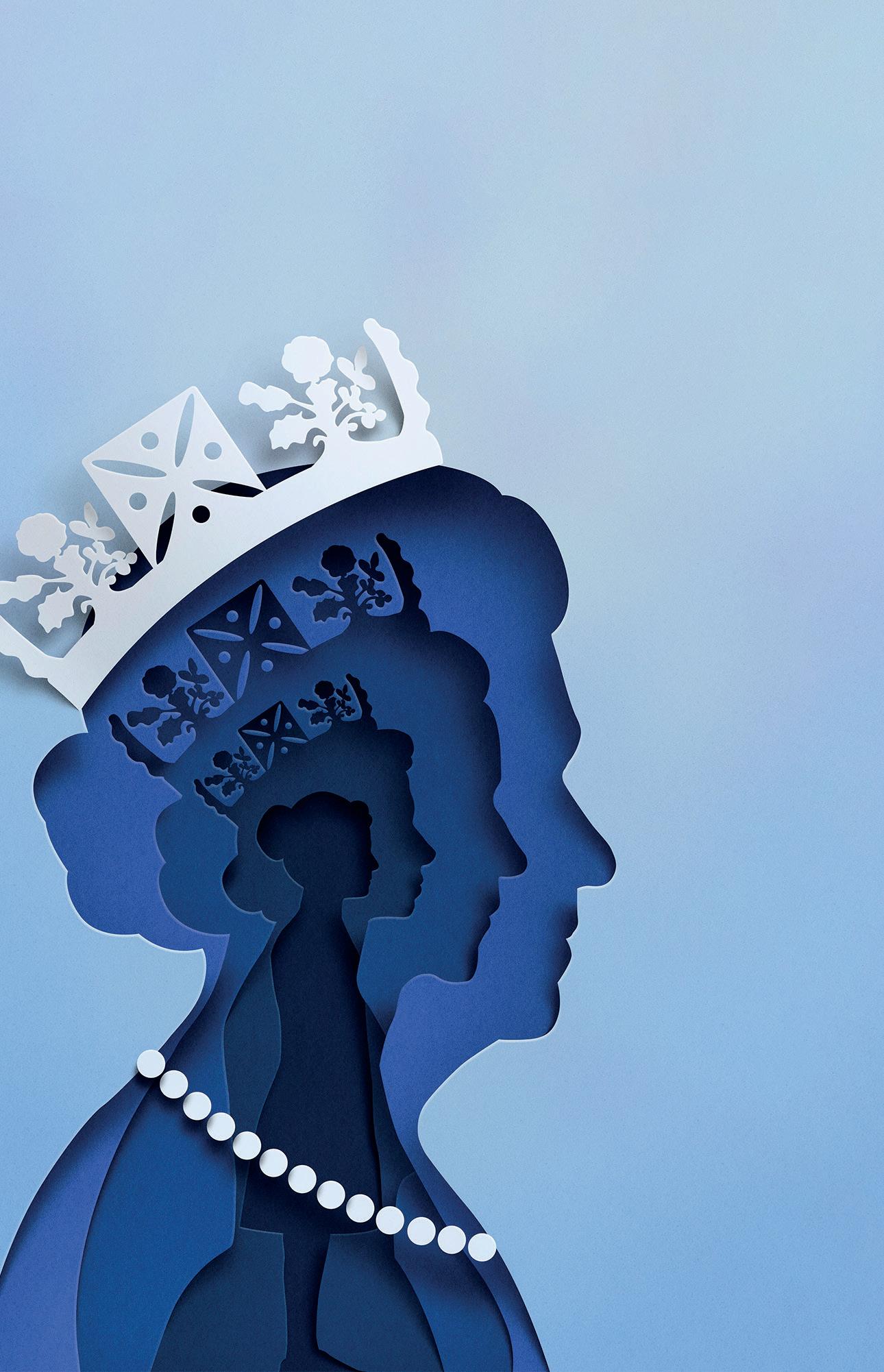
'The Queen 1926-2022' Cover for FT Magazine
When you were doing the portraits, were you using physical materials?
I first used physical materials, just to understand light and shadow. But, after a while, I learned to make the same things on the computer, and it felt easier.
For me it's not important how ‘real’ it is. I’m interested in the impression the work creates. Some of the lights and some of the shadows, they may not really make sense, but the viewer doesn't mind that. So now, I do everything digitally.
That’s amazing. It’s often impossible to tell if your work is ‘real’ or digital
I grew up in the ‘90s. My generation went full on with computers. So, when I started doing illustrations, I'd already been working with computers for 10 years or more. I wanted this illustration style to escape from the computer. I wanted to make illustrations that you want to touch. You want to feel them.
This was my intuition at the time. I didn't write it down. I didn't think about it exactly like this, but looking back, this was my goal and I just started to do it bit by bit, just as I do at the moment. If it's a complicated illustration, I do it piece by piece. I think this gives a kind of natural or organic feeling to the work.
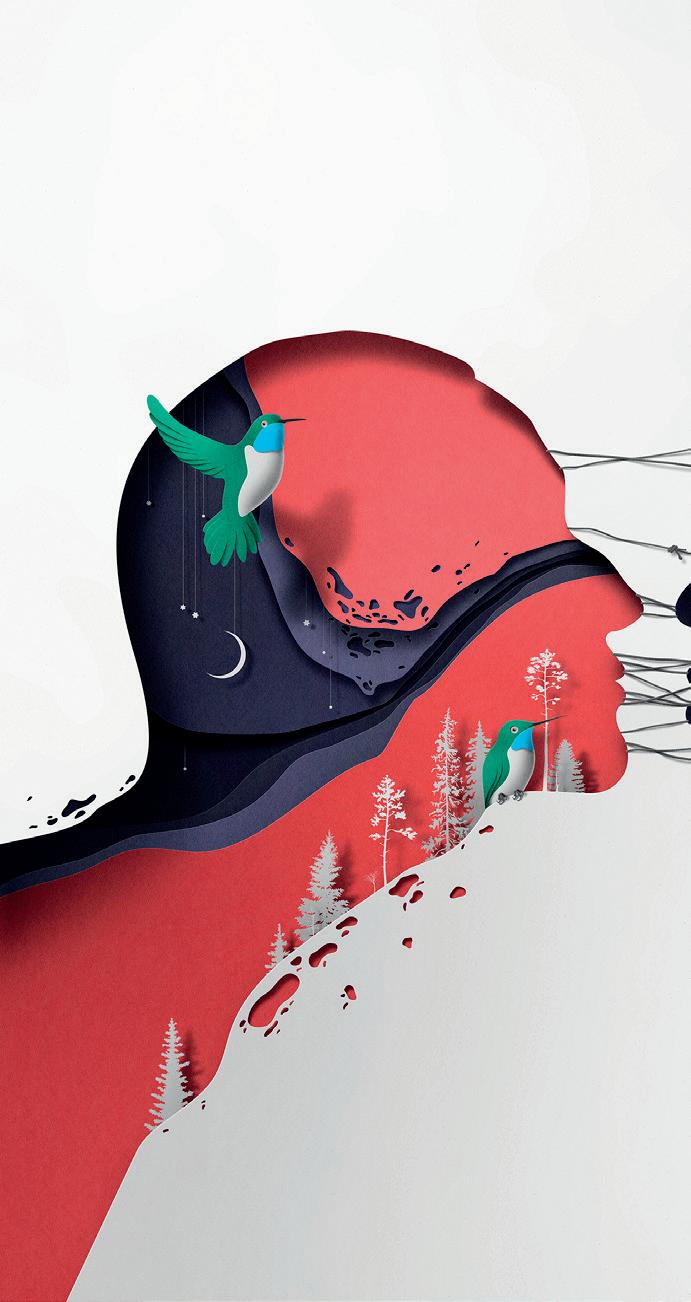
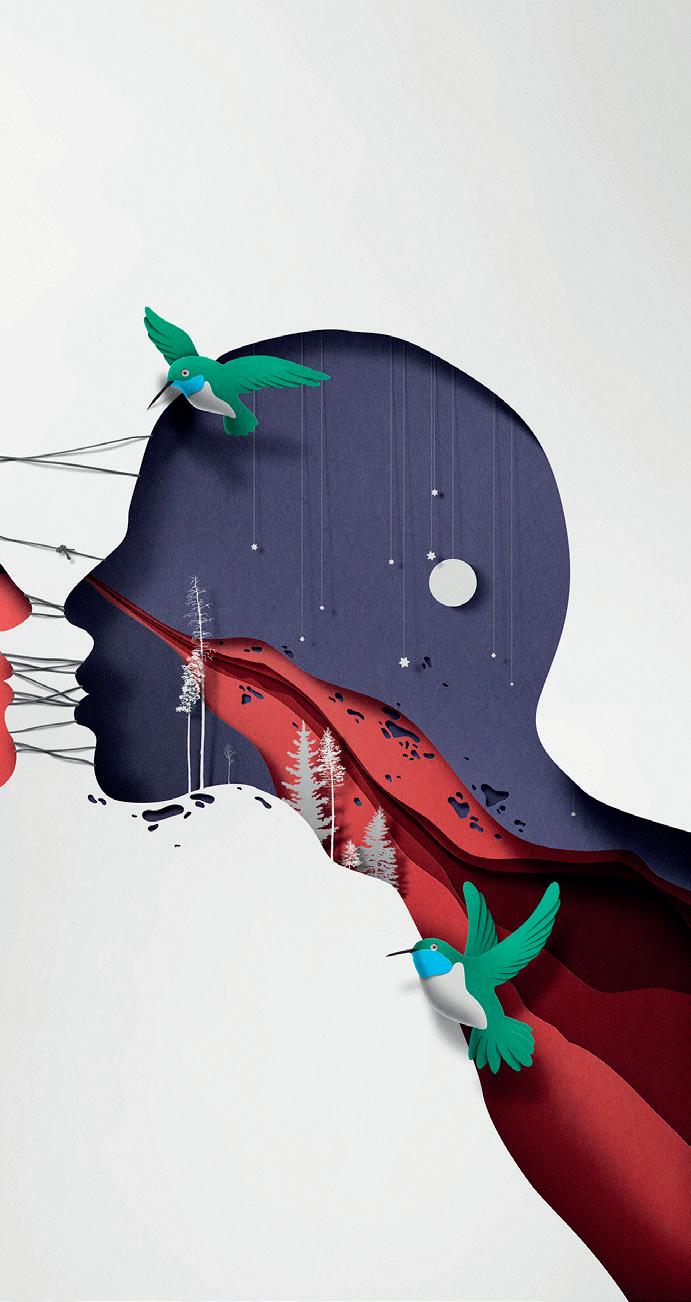
« I learned to be precise, to have a message, and to say it quickly and clearly.»
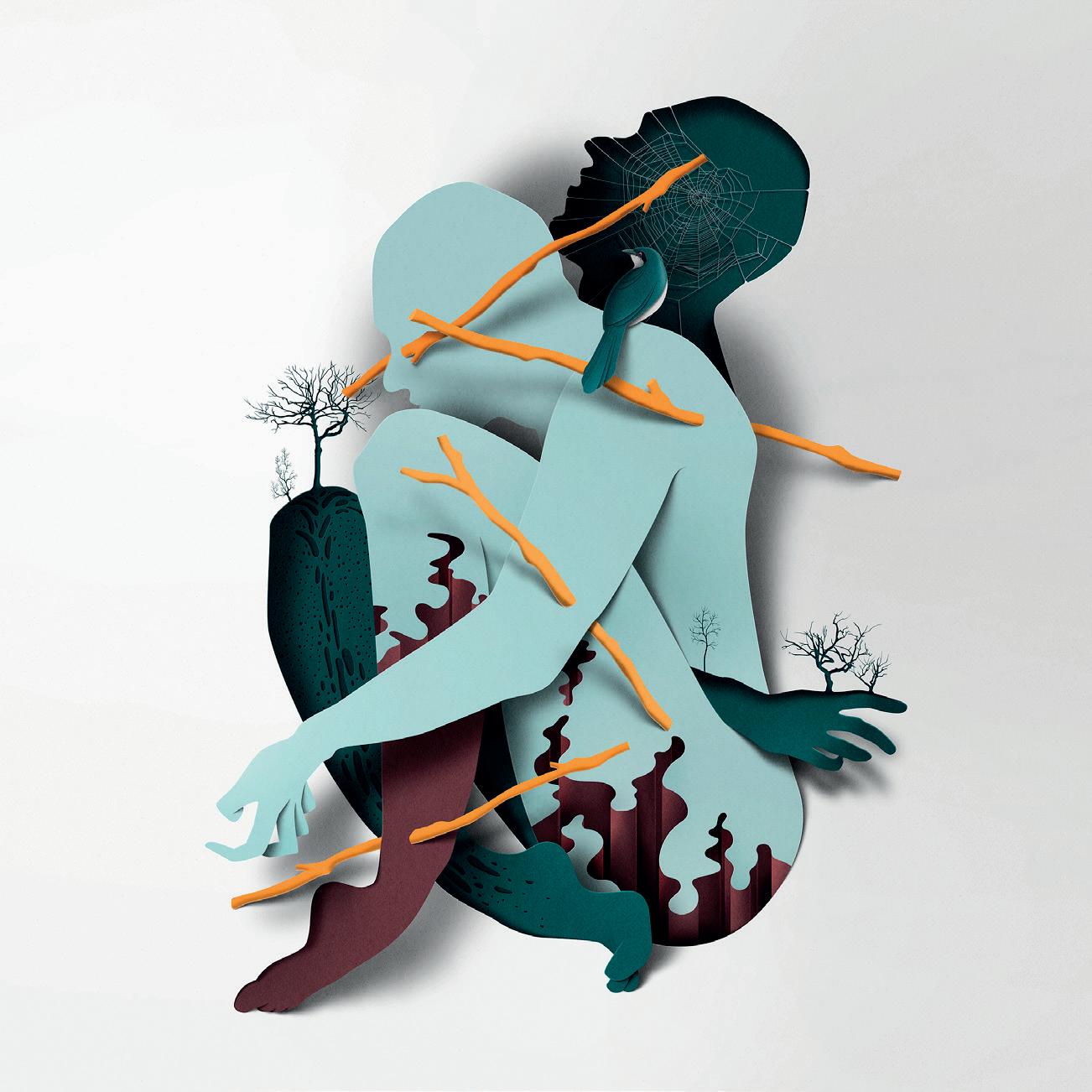
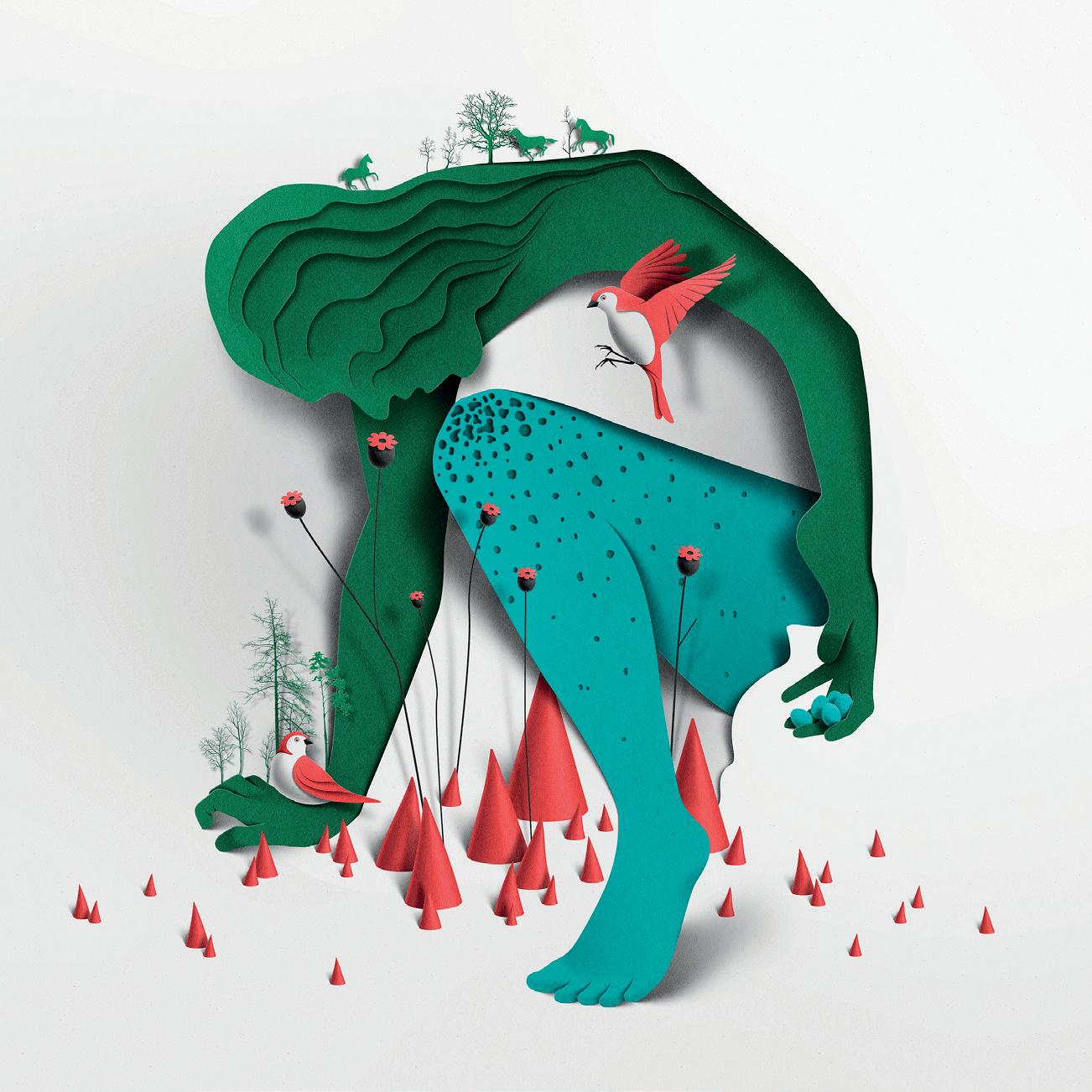
'Myths' are a series of illustrations where I tried to understand and work with a general concept of Myth in a contemporary world. Just to understand where does it stand between humans and nature.
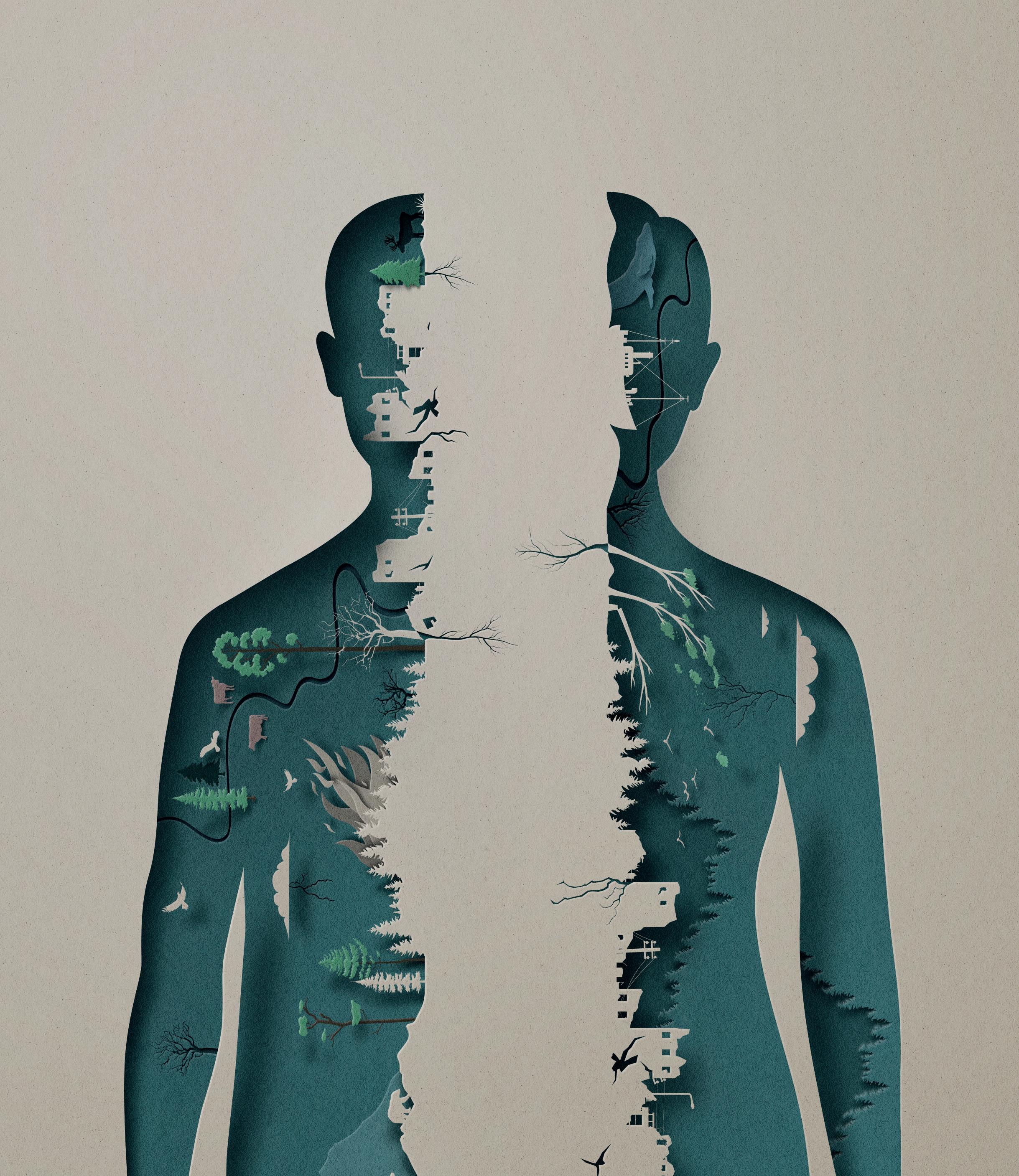
from Tallinn University Research Project ?Memory & Environment?
Illustration
You must have spent a long time mastering the technical skills to achieve that?
I'm still working on mastery! Sometimes I finish projects quickly, so I go back and look through to see if I can improve something.
When I started, those first illustration jobs took a lot of time. I just remade them, then remade them again. At the moment, I make them quite quickly, but then I remind myself that maybe I should just spend a little bit more time to improve the style as well.
What tools do you use?
I start sketching in my notebooks. I still believe that it's quite important to start working with your hand, start drawing, because a lot of ideas, a lot of compositions actually come from these simple pen drawings.
Then I make those same drawings or sketches in Illustrator, as vectors. These are the sketches I send to the client. Once these are approved, I start to work in Photoshop.
Between those steps, there's usually a lot of ideas I have to abandon. When I get a new assignment, I will start to think, ‘Okay, I will make this composition and that composition.’ But in the process of drawing, new ideas are always coming to me. So I think this physical labor is quite important.
Do you ever have to abandon ideas that you love personally but which just don’t work for the job? What do you do with those ideas?
Of course! It's always like this.But there's two answers. One is that I always keep some ideas circling in my mind. So when a job doesn't go in this or that direction, it may be two months later, a different job goes in that direction. They always find their path. That's fine.
The other thing is, I always propose these less likely ideas as well, because sometimes the art director will say, “Oh, that's a really nice idea. We're going to change the headline to work with this idea.”
Editorial assignments are often a work in progress themselves, so I don't feel scared sending really random ideas.
« If the illustration is simple, focused on one idea, then it works.»
What’s the commissioning process like for you?
I divide the work into commercial projects and newspaper or magazine projects. These journalistic jobs, you just have the idea, or the draft of a story to work with. Sometimes the art director has some ideas, or example illustrations, but I always propose new ideas as well. Commercial projects, they really vary. Then the brief is a lot more detailed. But I like all these options. I really enjoy doing detailed illustrations where everything is fixed, the art director has told me exactly what to do. It's like a vacation.
At the same time, I always like the thrill of coming up with the concepts for the newspapers, for the stories, for the really quick ones. It’s great to have variety. It keeps me sharp.
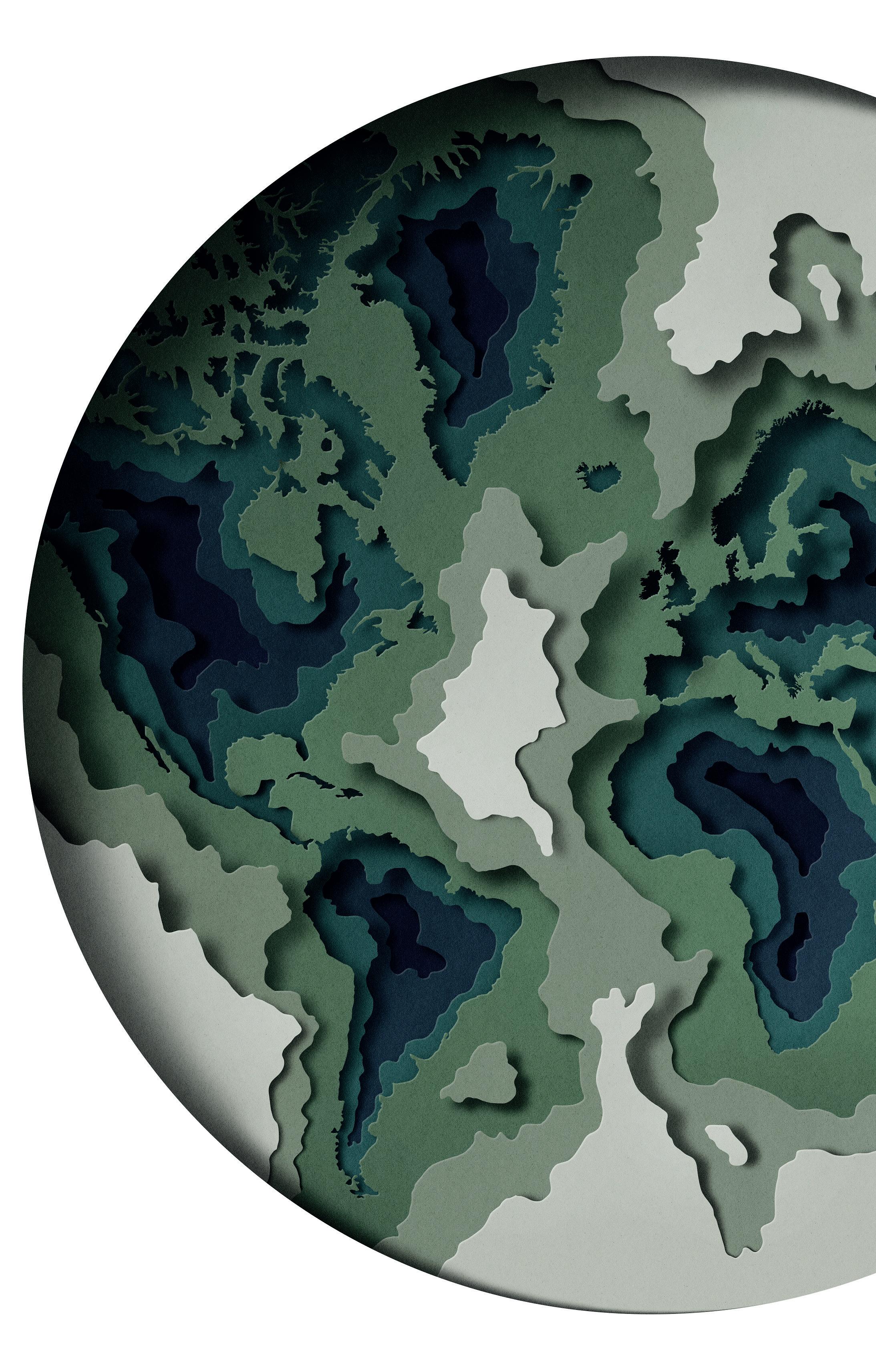
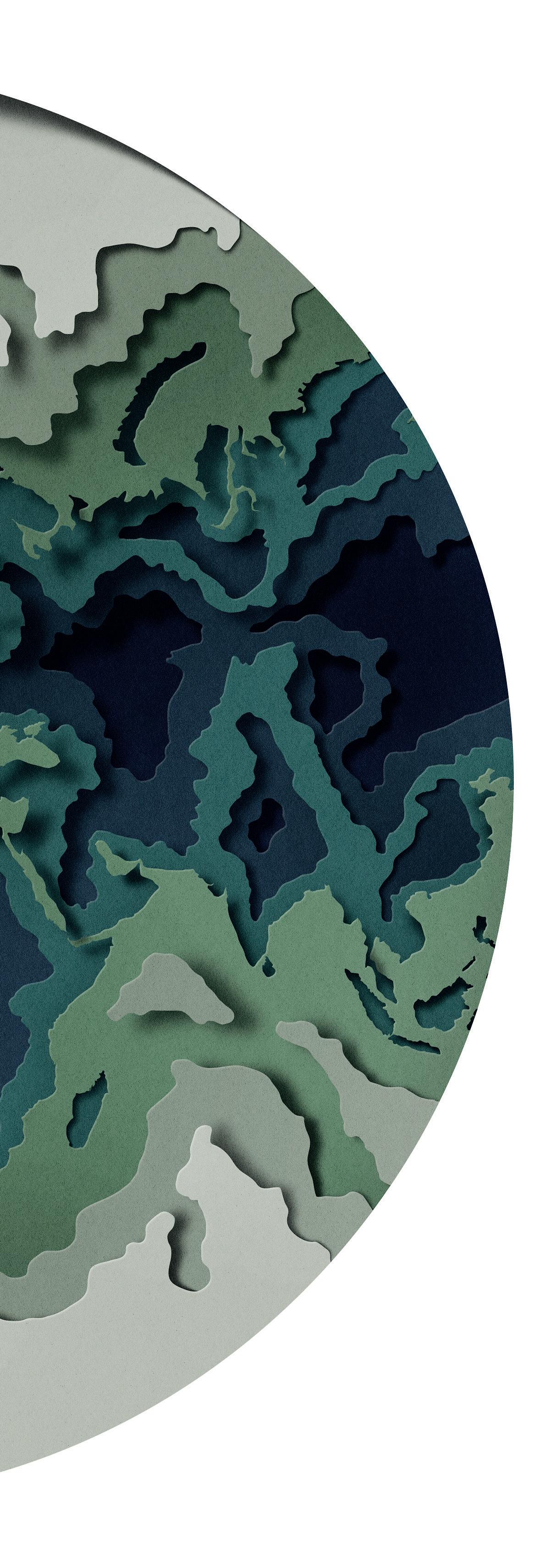
« What I always want to push forward and evolve, are their ideas. »
Some of your work is animated. Do you enjoy adding a new dimension to your illustrations?
I do the animation myself, learning bit by bit, keeping things really simple. There's limitations to what I can do, but I really enjoy the process. You can't animate too much though. You can't make it too busy or noisy. That goes for the illustrations themselves as well. Mostly, my working process involves reducing details, editing things down. It's so easy to put more decoration in there, or animate some extra little things. I like to keep things really minimal, especially knowing how much visual stuff there is for people's eyes to consume every day. If I can create something relaxing, that’s not ‘too much’, then the viewer’s eyes can just rest there.
What are your thoughts on mass consumption in visual culture?
I always set myself the goal for my illustrations, that there must be just one idea, just one focus. Because, one second, that’s what you get from the viewer’s life. If the illus-tration is simple, focused on one idea, then it works.
I often have to explain this to clients who haven't commissioned illustration before. You can't put too much into an image. This is becoming more and more important. I think it's also just more polite for the viewer as well.
'The Planet can't stand this Presidency' New York Times sunday review cover
Even so, there are different levels at which an illustration must work. For example, an editorial piece, the viewer must be able to understand the image without knowing the story at all. Then, the image must work with the headline. And finally, it must work once you have finished the piece. So there's different layers in one illustration. This way, the viewer can come back to it several times when reading the piece.
How much of an idea do you have before you pick up a pencil and start sketching?
I think with a pencil in my hand, but the drawings are really simple. I make them in a few seconds. They’re almost stick figures, but there’s enough there that I can understand whether the idea works or not.
Sometimes I already have an idea in mind, but I always have my notebook with me. So, if I have a deadline of three days, every few hours, I will throw some new idea down on paper. Also, I keep special time slots where I just sit down and think. I have this huge folder of images I’ve collected, and I just scroll through them. I see elements, I see compositions, and then I pick out hints for me. I find this much easier than trying to think without visual stimulation. The images don’t have to be related to the topic, or the same style. I just want to have some things around me to grab ideas from.
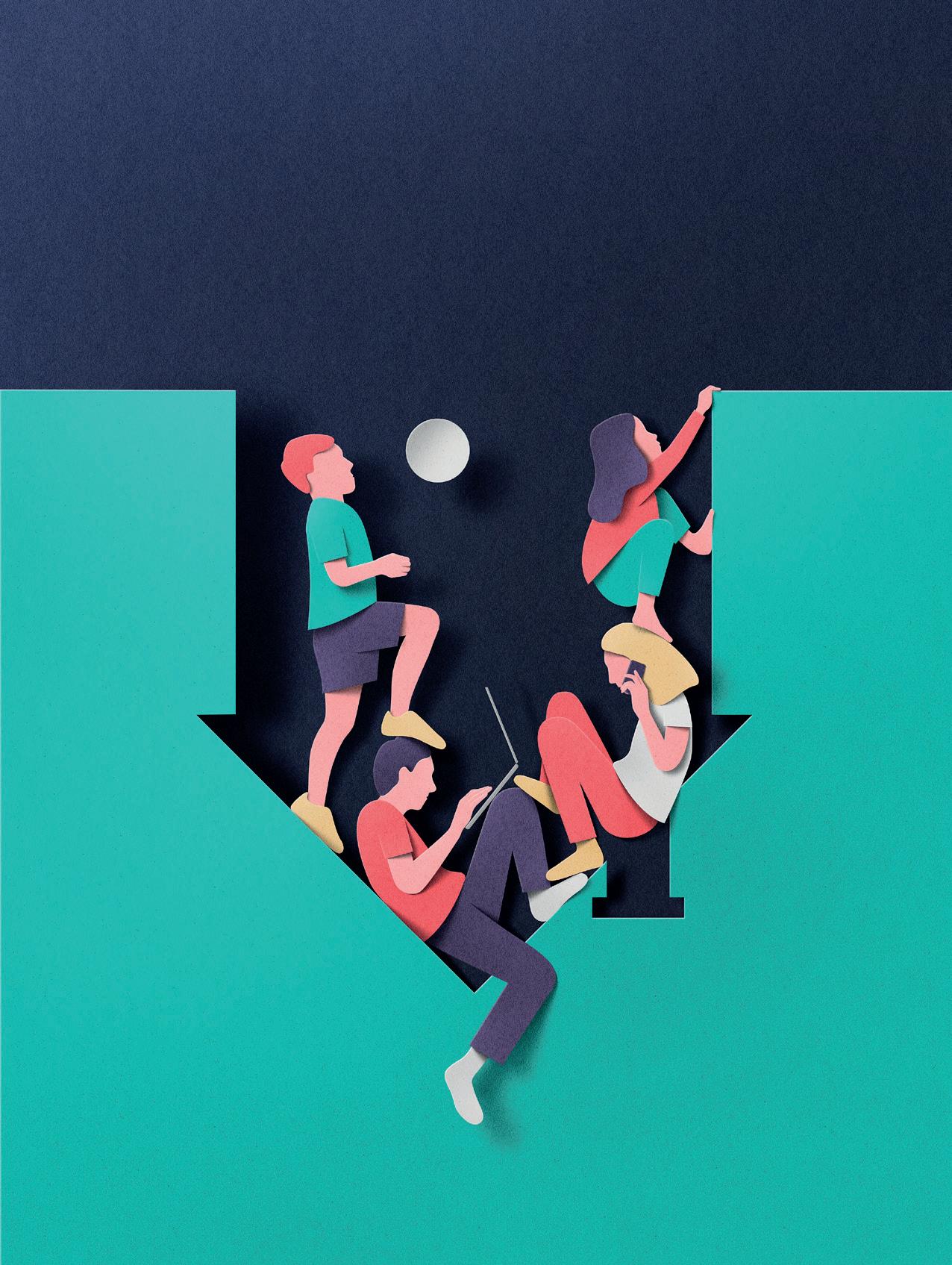
'Working, teaching, playing, exercising from home. How does it really work?' for Eesti Express.
Do you spend time observing nature, or are your learning as you draw?
I do both. The main driver for me is when I see other images. Whether it’s paintings at an exhibition, or a tree in the park, I will look at it and think, ‘Wouldn’t it be great if I could translate this into my style?’
This gets me thinking. How would it work? What should I add? What should I reduce? This technique helps me to notice things, notice the composition. It’s the same with the visual references. Maybe I see a shoe I like, I’ll make it so that it doesn't look like the old one, but it looks like something new.
Your images always have enough room to breathe too, is composition something you consciously work on?
I have been trying to locate the inspiration for this. It probably comes from the fact that I started out as a graphic designer, where you use a lot of empty space. There’s also the geometrical shapes from graphic design and architecture.
In Estonia, there's quite a few illustrators, but a lot of them work on childrens books. If you come from that angle, everything must be busy. It must be full on. Something in every corner. But my path is a little bit different. Also, my father was an architect. He had lots of art books, a lot of abstract art.These artworks have a lot of empty spaces in them, with circles and squares.
« What I always want to push forward and evolve, are their ideas. »
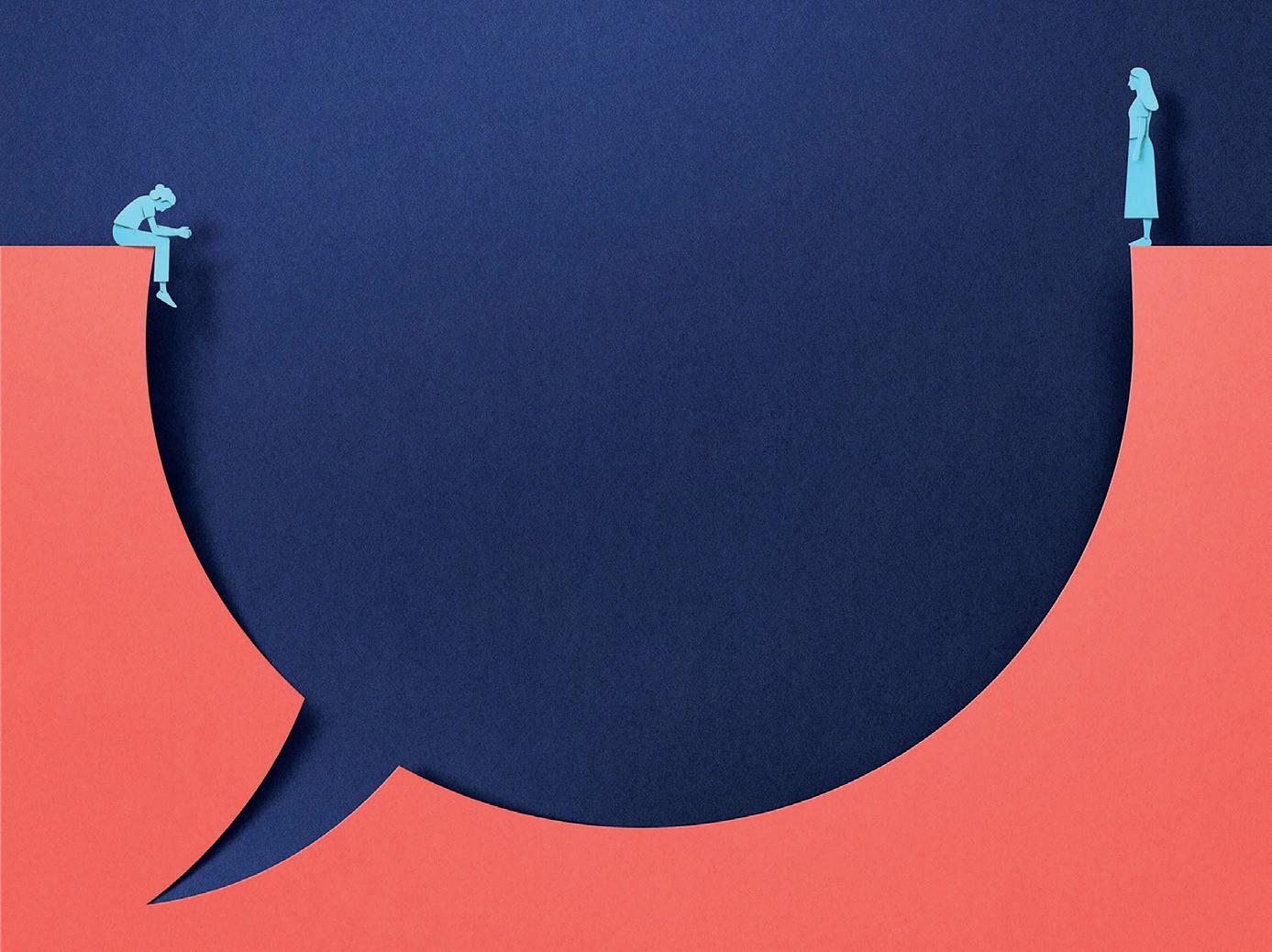
'Loneliness' for Oprah Magazine
Has your style evolved over time?
It has been surprisingly static. If I look at my first illustrations, I could do them today. There has been some moments, but I don't see it as evolution from one point to another. It’s more like I make some turns and come back to the original style.
I used some textiles a few years ago, they worked quite nicely and I know when I need it, I can use that again. I’ve incorporated photos and made some quite realistic figures too, painting the paper so it looks like a real person. But I always come back to my roots.
My friends and colleagues have asked me if I get tired of this style. But I don't think so much about style. I see it as just a technique. It's just a tool for me, which I sometimes change. What I always work with, what I always want to push forward and evolve, are their ideas.
When I look at my older work, I see quite naive compositions or naive symbols. I'd like to find some new symbols that are not so obvious, but also work. When I find a new metaphor for something, this is the main goal for me.
Are you working on any personal projects? A philosophical treatise perhaps?
I'm not writing, but for the last two years, I’ve been painting. Really getting away from the digital world. There will be an exhibition next year. There are often ideas I have when I’m working on commercial projects that just don't fit the job, but are still interesting. In fact, there's always ideas that don't fit perfectly. These are usually what will ignite a personal project.
There's also some ideas that I just need to get out of myself as well. Sometimes I just push all the deadlines because I have to finish a particular personal piece. But, in a practical sense, I always know that if I do something just for my own sake, it will not get lost. I have a lot of nice clients and they sometimes contact me for projects that make reference to my personal work.
Are you the same person doing the painting as when you’re illustrating?
I don’t draw a strong distinction between commercial and personal projects. I get really into the commercial work as well. But, generally, the guy doing the paintings is more frustrated!
It's always a big mess. Because it is personal and I have some vision in my head, the end result is never perfect. But, at the same time, I really enjoy the process as well. I know the hard work will pay off.
« I wanted to make illustrations that you want to touch. »
PE'L SCHLECHTER Graphic Design 2017
38 TIM JOHN & MARTIN SCHMITZ Scenography Design 2017
39 BROSMIND Illustration Design 2017
40 ARMANDO MILANI Graphic Design 2017
41 LAURA STRAßER Product Design 2017
42 PHOENIX DESIGN Industrial Design 2018
43 UWE R. BRÜCKNER Scenography Design 2018
44 BROUSSE & RUDDIGKEIT Design Code 2018
45 ISABELLE CHAPUIS Photography Design 2018
46 PATRICIA URQUIOLA Product Design 2018
47 SARAH-GRACE MANKARIOUS Art Direction 2018
48 STUDIO FEIXEN Visual Concepts 2019 49 FRANK RAUSCH Interface Design 2019 50 DENNIS LÜCK Designing Creativity 2019 51 IAN ANDERSON Graphic Design 2019 52 FOLCH STUDIO Strategic Narrative Design 2019 53 MARC TAMSCHICK Spatial Media Design 2020
54 TYPEJOCKEYS Type Design 2020
55 MOTH Animation Design 2021
56 JONAS LINDSTRÖM Photography 2021
57 VERONICA FUERTE Graphic Design 2021
58 CHRISTOPHE DE LA FONTAINE Product Design 2021
59 DAVID KAMP Sound Design
FUENTES
69 DENNIS HINZE Sport Fashion Design 2023
70 KLASIEN VAN DE ZANDSCHULP
72 GERMANS ERMICS Sculptural Design 2023
73 MADE BY JAMES Type & Logo Design 2024 74 SNASK Branding & Video 2024
75 CRAFTING PLASTICS! STUDIO Design Research 2024 76 STUDIO BRUCH Graphic Design 2024
77 GEMMA O'BRIEN Graphics & Lettering 2024 78 MARLOTA Fashion Design 2024 79 RONAN BOUROULLEC Product Design 2025 80 FRANCESCO FRANCHI
Design Friends would like to thank all their members and partners for their support.
Support Design Friends, become a member. More information on www.designfriends.lu
In collaboration with Partners Service Partners

COLOPHON
PUBLISHER Design Friends
COORDINATION Hyunggyu Kim
LAYOUT Zoë Mondloch
INTERVIEW Mark Penfold
PRINT Imprimerie Schlimé
PRINT RUN 250 (Limited edition)
ISBN 978-2-919829-14-9
PRICE 5 €
DESIGN FRIENDS
Association sans but lucratif (Luxembourg)
BOARDMEMBERS
Anabel Witry (President)
Guido Kröger (Treasurer)
Heike Fries (Secretary) Hyunggyu Kim (Member)
COUNSELORS
Vera Heliodoro, Hyder Razvi, Olga Silva, Silvano Vidale
WWW.DESIGNFRIENDS.LU
WWW.PLOOM.TV
Design Friends is financially supported by
This catalogue is published for the lecture of Eiko Ojala "Layers" at Rotondes on January 21st, 2026 organised by Design Friends.