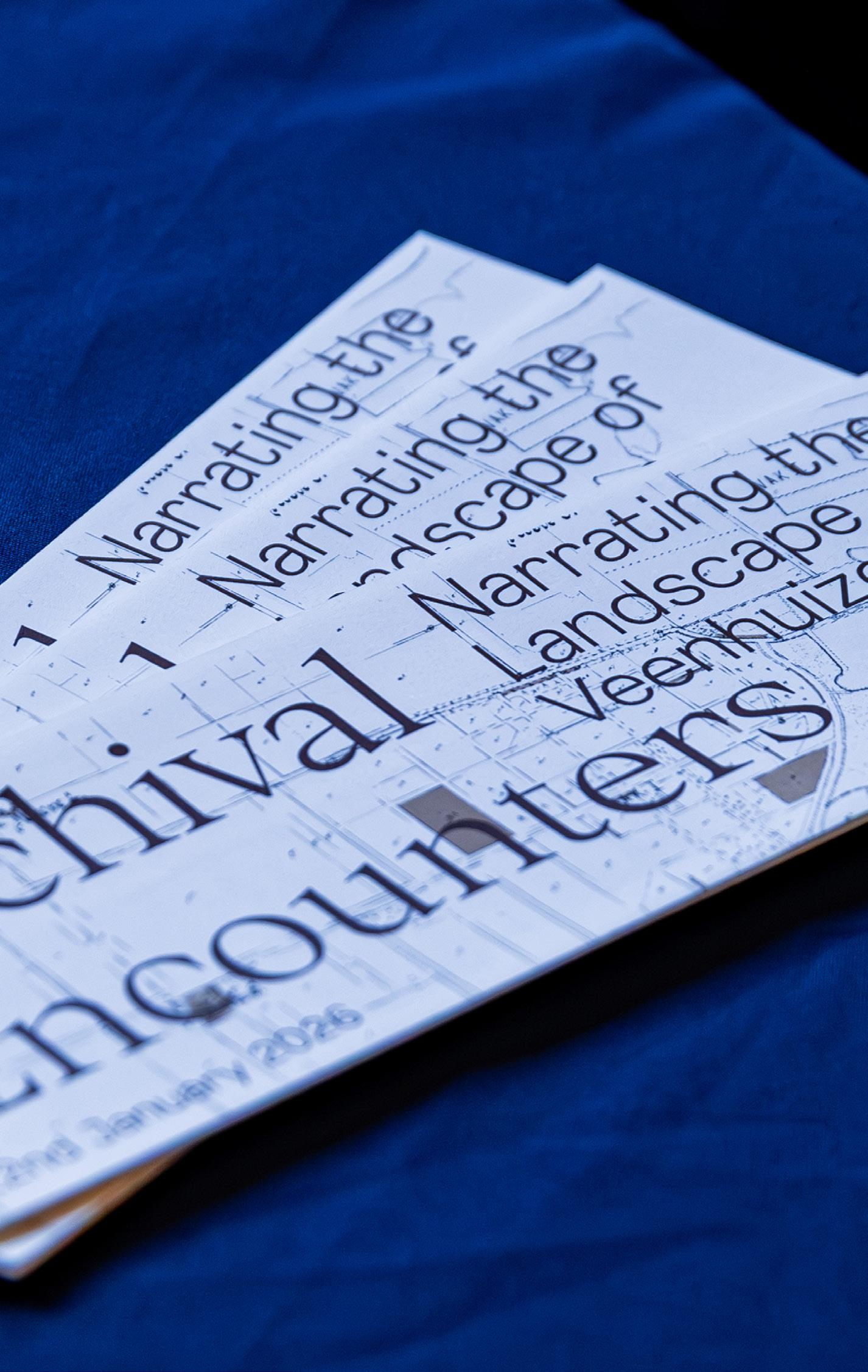
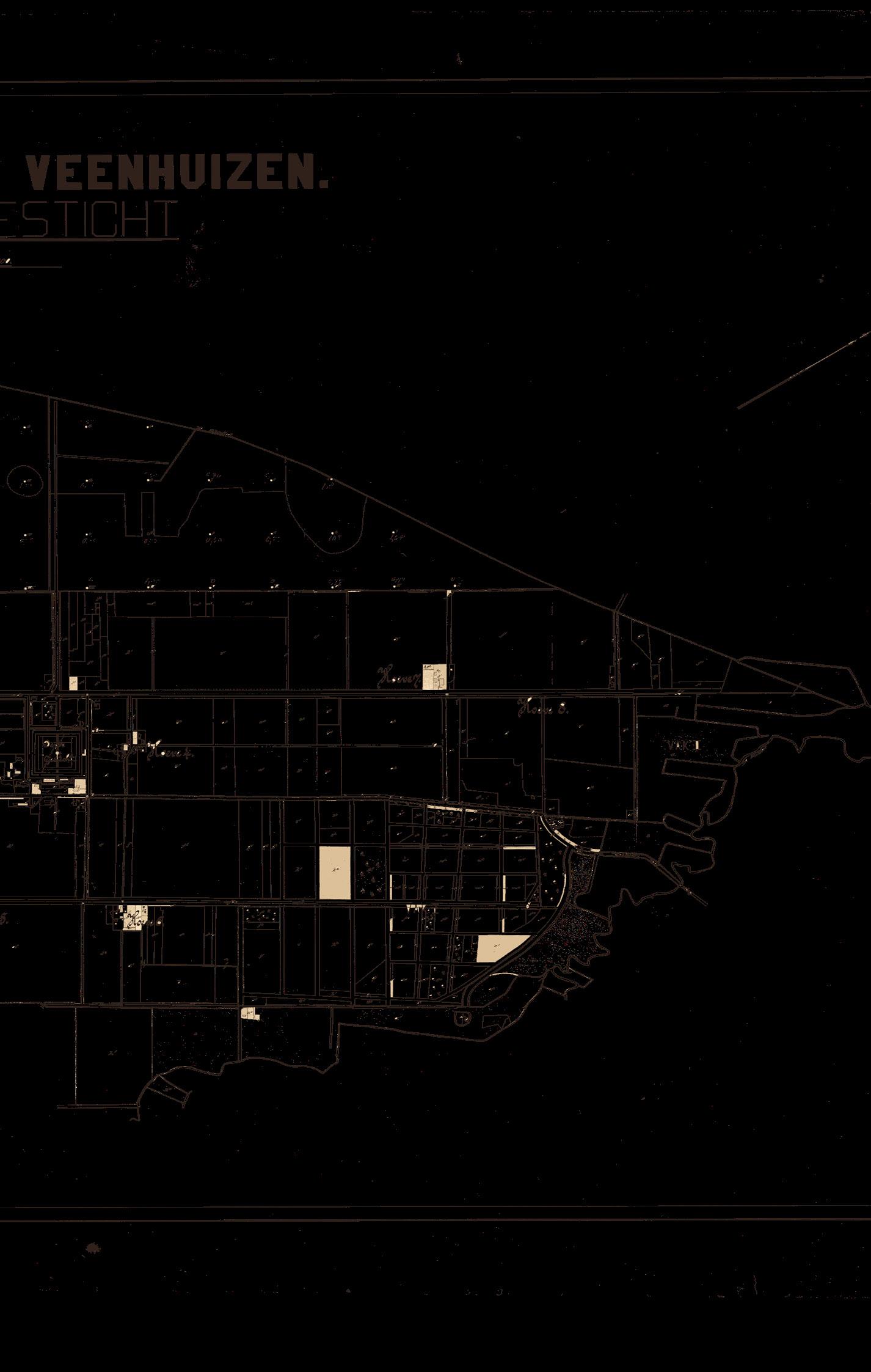
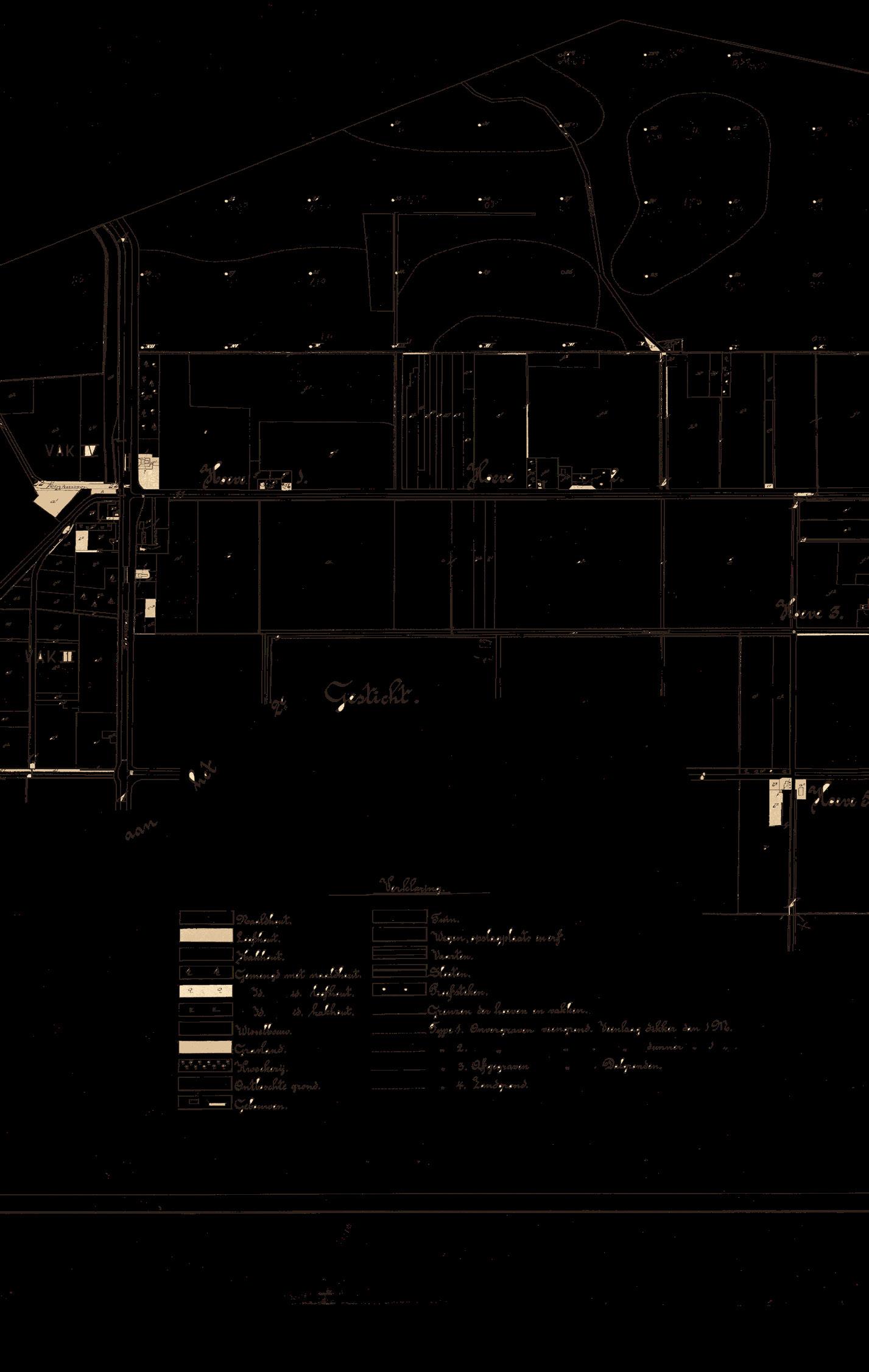
Archiving the Landscape: Narrating the Landscape of Veenhuizen
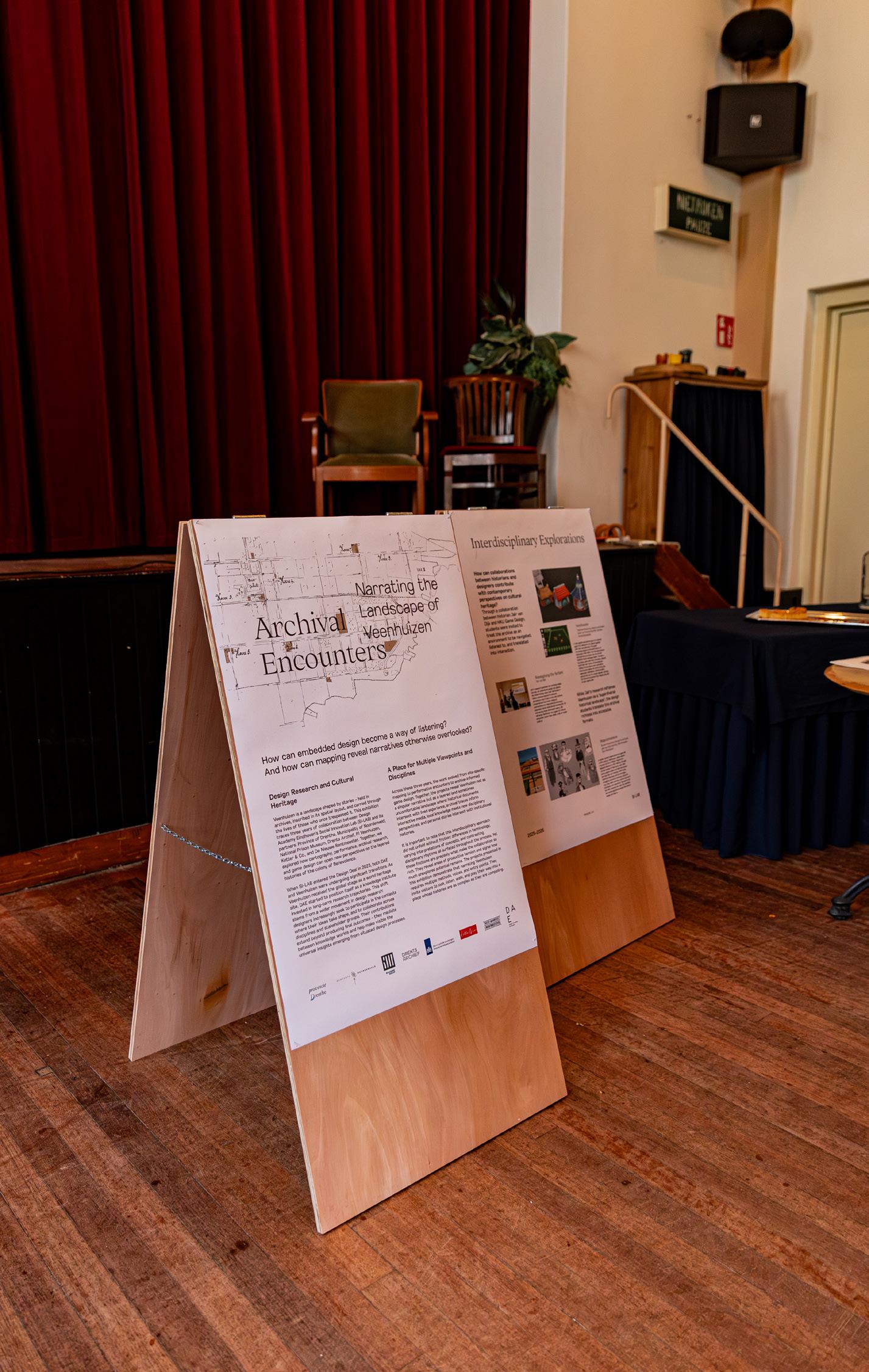
Archival Encounters Narrating the Landscape of Veenhuizen
Design Academy Eindhoven
Social Innovation Lab
Jaïr Salomon van Dijk & Naomi Bueno de Mesquita
Edited by Naomi Bueno de Mesquita
In Collaboration with Province of Drenthe, Municipality of Noordenveld, National Prison Museum, Drents Archive, PI Veenhuizen, De Nieuwe Rentmeester, Ketter & Co, HKU Game Design
This document is distributed under the terms of the Creative Commons Attribution NonCommercial - NoDerivatives License (http:// creativecommons.org/licenses/by-nc-nd/4.0/), which allows for noncommercial reuse, distribution, and reproduction in any medium, provided that the original work is properly cited and not altered, transformed, or used as a basis for other works.
Prologue Ten Years of Learning with Veenhuizen
Naomi Bueno de Mesquita
Introduction
Activating the Archive
Naomi Bueno de Mesquita
Chapter 01
Veenhuizen through a Microhistorical Lens
Jaïr Salomon van Dijk
Chapter 02
Transnational Lives in Veenhuizen: A Migration Perspective
Jaïr Salomon van Dijk
Chapter 03
The Van Guinea family
Jaïr Salomon van Dijk
Chapter 04
Ulisses van Makassar
Jaïr Salomon van Dijk
Chapter 05
Reflections on the two case studies
Jaïr Salomon van Dijk
Chapter 06
History and Design: Reflections on Interdisciplinary Exchange
Jaïr Salomon van Dijk
Chapter 07
A “Thickened” Context for Heritage Work
Naomi Bueno de Mesquita with reflections by Wendy Schutte and Pauline Bezemer
Appendix
Designing with Archives:
Student Works Across Three Years
Naomi Bueno de Mesquita
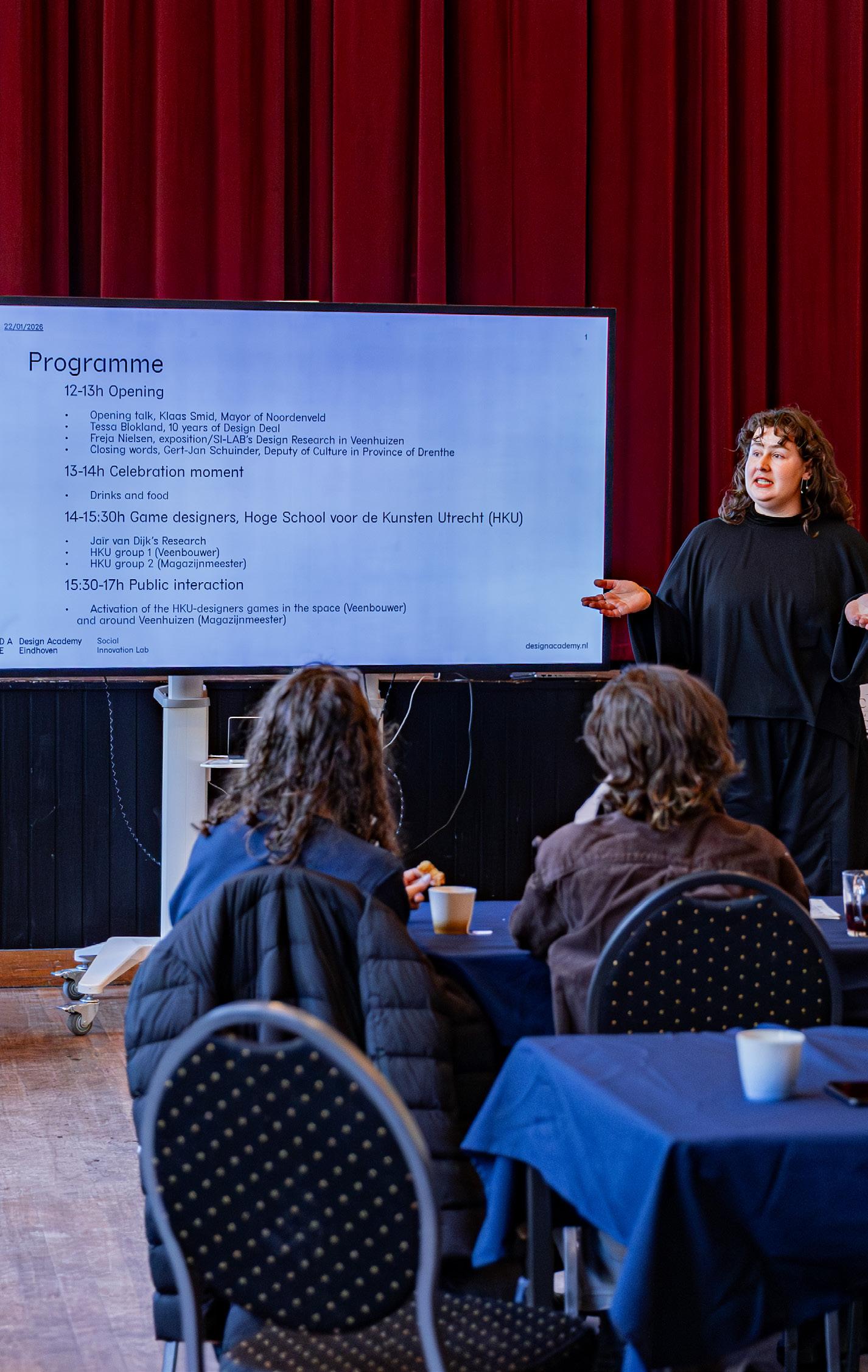
Closing Event
Archival Encounters
Bibliography & Archival References
Prologue Ten Years of Learning Veenhuizienwith
By Naomi Bueno de Mesquita
When Irene Fortuyn, former tutor, and Studio Head of the BA Programme Man and Leisure at Design Academy Eindhoven (DAE), first travelled to Veenhuizen in 2012, the intention behind the newly established ‘Design Deal’ was modest in form yet ambitious in spirit: to give students the opportunity to learn by inhabiting a place. Through long stays, fieldwork, and close engagement with local communities and institutions, DAE students practiced embedded design while contributing projects that offered something back to Veenhuizen – new perspectives, new forms of representation, and new ways of attending to the complexities of its past and present.
What began as a series of student-led design explorations, gradually developed into a programmatic and sustained form of collaboration. The projects that emerged from initiatives such as the publication A Place to Stay (Raviv, 2021) did not remain isolated educational exercises, but evolved into prototypes and reference cases within a growing long-term agenda for Veenhuizen.[1] Over the course of a decade, this collaboration consolidated into a durable network linking the Province of Drenthe, the Municipality of Noordenveld, the Drents Archief, the National Prison Museum, PI Veenhuizen, Ketter & Co, and De Nieuwe Rentmeester. It unfolded in parallel with provincial and municipal efforts to secure UNESCO World Heritage status for the Colonies of Benevolence – an ambition realised in 2021. With this recognition came a renewed urgency to reconsider how cultural heritage, both material and immaterial, might be approached, interpreted, and made accessible to contemporary audiences.
S. Raviv, A place to stay: Practising embedded design. (Eindhoven: Onomatopee, 2021).
In the past years, DAE shifted from facilitating individual student projects to shaping a programme-driven partnership, in which student work exemplified and tested broader research questions, methodological approaches, and modes of engagement with the site. In this way, education, research, and heritage development became increasingly intertwined: student projects both contributed to, and were guided by, a shared vision of Veenhuizen as a living cultural landscape.
It was within this evolving context that the Social Innovation Lab (SI-LAB), expanded the Design Deal into a researchdriven collaboration. The professorship investigates how social innovation can help address transition challenges in cultural heritage contexts, especially at sites undergoing rapid change due to climate impacts, tourism pressures, urban development, shifting land use, or changing community needs. It treats social innovation as essential to shaping effective heritage responses and governance, while recognizing that its role and practical application are still not fully understood. To close this gap, the professorship works with institutional partners – such as municipalities, provinces, and national agencies – to investigate the realworld challenges these organizations face and to contribute expertise in participatory design. SI-LAB's researchers draw on a broad mix of disciplines and methods, including cartography, ethnography, archival research, GIS, geotechnology, and game design.
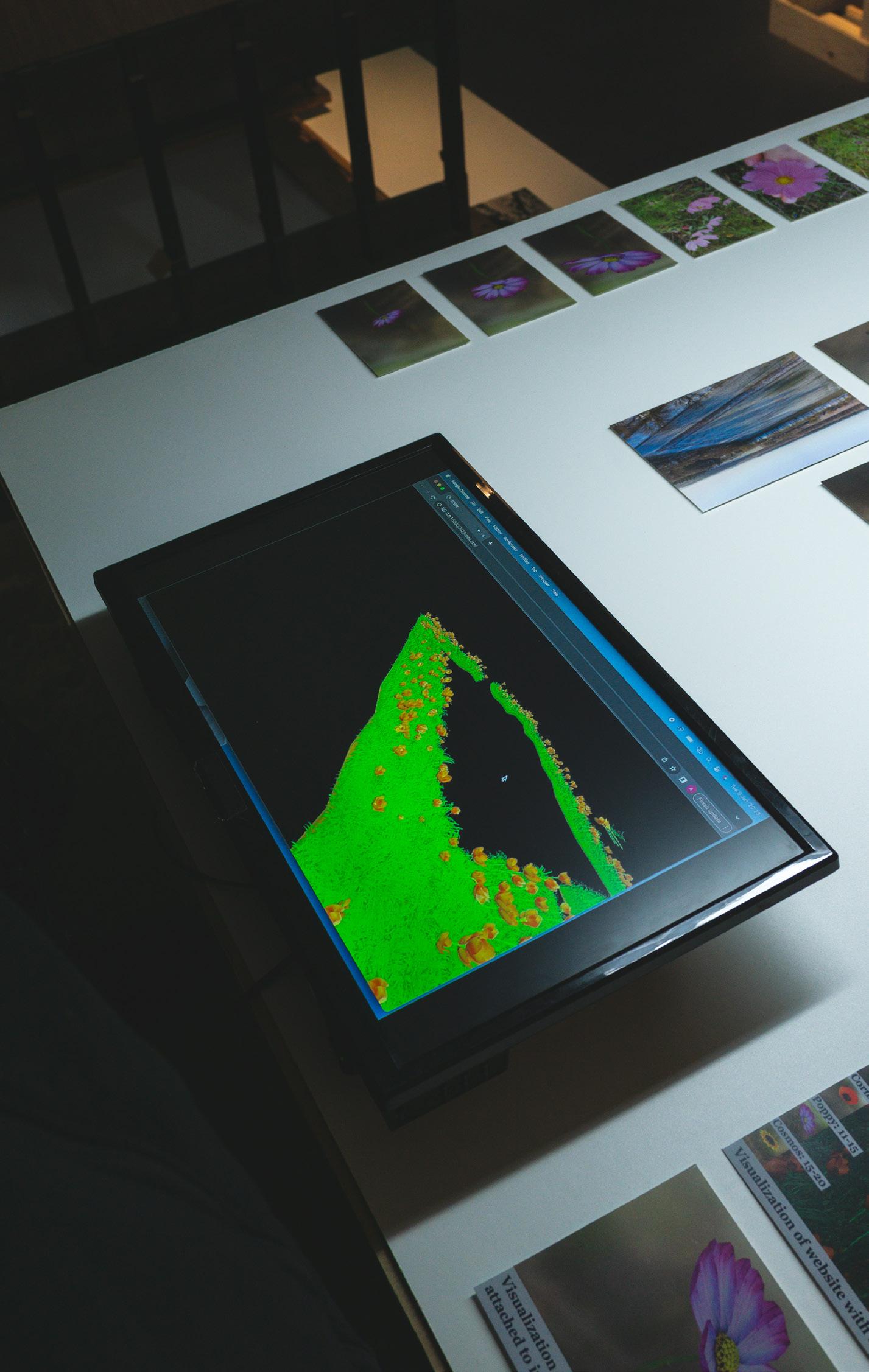
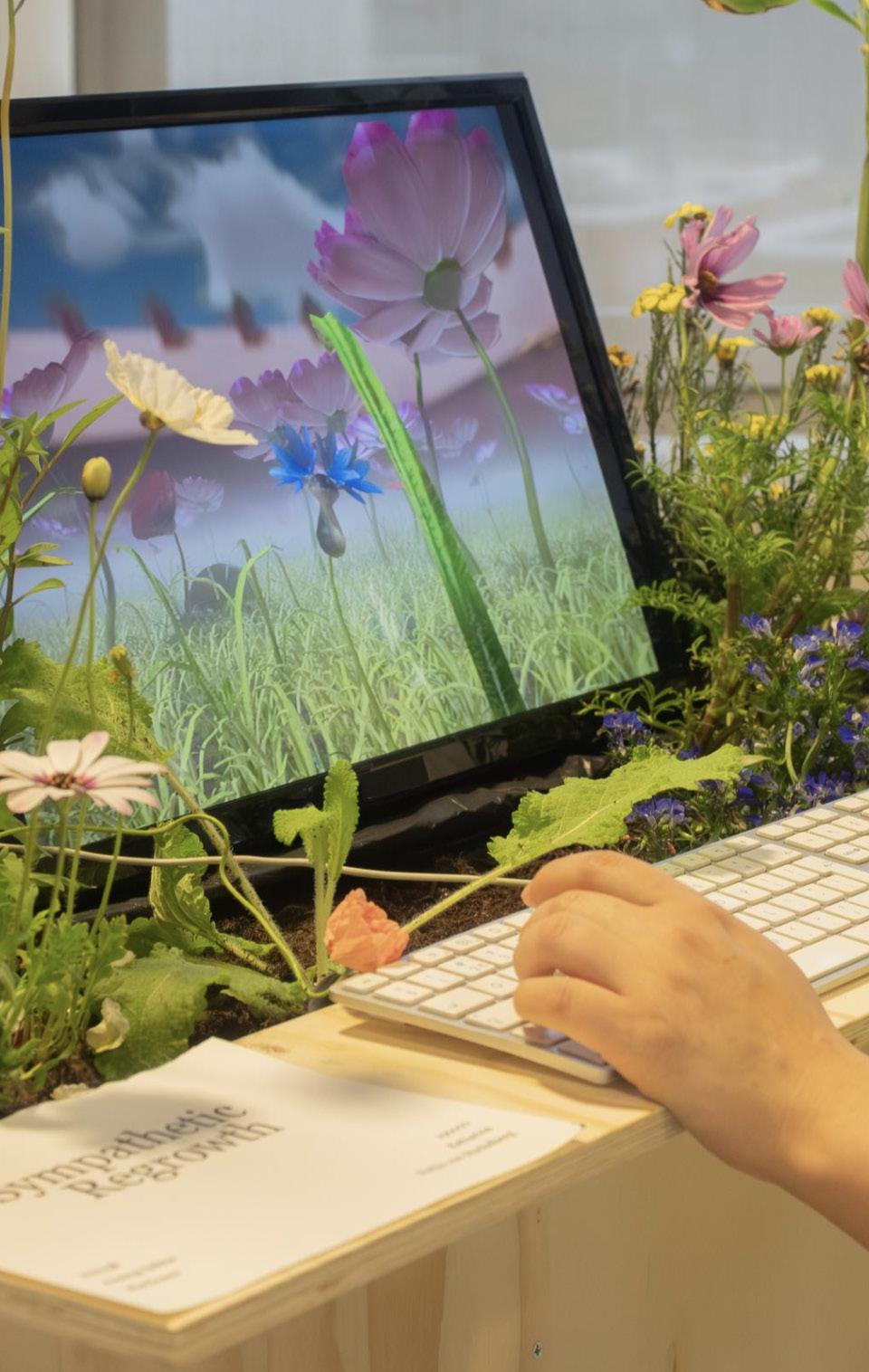
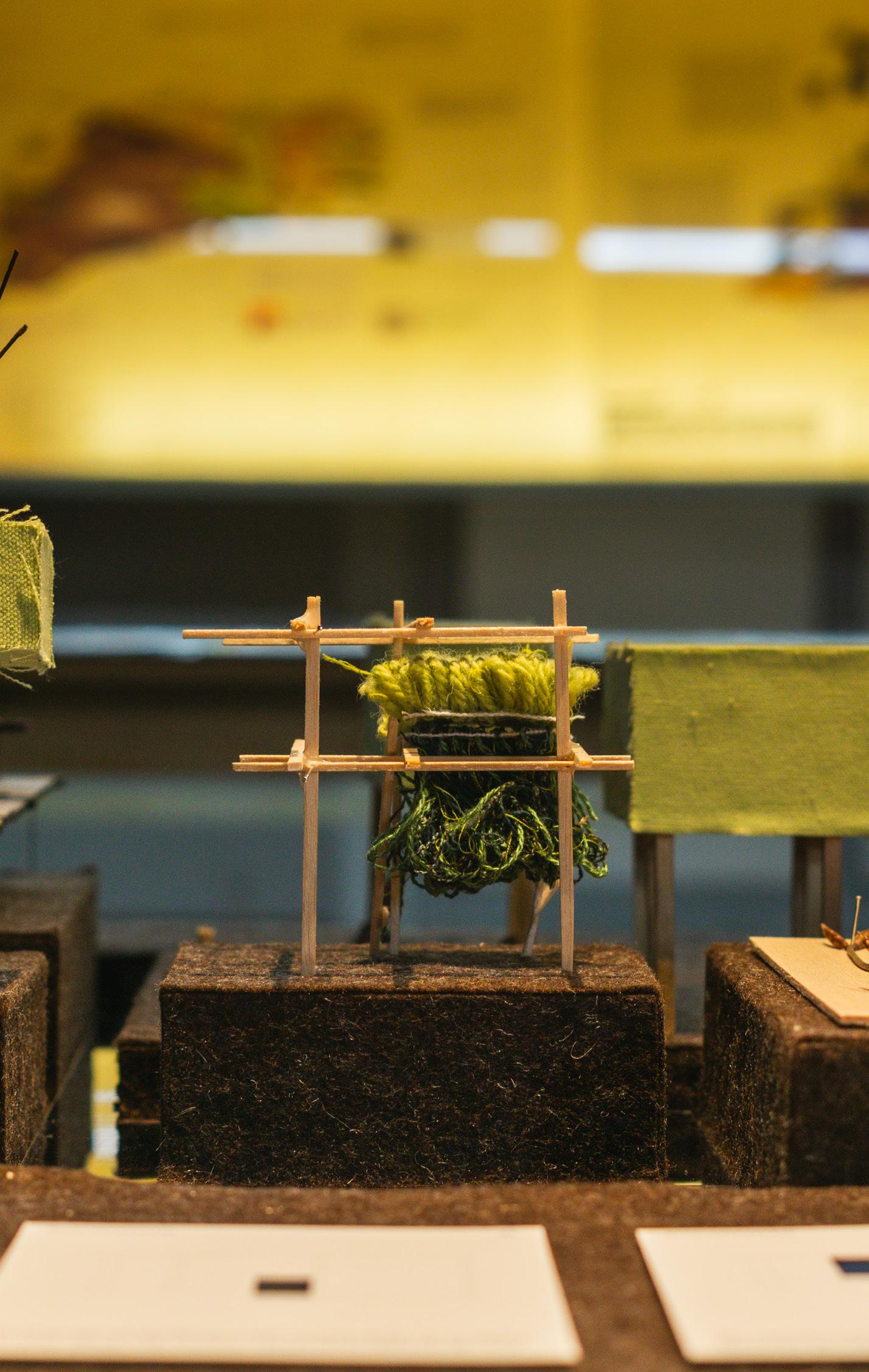
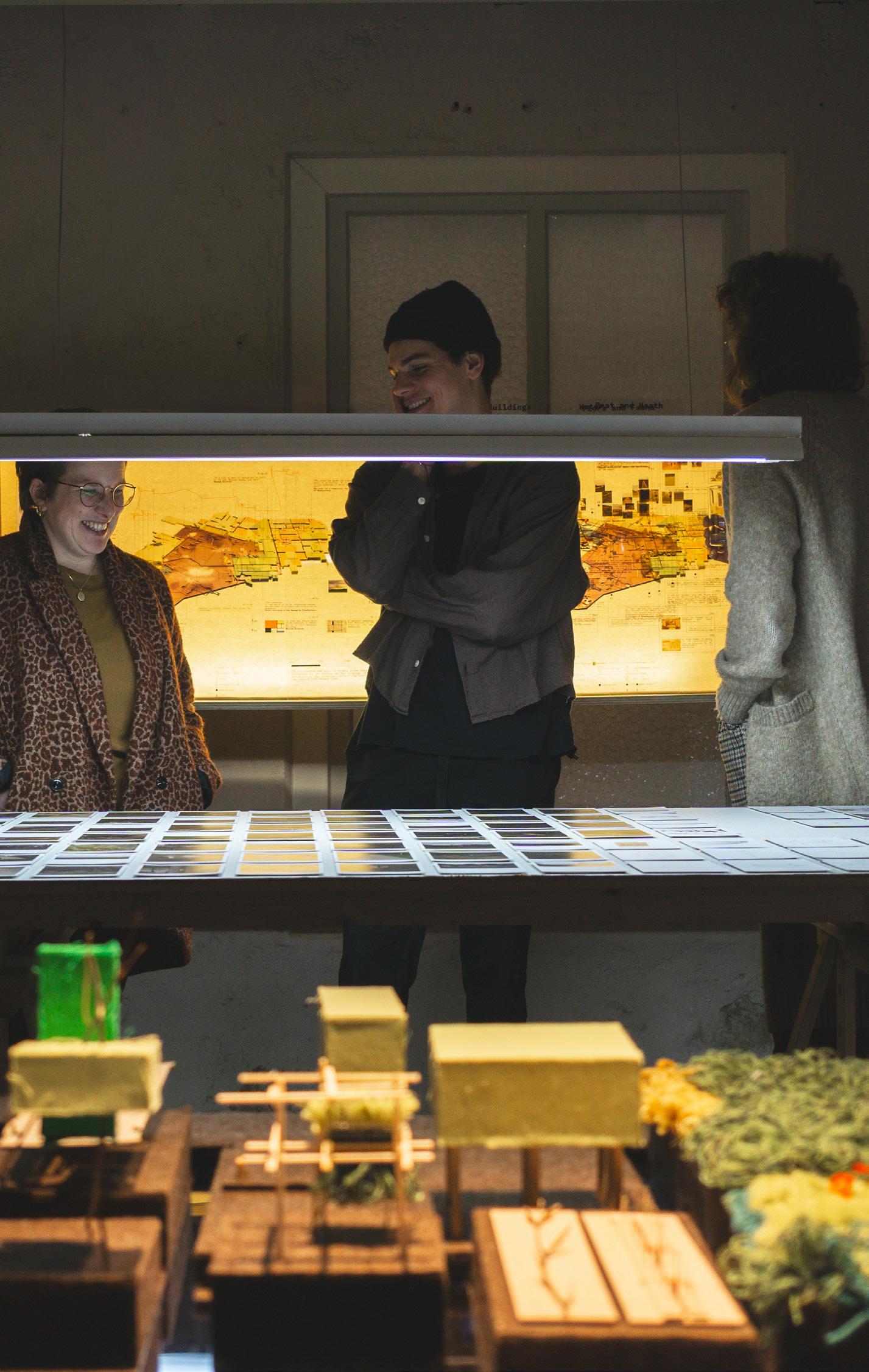
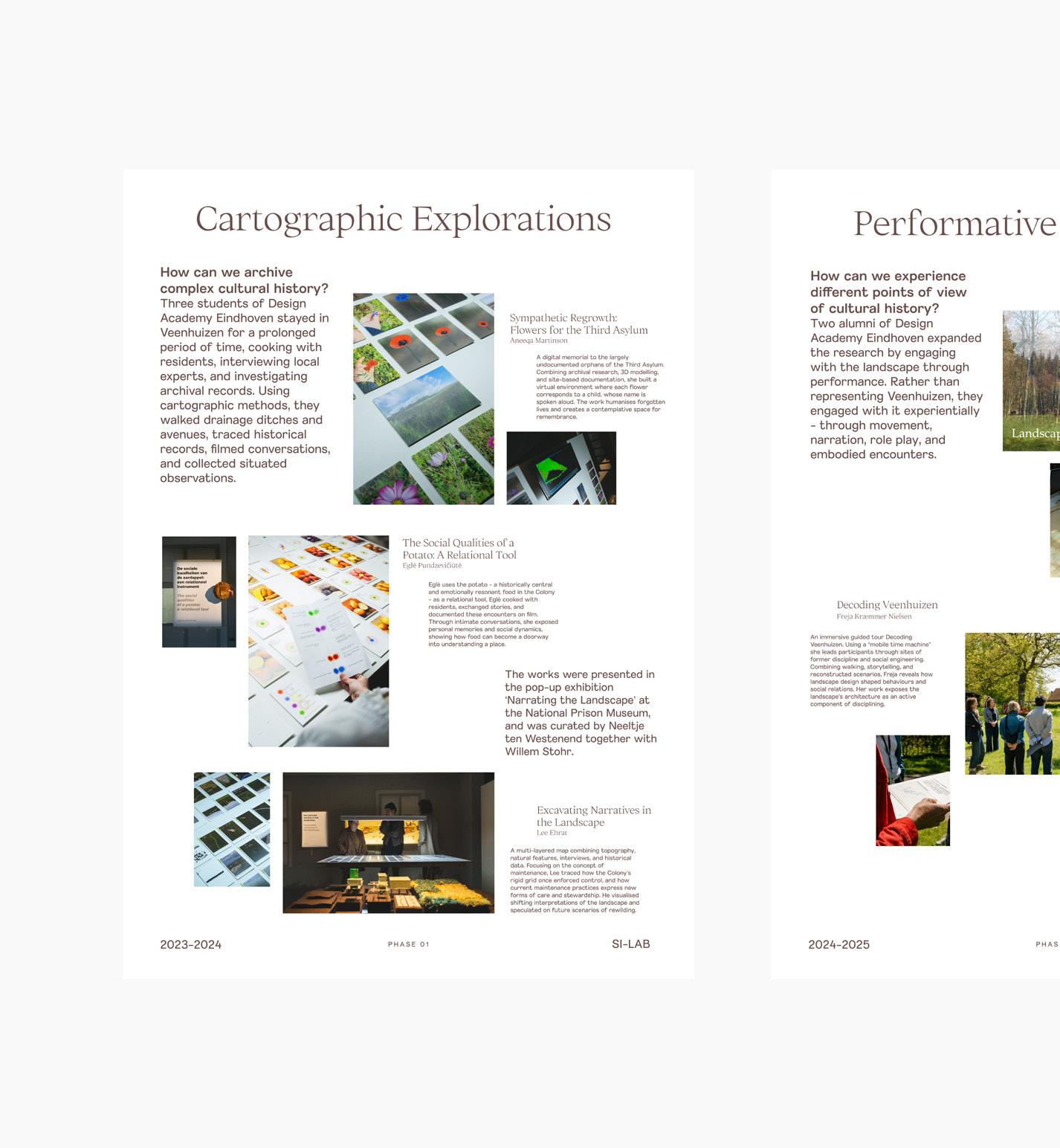
In 2023, SI-LAB initiated the focus module Cartographic Explorations, in which fourth-year bachelor students were taught to combine quantitative GIS data with qualitative data, such as mapping, sensing, and narrating.. The students’ work cultminated in the pop-up exhibition "Veenhuizen: Narrating the Landscape", presented at the National Prison
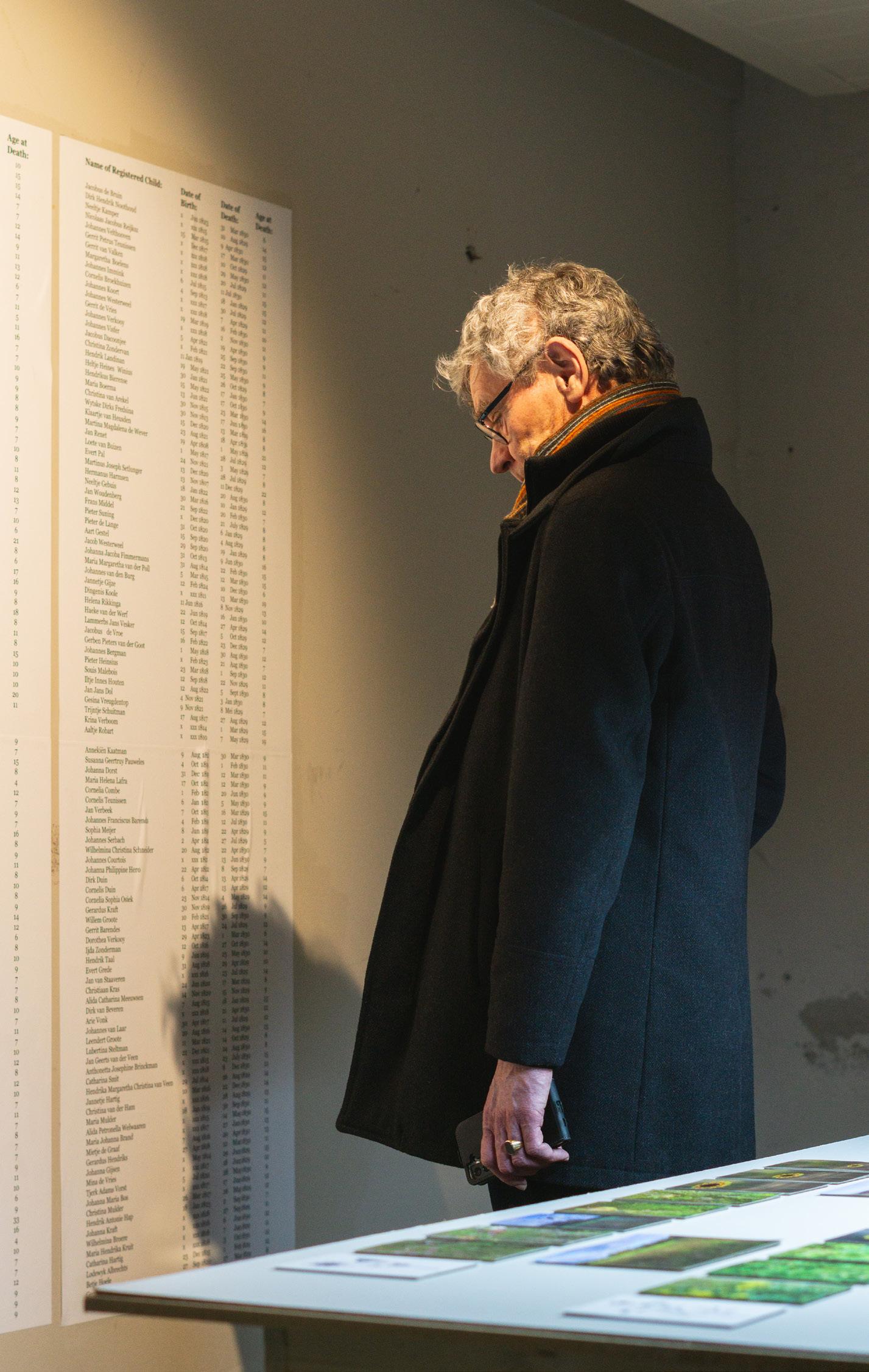
Museum in 2023. One of the projects in this exhibition, by Aneeqa Martinson (see appendix), marked an important turning point. Her research into the orphans who lived and died in the 19th-century colony raised questions about how design might contribute to acts of remembrance. Her work also highlighted something else – the untapped potential of the Drents Archief (and other archives) for design students. Until then, archives were only marginally used by DAE. Aneeqa’s project demonstrated what becomes possible when design engages with archival records.
This insight coincided with broader national developments: increasing transparency of archives and a growing societal debate around public access, data ethics, and the responsibilities that accompany the use of publicly accessible archival sources. As archives become more accessible, a new question emerges: how can we ensure meaningful engagement when not everyone has the skills to work with historical sources? Designers and artists often transform archival material into compelling formats, yet the archival research underlying these works sometimes remains methodologically thin or historically inaccurate. SI–LAB therefore sought to establish an interdisciplinary research model that enables exchange between different analytical approaches, connecting the expertise of historians with the critical, imaginative capacities of designers.
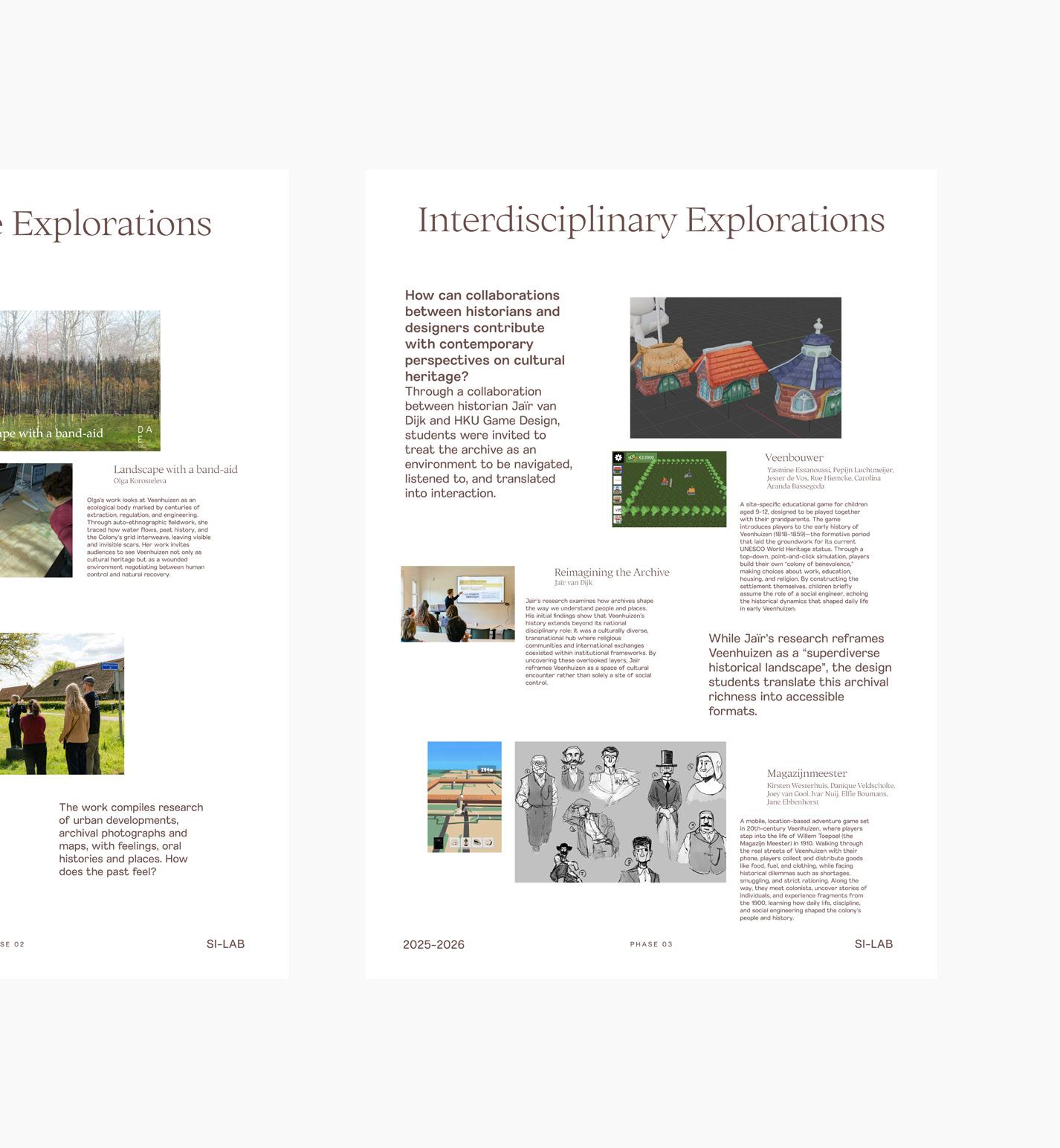
This was the moment Jaïr Salomon van Dijk joined as a research associate. By combining archival research with design-oriented methods, he helped lay the groundwork for a new collaboration with HKU Game Design.
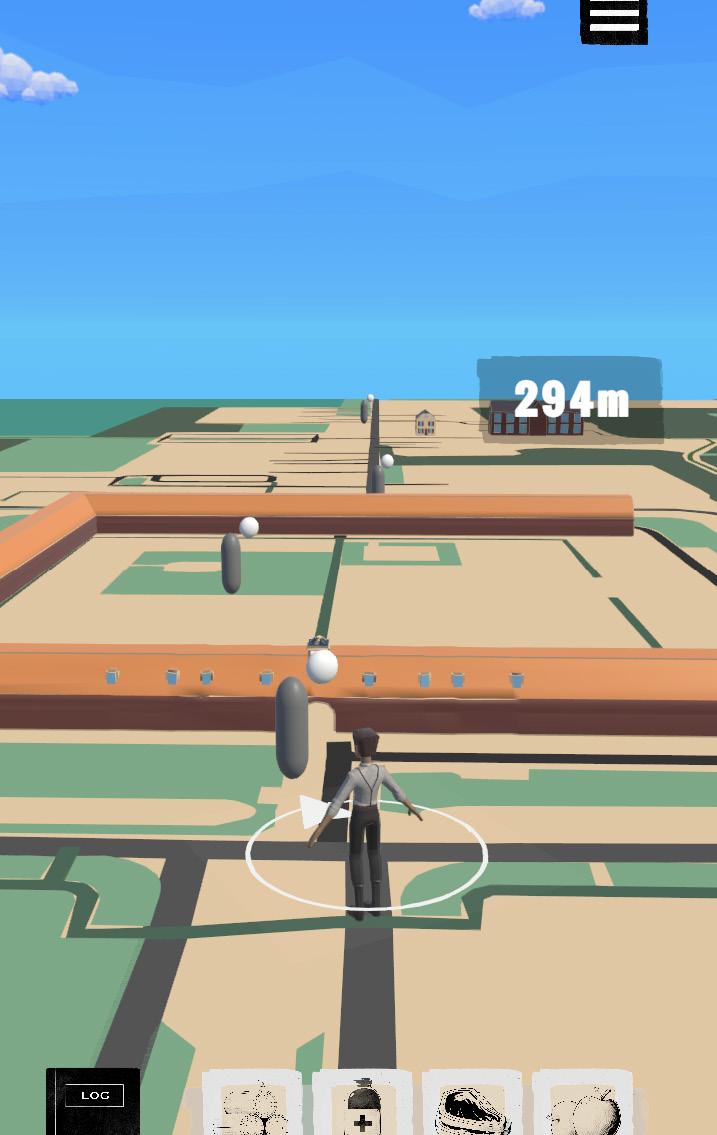
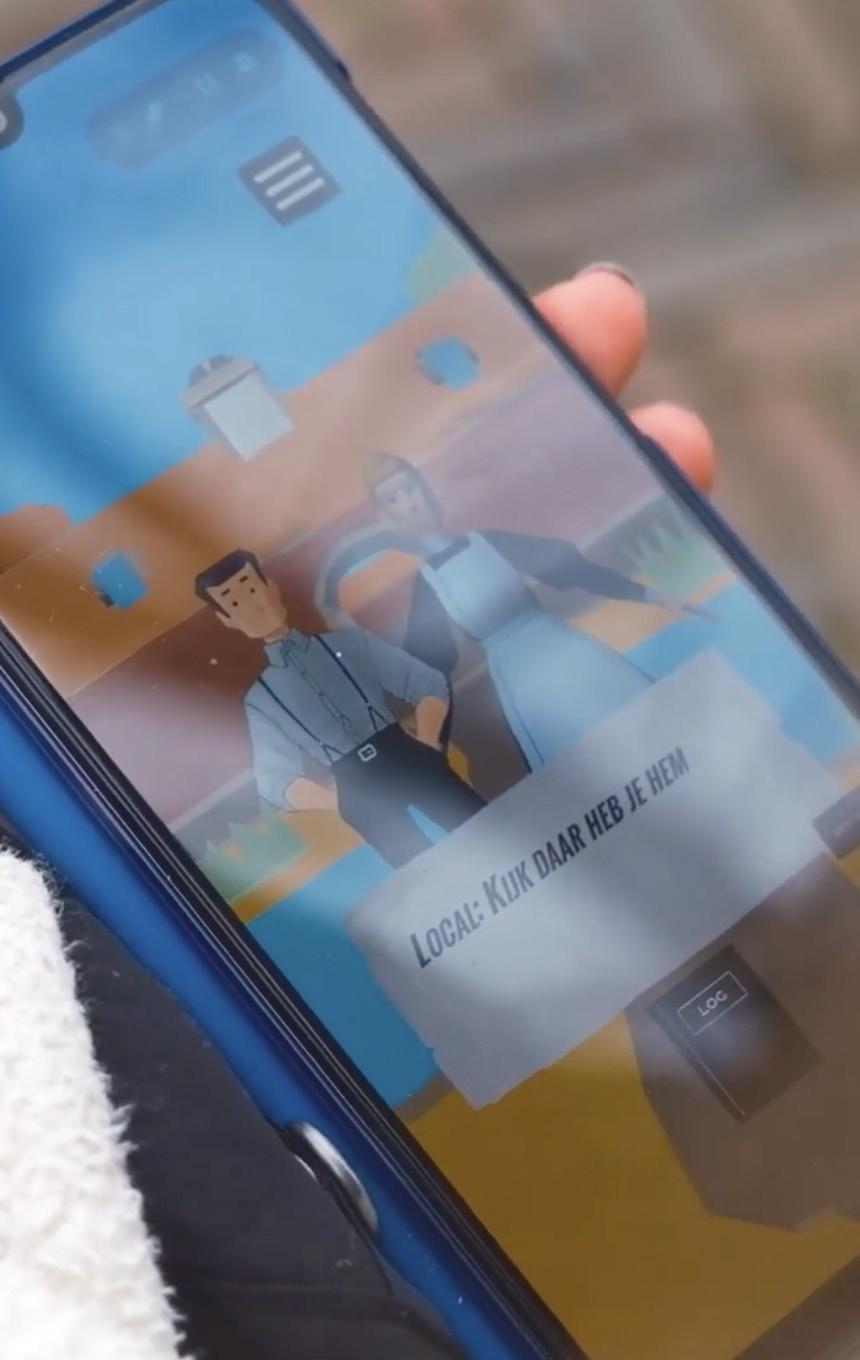
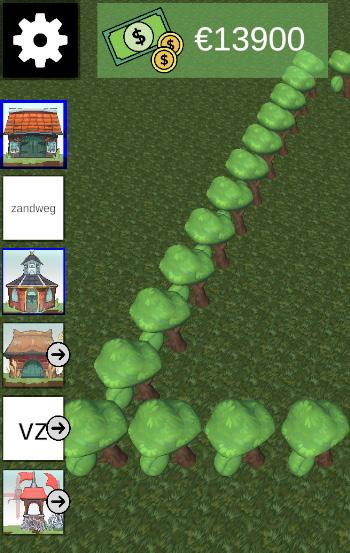
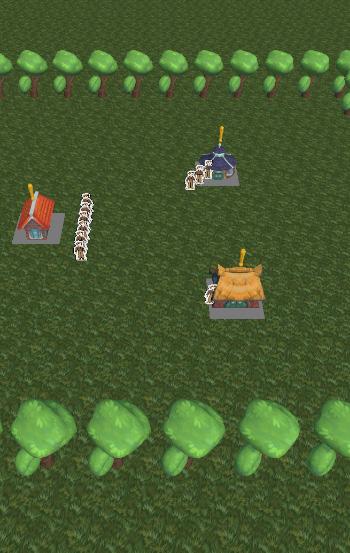
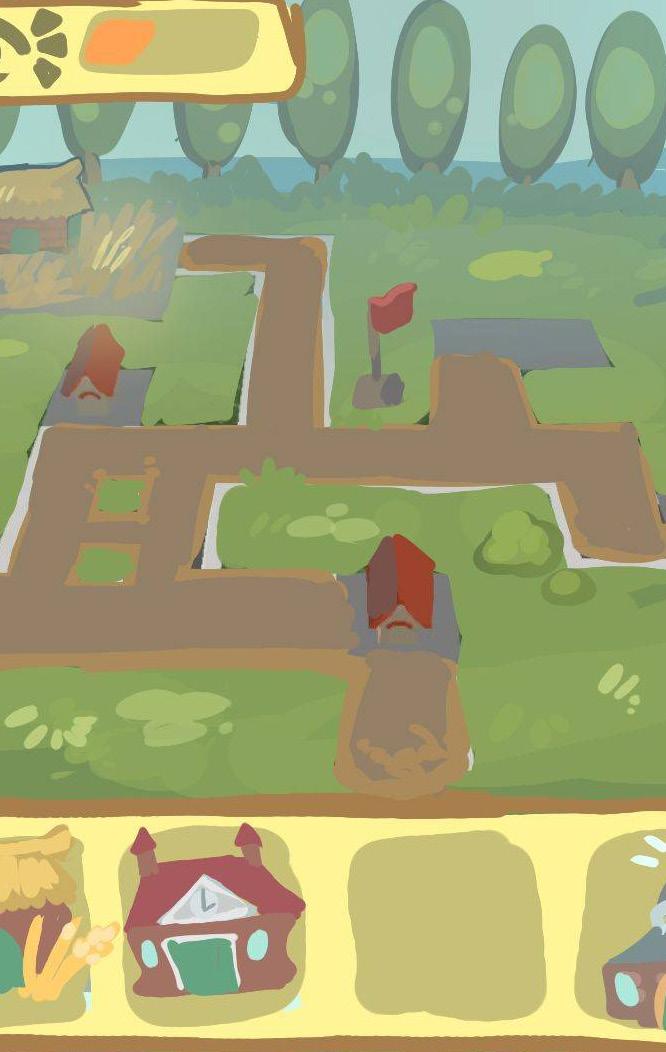
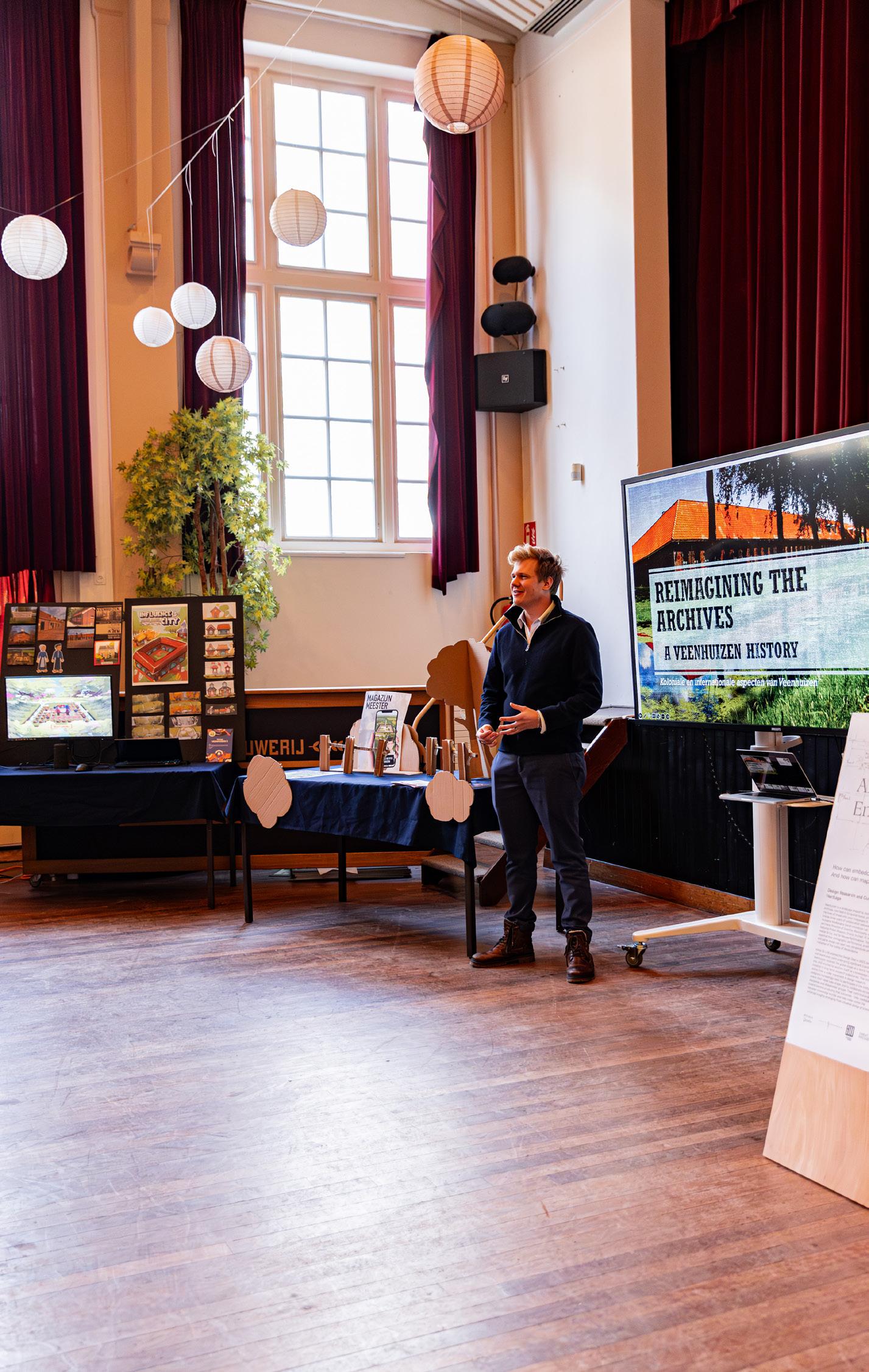
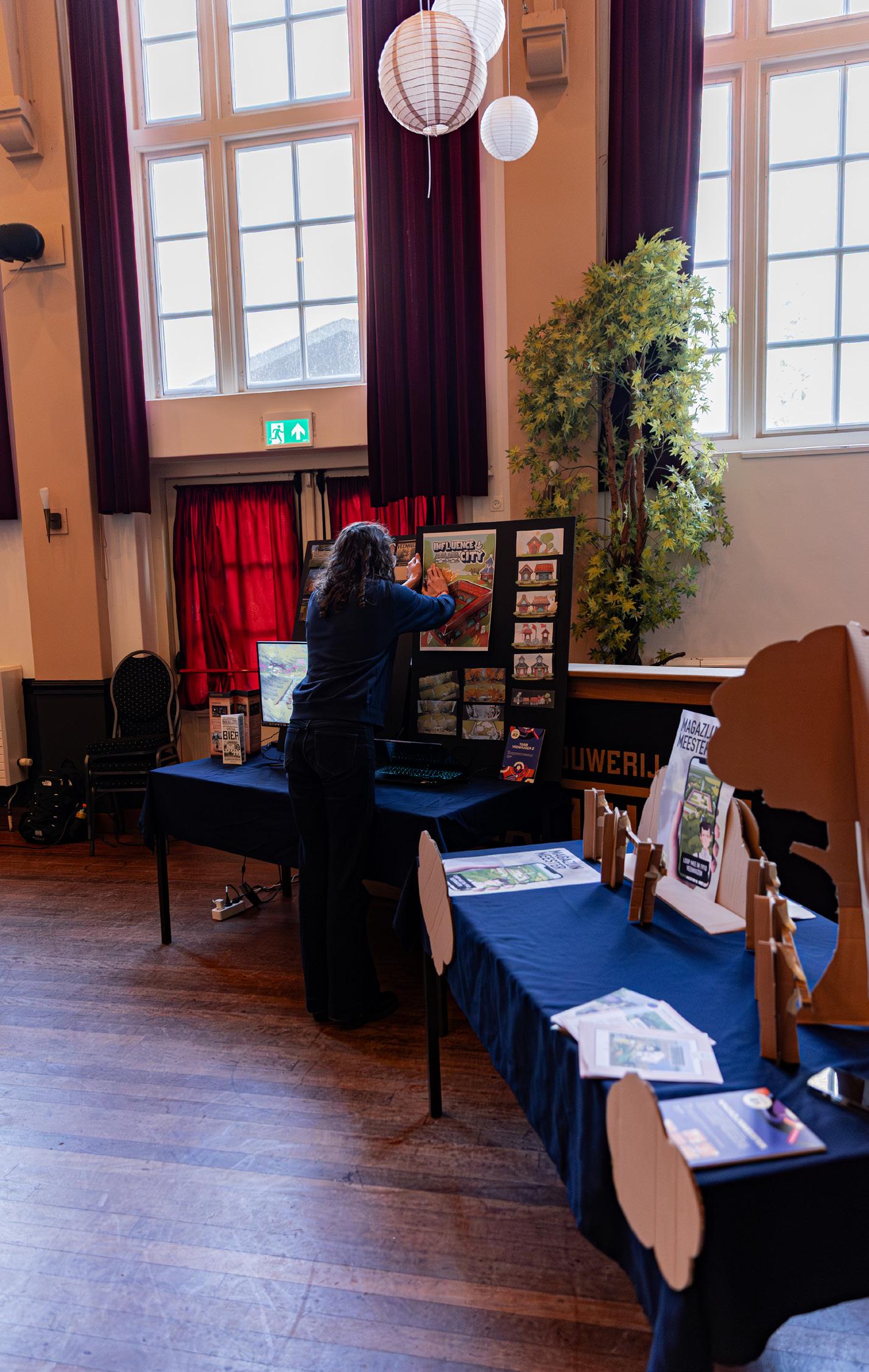
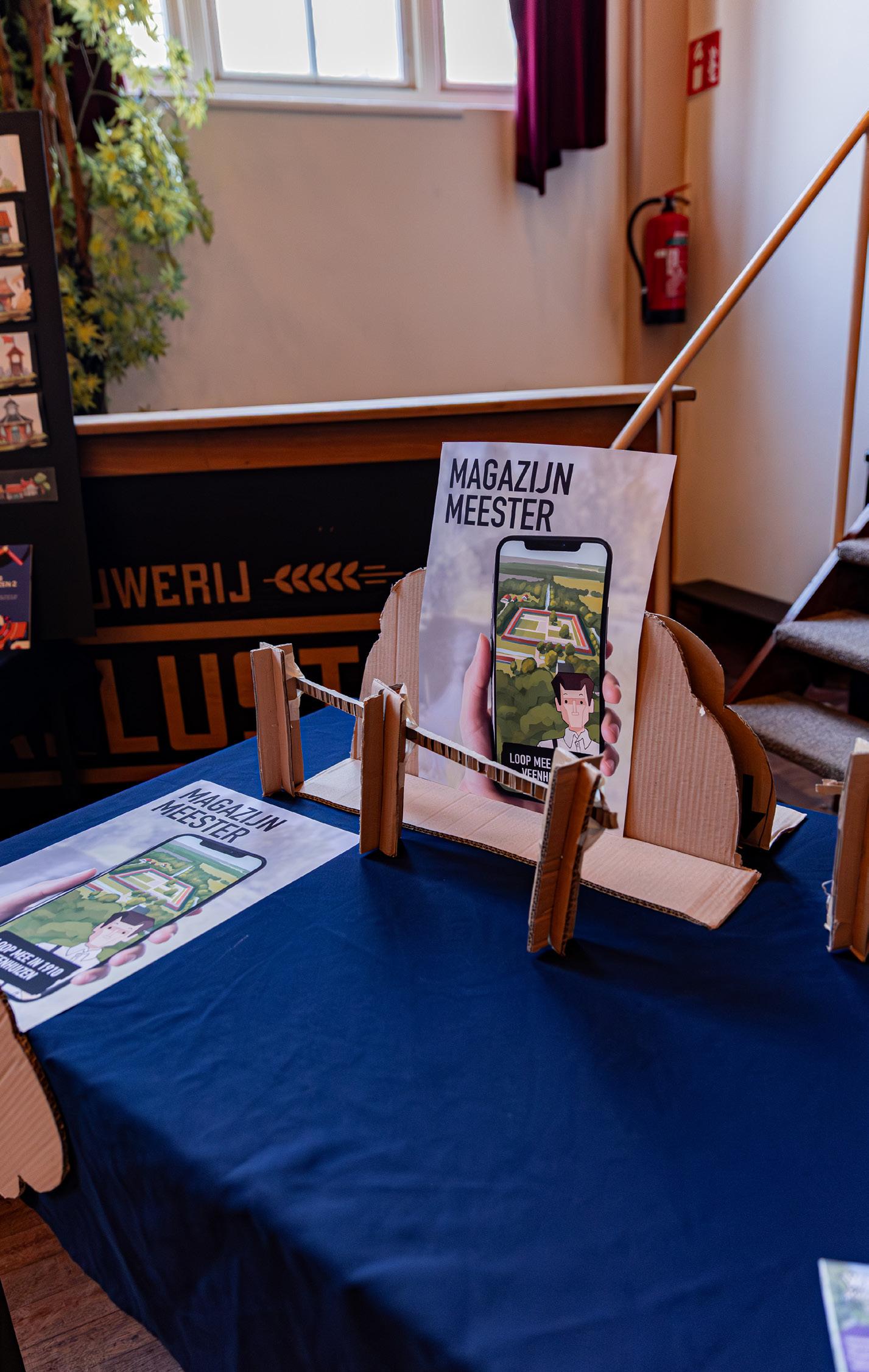
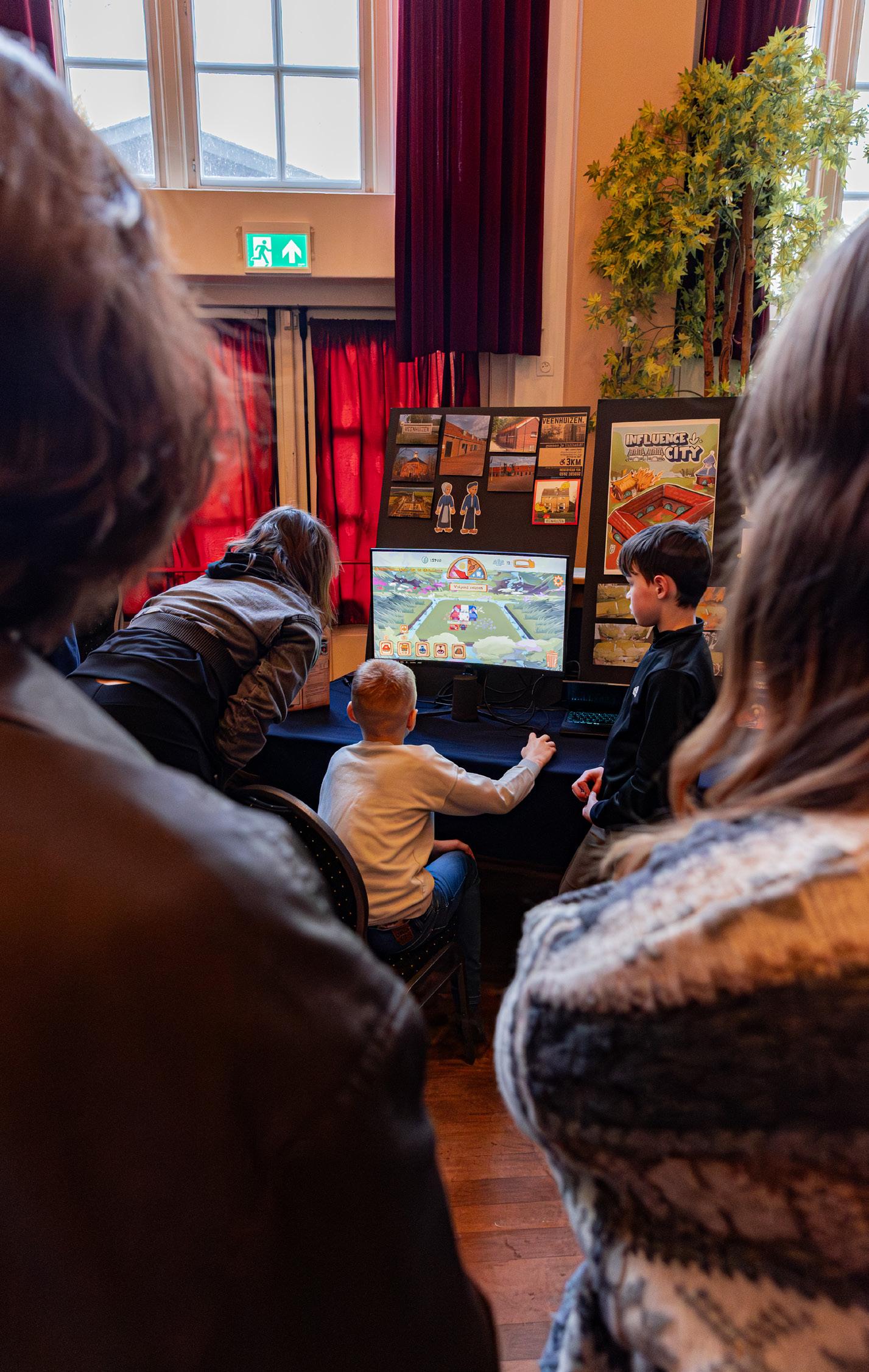
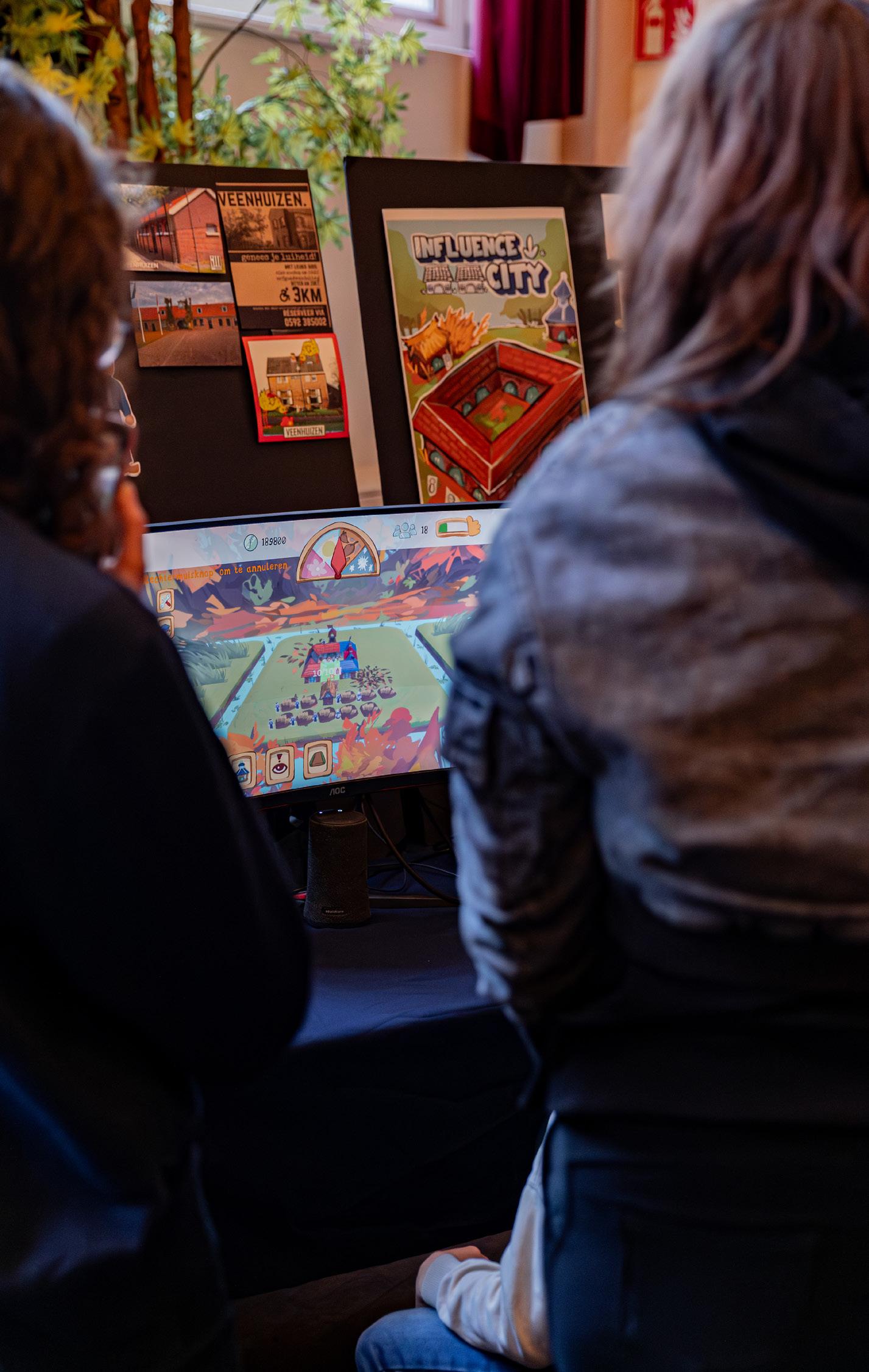
Game Design students drew on Jaïr’s research as the conceptual basis for a location-based mobile game that narrates Veenhuizen through movement and place-based
interaction. Through this collaboration, archival fragments became navigable experiences in the landscape–creating a meeting point between historical research and game design.
This publication marks the final three years of the Design Deal, hereafter referred to as the Design Deal under SI-LAB. It departs from an educational experiment in embedded design to a platform for interdisciplinary research, rethinking the intersections of heritage, archives, and game design. The final section presents student projects that exemplify this approach, while the central chapters feature Jaïr’s archival research on Veenhuizen from a microhistorical and migrational perspective.
We extend our gratitude to all students, partners, researchers, and community members who have shaped this collaboration over the years, with a special thanks to Pauline Bezemer (Policy Advisor for monuments and cultural heritage at the Municipality of Noordenveld) and Wendy Schutte (Program Manager of the Colonies of Benevolence at the Province of Drenthe). Their collective work has not only enriched design education but has also helped illuminate the layered, sometimes difficult, and always compelling stories held within the landscape of Veenhuizen. This publication is both a reflection on that journey and an invitation to continue it.
theActivating Archive
By Naomi Bueno de
Mesquita
Archives remain crucial sources to how we remember and narrate the past, yet they are still too often treated as static repositories – places where documents are stored, ordered, and consulted by specialists. Within design education, this is both a limitation and an invitation: what happens when we treat archival research itself as a design brief, a task that demands creative interpretation, social engagement, and spatial imagination?
Within the SI–LAB, we have been exploring precisely this question. Our research lines seek to make archives tangible and experiential through location based games and participatory methods that allow diverse publics to engage with historical sources. The integration of historical practice – specifically archival research from a microhistorical perspective – into design education offers a powerful, though still underexplored, pathway for enriching design research. When embedded within the historical and institutional context of a site as complex as Veenhuizen, archival inquiry enables students to move beyond surface aesthetics toward a layered understanding of place. It allows them to uncover lesser-known narratives, interrogate dominant historical accounts, and develop responses and retellings that are critically engaged and site-bound.
This growing attention to archives as active sites of engagement unfolds within a broader field of political and technological transformations. The politics of remembrance, how societies decide what is commemorated, what is marginalised, and what is erased – now intersects with technological developments that enable new forms of access and interpretation. Digitisation, public access to archives, data visualisation, and interactive media make it possible to navigate archives in ways that were previously unthinkable. At the same time, these technologies bring
uncomfortable questions to the surface: Whose histories are being preserved and digitised? Whose voices remain buried in the margins or absent altogether?
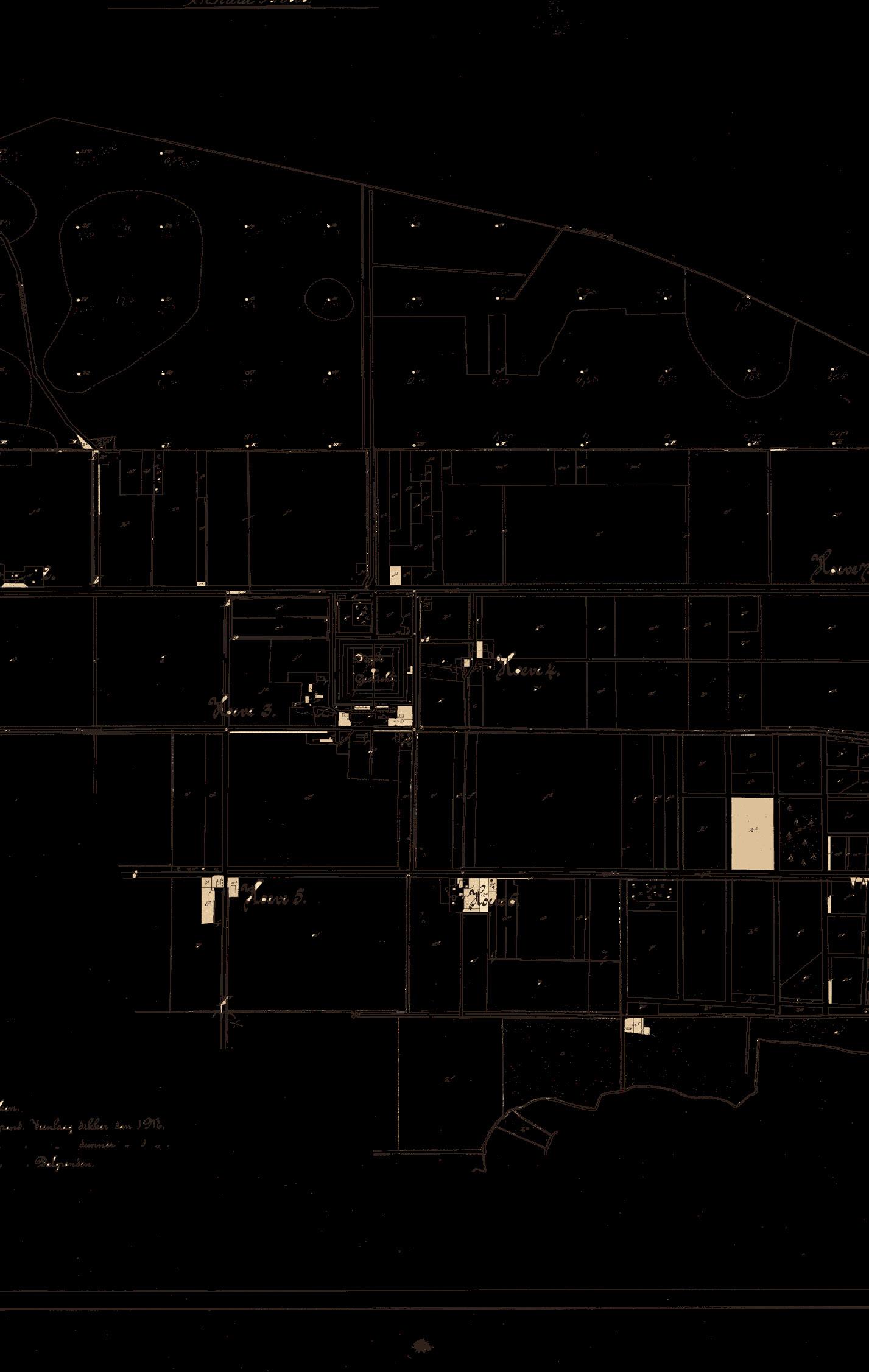
Veenhuizen has become a particularly meaningful setting in which to test these questions. Its landscape, with its deliberate alignment of roads, canals, farmlands, and institutions, is the material residue of ambitious experiments in welfare, discipline, poverty relief and social engineering. But it is also a palimpsest of everyday lives – of orphans, paupers, administrators, migrants, and their descendants – whose traces are scattered across depots of several archives in Drenthe, The Hague, Rotterdam, Suriname, and beyond. To work in Veenhuizen is to move constantly between documents and ditches, between ledgers and lanes. The landscape becomes a gateway into the archive; the archive, in turn, becomes a way of reading and reexperiencing the landscape.
Veenhuizen, with its intricate history as a social reform experiment, an agricultural domestic colony, a site of discipline, and now a living village community, offers fertile terrain for exploration. Here, tangible traces of built and green heritage intersect with more intangible layers of institutional structures, lived experience, and processes of cultural exchange, appropriation, and transformation. For design students, engaging with such a site through microhistorical archival inquiry makes it possible to understand the place not as a backdrop, but as a layered constellation of power relations, memories, and social practices.
At the heart of this publication lies the work of historian Jaïr Salomon van Dijk, whose research provides the historical depth and critical reflection that informs
the design scholars’ analysis. His approach is rooted in microhistory and (often forced) migration history: rather than starting from the grand narrative of ‘pauper reform,’ he zooms in on individual trajectories and small archival details, signatures, marginal notes, egodocuments[2], to reveal how larger systems of governance, inequality, and social control were lived and negotiated.
Through the case studies of the Van Guinea family and Ulisses van Makassar, Jaïr demonstrates that Veenhuizen was never merely an isolated experiment in poverty relief. It was part of a broader transnational and colonial web of labour, and international power-relations. The lives of Thomas Jacob and Paulus Jacob van Guinea, moving from the West African coast to Rotterdam and eventually into the orbit of Veenhuizen, make visible the entanglements between seafaring traditions, urban poverty, and institutional discipline. The story of Ulisses, taken as a child from Makassar and later employed in the household of General Johannes van den Bosch, exposes the uneasy proximity between the rhetoric of public “benevolence” and the realities of coercion and exploitation that marked the colony’s origins.
Seen through this lens, Veenhuizen appears as a superdiverse institutional settlement rather than a homogeneous ‘colony of the poor’: a place shaped by continuous influx and outflow of orphans, widows, pauper families, former soldiers, and people with roots in overseas territories and different religious communities. Jaïr’s archival work does more than refine the historical record; it opens
2
Egodocuments are personal, self-testimonies in (archival) texts or other media, such as diaries, petitions, memoirs, and autobiographies. The term was coined in the 1950s by historian Jacques Presser.
space for more complex, and sometimes painful, readings of the site.
For design education and research, this has concrete implications. When design scholars are invited to work with such microhistories and migration trajectories, the archive ceases to be a distant source and becomes an active collaborator. It challenges students to ask: How do we translate the fragmentary traces of overlooked lives into spatial, visual, or interactive experiences without instrumentalising or simplifying them? How do we make room for unfinished or incomplete stories? Archival practice, in this sense, becomes a means to produce retellings that remain open, situated, and ethically attentive.
Today, locally based heritage institutions such as the National Prison Museum in Veenhuizen, Museum De Proefkolonie in Frederiksoord, and the Drents Archief in Assen present the history of the Colonies of Benevolence through interactive exhibitions and curated displays. They aim to connect past and present by foregrounding recurring themes and engaging visitors in immersive and empathetic ways, often drawing on the landscape and material traces of the colonies themselves. The National Prison Museum, for instance, invites visitors into former cells in the historic prison buildings to experience the penitentiary side of Veenhuizen’s past, while the local brewery offers guided tours and tastings that fold the site into a broader leisure economy. Such practices undoubtedly succeed in making history tangible and accessible. At the same time, as Esther Peeren (2020) has critically argued, recently redeveloped heritage sites – especially those aspiring to or having gained World Heritage status – run the risk of “disneyfication”: a transformation of complex and violent pasts into consumable, playful spectacles that privilege entertainment
and comfort over critical engagement.[3] Her notion of the “gift shop effect” points to how commodification, immersive play, and lighthearted framing can pre-empt more difficult questions about poverty, discipline, and coercion, encouraging visitors to relate to such histories as experiences to enjoy rather than as legacies to interrogate. These questions resonate strongly with how Veenhuizen is currently presented to the public. Which stories are highlighted, which remain underexposed, and how are the colony’s harsh realities framed within narratives of reform, progress, and national pride?
As this publication and the design outcomes of the Design Deal under SI-LAB demonstrate, open-ended archival inquiry enables designers to look beyond existing, sometimes restricted narrative frames. Working critically with archival sources (aided by Jaïr) and the site itself, they unpack how idealistic institutional imagery can coexist with harsh daily experiences, and how celebratory or touristic representations may obscure relations of power, exclusion, and suffering. In doing so, the students propose alternative ways of seeing and narrating Veenhuizen that resist disneyfication and instead enrich public understanding – contributing to a more layered, critical, and responsible engagement with the colony’s troubled yet inventive past.
Within SI–LAB, these questions have led to a series of interdisciplinary experiments, including the collaboration with Game Design students from Hogeschool voor de Kunsten Utrecht (HKU) featured at the end of this book. Here, archival research forms the conceptual backbone of a location-based experience in which players walk
E. Peeren, Enter through the Gift Shop: The Rural Pauper Colony of Veenhuizen as a Tourist Attraction. in: Collateral no. 23, (2020). 3
through Veenhuizen and encounter its histories through sound, narrative cues, and situated interactions. The point is not merely to ‘gamify’ history, but to probe what it means to navigate an archive and the landscape. The game environment becomes a test ground for what I would call embodied archival practice: historical knowledge is not only looked at, but can be walked, listened to, and felt.
This publication documents and extends that exploration. In the following chapters we delve into Jaïr’s archival research and the methodologies that underpin it. They trace how microhistorical case studies can re-situate Veenhuizen within wider histories of empire, migration, and social reform. Alongside these historical analyses, design projects are presented that translate archival insights into experiential forms.
Crucially, this book does not propose a single, definitive account of Veenhuizen. Instead, it foregrounds multiple perspectives and temporalities inhabiting the same landscape. It shows how collaborations between designers, historians, educators, and institutions can generate forms of knowledge that are both critical and publicly accessible.
In this sense, ”archival encounters” is not just a metaphor. It is an invitation to move through Veenhuizen differently: to read its straight avenues and monumental buildings alongside petitions, personal letters, and registers; to understand that the canal, field, and façade is connected to lived histories that extend far beyond the village itself. At the same time, the “archive as embodied experience” reminds us that the past is not only stored in boxes and databases, but also in bodies, habits, stories, and spatial practices.
My hope is that this book will be read not only as a documentation of a particular project, but as a contribution
to a broader conversation on how design research, in dialogue with archival research, can engage with cultural heritage in more responsible, imaginative, and inclusive ways. Veenhuizen is, in many respects, a specific case. Yet the questions raised here – about power, memory, representation, and participation – are urgently relevant far beyond its borders.
To narrate a landscape like Veenhuizen is to traverse it, to listen to it, and allow oneself to be unsettled or moved by it.
Chapter 01
Veenhuizen through a Microhistorical lens
By Jaïr Salomon van Dijk
Veenhuizen is one of seven Colonies of Benevolence, of which four have been granted UNESCO-World Heritage status in 2021. Veenhuizen received this World Heritage status because it represents an early and influential social experiment in poverty relief and social discipline, expressed through a highly controlled, purpose-designed landscape. Its self-sufficient and panoptic village layout embodies a unique historical approach to social intervention during the rise of economic liberalism. Established in 1823 as an unfree colony, Veenhuizen formed part of a larger network of agricultural settlements that aimed to alleviate poverty through domestic settlers‘ colonisation. These colonies were deliberately located in remote peat and heath landscapes that could be cultivated for agricultural production to help feed the ever growing Dutch population. In the nineteenth century, the majority of Dutch cities sank deeply into poverty: overcrowded slums spread, streets became dirty and neglected, and many families struggled to survive on irregular or extremely low wages.[4] This hardship was so severe that some parents were forced to leave their children at foundling homes despite having an income, being unable to support their growing families.
In Veenhuizen, numerous orphans and poor people (colonists) were relocated under supervision of the Society of Benevolence, later the state, to learn how to work the land and undergo a process of moral and social reform. The design of the settlement Veenhuizen reflected Enlightenment ideals of rational order and productivity. Its orthogonal layout of avenues, agricultural lands, and building complexes, like its three Institutions and farm houses, represented the disciplinary and labour ambitions
4
L. van Hasselt, Geld, geloof en goede vrienden : Piet van Eeghen en de metamorfose van Amsterdam, 1816-1889 (Amsterdam: Uitgeverij Balans, 2023).
of a panoptic institution. These were integrated into a landscape intended to foster industriousness, moral improvement and self-sufficiency. During the mid-nineteenth century, thousands of people lived and worked in the colony Veenhuizen (over 11.000 people in total have lived in the Dutch Colonies of Benevolence and, in 1910, in Belgium the number peaked at 6.000).[5] Over time, Veenhuizen evolved from a colony into a penal institution into a more conventional village while retaining much of its nineteenth century/original spatial and architectural characteristics. A history and outcome that ensured Veenhuizen its UNESCOWorld Heritage status.
The transformation of the landscape in the nineteenth century not only took place on a physical level, but also on a cultural one. The colony was a place where people from varied geographical, cultural and social backgrounds lived in close proximity, generating a complex and diverse social landscape that defies the image of a homogenous colony filled with strict-rule following personnel and urban poormade colonists.
My research explores the different backgrounds of colonists in the early nineteenth-century Colony of Benevolence. Therefore it uses Dutch archival records through case studies about the Colony of Benevolence in Veenhuizen, a former poor and orphan colony that functioned as a remarkable melting pot of people from all corners of the Netherlands and even from abroad. Established in 1823, Veenhuizen brought together people of different religions, social classes and backgrounds. At a time when the Netherlands was struggling with widespread poverty and economic decline, war, and social crisis, Veenhuizen emerged as a social experiment aimed at disciplining and reforming the poor. Against this background, this research
asked how diversity within Veenhuizen can be imagined within institutional archives in and outside of Drenthe, and what these archival practices reveal about ideas of belonging, exclusion, and social order. This research is embedded within the interdisciplinary framework of the Design Deal under SI-LAB, where archival research informs contemporary design practices and vice versa. While designers explore new ways of visualizing, interpreting and activating the heritage of Veenhuizen and its landscape, this study contributes critical historical depth by uncovering personal narratives and power structures within the archives. Therefore, design students and game developers were able to incorporate my archival research on Veenhuizen into interactive games created for and set in Veenhuizen.
Focusing on the first half of the nineteenth century, a decisive transformative period for the Netherlands, this research draws on administrative documents, population registers, disciplinary records and personal files from Veenhuizen and documents that are housed in other archives outside of Drenthe. This period is particularly historically significant because it marks the emergence of modern state welfare systems alongside the continued entanglement of the Netherlands with its colonial empire. While Veenhuizen is often framed as a national project of poverty relief[6], this study foregrounds the presence of people with direct and indirect links to colonial histories, including individuals of colour and formerly enslaved people.
5
6
See the website of UNESCO logo World Heritage Convention.
See: K. De Clercq, et al. The Colonies of Benevolence: an exceptional experiment. ( Van Gorcum, 2018) and S. Jansen, Het pauperparadijs : een familiegeschiedenis. Zesenvijftigste, uitgebreide druk. (Amsterdam: Uitgeverij Balans, 2016).
By tracing these colonial connections within a seemingly domestic institution, the research challenges the separation between Dutch social history and colonial history, showing how global systems of exploitation, migration and racial categorization were embedded in local regimes of care and control.[7]
Up to 1813, The Netherlands fell under French Napoleonic rule followed by the creation of the United Kingdom of the Netherlands with King William I at its head. A period wherein the increasing problem of poverty, particularly noticeable in the cities, became a decidedly Dutch elite concern.[8] A ban on begging had already been introduced by French law in 1810, yet the latter only increased because of the agricultural crop failure in the years 1816-1817. Dutch intellectuals saw begging and poverty as a problem for society as a whole, one that could be solved by finding collective solutions like the agricultural domestic colony model introduced by the Society of Benevolence (Maatschappij van Weldadigheid). The Society, an organisation founded by General Johannes van den Bosch (1780-1844) and a great number of prominent Dutch politicians and scientists, presented this model to King Willem on 14 January 1818, two months before the Society’s official founding. The King’s approval of the agricultural domestic colony model as a means of pauper relief eventually resulted in the founding of seven Colonies of Benevolence of which Veenhuizen was the sixth.
Veenhuizen represents a unique cultural landscape, one that represents an innovative nineteenth century model of pauper relief and settler colonialism (known today as an agricultural domestic colony), and one that has a highlylayered and complex institutional past. Its narrative is not confined to the site of Veenhuizen alone. It reaches beyond its physical boundaries, via the person-bound histories of
its personnel and colonists, its connections to the other six Colonies of Benevolence and via its archival records. Archival records about Veenhuizen are scattered across several archival collections and documents written outside the Netherlands, for example from Paramaribo in Suriname, and even from trading point Elmina (present day Ghana),[9] Taken and examined together, the Veenhuizen records present a surprisingly detailed account of the individuals who worked, lived in and passed through Veenhuizen. The archival records shed light on the colonists’ origins, the circumstances that brought them to Veenhuizen, the social and economic networks they maintained, moved in, were influenced by, and the paths the colonists followed once they left the colony (1823-1859), later the penitentiary institution Veenhuizen behind. These are the colonists’ personal narratives, or microhistories, that started long before the colonists’ arrival and which continued after their departure from Veenhuizen.
The concept of microhistory originated within Italy in the 1970s as a reaction against large-scale, generalized historical narratives. Scholars, (mostly historians) such as Carlo Ginzburg and Giovanni Levi focused on small case studies, individuals, small communities, or events to reveal broader social, cultural, and power structures.[10] Rather than starting
7
8 See: M. Foucault, Michel, en translator Historische Uitgeverij. Vertalerscollectief. Discipline, toezicht en straf : de geboorte van de gevangenis. Zevende druk, (Groningen: Historische Uitgeverij, 2018)
9
10
P. Melief, ‘De strijd om de armenzorg in Nederland, 1795-1854’ (Wolters, 1955).
One can find such documents for example in the National archives in The Hague, archive no. 2.04.19.02 Inventaris van het archief van het Ministerie van Binnenlandse Zaken: Afdeling Gestichten Ommerschans en Veenhuizen, 1859-1870.
C. Ginzburg, De kaas & de wormen: het wereldbeeld van een zestiende-eeuwse molenaar (Amsterdam: Bert Bakker, 1982).
from broad historical trends and forces, microhistory works from the ground up: it zooms in on the everyday experiences, decisions, and interactions of individuals and families who often appear only briefly or fragmentarily in the archival records. What makes microhistory an interesting and effective research methodology is that it treats small person-bound details not as trivial, but as windows into broader historical forces. It therefore offers opportunities to bring greater nuance into design projects that tend to operate at more abstract or large-scale conceptual levels. By focusing on specific individuals and small stories, microhistory reintroduces nuance, empathy, and human complexity into the analysis. By reconstructing the colonist-perspective, microhistory allows historians to challenge general assumptions, highlight the diversity of human experience, and to better understand how, especially in the case of Veenhuizen, social governance was personally experienced and individually shaped. It can also shed light on how these structures transformed over time. In this way, the Colony of Benevolence becomes not only a macrolevel project of social control and utopian reform, but also a space of daily practice in which power, obligation, and agency were continuously enacted and contested through concrete human lives.
Microhistory thus offers a particularly effective lens for approaching the historical reality of the Colony of Benevolence, a system that was fundamentally shaped by larger-scaled social engineering, institutional control, and ideological visions of poverty, labor, and moral reform. By focusing on individual actors embedded in the colony, such as administrators, workers, or families – microhistory allows us to observe how broad ideological ambitions were translated into everyday routines, negotiations, and forms of resistance.
Via two case studies, which involves the microhistories of Paulus and his father Thomas Jacob van Guinea and the enslaved boy (read: servant) of General van den Bosch, a fuller and more nuanced picture of Veenhuizen emerges; one in which it is not just an outstanding example of an (unfree) agricultural domestic colony located in the north of the Netherlands, but part of a wider, transnational network and landscape. The word ‘enslaved’ used here refers to any individual who is held as property and forced to work without freedom, rights, or control over his own life. The case studies underscore how deeply entwined the microhistory of the before-mentioned individuals with Veenhuizen were, and how essential it is to look beyond the immediate physical environment of any landscape or site to unearth its multi-faceted and rich past. For the microhistorical analysis and archival research, my focus was on the manner in which individuals like Paulus and Thomas Jacob van Guinea navigated the established structures of power, reform and constraint.
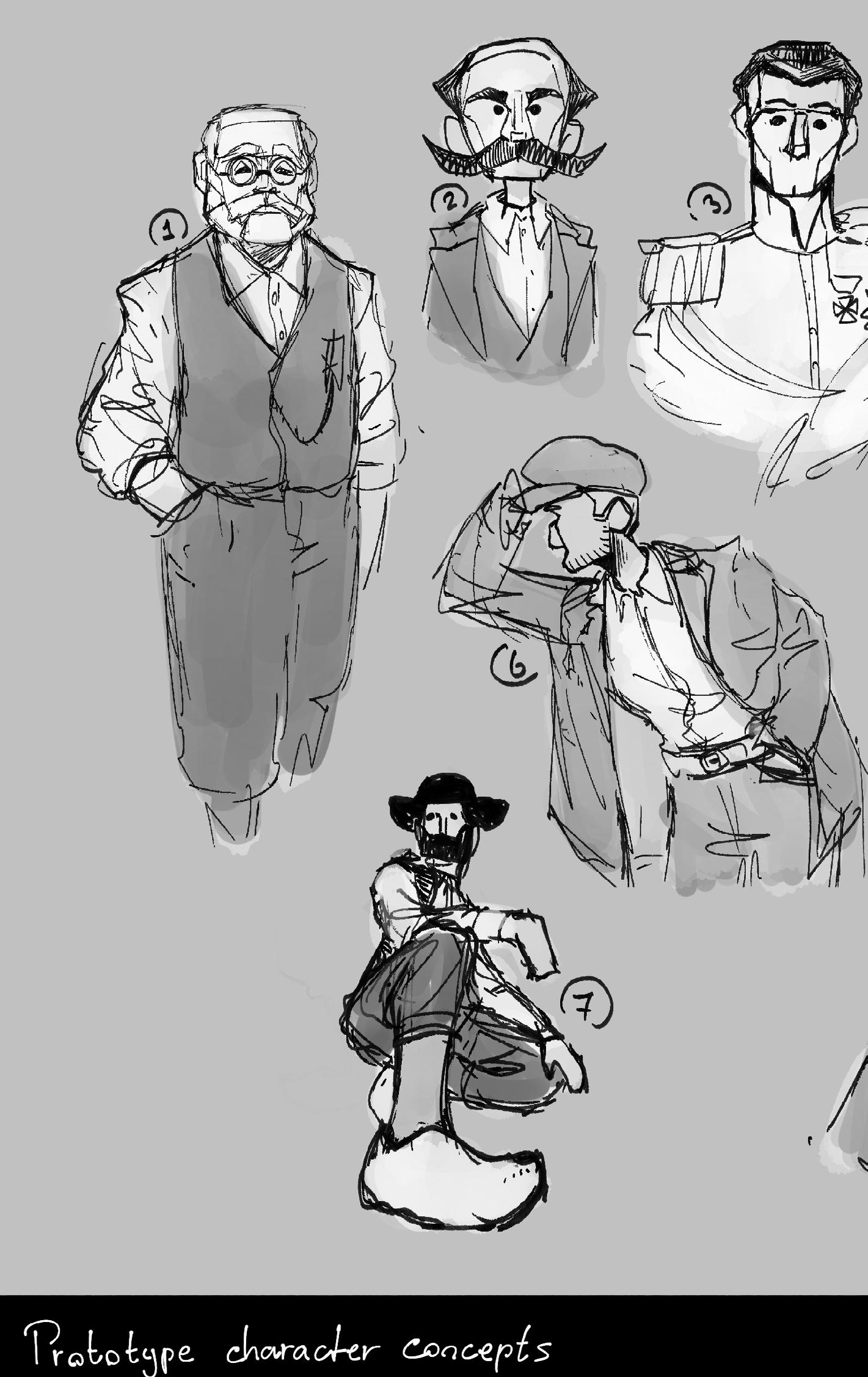
Through this use of microhistory as a methodological approach, students were encouraged to adopt the same perspective in their own game design processes. Rather than working with generalisations of groups within historical narratives, they grounded their projects in a concrete and factual historical case, thereby transforming a specific past life into the foundation of their interactive (game)designs. In this case, the chosen microhistorical subject was a warehouse manager from Veenhuizen in the early twentieth century. By focusing on the single historical figure and his everyday practices, students were able to translate archival knowledge into games, online environments, and narrative choices. As a result, microhistory functioned not merely as an analytical lens within the design method that structured historical
interpretation, it also informed decisions in (game)player interaction.
The bridging of methods, and the interpretive experimentation attempted within the Design Deal under SI-LAB highlighted how institutional contexts, their landscapes and human experiences intersect and how these intersections can be explored and presented through multiple lenses. It also demonstrated that historical research gains new vitality when placed in dialogue with design, making it easier accessible and resonant for broader audiences. The historical research component within the project underscored the value of expanding the historian’s and the design student‘s toolkit without compromising the discipline’s core principles. Archives can provide the foundation; microhistory offers precision and depth; and design opens pathways to new forms of insight and through the use of other media technologies it seeks public engagement with Veenhuizen’s history. Veenhuizen, both as a historical site and as a contemporary community, proved an ideal setting for this type of methodological exchange.
Chapter 02
Transnational Lives in Veenhuizen: A Migration Perspective
By Jaïr Salomon van Dijk
Moving from microhistory to migration history allows Veenhuizen to be understood not only through individual lives and experiences, but also as part of broader patterns of population movement and social engineering as a whole. While close analysis of personal trajectories reveals the complexity and diversity of those who lived and worked in the colony, these microhistorical insights gain additional meaning when placed within the larger contexts of (often forced) migration that shaped Veenhuizen from its foundation onward. Individual stories of orphans, paupers, widows, families, and personnel were embedded in organized systems of recruitment and opportunity that brought entire groups of people from across the Kingdom to this remote site. Examining how small scale life histories intersected with large scale movements of colonists highlights Veenhuizen as both a lived environment and a structured node within wider networks of forced and voluntary migration, where personal agency and institutional power continuously interacted.
Veenhuizen was one of seven agricultural domestic colonies realised by the Society of Benevolence in the North and South of the United Kingdom of the Netherlands. All realised in remote, uncultivated Dutch (and later Belgian) locations. In these colonies, urban poor were to get better prospects by receiving free education and health care and by learning to do agricultural labour thus becoming self-sufficient. The site is therefore often discussed as being the product of an innovative and highly influential model of pauper relief. From a microhistorical viewpoint, Veenhuizen can also be understood as a dynamic crossroads of population flows in which diverse cultural, religious and ethnic traditions met and influenced one another. Orphans, pauper families, widows and beggars from all parts of the Kingdom, including individuals from industrial or proto-
industrial centres in Holland (today’s Provinces North and South Holland) and Brabant, were sent to Veenhuizen. The colony’s recruitment and selection system also brought in residents from different cultural-geographical and institutional backgrounds, such as former military personnel and their families who were given supervisory roles, and individuals that had roots in overseas territories, had dissimilar religious backgrounds, or were sent to the unfree colony via the poor relief system. These practices led to colony’s being a microcosm of broader historical forces, underlining how migration functioned as a structural driver of social and cultural diversity in Veenhuizen (Lucassen 2004, 2018).[11] The Society of Benevolence mostly referred to its colonists as poor people, ‘poor’ orphans, poor beggars, and pauper families and widows. Such one-sided portrayal is, as already pointed out, not nuanced enough and glosses over the diversity found in the origins and microhistories of the individual personnel and colonists.
Concerning its migration, Veenhuizen can be seen as a node within a much wider network of both forced and voluntary migrations (Hoerder 2002; Manning 2005) . Migrations that result from policy decisions and institutional coercion, like the poor being forcibly sent to Veenhuizen to become colonists, and from personal and family strategies that responded to economic and social opportunities mostly reserved for personnel. Some personnel stayed only a few years in Veenhuizen before finding work elsewhere or colonists were discharged and returned to their place of origin. Others, both personnel and colonists, remained for generations within the institutional framework of the colony. Some former colonists even asked to be returned to the colony, not being able to function on their own outside the carefully structured Veenhuizen system. Veenhuizen, as Leo & Jan Lucassen (2004) have described for the Dutch
city Amsterdam, decidedly followed a rhythm of continuous inflow and outflow, creating a layered community of newcomers and established inhabitants and of culturalsocial exchange.
As is often the case in multi-cultural urban settlements where migration has long-term effects on social structures (Steven Vertovec 2007; and Lucassen 2011), Veenhuizen experienced a form of superdiversity avant la lettre. Interactions in the three Veenhuizen Institutions (dormitories, communal dining halls, work and school rooms, kitchens and kitchen gardens), workshops, exchanges taken place on farmland, in the farm houses (hoeven) and during religious observances created a social fabric in which elements of cultural blending coexisted with forms of segmentation. The presence of Protestants, Catholics, and a smaller number of Jewish personnel and colonists in Veenhuizen, as well as the variety of regional dialects and artisanal skills, formed a basis for a shared daily life. A life in which differences between individuals and the governance/ institutional structures had to be constantly negotiated. The governance or institutional structure naturally played a decisive role in shaping Veenhuizen’s form of diversity. The Society of Benevolence sought to impose order on what it perceived as morally and economically disordered populations through strict regulation and social control. This disciplinary structure, comparable to what Michel Foucault (1977) has described as a dispositif of power[12], must often have clashed with the resilience shown by M. Foucault, The Order of Things : An Archaeology of the Human Sciences, (London, Routledge, 2002). 12
11
Lucassen, L. (2004) Amsterdammer worden : migranten, hun organisaties en inburgering, 1600-2000, Amsterdam, Vossiuspers UvA. & Lucassen, L., & Lucassen, J. (2018). Vijf eeuwen migratie: Een verhaal van winnaars en verliezers. Amsterdam, The Netherlands: Atlas Contact.
Veenhuizen’s personnel and colonists, sometimes collectively, sometimes individually. Scholars such as David de Boer en Geert Janssen (2023) have shown that in such institutional contexts migrants like Veenhuizen’s personnel and colonists are rarely passive recipients of the governance and ingrained social structures imposed on them. They actively develop strategies to preserve and adapt their personbound socio-cultural identities. Veenhuizen, due to its diverse range of people, must have bore witness to this arena of interaction, conflict, and cultural creativity as well. To unearth this part of its history, the archival records on Veenhuizen serve as an important source, fragmented though they may be perceived from a specific view point. Archival records and the information contained in them mean different things to different people. When created, archival records are generally for a specific purpose or function depending on their creator – often by those in power – but, having been created, they can develop the capacity to be used and perceived in a multitude of ways and to carry an abundance of meaning and information.[13] Especially the latter can help to nuance the migration history and complex institutional pasts of sites like those of Veenhuizen.
The archive of the Society of Benevolence, preserved among others in the Drents Archief and the Dutch National archives, contains extensive administrative records on the arrival and departure of Veenhuizen’s personnel and colonists, their origins, family structures, religious affiliations, and labour histories. By linking these records to civil registry data, military archives, and urban poor relief registers that are kept in the several archives in the Netherlands such as the city archives of Amsterdam and Rotterdam, a more multi-faceted picture of the population’s composition emerges. Some colonists and Veenhuizen personnel did not
Supplementing the mentioned institutional records and registers of Veenhuizen, with in-depth research of archival collections outside the Province of Drenthe such as petitions to the Dutch king by former colonists, (held in the National Archives in The Hague) further ensures that better insights into the lived experiences of Veenhuizen’s personnel and colonists before and after their time in the colony, i.e. their microhistories, come to light as well as their impact on the colony’s ingrained structures.
Handwritten letters and personal papers allow the research of individual microhistories in which the institutional, disciplinary voices of Veenhuizens staff are replaced by that of the colonists themselves, in this publication those of Paulus and Thomas Jacob van Guinea and about the enslaved boy of General van den Bosch. I try to show their connections to the world beyond the Colonies of Benevolence. These sources reveal the presence of subtle, often informal communities shaped by shared origins, religions, and occupations. They show how colonists and
13 necessarily originate in the United Kingdom of Netherlands, but were individuals from, or with roots in overseas territories such as the Dutch East Indies and Suriname, often through for example military service or colonial labour. The cases presented in this publication are such examples. Personal correspondence, petitions, medical reports, and judicial records reveal how the individuals discussed in the two case studies carried their multi-faceted culturalsocietal backgrounds into Veenhuizen and reinterpreted them in the institutional context there. Studying these particular archival records via cross-referencing makes it possible to identify individual colonists and their lives.
C. Williams, “Records and archives: concepts, roles and definitions”. In: Brown C, ed. Archives and Recordkeeping: Theory into Practice. (Facet) 2014:1-30.
personnel like Paulus and Thomas Jacob van Guinea and the enslaved boy of General van den Bosch brought networks with them which they had already established outside the colony and the cultural and social practices connected to them; and how better understanding of these can result in a more complex and human narrative of Veenhuizer life and exchange.
For the Game Design-students from HKU, combining all of Veenhuizen’s archival records and studying the information embedded in them, helped to create visual, auditory, and performative counter-narratives. Because of the archival records, game designers were able to draw attention and to link personal experiences and historical agency of figures who play a role in their own game. A concrete example is the project by a group of HKU students, who created an interactive game accompanied by a walking route through Veenhuizen (see chapter 7: Designing with Archives). The experience was linked to a historical figure: the warehouse master, a person who actually lived in Veenhuizen in the early 20th century. The warehouse master of Veenhuizen is an interesting historical figure for this project since he operated at the intersection between reform ideology (his employer) and everyday practice of the inhabitants of Veenhuizen, translating abstract ideals of discipline, labor, and moral improvement into concrete material conditions that directly shaped colonists’ and prisoners lives. By combining his archival traces with creative media, the students added a new layer of meaning and actively engaged visitors in uncovering the village’s lesser-known stories. They provide insight into how a landscape like that of Veenhuizen was conceived, adapted, and inhabited.
As mentioned earlier, in this publication, I explore Veenhuizen’s past via two microhistories: (1) that of the
Van Guinea family and (2) and of Ulisses van Makassar, the enslaved boy of General van den Bosch. These microhistories underscore that Veenhuizen should not be solely understood as an agricultural domestic colony for orphans and paupers, but rather as a node within wider transnational and colonial dynamics. They highlight the complex entanglements between Dutch nineteenth century social reform, empire, and migration history. Veenhuizen in this period was far more than a site for pauper relief and settler colonialism. It was a meeting point where people from different parts of the United Kingdom of Netherlands, then consisting of the Netherlands, Belgium, Luxemburg and several overseas colonies, met. Because Veenhuizen existed, their lives intersected in ways that left tangible traces in the archival records. The reason that it is interesting to research Veenhuizen from this perspective is that it aligns with the approach of history from below, a historical concept that centers the experiences of ordinary, marginalized, and often silenced individuals rather than elite institutions or policymakers. Instead of treating the Colonies of Benevolence solely as the outcome of reformist ideals or state planning, this perspective (focusing on two case-studies) foregrounds how such systems were lived and shaped by the colonists itself. History from below fits naturally because the microhistories of the Van Guinea family and Ulisses van Makassar shift the focus away from the bigger picture of Veenhuizen towards those whose lives were structured by these projects, revealing how Veenhuizen functioned as a zone where power, dependency, and mobility intersected in everyday practice.
This chapter framed Veenhuizen as a key site within broader contexts of migration, social reform, and institutional governance in the early nineteenth century. By combining microhistorical case studies with an analysis of
larger scale population movements, it demonstrates how Veenhuizen functioned as a dynamic node within networks of forced and voluntary migration. The colony brought together individuals from diverse social, cultural, religious, and transnational backgrounds, whose lives were shaped by both institutional control and personal agency. Through careful use of archival sources, the chapter shows that migration was a structural driver of diversity, interaction, and negotiation in Veenhuizen, challenging one dimensional portrayals of its colonists and revealing the colony as a complex social landscape embedded in broader national and colonial histories.
The Van Guinea Family
By Jaïr Salomon van Dijk
Upon arrival in Veenhuizen, every colonist was entered in the colony register and assigned a registration. Some registers contain a written description of what someone looked like and separate registers were kept for each type of occupant. This has resulted in an abundance of documentation making the registration registers one of the most important sources for searching individual personnel and colonists of the Colonies of Benevolence.
In the spring of 1847, a new entry for Veenhuizen appeared in the register of the Colony of Benevolence, now found in the Drents Archief. The entry concerned Petronella Van Guinea-Brijding (sometimes written Pieternella, Ageniese Petronella or Brijdung, Brijdong and Breiding), a young beggar mother, and her eight-year-old son, Paulus Jacob van Guinea.[14] Mother and child were admitted to the colony together. What stands out is their surname: Van Guinea. Does it point to a distant place of origin, to family connections extending beyond the Netherlands? This family’s microhistory is used as a starting point for a broader inquiry into Veenhuizen’s ethnic and cultural diversity. Through the lens of a mother and child, we are led into a narrative in which the site Veenhuizen functioned as a crossroads of nationalities, ethnicities and cultures, a history that runs counter to the image of the colony’s rather homogenous image of its poor-made colonists that is only somewhat nuanced by its registered distinction between orphans, poor widows, male vagrants and families. Petronella Brijding, born in 1814 in Rotterdam and resettled from Amsterdam to the Colonies of Benevolence in 1846, was married to Thomas Jacob van Guinea (sometimes written Guijnea). Their son, Paulus Jacob, was born on 15 June 1835 in Rotterdam. They also had a daughter,
Johanna Josephina Hendrika van Guinea, when Petronella was first registered with the Colonies of Benevolence but the daughter is not mentioned in the Colonies’ registry or correspondence records. Their first-born daughter, Louisa Wilhelmina van Guinea, had died in 1839, at the age of two; a son, Louis Willem van Guinea, was born two years later. Both Johanna and Louis were probably housed with their grandmother, Louisa Wilhelmina (or Willemina) van BredaBrijding, when Petronella and her son Paulus Jacob were arrested for begging.[15] Louisa passed away in Rotterdam, March 1868.[16] She lived long enough to see the return of her daughter and grandson to Rotterdam.
Petronella and her son Paulus Jacob arrived at colony I Frederiksoord already earlier, on 18 November 1846, and they were moved to colony VI Veenhuizen one year later. At that point, Petronella, still referred to as ‘the housewife of Thomas Jacob van Guinea’, did not live with her husband anymore; most likely he was still in Rotterdam as his letters to King Willem II were sent from this city at the time.[17] Paulus Jacob did not stay in Veenhuizen long. In 1854-1855, at the age of 19-20 years old, he was reregistered in the city of Rotterdam as having the occupation ‘koopvaardijvaarder‘ (merchant on a navyship), just three to four years after his father’s death; Paulus Jacob pops up again the city registers in 1869 as ‘zeevarende’ (seafaring); his sister is then registered as a granddaughter living with her grandmother. Louisa and Paulus Jacob’s younger brother Louis Willem is crossed out, meaning that he had already passed away (perhaps lost or died at sea) or registered at a different city other than Rotterdam.[18]
Petronella likely stayed in Veenhuizen till shortly after the death of her husband and the departure of her son. She is
THE VAN GUINEA FAMILY
registered as the widow of Van Guinea in the Rotterdam city register from 1850-1862, profession ‘besteedster’ (someone who rents out servants to anyone who could afford it).[19] Petronella eventually passed away in 1879, in Rotterdam, living with someone named Jacob Ates Noorman, a ‘zeevoerende’ (someone with a seafaring profession).[20] Paulus Jacob died five years later, in the same city.
Petronella’s husband: Thomas Jacob van Guinea, had died some twenty years before, in the Dutch city Montfoort. His name is still mentioned on Petronella’s death certificate found in the City Archives of Rotterdam, though spelled ‘Thames Jacob van Guinea’.[21] Thomas first arrived in Rotterdam, a harbour city, in 1824. His appearance is described as ‘brown with black eyes and a big nose’. His birthplace was registered as Guinea and his profession was
15
16
17
19 20 18
21
Stadsarchief Rotterdam, archive number 999-09 Burgerlijke Stand Rotterdam, overlijdensakten, inventory number 1868B; Stadsarchief Rotterdam, archive number, 494-03 Archief van de Gemeentesecretarie Rotterdam, afdeling Bevolking: bevolkingsboekhouding van Rotterdam en geannexeerde gemeenten, inv. no. 137.
National Archives the Hague, archive no. 2.04.01, inventaris van het archief van het Ministerie van Binnenlandse Zaken, 18131848 (1864), inv. no. 2367.
National Archives the Hague, archive no. 2.13.09 Inventaris van het archief van het Ministerie van Oorlog: Stamboeken van Onderofficieren en Minderen van de Landmacht, 1813-1924, online via familysearch.com
Stadsarchief Rotterdam, archive no. 494-03 Archief van de Gemeentesecretarie Rotterdam, afdeling Bevolking: bevolkingsboekhouding van Rotterdam en geannexeerde gemeenten, inv. no. 6
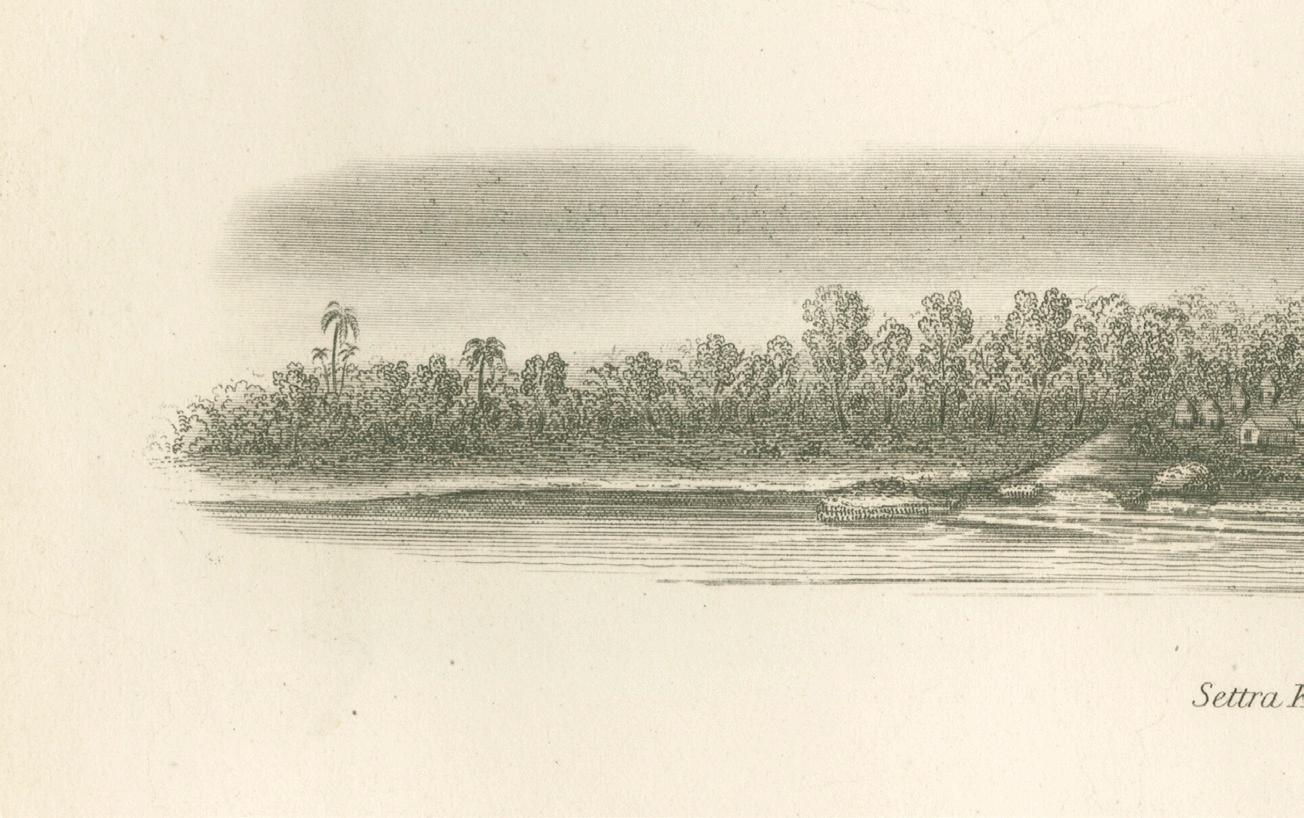
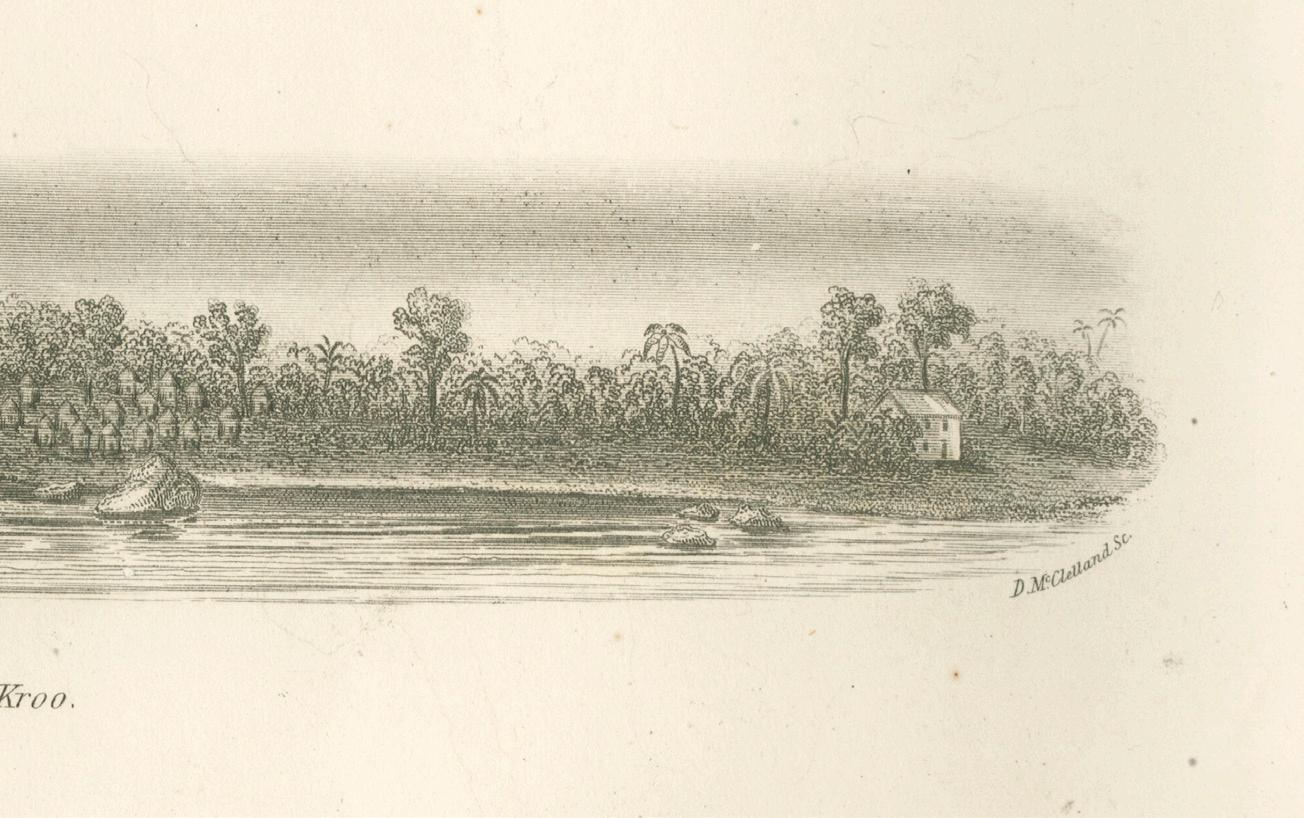
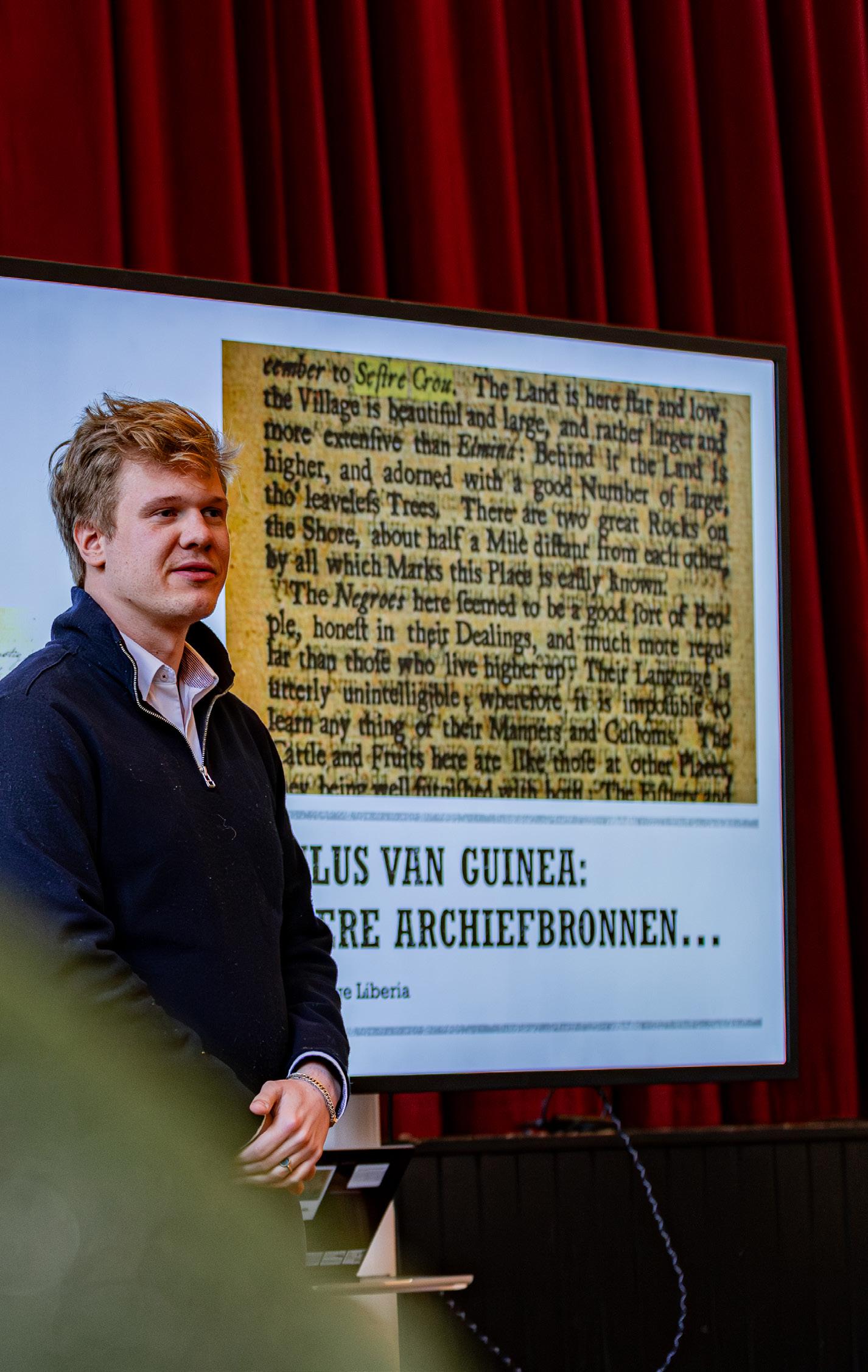
Crou sestre, also called Settra Crou, the birthplace of Thomas Jacob van Guinea, in a print by a British artist. Second half of the nineteenth century. (Source: Princeton University).
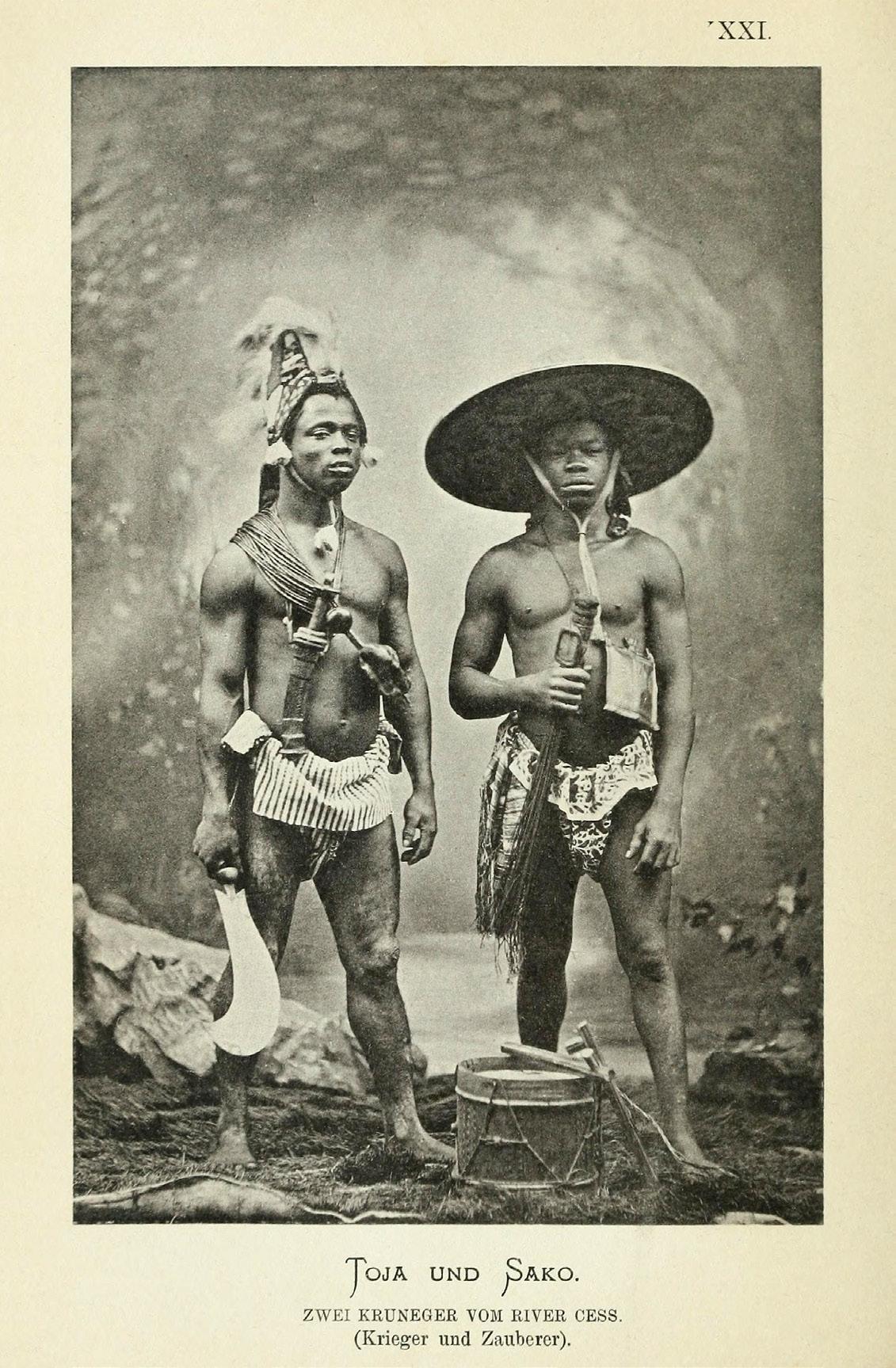
that of ‘tabakswerker’ (tobacco worker).[22] Thomas Jacob van Guinea was born around 1806 on the West African coast, ‘in the place Settera Crou’ as later described in a Rotterdam legal document from 1835. [23] Settera Crou, also spelled Settra Kroo, Krou Sestre, or Settra Krou, a place located on the (in the nineteenth century called) ‘Pepper Coast’ on the border between present-day Liberia and Ivory Coast. Seventeenth-century English descriptions called this place a ‘notable Negro [sic] town and trading place’ involved in the commerce of pepper, ivory, and enslaved people. The name ‘Crou’ refers to the Kru peoples, an ethnic group in West Africa who, from the eighteenth century onwards, were regularly ‘hired’ by European ships as rowers, sailors or coastal pilots. [24]
From the late eighteenth to the mid-nineteenth century, the Kru became indispensable to the European, specifically British, coastal trade and colonial navies. After Britain abolished the transatlantic slave trade in 1807, they and other European powers increasingly relied on hired African seafarers for legitimate commerce and for patrols against illegal slaving. The Kru took advantage of this demand while carefully guarding their independence by regulating contracts and ensuring no single colonial power monopolised their labour migration. Their reputation as reliable, skilled, and physically resilient sailors ensured their presence in ports from Sierra Leone to the Gold Coast and even in the Caribbean.[25]
The Kru had a long maritime history dating back to at least the fifteenth century; this set them apart from their contemporaries. Their main base at Settera Crou, but also their ingrained seafaring skills made the Kru uniquely suited for interaction with foreign ships. The latter required skilled local navigators because of the dangerous Liberian and Ivory
Coast surf. The Kru became known for their exceptional abilities in canoe and boat handling, ferrying goods, people, and messages between ships and shore. By the end of the eighteenth century, ‘Kru’ or ‘Krumen’ had become not only an ethnic designation but a professional identity and a matter of pride and quality for any Afro-European sailor connected to it.
The Kru’s work, mainly seasonal maritime labour, took individual sailors far beyond their own shores, which added to their local prestige and embedded them more firmly in broader Atlantic seafaring networks. Maritime labour remained a collective Kru enterprise though. Local Kru society placed a strong emphasis on internal regulation, with village chiefs and elders overseeing labour contracts, wage distribution, and the allocation of imported goods. By the beginning of the nineteenth century, the Kru maritime enterprise had strengthened the cultural and economic cohesion between sailors and between African and European settlements.[26] It was this Kru pride and identity that Thomas Jacob van Guinea took with him when he arrived in Rotterdam in 1824 as a young boy. Yet his microhistory contained a second layer. Starting with his original name, Tamri, and his origins as a son born to ‘ the
22 23
24
25
26
Stadsarchief Rotterdam, archive no. 356 Archief van de Gemeentesecretarie Rotterdam, afdeling Militaire Zaken, inv. no. 89.
J.L. Hargrove, “Krumen and the Suppression of the TransAtlantic Slave Trade from West Africa.” Liberian studies journal 36.2 (2011): 72–98.
Ibidem.
Martin, J. J. (1982). Krumen “down the coast” : Liberian migrants on the west African coast in the 19th century. African Studies Center, Boston University.
most favoured wife of his father’.
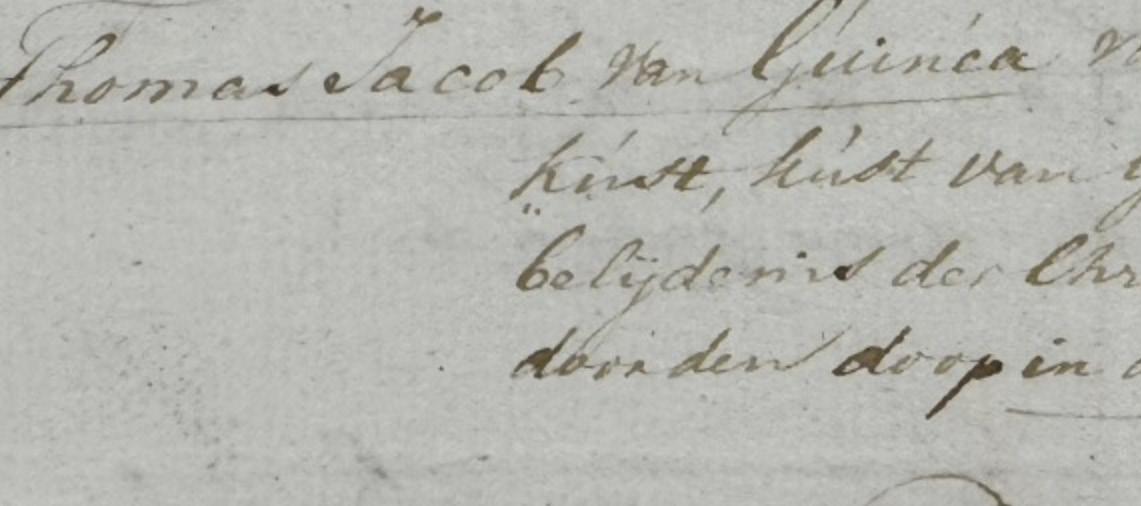
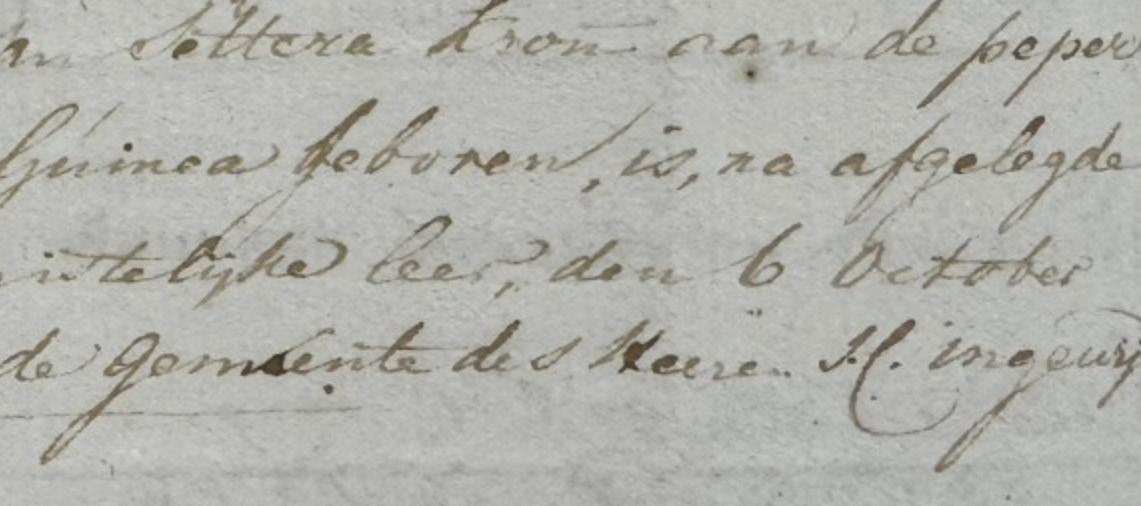
The 1835 witness statement mentioned before, recorded Thomas’s original name as Tamri, ‘which name his father likewise bore.’[27] Gaining his father’s name hints to him being his first-born son, and combined with being a relative of a regional chief, we can conclude that Tamri had a relatively high social status in his local community. Possibly because of this status, Tamri was transferred in December 1816, at about eleven years of age by his father to the Dutch Paulus Jacob Baron van Zuylen van Nijevelt (1775-1855), a captain in the Royal Dutch Navy and a member of a prominent Dutch noble family. This captain/baron commanded the H.M. corvette Ajax, a ship anchored off Settera Crou, which brought Tamri to the Netherlands for the first time in June 1817. After his arrival, Tamri received catechetical instruction and pastoral guidance from Reverend Gerhardus Catharinus Drooglever Fortuijn (1793–1877) in the little village of Hillegersberg, then an independent village, later part of Rotterdam. On 6 October 1822, he was baptised into the Dutch Reformed Church, adopting the name Thomas Jacob van Guinea.
A contemporary religious publication called ‘Boekzaal der geleerde wereld’ noted his journey from Settera Crou to Christian baptism under the baron’s care.[28] Seeing that Thomas was registered in 1824 as a tobacco worker, it is likely that he had worked on overseas plantations in the years following 1822. Notably, in April 1832 Thomas received the ‘Metalen kruis 5’ voor de Belgische veldtocht’, just three years before marrying Petronella and becoming father to Paulus Jacob.[29] The ‘Metalen kruis 5’ (metal cross) was a four-armed bronze cross awarded to all Dutch soldiers regardless of rank who took part in Belgian military operations in 1830-1831. In these two years, Belgium
successfully fought for independence from the United Kingdom of the Netherlands. The two Belgian Colonies of Benevolence, Wortel and Merkplas, had already been realized by that time. Somewhere between 1824 and 1830, Thomas must have joined the Dutch military, likely the first battalion of hunters Rotterdam, seeing that this battalion played a crucial role in the Belgian 1830-1831 military operations for which Thomas was distinguished.
When Thomas sought to marry Petronella in Rotterdam in 1835, Dutch law following the 1811 Code Pénal required a birth certificate. Because Thomas was lacking one, he had to apply to the Rotterdam ‘Regtbank van eerste aanleg’ (Court of First Instance) for an ‘akte van bekendheid’ (deed of notoriety), supported by seven witnesses, mostly local craftsmen from Rotterdam. All the seven men stated Thomas’ African birth at Settera Crou, his baptism in 1822, and his residence in Rotterdam.[30] Also, they had to get a ‘Verklaring van armoede’ (Declaration of poverty) and ‘bewijs van onvermogen’ (certificate of incapacity to pay) as they apparently were not capable of paying for the necessary ‘kosten der acten, benoodigd tot het voltrekken van hunlieder Huwelijk’ (costs of the deeds required for the solemnization of their marriage). On their son’s birth
Boekzaal der geleerde wereld en tijdschrift voor de Protestantsche kerken in het koninkrijk der Nederlanden (juli 1822).
National Archives, archive no. 2.13.13.03 Inventaris van archiefbescheiden betreffende Toekenning Metalen Kruizen en Bronzen Medailles, 1831-1834, inv. no 123, folio 19.
29 J. Noorduyn, Handboek voor schouten en assessoren, hoofden van plaatselijke besturen, commissarissen van politie, vrederegters, officieren van justitie; mitsgaders verdere ambtenaren van het openbaar ministerie en van administratieve en regterlijke politie (1823) p. 82.
Toja and Sako, a Kru warrior and a Kru medicine man from River cess, present day Liberia. (Source: Nederlands fotomuseum.)
certificate (1835), it states that Petronella had no profession at the time. Thomas was ‘buiten bedrijf’ (out of service), ‘doch dienende als vrijwilliger in het eerste bataillon jagers [van Rotterdam]’ (although serving as volunteer in the first battalion of hunters Rotterdam).
During this period Dutch interracial marriages were in many respects relatively unremarkable. There was no legislation prohibiting such unions, at least not between free persons which Thomas and Petronella were. The 1835 deed of notoriety, after all, stated that Thomas’s father was a landowner related to the local chief and still alive in 1816, and that Thomas was considered of legitimate birth by the standards of his homeland.[31]
Before French legislation on interracial marriage came into effect in the Netherlands, having been occuped during 18101813 by the French, African men whom came as children to the Netherlands often married Dutch women (Doortmont, Everts and Vrij 2000). Notably, these men generally married below Dutch ‘masters’ social standing, either to women from a lower social class or to women whose social circumstances were in some way considered irregular. This could include a young widow with children in need of a husband and provider, or an older unmarried woman for whom a ‘normal’ (non African-related) marriage to a Dutch man from her own social group was no longer attainable. Petronella had already given birth to Paulus Jacob when she and Thomas married. As such, we can conclude that this type of marriage practice was maintained in the nineteenth century, albeit in a different, often reluctant, form because of French influence. Throughout the Age of Enlightenment (1680-1820), there
Stadsarchief Rotterdam, Toegangsnummer: 999-06 Burgerlijke Stand Rotterdam, huwelijksakten Inventarisnummer: 1835C
was an ongoing French debate that would have international consequences; a debate accompanied by specific legislation concerning the status of African enslaved persons and racially mixed marriages, condemning and sometimes even prohibiting the latter. This French thinking extended well into the 1820s, even in the newly established United Kingdom of the Netherlands. On 8 January 1803, the French Grand Judge, Minister of Justice issued a circular declaring that it was the intention of the government to prohibit marriages between Black and white persons (‘que l’intention du Gouvernement est qu’il ne soit reçu aucun mariage entre des blancs en des négresses, ni entre des négres et des blanches’).[32] Although the precise effect of this circular in the Netherlands remains the subject of ongoing research, it is known that in the subsequent years the Commissioners of Dutch Marital Affairs in various civil municipalities attempted to prevent marriages between white and nonwhite persons using the French circular as their justification. In at least five Dutch cases, this led to a petition being submitted to the King. The municipalities involved in obstructing such marriages were Amsterdam (twice), Hoorn, The Hague, and Veendam (Drenthe).[33]
In the life story of Thomas Jacob van Guinea we also encounter direct evidence of other forms of prejudice; not least the paperwork he had to additionally arrange to marry Petronella. Despite his baptism into the Reformed Church, his education under the guidance of a Dutch naval officer, and his military service in defence of the Netherlands during
J. Heuer, ‘The one-drop rule in reverse? Interracial marriages in Napoleonic and Restoration France’, Law and History Review 27 (2009) 515-548.
M. Doortmont, “Huwelijken tussen zwart en wit in de vroege negentiende eeuw”, in: GEN. Magazine voor Familiegeschiedenis 22:3 (2016) 52–55.
the Belgian uprising, Thomas repeatedly failed to secure lasting employment. In 1836 Thomas wrote a hand-written petition to Dutch King William II:
To His Majesty the King of the Netherlands Grand Duke of Luxembourg etc. etc. etc.
With due respect makes known Thomas Jacob van Guinea, born in Settra Crou, situated on the Coast of Guinea, near Cape Palmas not far from the Dutch Fort Axim, now residing in the house of G. Sander, master furrier, at the Boerevismarkt in Rotterdam. That he, the Petitioner, having been brought to the Netherlands in the year 1817, after receiving instruction has embraced Christianity and made public Profession of Faith in the Reformed Church. That he, the Petitioner, by the Honourable and Distinguished P. J. Baron van Zuijlen van Nijevelt, at that time a Naval Colonel, by whom, with the consent of his father, he was brought to this country, was instructed in everything necessary to be able henceforth to provide for his own livelihood in civil society, in which, however, to his regret, he has not yet succeeded because of the prejudice against his colour, which is an absolute hindrance to him in this regard. That he, the Petitioner, at the outbreak of the uprising in Belgium, voluntarily took up arms in defence of the Fatherland he had adopted, in which he has enjoyed so much good, and of its beloved King, and that he is still serving in the First Battalion of Jagers, commanded by the Honourable and Distinguished W. H. Baron van Heerst, that he, the Petitioner, having used every possible means to obtain a livelihood and having found them fruitless to this day, now takes the liberty of approaching Your Majesty with a humble and urgent request that it may please Your Majesty, in accordance with Your usual exalted virtues, to look more favourably upon his condition, by placing him in such a position as would enable him to provide for his needs in society, whether in the special service of Your Majesty or by granting him some form of employment in this country, which he ardently desires, or elsewhere. Sire, the Petitioner desires nothing more fervently than to remain as far as possible in the Christianity he has embraced, and not to return to the heathenism of his native land.
Thus doing etc.
Thomas Jacob van Guinea. [34]
National Archives the Hague, archive no. 2.04.01, inventaris van het archief van het Ministerie van Binnenlandse Zaken, 18131848 (1864), inv. no. 2367
In 1840, six years before his wife Petronella and his son Paulus Jacob are sent to the Colonies of Benevolence, Thomas wrote another letter to the king, stating the following:
To the King etc. Sire!
With the deepest respect makes known to the person of Your Majesty, Thomas Jacob van Guinea, residing in Rotterdam, that after a long period of struggling to obtain a modest livelihood, he was at last, to his great joy, appointed this past summer as an Extraordinary Clerk at the State Entrepôt in the city of his residence. However, Sire, the Petitioner, since last December, has according to the usual custom at that entrepôt, to his sorrow been placed out of service until further recall in the coming spring. But, Sire, this removal from service has at once rendered the Petitioner unable to provide even for the most basic needs of his wife and three small children. Thus, with the worsening of his condition last month, after having made every sacrifice on his part for the care of his family, he saw himself compelled to turn to some of his better situated fellow citizens, known to him, in the hope of finding their noble counsel and assistance. Yet, being disappointed in this as well, the Petitioner has now directed all his hope to the person of Your Majesty, in the belief that it may please Your Majesty today to look with favour upon the unfortunate circumstances of this Petitioner, and, according to Your Majesty’s well known and celebrated benevolence, to make such gracious dispositions for him and his family as will bring them help and comfort, and free them from grievous consequences.
Thus doing etc.
Rotterdam, the 21st of January 1840
T. J. van Guinea on the Zijl, wijk C. no. 251[35]
National Archives the Hague, archive no. 2.04.01, inventaris van het archief van het Ministerie van Binnenlandse Zaken, 18131848 (1864), inv. no. 4559.
In one of his first letters dating 10th of January 1834, Thomas Jacob van Guinea describes what he has done in service of the United Kingdom of the Netherlands but underlines the trouble he has due to the prejudice against his colour:
To His Majesty the King of the Netherlands, Grand Duke of Luxembourg, etc. etc. etc.
With due and humble respect, Thomas Jacob of Guinea, born in Settra Crou, situated on the Coast of Guinea near Cape Palmas and not far from the Dutch Fort Axim, presently residing at the house of G. Sander, master furrier at the Boerenvismarkt in Rotterdam, most respectfully submits the following. Your Petitioner, having been brought over to the Netherlands in the year Eighteen Hundred and Seventeen, after receiving education, converted to Christianity and made confession of his faith in the Reformed Church. Your Petitioner, through the Honourable and Noble Lord P. J. Baron van Zuijlen van Nijevelt, then a Naval Colonel, who with the consent of his Father brought him to this country, was instructed in everything necessary to enable him, in the future, to provide for his livelihood in civil society. Yet, to his sorrow, he has hitherto been unable to succeed in this, owing to the prejudice against his Colour, which has proven a great obstacle.
At the outbreak of the revolt in Belgium, your Petitioner voluntarily took up arms for the defence of the Fatherland he has adopted, in which he has received so much good, and for its beloved King. He still serves under the First Battalion of Jagers, commanded by the Honourable and Noble Lord W. H. Baron van Heerst. Having exhausted every possible means to establish himself in a livelihood, but all in vain, he now takes the liberty to approach Your Majesty with a humble and earnest plea that it may please Your Majesty, in keeping with Your exalted virtues, to look more favourably upon his condition, by placing him in such a situation that he might provide for his needs within society, whether in Your Majesty’s personal service or by graciously bestowing upon him some employment within this country, which he ardently desires, or elsewhere.[36] Sire, the Petitioner wishes nothing more fervently than to remain, insofar as possible, in the Christian faith he has embraced, and not to return to the heathenism of his native land.
Thus doing, etc
T. J. van Guinea.[37]
Idem. 36 37
National Archives the Hague, archive no. 2.04.01, inventaris van het archief van het Ministerie van Binnenlandse Zaken, 18131848 (1864), inv. no. 2429
That Petronella and Paulus Jacob were sent to the Colonies of Benevolence in the 1840s was a combination of circumstances, and of broader historical trends and ingrained social structures. Petronella’s husband, Thomas Jacob van Guinea, was marked geographically as ‘other’, via his name and his physical appearance recorded in the archive. His chosen baptist names, “Thomas” and “Jacob”, were common Christian names, signalling his intention to fit in Dutch society, yet “van Guinea” marked him as having roots in oversea lands, as ‘other’. The latter name, written in Dutch petitions, church records, and municipal files, signalled a specific societal position, one that his wife and children inherited. An identity that likely prevented him securing lasting employment crucial for supporting his growing family, in a society that regarded his cultural heritage and physical appearance as problematic. Despite being able to write eloquently in the language of the society he tried to fit in, testified by Thomas’ petitions/letters, his circumstances can be likened to that of other Dutch urban poor from that time.
Notably, Thomas’ sons took on the profession so common to their father’s Kru background, that of a sailor. They continued the tradition of transnational exchanges and continued to represent the cultural tradition and identity that their father Tamri, born in Settera Crou, took with him to shores of the United Kingdom of the Netherlands, specifically the region Rotterdam. His daughter, Johanna Josephina Hendrika van Guinea, likely took over her mother’s ‘verhuurkantoor’ profession.
The story of The Van Guinea family, reveals how people navigated institutional constraints, mobilised personal strategies for survival, and sometimes resisted or reshaped the order imposed upon them. This perspective exposes
the gap between official ideology and everyday practice within the colony. The migration lens further expands this reinterpretation by situating Veenhuizen within broader national, transnational, and colonial mobility systems. Veenhuizen appears as a place of overlapping circuits of forced and sometimes voluntary migration: urban poor sent by poor relief boards, former soldiers and their families recruited as staff, discharged colonists returning to cities, and individuals with roots in overseas places.
Picture source: City Archives Rotterdam, archive no. 156-01 Archief van de Hervormde Gemeente Hillegersberg, inv. no. 32.
Ulisses van Makassar
By Jaïr Salomon van Dijk
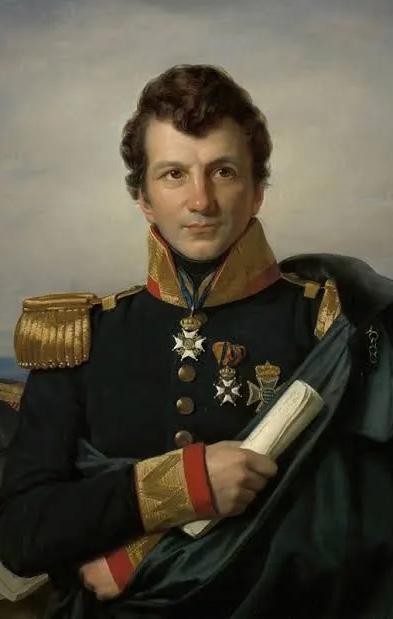
In 1818, General Johannes van den Bosch established the Society of Benevolence with the aim of addressing the nation’s poverty by resettling poor families through agricultural domestic colonisation. The plan was to provide education, housing and moral improvement through agricultural labor in specially designed settler colonies. The colony of Veenhuizen, founded in 1823, held a distinctive role as an ‘unfree’ colony, where orphans and paupers were carefully schooled and monitored. Over time the pauper relief goal and philanthropic ambition of the Society of Benevolence gave way to a more penitentiary approach as the State took over the governance of the Society’s indebted colonies including that of Veenhuizen in 1859. Throughout history, General Van den Bosch is generally represented as a Dutch nineteenth century reformer who sought to uplift the poor through structured living and moral improvement. In Van den Bosch domestic service, at the beginning of the nineteenth century, was the boy Ulisses van Makassar (also written Ulijses and Ulysses van Macassar), a man born in the late eighteenth century on the island of Macassar, in the Dutch East Indies (now Indonesia). Just like Thomas Jacob van Guinea, Ulisses sought to marry a Dutch woman, dienstbode (servant) Anna Elisabeth Nijbacker, in Ulisses’ case in 1819. Ulisses first arrived in the Netherlands in 1818. Unlike Thomas Jacob van Guinea though, Ulisses was in his twenties upon arrival, roughly a decade older.
Ulisses would live to the age of 32, passing away in ‘s Gravenhage in the year 1822, one year after his son’s birth, Pieter van Macassar. The death certificate of Ulisses does not list a profession for his wife Anna. In 1832, Ulisses and Anna’s son passed away too. Notably in the ‘Nederduitsch Gereformeerd Diaconiehuis’ ‘s Gravenhage, an institution that housed the poor; Pieters’ death certificate lists his
ULISSES VAN MAKASSAR
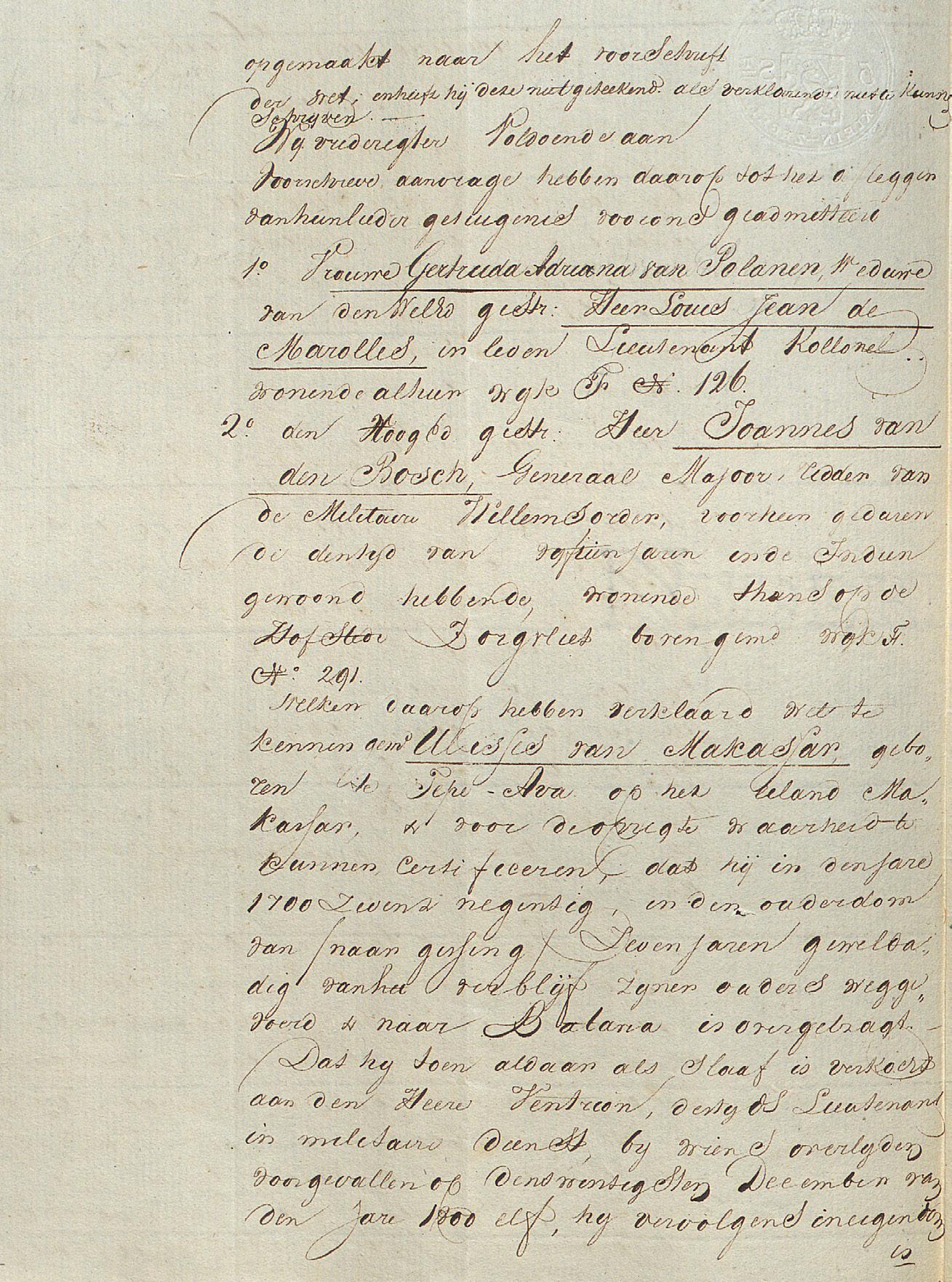
Part of the deed of notoriety in which Ulisses’s origin is stated. Source: National Archives. Archive 3.064.03 Inventaris van de Burgerlijke Stand der gemeente 's-Gravenhage: huwelijksbijlagen, 1811-1898, inventorynumber 1819.
mother’s profession as a ‚dienstbode‘ (domestic servant) living at the ‘Diaconiehuis’. Pieter was just eleven years old when he died. Anna Elisabeth van Makassar-Nijbacker survived both her husband and son, eventually passing away in 1856, at the age of 62 years. Ulisses name, ‘van Makassar’ like Van Guinea, explicitly refers to the former’s geographical origin, labelling him as ‘other’ and underlining that stricter, often more prejudiced legislation applied to him.
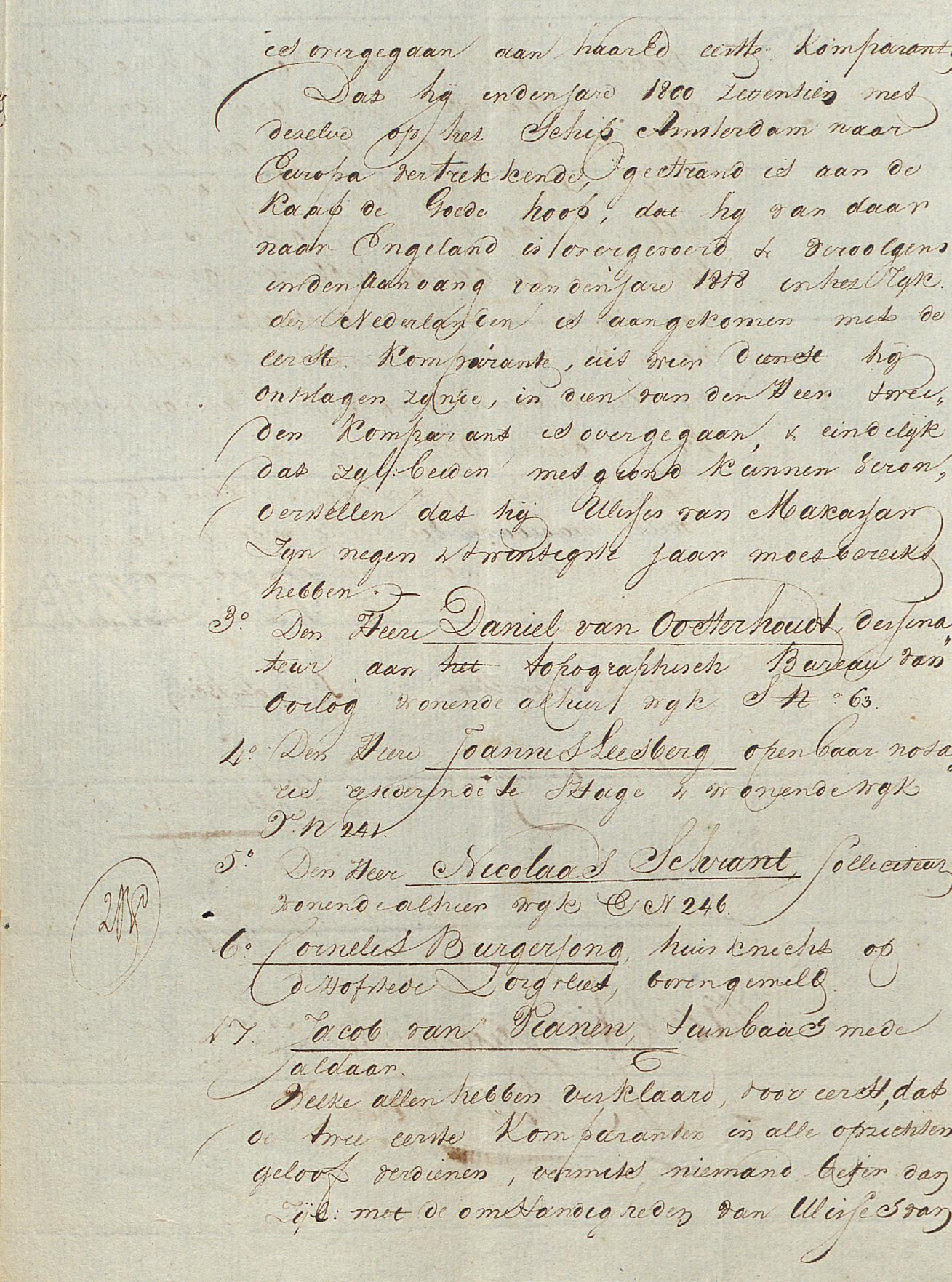
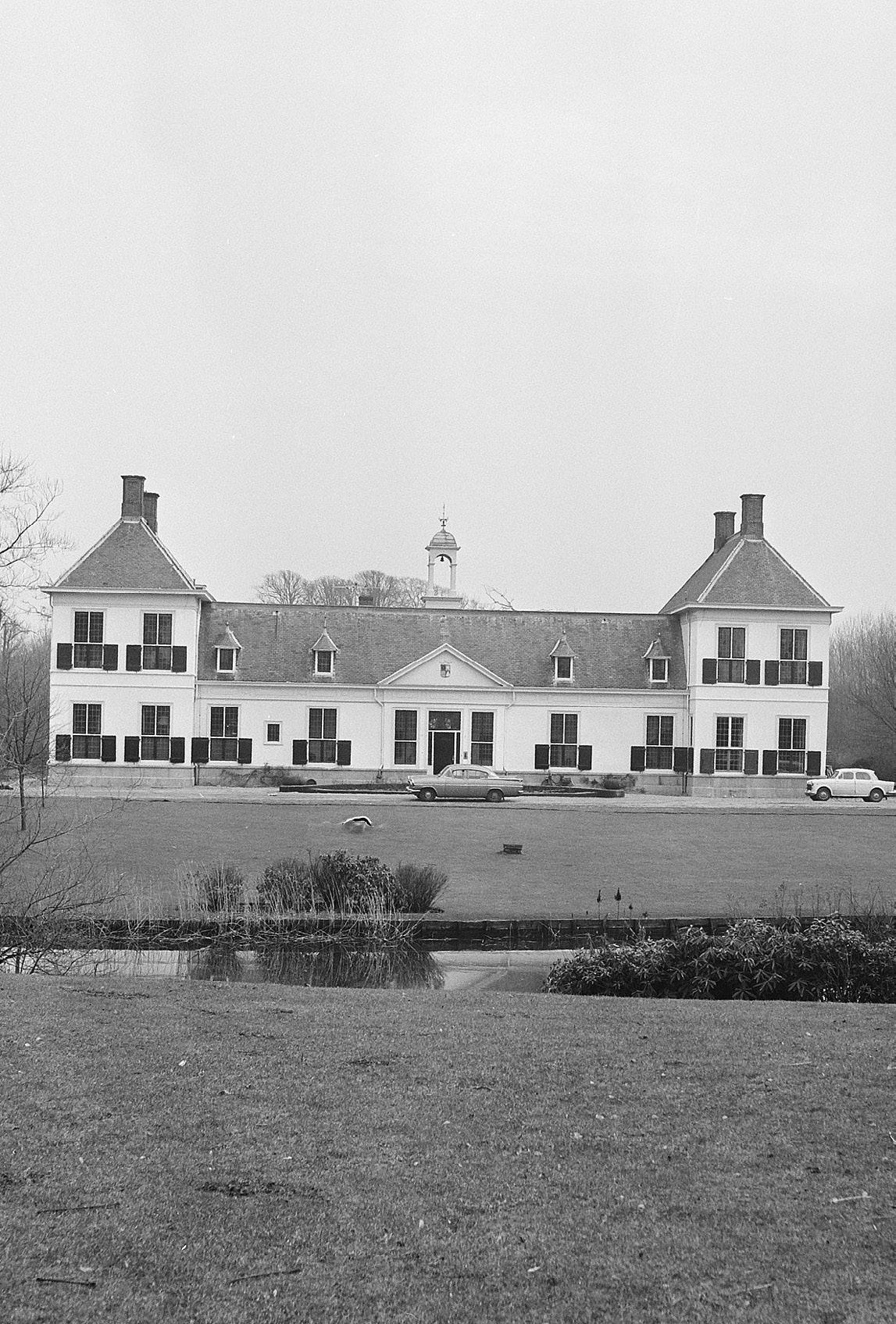
The documents that Ulisses had to submit for his marriage to Anna record that Ulisses was enslaved as a child, forcibly taken from his parents around 1797 when he was about seven years old, and transported to Batavia (present-day Indonesian provinces Jakarta, Banten and West Java). There he was sold to an army lieutenant named Ventrion. After Ventrion’s death in 1811, Ulisses became the property of the lieutenant’s widow, Gertruda Adriana van Polanen. Six years later, she intended to bring him to Europe aboard the ship Amsterdam. Yet the ship was wrecked at the Cape of Good Hope (South Africa), whereafter Ulisses was taken to England and from there to the Netherlands in early 1818. Following his arrival, Ulisses entered the service of General Van den Bosch, living with him at the general’s country estate Zorgvliet near The Hague. This arrangement might have remained a footnote in the general’s private life were it not for Ulisses’ intention to marry Anna Elisabeth Nijbacker.[38] On their marriage certificate Anna is registered as having been born in the Dutch city Nijmegen.
Dutch civil law required that he present proof of birth and parental consent or, in their absence, proof of their deaths to approve the marriage. Having been enslaved and taken from his family as a child, Ulisses could produce none of these documents. To address this obstacle, an Akte van Notorieteit, or Act of Notoriety, was drawn up in The Hague
The legal document that Ulisses had to request states the following:
Appeared before us: Ulisses of Makassar, presently serving as house servant to the Honourable Major General Van den Bosch, residing at the estate Zorgvlied near The Hague, district F, No. 291, within the jurisdiction of our canton. He has made known to us that, being intent on entering into lawful marriage, he is, according to the prescriptions of the law, required to produce proof of his birth together with parental consent, or in the case of their death, certificates of decease of his parents and grandparents. That, having been born in Makassar and at a very young age violently taken away from his parents, he is unable to comply with this legal requirement. Therefore he has requested of us that the deficiency might be supplied by the testimony of seven persons here present, willing to deliver their declarations into our hands, so that a proper attestation might be drawn up in conformity with the law. And he has not signed this declaration, stating that he is unable to write.
We, Justice of the Peace, acceding to the aforesaid request, have admitted to give testimony before us:
• Lady Gertruda Adriana van Polanen, widow of the Honourable Louis Jean de Marolles, in his lifetime Lieutenant Colonel, residing here in district F, No. 126.
• The Right Honourable Joannes van den Bosch, Major General, knight of the Military Order of William, having formerly resided in the Indies for the space of fifteen
38 National Archives the Hague, archive number 3.03.51.04 Vredegeregt te ‘s Gravenhage, inv. no. 45.
City Archives The Hague. Archive no. 0335-01 Ambtenaar van de burgerlijke stand van de gemeente ‚s-Gravenhage, Inv. no. 1207.
39 on 6 July 1819.[39] It records the sworn testimony of seven witnesses, including Van den Bosch himself, who confirmed Ulisses’s origins, the circumstances of his forced removal from Makassar, his sale in Batavia, and his subsequent journey to Europe. The document also notes that Ulisses could not sign his name, stating he was illiterate; a decisive contrast with Thomas Jacob van Guinea.
years, presently living at the estate Zorgvlied, aforesaid district F, No. 291.
Who thereupon declared that they were well acquainted with the said Ulisses of Makassar, born in Tepe Ava on the Island of Makassar, and that they could certify in good conscience that in the year 1797, at the age of about seven years, he was violently taken from the dwelling of his parents and transported to Batavia. That there he was sold as a slave to Mr. Ventrion, then Lieutenant in military service, and upon the death of the latter, which occurred on the 20th of December 1811, he passed by inheritance into the ownership of her Ladyship, the first comparant.
That in the year 1817, when departing with her Ladyship on the ship Amsterdam for Europe, the vessel was wrecked at the Cape of Good Hope, from where he was conveyed to England and thereafter, at the beginning of the year 1818, arrived in the Kingdom of the Netherlands with the said first comparant. Having then been discharged from her service, he entered into the service of the aforesaid second comparant, and finally, that both declarants may reasonably presume that the said Ulisses of Makassar has attained the age of twenty-nine years.[40]
National Archives the Hague, archive no. 3.03.51.04 Vredegeregt te ‘s Gravenhage, inv. no. 45.
The Catshuis, or ‘Huize Sorghvliet’ in The Hague where Johannes van den Bosch lived with this family and Ulisses van Makassar as one of his servants in the first half of the nineteenth century. Source: Smulders, Jean : Anefo Auteursrechthebbende - Nationaal Archief Materiaalsoort - Negatief (zwart:wit) Nummer archiefinventaris: 2.24.01.03 Bestanddeelnummer - 916-1048.
The legislative preconditions of proof needed for Ulisess’ marriage to Anna more or less aligns with that of Thomas Jacob van Guinea. Moreover, as alighted upon with the case of Thomas Jacob van Guinea, at the beginning of the nineteenth century, a man like Ulisess, having overseas origins, was expected to marry below their Dutch ‘masters’ social standing, either to women from a lower social class, like a servant, or to women whose social circumstances were in some way considered irregular and who were in need of a husband and provider. At the time, Anna’s father had already passed away and her mother had no profession. Like the marriage of Thomas and Petronella, the marriage between Ulisses and Anna was not an uncommon occurrence, yet experienced as a reluctant one by early nineteenth century Dutch society due to ingrained French influence. The fact that a prominent societal figure like General van Den Bosch testified for Ulisses and that Ulisses was part of the general’s household must have worked in Ulisses’ favor. The same way that Thomas Jacob’s military service did in his case.
Ulisses’ case underlines that of the Van Guinea family case concerning Dutch societal prejudice, but also helps to explore the (seemingly juxtaposed) entanglement of nineteenth century Dutch social reform and its domestic labour history. When Ulisses was brought to the Netherlands, he was taken into the service of General van Den Bosch in 1818 as an unpaid house servant. This was the same year that Van den Bosch presented his innovative pauper relief model, aiming to make the Dutch poor self-sufficient and founded the first Colony of Benevolence, Frederiksoord. A juxtaposition of a history of public benevolence and private domestic life. In 1821, Van Den Bosch and his family moved into Huis Westerbeek, a former estate located at Frederiksoord; the same year
ULISSES VAN MAKASSAR
A portrait of Johannes van den Bosch around 1829, by Cornelis Kruseman (Source: Rijksmuseum)
that Ulisses‘ son, Pieter, was born and one year before Ulisses’ death.
It must be noted that General Van den Bosch chose a (forced) domestic servant with roots in the Dutch East Indies. The same colony where Van den Bosch did his military service up to 1810.[41] Because of the general’s overseas service and nineteenth century societal reality (slavery was not officially abolished in the Netherlands till 1860), Van den Bosch likely had no problems hiring an unpaid domestic servant and recording his (rather tragic) background story in the official records. Van den Bosch was familiar with such narratives. His preparedness tohelp Ulisses marry, however, does show that he was, in some manner, committed to promoting Ulisses’ personal happiness.
Ulisses’case underlines that historical macrostructures like forced domestic labour were decidedly more complex on a microhistorical level. As a microhistory, the case is especially important for understanding the relations of the Colonies of Benevolence with the Dutch overseas colonies. Ulisses case exposes the entanglement between colonial practices and domestic social reform by Van den Bosch, showing that ideals of moral uplift and self-sufficiency coexisted with coercion, inequality, and colonial continuities at the level of individual lives, in and outside of Veenhuizen.
A. Sens, De kolonieman : Johannes van den Bosch (1780-1844), volksverheffer in naam van de koning, (Amsterdam: Uitgeverij Balans, 2019).
Chapter 05
Reflections on the two Case Studies
By Jaïr Salomon van Dijk
The two previous case studies gave us examples of how and whether a small, detailed case (a microhistory) can be used to say something meaningful or contextual about larger systems when linking microhistories to macrostructures. The aim of nineteenth century social reform models like the Colonies of Benevolence was to eradicate poverty and make the poor self-sufficient. Notwithstanding the troubles experienced by the Society of Benevolence that resulted in the State taking over the governance of Veenhuizen in 1859 or the repetitive failed harvests, the number of poor in the United Kingdom of the Netherlands continued to increase partly at the beginning of the nineteenth century because of ingrained ‘other’ legislation and prejudice.
As testified by the archival records that helped trace the story of both Ulisses and Thomas Jacob, especially the latter experienced difficulties finding long-term employment due to his physical appearance and the societal prejudice against his color. It was one of the facts that resulted in his wife and son ending up in the Colonies of Benevolence in the 1840s. In the case of Ulisses, his family ended up in the Diaconiehuis at The Hague, an institution for the poor, after his death. Ulisses son, unlike the children of Thomas Jacob, did not grow to adulthood and did not get the chance to find employment caring for their families. Both Thomas Jacob’s and Ulisses’ wives had to support themselves and their children after their husbands’ death; of the two, only Petronella had an employed mother and children to help supplement the family income. Anna had to support herself and her son via her job as dienstbode (a maid).
Ulisses’ case showcases how colonial power forces intersected within a single human life. Through marriage records, legal documents, and his legal testimony, we gain a bit of access to themes such as colonial violence, forced
displacement, legal exclusion, and social dependency. The sources about Ulisses’ life challenges the conventional heroic image of General Johannes van den Bosch as a purely philanthropic reformer. While Van den Bosch is publicly remembered as the founder of the Society of Benevolence and, more recently, honored with a statue as a national social reformer, Ulisses’ story exposes a parallel and deeply uncomfortable reality. Therefore Ulisses history is a perfect example of how microhistory is about how smaller stories still can disrupt dominant historical interpretations. At the very moment Van den Bosch was publicly advocating moral uplift, discipline, and self-sufficiency for the Dutch poor, he (at the same time) privately employed an enslaved man[42] as an unpaid domestic servant. This juxtaposition lays bare the moral contradiction between public benevolence and private exploitation.
At the same time, the microhistorical lens prevents this from becoming a one-dimensional condemnation. Van den Bosch did not only exploit Ulisses; he also testified on his behalf to enable his legal marriage. This ambivalence reveals a far more complex figure than the sources suggests: a man fully embedded in colonial hierarchies of slavery and serfdom, yet also capable of personal intervention within those same systems. Ulisses’ story therefore forces a reassessment of Van den Bosch not as either a hero or a villain, but as a historical actor shaped by, and complicit in, the contradictions of the nineteenth-century empire, slavery, and social reform. Moreover, Ulisses’ story exposes how historical perspective depends on whose archive is read and whose life is centered. From the perspective of state policy, Van den Bosch represents innovation and social engineering. From Ulisses’ perspective, the same historical world is defined by enslavement, forced migration, legal dependency, and early death, followed by
the institutionalization and poverty of his widow and child. These parallel perspectives occupy the same historical moment but produce radically different meanings of “reform,” “benevolence,” and “care.”
Finally, Ulisses’ story demonstrates how microhistory reveals the entanglement of colonial and domestic histories. His life connects the Dutch East Indies, slavery, military service, poor relief, and domestic labor in The Hague into one continuous social trajectory. In doing so, it shows that the history of Veenhuizen and the Dutch welfare state cannot be understood in isolation from the colonial world, but were at the same time shaped by networks of slavery, coercion, and dependency that extended far beyond Veenhuizen. Through small individual case-studies, the Colonies of Benevolence can no longer be understood solely as a national welfare project, but as a part of a broader colonial system of inequality, mobility, and control. The Colonies of Benevolence should therefore be understood within a broader colonial framework. Their establishment was made possible in part through financial and ideological connections to colonial systems of exploitation. Key figures such as Johannes van den Bosch were deeply embedded in colonial governance and economics: Van den Bosch derived income and influence from colonial networks linked to slavery and plantation economies, including Suriname, and later served as Governor General of the Dutch East Indies.
42
Ulisses was not the only formerly enslaved person ‘owned’ by Johannes Van den Bosch. Malica, later named Maria Rozenveld, born around 1803 on the island of Macassar, present day Indonesia, served Van den Bosch wife Rudolphina Wilhelmina Elizabeth de Sturler (1799-1873) as a housemaid since 1832. The Van den Bosch family brought her with them to The Netherlands and baptized her in 1836 in The Hague. Source: National Archives. Archive 3.064.03 Inventaris van de Burgerlijke Stand der gemeente ‚s-Gravenhage: huwelijksbijlagen, 1811-1898, inventorynumber 1836.
The social and disciplinary models implemented in the Colonies of Benevolence, including Veenhuizen, were informed by colonial practices Van den Bosch had encountered and helped shape in colonial contexts, particularly in Indonesia, where systems of forced labor, surveillance, and economic extraction were institutionalized[43] As a result, Veenhuizen and the Colonies of Benevolence can be interpreted as extensions of colonial governance techniques applied within the metropole, making them structurally and ideologically part of the Dutch colonial system rather than merely domestic welfare experiments.
In this sense, Ulisses’ microhistory does exactly what the method intends: it destabilizes a dominant national narrative, exposes hidden power relations, and forces historians to confront the multiple, often conflicting perspectives that coexist within a single historical landscape.
A. Sens, De kolonieman : Johannes van den Bosch (1780-1844), volksverheffer in naam van de koning (Amsterdam: Uitgeverij Balans, 2019).
Chapter 06
History and Design: Reflections on Interdisciplinary Exchange
By Jaïr Salomon van Dijk
Precisely those conflicting perspectives that coexist within a single historical landscape, as discussed in the previous chapter, are what SI-LAB sought to engage with by facilitating an exchange between historical and design research. Yet this exchange did not unfold seamlessly. Interdisciplinary collaboration between historical research and design research brings together different disciplines and different knowledge productions. While both disciplines are in some way concerned with how meaning is constructed, represented, and experienced, the two fields (history and design) approach these questions through fundamentally different methodologies. Reflecting on these differences in the context of Veenhuizen makes it possible to look back not only on what each discipline had to offer the other, but also on how such collaboration reshapes the practices and assumptions of both fields. Rather than positioning history as a source of content and design as a vehicle for communication, this chapter argues that their interaction constitutes a form of shared inquiry in which knowledge is actively produced through dialogue, experimentation, and reflection.
Historical research is rooted in critical (archival) work, contextualisation, and an awareness of temporal depth. Its analytical strength lies in its ability to situate events, practices, and representations within longer historical trajectories, and to interrogate how power, ideology, and social structures shape both lived experience and historical record. In the case of Veenhuizen, historical research reveals how narratives of benevolence, discipline, productivity, and progress were constructed by institutional actors and subsequently reframed through heritage practices, tourism, and public history. Archival sources such as administrative documents, personal files, correspondence, and visual material make it possible to reconstruct how the colony
functioned as a system of social control, labour, and moral reform, while also exposing the gaps, silences, and biases embedded in these records.
Historical and archival research can be particularly valuable in unpacking how contemporary representations of Veenhuizen tend to smooth over or reframe its more troubling aspects. From a historical perspective, such representational strategies can be analysed as part of a longer tradition of narrative management, in which uncomfortable histories are neutralised through aesthetic design, framing, humour, or appeals to national pride. Historical research thus equips designers with tools to recognise these framing mechanisms and to critically question which stories are foregrounded, which are marginalised, and which forms of suffering or coercion are rendered invisible.
For design research, this historical grounding provides depth, ethical orientation, and analytical rigor. It challenges designers to engage with archives not merely as sources of inspiration, but as contested terrains shaped by power relations and institutional agendas. The use of microhistorical approaches is particularly productive in this context. By focusing on individual lives, small scale events, and everyday practices, microhistory resists abstraction and generalisation. It enables designers to work with complexity, contradiction, and ambiguity. This is particularly valuable for designers, who can sometimes be drawn toward false dichotomies,simplifying realities into binaries of problem/solution, victim/perpetrator, or past/present, where nuance and contingency risk being lost. Microhistory instead cultivates attentiveness to the in-between, encouraging designers to engage with layered realities rather than reductive framings. In this sense, historical
research does not constrain design practice, but rather expands its conceptual and ethical scope.
Design research, in turn, brings a different set of methodological possibilities to historical inquiry. Whereas historical scholarship often prioritises explanation of different (archival) sources, contextual coherence, and evidentiary accountability, design research often operates through experimentation, iteration, and speculation. It is inherently concerned with how knowledge is experienced, embodied, and enacted. Design methods such as prototyping, spatial intervention, interaction design, and narrative construction allow historical insights to be translated into experiential forms that can be encountered, navigated, and questioned by diverse audiences.
From the perspective of historians, design methodologies offer valuable insights. Experiential and interactive approaches can reveal how historical narratives are not only understood cognitively but also felt affectively and spatially. They foreground the sensory and embodied dimensions of historical sites, drawing attention to how architecture, landscape, and infrastructure shape perception and behaviour. In Veenhuizen, the highly ordered spatial layout, the visibility of institutions, and the material remnants of discipline and labour become legible not only as historical facts but as lived environments that continue to structure experience in the present.
Speculative design further extends the possibilities of historical engagement by allowing historians to explore counterfactuals, unrealised futures, and suppressed imaginaries. Rather than asking only what happened, speculative approaches ask what might have happened, what was envisioned, or what was deliberately excluded.
This does not undermine historical rigor, but instead makes explicit the contingencies and choices embedded in historical processes. Such approaches align with calls within critical historiography to acknowledge the interpretative and narrative dimensions of historical knowledge, rather than presenting history as a closed and authoritative account. Situated design practices also encourage historians to engage more directly with sites themselves. Veenhuizen is not only an object of archival study but a living landscape, inhabited, visited, and continuously reinterpreted. Design research foregrounds this situatedness by working in and with the site, treating it as an active participant in knowledge production. Walking, mapping, performing, and prototyping on location allow historical questions to emerge from the encounter between bodies, spaces, and material traces. As Wendy Schutte (site manager of the UNESCOdesignated Colonies of Benevolence in the Netherlands) often emphasises, such experiential engagement enables archives and sites to be activated in ways that exceed textual analysis alone.
At the same time, collaboration between history and design scholars is not without tension. One of the central points of friction lies in differing relationships to (factual) evidence and source-interpretation. Historians are trained to justify claims through documented sources and to carefully distinguish between evidence, interpretation, and speculation. Designers, by contrast, often work productively with ambiguity and may deliberately blur these boundaries to provoke reflection or engagement. When archival material is translated into interactive or narrative driven designs, questions arise about accuracy, simplification, and responsibility. Which aspects of the historical record are selected, and which are omitted. How are uncertainty and contradiction communicated? To what extent does the
design invite critical reflection, and to what extent does it guide interpretation.
Rather than treating these tensions as problems to be resolved, this book argues that they should be embraced as sites of methodological reflection. Interdisciplinary collaboration requires making assumptions explicit and processes transparent. Designers benefit from articulating how historical sources are interpreted, transformed, and framed within their projects, while historians benefit from engaging with the creative and speculative dimensions of knowledge production. Making these processes visible strengthens the epistemological accountability of interdisciplinary work and enables both disciplines to learn from one another.
The collaboration between historians and designers in Veenhuizen also invites a reconsideration of the archive itself. Rather than functioning solely as a static repository of authoritative knowledge, the archive becomes a space for exploration, interpretation, and experimentation. Design students working with archival material were encouraged not only to extract information, but to engage with the materiality, gaps, and silences of the archive. Through hands-on exploration and design driven experimentation, archival sources were transformed into interactive, narrative, and experiential forms. In this process, archives were not simply studied but activated.
Such an approach resonates with contemporary shifts in archival studies that emphasise the political and performative dimensions of archives. By activating archival material through design, it becomes possible to expose the constructed nature of historical narratives and to invite public audiences to critically engage with them. At
the same time, historical guidance ensures that these activations remain grounded in contextual understanding and ethical responsibility, avoiding the risk of superficial or decontextualised engagement. Within the collaboration between design education and historical research on Veenhuizen, there was clear potential to further deepen methodological reflection. While the design outcomes successfully translated historical research into experimental formats, greater attention could have been given to the visibility of the design process itself. Explicit reflection on how archival sources were selected, interpreted, and transformed, and on which alternatives were consciously excluded, would have strengthened the project’s critical dimension. Similarly, a more sustained examination of player or user agency within interactive designs would allow these works to function not only as heritage interpretations but also as objects of critical inquiry into how historical knowledge is shaped through design logic and interaction. One of the challenges in bringing the historical and design perspective together for the Design Deal under SI-LAB concerned methodology and terminology. The analytical language of history does not always align with the conceptual vocabulary of design. Where design scholars tend to think in terms of concepts and relate these to historical sites and findings, historians instead start from historical sources in order to derive and explain concepts. Applying more conceptual ways of thinking from fields such as design to the study of history can reveal new interpretations, highlight underlying structures, and make historical knowledge more accessible and meaningful for contemporary audiences. This conceptual exchange expanded the scope of and strengthened the relationship between historical inquiry and design inquiry.
Ultimately, the interdisciplinary collaboration between history and design scholars in Veenhuizen demonstrates that neither discipline merely serves the other. Historical research contributes depth, contextualisation, and critical rigor to design, grounding creative interventions in ethical and analytical awareness. Design research, in turn, offers historians experiential, speculative, and situated ways of engaging with archives, sites, and publics. By embracing both the complementarities and tensions between these disciplines, interdisciplinary projects move beyond translation toward genuine co-production of knowledge. In doing so, they not only enrich understandings of Veenhuizen as a historical and contemporary site, but also contribute to evolving practices and epistemologies within both history and design.
Chapter 07
A “Thickened” Context for Heritage Work
by Naomi Bueno de Mesquita
With reflections by Wendy Schutte and Pauline Bezemer
The work presented in this publication demonstrates that Veenhuizen is a place where nineteenth-century social engineering, migration, poverty, and coercive governance intersect with contemporary questions about memory, representation, and public engagement. Integrating historical practice – especially archival research from a microhistorical and migration perspective – into design education has proven to be an effective way of addressing this complexity. It has enabled game design students and design researchers to move toward a layered understanding of place, and to develop responses that are critically engaged and situated.
Veenhuizen’s history, as explored by Jaïr in this book, shows how the colony was in fact embedded in transnational structures. The microhistories of the Van Guinea family and Ulisses van Makassar reveal how lives from West Africa and the Dutch East Indies became entangled with the social experiment of the Colonies of Benevolence. These case studies resist the tendency to treat Veenhuizen as a self-contained “pauper colony” and instead situate it within broader histories of migration, labour, power, and negotiation.
For design students, such histories are not simply background information; they form a critical foundation for their practice. Working with archival materials forces them to confront the fact that history is not made up of anonymous masses, but of individuals whose traces are often fragile, scattered, and partial (hence the need to consult various archives). Here, the archive becomes more than a source: it becomes a demanding counterpart that asks to be read with care, contextualised with precision, and translated with ethical responsibility.
In this sense, the integration of archival research into the SI-LAB has been as much about methodology as about content. It tested how far design practice can stretch to accommodate historical complexity, and how far historical research can open itself to experimental, spatial, and experiential forms of translation. The interviews with Wendy Schutte (Province Drenthe) and Pauline Bezemer (Municipality Noordenveld) sharpened this reflection and helped us articulate what is at stake when archival research and design research intersect in a site such as Veenhuizen. Wendy Schutte, as site manager of the UNESCO-designated Colonies of Benevolence in the Netherlands, is acutely aware of the weight of the histories that Veenhuizen carries. For her, the collaborative archival work undertaken in this project is first and foremost about visibility:
“These people deserve to be seen… the story has been swept under the carpet for so long.”
– Wendy Schutte
Many of the individuals who passed through Veenhuizen – orphans, pauper families, vagrants, elderly people placed under institutional care – left only faint traces: an entry in a register, a line in a petition, a note in a medical file. Design, in this context, becomes a means of pulling those traces back into view, not as statistics or typologies, but as lives. It allows historical research to resonate publicly, helping to ensure that the people who appear in the archives do not remain anonymous.
Pauline Bezemer, a historian and heritage practitioner by trade and whose work at the Municipality focuses on how Veenhuizen’ histories are framed and made accessible, stresses that this work cannot be reduced to simply “using” archival material. For her, what matters is the care with
and the multiple perspectives through which the archive is approached:
“History is not black and white; it’s very grey. The more perspectives you employ and bring together in a constructive way, the more democratic your history becomes.” – Pauline Bezemer
This is, in many ways, the core of the approach we have pursued. Microhistorical research, heritage practice, and design education each bring their own questions, blind spots, and forms of knowledge. When they meet around concrete and tangible archival materials, they “thicken” the narrative: hidden episodes surface, comfortable assumptions are nuanced, sometimes unsettled, and new connections become visible. Rather than seeking a single authorised version of Veenhuizen’s past, this project has aimed to open a space where multiple, sometimes conflicting interpretations can coexist.
Both Wendy and Pauline also insist that archives are never neutral. They were created within specific power configurations, often by institutions or individuals that sought to classify, regulate, and control the very people we now wish to understand. This observation is crucial for design practice. Presenting heritage is not a neutral act of translation; it is a form of framing that can either reinforce existing narratives or challenge them. Designers, working with historians and archivists, must therefore be attentive not only to what the archive says, but to how it says it – and to what it leaves out.
A recurring concern in both interviews is the risk of oversimplification. Because Veenhuizen’s history contains elements of discipline, poverty management, and moral
governance, there is always a danger that design could render it as a neat moral lesson, or worse, as spectacular storytelling for tourism. For designers, this means resisting the temptation to frame Veenhuizen’s history as either purely benevolent or purely oppressive. It is precisely the tension between idealistic imagery and harsh lived realities that must be held intact.
At the same time, both Wendy and Pauline emphasise that archives only become truly meaningful when they are approached from a human-centred, experiential perspective. This curiosity – Who is speaking? Who is absent? What might be hidden between the lines? – opens the archive to new forms of inquiry. Designers can bring associative, speculative, and empathetic modes of thinking (see the work of Aneeqa Martinson in the appendix) that can illuminate aspects of the material that might otherwise remain dormant.
Yet such work cannot happen from a distance. Presence on site matters. Being in Veenhuizen – walking its avenues, connecting to the landscape and its intricate connections to the architecture, visiting its last standing Institution, talking to residents and professionals – gives students and researchers access to a dimension of knowledge that no document can provide on its own. The landscape acts as an extension of the archive, and vice versa. It is in this backand-forth movement between place and paper, between fieldwork and file. Wendy observes that:
“When students have not been on the site, it’s so different… the quality is lesser.” – Wendy Schutte
The projects presented in this book, including the locationbased game developed with HKU Game Design, take this invitation seriously. They treat historical knowledge as something to be navigated, heard, and felt – rather than simply read. In doing so, they help to reveal the emotional and experiential textures of past lives that are otherwise flattened in administrative records.
Both interviews also underline that this work is only possible within a robust, collaborative ecosystem. UNESCO site management, the Drents Archive, the National Prison Museum, Design Academy Eindhoven, HKU Game Design, municipal partners, local residents, historians, designers, and students all form part of what Pauline calls a “thickened” context for heritage work. It is this density of perspectives that allows Veenhuizen to become a place where difficult histories can be addressed constructively rather than avoided.
For Wendy, this collaborative spirit is precisely what gives the project its future potential:
“We saw students take completely different approaches, and that diversity is what gives this collaboration its future potential.”
– Wendy Schutte
The diversity she refers to is not only stylistic, but epistemic: different ways of knowing and engaging with the past exist side by side. Some projects focus on mapping; others on sound and narration; still others on everyday practices. Together, they sketch an emerging repertoire of methods for working with complex heritage.
Looking ahead, the question is how this repertoire can be consolidated and shared without becoming prescriptive. Both Wendy and Pauline suggest that the Veenhuizen approach – grounded in archival depth, embodied site experience, interdisciplinary collaboration, and publicfacing design – can function as a model for other heritage contexts, especially those with contested or morally charged pasts.
As Pauline puts it:
“The more you know about the archives, the deeper you can delve… history becomes richer, multi-faceted.” – Pauline Bezemer
Democratising heritage, in this sense, does not mean simplifying history so that “everyone can understand it.” It means creating conditions under which more people can enter into a thoughtful, informed relationship with the past, in all its complexity. It means designing tools – games, routes, installations, open archives – that invite engagement without erasing nuance.
This publication is one such tool. It documents a set of experiments, reflections, and collaborations that treat both the landscape and the archive as active, dialogic spaces. It shows how design students, guided by historians, heritage specialists, and local partners, have begun to translate Veenhuizen’s layered histories into forms that are at once critical and accessible.
Ultimately, the work in Veenhuizen reminds us that cultural heritage is not something that simply “is”; it is something that is continually made and remade through practices of research, design, storytelling, and care. The people whose lives appear in the archives no longer have agency in the present, as Wendy poignantly notes:
“These people don’t have any agency anymore, so historians and designers must give them a voice.”
– Wendy Schutte
To take that responsibility seriously is to recognise that every design decision, every interpretive choice, participates in shaping how these lives are remembered – or forgotten. It is my hope that the practices documented in this book contribute, however modestly, to making those voices more audible, and to ensuring that Veenhuizen remains not only a site to visit, but a landscape to think and feel with.
In that sense, the afterlife of this project does not lie solely in future exhibitions or games, but in the questions it continues to pose: How do we work with archives ethically, creatively, and critically? How do we design with, rather than merely about, difficult histories? And how might places like Veenhuizen help us imagine forms of heritage that are more inclusive, more reflexive, and more attuned to the fragile lives that lie at their core?
A Selection of Student Works
by Naomi Bueno de Mesquita
With contributions from Carolina Aranda Bassegoda, Elfie Boumans, Jane Ebbenhorst, Yasmine Essanoussi, Joey van Gool, Lee Ehrat, Rue Hiemcke, Pepijn Luchtmeijer, Aneeqa Martinson, Freja Kræmmer Nielsen, Ivar Nuij, Olga Korosteleva, Eglė Pundzevičiūtė, Kirsten Westerhuis, Danique Veldscholte, and Jester de Vos
A selection of design student and design researcher projects is presented that each, in different ways, make use of archival research to explore and reinterpret the cultural landscape of Veenhuizen. These projects were performed for the Design Deal under SI-LAB from 2023 to 2025, with a closing event in Jaunary 2026. Together, the projects demonstrate how archival sources can inform cartographic, performative, relational, and game-based design practices.
The first three projects stem from the academic year 2023–2024 and were developed within the focus module Cartographic Explorations at DAE. These works were exhibited in a pop-up exhibition at the National Prison Museum in January 2024. Lee Ehrat’s Excavating Narratives in the Landscape combines historical maps, interviews, and topographical data into a multi-layered cartography that traces how regimes of maintenance shifted from control to care, while speculating on future scenarios of rewilding. Aneeqa Martinson’s Sympathetic Regrowth: Flowers for the Third Asylum uses archival research of the orphans residing in Veenhuizen, 3D modelling, and site documentation to create a digital memorial for the largely undocumented orphans of the Third Asylum, transforming fragmentary records into a contemplative space of remembrance. In The Social Qualities of a Potato, Eglė Pundzevičiūtė moves away from written archives and instead activates everyday heritage through cooking and storytelling with residents, revealing how food operates as a living, social archive embedded in memory and practice.
The projects that follow were developed in 2024–2025 by design researchers Olga Korosteleva and Freja Kræmmer Nielsen, both research associates of the SI-LAB at DAE, and were presented in Veenhuizen in January 2025. Olga Korosteleva’s Landscape with a Band-Aid examines historical
and contemporary forms of landscape management in relation to prisons, healing, and care for both human and more-than-human life. Drawing on field walks, mappings, and archival traces of land use, she reflects on parallels between disciplining bodies and managing environments.
Freja Kræmmer Nielsen’s Decoding the Landscape combines field research with historical maps and diagrams to visualise changing ecological and social structures in Veenhuizen. Through an immersive, performative tour, participants are invited to experience the site from the perspectives of management, voluntary inhabitants, and involuntary inhabitants, revealing how status and hierarchy shape interpretations of the same landscape.
The final two projects originate from the academic year 2025–2026 and were developed by two student groups from the Game Design programme at Hogeschool voor de Kunsten Utrecht (HKU), who joined SI-LAB through an internship trajectory. Both projects were exhibited in Veenhuizen in January 2026 during the closing event of the Design Deal.
Magazijnmeester is a mobile, location-based adventure game in which players inhabit the role of Willem Toepoel, a storekeeper in 1910, navigating historical dilemmas around scarcity, rationing, and discipline while uncovering personal stories drawn from archival fragments. Veenbouwer is a site-specific educational game for children aged 9–12 and their grandparents, focusing on the early period of Veenhuizen (1818–1859). By building their own “colony of benevolence,” players briefly assume the role of social engineers, engaging with the ideological and material foundations of the settlement.
Together, these projects show how archival research –
whether through documents, maps, photographs, oral histories, or embodied memories – can be translated into diverse design formats that activate the landscape of Veenhuizen as a living archive, inviting contemporary publics to engage with its layered histories in experiential and imaginative ways.
Sympathetic Regrowth: Flowers for the Third Asylum (2023-2025)
is a design research project by Aneeqa Martinson that explores absence, memory, and commemoration within the landscape of Veenhuizen. The work centres on the largely undocumented orphans of the Third Asylum, seeking to give voice and presence to children whose lives and deaths have been obscured by history.
In its initial phase – presented as a pop-up exhibition within the focus module Cartographic Explorations –Aneeqa created a digital memorial environment that visitors could explore at their own pace. This virtual field was informed by archival records from the Drents Archief, where she logged the names and years of death of as many orphans as could be traced. Layered onto this were photographs, illustrations, and 3D scans of flowers from the present-day site, chosen for their symbolic ties to mourning and regrowth. Within the environment, each flower corresponds to a child, and their name is spoken aloud, offering a moment of remembrance. By juxtaposing the crowded past of the asylum with the open, blooming field of today, the installation invited reflection on loss, care, and the paradoxical freedom found in remembrance.
Photos on pages 88-89: Alexander Gustavs Formgren Photo on page 90: Aneeqa Martinson via https://aneeqasalma.cargo. site/sympathetic-regrowth
In a second, expanded phase developed as a graduation project together with Katharina Freiin von Stackelberg, Sympathetic Regrowth was further transformed into an interactive game. In this iteration, the digital memorial becomes a playable space where participants navigate the flower field, encounter stories, and engage with the orphans’ names and histories. Through game mechanics – movement, discovery, and a chat function – the project extends beyond contemplative exhibition to active engagement, allowing players to consider how digital environments can host both memory and play.
Together, these two phases chart a compelling trajectory from exhibition to interactive narrative: the first establishing a contemplative digital memorial grounded in archival and site-based research, and the second reimagining that environment as an experiential game that invites deeper participation and reflection on histories that have long been overlooked.
is a cartographic design research project by Lee Ehrat that explores how the cultural landscape of Veenhuizen has been shaped through layered histories of nature, labour, and control. At the heart of the project is a multi-layered map that brings together topographic data – water systems, peat, flora and fauna – with subjective accounts gathered during fieldwork and historical sources that trace the colony’s development over time. Through this layered approach, the map becomes a tool to read the landscape not as a neutral backdrop, but as a palimpsest of human and non-human interventions.
Archival research and field encounters form a crucial foundation for the project. Lee translates elements from maps, documents, and on-site observations into alternative media such as photography and drawing, using these shifts in medium as a way of making meaning and selecting what matters. Rather than aiming for a comprehensive representation, this process foregrounds particular features, stories, and tensions, allowing the complexity of Veenhuizen’s past and present to emerge through curated fragments and visual interpretation.
Photos on pages 92-94: Alexander Gustavs Formgren
The concept of maintenance functions as the central lens through which these layers are connected. Lee traces how the rigid grid and ordered landscape of the Society of Benevolence once served as instruments of discipline and power, upheld through the labour of orphans and prisoners. In the present, with the land divided among multiple owners, maintenance reflects diverse attitudes toward care, use, and stewardship. By visualising these shifting regimes, and by speculating on future scenarios in which parts of Veenhuizen might be intentionally allowed to rewild, Excavating Narratives in the Landscape invites reflection on how practices of upkeep shape not only the land itself, but also the values and relations embedded within it.
Additional links: https://leeehrat.ch
The Social Qualities of a Potato: A Relational Tool (2023)
is a design research project by Eglė Pundzevičiūtė that uses food as a medium to explore everyday life, memory, and social bonds in the cultural landscape of Veenhuizen. Starting from a sense of distance – geographical, cultural, and historical – the project turns to the potato as a shared point of reference: a humble staple that once sustained the inhabitants of the Colony and that still carries emotional resonance in domestic rituals today. Through this lens, the work invites encounters in which food becomes a doorway to understanding place through lived experience.
Eglė approached members of the local community and offered to cook and work alongside them, using the preparation of potato dishes as both activity and conversation starter. In these shared moments, stories of history, love, humour, political beliefs, and everyday habits surfaced organically. Rather than structured interviews, the encounters unfolded through doing –learning trades, sharing meals, and moving at the pace of others’ daily routines – allowing social dynamics and personal memories to emerge through intimacy and reciprocity.
Documentation becace a reflective and generative tool within the project. Eglė captured the encounters through film, notes, and personal impressions, with film as the primary medium to observe gestures, rhythms, and the manners of storytelling without imposing a script. By listening and responding to the interests of those she met, she translated these exchanges into a cinematic narrative that foregrounds the relational qualities of both the potato and the people connected through it.
Additional links: https://eglepnd.com/lander Photos on pages 96-98: Alexander Gustavs Formgren
By activating a simple, shared ingredient as a relational tool, The Social Qualities of a Potato offers an embodied way of engaging with Veenhuizen’s immaterial heritage. The project reveals how everyday practices of cooking and eating can open up deeper insights into domestic life, emotional histories, and the social fabric of a place, showing how design research can cultivate connection through care, presence, and exchange.
Landscape with a Band-Aid (2024
is a design research project by Olga Korosteleva that explores the entanglement of prisons, healing, and ecological transformation in Veenhuizen. Framed through the metaphor of a “band-aid,” the project reads the landscape as a wounded body – shaped by centuries of human intervention and yet still carrying traces of its own rhythms and needs. Olga approaches Veenhuizen not only as a site of social discipline, but as a more-than-human environment in which peat, water, trees, and soil bear the scars of control, extraction, and management.
Drawing on archival maps, landscape histories, and ecological studies of peat bogs and water systems, Olga traces how the area shifted from a vast wetland into a grid-like colony landscape engineered for productivity and surveillance. She examines how political structures and regimes of ownership fragmented the land and redirected its material flows, paralleling these processes with the ways prisoners’ minds and bodies were historically regulated. She interprets these sources through concepts such as landscape trauma and material flow, reframing the archive as a lens to question how ideologies of control become inscribed into both land and lives.
Embodied fieldwork plays a central role. Through repeated walks, routes, and mappings across forests, canals, peat remnants, and former asylum sites, Olga documents her sensory and emotional encounters with the terrain – its straight lines, eerie clearings, and moments of release in open bogland. These walks generate subjective maps and visual clusters that reveal tensions between what the landscape is allowed to become and what it might need to heal. By juxtaposing human management practices with ecological processes of regrowth and decay, Landscape with a Band-Aid invites reflection on whether restoration efforts truly heal the land, or merely cover its wounds, and how a more inclusive, multispecies notion of care could reshape Veenhuizen’s future.
Additional links: https://issuu.com/designacademy/docs/landscape_with_a_ band-aid_by_olga_korosteleva Images on pages 100-102:
Decoding Veenhuizen (2024)
is a performative, site-specific tour developed by Freja Kræmmer Nielsen that uses design research to explore the social engineering embedded in the landscape of the former Dutch penal colony Veenhuizen. The project invites participants to “travel through time” and experience the village from three historical perspectives: management, voluntary inhabitants, and involuntary inhabitants. Through role-play, humor, and embodied tasks, visitors engage with dilemmas around control, surveillance, autonomy, and care that shaped everyday life in this utopian experiment of the late nineteenth century.
Archival research forms an important foundation for the project. Freja drew on historical maps, photographs, institutional documents, and records from the National Prison Museum to trace how buildings, hedges, farms, and routes were cultivated and managed over time, and by whom. Rather than presenting these sources as factual displays, she translated them into diagrams, personas, and narrative scenarios that inform the choreography and assignments of the walk. In this way, the archive becomes a generative tool for speculation and storytelling, supporting an experiential reconstruction of past social dynamics. By activating archival knowledge through performance in the landscape itself, Decoding Veenhuizen offers an embodied way of engaging with Veenhuizen’s immaterial heritage and its layered histories of discipline, hierarchy, and reform.
is a location-based mobile adventure game developed by HKU students Elfie Boumans, Jane Ebbenhorst, Joey van Gool ,Ivar Nuij, Danique Veldscholte, and Kirsten Westerhuis that uses game design as a form of experiential research to explore everyday life, discipline, and moral choice in the former colony of Veenhuizen. The project invites players to step into the role of Willem Toepoel, a warehouse manager in 1910, and to “walk back in time” through the village itself. Guided by their phone, players roam the real streets while collecting and distributing food, fuel, and clothing, confronting dilemmas around shortages, smuggling, and strict rationing that shaped the rhythms of colonial life. Archival research and site visits form an important foundation for the game. Drawing on stories from the Prison Museum, historical figures introduced through Jaïr’s research, and on-location exploration of buildings and monuments – such as the Ice Dome and the nameplates that still mark the colony’s infrastructure –the students translated historical material into missions, encounters, and mini-games. Rather than presenting this research as factual information, they embedded it in narrative choices and moral challenges that influence the course and outcome of the game, encouraging players to weigh personal benefit against the well-being of others.
By activating archival knowledge through walking, role-play, and decision-making in the landscape itself, Magazijnmeester offers an embodied way of engaging with Veenhuizen’s cultural heritage. The game turns the village into a playable map where stories of residents, systems of control, and traces of social engineering come alive, inviting families and intergenerational audiences to experience how the organization of land, labour, and logistics shaped both the colony and the people who lived within it.
Additional links: https://youtu.be/SFlhriAPqrc?si=z05vdo0hRM6t4utg Images and photo on pages 108-110: Screenshots form the workprocess and Games
Veenbouwer (2025)
Images on pages 112-114: Screenshots form the workprocess and Games
is a site-specific educational game developed by HKU students Carolina Aranda Bassegoda, Jester de Vos, Rue Hiemcke, Pepijn Luchtmeijer, and Yasmine Essanoussi that uses game design as a form of design research to explore the early history of Veenhuizen and the principles of social engineering on which the Colonies of Benevolence were founded. Aimed at children aged 9–12 and designed to be played together with their grandparents, the project invites players to build their own Veen Colony and to step into the role of a social engineer shaping a colony from scratch. Through a top-down, point-and-click simulation set within a digital version of the grid, players make choices about work, education, housing, religion, roads, and fields, while witnessing how these decisions affect the well-being and behaviour of the colony’s inhabitants.
Archival and historical research form an important foundation for the project. Drawing on literature about the Colonies of Benevolence, visits to Veenhuizen and the Prison Museum, ethnographic observations of their young target audience, and archival sources from the Drents Archief, the team translated the early period of 1818–1859 – often less visible in public narratives –into interactive systems and mechanics. Rather than recounting the stories of individual historical figures, the game frames social engineering itself as the protagonist, making collective dynamics visible through user-interface feedback, non-playable characters, and the evolving economy of money, labour, and care within the settlement.
By activating archival knowledge through play and construction, Veenbouwer offers an experiential way of engaging with Veenhuizen’s formative years and its grid-based logic of control and improvement. The game transforms heritage into a space for experimentation, allowing young players to learn by doing and to reflect on how ideals of benevolence, order, and productivity shaped everyday life in the colony, and how such systems continue to resonate in the landscape today.
Closing Event
Archival Encounters
Closing event hosted at the Verenigingsgebouw Veenhuizen, January 2026
Photographs by Marije de Boer
Boekzaal der geleerde wereld en tijdschrift voor de Protestantsche kerken in het koninkrijk der Nederlanden. (1822, juli).
De Clercq, K., et al. (2018). The Colonies of Benevolence: An exceptional experiment. Assen: Van Gorcum.
Doortmont, M. (2016). Huwelijken tussen zwart en wit in de vroege negentiende eeuw. GEN. Magazine voor Familiegeschiedenis, 22(3), 52–55.
Drents Archief. (z.j.). Register Kolonie van Weldadigheid Veenhuizen (Archiefnr. 0186, inv. nr. 332). Assen: Drents Archief.
Foucault, M. (2002). The order of things: An archaeology of the human sciences. Londen: Routledge.
Foucault, M. (2018). Discipline, toezicht en straf: De geboorte van de gevangenis (7e dr.). Groningen: Historische Uitgeverij.
Ginzburg, C. (1982). De kaas & de wormen: Het wereldbeeld van een zestiende-eeuwse molenaar. Amsterdam: Bert Bakker.
Hargrove, J. L. (2011). Krumen and the suppression of the TransAtlantic slave trade from West Africa. Liberian Studies Journal, 36(2), 72–98.
Heuer, J. (2009). The one-drop rule in reverse? Interracial marriages in Napoleonic and Restoration France. Law and History Review, 27, 515–548.
Jansen, S. (2016). Het pauperparadijs: Een familiegeschiedenis (56e, uitgebreide dr.). Amsterdam: Uitgeverij Balans.
Lucassen, L. (2004). Amsterdammer worden: Migranten, hun organisaties en inburgering, 1600–2000. Amsterdam: Vossiuspers UvA.
Lucassen, L., & Lucassen, J. (2018). Vijf eeuwen migratie: Een verhaal van winnaars en verliezers. Amsterdam: Atlas Contact.
Martin, J. J. (1982). Krumen “down the coast”: Liberian migrants on the West African coast in the 19th century. Boston: African Studies Center, Boston University.
Melief, P. (1955). De strijd om de armenzorg in Nederland, 1795–1854. Groningen: Wolters.
Peeren, E. Enter through the Gift Shop: The Rural Pauper Colony of Veenhuizen as a Tourist Attraction. in: Collateral no. 23, (2020).
Raviv, S. (2021). A place to stay: Practising embedded design. Eindhoven: Onomatopee .
Van Hasselt, L. (2023). Geld, geloof en goede vrienden: Piet van Eeghen en de metamorfose van Amsterdam, 1816–1889. Amsterdam: Uitgeverij Balans.
Williams, C. (2014). Records and archives: Concepts, roles and definitions. In C. Brown (Ed.), Archives and recordkeeping: Theory into practice (pp. 1–30). Londen: Facet.
Boekzaal der geleerde wereld: en tijdschrift voor de Protestantsche kerken in het koningrijk der Nederlanden (Amsterdam 1822) (juli).
Nationaal Archief, Inventaris van het archief van het Ministerie van Binnenlandse Zaken, 18131848 (1864) (Archiefnr. 2.04.01, inv. no. 2367, 2429, 4559). Den Haag: Nationaal Archief.
Nationaal Archief, Inventaris van het archief van het Ministerie van Oorlog: Stamboeken van Onderofficieren en Minderen van de Landmacht, 1813-1924 (Archiefno. 2.13.09 ). searchable via familysearch.com , Den Haag: Nationaal Archief.
Nationaal Archief, Inventaris van archiefbescheiden betreffende Toekenning Metalen Kruizen en Bronzen Medailles, 18311834 (Archiefno. 2.13.13.03, inv. no. 123). Den Haag: Nationaal Archief.
Nationaal Archief, Ministerie van Binnenlandse Zaken: Afdeling Gestichten Ommerschans en Veenhuizen (1859-1870), (Archiefno. 2.04.19.02). Den Haag: Nationaal Archief.
Noorduyn, J. (1823). Handboek voor schouten en assessoren, hoofden van plaatselijke besturen, commissarissen van politie, vrederegters, officieren van justitie; mitsgaders verdere ambtenaren van het openbaar ministerie en van administratieve en regterlijke politie. Amsterdam.
HKU (Carolina Aranda Bassegoda, Elfie Boumans, Jane Ebbenhorst, Yasmine Essanoussi, Joey van Gool, Rue Hiemcke, Jester de Vos, Pepijn Luchtmeijer, Ivar Nuij, Kirsten Westerhuis, Danique Veldscholte)
Province of Drenthe (Wendy Schutte, Evelien Alkema), National Prison Museum (Nicole Kuppens, Willem Stohr, Brecht van Eyndhoven, Bo van Bommel), Municipality of Noordenveld (Pauline Bezemer, Marja Mentink), De Nieuwe Rentmeester (Bas Morsink, Sanne Beishuizen, Marissa van der Ploeg), Drents Archive (Corinne Rodenburg), Ketter&Co (Irene Fortuyn, Jan Melis), PI Veenhuizen (Jan-Roelof van der Spoel)
HKU Game Design
Source: 25 Situatietekening van het grondgebied van Veenhuizen III, met aanduiding van de ligging van de gebouwen en het gebruik van de gronden; 1902.
Archival Encounters brings together three years of collaboration between Design Academy Eindhoven, historians, game designers, and heritage institutions working within the unique cultural landscape of Veenhuizen.
Once conceived as a social experiment in poverty relief and discipline, and since 2021 recognised as UNESCO World Heritage, Veenhuizen bears traces of complex histories of governance, migration, coercion, and everyday life. This book explores how archives –often seen as static repositories – can be activated as living sources of knowledge, imagination, and ethical engagement.
Combining microhistorical research with design-led inquiry, Archival Encounters shows how personal archival fragments, marginal voices, and overlooked trajectories can be translated into spatial narratives and location-based games. Through close collaboration between historians and game designers, the publication proposes new ways of engaging with heritage.
The book invites readers to experience Veenhuizen as an embodied archive: reading its landscape alongside petitions, registers, and letters; encountering history through walking, listening, and interaction; and reflecting on how past lives continue to shape present spaces.
Archival Encounters documents a long-term research collaboration and contributes to ongoing debates on design research, archival practice, and new publics engaging with cultural heritage – arguing for archives as sites of encounter.