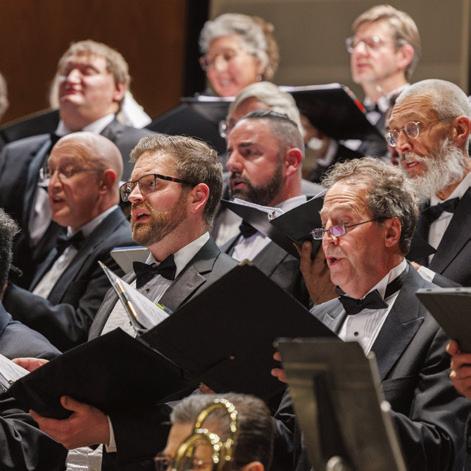
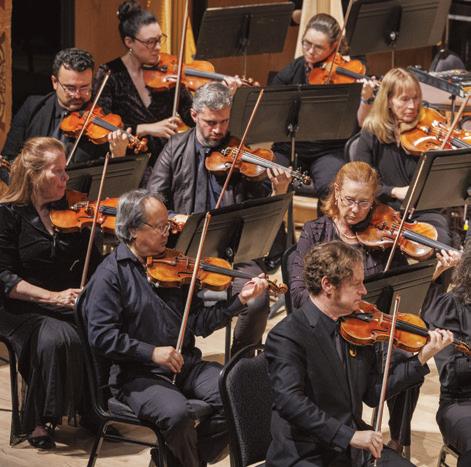
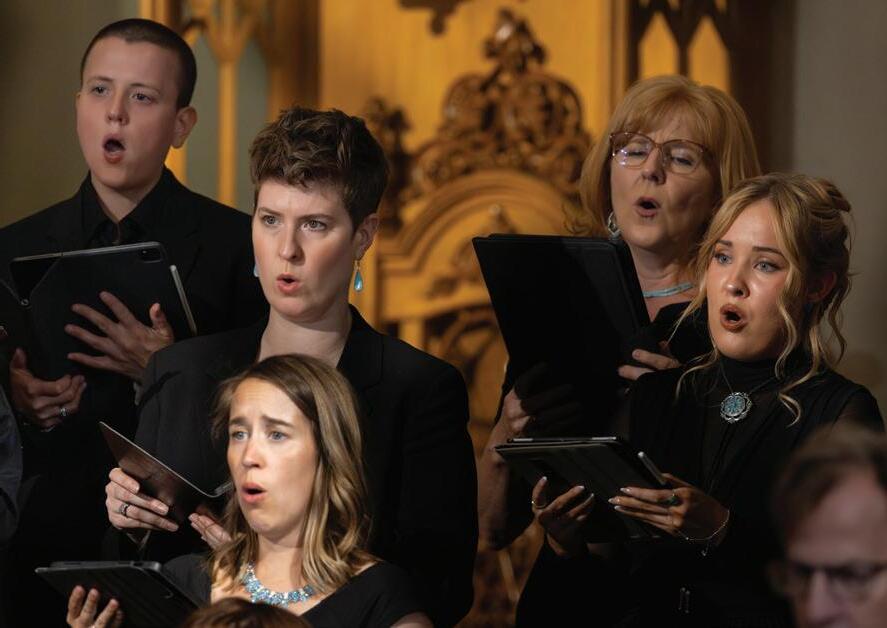
2026 Santa Fe Desert Chorale Summer Festival Program
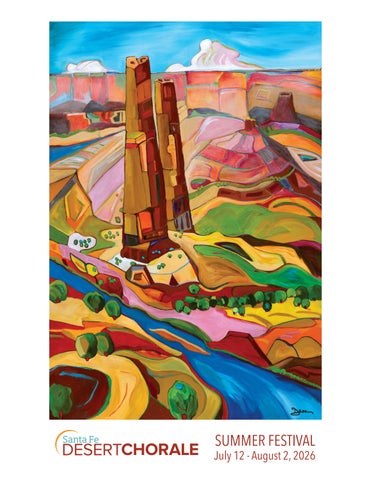
SUMMER FESTIVAL
July 12 - August 2, 2026
Santa Fe Desert Chorale is supported in part by New Mexico Arts, a division of the Department of Cultural Affairs, and by the National Endowment for the Arts. Additional funding is provided by the County of Santa Fe Lodgers’ Tax, and the City of Santa Fe Arts and Culture Department and the 1% Lodgers’ Tax. Special thanks to our corporate sponsors — Dry Farm Wines, Four Seasons Hotels and Resorts Santa Fe, Heritage Resorts & Hotels, La Fonda on the Plaza, Nusenda Credit Union, Patina Gallery, the Santa Fe New Mexican, Santa Fe Selection Travel Guide, Thornburg Investment Management, and UMB Bank — and other individuals, corporations, and foundations for their generous support. For a full list of donors, please see pages 59 through 64.
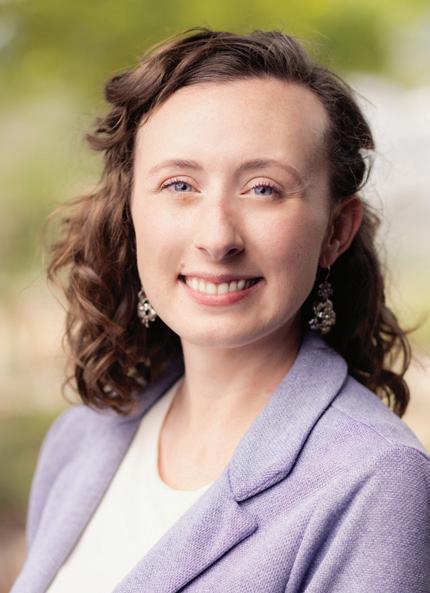
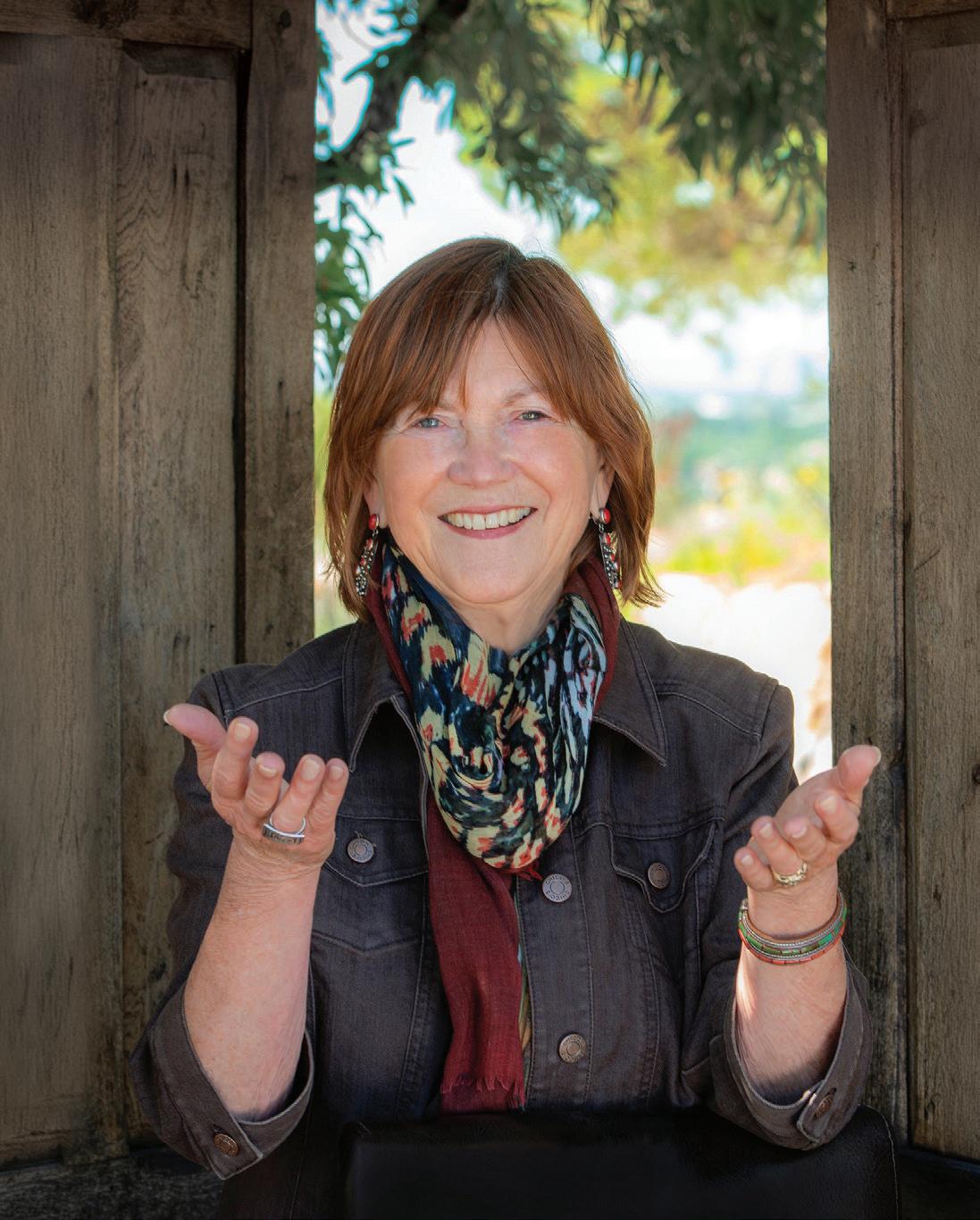
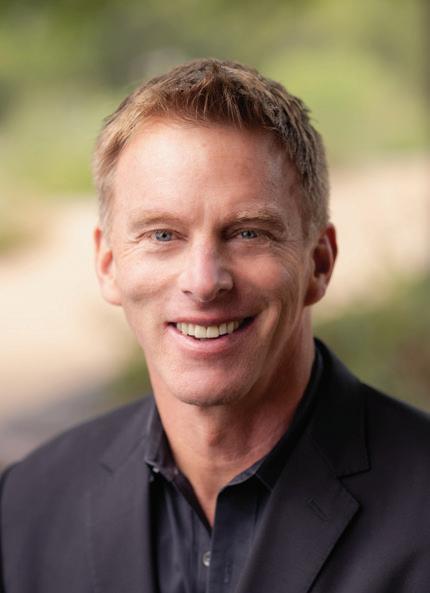
Emma Marzen
In the summer of 2016, I waited with bated breath for my first-ever Santa Fe Desert Chorale concert in the hushed Cathedral Basilica of St. Francis of Assisi. That performance was the first of our Rachmaninoff All-Night Vigil program that summer—the final program to open. I was your Box Office Manager then, freshly on the scene in Santa Fe, just beginning to know this community and our beloved ensemble. By evening’s end, I knew I had found a home for my soul.
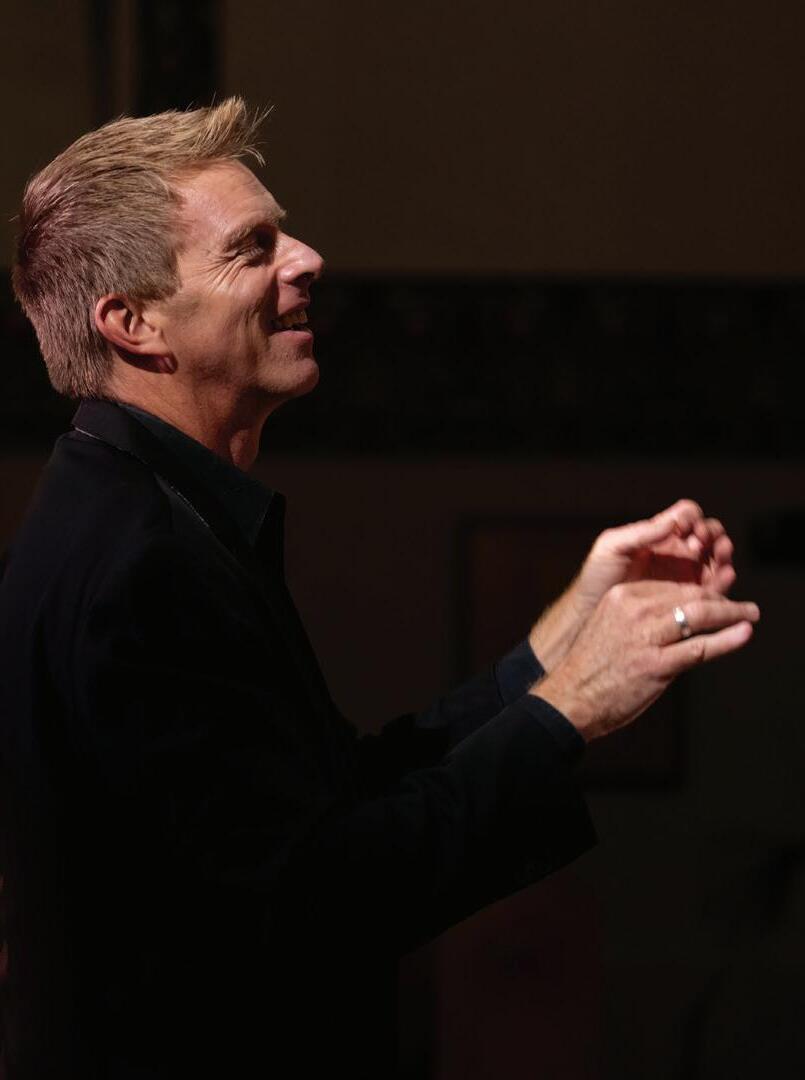
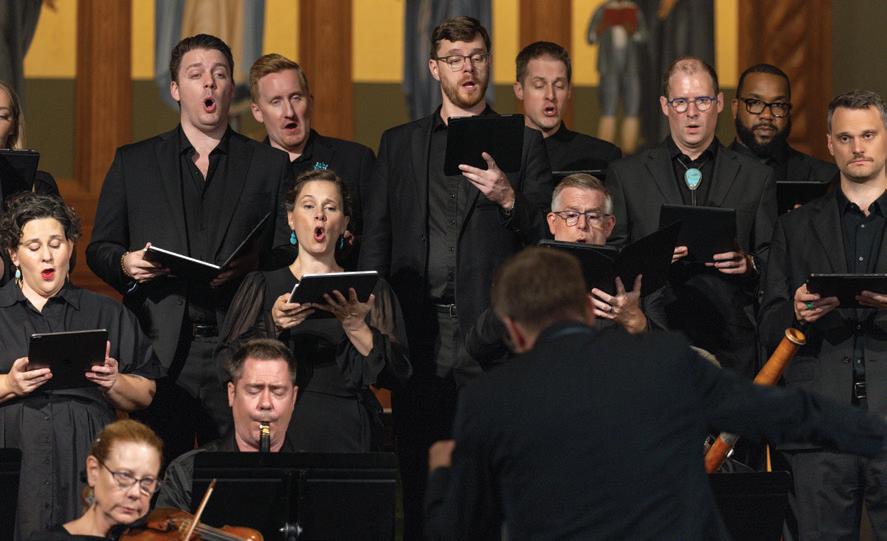
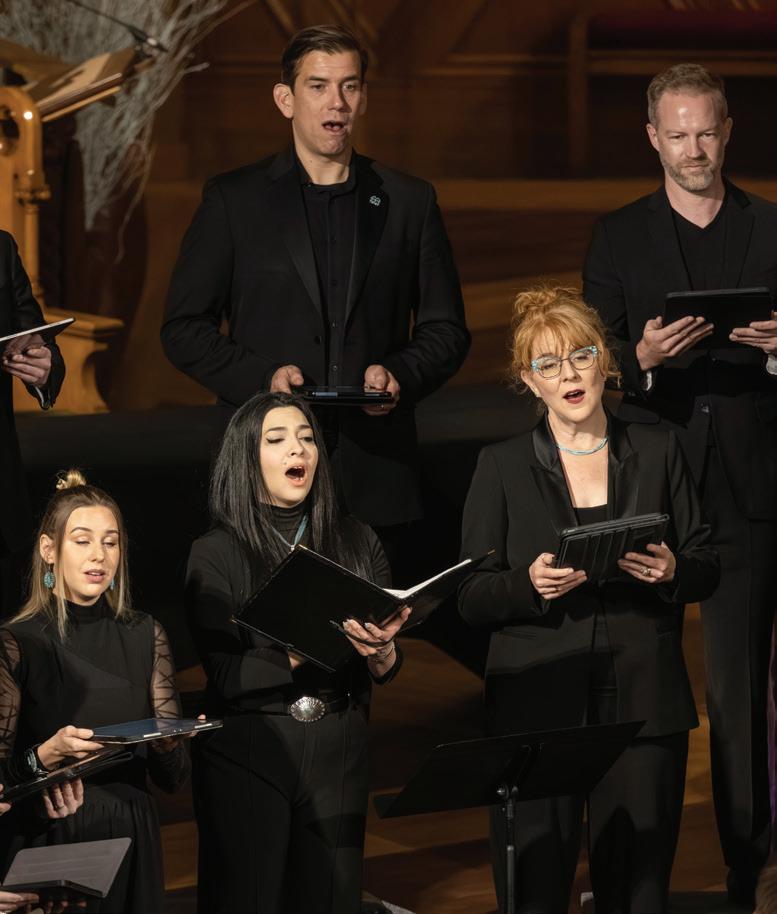
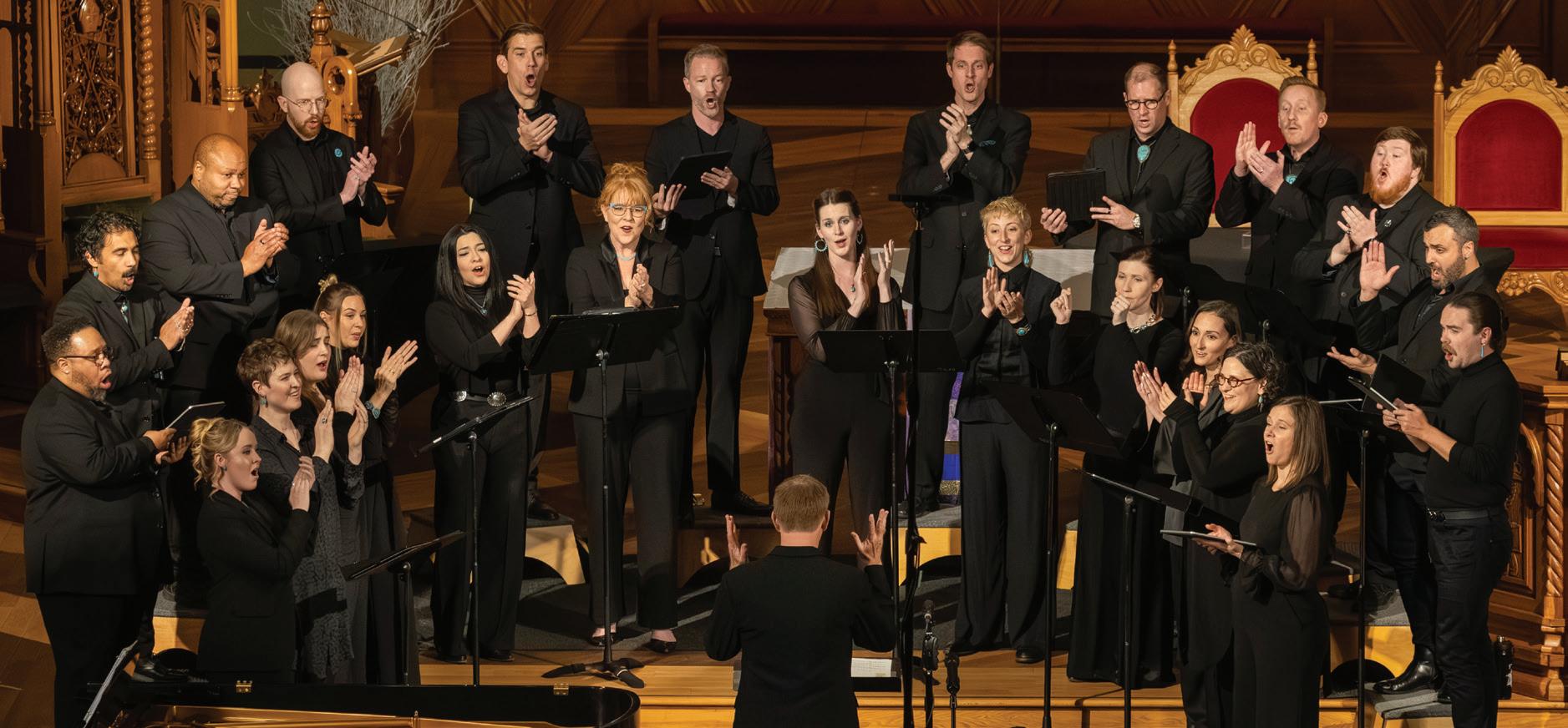
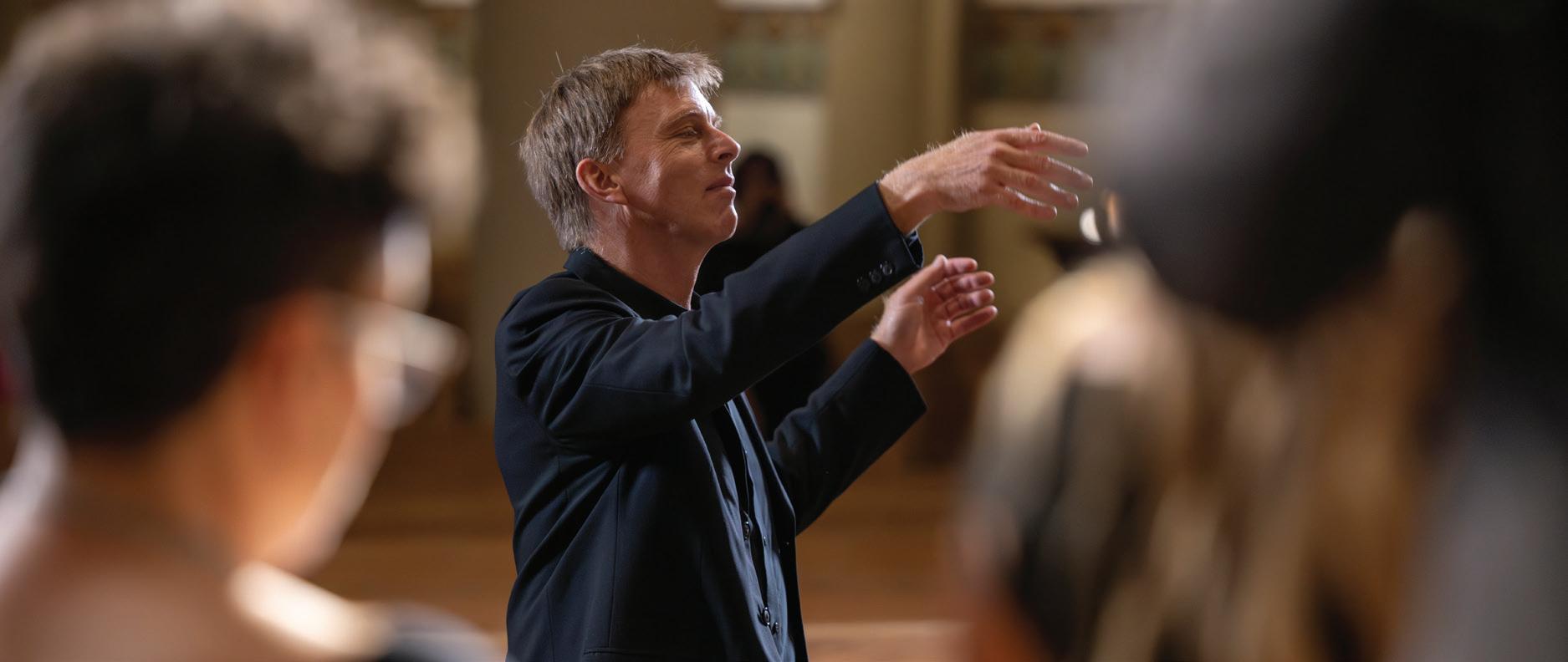
The Cathedral Basilica fell silent as Joshua Habermann lifted his hands, and when the Chorale began to sing, thirty-two voices filled the space with a wash of sound so transcendent that time stood still. At the final note, Josh held the silence just long enough for all of us to remain suspended together—luxuriating in a perfect moment— before releasing us into uproarious applause and, for many, cathartic tears.
I have come to find that this is the signature Desert Chorale experience, and it never loses its magic. The liminal space just before the first note and just after the last remains as mysterious and precious to me today as it was ten years ago. In a world where truth, beauty, and belonging can feel harder to find, live performances by the Santa Fe Desert Chorale remind us of what humanity can do when we join together in harmony.
This is our aim: to build bridges between all people and create a place of true belonging through the power of the collective human voice. A community united in song. With that intention at the center of all we do, the future of your Desert Chorale is brighter than ever.
44th
Annual Summer Festival
That spirit comes alive this summer in programs that span
centuries, continents, and stories of home. We open with Renaissance Splendor, journeying to the heart of Spain and Italy through luminous polyphony and early Baroque grandeur, joined by theorbo, organ, baroque guitar, and early music ensemble Incantare. Homecoming marks our nation’s 250th anniversary with a celebration of new American choral music, featuring four world premieres by composers Moira Smiley, Shawn Kirchner, Shavon Lloyd, and Taja Astar, alongside Alex Berko’s celebrated work, Sacred Place. And then, the program that captivated me from my first days with the Chorale returns: Rachmaninoff’s All-Night Vigil. Last performed by the Desert Chorale a decade ago, this deeply spiritual masterpiece will once again expand our ensemble to 32 voices and transform our venues into sanctuaries of sound. It also marks a special return “home” to a summer performance in Albuquerque—the first, we hope, of many. Rounding out the Festival, children and their grown-ups are invited to a free, fun-filled mini concert—the Children's Concert—at the Chavez Center on July 29 at 11 am; then at 4 pm that day, our Artist Spotlight Recital offers an intimate afternoon with Kathlene Ritch, Sylvia Leith, Edmund Milly, and pianist Nathan Salazar at St. Bede’s.
Our New Album Is Here
The sound of your Desert Chorale is reaching far beyond the concert hall. Roots & Rivers, released June 12, gathers new American choral music written especially for your Desert Chorale, with works by Shawn E. Okpebholo, Reena Esmail, Jocelyn Hagen, Kile Smith, and Shawn Kirchner. These pieces tell stories of struggle, resilience, journeying, and light—and carry the Desert Chorale sound far beyond New Mexico. Get your copy after the concert, listen on your favorite streaming platform, and share this music with someone who needs to hear it.
Santa Fe Sings! and Winter Festival
First produced in 2016, our ever-popular Santa Fe Sings! returns September 19. This joyful community choral workshop invites singers of all backgrounds and ages, from lifelong choristers to shower singers (and everyone in between), to gather under Josh’s direction for a day of singing, learning, and connection. And while we are still savoring summer, our beloved Winter Festival, Carols & Lullabies: A Winter’s Glow returns December 12–22. We hope you will join us again as candlelight, song, and the warmth of this extraordinary ensemble carry us into the holiday season. Registration and tickets for both are available now.
The Founder’s Match
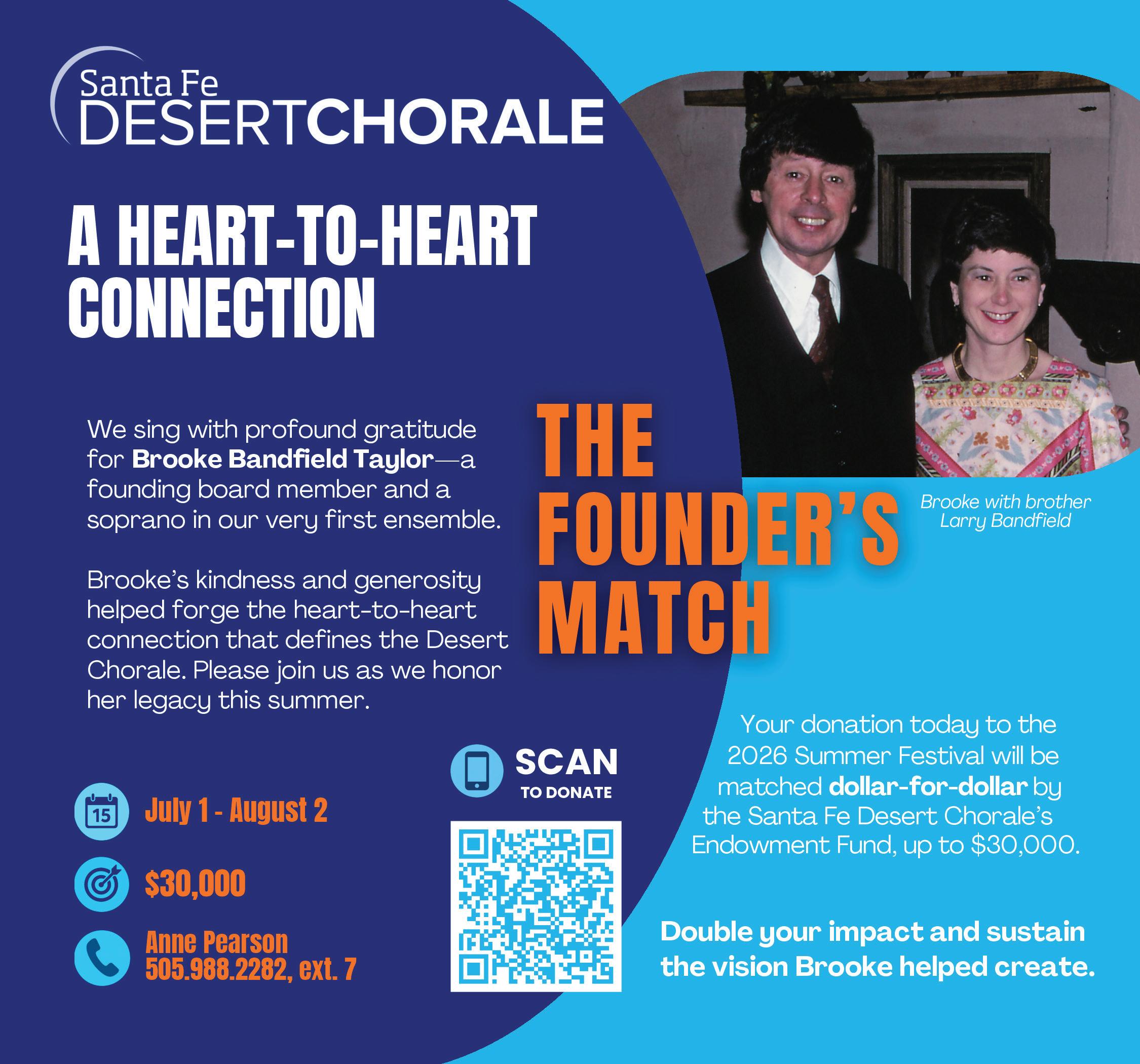
This work is only possible because of the generosity of our dedicated community. This summer, we sing with profound gratitude for Brooke Bandfield Taylor—an early board member and soprano in our very first ensemble. Brooke’s kindness and generosity helped forge the heart-toheart connection that still defines the Desert Chorale, and we invite you to join us in honoring her legacy through a special matching campaign to raise up to $30,000 for this year’s Summer Festival (see page 49 for more details).
A TRIBUTE TO BROOKE BANDFIELD
TAYLOR
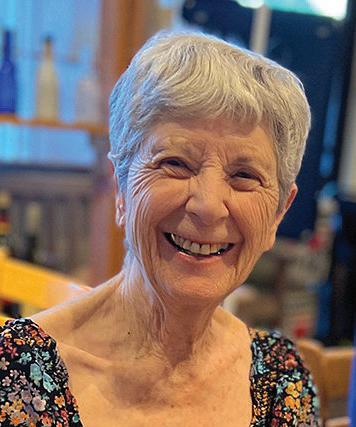
Brooke Bandfield Taylor, one of the founding members of the Santa Fe Desert Chorale, passed away March 17, 2026, in Walnut Creek, CA, at the age of 85. The sister of the Chorale’s founder, Larry Bandfield, Brooke supported the Chorale from the very beginning, sang soprano in our first programs, and established our very first children’s choir and educational initiatives. She remained one of the Chorale’s most ardent supporters for more than 44 years.
Brooke helped create the Desert Chorale’s original vision for a chamber choir that might take its place alongside the Santa Fe Opera, the Chamber Music Festival, and the many other extraordinary ensembles that fill Santa Fe with music. Over the decades, the Desert Chorale experienced ups and downs, but Brooke was always there, sponsoring
Your support ensures that the music and community we love will continue to flourish for generations to come. Gifts may be made by calling Anne Pearson at (505) 988-2282, ext. 7 or by visiting desertchorale.org/support. Thank you for your generous consideration.
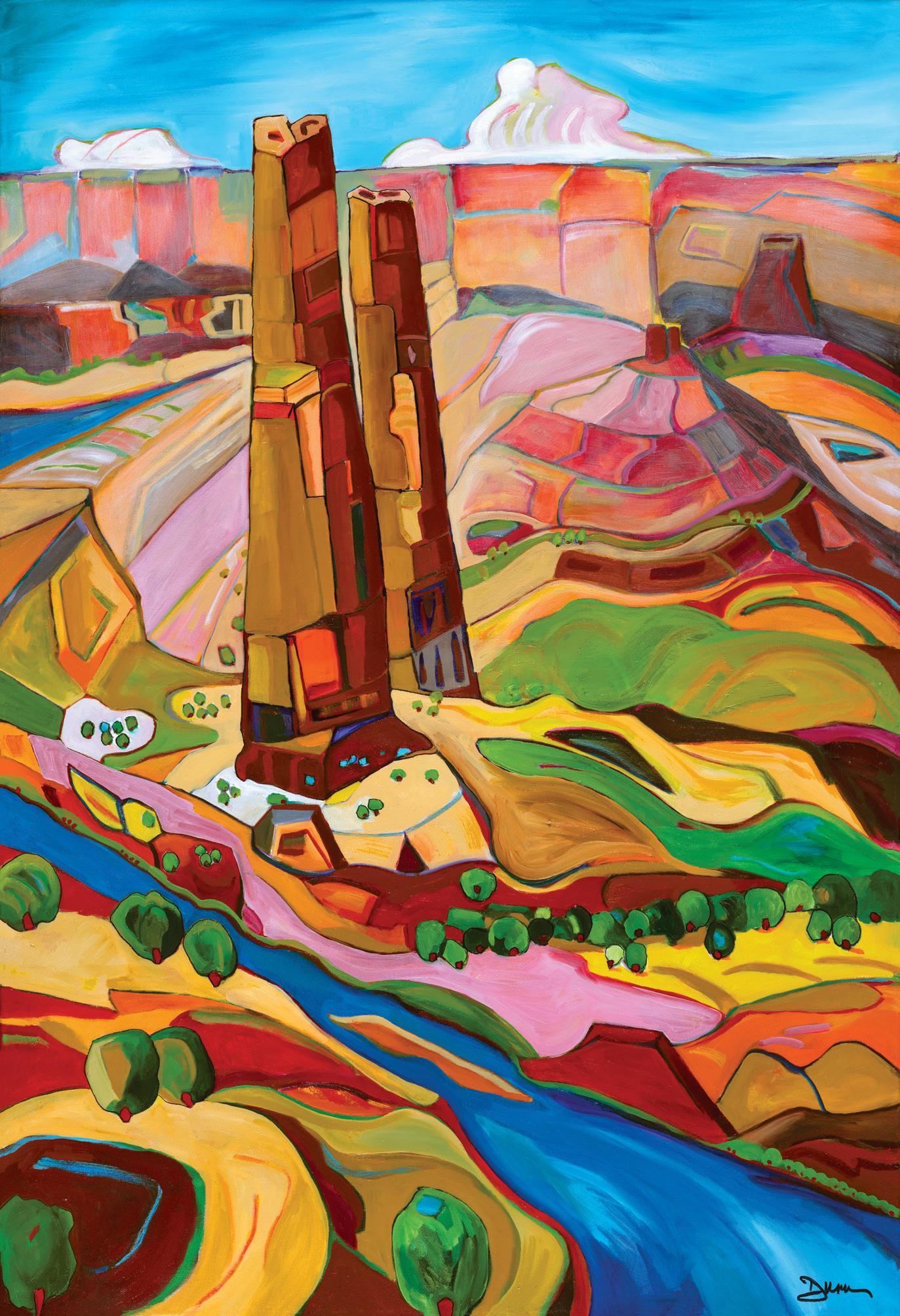
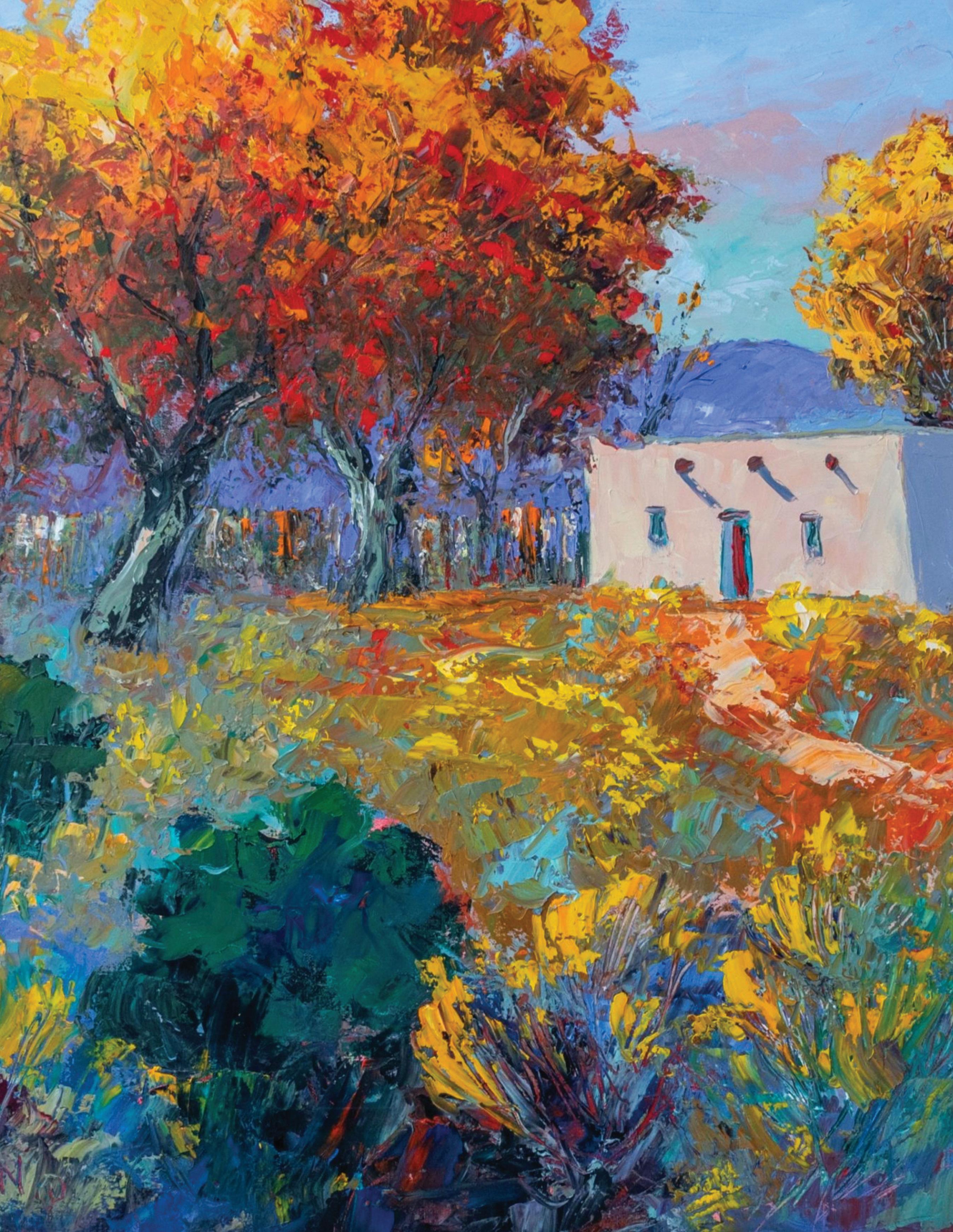
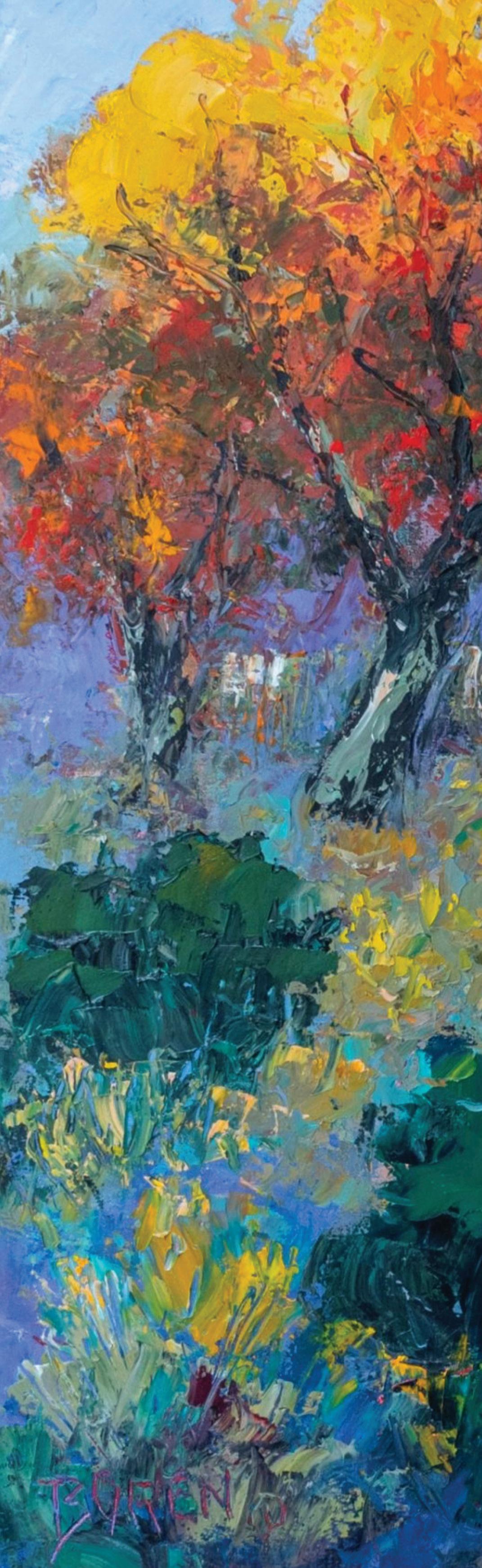
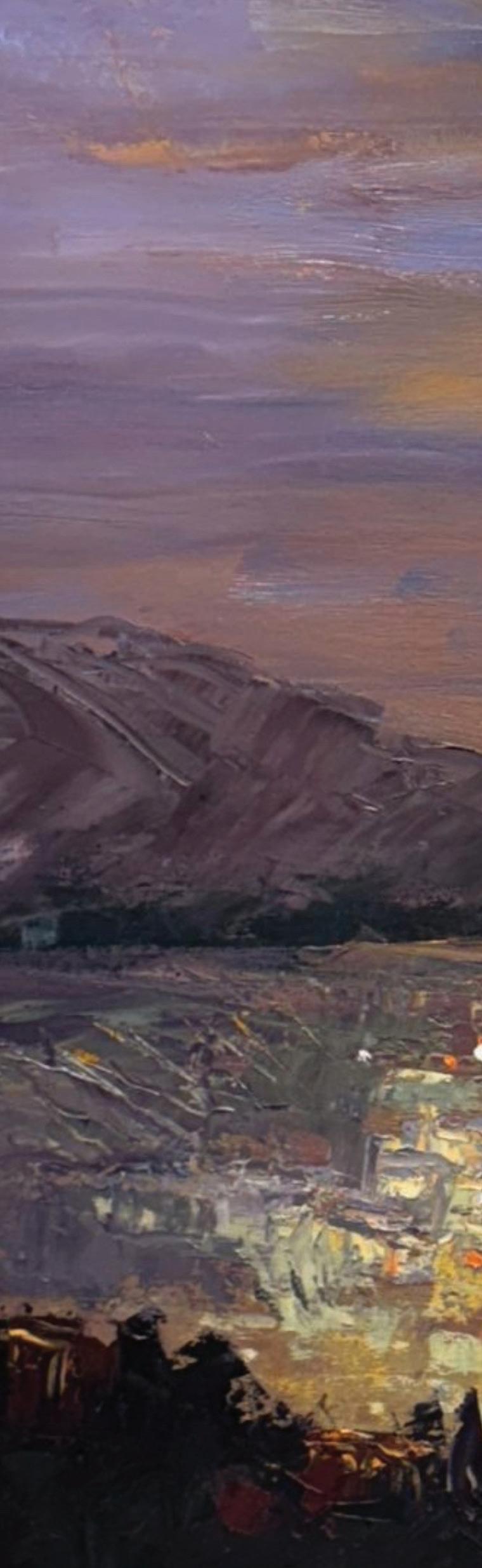
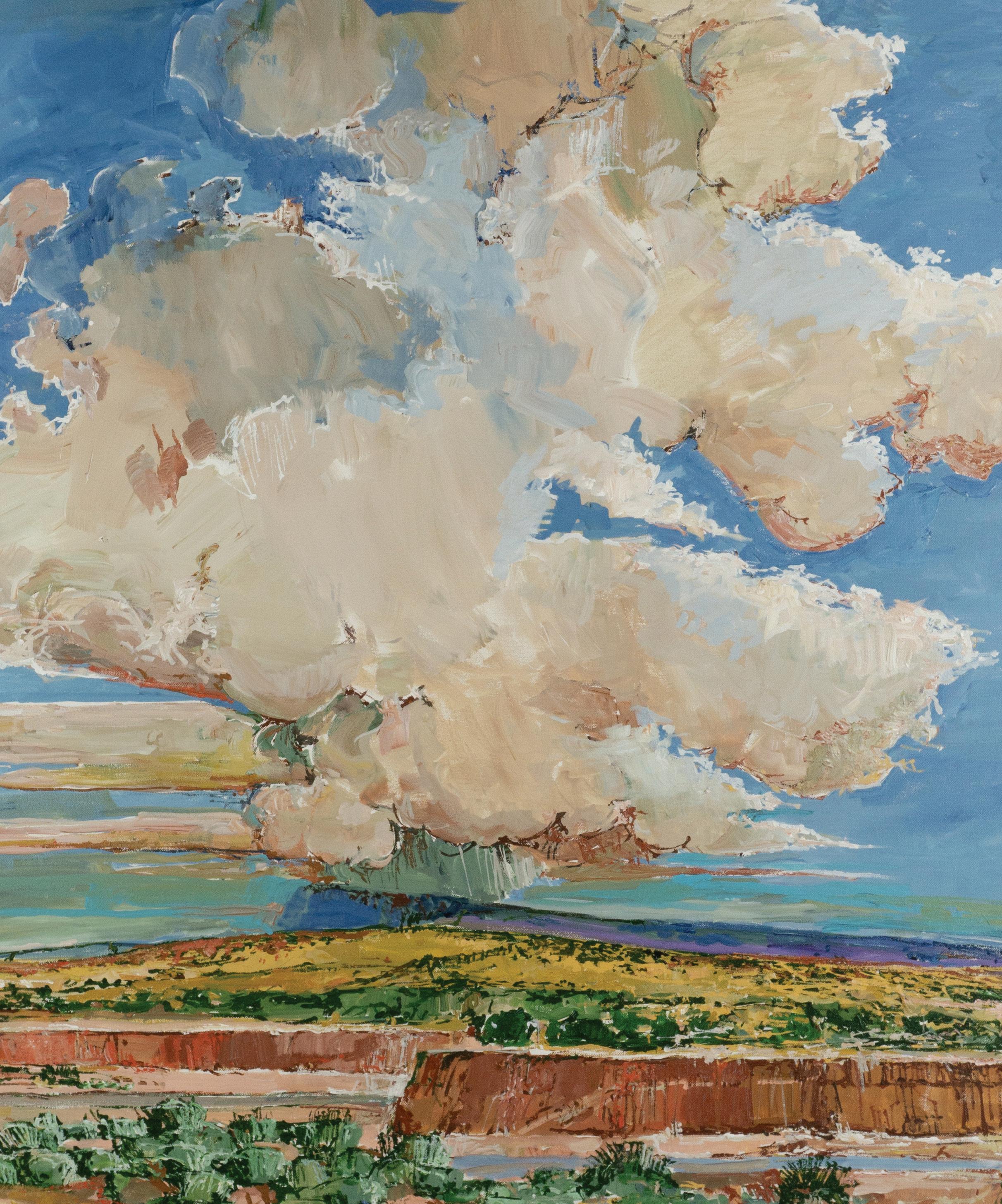
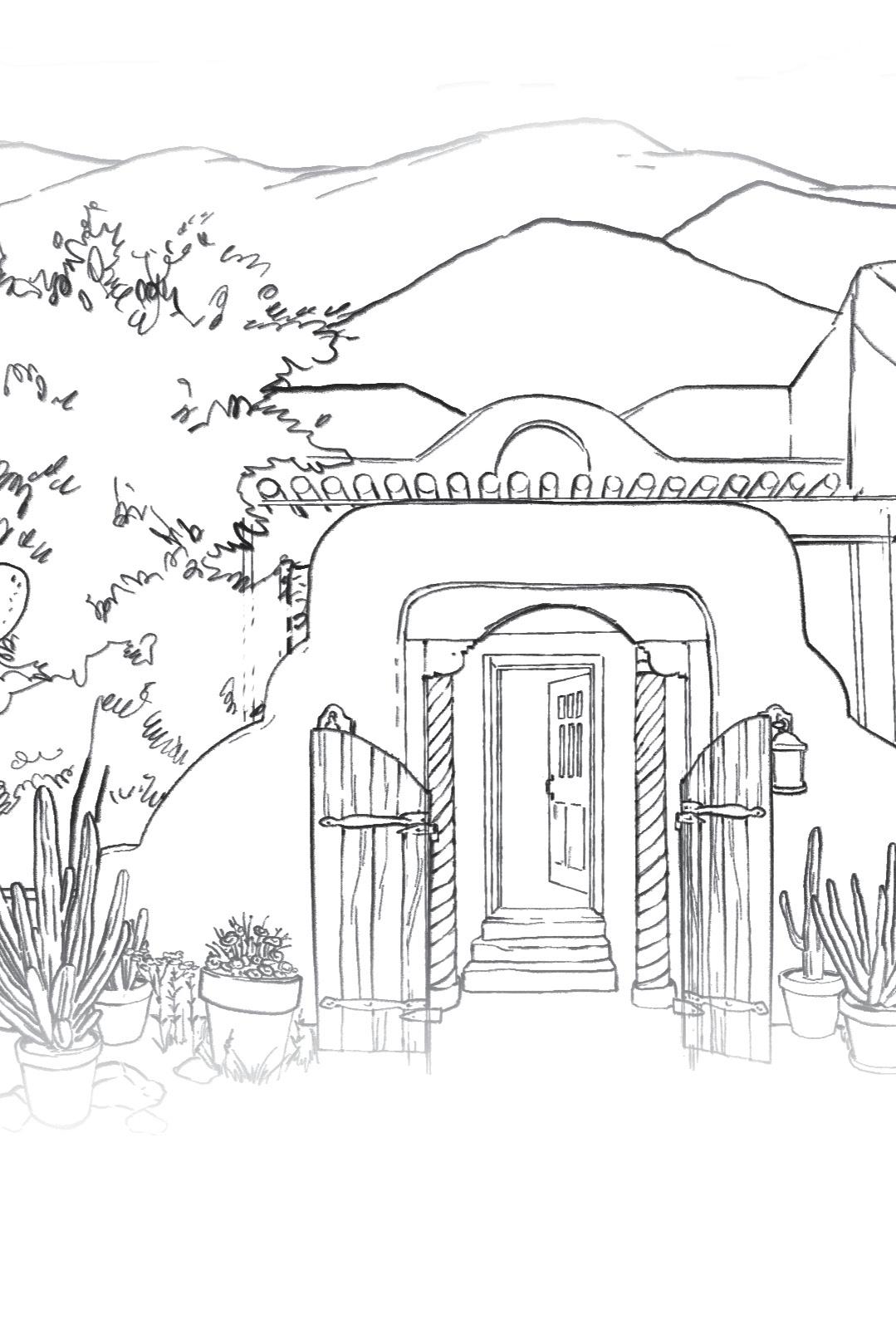
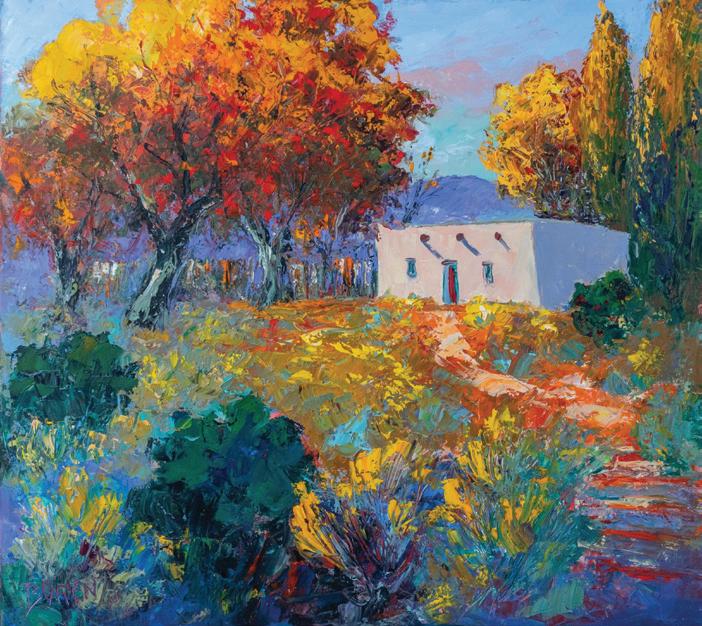
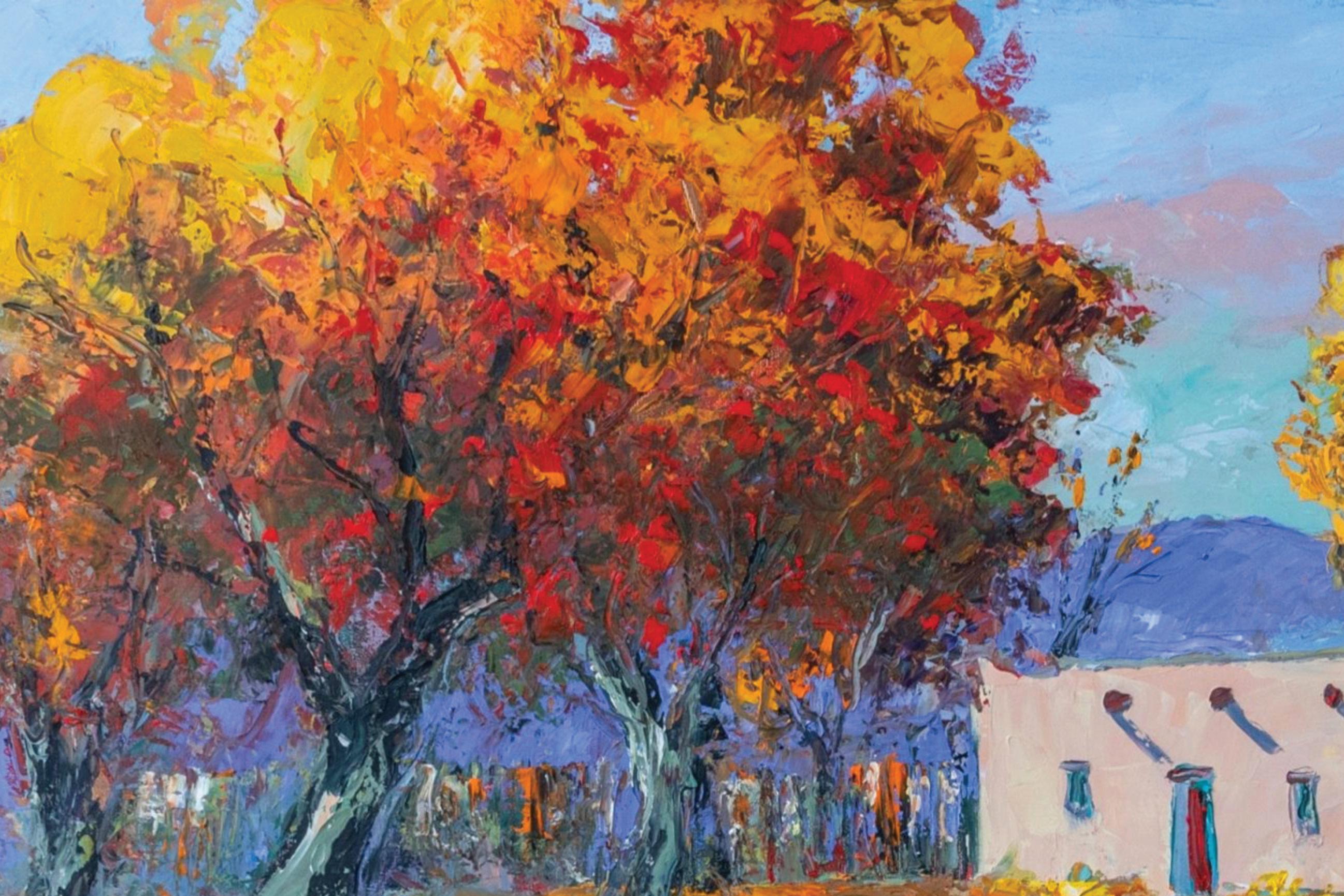
Last but not least, I would also like to express my deepest appreciation to this year’s program book artists, Evelyne Boren and Jack Dunn, whose powerful artwork visually expresses our programmatic themes and enriches our season, and to Carlos Acosta of Acosta Strong Gallery for enabling this partnership.
Please come say hello on your way out! We would love to meet you and hear your reaction to the music. In the meantime, please sit back and enjoy this performance by your Santa Fe Desert Chorale.
With gratitude and warmest wishes,
Emma Marzen Executive Director
concerts, helping commission new works, and developing the framework that has allowed the Chorale to attract stellar vocal artists from across the nation. She was a sweet, generous person, and she would drop everything to help a friend.
This summer, through a gift from our Endowment Fund, the Desert Chorale honors Brooke’s lifelong love of music by sponsoring the entire 2026 Summer Festival in her memory. We miss you, Brooke.
Photo by Paul Horpedahl
PERFORMANCE VENUES & INFORMATION
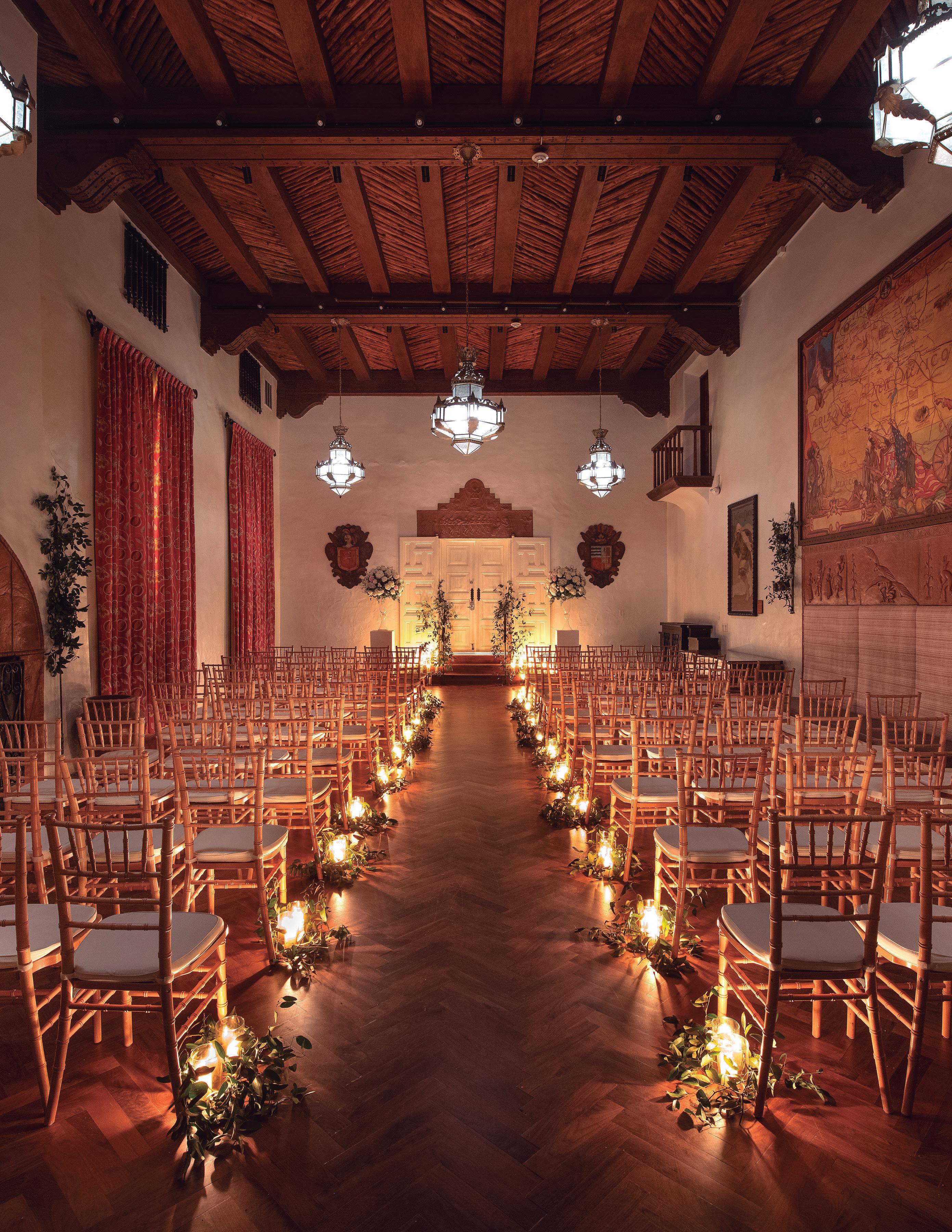
The Desert Chorale has the privilege of performing in some of the most beautiful and historic venues in New Mexico that provide the acoustic quality needed for excellent choral performances. While many of the venues represent specific religious or cultural traditions, we celebrate the diversity of faith, thought, artistry, and human experiences represented by the music we perform. We hope that the experiences we share in these spaces bring us closer together, as we seek to be inspired by the power of great choral music.
Genoveva Chavez Community Center
3221 Rodeo Rd, Santa Fe, NM
Cathedral Basilica of St. Francis of Assisi
131 Cathedral Place, Santa Fe, NM
Cathedral of St. John
318 Silver Ave SW, Albuquerque, NM
St. Bede’s Episcopal Church
550 W San Mateo Rd, Santa Fe, NM
Special Needs and Requests
Our facilities are ADA compliant and accommodate those with special needs and physical challenges. Please contact our Box Office at (505) 988-2282 or at boxoffice@desertchorale.org to reserve a wheelchair location or for other special needs. While at the concert, our ushers are available to assist you. A limited number of large-type text and translation inserts are available at each concert.
Lost and Found
Any items found at the concert will be collected by our staff and will be available in our offices for one month following each season, then donated to charity. Please call us at (505) 988-2282 to inquire about lost items.
Recycle and Reuse
To minimize printing costs and save paper, please recycle or reuse your program book, either by saving it for a future concert or by returning it to an usher at the end of the concert.
All photos by Tira Howard Photography unless otherwise noted.
SANTA FE DESERT CHORALE MISSION STATEMENT
The mission of the Santa Fe Desert Chorale is to excite, engage, and inspire diverse audiences with the beauty and power of great choral music.
“The road to care was difficult until we found the Cancer Foundation for New Mexico. Their support lifted many burdens for my family and me.”
Jimmy, Ohkay
Proceeds go directly to cancer patients and the following patient support services:
• Travel to treatment
• Overnight lodging
• Nutritious food assistance
• Emergency financial assistance
• Professionally led support groups
• Clinically trained volunteer support during treatment
When cancer tests the spirit, faith and community bring strength.
Owingeh Pueblo, New Mexico Your generosity helps provide hope for every journey.
When the distance and cost of travel to care became overwhelming, the Cancer Foundation for New Mexico stepped in with assistance that helped Jimmy continue his treatment. Just as important, he found a community where traditions are respected, prayers are honored, and families are welcomed with compassion.
• Licensed Social Worker support and navigation
BOARD OF DIRECTORS, STAFF, AND ARTISTIC SERVICES
BOARD OF DIRECTORS OFFICERS
Catherine Gronquist, President
Diane Graves, Vice President
Felicia Morrow, Treasurer
Gregory Dove, Secretary
Barry Lyerly, Immediate Past President
BOARD OF DIRECTORS
Richard G. Andrew
Murray Bern, M.D.
Douglas Brooks
Mary Delk
Jeffrey C. Fort, J.D.
Chris Frenk
Joshua Habermann*
Chelsea Helm,* Singer Representative
Stephen Hochberg
Christine M. Lorillard
Emma Marzen*
Fraser A. McAlpine
Carmen Paradis
Marianne Reuter
Todd Sickles
Alison Sowden
Patricia Stanley
Susie Wilson, D.M.A., Honorary Director
*ex-officio member
DIRECTORS EMERITI
Mary G. Brennan
David A. Bueschel
Mark Edw. Childers
Allegra Derryberry
Jim Derryberry
Margie Edwards
Kirk Ellis
Allison Elston†
John Greenspan†
Kathleen Davison Lebeck, J.D.
Sheryl Kelsey
Lynn F. Lee
William H. Lynn
Dorothy Massey
Ian McKee†
Laurie Meyer
Haydock Miller†
Margaret K. Norton
Jane Clayton Oakes†
Mary Lou Padilla, Ph.D.
Nina Hinson Rasmussen†
Don Roberts†
Brooke Bandfield Taylor†
Jane Thomson
Frances White†
Brahna Lauger Wilczynski
Mac Wright† † in memoriam
ADMINISTRATIVE STAFF
Joshua Habermann, Artistic Director
Emma Marzen, Executive Director
Joanna Armstrong, Sales & Marketing Director
George Case, Artist Manager
Rachelle Elbert, Patron Services Associate
Heather Lacy, Community Engagement Manager
Anne Pearson, Development Manager
Amanda Sidebottom, Operations Director
Mark Zero, Grants Manager
SEASONAL STAFF
Isabella Brewer, Summer Intern
Lillian Letiecq, Production Tech
Nicholas D. López, Summer Intern
Maria Perez, Summer Intern
Jordyn Tatum, Summer Intern
ARTISTIC SERVICES
8va Music Consultancy
Tira Howard, Photography
Sean Johnson, Mesa Creative Solutions
Zina Jundi, Adverti-Zing!
Matthew “Kabby” Kabakoff, Kabby Sound Studios
Enrico Lagasca, Digital Content Manager
Clarissa Lovato, Elevate Media
Taylor Washburn, Social Media Content
W 40th Media, Videography
ABOUT THE SANTA FE DESERT CHORALE
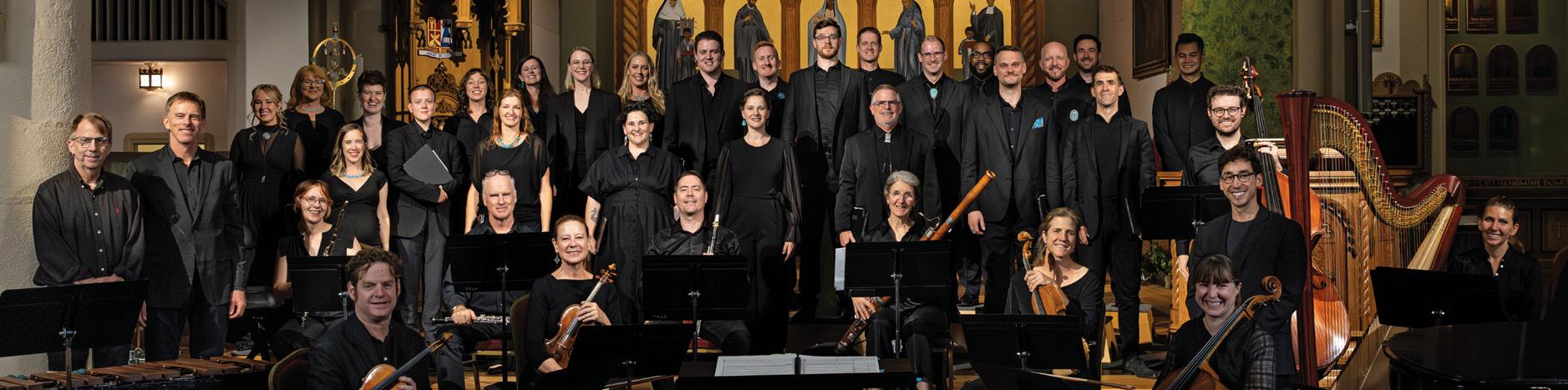
Founded in 1982 by Lawrence “Larry” Bandfield, the Santa Fe Desert Chorale has flourished as one of the longest-running professional music organizations in New Mexico. Praised by The Dallas Morning News as “a topnotch, 24-voice group…comprising the crème de la crème of professional choral singers from coast to coast,” the Desert Chorale is regarded as one of America’s most distinguished professional chamber choirs.
Performing in the historic Cathedral Basilica of St. Francis of Assisi in Santa Fe and other treasured venues throughout New Mexico, the Chorale has woven itself into the heart of the region’s cultural life. The organization’s annual Summer Festival has grown into one of the nation’s largest choral events, and the Chorale’s Winter Festival has become a beloved holiday tradition for thousands of locals and visitors.
The Desert Chorale works to excite, engage, and inspire diverse audiences with the beauty and power of great choral music. It brings together 24 exceptional professional singers from across the United States, carefully selected for their artistry, musicianship, and community mindedness. Under the artistic leadership of Joshua Habermann since 2008, the Chorale performs a rich and expansive repertoire spanning seven centuries, from early polyphony to vibrant contemporary works, and the Santa Fe New Mexican called the Desert Chorale “a rara avis in the choral music world.”
The ensemble has toured across the nation, performing in major cities including Dallas, Denver, Chicago, and Los Angeles. The Desert Chorale was honored to headline the 2025 National Conference of the American Choral
Directors Association at the Meyerson Symphony Center in Dallas, following a previous appearance at the ACDA National Conference in Salt Lake City in 2015.
The organization is deeply committed to championing contemporary composers. The Chorale has commissioned over 35 new works and premiered numerous additional pieces, fostering the vital creation of new choral music. Through the organization’s Commissioning Club, supporters have the opportunity to help select and fund a new commission annually.
The Desert Chorale’s commercial recording, The Road Home, debuted at No. 3 on the Billboard Classical Chart. The ensemble released their new album Roots & Rivers in June 2026, featuring new works by American composers written especially for the Chorale. Roots & Rivers is available on streaming platforms, as well as on CD and vinyl.
While nationally recognized, the organization is dedicated to building meaningful connections within its Northern New Mexican community. Since 2016, the beloved annual Santa Fe Sings! workshop has brought together music enthusiasts of all backgrounds to experience the joy of singing together under Habermann’s direction. Through the Insights & Sounds program, the Chorale offers free mini concerts for young people, thought-provoking symposiums exploring choral music, and dynamic workshops and masterclasses for high school students.
The Santa Fe Desert Chorale is a 501(c)(3) nonprofit organization.
Renaissance Splendor
Summer Festival Sponsor
The 2026 Summer Festival is underwritten in memory of Brooke Bandfield Taylor by the Santa Fe Desert Chorale Endowment Fund and The Founder’s Match Campaign (see page 49 for details).
Program Sponsor
Lynne Horning
Conductor
Joshua Habermann, Artistic Director
Sponsored by Carmen Paradis and Brian McGrath
DISCOVER EUROPE’S MUSICAL MASTERPIECES
Journey back in time to the heart of Spain and Italy, where a resplendent world of Renaissance and Early Baroque music awaits. Twenty Desert Chorale artists—joined by theorbo, organ, and the early music ensemble Incantare—will transport you to the hallowed halls of grand cathedrals, the mountains and seasides of the Mediterranean, and beyond. Highlights include Monteverdi’s jubilant expressive Versa Est in Luctum of Juan Arañés’ Un Sarao de la Chacona
high C’s of Allegri’s famous Experience the breathtaking polyphony of these sacred and secular works, creating a captivating tapestry of interwoven melodies that will fill you with the same wonder felt by those who first heard these masterworks centuries ago.
Sunday, July 12, 2026 | 4 pm
Sponsored by Sheryl Kelsey and George Duncan
Tuesday, July 28, 2026 | 7:30 pm
Sponsored by Gregory Dove
Saturday, August 1, 2026 | 7:30 pm
Sponsored by Jude Ford
Free Pre-concert Video Lecture
Presented by Edmund Connolly
Sponsored by the Steven Kerchoff Memorial Tribute Consortium
(see page 49 for list of contributors)
All concerts will be held at the Cathedral Basilica of St. Francis of Assisi.
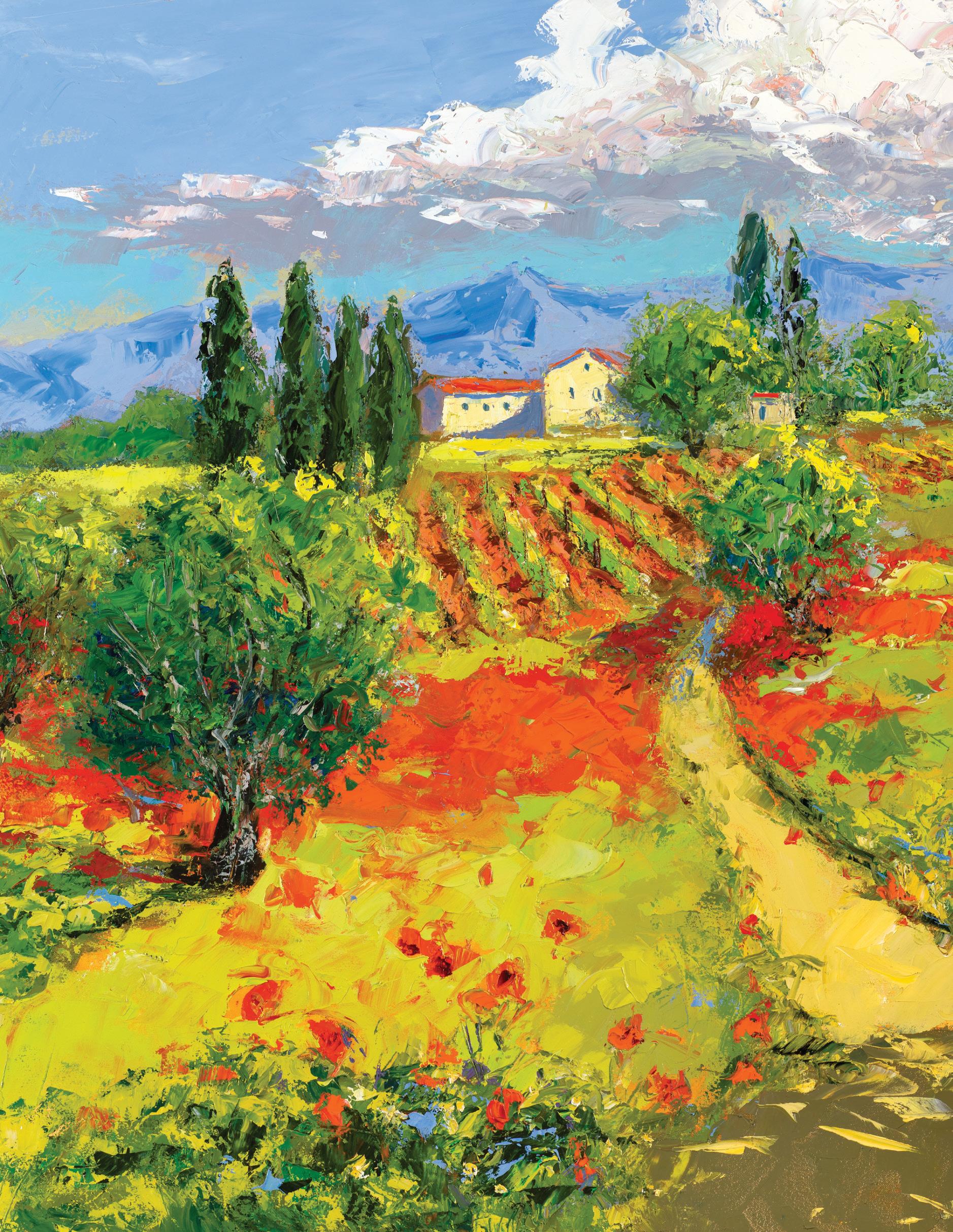
Page 12: Coquelicots by Evelyne Boren, Acosta Strong Fine Art Gallery
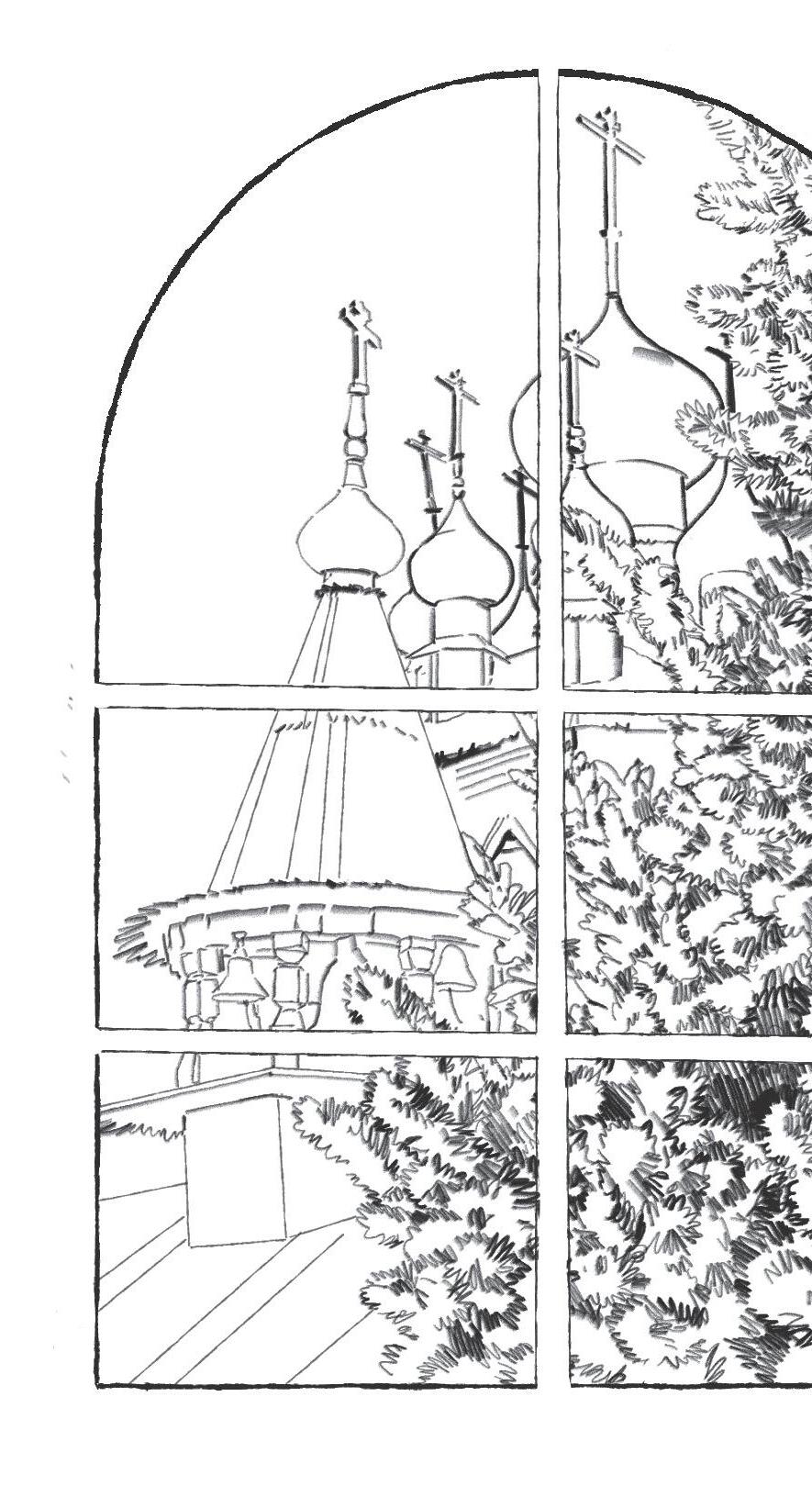
Page 13: Artwork by Olga Tamkovich
RENAISSANCE SPLENDOR
Joshua Habermann, conductor
Plaudite - Giovanni Gabrieli (1557 - 1612)
Versa Est in Luctum - Alonso Lobo (1555 - 1617)
Beatus Vir - Claudio Monteverdi (1567 - 1643)
Shir Hamma’alot - Salamone Rossi (1570 - 1630)
Vidi Speciosam - Tomás Luis de Victoria (1548 - 1611)
Psalm 100, SWV 36 - Heinrich Schütz (1585 - 1672)
Miserere Mei, Deus - Gregorio Allegri (1582 - 1652)
En Tanto Que de Rosa - Francisco Guerrero (1528 - 1599)
Suite of Dances - Salamone Rossi
Sinfonia, si placet
Correnta quarta
Brando primo
Gagliarda detta la Massara
Una Sañosa Porfía - Juan del Encina (1468 - c. 1529)
Amor con Fortuna - Juan del Encina
Un Sarao de la Chacona - Juan Arañés (d. 1649)
Incantare Early Music Ensemble
Underwritten by Richard and Chris Frenk
Cynthia Keiko Black, violin
Alice Culin-Ellison, violin
Liza Malamut, alto and tenor trombone
Ben David Aronson, tenor trombone
Garrett Lahr, bass trombone
Richard Savino, theorbo and baroque guitar
Sponsored by Gregory Dove
Maxine Thévenot, organ
Sponsored by Bill and Susan Cammock
PROGRAM NOTES
Whether in the visual or performing arts, stylistic development often follows a recognizable pattern. A new idea is introduced and it finds some traction. Others are inspired by this new idea and adopt and adapt it, each in their own way. A style or movement is born and polished by composers in each successive generation, leading eventually to the full expression of the style in its most mature form, an artistically rich golden age. Eventually the human need for novelty reasserts itself. A new idea is introduced and the cycle begins anew.
It is in these times of stylistic flux that some of the most compelling art is made, where we simultaneously experience the perfection of an established style, as well as the birth of a new idea that will ultimately supplant it. Cultural and geographical factors play a part in this ecosystem, with more conservative cultures favoring the late-stage culmination of old styles, while more innovative environments invite the introduction of new ideas that challenge the status quo. These two trends enrich and challenge the other. In our program today we shine a light on Spain and Italy at the cusp of the 17th century, when the glory of the Spanish Renaissance was at its fullest expression. At the same time, the beginnings of a new Baroque period were being championed by composers in Venice and elsewhere, resulting in a uniquely varied musical culture, a rich buffet of music with something for every taste.
We open with one of our innovators, Giovanni Gabrieli, organist and Maestro di Cappella at St. Mark’s Cathedral from 1585 until his death in 1612. Late 16th-century Venice was the envy of the world, drawing enormous wealth from its position along trade routes between East and West. Riches flowed into government and church coffers and supported ambitious music programs, none more grand than St. Mark’s. Gabrieli, ambitious to use the forces at his disposal and the resonant acoustics of the cathedral, wrote large scale works combining voices and instruments such as his Plaudite, for 12 voices in three choirs. Each group has a unique role to play: a high voiced choir, a vocal quartet, and a large low voiced choir of voices and instruments. Gabrieli plays the choirs off each other, reserving the full 12 parts for special moments of maximum power. The voices of the Desert Chorale are joined by our artistic partners, Incantare, an ensemble of early music specialists dedicated to the performance of this unique repertoire.
Though lesser known to modern audiences than his teacher Victoria, in his day Alonso Lobo was considered among the greatest composers of Spanish sacred music. Written for the death of Phillip II in 1598, Versa est in
Luctum honors the fallen monarch with richly melodic lines and masterful counterpoint in six parts. The motet reflects a time when the Spanish Empire was at its apex, extending from Europe to the Americas, Africa and Asia. Similarly, Spanish courts were flush with riches from the colonies, and composers were writing sophisticated music that defined the pinnacle of renaissance polyphony.
Monteverdi published his Selva Morale e Spirituale in 1640-1641, but the psalm setting Beatus Vir, which appears in it, is believed to have been written some years earlier. All great composers borrow, and here Monteverdi borrows from himself by repurposing a lively violin melody from his secular duet Chiome d’Oro in this sacred setting. Likely heard in the sumptuous Vespers liturgies common at St. Mark’s in Venice, where Monteverdi worked for the final 3 decades of his life, the composer adds trombones, sometimes doubling the lower voices and sometimes striking out independently in the forward-looking style that defined the early Baroque. Voices and instruments are often grouped in duets, singing energetic and florid melodies over a charming ground bass that acts as a unifying element. Ever the madrigal composer, Monteverdi can’t resist painting the text in music, setting irascetur (“is angry”) in repetitive fast notes, aeternum (“eternity”) in long notes, and peribit (“shall perish”) in notes that fade away into silence.
A contemporary of Monteverdi, Salamone Rossi was employed by the Gonzaga family in Mantua as a violinist and composer. Rossi overwhelmingly composed secular music but in 1623 he published a collection of Jewish liturgical music: Ha-shirim asher li-Shlomo (The Songs of Solomon). This is the earliest known published collection of liturgical music in Hebrew, and a fascinating window into Mantua, where a vibrant Jewish community had lived for centuries. Shir Hamma'alot (Song of Ascents) is written in a thoroughly contemporary style indistinguishable from Christian and secular music of the day.
Our next two composers were not Italian, but traveled there to study and immerse themselves in the rich cultural life of the late Renaissance. Tomás Luis de Victoria left Spain as a teenager, and spent two decades in Rome, working as a singer, organist and maestro di cappella at various Roman churches. Victoria’s output is exclusively sacred, and he developed a compositional style that is widely praised for its deep emotional impact. Of Victoria’s many motets, Vidi Speciosam (I Beheld Her) is especially beloved for its lyrical writing and soaring phrases. The composer skillfully groups the six voices in different ways, sometimes three and three, and sometimes in unequal combinations highlighting high and low sounds. Some of the most beautiful music is produced at climactic moments when all six parts come together.
(continued on page 17)
On View
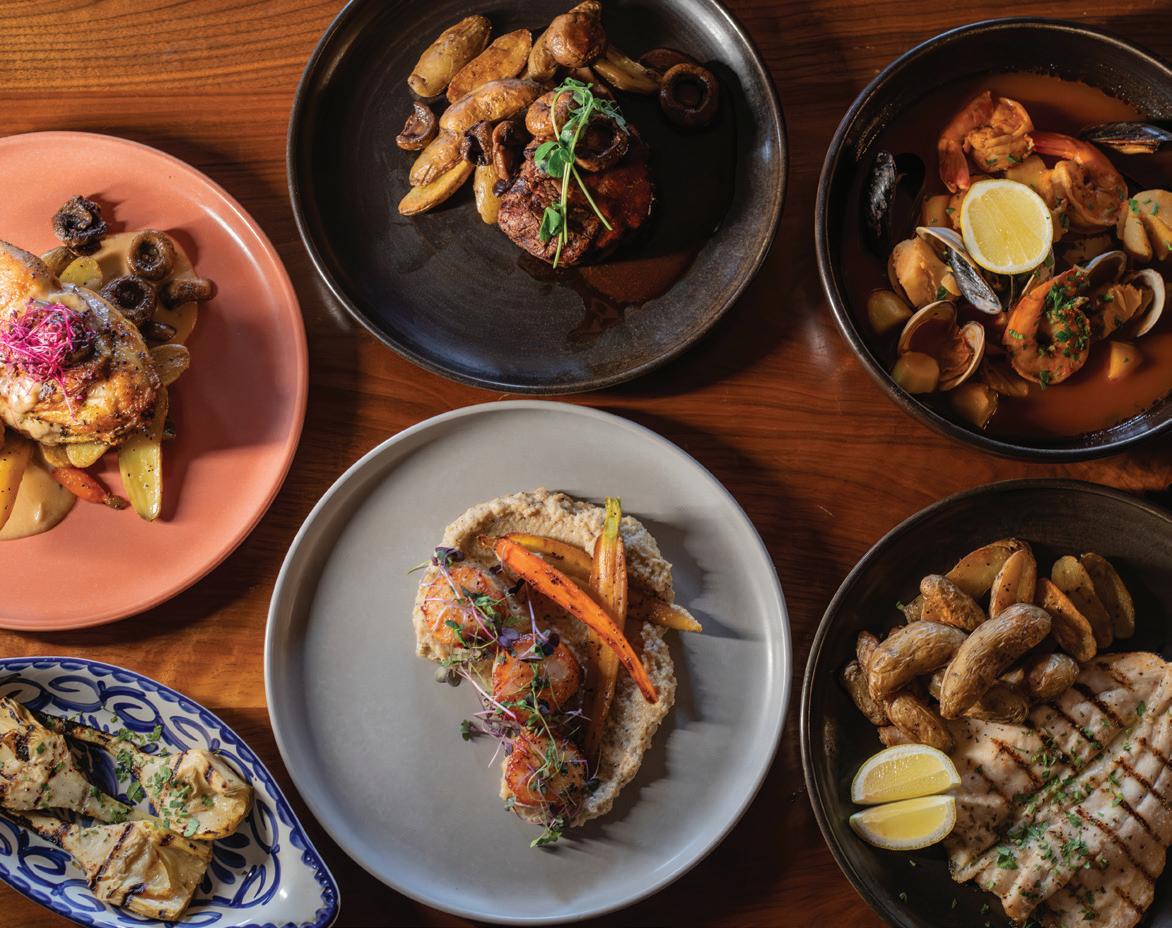
Inspired by sunlit coastlines and Santa Fe’s high-desert spirit, Solymar is a coastal kitchen centered on vibrant flavors, seasonal ingredients, and warm hospitality. Drawing inspiration from the Mediterranean and the coastal regions of North and South America, the menu blends fresh ingredients with bold, approachable cooking.
Our second immigrant to Italy, Heinrich Schütz (1585–1672), came from Germany to study under the Venetian master Giovanni Gabrieli, whose music kicked off this program. Unlike Victoria, who was rooted firmly in the Renaissance, Schütz came from a younger generation interested in the new Baroque style. Schütz’ setting of Psalm 100 (Jauchzet dem Herrn) is part of his larger collection Psalmen Davids published in 1619. In typical Venetian style, the works are strongly polychoral, combining contrasting groups that play with and off of each other, here with one choir of voices and the second echoing choir of instruments.
For our next piece we return to Rome, specifically the Sistine Chapel, site of the secret papal conclave, the extraordinary paintings of Michelangelo, and the justifiably famous Miserere Mei, Deus of Gregorio Allegri. Allegri was a prolific composer, but like so many musicians he was both blessed and cursed with having one huge hit for which he is primarily known today. Composed in 1638 for Holy Week services at the Papal Chapel, Miserere was recognized immediately as a masterwork. The Sistine Chapel Choir, which tended towards secrecy, closely guarded the scores. The mystique around the piece built, and over the years Allegri’s Miserere became one of a few truly famous choral works. This fame was enhanced by the tradition of ornamentation, in which singers improvised feats of virtuosity. In the case of Miserere one particular improvisation with repeated high C’s in the soprano was so effective that it became codified as the standard version, and was performed each Holy Week for more than 200 years. It is that version that we present here.
Though the church sought to prevent the music from falling into external hands, copies of Allegri’s beloved score eventually began to leak out. Mozart heard it and is said to have memorized and transcribed it in one hearing. There are similar stories about Mendelssohn and others, “stealing” the score from the Vatican. Whether these are tall tales or true events, our fascination with this piece speaks to the enduring power of sacred, and secret, music.
The members of Incantare are playing on period violins and trombones to come as close as possible to the sounds of the seventeenth century. The violinists are playing on gut strings with shortened Baroque bows. This allows them to emphasize the articulation, movement, and vocal qualities of the music. The trombones are sometimes referred to as “sackbuts” to differentiate them from their modern symphonic grandchildren. “Sackbut” comes from an old French word meaning “to push and to pull,” while “trombone” literally means “big trumpet” in Italian—but they are both the same! During this time period, bells were smaller, metal was thinner, and mouthpieces had flatter rims. This allowed them to blend with singers and violins.
Both violins and trombones were referred to as “alterable” instruments, meaning neither of them have frets, keys, or holes. Like singers, this allows us to tune spontaneously and achieve a rich composite sound.
Bastian Chilese’s Canzon Vigesimaseconda is an example of a common musical genre written for instruments in seventeenth-century Italy, made most famous by Giovanni Gabrieli. Chilese, while lesser known than Gabrieli, was active in Venice around the same time, producing several collections of ornate works for instruments. Guerrero’s En Tanto Que de Rosa is a beautiful Spanish madrigal written for voices but performed on instruments. En Tanto shows off the wonderful vocal capabilities of the instruments, allowing us to truly sing through them. Salamone Rossi was also a pioneer composer of instrumental works. Rossi revolutionized writing for the violin, leading to the invention of the trio sonata. His music was performed frequently by his musical ensemble, including his family, at the Gonzaga Court in Mantua, alongside Claudio Monteverdi and other renowned composers. The dances performed on this program highlight Rossi at his best, with complex rhythmic interplay and sparkling lines for the violins.
The Cancionero de Palacio is a collection of some 400 musical works of the Spanish Renaissance, dating primarily from the late 15th and early 16th centuries. The poet and composer Juan del Encina is represented with over 60 pieces, including Una Sañosa Porfía (A Cruel Fate), a lament sung by Boabdil, the last Muslim King of Granada, recounting the final days of Muslim power in Spain before the expulsion in 1492, when King Ferdinand and Queen Isabel ended more than seven centuries of Muslim presence in the Iberian Peninsula. The tone is dignified and ceremonial, befitting the portentous historical moment. Encina’s Amor con Fortuna is another lament, but cut from a different cloth entirely. Here, the poet bemoans his romantic struggles in an uneven meter that suggests the despair of a spurned lover. As with the Muslim King, fortune has turned cruel and the poet resorts to song to express his sorrow.
Our program closes with Un Sarao de la Chacona by Spanish composer Juan Arañés. The chacona, a dance of Latin American origin, became popular first in Spain, and eventually throughout Europe. The tuneful melodies and sometimes scandalous texts lend the chacona a popular, lighthearted character. Here a wedding feast is described, with dancing shepherdesses, brawling guests and even a recalcitrant donkey making appearances in what must have been quite a party.
— Joshua Habermann and Liza Malamut
Plaudite (sung in Latin)
Giovanni Gabrieli (1557 - 1612)
Plaudite, psallite, jubilate Deo, omnis terra— alleluia.
Benedicant Dominum omnes gentes, collaudantes eum— alleluia.
Quia fecit nobiscum Dominus misericordiam suam— alleluia.
Et captivam duxit captivitatem, admirabilis et gloriosus in saecula— alleluia.
— Psalms 66, 67, 68
Versa Est in Luctum (sung in Latin)
Alonso Lobo (1555 - 1617)
Versa est in luctum cithara mea et organum meum in vocem flentium. Parce mihi, Domine, nihil enim sunt dies mei.
— Job 30:31 and 7:16
Beatus Vir (sung in Latin)
Claudio Monteverdi (1567 - 1643)
Beatus vir, qui timet Dominum: In mandatis eius rolet nimis. Potens in terra erit semen eius; Generatio rectorum benedicetur. Gloria et divitiae in domo eius; Et justitia eius manet in saeculum saeculi. Exortum est in tenebris lumen rectis. Misericors, et miserator et justus. Jucundus homo qui miseretur et commodat.
Disponet sermones suos in judicio: Quia in aeternum non commovebitur. In memoria aeterna erit justus. Ab auditione mala non timebit. Paratum cor eius sperare in Domino;
Renaissance SplendorTEXTS & TRANSLATIONS
Clap your hands, sing praises, make a joyful noise to God all ye lands. Alleluia.
Let the people praise Thee, O God, let all the people praise Thee. Alleluia.
For God who made us has shown mercy unto us. Alleluia.
He has led captivity captive, wonderful and glorious for ever. Alleluia.
My harp is turned to grieving and my flute to the voice of those who weep. Spare me, O Lord, for my days are as nothing.
Blessed is the man who fears the Lord: He delights greatly in his commandments. His seed will be mighty on earth; The generation of the upright will be blessed. Wealth and riches are in his house; And his righteousness endures for ever and ever. Unto the upright there arises light in the darkness. He is gracious, full of compassion, and righteous. Happy is the man who has compassion and is generous. He will guide his affairs with discretion: Because he will not be moved for ever.
The righteous will be in everlasting remembrance. He will not be afraid of evil tidings.
His heart is fixed, trusting in the Lord;
(continued on page 20)
Confirmatum est, cor eius: Non commovebitur, Donec despiciat inimicos suos. Dispersit, dedit pauperibus: Justitia eius manet in saeculum saeculi, Cornu eius exaltabitur in gloria. Peccator videbit, et irascetur; Dentibus suis fremet et tabescet. Desiderium peccatorum peribit.
Gloria patri, Gloria et Filio, Gloria et Spiritui Sancto, Gloria sicut erat in principio, Gloria et nunc et semper, Gloria et in saecula saeculorum, Amen.
— Psalm 112, Vulgate
Shir Hamma’alot (sung in Hebrew)
Salamone Rossi (1570 - 1630)
Shir hamma’alot.
Ashre kol y’re adonai haholech bidrachav Yagia kapecha ki tochel ashrecha v’tovlach Esht’echa k’gefen poriya b’yark’tei vetecha Hanecha kishtilei zeitim saviv l’shulhanecha. Hineichi echen y’vorech gaver y’re Adonai Y’varech’echa Adonai mitsiyon ur’eb’tuv Y’rushalayim kol y’mei chayecha. Ur’e vanim l’vanecha Shalom al Yisrael.
— Psalm 128
Vidi Speciosam (sung in Latin)
Tomás Luis de Victoria (1548 - 1611)
Vidi speciosam sicut columbam ascendentem desuper rivos aquarum, cuius inaestimabilis odor erat nimis in vestimentis eius; et sicut dies verni circumdabant eam flores rosarum et lilia convallium.
Quae est ista quae ascendit per desertum sicut virgula fumi ex aromatibus myrrhae et thuris?
— Responsory for the Assumption of the Virgin; from Song of Songs from the Latin Vulgate
His heart is established: He will not be moved, Though he may face his enemies. He has shared, he has given to the poor: His righteousness endures for ever and ever, His soul will be exalted with honor. The sinner will see it, and will be angry; He will gnash with his teeth. The desires of the wicked shall melt away.
Glory be to the Father, and to the Son, and to the Holy Spirit, as it was in the beginning, is now, and ever shall be, world without end. Amen.
A song of ascents. Blessed are all that fear the Lord and walk in his ways. You will eat the labor of your hands, happy and blessed. Your wife shall be as the fruitful vine in your house. Your children like the olive-branches around your table. Lo, thus shall the man be blessed: that fears the Lord. The Lord from out of Zion shall so bless you: that you will see Jerusalem in prosperity all thy life long. You will see your children’s children. Peace be upon Israel.
I beheld her, beautiful as a dove rising above the waterbrooks, whose incomparable fragrance was strong in her garments; and as on a spring day she was circled about by flowers of roses and the lily of the valley.
Who is this, rising from the desert like fragrant smoke of frankincense and myrrh?
Psalm 100, SWV 36 (sung in German)
Heinrich Schütz (1585 - 1672)
Jauchzet dem Herren alle Welt. Dienet dem Herren mit Freuden. Kommt vor sein Angesicht mit Frohlocken. Erkennet dass der Herre Gott ist. Er hat uns gemacht, und nicht wir selbst, zu seinem Volk und zu Schafen seiner Weide.
Gehet zu seinen Thoren ein mit Danken. Zu seinen Vorhöfen mit Loben. Danket ihm, lobet seinen Namen. Denn der Herr ist freundlich und seine Gnade währet ewig und seine Wahrheit für und für.
Ehre sei dem Vater, Ehre sei dem Sohn, Und auch dem heilgen Geiste, Wie es war im Anfang, Jetzt und immerdar, Und von Ewigkeit zu Ewigkeit.
Amen.
— Psalm 100:1-5; Luther Translation
O be joyful in the Lord, all ye lands: serve the Lord with gladness, and come before his presence with a song. Be ye sure that the Lord he is God; it is he that hath made us, and not we ourselves; we are his people, and the sheep of his pasture. O go your way into his gates with thanksgiving, and into his courts with praise; be thankful unto him, and speak good of his name. For the Lord is gracious, his mercy is everlasting; and his truth endureth from generation to generation.
Glory be to the Father, and to the Son, and to the Holy Spirit, as it was in the beginning, is now, and ever shall be, world without end.
Amen.
Miserere Mei, Deus (sung in Latin)
Gregorio Allegri (1582 - 1652)
Miserere mei, Deus, secundum magnam misericordiam tuam; et secundum multitudinem miserationum tuarum, dele iniquitatem meam.
Amplius lava me ab iniquitate mea: et a peccato meo munda me.
Quoniam iniquitatem meam ego cognosco, et peccatum meum contra me est semper.
Tibi soli peccavi, et malum coram te feci; ut justificeris in sermonibus tuis, et vincas cum judicaris.
Ecce enim in iniquitatibus conceptus sum: et in peccatis concepit me mater mea.
Ecce enim veritatem dilexisti; incerta et occulta sapientiae tuae manifestasti mihi.
Asperges me hyssopo, et mundabor; lavabis me, et super nivem dealbabor.
Auditui meo dabis gaudium et laetitiam: et exsultabunt ossa humiliata.
Averte faciem tuam a peccatis meis, et omnes iniquitates meas dele.
Cor mundum crea in me, Deus, et spiritum rectum innova in visceribus meis.
Ne projicias me a facie tua, et spiritum sanctum tuum ne auferas a me.
Redde mihi laetitiam salutaris tui, et spiritu principali confirma me.
Docebo iniquos vias tuas, et impii ad te convertentur.
Libera me de sanguinibus, Deus, Deus salutis meae, et exultavit lingua mea justitiam tuam.
Domine, labia mea aperies, et os meum annuntiabit laudem tuam.
Quoniam si voluisses sacrificium, dedissem utique; holocaustis non delectaberis.
Sacrificium Deo spiritus contribulatus; cor contritum et humiliatum, Deus, non despicies.
Benigne fac, Domine, in bona voluntate tua Zion, ut aedificentur muri Jerusalem.
Tunc acceptabis sacrificium justitiae, oblationes et holocausta; tunc imponent super altare tuum vitulos.
— Psalm 51; Latin Vulgate
Have mercy upon me, O God, according to your unfailing love do away mine offences.
Wash me throughly from my wickedness: and cleanse me from my sin.
For I acknowledge my faults: and my sin is ever before me.
Against thee only have I sinned, and done this evil in thy sight: thou art justified in your verdict, and right when thou come as judge.
Behold, I was shapen in wickedness: and in sin hath my mother conceived me.
But lo, thou requirest truth in my heart: and shalt reveal secret wisdom to me.
Thou shalt purge me with hyssop, and I shall be clean: thou shalt wash me, and I shall be whiter than snow.
Thou shalt make me hear of joy and gladness: that the bones which thou hast broken may rejoice.
Turn thy face from my sins: and put out all my misdeeds.
Make me a clean heart, O God: and renew a right spirit within me.
Cast me not away from thy presence: and take not thy holy Spirit from me.
O give me the comfort of thy help again: and establish me with thy free Spirit.
Then shall I teach thy ways unto the wicked: and sinners shall be converted unto thee.
Deliver me from blood-guiltiness, O God, thou that art the God of my health: and my tongue shall sing of thy righteousness.
Thou shalt open my lips, O Lord: and my mouth shall show thy praise.
For thou desirest no sacrifice, else would I give it thee: but thou delightest not in burnt-offerings.
The sacrifice of God is a troubled spirit: a broken and contrite heart, O God, shalt thou not despise.
O be favourable and gracious unto Zion: build thou the walls of Jerusalem.
Then shalt thou be pleased with the sacrifice of righteousness, with the burnt-offerings and oblations: then shall they offer young bullocks upon thine altar.
Una Sañosa Porfía (sung in Spanish)
Juan del Encina (1468 - 1529/30)
Una sañosa porfía sin ventura va pujando
Ya nunca tuve alegría ya mi mal se va ordenando.
Ya fortuna disponía quitar mi próspero mando
Qu’el bravo León d’España mal me viene amenazando
Su espantosa artillería
Los adarves derribando mis villas y mis castillos mis ciudades va ganando.
— Anonymous; Lament of Boabdil the last Moorish king of Granada, 1492
Amor con Fortuna (sung in Spanish)
Juan del Encina
Amor con fortuna me muestra enemiga, no se que me diga No se lo que quiero, pues busqué mi daño Yo mesmo m’ engaño, me meto do muero Y muerto no espero salir de fatiga, no sé qué me diga
Amor me persigue con muy cruda guerra Por mar y por tierra fortuna me sigue
¿Quién hay que desligue amor donde liga?
No sé qué me diga
Fortuna traidora me hace mudança que siempre empeora Jamas no mejora mi suerte enemiga, no sé qué me diga
— Cancionero de Palacio (16-century Spanish songbook)
A furious struggle
A dark cloud approaches. I have never known joy; My terrible fate is sealed.
Fortune has disposed to remove my prosperous authority, for the brave Lion of Spain comes to menace me with evil.
With his terrible artillery destroying my walls, he is conquering my towns, my castles, and my cities.
Fortune and love have proven themselves my enemies, how could this be?
I am lost, for I have sought my own ruin I deceive myself, and place myself in death’s path Yet death brings no relief, how could this be?
Love persecutes me, it treats me roughly On sea and on land bad luck follows me Who can untie love’s entanglements? How could this be?
Treasonous love works its spell that makes things worse, never better my ill-fate is sealed. How could this be?
Un Sarao de la Chacona (sung in Spanish)
Juan Arañés (d. 1649)
Un sarao de la chacona se hizo el mes de las rosas
Hubo millares de cosas
y la fama lo pregona
A la vida, vidita bona, vida vámonos a chacona.
Porque se casó Aldamán se hizo un bravo sarao
Dançaron hijas de Anao con los nietos de Milán
Un suegro de Don Beltrán y una cuñada de Orfeo
Començaron un guineo y acabolo una Amaçona
Y la fama lo pregona: A la vida, vidita bona, vida vámonos a chacona.
Salió la çabalagarda con la mujer del encenque
Y de Zamora el palenque con la pastora Lisarda
La mézquina Doña Albarda, trepó con pasta a Gonzalo
Y un ciego dió con un palo tras de la braga lindona
Y la fama lo pregona:
A la vida, vidita bona, vida vámonos a chacona.
Entraron treinta Domingos con veinte lunes a cuestas
A dance party was held in the month of roses
It afforded thousands of pleasures, and was famed far and wide Here’s to the good, sweet life, let’s dance the chacona.
For Aldamán’s wedding a great party was held
The daughters of Aeneus danced with the grandchildren of Milan
The father-in-law of Beltrán and the sister-in-law of Orpheus
Started a guinea dance, which was finished by an Amazon
And it was famed far and wide Here’s to the good, sweet life, let’s dance the chacona.
Then came the row with the infirm man’s wife And from Zamora the craziness with the shepherdess Lisarda
The nasty lady Albarda tripped and hit Gonzalo with a pie
And a blind man used a cane to whack her pretty panties
And it was famed far and wide: Here’s to the good, sweet life, let’s dance the chacona.
In came thirty Sundays, with twenty Mondays on their shoulders
Homecoming
Summer Festival Sponsor
The 2026 Summer Festival is underwritten in memory of Brooke Bandfield Taylor by the Santa Fe Desert Chorale Endowment Fund and The Founder’s Match Campaign (see page 49 for details).
Program Sponsor
Elaine Wang Meyerhoffer
Conductor
Joshua Habermann, Artistic Director
Sponsored by Carmen Paradis and Brian McGrath
2026 Moira Smiley Commission and Residency
Underwritten by Susan Esco Chandler and Alfred ‘Appy’ Chandler
2026 Shawn Kirchner Commission
Underwritten by Mary and Phil Delk in memory of Joel Brauer
2026 Shavon Lloyd Commission
Underwritten by the Santa Fe Desert Chorale Commissioning Club
FAMILIAR SIGHTS & NEW HORIZONS
Marking our nation’s 250th anniversary, this program celebrates the rich yet familiar sounds of American roots choral music. Twenty-four professional vocalists from across the country—joined by piano, violin, and cello—unite to perform fresh compositions by Shawn Kirchner, Shavon Lloyd, and Moira Smiley, who will be a guest soloist on her work. These celebrated composers, known for their masterful blending of classical choral traditions with American folk influences, will explore themes of community and belonging. Alex Berko’s Sacred Place has quickly become an international choral phenomenon. His multi-movement work interweaves the structure of a Jewish service with environmental texts, reflecting on the beautiful world we call home. Rounding out this program is the premiere of Cranes Coming Home by emerging composer Taja Astar, winner of Chicago a cappella’s HerVoice competition. Find your own sense of home within this inspiring evening.
Sunday, July 19, 2026 | 4 pm
Co-sponsored by Roxanne Howe-Murphy and James Murphy, and Laurie Meyer in memory of Dick Meyer
Friday, July 24, 2026 | 7:30 pm
Sponsored by Peter and Sara Rutenberg in support of new music by living composers
Sunday, August 2, 2026 | 4 pm
Sponsored by Dmitri Bovaird and Maggie Edmondson in loving memory of Nina Hinson Rasmussen and Dr. Prescott C. Rasmussen
Free Pre-concert Video Lecture
Presented by Dr. Bradley Naylor
Sponsored by Carmen Paradis and Brian McGrath
All concerts will be held at the Cathedral Basilica of St. Francis of Assisi.
Page 26: New Mexico Morada Galisteo by Evelyne Boren, Acosta Strong Fine Art Gallery
Page 27: Artwork by Olga Tamkovich
HOMECOMING
Joshua Habermann, conductor
Sacred Place - Alex Berko (b. 1995)
1. Opening Prayer
2. Amidah
3. Shema
4. Mi Shebeirach
5. Kaddish
6. Closing Prayer
Cranes Coming Home - Taja Astar (b. 1974)
The Guest House - Shavon Lloyd (b. 1997)
Underwritten by the Santa Fe Desert Chorale Commissioning Club
The Great Refuge - Shawn Kirchner (b. 1970)
Underwritten by Mary and Phil Delk in memory of Joel Brauer
1. Jesus, Lover of My Soul
2. I Will Arise and Go to Jesus
3. Many Mansions/Come, Thou Fount
Home - Moira Smiley (b. 1976)
Underwritten by Susan Esco Chandler and Alfred ‘Appy’ Chandler
1. Summer Night
2. Home: No Harm
3. Summer Grass
4. Home: Earthly
David Felberg, violin
Sponsored by Sheryl Kelsey and George Duncan
Amy Huzjak, cello
Sponsored by Barbara and Rod Slaton
Nathan Salazar, piano
Sponsored by Diane and Bill Graves
Moira Smiley, composer and soloist
Sponsored by Susan Esco Chandler and Alfred ‘Appy’ Chandler
PROGRAM NOTES
American Homecoming
Over its four-plus decades, the Santa Fe Desert Chorale has been a leading champion of new choral music. The Chorale has given dozens of premieres, and commissioned over 35 pieces, many of which have moved into the repertoire of other choral ensembles around the United States and beyond. In this program celebrating the 250th anniversary of our founding, four of the five works are receiving their world premiere. Alex Berko’s Sacred Place was written in 2023 and is almost as new. This is all fresh music, written by some of our most exciting and innovative living composers.
All but one of these writers are American, and though each has a distinct compositional voice, there is a throughline, a rootedness that connects them like different plants springing from the same fertile soil. We hear an openness to cross pollination, where classical choral idioms join hands with historical hymns, folk music, and musical theater in a way that is quintessentially American. This shared musical language is as wide-ranging as the American people itself, and a product of the mixing of cultures that makes us unique.
Our fifth composer, Taja Astar, is a Ukrainian immigrant living in Sweden. Taja’s composition Cranes Coming Home was the winner of the HerVoice competition sponsored by our artistic partner Chicago a cappella. Like her American colleagues Taja explores the concept of shelter, in her case in an adopted country where she is seeking safety from the violence consuming her native land. Each of these composers has something unique to say about home and homecoming. Let’s hear them in their own words:
Alex Berko on Sacred Place
Sacred Place is an ecological service that connects the old with the new, the sacred with the secular, and the individual with their community. The outline of the work is a Jewish service. However, rather than Jewish prayers, the text is made up of various writers and thinkers who speak of the environment as a place of safety, comfort, and beauty. It is at times a meditation and at times an impassioned prayer for the world we inhabit and share.
Opening Prayer and Closing Prayer use the same serene Wendall Berry passage from the poem “The Porch Over the River.” Amidah (to stand) uses snippets of a letter written by John Muir to Theodore Roosevelt asking him to meet at Yosemite National Park. Muir pleads Roosevelt to “stand” with him in preserving this land. Shema (to listen) uses a poem by William Stafford who urges us to listen to what the earth is saying. Mi Sheberach (a prayer for the sick)
is the only English translation of the Hebrew prayer in the work. In the Jewish service, the Mi Sheberach is often the emotional peak as it asks for the congregation to pray for those in need of healing. I view this movement as a call to action for us as inhabitants of the earth to do our part to heal it. Finally, Kaddish (a prayer for the dead) uses a very short line from the Bengali writer Rabindranath Tagore speaking about the sunset as a metaphor for remembering those who are no longer with us.
The title “Sacred Place” holds many meanings. Each writer that I have chosen views the earth as sacred. They speak of us as inhabitants, as visitors. Without the earth, there is no us. It is not a coincidence that a piece framed in a Jewish service was premiered in a Lutheran church and will be performed today in a Catholic cathedral. I find it beautiful that the audience will be entering one sacred space with its own history and religious traditions and experiencing elements of another culture’s service. There is a deep unifying power in collective listening that transcends a single person or a single group’s traditions. I am thinking about the concept of the “service” in the broadest sense: coming together to sit, listen, breathe, and understand. The audience is entering a sacred space within themselves, silently resonating with those around them.
Taja Astar on Cranes Coming Home
Looking for inspiration for a new song, my partner and I came across information about Lake Hornborga in Western Sweden. Thousands of birds come there every year in March on their way up north, back to their nesting grounds. We read the story of how the lake had nearly been lost; and how it was brought back to life half a century later. We watched videos of cranes dancing— majestic, and at the same time gracefully childish. It is for a reason that the crane is a symbol of youth and happiness!
We listened to their calls, and smiled at our own memories. To those who live in the North, a sight of cranes’ flight in the vernal sky is like a promise of warmth coming back, their call—like a demanding cry of life awakening. And we wanted it all to be contained in our song: the joy of coming home, the joy of welcoming spring, the merry dancing—but also the worry of all migrating creatures about not being able to find home. Being migrants ourselves, we know what it feels like.
Shavon Lloyd on The Guest House
The Guest House is inspired by the poem of the same name by the 13th-century Persian mystic Jalal al-D n Muhammad Rum , which imagines the human soul as a house continually visited by unexpected emotional guests. Joy, sorrow, anger, grief, and wonder arrive without warning, and the poem invites us to greet each one with
curiosity rather than resistance. The work begins with a feeling of anticipation. Individual voices gradually emerge, offering fragments of sound and emotion that accumulate into a shifting choral landscape. These layered entries mirror the unpredictable way emotions surface within us, overlapping and interacting before we fully understand them.
A baritone soloist serves as the work’s voice of awareness and guidance. Through its text and musical line, the baritone offers moments of reflection that illuminate the emotional landscape unfolding within the choir. Rather than narrating events directly, the soloist provides perspective, encouraging recognition and acceptance of the many “guests” that arrive. In this role, the baritone functions as a guiding presence, helping us move toward a deeper understanding of the wide spectrum of emotions that shape our inner lives.
Between the choir and the baritone, a solo violin functions as a musical bridge. Moving fluidly between the choral texture and the baritone line, the violin connects these two perspectives. At times it echoes or anticipates the choir’s emotional currents; at other moments it responds to the baritone’s reflections. In doing so, the violin embodies the subtle space between feeling and understanding, linking collective expression with personal insight.
Shawn Kirchner on The Great Refuge
We all have a need for embrace and assurance amidst the storms of life. When I visited St. Petersburg in 2010, I was struck by the long lines of Russian Orthodox believers waiting to venerate an icon of Theotokos “Mother of God,” the Mary of the Eastern church. I felt their longing for assurance, and the phrase “The Great Refuge” came into my mind — the idea that all religions are offering a “resting place” of assurance and mercy. From the smile of Buddha, to the gentle face of Mary, to the old hymns sung by my grandma and mom as they washed dishes, the great traditions are all offering a sense of safety, a spiritual home.
So, when I came across an old hymnal that had a version of the Charles Wesley hymn I was drawn to the first line. “Jesus, Lover of my soul, let me to your bosom fly.” The hymn expressed in that first line the essence of what any child (and the child within any adult) wants in times of trouble: a loved one to “fly to” — to be caught up in their comforting arms. The background of the hymn also struck me as providential. Wesley was on a ship with a large contingent of Moravian refugees on their way to America when there was a tremendous storm that threatened to sink the boat. Many passengers were paralyzed with fear, but the Moravians sang hymns throughout the entire storm and remained calm. Wesley considered it perhaps the
single most important turning point in his life, and it seems likely that this hymn is his testament to that very moment.
I had been wanting to write The Great Refuge for years, but I needed more than a single movement to fulfill my vision for the piece, so I sought out other hymn sources. Realizing that if I wanted to talk about embrace, estrangement is the other side of that notion, and the story of the Prodigal Son came to mind as the quintessential example of estrangement and reconciliation. I knew the old Shape Note melody and the hymn lyrics “Far, far away from my loving father” with the refrain “I will arise and go to Jesus, he will embrace me in his arms...” I took considerable liberties with the inherited lyrics of that hymn.
Prior to the Prodigal Son movement, I wanted to include an intimate instrumental interlude to depict a loving embrace, like a parent in a tender moment with an infant child, or two lovers, or close friends in gentle conversation. The violin and cello very intimately play together, in close thirds and sixths, eventually blooming in their conversation into a joyous back and forth before returning to the quiet intimacy of the opening. The beauty of closeness and connection sets up estrangement in the Prodigal Son movement, culminating in a “reconciliation scene” where the lost child returns home to the loving embrace of their family.
After the reconciliation, all that is left to show musically is the fullness of the embrace, the “cup running over” at the feast of welcome. So, for the final movement, I use a new original tune for Come, Thou Fount of Every Blessing that I have named “Ivan’s Stream” in memory of a close friend’s departed father. I wanted to show the extravagance of the welcome and also the richness and plenty of coming home. So, instead of the traditional Come Thou Fount first verse, I penned a new verse, (utilizing various often-heard scriptural references, as well as expanded imagery, and small quotes from the original text).
Verse two comes mainly from the original Come, Thou Fount, with an important exception. Instead of “He to rescue me from danger, interposed his precious blood,” I used Good Samaritan imagery — letting that be an image for “Jesus, lover of the soul” — the one who wouldn’t hesitate to stop and help if you were lying wounded and robbed on the roadside. I also tucked in other “comfort hymn” phrases from Amazing Grace and Leaning on the Everlasting Arms
I like how in that final verse of the original Come, Thou Fount, that the perennial problem is named: We’re all “prone to wander.” We might find a moment’s peace, but then we suffer a new upset, so there is an ever-present seeking for that elusive center. There will always be that inner prayer arising, “Let me to thy bosom fly.” So, after
the Come Thou Fount denouement, I let the violin and cello lead us back to just a small quote from the “Jesus, Lover of My Soul” material that opened the piece. We’ve had an “away moment” — forgetting the troubles of the world for a short time, but the world is still here, things haven’t been magically all fixed. We must enter back into it, but we return having had the strengthening embrace. Having had a home-cooked meal and being warmed by the fire, we can go back and face life with a calm heart and a cup filled to overflowing.
Moira Smiley on Home
As I spoke with SFDC’s Artistic Director, Josh Habermann, about the ensemble’s 2026 themes of “home” and American traditions for the 250th anniversary of the country’s founding, I initially imagined writing a piece about Santa Fe’s role in that larger story: A crossroads, an oasis, a lookout point in the history and geography of the United States. I began researching Santa Fe’s distinctive landforms, weather patterns, and historical moments that shaped the region as it influenced the wider world around it. But as 2025 unfolded I felt called to write something that responded more directly to the moment. I set aside my earlier sketches and began walking, improvising, recording, and reading my way toward a piece that could speak to both upheaval and the actions that rebuild and rethink home.
As I wrote Home, I imagined the glistening sound of these exquisite singers reverberating in a cool interior of Santa Fe in a high-desert summer night. That setting for sacred, secluded beauty-sharing became an important “writing partner”. Instead of the anthems and simple songs I would write and lead for gatherings of solidarity and participatory hope, I could write complex, subtle layers of music and emotion into the safety of a sanctuary that celebrated, even expected spaciousness and the hush of consideration.
Across the four movements, the perspective of “home” gradually widens. Each piece settles deeper into an emotional wisdom, exploring the ideas that allow me not only to feel what home is, but to actively create it for those around me who are more vulnerable. Two extraordinary quotes kept drawing my attention upward, away from despair and toward hope and action:
“You only are free when you realize you belong no place — you belong every place — no place at all. The price is high. The reward is great.” — Maya Angelou
“The children are always ours, every single one of them.” — James Baldwin
These words helped my lyrics move through sadness and anger toward wider visions of time and space. Throughout
2025 I also read many haiku, seeking the same shift in perspective: a way of walking through hopelessness into a sanctuary of humanity and attention. The simple settings of these short texts act for me as a cooling and deepening of listening. The first movement welcomes us into a whispering night, simmering with quiet openness. The second haiku, which is the third movement of the piece, invites us into waves of memory and emotion, bearing witness to nature slowly healing over the places of human battle and folly.
The second movement, Home: No Harm begins the conversation between balance and belonging, and my desperation as I see destruction of our many-faceted, creaturely senses of home. I list out all the kinds of homes and feelings about home. I delighted in images of our tiny earth in the suburb (Orion's Arm) of a vast galaxy and marveled at the cosmic, ever-changing balance between the planets and other bodies in our incomprehensibly large universe ‘home’. I’ve taken comfort in Maya Angelou’s words to embrace and expect change while seeking to create belonging for myself and others.
The fourth movement, Home: Earthly started as a fullthroated lament! I recorded three verses that voiced my anger and collective anger at the greed and shortsightedness that creates most human suffering, especially the unspeakable wars of our present day. Once I recorded and expressed these verses and vocally improvised the lines that would evolve into the violin and cello lines, I could start rewriting and pulling myself into more constructive reflecting. I knew this would be the final piece in the set, and so it needed to express the core reasons for building safe, accountable societies despite the monstrousness we also share as human beings. James Baldwin’s luminous words about caring for the wellbeing of all children refocused me on why we must keep rebuilding the idea, and the reality, of home.
— Joshua Habermann and composers
Homecoming TEXTS & TRANSLATIONS
Sacred Place
Alex Berko (b. 1995)
1. Opening Prayer
In the dusk of the river, the wind gone, the leaves grow still— The beautiful poise of lightness, The heavy world pushing toward it.
— Wendell Berry (b. 1934)
2. Amidah
“How softly these mountain rocks are adorned, and how fine and reassuring the company they keep – their brows in the sky, their feet set in groves and gay emerald meadows, a thousand flowers leaning confidingly against their adamantine bosses, while birds bees butterflies help the river and waterfalls to stir all the air into music – things frail and fleeting and types of permanence meeting here and blending as if into this glorious mountain temple Nature had gathered her choicest treasures, whether great or small to draw her lovers into close confiding communion with her.”
— John Muir (1838 - 1914) to Teddy Roosevelt (on preserving Yosemite National Park)
3. Shema
The earth says have a place, be what that place requires; hear the sound the birds imply and see as deep as ridges go behind each other.
The earth says every summer have a ranch that’s minimum: one tree, one well, a landscape that proclaims a universe - sermon of the hills, hallelujah mountain, highway guided by the way the world is tilted, reduplication of mirage, flat evening: a kind of ritual for the wavering.
The earth says where you live wear the kind of color that your life is and by listening with the same bowed head that sings draw all things into one song, join the sparrow on the lawn, and row that easy way, the rage without met by the wings within that guide you anywhere the wind blows.
Listening, I think that’s what the earth says.
— William Stafford (1914 - 1993)
4. Mi Shebeirach
May the source of strength
Who blessed the ones before us
Help us find the courage to make our lives a blessing
And let us say Amen.
Bless those in need of healing with r’fuah sh’leimah
The renewal of body, the renewal of spirit
And let us say Amen.
— Mi Shebeirach by Debbie Friedman and Drorah Setel
5. Kaddish
“Let my thoughts come to you, when I am gone, like the afterglow of sunset at the margin of starry silence.”
— Rabindranath Tagore (1861-1941)
6. Closing Prayer
In the dusk of the river, the wind gone, the leaves grow still—
The beautiful poise of lightness, The heavy world pushing toward it.
— Wendell Berry (b. 1934)
Cranes Coming Home
Taja Astar (b. 1974)
The sky’s a piercing call again
Deep in the blue, a flight of cranes
They’re coming back home, home
The North is hatching from its sleep
The drifting skeins like sailing ships
They carry spring home, home
They crave to dance on their lakes of birth
They call in joy, and the earth whispers below, I’m waiting
The sky’s a longing call again I fly up high, I am a crane
I’m seeking my home, home
(continued on page 34)
I’m friends with every southern wind They kissed my wings, so I could bring their love to you home, home
Wait for me
I will dance for you Whisper below, I’m waiting
— Anna Astar (b. 1981)
The Guest House
Shavon Lloyd (b. 1997)
This being human is a guest house. Every morning a new arrival. A joy, a depression, a meanness, some momentary awareness comes as an unexpected visitor. Welcome and entertain them all!
Even if they’re a crowd of sorrows, who violently sweep your house empty of its furniture, still, treat each guest honorably. He may be clearing you out for some new delight.
The dark thought, the shame, the malice, meet them at the door laughing, and invite them all. Be grateful for whoever comes, because each has been sent as a guide from beyond.
— Jalal al-D n Muhammad Rum (1207-1273); Translated by Coleman Barks (1936-2026)
In Celebration of Homecoming
Roxanne Howe-Murphy’s book, The Four Sacred Portals, is medicine for the soul and a light for the journey ahead. — Dr. Deborah Threadgill Egerton
JOIN US FOR OUR 49TH SEASON!
2026-27 SEASON
Santa Fe, New Mexico
Dr. George Case, Music Director
Oct 10 & 11, 2026 Our Transcendental Passion, A concertlength Passion to celebrate the 250th anniversary of America’s independence
Dec 5 & 6, 2026 Carols and Lullabies of the Southwest, Conrad Susa’s masterpiece and other Spanish carols
Mar 13 & 14, 2027 Song of Songs, Works of great world religions
May 29 & 30, 2027 Shakespeare, Set to music by England’s and America’s great composers
Photo: Kitty Leaken
The Great Refuge
Shawn Kirchner (b. 1970)
1. Jesus, Lover of My Soul
Jesus, lover of my soul, Let me to thy bosom fly, While the nearer waters roll, While the tempest still is high; Hide me, O my Savior, hide, Till the storm of life is past; Safe into the haven guide, O receive my soul at last! Other refuge have I none; Hangs my helpless soul on thee; Leave, ah! leave me not alone, Still support and comfort me. All my trust on thee is stayed, All my help from thee I bring; Cover my defenseless head With the shadow of thy wing.
— Charles Wesley (1707-1788)
2. I Will Arise and Go to Jesus
Far, far away from my loving father, I had been wandering, wayward, wild, Squandering all I had been given Left to beg like an orphan child.
Fain had I fed on the husks around me, Till to myself I came, and said, “Plenteous are my mother’s tables; Perish I for want of bread.”
Refrain
I will arise and go to Jesus, He will embrace me in his arms. In the arms of my dear Savior, Oh, there are ten thousand charms.
I will arise, though faint and weary, To my home I now will go. Woe to me that ever wandered, Ah, that I such need should know.
“Father,” I’ll say, “I have gone against thee, Mother, I know I’ve made you cry Make me only as thy servant; As befits a wretch as I.”
Refrain
Interlude:
Father, I stretch my hands to Thee; None other help I know. If Thou withdraw Thyself from me, Whither shall I go?
Then I arose, to my dear ones turning,
Mercy amazing! Love unknown! While yet far off, they beheld me, Running came to bid me home, Richest robes wrapped ‘round my shoulders, Tenderly called me their own.
Refrain
— Anonymous (adapted)
3. Many Mansions/Come, Thou Fount
Many mansions has my Father, In his house are many rooms, Mother’s fields are ripe to gather, And her gardens rich with blooms. Welcome tables laid in plenty, Cups of blessing, ever raised; For this mercy without measure I must sing my loudest praise.
Here I find my dearest treasure Hither by thy help I’m come, And I hope, by thy good pleasure, Safely to abide at home. Jesus sought me when a stranger, Bound my wounds and healed my harms, Let me lean, through toil and danger, On his everlasting arms.
O to grace how great a debtor Daily I’m constrained to be, Let thy mercy like a fetter Bind my wandering heart to thee. Prone to wander, Lord, I feel it, Prone to leave the God I love: Here’s my heart, O take and seal it, Seal it for thy courts above.
Jesus lover of my soul, Till the storm of life is past Let me to thy bosom fly. O receive my soul at last.
— Shawn Kirchner (b. 1970) vs.1 / Robert Robinson (1735 - 1790) vs. 2, 3 (adapted)
Home
Moira Smiley (b. 1976)
1. Summer Night
Summer night, even the stars are whispering.
— Kobayashi Issa (1863-1828)
Translated by Robert Hass (b. 1941)
2. Home: No Harm
Our world spins through her home of stars Leaning on Orion’s Arm. Each night a pledge To Venus, Mars: stay the course & do no harm.
Home, under trees, home by the fire
Home in a voice, home in desire.
Home, very still, home in the soil
Home, a big bill, home after toil
Home under metal, home in the flock
Home from the battle, home on the rocks.
Home in your arms, home like a mother Home your heart warms, hold one another.
Can you hear the raven call?
We touch and breathe the earth & sky Home in our senses, all in flight. Migrating flocks & herds & storms: The pulse of life in every form. For we are…
Home on the prairie, home in the stars (Home in the desert, under the stars)
Home that you carry, home from the wars.
Home that you left, home that you mourn,
Home far away from where you’re born.
Home under metal, home in the flock
Home from the battle, home on the rocks.
Home someone took, home in my body, Home feeling shook; I don’t want to look – look.
Home in your arms, home like a mother Home your heart warms, hold one another.
Can you hear the siren call?
Home. Our world spins through her home of stars She’s leaning on Orion’s Arm. Each night a pledge To Venus, Mars to stay her course & do no harm.
To our home do no harm.
4. Home: Earthly
Can we give them a sweet home? Can we give them a sweet homecoming?
We come into this earthly home
We are the stardust, part of a whole trust
Between all of earth’s living beings… here we have all that we need.
Can we give them a sweet homecoming?
Can we give them a sweet home?
We are born in(to) uneasy times Blind hawks and hunger here at the edge of An end we cannot comprehend, an end we did not intend. We need wisdom to mend.
Can we leave them this earthly home?
Child in the meadow, the bee in the shadow of oak trees we’ll never see grown
Can we give them sweet home?
Can we give them a sweet homecoming?
Can we give them a sweet home and dignity for all?
Can we give them a sweet home? The children are always ours!
Every single child, every chance for wisdom to carry on.
Can we give them a chance for wisdom?
Can we give to future generations, can we give them a sweet home and dignity for all?
The children are always ours!
Every single child, every chance for wisdom to carry on and grow in us, guide us?
May wisdom our living trust grow in us, guide us? Guide us in our earthly home.
— Moira Smiley
— Moira Smiley
3. Summer Grass
Waves of summer grass: All that remains of soldiers’ impossible dreams.
— Matsuo Basho (1644 - 1694)
Rachmaninoff’s All-Night Vigil
Summer Festival Sponsor
The 2026 Summer Festival is underwritten in memory of Brooke Bandfield Taylor by the Santa Fe Desert Chorale Endowment Fund and The Founder’s Match Campaign (see page 49 for details).
Program Sponsors
Catherine and Guy Gronquist
Conductor
Joshua Habermann, Artistic Director
Sponsored by Carmen Paradis and Brian McGrath
A SANCTUARY OF SOUND
The Santa Fe Desert Chorale is thrilled to continue our tradition of presenting Sergei Rachmaninoff’s profoundly beautiful and deeply spiritual All-Night Vigil (popularly known as Vespers), which we last performed in 2016. This cornerstone of choral music consists of fifteen movements of unaccompanied voices creating a cathedral of sound. Composed in less than two weeks in 1915 against the backdrop of war, Rachmaninoff’s masterpiece marries traditional Orthodox chants with his distinctive harmonic language, creating a work of great emotional depth. From the grand opening of “Come, Let Us Worship” to the famous low B-flat descent in “Now Lettest Thou,” All-Night Vigil showcases the full expressive range of the human voice. The Desert Chorale will expand to 32 top-tier professional vocalists to tackle this herculean work. Whether you’re hearing the Vespers for the first time or revisiting a beloved favorite, this program promises to be an unforgettable journey through what many consider to be the pinnacle of Russian choral music.
Thursday, July 23, 2026 | 7:30 pm
Co-sponsored by Phyllis Lehmberg and Patricia Stanley
Saturday, July 25, 2026 | 6 pm
Cathedral of St. John, Albuquerque
Co-sponsored by an Anonymous Donor, Bill and Diane Graves, and J. Randle Adair DO, PhD
Sunday, July 26, 2026 | 4 pm
Sponsored by Patricia “Tish” Romer in loving memory of Joan Berner
Thursday, July 30, 2026 | 7:30 pm
Sponsored by Katherine and William Landschulz
Free Pre-concert Video Lecture
Presented by Elena Sharkova
Sponsored by Jose Piedra de la Portilla and Ernesto Roederer
All concerts will be held at the Cathedral Basilica of St. Francis of Assisi unless otherwise noted.
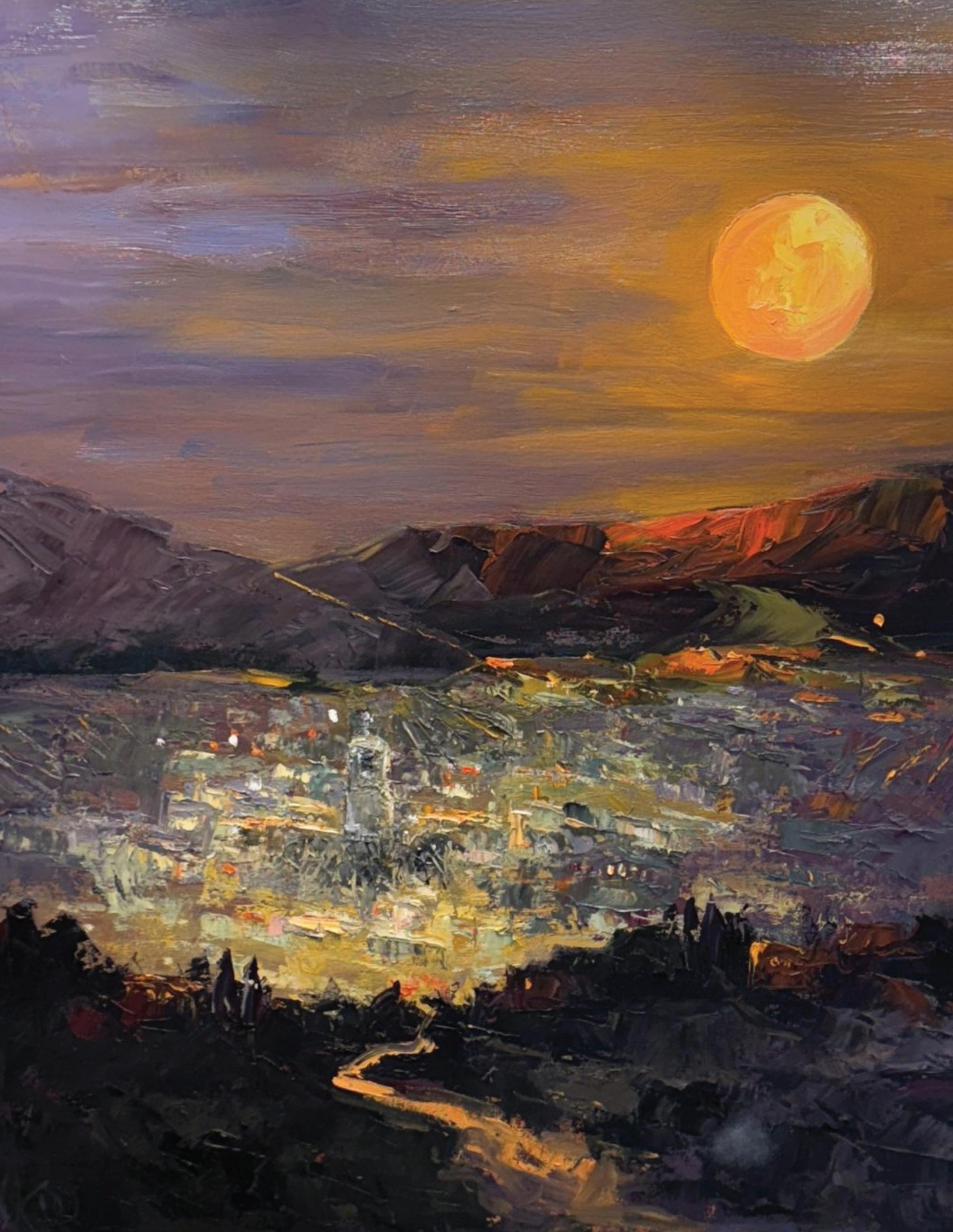
Page 38: Blood Moon Over Santa Fe by Evelyne Boren, Acosta Strong Fine Art Gallery
Page 39: Artwork by Olga Tamkovich
Sergei Rachmaninoff (1873 - 1943)
Joshua Habermann, conductor
1. Priidite, poklonimsia (Come, Let Us Worship)
2. Blagoslovi, dushe moya, Ghospoda (Bless the Lord, O My Soul)
3. Blazhen muzh (Blessed is The Man)
4. Svete tihiy (Gladsome Light)
5. Nine otpushchayeshi (Lord, Now Lettest Thou)
6. Bogoroditse Devo (Rejoice, O Virgin)
7. Shestopsalmiye (The Six Psalms)
8. Hvalite imia Ghospodne (Praise the Name of the Lord)
9. Blagosloven yesi, Ghospodi (Blessed Art Thou, O Lord)
10. Voskreseniye Hristovo videvshe (Having Beheld the Resurrection of Christ)
11. Velichit dusha moya Ghospada (My Soul Magnifies the Lord)
12. Slavosloviye velikoye (The Great Doxology)
13. Dnies spaseniye (Today Salvation Has Come)
14. Voskres iz groba (Thou Didst Rise from the Tomb)
15. Vzbrannoy voyevode (To Thee, the Victorious Leader)
PROGRAM NOTES
If one were to compile a list of the greatest, major a cappella (unaccompanied) choral works there surely would be lively debate, but one point would likely be uncontroversial: Rachmaninoff’s All-Night Vigil (also known, popularly, as Vespers) would rank at or near the top. For sheer sonority there is perhaps no other large work in the repertoire that can compare to it. That Rachmaninoff, a virtuoso pianist who had written the great majority of his music for piano and/or orchestra, should have created a piece of choral music of such surpassing skill and beauty is one of the mysteries of this extraordinary work.
The All-Night Vigil can be said to exist thanks in part to a happy historical coincidence. Just as Rachmaninoff was reaching his full compositional powers, so too was the Moscow Synodal Choir entering its glory days. Whereas in the mid-nineteenth century Russian composers had little interest in writing for the church, latter decades brought resurgence, and the Synodal Choir rose from mediocrity to a position of preeminence in church music. Leading figures such as Tchaikovsky and Rimsky-Korsakov wrote significant works for them, so that by the time Rachmaninoff’s Vigil was completed in 1915 the choir was a seasoned professional ensemble capable of music of great complexity. Sadly, this symbiotic relationship was shortly to come to an end with the Bolshevik Revolution of 1917, when the Synodal Choir and School were disbanded. Not surprisingly, Rachmaninoff wrote no further sacred choral works.
The demands that the All-Night Vigil makes on the choir are significant. Foremost among them perhaps is stamina. At 65 minutes, the Vigil might seem modest to an opera-goer accustomed to longer programs, but without any supporting instruments (which are forbidden in Orthodox music) or extended solo sections, the choir carries the entire weight of the performance. Each of the 15 movements is richly conceived, requiring extraordinary concentration, with some of the most challenging music of the score coming towards the end. One can imagine a marathoner turning the corner at mile twenty, only to discover that the last six miles are uphill.
The Vigil also requires singers capable of sustaining long, arching lines and extreme vocal ranges. The most famous of course are the basses; Rachmaninoff requires them to drop to a low B-flat, well below the typical bass range. Listen for these “sub-woofers,” especially at the end of movement 5, where they descend, step by step into the depths.
1. The All-Night Vigil begins with the word “Amin” (amen), which is a response to the Great Litany, which would be chanted by the priest. There follows the opening call to prayer, expanding from six to eight parts.
2. Rachmaninoff employs authentic chant as the basis of nine of the 15 movements, and in the others he composes “conscious counterfeits,” which are written with such skill as to be indistinguishable to the uninitiated from the real thing. In this movement the chant is in the alto, accompanied by alternating choruses of low and high voices.
3. Middle voices (tenors and altos) sing verses, juxtaposed with the full choir singing increasingly intense “alleluia” refrains.
4. The chant that forms the basis for this movement is comprised of only four notes. What Rachmaninoff is able to do with this limited material is an excellent example of his vivid imagination.
5. One of the most celebrated parts of the All-Night Vigil, Rachmaninoff had a special fondness for this movement, which he asked to be sung at his funeral. A gently undulating melody, together with a tenor solo proclaiming a song of praise to the Trinity, characterizes the motion until the final extraordinary bass descent.
6. This famous movement, which is often excerpted, is the Orthodox equivalent to the “Ave Maria” of the Roman church. In the central section the altos, divided in two, sing a sweetly undulating melody, accompanied by sopranos and tenors in octaves. The end of this movement marks the end of the Vespers section of the All-Night Vigil.
7. The morning office, Matins, begins with a chant that will reappear later at the repetition of the text: “Glory to God in the highest.” Imitation of bell sounds is pervasive in this movement, reflecting the ringing of bells that would accompany this section of the liturgy.
8. A powerful chant, sung by altos and basses, is accompanied by sopranos and tenors, swirling around in decorative flourishes. The extroverted nature of the music reflects the moment in the liturgy when, after a long period of darkness the lights in the church are turned on.
9. A softly murmured refrain forms the basis for this movement, together with a bold chant melody passed between sections of the choir. Rachmaninoff reworked sections of this movement into his Symphonic Dances, composed in 1940.
10. A stark chant sung in octaves by the tenors and basses makes for a commanding opening, juxtaposed with a mystical response in the sopranos and altos. Huge contrasts in dynamics and register characterize this movement.
11. This is the “Magnificat,” with Mary’s words set, astonishingly, for the basses. A refrain, “more honorable than the Cherubim,” alternates with the verse. Low B-flats make another appearance here in the bass voice.
12. For length and complexity this is one of the richest movements in the All-Night Vigil. The chant from movement five reappears in the climax of the Matins service.
13. and 14. Only one of these two resurrection-themed movements would appear in a traditional liturgy, but Rachmaninoff gives us both, based on traditional Znamenny Chant.
15. All-Night Vigil ends with a final hymn to the Virgin set in a brilliant C-Major, to contrast the prevailing modality of the work. In the final measures, Rachmaninoff introduces leaping arpeggios – atypical of the usual stepwise undulation Russian chant –to bring the work to a vigorous conclusion.
— Joshua Habermann
FREE CHILDREN’S CONCERT
Wednesday, July 29, 2026 at 11 am
Genoveva Chavez Center Community Room
Sponsored by Stephen and Jane Hochberg
Enjoy a free 45-minute Children’s Concert featuring the professional voices of Desert Chorale and special guest Incantare, introducing young audiences to the joy of live choral music.
Pay-what-you-will admission; registration required as capacity is limited.
Register at desertchorale.org/childrensconcert
ALL-NIGHT VIGIL, Op. 37
(sung in Old Church Slavonic)
Sergei Rachmaninoff (1873 - 1943)
1.
Rachmoninoff's All-Night Vigil TEXTS &
Priidite, poklonimsia Tsarevi nashemu Bogu. Priidite, poklonimsia i pripadyem Hristu Tsarevi nashemu Bogu. Priidite, poklonimsia i pripadyem samomu Hristu Tsarevi i Bogu nashemu. Priidite, poklonimsia i pripadyem Yemu.
2.
Blagoslovi, dushe moya, Ghospoda, blagosloven yesi, Ghospodi. Ghospodi Bozhe moy, vozvelichilsia yesi zelo. Blagosloven yesi, Ghospodi. Vo ispovedaniye i v velelepotu obleklsia yesi. Blagosloven yesi, Ghospodi. Na gorah stanut vodi: Divna dela Tvoya, Ghospodi. Posrede gor proydut vodi. Divna dela Tvoya, Ghospodi. Fsia premudrostiyu sotvoril yesi. Slava Ti, Ghospodi, sotvorivshemu fsia.
3.
Blazhen muzh, izhe ne ide na sovet nechestivih. Alliluya, alliluya, alliluya.
Yako vest Ghospod put pravednih, i put nechestivih pogibnet. Alliluya … Rabotayte Ghospodevi so strahom, i raduytesia Yemu s trepetom. Alliluya … Blazheni fsi nadeyushchiisya nan. Alliluya … Voskresni, Ghospodi, spasi mia, Bozhe moy. Alliluya … Ghospodne yest spaseniye, i na liudeh Tvoih blagosloveniye Tvoye. Alliluya … Slava Ottsu, i Sinu, i Sviatomu Duhu, i nine i prisno i vo veki vekov. Amin. Alliluya, alliluya, alliluya, slava Tebe, Bozhe. Alliluya, alliluya, alliluya, slava Tebe, Bozhe. Alliluya, alliluya, alliluya, slava Tebe, Bozhe.
Come, let us worship God, our King. Come, let us worship and fall down before Christ, our King and our God. Come, let us worship and fall down and kneel before the Very Christ, our King and our God. Come, let us worship and fall down before Him.
Bless the Lord, O my soul, blessed art thou, O Lord. O Lord my God, Thou art very great. Blessed art thou, O Lord. Thou art clothed with honor and majesty. Blessed art thou, O Lord. The waters stand upon the mountains. Marvelous are Thy works, O Lord. The waters flow between the hills. Marvelous are thy works, O Lord. In wisdom hast Thou made all things. Glory to thee, O Lord, who hast created all!
Blessed is the man, who walks not in the counsel of the wicked. Alleluia, alleluia, alleluia.
For the Lord knows the way of the righteous, but the way of the wicked will perish. Alleluia… Serve the Lord with fear and rejoice in Him with trembling. Alleluia… Blessed are all who take refuge in Him. Arise, O Lord! Save me, O my God! Alleluia… Salvation is of the Lord, and Thy blessing is upon Thy people. Alleluia… Glory be to the Father, and to the Son, and to the Holy Spirit, both now and ever and unto ages of ages. Amen. Alleluia, alleluia, alleluia, glory to Thee, O God! Alleluia, alleluia, alleluia, glory to Thee, O God! Alleluia, alleluia, alleluia, glory to Thee, O God!
Prishedshe na zapad solntsa, videvshe svet vecherniy, poyem Ottsa, Sina, i Sviatago Duha, Boga, Dostoin yesi vo fsia vremena pet biti glasi prepodobnimi, Sine Bozhiy, zhivot dayay, temzhe mir Tia slavit.
5.
Nine otpushchayeshi raba Tvoyego Vladiko, po glagolu Tvoyemu s mirom, yako videsta ochi moi spaseniye Tvoye, yezhe yesi ugotoval pred litsem vseh Iiudey, svet vo otkroveniye yazikov, i slavu liudey Tvoih Izrailia.
6.
Bogoroditse Devo, raduysia, Blagodatnaya Mariye, Ghospod s Toboyu. Blagoslovenna Ti v zhenah, i blagosloven Plod chreva Tvoyego, yako Spasa rodila yesi dush nashih.
7.
Slava v vyshnih Bogu, i na zemli mir, v chelovetseh blagovoleniye. Ghospodi, ustne moi otverzeshi, i usta moya vozvestiat hvalu Tvoyu.
Yako v vek milost Yego, Alliluia. Ispovedaytesia Bogu nebesnomu, Alliluia, alliluia.
Yako v vek milost Yego. Alliluia
9. Blagosloven yesi, Ghospodi, nauchi mia opravdaniyem Tvoim.
Angelskiy sobor udivisia, zria Tebe v mertvih vmenivshasia, smertnuyu zhe, Spase, krepost razorivsha, i s Soboyu Adama vozdvigsha, i ot ada fsia svobozhdsha.
Gladsome light of the holy glory of the Immortal One –the Heavenly Father, holy and blessed –O Jesus Christ!
Now that we have come to the setting of the sun, and behold the light of evening, we praise the Father, Son and Holy Spirit – God. Thou art worthy at every moment to be praised in hymns by reverent voices.
O Son of God, Thou art the Giver of Life; therefore all the world glorifies Thee.
Lord, now lettest Thou Thy servant depart in peace, according to Thy word, for mine eyes have seen Thy salvation, which Thou hast prepared before the face of all peoplea light to enlighten the Gentiles, and the Glory of Thy people Israel.
Rejoice, O Virgin Theotokos, Mary full of grace, the Lord is with Thee.
Blessed art Thou among women, and Blessed is the Fruit of Thy womb, for Thou hast borne the Savior of our souls.
Glory to God in the highest, and on earth peace, good will among men.
O Lord, open Thou my lips, And my mouth shall proclaim Thy praise
Praise the name of the Lord. Alleluia. Praise the Lord, O you His servants. Alleluia, alleluia. Blessed be the Lord from Zion, He who dwells in Jerusalem. Alleluia.
O give thanks unto the Lord, for He is good. Alleluia, alleluia.
For His mercy endures forever. Alleluia.
O give thanks unto the God of Heaven. Alleluia, alleluia.
For His mercy endures forever. Alleluia.
Blessed art Thou, O Lord, teach me Thy statues.
The angelic host was filled with awe, When it saw Thee among the dead. By destroying the power of death, O Savior, Thou didst raise Adam, and save all men from hell!
Blagosloven yesi, Ghospodi, nauchi mia opravdaniyem Tvoim.
“Pochto mira s milostivnimi slezami, o uchenitsi, rastvoriayete?”
Blistayaysia vo grobe Angel, mironositsam veshchashe:
“Vidite vi grob, i urazumeyte: Spas bo voskrese ot groba.”
Blagosloven yesi, Ghospodi, nauchi mia opravdaniyem Tvoim.
Zelo rano mironositsi techahu ko grobu Tvoyemu ridayushchiya, no predsta k nim Angel i reche: “Ridaniya vremia presta, ne plachite, voskreseniye zhe apostolom rtsite.”
Blagosloven yesi, Ghospodi, nauchi mia opravdaniyem Tvoim.
Mironositsi zheni s miri prishedshiya ko grobu Tvoyemu, Spase, ridahu, Angel zhe k nim reche, glagolia:
“Chto s mertvimi zhivago pomishliayete? Yako Bog bo voskrese ot groba!”
Slava Ottsu, i Sinu, i Sviatomu Duhu.
Poklonimsia Ottsu, i Yego Sinovi, i Sviatomu Duhu, Sviatey Troitse vo yedinom sushchestve, s Serafimi zovushche: “Sviat, Syiat, Syiat, yesi Ghospodi!”
Krestu Tvoyemu pokloniayemsia, Hriste, i sviatoye voskreseniye Tvoye poyem i slavim: Ti bo yesi Bog nash, razve Tebe inogo ne znayem, imia Tvoye imenuyem.
Priidite fsi vernii, poklonimsia sviatomu Hristovu voskreseniyu: se bo pride krestom radost fsemu miru, fsegda blagosloviaschche Ghospoda, poyem voskreseniye Yego: raspiatiye bo preterpev, smertiyu smert razrushi.
Blessed art Thou, O Lord, teach me Thy statutes.
“Why do you mingle myrrh with your tears of compassion, O ye women disciples?” cried the radiant angel in the tomb to the myrrh-bearers. “Behold the tomb and understand: the Savior is risen from the dead!”
Blessed art Thou, O Lord, teach me Thy statutes.
Very early in the morning the myrrh-bearers ran with sorrow to Thy tomb, but an Angel came to them and said: “The time for sorrow has come to an end! Do not weep, but announce the resurrection to the apostles!”
Blessed art Thou, O Lord, teach me Thy statutes.
The myrrh-bearers were sorrowful as they neared Thy tomb, but the Angel said to them:
“Why do you number the living among the dead? Since He is God, He is risen from the tomb!”
Glory to the Father and to the Son and to the Holy Spirit.
We worship the Father, and His Son, and the Holy Spirit: the Holy Trinity, one in essence! We cry with the Seraphim: “Holy, Holy, Holy art Thou, O Lord!”
Both now and ever, and unto ages of ages. Amen.
Since Thou didst give birth to the Giver of Life, O Virgin, Thou didst deliver Adam from his sin!
Thou gavest joy to Eve instead of sadness! The God-man who was born of Thee Has restored to life those who had fallen from it! Alleluia, alleluia, alleluia! Glory to Thee, O God!
Having beheld the resurrection of Christ, let us worship the holy Lord Jesus, the only Sinless One.
We venerate Thy Cross, O Christ, and we hymn and glorify Thy holy resurrection, for Thou art our God, and we know no other than Thee; we call on Thy name.
Come, all you faithful, let us venerate Christ’s holy resurrection. For, behold, through the cross joy has come into all the world. Ever blessing the Lord, let us praise His resurrection, for by enduring the cross for us, He has destroyed death by death.
Democratic Vistas I Sep 26 | Sep 27
Bach Festival Dec 18 – Dec 30
Chiaroscuro Quartet Mar 8
Brooklyn Rider Oct 4
Winter Orchestra Jan 16 | Jan 17
Holy Week Baroque Mar 20 | Mar 21
Attacca Quartet with Caroline Shaw Oct 25
Borromeo String Quartet Feb 14
Brentano String Quartet Apr 11
Fall Orchestra Nov 14 | Nov 15
Democratic Vistas II Feb 28
Democratic Vistas III May 1 | May 2
4 PM Galisteo by Douglas Atwill, Courtesy of New Concept Gallery
Béla Fleck
Benjamin Hochman
Eric Jacobsen
Dan Tepfer
Colin Jacobsen
Ariadne Greif
Tessa Lark
11.
Velichit dusha Moya Ghospoda, i vozradovasia duh Moy o Boze Spase Moyem.
Pripev:
Chestneyshuyu Heruvim i slavneyshuyu bez sravneniya Serafim, bez istleniya
Boga Slova rozhdshuyu, sushchuyu Bogoroditsu Tia velichayem.
Yako prizre na smireniye rabi Svoyeya. se bo otnine ublazhat Mia fsi rodi.
Yako sotvori Mne velichiye Silniy, i sviato imia Yego, i milost Yego v rodi rodov boyashchimsia Yego…
Nizlozhi silniya so prestol, i voznese smirenniya, alchushchiya ispolni blag, i bogatiashchiyasia otpusti tschi.
Vospriyat Izrailia, otroka Svoyego, pomianuti milosti, yakozhe glagola ko ottsem nashim, Avraamu i semini yego dazhe do veka.
12.
Slava v vishnih Bogu, i na zemli mir, v chelovetseh blagovoleniye.
Hvalim Tia, blagoslovim Tia, klaniayem Ti sia, slavoslovim Tia, blagodarim Tia, velikiya radi slavi Tvoyeya.
Yako Ti yesi yedin sviat, Ti yesi yedin Ghospod, Iisus Hristos, v slavu Boga Ottsa. Amin.
Na fsiak den blagoslovliu Tia i vos hvaliu imia Tvoye vo veki i v vek veka. Spodobi, Ghospodi, v den sey bez greha sohranitisia nam. Blagosloven yesi, Ghospodi, Bozhe otets nashih. i hvalno i proslavleno imia Tvoye vo veki. Amin.
My soul magnifies the Lord, and my spirit rejoices in God my savior.
Refrain:
More honorable than the Cherubim and more glorious beyond compare than the Seraphim, without defilement Thou gavest birth to God the Word, true Theotokos, we magnify Thee.
For He has regarded the low estate of His handmaiden. For behold, henceforth all generations will call me blessed.
For He who is mighty has done great things for me, and holy is His name, and His mercy is on those who fear Him from generation to generation…
He has put down the mighty from their thrones, and has exalted those of low degree; He has filled the hungry with good things, and the rich He has sent empty away.
He has helped His servant Israel, in remembrance of His mercy, as He spoke to our fathers, to Abraham and to his posterity forever.
Glory to God in the highest, and on earth peace, Good will toward men.
We praise Thee, we bless Thee, we worship Thee, we glorify Thee, we give thanks to Thee for Thy great glory.
O Lord, Heavenly King, God the Father almighty.
O Lord, the only begotten Son, Jesus Christ and the Holy Spirit.
O Lord God, Lamb of God, Son of the Father, who takes away the sin of the world have mercy on us. Thou who takest away the sin of the world, receive our prayer.
Thou who sittest at the right hand of the Father, have mercy on us.
For thou alone art holy, Thou alone art the Lord, Jesus Christ, to the glory of God the Father, Amen.
Every day I will bless Thee and praise Thy name forever and ever.
Vouchsafe, O Lord, to keep us this day without sin. Blessed art Thou, O Lord, God of our fathers, and praised and glorified is Thy name forever. Amen.
Budi, Ghospodi, milost Tvoya na nas, yakozhe upovahom na Tia.
Blagosloven yesi, Ghosposi, nauchi mia opravdaniyem Tvoim.
Blagosloven yesi, Ghosposi, nauchi mia opravdaniyem Tvoim.
Blagosloven yesi, Ghosposi, nauchi mia opravdaniyem Tvoim. Ghospodi, pribezhishche bil yesi nam v rod i rod.
Az reh: Ghospodi, pomiluy mia, istseli dushi moyu, yako sogreshih Tebe. Ghospodi, k Tebe pribegoh. nauchi mia tvoriti voliu Tvoyu, yako Ti yesi Bog moy, yako u Tebe istochnik zhivota; vo svete Tvoyem uzrim svet. Probavi milost Tvoyu vedushcim Tia.
Dnes spaseniye miru bist, poyem Voskresshemu iz groba i Nachalniku zhizni nasheya; razrushiv bo smertiyu smert, pobedu dade nam i veliyu milost.
14.
Voskres iz groba i uzi rasterzal yesi ada, razrushil yesi osuzhdeniye smerti, Ghospodi, fsia ot setey vraga izbaviviy, yaviviy zhe Sebe apostolom Tvoim, poslal yesi ya na propoved, i temi mir Tvoy podal yesi fselenney, yedine Mnogomilostive.
15.
Vzbrannoy voyevode pobeditelnaya, yako izbavlshesia ot zlih, blagodarstvennaya vospisuyem Ti rabi Tvoi, Bogoroditse: no yako imushchaya derzhavu nepobedimuyu, ot fsiakih nas bed svobodi da zovem Ti: raduysia, Nevesto Nenevestnaya.
— Traditional
Let Thy mercy, O Lord, be upon us, as we have set our hope on The Sviatomu e. Blessed art Thou, O Lord, teach me Thy statutes.
Blessed art Thou, O Lord, teach me Thy statutes. Blessed art Thou, O Lord, teach me Thy statutes. Lord, Thou has been our refuge from generation to generation. I said: Lord, have mercy on me, heal my soul, for I have sinned against Thee. Lord, I flee to Thee, teach me to do Thy will, for Thou art my God; for with Thee is the fountain of life, and in Thy light we shall see light. Continue Thy mercy on those who know Thee.
Holy Immortal, have mercy on us.
Holy God, Holy Mighty, Holy Immortal, have mercy on us.
Glory to the Father, and to the Son, and to the Holy Spirit, both now and ever and unto ages of ages. Amen.
Holy God, Holy Mighty, Holy Immortal, have mercy on us.
Today salvation has come to the world, let us sing to Him who rose from the dead, the Author of our life.
Having destroyed death by death, He has given us the victory and great mercy.
Thou didst rise from the tomb and burst the bonds of Hades! Thou didst destroy the condemnation of death, O Lord, releasing all mankind from the snares of the enemy! Thou didst show Thyself to Thine apostles, and didst send them forth to proclaim Thee; and through them Thou hast granted Thy peace to the world, O Thou who art plenteous in mercy!
To Thee, the victorious Leader of triumphant hosts, we Thy servants, delivered from evil, offer hymns of thanksgiving, O Theotokos!
Since Thou dost possess invincible might, set us free from all calamities, so that we may cry to Thee: “Rejoice, O unwedded Bride!”
STEVEN KERCHOFF MEMORIAL TRIBUTE CONSORTIUM
The Santa Fe Desert Chorale honors the memory of our dear friend, Steven Kerchoff, through a project that celebrates his passion for music, history, and education. Several generous donors have contributed to sponsor the pre-recorded video lecture by Edmund Connolly for our program, Renaissance Splendor, in Steve’s memory. With his love of Renaissance polyphony and his long-standing support of our lecture series, this seemed a particularly fitting tribute.
Thank you to the following individuals: Ambassador Mark and Jane Asquino, Rebecca Jensen and Chris Biemesderfer, Heather Lacy, Kathryn Lowerre and Robert Shay, Vincent Pigott and Susan Howard, Amanda Sidebottom, Dr. Peter and Jody Spalding, and Patricia Stanley.
Lieder eines fahrenden Gesellen - Gustav Mahler (1860 - 1911)
1. Wenn mein Schatz Hochzeit macht
2. Ging heut’ morgen übers Feld
3. Ich hab’ ein glühend Messer
4. Die zwei blauen Augen von meinem Schatz
Sylvia Leith, mezzo-soprano
ARTIST SPOTLIGHT RECITAL
Wednesday, July 29, 2026 at 4 pm
St. Bede’s Episcopal Church
Sponsored by Allegra and Jim Derryberry
Nathan Salazar, piano
Selections from Songs of Travel - Ralph Vaughan Williams (1972 - 1958)
1. The Vagabond
2. Let Beauty Awake
3. The Roadside Fire
6. The Infinite Shining Heavens
7. Whither Must I Wander?
8. Bright is the Ring of Words
9. I Have Trod the Upward and the Downward Slope
Edmund Milly, bass-baritone
Home from Phantom - Maury Yeston (b. 1945)
My House from Matilda - Tim Minchin (b. 1975)
I Don’t Need a Roof from Big Fish - Andrew Lippa (b. 1964)
Selections from Myths and Hymns - Adam Guettel (b. 1964)
Life is but a Dream
Migratory V
Go Back Home from Scottsboro Boys by Kander (b. 1927) and Ebb (1928 - 2004)
Home from The Wiz - Charlie Smalls (1943 - 1987)
Kathlene Ritch, soprano
Nathan Salazar
Edmund Milly
Sylvia Leith
Kathlene Ritch
ArtistRecitalSpotlight
& TRANSLATIONS
Lieder eines fahrenden Gesellen, GMW 10
Gustav Mahler (1860–1911)
1.
Wenn mein Schatz Hochzeit macht, Fröhliche Hochzeit macht, Hab’ ich meinen traurigen Tag! Geh’ ich in mein Kämmerlein, Dunkles Kämmerlein!
Weine! wein’! Um meinen Schatz, Um meinen lieben Schatz!
Des Abends, wenn ich schlafen geh’, Denk’ ich an mein Leid!
An mein Leide!
2.
Ging heut’ morgen über’s Feld, Tau noch auf den Gräsern hing; Sprach zu mir der lust’ge Fink: „Ei du! Gelt?
Guten Morgen! Ei, Gelt? Du!
Wird’s nicht eine schöne Welt? Zink! Zink! Schön und flink! Wie mir doch die Welt gefällt!“
Auch die Glockenblum’ am Feld
Hat mir lustig, guter Ding’, Mit den Glöckchen, klinge, kling, Ihren Morgengruß geschellt:
„Wird’s nicht eine schöne Welt?
Kling! Kling! Schönes Ding! Wie mir doch die Welt gefällt!
Und da fing im Sonnenschein
Gleich die Welt zu funkeln an; Alles, alles, Ton und Farbe gewann! Im Sonnenschein!
1.
On my darling’s wedding day, That joyful wedding day, I have my day of woe! I go into my little chamber, My dark little chamber! Weep! weep! Over my darling, Over my dear darling!
Little blue blossom! Don’t wither!
Sweet little bird!
You sing over the green heath!
“Ah, how beautiful the world is! Chick-a-dee!”
Don’t sing! Don’t bloom! Springtime is well past! All singing is now shut off! In the evenings, when I go to sleep, I think of my suffering!
My suffering!
2.
I walked this morning over the field, Dew still hung on the grasses, The funny finch said to me: “Hey, you!
Good morning! Hey, you! Isn’t it a beautiful world? Tweet! Tweet! Pretty and fleet! I do love the world!”
The bluebells, too, in the field, Funny little things, Joined the church bells in ringing out Their morning greeting to me, ding-dong:
“Isn’t it a beautiful world?
Ding ding! Beautiful thing! I do love the world!”
And then in the sunshine
All at once the world began to glitter; Everything grew in sound and color! In the sunshine!
Blum’ und Vogel, groß und klein!
„Guten Tag! Guten Tag! Ist’s nicht eine schöne Welt? Ei, du! Gelt? Schöne Welt!“
Nun fängt auch mein Glück wohl an?
Nein! Nein! Das ich mein’, Mir nimmer, nimmer blühen kann!
3.
Ich hab’ ein glühend Messer, Ein Messer in meiner Brust, O weh! O weh!
Das schneid’t so tief
In jede Freud’ und jede Lust, So tief! so tief!
Es schneid’t so weh und tief!
Ach, was ist das für ein böser Gast!
Nimmer hält er Ruh’, Nimmer hält er Rast! Nicht bei Tag, Nicht bei Nacht, wenn ich schlief! O weh! O weh! O weh!
Wenn ich in dem Himmel seh’, Seh’ ich zwei blaue Augen steh’n! O weh! O weh!
Wenn ich im gelben Felde geh’, Seh’ ich von fern das blonde Haar Im Winde wehn! O weh! O weh!
Wenn ich aus dem Traum auffahr’ Und höre klingen ihr silbern Lachen, O weh! O weh!
Ich wollt’, ich läg’ auf der schwarzen Bahr’, Könnt’ nimmer die Augen aufmachen!
4.
Die zwei blauen Augen von meinem Schatz, Die haben mich in die weite Welt geschickt. Da mußt’ ich Abschied nehmen Vom allerliebsten Platz! O Augen blau, warum habt ihr mich angeblickt? Nun hab’ ich ewig Leid und Grämen!
Ich bin ausgegangen in stiller Nacht, Wohl über die dunkle Heide. Hat mir niemand Ade gesagt, Ade! Mein Gesell’ war Lieb’ und Leide!
Auf der Straße stand ein Lindenbaum, Da hab’ ich zum ersten Mal im Schlaf geruht!
Unter dem Lindenbaum, Der hat seine Blüten über mich geschneit, Da wußt’ ich nicht, wie das Leben tut,
Flower and bird, big and little!
“Good day!
Isn’t it a beautiful world? Hey, you! A beautiful world!”
Now will my happiness truly begin? No! That, I reckon, Can never bloom for me!
3.
I have a smoldering knife, A knife in my chest, It hurts!
It cuts so deeply Into every joy and every pleasure, So deep! It cuts so sorely and deeply!
Ah, what a nasty guest! He never rests, He never stops! Not by day, Not by night, when I should sleep! It hurts!
When I look to the sky, I see two blue eyes! It hurts!
When I walk in the yellow field, I see from afar that blond hair Waving in the wind! It hurts! When I startle out of my dreams And hear her silvery laugh ringing, It hurts!
I wish that I were lying on the black gurney, That I could never again open my eyes!
4.
The two blue eyes of my darling, They have sent me out into the wide world. So I had to say goodbye To the place I loved most! Oh blue eyes, why did you look at me?
Now I have suffering and grief forever!
I went out into the silent night, Over the dark heath. No one said goodbye to me. Goodbye! My companions were love and suffering.
A linden tree stood in the road, That’s where I slept for the first time! Under the linden tree, Who sprinkled his blossoms over me, In that moment I was not aware of life’s doings,
(continued on next page)
War alles, alles wieder gut!
Alles! Alles!
Lieb und Leid, und Welt und Traum!
— Poetry by Gustav Mahler, translation by Sylvia
Leith
1. The Vagabond
Give to me the life I love,
Let the lave go by me, Give the jolly heaven above And the byway nigh me.
Bed in the bush with stars to see, Bread I dip in the riverThere’s the life for a man like me, There’s the life for ever.
Let the blow fall soon or late, Let what will be o’er me; Give the face of earth around And the road before me.
Wealth I seek not, hope nor love, Nor a friend to know me; All I seek, the heaven above And the road below me.
Or let autumn fall on me Where afield I linger, Silencing the bird on tree, Biting the blue finger.
White as meal the frosty fieldWarm the fireside havenNot to autumn will I yield, Not to winter even!
Let the blow fall soon or late, Let what will be o’er me; Give the face of earth around, And the road before me.
Wealth I ask not, hope nor love, Nor a friend to know me; All I ask, the heaven above, And the road below me.
— Ralph Vaughan Williams (1872-1958)
2. Let Beauty Awake
Let Beauty awake in the morn from beautiful dreams, Beauty awake from rest!
Let Beauty awake
For Beauty’s sake
In the hour when the birds awake in the brake And the stars are bright in the west!
(continued on next column)
Everything was good again! Everything!
Love and suffering, and world and dream!
Let Beauty awake in the eve from the slumber of day, Awake in the crimson eve!
In the day’s dusk end When the shades ascend, Let her wake to the kiss of a tender friend,
To render again and receive!
— Ralph Vaughan Williams
3. The Roadside Fire
I will make you brooches and toys for your delight Of bird-song at morning and star-shine at night, I will make a palace fit for you and me
Of green days in forests, and blue days at sea.
I will make my kitchen, and you shall keep your room, Where white flows the river and bright blows the broom; And you shall wash your linen and keep your body white In rainfall at morning and dewfall at night.
And this shall be for music when no one else is near, The fine song for singing, the rare song to hear! That only I remember, that only you admire,
Of the broad road that stretches and the roadside fire.
— Ralph Vaughan Williams
6. The Infinite Shining Heavens
The infinite shining heavens Rose, and I saw in the night
Uncountable angel stars
Showering sorrow and light.
I saw them distant as heaven, Dumb and shining and dead, And the idle stars of the night Were dearer to me than bread.
Night after night in my sorrow
The stars looked over the sea, Till lo! I looked in the dusk
And a star had come down to me.
— Ralph Vaughan Williams
7. Whither Must I Wander?
Home no more home to me, whither must I wander? Hunger my driver, I go where I must. Cold blows the winter wind over hill and heather: Thick drives the rain and my roof is in the dust. Loved of wise men was the shade of my roof-tree, The true word of welcome was spoken in the doorDear days of old with the faces in the firelight, Kind folks of old, you come again no more.
Home was home then, my dear, full of kindly faces, Home was home then, my dear, happy for the child. Fire and the windows bright glittered on the moorland; Song, tuneful song, built a palace in the wild. Now when day dawns on the brow of the moorland, Lone stands the house, and the chimney-stone is cold. Lone let it stand, now the friends are all departed, The kind hearts, the true hearts, that loved the place of old.
Spring shall come, come again, calling up the moorfowl, Spring shall bring the sun and rain, bring the bees and flowers; Red shall the heather bloom over hill and valley, Soft flow the stream through the even-flowing hours. Fair the day shine as it shone on my childhoodFair shine the day on the house with open door; Birds come and cry there and twitter in the chimneyBut I go for ever and come again no more.
— Ralph Vaughan Williams
8. Bright is the Ring of Words
Bright is the ring of words
When the right man rings them, Fair the fall of songs When the singer sings them, Still they are carolled and saidOn wings they are carriedAfter the singer is dead And the maker buried.
Low as the singer lies In the field of heather, Songs of his fashion bring The swains together. And when the west is red With the sunset embers, The lover lingers and sings And the maid remembers Lingers and sings
— Ralph Vaughan Williams
9. I Have Trod the Upward and the Downward Slope
I have trod the upward and the downward slope; I have endured and done in days before; I have longed for all, and bid farewell to hope; And I have lived and loved, and closed the door.
— Ralph Vaughan Williams and text by Robert Lewis Stephenson (1850-1894)d and loved, and c
Home from Phantom
All my life I’ve been waiting
In my mind, in a rocking chair
For my fancy to take me And I would know the time
Tick and tock went my childhood
Father said I would know the place Skin would tingle and pulse would race
As they do, it’s here
I’m home
Where music fills the air And I’m home
Where a thousand lovers cry Swoon and sigh And I’m home
Where every violin Plays a treat as sweet
As a honeycomb
Wherever music plays I know I’m home
Here, where fables come alive Year by year
We forget our troubled lives Under lights
And each tear
Becomes a gentle tune or duet Kept straight by a metronome
And if I’m singing Then I know I’m home
— Maury Yeston (b. 1945)
My House from Matilda
This roof keeps me dry when the rain falls
This door helps to keep the cold at bay
On this floor I can stand on my own two feet
On this chair I can write my lessons
On this pillow I can dream my nights away
(continued on next page)
And this table, as you can see, well, it’s perfect for tea
It isn’t much but it is enough for me
It isn’t much but it is enough...
On these walls I hang wonderful pictures
Through this window I can watch the seasons change
By this lamp I can read, and I, I am set free!
And when it’s cold outside I feel no fear!
Even in the winter storms, I am warmed by a small but stubborn fire
And there is nowhere I would rather be
It isn’t much but it is enough for me
It isn’t much but it is enough for me
For this is my house!
This is my house!
It isn’t much but it is enough for me
And when it’s cold and bleak
I feel no fear!
Even in the fiercest storms, I am warmed by a small but stubborn fire!
Even when outside it’s freezing, I don’t pay much heed
I know everything I need is in here
It isn’t much but it is enough for me
— Tim Minchin (b. 1975)
I Don't Need a Roof from Big Fish
In your face, I see a lifetime
In this place, I feel at ease
Wallpaper peeling, paint wearing thin
Here’s where I end and begin
I don’t need a roof to say I’m covered
I don’t need a roof to know I’m home
There could be a single shingle dangling overhead
I don’t need a roof to make my bed
Close your eyes, I’m still beside you
No goodbyes needed today
Hear what the rain says, know what it knows
After the rain something grows
I don’t need a roof to say I love you
I don’t need a roof to call you mine
I don’t need adventure in some faraway frontier
I don’t need a roof to feel you near
All I need is you and you forever
All I feel is true and absolute
I don’t need a legal deed to help me play my part
I don’t need a roof to hold my heart
— Andrew Lippa (b. 1964)
Life is But a Dream from Myths and Hymns
They say that life is but a dream
Drifting on a stream
But I’ve begun to wonder Is it really like the song?
We just gently row along
It’s not enough, there must be more Upon a distant shore
Adventure in the thunder of life
Open up your arms to me
And I will find my way
In my heart a riddle lives
And by the amber light it gives I will ask until I know who I am
Inside the outside that I show
From where I sit it doesn’t seem
That life is but a dream
It seems like there’s a world out there
Open up your arms to me
Open up your arms
And you will set me free
— Adam Guettel (b. 1964)
Migratory V from Myths and Hymns
We sail above the weather
We search the ocean floor
We rival our creation
Still yearning for more But can we fly together
A migratory V?
How wonderful if that’s what God could see
A single voice in whispered prayer
Can only pray to travel there
But all as one
We sound the everlasting sound
And sing our salvation
Aloft and in formation
A migratory V
How wonderful if that’s what God could see
— Adam Guettel
Go Back Home from Scottsboro Boys
Lying all alone, I’m thinkin’
Starin’ at the stars, I wonder
Since I’ve been away, I’m lonely
When I’m gonna go back home?
Walkin’ through the world, things happen
Right before your eyes, things happen
Soon enough your lost and thinkin’
When I’m gonna go back home?
Oh me, oh my, time goes slow
Where’s it gone to?
I don’t know
But maybe times’ll turn
I pray, so maybe someday I’ll get lucky
Someone’s gonna say
“Alright son, take the train and go back home
Hop a freight and go back home”
Oh me, oh my, time goes slow
Where’s it gone to?
— John Kander (b. 1927) and Fred Ebb (1928-2004)
Home from The Wiz
When I think of home
I think of a place
Where there’s love overflowing I wish I was home, I wish I was back there
With the things I’ve been knowing
Wind that makes the tall grass bend into leaning
Suddenly the raindrops that fall, they have a meaning
Sprinkling the scene
Makes it all clean
Maybe there’s a chance for me to go back
Now that I have some direction
It sure would be nice to be back home
Where there’s love and affection
And just maybe I can convince time to slow up
Giving me enough time in my life to grow up
Time, be my friend
Let me start again
Suddenly my world’s gone and changed its face
But I still know where I’m going
I have had my mind spun around in space
And yet I’ve
I’ve watched it growing
Oh, and if you’re listening God, please don’t make it hard
To know if we should believe the things that we see
And tell us should we try and stay?
Or should we run away?
Or is it better just to let things be?
Charlie Smalls (1943-1987)
—
Joshua Habermann Director
Joshua Habermann is in his eighteenth season as Artistic Director of the Santa Fe Desert Chorale, one of the nation’s premiere professional chamber choirs. Since joining the ensemble, he has broadened its repertoire to include choral-orchestral masterworks and unique concert experiences ranging from early music to new commissions. Under his leadership, the Desert Chorale has been featured at regional and national conferences of the American Choral Directors Association, and its summer and winter festivals are among America’s largest choral events.
Habermann’s experience with symphonic choruses spans over three decades, encompassing the full range of the choral-orchestral repertoire. From 2011 to 2022 he was director of the Dallas Symphony Chorus, where highlights included Bach’s St. Matthew Passion, the Requiem Masses of Mozart, Brahms, and Verdi, Elgar’s Dream of Gerontius, Bernstein’s Kaddish Symphony, Rachmaninov’s The Bells, and Vaughan-Williams’ Sea Symphony. He is a frequent guest conductor, and has prepared Handel’s
Messiah, Ravel’s Daphnis and Chloe, and Benjamin Britten’s War Requiem for the San Francisco Symphony, as well as John Adams’ El Niño and the Czech Rhapsody of Bohuslav Martinu for the Houston Symphony.
A passionate advocate for music education, Joshua Habermann is a regular clinician for state and national events and has led honor choirs and choral festivals in North America, Europe, Asia, and Latin America. In 2024, he conducted Cantatas 72, 73 and 92 for Bach Santiago (Chile), a concert series dedicated to the first full cycle of Bach Cantatas in South America. As a singer (tenor), he performed with the Oregon Bach Festival Chorus under Helmuth Rilling and Conspirare under Craig Hella Johnson. Recording credits include Requiem and Threshold of Night, both GRAMMY® nominees for best choral recording. Recordings as a conductor include The Road Home, Rachmaninov’s All Night Vigil, and Roots & Rivers, a new album of commissions written for the Desert Chorale released June 2026.
2026 SUMMER FESTIVAL ARTISTS
Special thanks to Barry and Margaret Lyerly for underwriting our 2026 Season Artists, and to Sara J. McKenzie and Dee Boyer for sponsoring our 2026 Artist Residency Program.
SOPRANOS
Elisse Albian (1st Season)
Hometown: Chicago, IL
Current Residence: New York, NY
Julie Bosworth* (2nd Season)
Hometown: St. Louis, MO
Current Residence: Silver Spring, MD
Chelsea Helm (9th Season)
Hometown: West Bloomfield, MI
Current Residence: Washington, DC
Elijah McCormack (2nd Season)
Hometown: Trumbull, CT
Current Residence: Bridgeport, CT
Kori
Kathlene Ritch (18th Season)
Hometown: Kerrville, TX
Current Residence: Santa Fe, NM
Kori
(2nd Season)
Hometown: Saluda, SC
Current Residence: Argyle, TX
Sarah Moyer (11th Season)
Hometown: Bixby, OK
Current Residence: Mansfield, MA
ALTOS
Addy Sterrett (2nd Season)
Hometown: Traverse City, MI
Current Residence: Los Angeles, CA
Kerry Ginger (12th Season)
Hometown: Portland, OR
Current Residence: Chattanooga, TN
Dianna
(14th Season)
Hometown: Humble, TX
Current Residence: Nacogdoches, TX
Addy Sterrett is sponsored by Dr. J. Randle Adair, DO PhD
Sylvia Leith (1st Season)
Hometown: Washington, DC
Current Residence: Baltimore, MD
Kate Maroney (9th Season)
Hometown: Toms River, NJ
Current Residence: Brooklyn, NY
Photo: Summer Maulden
Photo: Buck Butler
Elisse Albian is sponsored by Patricia Stanley
Photo: Jiyang Chen
Photo: Spencer Worthley
Kerry Ginger is sponsored by Rick Gustafson
Chelsea Helm is sponsored by Marianne Reuter
Kathlene Ritch is sponsored by Tom and Anne Connor
Photo: Katlyn DeGraw
Photo: Caitlin Oldham
Elijah McCormack is sponsored by Dr. Douglas P. Clark and Mr. Scott Allocco
Photo: Julian Morris
Photo: Michael Justin Studios
Sarah Moyer is sponsored by Allegra and Jim Derryberry
Photo: Lauren Salazar
Miller*
Miller is sponsored by Lore Thorpe
Photo: Jared Rey
Grabowski
Dianna Grabowski is sponsored by Sheryl Kelsey and George Duncan
Photo: Jonathan Nesteruk
Sylvia Leith is sponsored by Brahna Wilczynski in memory of Janusz Wilczynski
Photo: Jiyang Chen
Kate Maroney is sponsored by Laurie Meyer in memory of Dick Meyer
Julie Bosworth is sponsored by Lynne Horning
2026 SUMMER FESTIVAL BIOGRAPHIES
Complete biographies for our 2026 Summer Festival Artists may be found on desertchorale.org.
Sarah Nickerson (18th Season)
Hometown: Fargo, ND
Current Residence: Minneapolis, MN
Erin Roth Thomas* (2nd Season)
Hometown: Lufkin, TX
Current Residence: Nacogdoches, TX
Pamela Terry (3rd Season)
Hometown: Kalamazoo, MI
Current Residence: NYC, NY
George Case (15th Season)
Hometown: Atlanta, GA
Current Residence: Santa Fe, NM
Brad Diamond (5th Season)
Hometown: Houston, TX
Current Residence: Sterrett, AL
TENORS
Elliott JG Encarnación* (4th Season)
Hometown: Livonia, MI
Current Residence: San Francisco, CA
Erik Gustafson (11th Season)
Hometown: Portland, OR
Current Residence: Chattanooga, TN
Michael Jones (7th Season)
Hometown: Peoria, IL
Current Residence: Los Angeles, CA
Bradley Naylor (16th Season)
Hometown: Houston, TX
Current Residence: Fort Worth, TX
John Ramseyer* (1st Season)
Hometown: Pontiac, IL
Current Residence: NYC, NY
Steven
Hometown: Denton, TX
Current Residence: Philadelphia, PA
Photo: Tira Howard Photography
Sarah Nickerson is sponsored by Phyllis Lehmberg
Photo: Elizabeth van Os
Photo: Abi Poe Photography
Erin Roth Thomas is sponsored by Katherine and William Landschulz
Pamela Terry is sponsored by Sheryl Kelsey and George Duncan
Photo: Jonathan Cole
Photo: Hope Austin
George Case is sponsored by Richard and Chris Frenk
Brad Diamond is sponsored by Bill and Susan Cammock
Photo: Daniel King
Photo: Lora Sherrodd
Michael Jones is sponsored by Sheryl Kelsey and George Duncan
Photo: Jon Simpson Photography
Erik Gustafson is sponsored by Barbara and Gregory Kok
Elliott JG Encarnación is sponsored by Richard and Chris Frenk
Photo: Adore Alexander
John Ramseyer is sponsored by Jose Piedra de la Portilla and Ernesto Roederer
Photo: Kendra Berentsen
Steven Soph is sponsored by Peter and Sara Rutenberg
Photo: Steven Soph
Soph (11th Season)
Bradley Naylor is sponsored by Carmen Paradis and Brian McGrath
2026 SUMMER FESTIVAL ARTISTS
Special thanks to Barry and Margaret Lyerly for underwriting our 2026 Season Artists, and to Sara J. McKenzie and Dee Boyer for sponsoring our 2026 Artist Residency Program.
BASSES
James K. Bass (11th Season)
Hometown: Tampa, FL
Current Residence: Long Beach, CA
John Buffett (12th Season)
Hometown: Hudson, OH
Current Residence: Long Beach, CA
Harrison Hintzsche (4th Season)
Hometown: DeKalb, IL
Current Residence: Brooklyn, NY
Enrico Lagasca (10th Season)
Hometown: Manila, Philippines
Current Residence: NYC, NY
Glenn Miller* (4th Season)
Hometown: Flemington, NJ
Current Residence: Birmingham, MI
Edmund Milly (3rd Season)
Hometown: Pennington, NJ
Current Residence: Baltimore, MD
Neil Netherly* (2nd Season)
Hometown: Orange, TX
Current Residence: NYC, NY
John E. Orduña* (3rd Season)
Hometown: Omaha, NE
Current Residence: Ourense, Spain
Marques Jerrell Ruff (8th Season)
Hometown: Hartford, CT
Current Residence: Jonesboro, AR
*Rachmaninoff’s All-Night Vigil Extension Artists
Photo: Siobhan Doherty Buffett
Photo: Darshae Spells
Photo: Matthew Fried Photography
Marques Jerrell Ruff is sponsored by Jeffrey Fort and Diane Locandro
John Buffett is sponsored by Murray and Nancy Bern
Harrison Hintzsche is sponsored by Jeffrey Fort and Diane Locandro
Neil Netherly is sponsored by Sheryl Kelsey and George Duncan
James K. Bass is sponsored by Dr. Donald Shina and J. Kevin Waidmann
Photo: Kerry Travilla
Photo: Curtis Brown
Photo: Britt Olsen-Ecker
Edmund Milly is sponsored by Stephen Marquart and Audrey La Fehr
Enrico Lagasca is sponsored by James Murphy and Roxanne Howe-Murphy
Glenn Miller is sponsored by Diane and Bill Graves
Photo: Andrew Morstein
John E. Orduña is sponsored by Sheryl Kelsey and George Duncan
2026 SUMMER FESTIVAL GUEST
Complete biographies for our 2026 Summer Festival Artists may be found on desertchorale.org.
GUEST MUSICIANS
Cynthia Keiko Black Violin (1st Season) Program: Renaissance Splendor
Alice Culin-Ellison Violin (1st Season)
Program: Renaissance Splendor
David Felberg Violin (6th Season) Program: Homecoming
Amy Huzjak Cello (2nd Season) Program: Homecoming
Richard Savino Theorbo and Baroque Guitar (4th Season) Program: Renaissance Splendor
Maxine Thévenot Organ (3rd Season) Program: Renaissance Splendor
Ben David Aronson Alto and Tenor Trombone (1st Season) Program: Renaissance Splendor
Nathan Salazar Piano (10th Season) Program: Homecoming
Moira Smiley Composer and Vocalist (1st Season) Program: Homecoming
Photo: Brandon Labadie
Amy Huzjak is sponsored by Barbara and Rod Slaton
Photo: Evangeline Hodge
Nathan Salazar is sponsored by Diane and Bill Graves
Cynthia Keiko Black is sponsored by Richard and Chris Frenk
Photo: Nerissa Sparkman
Alice Culin-Ellison is sponsored by Richard and Chris Frenk
David Felberg is sponsored by Sheryl Kelsey and George Duncan
Photo: Shea Perry
Richard Savino is sponsored by Gregory Dove
Maxine Thévenot is sponsored by Bill and Susan Cammock
Photo: Brooke Bailey Portraits
Ben David Aronson is sponsored by Richard and Chris Frenk
Photo: Alan Luntz
Liza Malamut is sponsored by Richard and Chris Frenk
Garrett Lahr is sponsored by Richard and Chris Frenk
Photo: Ron Lahr
Photo: Alan Lutz
Photo: Fiona Small Moira Smiley is sponsored by Susan Esco Chandler and Alfred ‘Appy’ Chandler
COMMISSIONING CLUB
JOIN THE DESERT CHORALE’S COMMISSIONING CLUB AND IMPACT CONCERT PROGRAMMING.
We wish to give a special thank you to the members of the Santa Fe Desert Chorale’s 2026 Commissioning Club for making the summer’s world premiere of Shavon Lloyd’s new work, The Guest House, a reality!
Cris Barnes
Mary Delk
Halley Faust
Ginnie Maes
David McGuire
Joy and Phil LeCuyer (in memory of Bob Burman)
Barry Lyerly
Elaine Wang Meyerhoffer
Marianne Reuter
About the Commissioning Club
Each year, members of the Commissioning Club meet under the guidance of Artistic Director Joshua Habermann to choose an emerging composer who will write a work to be premiered by the Desert Chorale during an upcoming summer season. This important work helps to expand the choral canon for choruses around the world and ensure a legacy of the Desert Chorale as one of the country’s leading chamber choirs. The club builds on the Desert Chorale’s rich history of over 35 commissioned choral works, with some of the most recent forming the heart of our new album Roots & Rivers
Join the Santa Fe Desert Chorale Commissioning Club and become part of choral music history!
A $1,250 contribution per person toward the composer’s commissioning fee is all that is required to help bring a new piece of music to life. Club members are invited to attend the dress rehearsal of the new work, enjoy a private meal with the composer, and receive an archival recording and signed score of the commissioned work.
Commissioned by The Santa Fe Desert Chorale Joshua Habermann, Artistic Director
THE GUEST HOUSE
Words by Jalāl al-Dīn Muhammad Rūmī (1207-1273)
Translation by Coleman Barks (1936-2026)
For more information and to join the Commissioning Club, please email commissioningclub@desertchorale.org.
SPONSORED BY THE COMMISSIONING CLUB:
To Be Announced – 2028
Marek Raczynski – 2027
Shavon Lloyd – 2026
Ernesto Herrera – 2025
Daniel Knaggs – 2024
Kile Smith – 2023
Jocelyn Hagen – 2022
Music by Shavon Lloyd (b.1997)
VIRTUOSO
Gifts of $50,000+
Catherine and Guy Gronquist
Barry and Margaret Lyerly
FOUNDER
Gifts of $25,000 to $49,999
Susan Esco Chandler and Alfred ‘Appy’ Chandler
Mary and Phil Delk
Gregory Dove
Jeffrey Fort and Diane Locandro
Richard and Chris Frenk
Bill and Diane Graves
Ronald† and Dalit Holzman
Lynne Horning
Hutson-Wiley Echevarria Foundation Inc.
Sheryl Kelsey and George Duncan
Katherine and William Landschulz
Carmen Paradis and Brian McGrath
DIRECTOR
Gifts of $10,000 to $24,999
Americans for the Arts
Murray and Nancy Bern
George Case and Nathan Salazar
Johanna Cinader
The Edw. F. Zimmer Community Fund
Jude Ford
Four Seasons Resort Rancho Encantado
Stephen and Jane Hochberg
Marian "Mimi" Lloyd
Andrea Meditch
Felicia and Daniel Morrow
Roxanne Howe-Murphy and James Murphy
National Philanthropic Trust
Susan Noel
Dr. and Mrs. Leon Podles
Lindsay S. Pope
Kelly Purcell and Kevin Sadler
Marianne Reuter
Jose Piedra de la Portilla and Ernesto Roederer
Sara and Peter Rutenberg
The Santa Fe County Lodgers' Tax Advisory Board
Rodney and Barbara Slaton
Patricia Stanley
The 2010 Faith Charitable Lead Trust
Elaine Wang Meyerhoffer
Tobi Watson
Susie and Jerry Wilson
MAESTRO
Gifts of $5,000 to $9,999
Anonymous (1)
J. Randle Adair DO, PhD
Diane Buchanan and Rick Andrew, The Andrew Family Foundation
With gratitude, the Santa Fe Desert Chorale recognizes gifts from individuals, businesses, and government agencies received between June 1, 2025, and June 1, 2026.
DONOR HONOR ROLL
Maggie Edmondson and Dmitri Bovaird
Douglas and Helen Brooks
Susan and Bill Cammock
Kathryn and Hank Coleman
Anne and Thomas Conner
Jack and Juanita Dunn
Halley Faust and Eve Cohen
Frederick H. Leonhardt Foundation
John Gray and Ray Landy
Sandra and Justin Greene, Dashing Delivery
Susan Koehn, Habermann
Koehn Foundation
Barbara and Gregory L. Kok
Phyllis Lehmberg
Christine and Pierre Lorillard
Dana and Jim Manning
Fraser and Alice McAlpine
Sara J. McKenzie
Laurie Meyer
New Mexico Arts, Division of the Department of Cultural Affairs
Linda Osborne
The Evelyn L. Petshek Arts Fund, Santa Fe Community Foundation
Pam Piper
Martha Rochelle
Patricia "Tish" Romer
Andrew J. Rudnick Fund (2026) at the Community Foundation for Greater Buffalo
Cathy and Todd Sickles
Alison Sowden
Lee and David Takagi
Thornburg Investment Management
Lore Thorpe
Patti Wetzel and Sirous Partovi
ARTIST
Gifts of $2,500 to $4,999
Anonymous (1)
Dr. Douglas P. Clark and Mr. Scott Allocco
Celia Baldwin and Bruce Catania
Dr. Camille Cates Barnett
Eleanor Bingham Miller
Martha Blomstrom
Dee Boyer
Patrick Carr
Julie Ann Dakin and Christopher Oechsli
Allegra and Jim Derryberry
David and Frances Ertel
Peter Frank
Jane and Ernest Godlove
Rick Gustafson
H.B. and Lucille Horn Foundation
Vincent Pigott & Susan Howard
Sylvia and Paul Johnson
Lane and Phyllis Keller
Jane and Joe Bob Kinsel
Dr. Walter L. Kirchner and Mary Meredith-Kirchner
Miranda and David Lind
Mike and Judge Barbara Lynn
Audrey La Fehr and Stephen Marquart
Patrick Galbreath and James Marx
Jon Patrick and Peter Siegel
Lili Pierrepont
Nyla and Larry Rasmussen
Susan and John Shaffer
Donald Shina and Kevin Waidmann
Sarah and Preston Stone
Caroline and Sid Swinson
Brahna Lauger Wilczynski
CHOIRMASTER
Gifts of $1,000 to $2,499
Anonymous (7)
Lexey Alcorn and John Vazquez
The Azalea Fund
May R. and Larry C. Ball
Brooke Bandfield Taylor†
Sharon and Robert Barton
Sue Baum
Bette Betts
Lisa Romanoff Botos and Stephen Botos
Curtiss T. and Mary G. Brennan
David and Lisa Caldwell
Pamela Culwell and Charles G. Case II
George Davis
Martha Davis
Drs. Seth Vaccaro and Jean Dea
Susan and Conrad De Jong
Joanne and Andrew Eggen
John and Cookie Emerson
Enterprise Mobility
Gwen and Ralph Fuller
Cynthia and Roger Gullickson
Joshua and Joanna Habermann
Elizabeth Hansen
Marcia Harris
Joyce Wolff and Richard Henderson
Rae Hoffacker and Peter Pappas
Dora and Van Horn
Richard W. Hughes
Elizabeth Hurst-Waitz
Bruce Jackson
Lynn and Jacqueline Johnson
Deborah Jones
The Reverend Canon Ted Karpf
Bill Keller and Robert Holleyman
Enrico Lagasca and Jonathan Stewart
From left to right: Joshua Habermann, Patricia Stanley, Jon Patrick, Peter Siegel, and Cathy Gronquist
SANTA FE
Donald and Jean Lamm
Mary Anne and Bruce Larsen
Alan and Kathleen Davison Lebeck
Joy and Phil LeCuyer
Karen Linder
John and Kim Lowe
Dianne Eret and Richard Macklin
Ginnie Maes
Emma Marzen and Sean Johnson
Jennifer Martinez and William McArthur
Pamela and Don Michaelis
Steve Moise
Anthony Nickel
Nusenda Credit Union
John Overbey
Mary Lou and Alex Padilla
Dorothy Peacock
Anne M. Pearson
Amy and John Petrila
Sally Ritch
Carlos Rovelo and Dr. Sherry Dean
Michelle Schumann
Maureen and Robert Shearer
Ann Stanley
Jim Stephens and Abraham Brown
Charles and Jan Swaney
Mindy Teolis
Linda and Ronald Thisted
John Thompson
New Mexico Foundation's Thorne Family Fund
UMB Bank
Sue Wetsel and Cary Brown
John Wilcynski and Jan Chavez-Wilcynski
Mary Witherow and Susan Schneider
Joyce Wolff
PATRON
Gifts of $500 to $999
Anonymous (1)
Rev. Talitha Arnold
Susan Bales
Anne E. Beckett
Walter Beckham
Drs. Laura Sulak and Richard Brown
Jack Campbell
Julie Ann Canepa
Dr. Colston Chandler
Lee Siah Chong and Bill Dodge
Isabel and Raul Delgado
Janet Desforges
Margaret M. Detwiler
Ken Dickson and Terry Melendez
Natalie Dimitruck
Mary Dudley and Greg Wortman
Rachel and James Dunlap
Ellen and Bill Dupuy
Charles R. Freuden
Karen and Bill Gahr
Lydia Milá Garmaier and Herbert Garmaier
Lynn Gay
Judith Gibbs
Erik Gustafson and Kerry Ginger
Patricia Henning
Marianne Kah
Laura Kiser
Julia and David Leifeste
Bill and Ellen London
Diane Lotti
Kathryn Lowerre and Robert Shay
Katherine Maroney
Beverley McArthur
Thomas McCaffrey
Laura McWilliams
Mary Munger
Michael and Barbara Ogg
Patty and Gary Osborne
Helena Ribe
Leslie Shaw
Judy and Bob Sherman
James and Anne Shute
Amanda Sidebottom
Susanne Stauffer
Dr. Allen and Andrea Steele
Patricia and Bradley Thompson
Jan Watson
Bill and Janislee Wiese
Linda Wolcott
Mary and Michael Woolever
BENEFACTOR
Gifts of up to $499
Anonymous (10)
Kim Abeyta-Martinez
Janet Abrams
Nancy and Harro Ackermann
Laura Acquaviva
Catherine Adams
Dr. Gabrielle Adams and Dr. Felix Cerna
Dina Afek
Jonathan Aibel
Richard and Joanne Akeroyd
Kim Alderwick
David Alessandri
Ann Alexander
Martha Allen
Page Allen
Consuelo Althouse
Damaris Ames
Anita Amstutz
David Anderson
Sally Arai
Ambassador Mark and Jane Asquino
Patricia Assimakis
Joella Autorino
Catherine Avery
Karen Avila
Bette Myerson
Celia Baca
Patricia and Alan Baer
Martha Baker
James Ball
Benjamin Bankson
Leslie Barclay
Avelina Bardwell
Amy Bauer
Elizabeth S. Bayne
Thomas Beckner
Norma Bekowies
Vicki Bellmyer
Edward Bennett
Steven Berkshire
Mike Bickel
Rebecca Jensen and Chris Biemesderfer
Katherine Blagden
Ted and Jamison Borek
Yvonne Boyer and Leonard Folgarait
Rebecca Brackett
Suzanne Brannen
Paul Brault
Iain Bray
Kathryn Braziel and Elizabeth Doak
Mark Broecker
Barbara A. Brooks
Gwynne and Joe Brooks
William Brooks
William Broyles
Gwen Buchanan
Jennifer Burkholder
Lisa Burkstaller
Deena Burnett
Laura Burton
Genevieve Ann Caldwell
Katherine Caldwell
Steven Caplan
Michelle Caputo
Patricia Carlton
Katharine Carrillo and Nery Carrillo-Barrera
Michael Carter and Elizabeth Harcombe
Harry Cates
Peggy Catron
William Cavin
Katherin and David Chase
Kathleen Chattin
Bruce Chemel
Warren Chisler
Celeste Chmielewski
Kirsten Clary
Lisa Cochrane
Susan E. Collins
Moira Connolly Marzen and Jeff Marzen
Lora Connolly
Marcie Connolly
Paul Cook
Rebecca Cook
Jerry Cooke and Catherine Sheppard
Mary Costello
Judith Costlow
Andrew Coulson
Karen Cox
Paul Crafts
Scott Craig
Kathy Cross
Michelle Cross
Mark Cummings
Julia Cusatis
Miles and Susan Davis
Joel and Janet DeLisa
George Dennis
Bill DeYoung
Chav Doherty
Becky Donohue
John and Lucy Draper
Joseph Dray
Paulette Dubickas
Susan Dunshee
Mary Lou Dye
Deborah Dye
Amy Eads
Melissa Eason
Paula Eastwood
David Eaton
Susan and Ellis Eberlein
Allegra Derryberry, Sarah Moyer, and Jeffrey Fort
Jeana Efroymson
Jillian Ellzey
Judy Elstner
Encore Global
Susan English and Michael Kalkstein
Anastasia Erastova
Robert Evans
Nancy Fairchild
Iris Fanning
Arturo Febry
Cynthia Feiden-Warsh
Jim and Beth Felty
Mary and Joe Ferguson
Raquel Fernandez
Margaret Finley
Paul Fish
Jo Fisher
William Fitzgerald and Kyra Kerr
Carol Fitzpatrick
Alan Fleischauer
Jacquelyn Foorman
Phillip Ford
Timothy R. Fox
Leticia Fraga
Lynn Freedman
Gary Frisch
Jake Gallegos
Dana Garcia
Leigh Gathright
Lynda and Louis Gavioli
Elizabeth Geier
Sayre Gerhart
Monika Ghattas
Theressa Gheen
Peggy Gilbert
James and JoAnn Gillula
Linda Goodman
Pamela Goodson
Gary Gordon and Terri Giron
Douglas Gould
Rosaline and Rob Gould
Laura Grady
Kirsten Graham
Wesley and Karin Granberg-Michaelson
Paige Grant
Mark Gray
Peter and Francine Gray
Abby Greenwald
Kathy Greer
Steven Lustig and Jessie R. Groothuis, MD
Sally Guenther
Rod Guinn
Diane Gulseth
Michino Gustafson
Paul Gutelius
Trammell Gutierrez
Charles Haggard
Greg Hansen
Annie Hanson
Christopher Hanson
Mark Hardaway
Wendy Harnwell
James O. Harris, Jr.
David Hartley
Frances Hatfield
Judy Hayes
Shawn Hazlewood
Kai Hecker
Becky Heeney
Cynthia Hendrick
Jill Heppenheimer
Barbara Herrington and Robert Pine
Newby Herrod
Kay and Michael Hilliard
Shirley and Frank Hirsch
Jeffrey Hoffman
Kim E. Hogan
Vicki Holmsten and Don Allen
David and Mary Louise Hopson
Nancy Houston
Jolie and Bart Humphrey
Jill Huppert
Joyce Ice
David Jenkins
Peggy Jenkins
Reverdy and Jenny Johnson
Ms. Johnson and Mr. Dougherty
Janelle Johnson
Kenneth and Jean Johnson
Lizabeth Johnson
Tim Johnson
Deborah Jones
Thomas and Betsy Jones
Maria and Jeffrey Kabakoff
Christina Kalenda
David and Stephanie Kauffman
Charles and Yvonne Keller
Susan Kelly
Dr. Patricia Kennedy
Paul Kerrigan
Diana King
Susan and Thomas Kingston
Linda and G. Russell Kirkland Jr.
Grayson and Jenifer Kirtland
Sally Kitch
Lorri Knight
Bert & Sue Koegl
Joyce Kolberg
Elizabeth Kraemer
Kenneth Krasity and Margaret Cumming
Alberta Lamson
Helen Larsen
Dr. Shirley Laseter
Carolyn Leach
Rita Leard
Nathan Leblang
Lorinda Lee
Marcia and Tim Lenihan
JD Leslie
Jennifer Levi
Yetta Levine
Kit Lewis
Maurine Linder
Robert and Diana Linder
Pamela Livingston
Melanie Lohmann
Stewart Long
Tom and Margaret Lopez
Ron Lucchino
Amanda Lujan
Karen Luke
Robert Lynn and Janet Braziel
Deborah Maas
Charles MacKay
Barbara MacPhee
Anne D. Mansfield and John F. Rizzo
Cristine Marchand
Dorothy Marchand
Ms. Nancy Maret
Yorgos Marinakis
Richard Mariner
Maureen Maroney
James Martinek
Cherise Martinez
Winston Mascarenhas
Andrew Mason
Marilyn Matthews
Janice L. Mayer
William Mayer
Michael McCafferty
Kathy McClendon
Elizabeth McClutchey
Amy McCombs
Joanne McEntire
Kathleen McFeeters
Jennifer McGill
Nancy McLean
Nan McMillan
Judith McNeill and David Welch
John McPherson
Ernie McWilliams
Frances and Michael Meier
Kathleen Meyer
David and Ann Millican
Carol and George Miraben
Charles and Susan Mize
James Moffitt
Adriana Molina
Arianne Monroe
Daniella Montemarano
Marie Moore
Nancy Morgan
Dwayne Moseley
Susan Mueller
Hal Myers
Maryellen Nealon
Patricia Neiner
Jerome "Jerry" Nelson
Mary Ellen Noris-Adams
Katherine Nydes and Hans Bakker
Juliet Ochoa
Gregory Dove, Emma Marzen, and Elaine Wang Meyerhoffer
Mr. and Mrs. Gregory Ockelmann
Jayne Officer
Katie Olivant
Catherine Oppenheimer
Daniel Oshman
Kimberly Page
Nancy Paige
Joseph Paisley
John Pakula and Marishka Rosinski
Niki Pappas
Monica Patterson
Joyce and Thomas Pavlis
Sullivan Peraino
Mr. Dan Perry and Ms. Ashlyn Perry
William and Judith Petrick
Kathleen Pettit
Rebecca Phillips
Cynthia Piatt
Nancy L. and James A. Pierce
Catherine Pope
Pamela Porcella
Scott Porter
Drs. Michael Privitera and Marcia Kaplan
Dr. Sandra L. Ragan
Judy Rainger
Jack and Clare Ratliff
Ann Rea
Steven Redd
Allison Reed
Karen Reifel
Carol Relihan
Marion Reynolds
Kathleen and Dennis Ritschel
Lisa Roberts
Richard and Christopher Robinson
Elizabeth and James Roghair
Susan Rogowski
Garald Ross
Judy Ross
Ted and Mary Roswarski
Nickola Rubow
Susan Rush
Anne Russ
Stacy Sacco and Dorothy Stermer
Sara Sacra and Jeffrey Gruber
Carmen Salazar
Anne Salopek
Tosh Samkange
John Scanlon
Kent Scarbrough
David Schott
Lucy L. Scott
Bethany Searcey
Mona and Ken Sherrell
Nancy Sherwood
Adrienne Shurbet
Carolyn Sinor and David Sieger
Susan Lamberson and Clinton Singley
Pam Skillman
Dr. Glen and Barbara Smerage
Mark Smigelski and Bruce Kikuyama
Dale Smith
Patricia Smith
James Snead
Julie and Sherman Snyder
Dr. Peter and Jody Spalding
Richard and Kathryn Sparks
Jo Beth and Erik Speyer
Susan Sponar
Sara Spoonheim Amit
Melanie Spriggs
Nadine Stafford
Gretchen Stai
Rebecca Steele
John and Cynthia Stetson
Mark and Maria Stevens
Mary Beth Stevens
Vanessa Stokes
Yvette and Dean Stoor
Betty Storms
Karen Strickler Vinson
Marc Talbert
Cheryl Tarter
David Taylor
Denise Tellez
Kristin Thacher
David Thomas
Rebecca Tobey
Eva Toelle
Barb Turiciano
Catherine Ulrich
Giulia Urquhart
Josephine Van Der Hoeven
Michael van Eckhardt
Kay van Oort
Joan Vernick
Justyn Vogel
Craig Vollmers
Eric von Starck
Karen and John Waddell
Barbara Wagner
Robin and Jerry Ward
David Ward
Joseph Warganz
Adam Wasserman
Patricia Weiler
Mary Welker-Haddock
Anna West
Holly White-Gehrt
Jo White
Bill and Kay Whitman
Andrea Wiggins
Janis and San Williams
Rachel Williams
Shelagh Wilmott
Julia Wilson Ball
Marsha Winborn
Clara Winter
James and Lori Winter
Mary and Hank Witek
Jean C. Withers
Joseph Alcorn and Sylvia Wittels
MaryAnn Wolf-Lyerla
Belinda Wong-Swanson
Talia Wood
Laura Worsham
Maggie Wright-Oviedo
Mark Wuest
Angie Wulfow
Kathryn and G Mark Yarbrough
Donna Zahara and Larry Sachs
Julia Zarcone
Kim Zarney
Linda Zwick
From left to right: Barry Lyerly, Ernesto Roederer, Chelsea Helm, and Jose Piedra de la Portilla
James Bass, Guy Gronquist, and Walt Kirchner
HONORARIA
In Honor of Camille Barnett
The Reverend Canon Ted Karpf
In Honor of Nancy and Dr. Murray Bern
Kenneth and Jean Johnson
In Honor of Bette Betts and Zaharlick
Jerome “Jerry” Nelson
In Honor of The Desert Chorale Team
The Reverend Canon Ted Karpf
In Honor of Cathedral Docents
Nancy Lerner
In Honor of Diane and Bill Graves
Steven Caplan
In Honor of Catherine and Guy Gronquist
Mike and Judge Barbara Lynn
Charles MacKay
In Honor of Joshua Habermann
Joyce and Thomas Pavlis
Susan Koehn, Habermann Koehn Foundation
In Honor of Hearts in Harmony
Michelle Schumann
In Honor of Chelsea Helm
Isabel and Raul Delgado
In Honor of Stephen Hochberg
Laura Acquaviva
Patricia Stanley
In Honor of Isabel Johnson
Natalie Dimitruck
In Honor of Emma Marzen
Sullivan Peraino
In Honor of Jenna McLean
Nancy McLean
In Honor of Anne Pearson
Carlos Rovelo and Dr. Sherry Dean
In Honor of new music by living composers
Peter and Sara Rutenberg
In Honor of Kathlene Ritch
David and Lisa Caldwell
In Honor of Leslie Shaw
Peter Frank
In Honor of Steven Soph
Mr. and Mrs. Gregory Ockelmann
In Honor of Patricia Stanley
Ann Stanley
Jane and Ernest Godlove
Jon Patrick and Peter Siegel
In Honor of David and Lee Takagi
Peggy Gilbert
IN MEMORIAM
In Memory of Anita Abrams
Janet Abrams
In Memory of David Amos
Mary Ann Amos
In Memory of Hope Stearns Anderson
Lindsay S. Pope
In Memory of Hugh Balaam
Martha Baker
Martha Blomstrom
In Memory of Joan Berner
Patricia “Tish” Romer
In Memory of Sallie Bingham
Katherine Maroney
Nadine Stafford
In Memory of Jody Blagden
Katherine Blagden
In Memory of Joel Brauer
Mary and Phil Delk
In Memory of Douglas C. Brew
Dorothy Peacock
In Memory of Ash Collins, Jr.
Susan E. Collins
In Memory of Doris F. Dakin
Julie Ann Dakin and Christopher Oechsli
In Memory of Judith Harris
James O. Harris, Jr.
In Memory of Frances Contreras Hartley and Mary Graham Hartley
David Hartley
In Memory of Charles T. “Terry” Hendrix
Nadine Stafford
In Memory of Steven Kerchoff
Ambassador Mark and Jane Asquino
Rebecca Jensen and Chris Biemesderfer
Vincent Pigott and Susan Howard
Heather Lacy
Melanie Lohmann
Kathryn Lowerre and Robert Shay
Amanda Sidebottom
Dr. Peter and Jody Spalding
Patricia Stanley
In Memory of Richard Kipling
Laura McWilliams
In Memory of Ernest Laseter
Dr. Shirley Laseter
In Memory of Paula Marchand
Anonymous
In Memory of Brad McWilliams
Alison Sowden
In Memory of Karen Kent Metteer
Christine and Pierre Lorillard
In Memory of Dick Meyer
Laurie Meyer
In Memory of Jane Clayton Oakes
Allegra and Jim Derryberry
Nadine Stafford
In Memory of Nina Hinson Rasmussen and Dr. Prescott C. Rasmussen
Maggie Edmondson and Dmitri Bovaird
In Memory of Lana Goblet
and John Stinson
Patricia and Bradley Thompson
IN MEMORIAM
We remember and will always have in our hearts our dear friends:
Loretta Armer, supporter
James Babcock, supporter
Sallie Bingham, supporter
Douglas Brew, supporter
James Burleigh, patron
Ron Holzman, supporter
Richard Kipling, supporter
Susan Graf Marineau, supporter
Bradley McWilliams, supporter
Robert R. Meyer, supporter
Morton H. Meyerson, supporter
Jane Clayton Oakes, Director Emerita and supporter
Brooke Bandfield Taylor, Director Emerita and Encore Society Member
Carolyn Trela, supporter
In Memory of Brooke Bandfield Taylor
Curtiss T. and Mary G. Brennan
Nadine Stafford
In Memory of Suzanne Timble
Susan and Bill Cammock
Shirley and Frank Hirsch
Phyllis Lehmberg
In Memory of Robert Weller
Patricia Weller
In Memory of Janusz Wilczynski
Brahna Lauger Wilczynski
ENCORE SOCIETY
We salute the foresight and generosity of the following individuals who have chosen to include the Santa Fe Desert Chorale in their estate plans:
Rev. Talitha Arnold
Brooke Bandfield Taylor†
Murray and Nancy Bern
Bette Betts
Mary Costello
Dorothy B. Davis
Gregory Dove
Margaret Edwards and Ellie Edelstein
Halley Faust and Eve Cohen
Diane and Bill Graves
Catherine and Guy Gronquist
Bette Meyerson
Barbara Houser and Sarah Nolan
Richard Hughes
Sheryl Kelsey and George Duncan
Dr. Patricia Kennedy
Steven Kerchoff†
Joy & Phil LeCuyer
Lynn F. Lee
Barry & Margaret Lyerly
Charles MacKay
Janice L. Mayer
Fraser and Alice McAlpine
Cam McCluskey
James Murphy and Roxanne Howe-Murphy
Jerome B. Nelson
Susan Noel
Margaret K. Norton
Carmen Paradis and Brian McGrath
Edwin and Melanie Peters Thorne
Don† and Sally Roberts
Donald Shina and Kevin Waidmann
Nadine Stafford
Patricia Stanley
Bradley & Patricia Thompson
Suzanne Timble†
Brahna and Janusz† Wilczynski
Margaret Wright
ENDOWMENT GIFTS
Anonymous (1)
Dmitri Bovaird and Maggie Edmondson
Nina Hinson Rasmussen† and Dr. Prescott C. Rasmussen†
ESTATE GIFTS
Anonymous (1)
Margaret Arrott
Lawrence Bandfield
John de Beer
Martin Dieter
Dr. James C. and Julie J. Drennan
Allison and James Elston
Robert Fisher
Dorothy Harroun
Evelyn C. Kupec
Thomas F. McGuire
Ian McKee
Paul Resnick
Joseph P. Schwitter
Ann Marie Shaw
Robert C. Smith
Frances and Hywel White
Acosta Strong Fine Art Gallery, Carlos Acosta J. Randle Adair, DO, PhD
Mary Ann Amos
Chris Andersen and Eric Butler
Archdiocese of Santa Fe, The Most Rev. John C. Wester, The Very Rev. John D. Cannon, Carmen Flórez-Mansi, and Tom Mansi
Arizona Lithographers, Michelle Bonito
Celia Baldwin and Bruce Catania
Sue Baum
Evelyne Boren
Edmund Connolly
Center for Contemporary Arts Santa Fe and Chatter, Dale Albright
The Church of the Holy Faith, The Rev. Canon Robin D. Dodge, The Rev. Simon Carian, Canon Mark Edw. Childers, Marcos and Rocio Castillo, and Eli Herrera
City of Santa Fe Arts & Culture and Tourism Departments, The Honorable Michael J. Garcia, Mayor; Randy Randall; Jordan Guenther; and Chelsey Johnson
Dashing Delivery, Sandra and Justin Greene
Martha Davis
Jack Dunn
Elevate Media, Clarissa Lovato
Encore
Halley Faust and Eve Cohen
Heritage Hotels & Resorts, Molly Ryckman, Kelly Bagley
Four Seasons Resort Rancho Encantado Santa Fe
Jeffrey Fort and Diane Locandro
Karen and Bill Gahr
Herbert and Lydia Milá Garmaier
Genoveva Chavez Community Center, Anya Alarid
Catherine and Guy Gronquist
Susan Howard and Vince Pigott
Sheryl Kelsey and George Duncan
Phyllis and Thomas Keller
KHFM, Alexis Corbin, Kathleen King, Kathlene Ritch, and Brent Stevens
Bette Korber and James Theiler
La Fonda on the Plaza, Britta Andersson, and Lorie Woodmansee
Heather Lacy
Barry and Margaret Lyerly
Laurie Meyer
Elaine Wang Meyerhoffer
Felicia and Daniel Morrow
Dr. Bradley Naylor
Sarah Nickerson
Nusenda Credit Union, Bheira Ugalde
Patina Gallery, Allison Buchsbaum
Lili Pierrepont
Quintessence: A Community of Singers, Abby Greenwald and Matthew Greer
Sangre de Cristo Chorale, George Case
Santa Fe County Lodgers' Tax Advisory Board and Lisa A. Katonak
Santa Fe New Mexican Pasatiempo, Carolyn Graham and Mark Tiarks
Santa Fe Selection Travel Guide, Maria Johnson and Sean Ray
Elena Sharkova
Jody and Peter Spalding
St. Bede’s Episcopal Church, The Reverend Debra Asis and Jerome “Jerry” Nelson
Patricia Stanley
The State of New Mexico (New Mexico Arts), Governor Michelle Lujan Grisham, Secretary Debra Garcia y Griego, Senator Peter Wirth, Representative Reena Szczepanski, and Michelle Laflamme-Childs
UMB Bank, Crystal Sena
United Church of Santa Fe, Reverend Talitha Arnold, Michelle Schumann, and Lin Raymond
U.S. Representative from the State of New Mexico, Teresa Leger Fernandez
U.S. Senators from the State of New Mexico, Martin Heinrich and Ben Ray Luján
Jan and Ka Yeung
The Zia Singers, John Tiranno
AMBASSADORS
Our concerts and events would not be possible without the support of many volunteers in the community who give generously of their time and talent. Thank you! If you would like to join the Desert Chorale Ambassadors, please contact Heather Lacy by emailing heather@desertchorale.org.
Anna Aguilera
Freda Anderson
Barbara Anderson Acosta
Terry Beery
Sue Benedict
Ellen Morris Bond
Jeannie Bowman
Darryl Bowman
Susan Breyer
Gene Brooks
Edie Brooks
John Burke
Andréa Cassutt
Mary Ray Cate
Elaine Cheesman
Donna Clark
Bradford Clements
Jane Clements
Kenneth Alan Collins
Doug Conwell
Judy Costlow
Diana Dallas
Colleen Davidson
Rebecca Dempsey
Ellen Dupuy
Ronald Ecker
Lisa El-Kerdi
Doug Escue
Laura Escue
Denise Fort
Mary Garcia Ingram
K.C. Garrett
Michaela Granito-Tibbetts
Jennifer Graves
Divara Harper
Janet Harris
Alice Harris
Marna Herrick
Arnie Hershman
Shari Hirst
Ruth Hogan
Marie Howson
Christopher Howson
Victoria Hudimac
Rose Ann James
Jamie Jarvis
Julia Johnson
Margery Kaplan
Anna Katherine
Roberta Keppel
Janet Kerr
Lori Koch
Barbara Kuzminska
Joan Lamarque
Dell Lawhead
Beata Lewis
Rodger Liljestrand
Dolores Lopez
Ann MacVicar
Dirk Mathis
Carole Mathison
Arin McKenna
Karen Meador
Estelle Miller
Jeff Mocho
Kathy Moore-Gregory
Elizabeth Morgan
Karen Nelson
Marie Newsom
Lynn Osborne
Tina Ossorgin
Carole Owens
Hannah Palmer
Shirley Panek
Marcus Parker
Linda Pasternacki
Uma Pattabhiraman
Grace Philips
Jamie Phillips
Cindy Piatt
Rob Pine
Ross Allen Pope
Rebecca Rene Porras
Madeline S. Pryor
Larry Rasmussen
Nyla Rasmussen
Donna Rigano
Pat Roach
Laurie Romero
Barbara Roush
Ann Roylance
Nickola Rubow
Joyce Ruderman
Karren Sahler
Anne Salzmann
Donald Schmit
Elizabeth Schwitz
John Schwitz
Diana Segara Mahony
Helen Senesac
Sally Shockey
Sandy Sparks
Lynn Spray
Andrea Steele
Allen Steele
Erin Taylor
David Taylor
Mark Tibbetts
Alice Tinkle
Jolanta Tuzel
Carrie Vogel
Jan Watson
Susan Watts
Jefferson Welch
Linda Wieseman
Jean Withers
Carmela Woll
Bob Zimmerman
Happy Snowflakes and Full Moon by Evelyne Boren, Acosta Strong Fine Art Gallery