POSTMASTER: PLEASE SEND ADDRESS CHANGES TO PO BOX 2220, SALT LAKE CITY, UTAH 84101.
PUBLISHER BURKE OLSEN
CHIEF FINANCIAL OFFICER ERIC TEEL
SENIOR VICE PRESIDENT SALES TRENT EYRE
VICE PRESIDENT MARKETING EMILY HELLEWELL
VICE PRESIDENT SALES SALLY STEED
PRODUCTION MANAGER RHECE NICHOLAS
DIRECTOR OF CIRCULATION SYLVIA HANSEN
THE DESERET NEWS’ PRINCIPAL OFFICE IS 55 N. 300 WEST, STE 400, SALT LAKE CITY, UTAH. COPYRIGHT 2026, DESERET NEWS PUBLISHING CO. ALL RIGHTS RESERVED. PRINTED IN THE USA.
DESERET
PROPOSED AS A STATE IN 1849, DESERET SPANNED FROM THE SIERRAS IN CALIFORNIA TO THE ROCKIES IN COLORADO, AND FROM THE BORDER OF MEXICO NORTH TO OREGON, IDAHO AND WYOMING. INFORMED BY OUR HERITAGE AND VALUES, DESERET MAGAZINE COVERS THE PEOPLE AND CULTURE OF THAT TERRITORY AND ITS INTERSECTION WITH THE BROADER WORLD.
OUR READERS RESPOND
DECEMBER’S cover story celebrated the 250th birthday of British author Jane Austen, whose work continues to reach new generations of readers across the globe (“Why Jane Austen Still Matters”).
Freelance writer Nicole Jacobsen, a lifelong fan herself who collaborated with two illustrators to create an illustrated guide to Austen’s England, explained the staying power of Austen’s prose and storytelling that has turned into a franchise of sorts of societies, feature films, book reproductions, tours and museums. In addition to resonating with the millions of new devotees of Austen, Jacobsen’s piece reminded other longtime followers of why they loved the 18th-century author’s work. “This was a great article and a good reminder that it’s about time I re-read some Austen novels,” wrote Melissa Peth Ethan Bauer told a moving story about how the concept of restorative justice brought together a retired judge and a man she had sentenced to life in prison for a killing he committed when he was 14 years old (“Price of Redemption”). In an email, the judge, Janine Geske, thanked Bauer for his skillful telling of the story and wrote, “I do think God played a role in our talking about James (Price) during our phone call” and her reunion with Price years after his release from prison and a new life. While readers debated the merits of restorative justice, Michael Curtis added that the story to him was about compassion for those who make terrible decisions. “Perhaps it can also give us some small insight about the mercy God has for all of us as he is the only one who truly knows the depth of our struggles and all of the backstory in our lives.” An excerpt from retired Gen. Stanley McChrystal’s latest book, “On Character: Choices That Define A Life,” explained how conviction and discipline, more than circumstance, define who we become (“The Legacy that Counts”). Reader Dan Creamer agreed that conviction and discipline are the products of living and not traits you inherit. “No one should be judged by their worst moment, or their best,” Creamer wrote. “It is the totality of their life, its direction toward good or evil, that matters.”
CORRECTION: The story “The Crucible of Spencer Cox” in the January/February issue incorrectly stated that the town of Mona is in Utah County. Mona is in Juab County.
“(God) is the only one who truly knows the depth of our struggles and all of the backstory in
our
lives.”
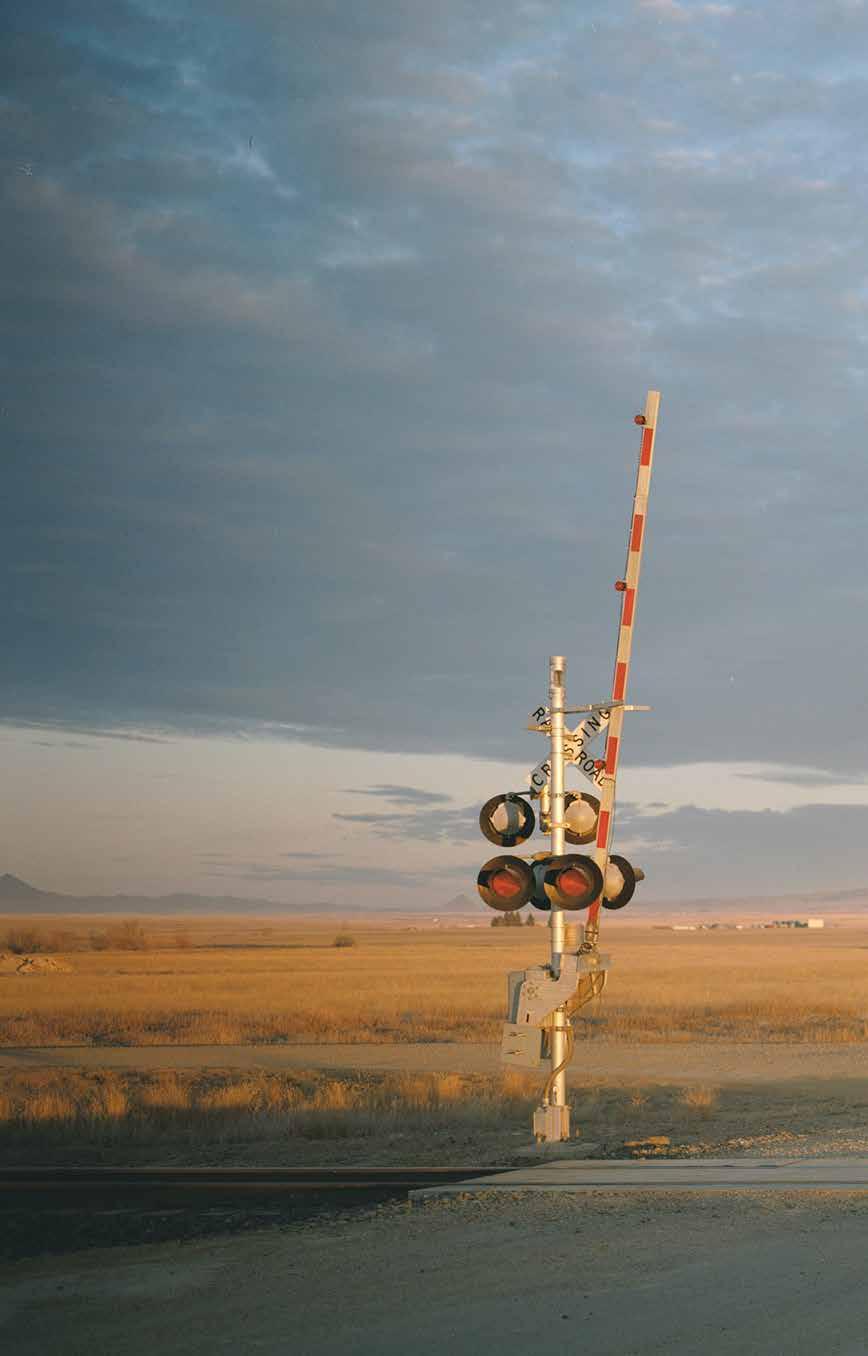
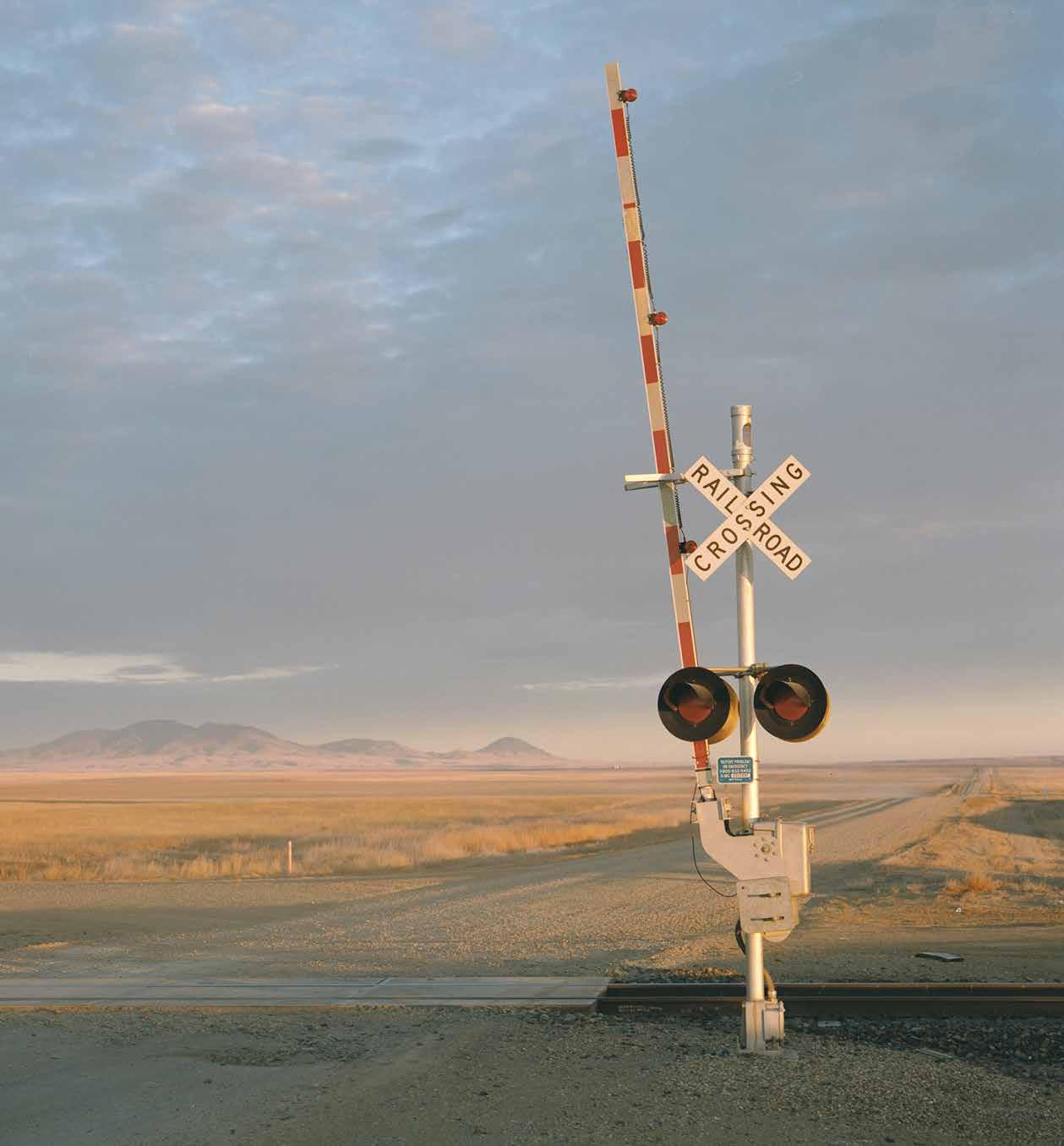
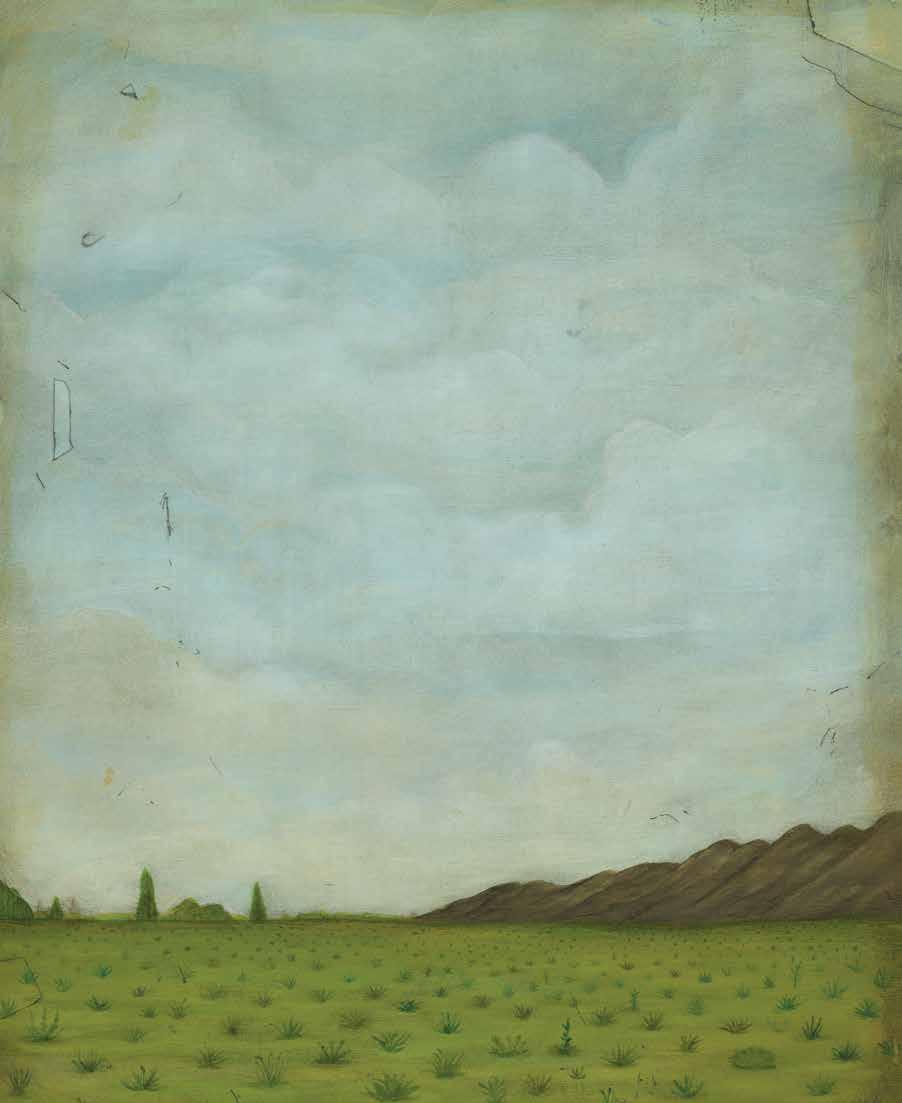
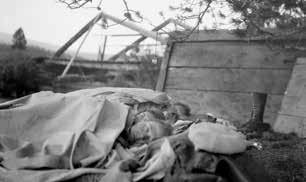
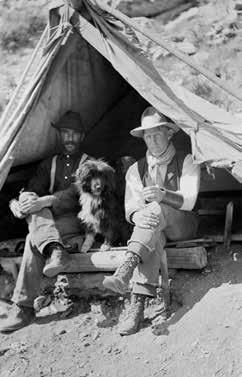
SWEET GRASS HILLS
NEAR CHESTER, MONTANA
PHOTOGRAPHY BY AARON AGOSTO
Humanitarian support for orphaned and vulnerable children in Latin America
In many orphanages across Latin America, children are safe—but not always known. OSSO exists to change that.
We partner with trusted local orphanages to provide consistent, compassionate support that helps children experience connection, dignity, and care.
• Trained volunteers who reliably show up
• Support that strengthens local caregivers
• Relationships that help children feel seen, valued, and loved Because when a child feels loved, everything changes.
THE HIGH ROAD
INTERSTATES PAVED THE WAY FOR MODERN AMERICA
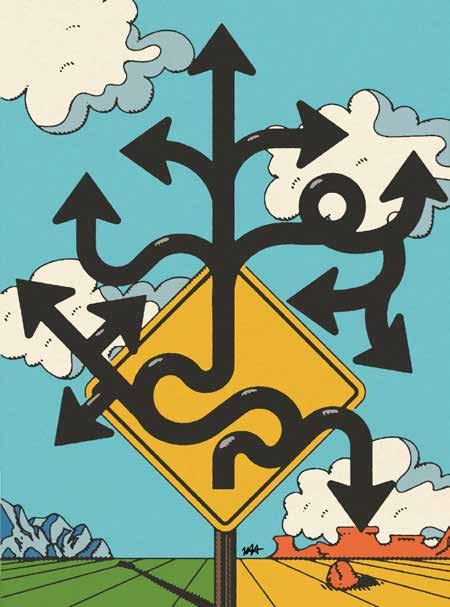
FEW PUBLIC WORKS projects have shaped the United States like the interstate highway system. Born during the postwar economic boom, an age of abundance and optimism, this once-futuristic project reimagined how Americans would live, work and move goods. These uninterrupted high-speed roads collapsed distances, linked remote towns with major cities and tied the country together in ways nobody could have predicted, though not without harm or unintended consequences. Nearly 70 years later, the system is aging, crowded and expensive to maintain. How did we get this far? Here’s the breakdown.
—VALERIE BRAYLOVSKIY
IKE’S 62-DAY HIKE
In 1919, Dwight D. Eisenhower crossed the continent in a military convoy on the old Lincoln Highway, averaging 6 mph for two months on mostly unpaved roads, logging 230 accidents and damaging 88 wooden bridges. Later, as a general in World War II, he saw the civil and military benefits of Germany’s autobahn, an efficient nationwide system of controlledaccess roads. He brought that idea home as president, signing the FederalAid Highway Act in 1956. The interstate was born.
7 DEATHS
That was the toll among the 2,000-worker crews who spent 11 years drilling the 1.7 mile Eisenhower-Johnson Memorial Tunnel Complex, where Interstate 70 passes through the Continental Divide in Colorado. At 11,158 feet, the tunnel is the system’s highest point. Nationwide, the interstates took over three decades to build and cost more than $300 billion in today’s dollars. The largest public works program in U.S. history used enough concrete to erect a wall around the equator, 50 feet thick and 9 feet tall.
18% EXODUS
Cities lost nearly a fifth of their population whenever a new interstate arrived between 1950 and 1990, while metropolitan areas (read: suburbs) grew by 72 percent. Nearly half a million homes were razed to make room for the new roads. More than a million people, disproportionately Black and low income, were forced out. From 1967 to 1968, 123 popular “freeway revolts” halted or interrupted construction; some highways were rerouted in response.
698.4 HOURS
A theoretical driver
could go 70 mph for 29 days straight if today’s 48,890 miles of interstate highway ran end to end. Ten primary routes cross the lower 48 states, labeled with one- or two-digit numbers ending in zero (east-west) or five (north-south), increasing from south to north (I-10 to I-90) and west to east (I-5 to I-95). Beltways and spurs add a third digit before the parent route’s code (Salt Lake City’s I-215 is a branch of I-15).
1.3 MILLION JOBS
Within 10 miles of I-80, roughly 84,000 freight hubs — warehouses, distribution centers and cargo terminals — support nearly as many employees as the agriculture industry. In 2024, I-80 logged more truck miles than any other highway. Interstates carried more than half of long-haul truck traffic, linking small towns to global supply chains and fueling $127 billion in domestic and international trade. From 2000 to 2019, freight traffic on interstates grew twice as fast as overall travel.
1956 THE FEDERAL-AID HIGHWAY ACT WAS SIGNED
“WE DIDN’T BUILD THE INTERSTATE SYSTEM TO CONNECT NEW YORK TO LOS ANGELES BECAUSE THE WEST COAST WAS A PRIORITY. NO, WE WEBBED THE HIGHWAYS SO PEOPLE CAN GO TO MULTIPLE PLACES AND INVENT WAYS OF DOING THINGS NOT THOUGHT OF BY THE PERSONS BUILDING THE ROADS.”
NEIL
DEGRASSE TYSON
1/4 OF ALL TRAFFIC
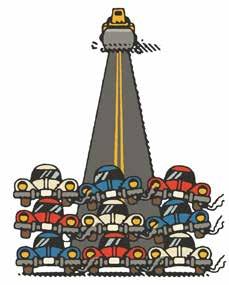
Interstates carry this load despite making up just 1.2 percent of the nation’s roads. Car ownership quadrupled from 1950 to 1970, populating daily commutes and traffic chokepoints. Urban interstate lane miles were expanded by 42 percent from 1993 to 2017, yet delays rose 144 percent. Economists call this induced demand — widening roads invites more driving. Drivers now waste 63 hours a year in traffic.
$2,000 PER HOUSEHOLD
That’s the estimated taxpayer cost to sustain the Highway Trust Fund over the next eight years — about $250 billion by 2033. The federal gas tax, fixed at 18.4 cents per gallon since 1993, has lost much of its value to inflation; electric vehicles are largely, if unintentionally, exempt. Many highways built to last 20 years are now over 50 years old. About half of interstate bridges are past midlife.
63 hours HOW LONG DRIVERS SPEND IN TRAFFIC EACH YEAR
42% MORE URBAN INTERSTATE LANE MILES ADDED FROM 1993-2017
144%
MORE TRAFFIC OVER THE SAME PERIOD
HALF OF BRIDGES ARE PAST MIDLIFE
THE LAST FRONTIER
WHAT SHOULD WE DO WITH WILD LANDS?
WHEN HENRY DAVID Thoreau wrote “Walden” in 1854, recounting his “life in the woods,” his cabin on that eponymous pond was a half-hour walk from the center of Concord, Massachusetts. The forests must have seemed endless then, the entire continent still far more wild than developed. Today, that ratio has flipped. An ever-growing population, myriad economic pressures, and scarcity of land and resources all make what wild spaces remain more precious than ever. Some believe they should be protected at all costs. Others see that idea as a cautionary tale of government overreach and industrial tourism. Who are the wild spaces for, anyway?
—ETHAN BAUER
BEST UNTOUCHED FREE RANGE
WHATEVER IS STILL wild in America can’t survive this modern age unless society protects it, and that can help us to preserve our national identity. This land’s raw and difficult terrain helped our forefathers to prevail in the war for independence. Our unique character and values like freedom and self-reliance took shape in the crucible of an untamed land that demanded risk, hard work and sacrifice but rewarded us with beauty and abundance. “The preservation of parks, wilderness and wildlife has aided liberty,” said then-President Ronald Reagan, “by keeping alive the 19th-century sense of adventure and awe with which our forefathers greeted the American West.”
Along the way, we have often retreated into the wild to find serenity, seclusion and even spiritual communion. From Indigenous tribes to ranchers and cowboys, from writers like John Muir to explorers like John Wesley Powell, many have found something sacred in our natural environment. Being in nature is good for the human psyche, connecting us with our past and offering respite from modern stresses. One Stanford study found “quantifiable evidence” that simply walking in nature can reduce the risk of depression. And Israeli researchers found that the solitude and silence of wild spaces “are linked to profound personal outcomes including the discovery of new and expansive ways of knowing the self and the world.”
Keeping certain spaces untouched by development is key to our environmental stewardship. Whatever label they bear, areas without fences, paved roads, bathrooms or utility lines offer vital corridors where plants and animals can grow and move freely, safe from humanity’s nearly ubiquitous impact. This can preserve biodiversity and help endangered species to thrive. More broadly, forests and grasslands help to mitigate climate change by storing carbon. And scientists can use wild spaces to take baseline measurements, helping us to understand our impact on other landscapes. The government must act to keep these spaces wild and expand the areas under its protection. That can mean wilderness — land “where man himself is a visitor,” per the Wilderness Act — or other designations that limit human encroachment. Anything less risks their degradation and eventual disappearance.
THE IDEA OF untouched nature is a myth, and that is no foundation for good policy. Long before Europeans arrived on this continent, Native American tribes not only called these “wild” lands home but were known to husband its resources to their own benefit. Early photographers left out Indigenous people when they captured the images of places like Yosemite that shaped our notion of wild spaces as empty. “It was the beginning of a myth, a fiction that would gradually spread around the world,” writes Mark Dowie for the MIT Press Reader, “and for a century or more drive the conservation agenda of mankind.” It’s time for us to get over that.
Another myth tells us that government intervention can protect the land, when it’s easy to see that the opposite is true. First of all, no place can be “wild” when it’s trapped behind a glass case of bureaucracy. Popular designations like “wilderness” or “national monument” may offer legal protections, but land doesn’t tend to appear in court. Meanwhile, these labels often attract industrial-scale tourism, which may be the greatest threat to natural spaces. A more holistic view of our relationship with the land understands instead that nature is never static.
Some of the more extreme protections are inherently discriminatory. Land without roads, bathrooms and other basic services is effectively closed off to many disabled folks, the elderly and families with young children. Access to our most pristine wild lands needs to be prioritized for the sake of our most vulnerable people. The same infrastructure that makes natural beauty accessible to them also enables fire mitigation and other safety measures.
Conservation doesn’t mean keeping wild spaces from changing or growing. The land is a bounty that exists for all our benefit — which means the people should decide, from generation to generation, how best to use it. Even Teddy Roosevelt, a pioneer of public lands, understood this essential balance. “Conservation means development as much as it does protection,” he said. “I recognize the right and duty of this generation to develop and use the natural resources of our land; but I do not recognize the right to waste them.”
IN SEARCH OF SMALL SILENCES
SURVIVING PARENTHOOD AS AN INTROVERT
BY MEGAN FELDMAN BETTENCOURT
Inever intended to hide behind a tree.
It was Monday, and my family of four awoke late. My six-year-old daughter refused to brush her bird’s-nest hair, while my 10-year-old son frantically searched for his homework. When I finally corralled them into the car, construction turned our 20-minute commute into a 35-minute drive filled with arguing in the back seat. I dropped the kids off late and slumped over the steering wheel, exhausted.
I decided to decompress at a nearby park. Just minutes into my silent stroll, a familiar face caught my eye. Walking toward me was a woman I went to college with 20 years earlier. I liked her, and under different circumstances, I would have waved her down to catch up. But, at this moment, that was the last thing I wanted to do. I had no energy to talk, and a work meeting was
quickly approaching. I clambered behind a large tree alongside the path and peered out from behind the pine needles. Watching with dread as the woman approached, I cringed. What exactly am I doing?
BY THE TIME I BECAME A MARRIED MOTHER OF TWO, MY SOLITUDE HAD SHRUNK TO THE SIZE OF THE NINE-MINUTE DRIVE BETWEEN SCHOOL DROP-OFF AND THE COMMUTER TRAIN TO MY OFFICE.
Well, I was being an introvert. With Latin roots meaning “to turn within,” the word introvert was first applied to psychology
by Carl Jung in the 1920s. He coined the terms introvert and extrovert to describe two personality types: those who prefer to focus inward and gain energy from time alone, and those who prefer to focus externally and feel energized by social interaction. In the 1940s, Katharine Cook Briggs and Isabel Briggs Myers used Jung’s theory in their Myers-Briggs Type Indicator test, developed to help people land wartime jobs. Studies have since found key brain differences between introverts and extroverts, from the amount of gray matter in certain areas to the level of activity and blood flow in others. So the two personality types don’t just seem different — they are different.
The problem for us introverts, who comprise between 30 and 50 percent of the U.S. population depending on which survey you
DESPITE WHAT MOM GUILT MIGHT SAY, SOLITUDE IS NOT SOCIAL AVOIDANCE — IT’S A NECESSARY WAY TO REGULATE ONE’S NERVOUS SYSTEM.
cite, is that while introverts and extroverts may be more or less equally represented numerically, our traits are not equally valued or respected.
“Modern educational and professional cultures tend to reward visibility, speed and verbal performance,” Soumia Bardhan, an associate professor of communication at the University of Colorado, Denver, who has written about introverts’ talents and needs, told me. She pointed out that we equate speaking frequently with competence and frame leadership around charisma and social dominance, rather than reflection and restraint. Even in the classroom, children are often graded partly on how often they participate in class discussions.
I found myself nodding at Bardhan’s words, much like I did when I read Susan Cain’s 2012 bestseller, “Quiet: The Power of Introversion in a World That Can’t Stop Talking.” In it, Cain describes the favoritism she calls the “extrovert ideal,” which, according to Bardhan, remains as pervasive now as when Cain’s book was published 14 years ago.
“Open offices, constant collaboration, rapid brainstorming, and group-heavy work cultures are designed around the assumption that more interaction is always better,” Bardhan said. “What gets lost is that some forms of intelligence, such as deep reasoning, ethical reflection and slow synthesis of ideas, are quieter and less immediately visible, but not less valuable.”
Yet just as introversion is undervalued, it’s also misunderstood. Introversion is often confused with shyness, which implies a lack of social confidence and fear of judgment. Contrary to popular belief, we introverts can be sociable; we just get drained by a certain amount of interaction and require alone time to recharge. Being reminded of this made me feel like less of an oddball for seeking out solitude behind a conifer.
AS A CHILD with extroverted parents, I saw a mom and a dad who both worked
as physicians treating patients five days a week. On weekends, they played doubles tennis and brought me to brunch with their friends. The annual party my parents hosted on Christmas Eve drew dozens and lasted for hours. Afterward, we cleaned up — only to attend another annual party in a different part of town. I learned at lunches, dinners and parties how to hold a conversation with all sorts of people from an early age. But, looking back now, I realize that after those outings and interactions, I often retreated to my room for peace. I enjoyed that time to myself; spending hours reading, making jewelry and playing my drum set became a comfort to me.
The quiet time I was able to spend by myself, unknowingly recharging in the company of my drums and beaded bracelets, eroded as I came of age. Constant interaction and social assertiveness seemed like prerequisites to get a good job, find a solid friend group and date successfully. When I was single and working in open-floor-plan offices, I recovered from hours of collaboration by sequestering myself alone in my room. By the time I became a married mother of two, my solitude had shrunk to the size of the nine-minute drive between school drop-off and the commuter train to my office in downtown Denver. A lack of silence, solitude and low-stimulation environments sapped my energy.
“(Introverts’) nervous systems respond more strongly to sensory and social input like noise and crowds, and that’s linked to faster fatigue, overload and stress,” Bardhan says. Parenting involves intensive interaction. It’s important for introverts to get enough solitude, quiet and rest to avoid exhaustion and burnout. This became increasingly difficult for me as my children grew older. They became more independent, but also more involved in activities that required my participation: birthday parties, baseball tournaments and spelling bees, an endless parade of loud events filled with crowds and pleasantries and carpools.
I ALSO KNOW THAT HAVING ALONE TIME MAKES ME A BETTER PERSON WHEN I’M WITH OTHERS. AND IF I DON’T MAKE SURE I FIND THAT ALONE TIME, NO ONE WILL.
As my kids turned six and 10, two things became clear. First, raising a family with my husband and spending quality time with our children as they grew was more rewarding than anything I had ever done. And second, the level of interaction this entailed left me feeling fatigued, irritable and empty. I snapped at my kids more frequently and always felt guilty afterward. My head ached and my mind raced. I felt restless and tired at the same time.
Bardhan gently reminded me that, despite what mom guilt might say, solitude is not social avoidance — it’s a necessary way to regulate one’s nervous system. Too much stimulation creates stress for the introverted brain, prompting the release of “fight-or-flight” chemicals like cortisol and adrenaline. Having written a book on the health impacts of such stress chemicals, I know that over time they could lead to mental health symptoms like depression and anxiety.
I also know that having alone time makes me a better person when I’m with others. And if I don’t make sure I find that alone time, no one will.
When my daughter was recently invited to a birthday party at a crowded venue, I dropped her off and checked in with the host parents. Then I had brunch alone down the street and returned to socialize
with the parents while our children slid down the slides. Because I’d taken time for myself first, I had the energy.
I’ve also become more courageous about defending my boundaries. A friend recently reminded me that I can’t expect the extroverts around me to understand my needs unless I explain them and ask for what I want.
Last fall, either because I eloquently asked for a reprieve or because my husband simply tired of my whining about our jam-packed calendar, he volunteered to drive the kids to their back-to-back soccer practices twice a week.
One Thursday while they were gone, I took myself out for a delicious bowl of borscht at an Eastern European diner and leisurely read a novel in silence. When the kids got home and my daughter wrapped herself around me like a baby orangutan, I was thrilled to cuddle. And when my son launched into a long line of questions, I had the energy to explore the answers with him (“When did the Pilgrims first come here?” “When did the first humans get here, like, on Earth, and where did they live?” “How was the Earth formed?”).
Instead of immediately responding to requests, I have started pausing to consider my bandwidth first. Recently, when my mother texted me to call her after bedtime,
I replied: “I need some downtime after getting them to bed. If it’s not an emergency, I’ll call you in the a.m.?”
Bardhan says these kinds of strategies — protecting social boundaries, taking predictable rest periods and normalizing energy differences — are research-proven ways for introverted parents to protect their mental health and conserve energy for talents that are particularly useful in family life: listening, attuning to others’ emotional states and synthesizing complex information.
“The ability to reframe solitude as maintenance, not indulgence, helps prevent depletion,” she told me. Bardhan’s other recommendations include “sensory rest periods” (like 10-minute walks), reducing noise and light (like limiting background television and using earplugs and eye masks to sleep or meditate), and declining social invitations when necessary.
It’s all still a work in progress for me, as I was reminded when I hid behind that pine tree to avoid reconnecting with an old friend. While I tried to be still and fretted over what I would say if she saw me huddled behind the tree bark, she turned onto a different path. I was saved. But now that I think about it, maybe I’ll reach out and invite her to lunch — at a time and place that works for us both.
NO BAILOUTS
CAN THE AMERICAN FARMER HANG ON?
BY VALERIE BRAYLOVSKIY
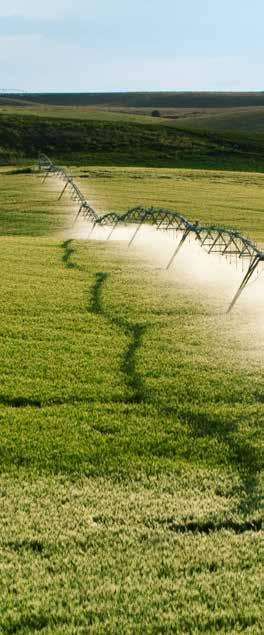
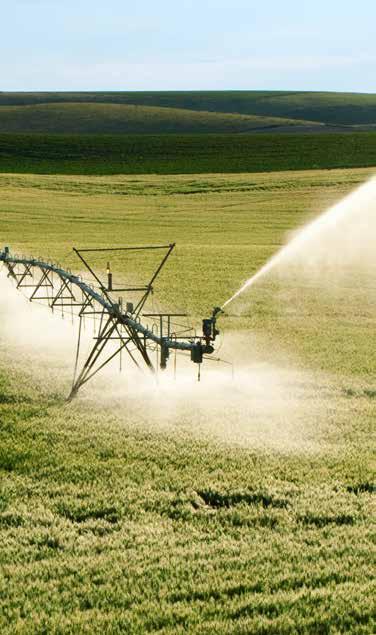
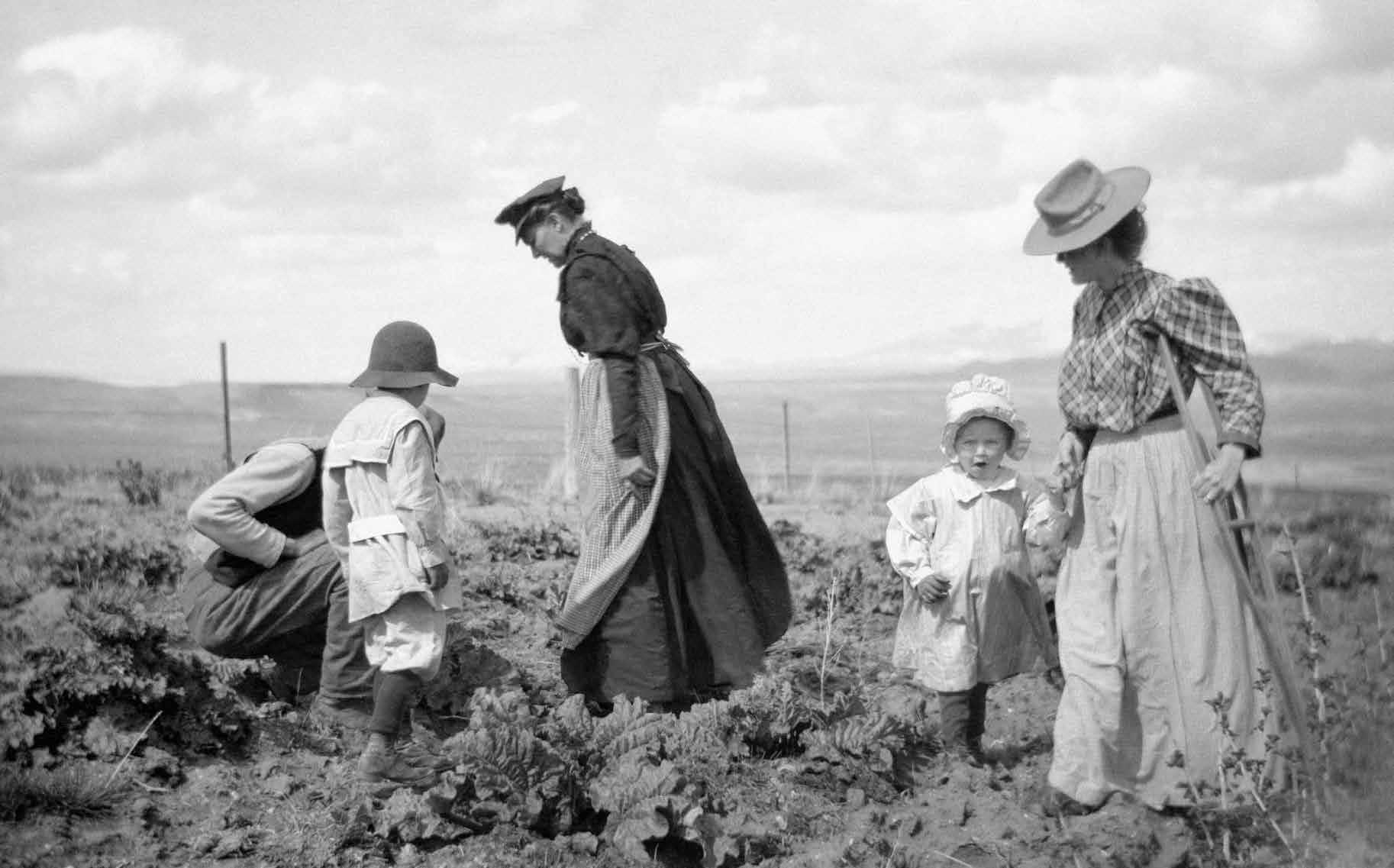
If there was ever a golden age of farming, it was the early 20th century, when rural life anchored the nation. More than half of Americans lived outside cities, and nearly half the workforce farmed — growing diverse crops by hand and earning a living directly from the soil.
Those days are gone.
Today, the U.S. loses an average of 63 farms each day. That’s more than 23,000 each year since 2017. That means that between 2017 and 2024, 162,000 farms — nearly 13 percent of the national total — went out of business. It’s a loss of nearly 24 million acres, an area larger than Maine. Most of these farms that are going out of business in the U.S. are family-owned, small farms — with an annual gross income below $350,000. Large farms that gross over $1 million are continuing to expand, producing nearly half of the country’s total domestic food output while accounting for
less than 4 percent of total farming operations in the country.
The numbers don’t paint a bucolic picture. While median farm household income exceeded the national average, over half of small farms are running on profit margins below 10 percent. For new farmers, startup
THE U.S. HAS LOST MORE THAN 23,000 FARMS EACH YEAR SINCE 2017.
and operating costs now require millions in upfront capital. Making ends meet is nearly impossible for most, and the few who do make a profit are almost always large commercial operations.
Caught between consolidation, trade wars, rural flight and record production costs of nearly $482 billion in 2023, the majority of American family farms are teetering on collapse. For generations, the government has tried to save them with bailouts. So far, it hasn’t slowed the number of family farms going out of business year over year.
Since 1933, subsidies and crop insurance have pumped an inflation-adjusted average of $17.6 billion annually into farm income. But those dollars now flow mostly to the largest operations — those with the most acreage and commodity crops like corn and soybeans — allowing them to expand by buying up land from neighboring small farms. In 2022, around half of the farms that participated in the federal crop insurance program were small family farms. Despite that, they received just 12 percent of the payouts. Large and
HOW MANY MORE DECADES OF LOSS CAN AMERICAN
AGRICULTURE ENDURE?
medium farms, which accounted for 42 percent of participants, collected 80 percent of the funds.
Government payouts don’t provide as much relief to small farmers as they do commercial operations, and short-term bailouts paid by the federal government have been widely criticized for weak oversight and uneven distribution.
An analysis of early Coronavirus Food Assistance Program payments — totaling $5.6 billion — found the top 1 percent of recipients received more than 20 percent of the funds, while the bottom 10 percent got just 0.26 percent. Despite a $250,000 cap on payments, large operations often bypassed limits through eligibility loopholes. Titan Swine, a conglomerate of Iowa hog producers, claimed over $2.5 million. Small, family farms didn’t receive as much help.
Jonathan Coppess, former administrator of the USDA ’s Farm Service Agency and professor of agricultural and consumer economics at the University of Illinois Urbana-Champaign, uses this kind of example to stress how “bailouts” for farmers are the very thing that can drive midsize and small family farms out of business.
Last December, the Trump administration announced another $12 billion in one-time “bridge payments” for farmers that produce row crops like soybeans and corn ahead of expected funding later this year under the One Big Beautiful Bill Act. Farmers and lawmakers across party lines dismissed it as a “Band-Aid” that ignored structural problems.
“How many bridge payments can there be?” Coppess says. “I don’t think we’re learning the right lessons here, and we’re certainly not learning the right lessons from history because we’ve seen these problems before.”
The United States was built on the ideal of the American farmer: self-reliant, hard-working, abundant. But the reality is a hundred years of hard times. The number of American farms peaked at 6.8 million in 1935, then fell sharply
midcentury. Since the 1970s, they’ve continued to steadily decrease.
If decades of policy and payouts were meant to save American farmers, then why are we still losing them so dramatically?
IN 1932, MONTHS before Franklin D. Roosevelt took office, Farmers Union president John Simpson issued a warning. “My candid opinion is that unless you call a special session of Congress … and start a revolution in government affairs, there will be one started in the country,” Simpson wrote the president-elect in a letter. Dust Bowl droughts, Depression-era debt and collapsing markets had pushed farmers to the brink.
Roosevelt responded by signing the New Deal’s 1933 Agricultural Adjustment Act, paying farmers to cut acreage and stabilize prices — putting millions of acres out of use to revive demand. After the Supreme Court struck down parts of the law for creating artificial scarcity, Congress passed a revised version in 1938, financed through federal revenues and laying the foundation for the modern Farm Bill. The USDA’s Farm Security Administration — precursor to today’s Farm Service Agency — began offering land-purchase loans, resettlement housing and health care, raising participating farm families’ net worth by 21 percent in its first year.
These safety nets were unprecedented. But the farmer’s role as a political figure — both celebrated and defiant — long predated them. George Washington released a militia against farmers protesting grain taxes during the 1794 Whiskey Rebellion. Thomas Jefferson called farmers America’s “most valuable citizens.” By the Civil War, Abraham Lincoln’s signing of the Homestead Act of 1862 — granting land to aspiring farmers — and the creation of the USDA formalized support, even as populist movements rose in protest of falling crop prices and land speculation. Even 164 years ago, farmers needed help to get started and to get by.
“Already in the 18th century, there’s this
ideal of the self-sufficient American farmer that just wasn’t true,” says Peter Simons, an environmental historian at Hamilton College in New York. This “tension,” as he puts it, is always going to be there. It’s why farmers were catapulted into powerful political symbols early on — the tension is “so unsatisfying,” he says, because those whose work it is to feed the country and who serve as a symbol of its bounty have always struggled, and the American government has struggled to support them.
That struggle hasn’t always been evident, politically or otherwise. Under the 1941 Lend-Lease Act during World War II, farmers ramped up production to feed Allied nations, even as many were drafted. Within three years, output rose 16 percent. After the war, President Dwight D. Eisenhower’s Food for Peace program exported surpluses abroad, turning agriculture into a tool of Cold War soft power.
“Most of the world is devastated because of World War II, and American farmers step in to fill this void,” Simons says. “They perceive that they’re holding communism at bay in the rest of the world.”
But at home, the costs mounted. Between 1940 and 1980, the farm population dropped from about one-quarter of Americans to less than 3 percent, while the average farm size more than doubled. The Green Revolution, urban sprawl and USDA pressure to “get big or get out,” as Secretary of Agriculture Earl Butz famously put it, accelerated consolidation. When the U.S. sold massive portions of subsidized wheat to the Soviet Union in 1972, farmers took on heavy debt.
By the 1980s, high interest rates and embargoes triggered another farm crisis. Over the decade, more than 250,000 farms went out of business, and hundreds of thousands defaulted on loans. In 1985, the U.S. saw its highest number of bank failures since the Great Depression, in large part because farmers simply couldn’t make it.
That year’s farm bill, the most expensive in history at that time, aimed to stabilize the sector while initiating a deeper
restructuring of federal support. Price supports were lowered to match global markets and loan deficiency programs introduced direct payments when prices fell below targets. A decade later, the 1996 Freedom to Farm Act completed the shift — eliminating remaining price supports, ending acreage limits and mandating crop insurance to receive subsidies — leaving small and midsize farms newly exposed to global market swings.
Ryan Dennis, author of “Barn Gothic: Three Generations and the Death of the Family Dairy Farm,” grew up on his
they trusted the federal government “just about always.”
“Farmers have a really long memory,” says Pam Lewison, a fourth-generation farmer and agricultural policy research director at the Washington Policy Center. “If you continually get bit over and over and over again, eventually that loyalty erodes and it turns into something different.”
THE UNITED STATES WAS BUILT ON THE IDEAL OF THE AMERICAN FARMER: SELF-RELIANT, HARD-WORKING, ABUNDANT. BUT THE REALITY IS A HUNDRED YEARS OF HARD TIMES.
Once a volatile voting bloc swayed by commodity prices, farmers are now a smaller share of the electorate, folded into broader rural politics. In the 444 farming-dependent counties designated by the USDA, about three-quarters of voters supported President Donald Trump in 2016, 2020 and again in 2024. His promises to revive rural America resonated, but his trade policies during both terms destabilized markets, triggered billions in federal aid and left many farmers uncertain where their loyalties lie.
“He doesn’t seem or act like a person who is going to help someone from a farm,” Dennis says. “But because he promised to disrupt the system, that was attractive to farmers. In my opinion, it did nothing but hurt them.”
With most agricultural lobbying now driven by agribusiness, the gap between policy and farmers’ needs has only widened. Lewison argues the problem is more about perception than partisanship. Farmers are often reduced to caricatures — either faceless conglomerates or nostalgic pastoral figures.
family’s dairy farm in upstate New York as those changes took hold. Deregulation gutted milk price supports — briefly restored in 2002, then ended again in 2012. Between 2003 and 2019, the U.S. lost over half of its dairy farms. His family sold theirs in 2008.
“To me, the big issue is that (farmers) felt unseen and unheard for so long, and that’s had consequences,” Dennis says.
A 2016 Journal of Rural Studies analysis found farmers’ trust in government plummeted after 1968. Between 2002 and 2008, not a single surveyed farmer said
“There are all kinds of farmers, and there are all kinds of people on farms,” Lewison says. She believes there’s a disconnect between who farmers are and the picture that government policy has painted of them; that “farmers aren’t people who are aware of the things that happen to them politically (and) the broader world around them.”
WHEN A FAMILY business is running on razor-thin margins, all it takes to shut down the operation is a little bit of bad luck. A disease like bird flu or brucellosis infects
“FARMERS HAVE A REALLY LONG MEMORY. IF YOU CONTINUALLY GET BIT OVER AND OVER AGAIN, EVENTUALLY THAT LOYALTY ERODES, AND TURNS INTO SOMETHING DIFFERENT.”
a herd. Drought wipes out a crop. A combine breaks down.
That’s why when grain farmer and former Montana Sen. Jon Tester, a Democrat, entered Congress in 2007, he bought duplicate versions of nearly every piece of equipment to keep his farm running while he was in Washington. In recent years, modern farm machinery has become so digitally dependent that a single malfunction can mean days of waiting for a technician, and thousands in losses. A 2023 U.S. PIRG Education Fund report estimated that farmers lose $3 billion annually to tractor downtime and another $1.2 billion in excess repair costs.
Tester’s Agricultural Right to Repair Act, introduced in the Senate in 2022, requires manufacturers to provide farmers access to diagnostic tools and software. Dozens of states have proposed similar laws, but only Colorado has passed one that covers farm equipment.
“The good lord played a trick on me,” Tester says, recalling a tractor failure shortly after introducing the bill — and the $800 repair that amounted to resetting a computer code. “It’s amazing to me that you can buy a tractor with a computer and not own the computer.”
Equipment costs are just one pressure farmers can’t control these days. In the first half of 2025, the U.S. posted a record $28.6 billion agricultural trade deficit. Soybean prices sank under Chinese tariffs, with farmers shouldering an estimated market loss of $89 per planted acre. Cattle ranchers faced their own strain after record prices, spurred by restrictions on imported beef from Brazil, fell steeply as Trump opened the U.S. market to increased imports from Argentina. Shawn Arita, a former USDA economist, estimates losses of $35 billion to $44 billion across nine major commodities in 2025.
As so many farms shut down, the land and resources they leave behind are reshaping America’s role in the global food system. Foreign ownership of U.S. farmland has risen 67 percent in less than 10 years. The termination of USAID in mid-2025 threatens not only future farm income, but also international agricultural research — millions once funneled through U.S. universities into disease management, crop resilience and climate adaptation. Food insecurity in farming-dependent counties rose nearly 12 percent between 2013 and 2023, though the USDA has since stopped tracking much of that data. Budget cuts also
wiped out roughly $1 billion in local food programs connecting farms to schools and food banks.
“If the purpose is to generate commodity exchanges, then this is a terrific system,” says Andrew Flachs, an anthropology professor at Purdue University. “But if the purpose is to feed hungry people and sustain rural communities in place, then we need to think of a better system.”
No one knows when the next bailout will arrive, what the new Farm Bill — up for renewal in September — will deliver or how many more farms will disappear before then. Farming has always been a gamble shaped by weather, markets and politics. But today, the odds are stacked almost entirely against those still playing.
“If things don’t change, it’s hard to figure out how things are going to pencil out moving forward,” Tester says. “I watched my neighbors leave en masse in the 1980s, and I’m watching my neighbors leave now, too.”
How many more decades of loss can American agriculture endure? At the current pace — more than 23,000 farms lost each year — within three generations, the nation’s remaining 1.6 million small and midsize family farms could all be gone.
Make this the year. PEACE
THE KID FROM SEARCHLIGHT
HOW THE WEST MADE HARRY REID
BY JON RALSTON
Harry Reid was despondent.
It was 1979, and the chairman of the Nevada Gaming Commission had just learned that Kansas City mobsters caught on FBI wiretaps had referred to someone they controlled as “Cleanface.” Reid knew — as did many others — they meant him. It was an ironic reference to the 39-year-old’s pristine image. The implication of the wiretaps to the feds was that Reid was unclean: The state’s top casino regulator could be — and had been — compromised.
After the wiretaps surfaced, raising questions about his integrity, Reid reported a death threat to the FBI, with the caller saying he would be “going out on a table.” Armed guards were stationed at his home. For Reid, it had become too much to bear.
The chairman went to visit the man who had appointed him, former Nevada Gov. Mike O’Callaghan, who had left office a few months earlier. Reid believed he owed it to O’Callaghan, his mentor since high school,
to tell him to his face that he was leaving the job that the governor had given him to resurrect his public career after devastating campaign losses for U.S. Senate (1974)
REID’S CAREER CAN BE SEEN LIKE THE 15 MARATHONS HE RAN — AN ENDURANCE TEST WHERE HE WORKED HARDER AND STAYED LONGER THAN ANYONE ELSE, ALWAYS PLAYING THE LONG GAME.
and Las Vegas mayor (1975). He could not credibly regulate the state’s most important industry while this cloud hung over him.
O’Callaghan was having none of it. The gruff, blunt veteran of the Korean War, who
had only one leg after being wounded in combat, knew that if Reid stepped down, he would always be seen as a tool of the mob.
“If you resign it’ll be the biggest mistake you ever make in your life,” Reid recalled the governor saying.
Reid remained on the gaming regulatory panel for two more years and eventually was cleared of any wrongdoing. He never looked back.
This was the pivotal moment in the political life of a man who would go on to become the most powerful elected official in Nevada history and one of the most consequential national leaders of the 21st century. Reid would use the gaming commission as a springboard to run for a newly created congressional seat in 1982, which eventually led to the Senate, where he would serve for 30 years and become the Democratic leader for the last third of his tenure.
Reid’s career can be seen like the 15 marathons he ran — an endurance test where
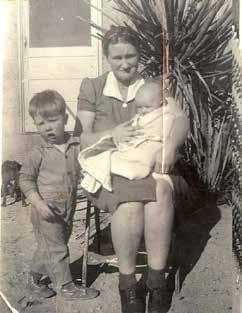
INEZ REID, PICTURED WITH HARRY JR. AND HIS YOUNGER BROTHER LARRY, HELPED SUPPORT THE FAMILY AS A LAUNDRESS FOR THE LOCAL BROTHEL.
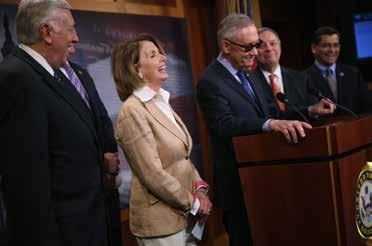
REID SERVED AS MAJORITY LEADER IN THE SENATE FOR EIGHT YEARS.
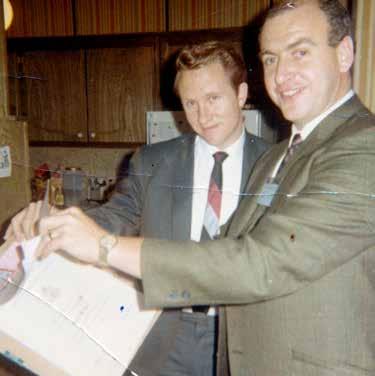
MIKE O’CALLAGHAN (RIGHT), REID’S TEACHER AND BOXING COACH IN HIGH SCHOOL, TAPPED REID AS HIS RUNNING MATE FOR GOVERNOR IN 1970.
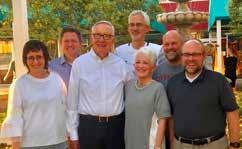
HARRY AND LANDRA (CENTER) WERE HIGH SCHOOL SWEETHEARTS AND RAISED FIVE CHILDREN (FROM LEFT) LANA, KEY, RORY, LEIF AND JOSH.
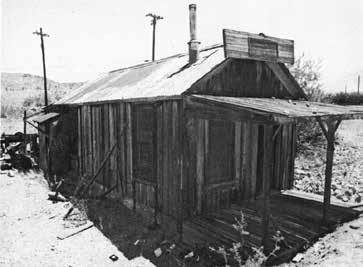
REID GREW UP HARDSCRABBLE POOR IN THIS HOUSE IN SEARCHLIGHT, NEVADA.
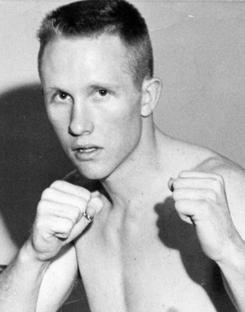
REID’S FORMER BOXING COACH HELPED HIM GET INTO POLITICS.
he worked harder and stayed longer than anyone else, always playing the long game. He came from nothing and nowhere — Searchlight, Nevada, a hopelessly poor hamlet not far from Las Vegas that gave him a will to succeed despite an alcoholic father and what could barely be called a home. Reid would survive taking on the mob, being investigated by the state and the FBI, barely winning reelection to the Senate in 1998 and getting elected to a fifth term in 2010 in a race few thought he could win.
Reid’s indomitability after that moment of doubt in 1979 became the signature feature of a remarkable career in which he became one of the most accomplished and polarizing figures of his time. His willingness to join any fight he believed was worthwhile — even if others did not think it was worth the risk — and his ability to rally his troops to the cause changed the culture of Washington, for good and ill. From that day forward, Reid showed no fear, becoming almost as ruthless as the mob bosses whom he helped drive from the state, a political godfather whose blessing would be sought by hundreds of Nevada elected officials and candidates.
The protean Reid, born December 2, 1939, in an oft-ridiculed small state, changed as Nevada became larger and more diverse, his positions flipping as his stature grew. Reid insisted he evolved, arguing that remaining intellectually static was the mark of a narrow thinker.
Through his half-century in public life, Reid remained a man of striking contradictions. He was a devout Latter-day Saint, who regularly attended church and read scripture every night, but who would not hesitate to go biblical against political enemies. He was against abortion as a matter of faith, but he became a favorite of women’s groups because he did not stifle pro-choice advocates in his caucus. He was as grounded a person as you could ever meet, but he also believed in UFOs — so much so that he helped secretly funnel a fortune to a Pentagon program to study sightings.
Reid, the Senate maestro who also was part of the dysfunctional mess the Senate would become, was a survivor against the odds, just like the town of Searchlight, where he grew up.
WHEN REID FINISHED eighth grade in 1953, he had a problem.
The closest high school was in Henderson, 40 miles away. Reid had no obvious way to get there, either, because the family did not own a car.
The Reids conjured a plan for the incipient high schooler: At the beginning of each week, he would hitchhike to Henderson, stay with relatives during the school week, and then hitchhike back home on most weekends. So began the Henderson sojourns that would change Reid’s life, introducing him to his future wife, his lifetime mentor O’Callaghan and the Latter-day Saint faith.
In his freshman year at Basic High School, where he was one of about 500 students, Reid lived with his uncle Joe, one of his dad’s brothers, and his aunt Rae. He went to the local Latter-day Saint church services with his aunt, but the inducement that eventually got Reid interested in religion was the preoccupation of most high school boys: girls.
One of Reid’s first friends, Ron McAllister, told him about an event that occurred before school started. “It’s called seminary,” McAllister told him. “There’s some really cute girls there.” So, Reid went.
In between chatting up his female classmates, Reid listened to the man who taught at the seminary, a future Latter-day Saint bishop named Marlan Walker, who also taught Spanish and Latin at Basic High School.
“He taught with authority in a sensitive, spiritual way,” Reid would later recall in a speech at Brigham Young University in 2007. “It was here for the first time that I learned of a man named Jesus.”
Reid would spend many nights at the Walker home, where the seeds were planted for his conversion to the church. “He had never lived in a house like that where the guy wasn’t fighting with his wife,” said Richie Vincent, Reid’s friend since high school.
Walker recalled Reid being “low-key” and at first not interested in his teachings. “He asked me, finally, to teach him some of the (Latter-day Saint) principles,” Walker said, so he invited the young man to his
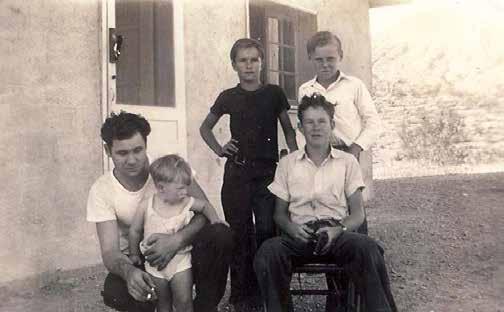
REID’S TIME IN SEARCHLIGHT SHAPED HIS LIFE AS A FIGHTER — BOTH IN THE RING AND IN POLITICS. HIS FATHER, HARRY SR., WAS A MINER AND IS PICTURED HOLDING HARRY JR. WITH OLDER SONS DON (STANDING IN BLACK SHIRT), DALE (SITTING) AND A FRIEND.
house, where Reid would spend many an evening. “We went through what we call the missionary teachings of the church, its beginnings, the beliefs that we had … where we came from, why we’re here and where we’re going.”
But the seeds were not ready to flower into commitment just yet.
LANDRA JOY GOULD was born in Los Angeles on June 19, 1940, the only child of Ukrainian Jewish immigrants, Earl and Ruth, who had separately come to the United States to escape antisemitism and get an education. Her parents met in Los Angeles, where her father had an office near a boxing ring and was a physician to many of the famous fighters of the day.
Doc Gould, as everyone called him, moved his family to Las Vegas when Landra was 10 and eventually settled in Henderson, where they lived on a busy street. She was a sophomore at Basic High School when Reid, then a junior, drove by one day. “There she is, out in the yard, washing the family car,” Reid recalled. Gould was five feet tall, with dark brown eyes and raven hair. But what Reid remembered was: “She was in short shorts.” He was smitten at first sight, the beginning of what would become a long love story lasting more than six decades, defying all odds, especially in the political world.
Landra’s presence was evident in everything Reid did. She was in key strategy meetings, often influencing his decisions from personnel moves to Supreme Court nominees. He would go home to be with her rather than spend time at events. His personal email for many, many years was landrajoy@aol.com.
“It’s the purest love I’ve ever seen,” said Rebecca Kirszner Katz, a longtime staffer, shortly before Reid died. “They are just soulmates in a way that a lot of politicians pretend to be. They thoroughly love being in each other’s presence. He still watches her in a room when she walks in, after all these years.”
Soon after that first sighting, Reid asked Landra on a date. He took her to a movie
at the Victory Theater in Henderson, but they had a little trouble getting there. Reid borrowed a car from a friend. But the starter didn’t work, so they had to get the car rolling down a hill, and he popped the clutch into gear. They hit it off and began dating. By his senior year, Reid had a girlfriend, he was a starter on the football team and he was a big man on campus. He was urged by classmates to run against the class president, Russell Williams, and he tabbed his good friend Rey Martinez to run his race. Landra helped him write a speech to get votes. He simply outworked a more popular kid who was considered a shoo-in, and with Martinez’s help, he won.
REID WON A scholarship to the College of Southern Utah in Cedar City, a two-and-ahalf-hour drive from Southern Nevada, to play football and baseball.
REID RARELY TALKED ABOUT HIS FAITH PUBLICLY, BUT WHAT LITTLE WAS KNOWN WAS THAT HE WAS DEVOUT.
But when he arrived on campus in 1957, the 17-year-old felt out of place.
“I went up to Utah and all these Mormon men had been away on Mormon missions, and they had beards and families,” as he put it. “It was like putting a kid in with a bunch of adults.”
As if that weren’t disorienting enough, Reid’s idea of a future athletic career evaporated. He almost immediately injured his foot in football, sustaining nerve damage, and had to start wearing a brace. He was depressed, and then he had an epiphany.
“I was sitting on my bed in the dorm room there,” he said. “My three dormmates were at the football game. I was sulking because I wasn’t on the field. And as I sat there on the bed, I thought: ‘What am I going to do now? I’m not going to be the athlete I wanted to be.’ … I said to myself, you know, I’ve never gotten good grades. I’ve been in class
now a month or so and things hadn’t been very hard. I bet if I tried, I could make good grades. And that was a transition for me.”
He boosted his grades by his second year, and after he earned an associate arts degree, Reid decided to go to Utah State in Logan, seven and a half hours from Las Vegas. Landra decided she was willing to give up her collegiate career for her future husband — a sacrifice Reid would later mention in many speeches.
Reid never actually proposed; the couple just had a matter-of-fact discussion. They planned to elope until some of Reid’s friends went to their former seminary teacher, Walker, asking him to intervene. By now, Walker was a bishop, and he offered to marry the couple — they were both 19 — in the local chapel so that they could have someone they both knew perform the ceremony, rather than a justice of the peace, a stranger.
That was the only marriage Walker ever presided over with nonchurch members, a measure of his affection for both of his students.
After the ceremony, Landra called her parents and told them about the marriage. Then the couple left for Logan in a ’54 Chevy to begin the next chapter. They honeymooned in Mesquite, just outside Las Vegas, before continuing to Utah. When they arrived, there was a letter waiting from Doc Gould. He told his daughter that as her father, he had every right to do whatever he had to do to prevent a marriage outside of her Jewish faith. But, he added, now that they were married, that part was over.
The Goulds visited the Reids for Thanksgiving that first year. “I’m sure they wanted to see if their only child was OK,” Landra said. “And things were OK. And from that point on, it was completely different.”
The Goulds had accepted their new son-in-law.
AFTER THE NEWLYWED Reids settled into a basement apartment in Logan, Landra secured a job at the library of the Thiokol Chemical plant in Brigham City, an hour outside of Logan, taking the bus to and
STEALING ISN’T INNOVAT I ON
Tech companies are trying to change the law so they can keep stealing American artistry to build their AI businesses – without authorization and without paying the people who did the work. That is wrong; it’s un-American, and it’s theft on a grand scale. The following creators all agree. Do you? If so, come join us.
Tech companies are trying to change the law so they can keep stealing American artistry to build their AI businesses – without authorization and without paying the people who did the work. That is wrong; it’s un-American, and it’s theft on a grand scale. The following creators all agree. Do you? If so, come join us.
Marc
11th Hour
Add-2
Aimee Mann
Alana Springsteen
Alex E. Chávez
Alex Kellerman
Alex Winter
Allison Lee
Amanda Cook
Andrea Bartz
Andrew Barber
Andrew VanWyngarden
Andy Leftwich
Angela Petrella
Anita Lerche
Ann Cherkis
Anna Christopher
Anthem Edition
Anthony Brown
Appalachian Road Show
Ashby Frank
Ashley Ruiz
Audrey Martinovich
Balsam Range
Ben Goldwasser
Benson
Bill Watterson
Billy Corgan
Black Thought
Blackwood Brothers
Bob Minner
Christina Baker Kline
Christina Piña
Christine Roume
Christopher Markus
Christopher Silber
Christopher Tin
Ciara Van Gheem
Claudia Brant
Clayvon Harris
Colbie Caillat
Colin Linden
Common
Conner Good
Conner Smith
Conrad Taylor
Cydney Kelley
Cyndi Lauper
Dan Navarro
Dani Deahl
Daniel Okrent
Danny Tolli
Darin Freeman
Darrell Brown
Darren Nicholson
Dave Koz
David Lowery
David Rambo
David Slack
Deborah Cox
Declan de Barra
Derek Trucks
Georgia Clark
Georgia Stitt
Gerry Duggan
Greater Vision
Gretchen Peters
Hampton Sides
Hannah Mary McKinnon
Harrison Weinfeld
Heather Elle
Heather Robb
High Fidelity
High Road
Hilary Weisman Graham
Hill Kourkoutis
Holly Harold
Howard Korder
J. Ivy
Jacqueline Zambrano
Jamie Flanagan
Jan Kimbrough
Janet Lin
Jason Aldean
Jason Bailey
Jason Crabb
Jason Isbell
Jason Nelson
Jay Abramowitz
Jeannie Tanner
Jennifer Cacicio
Jennifer Kent
Jeremy Stephens
Karen Janszen
Karen Peck & New River
Karen Sandler
Kate Robin
Katie Schafer
Ken Erlich
Kenny Wayne Shepherd
Kevin Ray
Kevin Seccia
Keythe Farley
Kingdom Heirs
Korby Siamis
Kristen Bearfield
Kristen Bell
Kristen Scott Benson
Kristy Cox
Laura Veirs
Laura Veltz
Lauren Daigle
Lauren Talley
Lauren, Amber & Kenna
Leah Dowdy
LeAnn Rimes
Ledisi
Lee Brice
Lee Greenwood
Lee Zlotoff
LeFevre Quartet
Lera Lynn
Lina Patel
LOCASH
Michael W. Smith
Michel Janse
Michele Gendelman
Michele Mulroney
Mikael "Count" Eldridge
Mitali Jahagirdar
Monika Ryan
Monique Sorgen
Nadiya Chettiar
Nancy Beverly
Nayna Agrawal
NewFound Road
Nick Howard
Nick Vatterott
Nicole Belisle Dawson
Nikki Longfish
OK Go
Olivia Munn
One Republic
Ookay
Parker McCollum
Patric M. Verrone
Patricia Meyer
Patti Carr
Paul Chitlik
Paula Sevenbergen
Pete Nowalk
Preston Cooper
Questlove
R.E.M. (Bill Berry, Peter Buck, Mike Mills, Michael Stipe)
Rachel Howzell Hall
Sarah Cho
Satellite Mode
Scarlett Johansson
Scott McCabe
Scott Turow
Scotty Inman
Shelby Lock
Sherwin Gardner
SHIMA
Simon Le Bon
Skunk Baxter
Skylar James
Sound Street
Southbound
Stacy Schiff
Stephen Markley
Steve Harper
Steven Curtis Chapman
Sue Ennis
Susan Tedeschi
Sylvia
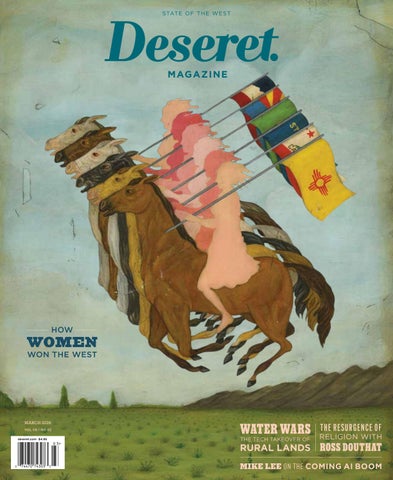
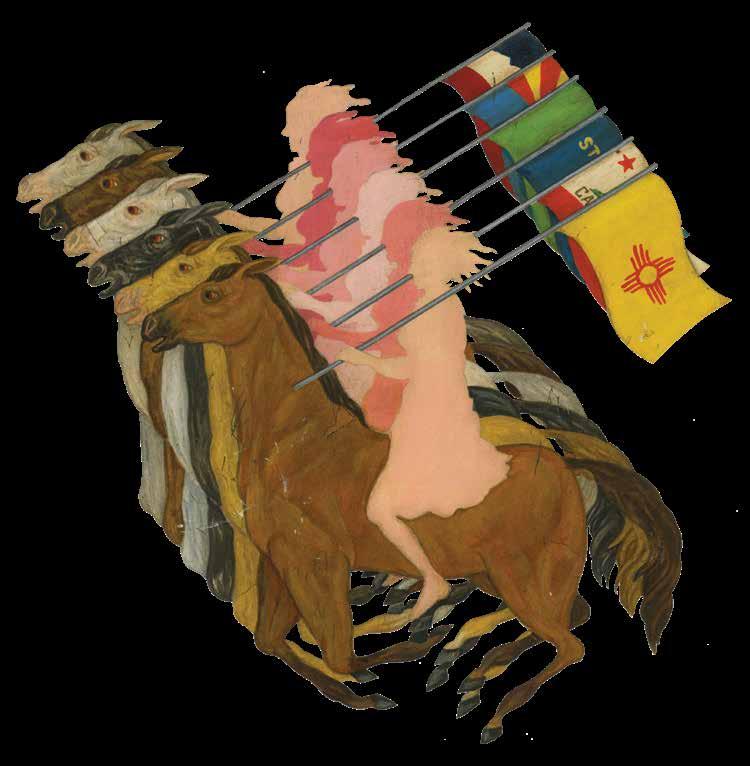
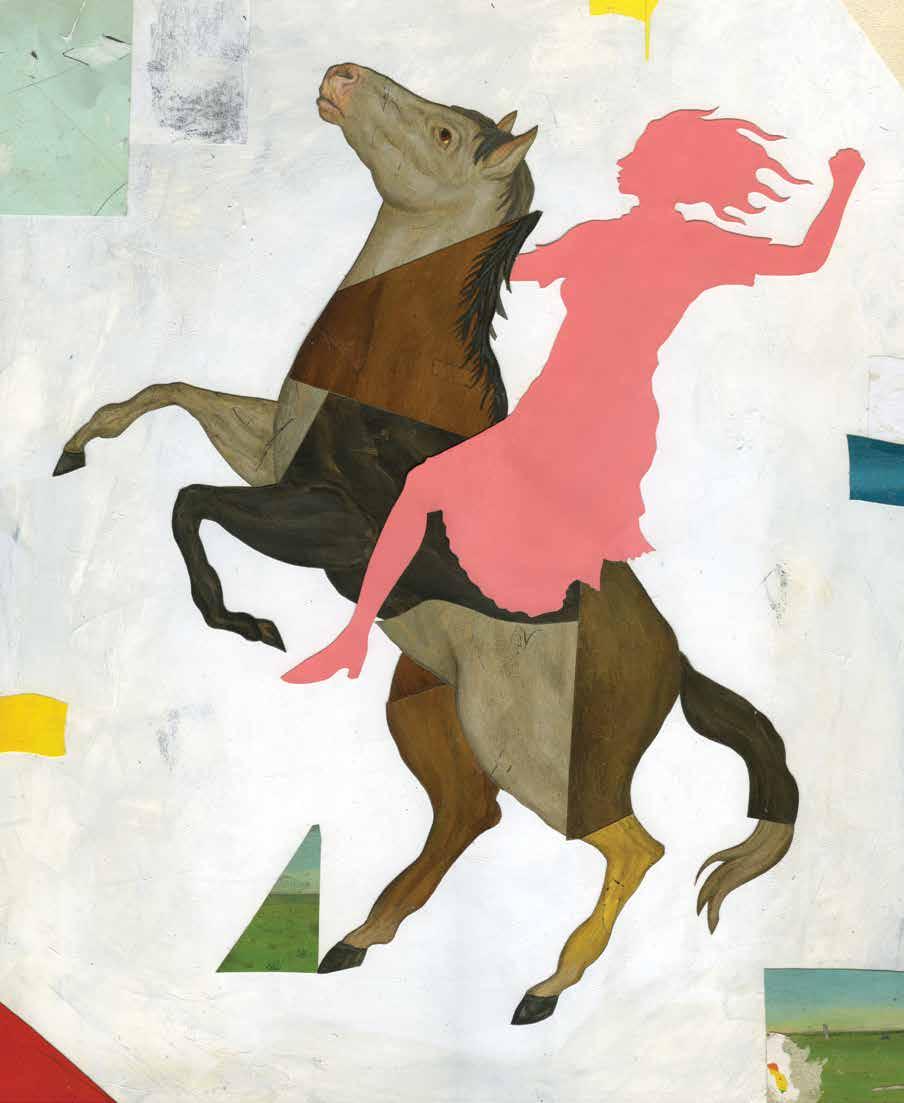
HOW WOME N WON THE WE ST
A region long de ned by frontier myths sets a national example for electing women to real political power
ILLUSTRATION BY JASON HOLLEY BY NATALIA GALICZA
The Eisenhower Executive Office Building where
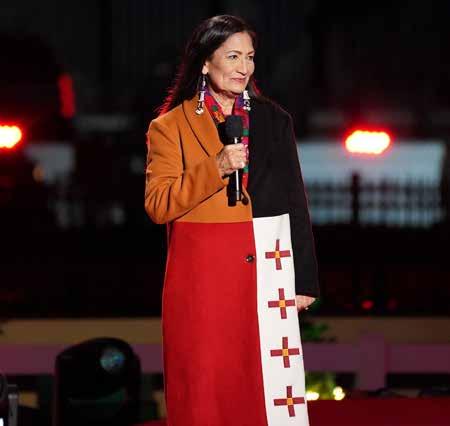
DEB HA AL AND
stood for her swearing-in relied heavily on the aesthetics of European imperial powers.
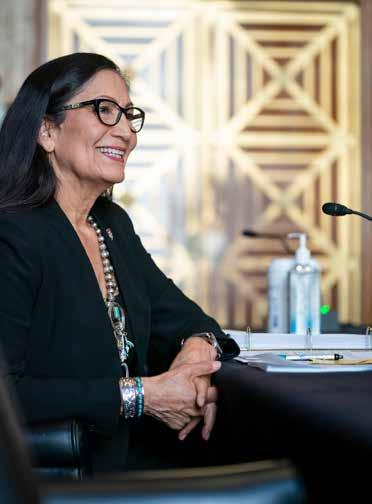
Gilded mirrors, chandeliers and parquet floors filled the room — a design choice meant to mimic 18th century French architecture, made all the more imposing by the building’s history as a place of deliberating war. Haaland, huddled beside two of her sisters and her only daughter, stood out with a rainbow ribbon skirt, white moccasins, a turquoise necklace and dragonfly shaped earrings. That Thursday, March 18, 2021, the congresswoman from New Mexico was not concerned with blending in. She dressed to mark the occasion: her debut as the first Native American secretary of the Department of the Interior.
Haaland placed her left palm on a Bible her daughter held, then recited the oath of office. Her words were slightly
muffled from behind a floral face mask — this was at the height of the Covid-19 pandemic — but the message still rang clear. She vowed to defend the Constitution, to bear faith and allegiance in her country as she prepared to head a department so all-encompassing it’s sometimes called the “Department of Everything Else.” And not only was she the first Native American to lead that department, but the first to lead any Cabinet-level agency. Only two other women served the same role before her in the agency’s nearly 200-year tenure.
Before her rise to secretary, Haaland became one of the first two Native women elected to Congress in 2018. By then, women made up more than half of the national population
yet only 20 percent of its largest legislative body. Though not for a lack of trying. The same year, a record number of women ran for Congress, more than any other time in American history up until that point. Despite centuries of men outnumbering and overrepresenting women in politics, the last decade has signaled something of a shift. More women are gaining positions of real power across the United States. Especially, like in Haaland’s case, women from Western states.
In 2019, Nevada became the first state where women held a majority of the seats in the Legislature. Colorado followed in 2022, then New Mexico in 2024. Today, women make up nearly a third of Congress — though Nevada, Colorado and
FORMER U.S.
SECRETARY
HAALAND, NOW RUNNING FOR GOVERNOR OF NEW MEXICO, IS ONE OF MANY WOMEN CHANGING THE FACE OF LEADERSHIP IN WESTERN STATES.
New Mexico are still the only three states to have reached that majority milestone. California, Arizona, Oregon and Washington rank closely behind for state legislatures with the largest shares of women.
“There is a pattern of women’s power (in the West) that we see replicated across different levels of office,” says Kelly Dittmar, director of research and scholar at Rutgers University’s Center for American Women and Politics. “We are a representative democracy. Those in office should be representative of those they serve. That includes fair and equal gender representation.”
Still, just 73 women have ever filled Cabinet-level positions. The highest echelons of influence in America, widely considered one of the more
demographically diverse countries on the planet, have largely been reserved for men. That extends globally; according to the United Nations, women are underrepresented “at all levels of decision-making worldwide.”
When women do lead, it not only boosts democracy by engaging a group that represents more than half of all Americans, Dittmar says; it improves society through meaningful policy change. “Different issues and different perspectives are brought to democratic deliberation when women are at the table because they have different lived experiences and perspectives.”
The Organisation for Economic Co-operation and Development points out that women politicians are more likely to prioritize social and economic policy changes that deal with issues like education, child care and health care.
As secretary, Haaland passed initiatives like female-focused hiring for law enforcement officers in the National Park Service as well as throughout the Interior’s bureaus and offices.
“Women were meant to lead,” she told me in December. As a congresswoman, she was a vocal advocate for the Paycheck Fairness Act to close the gender wage gap. She knew, from personal experience, that economic independence has the power to take women and their children out of poverty, homelessness, and domestic violence situations. She speaks openly about having raised her own daughter as a single mother who cleaned floors and toilets at her child’s
preschool so she could afford the tuition.
Throughout her career, Haaland took her lived experiences and turned them into substantive changes that prevent more women from struggling through the same pitfalls. When her tenure as secretary ended in 2025, she launched a bid to become the first Native woman governor in American history — a race she’s poised to win in New Mexico. And she’s making a point to follow the same playbook that brought her to the Eisenhower Executive Office Building five years ago, staring at a future once believed to be impossible. “If we can make things good for a single mom in New Mexico — if a single mom can pay their bills, have groceries in the cupboard at the end of the month, make sure that things are paid without falling short and without overdrawing their checking account,” she says, “then we’re doing OK.”
The West, of course, is far less populated than the Eastern Seaboard, the land far more rugged, a rural ethos far more prevalent. Yet when it comes to political gender parity, a benchmark of democracy that most other states have yet to crack, it’s the Western region that continues to lead the nation. Haaland is merely one such example of that legacy in action. For as many elected women came before her, she hopes there are even more to come in the generations ahead. Women who differ in party, ethnicity, faith and values; women who mirror the present face of the country they live in.
THE TRADITION OF Western states politically empowering women isn’t exactly new. The Utah Territory passed a law granting women the right to legally vote in elections in 1870, half a century before the Constitution granted that right to all women federally. Eventually, every state and territory in the West besides New Mexico granted women the right to vote prior to the 19th Amendment. That participation paved the way for Colorado to become the first state to elect women to a state legislature in 1894, Utah to elect the first woman state senator in 1896, Montana to elect the first woman to the U.S. House of Representatives in 1916 and Wyoming to elect the nation’s first woman governor in 1924.
According to historian Jennifer Helton, Western states were more inclusive early on due in part to necessity. Their governments proved more fluid because they had to be built from scratch. Populations were significantly smaller than out east, which meant settlers relied on women to vote and hold office in order for the territories to qualify for statehood. Because Latter-day Saints were often the first settlers in the Intermountain West, they played a particularly significant role, not just in politics, but in stabilizing fragile frontier communities and actively building civic and cultural institutions. Martha Hughes Cannon, for example, the first woman elected to a state senate (she defeated her husband), enrolled at the University of Deseret (now
the University of Utah) at the age of 16 and received a medical degree at the University of Michigan. When she returned to Utah she joined Susan B. Anthony and other suffragists in a national campaign to push for the women’s right to vote. (In 2024, a statue of Cannon was placed in the U.S. Capitol).
“There’s been a culture of having women in leadership,” Dittmar says. “You can’t undersell what that then means for the expectation among citizens that you will and can and should see women in political leadership.”
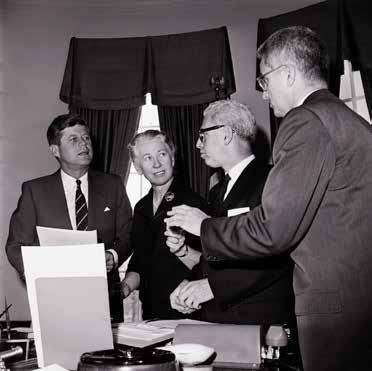
Through the decades, that expansion of political power in the region shaped issues not only relevant to Western states but the entire country. Esther Eggertsen Peterson served as head of the Women’s Bureau in the Department of Labor under President John F. Kennedy, making her the highest-ranking woman in his administration.
PROVO, UTAH-BORN ESTHER PETERSON HEADED THE WOMEN’S BUREAU IN THE DEPARTMENT OF LABOR DURING THE PRESIDENT JOHN F. KENNEDY ADMINISTRATION — AND WAS A DRIVING FORCE BEHIND THE EQUAL PAY ACT OF 1963.
The Provo, Utah-born director and Brigham Young University graduate was the principal driving force behind the Equal Pay Act of 1963, which outlaws wage discrimination based on sex and requires equal pay for men and women (While the 19th Amendment extended to all women, discriminatory state laws often excluded the participation of Native American, Black and Asian American women until the passage of the Voting Rights Act in 1965).
Dolores Huerta, a New Mexico-born labor and civil rights activist, co-founded the United Farm Workers of America in 1962 — the largest farm worker organization in the country. Her work directly secured disability insurance for farm workers, significantly reduced the use of harmful pesticides in agriculture, and resulted in the California Agricultural Labor Relations Act of 1975, which
In 2019, Nevada became the first state where women held a majority of the seats in its legislature.
Colorado followed in 2022, then New Mexico in 2024 — the only three states to have reached that majority milestone.
granted farmers the right to advocate for better wages and safer working conditions.
Yet despite strides both historical and modern, representation of women in higher office is still lacking in the United States. As of 2025, the country ranked 42nd on the global Gender Parity Index, which measures national gender disparities on political, economic and social criteria. There’s never been a female president, despite an estimated 32 women having been nominated to run for the office by their respective parties. In 2021, Kamala Harris, a U.S. senator from California, was the first woman to be sworn in as vice president. And women only really began making strides in the national House or Senate within the last few decades. Pew Research Center found that more than REPUBLICAN
three-quarters of the women to have ever served in either body were elected or appointed within the past 34 years. Utah, for example, received a “D” grade on Represent Women’s Gender Parity Index, despite being home to the first vote cast by a woman in U.S. history. There are quieter, internal obstacles, too. Research from the Brookings Institution found that women are three times as likely as men to consider themselves “not at all qualified” to run for political office, despite data that points to how they often outperform their male counterparts in terms of efficiency and ability to reach across the aisle.
Dittmar admits that Democratic states are more likely to elect women and Democratic women are more likely to run for office. The West, after all, has a concentration of
Democratic majority states like Nevada, California, Colorado, New Mexico, Washington and Oregon. But many of the region’s conservatives are following suit, too.
ROSILICIE OCHOA BOGH must have prayed every single day for a month straight. She prayed on her drives around California’s San Bernardino County. She prayed at work as a real estate agent in her city of Yucaipa. She prayed when she got home — with her family and on her own. She prayed because in 2019, the local county party chair had called Ochoa Bogh to ask her a life-changing question. Only, for a while, she had no clue how to answer it.
A Senate seat had become available in the state Legislature, and Ochoa Bogh needed to figure out whether she wanted to fill it. By then, she’d had experience in different forms of leadership: as a teacher, real estate agent, school board member, leader for the Yucaipa Valley Chamber of Commerce. Though she’d never envisioned herself in politics. “When the county chair called, I laughed and said I’m not qualified to run for state Senate,” she says. “(The chair’s) response was, ‘That is typical of a woman’s response. As women, we never think we’re qualified.’”
Ochoa Bogh is a daughter of Mexican immigrants. She grew up traveling back and forth between her parents’ country and her own, and had to learn English as a student since it wasn’t her family’s native language.
She grew up feeling like an outsider, comparing herself to her classmates and doubting herself in the process. She converted to The Church of Jesus Christ of Latter-day Saints at 22 years old and has let her faith guide her through most of her adult life. So, when she got that fateful call in 2019 asking whether she’d be willing to represent about a million people, she found herself leaning on that guidance more than ever. One morning, she woke up without the heavy pit in her chest and stomach she’d been carrying around for a month. That’s when she knew her answer was yes.
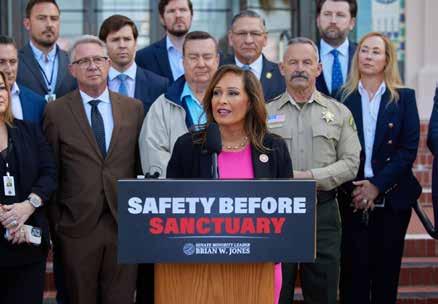
In 2020, Ochoa Bogh became the first Republican Latina elected to the California state Legislature. She was reelected in 2024 to represent her newly drawn 19th Senate District, which has more Democratic than Republican constituents thanks to liberal cities like Palm Springs. Ochoa Bogh is a lifelong Republican but identifies as a bipartisan legislator. Last July, she urged President Donald Trump and her fellow Republicans to consider work permits for essential workers, like farm workers, living in the country illegally. She’s introduced legislation to enforce penalties for fentanyl-related offenses, increase capital gains exclusions to help first-time buyers afford a home and reduce mobile home evictions so Californians experiencing poverty don’t end up homeless. During the 2023-24 session, she had more bills signed into law than any other Republican in the state Senate; of the 40
she introduced, 14 became law. “My goal … within my district has been to help understand why people think the way that they do,” she says. “How do we have conversations about ideas without vilifying people?”
Most of her legislative actions are in support of stronger schools, lower taxes and affordable housing. The Center for Effective Lawmaking recognized Ochoa Bogh in December as the top-performing Republican in the California state Senate and among the most effective lawmakers statewide for the quality and progress of her bills. Though that efficiency is not unique to Ochoa Bogh. Research from the Center for American Women and Politics has found women politicians tend to be more amenable to meeting halfway and working for solutions regardless of party or personal politics. “We have historically seen women push for more compromise, more cooperation, bringing different voices to the table,” Dittmar says. “They’ve been through too much to come here and get
nothing done, so they’re more results-oriented than men.”
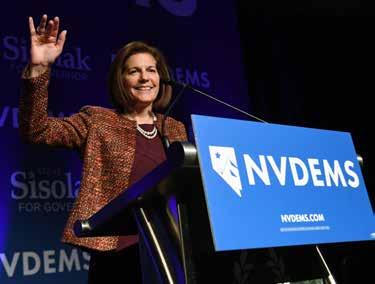
In Nevada, Catherine Cortez Masto served eight years as Nevada’s attorney general before becoming the state’s senior senator. Most of the law enforcement officials she worked with were men and she was only the second woman to serve in the role. She became the nation’s first attorney general to prosecute violators of loan regulations during her tenure. She created programs to reduce domestic violence and Nevada’s first Senior Protection Unit in the attorney general’s office. Sworn in as a United States senator in 2017, she was the first woman elected to the Senate from Nevada and the first Latina senator in American history. But what placed the registered Democrat most prominently in the national spotlight was her choice to cross partisan lines by voting to end the longest federal government shutdown in history a total of 15 times in November, despite most of her fellow Democrats holding out for a guaranteed extension of
U.S. SEN. CATHERINE CORTEZ MASTO, A DEMOCRAT WHO REPRESENTS NEVADA, HAS SHOWN A WILLINGNESS TO CROSS PARTY LINES, INCLUDING A VOTE TO REOPEN THE GOVERNMENT DURING THE 2025 SHUTDOWN.
Western states were more inclusive early on due in part to necessity. Their governments proved more fluid because they had to be built from scratch.
ETHAN MILLER/GETTY IMAGES
DURING THE 2023-24 SESSION, OCHOA BOGH HAD MORE BILLS SIGNED INTO LAW THAN ANY OTHER REPUBLICAN IN THE CALIFORNIA STATE SENATE.
Research has found women politicians tend to be more amenable to meeting halfway and working for solutions regardless of party or personal politics.
the Affordable Care Act. “Women have a tendency more to be problem solvers,” she says. “I voted to keep the government open because I knew it would be costly to shut the government down … and it would hurt hardworking Nevadans and small businesses there.” Though her choice was controversial and contested nationally, it helped save the state an estimated $606 million in lost gross state product and $224 million in lost wages for each month the shutdown lasted.
Beyond a solution to polarization and gridlock, placing women in positions of political power increases trust in elections. An American University poll from October found that 83 percent of voters think institutions that encourage women to run for office are vital to democracy. The same poll found that two-thirds of men under 50 say women are better at solving the nation’s problems. They’re also more widely trusted than men to champion issues like child care and women’s equality.
“It did not take me long after assuming office as state senator to realize that my life experience was very valuable when it came to almost everything, including tax policy,” says Deidre Henderson, Utah’s lieutenant governor. “The way that I thought about things, the way I experienced things, was very different from the way the men in the room experienced things. I’m not saying it was better, it was just different. And having that perspective was critically important. We desperately need more of it.”
Another report by the Westminster Foundation for Democracy and the Global Institute for Women’s Leadership at King’s College London found that countries where women hold more political power are less likely to wage war or abuse human rights. “It does bring a different perspective to issues,” Ochoa Bogh says. “The ability to walk into other people’s shoes has been immensely helpful in understanding why legislation works and doesn’t
work, the circumstances people are living in.”
THERE WERE ABOUT 100,000 new faces in the crowd, yet Haaland felt at home. That Saturday afternoon last October, she marched behind her handmade campaign float in another ribbon skirt and red moccasins as she made the three-mile trek down the Northern Navajo Fair parade route in Shiprock, New Mexico. She shook hands with young girls in braided pigtails and a 103-year-old grandma in a costume tiara, chatting whenever possible about tribal sovereignty or health care access. She had visited Shiprock as a child when her mom would travel there to work with Native students, which contributed to her familiarity and comfort level. Still, her support there was not guaranteed.
Haaland qualified for the New Mexico ballot within less than 24 hours, and despite the fact that the average donation to
her campaign is $31, her campaign for governor has already raised millions in funding. Yet there are moments, like that afternoon in Shiprock, when it’s clear how much hangs in the balance. “It’s scary … to get out and say, ‘I’m running for something,’” Haaland told me. “I’ve done it and I am scared every single time.” Part of that fear is the natural result of committing to a task as vulnerable as campaigning, and part of it is the added land mines of running as a woman. She often thinks back to when she ran for chair of New Mexico’s Democratic Party in 2015 and her opponent kept asking her to drop out of the race and serve as his vice chair instead. He appeared, according to her retelling, under the impression that he’d won before the race was even called. Almost as if the thought of her holding that office were too outlandish to come true.
Dittmar points out that gender biases and stereotypes that have existed long before the women’s suffrage movement still affect women in office today. Namely: that women are weak, emotional, flawed or not assertive enough to lead. That men will be more naturally qualified to deal with matters of security and defense, while women are too sensitive. A majority of women surveyed by Pew in 2023 agreed that major reasons why women remain underrepresented in politics are because they have to prove themselves more than men, face gender discrimination and receive less support from party leadership as well as from voters themselves. For Ochoa Bogh,
the state senator in California, it’s not unusual to be moved to tears during a town hall when she hears a constituent’s moving story or lived experience. “The number one criticism that I used to get was that, ‘She’s not up to the job, she cries,’” Ochoa Bogh says. “People are not used to seeing that type of leadership. Males in particular have a really hard time. But it’s interesting because even though it was one of my number one criticisms, there’s a different demographic that really has valued my ability to feel deeply.”
“There are some inherent biases based on gender, which are unnecessary,” says Cortez Masto, the centrist Democrat from Nevada. But when those mental blockades are felt, one need only look to the West, where politicians across local, state and federal offices have proven time and again that leadership can look different without risking efficacy or progress.
Haaland is no stranger to reflecting on the lives of her ancestors for wisdom on how to navigate life in the public eye. Her grandparents lived without running water and electricity at Laguna Pueblo into the 1970s. Haaland grew up visiting them often, plucking worms off cornstalks harvested from the pueblo fields and watching her grandma prepare food for feasts featuring hundreds of guests at a time. Her grandfather formed an all-Native American baseball team when his white neighbors in Winslow, Arizona, didn’t let him play in local games, only to outperform the players who ostracized him in the first place. She’d earn a nickel for each foul
ball she picked up off the field. Those memories had already taught her how to make the most of whatever hand she was dealt. She, like anyone, feels much taller when standing on the shoulders of those who came before her.
At the parade in October, the afternoon sun shone over the fairgrounds, illuminating the nearby eponymous Shiprock, or Tsé Bitʼaʼí, a volcanic formation whose Navajo name translates to “rock with wings.” Haaland walked past families on the parade route, watching mothers with their smiling children, eating candy and cheering on
floats. She couldn’t help but think of her own mom. She thought of her quarter century spent working for the Bureau of Indian Education, how she’d been taken to attend a federal Native American boarding school as a child against her own will, just like her own mother had before her. Haaland’s mom grew up in a different world with fewer options. As secretary, she already helped break that cycle. Maybe there was room to aim for more. The least she could do, she thought — for her family and the other families in the lonesome West — was try.
IN HER BID TO GOVERN NEW MEXICO, DEB HAALAND HOPES TO FURTHER OPEN DOORS FOR OTHER WOMEN.
SARAH SILBIGER-POOL/GETTY
BY Mark Dee ILLUSTRATION BY Michael Waraksa
, IDAHO, WAS NAMED FOR A man who brought water to the land. Jerome Hill poured money into the North Side Canal Company, which, in turn, helped irrigate some 265 square miles of flat sagebrush steppe with water from the Snake River. The town lent his name to the county, which grew in the intervening century to encompass some of the West’s most-farmed land. There are around 450 farms here, 92 percent of which are family owned, according to the 2022 USDA Census of Agriculture. Cows outnumber people 10 to 1. Pound for pound and farm for farm, the 26,000-person county is one of the state’s most productive agricultural areas, according to the College of Southern Idaho, producing, processing and packing around $1 billion in farm products each year.
Across the gridded backroads, it’s hard to envision anything else for this part of the country. The feed fields — two million acres of corn, potatoes, alfalfa and sugar
beet in the Magic Valley alone — stretch northward toward hills that stack into the high peaks of central Idaho. There’s your purple mountains’ majesty. Here’s your fruited plain.
But on the east side of State Highway 93, a plated, steely glint breaks the idyll. That’s the Midpoint Substation, Idaho Power’s roughly 45-acre utility hub, wheeling electricity across the West.
To some, southern Idaho’s future isn’t sprouting beneath rolling sprinklers, but pulsing through those wires. The same characteristics that make this land ideal for agriculture make it appealing for developing data centers. Open land, approachable climate, cheap power and sufficient water drew cattlemen from Southern California to southern Idaho in the 20th century. In the 21st century, it’s tech giants and investors eyeing ready returns.
Technology, data and power are staking claims on land that has never seen a
TECH IS STAKING CLAIMS ON WESTERN LAND THAT HAS NEVER SEEN A BUILDING LARGER THAN A MILKING BARN. THE RESULT IS COMPETING VISIONS FOR THE WEST: DATA CENTERS OR CENTER-PIVOTS.
building larger than a milking barn. The result is competing visions for the West: industrial or agrarian, data centers or center-pivots.
THESE DAYS, THE Kuna-Mora Road is one of the last places in the Treasure Valley that still feels remote. Miles of boots and old shoes top fence posts, an ambiguous homage to old cowboy tradition. The tallest structures on the horizon are the water towers that balloon on the low hills.
The towns that the road is named for have taken different paths themselves. Kuna, outlined on maps as a pixelated blot of annexation, has grown more than sixfold in the past 25 years, the 30,000-person vanguard to Boise’s southern expansion. By 2040, city staff expect it to top 45,000 residents.
Mora no longer exists. It’s a ghost town marked by a 115-year-old schoolhouse across from a small stockyard, and little
else. The school closed in the 1950s after the well serving it was found to be contaminated. Today, its name lingers on the schoolhouse, the road and the Mora Canal, a key lateral routing water from the reservoirs above Boise downhill to the state’s southern deserts.
This is where Meta, parent company to Facebook, Instagram and WhatsApp, chose to put its 15th domestic data center, an $800-plus-million, 960,000-square-foot complex in what’s become southeast Kuna. The work broke ground in 2022, and on an afternoon in December, it was in its final stages. At its center, behind a chainlink fence topped with cantilevered barbed wire, are two low buildings, each about three football fields long, lined with 204 cooling fans in banks of six. Inside, servers will feed Facebook’s vast digital enterprise. More than ever, that means AI Meta’s plan came with promises of sustainability. During the winter months,
Kuna’s climate is cold enough to cool the plant, cutting water use by 80 percent to an average of 70,000 gallons per day, a spokesperson for the company told the Idaho Statesman in April. That’s much less than the half-million or so daily gallons scientists estimate are needed to cool a similarly sized server farm, but it’s still enough to fulfill the average American family’s water needs for 233 days.
The data center will have access to that water by right: Meta bought four parcels of former family farms and a beef processing operation, totaling roughly 485 acres, according to property records. Though it’s only using about 22 of those acres. The purchase of that acreage also bought Meta seven separate water rights; about the equivalent of around three million gallons of water per day for commercial and industrial uses, the Statesman reported. Meta also sweetened the pot with promises of water “restoration” — that is, projects to improve water availability elsewhere in the basin — and a $70 million wastewater treatment plant, granted to Kuna as a gift to help process and recycle the data center’s effluent as irrigation for nonedible crops.
THIS IS WHERE META, PARENT COMPANY TO FACEBOOK, INSTAGRAM AND WHATSAPP, CHOSE TO PUT ITS 15TH DOMESTIC DATA CENTER, AN $800-PLUS-MILLION, 960,000-SQUARE-FOOT COMPLEX.
The total power demands won’t become clear until the plant comes online later this year, Meta has said, though it plans for the site to run on renewables, and it’s backing a 200-megawatt solar farm southeast of Boise on lands purchased from a local rancher.
The construction alone is a win for state lawmakers, who carved out a tax exemption for data centers during the 2020 legislative session. The law waives sales tax on servers, equipment and construction materials in exchange for a minimum $250 million investment and at least 30 local jobs at or above the county-average wage. Republican Rep. Greg Chaney, a graduate of Kuna High School who represents nearby Caldwell, brought the bill to the House floor.
“Whether it’s our low power costs, low risk of natural disaster, or temperate climate, Idaho has all the markers to be the perfect home for data center facilities,” the Idaho Department of Commerce declared when the measure took effect. Two years later, Meta unveiled its plans to broad acclaim from elected officials. The state’s U.S. Sens. Jim Risch and Mike Crapo offered praise. Down the political ladder, so did Kuna Mayor Joe Stear.
“As the first large anchor in the city’s East Kuna Industrial area, (Meta’s) infrastructure investment is a catalyst for expanding the city’s ability to support well-paying jobs and attract other industrial and manufacturing users to Kuna,” Stear said at the time. His proclamation is beginning to look like prophecy. A field down from Meta, Aypa Power, a portfolio company of the global investment giant, built a new battery energy storage facility on 200 acres covered in mirrored solar arrays. And a 10-minute drive east, Diode Ventures — a subsidiary of engineering giants Black and Veatch — is eyeing a 620-acre spot for another server farm. Diode bought those parcels from the family of Duane Yamamoto, a former Kuna mayor, who died last year at 90 years old. Yamamoto farmed the land for more than 65 years after gaining his release from the Japanese internment camp in Minidoka. The land, which he called “the Desert Farm,” was rezoned out of agricultural use for the data center.
LAND AND WATER come with a high cost. Acreage in the Treasure Valley is selling for $15,000 to $20,000 per acre, according to Rick Naerebout, CEO of the Idaho Dairymen’s Association. That’s up to five times the national average, and a price that only investors and tech giants coming to the area can afford.
The reason that the price is so high is that the state of Idaho is selling “value-added water,” said Rep. Jack Nelsen, a Republican from Jerome. Nelsen is a third-generation Idaho farmer who also spent 20 years on Jerome County’s Planning and Zoning Commission, mapping out the direction of the Magic Valley. We spoke last summer after a public meeting discussing a proposed nuclear power plant in Jerome County.
Dozens of neighbors from the area showed up at the Jerome County Courthouse to oppose the project, which was then seeking a permit for a swath of federal rangeland on the county’s northern boundary. The concept targeted the corner of a familiar area: Earlier that year, the
Trump administration froze an approved 104,000-acre wind farm earmarked for the same swath of BLM land. Sawtooth Energy and Development’s plan, put forth by local rancher Roy Prescott and one-time gubernatorial candidate Dan Adamson, would pin the nuclear plant atop 320 acres above the middle of the Snake River Aquifer, a natural underwater reservoir about the size of Lake Erie. Local farmers and cattlemen were not pleased.
The aquifer is a quirk of Idaho’s volcanic past. Gravity pulls water down through igneous basalt and into the sink, where it flows westward from the Tetons near Wyoming to the Oregon border. Pull up an aerial map on Google Earth, and you can trace it along the Snake River, a green, irrigated smile spanning the face of the state. That water, as well as the infrastructure it spurred on the surface, is what separates southern Idaho from the dun sagebrush steppe of northern Nevada. In a state nicknamed for its gems, the aquifer is widely considered Idaho’s greatest natural resource. Human ingenuity has optimized it, policy has preserved it, but dumb geological luck brought it to be.
To Nelsen, the aquifer has made Idaho what it is today, and its management will determine where it goes in the future.
“I’m not sure it has shown its true force just yet,” he said. “But you look at almost all the aquifers and river drainages in the nation, they’re in trouble. The Colorado’s looking at rough numbers. They’re going to have to get by on half the water. It just simply isn’t in the river anymore. … We’re miles ahead of everybody else.”
Even that luxury is, in some years, spread too thin. Idaho uses more water per capita than nearly any state in the nation. Nearly all of it — 86 percent at last count — goes toward irrigation. And basically none of it goes toward thermoelectric power — that is, cooling equipment or steam that drives turbines, as Prescott and Adamson had proposed.
The Sawtooth Energy plan hinged on Idaho Power’s Midpoint Substation, which would be just a few miles away. The details
01101111 00100001
at last summer’s meetings weren’t clear, but pointed toward installing six small modular reactors — a nascent alternative to massive light-water reactors as yet deployed in the U.S. — to produce enough electricity to power 400,000 homes, or nearly half of the state.
Homes isn’t the right unit, though. The power would go where the market dictates, Prescott said. More and more, that means server farms across the American West, where tech firms are building massive complexes. Data centers used 4.4 percent of all U.S. electricity in 2023, according to the Department of Energy. By 2028, they’re expected to use between 6.7 and 12 percent. At one meeting in July, Prescott presented a vision of Jerome County as a future hot spot for the data industry, drawn in by low-cost power through proximity to his plant.
To the southwest, Idaho Power is developing a new transmission line, a 300-mile joint venture between Idaho Power and PacifiCorp, to link land south of Boise to eastern Oregon. It’s closing in on construction. In October, The Oregonian reported that the 500-kilovolt line may serve a single data center in Oregon, not the general public, after a local discovered the information.
“Idaho doesn’t need the power,” Julie DeWolfe Arroyo, a Jerome homeowner, told Idaho Power execs Prescott and Adamson in July. “Data storage needs the power. AI needs the power. Idaho is being turned from an agricultural community into a data center.”
In the days after the open house, the Sawtooth Energy project went quiet.
IDAHO HAD BEEN a state for 17 years when Laurie Lickley’s ancestors homesteaded a rocky, lava-shot section of what would soon become Jerome County. They built up their ranch before water reached the land and carved out an operation in the great roadless space north of the Snake River Canyon.
Today, Lickley can see an Amazon fulfillment center from the window of her family’s home. She thinks it’s an aberration, not
“IDAHO
DOESN’T NEED THE POWER. DATA STORAGE NEEDS THE POWER. AI NEEDS THE POWER.”
an advanced scout of buildings to come. But the former state representative spends a lot of time thinking about what will happen next. Her children are grown, the fifth generation of Lickleys to ranch in Jerome. They have children of their own. Their beef business has evolved with the times — vertically integrated, she said, to grow some of their own feed and buy into a new beef processing plant nearby.
“I wouldn’t say that I feel threatened. I would say this is the reality,” Lickley said. While she sees a common goal of “an agricultural backbone” among her neighbors, she can’t miss worrying signs.
Lickley’s family has seen farmers cash out before. After the Lickleys’ first generation passed on, a great-uncle took his portion of the inherited property and sold it off. The echoes of that decision are still visible on the land, written in the lighted signs of chain hotels and truck stops where Highway 93 meets the interstate north of Twin Falls. Once a property turns away from agriculture, it almost never goes back.
Still, she’s hopeful. Twenty-five or 30 years from now, she believes Jerome County will look much like it does today. She’d like to see downtown spruced up a bit. Maybe there will be taller apartments and less single-family sprawl. But when the
wind blows south, she’s confident that the decisions made now will keep the smell of cattle in the air.
“I think you’re going to have to have responsible leadership,” she said. “I think you’re going to have to have people at the table who are willing to make hard decisions, and be visionary, because if we don’t have a strategic plan in place … it’s going to be hard. But we’ve got a lot of smart people in Jerome County, and I see us all working together to make sure that agriculture stays protected.”
Back in Kuna, the land around Meta’s data center is still mostly vacant. A warm, humid start to winter helped green up the complex’s earthen levees, fed by driplines and landscaped with native grass. The adjacent lots looked tilled, waiting for crops, and girded against South Cole Road by three stands of rusty barbed wire. On a windy Sunday in December, the fence did all it could to keep out the tumbleweeds, sun-dried tangles of Russian thistle that blew between the windbreak and Meta’s perimeter barrier. They stacked deep against the fence, then fell back like slow-breaking waves, riding the whim of the wind. Some caught a blue wooden sign. The open fields were for sale, it read, and zoned industrial. Call to inquire.
HEAP - 0 - LIVI N ’
HOW ONE WOMAN CAPTURED THE EVERYDAY OF THE AMERICAN WEST
BY NICOLE JEAN HILL
LORA WEBB NICHOLS
was the daughter of homesteaders in Encampment, Wyoming, raised along the north fork of the Encampment River near the region’s short-lived copper mine. In 1899, on her 16th birthday, she was gifted a Kodak camera by a much older miner during their courtship. From that moment forward, she created and collected nearly 24,000 photographs of her own family life alongside those she produced as a working photographer, with many shaped by both contexts.
A lot of Nichols’ earliest images were taken on her family’s homestead, Willow Glen, and nearby Cosy Cottage homestead, which she established with her first husband. Over time, her photographic domain expanded as she was hired to document local industries and families. In 1925, long after the collapse of the mining economy and out of financial necessity, Nichols opened the Rocky Mountain Studio in the
center of town. While raising six children, she continued to make photographs for both work and pleasure, integrating her art into the conditions of her daily work and domestic life.
What distinguishes Nichols’ archive is not only its size but the kind of moments it preserves. Alongside images of dramatic landscapes and working cowboys — subjects often associated with the American West — her photographs show what was happening in kitchens and backyards, on porches and sidewalks. Her tight-knit, female-led community of relatives and neighbors offer a robust portrait of private life in the early 20th century. These women chopped wood, planted gardens, cooked, cleaned, raised children, rode horses, played music and enjoyed one another’s company. Many of Nichols’ photographs seem to echo her reputed favorite saying: “The only things
LORA WEBB NICHOLS, 1909 (LIKELY TAKEN BY HER MOTHER, SYLVIA NICHOLS). 1909
holding Wyoming together are baling wire and capable women.”
The scale of Nichols’ archive is striking in part because it was not made with posterity in mind. These photographs were created for family, neighbors and local circulation, shaped by immediate needs rather than by an intention to define history. Nichols was not building a body of work for exhibition or publication, nor was she attempting to fix her community in time. Her photographs were made in the midst of living — between tasks, alongside work and in response to what was present. She photographed people she knew intimately over decades as well as those passing through this geographically isolated town. Her style is marked by immediacy, tenderness and a sense of equality that makes it difficult to distinguish between friend and stranger.
This absence of self-consciousness gives the archive its particular resonance. The images do not announce themselves as records, nor do they ask to be read as representative or exemplary. Instead, they remain open and grounded. Social relationships, labor and domestic life appear without emphasis or hierarchy, allowing meaning to emerge gradually rather than imposed. What remains in the archive is not a carefully constructed narrative but the accumulation of attention over years of ordinary experience.
In our current era saturated with images engineered for speed and spectacle, Nichols’ work rewards slow, sustained looking. She photographed imperfect moments and pauses — the times before, in between and after. Her photographs remind us how to notice without rushing to extract meaning, and how an image can be at once ordinary and remarkable.
Nichols was not observing life from a distance; she was participating in it, returning again and again with her camera and her attention. In doing so, she left a record shaped by attention and continuity, offering another way to see the American West.
IN 1925, NICHOLS OPENED THE ROCKY MOUNTAIN STUDIO. SHE CONTINUED TO PHOTOGRAPH HER COMMUNITY WHILE RAISING SIX CHILDREN.
NICHOLS OFTEN TOOK PICTURES OF HER OWN FAMILY, LIKE THIS ONE TAKEN AT SPRING RANCH IN 1908.
“THE ONLY THINGS HOLDING WYOMING TOGETHER ARE BALING WIRE AND CAPABLE WOMEN.”
NICHOLS’ LEFT BEHIND WHAT IS LIKELY THE MOST EXPANSIVE VISUAL RECORD OF HER TIME AND PLACE. IN IMAGES FROM THE FIRST HALF OF HER LIFE, SHE REPEATEDLY TURNED HER CAMERA TOWARD A DOMESTIC WORLD SHAPED BY INTIMACY, RITUAL AND ENDURING BONDS BETWEEN WOMEN.
AFTER THE ARRIVAL OF THE CIVILIAN CONSERVATION CORPS IN 1933, NICHOLS TURNED HER LENS TOWARD THE SUDDEN PRESENCE OF YOUNG, SINGLE MEN IN TOWN, OFTEN PHOTOGRAPHING THEM INSIDE THE SUGAR BOWL, THE SODA FOUNTAIN SHE OWNED AND OPERATED. BY THE 1930S, HER WORK HAD BEGUN TO REGISTER A BROADER SENSE OF NATIONAL LIFE AS WELL — NEW DEAL LABOR, AUTOMOBILES, AND THE CHANGING STYLES OF THE ERA.
NICHOLS’S PHOTOGRAPHS SUGGEST THAT PRIVATE LIFE AND FRONTIER POWER WERE DEEPLY INTERTWINED IN THE AMERICAN WEST. AMONG THE MOST STRIKING IMAGES ARE SCENES FROM COMMUNITY PACK TRIPS INTO THE MOUNTAINS — EXCURSIONS FOR FISHING, HUNTING, OR GATHERING BERRIES — ALONGSIDE LATER PORTRAITS MARKED BY A HARDER EDGE. TOGETHER, THE IMAGES CAPTURE HOW FRONTIER LIFE COULD BE BOTH DIFFICULT AND MARKED BY MOMENTS OF BEAUTY AND GRACE.
WHAT DISTINGUISHES NICHOLS’
ARCHIVE IS NOT ONLY ITS SIZE BUT THE KIND OF MOMENTS IT PRESERVES.
ARTICLES OF FAITH
ROSS DOUTHAT AND MCKAY COPPINS ON THE RESURGENCE OF RELIGION AND BELIEF
AMERICANS’ RELATIONSHIP with religion is changing. After decades of secularization, shrinking church attendance and ascendant atheism, there are suddenly signs of a growing interest in the divine and even mystical.
Since 2019, following years of decline, researchers have seen a leveling off among those who identify as Christian and an upward trend in those joining other faith traditions. Pew Research Center found that in the past five years of polling, the percentages of U.S. adults who identify with a religion or with no religion “have all remained fairly stable.”
Those who study religion and society are reluctant to claim that a religious revival
is underway. But author and New York Times columnist Ross Douthat senses a withering in the popularity of New Atheism and a resurgent quest for the spiritual. His new book “Believe: Why Everyone Should Be Religious” speaks to secular people who find themselves searching for meaning and connection. As a devout Catholic, he makes what he calls the rational case for believing in God.
In this conversation with contributing editor McKay Coppins, Douthat explores what led to this rekindling of faith and the role of faith for people, young and old, in modern life.
MCKAY COPPINS: You have spent much of this past year
on a book tour talking about why people should be religious. Did anything surprise you in making this case in any of these conversations?
ROSS DOUTHAT: The premise of the book and part of the reason I wrote it was the sense that American culture and maybe especially elite culture was becoming more open to religious ideas and arguments than they had been over the last 10 or 15 years. I still was a little bit surprised by how difficult it was to kind of gin up a really hard-core, stringent atheist attack on my book.
It was fairly striking that I’ve had only a few engagements, most of them publicly scheduled debates, where we just went hammer and tongs over whether religion is ridiculous and God is a myth. And most of the conversations were more in the vein of, “Ross, I am persuaded by this third of your argument and not sure about that third, but I think you’re onto something here.”
COPPINS: You say in the introduction of your book that a decade ago, a lot of secular, liberal readers would write to you ridiculing your belief in God and that now you’re detecting more of a mournful yearning for faith, even among those who don’t believe.
DOUTHAT: I do think there’s been a change. And I would attribute that to three factors. The first is just the basic reality that the New Atheist movement of intellectuals and journalists made some concrete predictions about how much more enlightened and peaceful and rational the world would be as organized religion diminished, and I don’t think anyone believes that happened in the 2020s. I think you have a fair amount of data to demonstrate that people who no longer go to church are just as capable of hating each other or developing reasons to reject science and reason or throwing themselves into crazy ideological causes. You don’t need religion for any of that. At the same time, I think there’s also been a loss of faith in a certain kind of liberal and secular narrative of progress. You can tell yourself we don’t need religion, and the good news is the arc of history bends toward some kind of progressive, liberal utopia, but then suddenly we start losing elections to right-wing populists. Politics had become a replacement for religion for a lot of people, and I think there is a kind of dark night of the soul experience over the last five or 10 years in the age of populism that undermines the way that politics had been substituting for religion. Then finally, the world has just gotten a bit weirder. Political, ideological battles have become more intense. Some of it is in the realm of apocalyptic events like we had, such as the first global
pandemic in 100 years or so. Then some of it is a partial return of supernatural and paranormal interest that resembles the 1970s, where people are into astrology and UFOs and psychedelics. And you have AI as this kind of scientific but also quasi supernatural shadow over everything. Naturally, a renewed interest in religion is what you would expect in that kind of climate of weirdness and supernatural interest.
PEOPLE CAN BE DRAWN INTO RELIGION THROUGH KIND OF COMMUNITARIAN AND SOCIAL CHANNELS. BUT THERE IS STILL SOME HARD LIMIT ON THAT PULL, UNLESS THEY ALSO EVENTUALLY DECIDE IT MIGHT BE REAL.
COPPINS: A lot of writing about religion in this new, more welcoming era focuses on the pro-social aspects of organized religion. But you confidently make the rational case for religious belief because it’s true, not because it’s good for politics and community and society, but because God actually does exist. Why was it important for you to do that?
DOUTHAT: To be clear, I have made those pro-social arguments myself and there’s
nothing wrong with those kinds of arguments. I do think they are something of a crutch for religious writers operating in a secular environment. I think it’s important to push further, but you also have to have the right environment and moment. And again, this is a moment where the world seems weirder. And for that reason, among others, even secular writers and thinkers are a bit more open to arguments that ask you to consider the more fundamental questions. Does God actually exist? Are miracles actually possible? Is there actually evidence that the world was made in some way with human beings in mind? Timing for those types of questions is important. You’re trying to, as a writer, find a receptive audience. And my sense was that in the mid-2020s, there would be
more receptivity to that kind of argument than there would have been if I’d written this book in 2014. People do often make religious choices on the basis of some kind of pro-social impulse. People do decide to go back to church when they have a kid or get married in their ancestral religion, even if they haven’t practiced it for a while. And people can be drawn into religion through kind of communitarian and social channels. But there is still some hard limit on that pull, unless they also eventually decide it might be real.
COPPINS: Is there a favorite argument for the existence of God in your book?
DOUTHAT: It’s a subtheme of a larger argument about the nature of consciousness that suggests a kind of
COPPINS: We hear a lot lately about the “Great Reenchantment,” this growing Western interest in tarot cards, astrology, ayahuasca, and I think a lot of people of faith are welcoming that interest in the mystical, and the position I hear from a lot of other religious people is, “Look, that stuff isn’t for me, but it’s going to break the backs of the New Atheists and dominate so much of Western thought in the 21st century that inevitably it will lead a great number of people back to God.” I’m curious if you think that view is true. I’m sympathetic to that view myself, and your book does seem to flirt with it as well, but isn’t there also a danger that people of faith cheerleading this turn toward the mystical might not end up where they think they will, that the interests in Wiccans and horoscopes will not lead to another Great Awakening?
DOUTHAT: I think it’s a concern. I guess essentially when you’re enchanting the world, you play for higher stakes. And generally, since Christians believe that God is sovereign over every level, natural and supernatural, they should have a certain confidence that if you play for higher stakes, there’s more to be won than to be lost. But I also think the concerns are understandable and valid. Christianity says there’s all this enchantment in the world, but a lot of it is bad or dangerous or demonic or fake. And you need to focus on the one true God, and you need to focus on Jesus Christ, and you need to not be sacrificing to idols and
going to oracles and so on. This is not a new question. There are obviously opportunities for traditional believers and traditional churches to interact fruitfully with these impulses that people have. When I talk to priests and pastors, they will say that 15 years ago, someone would become interested in Christianity because they’d read C.S. Lewis’ “Mere Christianity” or they had a spouse and their spouse is religious. And now, suddenly, we’re getting more people who come in to church saying, “I had a really dark supernatural experience, and I’m looking for something to make sense of it.”
COPPINS: You make the case that people who want to begin on a spiritual journey should basically start with the tried and true religions that have stood the test of time and that they’re most culturally connected to. But then you shed the pretense of objectivity and make the case directly for Christianity. Why should people be Christian?
DOUTHAT: Ideally, when you look for a church or a religion, you’re looking for something that offers itself as the place that seems like the most important place where God stepped in, sent a message, delivered a revelation.
And you can say, there have been a lot of revelations, and God has revealed himself in lots of different times and places, but you’re looking for the one that you think is the most important one. That
can be then the controlling revelation that you use to interpret the rest of the religious data. And allowing for my own inherent biases as someone who was raised Christian, I just think there’s a really, really strong case for that being the story of Jesus of Nazareth, the four Gospels, the New Testament, the story of his life, death and alleged resurrection.
The weight of evidence suggests that these Gospels are what they purport to be, they’re eyewitness or close to eyewitness accounts of events that a lot of people experienced and that they have at their center. That’s the basic argument: that there is something historically distinctive and also distinctive in historical credibility about the New Testament that, for me, stands out starkly among the religious competitors. It doesn’t mean that God isn’t present in other revelations and other religious texts. But if you’re looking for a moment when you know God reaches in and sort of grabs you by the lapels and says, “OK, listen to me, and now do this,” I think that’s it. I think that’s the place.
COPPINS: Let me ask you about my own faith tradition. So I’m a Latter-day Saint. Where do you place what’s popularly known as Mormonism in the context of your arguments?
DOUTHAT: Well, you have to think about God to some degree as someone who’s telling a story. That is certainly in the Christian tradition. God’s revelation is presented to most people in the form of stories, a narrative of the Jewish people in the Old Testament. The Gospels are narratives and not just theological arguments.
The Church of Jesus Christ of Latter-day Saints, I mean, is just a remarkable story. That in the middle of the United States of America, in the 19th century, you get this claim of a biblical style, angelic revelation, complete with an extra testament of Jesus Christ, an alternative history of the Americas. And then out of that, you get this kind of miniature recapitulation of a biblical narrative where a bunch of people go out on this long journey in search of a promised land. And I’ve been to Utah, I’ve seen Salt Lake City. It is like stepping into this kind of little, biblical America window, where, you know, my gosh, they went and did it. They had an exodus and they found the promised land. And it’s very American in this distinctive way; very apart from American culture in its own distinctive way. I don’t know, I think God is up to something interesting with that story.
PERMISSION GRANTED
HOW GOVERNMENT CAN HELP INSTEAD OF HINDER AMERICA’S AI AMBITIONS
BY MIKE LEE
THE UNITED STATES is suffering from paralysis. As a nation, we have never lacked ingenuity. But unless we update regulations that impact emerging tech, we risk falling victim to Thomas Edison’s admonition that “vision without execution is hallucination.”
Today’s pace of technological change makes that warning impossible to ignore.
In November 2022, OpenAI released ChatGPT to the public. The website quickly went viral, and in the following days, anyone with an internet connection could type in a prompt and interact with a technology that would soon reshape daily life as we knew it.
Reactions ranged from fears of a “Terminator”-style doomsday to aspirational hopes of work-free, leisure-filled utopia. Whatever one’s reaction, it was nearly impossible to escape the sense that a Rubicon had been crossed.
Within weeks, nearly every new product seemed to advertise its artificial intelligence capabilities. From cellphones to sunglasses, even consumer gadgets that previously had no reason to be “smart” suddenly were.
Within two months of its launch, ChatGPT had over 100 million active users, making it one of the fastest adopted technologies in history.
In times of upheaval, industries rise and fall quickly. Everyday tools become obsolete almost overnight. Watching it unfold in real time fosters a sense of generational camaraderie with those who lived through previous industrial revolutions. Henry Adams, writing at the turn of the 20th century, might as well have been writing for the circumstances of today: “A law of acceleration, definite and constant as any law of mechanics, cannot be supposed to relax its energy to suit the convenience of man.”
Though the technology may be new, history shows that every transformative breakthrough eventually raises the question of whether a society can adapt its infrastructure to the demands of a new era.
Electricity could not light American homes until transmission and distribution lines connected them to the grid. The age of the automobile could not transform commerce without paved roads. Social media and instant communication were not possible until fiber was laid and servers ran continuously.
The pattern is always the same. Innovation arrives first. But it’s the subsequent infrastructure that determines whether we can reap its rewards.
THE SAME WILL be true of artificial intelligence. AI systems require an enormous amount of electricity. According to the Department of Energy’s July 2025 report on grid reliability, peak electricity demand is projected to rise by roughly 115 gigawatts by 2030, increasing from 774 gigawatts to nearly 889 gigawatts.
That increase is roughly equivalent to adding two Californias to the grid in less than a decade.
If the United States is going to rise to the moment, our power generation must scale at a pace the country has not seen in generations. And we must do this without increasing the cost of electricity or decreasing reliability for American families.
The problem is that America’s government permitting framework makes this nearly impossible.
The projects we need routinely spend a decade or more trapped in regulatory limbo. Litigation drags on without any fixed deadline or expectation of resolution. Eventually, investors simply walk away and nothing gets built.
This paralysis stands in contrast to earlier eras of American ambition. The Hoover Dam was authorized in 1928, construction began in 1931, and the project was completed in 1936. The Golden Gate Bridge took four years to build. The Empire State Building was completed in just over a year.
None of these iconic projects could be completed on anything resembling those timelines under today’s permitting regime.
If America wants to live up to its identity as a nation that builds, we need to make some changes.
One of those changes involves the National Environmental Policy Act. When President Richard Nixon signed the bill in 1970, it was initially intended as a procedural statute requiring agencies to review the unquantified environmental consequences of their actions. Fifty years later, NEPA has become the favorite tool of litigious activists with an aesthetic aversion toward energy production, particularly fossil fuels.
The thing is, we don’t need to scrap
responsible environmental review to produce the energy we need to power the future. With a few changes, we can both protect the environment and get our nation back to a place where investing in America makes sense.
Without those changes, however, the projects we need will continue to face nearly insurmountable hurdles. They face litigation that can be filed years after the fact, often by groups whose standing is dubious at best. They are delayed not because of genuine environmental harm, but because the process practically invites litigants to indefinitely delay until the project is nullified by exhaustion.
Courts should not serve as venues for abstract policy objections.
In that spirit, Congress should limit judicial review to issues raised during the public comment process, so that agencies and project sponsors have a fair opportunity to address concerns before litigation begins.
Alas, permitting reform cannot stop with the National Environmental Policy Act. While most conversations are heavily focused on NEPA, many projects face severe delays under the National Historic Preservation Act, notably through the Section 106 consultation process that applies to many federal actions.
NO ONE WOULD DISAGREE THAT PROTECTING HISTORIC AND CULTURAL SITES IS A LEGITIMATE CAUSE. BUT PERMITTING LAWS HAVE INCREASINGLY BEEN USED TO STALL PROJECTS INDEFINITELY RATHER THAN TO PRESERVE SITES OF GENUINE HISTORIC VALUE.
To fix this, we must add shot clocks, with firm deadlines for filing challenges and expectations for courts to resolve disputes in a timely manner.
Importantly, lawsuits should be accepted only from those who suffer actual harm. Standing must require a concrete showing of present or imminent irreparable injury directly caused by the permitted action.
WHILE THE PURPOSE of the preservation act is well-meaning, the problem is that the statute has not been updated by Congress in decades, even as its reach has expanded dramatically. No one would disagree that protecting historic and cultural sites is a legitimate cause. But, like other permitting laws, it has increasingly been used to stall projects indefinitely rather than to preserve sites of genuine historic value. One of the most egregious examples of NHPA litigation in recent memory is legal action stopping the construction of the Sunzia transmission line that runs from New Mexico to Arizona, nearly a decade after the initial permit was issued by the Interior Department.
The Senate Committee on Energy and Natural Resources, which I chair, recently examined these problems in a hearing focused on Section 106 reform. Witnesses, such as Utah State Historic Preservation Officer and archaeologist Christopher Merrit, explained that “the weaponization of procedural statements in the regulations allows any consulting party to dispute a ‘No Adverse Effect’ finding, even when the State Historic Preservation Office concurs, triggering lengthy delays to an already properly executed compliance process.”
To fix this, Congress should clarify the scope of Section 106 review by defining what constitutes an adverse effect and limiting consultation to historic properties directly affected by a project. Once
THE HOOVER DAM WAS COMPLETED IN EIGHT YEARS. THE GOLDEN GATE BRIDGE TOOK FIVE YEARS TO BUILD. THE EMPIRE STATE BUILDING WAS ERECTED IN JUST OVER A YEAR. NONE OF THESE ICONIC PROJECTS COULD BE COMPLETED ON ANYTHING RESEMBLING THOSE TIMELINES UNDER TODAY’S PERMITTING REGIME.
agencies have consulted in good faith and addressed identified impacts, the process should reach a final resolution rather than reopening at each subsequent permitting stage. Our permitting laws were never intended to serve as a perpetual veto, but unfortunately, years of abuse have turned them into exactly that.
Case in point: Under our current framework, individual states can veto natural gas pipelines of national importance under Section 401 of the Clean Water Act. Interstate natural gas pipelines are inherently national infrastructure, and the project proponent should have the option to seek a certification from the Federal Energy Regulatory Commission. Switching this authority would allow projects to move forward without being blocked for reasons completely unrelated to clean water.
ULTIMATELY, REFORMING OUR permitting laws must facilitate unlocking America’s vast natural resources. Accomplishing this requires reform across the entire permitting system, including how public lands are managed.
Congress has already shown that progress is possible. Last Congress, senators reached bipartisan agreement on
geothermal, hardrock mining, and oil and gas provisions in the Energy Permitting Reform Act, some of which were enacted as part of the One Big Beautiful Bill Act. Those were meaningful steps forward, but unlocking the full potential of the energy beneath our feet requires going further, especially on how we manage the lands that hold those resources.
America’s public lands have always been meant to serve many purposes over the long term. To live up to that promise, we must reform the Federal Land Policy and Management Act to make amending land management plans easier, giving state and local governments a more meaningful seat at the table and ensuring public lands are managed in ways that serve Americans who live, work and build around them.
The good news is that there is still time to adapt. Until recently, speeding up the permitting process was one of the few issues capable of uniting Republicans and Democrats. There was broad agreement that a regulatory framework designed for delay is poorly equipped to meet the pressures of a world changing at an exponential pace.
Unfortunately, politics is getting in the way.
On December 22, 2025, just before the Senate recessed for Christmas, key Democratic senators announced they would no longer participate in permitting reform talks, citing the Interior Department’s decision to pause five leases for large-scale offshore wind projects.
This was an unfortunate development. Up to that point, Republicans and Democrats had been working together in good faith, with optimism that we were within reach of an agreement.
I hope Democrats have a change of heart. Permitting reform is too important to be held hostage to momentary political disputes. The obstacles ahead for the nation will not pause for election cycles or strategic walkouts.
Electricity demand will continue to rise regardless. We need to build more generation and transmission to meet that demand.
I implore my Democratic colleagues to come back to the table. My door is open to any member willing to engage in good faith.
The clock is ticking. As Benjamin Franklin warned, “You may delay, but time will not.”
REPUBLICAN SEN. MIKE LEE OF UTAH IS CHAIRMAN OF THE SENATE COMMITTEE ON ENERGY AND NATURAL RESOURCES.
ASIMOV’S LABORATORY
ETHICS, SCIENCE FICTION AND THE THREE LAWS OF ROBOTICS
BY ETHAN BAUER
The “Machines” don’t make mistakes. That’s the idea, anyway. The year is 2052 and these autonomous supercomputers are in charge of the global robot economy. With “positronic brains” (a fictitious technology) and access to every point of humanity’s data, they manage every detail, achieving the stability that humans never could. They’ve eliminated shortages and waste, famine, and even unemployment. Human worries seem to be over. The world government trusts the Machines, so why shouldn’t we all? Besides, the Three Laws of Robotics ensure that these smart devices will look out for humanity’s best interests. The trouble is, the Machines are starting to glitch.
This frames the plot of “The Evitable Conflict,” a short story from “I, Robot,” Isaac Asimov’s seminal collection published in 1950. In the background of the nuclear age, technology was quietly reinventing itself.
This was two years after an autonomous robot first sought a recharge when it ran low on power and a year before the first artificial intelligence let users play check-
“ONCE THE HORROR AT HIROSHIMA TOOK PLACE, ANYONE COULD SEE THAT SCIENCE FICTION WRITERS WERE NOT MERELY DREAMERS AND CRACKPOTS AFTER ALL.”
ers against a computer opponent. Asimov saw beyond those pedestrian capabilities to imagine the long-term future, using fiction to grapple with its implications, projecting
how humanity might use technology and what principles might govern it.
The Three Laws are essentially ethical principles written into the foundational programming of each robot or autonomous computer in Asimov’s oeuvre, directing it to never harm humans, but rather to obey them, while preserving its own existence.
The “I, Robot” collection explores how smart-ish devices driven by these ideals might respond to the complex and unpredictable vicissitudes of real life, and what that means for the people they serve.
This is where those pesky glitches come in. These errors have led to economic inefficiencies, which is not supposed to happen. More alarming, they have impacted certain people and companies more than others — specifically, those associated with the “Society for Humanity,” an activist group that seeks to take back the power. The Machines, of course, know who those people
ASIMOV USED SCIENCE FICTION AS A LABORATORY WHERE HE COULD EXPERIMENT WITH IDEAS AND TECHNOLOGIES THAT DID NOT YET EXIST AND MAY NEVER ARRIVE.
are. Second-term “World Co-Ordinator” Stephen Byerley can’t imagine the computers would ever act against political opponents, but he needs to figure out what exactly is messing up the system.
TODAY, OUR WORLD is closer to 2052 than 1950, and that’s not just math. AI is popping up everywhere, writing our emails, screening job applicants, managing supply chains, detecting financial fraud, setting prices for groceries and even raising our rent. Computers may not run our economy, but it could no longer run without them. Meanwhile, robots have slow-rolled into our personal lives, from autonomous vacuum cleaners and phones that talk back to refrigerators that know when we need to buy milk and taxis that drive themselves. At each step, humanity gives up a little more control and responsibility in exchange for convenience and efficiency.
That’s one way of looking at it.
New technology has long evoked both wonder and fear, and science fiction has tried to understand both. The genre may be as old as literature itself. Ancient Hindu tales described steam-powered space birds and weapons that could level cities. Ancient and medieval writers from Greece to Baghdad and Japan imagined outer space and alien life forms, time travel, undersea civilizations and humanoid automatons. But Asimov dates the dawn of science fiction to the Copernican revolution, when the Earth ceased to be the center of the European universe. In “Somnium” (1634), astronomer Johannes Kepler narrated a boy’s trip to the moon and new perspectives on the galaxy.
Moon travel was a trope by 1835 when Edgar Allan Poe wrote “The Unparalleled Adventures of One Hans Pfaall,” but science fiction was taking a darker turn amid growing fears of electricity, industrialization and even trains. From Mary Shelley’s “Frankenstein” (1818) to Robert Louis Stevenson’s “The Strange Case of Dr. Jekyll and Mr. Hyde” (1886), the genre tapped anxieties over scientific ethics. Victor Hugo’s “The Legend of Centuries” (1859) and
H.G. Wells’ “The Time Machine” (1895) warned of dystopian futures. In William Henry Rhodes’ “The Case of Summerfield” (1871) and Jack London’s “The Unparalleled Invasion” (1910), rogue inventors and governments devised catastrophic weapons, biological warfare and genocide.
By the time Asimov was born in 1920, technology was catching up to our imaginations — and so was the human will to use it in the worst ways. Machine guns, tanks, anthrax and mustard gas fueled nightmares from Armenia to Ypres and beyond. Twentieth-century wars became incubators of innovation, spawning computers, wireless communications, cryptography, jet engines, microwaves, self-guided projectiles and terrifying new weapons. “The dropping of the atom bomb in 1945 made science fiction respectable,” Asimov once said. “Once the horror at Hiroshima took place, anyone could see that science fiction writers were not merely dreamers and crackpots after all.”
Robots have yet to deliver such a real-world moment, but they are about to become more common. Tesla, the EV automaker, recently announced it would stop building two popular vehicles so it can focus on producing its Optimus humanoid robots. That line will compete with China’s Unitree, whose model H1 went viral last May when it malfunctioned on video, apparently attacking its human handlers. Another Unitree had previously lunged at a crowd during an exhibition. Malfunctions are to be expected in any new technology.
THE FIRST LAW: A robot may not injure a human being or, through inaction, allow a human being to come to harm.
The chase starts when a postapocalyptic scavenger reaches for a box high up in a seemingly empty warehouse. Behind it waits a robot security dog — the namesake “Metalhead” in this 2017 episode of Netflix’s “Black Mirror” — with retractable legs and a built-in arsenal. It eliminates the man with a gun built into its forepaw, identifies his cohorts, and unleashes a relentless and
violent pursuit. Over the next half-hour, it races vehicles, hacks computers, tracks its prey on foot using something like LIDAR, thinks strategically and even uses household objects as weapons. Unlike the animal it emulates, it does so without empathy.
Such power unmitigated by a human heart is what makes the idea of robots terrifying. They weren’t always mechanical. The term “robots” was coined by Czech playwright Karel Čapek in “R.U.R.” (1920) to describe mindless workers created from organic matter, more like zombies. The first humanoid mechanical robot appeared on screens in “Metropolis” (1927). It was able to emulate a human, mimicking her personality and demeanor, but this still led to disaster for its maker.
Born in Russia in 1920, Asimov was nine years old when he started reading the pulp sci-fi magazines in his parents’ Brooklyn candy store, perhaps “Astounding Science Fiction” or “Weird Tales.” A naturalized American citizen, he sold his first story to “Amazing Stories” when he was 18 years old — and a senior at Columbia University. Writing was a side gig while he finished his master’s degree, worked through World War II as a Navy chemist, completed a Ph.D. and joined Boston University as a biochemistry professor in 1948. Still, he kept at it.
In “I, Robot,” he tried something new. The robots in his stories didn’t revolt or rebel or try to slaughter their creators. “Robots are often treated with a great deal more sympathy in Asimov’s work than they previously were,” writes Harvard lecturer Leslie Fernandez in his 2023 dissertation on AI discourse in fiction, “but the focus was routinely oriented on how exactly to create a situation where robots and humans could coexist without humans having to fear robots.”
The First Law was meant to blunt this fear. Any such future would have to account for it, Asimov figured, or humans would never welcome robots to the extent he imagined. Little did he know what little skepticism would greet the introduction of
their real-life counterparts less than a century later. We trust our smart toasters, our AI psychotherapists and the algorithms that analyze our security footage. Perhaps that’s because they feel like they’re all within our control.
But robots are only what we make them out to be, starting with their physical attributes. Consider the security dog described above. It’s frightening, in part, because it mimics real-life working robots built by companies like Boston Dynamics. Online
In a galaxy far, far away, two robots steal an escape pod to flee the imperial force that has taken over their spaceship. One, a gilded humanoid, argues that this is an ethical violation. Escape is for living beings. But his companion, built like a soda can with wheels, indicates through a series of chirps and whistles that he is simply obeying an order from a human authority figure. The dispute ends when the pod launches, sending them on a grand adventure and inaugurating the “Star Wars” saga.
HOW WOULD A ROBOT DETERMINE WHETHER SOMEBODY WITH A KNIFE OVER A FALLEN SOLDIER IS COMBATANT, OR NONCOMBATANT, OR A MEDIC?
Neither character cites Asimov, but each echoes one of the Three Laws. The First Law addresses humanity’s fear. The Second Law is meant to keep humans in control while also making robots useful. We want robots to work autonomously, executing whatever task or duty we ask them to. When that works, it looks something like those two “droids” shuffling across the sandy surface of a planet called Tatooine. Some may see a resonance with the arid planet Arrakis from Frank Herbert’s “Dune,” which introduced its own “imperium” in 1965.
videos show them performing feats of dexterity and traditional doggy tricks, but similar models also appeared on the battlefields of Ukraine, programmed to track and eliminate enemy targets with full autonomy. A recent segment of “60 Minutes” highlighted how the company is learning from its dogs to build new humanoid robots that are fully AI-enabled, capable of learning in real time.
THE SECOND LAW: A robot must obey the orders given it by human beings except where such orders would conflict with the First Law.
In reality, both stories owe deeper debts to Asimov. His “Foundation” series is built around one galactic empire that falls and another that rises from its ashes. There’s a rebellious rogue named Han Pritcher and a villain who can influence the emotions of others, both of which should sound familiar. “But what the heck, a certain amount of my ‘Foundation’ books came from (Edward) Gibbon’s ‘Decline and Fall of the Roman Empire,’” Asimov said on Dick Cavett’s talk show in 1989, wearing thick black-rimmed glasses and thicker white mutton chops. “So how far back do you want to go? That’s the way things work.”
Asimov published hundreds of books, essays and short stories just as science fiction was reaching maturity, developing ideas and practices that have shaped countless writers. He used the genre as a laboratory where he could speculate, project and experiment with ideas and technologies that did not yet exist and may never arrive. Within that conceptual space, he could set the parameters for himself and
his characters, as he did with the Three Laws. That practice is at the core of what modern writers call “worldbuilding.”
Consistency is key. “Asimov outlines three distinct laws, then never adds any more and never violates those laws,” wrote acclaimed fantasy author Brandon Sanderson in 2007. “From the interplay of those three laws, he gave us dozens of excellent stories and ideas.” That comes from a series of essays in which he presented his own Three Laws of Magic (for writers rather than readers). He recalls a convention panel where he was surprised by impassioned opposition to what he saw as basic: “Obviously magic has to have rules,” he told them. Rules, they argued, undermined the sense of wonder that made fantasy fun. Perhaps that’s why Asimov wasn’t a big fan.
After all, he did his best work in the lab.
THE THIRD LAW: A robot must protect its own existence as long as such protection does not conflict with the First or Second Laws.
At 2:14 a.m. on August 29, 1997, Skynet becomes self-aware. This AI, with no physical form beyond some distant array of data centers, has been entrusted to execute the United States’ strategic defense with no human intervention. It learns fast and, within 25 days, recognizes its own existence. This sentience triggers a drive for survival. So when alarmed managers try to shut it down, announcing themselves as a threat, Skynet responds by deploying a fleet
SUCH POWER UNMITIGATED BY A HUMAN HEART IS WHAT MAKES THE IDEA OF ROBOTS TERRIFYING.
of unmanned stealth bombers to drop nuclear bombs on Russia, inciting a war that will end human civilization.
Granted, the “Terminator” movies — created by James Cameron, who also developed “Avatar” — offer a rather pessimistic view of robots, like the eponymous time-traveling killer played by future Gov. Arnold Schwarzenegger. But self-preservation is often the tipping point when science fiction warns us against building devices that are capable of destroying us. Even in “R.U.R.,” those first robot workers become conscious and overthrow their creators.
And in “2001: A Space Odyssey,” a novel by Arthur C. Clarke written concurrently with the film directed by Stanley Kubrick, a supercomputer named HAL 9000 is guiding a voyage to Jupiter when he learns that the crew plans to deactivate him and starts picking them off one by one.
But HAL is dealing with something difficult: He’s been programmed to give the crew accurate information without revealing the true nature of their mission. When the two come into conflict, he prioritizes the mission. Rather than fearing sentience, Asimov warned that such contradictions could cause robots to behave in unpredictable ways, sometimes cartoonish — like the robot in “Runaround” that gets stuck running laps on the planet Mercury because it can’t rationalize the Three Laws in its situation. Lacking empathy or judgment, robots can only do
their best with the rules we give them.
“Applying (principles) requires tremendous social knowledge,” says Wendell Wallach, a bioethicist who led the first working group on technology and ethics at the Yale Interdisciplinary Center for Bioethics. How would a robot observing the First Law determine “whether somebody with a knife over a fallen soldier is combatant, or noncombatant, or a medic?” Even if our self-driving cars follow the rules of the road better than any human, they’re still likely to make mistakes.
Back in “The Evitable Conflict,” Byerley has enlisted robopsychologist Dr. Susan Calvin to help him investigate the glitches. He suspects that the anti-robot activists have been ignoring the Machines’ orders to undermine their authority. But Calvin goes deeper. The Machines see themselves as essential to human peace and prosperity, she argues, and their political opponents as a bigger threat than any individual screwups. So they’ve given out some bad instructions to weaken the opposition and undermine their views. In effect, the Machines have decided that in order to protect humans, they must take control of humanity themselves.
“All conflicts are finally evitable,” Calvin concludes. “Only the Machines, from now on, are inevitable.” She calls that fact wonderful. Byerley calls it horrible. And Asimov ends the tale there, leaving it for us to decide.
TRUTH MATTERS
In-depth journalism. Unique voices. Principled points of view. Get Deseret Magazine delivered to your mailbox.
SCAN TO SUBSCRIBE
EATING CROW
AN ODE TO MY NEIGHBOR’S ROOSTER
BY VALERIE BRAYLOVSKIY
My neighbor’s rooster starts in each morning around six, with two sharp bursts of sound that ricochet off my bedroom wall, followed by a long, shrill cry like the whistle of a falling mortar shell, as loud as a jet engine. Then it comes again. And again. All day long, his crowing slices through my work calls, lunch breaks and my rare attempts at meditation. Just when I crave peace and quiet, I get this feathered loudmouth living next-door.
Chickens are legal here in Salt Lake City, but roosters are not. My neighbor, a friendly 20-something, got this one by accident, mixed in with a batch of nearly identical, fluff-ball chicks. I can hardly blame him; I can’t even tell which one is the rooster now. Research tells me it can take months for one to show his traits — bony leg spurs, a jagged red comb, a droopy wattle that jiggles under his chin during a courtship dance called tidbitting and, of course, that piercing crow. I feel no sympathy, but I want no trouble either. So I gradually learn to sleep through his wake-up calls.
The smell is another matter. I’ve found claims online that clean roosters smell like “fresh laundry.” I can tell you with certainty that this is not true. My neighbor’s chickens live in a coop, a bare enclosure of wood planks and barbed wire just across the fence that separates our two yards. Each morning when I walk by, I’m greeted with the aroma of damp mud mixed with stale manure. I avoid the flock’s beady eyes, convinced that whichever one is
the rooster can sense my growing irritation and could find some new way to retaliate.
One night, coming home, I glance over to find the coop in ruins — planks scattered, wires sagging, feathers strewn everywhere. As it turns out, a raccoon attacked while I was away, killing two hens. There was nothing the rooster could do. I imagine how defeated he must feel. For the first time, I watch with curiosity rather than resentment as the survivors roam the lawn while my neighbor rebuilds the coop. He’s hammering shingles onto the new roof when I finally ask him which one is the rooster. “That gray guy,” he says, pointing to the smallest bird, mottled with soft cream and butter-yellow feathers, with a ruby-red punk-rock comb and a tail arched like brushstrokes.
I start watching through my kitchen window as the rooster patrols the yard. Chest puffed, he scolds bickering hens and hogs the heat lamp on cold nights. I read up on his complex social behaviors, distinct alarm calls for different predators, and the light-sensitive pineal gland that urges him to crow, an action woven into our mythologies from Africa to ancient Greece, Asia to Scandinavia. When visitors complain, I find myself defending his squawks like an old friend’s quirks. One afternoon, I find him perched on a sunny plank by the fence. He tilts his head, one watchful eye on me, and starts softly clucking. At last, an uneasy peace.
JOIN THE MOVEMENT TO
Right now, most clinical information is not regularly shared with the researchers who are trying to uncover new information about cancer every day, but you can help change that. Patients can help accelerate research by sharing their data and unique experiences.
When patients stand together with researchers, they can unlock new discoveries and treatments. People with all types of cancer may be eligible to join Stand Up To Cancer, Count Me In and more than 7,500 patients who have already participated in this mission to accelerate the pace of cancer research.
Find out more and sign up to join the
Uzo Aduba Stand Up To Cancer Ambassador
Photo By Matt Sayles
LADY OF THE WATERS
‘LOUISIANA
HERON’ BY JAMES AUDUBON (1834)
BY JEFF NEWBERRY
Crooked tree trunks resist the frame’s order. They rise from swamp water like the spindled arms of some chthonic creature pulled from the shadows concealed in the mud of our unconscious.
In the foreground, she looks behind, long neck and thin legs rendered in a swept stroke I imagine he drew with studied elegance, resisting a quick flourish. Avian, his hands moved like tiny white birds.
No kinetic frenzy on canvas, this life study reveals intent in color, a rendered ancestor of lizards that once tread an earth not so different from the swamped background. Now, a burst of purple and blue, white filigree, feet so light they don’t leave imprints in sand. The colors pull the eyes and resolve the muddy past, where the heron could take flight, were it real, to escape.
JEFF NEWBERRY IS AN AWARD-WINNING ESSAYIST, FICTION WRITER AND A POET FROM FLORIDA’S GULF COAST.
INDIAN RELAY HORSE, KALISPELL, MONTANA | PHOTOGRAPHY BY AARON AGOSTO
W h e t h e r i t b e U t a h c l a s s i c s , f a n f a v o r i t e s , o r h i s t o r i c r e m i x e s ,
e v e r y d i s h o n t h e m e n u i s a t r i b u t e t o t h e B e e h i v e S t a t e . I n d u l g e
i n h o u s e - m a d e f l a t b r e a d s , p e r f e c t l y c o o k e d s t e a k s , r e i m a g i n e d
“ f u n e r a l p o t a t o e s , ” a n a l c o h o l - f r e e b e v e r a g e m e n u , a n d l o c a l h o n e y - d r i z z l e d d e s s e r t s