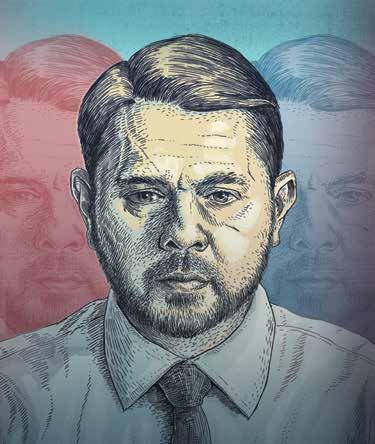
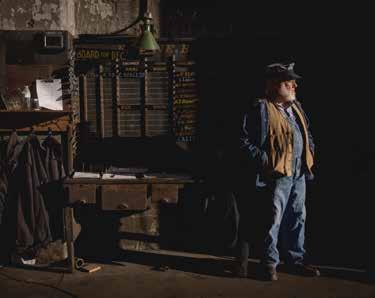
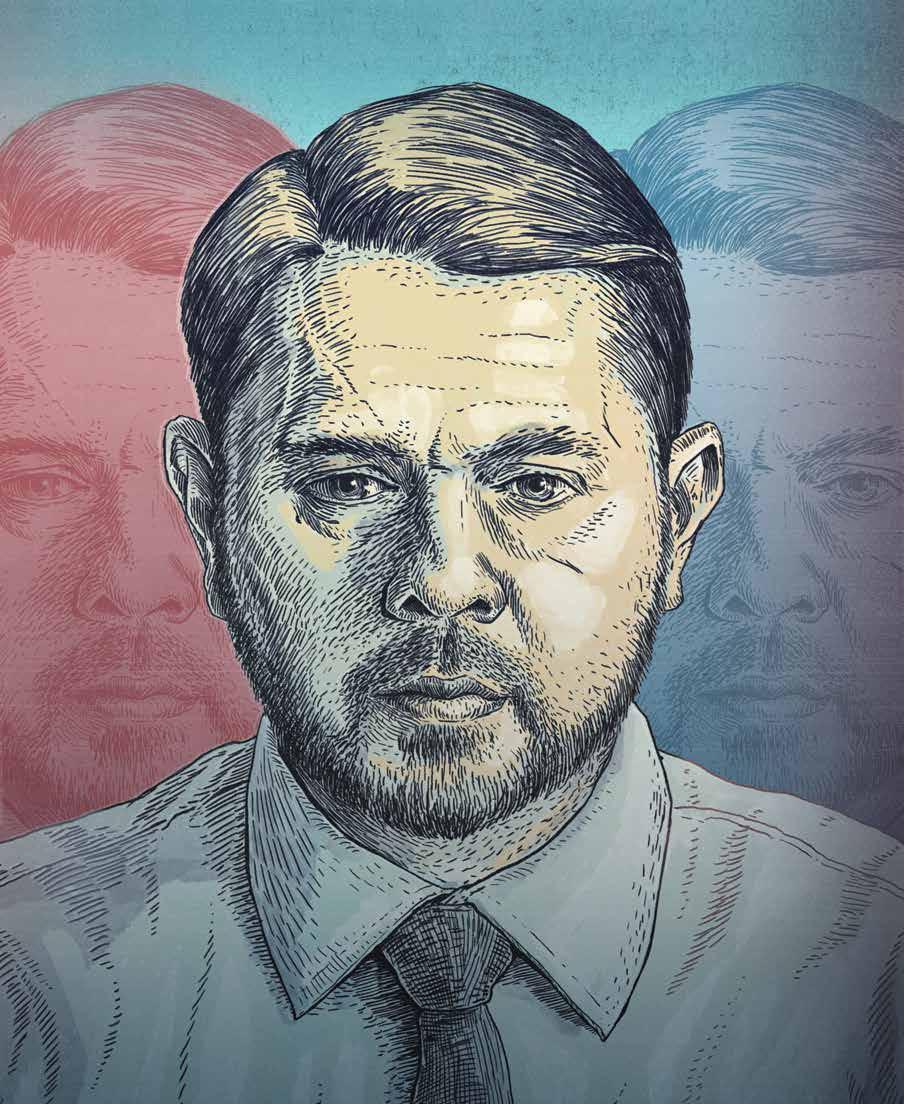
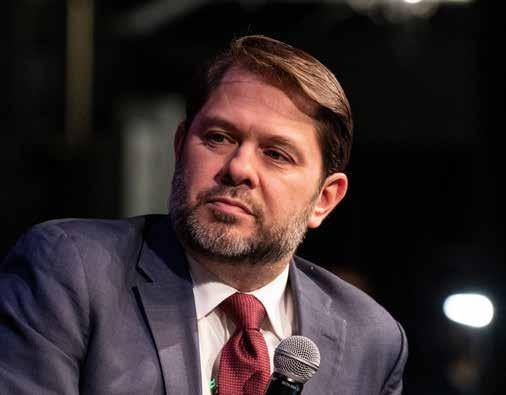
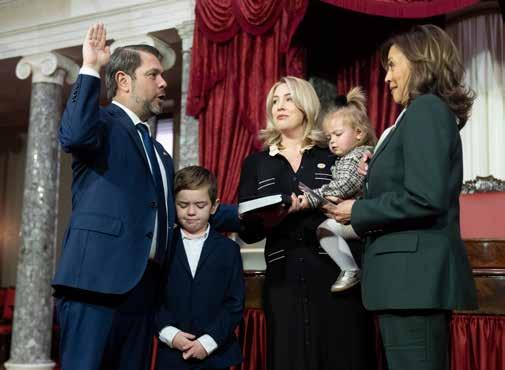
“I don’t think any conversation about 2028 should happen without Ruben Gallego being a part of that conversation.”
MIDDLE MAN
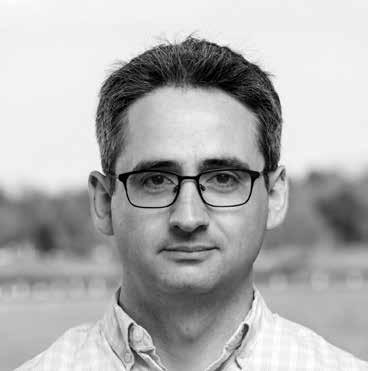
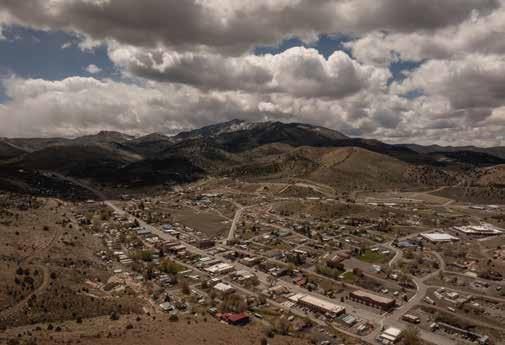
CAN ARIZONA SEN. RUBEN GALLEGO HELP DEMOCRATS WIN BACK WORKING-CLASS MEN? BY ETHAN BAUER
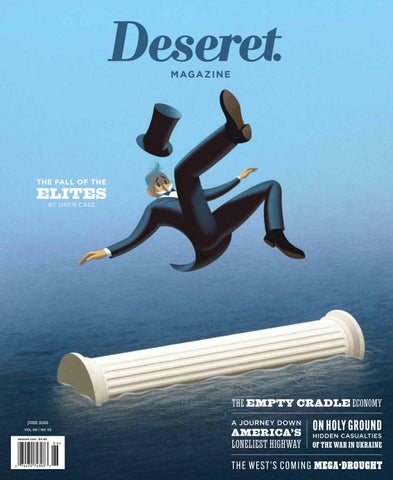
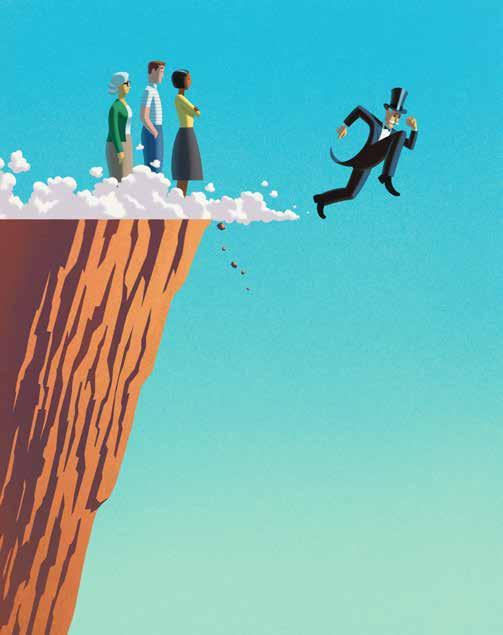
THE FAILURE OF THE ELITES
HOW AMERICA’S RULING CLASS LOST THE COUNTRY IT LEADS. BY
OREN CASS
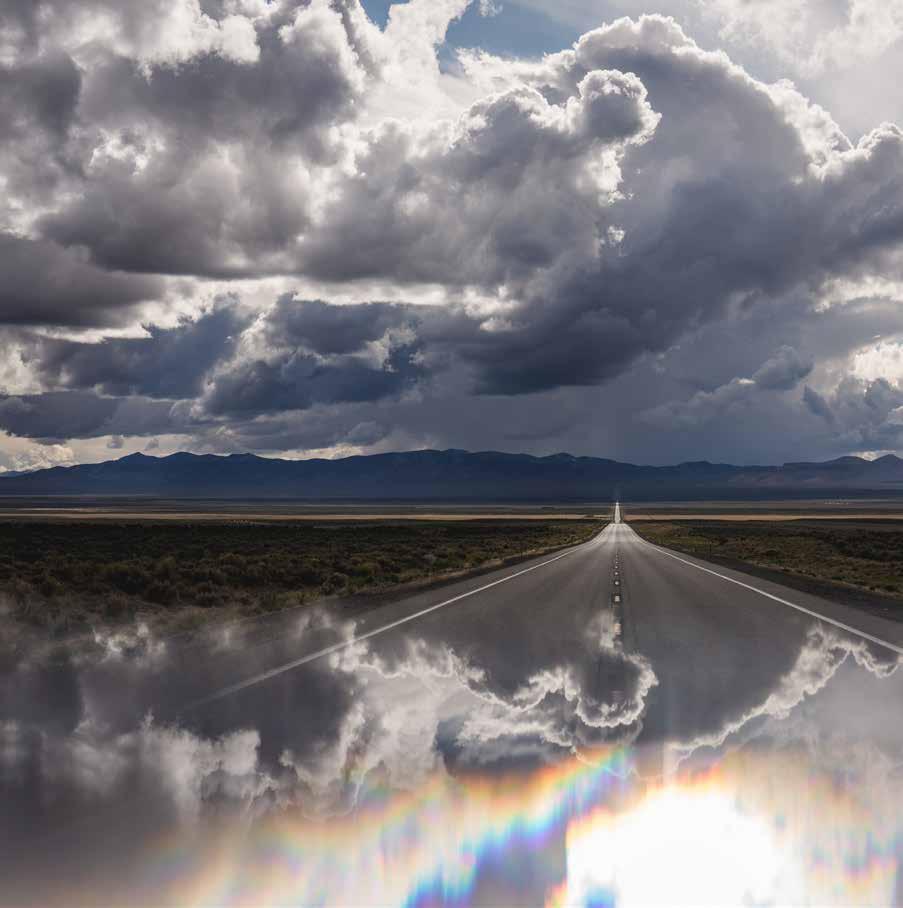
THE LONELIEST ROAD
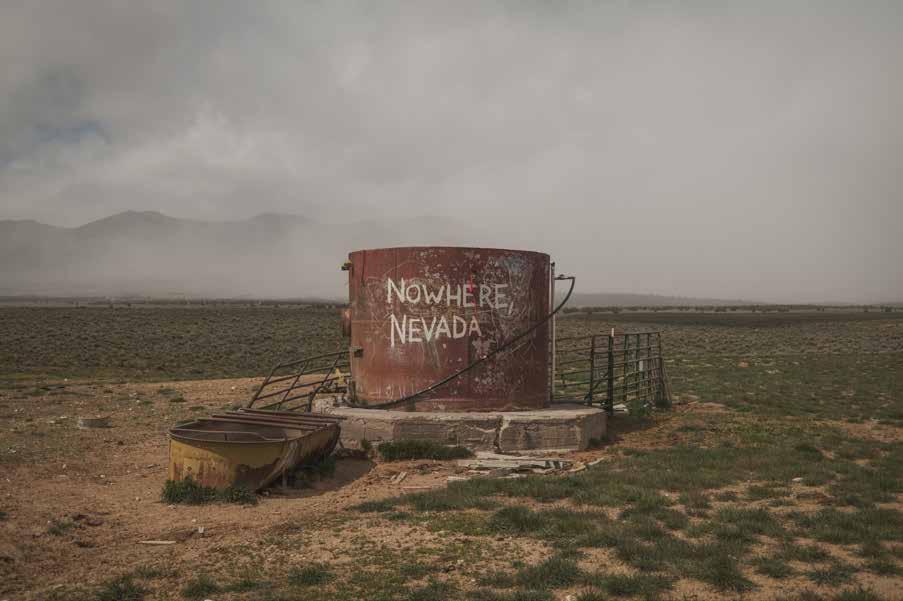
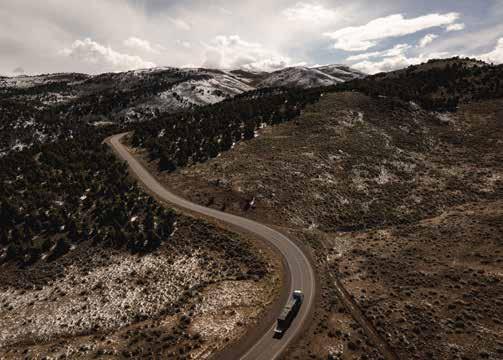
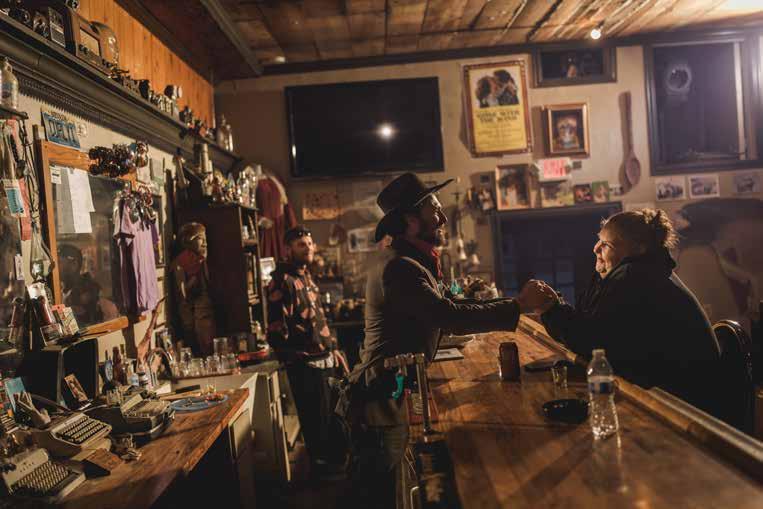
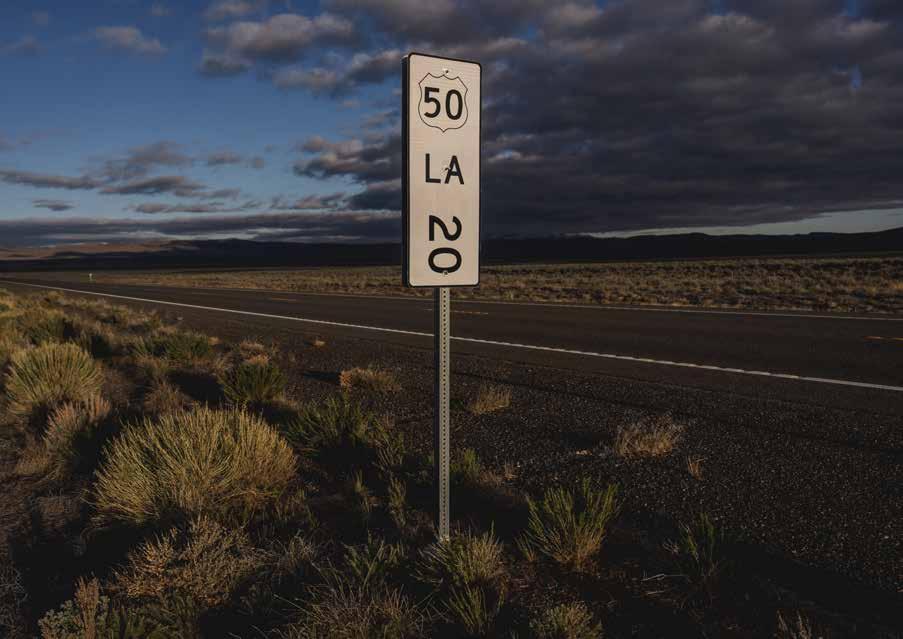
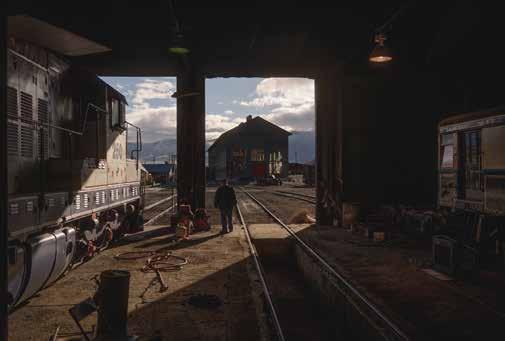
LIFE AND LOSS ON HIGHWAY 50. BY NATALIA GALICZA
UNFORGETTABLE EVENTS
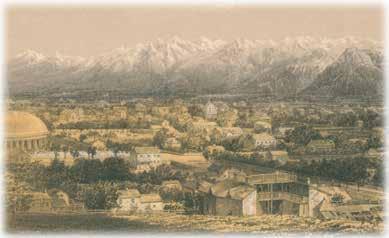
L o c a t e d i n t h e h e a r t o f S a l t L a k e C i t y , t h e J o s e p h S m i t h
M e m o r i a l B u i l d i n g o f f e r s s t u n n i n g c l a s s i c a r c h i t e c t u r e a n d v e r s a t i l e r o o m s t h a t a d a p t t o y o u r v i s i o n .
“It was like he’d
some part of himself I’d never seen.”
Clayson Johnson is an award-winning journalist who has worked as an anchor and correspondent at CBS News, ABC News and WBUR in Boston. She is the author of two bestselling books, “I Am a Mother” and “Silent Souls Weeping.” Her interview with Father James Martin, a high-profile Catholic priest, is on page 66.
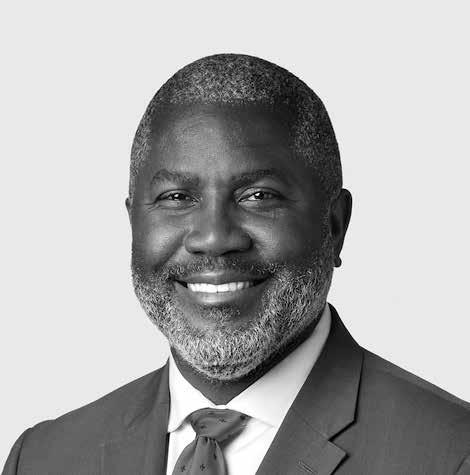
Rowe is a senior fellow at the American Enterprise Institute and co-founder of Vertex Partnership Academies, a network of virtuesbased International Baccalaureate high schools. He is the author of “Agency: The Four Point Plan (F.R.E.E.) for All Children to Overcome the Victimhood Narrative and Discover Their Pathway to Power.” His commentary on mentoring young men to be successful husbands and fathers is on page 13.
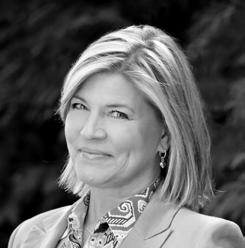
Sheffield is a research fellow in welfare and family policy at The Heritage Foundation. She previously worked for the U.S. Senate Joint Economic Committee, contributing to the Social Capital Project. Her writing has been published in Fox News, National Review and The Hill, among other major media outlets. Sheffield’s essay on family policy for the next generation is on page 60.
Cass is the founder and chief economist at American Compass and a contributing opinion writer for the Financial Times and The New York Times. A policy adviser for Mitt Romney’s 2012 presidential campaign, Cass edited “The New Conservatives: Restoring America’s Commitment to Family, Community, and Industry.” An excerpt from the book is on page 32.
A Roman Catholic priest based in New York City, the Rev. Martin is editor-at-large of America magazine and host of “The Spiritual Life” podcast. The author of several books, he recently chronicled his life from the corporate world to the priesthood in “Work in Progress: Confessions of a Busboy, Dishwasher, Caddy, Usher, Factory Worker, Bank Teller, Corporate Tool, and Priest.” His conversation with Jane Clayson Johnson is on page 66.
Ulve is a New York-based illustrator whose clients include The New York Times, Vogue Japan, Los Angeles Times, Moderna, Adobe, The Wall Street Journal, La Poste (France) and the Guggenheim Museum. Her work has been featured in the American Illustration Annual, the 3×3 International Illustration Annual and in Taschen’s 100 Illustrators. Ulve’s illustration is on page 79.
KIRSTEN ULVE
JANE CLAYSON JOHNSON
RACHEL SHEFFIELD
FATHER JAMES MARTIN
IAN V. ROWE
OREN CASS
FINDING OUR WAY HOME
When people think of Homer’s “The Odyssey,” they think of adventure.
I’ve always thought of it differently — as a story about a man trying to get home.
If you haven’t read it since high school, here’s a quick refresher: Odysseus spends 10 years wandering the seas after the fall of Troy, pulled constantly off course by storms, temptations, distractions and violence. Along the way, he encounters lotus-eaters, sirens and seductive visions of immortality itself. But beneath all the monsters and mythology, the epic endures because it’s built on a universal longing. Odysseus just wants to get home.
Nearly 3,000 years later, we still want the same things: love, family, stability, a sense of meaning and purpose. Our challenge isn’t monsters or storms. It’s that the script our parents and grandparents followed no longer seems to work, at least not as reliably, or as consistently.
Several essays in this issue wrestle with this modern struggle. American Enterprise Institute senior fellow Ian Rowe examines the growing crisis among boys and young men — rising loneliness, isolation and despair — and argues that the deeper problem is not driven solely by economics (page 13). Too many young men, he writes, no longer possess a clear vision of what manhood is meant to look like, or what it is ultimately for.
The Heritage Foundation’s Rachel Sheffield explores a similar unraveling in her essay on marriage and family formation (page 60). As we’ve often written about before in these pages, marriage and birth rates are in steady decline. In fact, many Americans are delaying or abandoning family life altogether. But Sheffield’s
argument is more nuanced than the familiar complaint that modern people have become selfish or afraid of commitment. Most people still want what people have always wanted, including marriage. What has eroded is confidence that the institutions surrounding those aspirations still work as they once did.
Maybe that’s because, as leading conservative thinker Oren Cass writes (page 32), America’s ruling class has spent decades building institutions around efficiency, credentialism and economic models that mostly benefit the very rich while losing sight of what many ordinary Americans still value most: family, place, community, stability and meaningful work.
What connects these essays is a loss of confidence, not simply in institutions, but in the belief that the traditional markers of adulthood and stability still reliably lead where people hope they will. The old scripts remain, but more and more Americans seem uncertain whether they still deliver the lives they once promised.
Maybe that is why “The Odyssey” continues to endure. Beneath the monsters and shipwrecks, it speaks to something older and more permanent in human nature: the desire to find our way home.
That longing has not disappeared. If anything, it may be stronger than ever. The modern world offers more freedom, mobility and possibility than perhaps any society in history. Yet many seem increasingly untethered — from community, from institutions, from one another and sometimes even from a clear sense of purpose itself.
Odysseus survives because he never fully loses sight of who he is, or where he’s going. He knows that no matter how far he travels, and no matter what he sees, he will never find more happiness, more meaning and more belonging than at home.
—JESSE HYDE
EXECUTIVE EDITOR HAL BOYD
EDITOR
JESSE HYDE
CREATIVE DIRECTOR ERIC GILLETT
MANAGING EDITOR MATTHEW BROWN
DEPUTY EDITOR CHAD NIELSEN
CONTRIBUTING EDITORS
MCKAY COPPINS, JAMES R. GARDNER, LAUREN STEELE
EDITOR-AT-LARGE DOUG WILKS
STAFF WRITERS
ETHAN BAUER, VALERIE BRAYLOVSKIY, NATALIA GALICZA
CONTRIBUTING WRITERS
LOIS M. COLLINS, JENNIFER GRAHAM, KEVIN LIND, MARIYA MANZHOS, MICHAEL J. MOONEY, ERIC SCHULZKE
ART DIRECTORS IAN SULLIVAN, BRENNA VATERLAUS
COPY EDITORS
SARAH HARRIS, VALERIE JONES, CHRIS MILLER, CAMILLE SMITH
POSTMASTER: PLEASE SEND ADDRESS CHANGES TO PO BOX 2220, SALT LAKE CITY, UTAH 84101.
PUBLISHER BURKE OLSEN
CHIEF FINANCIAL OFFICER ERIC TEEL
SENIOR VICE PRESIDENT SALES TRENT EYRE
VICE PRESIDENT MARKETING EMILY HELLEWELL
VICE PRESIDENT SALES SALLY STEED
PRODUCTION MANAGER RHECE NICHOLAS
DIRECTOR OF CIRCULATION SYLVIA HANSEN
THE DESERET NEWS’ PRINCIPAL OFFICE IS 55 N. 300 WEST, STE 400, SALT LAKE CITY, UTAH. COPYRIGHT 2026, DESERET NEWS PUBLISHING CO. ALL RIGHTS RESERVED. PRINTED IN THE USA.
DESERET
PROPOSED AS A STATE IN 1849, DESERET SPANNED FROM THE SIERRAS IN CALIFORNIA TO THE ROCKIES IN COLORADO, AND FROM THE BORDER OF MEXICO NORTH TO OREGON, IDAHO AND WYOMING. INFORMED BY OUR HERITAGE AND VALUES, DESERET MAGAZINE COVERS THE PEOPLE AND CULTURE OF THAT TERRITORY AND ITS INTERSECTION WITH THE BROADER WORLD.
OUR READERS RESPOND
Our APRIL cover story by Mariya Manzhos explored whether artificial intelligence can have a moral compass as it collects and disperses information (“The Soul of a New Machine”). Manzhos spoke to religious leaders and tech entrepreneurs who are optimistic about enabling AI large language models to respond to the existential questions of God, faith and life’s meaning. She interviewed experts who are testing and implementing solutions and traveled to Rome to meet with Matthew Harvey Sanders, CEO of the company that built Magisterium AI, one of the largest and most widely used Catholic AI models. He shared the story on LinkedIn with the comment: “Refreshing to see a magazine like Deseret covering the growth of faith AI . I’m grateful they took an interest in our digitization work in Rome.” Overall, readers were cautiously optimistic about training AI to incorporate a moral framework in the process of ingesting, examining and sharing information with users. Vicki Claybrook warned that the moral shortcomings of humans developing AI models poses the greatest risk. “Ethical guidelines are established in advance by moral humans, and AI applies them consistently and efficiently. I can see the value in that. I think too often unethical humans are empowered to make far too many decisions.”
David Watkins added: “We need more and better morality in real people. AI is simply a surface imitation of what others have codified and used in training data sets.” An online reader known as Aksumite noted ingesting religious teachings into AI models can backfire. “One of AI ’s greatest strengths is its ability to objectively frame broad aspects of science, religion, philosophy, and facts in a way that helps users better understand the world — even when beliefs are respectfully challenged. Confining AI to specific dogmas risks reinforcing religious tribalism when it has the potential to unite people through greater understanding.” But Nichol Draper offered this take on how society can offset the harm of technological innovations: “Artificial intelligence isn’t any better than real intelligence, which has never been partial to morality. That is why we try to instill values and wisdom in addition to intelligence when we teach young people. And look how far we have come.”
“Artificial intelligence isn’t any better than real intelligence, which has never been partial to morality.”
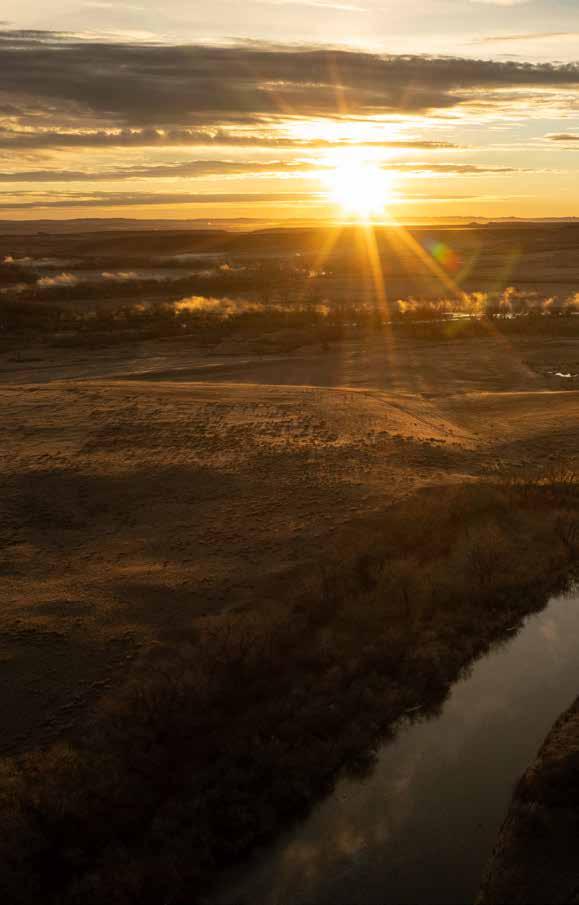
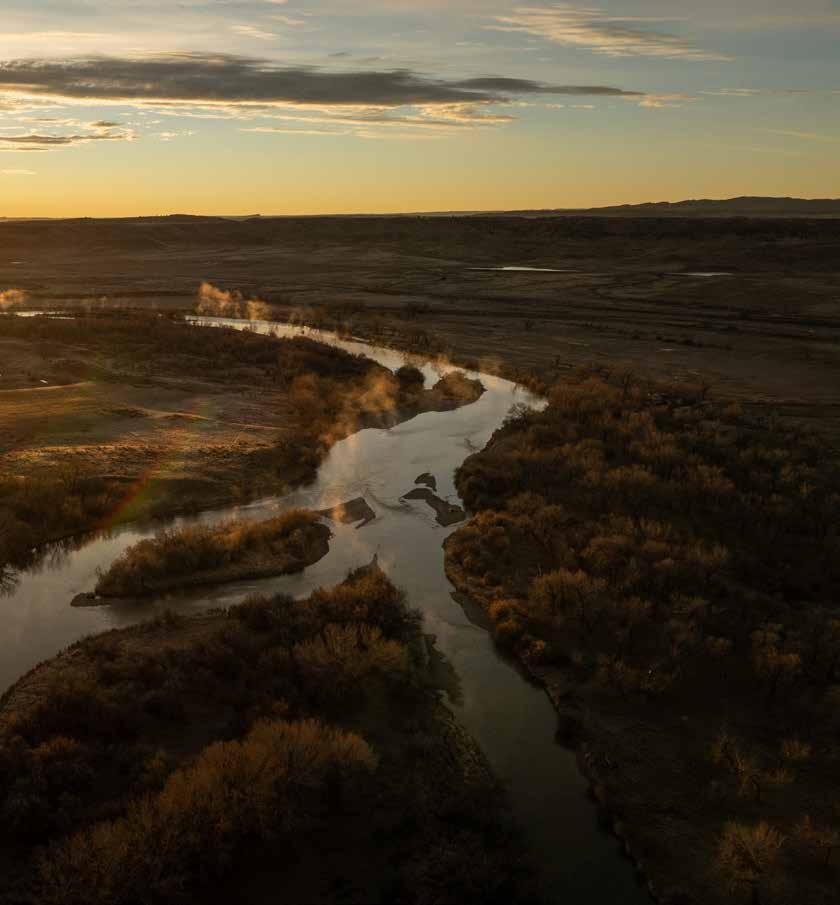
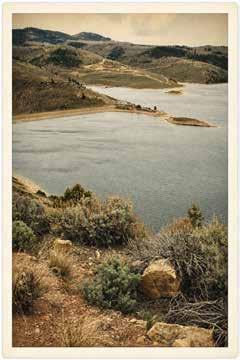
SUNRISE ON THE NORTH PLATTE RIVER, SOUTH OF GILLETTE, WYOMING.
PHOTOGRAPHY BY LOREN ELLIOTT
TRUTH MATTERS
In-depth journalism. Unique voices. Principled points of view. Get Deseret Magazine delivered to your mailbox.
SCAN TO SUBSCRIBE
FINDING AN ANCHOR
WHY ARE SO MANY BOYS ADRIFT?
BY IAN V. ROWE
When my father courted my mother in rural Jamaica, he would pick her up on horseback for rendezvous amid the hills. He never lectured me on the steps to manhood. Instead, he modeled them: woo a woman with intention, marry, then build a home, family and shared life. That generational script — once passed naturally from fathers to sons — has frayed.
Richard Reeves, founder of the American Institute for Boys and Men, puts it plainly: “The old script for what it meant to be a boy or a man ... has been torn up by the changes of the last 40 years. ... But we haven’t replaced the old male script. That leaves a lot of men adrift.”
Statistics bear this out. Since 2010, suicide rates among young men have risen 30 percent, exceeding those of middle-aged men. Men’s share of college degrees has fallen to 41 percent. One in 10 men ages 20–24 is idle — neither in school nor working — double the 1990 rate. These trends in male rootlessness, driven by technological change, economic shifts and cultural upheaval, demand attention.
Policy proposals include delaying boys’ kindergarten entry (“redshirting”), expanding vocational training, hiring more male elementary teachers, and steering men into female-dominated fields like nursing and social work. As someone who has led public charter schools in the Bronx for 15 years, I see value in these steps. Yet, these steps are nibbles around the edges of a larger problem. They overlook a deeper issue I’ve witnessed firsthand: the erosion of husbandhood — the role of being a committed, married partner and present father. This neglect ripples outward, intensifying the crises in boyhood, manhood and fatherhood. Male teachers can offer positive role models, but far greater impact comes from fostering healthy married fathers dedicated to their wives and actively engaged in their own children’s lives.
For nearly two decades, the percentage of all births to unmarried
women was roughly 40 percent — over 1.44 million children born in 2023 alone. Among women 24 and under, the nonmarital birth share exceeds a staggering 70 percent and climbs higher in some groups.
Children raised by young single mothers face elevated risks: higher poverty rates, more adverse childhood experiences, reduced upward mobility and weaker educational outcomes. Their mothers often endure greater economic instability, domestic violence, multiple-partner fertility and psychological distress. These early disadvantages compound, making it far harder for young men — and women — to thrive as adults.
There is a better path.
Protective forces such as work, family, faith and community connections anchor men effectively. Most men who embrace these institutions report higher satisfaction in health, vocation, family life and purpose.
Over 30 years working with children from every background, I’ve seen that family stands out as especially powerful. Young people who break cycles of disadvantage understand that the family they are on the pathway to form often matters more than the one they came from. They learn that life decisions — especially around family formation — carry profound rewards or consequences. If today’s youth lack a clear life script, adults must provide one.
In our high school, we teach the evidence-based “success sequence”: finish at least high school, secure full-time work, and — if having children — marry first. At least seven states have introduced or passed legislation requiring schools to teach this sequence. Among millennials who followed it, 97 percent avoided poverty, and the vast majority reached the middle class or higher. The sequence does not guarantee success, but it dramatically improves the odds of upward mobility in one generation.
Husbandhood anchors the family step in this sequence. It models for boys what manhood looks like in practice: commitment, responsibility and love expressed through stable partnership.
Reviving this ideal does not require returning to the past. It requires honesty about what works. Societies that normalize marriage before childbearing, alongside education and work, give children stronger starts and young adults clearer paths to purpose.
Let us elevate husbandhood as a cultural priority. Teach boys that beng good husbands and fathers is not outdated but aspirational. Replace the torn script with one that binds generations through responsibility and love.
My parents were married for 48 years when my father passed away, a gift of stability and love my wife and I now want to pass on to our own children. When young men see husbandhood as a worthy destination — romantic yet grounded, challenging yet rewarding — they gain direction. Families are strengthened. Children flourish. And the anchors that keep men from drifting become visible once more.
BEYOND BORDERS
EXAMINING WASHINGTON’S MOST EXPANSIVE DEPARTMENT
BORN FROM ONE of America’s darkest days, the Department of Homeland Security has become a complex node of federal power. Its mission is sprawling and unwieldy, its agencies a puzzle of legacy functions, current objectives and evolving legal frameworks. Built to protect America from foreign threats, it has itself become a
battleground, a Rorschach test of political positions in budget fights and congressional oversight. Questions persist about its reach, spending and accountability. How did the Cabinet’s youngest department become so controversial? Here’s the breakdown.
—VALERIE BRAYLOVSKIY
27 DAYS LATER
President George W. Bush signed Executive Order 13228 on October 8, 2001, a month after 9/11, creating the Homeland Security Council “to coordinate the executive branch’s efforts to detect, prepare for, prevent, protect against, respond to, and recover from terrorist attacks within the United States.” In 2002, the House (295-132) and Senate (90-9) passed the Homeland Security Act, enshrining DHS as the third-largest department, a megamerger with 22 agencies and 170,000 employees — the biggest reorganization of the federal government since WWII.
$11.3 billion
ICE’S ANNUAL BUDGET, MORE THAN NORWAY’S MILITARY SPENDING
100 it systems MERGED WHEN DHS WAS NEW
227,987 EMPLOYEES
The DHS workforce has grown by 15,338 over the past five years — which may or may not include the secretive Office of Intelligence and Analysis. Agencies range in size from the Domestic Nuclear Detection Office (137) to the Coast Guard (8,881) and Customs and Border Protection (67,811). In 2025, Immigration and Customs Enforcement (30,355) offered new recruits a $50,000 signing bonus after eight weeks of training.
DHS EMPLOYEES
137
DOMESTIC NUCLEAR DETECTION OFFICE
8,881
COAST GUARD
30,355
IMMIGRATION AND CUSTOMS ENFORCEMENT
67,811
CUSTOMS AND BORDER PROTECTION
$10 billion
ICE/CBP “SLUSH FUND” THROUGH 2027
110 CHECKPOINTS
CBP operates more than 110 inspection sites on American highways. Most are between San Clemente, California, and Laredo, Texas, with another cluster in Vermont and upstate New York. Checkpoints are legal within 100 miles of any national boundary, including coasts. Cato Institute calls this “the Constitution-free zone.” CBP is also building a 1,419-mile “smart wall” on the Mexican border, combining steel bollard fencing with access roads, cameras, lights, sensors and 536 miles of floating barrier on the Rio Grande.
$5.3 million/ mile
THE COST OF CBP’S “FLOATING WALL”
108 COMMITTEES
92,593 POSTS
That’s what ICE monitors each second on social media – more than 8 billion posts each day in 100 languages, through a contract with Zignal Labs. Its $28.7 billion surveillance budget also covers license plate readers, cell-site simulators, facial recognition, iris scanners, software to crack smartphones and extract encrypted messages, and data integration with Palantir at $30 million per year. DHS reported 238 “use cases” for AI in 2025, up 20 percent in a year, including 86 in law enforcement and seven in cybersecurity.
DHS delivers thousands of briefings to this stunning number of congressional committees each year, due to its size, scope and amalgamated origins (Defense reports to four; Justice reports to two). The Government Accountability Office has flagged DHS as “high risk” on its federal watchlist since before its inception. In 2025, Congress gave DHS about $190 billion in funding through 2027, bypassing annual appropriations, including $10 billion in unallocated cash for ICE/CBP.
“WE HAVE COME A LONG WAY IN A SHORT TIME. AND NOW? OUR HOMELAND BRISTLES, THICKENS, FORTIFIES. WE BUILD WALLS IN OURSELVES AND BETWEEN OURSELVES. NO PLACE IS SAFE — NOT EVEN THE HOMELAND.”
JAMES TRAUB, AUTHOR OF “THE CRADLE OF CITIZENSHIP: HOW SCHOOLS CAN HELP SAVE OUR DEMOCRACY,” WRITING IN THE NEW YORK TIMES.
26.1/100
MORALE
DHS scored abysmally in the 2025 Federal Employee Viewpoint Survey. Its Countering Weapons of Mass Destruction office ranked sixth-worst among 273 small agencies. FEMA’s workforce shrunk by 10 percent over six months in 2025, from 25,800 to 23,350, deepening longstanding shortages amid increasingly frequent disasters. Back in 2017, 48 percent of staffers declined to deploy after Hurricane Maria hit Puerto Rico, citing burnout.
10-42 DAYS
That’s how long six Secret Service agents were suspended after a failed assassination attempt on thenpresidential candidate Donald Trump in Butler, Pennsylvania, on July 13, 2024. None were fired, but the director resigned. Agents foiled another attempt at a golf course in Florida that fall. More recently, another shooter was stopped at the White House correspondents’ dinner, and an agent protecting former first lady Jill Biden accidentally shot himself in the buttock at the Philadelphia airport.
ANALOG MEASURES COMBINE WITH TECH IN THE SOUTHERN BORDER’S NEW “SMART WALL.”
GREGORY BULL/AP PHOTO
UNNATURAL HABITAT
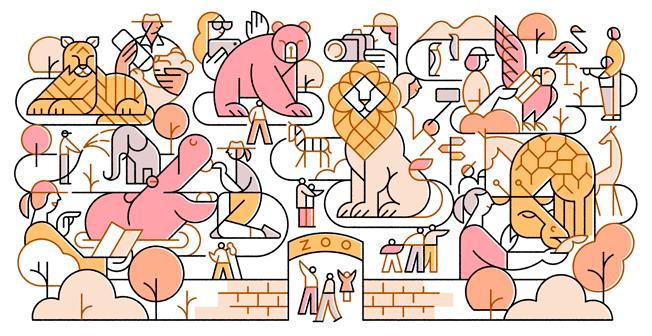
ZOOS, INSIDE AND OUT
GOING TO THE ZOO is a guilty pleasure. On one hand, it lets us interact with animals that most people would never otherwise meet. It’s a firsthand experience with the awe-inspiring variety of wildlife on this planet, a three-dimensional, flesh-and-blood alternative to learning about animals through texts, lectures or documentary films. But we’ve all had that nagging feeling that something isn’t quite right. Visitors must also grapple with the moral conflict of keeping these majestic creatures in captivity for our benefit. We’ve been keeping menageries since 2500 B.C.E., and public zoos for 233 years. Is it time to set the animals free?
—NATALIA GALICZA
KEEPING ANIMALS IN captivity is unnatural. Specimens held in zoos and aquariums are utterly dependent on humans and their controlled environment to survive. They don’t even act wild. A study in the academic journal Animals found that 90 percent of surveyed mammal species and 60 percent of fish species kept in zoos changed their behaviors around people. The more crowded and noisy their enclosures became, the more that animals like jaguars and penguins exhibited aggression or avoidance behaviors, like pacing around their faux habitats or huddling for safety.
Life in a cage is physically harmful. Captivity increases the likelihood that animals will suffer preventable injury or early death. Deadly infectious diseases spread more easily in such close quarters. The public is another threat. In 2013, a veterinarian at a Scotland zoo revealed that in just four years he had performed 22 surgeries on gentoo penguins to remove gloves, socks and batteries the animals had swallowed after visitors threw or dropped them into their enclosures. Similar cases have since been reported in alligators, sea lions and mountain lions at zoos in Nebraska, Colorado and Florida. Zoo animals experience psychological stress, too. Vets call it “zoochosis,” a type of complex post-traumatic stress disorder caused by captivity. It can look like elephants swaying back and forth, orcas swimming in circles or primates self-mutilating, picking and chewing their skin. “Neuroscientific research indicates that living in an impoverished, stressful captive environment physically damages the brain,” Bob Jacobs, a neuroscience professor at Colorado College, wrote in 2020. “Laboratory research also suggests that mammals in a zoo or aquarium have compromised brain function.” That can include a thinned cerebral cortex, which decreases motor function, or shrunken neurons, which diminish information processing.
There are countless alternatives to zoos and aquariums. For families who want their kids to have close encounters with animals, accredited wildlife sanctuaries and rehabilitation centers are more ethical options. They offer spacious habitats for rescued animals to roam freely, and abstain from harmful practices like breeding. Organic interactions at national parks offer the added benefit of witnessing how animals exist when they have their own free will in natural environments — something that can’t be replicated behind bars.
ZOOS HELP US to care about the natural world, and that makes us better humans. It’s the only place for most people to meet a hyrax (a rotund little furball with fangs), a Chinese red panda (which looks like a cross between a fox and a raccoon) or any of the endless variety of species that share our planet. Studies show that these encounters boost empathy. People leave more emotionally invested and often inspired. “Zoos provide people, especially impressionable children, with the opportunity to see these remarkable animals up close,” wrote Robin Ganzert, president and CEO of American Humane. “People won’t protect what they don’t love, and they can’t love what they don’t know.”
Captive environments are essential for scientific research. Because zoos are a controlled space with known populations and frequent interactions with staff, they allow scientists to collect data and track outcomes with a consistency and specificity that would be impossible in any catch-and-release operation. This benefits humans. For example, zoological research on antimicrobial proteins in Komodo dragons and alligators has contributed to our understanding of antibiotic resistance in humans. Research on gorilla brains has deepened our understanding of Alzheimer’s disease.
Zoos and aquariums can also preserve endangered species. Hundreds, perhaps thousands of species have gone extinct since 1500. Scientists estimate that more than a million species are on track for extinction in the coming decades. Keeping these threatened populations in safe environments prevents unique animals from disappearing altogether. At least nine species owe their continued survival to accredited zoos and aquariums, from the bald-headed California condor to the cinnamon-colored American red wolf.
Not all facilities put their animals in harm’s way. Many cite the San Diego Zoo as an ideal — though few have that much space for habitat — and fly-by-night exotic animal farms as an example of the opposite. In the broad mainstream, accreditation through the Association of Zoos and Aquariums, or AZA, can help filter out bad actors. Fewer than 10 percent of the 2,800 animal exhibitors licensed by the Department of Agriculture are also AZA accredited. Zoogoers who are concerned about animal welfare and want to avoid supporting dangerous or stressful environments can opt for exhibitors that undergo rigorous screening to ensure best practices.
PHONE A FRIEND
WHAT MY DAD TAUGHT ME ABOUT FINDING CONNECTION
BY ETHAN BAUER
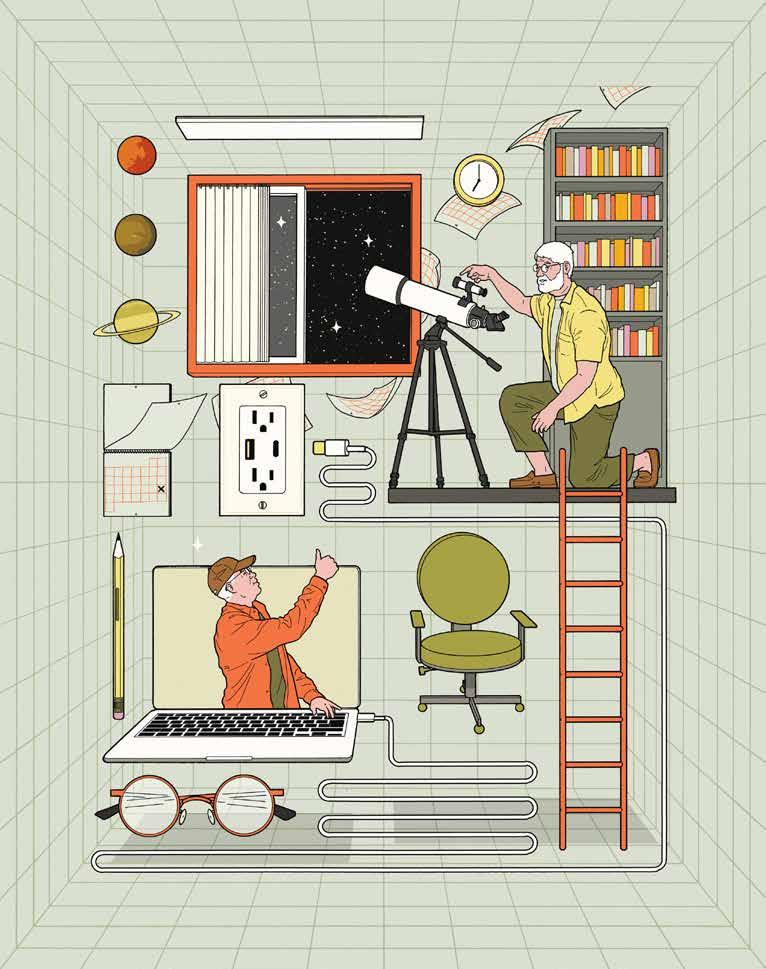
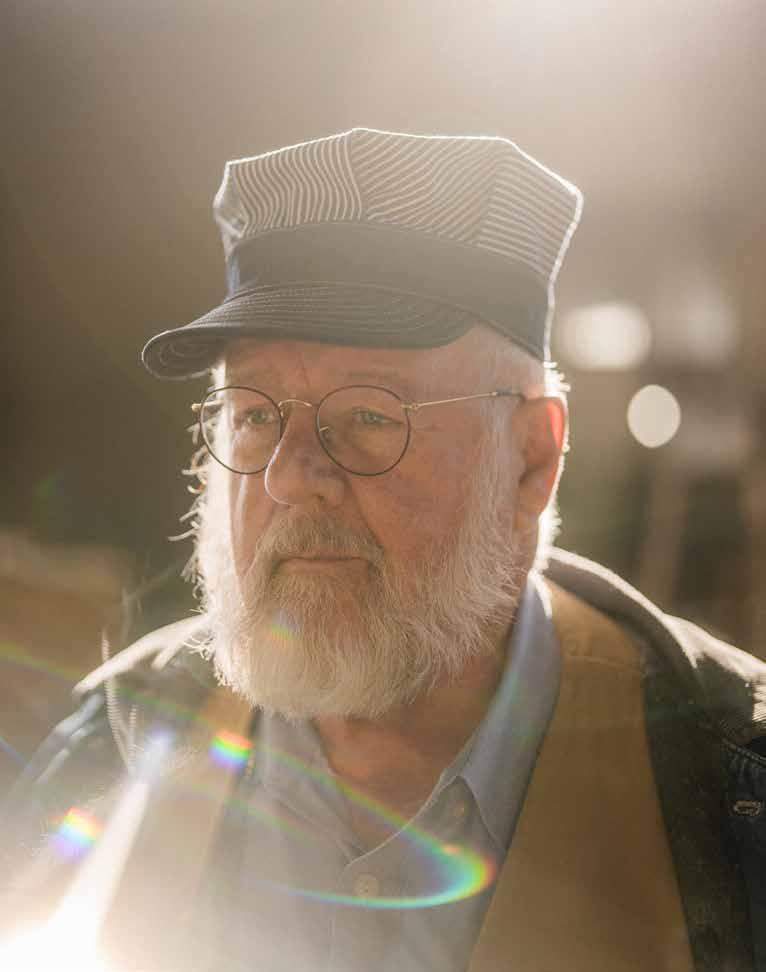
My dad and Gene Kritsky have known each other since second grade. They met at a parochial school in Miami, Florida, sponsored by the Seventh-day Adventist Church, where they bonded over a shared interest in astronomy. They had the same telescope and once stayed up all night to watch what they thought was a lunar eclipse. It turned out to be a “penumbral eclipse,” which is very difficult to see with the naked eye. So basically, they’d stayed up all night to see nothing — and still remember it today. They also took advanced math classes together and once skipped school to attend a Richard Nixon rally. “He had the biggest nostrils of any person I’ve ever seen,” Gene remembers. At that, my dad laughs as hard as I’ve ever heard. I wonder if Gene would be able to hear it all the way in Ohio, where he lives, even if they weren’t on Zoom right now.
It had been a long time since they had
talked like this. Gene left their shared school halfway through 10th grade and, not long after, moved to Illinois. He stayed
IT WAS LIKE HE’D REDISCOVERED SOME PART OF HIMSELF I’D NEVER SEEN. OR AT LEAST SEEN SO CONNECTED.
by. “Life is what happens while you’re busy making other plans,” Gene says, a phrase made famous by John Lennon, over Zoom. Maybe there was the occasional email that came through, just checking in, but in the intervening years of middle age, between the carpools and career moves, their friendship was mostly dormant. In fact, almost all of my mom and dad’s friendships went that way. Growing up, I didn’t see either of my parents — but my dad especially — spend much time with friends.
in touch via long-distance calls, and when he’d visit Miami, they’d still get together for some stargazing. But things got busy with families and careers, and 40 years flashed
But life slowed down when retirement rolled around. My dad tried to fill his newly vacant time with trips to the gym, sporting events, a new, state-of-the-art telescope. But more often, he ended up watching a lot of TV. Then, last June, Gene reached out with a question about buying a new telescope. “If you would like, we can Zoom to discuss this,” he wrote, “or just to catch up.” They’ve been talking over Zoom every few weeks since.
“MEN CAN FEEL LONELY BECAUSE THEY’RE ISOLATED OR BECAUSE THEY DON’T FEEL LIKE THEY REALLY KNOW THEIR FRIENDS, OR THEIR FRIENDS REALLY KNOW THEM.”
The calls last two or three hours each, which was striking; my mom mentioned my dad was talking more with Gene than he’d ever talked in his life. There was a new spark in his interests. I even noticed it in our conversations, when he’d recount their far-ranging chats about memories or stars or religious philosophy. It was like he’d rediscovered some part of himself I’d never seen. Or at least seen so connected.
Approaching 30 and knowing all about the loneliness epidemic that’s disproportionately consuming men, I thought maybe I could learn something from my dad and Gene.
I AM MY father’s son. In many ways, but certainly when it comes to my generally shy, reserved nature. And that scares me, because modern research on loneliness is sobering. A notorious 2010 study by Brigham Young University psychology and neuroscience professor Julianne Holt-Lunstad found lacking meaningful friendships is as much a risk factor for premature death as smoking 15 cigarettes per day. More recently, a 2023 study led by researchers from Harvard, Boston University and the University of British Columbia found social isolation was particularly predictive of mortality risk, while loneliness was more related to psychological distress. Loneliness and isolation seem to be built into our everyday lives, as we engage in endless scrolling and endless television and fewer occasions to gather. The effects are particularly pronounced among the young, and among men. But the only way out, it seems, is through.
If you break it down into its most basic, not-very-human bits, friendship requires three things: repeated interactions, shared space and emotional vulnerability, all of which come naturally to school age children. None of those things, least of all emotional vulnerability, is inherent to modern American adulthood. “You can’t rely on the same assumption you had when you were a kid that friendship is just going to happen,” says Marisa Franco, a psychologist and bestselling author whose work explores making
and maintaining friendships in adulthood. “It will only happen,” she adds, “if you make an effort toward it.”
Sometimes, the easiest way to do that is to reconnect with old friends. “Most friendships don’t end because there was incompatibility,” she explains, “but rather because people are busy.” They move and have kids and take care of aging parents. That’s what happened with Gene and my dad.
I’ve noticed it in my own life, too. It’s harder to keep up with friends as I get older — but when I do reconnect with old friends, even after many years, it’s much easier to feel like I can pick up where we left off. That this is someone who knows me — and who I want to know me. Whether they know it or not, that’s what underpins my dad’s Zoom calls with Gene. “We already know each other,” Gene said. “The only thing different is we’re a little grayer, and we have more bread.” And now, in retirement, time. “I don’t really make a lot of friends,” my dad added. “But when I talk to Gene, it’s like he said. I just know him.”
And it’s technology, the thing most responsible for the isolation that exists in tandem with loneliness, that is growing their friendship. Their conversations, framed by generated Zoom backgrounds and meeting room links, are technology at its best.
Social media, born of a desire to foster connection between people, no longer prioritizes such noble goals. Most mainstream platforms are explicitly designed to create engagement with the platforms instead of with other people, often inverting their founding purpose into a funnel of isolation. “People who use a lot of technology are either the least lonely or the most lonely compared to people who don’t,” Franco says. Getting swept along by algorithmic feeds and a vague awareness of what your friends are up to without any direct contact allows loneliness to fester. However, when used deliberately, like Dad and Gene’s online regulars table on random weekday afternoons, technology can bring us back together.
I watch the two men, with their cumulus white beards, talk about telescopes as if
LACKING MEANINGFUL FRIENDSHIPS IS AS MUCH A RISK FACTOR FOR PREMATURE DEATH AS SMOKING 15 CIGARETTES PER DAY.
they’ll never run out of things to say. There are little zingers about photos of the moon that aren’t quite in focus, and those sincere chuckles that travel across several states, from Gene to Dad and back again.
IN APRIL, WHILE getting dressed for Easter brunch, my old grad school roommate FaceTimed me out of nowhere to chat about a new movie he’d seen. He wanted to ask what I thought of the premise, as well as to give me a tour of his new condo. I said hello to his two cats, and I caught up on his latest dates, and by the time we hung up after 18 minutes, I was telling him how excited I was to catch up in person soon enough.
Yet while physical proximity matters, emotional proximity seems to matter more; it’s a much harder thing to cultivate. “(Men are) half as likely to express affection towards a friend, and half as likely to be vulnerable with a friend,” Franco says. “Men can feel lonely because they’re isolated or because they don’t feel like they
really know their friends, or their friends really know them.”
Thanks in part to FaceTime, I haven’t had to worry about that. Since turning 18, I’ve moved 11 times across five states, from Utah to Delaware, Florida to California. I’ve chased jobs and opportunities, for myself and for my wife. But with another likely move approaching this summer, and who knows how many more after that, plus a son who just turned two, staying rooted in a physical community has proven unthinkable at the moment. Even if we joined a church, or started attending sports practices, or invited fellow daycare parents over, the investment required to build real friendship, not just neighborly respect, would be tremendous. Perhaps we’ll get there someday. But for now, I like the idea of growing into middle age alongside pixelated friends.
There’s room to reminisce, just like Dad and Gene do, about that “lunar” eclipse or their old math classes. There’s room to look
ahead, too. To ask about what you hope or plan to do tomorrow or next year or before you die — and to get a real answer that can be supported (even if it’s with a jest, first). Learning about a friend at whatever stage of life they’re in is just as sweet as reminiscing about an old memory or as fun as making a new one.
Gene, it turns out, practices beekeeping. He got started as a high school student when he stumbled upon a collapsed beehive on the side of the road. He returned to the hive with some test tubes, collected samples of larval bees, then put their development on display in his high school’s chemistry classroom. “A lot of kids got excited about it,” he remembers. “Met a lot of nice girls that way, too.” Again, my dad laughs.
Later, after the call is over, my dad and I are chatting. He’d never heard that beehive story before.
New things, it turns out, can still be found in old places.
HOLY GROUND
FOUR YEARS INTO THE WAR IN UKRAINE, THE DESTRUCTION OF CHURCHES IS A BATTLE OVER A NATION’S FUTURE
BY MARIYA MANZHOS
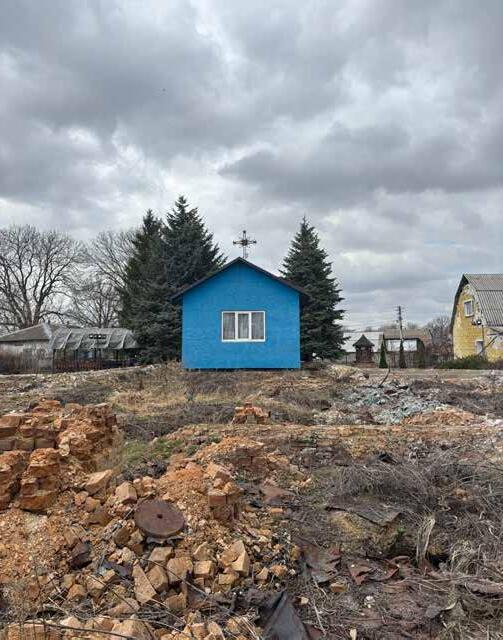
The ground where the church stood is strewn with crumbled brick, charred wires and gnarled metal that looks like it’s been twisted by some malevolent giant. Amid the wreckage, shoots of weeds push up through the debris. A splotch of turquoise paint on a shard of cement is a glimpse of what was once the vibrant blue walls of the St. George Orthodox Church in Ukraine.
The arrival four years earlier of Russian soldiers in Zavorychi, a quiet village about 40 miles northeast of Kyiv, seemed unlikely to the locals. In early March, all bridges leading into the village had been blown up except one. After crossing it, the column of Russian tanks and artillery pushed through swampy, peat-filled land and occupied the village.
During an artillery strike on March 7, a shell hit the green dome of the St. George Church, as it was then called, immediately setting it ablaze. The residents believe the blow was deliberate, aimed directly at
the church. Within seconds, the wooden church was in flames, blue smoke billowing over the village like a storm cloud.
Built in 1873, the church had survived the Russian Civil War and Josef Stalin’s famine of the 1930s. It remained unscathed through
THE ATTACK ON A CHURCH IN WARTIME REPRESENTS A PSYCHOLOGICAL ASSAULT THAT SUGGESTS THAT EVEN THE PLACE WHERE PEACE SHOULD READILY BE FOUND IS NO LONGER SAFE.
the Nazi occupation and withstood decades of Soviet atheism.
By architectural standards, it was a typical village church, but the locals made it
their own. In its walls, they christened their children, buried their dead and lit candles for loved ones in need. On Easter, worshippers from neighboring villages came to Zavorychi for services.
Oksana Teslia, a Zavorychi native, saw the blue smoke when she emerged from the cellar of her home, where she was hiding from the occupants with her family. “It’s as if part of my heart was torn away,” she recalled, as we stood by the burnt church site in early April. Teslia had baptized her two children in the Zavorychi church. When her cousin died in 2011, they held a funeral service there. “We cried as if it were our home.”
Two or three hours after the first shell struck, the church burned completely to the ground.
FOUR YEARS INTO Russia’s full-scale invasion, Ukraine’s houses of worship and other sites of religious heritage are some of the war’s most overlooked casualties.
AFTER ST. GEORGE ORTHODOX CHURCH BURNED DOWN IN 2022, RESIDENTS BUILT A SMALL CHAPEL ON THE BURNT SITE, IN TIME FOR EASTER SERVICES.
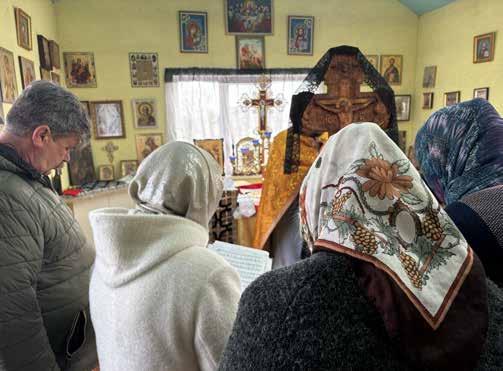
FATHER VASYL BILYNEC, A VISITING PRIEST FROM A NEIGHBORING VILLAGE, LEADS SERVICES AT ST. YURIY’S CHURCH.
SACRAMENT IN ST. YURIY’S CHURCH.
THERE IS NO SURE WAY OF PROTECTING CHURCHES DURING THE WAR, OTHER THAN PRESERVING THEM DIGITALLY BY CAPTURING THEIR INTERIORS AND EXTERIORS IN DETAILED 3D MODELS.
By February 2025, 643 religious structures and houses of prayer have sustained damage, according to a report from Religion on Fire, a Ukrainian volunteer organization that documents the destruction of religious sites. Other reports place that number over 700.
Orthodox churches, about 400 of them, have been most affected, but there are also over 170 Protestant churches, 17 Jewish religious structures, including synagogues, and eight buildings from the Islamic tradition that have been impacted. Nearly 53 churches
were fully destroyed, according to the report.
Experts describe damaged landmarks as being “wounded,” like a soldier on the battlefield. These “wounds” vary in severity — shattered glass, plaster peeling off, frescoes flaking and detaching inside from the pressure of a blast wave. But sometimes, the damage is less visible.
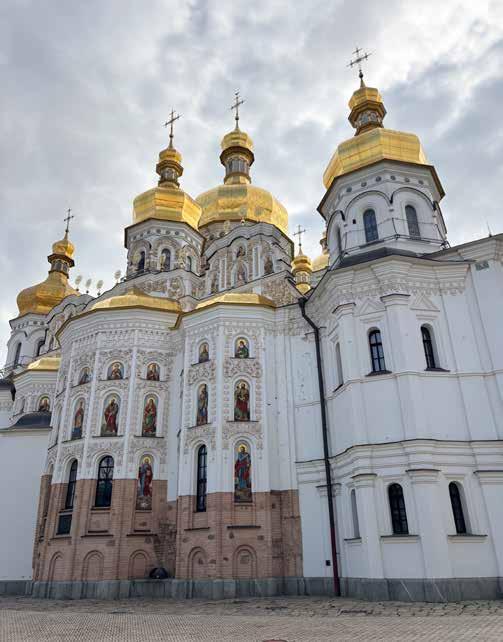
In January, at the Kyiv-Pechersk Lavra, an 11th century UNESCO World Heritage Site that includes an active monastery and a sprawling underground cave complex, a high-pressure blast wave caused thousands of microcracks in the foundation and the walls leading into the lower stretch of the caves. Over the years, these microcracks can deepen, Lavra’s historians told me, letting in moisture and impacting the load-bearing capacity of the churches. During a recent visit, a window at the cave entrance, blown out in the attack, was yet to be repaired, awaiting a string of government approvals.
The attack on a church in wartime represents a psychological assault that suggests that even the place where peace should readily be found is no longer safe. It’s also an attack on shared cultural memory and the very essence of what it means to be Ukrainian. Sites like Kyiv-Pechersk Lavra and St. Sophia Cathedral, where a blast damaged a cornice on the central apse of the church, link modern Ukraine to a medieval civilization of Kyivan Rus, a bustling center of culture and trade that was baptized into Christianity in the 10th century.
Nelia Kukovalska, the director of St. Sophia of Kyiv National Reserve, called the church a “symbol of Ukrainian statehood.”
“It is the place where Ukraine’s spirituality, science and culture were born, where the most important events in Ukraine took place,” she told me. “To ruin it is to ruin a nation.”
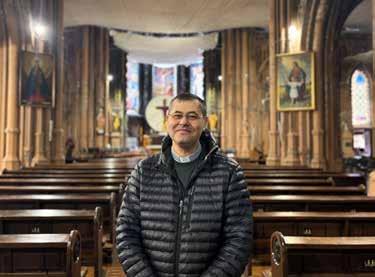
But even amid the threats to their places of worship, Ukrainians refuse to stay away. The parishioners of the St. Nicholas Roman Catholic Cathedral in Kyiv were preparing for Christmas when, on December 20, 2024, a blast wave shattered close to 100 windows in the church,
THE DAMAGED ROSE WINDOW INSIDE
including the intricate rose window on the facade. Still, the attack didn’t stop them. “We had five Masses with an open window,” said Father Pavlo Vyshkovskyi, the priest of the church.
When I visited the church during Holy Week, the rose window had been patched up with polycarbonate. In the upper gallery of the church, the shards of colored glass were scattered on the ground like a puzzle waiting to be put back together. Without waiting for funding, the parish pitched in to cover elongated lancet windows with blue and yellow banners made with coarse fabric to protect the interior from snow, rain and pigeons.
“IT IS THE PLACE WHERE UKRAINE’S SPIRITUALITY, SCIENCE AND CULTURE WERE BORN, WHERE THE MOST IMPORTANT EVENTS IN UKRAINE TOOK PLACE. TO RUIN IT IS TO RUIN A NATION.”
“There’s no real point in restoring stained glass right now while the war continues,”
Father Vyshkovskyi told me. “And what guarantee is there that this won’t happen again today or tomorrow? These are enormous costs — truly huge sums of money.”
The cathedral’s full restoration, from both aging and war damage, could cost $20 million or more.
To document countrywide destruction, grassroots organizations like the Ukrainian
Heritage Monitoring Lab, based in Lviv, dispatch expedition teams of architects, art historians, museum professionals and forensic photographers to carefully record the damage on-site. In the territories under Russian control, experts rely on reports from residents or soldiers on the ground. Systematizing this knowledge feeds into a larger goal: building a meticulous record of evidence to keep Russia accountable for the war crimes against Ukraine’s cultural heritage.
“WE KNEW THAT we would never have a church like that again,” Teslia recalled thinking. But Easter was around the corner and Zavorychi residents needed a place to hold the services. So parishioners got busy. Teslia, who spearheaded a fundraiser, wrote on Facebook in April 2022: “Let’s get to work! We will have our sanctuary and we will have our Ukraine!”
Someone donated cement leftover from nearby construction. The state forestry provided wood for the frame. The local men insulated the walls and installed the roof. The ceiling was painted blue, walls yellow, the colors of Ukraine. On Orthodox
IN 2021, A YEAR BEFORE THE FULLSCALE INVASION, THE CATHEDRAL SUFFERED A FIRE, WHICH DESTROYED THE PIPE ORGAN AND DAMAGED THE INTERIOR OF THE CHURCH.
ST. NICHOLAS
ROMAN CATHOLIC CATHEDRAL.
FATHER PAVLO VYSHKOVSKYI.
Palm Sunday, a tiny chapel right in the spot of the old church’s entrance held its first service.
On a Saturday morning in April, four years after the attack, a dozen or so parishioners, all women except for one middle-aged man with a mustache, packed the chapel, standing tightly next to each other. Black lace, in observance of Lent, draped over the wooden cross in the center of the chapel. A woman led the liturgical chanting, clutching a binder full of handwritten markings. Several icons salvaged from the fire adorned the walls.
At one point, the priest circled the room, dabbing each person’s face and hands with a brush soaked in sacred oil. A notebook on his lectern listed the names of active soldiers to pray for. If a soldier died, his name was moved to a separate section for the fallen.
“People go to the church carrying their deepest personal struggles,” Father Vasyl Bilynec, the visiting priest and military chaplain who conducted the service in Zavorychi, told me. “More than anything, they bring their fear, because they understand that, sadly, we are now in God’s hands.”
But the fire of the Zavorychi church, and even more its partial rebuilding, also exposed a rift that’s long been simmering in the community. The original St. George Church belonged to the Ukrainian Orthodox Church, historically tied to Moscow. Although the local priest told the residents he had distanced himself from Russia, more patriotic parishioners, including Teslia, still objected to the formal tie. The dispute ultimately split the congregation: some followed the priest, who now holds services in a private home, while others stayed in the rebuilt chapel, now part of the Orthodox Church of Ukraine, which received its autocephaly, or autonomy, from the Patriarch of Constantinople in 2019.
Its new name is St. Yuriy’s Church, a Ukrainian form of St. George.
Olena Lobko feels at home in the chapel even though it’s more modest. She has a set of keys and sometimes comes in to just sit and pray. “It feels different here,” Lobko told me. “It’s so quiet and peaceful.” While we sat in the chapel after the service, a helicopter hovered over the area. The locals know the signs of war too well. “That means the shelling is coming,” Lobko said.
THE CURRENT CHAPEL IN ZAVORYCHI IS TOO SMALL TO FIT ALL THE PARISHIONERS COMFORTABLY, BUT THE COMMUNITY CAN’T AFFORD TO BUILD A NEW CHURCH.
INSIDE ST. YURIY’S, PARISHIONERS RECORD THE NAMES OF LOCAL SOLDIERS ON ACTIVE DUTY AS WELL AS THOSE WHO HAVE DIED IN BATTLE.
UNTIL THE WAR ends, church restoration will have to take a back seat. “It’s expensive, dangerous, and can draw … sometimes unwanted attention — it simply significantly increases the risk of being struck again,” said Kateryna Goncharova, Ukraine-based country director at the World Monuments Fund, an international organization that works to safeguard cultural heritage. The war has also created a shortage of skilled workers, trained in architectural restoration.
Yet, conservation projects — treating the “wounds” of structures until full treatment and recovery — are crucial. To help safeguard Ukraine’s wooden churches — the most vulnerable in the conditions of the war — World Monuments Fund, along with other partners, supplied 200 churches with special water-mist fire extinguishers that are sensitive to the frescoes and interior paintings in the churches. There are nearly 2,500 wooden churches in Ukraine — and eight of them are under UNESCO protection.
On a sunny April day, several staff members guided me down a tight stairwell into the underground caves at Kyiv-Pechersk Lavra. With no other visitors, the dimly lit space felt serene and peaceful, like a shelter underneath a battlefield. A dehumidifier hummed in a narrow tunnel that hosts reliquary glass-covered coffins with mummified bodies of monks and saints in elaborately embroidered garbs.
Once the Russians were pushed away from Kyiv early in the war, the Lavra and the Ministry of Culture officials made the decision not to evacuate its “moveable” heritage — icons and artifacts — but instead store it in secret and secure locations, where they’d be monitored regularly.
This strategy doesn’t work with churches, said Kostiantyn Krainii, the deputy director of the Kyiv-Pechersk Lavra National Reserve, after we emerged from the caves and gazed up to the soaring golden domes. “We can’t pick them up and move them,” he said. “That’s why there is a threat, and we live with this threat all the time.” A system of seismic sensors — some are installed on
the Lavra’s belltower — monitors tremors and explosions and helps experts understand more hidden impacts of the jolts. “The only way we can save (the churches) is if we know them perfectly,” Krainii said. He pointed to the digitization of Lavra’s sites, the only reliable way, in his view, to protect churches in the war. With the help of laser scanners and photogrammetry technology, conservators can create a 3D model of a church that encompasses everything from the exterior details to the facial expressions of a saint on an interior fresco. Ukrainian company Skeiron has digitized about 270 cultural sites and churches, including Lavra caves and St. Sophia Cathedral.
PRESERVING CHURCHES IS NOT ENOUGH IF THEY STAND EMPTY. TO BE CARRIED FORWARD, SPIRITUAL HERITAGE NEEDS A WAY OF STAYING ALIVE, OF BEING PRACTICED ORGANICALLY NOT TO LOSE ITS MEANING.
At Lavra, the intertwined work of spiritual and cultural renewal carries the weight of 300 years of Russian influence and the long presence of clergy aligned with the Moscow-linked Ukrainian Orthodox Church. The war has ramped up the efforts to reclaim suppressed histories and to revive Ukrainian devotional life and Christian spiritual ministry at Lavra. For three years, state-owned Lavra has been enmeshed in a court battle to evict the monks with alleged lingering ties to Moscow, who still reside on the territory and who have sued the Ukrainian government. “Ukraine, as an independent state that has found itself in this war, has accepted this challenge and is now carrying out work to cleanse this ‘Russian world’ here, within the walls of this sacred site and to restore Ukrainian tradition,” said Maksym Ostapenko, general director of the Kyiv-Pechersk Lavra National Reserve.
In Zavorychi too, a renewed devotion is taking hold as parishioners chart a new path forward for their community and their church.
Rebuilding it fully now feels like a distant and costly prospect, Teslia told me. The chapel was meant to be temporary, but it’s not likely to be replaced soon. Without a generous funder, Teslia said parishioners will never pool enough money to rebuild the church the size of the old one.
But preserving the churches is not enough if they stand empty. To be carried forward, spiritual heritage needs a way of staying alive, of being practiced organically to not lose its meaning. It’s why earlier this year, after a period of war-related closure, Lavra opened up its Near Caves to tourists and pilgrims, part of the effort to restore the tradition of Ukrainian pilgrimage and its historic routes. Krainii and his colleagues are also working to preserve the intangible legacy of the Lavra — rituals and traditions like the distinctive Lavra chant, the sacred veneration liturgy to be considered for recognition by UNESCO.
Meanwhile, they plan to create an extension and add a sanctuary with “royal doors,” an ornate golden entrance through which the priest passes between the sanctuary and the nave during services. The expansion would allow more people to attend, especially during holiday worship.
In the summer, Lobko and Teslia plan to take shifts at the chapel, so they can keep it open for visitors to come in to pray. When the time comes to rebuild the church, Teslia’s vision is simple and familiar: the same sky blue color, a medium size, this time built out of brick. She’s been married for years, but never had a church wedding. One day, she hopes to have one: “God willing, in the new church.”
LIQUID ASSETS
WHAT THE WINTER WITHOUT SNOW MEANS FOR WATER IN THE WEST
BY KEVIN LIND
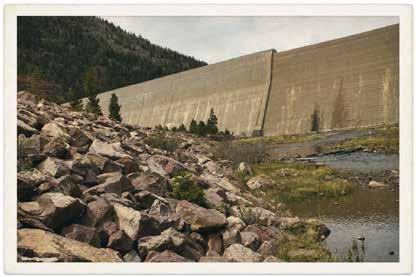
Sitting at 8,180 feet, the Upper Stillwater Dam stands sentry, holding back water that will eventually make it to Utah’s Strawberry Reservoir. In the winter, storms roll in and drop hundreds of inches of snow across the High Uinta Mountains that surround this basin. Come spring, that snow melts, winding its way down through the watershed until it’s captured behind the dam. As the weather warms in the summer, the water doesn’t flow in but out. Gravity carries it all the way down 80 miles of pipe and aqueduct — and through two other reservoirs — to the faucets and spigots of the millions of people who live in the most populated cities of Utah.
Most folks who water their lawns, do their dishes or take a shower with this water don’t think about the journey each drop takes to reach them. It’s simply there. They may be familiar with their local municipal water supply, but probably less so
with Strawberry Reservoir or Stillwater Dam. They’re nearly 100 miles away. But it’s a massive system: one which captures water from across the Continental Divide
OUT OF ROUGHLY 70 RIVER BASINS ACROSS THE WESTERN U.S., ONLY FIVE ARE AT OR ABOVE MEDIAN SNOWPACK RIGHT NOW.
and carries it to civilization, acting as an insurance policy against the region’s inevitable droughts. This cache of water, even at the driest of times, ensures that when folks
in Utah’s basin and ranges open their taps, something happens. But that water is no longer a given in the West.
The region has been hit by a widely covered trilemma: a lack of winter snow, record-breaking spring heat waves and a long-sustained drought that blights the resources on which growing populations rely. On their own, each complicates the region’s ability to fulfill water rights to users. Together, they strain the system earlier and harder, threatening the water supply of the West in a way that’s never been experienced before.
By April 1, most of the region — including Arizona, Colorado, Idaho, Nevada, New Mexico, Oregon, Utah and Wyoming — reported record-low snowpacks before unseasonably warm temperatures sent snow-water equivalents plummeting, which quantifies the actual water content rather than just the depth of the snow. In
terms of a water budget deficit, this year’s regional snow-water equivalent measures at only 25 percent of the 30-year median, which is already considerably lower than past 30-year medians. Experts predict that, between evaporation and the dry ground soaking up water, the Colorado River basin states are likely to be able to deliver only 10-15 percent of the water needed to sustain all water rights in the region.
That’s where reservoirs like Strawberry come in. All reservoirs serve as storage for specific regions and water municipalities, but most across the West can hold only enough water for a year or two of current use rates. That doesn’t add up to much in years like this one. While most water systems in the West were designed with tremendous storage-to-flow ratios in mind, modern demands and drought have made multiyear storage increasingly difficult to hold. California’s surface reservoirs can only provide about 1.25 years of total supply when full without any additional inflow. In states like Utah and Washington, reservoirs are typically designed for one- or two-year cycles and are currently being drawn down at double the normal rate during dry spells, prompting officials to warn that without major reductions in use, even the largest federal reservoirs could effectively empty in as little as three to four years during extreme drought.
“The Colorado River watershed has been in trouble for some time. That’s not new. The Great Salt Lake has been in dire straits for some time. That’s not new,” says Daniel Swain, a climate and weather scientist for the University of California and prolific social media meteorologist. “This is one of those unsubtle years. … This is the ‘uh-oh’ moment.”
“THIS IS THE ‘UH-OH’ MOMENT.”
IN FEBRUARY, THE White Pine Nordic Touring Center, a local cross-country skiing venue in Park City, Utah, was green. Aside from a few patches of snow, it looked more ready for tee time than winter sports. A Getty image of the golf course where the touring center is located made the rounds on the internet as an omen of just how bad this winter was. More than half of ski resorts in some parts of the West reported early closures or failed to open at all. It was also hot, causing snowmaking to be untenable for most areas. Open-range cattle grazed through February and March, and irrigation spigots hummed with water in months that are frozen most years.
Water managers often describe water in banking terms. With decades of drought, increasing populations, warmer temperatures and less snow, the only way to make ends meet is with a “spend within your means” approach. But states within the region have long had the highest per capita water use rates in the nation. We have a tendency, in keeping with the metaphor, to blow the budget.
This year, there isn’t much to spend. And the savings sitting inside reservoirs across the region are shallow.
This past winter was the warmest in the West in 131 years of recorded history. It melted into a summer-like spring, which brought an unrelenting heat wave that shattered high-temperature records in 180 cities. At least seven states experienced 100-degree weather before the end of March.
The only other comparable winter was 1977, which occurred before snowpack data was recorded. Though there were a few late storms that year, Time magazine reported that new “accumulated moisture was but a drop in the bucket of water needed to prevent massive crop failures, hydroelectric power shortages, widespread economic losses and mounting tensions over water allocations.” One government official worried that “we’ve got a good chance of another Dust Bowl.” Such alarming comments were
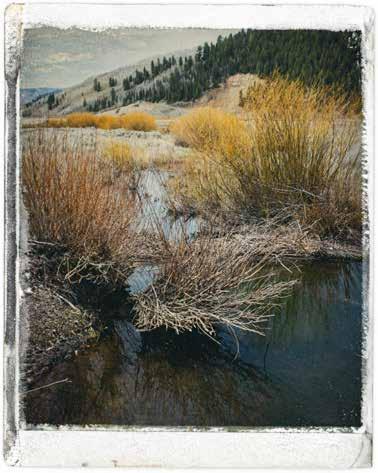
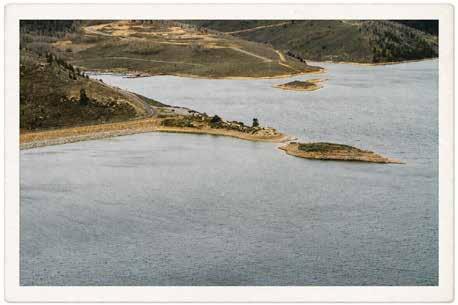
STRAWBERRY RESERVOIR AND UPPER STILLWATER DAM ARE PART OF THE CENTRAL UTAH PROJECT, WHICH TRANSPORTS WATER NEARLY 100 MILES FROM THE HIGH UINTA MOUNTAINS TO THE STATE’S MOST POPULATED CITIES.
made during a year with more water and fewer demands on it than 2026.
Out of roughly 70 river basins across the western U.S., only five are at or above median snowpack right now, and demand historically increases when supply decreases — and supply decreases because of both human-made and natural causes.
In that relatively small nook of Utah, the Strawberry Reservoir loses between 20,000 and 25,000 acre-feet of water to evaporation every year. To cover its total outflow, it needs about 200,000 acre-feet of water flowing back into it. “If we use the forecast we have right now — which I believe (is) higher than what reality is going to be — our inflow to Strawberry Reservoir this year will be about 30,000 acre-feet,” Jared Hansen, the director of water policy for the Central Utah Water Conservancy District, which manages the reservoir, says. “We’ll barely cover the evaporation.”
This year, most Westerners will be living under some form of water restriction. They were firmly in place in Utah before the end of winter — some water conservancies had shaved whole months off landscaping water and were communicating that people should familiarize themselves with their meter limitations. In Idaho, one reservoir in the Salmon Falls tract south of the city of Twin Falls is sitting at just 13 percent of capacity, prompting irrigation deliveries to be shut off as early as late May or mid-June — weeks before summer crops even hit their peak water demand.
Though such restrictions are somewhat familiar, folks in the West aren’t exactly accustomed to conservative or restricted water use. Of the 10 states with the highest water use per capita, eight of them are in the West. Idaho tops the list with 184 gallons of water consumed per person per day, but Utah’s not far behind with 169. Wyoming and Arizona closely follow.
Populations are growing, water use is historically high, the snowpack was abysmal, and the trends of temperatures and precipitation are not encouraging. Water managers are already making plans on
how to divvy up dwindling resources. “The past is not a perfect representation of the future,” Hansen says. “If the past repeats itself, fantastic, we’re in great shape. If there are some differences from changes in the climate, then this is a step in becoming more prepared for that and figuring out how to divide up a smaller pie.”
Laura Haskell, the drought coordinator for the Utah Division of Water Resources, explained that she and her colleagues generally have long relied on the snowpack to add around 20 percent capacity back into the reservoirs in the spring, and will continue to do so. That didn’t happen this year. Haskell doesn’t think there’s a need to panic
“THE REGION HAS BEEN HIT WITH A TRILEMMA: A LACK OF WINTER SNOW, RECORD-BREAKING SPRING HEAT WAVES AND A LONGSUSTAINED DROUGHT THAT BLIGHTS THE RESOURCES ON WHICH GROWING POPULATIONS RELY.”
“yet,” as long as the West doesn’t have another winter like it did this year. But that’s simply banking on the future.
WHAT WILL IT mean to have a few trillion gallons less water in the West this year?
Bea Gordon, a snow scientist from the Desert Research Institute, says that one obvious potential is an increased risk of wildfire. This has borne out, with more than 15,000 fires burning 1.5 million acres before the end of March — that’s over 230 percent of the 10-year average. Hansen says the north side of Strawberry Reservoir, an area that’s usually buried under several feet of snow all winter long, caught
fire in January. As this summer kicks off, every state in the West is expected to face an above-normal threat of wildfire, according to the latest projections.
It’s also going to be a difficult year for agriculture. With less snow and warmer temperatures, whatever moisture is present will evaporate more quickly and water allotments just won’t go as far as they have in years past. Produce, wheat, rice, sugarcane and nut production are all under drought conditions and likely to struggle. But ranching will especially. Cattle have less to eat and drink during droughts, and their backup feed, alfalfa, requires lots of water; the industry is expecting prices to soar.
Some communities are already building new backup solutions — reservoirs for their reservoirs, in some sense. In Washington County, Utah, where Zion National Park and the desert city of St. George are located, a new reservoir is under construction, and another will break ground this fall. This is happening alongside the very expensive process of building a system that recycles, refilters and reintroduces water back into the county’s water system. “We have plans to build over a billion dollars’ worth of infrastructure here within the next five to 10 years,” says Zach Renstrom, the general manager of the Washington County Water Conservancy District. “That has to be done. Running out of water is not an option. And so we plan to build it.”
The same logic drove the construction of the Strawberry Aqueduct in the 1960s. When the West needed more water, engineers went and got it. They bored tunnels through the Wasatch, dammed tributaries and rerouted Colorado River Basin water over the Continental Divide so it could flow into a desert metropolis that grew larger than anyone thought it would. For a century, the solution was to build more, capture more, store more. But today, Utah’s reservoirs sit at roughly 39 percent of capacity. Across the West, the question now isn’t whether to build more — it’s whether there will be enough to fill the reservoirs we’ve got before they run dry.
THE FAILURE OF THE ELITES THE FAILURE OF THE ELITES
HOW AMERICA’S RULING CLASS LOST THE COUNTRY IT LEADS
BY OREN CASS | ILLUSTRATION BY JON KRAUSE
FIRST LEARNED ABOUT THE OPIOID CRISIS THREE PRESIDENTIAL ELECTIONS AGO, IN THE FALL OF 2011.
I was the domestic policy director for Mitt Romney’s campaign and questions began trickling in from the New Hampshire team: What’s our plan?
By then, opioids had been fueling the deadliest drug epidemic in American history for years. I am ashamed to say I did not know what they were. Opioids, as in opium?
I looked it up online. Pills of some kind.
I was no outlier. America’s political class was in the final stages of self-righteous detachment from the economic and social conditions of the nation it ruled. The infamous bitter clinger and “47 percent” comments by candidates Barack Obama and Romney, respectively, captured the atmosphere well: delivered at private fundraisers in San Francisco in 2008 and Boca Raton, Florida, in 2012, evincing disdain for the voters who lived in between. The opioid crisis, which claimed nearly 22,000 lives in 2012, gained more attention in the years after the election.
Of course, 2015’s most notable political development was Donald Trump’s presidential campaign launch and subsequent steamrolling of 16 Republican primary opponents committed to party orthodoxy. In the 2016 general election, he narrowly defeated the former first lady, senator and Secretary of State Hillary Clinton, who
gleefully classified half of the voters who supported Trump as “deplorables,” as her audience laughed and applauded. That year saw more than 42,000 deaths from opioid overdoses.
In a democratic republic such as the United States, where the people elect leaders to govern on their behalf, the ballot box is the primary check on an unresponsive, incompetent or corrupt ruling class. If those in power come to believe they are the only logical options, the people can always prove them wrong. For a frustrated populace, an anti-establishment outsider’s ability to wreak havoc is a feature rather than a bug. The elevation of such a candidate to high office should provoke immediate soul-searching and radical reform among the highly credentialed leaders across government, law, media, business, academia and so on — collectively, the elites.
The response to Trump’s success in 2016 and again in 2024, unfortunately, has been the opposite, with most elites doubling down. We have not failed, the thinking goes; we have been failed, by the American people. In some tellings, grievance-filled Americans simply do not appreciate their prosperity. In others, they are incapable of informed judgments, leaving them susceptible to demagoguery and
foreign manipulation. Or perhaps they are just too racist to care — never mind that polling consistently suggests that most of Trump’s supporters are women and minorities, or that polling shows he is attracting far greater Black and Hispanic support than prior Republican leaders.
Trump is by no means an ideal tribune of the popular will, especially considering his own ongoing efforts to defy it after the 2020 presidential election. But the nation, given full opportunity to assess that conduct, voted him back into office. Somehow, the response of elites to that humiliating indictment of their leadership is a redoubled obstinance: Democracy itself is at stake, they lecture, even as they pursue plainly anti-democratic strategies.
The result is a shockingly irresponsible national game of chicken. Barreling from one side are elites who remain fully committed to their own preferences and pulling the levers of power for their own benefit. Barreling from the other are ordinary people, the majority of Americans, who reject elite preferences but feel unable to assert others, except through the last resort that democracy affords them. Both sides are honking as loudly as they can.
The people do not pull to the side, nor should they. “The administration of the government, like the office of a trustee, must be conducted for the benefit of those entrusted to one’s care, not of those to whom it is entrusted,” observed Cicero more than 2,000 years ago. Anyone worried about the future of American democracy should be concerned foremost with the elites’ bizarre belief that the road is theirs. This is the root cause of present instability and poses the most serious long-term threat to the republic.
The Constitution is designed to bend without breaking regardless of any one election’s outcome. It has done so before and it will do so again. In words widely attributed to James Madison, “dependence on the people is no doubt the primary control on the government; but experience has taught mankind the necessity of auxiliary precautions.” Thus the separation of powers, the
checks and balances, the countervailing state and federal power. But no system can save a nation from a ruling class so unresponsive that it would choose to accelerate toward political collapse.
TAKING THE MAJORITY’S preferences seriously, even when they conflict with the preferences of more sophisticated experts, is often disparaged as populism. But while elected officials and their technocratic advisers may have special insight into how the people’s goals are best achieved, only the people can determine what those goals should be and whether they are being met.
Wages for the typical worker have stagnated for decades, and research I conducted at American Compass has found that the typical worker no longer earns enough to provide middle-class security for a family. We also found that only around 1 in 5 young Americans makes the transition smoothly from high school to college to career, and for young men the figure is lower still. The anti-poverty scholar Scott Winship has shown that for men ages 25 to 29, inflation-adjusted median earnings and compensation were lower in 2020 than they were 50 years earlier.
to support your family on one parent’s income” to be an important or essential marker of middle-class life.
Note the contrast with the small cohort of upper-class Americans with college degrees and the highest incomes, who see the American dream more in terms of going as far as their talents and hard work take them than as either supporting a family or even getting married and raising children. They prefer having both parents work full time and using paid childcare full time, and regard the chance for their children to pursue postsecondary education that would offer “the best possible career options but was far from home” as more desirable than one that would offer “good career options close to home.” All other groups said they preferred the latter.
NO SYSTEM CAN SAVE A NATION FROM A RULING CLASS SO UNRESPONSIVE THAT IT WOULD CHOOSE TO ACCELERATE TOWARD POLITICAL COLLAPSE.
Measured in flat-screen televisions owned, healthcare treatments received and calories consumed, Americans have been on an upward trajectory. But while popular media often translates the American dream as being better off than your parents in materialistic terms, polling conducted by American Compass in partnership with YouGov indicates that Americans between 18 and 50 were more than twice as likely to say “earning enough to support a family” is what’s most important. Related, our polling has found that the vast majority of American parents consider “being able
The same pattern repeats itself on issue after issue. While policy initiatives so often seek to maximize efficiency and growth, move people to opportunity and redistribute from the economy’s winners to the losers, the typical American has an attachment to place, a focus on family, a commitment to making things, and would accept economic trade-offs in pursuit of those priorities.
Public education devotes disproportionate resources to getting students into and through college as compared to the other pathways most ultimately take. But an American Compass survey found that American parents say nearly 3 to 1 that the more important task should be to “help students develop the skills and values needed to build decent lives in the communities where they live,” compared with helping students “maximize their academic potential and pursue admission to colleges and universities with the best possible reputations.” Most would prefer to have their children offered three-year
apprenticeships that lead to good jobs over full college scholarships.
Another American Compass poll found that Americans agree by 10 to one that “we need a stronger manufacturing sector,” most often because it “is important to a healthy, growing, innovative economy.”
Asked to choose, most say they would much rather pay higher prices to strengthen domestic manufacturing than to combat climate change. Only the upper class was evenly split on this question. Is America a “nation of immigrants”? Perhaps. But while most Americans believe that immigration is a good thing for the country, at no time on record have more than around one-third wanted to increase immigration levels; support for decreasing the level is almost always much stronger.
The important feature of all these preferences is that they are inherently valid. No set of facts or statistical analyses, to which an expert might have superior access, overrides what people actually value and what trade-offs they would choose to make. Leaders might seek to shape public opinion and alter preferences — indeed, that is part of leading — but they must yield to the outcome. Their obligation is to pursue the community’s priorities, not their own.
structures to their foundations, he exposed and collapsed those that were outdated or poorly constructed. But his manner is not that of a rebuilder.
THE TYPICAL AMERICAN HAS AN ATTACHMENT TO PLACE, A FOCUS ON FAMILY, A COMMITMENT TO MAKING THINGS, AND WOULD
ACCEPT ECONOMIC TRADE-OFFS IN PURSUIT OF THOSE PRIORITIES.
THE PROMISE — and necessity — of the more populist mode of economic policy gaining momentum in the United States is that it chooses differently on immigration, education, family, employment, business regulation and other fronts. Trump himself represents that movement imperfectly, and most often just by rejecting the old regime. Like an earthquake triggered by the shifting tectonic plates of American politics, he disrupted a great deal. And in shaking existing
Two threads run through more populist, conservative economics, and they offer the best hope of rebuilding a capitalism that first and foremost serves the prosperity, liberty and security of the American people. The first thread is creating productive markets, which starts with an acknowledgment that many are anything but. The key to capitalism, as Adam Smith observed with his metaphor of the invisible hand, is that private actors pursuing their own self-interest can behave in ways that advance the public interest as well. But this holds true only if the activities that yield the greatest profit are also ones that yield broad benefits. Smith was quite explicit: For the invisible hand to work, the capitalist must prefer “the support of domestic to that of foreign industry” and “direct that industry in such a manner as its produce may be of the greatest value,” which would also “give revenue and employment to the greatest number of people of his own country.”
Those are substantial constraints, which modern economists managed to miss. When larger, easier profits can be achieved by offshoring production to countries that exploit workers or bringing foreign workers who will accept lower wages into the country, corporations will do just that. When the highest compensation goes to Wall Street speculators and the developers of addictive social media algorithms, the most promising business leaders will pursue those careers. What share of Ivy League graduates bring their talents to vocations that will improve the productivity, and with it the earning potential, of
anyone without a college degree, or create booming new businesses in struggling regions? It should be no surprise that the productivity growth necessary for rising wages has slowed and, in manufacturing, turned negative, that the longtime pattern in American economic development of poorer areas catching up with richer ones no longer holds.
The tragedy, but also the good news, is that these trends are not inevitable. They represent foolish policy choices, which means we can choose differently. Instead of the globalization that casts aside workers like unsold inventory and hollowed out communities, we can structure our trade and industrial policies to ensure the path to profit runs through domestic investment that creates productive jobs throughout the country. Instead of allowing migrants to enter the country illegally and employers to exploit them, we can enforce our laws rigorously and further restrict entry into the labor market’s low end, forcing employers to offer good, highly productive jobs to American workers instead of undercutting them.
In the financial sector, deregulation, tax and bankruptcy laws, international agreements, and the mismanagement of public pensions have all encouraged the smart money and top talent to gravitate toward manipulating and trading piles of assets rather than building anything.
Capital markets that once served to deploy the nation’s accumulated wealth broadly now extract value from enterprises and communities to reaccumulate it in narrow enclaves. The financial sector keeps growing, salaries and profits keep rising, and yet my research has shown that actual investment has been weakening. This is not the capitalism that any coherent economics would celebrate. Some leaders on the right have now joined those on the left in arguing that its excesses must be discouraged, regulated, taxed and perhaps banned.
The second thread that runs through this new conservative economics is supporting communities. People rely on the institutions around them, beginning with their
families, to form them as productive citizens, to help them build decent lives and to prepare them to raise children of their own.
THESE TRENDS ARE NOT INEVITABLE. THEY REPRESENT FOOLISH POLICY CHOICES, WHICH MEANS WE CAN CHOOSE DIFFERENTLY.
But it is the Americans most in need of supportive communities who are often least likely to have them. The elite conception of support for families tends to be paid leave and childcare subsidies that push toward the career-optimizing and GDP-maximizing arrangement of all parents in the workforce. Proper family
policy, as a range of Republicans have now proposed, would provide funds directly to working families to help with the cost of raising children and let them arrange their lives as they themselves prefer. Public education, likewise, would focus less on filling the high-school-to-college-to-career pipeline that benefits so few and more on improving the range of pathways that most people travel.
Another key institution is the labor union. Organized labor can be a vital force for giving workers power in the labor market, representation on the job, and support in the community. Unfortunately, in the United States, the labor movement now often operates as a force for progressive political activism unrelated to the priorities of most workers. Some conservatives are making progress by working directly with less partisan unions and proposing alternative forms of representation that might put worker representatives on corporate boards or encourage industrywide bargaining rather than company-by-company fights.
IN 2023, THE United States saw nearly 80,000 deaths from opioid overdose. Other forms of drug overdose are climbing faster: Fatal cocaine overdoses rose sixfold in the past decade, to 30,000. Psychostimulant deaths rose tenfold, to 36,000. All told, the rate of drug overdose deaths in the United States is now similar to the average death rate from alcohol use disorders in Russia during the decade after the Soviet Union’s collapse.
Are American elites capable of seeing beyond their own preferences? Can they admit that what they value is not what’s best for everyone — shoddily constructed rationales notwithstanding? Their moment of decision — like an oncoming car — feels like it is fast approaching. The off-ramp is available, but only they can decide to take it.
ARIZONA SEN. RUBEN GALLEGO WANTS TO WIN OVER WORKING-CLASS MEN. WILL IT HELP DEMOCRATS RECONNECT WITH DISILLUSIONED VOTERS OR BECOME THEIR LATEST DEAD END?
BY ETHAN BAUER
ILLUSTRATION BY BARRY BRUNER
U.S. Supreme Court building, up a labyrinth of stairs and hallways, behind a plain, wooden desk, sits cherubic Ruben Gallego. Graying beard. Electric-blue eyes. Standing “just slightly above” 5-foot-7, he tells me.
The junior senator from Arizona came up in politics as a progressive darling, but lately, Gallego reads as something else entirely. Not a centrist, exactly. He’s a proud fighter and gets combative with the Trump administration. He’s neither a conservative Democrat nor a leftist. “He has broken with some of the party orthodoxy on the left,”
says Jeff Flake, the Arizona Republican who once held Gallego’s Senate seat. “I think it’s probably genuine on his part.”
Democrats have been losing male voters election cycle after election cycle, and desperately need to win them back to remain competitive. With the party seeking a national rebirth, Gallego’s approach offers one path forward. In 2024, he was the only Democrat to pick up a seat in the Senate in what was otherwise a triumphant cycle for Republicans. He beat his Republican opponent by about two and a half percentage
points — even though Donald Trump carried Arizona by nearly six points. He got there, he believes, by hammering issues of affordability; by refusing to embrace party purity tests; and, most of all, his unique appeal to working-class men, the one constituency Democrats have lost to Republicans consistently over the past two decades.
Gallego has openly flirted with a 2028 run for president. And his strategy, so far, has been to meet men where they are. He attended the annual Army-Navy game, for instance, and hosted boxing match watch parties during his Senate campaign. He talks about how Democrats need to create a world where men can be “providers and protectors” and, famously, afford big trucks.
“There’s no other senator like Ruben,” says Rebecca Katz, a Democratic consultant who worked on Gallego’s Senate campaign. “His experience shapes him in a way that is different from any of his colleagues.”
Earning that experience required surviving his own father’s abuse and abandonment; reconciling his Harvard education with his Marine Corps service; and rising through the political ranks, from the Arizona Legislature to Congress to the Senate at 45 years old. Now he’s selling a new future for the Democratic Party, and for American men. He may not tower over anyone physically, but Gallego’s gamble looms large. He’s betting he can find a sweet spot between the Trump administration’s aggressive machismo and liberal tendencies to label anything overtly masculine “toxic”; that Democrats can inhabit that space without abandoning their core values and alienating their base; and that he can lead Democrats there without getting derailed by his own political baggage.
Which all sounded simple enough when he explained it to me in March, seated in the office building near the Supreme Court. But the challenge — like the man himself — is much more complex than it seems.
HE WAS BORN a boy in between. His father had immigrated from Mexico to Chicago as a teenager, and his mother had done the
same, but from Colombia. They married and had four children. He was the second, the only boy, born in 1979 as Ruben Marinelarena. At two, his family moved to his grandmother’s farm in Chihuahua, Mexico, where he spoke Spanish as his first language. He tended corn and watermelon crops, rode horses, even tamed a coyote. When Ruben was in second grade, the family returned to Chicago, where his father opened a construction firm. He’d still spend summers in Mexico until his parents divorced around the time their only son started middle school.
“HE’S DRAGGING THE PARTY BACK TO WHERE IT STARTED, WHEN WE WERE THE PARTY OF THE WORKING CLASS. WHEN YOU COULD BE A MAN’S MAN, AND BE A PROVIDER
AND PROTECTOR OF YOUR FAMILY, AND BE EVERY BIT OF A DEMOCRAT AS ANYBODY ELSE.”
All the better, Gallego would tell himself later. His father was “not a good man. Definitely not a good father.” He once took Gallego to McDonald’s and asked why he was eating his fries one at a time, then slapped them out of his mouth and called him gay. He’d eventually change his birth name to his mother’s maiden name after his father was convicted of serious drug trafficking charges. “Multiple times over,” Gallego adds, unprompted. “I needed to talk to somebody, needed to actually know what a man looked like or acted like. Because that wasn’t my father.”
He found role models in the many jobs he worked, starting on construction
crews and graduating to janitorial staff and short-order kitchens. He sometimes worked at job sites with his cousins. “They showed me the value of honest work, the dignity of bringing home that pay for your family, the pride in being able to do that.” Some also tried to lead him astray.
“In Latino culture, especially cultures without college degrees, and cultures that have just recently immigrated, there’s this thought that if you are studying, you’re kind of a wimpy guy,” he says. “Some even say you’re ‘acting white.’” He heard that plenty because he was always studious. But thanks to certain teachers who saw his academic potential, he became a model student. “Learning that intellectual curiosity is still manly was extremely important,” he says. More important was undoing some of what he did learn from his father, who defined manhood, according to Gallego, as something like “reserved stoicism” with a dash of violence. Luckily Gallego had uncles and, especially, a grandfather who modeled vulnerability and warmth as strength rather than weakness.
His mother encouraged him to seek out male role models, but she also modeled toughness and tenacity by providing for her four kids as a secretary. It wasn’t always enough, but Gallego respected her effort, her willingness to do whatever she could for her children. Despite those efforts, he ended up sleeping on the floor every night, telling himself his life sucked, and that he was going to grow into something better than what he was.
He came up with a plan to get into Harvard, calling up every student there he could find with a Latino last name to ask for advice, and practicing standardized tests during shifts at work. The plan worked; he enrolled at Harvard in 1998. The plan to stay did not. Too much partying. Too many bad grades. The school asked him to leave, but with an invitation to reenroll after a year. Gallego decided to stay in Boston with a job and an apartment and a new plan to finish what he started (which, in 2004, he did). While waiting,
though, he did something unplanned in the fall of 2000. Something he admits he doesn’t fully understand even now.
On a whim, he walked into a Marine Corps recruiting station.
The impulse came, he thinks, from some lingering desire to serve the country. “It wasn’t a macho thing,” he writes in his autobiography. “It was more belonging, and patriotic.” He told the recruiter he wanted to join the Reserves, and to be in infantry. Later, when he was outed as a Harvard student during basic training, his drill instructor berated him: “Why the (heck) aren’t you an officer?” he’d say. “Are you stupid?” One thing Gallego did know, however, was that he didn’t want to be an officer, or take some
“TO THE EXTENT THAT PEOPLE FEEL THEY HAVE TO BE, AS MEN, CRASS OR CRUDE OR VULGAR, I DON’T BUY IT.” EVEN “IF THAT IS POLITICALLY ADVANTAGEOUS, IT’S NOT WORTH IT.”
desk job. He wanted to be in the infantry. He wanted to fight on the front lines. “If I’m going to be a Marine,” he told the recruiter, “I want to be a Marine.”
IN MAY OF 2005, Gallego was riding aboard a tank-like amphibious assault vehicle, or “trac,” just one in a convoy moving through Karabilah, Iraq. His group of Marines, Lima Company, had once been dubbed by embedded reporters as “Lucky Lima”; since their deployment in the third week of March, they’d participated in dozens of patrols and complex operations without a single casualty. That had changed a few days before, when Lucky Lima had lost two men in an operation that became known as
“Death House.” Morale was low as Gallego chugged along in the lead trac. Behind him, second in line in the convoy, rode his best friend, Jonathan Grant.
They’d met in New Mexico, where Gallego moved after Harvard to follow his girlfriend, Kate. He’d joined a new Reserve unit, and the group included Grant. “A big guy with endless pockets,” Gallego would remember. They bonded over training. Gallego had a busted knee — a lingering injury from a childhood car crash. The knee was holding him back from passing a required fitness test, so Grant helped him, leading rigorous run sessions to hold Gallego accountable. Before their deployment began, Gallego had held Grant’s baby and had listened to his wife. “Take care of him,” she’d told Gallego. Their friendship had deepened as they swept villages in search of insurgents, then returned to base to watch a box set of “Sex and the City.” Grant always had the best snacks. They were always together, except when they had to be apart, like in the trac convoy en route to a new village to sweep. Gallego liked to keep a clear head as a soldier. In these moments he preferred to
listen to the gentle Cuban rhythms of the Buena Vista Social Club or the Otis Redding classic “(Sittin’ On) The Dock of the Bay” on his iPod. And so he was when he heard an explosion.
The trac didn’t have windows, but through slits, his fellow soldiers could see smoke billowing from the trac behind them. The situation became clear: The second trac had triggered an improvised explosive device, or IED, which had detonated directly underneath and ignited its fuel tank. The men trapped inside by a closed door that wouldn’t budge, including Grant, faced a furnace. Eventually fellow Marines managed to open the hatch. Bodies tumbled out. Gallego’s group waited 20 minutes in their own trac before finally getting out and setting up inside a nearby home. A commanding officer started listing names of the known dead from the second trac, four in all. One of the names was Jonathan Grant.
In the end, Lucky Lima lost 23 Marines during their seven-month tour of duty, making it one of the hardest-hit units of the entire Iraq war. Gallego counts 11 times he
nearly died, and he still doesn’t understand why he didn’t. Why, for instance, had his trac seemingly passed over the same IED that killed his best friend?
Some men, he observes nowadays, enlist to prove their toughness. He never felt he had to prove that. What he wanted from the Marines, and what he got in the end, was much more valuable. “Seeing what other men were willing to do for their country, the sacrifice they were willing to make,” he says, “was a very good role model of what I was already doing but not necessarily understanding.” That’s the world he wants to build for men like his fellow soldiers, and for men like his first son. Born to him and Kate in 2017, his name is Michael Grant Gallego.
AFTER HIS MILITARY service, Gallego followed Kate to Arizona, where she’d found work in politics. He found work there, too, first behind the scenes before running for a seat in the state House, which he won in 2010. He jumped to the U.S. House of Representatives in 2015, just a year after Kate joined the Phoenix City Council (she’s been
U.S. SEN. RUBEN GALLEGO, A FORMER MARINE WHO SERVED IN IRAQ, HOPES TO CHANGE THE WAY AMERICANS VIEW THE DEMOCRATIC PARTY.
the mayor of Phoenix since 2019). Flake, the Republican senator whose time in Washington largely overlapped with Gallego’s, remembers him as a reliably liberal member of his party’s progressive wing. Yet, “we always got along,” Flake says, “and I never questioned his commitment to his constituents and Arizona.”
When Flake decided not to seek reelection in 2019, his Senate seat flipped to Democrat Kyrsten Sinema, who became a pariah in her own party during the Joe Biden presidency. Even before she left the party to become an independent and, later, decided not to seek reelection, Gallego announced he would run for her seat. His Republican opponent was Kari Lake, who The Atlantic has dubbed “Trumpism’s leading lady.” She’s a former TV news anchor who ran for Arizona governor in 2022 and lost. “(Gallego) was very blessed to run against the worst candidate in the history of Arizona’s Senate politics,” says Chuck Coughlin, a Phoenix-based political consultant. Lake’s aggressive, quip-focused campaign opened the door for Gallego, who stepped through by finding a new voice.
He had left the Congressional Progressive Caucus in 2023, and during his Senate run against Lake broke with mainstream Democratic positions on several key issues — most notably immigration and use of the term “Latinx”— and has spoken out against transgender girls in youth sports since taking office. “He was very smart about how he ran his campaign given the detriment of the Democratic Party’s identity politics,” Coughlin says. “He sort of ran against that.” It wasn’t just about policy. It was also stylistic. Gallego admits he’s brash; he’ll drop casual curse words and he isn’t ashamed of it. Right now, that looks like something new for Democrats. “He’s not locked into what’s considered a far-left ideology,” says Matt Grodsky, an Arizona-based Democratic strategist. “I think people know that they’ve got an honest broker when they’re speaking with them.”
Gallego thinks plenty about the current president, and how he’s defined
“authenticity” in politics — particularly for men. “Donald Trump really (brought out) some very raw, basic things that do exist within men,” Gallego says. “The idea of dominance, power. And I don’t think there’s been a concentrated effort on the left to give an alternative perspective.” The answer, he believes, is to match Trump’s authentic machismo with “authentic male role models that aren’t in the same vein.” Men who are committed to civil rights and equal justice and fair elections — but who also like boxing and big trucks.
Many who know him say that instinct is Gallego’s defining feature. “He doesn’t really fit” into a typical liberal mold, says Tony Cani, who has known him since Gallego moved to Arizona. “He’s kind of his own person.” He always has been, Cani says, and so far, it’s worked out. Gallego has never lost an election, including his surprising Senate victory in what was otherwise a disastrous year for Democrats. Some, however, wonder whether his recipe for success is really something new and enduring — or whether his “authentic” masculinity is a mask for sexism and misogyny.
TO CHUCK ROCHA, a friend and adviser who has been involved in Democratic politics since the early 1990s, Gallego’s approach is nothing new or radical. “He’s dragging the party back to where it started, (back to) when we were the party of the working class,” he says. “When you could be a man’s man, and be a provider and protector of your family, and be every bit of a Democrat as anybody else.” But that was a long time ago, and as Gallego knows, Democrats nowadays are not known for promoting those ideals.
Plus, die-hard Republicans aren’t fans of Gallego and never will be. Though some have come around. One of his Senate campaign commercials featured Julie Spilsbury, who sat on the Mesa City Council and opened by labeling herself “as conservative as it gets, a lifelong Republican.” Yet she saw Gallego as the candidate who demonstrated “integrity, compassion and service to others.” Her endorsement, along
with her endorsement of Kamala Harris, triggered a recall campaign by Turning Point USA that cost her seat on the council.
The former mayor of Mesa, John Giles, another Republican, endorsed Gallego for much the same reasons. Gallego was the “adult” in the race, he says. I had wondered whether Gallego’s self-proclaimed brashness — the fact that he curses and drinks and isn’t afraid to jokingly flip people off on camera — would be detrimental among Arizona’s sizeable Latter-day Saint constituency at a time when members of the church, according to a recent YouGov analysis of voter data spanning 2007 to 2025, are the only religious group trending toward the left. Giles, a member of The Church of Jesus Christ of Latter-day Saints, doesn’t think so. “The demeanor
“I DON’T THINK ANY CONVERSATION ABOUT 2028 SHOULD HAPPEN WITHOUT RUBEN GALLEGO BEING A PART OF THAT CONVERSATION.”
of politicians has changed, and I don’t think being brash disqualifies you from getting the vote of the (Latter-day Saint) population anymore,” Giles tells me. “Not to be controversial, but I would say he’s less brash than Mike Lee.”
Former Sen. Flake isn’t so sure. Gallego, per a recent New York Times analysis, uses the F-word more than any other politician, by a wide margin. Supposed “authenticity,” Flake believes, should not be an excuse to model nastiness. “To the extent that people feel they have to be, as men, crass or crude or vulgar, I don’t buy it,” he says. Even “if that is politically advantageous, it’s not worth it,” he adds. It sets a bad example for
young people. And Gallego, he knows, has sometimes crossed that line. Perhaps most of all within his own party.
In November 2025, messages leaked by a longtime friend revealed Gallego taking serious shots at fellow Democrats. “We look like the not fun party. Always telling and correcting people. Not allowing men to be men. Women to be hot,” Gallego wrote in a flurry of texts to his friend. “We used to be the party of sex, drugs and rock and roll.” The friend, who identifies himself as a Republican, texted back that Gallego is wise to call out fellow Democrats, and that “it’s time for you to flex and battle your way to the top of that party,” before adding that next time he’s in D.C., he wouldn’t be surprised to find Gallego hanging out with “hot beautiful people” at the National Republican Club. “Now Dem women look like Dem men and Dem men look like Dem women,” Gallego responded. He never imagined the exchange would become public. But interestingly, he did not apologize, nor did he dismiss his remarks as locker room talk.
Despite widespread criticism from liberal groups, he said the messages reflected what he’s been saying all along: The Democratic Party is getting too small, and it needs to become more welcoming of others to combat Trumpism. But some saw in his glibness a foreshadowing of what was to come in April, with Gallego under a national microscope because of his friendship with disgraced former California Rep. Eric Swalwell.
Swalwell dropped out of the Golden State’s governor’s race following accusations of sexual misconduct by multiple women, and Gallego called a 40-minute press conference to distance himself from a man who once called Gallego his “best friend in the world.” Gallego had chaired Swalwell’s 2020 presidential campaign committee and ridden camels with him in Qatar. Their friendship was real, Gallego admitted. He said he’d been duped and “betrayed,” and that he had no knowledge of Swalwell’s indiscretions. But soon accusations were flying, including an ethics
SWORN IN AS A SENATOR AT THE BEGINNING OF 2025, GALLEGO HAS SINCE BOTH ENERGIZED AND IRKED SOME OF HIS FELLOW DEMOCRATS. AND, THROUGH SOME OF HIS VOTES, WON OVER A FEW MODERATE REPUBLICANS.
complaint lodged against Gallego by a Florida Republican House member. “There’s typical conspiratorial” speculation among members of the hard-right, says Coughlin, the moderate Republican strategist, “trying to fan false flames and fan the smoke into something more than it is.” But from what he knows of Gallego, and from what he’s heard so far, the smoke will dissipate. Everyone else I spoke with who knows Gallego said the same. Despite the smoke, they stuck their necks out to attest for his character. “I could be wrong,” Coughlin adds, “but I’m fairly certain that a year from now we won’t be talking about this.”
Even so, Gallego risks alienating core Democratic supporters for other reasons. He voted with Republicans on the Laken Riley Act, named for a young woman murdered by a Venezuelan immigrant living without legal permission in Georgia. “It hasn’t actually been that much of an evolution. The Democratic understanding of immigration and illegal immigration has always been pretty basic,” Gallego told The New York Times, “and then it went awry.” That kind of thinking has empowered both detractors and admirers.
“Sen. Gallego has demonstrated that he is willing to swim upstream and that he’s not going to just follow a party line when it comes to the way he votes or the way he governs,” Giles tells me. “He’s open to considering other points of view.” However, he’s also suggested nationwide work stoppages if Trump tries to subvert the 2026 midterm elections, to the delight of Democrats eager to fight, and has used his military experience to become a leading critic of Trump’s actions in Iran. Walking this particular tightrope is necessary in a purple state like Arizona, where Republicans outnumber Democrats, and where courting independents is mandatory. It could also work well in a national election, where success in swing states can translate to success overall. But can it win him his party’s nomination?
WHEN I MET with Gallego in March, I wanted to know what should hold Democrats, and Americans, together under his big-tent way of thinking. Gallego has joined forces with Blue Dog Democrats like Rep. Marie Gluesenkamp Perez through groups like Majority Democrats. He’s also defended New York Mayor Zohran Mamdani, a democratic
socialist, against attacks from within. Ideally, he told me, Democrats should be able to represent different constituencies — Mamdani’s voter base in New York looks very different from Gluesenkamp Perez’s district in rural Washington, and their policy outlooks should reflect that. But philosophically, they should have two things in common.
First, Gallego said, is standing for “the opportunity to live a real middle-class existence and beyond.” Second is “a true devotion to civil rights, legal rights.” Within that, there will be plenty of disagreement. “But as long as we are as strong as possible in those two poles. I think it’s possible to have a lot of people under our Democrat tent,” he said.
“The thing that’s most important about Ruben is his broad appeal,” says Sen. Gary Peters, a Michigan Democrat. “And not just to traditional Democrats. He has strong appeal with independents, as well as folks who are Republican.” Will the working-class men who’ve flocked to Trump see him that way? It’s going to be an uphill battle, and Gallego knows it. More immediately, left-wing elements of his own party have already started to sour. In an April Instagram post that framed Gallego as a “Latino Dem who says calls to abolish ICE are ‘ridiculous’ wants to run for president,” commenters called him something like “the next Fetterman,” a reference to Pennsylvania Sen. John Fetterman, a Democrat who has become a Republican darling. Instagram comments are not reflective of the electorate, but they suggest Gallego won’t likely be the first choice among progressives if he chooses to run. Yet through challenges from both right and left, Gallego has proven unwilling to succumb to partisan expectations. Consider once more his stance on immigration enforcement. He not only backed the Republican-led Laken Riley Act; he co-sponsored it. He was proud to attach his name. “Arizonans know the real-life consequences of today’s border crisis,” he said at the time. “We must give law enforcement the means to take action when illegal
immigrants break the law.” Yet, unlike Fetterman, he also led efforts in January to block additional funding for ICE and the DHS following the shootings of Alex Pretti and Renée Good in Minneapolis. “I cannot vote to give ICE and Border Patrol more money to terrorize our communities,” he said then, “until we see significant changes to how these agencies operate.”
Likewise, consider his stance on Israel. He has supported funding Israeli defense in the past, and as a congressman, he was deemed “complicit in apartheid” by a Palestinian rights group. But in a March podcast interview with The Bulwark, Gallego first reaffirmed Israel’s right to exist “as a Jewish state,” then added, “We can’t say we don’t think this is in our national interest without being accused of being an antisemite? Then what kind of relationship is this?”
Will Gallego’s maverick tendencies please everyone — or no one? Perhaps his current view of manhood — the one he’s arrived at through bitter experience across Harvard, the military, his divorce from Kate, his second marriage in 2021 and the two kids who’ve been born since — offers a hint. “One thing I’ve finally realized is that I think that’s just an ever-growing thing,” he told me of defining what it means to be a man. “I’m not perfect, but I want to be more, become more and more perfect for my kids and my family.” Gallego sees manhood, in other words, as a state of mind more than a destination. As something that exists in constant flux, much like his political worldview. “You never know what to predict with Ruben Gallego, because he doesn’t operate the way other politicians operate,” Katz, the Democratic strategist, told me. “He goes with his gut.”
That could have interesting implications for the 2028 presidential race. When we spoke, Gallego was adamant about Democrats casting as wide a net as possible for their future nominee — even if that means embracing someone unconventional, like the ESPN pundit Stephen A. Smith, who has hinted at a 2028 presidential run. “Whoever
wants to take a crack should take a crack. Let’s see what works,” Gallego told me. “A Stephen A. Smith, or a Mark Cuban … everyone who has something to say should take the opportunity.” Then, about two weeks after he told me that, Gallego openly floated a run of his own in an interview with NBC. He didn’t commit to anything but said he’d “have to look at it,” with an emphasis on his ability to win back Latinos. That delighted Katz. “I don’t know what the future holds,” she told me. “But I don’t think any conversation about 2028 should happen without Ruben Gallego being a part of that conversation.”
Katz admits she often finds herself to his left, but she likes that he’s hard to fit into a predictable box. Gallego is still learning to become his own man. A good man, Katz says. And right now, more than any ideology, that’s what the country needs most.
But she’s a friend and already a fan. What about someone less inclined to be supportive? Flake, for example, considers Gallego much too liberal on policy questions like abortion and taxation, and he’s skeptical that Gallego’s brand of “authenticity” is good for anything aside from Gallego’s own political fortunes. Yet Flake also remembers that even though they served Arizona from about as far across the political spectrum as possible, Gallego “was always kind to me.”
In fact, when Flake’s brother died last year after a 37-year military career, Gallego reached out and offered to help however possible with funeral arrangements and securing a military burial plot. He checked in multiple times, and Flake hasn’t forgotten. “That speaks a lot for somebody,” he says. Flake is profoundly concerned about the direction of the country. Polarization is deepening. Nastiness is becoming mainstream. “We see where politics have gotten,” Flake told me, “with a president that uses that kind of language.” He isn’t sure whether Gallego will become an antidote or an aggravator, but thinking back on Gallego’s outreach last year, he knows this much: “It was very kind of him to do,” Flake said, “and it was genuine.”
THE LONELIEST ROAD
ONE REMOTE HIGHWAY IN [NEVADA ] LINKS FAR-FLUNG COMMUNITIES THAT ATTRACTED SETTLERS FOR GENERATIONS. WHY ARE SOME STILL DRAWN THERE TODAY?
BY NATALIA GALICZA
PHOTOGRAPHY BY SPENSER HEAPS
THE ASPHALT STRETCHES
in a straight line for so long that the road seems to melt into the Nevada horizon, sun-bleached boulders and gnarled sagebrush blurring by at more than 70 mph. A road sign warns that the next gas station is 167 miles away. Another sign soon explains why that is. This is U.S. Highway 50, “The Loneliest Road in America.”
You can drive for hours on this blacktop connecting Nevada to California and Utah on either side and never see another car. But it was a 1986 Life magazine article that gave this arid stretch its superlative name. In it, a AAA spokesperson describes the road as something akin to a wasteland. “There are no points of interest,” the spokesperson said. “We don’t recommend it. … We warn all motorists not to drive there unless they’re confident of their survival skills.”
The piece featured a long shot of the highway. Its caption, the same five words that eventually made their way onto that sign.
Rather than fight it, Nevada’s Commission on Tourism leaned in, that same year launching its “I Survived Highway 50” program to encourage more people to visit the lonesome road. The commission created survival kits with maps and information about attractions and services in the five key towns along the route: Fernley, Fallon, Austin, Eureka and Ely. These kits include a passport that visitors fill with stamps collected from locations along the way. Those who complete the challenge can mail their
HEARTY PLANT LIFE LIKE DESERT GLOBEMALLOW FLANKS THE RIBBON OF BLACKTOP THAT UNFURLS ACROSS THE WIDTH OF THE STATE.
passports to the state in exchange for a certificate signed by the governor. It’s gimmicky, but it completely altered the public image of the long-overlooked thoroughfare, and the rural Western communities reliant on it. The commission distributed more than 12,000 kits by 1988, the same year the Nevada Legislature authorized the installation of the “Loneliest Road in America” signs.
“I think there’s something special about a wide-open road,” says Tracie Barnthouse, the chief communications officer at Travel Nevada. She’s driven Highway 50 with her own family several times. An average of 900 completed passports are sent in from tourists every year, Barnthouse says, which doesn’t account for all the travelers who seek out the trip without starting or completing the activity. “More people are looking to find a little solitude in a busy, busy world, and a road trip provides a little bit of that.”
Even before the nickname came to be, this swath of land had served as a backdrop to challenge and triumph for generations. From April 1860 to October 1861, it was home to a length of the Pony Express Trail, which put out advertisements seeking “young skinny, wiry fellows” who were “willing to risk death daily” by carrying mail between Sacramento, California, and St. Louis, Missouri, on horseback. The conditions were brutal and six young riders died within those 18 months. But it helped
THE REMOTENESS OF HIGHWAY 50 MEANS THAT SOME OF THE NEVADANS WHO LIVE ALONG IT ARE MORE THAN 100 MILES FROM BASIC SERVICES, INCLUDING GROCERY STORES AND HEALTHCARE.
solidify the West’s identity as part of the United States, connecting the settled region with the rest of the country. Then, when Dwight Eisenhower served as a lieutenant colonel, he participated in a Transcontinental Motor Convoy in 1919 to test how easily the military could mobilize during wartime. American troops had just returned from fighting abroad in World War I, where they’d relied on motor units to secure victory. Yet, stateside, many of the roads that connected cities were still unpaved, and the U.S. lacked a national highway system. The convoy’s 81 vehicles set out to see how difficult it would be to drive from Washington, D.C., to San Francisco, and the 3,251-mile journey proved particularly treacherous once the soldiers arrived West. Eisenhower later wrote that the trek from Tooele, Utah, to Carson City, Nevada, was a “succession
of dust, ruts, pits, and holes” that nearly defeated the convoy with countless threats of quicksand, mud, and collapsing bridges. The desert route inspired the creation of the national highway system in 1926, which in turn created Highway 50.
That same urge to grow and change is still evident. Even on America’s most desolate highway, drivers passing through can now see wind turbines, solar farms and electric vehicle charging stations cropping up. The AI boom is encroaching as companies like Google and Microsoft flock to the high desert east of Reno to build and expand data centers, enough to newly crown the area as one of the largest markets for data centers in the world. Yet, in spite of all the development, the Loneliest Road and the communities that exist along it are best known for preserving the past. They contain some of
EVEN ON AMERICA’S MOST DESOLATE HIGHWAY, DRIVERS PASSING THROUGH CAN NOW SEE WIND TURBINES, SOLAR FARMS AND ELECTRIC VEHICLE CHARGING STATIONS CROPPING UP.
the most well-preserved 19th-century mining towns in the country. At Winnemucca Lake in western Nevada, etched on boulders beside the dry lake bed, are the oldest known petroglyphs in all of North America, dating back tens of thousands of years. And scattered across Nevada’s Great Basin National Park, bristlecone pines stand as some of the longest living organisms on Earth. Some have clung to the landscape for more than 4,000 years.
There are challenges, of course. Hundreds of miles between service stations also means hundreds of miles between many Nevadans and medical care; some 89 percent of rural residents statewide lack access to a primary care doctor. And cruising down monotonous roads for hours creates a phenomenon known as “road hypnosis,” where drivers are lulled to a passive state, fatigued and often with little memory of the trip. That risk of crashing is what led Carson City Sheriff Ken Furlong to call Highway 50 the “most dangerous highway in the state” more than a decade ago.
Yet here is one place where the past is
still winning over the future. That’s evident even among the people who live right off the highway. So I’ve decided, fighting off the hypnosis as I wheel from Austin in the center of the state to Ely in the East — the view outside my car window breaking from a sea of beige and green to show signs of civilization, gas pumps and brick buildings — I’ll stop to talk to locals, and find out, exactly, who’s drawn to this place.
TYLER MARGASON NICKNAMED his daughter Autumn “Cold Steel,” on account of her being the most level-headed and laid back of his kids. The only time that was not the case was a year ago, when Margason, shortly after a divorce, announced that he and his three kids would be moving from Grants Pass, Oregon, to Austin, Nevada.
Autumn was 16 then, nearing the end of high school. Margason felt convinced that a move to the desert, away from cities and society and any semblance of
A TRUCK CLIMBS A STEEP SECTION OF U.S. HIGHWAY 50 EAST OF AUSTIN, NEVADA.
“EVERY LITTLE SCRAP OF FOOD IS SO SPECIAL. YOU MIGHT HAVE A KIWI IN YOUR HAND AND IT’S THE ONLY KIWI FOR 100 MILES IN ANY DIRECTION.”
fast-paced living, would help his children grow up safely and discover more about themselves. The 36-year-old had traveled to Austin several times as a teenager on what he called “spirit quests.” He’d spent his days dirt biking in the desert and ambling through the town of less than 200 people, its infrastructure frozen in another time, then camping out in the Toiyabe Range. He envisioned the same for his children. A big life carved out of a tiny town in the dead center of the Silver State. A home situated directly on the western slope of a mountain, hundreds of miles from the nearest major city and flanked by winding roads on all sides. That kind of life, though, he learned, is not instantly appealing to everyone. “My daughter fought me so hard,” he says. “It was a divorced teenage girl nightmare meltdown.”
Before he broke the news, he’d already been collecting pieces of Austin. In 2019, he bought two miners shacks built in the 1860s, complete with original wallpaper, which had been mixed with authentic 19th-century newspaper. Then he bought the Owl Club bar and the house beside the bar. Then a triplex. Now, he owns all of South Street. The property was affordable, and since he’s an experienced construction worker, he was able to turn the Owl Club into a combination bar, movie theater, thrift shop, antique emporium and restaurant. And he convinced his kids — now 14, 16 and 18 — to give this new life a chance.
Grocery shopping is a major journey. Trips to Costco in Reno can rack up nearly 400 miles of driving round trip. “Every little scrap of food is so special,” Margason says. “You might have a kiwi in your hand and it’s the only kiwi for 100 miles in any direction.” His kids transferred to a school that had a total enrollment of 11 students. But it wasn’t actually as lonely as any of the Margasons feared. If a window breaks, a neighbor will bring a new panel of glass the next day. They’ll bake cookies for his kids and give Margason a ride to Reno when he needs a truck or an extra set of hands
to lug back a new refrigerator. He relishes even the simple act of leaving his doors unlocked. “Everybody has to be held accountable here. You can’t be a thief … because the village will reject you.”
In the summers, the Owl Club fills with dozens of people at a time, from as far away as Germany or China. And even in the offseasons, Margason found that the tiny population makes it easier for his kids to connect with neighbors and make friends than in bigger cities. It’s harder to fade into the background when everyone in town knows your name. “She loves it here. … This was a good move for (Autumn),” he says. Since moving, Cold Steel has graduated high school early, worked as a lifeguard at a community pool in the summer and as a gas station clerk in the spring.
His youngest son spends most of his time riding dirt bikes or bicycles, and his middle child, he attests, feels fairly indifferent — happy to be there, happy to be anywhere. No one enjoys it more than Margason, though. When he sifts through detritus on his properties or the town dump, he casually stumbles across checks from 1883, candy wrappers from the 1920s and furniture fresh out of the 1970s. “It’s like a time capsule,” he says. “I may leave, but I’d be happy to die here as well.” He’ll know for sure which route he’ll take once the rest of his teens are grown up. But as a local saying goes, if you stay long enough to wear out even one pair of shoes in Austin, it’s more likely than not that you’ll eventually come back here. And by now, Margason’s worn out his fair share.
LECIA MCDONALD SAT patiently behind the front desk at the Best Western in Eureka, waiting for guests to walk through the lobby doors. A few men in yellow highvisibility shirts filed through on that Monday in mid-March, checking in and checking out, likely brought into town by nearby mining or construction jobs. Otherwise,
TYLER MARGASON, CENTER, MOVED HIS FAMILY FROM SOUTHWEST OREGON TO AUSTIN, NEVADA, LAST YEAR. HE NOW OWNS A NUMBER OF BUSINESSES ALONG SOUTH STREET, INCLUDING THE OWL CLUB.
A STREET SCENE IN EUREKA.
not many tourists. Eureka, population 414, isn’t exactly a premier spring break destination. McDonald likes it that way. She moved here for the quiet.
Eureka was once bustling. Prospectors flooded the town in 1864. Mining operations would later uncover massive deposits of the noble metal, second only to the Comstock Lode in Virginia City. Even after industry extracted most of the silver, the town sustained itself by its proximity to other metals like lead, zinc and even gold. At the height of its mining boom, Eureka could produce as much as 700 tons of ore a day, enough to earn the county seat in Eureka County, the richest at the time in all of Nevada. By the 1870s, 50 mines and 10,000 people crammed inside its borders, then the second largest city in the state. A decade later, natural disasters, labor disputes
and a depletion of resources led the town’s nine major mines to shut down. Everything slowed down. People left. Today some call Eureka a “living ghost town.”
But none of that mattered much to McDonald. About a week before I met her, the 18-year-old had left her hometown of Paris, Texas, with, quite literally, nothing but the clothes on her back and her nine-month-old daughter. It helped that she already had her aunt, uncle and little cousins in town, and that she’d already visited in the summer to get a feel for the place. When she moved into her new home, facing her aunt and uncle’s house, her neighbors were immediately welcoming. The women at church offered to watch her daughter during service so McDonald wouldn’t have to fret over her. Locals helped her land a job at the motel, find new clothes. “We all look out for each
other no matter what,” she said. “It’s kind of like you’re all family in this little town. They treat you like family … which I’m not used to, because being in Texas (was) like fighting for your life.”
Flanking either entrance to town, billboards advertise that sense of community, going as far as to call Eureka the “Friendliest Town on the Loneliest Road in America.” A red brick Victorian-era opera house built in 1880 still stands at the center of town, and while it no longer hosts masquerade balls or operas, it still functions as a cultural center and museum, with occasional dance, poetry or fiddle performances. Other relics remain entirely unchanged, both in appearance and function. Like Eureka’s historic cemeteries, which the town once claimed outnumbered that of anywhere else in America. And a
mysterious tunnel system that connects many of the buildings underground, built either by Chinese miners as a safe place to socialize or bootleggers as a den of iniquity during Prohibition.
Beyond a perfectly preserved city center, the town still offers proximity to active gold and silver mines, though production has dramatically decreased since its heyday. Most visitors pass through in the summers, or during hunting season. Otherwise, stillness. “We all get along pretty good over here,” McDonald says. “A lot of people are just glad to have somebody around.”
MARK BASSETT CENTERS his life around Nevada history. He’s worked for the Nevada
“THE LONELIEST ROAD IS REALLY A STORY OF AMERICA. WE’RE A COUNTRY OF IMMIGRANTS. AND THESE PEOPLE CAME CHASING THE AMERICAN DREAM.”
HIGHWAY 50 WINDS PAST FIVE KEY CENTRAL NEVADA TOWNS, INCLUDING ELY (RIGHT) AND EUREKA (BELOW), POPULATION 414.
Northern Railway Museum since 1999, and he’s been executive director for the last quarter century. The 72-year-old was born and raised in Chicago, where he grew up watching too many episodes of “Death Valley Days” to stand any chance of staying there long. Those 30-minute Westerns didn’t just transport him thousands of miles away, they teleported him to another time; one where hopeful people left cities for life on the prairie to strike gold and grow old. He moved to Elko in 1998 at 44 to chase what was left of the Old West, before winding up in Ely, one of the largest cities on the Loneliest Road with a population of nearly 4,000 people, the last town in Nevada before crossing east into Utah.
Bassett’s objective was to discover as many ghost towns as possible. That’s how he found the remnants of Hamilton, a town that boomed then busted in 1870, before the census could create an accurate record of the lives lived there. All that’s left are dilapidated stone dwellings and a cemetery with three small gravestones for children less than 2 years old. “We live in this world where we’re controlled by our phones, and we don’t get out there and we don’t appreciate what people did to create the society that we enjoy today,” he says.
Ely started out as a stagecoach station on the Central Overland Route, which connected Salt Lake City to Carson City by four-wheeled, horse-drawn carriages, before the discovery of gold and copper led to its establishment as a mining town. Ore created a need for a railroad to connect mines to processing plants, which led to the Nevada Northern Railway in 1906. This railway serviced more than four million people and brought English, Italian, Chinese, Greek and Slavic immigrants into Ely for work before its last run in 1941. “The railroad brought people in from around the world,” Bassett says. “The Loneliest Road is really a story of America. We’re a country of immigrants. And these people came chasing the American dream.” Today, the primary employers in the Ely area are nearby mining operations and the Ely State Prison, which was a maximum-security facility before transitioning to medium security two years ago.
At the railway museum, Bassett oversees its 60 original buildings and four steam locomotives alongside over 20 paid staff and 130 volunteers. “If we were near a big city, this would have all been bulldozed down and there’d be nothing left of it. But because of the remoteness, it’s been preserved,” he
says. “It is this loneliness that has allowed us to preserve it.”
When he leads guests on guided steam train rides and tours, and the vapor fogs up Bassett’s round lenses or tickles through his white beard, he’s reminded that reviving this history is his most successful attempt at hunting down the Old West’s ghosts yet. A steam spirit of the past, brought back to the present. “As one of our young visitors said, it’s like waking a sleeping dragon.”
Today, Ely is also known for some of the darkest skies in the United States. Even through the glare of red and yellow neon signs advertising casinos and hotels, the Milky Way appears overhead at night in a gash of brilliant light, just like it would have centuries ago. That kind of darkness, literal and figurative, either draws people in or scares them away.
But that’s the thing about a lonely road. The promise of isolation can fuel nightmares. It can also spur a sense of freedom. The outcome depends more on the people who seek it and the circumstances behind their journey than the highway’s coordinates and contours. For Bassett, this chunk of America, uninterrupted, is exactly what he was looking for. There are only so many slices of solitude left.
MARK BASSETT MIGRATED FROM CHICAGO TO CHASE WHAT WAS LEFT OF THE OLD WEST. HE’S BEEN DIRECTOR OF THE NEVADA NORTHERN RAILWAY MUSEUM IN ELY SINCE 1999.
EMPTY CRADLE ECONOMY
THE COST OF RETREATING FROM MARRIAGE AND FAMILY
cultural norms and changing priorities. The American Founding Fathers proposed to “secure the Blessings of Liberty to ourselves and our Posterity.” But too frequently today we seem to forget about our responsibility to the next generation, which most fundamentally is to literally bring it into being through families.
U.S. MARRIAGE RATES have been declining for years. In the last decade and a half, birth rates have been sinking to new lows nearly every year. In 1962, 92 percent of adults ages 31-35 were currently or had been married. Today, only 57 percent have ever tied the knot. The median age of a first marriage has increased rapidly and is now above 30 for men and about 29 for women. Researchers find that as marriage is delayed, the likelihood of ever marrying declines. Based on current trends, researchers project that one-third of Gen Z will not marry by age 45 and may never marry at all.
THE HUMAN STORY begins with man and wife, Adam and Eve. Marriage, family and posterity continues onward with other patriarchs and matriarchs like Abraham and Sarah, Isaac and Rebecca, and Jacob and Rachel.
BY RACHEL SHEFFIELD
Whether we adhere to faiths that teach these scriptural narratives or not, the fundamental model they present is universal: We all exist because of our parents, and the human story continues through men and women bearing and raising children. In modern-day America, many seem to have lost the plot. What was once the common script of adult life — get married, raise a family and pass the torch to the next generation — is dwindling, amid shifting
Declining marriage is the main driver of falling fertility rates. By 2024, the total fertility rate dropped to 1.6. (Preliminary data from 2025 indicates we are likely to see a further decline.) Married women have a much higher average number of children than unmarried women, and that number has remained roughly steady at around 1.8 for the past four decades, although it has declined to around 1.7 since about 2018. In contrast, the average number of children per unmarried woman has been around 0.4 for the past three decades. Declining birth rates are mostly about a growing share of adults failing to marry and not having any children at all. In 2008, the total fertility rate (the projected number of children a woman will bear in her life) was 2.1, right at replacement level (the number of children needed per woman to replace the current population).
WHAT WAS ONCE THE COMMON SCRIPT OF ADULT LIFE — GET MARRIED, RAISE A FAMILY AND PASS THE TORCH TO THE NEXT GENERATION — IS DWINDLING, AMID SHIFTING CULTURAL NORMS AND PRIORITIES.
Declining fertility brings several challenges. These include economic consequences, such as fewer workers and innovators. It also means fewer adult children available to care for aging parents, meaning more costs for programs like Medicare and Medicaid, not to mention increased isolation for the elderly. Smaller families also mean fewer siblings and thinner extended family networks, strong sources of support for people throughout life.
Marriage brings benefits too. Married adults experience higher life satisfaction, better health and greater financial well-being. Some of this is selection (those who fit these criteria are more likely to marry), but not all of it, as marriage is a good in itself.
ONE OF THE most common explanations for why people aren’t marrying and having children is the financial cost.
On its face, this seems to make sense. Children require many years of financial investment before becoming self-sufficient adults. This contrasts with yesteryear when families lived on farms and economic production centered around the home. Children became economic contributors at a fairly young age, assisting through farming or homemaking, while urbanization made large families more difficult to have in dense population centers.
For this reason, it made sense economically that total fertility rates came down substantially as infant mortality fell and families moved away from farms, dropping from an average of more than seven children per woman in 1800 to around two by 1930 (although during the baby boom, the numbers jumped up for several years). But for the most part, the fertility rate had hovered around two children for decades.
Something has changed, though, as the lower birth rates in the last several years are unprecedented. Have there been major economic shifts, such that today’s young adults are worse off financially than their parents or grandparents were at their age?
In short, no. While there have been periods of economic downturn during the
past decade or so, there have also been periods of growth. Previous generations experienced similar economic fluctuations without the sharp, steady declines in childbearing. Typically, childbearing decreases with economic downturns and improves with recovery. But the fertility decline that began just prior to the Great Recession continued, even in the years when the economy was historically strong.
Some groups of young adults are also doing much better financially today than their predecessors. Looking only at the incomes of young men (to control for the increasing contributions of female earners over time to household income), those in the highest income brackets are earning far more in inflation-adjusted dollars than their parents and certainly than their grandparents were at their age. Yet marriage rates have dropped. While those in lower income brackets have not seen the same growth as their higher earning peers, they are doing about the same or somewhat better financially than previous generations with higher marriage and birth rates.
While inflation-adjusted median earnings among young men (ages 25-29 and 30-35) have fluctuated over time, during roughly the past decade, their inflation-adjusted incomes have been higher than during nearly all of the 1980s and 1990s, and certainly better than during the Great Recession.
Similarly, Scott Winship of the American Enterprise Institute finds that the share of men who are financially ready for marriage has not been on a downward trajectory during the past several decades. He compares inflation-adjusted earnings of young men today (ages 25-29) with earnings of single-earner, married fathers ages 25-29 from the past. He uses the earnings of the earlier breadwinners as a baseline to measure whether today’s young men make enough to support a family. Winship finds that while the share of young men who met the financial marriageability threshold dropped in the 1970s and 1980s, it has since rebounded and stayed relatively steady, rising and falling with the
economy. He also finds that marriageability increased across education levels as well as race. Marriageability stayed relatively flat among non-Hispanic white men and Hispanic men, and it increased substantially among non-Hispanic Black men too. All the while, marriage rates steadily fell across the board.
AN OBSTACLE TO creating a family that has grown is the opportunity cost of raising a family. Because of greater prosperity — particularly among women who have experienced more wage growth due to increased education and career opportunity — the financial trade-offs to marrying and having children are higher than ever before.
Children often require delaying or forgoing education, career and other personal pursuits. Marrying early precludes one from other potential relationships that could bring more benefits: a spouse with higher earnings or someone with more similar interests, for example. Because most Americans have adopted liberal views on sexual relationships, for many, delayed marriage no longer means delayed sexual activity either. And birth control and abortion reduce the potential consequences of sexual relationships, while bringing downsides of their own.
Another disincentive to raising a family are higher material expectations. Today’s parents often provide far more to their children than parents in previous generations, things like private lessons, electronic devices, one’s own room, and an excess of toys and clothes. Expectations for safety standards and adult supervision are also more demanding today.
Material prerequisites for marriage have increased, too. Adults in the past were more willing to enter marriage with fewer material goods than today’s adults. U.S. Census Bureau data shows that adults who married in the 1960s and 1970s did so with far fewer material goods than today. Very few married men at the median age of first marriage in the 1960s were homeowners, for example. Their homes were also smaller
and with fewer amenities than today, yet they had more children in those homes.
In contrast, most married men at the median age of first marriage today own a home, and they have larger, more luxurious homes than their predecessors, despite having fewer children.
This doesn’t mean that families don’t face unique financial challenges today. Housing prices in the last few years have reached their highest levels ever, far exceeding income growth and inflation. But birth rates were dropping before the recent
Foremost, government should stop harming marriage. This begins with removing marriage penalties from the social safety net. The welfare system is massive: 90 programs at a cost of $1.7 trillion annually. These programs do not even include Medicare, Social Security or unemployment benefits. Roughly one-third of Americans receive some type of means-tested benefit from at least one of these 90 programs.
THE LOWER BIRTH RATES IN THE LAST SEVERAL YEARS ARE UNPRECEDENTED. HAVE THERE BEEN MAJOR ECONOMIC SHIFTS, SUCH THAT TODAY’S YOUNG ADULTS ARE WORSE OFF FINANCIALLY THAN THEIR PARENTS WERE AT THEIR AGE?
spike in home prices and past generations experienced plenty of their own financial struggles without such a drastic decline in family formation.
REVERSING THE NATION’S declining birth and marriage rates requires creative solutions, including policy reforms. At its core, this is a cultural problem that requires changing hearts and minds. Government policies can help (or harm) that goal, but building a culture of marriage will require efforts from all levels: homes, churches, schools, businesses.
Couples who remain unmarried can receive higher welfare benefits because one of the partner’s incomes (typically the unmarried father) can remain off the books. If a couple marries, both incomes are officially included for purposes of determining welfare eligibility and benefits are reduced, often drastically. This anti-family posture of the welfare system harms marriage and thereby undermines childbearing, not to mention deprives children of the numerous benefits of marriage.
One way to address disincentives to marriage is reducing erroneous welfare benefits (about one-third of payments from the refundable Earned Income Tax Credit program are erroneous, for example). The savings can be used to provide married couples with pro-family tax credits that would offset other marriage penalties in the welfare system.
To avoid creating marriage penalties, policymakers should view their decisions through the lens of how policies could affect marriage and childbearing. Governments can add a “Family Impact Analysis” to proposed administrative rules to analyze how the rule would affect marriage and childbearing.
Policymakers should also seek to reduce regulations that drive up the costs of raising a family. These include zoning laws that impede housing construction, childcare regulations that unnecessarily limit providers’ ability to participate in the market, and some child safety car seat laws that marginally increase children’s safety but reduce birth rates because people can’t afford to purchase a larger car to fit all the necessary car seats.
WE MUST REMEMBER THAT STRONG MARRIAGES AND THE CHILDREN WHO COME FROM THEM ARE NOT MERELY LIFESTYLE CHOICES; THEY ARE THE FOUNDATION OF THRIVING SOCIETIES.
States can also participate in encouraging family formation and helping couples maintain healthy marriages. All states receive funding from the federal Temporary Assistance for Needy Families, or TANF, program. Three of the four stated goals of that program focus on strengthening marriage and increasing intact homes, but few states use any of their TANF dollars to strengthen marriage. States can use their share of funds to offset marriage penalties for low-income couples who wed. They can spend the money to provide, for example, healthy marriage and relationship education to help people gain the knowledge and skills to create strong marriages. Utah has used a small portion of its TANF dollars to fund a healthy marriage initiative. The initiative focuses on providing a variety of healthy marriage and relationship educational resources: online courses, in-person classes, high school curricula and podcasts. Oklahoma is another state that has operated a healthy marriage initiative. More states should follow suit.
The Heritage Foundation has recently proposed a list of marriage-related policies to support family formation. Tax-free “nest egg” accounts for young newlyweds — NEST accounts (Newlywed Early Starters Trusts) — would provide $2,500 to each child at birth. The money would be invested and then made available to adults tax-free upon marriage if they marry by age 30. Or the money would be available at age 30 but subject to taxes. Unclaimed amounts are rolled into a traditional individual retirement account (IRA).
Two proposals would modify existing tax credits. One would extend the $17,000 adoption tax credit to married parents the year they have a biological child. The other would extend the childcare tax credit to single-earner married-parent households where one parent works and one stays home with the child(ren). Currently, this credit is only available to parents where both work full time and pay for childcare.
CIVIL SOCIETY HAS the most important role to play in restoring a culture of marriage, though.
This begins at home. Data from Pew Research Center shows that while the vast majority of parents (around 90 percent) highly value their children having a job they enjoy and doing well financially, they are far less likely to agree that it’s important for their children to marry or have children of their own (around 20 percent).
Parents can teach their children why marriage and having children matter, even in cases where parents’ own marital circumstances may not be ideal. Parents should encourage young adult children to prioritize preparing for marriage, rather than relegating family goals to a lower position. The idea that waiting into the late 20s or 30s to marry boosts chances for marital success isn’t supported by research either. And young adults in college who have an earlier “marital horizon” are also less likely to engage in unhealthy behaviors, like sexual promiscuity and binge drinking.
Churches should also help young adults prepare for marriage and help couples of all ages maintain strong marriages. Programs like Communio support churches in establishing marriage education programs. Churches can also provide activities and conventions where young adults can meet and socialize in uplifting settings.
High schools and colleges can provide education on healthy relationships to help young adults build the skills and knowledge to create healthy dating relationships and prepare for healthy marriages down the road.
And businesses can make it easier for parents to be home with children, providing flexible options for where and when parents work.
REVERSING THE DECLINE in family formation is no easy task. Ultimately, people will need to value marriage and children above other choices. But young adults today also need the confidence and cultural support to carry out these commitments and responsibilities, and government policy can make it easier.
We must remember that strong marriages and the children who come from them are not merely lifestyle choices; they are the foundation of thriving societies.
We must continue the story our fathers and mothers of millennia ago began.
RACHEL SHEFFIELD IS A RESEARCH FELLOW IN THE HERITAGE FOUNDATION’S CENTER FOR HEALTH AND WELFARE POLICY.
FAITH WITHOUT POLITICS
FATHER JAMES MARTIN EXPLAINS HOW THE GOSPEL CUTS THROUGH PARTISANSHIP AND HEALS
AT THE INTERSECTION of faith and public discourse, Father James Martin is one of America’s most prominent voices navigating an increasingly polarized religious and political landscape. As editor-at-large for America Magazine, a bestselling author and Vatican consultant, the Jesuit priest has dedicated his ministry to explaining Catholic teaching to contemporary American audiences while advocating for a more compassionate, gospel-centered approach to divisive issues. His influence extends beyond traditional Catholic circles through social media engagement, late-night television appearances and his podcast “The Spiritual Life,” making him a unique bridge between institutional Catholicism and broader public conversation.
In recent weeks, Father Martin has occupied a particularly challenging position as a leading voice for American Catholicism grappling with deep political divisions that mirror broader societal polarization. In this conversation with Jane Clayson Johnson, Father Martin talks about how he’s learned to defend his faith without playing partisan politics. He also shared his journey to become a Catholic priest, his relationship with the first American-born pope and why God doesn’t take sides in war or political conflicts. Their conversation, edited for length and clarity, took place before Father Martin took a stand against President Donald Trump’s and Vice President JD Vance’s criticism of Pope Leo XIV over the Roman Catholic
leader’s statements against America’s war with Iran.
JANE CLAYSON JOHNSON:
How do you see the role of faith in public life today?
FATHER JAMES MARTIN: Faith always has a role in the public square, though I really do think that religious leaders should shy away from things like endorsing candidates and calling out candidates by name. I think it’s more important for people to preach the Gospels. It’s really important to bring in faithrelated topics, but I also think it’s important to stay away from partisanship. So, it’s a little bit of a tightrope.
CLAYSON JOHNSON: Pope Leo has become more vocal in his criticism of the U.S. administration, specifically President Trump, regarding the war in Iran. What’s your response?
FATHER MARTIN: Well, I agree with him. Obviously, Pope Leo is talking about the gospel and it’s really important to remember that Jesus said, “Blessed are the peacemakers.” We’re called to be peacemakers. And also it’s important to remember Pope Leo rarely mentions politicians’ names. He only mentioned that because people asked him directly. Usually
he’s just talking about working for peace and reconciliation. So I think he’s doing exactly what a Christian leader should do, which is to call for peace. Like Jesus said, “Blessed are the peacemakers.”
CLAYSON JOHNSON: What is the significance of an American pope criticizing an American president?
FATHER MARTIN: Unlike under Pope Francis or Pope Benedict or Pope John Paul, people can’t say he doesn’t understand America. So it’s really important to say that this is someone who understands the American scene, who understands American politics but, again, who’s trying to be a faith leader, not a political leader.
CLAYSON JOHNSON: After President Trump threatened to wipe out Iran’s “whole civilization,” Pope Leo issued another rebuke, saying the threat was “truly unacceptable.” It’s not uncommon for a pope to speak broadly and talk about peace and call for peace, but these are very specific rebukes.
FATHER MARTIN: Well, these are really strange times. I mean, to call for eradicating an entire civilization? That calls for a response. So if you’re going to say, “I’m going to wipe out an entire civilization” or “an entire country” or “an entire nation,” in terms of the threat, it demands a response. It also reminds us that the Catholic Church is consistently on the
side of life. These are pro-life issues. So if you’re going to say we’re going to kill people, the Catholic Church is going to be against that. So I think it’s perfectly appropriate.
CLAYSON JOHNSON:
Do you think faith leaders generally should be more vocal on political issues relevant to their faith positions?
FATHER MARTIN: That’s a good question. They should be vocal, but I don’t think they should be partisan. So it’s one thing to say we need to care for the poor, we need to care for people who are on the margins, we need to help the sick, we need to help the elderly, we need to help people who are starving. That’s one thing. To say you should vote for this candidate or that candidate, you should vote for this party or that party, that’s another thing. So I think that they should be faith leaders, not political leaders. And that’s a difficult tightrope to walk.
CLAYSON JOHNSON: But do you wish we’d hear more from faith leaders as the pope is doing, speaking out?
FATHER MARTIN: I wish we would hear more from faith leaders who are really talking about faith. And I sometimes think that Christian leaders are talking more about politics than they’re talking about Jesus, and I think Jesus is his own defense. I mean, all you have to do is say Jesus asks us to care for the poor and welcome the
“I SOMETIMES THINK THAT CHRISTIAN LEADERS ARE TALKING MORE ABOUT POLITICS THAN THEY’RE TALKING ABOUT JESUS, AND I THINK JESUS IS HIS OWN DEFENSE.”
“IF GOD’S ON ANYONE’S SIDE, AS THE PSALM SAYS, GOD IS ON THE SIDE OF THE BROKENHEARTED.”
stranger, or Jesus asks us to be loving and merciful and compassionate, or Jesus asks us to be peacemakers, and that’s enough, right? I guess I wish that they focused more on Jesus and on the Gospels, or on the, depending on the denomination, the Old and the New Testaments, than talking about specific political issues.
CLAYSON JOHNSON:
Pope Leo has been critical of President Trump’s immigration policy. Recently, House Speaker Mike Johnson cited passages in Romans saying welcoming the stranger is an individual admonition while civil authorities are called to maintain order and enforce immigration laws. What is your response to that?
FATHER MARTIN: That passage from Romans is not absolute. That passage from Romans is not the be-all and end-all. I mean, the be-all and end-all is what Jesus said and Jesus is pretty clear: Welcome the stranger. Now that’s uncomfortable for a lot of people, and Jesus doesn’t say welcome the stranger only if they have the right papers. Jesus says welcome the stranger.
When you’re sort of pulling out scripture passages like that, you really need to look at the whole thrust of the Old and the New Testaments. And you cannot escape the fact that the overall thrust of the Old and the New Testament is to welcome the stranger. It’s very clear in Exodus, God says it over and over to the people of
Israel: You shall not oppress the alien or refugee, for you were aliens yourselves once in the land of Egypt and in terms of the Exodus. Jesus says when you welcome the stranger, you welcome me; when you don’t welcome the stranger, you don’t welcome me.
Now, that’s uncomfortable for people and it stresses people out and it brings all sorts of excuses, but that’s it. I mean, you might as well say that Jesus asks us not to take care of the poor. In terms of saying it’s only about individuals, that passage in which Jesus says we need to care for the stranger is called the judgment of nations. It says nations will be judged. I mean, you can’t get any clearer than that. It doesn’t say just individuals — which we will be judged — but it says nations will be judged. That’s not me or Pope Leo, that’s Jesus. And there are also unjust laws. I mean, civic laws are not absolute. If that were the case — I’m not drawing parallels — but if that were the case, then Germans should have followed the civic authorities in Nazi Germany because of that passage from Romans.
CLAYSON JOHNSON: Some of the most visible Catholic figures in America today are serving in the Trump administration, from Vice President Vance to Secretary of State Marco Rubio to press secretary Karoline Leavitt. What is the responsibility of Catholics in positions of political power when their policies may be in tension with church teaching?
FATHER MARTIN: I’ve never worked in politics, but I would say it’s being a good and moral person. It’s trying to, as far as possible, live out those Christian values in the political sphere. Of course, there’s give-and-take in politics, right? Politics is the art of compromise, as they say. It’s remembering that God’s not just on one person’s side or one political party’s side or even one nation’s side. If God’s on anyone’s side, as the psalm says, God is on the side of the brokenhearted. But when we say that God’s on our side, I think we get on a slippery slope.
CLAYSON JOHNSON: Defense Secretary Pete Hegseth called on Americans to pray for victory in the battle in Iran and safety for American troops, “in the name of Jesus Christ.” The pope soon after warned against invoking the name of Jesus for battle, saying that Jesus does not listen to the prayers of those who wage war but rejects them.
FATHER MARTIN: Well, Jesus says, “Blessed are the peacemakers.” So, you can’t be any clearer than that. Jesus from the cross forgives his executioners, and after the resurrection, returns and forgives people. It’s not about revenge or who’s right or who’s wrong. But more broadly, I do think God blesses American troops, but God also blesses people in Iran.
So the idea that God would be only blessing our side is really a misunderstanding of Christian theology and
Christian spirituality. Because if you say God is only blessing our side, does that mean God wants Iranians to die? That innocent men, women and children are dying? That makes no sense. But that’s the implication when you pray in that way. It’s one thing to say, “May God protect our troops.” It’s another thing to say, “God is on our side,” and that God wills the death and destruction of the other side. Again, Jesus’ words over and over again to the disciples are, “Peace be with you,” not, “War be with you.”
CLAYSON JOHNSON: During the first Trump administration, you were very vocal on social media about things that you disagreed with. Have your views shifted on what and how you speak out?
FATHER MARTIN: Yes. I’m much more careful about not using people’s names, not using politicians’ names, not talking about Republicans and Democrats. I just think it’s better. It’s better to focus on the gospel and on Jesus. I probably don’t do it as well as I should. The few times that I’ll speak out on social media is when it wades into religious territory. So when people are talking about God wants this, God wants that or Jesus wants this or Jesus blesses that, I feel I’m on safer ground. I also try never to do ad hominem, to say this person’s a bad Catholic or a bad Christian. I don’t think that’s helpful. So I have changed in that I focus much more on just what Jesus says.
CLAYSON JOHNSON:
You have a really interesting life story. You come from a working-class background, you grew up in a family of what you call “lukewarm Catholics.” I’m curious how your upbringing shaped your faith.
FATHER MARTIN: My parents were Catholic, but as I say, “lukewarm Catholics,” not super religious. We went to church most Sundays. Not every Sunday. They were good and moral people. It really took me a while, though, to get a sense of God’s call in my life, and that really wasn’t until my late 20s. And what happened was, I was working in the business world and just thought, “This is not for me.” I mean, business is a real vocation for a lot of people, probably a lot of your listeners and viewers, but it just wasn’t for me, and I really had to ask myself, what was God calling me to, and where were my desires leading me? And that eventually led to the Catholic priesthood.
CLAYSON JOHNSON: It wasn’t just that it wasn’t for you. In your memoir “Work in Progress: Confessions of a Busboy, Dishwasher, Caddy, Usher, Factory Worker, Bank Teller, Corporate Tool, and Priest,” you say it was “soul-destroying.” What was so bad about it?
FATHER MARTIN: For me, the overwork, the sort of 24/7 lifestyle, as well as mean managers that I ran into and a lack of compassion for people, really struck me as inhuman.
And it wasn’t the person that I wanted to be. I tell in the book a story about a guy who was going to be fired, and I was working in human relations at the time, and I went to his boss, and I said, “You can’t fire this guy, we just gave him an incentive award, he has a family,” and there was no sort of record of bad performance. And he said, “I don’t care.” And so as a last-ditch measure, I said, “Well, have some compassion.” And I won’t use
THIS RUSH TO DEMONIZATION, THIS RUSH TO CONDEMNATION, THIS RUSH TO JUDGMENT, IS WHAT JESUS ASKS US NOT TO DO. HE SAYS, “JUDGE NOT.”
he’s a great guy. He’s just a very good person. I got to know him at the synod, which was a meeting of Catholic representatives and Catholic leaders over the last couple years, October 2023 and October 2024. And I happened to be at his table for two weeks, from nineto-five. So you get to know somebody, a table of about 12 people. And I found him to be very, very intelligent, quite reserved, pretty quiet, not exactly shy, but reserved, very thoughtful. And a cardinal I know used a great word for him yesterday, which was: He’s not just tolerant. He’s not just a good listener for people from different viewpoints. He’s curious. Isn’t that a great word? He’s curious about people and about where they come from and their points of view. So, I think we have a great guy. And to have an American is pretty special.
the word he used, but he said, “(expletive) compassion.” He said that without irony — and I thought, “Boy, if I’m working in an organization that can say that about compassion, I think I’m in the wrong place.”
CLAYSON JOHNSON: You recently met with Pope Leo. What should Americans know about him?
FATHER MARTIN: The most important thing is that
CLAYSON JOHNSON: You have said that the church in America is both healthy and divided to this point, and that the division mirrors our politics. What concerns you the most about that?
FATHER MARTIN: Just that, this great division in the Catholic Church, where people tend to think — in some places — more like Republicans and Democrats than Catholics. And this kind of demonization, I would say, especially online. This person’s a bad Catholic, this person’s a good Catholic, you’re not doing this, you’re
not doing that. Less so in parishes, but it really does seep into people’s discourse, and I think the church is supposed to be one. Jesus prayed that they all may be one. Pope Leo is very much interested in unity. But I think the most difficult thing is to see people talked about as bad Catholics, because we have no idea what’s going on inside their souls. Now we can look at their actions and say, “I don’t agree with that.” Or, “I don’t agree with what they’re saying.” But this rush to demonization, this rush to condemnation, this rush to judgment, is, again, what Jesus asks us not to do. He says, “Judge not.” And boy, that is a hard passage for a lot of people to really imbibe.
CLAYSON JOHNSON: Well, not just in the Catholic Church, but in many faith traditions.
FATHER MARTIN: Yeah, it’s such a human reaction. Sometimes I just tweet out, “Judge not,” and the comments are incredible. “Well, what about this? What about that?” And, people say, “Well, what about the actions?” Yeah, we do judge the actions and say, “I don’t think that’s right. I don’t think that’s wrong.” But we don’t judge the person. That’s up to God. And there is such a human desire to judge, condemn and also expel. It’s really kind of shocking. I have to say, I think social media has exacerbated that. Because people aren’t meeting people face-to-face, they just have
a caricature of someone’s Twitter profile.
CLAYSON JOHNSON: What is the best way to understand the people you disagree with? How do you talk about issues like immigration and poverty in a way that does not immediately push people into political camps?
I sometimes find, rather than getting into debates, it’s better to say, “Well, let me tell you the story of someone I know who was a refugee or a migrant.” And I actually worked with refugees about 20 years ago in East Africa, and sometimes I say, “Let me just tell you a story about a refugee. I don’t want to convince you, but I just want to share this story with you.”
FAITH ALWAYS HAS A ROLE IN THE PUBLIC SQUARE. I THINK IT’S REALLY IMPORTANT TO BRING IN FAITH-RELATED TOPICS, BUT I ALSO THINK IT’S IMPORTANT TO STAY AWAY FROM PARTISANSHIP.
And then to be OK with disagreements with friends or even family and to still love them. So it’s looking at things in charity. And also being open to critique that you may not have all the facts or you may not know everything. You’re not God. So it’s giving people the benefit of the doubt, really listening, treating them with dignity, being OK with having some disagreements and being OK with being corrected. To say, “Oh, I didn’t know that.” Or, “That’s interesting.” I think that’s really rare these days.
Catholic Church, of people who are joining the church over Easter, which is the traditional time for people to join the Catholic Church. But I’m also hearing it anecdotally. A lot of my Jesuit brothers who work in campus ministry at colleges and universities are saying, “My gosh, Masses are packed and we’re getting all these baptisms.” So it’s happening. And it’s pretty exciting. I think two things are happening: One, secularity has been found wanting. Two, people are looking for community, certainly after Covid and lots of societal upheavals, people looking for community. They’re looking for an identity. But, really at the heart, they’re looking for God. They’re looking for a sense of God’s presence in their life. So it’s kind of taken the Catholic Church by surprise a little bit, but it’s a nice problem to have.
FATHER MARTIN: A really important question. The first thing is to always give them the benefit of the doubt, right? So to say that this person is probably coming from a good heart, right? And wants to understand and might be confused or fearful, and we really need to take that person as a good person. The second is to really listen to what the person is saying, and I have these experiences a lot. And the third thing is never to attack the person and to try to put forth your own view.
CLAYSON JOHNSON: You’ve said that young people today seem to be rediscovering faith, rediscovering a spiritual hunger, and that we’re in a sort of postsecular moment. How is it that you’re seeing that?
FATHER MARTIN: Yeah, I see it in reports about upticks, particularly in the
CLAYSON JOHNSON: So what is your final message for listeners about faith and politics and public discourse today?
FATHER MARTIN: I would say, respect the other person, give them the benefit of the doubt, try to listen, put forth your position with love, and always continue to, as Jesus said, “Love your enemies.”
STEALING ISN’T INNOVAT I ON
Tech companies are trying to change the law so they can keep stealing American artistry to build their AI businesses – without authorization and without paying the people who did the work. That is wrong; it’s un-American, and it’s theft on a grand scale. The following creators all agree. Do you? If so, come join us.
Tech companies are trying to change the law so they can keep stealing American artistry to build their AI businesses – without authorization and without paying the people who did the work. That is wrong; it’s un-American, and it’s theft on a grand scale. The following creators all agree. Do you? If so, come join us.
Karen
Marc Cohn
Maren Caldwell
Margaret Dunlap
Mark Bishop
11th Hour
Add-2
Aimee Mann
Alana Springsteen
Alex E. Chávez
Alex Kellerman
Alex Winter
Allison Lee
Amanda Cook
Andrea Bartz
Andrew Barber
Andrew VanWyngarden
Andy Leftwich
Angela Petrella
Anita Lerche
Ann Cherkis
Anna Christopher
Anthem Edition
Anthony Brown
Appalachian Road Show
Ashby Frank
Ashley Ruiz
Audrey Martinovich
Balsam Range
Ben Goldwasser
Benson
Learn
Bill Watterson
Billy Corgan
Black Thought
Christina Baker Kline
Christina Piña
Christine Roume
Christopher Markus
Christopher Silber
Christopher Tin
Ciara Van Gheem
Claudia Brant
Clayvon Harris
Colbie Caillat
Colin Linden
Common
Conner Good
Conner Smith
Conrad Taylor
Cydney Kelley
Cyndi Lauper
Dan Navarro
Dani Deahl
Daniel Okrent
Danny Tolli
Darin Freeman
Darrell Brown
Darren Nicholson
Dave Koz
David Lowery
David Rambo
David Slack
Deborah Cox
Georgia Clark
Georgia Stitt
Gerry Duggan
Greater Vision
Gretchen Peters
Hampton Sides
Hannah Mary McKinnon
Harrison Weinfeld
Heather Elle
Heather Robb
High Fidelity
High Road
Hilary Weisman Graham
Hill Kourkoutis
Holly Harold
Howard Korder
J. Ivy
Jacqueline Zambrano
Jamie Flanagan
Jan Kimbrough
Janet Lin
Jason Aldean
Jason Bailey
Jason Crabb
Jason Isbell
Jason Nelson
Jay Abramowitz
Jeannie Tanner
Jennifer Cacicio
Karen Janszen
Mark Charles
Karen Peck & New River
Karen Sandler
Kate Robin
Katie Schafer
Ken Erlich
Mark Crump Mark Erelli
Mark Freeman
Michael W. Smith
Michel Janse
Michele Gendelman
Michele Mulroney
Mark Montgomery Mark Stoffel
Martina McBride
Kenny Wayne Shepherd
Bearfield
Kevin Ray
Kristen Bell
Kristen Scott Benson
Kevin Seccia
Kristy Cox
Keythe Farley
Laura Veirs
Kingdom Heirs
Laura Veltz
Mikael "Count" Eldridge
Mitali Jahagirdar
Mary Bragg Matt Maher McKamey Legacy Megan Collins Melissa Rivero
Monika Ryan
Monique Sorgen
Nadiya Chettiar
Merigan Mulhern
Mervin
Nancy Beverly
Nayna Agrawal
NewFound Road
Sarah Cho
Satellite Mode
Scarlett Johansson
Scott McCabe
Scott Turow
Scotty Inman
Shelby Lock
Sherwin Gardner
SHIMA
Simon Le Bon
Skunk Baxter
Lauren Daigle
Korby Siamis
Lauren Talley
Kristen Bearfield
Lauren, Amber &
Kristen Bell
Leah Dowdy
Kristen Scott Benson
LeAnn Rimes
Kristy Cox
Ledisi
Laura Veirs
Lee Brice
Lee Greenwood
Laura Veltz
Lee Zlotoff
Lauren Daigle
LeFevre Quartet
Nick Howard
Nick Vatterott
Nicole Belisle Dawson
Nikki Longfish
OK Go
Olivia Munn
One Republic
Ookay
Skylar James
Sound Street
Southbound
Stacy Schiff
Stephen Markley
Steve Harper
Steven Curtis Chapman
Sue Ennis
Lera Lynn
Lauren Talley
Lina Patel
Lauren, Amber & Kenna
LOCASH
Leah Dowdy
Lonesome River
LeAnn Rimes
Ledisi
Mackenzie Yeager Maggie Rose
Lee Brice
Lee Greenwood
Lee Zlotoff
LeFevre Quartet
Lera Lynn
Parker McCollum
Patric M. Verrone
Patricia Meyer
Patti Carr
Paul Chitlik
Paula Sevenbergen
Pete Nowalk
Preston Cooper Questlove
Susan Tedeschi
Sylvia Day
Tag Mendillo
Tayla Parx
Taylor Hanson
DISTANT MESSAGING
THE SECRET LIVES OF POSTCARDS
BY VALERIE BRAYLOVSKIY
Ashallow drawer hangs open from a neatly labeled metal cabinet in a rather modern-looking bookstore. There’s a world outside the plate-glass windows, past wooden shelves and a coffee shop, lush with green lawns, blue skies and stately old buildings. But there’s another world here, hidden in the trove of small images that pack this drawer. Each is printed on cardstock, about 4 by 6 inches in size. Some are yellowed or faded with age. Hunched over, I thumb their ruffled edges, one by one, making my way past the “M” tab, through Missouri and into Montana. One image stops me. Three horses stand on a trail over a turquoise lake ringed by pine trees, carrying a man in a cowboy hat, a woman in a red flannel, and an empty saddle that I imagine belongs to the photographer. Beyond Grinnell Lake, tinted blue by glacial silt, a sheer limestone peak identified in the caption as Mount Gould rises
toward cottony clouds. Faded handwriting and a grainy postmark trace this postcard’s first journey, from Glacier National Park to Cleveland, Ohio.
Postcards were made to be sent and forgotten, much like social media posts today, but time has changed that. Rarely mailed anymore, they have become precious. To hobbyists and dealers, they are unique collectibles, like coins or stamps. On occasion, they have even become historical artifacts
and objets d’art, showcased at institutions like the Tate galleries in London, the Museum of Fine Arts, Boston, and The Metropolitan Museum of Art in New York City. But this cabinet at Ken Sanders Rare Books in downtown Salt Lake City holds the kind of pieces that I, personally, am looking for: postcards that tell human stories.
Some collectors chase pristine, mintcondition postcards to complete a set. Others search for rare postmarks, historically significant dates or eccentric themes, like submarines, embroidered landscapes or political satire. Hundreds of millions have been printed, but no two are exactly alike. Each is a moment suspended in time. You could say that about any photograph, but a postcard is different because the moment it captures is when somebody saw that image for sale in a gift shop or a hotel lobby and decided to share it with a loved one somewhere far away.
POSTCARDS WERE INITIALLY created as a cheap alternative to sending letters. The first one, issued by Austria-Hungary in 1869, was blank, but people sent 2.5 million of those little rectangles within three months. By the time the United States emulated that idea four years later, European postcards had been printed with lithographs or illustrated as souvenirs, advertising and political commentary. Picture postcards grew in popularity along with the rise of the Eiffel Tower in Paris, which they helped to document. That spawned a golden age, which arrived in America in 1893 via the World’s Columbian Exposition in Chicago, where visitors could buy two official “view cards” of the fair’s gleaming but temporary White City for a nickel, postage included.
The U.S. cut the postage rate in half five years later, then in 1907 authorized separate spaces on the back for the address and
a message. Americans mailed 668 million postcards that year, and nearly a billion by 1913. A Midwestern salesman designed the revolving postcard rack to showcase holiday greetings, jokes and scenic vistas. Major publishers like Raphael Tuck & Sons and the Detroit Publishing Company dispatched photographers to distant landmarks while independents like Merle Porter, “postcard king of the West,” roamed the country with wagon-mounted darkrooms, capturing small-town life. New cameras even allowed amateurs to create “Real Photo Postcards” from postcard-sized negatives.
The trade journal American Stationer called the phenomenon “postcarditis” — an irresistible urge to mail a photo of wherever you happened to be. People were also starting to collect. In homes across the country, postcard albums sat beside family Bibles, stuffed with souvenirs and notes from loved ones. One subscriber to
The Post Card World, the first magazine devoted to the pastime, claimed that she added a hundred new cards to her collection every week.
The industry survived two world wars and a depression, in part by reinventing postcards themselves. “White margin” postcards were cheaper and easier to produce. Chicago publisher Curt Teich introduced textured and vividly tinted “linen cards” in 1930. Glossy, full-color “chrome cards” dropped in 1939. In the postwar era, as roads stretched westward, postcards depicting highways, motels, national parks and neon cities became quintessential souvenirs. There were cowboy silhouettes etched onto copper, tiny bags of salt stitched to images of the Great Salt Lake, and “exaggeration postcards” showing a giant Idaho potato driving a tractor or the quintessential Western “jackalope.”
As telephones and rising postage costs made postcards less practical, more people started collecting them. In 1945, Ohio scholar Rendell Rhoades coined the term “deltiology” — from the Greek for “small illustrated card” — to describe the practice. The Metropolitan Postcard Club of New York City, now the oldest of its kind, was founded the following year. Other clubs, fairs and dealers sprang up, fueled by nostalgia and leftover stock from shuttered publishers. In 1979, The New York Times called deltiology “perhaps the fastest-growing hobby in the world.”
And it’s still going strong. Clubs meet to buy, trade and sell postcards that are carefully preserved in albums, archival boxes and acid-free sleeves. They work together to investigate cards, deciphering damaged postmarks, publisher numbering systems and visual clues like clothing styles, automobiles or the number of stars on a flag. Online, “Postcrossing” links more than
800,000 collectors across 245 countries, many of whom gathered at 163 meetups on World Postcard Day last October.
There are different ways to assess a postcard’s value. Some prize unmailed specimens for their pristine condition. Others pursue rarity, which depends on age and the limits of a print run, but different collectors chase postcards of every kind and subject. Most sell for a few dollars, but some have fetched staggering sums. In 2002, a hand-painted caricature sent by British writer Theodore Hook to himself in 1840, considered the world’s oldest postcard and the first to bear Britain’s Penny Black stamp, sold for $45,000 at a London auction. Others derive worth from association — a 1926 postcard signed by Mahatma Gandhi sold for over $8,000. But to some collectors, even a tattered, random find at an antique store, scrawled with a personal message between strangers, can be priceless.
A GRAY BATTLESHIP cuts through dark water, the USS Tennessee churning white foam in a black-and-white photograph. “Dear Tenney,” the sender writes, “went aboard the new air-craft carrier ‘Ranger’ today. The government is kinda strict about taking pictures on their property tho. There are a lot of destroyers in the harbor and two or three light cruisers. We start home Thursday via Boulder Dam. Say hello to dad + mom.” It’s postmarked in San Diego, 1935, sent to Vernal, Utah, and signed, simply, “Bob.” Bob’s note is on a real photo card — one of the most prized finds in deltiology — and it’s in my own tin box.
Most postcard prints are mass-produced lithographs. But in 2022, the Museum of Fine Arts, Boston, showcased hundreds like this one in an exhibit called “Real Photo Postcards: Pictures from A Changing Nation.” Drawn from the archive of Leonard A. Lauder, an heir to cosmetics tycoon Estée Lauder, the selection featured people living everyday scenes: women hanging laundry, swimmers at Saltair in Utah, fairgoers in Indiana, suffragists wearing fur shawls.
Together, they formed a moving portrait of America in the early 20th century.
History is often told through powerful individuals whose decisions shape the world. But glimpsing the lives of postcard creators, subjects and correspondents reveals something about ordinary folks. Historian Lydia Pyne, a visiting researcher at the University of Texas at Austin and author of “Postcards: The Rise and Fall of the World’s First Social Network,” compares them to “different pieces of broken pottery” — fragments that, when assembled in the right sequence, bridge history and art. “Why do you choose
to display some pieces or some entire ceramic vessels?” she asks. “It depends what the story is that you want (the audience) to take away.”
Pyne came to postcards by accident. She inherited a shoebox from her mother filled with postcards sent by Pyne’s great-grandfather between 1905 and 1920. Curiosity about her family’s past gave way to an archeologist’s instinct to study “material culture,” what an object’s tangible qualities reveal about society at large. In the archives of the New York Public Library, she grasped the scale of early postcard correspondence,
POSTCARDS WERE AN INSTANT HIT, AS UBIQUITOUS AS SOCIAL MEDIA TODAY.
a near-instant messaging system as revolutionary then as social media is today.
Much like Instagram, postcards were never private, but often contained details that weren’t meant for public view. “You flip over the postcard and it’s from 1914,” she says. “You think, I have no connection coming or going to this, but you realize how intimate and personal it is.”
A BURRO STARES into the camera, comically earnest, ears perked, head framed by desert scrub and an overcast sky. The Barker family picked up this postcard on a family road trip in 1956, somewhere between Seven Falls in Colorado Springs, the Royal Gorge Bridge near Cañon City, the Painted Desert in Arizona and Las Vegas, Nevada, where they dropped it in the mail. “Dear Grandma and Grandpa, we’re taking care of Daddy and Mama, in the meantime enjoying ourselves. Don’t be surprised if we should ride up on this pretty pony. Isn’t he cute? Love, Chippy and Sugar.”
Large publishers often relied on small regional studios for images, their names credited in faint type along the back divider.
This one was printed by the H.S. Crocker Company, once California’s largest postcard publisher, using a photograph from Fronske Studio in Flagstaff, Arizona. Robert Fronske, a local who studied photography in New York, started the business with his wife The-
EACH POSTCARD IS A MOMENT SUSPENDED IN TIME — WHEN SOMEBODY SAW THAT IMAGE IN A GIFT SHOP AND DECIDED TO SHARE IT WITH A LOVED ONE FAR AWAY.
resa in 1939. She kept it running and taught herself portraiture when he joined the Navy during World War II. Today, Northern Arizona University preserves more than 130,000 of their prints and negatives, documenting weddings, railroad workers and Navajo ceremonies across four decades.
For most photographers, postcards were a sidelight, but their work has become raw material for some modern artists. In 2008, New Yorker Zoe Leonard debuted an installation involving 3,851 vintage postcards from Niagara Falls, arranged along 142 feet of white wall. Collected from the second-hand market, the postcards were grouped by vantage point, juxtaposing views from the American and Canadian shores of the river. From a distance, they blurred into a cascade of rushing water. In 2018, it was displayed in her career-spanning retrospective at the Whitney Museum of American Art.
I never saw Leonard’s installation in person, but after encountering it online, I kept thinking about what was on the backs of those cards. Over half a century, thousands of people — some at the falls, others in gift shops far away — chose to send a card, marking a small proof of their existence. At some point, Leonard herself must have turned a few over. The title of her installation, drawn from a single postcard’s message, captures the sentiment they all seem to share: “You see I am here after all.”
LOOKING OVER THE postcard from Glacier, I realize I’ll need help to decipher the blue cursive text with smudged ink. Still, it’s a beautiful image, and the postcard tells the kind of story I’m drawn to, so I add it to my stack and keep going. I’ve got nearly half the alphabet left to go, and if there’s one thing I’ve learned about collectors, it’s that we can be rather obsessive. That’s what brought me here in the first place, visiting Ken Sanders Rare Books on the main floor of The Leonardo museum in downtown Salt Lake City. But this card — this stack — is coming home with me.
It’s only later that I meet the owner, a stocky man with a thundering voice, long gray hair and an Old Testament beard. Ken Sanders is an antiquarian bookseller known nationally as an expert on the “Antiques Roadshow” television series. In his shop, more than 100,000 volumes spill over the shelves, from Latter-day Saint history
“REAL PHOTO CARDS” LIKE THIS ONE ADDED TO THE NOVELTY OF QUICK, CHEAP MESSAGING.
to African politics and Beat poetry, across three floors. There’s a rare book room and a basement cluttered with maps, paintings and paper ephemera. The postcard cabinet fits right in.
Sanders’ father, Harold “Stan” Sanders, had quite the postcard collection himself, much of it purchased from renowned Utah collector Dennis Goreham. Stan collected nearly everything — stamps, rocks, even tropical fish. In the 1960s, he opened Utah’s first “bottle museum,” where he would host meetings of the Utah Postcard Club, which he led for decades. Ken inherited a lot from his father, perhaps including the collecting gene. He started early, selling comics at school and declaring himself a “serious book collector” when he was 14 years old. There’s a white shoebox in Sanders’ basement office that holds his own personal stash of postcards. This side quest began
people posing with books. Over the ensuing decades, he accumulated a vast collection of postcards related to literature. He sold most of them at the New York International Antiquarian Book Fair five years ago, but he kept a few favorites: a portrait of Mark Twain, a promotional card for a Harold Bell Wright novel, and a leather postcard that quips, “Why The Dickens Don’t You Wright?” beside a cartoon man holding an open red book. “Collecting anything from postcards to books, it’s the holy grail you’re looking for,” Sanders says. “You want to see something you’ve never seen before.” And you want to keep it.
That desire runs deep, its origins debated by psychologists, historians and even artists. A 2024 study by University of Arizona marketing professor Martin Reimann found that collecting gives us a sense of structure and control, especially in uncer-
way to make meaning from abundance, to connect with others or simply to mark one’s own passage through this life. As art critic Holland Cotter wrote in The New York Times, reviewing an art show featuring teddy bears, “It lets us keep the illusion that we can forever embrace, and be embraced by, what is forever fading away.”
Back home at my desk, with some squinting and help from an online cursive chart, I finally make out the message on the Glacier postcard: “Hi! Spending the day here at McDonald Lake. A beautiful drive along this pass. Will be leaving for home tomorrow. A terrible thought. Love, Grace.” The postmark is too smudged to read, but other clues help me to estimate a date — a four-cent Abraham Lincoln stamp issued in 1966 and the card’s vivid photochrome blues and greens, characteristic of 1960s postcards and still popular today. That puts it around
ELEVATING T H E NATIONAL DISCOURSE
Journalism is so much more than clickbait headlines and one-sided finger pointing.
Join us as we examine the “why” behind today’s most important stories.
SCAN TO SUBSCRIBE
BEST FOOT FORWARD
AN ODE TO THE PEDICURE
BY NATALIA GALICZA
Ten stubby toes peek out from a tub of bubbling water, spiked with Epsom salts. I’m trying to be a more relaxed person, so I settle into the leather recliner, where mechanical rollers thump my knotted shoulders, but I’m conflicted about pedicures. When a woman in gray scrubs starts working on my leg, I focus on the ambiance. The Grand America Spa in Salt Lake City smells of eucalyptus. Himalayan salt lamps cast a warm amber glow. Soft music plays, all wind chimes and singing bowls. Still, I’m tense. My calf feels like a sack of ropes as she kneads it with coarse lavender exfoliant.
A pedicure can be luxurious but awkward. Whether it’s a warm-weather ritual, a treat for a special occasion, or self-care, it’s always a little embarrassing. My feet aren’t used to being the center of attention. I keep them tucked away, suffocating under socks, imprisoned in shoes, laced in tight to prevent any thought of escape. Or I ignore them altogether. They help me to stand, walk, run, dance and keep my balance as I hike over uneven terrain, but now, as my pedicurist buffs my legs dry, I see my feet and find them oddly alien. She is a younger woman with long brown hair and does not seem at all unsettled by my odd extremities. I flinch as she clips my toenails, though the soak has left them softer, more pliant. Using a metal tool with a tip curved like a spoon, she pushes back
dead skin at the base of each nail, something I might never have noticed. Then she uses tiny scissors to trim off every little excess, like a surgeon finishing her work. This is not some frivolous comfort; it’s maintenance.
Only she’s not finished. She coats my legs in fancy lotion that smells like honey and vanilla, then wraps each one in a warm towel. I swear, I can literally feel my blood begin to circulate. My skin tingles with relief. All the tension I didn’t know I’d been carrying around dissolves as she works the goo into my shins, of all places, then my ankles, then my heels. All the hard, bony spots that don’t usually sense anything but pain. My phone pings, as it does. I shut it off. Whatever’s going on can wait.
I already feel like a new person when she produces a palm-sized glass bottle. Unscrewing a small cap, she pulls out a tiny paintbrush coated with the shimmery white polish I’d chosen earlier. One by one, she shellacs each toenail, meticulously and thoroughly. I wiggle all 10 toes when she’s done and watch how the color catches the light. She says they’ll take 10 minutes to dry, so I slip on my flip-flops and step into the women’s lounge outside the spa, to wait among complimentary green apples and granola. Once I’m good and ready, with a clear mind and my best foot forward, I step out to rejoin the world.
Wrap Them In Comfort
Purchase a Minky, we’ll donate one to a NICU baby.
Every year, Minky Couture donates more than 30,000 blankets to NICUs in hospitals all across the country. When you purchase a Minky Couture blanket we donate a mini Minky Couture blanket to a NICU baby.
QUESTIONS FOR A RIVER
BY SIMMONS BUNTIN
Confluence of the North and East Forks of the Lewis River Two Forks Wildlife Area, Washington
1. Where are your headwaters?
On the western slope of a fiery throat.
2. Where do you end?
There is no end, there is only flow.
3. How do you flow?
Upriver, dammed— but here, at last, the full body of myself.
4. Who swims in your waters?
Salmon and salmon peoples.
5. Who else swims in your waters?
Lamprey and longfin, mussel and midge, mother and daughter, father and son.
6. Where is your voice?
Beneath propeller and keel, my chorus is strong— the powerboats have not always muffled my song.
7. Who sings from your shore?
Have you heard the belted kingfisher’s morning trill? The song sparrow’s lyric in the evening still? The treep and click of the dipper seeking her fill?
8. How do you rage?
In the storm’s sweet fury, or patiently, for all bridges and levees eventually fail.
9. What have you learned?
Flow is the highest form of being.
10. And what have you learned?
We all are part of the savaged sea.
SIMMONS BUNTIN IS THE FOUNDER AND EDITOR-INCHIEF OF TERRAIN.ORG, AND AUTHOR OF “SATELLITE: ESSAYS ON FATHERHOOD AND HOME, NEAR AND FAR.”
MARIA KATHERMAN OF THE POWDER RIVER BASIN RESOURCE COUNCIL AT HER HOME LOCATED ALONG A MASSIVE STRETCH OF GRASSLANDS SOUTH OF GILLETTE, WYOMING.