TheDePaulia
DePaul's student-run newspaper since 1923

DePaul's student-run newspaper since 1923
By Sofia Joseph La DePaulia Editor-in-Chief
DePaul dining employees
rallied outside the Lincoln Park student center on Tuesday, Oct. 7, after the university announced that a new food service company will replace its longtime provider, Chartwells Higher Ed.
Chartwells employees picketed and handed out information on the corner of Belden Avenue and Sheffield Avenue with their union, Unite Here Local 1. Community members and students also joined.
Starting in December 2025, Aramark Collegiate Hospitality will be DePaul’s new dining services provider. Current Chartwells employees will need to reapply to their jobs through Aramark in order to stay.
Ariana Goode has worked for Chartwells at DePaul for 13 years. Despite her familiarity with the community, she feels unsure about working for Aramark.
“Why should we have to reapply for the jobs that we’ve been doing for years?” Goode said.
Unite Here Local 1 represents about 108 food service workers employed by Chartwells at DePaul. They launched a petition calling on the university to cancel the contract with Aramark due to uncertainty about whether current employees will be retained.
Tiffany Perez has worked as a cashier for Chartwells on DePaul’s Lincoln Park campus for the last 25 years. The reasons for
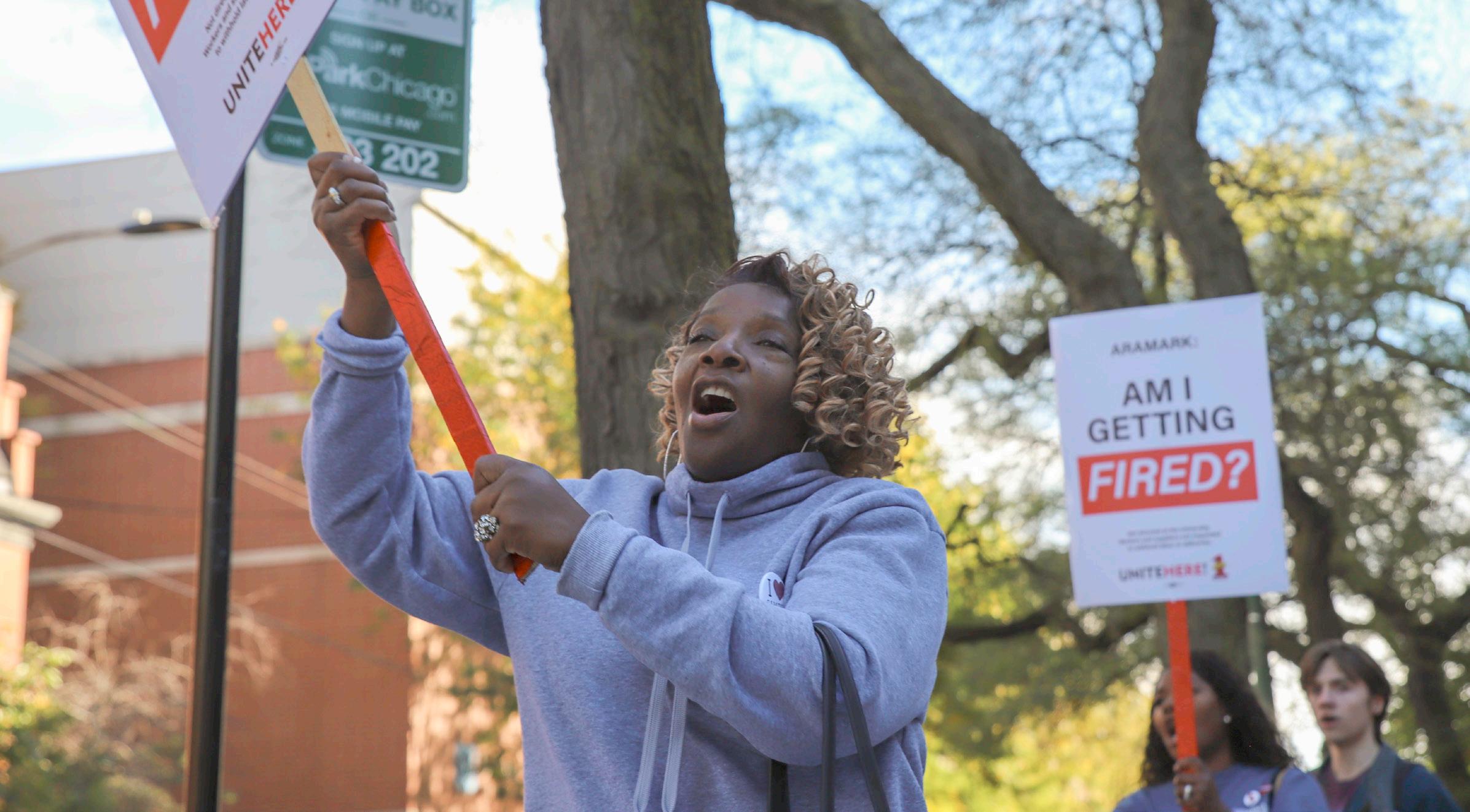
Joyce Mayweather protests with Chartwells employees outside of DePaul University’s Student Center
2025. Mayweather attended the protest to support her daughter, Tiffany Perez, who
the protest were to fight for respect, job security and to stand with their union, she said.
“Right now, the tension is really high,” Perez said. “Everyone is nervous with anxiety about the uncertainty. The whole thing is to make sure that we have a job, that we are employed.”
Perez plans on reapplying to Aramark to make sure she keeps steady employment and to stay in the DePaul community, whom she considers to be like family.
“When these young people come to DePaul, they’re away from home,” Perez said. “They’re trying to figure out who they are. So in the process, what we do, we’d be able to give them some type of sense of comfort, security.”
Goode also feels the dining employees have a special bond with the students.
See ARAMARK, page 2
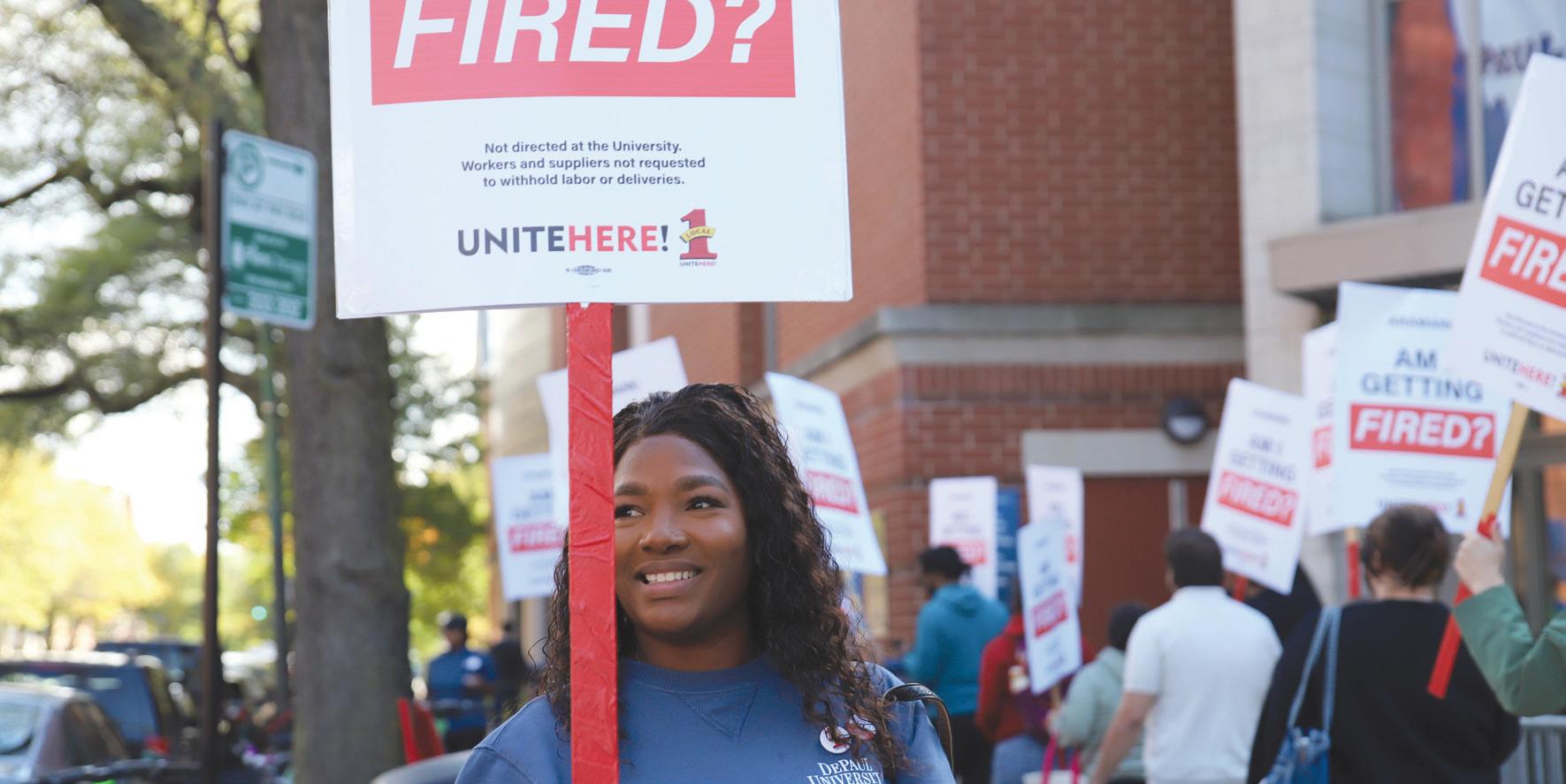
a Chartwells employee.
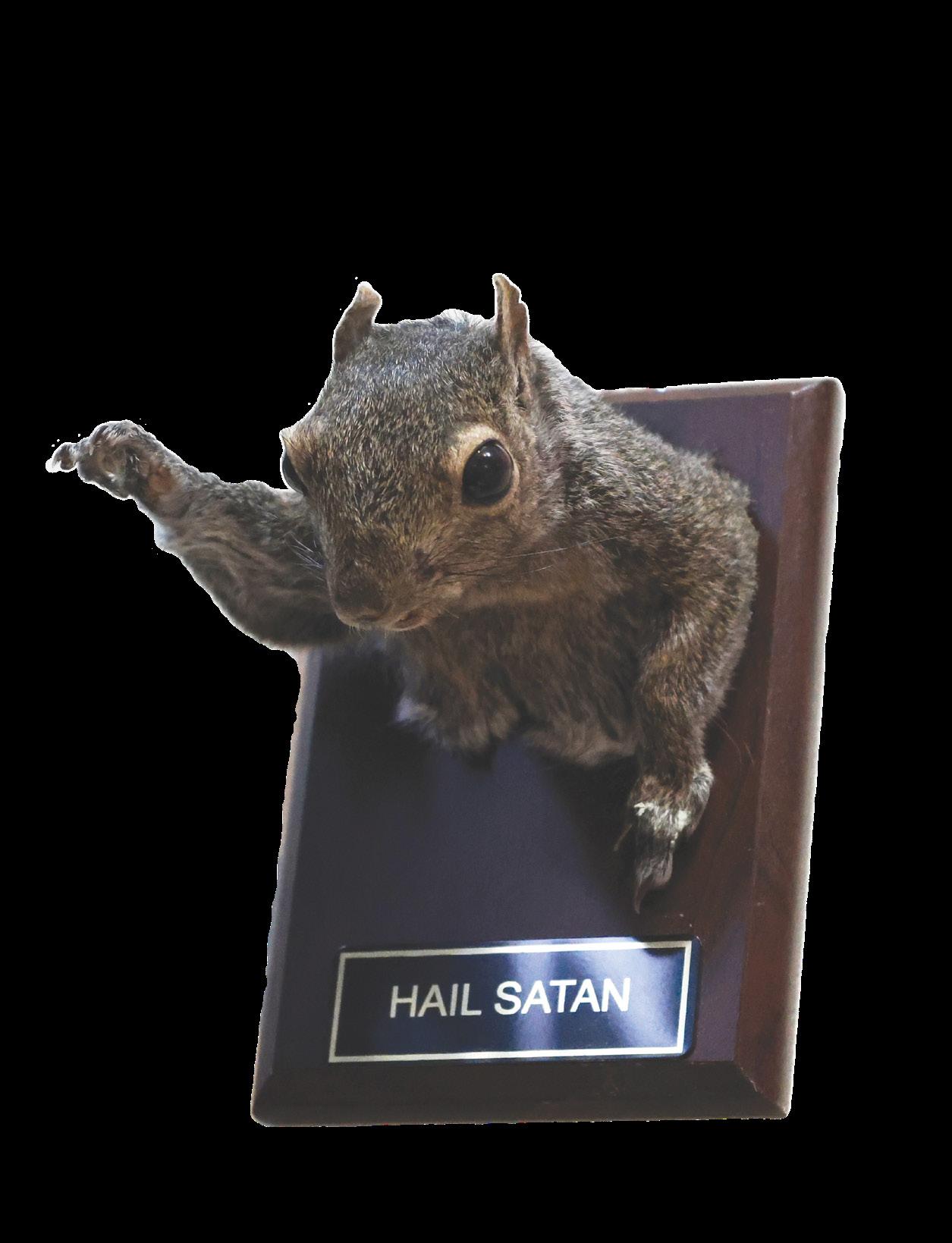
Chicago Satanists are collecting pads and tampons
By Brielle Kohlbeck Content Managing Editor
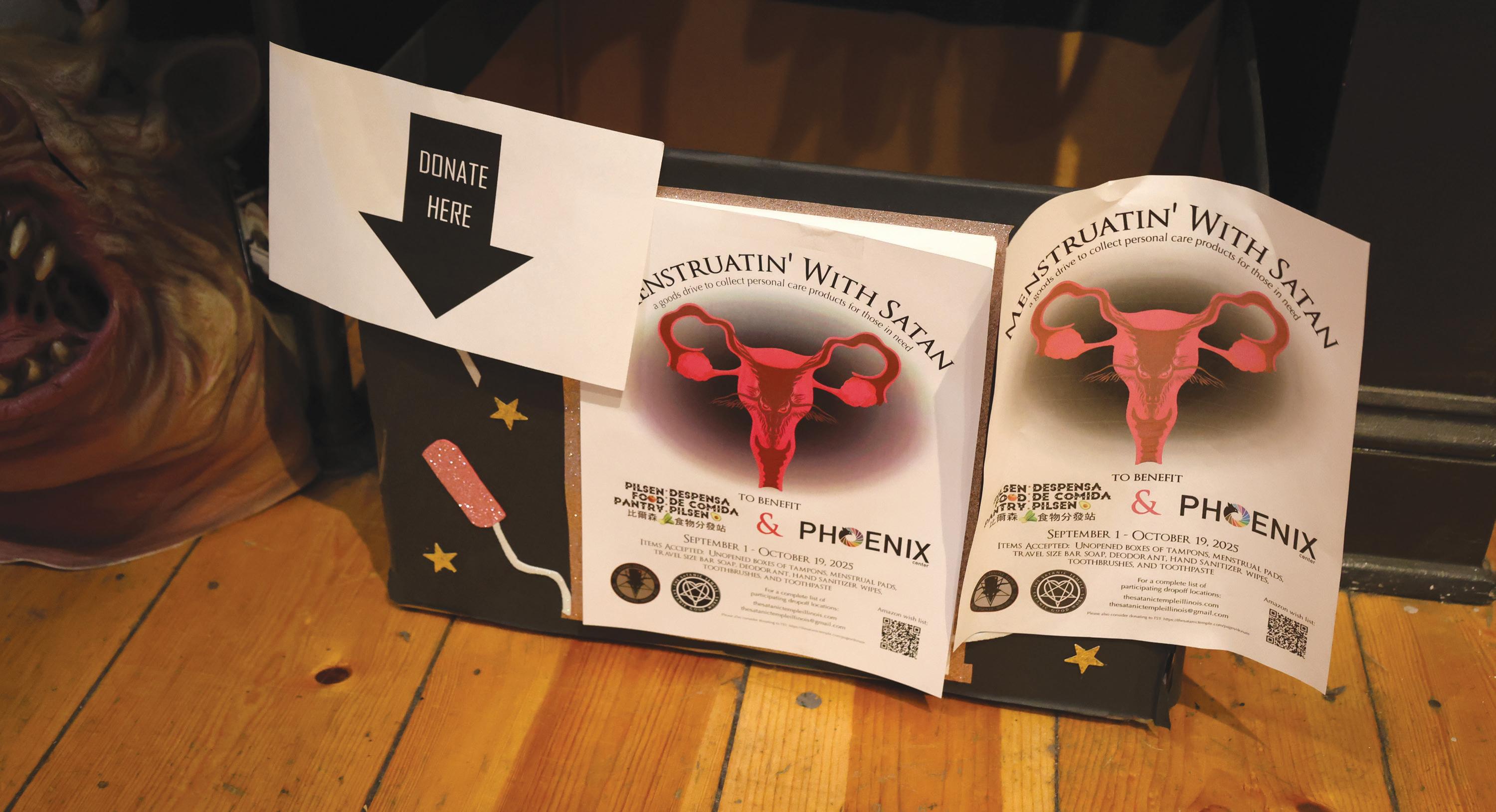
The Satanic Temple of Illinois gets people what they need, period. This is a mission that they take literally with their yearly “Menstruatin’ With Satan” campaign. They gather boxes of tampons, menstrual pads and other hygiene products to donate to the Pilsen Food Pantry and the Phoenix Center in Springfield.
“I mean, it’s a true labor of love on their part, it’s not just a token donation,” said Steve Wiley, Pilsen Food Pantry manager.
“It’s a really great thing they do.”
With members worldwide, the Satanic Temple (TST) is a federally recognized nontheistic religious organization whose goals are to promote empathy and kindness, oppose oppressive power and support a realistic, commonsense approach to justice. Their website says most members reject the idea that Satan is a real god or entity.
The Pilsen Food Pantry has worked with TST for three years. Wiley says the donations from their campaigns typically last five to six months while serving the demands of their clients.
The pantry was operating out of a church when the temple first reached out. They worked under “the watchful eyes” of the archdiocese who already had some issues with their stay, Wiley said. At first, the pantry was worried about being too closely associated with the Satanic Temple. But once they heard the name “Menstruatin’ With Satan,” they were hooked. Shortly after, they gave TST permission to put their logo and name on the flyers.
This year, the campaign has 13 participating locations across the city and Chicago area, mostly with businesses that align with the mission and “aesthetic” of the temple. Horror cafes and oddity shops are just a few of the locations taking donations in the city.
The DePaulia is the official student-run newspaper of DePaul University and may not necessarily reflect the views of college administrators, faculty or staff.
EDITOR-IN-CHIEF | LILI JARVENPA LJARVE@DEPAULIAONLINE.COM
DIGITAL MANAGING | JAKE COX JCOX@DEPAULIAONLINE.COM
CONTENT MANAGING | BRIELLE KOHLBECK BKOHLB@DEPAULIAONLINE.COM
DIRECTOR OF PHOTO & MULTIMEDIA JEREMY BATTLE JBATTL@DEPAULIAONLINE.COM
NEWS EDITOR | SADIE SPRINGER ASCHOE@DEPAULIAONLINE.COM
ASST. NEWS EDITOR KHADIJA MUJAHID KMUJAH@DEPAULIAONLINE.COM
OPINIONS EDITOR | ANNA BARTH ABARTH@DEPAULIAONLINE.COM
ARTS & LIFE EDITOR | APRIL KLEIN AKLEIN@DEPAULIAONLINE.COM
ASST. ARTS & LIFE EDITOR LINDSAY FREIBERGER LFREIB@DEPAULIAONLINE.COM
SPORTS EDITOR PEYTON HOPP PHOPP@DEPAULIAONLINE.COM
ASST. SPORTS EDITOR | LAURA VAZQUEZ DAVID LVAZQU@DEPAULIAONLINE.COM
ILLUSTRATION EDITOR PRECIOSA RIOS PRIOS@DEPAULIAONLINE.COM
ASST. ILLUSTRATION EDITOR | MARA LOGAN YBLUE@DEPAULIAONLINE.COM
DESIGN EDITOR GENESIS COFFEY GCOFFE @DEPAULIAONLINE.COM
ASST. DESIGN EDITOR | JAVEN OSWALD JOSWAL@DEPAULIAONLINE.COM
PHOTO EDITOR GIACOMO CAIN GCAIN@DEPAULIAONLINE.COM
ASST. PHOTO EDITOR | ZOEY DUCHENE ZDUCHE@DEPAULIAONLINE.COM
MULTIMEDIA EDITOR | GRACE LOGAN GLOGAN@DEPAULIAONLINE.COM
ASST. MULTIMEDIA EDITOR | RILEY SOMMERS RSOMME@DEPAULIAONLINE.COM
COPY EDITOR AMBER CORKEY ACORKE@DEPAULIAONLINE.COM
ASST. COPY EDITOR | ISABELLA RUSSOMANNO IRUSSO@DEPAULIAONLINE.COM
SOCIAL MEDIA EDITOR | RILEY MOULTON RMOULT@DEPAULIAONLINE.COM
COMMUNITY ENGAGEMENT COORDINATOR | LAINE WYATT LWYATT@DEPAULIAONLINE.COM
MARKETING COORDINATOR | SYDNEY MANTEI SMANTE@DEPAULIAONLINE.COM
EDITORIAL BUSINESS MANAGER | AIKO TAI ATAI@DEPAULIAONLINE.COM
AD SALES BUSINESS MANAGER | SAGE SLESSOR SSLESS@DEPAULIAONLINE.COM
FACULTY ADVISER MARTHA IRVINE MIRVINE5@DEPAUL.EDU

La DePaulia es el noticiero oficial estudiantil en español de la Universidad DePaul, enfocado en proveer una voz para la comunidad latinx. Nuestras opiniones no necesariamente reflejan las opiniones de la administración, facultad o personal de la universidad.
EDITORA EN JEFE | SOFIA JOSEPH
SJOSEP@DEPAULIAONLINE.COM
EDITORA DE CONTENIDO | LAURA VAZQUEZ DAVID LVASQ@DEPAULIAONLINE.COM
EDITORA DE NOTICIAS | IZZY SIEMASZKO ISIEMA@DEPAULIAONLINE.COM
EDITOR DE REDES SOCIALES | CRIS SALAS CSALAS@DEPAULIAONLINE.COM
MENTOR DE LA DEPAULIA | ARTURO FERNÁNDEZ AFERNÁ@DEPAULIAONLINE.COM
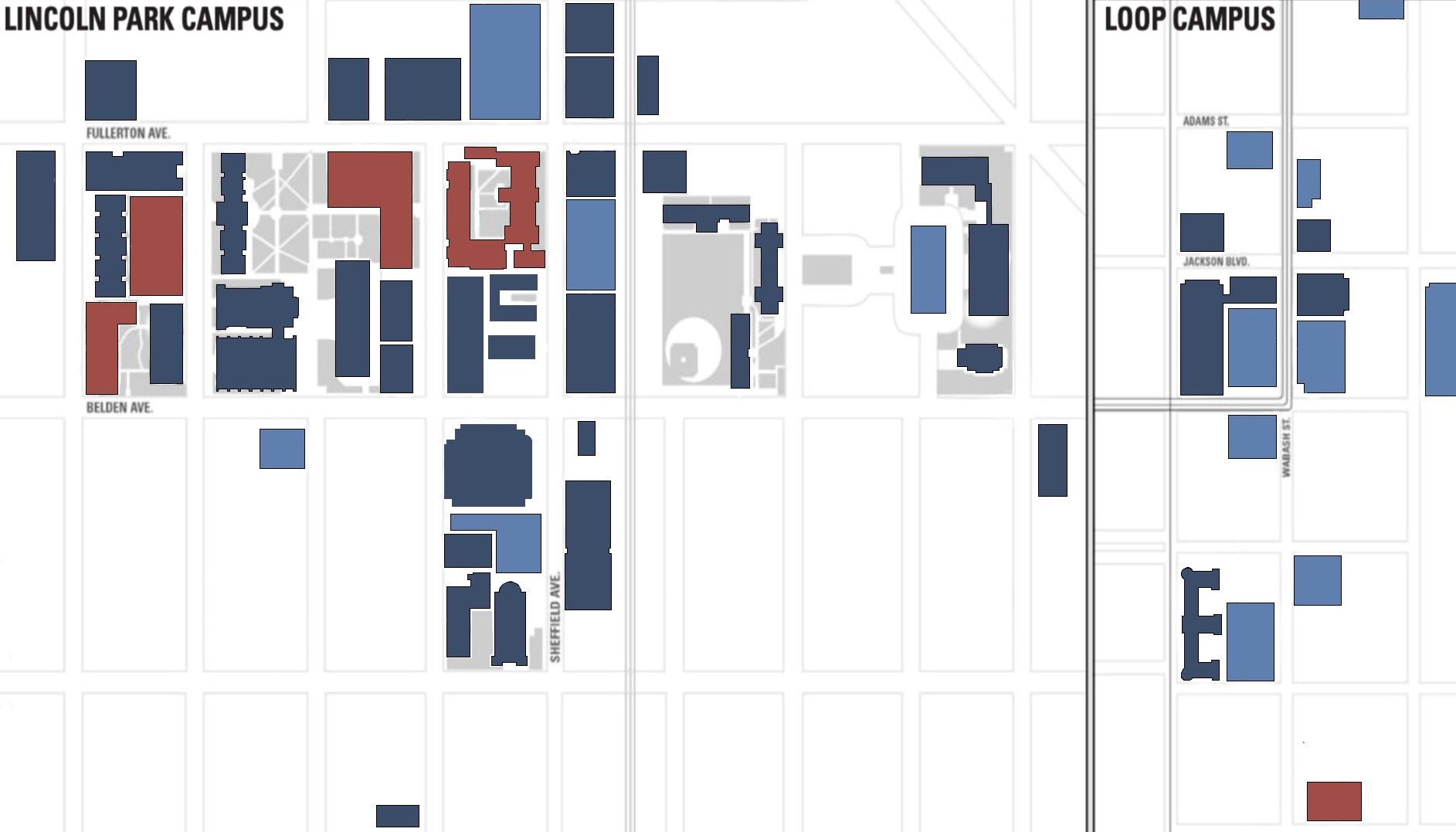
Drug & Alcohol Assault & Theft Other
Lincoln Park Campus Crimes:
Oct. 1
1) A Theft report was filed for a portable charger taken from the Richardson Library. The charger was later located in the library’s lost and found.
Oct. 1
2) On October 1st, a Stalking and Harassment report was filed for conduct occurring in Ozanam Hall on September 24th.
Oct. 2
3) Two Motor Vehicle Theft reports were filed for motorized scooters taken from the bike rack near the Sullivan Athletic Center.
Oct. 2
4) A Disorderly Conduct report was filed for conduct occurring on public property near Byrne Hall.
“When these young people come to DePaul, they’re away from home,” Perez said. “They’re trying to figure out who they are. So in the process, what we do, we’d be able to give them some type of sense of comfort, security.”
Goode also feels the dining employees have a special bond with the students.
“I know my regular customers,” Goode said. “They come in and I know their orders by heart. It just feels good to serve them and know what they want and get them out the door, especially when they got to go to class and stuff.”
The new partnership with Aramark will launch as Blue Demon Hospitality, a student-centered dining experience initiative, according to a Sept. 11 announcement.
Among the changes are an Eat to Ex-
Oct. 4
5) A Sexual Harassment report was filed for conduct occurring in LeCompte Hall.
Oct. 5
6) A Harassment by Electronic Means report was filed on the Lincoln Park Campus.
Oct. 6
7) A Theft report was filed for a cell phone taken from the Richardson Library. The phone was later located by the individual who made the report.
Oct. 6
8) A Disturbance report was filed for conduct occurring in the Ray Meyer Fitness Center.
Loop Campus Crimes:
Oct. 1
1) A Criminal Damage to Property report was filed for windows broken on the Daley Building.
Oct. 6
2) A Battery report was filed for conduct occurring in the Chipotle restaurant in the Daley Building.
Oct. 6
3) A Battery and Retail Theft report was filed in the DePaul Center Plaza. Chicago Police were called, and the offender was taken into custody.
Oct. 7
4) A Disorderly Conduct report was filed for conduct occurring outside the DePaul Center.
cel program, Grubhub Ultimate mobile ordering and inclusive dining options, which include kosher and halal options and allergen-friendly stations.
DePaul members can expect a smooth transition, the announcement said. There will be no changes to meal plan pricing during the academic year, and Aramark will host multiple town hall meetings to get to know current employees and walk them through the hiring process.
“We recognize Chartwells employees are important members of our university community,” said Kristin Claes Mathews, senior director of strategic communications at university communications. “The university’s dining service provider employs the dining workers at DePaul who are members of UNITE HERE Local 1. DePaul does not have a role in negotiating the union contract
between the dining service providers and their employees.”
Aramark will hire all of those who successfully complete the onboarding process, according to Mathews.
Aramark processed 98 union employees and 11 supervisors so far, said Kelli Steckbauer, Aramark’s director of business development.
Goode hopes that DePaul officials who have a say in the issue will “do the right thing” and consider current Chartwells workers’ years of service.
“They know what’s going on,” Goode said. “They know how hard we work to build this contract that we currently have.”
Jake Cox contributed to this report.
By Isabella Russomanno Asst. Copy Editor & SGA Beat Writer
DePaul’s Dialogue Collaborative is expanding its discussion-based events to include more student perspectives this year. Students, faculty and staff are invited to an Oct. 28 event in the Student Center that will explore issues related to free speech on college campuses.
The collaborative is entering its second year and encourages healthy disagreement and a respectful exchange of ideas in the DePaul community.
“As we navigate questions of expression, belonging and academic freedom, your voice matters,” the university-wide invitation read.
“We encourage you to join us for this important conversation and help shape the dialogue that defines our community.”
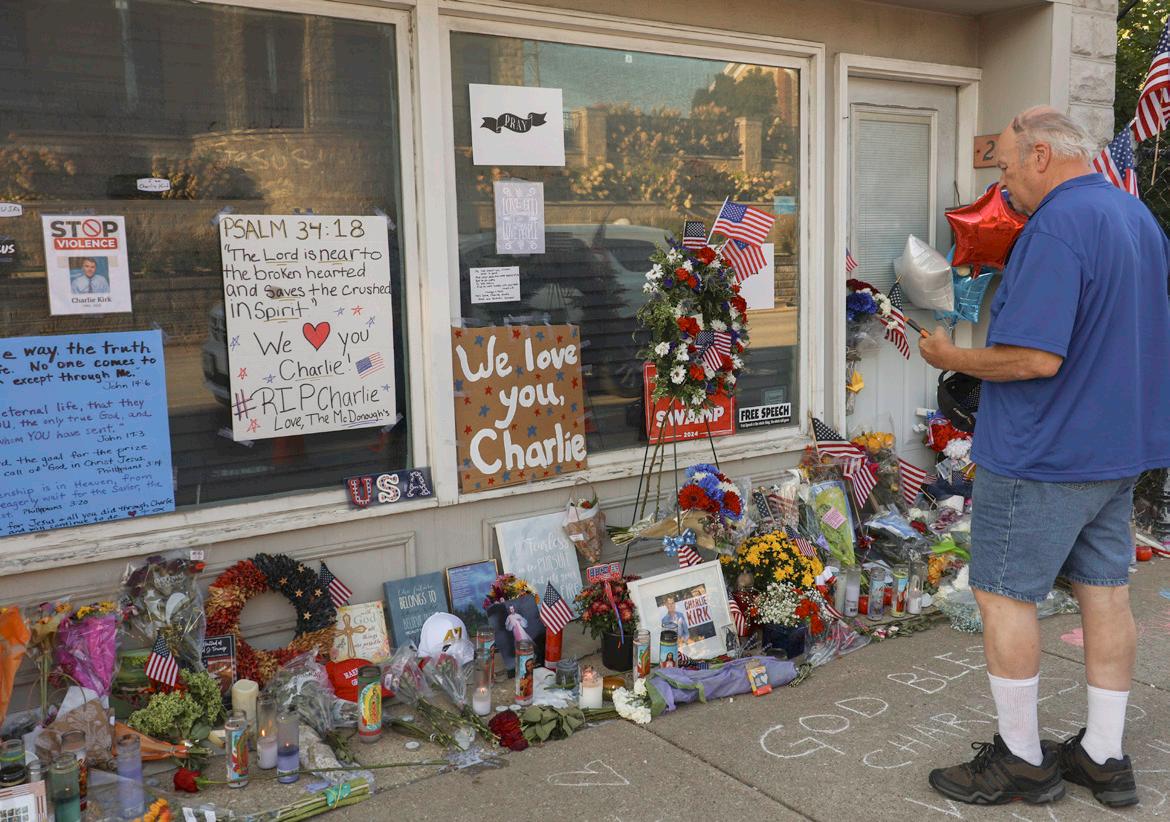
Elissa Foster, co-chair of the Dialogue Collaborative’s implementation team, said campus speech was chosen as the topic prior to the assassination of conservative activist Charlie Kirk at Utah Valley University on Sept. 10.
“We don’t want it to be just about Charlie Kirk, but we cannot avoid … not just him but all of the
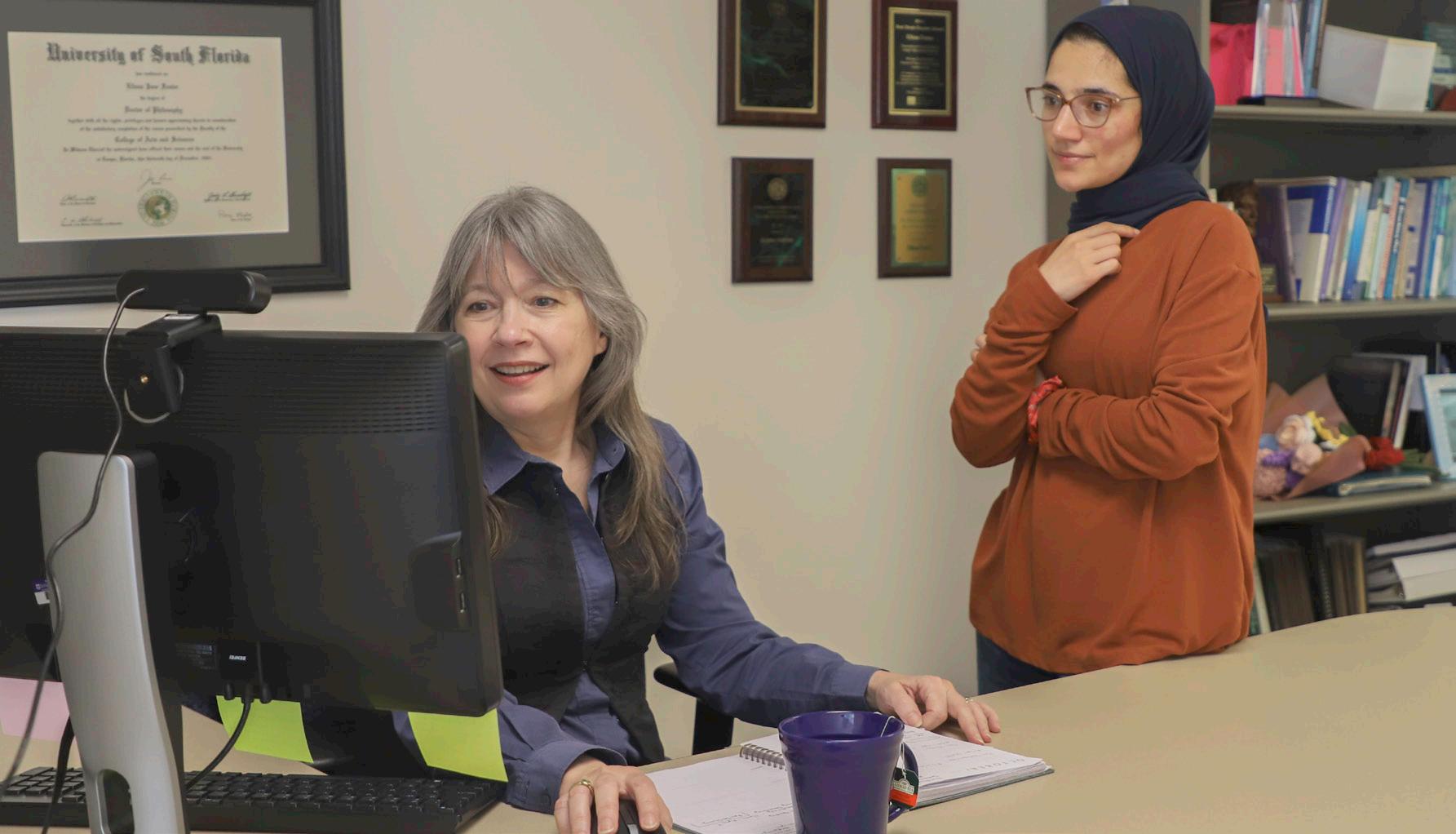
Elissa Foster and Mashal Malik go over the Dialogue Collaborative’s event logistics in Foster’s office on Thursday, Oct. 10, 2025. Foster is the co-chair of the collaborative’s implementation team, and Malik is a graduate assistant in CDM who is helping coordinate digital aspects of the program.
ways in which that killing is being appropriated and storied and reacted to in ways that seem to be threatening to really curtail freedom of expression on campuses,” Foster said.
Aside from the President’s Dialogue Series, the collaborative will continue to host its smaller “Lunch, Listen and Learn” events twice per
quarter.
This quarter’s first installment on Oct. 15 will cover “ongoing conflicts in the Middle East, campus protests, threats to academic freedom and other related issues that fill our hearts and heads,” according to DeHub. The second installment will take place on Thursday, Nov. 6.
“The idea is that these are very intimate,” Foster said. “We share our food together and then people get to express what they’re thinking in a supportive way, and listen to each other, and there are definitely moments of difficult dialogue in there.”
This isn’t the first time students have been included in the Dialogue Collaborative’s activities.
The collaborative will also continue its Bridgebuilding Fellowship program for students. It was developed last year in the Division of Mission and Ministry in collaboration with Interfaith America, a Chicago-based nonprofit organization.
Georgianna Torres Reyes, associate vice president for student engagement in the Division of Mission and Ministry, wrote the grant for the program and works with
Foster as co-chair of the collaborative’s implementation team. Over 40 student “bridgebuilders” were trained last year, she said.
“I think that it might be a mistake to call all these efforts a response to the crises in our country,” Torres Reyes said. “It’s actually part of a skill set that we hope to offer not just to our students, but our faculty and staff, to function as whole people that are rooted in human dignity for others.”
The desire to humanize dialogue does come at a time when Americans are increasingly pessimistic about political discourse. Nearly six in 10 Americans doubt that it is even possible to lower the temperature of political rhetoric and speech in the U.S., according to a September Quinnipiac poll.
As the holiday season approaches, College of Communication dean Lexa Murphy said she sometimes jokes that dialogic skills can help people navigate political topics at Thanksgiving dinner.
“Rather than ignore it, how can we, through skills, through care, through building relationships, ac-
tually engage in that topic and build some understanding?” Murphy said.
Vincent Rinella, a DePaul senior studying psychology, is a former Bridgebuilding Fellow. Rinella said he has had political disagreements with his relatives in the past, and he applied the storytelling techniques and deep listening skills used in the fellowship to those relationships.
“The last time I talked to them was after our Bridgebuilders meeting, and I took it from the different perspective of, ‘OK, I’m not going to try to change your mind right now. Tell me why you believe this, and tell me the story that you have,’” Rinella said.
Focusing on the story that has shaped a person’s views has brought about more productive conversations with his cousin, Rinella said.
“It’s a pivotal difference in how it shapes the conversation, and it definitely helped for me in understanding my cousin, and being able to get places with my cousin, because I know the emotional state, rather than just the argument of statistics or numbers,” Rinella said.
Foster, the co-chair of the implementation team, said dialogue is ultimately not a substitute for debate, and she reiterated its focus on humanizing the people you disagree with.
“It’s too easy to just name-call and say those people are evil, as if there’s some malevolent force from the supernatural that’s landed on them,” Foster said. “It doesn’t ask us to agree. It does ask us to listen and to reflect on what others are saying and to maintain a stance that says, ‘You are human. You have dignity.’”
Murphy, the dean, said she hopes the collaborative’s activities will create a sustainable culture of dialogue on campus: “Ultimately, in the end, I hope what we’ll find is that we have a whole university community that is more connected, that is more compassionate, more able to tackle complex issues together.”
By Tori Malek
Contributing Writer
Metra riders will have a new seat at the table with the latest change to commuter life: the Café Car prototype, which Metra debuted on Sept. 30.
This pilot program could become a regular occurrence along train lines depending on feedback Metra receives from their online survey.
The railway will be debuting the Café Car across their busiest train lines this fall to test the program and gather feedback.
During its run on the Rock Island line on Oct. 1, Metra gave a free drink and snack to passengers upon completion of the survey via QR code. The Café Car offered a variety of options including canned iced coffee, soda and prepacked chips and cookies.
The survey asked passengers how often they took the Metra, what they thought of the design of the Café Car, and what types of food and beverages they would like to have available onboard.
Ariana Anaya, a regular commuter on the train, expressed that she sees herself using this service for that “end of the day pick-meup.”
“I’m battling the 3 p.m. slump
right now,” Anaya said. “So I’m hoping it helps give a little jolt of energy before having to make the drive home after the train.”
The Café Car was designed differently than commuter cars, with the upper deck completely taken out, giving double the amount of usual head room. The prototype can seat approximately 20 passengers with chairs and a three-seater bar along the aisle.
Tables fitted with tic-tac-toe and checkers make the environment more engaging, allowing for passengers a game to play while commuting.
“I’m that type of person that will strike up a conversation with somebody next to me,” Anaya said. “So this kind of makes it a little easier, you know, like a little icebreaker.”
Metra’s director of communications Michael Gillis shared that this METRA, cont. on 5

By Banshee McKee Contributing Writer
Early childhood education is at risk as the Corporation of Public Broadcasting is shutting down after Congress cut its budget by $1.1 billion. Among other things, the cuts the Trump administration promoted are forcing PBS shows to move to paid streaming services.
This has sparked worry among those who grew up on shows like “Sesame Street,” which debuted in November 1969 and quickly became an educational tool for parents and school teachers.
Without these shows being accessible to everyone, educators are concerned that more of the burden will be placed on already strained school systems.
“We will have more kiddos coming to us who might need more individualized education plans,” said Jonathan Burton, an assistant principal at John B. Murphy Elementary School in Chicago. There’ll be a lot of onus on the elementary schools to do more heavy lifting.”
He stressed how important these shows are for early childhood development.
“A lot of children in the earlier stages, before they even reach our realm of education, learn oracy — learn the beginning function of letter sounds,” Burton said.
Soon after the cuts were announced in May and before the order was signed, “Sesame Street” announced it would be moving onto Netflix where the lowest monthly subscription is $7.99 a month.
New episodes would be uploaded to PBS KIDS alongside Netflix, but the closure of Corporation of Public Broadcasting, which funds PBS, puts that at risk.
The fate of PBS, viewed by 15.5 million monthly users, is still unknown. Although not on the same scale, budget cuts have forced New Jersey PBS, the state’s lone public broadcast station, to shut down next year.
Isabela Belle, a nanny who babysits as a side job, criticized the shift to pay-to-view these shows are adopting, calling these shows “important for kids.”
She says parents shouldn’t have to pay to find “child-friendly and safe content.”
Belle suggested that parents could replace subscription-based shows with internet shows like “Cocomelon” that are free, but she worried that they might not be as educational as PBS shows.
“Even if you were low-income or high-income, you could have educational shows for your kids,” she said.
Many people have relied on public broadcasting to help educate their children. And for the 6.8 mil-
lion U.S. households that don’t have internet, PBS is one of the few free services.
This can disproportionately affect low-income families and those living in rural areas who might not have the money or the infrastructure for an alternative.
If PBS KIDS were to continue running only as an app, those who don’t have Wi-Fi or a device like a mobile phone or tablet still wouldn’t be able to access it.
Jean Buckler, a resident of Chicago and nanny who grew up watching PBS shows as a child, believes the cuts are meant to help low-income families.
“It’s a really good resource for kids that can’t get to school,” she said. “It’s definitely targeted to individuals who can’t afford schools, especially a private preschool.”
However, many families will still have access to PBS shows because they already have these subscriptions. Netflix has 81.44 million subscribers in the U.S, and more than 300 million worldwide.
Burton reflected on the effect that cutting free access to PBS children’s shows will have on families and schools.
“Essentially, that’s just widening the gap that we already have in education,” he said. “It won’t affect the ‘haves,’ but you’ll probably see a double and triple effect of the ‘havenots’ who are not able to afford that
By Abigail Shanley Contributing Writer
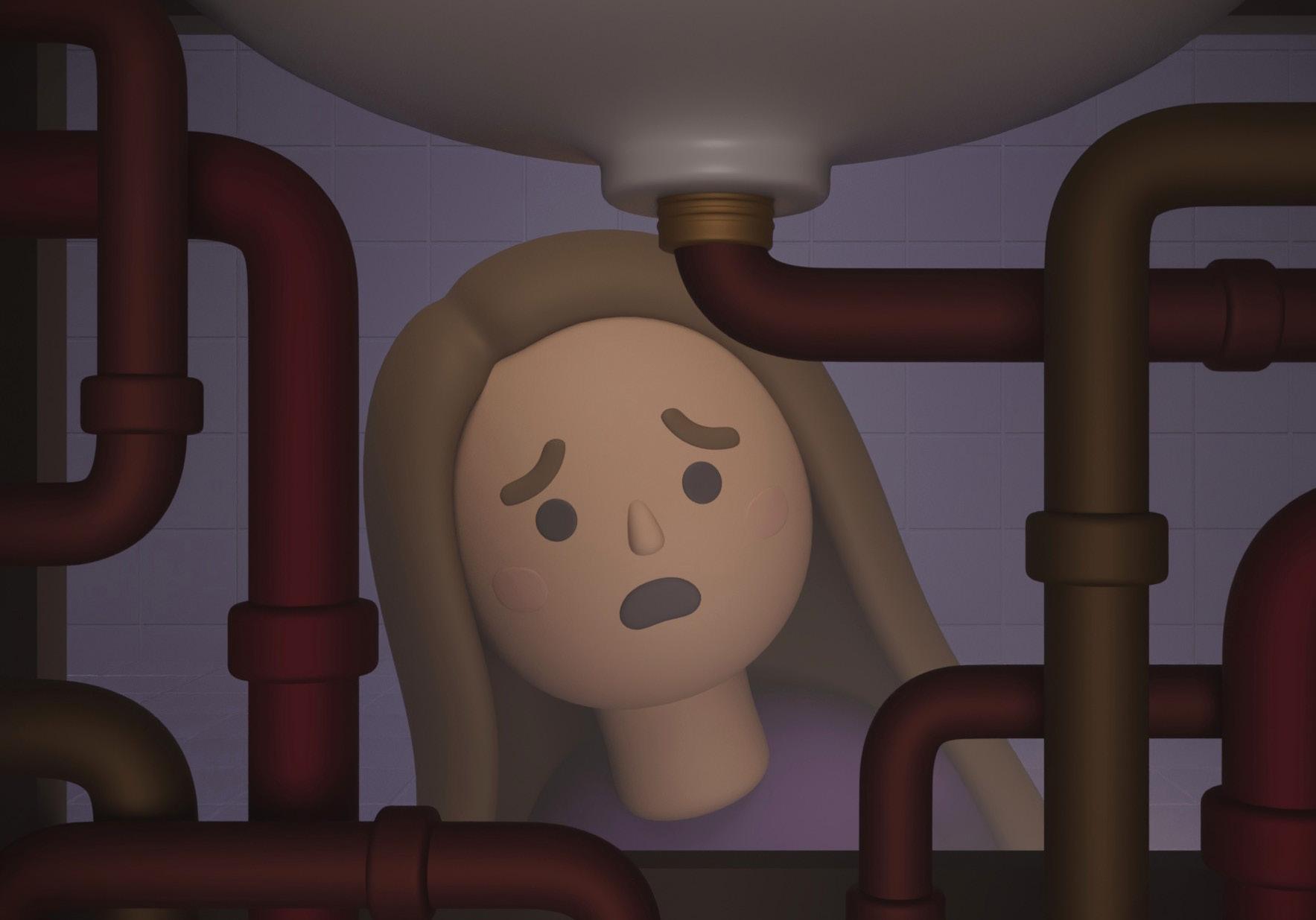
Last month, Chicago officials said they wanted to speed up the replacement of lead lines. But the city does not plan to replace all lead pipes until 2077, three decades after a federal deadline.
Chicago has twice as many lead service lines than any other city in the U.S. In 1986, the federal government banned lead service lines. Under Illinois law, Chicago has until 2077 to have all lead service lines replaced. However, experts at DePaul and elsewhere say solving this expensive problem will take longer than expected.
But why does this matter?
Getting rid of lead service lines is important because the lead can get into drinking water. According to the World Health Organization, there is no safe blood level of lead.
“Once lead is in the body, particularly if it’s in our bones, it’s there to stay,” said James Montgomery, a DePaul professor in the College of Science and Health. “Phosphate is supposed to form on the inside of the pipe. It’s a protective coating that prevents the lead from leaching into the water.”
Montgomery said once the lead
service lines are disconnected for any reason, it can cause the phosphorus coating to come off, releasing lead atoms into the water that people drink.
Since lead stays permanently within the body, it becomes a neurotoxin, which researchers say can lead to ADHD, severe aggression and possibly lowered IQ, especially in young children.
Older adults are also negatively affected by lead exposure, Patrick MacRoy, a vice president for environmental health and water programs at Elevate, a Chicago nonprofit group that works on such issues as lead and renewable energy, explained. They are more likely to have heart attacks and other cardiovascular problems, along with bone health and osteoporosis.
The city has already drawn $70 million to $90 million of a $325 million loan from the federal and state government to replace the piping. But some say more resources are still needed. MacRoy says Chicago needs more funds to focus on replacing lead service lines to decrease exposure.
“It’s a serious challenge,” Macroy said. “It’s going to take a lot of money.”
Joseph Schwieterman, DePaul
professor of urban planning and public service, said Chicago has waited for change and members of the community are anticipatory.
“The needs are almost overwhelming, but (Chicago has) never developed a coherent, gradual plan to solve this problem, and the public is getting quite impatient,” Schwieterman said.
He also noted that Black and brown communities are disproportionately affected because they have the highest percentages of lead service lines, partly because housing on the South Side was built when lead pipes were the norm.
“The south has been burdened with seeing infrastructure frozen in time, and that’s a terrible problem,” Schwieterman said.
Meanwhile, building and homeowners in the Loop and neighborhoods to the north have often had more economic resources to replace much of the lead pipe there.
Schwieterman believes that because lead poisoning is a “silent killer,” it has led people to “punt the problem and let the next generation worry about it.”
No matter what, Schwieterman said, a “half century is beyond anybody’s realistic planning horizons.”
“We’re in a category all to our own, and that’s not a good place to be,” said Schwieterman.
Explaining how Chicago ended up with so many lead pipes, Montgomery said the plumbers union in Chicago “really loved lead pipes” because they were easy to bend and solder in place.
Plumbers’ love for lead pipes drove their unions to influence the city code in their favor.
That changed when the federal government banned lead pipes and other products such as paint in 1986. According to the Chicago Department of Public Health, the blood lead content in residents has dropped drastically since the 1990s.
Just because the blood lead content is not as high as it used to be does not mean the effects can’t be seen, according to MacRoy.
“We’re still robbing society of potential as a result of ongoing lead exposure,” MacRoy said.
of communications
shared that this pilot program was born out of the railway’s effort to “attract new riders.”
“Since the pandemic, our research has really indicated we have about the same number of unique riders riding our system, but they’re just not riding it as often as they used to before the pandemic,” Gillis said.
“So we thought, let’s just create one prototype, put it in service, ask our riders what they think, and then hopefully we find some intersection between what our riders say they would like to see on this car and what we can practically do,” Gillis said.
Rider Jeremy Bates noted the impact of the Café Car during his trip on the Metra.
“I like taking the Metra from time to time leisurely for the fast speed and the comfort,” Bates said. “It’s just better than the ‘L’. And having something like this just improves your experience.”




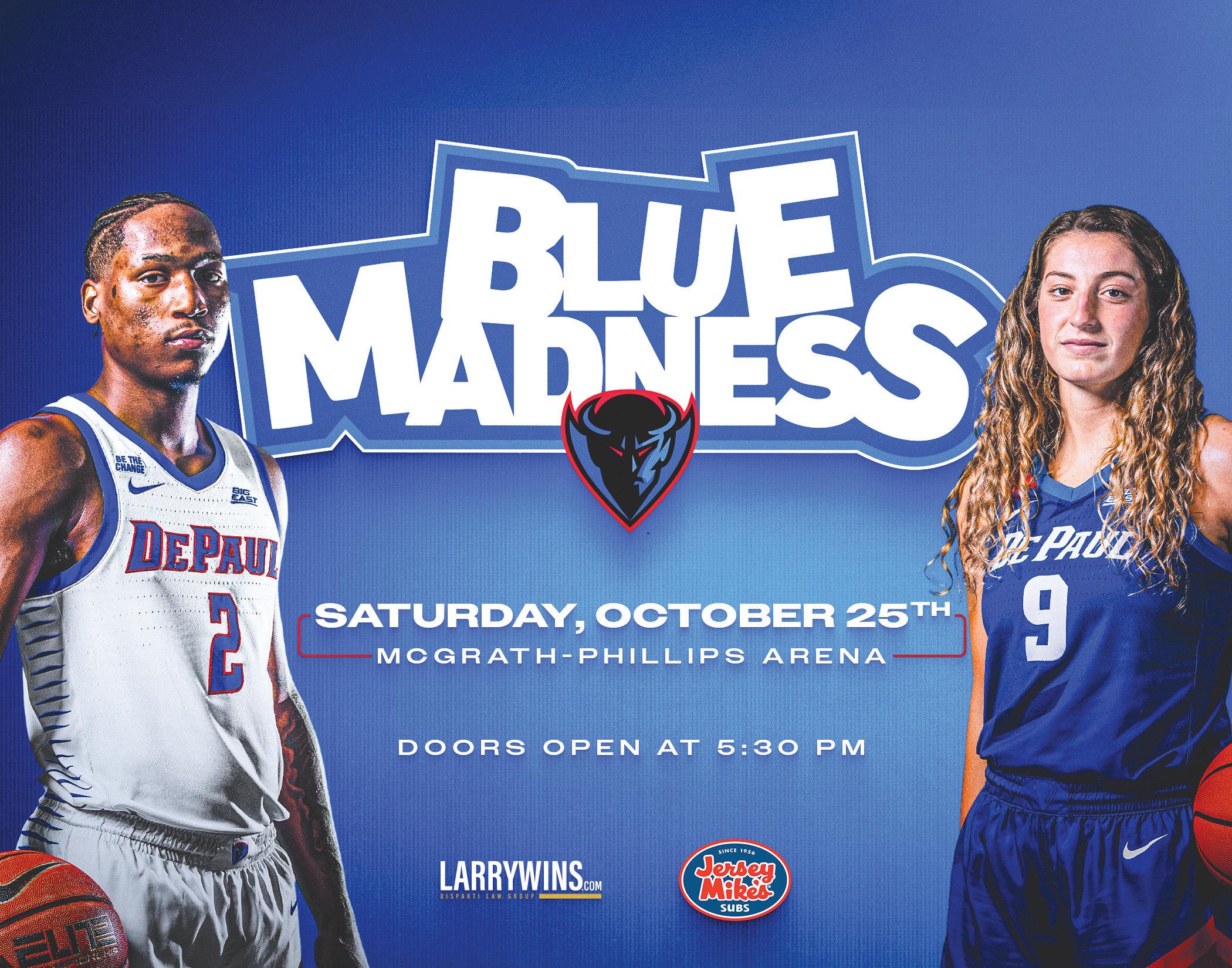
BASKETBALL. 10/27.
By Hugo Pletcher Contributing Writer
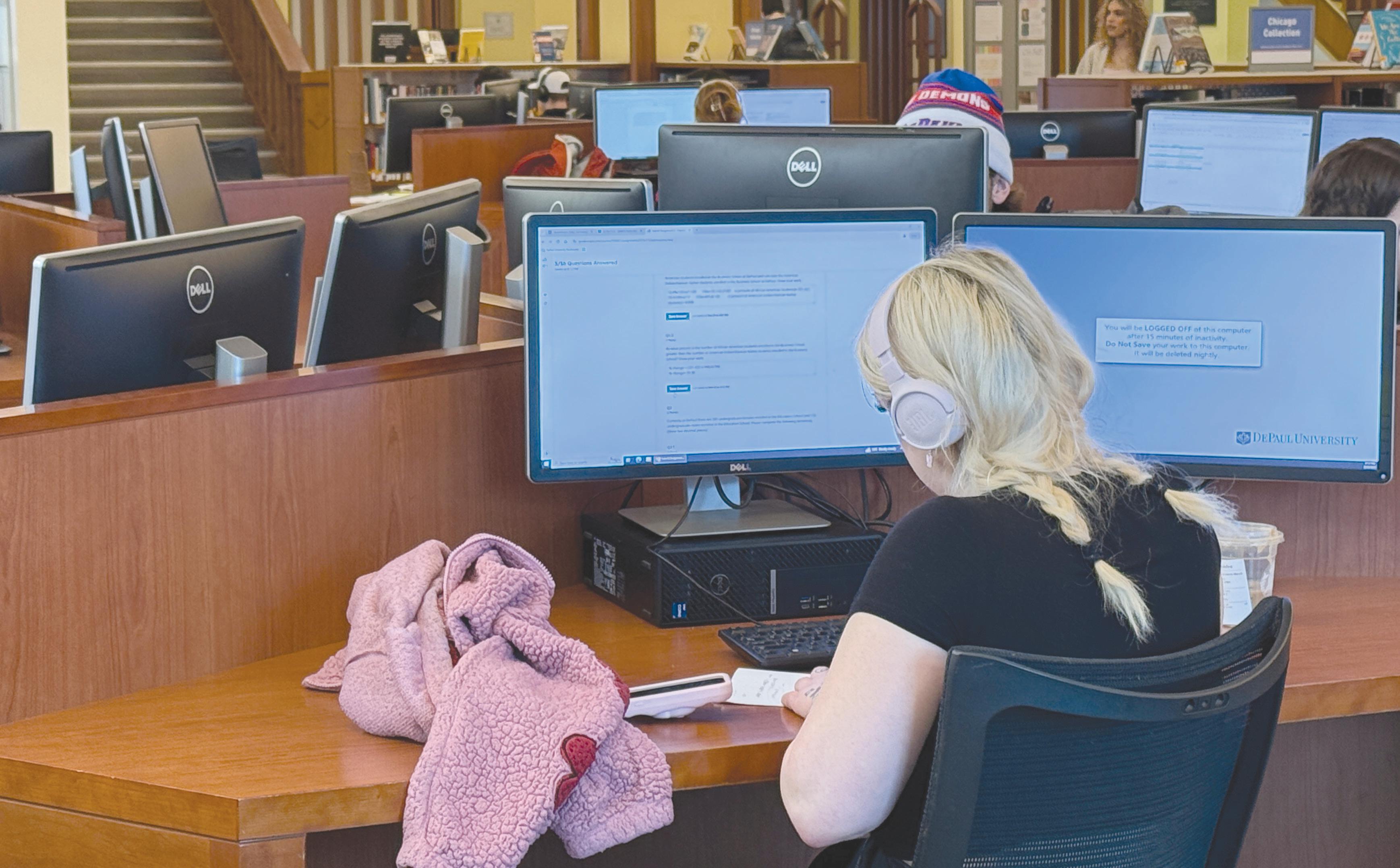
In the eighth grade I received a plaque for earning straight A’s in all of my classes throughout middle school. Just two years later, during my sophomore year of high school, I failed chemistry and had to retake it … what happened?
I had gone from being at the top of my class to having to stay behind while my peers moved ahead to honors physics. I became demotivated and avoidant, often ignoring homework assignments and procrastinating projects. My story is an example of a fairly common issue.
I had “gifted kid burnout.”
It often starts in elementary school. As kids, some of us are singled out and labeled as “gifted” or “accelerated.” We’re separated and taught advanced
topics that the other children don’t learn until later, if at all.
At first, I felt a sense of pride. But looking back, I now see that this system did more harm than good. I was the type of child in school who never needed to work hard to do well on tests. I would simply pay attention in class and retain the necessary information. I rarely ever studied, and I would procrastinate assignments until the morning they were due.
I was putting in minimal effort, yet receiving ample praise for my behavior and grades, and that just reinforced these poor habits. This is where the problem with gifted programs begins: there is a clear focus on pushing one’s knowledge to its limit with heightened course materials, without developing good work habits.
Tara Kumar, a DePaul junior who was in gifted programs
throughout her childhood, said that dynamic harmed her self-image.
“I felt like the dumbest smart kid,” Kumar said.
She fell behind, dropped a bunch of her honors classes and took on a self-inflicted label of failure. I faced this same scenario.
I felt this looming pressure on my shoulders to continue to get perfect grades seemingly for the rest of my life. Receiving A’s became a piece of my identity. But when I could not meet these expectations, my mental health declined. I became my own worst critic — another common experience for “gifted kids” like me and Kumar, who also found herself relying on academic validation.
“If you don’t get a good grade, you feel horrible about yourself,” Kumar said.
Gifted programs are not
entirely negative. They can build a sense of community for students in the same setting. In middle school, I had most of my classes with the same 15 to 20 people for all three years. By the end of eighth grade, we were like one giant friend group, walking the halls to our next class during passing periods.
But even that camaraderie can have a flip side. DePaul sophomore Urban Aufrecht said that the “gifted kid” friend group at his school was “very competitive.”
“A lot of them hung out together, but I feel like they didn’t like each other,” Aufrecht said. “There was a lot of comparing how good you were.”
While many others and I would use poor grades to belittle ourselves, some students used their academic success to put others down. It was not
healthy competition, but rather a way for students to adopt a sense of superiority.
“There was this notion of being dumb if you were not taking any college classes,” Aufrecht said. “They did better academically, but I think socially it kind of stunted them.”
The gifted program I was in introduced me to advanced topics that gave me new perspectives but simultaneously created a sense of separation from my peers, allowed me to reinforce bad habits and added more pressure for me to remain a straight-A student.
Today, my grades have turned back around for the positive. It is not easy to push through this burnout — but it is possible by reframing your mindset.
After all, the real gift is realizing that you are so much more than your grades.
más grande del mundo aferrado
Por Laura Vázquez David Editora General de Contenido
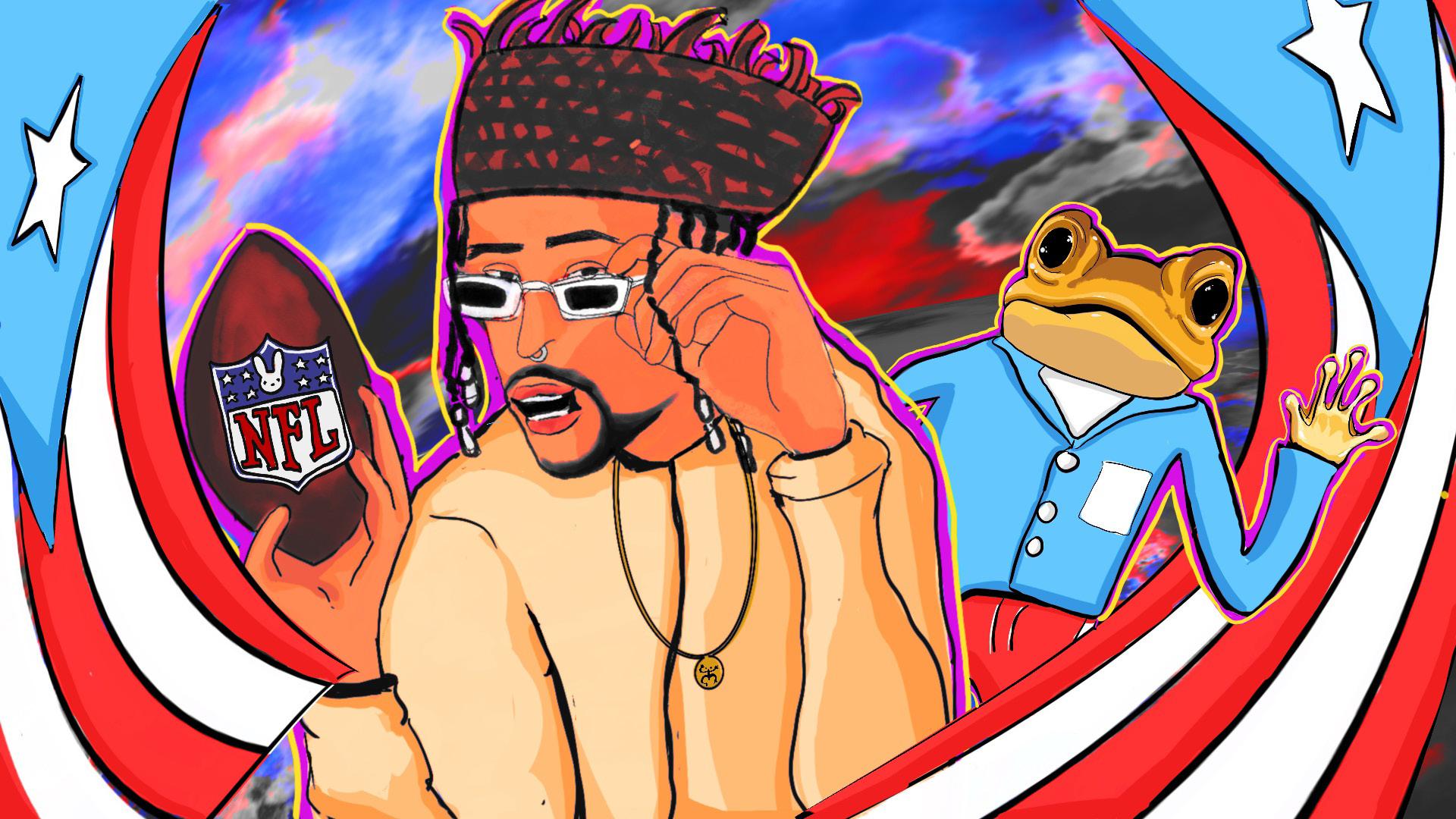
Cuando la NFL anunció el 28 de septiembre que Bad Bunny encabezaría el espectáculo de medio tiempo del Super Bowl 2025 de Apple Music, mi primer pensamiento fue: “esto no puede ser real.” Jamás imaginé que el Super Bowl sería un escenario donde Benito Antonio Martínez Ocasio — un muchacho de Vega Baja, Puerto Rico — se presentaría.
He sido fan de Bad Bunny por años, y no es sorpresa considerando que soy puertorriqueña y que mi nacionalidad se ha convertido en parte esencial de mi identidad. Lo ames o no, no se puede negar que Bad Bunny se ha convertido en el estándar de lo que significa ser un ícono global — llevando el corazón en la mano, sin dejar de ser fiel a sus valores y a su isla. Esto no se trata solo de un artista presentándose; se trata de representación.
Debo admitir que no fui fan al principio, cuando escuché su música por primera vez en 2016. Los puertorriqueños somos notoriamente críticos de los artistas
emergentes — los odiamos antes de amarlos. Pero una vez superé esa fase, me entregué por completo. Estaba en la escuela superior cuando su carrera despegó, y mis recuerdos de ese último año están íntimamente ligados a sus canciones.
Avancemos al 2025: he ido a cada concierto de Bad Bunny en Puerto Rico, he escuchado miles de minutos de su música en streaming, e incluso colaboré con su equipo para el lanzamiento de su álbum en 2023.
Para mí — y para muchos puertorriqueños — Bad Bunny no es solo un músico. Es parte de nuestro ADN cultural.
Y ahora, llevará esa identidad al escenario más grande del mundo.
“Es para los que vinieron antes que yo y corrieron incontables yardas para que yo pudiera entrar y anotar un touchdown... esto es para mi gente, mi cultura y nuestra historia.
Ve y dile a tu abuela que seremos el *HALFTIME SHOW DEL SUPER BOWL*”, dijo Bad Bunny en un comunicado.
Bad Bunny ha dicho muchas veces que hace música para “su gente” — los puertorriqueños. Por
eso este anuncio se siente diferente. Significa que seremos vistos.
Para los puertorriqueños y los latinos en todas partes, este momento se siente monumental, casi como cuando Mónica Puig ganó el oro olímpico.
Es orgullo, emoción, nostalgia y lágrimas, todo a la vez.
Será el primer artista puertorriqueño en encabezar el show de medio tiempo, como solista — un hito histórico que va más allá del entretenimiento. Es un recordatorio de que puedes venir de una pequeña isla en medio del Caribe y aun así hacer que el mundo entero se detenga a verte cantar en un idioma que tal vez no entiendan, pero que definitivamente pueden sentir.
Si hay algo que sé sobre Bad Bunny, es que no hace presentaciones mediocres. He estado en cada concierto suyo en la isla, incluida su residencia, y cada show es más impresionante que el anterior.
Se presenta con emoción, propósito y un orgullo puertorriqueño inquebrantable.
Los fanáticos ya están prediciendo grandes invitados sorpresa — tal vez Drake, tal vez Rosalía.
Pero si me preguntan a mí,
preferiría ver a Jowell y Randy o Ñengo Flow en ese escenario. Estas son algunas de las leyendas que construyeron el reggaetón puertorriqueño desde sus inicios, y ellos también merecen ese foco global.
Imaginen si convirtiera el espectáculo de medio tiempo en una celebración del reggaetón, el trap y la plena puertorriqueña — con los Pleneros de la Cresta tocando en vivo. Eso no sería solo un concierto; sería historia.
Pero más allá del espectáculo, espero que aproveche ese momento para recordarle al mundo quiénes somos — resilientes, ruidosos, orgullosos y Boricuas sin disculpas.
Este show de medio tiempo no es solo otra presentación. Es una declaración: Seguimos Aquí. Seguimos presentes. Y sin importar de dónde vengas — incluso si es de una pequeña isla rodeada por aguas caribeñas — puedes cambiar las reglas del juego.
En medio de redadas de ICE por todo el país, es imperativo usar plataformas como esta para alzar nuestra voz y abogar por todos los latinos en EE.UU. y el mundo.
No es sorpresa que la administración de Trump haya planeado
una fuerte presencia de ICE en el Levi ‘s Stadium para el Super Bowl LIX, como lo confirmó Corey Lewandowski, asesor del Departamento de Seguridad Nacional, en The Benny Show.
“No hay ningún lugar donde se pueda dar refugio seguro a personas que están ilegalmente en este país. Ni en el Super Bowl ni en ningún otro lugar”, dijo Lewandowski.
Pase lo que pase en febrero, Bad Bunny ya lo logró. Ha puesto a Puerto Rico en el escenario más grande que existe — y se asegurará de que el mundo no lo olvide. Como puertorriqueña viviendo en los Estados Unidos, lejos de esas playas cálidas y del aire lleno de salitre, estoy emocionada de ver cómo hará que el mundo sienta lo que nosotros, como Boricuas, sentimos.
Extraño mi “cantito” de tierra al que llamo hogar, pero sé que Bad Bunny me hará sentir cerca, aunque esté a miles de kilómetros de distancia.
Gracias, Benito.
Por Isabella Siemaszko Editora de Noticias de La DePaulia
Ellen Ochoa recordó una vista que la ha acompañado durante décadas. Mientras se encontraba en la cara oscura de la Tierra, esperando el amanecer a bordo del transbordador espacial Atlantis, una aurora boreal iluminaba el fondo del espacio. Ochoa acababa de desacoplarse de la Estación Espacial Internacional.
Al mirar hacia abajo, reflexionó sobre las casi 1,000 horas que pasó en el espacio a lo largo de su carrera. En esa primera hora, se convirtió en la primera mujer hispana en abandonar la atmósfera terrestre.
“Simplemente me sentí muy, muy afortunada de haber sido parte de todo eso”, dijo Ochoa.
Décadas después de su primer vuelo y de convertirse en la primera mujer hispana en liderar el Centro Espacial Johnson, Ochoa sigue siendo una fuente de inspiración con el lanzamiento de su propia muñeca.
El 15 de septiembre de 2025, la Barbie fue presentada en el sitio web de Mattel Creations en honor al Mes de la Herencia Hispana.
“Fue un gran honor que me consideraran”, comentó. “Creo que es una manera de llegar, especialmente a las niñas jóvenes, para que piensen en toda la gama de cosas que podrían hacer con sus vidas.”
Desde el lanzamiento de la primera muñeca en 1959, Barbie ha representado a mujeres en más de 200 carreras diferentes.
“Me sorprendió un poco saber que casi 40 de ellas han sido profesiones STEM (ciencia, tecnología, ingeniería y matemáticas), incluyendo otras relacionadas con la exploración espacial”, explicó Ochoa.
La muñeca, diseñada por Carlyle Nuera, presenta a Ochoa con el traje naranja de lanzamiento y reentrada que usó en su primer vuelo espacial durante la misión STS-56 en 1993.
Ochoa envió a Mattel fotos de alta resolución de los diversos parches en el traje, que ahora es-
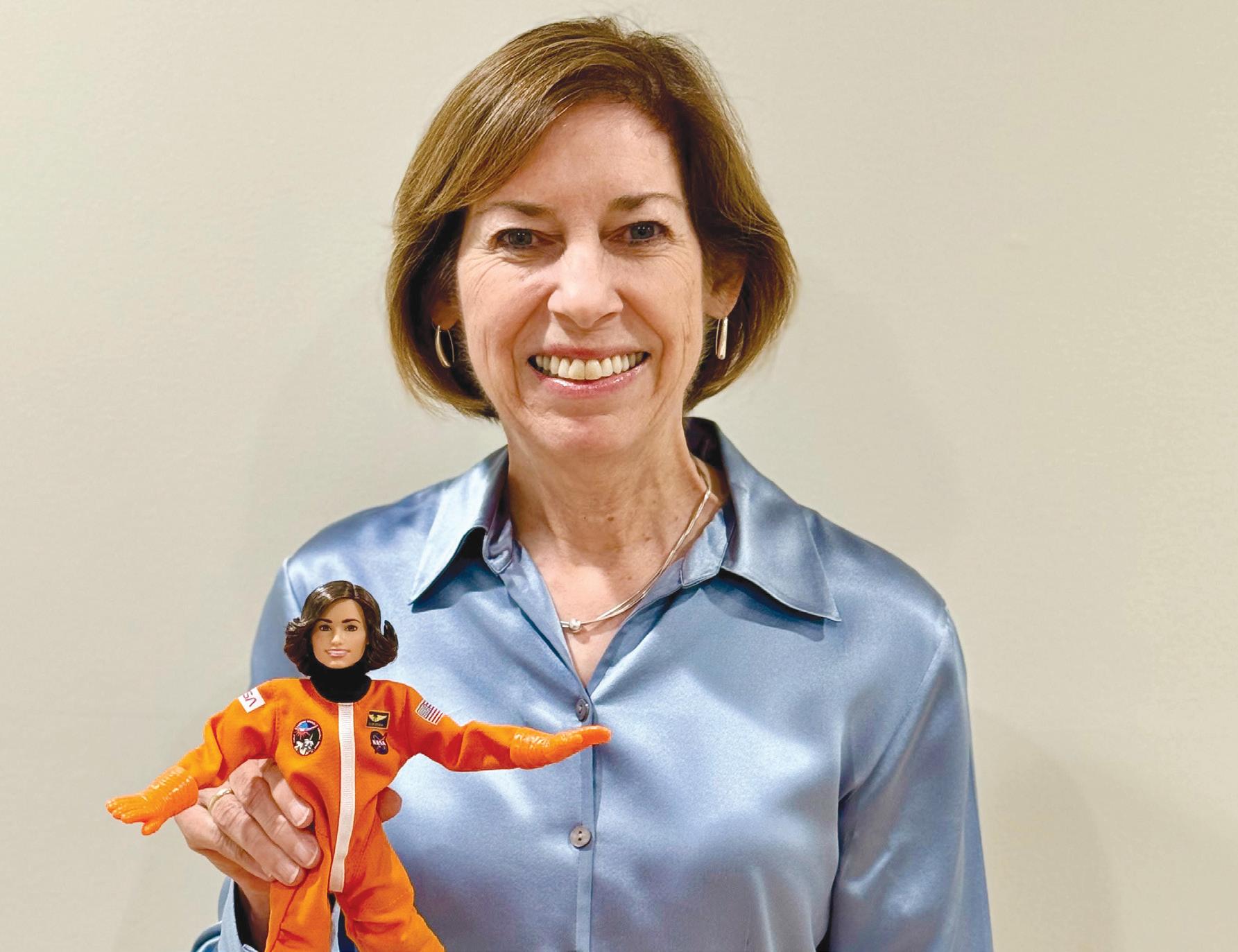

tán replicados en el atuendo de la muñeca. La Barbie viene con botas, guantes y casco desmontables.
“Fue una gran colaboración; trabajaron estrechamente conmigo y realmente se preocuparon por los detalles”, destacó Ochoa.
Ochoa reconoce la importancia de la representación diversa en los campos STEM, ya que ella misma miraba a otras personas como modelos a seguir en las primeras etapas de su carrera.
Mientras Ochoa obtenía su doctorado en ingeniería eléctrica en la Universidad de Stanford, Sally Ride, astronauta y física, se convirtió en la primera mujer estadounidense en el espacio.
“Antes parecía que las personas que eran astronautas no se parecían en nada a mí, ¿verdad? Y simplemente no lo concebía”, dijo Ochoa. “Fue realmente importante para mí ver a Sally, ver a las otras astronautas mujeres anteriores.”
Viviana Bahena, estudiante de segundo año en la Universidad de Illinois Chicago, siente que los logros de Ochoa representan también a todas las mujeres hispanas que a menudo son pasadas por alto.
“Me recuerda que mi origen no es una limitación; más bien, es parte de lo que hace significativo mi viaje”, comentó Bahena.
En 2019, Ochoa recibió la Medalla de Excelencia del Congreso del Caucus Hispano por sus contribuciones a la comunidad hispana. Unos años después, el
expresidente Joe Biden le otorgó la Medalla Presidencial de la Libertad.
A lo largo de su carrera como científica, innovadora y líder, Ochoa dijo que siempre hubo quienes dudaron de ella debido a su origen cultural y su género.
“Me encontré con personas que estaban bastante convencidas de que alguien que se parecía a mí realmente no tenía cabida allí”, recordó Ochoa. “Pero también siempre tuve personas que me apoyaron. Así que fui muy afortunada en ese sentido.”
Ahora, Ochoa espera ser ese apoyo para otros y se esfuerza por alentar a los jóvenes a soñar en grande.
Nathalia Cárdenas, estudiante de tercer año en el College of DuPage, aseguró que solo con ver los logros de Ochoa es suficiente para inspirar a otros latinos a creer en sí mismos.
“Todos sus logros... realmente muestran que cualquiera puede alcanzar sus sueños, sin importar su etnia. Ella es un modelo a seguir tan importante para las jóvenes hispanas por sus esfuerzos”, dijo Cárdenas.
Ochoa subrayó la importancia de aprovechar las oportunidades y mantener una mente abierta mientras se avanza en la educación.
Lee la historia completa en línea
Por James Matthews
Escritora Colaboradora
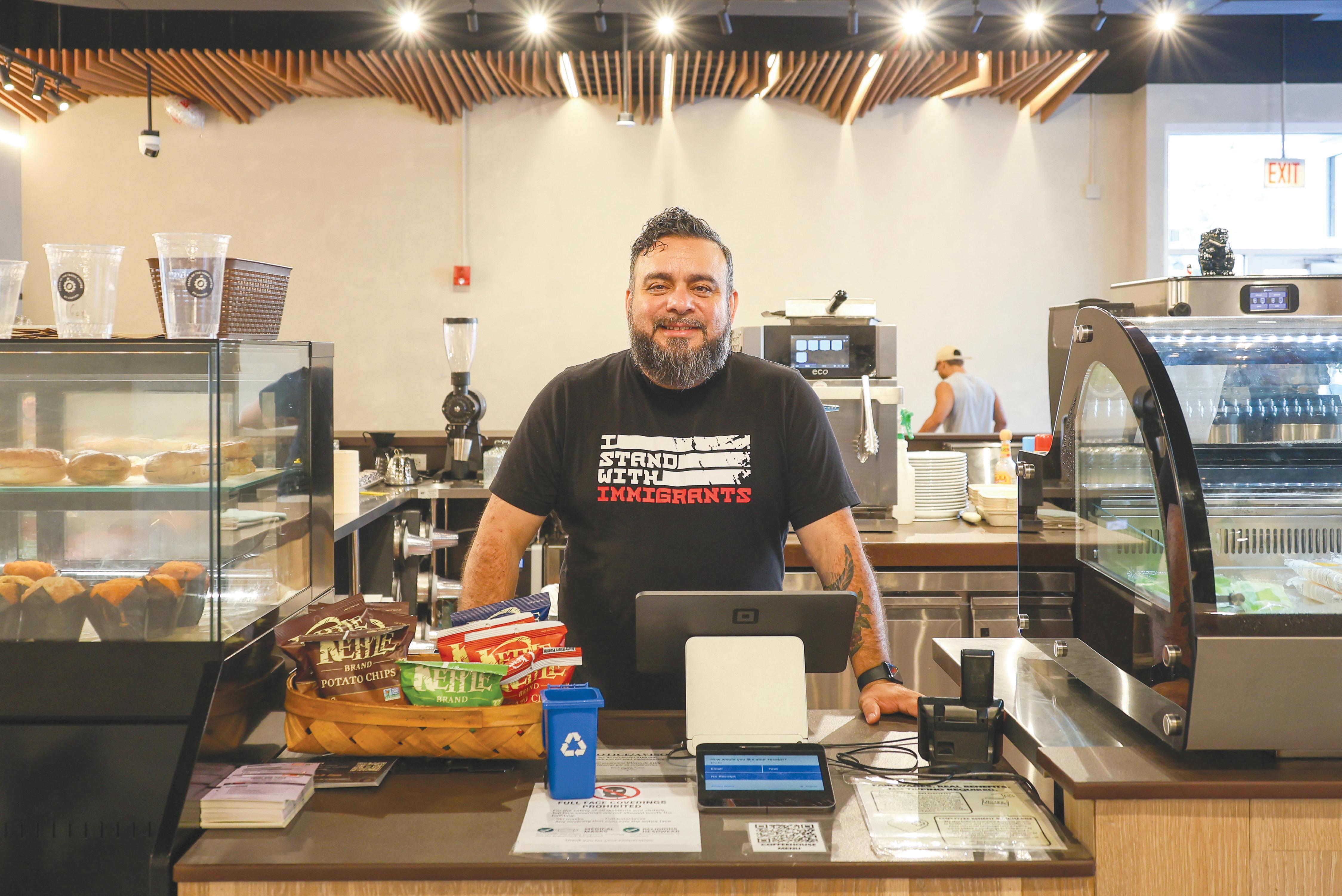
La primera vez que Jesse Íñiguez entró a una cafetería fue durante su primer año de universidad. Antes de eso, solo las había visto en la televisión.
En marzo de 2025, Íñiguez abrió Back of the Yards Coffeehouse en el 1621 W. 47th St. Es la ubicación más reciente de la empresa tostadora de café que fundó, Back of the Yards Coffee Co.
Ha trabajado para convertirla en un punto de referencia en el vecindario a través de asociaciones y eventos comunitarios. Recientemente ha buscado convertirla en un espacio seguro para los residentes que se sienten ansiosos por la creciente presencia de oficiales federales de inmigración en la ciudad.
“Una de las razones por las que quise abrirla en primer lugar fue porque, al crecer, no teníamos lugares como este”, dijo Íñiguez.
Nació y creció en el vecindario de Back of the Yards, el cual tiene una gran población latina.
“Creo que es importante que la
comunidad vea a uno de los suyos haciendo esto”, dijo.
A worker steams milk at Back of the Yards Coffeehouse on Saturday, Oct. 4, 2025. The Coffeehouse has become a sanctuary for residents who are anxious about increased presence of federal immigration officers.
La cafetería de Back of the Yards se convierte en un bastión comunitario en medio de redadas de ICE
Jesse Iñiguez takes an order from a customer at Back of the Yards Coffeehouse on Saturday, Oct. 4, 2025. Iñiguez was born and raised in the Back of the Yards and has made it a mission to give back to the neighborhood.
La cafetería de Back of the Yards se convierte en un bastión comunitario en medio de redadas de ICE
David Titsworth and Emmaeilin Salgado-Diaz enjoy coffee together at Back of the Yards Coffeehouse on Saturday, Oct. 4, 2025. Salgado-Diaz is a DePaul alum and frequents the coffeehouse.
La cafetería de Back of the Yards se convierte en un bastión
comunitario en medio de redadas de ICE
A worker steams milk at Back of the Yards Coffeehouse on Saturday, Oct. 4, 2025. The Coffeehouse has become a sanctuary for residents who are anxious about increased presence of federal immigration officers.
La cafetería de Back of the Yards se convierte en un bastión comunitario en medio de redadas de ICE
Jesse Iñiguez takes an order from a customer at Back of the Yards Coffeehouse on Saturday, Oct. 4, 2025. Iñiguez was born and raised in the Back of the Yards and has made it a mission to give back to the neighborhood.
La cafetería de Back of the Yards se convierte en un bastión comunitario en medio de redadas de ICE
Entre otras cosas, mencionó que Back of the Yards Coffee Co. dona con frecuencia a Increase the Peace, una organización que otorga becas a jóvenes de bajos recursos. También colabora con la Peace and Education Coalition, un grupo de líderes comunitarios del
suroeste que desarrolla liderazgos y crea redes que promueven la paz.
Después de graduarse de la Universidad de Illinois Chicago en 2003, Íñiguez consiguió su primer trabajo como barista. Su pasión por el café creció y en 2008 abrió su primera cafetería, Café Cedahlia. Pero en medio de la Gran Recesión, tuvo dificultades para mantenerse a flote.
“No tenía un buen plan de negocios”, dijo Íñiguez. “Tenía esta falsa idea de que si lo construyes, vendrán. No funciona exactamente así”.
En 2016, Íñiguez decidió intentarlo de nuevo vendiendo tostados pequeños de granos de café y cold brew en mercados agrícolas de la ciudad. Recaudó más de $17,000 para una nueva ubicación a través de crowdfunding.
“La mayoría de los donantes eran contribuciones de $5, $10, $15”, dijo. “Pero fueron cientos de ellas. Todas esas personas solo querían aportar algo”.
Cuando abrió la ubicación de la calle 47 la primavera pasada, dijo que la cafetería se quedó sin existencias el primer día a las 3
p.m.
Rheanna Ioli, estudiante de último año en DePaul, es clienta frecuente.
“Me encanta venir a la cafetería a hacer tarea”, dijo Ioli. “El ambiente siempre es cálido y acogedor”.
Íñiguez y su personal aseguran que seguirán defendiendo los valores con los que se fundó la empresa, manteniendo siempre un enfoque comunitario.
Emiliano Hernández, barista de 24 años en la cafetería, llegó primero como cliente. Trabajando en una pasantía de oficina, se cansó de ese tipo de empleo y quiso probar algo diferente.
“Durante el Covid, empecé a interesarme mucho en el café como pasatiempo”, dijo Hernández. “Pensé: ‘¿Qué tal si tomo este giro y veo si puedo convertir mi pasatiempo en una profesión activa?’”
Lee la historia completa en línea
By Claire Buchheit Contributing Writer
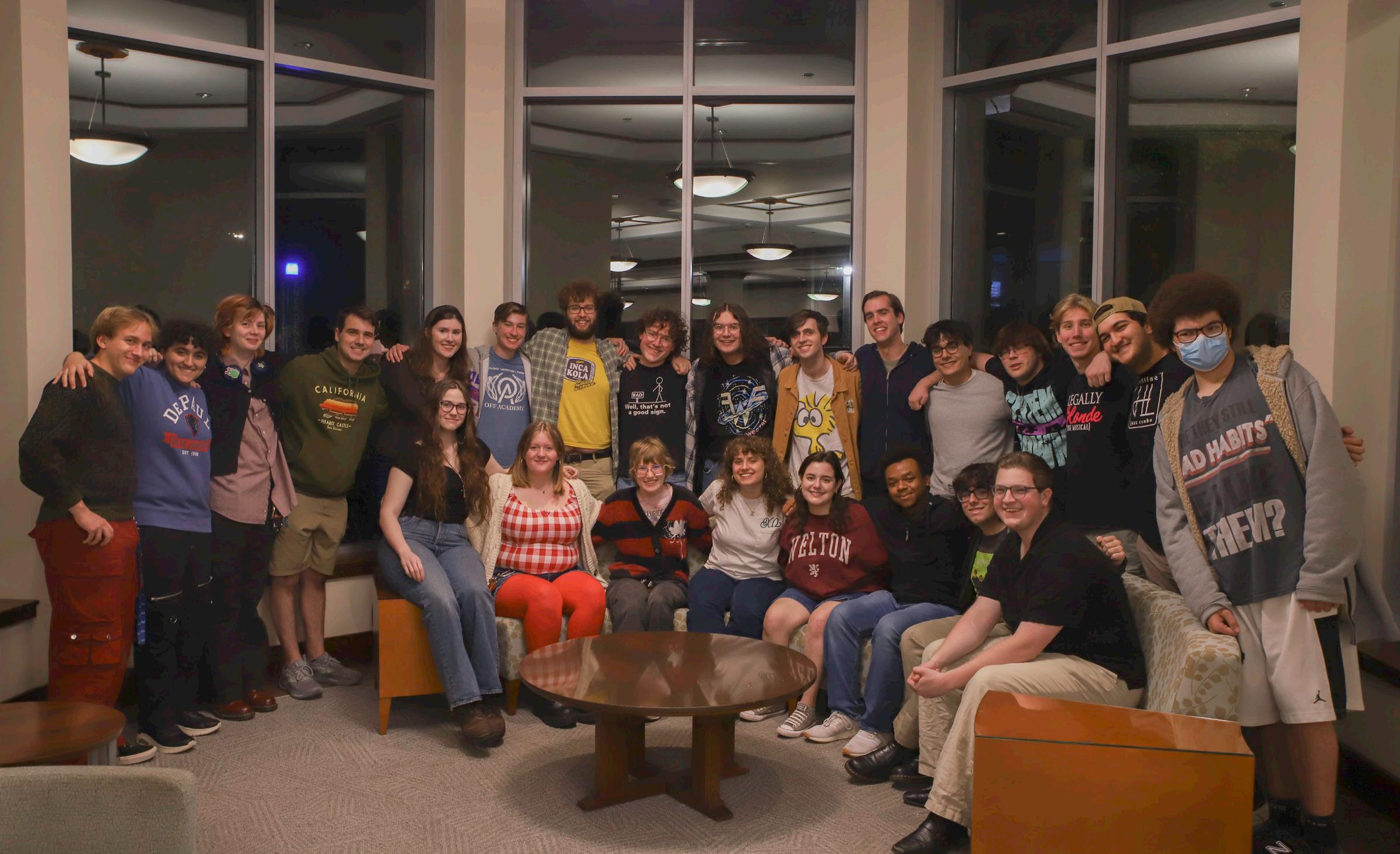
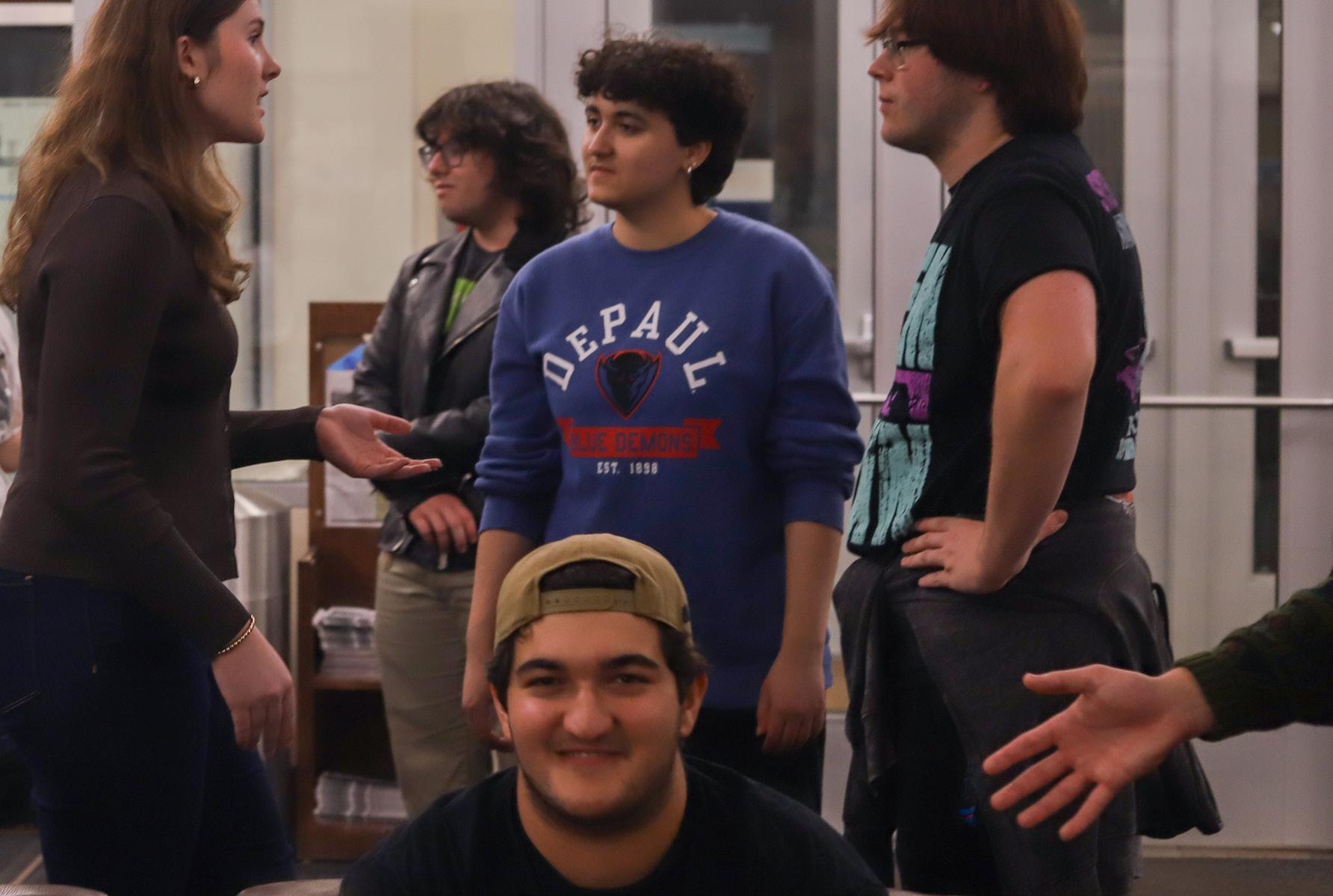
The world of comedy has long been a space where women had to fight for a seat at the table. But at DePaul’s Improv and Sketch Comedy (DISC) team, women aren’t just taking a seat — they’re sitting at the head. For the first time since its formation, DISC’s executive board is made almost entirely of women, marking a new era of representation and leadership in a space that has traditionally been dominated by men.
Kate Tehrani, president of DISC, is proud to be a part of this change, which she said challenges the “stereotype where women are meant to be seen and not heard.”
“Comedy is funny because it’s the truth, and women experience their truth every day,” Tehrani said “Why is that not enough?”
“The only reason it’s not enough is because it came from a woman’s mouth.”Eva Catterall, a staff member for DISC, says her experiences sharing the floor with men in comedy spaces have left her feeling overlooked.
“I’ve experienced being talked over on stage and not being addressed by other people,” Catterall said.These limitations are not
exclusive to local comedy scenes.
“Saturday Night Live” recently announced their updated cast list for season 51 with only five female
cast members — the lowest it has been since season 38. Rose Kaiser, a member of DISC, was disappointed by the news.
“Looking at the biggest show in comedy and seeing it get even less diverse is scary,” Kaiser said. But the treatment of women on the comedy main stage has not discouraged the women of DISC. They said they are actively working to uplift not only the voices of women, but also people who are queer and nonwhite. Tehrani says including these voices means giving them the space to create in ways that are authentic to who they are.
“We’re not inclusive to be performative or plastic or to be fake,” Tehrani said. “We do that because we are letting people of any background express comedy.”
The DISC board has made inclusivity their top priority. For instance, under Tehrani’s leadership, the group no longer cuts members who don’t get chosen during auditions for individual improv or sketch team roles Now anyone can join and be involved with the group’s activities without being on a performance team. Workshops are also in development for those interested in learning the tricks of the trade from experienced DISC comedians.
Along with workshops and group events, DISC is broadening the kinds of comedy the team represents.
“I feel like we are a variety comedy club,” Tehrani said. “There’s more to DISC than the –ISC.”
Although the ISC (improv and sketch comedy) part of DISC is audition-based, this year, leadership is opening the door for more performance types suggested by members. Kaiser has begun developing some ideas of her own since the new board has introduced opportunities to include things like drag and stand-up to their roster.
“I’m very excited to see what everyone does, and I’m excited to see what I do,” Kaiser said. “Maybe I will do puppets while doing burlesque, who knows?”
She said these changes have gotten high praise from the entire team.
“Kate and the whole e-board have done such a great job of giving us more opportunities and being on top of things,” Kaiser said. More information about the team and their upcoming events and performances can be found on their Instagram page.

SATAN , cont. from front.
Graveface Museum in Wicker Park has been partnering with the campaign since their location opened in 2022. The museum centers on the personal side of dark history rather than capitalizing on shock factor, focusing on topics like serial killers, sideshow history and more. They also teach about the occult, including satanism, often dispelling misinformation surrounding it.
Chloë Manon, who owns the museum, thinks that the Satanic Temple coincides well with the museum especially regarding their emphasis on debunking misconceptions.
“The name implies Satan and some people have a pre conceived notion about what that means,” Manon said. “But it’s a completely atheis tic, basically a political activ ist group.”
“It’s mostly just using the name and kind of the semiol ogy of it, with counter culture and rebellion and acceptance for who you are as opposed to who you’re ‘supposed’ to be.”
Some of the people that believe these misconceptions have pushed back on busi nesses for working with the Satanic Temple. The Brewed, an Avondale coffeeshop, is an example of that.
The coffeeshop has a hor ror theme with a 60s and 70s aesthetic. They serve as an other donation drop-off site. The cafe has anything a hor ror lover is looking for, from
a giant Beetlejuice sandworm emerging from their ceiling to a collection of vintage scary movie figurines, making it another great fit for the temple.
In addition to working with them on the campaign, the shop hosted TST for their “Meet a Satanist” event in April. The event attracted a group of protesters outside the shop holding signs and blocking parking spaces.
for The Satanic Temple (TST) in Illinois, but also serves as the co-director of the Satanic Good Works Campaign. Her role is to assist TST congregations globally in organizing “good works” projects for their communities, such as this one.
“We just want to help people get what they need,” Ballard said. “Whether it’s through us or just in general.”
The campaign runs
“Spinning
By Jake Cox Digital Managing Editor
Whether you’re a freshman taking your first steps on the Quad or a returning any-othergrade walking back onto campus, The DePaulia would like to extend a warm welcome to fall quarter. Specifically, we here at the Arts and Life desk would like to offer you a few songs that helped us through these first few months of college.
Freshman Year — “Change” by Big Thief
Probably one of the most consequential years of my life. Which sounds obvious — who doesn’t become an entirely different person after moving away from home, meeting new people and, in the case of many DePaul students, discovering the majesty of Chicago for the first time? My first story for The DePaulia was
covering a rally headlined by Kamala Harris, long before anyone imagined she’d be a presidential nominee a few years later. I had absolutely no idea what I was doing, but nothing compared to the feeling of seeing my name in print for the first time. That year felt like learning how to move through change without missing a beat.
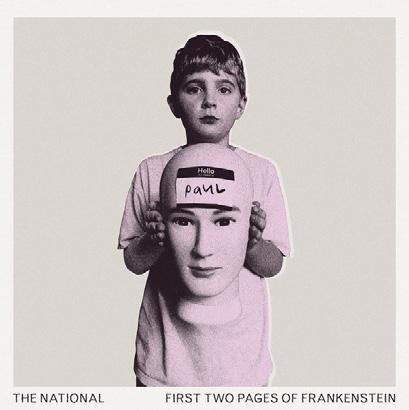
Sophomore Year — “Tropic Morning News” by The National
Sophomore year was a scramble — the kind that fills every corner of your head until you can’t tell what’s urgent and what’s just loud. “Tropic Morning News” played through most of that year: jittery, anxious, full of motion that never quite resolves. If that doesn’t describe
sophomore year, I don’t know what does. That spring, our team of reporters busted our asses for 17 straight days covering the protest encampment on DePaul’s campus. It was a journalism bootcamp you can only get through by doing:long hours, minimal pay and fighting every second for accuracy. The song’s refrain, “I was suffering more than I let on,” feels apt for that stretch. I learned more than I can express, but damn, it was rough. And in the most masochistic way possible, it confirmed how much I need to be a journalist.
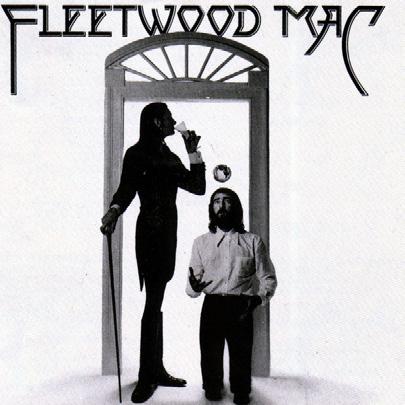
Junior Year — “Landslide” by Fleetwood Mac Landslide might be the best song ever written. It feels like everything that came to fruition
junior year. I started the year reporting at the DNC — one of the craziest experiences of my life — and by February, I was having some of the most fun I’ve ever had. Long hours in Advanced Reporting were followed by laughing to tears at Irish Eyes in Lincoln Park. It all ended with the internship I’d looked up to for years. The bridge — “Even children get older, and I’m getting older too” — resonated by then. Somehow, I had become the journalism student I once looked up to, working where I’d only dreamed of being.
Senior Year — “Rocky Mountain High” by John Denver Senior year has felt like coming up for air. After three years underground — literally, in the basement at 1 E. Jackson Blvd.
— I finally looked around and realized how far I’d climbed. Editing my last stories and passing on what I’ve done for years feels bittersweet. But it’s time to go. Splitting my time between The DePaulia, where I got my footing, and Block Club Chicago, the realization of all my professional dreams, I’ve been able to appreciate the view. It’s scary to move on, but at the end of the day, this paper, and journalism, has shaped me.

By Laura Vázquez David Asst. Sports Editor
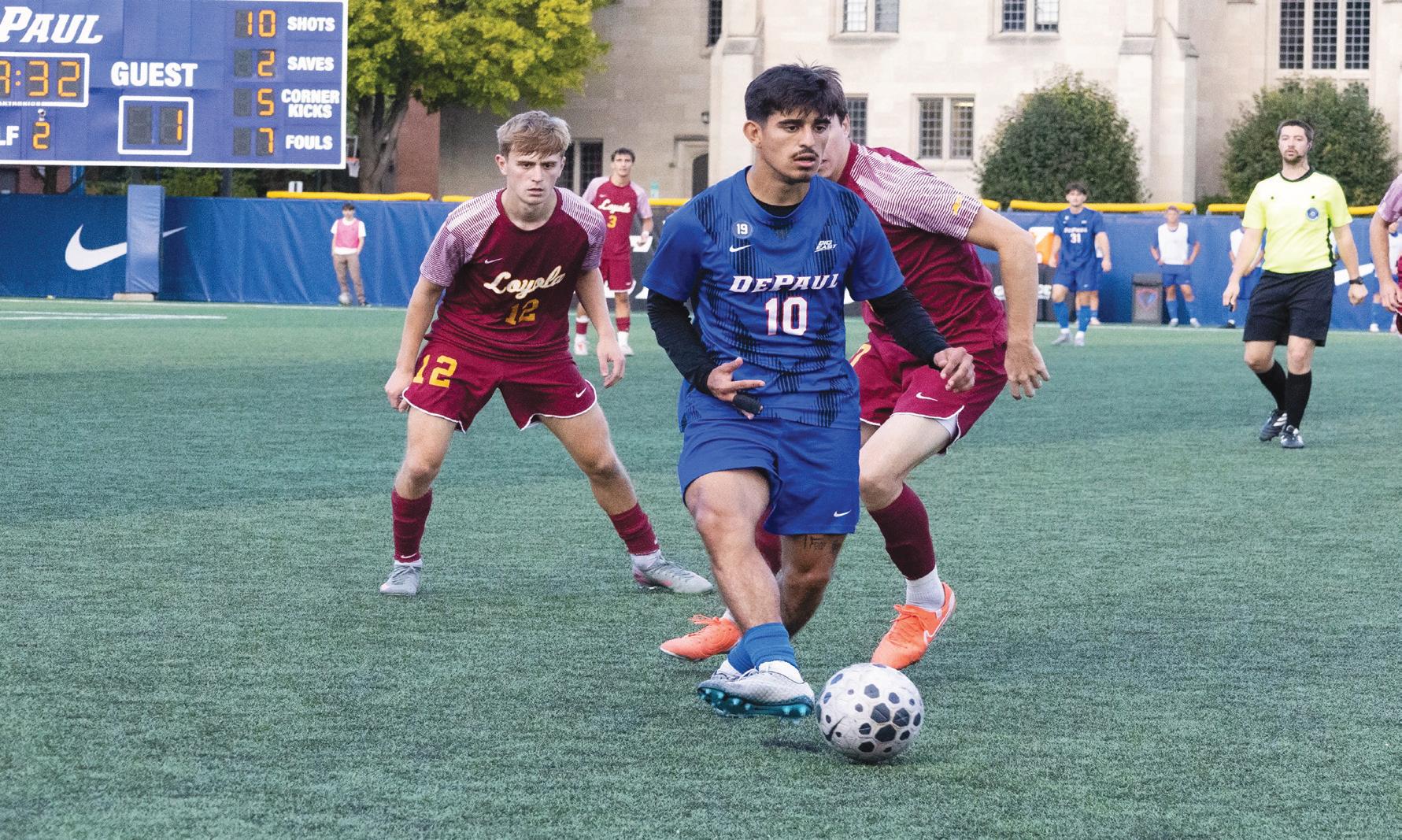
When Noeh Hernández steps onto the field to face Argentina, he won’t just be representing Puerto Rico — he’ll be carrying years of growth, grit and gratitude from his time at DePaul.
The DePaul sophomore midfielder, who recently earned a call-up to the Puerto Rican men’s national team, is set to play in an international friendly against the reigning World Cup champions.
For Hernández, it’s the latest milestone in a journey that began when he was nine years old playing with the Chicago Fire Academy.
Hernández recalled finding out the news after a match at DePaul’s Wish Field.
“I went to go say hi to my girlfriend, my mom and they came up to me and asked if I heard the news, ‘Puerto Rico’s playing against Argentina at Soldier Field,’” he said. “I thought no way this is real. And then they showed me the Instagram post and I thought, ‘Wow, it’s real.’”
When Hernández broke the news to his coach that he had made the national team roster to face Lionel Messi and the Argentinian national team, it sparked happiness and pride on the Blue Demons’
team.
“You could see the little kid in him coming out. Then he came up to my office and said, ‘Did you see the roster? Everybody’s coming!’ ” said Plotkin.
“You’re just going out there to have fun playing against some legends,” Plotkin said to Hernández about this unique opportunity. “Take your chances, be brave, and show everybody in the stadium and around the world who Noeh Hernández is and the quality you have, because you belong there.”
Hernández’s rise through the ranks reflects both his skill and determination. After years developing through Chicago Fire’s youth system, he joined DePaul and quickly became a reliable presence in the midfield.
This isn’t Hernández’s first time being called up to the Puerto Rico team, earlier this year, he scored his first goal for Puerto Rico — a moment he called “one of the best of my career.”
But for Hernández, success at the international level is just another step toward his ultimate dream.
“I want to continue and play professionally,” he said. “My dream would be to play for Barcelona one day.” Coach Plotkin said his experience with the national team has
elevated the standard for the rest of the team.
“Noeh sets a great standard in training because of the experiences he’s had and the level he’s played at,” Plotkin said. “He’s able to come back and give the other guys perspective of what it’s really like to be at that level — the mentality it takes day to day. You can see it’s really
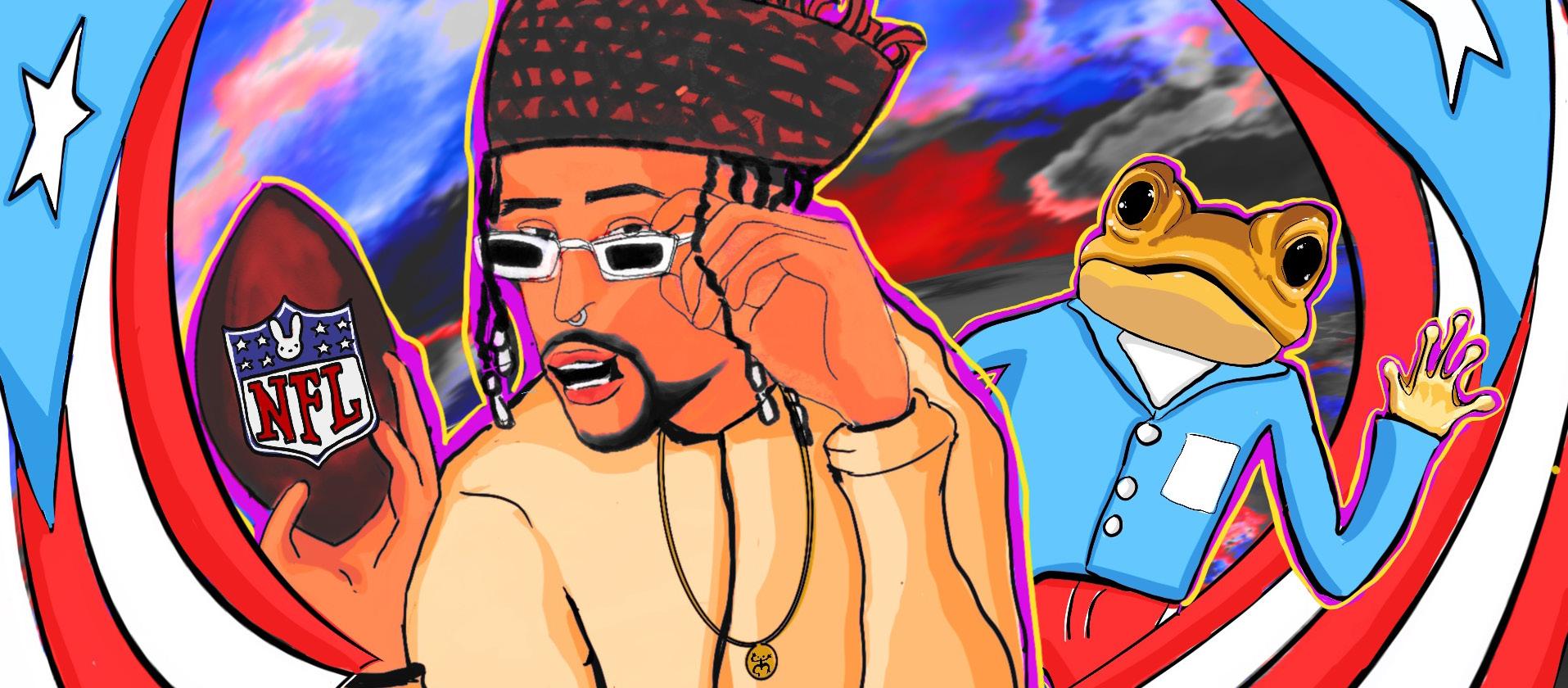
Bori Timeout with Lau: Bad Bunny steps onto the world’s largest stage holding tight to his Puerto Rican roots
By Laura Vázquez David Asst. Sports Editor
When the NFL announced on Sept. 28 that Bad Bunny would headline the 2025 Apple Music Super Bowl Halftime Show, my first thought was, “this cannot be real.” The Super Bowl was a stage I never imagined Benito Antonio Martínez Ocasio — a kid from Vega Baja,
Puerto Rico — would ever perform on. For years, I’ve been a Bad Bunny fan, and it comes as no surprise since I’m Puerto Rican and my nationality has distinctively become my brand. Whether you love him or not, there’s no denying that Bad Bunny has become the standard for what it means to be a global icon — wearing his heart on his sleeve while staying true to his values and
his island.This isn’t just about one artist performing; it’s about representation.
I’ll admit, I wasn’t a fan when I first heard his music in 2016. Puerto Ricans are notoriously critical of new artists — we hate them before we love them. But once I got over that phase, I was all in. I was in high school when his career took off, my memories as a senior are inextricably linked with his songs.
changed him for the better.”
That mentality, paired with his adaptability, has made Hernández a key figure for the Puerto Rican national team.
“They’ve played him in center midfield, wide, even at left back, because he’s willing to do the work on both sides of the ball,” Plotkin said. “He’s talented, makes really
Fast forward to 2025: I’ve been to every Bad Bunny concert in Puerto Rico, streamed countless minutes of his music, and even collaborated with his team for his 2023 album release.
For me — and for so many Puerto Ricans — Bad Bunny isn’t just a musician. He’s part of our cultural DNA.
And now, he’ll carry that identity to the biggest stage in the world.
“It’s for those who came before me and ran countless yards so I could come in and score a touchdown … this is for my people, my culture, and our history. Ve y dile a tu abuela, que seremos el HALFTIME SHOW DEL SUPER BOWL,” Bad Bunny said in a statement.
Bad Bunny has said many times that he makes music for “his people” — Puerto Ricans. That’s why this announcement hit differently. It means we will be seen. For Puerto Ricans and Latinos everywhere, this moment feels monumental, almost like when Mónica Puig won Olympic gold. It’s pride, excitement, nostalgia and tears all at once.
good decisions, and always does whatever the team needs. That versatility and team-first mentality are valuable.”
Due to low ticket sales, it was announced on Oct. 10 that the match would be moved to Miami. The friendly will now be played in Chase Stadium on Tuesday, Oct. 14, instead of Monday, Oct. 13.
He’ll be the first Puerto Rican solo act to headline the halftime show — a historic milestone that goes beyond entertainment. It’s a reminder that you can come from a small island in the middle of the Caribbean and still make the world stop to watch you sing in a language they don’t understand but can definitely feel.
If there’s one thing I know about Bad Bunny, it’s that he doesn’t do shoddy performances. I’ve been to every concert he’s done on the island, including his residency, and each show is more powerful than the last. He performs with emotion, purpose and an unshakable sense of Puerto Rican pride.
Fans are already predicting big surprise guests — maybe Drake, maybe Rosalía. But if you ask me, I’d rather see Jowell y Randy or Ñengo Flow on that stage. These are the legends who built Puerto Rican reggaetón from the ground up, and they deserve that global spotlight too.
By Jeremy Battle Director of Photography & Multimedia
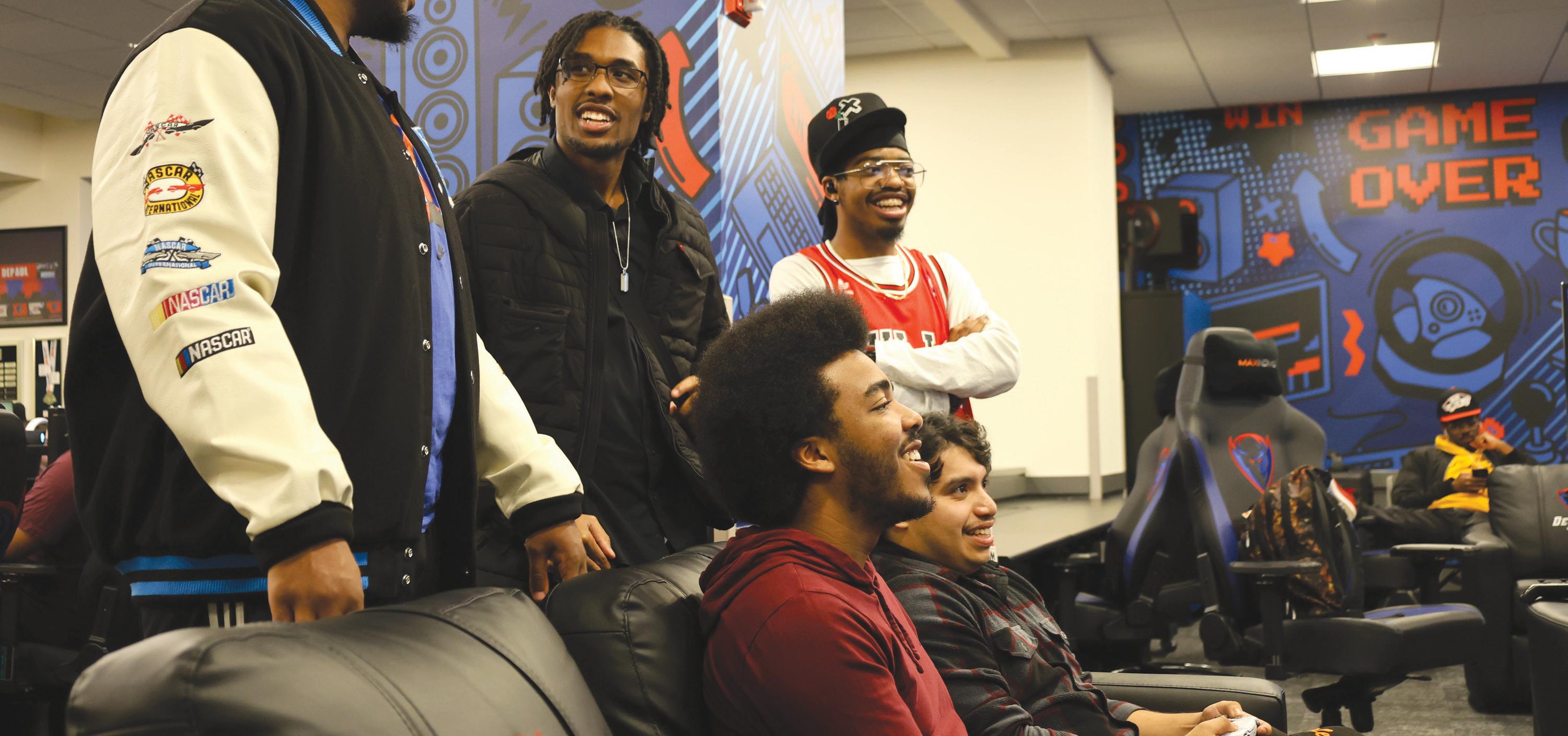
Since getting started in October 2023, DePaul Fighters has quietly drawn new players quarter after quarter.
Students who frequent the DePaul Center have likely walked past the Gaming Center’s large windows and seen groups of players gathered around screens, yelling at their game. To Hayden Marx, founder and president of DePaul Fighters, this was always the plan.
“DePaul has supported esports since well before my time, but there wasn’t a fighting game scene before I got here,” said Marx, a senior studying film.
Their team focuses specifically on games in the fighting game genre like Street Fighter, Mortal Kombat and Tekken. Slowly but surely, they’ve integrated themselves into Chicago’s Fighting Game Community (FGC).
“We’re very compartmentalized; there isn’t a ton of overlap between the games we play and the rest of DePaul Esports,” Marx said. “I think when most people think of esports, they think of League of Legends. That was like the esports game.”
While DePaul Esports is actively working on ways to bridge the gap between its many teams, this delineation isn’t always seen as a weakness. For Gabriel November, a freshman on the Varsity Street Fighter team, it’s a strength.
“I think esports overall are a bit boring,” November said. “I don’t find much appeal in watching competitive shooters. What makes fighting games special is that they’re all about individuality. Street Fighter has that UFC quality to me.”
While other games often boil down to the same game plan, November enjoys the diverse range of characters available in games like Street Fighter and Tekken and the variety of styles they provide.
“When I started playing Miguel in Tekken, I picked him because he looked like me,” November said. “You will watch two people play the same character completely differently. There’s so much room for expression in fighting games. To me, that’s the art.”
Steven Beligratis, captain of the Guilty Gear team, says DePaul Fighters has a unique way of engaging with the broader FGC.
“They love the collegiate stuff, which is different from the grassroots tournaments I’m used to,” Beligratis said. “I remember when we had our scrimmage against the University of Illinois Urbana-Champaign, and I didn’t even know they had a Guilty Gear team. At local tournaments, you get used to showing up and playing against some 30-year-old dad with like three kids.”