Denver Urban Spectrum is a monthly publication dedicated to spreading the news about people of color. Contents of Denver Urban Spectrum are copyright 2026 by Bizzy Bee Enterprise. No portion may be reproduced without written permission of the publisher.
Denver Urban Spectrum circulates 7,500 copies throughout Colorado. Denver Urban Spectrum welcomes all letters, but reserves the right to edit for space, libelous material, grammar, and length. All letters must include name, address, and phone number. We will withhold author's name on request. Unsolicited articles are accepted without guarantee of publication or payment.
Write to Denver Urban Spectrum at P.O. Box 31001, Aurora, CO 80041. For advertising, subscriptions, or other information, call 303-292-6446, email publisher@urbanspectrum or visit the Website at www. denverurbanspectrum.com.
MESSAGE
From The Publisher
Ruth Boyd’s Legacy: Love That Endures, Strength That Leads
In her novel Until the Last Star Fades, Jacquelyn Middleton writes, “She’s my best friend – she’s everything to me. It’s always just been me and her against the world.” That sentiment feels especially close to the heart this month.
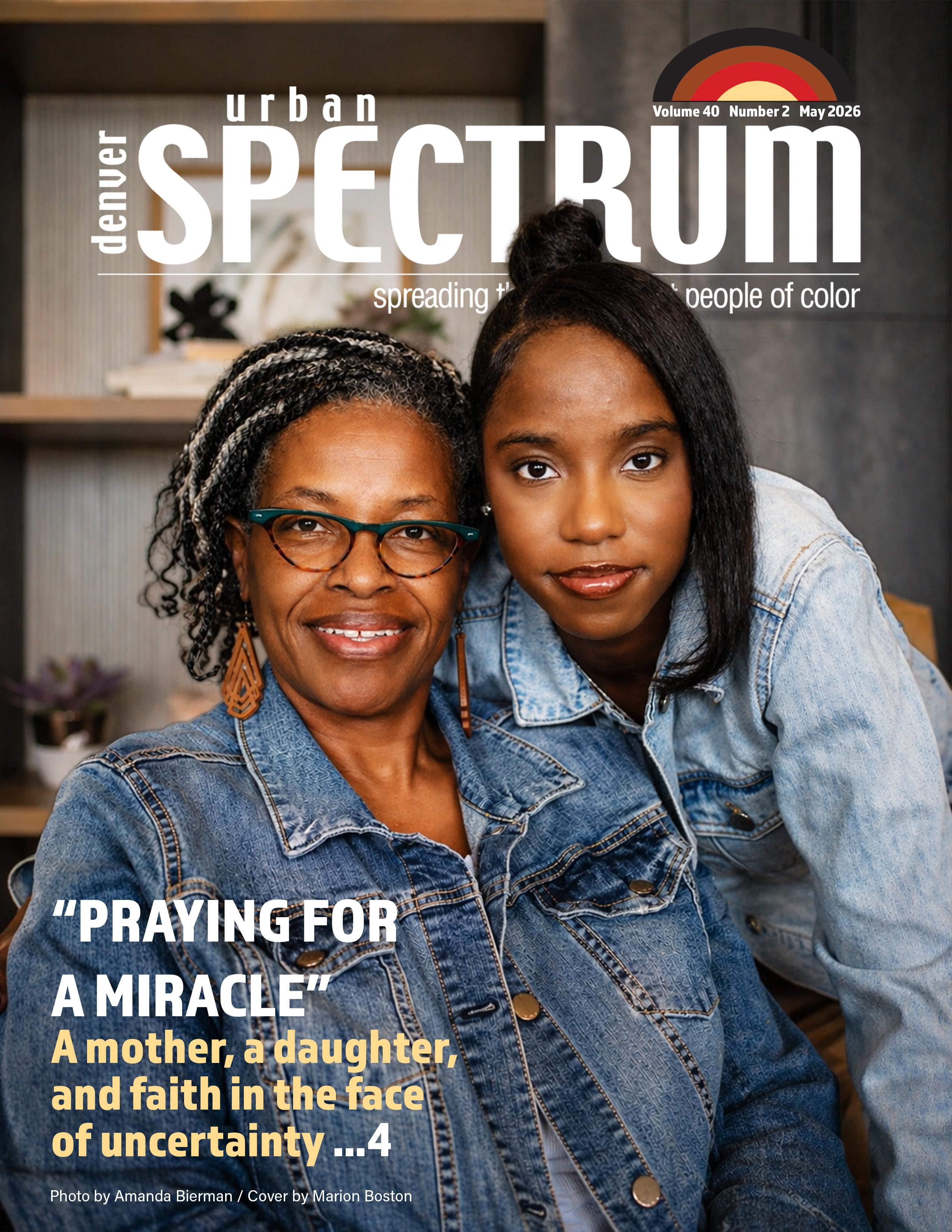
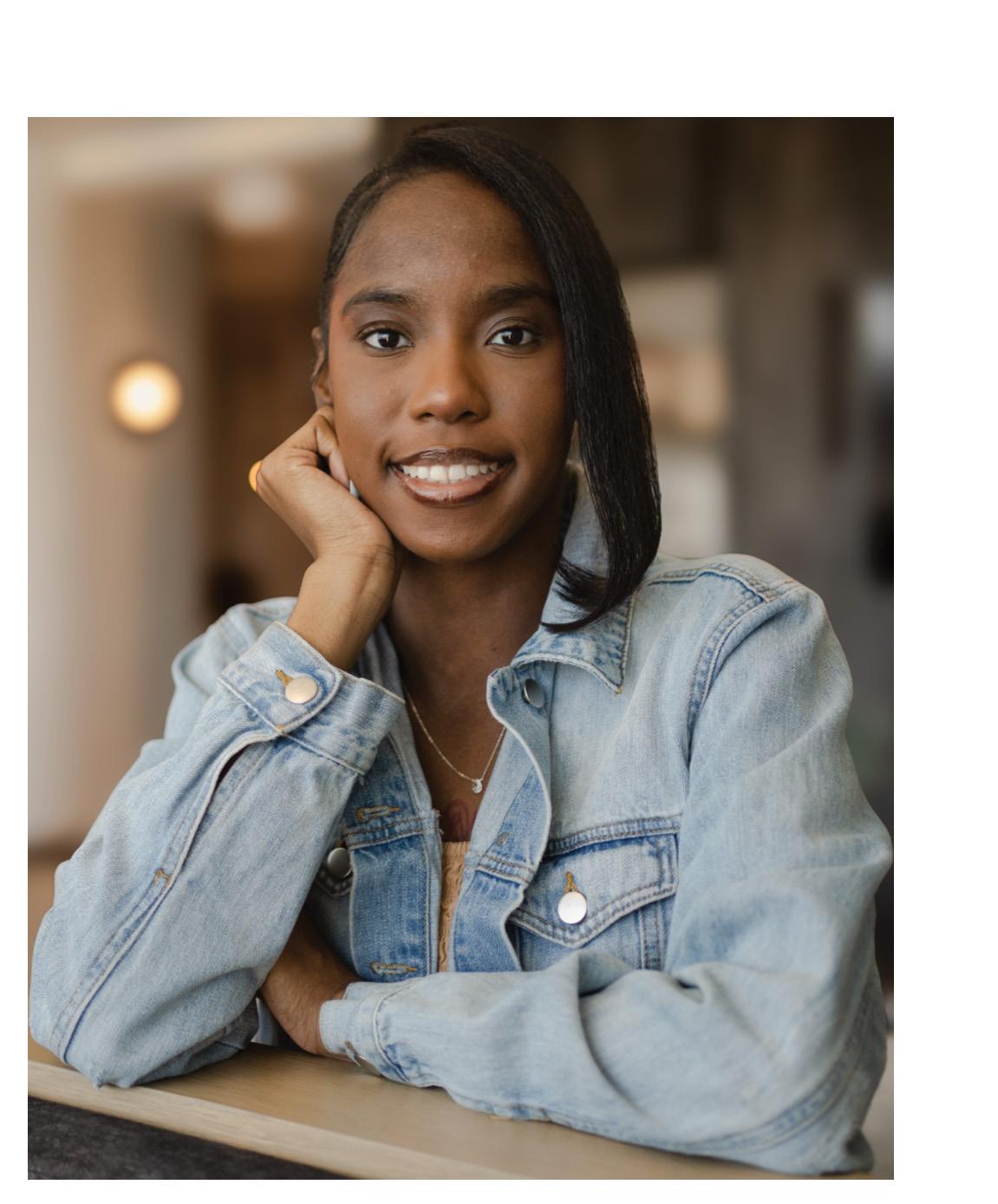
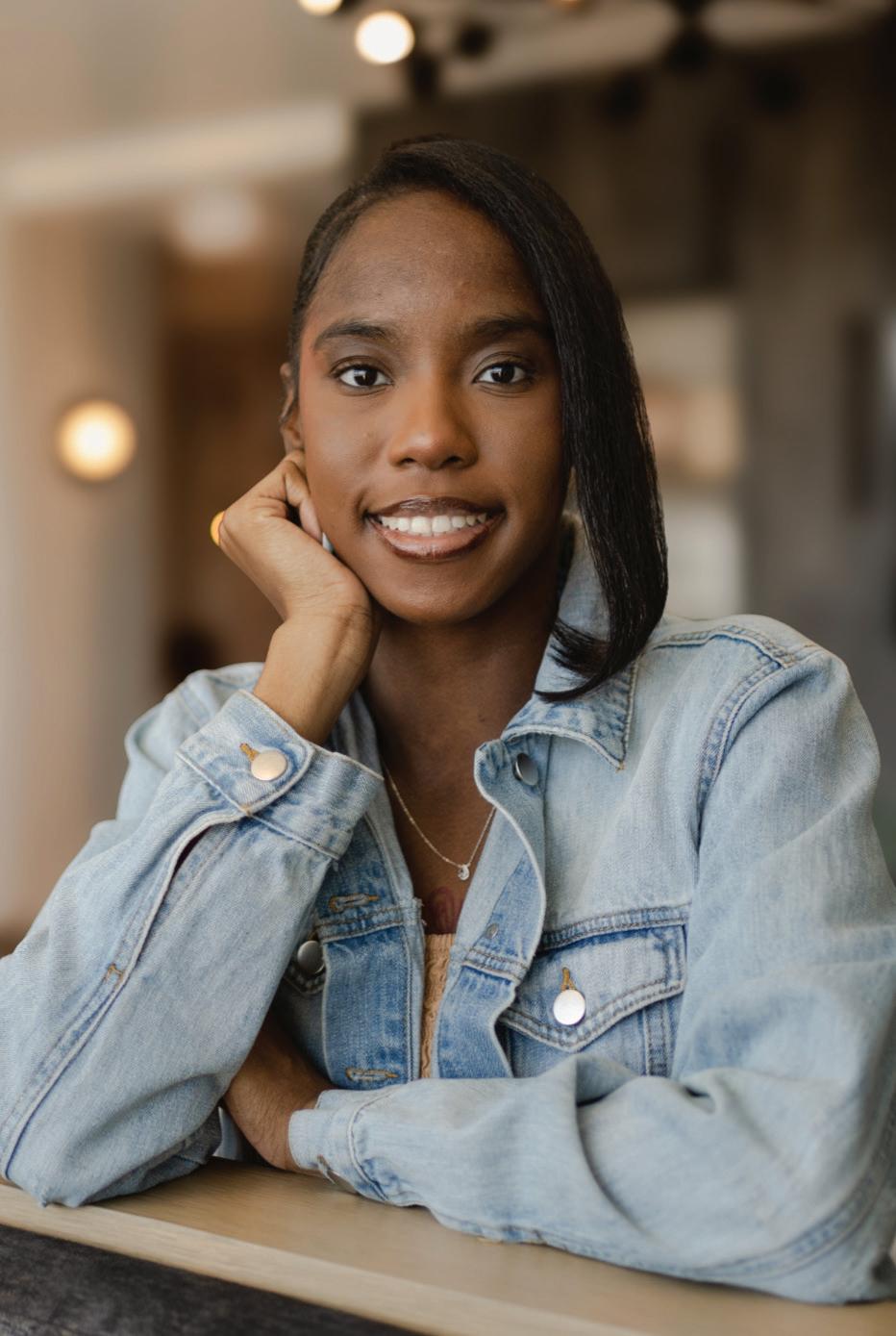
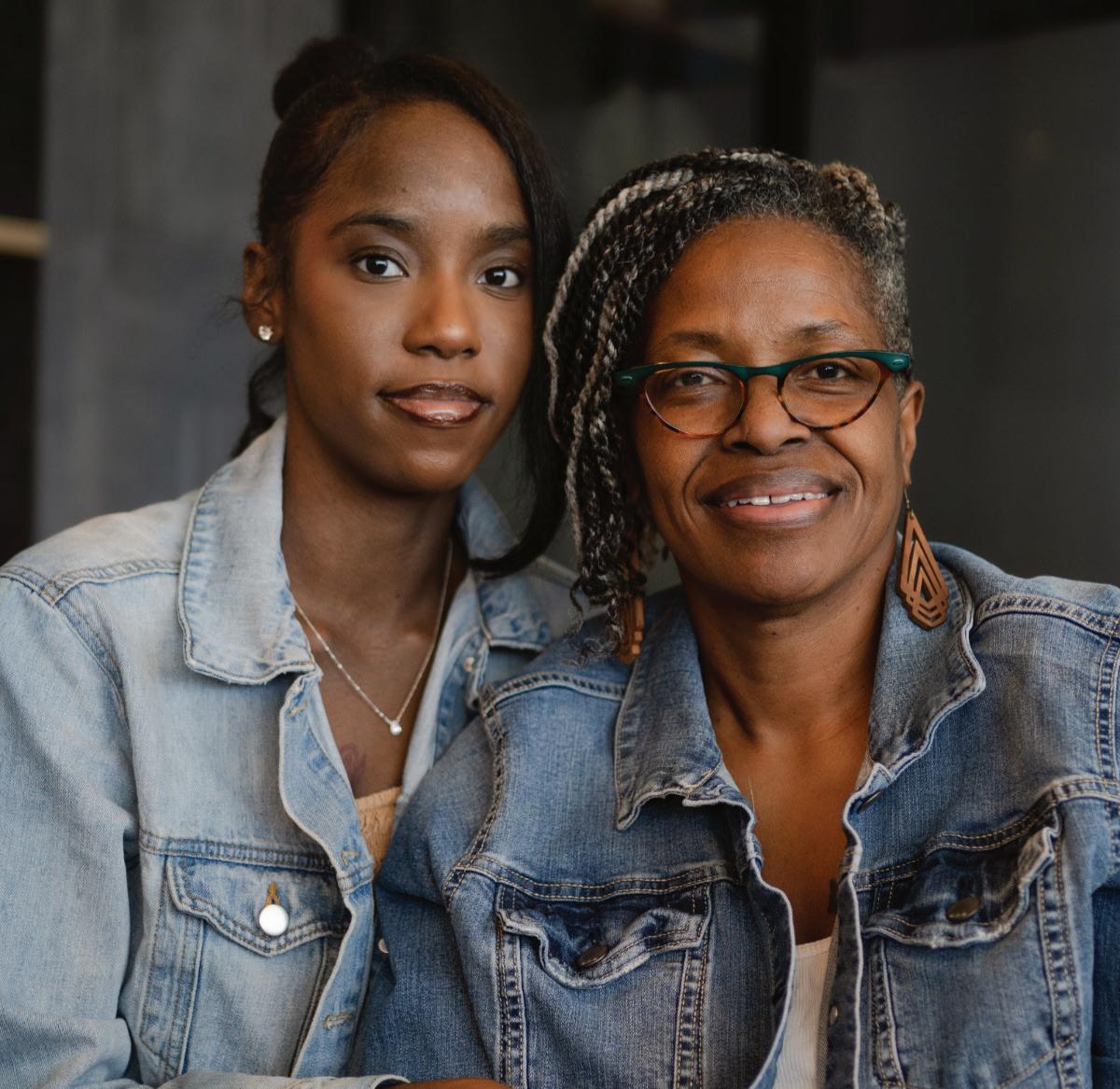
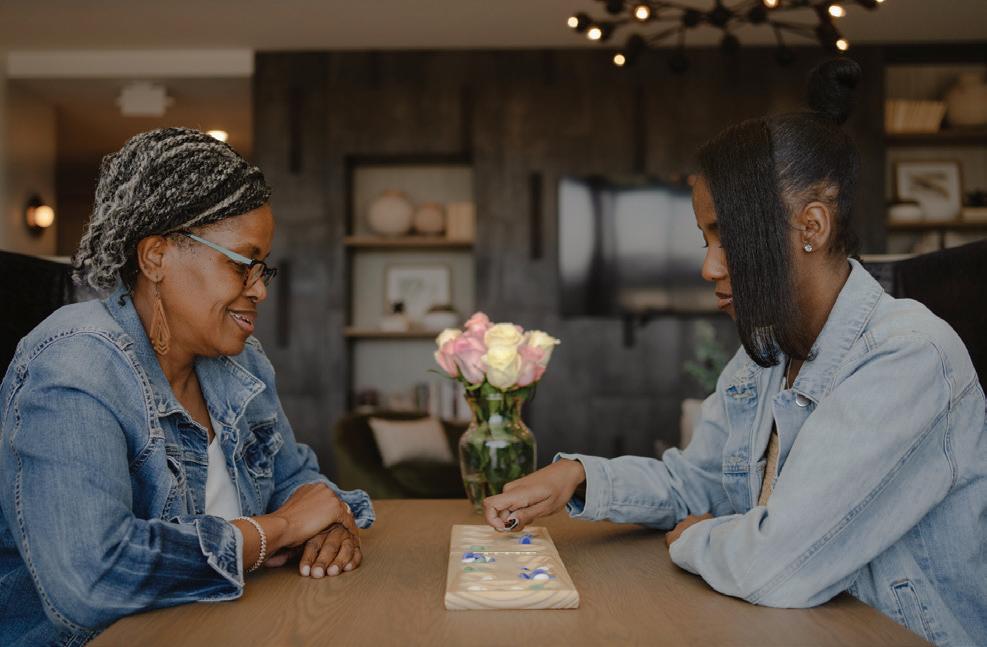
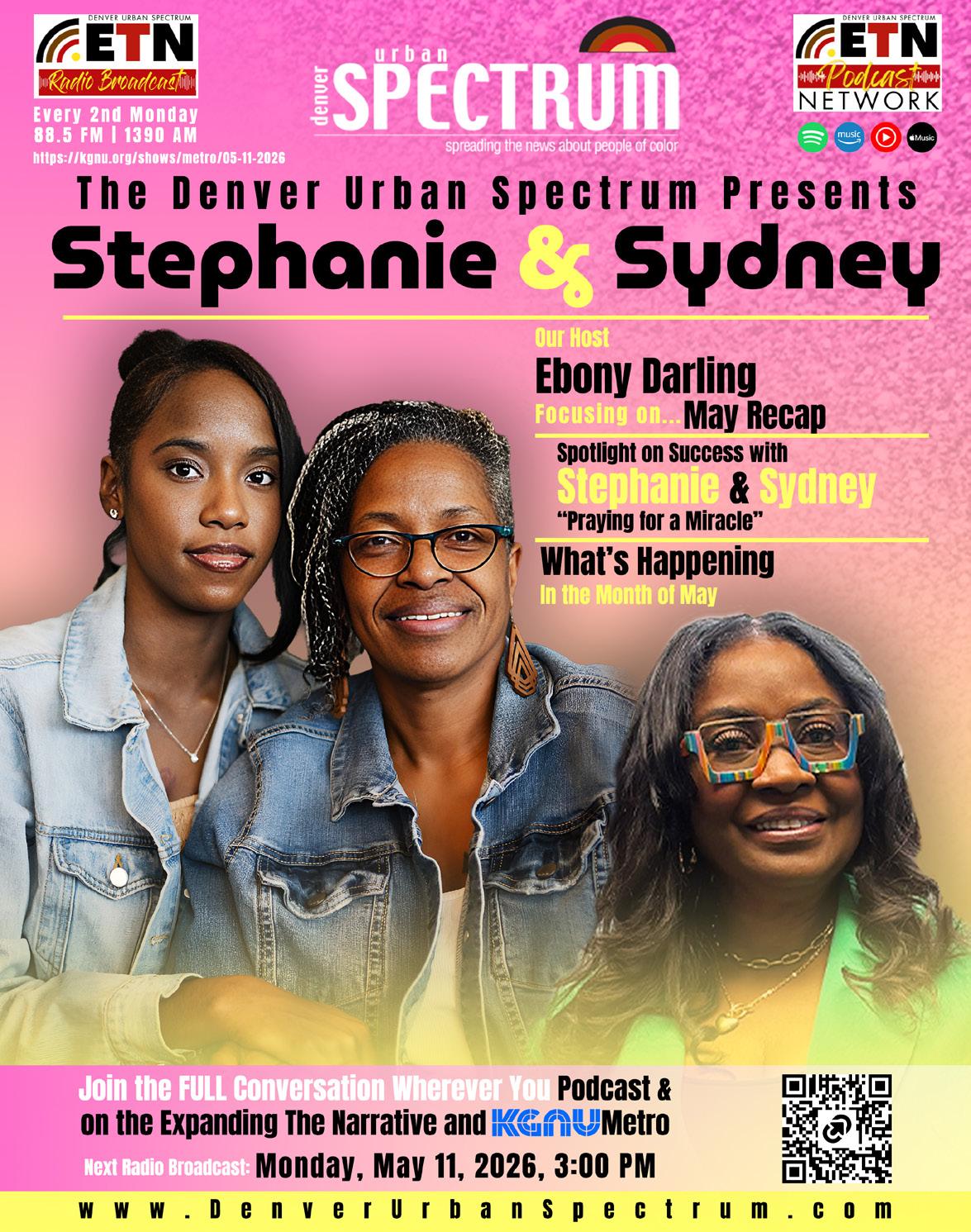
Our cover story, beautifully told by Gabrielle West, reflects that kind of bond through Stephanie and Sydney—a relationship shaped by devotion, strength, and unwavering presence. It is a story that reminds us that a mother’s love does not waver in the face of hardship. It stands. It waits. It believes.
As we celebrate Mother’s Day, we honor mothers in all forms—those with us, those becoming, and those we carry in memory. My own mother, though gone for 18 years, remains a constant presence in my life. Her love did not end—it transformed. It lives in my decisions, my purpose, and in the quiet moments when I still seek her guidance. This issue is, in many ways, a reflection of that enduring connection.
Beyond our cover story, this month’s issue continues to highlight voices shaping our communities. The Black
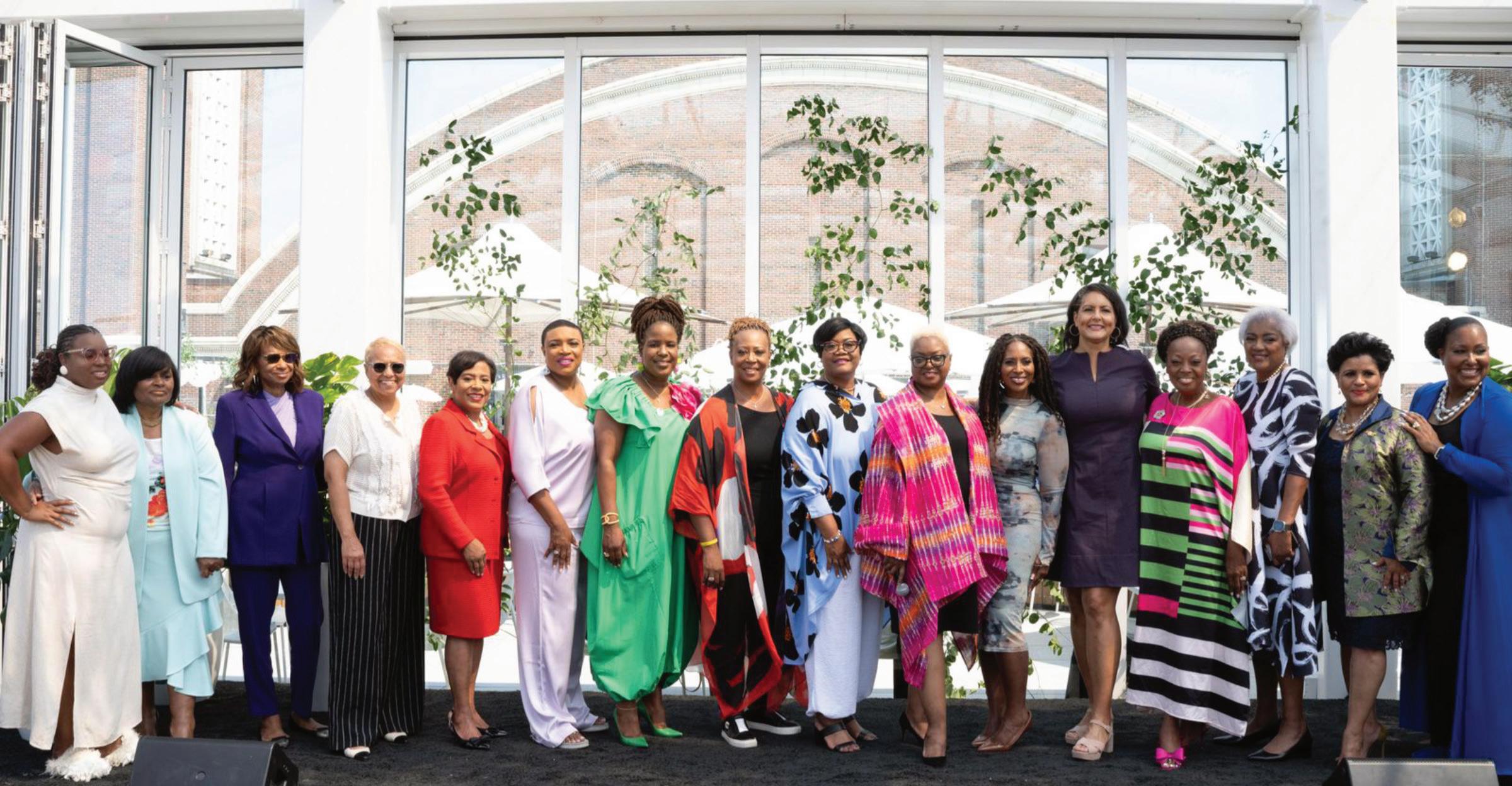
Women’s Leadership Collective has launched “One Million Black Voters Rising,” a bold, multi-year initiative introduced at the Power Rising Summit in Chicago, featuring leaders such as Kamala Harris. Closer to home, Wanda L. James steps forward in her campaign for Colorado’s 1st Congressional District, with endorsements from respected leaders including Wellington E. Webb and Wilma J. Webb.
“There is nothing as powerful as a mother’s love, and a child’s soul.” – Unknown
We also pause to acknowledge a heartbreaking loss. The tragic death of Pastor Tammy McCollum sheds light on the often-hidden realities of domestic violence—reminding us that even those who lead and uplift others are not immune to harm.
May is also Mental Health Awareness Month, a time to confront stigma and encourage healing. Here
in Denver, organizations like Kind Therapy are working to ensure access to care for those who need it most.
We Ain’t
By Editor:
WAsking
e ain’t asking for much, we just Black folks askin’ for the wages you didn’t pay our ancestors, and the interest accrued. That’s just for starters. That’s just for wages not paid!
We ain’t asking for much. We only want a percentage of the billions from corporations who benefited from the free labor they have made since the first slave was put to work, and we want a percentage of what those same corporations will profit into the future, so we can start building generational wealth for our children.
And as we look ahead, I am especially proud to share that Melior Home Health, in partnership with the Ruth Boyd Elder Abuse Foundation, will soon open the Melior Adult Day Care—a space designed with dignity, care, and community at its core. This effort is deeply personal, rooted in my mother’s legacy and a commitment to protect and uplift our seniors. This issue is dedicated, with love, to mothers everywhere— especially those whose presence continues to guide us, even in their absence.
Rosalind
“Bee”
Harris Publisher Denver Urban Spectrum
for Much LETTER TO THE EDITOR
Look! We just want payment for the Black communities destroyed, like Black Wall Street and Rosewood. Think of what they might be today. We may be invisible to you, but that don’t mean we are blind or stupid. We know you spent 300 million to build one plane for the military so we know you’ve got our money. We just Black folks trying to collect past due payments on behalf of our ancestors. They never gave your permission to give their money away to government on a global scale. They just good Black folks like us who don’t want much - just what you owe them.
Antonious Aurora
A Mother’s
By
Gabrielle West
Photos by Amanda Bierman
Editor’s note: This profile of a woman in need of a kidney transplant is part of a series of articles featured in Denver Urban Spectrum to bring attention to the urgent need for organ donation. We focused on this mother and daughter in the May issue in recognition of Mother’s Day. DUS agreed not to use last names to protect their privacy when sharing about their personal medical story. To read previous articles, visit www.denverurbanspectrum.com.
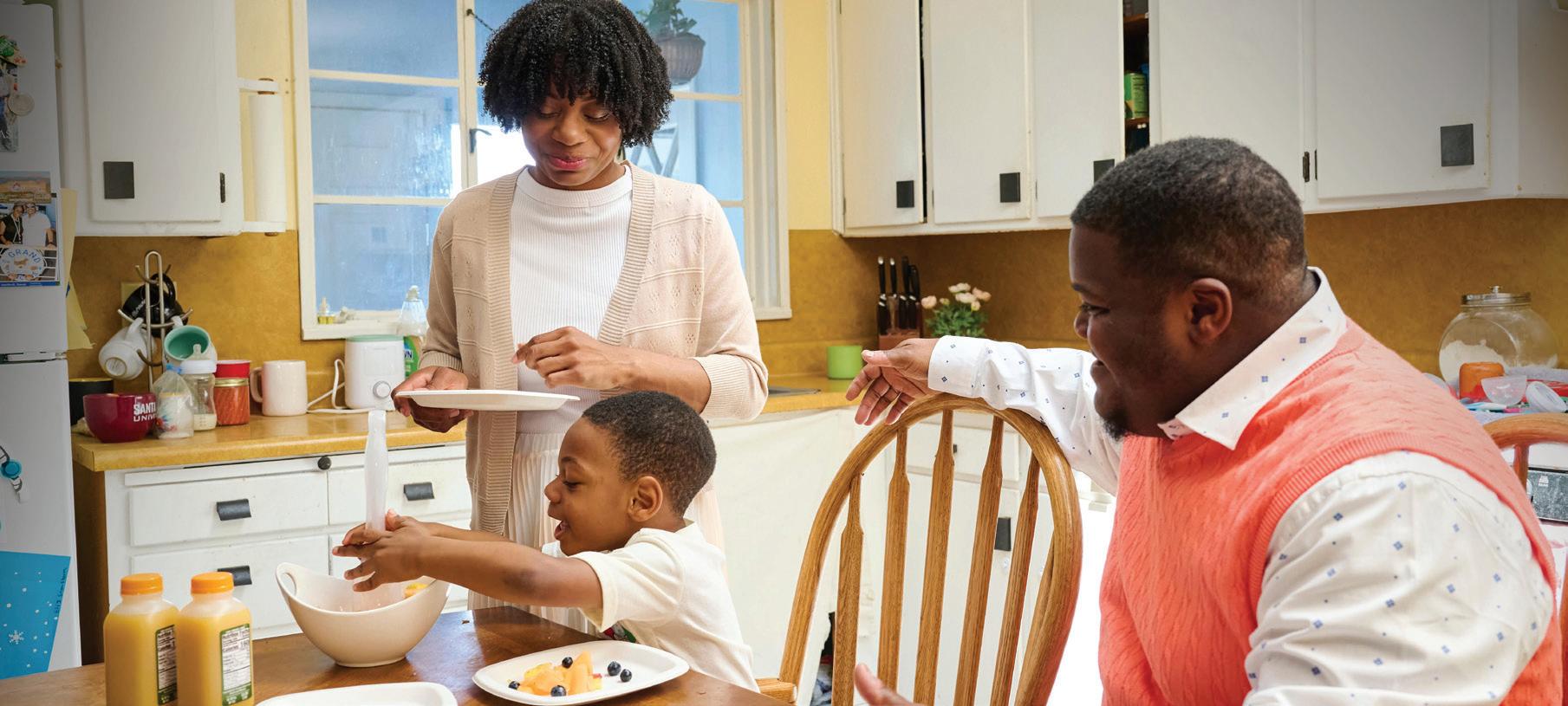
From the time Sydney was a little girl, she can’t recall a moment when her mother, Stephanie, wasn’t right beside her. Every volleyball game, swim meet, basketball game and even practices, her mom was there. Not occasionally. Not when it was convenient. Always.
Stephanie worked tirelessly to ensure her daughter had access to opportunities many only dream about.
Raising her in northeast Denver and enrolling her in a private school, she was intentional about building a future designed to reach generations for years to come.
From the outside, it would be easy to assume those choices came with heavy sacrifice – the financial strain, emotional exhaustion, the constant pull-on time and energy. But when Stephanie reflects on those years, she sees them through a different lens. To her, it was never a burden. It was for a purpose.
She became a mother in her early 30s, after accomplishing many of her personal goals. So, when Sydney came along, Stephanie was ready, fully present and all in. And it shows. Sydney’s confidence, leadership, and commitment to community is the direct result of a foundation carefully and faithfully built.
As a student athlete, health is everything. When Sydney began experiencing excruciating knee pain, it raised immediate concern.
Stephanie took her to a sports medicine doctor, determined to get answers. They were connected with a Black woman physician who pushed for more extensive testing beyond standard overuse evaluations, a decision that
would prove critical in Sydney’s health journey.
In her senior year of high school in 2020, she was diagnosed with lupus, an autoimmune disease that can attack the joints and vital organs, including the kidneys. It’s a condition that disproportionately affects Black girls and women, often between the ages of 15 and 44, and one that can be difficult to detect early.
Shortly after, she headed to college in Connecticut and transferred her medical care to UConn Health. As she was getting into her groove and working on campus; together with her doctors, she made the decision to undergo knee reconstruction surgery in hopes of easing the pain.
Over the next couple of years, lupus began attacking Sydney’s kidneys. By 2024, conversations about dialysis and the need for a transplant were no longer
hypothetical – they were becoming a reality. After graduating from college and residing back east for a year, she made the decision to move back home. Returning to the one place she knew she would be fully supported.
By 2025, fatigue set in. Everyday tasks required more energy than before. And in early 2026, what started as routine lab work quickly escalated into an emergency.
“I knew it was serious,” Sydney recalls. She was rushed to the hospital, where she underwent two blood transfusions and multiple procedures to prepare her body for dialysis. “When they told me dialysis was my only option,” she says, pausing to hold back tears, “that was heartbreaking for me.”
Dialysis, a life-sustaining treatment that removes waste and excess fluid from the blood, can be done in a clinical setting or at home. Sydney opted for at-home treatment, which offers more flexibility, but also requires intense training, strict routines, and daily commitment.
For a young woman in her 20s, the adjustment has been overwhelming to say the least.
“I’m still in my 20s. I want to enjoy this decade,” she says. “The biggest fear is the future. When will I get a kidney? How long will I be on dialysis?”
MJ THE MUSICAL
Comes to Buell Theatre in May
Devin Bowles talks about his path to the role of Michael’s father, Joe Jackson
By Gabrielle West
For those of us with a dream, rejection can at times feel like death. Hearing “no,” especially when it’s tied to something you deeply desire, can either break you or build you. For actor and singer Devin Bowles, he’s learned firsthand that even rejection can be a blessing along the pathway to greatness.
Growing up, Devin just knew he was going to the NFL to play ball. Coming from a family of athletes, it wasn’t until he had surgery as a young man and had to take time to rest that he discovered his love for singing. What started in his living room quickly grew into choir, school musicals, and eventually a desire to pursue acting at the collegiate level. That shift marked the beginning of learning how life can redirect you when the original plan calls you to pivot.
He continued refining his skills and later found himself doing theme park work at Cedar Point in Sandusky, Ohio. From there, he landed a role as the “Seasons of Love” soloist in the Pulitzer and Tony Award-winning musical Rent in Washington, D.C., a moment that helped solidify his trajectory. After Rent, he had the confidence and intuition to move to New York and fully pursue his dream.
Shortly after arriving, he booked Kinky Boots Off-Broadway and was eventually introduced to the creatives behind MJ the Musical. When auditions opened, he put his hat in the ring, and after seven callbacks, still heard “no.” It was the kind of rejection that could have stopped him in his tracks, but instead became another turning point in his persistence.
Devin still remembers the next month like it was yesterday.
As his birthday weekend approached, his agent called and the MJ the Musical team wanted him back to read for the role of Joe Jackson. He laughs now, recalling how he was slightly irritated that his birthday was just two days away, and he couldn’t celebrate the way he wanted. Instead, he locked in.
Two days later, on his birthday, he got the call. He’d booked the role. His life hasn’t been the same since.
These days, he is on the road doing what he loves, while also learning how to find balance in a demanding industry. He works with both a nutritionist and a therapist to stay grounded and refreshed through the pace of touring life –accessing tools that help him sustain the same resilience that carried him through years of working in entertainment.
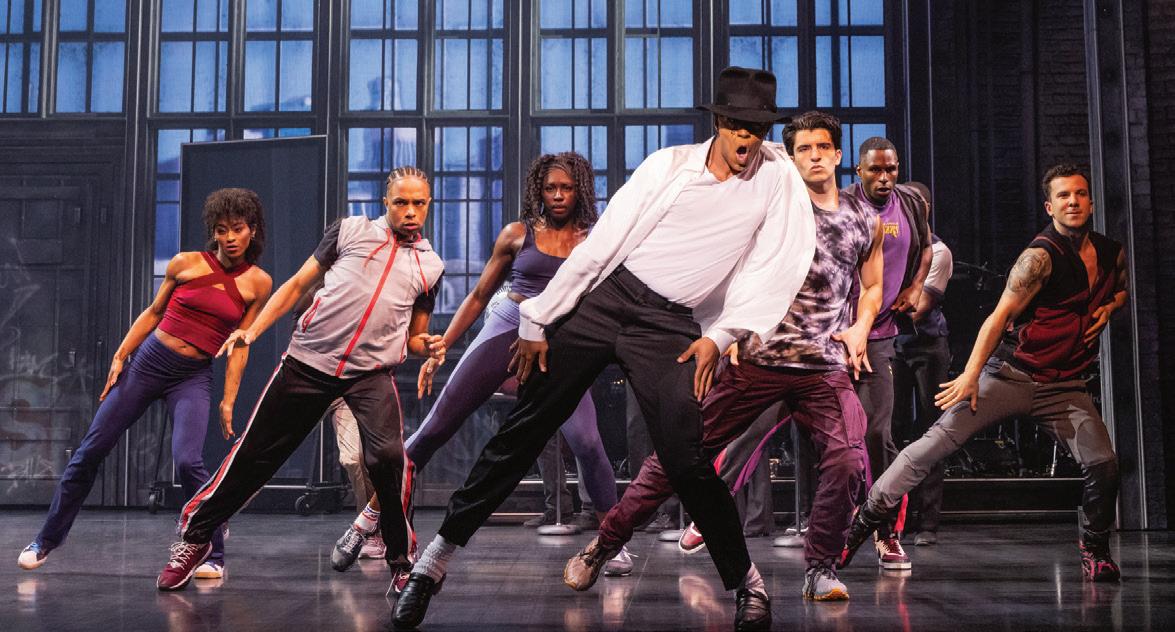
From May 12 to 17, audiences can find Bowles on stage in MJ the Musical at the Buell Theatre in the Denver Center for the Performing Arts, where
he takes on two dynamic roles. He alternates between Rob, a fictional character created as Michael Jackson’s right-hand man and choreographer, and Joe Jackson, the infamous and often misunderstood father of the King of Pop.
Taking on a figure as widely known and complex as Joe Jackson comes with weight. I asked Bowles whether he feels a responsibility to protect Joe’s image, particularly as a Black man portraying another Black man whose legacy is layered.
Rather than approaching the role from a place of judgment, Bowles leans into perspective, saying, “He’s a human who bled the same blood we do. Whether we agree with it or not, we have to take the time to understand why he was like that.”
The actor went on to explain that Joe used what he knew from growing up in Gary, Indiana, surrounded by poverty and gang violence, to create a different path for his family. And much like his own father, Bowles says, Joe ultimately wanted the best for his children. The methods may have differed, but the goal was the same.
In MJ the Musical, audiences are taken on a journey through Michael Jackson’s career, from the Jackson 5 to Thriller. Through that progression, Bowles says audiences will begin to see the imprint Joe had on his son’s career, shaping a standard of excellence and perfectionism that would ultimately define one of the greatest performers of all time.
You can catch Devin Bowles and the rest of the cast this May. Visit denvercenter.org for tickets. ♦
Despite feeling physically “okay” at times, the reality of her diagnosis weighs heavily.
“Because I was still functioning, still going about my day, I didn’t think it had gotten that far,” she says.
Now, she is learning to navigate a new normal – one shaped by medical schedules, dietary changes, and the emotional toll of uncertainty. But even in the hardest moments, she is not alone.
From hospital stays to surgeries and an intense week-long training for how to manage dialysis at home, she has leaned on her faith and the love of her mother.
And just like in Sydney’s childhood, Stephanie is still right by her daughter’s side.
She’s at every appointment, asking questions, taking notes, and advocating when something doesn’t feel right. She ensures protocols are followed, her daughter feels safe, and her care is taken seriously. She’s done her own research. She’s watching closely. She’s praying constantly.
This new phase of motherhood hasn’t shaken her; she’s doubling down.
“She’s my support system and my rock,” Sydney says. “She makes sure I keep God in my life. She’s always speaking positivity over me, always reminding me that I will get a kidney one day.”
As Sydney waits for a kidney transplant, her mother’s unwavering love is the power that will see her through.
Editor’s note: The primary organ procurement organization (OPO) for the Colorado region is Donor Alliance, which facilitates the coordination, recovery, and distribution of organs and tissues for transplantation across Colorado and most of Wyoming. For more information, visit https://www.donoralliance.org/.
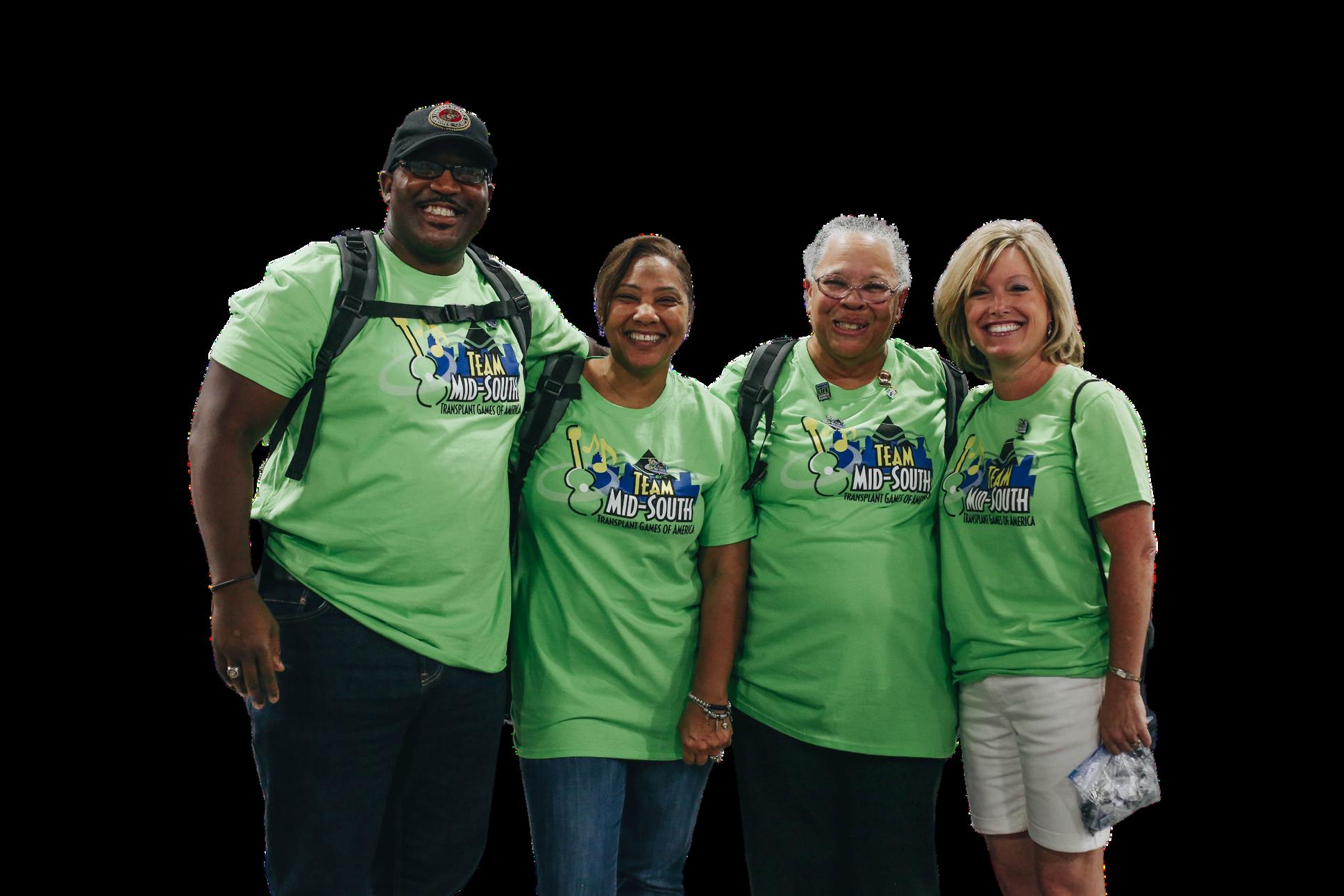
Editor’s note: Denver will host the 2026 Transplant Games of America from June 18–23, 2026. This biennial, multisport event, often called the “largest celebration of life in the world,” will be held at the Colorado Convention Center and various venues across the city. For more information, visit https://www. transplantgamesofamerica.org/
Be a part of the LARGEST GATHERING of living organ donors and solid organ recipients
Saturday, June 20, 2026 * 12:30 p.m. - 2:00 p.m. Colorado Convention Center, TGA Village
Life’s Short Live It Living Donor and Recipient Gathering Participation is free, Registration is Required.
BEHIND THE PULPIT, BLACK WOMEN BATTLE VIOLENCE AND SILENCE
A pastor’s killing exposes a hidden crisis: Black women clergy facing intimate partner violence, harassment, and silence inside the very institutions they serve.
By Rev. Dorothy S. Boulware
Editor’s note: This article was published on April 14, 2026 on Word In Black, a national media brand innovating on the legacy of the Black Press.
Overview:
The killing of Rev. Tammy McCollum on Easter Sunday, allegedly at the hands of her husband, is a shocking example of intimate partner violence in the church. But a growing number of Black women clergy struggle to break through misogyny and violence inside the church — harm often unspoken, protected by patriarchy, shame and fear of not being believed.
By most accounts, the marriage between Rev. Tammy McCollum, pastor of The Well Worship Center in Statesville, North Carolina, and Eddie McCollum appeared to be loving and stable.
Their grown daughter never saw any signs of trouble between her parents, and Tammy McCollum herself exalted her husband, Eddie McCollum, on their 30th wedding anniversary a few years ago. She called him an “amazing man of God” and gave thanks for her lifelong partner.
But as the minister and part-time cosmetics saleswoman delivered her sermon for Resurrection Sunday, more popularly known as Easter, she couldn’t have known it would be the last sermon she would ever preach.
After she left her pulpit and went home to relax, authorities say, Tammy McCollum was shot and killed inside their home. Eddie McCollum was quickly arrested and charged with firstdegree murder. He is being held in jail without bond pending trial.
Shame and Disbelief
Tammy McCollum’s murder is a shocking symptom of a much larger
problem: Black women clergy and faith leaders dealing with abuse, harassment, or worse, from men in the church — and in their personal lives.
It’s difficult to isolate numbers about Black clergy women and harassment or abuse; academic studies are hard to find. Experts say that, like most women in the Black community, women of the cloth are reluctant to report it because they worry about being shamed or not being believed. There’s also the probable loss of respect from the communities they serve.
Studies find that around four in 10 Black women have experienced intimate partner physical violence, sexual violence, or stalking in their lifetimes. Compared to white women, Black women are disproportionately
affected, facing higher rates of abuse and a 2.5 times higher likelihood of being murdered by a male intimate partner.
At the same time, while Black women make up between half and three-quarters of worshippers in church pews, less than 10% of clergy or church leadership are Black women. Several studies have found that Black women ministers and leaders are often the targets of harassment, bullying, or abuse from men in the church. That can make it even harder for women clergy dealing with intimate partner violence, or IPV, to find support within their own church.
‘We are Violated’
In 2018, The Los Angeles Times reported on a convening of Black
women ministers, which brought the issue into sharp relief. The women noted that Black male faith leaders “are like demigods,” making it pointless to complain to them about sexual harassment or seek help for IPV.
“We are violated before we preach, while we preach, after we preach,” the Rev. Deborah Manns is quoted as saying. “I am on fire for God. I love preaching his word, but it’s hard to preach at a church, and you go to the pastor’s office, and the first thing he asks you is ‘What color are your panties?’”
Cecily Johnson, director of strategic initiatives at the Domestic Violence Network, says the history of Black people in America plays a
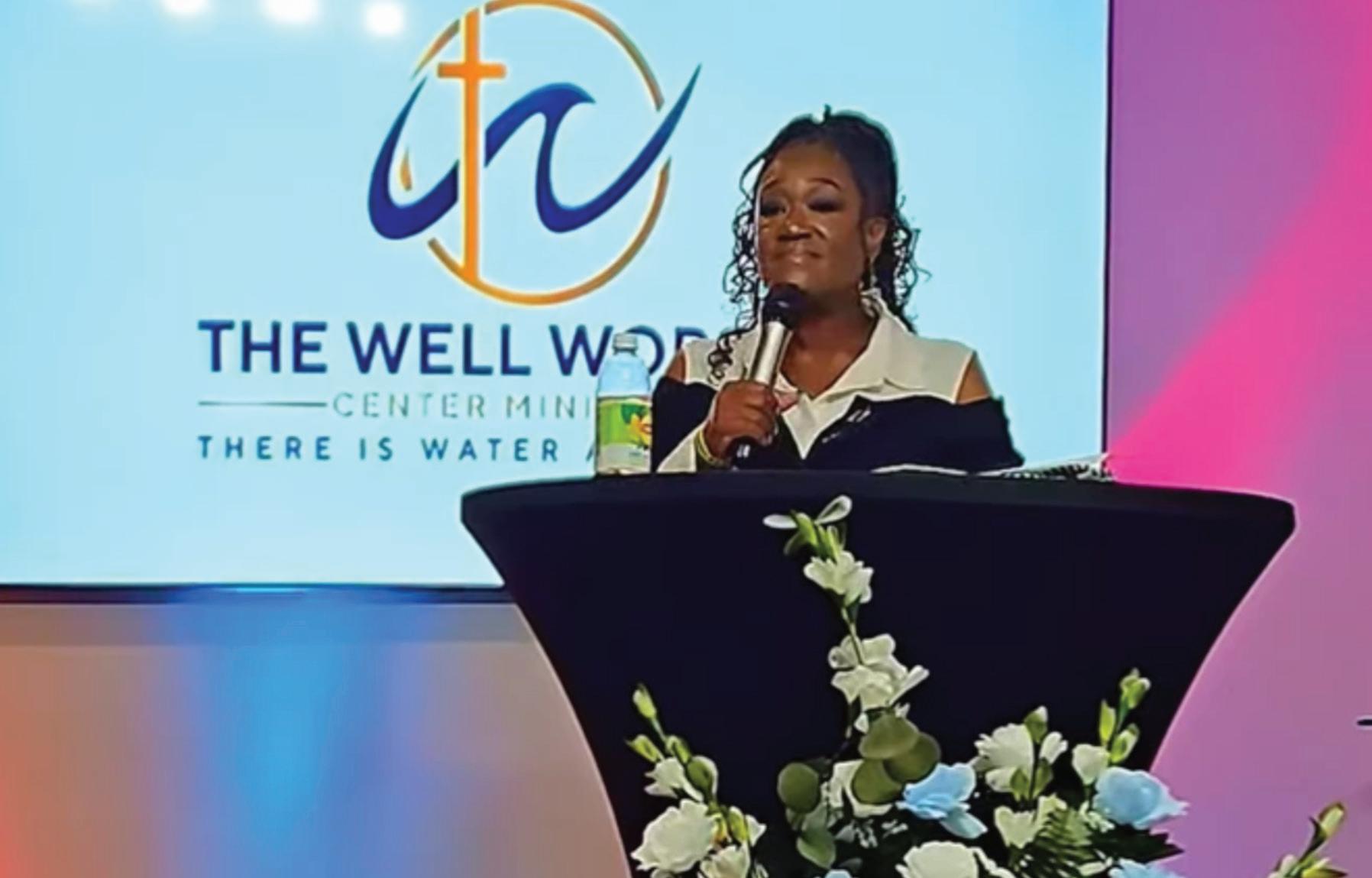
The shocking murder of Pastor Tammy McCollum, a minister at The Well Worship Center in metro Charlotte, North Carolina, exposed a serious problem among Black women clergy: the threat of harassment, abuse and violence. Police arrested McCollum’s husband and charged him with her murder, but Black women clergy who suffer abuse often don’t report it for fear of being shamed or not believed. Credit: Facebook/The Well Worship Center
role in how the Black church deals with the issues of Black women faith leaders.
The root cause of sexual harassment and intimate partner conflict stem in part from “the 400-year gap and the 400 years of being left at the starting line while other groups have moved forward with ease,” Johnson says. “That’s the root cause. It’s a combination of things we’re not given.”
“We’re just not given opportunities in education that generally would be made available to other populations, specifically white populations,” she says.
Barriers to Safety
Furthermore, Black women can be reluctant to turn male abusers over to the police for fear that law enforcement will mishandle or mistreat the men, or that the same congregation they serve every Sunday won’t support them.
“These systems create numerous barriers for survivors seeking safety. Law enforcement officials often arrest Black survivors, and police, jurors and judges are less likely to believe Black survivors than white survivors,” according to the National Coalition Against Domestic Violence. “Racist systems put Black people at greater risk of experiencing intimate partner violence,”
But Rev. Dr. Michele Balamani Silvera, a retired counselor and pastor, says there are ways for Black women clergy to stay safe.
“First of all, normalize it because it is as prevalent among women clergy as it is among all women,” Silvera says. “We sometimes act as if the calling somehow exempts us from the violence, just because.”
“And be aware of the warning signs at the very beginning of the relationship, because they are always there.”
Experts say violent marriages were easier to avoid when people engaged in longer courtships before settling into marriage. But the age of technology and social media has changed much of that.
“They meet online and before you know it, they’re engaged,” Silva says. “Or even married. And the time for observation of problematic tendencies has passed, and the trouble begins.”
At the same time, “one has to be cautious because the church is
sometimes ready to offer prayer and consolation with encouragement to maintain the home, rather than the advice to seek safe shelter and counseling.”
‘Abuse Thrives in Silence’
Silvera offered some tips to help women when they find themselves in a troublesome place.
“First break the silence,” she says. “Abuse thrives in silence, so speaking up is critical. Confide in a trusted person.”
But Silva also warns against going to authority figures connected to the abuser, like church leadership, because they may protect the abuser and reinforce the harm. Better to use professional resources like the National Domestic Violence Hotline, including texting options for discreet help, because these can quickly connect victims to support and safe options.
“Plan ahead to leave safely,” she says. “Keep a bag packed if possible, keep note of when the abuser is away
or asleep and be ready to leave quickly without worry about belongings.”
Most importantly, “if violence is happening in real time, priority is simple: leave in whatever means necessary, even if you have to borrow money or use a ride service.” ♦
Editor’s note: If you or a loved one are in an abusive situation, help is available. Contact the National Domestic Violence Hotline:1-800-799-SAFE (7233). Text START to 88788. A live chat is also available on thehotline.org.
chfainfo.com/tomorrow
Why Local News Still Matters FOR THE LOVE OF COMMUNITY:
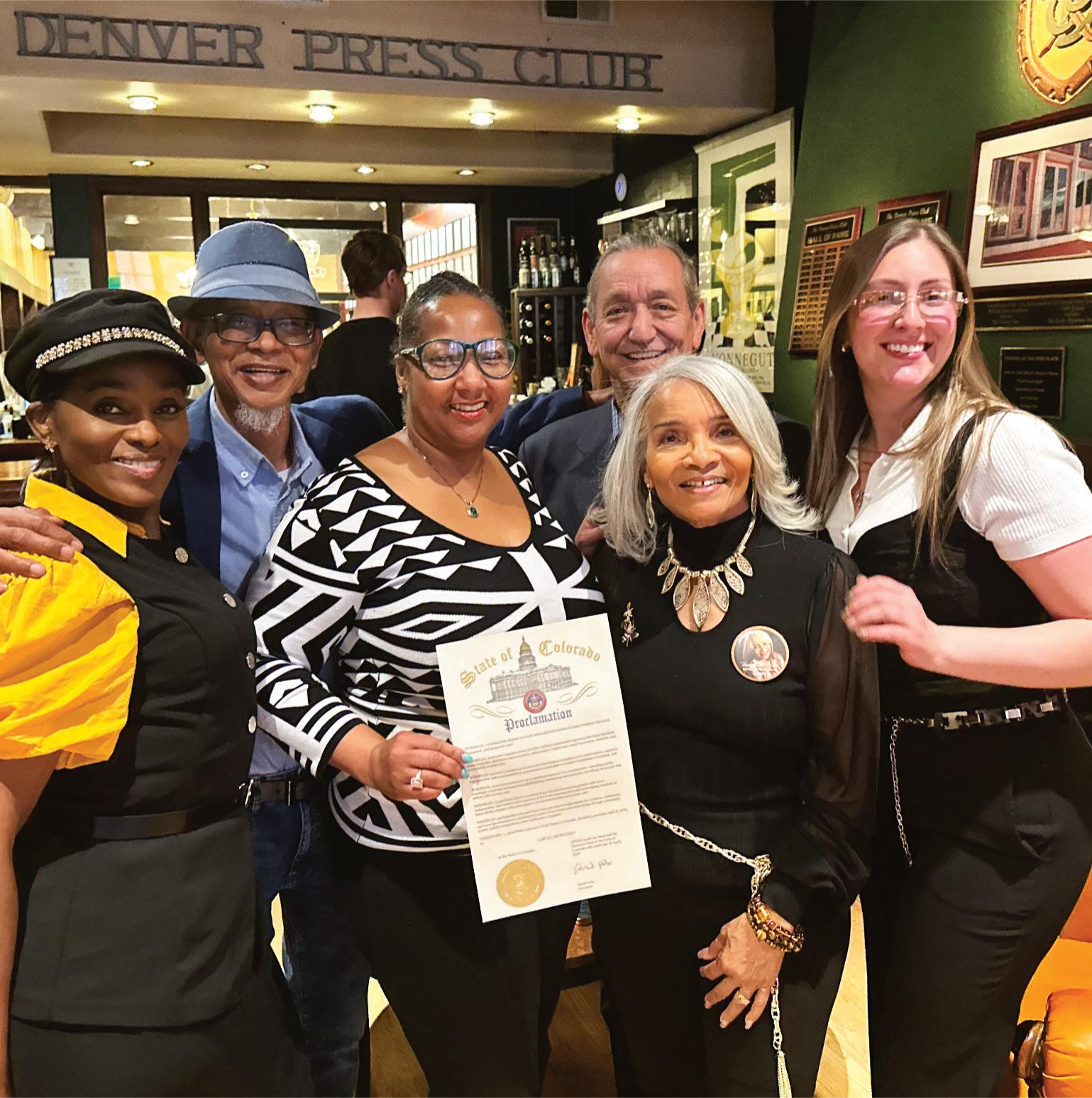
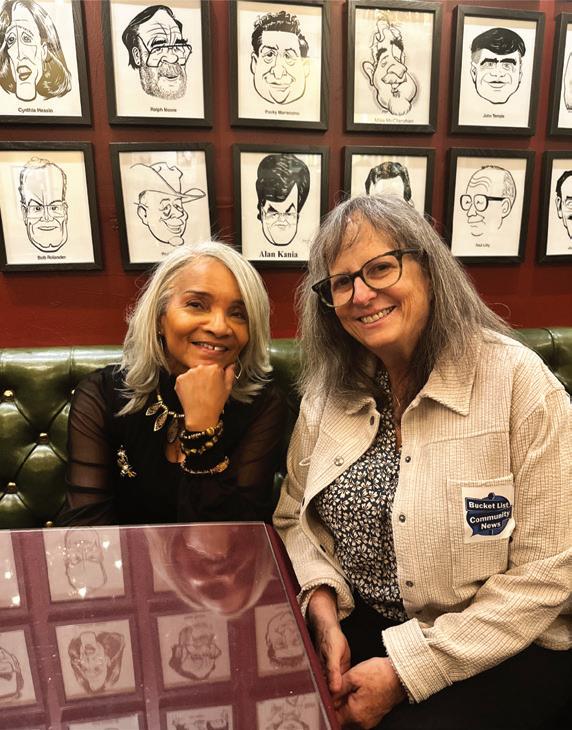
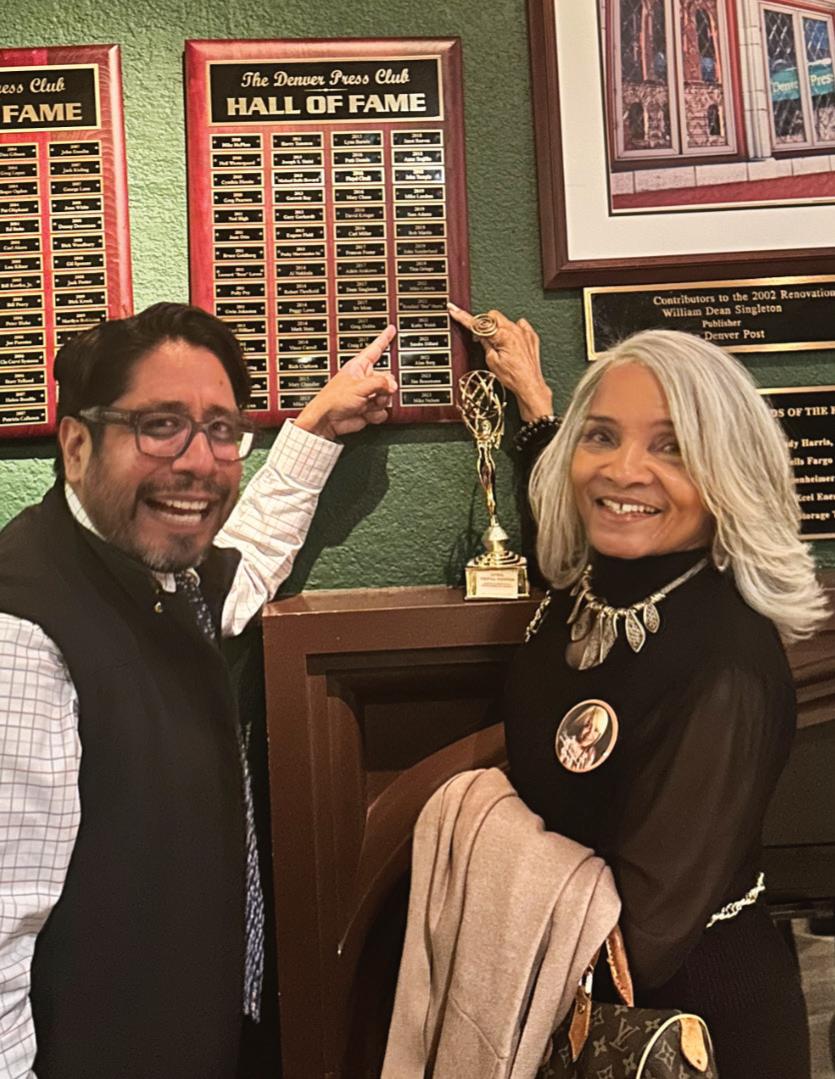
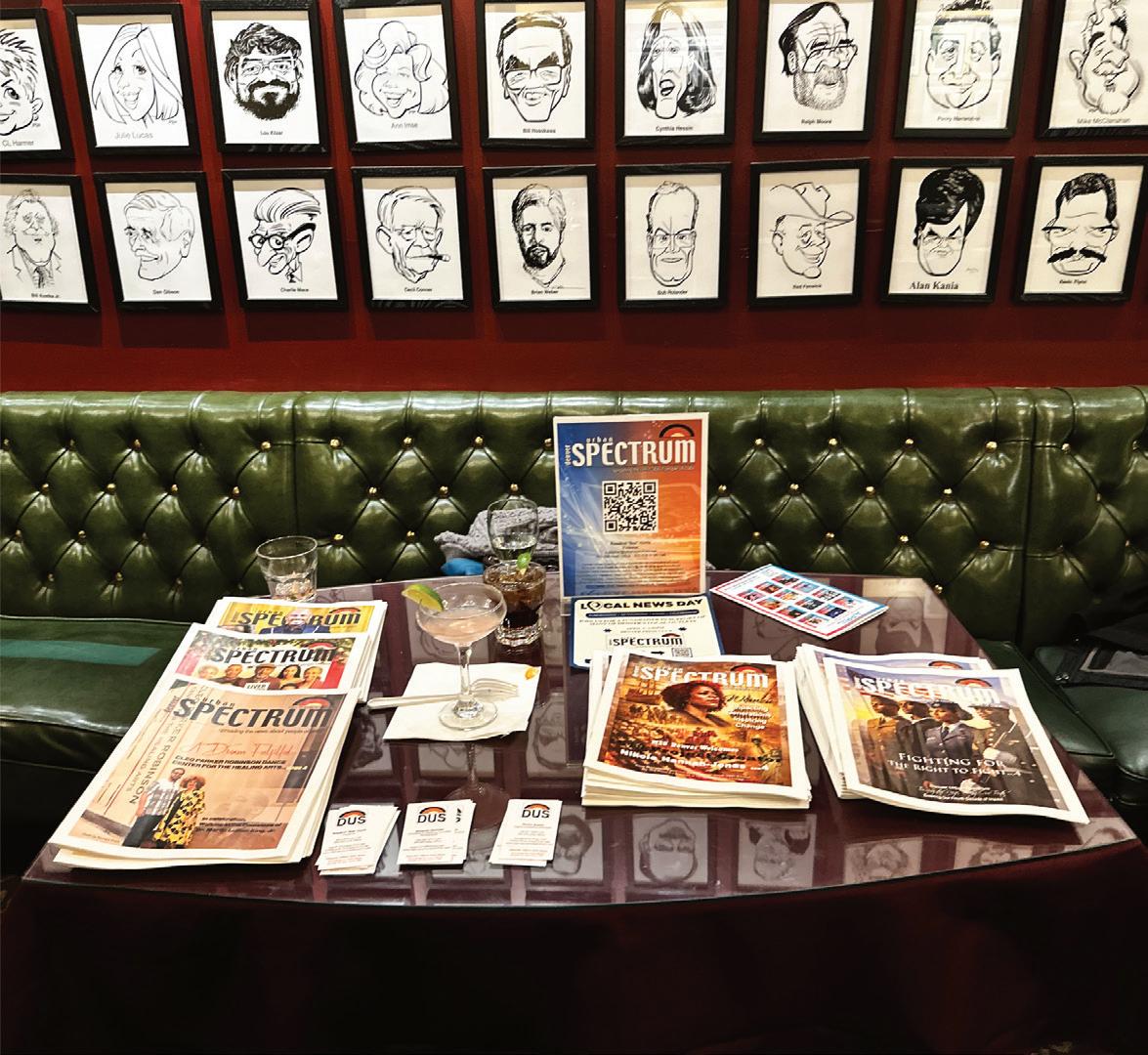
There are moments when you are reminded not just of what you do—but why you do it. Local News Day, held April 9 at the historic Denver Press Club, was one of those moments.
From 5 to 8 p.m., the space was filled with journalists, publishers, supporters, and community members—all gathered with a shared understanding that local news is more than headlines. It is connection. It is accountability. It is community.
Led by Bucket List Community News publisher Vicky Collins, the evening brought together a collective of Denverbased newsrooms, each committed to telling neighborhood stories that might otherwise go unheard. It was inspiring to see so many voices aligned in purpose, especially knowing that more than 1,300 newsrooms across the country were participating in this inaugural Local News Day.
Among them was Denver Urban Spectrum, continuing its nearly fourdecade commitment to amplifying diverse voices and sharing stories that inform, inspire, and uplift. Throughout the evening, conversations flowed easily—about challenges, certainly—but
also about possibility. Sustainability, innovation, collaboration—all were on the table, but what stood out most was the shared passion for serving community.
A proclamation from Jared Polis recognizing April 9, 2026, as Local News Day added a meaningful note of recognition. Remarks from leaders including Laura Frank of COLab and Kimberly Spencer of the Colorado Media Project further underscored the importance of a strong, connected local news ecosystem.
As Publisher Rosalind “Bee” Harris shared during the evening, “Events like this remind us that we are stronger together. For nearly four decades, we’ve remained committed to telling the stories of our community—stories that inform, inspire, and uplift.” She added, “We truly appreciated the opportunity to connect, reflect, and stand alongside others doing this important work.”
Local News Day was more than a gathering—it was a reminder. When communities support local journalism, they are investing in their own voice, their own stories, and their own future.
The Black Women’s Leadership Collective Launches “One Million”
Black Voters Rising
Effort will leverage the
reach of a coalition of national Black women-centered organizations, leaders, and advocates reaching more than 20 million Black women nationwide
Washington, D.C. — April 15, 2026 — The Black Women’s Leadership Collective (BWLC), together with its 12 partner organizations and BWLC’s North Carolina and Virginia chapters, announced the launch of One Million Black Voters Rising (1MBVR) www.onemillionblackvotersrising.org a bold, multi-year effort to register one million new Black voters, build collective power and longterm civic engagement. Rooted in the organizing power of Black women—our democracy’s most active participants 1MBVR launches with a combined reach of more than
20 million Black women nationwide and their networks.
Using a combination of digital tools, on-the-ground organizing, and culturally competent outreach, 1MBVR invites participants to register new voters and sustain engagement through 2026, 2028, and beyond. Equipped and supported to activate their own networks—in neighborhoods, campuses, workplaces, and congregations—and to have direct, honest conversations. By focusing on person-to-person activation, 1MBVR aims to convert untapped eligibility into real outcomes: more resources for schools, deeper investment in
communities, greater opportunity for families, and leadership that is accountable to Black voters.
This effort is grounded in a simple truth: Black political power has not peaked—it has been undercounted, underestimated, and undervalued. At a time of unprecedented threats to our lives, our opportunities, and our communities, anti-Blackness and racism are having a real impact on our present and our future—issues that are not always addressed in traditional voter registration efforts. This is a critical moment to demonstrate what’s possible when we move together— across organizations, sectors, and
states. That’s why 1MBVR is designed to meet people where they are, building the movement through trust, conversation, and connection.
The One Million Black Voters Rising Movement launches with an urgent call to Join the Movement to One Million Stronger. We are rising to use our power—because we have the numbers to create real change, and because there is more to do: more to protect, more to fight for, and more to build for the next generation.
For more information, visit www. onemillionblackvotersrising.org
Statements from 1MBVR/BWLC Partners:
“Power Rising was founded on the belief that Black women’s collective power, when organized and activated, is the most transformative force in American democracy --- because we are stronger in formation than we are standing alone. One Million Black Voters Rising is that belief made real — twelve organizations, millions of women, one mandate. This kind of convergence doesn’t happen by accident. It happens because Black women have decided
that this moment demands everything we have. This is not just a campaign goal; It is a covenant with every Black community that has been told their vote doesn’t matter. We are here to say: it does. And we will prove it.”
— Leah Daughtry, Co-Convenor, Power Rising
“The 1 million Black Voters Rising initiative provides the infrastructure to sustain our power. When sisters lead together, when we vote together, we win together. Sisters Lead Sisters Vote stands proudly with our sister organizations.”
Holli Holliday, President Sisters Lead Sisters Vote; Co-Chair One Million Black Voters Rising
“Through the Extraordinary Power of S.H.E. (Social, Health, and Economic Justice), Zeta Phi Beta Sorority, Incorporated, has advocated alongside our communities for over 106 years on key issues, including maternal healthcare and civic engagement. Now more than ever, we are proud to be part of the collective “1 Million Black Voters Rising” movement, ensuring our voices are not just heard but are the driving force for lasting empowerment and change.
Dr. Stacie NC Grant, International President & CEO Zeta Phi Beta Sorority Incorporated; Chair NPHC (Divine 9) Council of Presidents
“We are proud to stand with 1 Million Black Voters Rising in this critical moment. This partnership reflects our shared commitment to engaging communities, expanding access, and ensuring every voice is heard. At Delta 4 Women in Action, this work is core to our mission, and we know real impact happens when we come together.
— Rhonda Briggins, Delta 4 Women in Action, President
“When Black women have the space to lead, our communities bloom and our democracy moves closer to its promise. Through this effort to engage one million Black voters, we are nurturing the collective power that will carry us forward.”
— Glynda C. Carr, President & CEO, Higher Heights for America
“Black women have always been the architects of progress—organizing, mobilizing, and leading from the frontlines of change. The 1M Black Voters Rising initiative is more than a movement; it is a declaration of our collective power and our unwavering commitment to shaping a future where Black women lead at every level. At Win With Black Women, we stand proudly with the Black Women’s Leadership Collective to ensure our voices are not only heard, but centered, amplified, and transformed into lasting impact.”
“Now, more than ever, ensuring everyone participates in the political process is essential, and registering to vote is crucial to that involvement. Our collective goal of registering 1 million new voters reflects our commitment to civic duty, which is under immediate threat. Bad-faith actors are attempting to create fear and uncertainty around both the impact of the Black vote and voting security. These actors rely on disinformation and intimidation in their method of destruction. We at NCNW, and as Black women, are familiar with these insidious actions, and are equipped to mobilize our communities to mount a strong resistance. This push for 1 million new registered voters is a strategic initiative to strengthen the spirit of the people who encompass our democracy and to communicate that their voices will be heard at the polls.”
NCNW President & CEO Shavon Arline-Bradley”
“The National Coalition on Black Civic Participation will celebrate the 50th anniversary of its founding on May 5, 2026, serving as the longest serving historically Black national Black civic engagement and voter empowerment coalition, with a membership base of over 80 organizations and 11 state-based affiliates and partners in The South, Mid-West and Northeast Regions. NCBCP and its Black Women’s Roundtable, is delighted to serve as a national partner for the One Million Black Voters Rising Campaign, by providing its expertise in building effective intergenerational coalitions, organizing and leading non-partisan integrated voter empowerment campaigns, focused on Black women, youth and returning citizens; and sharing its research on Black women’s voting behavior and messaging.”
— Melanie L. Campbell, President & CEO, National Coalition on Black Civic Participation and National Convener, Black Women’s Roundtable
For more than a century, Delta Sigma Theta Sorority, Incorporated has stood on the frontlines of democracy—registering voters, educating communities, and mobilizing voices that too often go unheard. We understand that the power of the ballot is not just a right—it is a responsibility and a pathway to justice. We are proud to do our part to register 1 million new Black Voters.
— Cheryl W. Turner International President & Chair of the Board Delta Sigma Theta Sorority Incorporated
—Jotaka Eaddy, Founder & Convener of Win With
Black Women
“Alpha Kappa Alpha Sorority, Incorporated® is steadfast in its commitment to advocating for social justice and affirms that transformative change is not achieved in isolation, but through strategic collaboration with aligned organizations and communities. United with our sister organizations, we proudly support One Million Black Voters Rising. Through our collective social action, we will “SOAR to the Polls” and let justice unfold!”
— Danette Anthony Reed, President & CEO, Alpha Kappa Alpha Sorority, Incorporated®
“Voting is important to Sigma Gamma Rho Sorority, Inc. because it directly aligns with our mission of Greater Service, Greater Progress and our commitment to empowering communities through advocacy, education, and action. Through the A.C.T.I.V.A.T.E. Campaign, Sigma Gamma Rho emphasizes that civic engagement is not optional — it is essential to advancing equity, opportunity, and social impact. We are proud to be part of One Million Black Voters Rising.”
— Marica T. Harris, Grand Basileus, Sigma Gamma Rho Sorority, Incorporated
“Right now, millions of Black people are not registered to vote—that’s unrealized power. And let’s be clear: Black political power has not peaked—it has been undercounted and undervalued. One Million Black Voters Rising is about changing that—turning our numbers into action and our voices into real influence over the decisions that shape our lives.”
—
Karen Finney, Co-Chair One Million Black Voters Rising
About the Black Women’s Leadership Collective
The Black Women’s Leadership Collective (BWLC) is an intergenerational, intersectional organizing hub of national Black women-centered organizations, leaders, and advocates from across the country. Rooted in the power of collective action, BWLC is building, growing, and activating a national network to ensure Black women’s
voices are heard—in the halls of power, at the ballot box, and in our communities. Together, we represent and engage millions of Black women through our expansive network. Whether mobilizing voters, shaping policy, or cultivating leadership, BWLC is harnessing the full force of Black women’s leadership to drive transformational change across the country. For more information, visit https://www. blackwomensleadershipcollective.org
ALL THINGS BOYS
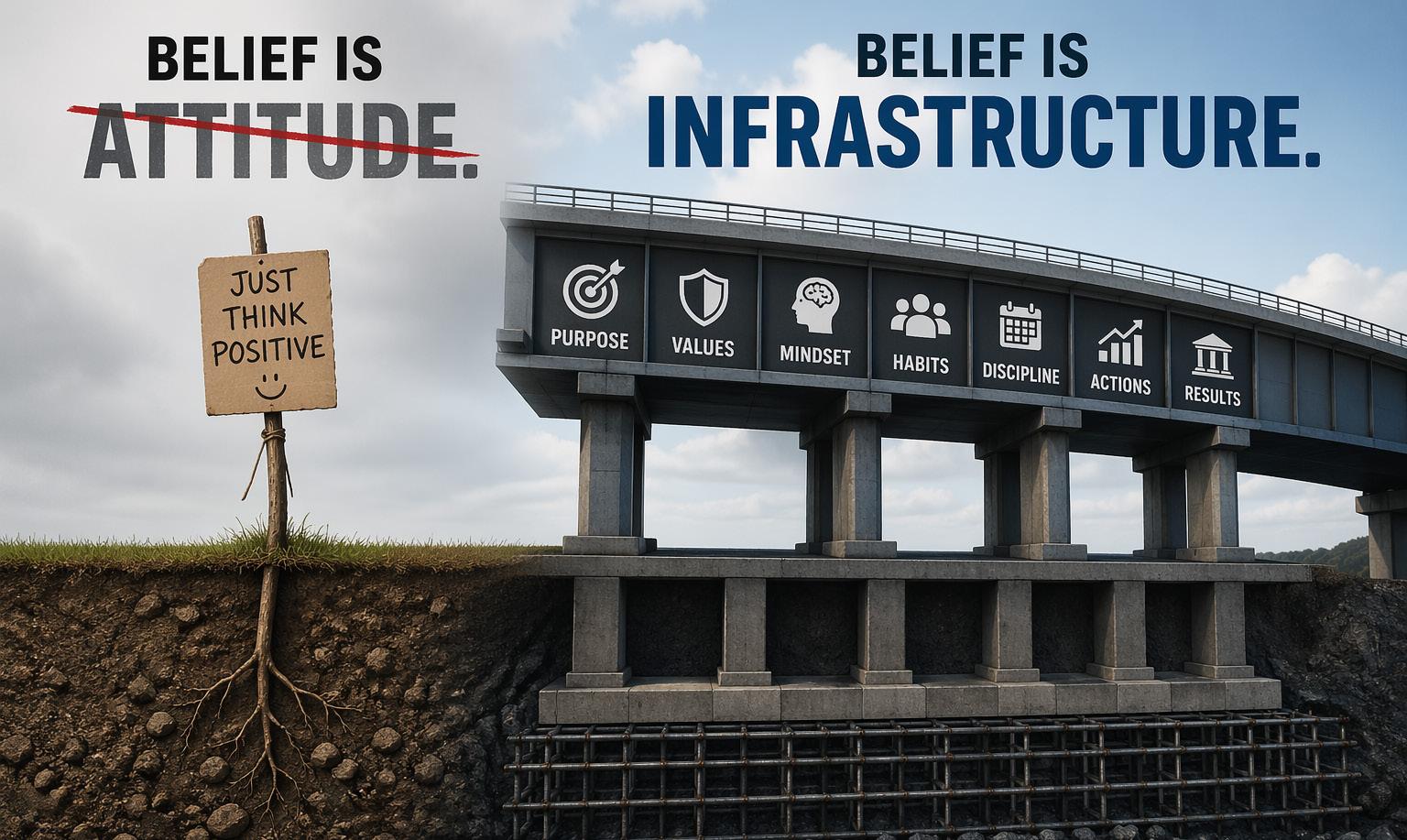
Belief Is Infrastructure, Not Attitude
For a long time, we have treated belief as a personal matter. The conversation has largely centered on bias training, mindset work, and individual reflection, with the assumption that if people think differently, systems will improve. The reality is more complicated. What we know from decades of research across education, psychology, and organizational behavior is that systems do not operate at the level of intention. They operate at the level of design. And design decisions are shaped long before outcomes appear. That means belief does not stay internal. It becomes structure. And when belief becomes structure, it produces predictable outcomes.
Belief Is the First Layer of Design
Before policies are written or programs are implemented, systems are already being shaped by what adults believe. What is considered rigorous, what is considered appropriate behavior, who is seen as capable, and who is seen as needing
control are not neutral determinations. They are interpretations, and those interpretations become embedded in how systems are built. Research on teacher expectations, including the work of Robert Rosenthal, has long demonstrated that adult perception influences student performance. Not because of motivation alone, but because expectations shape opportunity. They influence the level of challenge presented, the feedback provided, and the patience extended when difficulty arises. Over time, those differences compound. Belief becomes the conditions under which learning happens.
How Belief Becomes Structure
You can see belief most clearly not in what is said, but in what is consistently done. It shows up in access to advanced coursework, where decisions about who is recommended and who is told they are “not ready” are often framed as objective but are filtered through adult interpretation of readiness and behavior. It shows up in discipline systems, where the same behavior can be read as curiosity in one student and defiance in another, shaping not just immediate consequences but long-term perception. It shows up in
This Is Not an Implementation Problem
how time is allocated, determining who receives intervention, who receives enrichment, and who is given extended opportunities to demonstrate understanding. None of these decisions feel extraordinary in isolation, but together they form a pattern. Over time, patterns become structure. Once structure is in place, belief no longer appears as belief. It appears as policy, as routine, as simply how the system works.
Predictability Is the Outcome
From an adult perspective, systems can feel complex. There are competing priorities, multiple initiatives, and constant demands that make outcomes seem difficult to trace. From the perspective of boys and young men of color, the system is often far more predictable. They learn where they are placed, how they are perceived, and what is expected of them. They experience consistency or inconsistency in how adults respond, and they notice who is given access and who is not. When belief, structure, and daily practice align in ways that limit opportunity, the outcome is not confusion. It is predictability. And that predictability communicates something clearly. For some, it communicates belonging. For others, it communicates limitation.
When outcomes are patterned across classrooms, schools, and systems, the issue is often framed as implementation. The response is to call for better training, stronger programs, or more targeted interventions, all of which assume that the system is designed correctly and simply needs to be executed more effectively. But systems do not consistently produce outcomes they were not designed to produce. If boys of color are consistently experiencing lower expectations, inconsistent responses, and reduced access to rigor, that is not a breakdown in execution. It is an expression of design. And design is shaped by belief.
The Responsibility of Leadership
This is where the work becomes more precise. The question is not whether educators care about boys and young men of color. In most cases, they do. The question is whether that care is reflected in the design of the system. Leaders have to be willing to examine where belief shows up in routine decisions, including placement decisions, discipline responses, access to rigorous work, and the allocation of time and attention. These are not neutral processes. They are design choices that reflect what adults believe about who is capable, who is compliant, and who is worth sustained investment. If outcomes are predictable, design is responsible. And if design is responsible, then belief must be examined at the level of decisions, not statements.
What Must Be Examined Now
This work does not require new language. It requires different observation. Leaders must look at their systems as they are currently functioning and examine who is consistently experiencing rigor, who is consistently experiencing removal or redirection, who is being positioned as having potential, and who is being positioned as needing management.
Then the question becomes more direct. What belief would have to exist for this pattern to be considered acceptable? Because whatever that belief is, it is already embedded in the system. Belief is not a starting point for reflection alone. It is the foundation of design. And until it is examined at that level, systems will continue to produce exactly what they were
built to produce. That responsibility does not sit with students. It sits with adults.
A Call to Action
This is not work that requires a new initiative. It requires a different level of discipline. Choose one system you are responsible for. Not in theory, but in practice. A classroom, a grade level, a department, or a school. Examine the patterns that are already present. Identify who is consistently experiencing rigor, who is being redirected or removed, and who is gaining access to opportunity. Resist the urge to explain or justify the patterns and focus instead on seeing them clearly. Then trace those patterns back to decision points, including placement decisions, interpretation of behavior, and the allocation of time and attention. Ask what belief is operating in those moments, whether it is named or not. Once identified, the work is not to restate values. It is to redesign the decisions that carry those beliefs forward. Because systems will continue to produce what they are designed to produce. Redesign is not conceptual work. It is a leadership responsibility
that shows up in what you choose to change next.
For Systems Ready to Do the Work
For leaders who recognize that this is not theoretical and are ready to examine a specific part of the system they are responsible for, this work requires structure, not just reflection. At the Sims-Fayola Foundation, we work with schools, districts, and organizations to identify where belief is embedded in system design and to support leaders in realigning belief, structure, and daily practice toward more predictable outcomes for boys and young men of color.
If you are ready to examine one aspect of your system with that level of precision, reach out to us at info@ sffoundation.org. ♦
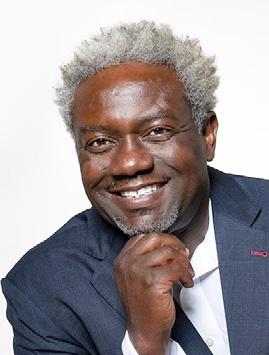
Editor’s note: Dr. Dedrick Sims is the Founder and CEO of the Sims-Fayola Foundation and author of the monthly All Things Boys column in The Urban Spectrum. For more on adolescent development and mentoring young men of color, visit www.sffoundation.org.
mea culpa mea culpa mea maxima culpa
By Earl Ofari Hutchinson
Pope Leo pushed back hard and fast against Trump when he publicly declaimed, he was not intimidated by him. Pope Leo could have saved the defiant talk. If anything, the pontiff should conduct a special mass of thanks to Trump.
I say this as a devout Catholic. Yet one who is often critical of the church’s doctrine on abortion, gays, and the role of women. But Trump managed to do something that no other politician has ever done. He rallied just about every Catholic believer, Catholic critic, non-believer, many Muslims, Jews, Buddhists, Hindus, Agnostics, and even atheists in praise of the Pope and rip of Trump.
This is no mean fete. I come back to church critics. There are legions of them without and within the church. One example is Vice President JD Vance, a purported catholic, who quickly did his requisite Trump lap dog bark at the Pope screeching that he should stick to church matters.
Another example is the myriad of conservative Catholic notables, groups, and even U.S. Cardinals.
They lambasted Trump’s self-serving, standard megalomaniacal, idiotic antiPapal rants.
But it’s the other example of those who rallied round the Papal throne that is most intriguing. These are the reform minded Catholics who have relentlessly challenged church doctrine of abortion, the role of gays and women, and its oft times look the other way at pedophile priests. They loudly proclaimed that they had the Pope’s back.
That cast light again on the question that many have asked for years. That is which Catholic Church would emerge in the years after Pope Francis’ death in April 2025. Would it be a Catholic Church that Leo in another of his first pronouncements following his ascension to the papacy did what he called for, “We have to be a church that works together to build bridges and to keep our arms open, like this very piazza, welcoming.”
Church reformers would interpret that to mean the church takes seriously the call for a total overhaul of its teaching and doctrines frozen in time that excluded wholesale groups, lifestyles, and relationships that the church for centuries considered taboo. Church conservatives by contrast would interpret his admonition as little more than generic words that any leader would be obliged to make. But that carried no force behind them when it came to fundamental change.
The church almost certainly would continue to vigorously defend immigrant rights. That was an easy choice since many Catholics globally were in Asia, Africa, and Latin America. They were the individuals who would make up the bulk of immigrants to the U.S, Canada, and Western Europe. They were the ones who would likely suffer discrimination.
Likewise, it was just as easy for the church to continue to speak out on and fight against poverty and wealth inequality. That was also in the church’s direct interest since much of the poverty and inequality in the world were in the countries with large numbers of Catholics.
However, the betting odds were that it would be a far different story when the debate on church change swung back to the long-standing church views on gays, the family, marriage, abortion, and women’s roles. There were mixed signals on how much change there would be during Leo’s papacy.
Far right Catholic bloggers, groups, magazines, websites, and some church hierarchy poured over then Bishop Prevost’s sermons, quips, and homilies on these issues to find clues which direction he’d try and take the church. They found some that marked him as a traditionalist and others that marked him as a Francis’ type reformer.
When all the mounds of initial speculation on this were finished, the consensus was a wary wait and
see. That was best summed up by no less than Vance, a so-called born again Catholic. In an interview, he noted, “I’m sure he’s going to say a lot of things that I love. I’m sure he’ll say some things that I disagree with, but I’ll continue to pray for him and the Church despite it all and through it all.”
There were two views there were universal consensus on when it came to whether there would be any foundational church reversal of its age-old positions on these issues. One was that these issues would continue to be raised. The other was that the battle lines on them would continue to be fiercely drawn with little give from either side.
There would be no dramatic epiphany and then a recitation of the ancient Catholic repentance call punctuated by three strikes of the breast mea culpa mea maxima culpa. Translated: through my fault, through my fault, through my most grievous fault.” That best sums up Trump. Pope Leo’s blast simply underscored that. ♦
Editor’s note: Earl Ofari Hutchinson is an author and political analyst. He is the author Combatting the Catholic Church’s Five Mortal Sins (Amazon ebook and Middle Passage Press). He hosts the weekly news and issues commentary radio show The Hutchinson Report Wednesdays 6 PM PST 9 PM EST at ktymgospel.net
UNDERSTANDING Home Buying Assistance Programs in Denver’s Real Estate Market Lender Credits
By Barry Overton
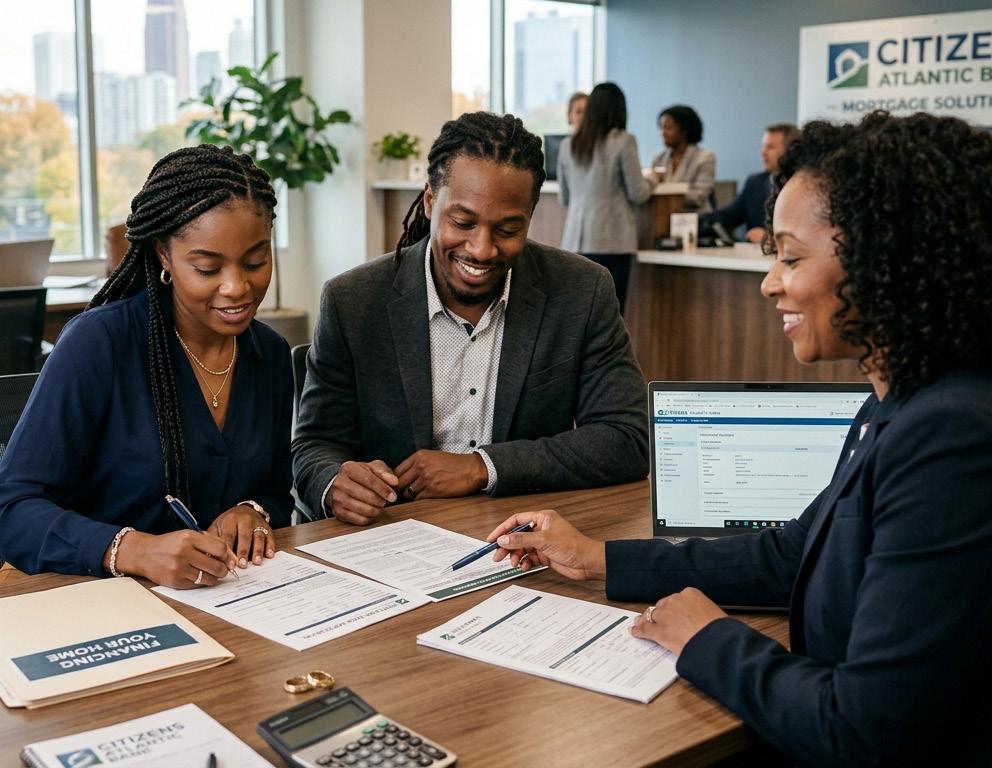
In today’s evolving real estate landscape— particularly in markets like Denver, Colorado— buyers and sellers alike are seeking creative, efficient ways to navigate affordability, liquidity, and transaction success. One of the most impactful yet often misunderstood tools available is the use of lender credits and down payment assistance programs.
When properly structured, these programs do more than simply reduce costs—they can significantly influence a buyer’s ability to enter the market and a seller’s ability to successfully close a transaction.
What Are Lender Credits?
A lender credit is a financial incentive provided by a mortgage lender that helps cover a portion of the buyer’s closing costs. These costs can include loan origination fees, title charges, escrow fees, and prepaid items such as property taxes and insurance.
Typically, lender credits are expressed as a percentage of the loan amount. For example, a 2% lender credit on a $500,000 loan could provide $10,000 toward closing costs.
However, it is important to understand that this credit is not free. In most cases, the borrower accepts a slightly higher interest rate in exchange for receiving this upfront financial support. This creates a strategic trade-off: lower out-of-pocket expenses today in exchange for a modestly higher monthly payment over time.
Down Payment Assistance Programs
In addition to lender credits, many buyers in Denver have access to down payment assistance (DPA) programs. These programs are designed to reduce the financial barrier to homeownership by offering grants or secondary financing that can be used toward a down payment and, in some cases, closing costs.
Programs such as metroDPA and those offered through the Colorado Housing and Finance Authority (CHFA) can provide assistance ranging from approximately 3% to 6% of the loan amount. Depending on the structure, these funds may be repayable or forgivable over time.
When combined with lender credits, these programs can dramatically reduce the amount of cash required to close—sometimes allowing buyers to purchase a home with minimal upfront investment.
How These Programs Benefit Buyers
For many buyers, particularly first-time purchasers or those
focused on preserving liquidity, the primary challenge is not qualifying for a mortgage—it is assembling the necessary cash to close.
Lender credits and assistance programs directly address this challenge by:
Reducing upfront costs: Buyers can allocate less cash toward closing, allowing them to maintain reserves for moving expenses, furnishings, or emergencies.
Improving accessibility: These programs open the door for buyers who may otherwise delay homeownership due to financial constraints.
Providing flexibility: Buyers can choose between minimizing cash outof-pocket or lowering their long-term payment through different structuring options.
In a market where interest rates fluctuate, many buyers also adopt the strategy of entering the market now and refinancing later. In this context, accepting a slightly higher initial rate in exchange for upfront savings can be a calculated and effective decision.
How These Programs Benefit Sellers
While these tools are often viewed through the lens of buyer advantage,
they also provide meaningful benefits to sellers.
Expanded buyer pool: By reducing financial barriers, more qualified buyers are able to compete for a property.
Stronger offers: Buyers who receive assistance or credits may be more confident in submitting competitive offers, even in shifting market conditions.
Faster transactions: Wellstructured financing can streamline the closing process, reducing the likelihood of delays caused by funding issues.
Negotiation flexibility: Sellers can contribute to closing costs while still achieving their desired net proceeds, especially when combined with lender credits.
Ultimately, these programs can help sellers maintain momentum and secure successful closings, particularly in markets where affordability has become a concern.
Examples of Lenders Offering Credit-Based Strategies
While many lenders have access to similar tools, some have gained attention for how they structure and present these options.
Three Point Mortgage is known for offering flexible loan structures that may include lender credits of up to approximately 2%, depending on the selected interest rate and loan scenario.
U.S. Bank offers assistance programs that can provide a percentage of the purchase price toward closing costs or down payment, often subject to eligibility requirements.
It is important to note that most lenders can provide similar outcomes through rate-based pricing adjustments, even if they do not explicitly advertise a fixed percentage credit.
Strategic Use in Today’s Market
The true value of these programs lies not in any single component, but in how they are combined. A well-structured transaction may include:
• A lender credit to offset closing costs
• Down payment assistance to reduce upfront investment
• Seller concessions to bridge remaining gaps
the financial goals of both buyer and seller.
Lender credits and assistance programs are not simply incentives— they are strategic tools that, when used effectively, can reshape the dynamics of a real estate transaction. For buyers, they create access and flexibility. For sellers, they expand opportunity and improve the likelihood of a successful sale.
In a market like Denver, where innovation and adaptability are essential, understanding these options can make the difference between hesitation and action—and ultimately, between opportunity missed and opportunity realized. ♦
Editor’s note: Barry Overton is a Denver-based real estate advisor, veteran, and mentor. He helps investors, homeowners, and agents unlock wealth-building opportunities across the country. For more insights on market trends, AI in real estate, and personal development for entrepreneurs, visit www.barryovertonrealtor.com, email barrysellsdenver@msn.com or call 303-668-5433.
This layered approach allows for highly customized solutions tailored to THROUGH
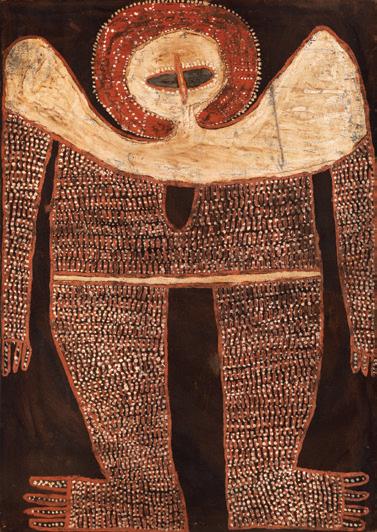
Tiger Palpatja (Pitjantjatjara c. 1920–2012), Wati Wanampi Tjukurpa
Australian Indigenous Art is organized by the National Gallery of Victoria, Melbourne and the National Gallery of Art, Washington, in association with the
the
Art Museum, and the Peabody
Museum. Bank of America is the North America Tour Sponsor for the exhibition.
The presentation of this exhibition at the Denver Art Museum is supported by the Birnbaum Social Discourse Project,
(SCFD).
TICKETS AT
Announces Major Exhibition of Australian Indigenous Art DENVER ART MUSEUM
The Stars We Do Not See: Australian Indigenous Art presents a survey of works from the National Gallery of Victoria
The Denver Art Museum (DAM) announced it will be the second venue for The Stars We Do Not See: Australian Indigenous Art, the largest exhibition of Aboriginal and Torres Strait Islander art ever presented in North America. Organized by the National Gallery of Victoria (NGV) in Melbourne and the National Gallery of Art in Washington, D.C., the landmark exhibition will be on view at the DAM through July 26.
The exhibition is the product of a unique cultural partnership between the National Gallery of Art and the NGV, which will facilitate the global exchange of artworks from the NGV’s permanent collection. Bank of America is the North America Tour Sponsor for the exhibition.
Curated by the NGV especially for North American audiences, the exhibition features more than 130 works by 142 artists, several of whom worked collaboratively, drawn exclusively from the NGV’s world-leading collection. DAM’s presentation of The Stars We Do Not See will offer a captivating and multilayered experience for visitors of all ages. This extensive exhibition introduces visitors to the breadth and depth of contemporary art by artists from the world’s oldest continuous living culture.
Through a rich display of masterpieces—many of which have never left Australia—The Stars We Do Not See traces pivotal moments in
Indigenous Australian art from the late 19th century to the present.
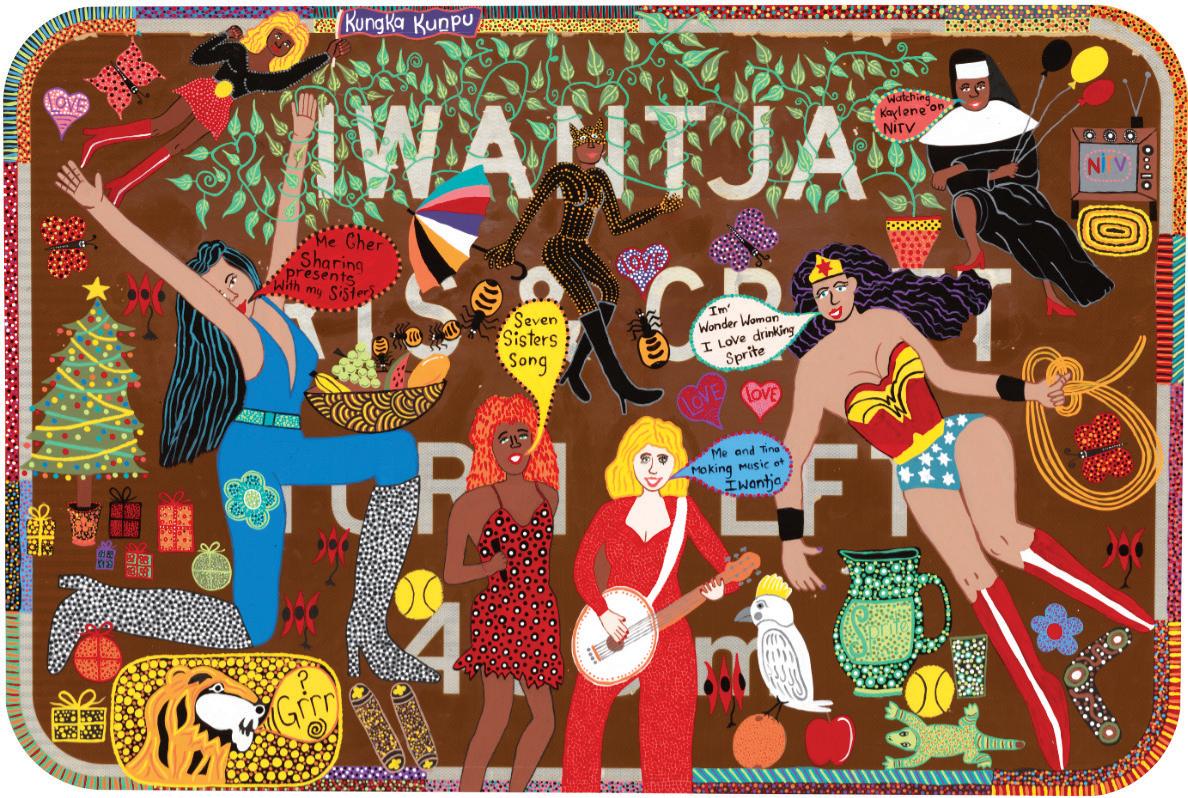
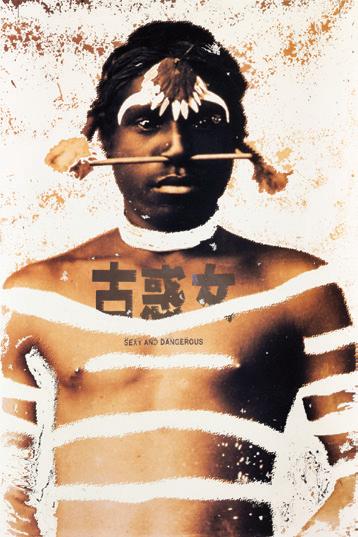
The exhibition introduces audiences to Indigenous Australian contemporary art practice, including the conceptual map paintings of the Central and Western Deserts, ochre bark paintings and experimental weavings. It also highlights the work of new-media artists, who build on tradition with groundbreaking works in neon, video and photography.
Highlight works never shown in North America include Emily Kam Kngwarray’s monumental painting, Anwerlarr Anganenty (Big Yam Dreaming) (1995). At over nine by twenty-seven feet, this iconic painting from the NGV collection represents the underground network of roots and yams.
The exhibition’s title is inspired by the late senior Yolŋu artist Gulumbu Yunupiŋu (1943– 2012), who became known as “Star Lady.” Her intricate works, a selection of which will be featured in the exhibition, use crosses to represent the stars we can see and a dense network of dots to symbolize the stars we cannot see—the unseen expanse of the universe.
Urban-based contemporary artists working in new media are represented throughout the show, with key works by influential artists such as Brook Andrew, Richard Bell, Reko Rennie, and Maree Clarke. Included are Christian
Burdi (Fire Fire) (2021), a four-channel sound installation and Destiny Deacon’s Snow Storm (2005), which explores how Aboriginal material culture has historically been presented in clinical, museological environments.
Through diverse art forms—from ochre bark paintings and weavings to modern and contemporary sound and video installations—visitors will explore key Indigenous Australian concepts like Country and Dreaming. Interpretation will focus on making Indigenous knowledges and ideas accessible, helping visitors understand what might appear to Western audiences as abstract patterns are complex visual maps layered with cultural knowledge, stories and law.
The Stars We Do Not See: Australian Indigenous Art is organized by the National Gallery of Victoria, Melbourne and the National Gallery of Art, Washington, in association with the Denver Art Museum, the Portland Art Museum, and the Peabody Essex Museum. Bank of America is the North America Tour Sponsor for the exhibition.
The exhibition emphasizes the living nature of Indigenous Australian art and culture. DAM’s presentation will employ engaging methods, drawing on the museum’s existing model of hands-on, minds-on activities.
By highlighting the artists’ exploration of sovereignty, land rights and ties to community and ancestors, the exhibition will encourage visitors to recognize that Indigenous Australian art is simultaneously ancient and contemporary, serving as a powerful expression of identity and a vital vehicle for the transmission of cultural knowledge and practice.
The presentation of this exhibition at the Denver Art Museum is supported by the Birnbaum Social Discourse Project, The Paul Bechtner Foundation/Marilyn Carol and Robert Weaver, the Kristin and Charles Lohmiller Exhibitions Fund, the donors to the Annual Fund Leadership Campaign, and the residents who support the Scientific and Cultural Facilities District (SCFD). All works are from the collection of the National Gallery of Victoria, Melbourne.
Editor’s note: For museum information, visit www.denverartmuseum.org or call 720-865-5000.
Thompson’s
FORMER SENATOR, CABINET SECRETARY
CSU President Add Names to Expanding List Led by Mayor Wellington Webb and Rep. Wilma Webb
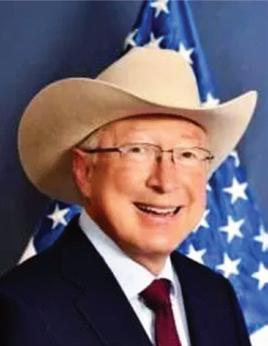
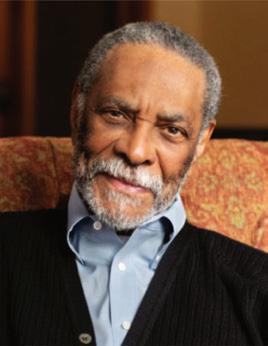
Former United States Senator and Secretary of the Interior Ken Salazar and former Colorado State University President Dr. Albert C. Yates have joined a growing and distinguished coalition of Colorado civic and political leaders endorsing Wanda L. James for Colorado’s 1st Congressional District.
The two leaders add their names to an endorsement list anchored by Mayor Wellington Webb, who served three terms as the 42nd Mayor of Denver and was the first African American mayor in the city’s history, and the Honorable Wilma Webb, former Colorado State House Representative and lifelong advocate for civil rights and community empowerment.
Mayor Webb welcomed the new endorsements saying, “Ken Salazar and Al Yates have given their lives to this state. When they say Wanda James is ready, Coloradans should listen. Wilma and I have been proud to stand with Wanda from the beginning, and this coalition only gets stronger.”
“I have spent my career serving Colorado from the San Luis Valley to the halls of Congress to the Cabinet room,” said Salazar. “Wanda L. James carries that same commitment. She fights every day for the people of Denver.
That’s the kind of leader Colorado needs in Washington.”
Dr. Yates added, “There are candidates who talk about opportunity, and there are candidates who have lived it and created it. Wanda James is the second kind. I am proud to stand alongside Mayor Webb, Secretary Salazar, and this entire community of leaders in supporting her.”
Salazar, a fifth-generation Coloradan, served as Colorado Attorney General, U.S. Senator, 50th Secretary of the Interior under President Obama, and most recently as U.S. Ambassador to Mexico from 2021 to 2025. Dr. Yates led CSU for 13 years and is widely credited as a principal architect of the Colorado Model of Democratic organizing.
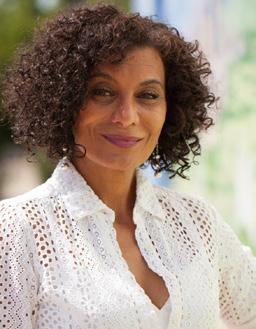
Wanda James responded, “Every name on this list represents decades of service to Denver and to Colorado. Secretary Salazar and Dr. Yates built institutions that serve all of us. I am humbled by their trust, and I will carry it with me into Congress.”
The Wanda James campaign announced she has officially secured her place on the primary ballot.
James is running for Congress in Colorado’s 1st District. The Primaries Election date is June 30.
“Five generations of Coloradans have taught me what leadership looks like. Wanda James has it.”
For more information, visit wanda4congress.com.
About Ken Salazar: Fifth-generation Coloradan; Colorado Attorney General (1999–2005); U.S. Senator (2005–2009); 50th Secretary of the Interior (2009–2013); U.S. Ambassador to Mexico (2021–2025).
About Dr. Albert C. Yates: 2th President of Colorado State University (1990–2003); Ph.D., Indiana University; CSU Founders Day Medal recipient; Citizen of the West honoree; architect of the Colorado Model.
Endorsement List
The Honorable Ken Salazar, Former U.S. Senator and U.S. Secretary of the Interior
Dr. Albert C. Yates, Former President, Colorado State University
The Honorable Wellington Webb, Former Mayor of Denver
The Honorable Dr. Wilma Webb, Former Colorado State House Representative
Colorado State Representative Jennifer Bacon
Colorado State Representative Dr. Regina English
Colorado Stat Dr. Angie Paccoine, Former Colorado Director of Higher Education
The Honorable Leslie Herod, Former Colorado Representative
The Honorable Dr. Irene Griego, Regent Emerita, First Latino Board Chair
About Mayor Wellington Webb and Rep. Wilma Webb: Wellington Webb served as the 42nd Mayor of Denver (1991–2003), the first African American mayor in the city’s history. Wilma Webb served as a Colorado State House Representative and has been a lifelong advocate for civil rights and community empowerment.
About Wanda L. James: Navy veteran, entrepreneur, and CU Regent. Built six businesses, created hundreds of jobs, and changed a $1 billion procurement system for contracts for small and diverse businesses as a CU Regent. ♦
The Honorable Susan Barnes-Gelt, former Denver City Council
The Honorable Terrance Carroll Esq., Former Colorado Speaker of the House
The Honorable Joe Salazar Esq., Former Colorado Representative
The Honorable Peter Groff, Former President of the Colorado Senate
Greg Moore
Nita Gonzalas
James Mejia
Roger Sherman
Gary M. Jackson, Esq.
Juanita Chacon
Siddhartha Rathod, Esq.
Qusair Mohamedbhai, Esq.
HEALING WITH Purpose
Kind Therapy Inc’s Culturally Responsive Approach to Mental Health Care
By Gerri Gomez-Howard
For Mental Health Awareness
Month, the work of Kind Therapy Inc. (Kind) stands as a powerful example of how culturally responsive care can transform lives, especially within communities of color. Supported in part by Caring for Denver Foundation, Kind is helping to close long-standing gaps in access to mental health services across the city.
Kind’s mission is simple but urgent: eliminate barriers to mental health care. Through low-cost and free outpatient therapy, the organization prioritizes individuals and families who have historically been underserved, including Black, Indigenous, and People of Color (BIPOC) communities, Spanishspeaking residents, immigrants, LGBTQIA+ individuals, and neurodiverse communities. Their approach goes
beyond affordability. It centers cultural responsiveness, ensuring that clients feel seen, heard, and understood in their full identities. Since starting in August 2016, Kind has saved Denver residents over $8 million.
That focus is making a measurable difference. Recently, Kind reported that 331 Denver residents accessed pro bono therapy through Kind Therapy’s BIPOC Mental Health Program. Notably, in 2025, 58% of new clients identified as BIPOC, and Kind has become the largest provider to uninsured Denver residents. This milestone reflects intentional outreach and trust-building efforts in communities where stigma, cost, and lack of culturally competent providers have long limited access to care.
Financial barriers remain significant: 87% of clients were either uninsured or underinsured. Kind’s model, which
reduces administrative hurdles and offers longer-term support, has led to meaningful engagement. New clients can receive a free consultation within one week, and 80% of those who complete an intake begin therapy at Kind with a therapist matched based on clinical and cultural fit. Clients are also placed in the program that offers them the most generous support, and more than half continue therapy even after their program period ends.
Equally important is the quality of care. Among surveyed participants, 94% reported feeling comfortable navigating their intersectional identities - like their race, culture, gender, sexuality, religion and life experiences - with their therapist, and the same percentage said they gained skills to better manage their mental health. For many, this meant finally having a space where they could show up fully, without self-editing. As one client shared, “Finding culturally affirming care was incredibly important. My therapist respected my background and identity, and I finally felt understood in a way in therapy that I hadn’t experienced before.”
Kind also invests in the mental health workforce by supporting therapists through affinity groups, training, and supervision grounded in shared lived experience. This not only strengthens care for clients but also helps build a more diverse and sustainable pipeline of providers.
As Founder & CEO, Lundi Ramos affirms, mental health is about more than treatment. It’s about the opportunity to thrive. Through its equity-driven model, Kind Therapy Inc is helping ensure that opportunity reaches every corner of Denver’s diverse communities.
About Caring for Denver Foundation
Caring for Denver Foundation, created by voters in 2019, invests local tax revenue to expand equitable access to mental health and substance use care, with a focus on communities historically underserved by traditional systems. To date, the foundation has committed more than $185 million to over 270 communitybased organizations, reaching tens of thousands of Denver residents through culturally responsive programs, including peer support grounded in lived and learned experiences and community-driven solutions. Its approach emphasizes funding care that is “trusted and reflective of the communities served,” prioritizing prevention, youth mental health, alternatives to incarceration, and workforce development, working toward a more accessible, community-centered behavioral health system for all Denver residents. Visit caring4denver.org for more information. ♦
NEW NONPROFIT Grocery Store
Aims to End Montbello’s Food Desert
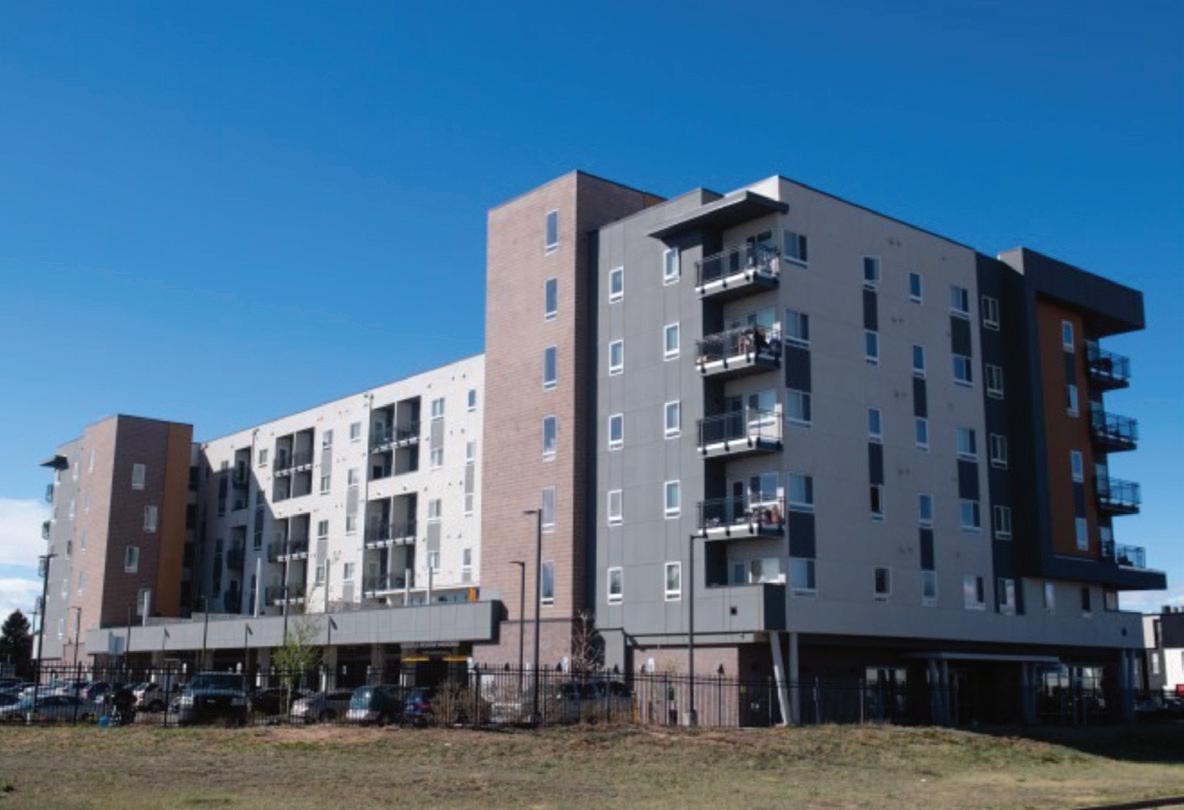
FreshLo Market plans to open its first nonprofit grocery store in Denver’s Montbello neighborhood this summer.
By Linus Loughry from CU Boulder
by Linus Loughry
Editor’s note: This article is republished with permission from Bucket List Community News.
Bottom of Form
About a month ago, Dianne Cooks sat in her Montbello apartment with no way to get groceries. As a senior with a disability, she relies on her children to drive her to Walmart, but they were at work.
distance of more than 1,000 housing units and will offer fresh food at prices 15% to 30% lower than traditional grocery stores.
store, knowing I can go in there and get me some fresh fruit or whatever that they have in there. That’s gonna be really good for the community.”
“I just thought about it, and I cried,” Cooks said. “Because there’s no store here. This is pitiful.”
Cooks considered walking to the nearby 7-Eleven, but she knew it would not have what she needed: fresh produce, healthy ingredients and affordable groceries.
For years, residents in Montbello have said the same thing. The northeast Denver neighborhood has long been considered a food desert, with few nearby options for affordable, nutritious food.
Now, the Montbello Organizing Committee hopes to change that. This summer, the nonprofit intends to open its first FreshLo Market in a strip mall building across the street from FreshLo Hub, a mixed-use housing and retail development off Albrook Drive. The grocery store will be within walking
The Montbello location will be the first in what organizers hope becomes a broader network of nonprofit grocery stores across Denver. Donna Garnett, CEO of the Montbello Organizing Committee, said the store is the result of years of conversations with residents.
“Invariably, people were like, the main thing is we want a grocery store, right here, where we can get to the grocery store,” Garnett said. “We can walk to it, we can take the bus to it, whatever.”
The Montbello Organizing Committee, often called MOC, has spent more than a decade organizing around issues in northeast Denver. Garnett said access to food consistently emerged as one of the community’s top concerns.
“If you live right there in those apartments,” Garnett said, “what it may mean is that you shop down the block at the 7-Eleven for groceries, because there’s a good chance you don’t have any transportation to the closest grocery store that’s six miles away.”
Cooks lives in the FreshLo Hub Residences, an affordable housing complex developed by MOC. Once the store opens, she will be able to walk next door to buy groceries.
“That’s gonna help us mentally and physically,” Cooks said. “To go into a
Mersi Canales, who lives near the future store, said in Spanish that many of her neighbors have depended on buses to reach grocery stores farther away. She argued that these transportation costs create another burden for residents already struggling to pay for food.
“In the past I’ve depended on public transportation, like many of my neighbors,” Canales said. “On a day I would go grocery shopping, I had to plan for three or four hours between being in the store and waiting for the bus.”
The Montbello store is expected to be the first of at least three FreshLo locations in Denver. Organizers also plan to convert existing grocery spaces in Sun Valley and La Alma-Lincoln Park into FreshLo stores. A fourth location at the Clayton Early Learning campus on Martin Luther King Jr. Boulevard is still being explored.
Garnett said traditional grocery chains have repeatedly shown little interest in opening stores in lowerincome neighborhoods.
“It is a well-established fact that in Denver and across the country that large grocery chains are not willing or interested in coming into low-income communities,” Garnett said. “They can’t make the profit margin that they need.”
Instead of relying entirely on sales, FreshLo will operate as a nonprofit model supported by grants, donations and discounted food sourcing. Garnett
Photos
The FreshLo nonprofit grocery store under construction
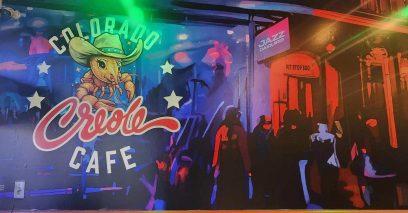
Gumbo Grits and Good Vibes
said the stores are expected to generate about 60% of their revenue through product sales, with the remaining 40% coming from philanthropic support.
“The nonprofit piece is no joke,” Garnett said. “It requires intentional effort to raise money.”
The model is designed to keep prices lower while also allowing the stores to pay living wages and benefits to employees from the surrounding community.
“More and more people are in a situation because of the quickly rising cost of food that they can’t afford food,” Garnett said. “We heard in those focus groups from kids who said they rarely get another meal other than the school lunch.”
Garnett said FreshLo is also working to ensure customers can use Supplemental Nutrition Assistance Program benefits, and the organization hopes to eventually create partnerships that would allow Medicaid or health insurance providers to help cover some grocery costs.
Garnett outlined short-term, medium-term, and long-term objectives for the new grocery store. The first goal is straightforward: people should
have access to affordable, healthy food to feed their families. Medium-term goals include more grocery stores and more job opportunities for community members to work within them.
“The long term is that instead of 48% of our folks in this community having a nutrition-related disease, they will see that drop,” Garnett said. “That people will no longer have diabetes, or be at risk for hypertension or have heart problems when they could have had a decent diet that prevented them from being in that position.”
The store is still under construction, and Garnett said the opening timeline depends on how quickly the nonprofit can raise the remaining money it needs.
“I would give almost everything I own if it opens in June,” Garnett said. “And I won’t cry if it opens in July.”
For Cooks, though, the exact opening date matters less than the fact that it is finally happening.
“People are looking forward to that store,” Cooks said. “You know, when we talk about the FreshLo, they’re like, ‘It’s a long time coming.’ So now that it’s getting ready to take place, people are excited about it.” ♦
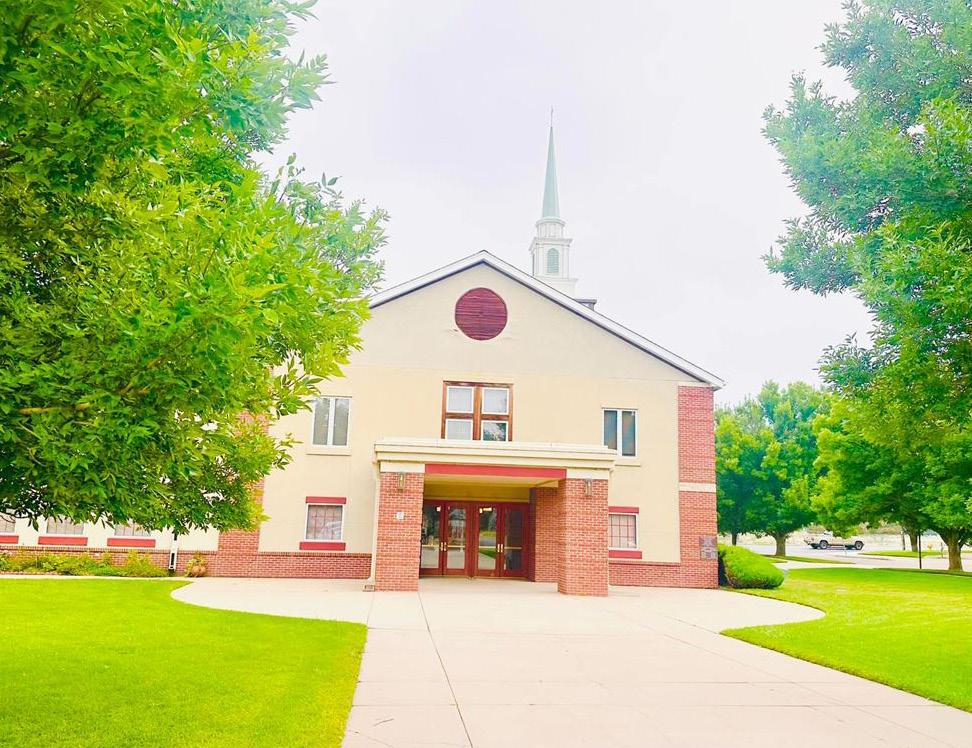
NEW HOPE Baptist Church
Opens Dorcas’s Closet — A Free Community Clothing Boutique Serving Denver’s Women and Men in Need
On Saturday, April 18, New Hope Baptist Church held the grand opening of Dorcas’s Closet, a brand-new, free community clothing boutique offering pre-loved clothing to women and men in need throughout Denver and the surrounding area. The boutique will continue to serve the community on the third Saturday of every month from 10 a.m. to 1 p.m. at 3701 Colorado Blvd. in Denver.
Born out of a deep commitment to faith-driven community service, Dorcas’s Closet is a ministry of the NHBC Deaconess Board, named in honor of Dorcas (also known as Tabitha), a devoted disciple in the New Testament whose entire ministry was dedicated to clothing those in need. The boutique will offer clothing at no cost — no appointments, no requirements, and no judgment. Guests are welcomed exactly as they are.
A Ministry Built on Community
Dorcas’s Closet is more than a clothing drive — it is an ongoing, sustainable community ministry rooted in the belief that every person deserves to be clothed with dignity. The NHBC Deaconess Board is calling on members of the congregation and the broader Denver community to help spread the word, particularly to those who may never ask for help on their own, but who would be quietly blessed to know this resource exists.
No one should have to go without. If you know a neighbor, coworker, friend, or family member, a woman or a man, who could use a blessing, share the news of Dorcas’s Closet. A simple conversation can change a life.
“The women of this Deaconess Board have poured their hearts into Dorcas’s
Closet, and we believe God is going to use it in ways we cannot yet imagine. Our doors are open to everyone — women and men — because need does not discriminate, and neither does love,” says Head Deaconess Delores MannsMartin. “We are asking Denver to help us reach those who may be too proud or too discouraged to ask for help. Be the bridge. Tell someone. That is all it takes.”
The boutique is located in Classroom 1 at New Hope Baptist Church Family Life Center and provides a warm, welcoming, boutique-style environment where community members can browse and select clothing with dignity and grace.
Editor’s note: For more information, call 303-521-5359 or visit NewHopeDenver.org.
About New Hope Baptist Church
New Hope Baptist Church has been a cornerstone of faith and community in Denver, Colorado for decades, committed to worship, discipleship, and serving the least of these. Located at 3701 Colorado Blvd., Denver, CO 80207, NHBC is a church family dedicated to reflecting the love of Christ in every dimension of community life.
Wi r P k
J y 18-19, 2026 Co do S P LaB
S y B C s P se d By: D r H h
GRAMMY nominated vocalist Nnenna Freelon joins the Count Basie Orchestra for a dynamic performance featuring favorites from the Great American Songbook and to pay tribute to her jazz inspiration, Count Basie.