

















With a career that spans decades, Grammy®winning R&B and jazz vocalist Patti Austin remains in constant demand for live performances globally. The ultimate jazz/R&B/Pop crossover artist, Patti Austin continues to create milestones in an incredible career; a further testament to her status as a member of that rare breed: a true artist whose creativity knows no limits.
She found success at a young age and established herself as a mainstay among jazz and soul audiences through her ‘70s recordings. By the ‘80s Ms. Austin became known to the wider international audience as a result of the Grammy®-nominated “Baby Come to Me” and “How Do You Keep the Music Playing.”







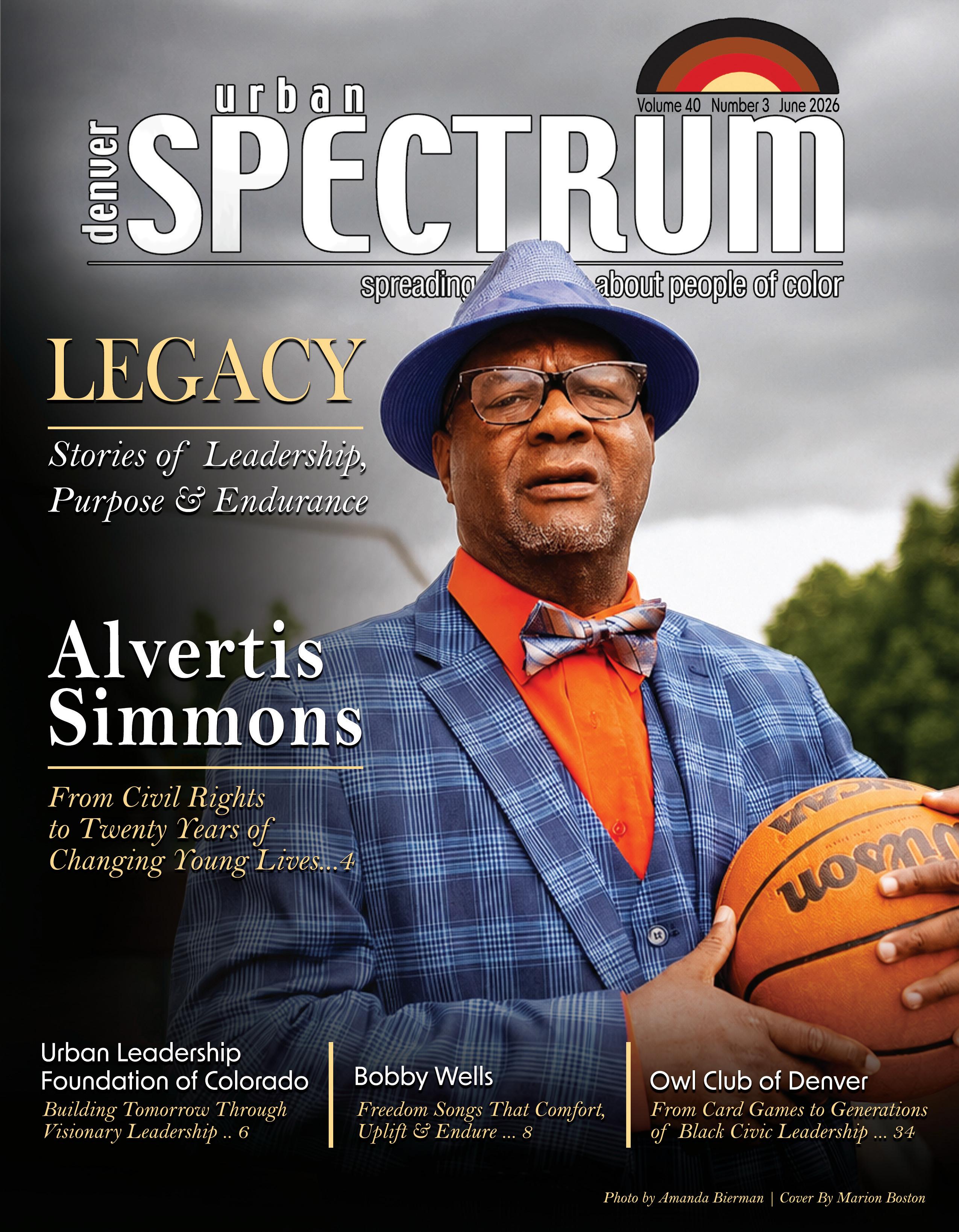
Volume 40 Number 3 June 2026
PUBLISHER
Rosalind J. Harris
MANAGING EDITOR
Karen Davis
COPY EDITOR
Tanya Ishikawa
COLUMNISTS
Barry Overton
Dr. Dedrick Sims
Earl Ofari Hutchinson
CONTRIBUTING WRITERS
Misti Aas
Wayne Trujillo
Gabrielle West
GUEST CONTRIBUTORS
Joanne Davison
Kiara DeMare
Brooklyn Shafer
LaDawn Sullivan
Elbra Wedgeworth
Caden Winters
SPECIAL PROJECTS ASSISTANT
Tanya Ishikawa
ART DIRECTOR
Bee Harris
CONTRIBUTING PHOTOGRAPHER
Amanda Bierman
GRAPHIC DESIGNERS
Jody Gilbert – Kolorgraphix
Marion Boston
Sekar Uthayasuriyan
DISTRIBUTION
Lawrence A. James

Denver Urban Spectrum is a monthly publication dedicated to spreading the news about people of color. Contents of Denver Urban Spectrum are copyright 2026 by Bizzy Bee Enterprise. No portion may be reproduced without written permission of the publisher.
Denver Urban Spectrum circulates 7,500 copies throughout Colorado. Denver Urban Spectrum welcomes all letters, but reserves the right to edit for space, libelous material, grammar, and length. All letters must include name, address, and phone number. We will withhold author's name on request.
Unsolicited articles are accepted without guarantee of publication or payment.
Write to Denver Urban Spectrum at P.O. Box 31001, Aurora, CO 80041. For advertising, subscriptions, or other information, call 303-292-6446, email publisher@urbanspectrum or visit the Website at www. denverurbanspectrum.com.
This month, we observe two legacies in the African American community — Black Music Month, honoring the profound influence of African American artists across every genre of music, and Juneteenth, commemorating the emancipation of enslaved African Americans and the continuing pursuit of freedom, justice and opportunity.
Legacy is anything handed down from the past. It can be property left behind, but more importantly, it is the lasting impact of a person’s life — the influence, sacrifice and vision that continue long after they are gone. Since before America’s founding, Black people in this country have endured, evolved and excelled in every aspect of American life, creating legacies that continue to shape generations.
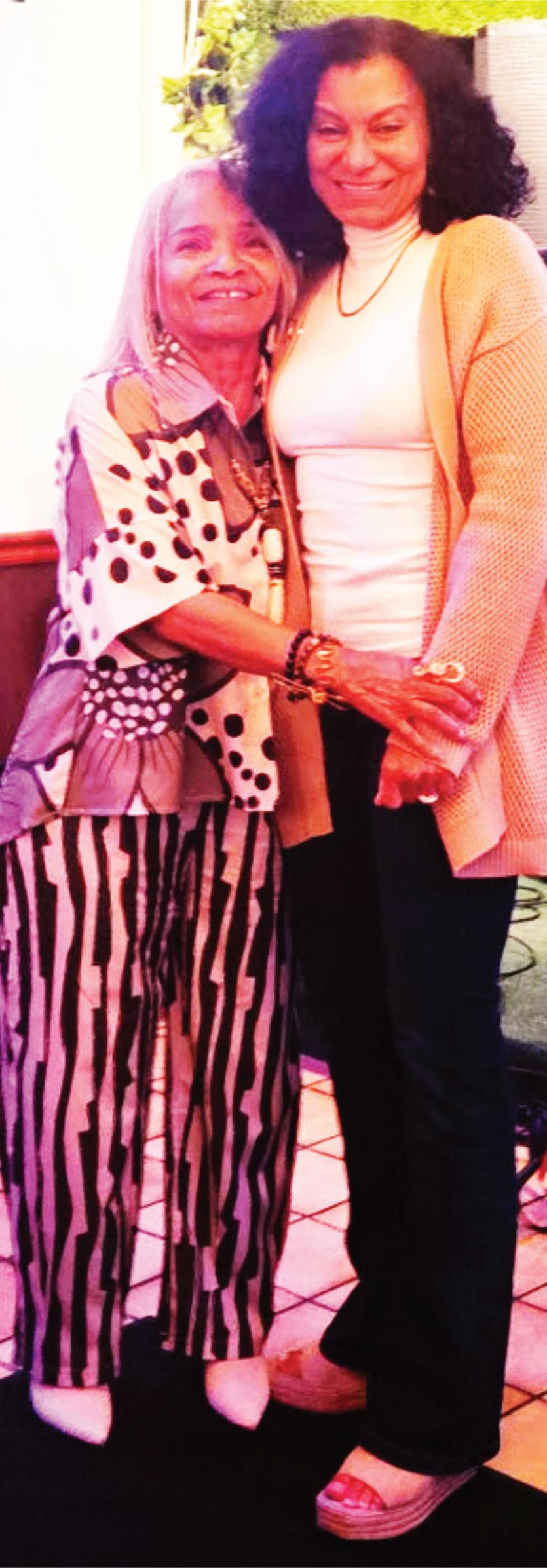
That spirit of legacy is woven throughout our June issue.
Our cover story highlights longtime civil rights activist Alvertis Simmons and his remarkable life journey, filled with decades of community advocacy and mentoring youth. Experiencing personal tragedy with the loss of his daughter, his story is one of perseverance, purpose and service.
We also spotlight the Urban Leadership Foundation of Colorado and its evolution under the leadership of Dr. Ryan Ross, including plans for a new home and expanded vision for the future. As contributor Gabrielle West explains, “True legacy is about creating pathways that did not previously exist, opening doors for others that may once have been closed to you and building foundations sturdy enough for future generations to stand upon.”
This issue celebrates songwriter, musician, composer and producer Bobby Wells, whose music has quietly comforted, inspired and uplifted listeners for decades, leaving a lasting imprint on Denver’s cultural landscape and on Denver Urban Spectrum itself.
We revisit the remarkable history of the Owl Club of Denver, founded in 1941 by nine African American men whose Saturday night card games evolved into one of Denver’s most respected Black civic organizations. Their legacy helped shape generations of African American leadership in Colorado.
LaDawn Sullivan examines why Juneteenth is not simply a historical commemoration, but a living lesson about systems, power, access and the continuing fight to make freedom real. She also highlights the work of the Executive Directors of Color Institute, which is celebrating 15 years of building and sustaining leaders of color across Colorado through the Black Resilience in Colorado Fund and its partners.
We celebrate the renaming of the Alamo Drafthouse Cinema to the Pam Grier Cinema, honoring the legendary actress and East High School graduate for her extraordinary impact on film and culture.
Finally, Historic Denver’s effort to secure landmark designation for the home of the Honorable Wilma J. Webb and former Denver Mayor Wellington
E. Webb reminds us that legacy is also rooted in place.
After nearly 40 years of serving this community, Denver Urban Spectrum itself has become a legacy publication. Like many African American-owned businesses, we have endured challenges, transitions and uncertainty, yet we remain committed to informing, uplifting and empowering our community.
As we enter another political season, it is critically important to seek information, ask questions and make informed decisions when casting your vote. Since our founding in 1987, Denver Urban Spectrum has publicly endorsed only one political candidate — Wellington E. Webb for mayor in 1995. In today’s political climate, I believe this moment again calls for leadership that is courageous, compassionate and committed to community.
I met Wanda James approximately 20 years ago, and over that time I have come to respect her business acumen, her commitment to community and her fearless willingness to speak up for what she believes is right. She has been building in this community long before entering this race. She understands business, policy and people — a rare and necessary combination.
She does not simply talk about equity; she creates opportunities and access that help make equity real. She shows up not for recognition, but for the work itself. And perhaps most importantly, she has never waited for permission to lead.
In these challenging and defining times, we need leaders in Washington with those qualities — leaders willing to build a legacy rooted in courage, accountability and lasting impact.
I believe Wanda James will help create that legacy, and I am proud to endorse her for Congress.
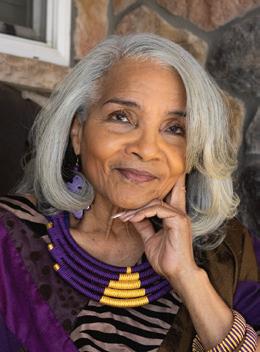
Rosalind “Bee” Harris Publisher Denver Urban Spectrum


By Wayne Trujillo

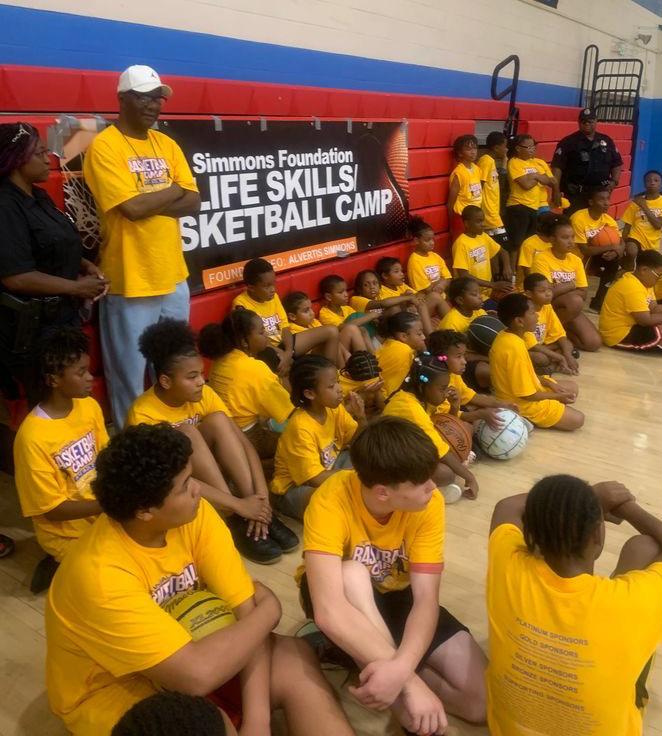
June marks a milestone for Alvertis Simmons and his legacy, the Simmons Foundation for Youth and Change. The foundation’s flagship event is the annual Life Skills and Basketball Camp that celebrates its 20th anniversary with an event addition that hits close to his heart. While the basketball competition between minority youth and law enforcement remains the event’s primary spectator sport, a special day honoring his departed daughter, Tilyn Walker, will also take place.
Through the camp’s life skills schedule that continues to counsel, guide and encourage successive generations of youth towards personal and professional success, the founder and the foundation have realized the goal of upending misplaced perceptions and low expectations that restrict minority communities.
Simmons is widely saluted for his insight and leadership that transformed a vision of friendly competition combined with invaluable instruction into an institution, now entering its third decade. While he
spearheads the life skills segment, Coach Rudy Carey has overseen the basketball completion since the camp’s beginning. Minority youth, perhaps more than a few who had warily regarded cops as antagonists, get a close-up encounter with law enforcement on a basketball court rather than in a municipal court.
Simmons observes that the kids often defeat the cops on a court they can control. In the process, the youth realize that police can be amiable allies rather than adversaries. “They’re not being handcuffed by them,” he explains. “It’s not nefarious. They’re engaged.”
The camp isn’t only about basketball. Youth experience invaluable life skills instruction courtesy of not only Simmons, but also guest dignitaries who coach the kids about scoring in their future professional and personal lives. The camp offers guidance on being at the helm of a business or a family that many youth wouldn’t otherwise receive. This year, the camp will debut a mental health segment, bringing important lessons on an oftenunspoken factor of future success in the home, community, and on the job.
While the celebratory spirit surrounding the anniversary is palpable when Simmons speaks to Denver Urban Spectrum, he slips at times into a subdued, almost solemn mood and
discourse that cast an occasional shadow over his and the foundation’s successes.
Despite the upcoming victory lap, the past two decades haven’t been without trials – and even tragedy. He seems almost nostalgic when recalling the foundation’s meager beginnings, with a nascent staff of three. “Life has changed; we have gotten older,” he reflects.
On the financial front, he relays that the foundation still struggles with securing support. He attributes some of that challenge to his refusal to sell out. “I haven’t sold my soul,” he states. “I won’t sell my soul. They want me to be quiet… my political involvement gets in the way of getting money.”
Staying silent isn’t something he’s willing or able to abide. “I do what I think is right, not what other people think is right,” he asserts.
Demonstrating his passion for political involvement early on, he was one of the lead organizers who led 300 Black men in Denver as part of the Million Man March in October 1995. He shares that story is his book, titled Hold Your Position: Denver’s version of the Million Man March, published in 2000.
Proclaiming his convictions, Simmons lets loose the fire of yore, reminiscent of an August 1996
Westword article that had described the civil rights activist of 30 years ago as “volatile.” Interviewing with Denver’s alt-weekly publication as he left his position as Mayor Wellington Webb’s Neighborhood Watch coordinator, he explained that he intended to battle social ills under his own auspices, foreshadowing his future foundation. “I need to be where I’m not restricted. In the city, I’m restricted. I’m like a thoroughbred horse, ready to race,” he said.
Today, it’s during the subdued and solemn stretches of conversation that Simmons seems more Aurelius than Secretariat. Or a lion in winter rather than a racehorse. He suffered two blows in recent years that dealt painful reminders of life’s fragility. “The last three years have been tough,” he explains.
Double pneumonia and congestive heart failure landed him in the hospital for more than two months. When people like Senator Michael Bennett and other leaders called, he received their show of support and encouragement with gratitude. “It was real,” he reflects. “(They said) get well. We need you.”
Still, the health battle took its toll, he says, nearly prompting him to cancel the camp last year. It also led him to consider his own mortality. “I’m winding




down,” he comments, a sobering statement from the fiery activist of decades past with youth, vim, and vinegar on his side.
He also lost his daughter, Tilyn. “I found her dead,” he says. “That hurt me.”
Her loss prompts his desire to express appreciation of his other family members. He makes it a point to not only lament his departed offspring, but highlight his other daughters, Joy Walker and Alicia Gaffney, alongside grandchildren Laurynz Hawkins, T.J. Austin, Jr., and Darnell Gaffney, Jr. as sources of support and success – “my life and soul.” He credits the mother of his children, Betty Simmons, for her early efforts in the foundation, and Lynn Hawkins who initially motivated him to establish the foundation, originally named Safe City Summit.
His appreciation isn’t limited to family. “There have been people who have been with me,” he explains with obvious gratitude. “I appreciate it. I can’t do it alone.”
He fires off a fusillade of benefactors who have made the camp’s 20th anniversary possible. Simmons and the foundation received emotional, logistical, and financial support from such diverse sources as Wellington

and Wilma Webb, businessman Roger Sherman, Colorado Police Officers Foundation Executive Director Frank Gale, Simmons Foundation Senior Staff Director Tanya Diabagte, and Jim Kellogg with the Colorado Rockies. Kellogg “showed me how to tighten up the ship,” instructing him with 501(c) reporting, Simmons says.
The irony of the Colorado Rockies support for a basketball camp isn’t lost on Simmons. However, the goal isn’t unique to a particular sport. It’s about, as he told Denver Urban Spectrum in 2021 when the camp marked its 15th year, guiding youth into productive and prosperous paths. “I’m hoping to save some lives, man,” he stressed. “That’s really what it amounts to. I hope that these kids understand that when we are not around, it’s about their character.”
The goal remains the same for the 20th annual Life Skills and Basketball Camp. Today, Simmons highlights five bedrock principles the camp aspires to embed in youths’ psyches, and by extension, their ongoing decisions and actions – love, respect, self-esteem, self-respect, and discipline. He stresses that those five principles will “carry them through life if they use them.”
He posits himself as an example of the principles’ efficacy. He holds
a master’s degree in criminal justice. He is also experienced in what he calls street settings, giving him realworld experience. It’s a formidable combination – the combustion of academia and street smarts. He calls it a “balancing act,” one that gives him insight into the challenges and emotions confronted by the youth daily. “I thank God for the opportunity that I’ve been given,” he stresses.
His dedication to community service reaches even further, having given out over 7,000 Turkeys during the Thanksgiving holiday season over the years.
While the occasional melancholic reflections on loss and mortality may make him resemble a lion in winter, the legendary activist of his youth makes a comeback when he speaks about the futures of those yet to reach full bloom. It is in today’s youth that he has discovered his own fountain of youth.
His grandchildren are the upfront, obvious recipients of his interest. However, the hundreds of youth who pass through every camp since inception command both his attention and affection. “I have always been working with kids,” he says.
In 2021, he told Denver Urban Spectrum, “I just hope that when I’m done and gone that my grandsons
Laurynz, Tj, and Dj continue with this legacy of the Simmons Foundation Life Skills and Basketball Camp.”
That desire remains the same for Simmons. The family he holds dear still assists with the camp and his life efforts. He still retains the activist spirit, refusing to bend to conformity for gain. Or, as he says, he won’t “shut his mouth” or “look the other way.” He calls it as he sees it – and feels it.
His belief in God gives him the confidence. It’s that belief and faith that endows both the foundation and the camp with something more valuable than money – authenticity. “We don’t have to manufacture anything because everything is real. Everything,” he concludes.
Editor’s Note: The 20th Annual Simmons Foundation Life Skills Basketball Camp will be held June 8 to 19, at East High School, 1600 City Park Esplanade, Denver. Registration is underway for youth ages 8 to 18. For information, registration, or ways to sponsor or make a donation, call 303-521-7211, email alvertissimmons@ yahoo.com, or visit https:// sfycbasketballcamp.com.
By Gabrielle West
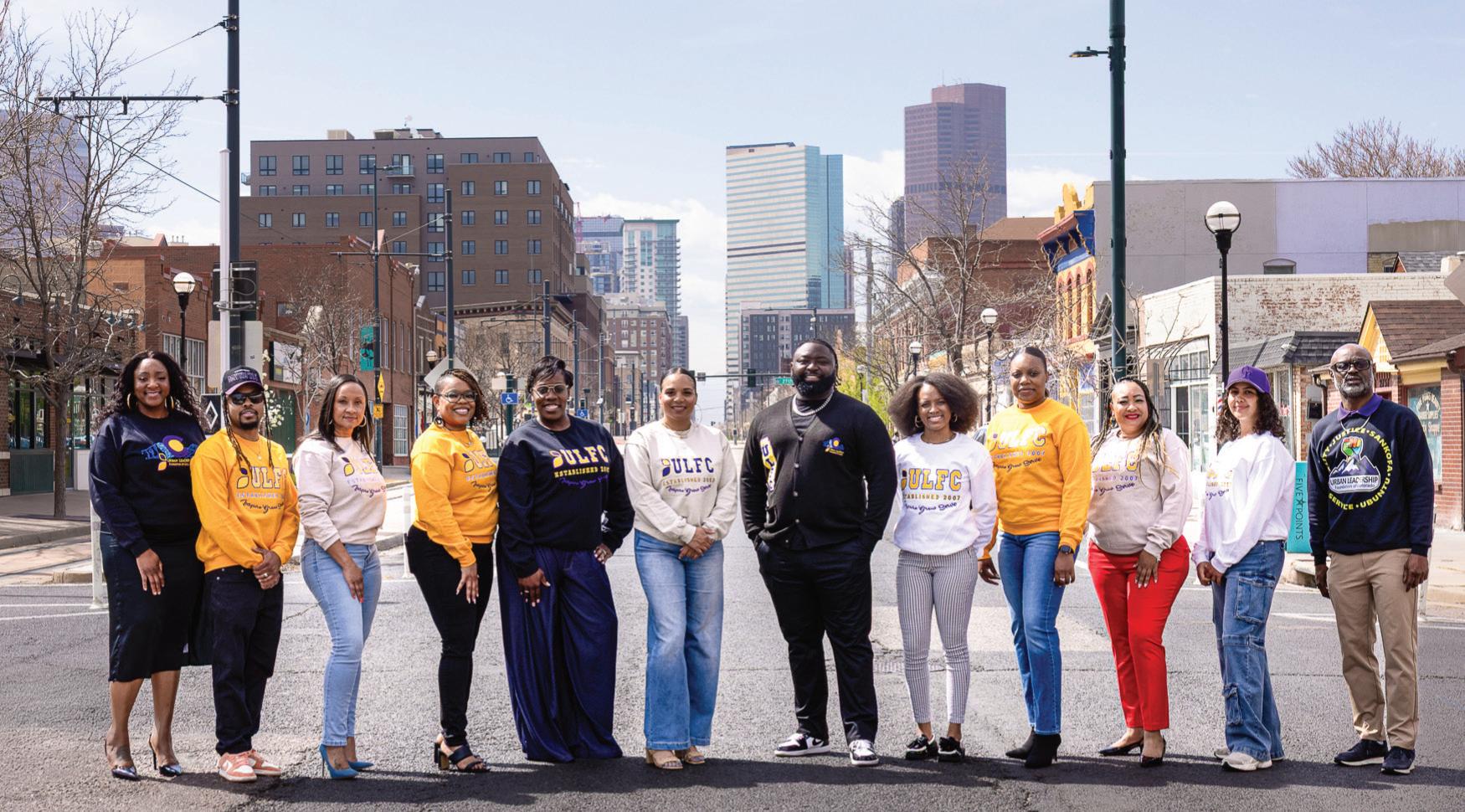
As a Black Coloradan, navigating leadership in work environments that were never built with us in mind rarely comes with a playbook. It’s often said that it’s lonely at the top, but for Black professionals who have climbed the ranks and found themselves the only one in the room, and sometimes in the entire building, that loneliness carries a different weight. We are often tokenized, scrutinized and burdened with the pressure of not only being excellent, but being first.
That’s why organizations like the Urban Leadership Foundation of Colorado (ULFC) are monumental and leave a lasting legacy that benefit generations to come.
From the state legislature to the classroom, and from the boardroom to the newsroom, it would be difficult to find a space untouched by this organization’s legacy. For nearly two decades, ULFC has equipped, invested in and developed leaders who are committed to creating change within themselves, their families and the greater community. Some of Colorado’s most influential leaders are
among the more than 500 alumni who have come through the ULFC Connect Leadership Program.
Inspired by an experience that former State Senator Angela Williams and businessman Richard Lewis had in another Denver-based executive leadership program, the pair noticed a need for something similar that was authentic to and centered around the Black experience. In 2007, they brought that idea to former Mayor Wellington Webb, and the rest is history.
The very next year, ULFC’s current president and CEO, Dr. Ryan Ross, joined to get a feel for what was then called Chamber Connect. At the time, the few Black executives who lived in Colorado would often find success and eventually get recruited to cities with larger Black populations like Atlanta, New York and Philadelphia, leaving local organizations with little to no Black leadership representation. It quickly became clear that instead of focusing solely on Black executives, the organization needed to intentionally cultivate aspiring and emerging leaders at various career stages and life points in order
to remain sustainable and create a lasting pipeline of talent.
Ross went on to work with a small group of other visionaries to reimagine the program, ultimately transforming it into what it is today, a 10-month intensive fellowship focused on leadership development, civic engagement, workforce readiness and community impact.
Spoiler alert – I have personally benefited from this program as a member of the 2017 cohort.
At the time I applied, I was navigating a major career transition after quitting my full-time job as a public television producer with absolutely no plan B. I was burnt out from workplace politics, and felt called to forge a new path while being pretty uncertain about what was next for me. Professionally, I felt completely unprepared for the future. My network no longer felt aligned with where I hoped my life was headed, and while I believed I had potential, I wasn’t always confident in how to fully step into it.
Being selected for ULFC was a breath of fresh air and gave me a
confidence boost I didn’t realize I needed.
Starting with a weekend retreat, fellows are thrust into a new environment with complete strangers and challenged to engage in icebreakers, brain games and conversations that push you to examine not only leadership, but yourself. By the end of the retreat, our cohort felt deeply connected. We became a family.
Upon returning home, we met monthly for immersive experiences that offered a glimpse into leadership in action. Not only did we learn from one another, but we were exposed to speakers from different industries, ethnicities and career levels who challenged us to think bigger.
We visited the state capitol and met with leaders including State Senator James Coleman, a ULFC alumnus himself. We toured Five Points with one of Colorado’s premier historians and learned about the rich history of
Denver’s historic Black community. We even learned to play golf, not simply as a recreational activity, but to better understand how relationships are built and how decisions are often made in professional spaces. We perfected our personal branding elevator pitches and learned how to confidently introduce ourselves and stand firmly in our identities no matter what room we entered.
One of the most impactful, yet challenging elements of the fellowship was designing and executing a community service project together. On the surface, it may sound straightforward, but the process taught me invaluable lessons about fundraising, collaboration, conflict management, strategic planning and leveraging community resources for good. It showed me what is possible when passionate people come together with a shared goal of creating impact.
These are just a few of the many experiences fellows are exposed to through the program.
Honestly, it wasn’t until I sat down to write this article that I fully realized how much ULFC impacted my own personal and professional journey. After completing the fellowship, I landed one of the best opportunities of my career as the first-ever director of digital media in the Denver mayor’s office. But beyond professional advancement, I finally had the confidence in my identity as a professional, a deeper connection to my community and relationships with other leaders that continue to shape my life today.
Some of my fellow 2017 cohort members have gone on to become elected officials, launch thriving nonprofits, build successful businesses and create opportunities for others throughout Colorado. That is the
domino effect of intentional investment in Black leadership. When one person is empowered, entire communities benefit, and generational curses begin to shatter.
Ross notes that since 2007, ULFC fellows have executed 55 public-facing community projects, some of which have evolved into or supported organizations, initiatives and businesses that continue serving the community today. That includes groups like Denver African American Philanthropists (DAAP) and Sisterhood of Philanthropists Impacting Needs (SPIN), as well as movements like Rise5280, the HBCU Tour that exposes high school students to college life and educational opportunities through the lens of the Black experience.
These days, the organization’s work extends far beyond developing emerging professionals. ULFC recently launched a one-year program for high school students focused on professional development, mentorship, internships and leadership training, intentionally investing in the next generation long before they enter the workforce.
Further multiplying its impact, the Urban Leadership Foundation of Colorado’s reach is expanding globally. With a mission to deepen cultural understanding, strengthen connections between Black and African communities and explore international educational and economic opportunities, local leaders are now traveling to countries throughout Africa through ULFC-led experiences. The initiative encourages participants to reconnect with culture, explore entrepreneurship and
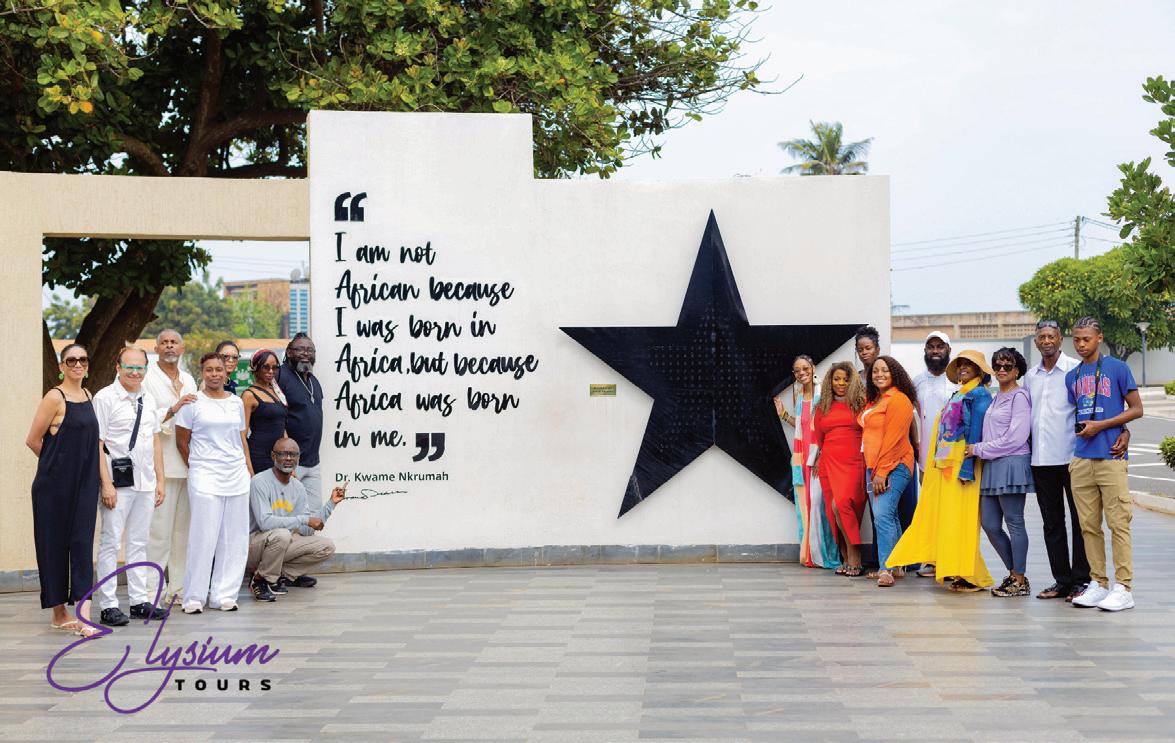
engage in healing conversations that transcend borders.
All of the past and current work has been possible without the organization having a permanent home – but that’s about to change.
Dr. Ross is hopeful that the buildout of ULFC’s future headquarters will be completed by July 2026. After raising $300,000, the organization is working to secure the remaining $200,000 needed to bring the vision fully to life. Beyond office space, the building is designed to become a hub for leadership development, collaboration, creativity and community connection.
The future home of ULFC will provide space for fellowship classes, community programming and events. Black-led nonprofits and organizations will have access to meeting and gathering spaces, while aspiring media professionals and creatives will be able to utilize basic production resources, all at no cost. In many ways, the building itself will stand as a physical representation of what ULFC has spent nearly two decades creating – a
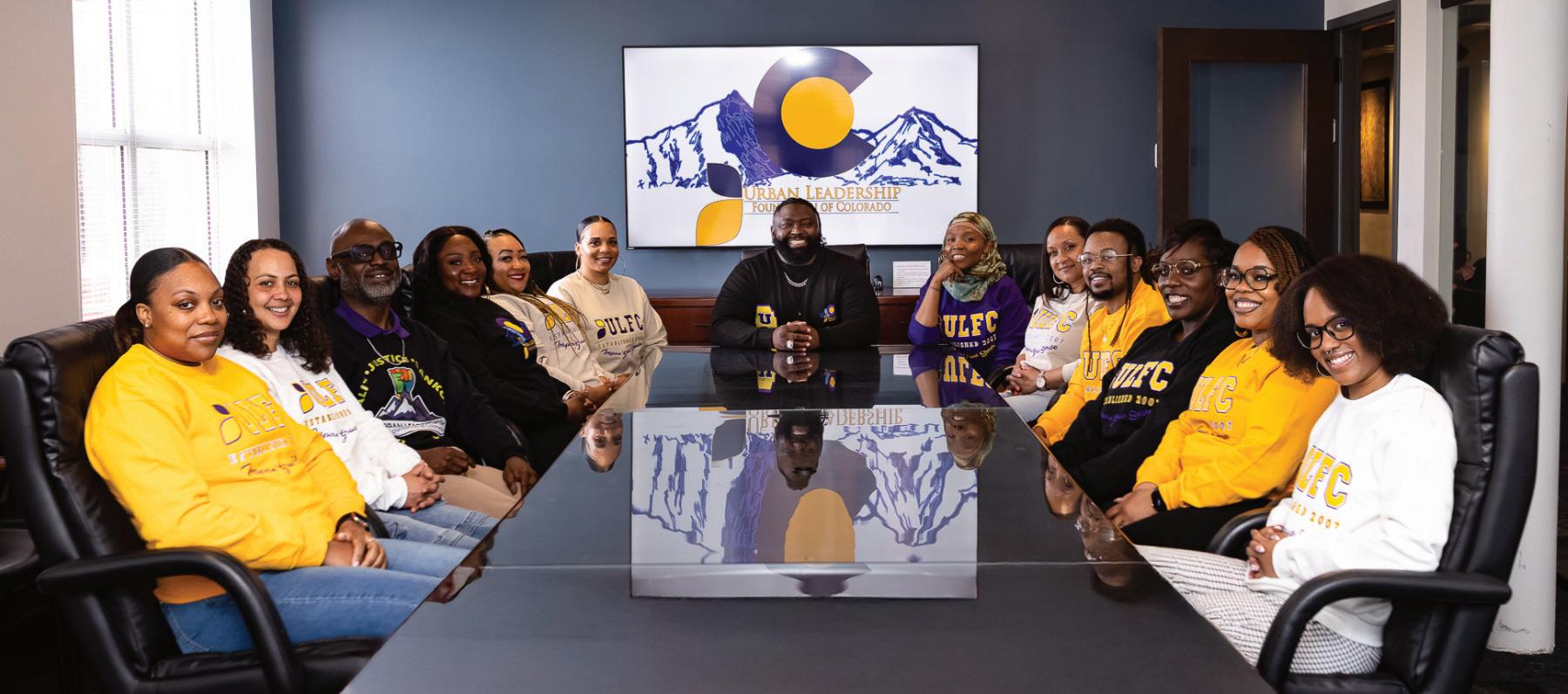
safe place where Black legacy and leadership can come alive.
When asked what he hopes his legacy will ultimately be, Ross answered simply, “That the people that come after me are proud of me.”
For nearly 20 years, ULFC has created pathways, open doors and built foundations for hundreds of Black Coloradans, myself included. Through mentorship, leadership development, civic engagement and intentional community-building, the organization has helped cultivate leaders who are now creating impact across Colorado and beyond.
As ULFC prepares for its next chapter and the completion of its future home, the community has an opportunity to invest in its legacy. Whether through donating toward the completion of the building, supporting its programming or applying for a future cohort, investing in ULFC is ultimately an investment in the future of Black leadership in Colorado.
To learn more about the Urban Leadership Foundation of Colorado, visit ulfcolorado.org. ♦


By Luciana Juanita
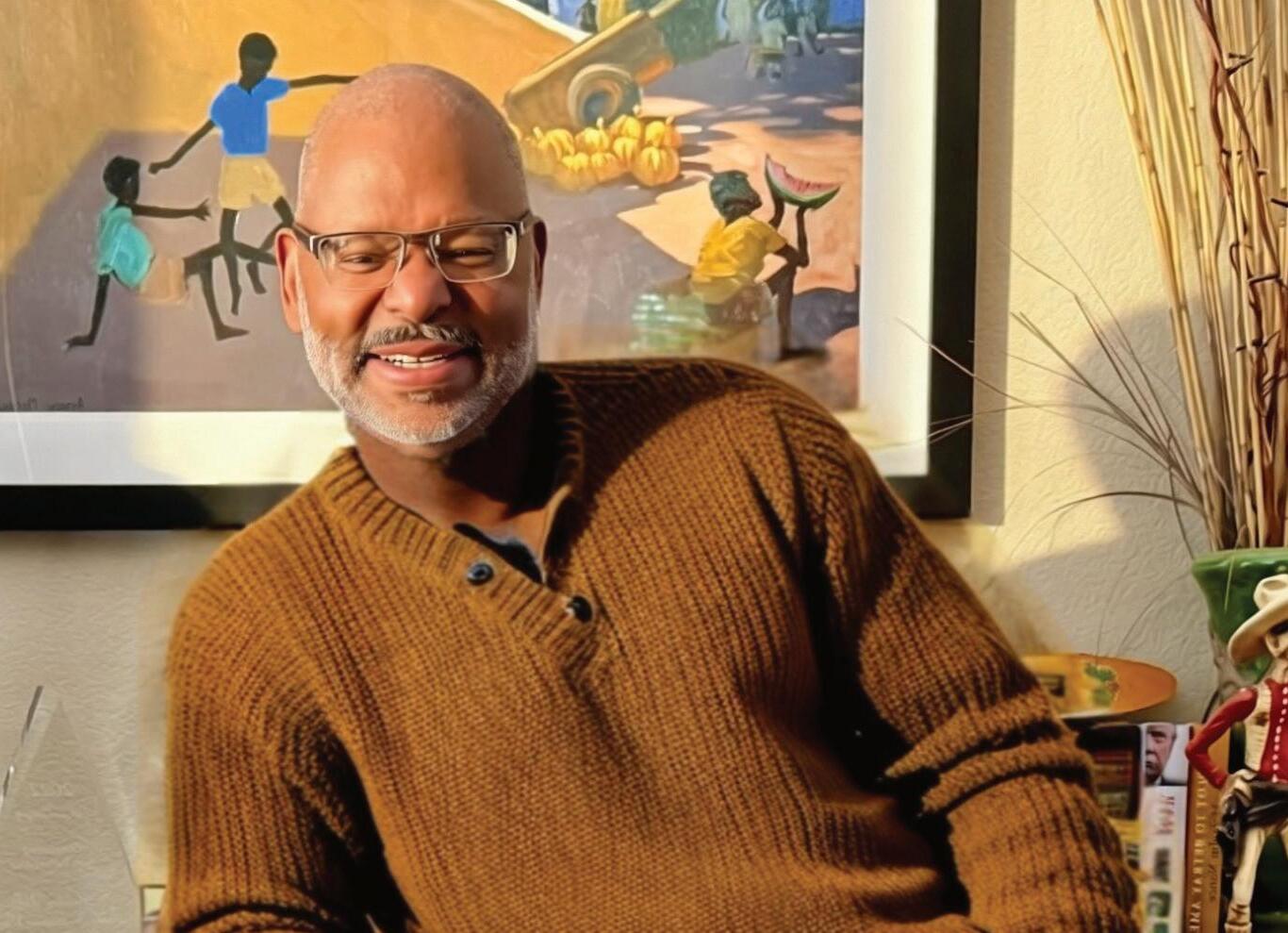
For decades, songwriter, musician, composer and producer Bobby Wells has quietly created the kind of music that does not simply entertain — it comforts, uplifts and stays with listeners long after the final note fades away.
Longtime Denver Urban Spectrum readers may remember Wells as the featured cover story in June 2017, when his journey from Omaha, Nebraska, to becoming one of Denver’s most respected musicians and producers was celebrated. Wells was also named KHIH 94.7 FM Radio’s “Band of the Year.” Today, he continues to evolve creatively while remaining deeply grounded in faith, community and the healing power of music.
His sound has never fit neatly into one category. Smooth jazz, gospel, soul, instrumental, cinematic grooves and inspirational music all live comfortably within his catalog, opening the door for him to write and produce for other artists as well. Wells has often described his music as “feel good music,” and perhaps that is why
listeners from different backgrounds and generations continue to connect with it.
For Wells, music has always been more about emotion than perfection.
Growing up in Omaha, he was surrounded by a rich mix of sounds — gospel music through his upbringing in church and his mother Dorothy, jazz from his father’s record collection, along with soul, funk, orchestral arrangements inspired by artists such as Barry White, Isaac Hayes and George Benson. He also embraced pop and smooth jazz long before the format had a name on commercial radio. Music echoed throughout the family home. Even during difficult childhood years battling asthma and enduring long hospital stays, music became both an escape and a companion while he rested beneath oxygen tents.
While many musicians are formally trained, Wells developed largely by ear. He experimented with drums and piano, eventually discovering that songwriting and production were where his true gifts lived. His influences ranged from Herbie Hancock, Stevie Wonder, Donny
Hathaway, Michael McDonald, Wes Montgomery and Earl Klugh to gospel legends such as Andraé Crouch, James Cleveland and Roby Duke. Yet Wells never tried to imitate anyone else. Instead, he created music that reflected his own spirit — melodic, warm and emotionally driven.
Oddly enough, his grandfather was from Kingston, Jamaica, which Wells believes may explain some of the rhythms and instrumentation that naturally found their way into his music. Another important influence was his friend, the late blues singer James Van Buren, who encouraged Wells to step out from behind the scenes and begin performing live.
“Instrumentals are what I like the most,” Wells shared in an earlier Denver Urban Spectrum interview. “If a song helps you in your situation, then we’ve done our work.”
That philosophy still guides him today.
Since the 2017 feature, Wells has continued producing and collaborating with artists across the country while expanding his catalog of original music.
Known for his polished arrangements and layered production style, he remains highly respected among musicians for his ability to blend jazz sophistication with accessible melodies and soulful rhythms.
Wells’ music often feels cinematic — music for reflection, late-night drives, healing moments and peaceful conversations. There is an unmistakable warmth in his compositions that mirrors his personality. Friends and fellow musicians frequently describe him as humble, encouraging and deeply collaborative.
That spirit has also made him a valued producer. Over the years, Wells has worked alongside acclaimed artists including Gerald Albright, Eric Marienthal, Michael O’Neill and numerous respected Denver-area musicians. Yet despite his accolades, Wells has consistently emphasized character over celebrity.
“My advice is your character and how you treat others is more important than your accolades,” he said.
That mindset has helped Wells build enduring relationships throughout the music community. In Denver, he has long been recognized not only for his artistry, but also for his willingness to mentor, support and uplift others.
Wells and his wife Kathy once moved to California, but within two months he was called back to Denver to perform at a Red Rocks event. During that visit, he was honored with a proclamation from former Denver Mayor Wellington Webb declaring August 10, 1998, as “Bobby Wells Day.” Wells still laughs about the honor today, saying, “I still don’t know what to do with a day named after you.”
Nine years later, Wells returned to Colorado for good, much to the delight of the local music community. Whether performing at community events, collaborating with younger artists or helping shape another musician’s sound in the studio, Wells approaches music as service as much as performance.
His connection to Denver Urban Spectrum is also deeply personal. Wells and publisher Rosalind “Bee” Harris have shared a friendship stretching back many years. In 2004, Wells created a soundtrack for DUS Live, a proposed television program that never came to fruition. However, an updated version of that soundtrack can still be heard today on Expanding the Narrative, Denver Urban Spectrum’s monthly radio program and podcast.
In 2017, Wells created the special theme song for Denver Urban Spectrum’s 30th anniversary celebration — a reggae-inspired remake of “More Today Than Yesterday” featuring vocalist Jah Goatfish. The project reflected Wells’ versatility and willingness to creatively stretch across genres while remaining true to his signature sound.
In recent years, Wells has continued exploring inspirational and socially conscious music. His recent singles, “America Don’t Throw It Away” and the Christian-inspired “Rise Up,” reflect not only personal reflection and spirituality, but also concern for the cultural and social climate of the country. Like many veteran artists, Wells sees music as more than entertainment — he sees it as communication, healing and preservation. That purpose is especially evident in “America Don’t Throw It Away,” a timely musical message rooted in unity, reflection and hope. The song reflects Wells’ continuing desire to use music to speak to the moment while encouraging compassion and understanding during divisive times.
Even after decades in the industry, Wells remains creatively energized. Inspiration still comes from everyday life — family gatherings, conversations, road trips, faith, nature, memories and moments of quiet reflection.
And perhaps that is why his music continues to resonate.
There is authenticity in Bobby Wells’ sound. It is music born not from trends, but from lived experience. It carries traces of gospel pews, jazz clubs, long highways, personal struggles, celebration and gratitude. It is music
created by someone who understands that melody can soothe people in ways words often cannot.
In an era where music is often driven by algorithms and viral moments, Wells remains committed to songwriting craftsmanship, soulfulness and sincerity.
His music does not demand attention. It invites listeners in. And after all these years, Bobby Wells is still creating the soundtrack for the soul.
“I have more freedom being a songwriter. I’m not limited in the stories
I can tell. As a boy, I wanted to be an artist whose paintings reflected all the things that make you smile. But music found its way to the top. I want my music to inspire reflection and remind people of the things that bring joy, using every tool in the proverbial box.”
Editor’s note: For more information on Bobby Wells Music, visit www. bobbywellsmusic.net. For information about his upcoming instrumental and Christian music CD and how to purchase, visit https://bobbywells.hearnow.com/.

By Misti Aas
Life simply unfolds from our passion, even when we may not initially realize it.
Tenia Nelson’s musical journey began at the age of 11 when her aunt made the decision not to continue with her own piano lessons, and fortuitously gave her niece the keyboard. No other gift could compare in its ability to pave a path and shape a lifetime.
Born in the Bay Area and raised in Denver from the time she was 8 years old, the pre-teen Nelson spent practically every available minute of each day practicing in her newfound love – figuring out where middle C was on the configuration of keys, deciphering music from songbooks, and driving her mom and dad crazy with her incessant playing. A few years later, her parents bought her an upgraded keyboard and Nelson donned her earphones to be able to play at any hour of every day.
“I feel like I started relatively late in life,” reflected Nelson. “So many greats started their musical journey at the age of three, but I’ve learned that people can be just as successful even when they start later in childhood, or even adulthood. It’s all about the commitment level.”
The first person in her family to pursue an instrument, the Morey Middle School eighth grader joined the jazz band because they needed someone to play piano. Having only listened to jazz, and never yet playing it herself, the young musician didn’t know much about the genre she would eventually live by.
“It was a different form of playing than the classics and traditional piano I was used to,” remembered Nelson.
The East High School ninth grader could not yet join the jazz band as it was limited to auditioning juniors and seniors. However, the concert band was in need of a percussionist, so she stumbled upon another building block in her continuing endeavor, learning to play all varieties of drums, from
musician is not for the faint of heart,” she continued with a laugh.
In a program that often takes students six or seven years to complete, the tenacious Nelson graduated in only four and a half in 2004.
“I had Ron Miles as one of my professors,” she said. “He worked me and worked me. He was really my first true jazz instructor.”
With many amazing mentors and teachers along the way, the talented pianist had an opportunity to play
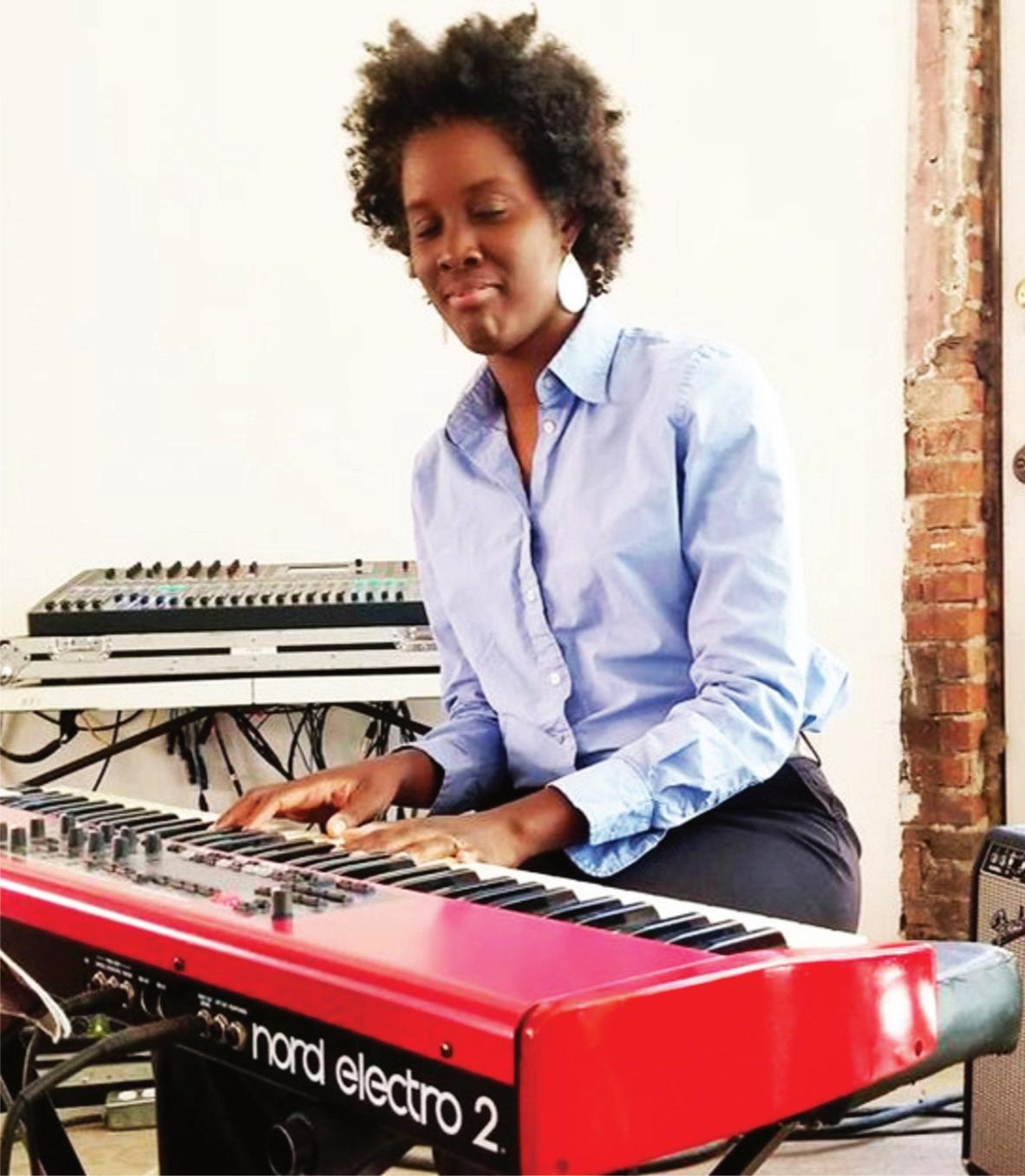
for other invitations for both private U.K. Bands that she leads
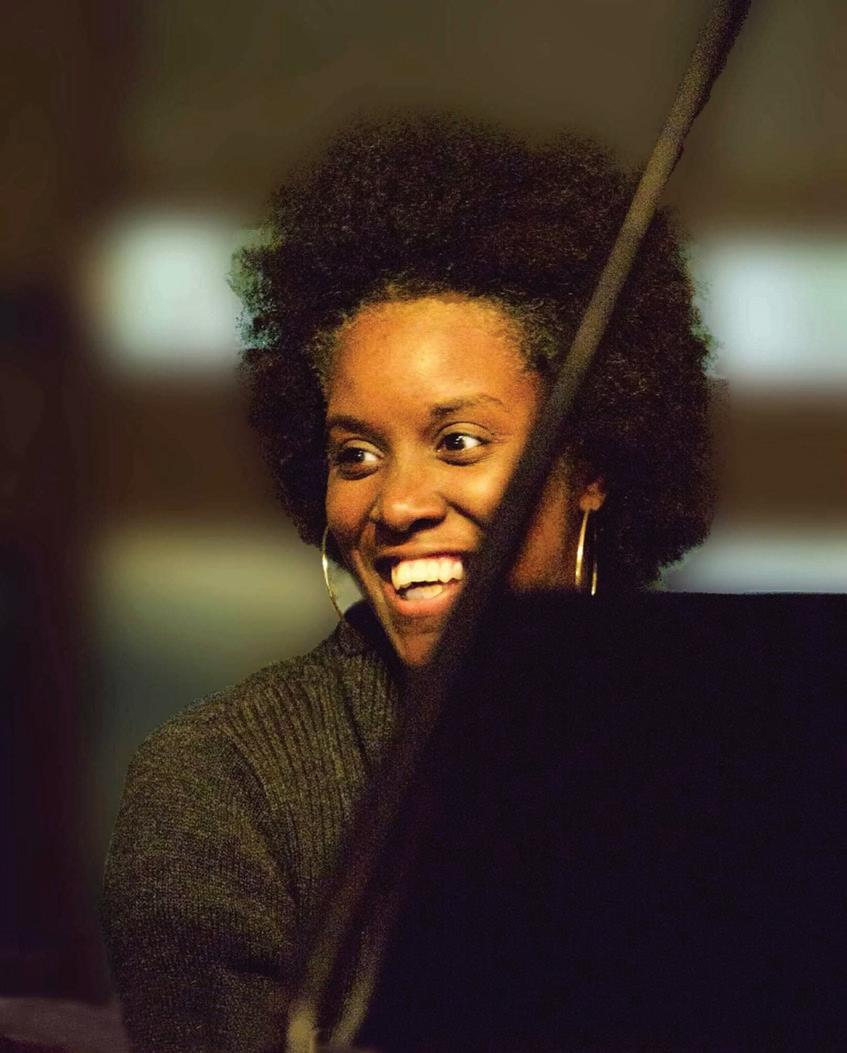
“I love that I can create a score of a film spontaneously,” shared Nelson. “Sometimes you never know what you’re gonna create and that’s the best thing about it.”
Just as the gigs of the creative freelance artist are varied, so too is her teaching experience, working over
the past 22 years with students at all levels, from early childhood to college – from school classrooms to private lessons. In 2010, Nelson received her master’s in jazz studies from the University of Colorado at Boulder. Currently, she teaches classes at Neighborhood Music at Stanley Marketplace, gives private lessons in her studio, and actively provides guidance to aspiring jazz musicians – paying it forward from her time of being on the receiving end of valuable mentorships.
She has full-circle moments with both the musicians who mentored her as well as those she mentored – playing in the same gig as peers, with Dr. Hugh Ragin who was a valuable teacher for
her, and Rico Jones (now a renowned saxophone player in New York) who she provided that similar instruction to when he was younger.
“She does so many things,” remarked Ragin. “She’s the epitome of creativity, receptivity, and sharing. I love what she does as a band leader, soloist, and composer. It’s always a joy to work with her.”
With her brimming schedule, Nelson’s priority and time extend to her husband Tim, ninth-grade son Thelonious (Theo), and canine Snowball.
“My husband has been there every step of the way,” she expressed. “I wouldn’t be able to do all the stuff I do without the support of both he and our kid.”
The inspiring composer, arranger, and educator has further goals in her playbook with an additional passion for preserving the history and keeping the music alive in Denver’s Five Points, the “Harlem of the West.” Nelson’s dream is for someone to purchase and restore the nationally renowned Rossonian Hotel on Welton Street.
“I actually had the opportunity to play there twice when they were trying to
reopen it, and I can’t even explain how cool that was,” she marveled. “There is a lot of work to do on the inside. No one can enter the building right now, but it seems like turning it back into a jazz club could be very doable with the right person and motivation.”
In the meantime, she is researching female jazz pianists who performed at the Rossonian, learning their amazing stories and determined to help other people gain from the important narratives of these impressive women – Charlotte Mosley Cowens and Louise Duncan, among others. Their invaluable stories can enter the forefront of our consciousness, just as jazz itself weaves its own unique story through musical improvisation.
Humble in her own talent, Nelson has a hard time admitting that she is included in the ranks of legends.
“Music is not what I do; it’s who I am,” she said. “I have the greatest job in the world, doing what I have loved since I was 11.” ♦
Editor’s note: For more information on Tenia Nelson, visit https://www. teniareneenelson.com/
Op-Ed by Elbra Wedgeworth
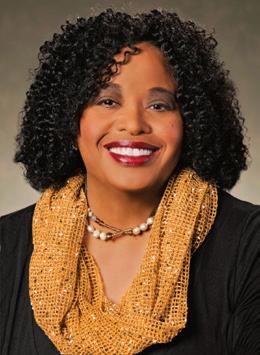
Colorado has always punched above its weight when it comes to innovation, problem-solving, and public leadership. A reliable and affordable Front Range passenger train connecting our cities is the next opportunity to do it again. At every step in a multi-year, deliberate process to deliver affordable and reliable train service to Colorado, we are raising the bar for how to plan, fund, implement, and deliver to the communities we serve.
By 2029, the Colorado Connector (CoCo) will be on track, literally, and operating round-trip express train service between Fort Collins and Denver three times daily. This is thanks to a truly extraordinary collaboration years in the making. For the first time, all major rail owners and operators with tracks in the Front Range have aligned on a shared vision for an express passenger train that will ultimately connect more than a dozen communities from Fort Collins to Pueblo. This extraordinary collaboration between Amtrak, BNSF, Union Pacific and RTD exhibits a level of coordination that has never existed before.


By filling in the missing puzzle pieces to continuous service, this collaboration enables CoCo to begin in just three years. Coupled with the use of existing rail and bridge infrastructure and the just-announced FasTracks funding and tax revenues, CoCo will begin an initial joint service between Fort Collins and Denver, operating during the daytime and evening rush hours. When accounting for the communities along this corridor – Fort Collins, Longmont, Boulder, Louisville, Westminster, Denver – nearly 1.2 million will soon have the option to travel by express train.
Over the years, conversations about the future of train service were often framed as a false choice between investing in roads and building a passenger train. For me, this feels like asking whether your heart is more important than your brain. Colorado needs both – good roads and highways that are maintained, and express passenger train service.
For fiscally conservative and budget-minded Coloradans, CoCo is exactly the kind of practical, resultsdriven infrastructure investment that our communities benefit from. Public transportation consistently
generates high returns on investment by connecting workers to jobs, businesses to talent, and communities to new opportunities. For many working families, it can mean significant savings by carrying one less car and using less gas.
In nearly a dozen communities across the Front Range, new and reimagined station areas are being planned to accommodate CoCo’s daily schedules. Business and community leaders are playing an active role in shaping these gateways to their community, bringing new customers to local businesses and new visitors who pay local sales taxes. These are not abstract benefits – they are tangible opportunities for revitalization and economic development across the Front Range.
When I think about the special events that will draw people up and down the I-25 corridor – like the Sundance Film Festival in Boulder, or watching our many sports teams, like the Avs and Nuggets in the playoffs – there’s no doubt that many, many people will take advantage of the new flexibility and options that CoCo will make possible.
As a Colorado native and former president of the Denver City Council who served the public for more than 30 years, I have participated in my fair share of public meetings. What stands out here is the high level of participation. Out of the 20 town halls held in diverse communities, several have drawn crowds of more than 200 attendees. People are asking tough questions, as they should. But make no mistake: this is what it looks like when a project is being done the right way, with communities informed, involved and helping shape what comes next.
Colorado’s future increasingly depends on smart, diversified investments that reflect how people actually live and work. The Colorado Connector is one of those investments – and by 2029, it will be moving Coloradans forward and showing what is possible when a project is done right from the start. ♦
Editor’s note: The Honorable Elbra Wedgeworth is a former Denver City Council President, the first person of color to chair the Downtown Denver Partnership, and helped lead the redevelopment of Denver Union Station.
By Editor:
Ireally enjoyed reading
“Fighting for the Right to Fight in the April edition of the urban spectrum. AfricanAmerican military history is a must read for myself, and the historical content of this article was wonderful. In addition to opening my understanding to the many AfricanAmerican civilians (example, Mary McLeod Bethune W. E. DuBois) who played a major role in bringing about opportunities for African-Americans in the United States Armed Forces, I learned a great deal more.
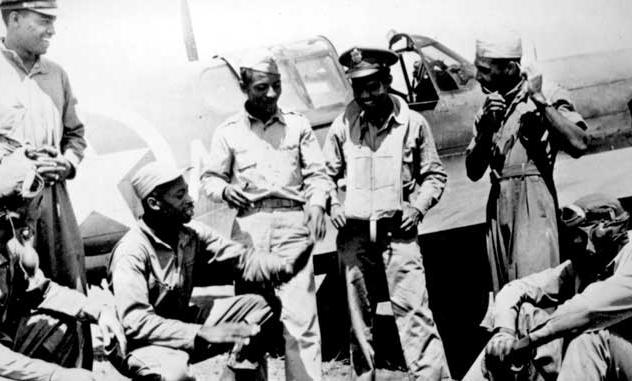
I would add clarification to this wonderful article that the fight for an equal opportunity military force in the United States is an ongoing effort that never ends. The article noted how President Truman signed Executive Order 9981, which ended desegregation in the American military. I’m thinking the author
meant to write that this order ended segregation in the American military. Mentioning this executive order fits well in this article, but the executive order is a bit out of context since Executive Order 9981 was ignored by most American military forces for up to 20 years (Source “Heroes In The Shadows,” page 124).
Again “Fighting for the Right to Fight” is a wonderful article to read
Thank you
Jerry Ware (Marine veteran.)

By Editor:
There are few policy proposals that have the potential to do more good than a massive public investment in cultivated-meat research. For those who don’t know, cultivated meat is grown from animal cells, without slaughter. My hope is this technology will help sweep fish trawlers and slaughterhouses into the dustbin of history. However, if cultivated meat only replaces a small percentage of the existing meat market, it would save billions of animals from suffering and premature death every year.
While the technology currently exists to make cultivated meat, it’s too expensive to mass produce. I have no doubt this can be rectified with further research. We should build facilities like the Tufts University Center for Cellular Agriculture at schools across the country. Compassionate political leaders should direct government resources toward this effort. As dark as our politics feels right now, with corruption and hatred seemingly everywhere, the possibility of building a better world remains.
Jon Hochschartner Granby, CT


By LaDawn Sullivan
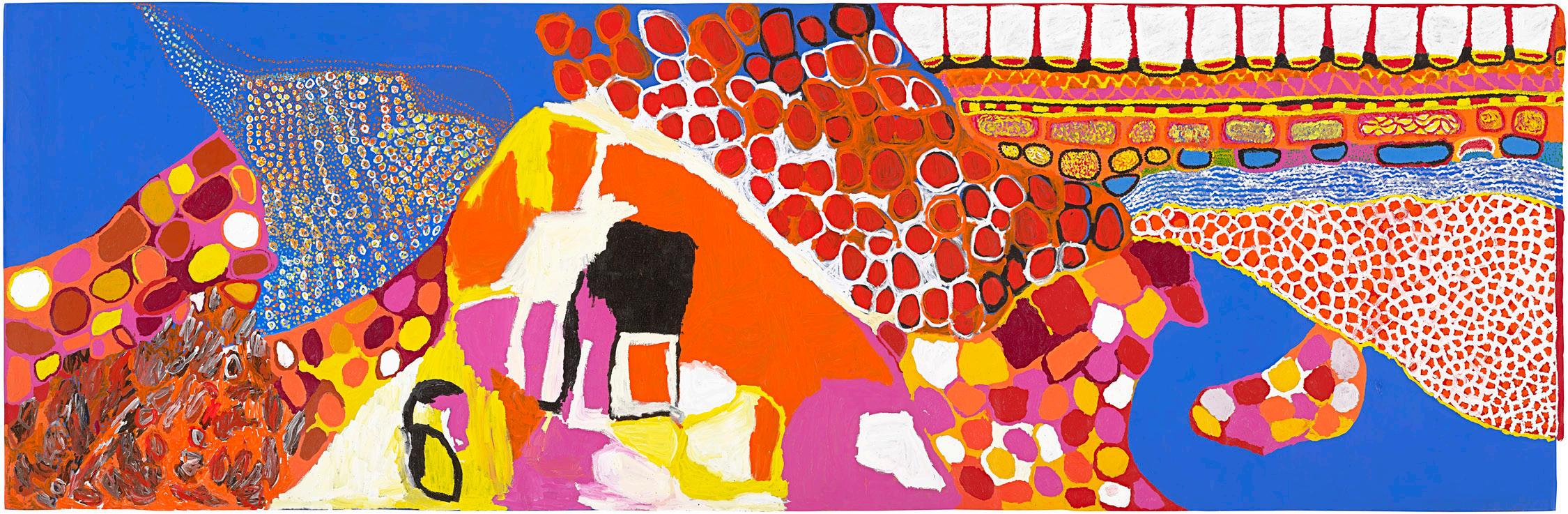
Every year Juneteenth arrives carrying two truths at once: celebration and warning.
Celebration because Black people in this country have always found ways to make joy out of survival. Warning because history has taught us that freedom delayed has a dangerous habit of disguising itself as freedom delivered.
Juneteenth marks the day enslaved Black people in Texas finally learned they were free — more than two years after the Emancipation Proclamation had already declared it. Freedom existed on paper while oppression still lived in people’s front yards. That gap between policy and practice has shaped generations of Black life in America.
That is why Juneteenth is not simply a historical commemoration. It is a living lesson about systems, power, access, and the ongoing fight to make freedom real. It is legacy work. A reminder that liberation is never a one-time event. Every generation must protect it, redefine it, and push it forward.
That same spirit lives inside the Executive Directors of Color Institute (EDCI), which this year celebrates 15 years of building, strengthening, and sustaining leaders of color across Colorado through the Black Resilience in Colorado (BRIC) Fund and its partners.
Fifteen years may not sound long in the grand scheme of history, but in nonprofit years — especially for leaders of color navigating chronic underinvestment, inequitable systems,

burnout, political backlash, and the expectation to somehow save communities with half the resources and twice the scrutiny — fifteen years is both an accomplishment and a declaration.
EDCI was founded in 2011 as a two-year leadership development and organizational capacity-building program created specifically for BIPOC nonprofit leaders. What began as an intentional space for connection and growth has evolved into one of Colorado’s most important leadership pipelines for nonprofit executives of color.
And honestly, we must give thanks to the late Dr. Vincent Harding for inspiring its creation.
For leaders who are Black, Brown, Indigenous, immigrant, multilingual, first-generation, and rooted in their

communities, leadership is not a professional role — it is a calling. It shows up in grant reports and board meetings, in crisis response and healing work, in every space where love and justice demand to be present.
EDCI understood early what many institutions are only now beginning to grasp: leaders of color do not need “fixing.” They need investment, trusted space, connection, restoration, strategy, and the ability to lead fully as themselves.
Over the past 15 years, EDCI has supported more than 300 nonprofit leaders of color and strengthened organizations serving communities across Colorado. Those leaders work in education, housing, health care, arts and culture, youth development, economic justice, mental health, civic engagement, safety, environmental justice, and community healing. That is legacy too.
Legacy is often misunderstood as something reserved for famous people, wealthy families, or buildings with somebody’s last name engraved on the side. But in Black communities, legacy has always looked different.
Legacy is the grandmother who made sure everybody ate, even when money was tight.
Legacy is the neighbor who organized rides to the polls.
Legacy is the church basement meeting, the scholarship fund, the mentor, the activist, the barber shop
conversation, the auntie who tells you the truth whether you asked for it or not.
Legacy is what survives systems designed to erase us — and right now, those systems are louder, bolder, and more emboldened than ever before.
Juneteenth itself exists because Black people preserved memory, story, culture, faith, and collective hope long enough to outlive the lie that we were not fully human. EDCI exists from that same lineage.
Programs like EDCI matter even more during difficult political and social times. Across the country, diversity efforts are being attacked. Equity language is being stripped away. Honest conversations about race are treated like threats instead of truths. Funding for justice-centered work is becoming harder to secure precisely because that work has been effective.
But pressure has never been new to Black communities. We know how to build anyway. We know how to organize anyway. We know how to laugh anyway. Sometimes that laughter is the only thing standing between us and a full emotional collapse in the middle of a Zoom call. Still, we continue.
That continuation matters because liberation is not hypothetical. Liberation shows up in whether communities have housing, healthcare, culturally responsive education, economic opportunity, political voice, and leaders
who understand lived experience not from research alone, but from life itself.
Representation alone is not enough. But leadership rooted in lived experience changes decision-making. It changes priorities. It changes what gets funded, protected, and imagined.
That is why leaders of color remain essential in this moment. Not because they are symbolic. Because they are necessary. Necessary for innovation. Necessary for trust. Necessary for credibility. Necessary for navigating communities through uncertainty with both cultural competency and hardearned wisdom.
The BRIC Fund was established on Juneteenth in 2020 as Colorado’s first Black-focused community fund, intentionally rooted in investing in Black-led and Black-serving organizations to build strong Black communities.
That timing was not just symbolic. It reflected an understanding that liberation requires infrastructure. Movements cannot survive on inspiration alone. They require resources, leadership pipelines, collaboration, strategy, and institutions willing to build for the long haul.
Brick by brick. BRIC by BRIC.
And maybe that is the real connection between Juneteenth, EDCI, and legacy. All three remind us that freedom is not simply inherited. It must be chosen, defended, and renewed relentlessly by every generation.
Our ancestors carried freedom forward when the country denied it. Today’s leaders carry it forward through organizations, advocacy, healing work, community investment, and collective action. And the generations coming next are watching closely to see whether we leave them exhaustion or foundation.
Fifteen years of EDCI represent more than a program anniversary. It represents a community refusing to abandon its leaders and what becomes possible when leaders of color are not isolated but supported.
Juneteenth teaches us freedom delayed is still worth fighting for.
EDCI teaches us leadership developed intentionally can transform communities for generations.
And legacy reminds us that what we build now should outlive us. Not for applause. For liberation.
The Black Resilience in Colorado (BRIC) Fund is the state’s first Black-focused community fund, investing in Black-led organizations and leaders across Colorado through a lens of resilience, innovation, and self-determination. Our history proves our voices have always mattered, our impact has never been small, and our future is ours to build. One truth has never changed: we have always known what we need. For more information, visit BRICFund.org ♦



By Brooklyn Shafer and Caden Winters
The largest celebration of life is coming to Denver June 18 to 23 when the Transplant Games of America (TGA) featuring 60 events, 20 competitions and bringing with it one of the world’s largest donor and recipient gatherings.
TGA aims to bring together a community who care about the importance of organ donation, transplantation and wellness. It invites all to get involved and show support for this powerful movement.
One of the biggest events will be the 5K Walk/Run taking place June 20 at 7:30 a.m. This scenic race winds through the Auraria Campus, serving as a testament to the transformative impact of organ transplantation. This event is open to the public with a $35 non-competitor fee. To sign up visit: www.transplantgamesofamerica. org/5k.
Following the 5K, the Living Donor/ Recipient Gathering will take place at 12:30 p.m. in the Colorado Convention Center. TGA inviting all living donors and recipients to come together in the largest gathering at one time. You don’t have to be a competitor in the Games to participate in this community-wide gathering that will further demonstrate the impact of organ donation and transplantation. To learn more/register visit: www.transplantgamesofamerica. org/gathering.

Up for a challenge? The Community and Heavy Murph will be another exciting showcase of what can be done after organ donation. The first hour will highlight a high-end, living-donor competition by extreme athletes, who are all living donors. Following their competition, the community challenge will take place for individuals interested in gaining fitness tips. The Community Murph is open to the general public, with a $35 non-competitor fee and includes CrossFit activities modified for all fitness and mobility levels. This event is about honoring the spirit of perseverance, not how many reps you can do.
Along with these events, the public can get involved in several ways through the Colorado Challenge, an Olympic-style athletic competition designed to spread awareness and the importance of a healthy and active lifestyle.
The Challenge has 8 major events:
• 5K Walk/Run
• Youth Olympiad
• Ballroom Dancing
• Bowling
• Cornhole
• Golf
• Lyrics for Life
• Pickleball
Most events will be taking place at the Colorado Convention Center and various venues in the metro area. There are several signature TGA events which are open to the
public to unite, inspire and build community. You can get more specific information at the TGA website: www. transplantgamesofamerica.org.
The Games will be officially kicked off with the Opening Ceremony, featuring the Living Donor Celebration, Donor Tribute and a salute to veterans. It is a recognition of the lifesaving gift of organ donation and the celebration of the second chance these donations have made possible. The athletes from 44 teams will gather for this opening celebration at the Bellco Theatre.
Other events for the community include:
• Welcome Reception
• Coffee House Chats in the TGA Village where donors and recipients will share personal stories
• Transplant Workshops focusing on educating the public about organ donation
• The TGA Expo featuring resources, new technologies, treatments and general information
• A quilt pinning and display
The competitive events are reserved for donors, recipients and donor families; however, anyone is welcome to watch and cheer them on. Come down to the Colorado Convention Center, where they will compete in more than 20 competitions such as: basketball, swimming, cycling, tennis, Texas Hold’em poker, track and field, trivia and volleyball.
The Games are made possible by the Transplant Life Foundation started by Bill Ryan in 2011. This Foundation unites the donation and transplant community to educate, inspire and transform lives. TLF has paired with former sportscaster Mark McIntosh, a blood cancer survivor and kidney transplant recipient, as the Denver Host Committee chair. Along with this position, McIntosh caravans across the state educating Coloradans about the importance of organ donation, transplantation, overall wellness and steps to joining the donor registry.
The current transplant list sits above 100,000 people, with BIPOC
populations making up more than 60% of those in need of organs. Although organ transplant candidates are not matched based on race or ethnicity, transplant matches within similar ethnic groups can be more compatible and successful. This is why people in all communities should register to become eye, tissue and organ donors.
Barriers to minority donation include: decreased awareness of transplantation, religious or cultural traditions and distrust of the healthcare system.
Many people think by checking “yes” for organ donation on their driver’s license is the only way to help save a life by donation. However, this applies only to deceased organ donation in particular circumstances. Living donors fill a real gap in organ donation. Individuals can “share their spare” through kidney and liver donation.
The need for kidney transplants makes up 85% of people on the organ transplant waiting list. You can save a life by registering to be a living donor and still live an active healthy lifestyle. TGA aims to educate more about general and minority donor need in the Denver-metro area and nationwide. To register to be a donor: www.transplantgamesofamerica.org/ donorregistry.
The Transplant Games help people come together to build a welcoming and safe community for all people involved in organ donation. It is a time for people who have experienced the joys, but also hardships, of organ donation to come together and support each other. It is a time to learn, grow and be inspired to act. It’s a time to hear stories about incredible individuals and their journeys and share stories of overcoming health issues. It is a time to celebrate recovery and recognize the sacrifices of those who made donations possible. It is a time to become part of the world’s biggest celebration of life. ♦
Editor’s note: To learn how you can get involved visit: www. transplantgamesofamerica.org/.

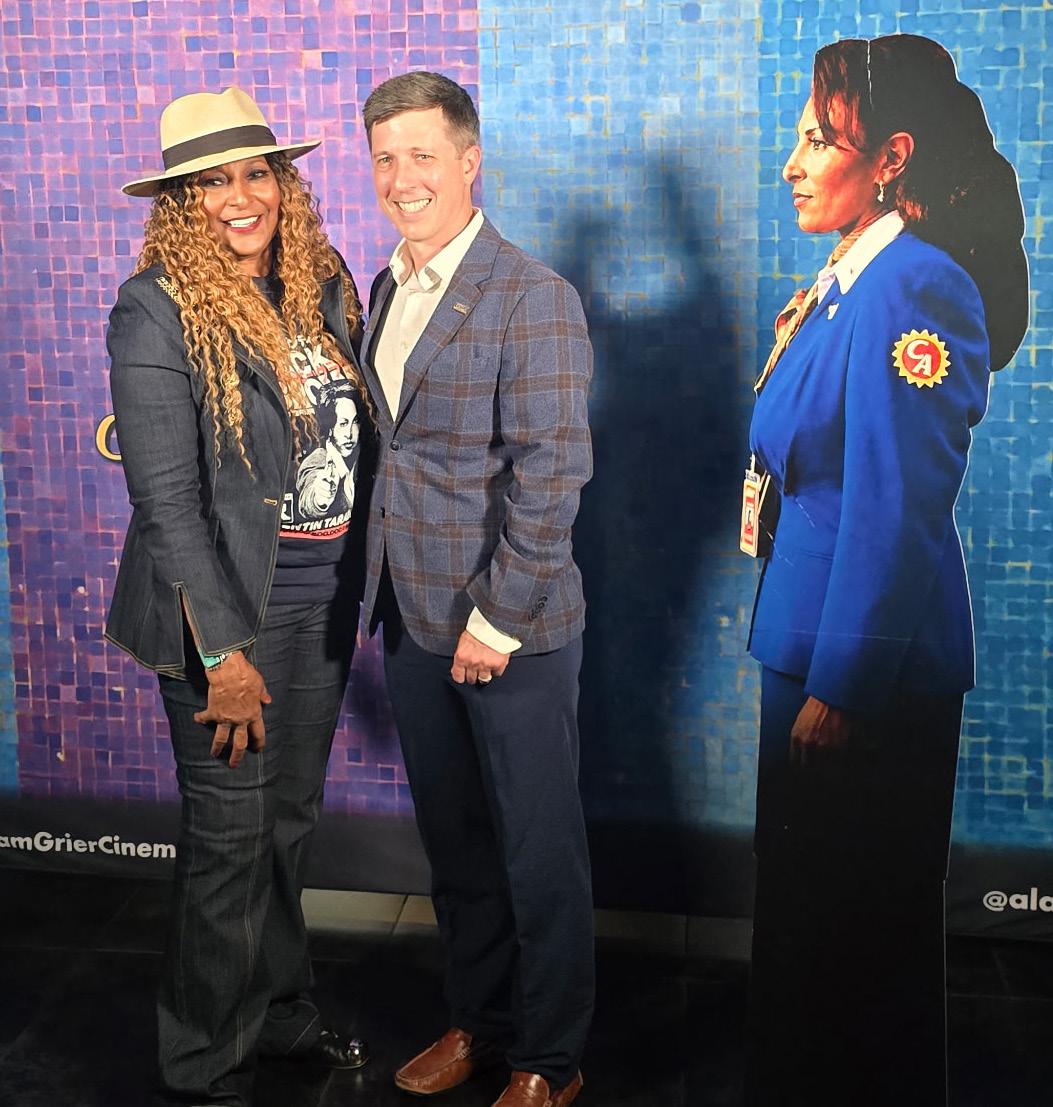
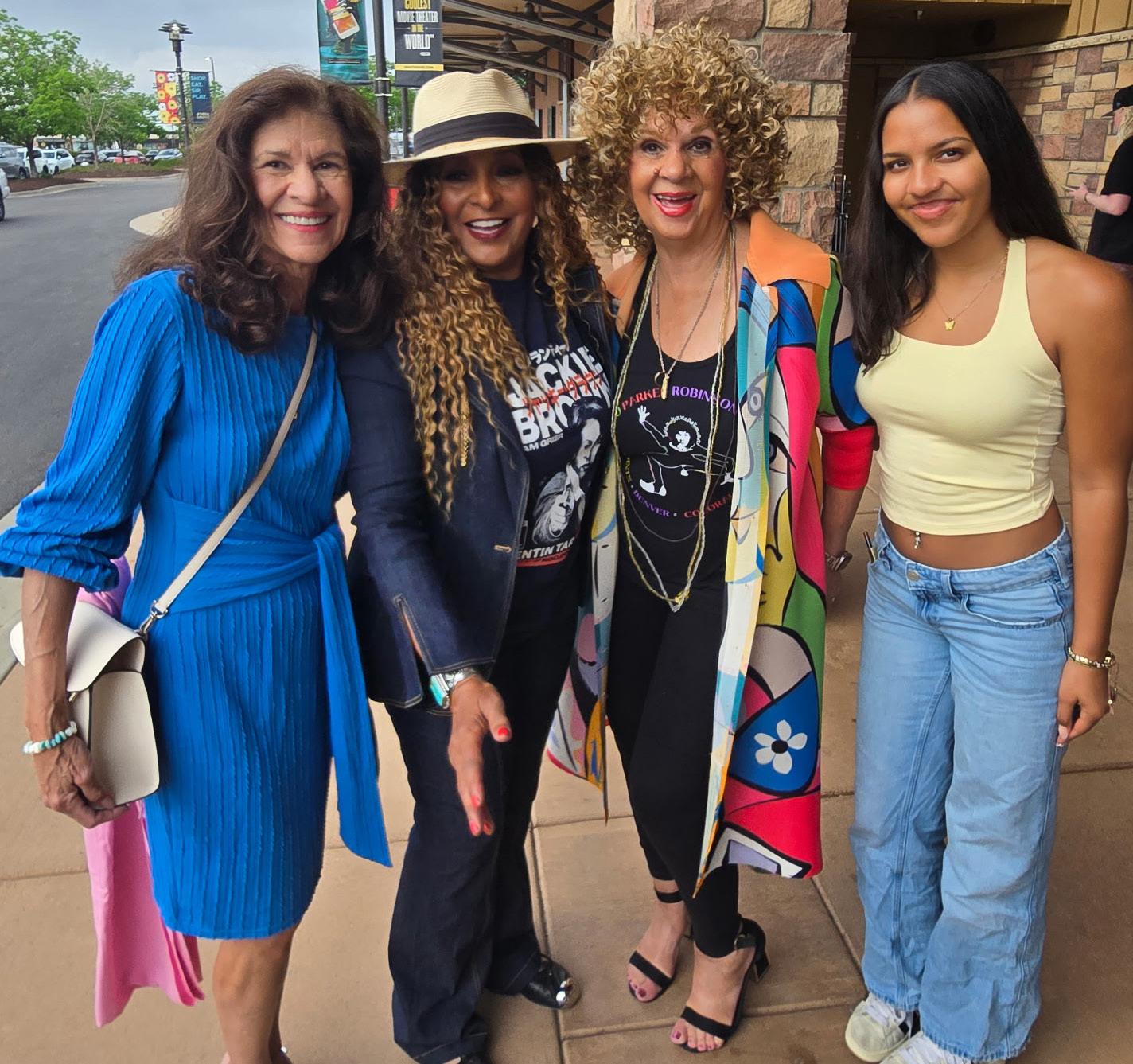
Alamo Drafthouse Cinema is honored that on Friday, May 15, its Littleton location was renamed The Pam Grier Cinema, a salute to the legendary performer and East High School graduate’s lasting impact on film, culture, and generations of movie lovers and artists inspired by her work. Grier joins a distinguished set of groundbreaking filmmakers and performers whose names adorn Alamo Drafthouse locations, a group that includes Spike Lee, John Hughes, Ivan Reitman and Bong Joon Ho.
“Alamo Drafthouse Cinema intentionally creates an emotional and sensory cinematic journey – one that invites us to pause, stop the clock, and let time come to us,” says Pam Grier. “Experiencing that in my hometown of Denver makes it all the more meaningful.”
longform onstage conversation about her career and impact on the industry, moderated by Nina Henderson Moore, President of Griot Productions and former Chief Content Officer for Free Speech TV.
“Pam Grier is one of the most influential screen icons of our generation,” says Chaya Rosenthal, Alamo Drafthouse’s Chief Marketing Officer. “Renaming our Littleton theater in her honor celebrates not only her extraordinary cinematic legacy, but also the lasting influence she’s had on film culture, and the many performers and creators who continue to follow her lead.”
series including Miami Vice, Law & Order: SVU, and The L Word, and has earned Emmy, Golden Globe, Screen Actors Guild, and NAACP Image Award nominations. Her lasting impact on film and popular culture has been recognized with numerous honors, including lifetime achievement recognition, and in 2010 she published her memoir, Foxy: My Life in Three Acts.
While the launch event centered on Foxy Brown and Jackie Brown, the naming of the Pam Grier Cinema is intended as a broader tribute to Grier’s full body of work and to the influence she continues to have across generations of film fans and filmmakers. Additional screenings of Grier’s films, including encore 35mm showings of Foxy Brown and Jackie Brown, are planned for the summer.
Alamo Drafthouse Littleton was the famed Austin-based cinemaeatery’s first location in Colorado when it opened in March of 2013 with, appropriately enough, a retrospective called An Evening with Pam Grier. Since then, the circuit’s footprint has grown to include a location in Denver at Sloan’s Lake and a location in Westminster. Over the past year, the Littleton location has also
received major technology upgrades, including HDR by Barco projection capability and immersive Dolby Atmos sound, further strengthening its place as a premier destination for repertory programming and specialty cinema.
Editor’s note: Commemorative Pam Grier Cinema items is available at AlamoMart.com.
Founded in 1997 as a single-screen repertory theater in Austin, TX, Alamo Drafthouse Cinema has grown to 40 locations nationwide. Known for its strict no-talking, no-texting policy, chef-driven food and beverage offerings, and eclectic programming, Alamo Drafthouse has been called “the best theater in America” by Entertainment Weekly and “the best theater in the world” by Wired. In addition to its theaters, Alamo Drafthouse operates Fantastic Fest, the American Genre Film Archive, and continues to expand its footprint with new locations across the country.
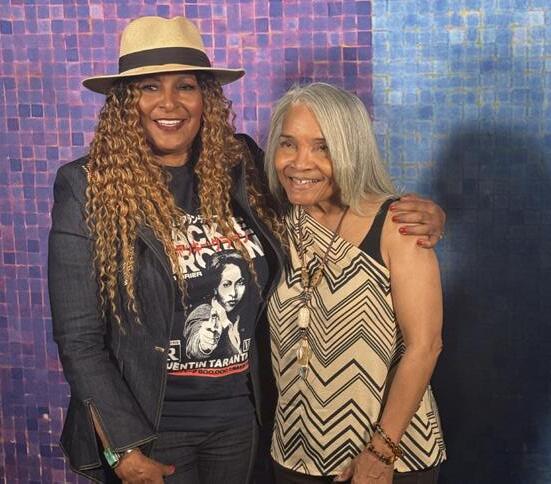

The honor was made official at a one night only special Pam Grier Celebration Event, anchored by a rare 35mm double feature of perhaps Pam Grier’s two most iconic films, 1974’s Foxy Brown and 1997’s Jackie Brown. Between films, Grier participated in a
Widely recognized as one of cinema’s most influential screen legends, Pam Grier rose to prominence in the 1970s with defining performances in films including The Big Doll House, Coffy, Foxy Brown, Sheba, Baby, and Friday Foster. She returned to major acclaim with her starring role in Quentin Tarantino’s Jackie Brown, further cementing her status as a singular and enduring talent. Across her career, Grier has also appeared in acclaimed television
















By Joanne Davidson Special to Colorado Politics
The Colorado Symphony has enjoyed several defining moments over the past several months, most notably its New York tour, featuring critically acclaimed concerts at Radio City Music Hall and Carnegie Hall.
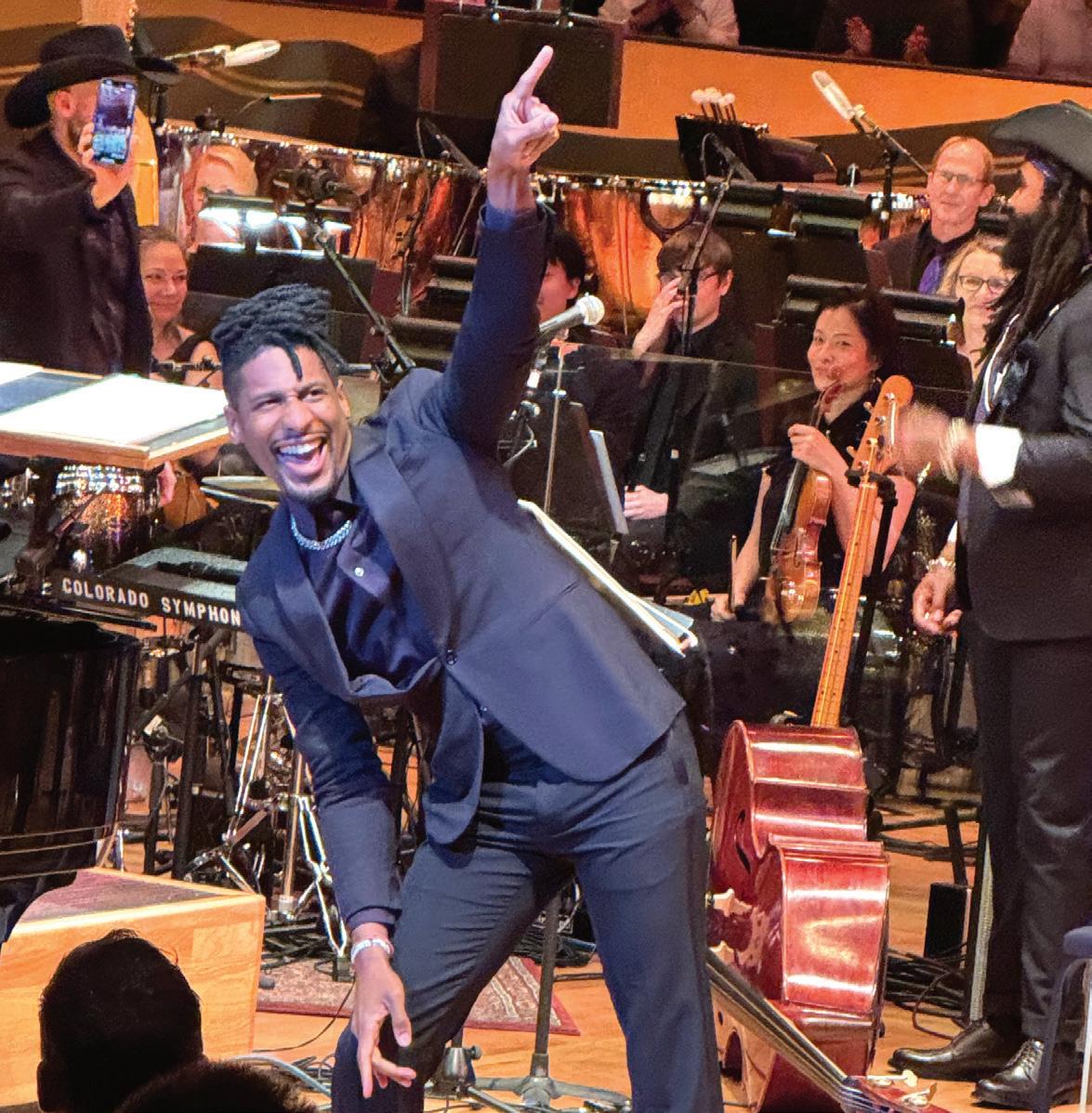
The orchestra added further notoriety on May 9 when Jon Batiste headlined the 2026 Symphony in the City Gala, a dinner and concert expected to raise $1 million.
Batiste, the former bandleader/ music director for The Late Show with Stephen Colbert, has more Grammy, Academy, Golden Globe, BAFTA, NAACP Image and Critics’ Choice awards than you can shake a songbook at, joined the symphony for a performance that had the Boettcher Concert Hall audience clapping, smiling and on its feet for multiple standing ovations.
The concert hall had barely emptied before Facebook and Instagram feeds started blowing up with pictures and congratulatory posts that ranged from “Wow. Wow. Wow!” to “We got to witness a genius.”
Which made it perfectly OK for Daniel Wachter, the symphony’s president and chief executive officer, to brag. The night, he said, was the perfect occasion “To celebrate how this arts organization inspires and unites humanity through live symphonic music, connecting communities across Colorado and beyond, and expanding the access and impact that defines us today.”
The symphony, Wachter added, “Is the living heartbeat of our state, expressing its beauty, creativity, vitality, and inclusive spirit.”
Denver Mayor Mike Johnston, in videotaped remarks, noted that the evening “Is about supporting something that connects everyone, the Colorado Symphony. It moves the city forward, and when it thrives, Denver thrives.”

Symphony in the City began with a cocktail reception and silent auction in the lobby of the Helen Bonfils Theater Complex. Then everyone moved upstairs to Seawell Ballroom for dinner, live auction bidding and presentation of the 2026 Margaret Phipps Award to Dr. Paula Bernstein.
Bernstein, a psychologist who has taught at the Denver Institute for Psychoanalysis and other schools for 50 years, has served on the boards of the Colorado Symphony and its predecessor, the Denver Symphony, for a grand total of 45 years. She retired from the latter post in 2024 and continues as a life *trustee of the Aspen Music Festival.
“Today I will be saying goodbye, but I retire knowing the Colorado Symphony is reaching communities better than ever before.”
John Street, who chairs the Colorado Symphony board, introduced the paddle-raise conducted by J.J. Raterink that added $163,500 to the evening’s proceeds. Additional funds came from ticket sales, sponsorships and a $100 “paddle sweep” of the ballroom.
The committee planning the gala included Britany Chism of Tapestry Productions; Grace Heneveld, senior accounting manager for Kroenke Sports & Entertainment; Dr. Marta O’Grady, division administrative director at the University of Colorado School of Medicine Department of Surgery; Ryan Sanders, of Design Within Reach; artist Topher Straus; Alex Thomas, an attorney at Taft Law; and community leader Jamie Tsui.
Among the guests: Former Denver Mayor Federico Pena and his wife, Cindy; Mary Rossick Kern, who with her late husband, Jerry, had led the orchestra as co-CEOs; Margaret Hoeppner, who retired from the symphony after 63 years as its cellist; Nancy Accetta, whose mother, the late Erna Butler, was the Margaret Phipps Award recipient in 2012; Dr. Richard Krugman and Julie Rubsam, the award recipients in 2025.
About the organization: Established in 1989 as the successor to the Denver Symphony, the Colorado Symphony Orchestra performs in Boettcher Concert Hall and throughout the Front Range, presenting education and outreach programs; masterworks; pops, holiday and family concerts; and the Inside the Score and Symphony on the Rocks series. ♦

The Denver Sheriff Department (DSD) held its annual memorial ceremony on May 12, honoring the sheriff deputies who lost their lives in the line of duty. The solemn event brought together families, colleagues, and community members to remember and pay tribute to these fallen heroes. The ceremony is traditionally held in observance of National Law Enforcement Appreciation Week.
“Each year, as we gather for this solemn ceremony, our hearts are filled with profound reflection and unwavering gratitude. We remember the brave deputies who made the ultimate sacrifice, their courage forever etched in our memories,” said Sheriff Elias Diggins. “To the families of the fallen
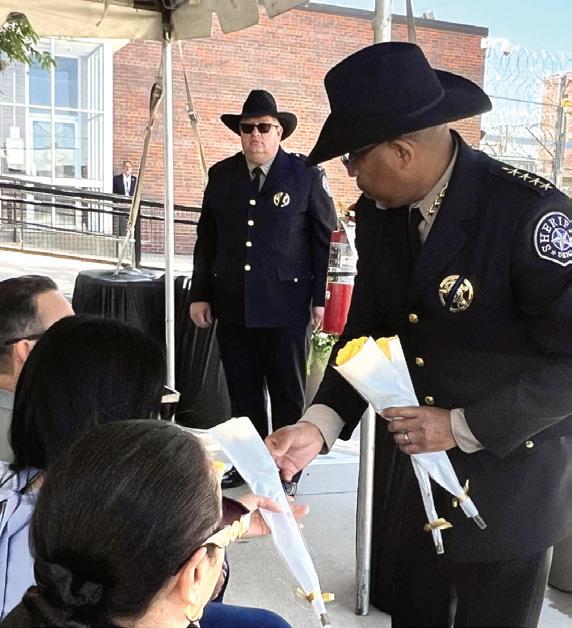
heroes, we offer our deepest respect and enduring support.”
The fallen deputies who were honored are:

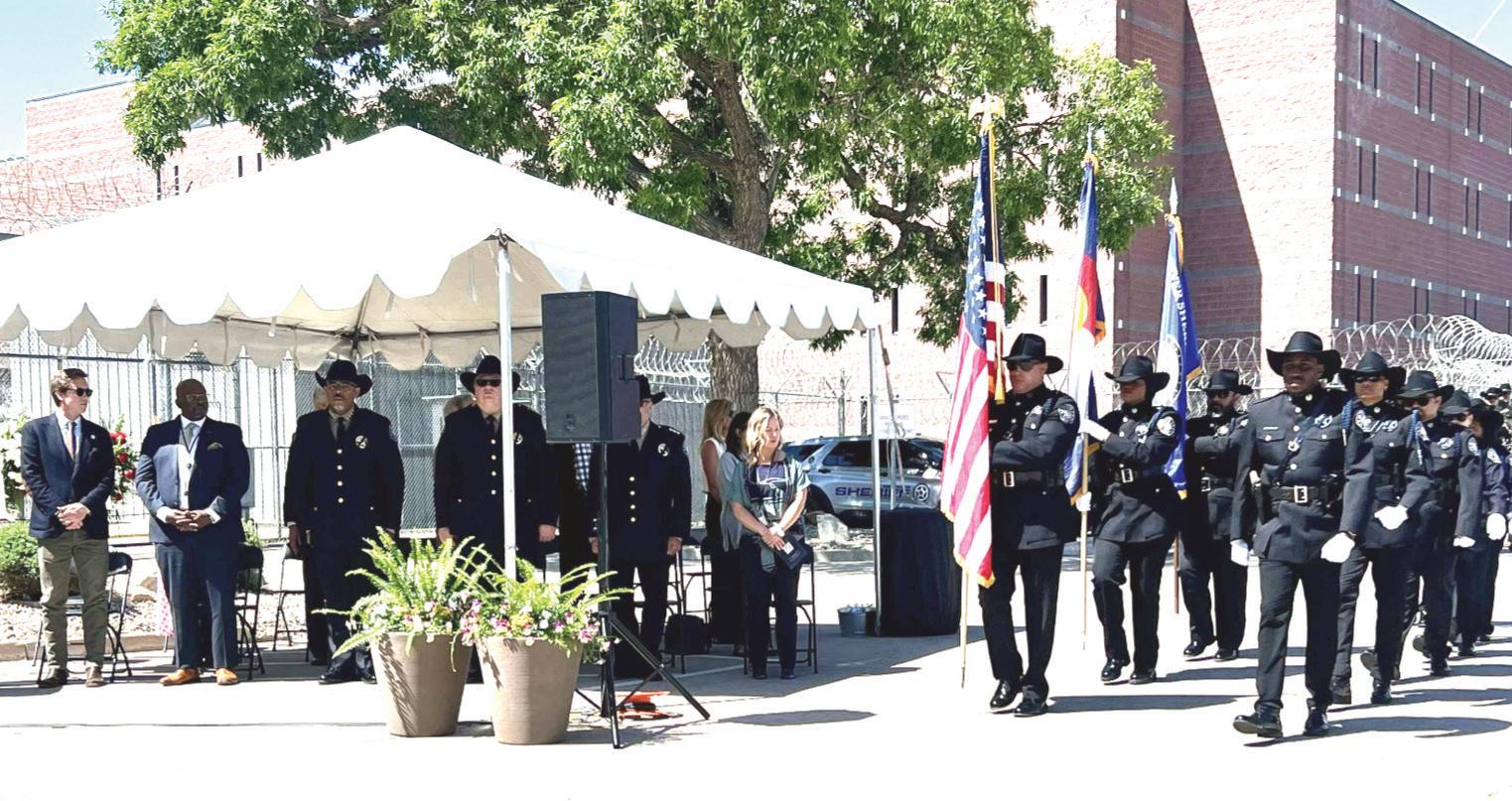
• Deputy Edward B. Baird passed away on March 16, 1906. In a blinding snowstorm, about 30 miles west of Pueblo, Baird and the prisoner he was transporting were killed when a local and an express train were involved in a head-on collision.
• Deputy John D. Osborne passed away on August 7, 1974. During an inmate’s attempted escape from the Denver County Jail, Osborne was stabbed to death.
• Deputy Edward A. Martinez passed away on November 15, 1980. Shortly after a struggle with an inmate during the book-in process, Martinez suffered a fatal heart attack.
• Deputy Daniel R. Stillwell passed away on September 6, 1987. Stillwell was attacked and shot with his revolver by an inmate at the hospital trying to escape.
• Deputy Norman “Tony” Silva II passed away on February 3, 1993. Silva was accidentally shot and killed when his partner’s weapon discharged after transporting an inmate to jail.
• Deputy James A. Herrera passed away on May 16, 2021. Herrera was working during the global pandemic. He contracted the COVID-19 virus and succumbed to related complications.
• Deputy Daniel “Duke” Trujillo passed away on May 26, 2021. While working during the global pandemic, Trujillo contracted the COVID-19 virus and succumbed to related complications. ♦
Editor’s note: The memorial ceremony was streamed live and posted on DSD’s Facebook page @ denversheriffsdepartment.





Two Weeks: June 8 to 19 - 10 AM to 3 PM
East High School, 1600 City Park Esplanade, Denver, CO 80206

Skate City - Remembrance to Ti’lyn Walker-Simmons - June 12
5th Annual Campers VS. Cops Game - Thursday, June 18 from 1 to 3 PM
Registration Is Open Until June 5
To register, donate or sponsor, visit https://sfycbasketballcamp.com/
SPONSORS:
Platinum: Colorado Rockies
Gold: Webb Group International (Wellington and Wilma Webb; Roger Sherman; Nike; Attorney Dawn Bookhardt; Dr. Renee Cousins


Silver: Dave Logan; Maria Garcia-Berry; Fabby Hillyard; Senate President James Coleman; Mayor Mike Johnston; Evan Dreyer; Senator Michael Bennett; Radio Host Tom Martino; Coach Rudy Carey; Denver Urban Spectrum; Daughters Joy Walker, Alisha Gaffney and Ti’lyn Walker-Simmons

Bronze: H&F Constructors; Department of Public Safety; Black Policy Officers Association; Black Denver Sheriff’s Association; Frank Gale (FOP); McDonald’s (Geta Asfaw); Fix-It-24-7; Councilman Durrell Middleton; Tara Newton; Tanya Diabagte; Grandsons Laurynz Hawkins, TJ Austin Jr and Darnell Gaffney Jr
Supporting: Attorney Willie Shephard; Attorney Mary Lewis; Roy Gentry CPA; Frank Duran-The Real Estate Man; Milton Garlin; Coach David Carey; Coach Ben Hervey; Buffalo Wild Wings; Courtesy Auto; The Pachner Group; Space Age Marketing; Jan Consultants; Shane Jackson; Betty Simmons; Officer LaTrisha Guss; Tracy (Hairworks); Richard and Charmine Jackson; North Aurora Chiropractic; Maaco; Lynn Hawkins; East High School (Territa Walker); Attorney Ben Crump; Attorney Milo Schwab
For more information: Call: 303-521-7211 Email: alvertissimmons@yahoo.com
Historic Denver announced that the organization has submitted an owner-supported nomination to the City and County of Denver seeking Landmark Designation for the home of the Honorable Wilma J. Webb and Mayor Wellington E. Webb. The nomination is currently scheduled to be presented for approval to the City and County of Denver’s Landmark Preservation Commission on May 5 and to Denver City Council on June 22, 2026.
John Deffenbaugh, President & CEO of Historic Denver said: “Historic Denver is thrilled to recognize the contributions of the Honorable Wilma J. Webb and Mayor Wellington E. Webb through the Landmark Designation of their home, undertaken in partnership with History Colorado and LaTonya Lacy. If these walls could talk, so the
“You cannot tell the story of Denver without Wilma and Wellington Webb,” said Mayor Mike Johnston. “They are more than deserving of this honor, but the truth is, their legacy is already enshrined in Denver. When our kids play at a park, they often do so because Mayor Webb put it there. When we hop a flight, enjoy dinner downtown, or cheer for the Avs and Nuggets, it’s because Mayor Webb put in the work to finish the airport, revitalize our economy, and keep our teams in Denver. And when we march in the Marade, or celebrate MLK Day, it’s because Wilma Webb fought to make it happen and because she continues fighting today. I’ve been honored to know them both and I’m honored to support this designation.”
Wilma J. Webb’s path of public service led to the Colorado State

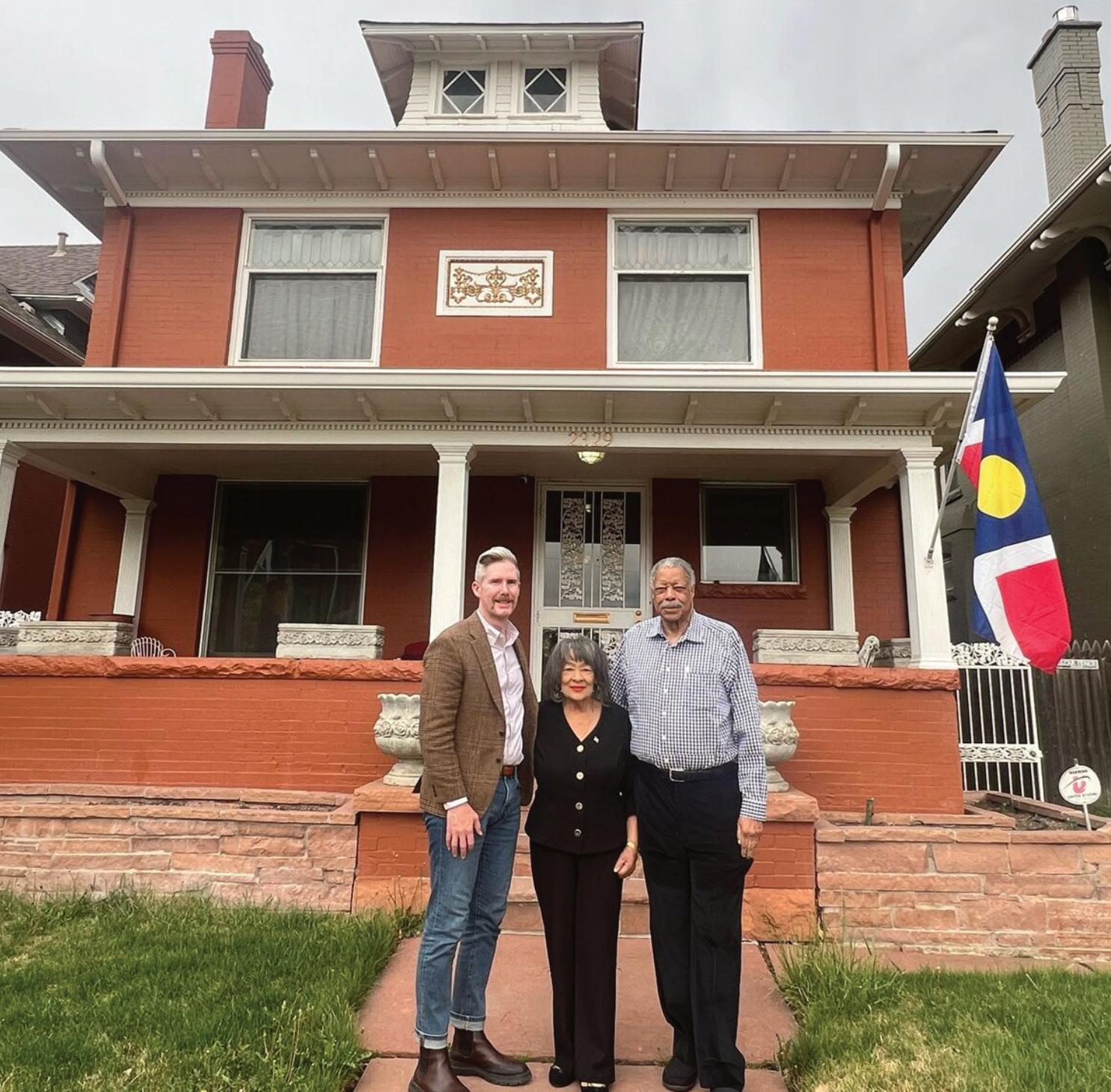
Legislature, where she served six terms, emerging as a force in state politics. Her legislative legacy was anchored in the fight for civil rights. She championed the effort to establish a state holiday honoring Dr. Martin Luther King Jr. But, her influence extended beyond the legislature. As Chairperson of the Martin Luther King Jr. Holiday Commission, she helped create the Denver “Marade” – both a march and parade – that transformed the city’s commemoration of King’s legacy into a civic tradition, blending celebration with activism.
Wellington E. Webb built a storied career in public service, one that reached its pinnacle in 1991 when he was elected mayor of Denver – the first African American to hold the office. As mayor, Wellington’s tenure was defined by growth and reform. He focused on several issues, including more parks and open space, public safety, economic development, as well as child welfare. He played a key role in shaping Denver’s economic future, including finishing 85 percent of the new Denver International Airport and revitalizing downtown Denver with
new housing; new restaurants; the opening of Coors Field; and locking in the Denver Nuggets and Colorado Avalanche to a 25-year commitment at its new arena.
Historic Denver is a grass-roots non-profit that was founded in 1970 on the belief that Denver’s history is worth saving. From the fight to preserve the home of Margaret “Molly” Brown to championing landmarks and neighborhoods across the city, Historic Denver has been shaping the story of Denver for over 50 years. Every day, Historic Denver advocates for the places that define our city, telling the stories that connect us, and inspiring people to see history not as something behind us, but as something alive today. Through preservation, education, and collaboration, Historic Denver protects the landmarks and neighborhoods that make Denver unique. From the most iconic treasures to the streets where we live, Historic Denver is making sure our city grows while staying true to its character. ♦



Starting June 1, kids 0–18 can visit Arapahoe Libraries to choose a free book to keep. Find summer events at arapahoelibraries.org/summer-reading
By Dr. Dedrick J. Sims
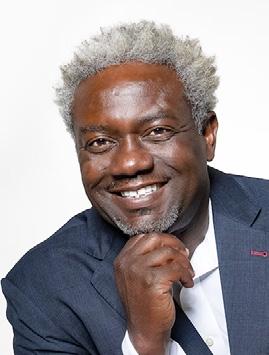
For many boys and young men, silence starts early. Not because they have nothing to say, but because they learn quickly which emotions are acceptable, which struggles are safer to hide, and which conversations make adults uncomfortable. Over time, many boys become skilled at looking fine while carrying pressure, anger, grief, confusion, fear, and loneliness underneath the surface. Adults often miss it because many boys learn how to perform “okay” long before they actually are.
Then one day the struggle becomes visible. A student explodes in class. A young man shuts down emotionally. A boy stops engaging at school. Someone gets suspended. Someone gets into a fight. Someone begins pulling away from everyone around them. Adults often experience these moments as sudden, but they usually are not. By the time many boys need intervention, they have already spent years needing conversation.
Many boys grow up hearing adults say things like “talk to somebody” or “express yourself,” while simultaneously learning that vulnerability can lead to embarrassment, rejection, punishment, or being viewed as weak. In many environments, boys learn that emotional control is rewarded while emotional honesty is often uncomfortable for the adults around them. As a result, many boys begin managing how they present themselves emotionally long before they understand how to process what they actually feel.
Some boys become quiet. Some become emotionally detached. Others become performers, constantly joking or posturing because humor becomes safer than honesty. Some become angry because anger is one of the few emotions boys are consistently allowed to express publicly without

losing social standing. The problem is that suppressed emotion does not disappear. It usually surfaces somewhere else. Sometimes it shows up behaviorally. Sometimes relationally. Sometimes academically. Sometimes physically. Adults often respond to what boys are doing without slowing down long enough to ask what boys are carrying.
One of the most overlooked protective factors in the life of a boy is consistent access to trusted conversation. Not lectures. Not adults talking at him after he gets in trouble. Real conversation where a boy can ask questions without shame, uncertainty is not immediately treated like weakness, and emotions are not automatically redirected into discipline or silence. Most boys do not need adults to have perfect answers. They need adults willing to stay present long enough to help them think clearly about what they are experiencing.
Too often, adults wait until boys are already in crisis before building emotional support around them. We create intervention systems after visible damage appears instead of creating consistent relational spaces before boys ever reach that point. Then we become frustrated when recovery feels difficult. Prevention requires something different. It requires
environments where boys are consistently seen, heard, challenged, and emotionally supported before their struggles become public emergencies.
When boys do not have healthy places to process life, something else eventually fills that space. Social media fills it. Peer pressure fills it. Algorithms fill it. Internet personalities fill it. Many boys begin learning about manhood from environments that reward image, dominance, emotional suppression, control, and performance rather than reflection, empathy, accountability, and emotional awareness.
The issue is not simply that harmful messages exist. The issue is that too many boys are hearing those messages without trusted adults helping them process what they are consuming. Many boys are trying to figure out who they are becoming while surrounded by constant pressure to appear tough, emotionally unaffected, and always in control. Silence does not stay empty for long. If adults do not help shape the conversation, something else will.
Inside schools, adults often meet boys at the point where emotional strain has already turned into behavior. The student who keeps getting redirected. The boy sitting silently in the back of class every day. The student laughing constantly but unraveling privately. The young man adults call disruptive, but nobody has actually sat with long enough to understand. By the time the behavior becomes visible, many boys have already spent years learning how to hide what they are carrying internally.
At that point, systems often respond through discipline, removal, compliance structures, or behavior correction without examining whether that young man has experienced
consistent mentorship, emotional safety, or belonging anywhere in the building. Many boys do not need lower expectations. They need stronger relationships with adults who can see beyond the behavior in front of them. That requires different questions. What is this behavior communicating? What pressure is this young man carrying right now? Who does he trust enough to be honest with? Who actually knows what is happening in his life outside of this moment? Without those questions, schools often end up responding to symptoms while the underlying struggle continues untouched.
One of the reasons I wrote Hey Man, We Jus Talkin’ was because I kept seeing how many boys were navigating life without structured spaces for honest reflection and conversation. Not performative conversations, but real ones about identity, fear, friendship, pressure, responsibility, loneliness, failure, purpose, emotions, and manhood. Many boys are carrying questions they have never verbalized publicly because they are unsure whether the adults around them actually want honest answers.
Some boys are quietly asking themselves whether they are enough. Others are wondering why they feel angry all the time, why nobody really asks how they are doing, or what happens if they fail publicly. Many are trying to figure out who they are becoming while feeling pressure to appear emotionally unaffected at all times. Those questions exist whether adults create space for them or not.
The difference is whether boys have safe places to process those realities before internal struggles become external consequences. Many boys are not refusing support. They have simply learned not to expect it.
If we are serious about improving outcomes for boys and young men, we cannot continue building systems that only respond after visible damage has already occurred. We have to build environments where boys can reflect before they collapse emotionally, ask questions before they make destructive decisions, and experience honesty without shame. Boys need places where they can experience belonging before

they emotionally detach from school, relationships, or themselves.
This work is not soft. It is preventive infrastructure. Boys should not have to reach emotional exhaustion before adults decide they deserve spaces for reflection, mentorship, honesty, and support. By the time many boys ask for help outwardly, they have often spent years surviving silently inwardly. The responsibility of adults is not simply to respond once boys are struggling publicly. The responsibility is to build environments where boys are not left alone long enough for that struggle to become inevitable. ♦

Author’s note: If this conversation resonates with you and you would like to continue the dialogue around mentoring, adolescent development, or building stronger systems of support for boys and young men, you can reach me directly at dedrick@djsventures.org.
Editor’s note: Dr. Dedrick Sims is the Founder and CEO of the Sims-Fayola Foundation and author of the monthly All Things Boys column in The Urban Spectrum. For more on adolescent development and mentoring young men of color, visit www.sffoundation.org.



By Barry Overton
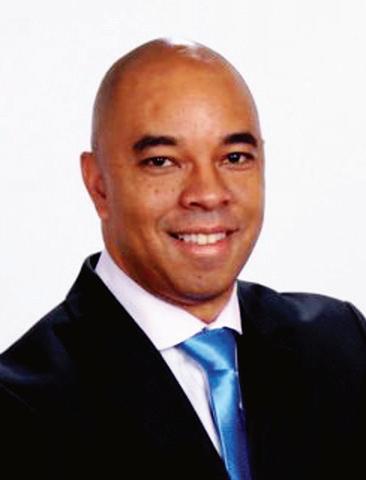
Few financial products in America have been misunderstood more than the reverse mortgage. For years, reverse mortgages were surrounded by fear, misinformation, and outdated stories that caused many homeowners to immediately dismiss them as risky or predatory. Today, however, many financial advisors, retirement planners, and affluent retirees are beginning to view reverse mortgages very differently — not as a last resort, but as a strategic financial tool.
The truth is simple: a reverse mortgage is neither good nor bad on its own. Like any financial instrument, its value depends entirely on how it is structured, explained, and used.
A reverse mortgage allows homeowners, typically age 62 and older, to convert a portion of their home equity into accessible cash while continuing to live in the home. The most common program is the federally insured Home Equity Conversion Mortgage (HECM). Instead of the homeowner making monthly mortgage payments to the lender, the lender provides funds to the homeowner through a lump sum, monthly payments, a line of credit, or a combination of all three.
One of the biggest myths is that “the bank takes your home.” That is simply not accurate. The homeowner remains on title and continues to own the property. The reverse mortgage is simply a loan secured by the home, much like a traditional mortgage. The loan generally becomes due only when the borrower sells the home, permanently moves out, or passes away. In many cases, heirs can sell the property, refinance the balance, or pay off the loan and keep the home. Additionally, federally insured reverse mortgages are non-recourse loans, meaning the borrower or heirs will never owe more than the value of the property.

So why do reverse mortgages still carry such a negative reputation?
Much of the skepticism comes from earlier decades when some lenders used aggressive sales tactics and failed to properly educate borrowers about the product. Confusion during the 2008 housing crisis also contributed to the stigma, as many consumers mistakenly believed lenders were unfairly taking homes. In reality, many issues occurred because borrowers failed to maintain property taxes, insurance, or occupancy requirements. Today, reverse mortgages are far more regulated, and federally insured programs require HUD-approved counseling before closing.
Modern retirement planning has changed significantly, and reverse mortgages are increasingly being incorporated into larger financial strategies. Many retirees today are “house rich and cash flow cautious.” They may have substantial equity tied up in their homes but prefer not to drain investment accounts or retirement savings during uncertain economic times.
Some financially sophisticated retirees use reverse mortgages strategically to:
• Preserve investment portfolios during market downturns
• Improve retirement cash flow
• Delay drawing Social Security benefits
• Maintain liquidity
• Reduce monthly financial obligations
• Purchase homes without mandatory mortgage payments
This may surprise many people, but reverse mortgages are no longer used exclusively by struggling homeowners. Wealthy retirees and financially savvy individuals often use them to create flexibility and preserve long-term wealth.
Another lesser-known fact is that while standard FHA reverse mortgages require borrowers to be at least 62 years old, some proprietary reverse mortgage programs allow borrowers as young as 55, particularly for highervalue homes.
Below are three examples of how reverse mortgages can be used positively and strategically.
A retired couple sells their longtime family home and purchases a luxury retirement property using a HECM for Purchase reverse mortgage. Instead of paying all cash, they put down a portion of the purchase price and finance the remainder through the reverse mortgage. The result is no required monthly mortgage payment while preserving hundreds of thousands of dollars in liquid assets for investing, travel, emergencies, and lifestyle flexibility.
A retiree with significant stock market investments experiences a market downturn. Rather than selling investments at a loss to cover living expenses, they utilize a reverse mortgage line of credit from their home equity. This allows the investment portfolio additional time to recover while reducing stress and protecting long-term wealth accumulation.
One of the most overlooked opportunities is using a reverse mortgage on a 2–4-unit owneroccupied property. A retiree purchases a duplex or fourplex, lives in one unit, and rents out the others. Rental income helps offset expenses while the reverse mortgage eliminates mandatory monthly mortgage payments. This can dramatically improve retirement cash flow and housing affordability.
However, one of the most important points in this entire discussion is this:
• Not all mortgage brokers specialize in reverse mortgages. And that matters.
Reverse mortgages are highly specialized financial products involving:
• FHA regulations
• Retirement planning
• Estate considerations
• Tax implications
• Long-term occupancy rules
• Equity preservation strategies
An inexperienced loan officer may fail to explain the product properly or
miss important strategic opportunities. That is why it is critical to work with a mortgage broker or lender who specifically specializes in reverse mortgages and understands the complexity of retirement planning.
Consumers should also consider speaking with HUD-approved counselors and trusted financial advisors before making a decision.
The reality is that reverse mortgages should not automatically be viewed through the lens of fear, desperation, or outdated myths. When properly structured and responsibly used, they can become a powerful financial tool that helps retirees create greater stability, flexibility, and peace of mind during retirement. ♦
Editor’s note: Barry Overton is a Denver-based real estate advisor, veteran, and mentor. He helps investors, homeowners, and agents unlock wealth-building opportunities across the country. For more insights on market trends, AI in real estate, and personal development for entrepreneurs, visit www. barryovertonrealtor.com, email barrysellsdenver@msn.com or call 303-668-5433.









James alleges the rest of the board violated her rights and suppressed her speech.
By Kiara DeMare
Editor’s Note: Denver Urban Spectrum is proud to republish this article with permission from Denverite, where it was originally published. As fellow members of COLab, Denverite and Denver Urban Spectrum are committed to strengthening local journalism through collaboration and shared community storytelling.
Congressional candidate Wanda James sued the University of Colorado Board of Regents on Tuesday for censuring her, escalating her fight with fellow university leaders.
James is a member of the elected board that oversees the university system. Last year, she was reprimanded by other regents over her criticism of a public health campaign. She said the university system used anti-Black racial tropes while discussing cannabis.
James is the first Black woman to own a cannabis dispensary in the U.S. She is challenging Rep. Diana DeGette in the Democratic primary election next month to represent the Denver area in Congress.
The candidate objected to illustrations that were a part of the CU Anschutz campaign, titled “The Tea on THC.” The images contained Black or dark-skinned males alongside language describing the effects of marijuana, such as laziness and poor school performance, which she considered derogatory to people of color.
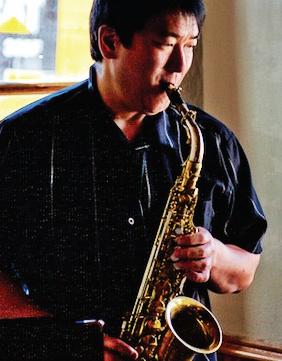
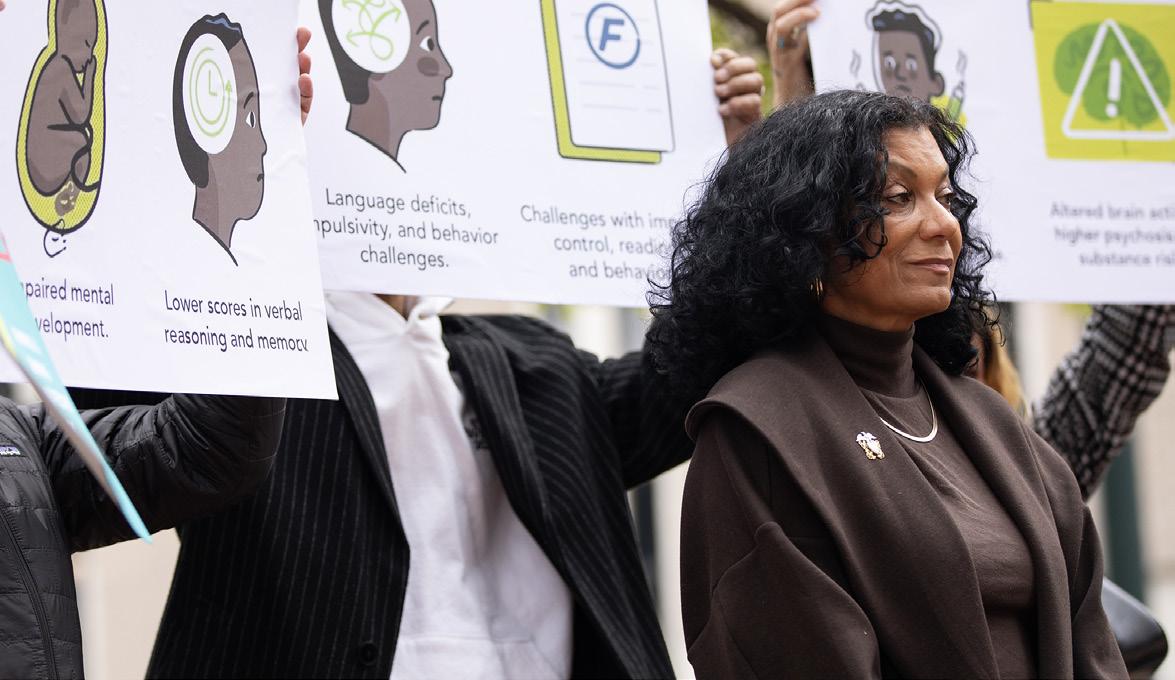
The images were quickly pulled from the campaign. But other regents objected to the way James had criticized the university system and voted 7-1 to censure her, with James abstaining. The censure allows James to attend and vote at all board meetings, according to the Board of Regents, but if James attends internal or external meetings, she cannot say she is attending on behalf of the board.
It also stripped her of “committee assignments and leadership positions through which regents exercise the bulk of their decisional authority,” the lawsuit argued. “The sanctions materially prevent Regent James from performing the duties of her office.”
The law firm Newman McNulty filed the suit Monday against seven regents, alleging a violation of James’ free speech rights under the First Amendment and her right to equal

protection under the Fourteenth Amendment.
“Today is not just about me. It is about whether an elected official can speak honestly about racism inside a public institution without being punished for it,” James said during a press conference Tuesday. “I did what any regent should do. I did what any public servant should do. Instead of addressing those concerns, the Board of Regents chose to silence the only Black regent and the only military veteran on the board.”
Regents allege that James had a conflict of interest and that she violated fiduciary duties
Some regents argued that James had displayed a conflict of interest by trying to defund a campaign that could hurt her business and the cannabis industry.
The board retained two law firms to investigate James’ actions, with a focus on a Black History Month speech at CU Boulder where she criticized the public health campaign, the lawsuit stated.
Regents who supported the censure said James had made multiple statements to the press that she was trying to pull funding from the Colorado School of Public Health and shift the funding to grants for marijuana business owners who qualified for social equity licenses.
Michele Ames, vice president for communications for the University of
Colorado, said the censure and sanction were due to James violating her fiduciary duties, not for speaking out.
“What’s at issue here is her attempts to remove funding from the University of Colorado, specifically for a public health campaign on the Anschutz medical campus. And that’s at issue,” Ames said. “She can argue about timing and all of those things, but what the regents voted on in regards to the censure and the sanctions was about her fiduciary responsibility to this university.”
Investigators interviewed 15 witnesses and collected emails, texts and social media posts, the lawsuit stated.
“You continued to publicly attack the program. In a public statement, you called the program … dishonest. In news articles, you implied the program was based on faulty research,” Regent-atLarge Elliott Hood said at the time.
“Even if you believed the research findings were inaccurate, you cannot put your interests or the interests of your trade above the interests of the university you serve.”
James’ lawsuit aims to reverse censure and seeks damages
The lawsuit seeks to reverse the censure and the punishments and force policy changes and a public apology. It also seeks economic, compensatory and punitive damages to be established at trial.
“Regent James was censured and sanctioned for speaking truth to power. She spoke out about a clearly racist campaign that was being funded by the University of Colorado and for that she has been silenced,” said Andy McNulty, an attorney representing James.
“This is clearly unconstitutional. That’s why we’re here today. We are here because every day that these sanctions are in place is an ongoing violation of Regent James’ rights.”
After the censure, Gov. Jared Polis, Attorney General Phil Weiser and coalition of Black Democrats all issued statements in support of James. ♦

J y 18-19, 2026 Co
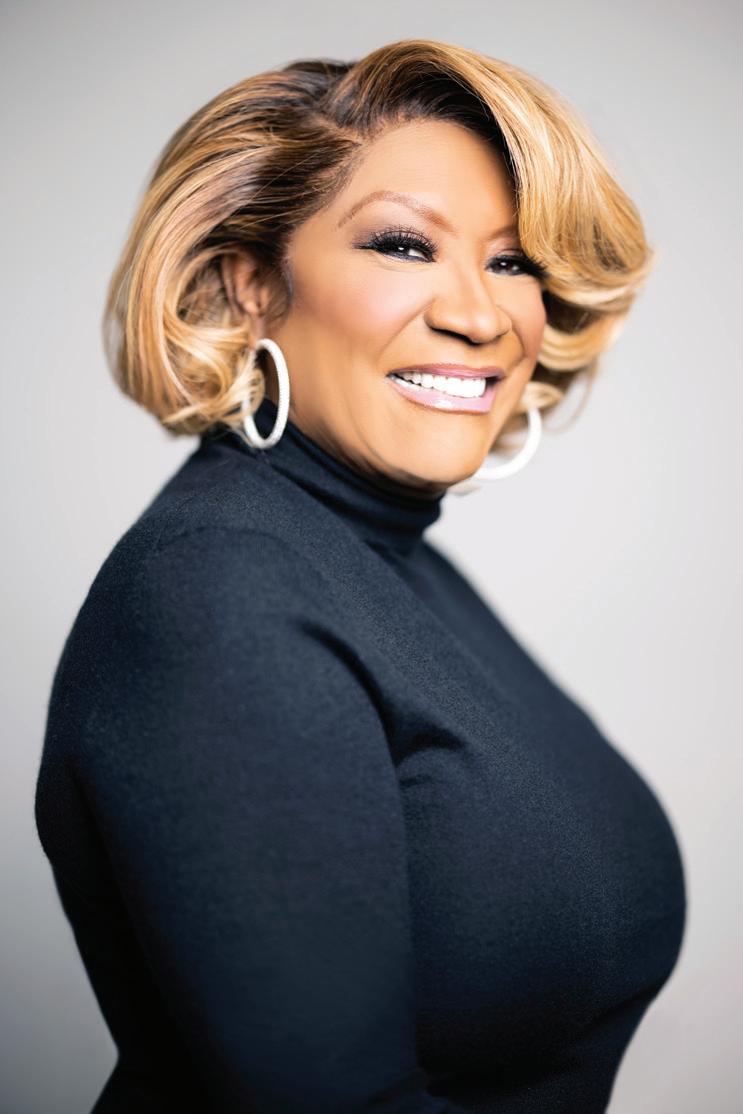
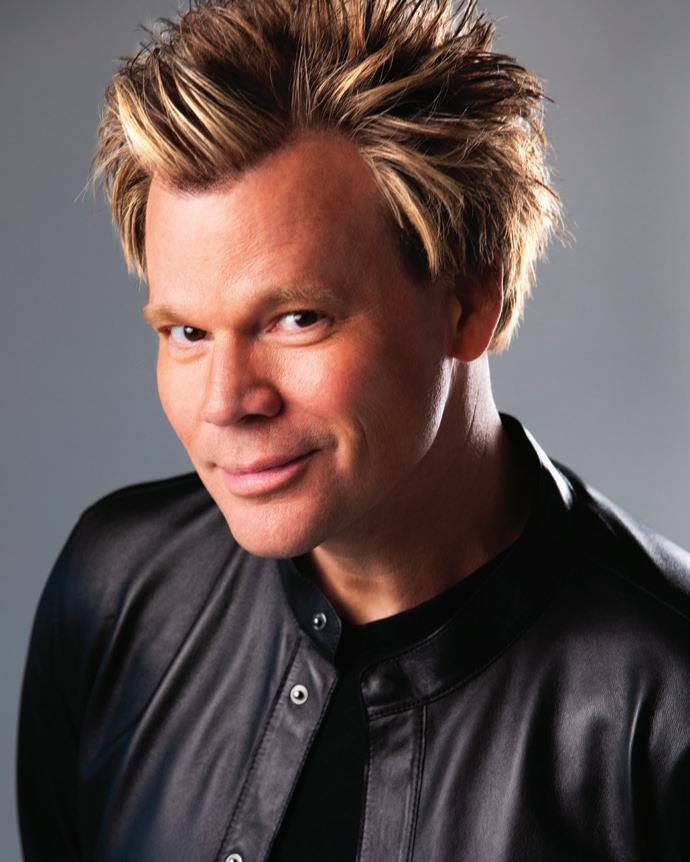

By Luciana Juanita
Editor’s note: This is the planned vision narrative for the Melior Adult Day Care. Projected to open in August, it will be located in Aurora, Colorado.
In a quiet room filled with conversation, laughter, and the gentle rhythm of music, a group of seniors gathers—not just to pass time, but to engage, to learn, and to be seen.
It’s the kind of space many families say is increasingly hard to find.
Across Denver and Aurora, the need for structured daytime support for seniors is growing. As more older adults choose to age in place, families are navigating a delicate balance— seeking environments that offer safety, stimulation, and social connection without sacrificing independence.
That need is what led to the creation Thrive & Flourish, a new adult day program at the Melior Adult Day Care that is designed to support seniors

through a combination of wellness, education, and daily engagement.
“This is about more than care—it’s about connection,” said Rosalind “Bee” Harris, founder of the program and publisher of Denver Urban Spectrum. “We want our seniors to feel valued, informed, and protected, while also experiencing joy in their daily lives.”
Unlike traditional models that focus primarily on supervision, Thrive & Flourish takes a more comprehensive approach.
Three days a week, participants attend one-hour sessions led by professionals covering topics such as health management, financial literacy, and fraud prevention—an area of increasing concern for older adults.
On the remaining days—and woven throughout the week—participants engage in activities designed to nourish both body and spirit: music therapy, chair yoga, mindfulness sessions, cooking demonstrations, and book discussions.

The goal is to create a rhythm that feels both purposeful and uplifting.
The program is also grounded in a deeper mission—one tied to safety and advocacy.
Developed in partnership with the Ruth Boyd Elder Abuse Foundation, Thrive & Flourish incorporates education around elder abuse, scams, and personal safety into its core programming.
For many seniors, these risks are not abstract. Financial exploitation, isolation, and vulnerability remain pressing concerns, particularly for those living alone.
By bringing these conversations into a supportive, educational setting, the program aims to equip participants with the tools to recognize and respond to potential threats.
For caregivers, the need is equally urgent. Adult children and family members often find themselves juggling work, family, and the growing needs of aging loved ones. Reliable daytime programming can offer both relief and reassurance.
Programs like Thrive & Flourish provide a middle ground—supporting seniors’ independence while ensuring
they are in a safe, engaging environment during the day.
For Harris, the program is not just professional—it’s deeply personal.
“This work is inspired by my mother, Ruth Boyd,” she said. “Her life—and her loss—reminded me how important it is that we protect and honor our seniors. This program is one way of making sure that what happened to her helps prevent harm to others.”
That sense of purpose is woven throughout the program, shaping not only its structure but its spirit.
As communities continue to rethink how they support aging populations, programs like Thrive & Flourish reflect a shift toward more holistic, communitycentered care.
The program is now enrolling participants, including both Medicaideligible individuals and those seeking private-pay options.
For families searching for a place where their loved ones can remain active, connected, and supported, it offers something simple—but powerful: A place to belong. ♦
Editor’s note: Families, caregivers, and referral partners can learn more about Thrive & Flourish, schedule a tour, or inquire about registering by calling 720-535-6378 or email, info@meliorhealth.com.




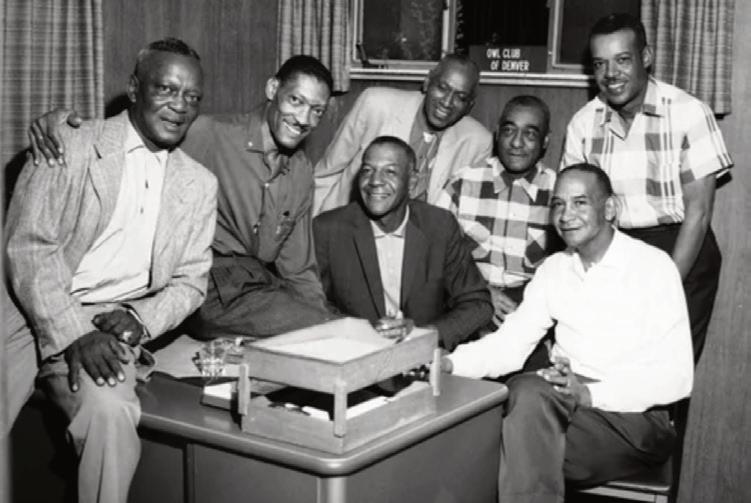
By Luciana Juanita
For generations of African Americans in Denver, the Owl Club of Denver has represented far more than fellowship and formal gatherings. It has stood as a symbol of leadership, mentorship, cultural pride, and enduring commitment to community advancement — often quietly, but always intentionally.
Founded in 1941 by nine African American men who regularly gathered for Saturday night card games, the organization’s origin story is surprisingly humble. According to club history, one of the wives jokingly remarked that the men were “a bunch of night owls,” a phrase that would eventually become the name of one of Denver’s most respected Black civic organizations.
What began as a social club at Denver’s prestigious University Club evolved into a powerful institution that helped shape generations of African American leadership in Colorado. Over the course of 85 years, the Owl Club has woven itself into the civic, educational, cultural, and political fabric of Denver while maintaining a steadfast commitment to service, excellence, and community uplift.
Today, its impact can still be felt through the lives it has touched, the scholarships it has funded, the traditions it has preserved, and the leaders it helped inspire.
The Owl Club was founded during an era when African Americans faced deep racial barriers in housing, education, employment, and social participation. Black civic spaces were not simply optional gathering places — they were necessary
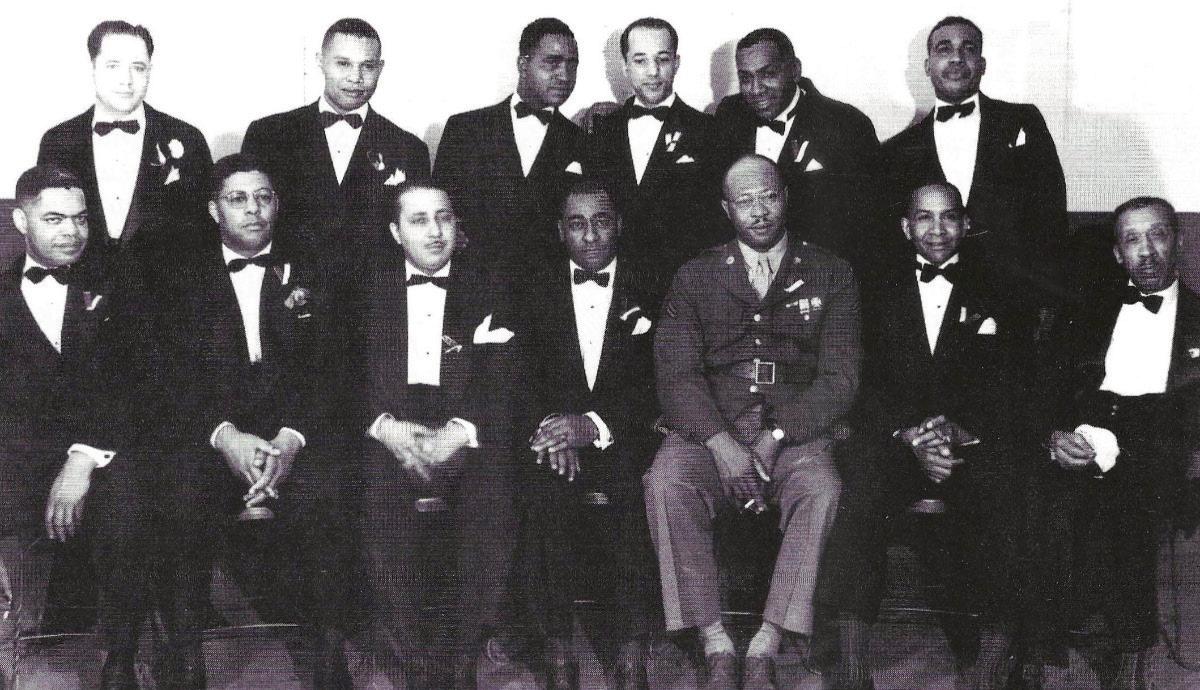
sanctuaries where ideas, leadership, and opportunity could flourish.
“Collective strength could be built through unity, purpose, and shared responsibility,” reads one historical reflection on the organization’s founding philosophy.
Its early members included businessmen, professionals, military leaders, and civic advocates who understood that success carried a responsibility to support others. The organization became a place where mentorship, dialogue, and civic engagement thrived at a time when many mainstream institutions excluded African Americans from participation and influence.
In 1949, the Owl Club was officially chartered in the State of Colorado, establishing its emblematic owl logo and its signature brown and white club colors.
But perhaps the organization’s most enduring contribution would emerge just two years later.
In 1951, the Owl Club introduced Denver’s first African American Debutante Ball, selecting 10 young women from Manual and East High Schools based not on wealth or social status, but on scholastic achievement and community service.
That decision alone distinguished the program from many debutante traditions of the era.
The first cotillion was held at Park Hill Country Club and quickly became one of Denver’s premier Black cultural traditions. A year later, Mrs. Ernestine Smith choreographed the “Waltz of the Bells,” a ceremonial dance that remains part of the debutante presentation today.
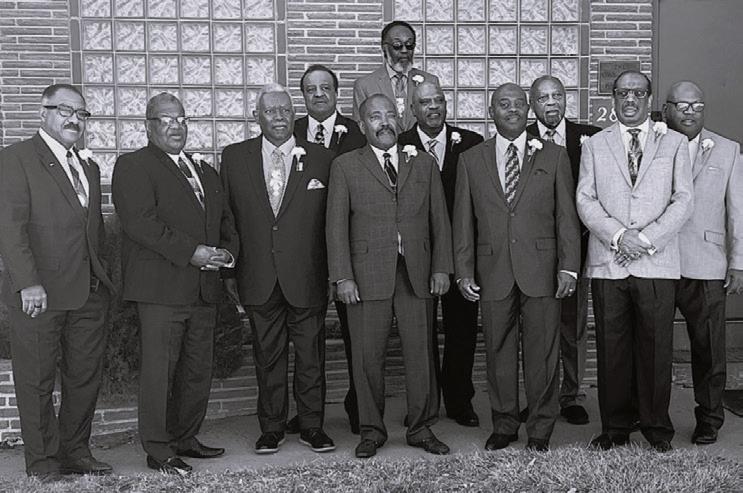
Over time, the Debutante Cotillion became much more than an elegant social event. It evolved into a rite of passage for young African American women, emphasizing scholarship, poise, leadership, civic responsibility, and cultural pride.
From 1951 through 2025, the Owl Club presented more than 1,600 debutantes. Many would go on to become accomplished physicians, attorneys, educators, judges, elected officials, entrepreneurs, and community leaders.
Among the most notable debutantes is Condoleezza Rice, along with renowned dancer and cultural icon Cleo Parker Robinson, former Denver City Council member Happy Haynes, and numerous physicians, scholars, and public servants who have left lasting marks on their professions and communities.
Even during the COVID-19 pandemic, the organization adapted its tradition, hosting successful virtual debutante presentations in 2020 and 2021 for 31 debutantes.
The resilience of the program mirrored the resilience of the organization itself.
While the debutante program may be the Owl Club’s most visible tradition, the organization’s influence extends far beyond the ballroom floor.
Its members have played key leadership roles across Denver and the state of Colorado for decades.
Among them was Omar Blair, a former Tuskegee Airman who later became the first Black president of the Denver School Board, serving from 1972 to 1984. Blair also helped create the Owl Club Youth Incentive, Athletic
& Scholarship Association, which provided football opportunities for young people in East Denver.
The organization’s influence touched government, law, medicine, education, and business.
Elvin Caldwell, Denver’s first Black city council member, became one of the namesakes of the Blair-Caldwell African American Research Library, envisioned in part by Owl Club members.
James C. Flanigan broke barriers throughout Colorado’s legal system, becoming Denver’s first Black deputy district attorney, municipal court judge, and district court judge. The LindseyFlanigan Courthouse now bears his name.
In medicine, Bernard Gibson became Colorado’s first African American boardcertified surgeon and later served on the faculty at the University of Colorado Health Sciences Center.
Wiley Daniel made history as the first African American appointed to the United States District Court for the District of Colorado.
And Penfield Tate III has served in both the Colorado House and Senate and, in 2023, became the first person of color to chair the board of History Colorado.
These accomplishments reflect the broader story of the Owl Club itself — a network of Black excellence operating with both vision and responsibility.
One of the defining characteristics of the Owl Club has been its understated style of leadership.
Unlike organizations that seek visibility through constant publicity,
the Owl Club often worked behind the scenes, focusing more on impact than attention.
“The club’s impact has been both tangible and deeply personal,” notes a recent reflection on the organization’s legacy.
That impact extended through scholarships, mentorship, charitable giving, youth programming, and relationship-building across generations.
The organization also developed a close relationship with African American cadets from the United States Air Force Academy after the academy relocated to Colorado Springs. Concerned about the lack of social opportunities for Black cadets, the academy’s Director of Social Affairs reached out to Owl Club member Colonel Hubert “Hooks” Jones. The cadets were subsequently welcomed as “Junior Owls” and participated in debutante cotillions for several years.
The club’s legacy has also been strengthened by the contributions of the “Owlettes,” wives of Owl Club members who played integral roles in organizing cotillions and supporting the organization’s social and civic activities.
Together, these relationships created a culture rooted in service, discipline, mentorship, and continuity.
In recent years, the Owl Club’s historic significance has begun receiving broader public recognition.
In May 2024, History Colorado opened the “Legacies of Excellence” exhibit celebrating 74 years of Owl Club debutantes and the organization’s longstanding contributions to the community.
Just months later, in September 2024, the Owl Club received designation on both the Colorado State Register of Historic Properties and the National Register of Historic Places.
For many, the recognition represented validation of something Denver’s African American community had long understood: the Owl Club was not simply a social organization, but a cultural institution.
And in 2025, the organization marked another milestone when Terri Gentry became the first woman named an honorary Owl Club member in recognition of her years of support and contribution to the organization.
As the Owl Club celebrates both 85 years of existence and 75 years of the Debutante Cotillion tradition, its story continues to resonate across generations.
Its longevity speaks not only to organizational stability, but to relevance.
The club has survived changing political climates, economic shifts, demographic transitions, and evolving definitions of community leadership.
Through it all, it has remained grounded in its original mission: fellowship, mentorship, service, and advancement.
Perhaps most importantly, the Owl Club has demonstrated the enduring power of institutions built intentionally within the African American community — institutions designed not simply for celebration, but for cultivation.
“Eighty-five years later, the Owl Club remains not just a reflection of the past, but a steady presence shaping the future,” one reflection concludes.
In many ways, that may be the organization’s greatest achievement. Not simply that it endured. But that it continues to matter. ♦
Editor’s note: The Owl Club of Denver will present its 75th Debutante Cotillion on Saturday, June 6 at the Renaissance Hotel, 3801 Quebec St. in Denver. Tickets are $150. To purchase tickets, visit www. theowlclubofdenverinc.com. For more information call Ron Washington at 303-5256116 or email owldebutante@gmail.com.


Together, we can continue to move our state forward . Thatmeans: Defending our democracy, freedoms, and civil rightsin theface ofTrump’s lawless bullying; Building a safer, more affordable Colorado; Protectingour land, air, and water and addressing the climate crisis; Advancing equal opportunity for all by ensuring that everyone has access toquality education, career-training, mentorship, and youth mental health services Trustedas the People’s Lawyer. Committed