What is Oral Sedation Dentistry? Oral sedation dentistry is a type of dental care that uses anesthetics to make patients feel tranquil and relaxed. Anesthesiologists prescribe oral sedation to patients who are going to have dental procedures such as extractions or fillings, and they may also use it before crowns, bridges, and other major dental treatments.
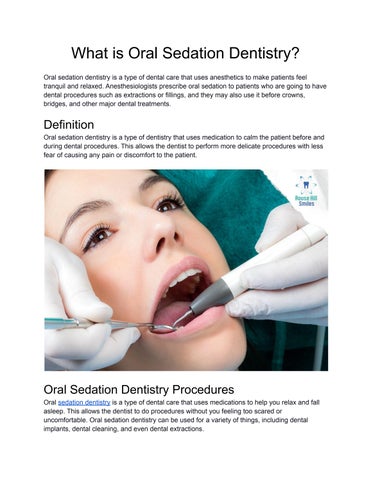
Definition Oral sedation dentistry is a type of dentistry that uses medication to calm the patient before and during dental procedures. This allows the dentist to perform more delicate procedures with less fear of causing any pain or discomfort to the patient.
Oral Sedation Dentistry Procedures Oral sedation dentistry is a type of dental care that uses medications to help you relax and fall asleep. This allows the dentist to do procedures without you feeling too scared or uncomfortable. Oral sedation dentistry can be used for a variety of things, including dental implants, dental cleaning, and even dental extractions.
There are a few different types of oral sedation dentistry. The most common type is general anesthesia, which puts you into a deep sleep. Another type is regional anesthesia, which numbs specific parts of your mouth only. There’s also obstetrical anesthesia, which is used during childbirth. Finally, there’s patient-controlled analgesia (PCA), which is the most common type of oral sedation used in dentistry. With any type of oral sedation, the dentist will give you a series of tests to make sure you’re comfortable with the procedure and safe to undergo it. You may also need to fast for several hours before the appointment so that the medications will have an easier time working. Once you’re ready, the dentist will begin the procedure by giving you anesthesia and then placing a mask over your mouth and nose.
Side Effects of Oral Sedation Dentistry When you undergo oral sedation dentistry, you may experience side effects related to the medication, the procedure, or both. Below is a list of common side effects and their corresponding symptoms. If you experience any of these side effects, speak with your dentist immediately to determine if they are treatable and/or manageable. Common Side Effects of Oral Sedation Dentistry: • Drowsiness • Shortness of breath • Nausea and vomiting • Sweating • Tremors Symptoms associated with common side effects of oral sedation dentistry include drowsiness, shortness of breath, nausea, vomiting, sweating, and tremors. If you experience any of these symptoms, please contact your dentist as soon as possible so that they can determine if the side effect is treatable and/or manageable.
Conclusion Oral sedation dentistry is a type of dentistry that uses drugs to make you sleepy. This makes it easier for the dentist to perform dental procedures without causing any pain or discomfort. Oral sedation dentists use different types of drugs to make you sleepy, and they will always work with you to find the best drug that will work for your individual needs.