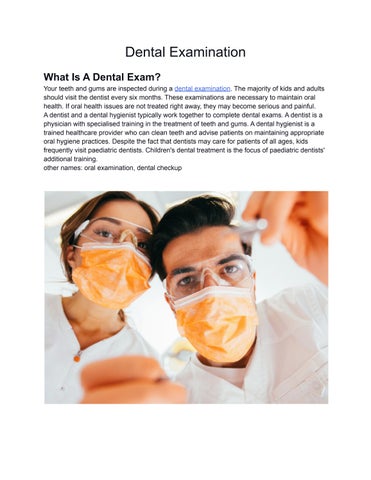
Dental Examination What Is A Dental Exam? Your teeth and gums are inspected during a dental examination. The majority of kids and adults should visit the dentist every six months. These examinations are necessary to maintain oral health. If oral health issues are not treated right away, they may become serious and painful. A dentist and a dental hygienist typically work together to complete dental exams. A dentist is a physician with specialised training in the treatment of teeth and gums. A dental hygienist is a trained healthcare provider who can clean teeth and advise patients on maintaining appropriate oral hygiene practices. Despite the fact that dentists may care for patients of all ages, kids frequently visit paediatric dentists. Children's dental treatment is the focus of paediatric dentists' additional training. other names: oral examination, dental checkup
What Is It Used For? Dental examinations assist in identifying oral health issues like tooth decay, gum disease, and others early on when they are simpler to remedy. The examinations also assist in educating people on optimal dental and gum care practices.
Why Do You Need A Dental Exam? The majority of adults and kids should visit the dentist every six months. Your dentist might want to see you more frequently if you have gingivitis, which is characterised by swollen, bleeding gums or other gum disorders. A dentist may need to see certain persons with gum disease three or four times a year. Regular checkups could aid in preventing periodontitis, a serious gum condition. Infection and tooth loss can result from periodontitis. Within six months of erupting their first tooth, or by 12 months, infants should visit their first dentist. Following that, kids should get an examination every six months or as recommended by your child's dentist. Also, if the dentist notices a problem with tooth development, your child might require more regular visits.
What Happens During A Dental Exam? A typical dental exam will include the following: ● Cleaning by a hygienist. ● X-rays on certain visits. ● A checkup of your mouth by the dentist. During a cleaning: You or your kid will occupy a spacious chair. You'll notice a strong overhead light shining over you. Your teeth will be cleaned by the hygienist using tiny, metal dental instruments. Your teeth will be scraped to get rid of tartar and plaque. Plaque is a bacterial-filled sticky film that covers teeth. When plaque accumulates on teeth, it hardens into tartar, a mineral deposit that can become lodged at the chewing surfaces of teeth. Your teeth will be flossed by the hygienist. They'll use an exclusive electric toothbrush to clean your teeth. After that, they could treat your teeth with a fluoride gel or foam. Mineral fluorite guards against tooth decay. Cavities can be caused by tooth decay. Children receive fluoride treatments more frequently than adults. The dentist or hygienist will: Cover your chest with a heavy garment called a lead apron during the x-ray. You can receive additional neck protection to safeguard your thyroid gland. Radiation is shielded from the rest of your body by these covers. Have you lately chewed on a piece of plastic? In front of your mouth, place a scanner. They'll take pictures of themselves somewhere or from behind the cover. For some x-rays, you must repeat this procedure while biting down in various parts of your mouth as directed by the dentist or hygienist.
There are several types of dental x-rays. You could have a procedure called a full-mouth series once every few years to assess your overall oral health. To check for cavities or other dental issues, a different kind of x-ray called a bitewing x-ray could be utilised more frequently. If you've had x-rays, the dentist will check them during the visit to look for cavities or other problems. Examine your teeth and gums to see if they are in good condition. Check the bite (the way the top and bottom teeth fit together). You might be sent to an orthodontist if you have a biting problem. Look out for oral cancer. This entails checking the inside of your lips, the sides of your tongue, the roof and floor of your mouth, as well as the area under your jaw. In addition to the exams mentioned above, a paediatric dentist may examine your child's teeth to see if they are developing normally.
Will I Need To Do Anything To Prepare For A Dental Exam? You may need to take antibiotics before your exam if you have certain health conditions. These conditions include: ● Heart problems ● Immune system disorders ● Recent surgery If you're unsure whether to take antibiotics, talk to your dentist or another health care provider. Additionally, some people have anxiety when seeing the dentist. If you or your child experiences this, you might wish to consult the dentist first. They support your child's comfort and ease during the exam.
Are There Any Risks To A Dental Exam? The danger of getting a dental exam is very low. While the cleaning may be irritating, it rarely hurts. For the most part, dental x-rays are safe. A simple x-ray exposes the body to relatively little radiation. But unless there is an emergency, x-rays are generally not advised for pregnant women. Tell your dentist right away if you're expecting or suspect you could be pregnant.
What Do The Results Mean? One or more of the following conditions could appear in the results: an opening gum disease such as gingivitis ● issues with tooth growth or bone loss Your dentist may suggest the following if tests reveal that you have gingivitis or other gum issues: ● Improving your brushing and flossing habits. ● More frequent dental cleanings or dental exams.
● Using a medicated mouth rinse. A periodontist is a doctor who specialises in identifying and treating gum disease. If issues with bone loss or tooth development are discovered, you might require more testing or dental treatments. Do I need to know anything more about a dental exams? You must take good care of your teeth and gums by getting regular dental exams and developing good dental practices at home if you want to maintain the health of your mouth. The following actions are part of good dental hygiene at home: ● Two times per day, use a soft-bristled toothbrush to brush your teeth. For roughly two minutes, brush. ● Use fluoride-containing toothpaste. Fluoride aids in preventing cavities and tooth decay. ● At least once each day, floss. Plaque, which can harm teeth and gums, is removed by flossing. ● Every three to four months, change your toothbrush. ● Maintain a balanced diet and minimise your intake of sweets and sugary beverages. If you do consume sweets, wash your teeth as quickly as possible. ● Avoid smoking. The dental health of smokers is worse than that of non-smokers.
Conclusion You might need to schedule a second appointment with the dentist to have the cavity treated if the results indicate that you or your child has one. If you have any inquiries about how cavities are handled, speak with the dentist.