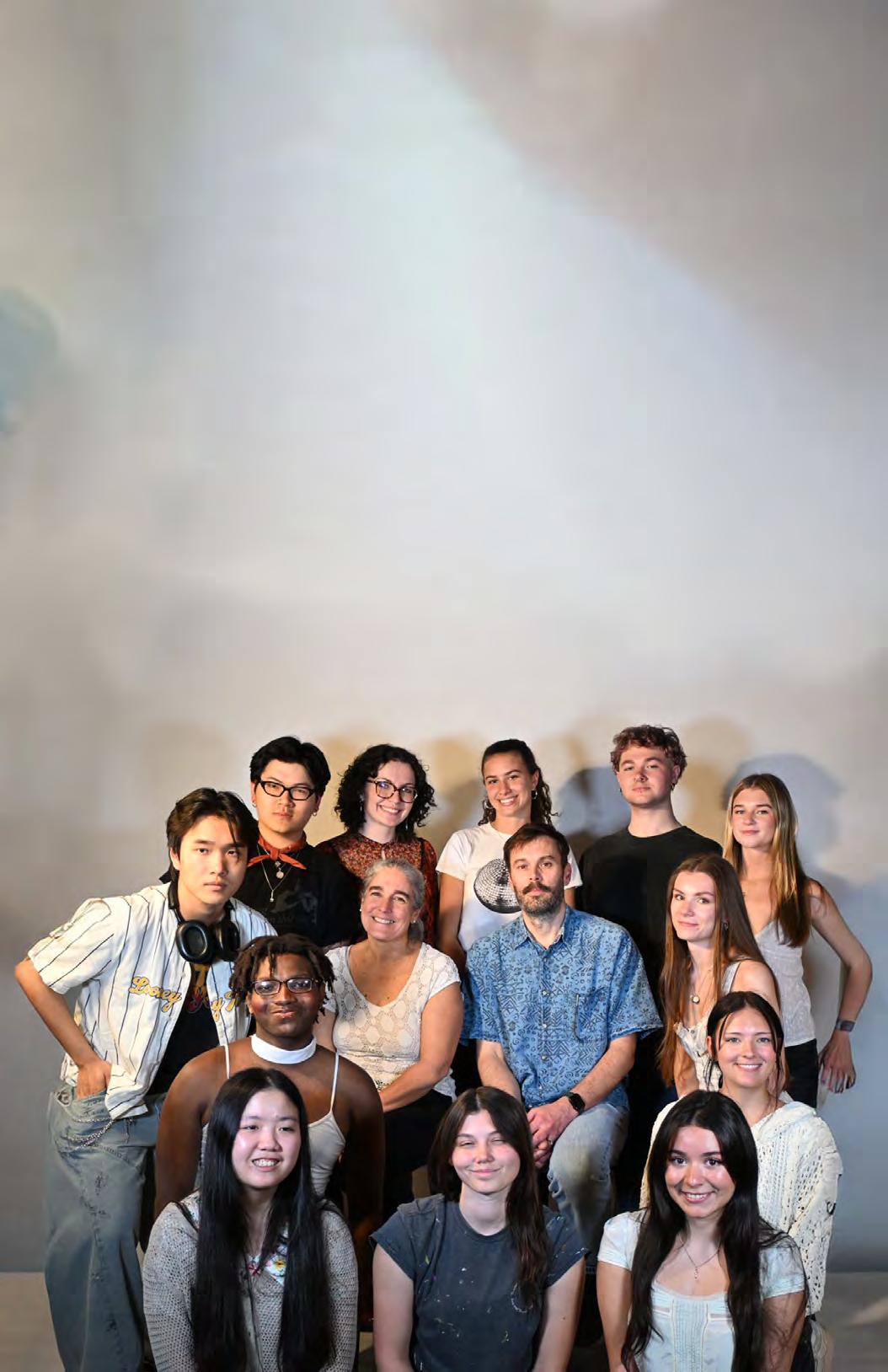
Visual Arts Seniors Group Show 2026
Anh “Amy” Nguyen Duc Le Duy “Z” Nguyen
Grace Vap Gabby MarshallPalmowska Lehman

Visual Arts Seniors Group Show 2026
Anh “Amy” Nguyen Duc Le Duy “Z” Nguyen
Grace Vap Gabby MarshallPalmowska Lehman
April 2
Exhibition On View th May th
Mark Moore Mel MackenzieWienandt Sullivan
Monica Olvera Molly Jean Hormel Rebecca Van Marter
Visual
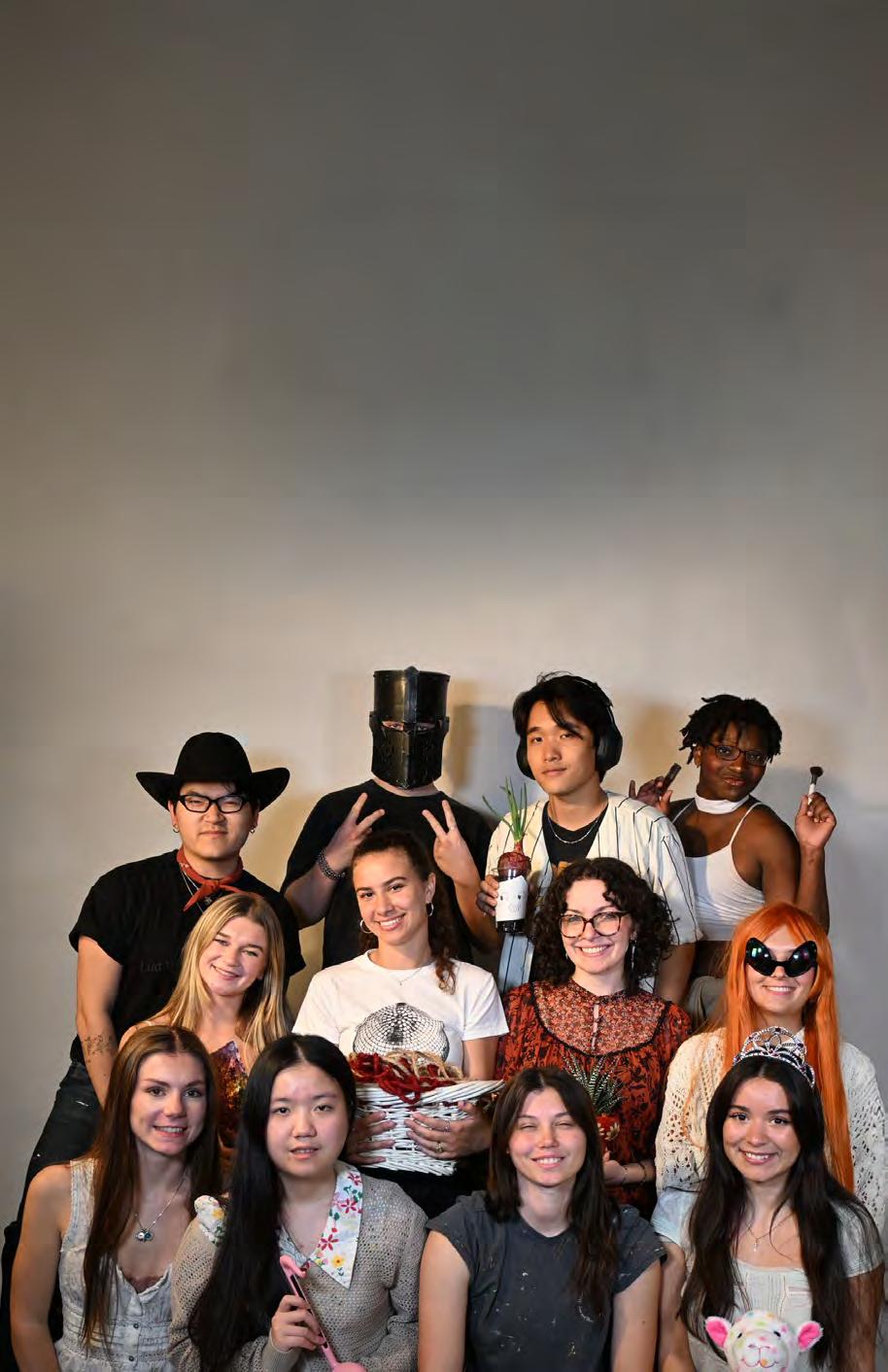
With great pride, the Class of 2026 presents this year’s senior exhibition, It Was Never Just Then. Across a range of media, including painting, digital design, installation, sculpture, and fibers, the exhibition explores how the past is never fixed or distant, but continually reshaped through memory, identity, culture, and material practice. Rather than viewing time as static, these works reveal the persistent influence of the past on who we are in the present.
Through our work, we examine how personal and collective experiences shape identity across time. Art becomes a means to recall and reimagine how history informs the present through nostalgia, relationships, emotional connections to place, and the shifting dynamics of identity across borders. Cultural inheritance and generational influence extend beyond conscious memory, connecting us to our roots while opening space for new and evolving forms of identity.
Beyond personal recollection, we transform the past to reflect the needs of the present. Rather than preserving tradition, we reinterpret it by creating fictional worlds as alternative time systems, reworking cultural customs, contesting dominant narratives, and responding to contemporary consumerism. Through archival approaches and creative reinterpretation, we capture the present while projecting forward, shaping new possibilities for the future.
With time at its core, It Was Never Just Then also functions as a time capsule. As a capstone to our time at Denison, these works preserve the questions, insights, and experiences that have shaped us as artists, carrying them forward as we move beyond this moment.
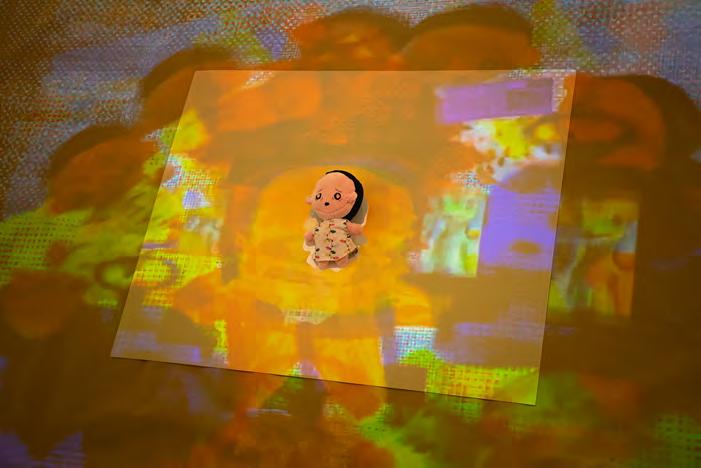
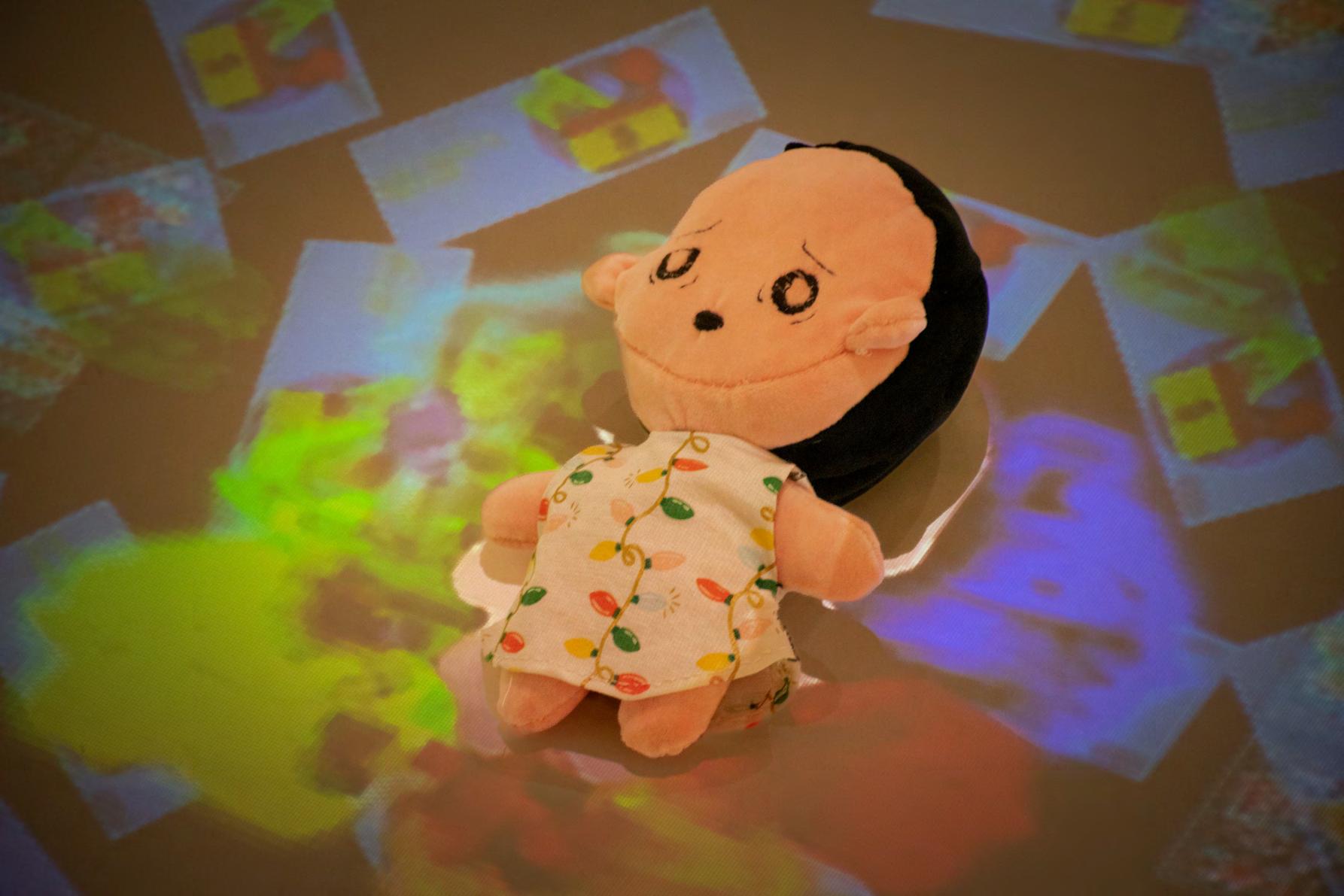
My art practice is centered around personal memories tied heavily to discrete fear and lived experiences, united by elements of fantasy and horror. These stories build from different scenarios that left a deep impact in my psyche.
The theme of fear I present with this specific work is concerned around consumerism, in specific to how products are made to lure our incentive in buying and owning more than we could ever need. In my art practice, fear is not only rooted in the mystified past memories but also is shaped by the present experiences that amplified it. One source of this specific experience comes from the presence of targeted advertisements that seem to follow a person across digital spaces. The algorithm observes my searches and preferences to give out more results that suit my personal needs and wants. Yet, it also creates the unsettling feeling that something is constantly watching and predicting my actions, like a predator aiming for its prey. The overwhelming exposure to persuasive advertising messages also raises questions about personal agency, making it difficult to separate genuine desire from influence.
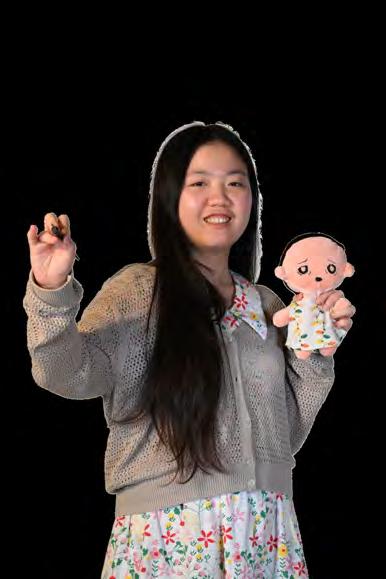
This work is meant to encapsulate that experience by collecting and merging every advertisement I encountered unwillingly, either through product images, screenshots, or audio recordings. With so many advertisements trying to overpower each other, you can never truly grasp what is being advertised to you. The work presents a landscape where I, presented by my self-portrait doll, could not escape from a never-ending bombardment of product placement. It Was Never Just Then
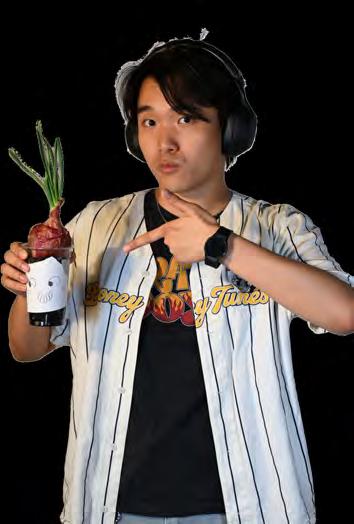
Nguyen Hai Phong, Vietnam
Studio Art, BA Communication, BA
Dimensions
Medium
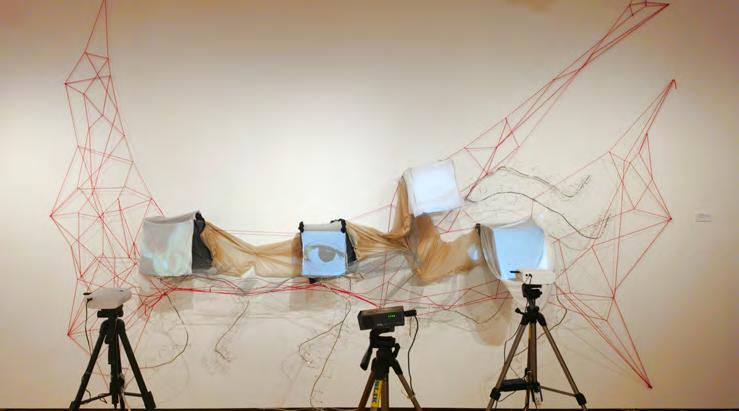
what to make of onions 2026
108” x 204” x 72”
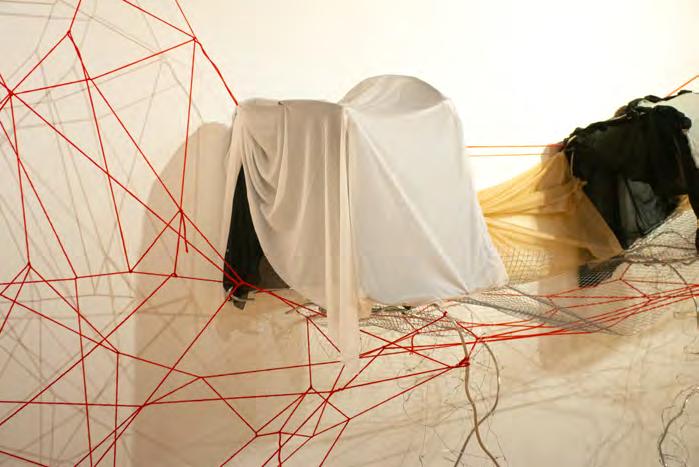
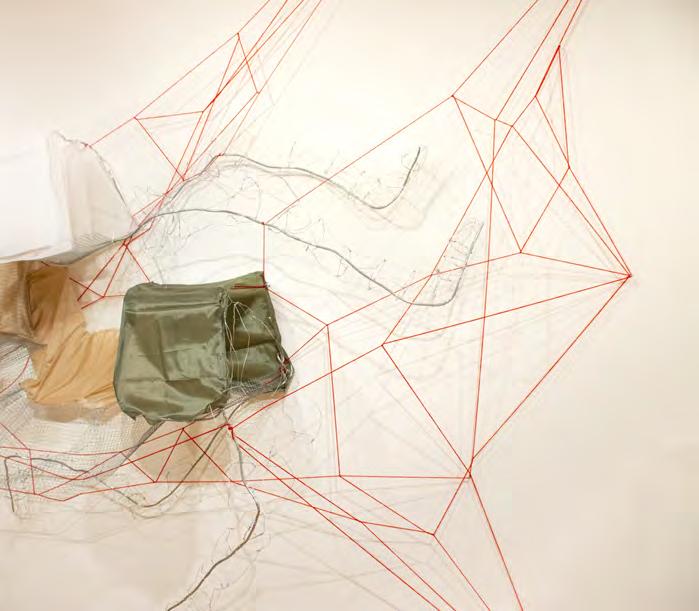
Digital projection on metal wire, metal mesh, fabric, red yarn
It Was Never Just Then
I am an installation and sculptural artist whose work explores in-betweenness, ambiguity, and the unseen structures shaping everyday life. Influenced by my background in communication studies, I investigate how meaning and identity are constructed through interactions between individuals, environments, and objects. I am interested in making the invisible visible by revealing the norms and expectations embedded in daily experience, often through navigating through tension and uncanniness.
what to make of onions examines identity as a layered and negotiated process. Using the onion as a central metaphor, the work draws from the visual language of scanning and sorting to reflect an internal process of self-definition. As onions move through the installation, their cores are exposed and examined, suggesting how fragments of identity are continuously assessed and reorganized. Some elements later get integrated, while others are buried back into obscurity.
Moving across different cultural and social environments, I experience identity as continuously shifting and contingent. Certain environments demand the projection of specific aspects of the self, while others are withheld or suppressed. The sculptural installation occupies space as an extension of the body, a materialization of the mind, holding traces of memory, culture, and lived experience. Rather than presenting a fixed and stable definition of self, the installation embraces ambiguity, suggesting that identity exists in a continuous state of sorting, negotiation, and becoming. It Was Never Just Then
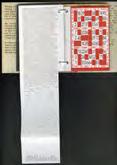
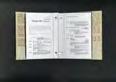
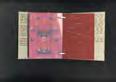
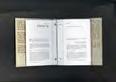
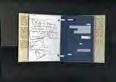
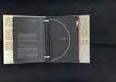
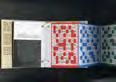
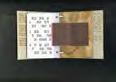
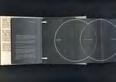
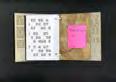
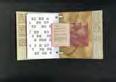
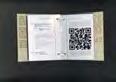
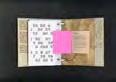
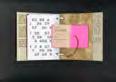
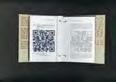
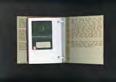
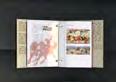
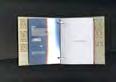
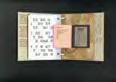
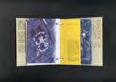
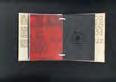
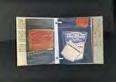
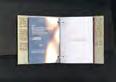
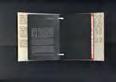
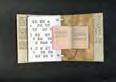
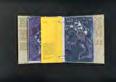
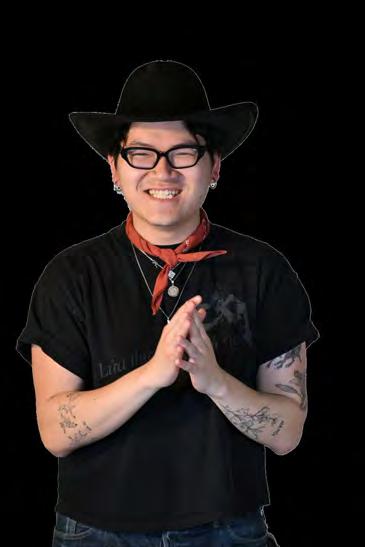
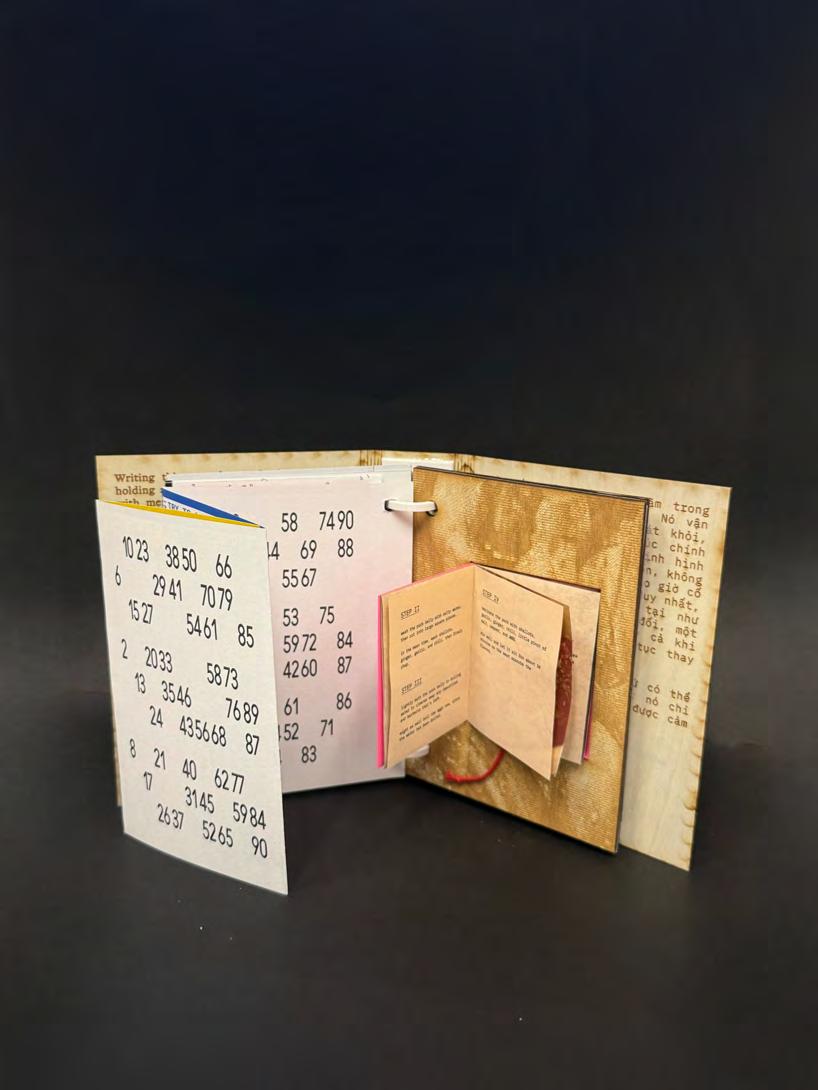
My work explores the "in-between", a space shaped by migration, cultural displacement, and the tension of navigating a Vietnamese identity within a Western context. By transforming an original autoethnographic text into visual poetry, I shift the focus from literal narrative to the emotional architecture of belonging.
Influenced by the structure of concrete poetry and the fragmented aesthetics of Đặng Đình Hưng’s Di Cảo, I treat typography as both language and image, where spatial arrangement carries as much weight as syntax. The conceptual meaning is deepened through the physical layering of transparency paper. These translucent sheets allow text to overlap and blur, mimicking the duality of identity, the constant state of being both seen and obscured, present and distant. This material choice, combined with the integration of Risograph textures, woodblock prints, and digital manipulation, reflects the nuanced, often contradictory layers of the migrant experience.
Drawing on Baudrillard’s hyperreality, I use these various mediums to create surfaces where the authentic and the artificial coexist. Letters are fragmented or misregistered, mirroring the instability of cultural memory.
Ultimately, this hybrid process becomes a site of negotiation; by embracing the imperfections of translation and repetition, I construct a visual language for the "in-between," where longing and adaptation reside in the same space.
It Was Never Just Then
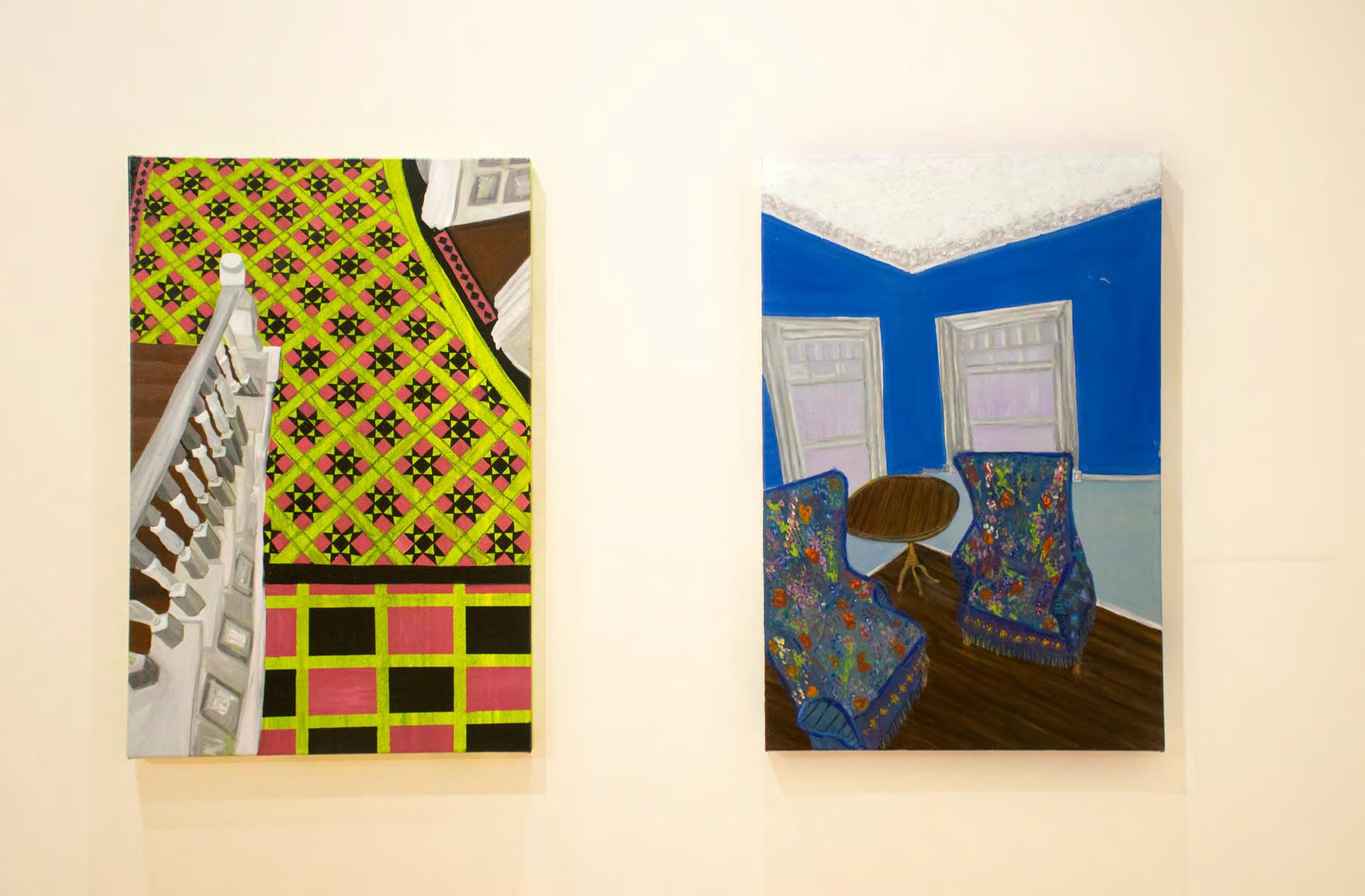
My work explores the emotional and psychological resonance of domestic interiors. Through my paintings depicting interior spaces and their patterned surfaces, I investigate how rooms function as repositories of memory, spaces that absorb, hold, and transmit human presence. Though devoid of figures, these interiors evoke the lingering traces of lives once lived within them. Subtle distortions in perspective create an atmosphere at once familiar and unsettling, reflecting how memory shifts, accumulates, and reshapes space.
Growing up in an old, richly textured home made me sensitive to the atmospheres that endure long after people leave: the quiet witnessing of everyday objects. The repetition of patterns throughout the paintings serves as a prerequisite for memory; by repeating motifs, I reenact the patterns of the rooms in the home I grew up in. Patten becomes a way to rehearse and soften what might otherwise be forgotten, allowing the paintings to hover between intimacy and estrangement.
My practice approaches domestic interiors as psychological landscapes. I’m inspired by how writers describe Edvard Munch’s bedrooms and sitting rooms as “emotionally charged spaces in which grief, anxiety, and desire become visible in furniture, walls, and light,” where chairs, doorways, and carpeted floors are felt as powerfully as faces. My paintings similarly treat these objects as domains where, even after the figure is gone, emotion lingers, and material elements register remembered and imagined spaces. I am interested in how the passage of time shapes interiors and, in turn, shapes us— how objects outlast humans, how rooms hold experience even in emptiness, and how the spaces we inhabit quietly imprint who we become
It Was Never Just Then
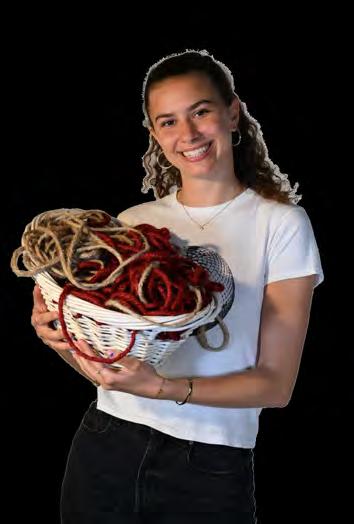
Gabby Palmowska Warsaw, Poland
Visual Arts, BA Global Commerce, BA
Title Year
Dimensions
Pograniczanka
Słupek graniczny Łączniczka
2026
18” x 34.5” x 14”
18” x 30.5” x 20”
16” x 16” x 38”
Medium
Wychodźca Rozsypana Tradycyjna
Eksploracja
10” x 34” x 13”
16” x 16” x 33”
18” x 30.5” x 20”
13” x 15” x 8”
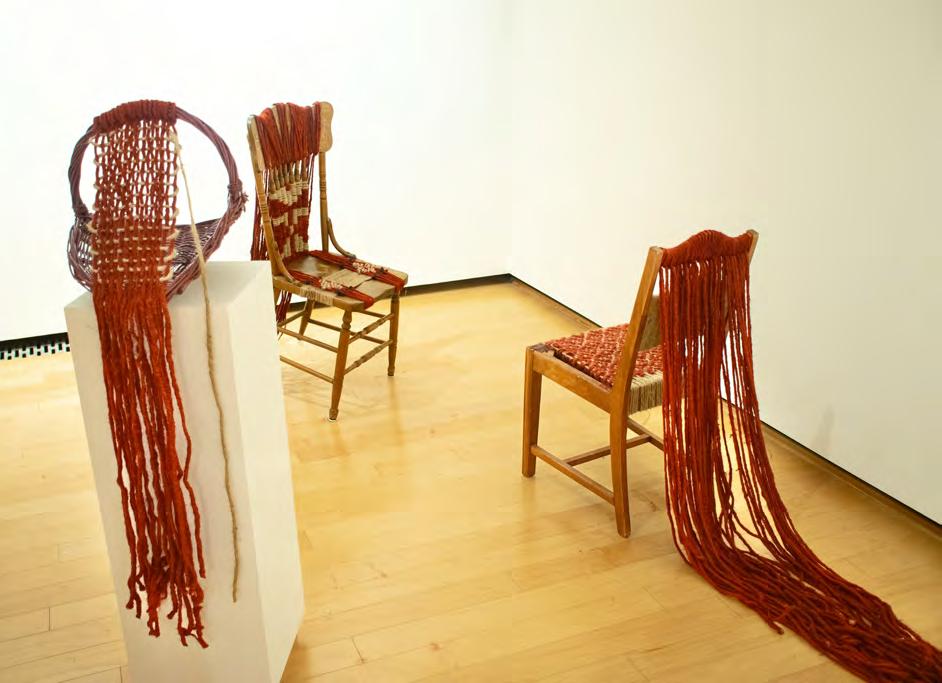
Hand weaving in jute (1-ply, 2-ply and 4-ply), hand-dyed with Rit dye, woven onto found wooden chairs
It Was Never Just Then
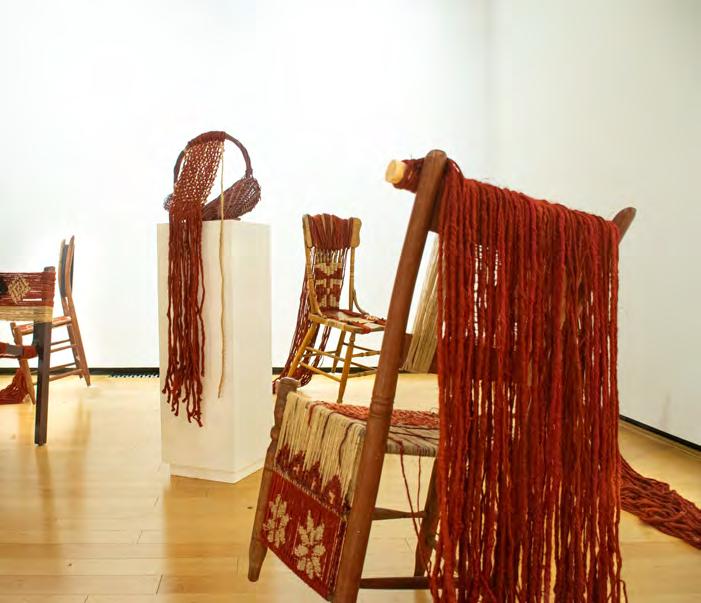
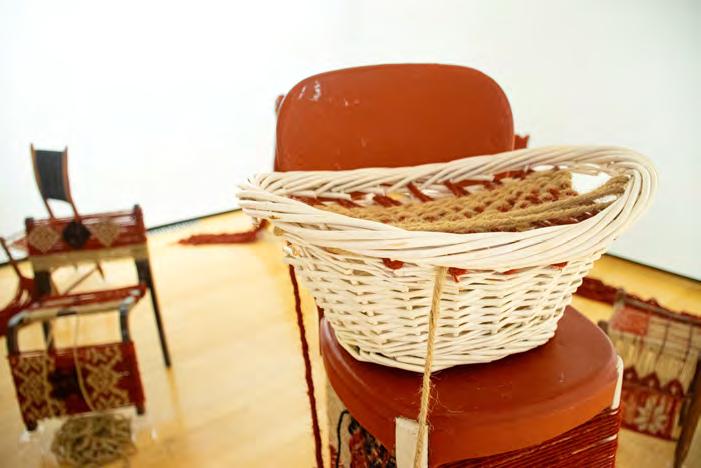
My body of work explores Polish folk embroidery through weaving, using chairs as sculptural characters that reinterpret traditional patterns. Rather than recreating embroidery exactly, I focus on what happens when these patterns move from stitching into weaving - translating generational hand labor into a new material language.
By weaving onto found chairs, using jute for both warp and weft I dye myself, I study the labor of weaving and repetition. To develop this work, I transcribe embroidery and weaving patterns from archival materials, which document original pattern construction. The exhibition includes works that directly replicate Polish folk patterns. In my newer works, patterns are more ambiguous, simplified or partially unfinished - each chair having a different encounter with these patterns.
I am drawn to chairs because they already carry history. Sourced from different periods, each one holds traces of use, much like the folk patterns I reference. Their varied curves and structures guide how I weave. The inclusion of materials like metal alongside wood extends this dialogue, positioning the work between past and present. These chairs function as bodies that hold process. While they resemble furniture, they are not to be used, but observed. They invite close attention to the act of weaving: the tension of threads, repetition and time devoted to finish these works. Leaving sections unfinished keeps labor visible rather than concealed.
Incorporating found elements, such as baskets, introduces weaving languages shaped by structure and tension, contrasting basketry’s rigidity with the flexibility of loom weaving. These objects, like the chairs, have already functioned in the world. By altering them, I allow them to evolve. In this way, each sculpture becomes a character, shaped by its own history and transformation. Across the installation, weaving becomes both a method and a metaphor for cultural change, mirroring how traditions continuously shift over time.
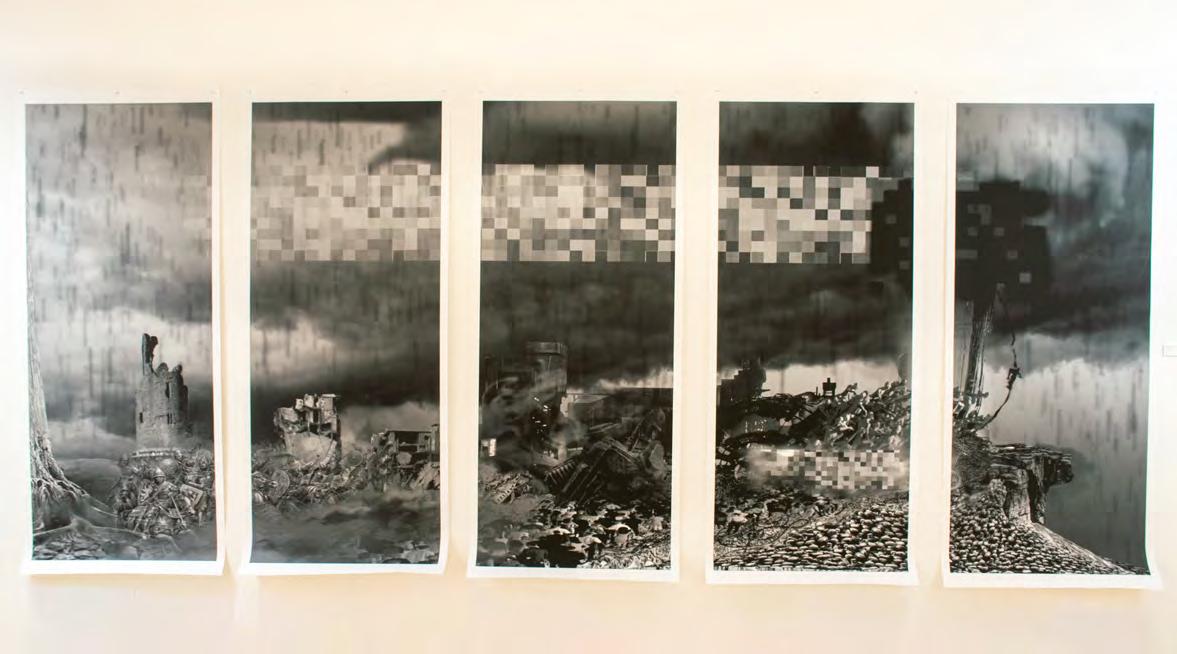
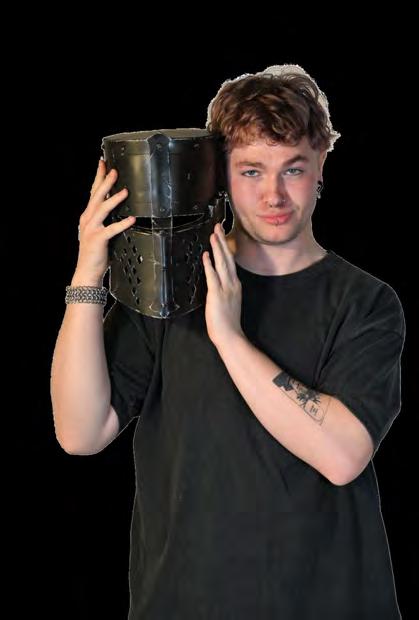
This piece serves as a more personal exploration of art and how I create art. I decided to explore photobashing – a form of digital collage relying on [in my personal practice] a more crude form of photoshopping. Through this art form, I was finally able to realize a harbored form of deep rooted cynicism for the world I live in and my weird fascination with the beauty of all things decrepit and weird like said world. But more than anything, this piece is a cumulative fear and uncertainty for things to come as I step into the world for the first time.
__00 is an artistic experiment using my strange influence in modern media in tandem with my enjoyment of scenic development through theatre. I blame a lot of my artistic influences on cool dark and mysterious video games and movies. My four years as a carpenter and fabricator for our very own Eisner scene shop and shops beyond have also influenced my life in many ways, and more than not has given me a lot of appreciation for “theatre”; “theatre” in the world and the world as a “theatre” both. I understand reality to be a little too absurd to the point of understanding it as some strange performance. But in this performance I find a fascination with the spectacle of it all. It Was Never Just Then
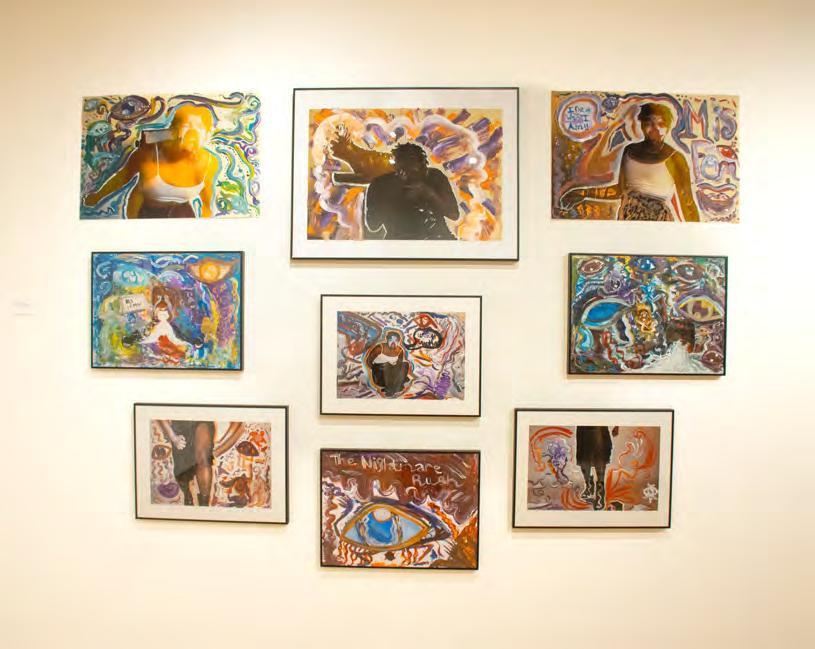
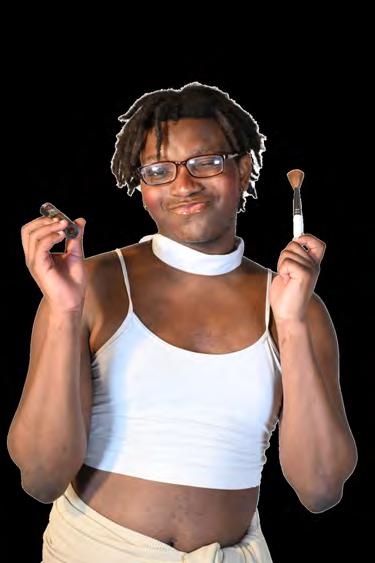
The world often seeks to erase the existence of Black and Queer people, viewing us as unworthy of love and as monsters. Through my work, I push back against this narrative. Inspired by artists like Cindy Sherman and Nick Cave, who use extraordinary portrayals of identity to give light to the queer community, my collections are the core of the "Mingling Metaverse."
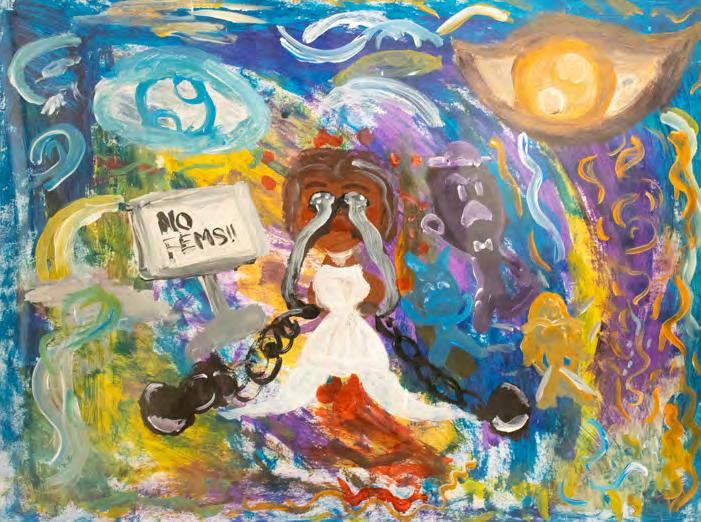
My initial work, No Fems, emerged from triggering experiences, capturing the painful reality of judgment and exclusion faced as a Black, feminine gay man within and outside the queer community. It documented the fear and tension of being forced into a limiting box. This struggle felt especially hopeless when realizing inclusivity was fractured within my own community.
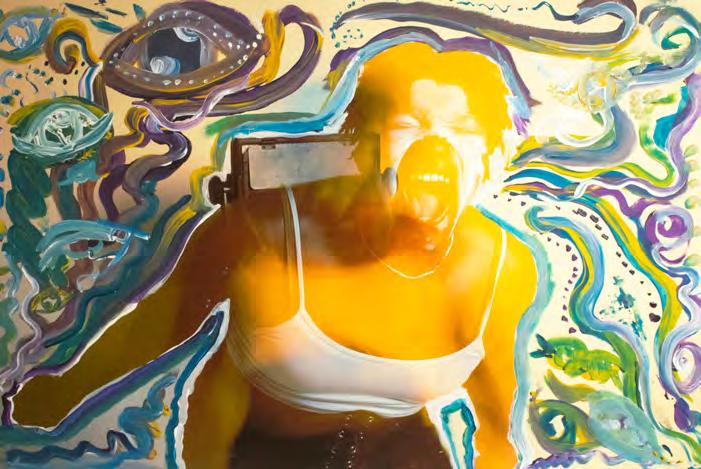
Now, with the newer body of work, No Fems: Rewritten, I reclaim that narrative. I physically paint directly over the original series of photos, transforming the symbols of exclusion into powerful declarations of self-acceptance. This act of layering paint symbolizes taking back power and actively countering the erasure of Black queer existence that No Fems originally highlighted. The paint, as it bleeds into the photos, restores the true essence of who I am as a person.
The "Mingling Metaverse" contains multiple, authentic layers of Mark's identity, a journey of self-discovery, growth, and acceptance. For this collection, I shifted towards a more loose and gestural painting technique, stepping back from perfectly replicating images. This varied, layered approach visually mirrors the multifaceted nature of my identity and the "Metaverse" itself, ensuring a variety of visual representation within the work and ultimately carving out a visible space for us to exist and truly shine.
Was Never Just Then
Title
It Runs in the Family Write me to your Whim Come Out When You're Ready v.2 Lacking in Substance, not in Fear The Devil 2026
12” x 22”
11” x 12” x 11”
16” x 23”
10” x 14”
46” x 24” x 35”

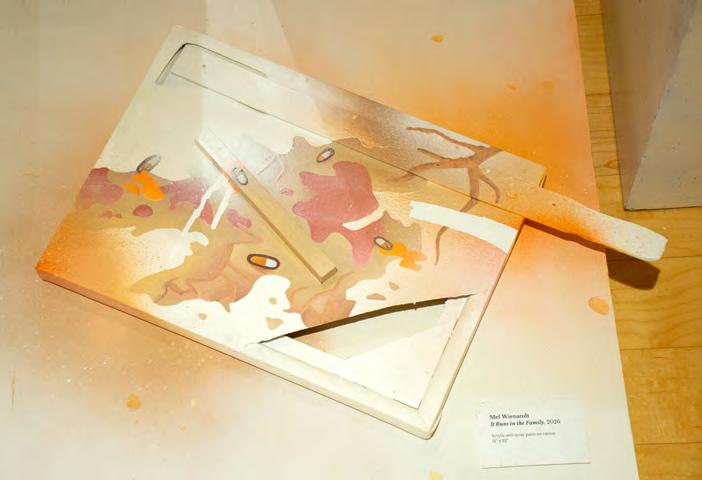
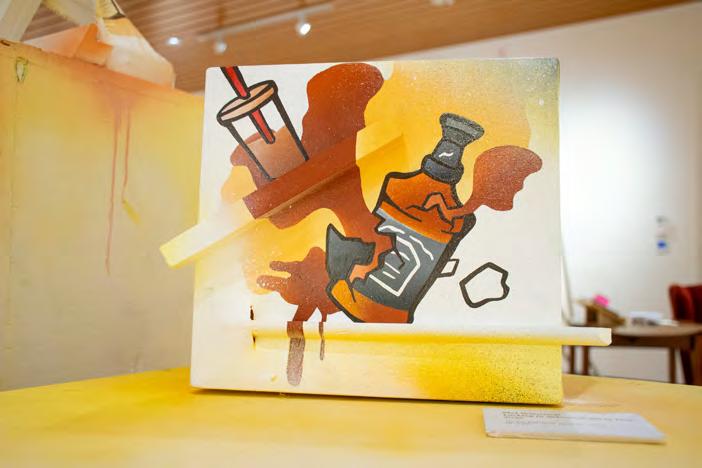
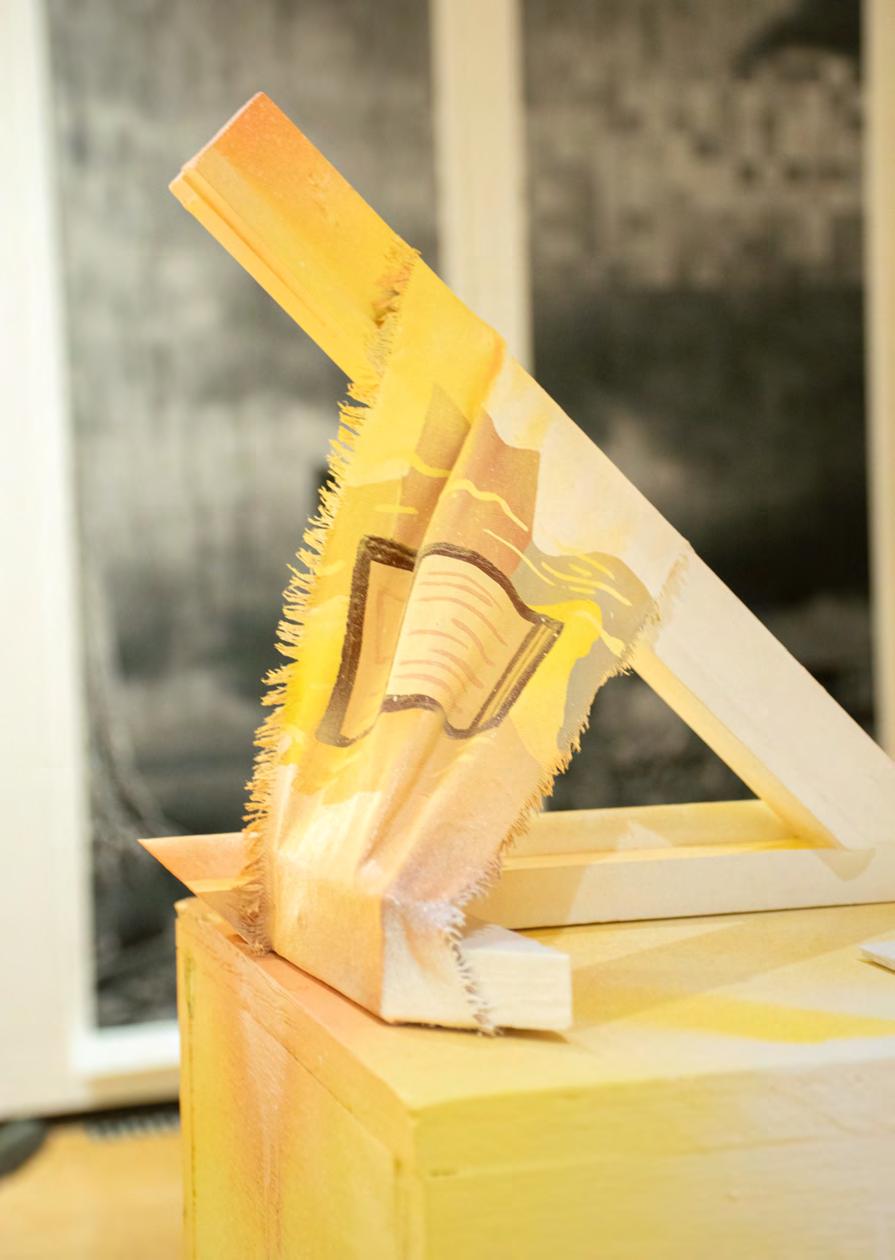
I push the boundaries of the canvas itself, dismantling and fracturing surfaces so that stretcher bars, screws, and nails are exposed. This disrupts the traditional flat surface. I call these works “complex canvas constructions,” which extend outward, creating instability, tension, and rupture, transforming canvases into sculptural objects rather than flat pictures on a wall.
Ephemerality is central to my practice— these works are continually destroyed, altered, and rebuilt, never stagnant. This constant transformation mirrors how my understanding of mental health evolves over time, shaped by my strenuous attempts to connect with others. The canvases shift into aggressively fractured forms—held together by a desire for connection but marked by persistent disconnection and frustration with how mental health is understood. Despite efforts to understand others’ mental health experiences, my own struggles are still met with emotional distance in how they are received and acknowledged.
Rooted in my experiences of trauma and stigmatization, these constructions explore how memory, identity, and experience are composed of fragments that exist both personally and in relation to others. Beginning with my own histories, I expand to include traces of others’ experiences, revealing moments of overlap and dissonance. These pieces reflect how individual and collective stories intersect and shape one another over time, even when there is an inability or unwillingness to fully engage with the experiences of others—underscoring how fragmentation holds the work together, both in its construction and in the limits of how we understand each other.
Ultimately, these works reveal how fragments of one person’s mental health can press against another’s—sometimes aligning, sometimes failing to fit, and sometimes being forced together through tension and repair, held with screws and wood glue. In these moments, connection is never seamless, but materially constructed, unstable, and held under tension.
It Was Never Just Then
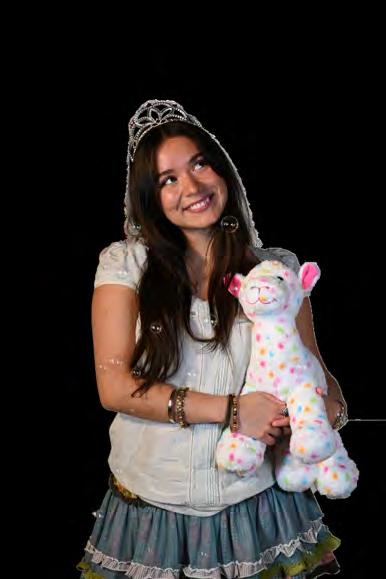
Title
Year
Dimensions
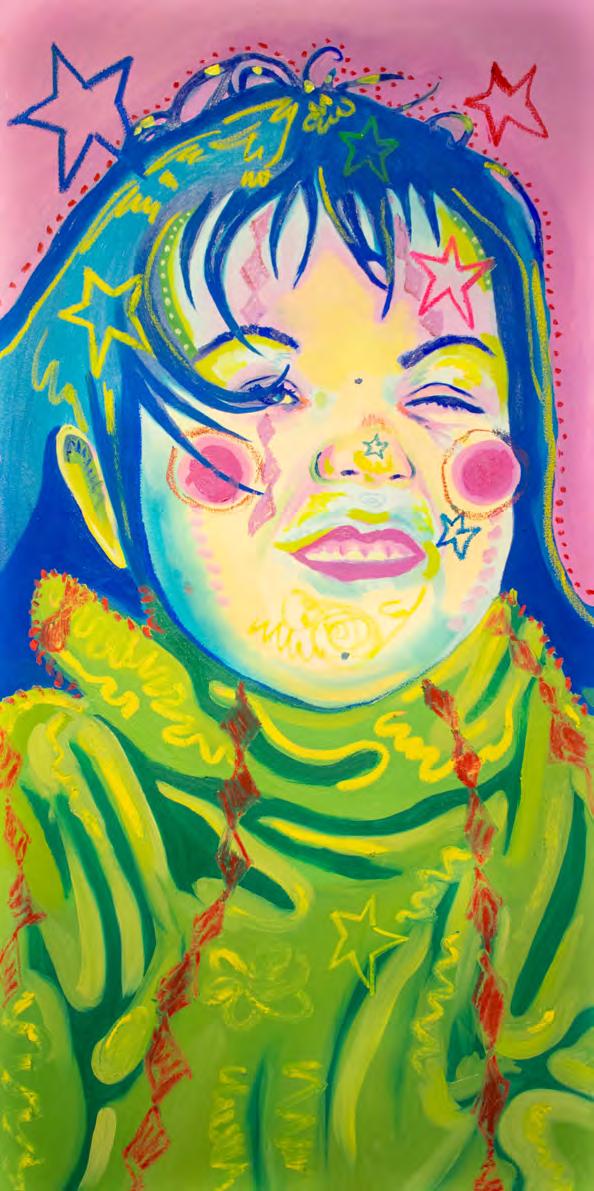
Medium you seem pretty nostalgic for a girl who always felt too much
x 48" x 1 1/2"
As I drift further from my childhood, I find myself longing to return to it. My work explores identity through found childhood photographs that I transform into dreamlike self-portraits. Rather than replicating these images, I reinterpret them through painting, using blur, distortion, and soft color to mimic the instability of memory. The figures appear suspended between clarity and obscurity, suggesting how the past shifts over time.
I render these moments through a balance of realism and childlike mark-making. While my adult perspective shapes the structure of the portraits, I incorporate simple symbols and motifs inspired by my early drawing habits. Playful marks and patterns interrupt the realism of the figure, reflecting the visual logic of childhood creativity. Influenced by Maddie Duda and Jennifer Packer, this approach allows me to explore the tension between past and present.
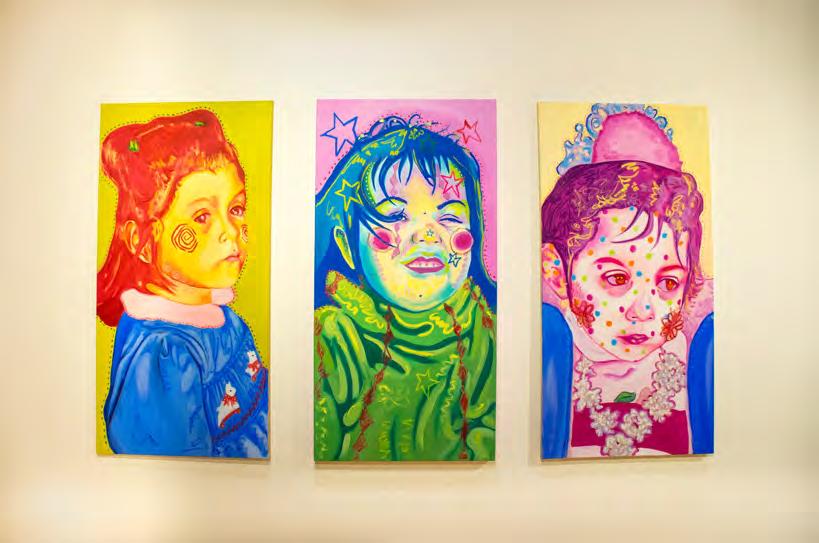
My final piece, you seem pretty nostalgic for a girl who always felt too much, is a series of three portraits based on childhood photographs of myself. The composition consists of two outer portraits that reflect states of contemplation and a more out-of-body, introspective experience of childhood, while the central portrait presents a brighter, more expressive figure often associated with nostalgia and idealized memories. This central image acts as a kind of front, suggesting happiness and innocence, while the surrounding works hint at the more intense and complex emotional experiences that were also part of childhood, often less acknowledged.
Through playful color, intense gazes, and references to early 2000s childhood patterns, the paintings recreate the visual environment where these memories formed. By revisiting these moments, the work reflects how the past continues to shape the present and reveals that my childhood self was never just then.
Was Never Just Then
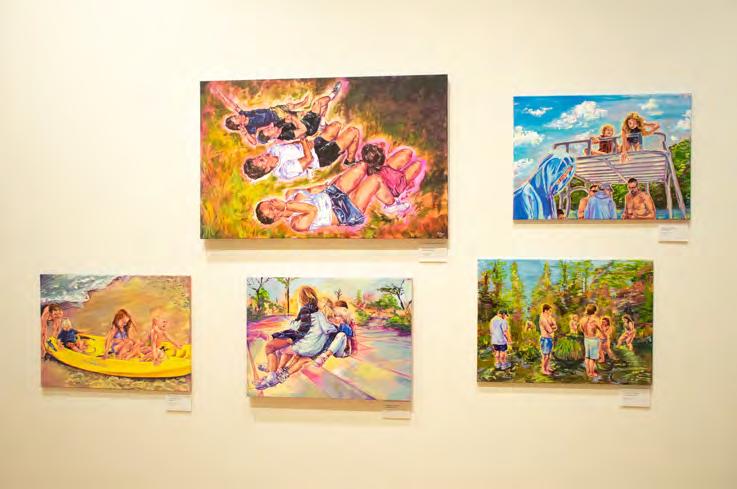
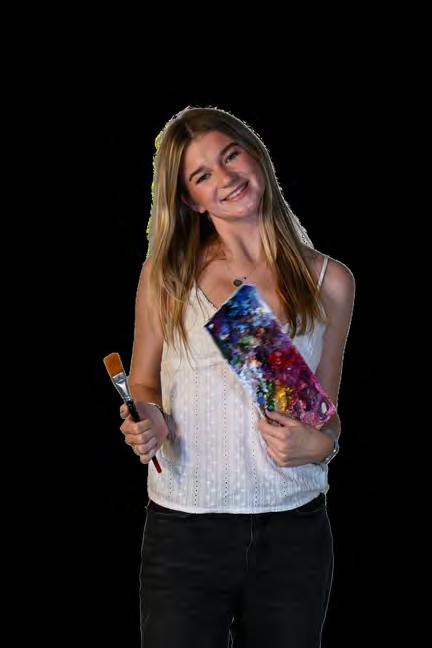
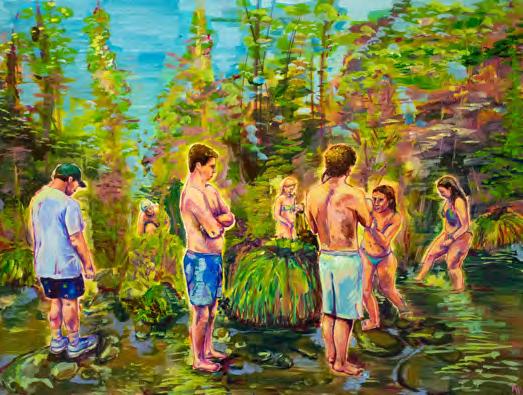
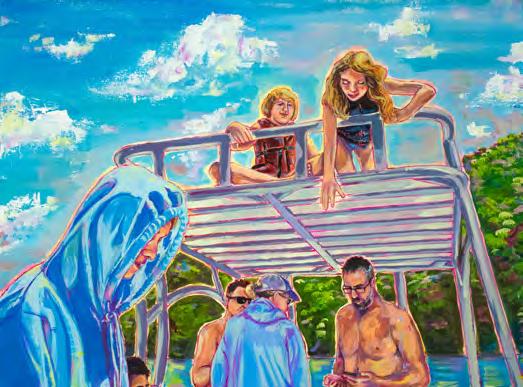
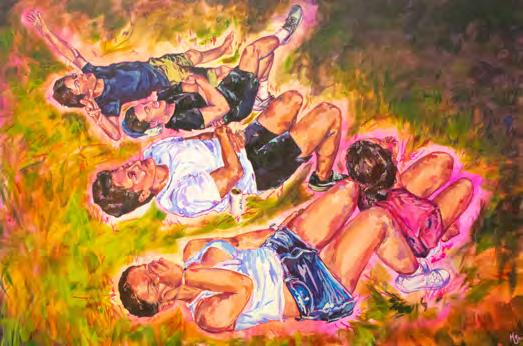
My paintings explore growth, memory, and transformation, focusing on the space where nostalgia, anxiety, and anticipation coexist through figurative painting tradition. I am interested in how meaning is constructed through relationships, particularly in moments suspended between reflection on the past and uncertainty about the future.
My process begins with photographs that were taken of loved ones with whom I maintain close relationships. These images serve as starting points rather than strict references; through painting, I reinterpret them, allowing memory to guide the composition. Selecting a photograph becomes part of the process, isolating moments that might pass unnoticed, giving them space to be reconsidered.
I paint the figures before the environment, reflecting the nonlinear way memory functions. My compositions mirror selective attention: certain people or moments remain vivid while others recede. Color plays a central role in this process; saturated hues evoke emotional atmosphere and sensory experience, acting as anchors and disruptions within the composition. I chose bright, playful colors to evoke a feeling of joy in memory, not darkness. Through this approach, painting examines how memory transforms experience over time, shifting between documentation and reinterpretation.
Underlying this work is an interest in humanism: a philosophy stating fulfillment is constructed through relationships and lived experience. By revisiting personal moments through painting, I highlight the emotional dimensions of being human, emphasizing connection and reflection. My work is inspired by the use of memory, photographic reference, figures, and color to create emotional spaces.
While the imagery originates from personal moments, my work ultimately considers broader questions of identity, connection, and continual becoming. Each painting becomes a space for reflection on how relationships, memories, and experiences shape who we are and how we move through time.
It Was Never Just Then
Title
Year
Dimensions
Medium
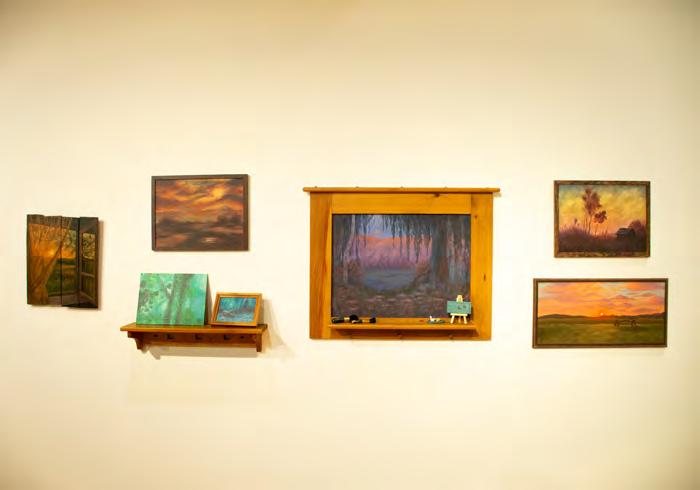
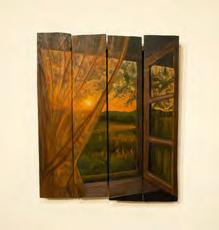
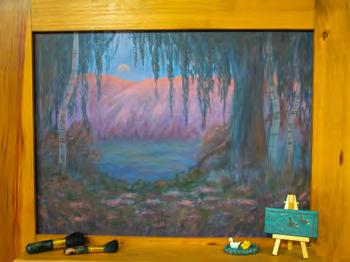
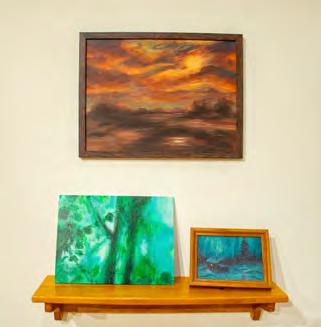
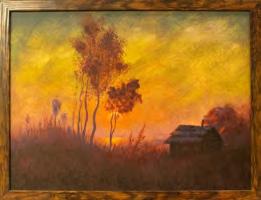
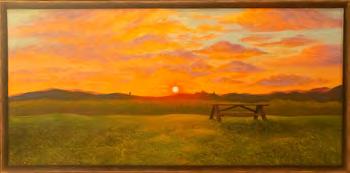
Out The Bedroom Window Textured Glass Under the Northern Lights Just Before Dusk Down in the Willow Garden Picnic at Peach Hill Park Watching Dawn Set In - after SydneyLaurence Two Ducks on the Hudson
2025 - 2026
13.5" x 16"
12" x 9"
8" x 6"
17" x 13"
30 3/4" x 25 1/2"
24" x 18"
17" x 13"
4" x 2"
acrylic and oil variations on canvas, found frames, and artist-made shelf
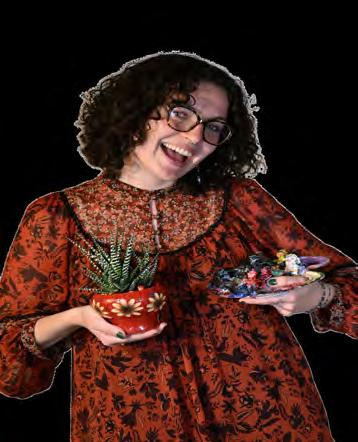
Molly Hormel
Wappingers Falls, New York
Visual Arts, BA Psychology, Minor
@mollyjpaint mollyjeanhormel.com
It Was Never Just Then
My practice explores how color and light convey mood and our complex relationship with the environment. I create immersive spaces that invite entry and evoke intimacy. Within this softness, I cultivate tension that challenges narratives in the male-dominated field of landscape painting, historically shaped by a gaze of conquest. Rather than positioning nature as something to control, I propose a relational perspective that honors it as a symbiotic partner.
Influenced by the Hudson River School and Romanticism, I am drawn to their portrayal of nature as a living, spiritual force amid industrialization. In It Was Never Just Then, I examine how these histories persist, particularly in the conflict between exploitation and care and what is seen versus overlooked. Building on this, I reinterpret the landscape tradition through environmental sustainability and feminist theory, challenging the ways both land and femininity have been historically framed as passive and controlled. Through loose gestures, saturated color, and diffused light, I reclaim softness as a form of power, resisting their dismissal as weakness. This focus on organic form and interiority echoes Georgia O'Keeffe, where vulnerability becomes quiet strength. My paintings create calming spaces that let tension unfold, encouraging viewers to engage with it more attentively.
Out the Bedroom Window centers the domestic interior as a site of environmental and emotional connection. Rooted in folk traditions and women’s domestic labor, it illuminates perspectives long erased from mainstream landscape narratives. Using wooden frames that reference windows and painting supports, and makeup brushes for painting, the work situates viewers within a lived-in perspective of the home. The window frames inherited ways of seeing, complicating them while revealing the domestic within the landscape and the care and labor it sustains.
Was Never Just Then
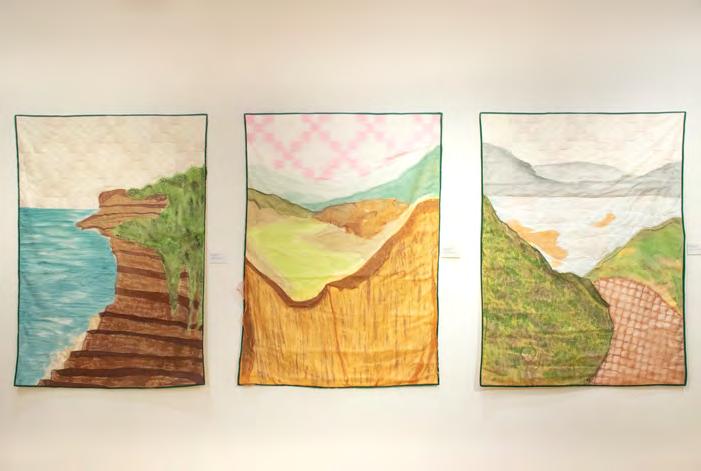
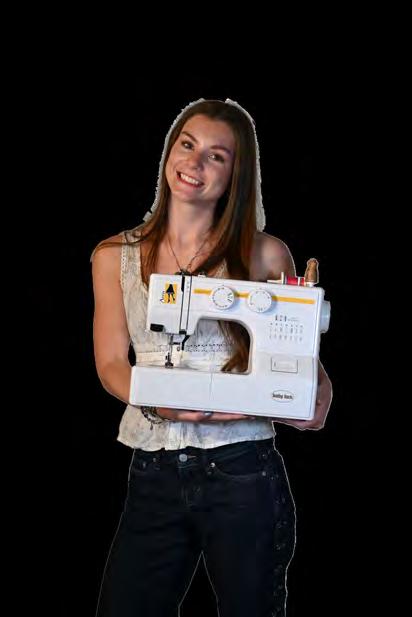
My grandmother taught me how to sew in Vermont’s Northeast Kingdom on a snowy elementary school long weekend. She had learned from her mother, who had learned from her mother and so forth. I understand my sewing skills, practice, and body of work to be an extension of this lineage. With that being said, while still rooted in tradition, my work equally reflects a contemporary lens to examine how memory and place shape my understanding of belonging and inheritance.
This series blends traditional quilting techniques, Irish chain quilt blocks form a sky, while free-motion stitching approaches define the water and land. By layering painted surfaces with translucent textiles, the image shifts between visibility and obscurity, mirroring the instability of memory and the act of recollection. I combine materials associated with domestic craft alongside painterly processes by using water-down acrylic paint to block out the organic shapes of the scenery. Then, add layers with transparent qualities such as dyed cheesecloth, tulle, lace, and quilt blocks, to increase dimension as well develop a sense of atmosphere in the landscape.
My recent works have centered on the creation of large-scale landscape quilts with my experiences exploring the dramatic and deeply mystical landscapes of Scotland and Northern England serving as my reference for portraying the enchanting environment. My goal is not to create a photorealistic piece, but rather to embrace the sense of “breath” and quiet magic I felt at that point in time. Additionally, the subject matter exists in the context of prominent, primarily male, Scottish landscape painters. By working in a medium that is traditionally considered women’s labor, the dialogue about who is granted the ability to depict widely appreciated landscapes comes to the forefront.
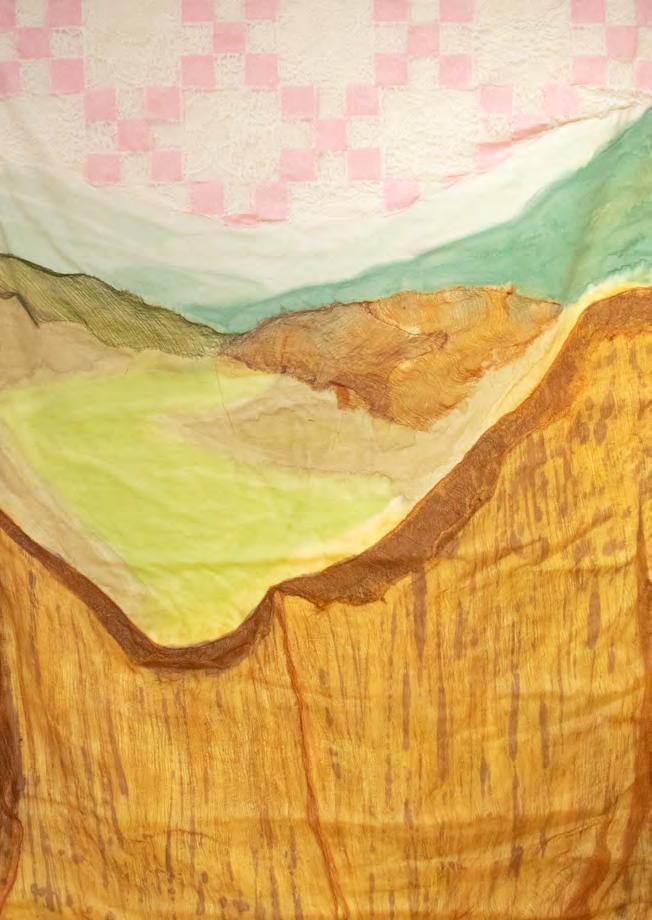
spring 2026
It is not easy to see what it takes to complete a visual arts degree. The works presented here are not the result of a single moment of inspiration, but of sustained inquiry over time. Across the past year, these artists have engaged in cycles of research, making, critique, and revision, where ideas are worked through, questioned, and reshaped. This was not an individual pursuit alone. It unfolded in a shared studio environment where peers challenged one another, offered feedback, and helped push each work further, often working through uncertainty as a way to open up new ideas and directions. What you see here is shaped not only by individual vision, but by an ongoing collective dialogue.
Making art is an act of confrontation that few are willing to face. When artists work with critical and intellectual curiosity, they begin to spotlight their own value systems, their upbringing, histories, and communities. Art making can be quite uncomfortable when we face ourselves.
Imagine being self-conscious about your body and then walking nude on a crowded public beach. This is what it can feel like to display their work for others to experience. To share artwork is to make one’s thinking and insecurities visible, to allow others to interpret it and form their own conclusions. The vulnerability it takes to be creative and to showcase that work carries real risk. These artists are asked to stand behind their decisions while remaining open to how others understand and respond to their work.
What is at stake for them to share their creative introspection with others? What benefits arise from allowing others to view, inspect, and draw conclusions? These works are not final answers, but ongoing investigations, and you are invited into that process. We’re lucky to be here.
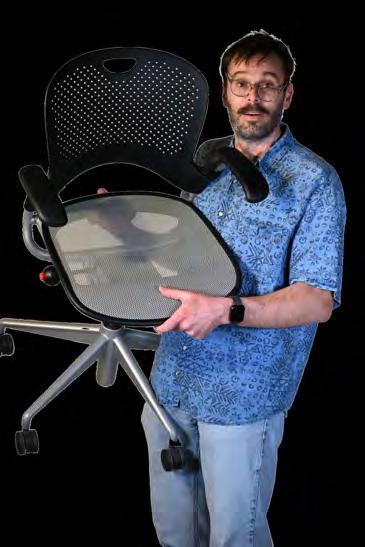
Visual Arts Chair Keith Spencer
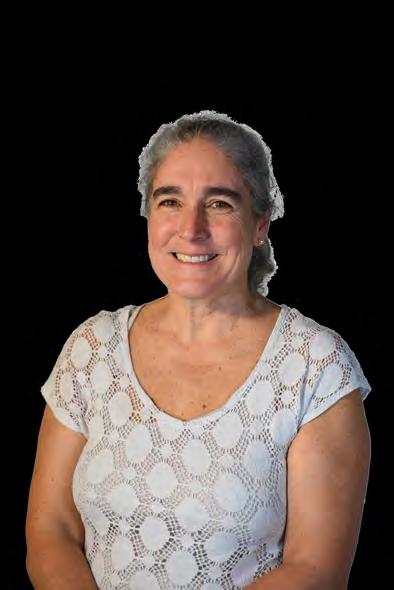
Micaela Vivero
Visual Arts Professor
Friday August 29, first week back after a year in Spain on a Fulbright Fellowship. What a treat to get back to a full work schedule teaching Senior Practicum. So thankful to my wonderful Visual Arts colleagues. I was a little nervous about the first class, but after looking at the class list and realizing that I had already worked with most of the students in the class, I was much more at ease. I hadn’t been on the NYC trip for a decade, so tickets were already purchased and an itinerary was well under way. I came with lots of ideas, readings, work and there was nothing that this group of students wouldn’t respond to in the best of ways. A wonderful group of humans!
Molly, I knew from the first day on, that you’re someone that the entire group can count on. Always supportive and looking out for everyone. Duc, as you are putting this into the catalog, yes, of course always everything design oriented. How refreshing it has been to see the posters you design in Bryant! Marshall, you almost have the record in taking classes with me. Foundations, Intro Sculpture and Practicum. Yes, I still remember you did the drawing of the astronaut with blue tape your FY at Denison. Mark, first time working with you, in Practicum and as your BFA faculty advisor. What a huge project the Mark Mingling Metaverse! And to think that we thought the name would be changed. Amy, Labubu! Yes, of course! Z, you DO have the record in taking classes with me: Foundations, Intro Sculpture, Practicum and Fibers, and I have been your Advisor. Such an honor to see you grow as a person and an artist. Monica, first time in my class. You have impressed me by your continuous commitment and positivism. A pleasure working alongside you and seeing your creativity unfold. Gabby, my fibers pal! Mackenzie, entering senior studio and seeing your pink rug, with more and more pink paint on your canvases. How can you not have a great start of the day with that? Rebecca, wow! Never stop making “quilts.” Grace, beautiful seeing your studio grow as you create more and more paintings. Mel, such an intense art making energy. It’s hard to keep up!
But I can finally say it, you are the most wonderful Visual Arts seniors, you are all my favorites!
Micaela Vivero