Underground Science Facility Wins Award
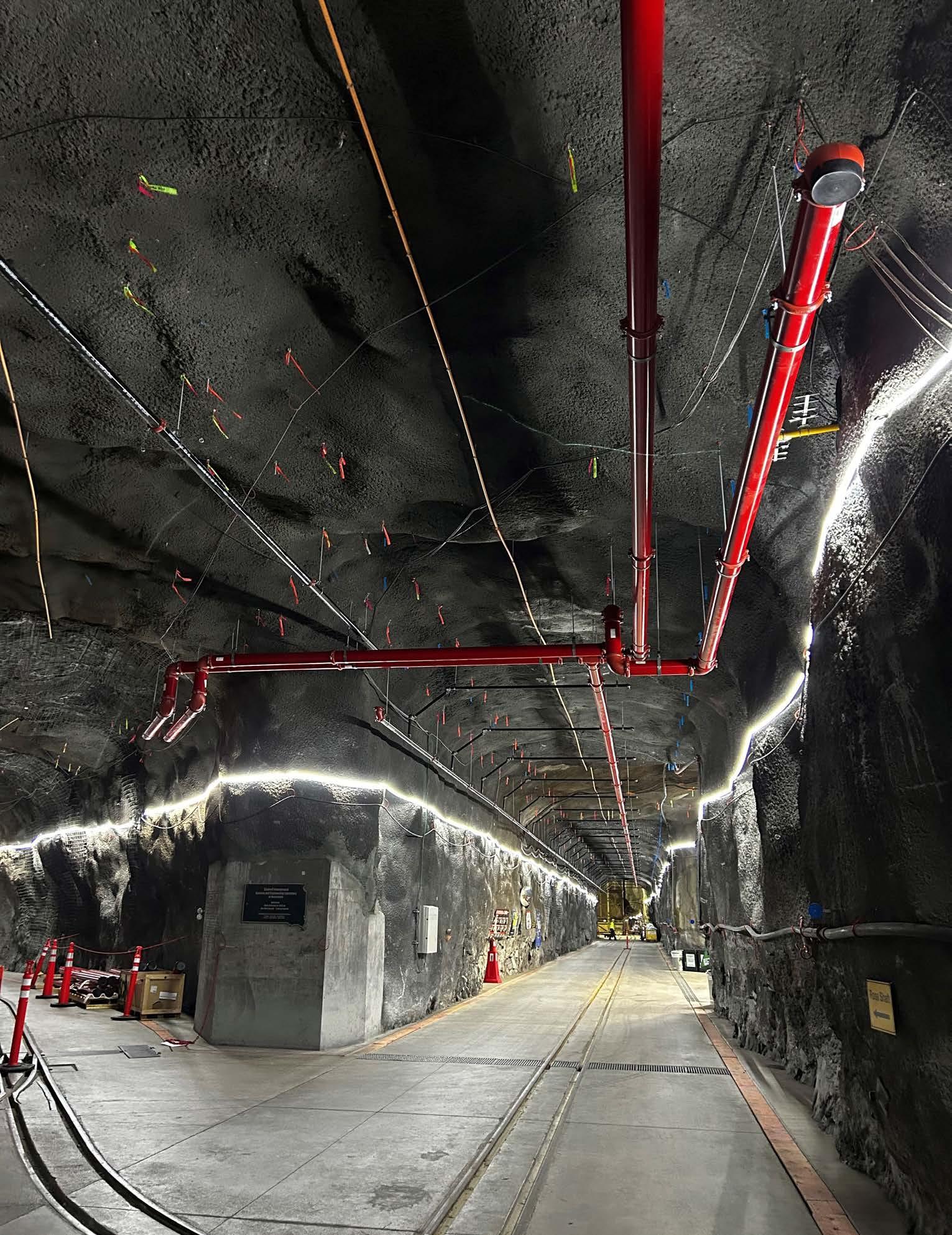
Fit-out of utilities to support the experiment
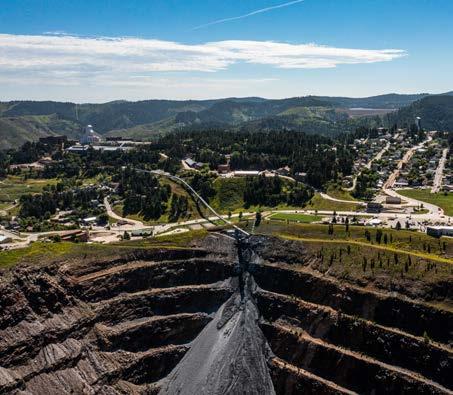
A conveyor carried almost 800,000 tons of rock excavated a mile underground. 2
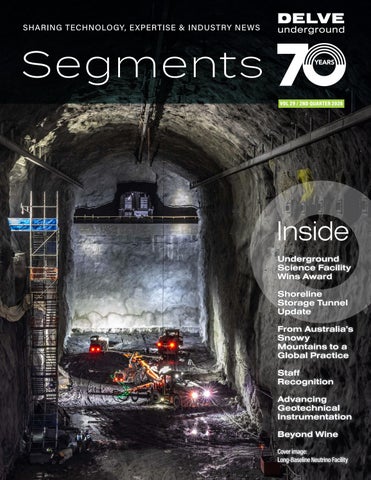
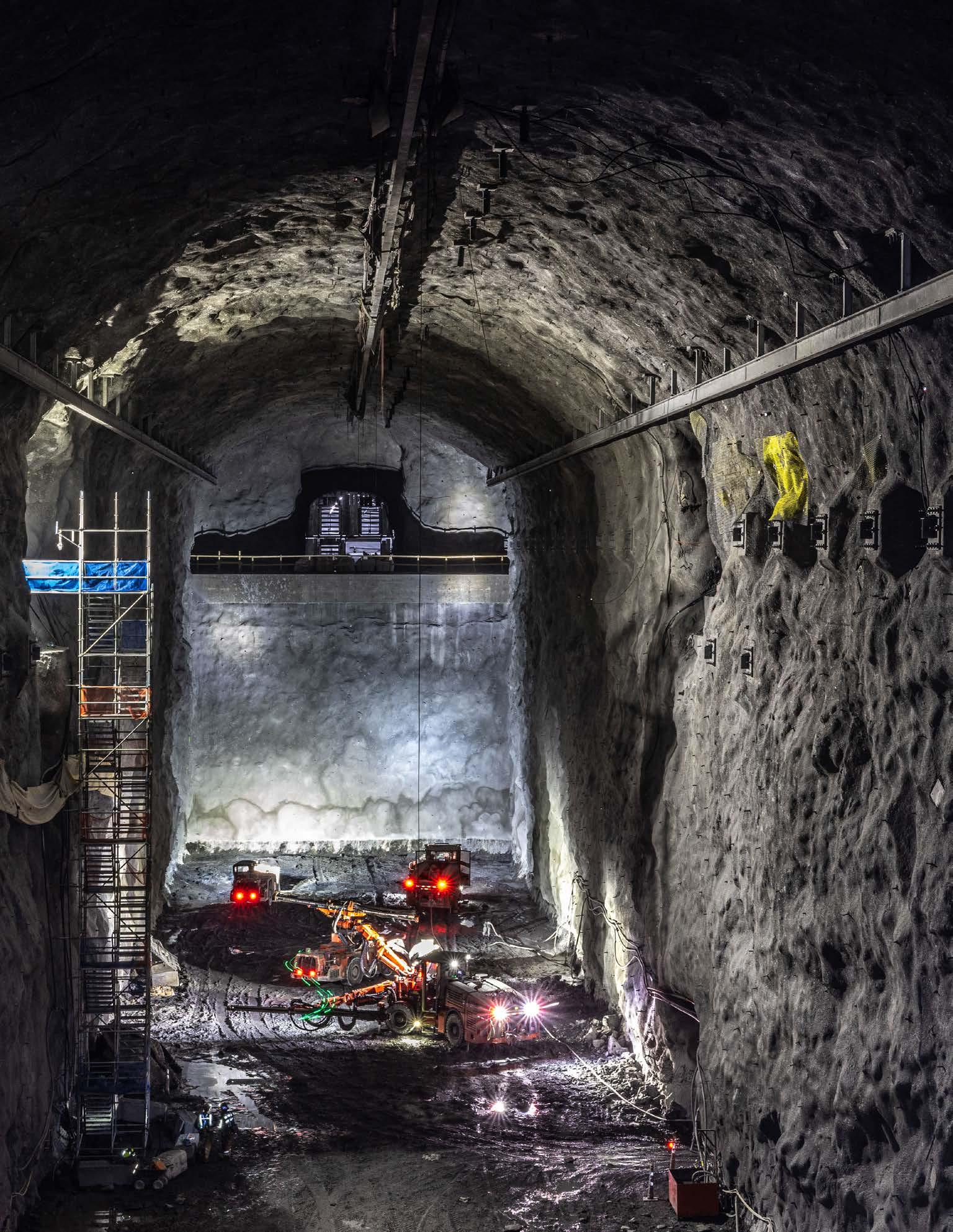
Delve Underground is proud to have played a key role in the Long-Baseline Neutrino Facility (LBNF) Far Site Excavation Project, which was recognized with the Underground Construction Association 2026 Project of the Year Award for projects in the $100M–$500M category. The honor reflects the scale, complexity, and collaboration behind a project that is advancing both underground construction and scientific discovery.
Located within the historic Homestake Gold Mine in Lead, South Dakota, the LBNF project includes three large caverns, numerous connecting drifts and chambers, and a ventilation shaft for a deep underground particle detector. The facility is a key component of an international scientific collaboration focused on studying neutrinos— particles that may help researchers answer fundamental questions about our universe.
Delve Underground’s involvement in the project spans more than a decade. The firm initially assisted Fermilab with early concept planning for the underground laboratory, and later served as a key member of the project team, supporting preliminary design, final design, and engineering services during construction. Other major team members included Fermilab, Arup, Kiewit-Alberici Joint Venture, SURF, and Thyssen Mining, Inc.
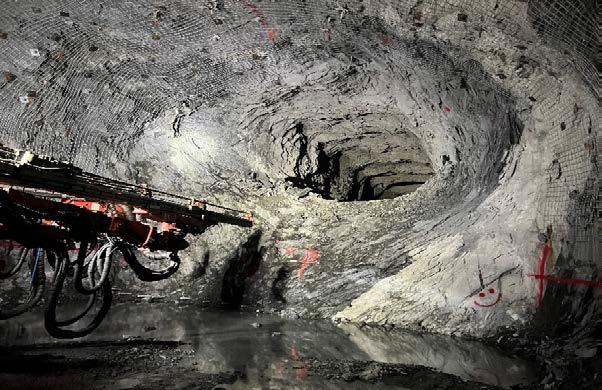
What makes the project especially noteworthy is the challenging environment in which it was built.
Located nearly a mile underground in a highstress, geologically complex rock mass, the project required the team to solve significant logistical, geotechnical, and construction challenges. The size of the excavations and the complex geometry of the drifts and chambers added to the difficulty.
The project team succeeded through a highly collaborative and innovative approach. Integrating civil and mine development perspectives helped reduce risk and support cost-effective construction. The project also required an extensive geotechnical investigation program deep underground, along with assessments of existing mine conditions to support the design of the large cavern spans and drift intersections. Digital 3D modeling helped the team evaluate transport clearances for large and unusually shaped materials and equipment. An early full-scale test blast program established parameters for production blasting, and raise boring methods helped create ventilation pathways that supported efficient advancement of multiple headings.
Delve Underground is honored to have contributed to an award-winning project that will support groundbreaking scientific research for many years to come.
“The Long-Baseline Neutrino Facility project combined complex geotechnical conditions, large-scale underground excavation, and major logistical demands requiring innovation and close collaboration. Delve Underground was honored to support the project from planning through construction and help deliver this extraordinary underground facility.” — Mark Havekost, Principal Engineer Credits: 1. Matthew Kapust; 2. StephenKenny, Sanford
A bird’s-eye view of one of the large caverns.1
Tunneling in the North Cavern
Northeast Ohio Regional Sewer District’s Shoreline Storage Tunnel

PROJECT UPDATE by Wayne
Gyorgak, PE
The Shoreline Storage Tunnel (SST) project is part of Project Clean Lake, a $3 billion, 24-year program that the Northeast Ohio Regional Sewer District (NEORSD) began in 2011 to meet Clean Water Act standards and address water quality issues. The SST is the fifth of seven new large-diameter tunnels, along with other projects that NEORSD will use toward Project Clean Lake’s overall goal to reduce the 4.5 billion gallons (17 billion liters [L]) of wet weather combined sewer overflows (CSOs) released into Lake Erie and its tributaries in the Greater Cleveland area.
The SST includes nearly 2.7 miles (4.3 kilometers [km]) of 23-foot-diameter (7 meters [m]) soft ground tunnel 100 to 120 feet (30–37 m) below ground that will capture and store overflows from CSO outfalls along the Lake Erie shoreline. The SST will then convey these overflows to other NEORSD tunnels and sewers, which will transport flows to the Easterly Wastewater Treatment Plant for treatment before they are released into the environment.
Construction of the SST was awarded to the McNally/ Kiewit SST (MK) joint venture. NEORSD issued Notice to Proceed in July 2021 with substantial
completion and final completion now set to be June 2026 and October 2026, respectively. After providing overall design management, including tunnel and shaft design and geotechnical engineering, Delve Underground transitioned from the design phase to the construction phase. During tunnel excavation, three Delve Underground employees were on site supporting NEORSD’s construction management personnel with construction inspection, tunnel boring machine (TBM) performance monitoring, and coordination of design services (e.g., shop drawing review, RFIs, change order evaluation, and change management).
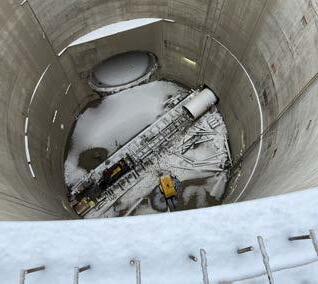
The tunnel was excavated with a 26-foot-diameter (8 m) Herrenknecht earth pressure balance tunnel boring machine (EPM TBM) with a face pressure near 3.5 bar. MK designed a 6-foot-long (1.8 m) tunnel precast segment final lining. The TBM excavation was completed in May 2024.
Since the completion of the SST, several near-surface structures, shafts, and consolidation sewers have been completed.
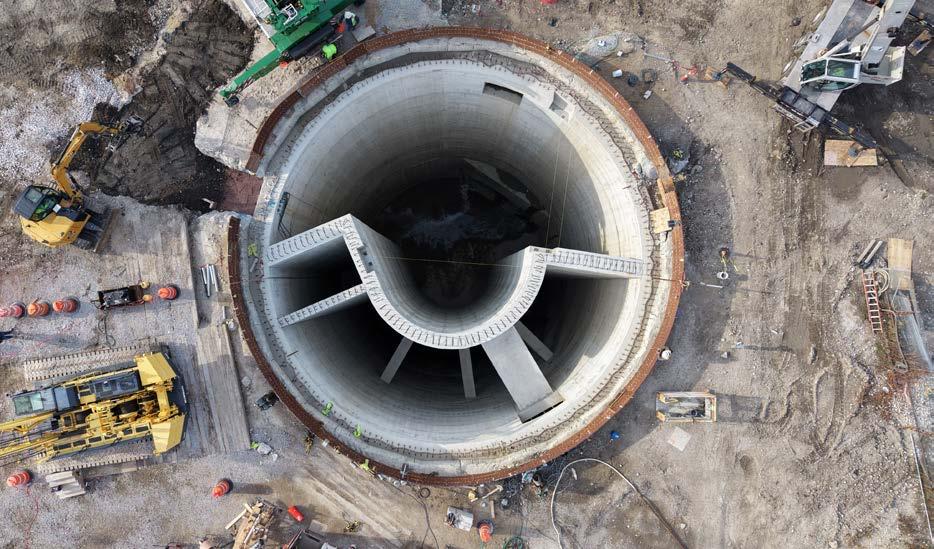
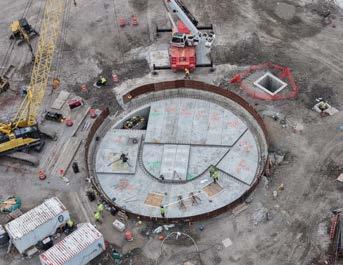
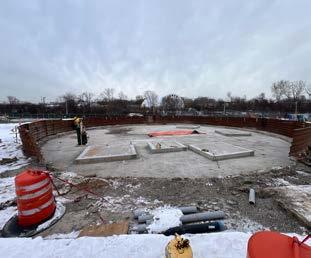
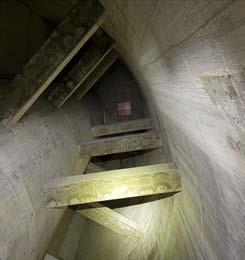
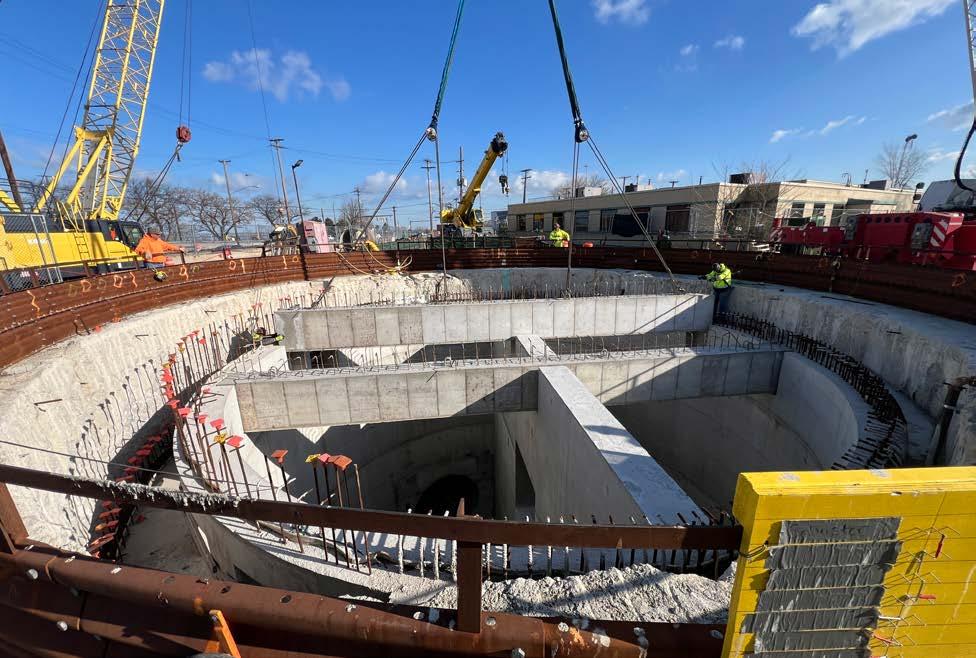
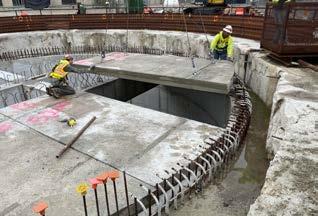
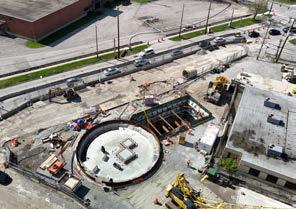
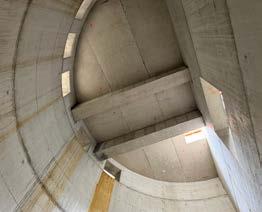
(A) Completed internals; (B) Precast roof plank installation; (C) CIP roof and access hatches; (D) Post construction inspection
SST-2 Shaft
This structure is a 50-foot (15.2 m) ID intermediate shaft approximately 132 feet (40.2 m) deep located about midway along the tunnel alignment. The permanent shaft structures included 1.5-foot (0.5 m) thick dividing wall, five baffle blocks, two precast beams, and a 113-foot-high (34.4 m) drop pipe encasement dropping flow about 84 feet (25.6 m) through a 6-foot-diameter (1.8 m) opening. These internal structures along with the precast roof planks and CIP roof slab were completed in February 2026. The SST-2 Shaft post-construction inspection was performed in March 2026.
SST-1 Shaft
This structure is a 61-foot (18.6 m) inside diameter (ID) shaft approximately 122 feet (37.2 m) deep. This shaft was designated as the launch shaft for the TBM. The permanent internal shaft structures included 2.5-foot (0.8 m) curved dividing wall, 3-foot (1 m) gate and end wall, 1.5-foot (0.5 m) baffle and stilling basin wall, 5 baffle slabs, 11 baffle blocks, 12 struts, collar, two precast beams, two hydraulic gates, and the emergency overflow box culvert. These internal structures along with the precast roof planks, removable roof planks, and cast-in-place (CIP) roof slab were completed in December 2025. The SST-1 Shaft post-construction inspection was performed in March 2026.
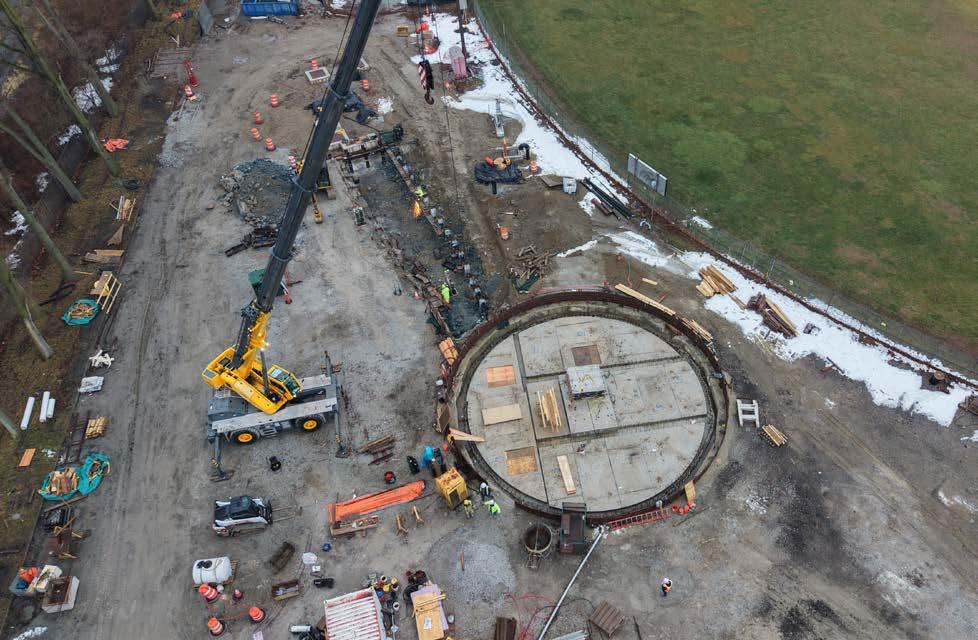
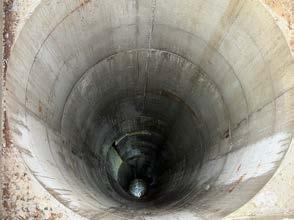
(A) Precast roof plank installation; (B) Looking down drop pipe encasement; (C) Post-construction inspection
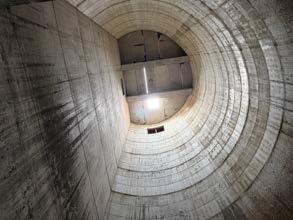
SST-3 Shaft
This structure is a 40-foot (12.2 m) ID retrieval shaft approximately 111 feet (33.8 m) deep. The shaft permanent structures included 2-foot thick dividing wall, six baffle slabs, and two precast beams. These structures along with the precast roof planks, removable roof planks, and CIP roof slab were completed in May 2025. The SST-3 Shaft post-construction inspection was performed in March 2026.
78-inch (198 cm) ID Dewatering Tunnel
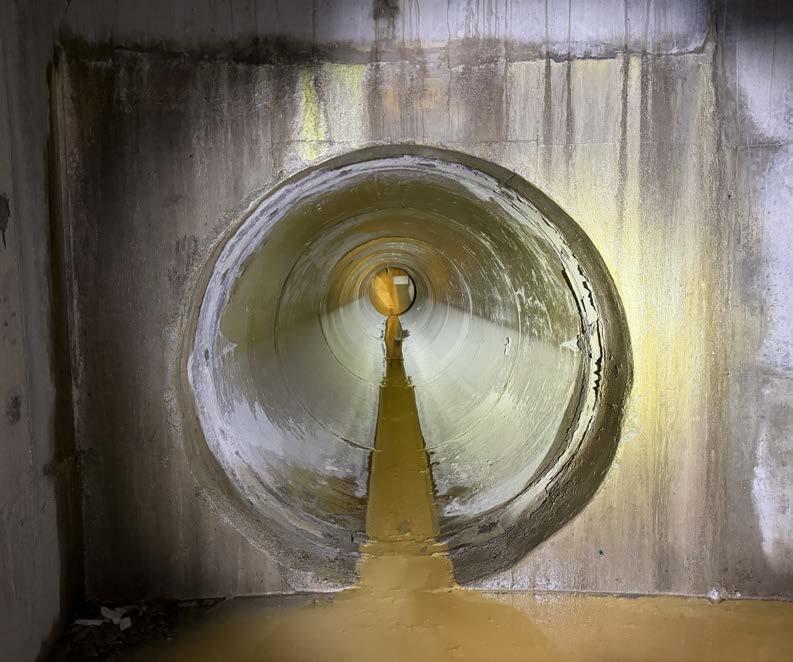
This tunnel was a hand-mined tunnel to convey CSO from the SST system into the Dugway Storage Tunnel (DST) system. This 72 foot-long (22m) sewer was jacked from the SST-1 shaft to the DST-4 shaft. This sewer is about 112 feet (34.1 m) below grade and utilized a Barbco jacking system to install a 78-inch (198 cm) Hobas pipe. The dewatering tunnel was completed in February 2025. The post-construction inspection was performed in February 2025.
(A) Precast beam installation; (B) Precast roof plank installation; (C) CIP roof slab and hatches; (D) Post-construction inspection
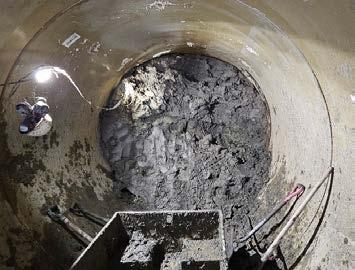
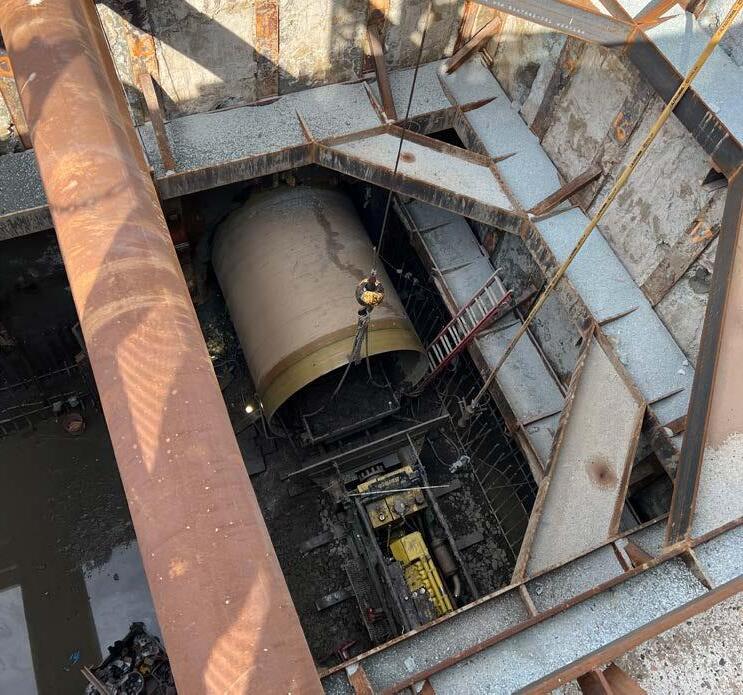
(A) Looking toward DST-4; (B) Jacking operation within SST-1 Shaft
SST-3 104-inch (264 cm)
Consolidation Sewer
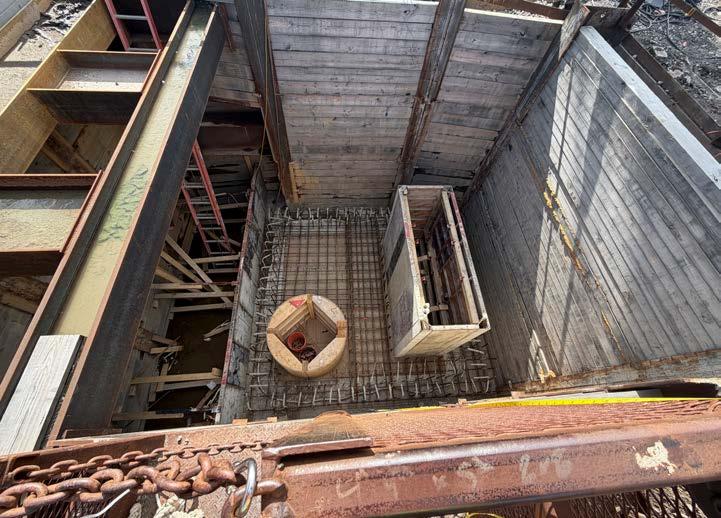
This tunnel was a hand-mined tunnel to convey CSO from an existing 120-inch (305 cm) brick sewer and the SST-3 Diversion Structure (SST-3 DS) to the SST-3 Gate and Screening Structure (SST-3 GSS). This 50 foot-long (15.2 m) sewer was jacked from the SST-3 GSS to the SST-3 DS. This sewer is about 35 feet (10.7 m) below grade and utilized a Barbco jacking system to install a 104-inch (264 cm) Hobas pipe. The consolidation sewer was completed in June 2025.
The project also featured additional near-surface structures and tunnels that have been completed. These include SST-2 Gate Control Vault (SST-2 GCV); SST-2 Diversion and Gate and Screening Structure (SST-2 DGSS); SST-2 84-inch (213 cm) Consolidation sewer; SST-2 Transition Chamber; SST-2 Tangential inlet and vortex drop structure; SST-3 GCV; SST-3 DS; SST-3 GSS; and Regulators E-33, E-34A, and E-43.
Currently, construction is ongoing to complete three ventilation vaults at SST-1 and SST-2, Emergency Overflow Junction Chamber at SST-1 (SST-1 EOJC), electrical work related to the testing and commissioning of the gates and SST, and some site restoration. Upon the completion of commissioning, the SST will be ready to accept flow, allowing the Contractor to complete the remaining regulator modifications and final restoration for the project.
(A) Full face of clay; (B) Jacking operation within SST-3 GSS
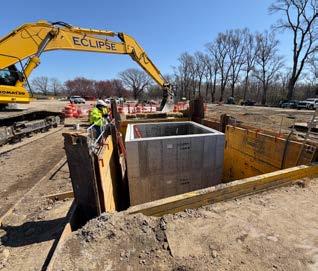
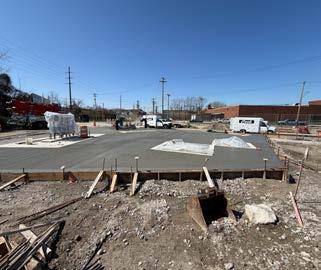
(A) SST-1 EOJC ongoing structure installation; (B) SST-2 Vent Vault (precast) currently being installed; (C) SST-3 Site Restoration –Concrete Pad over the SST-3 Shaft and GCV
From Australia’s Snowy Mountains to a Global Practice

Delve Underground’s Legacy in Australia & New Zealand
Long before Delve Underground became a global practice, our work began in the mountains, cities, and jobsites of Australia and New Zealand. Our history in this region began when Don Jacobs, our company founder, was appointed Chief Engineer, supporting construction of the Tooma-Tumut Tunnel as part of Australia’s Snowy Mountains Hydroelectric Scheme—one of the most ambitious infrastructure programs of its time. The work demanded practical engineering, contractor collaboration, and creative problem-solving in challenging underground conditions.
Drill Jumbo Technology Innovation
Central to the firm’s contribution in the project were custom drill jumbos designed for both American and Australian contractors driving long hard-rock tunnels for the Scheme.
The drill jumbo technology was new to the continent at the time, and shipping equipment across the Pacific was impractical.
Delve Underground’s equipment-design expertise made it feasible to fabricate the drill jumbos in Australia, transferring both the tools and the technical knowledge into the local industry.
This pattern would shape the firm’s approach to international work for decades to come.

PE, CPEng | CEO

Those early experiences shaped the foundation of our company and continue to influence how we approach underground engineering today.
Over the decades, the work in Australia and New Zealand helped define our mindset—technically rigorous, collaborative, construction-focused, and grounded in solving real-world challenges alongside contractors, owners, and other engineers. Projects like the Ohakuri Diversion Tunnel, Manapouri Tailrace Tunnel, Melbourne’s City Loop, CityLink, and Sydney’s M5 East Motorway Tunnels pushed underground engineering forward while shaping generations of technical leaders across our company. The lessons learned on those projects continue to influence how we approach complex infrastructure around the world today.
What began in Australia and New Zealand has evolved into a global way of working.
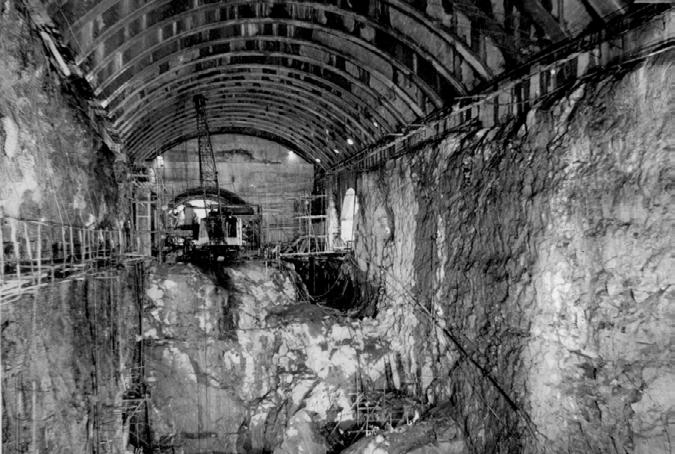
Excavation of the Tumut 1 underground power station, Snowy Mountains Hydroelectric Scheme, NSW, Australia, c. 1955.
Today, Delve Underground operates as one connected practice across Australia, New Zealand, the United States, and Canada. Our teams collaborate across borders, sharing expertise, technical resources, and project experience to solve some of the world’s most complex underground infrastructure challenges.
This global model has become one of our greatest strengths.
FEATURE STORY by Victor Romero,
When major projects move forward, the collective experience of our entire company comes with them. Engineers and construction professionals across regions contribute lessons learned, technical insights, and practical problem-solving developed over decades of underground work. The result is a deeper bench of expertise and a stronger outcome for our clients.
That approach continues to shape many of Australia and New Zealand’s most transformative infrastructure programs today, including Auckland’s Central Interceptor, Waterview Connection, extensions of the Sydney Metro and construction of the WestConnex highway network, and Melbourne’s North East Link. At the same time, projects such as the Army Bay Ocean Outfall and Snells Algies Outfall in New Zealand continue to advance trenchless and direct pipe technologies, reinforcing the region’s role in driving innovation across the underground industry.
As infrastructure demands continue to grow worldwide, the need for resilient underground solutions has never been greater. Expanding cities, aging infrastructure, water security, transportation demands, and climate resilience are creating new challenges that require both technical excellence and practical delivery experience.
That is where our history continues to matter.
The principles established in Australia and New Zealand nearly 70 years ago still guide how we work today: design with construction in mind, solve problems practically, and bring the best expertise possible to every project, regardless of geography.
Those principles have helped Delve Underground grow from a small engineering firm supporting a hydroelectric tunnel project into a global underground practice trusted on some of the industry’s most significant infrastructure programs.
As we look toward the next 70 years, our focus remains the same—bringing people together across regions and disciplines to deliver smarter, more resilient underground infrastructure for the communities we serve. The projects may span continents today, but the mindset that drives our work still traces back to the mountains of Australia and the pioneering projects that shaped our beginning.
Staff Recognition
Congratulations to the following staff members who have achieved significant career milestones.









Bade Sozer, PhD, PE, was selected to The Moles Class of 2026.
Damien Onorato earned his Chartership in Structural Engineering (CPEng) from Engineers Australia.
Tony Cicinelli earned his Construction Manager certification from the Construction Manager Certification Institute (CMCI).
Natascha Lambing, Farid Sariosseiri, Luke Erickson, and Mark Havekost authored “OpenFace Trenchless Construction in Challenging Ground Conditions – Case Study” in Pacific Northwest Trenchless Review 2026. Read more.
Bryan Duevel and Madison Callan presented a case study titled “Arizona Inn Landslide Mitigation Project” at Oregon State University in January.
We’re Hiring!
Director of Growth: New York, NY
Construction Manager: Vancouver, BC
Associate Trenchless Engineer: Boston, Washington, DC
Lead Associate Water/Wastewater Engineer: Boston
Click listing for more information
Several Delve Underground team members recently contributed to industry conferences and events through technical sessions and short courses.









WATERCON Presentation in Peoria, IL:
Tessa O’Halloran presented “Aerial Drone Inspection of the Des Plaines River Tunnel for the City of Joliet.”
North American Society for Trenchless Technology 2026 No-Dig Show Presentations in Palm Springs, CA:
Dingxin Cai and Glenn Boyce presented “Design of the Lower Alemany Area Stormwater Improvements Project in San Francisco, California,” co-presented by Suzanne Huang and Casey Chen.
Su Soe and Dru Nielson presented “Trenchless in Northern California’s Telecom Valley: the Petaluma PIPS Parallel Forcemain,” co-presented by Justin Kraetsch, Madison Veggian, and Lucas Pereira.
Wayne Gyorgak presented “Encountering Flowing Non-plastic Silts and Fine Sand Conditions in a Utility Laden Hand Mining Operation on the Shoreline Storage Tunnel,” co-presented by Richard Depew and Robert Auber.
Elizabeth Carnogursky and Norm Joyal co-presented “Pipe Ramming Selected for Replacing Two Failing 72-inch CMP Storm Drains Under San Pablo Dam Road.”
Luke Erickson presented “Microtunneling Beneath the Tualatin River for a New Seismically Resilient Water Line,” co-presented by Elliott Mecham and co-authored by Farid Sariosseiri.
Erickson
Cai
Joyal
Nielson Boyce
O’Halloran Carnogursky
Sariosseiri
Erickson
Onorato Cicinelli Havekost Lambing Duevel
Sariosseiri Callan
Sozer
Soe
Gyorgak
AdvancingGeotechnical Instrume

TECHNICAL INSIGHT by
Patrick Lam, PG, CEG
Trends, Tools & Future Directions

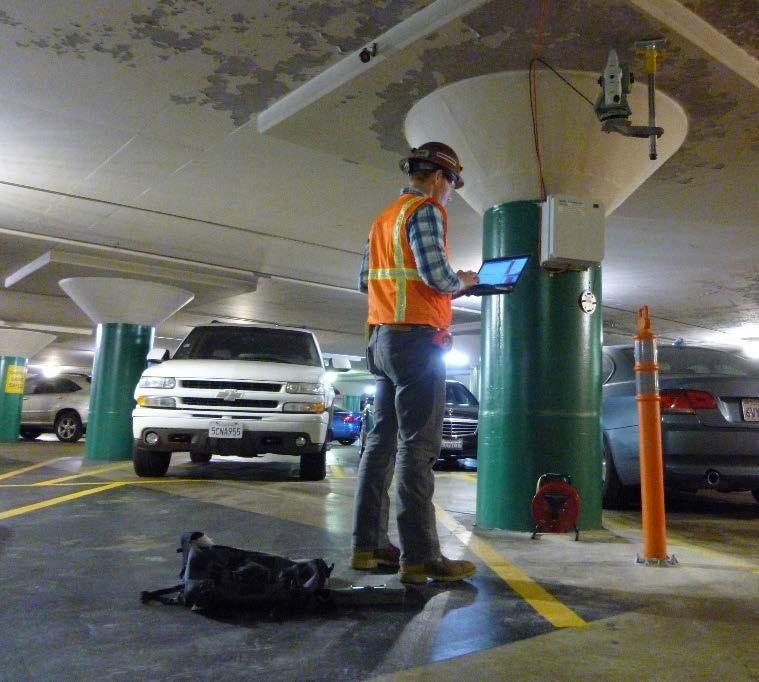
Over the past 25 years, I have experienced firsthand the evolution of how geotechnical instrumentation is designed and deployed to measure and monitor field conditions on projects such as landslides, deep excavations, dams, and urban tunneling. The timing of instrumentation deployment runs the spectrum of pre-construction, construction, and post-construction in order to measure changes to groundwater, ground conditions, or structures.
The fundamentals of traditional instruments such as piezometers, inclinometers, extensometers, and surface surveys have not changed, yet the data they produce remain as valuable as ever to designers, owners, and stakeholders. My hope is owners and stakeholders will continue to embrace new approaches to implementation and analysis of geotechnical instruments and data.
Technology Advances in Instrumentation
Innovation in geotechnical instrumentation over the past two decades has been driven by improvements in communication technology, the miniaturization of sensors, and increasing availability of computing resources. Here are some examples:
Wireless and Automated Data Loggers:
The proliferation of wireless and/or automated data loggers enables the collection of continuous time-series data at a far lower cost per data point compared to campaign-style data collection. In most, if not nearly all, present-day use cases, wireless telemetry is now table stakes.
MEMS Sensors: The use of micro-electro-mechanical systems (MEMS) has reduced the size, weight, and power draw of most geotechnical instrument arrays (as a side note, a typical smart phone contains numerous MEMS sensors). Due to improvements in this technology, contemporary inclinometer and extensometer assemblies are more than an order of magnitude more compact than prior generations.
Instrumentation being implemented on San Francisco’s Central Subway project.
Computing Resources: Computing resources are no longer a constraint for geotechnical instrumentation data storage, display, and analysis. Depending on the manufacturer, some devices rely on cloud-based data reduction and processing, while other devices perform data reduction in the field. Using Geographic Information System (GIS) and Application Programming Interface (API) enables rapid deployment of custom web portals or integration with existing systems.
Choosing the Right Instruments
Application, Cost & Timing
The decision tree for selecting the appropriate technology depends on the application and whether immediate access to data and alerts is required by a project.
The following are the key parameters I look for when designing a geotechnical instrumentation package: what, why, and how long do we have to measure, and how those variables feed into a cost–benefit analysis. For example, if it costs $1,000 per trip for personnel to go in the field, manually measure a few instruments each time, and analyze the results, there comes a point when it will be more cost-effective to install data logger(s) and wireless telemetry.
Emerging Techniques
Global Navigation Satellite Systems (GNSS)
Sensor Arrays, InSAR (Interferometric Synthetic Aperture Radar) and Artificial Intelligence (AI)
Given the availability of manufacturers with new devices, an emergent technique in data collection is the use of small arrays of single-point GNSS sensors. Continuously measured GNSS data for a given set of points is collected, uploaded to the cloud, and post-processed. The use case is applicable when there are few points requiring monitoring for short to medium durations, where the use of robotic total stations is not cost effective.
On the opposite end of the spectrum are InSAR services. The unique aspect of InSAR is its ability to function like a time machine. My first hands-on exposure with InSAR was with the individuals who developed InSAR for use in geologic sciences at UCLA and the Jet Propulsion Laboratory over 25 years ago; now practitioners and owners are embracing commercially available InSAR services. Most recently, Delve Underground utilized InSAR to support baseline monitoring at Lower Alemany in San Francisco and projects with LA Metro. InSAR can monitor large swaths of area, provided that lag time in having data in-hand is not a concern.
Another emerging area is the use of artificial intelligence to enhance how geotechnical instrumentation data is analyzed and applied. Delve Underground is already using machine learning tools to illuminate trends in monitoring data and, where appropriate, develop forecasts of ground movement and groundwater levels that can support more informed construction decision-making.
Long-term Trends & Data Analysis
For many projects, the intent of monitoring is to evaluate long-term trends of ground or structure movement. Current sensor packages are sensitive enough to measure cyclic variations such as regular structure movement as a function of temperature/time of day.
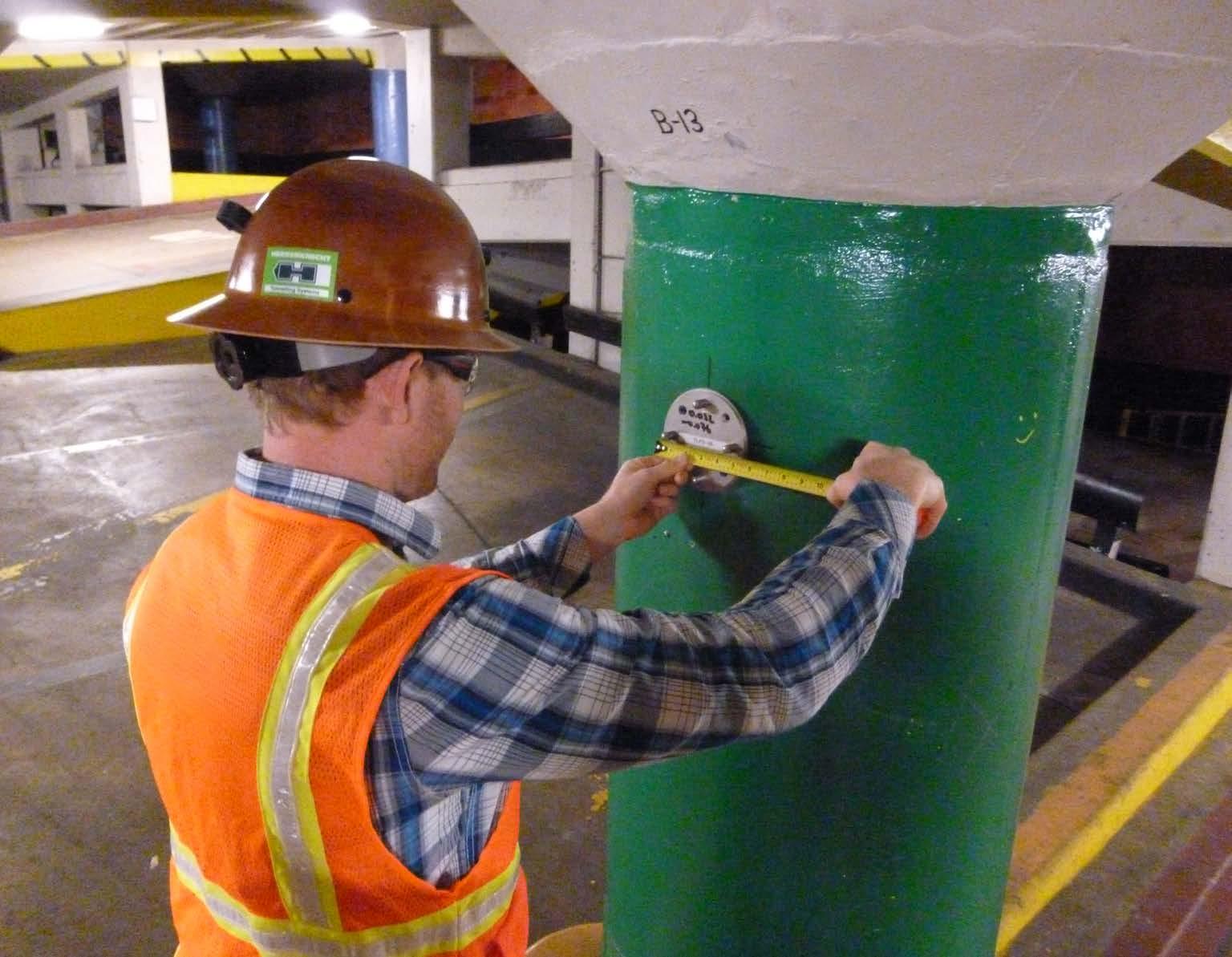
The team at Delve Underground developed and are implementing machine learning tools to daylight trends in geotechnical instrumentation data and, as appropriate, develop ground movement and groundwater level forecasts based upon the trends in order to inform construction. These tools are being applied in Roseton, New York.
Two devices spawning from deep tech that may soon enter the market are sensors that enable location measurement and relative movement from dead-reconning or from wireless positioning that delivers sub-millimeter precision. Neither technology
requires line-of-sight or GPS, and both could occupy a unique niche in geotechnical and structural monitoring. I’m excited to see these advances eventually hit the market.
As a good friend once pointed out, those of us who have been in the industry for decades are analog children living in a digital world. We embrace the notion of being able to bring together the best of old and new. I encourage anyone who wants to talk or pilot emergent geotechnical instrumentation technologies to reach out to our team at info@delveunderground.com.
Instrumentation being implemented on San Francisco’s Central Subway project.
Beyond Wine
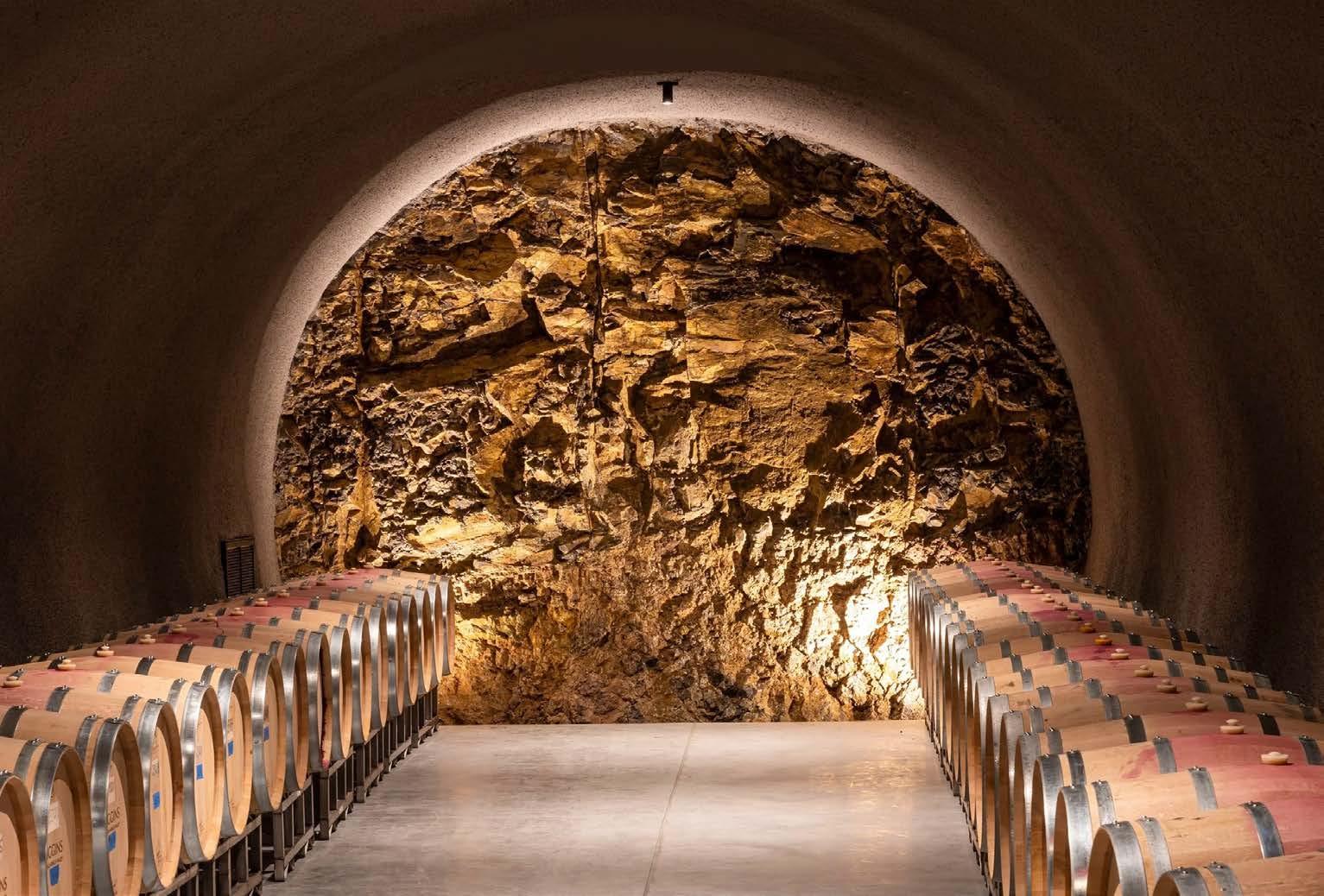
For more than two decades, Delve Underground has been at the forefront of designing complex underground spaces on privately owned sites. While our early work was closely associated with wine caves and underground event spaces throughout California’s wine regions, our practice has evolved alongside our clients’ ambitions. Today, we apply the same technical rigor and creativity that shaped iconic commercial winery caves and tasting rooms to a much broader range of private underground environments by supporting new ways to live, gather, work, and experiment below ground.
Our experience with underground wine facilities established a strong technical foundation. These projects required careful integration of geotechnical engineering, structural design, excavation sequencing, groundwater control, and long-term durability. Over time, that expertise has translated naturally into
other private underground applications, including residential caves, wine libraries, wildfire refuges for homes, underground research and agricultural facilities, personal event spaces, hobby tunnels, and even private amusement and recreation environments.
Many of today’s private underground projects are driven by needs that extend well beyond storage or production. Clients are seeking enhanced ways to provide a unique and personal experience while maintaining resilience to wildfire and seismic hazards, stable environmental conditions, privacy, security, and creative architectural freedom unconstrained by surface zoning or visual impacts. When planned and designed correctly, underground space offers compelling solutions to all of these objectives.
Wine Cave Tasting Room, Figgins Family Winery, Walla Walla, Washington


FEATURE STORY by Kush Chohan, PE, GE and Dingxin Cai, PE
Designing Private Underground Living and Working Spaces for the Next Generation
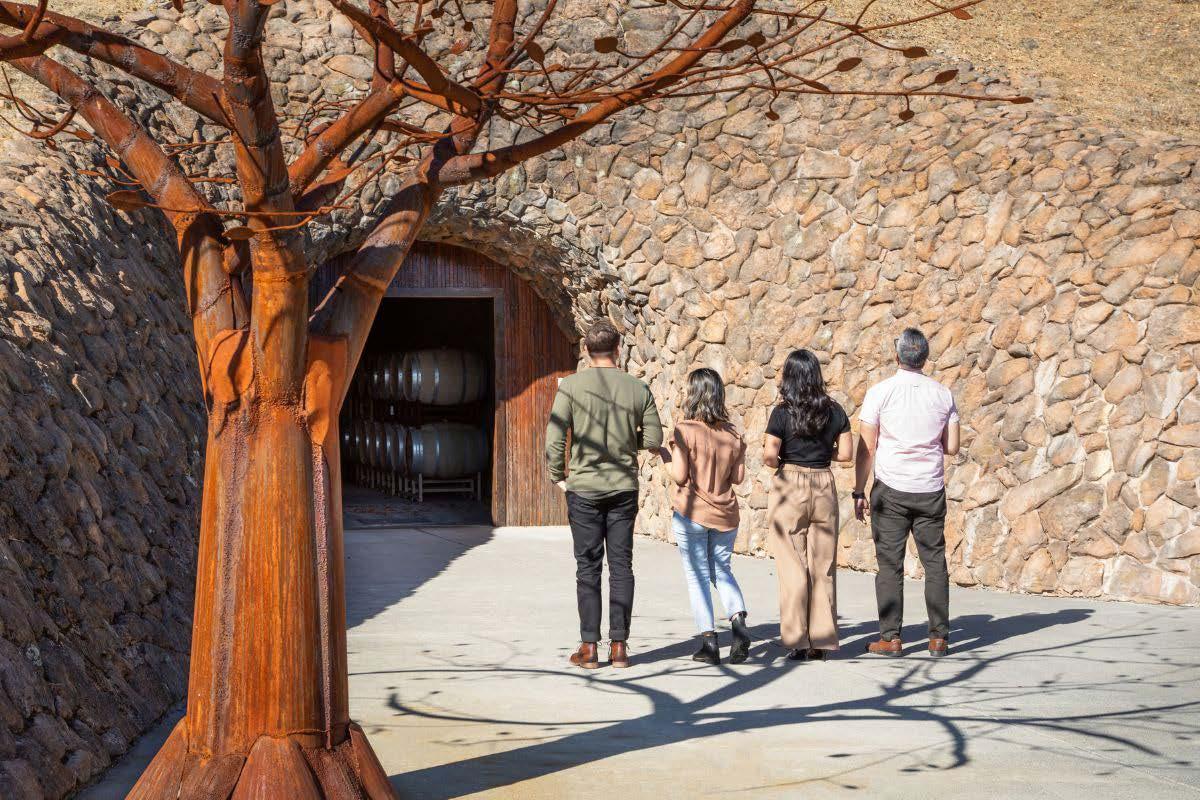
Delve Underground supports both excavated (mined) and cut-and-cover construction methods, tailoring the approach to site conditions, depth, ground type, and intended use. In hard rock environments, projects may employ drill-and-blast or mechanical excavation with shotcrete linings. In softer ground or shallow residential settings, reinforced concrete
structures constructed within temporary excavation support are often the most efficient solution. Our teams routinely design both the temporary excavation support systems and the permanent structural linings, allowing the project to move seamlessly from concept through construction.
Tunnel Entrance at Baldacci Winery, Napa, California
These
projects required careful integration of geotechnical engineering, structural design, excavation sequencing, groundwater control, and long-term durability.
Private underground projects often involve unique permitting, constructability, and risk considerations. Delve Underground provides integrated services that address these challenges holistically, including:
} Project management from cradle to grave
} Building department planning and approval
} Geotechnical characterization and ground behavior assessment
} Excavation and temporary support design
} Final structural lining systems
} Drainage, waterproofing, and durability design
} Construction sequencing and risk mitigation
} Coordination with surface grading, utilities, and access
By managing these elements in-house, we help streamline approvals, reduce interfaces, and maintain clear accountability throughout the design process.
One of the enduring advantages of underground space is its inherent environmental stability. Constant temperatures and humidity reduce or eliminate the need for active climate control, making underground environments ideal for wine storage, agricultural research, and sensitive equipment or collections. These same characteristics support emerging uses such as underground food production and controlled-environment research facilities.
In residential and personal-use applications, underground construction offers exceptional protection from wildfire, extreme weather, and seismic events. Thoughtfully designed underground residences and retreats can provide long-term resilience while blending discreetly into the surrounding landscape.
While wine caves remain an important part of our legacy, Delve Underground’s private-sector work now spans a diverse and growing set of applications. From intimate wine libraries and personal gathering spaces to expansive underground complexes supporting research, recreation, and resilient living, our role remains the same: to translate our deep tunneling and underground expertise into practical, elegant solutions tailored to each client’s vision.
As interest in private underground development continues to expand, Delve Underground is proud to help shape what’s possible below the surface.
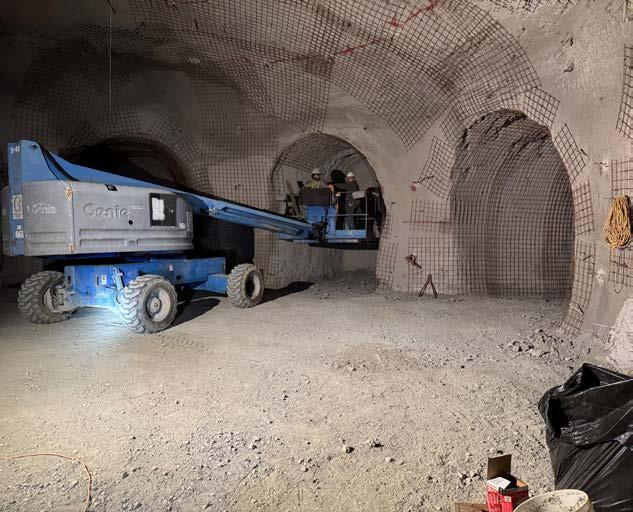
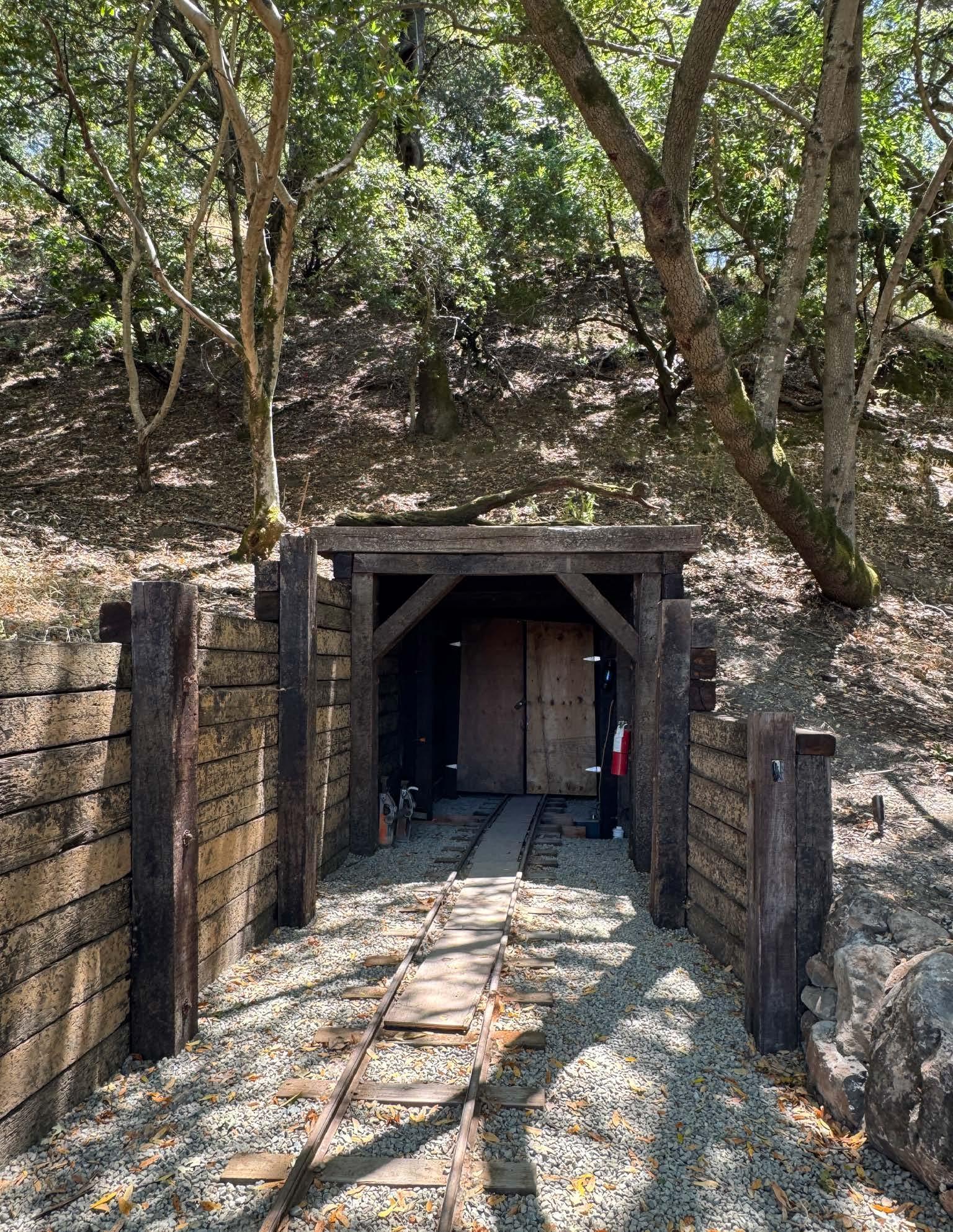
(Above) Final lining installation of underground residence, Northern California; (Right) Tunnel Portal for Residential Rail Tunnel, Northern California
Delve Underground is a leader in heavy civil engineering, serving the water, wastewater, transportation, and energy sectors. We offer comprehensive design, construction management, and dispute resolution capabilities. Founded in 1954, Delve Underground is an employee-owned firm with 25 offices and 350 team members throughout the United States, Canada, Australia, and New Zealand.
We appreciate your feedback. Send it to segments@delveunderground.com