Delve Underground 2024
Paragon & Groundbreaker Awards
Delve Underground takes pride in recognizing our employees each year with prestigious awards that celebrate innovative leadership and outstanding teamwork across the company. Each of these awards is given to an employee who is nominated by colleagues and selected by a committee of executive leaders and regional managers.


Paragon Award
The Paragon Award is given to an employee who maintains a positive attitude, works with strong principles, displays a high level of fairness and professionalism, pays great attention to detail, and is a valuable team player. The 2024 Paragon Award winner is Carly James, an Accounting Specialist based out of our Seattle office with over 6 years of accounting experience.
Groundbreaker Award
The Groundbreaker Award is given to an employee who demonstrates creativity and innovation, has meticulous attention to detail, possesses strong intuition, and is a valued mentor and inspiration to others. A Groundbreaker embodies the spirit of embarking on new endeavors with enthusiasm and determination. The 2024 Groundbreaker Award winner is Denis Tepavac, a Lead Associate based out of our Melbourne office with 14 years of experience in tunneling on a wide range of transportation, water, and wastewater projects, both in Australia and internationally.
Staff Recognition
Several Delve Underground team members recently contributed to industry conferences and events through technical sessions and short courses.
At the Cutting Edge Conference, Kush Chohan, PE, GE, PMP presented a technical session “Engineering Design & AI: Challenges, Opportunities & The Status Quo.”
Denis Tepavac, CP.Eng and Kristian Nelson, CPEng, PEng., IntPE gave a presentation on the Design and Construction of North East Link’s Tunnels Using the Sequential Excavation Method (SEM) for the New Zealand Tunnelling Society and the New Zealand Geotechnical Society at the University of Auckland.
Chris Nelsen, PE participated in the “Cutting Carbon Before Operation: Addressing Embodied Emissions” session as part of the Institute for Sustainable Infrastructure (ISI) Annual Conference.









Laura Miles, PE, DBIA and Colorado School of Mines alum taught a “Contracting Methods and Project Delivery Options” course at the school’s Tunneling Short Course: Tunneling Fundamentals, Practices, and Innovations.
In collaboration with Engineers Australia and the Young Members Committee of the Australasian Tunnelling Society Victorian Chapter, Heather Hughes-Adams, P.Eng., and Brooke Carnes, CP.Eng presented on North East Link SEM Ventilation Tunnel and Adit Construction.
Sarah Mills presented “Trenchless Replacement of Aging Sewer Trunk Main in Sonoma, California” and Su Soe, PE, GE presented “Trenchless Replacement of Aging Force Main in the Russian River Gorge” at the 18th Annual WESTT NASTT No-Dig Conference and Good Practice Course.
Congratulations to the following staff members who have achieved significant career milestones.

Jon Ingram, CEG earned his California Certified Engineering Geologist (CEG) license. Jon is a Project Engineering Geologist based in our Portland office.
Su Soe, PE, GE earned her Geotechnical Engineer (GE) license from the Board for Professional Engineers, Land Surveyors, and Geologists. Su is a Senior Project Engineer based in our Walnut Creek office.
Congratulations to the following employees who were recently promoted to Principal.


Jeannine Alexander, CPSM
Kush Chohan, PE, GE, PMP
Beata Christoforou, PE
Emily de Robillard
Luke Erickson, PE
Thomas Finnegan, PE
Allison Halvorson, CPSM





Finnegan
de Robillard
Chohan
Tepavac Nelson
Nelsen
Hughes-Adams Carnes
Mills Soe
Miles
Alexander
Ingram
Soe
Erickson
Christoforou
Halvorson
Chohan
LA Metro’s Westside Purple Line Extension Section 2 Construction
The year 2024 was a busy one for the Los Angeles County Metropolitan Transportation Authority’s (LA Metro) Westside Purple Line Extension (WPLE) Section 2 Project. After successfully completing the tunneling of the 2.59 miles (4.17 km) of twin-bore tunnels on January 12, 2023, significant progress was made to advance the project toward its goals. Key achievements include the completion of the excavation, initial lining, and permanent cast-in-place (CIP) concrete work for all 14 cross passages and the completion of all first-stage inverts and CIP concrete walkways within the running tunnels. Also of note are the efforts made on the difficult task of disassembling and removing both tunnel boring machines (TBMs) from within the tunnel.
PROJECT UPDATE by Jake
Taylor
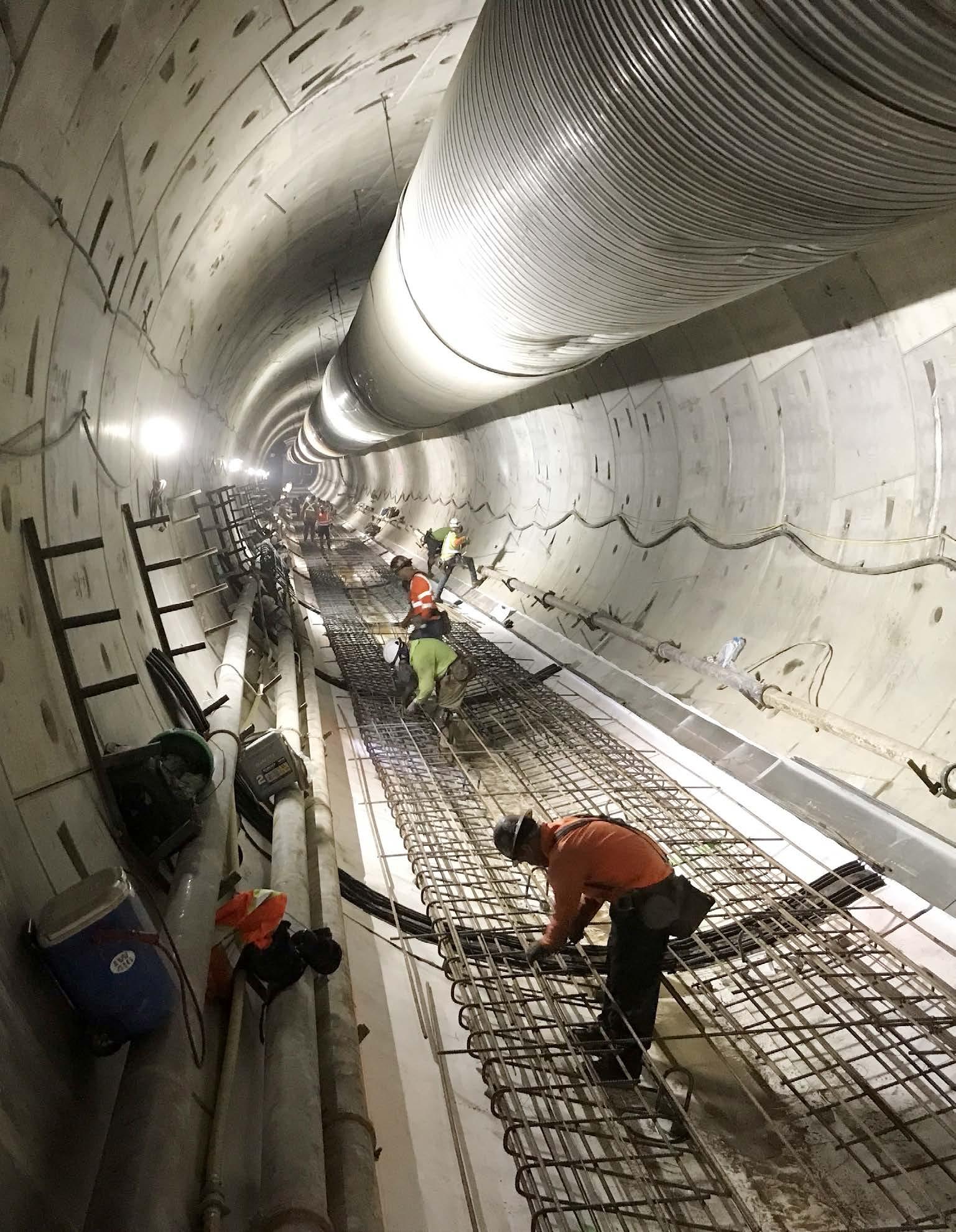
CIP Invert & Walkway Construction
The first stage of the CIP invert and CIP walkway work began in late February 2024, with completion scheduled for January 2025. The first stage of the CIP invert placement averaged 240 feet per day, while the CIP walkway placement averaged 150 feet per day utilizing a traveling form system.
Cross Passage Excavation
Cross passages were excavated utilizing the sequential excavation method (SEM). Cross passage excavation commenced at the west end of the tunnels in September 2022, at cross passage 40, and progressed to the far east end of the tunnels, to cross passage 27, which was completed in December 2024. Excavation of the cross passages presented significant challenges, including:
} Excavation beneath busy streets in a densely populated urban environment
} Excavation below the groundwater table
} Excavation through coarse-grained sands and gravels at some locations
The contractor initially installed dewatering wells at each cross passage as their only means of ground improvement. When it became apparent that dewatering alone would not suffice to allow for safe SEM excavation, the contractor also chose to treat the ground with chemical grout. The choice of whether chemical grout was needed at each cross passage was based on an observational approach using probe drilling.
TBM Disassembly & Removal
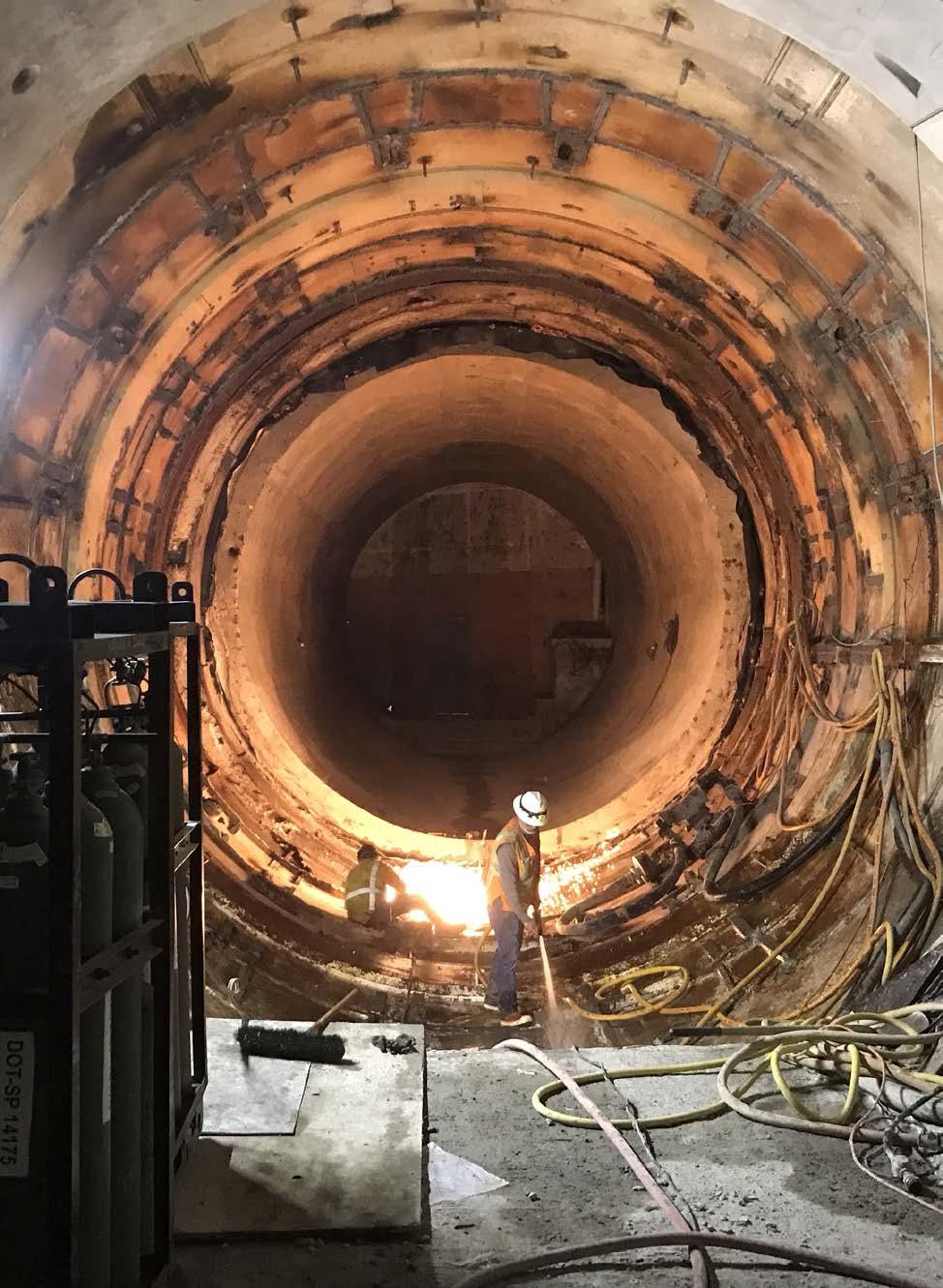
TBM disassembly started in May 2024. Disassembly and removal of the first machine (leaving the TBM shield in place for ground support at the connection to WPLE Section 1) was completed in early November 2024 with the contractor now focusing efforts on completing the structural tie-in work necessary to make the final connection to the Section 1 tunnel. Disassembly and removal of the second TBM is ongoing and should be completed in February 2025.
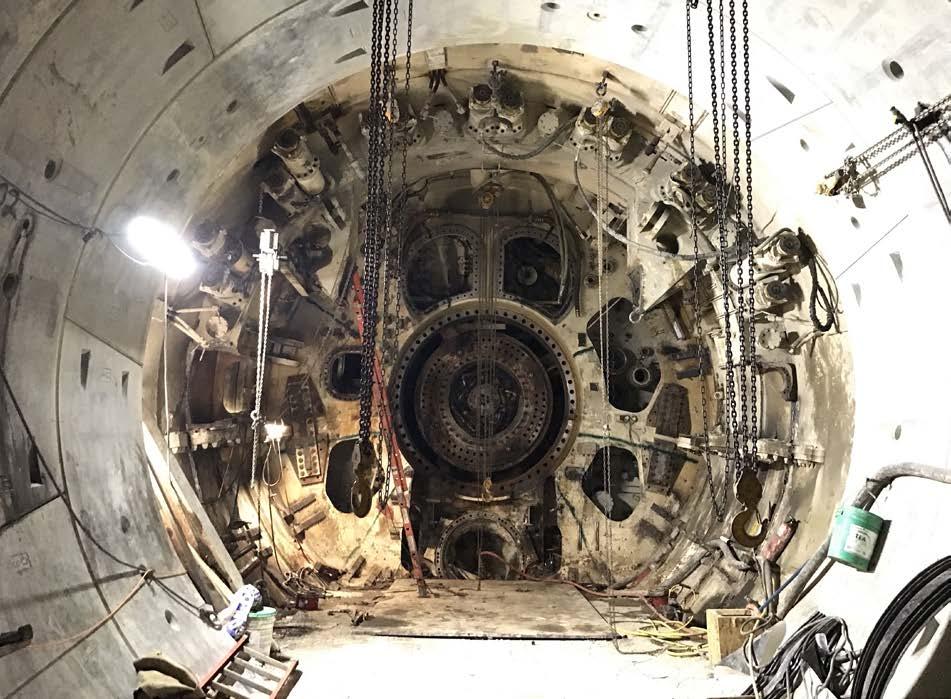
TBM disassembly within the tunnel
Beverly Hills
Wilshire/ La Brea
Wilshire/ Fairfax
Wilshire/ Rodeo
Westwood /UCLA
Wilshire/ La Cienega
Century City/ Constellation
Project Background
The design-build contract for Section 2 was awarded in 2017 to a joint venture between Tutor Perini and O&G Industries. The Purple Line 2 CM Partners Joint Venture—led by AECOM, SafeworkCM, Morgner and TEC, with Delve Underground as the lead tunneling and geotechnical consultant—is providing construction management support to LA Metro.
Progress at Underground Stations
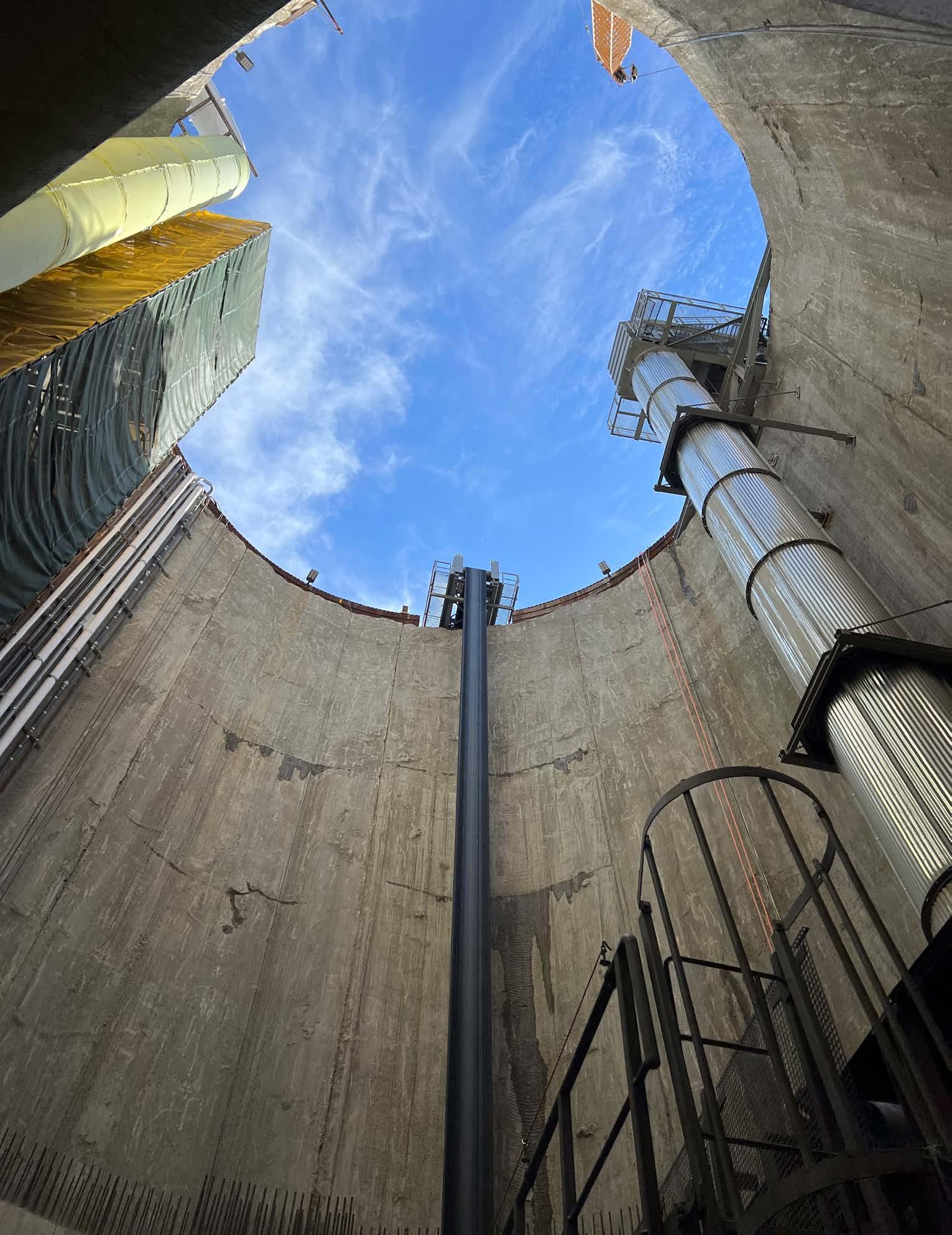
Both underground stations— Century City and Wilshire/ Rodeo—also saw considerable progress in 2024. Concrete placement progressed from the platform to concourse levels and up to the arched roofs. By the end of 2024, the arched roof at Century City Station was nearly complete, while backfilling above the arched roof at Wilshire/ Rodeo Station had begun. The only remaining excavation work at the stations is now the various appendages, e.g., exhaust air shafts and traction power supply shafts, which were at various stages of completion by the close of 2024. Mechanical, electrical, and plumbing installation commenced at both stations.
Looking Ahead in 2025
In 2025, the focus will shift to stations and tunnel MEP systems installation, and the installation of the permanent track. These efforts will bring the project closer to its anticipated completion in late 2026.
Connection between PLE
Section 1 and Section 2
Lower Alemany Area Stormwater Improvements
The San Francisco Public Utilities Commission’s (SFPUC) combined sewer system is designed to collect and treat wastewater (sewage and stormwater). The SFPUC’s commitment to protecting the community and environment includes actively upgrading and modernizing this system through the Sewer System Improvement Program, which includes projects aimed at reducing flood risks.

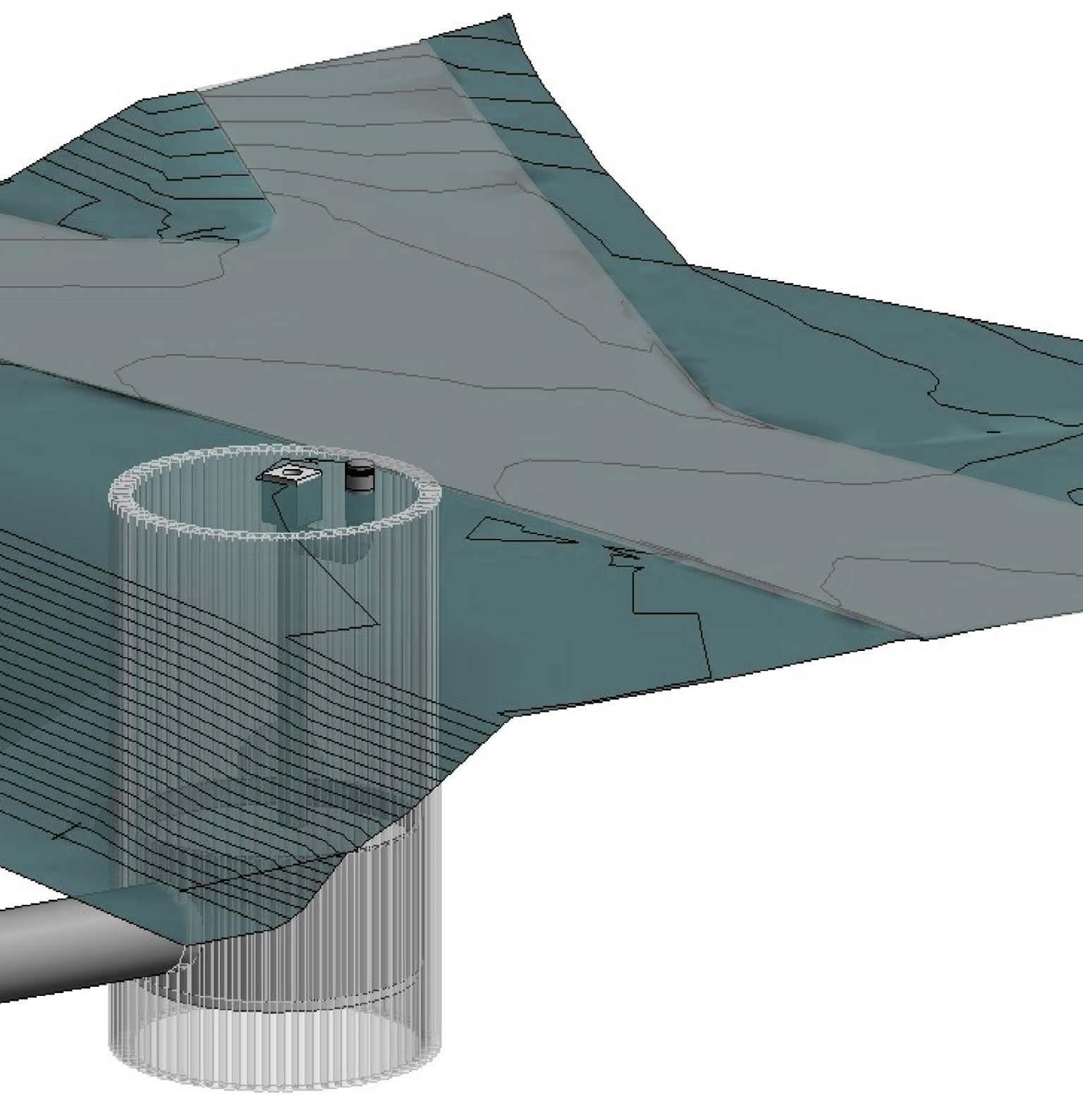
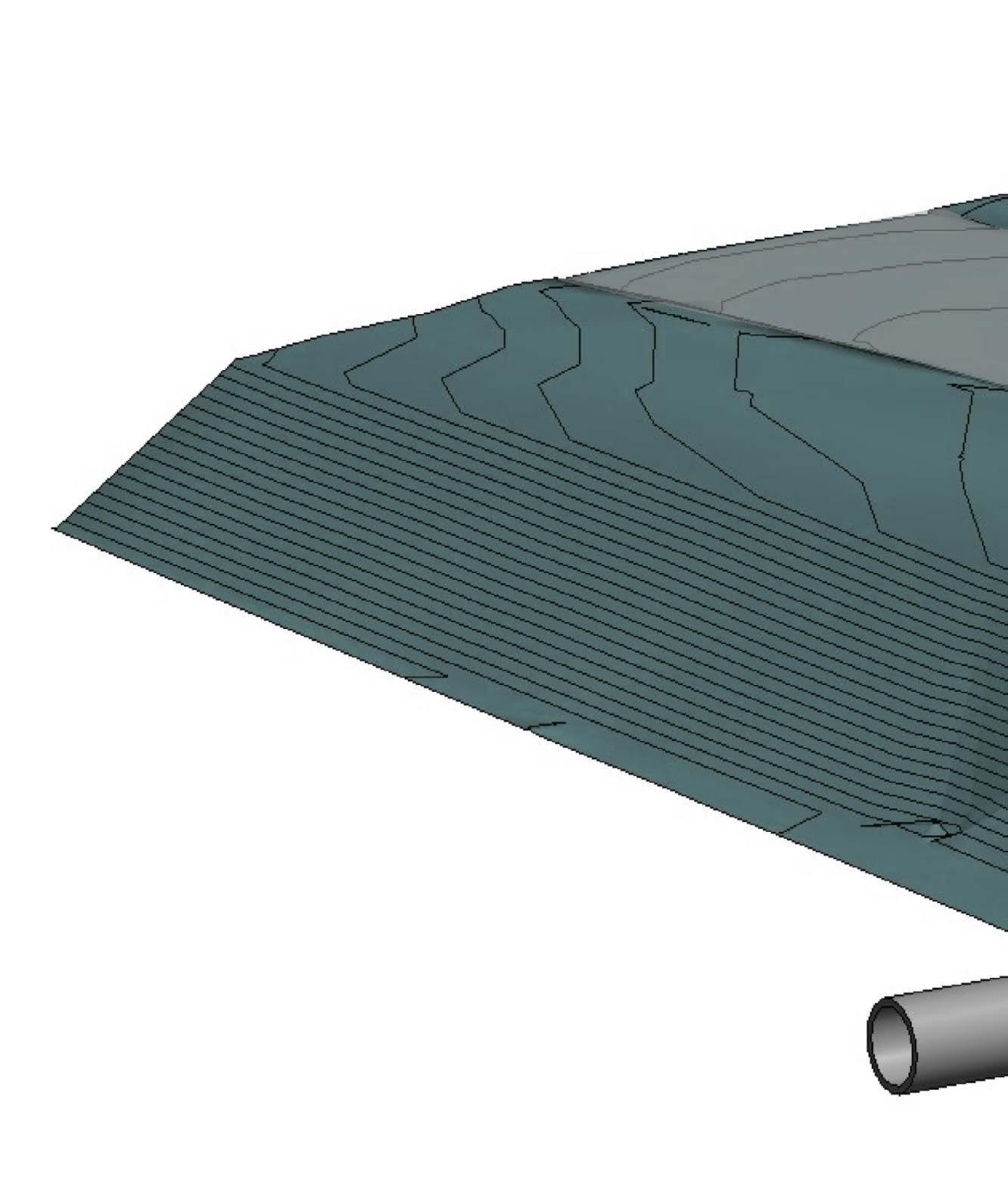
Rendering of the 40-foot-diameter Bayshore Shaft shows the West Drive tunnel extending under US 101, along with the finished access and vent shaft, illustrated using Revit.
The Lower Alemany Area Stormwater Improvements Project’s focus is to improve stormwater management and reduce flood risks near the Lower Alemany Farmer’s Market, the Interstate 280/US 101 Highway interchange, and the surrounding neighborhood. The project involves a 10-foot-diameter underground sewer tunnel known as the Alemany Auxiliary Sewer (AAS). The AAS will extend from the new upstream diversion structure in Alemany Boulevard between Congdon and Stoneybrook Avenue to Industrial Street via Alemany Boulevard, Gaven Street, and Boutwell Street. Dry weather flows will continue in the existing sewer. When the area is hit with a rainstorm, the water levels in the existing sewer will rise, topping a weir, allowing the combined sewer flows to split, thereby relieving the existing sewer downstream. The existing sewer will have additional capacity, which in turn will alleviate local flooding of the area of the 5-year, 3-hour storm. Construction will involve three shafts to construct the tunnel and other sewer connections and related improvements in the area.
The main construction site will be adjacent to Bayshore Boulevard within Caltrans’ right-of-way. The site will host a 40-foot-diameter construction shaft built half within alluvium and half within rock (Franciscan Formation). The shaft will be the starting point for two tunnel drives— the North and West Drives.
Jacking/Receiving Shafts
Proposed tunnel alignment in the project neighborhood Project Map
The 836-foot-long North Drive will be mined entirely within rock with one significant 1,000-foot-radius horizontal curve. The North Drive will curve onto Boutwell Street and cross under the northbound and southbound lanes of Interstate 280 before exiting at the Boutwell Shaft. The Boutwell Shaft is the transition point between the 10-foot ID circular tunnel and the 990-foot-long, 13-foot-wide by 7-foot-high cut and cover box sewer. The 5,470-foot-long West Drive extends west from the Bayshore Shaft under the northbound and southbound lanes of US 101 onto Gaven Street, then onto Alemany Boulevard before exiting into the Alemany drop shaft. The West Drive will be mined through alluvium under US 101 for about 1,100 feet before transitioning into rock for the rest of the drive. The West Drive includes several 1,600-foot-radius curves to remain within the limits of the City right-of-way.
The tunnel portion of the contract has been set up to allow the 10-foot ID tunnel to be constructed using a tunnel boring machine (TBM) with one or a combination of lining systems. The contractor will be allowed to use a precast bolted concrete segmental lining erected in the tail shield of the TBM or to use a concrete jacking pipe installed and jacked from the Bayshore Shaft. The 10-foot ID is a size that could be considered too small for segmental linings and too large for jacking pipe. With the long West Drive, it is possible the tunnel contractor could start out jacking pipe before transitioning to a segmental lining to finish the drive.
The environmental documentation for the project will be finalized in the first quarter of 2025. A design submittal will be made to Caltrans to obtain their acceptance of the tunnel crossings under US 101 and Interstate 280 before finalizing the design. The current schedule is to go to bid in Q4 of 2025 after obtaining Caltrans encroachment permits, with construction starting in 2026.
Boutwell Shaft
Bayshore Shaft
Alemany Shaft
Delve Underground is the prime consultant for the SFPUC, providing tunnel engineering and design services to construct the new sewer tunnel, which will connect the existing sewer to the existing junction structure at Industrial Street and Barneveld Avenue.
The project is located in the southern part of San Francisco.

FEATURE STORY by
By Mark Dempf, PE, ENV SP
Delve Underground’s Construction Management Highlights Future Building the
Effective construction management ensures safe and efficient project execution. Delve Underground partners with project owners, contractors, and designers to deliver cost-effective, high-quality implementation of designs.
With expertise as designers, construction managers, contractors, and construction claims specialists, we anticipate challenges and develop solutions to maintain progress. Leading multidisciplinary teams, we provide services from pre-bid analyses, cost estimating, and risk assessments to on-site staffing, including construction managers, resident engineers, and QA/QC inspectors.
In addition to LA Metro’s Westside Purple Line Extension Section 2 (see article on page 4), Delve Underground is currently providing construction management services on several large infrastructure projects, including the Queens–Brooklyn Water Supply Tunnel (New York City Department of Environmental Protection), Annacis Water Supply Tunnel (Metro Vancouver), Stanley Park Capilano 5 Watermain Tunnel (Metro Vancouver), and Shoreline Storage Tunnel (Northeast Ohio Regional Sewer District). Read further for updates on these critical infrastructure efforts.
Queens–Brooklyn Water Supply Tunnel
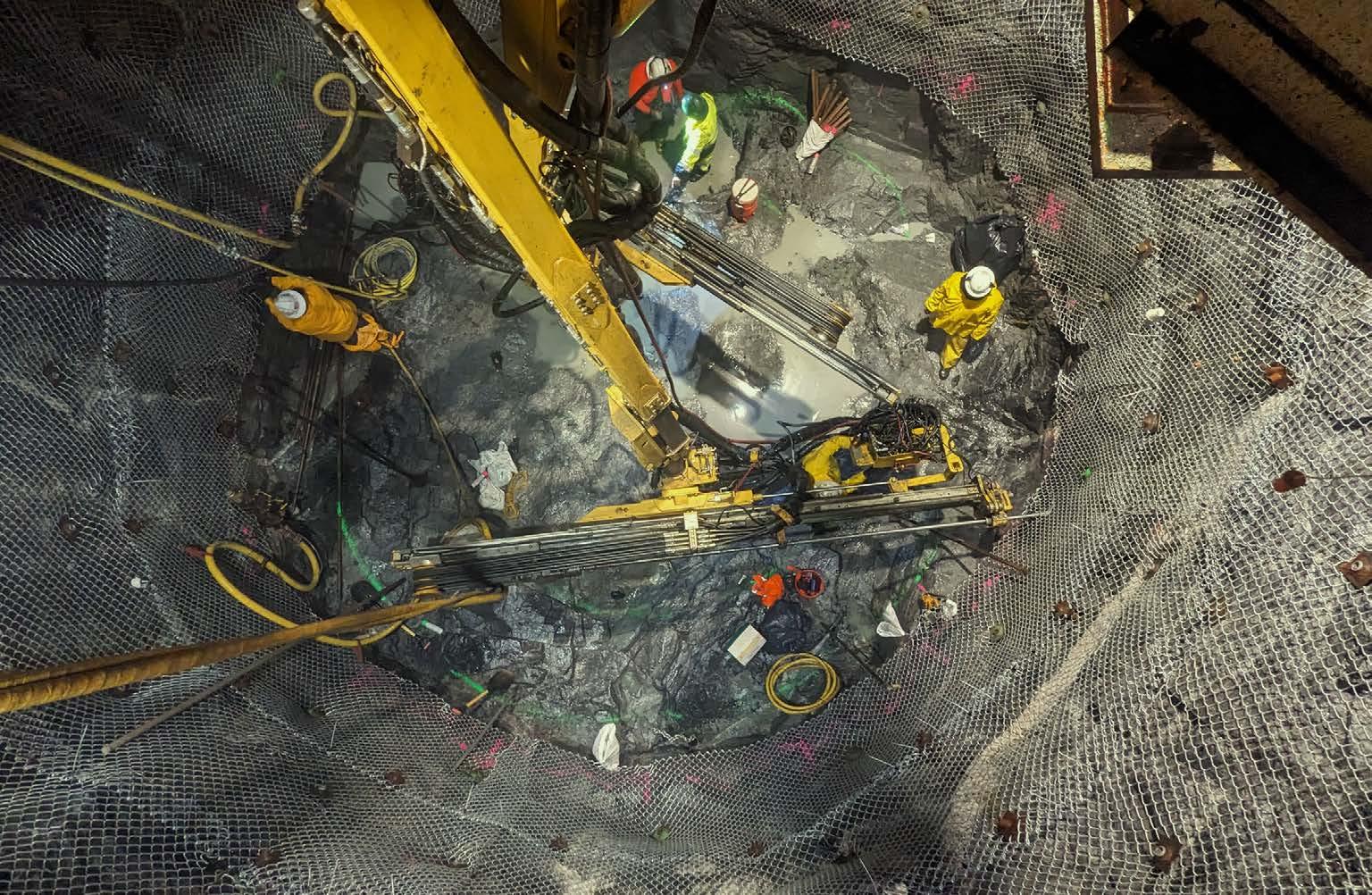
Crew installing 8-foot Swellex bolts at Shaft 17B-1 utilizing Komatsu Shaft Jumbo
Delve Underground, in a joint venture with STV, is providing construction management services to the New York City Department of Environmental Protection for the Queens–Brooklyn segment of City Tunnel No. 3. Services include resident engineering, inspection, office engineering, and commissioning for the water distribution systems.
Phase 1 (Contract C547A) involves constructing Shafts 17B-1 and 18B-1 using ground freezing and drill-and-blast methods, with rock support, waterproofing, and reinforced concrete lining, tunnel connections at both shafts, and inspection and repairs to the 11.5-mile (18.5 km) tunnel segment. Phase 2 (Contract C547B) will add underground distribution chambers, equipment, and a sophisticated control system to integrate with the city’s water infrastructure, as well as rehabilitation of the existing seven shafts and construction of a downtake structure from City Tunnel Number 2 to Staten Island.
Delve Underground is providing the construction manager, assistant resident engineer, lead inspector, and supervising engineer for shaft construction; subject matter experts for both ground freezing and drilling and blasting; senior inspectors; inspectors; and office engineering support of construction, performing professional engineering and inspection services for the construction work on this project.
As of January 2025, both shafts have been excavated to approximately 78%, and the final liner placed from 50% at 18B-1, to nearly 70% at 17B-1. Tunnel breakthrough is anticipated by the end of 2025, with the final riser pipe installation scheduled for completion by February 2027.
Shoreline Storage Tunnel
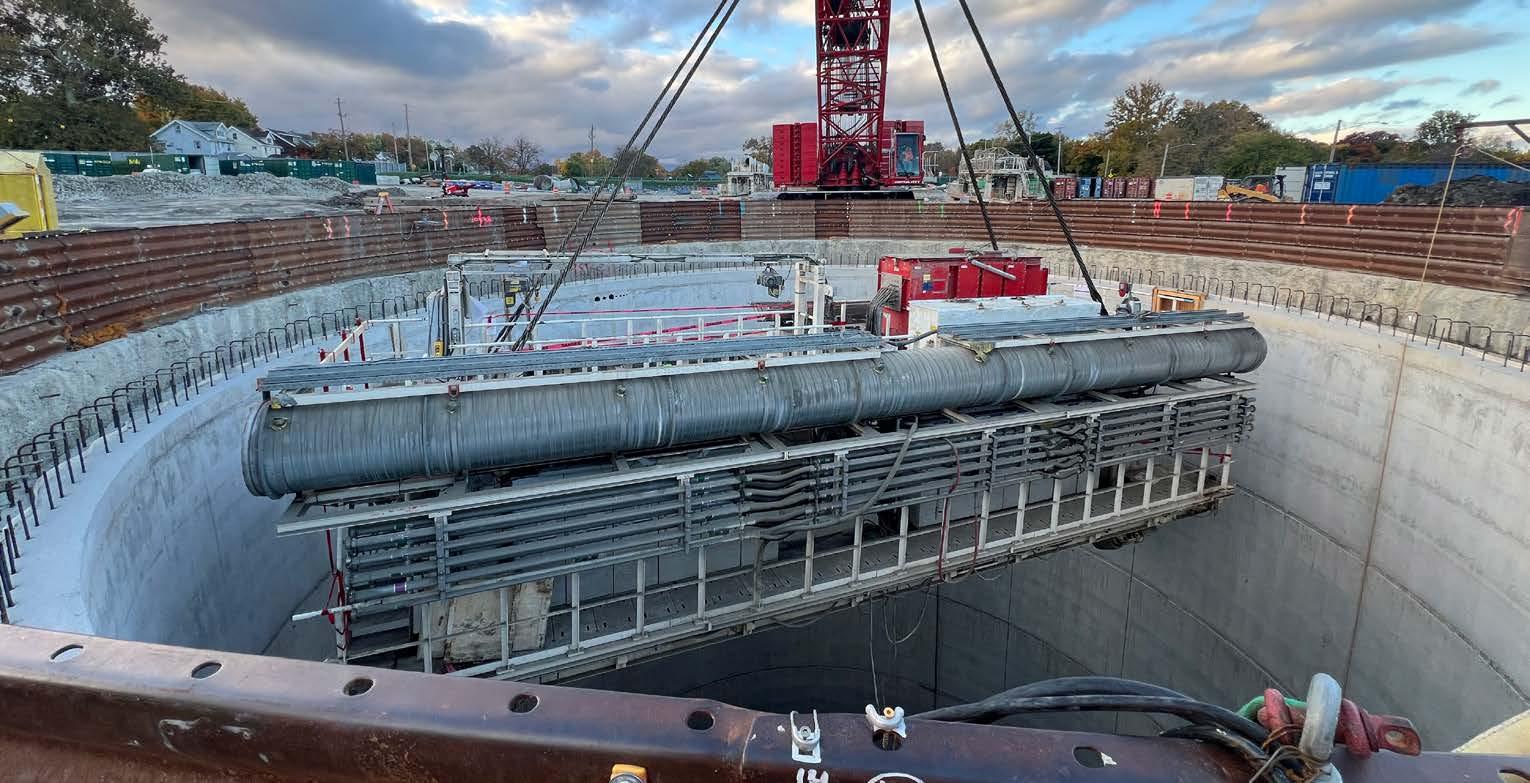
The Shoreline Storage Tunnel (SST) project is part of Project Clean Lake, a $3 billion, 24-year program that the Northeast Ohio Regional Sewer District (NEORSD) began in 2011 to meet Clean Water Act standards and address water quality issues. The SST is the fifth of seven new large-diameter tunnels, along with other projects that NEORSD will use toward Project Clean Lake’s overall goal to reduce the 4.5 billion gallons (17 billion L) of wet weather combined sewer overflows (CSOs) released into Lake Erie and its tributaries in the Greater Cleveland area.
The SST includes nearly 2.7 miles (4.3 km) of 23-foot-diameter (7 m) soft ground tunnel 100 to 120 feet (30–37 m) below ground that will capture and store overflows from CSO outfalls along the Lake Erie shoreline. The SST will then convey these overflows to other NEORSD tunnels and sewers, which will transport flows to the Easterly Wastewater Treatment Plant for treatment before they are released into the environment.
Construction of the SST was awarded to the McNally/ Kiewit SST (MK) joint venture. NEORSD issued Notice to Proceed in July 2021 with an anticipated substantial
completion date of January 2026. After providing overall design management, including tunnel and shaft design and geotechnical engineering, Delve Underground transitioned from the design phase to the construction phase. During tunnel excavation, three Delve Underground employees were on site supporting NEORSD’s construction management personnel with construction inspection, tunnel boring machine (TBM) performance monitoring, and coordination of design services (e.g., shop drawing review, RFIs, evaluation of claims support, and change management).
The tunnel was excavated with a 26-foot-diameter (8 m) Herrenknecht earth pressure balance tunnel boring machine (EPM TBM) with a face pressure near 3.5 bar. MK designed a 6-foot-long (1.8 m) tunnel precast segment final lining. The TBM excavation was completed in May 2024. Currently, construction is ongoing to complete several near-surface structures and a hand-excavated 78-inch-diameter (198 cm) dewatering tunnel from the SST system to the existing Dugway Storage Tunnel System.
Gantry 4 being removed from SST-1
Annacis Water Supply Tunnel
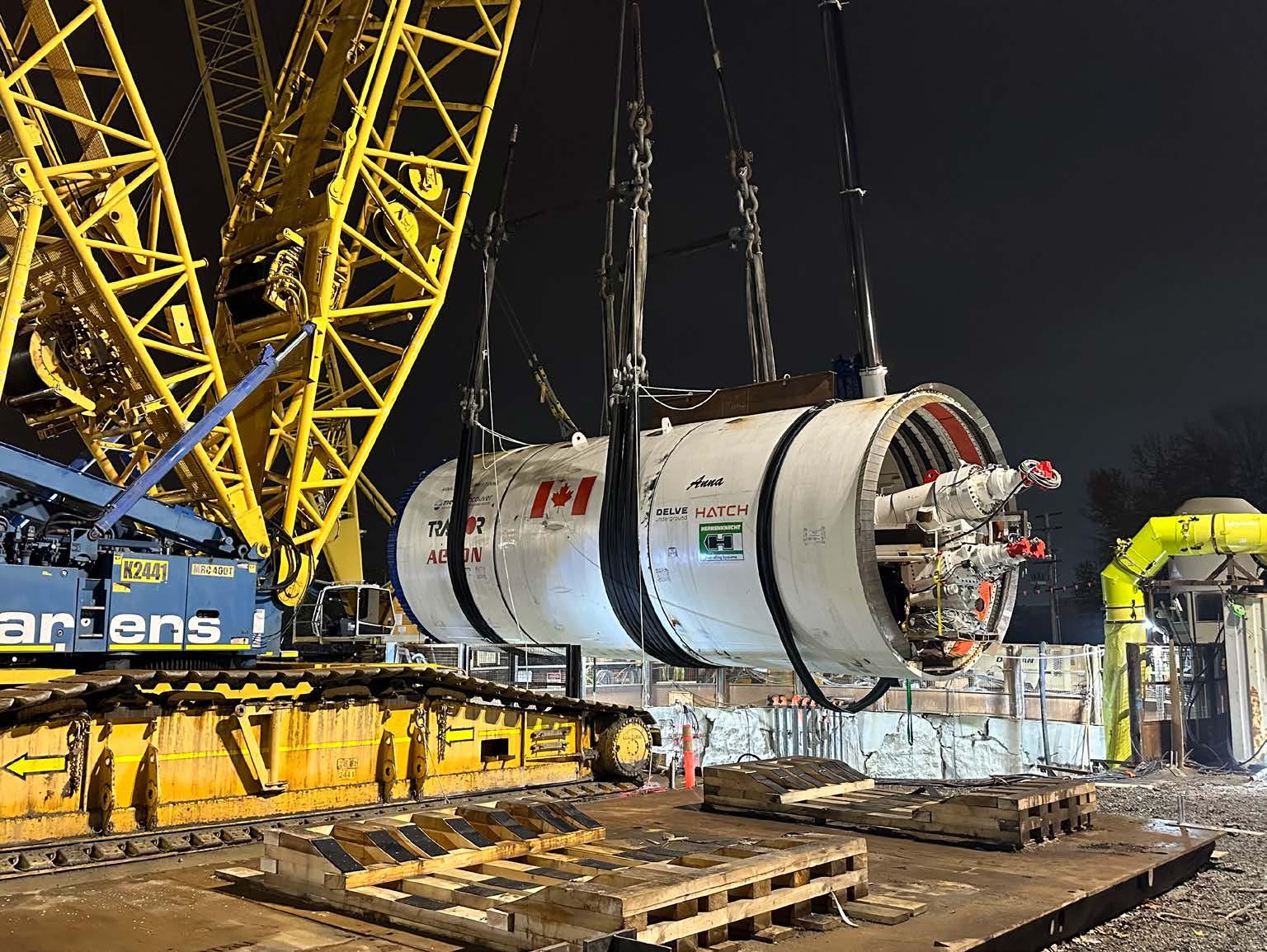
Metro Vancouver is constructing the Annacis Water Supply Tunnel deep under the Fraser River between the cities of New Westminster and Surrey. The project includes deep vertical shafts constructed on both sides of the river with a 4.5-meter-diameter (15 ft), 2.3-kilometer-long (1.4 mi) tunnel between the shafts. A 2.6-meter-diameter (8.5 ft) steel water main will be installed inside the shafts and tunnel and connected through new underground valve chambers to allow connection to the Greater Vancouver Water District water transmission system. The project will provide increased capacity to meet future demand, and the tunnel is designed to withstand river scour and remain operational during and following a major earthquake.
Delve Underground is providing construction management representing Metro Vancouver, the owner, for the project. The project team helps manage day-to-day communication between the owner, contractor, and engineer. The team also administers the contract and resolves any issues on the project, including safety, scheduling, technical, submittals, request for information, change orders, and claims.
The project is 50% complete. Tunneling started in March 2024 and is currently 70% complete. The project team anticipates hole-through in February 2025. The project is expected to be finished in November 2027.
Tunnel boring machine Anna being lowered into the launch shaft
Stanley Park Capilano 5 Water Main Tunnel
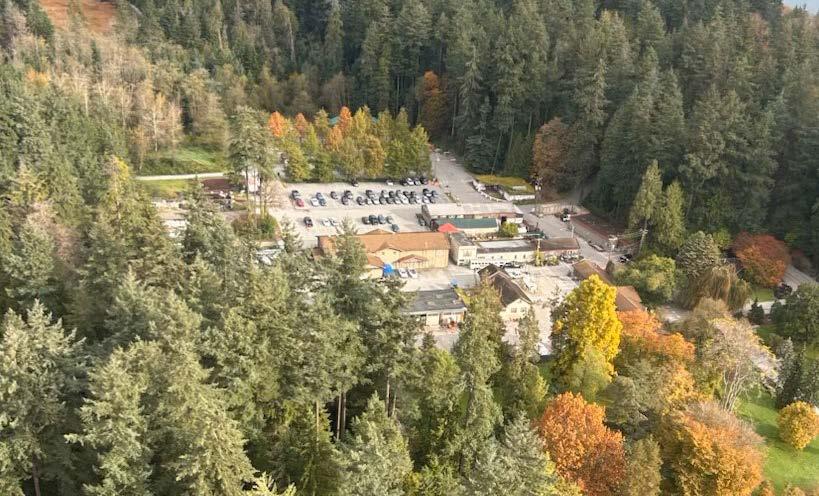
Metro Vancouver is planning the Stanley Park Water Supply Tunnel to address the region’s growing drinking water needs. This new infrastructure will replace a 1930s water main nearing the end of its service life.
The project includes a deep underground tunnel, a new water main, and two valve chambers to regulate water flow. These will connect to the existing distribution system. Three shafts will be constructed in Stanley Park for tunnel excavation, water main installation, and valve chamber construction. Shaft locations, tunnel alignment, and construction methods were chosen through extensive geotechnical, environmental, archaeological, and traffic studies.
The project team recently received a Notice to Proceed and anticipates beginning construction on site in early 2025. Construction is expected to be completed in 2029. When complete, the new tunnel will meet current seismic standards, help ensure the continued reliable delivery of high-quality drinking water to the cities of Vancouver and Richmond, and increase the capacity of the existing system for the region’s growing population.
Serving as Metro Vancouver’s construction manager and contract administrator, we manage the daily communication between the owner, contractor, and engineer, and resolve issues on the project.
Leading multi-disciplinary teams, we provide services from pre-bid analyses, cost estimating, and risk assesments to on-site construction management staffing
Overview picture of Stanley Park
Delve Underground is a leader in heavy civil engineering, serving the water, wastewater, transportation, and energy sectors. We offer comprehensive design, construction management, and dispute resolution capabilities. Founded in 1954, Delve Underground is an employee-owned firm with 25 offices and 350 team members throughout the United States, Canada, Australia, and New Zealand.
We appreciate your feedback. Send it to segments@delveunderground.com
The Segments Team
Managing Editor Allison Halvorson, CPSM
Contributing Editors Mary Brownell, Lucy Campos, Audrey Rivero
Graphic Designer Seth McGinnis
Executive Editor Victor Romero, PE, CPEng, CEG, ENV SP