Beyond the BORDER



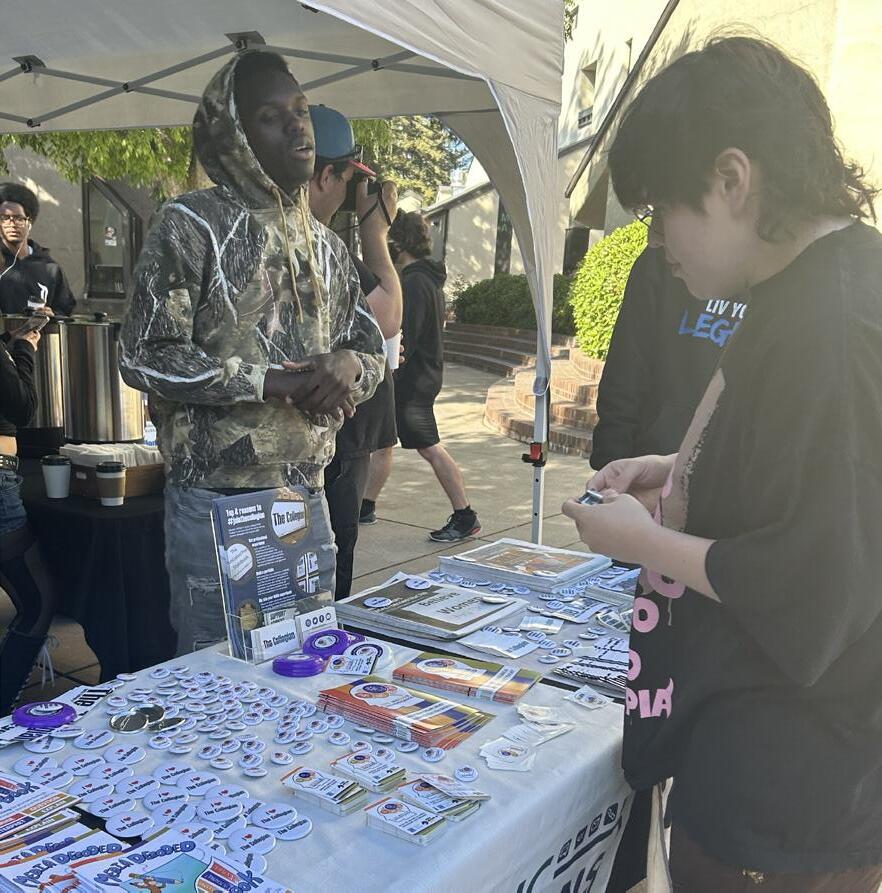
In Spring 2025, Collegian applied to be part of the Solutions Journalism Network’s Student Media Challenge for the 2025-26 school year. Student journalists focus on stories about the campus immigrant population, specifically working to identify solutions and practices put in place for support. This special section includes stories that align to the solutions journalism model, specifically: response, evidence, insight and limitations. Work on the project was funded through a $6,500 grant from the Solutions Journalism Network.
Work for this project also included engagement activities to better gauge campus sentiments are immigration, the political climate we are living in, and finding new ways to tell stories.
To read more stories as part of this work, visit deltacollegian.net/beyond-the-border
That’s the number of days since President Donald J. Trump took the oath of office for the second time. It’s the number of days since The White House published the executive order “Protecting the American People Against Invasion.” The words were loaded. That was by design.
The previous four years, the statement said, this country saw “an unprecedented flood of illegal immigration into the United States” with “millions of illegal aliens” crossing borders. They were “allowed to settle in American communities, in violations of longstanding Federal laws.” These individuals represented a “threat” to “national security and public safety, committing vile and heinous acts against innocent Americans.”
On the surface, the writing noted here is framed in a way that paints a photo of a country under attack. It presumes frantic border crossings. It notes danger. That’s not accurate.
The narrative of immigration is one that many students at Delta College are intimately familiar with. They are here from somewhere. California is their adopted state; San Joaquin County is their new place of residence; ZIP codes within Stockton, Tracy, Manteca, Lodi, are now part of their permanent addresses. They are here looking to earn degrees and certificates. They are here to learn.
The path isn’t clear. Especially now.
Whether these students are Dreamers, are here seeking asylum, or have found themselves at Delta as a place along a longer road, they are looking to find themselves in the fabric of the community.
In the Stockton Metro Area, 213,300 residents, making up 26.6 percent of the population, are immigrants, according to the American Immigration Council. Our biggest population is from Mexico, at 42.1 percent, followed by the Philippines at 15.3 percent, and India at
The Collegian is the student newspaper of San Joaquin Delta College in Stockton, Calif. The paper is published six times a semester.
As a First Amendment newspaper we pride ourselves on a commitment to the students of Delta College while maintaining independence.
We reinvigorate the credo that the newspaper speaks for the students, checks abuses of power and stands vigilant in the protection of democracy and free speech.


ZACKARY KIRK-NEWTON
Editor-at-Large
ANDREA BALTODANO
Editor-in-Chief LEVI GOERZEN
The Collegian is a member of the California Newspaper Publisher’s Association and the Journalism Association of Community Colleges. SENIOR
13.3 percent. Their tax contributions hit $2.5 billion. Their spending power is at $6.6 billion.
Delta College doesn’t track specific data on its immigrant population, but 7.45 percent of our student population in Fall 2025 noted status other than “U.S. citizen,” according to the California Community Colleges’ Chancellor’s Office.
These individuals have stories. They have passions. They have plans. They are part of the vibrant fabric that weaves our campus to the community and to the world. They are our friends, neighbors, and classmates.
They aren’t the narrative painted by the current presidential administration.
That’s why, beginning in Fall 2025, staff members for Collegian set out to find out what happens “Beyond the Border.” The battle to belong, you will see from the reporting here, doesn’t end when feet land on American soil. There are hurdles to consider, including navigating complex institution systems here at Delta.
There are also wins. Students have found support from the Dreamers Success Center, within protections set up from campus advocates, and from leaning on each other for support.
These stories reflect nine months of relationship building and reporting. More than that, these stories reflect the integral role immigrants play on our campus and in the broader community. Their stories do not end once they arrive. Their stories didn’t start here, this is just where they picked up beyond the border.
Andrea Baltodano, Editor in Chief
Levi Goerzen, Editor in Chief
Zackary Kirk-Newton, Editor at Large
Tara Cuslidge-Staiano, Faculty Adviser
Matthew Wilson, Mass Communication Multimedia Coordinator
BY RYCKIE HEREDIA Sports Editor
The statistics provided represents the immigrant population and how beneficial their presence is as an economic boost for the area.
The data on the right represents the California District 9 immigrant population and percentages as indicated.
The data graphic on the far right shows the percentages of immigrants in San Joaquin County as labeled. Each bubble represents a percentage, hence the larger the bubble, the higher the percentage is.
Finally, the graphic at the bottom of the page shows the number of immigrants attending San Joaquin Delta College.
Information provided from AmericanImmigrationCouncil.org and the California Community Colleges’ Chancellor’s office.
Stigmas about the immigrant population present a flawed narrative.
Data provides a concrete counterexample to the flawed narrative.
24%
SHARE OF IMMIGRANT POPULATION IN SAN JOAQUIN COUNTY
Three Delta students share the challenges that brought them here — and what helped them stay
BY ELENA CANDELAS Senior Staff Writer
The path to higher education is often meant with bumps in the road for students. For immigrant students, the road is often more winding and challenging. Whether they left their home country to pursue bigger opportunities, or left to embrace new challenges, the reality once here is sometimes culture shock, particularly in navigating a foreign college campus.
Three Delta College students share their journeys to here, the challenges they have faced, and the solutions they have found at Delta College.
Associated Students of Delta College (ASDC) President Ema Fua is a Filipino native from the island of Siquijor, known for its healing and love potions. The island was Fua’s home for the first 18 years of her life. However, upon the untimely death of her father, Fua, the oldest of four at 17, was left seeing her and her family’s life as hopeless as they had lost the sole provider of their family.
Determined Fua — only about a week after burying her father — took her fate into her own hands and discovered she could gain American citizenship because of her late father, a green card holder and Delta alumni, attending the school when he was in his 40s. Studying the U.S. Embassy, reading the website from top to bottom, Fua at 17 became a U.S. citizen on her own in only six months.
Shortly after she turned 18 and 11 days after graduating high school, she was on a plane, ready to begin her journey. A recipient of a national scholarship in the Philippines, Fua would have half of her tuition covered had she stayed in the country, but the remaining
financial weight didn’t seem feasible.
“I don’t have any knowledge about the U.S. education system at all. But I was like ‘you know what, you know I have this opportunity, I’m just gonna risk it.’ So yeah, I came here, I came to Delta,” Fua said.
Taking advantage of every opportunity she could find Fua made sure she did her due diligence researching all the resources that were available. Now in her second year at Delta, she has become an active member of her community, a member of the EPIC (Empowering Positive Initiatives For Change) club, ASDC and ambassador for the foundation for California Community Colleges. She is determined to give back to a community that gave so much to her.
“The resources that they have shared are resources that were helpful to me and I want to spread to every student because it’s for them to succeed,” said Fua.
The EPIC Learning Center provides a community for not just the AAPI community but also anyone who wishes to join; they have onsite counselors and meet with each person individually.
“We let them make it their own,” said Vang, in reference to her students who create and incorporate their cultures to the center in their own ways.
The center not only provides a sense of community to students but also gives the tools needed to succeed including textbook loaners, transfer
counseling, study groups and community.
Originally from Manous, Brazil, Ruan Passos has attended Delta for the last three years coming to the states on a F-1 student visa.
Passos moved to the United States seven years ago with his mother when she married his now stepfather.
The idea of moving to the states had crossed Passos’ mind before, but before then it didn’t seem like a possibility.
“So, I’ve never thought about coming to the U.S. Actually I did, but it was more like a dream. You know those dreams, you dream and you don’t know if you’re ever gonna achieve that,” said Passos.
His stepfather was a Delta Culinary Arts alumni. He convinced Passos to attend Delta, getting the ball rolling for him to be with his family in the states.
Passos applied to Delta and through the International Students department then headed by Melissa Black was able to get the documents necessary to begin his studies here in the states. The international student’s department is now run by Majed Altaian, who helps students maintain visas and ensure they’re maintaining proper status.
Passos joined his stepfather in Lodi after he arrived about six months prior to his mother. He said his adjustment period was long and is ongoing.
“…When I got her I didn’t speak the language, and I had no (other) Portuguese speaker at the college… at least I don’t know any…” Passos said as he recalls many of the other international students being in pairs and he was unable to have that level of comfort in communication with others. “…that also helped me because… the only way I could communicate was in English. So, I had to force

myself like more than I would have had a Portuguese speaker.”
Passos acknowledged his lack of comfortability of speaking English but also the necessity as he wishes to improve.
Though the language barrier is a difficulty he recognizes several recourse specialists who helped him in his education journey.
“Marisol Corona, when I got here she was like an angel, she helped me like a lot,” he said.
Corona is an academic advisor under the communication and language division; she is also one of the educators involved in the no cost ESL courses offered at Delta.
He also praised Tina Leal in the Dreamers Success Center.
“Tina is another angel, you know, in student lives. They just want to help, you know you see when somebody want to help you… to this day I am grateful for that for having them…,”
Leal is the Student

Service Program Support Coordinator. Leal and the center itself help connect students to services that may help alleviate some of the burden on the immigrant students.
The year 2020 marked the worst year of Manjot Singh’s life: it was the year his father died of a silent heart attack in front of him.
The shock and weight of the loss would change the entire trajectory of Singh’s life.
He spent the six months following his father’s death in

grief unable to get the memory out of his mind. Singh would eventually come to the conclusion that he could do more good in this world.
“Before he closed his eyes he told me one thing he said, if you couldn’t save my life you have the courage and time to save others lives…,” said Singh.
His father’s final message drove him to become a nurse in his country but Singh was driven to do more. “... that motivated me a lot. So at that time I made a promise with me and my god: I gotta be a good doctor.”
Raised in a Sikh family, he
made that commitment not just to himself but to his god to get the necessary education to save lives.
After both his grief and working as a nurse in northern India, Singh studying for his U.S. exam in July 2023, coming to the states in August 2023 on a F-1 student visa. However, his path wasn’t a straight shot to Delta.
He would move from India to Irvine where he would spend six months studying at Westcliff University in Irvine. With the tuition costs and cost of living Singh would find this way of life unsustainable.
Family in Manteca advised him to come get his education
at Delta to save money. Even then the costs of tuition were a bit much. Singh lived in his car for a few months while attending school.
“…education is my priority so, I slept several months in the car that was hard for me…,” said Singh. “…I think everything happened for the good reason. I think that was a good for me because right now, I’m too strong…because at that time I was very weak, be scared from everything… but that life based for seven months, help me a lot.”
Singh found help at the Basic Needs Office and the Dreamers Center. Leal would not only provide him with money out of her own wallet for laundry but also helped connect him to the food pantry.
Basic Needs helped him find affordable housing in the area through the catalyst program. A joint effort by the Children’s Home of Stockton and United Way of San Joaquin county the program aims to reduce homelessness or atrisk housing amongst young adult ages 18-25. The program offers double occupancy rooms as well as transition methods to assist in finding and moving into more permanent housing. For more information on the Catalyst program go to chstockton.org. The office of Basic Needs also offers a variety of resources ranging from book vouchers, food services (CalFresh and the food pantry), clothing (laundry and closet for professional attire) and housing.
BY GUADALUPE FARFAN Staff Writer
For the immigrant, Hispanic and Latino communities it’s been a difficult few years.
With ICE arrests now hitting 1,100 per day, as reported by the New York Times, more and more the communities feel fearful not just for themselves, but their families and loved ones, regardless of citizenship status.
“The threat of immigration enforcement can impair the ability of many students (undocumented and U.S. citizen students) to thrive in our schools,” states the California Department of Education website. They also state that half of California’s Students are members of immigrant families.
At Delta College, 49 percent of students identify as Latinx, according to a 2021 report by a 2022 Chincanx/Latinx Faculty (CLF) report. Those students face many challenges to get them across that graduation stage.
Delta College, however, offers many resources to help its hurting community, such as the Dreamer Success Center open to the immigrant population.
“Our mission is the right for everyone to be able to pursue higher education without fear of one’s immigration status. We acknowledge how the path for undocumented students in pursuit of higher education requires more determination, strength, and resilience than should be expected, or is fair,” the mission statement of the Dreamers Center from its page on the Delta College website.
The center, located in Holt 201, is a resource and safe space by many students both of documented and undocumented status. They have made it their mission to assist the community in any way they can from providing computers, printers to a safe space to work, study and even pray, to an ear to listen.
One of their main goals is to build a community where everyone feels safe, welcomed and supported.
“I would say the Dreamer Success Center definitely helps students feel more safe mentally because we want to make sure that every international student, not just Hispanic or any specific culture… we want everybody to know that they could be safe here and know that we care about them and we want what’s best for them, ”
said student and center worker Travis Van Nunez.
Another student and Success Center worker Julio A. Gloria brings up how he uses the center as a place to study and meet up with other students on campus.
The center also provides legal assistance and counseling to its community, and Gloria pointed out how those are some of the most used assistance in the center. As well as putting on events and workshops to aid the community or bring awareness to certain topics.
“I think it [the Dreamers Center] brings them comfort. I know a lot of students, even though they be scared on campus, when they go there [Center] they feel comforted behind Miss Tina [Leal], because Miss Tina, she’ll put the students before herself,” said Gloria.
Leal is the student services program support coordinator at the Dreamers Center. They provide many resources for the student population including academic support and referrals to mental health and basic needs programs.
Leal meets with students one on one as an intake process to help figure out their needs, what programs are available to meet their needs, whether it be Delta based programs or other outside aid. She is a great source of comfort for all the students at the center and many spoke highly of her throughout their interviews.
“Anybody that’s out of state status that comes into the Dreamer Center, the first initial contact is with me, Tina Leal, the coordinator of the Dreamer Center. I sit with them, I hear where they’re at. I meet them at where they’re at and then we find out where we’re going to go,” said Leal.
Leal makes it clear how the center isn’t a club. A club supporting immigrant students was present on campus in previous years, the I Am/Yo Soy club, and Leal said it would be more than welcomed to start again in the center.
“Because I am a one-woman show, it’s hard to do all that and plus I’m not faculty, I’m considered classified, so I couldn’t do that [be a club advisor] if I wanted to. But I do empower students and I give them that information. If you want that club, go to student life, ask for it so that we could try to get that up and going,” explains Leal.
The center’s activity in recent times is more on educating the population on what rights the community has in California and aiding them to make it easier to graduate or transfer.
“When we talk about mental health,
ing recruited six wellness ambassadors.
Active Minds is a nonprofit organization focusing on student led advocacy for mental health. Their chapters can plan and push for mental health programs at their schools and be a part of nationwide partnerships to help make impactful changes in their community.
The six ambassadors come from the psychiatric technician and nursing program at Delta and are meeting regularly to come up with ideas and events to table at this and in upcoming semesters. Since the chapter is so new there hasn’t been many opportunities for them to be as active in the public as they’d like.
Meanwhile on a more personal level, Delta also gives students free access to UWill, an online telehealth service used by more than 4 million students according to their website.
However, only 1.7 percent of students use this free service, according to Director of Marketing and Communications, Alex Breitler.
BY GUADALUPE
The Delta College community was affected in late March when the New York Times investigative report detailed the sexual abuse and misconduct on the late civil rights leader and Chicano icon Cesar Chavez. It hit especially hard when Dolores Huerta, co-founder of the United Farm Workers, and Delta College alumna described her abuse.
The report felt like a betrayal to the community and brought up unspoken traumas for Delta College students and faculty.
“I do it because I’m a Stockton native. I have heart and love for our students and community because this is my community. But it’s a lot,” Leal said.
under this administration, our students are feeling it. They’re hurting, they’re scared, they’re devastated, they’re dropping out of school. I’ve had families self-deport, full families. I’ve had students come and tell me that their mom and dad or their family doesn’t want them coming to Delta anymore because they don’t know what’s to come in the future, so they might as well just be working instead of getting their higher education,” Leal said. She reminisced how early in the administration, when tensions with ICE were starting and was all over the news, she would call families and reassure them that California has laws in place to assist them and their loved ones.
“The stuff that we’re hearing is more down [in the southern U.S.]south is more scary because it’s so all over the media, but understanding that these services in California are different from that. And I have to keep reiterating that, and letting them know that Delta College is here to serve our community, and all these policies, like [AB] 540, SB 554, the DACA, all those things are in place and here’s what they can do under each one of those, and many others,” said Leal.
A few events that the Dreamers Center have put on include Know Your
Rights workshops that aid students on their legal rights and what to do in case they meet an ICE officer.
It’s not all just serious workshops and stress. The center also puts on wellness events, art events, field trips to colleges, and Dreamer conferences. These all allow students to build relationships with one another and decompress.
Leal still wants to do more. Recently Dean of Student Services Dr. Richardo Marmolejo has approved a field trip to an amusement park as a break for the hard working students.
Leal was also proud to report, while not sharing exact numbers for safety reasons, there was a rise in students who have used the center’s services and that the California’s Dream Act was utilized the most at Delta.
While a lot of the resources offered from the Center are for students who have a Delta College ID, the legal services the center includes anyone in the student’s household. The center also links to outside resources, like El Concilio, a nonprofit agency that aids the local community, Catholic charities, homeless shelters and more.
There are some limitations to the center, however. Leal explains how she is the coordinator of the center and is only aided by a few student workers through the student services sector, like Gloria and Nunez.
She spoke of how she knows the center can do more not just in Delta but in the local communities, like the high schools and campesinos, the neighborhood’s farmworkers reside in, if only there was more staff besides her working.
“I feel like I need to reach so many more. I am one person. I’m doing my best, but myself, I’m really hard on myself and I really want to make sure we’re reaching more. So I have some strategic planning for this coming fall 2026 to reach moe of our students,” Leal explains.
While the Dreamer Success Center focuses on the immigrant population at Delta there are other services for the broader student population that they also have access to.
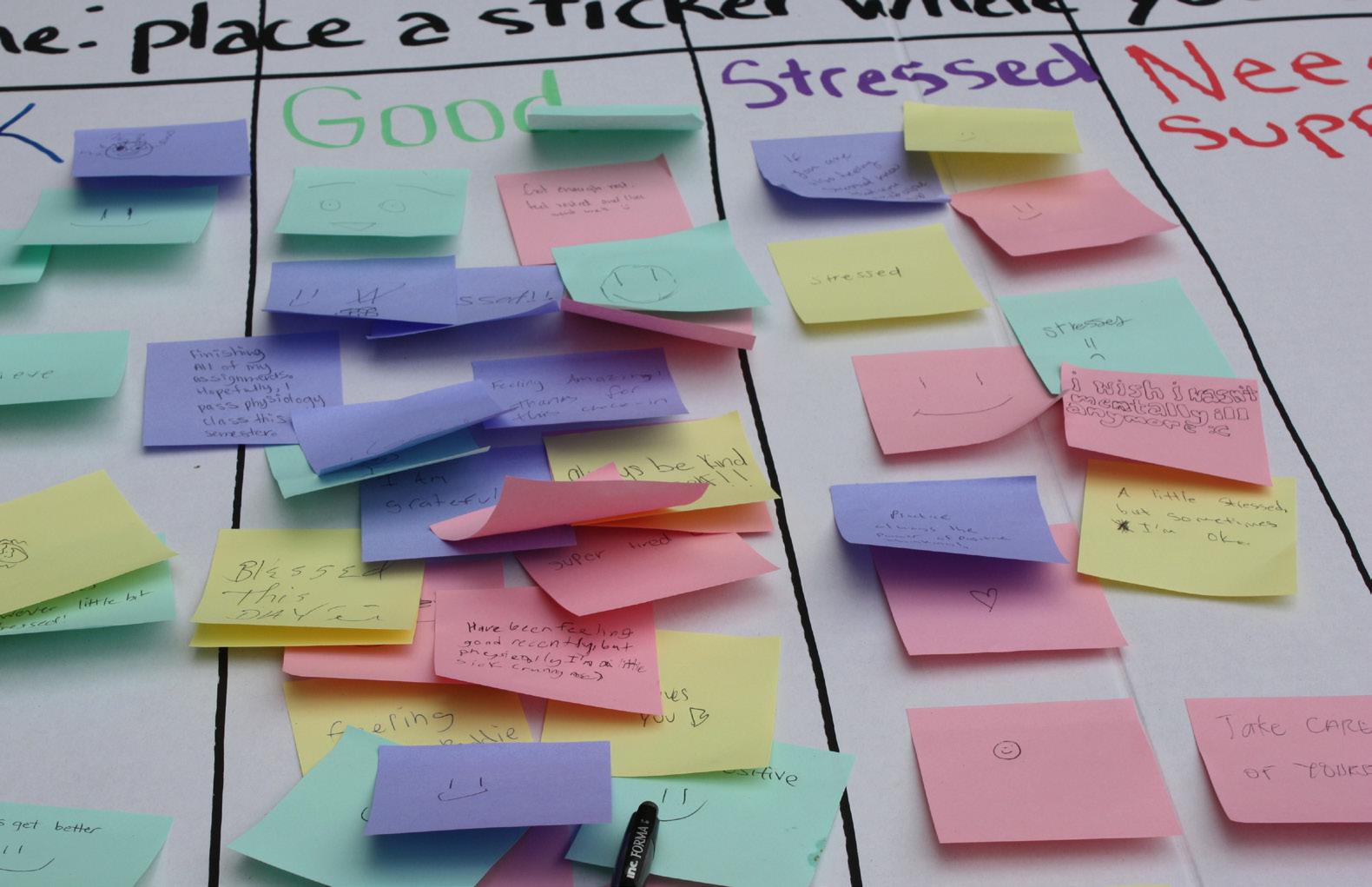
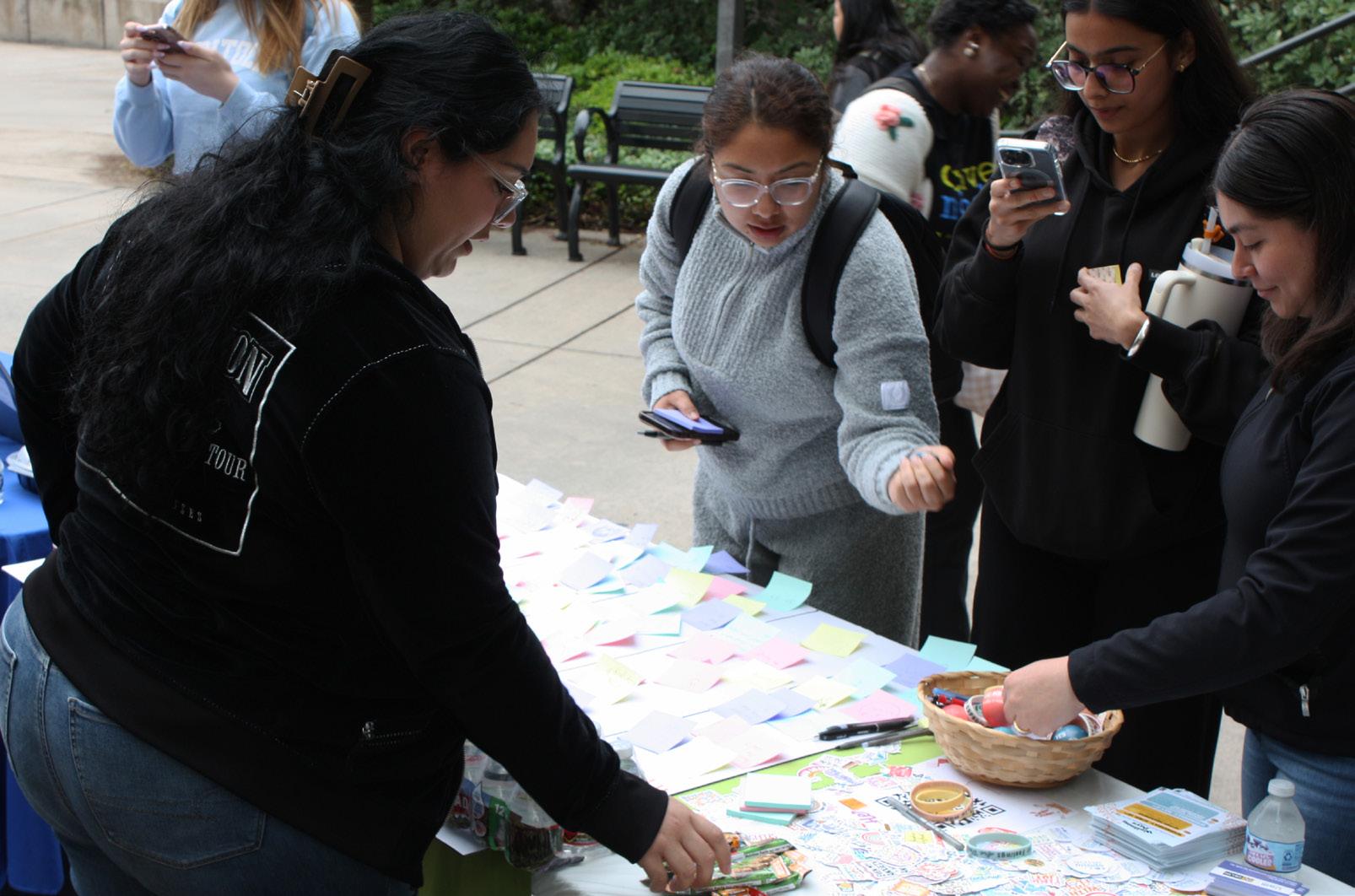
There are other events at Delta that are put on by the Health and Wellness office that are also for the broader student population, regardless of immigration status.
The Health and Wellness office also puts on events such as Wellness Wednesdays, the new Active Minds chapter and the crisis counselors available on and off campus.
Wellness Wednesdays are mental health workshops started in Spring 2025 by the newly created position Student
Program Specialist from the Health and Wellness office, Vannessa Plaza.
“The purpose of them [Wellness Wednesdays] is having a wellness, or a well-being day for all students” said Plaza.
Each event has a theme or topic they would like to highlight, for example, autism awareness and suicide prevention. They host various groups from Delta College, like the Dreamer Center and Pride Center, as well as outside organizations, like the Western Farm Workers Association and others table at the events.
They provide activities and food to the students who participate as a fun break and way to learn about services at Delta.
“I think for me the biggest thing about mental health is building community. And we started off with very low numbers, maybe 70 students and now it’s like students are looking forward to it,” Plaza said.
The events have been growing in attendance in recent months, hitting 300 students last semester.
Plaza is also an advisor to the new Active Minds chapter on campus, hav -
UWill gives students access to speak with a licensed therapist,and provides crisis support 24/7 with two day after and 30 day after follow up care. They promise full transparency with real time data, reporting and coordinated care.
According to The Healthy Mind Study from 2024-2025, only 38 percent of college students claimed positive mental health, from a survey of over 135 colleges and universities. With 32 percent of those surveyed having been diagnosed with depression and another 38 percent diagnosed with anxiety, 67 percent have reported their mental health hurting their academic performance.
According to Plaza many students have come up to her at events asking for help to sign up and given their feedback on the service, how they want more time with the therapist.
Currently Delta gives students credits for 30 minute sessions with a therapist.
With mental health being such a big problem across various communities Delta is offering various services across different groups and organizations to help its population. The biggest issue is figuring out where to start, who to talk to and what is available for a student’s specific situation.
The news brought up layers of raw emotions that won’t reconcile quickly, but campus leaders worked to start a conversation.
A week after the article was published, on March 26, Delta hosted a community healing event, “Love Letters to Dolores” organized by Chincanx/Lanine Faculty (CLF), Student Protection for Advocacy, Resources and Knowledge (S.P.A.R.K.), and Delta College Student Services.
“This event is not the work of any one person, it is a collective effort across faculty, staff, managers, administrators and students. What you see here today is a community of care,” Professor Nicole Sandoval said in her opening of the event.
The event had many speakers from professors to students about their own experiences, emotions and thoughts.
“We are living through a time when there are so many heavy and overwhelming, overwhelming things happening at once. There are many challenges that we face on our own, such as fear, anxiety, frustration and uncertainty. But when we come together in community, we are powerful,” Digital Media student Michalea Cabang said during the event.
Since the report, Delta has been quick to take down or cover up any mention of Chavez and are now focusing on replacing them with images of the campesino movement as a whole.
BY ANDREA BALTODANO Editor-in-Chief
For students navigating immigration fears, identity-based discrimination or other instability, getting help can begin with a simple but difficult question: Where do I go first?
Student support services and resources are silored and scattered across campus.
At Delta College, that question is part of what S.P.A.R.K. — Student Protection for Advocacy, Resources and Knowledge — was created to address. Established in February 2025, the cross-campus initiative brings together faculty, staff and administrators to better coordinate support for vulnerable student populations through advocacy, education and resource-sharing.
Cross-campus initiative unifies resources that address needs and show support to students.
and after demon strations. Speakers also highlighted outreach through social media, re ferrals across cen ters such as the Dreamers Success Center and Pride Center, and a S.P.A.R.K. podcast hosted through Delta’s digital media website.
According to the project charter, its goals include creating a rapid response network, defining safe campus spaces, increasing visible support online and on campus, hosting town halls and providing professional development.
But the problem S.P.A.R.K. is trying to solve is not just a lack of services. It is also the challenge of navigating them.
“Students are already carrying so much fear, stress, sometimes trauma and then we ask them to navigate multiple offices, retell their story over and over and figure out systems that were not designed with them in mind,” said Tina Leal, coordinator of Delta’s Dreamers Success Center and a S.P.A.R.K. member.
For undocumented students and students from mixed-status families — households in which relatives may have different immigration or citizenship statuses — Leal said trust and safety are often major barriers to seeking help, even when resources exist.
She said S.P.A.R.K. has the potential to “connect the dots” across campus by making support systems feel more coordinated.
“I see S.P.A.R.K. as an opportunity to connect the dots across campus,” Leal said. “We already have strong support systems, but they can feel siloed.”
That emphasis on coordination is also how the college describes the initiative. Director of Marketing and Communications Alex Breitler said S.P.A.R.K. was established to bring together a broad cross-section of the campus community and create a more intentional approach to supporting students.
While Delta has long offered support for immigrant students, LGBTQ+ students and other historically underserved groups, Breitler said S.P.A.R.K. is meant to align those efforts and make them more responsive.
Some of that work has already taken visible forms. Breitler pointed to expanded resource materials online and on campus, a dedicated resource hub for immigrant and undocumented students and multilingual “Know Your Rights” materials.
In a fall 2025 presentation, S.P.A.R.K. members also described workshops tied to rights education, allyship and peaceful protest. One event, “Posters with Purpose,” brought students together ahead of a local “No Kings Day” protest not only to make signs, but also to learn how to protest peacefully and stay safe before, during
S.P.A.R.K. members themselves have framed the initiative as more than a committee. In that same presentation, faculty and staff involved in the effort described it as a collective grounded in both lived experience and advocacy.
Adriana Brogger, Digital Media professor and co-chair of the Chicanx/Latinx Faculty Task Force, said the effort is about making sure district policies, practices and resources are aligned with an equity-driven approach.
“Education at San Joaquin Delta College means education for all,” she said.
The initiative also exists within a broader equity landscape at Delta. The college’s 2025-28 Student Equity Plan shows inequities across major stages of student success, from successful enrollment to persistence, completion of transfer-level math and English, degree completion and transfer.
Black students were identified as disproportionately impacted in multiple categories, while first-generation, Hispanic, LGBT and male students also appeared across the plan’s equity gaps. In reflecting on those disparities, the plan says the causes include limited access to academic and financial support, underrepresentation in decision-making and campus climate — whether students feel safe, welcomed and supported.
It says Delta has responded by expanding programs such as the Dreamer Success Center for undocumented and mixed-status students, Puente for culturally responsive transfer support, Umoja for Black student success, EPIC for Asian American and Pacific Islander student support, and Pride Scholars for LGBTQ+ students.



Red cards contain reminders of peoples’ rights when encountering immigration and other law enforcement officials in both English and Spanish.
COLLEGIAN ARCHIVE IMAGES
The plan also points to greater use of disaggregated data — student outcomes broken down by group — and equity-focused professional development for faculty and staff.
For Leal, S.P.A.R.K.’s value lies in whether students experience support differently in practice.
“Meaningful implementation would look like less barriers and more flow,” she said. “Students would
come in once, share their needs, and be supported through a coordinated system without having to repeat themselves.”
Her concern, she said, is that even a strong framework can fall short if it does not fully reach the students it was created for.
“If we’re not intentional, the same students who already struggle to access services may still be left out,” Leal said. “Trust is everything. Without that, even the best systems won’t be utilized.”
BY ANDREA BALTODANO Editor-in-Chief
Before she became an academic advisor helping students navigate college, Marisol Corona remembers struggling to order a pizza in English at 11 years old.
She translated incorrectly for her mother, misunderstanding a single word, and watched as a simple meal turned into a moment of embarrassment.
“I felt like I let my family down,” Corona said.
to shift how students see their future.
“They start the semester saying, ‘This is the only Delta class I want to take,’” she said. “By the end, they’re asking if they can study multiple programs.”
That shift is built into how the program is structured.
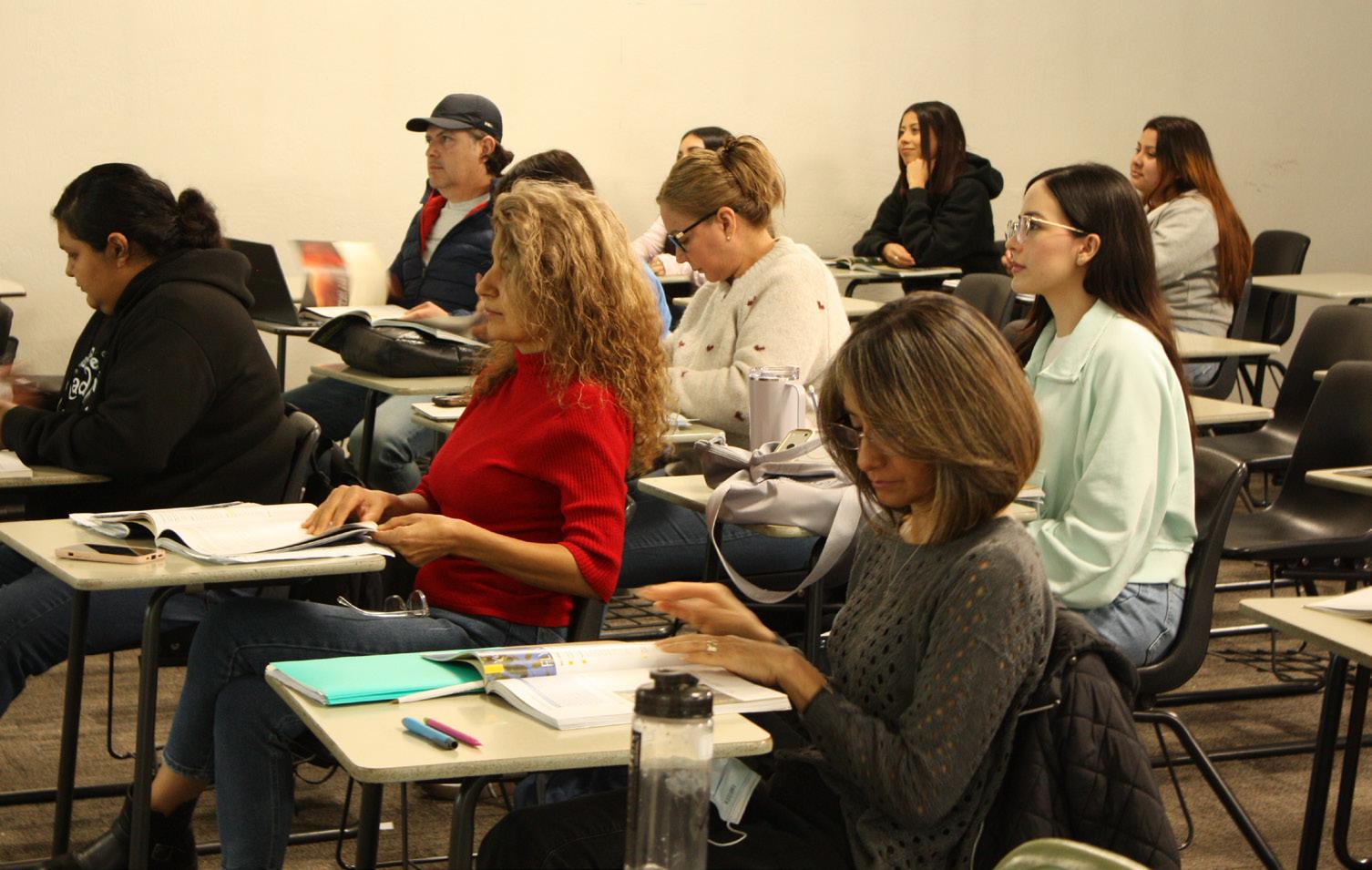
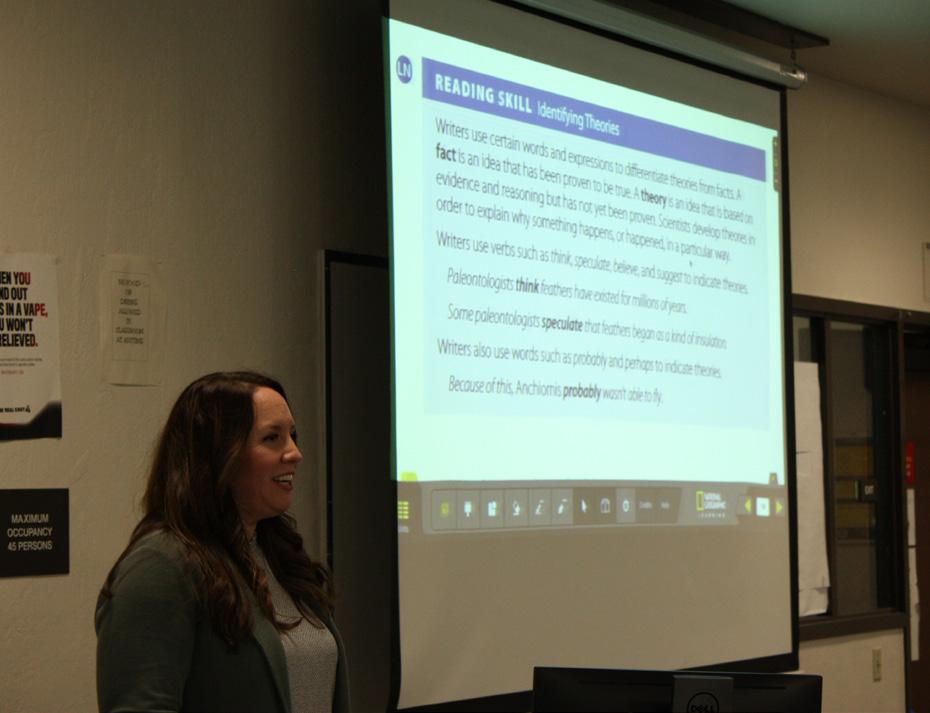
Delta offers four ESL levels — ESL 2 through ESL 5 — focused on reading, writing, grammar and communication skills. Students who need foundational instruction are referred to adult education programs before transitioning into Delta’s courses.
Years later, Corona now works as an academic advisor for English as a Second Language students at Delta College, where she helps others navigate the same barriers she once faced. That experience shapes how she approaches students entering Delta’s ESL program, many of whom arrive unsure of their place in college.
For students like Lorena Duran, that uncertainty can shape whether they stay in school at all.
Duran, a psychology major, said she returned to Delta nearly two decades after initially dropping out, this time choosing to begin in ESL instead of going directly into college-level English.
“The easiest path was just to drop out,” she said of her earlier experience.
She said the program has helped her rebuild both her skills and confidence.
“I’m at the right place. I have the right to be here,” Duran said.
At Delta College, the ESL program is expanding as more students navigate language barriers and seek pathways into higher education. Across San Joaquin County, about 43 percent of residents speak a language other than English at home, according to U.S. Census data, and local schools serve more than 29,000 English learner students.
“ESL offerings at Delta have essentially doubled in the past year,” said Amber Wolak, an ESL faculty member at the college.
Wolak said the program is designed not only to build language skills, but
Wolak said the program works closely with local adult schools, including Stockton School for Adults and Tracy Adult School, to create a clearer pathway for students entering college.
“These courses introduce learners to college-level expectations through structured, university-style instruction,” said Idi Gaines, a counselor and transition specialist at Tracy Adult School.“This supportive preparation builds confidence and eases the shift into higher education,” he said.
At Delta, students can enroll in either credit or noncredit ESL courses, which are taught in the same classrooms, by the same instructors and with the same curriculum.
Noncredit courses are tuition-free and graded on a pass/no pass basis, reducing financial and academic pressure for students who may be new to the college system.
“That structure allows students to focus on learning without worrying about grades or cost,” Corona said.
The goal is to move students into transfer-level English and eventually into degree or career pathways. Wolak said students often begin with hesitation but quickly expand their goals.
“That shift happens really fast,” she said. “Once they realize they can do the work, they start thinking bigger.”
Program data shows students commonly transition into fields such as nursing, health science, psychology and child development, with additional pathways available in areas like business and electrical technology.
Those outcomes are shaped by broader statewide changes.
Under Assembly Bill 1705, approved in 2022, community colleges are required to use multiple measures — including high school coursework and grades — when placing students into English courses, with the goal of helping more students complete transfer-level English within three years.
Across California, colleges have taken different approaches to those reforms. Research from the Public Policy Institute of California shows institutions have shortened ESL pathways and moved away from standardized placement tests, though program design still varies by campus.
Data shows more students are completing transfer-level English over time.
At Delta, the share of students completing transfer-level English within one year increased from about 46 percent in 2014–15 to approximately 75 percent in 2023–24, according to California Community Colleges Chancellor’s Office data.
Enrollment data reflects sustained demand, even as participation varies by semester. The program recorded 1,346 enrollments in fall 2025 and 944 in spring 2026. Corona said the
drop is typical, as enrollment tends to decrease in the spring term.
“The upward trend in completion has been observed across colleges,” said Mallory Newell, interim executive director of institutional research and planning at the Foothill-De Anza Community College District.
Newell said reforms such as AB 705 and 1705 removed long-standing barriers that had placed many students into remedial coursework.
“Prior to AB 705, fewer than half of students who began in English ever completed a transfer-level course,” she said.
Still, disparities remain.
Completion rates for Black and Hispanic/Latine students continue to
BY LEVI GOERZEN Editor-in-Chief
On Jan. 13 the city of Stockton passed an initiative declaring Stockton as a “Compassionate City.” Modeling their policy after other compassionate cities and the sanctuary city policies San Joaquin Delta College based their own sanctuary policy off of.
This policy comes an entire year after Delta College established itself as a sanctuary campus, Delta College’s sanctuary policy is aimed at reassuring students and protecting them when they come to campus.
In the year since Delta’s declaration, President Donald J. Trump signed multiple executive orders with the intent of removing the protections sanctuaries may provide to individuals.
Part of president Trump’s policies has been more aggressive action from Immigration and Customs Enforcement (ICE) which has resulted in mass deportations and shootings, including one in Patterson, 45 minutes south of Stockton.
“We want to make you guys feel safe,” said Tina Leal, Resource Specialist for the Dreamers Success Center on the Delta College campus.
The compassionate city declaration came after months of discussion regarding a response to the Trump administration’s actions.
In a discussion brought at the Aug. 15, 2025 Stockton City Council meeting, a compassionate city is defined as “a local government’s commitment to treat all residents equally, provide access to city services regardless of immigration status, and refrain from assisting federal immigration enforcement.”
Compassionate cities differ from sanctuary cities in the fact that sanctuary cities deny the usage of any local resources to federal law enforcement while compassionate cities don’t prevent the usage of resources and simply refuse to aid federal law enforcement.
“This discussion is really about compassion, it’s about dignity and it’s about respect, this is what this city stands for, this is what we continue to show who we are as a community,” said District 4 Councilmember Mario Enríquez during the Jan. 13 council meeting.
“But with everything going on, there’s a lot of fear that’s created. I want to say
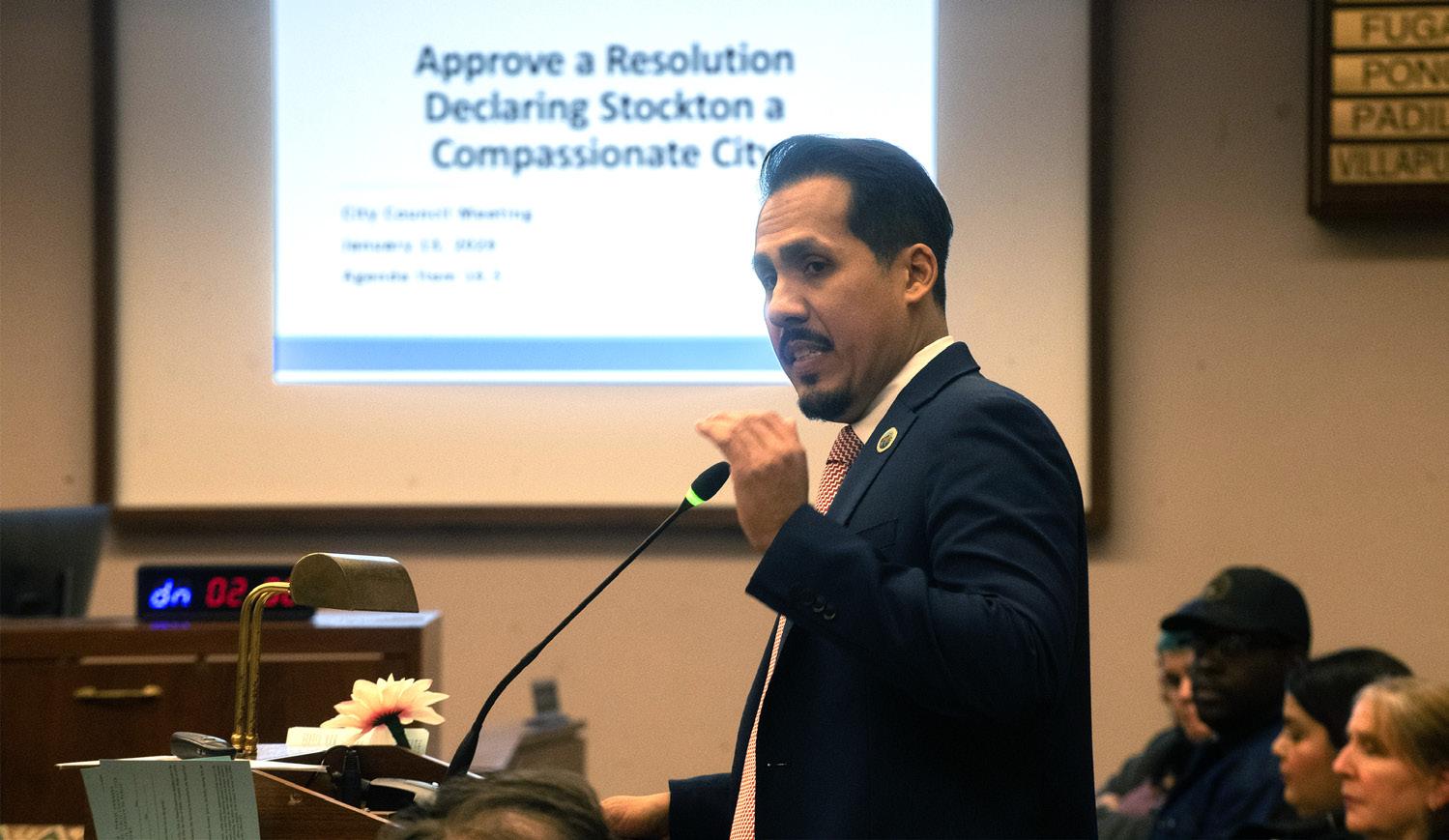
for the record that no human being is illegal.”
Residents, students fear presence of immigration enforcement.
Stockton drew inspiration for its legislation from cities such as Los Angeles, Sacramento and Union City. Sacramento and Los Angeles have been sanctuary cities since 1985 and 2024 respectively. Union City became a compassionate city in 2017.
Protection declarations set the tone for moving forward.
With the compassionate city policy the city of Stockton aims to make individuals in the city feel safer and not have to worry about contacting city authorities regardless of their immigration status.
Acting Associate Vice President of Public Safety Rodney Rego said the compassionate city declaration mirrored Delta’s sanctuary declaration despite neither of them directly affecting each other.
“The City of Stockton’s January 2026 Resolution designating Stockton as a Compassionate City is generally consistent with the values reflected in Delta College’s Sanctuary College designation,” said Rego. “While the City’s resolution does not alter College policy or create legal obligations for the District, it reinforces a broader local commitment to ensuring that residents and students can access education, public services, and law enforcement without fear based solely on immigration status.”
and communications Alex Breitler. “Our police do not engage in immigration enforcement activities and do not collaborate with federal immigration agencies to apprehend or remove individuals based solely on immigration status.
Policy 5111 directs: “No District representative shall release the contents of a student record to any member of the public without prior written consent of the student other than directory information.”
Under the policy, directory information is limited to participation in officially recognized athletics as well as any degrees or awards earned by students.
California Education Code 66093.3 has additional guidelines on when student information can be shared outlining consent, state and federal laws, programmatic purpose, directory information that doesn’t include addresses and in response to judicial action.
For Delta College, reaffirming itself as a sanctuary campus means it is “committed to protecting the rights, dignity, and well-being of all students, including undocumented individuals, and ensuring their ability to pursue education without fear or barriers,” according to the resolution.
The idea is to protect immigrant populations and limit cooperation with immigration officials, but what it means for Delta College and cities that have elected to designate themselves as “sanctuary” is often much broader.
“By affirming our sanctuary campus status, you are sending a clear message that all students belong here and their education matters,” Leal said during public comment of the Dec. 17, 2024, meeting. “The resolution is critical to ensuring that fear and uncertainty do not become barriers to education. This is consistent with our mission statement.”
The act of becoming a sanctuary campus doesn’t change policy and procedure. Instead, it affirms the college’s values when making new policies, such as “Board Policy 5111 Student Directory Information.”
“The Sanctuary College designation is mostly symbolic. But it is nevertheless an important statement of support for our students.” said director of marketing
“It is still possible that immigration officials will come to Delta at some point in the future. We do not have control over whether they enter our campus. Anticipating this possibility, we have informed employees that student information is not to be made public,” said Breitler. “And that any immigration official who comes to campus should be escorted to the president’s office for evaluation of a warrant or any other legal documentation.”
The campus sanctuary declaration is largely untested. However, the sanctuary status catalyzed other campus reactions specific to these protections.
At a district in-service event in August 2025, Student Protection for Advocacy Resources and Knowledge (S.P.A.R.K.) presented scenarios to staff for if immigration officials came to campus. The direction of the scenarios was to send officials to the President’s Office.
S.P.A.R.K. is a project charter with the goal of supporting and advocating for “vulnerable” student populations at Delta and ensuring that the district does everything in its power to protect students’ rights.
“Campus signage directs visitors to “Know Your Rights” with guidance for more information. The Dreamers Success Center also regularly hosts workshops of the same name where immigration law updates and constitutional protections are covered.
BY ELIJAH PROSSER Senior Staff Writer
According to the California Student Aid Commission, In 2021-22, only 29 to 30 percent of undocumented students who applied for financial aid ultimately enrolled in school. And only 14 percent of undocumented students in California receive state aid.
Financial aid is one of the many areas where the immigrant population faces struggles. Campus resources allow students to connect to each other and advocate for their futures.
California has long been a leader in advancing policies that help ensure the dream of a college education remains accessible and affordable to all students.
Many undocumented students are facing a serious amount of fear, uncertainty and personal problems outside of just education.
“Honestly, navigating financial aid as an undocumented student, especially as an asylum seeker, has been one of the hardest parts of my college experience. I don’t qualify for FAFSA or any federal aid because I’m not a citizen, but I also don’t meet the requirements for the California Dream Act, which leaves me with very little institutional support. There was a moment where my tuition became a
serious issue, and I had to go through a long, exhausting process with the administration to figure it out,” said Collegian Editor-In-Chief Andrea Baltodano.
For Baltodano, she has had people advocating for her and helping push things forward until she comes up with a solution that allows her not to worry about money and to stay here in the United States.
Undocumented students pursuing a college education have lower incomes and would otherwise be eligible for financial aid.
On Nov. 20, 2025, President Donald J. Trump’s administration sued California to end state benefits such as financial aid and in-state tuition that help support undocumented students.
This affects the Dreamers' Success Center here at Delta highly because they're trying to take away the AB 540 policy and then SB 554, while actively trying to stop diversity, equity and inclusion initiatives.
Despite a struggle that undocumented students have to get to a four-year college and further their education, there are multiple services that the community has to offer, such
as Immigrant Rising, United We Dream, El Concilio and many more that can offer help to them.
“My feelings is that it’s completely unfortunate that the immigrants that built this country is being treated in such a fashion that there are no direct pathways for citizenship. It is easy to say do it the right way, but there’s not a right way; there is no pathway for our undocumented population to get legal here in America,” said Student Services Program Support Coordinator Tina Leal
Tina’s job at Delta consists of a few different things: she helps students navigate college life as a resource specialist at the Dreamers
Success Center, supports undocumented students and their families, and coordinates services that provide access to free legal advice and many support resources.
That job also includes helping students advocate for themselves.
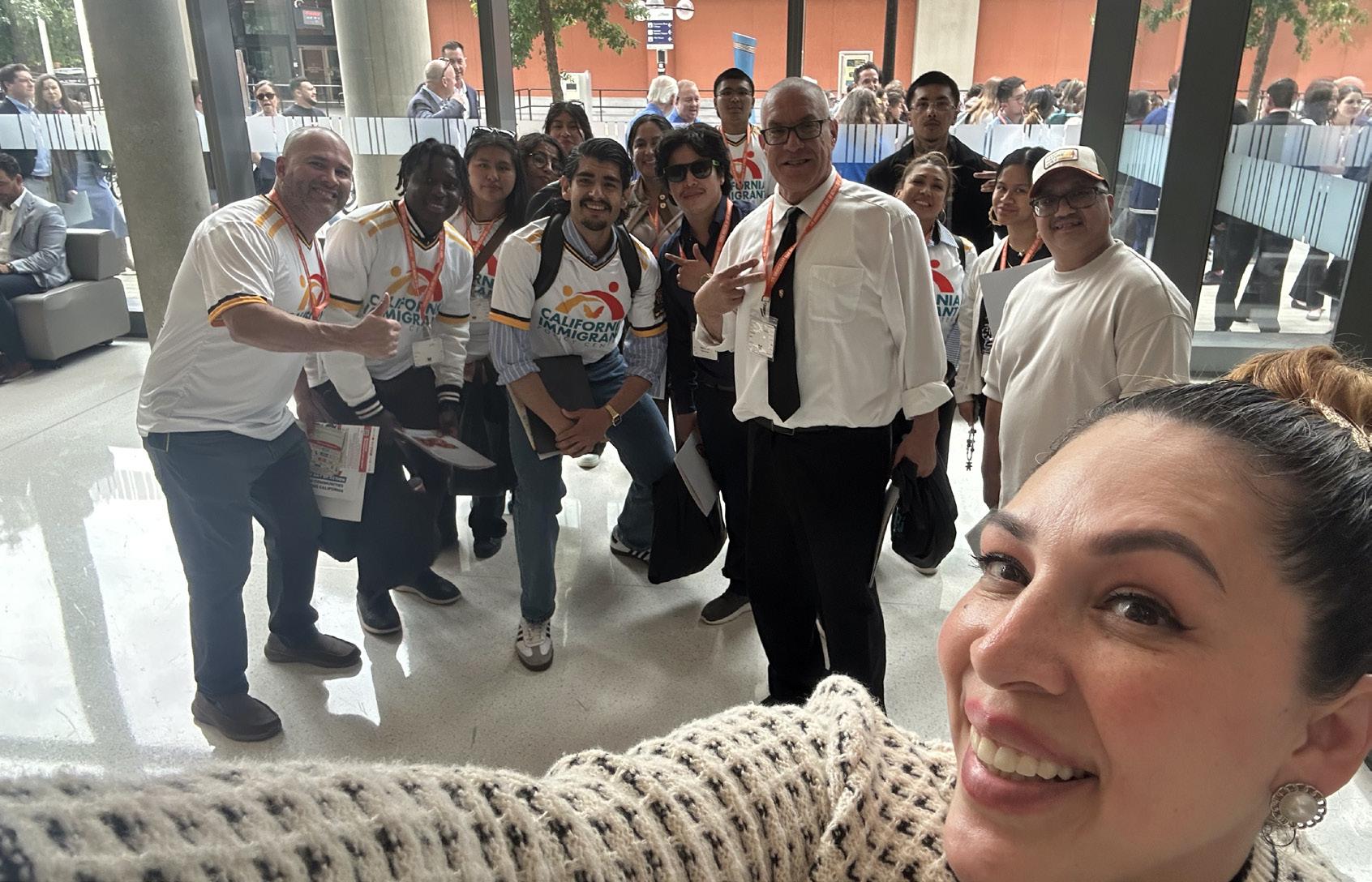
On Wednesday, April 15 Leal was part of a group from Delta College that participated in the Immigrant Day of Action advocacy event in Sacramento. Leal said it was about “empowering our students to use their voices.”
“They were so inspired,” said Leal. “They made me so proud asking questions engaged.”
continued from PAGE 9
trail those of Asian and white students by about 10 percentage points, according to state data.
In a county where Latino residents make up about 43 percent of the population, those gaps raise questions about whether expanded access is translating into equitable outcomes.
Newell said teaching practices and support systems play a critical role, pointing to culturally responsive curriculum, embedded tutoring and active learning as approaches that can improve equity. For many students, however, the biggest barriers come before they ever enter the classroom.
Corona said the college application process can be difficult to navigate, particularly for students
with limited English proficiency. Some begin the process but do not complete it, often misunderstanding steps or missing follow-up communication.
Cost also remains a challenge. While noncredit courses are free, students may still need to purchase textbooks, and some face higher tuition rates based on residency status.
Access can also depend on where students live. Those in areas like Tracy and Mountain House may have fewer nearby course options, making it harder to attend classes regularly.
For Joshua Sanchez, the program has provided a starting point.
Born in the United States but raised abroad, Sanchez said he returned as an adult without formal
English education. He began taking ESL courses in 2023 and said the program has helped him communicate more confidently in daily life.
“Now I can speak with more people,” he said. Without ESL, he said, attending college would not have felt possible.
“I need to know how to read and how to write English,” he said.
For Corona, those stories reflect what the program is designed to do — not just teach language, but open doors.
“I tell my students, you just have to show up and do the work,” she said. “You’re going to see the results.”
By
the time the first class starts each semester at Delta College, the campus is already alive with diverse voices. It moves through the quad in fragments of conversation — English folding into Spanish, Punjabi, Tagalog and other languages on the way to class. It’s in the students eating food packed from home kitchens, in the ones answering a parent’s phone call between lectures, in the quiet instinct to translate, explain, and navigate.
At Delta, immigration isn’t an abstract issue debated from a distance.
Immigration is part of Delta’s identity.
In its own catalog, Delta College says it’s recognized as both a Hispanic-Serving Institution and an Asian American and Native American Pacific Islander-Serving Institution. In San Joaquin County, 43 percent of residents are Hispanic or Latino, 25.2 percent are foreign-born, and 43 percent of people age 5 and older speak a language other than English at home, according to the U.S. Census Bureau.
Those numbers help explain what students see every day: this is a college shaped by immigrant families, immigrant stories and the generations that come after them. What immigrant communities bring to Delta can’t be reduced to representation alone. They bring perspective that changes the feel of a classroom.
A discussion about government sounds different when someone in the room has lived through political instability. A lesson about language means something different when students know what it is to search for the right word in a country
that demands fluency. Conversations about history, labor, identity and belonging become fuller when students are not speaking in theories, but from experience.
That is part of what makes Delta richer.
Immigrant students and the children of immigrants often arrive carrying more than textbooks. Many carry family expectations, financial pressure and the invisible weight of sacrifice. For some, college is not simply about personal ambition. It is about honoring the parents who left everything familiar behind. It is about making sense of risk. It’s about proving that starting over in a new place wasn’t for nothing. That kind of urgency changes the energy of a campus. It creates students who are observant, resilient and deeply aware of what education can mean.
Their impact is cultural, too, and that matters just as much. It can be heard in the blend of languages on campus walkways and seen in the customs, humor and traditions students share with one another. It lives in the everyday exchange of food, music and stories, but also in the deeper ways students widen each other’s understanding of family, duty and belonging. They make Delta feel less narrow, less one-dimensional, less trapped in a single version of American life.
Delta has spaces that reflect that reality. Across campus, support for immigrant and historically underserved students lives in places like the Dreamers Success Center and in programs such as Puente, EPIC, Umoja and the BEE Academy. The college also offers services for undocumented and immigrant students, along with learning communities shaped by belonging and student success.
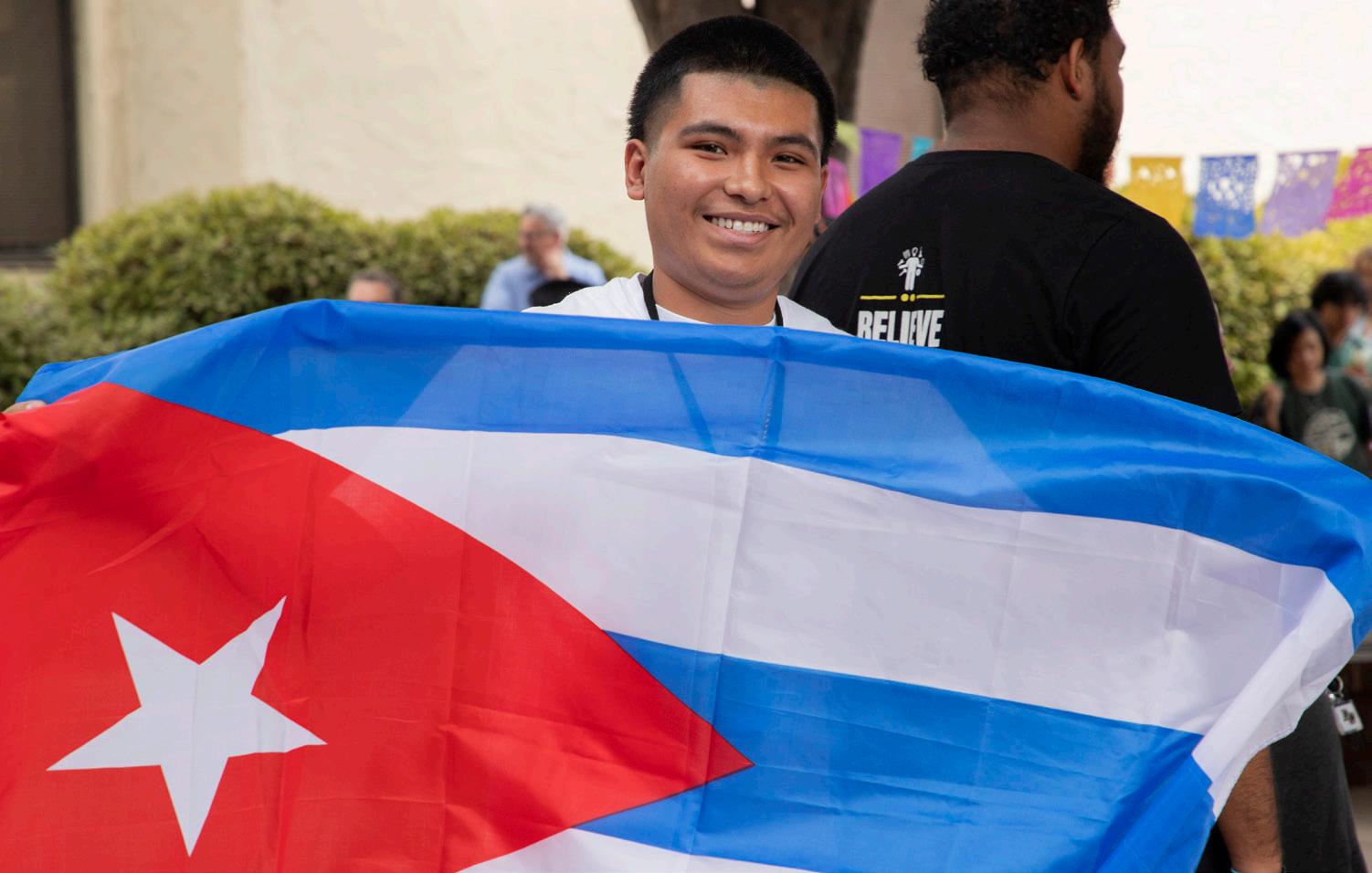
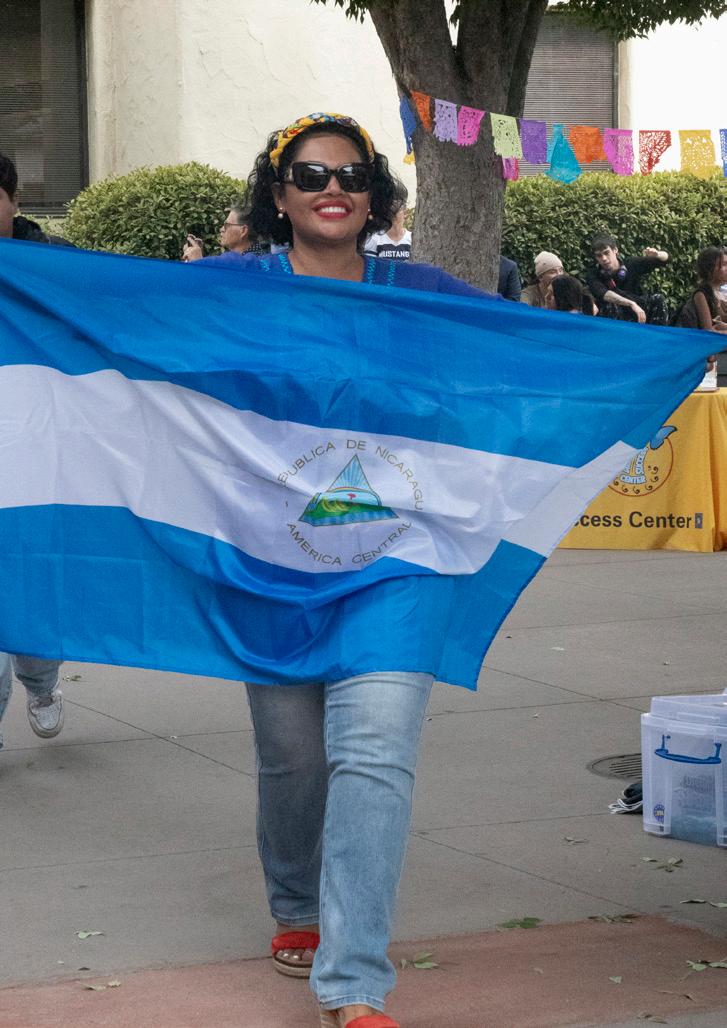
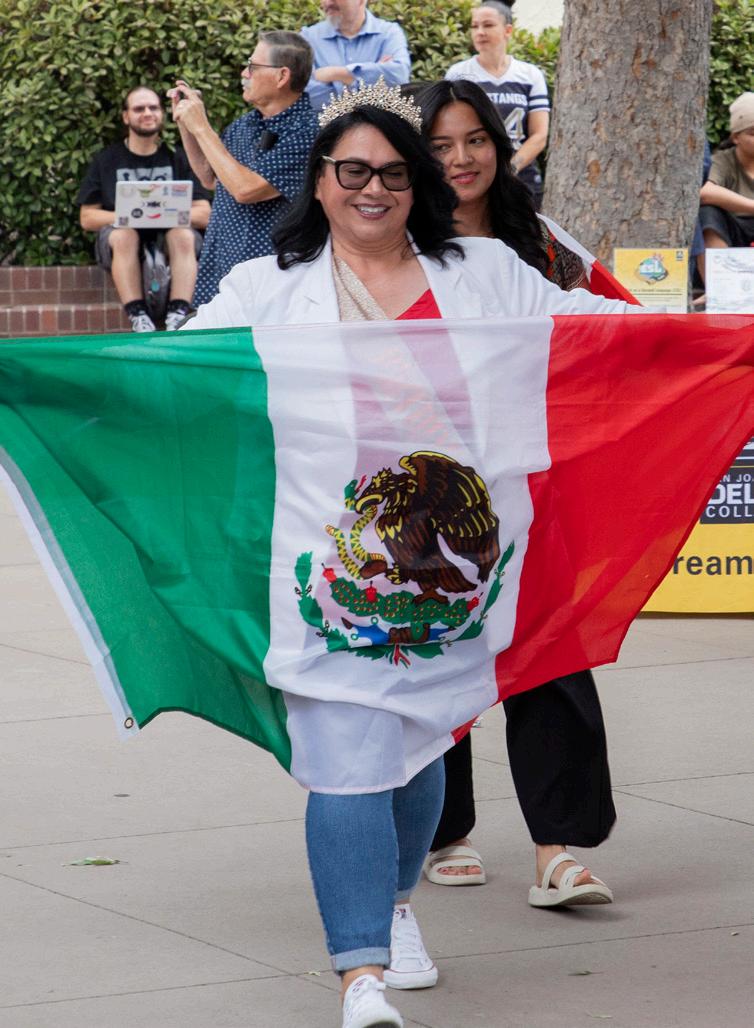
Together, those spaces send a clear message: these students aren’t an afterthought at Delta. They’re part of its heart.
To say Delta is enriched by immigrants is true, but it still feels too small.
Immigrant communities don’t simply add color to campus. They shape character. They make classrooms more thoughtful, discussions more layered and college life more
connected to the reality of San Joaquin County. They remind the institution who higher education is supposed to hold space for — not just the comfortable, but the hopeful; not just the established, but the ones still building a home.
At Delta, the story of immigration is not happening somewhere off to the side. It’s walking through the middle of campus every single day.