Connecting people, science, and nature for a healthy Delaware River and Bay
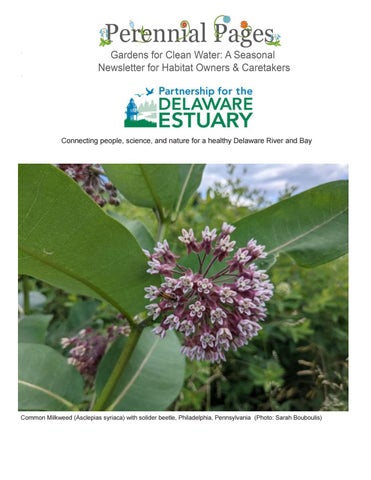
Common Milkweed (Asclepias syriaca) with solider beetle, Philadelphia, Pennsylvania (Photo: Sarah Bouboulis)
Bee Balm (Monarda didyma 'Raspberry Wine'), Newark, Delaware. (Photo: Sarah Bouboulis)
Time for Action: Summer 2021 Check out past summer issues of Perennial Pages for more garden tips and tricks.
Here are some of the top reminders for summer garden maintenance. Weeding: When it's needed, do your weeding after a rainstorm. Temperatures are often cooler and the ground is softer, making weeding
easier. Watering: It is often best to keep watering your spring plantings throughout the summer to make sure your plants get well established. Some shrubs may also need watering for a few years after planting. Rain gardens should always be watered during droughts. Planting: Most plants can still be planted/transplanted in the summer, but they need to be babied to keep them looking nice, so continue to water often. If even despite your best efforts they still look a little "dead", don't give up, they might surprise you and show up next spring looking better than ever. Enjoy your garden and the critters it is supporting!
English Ivy (Hedera helix) climbing up large trees, Newark, Delaware. (Photo: Sarah Bouboulis)
A Note on Invasive Species The state of Delaware recently passed legislation that prohibits the sale of 37 plant species deemed invasive. You can read more about the law here, including their definition of invasive. It certainly isn't the end to invasive species problems, but at the very least it will turn off the tap of invasive species entering our landscapes via unknowing homeowners who purchase them by happenstance. This is a good step forward as invasive species often out compete native plant species that
provide important resources to our native wildlife. For a variety of reasons, not all Delaware invasive species made the list of prohibited species. You can see the entire list of invasive species on the Delaware Invasive Species Commission website. For information and a list of invasive species found throughout Pennsylvania, visit the PA Department of Conservation and Natural Resources' website, and for a list of invasive plants commonly found in New Jersey visit the Native Plant Society of New Jersey's website.
But what can we do about all the invasive species that are already here? While it seems like their presence is never-ending, here are a few tips and tricks for dealing with them on your property. Every time you remove an invasive species, do your best to replant that area with native species. If you don't, you are creating a newly disturbed, empty area that is ripe for that invasive species to return, or maybe new ones to move in.
If you have a smaller property, monitor it frequently, and learn to ID common invasive species. It is much easier to deal with invasive species when they are smaller problems.
If you have a particularly large property, it is very likely you may need professionals to help with invasive removal and proper restoration of the site to keep them in check. But as mentioned above, it is easiest to frequently monitor your gardens and act fast when invasive plants show up. Support legislation that champions the health of our ecosystems. Spread the word! Be an advocate for native plants. When people ask for garden recommendations, suggest natives first!
What's "up"? Seasonal Plant Identification
Space Invaders Invasive Species Spotlight
Virginia sweetspire (Itea virginica 'Merlot') Newark, Delaware (Photo: Sarah Bouboulis)
Virginia sweetspire (Itea virginica) is a great native shrub. It provides cascading white blooms in the summer and amazing fall color, sometimes until almost December! It also attracts all sorts of insects. There are a few varieties available, primarily differing in their mature size, so you can have a smaller size for a smaller garden. Virginia sweetspire also does very well planted en masse as a border or small hedge. It can also do well in a wide range of soil and sun conditions. Itea may also be a good choice for steep banks, as it can help control erosion. You really can't go wrong with this versatile shrub!
PDE News Save the Date! The Experience the Estuary Celebration will take place on Thursday, October 7. If your company would like to join as a sponsor of the 25th Anniversary Celebration, please contact Elizabeth at ehorsey@delawareestuary.org.
Feel free to send any of your gardening questions or topic ideas to Perennial Pages editor, Sarah Bouboulis; sbouboulis@delawareestuary.org
Partner
Are you interested in supporting Perennial Pages? Contact sbouboulis@delawareestuary.org to find out how you can help!
The Partnership for the Delaware Estuary, host of the Delaware Estuary Program, leads science-based and collaborative efforts to improve the tidal Delaware River and Bay, which spans Delaware, New Jersey, and Pennsylvania. Copyright © 2021 Partnership for the Delaware Estuary all rights reserved. Become a supporter.
Click to view this email in a browser
If you no longer wish to receive these emails, please reply to this message with "Unsubscribe" in the subject line or simply click on the following link: Unsubscribe Partnership for the Delaware Estuary
110 S. Poplar Street
Suite 202
Wilmington, Delaware 19801
US
Read the VerticalResponse marketing policy.
https://mail.google.com/mail/u/1?ik=52f63a0c0a&view=pt&search=all&permthid=thread-f%3A1705812920706599539&simpl=msg-f%3A17058129207…
6/6