

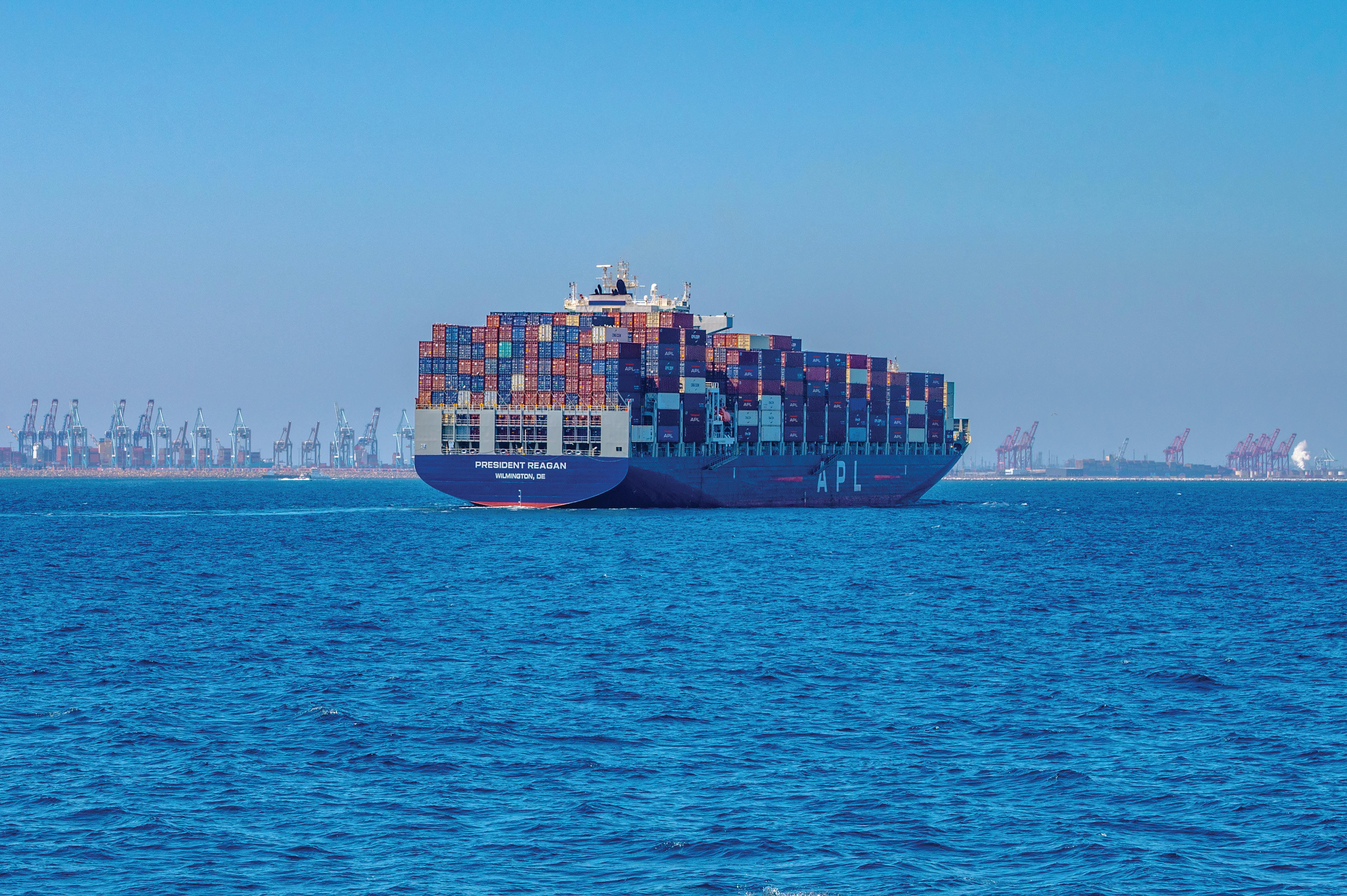

The National Defense Transportation Association Foundation recognizes our most special donors for their gracious financial support to academic scholarships supporting our future logistics and transportation leaders.
Contribution over $100K
Contribution $50K - $99,999K
Contribution $25K - $49,999



United is your strategic partner for government and military success.
Learn more at uafly.co/militarybenefits.

Federico Simonetti

Dear NDTA Team,
VADM William A. Brown, USN (Ret.) NDTA President & CEO
With ongoing global engagements and heightened tensions, including Operation Epic Fury, the ability to project and sustain force across contested environments has never been more vital. Our thoughts are with those currently serving our nation in uniform and in industry, and we will never forget the sacrifices of those we lost. As global competition intensifies, the Department of War is reinforcing supply chains to safeguard mission assurance. We must remember that logistics is no longer just a support activity; it is a core warfighting function and a primary line of effort within each potential area of strategic competition.
This issue of the Defense Transportation Journal (DTJ) examines efforts combining innovation, collaboration, and policy to deliver secure, responsive logistics, and transportation to the warfighter. As we acknowledge our nation is in an era where supply chain resilience is a contest of influence, access, and industrial capacity among great powers, we must continue to prioritize, focus, resource, and protect the elements of logistics and transportation that keep our warfighters and economy supplied and moving forward.
"…we
must continue to prioritize, focus, resource, and protect the elements of logistics and transportation that keep our warfighters and economy supplied and moving forward."
nificant decrease in Air Charter demand overall. The result is that air carriers are constantly assessing the demand on their ability to support CRAF requirements. This example is applicable across all trans-
WELCOME NEW CORPORATE MEMBERS
March 24, 2026
CHAIRMAN’S CIRCLE
• AvFuel SUSTAINING
• American Logistics, Inc.
• Cavalier Logistics
• Corporate Apartment Specialists, Inc.
• DF Young, Inc.
• Gnosis Freight
• RGC Logistics Corp.
transportation needed to project power in a globally contested environment so we can turn ideas into action.

portation modes — as companies make business decisions which have long term impacts.
Additionally, our DTJ contributors explore the multifaceted nature of modern resilience — analyzing the logistics advantages and vulnerabilities within the U.S. — useful when considering the challenges of our competitors and providing strategies for mitigating risks from adversarial control over critical supply chains and building domestic manufacturing capacity; reviewing cyber risks and the transition to Quantum-Ready Operational Technology related to transportation; the potential for Small Modular Reactors to provide resilient power for ports and commercial shipping; along with an update on In-transit & Asset Visibility Solutions.
It is important during this time of conflict to stay engaged in the various forums that USTRANSCOM, ARTRANS, MSC, and AMC are conducting. I recently attended the Military Aviation Advisory Committee (MAAC) chaired by Mr. Randy Martinez and Lt Gen Rebecca Sonkiss (AMC Acting Commander). Much discussion focused on current operations, capacity, and demand. Demand for commercial aviation is expected to increase because of current operations, but of concern is a sig-
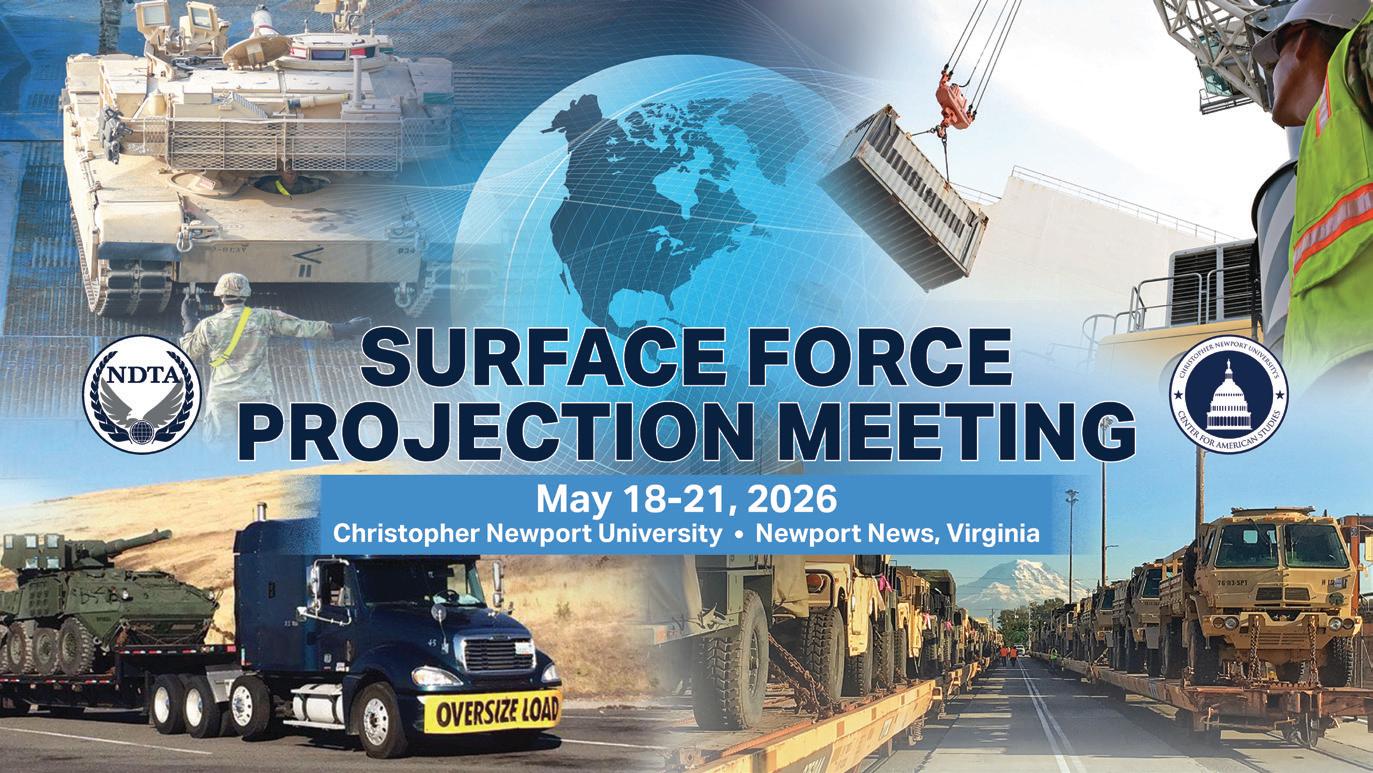
This issue highlights a few of the important passenger travel insights and activities of NDTA-DTMO GovTravels 2026 as we shift our focus to the May NDTA-CAS Surface Force Projection Meeting (SFPM). Our GovTravels event had over 1,000 registrants from Government and Industry! The focus was education and training related to improving government passenger travel. All walked away with renewed energy and purpose. Wrapping up the lessons learned from GovTravels, we look forward to the SFPM where we will concentrate on the surface
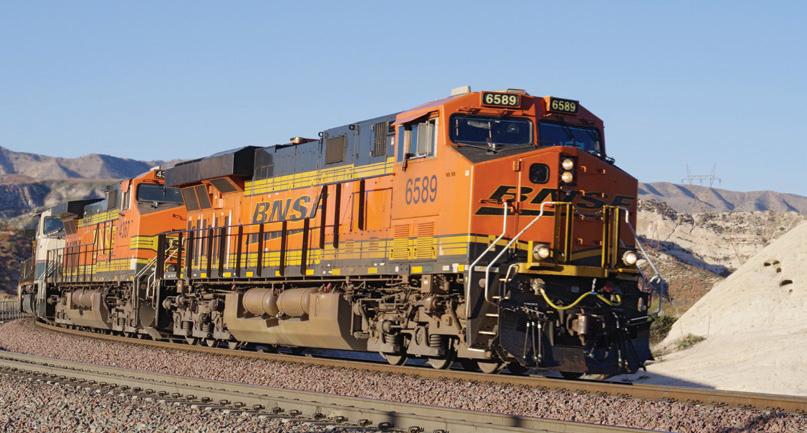
We are pleased to include another perspective regarding rail evolution with an article from BNSF. Also, Jason Trubenbach provides an update on the Europe/Africa Committee Working Group’s January working group sessions.
Logistics advantage is foundational to national security. We need to continue to work together under the NDTA educational umbrella to bring together the inspiration for collaboration which will serve current operations and guarantee future generations. Please reach out with your ideas and suggestions! DTJ
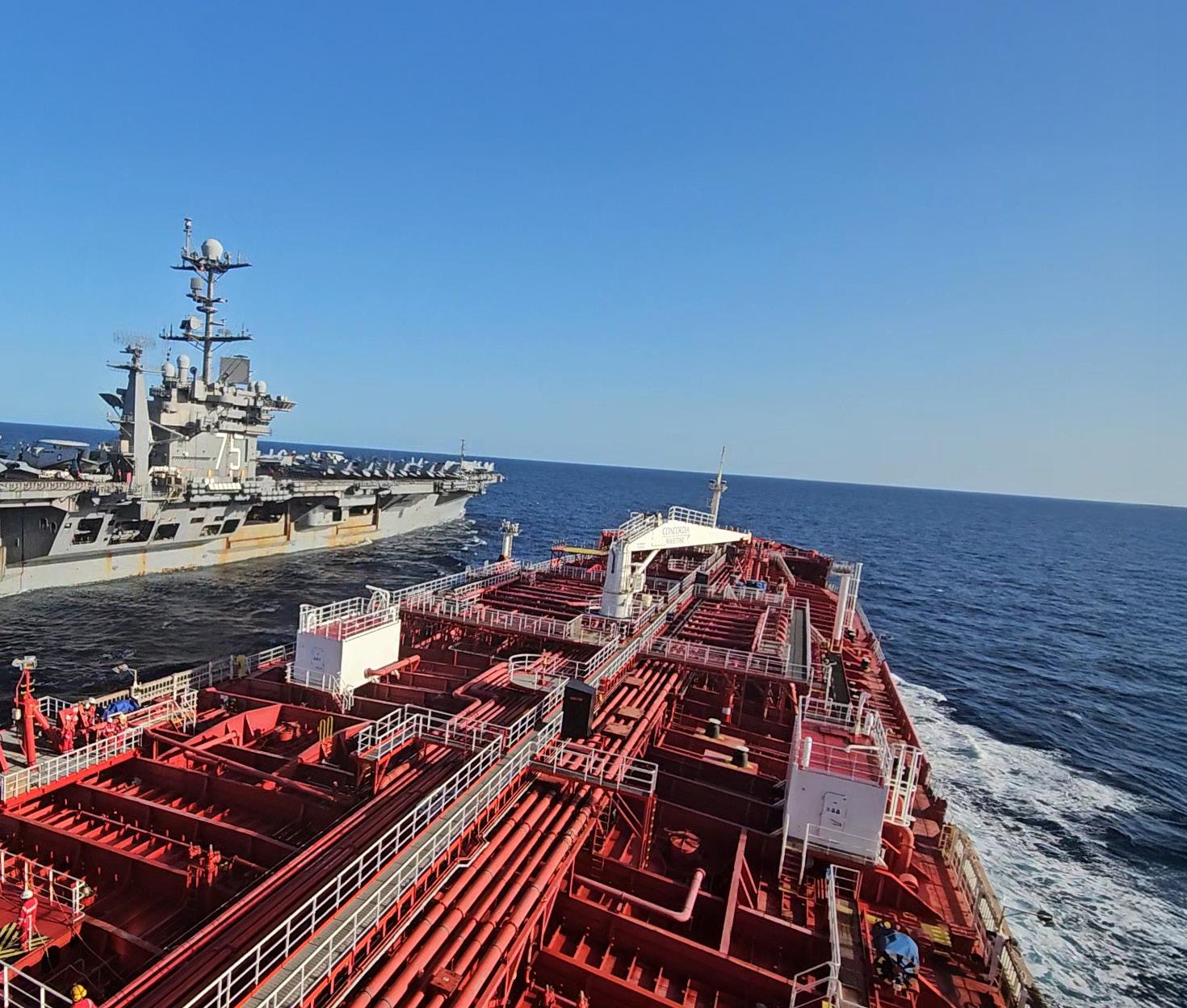
End-to-End Multi-Modal Logistics
Bulk Fuel Operations
DoD Trusted, ISO-Certified Solutions

Veteran-led Teams, Dedicated Account Management
Vessel Management
crowley.com/government
Global Reach with Resilient, Rapid Response Including in Austere Environments
























































































By Federico Simonetti, Chief Technology Officer, Xiid Corporation









Defense transportation professionals face a fundamental tension: modernizing logistics systems for speed, capacity, and precision while protecting operational security from increasingly sophisticated adversaries. Today’s transport fleets blend Operational Technology (OT) and Information Technology (IT) in ways that create both unprecedented capability and risk.




The challenge is compounded by mismatched timelines. While IT infrastructure refreshes every three to five years, the platforms that carry warfighters and sustain global operations are built to last decades. A KC-46 inducted into service today will still be flying beyond 2050. Even the humble FMTV tactical truck, equipped with GPS, diagnostics, and wireless connectivity, will serve well into the 2030s.

Yet the cryptographic algorithms protecting the data these platforms generate — movement schedules, maintenance logs, geolocation tracks, partner coordination — were not designed for threats that will emerge over their lifetimes. Adversaries already exploit this vulnerability through “Harvest Now, Decrypt Later” (HNDL) campaigns that intercept encrypted DoD logistics data today to decrypt with quantum computers tomorrow.
Cyber solutions developed for other long lifecycle critical infrastructure — industrial control systems, power grids, water treatment facilities, medical devices — are now proven at scale and directly applicable to defense transportation. By embedding crypto agility and quantum resistant architectures into fleet OT today, U.S. Transportation Command (USTRANSCOM) and its commercial partners can future-proof the backbone that keeps forces supplied, mobile, and ready in contested environments.
A decade ago, most military vehicles were endpoints only in the physical sense. They moved cargo and people, period. Today, even legacy platforms have been retrofitted with systems that generate, transmit, and store data: satellite terminals for beyond line of sight communication, telematics modules tracking fuel consumption and engine hours, AIT tags broadcasting container contents, and wireless diagnostic interfaces on the motor pool or flightline. Military Sealift Command vessels, Air Mobility Command aircraft, and Army Transportation Command movements now feed real-time status into the Joint Deployment and Distribution Enterprise, enabling visibility that was unthinkable a generation ago. That visibility has measurably improved readiness and responsiveness, but it has also turned every truck, train, ship, and aircraft into an attack surface.
This isn’t theoretical. In 2024, cybersecurity researchers documented a 39% increase in attacks targeting automotive and smart mobility ecosystems, with 60% of successful intrusions capable of affecting millions of connected devices. Defense logistics operates in that same ecosystem, often relying on the same commercial telematics providers, cellular networks, and over the air update mechanisms that civilian fleets use. When an adversary compromises a commercial fleet management platform, they don’t distinguish between Amazon delivery vans and contract carriers hauling munitions to a defense transportation hub.
By embedding crypto agility and quantum resistant architectures into fleet OT today, USTRANSCOM and its commercial partners can future proof the backbone that keeps forces supplied, mobile, and ready in contested environments.


Unlike enterprise IT, where server refreshes are disruptive but manageable, defense transportation OT is woven into platforms that cannot be easily modified. Aircraft avionics systems are certified for airworthiness under strict configuration control; changing a cryptographic module can trigger recertification processes that take years and cost millions. Ships’ integrated bridge systems and machinery control consoles are designed for 20-year service intervals. Ground vehicles fielded under urgent operational needs often lack the software hooks to accept security patches without a depot-level rebuild.
Security professionals call these “unmodifiable systems” that must be secured as is, without replacing vulnerable components. In the commercial world, this challenge is most visible in industrial control
systems (ICS) and SCADA environments, such as power plants and water treatment facilities, where downtime is measured in millions of dollars per hour and firmware updates require months of testing.
Defense transportation faces the same constraints, complicated by platforms that operate in hostile electromagnetic environments, across contested networks, and often in coalition operations where security architectures must interoperate with allied systems on their own timelines.
Transportation security professionals understand traditional cyber threats such as ransomware, denial of service, and data exfiltration. HNDL represents a different calculus. Rather than exploiting data immediately, adversaries intercept and store encrypted communications, betting that quantum computers — expected to achieve cryptographic relevance within the next decade — will allow them to decrypt that traffic retroactively.
For defense logistics, this threat is especially pernicious because transportation data retains intelligence value for decades. A sealift manifest encrypted and transmitted in 2026 still reveals force disposition, supply chain dependencies, and partner nation cooperation patterns when decrypted in 2035. Predictive maintenance data can reveal operational tempos and deployment patterns. Even seemingly mundane GPS tracks, aggregated over months, can expose doctrine, training areas, and prepositioning strategies.
Per NSA guidance, nation state actors are actively harvesting encrypted government and defense traffic today, anticipating that cryptanalytically relevant quantum computers will render current encryption algorithms — Rivest Shamir Adleman (RSA), elliptic curve cryptography (ECC), and even some implementations of AES — vulnerable within 10 to 15 years. For OT systems designed to operate for 20 to 30 years, this timeline is a planning reality.
The logistics cyber problem even harder to solve is due to third-party vendors and potential “sleeper cells” embedded in the ecosystem. Commercial carriers, telematics providers, maintenance depots, and software vendors all connect into the data
In a globally distributed logistics enterprise that depends on thousands of partners, it is unrealistic to assume every node is always clean.
flows that sustain warfighter mobility. A compromise in any one of these environments can give adversaries indirect access, often without touching a .mil network directly.
Sleeper cells — compromised systems, implants, or even insiders that sit quietly inside partner or subcontractor environments — can watch, exfiltrate, and wait for a favorable moment, or simply participate in HNDL campaigns by siphoning encrypted traffic for future quantum decryption. In a globally distributed logistics enterprise that depends on thousands of partners, it is unrealistic to assume every node is always clean.
This is where deterministic, outbound-only, process-bound architectures matter. Instead of assuming that every vendor or node can be perfectly defended, they assume compromise is possible and focus on blocking expansion. Even if a sleeper cell resides on a partner system, it cannot pivot into mission systems if there are only tightly scoped, cryptographically enforced, process-to-process connections.
Rather than wait for quantum-resistant algorithms to mature and then retrofit decades-old platforms, the solution is to architect transportation OT systems today with crypto-agility: the ability to swap cryptographic algorithms without hardware changes, extensive recertification, or operational downtime.
This is already happening in critical infrastructure. The National Institute of Standards and Technology (NIST) has published three post quantum cryptographic standards — ML KEM (Kyber), ML DSA (Dilithium), and SLH DSA (SPHINCS+) — designed to resist attacks from both classical and quantum computers. The National Security Agency’s Commercial National Security Algorithm Suite 2.0 (CNSA 2.0) mandates that National Security Systems transition to these algorithms on a phased timeline, with full implementation required by 2035.
For defense transportation, this means: 1. Inventory crypto dependencies across the fleet. Every telematics module, satellite terminal, and diagnostic interface uses encryption. Transportation commands need to know which algorithms are in use, which systems can be upgraded remotely, and which require hardware replacement or gateway solutions.
2. Prioritize upgrades for long-lived, high-value data flows. Not all logistics data have equal intelligence value. Movement orders, partner coordination, and classified cargo manifests warrant immediate migration to post
quantum encryption. Routine maintenance logs for nonsensitive systems can follow a longer timeline.
3. Design outbound-only process-toprocess communication architectures. Traditional OT cybersecurity still has vehicles, trains, ships, and aircraft using publicly routable IP addresses and open inbound ports to communicate with command centers and logistics hubs. This creates persistent attack surfaces that adversaries can scan, probe, and exploit. Modern architecture eliminates this exposure entirely by using secure connections that make fleet assets undiscoverable to external reconnaissance while maintaining full operational capability.
A common objection to hardening fleet OT is the assumption that stronger security will degrade performance or complicate operations. The opposite is often true, especially in the degraded, intermittent, and limited bandwidth environments where military logistics operates.
Deterministic architecture establishes encrypted tunnels from the vehicle, train, ship, or aircraft to command infrastructure, rather than requiring platforms to accept inbound connections. This has several operational advantages:
Zero exposed endpoints. Because all communication is initiated by the platform, firewalls can remain fully closed, making assets undiscoverable to scanning and exploitation attempts. This is especially critical for platforms operating on commercial cellular networks, public Wi Fi at aerial ports of debarkation, or coalition networks where adversaries may already have a foothold.
Process-to-process segmentation. Rather than granting network level access to an entire vehicle, train, aircraft, or ship, modern tunneling technologies create isolated communication channels for each application — telematics, diagnostics, mission planning. Even if one system is compromised, adversaries cannot pivot laterally to other systems on the platform.
Triple-layer, quantum-resistant encryption. Defense grade architectures layer multiple encryption methods — TLS 1.3 for transport security, post quantum
algorithms (Kyber, Dilithium) for key establishment and authentication, and AES 256 for data confidentiality. Even if one layer is compromised, the others continue to protect the data.
Reliable operation on dirty networks. Platforms must communicate over satellite links with high latency, tactical radios with intermittent coverage, and foreign cellular networks with unpredictable quality of service. Packet buffering and error correction, designed into quantum ready tunneling architectures, ensure that mission critical data — maintenance alerts, location updates, cargo status — reaches its destination even when the network degrades.
In 2024, the U.S. Air Force Research Laboratory (AFRL) conducted penetration testing on Terniion™, a quantum ready, pre-emptive technology platform, and concluded that the patented system demonstrated “near invisibility” to external reconnaissance and was impenetrable to standard attack methodologies. This validation led to the company earning an unconditional Authority to Operate (ATO) from the Department of Defense — a designation not awarded to any other cybersecurity vendor. This signals that the technology is operationally proven, not experimental. Terniion is already protecting workloads for the Defense Health Agency, CI/CD pipelines for defense contractors, and sensitive data flows for federal agencies. The platform scales from a single tactical vehicle to global fleets with tens of thousands of platforms, with the ability to spin up secure tunnels in minutes and manage them from a single control plane.
For USTRANSCOM components, commercial partners, and logistics organizations, the path forward isn’t to wait for quantum computers to arrive and then react. It’s to embed quantum-readiness into fleet modernization efforts already underway:
1. Treat telematics and diagnostics as tactical data systems, not maintenance tools. Every connected platform is a potential intelligence source for adversaries. Apply the same security rigor to fleet management systems that you apply to command-and-control networks.
2. Demand crypto agility in new pro-
curements. When specifying requirements for next generation vehicles, aircraft, and vessels, include mandates for post quantum encryption and algorithm agile architectures. Commercial vendors are already building these capabilities for civilian critical infrastructure. DoD should leverage that investment.
3. Pilot gateway based protections for legacy fleets. For platforms that cannot be modified, small form factor gateways — Raspberry Pi class devices — can handle external communications using quantum resistant tunnels while legacy OT continues to operate unchanged. This “overlay” approach allows incremental hardening without triggering recertification or disrupting operations.
4. Coordinate with allies and commercial partners on interoperable standards. Coalition operations depend on seamless logistics integration. As the U.S. migrates to CNSA 2.0 and post quantum standards, allies and commercial carriers need clear guidance and transition timelines to maintain interoperability.
Transportation professionals have spent careers solving age-old problems centered on how to move mass and equipment faster, farther, and more efficiently. The connectivity that enables today’s precision logistics creates vulnerabilities that adversaries are exploiting right now, betting that quantum computing will unlock the intelligence value of encrypted logistics data for decades to come.
We aren’t locked into that future. By treating every transport as a cyber endpoint and embedding crypto-agility, adopting quantum-resistant encryption, and designing systems to operate securely on contested networks, we can ensure the strategic mobility backbone remains resilient against both today’s threats and tomorrow’s decryption capabilities. DTJ

Federico Simonetti serves as Chief Technology Officer at Xiid Corporation, where he leads development of quantum-resistant security architectures for critical infrastructure and defense systems. Contact Fed at federico@xiid.com.

By Tom G. Williams, Executive Vice President and Chief Marketing Officer, BNSF Railway
BNSF understands that NDTA will not be expressing a public position on the proposed merger between Union Pacific and Norfolk Southern Railway. For a comprehensive overview of BNSF’s position, visit www.BNSF. com/PreserveRailCompetition. Information on how to provide input directly to the STB is available at www.stb.gov/resources/majorrailroad-mergers/.
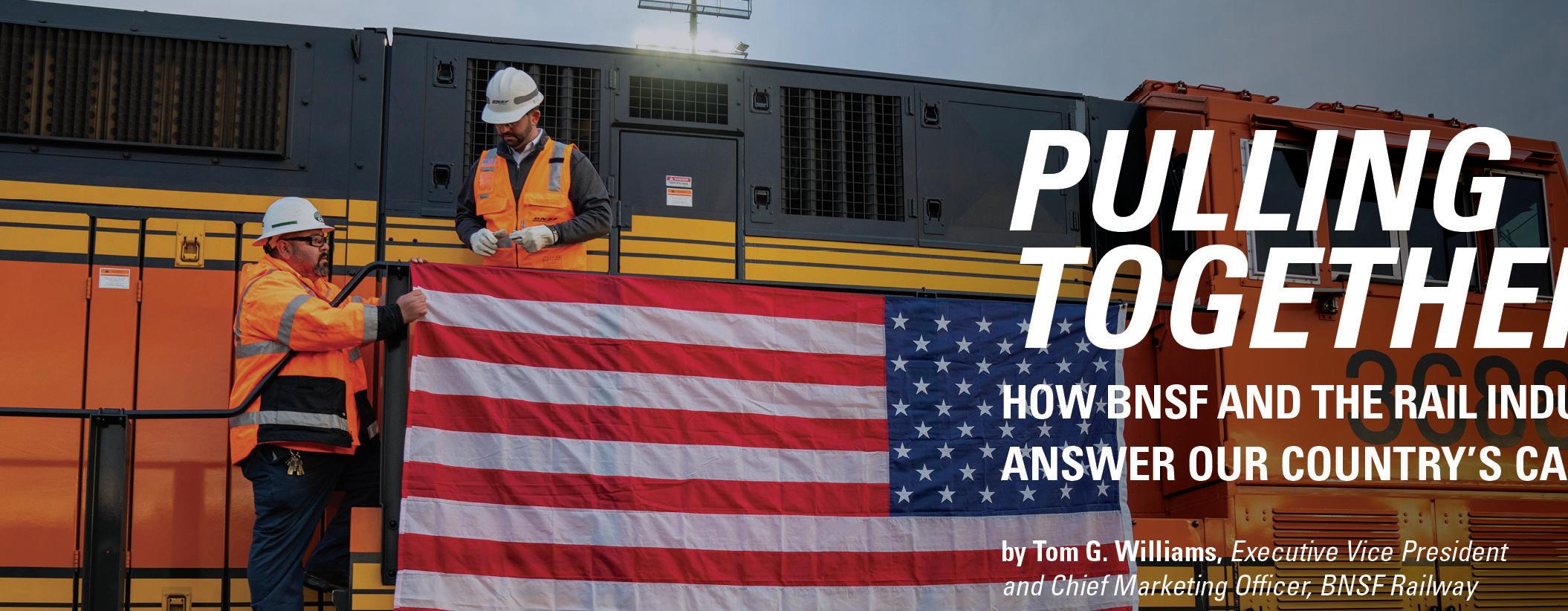
America’s military readiness remains as vital as it ever has been. Every day, the U.S. rail network stands ready to support the needs of the U.S. military. From operations at ports to military installations, from major Class I railroads to regional and local rail carriers, the ability to efficiently mobilize depends on a sustained balance of cooperation and competition. Cooperation across carriers ensures freight moves expeditiously with minimal to no interruptions in route. Competition among carriers ensures that the military gains the flexibility of multiple options and the fairness of responsive ser-
vice and responsible pricing.
At BNSF, we take pride in our role in this balanced system of competition and cooperation. Now, let’s talk about ways our industry — and BNSF, specifically — serves the U.S. military, and raises concerns about a potential disruption to a system that is working effectively for our country.
Nearly 20% of all current BNSF employees are veterans, and serving the military is a point of tremendous pride at BNSF. Much like the armed forces, our organization is built on discipline, teamwork, and a shared commitment to a higher purpose. Our people are empowered to use their strengths and ingenuity to move our company — and our country — forward.
“…the ability to efficiently mobilize depends on a sustained balance of cooperation and competition.”
The American rail industry’s support of the U.S. military dates to the Civil War, when railroads were vital to the transportation of troops, food, and equipment.
The ability to efficiently mobilize depends on a sustained balance of cooperation and competition.
Major battles were fought for control of key rail hubs, such as Chattanooga and Atlanta. While subsequent conflicts were not contested on American soil, the industry stepped up to help war efforts, agreeing to temporarily nationalize to support military freight movements in World War I, for example, or rallying to handle 98% of U.S. troop movements from 1942 to 1944 in World War II. Even today, the U.S. rail industry continues to transport tanks and other military equipment from bases and ports in support of the ongoing needs of the U.S. Military based at home and abroad.
Like our Class I peers, BNSF is a proud member of the Department of War’s (DoW’s) Railroads for National Defense
More than 60% of the U.S. military’s surface freight is moved by rail.
(RND) Program, managed by the U.S. Army Transportation Engineering Agency (TEA) in coordination with the Federal Railroad Administration (FRA) and the Surface Transportation Board (STB). In 1975, the RND established STRACNET (the Strategic Rail Corridor Network) to support military readiness for both defense deployment and peacetime needs. STRACNET is a coast-to-coast network encompassing 41,300 miles of critical rail lines serving more than 140 defense installations The RND Program continues to serve as the primary tool for communicating the DoW’s rail infrastructure needs to private rail carriers, regulators, and other stakeholders.
More than 60% of the U.S. military’s surface freight is moved by rail.
So much vital military freight moves across the nation’s rail lines that any major change to the system must be carefully considered. The current equilibrium of collaboration and competition found in the U.S. rail industry is poised to be disrupted by the proposed merger of two Class I railways: Union Pacific (UP) and Norfolk Southern (NS). A rail merger of this scale is unprecedented and will be carefully analyzed by the Surface Transportation Board (STB).
How would a lack of choice in routes and potential service disruptions impact our military preparedness and Speed of War capabilities in times of national emergency?
Some examples of BNSF providing effective transportation solutions to the military include:
• Successfully moving in fiscal year 2025 the highest volume of military freight BNSF has hauled since 2019.
• Coordinating extensive military equipment transport via the Fort Hood Rail Operations Center, which connects to the BNSF network in Temple, Texas.
• Executing a 2,000-mile large-scale move of equipment for a training exercise for the soldiers of the 1st Armored Brigade Combat Team, 34th Infantry Division.
• Working with the National Guards of 10 states, exploring projects for training, deploying drills from fort to port and vice versa.
• Expanding the rail infrastructure at Camp Ripley in Minnesota with more than a mile of new siding to decrease loading times by 75%.
In BNSF’s view, the proposed merger raises two overarching concerns for our military partners.
How would a lack of choice in routes and potential service disruptions impact our military preparedness and Speed of War capabilities in times of national emergency?
If the merger goes through, nearly half of the nation’s freight would be consolidated onto the Union Pacific. Routes will be eliminated, and some military installations may lose the ability to choose between competing rail options, leaving them exposed to a single railroad’s pricing and service prerogatives.
Past mergers have led to service disruptions that took years to resolve. After the UP-SP merger in 1996, the initial congestion in the Texas Gulf created a domino effect, with rail traffic backing up for thousands of miles across the country. By Fall 1997, the system was effectively paralyzed with delays leading to severe economic impact for shippers.
The CP-KCS merger in 2023 (which affected just 5% of the market) still led
to misrouted and lost cars and operational breakdowns necessitating STB action. The UP-NS proposed merger is far more complex, requiring the integration of numerous technology systems across a new 55,000-mile network. In a national military emergency, such an impasse could have significant implications for our national defense capabilities.
BNSF believes the UP-NS merger would be costly for customers, reduce competitive options and be dangerous for the broader supply chain with complexities inevitable from integration. If the UP-NS merger is approved, one railroad would control nearly half of U.S. rail freight – and 10,000 facilities would be subject to one railroad’s unilateral pricing and service choices.
BNSF believes that strategic, innovative partnerships between railroads, absent the regulatory and operational hurdles of a large-scale merger, represent the right way forward in serving the military and other major shippers. It is a model that has served the industry and military partners well for years, preserving collaboration and competition.

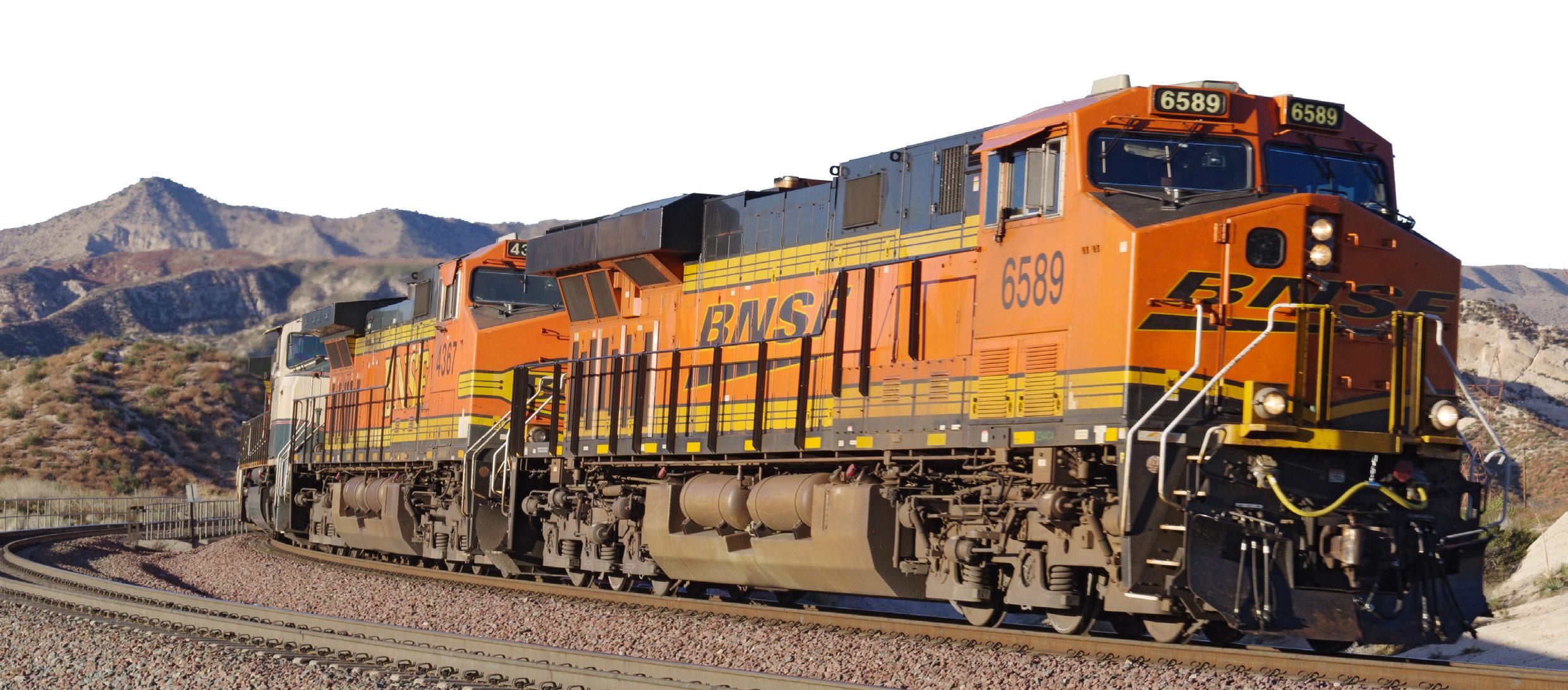
In an example of effective collaboration between current Class I railroads, BNSF and CSX recently worked together to seamlessly transport more than 100 M1 Abrams tanks, M2 Bradley infantry fighting vehicles and Stryker infantry carrier vehicles from Fort Hood in Texas to Washington, D.C., for the parade celebrating the U.S. Army’s 250th Anniversary.
On a broader scale, BNSF and CSX are collaborating on seamless coast-to-coast solutions for shared customers. BNSF believes competition expands options and accountability; and that is why we prefer collaborative partnerships over consolidation.
BNSF teamed up with CSX to move the Florida National Guard’s largest shipment since World War II from Fort Stewart in Georgia to Fort Irwin in California.
Like its rail industry peers, BNSF deeply values the veterans who compose nearly 20 percent of the company’s workforce. Support at BNSF includes:
• Prioritizing the hiring of military veterans as well as those who serve in the National Guard or Reserves.
• Regularly recruiting at military bases, including Fort Hood and Fort Riley.
• Providing time off for training and deployment of reservists.
• Fostering the BRAVE (Business Resource and Veterans Engagement) group to help veterans, reservists, and first responders engage with communities and develop their careers.
• Contributing to philanthropies such as
Wreaths Across America, the USO, Military Miles Marathons, and the Wounded Warrior Project.
To ensure readiness and reliability in times of need, Class I railroads continually invest
BNSF teamed up with CSX to move the Florida National Guard’s largest shipment since World War II from Fort Stewart in Georgia to Fort Irwin in California.
rithms sift through more than 35 million readings from wayside detectors each day, which monitor passing trains for defects in real-time enabling BNSF to predict maintenance needs in advance. This lowers the likelihood of breakdowns and service interruptions, enhancing fluidity and safety.
in their networks. At BNSF, we have devoted more than $35 billion to maintaining and expanding our rail network over the last 10 years. Last year alone, dedicated $3.6 billion to continue to operate a safe and reliable rail network, as well as anticipate our customers’ needs.
America’s major railroads are committed to continuously improving the safety and security of shipments, for the military and all our customers. BNSF regularly inspects every aspect of its network, including locomotives, track, rail and bridges, and it conducts additional weather-event inspections as conditions demand. Its team of trained
The U.S. rail industry remains a critical enabler of military readiness, and you can rely on us to answer the nation’s call whenever needed. While we have raised concerns about how the proposed UP-NS merger may affect our ability to support at today’s levels, BNSF remains committed to working across the industry to ensure the rail network remains resilient, responsive, and fully capable of supporting the nation’s defense mission. We take pride in the trust you place in us and in our role in supporting the nation’s military readiness. DTJ

Tom G. Williams serves as executive vice president and chief marketing officer at BNSF Railway in Fort Worth, Texas. He has worked for BNSF since 1993, serving in numerous leadership positions in the areas of Intermodal, Automotive, Industrial Products, and Consumer Products. He holds a bachelor’s degree in finance from Indiana University and an MBA from the University of Chicago.











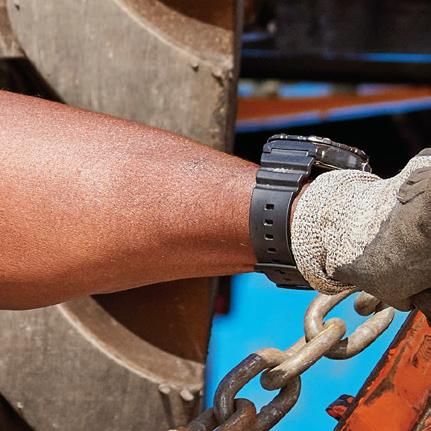






• One of the industry’s largest van and platform selections with over 78,000 truck capacity providers in network

• Expedited cargo vans, straight trucks and tractor-trailers
• More than 17,600 pieces of trailing equipment



• 9,600 owner-operators leased to Landstar with over 1,200 stepdecks and 960+ flatbed trailers
• Drop and hook services



• Secure, dedicated government services with more than 350 AA&E secret cleared teams

• Specialty trailers ranging from beam, blade and Schnabels to double drop, stretch and multi-axles


• Hazmat certified owner-operators
• Unit moves with on-site carrier representative





By Jason Trubenbach, President, NDTA Europe & Africa Region, and Director of Trailer Bridge Europe GmbH
overnment, military, and industry leaders gathered at Sembach Kaserne in Germany for the National Defense Transportation Association (NDTA) Europe & Africa Regional Committee Meeting on January 20-21, 2026. What emerged over two days of focused discussion was not simply another professional convening, but a clear inflection point: a regional committee moving decisively from dialogue to delivery.
With 71 attendees representing 34 organizations — 53% industry across 22 companies and 47% government across 12 organizations — the meeting demonstrated both growing traction and sustained demand for a neutral, non-political forum where complex transportation and logistics challenges can be tackled collaboratively. The mix itself told an important story: this was not “death by PowerPoint,” but a shared problem-solving environment grounded in operational reality.
While networking was an intentional meeting outcome, it was not the purpose. The Europe & Africa Regional Committee is increasingly focused on identifying key issues, documenting diverse perspectives, and translating those discussions into strategic-level insights that inform senior leaders and policymakers. The committee is about action that strengthens readiness, improves mobility, and enables more effective civil-military-industry alignment across two demanding theaters.
The Regional Committee serves as a standing forum that brings together U.S. government agencies, military services, allied partners, and commercial industry to address defense transportation, logistics, and mobility challenges unique to the Europe and Africa regions.
Four functional subcommittees anchor the committee’s work: Airlift; Surface; Sealift & Port Operations; and Government Passenger Travel.
Together, these subcommittees bridge modal, organizational, and national perspectives, feeding subject-matter expertise into the broader regional structure. Their role is not to replace existing command or policy mechanisms, but to complement them by providing cross-cutting insight, operationally grounded recommendations, and visibility into how decisions play out across the transportation enterprise.
The January meeting provided an invaluable in-person opportunity for government and industry to re-engage after years of increasingly complex operational demands. Participants shared perspectives on current challenges within the U.S. Eu-

ropean Command (EUCOM) and U.S. Africa Command (AFRICOM) areas of responsibility, explored future risks, and discussed practical ways to collaborate more effectively.
One of the meeting’s formal objectives was approval of the Europe & Africa Regional Committee Charter, marking the committee’s official standing within NDTA’s governance structure. While important, the charter approval was less notable for the vote itself than for what it symbolized: shared commitment to sustained engagement and accountability.
Participants were clear that this committee is not a one-off workshop or a discussion group that produces binders that sit on shelves. The expectation — set by both government and industry members — is that discussions lead to tangible outputs: white papers, recommendations, workshops, and follow-on engagements that inform strategy and influence change. That expectation shaped the tone of the meeting and the work of the subcommittees.
Each of the four subcommittees approached its mandate through a different operational lens, yet several common themes emerged across the board. Chief
among them were customs processes, which surfaced as a challenge in three of the four subcommittees, highlighting how friction at borders continues to affect air, sea, and surface movements alike.
Rather than diving into tactical minutiae, subcommittees focused on identifying systemic issues, their strategic implications, and realistic paths forward.
The Airlift Subcommittee concentrated on air mobility, transport operations, and the coordination of strategic and tactical lifts across the region. Discussions reflected growing concern about how evolving operational realities are affecting the speed, predictability, and flexibility traditionally associated with air movement.
At an elevated level, participants examined challenges related to specialized cargo, customs processes, and coordination among multiple stakeholders. Customs requirements — particularly documentation alignment and acceptance across nations — were highlighted as a recurring friction point that can negate the inherent advantages of airlift if not addressed holistically.
Priority actions for 2026:
1. Advancing targeted education and knowledge-sharing initiatives to improve understanding of air transporta-
tion processes across government and industry.
2. Developing focused recommendations on customs, its automation, and documentation alignment to reduce delays and inefficiencies in air movement.
The subcommittee emphasized that airlift remains a critical enabler for time-sensitive missions, but sustaining that advantage requires better synchronization across policy, process, and execution.
The Surface Subcommittee examined road, rail, and inland transportation challenges, with particular attention to crossborder movement and contracting frameworks. Participants discussed how legacy procurement processes and limited tender structures can restrict access to industry capabilities, reducing flexibility at a time when adaptability is increasingly essential.
Customs and diplomatic clearances again emerged as a cross-cutting issue, especially for multi-nation surface movements where timelines, formats, and requirements vary widely. While industry often has the capacity to offer tailored solutions, current processes can make those solutions difficult to access quickly.
1. Exploring opportunities to modernize surface transportation procurement approaches to better leverage industry capacity.
2. Facilitating structured dialogue — such as workshops or industry days — with stakeholders to improve understanding of available capabilities and constraints.
The subcommittee framed these challenges not as failures, but as opportunities to recalibrate systems designed for a different operational era.
SUBCOMMITTEE:
The Sealift & Port Operations Subcommittee focused on maritime logistics, port operations, and intermodal connectivity. Discussions highlighted how assumptions about port capacity and access can quickly unravel under stress, particularly when ownership structures, security requirements, and regulatory environments are not fully aligned. Participants raised concerns about port security standards, coordination among
stakeholders, and the pace at which requirements are communicated and implemented. Customs processes — especially electronic customs documentation implementation across ports — again featured prominently as a source of delay and uncertainty.
Priority actions for 2026:
1. Developing a high-level white paper outlining key considerations for port operations, security, and coordination across the Europe & Africa theaters.
2. Establishing a shared baseline understanding of electronic customs documentation processes to support smoother maritime flows.
The subcommittee underscored that sealift and port operations are foundational to large-scale movements, and that resilience depends on early coordination rather than reactive fixes.
The Government Passenger Travel Subcommittee addressed government and military travel policies, traveler management, and support processes. While often viewed as separate from cargo movements, participants emphasized that passenger travel is an integral part of operational readiness and partner engagement.
Discussions touched on the complexity of travel systems, the importance of clear communication, and the need for better guidance on issues that directly affect travelers, including customs and regulatory requirements. The human experience of travel — especially in multinational environments — was central to the conversation.
Priority actions for 2026:
1. Developing best-practice guidance and informational products to improve traveler awareness and reduce friction.
2. Identifying opportunities to streamline processes while maintaining compliance and accountability.
The subcommittee highlighted that effective passenger travel systems support not only efficiency, but morale and mission success.
Across all four subcommittees, a clear shift was evident: discussions were framed not just around “what is broken,” but around
what leaders need to know and where influence can be applied. The committee’s role is increasingly seen as translating operational experience into strategic-level insight that informs Combatant Commands, policymakers, and senior stakeholders.
Participants acknowledged enduring challenges — such as contracting uncertainty, infrastructure constraints, and reduced airlift options — without dwelling on tactical detail. Instead, the emphasis was on documenting perspectives, identifying patterns, and shaping recommendations that can drive change at the appropriate level.
This approach reflects the committee’s maturation. It is no longer simply a venue for sharing experiences, but a mechanism for aligning understanding and informing decisions.
The strong turnout and active participation at Sembach Kaserne reinforced that interest in the Europe & Africa Regional Committee is growing. Attendees valued the opportunity to engage face-to-face, challenge assumptions, and build relationships grounded in shared objectives.
Importantly, the committee’s momentum does not end with the meeting. Subcommittees will continue their work throughout the year, developing outputs, and maintaining dialogue among stakeholders. These efforts will feed into NDTA’s broader mission of education, collaboration, and innovation across the defense transportation enterprise.
A follow-on regional event is in development and tentatively planned for early December 2026 in Stuttgart, Germany.
By focusing on action, embracing diverse perspectives, and maintaining a strategic outlook, the NDTA Europe & Africa Regional Committee is positioning itself as a valuable contributor to readiness, resilience, and informed decision-making across two critical theaters. DTJ

Jason Trubenbach, NDTA Chair, Europe & Africa Regional Committee, is Director of Trailer Bridge Europe, GmbH, and a seasoned logistics and supply chain professional. Connect with Jason at www.linkedin.com/in/jason-trubenbach



By Robert Yon, Vice President, SPECTR, LMI
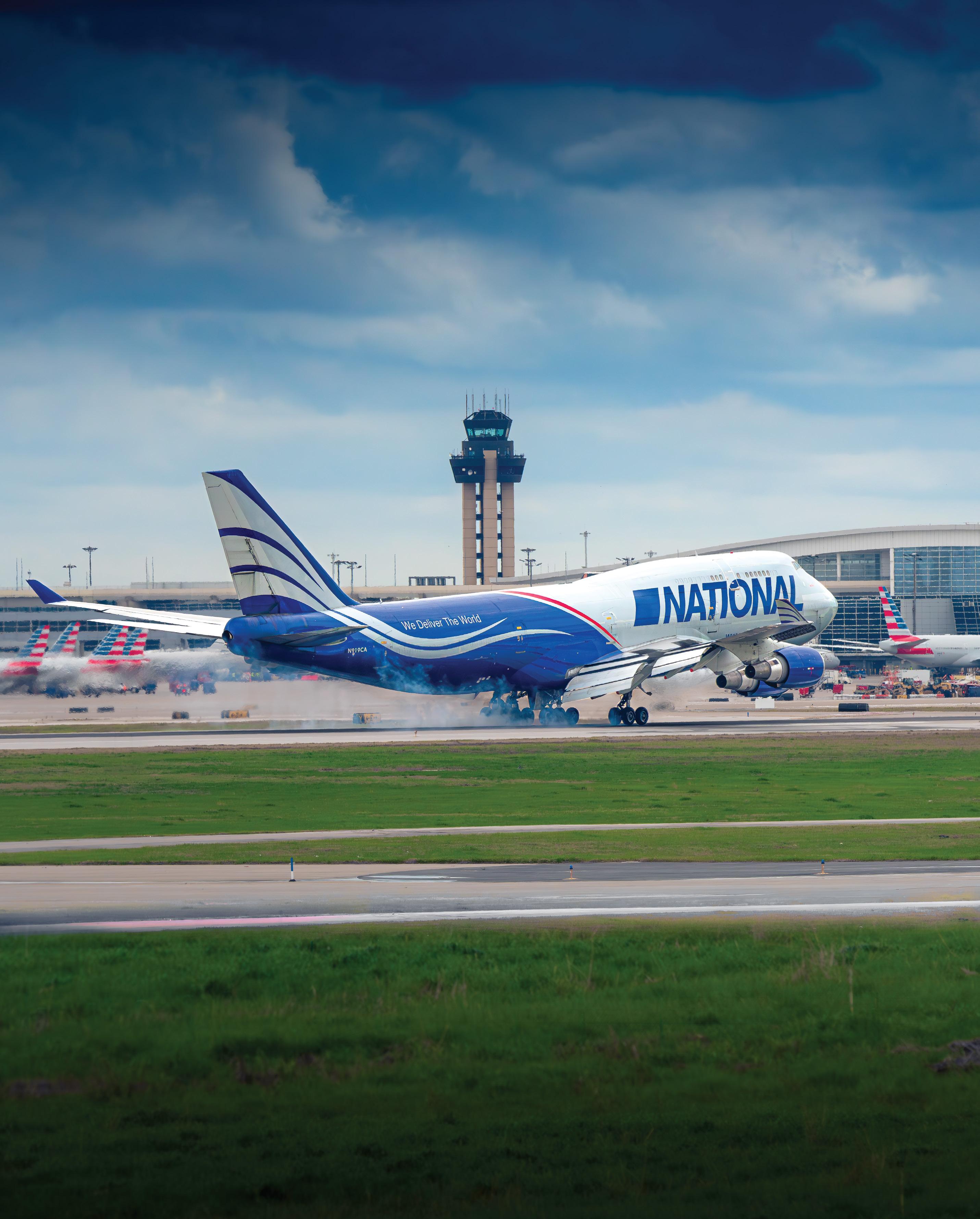
n late 2025, United States Transportation Command (USTRANSCOM) kicked off Operation Turbo Fusion to test and validate the military's ability to rapidly activate deployment assets. Critical assets such as military equipment, vehicles, and containerized and palletized sustainment cargo moved from numerous locations throughout the United States to ports for onward movement into theater. Throughout Turbo Fusion, USTRANSCOM coordinated and demonstrated a real-world, large-scale deployment scenario, preparing U.S. forces to project power, even in contested environments.
Maintaining In-Transit Visibility (ITV) of the cargo was a key tenet of the exercise. ITV is critical to modern warfare because it provides the real-time, end-to-end tracking of cargo necessary to make informed, split-second decisions in increasingly dynamic combat environments. In any conflict, adversaries will very likely attempt to disrupt supply lines, and robust ITV and Asset Visibility (AV) capabilities will allow commanders to maintain situational awareness, know the location of cargo, whether in storage, in staging areas, or while in transit, and will enable dynamic redirection of assets to new points of need.
During Turbo Fusion, LMI’s team equipped over 400 pieces of cargo with mesh tags at various locations in the U.S. prior to movement. These tags provide “dual use” capability to meet both DoW’s shipyard, depot, and warehouse AV needs while also meeting DoW’s ITV requirements as assets move beyond our borders to support the warfighter overseas. This technology provides DoW with a single, end-to-end ITV and AV solution from factory/fort to foxhole.
Operation Turbo Fusion built upon the success of the NADACS ITV solution that was validated for air movements during Air Mobility Command’s (AMC) 2024 Valiant Shield exercise. AMC found the NADACS mesh solution was far more accurate than current manual reading methods. Through automated event alerts, NADACS’s mesh sensor capabilities provide incredible value to the DoW for temperature controlled, high-value, or securitysensitive materials, especially those susceptible to spoilage, damage, or theft while in transit.
“The integration of NADACS autonomous sensing capabilities into our dashboard far exceeded our expectations for ITV and asset visibility.”
– AMC’s former Director of Logistics, Engineering and Force Protection during Exercise Valiant Shield, June 2024.
NADACS and mesh device support to Operation Turbo Fusion proved that technology and lower cost solutions exist for the DoW to move beyond single point ITV solutions and episodic tracking, which is critical for future conflicts. Mesh devices further proved that AV and ITV requirements do not require different technology solutions that are managed separately — technology solutions now exist to satisfy the needs of both DoW’s transportation and supply communities and can give warfighters a decisive advantage for conducting large scale logistics operations. DTJ

Robert Yon is the Vice President, SPECTR at LMI. SPECTR is LMI’s suite of asset visibility and in-transit visibility products designed to automate manual processes and improve data quality. Robert applies technology built leveraging commercial best practices to complex logistics challenges and has extensive experience in the military transportation and distribution domains.

By Mike Pierce, Chief Operating Officer of CORE POWER Generation and Group General Counsel at CORE POWER
Reliable energy underpins maritime logistics. Without it, ships slow, ports seize, supply chains bottleneck, and prices rise as the COVID-19 pandemic demonstrated. As global trade expands, supply chains shift, and port infrastructure electrifies, access to dependable energy is critical for the shipping industry and the nations that rely on its consistent operation.
For the United States and its allies, the stakes are higher still. Strategic seaports and commercial fleets handle far more than commercial trade. They move the energy, equipment, and materials that underpin economic strength and defense logistics, from routine sustainment to rapid force deployment. A port without reliable energy cannot project power. Maritime energy resilience is, therefore, a matter of national strategic importance.
Against this backdrop, the maritime operating environment is shifting on three
fronts. First, electricity grids that feed ports are increasingly constrained. Retirement of baseload generation, adoption of intermittent renewables, and underinvestment in transmission and distribution are pushing electricity prices up and reliability down.
Second, port electricity demand is growing. Ports are adding digital logistics platforms as they electrify terminal operations and cargo handling systems. At the same time, modern container vessels and cruise ships at berth draw tens of megawatts of power that ports must supply, in addition to the growing landside demand.
Third, shipping is reckoning with tight-
ening emissions regulations. The industry has been tasked with decarbonizing propulsion while maintaining the reliability and endurance that global trade demands. Taken together, these pressures demand an energy source that is reliable, high-capacity, and deployable where it is needed most. Advanced nuclear energy delivers all three. Small modular reactors (SMRs), designed to be factory manufactured rather than built on site, can be deployed where conventional nuclear plants cannot. In the maritime context, their compact design opens two applications: powering ports from the water and powering ships themselves.
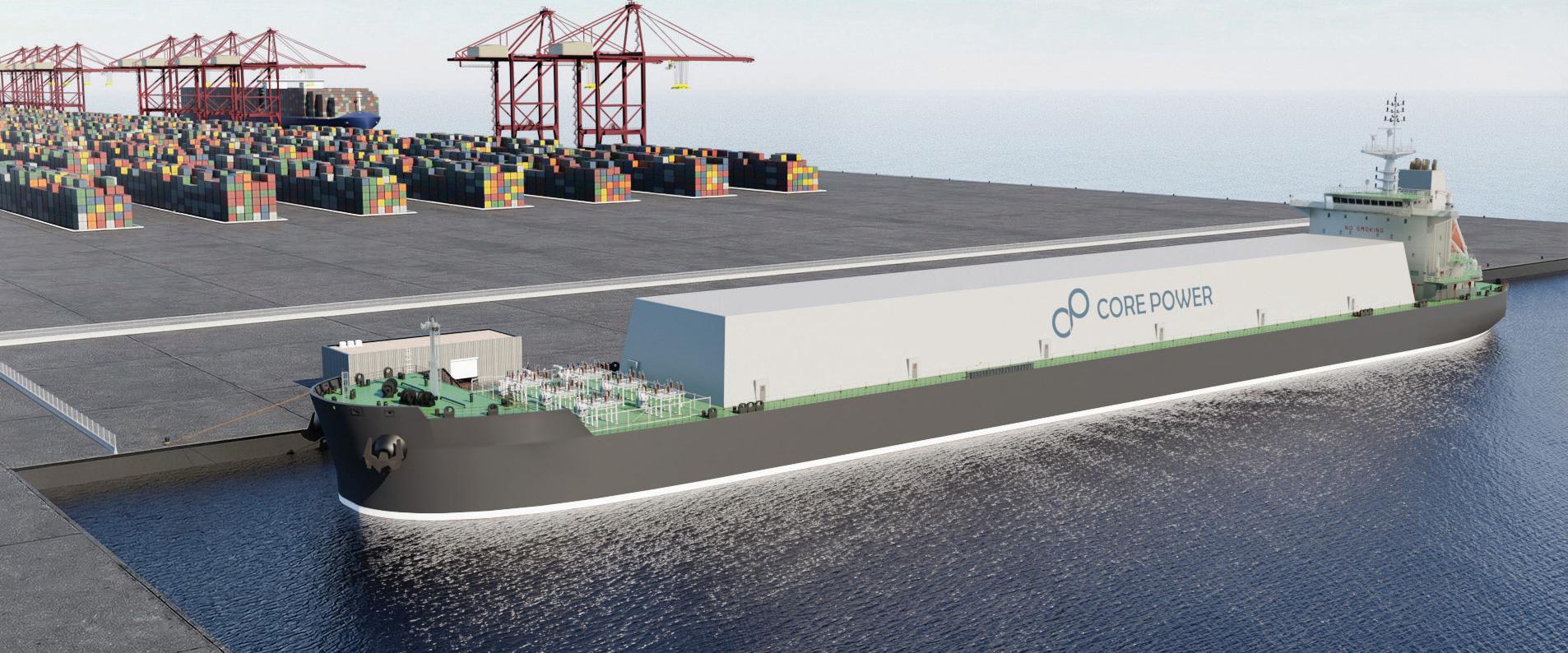
Start with the floating nuclear power plant (FNPP), i.e., an SMR integrated into a floating platform. An FNPP is fully manufactured in a centralized facility and deployed to coastal or nearshore locations ready to operate. Once on station, it delivers continuous baseload electricity to ports, coastal infrastructure, and industrial facilities.
FNPPs solve several of the problems modern ports face. They can be integrated directly into port-level microgrids, providing dispatchable electricity for cargo operations, vessel servicing, and other critical logistics functions. By placing generation at the point of use, FNPPs reduce dependence on transmission and distribution infrastructure and strengthen resilience against grid disruptions. For military planners, the grid-independent power that FNPPs provide ensures resilience against not just grid failure, but also adversary action and infrastructure targeting.
FNPPs solve another problem. A landbased SMR still requires site preparation, civil construction, and transient workforce of conventional, large-scale nuclear. The reactor is modular; the delivery is not. Integrate that SMR into a floating platform built in a shipyard and the delivery system becomes modular too, enabling the continuous learning and cost reduction that conventional nuclear has rarely achieved.
Maritime nuclear technology extends beyond FNPPs. Civil nuclear propulsion has the potential to upend the operating model of commercial shipping.
Traditional propulsion depends on fossil-fuel bunkering and exposes operators to fuel-price volatility and emissions-compliance costs. Nuclear propulsion, however, maintains consistent power output over long voyages and can operate for extended periods without refueling, all while eliminating operational emissions.
The logistics advantages compound. Extended endurance reduces dependence on global fuel supply chains and bunkering infrastructure. Higher sustained speeds improve fleet capability and cut voyage times. In certain trades, fewer vessels will carry equivalent cargo volumes, improving the efficiency of maritime logistics networks. These advantages matter most in contested environments. A nuclearpropelled vessel does not need to divert for bunkering in waters where fuel access may be denied or supply lines disrupted. For strategic sealift and commercial fleets sup-
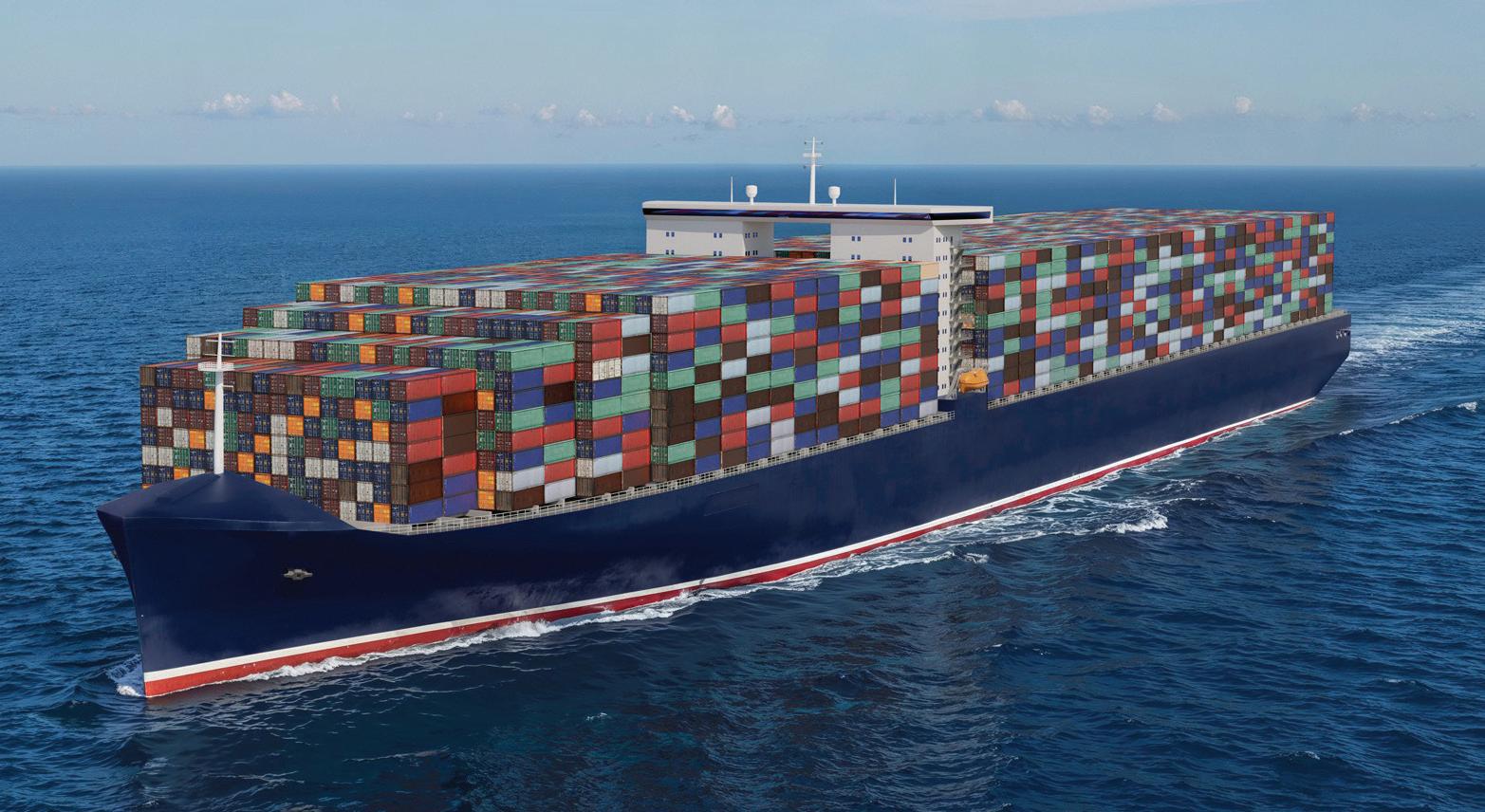
Nuclear energy allows massive ships to operate continuously across oceans without refueling.
porting defense logistics, that endurance, high speed, and operational independence could prove decisive.
Regulatory frameworks are preparing for maritime nuclear. The International Maritime Organization has begun updating the Code of Safety for Nuclear Merchant Ships. The U.S. Coast Guard has established a Maritime Nuclear Policy Division to develop frameworks for the safe and secure integration of nuclear technologies into the Marine Transportation System. And commercial insurers and P&I clubs are evaluating the liability structures needed to underwrite nuclear maritime assets.
Government policy is catching up, too. U.S. policymakers increasingly recognize that maritime industrial capacity and advanced nuclear reinforce each other: shipyard construction techniques accelerate nuclear deployment, and increased nuclear deployment strengthens maritime infrastructure and logistics resilience. The recently published U.S. Maritime Action Plan reflects this shift. It focuses on developing predictable multi-year demand signals, Maritime Prosperity Zones, and financing reforms, and it highlights improved coordination between federal institutions responsible for maritime infrastructure, energy, and industrial policy.
Aligning procurement signals with shipyard development, workforce renewal, and access to financing will reduce the structural barriers that have limited new maritime capabilities. These objectives align closely with broader defense industrial base priorities, where rebuilding shipyard capacity
and securing resilient supply chains are already national imperatives.
CORE POWER stands at the forefront of the transition to maritime nuclear. We collaborate with reactor developers, shipyards, and suppliers to translate advanced nuclear systems into deployable platforms for commercial shipping and coastal energy generation. We also engage policymakers, regulators, classification societies, and maritime stakeholders to develop the frameworks needed for safe and scalable deployment.
The stakes extend beyond commerce. True energy dominance extends to the waterfront and the sea lanes. The technology exists. CORE POWER is ready to deliver it. DTJ

Mike Pierce is Chief Operating Officer of CORE POWER Generation and Group General Counsel at CORE POWER. As COO, he leads the company’s floating nuclear power plant business. He is a former U.S. Navy nuclear submarine officer, Naval Reactors engineer, and Navy judge advocate, and clerked on the U.S. Court of Appeals for the Federal Circuit.
Before joining CORE POWER, he practiced law at Skadden, Arps, Slate, Meagher & Flom LLP in London and Washington, D.C., advising on project finance for energy and infrastructure projects, and at Latham & Watkins LLP, focusing on intellectual property litigation.
The National Defense Transportation Association (NDTA), in co-sponsorship with the Defense Travel Management Office (DTMO), welcomed government and industry leaders for GovTravels 2026 at the Hilton Alexandria Mark Center in Alexandria, Va., February 23-26. Despite a snowstorm and partial government shutdown, nearly 1,000 attendees participated — demonstrating the meeting’s importance in supporting education and training needs of the government travel community.
Centered on the theme “Navigating New Horizons: Empowering Government & Travel Industry through Education & Training,” the meeting explored a rapidly evolving travel environment and underscored the importance of education, innovation, and collaboration in maintaining mission readiness and delivering high-quality government passenger travel services.






NDTA President and CEO VADM William A. Brown, USN (Ret.), served as GovTravels master of ceremonies. Addressing the audience, he emphasized the significance of collaboration between government and industry in navigating the challenges and opportunities presented by technological advancements and sustainability imperatives in a rapidly changing world.
Mr. Gregory Harkins, Vice Chair of NDTA’s Government Passenger Travel Advisory Council (GPTAC), provided an overview of the meeting presentations. Harkins also recognized the hard work of members of the GPTAC, including the Council’s Chair and the Chairs of its six committees, which include the Airline, Bus, Lodging, Long-Term Lodging, Rental Car, and Travel Company Committees.
Ms. Sarah Moore, Director, DTMO, welcomed the audience and acknowledged that the travel landscape has undergone significant changes recently and emphasized the importance of sustainability in government travel while incorporating advances in high technology and AI.
Ms. Lauren Concklin, Deputy Director of Travel & Director of GO.gov, General Services Administration (GSA), greeted attendees and described the resilience of the federal travel system in 2025, despite ongoing challenges. Sustained effectiveness depends on cross-section collaboration, ongoing modernization (including AI), and a careful balance between efficiency, security, and human coordination.
GovTravels 2026 offered a comprehensive program featuring professional development sessions, keynote presentations, panel discussions, an exhibit hall with over 65 government and industry exhibitors, and many networking and professional development opportunities.
A cornerstone of the event was the Travel Academy, which delivered 19 classes across five sessions. These courses, along with the GovTravels program, provided continuing education credits, supported early-career professionals, and ensured experienced practitioners stayed current on policy, technology, and program management trends.

Young Leader Mr. Jeremiah Macon introduced Ms. Lauren Concklin, who positioned federal travel as a core element of mission readiness and national infrastructure, rather than a routine administrative task. She described travel as the “first operational move” enabling deployments, training, disaster response, and daily government operations, and emphasized that success depends on strong collaboration across government, industry, and travel operators.
Concklin highlighted the resilience of the federal travel system in 2025 despite budget constraints, workforce reductions, and operational pressures, crediting strong partnerships — particularly between GSA and the Department of Defense — for maintaining mobility and mission support. She outlined modernization efforts, including updates to the Federal Travel Regulation and the OneGov initiative to centralize procurement and increase buying power, alongside programs designed to improve cost efficiency and traveler experience.
She concluded by stressing the need to balance security with speed and noted that, while AI and modernization will improve efficiency, human collaboration is essential.
Travel Academy sessions focused on topics in four Tracks: Travel Policy & Compliance, Technology & Innovation, Challenges & Solutions, and Travel Program Management. Together, these tracks create clear learning pathways, align content to job functions, improve agenda navigation for participants, help leadership balance the program, and bring groups together for networking opportunities.
View select Travel Academy videos: www.ndtahq.com/multimedia-archive/videos
View select Travel Academy slides: www.ndtahq.com/govtravels-2026-academyclasses
Moderator: Mr. Robin (Rob) D. Johnson, Chief, Transportation Branch Travel Programs Division, DTMO Panelists:
• Mr. Gregory Harkins, President, CWTSatoTravel
• Mr. Mark A. Edwards, GS-14, Head, Passenger Transportation Section HQ US Marine Corps, Installation & Logistics, LP, LPS-D
• Mr. Mark D. Dellinger, Director, Office of Travel Management and Policy, U.S. Department of State, Bureau of Administration
This panel on the future of government passenger travel, moderated by Mr. Robin (Rob) D. Johnson, examined how data, policy, technology, and workforce trends are reshaping federal and Department of Defense travel programs. Panelists stressed that, while travel systems generate vast amounts of data, the challenge is integrating and analyzing it to support smarter, evidence-based decisions and strengthen mission readiness.
Artificial intelligence is expected to play a growing role, though adoption in government is slower than in the commercial sector due to security requirements such as FedRAMP compliance. In the near term, agencies are focusing on backend uses like data analysis and policy optimization rather than traveler-facing tools.
Data visibility and centralization remain major challenges. Decentralized systems limit insight into traveler behavior, spending, and location, affecting duty of care and crisis response. Consolidating book-
Paul Abbott, CEO of American Express Global Business Travel, presented government travel as a pillar of operational readiness rather than routine logistics. He argued that travel enables mission execution — from military deployments to diplomacy — and must balance efficiency with accountability for taxpayer dollars.

Abbott
Abbott identified five key forces that are reshaping travel. Demand is rising while costs increase due to labor shortages, supply constraints, and advanced pricing systems, even as budgets remain tight. Disruption from weather, cyber incidents, and geopolitical instability is now constant, requiring real-time response. Artificial intelligence is enabling “intelligent trips” that automate decisions and guide travelers in real time. At the same time, trust, security, and data protection are now foundational, particularly for government travel tied to mission readiness.
He argued traditional travel management must evolve toward real-time data, predictive analytics, and value-based decisions. The role of the travel manager is becoming a “travel architect,” designing resilient, secure mobility systems. While AI will enhance travel, Abbott emphasized that human oversight and collaboration are critical.
ing, financial, and travel data would improve accountability and responsiveness during disruptions.
Panelists also emphasized cost optimization through better analysis of cost drivers, streamlined processes, improved traveler education, and updated policies that support workforce needs, retention, and overall mission effectiveness.
Moderator: Mr. Roger Hale, President & CEO of ADTRAV Travel Management Panelists:
• Mr. Christopher McLaughlin, Senior Director, Global Sales, Choice Hotels International
• Mr. Michael DeRosa , Senior Director, Government Sales, Hertz
• Ms. Marlene Gray, Director, Government Services, Omega Travel World
• Mr. Justin Schiffner, Senior Manager, Military and Federal Government, Southwest Airlines
This panel discussion explored how industry feedback and customer insights are shaping changes in federal and Department of Defense travel programs. NDTA Young Leader Ms. Carmen Covington introduced Roger Hale, who led a discussion with representatives from airlines, lodging, rental car companies, and travel management companies on how traveler feedback is collected, analyzed, and turned into operational improvements.
Panelists highlighted the growing role of structured feedback tools such as Net Promoter Scores, surveys, and AI-driven sentiment analysis. Organizations increasingly combine post-trip surveys, real-time feedback, and social listening, while using AI to detect dissatisfaction early and respond before issues escalate. The discussion emphasized that feedback only has value when it leads to action, with examples including airline seating changes, rental car process improvements, and hotel service enhancements driven by customer input. However, government travel faces challenges, including limited data sharing and lower survey participation. Panelists stressed that simpler surveys, better data sharing, and stronger collaboration across government, industry, and travel management companies are essential to improving traveler experience and mission effectiveness.
Moderator: Ms. Barbara Aboid, Customer Service – U.S. Federal Government, SAP Concur Panelists:
• Ms. Jamie Batson, ETS2 Programs and Contracts Management, SAP Concur
• Ms. Lauren Gibson, President & CEO, StarForce National Corporation
• Mr. Bryan Scott, Assistant Vice President, Federal Government Business, Enterprise Mobility
• Mr. Jason Moore, CEO/Founder, Patriot Global Lodging
Moderated by Ms. Barbara Aboid , this panel on passenger travel for national response examined how government and industry coordinate to maintain operations during disasters and large-scale emergencies. Panelists emphasized that effective response depends on extensive pre-planning, real-time coordination, and strong partnerships among agencies, suppliers, and travel management organizations. Preparedness begins well before an event, with organizations planning for seasonal risks, establishing communication channels, coordinating with agencies such as the Federal Emergency Management Agency (FEMA), GSA, and the National Guard, identifying resources, and developing contingency plans for infrastructure or system failures. When disaster strikes, the immediate priority is employee safety and operational assessment, followed by rapid mobilization of transportation, lodging, and personnel.
The panel outlined response phases: hotels support the initial 72-hour surge, while long-term lodging sustains extended operations. Transportation providers play key roles in evacuation and logistics, often staging resources in advance. Technology enables rapid authorization and coordination, but contingency planning

The Young Leaders Professional Development Lunch, hosted by Mr. Hunter McGuire, NDTA Young Leaders Chair, fea-
for outages is critical. Ultimately, flexibility, scalability, and communication are essential to national resilience and mission continuity.
Government Passenger Travel Advisory Council (GPTAC) committee meetings were held during the conference and open for attendee observation. These sessions provided a unique forum for government and industry representatives to address policy and program challenges across airline, lodging, rental care, and travel management sectors, offering attendees a
tured three TED Talk-Style speakers from government and industry. They shared real-world insights on leadership, innovation, work-life balance, and managing change and career growth in government passenger travel to inspire, connect, and energize the next generation.
Panelists:
• Mr. Gregory Harkins, President, CWTSatoTravel
• Ms. Andrea Carlock, Senior Functional Advisor, DTMO
• Mr. Nicholas Weinberg, Strategic Sales Director, Enterprise Mobility
first-hand look at collaborative problemsolving in action.
A consistent message throughout the event was clear: Education, collaboration and innovation are essential to ensuring government travel programs continue to support mission readiness, operational continuity, and effective national response. GovTravels 2026 reinforced the importance of partnership and adaptability as the government and travel industry navigate an increasingly complex future. Join us for GovTravels 2027 when we return to the Hilton Alexandria Mark Center, February 22-25, 2027.
GovTravels 2026 celebrated outstanding contributions across the community, including DoD Excellence in Practice Awards and NDTA Corporate and Board Awards, recognizing both individual and organizational achievements in advancing the government travel mission.


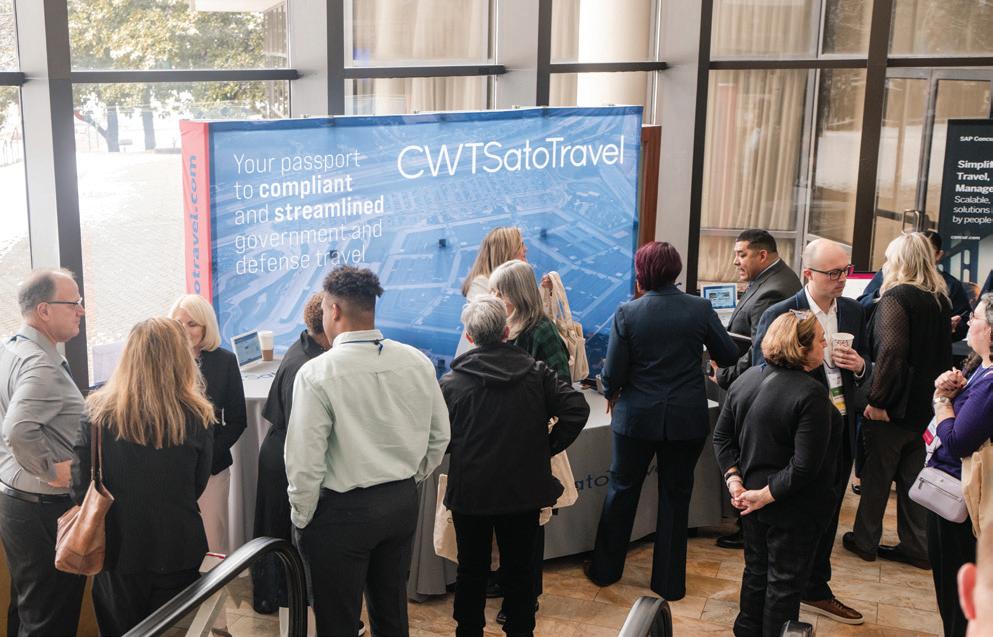



The NDTA Exposition, held in conjunction with GovTravels 2026, featured over 65 exhibitors and served as a key networking and learning hub. The bustling Expo floor was a dynamic environment where attendees exchanged ideas, strengthened connections, and discovered the latest products and services.



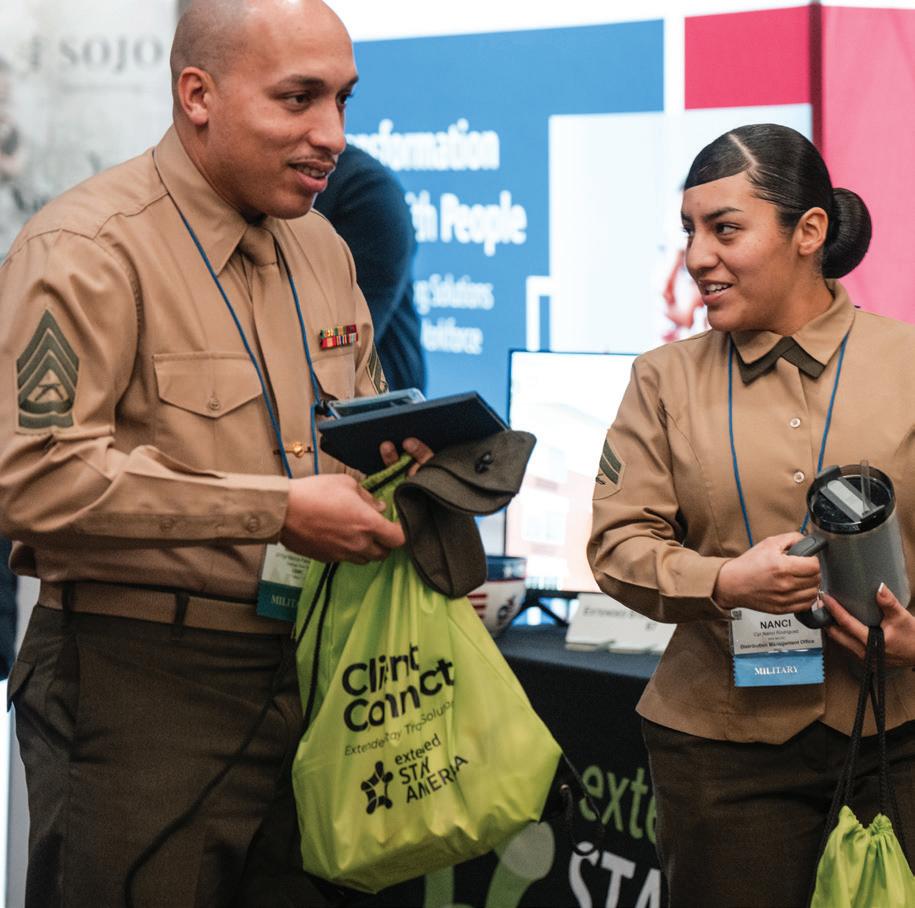













of Government Meeting Professionals
See you next year at GovTravels 2027, Hilton Alexandria Mark Center Hotel, February 22-25, 2027.


These corporations are a
AAT Carriers
ADTRAV Travel Management
Agility Defense & Government Services
AIR ONE
Air Space Intelligence (ASI)
Air Transport Services Group (ATSG)
AIT Worldwide Logistics, Inc.
Amazon
American President Lines, LLC
American Roll-On Roll-Off Carrier
Atlas Air Worldwide
Avfuel
Bennett Family of Companies
BLG Logistics Group AG & Co. KG
BRW
CACI International Inc.
Carlile Transportation Systems, LLC
Chapman Freeborn International Ltd.
Corporate Travel Management (CTM)
Crowley
DHL Express
Enterprise Mobility
Fairwater
Federated Maritime, LLC
FedEx
Freeman Holdings Group
Hapag-Lloyd USA, LLC
International Auto Logistics, LLC
AEG Fuels
JET Infrastructure
Kalitta Air, LLC
KGL
KWIK Equipment Sales LLC
Landstar System, Inc.
Liberty Global Logistics LLC
Maersk Line, Limited
ManTech
Matson, Inc.
Naniq Government Services, LLC
National Air Cargo, Inc.
Omni Air International, LLC
The Pasha Group
Patriot Maritime
Port of Corpus Christi Authority
SAP Public Services
Sealift, Inc.
SEKO Government, Space and Defense
Sikich
SIXT Rent A Car LLC
Southwest Airlines
TOTE Group
Tri-State Motor Transit Co.
United Airlines
UPS
US Marine Management
US Ocean
Air Charter Service
Anew Solutions
Berry Aviation, Inc.
BNSF Railway
Boeing Company
C5MI
Cervello Global Corporation
CSX Transportation
CWTSatoTravel
Echo Global Logistics
Fluor
Geodis Transportation Solutions
Global Logistics Providers
ICAT Logistics
National Air Carrier Association
Norfolk Southern Corporation
Ocean Shipholdings, Inc.
PayCargo LLC
The Port of Virginia
SAP Concur
Schuyler Line Navigation Company LLC
SeaCube Containers
Transportation Institute
U.S. Bank
SUSTAINING MEMBERS
3Sixty
Accenture Federal Services
Admiral Merchants Motor Freight, Inc.
Aimbridge Hospitality
All Aboard America Holdings
ALTA Group
American Bureau of Shipping
American Logistics, Inc.
American Maritime Officers
American Trucking Associations
Applied Research Associates (ARA)
Army & Air Force Exchange Service
Arven Services, LLC
ATS Secure
Avis Budget Group
Baggett Transportation Company
Beltway Transportation Service
Benchmarking Partners, Inc.
Blue Yonder Defense Solutions
Boyle Transportation
Bridgeway Connects, Inc.
Bristol Associates
BTX Global Logistics
BWH Hotels
C5T Corporation
Casepoint + mLINQS
CGI Federal
Choice Hotels International
Coleman Worldwide Moving
Connected Logistics
Construction Helicopters, Inc. (d/b/a CHI Aviation)
Corporate Apartment Specialists, Inc.
Cypress International, Inc.
D&G Solutions
Dash Point Distributing, LLC
Delta Air Lines
DeSpir Logistics Network
DF Young, Inc.
Drury Hotels Company, LLC
Duluth Travel, Inc.
EMS Shipping & Trading GmbH
Europcar Mobility Group
Expedited Transport, LLC
Amyx
Apex Logistics International Inc.
CakeBoxx Technologies, LLC
Cartwright International
Dalko Resources, Inc.
Delaware River Stevedores, Inc.
Enterprise Management Systems
ALL OF THESE FIRMS SUPPORT THE PURPOSES AND OBJECTIVES OF NDTA
Extended Stay America Hotels
FlexCold
Global Secure Shipping
GMR Transport LLC
Gnosis Freight
Green Motion International
Green Valley Transportation Corp.
The Hertz Corporation
Hilton Worldwide
Hyatt Hotels
Hylant
IHG | IHG Army Hotels
Intermodal Association of North America (IANA)
International Association of Movers
Interstate Moving | Relocation | Logistics
Intramotev
ISAAC Instruments LLC
Island Hospitality Management
Jacksonville Port Authority (JAXPORT)
Keystone Shipping Co.
Kinedyne Defend
Lansdowne Coach LLC
Leidos
Lion Shipping & Chartering
LMI
Marine Engineers' Beneficial Association
Mayflower Transit
McCollister's Global Services, Inc.
Mercer Transportation Company
The MITRE Corporation
My Place Hotels of America
National Van Lines, Inc.
Nexen Air LLC
Nika Corporate Housing
Northern Air Cargo, LLC
Omega World Travel
ORBCOMM
Patriot Global Lodging
Paxton Van Lines
Perfect Logistics, LLC
Perimeter Global Logistics
Placemakr
PODS Enterprises LLC
Port of Beaumont
Gridiron Forwarding Co., Inc.
JAS Forwarding
Langowski Logistics
Lineage
LMJ International Logistics, LLC
Lynden, Inc.
Move One
Overdrive Logistics, Inc.
Port of San Diego
Prestera Trucking, Inc.
Priority Worldwide
Prosponsive Logistics
PTS Worldwide
Radiant Global Logistics
Ramar Transportation, Inc.
Red Roof Inn
RGC Logistics Group
The Rock-It Company
Sabre
SAIC
Savi
Sea Express America Corporation
Seafarers International Union of NA, AGLIW
Sealink International Inc.
Selsi International Inc
Signature Transportation Group
SilverDoor
Sonesta International Hotels
Specialized Power Logistics
SSA Marine
St. Louis Union Station Hotel a Curio Hotel Collection by Hilton
StarForce National Corporation
Steam Logistics, LLC
Stevens Global Logistics, Inc.
The Suddath Companies
thinklogical
TMM, Inc.
Toll Group
Trailer Bridge
Transglobal
Travelport
Triton Container International Limited
TTX Company
Uber for Business
UNCOMN
Union Pacific Railroad
United Van Lines, Inc.
US1 Logistics
Women In Trucking Association, Inc.
World Fuel – A World Kinect Company
XLG Transportation Inc.
Xwing Air, Inc.
Port Canaveral
Port of Port Arthur
Trans Global Logistics Europe GmbH
Christopher Newport University
John D. Odegard School of Aerospace Sciences
Maine Maritime Academy
McKendree University
NC State University
Purdue University
Saint Louis University
SUNY Maritime College
University of Missouri - St. Louis
University of St. Thomas

Your service matters to us. It always has. It’s in the
name, a salute to our founder, Jack Taylor, and the World WarII aircraft carrier he served on. It’s in his legacy that continues to guide us. We know exceptional service matters to you, too. That’s why we’re committed to supporting active
government employees and veterans with convenient locations, special car rental rates and personal service that stands out.

U . S . - fl a g t r a n s p o r t a t i o n &
l o g i s t i c s s e r v i c e s f r o m A m e r i c a ’ s
l e a d i n g R o - R o c a r r i e r