All rights reserved. No part of this publication may be reproduced, copied or transmitted in any form or means, or stored in any information storage or retrieval system without the written permission of the Dean Forest Railway Society.
Views expressed within this publication belong to their individual authors and are not necessarily those of the editors, the Dean Forest Railway family of organisations, the Society or its Trustees. The Dean Forest Railway Society accepts no liability or responsibility for any loss resulting from information provided in this publication.
How to submit an article
We prefer articles in electronic format (preferably Word) and high-resolution images to be emailed to the editors at: magazine@deanforestrailway.co.uk
Or by post to:
The Editors, DFR Magazine
Dean Forest Railway Society Norchard Forest Road, Lydney, GL15 4ET
This issue has been edited and produced by a team of volunteers and Trustees of the Society.
Laid out in Adobe InDesign & printed by Solopress.com.
Copy Deadline
Please send your reports, letters, comments, photographs and any other content for Issue 75 by, at the absolute latest: 2nd May 2026
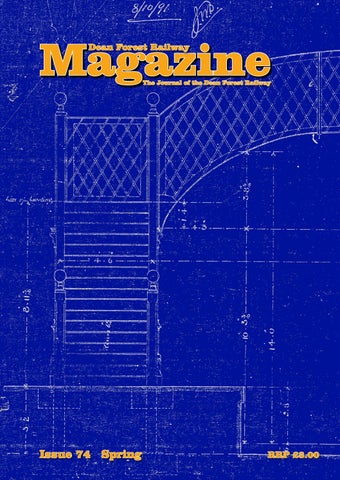
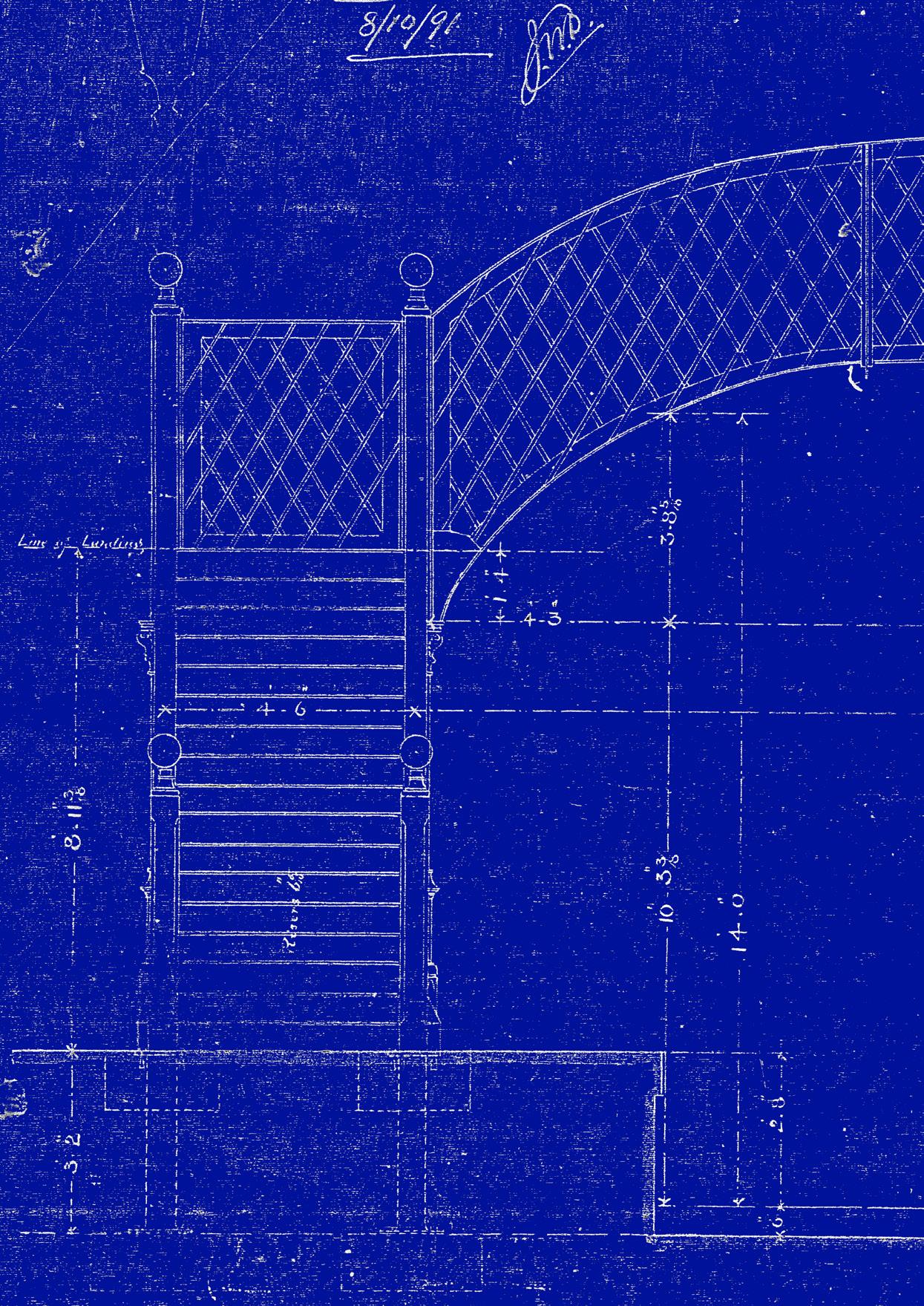
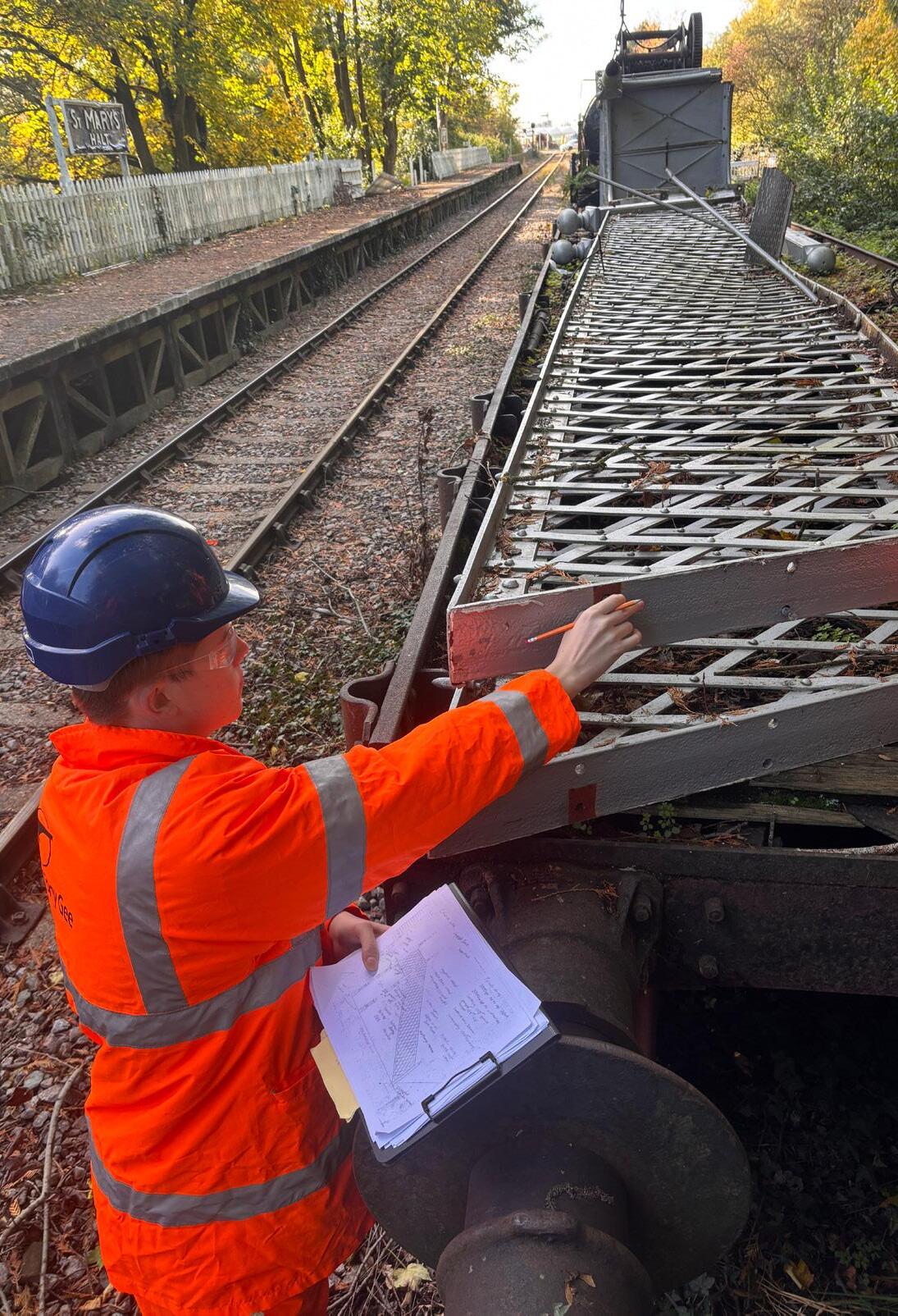
Front cover: As part of the survey of St Mary's footbridge, plans held in the DFR records were digitised for our structural engineers. We have since been able to virtually convert them into blueprints.
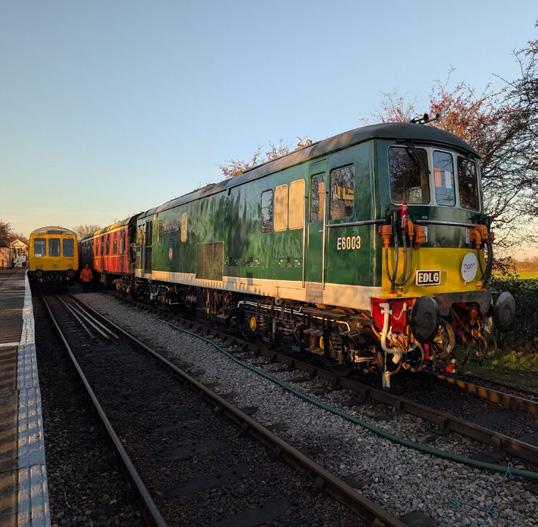
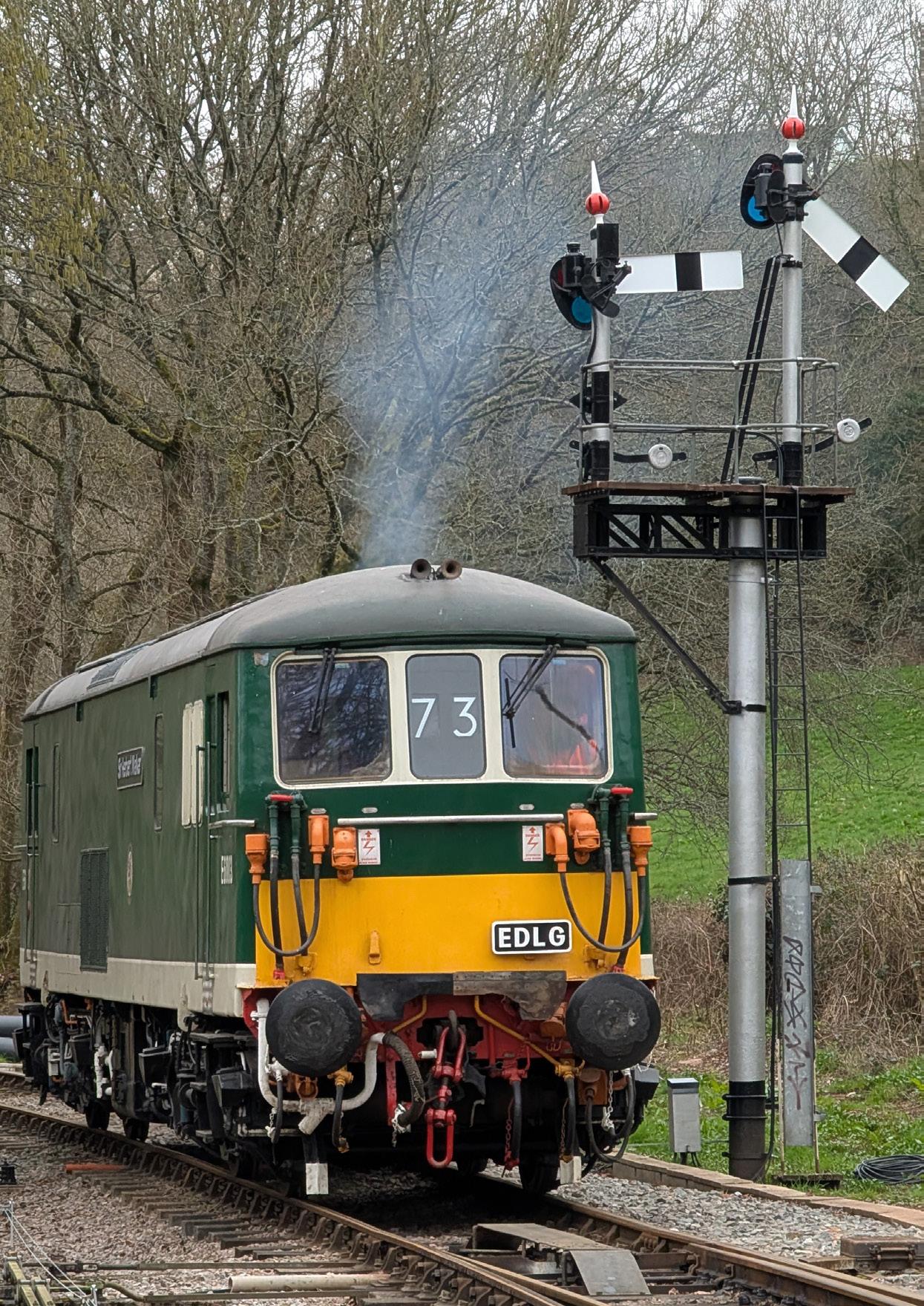
Rear Cover: On 6th March, James Cleevely captured the Electro Diesel Locomotive Group's Class 73 003 at Middle Forge.The locomotive had arrived from the Swindon & Cricklade Railway earlier that day.
All DFR Society post (donations, membership renewals and general correspondence) should be sent to: DFRS Honorary Secretary (Mrs. S. Williams) 109 Victoria Street Cinderford Gloucestershire GL14 2HU
From the Editors
Dear Society Members,
Firstly, we would like to announce that we are seeking willing volunteers to sell raffle tickets. The raffles during 2025 suffered from a shortage of volunteers to sell tickets.
The role involves pitching our aims and activities to passengers and, hopefully, persuading them to buy raffle tickets, all whilst enjoying a ride up and down the railway.
Raffle tickets are a simple, and effective way to raise money while engaging with supporters. With the significant financial pressures at present, not everyone can make large donations, but raffles lower the barrier to giving and allow people to contribute in a fun, low-cost way.
If you think you could help us with selling raffle tickets, please do get in touch – we would love to hear from you.
Moving on, we have received comments from readers along the lines of "we don't see much content from a particular group or department – what do they do?" So, please make every effort to submit articles and high-quality photos –we cannot publish what we do not have!
We've set the copy dates for next year, with the plan that the magazine will be published during the following month (please allow for major events and holidays, though)!
All members with a valid email address will be sent an electronic copy, with hard copies mailed out to all members at least a week later (except for those who have opted to receive electronic copies only).
The deadlines for 2026 are as follows:
• Issue 75, copy date: 2nd May
• Issue 76, copy date: 1st August
• Issue 77, copy date: 31st October
To maintain the standard that you have grown to know and love – we use the same fonts, sizes, and styles throughout:
Title: Clarendon Blk BT, size 36pt
Body: Gill Sans MT, size 11pt
For anyone writing content you can use those parameters, otherwise, please use the regular font in your chosen software, set at size 11pt. Images need to be high-quality.
If you're unsure or need any advice, please get in touch!
Letters to the Editors should be sent either by email to magazine@deanforestrailway.co.uk or by post to the DFRS Honorary Secretary – letters received by the copy date that can be published will be passed on for an answer (as necessary) and then included near the rear of the issue. We value your support, and remain dedicated to keeping you informed and connected within the railway family.
With best wishes
Adam W, Ian & Tim
Your editorial team
Left to Right: Adam Williams, Tim McLennan, Alastair Clarke, Alex Davies, Adam Dickinson, Ian Pope
Chairman's Platform
Forest of Dean Railway Limited Chairman, Ian Pope gives his thoughts for 2026.
Recently, I found and read a copy of the Five Year Development Plan from 2014, in which one of the aims was to make the railway the number one tourist attraction in the Forest of Dean. It was also recognised that Norchard was to be the main visitor portal, and that Lydney Junction was key to unlocking plans for Norchard.
Our latest development plans, which have been covered in earlier editions of this magazine, also recognise the role of Lydney Junction in unlocking the future of the entire railway. We have used the analogy of a jigsaw, where each piece must be in place to complete the whole.
The eventual aim, as identified by various consultants with whom we have had discussions, is to make Norchard a visitor-friendly heritage centre, with selected items of rolling stock and locomotives on display, alongside modern, high-quality toilet, shop, and café facilities, and an enlarged museum area. This will significantly enhance the visitor experience and help turn us into a destination offering far more than just a trip behind a steam locomotive.
Once Lydney Junction and Norchard are in place, the hoped-for increase in visitor numbers will go some way towards funding further development – including extending north from Parkend and improvements at Whitecroft. However, whatever we do, and whatever we spend our hard-earned money on, must make business sense and be done for a clear reason; otherwise, we are simply throwing money away.
The initial work carried out at Lydney Junction, and more recently the work north of Parkend, has demonstrated our intent and has generated a degree of interest from non-members of the Society, which we hope will lead to increased membership, more volunteers, and greater income.We are showing that we have the will and intention to expand, rather than simply sit back and stagnate while Norchard becomes increasingly congested, thereby degrading the visitor experience.
To make all of this possible, each group within the railway must work together, sometimes across team boundaries. We have already demonstrated how this can work with the Lydney Town level crossing replacement. The railway is a much happier place when everyone is working towards a common aim, with volunteers ready and willing to help whichever team needs assistance. That aim now must be the construction of a carriage shed at Lydney Junction, followed by a push northwards – and to achieve this, we will all need to work together.
We must also work together safely and within the rules and regulations. Nobody on the railway is exempt from this. Development needs to happen but this work must not detract from the essential, safety-critical aspects of the day-to-day operation of the Dean Forest Railway.
Certain tasks can only be carried out when no trains are running, which introduces time constraints. It is vital that everyone pulls together and that these works are completed on time to allow operations to continue.
We all know that, at times, groups are short of manpower (and, indeed, we are all getting older), so please consider cross-team working and lending a hand where needed.
Much of this already happens, and some jobs naturally involve multiple departments – for example, both P-Way and S&T – but that should not prevent members of other groups from offering assistance. If the track, signalling, and associated infrastructure are not 100%, trains will not run.
We must also ensure that items such as lineside fencing are maintained in good condition throughout. This is a legal responsibility, yet we currently have only a small team working on fencing.The same applies to our buildings – we urgently need a dedicated maintenance team to keep them attractive for visitors and, more importantly, weatherproof to prevent deterioration.
Are there any volunteers willing to help?
Whatever our role on the railway, we are all involved for the good of the Dean Forest Railway. It is why we are members of the Society, and why some of us have taken on management responsibilities.
We are striving to achieve one of the Society's original aims from 1970 – to reach at least as far as Speech House Road. However, to do so, we need commitment, funding, and, crucially, more volunteers. This can only be achieved if current volunteers and staff work together, in harmony, for the greater good of the railway.
Not everyone has to see eye to eye, but in front of our passengers and neighbours we have to present a united front. Remember, arguing or gossiping in public area does portray the organisation as a whole in a good light.
We must also remember that we are not 'playing trains' –we are operating a railway, with all the rules and regulations that entails, and those rules must be followed.
I appreciate that, at times, this may make those of us in management roles appear somewhat dictatorial, but ultimately it is those of us in management who have to answer to the authorities and carry the responsibility should anything go wrong.
Please take a moment to consider one thing:
Would you want to find yourself appearing in court because someone failed to follow the rules?
View from the Box
Adrian Copley, DFR Operating Manager, takes a brief look forward to the 2026 season.
Happy New Year to everyone!
The old chap with the white beard, dressed in a red suit, paid the DFR a visit for the 'Santa services' As always, it was great to see the happy faces on the children – and this year included my fourteen-month-old grandson, enjoying his first real encounter with the old gentleman! He seemed to take it all in his stride and, as a bonus, his dad was driving the "choo choo"!
The November dates and the Wednesdays in December were lightly loaded, but as we neared the 'big day', loadings increased as you might expect. For the third year running, a company based in Clevedon, Somerset, booked the entire last trip on one Saturday for their staff to enjoy a family day out – a toe in the water for corporate involvement with the railway. Perhaps we could do more to develop this – has anyone got any ideas?
The weather, as usual, was not really seasonal, so no snow photos again! However, there were storms around, and the Permanent Way and Lineside departments carried out weekly inspections to ensure we could continue running right up to, and including, New Year's Eve – many thanks to our unsung and often unseen heroes.
Then came 1st January 2026, and passenger services were suspended until 11th March while the engineers literally 'took possession' of the line to carry out much-needed maintenance activities – firstly at Parkend and then at Lydney Junction. There was also some work required in between of course, however some electrical issues with the signalling system did add to the challenges.
The running days for 2026 were set last year, but with the caveat that on some one-train days we might roster Uskmouth No. 1 on passenger duties with two coaches. These dates have not yet been fixed, so I await my favourite "lastminute.com" or "can we just…?" requests!
The first running day was Wednesday March 11th (a very important day as I turned seventy-one that day). I am looking forward to the small engine gala on the weekend of 28th and 29th March, but I hope the weather plays ball...
Most of the working timetables will remain as last year, so that's one job saved this time and I've put my resources into another project (more about that in a later edition).
We had a pre-season Photo Charter on 1st March with 9681 on a small goods train. This charter included of a group of overseas visitors as a trial to see if it can work for the future (however the language barrier could have significant safety implications perhaps?).
Illness has also hit the DFR members over the Winter period with outbreaks of 'flu' for some and existing problems or chest infections for some of us 'old codgers', which unfortunately slows down the recovery process.
Then comes the realisation that jobs postponed last year now need to be pencilled in for this one – so I look forward to another year of 'plate spinning' to keep operations on track while essential work is carried out.
On a personal note, due to a health issue I, thirteen months ago, verbally gave my intentions to retire from the role of Operations Manager but with no fixed date. We know how this goes in the volunteer sector, things stay as they are for the time being, and (as with most places) there doesn't seem to much succession planning at the DFR.
This is beginning to affect me physically, and with Forest Road closed no buses serve Norchard until late August, therefore my visits are likely to be limited to Lydney Junction – apologies to the roster clerks! It is frustrating, but part of getting older – and of not having a car.
It's not just people that suffer from age related problems, our infrastructure and rolling stock does as well! Last year's plan to 'freshen up' the livery of the coaches looks like it will happen as the original plan but twelve months late, with any heavier repairs carried out at the same time. This will form part of the ongoing 'plate spinning', ensuring that key vehicles remain available for traffic to meet the railway's commercial needs. There will also be the visiting locomotives for galas to look forward to, not forgetting the arrival of a Class 73 from Blunsdon on the Swindon & Cricklade Railway – although where it will be accommodated at Norchard remains to be seen!
If you haven't had a chance to take ride recently, please do come along soon, as there are changes that regular volunteers don't tend to generally notice!
Below: Class 73 003 on its final working at Blunsdon. (Photo: J. Cleevely)
RRV Round-Up
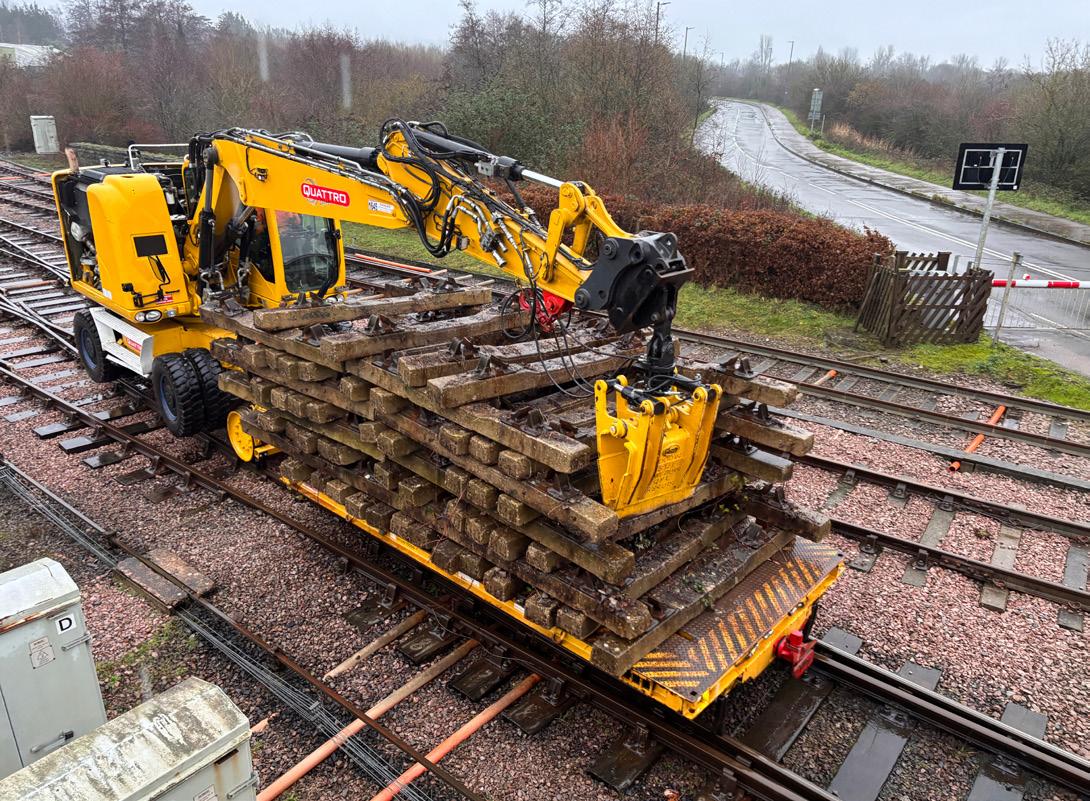
After the incident at St Mary's, our Komatsu PW130 RRV saw only limited use on a couple of occasions before the Permanent Way works planned for November. The main activities included sorting materials around the yard at Lydney Junction and laying out the wooden sleepers for the new point destined for Middle Forge.
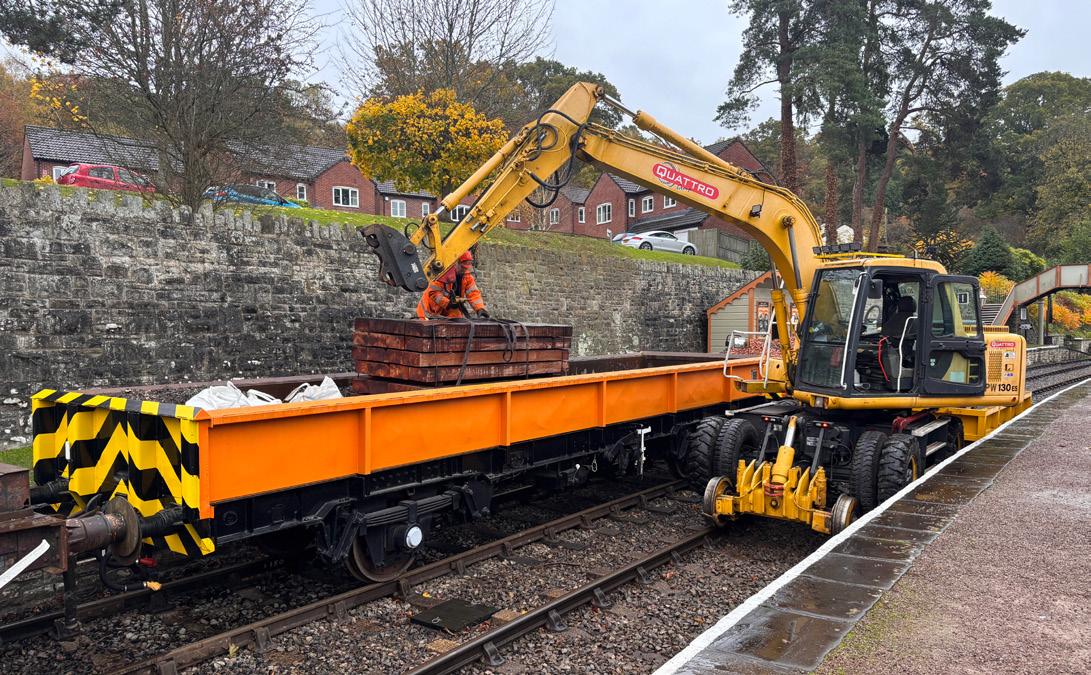
On 3rd November, the two Sea Urchin wagons were shunted to Lydney Junction West Loop. One wagon already contained a small amount of spoil, so the required wooden sleepers were loaded into it. The other wagon, which was completely empty, was loaded with fresh ballast.
To load the wagons, the RRV needed to be off-tracked –and unfortunately, while navigating the yard on its road wheels, one of the outer tyres was badly punctured. The rail tyres (the inner tyres which drive the rail wheels) remained intact and, after on-tracking, the train and RRV were able to make their way to Parkend in convoy.
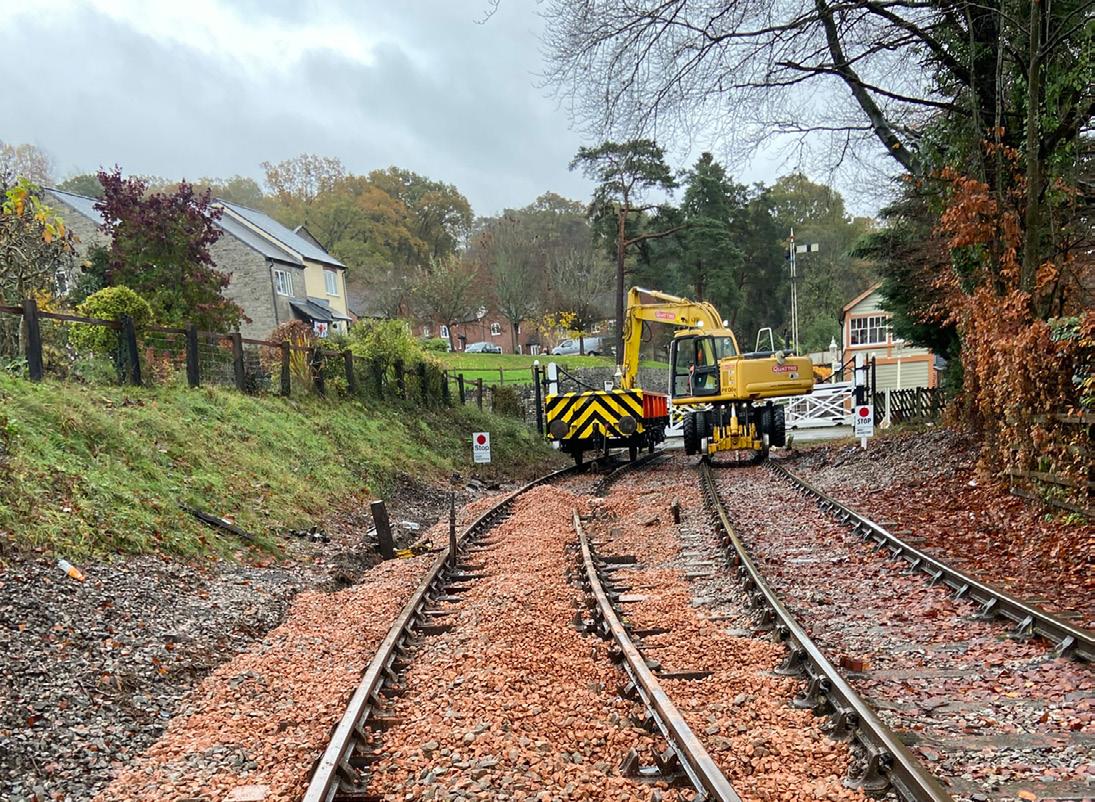
On 4th November, the RRV was quickly put to use lifting the old sleepers that formed the basis of the point for the Up Headshunt, before grading of the track bed could begin. The following day, the bed was graded back, with spoil being loaded into the nearly partially loaded Sea Urchin.
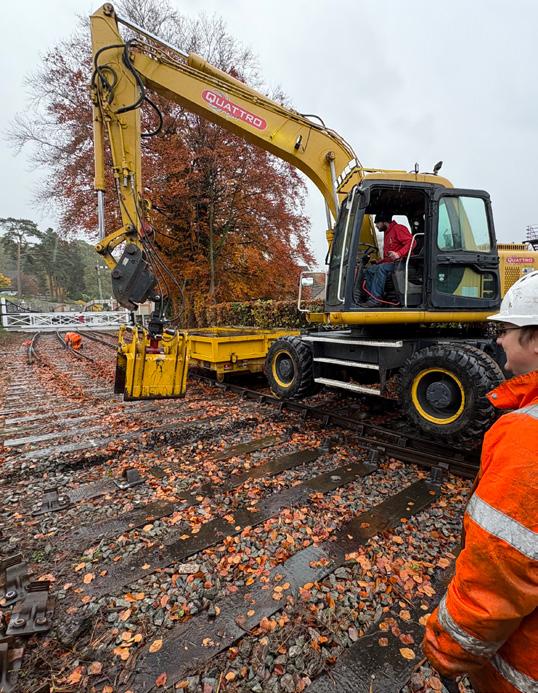
The plate grab was used to lay out the new sleepers, and the Permanent Way team and Betaris trainees soon had the chairs and rails fixed in place. Whilst this was taking place, the RRV was used to assist the S&T team with adjusting one of the new level crossing gates at Whitecroft.
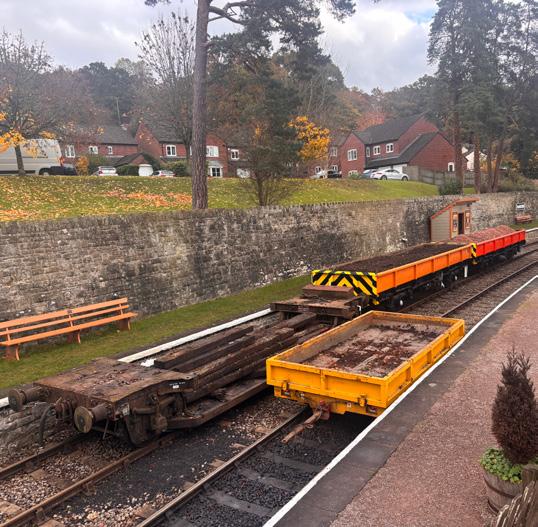
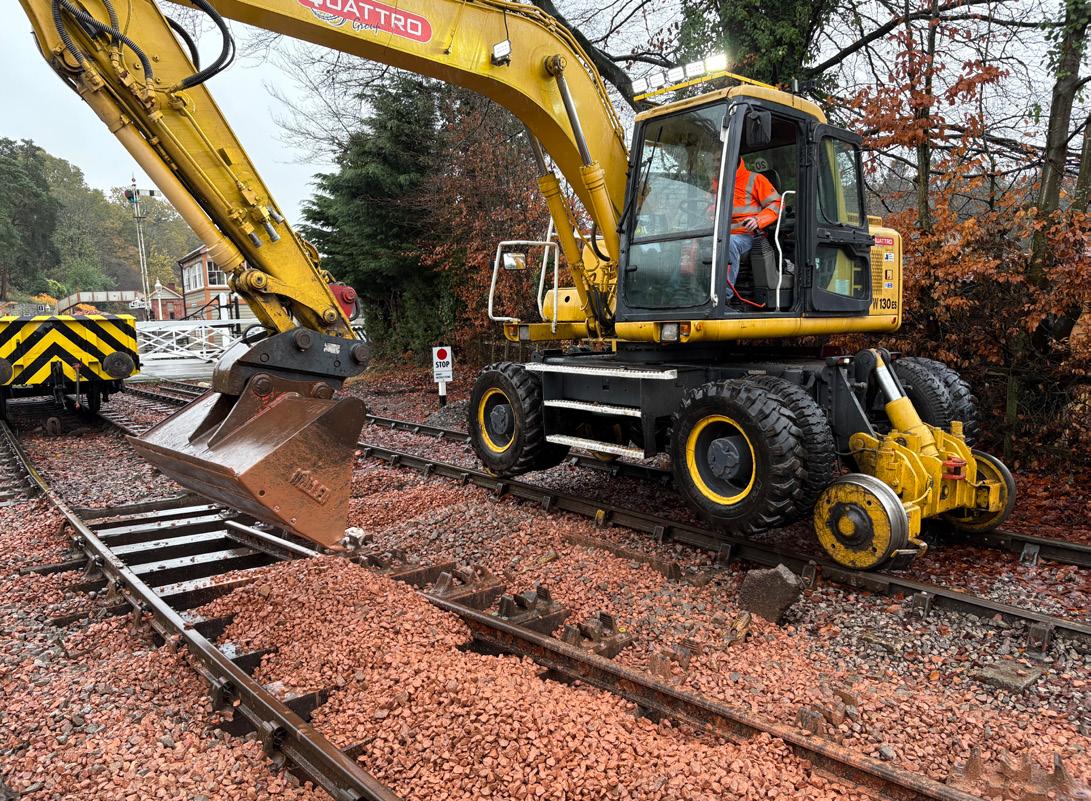
The train used for the photo charter on 7th November was borrowed to shunt the Sea Urchins around, with the wagon loaded with spoil being replaced by the one loaded with fresh ballast. The RRV was then used to drop ballast through the new trackwork on 12th November.
During that week the weather was abysmal and, combined with the steep gradient at Parkend crossing, traction became a significant issue. The decision was therefore made to replace all of the tyres; unfortunately, not all of the replacements could be supplied at the same time.
The four outer tyres were ordered through Forest of Dean Tyres in Whitecroft, whilst the four inner tyres had to be ordered through Truck Tyre Solutions in, Birmingham.
The inner tyres were actually manufactured by Trelleborg the Swedish company which, in February 2011, took over Watts Tyre Group... For those who may not know the significance – this was formerly Watts Tyre and Rubber Company of Lydney! All of the tyres were subsequently replaced by Forest of Dean Tyres on 14th November.
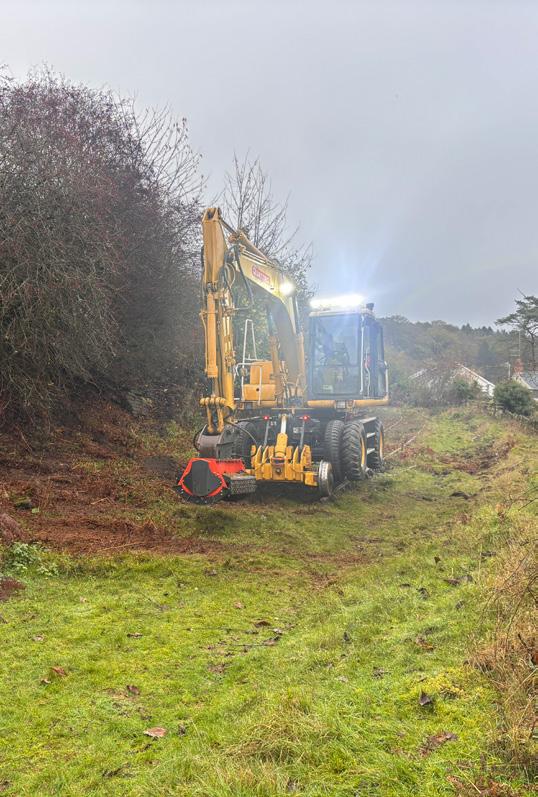
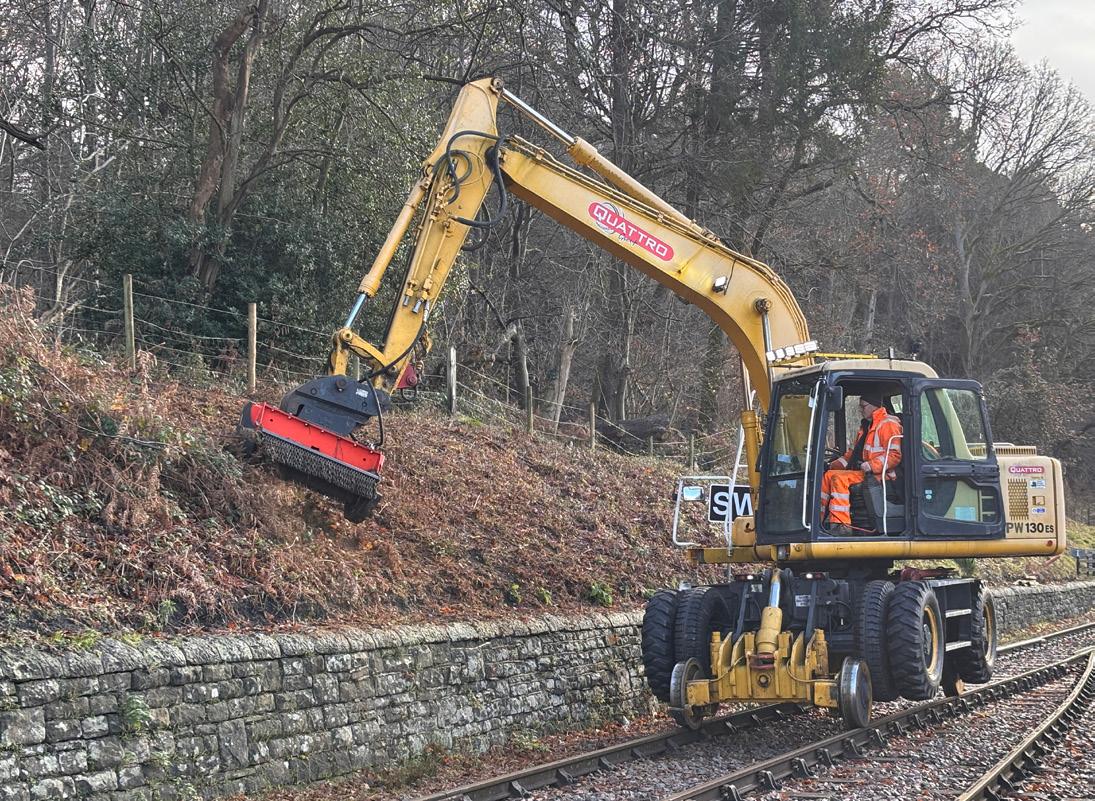
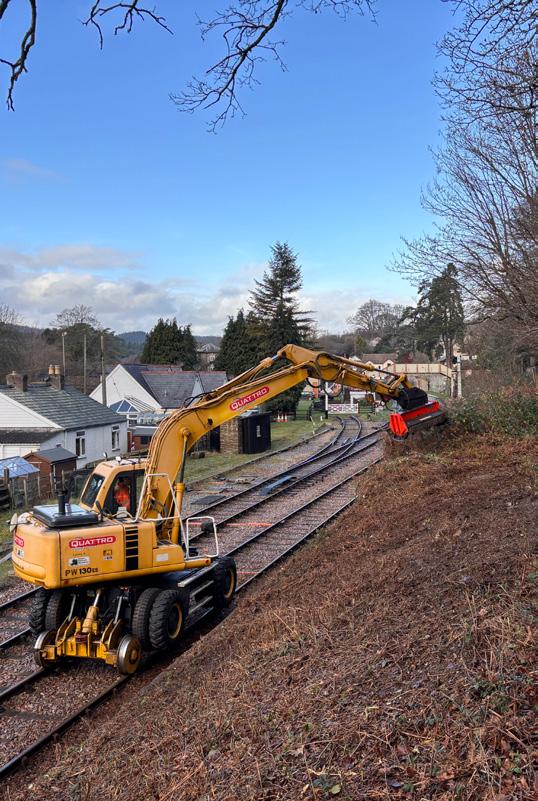
With the line soon to be handed back for the Santa Specials, it would have quickly become difficult to obtain a path for the RRV to travel back to Norchard or Lydney Junction. As a result, with it remaining at Parkend, the opportunity was taken to exercise the flail between Parkend Down Home Signal and Oakenhill Wood No. 3 crossing, Whitemead Park foot crossing and Parkend footbridge, and from the headshunt northwards to the current railhead.
Adam Williams provides a brief update on the activities involving the yellow machines.
Opposite Page: Doug Johnson prepares to lift the pack of wooden sleepers for the relay from Sea Urchin, ZCA 110358. (Photo: A. Williams)
Above: The trackwork started on 4th November with Adam Williams using the plate grab to lift out the old point timbers.
Left: On 6th November all of the wagons were in Platform 1 ready for the order to be changed ahead of dropping ballast.
Below: Adam Williams drops the ballast from Sea Urchin, ZCA 110714 over the new trackwork on 12th November. (Photos: D. Johnson)
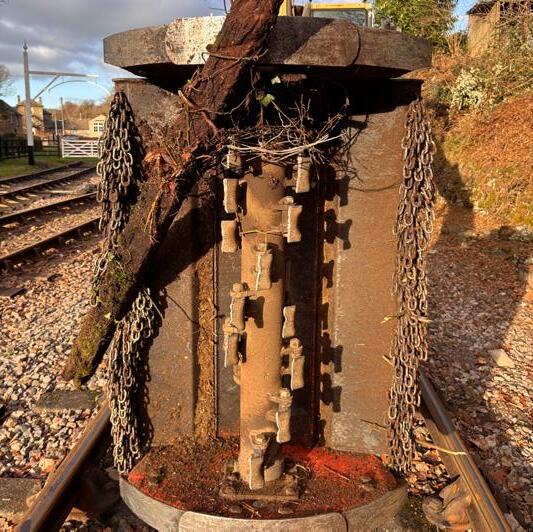
Unfortunately, discarded fencing wire was found in the undergrowth not far from the footbridge and, whilst it thankfully didn't cause any significant damage, a considerable amount of time was lost cutting it out.
On 28th November, Quattro delivered two Komatsu PW160 machines to Lydney Junction for testing. Unfortunately, one of these machines was unable to be on-tracked due to electrical issues, but the other was given a workout around the yard, ticking off a series of small jobs that needed doing. Undoubtedly, we will see the other machine return at some point in the future.
On 12th December, Quattro returned with a Caterpillar 22TRR-250 excavator for testing.This machine (along with the others mentioned) had been acquired by Quattro back in June 2024 after TXM Plant entered administration. This machine specifically needed a heavily loaded run over a reasonable distance, and we were certainly able to oblige.
It was sent out empty to Lydney Town, where there were still a significant number of concrete sleepers remaining from the Kings Meadow Court relay. These sleepers were gathered up and transported back to Lydney Junction yard, where they were stacked with the others already there.
Right: The RRV flailed its way to the northern railhead!
Below: Doug Johnson flails the embankment adjacent to the Sound Whistle board for Whitemead Park foot crossing. (Photos: A. Williams)
Above: A large amount of fencing wire was left hidden in the undergrowth. A few hours were lost in cutting the flail free.
Right: With the wire removed, Doug Johnson continued to flail the embankment towards the Up Platform starting signal.
Below: The Caterpillar 22TRR-250 returns to Lydney Junction with a full load of sleepers collected from Lydney Town. (Photos: A. Williams)
Beneath Your Wheels
Alex Davies updates on the winter works at Parkend and Lydney Junction.
I started writing this article on a wet and stormy morning in January hoping, against the evidence of the weather forecast in front of me, that the weather will be significantly better tomorrow when I was expecting our highest volunteer turn out for a couple of months.
It's mid-winter and there are no passenger trains running meaning that we can focus on work that can't easily be carried out during the running season. The problem is that it is also the time of year when daylight is limited, the poor weather conditions don't suit working outside and turns are often missed due to sickness bugs and alike.
None the less we soldier on with our team of predominantly sexagenarian and septuagenarian volunteers (that's people in their 60s and 70s). Much of the autumn was taken up with minor routine maintenance. We have a list of over 1000 minor faults such as seized fishplate bolts and lipped joints that need to be addressed as well as the ever-present issues around drainage and dipped joints.
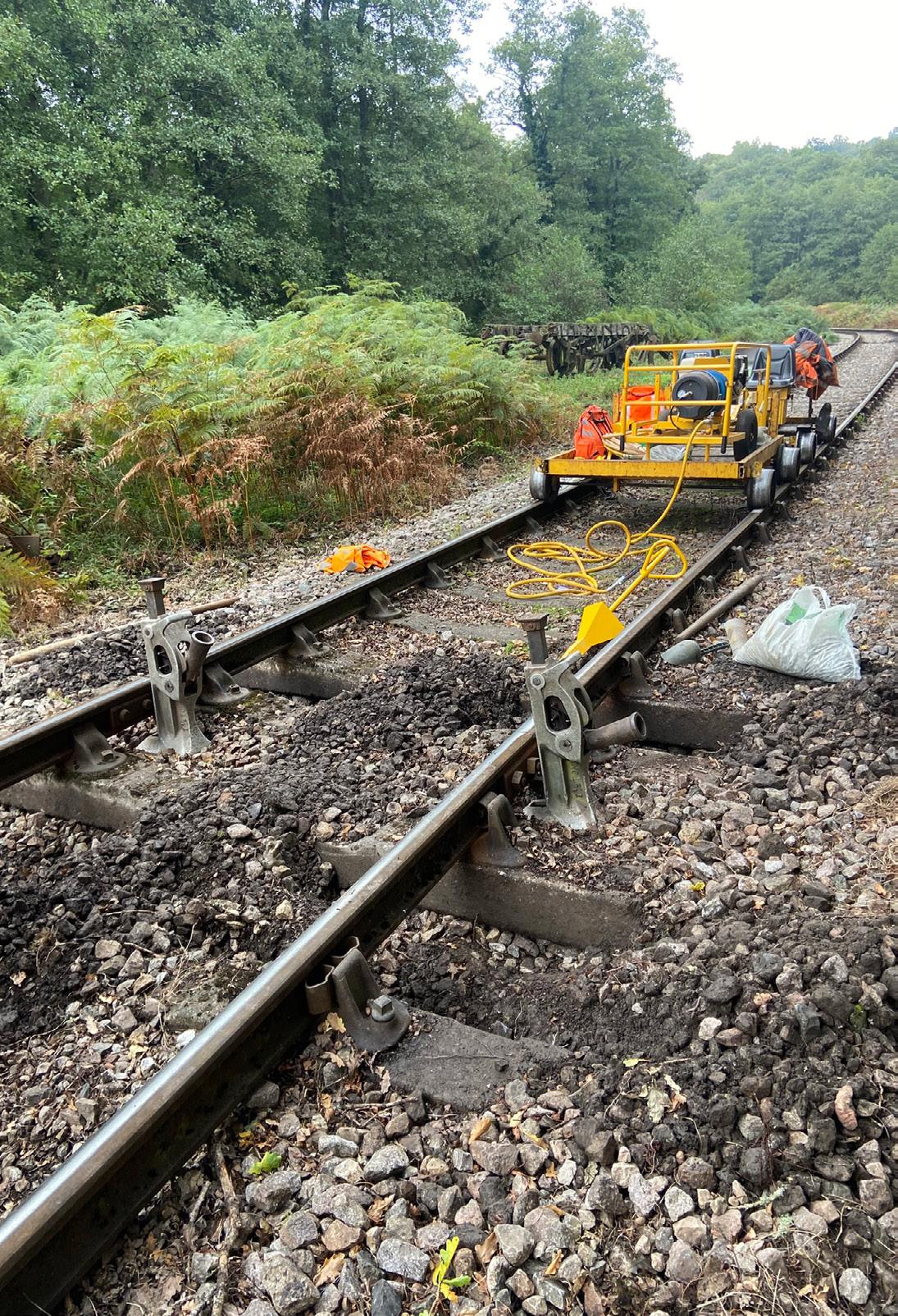
Where the latter is concerned the acquisition of the compressor mentioned in the last article has begun paying dividends. We have been able to purchase a couple of light weight vehicle loading ramps that allow us to load the compressor straight onto the trailer of the Geismar trolley and take it directly to locations where we can stone blow the joints. It is considerably more effective than the modified Stihl leaf blower setup that we had been using.
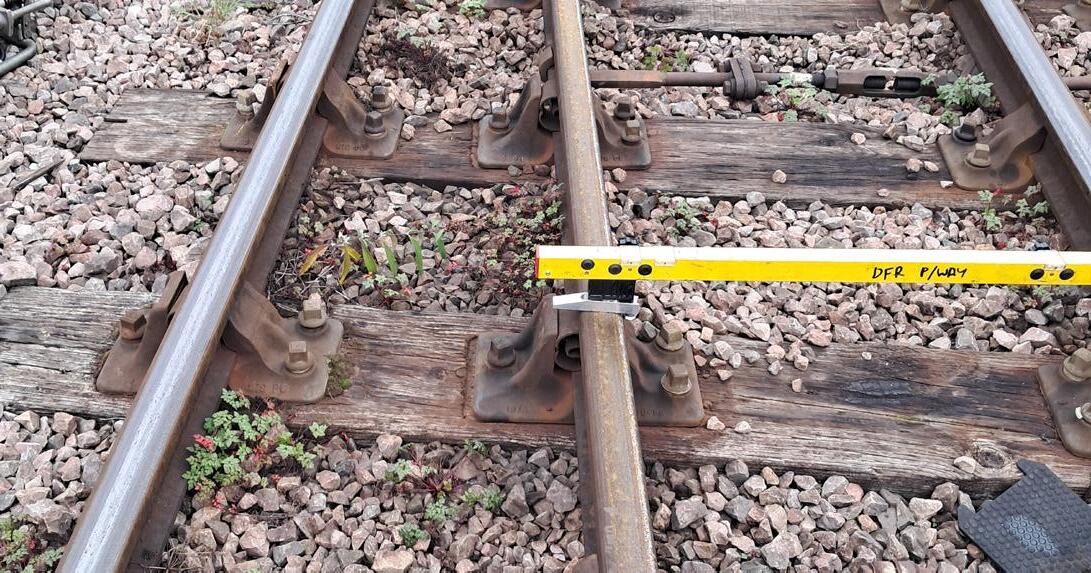
During routine checks in October some gauge spreading was noted at Lydney Junction and some steps have been taken to address this. A temporary solution of installing gauge stops has limited the spread, but sleepers will be replaced to address the problem in the longer term.
Opposite Page: To be able to stone blow dipped joints, the gaps between the sleepers (cribs) either side of the joint need to be dug (opened) out to the bottom of sleeper level. (Photo: A. Davies)
Above: Checking for gauge spread at Lydney Junction. (Photo: R. Alpin)
Work over the past few months has focused on Parkend and the surrounding area. During the "short closed season" in November, we pushed ahead with our plan to remove the up headshunt and the associated pointwork.
The history of this area is quite fascinating. As part of the Severn and Wye Joint Railway (and later British Rail) the line between Parkend and Coleford Junction was double track and there was a cross over approximately where the run round point now sits. The track here was lifted in the late 1960s. When the DFR relayed the line in the late 1990s the run round was originally located further north on a straight section of the line.
A few years later the cross over was reinstated and a second headshunt laid. However, in recent years the up head shunt has become redundant, and the tight radius of the cross over was resulting in excessive wear on both the track and the flanges of locos. In the light of this, the decision was taken to simplify the layout again.
The change to the layout has allowed us to ease the alignment of the curve from the run round point, and a check rail will also be fitted in the near future. While this configuration will serve as the run round for the foreseeable future there are plans to change the layout again as and when work to extend the line north begins.
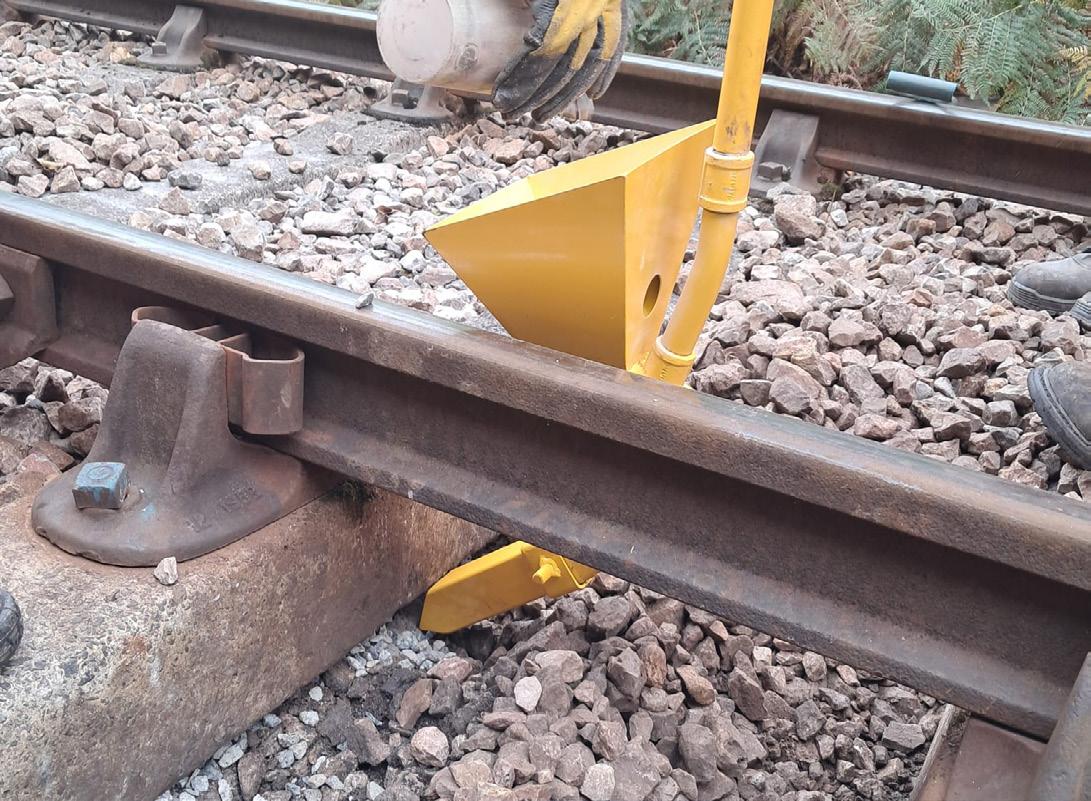
Above: The business end of the stone blower. Stone chippings are fed into the hopper, which are then quite literally blown into the gap under the sleepers using compressed air.
Below: Alex Davies and John Sharpe work to pack the dipped joints near Tufts Junction using this very efficient method. (Photos: R. Alpin)
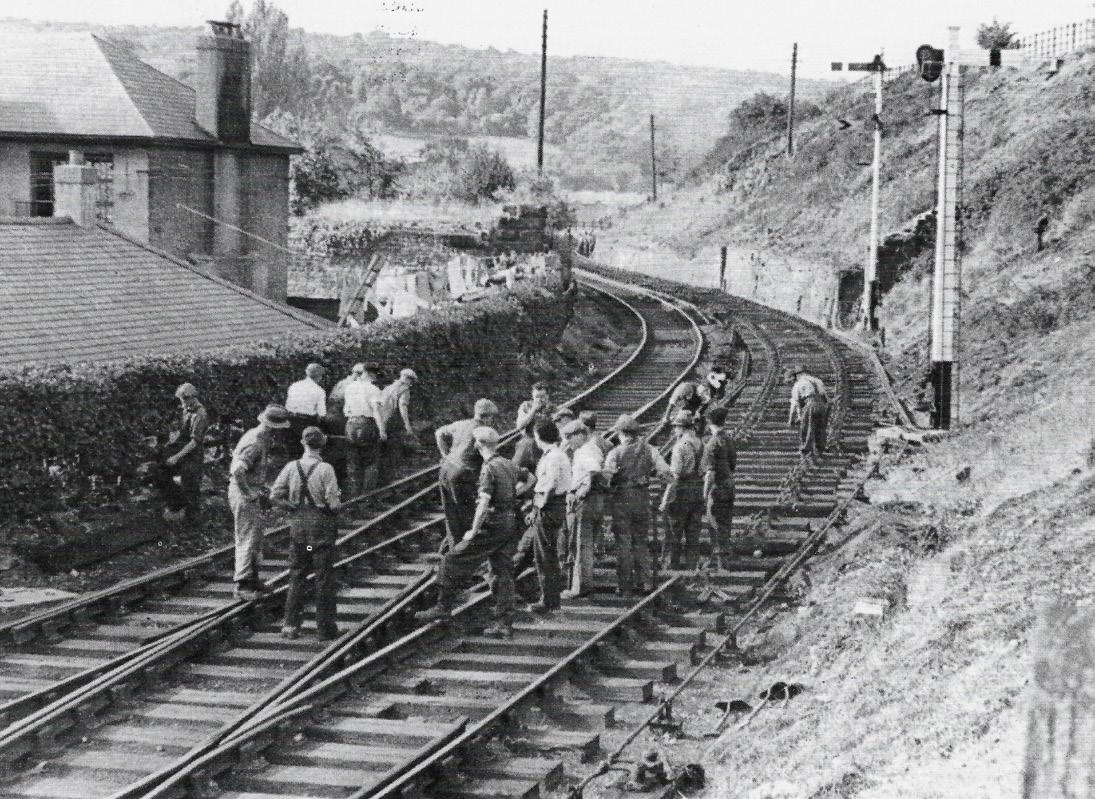
Above: Permanent Way labourers relay the Up Line on the double track approach to Parkend during 1947.
(Photo: L. E. Copeland)
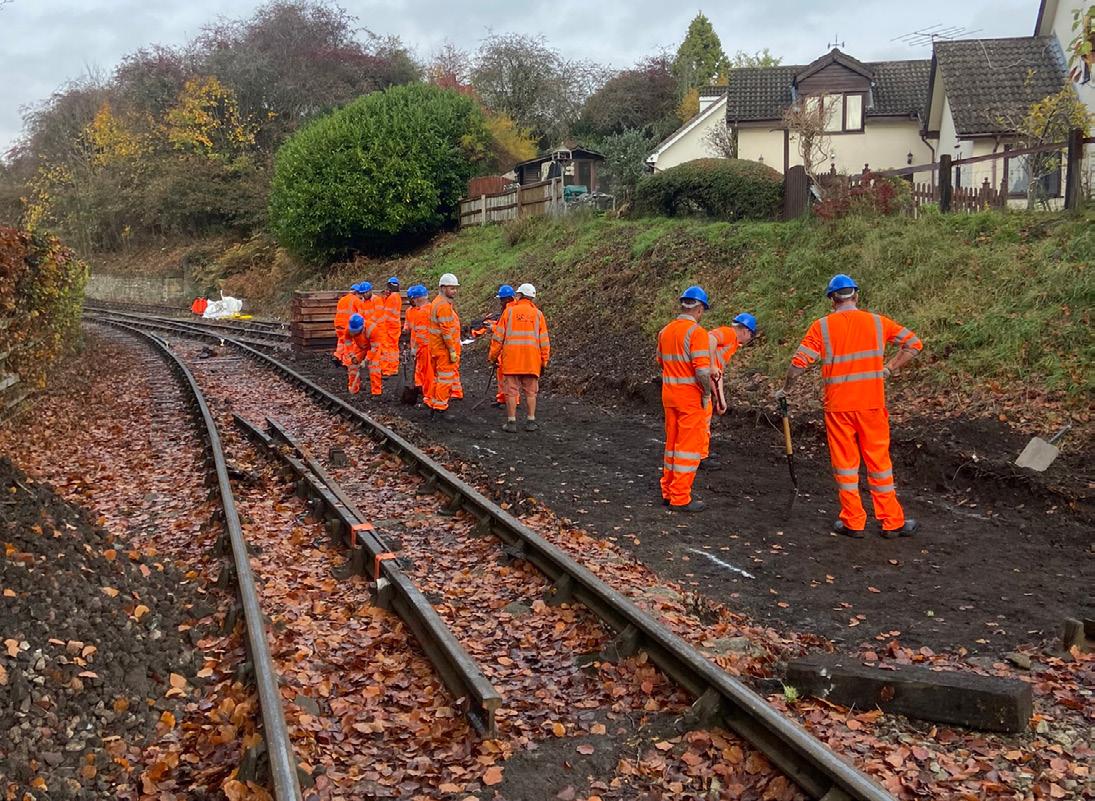
Below: The Betaris trainees recreate the scene ahead of recovering the old pointwork during November 2025.
(Photo: A. Davies)
Opposite Page: The Betaris trainees fix down the chairs.
Above: The Betaris trainees prepare the areas of the track bed where the RRV was unable to reach safely.
Below: The RRV drops fresh ballast over the work site. (Photos: A. Davies)
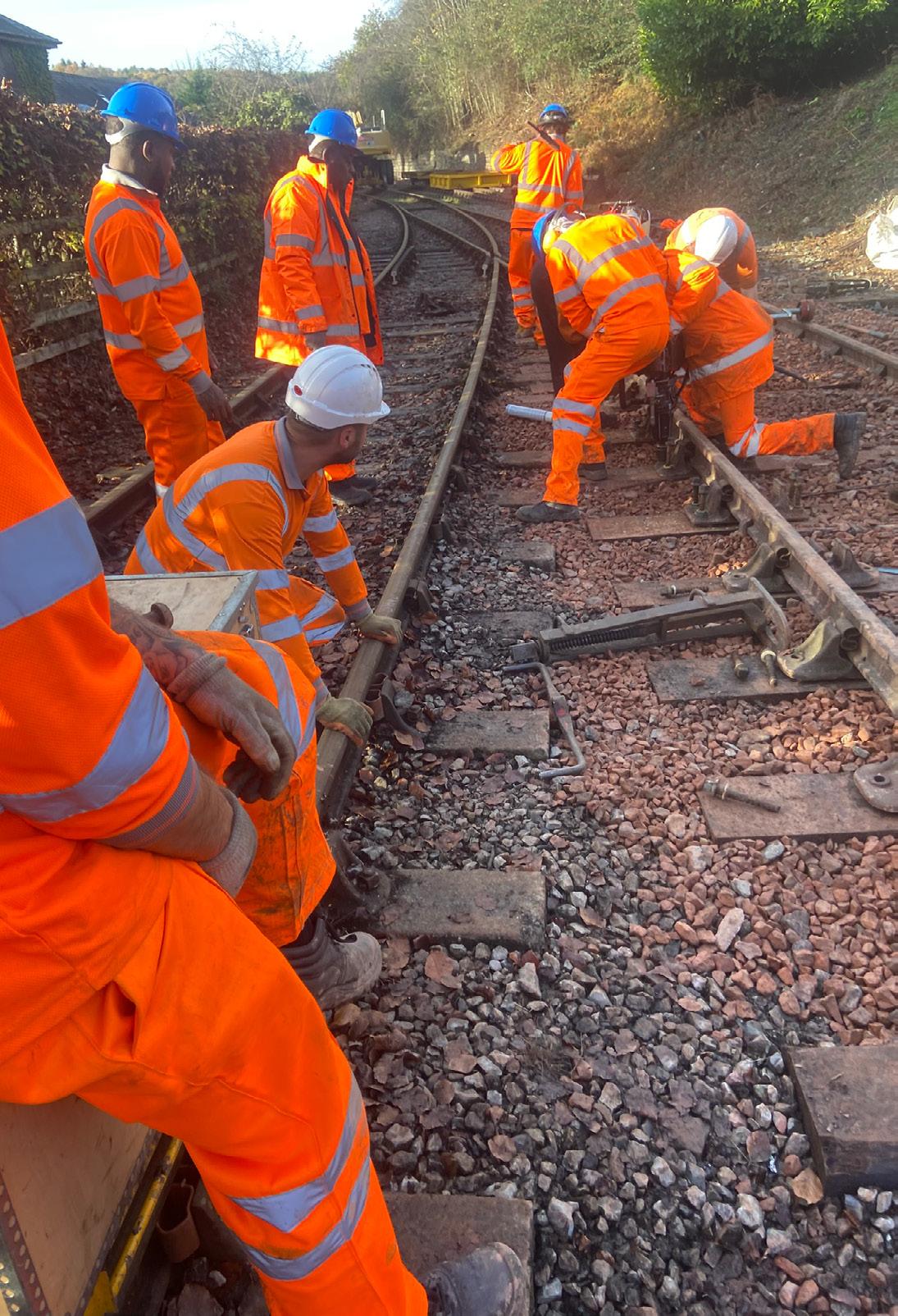
We were extremely fortunate during this period to be supported by a team of trainee track workers from training company Betaris. Their presence was mutually beneficial. For us it meant our small team of aging volunteers was augmented by a dozen or so relatively young and fit people. For trainees it was an opportunity to learn "on-the-job" of a real track relaying project rather than simply learning to use tools in isolation on a disconnected siding in a yard somewhere, as they usually do. Hopefully there will be opportunities to work with them again in the future.
Despite some adverse weather causing issues with the RRV the work was completed on schedule and Santa services were not affected. Once the Christmas season was over, we returned to Parkend to focus on several track and drainage issues. As I write this article in mid-January, we have taken possession on the line between Whitecroft and Parkend and have been working on two sites.
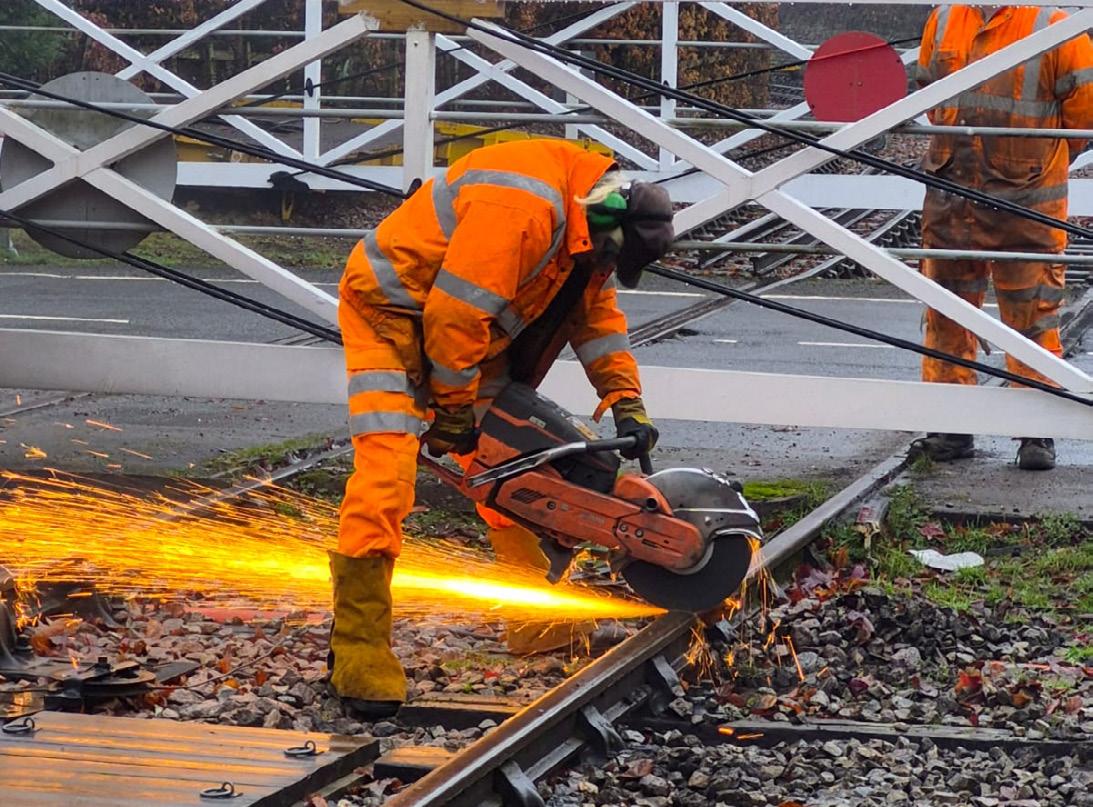
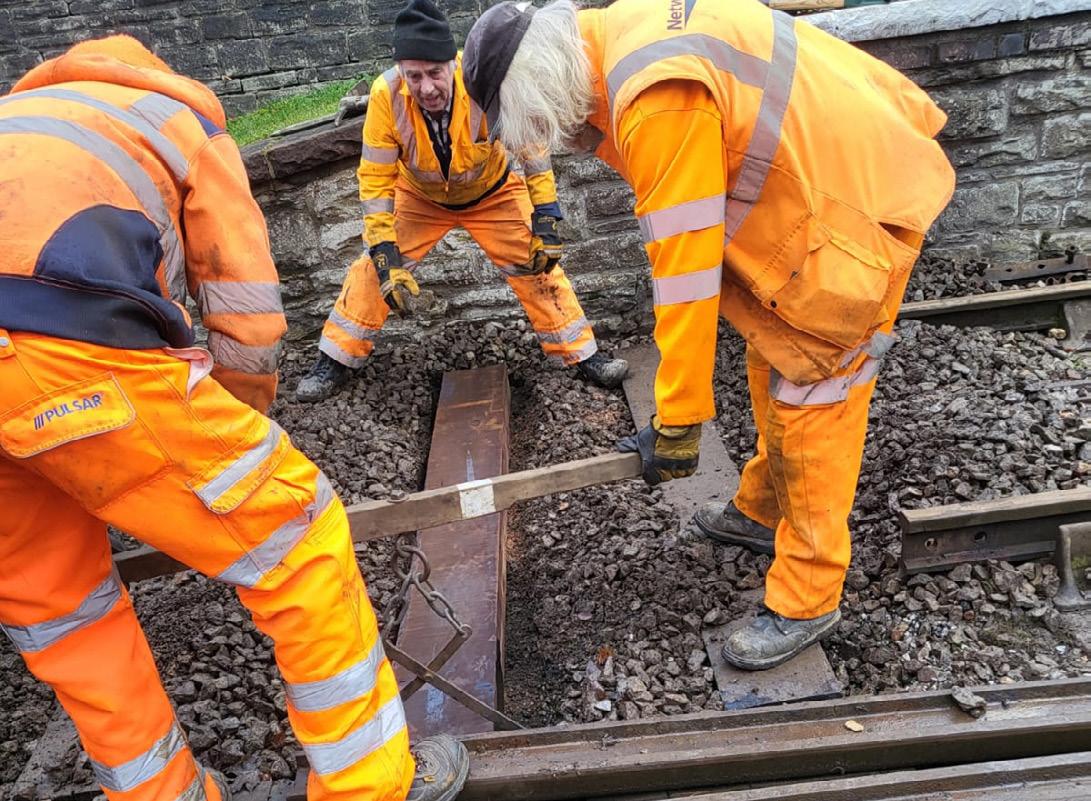
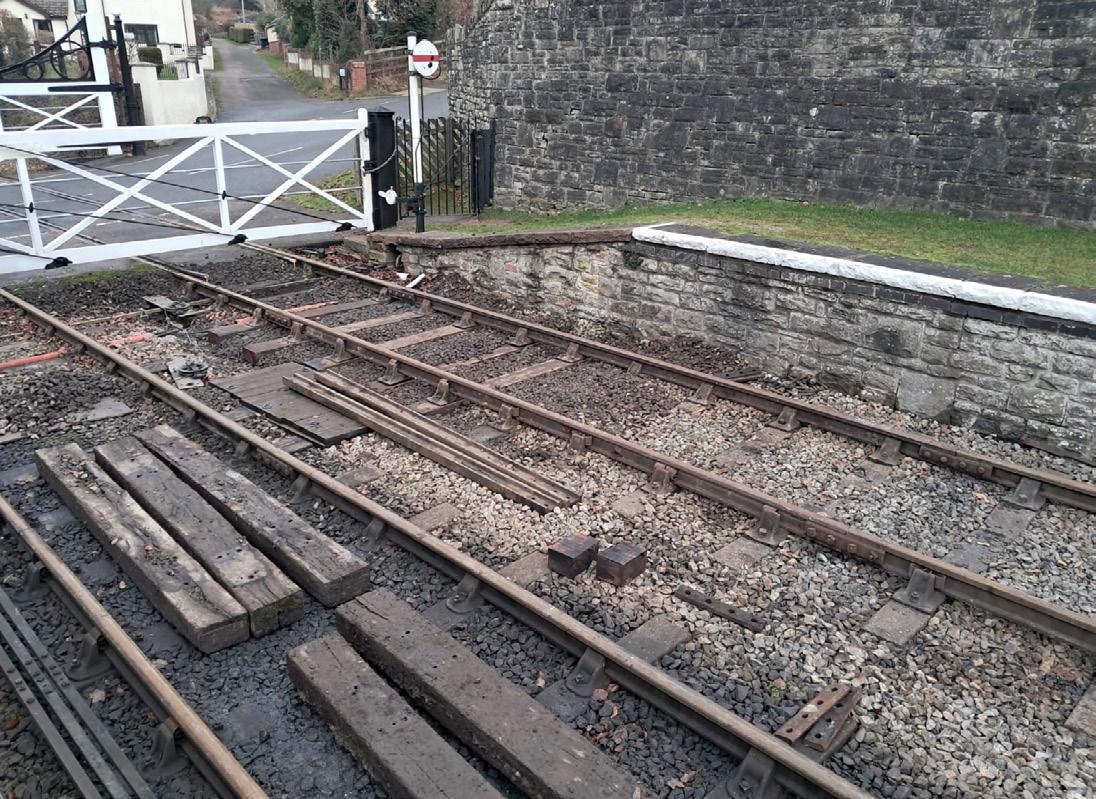
The first site is on the Platform 1 line just south of the level crossing where a number of wooden sleepers are being replaced. The nature of the site has meant that we needed to cut out and splice in rail as well as simply replacing the timbers. The work here will be superseded when the level crossing is renewed in a few years' time.
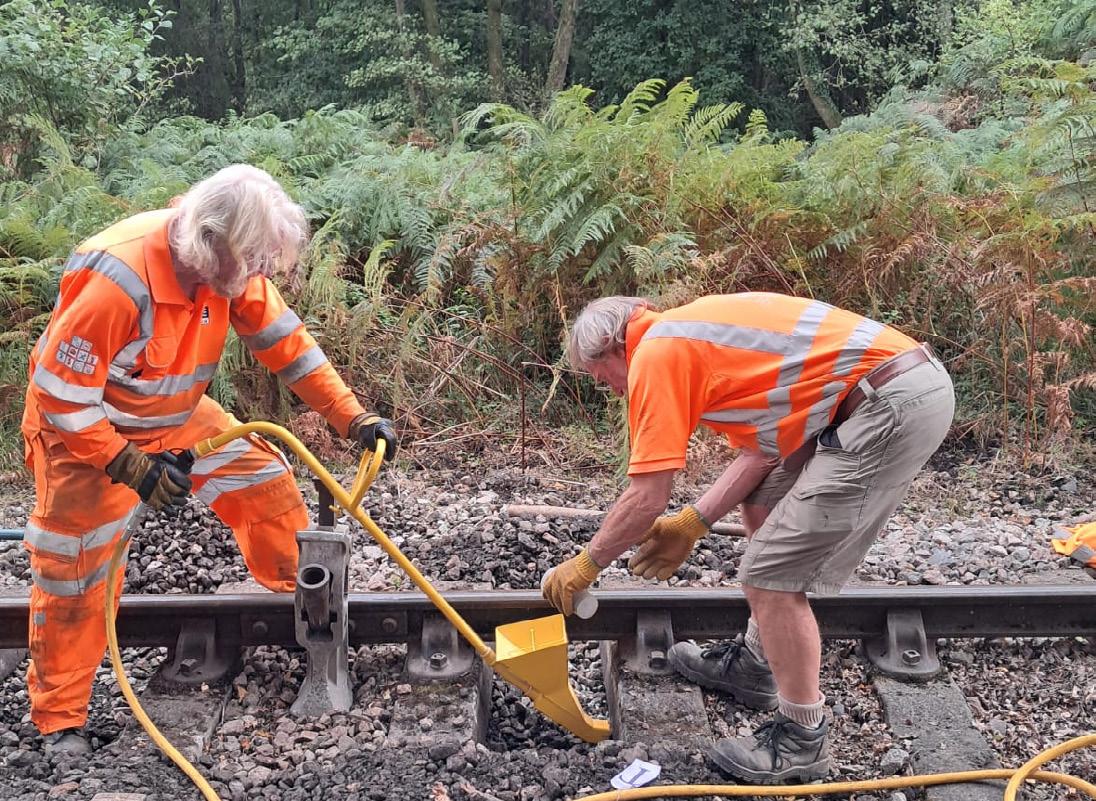
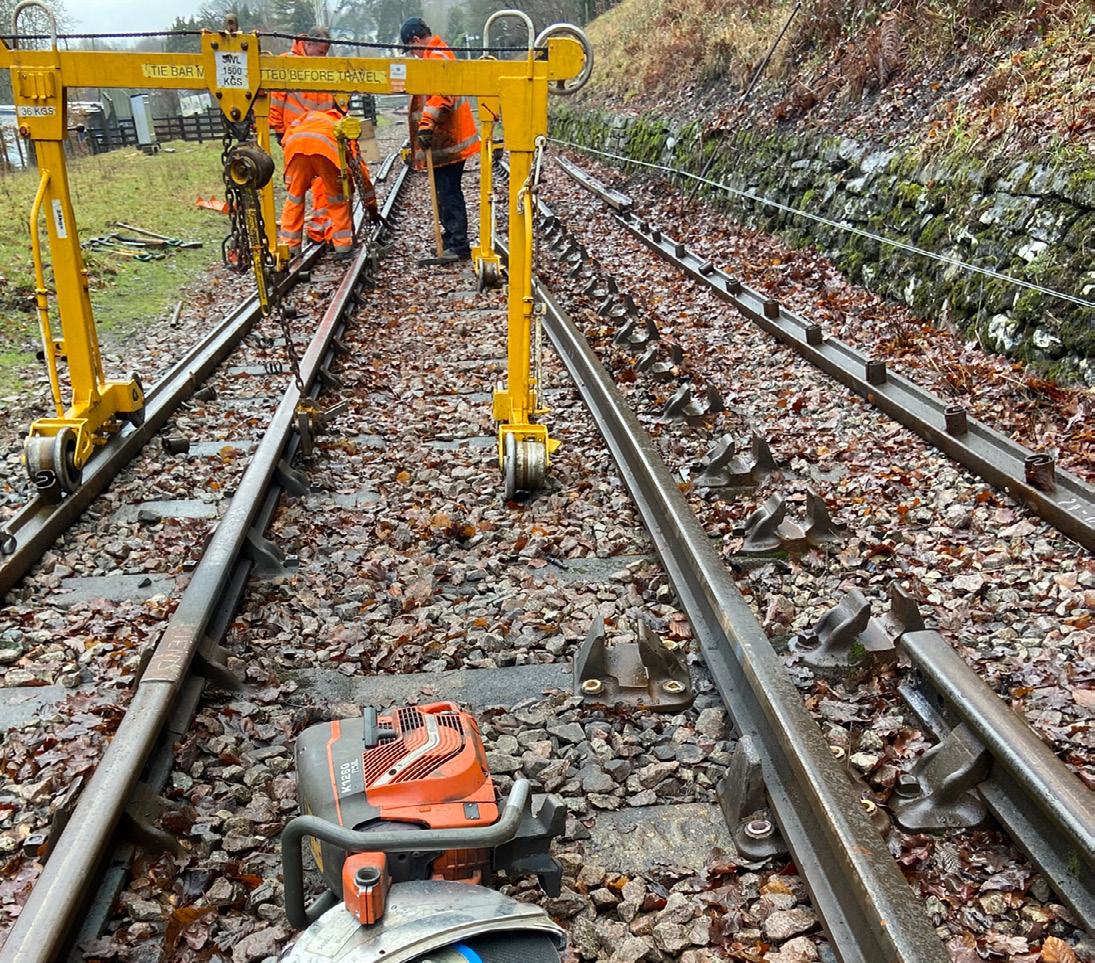
The second site we have been working on is south of the Whitemead Park foot crossing where we replaced 180 feet of worn out 85lb bullhead rail. This forms part of our programme to remove 85lb rail from the running line.
The replacement of this short section means that only two sections of 85lb rail remain, the straight section through the platform at Whitecroft and a rather longer section between the Whitecroft up distant signal and the Oakenhill Wood No. 2 foot crossing.
We had originally hoped to replace this short section with three 60ft lengths of 95lb rail stored at the junction. However, having delayed this work for several years, we still have no viable means of moving the rails from one end of the line to the other so, instead, we are using shorter rail lengths recovered from the up head shunt at Parkend.
It's now ten days since I started writing this and it's time to submit the article. I'm pleased to say that the two jobs mentioned here are now almost complete. We planned to be spend the first week of February tidying up loose ends, clearing work sites and moving tools back to our containers at Whitecroft. I'm sure the Parkend gangs will be glad to get a bit of space back in the goods shed.
Another job before the season starts is at the opposite end of the line where we need to work on points 17A and 17B at Lydney junction. Point 17A takes a considerable amount of traffic as it forms the connection between the West Loop and Platform 2 by Harbour Road level crossing.
Years of traffic across the point have resulted in one of the switch blades becoming worn to the point where it needs replacing. Fortunately, the corresponding switch on point 17B is the trap switch and should take no traffic at all.
Above: With the old track out, new sleepers are installed
Below:
Opposite Page: Alex Davies cuts the rail for the new joint. (Photo: D. Sharratt)
The replacement track panel is complete. (Photos: J. Sharpe)
Our plan is to swap the two switches over so that the unused switch takes the traffic from the new season onwards. While we are there, we will also be investigating some issues with the hand point behind the signal box.
Once we have completed these two pieces of work, we will be joining the lineside team at Oakenhill Wood No. 2. They will be working to improve the footpath drainage while we replace the rails through the foot crossing.
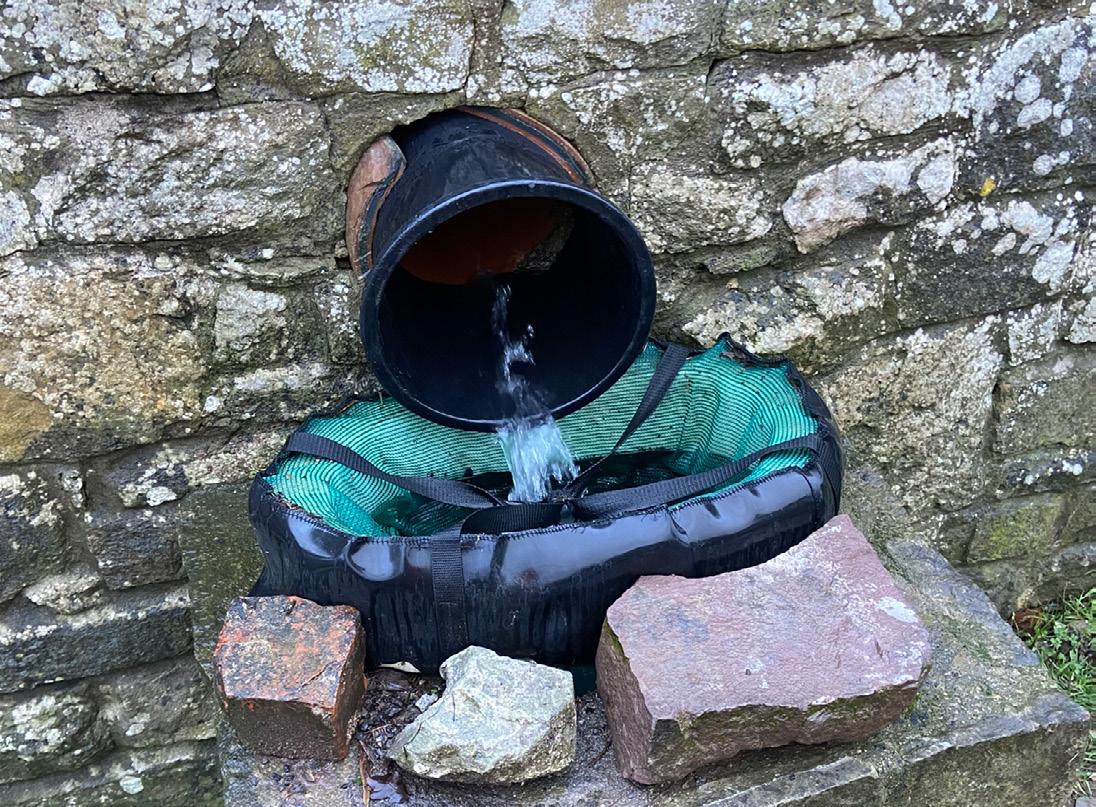
Work is also progressing on improvements to the drainage at Parkend. A few months ago, we invested in a silt trap which has been placed in the drain near the water crane. What happens at this point is that a drain carrying surface water from the houses and roads above the station exits through the retaining wall and cascades into a manhole.
During our work investigating the drainage last summer we found large amounts of debris in a catch pit fed directly from the manhole. It seemed that the main source of this debris was the surface drain, and the debris caught by the silt trap seems to confirm that our suspicions were correct. Placing the silt trap, basically a basket to sieve out the debris, in the manhole enables us to capture most of the debris before it enters the main drainage system.
You wouldn't expect there to be much material in this system, but it seems that there is plenty to come and during periods of heavy rain the trap has collected several bucket-loads of debris – mainly small building waste.
We have also been able to take delivery of around fifty old paving slabs that have been donated from several sources.
Our plan is to use these as shuttering and capping in areas of the drainage where existing pipes are broken.
The main problem at Parkend is not the pipework itself which, following last summer's jetting activities, is working well but getting the surface water into those pipes. To address this, we are digging grips and laying perforated pipe to direct the water to the breaches in the pipes.
Although it's still January, we are already planning an extensive programme of works for the summer months, including relaying the north siding at Lydney Junction and assembling the new, longer pointwork for Middle Forge, which we would like to install early in 2027.
One significant change we are planning for the 2026 season is to carry out our monthly track inspections on Wednesdays while services are running.
Opposite Page: The new silt trap at Parkend.
Below: Replacing rail south of Whitemead Park foot crossing. (Photos: A. Davies)
There are two clear benefits to this.The first is that we can observe trains running over sections of the track, placing it under load. The second is that it enables us to travel to and from the start and end points of the inspection walks.
When the running season starts, we will be inspecting Norchard to Lydney Junction on the second Wednesday of the month, and Parkend to Norchard on the fourth Thursday of the month. Anyone with a current Personal Track Safety qualification is welcome to join us.
The Permanent Way team meets regularly on Mondays and Thursdays throughout the year, and usually on other days during both of the closed seasons.
We normally start the day at Norchard around 9am before heading to whatever worksite we have targeted, and we usually finish between 3pm and 4pm, although this is guided by both the weather and lighting conditions. Why not come and join us and get a completely different perspective on the railway and its workings?
We're always on the lookout for new volunteers, and you don't have to be out in all weathers or in the middle of the week to help. There are plenty of jobs that can be done at weekends and under cover in our dry containers
Unfortunately, we have lost the volunteer who had been helping us maintain our petrol-driven tools. Joe did a great job of getting us started on fixing and maintaining the various rail saws, rail drills, sleeper drills and generators that we have, but now sadly cannot spare us enough time.
So, once again, we are looking for mechanically minded people to help with maintaining, repairing and refurbishing tools and materials in our workshop container at Whitecroft, which has been fitted with solar lighting and charging equipment and has access to the station building.
If anyone is interested in taking on this role, then please get in touch. We also need to refurbish a number of point hand-lever mechanisms so that we can replace failing ones in the yard at Norchard and elsewhere.
We are also looking for people to help sort and catalogue the Permanent Way materials that the railway has. In the early days, we (like most infant heritage railways) acquired anything we could from the various railways and engineering firms that were closing at the time. Most was 'stored' along the line in case it was ever needed.
Now, as a more mature railway, we have a much clearer idea of what we will and will not need going forward. The development team is progressively tidying up the railway (ultimately making it more attractive to our visitors) by recovering materials from various locations and moving them to Lydney Junction.The items are then inspected and either stored for reuse or disposed of responsibly. This is the sort of activity that could be done on sunny weekend days during the summer, between service trains.
If you think you could help us with any of these tasks, please do get in touch via volunteering@deanforestrailway.co.uk – we'd love to hear from you.
Valley Rail Update
During October 2025, the new shed and workshop facilities took shape at Lydney Junction – these were covered in Issue 73. However, whilst work to erect the new shed was underway, the focus quickly turned to reinstating the air brakes on ZCA 110358 and ZCA 110714. These wagons, which arrived on 17th September and 8th October respectively, were quickly turned around.
After testing, they were released in to traffic ahead of the planned Permanent Way works at Parkend. This work would require a small quantity of fresh ballast to be delivered and dirty ballast and spoil to be removed. Thankfully, these wagons are well suited to both tasks and can be easily loaded and unloaded using an RRV.
British Rail chose to use names with an aquatic theme for wagons used by the Civil Engineer; these were collectively known as 'Fishkinds'. This specific design was introduced during 1991, with wagons being rebuilt from OBA, SPA, VAA,VBA, and VDA types and given the name 'Sea Urchin'.
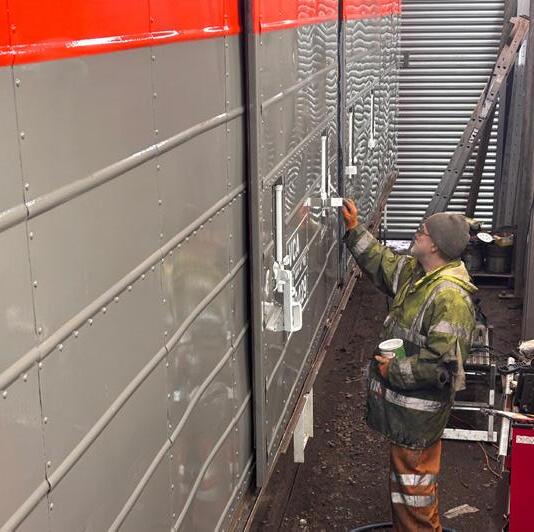
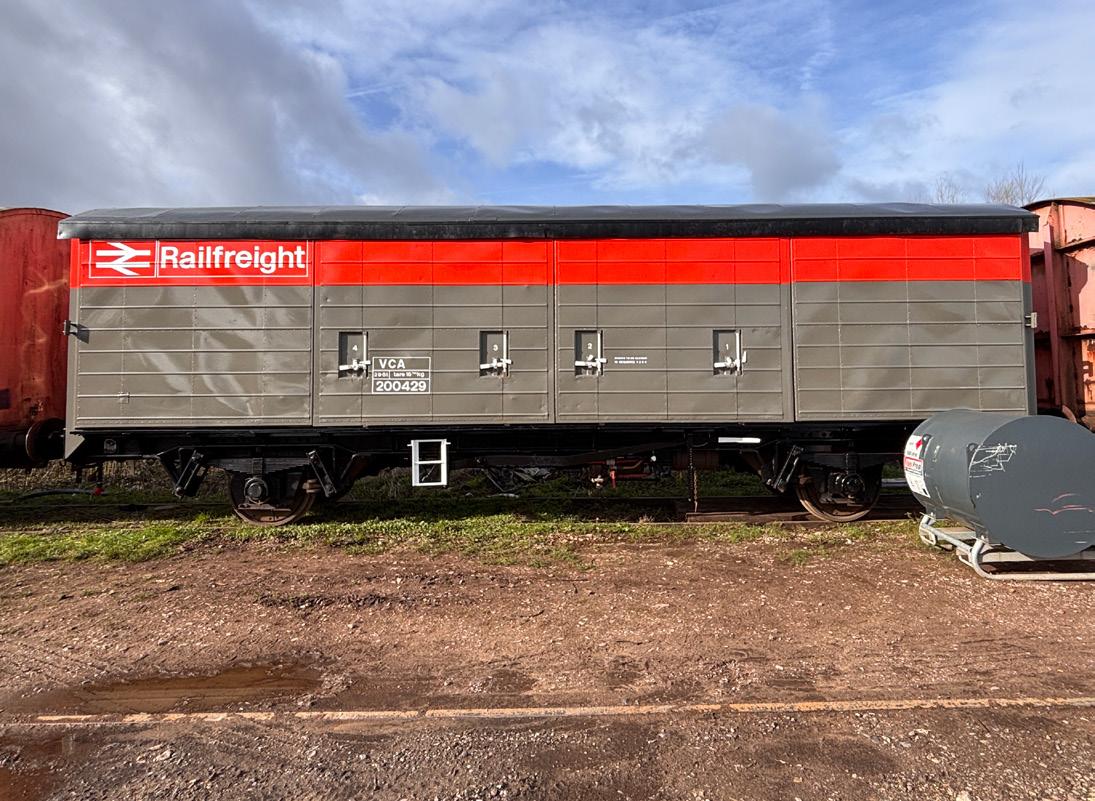
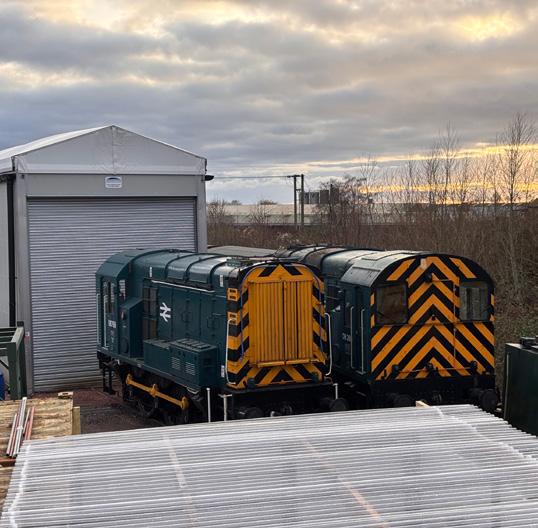
The first guest in the new shed was 08 288 Phoenix from the Mid-Hants Railway. The undercover accommodation made the top-end rebuild much easier, despite the (not unexpected) poor weather conditions. By the middle of January, these repairs were complete, and attention could be turned to VCA 200429, owned by the National Wagon Preservation Group. This van needed some repairs to the steelwork and weather strips, along with a general repaint.
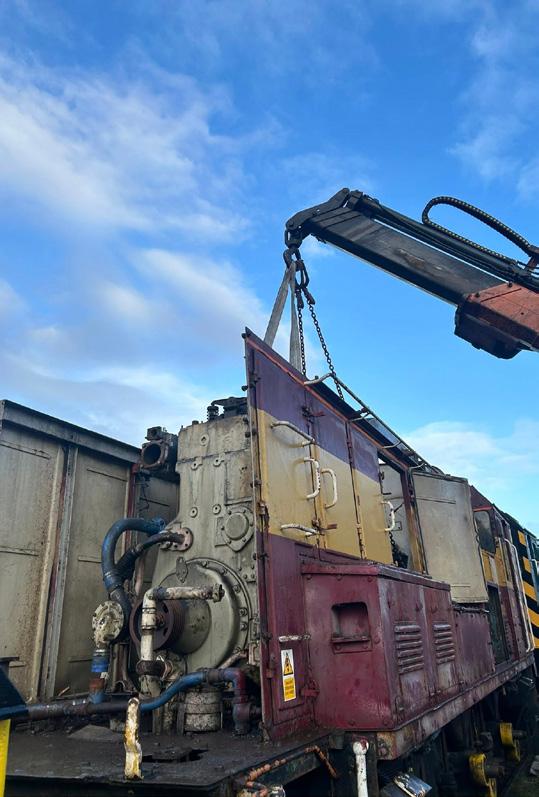
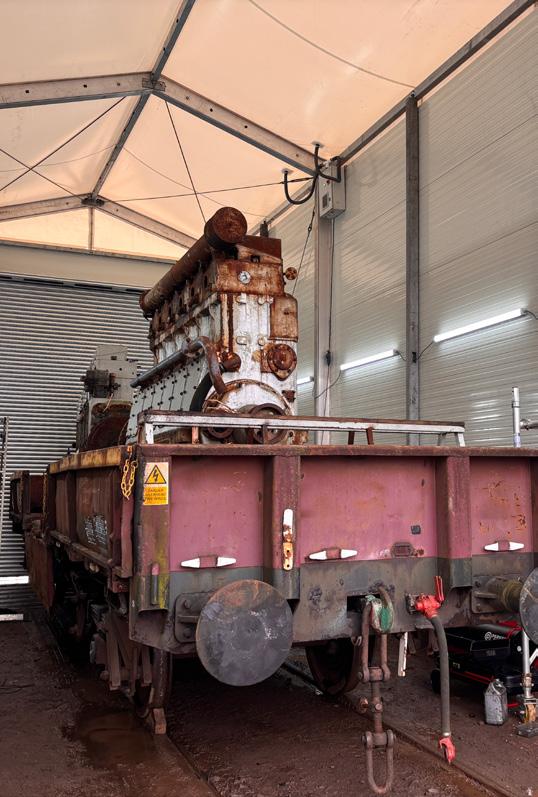
In between other jobs at the end of January, work focused on preparing the defective power unit on 09 006 for removal so that work could continue with ease.
The lift took place on 30th January, with ZCA 110714 receiving the power unit rather than it being stored on the ground. Having it on the back of a wagon means it can easily be shunted around the site or moved in and out of the shed to be worked on if the weather is inclement.
The overhaul of the replacement power units for 09 006 and 09 015 had already begun in early 2025; however, progress accelerated after they were lifted onto the back of SPA 460578 in a similar manner at the end of November. The wagon had arrived at Lydney Junction on 17th April and had previously been in service at Whatley Quarry, where it was used to maintain the internal rail network.
The first production SPA wagons rolled out of Shildon during 1979. However, despite being in fairly general use, it soon became evident that there was a surplus. Many of these wagons were transferred to departmental use in 1983, being recoded as ZAA, and given the name 'Pike'.
At the start of February, 08 881 arrived at Lydney Junction from the Somerset & Dorset Railway Heritage Trust at Midsomer Norton for a range of works to be undertaken. It was quickly joined by 08 888, following the completion of its hire period with Gemini Traincare at Wolverton Works through Railway Support Services.
Martyn Normanton gives an update on the winter work at Lydney Junction Diesel Depot.
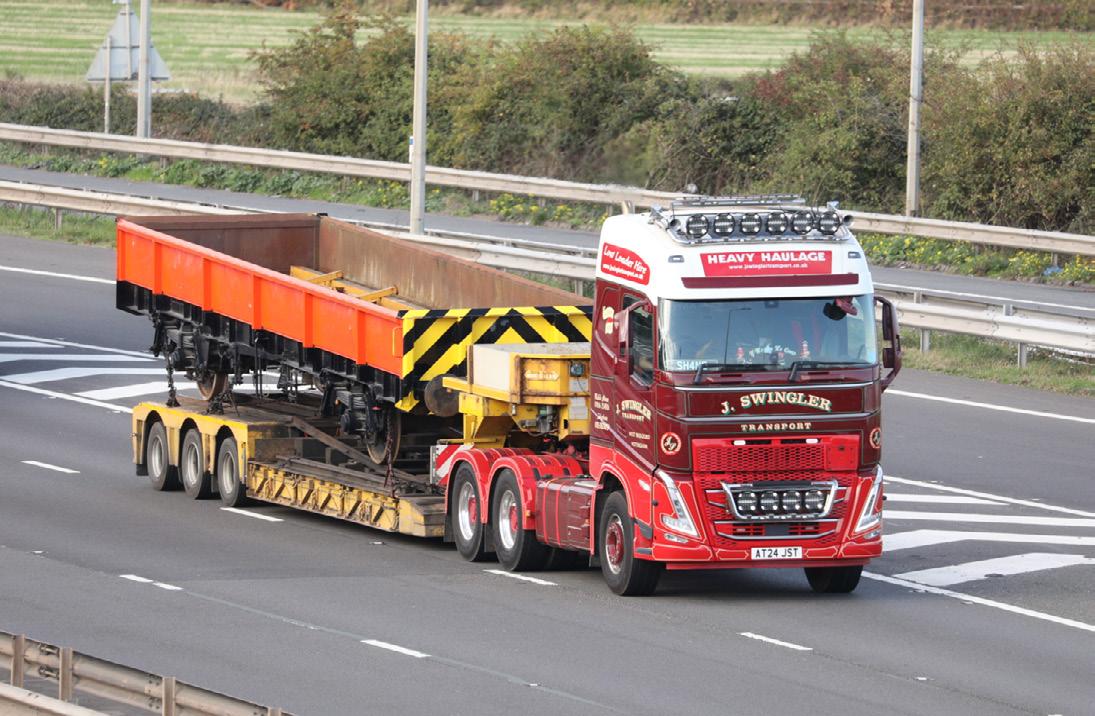
Opposite Page: The second Sea Urchin, ZCA 110714, was captured on the M5 southbound passing Strensham Services. (Photo: M. Cale)
Above: Sheltered in the dry from the awful weather outside, Paul Cook paints the white detailing on VCA 200429.
Left: 08 288 in the shed, with heads off and pistons out. (Photos: M. Normanton)
Below: With the repairs and repaint complete, VCA 200429 basks in the winter sun after being rolled out of the shed. (Photo: A. Dickinson)
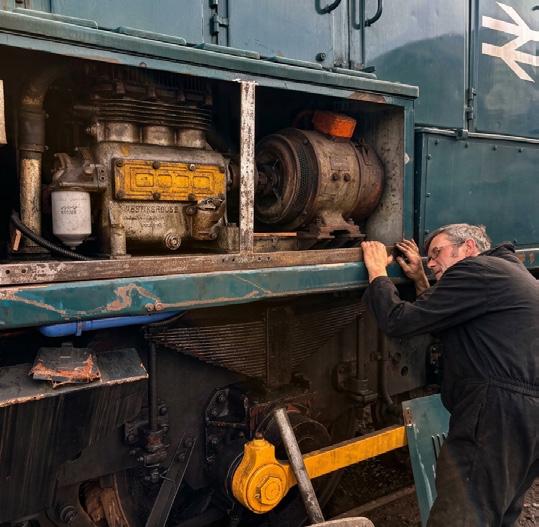
With the repair works complete and successful test running completed on Friday 13th, 08 288 was able to return to the Mid-Hants Railway shortly afterwards. With the shed available, we were able to start the insurance repairs to 08 769 following the incident at St Mary's.There were quite a few 'war wounds' that could only be treated with heat and a degree of brute force and ignorance!
The left-hand side exhauster had taken a significant impact when the falling bridge span forced the exhauster box door in on top of it, wrapping it around the oil reservoir. Some replacement components are being sourced.
The bottom rail of the exhauster box itself had to be cut out in order to remove the door and fittings. Ultimately, it will be consigned to scrap; however, the hinges, catches, and the louvred section will be recovered.
Some minor adjustments had to be made before a new bottom rail could be welded into place and a new door fitted. Once everything was successfully installed, the repaired areas were given a fresh coat of paint ahead of a sojourn to Midsomer Norton to cover for 08 881.
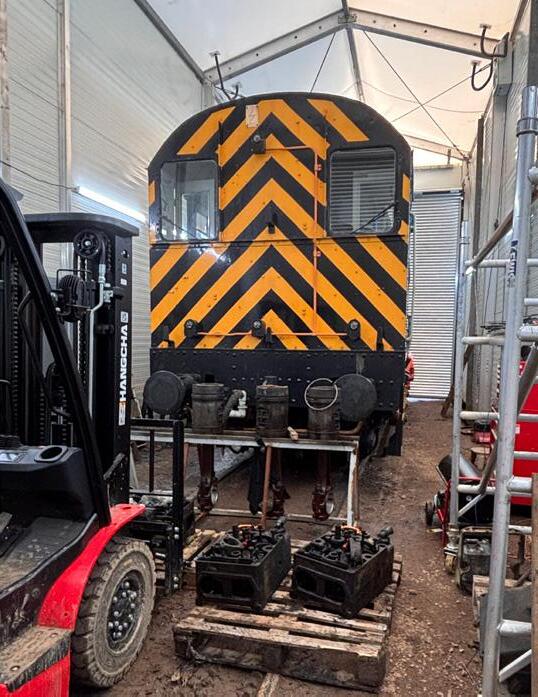
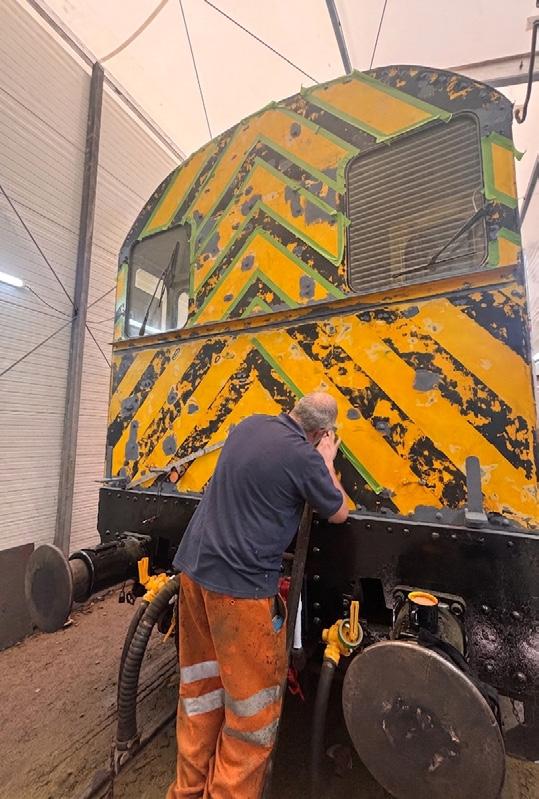
Whilst all of this was going on, 08 888 (which will be covering for 08 769 when it goes away) was moved into the shed for a repaint from the weathered BR green that it was carrying into something bright, cheerful, and authentic. What livery will it be wearing, though? You'll have to wait and see!
Above: 08 769 and 08 288 side-by-side during January. (Photo: A. Williams)
Below Left: The defective power unit from 09 006 is lifted out, and would be placed on the back of ZCA 110714.
Below: The replacement power units for 09 006 and 09 015 can be shunted in to the shed on the back of SPA 460578. (Photos: M. Normanton)
Above: Phil Davies prepares the replacement bottom rail for the damaged exhauster box ahead of fitting and painting.
Right: In the shed, the cab of 08 888 has been sanded back and Paul Cook carefully masks up for the new wasp stripes.
(Photos: A. Williams)
Below: 08 769 with the bodywork repairs complete.
(Photo: A. Dickinson)
Surveying St. Mary's...
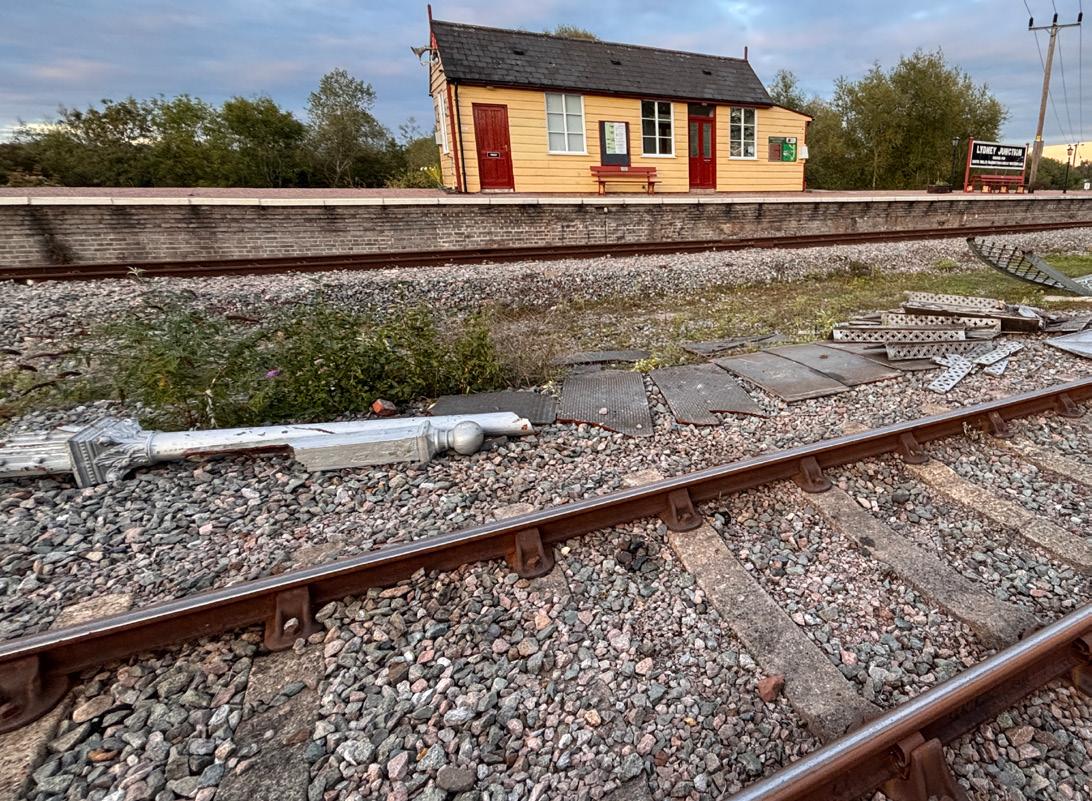
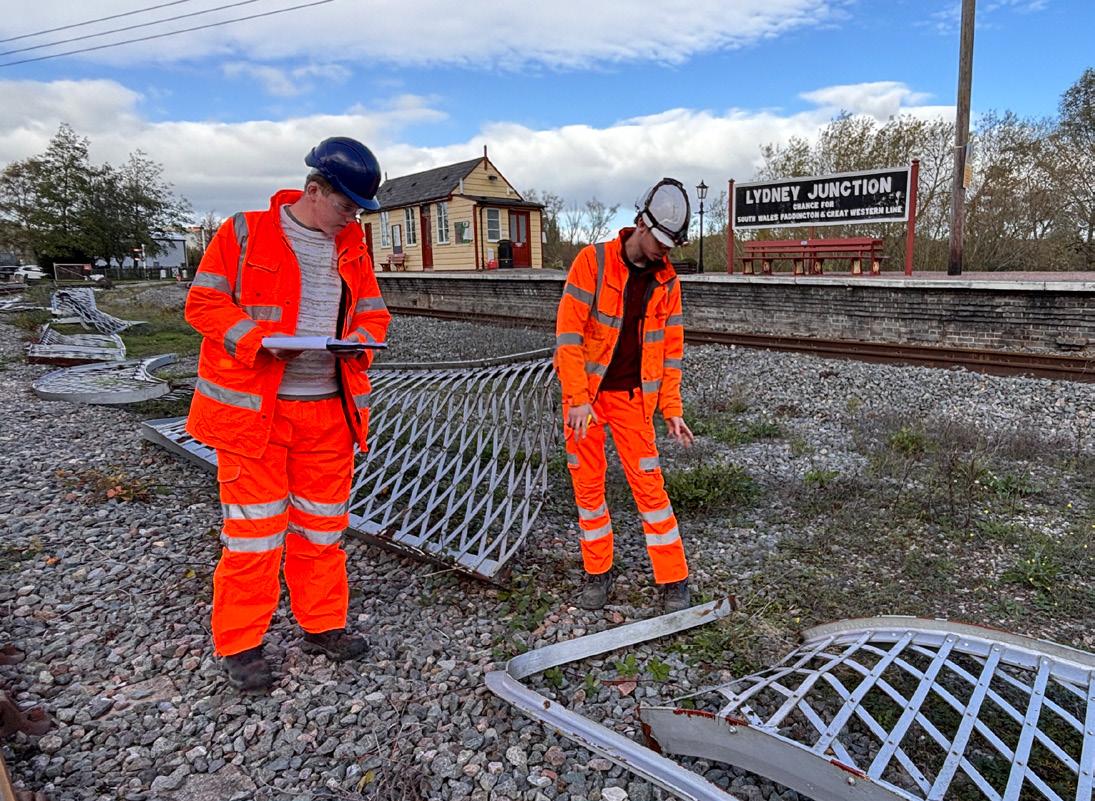
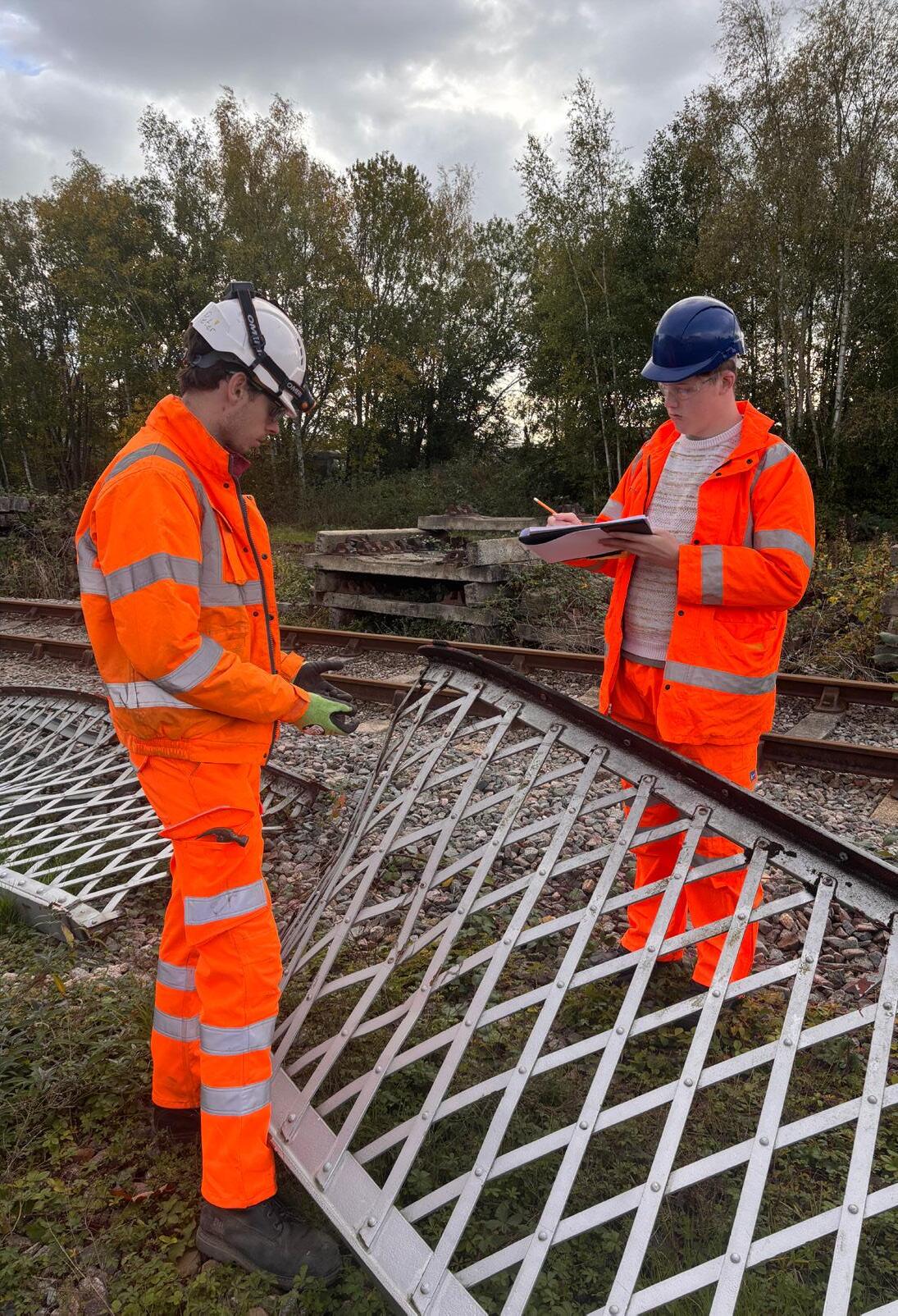
In the days and weeks following the incident that took place at St Mary's on Thursday 14th August, attention turned from recovery to understanding what could be salvaged – and what could not. Due to the structure being Grade II listed, we couldn't just start rebuilding it.
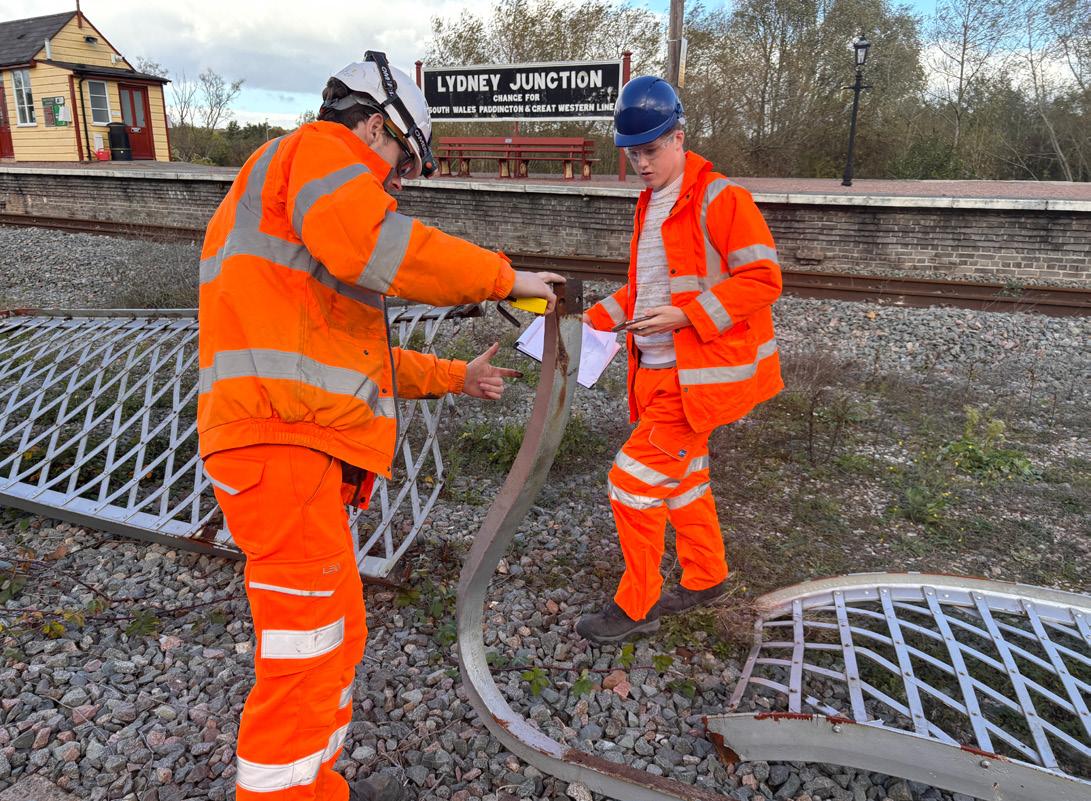
Tony Gee and Partners LLP, Consulting Engineers were commissioned to inspect the remains of the 1892 footbridge, a structure that, until the incident, had been in excellent condition following its 2019 restoration.
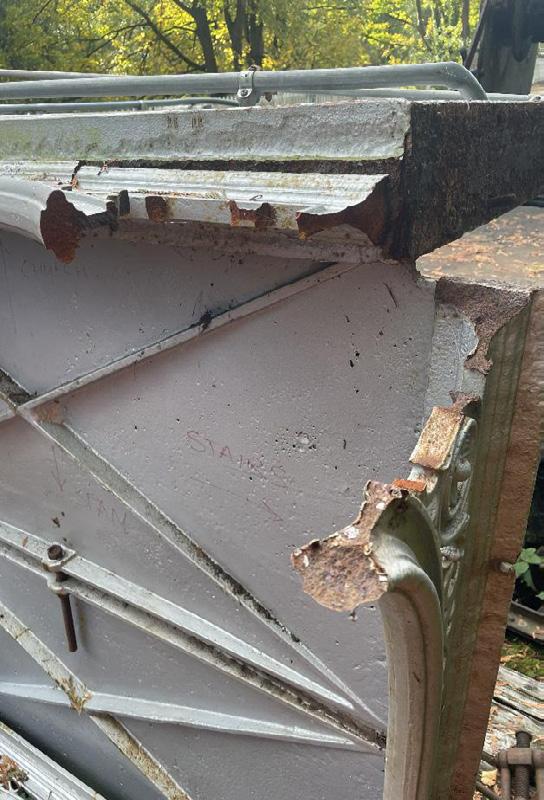
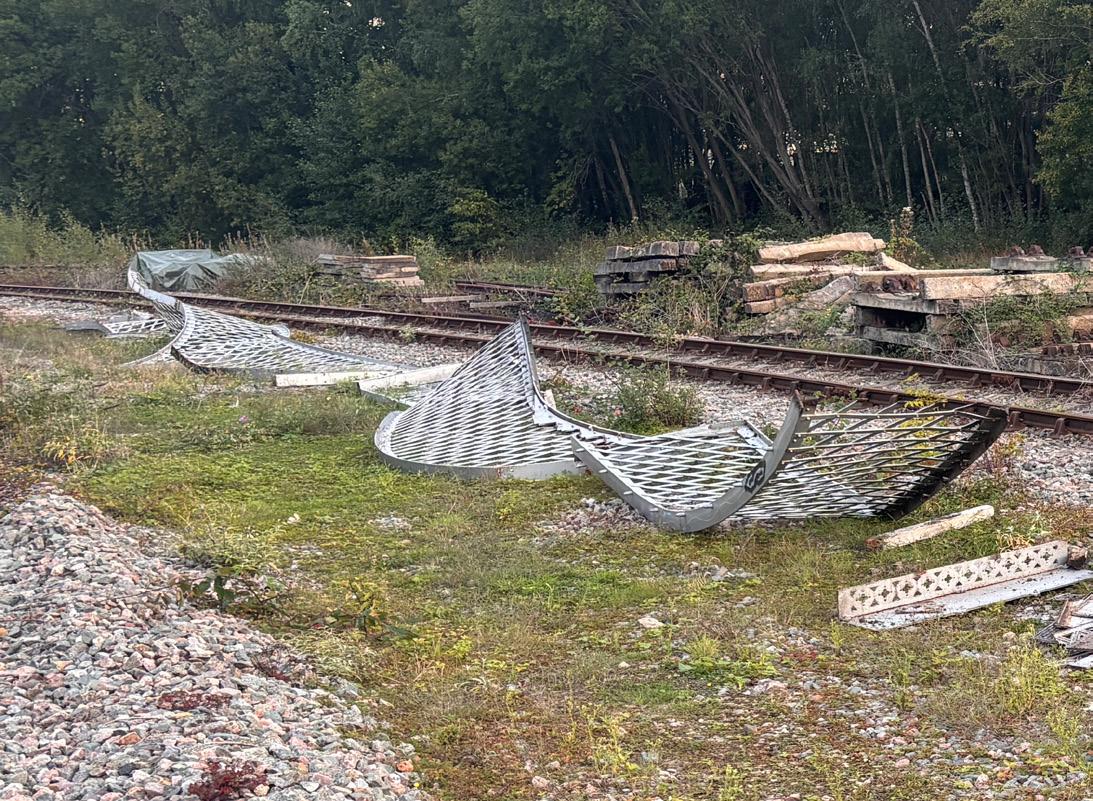
The findings were stark.While the familiar lattice form and decorative ironwork had defined the bridge for over a century, the collision had left most of the beyond repair.
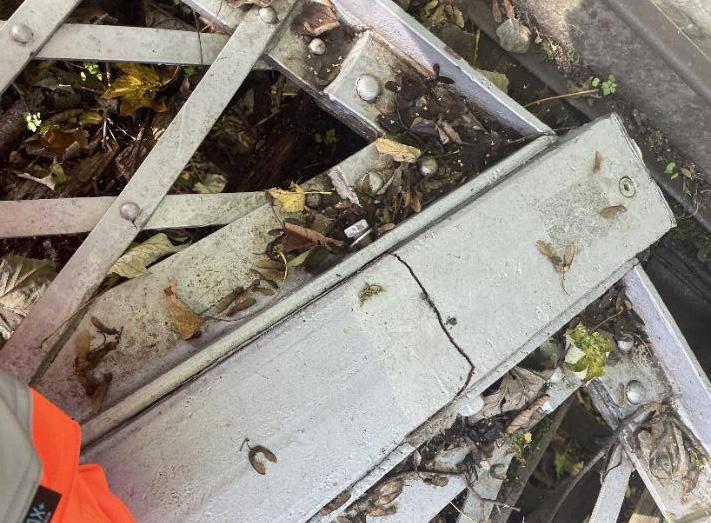
A detailed survey revealed widespread brittle fractures in the cast iron components and severe deformation in the wrought iron lattice girders.
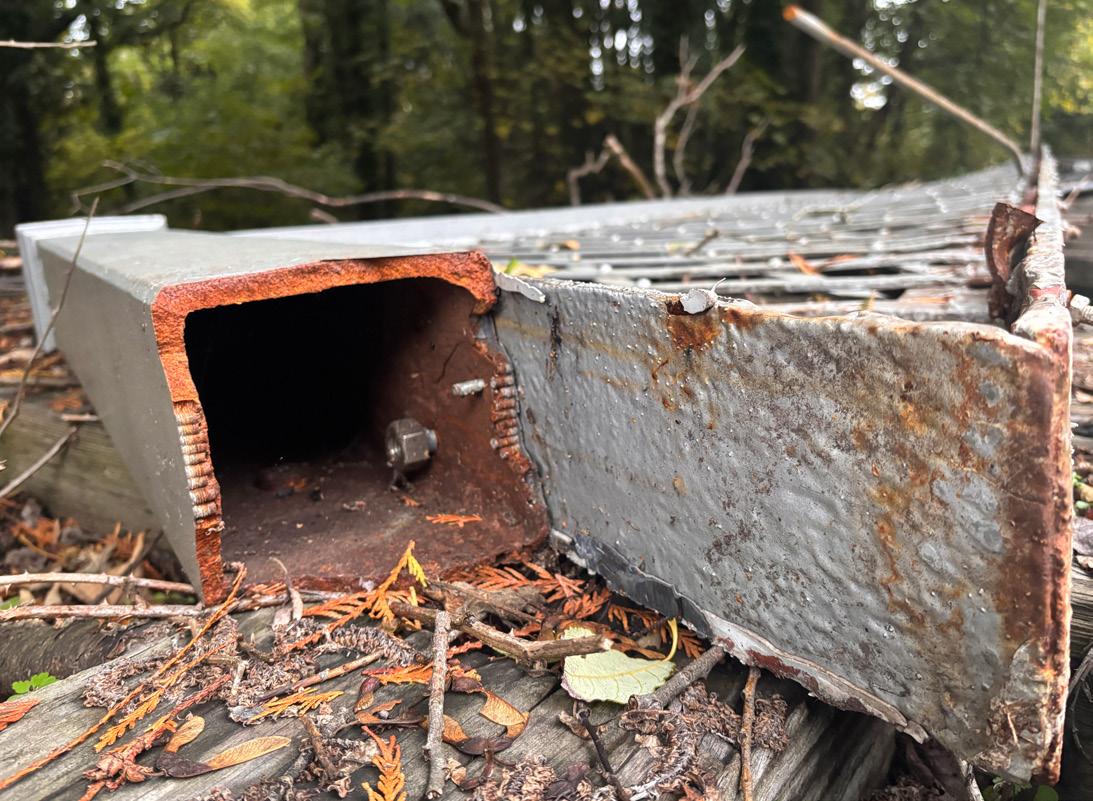
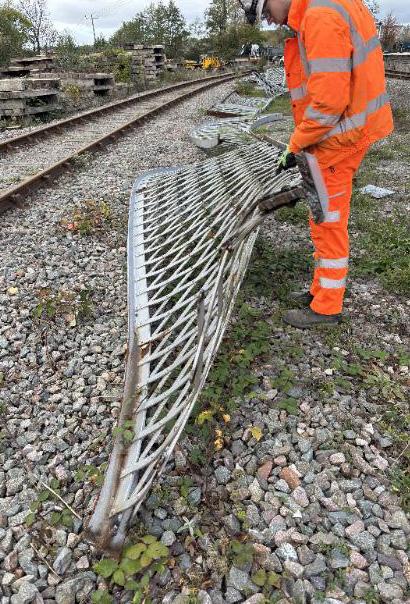
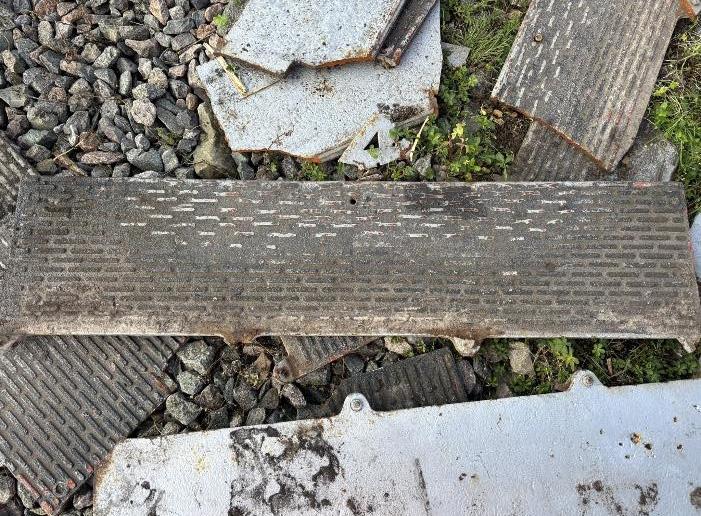
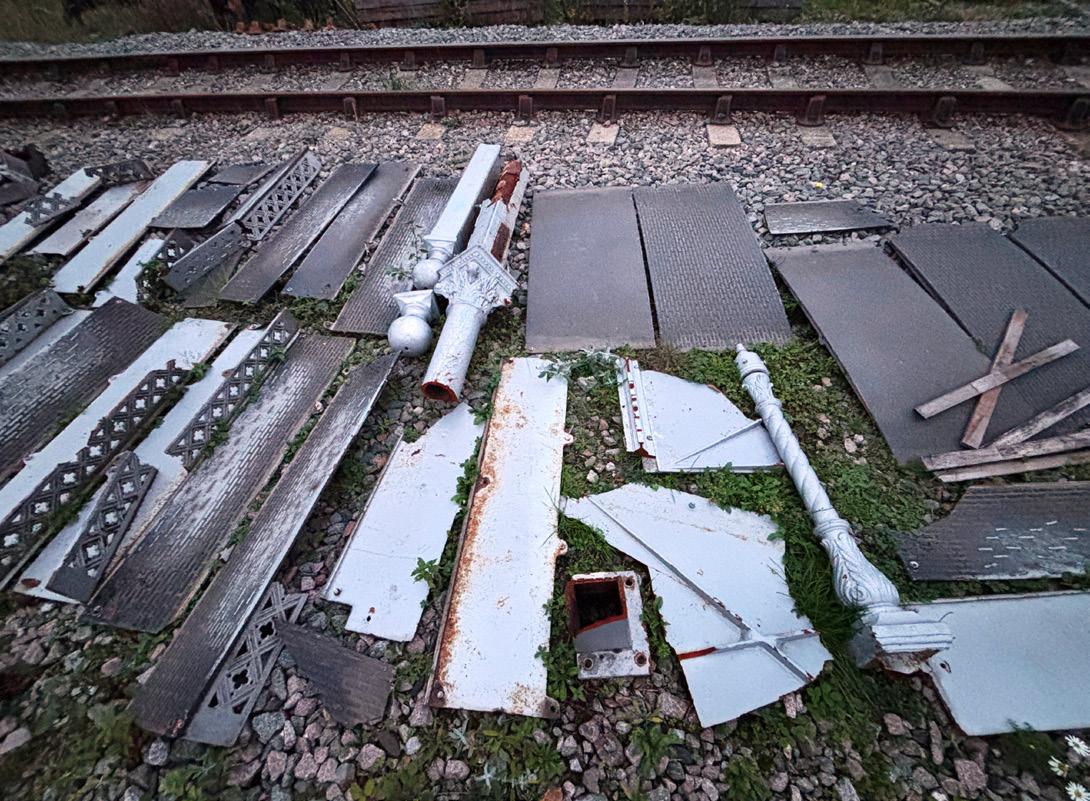
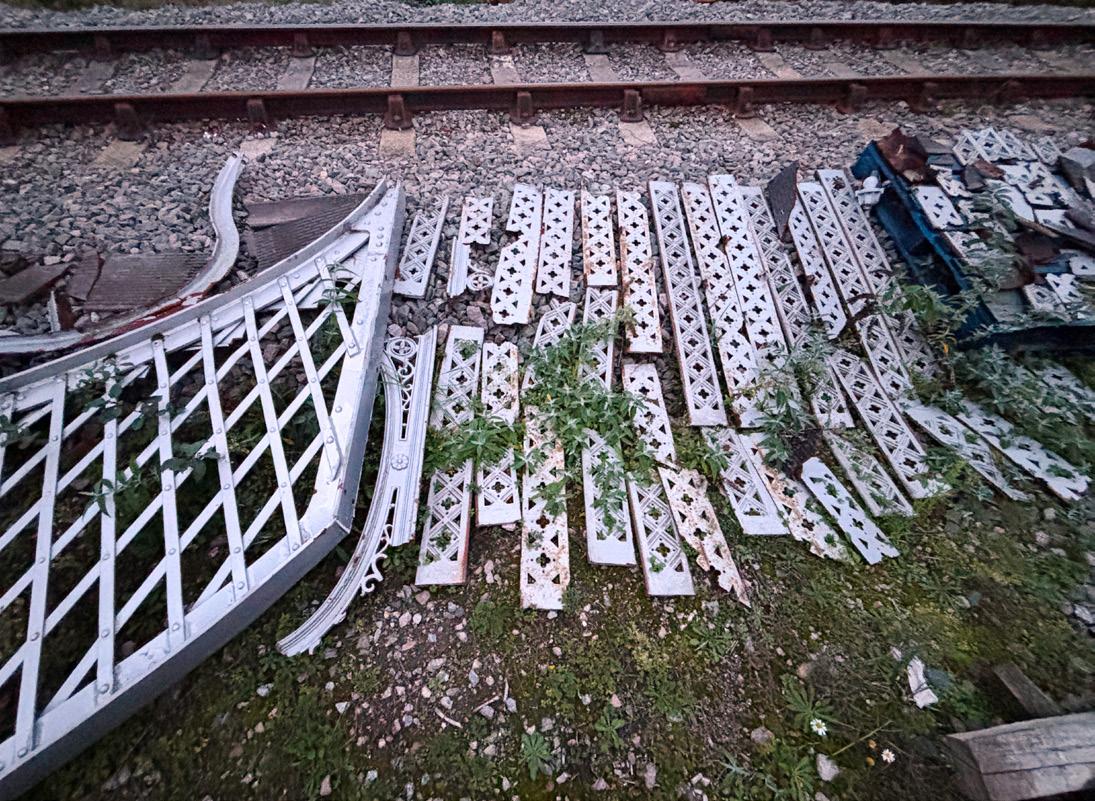
The main span, in particular, had suffered catastrophic damage, with key structural members bent far beyond their elastic limits. Some elements such as deck plates, parapets, and sections of the staircases – showed potential for recovery, these were very much in the minority.
The contrast between the two sides of the bridge told its own story. On the church-side, the staircase remained standing after the incident, albeit heavily distorted.
On the lake-side, much closer to the point of impact, the structure had completely collapsed, leaving little intact.
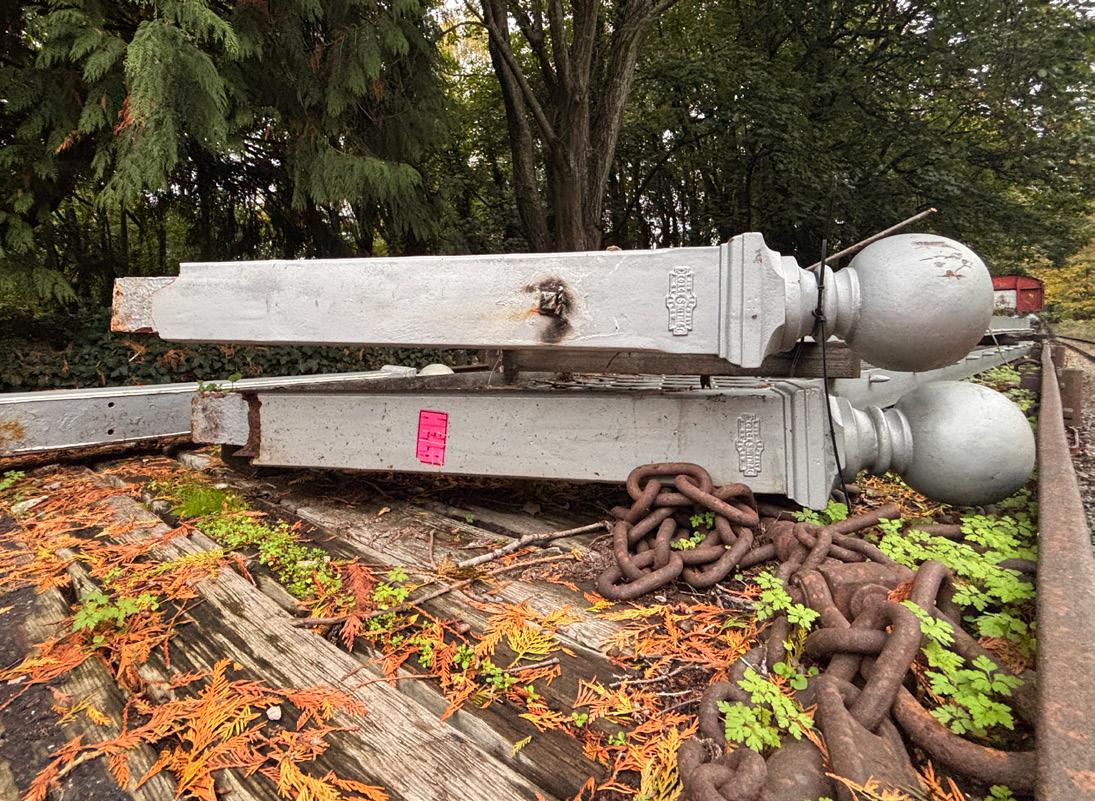
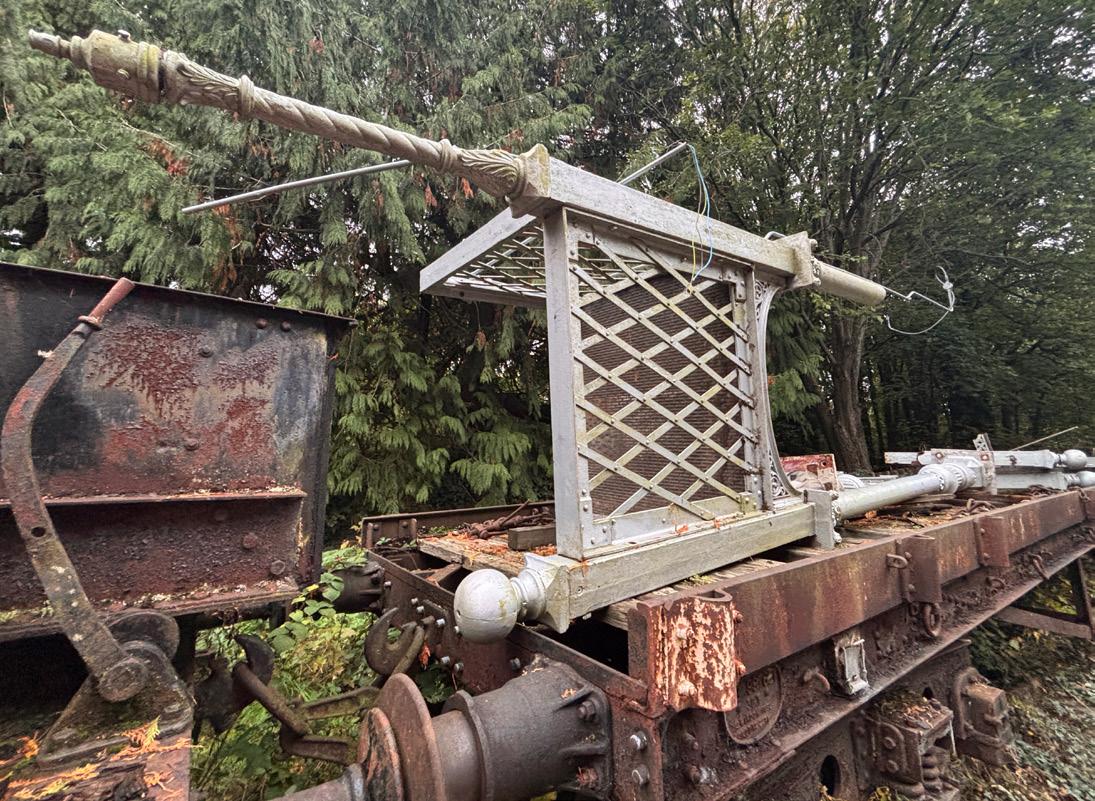
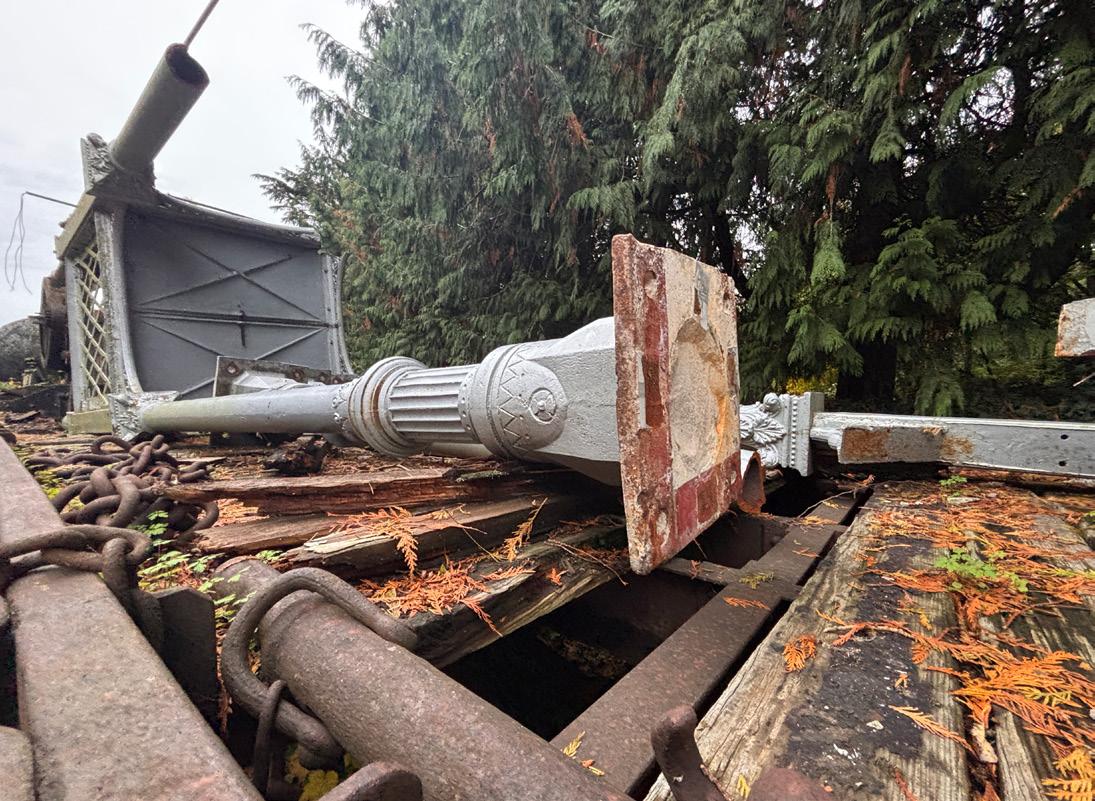
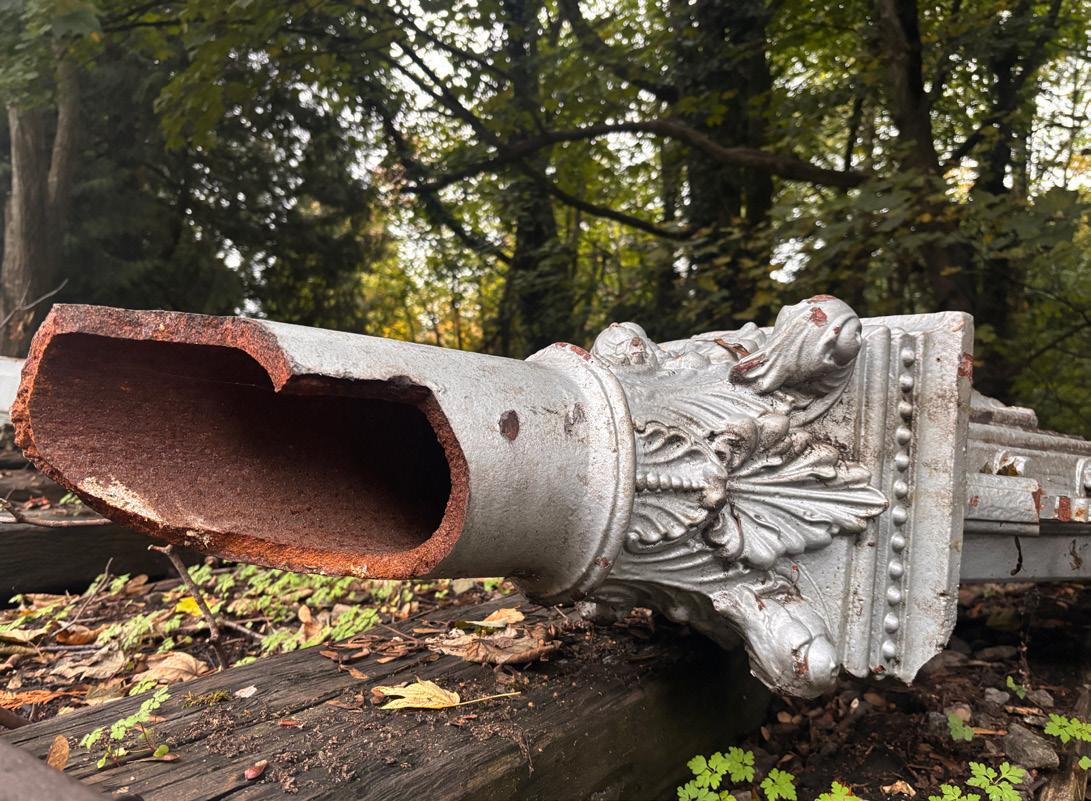
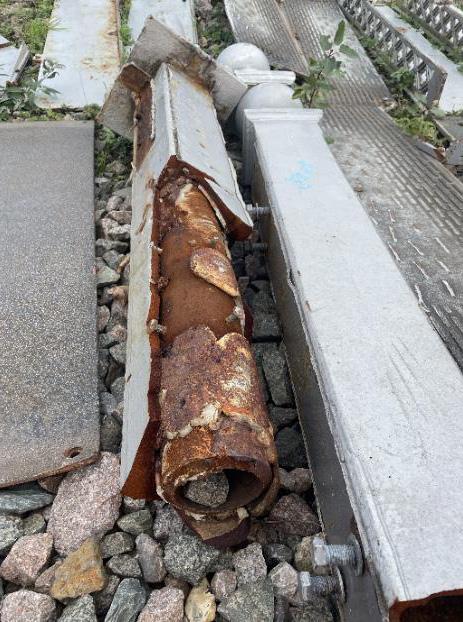
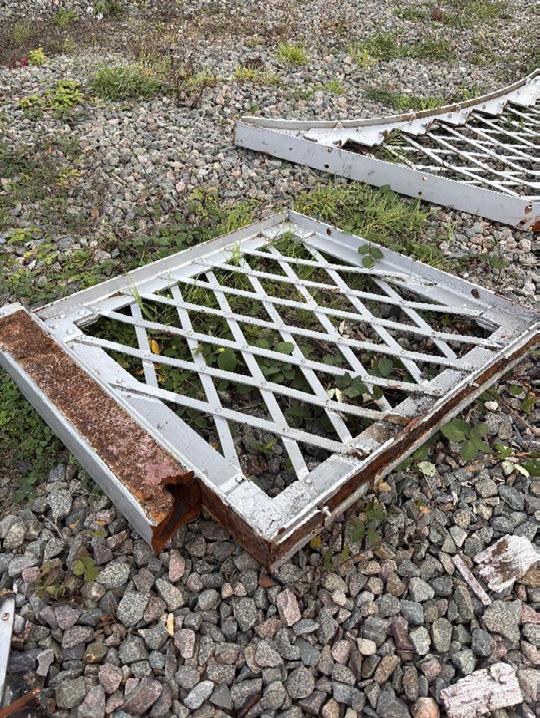
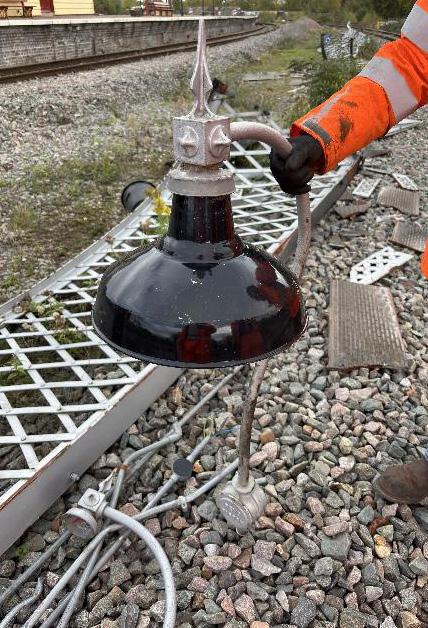
Across both sides, columns had sheared, foundations had shifted, and many smaller components were either broken, fractured or their origin in the structure not identifiable. Despite this, not everything was lost. Some of the decorative features – including lanterns, and finials were identified and could be recoverable, offering a tangible link to the bridge's past. However, the main conclusion from the survey was unavoidable: the bridge, as a structural entity, could not be reinstated using wholly original components.
With this in mind, attention turned to the future. Several options were outlined, ranging from constructing a new bridge in a similar heritage style using modern materials, to installing a standard contemporary footbridge, or even implementing a temporary solution. Each came with its own balance of cost, practicality, and historical authenticity.
Crucially, the report has now been passed on to the Conservation Officer at Forest of Dean District Council, and in turn Historic England.Whilst we await for the report to be reviewed and digested – our own expectation is that a replacement should, as far as reasonably possible, reflect the original. This helps us set the direction for what comes next: not simply replacing the bridge, but carefully considering how best to reflect what stood there before.
The challenge now will be not solely engineering, but judgement – finding the right balance between preservation, practicality, and the long-term future of the structure.
Adam Williams gives an account of the investigatory work undertaken on the bridge remnants.
Opposite Page: An image reminiscent of late 2018 when the bridge was dismantled and removed for restoration.
Above: Damaged foundations on the up, or lake-side.
Below: Displaced support blocks on the down, or church-side. (Photos: A. Williams)
Above: The two parts of the church-side stairs showing where the cast iron newel post sheared off near the ground.
Below Left: The previous 'stitching' repairs are evident.
Below: The newel posts broke off at the previous repairs. (Photos: Tony Gee and Partners LLP)
Above: The columns were sheared from the landing brackets.
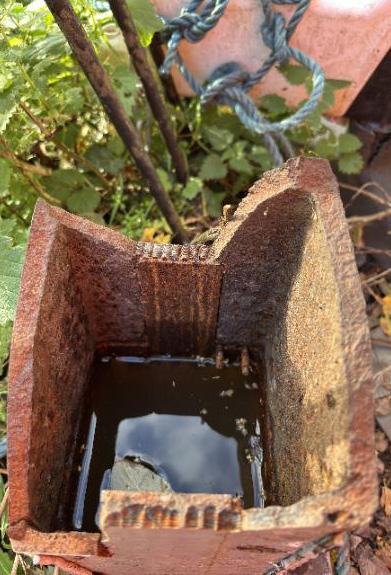
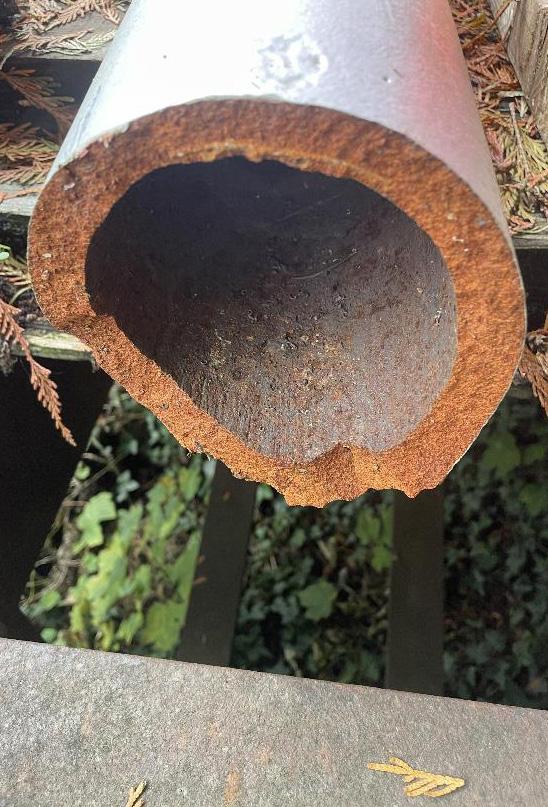
Above Left: Typical damage to six out of the eight cast iron support columns, there are concerns with the two others.
Below: The top of a damaged column between sections. (Photos: Tony Gee and Partners LLP)
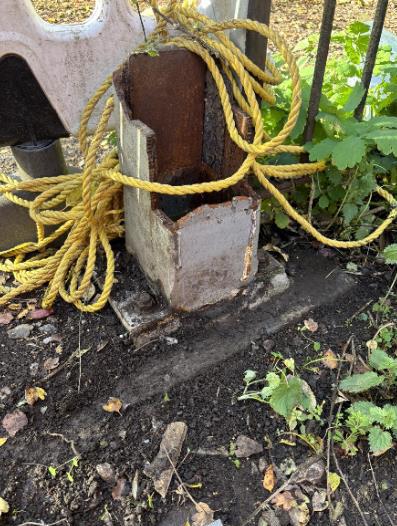
Above: The church-side landing was distorted but standing after the incident and had to be removed for safety.
Below: The underside of the church-side landing, showing one of the two complete columns that remain attached; however, the structural integrity of these columns is unknown. (Photos: A. Williams)
Above: One of the damaged columns had sheared just below the decorative transition (the change from round to square).
Below: One of the newel posts from the lake-side stairs, what is clearly evident is where the post had sheared off through, and between the top of previous metal stitching repairs. (Photos: A. Williams)
Page:
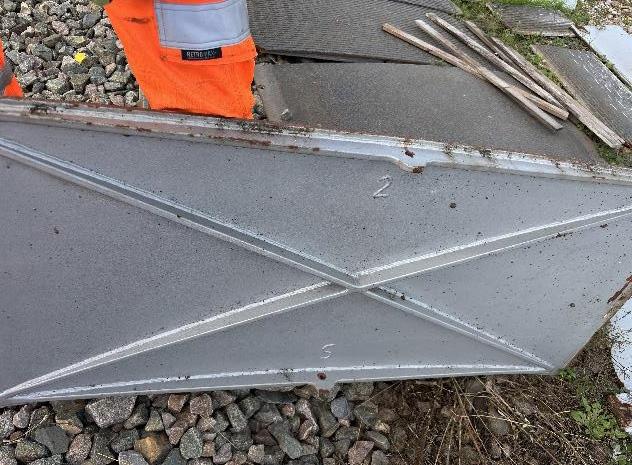
Above: A wide array of the smaller recovered components.
Opposite
Ben (an intern at Tony Gee) examines the broken fixings on the two parts of the church steps.
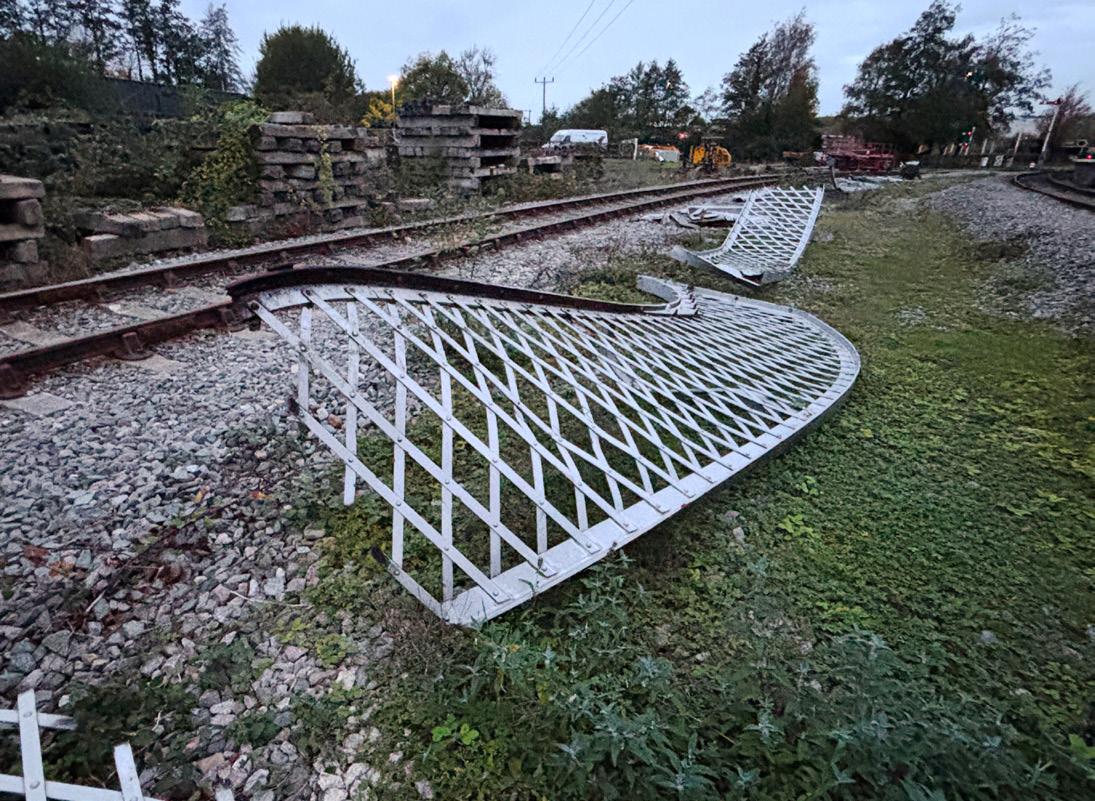
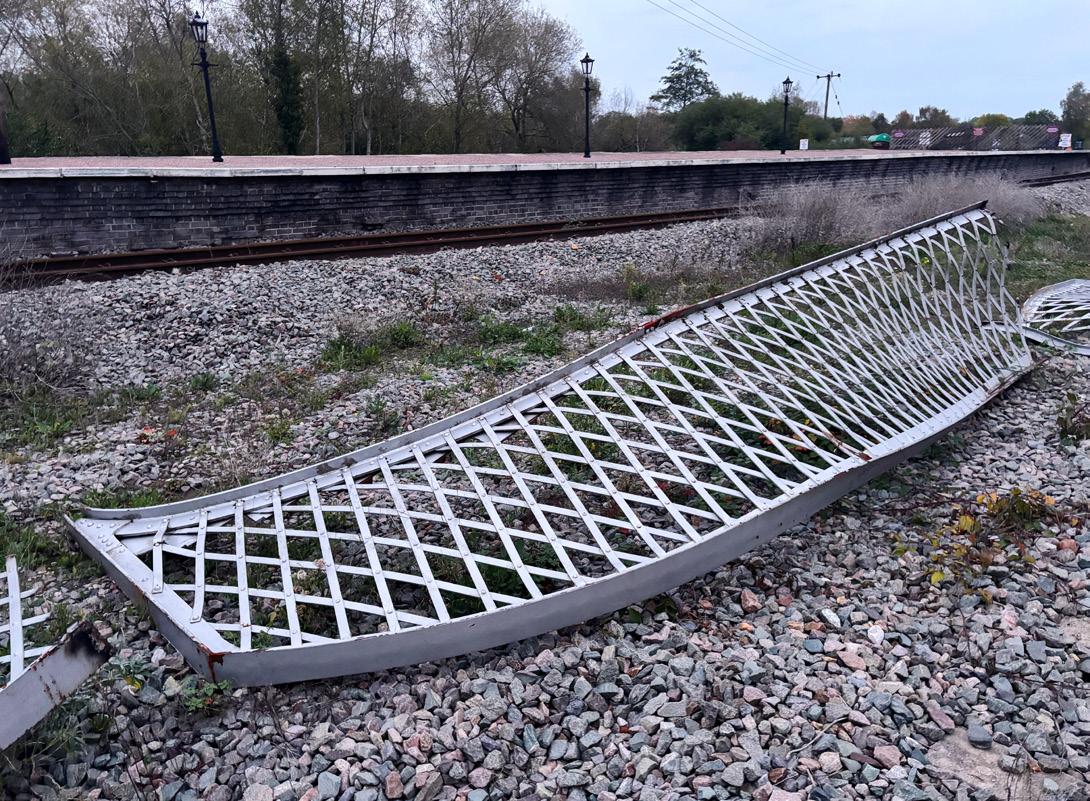
Below: The five mangled sections of the span in Lydney Yard. (Photos: A. Williams)
Above: One of the columns had internal reinforcement.
Below: One of the few stair treads to survive the incident. (Photos: Tony Gee and Partners LLP)
Above Left: Peter (a Senior Engineer at Tony Gee) examines the severe buckling of a section of the bridge span.
Above Right: The delicate lamp fittings made by Revo of Tipton remarkably survived the incident with little damage.
Above: In one piece – a panel from the lake side landing
Below: Some damaged deck plates were replaced in 2018. (Photos: Tony Gee and Partners LLP)
Opposite Page: Quantifying the damage to the span sections, including the multiple directions of bending and twisting.
Above: Inspecting a U-frame that supported the main span.
Below: Working out where the span sections were connected. (Photos: A. Williams)
Above: A number of deck plates, namely those replaced in 2018 survived, but other parts were significantly damaged.
Below: After surveying, it was found that all but one of the stair risings were damaged during the incident, the level of detail in these smaller items made them significantly fragile. (Photos: A. Williams)
Above: With the sections of the span laid on the ground the damage is evident, the nearest section has a vertical twist along the length, and a horizontal bend near the cut end.
Below: This section of the span has two separate vertical twists over the length and a horizontal bend near the middle. (Photos: A. Williams)
FOPS Update
Stuart Bearne updates on the ongoing activities of the Friends of Parkend Station group.
The work schedule for the Friends of Parkend (FOPS) is very much governed by the weather with a plethora of both "inside" and "outside" jobs being on the list.
In addition to the usual work on benches, tables and signage, FOPS have their eyes on both the south end of the Goods Shed and also Parkend bridge.
The latter job is being hopefully planned for the winter of 26/27 and needs careful coordination due to the necessity for track possession whilst the outsides of the centre panels over the tracks are attended to.
In the meantime, we will be looking at rubbing down, priming, undercoating before applying gloss to the step railings and the insides of the various panels.
Work on clearing the inside of the Goods Shed will also be planned and undertaken once timescales are established and the new storage wagon becomes available.
Presentation of the station is also affected by the look and state of the trackwork as regards to the amount of weeds, plus the white lining on the platform edge.
A full hand weeding is planned followed, hopefully, by a weed spraying exercise from a works train (as in previous years). The white lining will also get refreshed.
In addition, the south end of the Goods Shed, and the main station building will receive a repaint of any sections that require attention as and when time permits.
The sale of railway and other transport books from the waiting room went well during 2025 and this will hopefully continue to do so through 2026.
As always, donations of unwanted railway and transport books are very welcome and will find an appreciative home on the shelves of the waiting room at Parkend. All proceeds from sales are then used for maintenance items.
We have many jobs on the list and additional manpower would be welcomed – please get in touch. Keeping such a lovely station looking its best is very rewarding.
We meet on Tuesday mornings at Parkend Station, and a warm welcome is guaranteed for anyone who would like to come and join our friendly group of FOPS.
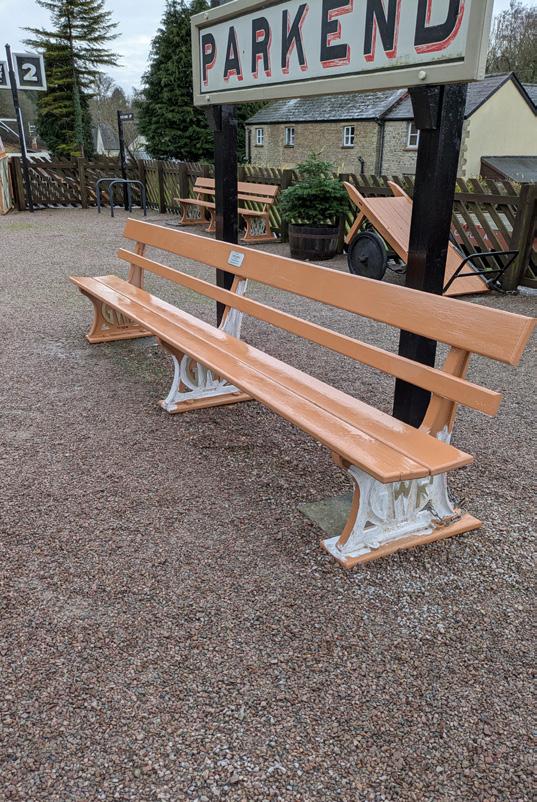
Below Left: The platform benches receive a repaint.
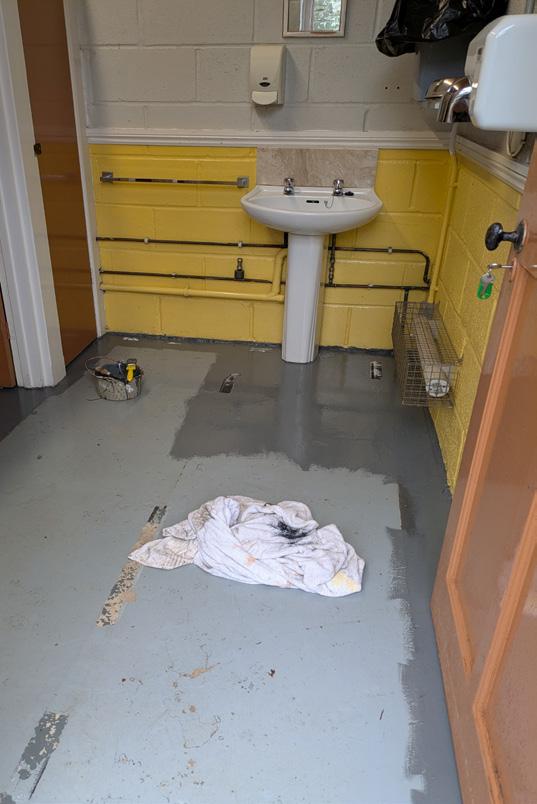
Below: Not the most glamorous job, perhaps – but the floor of the ladies' toilets needs to look its best for our customers! (Photos: S. Bearne)
Carriage & Wagon
The Santa Special season can include frosty mornings, so we have a set of fan heaters which can be deployed to keep the carriages frost-free and to ease the load on the locomotive when providing steam heating before the train makes its first run of the day.
In readiness for a cold spell, the fan heaters were moved into the low-level platform waiting room, and the dedicated extension cables were distributed around the various power outlets on the low-level platform. Keeping everything tidy, while also ensuring that the 13A sockets were kept out of sight and, more importantly, protected from the rain, required a fair amount of behind the scenes planning and organisation.
Although it took most of a day to move everything out onto the platform, we were very fortunate that there were no freezing days when the heaters would have been needed in the carriages. As a result, by the New Year all the fan heaters and extension cables were collected and returned to the electrical store until next December.
The Santa Specials suffered no serious lighting problems. The Guards were very co-operative in keeping battery usage to a minimum, and there were no instances where the lights failed due to discharged batteries. The running schedules allowed for the batteries to be recharged overnight when trains were operating on consecutive days
On one occasion, a heater blower in a Mark 2 carriage was inadvertently left switched on for a couple of days; fortunately, the batteries we recharged and have appeared to have recovered even though they were fully discharged.
Staff availability has been a serious issue this quarter. At least two members have been in hospital for major operations, and this has slowed progress on TSO 4862.
The battens forming the structure of the north end vestibule are particularly complex, and creating the curves, contours, tapered sections and locating slots has reduced progress in the restoration shed to a crawl. All of this complexity is necessary to form the vestibule wall skin and to match the intricate contours of this area.
The rewiring and LED lighting upgrade are still in the planning stage. In parallel, however, the Society is also considering a lighting upgrade for the carriages in the running set which still use fluorescent tube lighting –particularly as all but the shortest fluorescent tubes are now obsolete and no longer available.
The higher voltages required for the fluorescent tubes are generated by transistorised high-frequency inverters. These older units are unlikely to be compatible with the more modern 240 Volt mains LED tubes.
As a result, we will need to replace the existing tubes with 24 Volt DC LED units that can be powered directly from the existing carriage batteries.
This type of tube is designed for use in buses, coaches, boats and modern railway carriages. They have a more robust construction suited to transport applications, and are therefore only available from specialist suppliers.
A complete review was undertaken to identify which carriages are still using fluorescent tubes. This included counting the number of lamps and tubes required in each carriage, as well as measuring the total electrical load.
The variation in power consumption between the different vehicles is quite marked, with the Mark 2 carriages being the most power-hungry. This is due to the underfloor steam heat exchanger and fan-blown warm-air distribution via ducts beneath the seats. The fan consumption alone can account for around 40% of the total electrical load.
It is anticipated that each carriage will, be moved from the running set into the Blueline building, where it can be inspected and any necessary running repairs carried out.
Where the external paintwork is deteriorating, the carriage can also be repainted. This work is intended to take place during the coming of months.
Where lighting is still provided by fluorescent tubes, these and their associated power inverters will be removed. The lighting circuits will then be modified for direct operation on 24 Volt DC, and new LED tubes installed.
Note: When Mark 2 TSO 5175 was delivered, a motor speed control unit was fitted to the heating fan motor to reduce the running speed. This gave a consequential reduction in power consumption. Such small adjustments have yet to be made on Mark 2 TSO 5341, hence the large difference in the power consumption between these two vehicles.
Dave Chappell sheds some light on the electrical requirements of our carriages.
DMU Group Update
Work on E50619 has continued to absorb a lot of effort, this has included riveting, painting, exhaust pipe repairs, and silencer cleaning. The aluminium end has been fitted and riveted to the frame; Denso tape was used between the aluminium and the steel to help prevent corrosion.
The windows have been fitted using nuts and bolts to secure the frames, sealant was used in the joints to help prevent leaks. Richard Thomasson has used his home workshop to make various items, for example a sleeve to replace a corroded exhaust pipe joint. Exhaust brackets have been repaired, with some modifications due to the aluminium sheet having less strength than steel.
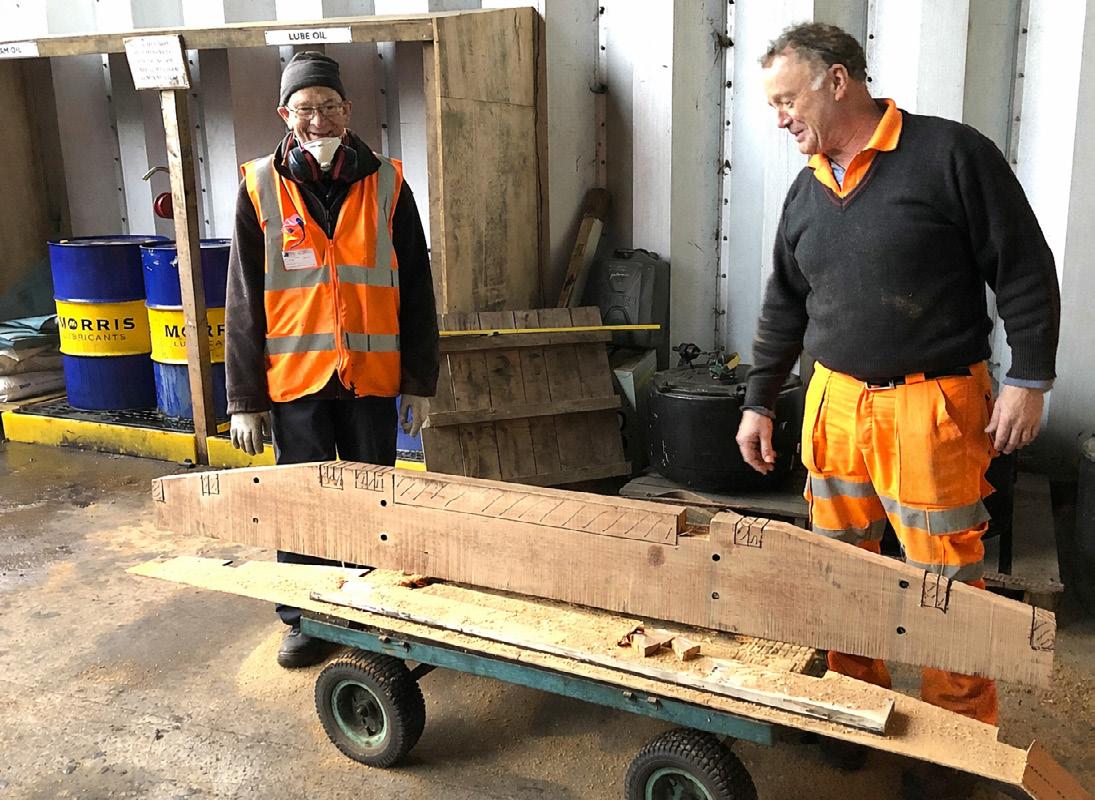
The large piece of timber for the rear end was partially shaped at Lydney sawmills but needed the detailed work to be done at Norchard before it was fitted in February.
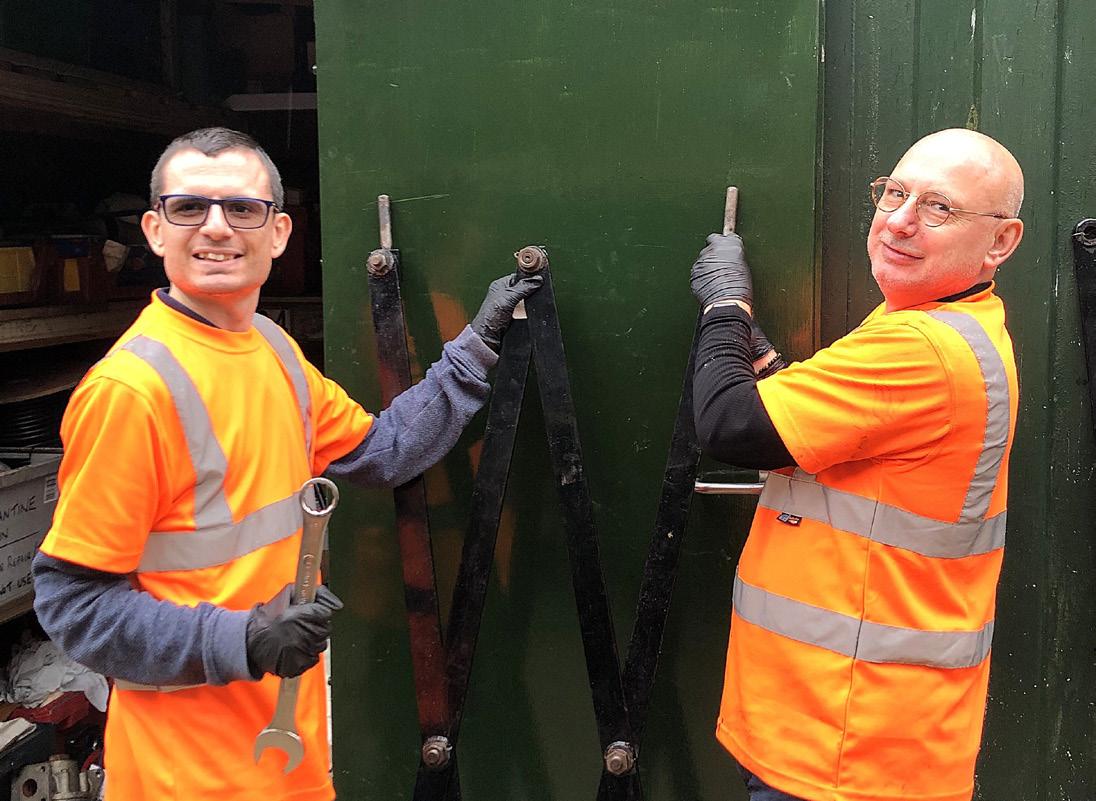
The scissor mechanisms for the corridor connection have now been refurbished, painted and fitted back on to the vehicle followed by the gangway bellows.
It has proved to be a great team building exercise with many of us learning new skills from Richard, such as fitting solid rivets with an air tool. He has estimated that by the time the work has been completed it will have taken between twelve hundred and sixteen hundred hours!
Like many projects, the work is taking much longer than originally envisaged due to the various unknown hidden issues that we have encountered. Many lessons on how we might be able to do things differently have been learned.
The lack of covered accommodation has hindered progress, with wet weather, cold weather and extreme heat preventing work or slowing things down. We have to uncover things at the start of the work and cover them up when we finish for the day, all this taking time and effort.
The absence of a concrete pad at the rear of the vehicle has required various measures to ensure work can be carried out safely. Despite the difficulties a lot of ingenuity has been applied and good progress made.
Our vehicles ran well in 2025 thanks to those who maintained them and carried out servicing and other work. Andy Rodman carried out an oil change on M51914 No. 2 engine and Nigel Benning removed an air tank which needs replacing or repairing.
Other jobs included cleaning and tensioning belts which had become oily and were slipping, brake adjustment and droplight repair. Air receiver testing for our vehicles and depot compressor was carried out in January 2026.
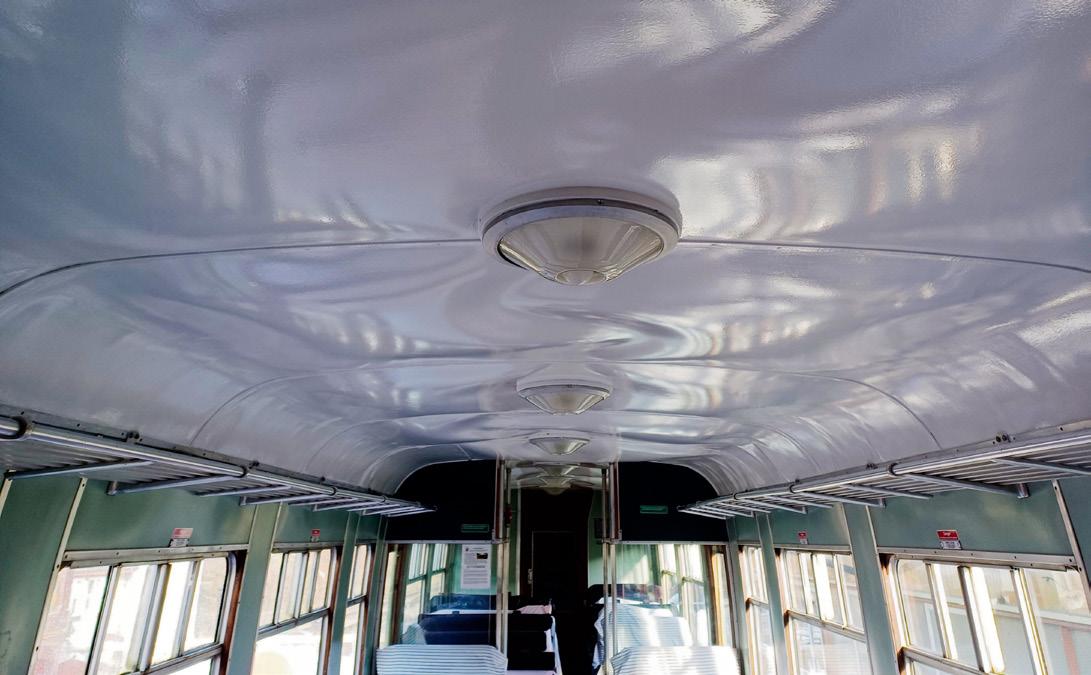
In addition, Tony Soughton has spent countless hours working on the interior of E59387, sanding and painting ceiling panels and restoring or replacing trims.
If you would like to know more about our DMUs or perhaps even join our volunteer team, there is normally someone at Norchard on most Wednesdays – so come along for a look around and a chat. Otherwise please do not hesitate to get in touch via dmugroup@deanforestrailway.co.uk –we'd love to hear from you.
Alan Pace gives an update on the continued work of the DMU Group.
Opposite Page: The refreshed interior of E59387. (Photo: A. Pace)
Above: John Bryan and Chris Bull shape the timber.
Below: Tom and Scott Coombes with a scissor mechanism. (Photos: R. Thomasson)
HRA Privilege Cards
Martin Hillier gives a quick reminder about the Heritage Railway Association scheme.
If any active volunteers, staff, directors, managers and trustees would like a new Privilege pass for 2026-2027 they can be ordered online through the Heritage Railway Association (HRA) website: www.hra.uk.com/privilege
The price for the year is now £48.
The pass allows the holder and one other person free or reduced priced travel on participating railways that are members of the HRA.
Although the DFR has a reciprocal agreement with some other Heritage Railways that allows free travel, this scheme is restricted and only applies to DFR members. By comparison, the HRA scheme applies to a member but the additional person doesn't need to be a member.
The new passes started from 1st March 2026 onwards and are valid for twelve months from the date of issue.
If you haven't already done so – please submit your requests as soon as possible as it takes at least fourteen days for the cards to arrive. Delivery may take longer during bank holidays or other disruption to normal working hours. Neither the HRA or the DFR are able to provide a guaranteed delivery timescale.
Once received they will be left for collection in Norchard Shop, they will only be posted if you have provided me with (via the shop) a self-addressed stamped envelope.
To read the terms and conditions of the scheme visit: www.hra.uk.com/privilege-terms-and-conditions
DEAN FOREST RAILWAY SOCIETY CIO
TRUSTEE VACANCIES - Can YOU help?
The Dean Forest Railway Society is a registered charity, whose charitable aims are to preserve, develop and operate the Dean Forest Railway. We raise funds, recruit volunteers, promote the railway and also have an educational remit regarding both skills training and the history of the line.
The charity currently has 12 Trustees, so whilst the constitution allows for 12 elected Trustees, we do have the ability to co-opt additional trustees with relevant skills and abilities.
In particular, we are looking for assistance with development of Grant Funding income, educational work, recruitment of members and volunteers. The role is not onerous – the basic commitment is one meeting (held online) per month, plus whatever time you can spare for particular projects or tasks.
If you are interested in becoming a Volunteer Trustee, please contact: society@deanforestrailway.co.uk
FOREST OF DEAN RAILWAY LIMITED
DIRECTOR VACANCIES - Can YOU help?
Forest of Dean Railway Limited is the company that looks towards the future of the railway, planning the long-term strategies, further improvements and the extension. Volunteer candidates also assist the Directors on the Board of the Dean Forest Railway Company who look after the day-to-day running of the railway.
Health & Safety Director
A very necessary post to oversee the H&S across the entire railway. Preferably the candidate will possess current H&S qualifications but they do not need to be railway specific.
Company Secretary
We are looking for a volunteer Company Secretary who, preferably, has some knowledge of Company Law.
If you are interested in becoming a Volunteer Director, please contact: fodrchair@deanforestrailway.co.uk
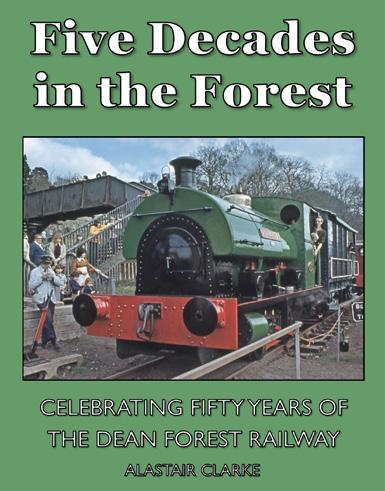
Don't miss out! A pictorial celebration of the DFR's first five decades, containing many previously unseen photographs. £16 for members. Pick up your copy from the shop at Norchard or online (with discount code DFRSMEMBER20) from: www.dfrsociety.org.uk/shop
Who's Who at the DFR
Forest of Dean Railway Ltd
Overall strategic management of the railway Chairman: Ian Pope
Vice-Chairman: Adam Dickinson
Funding Director: Freddie Huxtable
Commercial Director: Clive Stainton
Development Director: Adam Dickinson
Health & Safety Director: vacant
Society Appointed Directors: Adam Williams, Dave Churton
David Hurd Appointed Directors: Martin Hillier, Chris Bull
Company Secretary: vacant
Dean Forest Railway Company Ltd
The day to day running of the railway
Chairman: Adam Dickinson
Operations Director: vacant
Finance Director: Cecile Hunt
Civil Engineering: vacant
Lineside Director: Chris Bull
Support Director: Adam Williams
Chief Mechanical Engineer: Adam Dickinson
Signal & Telegraph: Steve Harris
Carriage & Wagon: John Clarke
Electrical: vacant
Permanent Way: Alex Davies
Telecoms: Rick Gillingham / Charles Bristow
Dean Forest Railway Society
Registered Charity 1183538 dedicated to the preservation and development of the DFR.
Chairman: Tim McLennan
Vice-Chairman: Doug Johnson
Treasurer: Tim McLennan
Secretary: Sue Williams
Membership Secretary: Adam Williams
Website Lead: Doug Johnson
Social Media: Harry Colley
Publicity Officer: vacant
Other Trustees: Dave Churton, Adrian Copley, Alan Grant, Martin Hillier, Richard Taylor, Lynne Wentworth