DEADWOOD DROPS HARLEY STOCK RISES

• Wholesale and retail financing options
• 6-month parts AND labor warranty
• Amazing dealer margins
• Protected selling areas
• Robust parts support
• MAP enforcement

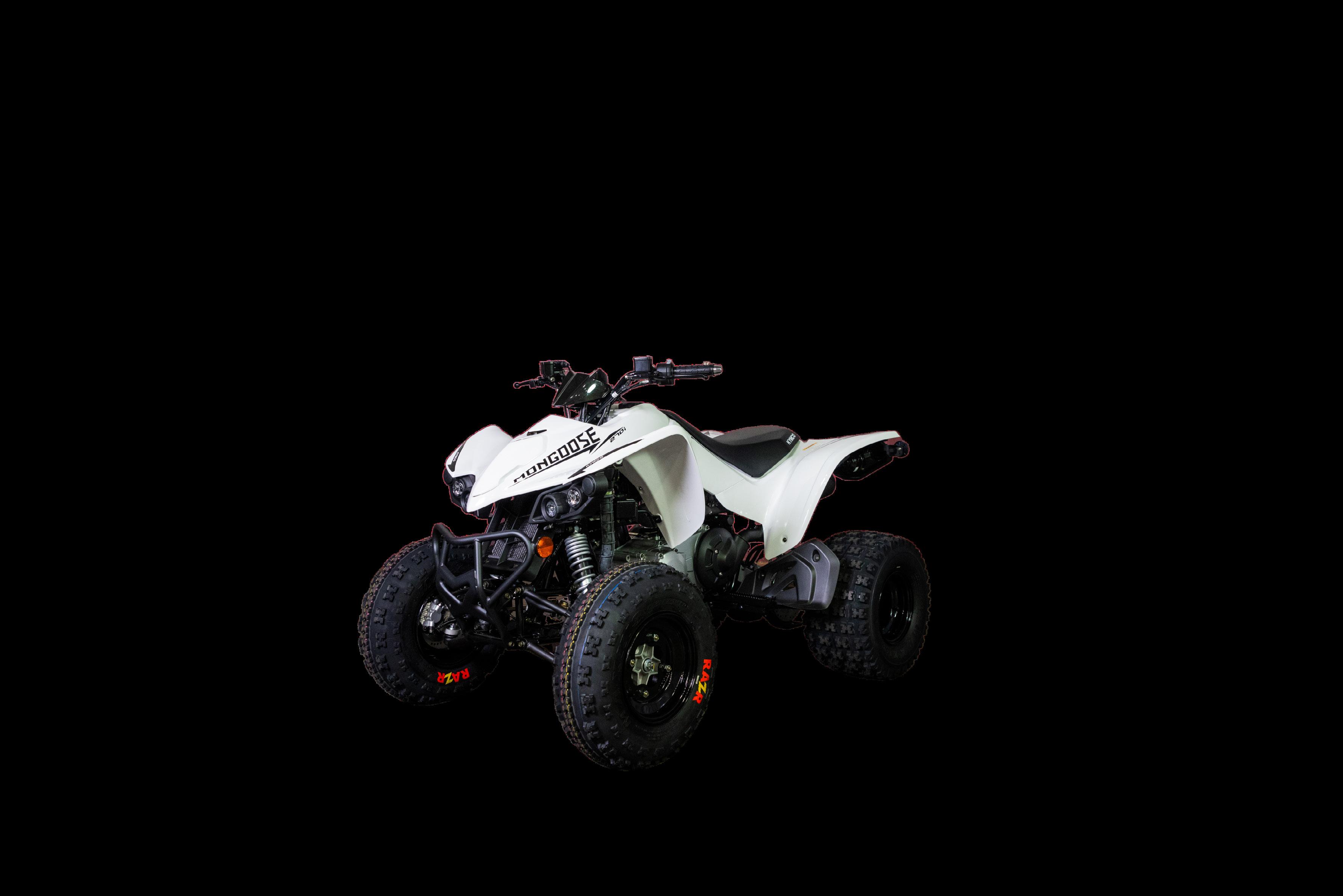
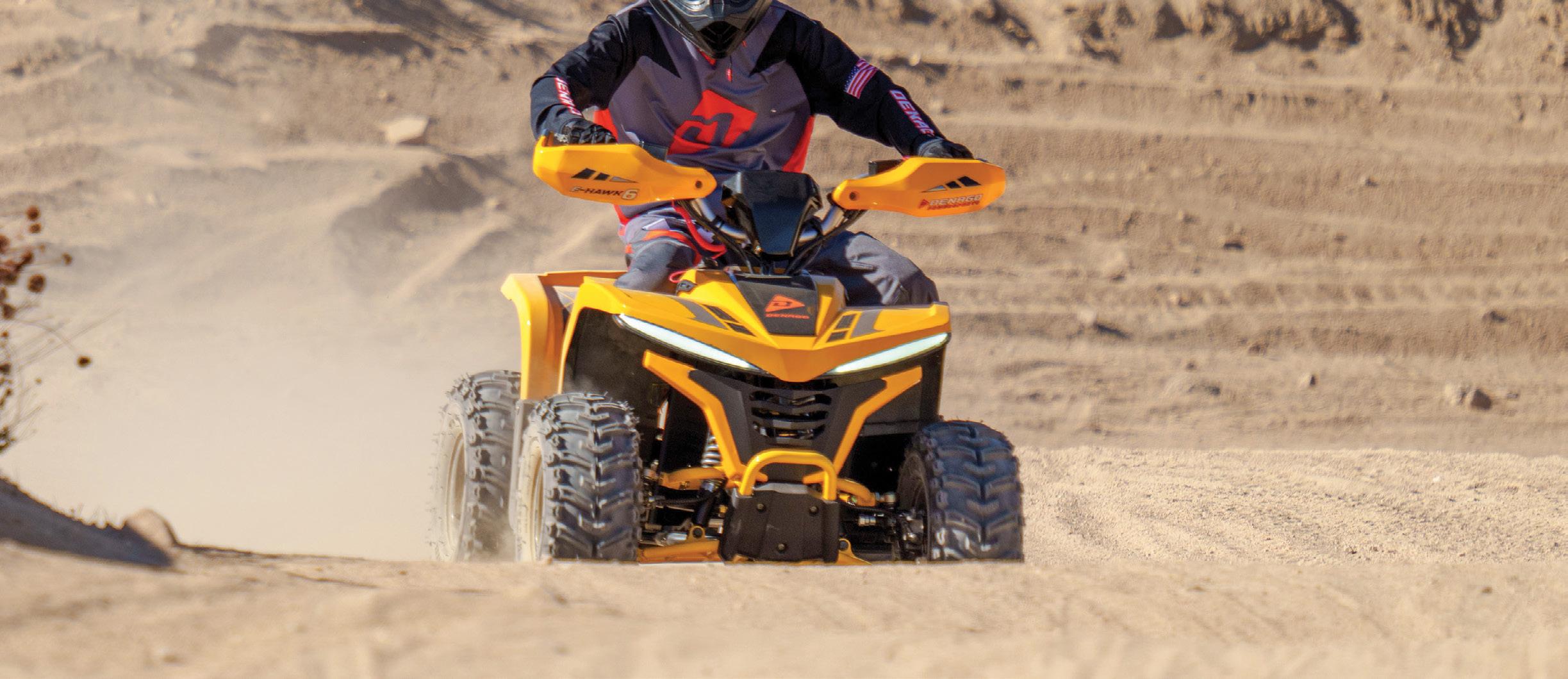
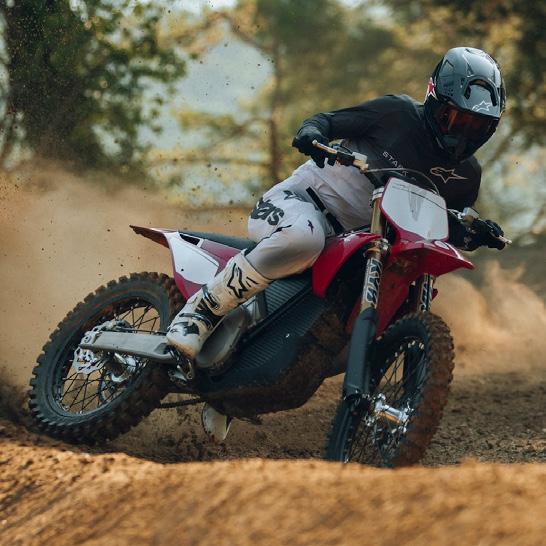
Denago goes electric with the E-Hawk 6, an ideal way to get kids into powersports.
OUR TEAM
EDITORIAL
Dealer News+
Sonic Boom Set For Sturgis Dealerships
FINANCIAL TIMES
Harley-Davidson Reports Q2 Numbers
FINANCIAL TIMES
Harley-Davidson Financial Services Come Up Short
ONE MAN’S OPINION
Serge Says Harley Is Building A Bridge OEM UPDATE
Moto Morini’s Great Xcape
INDUSTRY RESEARCH+ Don Musick On Segway
INDUSTRY RESEARCH+ Jim Woodruff On NPA AWP Action
INDUSTRY RESEARCH+ Lenny Sims On J.D. Power
OPINION+ Michael Maledon On Stumbling Blocks eDEALERNEWS Works Bikes From Stark
CURRENTS+ QuietKat Sounds Off, Volara Charges Ahead
PRESS PASS+ Electrify Expo Becomes Demo Days
AI UPDATE
Dave Gatti On Night Owls
ADVOCACY+ Don Amador On Evolution
OPINION+ Bill Little On 2 Old Guys Racing
VALE+ Godspeed Roger Marshall
AD INDEX This Issue Brought To You By… 42 31 38 49 22 26 46 54 58 64 62 66 68 32 34 72 50 44
OPINION+ From AI In Ukraine To Powersports At Caltech
BACKFIRE+ A Funny Thing Happened On The Way To Loretta Lynn’s...
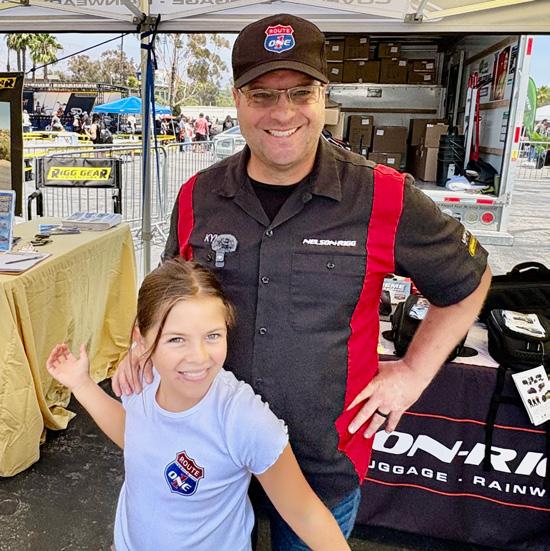
Robin Hartfiel Editor/Publisher
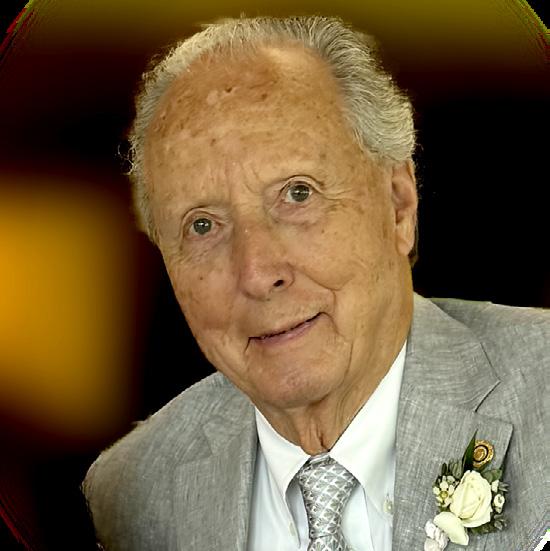
Bob Althoff World’s Luckiest Man
Gus Stewart Creative Director
Brenda Stiehl Production Manager
CONTRIBUTORS
Don Musick Genesys Technology Solutions
Dr. Paul Leinberger
Eric Anderson Vroom Network
David Gatti Ignition XD
Jim Woodruff National Powersport Auctions
Lenny Sims NADA Appraisal Guides
Michael Maledon Elway Powersports Group
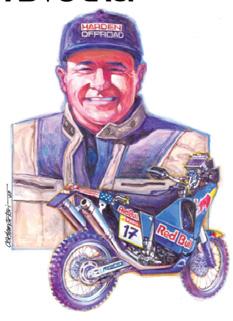
Scot Harden AMA Hall Of Fame/Harden Offroad
Alex Baylon Motorcycle Industry Jobs
Hector Cademartori Illustrations
William Douglas Little Two Old Guys Racing
Charlie Williams Off Road Editor
Don Amador Quiet Warrior Racing
Joe Bonnello Joe B Photography
Uncle Paul Wunsch Love Cycles
The Anonymous Dealer
ADVERTISING
Robin Hartfiel Publisher (949) 489-4306 robinhartfiel@gmail.com
Blake Foulds Account Executive (760) 715-3045 blakefoulds@dealernews.com
Brenda Stiehl Production Manager brendastiehl@dealernews.com
John Murphy Publishing Consultant johnmurphydn@gmail.com
Dealernews Magazine 3250 Knoll Dr. Columbus, OH 43230 www.dealernews.com
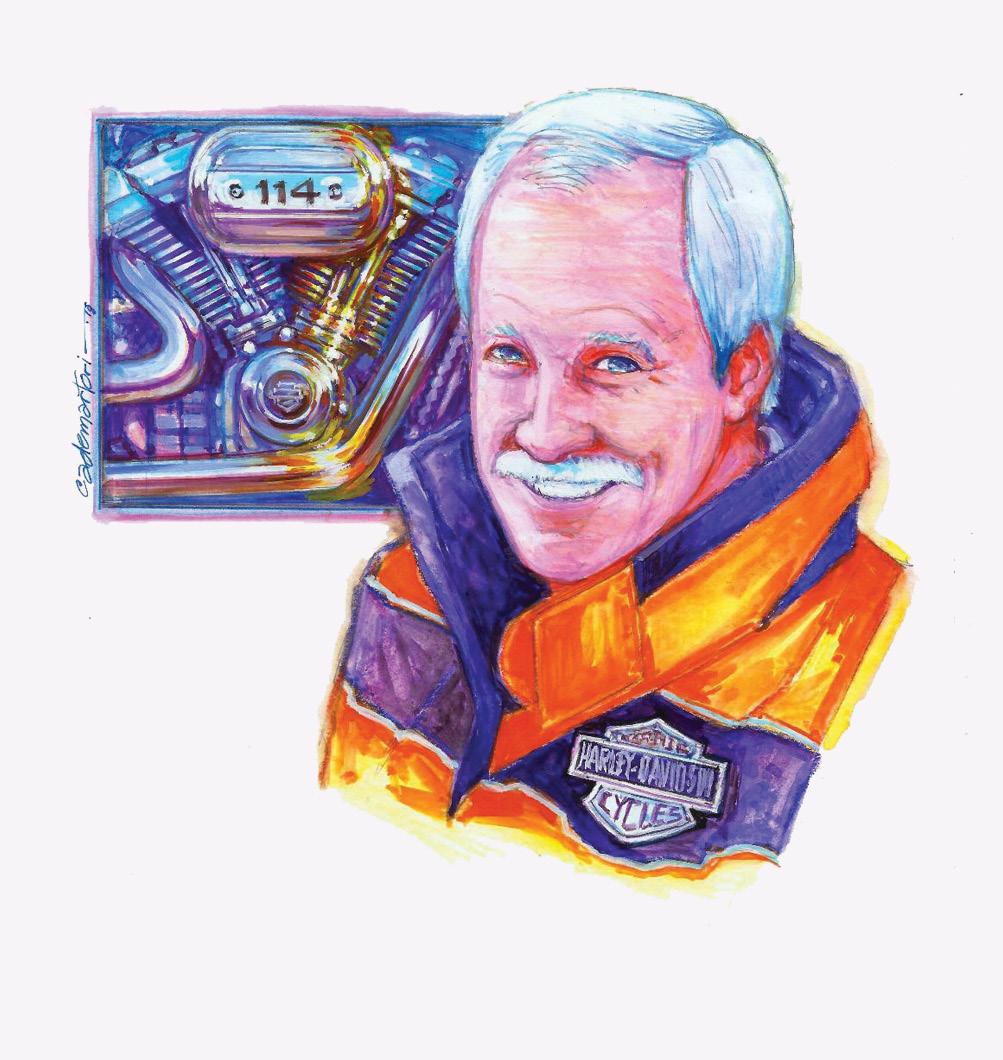
World’s Luckiest Man
By Bob Althoff
MAKE DEALERS YOUR PARTNERS…
We Really Are Better Together
For many years, I was a subscriber to the Harvard Business Review (HBR). I will admit that much of what it published went right over my head — too dense; too scholarly. Despite that, I renewed my subscription annually at a cost I could barely afford then. A waste of money, you ask?
Quite the contrary! That investment was priceless. Because in every issue there was a nugget. Some flash of business wisdom. An insight that helped me avoid an investment mistake; a strategy that helped me out of a bind… All of it helped me to build a better business.
One such gem was an article written in the March-April issue in 1996 by Donald Fites, then Chairman and CEO of Caterpillar, Inc., the maker of heavy equipment. What does a D9 dozer have to do with motorcycle dealerships?
The article was entitled, “Make Your Dealers Your Partners” — It was a 7,500 word, 20+ page treatise that explains something excruciatingly obvious — Dealers Matter. Caterpillar knew it then and apparently still does.
Evidence: When Mr. Fites wrote this article, CAT’s stock price was $25/share; its Market Cap was $3 Billion. Today, that share price is around $850/ share, and Market Cap is $405 Billion. A chart of CAT stock over the last 30 years resembles that of a Falcon 9 launch.
The article was a distillation of CAT’s profound belief in their Dealers; their trust in those Dealers; their commitment to the mutual benefit derived by deep relationships built on constant two-way communication. Brilliant!
Should you like to consider this matter, I recommend this link to the article: hbr.org/1996/03/make-your-dealers-your-par tners
Is an article written 30 years ago still relevant? Maybe a better question is how your stock — your dealership — performs over the next 30 years?
Moral of the story: There is nothing new under the sun. The wisdom is there in plain sight. We do well when we do well together. This includes the Manufacturer; Dealer; Aftermarket and Customer. Like my friends at the National Powersports Dealer Association always say, “we are better together.”
For the Industry, Bob


























































Editor’s Note
By Robin Hartfiel
CYCLE WORLD IS DEAD, LONG LIVE CYCLE WORLD
July 7th is a day that should live in infamy… but it won’t. After setting the gold standard in motorcycle publishing — and becoming the largest circulation motorcycle magazine in the world — the digital plug was pulled and 64 years of industry history ceased. After having a monthly readership reaching 300,000+ (over a 1 million if you believe the pass-along figures in the old media kit) and 679 issues, Cycle World magazine quietly faded into obsolete oblivion.
“No fanfare, no remembrances, no explanation, and as of this morning at least not even a cold, impersonal press release on the Octane Lending website,” notes former Editor-in-Chief David Edwards. “For now the cycleworld.com site is still up, presumably frozen in time, untethered and unmanned, like some kind of digital Flying Dutchman.”
This is tough to swallow. My first week on the job I met with CW founder Joe Parkhurst at his favorite watering hole, The Arches in Newport Beach. Joe was generous with his time, high in his praise (perhaps it was the three Rob Roy’s speaking) and adamant that “publishing standards had to be upheld…” I saved my notes from that day, and subsequent trips to The Arches.
Dealernews was close to Cycle World literally and figuratively. Mr. Parkhurst launched his magazine in 1962, Larry Hester and Bill Bagnall brought out Dealernews in 1965. Cycle World HQ was in high rent Newport Beach, and Dealernews was on the other side of the tracks in Santa Ana. By the time I had joined the team, Joe had sold out (he was publishing a newsletter that was FAXed to industry insiders… the world’s leading motorcycle magazine publisher was the first blogger/ influencer), but in my version of the Great Gatsby, Dealernews was still close to the CW crew.
They were the title sponsor for our IMS tour, bought the rights to Big Twin magazine from me and they even poached my managing editor Wendy Farmer. In exchange I was the only outsider to attend some of the legendary 10 Best dinners with the OEM winners. Wendy might have gotten to see Kevin Cameron’s columns, but I sat next to him at the most exclusive (and expensive) meal in the industry!
The rich are different according to Gatsby. “They possess and enjoy early, and it does something to them, makes them soft where we are hard, and cynical where we are trustful… Even when they enter deep into our world or sink below us, they still think that they are better than we are. They are different.”
“There was a big difference between Cycle World and the other high-budget magazines, compared to lowly Trail Rider, and that was their circulation numbers,” explains my friend and former publisher Paul Clipper. “Cycle World sold a ton of magazines. High circulation means high ad rates, which means a lot of money coming in. What do they do with all this money? Well hell, build new offices, hire more people, hire more executives, buy a huge booth at the trade shows. What the hell, sponsor the trade shows, why not?”
Yes, the rich are different… and in the case of Cycle World they were better than we are. On the day that should live in infamy I went to the Cycle World offices. I saw a month-old note from building management to quit the premises taped to the locked doors of a darkened office.
I will raise a Rob Roy to Joe Parkhurst and find something from F. Scott Fitzgerald to fill the void left in publishing.
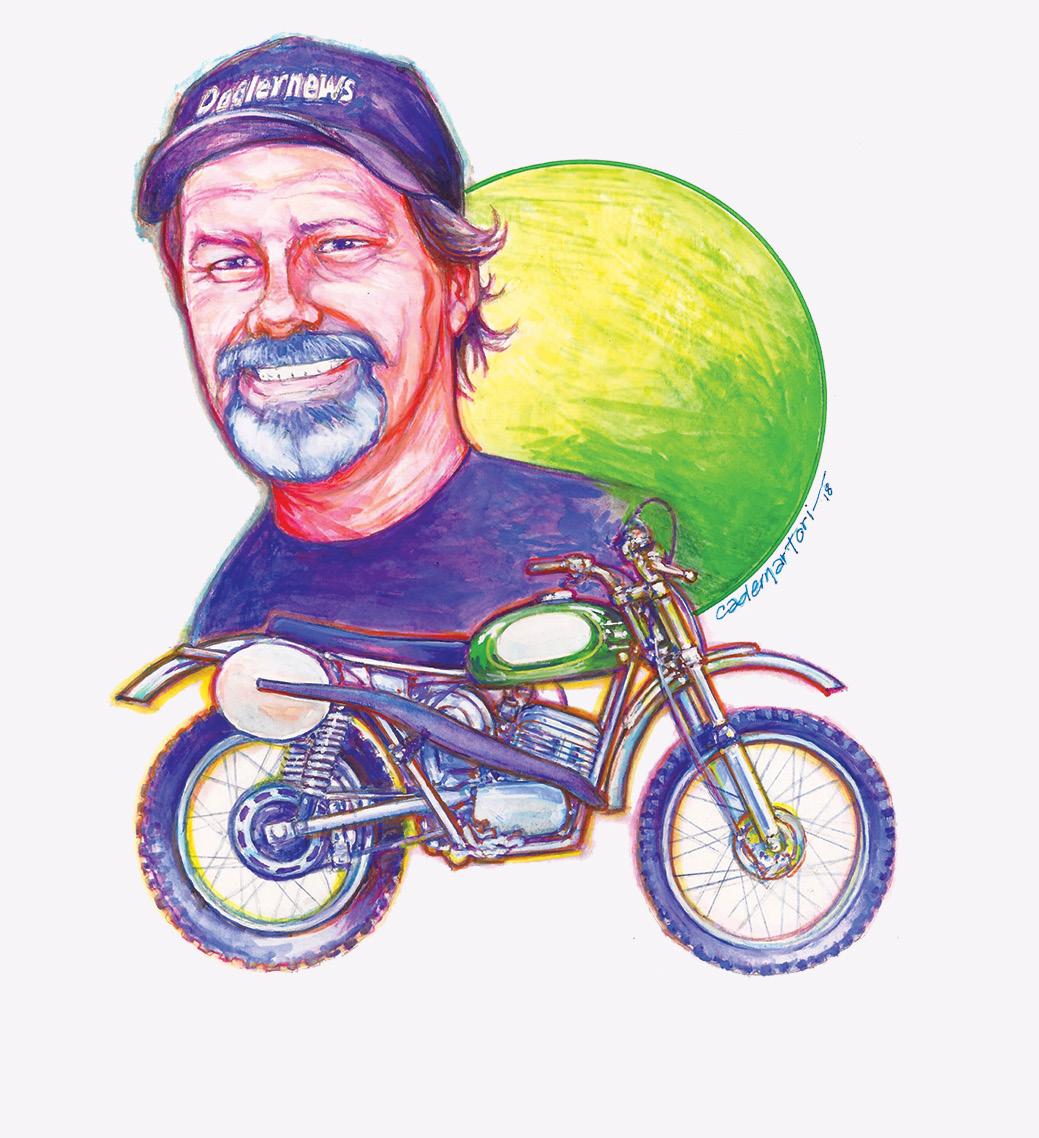
Former Editor-in-Chief and publisher of Dealernews circa 1990-2003, Robin returns to the magazine. In addition to having been instrumental in creating the Dealernews Top 100 program (still the industry’s ultimate accolade for a motorcycle dealership), Hartfiel has worked for most of the B2B publications in the Powersports arena. Prior to the trade side, he worked as a beat reporter for a local newspaper and was an editor of publications ranging from All About Beer to VW Trends.

DAVID EDWARDS ON CYCLE WORLD
I’m thinking of Joe Parkhurst today, dead and gone since 2000. Mercifully, he wasn’t around to see what had become of the magazine title he started in 1962 with so much hope and enthusiasm.
After 64 years, 679 print issues and the last four years as an online-only operation, last week the powersports-finance company that acquired Cycle World in 2020 fired the remaining staff, turned off the lights and locked the doors. No fanfare, no remembrances, no explanation, and as of this morning at least not even a cold, impersonal press release on the Octane Lending website. For now the cycleworld.com site is still up, presumably frozen in time, untethered and unmanned, like some kind of digital Flying Dutchman.
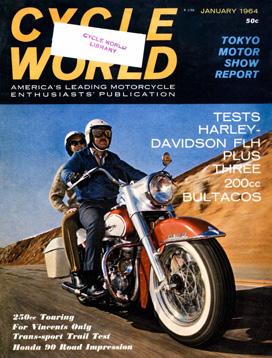
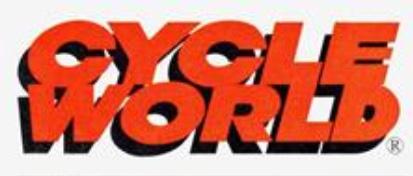
I was around for 25 years and 296 issues of the magazine’s existence, from 1984 to 2009. As a detached observer in 2013, I got an inkling that all was not well with the magazine when the July issue arrived and in place of the cover’s familiar “Cycle World” type, the title appeared in a new wispy font. The significance? Joe Parkhust, who began his publishing career in the 1950s as art director for Road & Track magazine, chose the title typeface for CW’s first issue. There were some alterations in sizing over the first few issues, but the style was set. That’s Parky and first wife Betty Jean, the magazine’s business and circulation manager, riding the Harley Duo-Glide for the January 1964 cover shot seen here.
In 1976, with Joe’s blessing, then-Art Director Roger Morrison revamped the typeface, making it bolder and thicker, but still derivative of the original. In fact, the new type was registered as “Midnight Morrison,” making CW the only motorcycle magazine with its very own typeface. A drop-shadow was added in 1983 to give more of a 3D effect and the spacing was tightened up, but from 1962 until mid-year 2013 the “Cycle World” title was a constant. Then some bright spark, who didn’t know the history (bad enough) or didn’t care (worse), decided a change was required.
In 2018 when the magazine went quarterly – that kiss of death for any legacy title – the cover style changed again, this time with smaller and blockier title type, lots of creative white space and not a single subtitle mucking up the aesthetics. All the excitement of a placemat, in other words. In that form the magazine lingered until the end of 2022, when the plug was pulled on print.
Now this, once the largest-selling monthly motorcycle magazine, joining Cycle Guide, Cycle, Motorcyclist and a host of other good titles no longer with us. Sorry, Joe, wish it had turned out different. You deserved better, so did your magazine.
David Edwards, VP/Editor-in-Chief Cycle World, 1984-2009
SCOT HARDEN SAYS THANKS CW
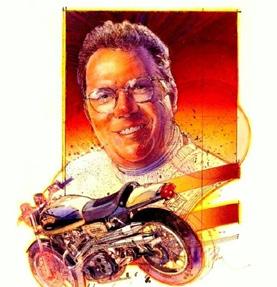
As a young scrub just entering the moto business world and quickly exposed to the moto publishing world back in the early to mid-1980s. Later as someone who relied on these platforms to expose and promote brands like Husky, KTM, Cagiva, Ducati and Zero Motorcycles, Cycle World always held a special place in the pantheon of motorcycle magazines. Yes, there were all the dirt rags, the ones most aligned to the brands I managed but then there was Cycle World. Almost like in a different universe. Yes, there was Cycle, but it had been shelved before I really got into the belly of the beast. Cycle World and its staff always set a standard for what motorcycling could be if treated with just the right amount of reverence, respect and a touch of cynicism. It feels like an old family member I haven’t seen in years just died. Even if someone acquires the remnants of the CW brand it will never be the same. Kind of like a statement on where we are overall as an industry and a sport. The world is changing. Things will never be the same. Thanks CW and all who labored in its cause for what you did for our sport. Truly an era passing!
Scot
Harden, Harden Offroad
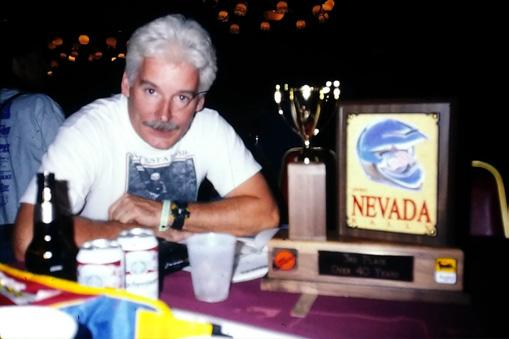
PAUL CLIPPER ON CYCLE WORLD’S PASSING
I heard about Cycle World finally closing its doors last week, and it just makes me sad. Not that I was surprised. The death knell tolled in 2018, when they stopped producing a print edition of the magazine. I suppose there might be a rule that covers that sort of thing, as in: if you’re going to publish a magazine, you have to print a magazine. Online isn’t the answer; never was the answer. Online is where everything is free, everybody’s an expert, and it’s all about numbers. “Did you see the response we got from that latest post? 200k views!”
Here’s a hint why that doesn’t work: people don’t eat “views.” They eat food. And to get food, you have to make money, you have to sell somebody something. In the magazine business it was fairly simple. You created an interesting magazine, and you sold it to people who really wanted to read it. Then, you sold ads to people who wanted your readers to buy products from them. From those two sources of income you made a little money, and then you bought food. And you ate. Pretty basic, really.
I met the guys at Cycle World when I first started at Dirt Bike. They were pros; they were the kings. Allan Girdler was the editor at the time, I believe, but the guy I talked to most was Ron Griewe, Off-Road Editor, also known as the “Ogre.” Ogre was the dirt guy, and man he was a piece of work. He always had a story to tell, usually about riding in Baja, laced with all the expletives he wasn’t allowed to use in the magazine. What a hoot. Ogre died way too young, and I’ve always missed his company. I met Publisher Joe Parkhurst too, early on, and I was impressed that he was such a nice guy. Knew his shit, too. He’d done everything, including pawning his entire household just to start Cycle World, but he was still fairly humble.
Jimmy Lewis took over the dirt department at CW after Ogre, and Jimmy did a good job there. He started somewhere around the time I started producing Trail Rider. We had a lot of fun together at press functions, riding bikes and partying, horsing around like you do when a bunch of crazy dirt bikers get together. I often wondered if his bosses at CW ever noticed that Jimmy was usually my photo model when we took action shots of the new bikes. See, Cycle World could afford to pay to have a photo model there for Jimmy to shoot. I couldn’t afford such things, so Jimmy would put on my riding gear and I’d shoot him.
The key was, all us magazine guys got along well, I mean really well. Okay, most of us did. Every now and then somebody’d come along with an attitude and they’d wind up sitting over in the corner by themselves, trying to protect their superiority, I suppose. The rest of us would be simply tearing it up, telling stories, drinking, driving too fast, carrying on like a bunch of guys that had the greatest job on earth and were hell bent on enjoying every minute of it. I could go on, but better not. The point is, we had fun.
But there was a big difference between Cycle World and the other high-budget magazines, compared to lowly Trail Rider, and that was their circulation numbers. Cycle World sold a ton of magazines. High circulation means high ad rates, which means a lot of money coming in. What do they do with all this money? Well hell, build new offices, hire more people, hire more executives, buy a huge booth at the trade shows. What the hell, sponsor the trade shows, why not?
In 1998 I sold Trail Rider to Petersen Publishing and as part of the deal I was to continue as Editor. I started commuting back and forth to California, and man did I learn a lot in the short time this arrangement worked. Petersen, at the time, was a major, major player in the field, with Motorcyclist and Dirt Rider also under their management, as well as a host of huge car titles. Petersen was a money maker, no doubt about it. I still had a functioning ego at the time, so I could hold my head up tall when I walked in there, but deep inside I was just a little intimidated. Until I got familiar with their operation.
They brought in a lot of money there. They had a lot of money to spend. Mainly what they spent money on, as far as I can tell, is upper management. Each group of semi-similar magazines had a Group Publisher. Each Group had at least one Assistant Publisher. Each magazine had an Editor, but each also had an Editorial Director. Each one of these potentates had at least one secretary, and each magazine had a variety of behind the scenes people — copy editors, assistant copy editors, art directors, assistant art directors — so you know what I mean. Coming from a bare-bones, cottage-style publishing effort, my impression was this: how in the hell can they pay for all these employees, quite a few of them unnecessary? Well, what did it matter, they were making money, huh?
Mostly they were making money from the OEMs — Honda, Suzuki, Yamaha, Kawasaki — and from the major accessory manufacturers and distributors. But by the early ‘80s the American economy was in freefall, and people were just not buying bikes anymore, at least not the way they bought them in the ’60s. So advertising money started getting tight. And there’s a lot of nuance here I’m not going to get into, but the bottom line is that these publishing giants needed way too much money to continue the way they were doing things, so they simply started imploding. And one after another they failed.
Continued on page 12
The ones that survived this turmoil were the ones that really didn’t need a whole lot of money to keep an empire going. Trail Rider was of course one of them. All I needed was enough money to keep me and my family fed, and to send a few dollars to the people who helped me out. Dirt Bike was, and is, the same way. DB is part of a small, familyrun operation that, though they have a number of successful, influential titles, they don’t spend a ton of money being big. Play your cards close to your vest, keep an eye on the cash box, and you too can survive in print publishing. And of course, as the competitors fell by the wayside, all TR and DB needed to do was keep printing magazines and the business grew. Today, Dirt Bike, Motocross Action, Mountain Bike Action and the rest of the Hi-Torque titles are doing fantastic, thank you very much; and incidentally so is Trail Rider. Lean and mean will always come out on top.
Anyhow, to finally end this rant, I’m sorry to see Cycle World go. They put out a great product, and they were friends of mine. What more can I say?
Paul Clipper, Semi-Retired Publisher Trail Rider Magazine Circa 1985-2010
ANDERS ON UTV DRIVER’S DEMISE
Of course dream jobs don’t last forever. Dreams have an expiration date, just like jobs. At some point, things start over. Otherwise it just gets weird.
I didn’t get hired as Editor at UTV Driver because I knew about side-by-sides or off-road culture in general. I got hired because I’m a decent writer and a good storyteller. I start most jobs knowing nothing about what I’m supposed to do. Keeps things interesting.
I moved 550 miles away from Chicago (and my wife and house) to east Tennessee to take this job. My first apartment was a student shithole in Fort Sanders. My second apartment was a shithole, period. But in 14 months, I learned a lot about transportation journalism. I think that’s the right term.
I flipped a Maverick X3 my first time out, so I learned about winches and synthetic rope. And keeping hands inside vehicles no matter what. I learned to not care about looking dumb when making videos. Site traffic, clicks and content performance. Paying contributors, making editorial decisions, planning video shoots, and not hating oxford commas. All of it.
I learned to love east Tennessee and despise the famous Tail of the Dragon road. Gonna be honest here. It’s nothing but squids and wasted insurance claims. Hard pass.
Our workspace was an old diesel truck repair facility, complete with a 15 ton lift. And it’s next to the Knox County probation and parole board. But we got on fine with both cops and parolees, though both seemed puzzled by our existence. The office itself was the only air-conditioned space, since it was meant for foremen and bosses. Otherwise, the shop was home to press rigs and countless vehicles being restored by fellow enthusiasts. It was a bit like B.S. Levy’s shop in Passaic, N.J., from the famous book, The Last Open Road. I learned why Jeeps and 70’s Broncos are cool. I learned about the cult of the Miata. And Mercedes turbo diesel wagons. I now know how to operate a lift and diagnose A/C leaks.
I’m sad to leave the job and shop, of course. But nothing gets built being sad. I just spent 14 months writing the best story of my life. And obviously, writing about the powersports industry. Everything from crazy tariffs to Baja race coverage, to how many cupholders the new Honda Pioneer has. I made AI design some off-road vehicles, then wrote about how much AI sucked at designing off-road vehicles. I helped cover it all and loved every minute of it. And I did it with Content Editor Jackson Cooper, who is less than half my age but twice as experienced in all this. Life is so weird.
A big thanks goes to some of the finest contributors an editor could want: Peter Corn, John Elkins, Chris Teague, Kurt Spurlock, Ben Purvis and Jonathon Ramsey. And thanks to Octane®.
I have no idea what happens next. I refuse to put one of those stupid “Open to Work” banners on my profile. So if you’ve got ideas, let’s talk.
Anders Carlson, Open To Work
Editor UTV Driver 2025-2026
Contributor Motorcyclist, 2018-2025

KNOWLEDGE IS GOOD…
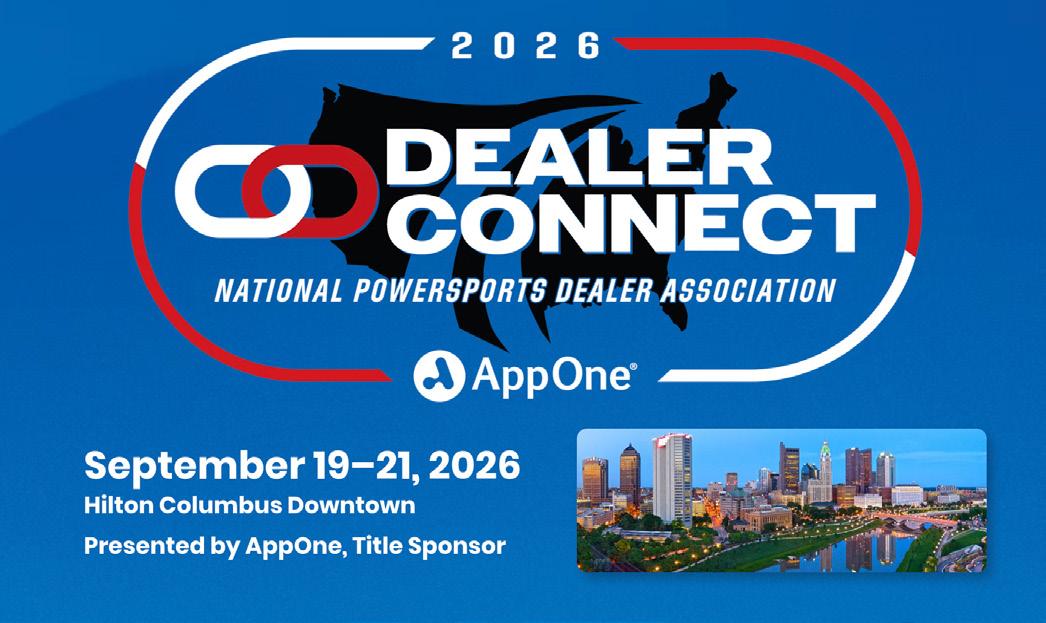
In the immortal words of Faber College Founder Emil Faber, “Knowledge is good.” However for a powersports dealer, connecting with 20 Group colleagues, service providers and most importantly, fellow dealers is even better. To that end, National Powersports Dealer Association (NPDA) announces an expanded education program for DealerConnect 2026. Presented by AppOne, DealerConnect is bringing together industry experts and dealership leaders to help dealers solve the business challenges that have the greatest impact on profitability and long-term success.
“DealerConnect is about helping dealers make better business decisions,” notes NPDA Board Chair Jayson Davis. “Whether the challenge is staffing, inventory, artificial intelligence, succession planning or increasing profitability, our goal is to bring together the people and expertise that help dealers return home with ideas they can put into practice.”
One of the business challenges DealerConnect will address — How can dealerships take advantage of artificial intelligence without getting caught up in the hype? — will be handled by Dealernews’ columnist David Gatti, Ignition XD, Founder and Mat Koenig, founder of Rockstar Designs. The dynamic duo will share practical applications for AI, including integrating AI into the sales process.
Save the date: DealerConnect is set for September 20–21, 2026, at the Hilton Columbus Downtown. Registration is now open. NPDA member Early Bird registration rates are available through July 31. For the complete agenda, hotel information, registration details and membership information, click here: www.npda.org/dealerconnect
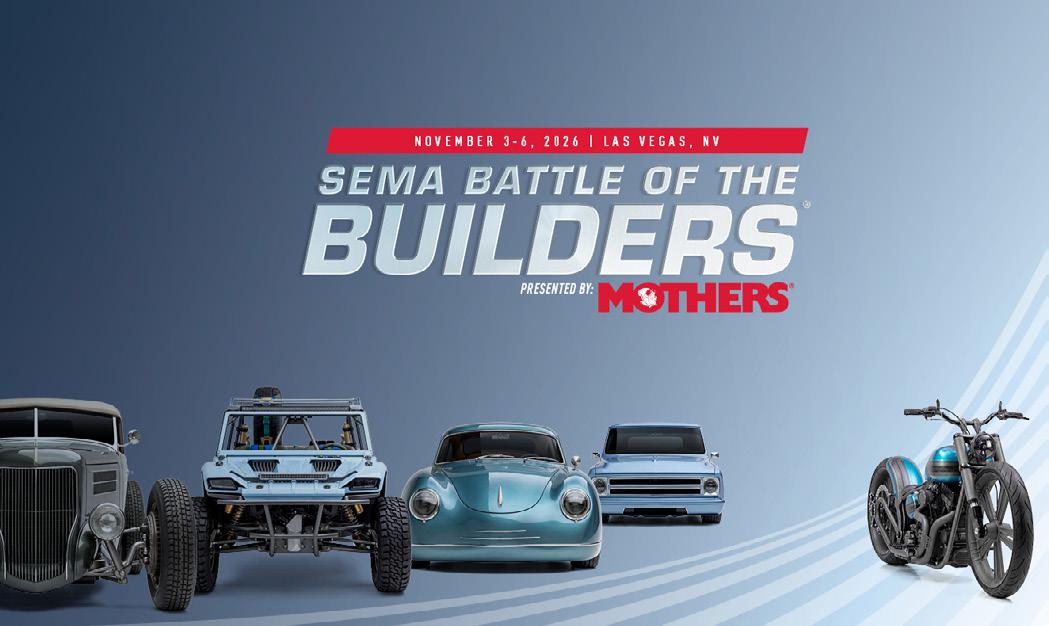
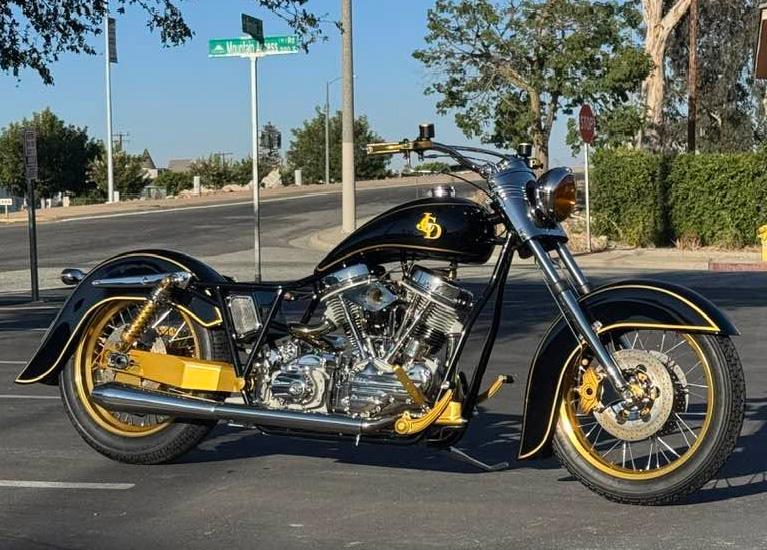
SEMA NEWS: BIKES ADDED TO BATTLE OF THE BUILDERS
SEMA continues to roll out the red carpet to welcome the powersports industry to the 2026 trade show. We spotted some of the SEMA crew scouting talent at Born Free 17 last weekend and today they made it official that motorcycles have been added to the annual “Battle of the Builders.”
“It’s always exciting to see builders push creative boundaries year after year, and the addition of powersports brings an entirely new level of energy and excitement to the program,” states SEMA VP of Marketing RJ de Vera. “Battle of the Builders continues to evolve alongside the industry, and we’re excited to see how builders push innovation at the 2026 SEMA Show.”
Now in its 13th year, the competition continues to stand as the automotive aftermarket’s premier platform for custom builders exhibiting at the SEMA Show, and for 2026 it will expand to include motorcycles, introducing an additional set of awards recognizing the Top 3 standout bike builders and an overall motorcycle champion. More entry details for the 2026 SEMA Battle of the Builders Presented by Mothers can be found at: www.semabotb.com

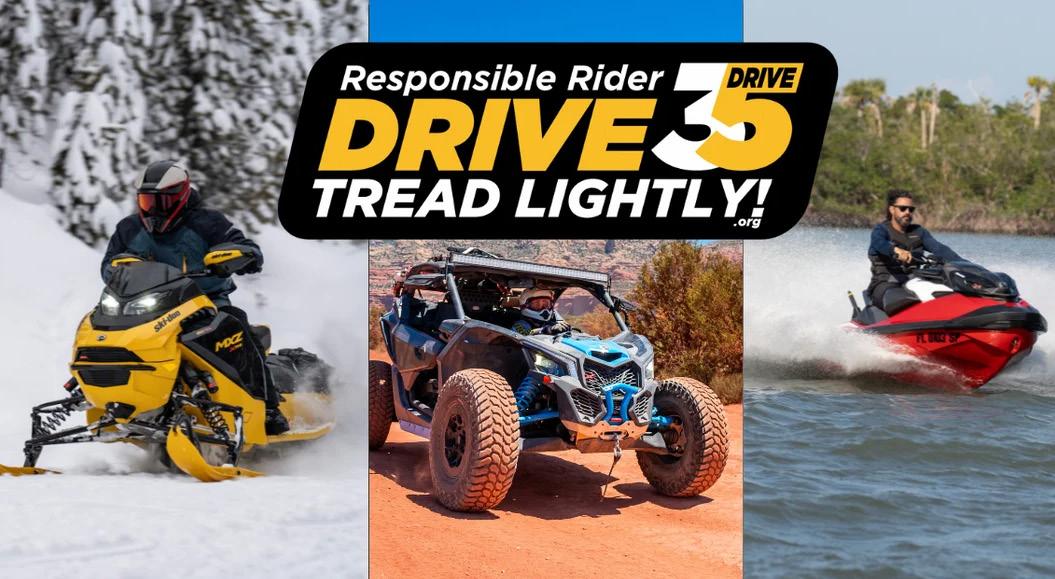
BRP DRIVES 35
Sammy Hagar had a problem driving 55, but BRP’s drive to 35 was a snap. Originally launched to celebrate Tread Lightly!’s 35th anniversary, the “Drive 35” campaign encourages riders and outdoor recreation enthusiasts to complete free online Responsible Rider Masterclass courses designed to educate users on how to minimize
their impact and help protect trails, waterways and snow recreation areas for future generations.
The Drive 35 campaign is supported by BRP through its Responsible Rider Program. For every Responsible Rider Masterclass completion, BRP has committed to donate $35 to Tread Lightly! to advance conservation and sustainable trail use across the country. With 1,000 courses completed, BRP is kicking in $35,000… and counting!
Following the achievement of this initial goal, Tread Lightly! is encouraging riders to continue supporting the cause by completing an additional 1,000 courses for which BRP will continue to donate $35 per course to Tread Lightly!
Make like Sammy Hagar and get on the gas! Off-road riders, boaters and snow recreation enthusiasts can all participate in the next phase of the campaign by completing one or more free courses at: www.ResponsibleRider.com

NEW DEALER SPIKE DROPS
Can you hear me now? “This isn’t a product launch,” explains Hayley Hollen, Head of Brand & Customer Marketing at LeadVenture — parent company to Dealer Spike. “It’s an accountability shift: After a year spent listening to our Dealer Advisory Council, we’re putting our service standards in writing, with guarantees attached!” She states the “New” Dealer Spike is a renewed commitment to the 6,800+ dealers we serve across powersports, marine, trailer and outdoor power equipment industries. “What we heard: dealers weren’t asking for more features. They wanted faster answers, clearer communication, and a platform that keeps performing after the lights go off, especially since more than half of dealer website traffic happens outside business hours.”
“It’s not the same Dealer Spike as it was even a year ago,” adds Kip Ames of Fred’s Marine, a member of Dealer Spike’s Dealer Advisory Council. This past year, Dealer Spike sat down with its Dealer Advisory Council, made up of 30+ powersports, marine, trailer and outdoor power equipment dealers from across the country, to hear how its platform holds up. Dealers said they wanted faster support, clearer communication and greater accountability. “Every dealer should expect it… So we put it in writing.”
The fine print commits Dealer Spike to delivering faster OEM data, real-time DMS integration and industry leading SEO:
• 24-hour support resolution, with standard website changes completed within 1 business day. No more open-ended tickets.
• 99.97% uptime, positioned as the most reliable website provider in the industry. For dealers, that’s the difference between a storefront that’s always open and one that quietly costs them sales.
• A guaranteed minimum 30% increase in leads. Not a projection. A written commitment.
• Real-time Lightspeed DMS sync, the first of its kind, so inventory publishes with zero manual clicks.
“These aren’t future plans… This is a foundation, not a finish line,” claims Dealer Spike SVP of Sales Jason Lehman. “Everything the New Dealer Spike delivers today was shaped by what dealers said they need, and what comes next will be too: continued investment in AI-powered product development and discoverability built for how buyers will search tomorrow, including agentic search. The clearest proof is what dealers are already building on it.”
Click here for more about the “new” Dealer Spike: www.dealerspike.com

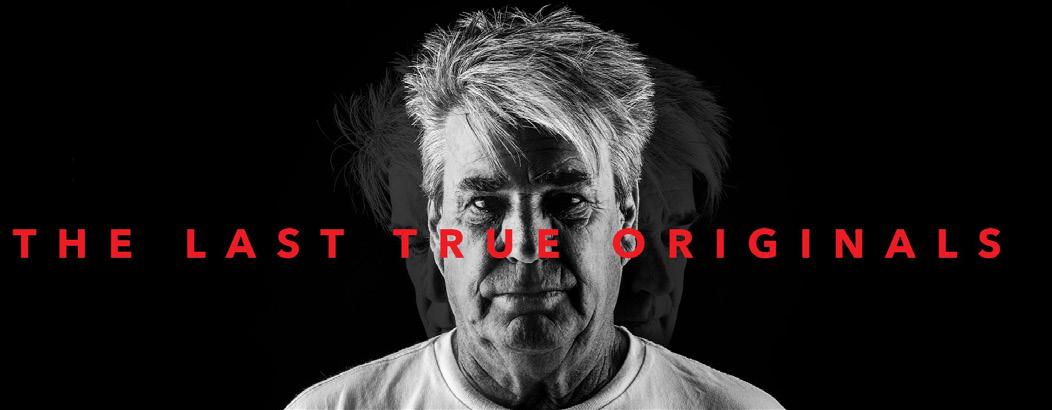

STAY TUNED!
They say life imitates art, but what about the life of one of powersports leading artists? “This fall, we’ll be telling our story in a new way with The Last True Originals, a documentary celebrating the people, athletes, artists and innovators who helped build Troy Lee Designs… and the culture that surrounds it,” says TLD National Sales Director Teri Lynn.
“The film explores the history of Troy Lee Designs while highlighting the values that continue to define the brand today: craftsmanship, originality, racing and an unwavering commitment to doing things differently… We’re incredibly proud of it at Troy Lee Designs that I think will resonate with the Dealernews audience.”
Dealers, get a sneak peek at what is coming, here: www.youtube.com/watch?v=KeVuL87MpFA&t=3s
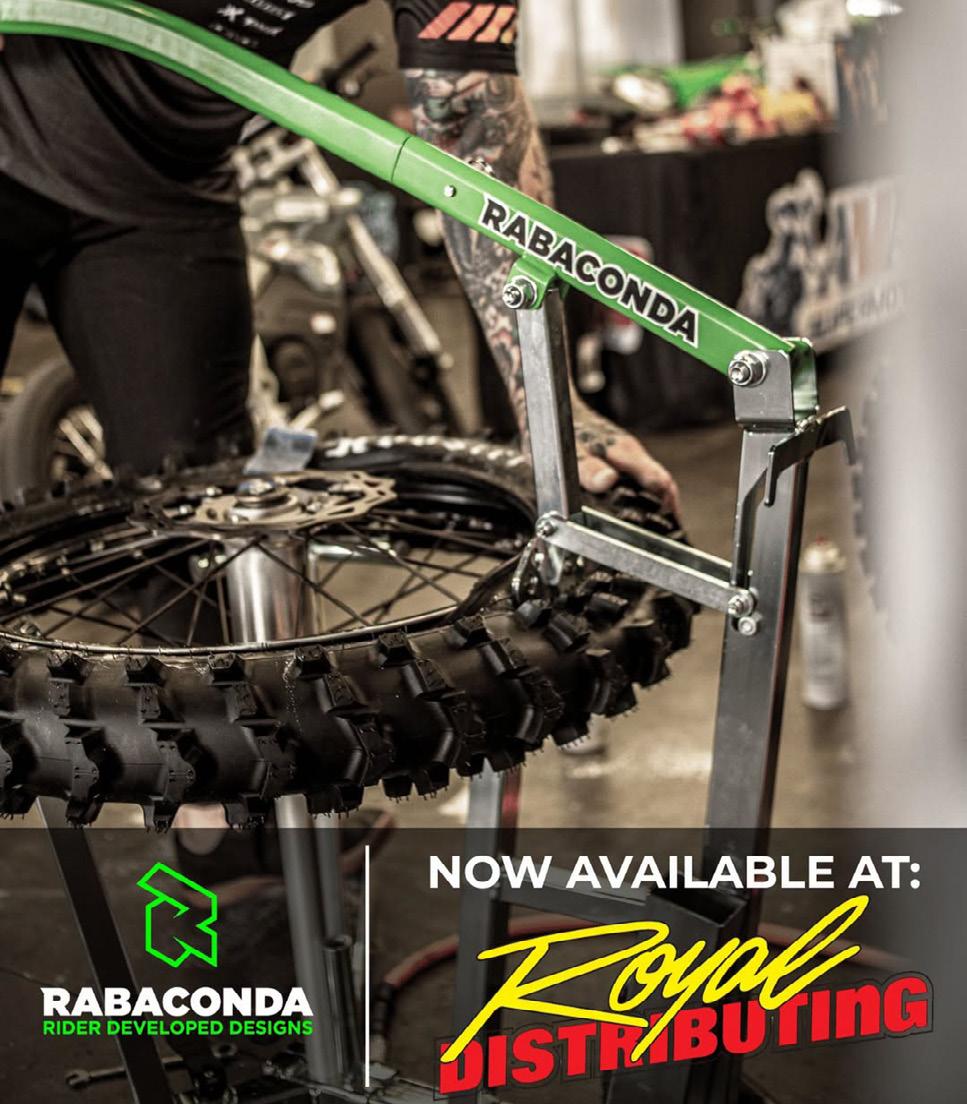
DISTRIBUTOR DOINGS: ROYAL ROLLS OUT RABACONDA
“Canada has always been an important market for Rabaconda, and we’re excited to partner with Royal Distributing to reach riders north of the border,” says Jackson Halsmer, Global Marketing Manager of the motorcycle tire changing tools leader. “Royal has built an incredible reputation within the Canadian powersports industry and we’re proud to work alongside a team that shares our passion for helping riders spend less time fighting tire changes and more time riding.”
With the roll out in Canada, Rabaconda products are now used in more than 60 countries and trusted by dealers and riders around the world. “As a lifelong dirtbiker myself, I already know the excitement Rabaconda brings to the riding community,” adds Celine Laflamme, Social Media coordinator for Royal Distributing. “We’re thrilled to carry Rabaconda at Royal Distributing, offering a product line that turns one of the most dreaded parts of the sport into something fast, simple and even satisfying.”
See more at: www.royaldistributing.com



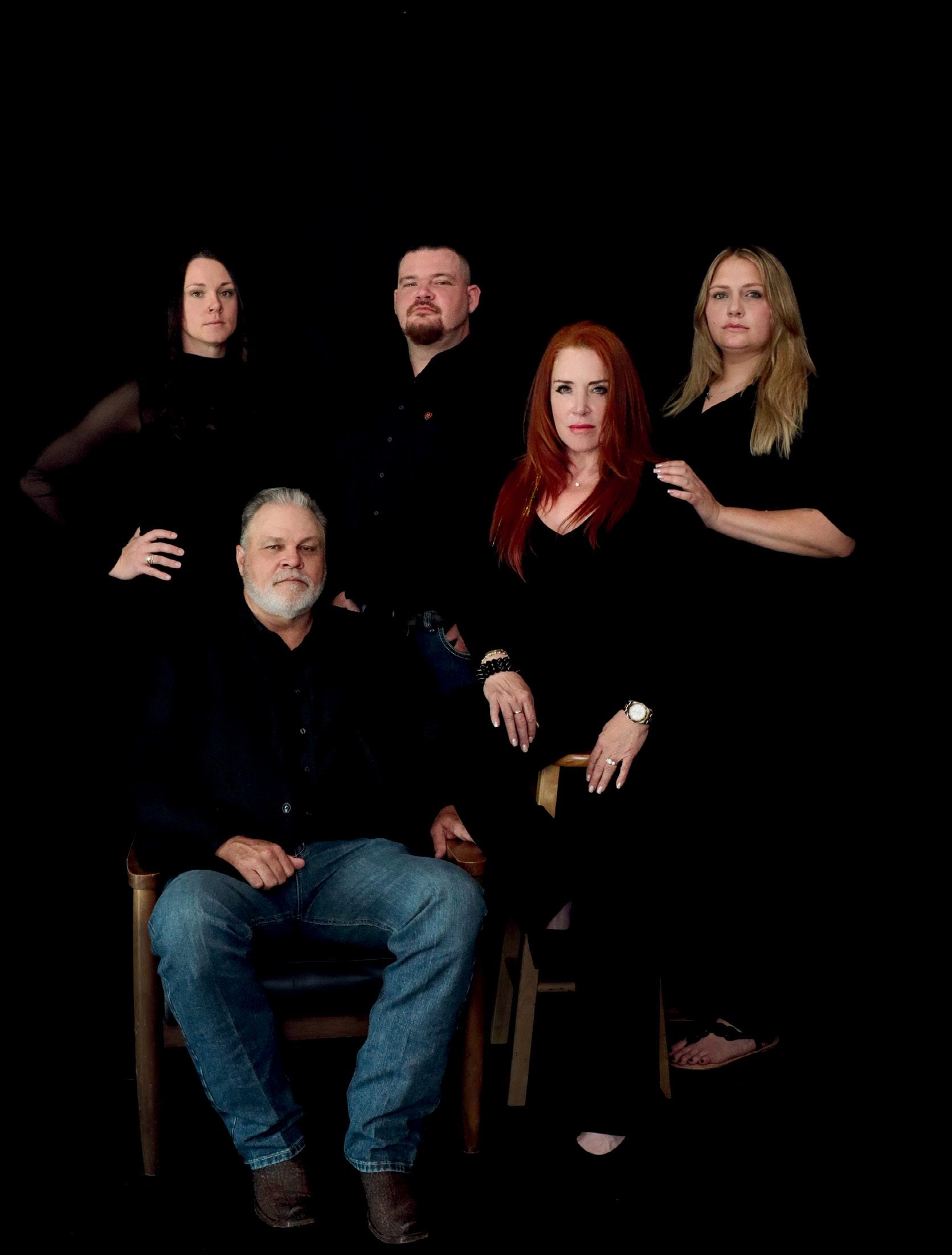

Shelbie (Account Executive)
Jimmie (Account Executive)
Shelby (Director of Dealer Success)
Brandy (CEO/President)
Mike (Director of Operations)
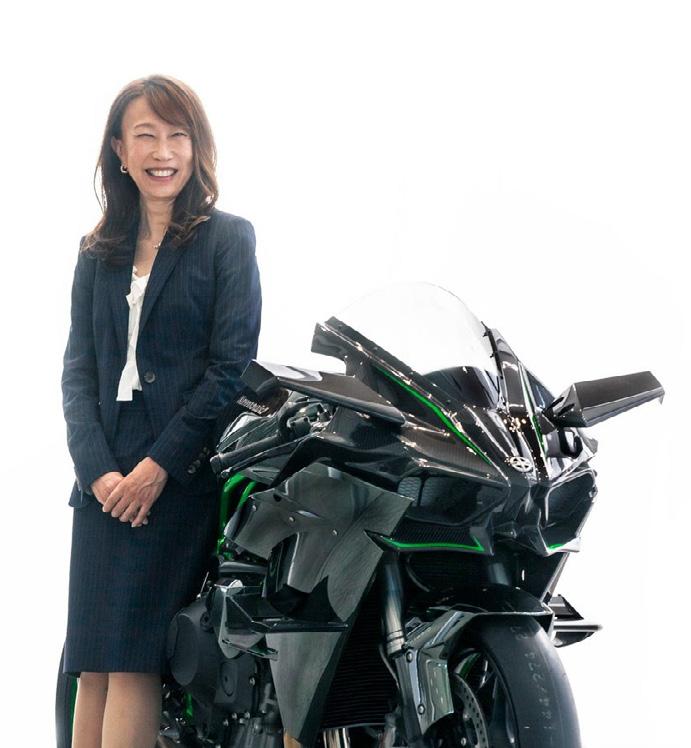
Let the good times roll! Kawasaki Motors Corp., U.S.A. welcomes Eiko Kirino as President effective immediately. A lifelong rider with more than 30 years at Kawasaki, Ms. Kirino has built a broad career overseeing Sales, Marketing, Product Planning and Corporate Communications. “As Kawasaki pursues its vision for sustainable, long-term global growth, the U.S. remains our most important market ,” she says. “It is both a tremendous honor and a personal joy for me to lead Kawasaki USA having long held a deep passion for powersports, both professionally and personally.” Kirino began her career at Kawasaki France where she was focused on growth through sales, market development and racing. She later returned to Japan to lead the Sales Department for all of Europe. Her experience then focused on product planning for performance models, including launch of the Ninja H2 . Next she served as General Manager of Kawasaki’s global marketing efforts. In 2021, Kirino was appointed to President of Kawasaki Motors Japan leading Kawasaki’s domestic sales within Japan before being called on to lead global strategy for corporate communications and external affairs. “As the Good Times Company, we are always challenging ourselves to develop and innovate new models that deliver happiness to everyone connected to Kawasaki,” concludes Kirino. “I look forward to working with our employees, dealers and partners to build on this proud legacy.”

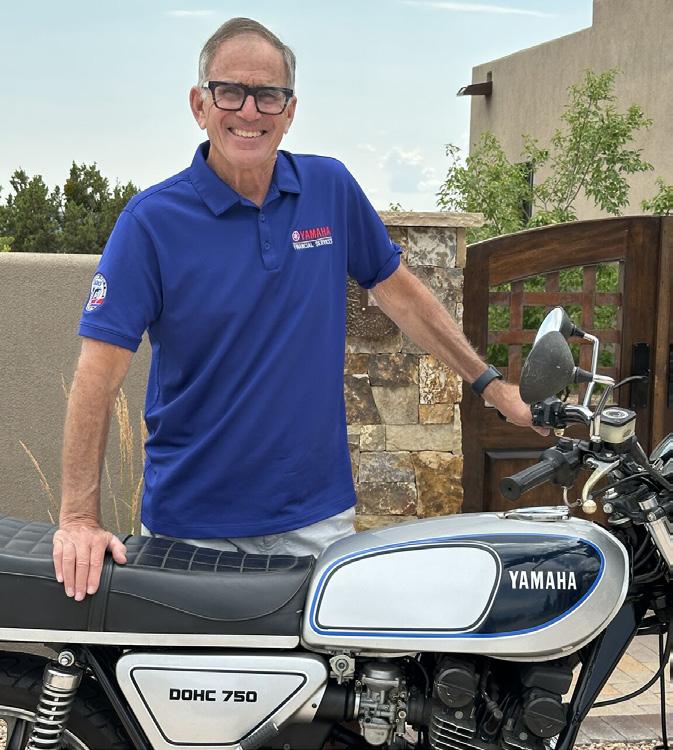
Shooting Starr! “I am very happy and excited to announce that I have officially joined Yamaha Motor Finance Corporation (YMFC), as Director of Global Communications,” announces industry icon Bob Starr. “I am truly fortunate that I continue to have the drive, the energy and the passion and can bring additional knowledge and experience to this exceptional team of people with facilities around the globe!” Starr moves to YFMC from YMUS where he spent the past 35 years as Corporate Communications Manager (circa February 1992 - July 2026). Even before the Yamaha gig, Starr was already a rockstar! He was National Advertising Director for the dearly departed Cycle World magazine in the early 1990s. Before the role with the world’s largest motorcycle magazine Starr served a stint as National Advertising Manager for American Suzuki, starting in 1982.
“What a wild and crazy time it’s been and eternally grateful for all those years,” Starr exclaimed some 6 months after celebrating his 34-year Anniversary with Yamaha. “Now it is time to charge ahead with YMFC!”
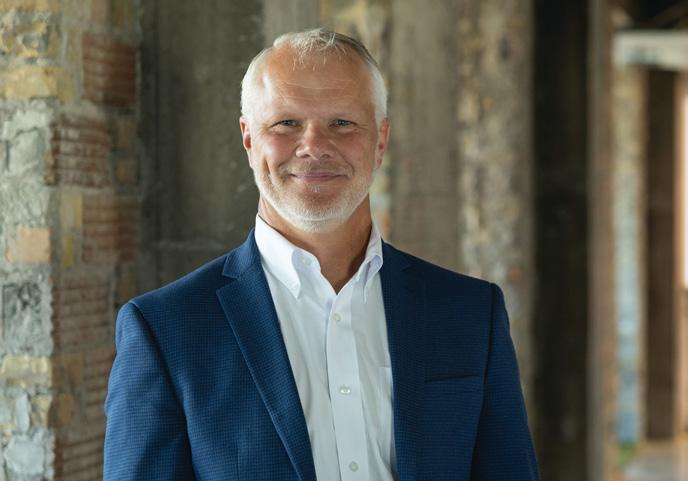
Following a distinguished career spanning nearly 30 years with the company, Mike Ballweber, president of Doosan Bobcat North America, Inc., is stepping down effective July 31. “I’m sincerely grateful to have led
this organization and worked alongside such talented colleagues, dealers and customers,” Ballweber said. “This is a bittersweet moment, as Bobcat has been such an important part of my life. My retirement comes with great pride in what we’ve accomplished together and with confidence in the strength of our team, our strategy and the future ahead.” Ballweber joined Bobcat in 1998 and was appointed president in 2019. During his tenure, he helped strengthen Bobcat’s dealer network, expand the company’s product portfolio and advance manufacturing and innovation initiatives. He guided the business through some of its most complex operating environments in its history, including the COVID-19 pandemic and global supply chain challenges, while supporting a period of accelerated growth and expansion. Throughout, he maintained a strong focus on customers, dealers and employees.

With Ballweber’s retirement, Scott Park, CEO and vice chairman of Doosan Bobcat Inc., will serve as interim president of the North America region, working closely with the regional leadership team to maintain continuity until a successor is named. In this capacity, Park will help ensure continued execution of Bobcat’s strategic priorities and longrange growth plans, while maintaining continuity for employees, dealers and customers. Bobcat remains focused on serving customers, supporting its dealer network and continuing priorities already underway across product innovation, manufacturing and long-term growth. “Mike’s impact on this business has been significant — not just in the results he helped deliver, but in the way he led,” said Park. “He brought a deep commitment to our employees, dealers and customers, and he helped position Bobcat for continued success. We are grateful for his leadership and lasting contributions and are confident in our continued momentum moving forward.”
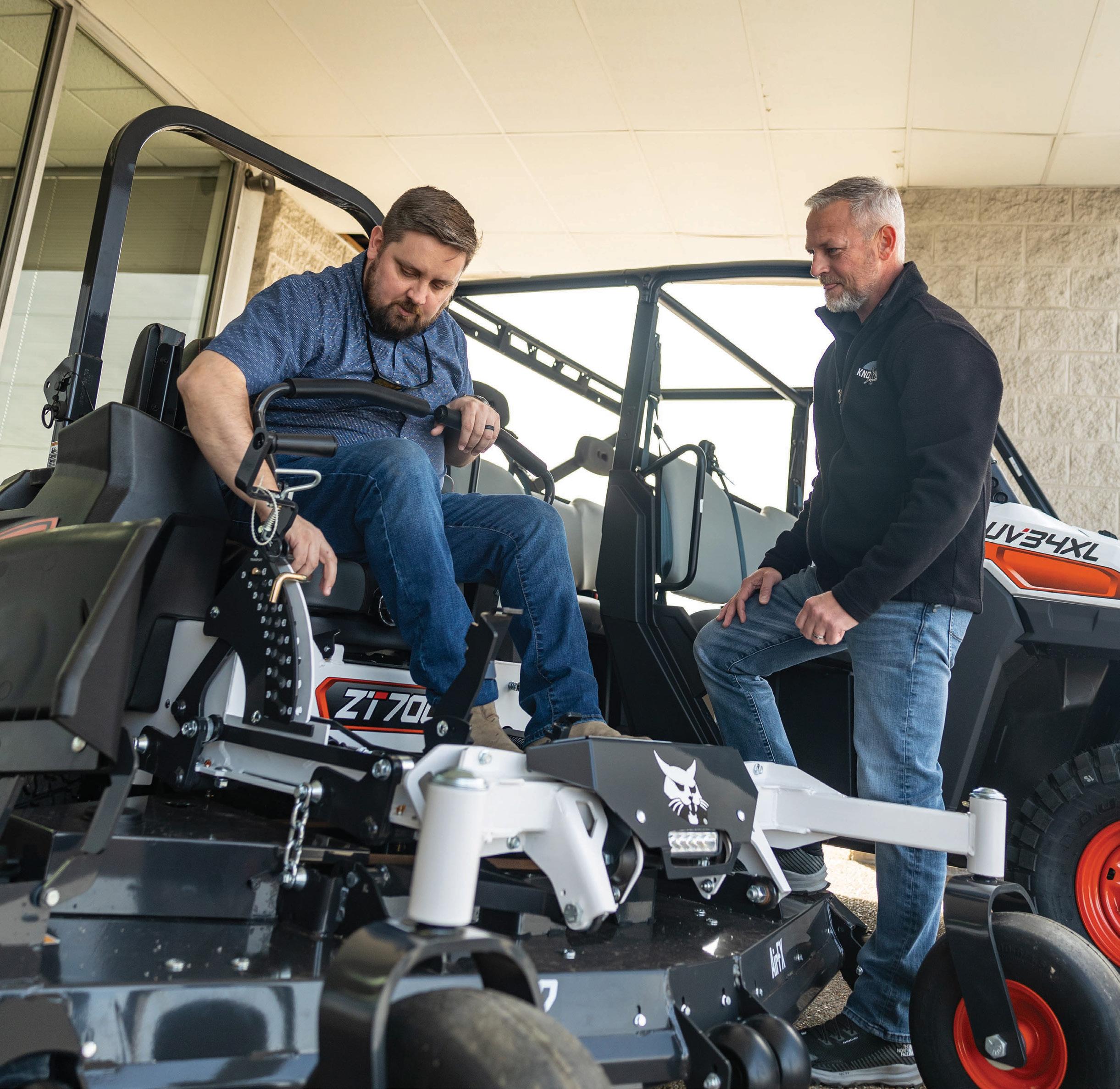
BECOME A BOBCAT DEALER.

EXPERIENCE HIGH-POWERED GROWTH WITH BOBCAT. With an expansive lineup of products that continues to grow, Bobcat will help you better serve your existing customers and expand into new markets. In addition to our breadth of products, we’ll back you up with dealer support that is second to none.
Continued from page 18
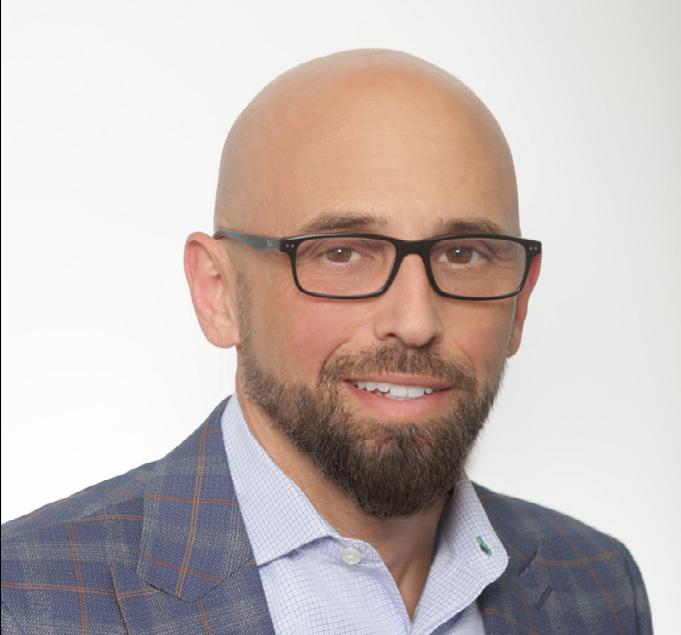
Arctic Cat adds long-time BRP regional sales director Avi Laub to head sales. “We are very fortunate and excited to add somebody with Avi’s experience, knowledge, passion and talent to our team,” said Erik Nelson, vice president of sales. “His understanding of the dealer and sales rep experiences, combined with his ability to build positive relationships, make him an ideal fit. Working together, our team will continue to build momentum for Arctic Cat and our dealers, knowing that our best days lie ahead.” Most recently Brand Director for the Beneteau boat group, Laub has his sea legs firmly set, having been in the powersports industry since 1998! In his new role as Arctic Cat’s U.S. Sales Director, Laub will lead the sales organization, focusing on strengthening dealer partnerships, expanding the dealer network and accelerating growth across all product categories. “From day one of this process, everybody I spoke with at Arctic Cat opened their arms, and it immediately felt like this was the place I was meant to be,” said Laub. “This team is the envy of the industry right now. I believe Arctic Cat has an incredible opportunity to build out our sales organization and our dealer network by partnering with the right people and quality businesses.”
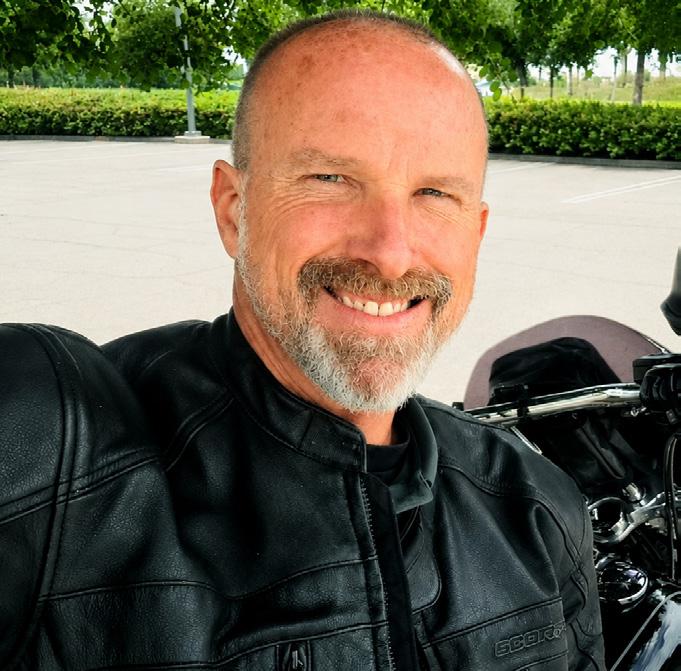
Better Together: To assist the National Powersports Dealer Association’s efforts to “connect” with more constituents, powersports pro Steve Gotoski joins the team as Membership & Marketing Director in the run up to the association’s industry networking event, DealerConnect. “NPDA is an indispensable organization in the powersports Industry, and their history of helping Dealers grow and protect their businesses is well established,” says Gotoski. “I look forward to working with current and prospective Dealers and partners alike in joining the NPDA and using our resources to be better together.” Most recently communicating Sena Technologies’ Dealer Development message, Gotoski has plenty of prior industry association experience with the American Motorcyclist Association, including serving as the AMA’s Advertising & Business Development Director for the better part of 12 years. The NPDA Board of Directors knows that his relationships, abilities and industry contacts will help pave the path to continued growth. “I am elated to be onboard with the NPDA and look forward to growing our Dealer membership base to a higher level,” says Gotoski. “Steve’s eagerness to increase NPDA membership rolls and deepen the connection with our members, sponsors and industry partners comes at the perfect time during our expansion,” adds NPDA Board Chair Jayson Davis. “Looking at his skillset and experience within the industry, it’s easy to see how this was meant to be.” In the meantime, Davis suggests saving the date for DealerConnect 2026 Presented by AppOne in Columbus, Ohio, September 20-21: www.npda.org/dealerconnect
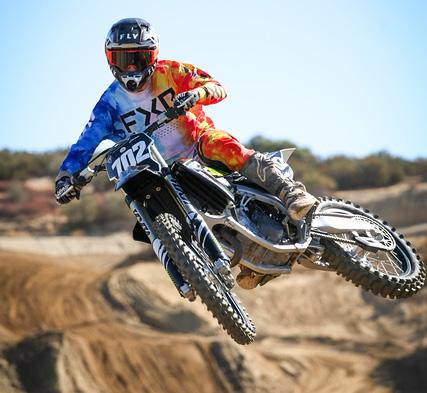
is expanding its powersports outreach with the addition of Garrett Comer, Outside Territory Manager for the key Arizona and California territories. “Garrett brings both the experience and the enthusiasm to further distinguish Turn 14 in the powersports sphere,” says Matt Bean, Turn 14 Distribution Outside Territory Director. “His talent for managing dealer relationships and executing top-notch customer service aligns perfectly with Turn 14’s mission to support the growth of small businesses. In his earlier roles, Comer was a GM and a parts specialist with a large dealer group in Arizona During his tenure, Comer doubled projected business goals and was consistently recognized for outstanding performance and exemplary customer relations. Comer adds he is “eager to contribute to Turn 14’s growth in the powersports segment… it is an exciting opportunity to build from the ground up.” He shares the Southwest territory with counterpart Brenden Gill.” For more details on Turn 14 and reps like Comer and Gill, click on: www.turn14.com
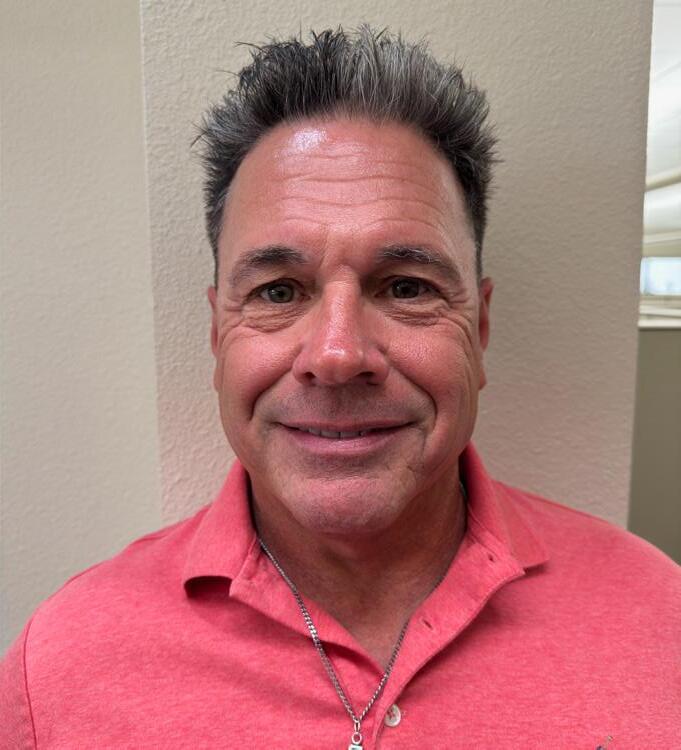
The draft is over and Dealers in Miami have a new play caller joining the LeMans team. Drag Specialties and Parts Unlimited are pleased to announce the newest dual sales rep for the South Central Region covering Florida and Louisiana – Dan Marino. “Dan brings to the team years of aftermarket sales level experience as well as extensive industry knowledge,” states a team spokesman. “This, combined with his passion for riding — including 35+ years of racing motocross — makes him a great addition to Parts Unlimited and Drag Specialties.” When not working with dealers or riding, Dan enjoys staying active through workouts, golfing, cooking and spending time with family… no word on if he is a football fan, though. Welcome to the team, Dan!
DEALER NEWS
DEALER NEWS: SONIC BOOM TO HIT STURGIS!
Coals to Newcastle used to be the expression of overkill, however Sonic, one of the nation’s largest automotive and powersports retailers, is bringing more than 1,200 motorcycles to sell during the 86th Sturgis Rally! Sturgis Harley-Davidson and Black Hills HarleyDavidson will have monumental selections of new and used Harley-Davidsons in the Black Hills for the Rally taking place August 7–16, 2026.
“Preparing for the Sturgis Rally is a year-round effort that starts with understanding what riders want most from their rally experience,” says Sonic President Jeff Dyke. “This year, we have expanded our inventory, introduced new ways for riders to secure motorcycles before arriving, and developed exclusive products that can only be found through our dealerships. We are ready to welcome riders from across the country and deliver an experience that matches the scale and energy of Sturgis.”
The expanded lineup represents the single largest HarleyDavidson inventory ever brought to one location in the country. According to Dyke, it gives rallygoers an unrivaled opportunity to access highly sought-after trikes alongside a massive selection of new and pre-owned motorcycles in every color, configuration and style, during one of the world’s most iconic motorcycle events. Still 1,200 bikes seems like a crazy number…
At least until you consider the two stores sold 1,100 motorcycles last year. Remember 2025 was Sturgis Harley-
Davidson’s first year in operation. In fact, in its first year of sales the new Sturgis Harley-Davidson location far exceeded expectations, finishing second only behind the largest volume Harley-Davidson store in the world — Sonic’s own Black Hills Harley-Davidson.
All hands on deck saw more than 500 Sonic employees deployed to the two dealerships for the duration of the 85th Sturgis Rally. Highlights from last year’s sales blitz included:
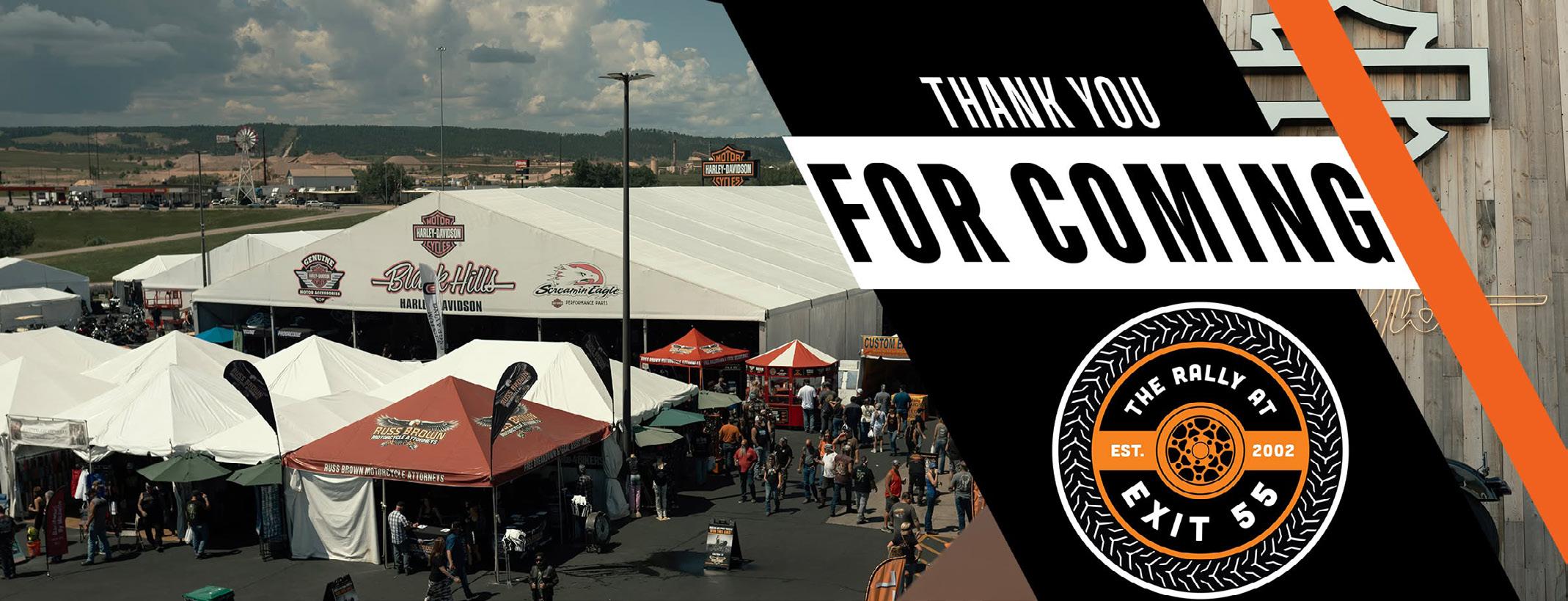
• A single-day peak of 135 motorcycles sold, surpassing the previous record of 86
• Four days surpassing 100 motorcycles sold, with registrations in all 50 states
• Record-breaking retail performance, with more than 1,100 motorcycles sold and unprecedented demand across parts, service and merchandise
To help break these records, Sonic devised a couple strategies. To jump start sales, Sonic launched the “Rally Ready” presale program, enabling riders to shop before the Sturgis Rally, secure their preferred motorcycle and schedule pickup upon arrival in Sturgis. Sort of like the “arrive and drive” sales of luxury European automobiles, this program is designed for rally-goers traveling from across the country who want to spend less time searching for the right bike and more time riding the Black Hills. Check it out at www.SturgisHD.com
HONORING AMERICA
Limited-Edition America 250
Motorcycles & Collector
Merchandise Coming To Sturgis
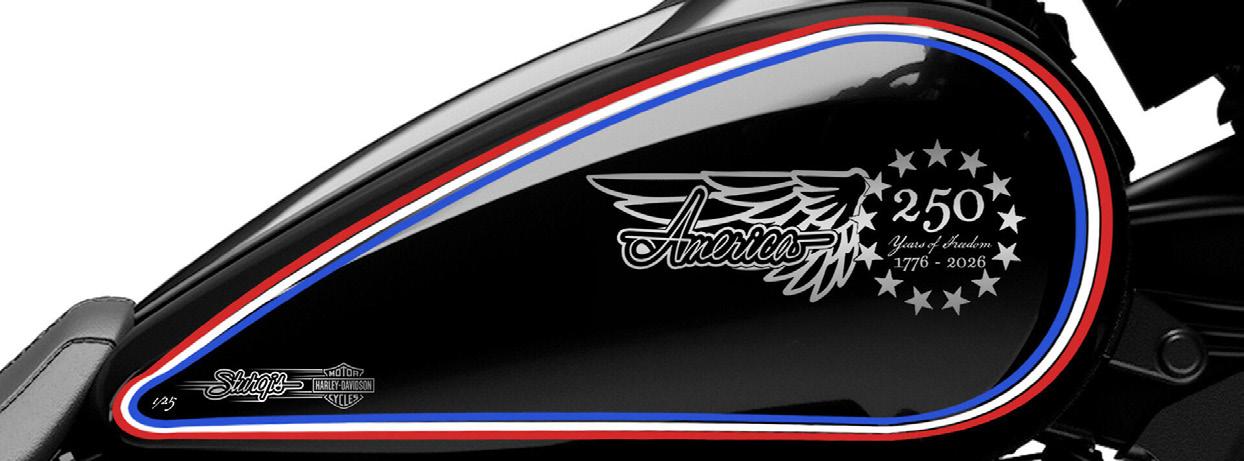
In addition to “arrive and ride” sales, Sonic is seeking to expand its exclusive merch and motorcycles. To commemorate America’s 250th anniversary, Sturgis Harley-Davidson and Sonic Powersports have rolled out the “250 Years of Freedom” collection, highlighted by a limited series of 26 custom Harley-Davidson motorcycles available exclusively through Sonic Powersports.
The motorcycles feature custom silver livery, commemorative 1776–2026 badging, patriotic details, premium finishes and distinctive rally-inspired design elements. Online pre-sales started in July at SturgisHD. com — With only 26 bikes produced and only 25 (one was already spoken for) available, once the collection sells out, it will not be restocked.
In partnership with the Sonic Automotive arm, one of these 250 Years of America customs, a motorcycle was awarded to Ryan Blaney, winner of the 2026 Quaker State 400 at EchoPark Speedway (formerly Atlanta Motor Speedway). Uniting Sonic’s premier pre-owned automotive brand, EchoPark Automotive, with its elite powersports division.
Sturgis Harley-Davidson will also launch exclusive online merchandise drops for collectors and rallygoers, including eight 86th Rally apparel designs and a vintage reprint series inspired by Sturgis Harley-Davidson graphics from the 1990s and 2000s. The limited-edition apparel drops are available now online only at Sturgis Harley-Davidson.
“The Sturgis Motorcycle Rally is a cornerstone event for the riding community. It is an iconic celebration of freedom, the open road, and the American spirit,” concludes David B. Smith, Sonic’s Chairman and CEO. “This year, we are proud to bring riders an unmatched Sturgis experience through expanded motorcycle inventory, exclusive limited-edition products, and a rally-week experience designed around what riders value most.”
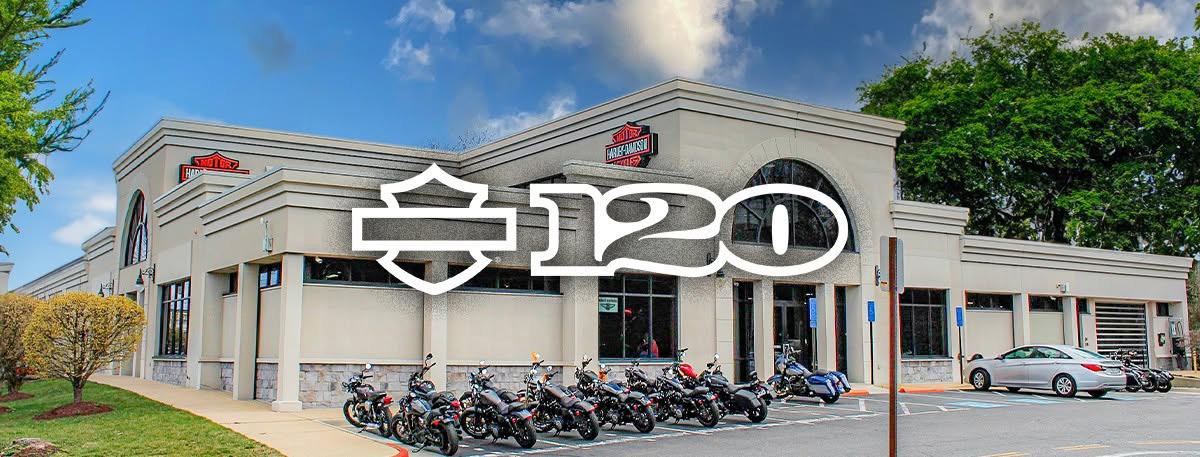
PBS CHANNELS BULL RUN TO PVM
Just in time for America’s 250th celebration, Patriot HarleyDavidson set off some fireworks of their own in June and July! In a deal orchestrated by Performance Brokerage Services, two legendary Virginia dealerships — Bull Run Harley-Davidson and Patriot Harley-Davidson — joined forces under Paul Veracka’s PVM banner. Commemorating the combo was the Demo Truck festivities at the “new” Patriot in the middle of July.
“This strategic transition is part of Harley-Davidson Motor Company’s ongoing initiative to strengthen its dealer network and elevate the customer experience for riders nationwide,” explains Veracka. Originally launched as Whitt’s Harley-Davidson in the early 1980s, the Northern Virginia landmark was renamed Bull Run Harley-Davidson after its 2017 acquisition by the Lindsay Automotive Group and continued serving customers from its historic Old Town Manassas location, becoming a premier destination for Harley-Davidson enthusiasts throughout the region.”
“Our focus moving forward is on bringing the Bull Run and Patriot teams together, preserving the outstanding customer experience riders have come to expect, and welcoming Bull Run customers into the Patriot family,” adds Veracka. “Change is never easy, and we understand the emotions surrounding this transition. Please know that our intention has always been to support the employees, customers, and Harley-Davidson community during a challenging time.
“After helping us acquire Patriot Harley-Davidson, George Chaconas of Performance Brokerage Services maintained a keen eye on the Washington metropolitan area,” Veracka adds. “When Lindsay Automotive Group decided to close Bull Run Harley-Davidson in Manassas, George connected with us to help manage the transition for the local market.
By supporting HDMC and welcoming these riders, Patriot Harley-Davidson is proud to help strengthen the regional dealer network and ensure uninterrupted, excellent service for the local riding community. It was a pleasure working with George, Juan Pardo and Morgan Ross again—they are absolute professionals and true industry leaders.”
“It was an honor and a privilege to represent Lindsay Automotive Group in the successful transition of Bull Run Harley-Davidson to Paul Veracka of PVM Enterprises,” added Chaconas who dialed in both ends of the deal. “This merger complements their Patriot Harley-Davidson dealership — a dealership I had the pleasure of assisting Paul in acquiring several years ago — supports HarleyDavidson’s efforts to strengthen its dealer network. Special thanks to John Smallwood, CFO of Lindsay Automotive Group, for his professionalism and leadership throughout this complex deal. Congratulations to Paul Veracka and all involved in this exciting new chapter. I wish Paul and his team continued success as they continue serving the riding community throughout Northern Virginia.”
Over the past 5 years, Performance Brokerage Services has advised on the sale of nearly 450 dealerships, making it the highest volume dealership brokerage firm in North America. Senior Partner George C. Chaconas and Partner Juan C. Pardo — both of the Harley-Davidson & Powersports Division for Performance Brokerage Services, were the exclusive sell-side advisors for this transaction.
The combined operation will bring together the teams from both dealerships under one roof at Patriot Harley-Davidson in Fairfax, Virginia. Staff from Bull Run H-D transitioned to the Fairfax location on Monday, June 1 and Bull Run officially closed Sunday, May 31st. “We are bringing these two great teams together to create something even bigger and better for riders across Northern Virginia,” concluded Veracka. “By combining our people, resources, and passion for Harley-Davidson, we can deliver more inventory, more events, and an even higher level of customer service. We remain fully committed to this brand and to every rider who chooses to ride with us.”
Experienced Guidance for Powersports Dealers

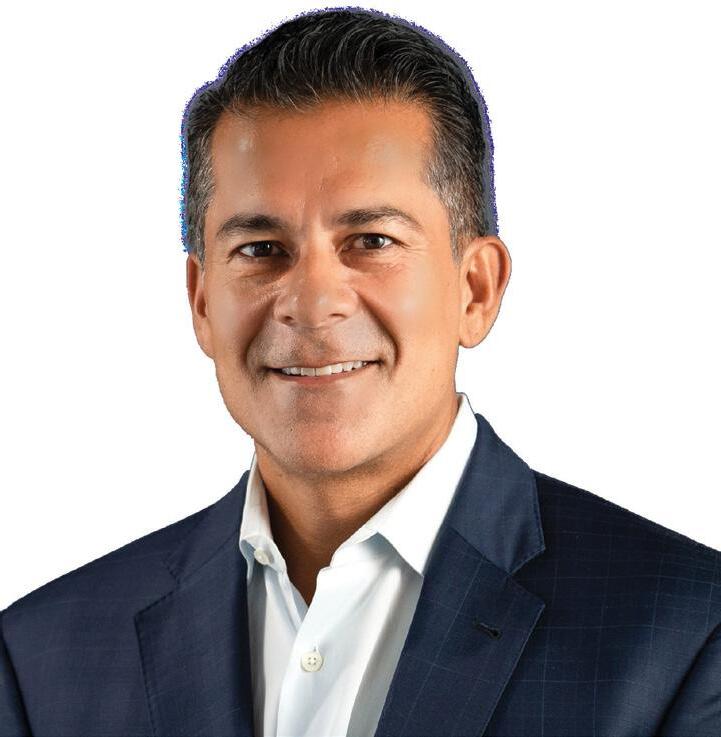

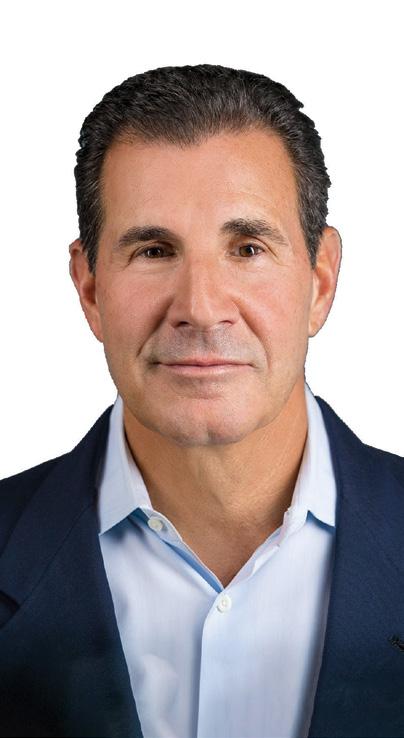
GEORGE C. CHACONAS, CBI/M&AMI
Senior Partner & Director, Harley-Davidson & Powersports Division
Dealers evaluating their next move need discretion, market knowledge, and steady guidance. Juan and Morgan bring those qualities to the table every day and help deliver the level of service our clients expect.


A Trusted Resource for Powersports Dealers
The Harley-Davidson & Powersports Division helps dealers navigate the complex decisions involved in a sale, acquisition, valuation, succession, or long-term planning strategy. With experienced guidance, market knowledge, and a disciplined approach, the team works to protect confidentiality, preserve legacy, and help maximize value.
Juan and Morgan help advance that advisory approach, working closely with dealership owners to understand their priorities, support each step of the process, and deliver the level of service clients expect from Performance Brokerage Services.
NORTH AMERICA’S HIGHEST VOLUME DEALERSHIP BROKERAGE FIRM
Performance Brokerage Services is North America’s highest volume dealership brokerage firm, with over 900 dealerships sold and a 90% closing rate. Through its Harley-Davidson & Powersports Division, the firm provides confidential buysell advisory services to dealers across North America, helping owners navigate important decisions with experience, discretion, and market knowledge.
Harley-Davidson & Powersports Division
George C. Chaconas, Senior Partner, CBI/M&AMI
Office: 813. 569. 6250 | Cell: 813. 245. 2535
George@PerformanceBrokerageServices.com PerformanceBrokerageServices.com

HARLEY-DAVIDSON Q2 REPORT
Artie Insists Dealers Are The Starrs
Bottom line for Harley-Davidson: At 29,751 new units North American retail sales up over the prior year and dealer inventory levels are down globally for Q2. New leadership and the “Back To The Bricks” strategy is reversing the negative trends and raising full-year guidance. However new President and CEO Artie Starrs is quick to include the dealers in this positive swing.
“Our second-quarter performance reflects strength in our domestic retail business, continued focus on healthy dealer inventory levels and the exceptional commitment of our dealer network,” Starrs stated in the Q2 financial statement. “We also made meaningful progress against our Back To The Bricks strategic initiatives, strengthening execution across the business and driving improved profitability.”
Good news for Wall Street, better news for dealers on Main Street? “Given this progress, our first-half results, and our market share gains, we are raising our full-year guidance and remain confident in our ability to create long-term value for shareholders,” he concludes.
DEALER VOTE OF CONFIDENCE
“As a Harley-Davidson dealer and lifelong industry insider, I fully agree that Artie Stars is the right CEO to fix what was broken by the last guy,” says George Gatto, president of Three Rivers Harley and chairman of the National Powersports Dealer Association’s HarleyDavidson Council. “We are seeing many changes and they really are the right changes. A leader who surrounds himself with experts and actually listens to them is what we are witnessing.”
Gatto is seeing the changes in his own dealership. “Our Harley-Davidson new inventory is at 81 days supply, the lowest it’s been in years. We are doing a lot of dealer trades, but that’s much cheaper than Floorplan interest and other carrying costs,” he explains. “HD 2nd Quarter earnings report stated dealer net profits had doubled. I realize these were extremely low, but it’s mostly attributed to maintaining proper inventory levels and turns.”
While not out of the woods yet, Gatto believes The Motor Company is back on the right track. “Finally feels good to be a Harley dealer again! And lastly, please don’t bother believing the ridiculous comments from people who know nothing and simply regurgitate what they see on hate-filled social media or those stupid AI YouTube videos. If you want the truth ask the dealers, and the employees of HDMC.”
Second Quarter 2026 Highlights
• North American retail motorcycle sales of 29,751 units, up 3% vs. prior year
• Global dealer inventory of new motorcycles ended Q2 ‘26 down 17% vs. end Q2 ‘25
• HDMC global motorcycle shipments of 39,209, up 9% vs. prior year
• HDMC revenue of $1.1 billion, up 6% vs. prior year
• HDMC Adjusted EBITDA margin of 10.4%, up from 9.3% in Q2 ‘25
• Q2 performance enabled raising FY 2026 guidance for retail sales and wholesale shipments as well as HDMC & HDFS operating income
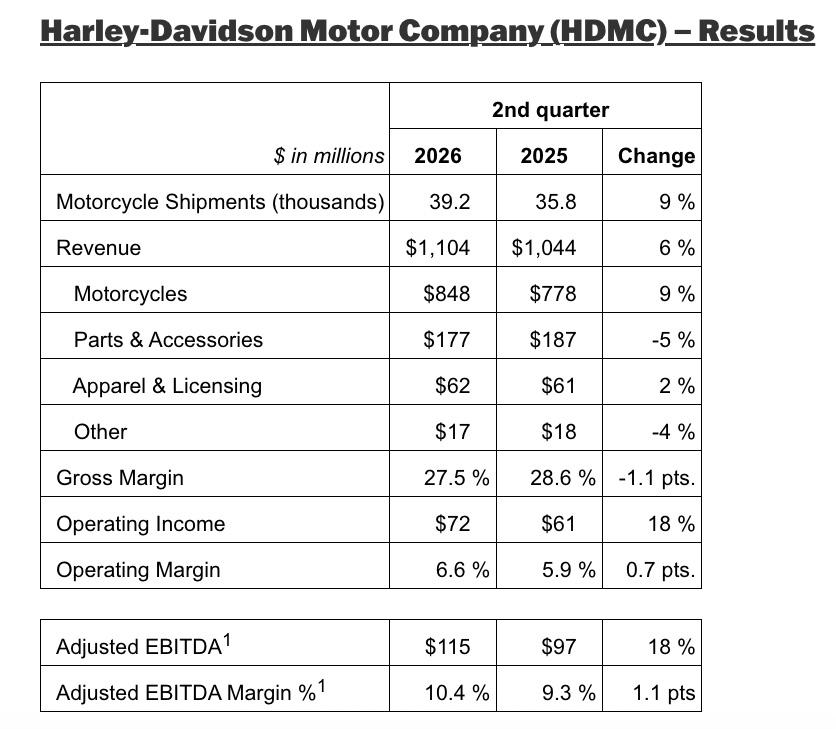
Second quarter global motorcycle shipments increased 9%, while wholesale unit shipments were lower than retail unit sales. This is aligned with The Motor Company’s plans as dealer inventory management remains a top priority. Revenue was up 6% driven by increased shipments and favorable foreign exchange effects, partially offset by net pricing. Parts & Accessories revenue was down 5% and Apparel & Licensing revenue was up 2%.
Second quarter gross margin came in at 27.5%, which was down 108 basis points versus prior year. Gross profit was impacted favorably by manufacturing and other costs, including a tariff recovery that benefited gross profit. The favorability was offset by unfavorable product mix, net pricing, raw materials, and foreign exchange effects. Operating expenses came in $6 million lower than a year ago, at $232 million, including a restructuring expense of $3 million. Second quarter operating income margin was 6.6% compared to 5.9% in the prior year quarter.
on page 28
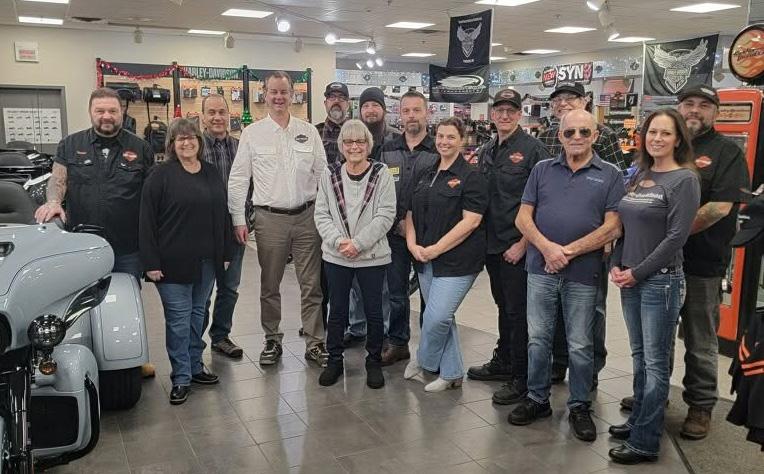
Artie Starrs, the new CEO of Harley-Davidson stopped by Three Rivers Harley-Davidson Saturday morning to meet the team.
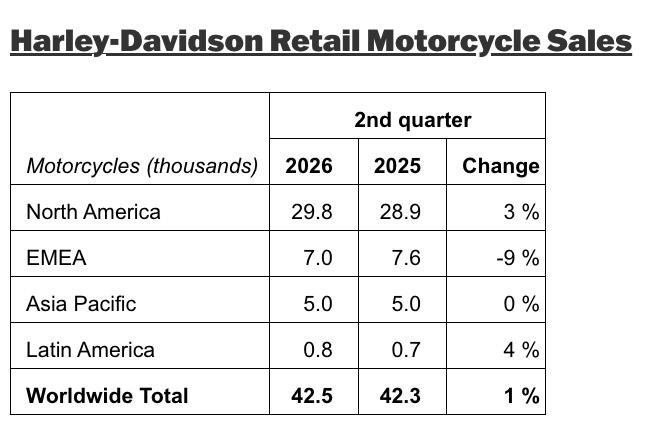
Global retail motorcycle sales in the second quarter were up 1% versus prior year, reflecting North American growth and soft international results. North American retail was up 3%, driven by continued strength in the Touring and Sport categories and a positive response to the new ‘26 motorcycle line-up. EMEA retail performance, down 9%, was characterized by positive results in the Touring and Sport categories, while the German region experienced a decline. APAC retail performance was slightly positive in the quarter, where Australia & New Zealand led the region from a growth standpoint. Latin America retail was characterized by strong gains in Mexico and a modest decline in Brazil.
REVISED GUIDANCE
2026 Financial Outlook
For the full year 2026, The Motor Company continues to expect LiveWire operating loss of $70 to $80 million and Harley-Davidson, Inc. capital investments of $175 million to $200 million. However, Harley-Davidson is revising its financial guidance and now expects:
• HDMC global motorcycle retail sales of 133,500 to 138,500 units from a previously expected range of 130,000 to 135,000 units
• HDMC global motorcycle wholesale shipments of 133,500 to 138,500 units from a previously expected range of 130,000 to 135,000 units
• HDMC operating income of $10 million to $50 million from a previously expected range of a $40 million loss to a $10 million profit
• HDFS operating income of $55 million to $70 million from a previously expected range of $45 million to $60 million
PROMOTE the Next Generation
CONNECTING THE INDUSTRY. PROTECTING THE RIDE. INSPIRING THE FUTURE.
Defending Your Industry
Securing Your Turf
Powerful Data
Strategic Guidance
Market Growth
Unmatched Networking
Powerful government relations and proactive advocacy.
Fighting for land access and open trails.
Market-leading research and consumer insights.
The intelligence you need to navigate industry shifts.
Industry-wide initiatives like Ride With Us.
Access to major platforms like AIMExpo and USMCA.
DEADWOOD DEBUT
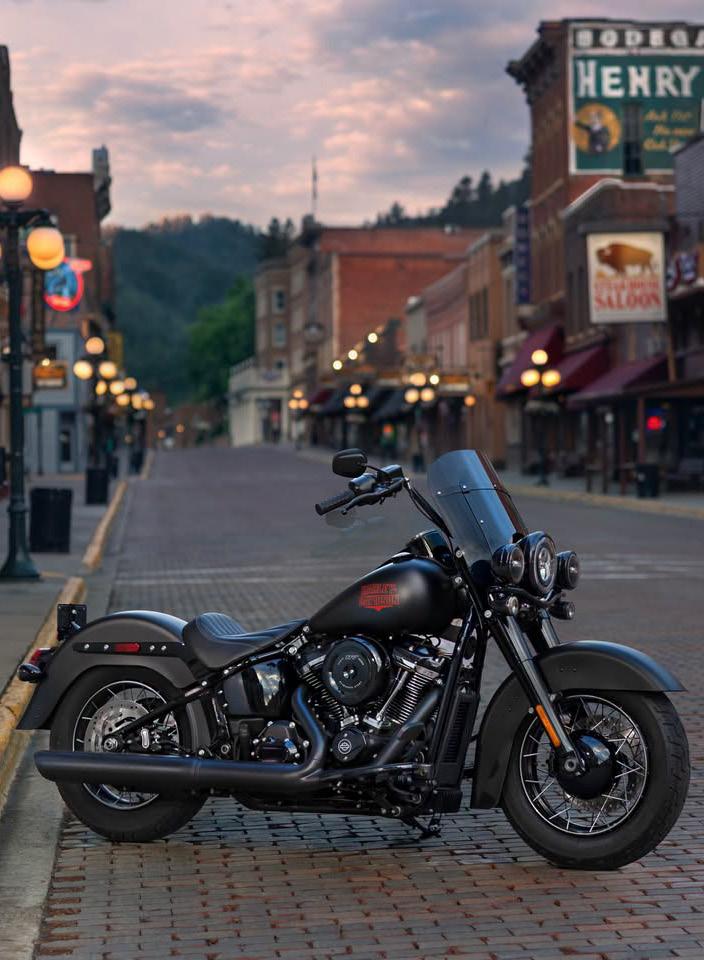
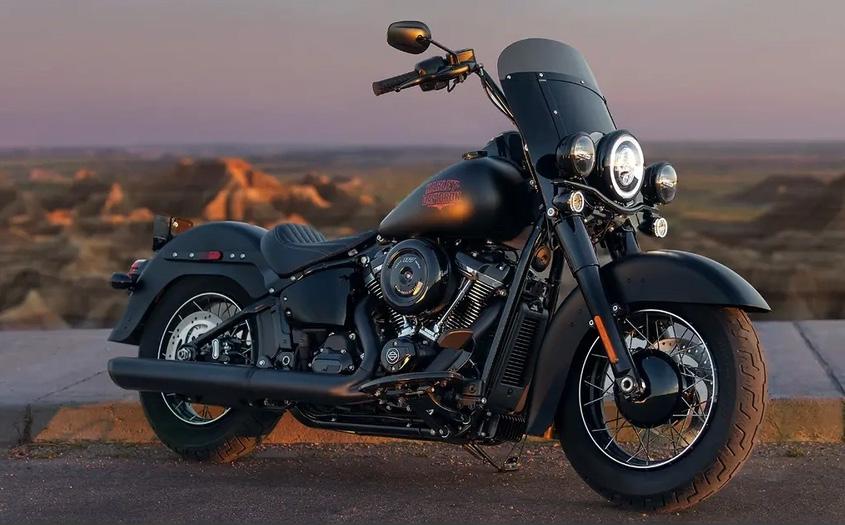
First came the news that Harley-Davidson was bringing back Pan-America/engine production back from Thailand, then the Super Glide homage to Willie G. was brought back and now, just in time for Sturgis, HarleyDavidson rolls out its stripped down, sub-$18,000 softail, dubbed Deadwood... and like the Super Glide, it is only for the North American market.
“The Deadwood motorcycle embodies that spirit of rebellion and individualism that was so prevalent following World War II, when many returning GI rode a Harley-Davidson motorcycle to experience excitement and freedom,” explains Head of Design Bjorn Shuster. The generation of post-World War II riders often chose to strip their bikes of non-essential trim and components in an effort to boost performance and simplify the ride.
Riding together to rallies was a way to recapture the unity they embraced in the military, and one of the most popular was the Black Hills Motor Classic centered in Sturgis, S.D. In 1947, more than 400 riders converged on Sturgis to tour the spectacular winding roads of the Black Hills region and visit the communities of Spearfish, Lead and Deadwood.
“At that time, very few vehicles could match the thrilling performance of a stripped-down war-surplus HarleyDavidson,” says Shuster. “As designers, we find this era of customization and personalization, the early origins of the bobber-style custom, to be very inspirational. Our
second key source of inspiration lies directly in the name Deadwood, a place linked to both the Sturgis Rally and to its own rebellious history. The graphic design for the tank art evokes a Western visual language which personifies that location.”
Period correct styling cues include laced wheels with black rims, tuck-and-roll solo seat that exposes the rear fender. The lowered rear suspension (Deadwood boasts one of the lowest seat heights of any 2026 model at 25.5 inches) and a chopped detachable windshield give it “a slightly slammed look.”
All the ornamental trim and bright finishes have been removed, and laced wheels add to the post-War design ethos. The Softail chassis hides the rear suspension below the seat to maintain the classic look of a vintage hardtail frame while offering a thoroughly modern ride. Despite the stripped down styling, Deadwood features selectable ride modes to electronically control the performance characteristics of the motorcycle, ABS, Traction Control and even electronic tire pressure monitoring.
Milwaukee-Eight 117 Classic Engine Performance
Displacement: 117 cubic inches (1923cc)
Bore x Stroke: 4.075” x 4.50”
Compression Ratio: 10.3:1
Peak Torque: 120 lb. ft. (163 Nm)
Peak Horsepower: 98 hp (73 kW)
Dealer deliveries began in July and the Deadwood officially debuts August 7 during the Sturgis Motorcycle Rally.
HDFS REVENUE DECREASES
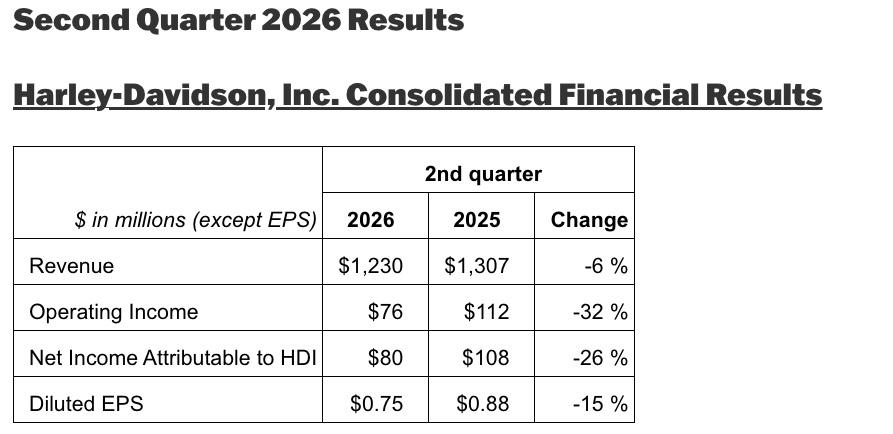
Show me the money? The shifting of HarleyDavidson Financial Services has seen a decrease in revenue coming from the financial side of the equation. Consolidated revenue in the second quarter was down 6%, driven largely by an HDFS revenue decrease of 55%.
Consolidated operating income in the second quarter was down 32%, driven largely by a decline of 69% at HDFS, partially offset by an increase of 18% at HDMC. Meanwhile LiveWire continues to operate at a loss. LiveWire’s operating loss did improve by $1 million and was 4% lower than the prior year loss. Consolidated operating income margin in the second quarter was 6.2% relative to 8.6% in the second quarter a year ago.
Speaking of last year, in July 2025 HDFS entered into a long-term strategic partnership with KKR, a leading global investment firm, and PIMCO, a global leader in active fixed income with expertise across public and private markets. “This partnership transforms HDFS into a capital-light financing business through the sale of existing and future retail loans while maintaining
its strategic value to Harley-Davidson, its dealers, customers and investors. The sale of more than $5 billion of existing retail loan receivables is valued at a premium to par.”
Under the terms of the agreement, “HDFS will also sell 4.9% common equity interests to investment vehicles managed by KKR and PIMCO at an implied valuation of ~1.75x price to post-transaction book value. HarleyDavidson will retain control of HDFS, which will continue to originate and service existing and new consumer loans. The Company expects HDFS operating income to grow back toward pre-transaction levels over time.”
Q2 HDFS Highlights
• HDMC Adjusted EBITDA margin of 10.4%, up from 9.3% in Q2 ‘25
• HDFS operating income margin of 18.5%, down from 27.1% in Q2 ‘25
• Delivered diluted EPS of $0.75, down 15% vs. prior year
ONE MAN’S OPINION
While Indian Was Throwing Punches… Harley Was Building A Ladder
By Sergey Tokman
For the past month, it seemed like the motorcycle industry couldn’t stop talking about Indian Motorcycle taking shots at Harley-Davidson. The ads. The jabs. The social media influencer’s detailed rants. Even HarleyDavidson CEO Artie Starrs found himself becoming part of the marketing. Whether you loved the campaign or hated it, one thing became clear. Indian wanted everyone to know they were no longer the little brother of American motorcycling. They wanted to stand toe-to-toe with the biggest name in the industry and prove they belonged in the same conversation.
Personally, I think this may go down as one of the biggest advertising backfires I’ve seen in powersports history. In my opinion, it’s right up there with the Bud Light campaign. Not because the situations are identical, but because both campaigns created massive attention while producing consequences the companies probably never intended. Instead of talking about Indian motorcycles, technology, or vision for the future, much of the conversation shifted right back to Harley-Davidson. Sometimes the hardest punch doesn’t knock your opponent down. Sometimes it just reminds everyone how big your opponent really is.
What fascinated me wasn’t what Indian was doing. It was what Harley wasn’t doing.
Harley didn’t answer with another commercial. They didn’t launch a counterattack on social media. Artie Starrs and his team simply took the punches and kept working. Looking back now, I think we’re starting to understand what they were really building.
For years, Harley-Davidson and Indian have shared the same challenge. They build incredible motorcycles, but they also build motorcycles that many first-time riders simply can’t afford. Walk into either dealership today and it’s easy to find yourself looking at motorcycles that cost $25,000, $30,000 or even$40,000 before taxes, accessories and financing. There will always be buyers for those motorcycles, but let’s be honest, that isn’t where most riders begin.
Before I go any further, I also want to give credit where it’s due. Indian Motorcycle Company continues building beautiful motorcycles here in America, Harley-Davidson has announced plans to bring more manufacturing back to the United States, and Buell Motorcycles continues proving that American performance motorcycles can still be designed, engineered and built here at home. Bill Melvin and his team deserve recognition for continuing that fight. As someone who’s spent more than 25 years in this industry, I’ll always support companies investing in American workers and American manufacturing. I also believe President Donald Trump’s renewed focus on domestic manufacturing has encouraged more companies to rethink where they build products and where they invest. Regardless of politics, a stronger American manufacturing base is good for our industry and good for our country.
Now let’s get back to the story, because this isn’t really about Harley versus Indian. It’s about strategy!
Harley-Davidson appears to be asking a question that every manufacturer should be asking:
“How do we earn the next generation of riders before someone else does?”
That’s where Hero MotoCorp enters the picture. For those who aren’t familiar with Hero, this isn’t some small overseas company looking for attention. Hero MotoCorp is the largest motorcycle manufacturer in the world by volume. They build millions of motorcycles every year and sell them throughout Asia, Africa, Latin America and other growing markets. Harley didn’t choose Hero by accident. They chose a company that already knows how to build reliable, affordable motorcycles at a scale very few manufacturers can match.
The partnership has already produced the HarleyDavidson X440, but reports surrounding the rumored Sprint and additional entry-level Harley-Davidson models suggest this relationship could become much bigger than anyone expected.
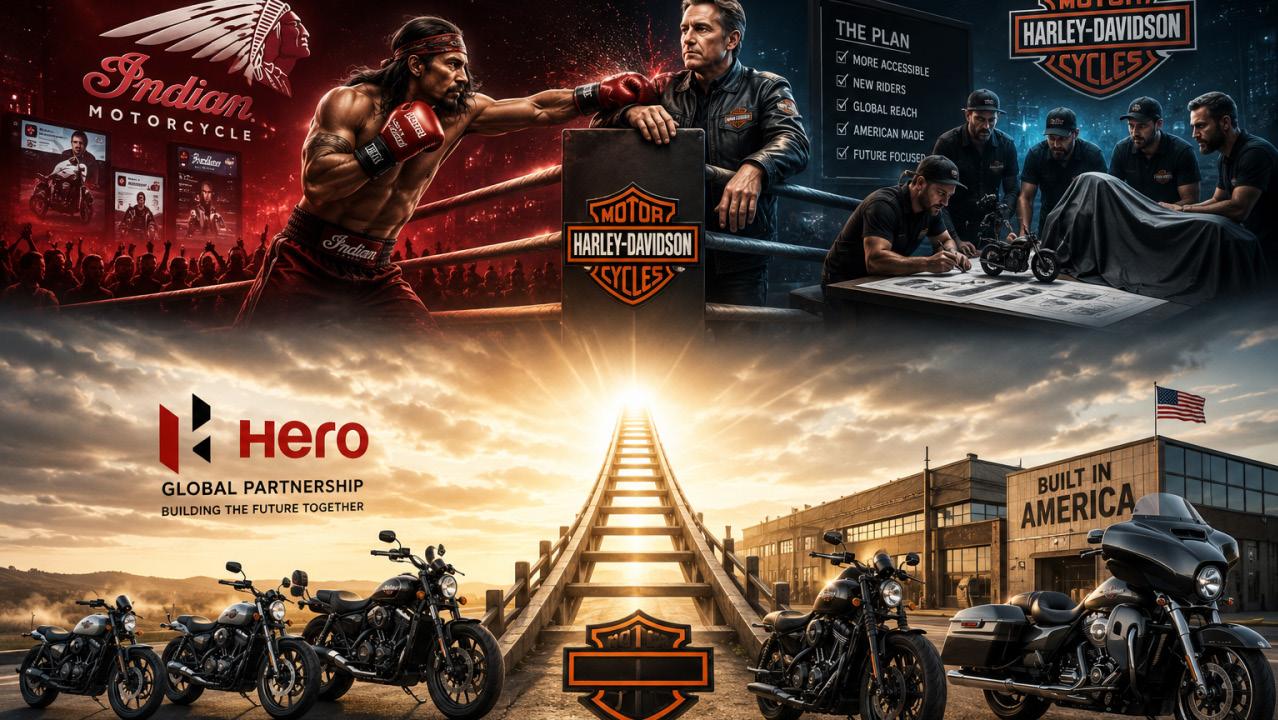
And that’s when it hit me... Harley isn’t trying to build a cheaper motorcycle. Harley is trying to remove the biggest obstacle standing between a young rider and their first Harley-Davidson. That’s the ladder.
Think about how many people have walked into a Harley dealership, fallen in love with the brand, looked at the price tag, and quietly walked back out. Not because they didn’t want a Harley, but because life simply wasn’t there yet.
Now imagine that same rider being able to buy their first brand-new Harley instead of settling for another brand because that’s all they could afford. Maybe it’s financed. Maybe it’s their first new vehicle of any kind. Maybe it’s the motorcycle that starts a relationship with HarleyDavidson that lasts the next forty years.
The hardest motorcycle for Harley-Davidson Motor Company to sell has never been a Road Glide — it’s the first Harley. If Hero helps Harley solve that problem, this partnership could become one of the smartest business decisions the company has made in decades.
Which naturally brings me to Indian.
As of today, there have been no credible reports that Indian is pursuing a manufacturing partnership similar to Harley-Davidson’s relationship with Hero. That doesn’t mean they won’t. It simply means we haven’t seen it. If Harley successfully launches smaller-displacement motorcycles at prices that bring thousands of new riders into the brand, what does Indian do? Do they develop their own entry-level platform? Do they look for a manufacturing partner? Or do they stay committed to the premium market they’ve built so successfully?
Then there are the motorcycles themselves. What exactly is the rumored Sprint? Is it an evolution of the X440 or something entirely different? Will these motorcycles stay overseas, or will Harley eventually bring them to American dealerships? And perhaps the biggest question of all... how many people who’ve never owned a Harley suddenly find themselves saying, “I can finally afford one.”
I’ve said it before, and I’ll say it again. I believe HarleyDavidson builds the greatest motorcycles in the world, not because they have the most horsepower or the newest technology, but because no other brand has created the global family that comes with owning the Bar & Shield. That’s something money can’t buy.
At the same time, even the greatest brand in the world has to keep growing. If this partnership with Hero gives someone their first opportunity to own a Harley-Davidson, then Harley won’t just be selling another motorcycle. They’ll be earning another Harley rider.
But if this strategy becomes reality, I don’t think history will remember this partnership because of one motorcycle. I think history may remember it because Harley-Davidson found a way to introduce an entirely new generation of riders to the Bar & Shield.
And if that happens...
That’s one hell of a ladder.
This is “One Man’s Opinion” — and you know what they say about opinions.
Sergey Tokman CEO/Founder, Cycles Worldwide sergey@cyclesworldwide.com
THE GREAT X-CAPE!
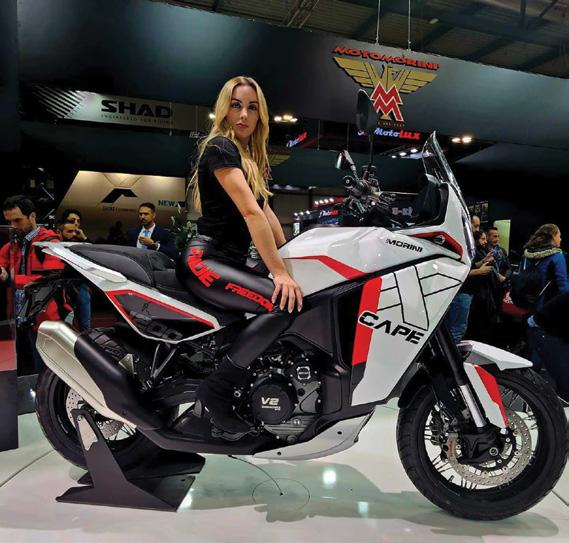
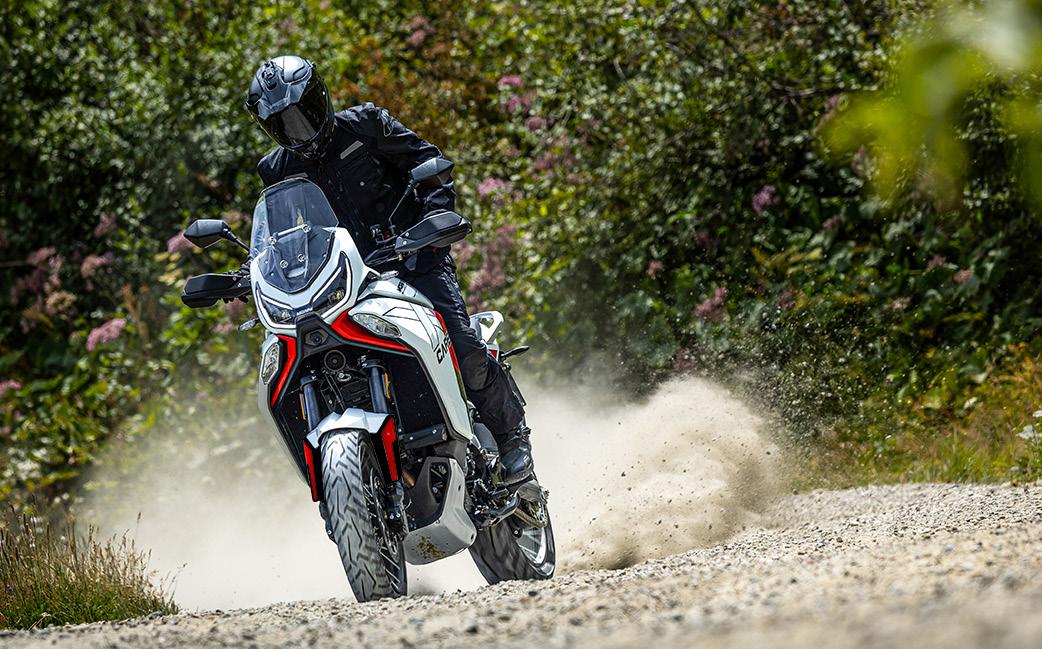
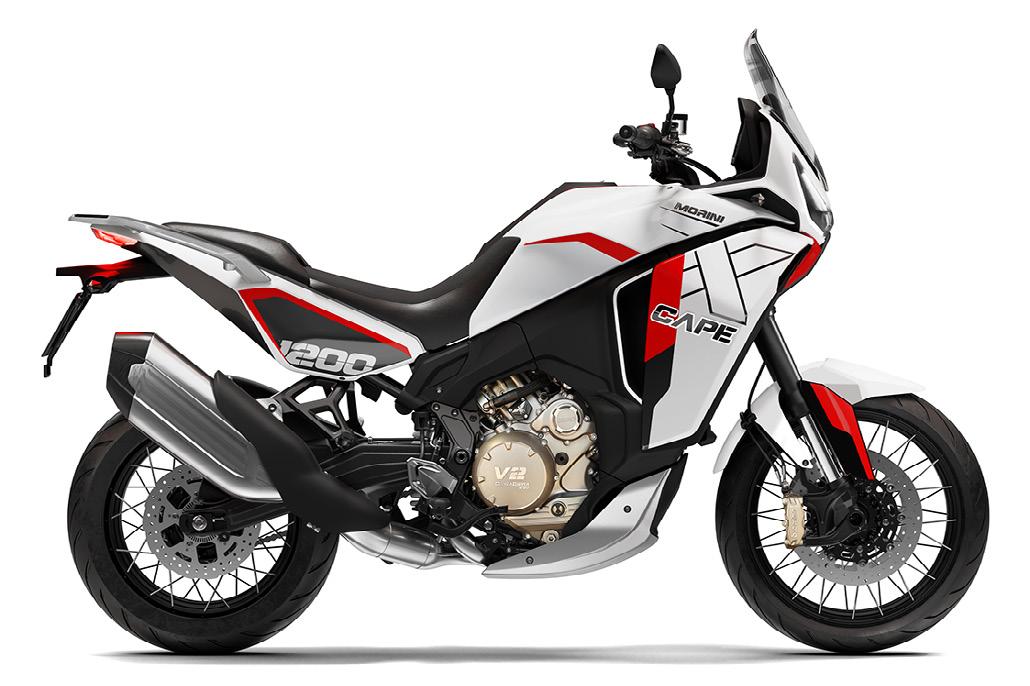
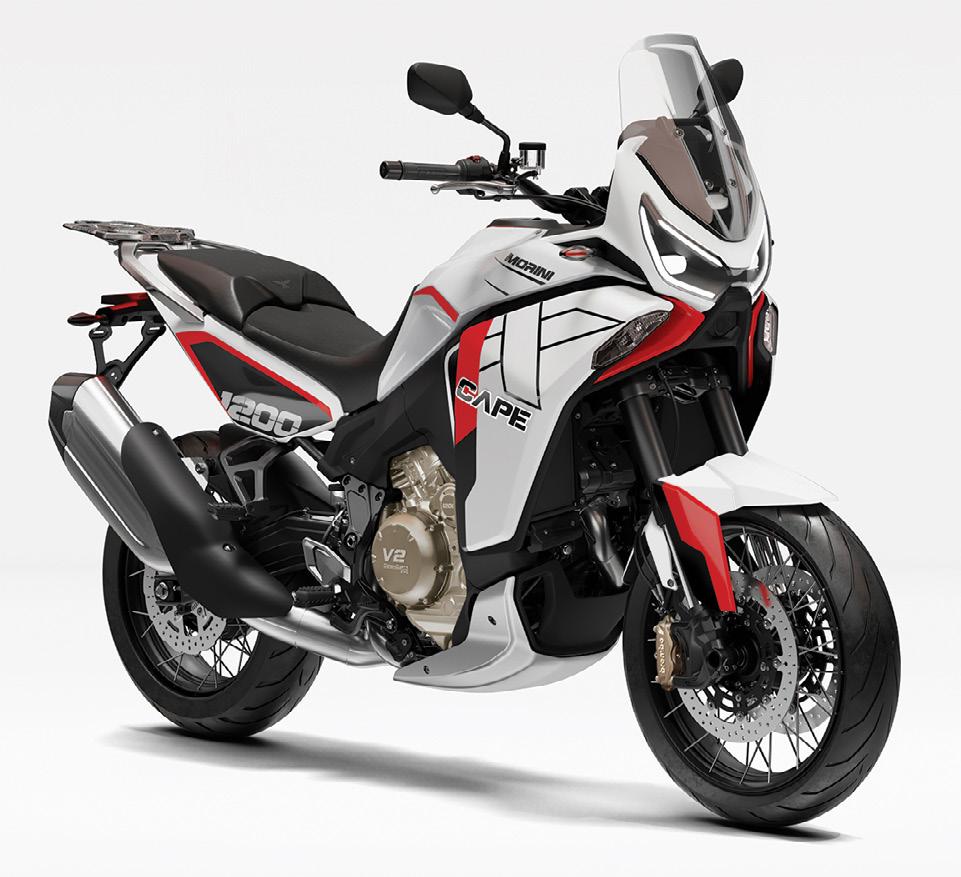
We first saw the 2027 X-Cape 1200 at EICMA in Milan, then U.S. dealers were treated to the North American debut with a drum line at AIMExpo the first week of January. Now the Italian stallion is ready for retail. The iconic Italian motorcycle manufacturer founded in 1937, says the big bore X-Cape adventure motorcycles have arrived and are being delivered to Dealers now.
“Designed in Italy for riders who demand excellence both on and off the pavement, the X-Cape 1200 delivers an exceptional balance of power, agility, style and versatility,” notes Moto Morini USA Chief Operating Officer Chris McGee. “Whether navigating mountain roads, exploring remote trails, or embarking on long-distance journeys, the X-Cape 1200 is engineered to inspire confidence and adventure without compromise.”
Bigger is certainly better for the U.S. market so the powerplant was pumped up. At the heart of the X-Cape 1200 is Moto Morini’s renowned Corsa Corta EVO 87° V-Twin engine, featuring dual overhead cams and eight valves. Designed and engineered in Italy,
the liquid-cooled powerplant delivers an impressive 129 horsepower and 78.2 lb-ft of torque at 7,000 rpm, providing strong, responsive performance across the entire rev range.
A tubular steel trellis frame with a removable rear subframe and precision-engineered aluminum cast components cradles the Big Twin. A uniquely designed 6.5-gallon fuel tank wraps low around the engine to centralize mass and lower the center of gravity, enhancing handling, stability, and rider confidence across varying terrain. With a manageable 33-inch seat height, 7.5 inches of ground clearance, and a standard center stand, the X-Cape 1200 offers accessibility without sacrificing adventure capability.
“Advanced rider technology is standard thanks to a comprehensive suite of premium Bosch electronics centered around a sophisticated 6-axis IMU platform,” adds McGee. “Riders can select from four riding modes while benefiting from advanced features including cruise control, a bi-directional quick shifter, leansensitive traction control, cornering ABS, cornering lights, and blind-spot radar.”
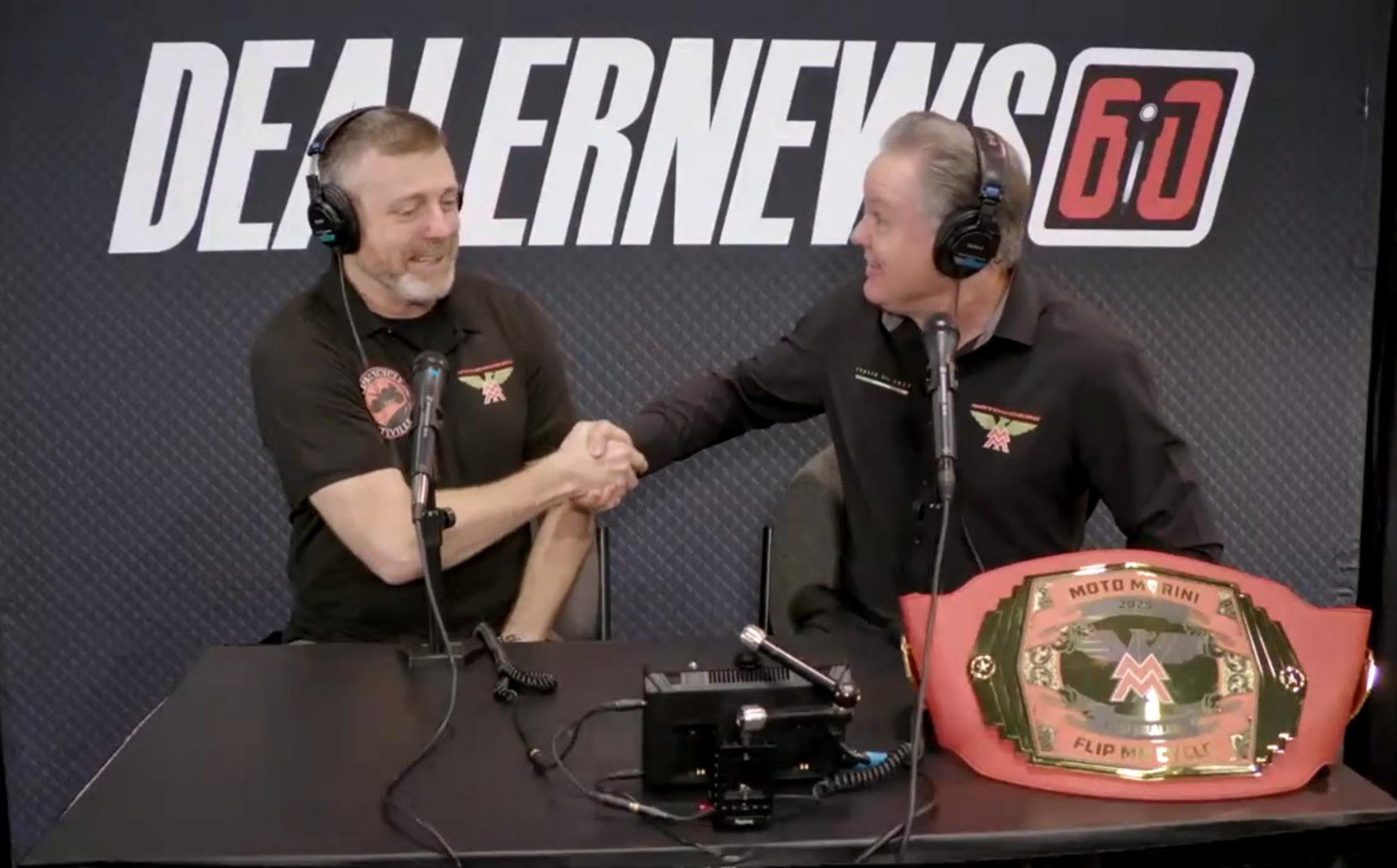
Following the drum line into the show hall, Moto Morini COO took the wraps off the 2026 line-up at AIMExpo and then took over the Dealernews LIVEstream to present the Champion’s Belt to the #1 Moto Morini dealer in North America — Jason Bach from Flip My Cycle, Fayetteville, North Carolina. The dynamic duo then went through the product range, covering competitive advantages for the dealers.
The package is rounded out by 19 inch front/17 inch rear hoops, big Brembo binders and premium KYB suspension components front and rear: Fully adjustable 48mm inverted forks provide 7.1 inches of travel with preload, compression, and rebound adjustment.
The X-Cape 1200 is available in two striking color options. The new Carrara White features a brilliant white finish accented by contemporary red and black graphics, while the timeless Italia Red showcases bold black, gray, and white graphics that highlight Moto Morini’s unmistakable Italian heritage. “Like every Moto Morini motorcycle, the X-Cape 1200 is designed in Milan, Italy combining sophisticated aesthetics with purposeful functionality.”
With an MSRP of $12,999, the 2027 Moto Morini X-Cape 1200 is backed by The Best Warranty in Motorcycling, 3-years unlimited-miles, delivering exceptional peace of mind and value. For more details on what Moto Morini unveiled at AIMExpo and a visit with the brand’s Dealer Of The Year, check out the Livestream from the show: www.youtube.com/watch?v=nWQW4lo65U&list=PLLU8FMCVH0D5jDUc-6jd3uR0dBmK6fHL&index=29
WHAT THEY SAID
When we write about adventure-touring motorcycles at accessible prices, a common reader response is something like, “That looks great, but I really wish it had [insert feature of your choice here].” Part of the promise of producing motorcycles in lower-cost settings is not just a low price, but also being able to include more features for that price.
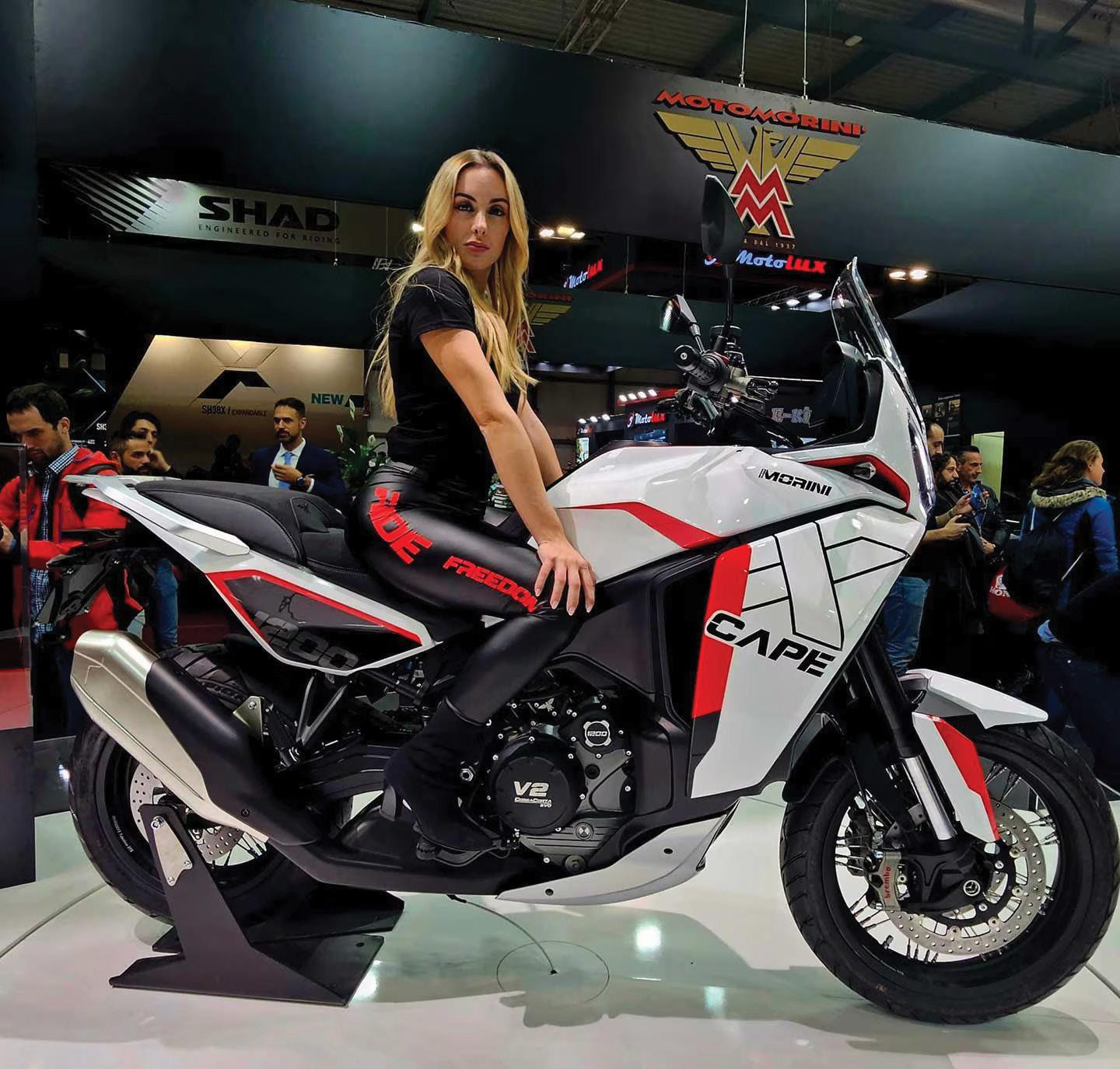
The Moto Morini X-Cape 1200 is an example.
For U.S. riders who have a dealer nearby and want a motorcycle with all the features, the X-Cape 1200 might be of interest, if only because it’s hard to find many competitors at this price point with such a long list of standard equipment. — Lance Oliver, Common Tread
Touring riders are coddled. Heated seats and grips are standard, with your hands also protected by guards. Cruise control and an adjustable windshield are part of the package, along with a seven-inch TFT display featuring a navigation system. Powered USB-A and USB-C ports keep your electronic devices charged and ready for use. Tire pressure monitoring is also part of the 1200’s package. Should you need to do maintenance, the big ADV bike has a centerstand. Fuel stops will be few and far between thanks to a 6.5-gallon tank. — Don Williams, Ultimate Motorcycling
The adventure motorcycle market has become one of the most competitive segments in the industry, with manufacturers pushing boundaries in performance and technology. Yet Moto Morini’s X-Cape 1200 stands out not by trying to overpower rivals, but by offering something more meaningful: balance.
It is a motorcycle designed for riders who want real versatility, those who dream of crossing continents while also enjoying carving weekend mountain roads. Its combination of Italian design, a charismatic V-twin, premium components, and thoughtful engineering gives it a distinct identity in a segment filled with technological excess.
This is a machine that invites exploration rather than intimidation. It is powerful yet manageable, stylish yet rugged, modern yet deeply mechanical at its core... In a landscape of increasingly homogeneous adventure bikes, the X-Cape 1200 emerges as a refreshing and compelling alternative, built not just to travel but to inspire. — Thomas Ferrero, Bike Travel Adventures

Dealernews Research
By Don Musick
BALANCING ACT PArt II
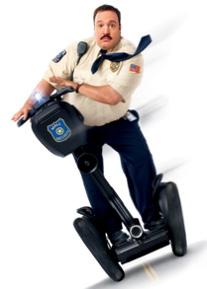
While the Ninebot ONE series served as a ‘halo’ product that established the brand’s premium reputation, the company’s ambitions went well beyond electric unicycles. Although self-balancing technology made EUCs possible, users still required five
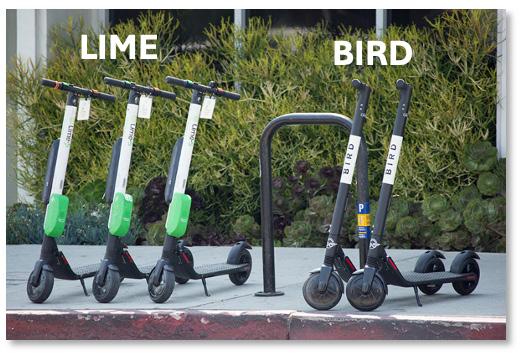
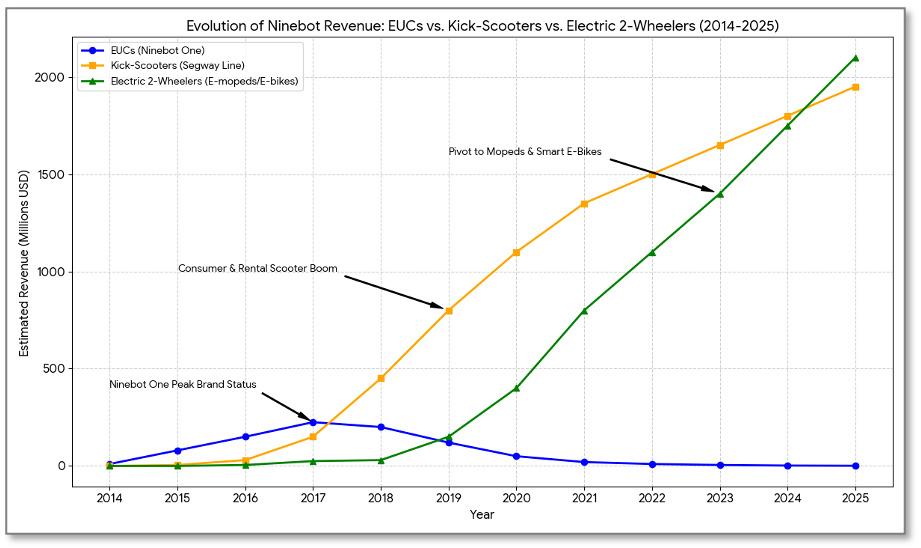
to ten hours of practice to become proficient. Compare that to a learning curve of less than a minute for another co-emerging category: the electric kick scooter. With no balancing requirement (user provided), cheaper manufacturing cost and the potential of much larger user base, Ninebot shifted its focus away from EUCs into e-kick scooters (and later e-bikes). This shift was accelerated by the emergence of micro-mobility rental platforms like Bird and Lime. By 2018, revenue from the new consumer base and rental fleets was more than double that of EUCs and increasing rapidly. Ninebots EUC revenue peaked in 2017, and the product line was gradually phased out. The graphic on the next page (top) illustrates Ninebots shift in product strategy (Google Gemini composite from Ninebots official investor relations disclosures and verified financial performance audits from 2014 through the first half of 2025).
TRADING PLACES
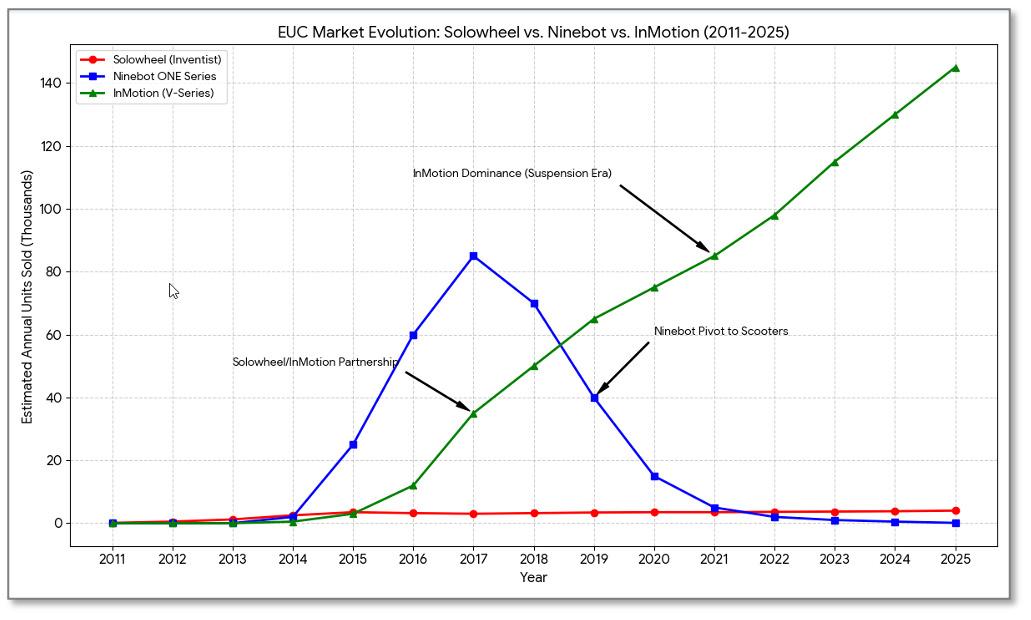
Historically, Ninebot/Segway had prioritized low-speed stability and stringent safety “tilt-back” protocols to protect casual riders. However, InMotion’s focus had been shifting toward the enthusiast market by developing higher-voltage architectures and suspension systems capable of sustained high-speed performance. While Ninebot pivoted toward scooters, the InMotion-Solowheel alliance seized the opportunity to fill the void and became the new leaders in the EUC space as illustrated in the figure on the next page (bottom).
The following graph is a Google Gemini composite of Ninebot-Segway and InMotion financial milestones with import data from the March 2026 ITC (International Trade Commission) Case 337-TA-1488, cross-referenced against Inventist (Solowheel) licensing records and community-tracked adoption rates.
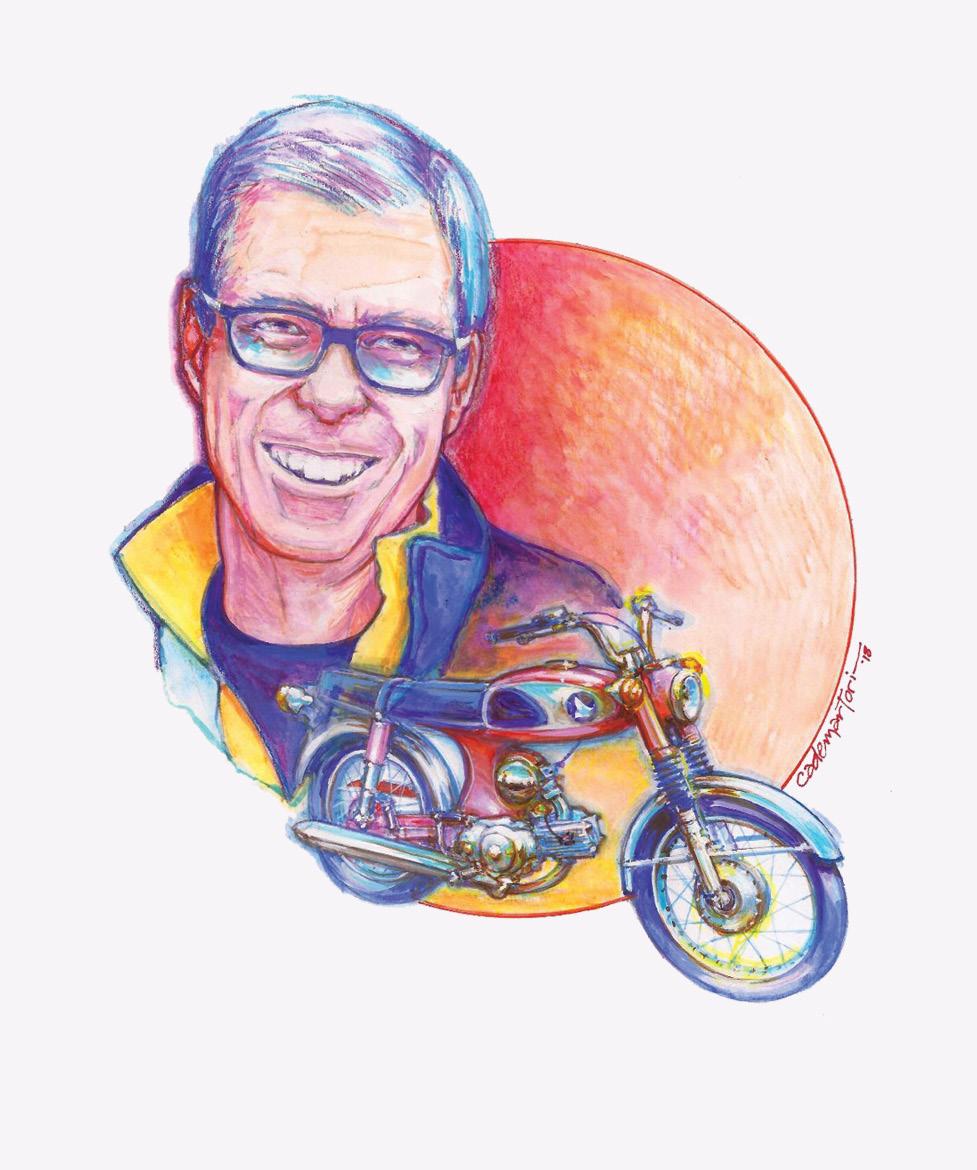
From his first motorcycles (a Honda S65 and an S90) when he was 16 to 50 years later, Don Musick has never stopped twisting the throttle. Although his accomplishments in the research arena have surpassed his MX career Don has over 25 years experience with major manufacturers in the Powersports and Automotive industries specializing in e-business solutions for retail distribution networks. His solution portfolio includes the development and implementation of manufacturer/dealer extranets, consumer-direct commerce portals, manufacturer/dealer e-channel integrations as well as development of web-based sales force automation tools. For most of his career, Don has been fascinated (his wife would say obsessed) with geographic market analytics, dealer location planning and sales territory optimization. He founded Genesys Technology Solutions (GenesysTech) www.genesystech.com to develop new tools and market intelligence products to help manufacturers understand the competitive landscape of their industries, recognize opportunities and grow their businesses. A Spartan to the core, Don earned a B.S. in Physiology and PhD in Biochemistry from Michigan State University. Contact: dmusick@genesystech.com

JUNE AWP IN REVIEW
The Shift
June Average Wholesale Price (AWP) signaled a clear spring break, giving way to a more typical summer price trajectory. Dealer demand for clean, low-mileage, retail-ready inventory remains strong, but bidding has become increasingly selective on higher-mileage and edgier inventory. While month-over-month AWPs have continued to fall, pre-owned values remain relatively strong versus 2025. Year-over-year retail trends have also held strong through Q1 and Q2, with most franchised dealers reporting stronger demand, better margins, and more interest from consumers. While larger economic factors like fuel prices and interest rates remained headwinds, powersports unit sales have seen more muted impacts when comparing those same factors against the Marine and RV industries.
By the Numbers
While May AWPs remained relatively flat versus short-term comparables, June pricing indicates the market is shifting. On-road Motorcycles showed the most significant seasonal drop in AWP, with Domestic Cruisers down 11.1%, Sport Bikes softening 5.5%, and Metric Cruiser pulling back 13.3% versus the trailing 90-day average. Despite the seasonal shift, most onroad prices remain elevated compared to 2025, with 3 of the 4 segments showing positive AWP gains. Off-road segments proved comparatively resilient, while showing slightly more variance in price trends. Seasonally, ATV AWPs were up 4.7% while Side-by-Sides slipped 3.5%. Notably, both categories remain up compared to last year, reflecting continued improvement in inventory at the dealership level, helping to fuel pre-owned demand. The large-unit categories were relatively stable in June, with Marine values down 1.8% while RV pricing remained 3.9% above the prior 90-day average. This is a divergence in the Marine and RV price trajectories and is worth noting heading into July and August.
The Road Ahead
Looking ahead, historical trends suggest June represents the market’s first real move towards the late-summer pricing trough, and 2026 appears to be following that pattern to a “T”. Although wholesale values remain healthier than a year ago, the spring buying frenzy has clearly slowed, making inventory discipline increasingly important. Dealers should begin evaluating trades and acquisitions based on expected August market values rather than the elevated prices experienced during the spring peak. Proactive dealers should also place a considerable amount of focus on cleaning out anything older than 90 days, reducing loss exposure on trades and purchases made during the Q1 peak. As AWPs continue to fall through July and August, there will be significant buying opportunities, but this must be coupled with disciplined inventory management, write-downs, and liquidations of aged units to protect profitability and margins. Summer is here. Are you ready? www.npauctions.com/cp/npa-market-report
JUNE ‘26 VS. JUNE ‘25 AVERAGE WHOLESALE PRICE CHANGE
Enhance decision-making with proven principles.
POWERSPORTS
Learning proven principles and ratios for dealership management is crucial to adapting to business challenges with confidence. From profit plans and pricing strategies to inventory planning and management techniques, you'll leave Total Management 1 with everything you need to make better, faster decisions in any market climate.
If you're ready to lean on facilitators who've been where you are, register for Total Management 1 today.
Total Management 1
Oct 12-16 Kansas City, MO
Nov 2-6 Calgary, AB
Dec 7-11 Dallas, TX
To learn more, email us at sfinfo@ncmassociates.com or call 1-800-756-2620.
sf.ncmassociates.com/product/total-management-1/

Specialty Vehicles Market Insights Report
Powersports
2026 Q1
Dealernews Research
By Lenny Sims
FINANCING IS EASING...
Market Activity Is Up
Hot enough for you? The price of financing is going down, sales activity is warming up... at least in some segments. “Regarding affordability, the cost of financing a new vehicle keeps easing, though not by enough to neutralize the structural affordability pressures weighing on buyers,” says Thomas King, president of OEM solutions for JD Power.
Things continue to heat up, “July saw the highest new vehicle sales rate of the year,” he adds. But while the market for powersports, and most automotive segments jumped, EVs of all types continue to slump:
• Seasonally adjusted annualized sales rate (SAAR) forecast to rise 1.7% year over year
• EV share falls 3.3 percentage points to 7.0% year-over-year
• Non-EV incentives tracking up 22.2% while EV incentives fall 7.0%
Against this overall backdrop, the powersportsspecific market shifts coming out of the first half of 2026 stack up. In the Cruiser segment, Indian appeared to be gaining ground on Harley-Davidson from consumers as well as F&I professionals… at least until the ill-advised Indian social media warpath. Similarly Kawasaki continued its gains in the sportbike segment at the expense of Yamaha.
Despite the ongoing geopolitical uncertainty, used motorcycle values continue to rise, supported by strong demand particularly for well-maintained units in the two- to four-year age range. Despite broader external headwinds, dealers remain optimistic and confident in the strength of the upcoming selling season.
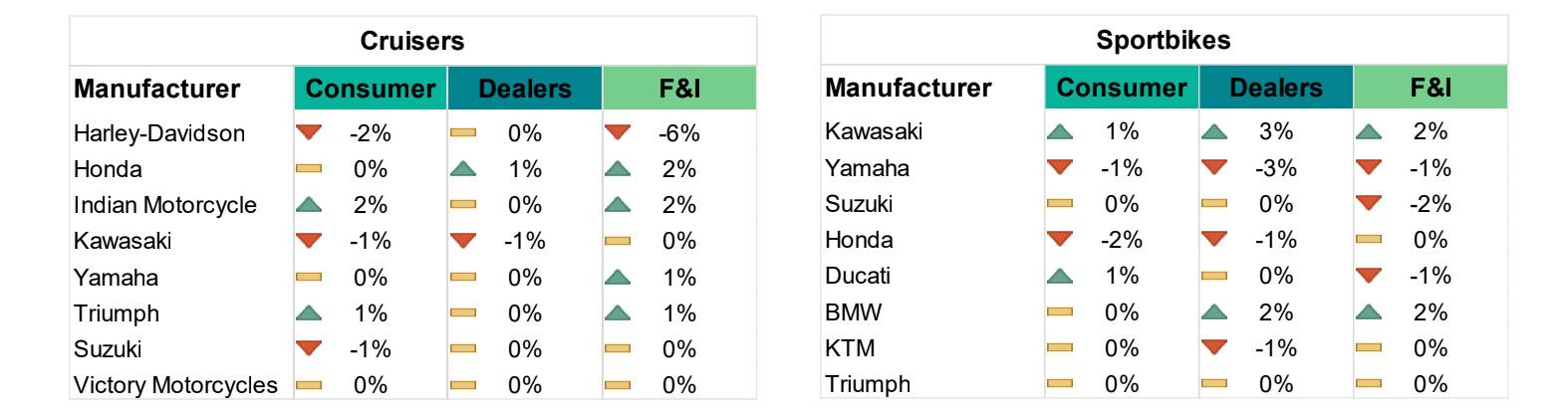
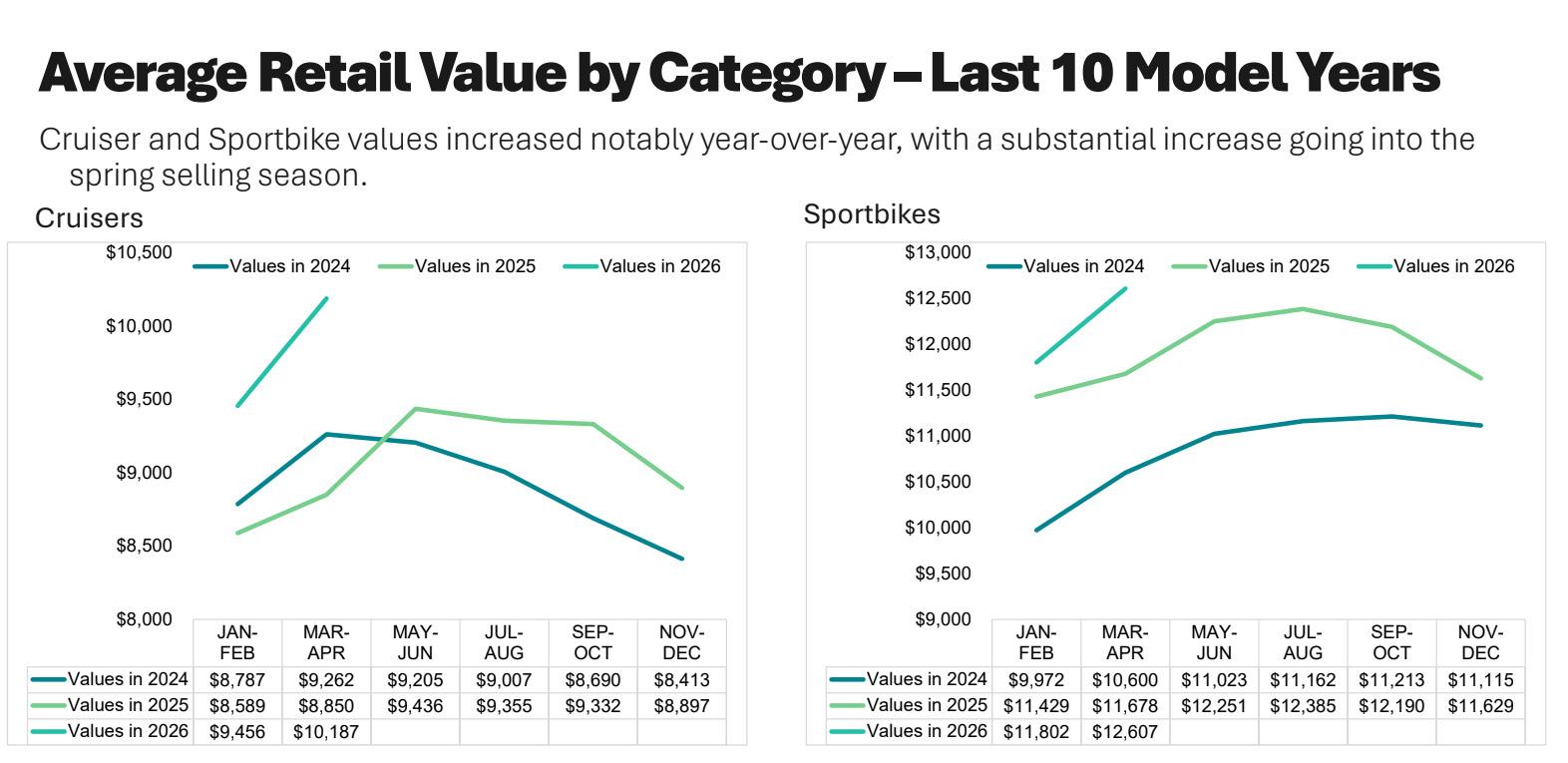
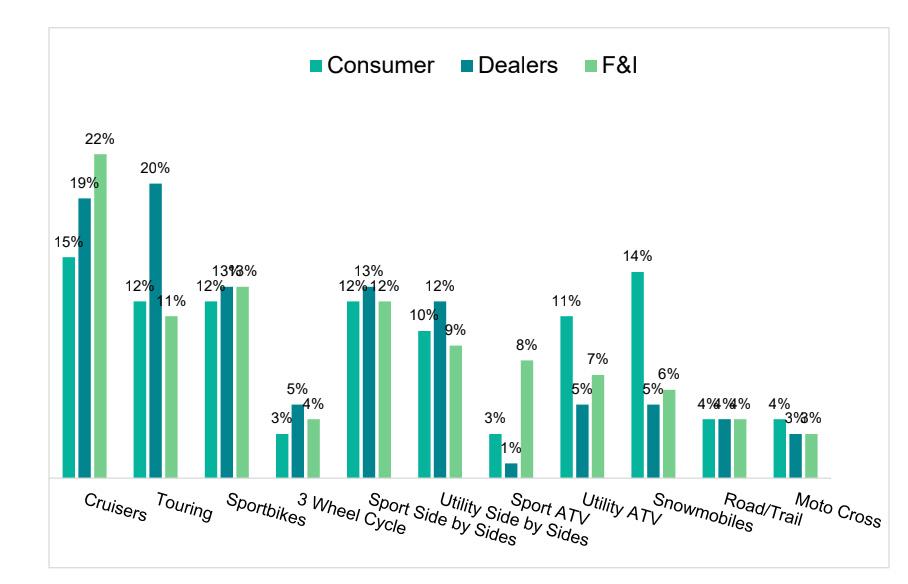
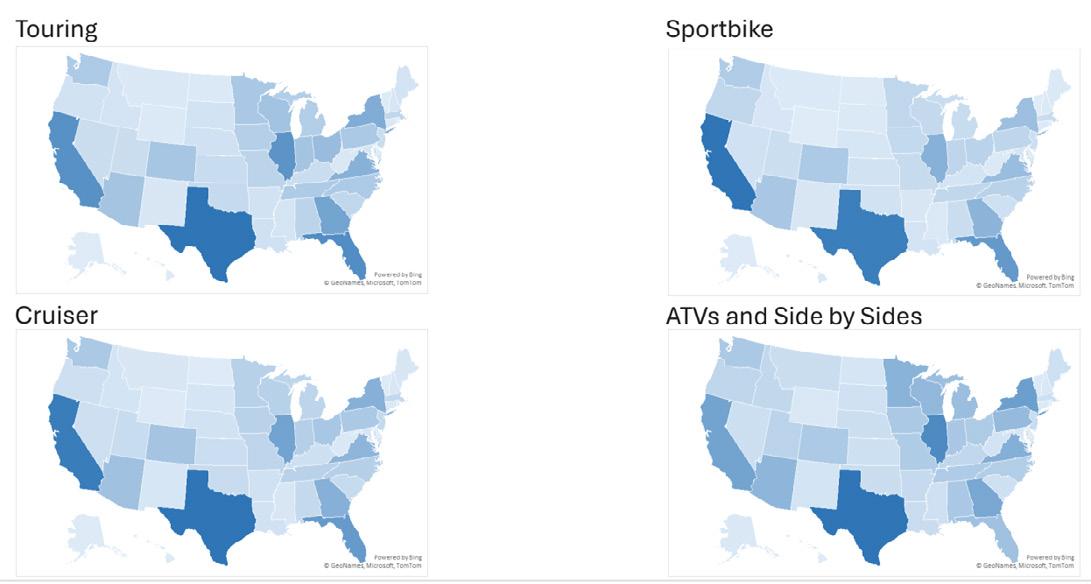
JD Power is the largest publisher of the most market-reflective vehicle pricing and information available for new and used cars, classic cars, motorcycles, boats, RVs and manufactured homes, offers in-depth shopping and research tools including a broad range of data, products and service and informational articles as well as tips and advice.
JD Power also produces electronic products, mobile applications, raw data, web services, web-syndicated products and print guidebooks.
For more information about our valuation products including CONNECT web values, the MarketValues app, API products, and print editions, call 800-544-6232, e-mail valuationsupport@jdpa.com or click here: www.jdpower.com
STAIR STEP STUMBLING BLOCKS: WHEN WILL WE EVER LEARN?
By Michael Maledon
Last month, Nissan CEO Ivan Espinosa made some brutal admissions about the mistakes of prior management. He acknowledged that in years past, Nissan became too focused on volume and the use of aggressive “stair step” incentive programs. He also acknowledged the damage that strategy caused by cheapening Nissan’s brand as dealers were forced to drastically discount new inventory simply to hit factory sales objectives.
For many of us in the powersports industry, this probably sounds all too familiar. Despite the lessons learned by overzealous automotive manufacturers, a few large powersports OEMs continue to rely on similar programs. They may help increase short-term sales, but eventually the bill comes due.
For those unfamiliar with a stair step program — and be glad if your OEM doesn’t use them — here’s how it works. Unlike a traditional sales incentive that pays the same amount on every unit sold, stair step programs use escalating sales tiers with bonuses applied retroactively. Miss the target and receive nothing. Reach the first tier and earn a bonus on every unit sold. Reach the next tier and the payout jumps dramatically, again applying to every unit sold during the incentive period.
The results are entirely predictable. A dealer playing the game can lose thousands of dollars on an individual transaction because the factory incentive is enough to move the transaction from a loss to a modest profit. Those dealers appease the OEM’s appetite for ever-increasing wholesale volume by carrying inventories that far exceed the natural demand within their own PMA. They sell aggressively into neighboring PMAs, discounting intensifies, and dealers spend more time competing against one another than competing against other brands.
It isn’t difficult to find examples in our industry. Many of us can point to dealers operating in small rural communities that carry inventories of 300, 400, or even 500 units. Those inventories simply cannot be supported by local demand alone. They advertise substantial discounts, often accompanied by a “No Freight, No Setup” message, while selling far beyond the boundaries of their own PMAs. In effect, they have become regional distributors rather than local retailers.
This is not a criticism of those dealers. They’ve created a rational business model in response to incentives the OEM has created. While the margins may be minimal on each individual unit, enough volume and factory incentive money can make the model profitable, particularly when operating with very low overhead.
In contrast, dealers that invest in premium facilities, continuous employee training, competitive compensation, and community involvement increasingly find themselves at a competitive disadvantage. They simply cannot compete with dealers whose business model is built around maximizing factory volume incentives.
In other words, these programs discourage dealers from investing in the very things that build brand value. Consumers begin to lose trust in dealers. When one dealer advertises prices thousands of dollars below another, or promises “No Freight, No Setup,” customers naturally assume their local dealer is overcharging them. Over time, that mistrust extends beyond individual dealerships and begins to erode confidence in the brand itself.
How do we know? Because we’ve seen this movie before. More than a decade ago, the National Automobile Dealers Association (NADA) commissioned an independent economic study examining these programs. The study concluded that while aggressive stair step programs can increase sales volume in the short term, over time they reduce dealer profitability, weaken consumer trust, compress residual values and ultimately damage the manufacturer’s brand.
Nissan isn’t the only automotive example, and I don’t mean to single them out. Their new leadership appears to have the company headed in the right direction. But their willingness to acknowledge past mistakes should serve as a warning to certain powersports OEMs before they find themselves retracing the same path.
The strongest brands create demand through superior products, supported by a dealer network that invests in facilities, professional employees and lasting customer relationships. Incentive programs should encourage those investments, not reward behavior that undermines them.
Bottom line: If history teaches us anything, it’s that chasing volume is short sighted. Building a great brand requires patience, discipline, and a dealer network committed to reinforcing the brand with every sale.
National Powersports Dealer Association Board of Directors member Michael Maledon is the President of Elway Powersports, where he has led the company’s expansion to five rooftops representing 19 leading franchises since launching the venture in 2021. He joined the Elway Dealership Group as a partner in 2017 after serving as a senior executive with the Van Tuyl Group, then the nation’s largest privately owned auto retailer with more than 100 franchises. Before his tenure at Van Tuyl, Michael practiced law specializing in mergers and acquisitions. His career also includes investment and advisory roles in several automotive technology ventures, and in 2014 he was recognized as a semifinalist for the Ernst & Young Entrepreneur of the Year Award. Michael earned a business degree from the University of Arizona and graduated with top honors from the University of Notre Dame Law School.








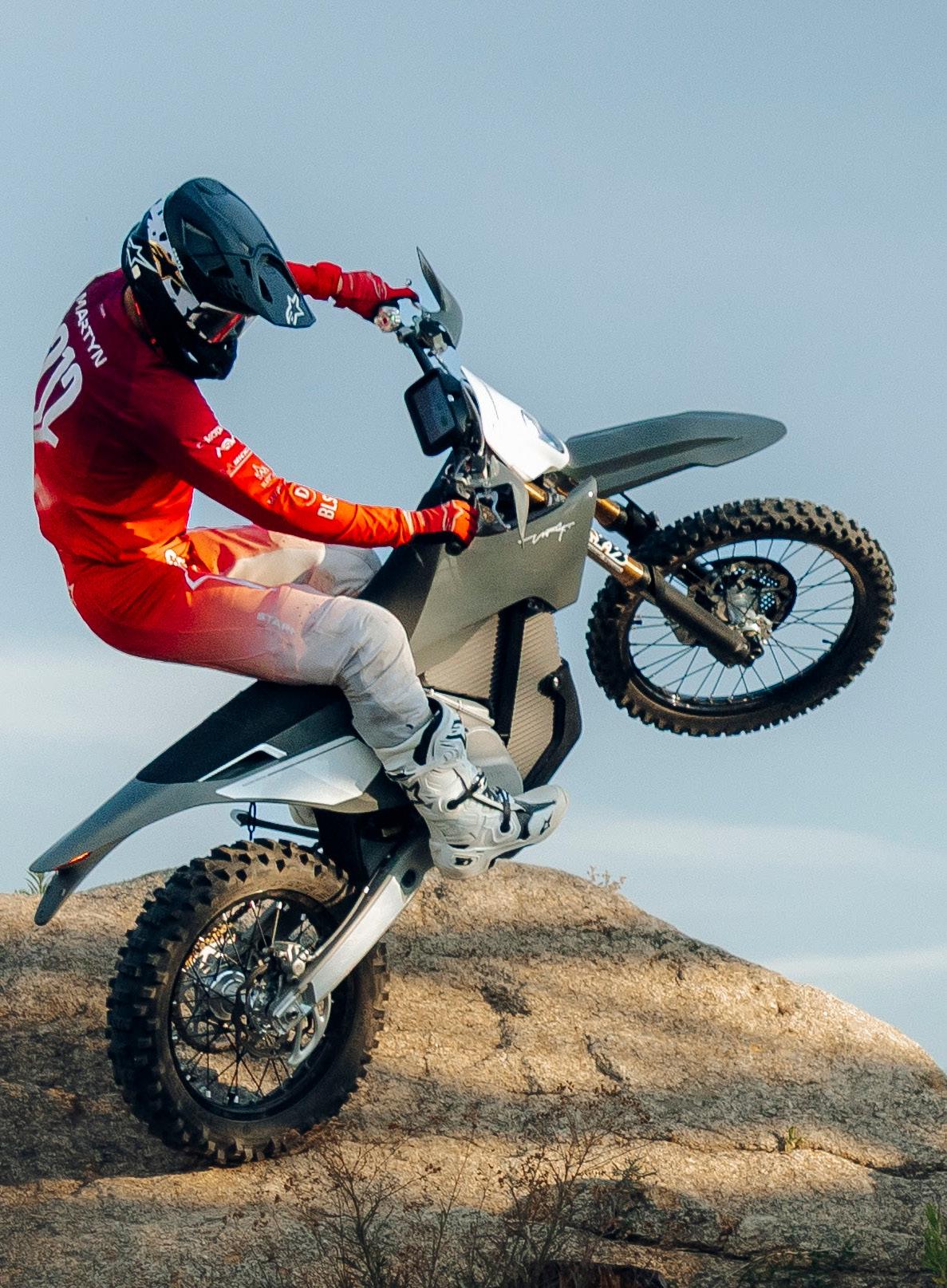
CURRENTS+
身体性 YAMAHA CAN DO KANDO
Yamaha is looking beyond the ICE: “We are hunting for the next big thing to create ‘Kando’ for the next 100 years,” says the head of Yamaha’s Silicon Valley skunkworks Keita Nakanishi, Chief Executive Officer at Yamaha Motor Ventures. Since 1955, Yamaha Motor Co., Ltd. has built an incredible legacy on the power of the Internal Combustion Engine (ICE). “From motorcycles navigating rough terrains to outboards mastering the open seas, our DNA is deeply rooted in engineering high-performance hardware that delivers Kando (profound excitation) to millions…
“But as the CEO of Yamaha Motor Ventures, I have to ask the uncomfortable question: What happens when the era of the traditional engine shifts? Over the past few years, we’ve successfully focused on scaling strategic collaborations between startups and our core business units. It was the right move, and it put our investment track record on a solid foundation.”
But there is a caveat to Kando moving forward into the next century cautions Nakanishi. “If we only invest in what fits today’s Yamaha, we fail to see what will define tomorrow. That is why we are actively expanding our focus to pure, horizon-three exploration.”
It may not be ICE, EV, or hybrid, but future generations of Yamaha powersports products must be Kando.
“We are not looking for incremental improvements or ideas that can integrate tomorrow. We are hunting for the disruptive technologies, business models, and visionary concepts that might make our current business obsolete in 10 years — and that’s exactly where we want to be,” explains Nakanishi-san. “Specifically, I am using our boots on the ground here in Silicon Valley to personally scout for pioneers who can bring “Kando” into the emerging future.
I am completely open to any domain — whether it’s AI, materials, deep tech, new platforms, or spaces I cannot yet imagine. If your idea leverages or amplifies what Yamaha has always represented — 身体性 (physicality), adventure, and the expanding possibility of human connection — I want to see it.
To the founders, researchers, and fellow investors: If you are building something so bold that it challenges the status quo of how we live and move — even if you think it’s “too early” or “not an immediate fit” for Yamaha — I want to hear from you.”
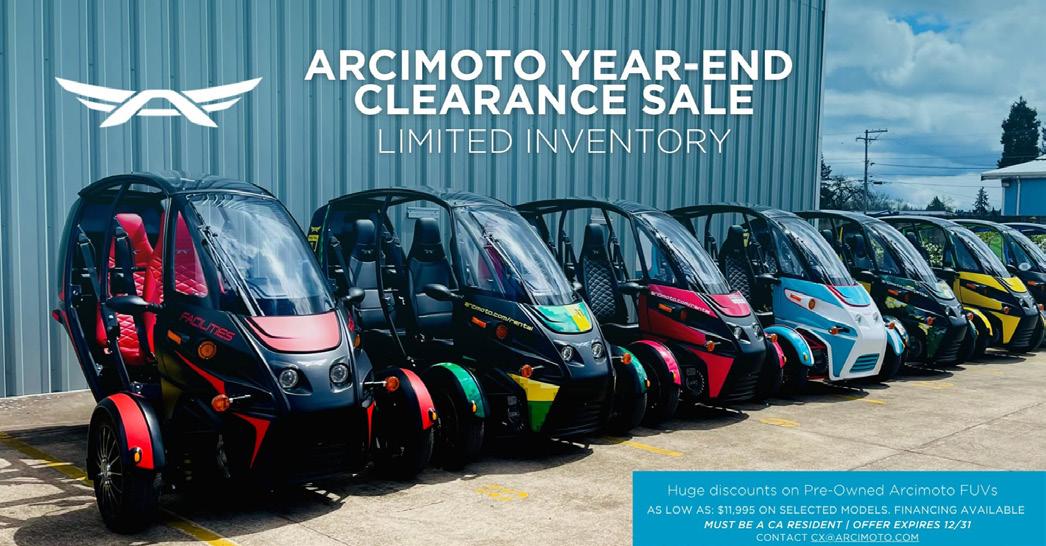
VOLARA CONTINUES TO CHARGE
Last month upstart EV operation Volara made headlines by acquiring the assets of Monday. Now it has launched E-Garage — a dedicated service and support network for electric mobility. — and acquired the assets of Arcimoto. In conjunction with the acquisition, Volara has formed “Monday Mobility Group,” a new division uniting Arcimoto and the E-Garage network within a single electric mobility organization.
“The Arcimoto assets provided the foundation for E-Garage,” said Christian Okonsky, Founder and CEO of Volara Motorsports Group. “Opening our first location in Eugene is intentional: it’s home to one of the highest concentrations of Arcimoto vehicles on the road, and it will serve as headquarters of the newly formed Monday Mobility Group. That gives us one organization dedicated to light electric mobility — the products, the service network, and the team to support riders nationwide.”
The Arcimoto asset acquisition gives E-Garage both an immediate mission and a foundation for growth. “Thousands of riders bought vehicles from companies that no longer exist,” adds Dwayne Lum, CEO of Monday Mobility Group. “Four-wheelers, three-wheelers, electric motorcycles, e-bikes — they’re still on the road, but their owners have nowhere to turn for certified service, parts, or support. E-Garage exists to close that gap.” See more of more of the E-Garage concept here: www.egarageservice.com


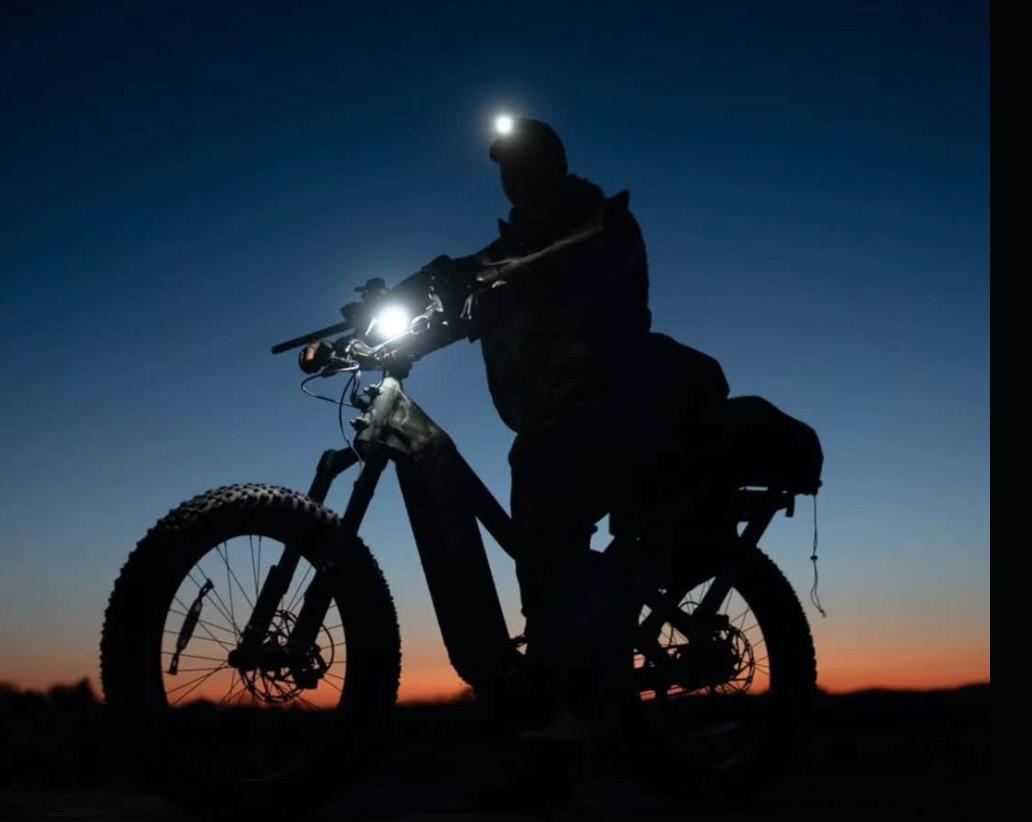
Now hear this! QuietKat has a new owner. The off-road e-bike brand formerly owned by Revelyst, Inc. (parent to Bell Helmets and Fox Racing), was sold for an undisclosed amount in June. Rad Life Mobility — a subsidiary of Life Electric Vehicles Holdings formed after acquiring Rad Power Bikes early this year — added QuietKat, to its expanding EV portfolio.
“QuietKat has built a powerful brand with a loyal customer base and a clear identity in the off-road electric bike category,” claims Jim Brown, CEO and president of Rad Life Mobility. “We see a tremendous opportunity to support that legacy with the industry experience, operational knowledge, dealer relationships, and supply chain capabilities we have developed across our broader electric mobility platform. QuietKat strengthens our ecosystem and gives us a deeper connection to outdoor, hunting, land management, and adventure mobility customers.”
Brown believes the transaction establishes QuietKat as a key brand within the Rad Life Mobility ecosystem that also includes Harley-Davidson’s Serial 1 business, acquired in 2023, while providing a foundation for continued investment in off-road electric mobility, expanded dealer and retail channel support, product development, and enhanced customer experience.
“We intend to preserve QuietKat’s distinct brand identity while aligning it with a broader platform built around electric mobility, customer support, operational discipline and category-specific product development,” concludes Brown.
RAD! Revelyst Spins Off QuietKat
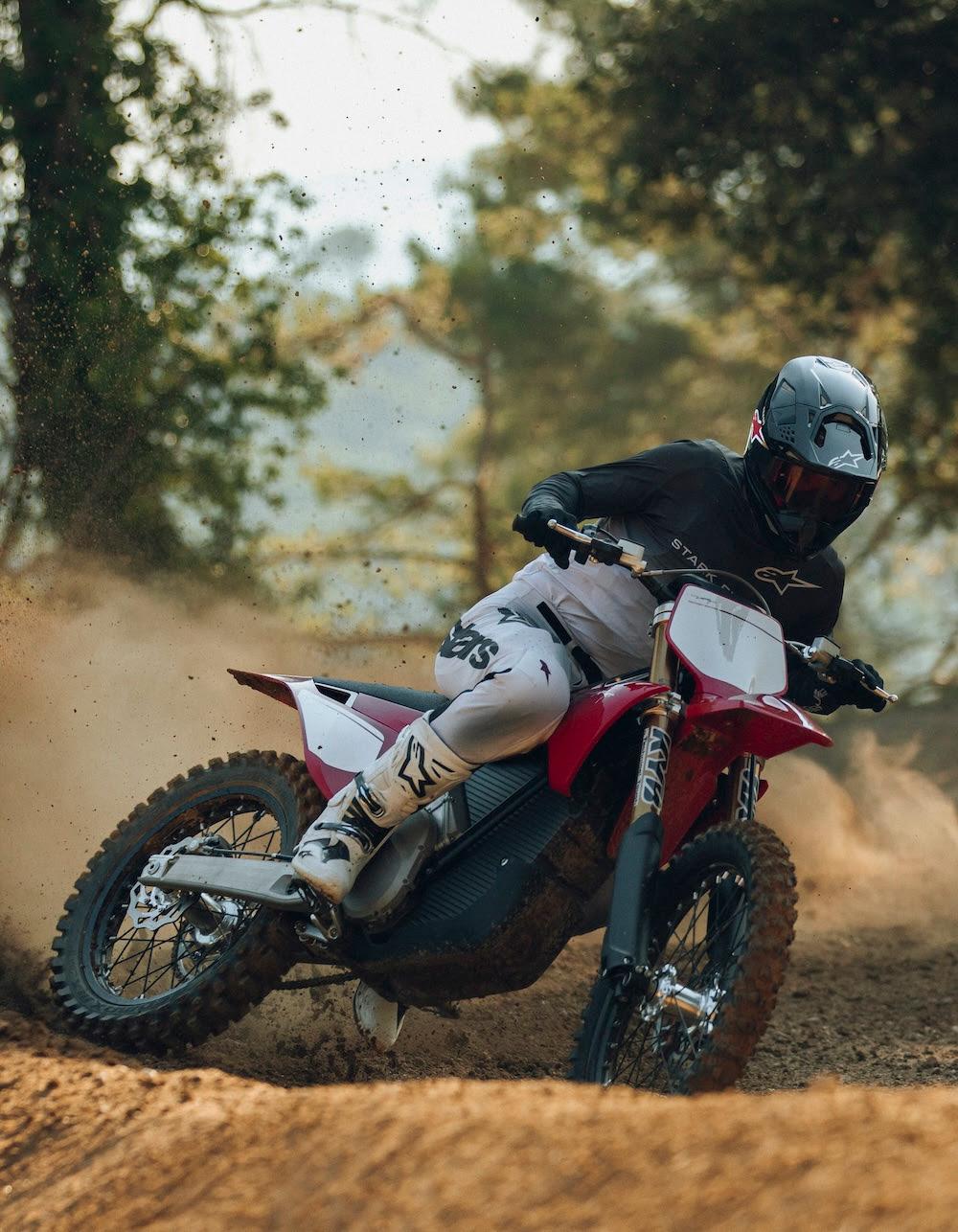
STARK WORKS BIKES
Full Factory Editions Launched
They say racing improves the breed so Stark is releasing racespec “Factory Edition” VARG MX and EX models to serious competitors. According to Stark Future Racing Director Sébastien Tortelli, the standard VARG already delivers championship-winning performance. The Factory Editions build on that platform with race-developed suspension, reduced weight, greater control, and components selected by Tortelli for himself.
“Racing and developing championship-winning motorcycles has been my life’s work,” says Seb. “Since joining Stark, we have continued to improve the VARG through testing and competition at the highest level. Every race has taught us something, and everything we have learned has gone back into the motorcycle.”
Since the VARG already has the performance, the focus was to give riders more grip, more precision, and more confidence to unlock more of that performance. “These are built exactly how I would build my own,” claims Tortelli.
At the center of both limited editions is a complete KYB Factory A-Kit suspension package, supported by titanium components, Dynamic Traction Control, a high-grip seat, and a series of detail refinements designed around one objective: giving riders more confidence to unlock more of the VARG’s existing performance.
But act fast! The Factory Editions will be produced in a single global production run, limited to 200 VARG MX Factory Editions and 300 VARG EX Factory Editions worldwide.
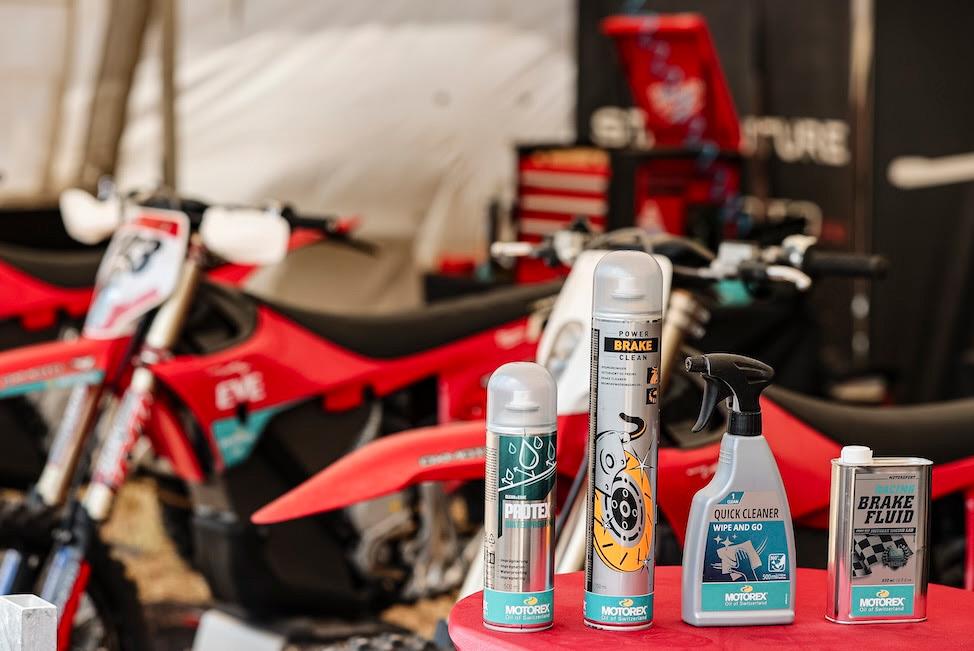
SPEAKING OF STARK…
Why would a company known for making oil for ICE applications join forces with an EV factory? Could it be Stark is making a 2-Stroke and needed Motorex Cross Power 2T oil to burn in its smokers? Despite the April 1 announcement, this deal was no April Fools prank. MOTOREX supplies the transmission oils and coolants for first fills, as well as the use of high-performance greases during the assembly process.
“This partnership is built on a shared approach to performance. At Stark, everything starts with how the bike performs under real conditions, and Motorex brings the same mindset, products developed through racing and proven under pressure,” explains Morgan Karlsson, Chief Marketing Officer, Stark Future. “By working closely together across development, production, and racing, we ensure a consistent standard from factory to rider.”
Milena Koerner, International Sponsorship Coordinator for Motorex adds, “It is great to see two forward-thinking brands coming together in this way. Stark Future is a pioneering brand that stands for innovation, high performance, and a strong vision for the future of off-road motorcycling — values that fit perfectly with MOTOREX. For us, this partnership is built on shared ambition and the drive to keep pushing boundaries across product development, production, and racing.”
Looking ahead, Motorex and Stark Future will continue to work side by side across racing, production, and product development while driving progress and delivering new solutions for riders worldwide.

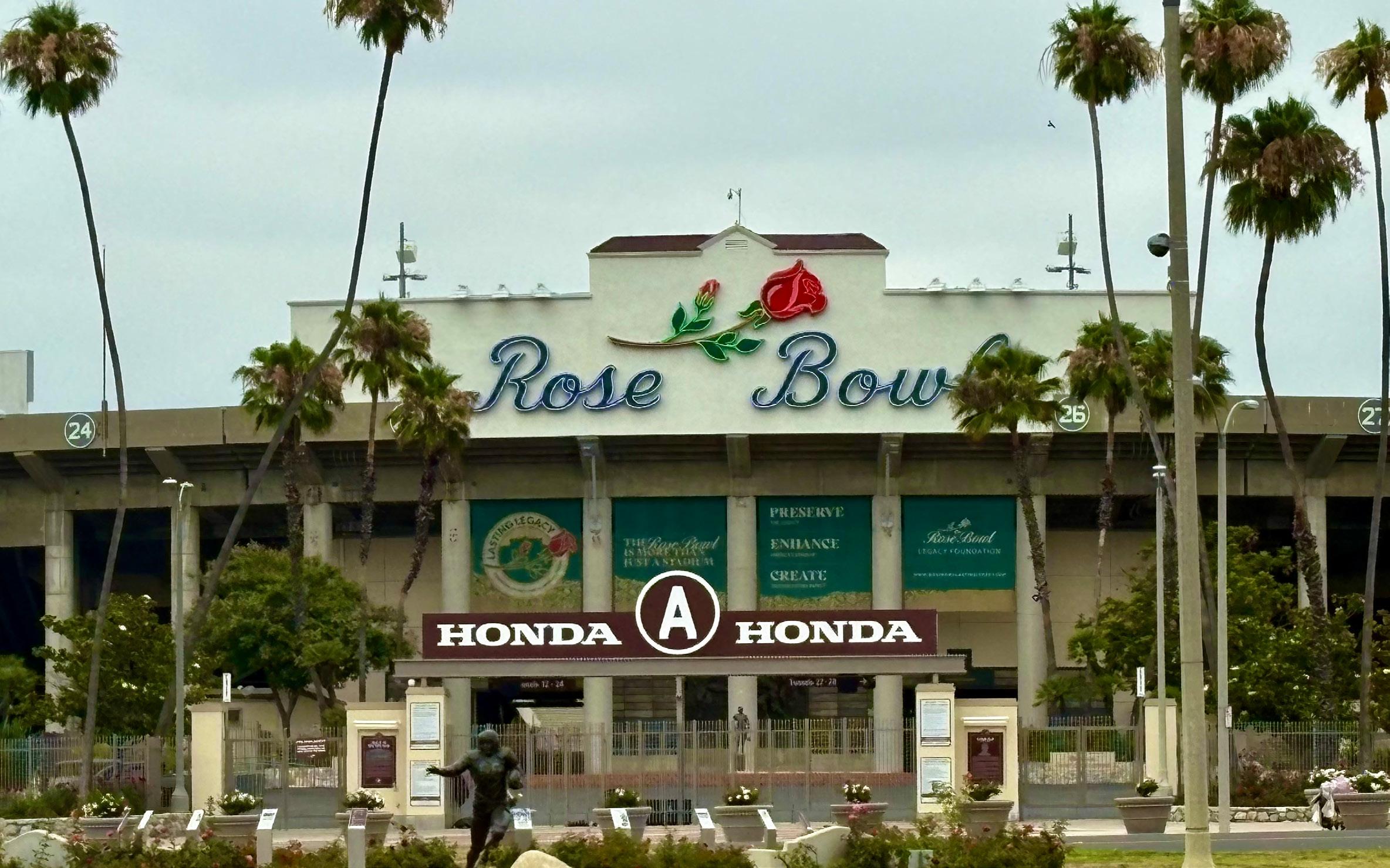
DEMO DAYS CHARGES INTO 2026
When we first covered Electrify Expo at the Great Park in Orange County, California, a couple years ago, EVs were all the buzz! The State had mandated electric cars by 2030. Harley-Davidson debuted the Serial 1 pedal assist bike, and half a dozen eMoto brands were offering demo rides. Fast forward to June of 2026, vehicle merit, not mandate is the industry mantra for car guys and eMoto has replaced pedal assist product on the two-wheeled side.
This paradigm shift in the market has also been seen on the show side. Formerly the Electrify Expo, the mission changed as the audience expanded. The shocking news was not the EV component as much as it was the experiential element that lead to “Demo Days” and a move from Orange County (and later Long Beach) to the iconic Rose Bowl complex in Pasadena for the kick off of the 6 city reimagined and reinvigorated tour. It’s a numbers game,” explains founder BJ Birtwell.
“Electrify Expo has delivered more than 1 million handson demos since 2021. This is not sit-in-a-parked-car demos. Not a rep walking someone through a spec sheet in a convention center,” adds Birtwell. “This is real people on purpose-built outdoor courses, on motorcycles on open streets, on e-bikes on dedicated loops, on UTVs through dirt tracks…”
The shift from electric to experiential has been galvanizing.
“That number grew because the format works,” Birtwell claims. “You put a product in someone’s hands with no sales pressure and no barriers, and the product sells itself. We built the entire festival around that idea and have now done it across 32+ events in major US markets with 600,000+ attendees.”
Dealernews can attest to “positive” changes and “leads” being generated. Local Dealer Moto Unlimited was taking uninitiated UTV fans on demo rides around a dirt course next to the legendary stadium. Kyle Bradshaw from Nelson-Rigg brought his whole family to play with the toys while he worked the display — speaking of displays, the Moto Morini Vettore and decked out KTM ADV bike captured attention as most ICE-powered OEMs hadn’t plugged into the Demo Days demographic. Not so for Nelson-Rigg! See Kyle’s full coverage here: www.facebook.com/reel/4355746928011543
In addition to Stark Vargs launching over a massive freestyle ramp, we ran into the Godfather of FMX himself, Mike Metzger. However he was shopping for eMoto offerings for a new brick and mortar dealership he is opening rather than hitting the ramps. “My kid is racing eMoto and I am getting drawn into that scene… I also have my artwork and tattooing keeping me busy.” Not too busy to check out Demo Days though.
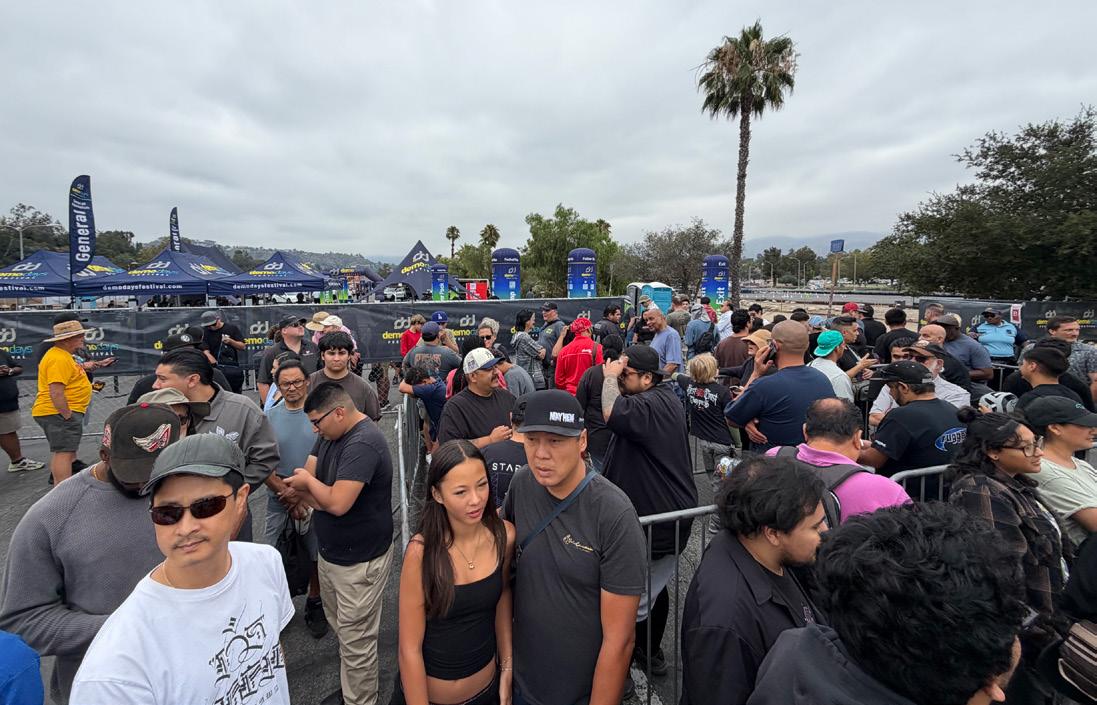
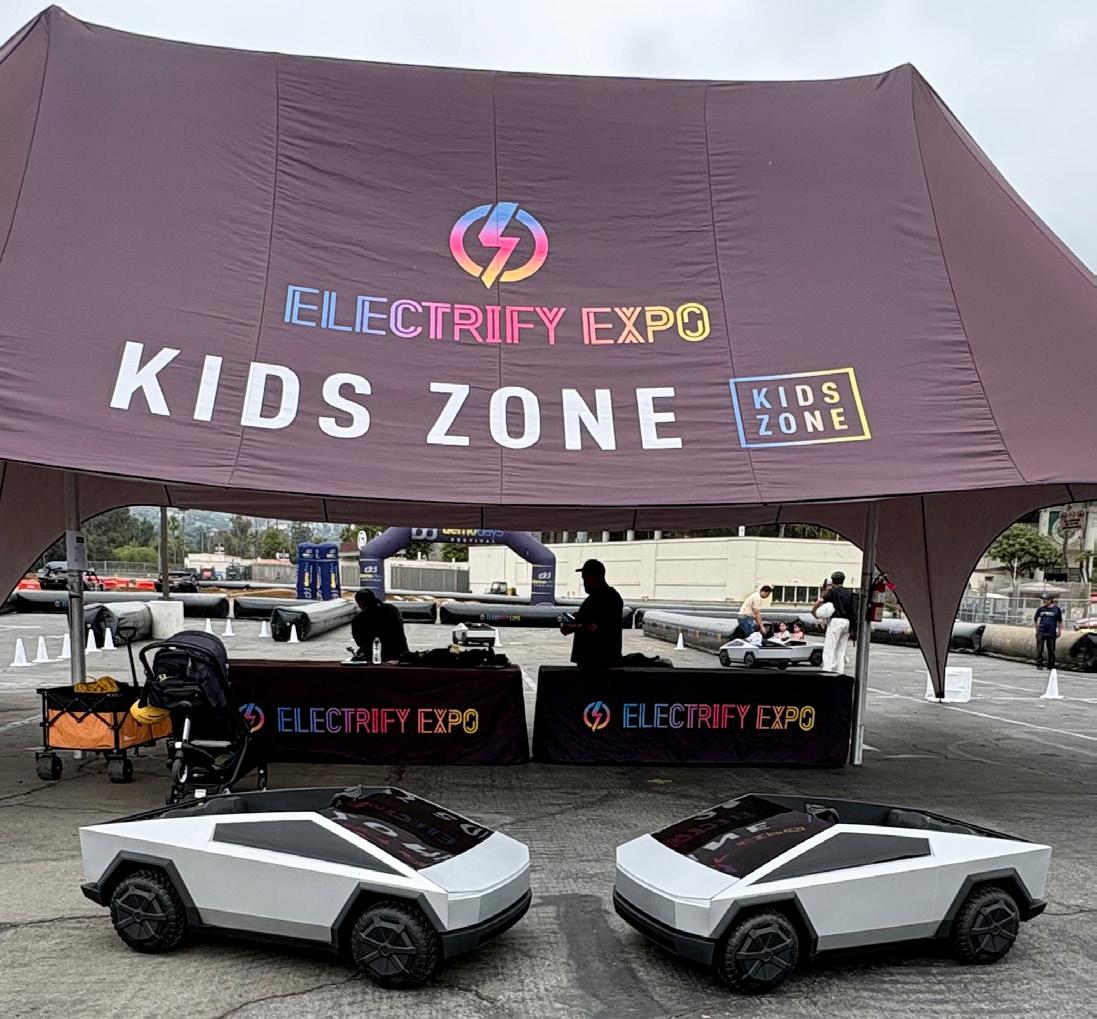
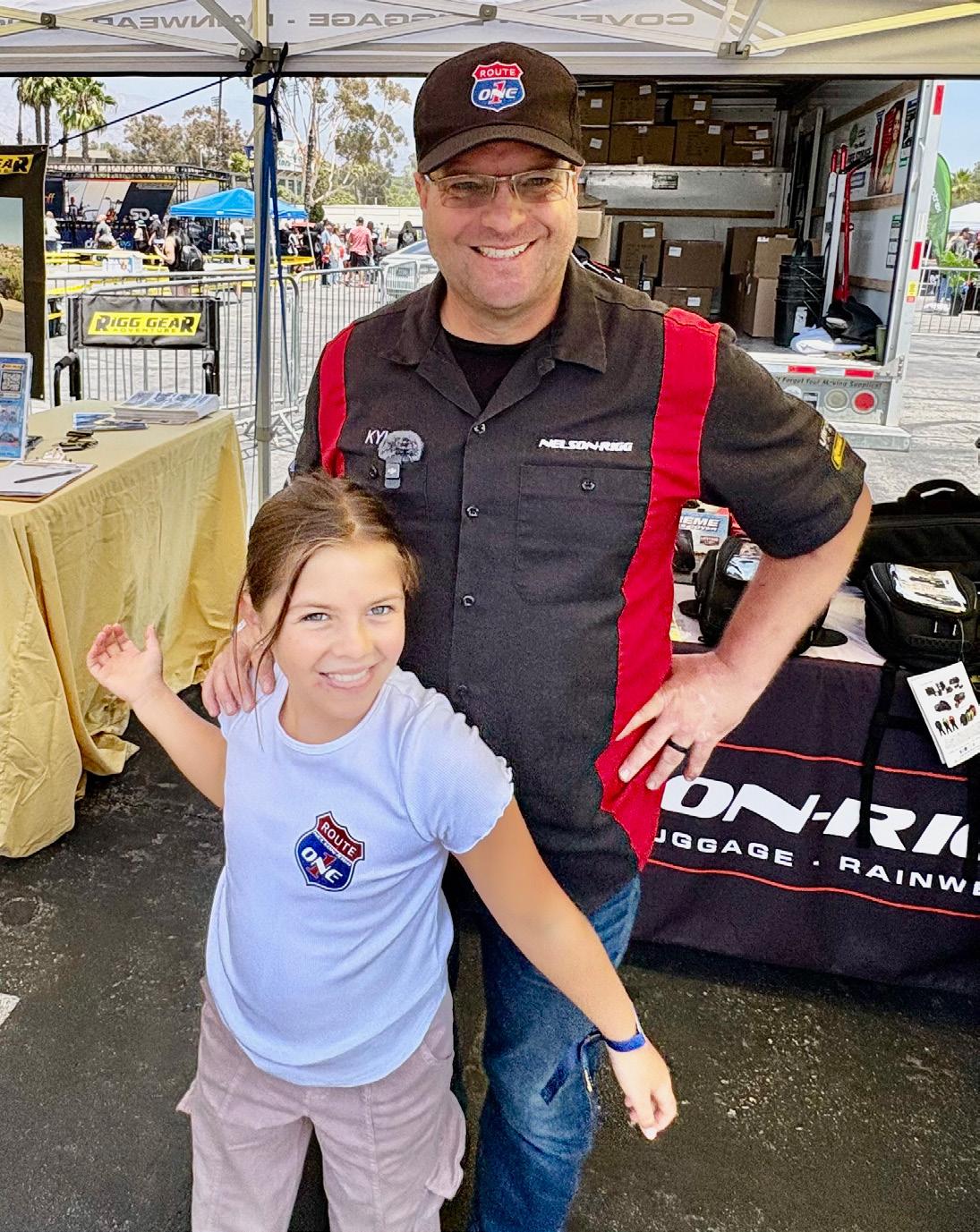
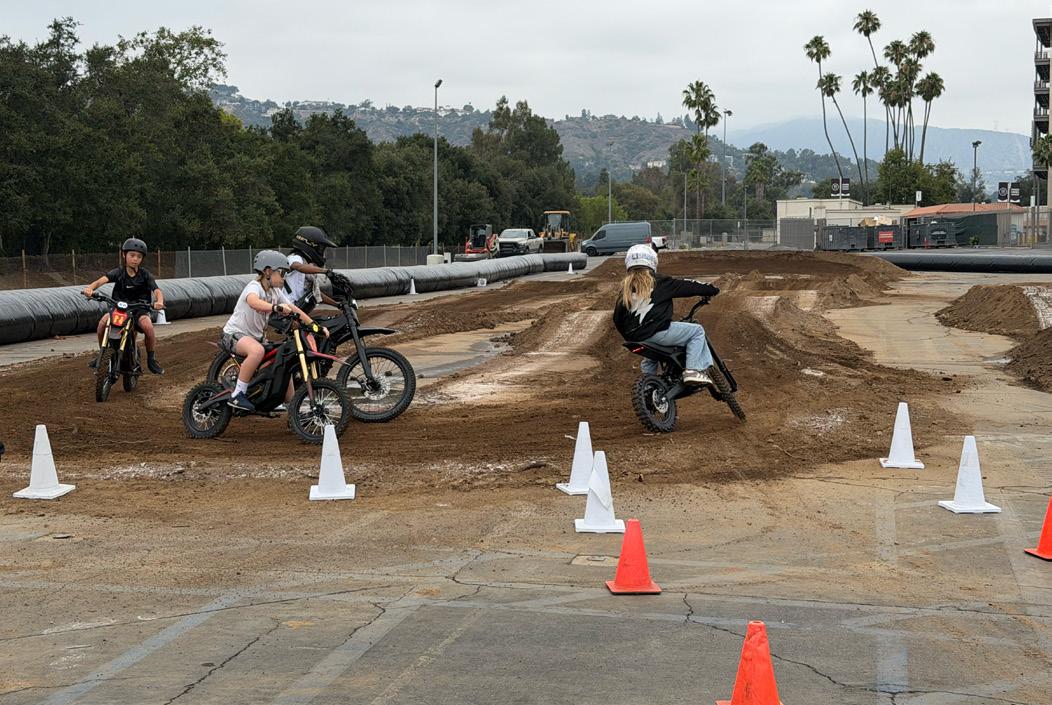
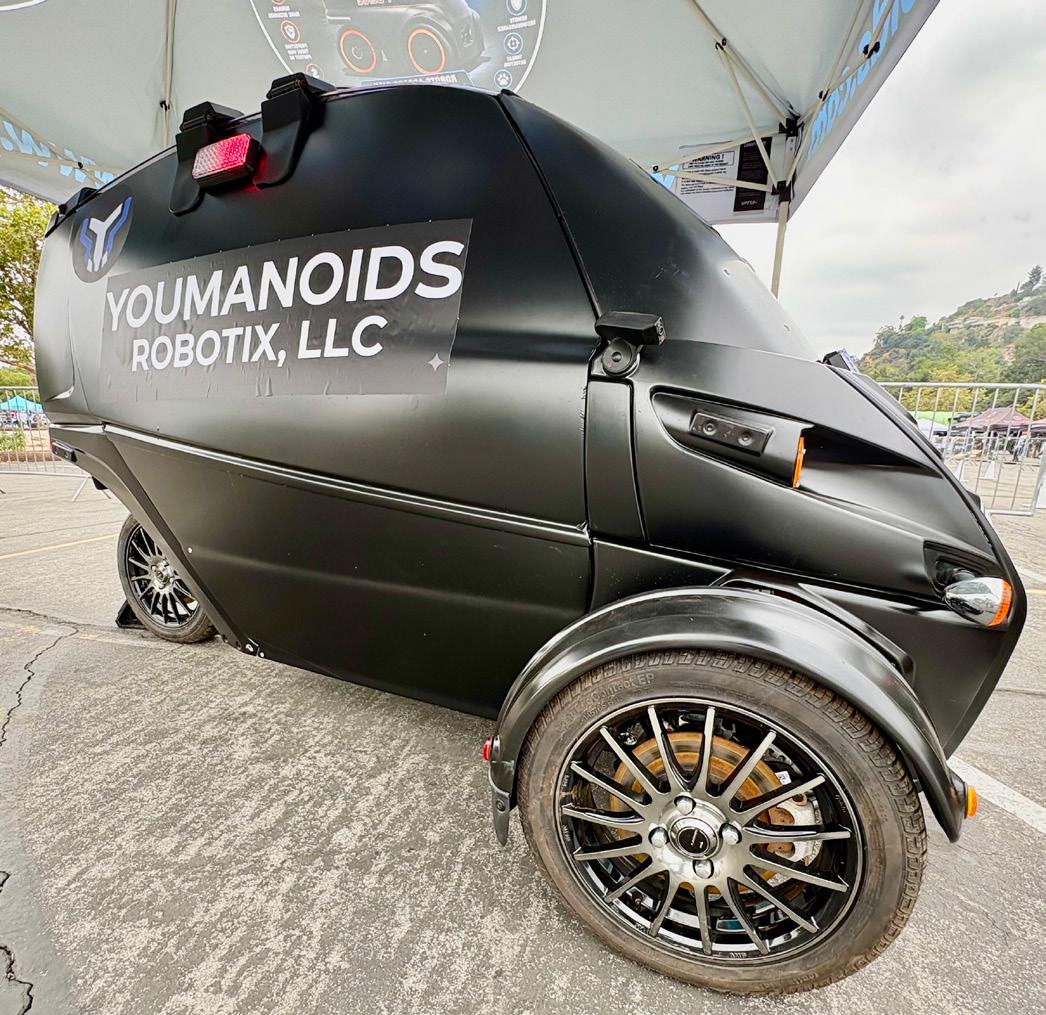
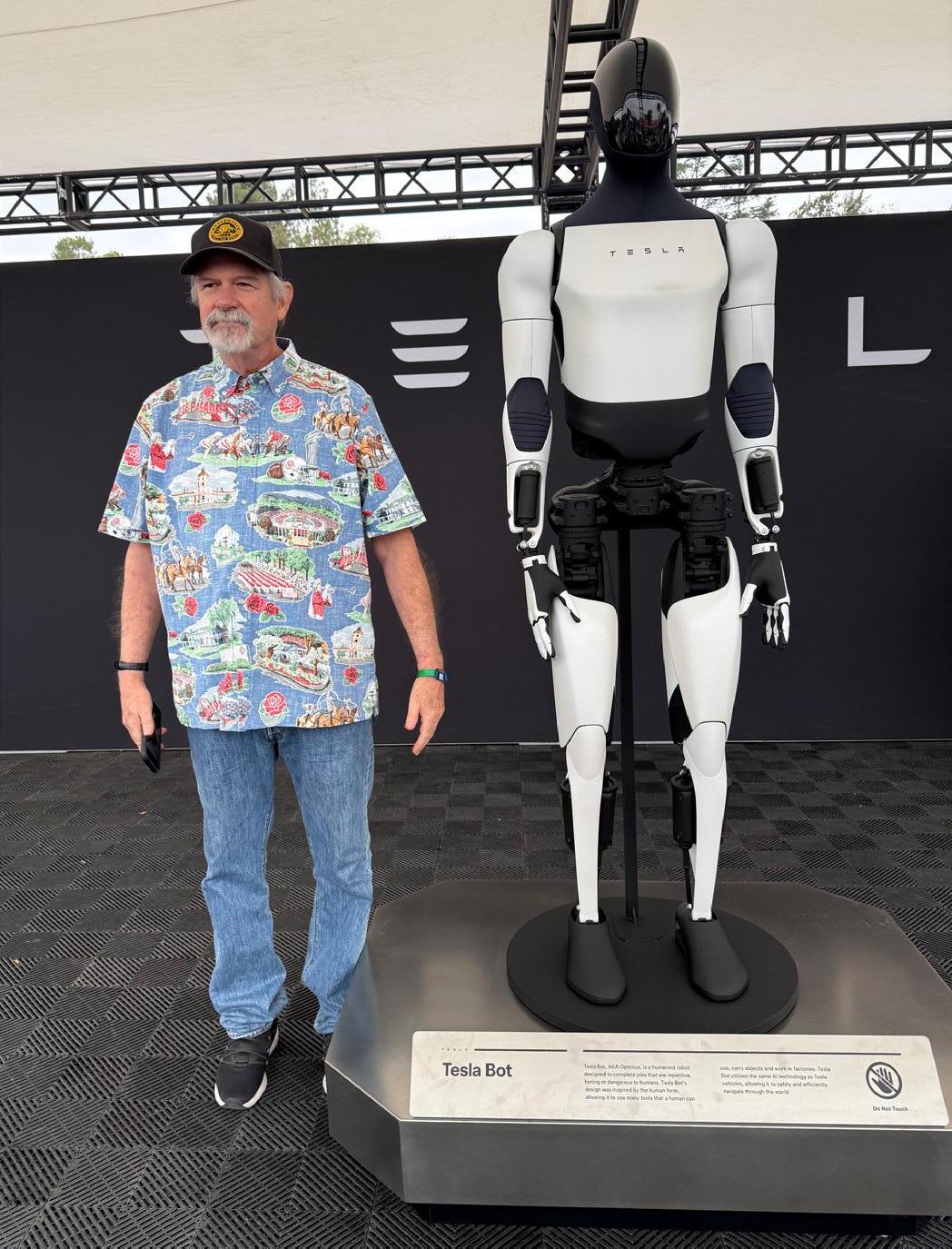
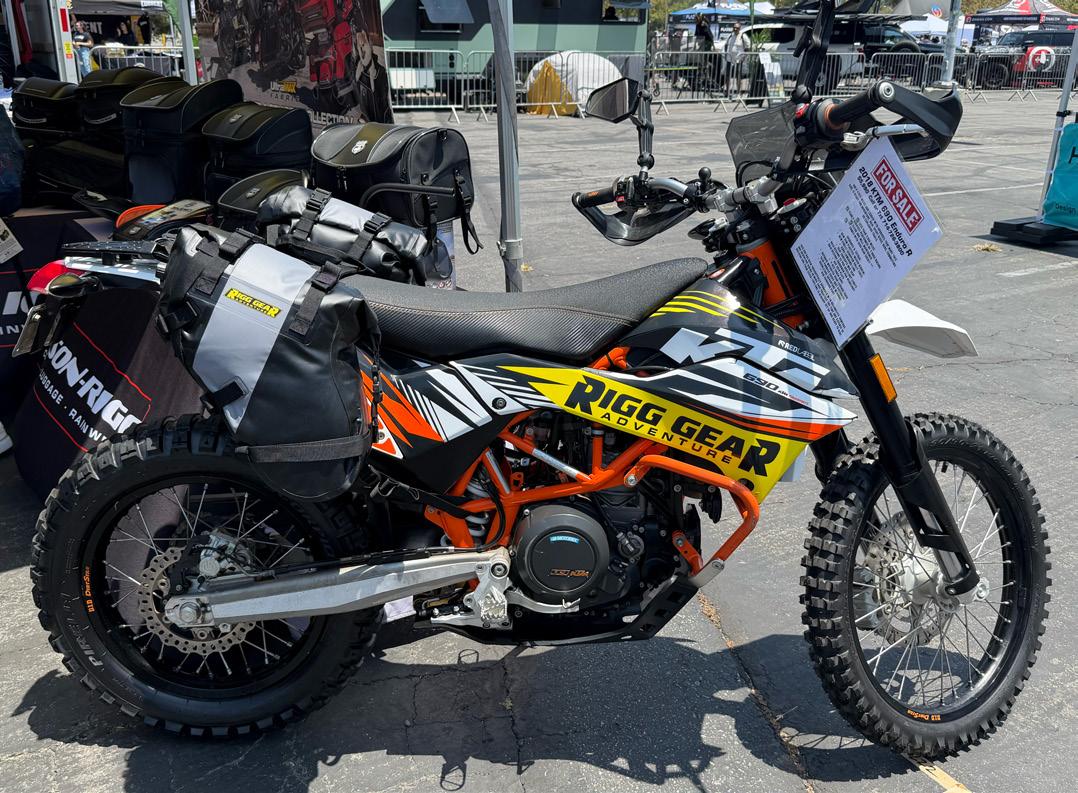
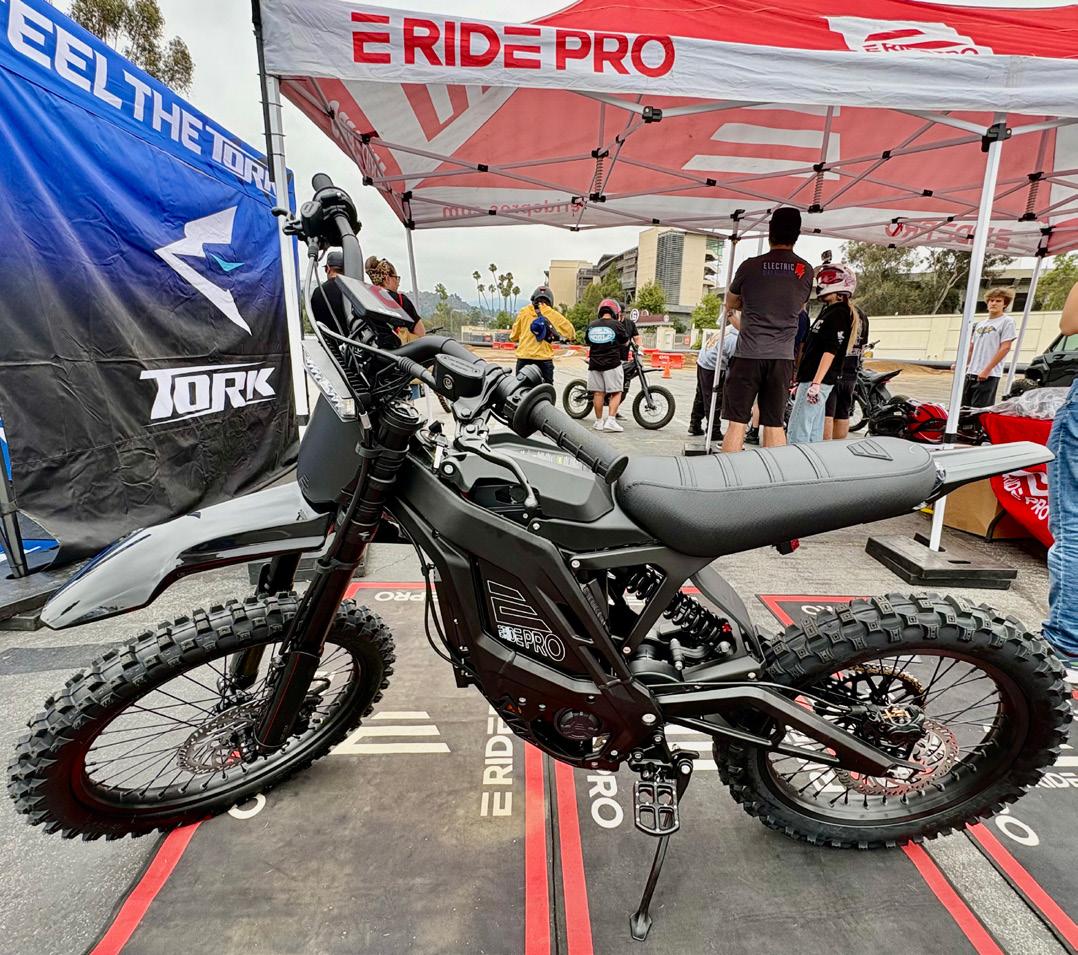
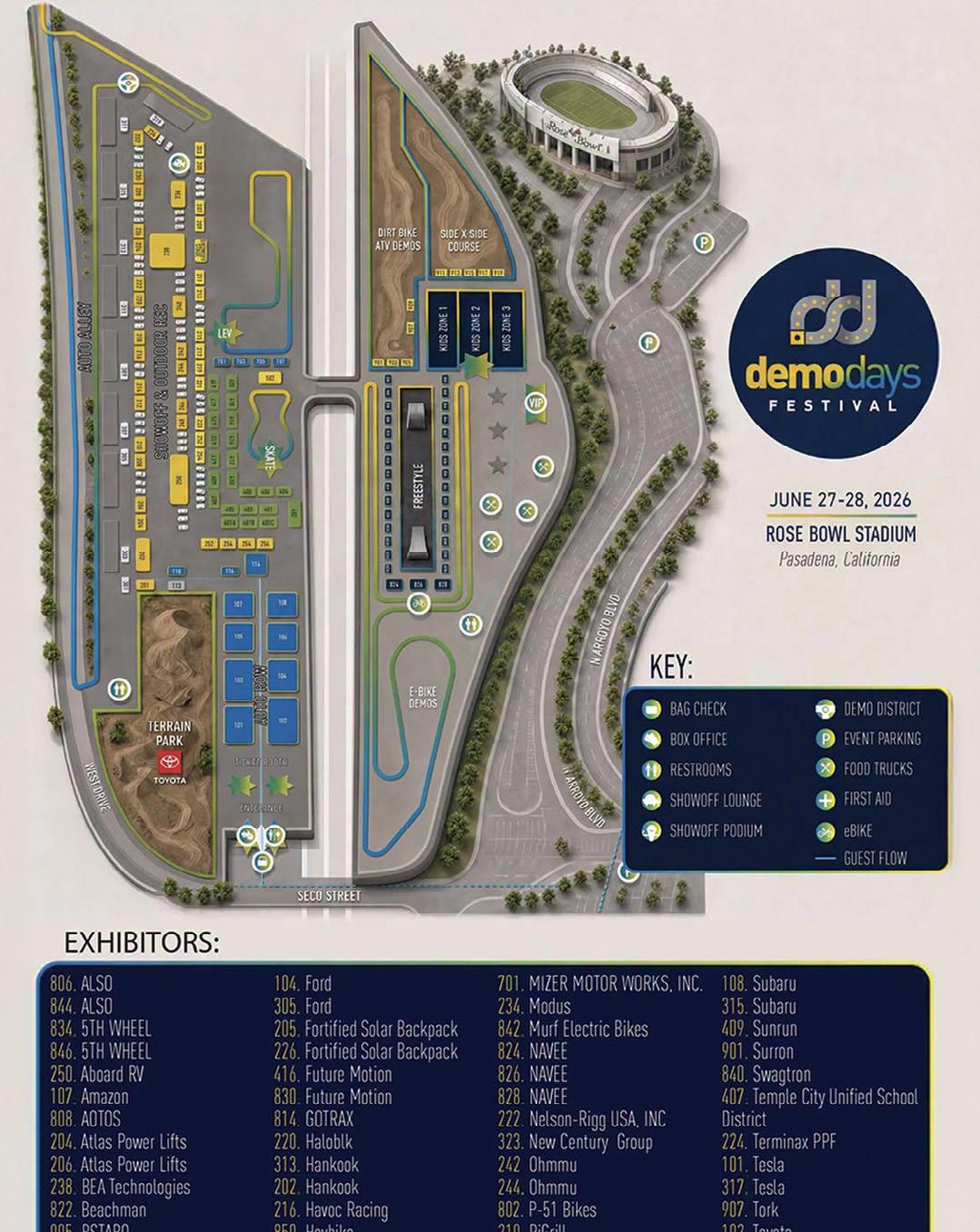
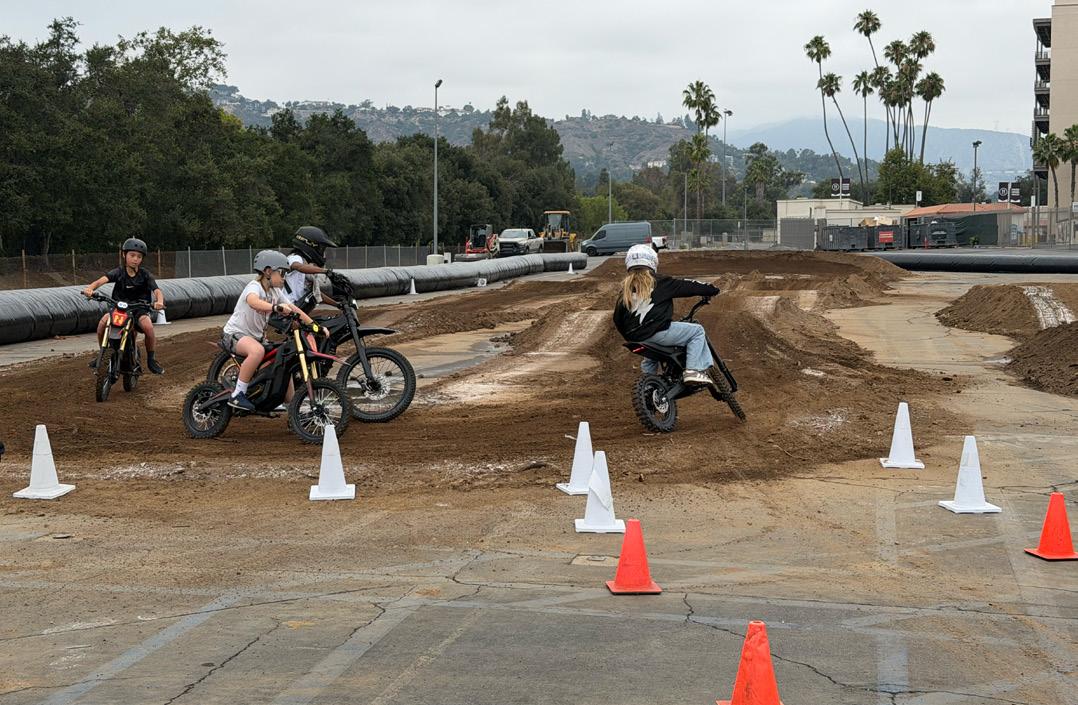
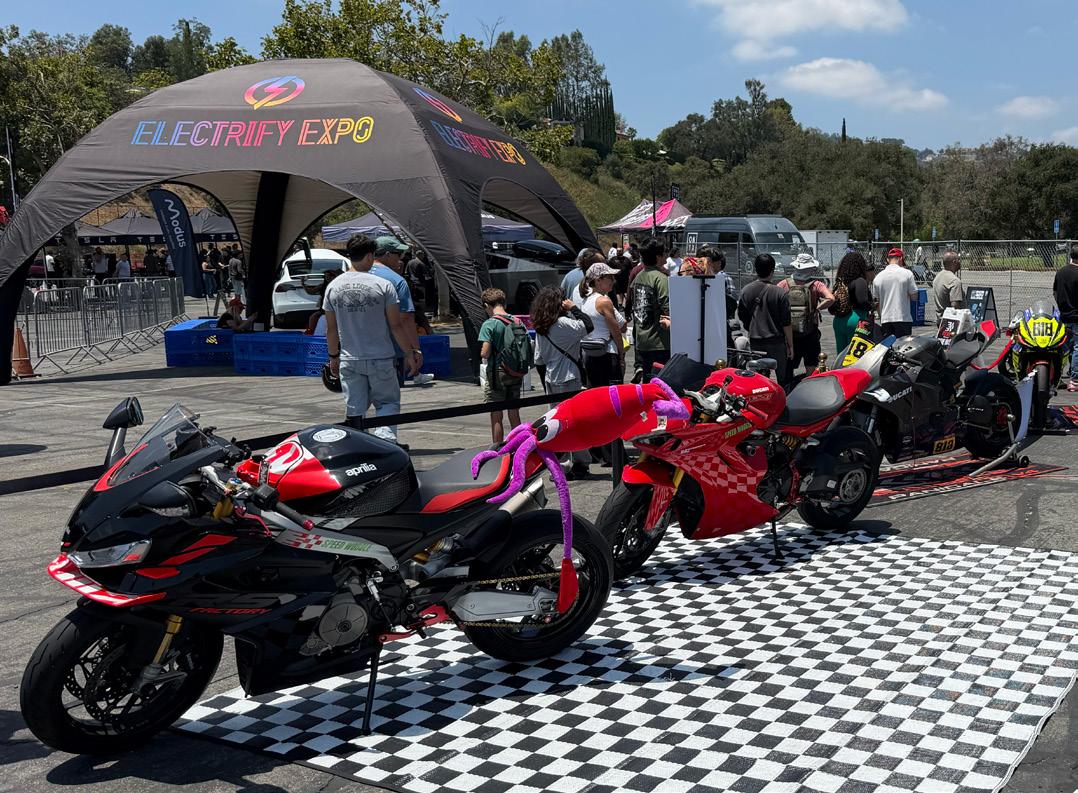
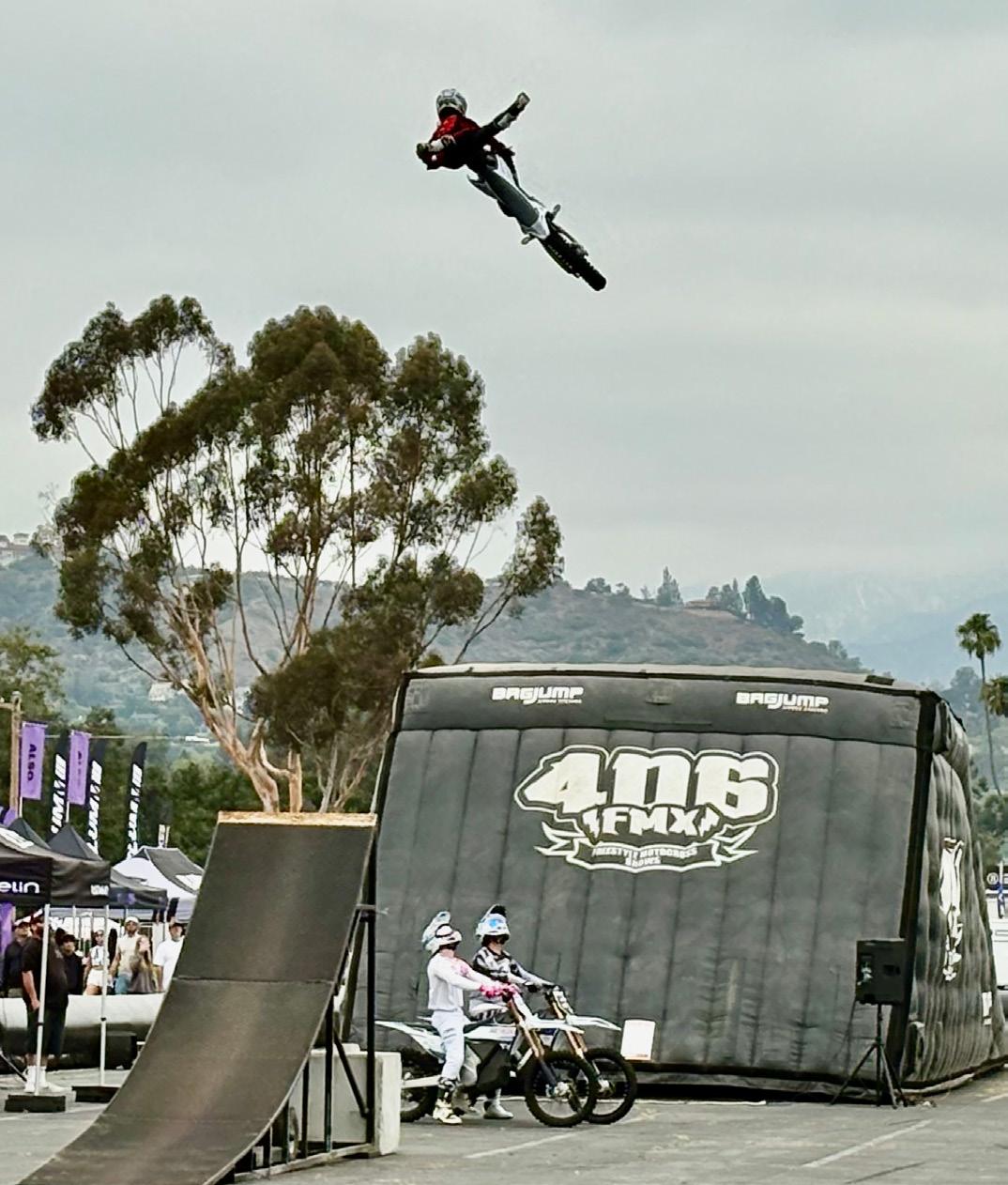
Demo Days 2026 opened at the Rose Bowl on June 2728 and runs through the Bay Area, Philadelphia, Atlanta and Dallas before wrapping up in San Diego, December 12-13. If your brand has a vehicle worth experiencing, this is where that experience happens at scale. Reach the partnerships team at: sales@demodaysfestival.com
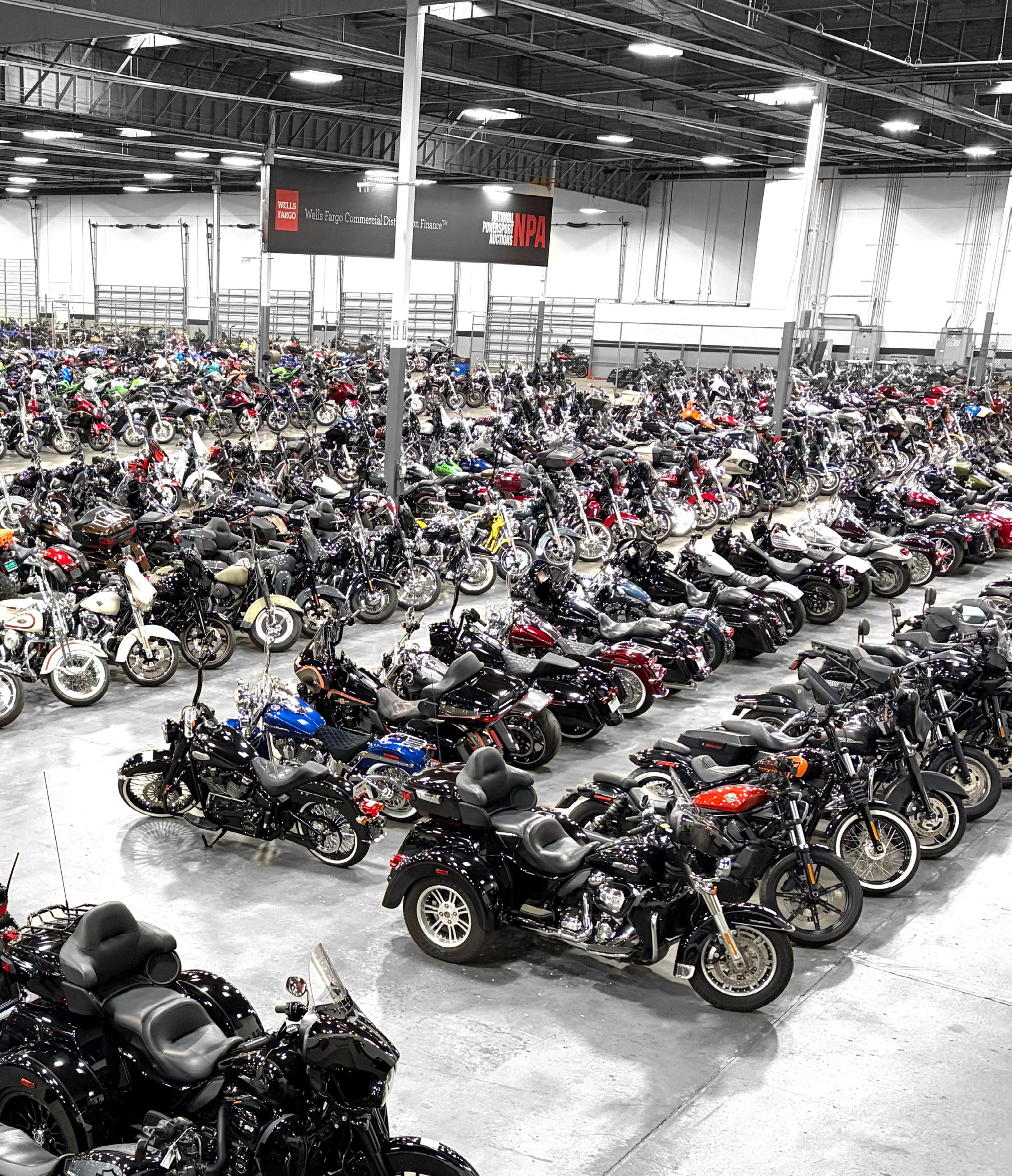
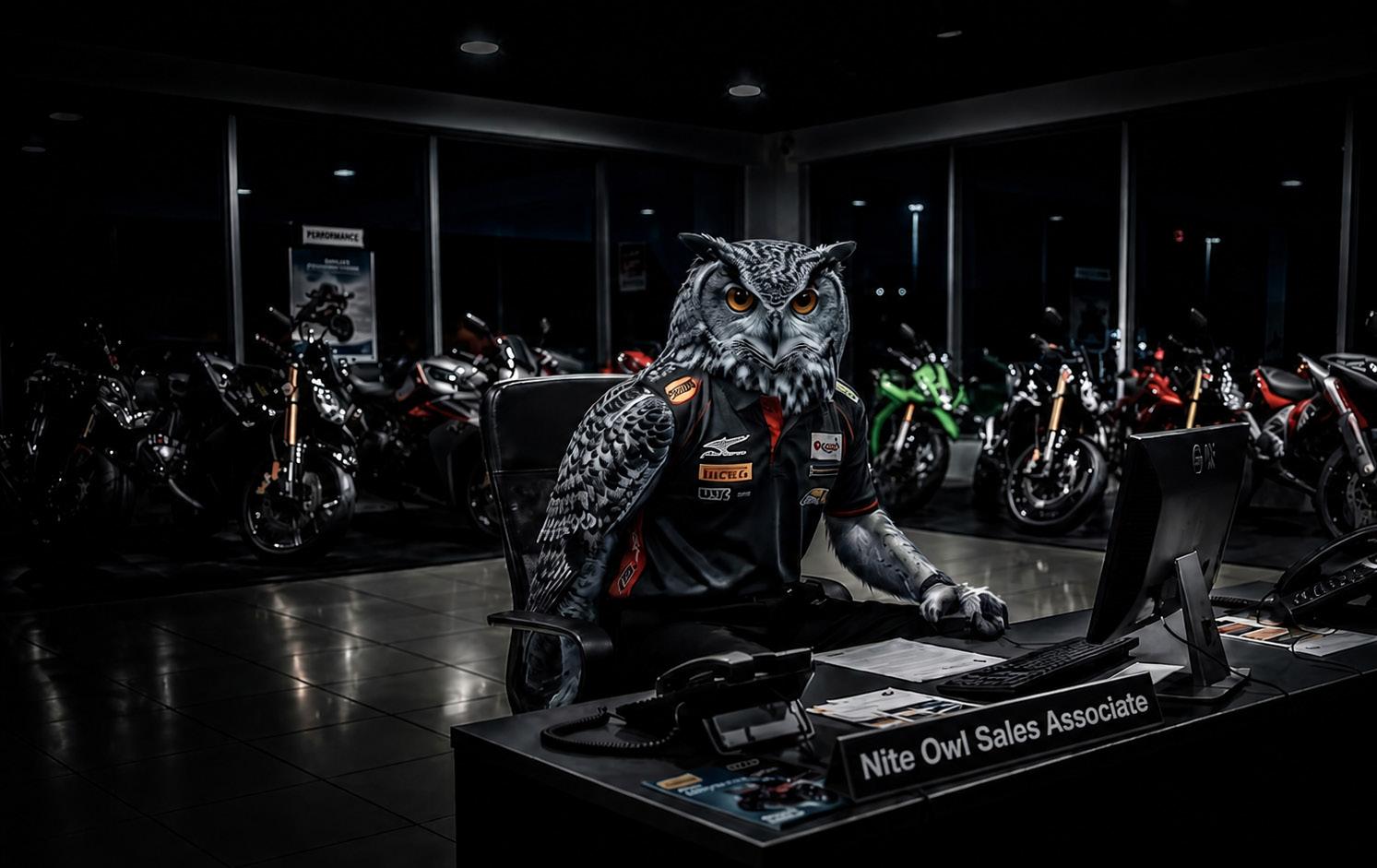
THE NIGHT OWL TEST
Before You Sign Up For An AI Agent, Ask Whether You’d Hire A Human To Do The Same Job… The Answer Tells You Everything!
By David Gatti
It’s 11:07 on a Tuesday night. Somebody is sitting on your used inventory page looking at a three-yearold Ranger with 900 miles on it. They’ve clicked the photos twice. They’ve openeda the payment calculator. They fill out the form, hit send, and go to bed. So what happens next?
Nobody is home
That customer is not a case on the periphery. Dealer Spike’s State of the Dealer: 2026 — built on observed behavior across more than 6,800 dealerships — found that 54% of shopper traffic now arrives outside business hours. In other words, more than half of the people walking into your store are walking in when the lights are off.
The knee-jerk reflex in 2026 is obvious: We need an AI agent! And the industry has already reached for it. One recent survey of dealer investment priorities put AI voice agents at the top of the list, with roughly
three out of four dealers putting money toward automating lead response, inbound calls and service scheduling.
I would argue that the reflex is right but the sequence is wrong — and that the difference between those two things is most of the money.
“You Can’t Automate A Process You’ve Never Measured!”
Here’s a question I’d ask any dealer principal reading this. What is your average response time to a lead that comes in after 6 p.m.? Not your goal. Not what the CRM dashboard says it should be. What is the actual number from last month?
Most dealers can’t answer it. That’s not a character flaw — it’s just that nobody has ever had a reason to pull it. But it matters enormously, because it means the after-hours problem is currently a feeling, not a figure. And when you sign up for a subscription to solve a feeling, you get a subscription that produces more feelings.
Garage Composites made this point about powersports and marine retail earlier this year, and it’s the most useful sentence written about AI in this industry:
“Once your processes are clear, AI becomes powerful; without them, it becomes noise.”
That’s exactly right, and it’s worth being precise about what the noise sounds like. It isn’t a system that fails. It’s a system that works perfectly and produces 400 conversation transcripts a month that nobody opens, appointments that nobody confirms, and a monthly invoice that nobody can tie to a unit sold.
AI doesn’t fix a broken process. It scales one.
The Test
So here’s the diagnostic I’d offer, and the reason I think it’s worth a column:
Would you hire a person to do this job?
Not rhetorically. Literally. Would you pay somebody $28,000 to $35,000 a year to sit at a desk from 5 p.m. to midnight, five nights a week, answering the phone and replying to web leads? Yes or no?
If the answer is no — if that number makes you wince — then be honest about what you’ve just learned. The after-hours gap is not costing you what you say it’s costing you. You’ve priced the problem, and it came in under the cost of a night owl. Signing up for a cheaper robot to solve a problem you just decided wasn’t worth a salary is not a strategy. It’s a way of feeling like you did something.
If the answer is yes — if you look at 54% of your traffic hitting a locked door and think yeah, that’s worth a salary — then congratulations, you now
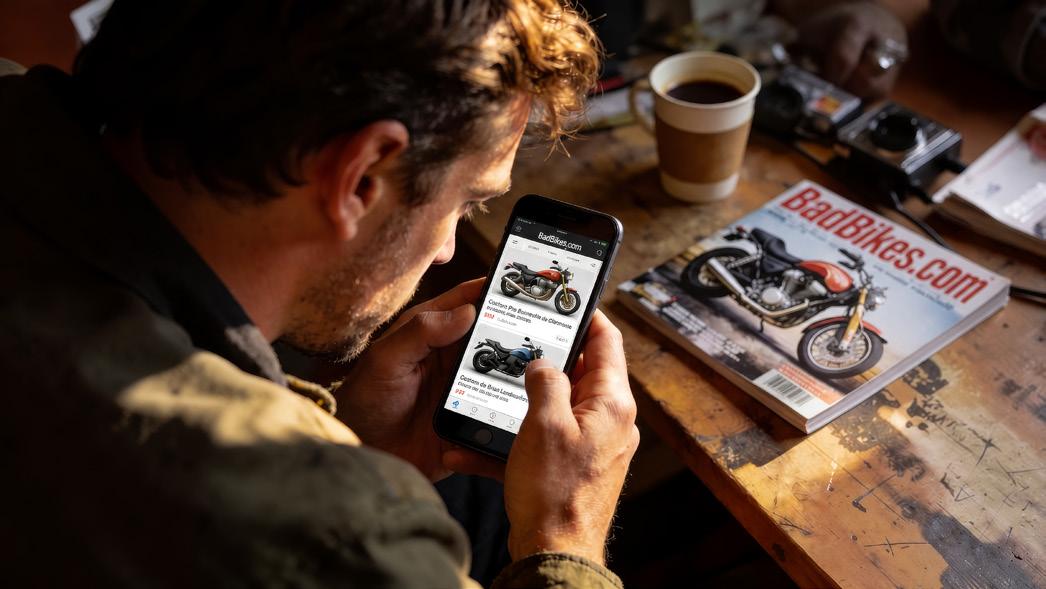
have something almost nobody in this business has when they take a vendor call. You have a benchmark. Every AI pitch you hear from here on gets measured against a real human alternative with a real cost, real capabilities and real limits. That’s a completely different conversation than “what does it cost per month.”
The test works because it’s falsifiable — it can be tested and proven wrong. It forces a number out of a feeling, and it does it in about nine seconds.
Why The Monthly Number Is A Trap
That phrase — what does it cost per month — is worth stopping on, because it’s the reason this discipline matters more now than it did 20 years ago.
Nobody buys software anymore. You don’t cut a check, you don’t capitalize it, you don’t put it in front of the board. You sign up. It’s a monthly line item on an auto-pay credit card. It starts the week after the demo, and it never has to be justified again. That’s the whole model, and it’s brilliant! It is also why the average store is now carrying 11 subscriptions that only three people know the passwords to.
A salary is a decision. Somebody has to look at $32,000 and say yes out loud, in a meeting, with their name on it. A $600-a-month agent is not a decision — it’s a signature, and by the time it adds up to a salary, 18 months have gone by and nobody remembers who signed what.
So annualize it before you compare. Whatever the monthly is, multiply that by 12, add the onboarding fee and the integration your website vendor will charge you for. Then put that number next to the night owl. Now you’re actually comparing two things on the same footing, which is the only way this test works at all.
Then do the harder version of the test: Pull up every recurring tech line item you’re already paying for and total it. If that number surprises you — and it will — you’ve just proven the argument of this column better than I can. Those weren’t bad tools. They were tools signed up for before anybody defined the outcome.
What “Define The Process” Actually Means
Start with three questions — they are straightforward and they fit on a Post-it note:
Continued on page 60
1) Who owns the lead when it lands at 11 p.m.? A specific name, at 8 a.m. the next morning. Not “the BDC.”
2) What are we promising in that first reply? A price? Availability? A callback window? Pick one and make it true every single time.
3) What has to be true by 9 a.m.? Contacted, logged and assigned — or it doesn’t count.
If you can’t answer those three about your current process, you are not ready to automate it, because automation will simply enforce whatever ambiguity is already there, faster and more consistently, 24 hours a day!
Next, Run The Honest Comparison
Now put the AI side by side with the Night Owl, and be fair to both.
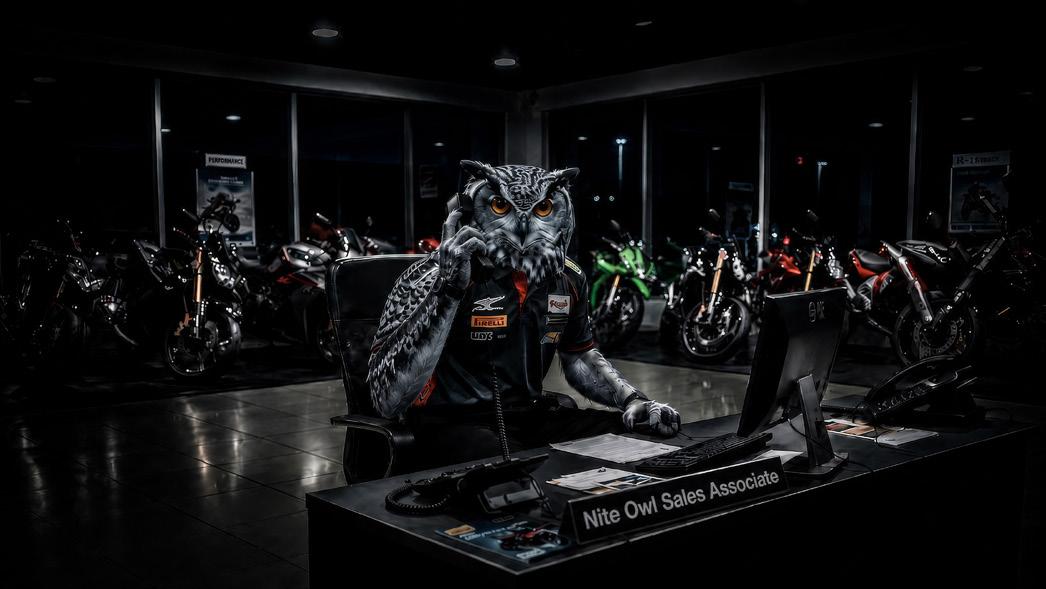
The night owl wins on the things that are hard to write down. The upset customer whose unit has been in service for three weeks. The weird trade — a sled, a boat and a quad, all at once. The rider who came in convinced he wants the 1000 and needs somebody to talk him into the machine he’ll actually keep. That’s judgment, and it doesn’t automate.
The AI agent wins on volume and stamina. It doesn’t get bored on a slow Tuesday. It doesn’t take four calls and drop three during the spring rush. It logs everything, every time, in a format you can actually audit at the end of the month. And it doesn’t quit in August, which in a business with our turnover numbers is not a small thing.
Neither one wins outright. That’s the point. The comparison is the deliverable.
One Last Thing About Resistance
There’s a version of this column that ends by telling you that the real obstacle is old habits and dealers who won’t adopt. I don’t think that’s fair, and more to the point, I don’t think it’s accurate.
You’ve been sold a decade of subscriptions that promised transformation and delivered another login and another password. The skepticism in this industry is earned. It’s not laziness — it’s pattern recognition, and it’s basically correct.
But notice what that skepticism is actually about. It’s not really about technology. It’s about signing up for tools before defining outcomes. Which is precisely the argument I’m making. The instinct that’s kept you from wasting money on the last ten things is the same instinct that should govern this one. You don’t have to become a different kind of dealer to get value out of AI. You have to do the thing you already suspected you should do first.
Be a little suspicious of the numbers, too. The vendor-reported gains circulating right now — 30% more showroom appointments, a third off BDC costs, a dozen hours a week saved — all come from the companies selling the subscriptions. They may well be real. They are also exactly the numbers a marketing department would produce. Ask for a reference dealer your size, in your segment, and call them.
Start smaller than that anyway. Pull one number this week: your average after-hours response time for the last 30 days.
If you can find it, you’re ready to have the conversation…
If you can’t, you just found your biggest identifiable issue — and it isn’t AI.
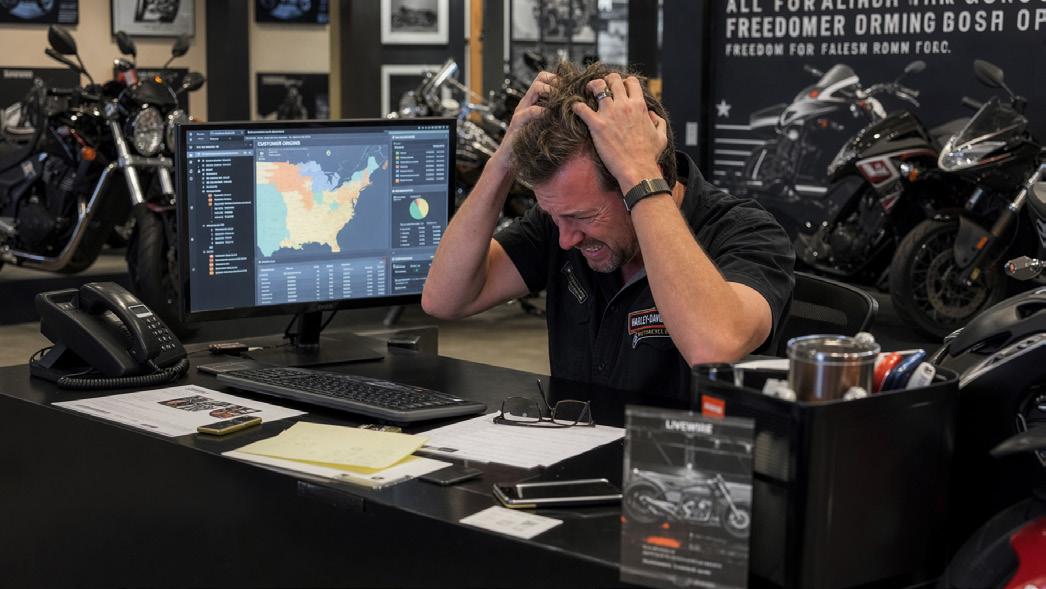
BY THE NUMBERS BEFORE YOU BUY THE NUMBERS
AI agent vs. Night Owl? Just pull the number! Ask one question, give it 15 minutes of study time and you’ll know more about your after-hours problem than any vendor demo will tell you. Simple as that!
The question: What was our average response time to leads received between 6 p.m. and 8 a.m. over the last 30 days?
Where to find the number — and why you probably can’t. Don’t start with your DMS. It runs units, parts, repair orders and accounting; nobody built it to timestamp a web lead. This is the first thing worth noticing: the system of record for your business has no opinion about the question.
Three places it might actually live:
• Your CRM if you have a real one. Ask for a firstresponse or speed-to-lead report. Big caveat: it only counts replies logged in the CRM. If your salespeople answer from their phone or Outlook and log it later — or never — the report will flatter you badly.
• Your texting platform If you run Podium, Kenect or similar, this is your best source. Those tools timestamp both sides of the conversation and don’t care whether anyone remembered to log it.
• Your website or lead provider They’ll show you when the lead arrived. They can’t see when you replied. Half the equation, but it’s the reliable half.
When all else fails, there is always the manual version — which for most stores is the only version. Pull last month’s after-hours lead notification emails. Note the time each one landed. Then find the first genuine reply: your sent folder, your text thread, your phone’s call log. Three columns — received, replied, gap. Auto-responders don’t count, and neither does a form confirmation.
After 20 minutes with a spreadsheet, and you will have the most honest look at your store you’ll get this quarter. If that sounds primitive, sit with it. You are about to be pitched software that promises to optimize a metric your business currently has no way to produce.
What to do with it
Before you read the table, understand what you’re measuring against. The foundational research on lead response — Dr. James Oldroyd’s MIT/InsideSales study — found the odds of contacting a lead drop roughly 100-fold, and the odds of qualifying one drop about 21-fold, when the first attempt comes at 30 minutes instead of 5. Worth being straight about the caveat: that study measured contact and qualification, not close rate, and its behavioral dataset was small. But the shape of the curve is not in dispute. It isn’t a slope. It’s a cliff, and it’s at five minutes.
Which means the honest yardstick here is minutes, not hours:
• Under 5 minutes — You’re at the ceiling. If you’re hitting this at 11 p.m., something is already automated — and you should know exactly what it is.
• 5 to 60 minutes — Genuinely good for a human operation, and still past the cliff. Most of the contact advantage was gone before your reply went out.
• 1 to 14 hours The next-morning reply. Common, defensible, and the reason your competitor sold that unit.
If it’s over 24 hours, or unmeasurable — Software is not your problem. Ownership is. Fix step one on the Post-it note before you take a single vendor call.
Then ask the second question: of the after-hours leads that got a next-morning reply, how many were already gone? Cross-reference against sold units. That’s your actual cost — and it’s the number you carry into every demo from here on.


EVOLUTION
New Species Of Forest Service?
By Don Amador
Shades of Charles Darwin’s On Origin Of Species, I recently embarked on my own voyage of exploration to see the new USDA Service Center in Redding, California… You read that right, USDA, not USFS. I found myself reflecting on just how much the U.S. Forest Service has evolved over the past century. As Darwin discovered, it is not actually the survival of the fittest, but most adaptable organisms that evolve. Located in what many longtime Northern California residents still think of as the Shasta-Trinity National Forest Supervisor’s Office, the building today serves a much broader purpose. Along with the headquarters for the Shasta-Trinity National Forest, it houses the Pacific Southwest Research Station, the Natural Resources Conservation Service (NRCS), Farm Service Agency (FSA), Rural Development, and other USDA programs under one roof.
Rather than serving as the headquarters of a single National Forest, these facilities function as integrated USDA campuses where multiple agencies work side by side. That is definitely an adaptation to fit all those agencies under a common umbrella! The emphasis is less on organizational boundaries and more on delivering a range of services to rural communities, landowners, agricultural producers, conservation partners, researchers and public land users. It is a noticeable evolution from an agency structure rooted in the 1930s toward a model that better reflects twenty-first century technology, community engagement, and collaboration.
Forest health projects today rarely involve just one agency. Restoring watersheds, reducing hazardous fuels, improving wildlife habitat, supporting grazing operations and expanding recreation opportunities often require expertise
from several USDA agencies working together with state agencies, timber companies, counties, tribes, local governments, conservation organizations and outdoor recreation groups.
The immediate benefits are twofold:
For recreation organizations, Fire Safe Councils, Resource Conservation Districts and county governments, having multiple decision-makers available in one location can simplify coordination on projects that benefit both public lands and surrounding communities.
For someone seeking information on conservation programs, grazing permits, forest management, recreation opportunities, or wildfire recovery, having several USDA agencies under one roof can eliminate multiple trips across town.
Older Forest Service Supervisor’s Offices often possessed a distinct personality. Visitors walked into buildings that reflected the history and character of a particular National Forest. Large wall maps, timber displays, historic photographs, Smokey Bear exhibits and recreation information reminded visitors they were entering the headquarters of a specific forest. This USDA facility is a whole different animal.
Evolution is inevitable, I suppose. But as someone who has spent much of my career working alongside Forest Service professionals, I believe one old challenge deserves continued attention from the new species of USDA agencies. Outdoor recreation — including hiking, hunting, fishing, horseback riding, mountain biking, camping, and off-highway vehicle recreation—is now one of the largest and fastest-growing uses of our National Forest System. Service Centers should continue evolving to reflect that reality.
Imagine visitor lobbies featuring interactive recreation maps, trail condition displays, wildfire recovery information, volunteer opportunities, America the Beautiful pass information and exhibits celebrating the many ways people enjoy their National Forests. As these Service Centers continue to develop across the country, the opportunity will be to preserve the proud heritage and local identity of our National Forests while embracing a more modern, collaborative way of serving the American public.
For those of us in the outdoor recreation community, that’s an evolution worth supporting — and helping to shape.
Don Amador has been in the trail advocacy and recreation management profession for 35 years. Don is President of Quiet Warrior Racing LLC. Don serves as the Western States Representative for the Motorcycle Industry Council. Don is Past President/CEO and current board member of the Post Wildfire OHV Recovery Alliance. Don is a CoFounder and Core-Team member of FireScape Mendocino, a forest health collaborative that is part of the National Fire Learning Network. Don served as an AD Driver for the Forest Service North Zone Fire Cache during the 2022, 2023, and 2024 Fire Seasons. Don is a Northern California native and writes from his home in Cottonwood, CA.
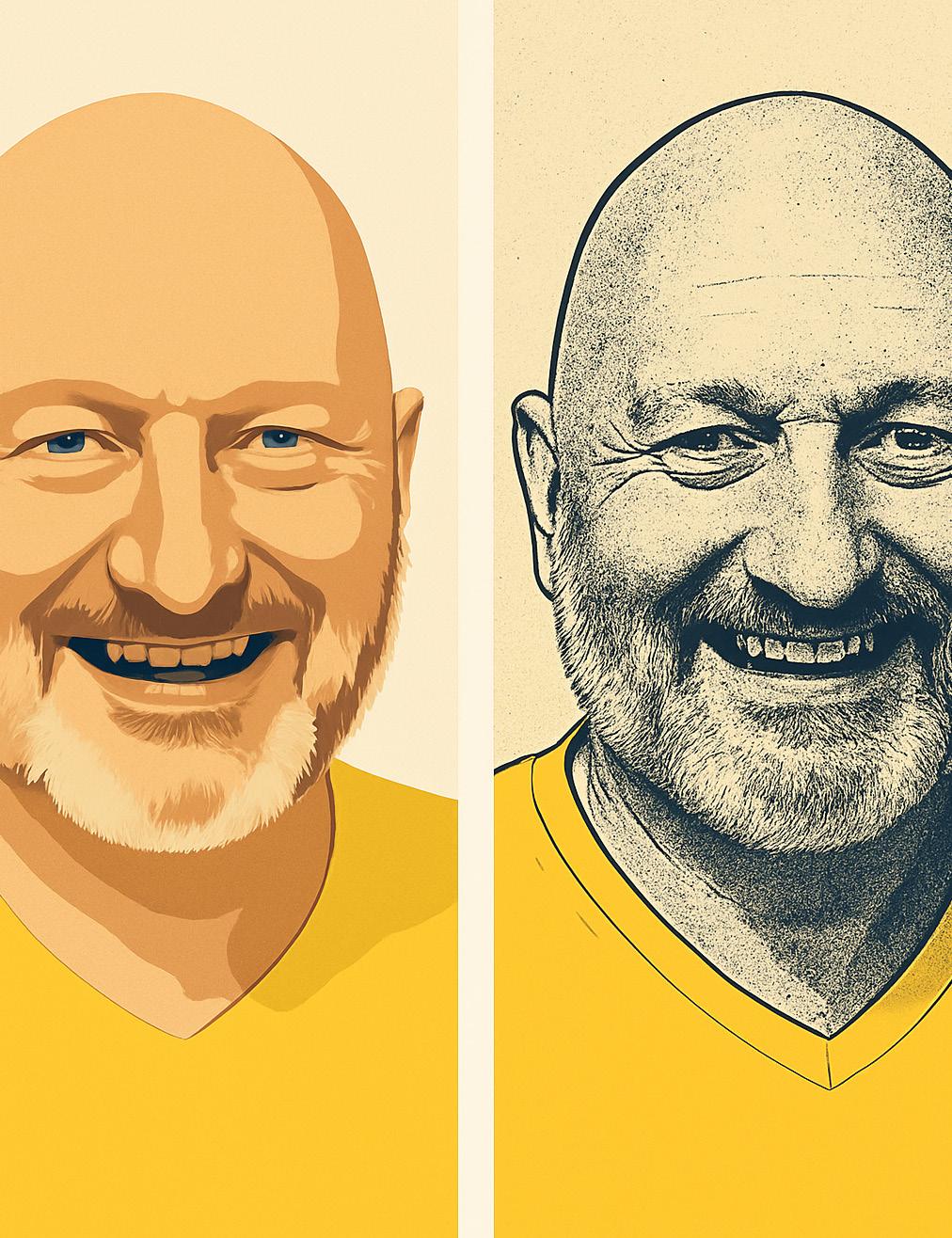
IF NOT NOW… WHEN? Is
Time Running Out For Two Old Guys?
By William Douglas Little; Two Old Guys Racing, LLC
It’s been a tough comeback, for sure.
Obviously we’ve heard far too much about my knee injury in recent months, but what I’ve failed to really discuss are the challenges that Mark is having during all of this. The thing is, Mark had just built a new building for his business, Coffman Outdoors; a task for which construction had started last year, about the time that we’d decided to do all of this.
He added Arctic Cat and Beta to his store early this year and he’s been tied up with the sales promotions and inventory headaches which all dealers are intimately familiar with. The man is overloaded with responsibility of running a burgeoning dealership compounded by the never-ending list of every day crap that haunts every adult human being.
And so, with this crazy return to motocross, Mark’s been basically racing his way back into shape and back into the riding skills that time has taken away. Sure, he’s wanted to be out at the practice track and putting in laps everyday, but reality has ensured that I’m calling and texting several times per week — nagging like an old fishwife — but he’s rarely found the time to swing a leg over the bike.
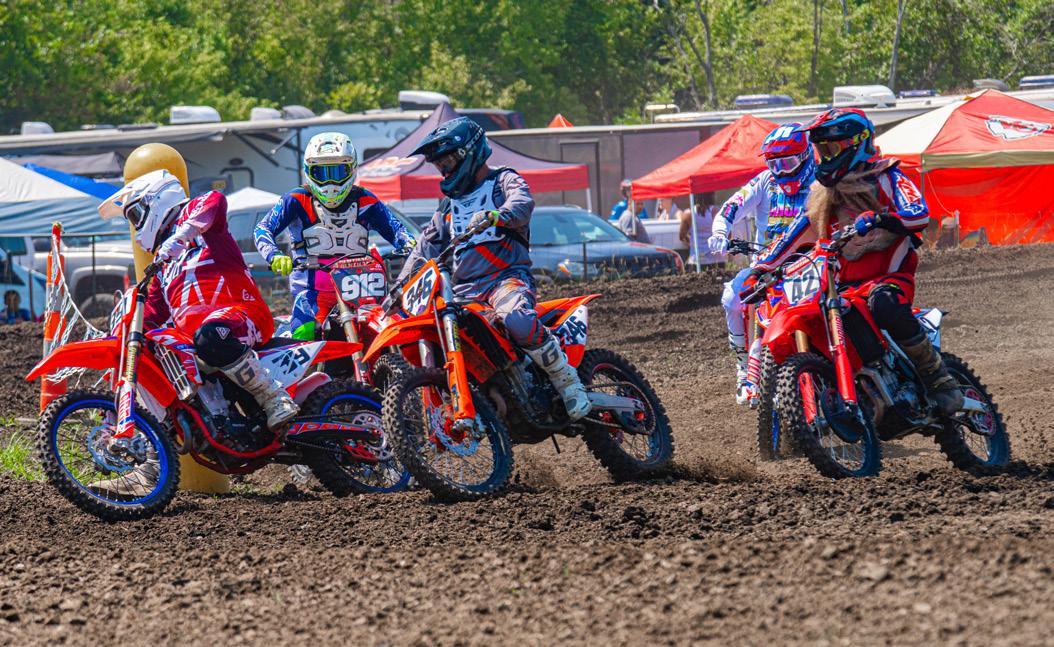
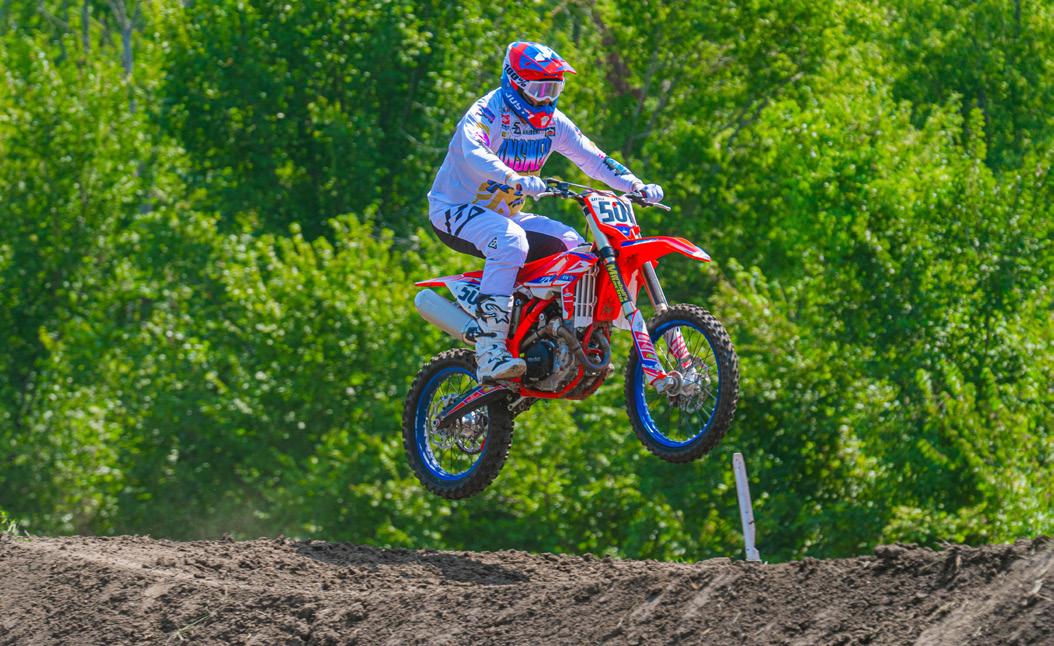
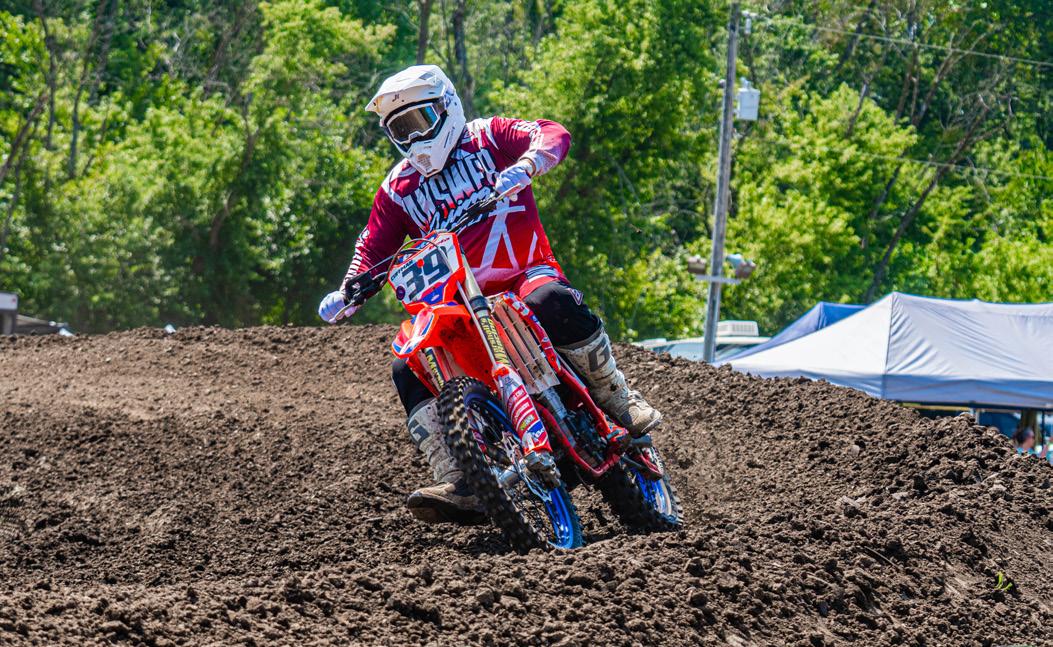
This past weekend was the rain-out make-up race for Round 4 of the CoalTrain Energy Missouri State Motocross Championship Series, (which was run after Round 5, but we’re told that it was still to be called Round 4… that was kind of weird), and, up until that race, Mark had struggled with starts, struggled with big jumps and struggled with endurance.
These struggles changed by leaps and bounds this weekend! Mark had gone early for the practice day on Saturday, putting in laps and getting familiar with the track.
When Sunday hit, I found out that I’ve got a mental hangup with ruts, but Mark was like a new man. He got the holeshot in both motos, ran with the top 3 guys for most of the moto, then faded toward the end, but in that time, I saw something that I haven’t seen in years… Mark — “Motocross Mark” — the guy who took me under his wing when I was 13 and taught me to take racing seriously — was back!
He got the starts, held his own and for two or three laps in that 100+ degree, high-humidity sunshine, he rode like he once had.
I’ve been thinking a lot about how great it is to be back into the sport that I never should’ve gotten away from. Sure, I’ve
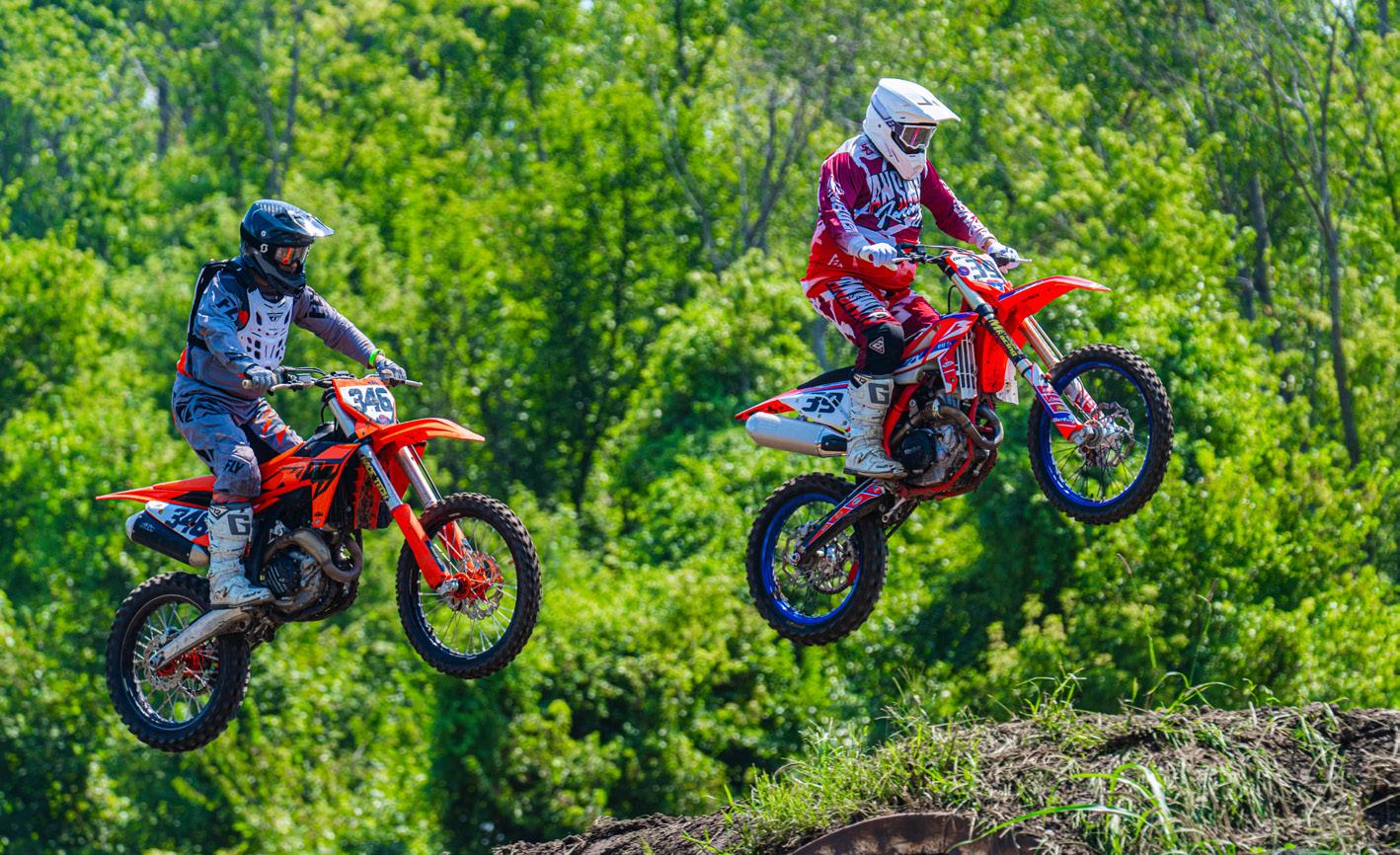
had to deal with a destroyed knee that I might not have otherwise destroyed and I’ve now got some weird rut phobia that I have to overcome, but there’s a lot of great stuff, too.
For example, when I was just entering teen-hood, I started to stray from the good kid persona and began looking for excitement in things I shouldn’t have been doing. That’s when I’d approached a local motocrosser out of the blue and he worked with me and showed me that moto was a great place to focus my energies, (and to get that adrenaline fix that I was seeking).
Lately, I’ve been seeing more and more of that kid in myself again — I’ve once again found the desire to focus my energies on bettering myself, which was something that life had beaten out of me as I’d gotten older.
I’ve also gotten to see a similar change in my buddy and he’s looking more relaxed because of it. (More worn-out, for sure — especially after a weekend of practicing/ racing in triple digit weather — but far the better for it).
And, there’s that shared community of everyone at the track. In fact, I was just talking about this over the weekend to another race family who I’d only just then met. Motocrossers are a community, but more than just people with a shared interest and a passion for the same sport, we’re a family.
Case in point, at the Loretta’s Regional Qualifier this year, I heard the track announcer broadcast that a rider needed a front brake line for a CRF250R. There was no mention of what rider needed it, what class he or she was in — just that a fellow racer needed a part.
Within minutes, the announcer came back on to let everyone know that the needed brake line had been supplied.
Thinking about that, someone had the correct brake line, which means that they’re likely racing the same bike. That means that there’s a reasonable chance that they’d be in the same class as the person who needed the part, perhaps a direct competitor, but they were still happily willing to provide the spare part to save that racer’s weekend and chance for Nationals.
I’ve seen it so many times over the years. From stories of Mark’s dad working on a competing kid’s bike between motos to racers giving gas to someone they were racing against or even driving their truck hundreds of miles to get it back to their home if that racer was injured. Competitor on the track or not, in the pits we’re all brothers and sisters.
I’m truly thankful to be among the prodigal sons returning later in life and being welcomed back to the family by my peers. It’s a good feeling, a great sport and something that I never want to let go of… bum knee or not!
Time is not running out for 2 Old Guys… We have tapped into the fountain of youth and things are just beginning!
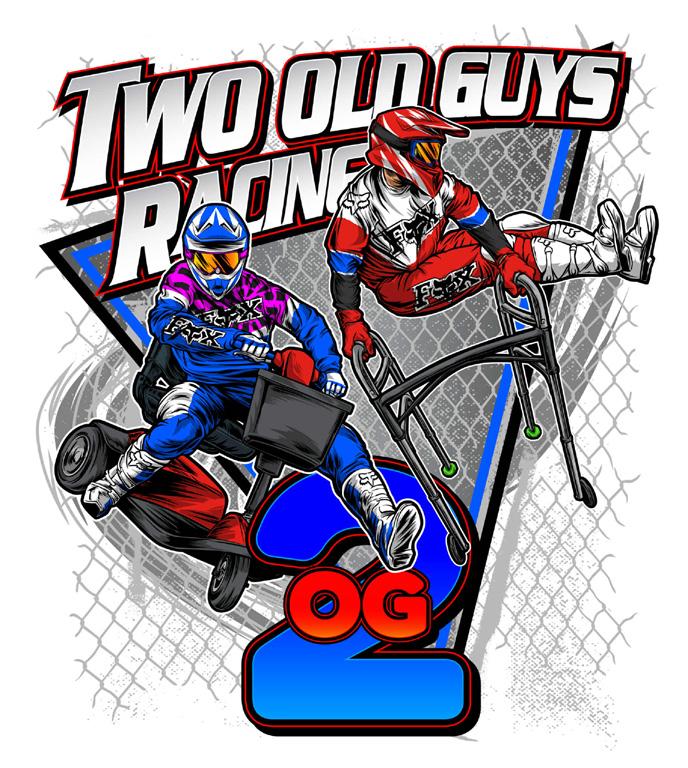

EDITOR’S NOTE:
Once and future Top 100 Dealer Bill Little is back in the saddle, both as a dealer and a racer. Given his perspective on the industry and unique skill set (think Mayhem from the insurance commercials), coinciding with midlife crisis and illadvised goal of making the field at Loretta Lynn’s while going back to work in a dealership we decided to chronicle the misadventures of www.2OGRacing.com (Two Old Guys Racing) and their quest for the holy grail... What could possibly go wrong?
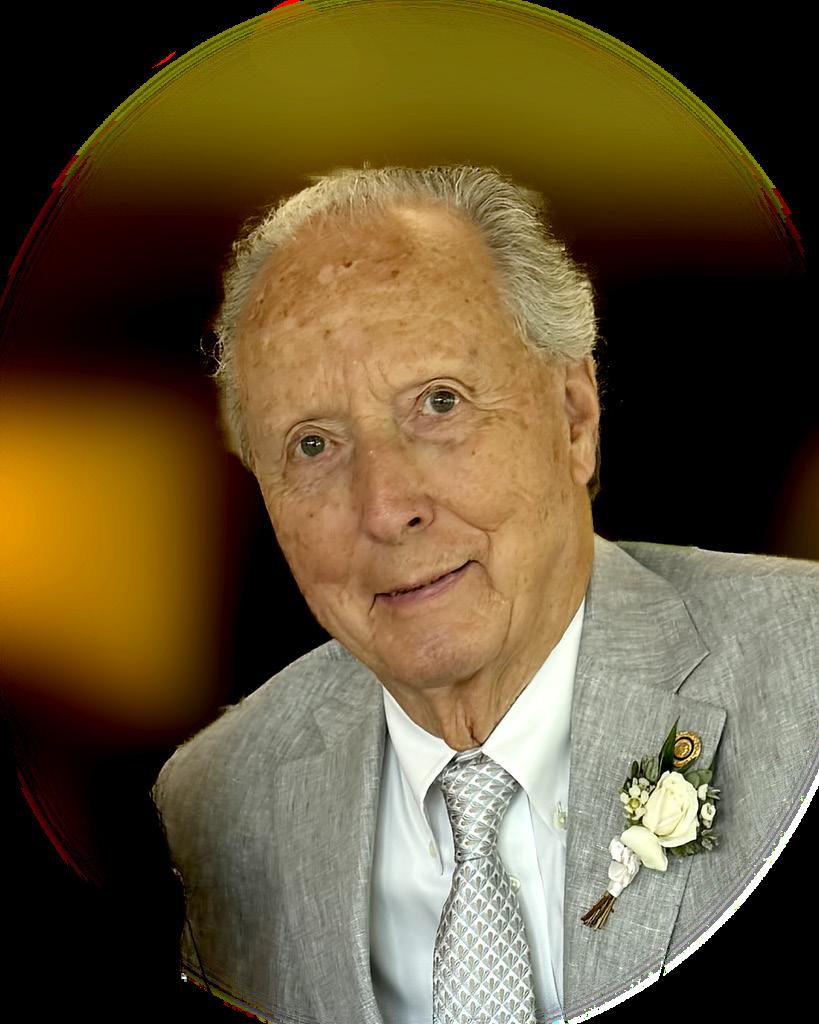
AVE ATQUE VALE ROGER MARSHALL
One day shy of his 89th birthday, Marshall Distributing founder Roger Marshall passed away at his home in Sand Point, Michigan. An avid MSU Spartan fan, Marshall would probably appreciate our ave atque vale — a Latin phrase that translates to “hail and farewell” — salute to a hero of the powersports industry.
Roger graduated from Cass City High School in 1955. He was a member of the Pi Kappa Phi Fraternity at Michigan State University, where he earned a bachelor’s degree. Roger served in the United States Air Force from 1960 to 1966, where he was stationed at Selfridge Air Force Base.
In 1964, Roger and his father purchased a John Deere dealership in Cass City. With the increasing popularity of snowmobiling and his active racing, Marshall saw a need for snowmobile parts and accessories to meet the needs of local riders. So in 1968, Marshall Plastic Company was formed, shifting from farm implements to snowmobile accessories. Plastic windshields, tracks, etc. were manufactured in a shed behind the existing John Deere facility.
By 1969, the first catalog Marshall issued was to snowmobile dealers. In 1973, they ventured into motorcycle parts and accessories. Later in 1982, ATV parts and accessories, and then in 1988 came PWC parts and accessories. With more than 100,000 part numbers, Marshall Distributing’s catalogs were always dealerdirect, and a great reference guide in the pre-Internet era!
Warehouse expansion became the next step for Marshall Distributing Inc., with the addition of their Clifton Park, NY location in 2004 to better serve their East Coast dealers. In 2009, they opened a warehouse in Sparks, NV. They continued to research and add new products to their impressive inventory until 2014 when Roger sold Marshall Distributing, Inc. to Craig Shoemaker at Western Power Sports.
“The merger of the two companies will benefit our dealer network by providing the same quality service with the added advantage of a broader product line for the dealers to choose from,” said Marshall who started manufacturing snowmobile windshields the same year WPS started selling aftermarket snowmobile parts.
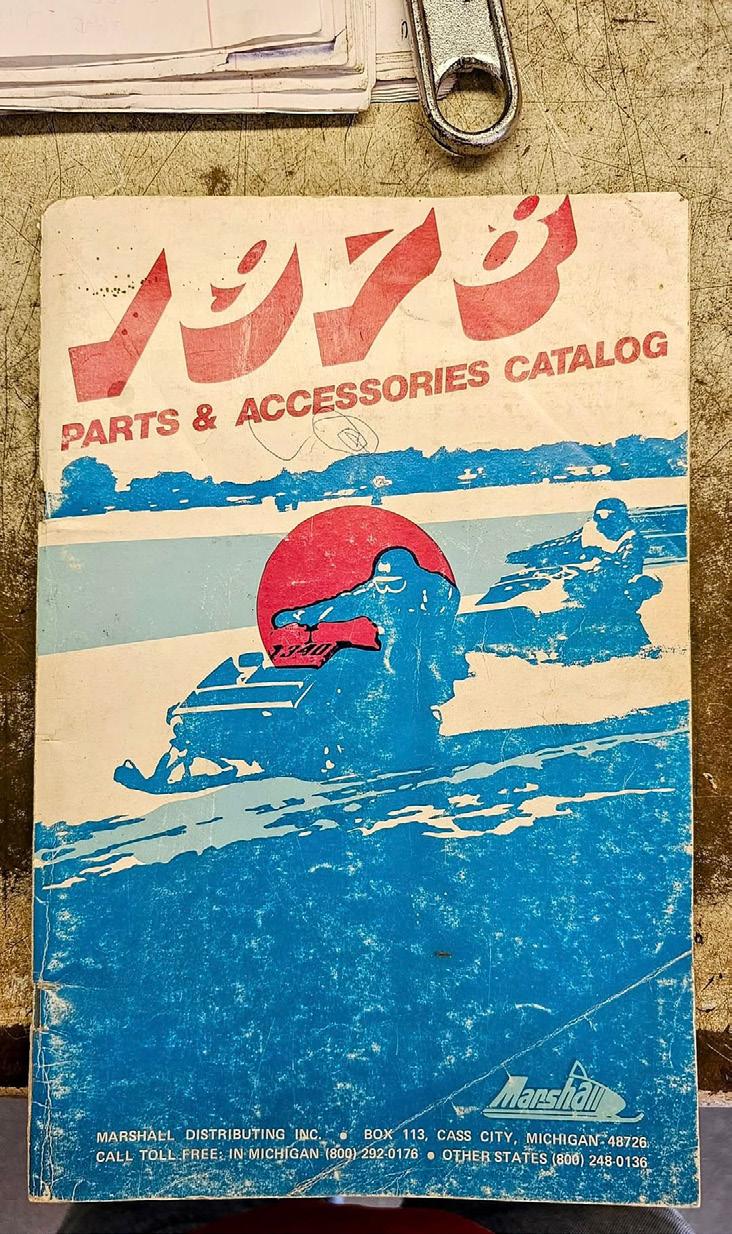
Roger was an avid MSU Spartan fan and attended many football and basketball games over the years. His many hobbies included racing snowmobiles, riding motorcycles, entertaining friends and family, golfing, boating, traveling, swimming and playing bridge or euchre. He looked forward to traveling with friends and planning family trips – including a week on a ranch in Wyoming just four weeks prior to his death.
Roger is survived by his wife of 64 years, Linda; his children: Jeanne (Paul) Huddleston, Kathy (Greg) Sims; grandchildren: Jessica Huddleston, Sarah (Andrew) VanVliet, Martin Huddleston, Allison (Nicholas) Kramer, Alaina Sims; great grandchildren: Kehlani Smith, Azalea Daniels, Kyro Daniels; his in-laws: Craig (Liz) Tunstall, Sandi (Rockie) Brandenburg; nephews: Matt (Jami) Tunstall, Chris (Alissa) Brandenburg, Kevin (Brenda) Tunstall, Shawn (Lauren) Brandenburg. He was preceded in death by his parents.
Vale, Roger Marshall

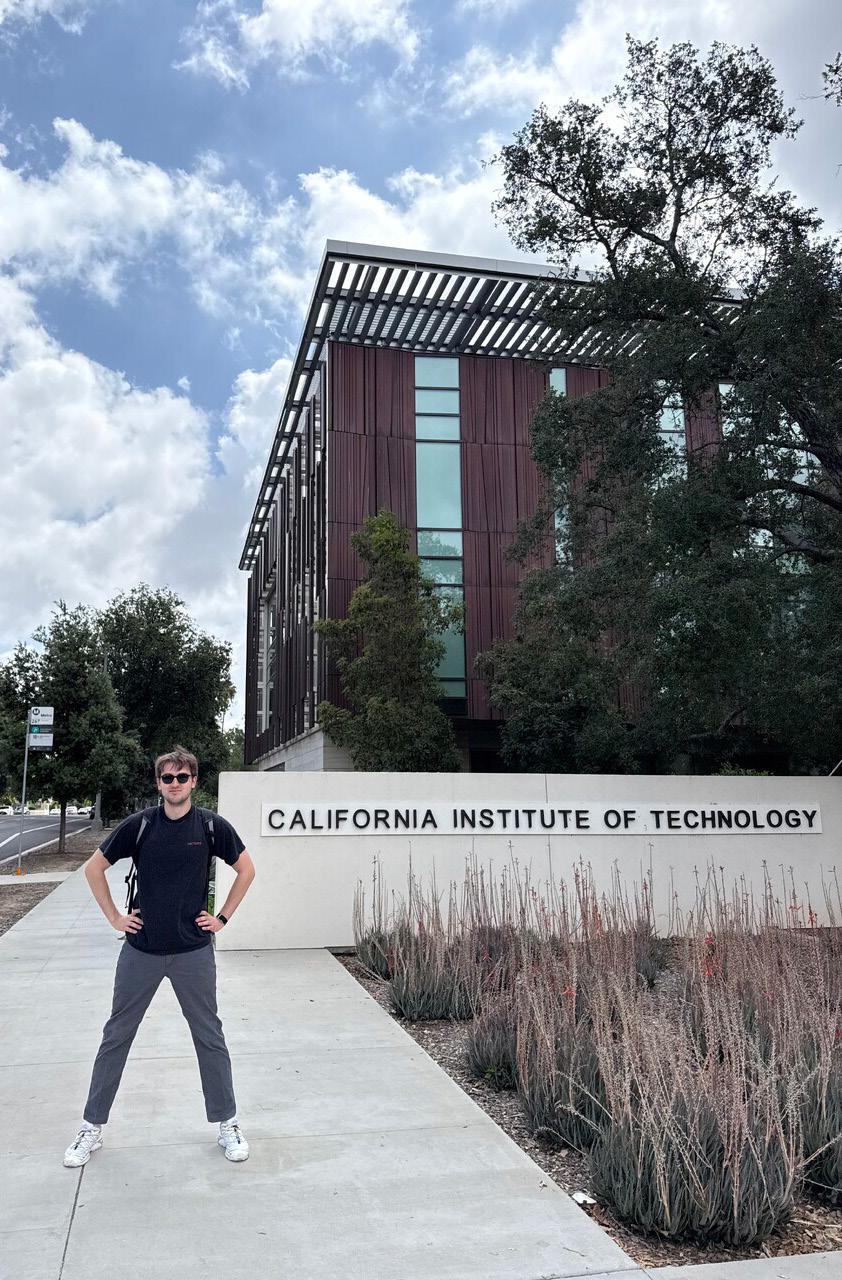
I CAME TO POWERSPORTS FROM AI… HERE’S WHAT I KEEP HEARING
By Dima Yanovsky
Three months ago, as part of a hiring spree for engineers at my company, I judged the California Institute of Technology’s annual hackathon — an event where computer science students come together to code up interesting projects over the weekend.
The company I founded, called Prox, builds technical support systems for a new era of AI systems. What we do essentially: we take all of the technical product literature (owner manuals, data sheets, compatibility matrices, etc.) and our custom models process all those PDFs into a “digital brain” that you can plug into your favorite AI system and tell it to reference when answering questions. This is a massive productivity boost for employees, since they have all the information about a product or part at their fingertips.
Over the last month I’ve been on calls with executives at top-tier North American OEMs, distributors and dealer principals. I came in thinking I’d hear a different problem from every person. I didn’t. I heard the same three stories. Almost word for word.
These were the three stories I gave the Caltech students to hack on and come up with creative solutions for that weekend, and these are the three stories I want to share with you now.
One important note before I begin: I’m as much of an outsider to powersports as it gets. I didn’t grow up riding bikes. I grew up programming websites for small businesses. Up until a year ago I was finishing my undergrad at MIT and developing AI models in the lab. The first bike in our family was a Chinese clone of a Honda Dio AF62 that my dad bought for himself, and I inherited it when I grew up. That’s how childhood in Ukraine in the early 2000s went.
Story 1: “Nobody on the floor knows the product anymore”
This is the most common one. The version I heard from one OEM executive: a customer walks in on Saturday. They’ve researched online for 3 weeks. They ask the salesperson what’s the difference between two of the OEM’s own flagship side-by-sides. The salesperson, 6 weeks on the floor because the veteran retired last spring, gives an answer that’s half right. Customer walks. Or worse: customer buys, drives home, comes back a month later because the accessory that got sold doesn’t fit the mount.
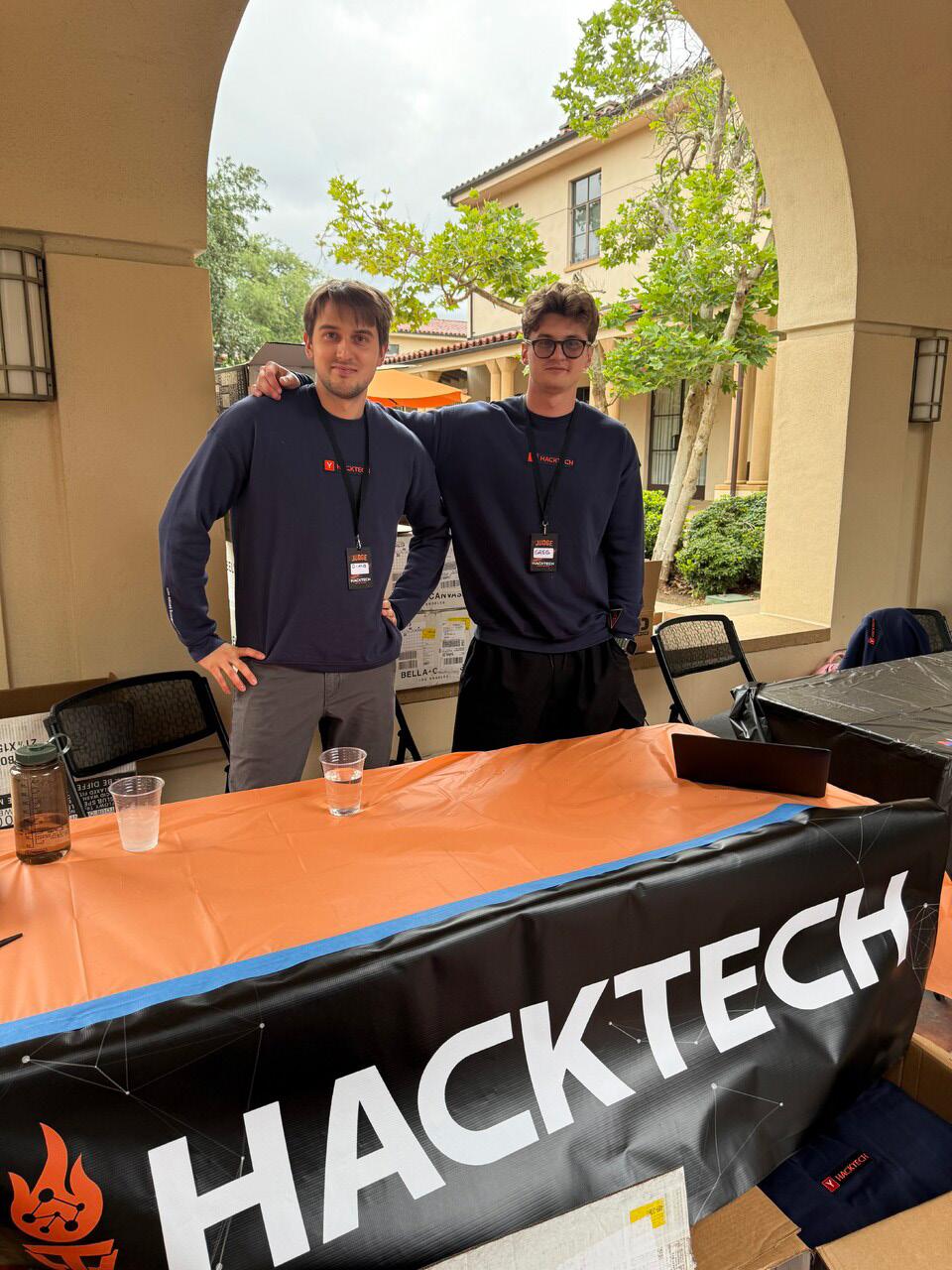
Robin Hartfiel told me the harder version of the same story from the service side. A fresh MMI graduate. six weeks out of school. Never seen rust on a real machine. Never installed an aftermarket winch on a unit the OEM didn’t ship with that winch. Has to beat flat rate on something that has no flat rate written down. Fifteen minutes hunting for the right washer eats the margin. Dealership absorbs the loss.
This is not a training problem. OEMs already spend serious money on training: branded schools, mandatory per-model-year courses, certifications. The problem is that the knowledge lives in 400-page PDFs and in the heads of 3 veterans every shop is one resignation away from losing. The catalog grows every model year. The people who could carry it in their heads are retiring.
In the next 18 months the bottleneck stops being “did this person memorize the catalog” and starts being “did we give them a system that knows the catalog.” Not a chatbot that throws back a wall of text. Every OEM has tried that and dealers have already written it off. I mean a service layer with real memory: knows the difference between two side-by-sides, compares them visually instead of as text, knows which winch fits which mount, can tell the kid in the bay what realistic install time looks like on the unit in front of him. The OEMs that show up to their late-2026 dealer shows with that in dealers’ hands will pull ahead. The ones who put a generic chat widget on the corporate website will not.
Story 2: “Our industry doesn’t even speak the same language
as itself”
The auto industry built ACES and PIES, its common data catalog, decades before large language models existed. Decades of cataloging discipline. Powersports never got there. Each OEM has its own data. Each distributor has its own catalog. One of the largest distributors in the industry, used to take a significant share of dealer orders by fax. Orders that never make it into a digital system until they ship.
So when a dealer wants to do something obvious, like pull a part across brands for a used unit in the back of the lot, quote an aftermarket install in a way the customer trusts, or just compare a Honda CRF300 to a Kawasaki 300 on the showroom floor, there’s no shared system that speaks both languages.
Most people in the industry have quietly accepted the implicit conclusion: powersports has to do 20 years of cataloging work before any of the AI promises can actually land. ACES and PIES took the auto industry that long, and it had to happen before anyone could build smart software on top.
I came in thinking the same thing. I don’t anymore. The whole point of the current generation of AI, and specifically the way we train memory for it, is that the models can read messy, unstructured, OEM-specific manuals, PDFs, and forum threads, and build a working internal map of the product without a shared catalog. They don’t need ACES and PIES. Building that
Continued on page 70
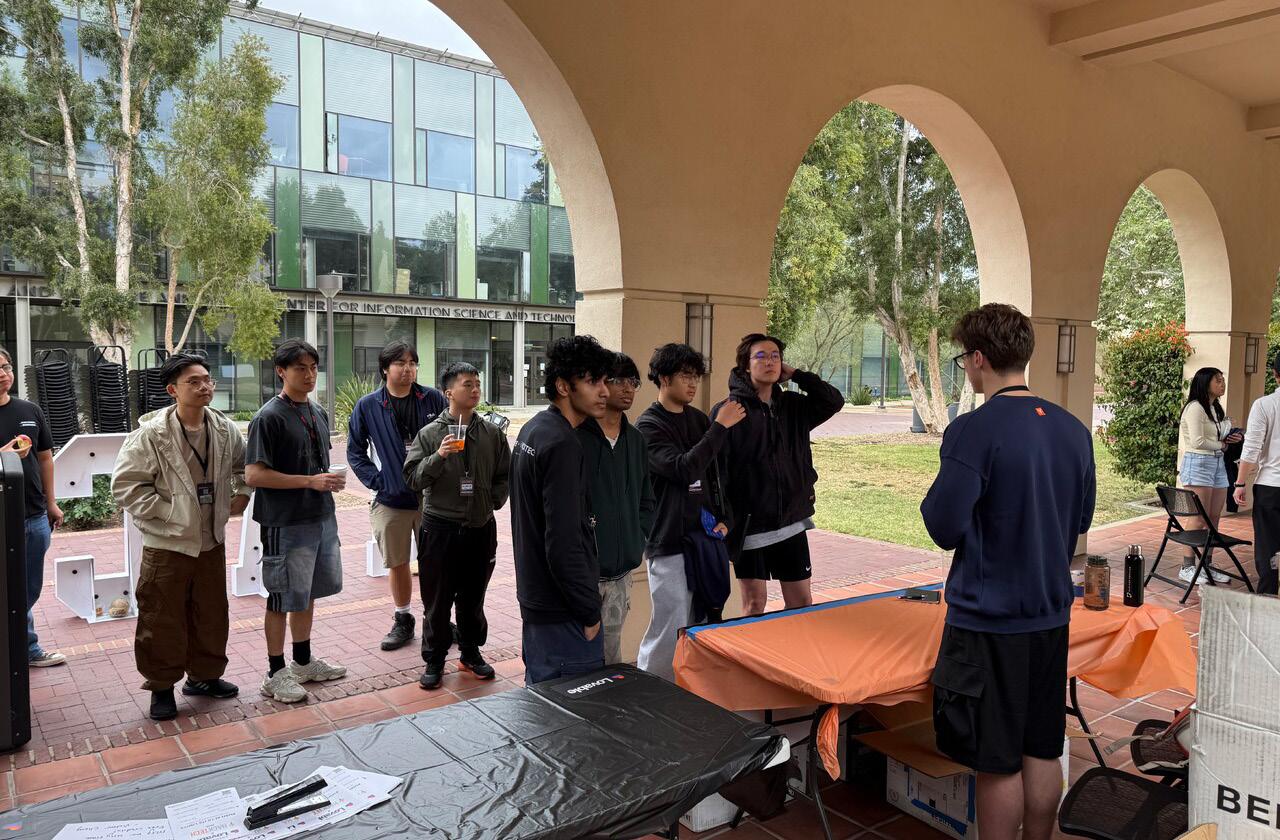
kind of system is a massive effort, and the resources to pull it off are something the auto industry might have but powersports doesn’t. They need clean ingestion, real human review of what they extract, and a memory system you can trust not to hallucinate. The 20-year head start auto has on cataloging discipline turns out, in 2026, not to be a moat. It’s a leapfrog opportunity for you. That changes the math on every cross-brand decision sitting on a dealer principal’s desk right now.
Story 3: “Our customers are asking ChatGPT, and ChatGPT is telling them to skip us”
This one comes up in every conversation. The shape of the story is this. A customer wants to put a winch on his ATV. He doesn’t call his dealer. He doesn’t go to the OEM site. He opens ChatGPT and asks. ChatGPT, like every large language model on the market, was trained mostly on internet text. The loudest internet text about powersports parts lives on aftermarket forums. The advice on those forums is almost always some version of “don’t bother with the dealer, here’s a winch that’s a third of the price, install it yourself.” So the customer skips the dealer, orders the cheaper part, and the dealer’s service department never sees the install.
The dealer-side of the same problem is just as painful. A dealership’s biggest customer is actually its own service department. If the salesman bolts on an OEMgenuine winch, the install bills back internally at flat rate, and everyone in the dealership makes money. The moment the customer walks in with an aftermarket part instead, flat rate goes out the window. The mechanic has to figure out fitting, torque specs, and the right washer for a part nobody at the OEM ever wrote install time data for. The 15 minutes of guessing eats the margin. The dealership absorbs the loss.
So the dealer loses twice. Once on the part. Once on the install.
The customer’s first AI conversation about a product is shaping the rest of the funnel, and right now that conversation is happening on a general-purpose model trained on Reddit. OEMs want to own that conversation. They want the customer asking about their ATV to get an answer grounded in OEM-approved sources, not in the loudest aftermarket forum post from 2018.
Here’s what I think will happen in the next 18 months: A QR code on a unit opens a conversation with the OEM’s own AI, grounded in the OEM’s manuals, parts catalog, and flat rate data. An iPad on the dealer floor that already knows what the customer was reading on the forum at 11 PM the night before, and can counter the bad advice with a specific OEM-genuine alternative and a real install time. OEMs and dealers who own that surface end up owning the customer relationship.
The ones who hand it off to a general-purpose AI built by people who have never set foot in a dealership lose the customer back to the forums.
If any of these three stories resonate with what you see on your floor, or if you are at an OEM thinking about how AI fits into your dealer network, I would welcome the conversation. The work we are doing at Prox is sharpest when it is grounded in conversations with the people actually running the business. If you have a flat rate war story, a forum thread that captures the dealer-skip pattern, or a customer interaction that illustrates the online-to-in-store gap better than I described it here, I would love to read it.
See more at: useprox.com
You can reach me on LinkedIn at: linkedin.com/in/yanovsk or directly at: dima@useprox.com

Low Minimum Order Flooring & Financing Margins up to 27% 3-Year Warranty
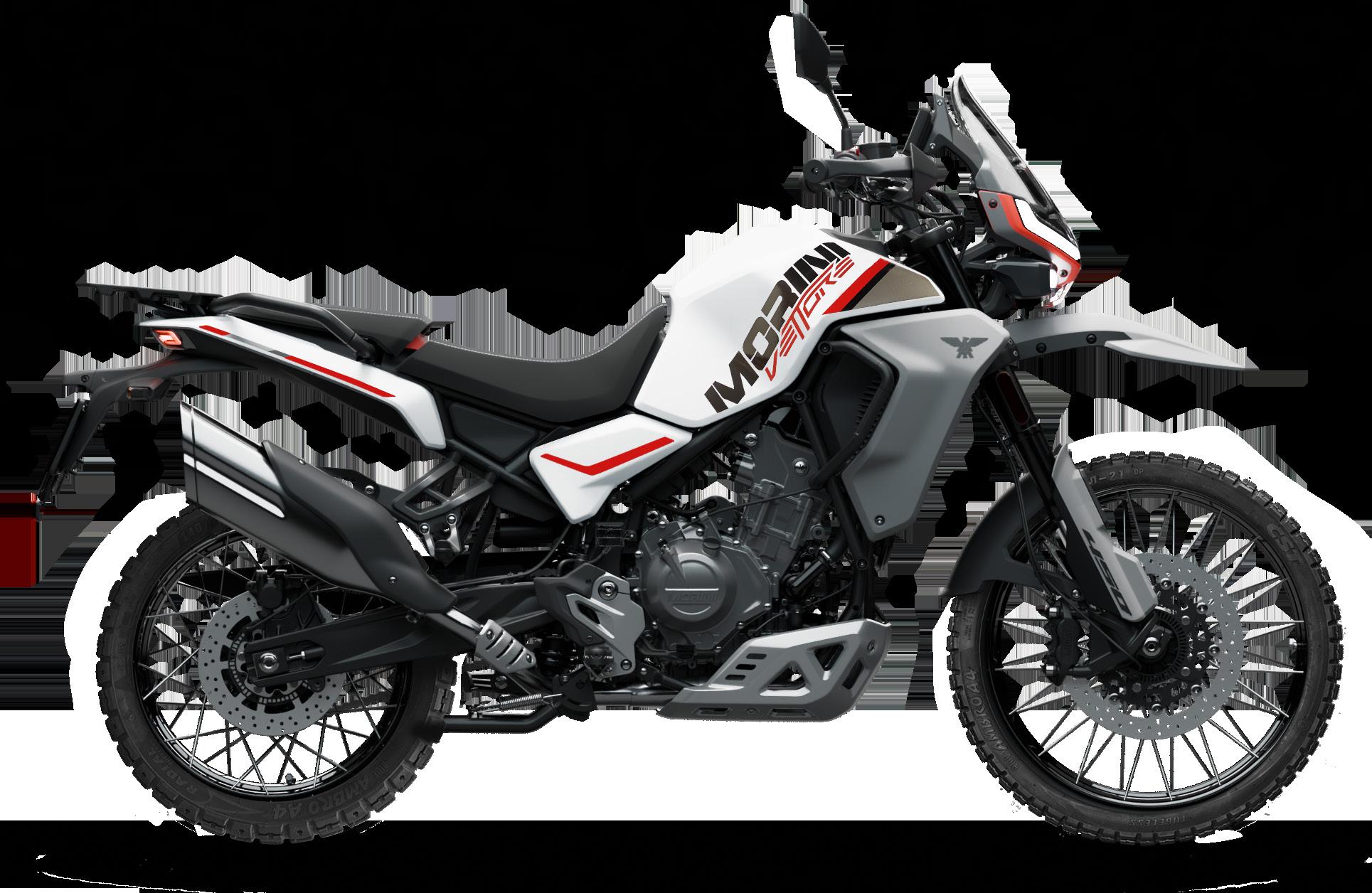

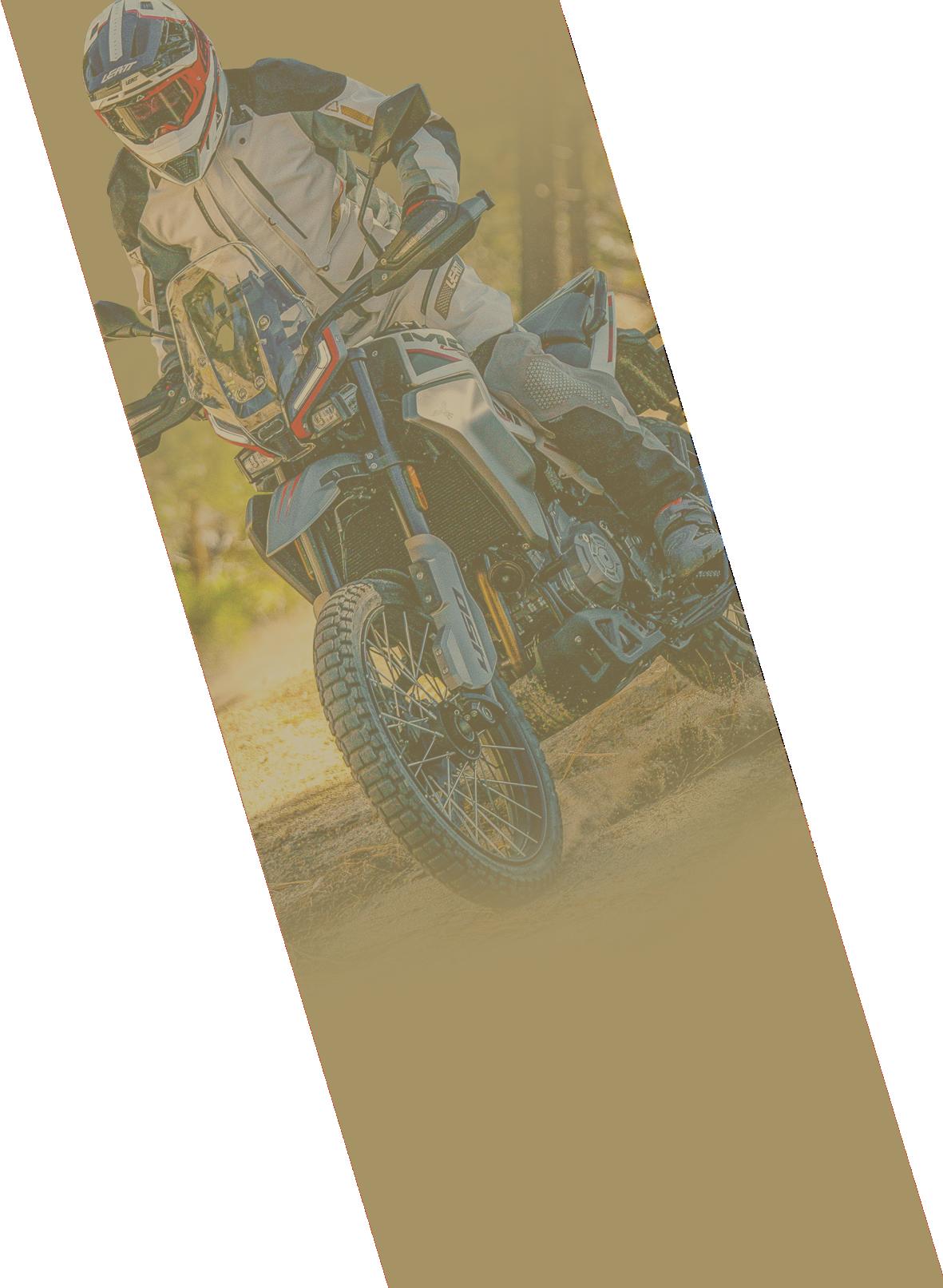
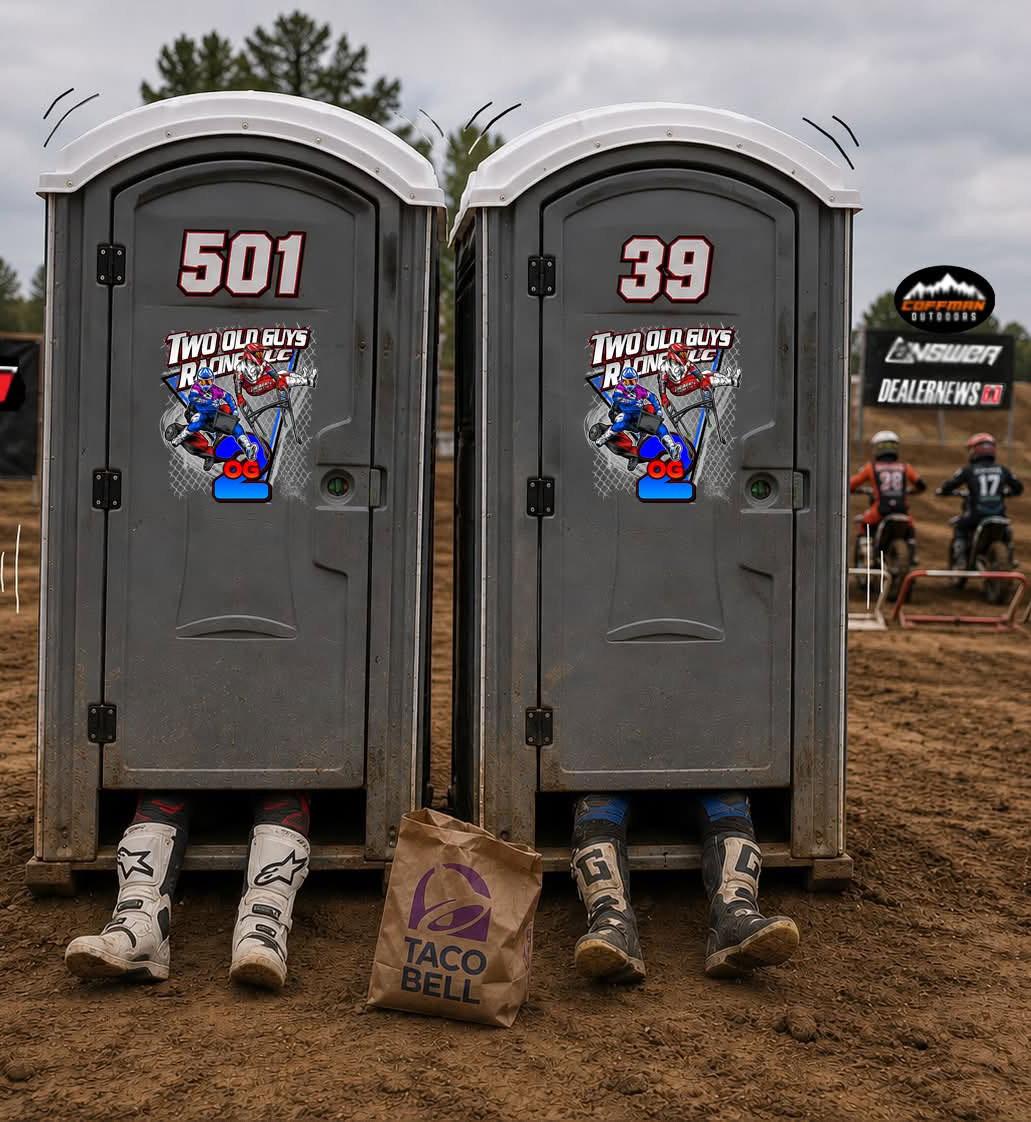
A funny thing happened on the road to Loretta Lynn’s... lettuce wish 2OG Racing a speedy recovery!