



Deakin University Art Gallery
13 May – 7 August 2 026
Anindita Banerjee (born 1983, Kolkata, India) is a self-described ‘twice uprooted passenger seat migrant’, moving first to the United States of America and now living on the lands of the Wadawurrung people of the Kulin Nation (Ballarat, Victoria). Never intending to leave her homeland, she grapples with a life that is split across places as she finds and creates a new space for her own experience. Her work interrogates ideas of cultural otherness, authentic identity, and belonging.
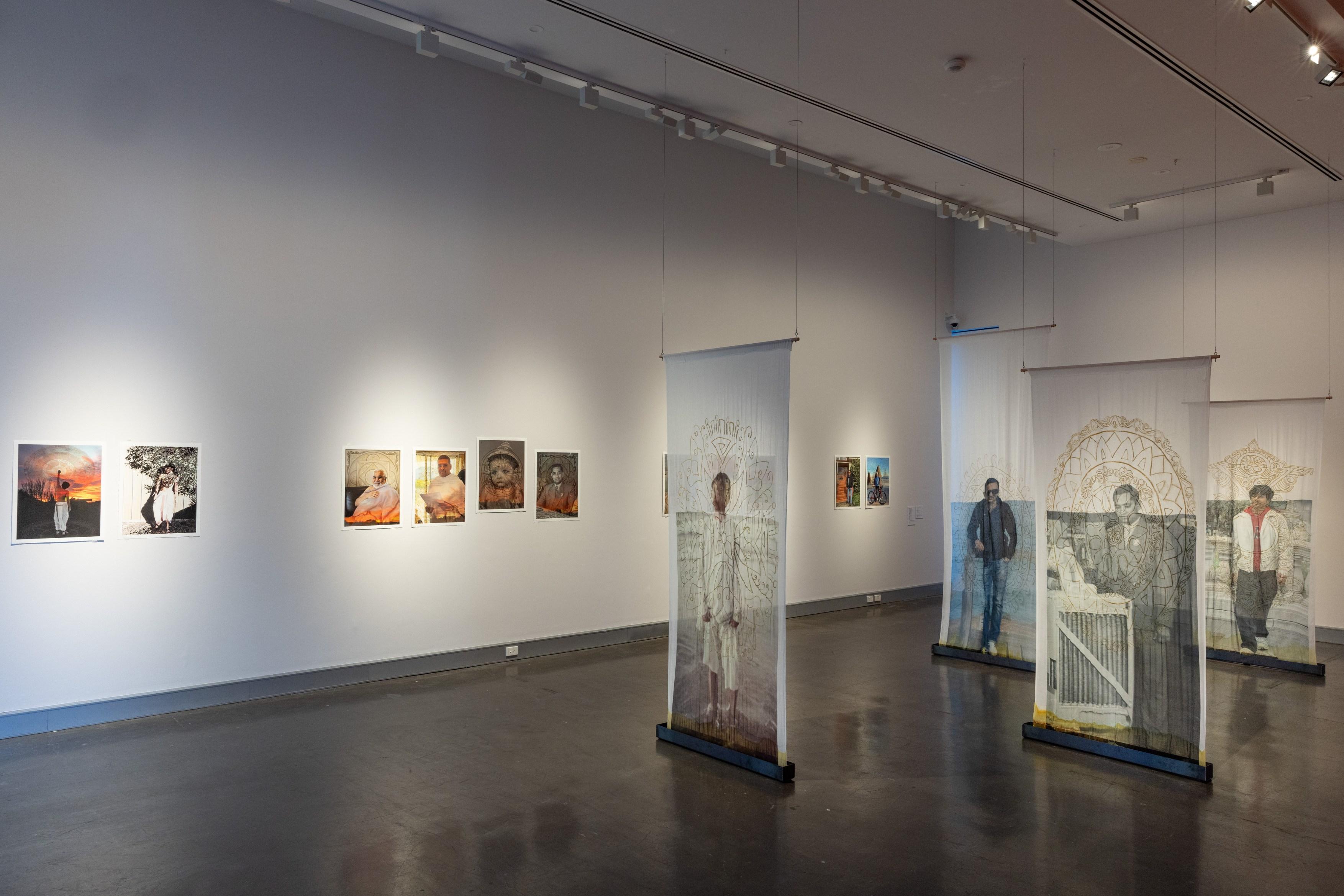
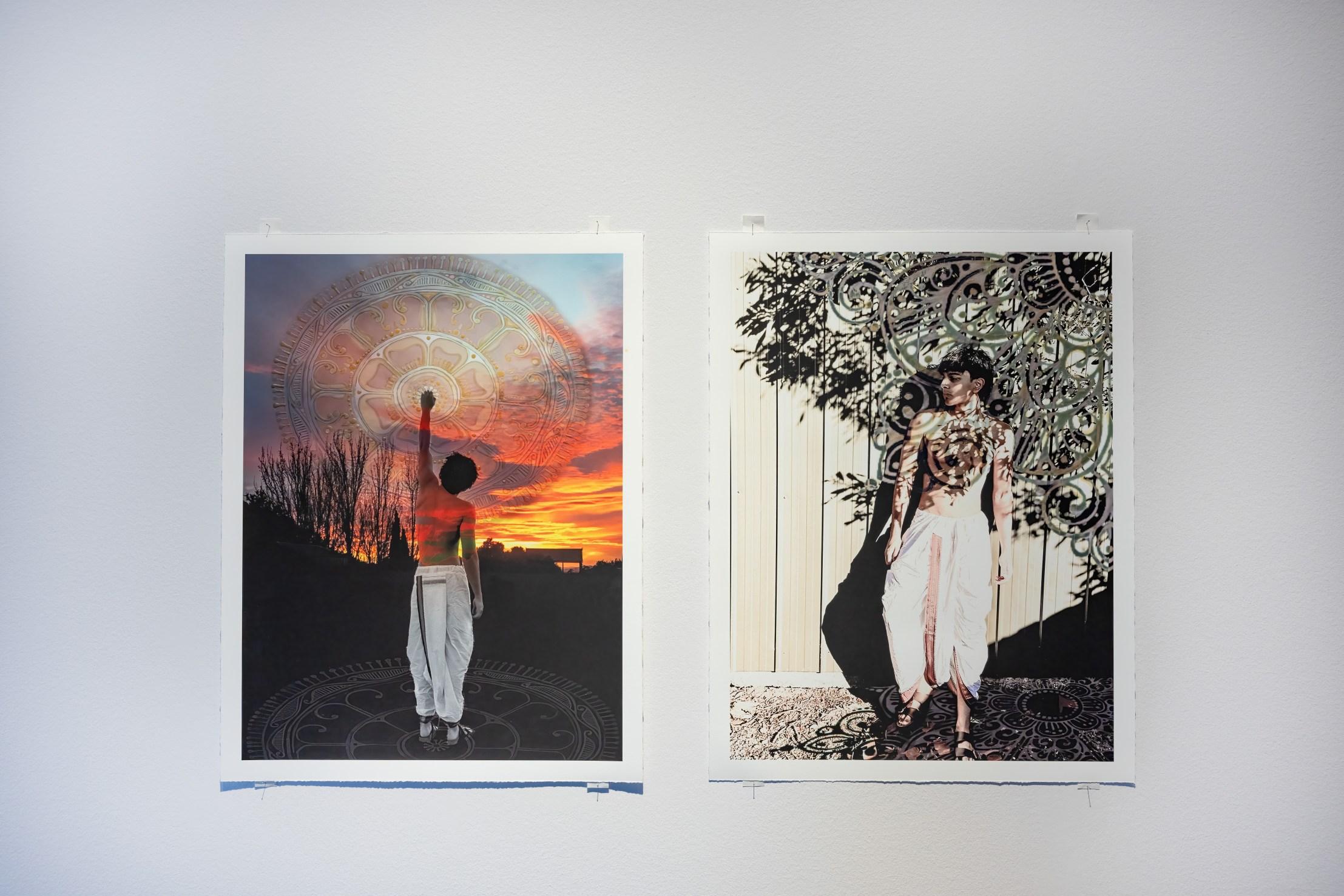
For this new body of work, Banerjee combed through the archives of her life to select photographs of significant men in whom she finds reflections of her Dada’s (grandfather’s) facial features. They include family, mentors, friends and cultural leaders across different aspects of her life and communties, including Indigenous Australasian peoples. She overlays their portraits with ritualistic mark-making inspired by her memories of Bengali ceremonies that she has practiced throughout her life. In her reconstructions of these rituals, she layers memories, peoples, cultures, generations and places—searching for a sense of home and self.
‘ Maybe IunwittinglylookforDadaintheirsoft , powerful presence. Ormaybe itis in the Australasian DNAwe share. Or maybe still , itis my unconscious, migrantdesireto feellike I belongto these sacredlands oftheAboriginalpeople . Orit plainlycomes from the desire to holdonto somethingthatI have leftbehindinthe sacredlands ofwhere Iwasborn. ’
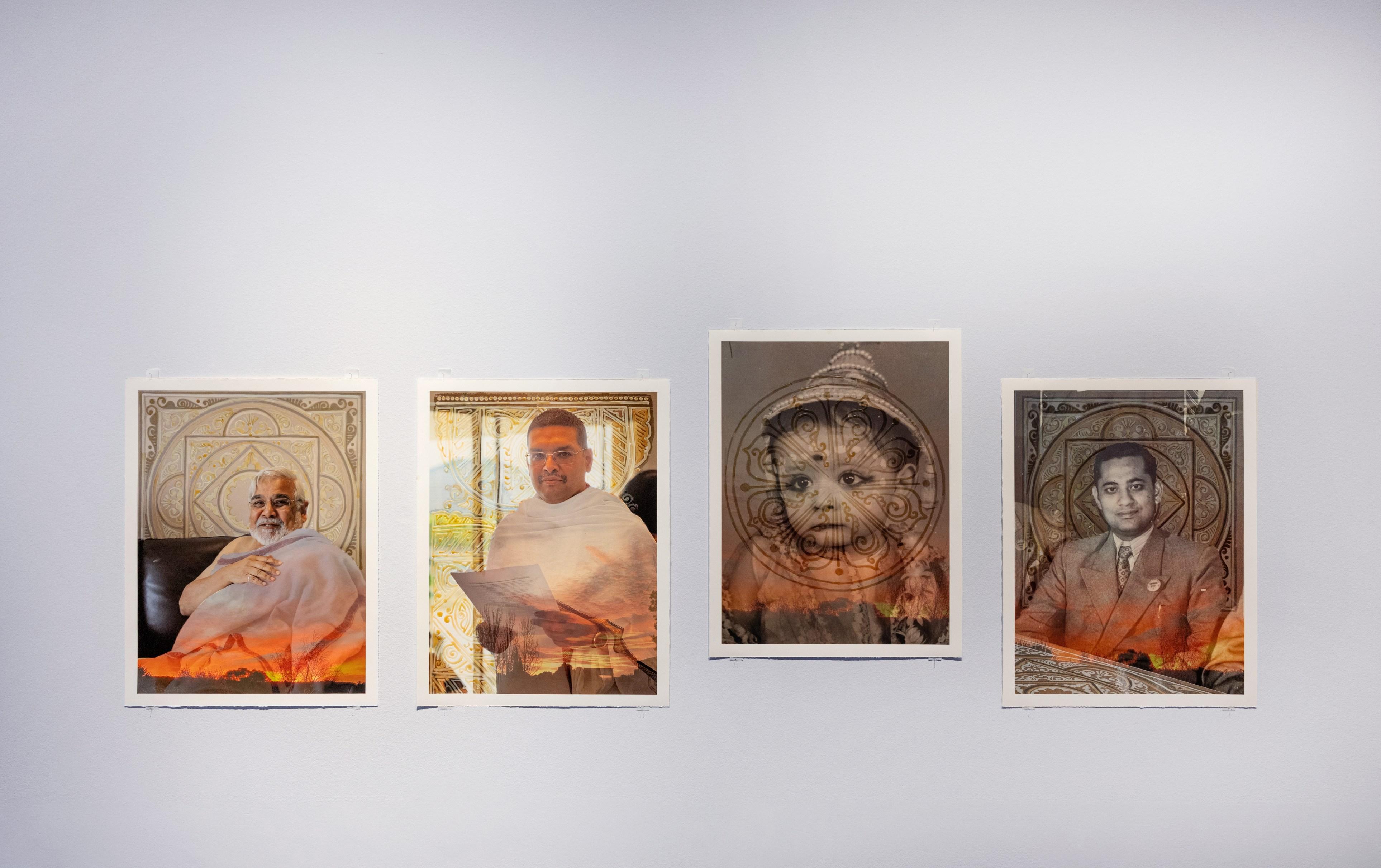
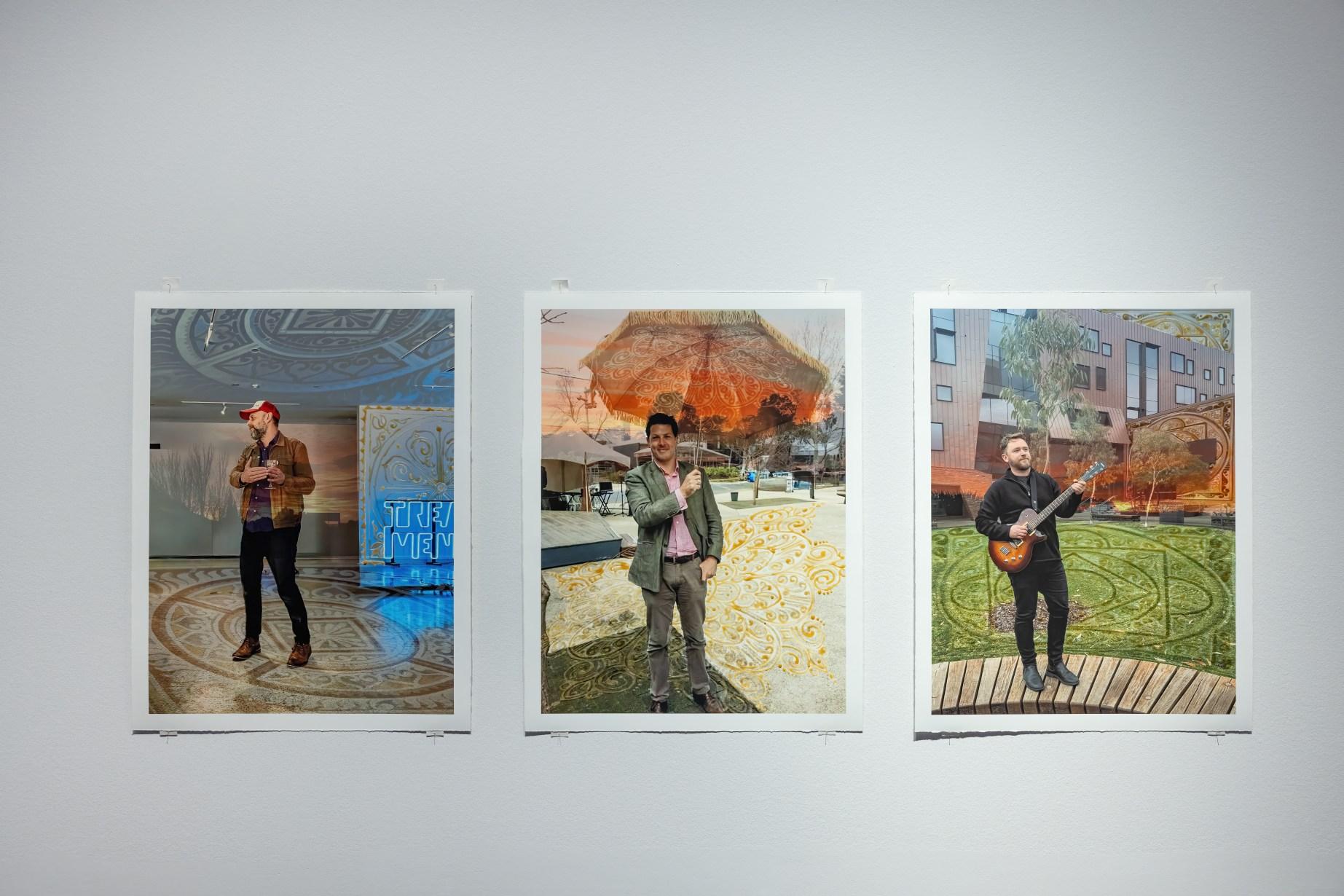
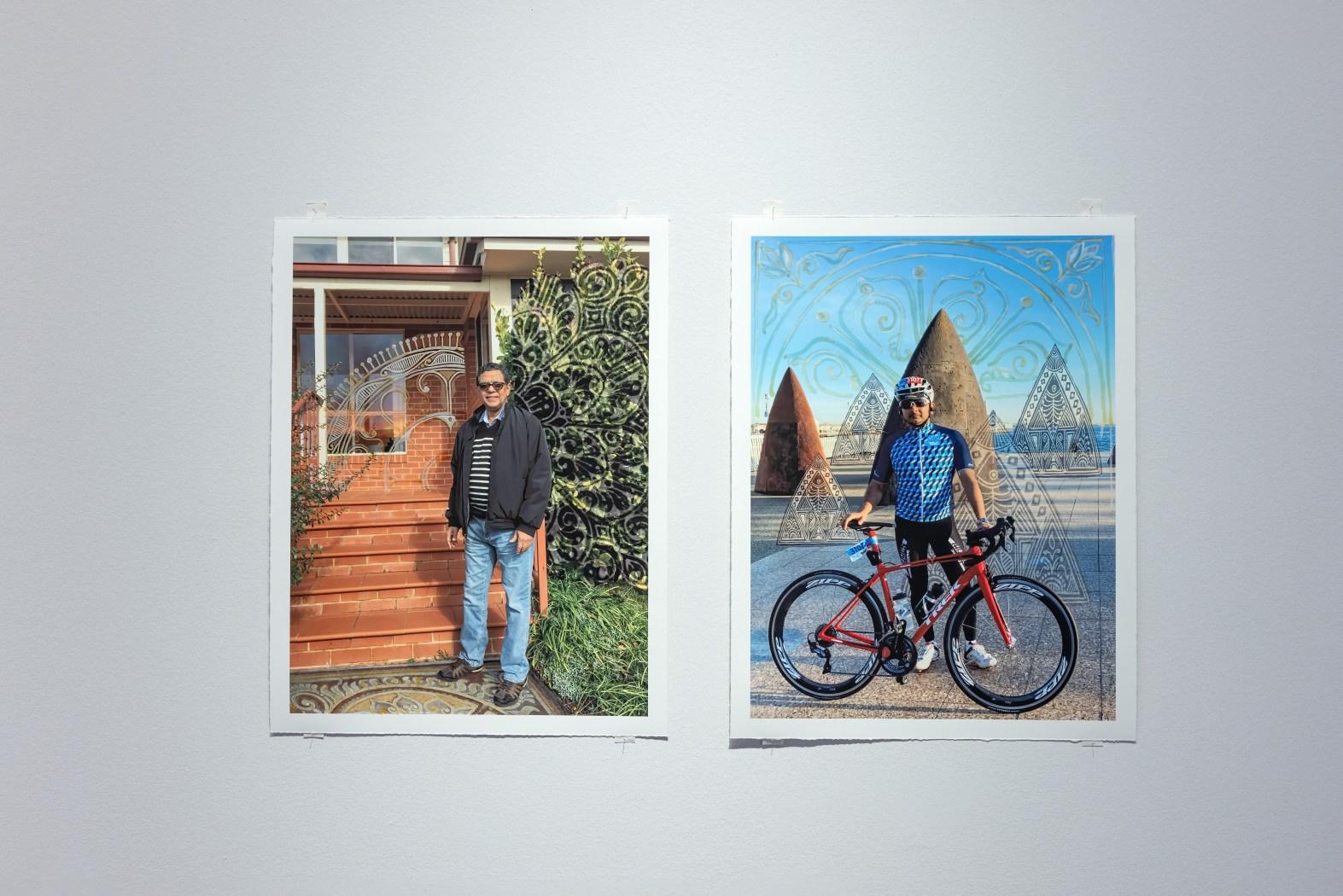
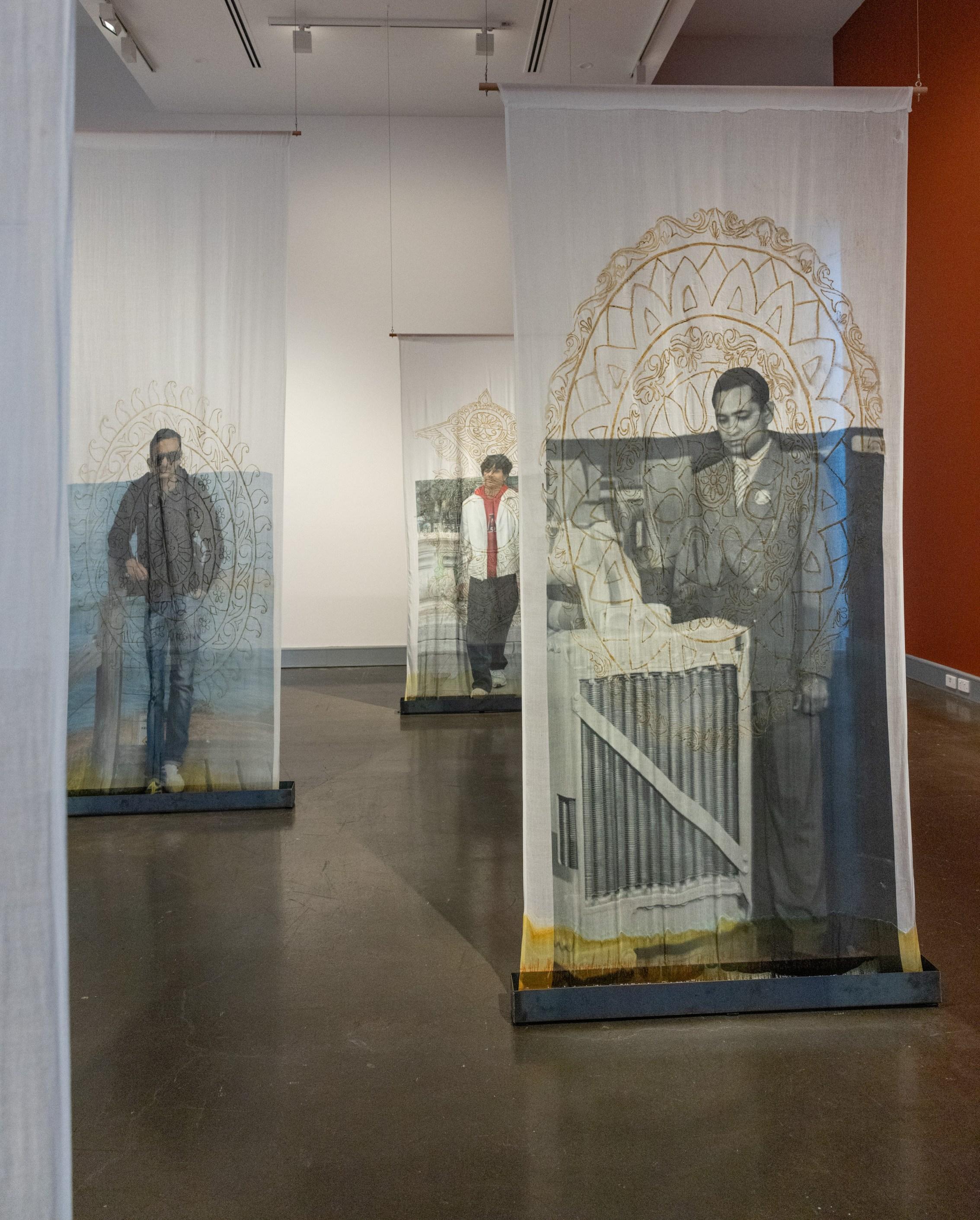
Anindita Banerjee
Ishaan, 2025 #1 2025/26
Ishaan, 2025 #2 2025/26 2026
Dadabhai, 2022 2026
Dada, 1957 #1 2026
Manu, 1977 2026
Cam, 2023 2026
Nicolas, 2015 2026
Jesse, 2026 2026
Baba, 2017 2026
Manu, 2023 2026
66 × 50.8 cm (sheet)
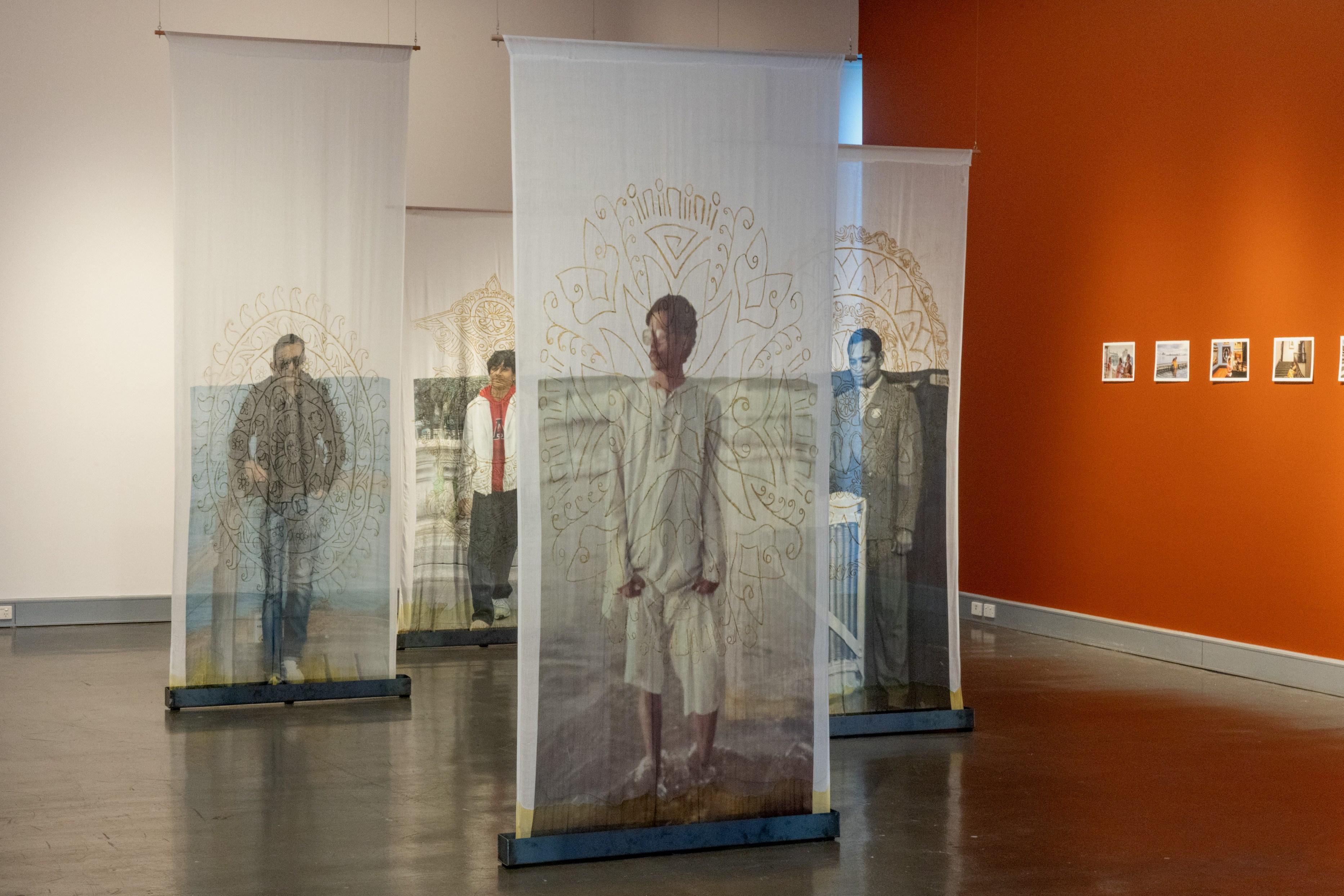
Anindita Banerjee
Sanrag Saha
Dada, 1957 #2 2026
Baba, 1980 2026
Manu, 2012 2026
Ishaan, 2025 #3 2026
digital prints with batik; modal muslin, wax and dye in a steel trough
minimum size of 250 × 100 cm (fabric); 8 × 110 × 10 cm (trough)
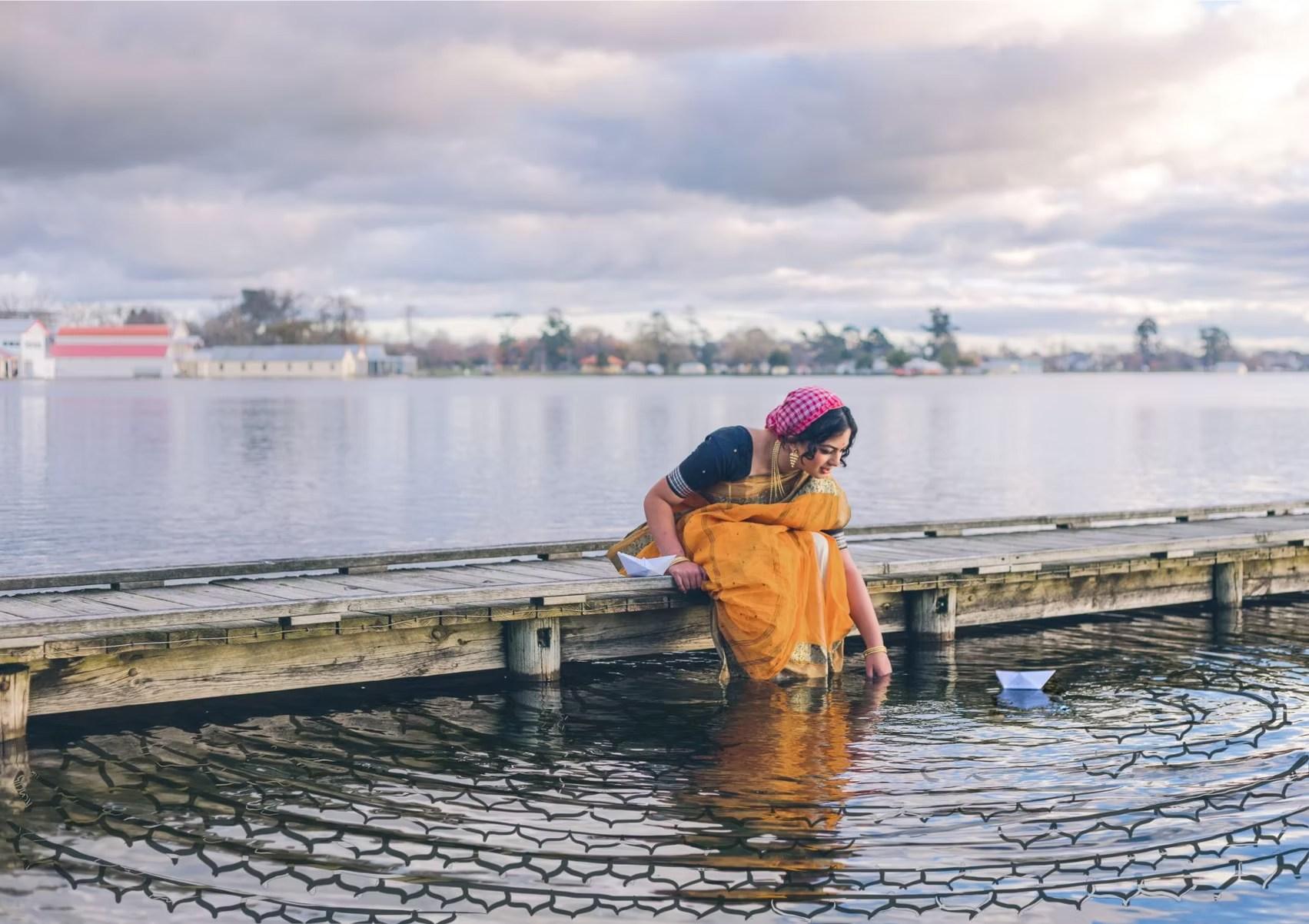
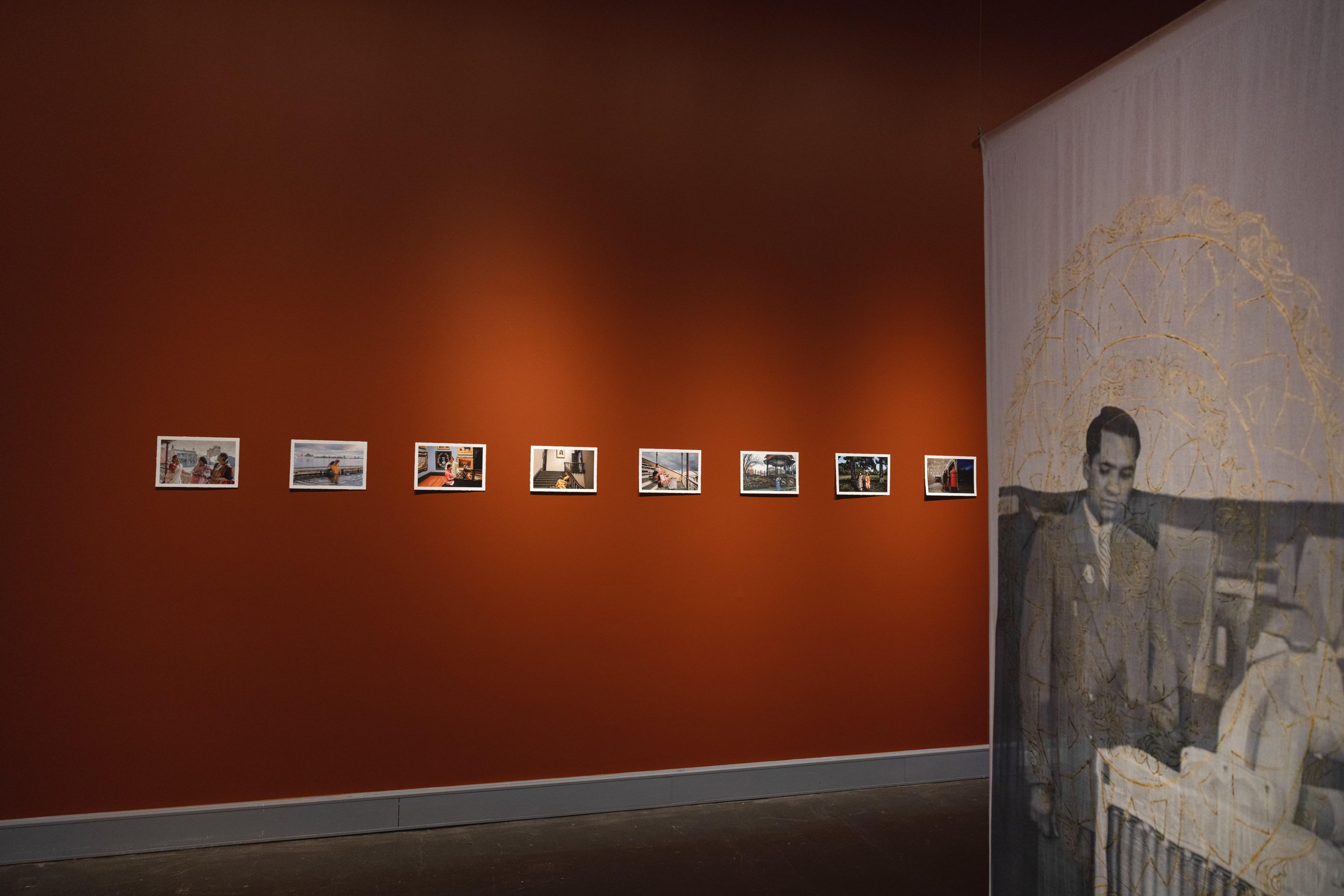
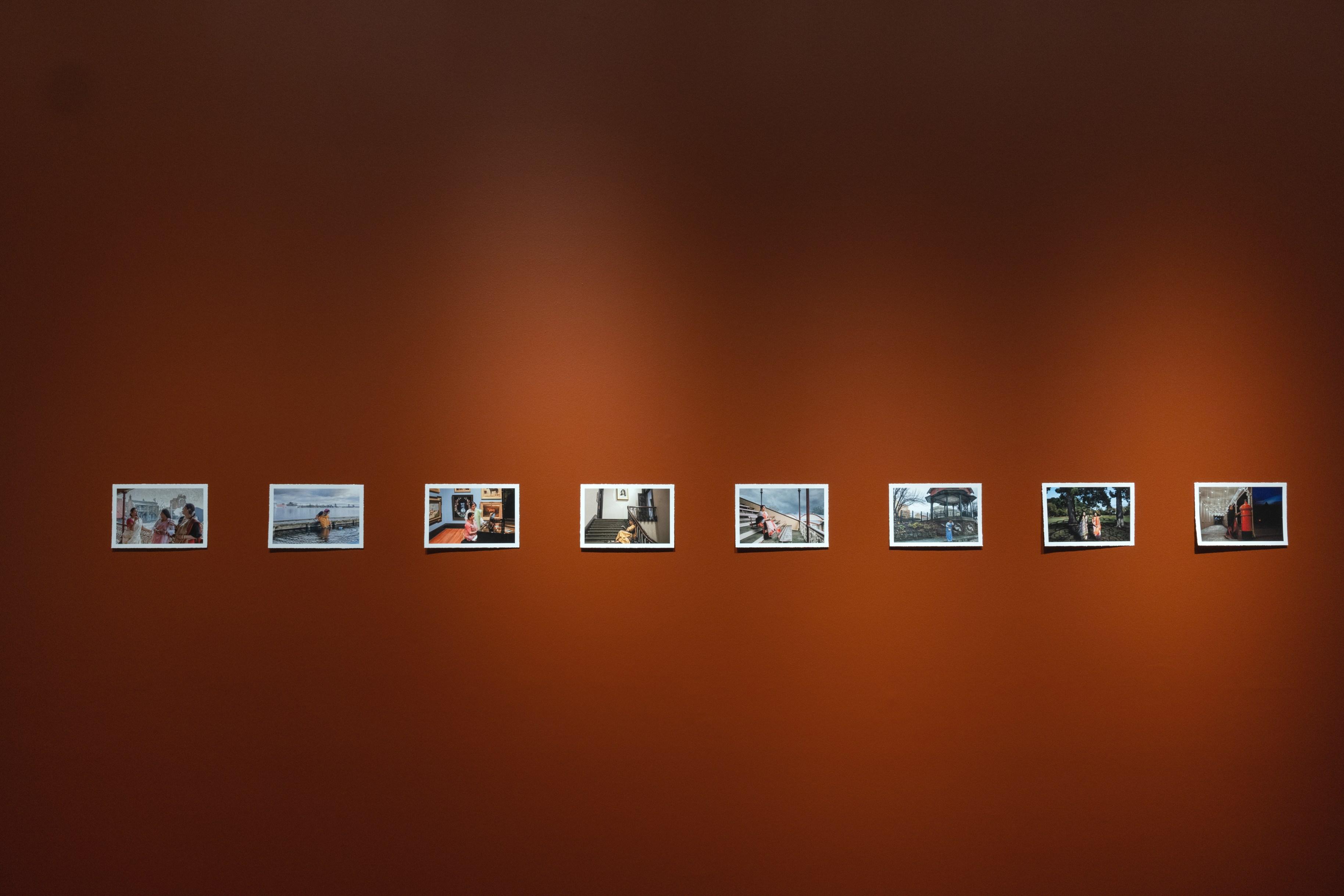
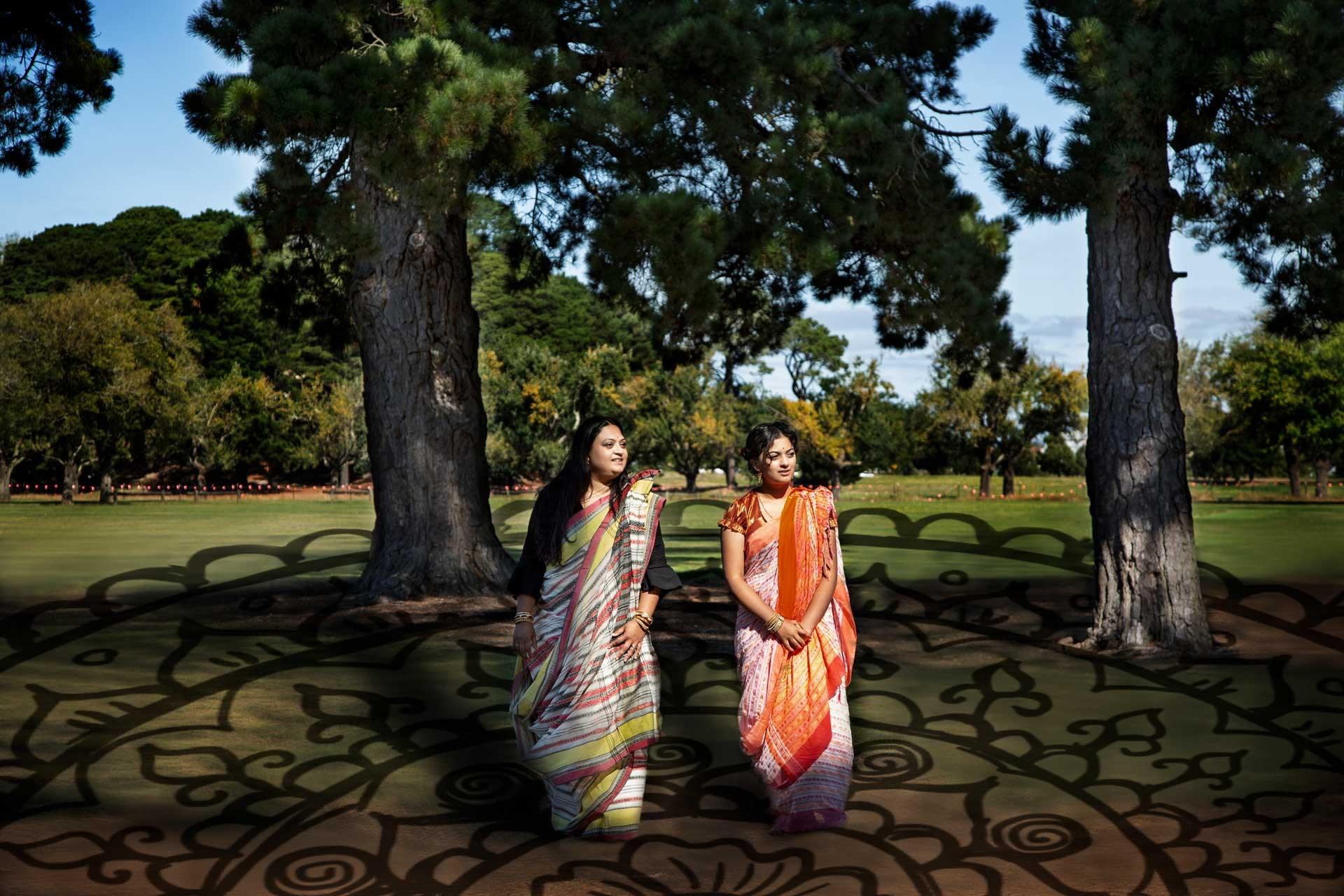
Ondormohol means ‘inner quarters’, a reference to the literal private quarters of a Bengali house as well as the metaphorical idea of a private inner self. In this work Anindita Banerjee reveals her private reality as a migrant: a place that incorporates the present, past, and other imagined spaces in between.
This work combines Banerjee’s experiences of crumbling Victorian era Rajbaris (large private mansions) growing up in 1990s Kolkata; the surreal reality of finding similar (but pristine) Victorian houses in her present life in Ballarat; and the past of early 1900s Kolkata as brought to life for Banerjee by the writings of Bengali polymath Rabindranath Tagore (1861–1941) and her inheritance of an antique embroidery from the time. Banerjee collapses time and space to create this imaged reality of 1900s Bengali women living 10,000 km away in Ballarat.
Banerjee created this series as part of the Ballarat International Foto Biennale 2021, and editioned the works last year as a folio. The individual works take their titles from Tagore's poem SheshKheya(The LastBoat) ,

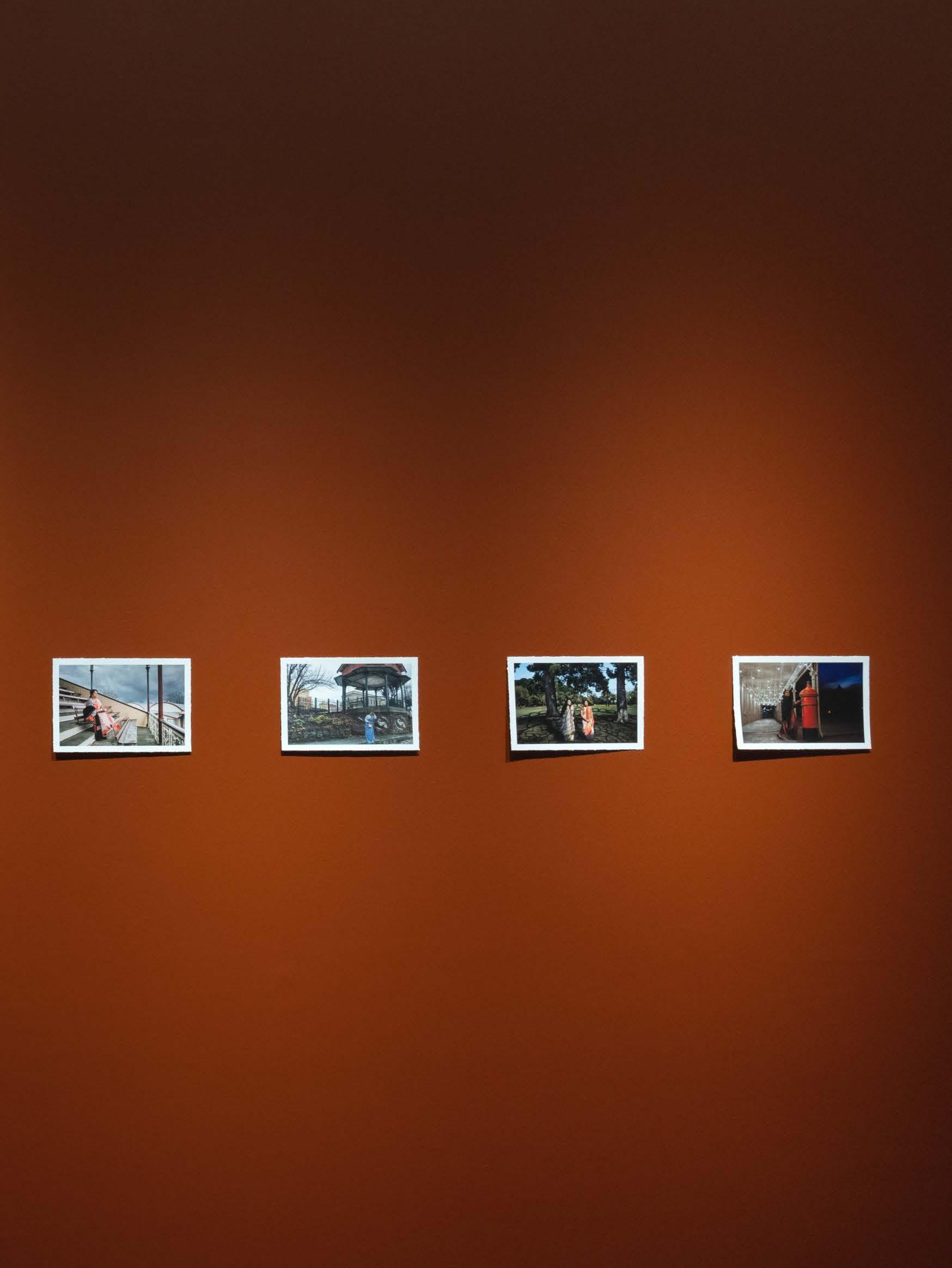
Anindita Banerjee
(
Ondormohol)
2021/25
editioned folio of eight digital prints with drawing; inkjet print on Ilford cotton rag paper
20.8 × 31 cm (sheet)
The shadow; that distracts the soul.
What misty illusion of gold?
At sundown; when the horizon disappears,
…will you take me with you, on that last boat?
The shadow that blocks the sun and soothes the soul.
I stop; because here is where it starts.
Deakin University Art Gallery 13 May – 7 August 2026
Artist: Anindita Banerjee
Install photography: Fiona Hamilton
All works are © copyright courtesy of the artist
Text written by Kira Godoroja-Prieckaerts in consultation with the artist
Published by Deakin University 978-0-6459431-6-0
Deakin University Art Gallery Deakin University
Melbourne Campus at Burwood 221 Burwood Highway Burwood VIC 3125
Free Entry
Gallery hours
Monday – Friday 10 am – 4 pm
Closed on public holidays
T +61 3 9244 5344
E artgallery@deakin.edu.au
W deakin.be/art-gallery
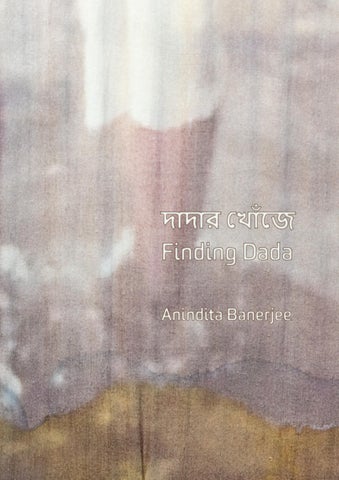
cover image:
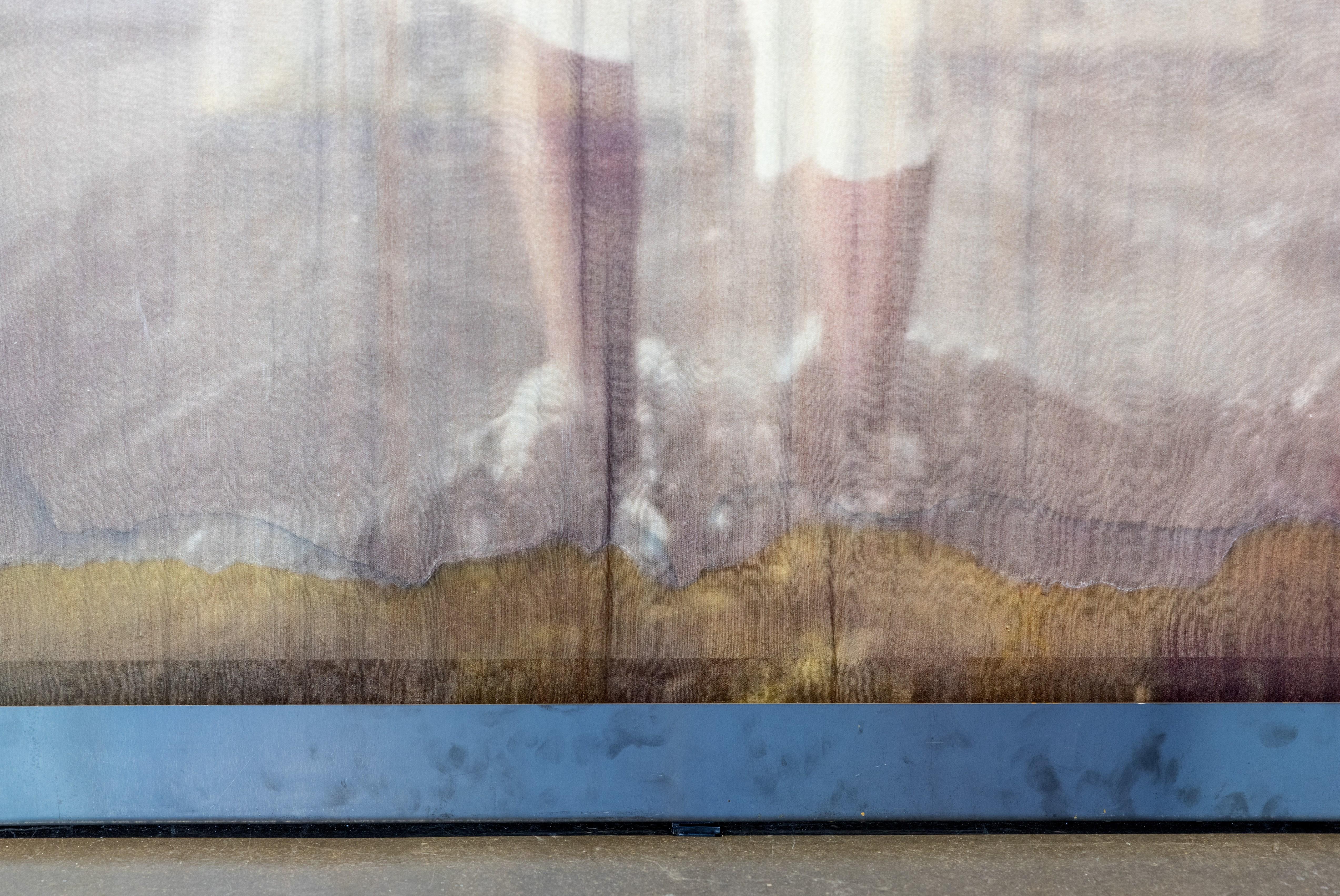
Anindita Banerjee (artist) and Sanrag Saha (batik artisan), Baba, 1980 (detail), 2026, digital print with batik; modal muslin, wax and dye in a steel trough. © courtesy of the artist.
Photo by Fiona Hamilton.
© 2026 the artist, the authors and publisher. Copyright to the works is retained by the artist and their descendants. No part of this publication may be copied, stored in a retrieval system, transmitted or reproduced in any form or by any means without the prior written permission of the publisher and the individual copyright holder(s).
The views expressed within are those of the author(s) and do not necessarily represent the views held by Deakin University. Unless otherwise indicated all images are reproduced courtesy of the artists.
Facebook.com/ArtDeakin
Instagram.com/deakinartgallery
izi.travel - Deakin Art Collection and sculpture walk guides
Deakin University acknowledges the Wadawurrung and the Wurrunderji people of the Kulin Nation and the Gunditjmara people, who are the Traditional Custodians of the lands on which our campuses are based. We pay our respects to them for their care of the land.
Deakin University CRICOS Provider Code 00113B