THE ALABAMA EPISCOPALIAN
Election of the Very Rev. Richard Lawson as 13th Bishop of Alabama
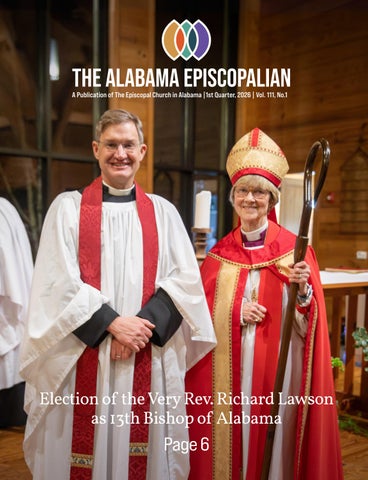
Election of the Very Rev. Richard Lawson as 13th Bishop of Alabama
“Now there are varieties of gifts, but the same Spirit; and there are varieties of services, but the same Lord; and…varieties of activities, but it is the same God who activates all of them…to each is given the manifestation of the Spirit for the common good.” (1 Corinthians 12:4-7)
Dear Friends,
This issue of The Alabama Episcopalian is a snapshot of a holy adventure. From our Electing Convention, followed five days later by the 195th Diocesan Convention, to registration for next summer’s Camp sessions, we see a rich reflection of the diverse, vibrant ministries around us. As Paul tells the Corinthians, “…there are varieties or gifts… (and) activities”, and each is a “manifestation of the Spirit for the common good.”
Each Sunday, I am blessed to visit your home base and see the ministry that has captured your heart, as we worship together. I am never disappointed by your creativity or your devotion. Even our smallest parishes want a connection to Episcopal Church Women, are interested in the altar guild, and want to see what’s happening in other parishes. I am often asked, “How are we doing, Bishop?” Meaning, are we healthy and thriving?
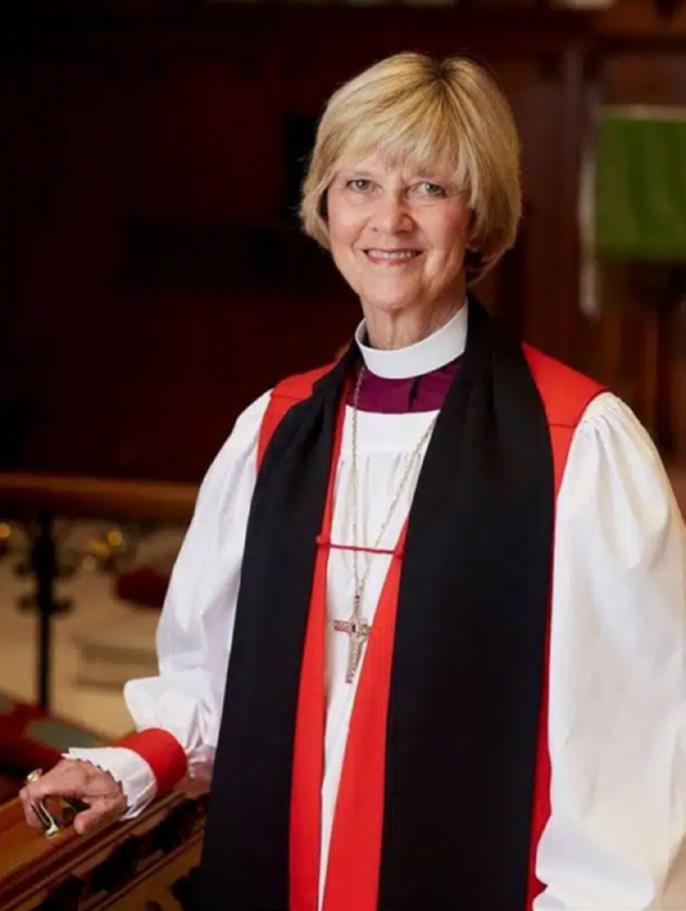
2026. Thanks to your ministry, Bishop-elect Richard will inherit your faithfulness and God’s blessings as he takes the crozier. He will continue to lead us into God’s future with energy and hope.
Over the past six years, so many people have worked tirelessly alongside me, praying, encouraging, deliberating, and worrying with me. Hearing my name prayed out loud each Sunday has been an extraordinary gift. Receiving your unreasonable hospitality in the form of my favorite food or music, all the notes I get every week have been surprises like little envelopes of light that you don’t even know I need, another sign that God is near our work together.
I am delighted to report that our Diocese is strong and growing. As I write, we are planning to ordain five priests and three deacons before Pentecost. Our first cohort of lay ministry pathways in Preaching, Worship Leading, and Pastoral Care has begun supporting our lay leaders. Many are involved in discernment for holy orders at the parish and diocesan levels. Camp McDowell is gearing up for a big summer, and our next Diocesan Bishop (#13) will be consecrated at the Cathedral on June 27,
I am grateful for all those who have labored fearlessly alongside me in this amazing vineyard where God placed us, which is a deep and enduring blessing I will always cherish. I am deeply grateful to God and you that I have been granted the blessing of serving you as your Bishop. As our exciting future unfolds, I hope I see you at church somewhere soon!
Blessings,

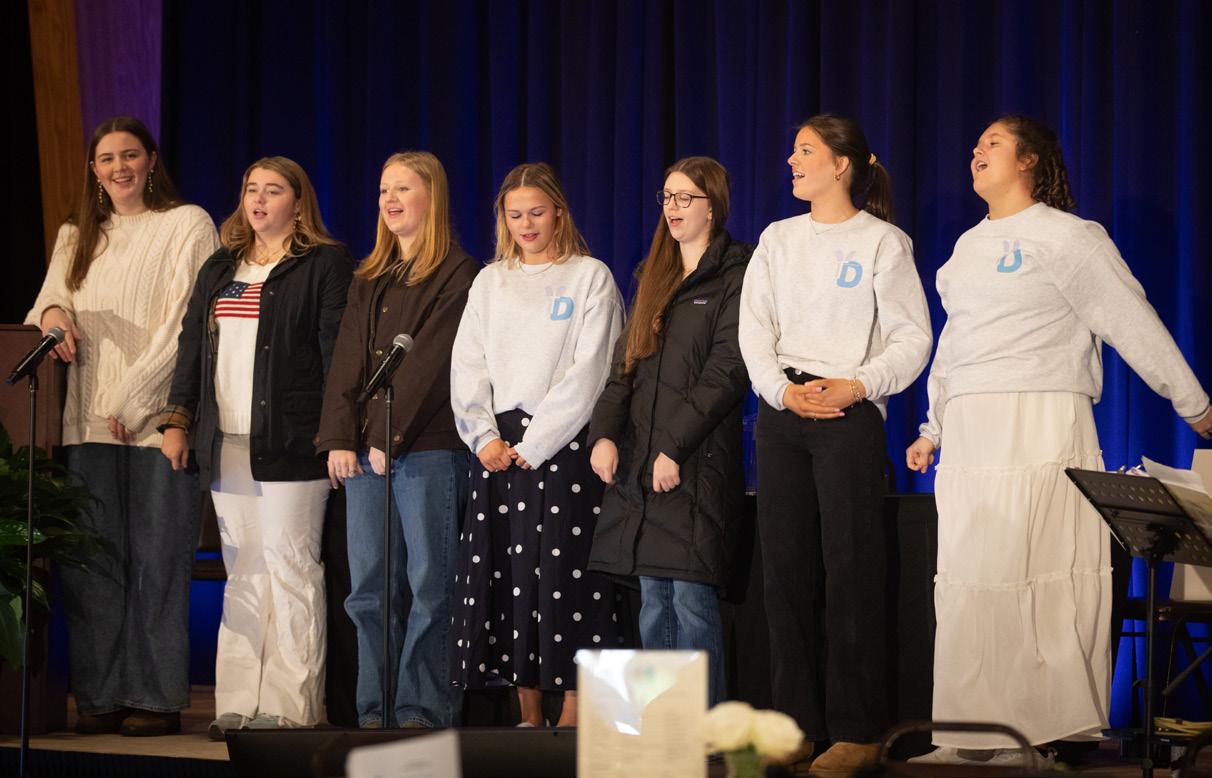
“Thanks to your ministry, Bishop-elect Richard will inherit your faithfulness and God’s blessings as he takes the crozier.”
Dear Friends,
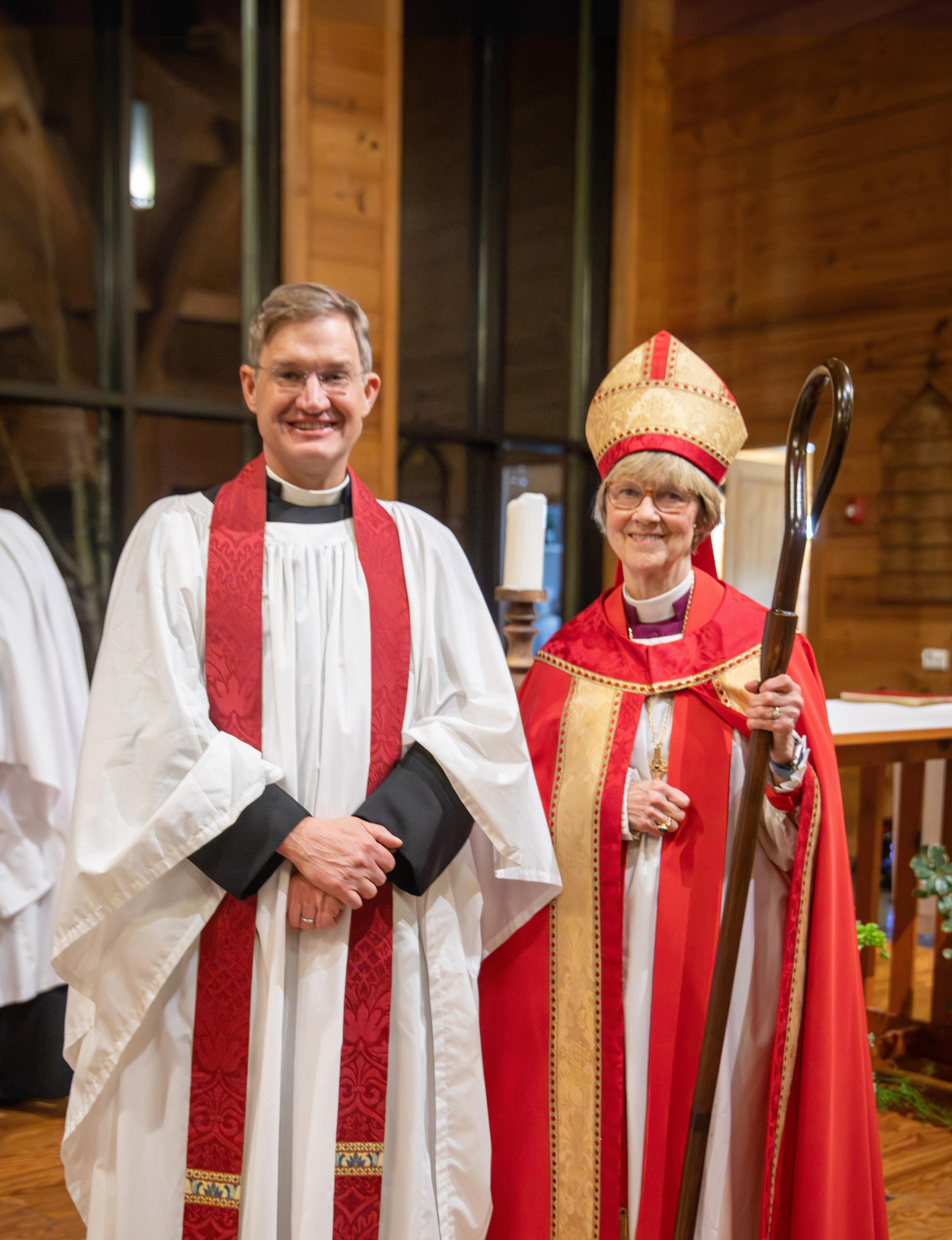
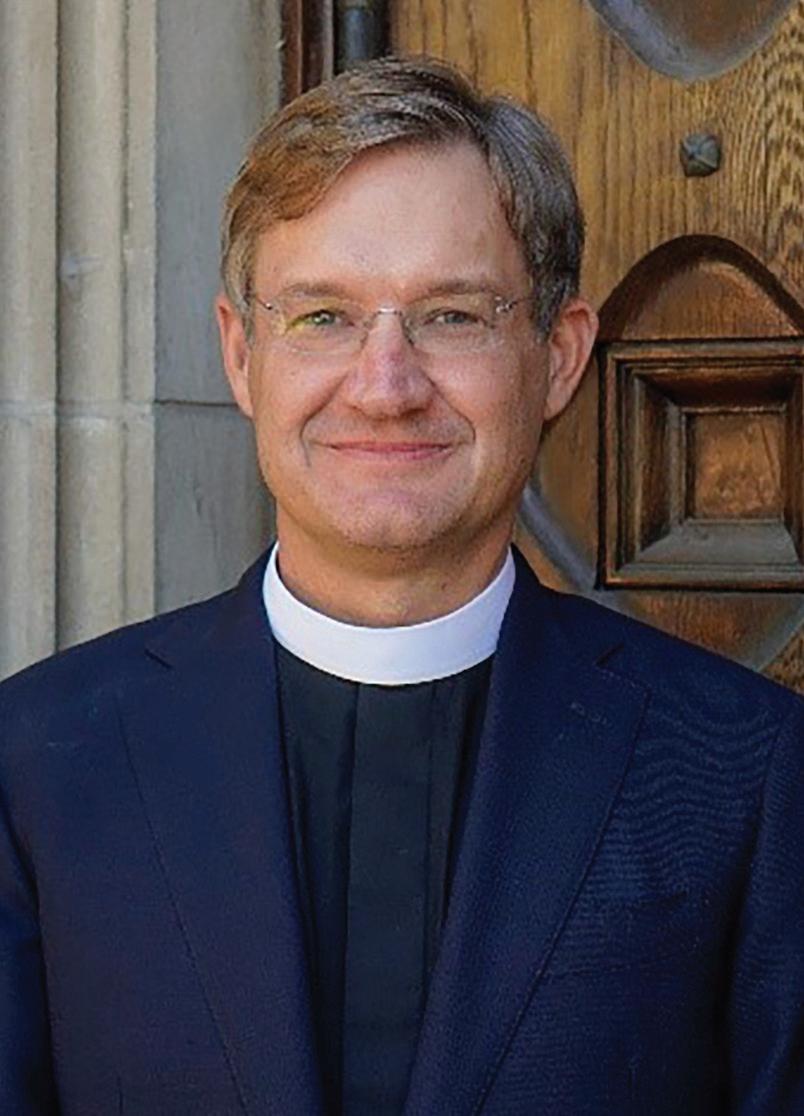
It is with deep gratitude and joy that we share the news of the election of the Very Rev. Richard T. Lawson III, dean of St. John’s Cathedral in Denver, CO, as the 13th bishopelect of the Diocese of Alabama.
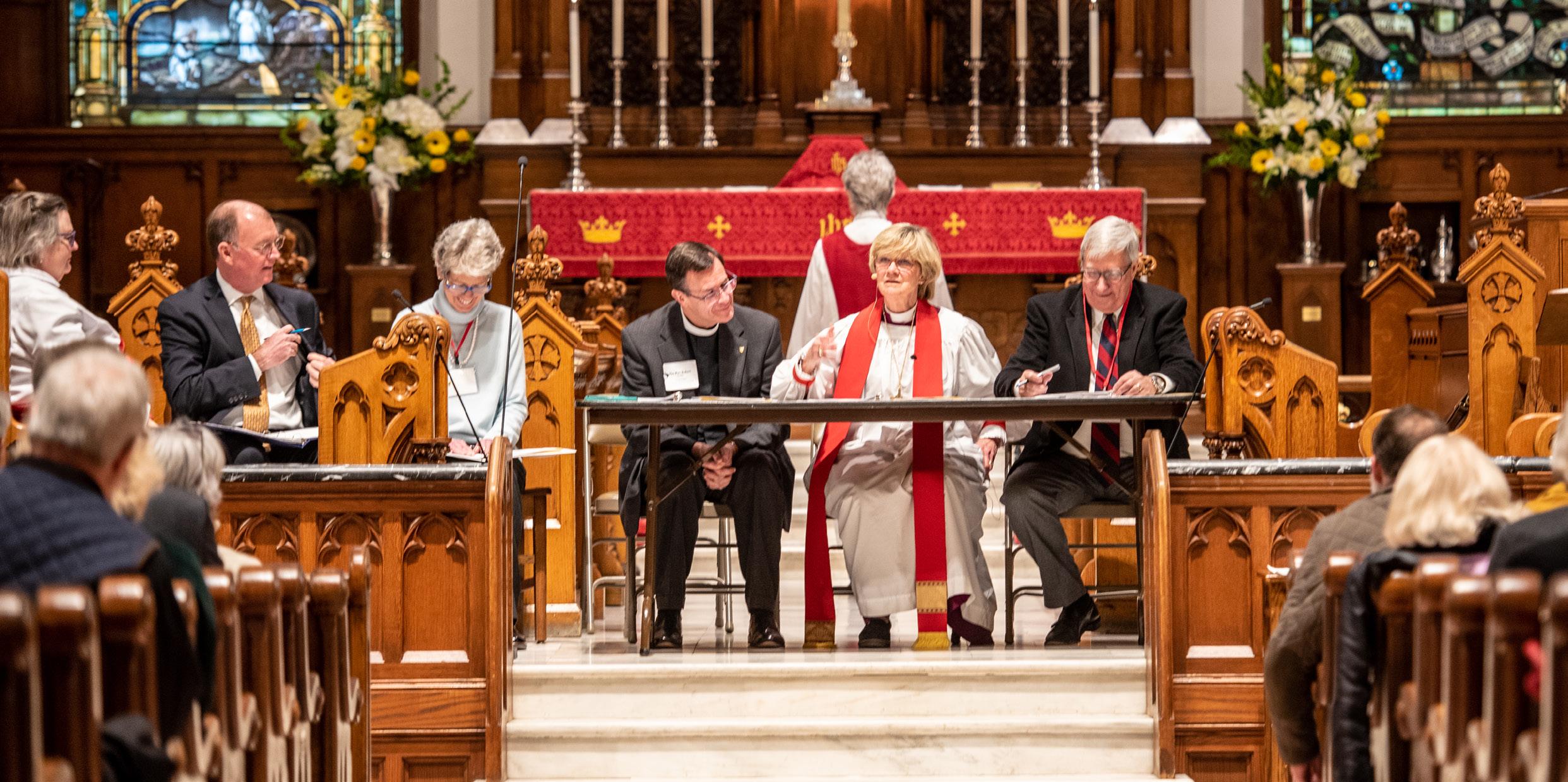
To be elected, a candidate was required to receive a simple majority of votes from both clergy and lay delegates, voting separately on the same ballot. Lawson was elected on the first ballot, receiving 108 clergy votes and 184 lay votes.
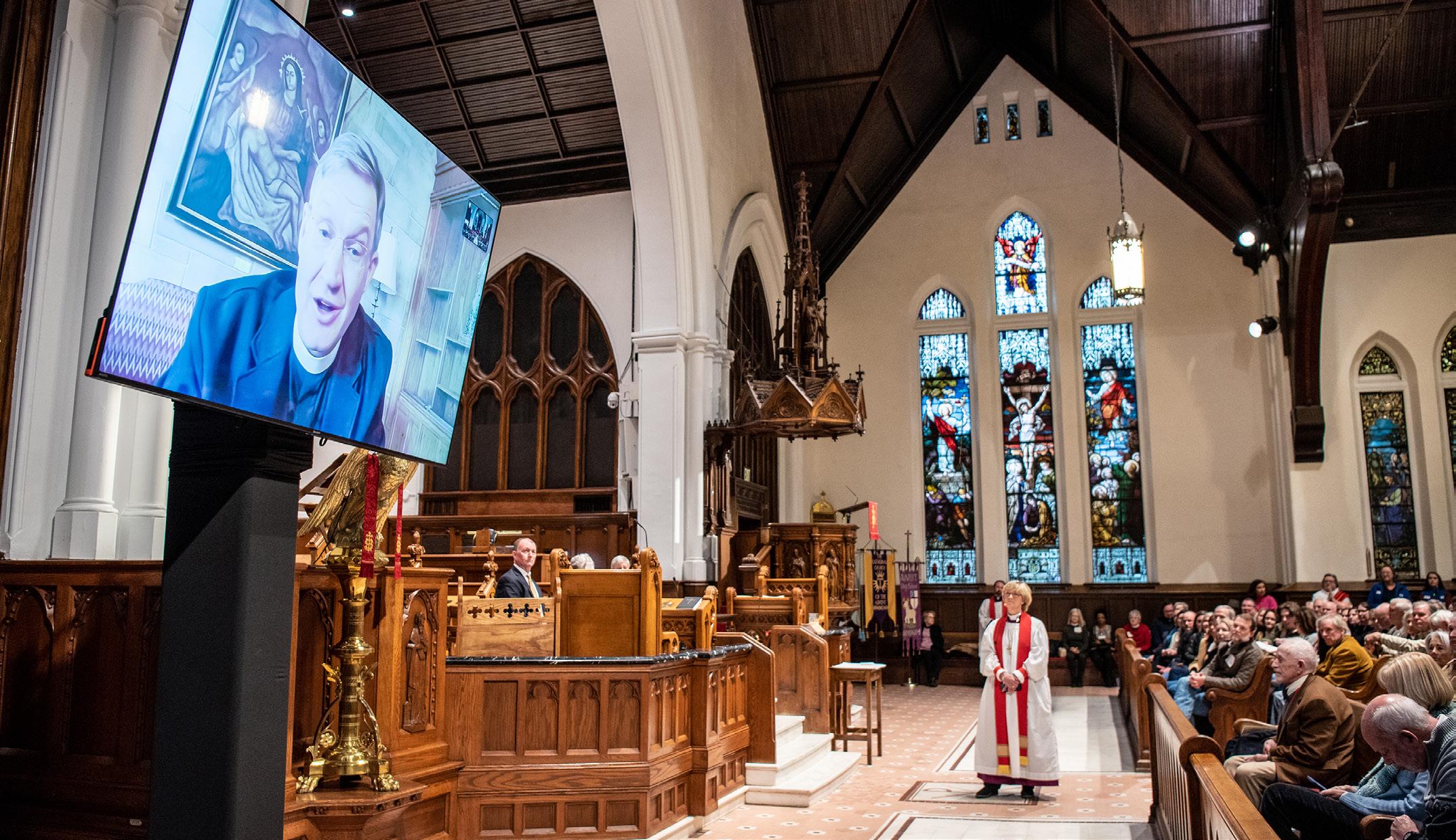
Delivering his acceptance of the call via Zoom, Lawson expressed his gratitude to the entire diocese, the special convention, and the leadership of the various committees that conducted the bishop search process. He shared, “My deepest hope and prayer on this day is that the call of this new bishop reminds all of us of our own call from our Lord to love and serve Him and to use our own spiritual gifts for His sake. And I look forward to hearing your calls and serving alongside you very soon”.

I am glad to say that Richard is extremely qualified and gifted to lead our great Diocese into our next chapter. He will be a
passionate and balanced leader, pointing us to follow Jesus Christ.
Pending the canonically required consent of a majority of the Episcopal Church’s diocesan standing committees and bishops with jurisdiction, Lawson will be ordained and consecrated as bishop diocesan on June 27, 2026, by Presiding Bishop Sean Rowe at the Cathedral Church of the Advent in Birmingham, AL.
In a statement, the president of the Standing Committee, Maibeth Porter, shared, “We rejoice in the leadership that Richard will bring to this ministry, and we give thanks to all who worked faithfully throughout the process of discerning and electing our new Bishop-elect.”
We invite you to join us in continued prayer for Bishop-elect Lawson and for the Diocese of Alabama as we enter this season of transition.
Faithfully,


By: Nana Afia Tenkoramaa, Director of Communications
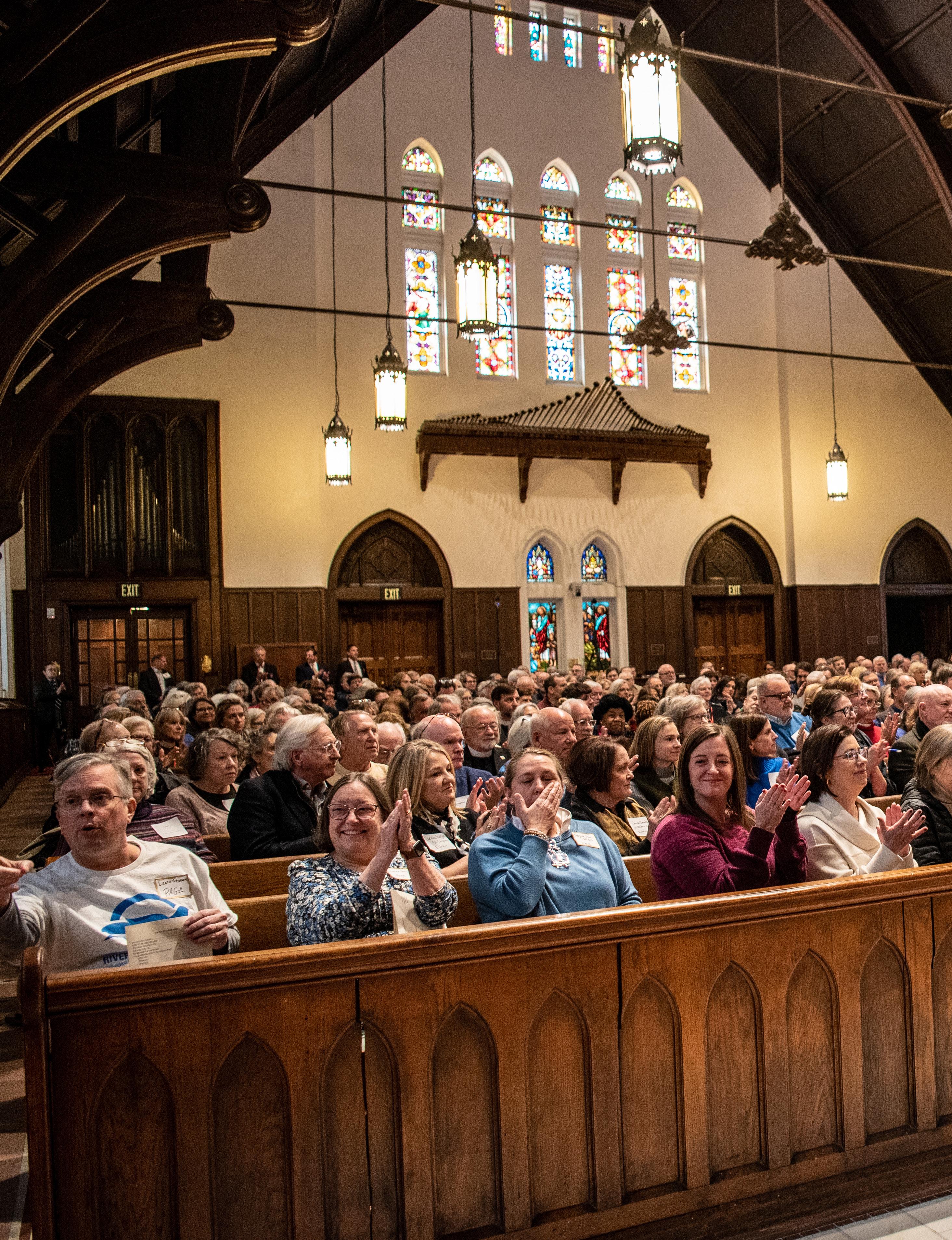
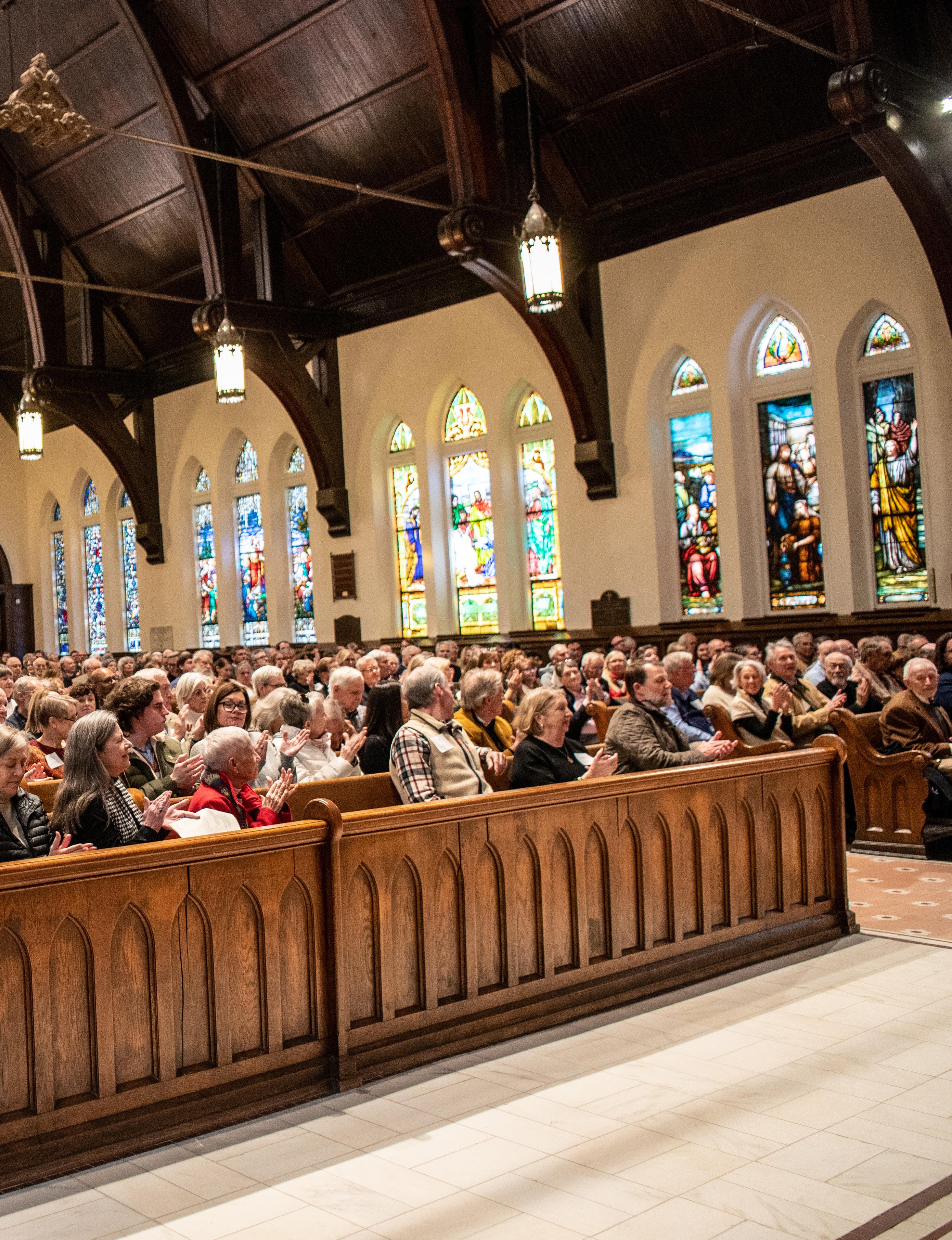
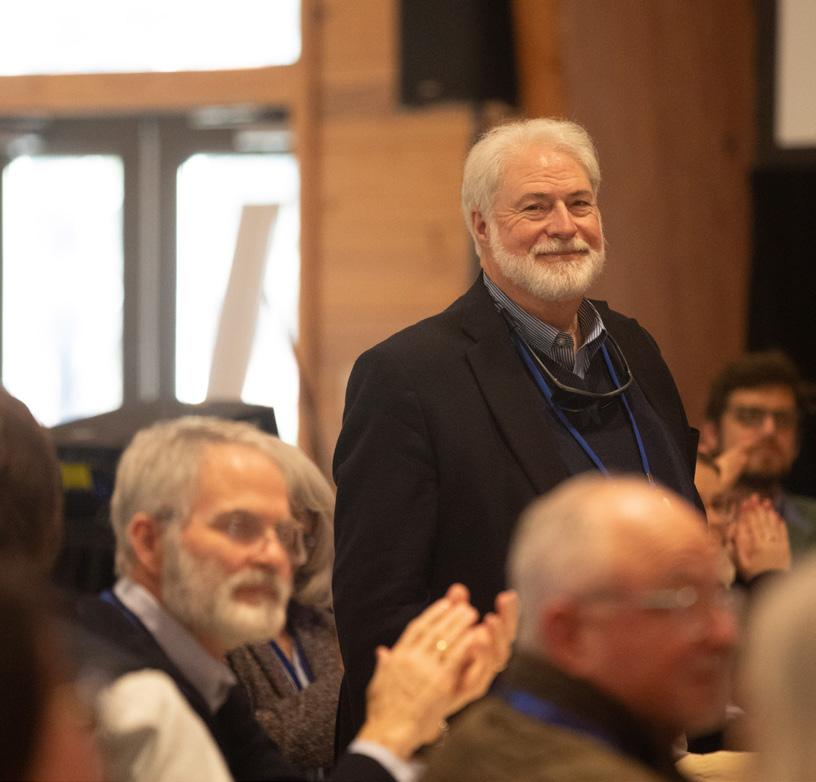
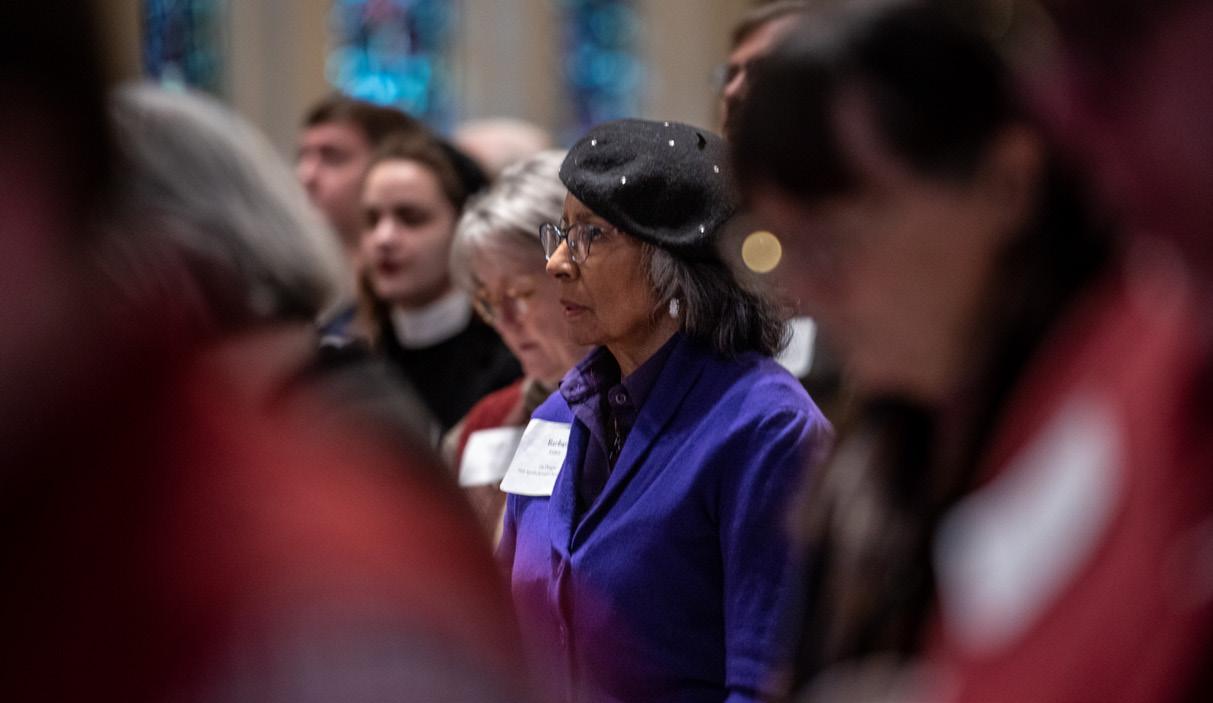
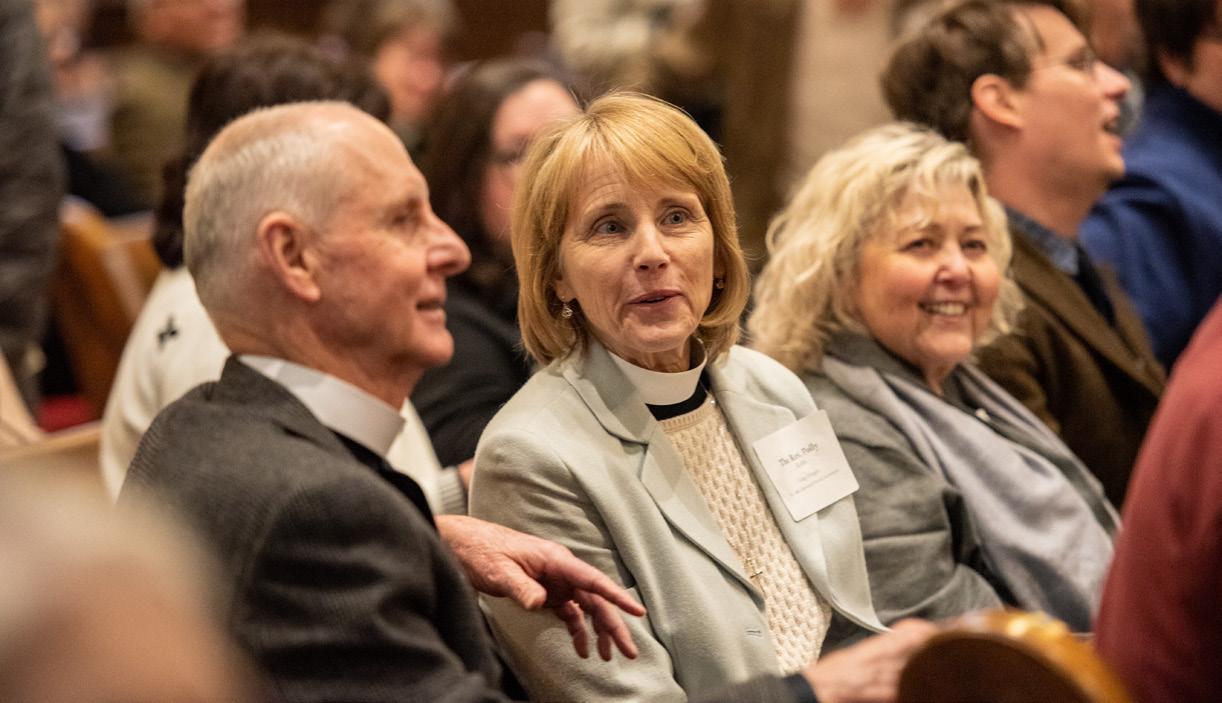
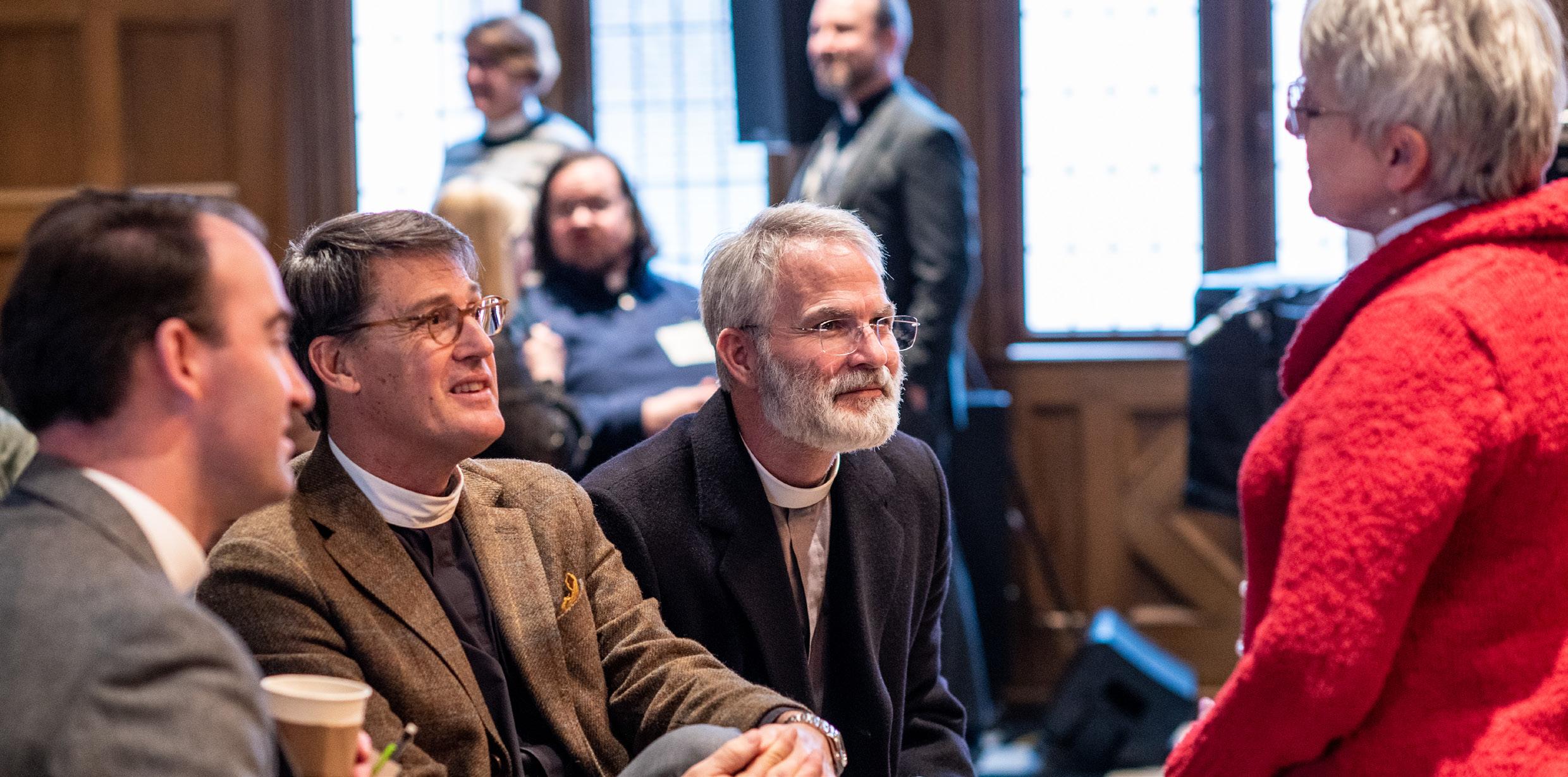
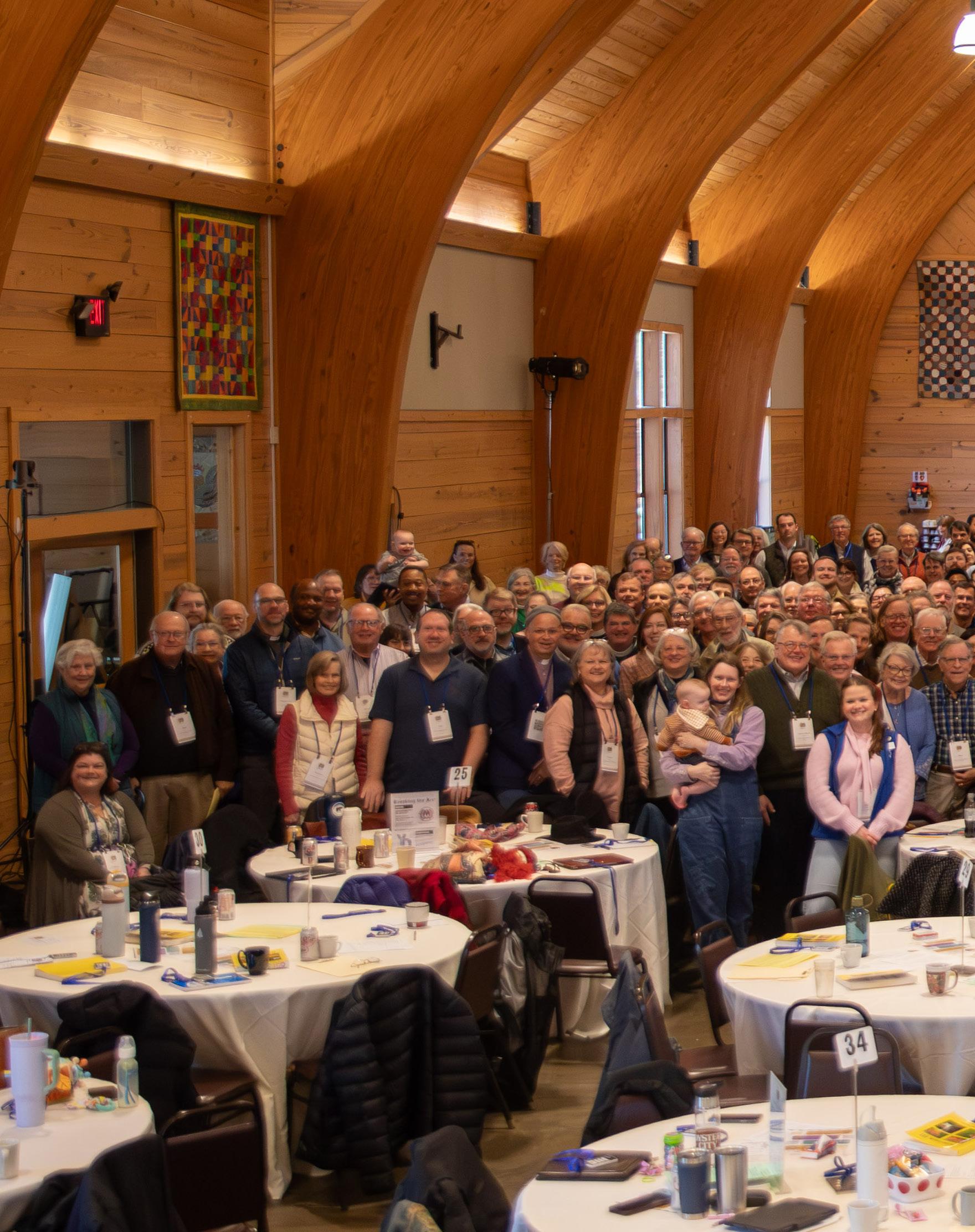
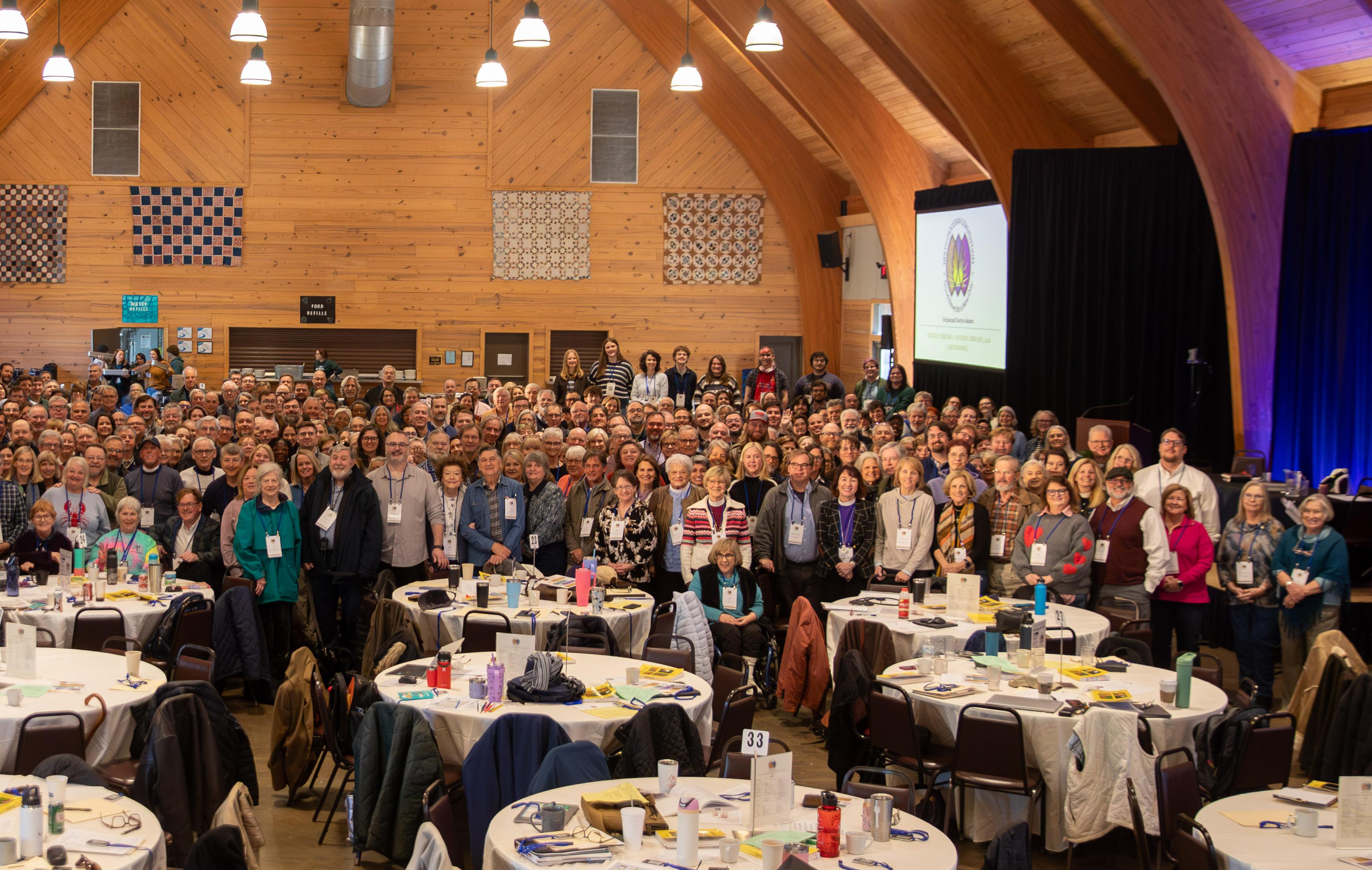
Nearly 400 clergy, delegates, and attendees from across the Diocese of Alabama gathered at Camp McDowell for the 195th Diocesan Convention, held February 5–7, 2026.
Centered on the theme “Good News for a New Day,” the annual convention invited participants to embrace God’s everrenewing mercy and to share the Good News of Christ’s love in fresh ways each day. The gathering drew inspiration from Lamentations 3:22–23: “The steadfast love of the Lord never ceases; his mercies never come to an end; they are new every morning; great is your faithfulness.”
“The Diocese of Alabama is a blessing to the world today in ways that I could not have imagined at my first convention,” Bishop Glenda Curry said in her opening address. “I have been amazed, delighted, surprised, and overwhelmed by your determination, energy, faithfulness, generosity, and deep love—for each other, for the world around you, and most of all, your love for Christ.”
These highlights offer only a glimpse into the fellowship, worship, and shared ministry that marked our time together. To learn more and view the photo gallery, please scan the QR code below.

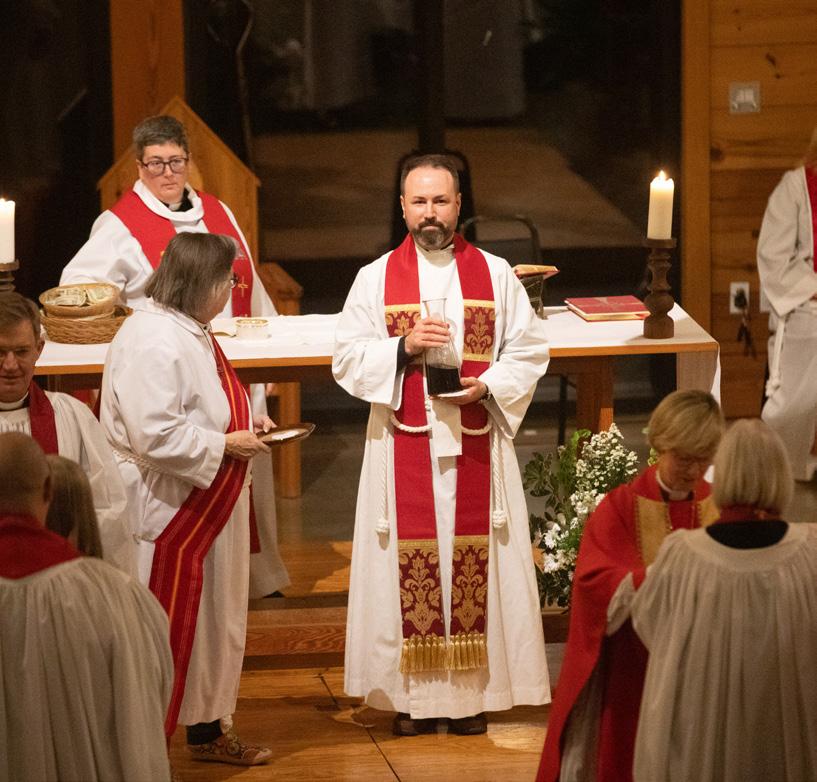
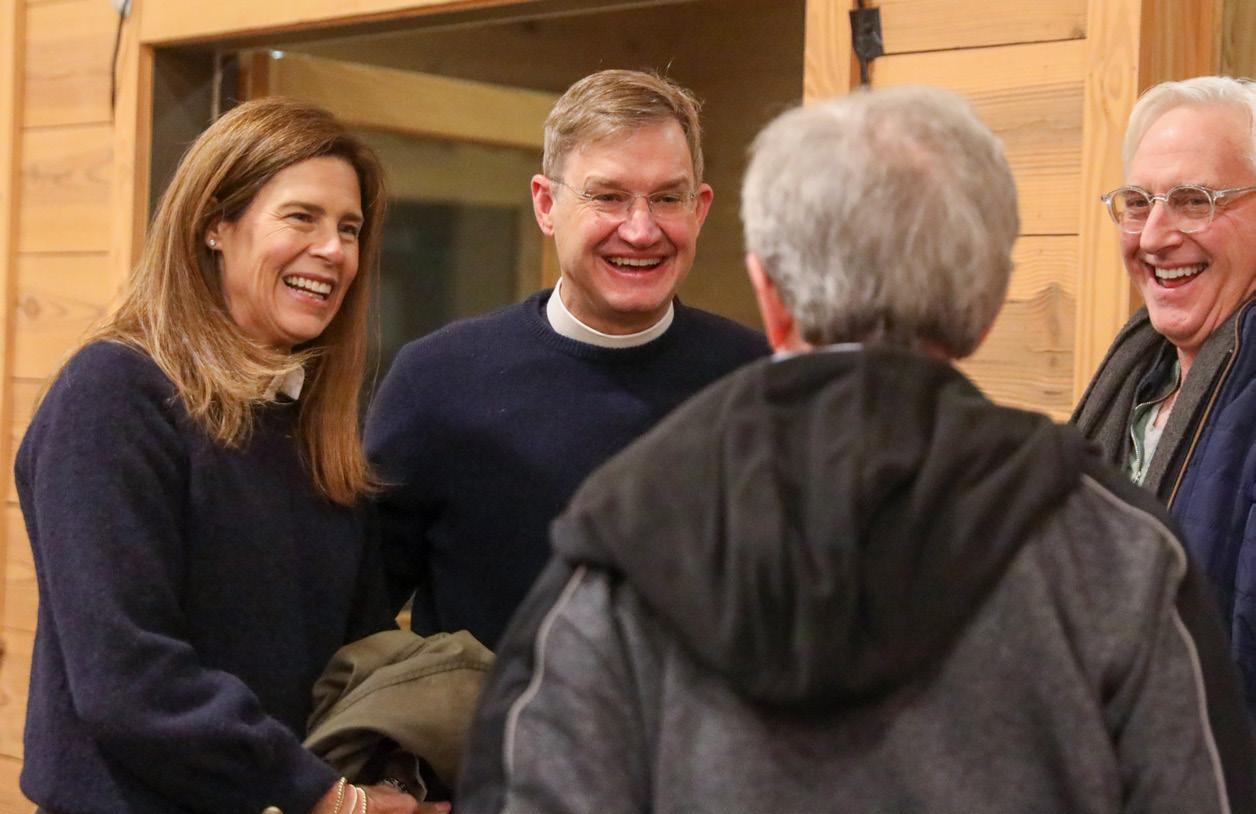
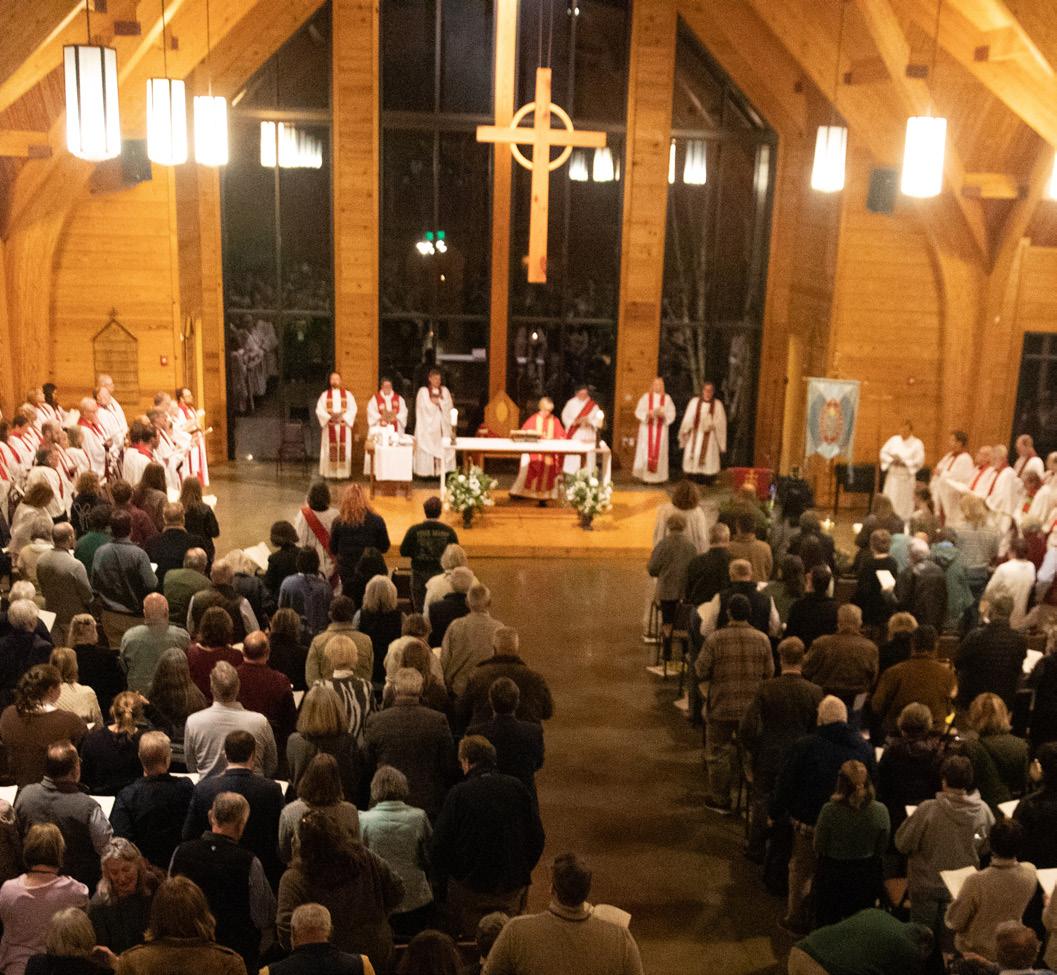
The convention began with an opening Eucharist at St. Francis Chapel, presided over by Bishop Curry, with the sermon delivered by the Very Rev. Richard T. Lawson, Bishop-elect of the Diocese of Alabama. Just five days after his election, Lawson expressed gratitude and joy at gathering with the diocese alongside his wife, Katherine.
Preaching on Matthew 9:35–38, Lawson’s sermon emphasized Jesus’ compassion for the crowds—people “harassed and helpless like sheep without a shepherd.” He highlighted that Jesus’ ministry comes from the heart, a deep, gut-level love for humanity, and called the congregation to experience God’s love fully, allowing both mind and heart to guide their faith.
“What Matthew is giving us is essentially what is the heart of Jesus. What is the foundation of his ministry in our ministry? What is below the surface? Every single time he speaks and acts, it is from the heart of love, and it is from his very gut. And when you step back from that just a moment and think about this being God’s son and the mystery of the incarnation, Matthew is implying that at the very heart of Almighty God,
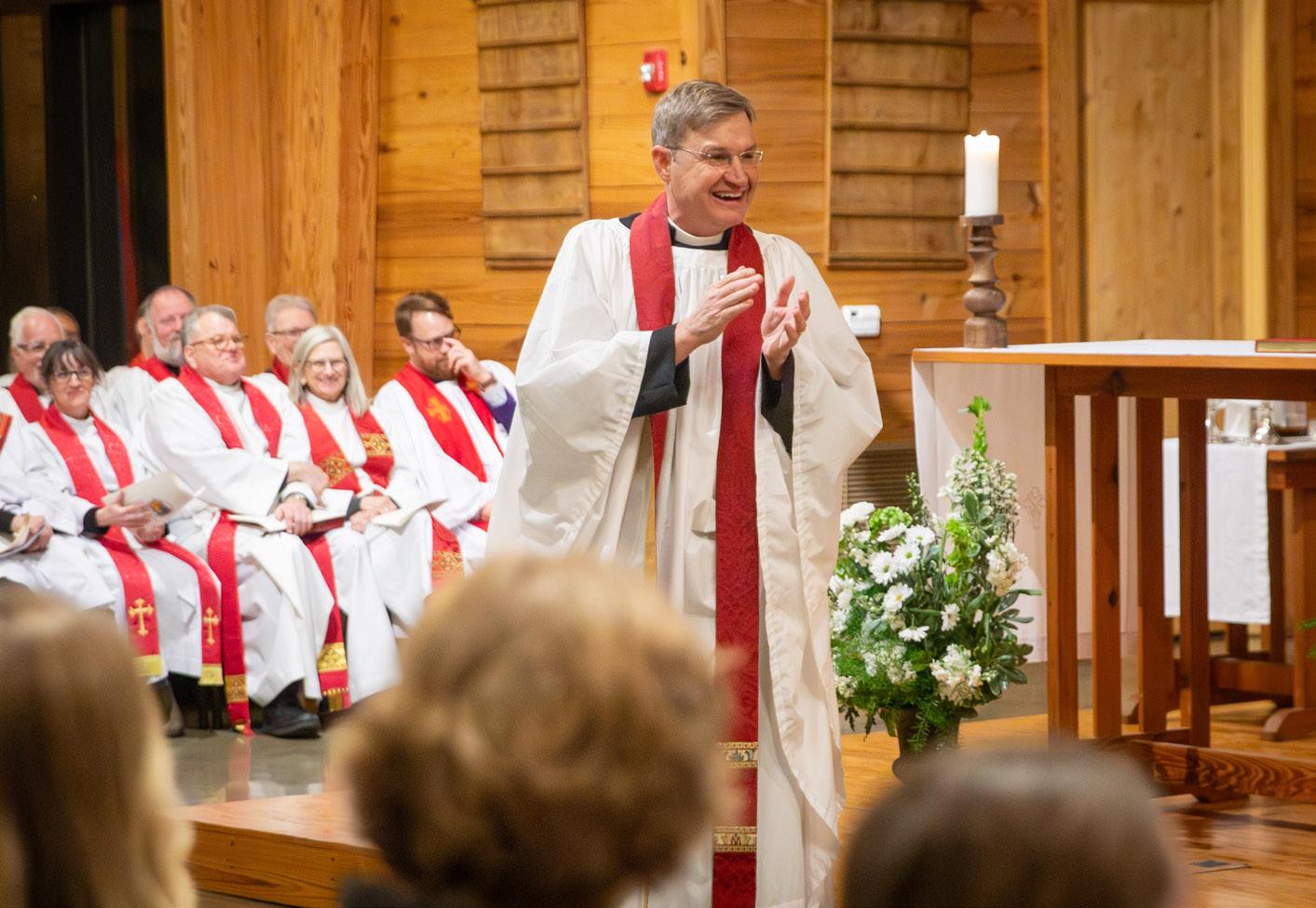
even, is this kind of gut-wrenching love for people. For God so loved the world.”
Drawing on a saying often attributed to Bishop Bill Stough, the eighth bishop of Alabama, Lawson noted, “the longest journey a person will make is 18 inches. Did you hear him say that was 18 inches from here to here, from the mind to the heart? And so I want to tell another story that has to do with making that
journey, a story that I think really resonates with this gospel reading and a story that’s all about feeling for the love of God, especially in a moment when the defense mechanisms fail in life in those moments when we really need God to do something for us that we can’t do for ourselves.”
The full transcript of the sermon and recording of the service are available on the diocesan website.
Following Morning Prayer on Day 2, Bishop Curry officially called the convention to order and offered an address marked by gratitude, reflection, and hope for the future. She celebrated the faithfulness and resilience of congregations across the Diocese of Alabama, emphasizing that the Church exists not only for those within its walls but for the sake of the wider community.
Pointing to signs of renewal throughout the diocese, she highlighted growing participation in worship, strengthened outreach ministries, leadership development, and collaborative initiatives equipping congregations for ministry in a changing world. Rising attendance and confirmations, increased financial strength, and more than $864,000 distributed through diocesan grants for local ministry, outreach, and creation care all reflected what she described as a season of vitality.
“My time as your bishop has been an enormous blessing to me and my family. It has been very hard work. It has been tremendously edifying and rewarding, but it’s also been heartbreaking at times, challenging, exhilarating, humbling, deeply fulfilling, exhausting, and I wouldn’t trade a minute of it. It was a little hard on my ego for everyone to know my birthdate and my age from day one to today. But there is also a great blessing to know how much time you are allotted. The psalmist prays in Psalm 90, “So teach us to count our days that we may gain a wise heart.” I believe knowing how long I might serve sharpened my focus, my decisions, and my direction.”
A complete transcript and video of Bishop Curry’s address are available on the diocesan website.
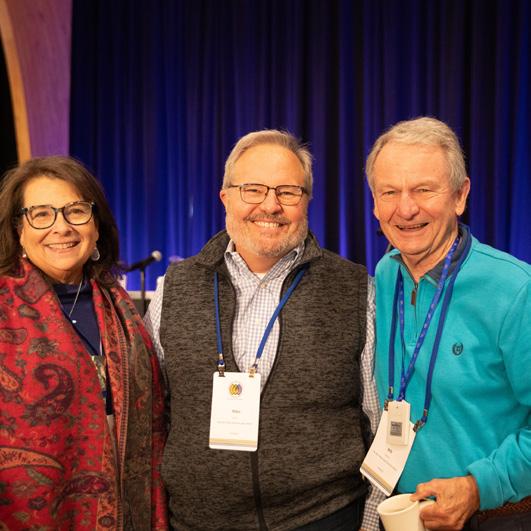
“The ‘why’ of the diocese, we figured out four years ago, when governing boards gathered together— the Commission on Ministry, Standing Committee, and Diocesan Council—all got together in retreat. We asked, ‘Why do we need a diocese? What is that about?’ We decided the diocese needs to be a resource for all the parishes rather than a regulating body. We are a resource. The staff is here to serve the parishes, to help them become and remain vital. If the bishop and staff can walk alongside a parish one at a time and put all the resources we have, the time and talent, to understand your plight, we can help you remain and become vital. It is powerful and simple.”
She conveyed heartfelt appreciation for the clergy, laity, and diocesan staff, and for the honor of serving as bishop.
e were blessed to welcome Bishop Jenny Andison, former Area Bishop in the Diocese of Toronto and now Rector of St. Paul’s Bloor Street and St. George’s Grange Park. Across Friday and Saturday sessions, she spoke on the topic “Tilling the Soil for Gospel Growth,” offering theological reflection alongside practical strategies for congregational renewal.
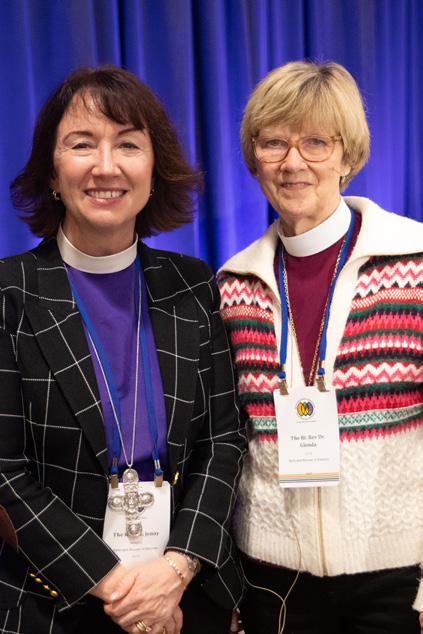
Drawing from her parish experience, Bishop Andison shared stories of growth—particularly among young adults—and encouraged participants to approach ministry with hope and imagination. “Like Sam Wells, I firmly believe that the best for the church is in the future,” she said, “both theologically and practically.”
Presentation materials are available on the website.
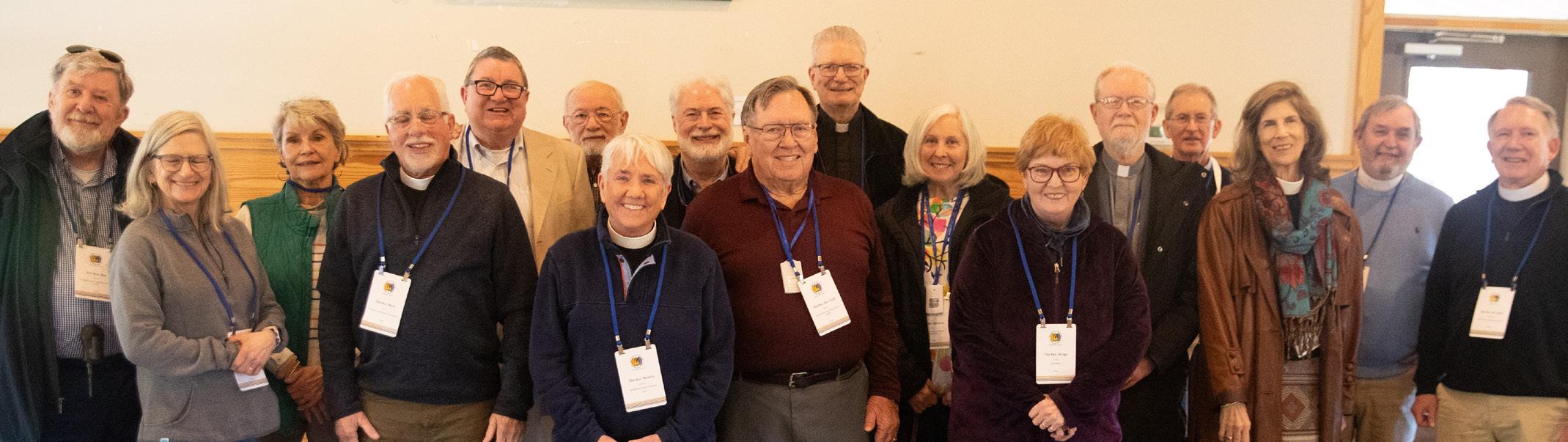
• Richard Ahlquist – Assoc. Rector, St. Mary’s on-the-Highlands, Birmingham
• Ed Bacon – Interim Rector, All Saints, Birmingham
• John Bagby – Interim Rector, Holy Comforter, Gadsden
• Drew Brislin – Rector, St. Joseph’s on-the-Mountain, Mentone
• Greg Evans – Asst. Vicar, Riverside, McCalla
• Dillon Green – Rector, St. Catherine’s, Chelsea
• David Hodnett – Rector, St. Michael & All Angels, Anniston
• Kelley Hudlow – Associate Rector, All Saints, Homewood
• Taylor Johnson – Transitional Deacon, St. Matthew’s, Madison
• John Kennedy – Deacon, St. Mary’s on-the-Highlands, Birmingham
• Jane Major – Rector, St. Paul’s, Greensboro
• David Peeples – Assoc. Rector, Holy Trinity, Auburn
• Jeanne Randall – Transitional Deacon, St. Timothy’s, Athens
• Randy Sellers – Priest-in-Charge, Holy Cross, Trussville
• Susan Sloan – Interim Rector, St. Matthew’s, Madison
• Worth Stuart – Rector, Holy Spirit, Alabaster
• Mary Balfour Van Zandt – Rector, Epiphany, Guntersville
• Chase Allen
• Ethan Armistead
• Talitha Bailey
• Lisa Beatty
• Amanda Boyce
• The Rev. Dn. Kristin Blackerby
• Franklin Bradford
• The Rev. Dn. Lucian Cronkite
• John Gilmer
• The Rev. Dn. Quincy Hall
• The Rev. Dn. Taylor Johnson
• William Lewis
• Mary Ann McCarty
• Stewart Miller
• Kyle Munroe
• The Rev. Dn. Mawande Mzongwana
• The Rev. Dn. Jeannie Randall
• Julia Sanford
• Joshua Vacik
• Resolution 1 & 2: Diocese’s Operating Budget and Camp McDowell Operating Budget – Adopted
• Resolution 3: Formal Adoption of Jonathan Myrick Daniels as Patron of the Episcopal Diocese of Alabama – Adopted with amendments.
• Resolution 4: Amendment of Canon 3, Section 11. Elections –Adopted
Diocesan Council
Northern District – Tiffany Martin (Lay)
Middle District – George Elliott (Lay)
Southern District – Rhonda Baughman (Lay)
Standing Committee
The Rev. Corrie Cabes
Michael Yancey (Lay)
Disciplinary Board
The Rev. Katherine Harper
Steven Boydstun (Lay)
Northern District
Clergy Deputy – The Rev. Shari Harrison
1st Alternate – The Rev. Drew Brislin
2nd Alternate – The Rev. Charles Youngson
Lay Deputy – Brenda Mayhall
1st Alternate – Wendy Jackson
2nd Alternate – Jace Nixon
Middle District
Clergy Deputy – The Rev. Jose Fernandez
1st Alternate – The Rev. Katherine Harper
2nd Alternate – The Rev. Peter Helman
Lay Deputy – Bob Boylan
1st Alternate – Kim Glover
2nd Alternate – Brian Denton
Southern District
Clergy Deputy – The Rev. Mike Harber
1st Alternate – The Rev. Emily Rowell Brown
2nd Alternate – The Rev. Chris Paul
Lay Deputy – Anne Kimzey
1st Alternate – Jim Jolly
2nd Alternate – Elizabeth Webber
At Large
Clergy Deputy – The Rev. Cameron Nations
1st Alternate – The Rev. Quincy Hall
2nd Alternate – The Rev. Katie Kirk-Costas
Lay Deputy – Richard Norris
1st Alternate – Ethan Evans
2nd Alternate – Brian Denton
The Rev. Rich Webster, Dean of the Birmingham Convocation, extended an invitation to host the 196th Diocesan Convention in Birmingham, “the Magic City,” scheduled for January 28-30, 2027. The invitation was formally moved, seconded, and unanimously accepted, after which Bishop Curry brought the 195th Diocesan Convention to a close.

By: The Abbey Worshipping Community

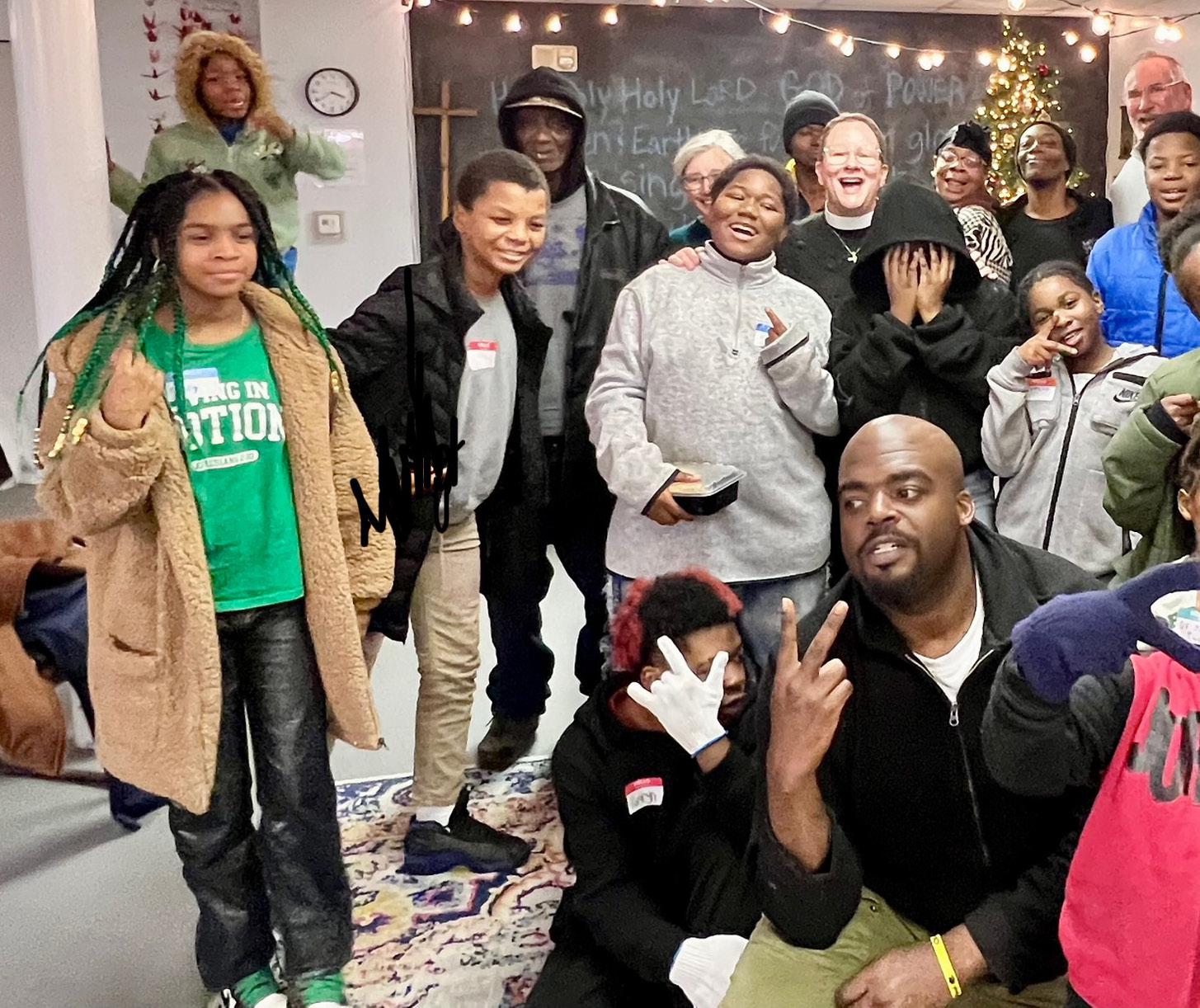
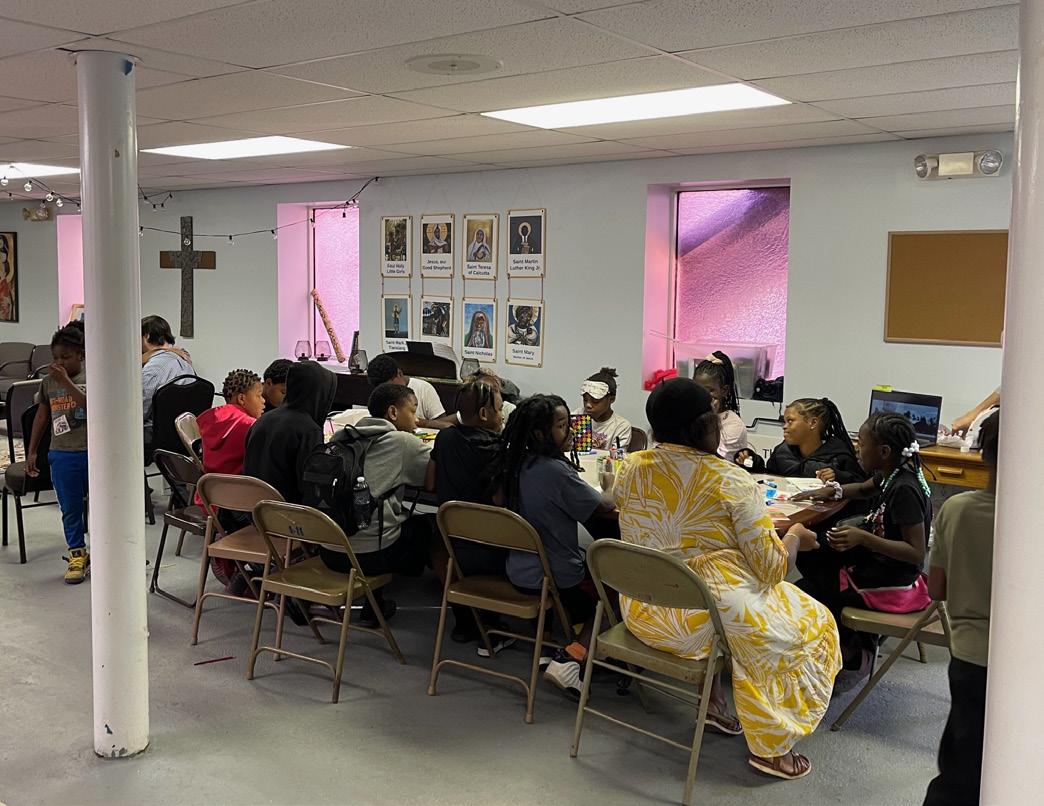
The heavy door to the fellowship hall of Zion Spring Baptist Church is propped open for The Abbey Worshipping Community’s dinner church. Kids stream in and jostle with each other to claim a spot at the activity table. The adults’ voices layer over the clamor of the kids as the dinner tables are set. There is a cheer for someone who has found a job they love and laughter as two moms find common ground. A shout of “Ben” announces the arrival of a much-loved member via Zoom. A worry about a friend is shared. Pastor MO stops for a spontaneous prayer and touch of healing with a woman while people swirl around them. It is in these thirty minutes before dinner that the church officially begins, and the Holy Spirit transforms the space into holy ground as we all twirl with the Holy Spirit’s movement among us. This is active and engaging, if not a bit messy and wild.
The Abbey has always existed in this chaotic, ever-changing holy space. From the coffee shop days to Zoom, park, and shared spaces, the worshipping community has remained resilient amid constant change. Now, tucked inside the fellowship hall of Zion Spring Baptist Church, a 98-year-old
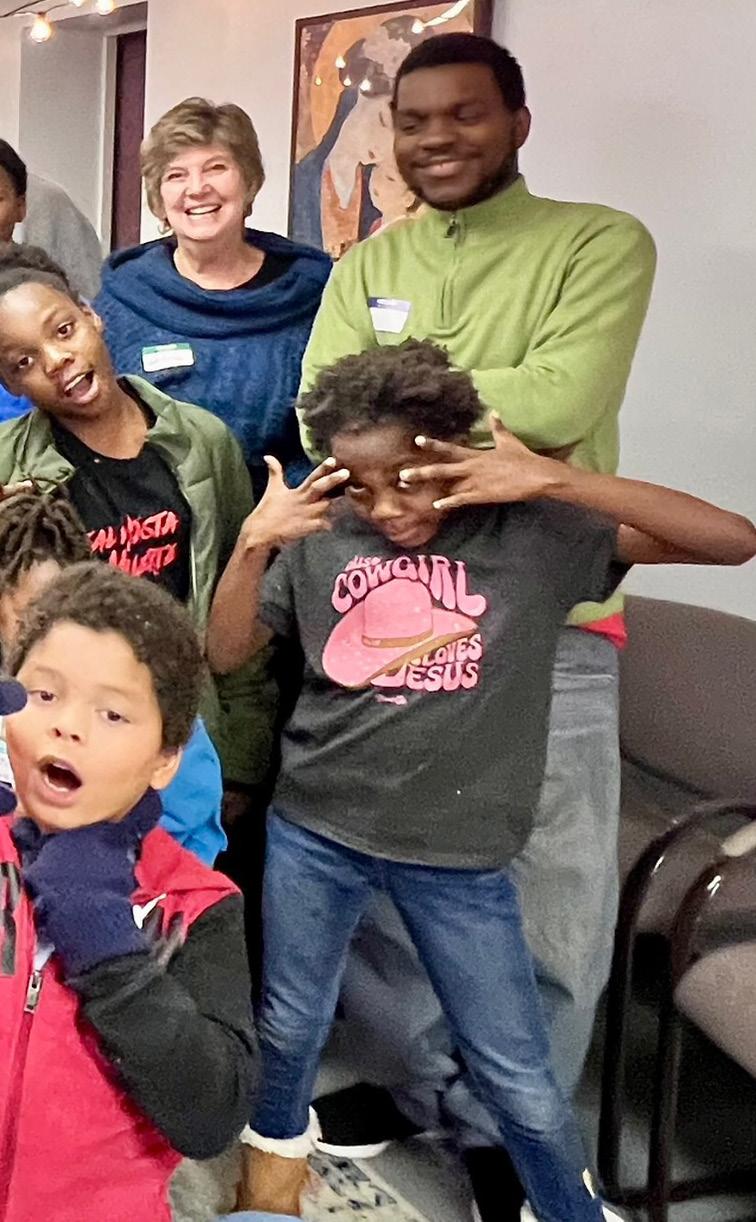
historically Black church that serves as a pillar in the Tom Brown Village neighborhood, The Abbey has transitioned into a dinner church community. This new expression of worship, rooted very much in the traditions of early Christian churches, has become a hub for community connection, a safe place for people to be themselves, and a less fraught way to find God in the midst of the chaos, and God does great work through chaos.
Dinner church at The Abbey is not perfect, and it is not easy. An average of 30-40 members gather each Sunday for the meal, though on some days the number reaches upwards of 60. The Abbey’s Chaplain, the Rev. Susan Oakes (also affectionally known as Pastor MO), leads this community. She also oversees The Abbey’s Breakfast Ministry and serves as the associate rector at St. Thomas Church in the suburbs of Birmingham. Through a unique partnership between The Abbey and St. Thomas, the worshipping community has dedicated clergy and administrative support. The work of cooking dinner, keeping the supplies stocked, and coordinating the children’s activities relies primarily on
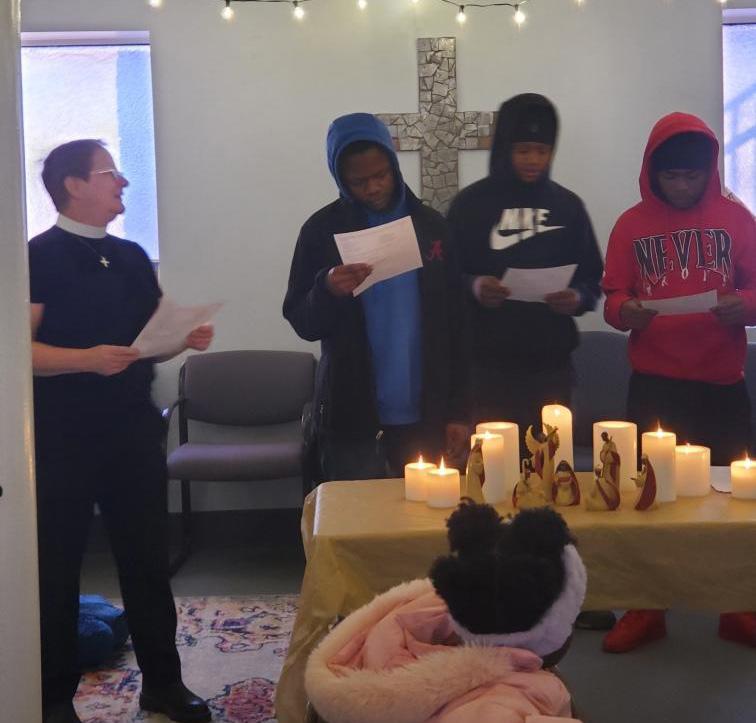
a few longtime members while the community is growing. Newer members share in the service, including the shy teenagers who humbly offer the prayers of the people. Dinner church is an “all-hands-needed” movement in which even the youngest child has a role to play.
Avondale and Tom Brown Village are shifting as Birmingham and the world around it change. The members of The Abbey Worshipping Community know that what the church looks like today will not stay the same. They will have to adapt and re-imagine church time and time again. There is hope, though. For a church that is willing to embrace the everevolving messiness of the unexpected holy, will be ready for anything.
The Abbey gathers on Sunday afternoons at 3:30 p.m. in Zion Spring Baptist Church at 528 41st Street N, Birmingham, AL 35222. We invite you to visit on a Sunday to experience a dinner church or help provide a meal. Contact the Rev. Susan Oakes at pastormo208@gmail.com to learn more about the messy Holiness happening at The Abbey.

By: Madeleine Pearce, Senior Warden; The Rev. Lucian Cronkite, and Dr. Carol Lammon
St. Matthias Church is located on Skyland Boulevard in Tuscaloosa. On a typical Sunday, our average attendance is 30-35 parishioners, ranging in age from three to 86. We also have a small group of homebound senior members watching the service on our live stream. We have three young people who regularly attend Sunday School at St. Matthias, each in a different age category, ranging from eight to 14.
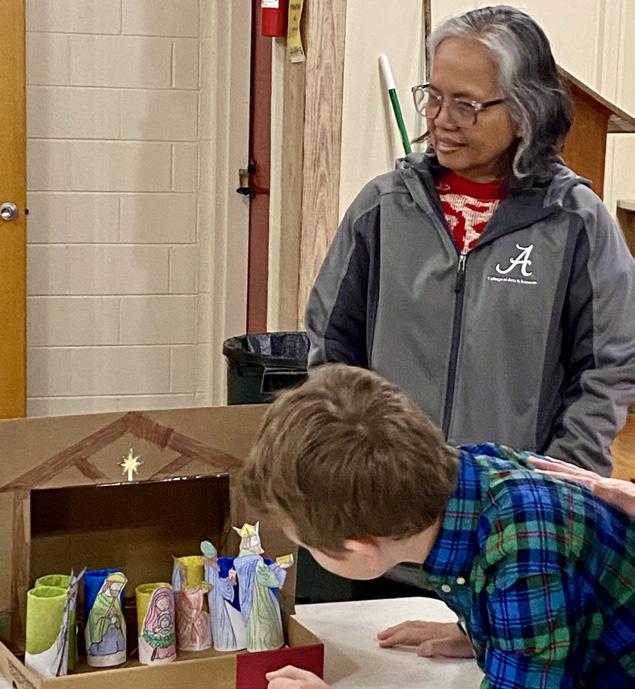
We felt a fervent desire to provide a Sunday School experience for the young people and the rest of the congregation. But dividing such a small group by age into even smaller groups, each requiring a teacher, did not seem like a viable option. So, the idea of one Sunday School group, an Intergenerational Sunday School (ISS), was born.
Our ISS is structured in two phases. In the first phase, our entire parish meets for the lesson. The lesson is also live-streamed for our members at home. The teacher identifies a topic or Bible story and presents it in
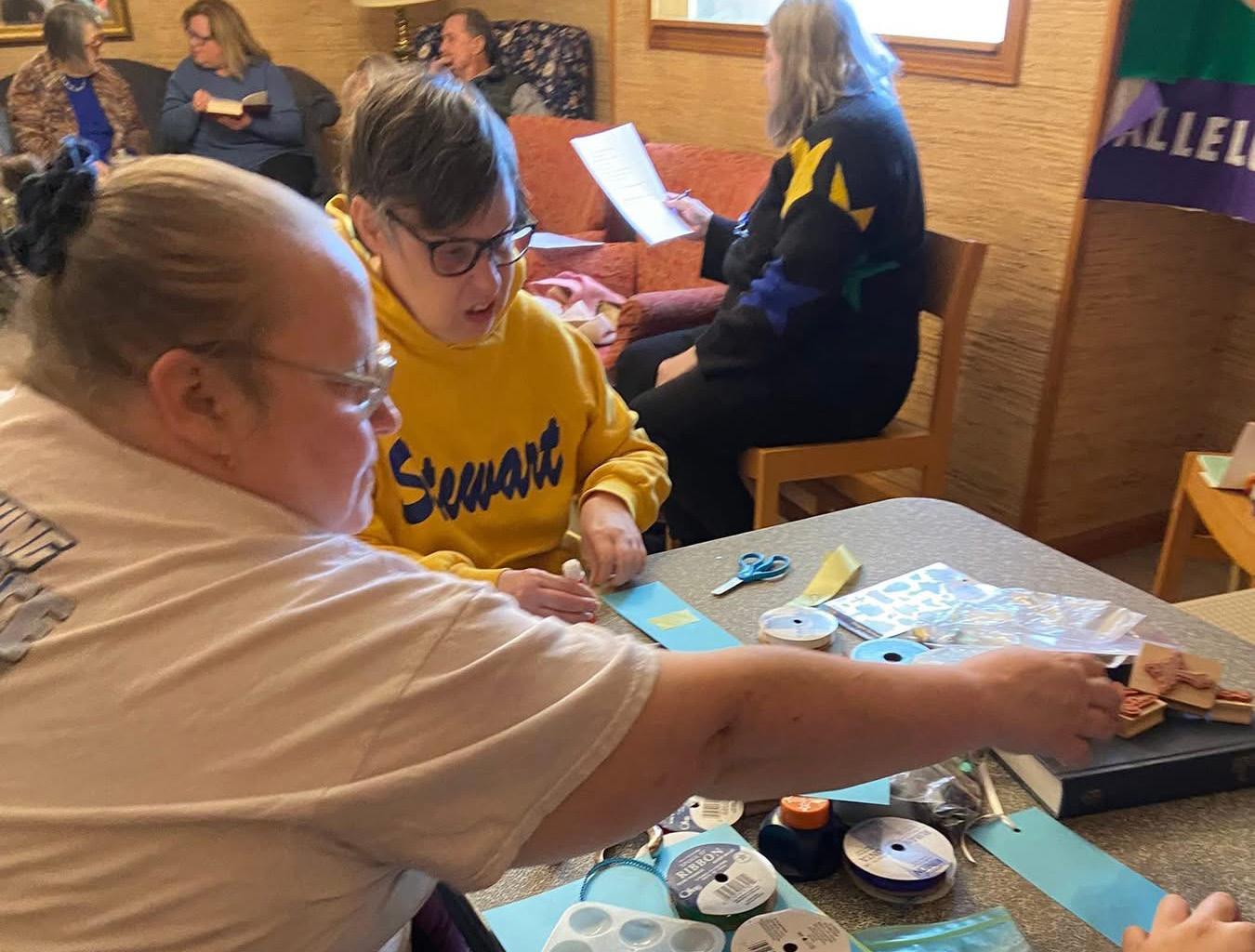
a way that all ages can understand. All aspects of the lesson are presented over the course of three Sundays in fifteen-minute sessions. After each session, our participants break up into two groups for phase two of our ISS. For the remainder of the hour, adults move into an in-depth discussion of the lesson and its application to modern life and the social issues of our times. Children of all ages, as well as any adult who wishes to participate, meet with an art instructor who leads them in an activity that supports and expands the lesson.
Our Sunday School teachers and art instructors are dynamic. We have completed three sets of Sunday School lessons with three different teachers and art instructors. In a small church, each parishioner often wears “many hats” and has multiple responsibilities to keep the church running smoothly. Spreading the teaching and art instruction responsibilities across the parish, rotating leaders with each new set of lessons, prevents Sunday School from becoming too burdensome or time-consuming for any one parishioner. We have discovered that St. Matthias has many talented parishioners with much to offer as teachers and art instructors, and this strategy has enabled us to get to know one another better. Teachers also report that preparing to teach a lesson is an enriching experience that leads to a deeper understanding of the Bible and God’s word.
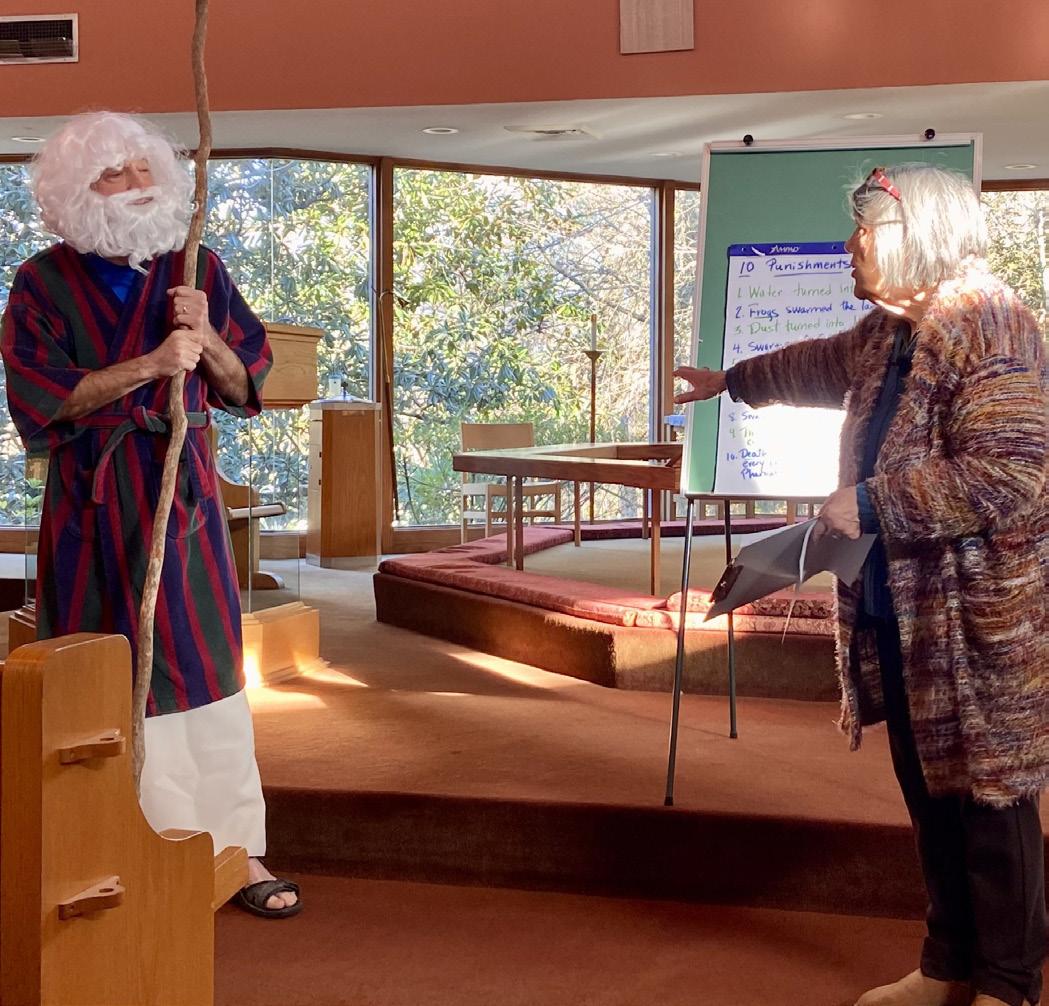
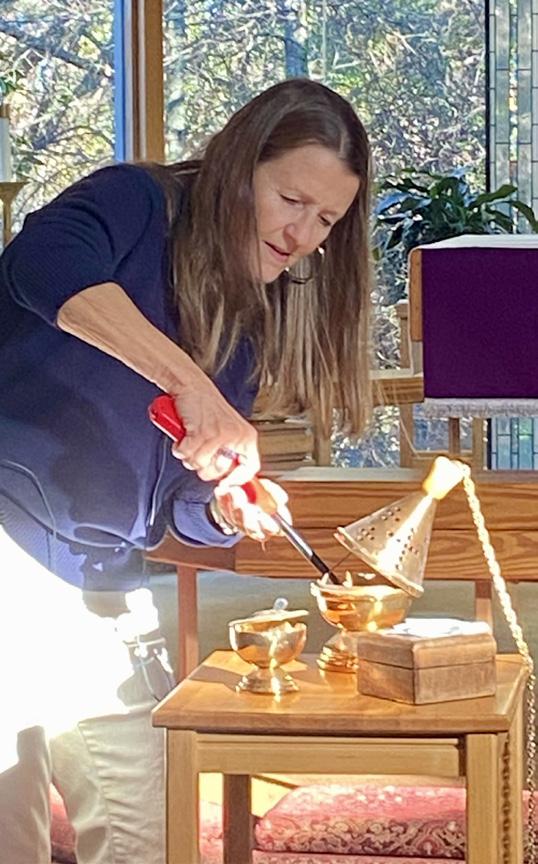
Each instructor has approached teaching the lesson in diverse ways. One teacher assumed the persona of Moses (in full costume) to present the story of Joseph and the coat of many colors. Another teacher demonstrated the use of the thurible, allowing the young people to experience the incense as they carried our prayers to heaven. Moses made a second appearance in the third set of lessons as the teacher interviewed him about the events of his life. Because several teachers use different strategies and ideas, the classes are varied, interesting, and sometimes entertaining.
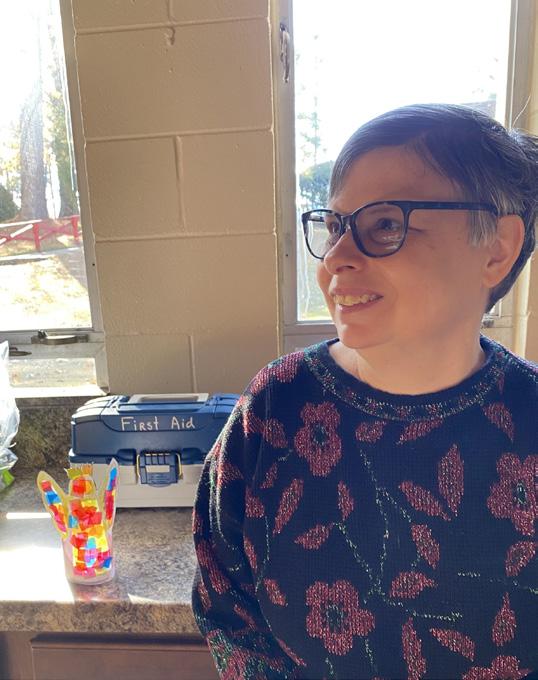
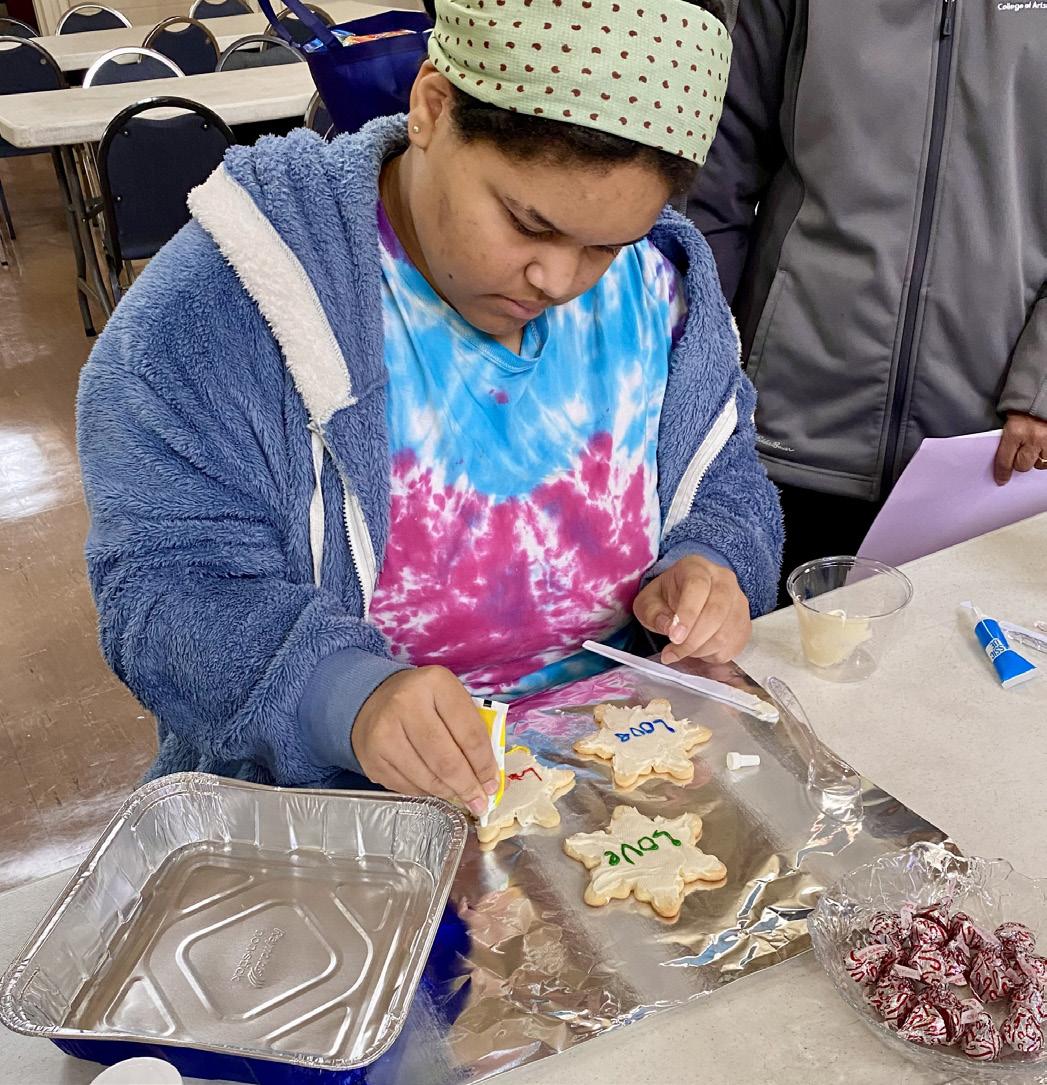
Art projects have been equally varied. For example, students have completed paintings of Joseph and the coat of many colors, constructed a nativity scene, created a tissue paper “stained glass” angel, decorated star cookies, made a map of the areas Moses lived in, and created the tablets with the Ten Commandments using air-dried clay.
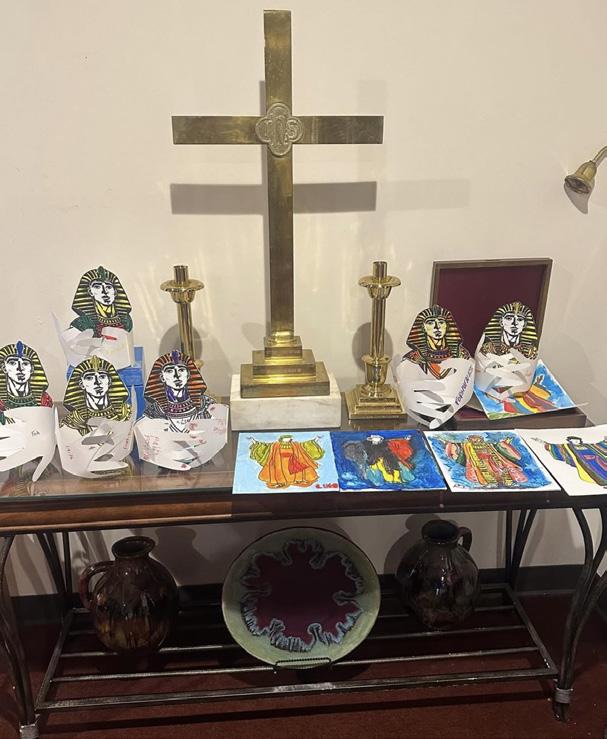
At St. Matthias, we have created a Sunday School model that works for us, a small church with a few young people and a wide age range of parishioners. It is our hope that other small churches that may also be struggling to implement a meaningful Sunday School experience can benefit from our experience.
By: Christ Church, Fairfield.
Members of Christ Church in Fairfield first connected with Metro West Ministries to offer our time as volunteers in their local outreach work, while Metro West was housed at St. Mary’s Catholic Church. Metro West Ministries is a religious organization for locals seeking spiritual guidance and support, including a food pantry. Soon after Christ Church began serving, COVID-19 changed how the ministry operated. Instead of clients entering the building to show identification and pick up food boxes, volunteers distributed groceries directly to cars while everyone wore masks and followed the new health requirements.
When St. Mary’s could no longer house the ministry, Metro West Ministries was moved to the Christ Church administration building. Weekly food distribution continued until 2025, when rising costs and limited volunteers required a reduction to the second and fourth Wednesdays of each month.
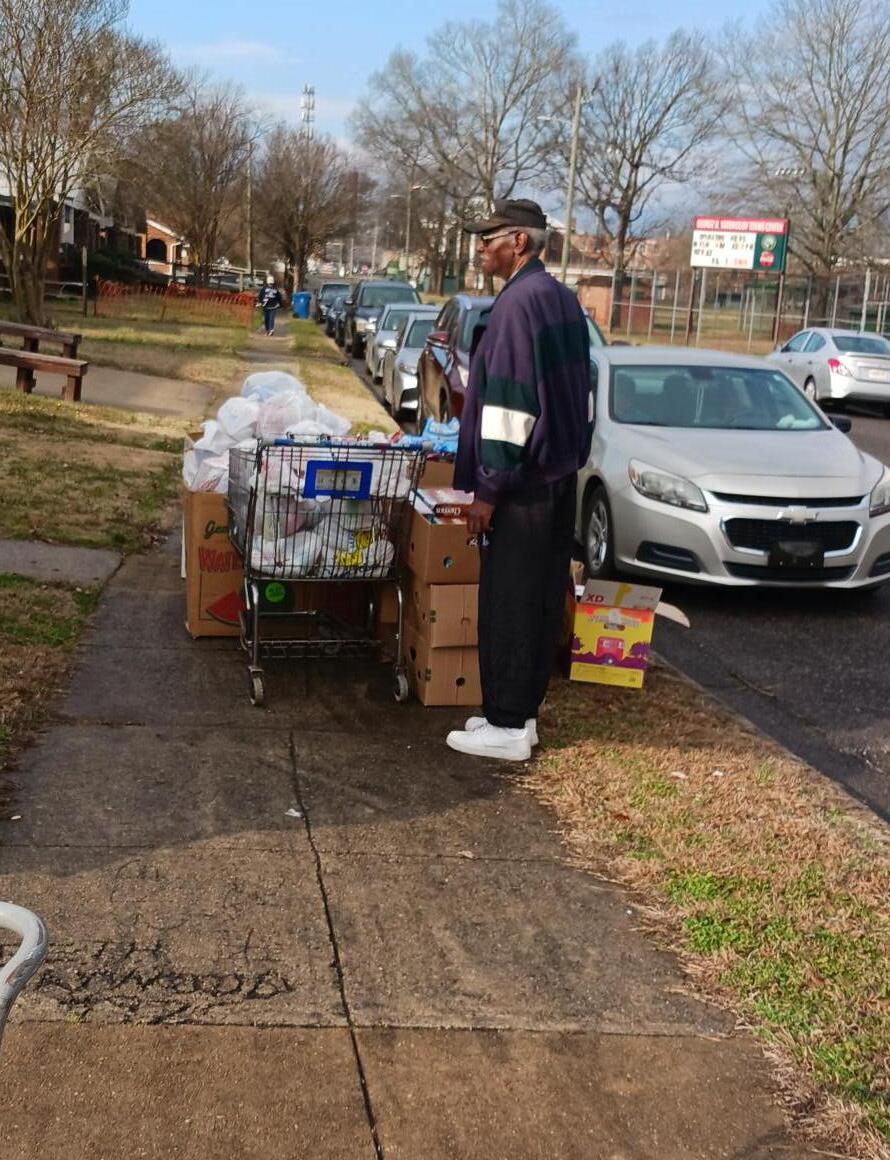
On distribution days, there are generally six volunteers working inside and five outside. Inside, volunteers prepare bags of frozen food and canned goods, which are then rolled outside and given to clients who arrive in their cars, while some neighbors walk up to receive groceries. We serve an average of 100150 families each week, but our numbers fluctuate seasonally. For example, the summer months see more clients because children are at home rather than in school. Also, when several people had their food stamps benefits cut, our numbers ticked up.
administrative expenses. The Diocese and three churches currently support our ministry regularly.
Volunteers are continually blessed by moments of gratitude: grandparents bring their grandchildren to say thank you, former clients return as volunteers, and neighbors join us for worship and Wednesday community lunches. Youth groups who have come to prepare bags for distribution are often surprised by what we give out and by how blessed they are with the food at their homes.
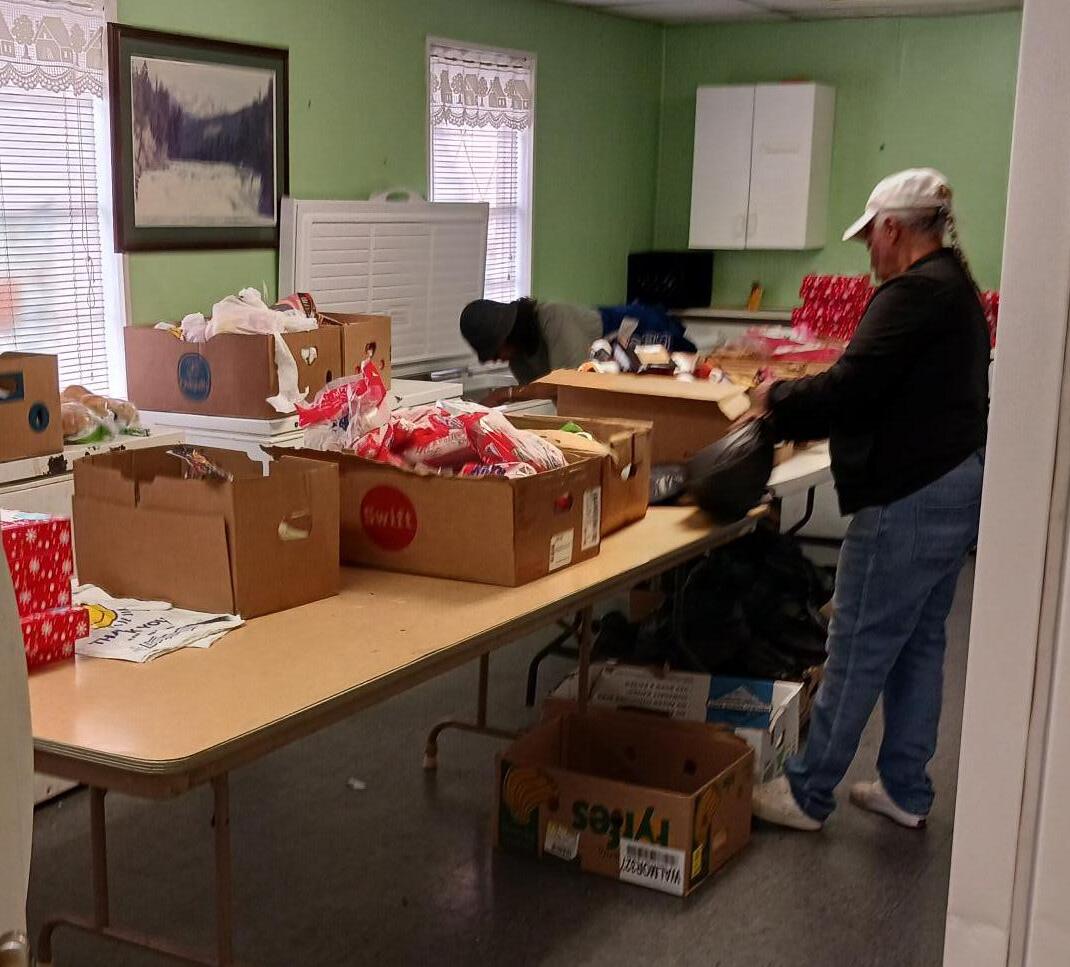
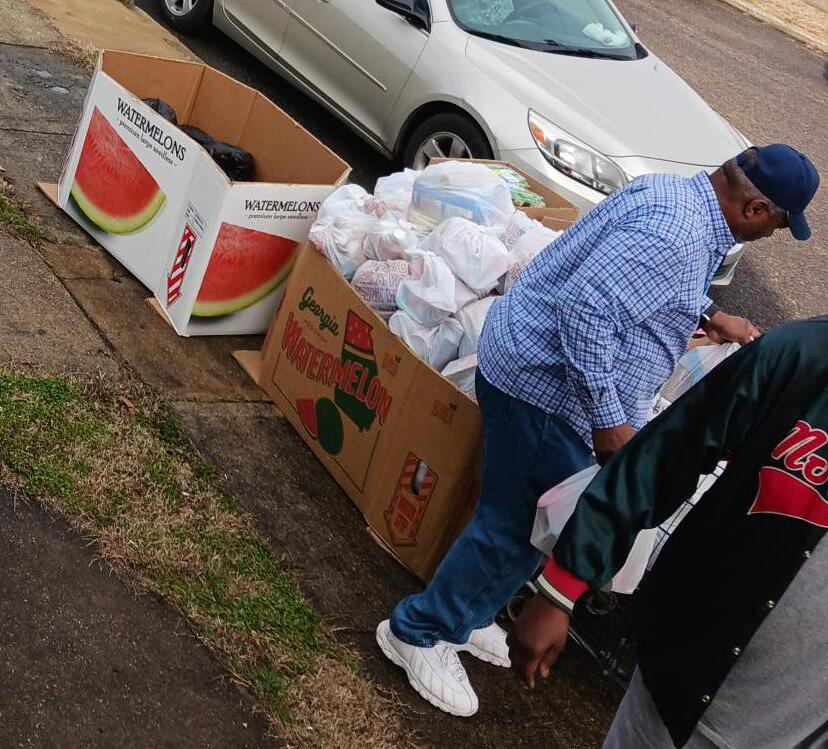
Each client receives a bag of fresh vegetables, frozen meats, bread, and sweets when available, along with shelfstable staples such as rice, pasta, beans, and canned vegetables.
What do we need? Donations, donations, and donations! We rely entirely on donations and volunteers to run the ministry. We accept in-kind and monetary donations from individuals, groups, and churches. We rely heavily on monetary donations to cover the community food bank’s monthly bills and
Many of our congregants themselves experience food insecurity, relying on food stamps, Social Security, or disability income to make it through the month. Because of these shared struggles, they are especially sensitive to the needs of others in our community. As one congregant said, “We are poor folks helping poor folks.” The need is real and touches our members, volunteers, and neighbors daily. We are not seeking expansion; we are simply working to be sustainable.
The food bank is an expression of our church being the hands and feet of Jesus in the community and literally feeding His sheep. The food pantry kicks off our other ministries on Wonderful Wednesdays. After we finish serving our pantry boxes, we have a community worship service. This is followed by a free hot lunch, open to the public. We then have a book club, Bible study, and compline. Our free laundry service and showers are available all day. The church welcomes the community all day every Wednesday, helping us to get to know our neighbors and build relationships with the whole community.
Through our food ministry and other Wednesday programs, Christ Church hopes to hear and obey the King when He says, “I tell you the truth, when you did it to one of the least of those my brothers and sisters, you were doing it to me.”
By: Kathryn Adams, Parish Life + Communications Coordinator
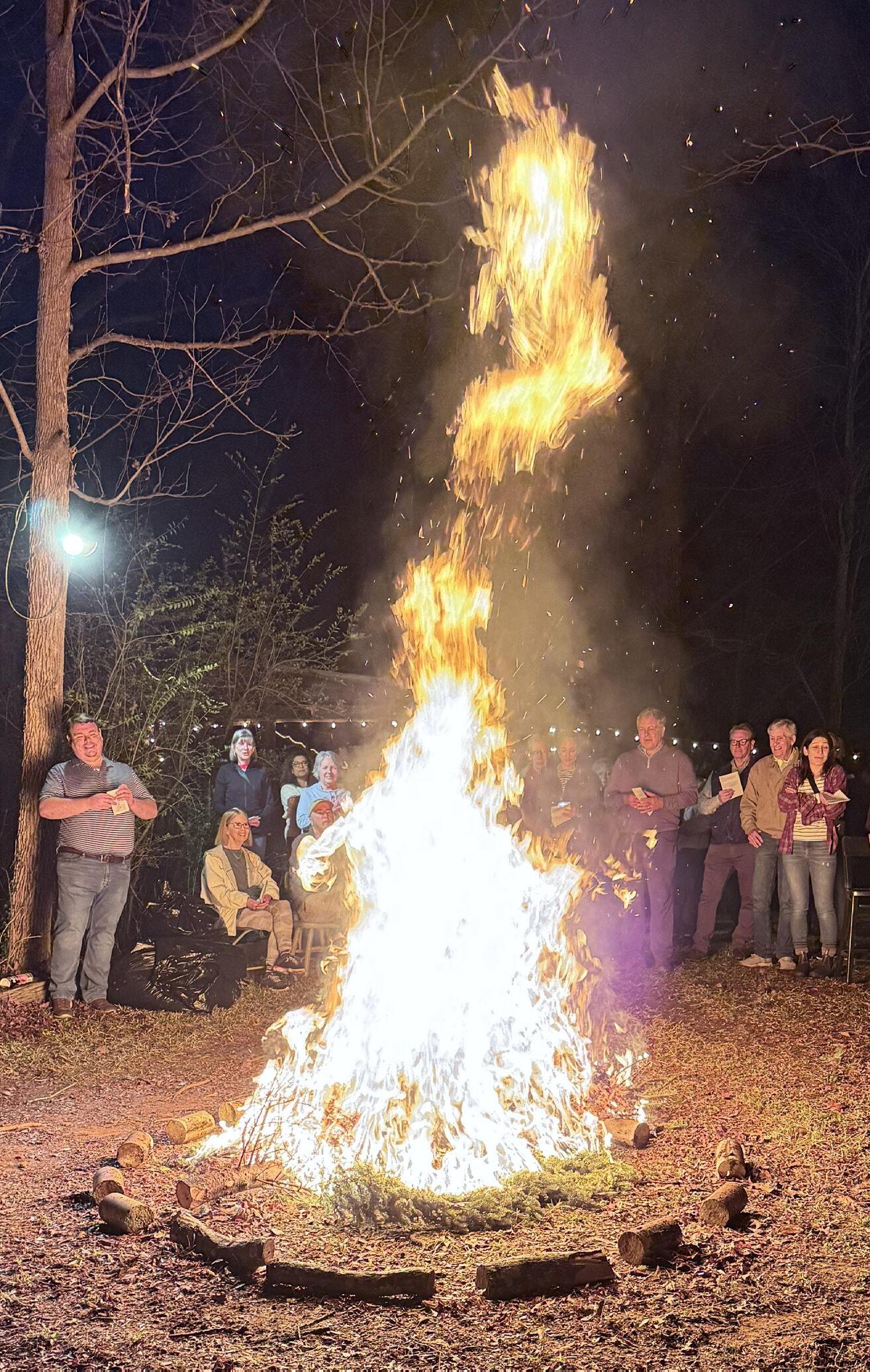
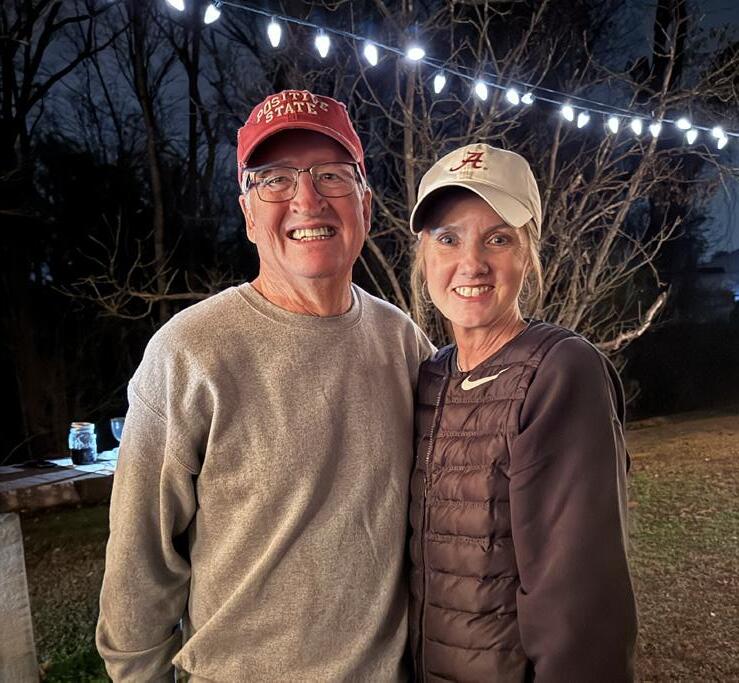
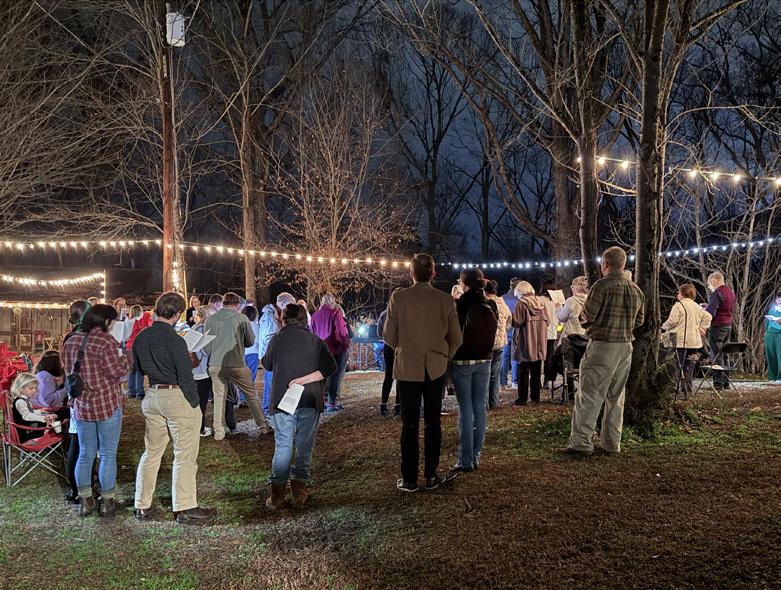
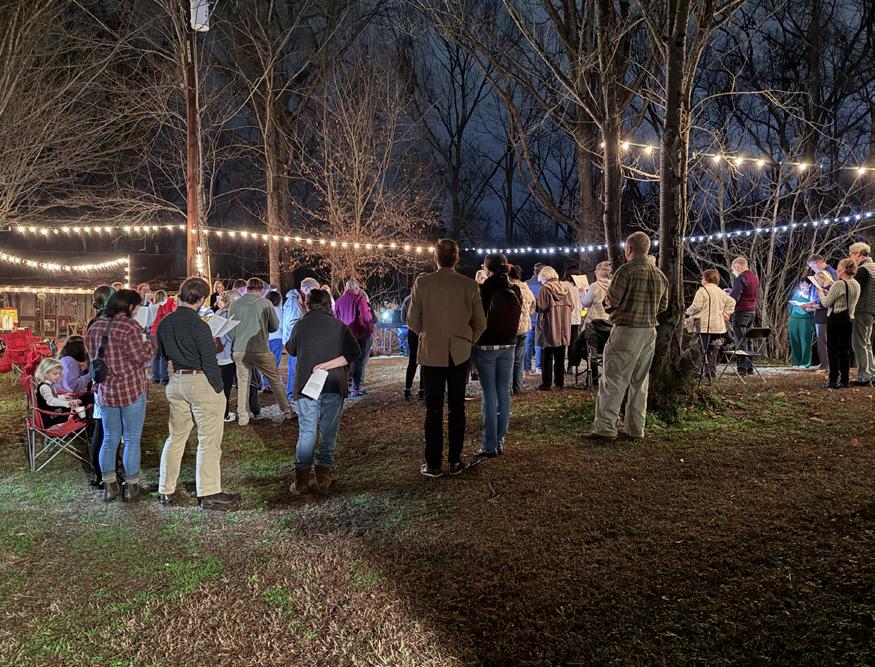
On January 6, parishioners and friends of Christ Church, Tuscaloosa, gathered to celebrate the Feast of the Epiphany with the beloved tradition of the Burning of the Greens. Held at the home of Sam and Catherine Collier—just outside the city limits of Tuscaloosa—the event offered a meaningful and memorable way to bring the Christmas season to a close while stepping forward into the light and mission of Epiphany.
The service was held outdoors in the Colliers’ spacious backyard. Attendees were welcomed by a driveway lined with luminaries and a yard with strings of party lights hung overhead. The scene was warm, festive, and perfect for a service of reflection and celebration.
The Burning of the Greens is a long-standing Episcopal custom that marks the transition from Christmas to Epiphany. Throughout the Christmas season, evergreen wreaths, garlands, and trees serve as powerful symbols of life, hope, and God’s enduring presence in the midst of physical and spiritual darkness. At Epiphany, these greens are not simply discarded. Instead, they are offered in thanksgiving and transformed by fire, a visible reminder that endings can be holy and that change is part of the life of faith.
“Learning about the history of the three kings and intentionally marking the transition from the Christmas season to Epiphany was powerful,” said parishioner Megan Bailey. “The liturgy is rich and fascinating, and it sets a thoughtful tone for what is typically a pretty frivolous time.”
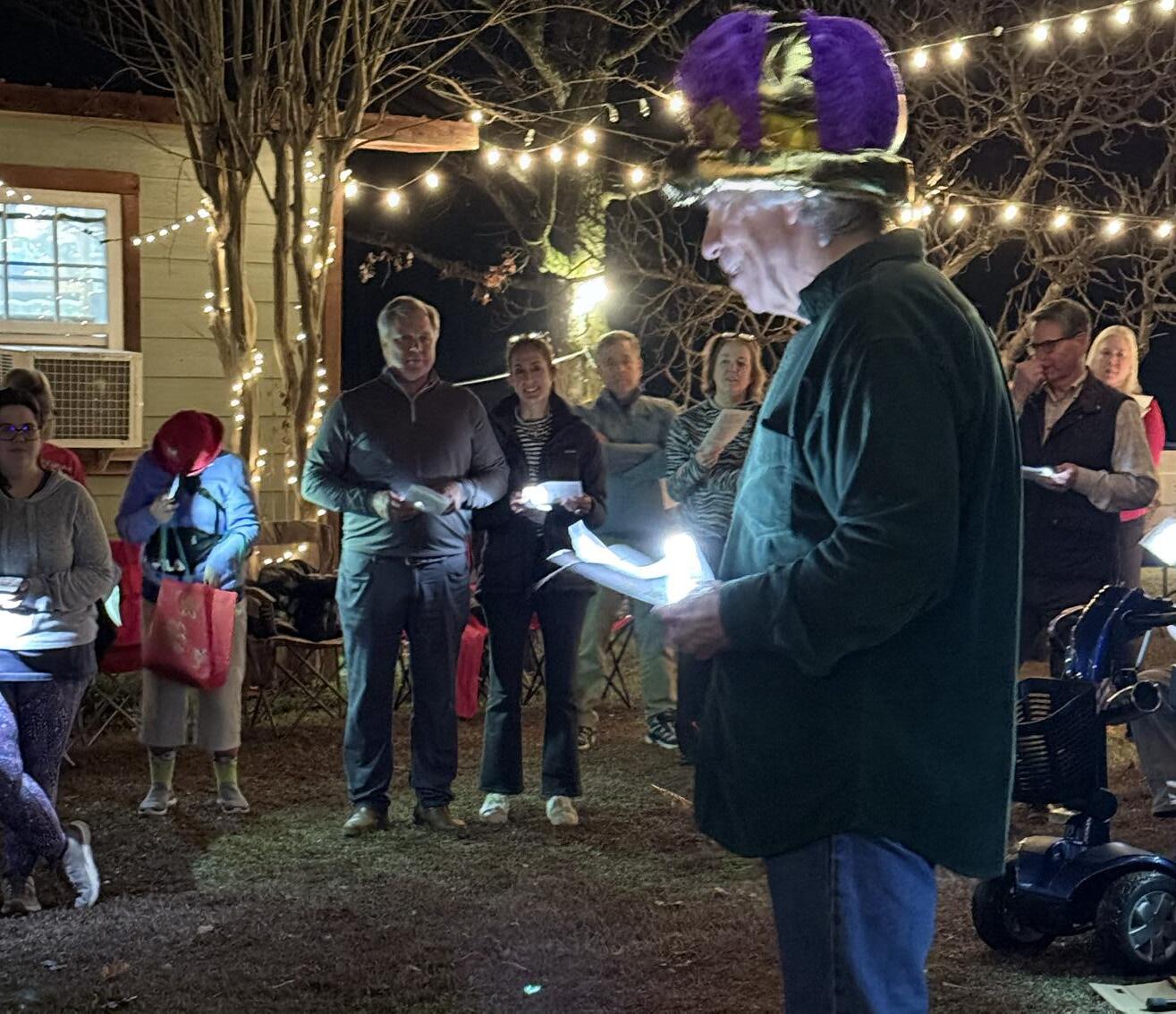
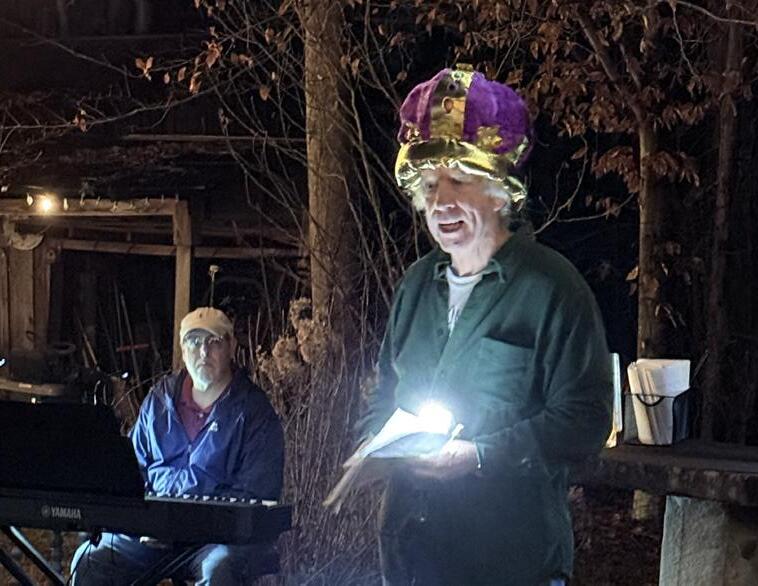
The service was officiated by the Rev. Paul Pradat, who, in his trademark lighthearted style, donned a Mardi Gras crown to honor the Magi whose journey is celebrated on Epiphany, setting the mood for the evening as both reverent and joyful.
“I’ve always found moments like this in the church year an opportunity to teach and have some fun together as the church in a non-traditional setting,” said Pradat. “It works for young and old alike.”
Songs led on keyboard by Music Director Dr. Steven Taranto played an important role in the service and helped weave together themes of light, journey, and revelation. During the Eucharist, the gathered community sang “I Want to Walk as a Child of the Light” and “We Three Kings.” Later, around a roaring bonfire, they continued with “This Little Light of Mine.” The music echoed the Epiphany call to follow Christ’s light and share it with the world.
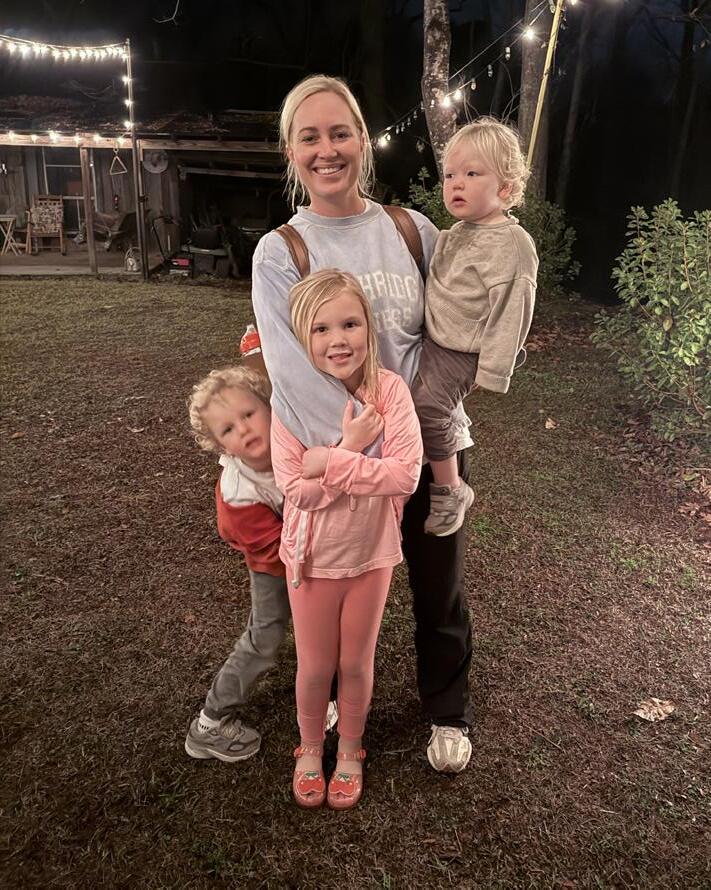
As the fire burned, children and adults alike gathered around with cups of hot chocolate and slices of king cake from New Orleans. They watched flames consume what had once adorned homes and the parish nave and experienced the reality that the beauty of Christmas does not disappear at Epiphany. It is transformed and carried forward.
While Christmas invites us to linger at the manger, Epiphany sends us outward—to carry Christ’s light into our daily lives, communities, and relationships. The ritual invites participants to release what has been, while trusting God with what lies ahead.
“The Christ light from the burning represents our opportunity to go into the world and bring faith and discipleship and fellowship to all we encounter,” said parishioner Jim Jolly. “And it was a delightful family experience! I hope this is the beginning of a tradition at Christ Church.”
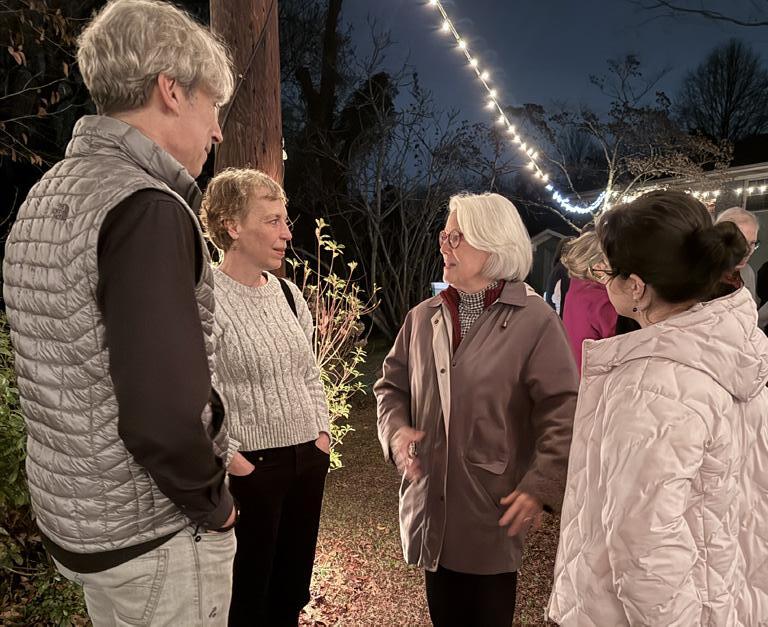
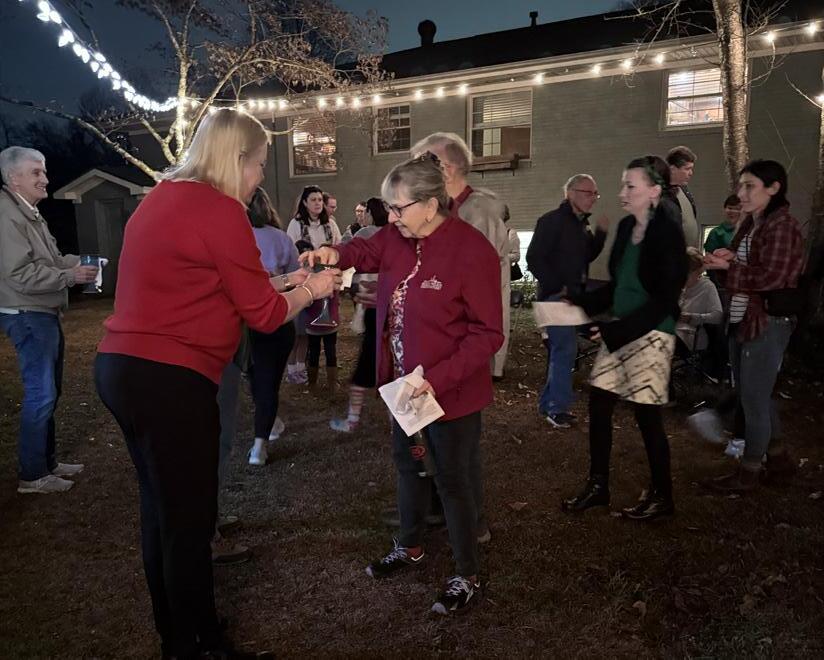
For the parishioners and friends of Christ Church who attended, the Burning of the Greens marked the close of one season and the beginning of another. It reinforced that faith is lived not only in words, but through embodied practices: gathering, singing, praying, laughing, and standing together in the light.
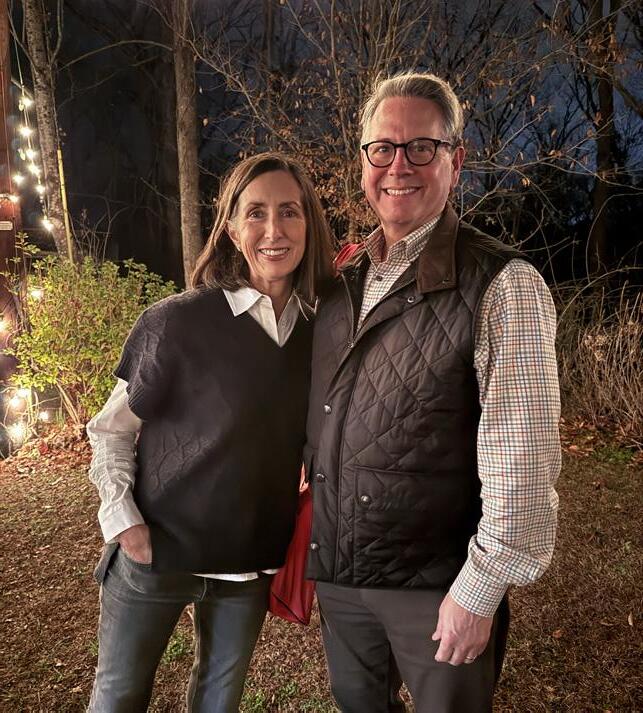
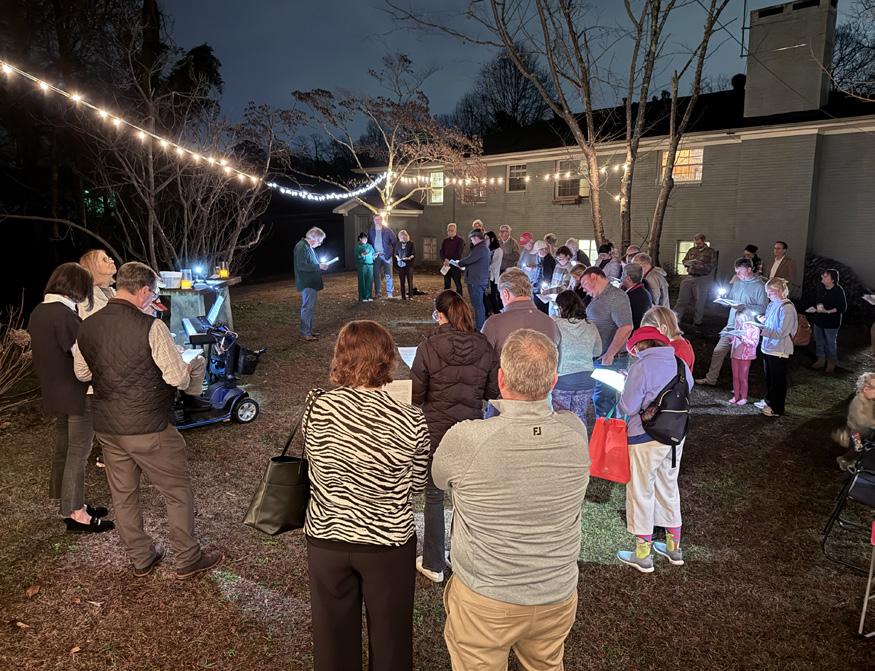
As the last embers faded and conversation quieted, participants left carrying more than memories of a beautiful night. They departed with a renewed sense of purpose and the knowledge that the light of Christ revealed at Epiphany is meant to be shared—one spark, one act of love, and one step of faith at a time.
By: The Rev. Deacon Gerri Aston, St. Andrew’s, Birmingham
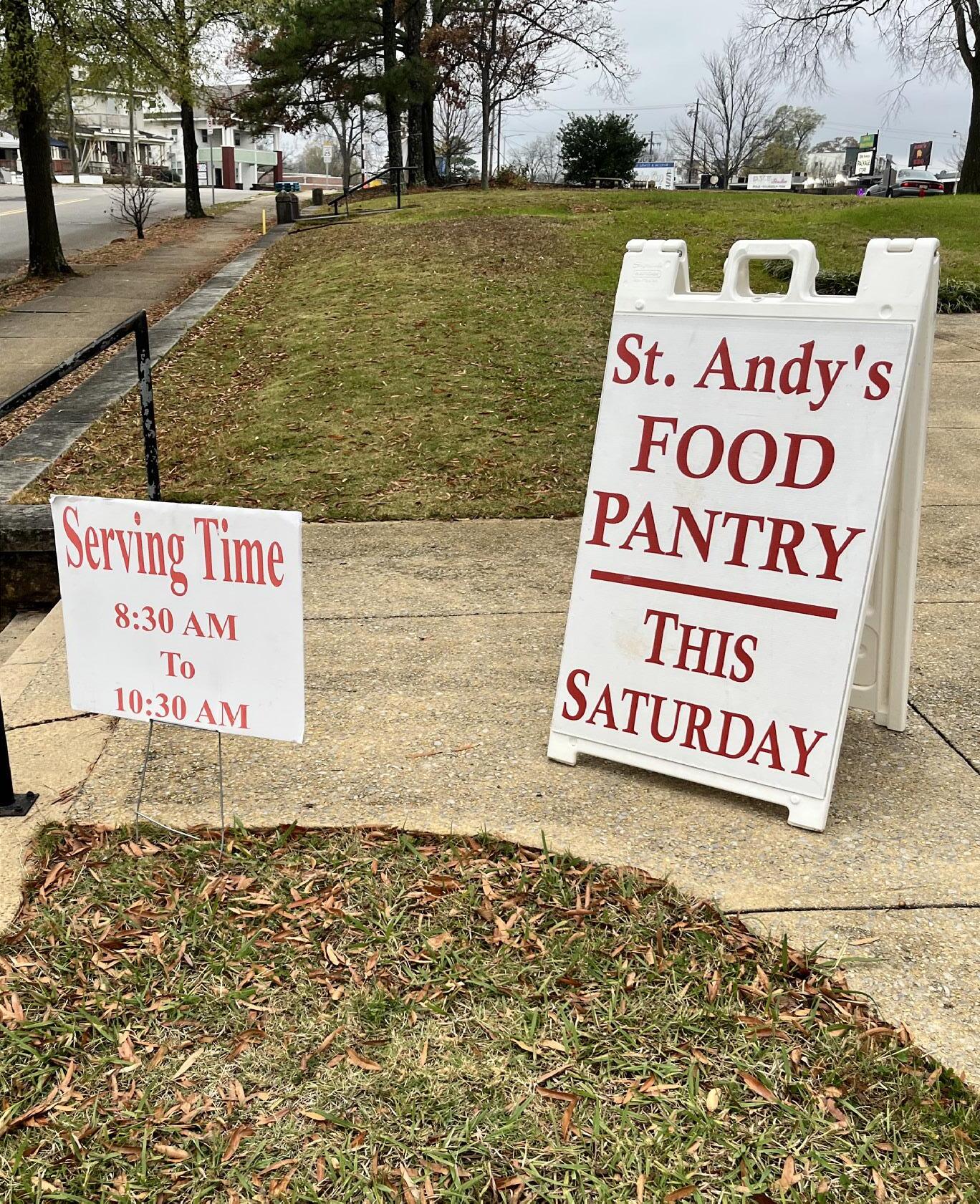
Matthew 25:35 For I was hungry, and you gave me food, I was thirsty, and you gave me something to drink, I was a stranger, and you welcomed me
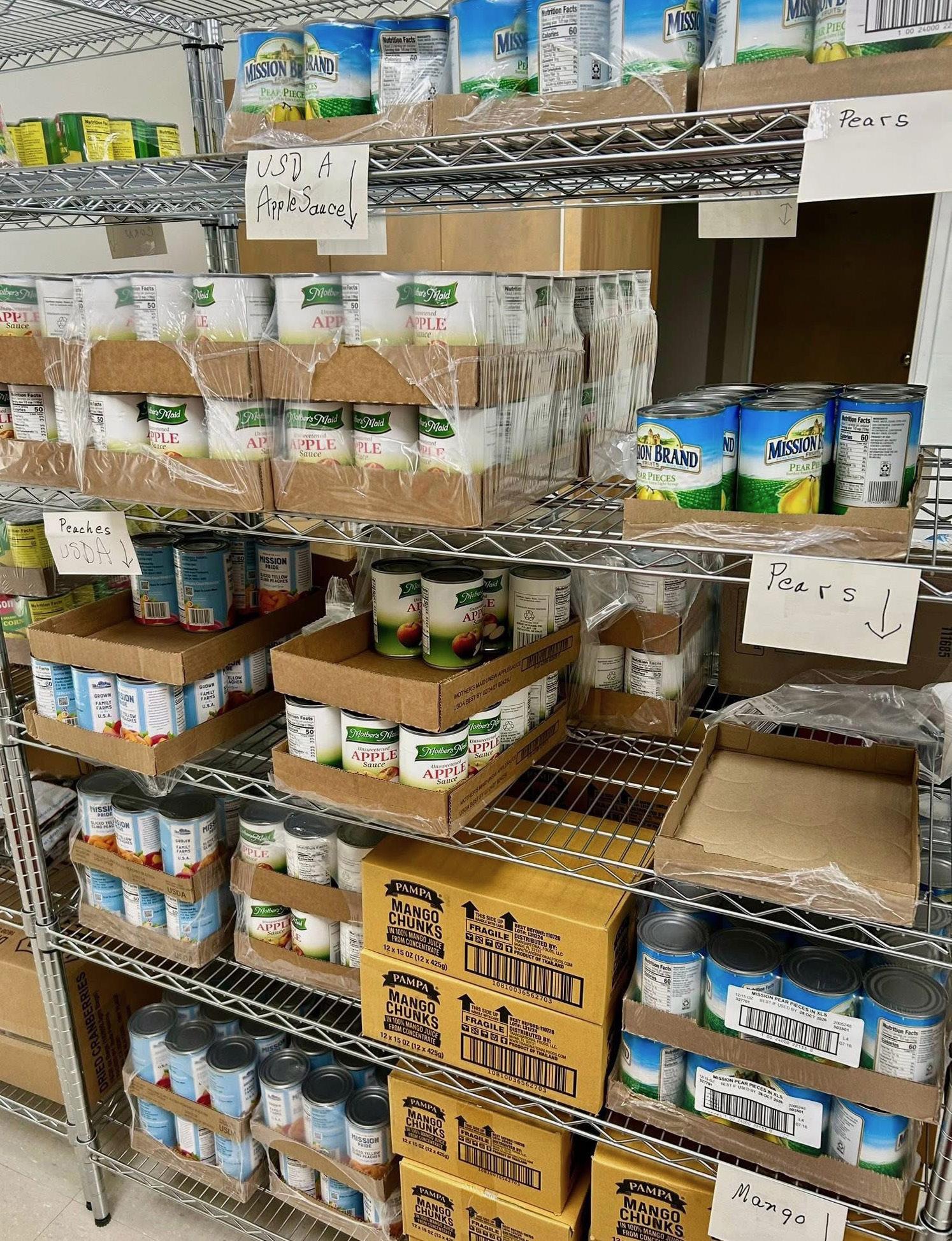
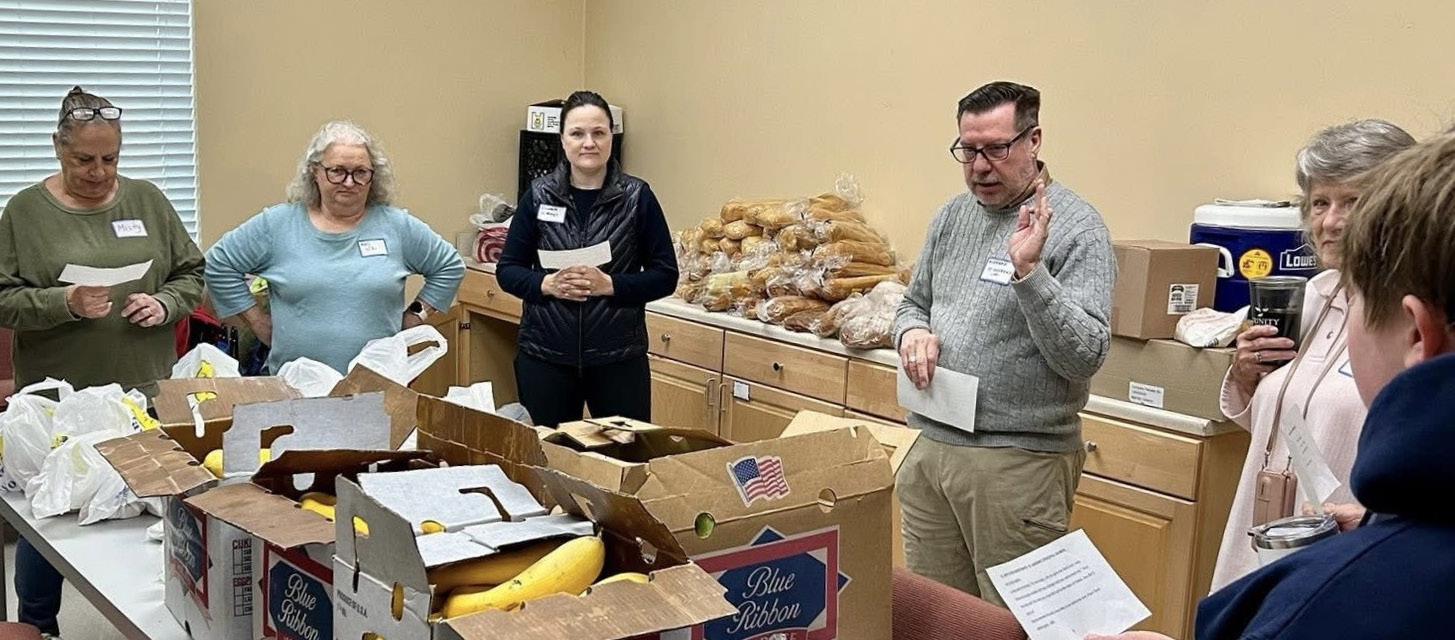
St. Andrew’s Church’s Pantry, the food ministry of the little stone church with the red doors on the Southside of Birmingham, has been feeding families since 2019. Twice a month, our neighbors in need of food gather early on Saturday morning to receive bags of healthy food. Volunteers from St. Andrew’s and other parishes in the Birmingham area, as well as from the community, assist folks in getting the food bags to their cars or packing them for easy transport by bus or on foot.
Each Thursday before the Saturday food distribution, volunteers use a rented box truck to collect food from the Community Food Bank of Central Alabama. Afterward, the shelves, freezers, and refrigerators are restocked and organized. While most of the food comes from the food bank, parishioners and other community members contribute some food donations.
An additional ministry, St. Clare’s Pet Pantry, provides pet food and supplies to our neighbors with pets. This has been a welcome addition to the Saturday food distribution, but the pet pantry is not just for Saturday distribution days.
A clothes closet where folks can “shop” for needed clothing is in the early stages of organization. A good amount of clothing has been donated, and there’s a plan for the “shopping” time. The next step is getting regular volunteers to sort and hang clothes.
While there are always new faces each time, many have been coming from the beginning. They share some of what is going on in their lives with the volunteers and with each other. In
good weather, folks like to congregate around several concrete picnic tables on the property. There is also space inside the building for folks to sit, which is especially appreciated if the weather is not good, so they can stay warm and dry.
Much of the food is shelf-stable, such as canned goods, dry beans, rice, and pasta. But whenever the food bank has frozen meat, fish, or poultry, it is included in what folks receive. Also, if it’s available, fresh produce is provided. This past Thanksgiving holiday, boxes were given with enough food for a big Thanksgiving meal, including a large roasting hen. Through donations, hams were given for Christmas. A group from St. Mary’s on the Highlands has been providing Easter baskets for the families with children for the past several years.
Food is distributed on the first and third Saturday of each month, with occasional shifts to accommodate holidays. The doors open at 8:30 and close at 10:30. During that time, 70-125 families are served. Family size can range from singles and couples to multi-generational families of 10 or more. The food given is proportional to family size.
A few of our neighbors who receive food are also volunteers. Our aim is to do with, not do for. While there is no requirement to work to get food, we welcome anyone who wishes to offer their gifts for the benefit of all. One step towards the goal of doing with rather than doing for is to shift people from shopping for groceries to receiving pre-packed bags. This will give people a choice. Our job is to figure out the system that will have good flow and stay within our budget.
By: Breanna Carter, Missioner for Racial Healing & Pilgrimage
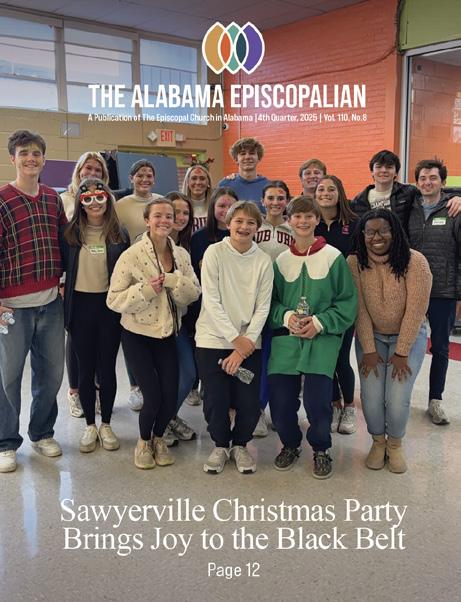
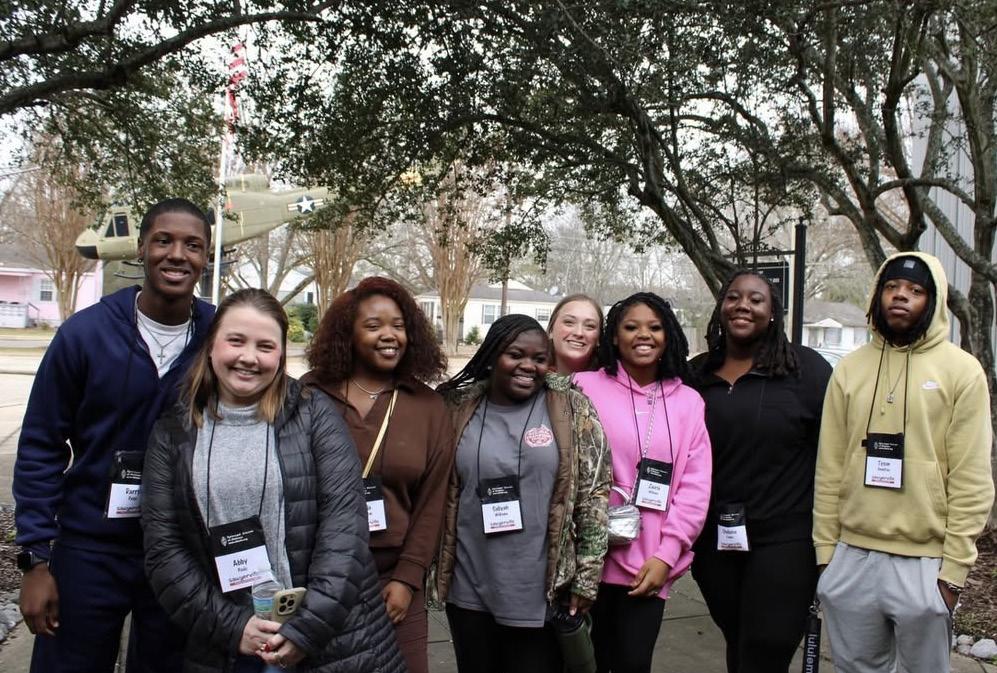
Sawyerville Person2Person brought together 27 high school students, college students, and young adults over MLK weekend to reflect on the life and legacy of the Rev. Dr. Martin Luther King, Jr. Participants and staff traveled from across the state and beyond, including Birmingham, Greensboro, Demopolis, Huntsville, Tuscaloosa, and Louisiana. The group gathered at St. Stephen’s Church in Birmingham, and for the first time in nine years, Person2Person stayed in Birmingham, with a day trip to Montgomery built into the weekend.
A program team made up of college students Angel Ash and Harrison Meyer, along with chaplain the Rev. Quincy Hall, helped guide the weekend. Together, they led debrief conversations, group discussions, and nightly worship, creating space for participants to process what they were experiencing and connect it to their own lives.
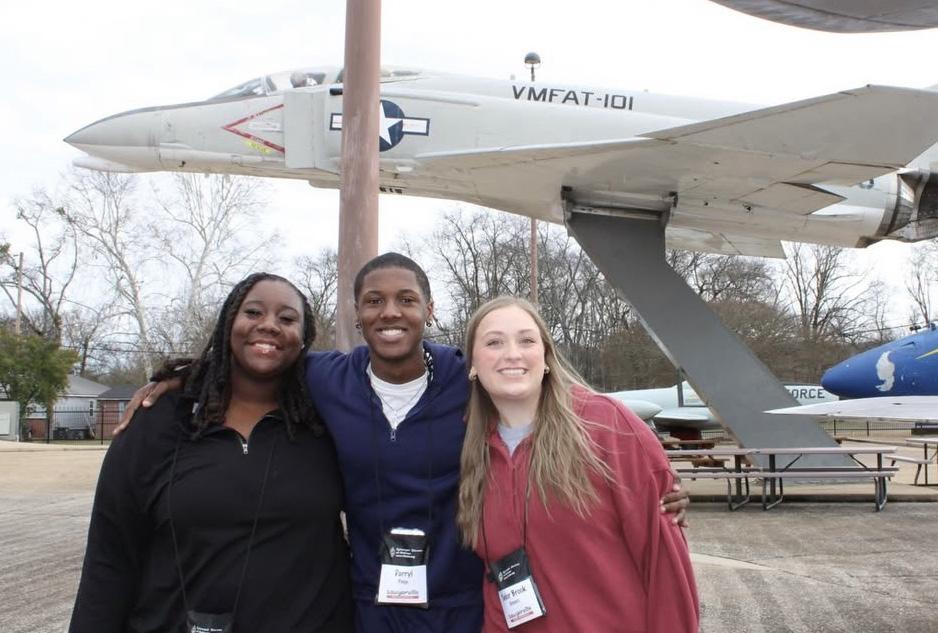
We began our site visits at the Southern Museum of Flight. There, participants learned more about aviation history and the
legacy of the Tuskegee Airmen, while also being introduced to the wide range of careers available in the field of aviation. The tour ended with participants getting hands-on experience in flight simulators, a highlight for many in the group.
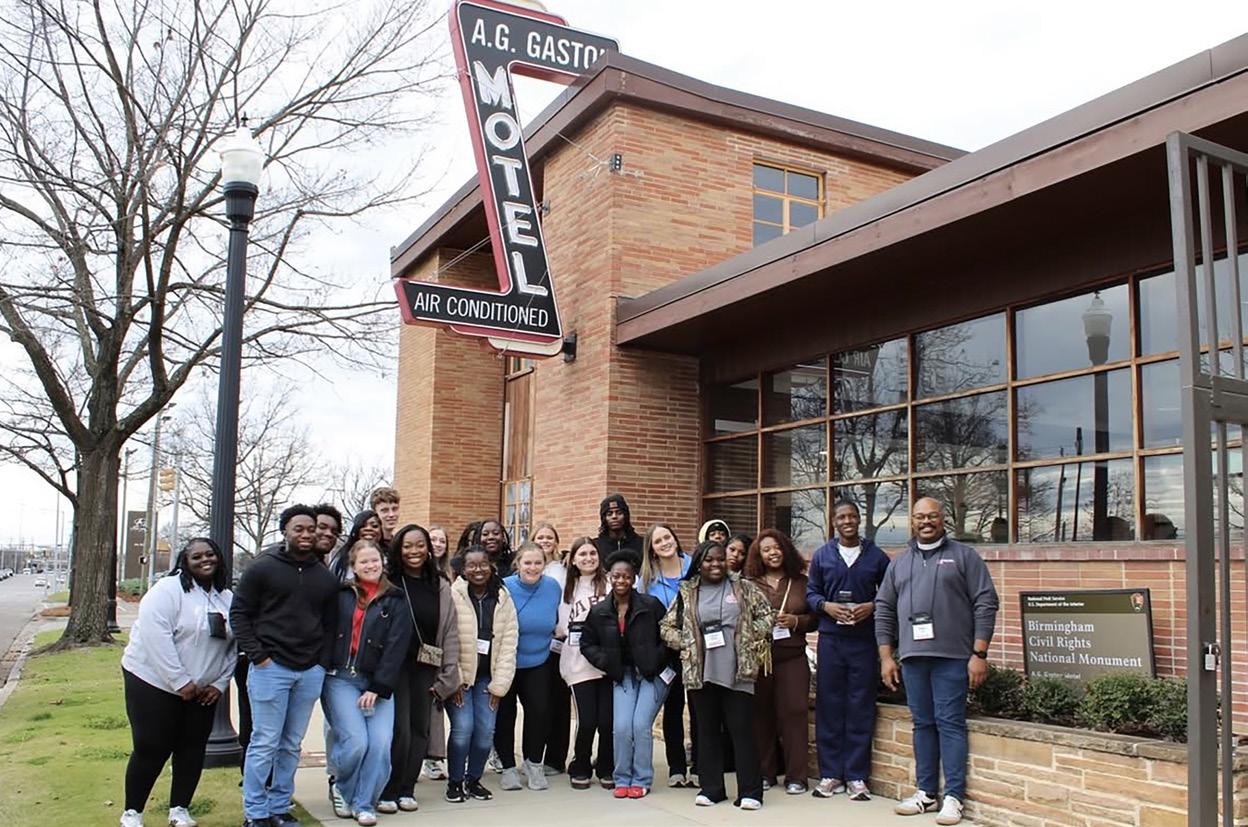
Our Birmingham visits also included the Birmingham Civil Rights Institute, 16th Street Baptist Church, and the A.G. Gaston Motel. At the motel, participants learned more about A. G. Gaston’s profound influence in Birmingham and how his wealth, leadership, and economic impact played a critical role in supporting the Civil Rights Movement.
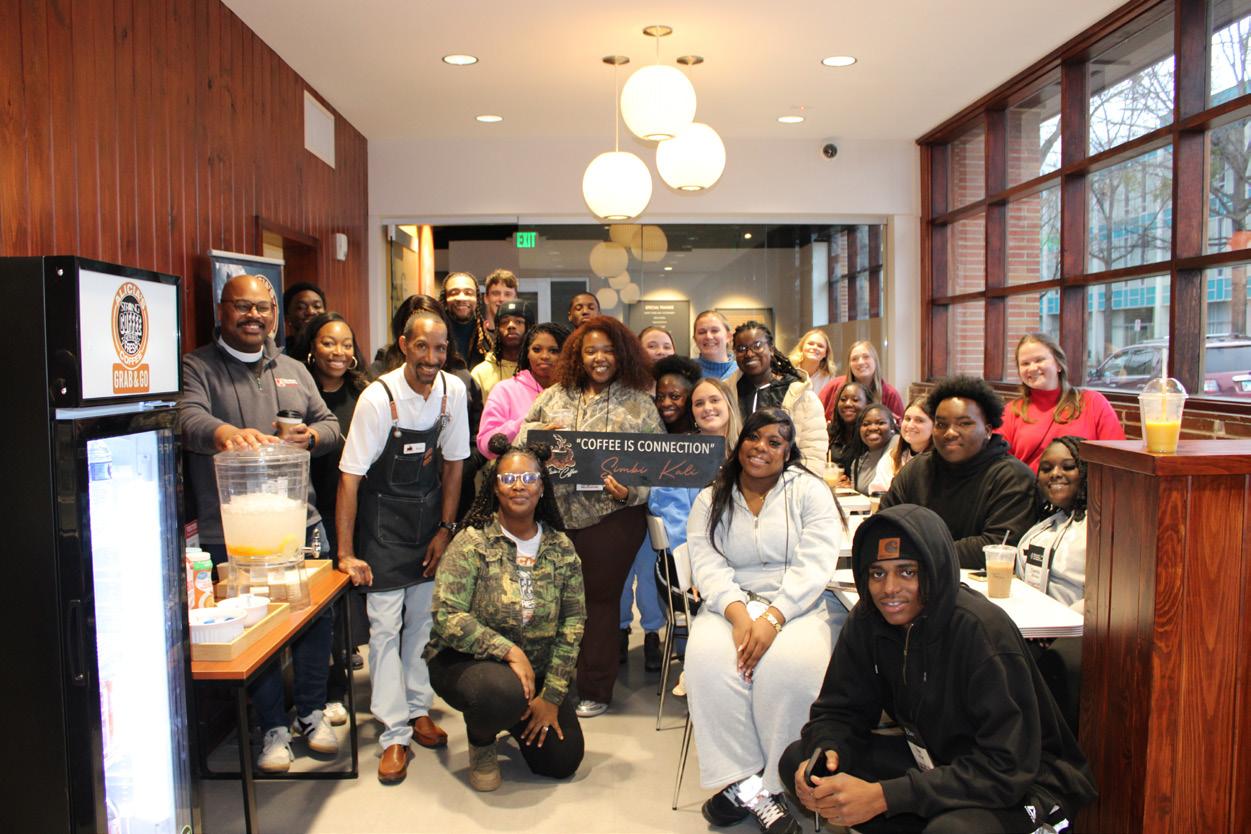
At the close of the day, our group gathered at Alicia’s Coffee, where we were generously welcomed by founder Rashad Harrell. We were also joined by Chad Freeman from Mayor Randall Woodfin’s Office, who spoke with participants about the importance of civic engagement and participation in city government. The conversation was thoughtfully moderated by Sawyerville staff member Harrison Meyer.
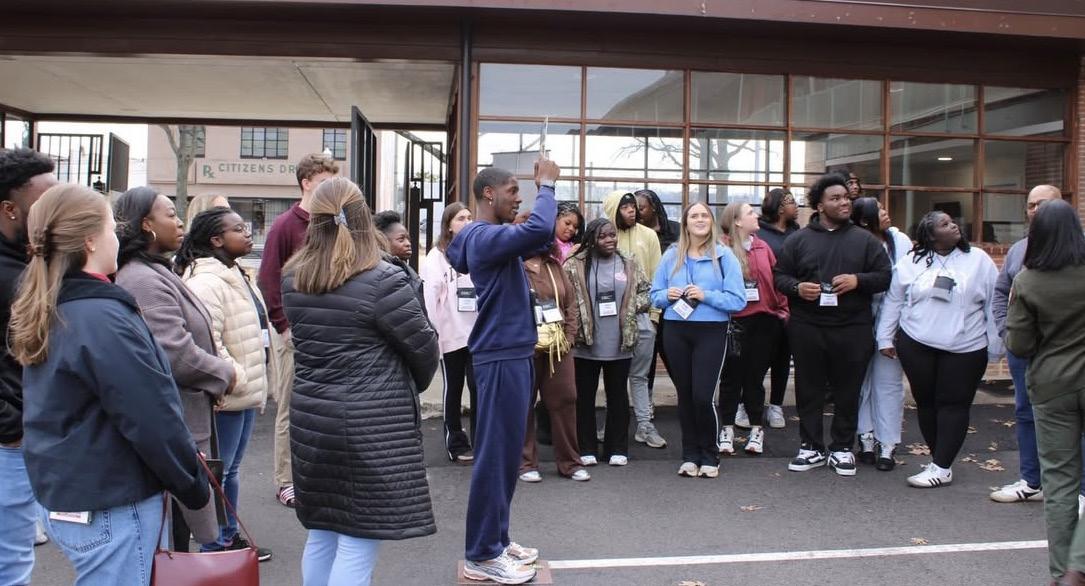
On Sunday, the group traveled to Montgomery to visit The Legacy Museum and the Freedom Monument Sculpture Park. These visits invited reflection, silence, and honest conversation as participants engaged the realities of racial violence in this country and the ongoing call to remember, tell the truth, and seek healing.
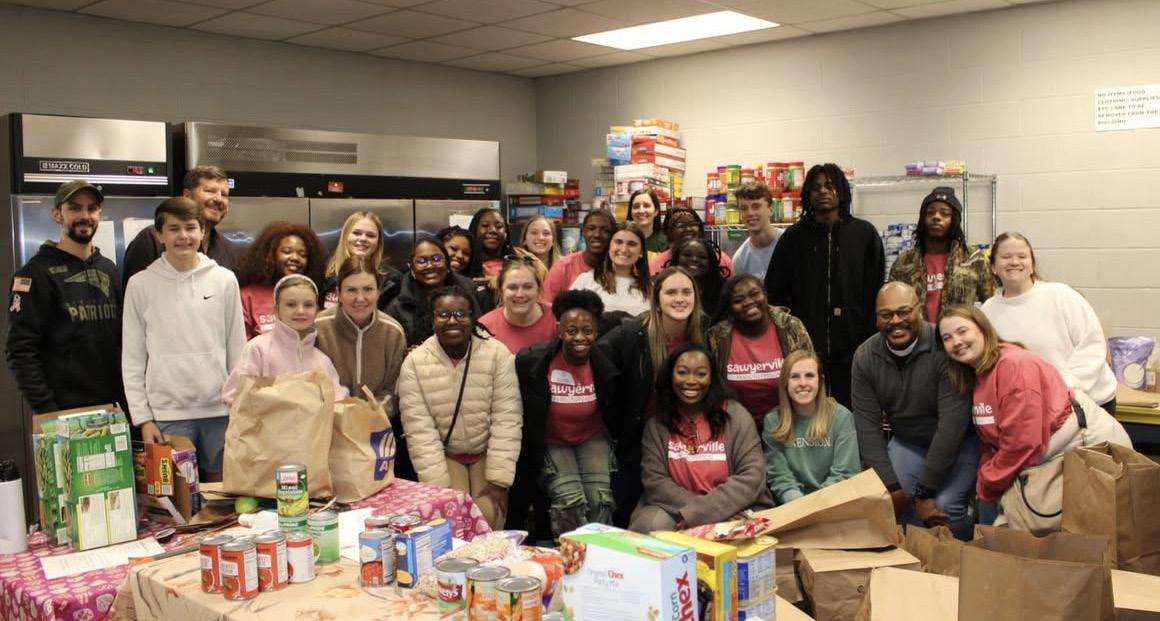
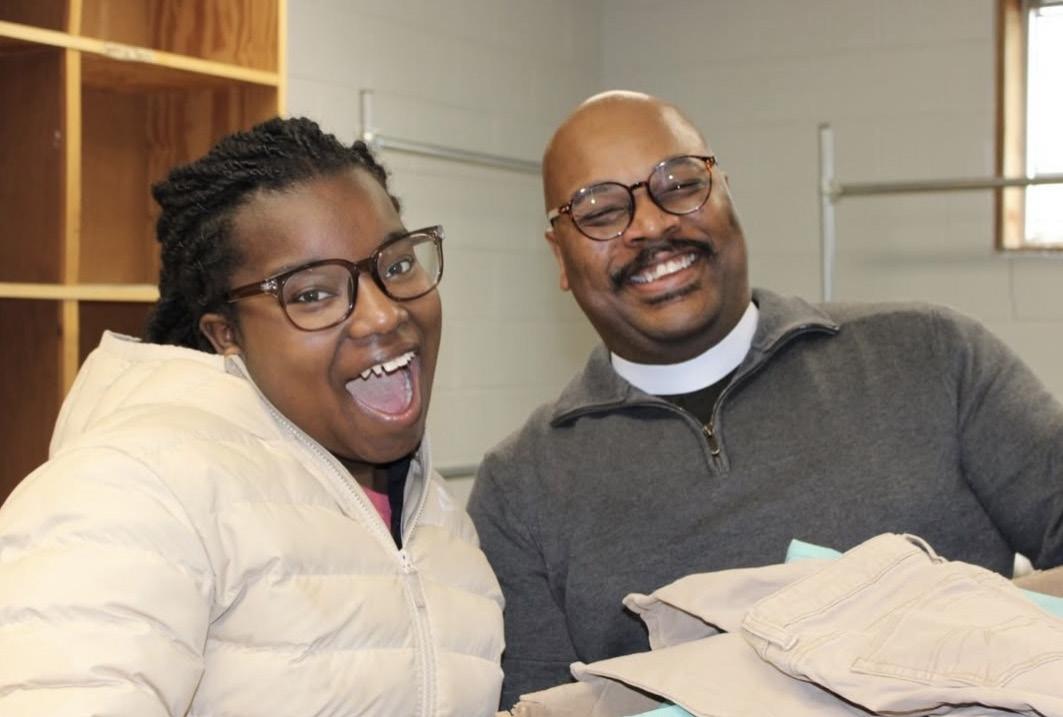
The weekend ended with a day of service at Greater Birmingham Ministries. Participants were split into smaller groups and served alongside friends from Church of the Ascension, organizing men’s and women’s clothing, sorting toys, packing food boxes, and helping with other needs. Serving together offered a meaningful way to close the weekend and put learning into action.
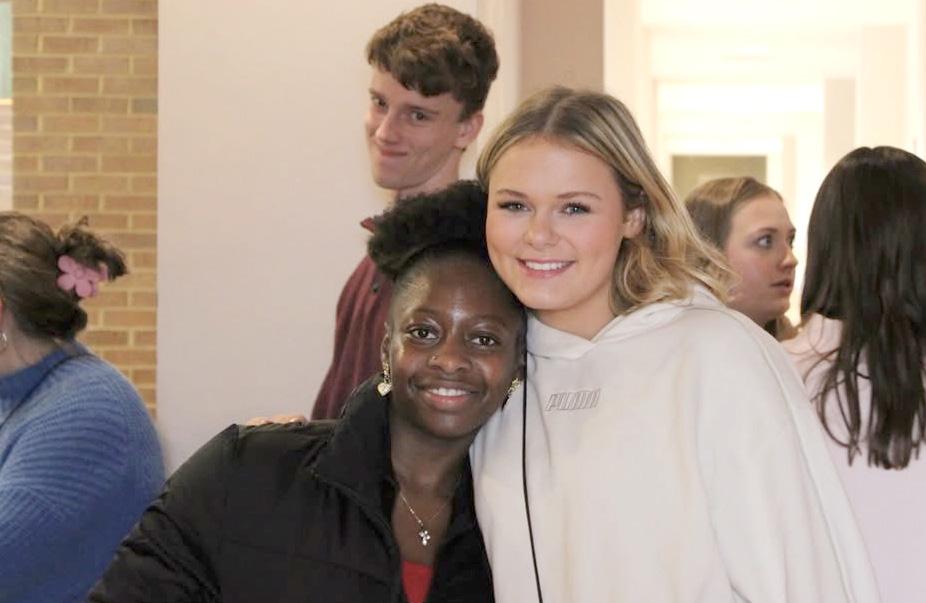
Throughout the weekend, shared meals, worship, and conversations created space for connection. In those moments, participants built trust, shared stories, and showed up with honesty and vulnerability.
This weekend was made possible by the support of many across the Diocese of Alabama. We give thanks to Bishop Glenda Curry; St. Luke’s Church; Grace Turner; Susanna Whitsett and friends; Jen Manning; and the Youth Department for providing meals, and to St. Stephen’s Church in Birmingham for generously hosting Person2Person. We are also thankful to Leslie Culver, Catherine Cook, and Claire Cotten for their hospitality in opening their homes to participants and staff during the weekend.
As we give thanks for nine years of Person2Person, we are grateful for the relationships, growth, and stories that have shaped this program, and we look ahead with hope and excitement to year ten in 2027.
By: Jen Manning, Missioner for Formation
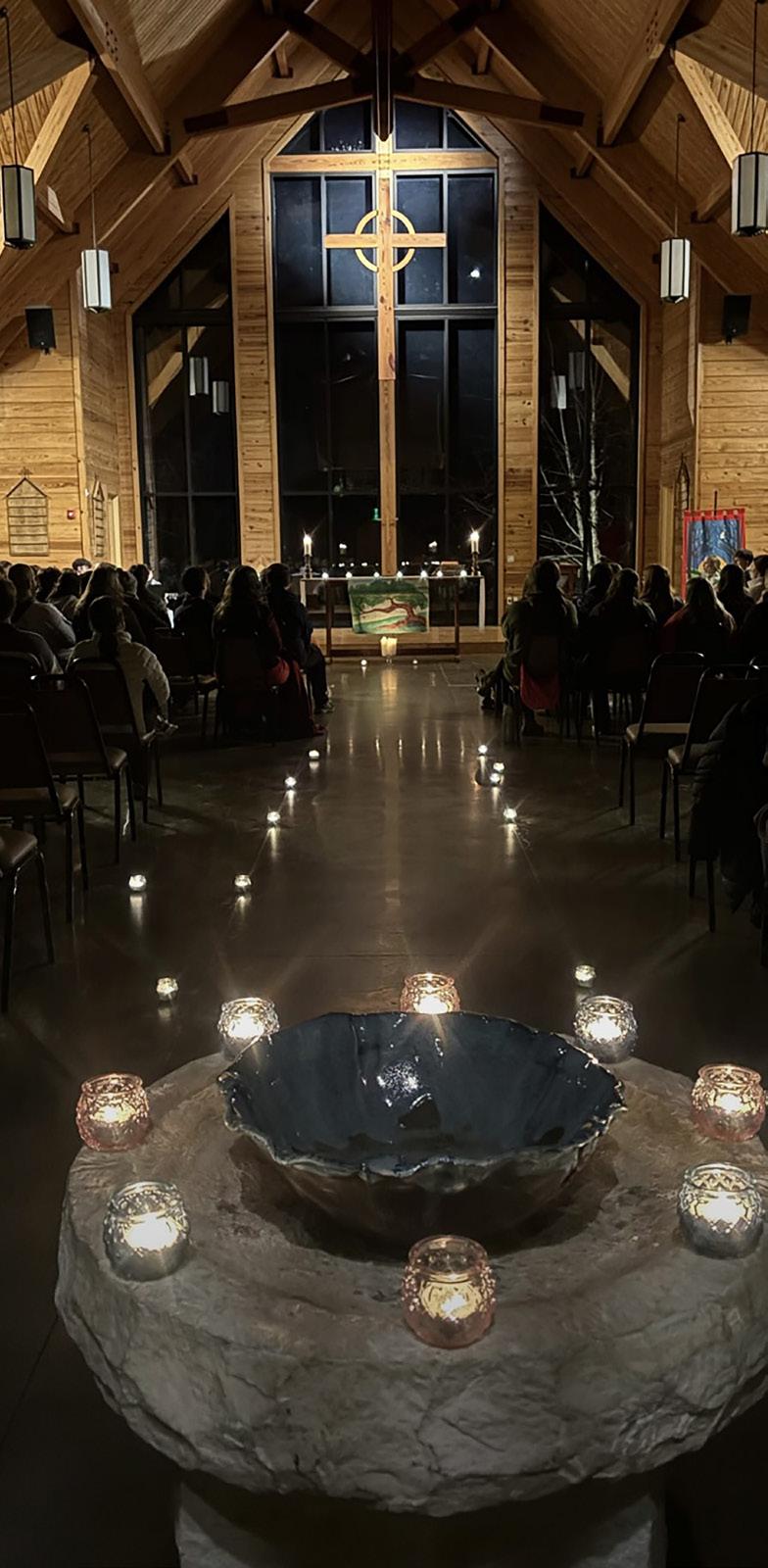
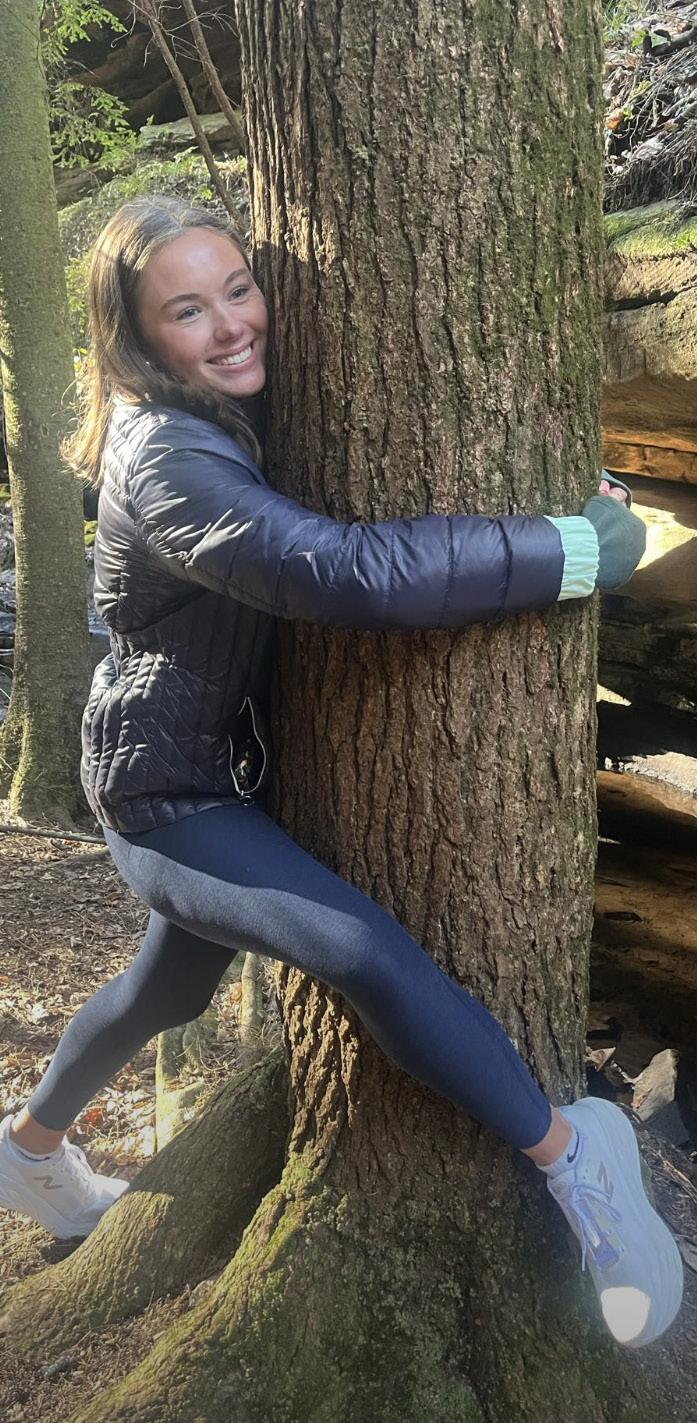
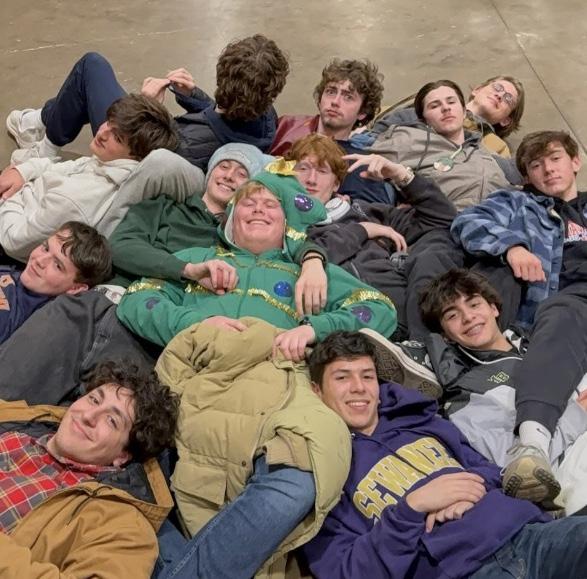
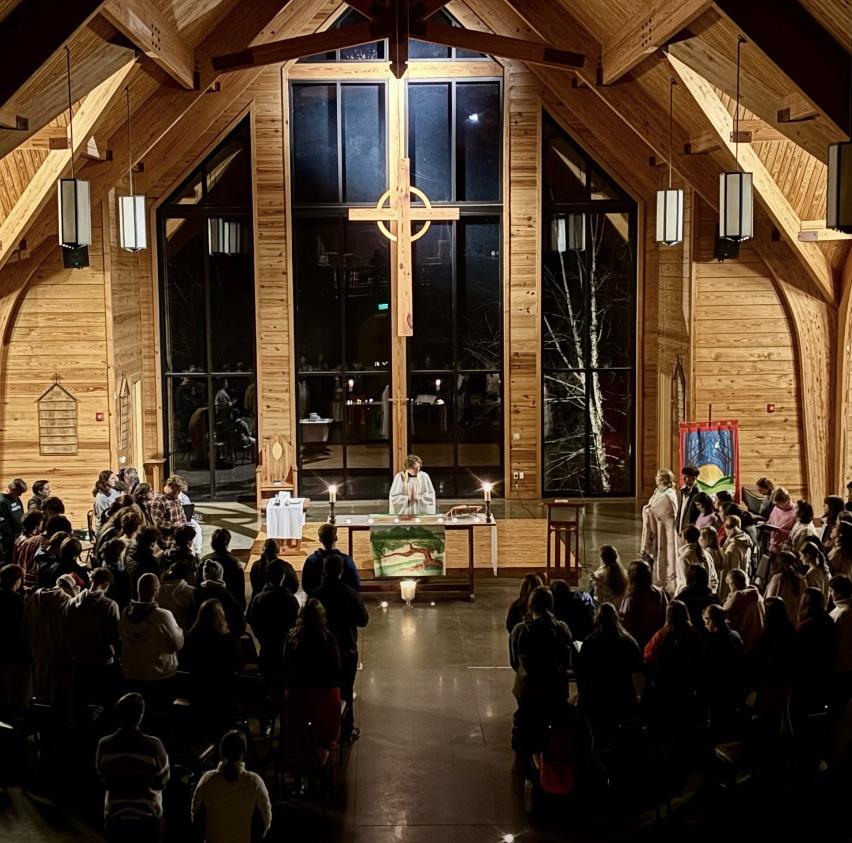
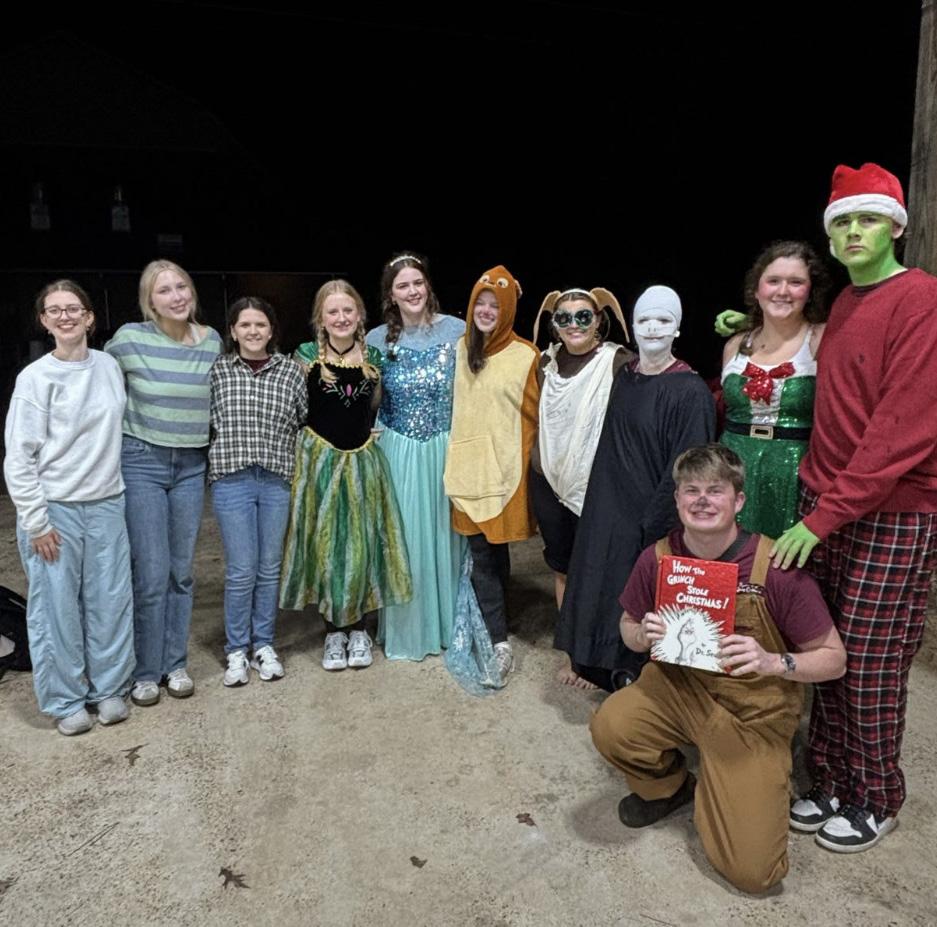
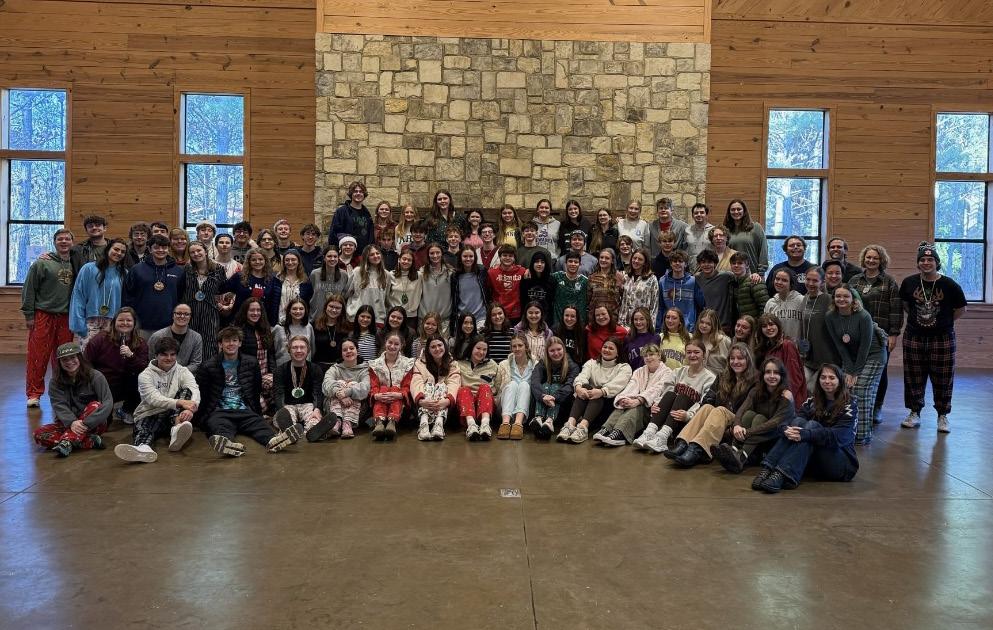
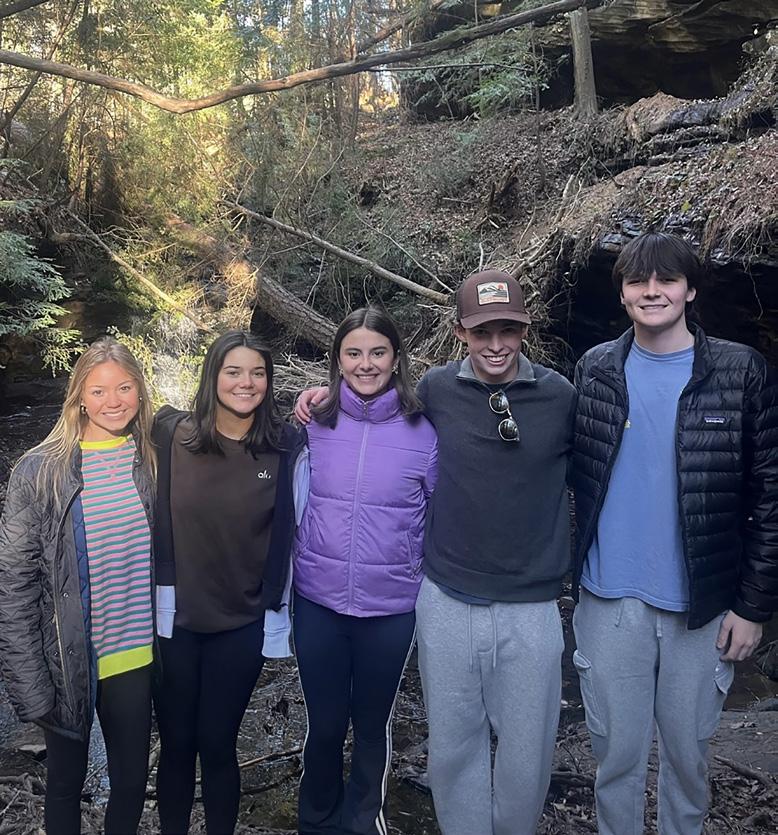
In December, 80 10-12th graders gathered at Camp McDowell for the annual Diocesan Christmas Conference, led by the Youth Department. This year, we invited participants to slow down and step into the season through the powerful image of the Christmas Tree of Life.
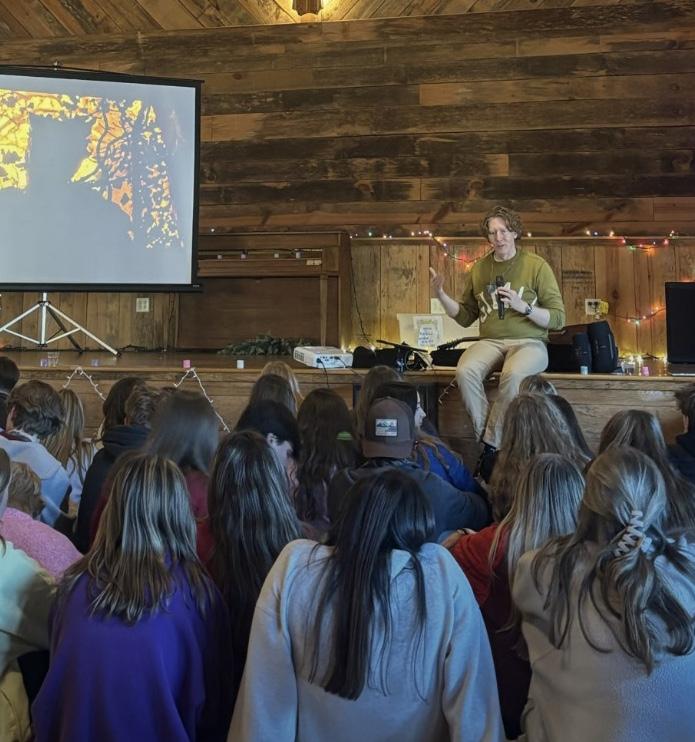
Drawing on our Celtic roots and the rich tree imagery found throughout scripture, the program sessions led by the Rev. Tom Poynor offered a meaningful and creative way to explore the story of Christmas and our place within it.
Throughout the conference, participants reflected on trees as symbols of life, connection, and resilience—from the Tree of Life in Genesis, to the Jesse Tree, to the wood of the cross and the hope of resurrection. These images grounded our conversations in the belief that Christmas is not just a moment, but part of God’s ongoing story of life and renewal.
Through art, small-group discussions, and hands-on activities, participants were invited to engage their faith not only with their minds but also with their hearts and hands.
Creating, building, and reflecting together allowed space for personal expression and a deeper connection to the themes being explored.
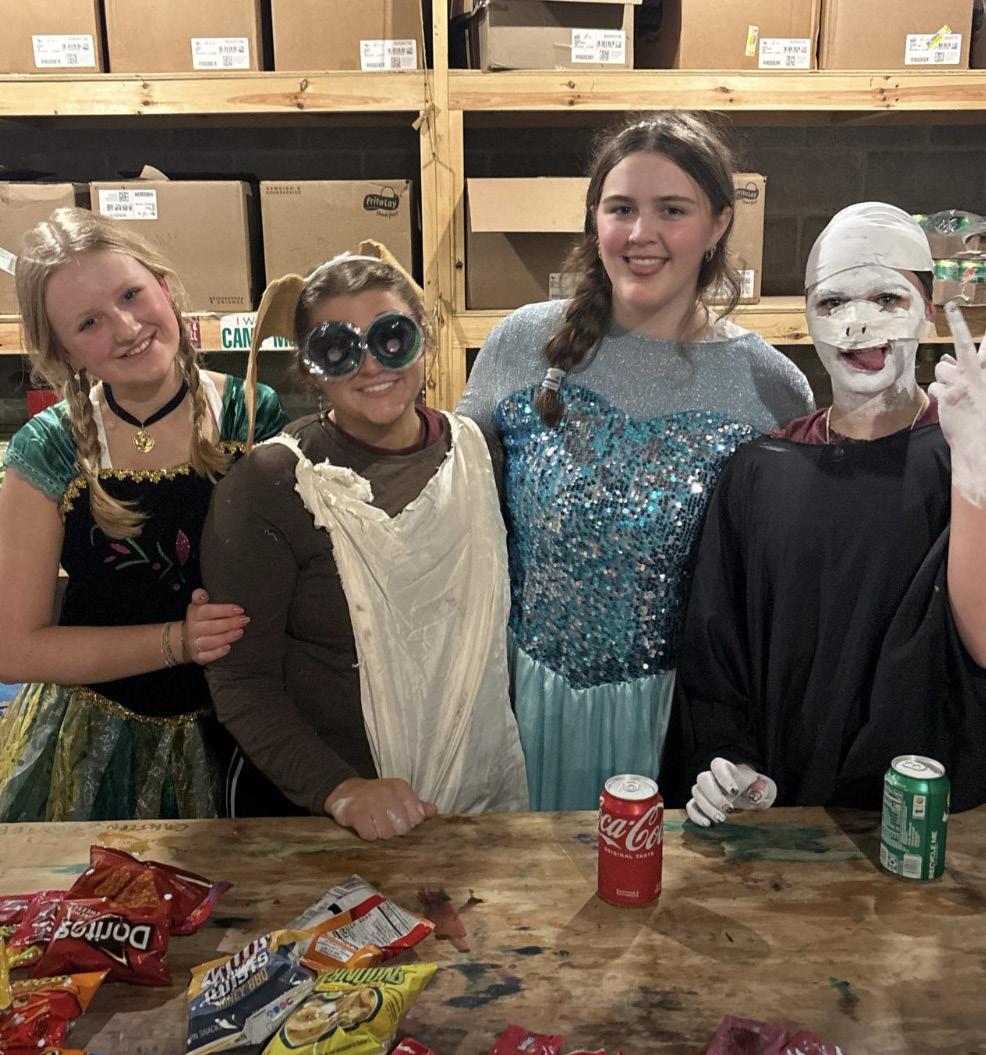
In the spirit of Celtic spirituality, the conference emphasized community, creation, and the sacredness of everyday life. Shared meals, laughter, and informal conversations became just as formative as the structured sessions, reminding us that faith takes root and grows best in community.
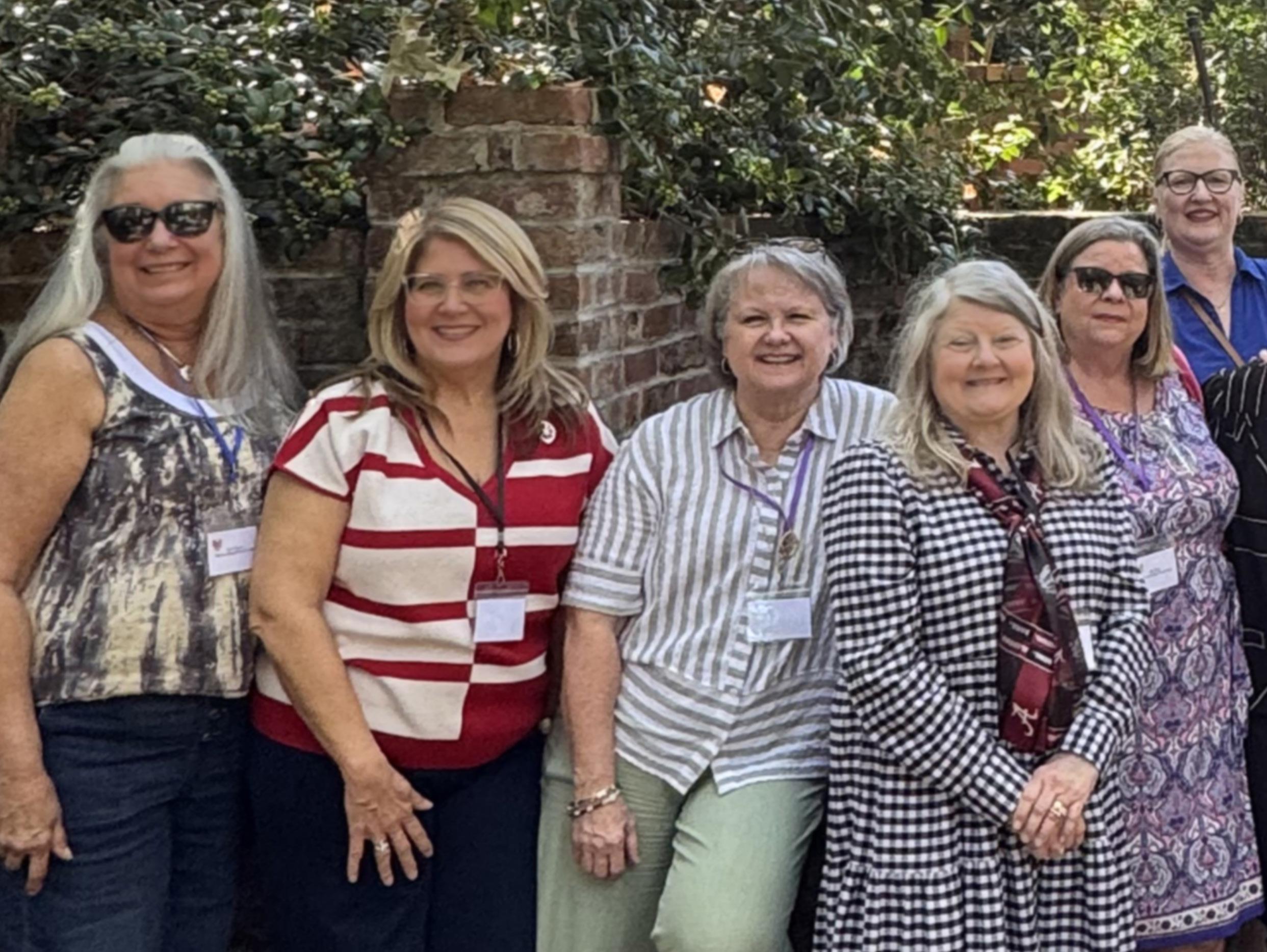
By: Maggie Noland, Diocesan President
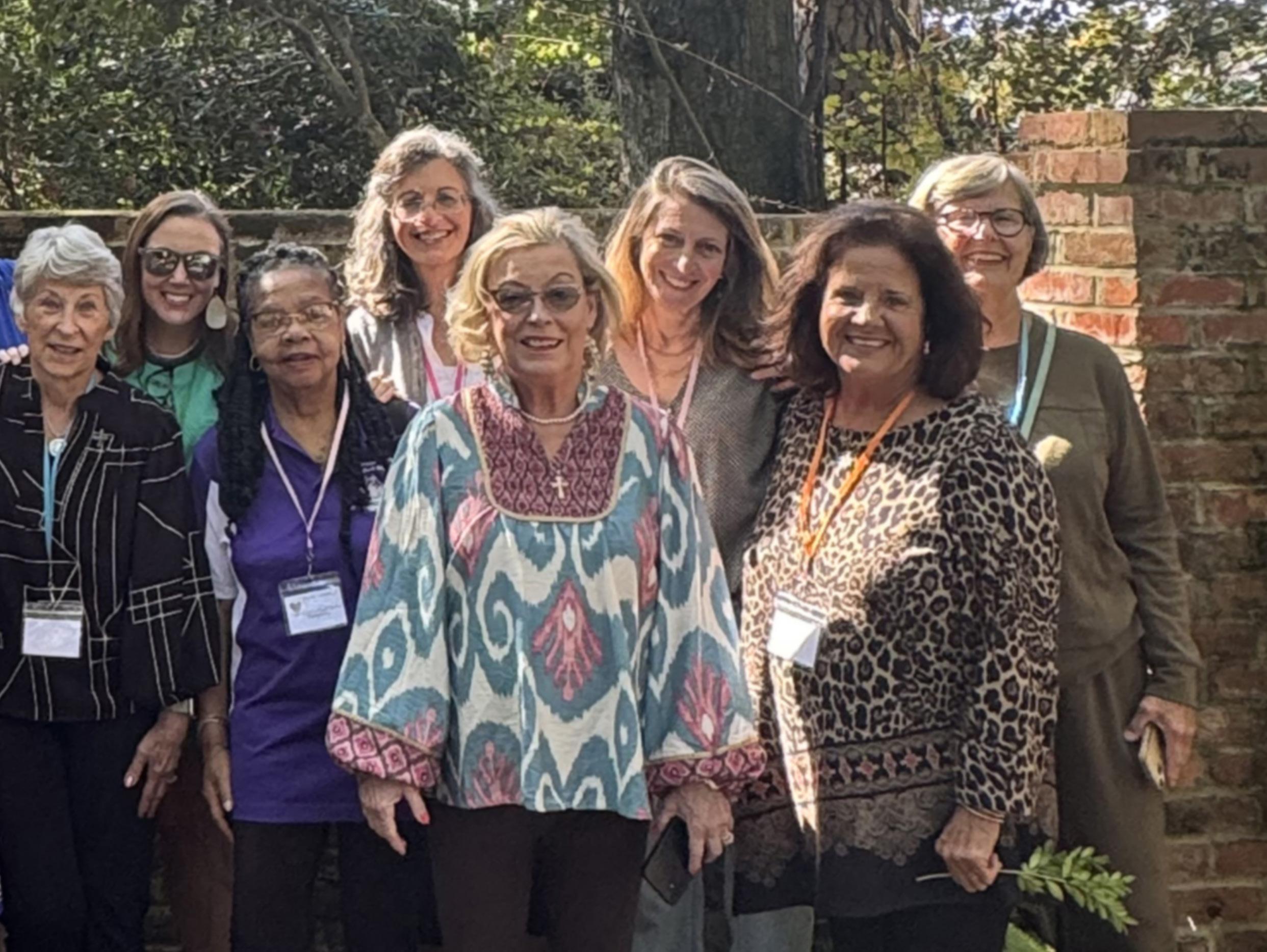
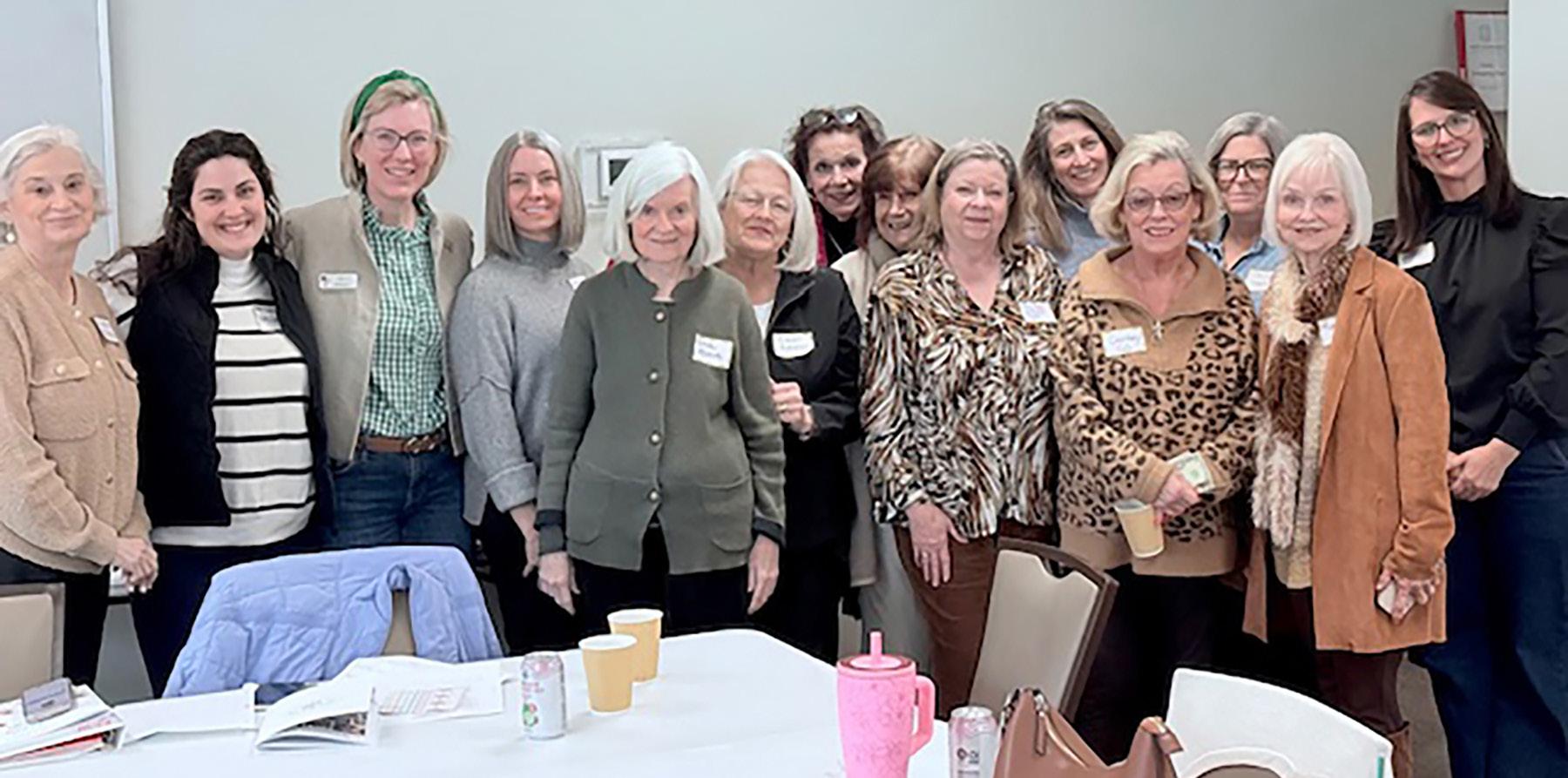
That’s right! You! “My parish does not have an ECW,” you say. That is perfectly okay! Every Episcopalian woman is already a member of the Episcopal Church Women and is welcome to participate in ECW activities!
We have many active ECW groups in parishes across the diocese, as well as many new chapters that have started back up or begun anew. We want everyone to know that you are welcome to attend any ECW activity, including convocation meetings, bazaars, luncheons, and the Fall Conference… anything! If you are near another parish with ECW, speak to someone there and ask if you can be a part.
Although my term as president has just begun, I have already had numerous conversations with many wonderful women and priests about ECW. Try it! You might like it. If your parish is considering starting an ECW, please contact me (maggienoland@ hotmail.com), and some members of the diocesan board will meet with you to help. We aim to assist anyone with anything we can. That is why the diocesan board is here.
I hope to see you soon at an ECW function.
By: Dr. Lori Smith
The first ECW event I ever attended began with a simple invitation — a luncheon at St. Luke’s Church in Birmingham. I said “yes,” not knowing that this small act would become a calling that would transform my life more than a decade later when I was asked to serve as President-Elect of the Diocesan ECW.
At the time, I was practicing as an obstetrician-gynecologist at St. Vincent’s Hospital, helping raise our two young sons with my husband, Perry, an anesthesiologist at UAB. Life changed dramatically after I was diagnosed with Multiple Sclerosis following our first son’s birth in 2000. Though I continued to practice until 2009, retirement eventually became necessary. Looking back, I can see now how God was preparing me — teaching me to trust in Him and not be afraid, because He was guiding my steps. With retirement came the gift of time: to become a full-time mom and to say “yes” to that first ECW luncheon.
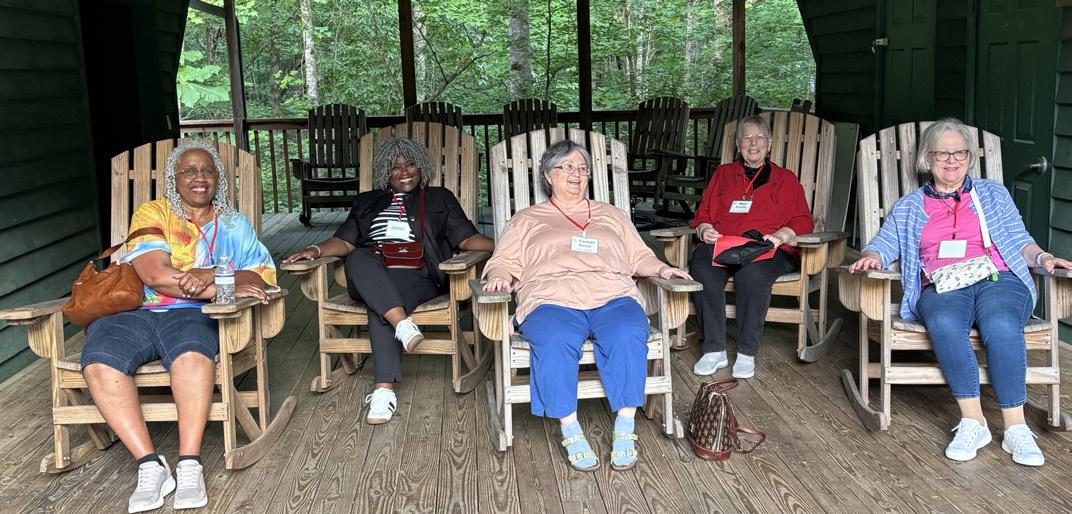
Having grown up Catholic, I was interested in learning more about the Episcopal faith, so I started attending Sunday School, Bible studies, and Education for Ministry. As I became more involved in the church and ECW, this led to my serving as the President of St. Luke’s ECW and later as a Birmingham Convocation CoCoordinator, which was my first introduction to the Diocesan ECW. Through each role, God was giving me an opportunity to
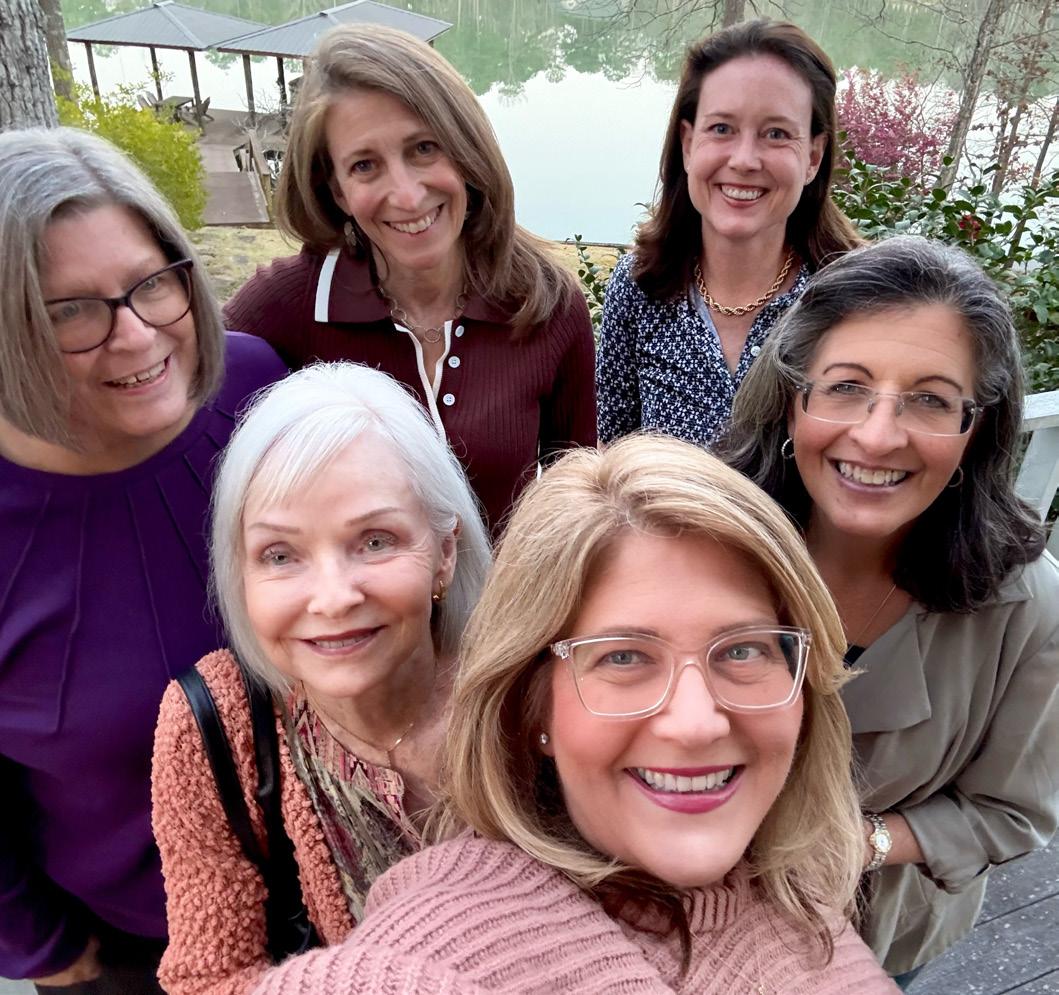
grow more deeply into the fabric of the ECW and the amazing women associated with it.
When I was invited in 2021 to serve as the Diocesan ECW President-Elect, my first instinct was to decline out of concern for my health. But God’s tug on my heart was clear. Two days later, I called back and said “yes,” encouraged by the love and support of the incredible women I would be working alongside.
Our theme for the past two years has been “Live in Gratitude, Walk in Faith,” and was chosen because it reflects the heart of who we are as women of the church and our shared journey as we walk in faith along a winding path that leads to the heart of gratitude.
These past two years have been filled with blessings: attending Triennial, hosting two ECW Fall Conferences, welcoming national and provincial ECW leaders, and supporting our scholarship, seminarian, and UTO ministries. Each effort reflects women across our diocese who live in gratitude and walk in faith as they love and serve God’s people. These women are truly the heart of the church, shining God’s light throughout the world.
As I look back on my time as president, I am overwhelmed with gratitude — for Bishop G’s support, for the faithful women I’ve been blessed to serve alongside, and for the countless ways God’s love has been revealed through this ministry. Serving as your Diocesan ECW President has been one of the greatest blessings of my life, and I am so grateful to have had the opportunity to serve.
ECW Closing Prayer: May God be within us to refresh us; around us to protect us; before us to guide us; above us to bless us; who lives and reigns, one God, world without end. Amen.
By: Kathleen Franklin, Outgoing Scholarship Chair
Each year, ECW gives away thousands in scholarships to students across the Diocese of Alabama. Over the last decade or more, the Alabama ECW has awarded more than $100,000 in scholarships to students. In the past two years, we have awarded 40 scholarships to students in parishes, large and small.
The ECW College Scholarship is available to any graduating high school senior or incoming sophomore in college. The application is currently open and will close on April 30. Recipients can only receive the scholarship twice, and awards vary each year based on what the ECW has to offer. All scholarships are based on 40 percent need, 40 percent church involvement, and 20 percent merit.
Applicants must be communicants of the Diocese of Alabama and must provide documentation of the family’s financial status (IRS Form 1040). An application may be made each year a student is in college, with awards limited to a maximum of two years. Granted funds are mailed directly to the registrar’s office of the college. Since seminarians receive CPC funds, they are ineligible for ECW scholarships. Applications must be accompanied by a transcript, a photograph, and a Church Involvement Survey completed by the Parish Priest (or Senior Warden, if no Priest). Incomplete packages will not be evaluated. If applying for a second scholarship, the College Chaplain’s evaluation is acceptable.
The ECW Scholarship fund is solely funded by donations from individuals and parishes alike. You can donate to the scholarship fund by sending a check to the diocesan office. Instructions and address are below. To ensure your donation benefits scholarship recipients, all donations must be received before December 31, 2026. Any donation given after said date will be designated to the 2027-2028 year. All contributions may be sent to:
ECW, Diocese of Alabama, 521 North 20th Street Birmingham, AL 35203-2611
Please note the ECW College Scholarship Fund on your check.
The ECW relies on you to help share the information about scholarships. The Diocesan ECW sends each parish a letter as a reminder to send students and women to our website, alabamaecw.org, where the application and all other forms needed to receive an award are listed clearly, and all contact information is available.
Contact Amber Walker, new ECW Scholarship Chair, at amber.walker442@gmail.com for more information.
By: Ben Donaldson, Interim Summer Camp Director
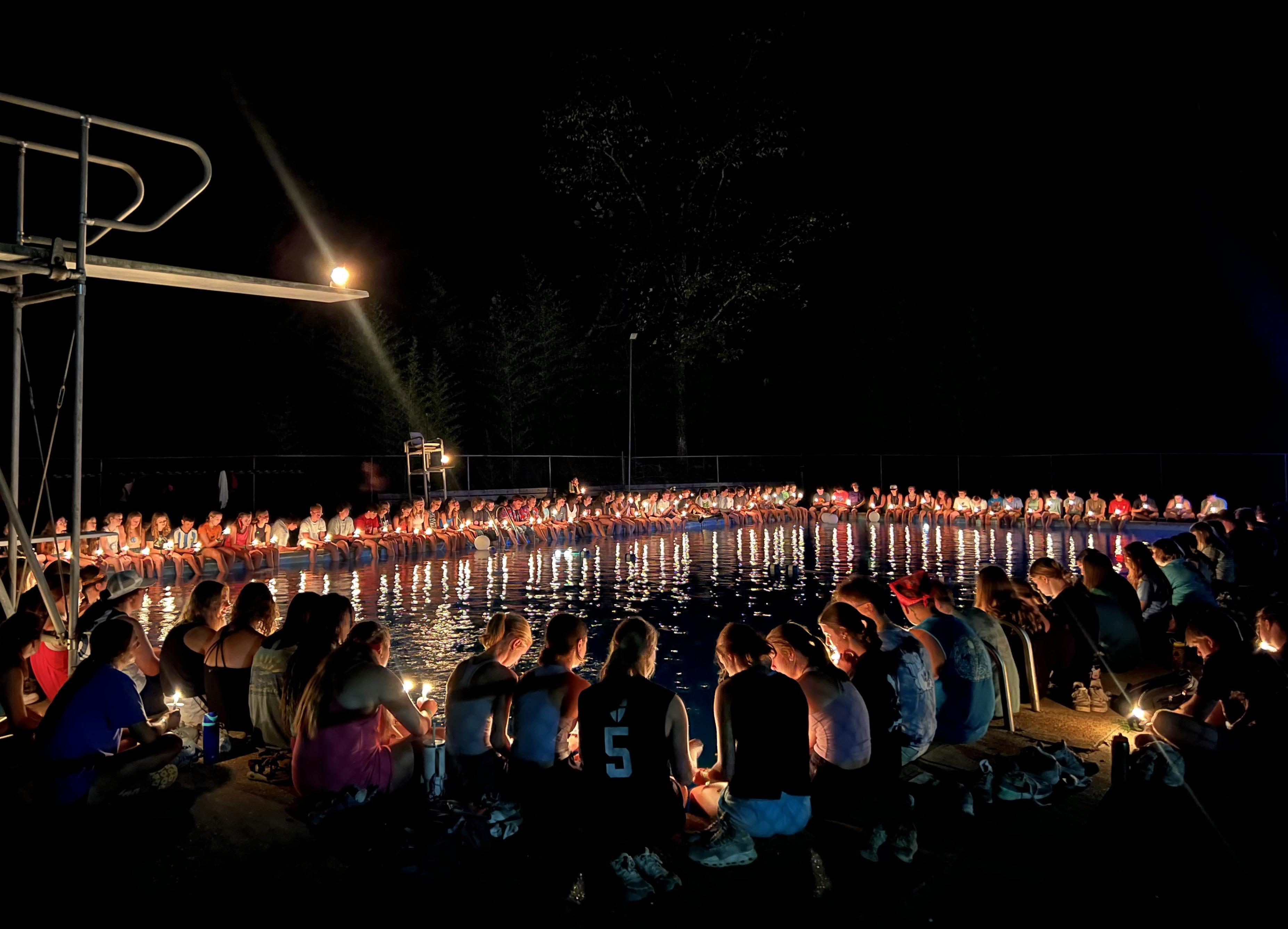
Ask any camper, and they’ll tell you—Camp McDowell feels like coming home. From the moment children arrive, they are welcomed into a joyful Christian community where they are known, encouraged, and celebrated. Guided by caring counselors and surrounded by the natural beauty of God’s Backyard, campers grow in confidence, curiosity, and compassion as they worship, learn, rest, and play together.
Each summer camp session is shaped by a unique theme developed by a priest from the Diocese of Alabama and their program staff. Through skits, songs, art, laughter, and thoughtful conversation, children engage with scripture, explore the traditions of the Church, and connect faith to the world around them. Whether learning about caring for creation or what it means to be a disciple, campers leave Camp McDowell with lasting friendships, meaningful memories, and a deeper sense of belonging in God’s love.
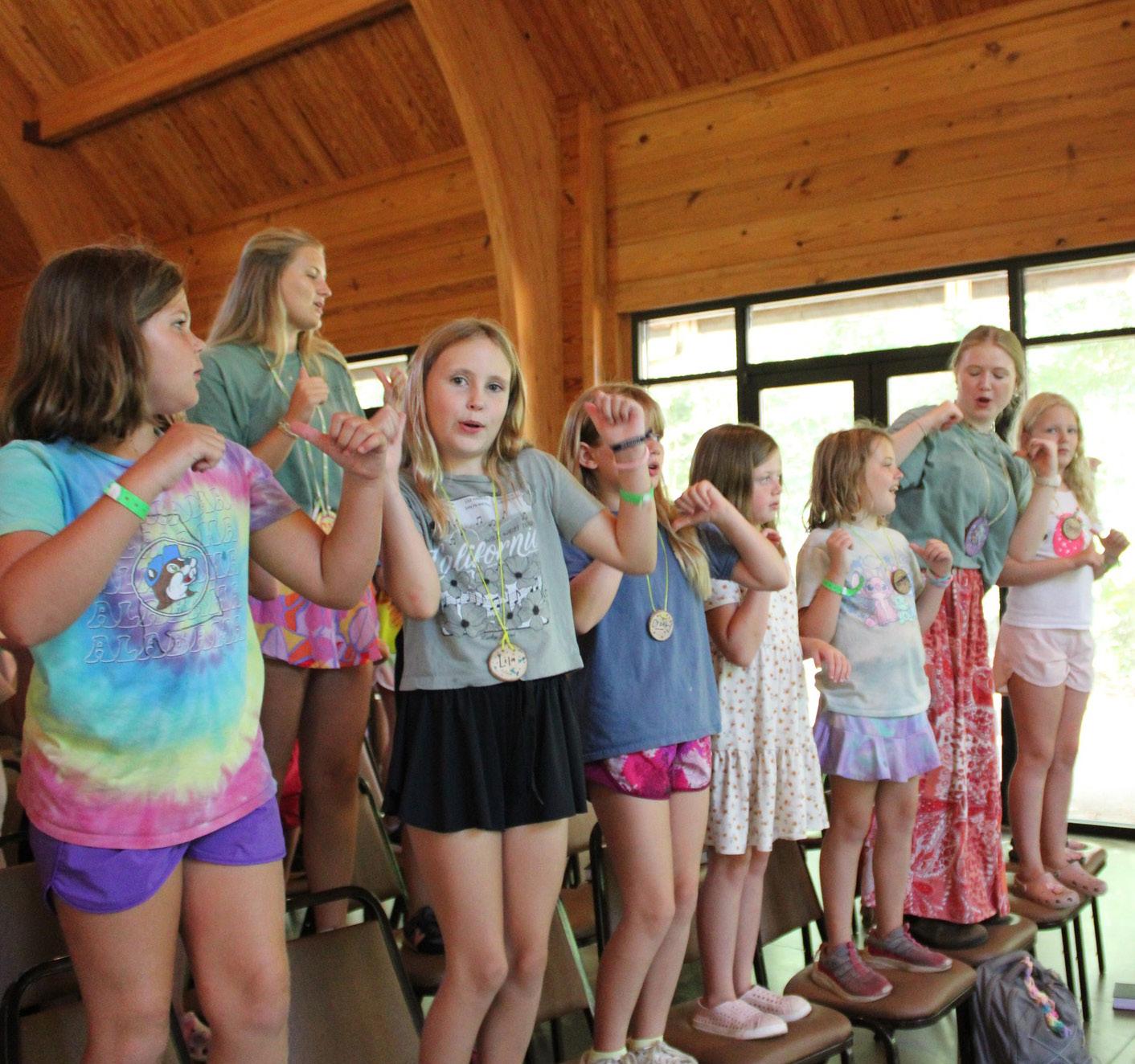
Special Session is a week-long residential camp for adults with intellectual and physical disabilities, grounded in the belief that every person is a beloved child of God. For one sacred week each summer, Camp McDowell becomes a place of deep welcome, where campers are known, cherished, and invited into genuine community. Each camper is paired oneon-one with a youth counselor (ages 16–21), while a devoted team of volunteers, including doctors, nurses, clergy, teachers, and others, offers their skills and compassionate presence. Together, they create a joy-filled experience marked by dignity, belonging, and the shared life of faith.
Bethany’s Kids invites children of all abilities entering grades 4–8 to experience camp together. In this inclusive session, children with and without disabilities swim, canoe, fish, create art, and play together, forming friendships that grow through shared adventure and community. For both Campers and Camper Buddies (Youth grades 9-12), Bethany’s Kids is a transformative experience that nurtures empathy, understanding, and connection. Participants leave Camp McDowell reminded that what binds us together is far greater than what sets us apart.
You can register for Summer Camp, Special Session, or Bethany’s Kids by scanning the QR code.
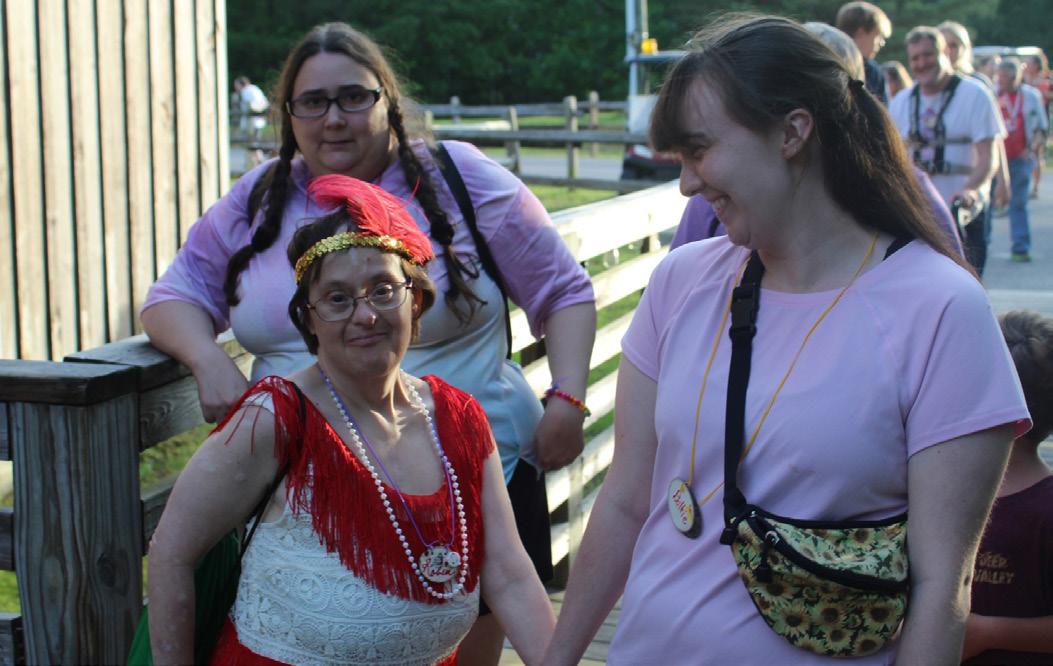
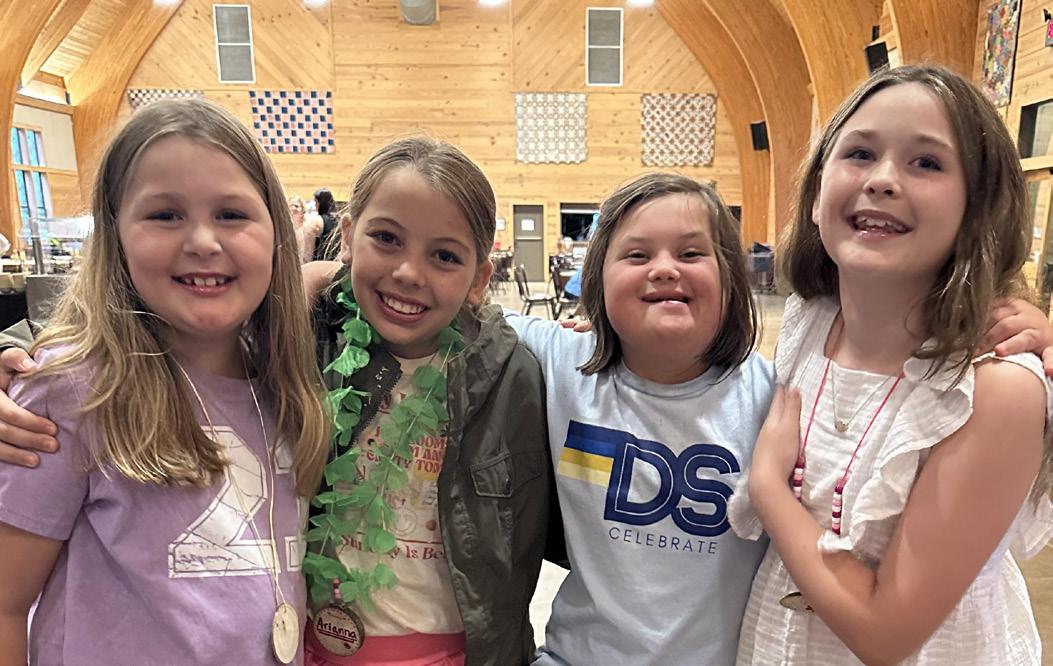
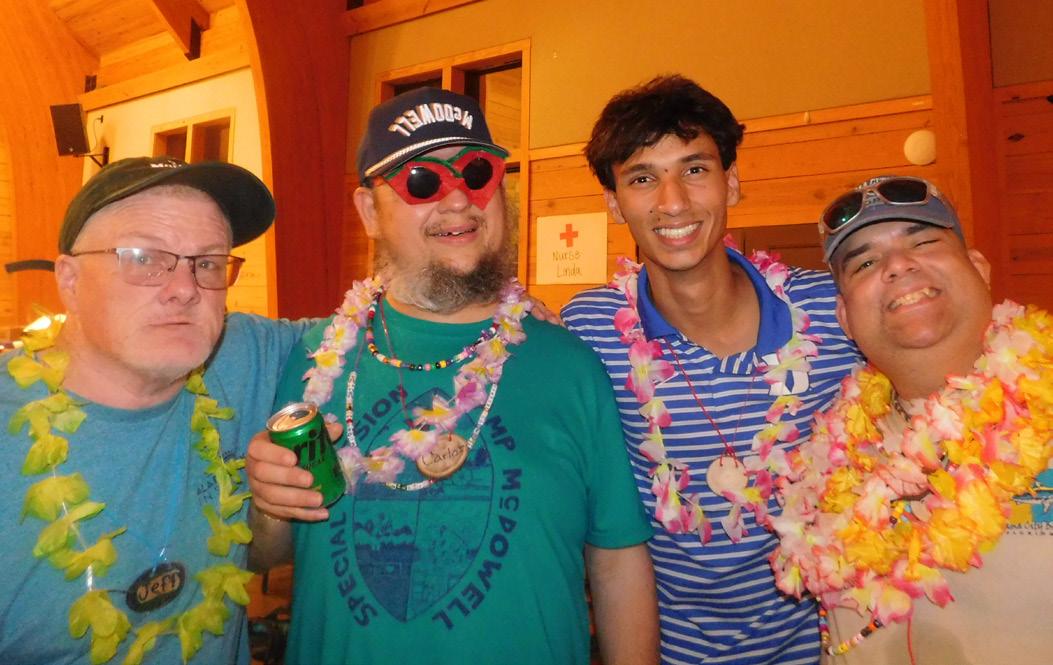
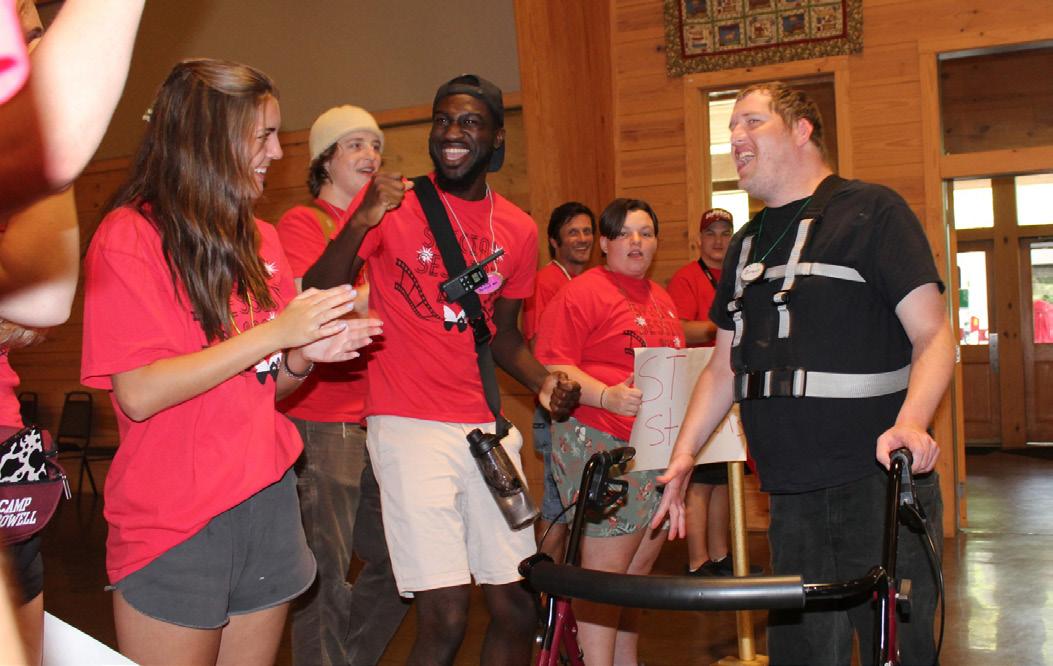
High school students can serve as Camper Buddies (students entering grades 9–12) and Special Session Counselors (ages 16–21) for a truly meaningful summer experience.
Volunteering alongside children and adults with special needs offers young people a rare opportunity to grow in compassion, confidence, and character. Through one-on-one relationships, youth volunteers learn patience, empathy, leadership, and responsibility—skills that last long after camp ends. Parents often tell us they see their children return home more mature, more grateful, and more aware of the impact they can have on others.
In addition to making a real difference in our campers’ lives, participants can earn up to 80 service hours, fulfilling school and community service requirements while engaging in work that truly matters.
If you’re looking for an experience that will challenge your child, strengthen their heart, and allow them to serve others in a joyful, supportive environment, this is it.
521 NORTH 20TH STREET, BIRMINGHAM, AL 35203–2682 www.dioala.org