For the year 2025, we wish to highlight the following:
• In 2025, DDEA consolidated its organisation and entered a new phase of strategic development, while maintaining a high level of activity across education, networking, and grant funding
• DDEA delivered a comprehensive programme of educational and networking activities across diabetes and classical endocrinology, engaging participants from universities, university hospitals, and industry in Denmark and internationally. Participant evaluations showed high satisfaction with both the scientific content of the programmes and the frameworks provided for networking, collaboration, and the development of new professional relationships.
• The grant programme continued to support early-career researchers across a broad range of research areas, from basic science to clinical and translational research. Targeted calls within classical endocrinology and increased co-funding for industrial PhD scholarships strengthened both disciplinary breadth and cross-sector collaboration
• Early-career researchers remained central to DDEA’s activities and governance, contributing to programme development and participating actively across courses, networking activities, and organisational structures
• DDEA completed a self-evaluation covering the period from 2023–2025 as part of the Novo Nordisk Foundation’s overall evaluation of DDEA. In this context, DDEA, together with the Danish Cardiovascular Academy, was invited in 2025 to prepare an application for a new initiative aimed at strengthening the cardiometabolic value chain through closer integration of the two academies, with submission planned for 2026 and a particular focus on the postPhD level
Tore Christiansen Managing Director
The Danish Diabetes and Endocrine Academy (DDEA) aims to strengthen early-career research capacity through education, networking, and funding across diabetes and classical endocrinology
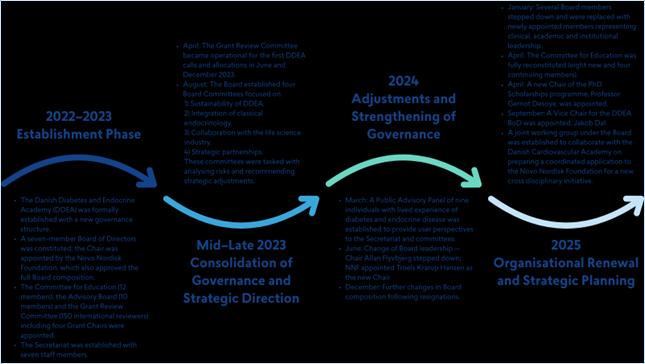
In 2025, DDEA consolidated its governance structure and entered a new phase of organisational renewal and strategic development, as illustrated in Figure 1.0.
Figure 1. Timeline for the establishment of the Academy
The figure shows the progression from establishment (2022–2023), through consolidation (2023–2024), to organisational renewal in 2025. This transition was reflected in a series of planned governance adjustments and strategic developments during the year.
At the turn of the year, three members of the Board of Directors stepped down: two at the end of 2024 and one at the beginning of 2025. Three new members joined the Board at the beginning of 2025, ensuring continuity while introducing new perspectives. The Committee for Education was reconstituted in 2025 with a combination of new and continuing members, supporting continuity in ongoing activities and capacity for future planning.
In 2025, DDEA completed a self-evaluation report assessing its activities, outcomes, and organisational development from 2023–2025, as part of the Novo Nordisk Foundation’s overall evaluation of DDEA.
In this context, DDEA, together with the Danish Cardiovascular Academy, was invited in 2025 to prepare an application for a partly renewed initiative aimed at strengthening the cardiometabolic research value chain, with submission scheduled for 2026. The proposed initiative focuses on closer integration between the DDEA and DCA communities within a joint cardiometabolic framework, including coordinated career development, networking activities for early-career researchers, and alignment with other national initiatives.
In 2025, DDEA secured external funding from the Ministry of Higher Education and Science to support activities within under-resourced research areas, including type 1 diabetes in low- and middle-income countries.
The funding was obtained in connection with a strategic collaboration with international partners, including the University of Geneva, East Africa Diabetes Study Group and the World Diabetes Foundation. Building on these partnerships, DDEA contributed to the development of training and capacity-building activities aimed at strengthening research competencies in these settings
Success criteria and key performance indicators
In 2025, DDEA delivered on its core objectives across education, networking, and grant activities, with performance broadly aligned with the defined success criteria.
Short-term key performance indicators were met across education and networking activities. Educational and networking activities were delivered at or above planned levels, with high participant satisfaction and broad engagement across sectors and research fields. The grant programme supported early-career researchers across a wide range of research areas and funding schemes, including targeted initiatives within classical endocrinology and engagement with industry and international partners. However, some grant-related success criteria, including the distribution between diabetes and classical endocrinology, have not yet been achieved.
At the same time, several success criteria remain long-term and cannot yet be assessed. These include outcomes related to career progression, research impact, and broader effects on the research environment, which will require longitudinal follow-up.
Selected key success criteria are shown in Table 1, and a full overview of the entire KPI framework, including indicators that cannot yet be assessed, is provided in Appendix 1.
Table 1 Selected key success criteria for educational, networking and grants activities.
Selected KPI
Status
Planned number of education and talent development activities delivered Achieved
Proportion of disease-specific education activities in classical endocrinology Achieved
Participants reporting acquisition of new skills and competencies Achieved
Annual number of networking and collaboration activities Achieved
Engagement with NGOs Achieved
Activities co-organised with DCA/DDSA, industry, or international institutions Achieved
Distribution of grants across diabetes and classical endocrinology Not achieved
Grant-related long-term KPIs Too early to assess
Major accomplishments
Consolidation of an integrated endocrine research environment
In 2025, DDEA continued to strengthen integration across diabetes and classical endocrinology through targeted educational activities and shared programming. This was reflected in the activity portfolio, where a consistent proportion of activities and participants represented classical endocrinology, in line with programme objectives.
Across the 35 activities conducted in 2025, participation spanned both diabetes and broader endocrine research fields, supporting interaction across traditionally separated disciplines. This contributed to a more coherent research environment and reinforced the relevance of integrating metabolic and hormonal perspectives in research and training activities.
Strengthening Patient and Public Involvement (PPI)
In 2025, DDEA further strengthened Patient and Public Involvement (PPI) as a strategic priority, building on the progress highlighted in the 2023–2025 self-evaluation, where PPI was identified as a major accomplishment . This was reflected in the dedicated PhD course on PPI, which equipped
early-career researchers with methods for involving patients and citizens in research, and in revised grant application requirements, where applicants were asked to describe how their projects relate to PPI. DDEA also expanded public engagement through activities at the Peoples meeting (Folkemødet) and by including citizens and individuals with lived experience as speakers in selected courses and events, helping bring patient perspectives more directly into research discussions
Integration of early-career researchers in DDEA activities and governance
Early-career researchers remained central to DDEA’s activities and governance in 2025. They constituted approximately 50% of participants across all activities and played an active role in shaping the programme.
Early-career researchers contributed to the organisation of courses, workshops, and networking events, and were represented in both the Committee for Education and the Board of Directors. In addition, key activities such as the Postdoc Summit continued to be driven by early-career researchers, supporting peer-to-peer exchange and international engagement.
These developments contributed to embedding early-career perspectives in both programme delivery and strategic decision-making, while supporting the development of a research community across career stages.
Figure 2 Engagement of Early-career researchers in DDEA education activities during 2023 – 2025 Percentage of attendees, organisers, and speakers who are early-career researchers.
Engagement of Early-career Researchers in DDEA Education and Talent Development Events
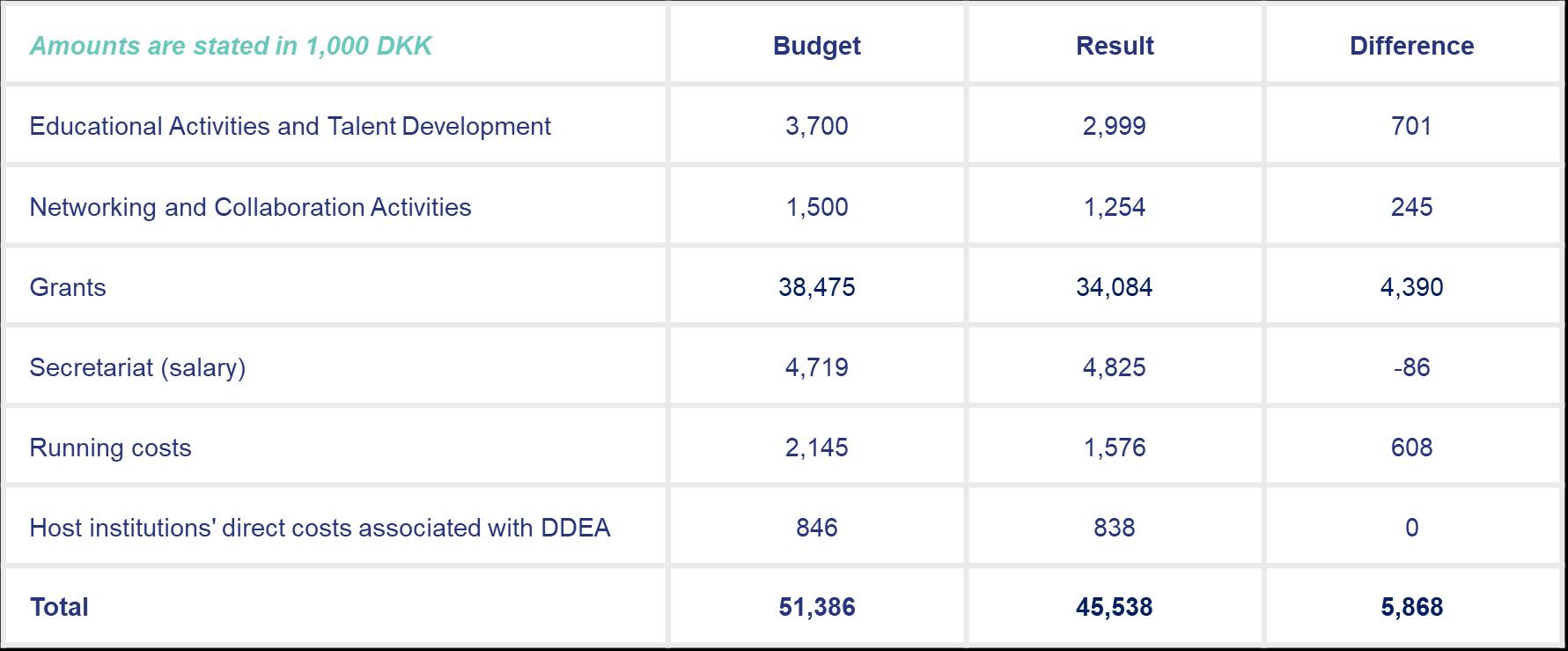
The financial results for 2025 show an expenditure of TDKK 45,539 against a revised budgeted expenditure of TDKK 51,386, resulting in a lower-than-expected expenditure of TDKK 5,868. The revised budget was higher than originally planned, following Novo Nordisk Foundation approval of increased co-funding for industrial and strategic PhD scholarships awarded in 2025
The lower expenditure is primarily explained by underspending within the grant budget (TDKK 4,390), mainly because part of the increased co-funding for industrial and strategic PhD scholarships awarded in 2025 will first be disbursed in 2026, as these grants are paid annually. In addition, fewer industrial postdoctoral fellowships were awarded than planned due to a limited number of applications
Table 2. The financial results for 2025
In 2025, DDEA delivered a comprehensive programme of educational and networking activities across diabetes, metabolism, and classical endocrinology, spanning methodological training, clinical research, and interdisciplinary collaboration.
A total of 6 PhD courses, 5 postdoctoral courses, and 4 symposia were delivered, meeting the planned targets for educational activities. In addition, the share of activities within classical endocrinology was maintained in line with the programme objectives.
In total, 20 networking activities were conducted, more than doubling the initial annual target of eight activities.
Participant evaluations remained consistently high, with an average satisfaction score of 4.6 out of 5, exceeding the KPI threshold of 4.0.
DDEA continued to engage broadly across sectors. Participants represented universities, hospitals, and industry, and activities were carried out in collaboration with national and international partners, including joint activities with other academies, industry partners, and non-governmental organisations.
The programme included courses focused on reproducible research, machine learning, regenerative medicine, and patient and public involvement, reflecting a continued emphasis on strengthening methodological and analytical competencies. Several activities addressed emerging areas such as artificial intelligence in clinical research and high-performance computing, supporting the integration of new technologies into research practice.
DDEA’s flagship activities, including the PhD Summer School and the Postdoc Summit, remained central to the programme. These activities brought together participants from Denmark and abroad for intensive training, scientific exchange, and networking across disciplines and career stages.
A number of activities focused on strengthening interdisciplinary collaboration within the cardiometabolic field. This included joint initiatives with the Danish Cardiovascular Academy and other partner academies, such as courses on regenerative medicine and cardiometabolic research, as well as networking events addressing topics such as obesity, inflammation, and the interface between metabolism and other organ systems.
International collaboration was further developed through activities such as the symposium on type 1 diabetes in low-resource settings and networking events at major international conferences,
including the ADA and EASD meetings. These activities brought together researchers, clinicians, and stakeholders across institutions and countries.
DDEA also continued to prioritise integration of classical endocrinology across the programme. This was reflected in activities addressing topics such as thyroid disease, metabolic bone disease, ageing, and endocrine transitions across the life course, supporting engagement across the full endocrine research spectrum.
Public and patient involvement remained an integrated component of the programme. Dedicated activities on PPI, as well as events incorporating patient perspectives and public engagement formats, contributed to strengthening the connection between research and societal needs. This included participation in national events such as Folkemødet and collaboration with nongovernmental organisations.
Across the programme, activities were carried out in collaboration with national and international partners, including research institutions, partner academies, industry actors, and NGOs, supporting knowledge exchange and network building across sectors.
A full overview of all activities is provided in Appendix 2
In 2025, DDEA’s grant activities (in total 39) continued to support research capacity across diabetes, metabolism, and classical endocrinology, with a focus on early-career researchers and interdisciplinary collaboration.
The 2025 portfolio included PhD Scholarships, Postdoctoral Fellowships, and Visiting Researcher Grants, covering a broad range of research areas from basic molecular mechanisms to clinical and translational studies. Funded projects addressed topics such as insulin resistance, diabetic complications, obesity, reproductive health, and endocrine tumour syndromes, reflecting the diversity of the endocrine research field.
Classical endocrinology remained an integrated part of the portfolio, supported through both open calls and targeted calls specifically dedicated to classical endocrinology. Funded projects covered areas such as growth hormone biology, osteoporosis, endocrine tumour syndromes, and reproductive endocrinology.
DDEA continued to prioritise collaboration across sectors and institutions. Several grants were awarded in collaboration with international partners, including institutions in Europe, the United States, Asia, and Australia, supporting joint research projects and knowledge exchange. Visiting
Researcher Grants further strengthened international engagement by bringing leading researchers from abroad to Danish research environments.
Collaboration with industry formed part of the portfolio. In 2025, adjustments to the co-funding model for industrial PhD scholarships led to a marked increase in application numbers within this area. Selected projects were co-funded with life science companies and focused on metabolic disease, obesity, and diabetes-related interventions.
The grant activities also supported integration across research domains, including cardiometabolic research and data-driven approaches. Several projects incorporated advanced methodologies such as imaging, artificial intelligence, and systems biology, reflecting the increasing interdisciplinarity of the field.
A full overview of the 39 awarded grants is available in Appendix 3 and on the DDEA website
DDEA’s communication activities in 2025 supported outreach, visibility, and engagement across its core target groups, including early-career researchers, partners, and the broader research community. Communication activities were closely aligned with DDEA’s educational, networking, and grant programmes.
Engagement with the community was maintained through monthly newsletters, regular updates on LinkedIn, and Instagram. These platforms were used to disseminate information on activities, funding opportunities, and community initiatives.
As shown in Table 3 the number of followers increased across platforms in 2025. LinkedIn followers increased with 23% and Instagram followers increased with approximately 18%.
Newsletter subscriptions remained stable at approximately 3,900 recipients, supporting direct communication with the core target group.
Overall, communication activities contributed to maintaining visibility and engagement across the DDEA community and supported participation in educational, networking, and grant activities.
Table 3. Number of followers on
social media platforms as of 31 December 2025
2026 will be a pivotal year for DDEA and marks the beginning of the final phase of the current funding period, which concludes at the end of 2027. DDEA’s ambition is for 2026 to remain a strong and active programme year, with full delivery of planned educational and networking activities in line with KPI targets, while also completing the final round of grant awards under the current funding framework.
This requires a focused approach to ensure both continued high-quality programme delivery and a coherent transition toward the closing phase of the Academy. Key priorities include maintaining the quality and volume of educational and networking activities, awarding the remaining grants foreseen in the programme, ensuring proper follow-up on ongoing grants, and fulfilling reporting and administrative obligations.
In parallel, DDEA is contributing its experience and expertise to the development of a new cardiometabolic initiative, being prepared together with the Danish Cardiovascular Academy and planned for launch after the current DDEA funding period.
The final phase of DDEA will therefore focus both on delivering a strong and complete programme in 2026 and on ensuring a responsible and well-planned conclusion of the Academy in 2027, while helping ensure that knowledge and experience from DDEA are carried forward into future national initiatives.
APPENDIX 1
Appendix 1A
Education and Talent Development Success Criteria
Educational and talent development
Educational and talent development
Educational and talent development
Educational and talent development
Educational and talent development
Educational and talent development
Educational and talent development
Organise six PhD courses, including one summer school (annually).
Organise four symposia (annually)
Organise five postdoc courses including 1 summit (annually)
At least 50% of disease-specific education and talent development activities should focus on endocrinology fields other than diabetes.
90% of DDEA-funded researchers and attendants of two selected activities have acquired new, applicable skills, knowledge, and competences
30% of DDEA-funded early-career researchers become principal investigators, research leaders or hold tenure positions (within five years after completing their PhD or postdoctoral projects)
PhD graduate programme on Diabetes, classical endocrinology and metabolism established at five Danish universities.
Organised six PhD courses
Organised four symposia
Organised five postdoc courses
Achieved
Achieved
Achieved
Organised six activities in endocrinology fields other than diabetes Achieved
90% of DDEA-funded researchers and participants in two selected activities (R Programming for Beginners and R Programming Advanced) have acquired new, applicable skills, knowledge, and competencies.
Achieved
Net measurable before 2030 Not achieved
Following discussions with graduate programme leaders at the universities it was concluded that there was no interest from the universities in establishing a national PhD graduate programme Not Achieved
Appendix 1B Networking and Collaboration Success Criteria
Category Succes criteria
Networking and collaboration
Networking and collaboration
Networking and collaboration
Networking and collaboration
Organise 8 networking and collaboration activities (annually)
50% of DDEA-funded early-career researchers1 – and participants of two selected activities per year - find new collaboration partners through participating in DDEA networking and collaboration activities
DDEA education and talent development activities or collaboration and networking activities are organised and executed in collaboration with DCA/DDSA (two annually), industry (one annually) or research institutions from abroad (two annually
75% of stakeholders acknowledge that DDEA has had an impact in the field of diabetes and endocrine research and within the diabetes and endocrine research environment in relation to research education, networking, and grants
Result 2025
Organised or participated in 20 networking and collaboration activities
Survey is planned for 2027
Organised 15 activities in collaboration with DCA/DDSA, industry, or international research institutions.
Please see DDEA Self-evaluation 2023-2025 for comments
Status
Achieved
Not achieved
Achieved
Achieved
1 DDEA-funded researchers will be asked in a separate survey at self-evaluation and end of project.
Appendix 3C Grants Success Criteria
Category Succes criteria Result 2025
Grants 40% of grants given to diabetes vs. other endocrinology fields than diabetes. If classical endocrinology is defined as including thyroid disorders, calcium metabolism and bone diseases, pituitary and adrenal gland diseases, and gonadal diseases while excluding nutrition and obesity—DDEA did not meet the 2025 target of allocating 40% of all grants to classical endocrinology. Not achieved
Grants 50% of publications by DDEA-funded early-career researchers published in the top 10% most cited journals in the diabetes field or the subfields of other endocrinology.
20% of publications by DDEA-funded early-career researchers published in the top 10% most cited journals worldwide
3% of publications by DDEA-funded early-career researchers among the top 1% most cited publications worldwide
Despite limited data, available bibliometric results indicate that these publication-related success criteria have been achieved
Achieved
Grants 70% of DDEA-funded early-career researchers stay in research and are employed by research institutions or research organisations across sectors within five years after completing their PhD or postdoctoral project.* Not measurable before 2030 Not achieved
Grants 15% of DDEA-funded early-career researchers are engaged in innovation.
25% of DDEA-funded early-career researchers are employed by industry/collaborating with/co-funded by industry Not measurable before 2030 Not achieved
Grants 10% of DDEA-funded research publications are cited in clinical guidelines, policies, textbooks, etc. Not measurable before 2030 Not achieved
Grants 30% of DDEA-funded researchers obtain further funding for their research activities Data from RC is not received Not achieved
Appendix 1 D Communication and outreach Success Criteria
Category Succes criteria
Communication and outreach 1 activity annually organised in collaboration with NGOs.
Collaborations on specific activities established with at least three NGOs (over fiveyear period).
Communication and outreach 25 citations (comments/sharing) of DDEA-funded researchers’ research in media, e.g. newspapers, social media, etc. (annually).2
20% increase in citations (comments/sharing) of DDEA-funded researchers’ research in media, e.g. newspapers, social media, etc., from 2023 to 2027
Result 2025
Status
Organised two activities in collaboration with NGOs Achieved
Analysis Not measurable before 2030 Not achieved
Communication and outreach
Communication and outreach
400 dissemination activities by DDEA-funded early-career researchers as key note speakers, invited speakers, presenting their research at scientific conferences or to the public (over five-year period).
20% DDEA-funded researchers share their research in meetings for NGOs, students, general public, or through publications in semi-scientific journals.
30% of DDEA activities within education and talent development and networking and collaboration per year presented online and/or result in digital output.
10% increase in visitors to the DDEA website from 2023 to 2027.
90% of visitors to the DDEA website are satisfied with the website/find it useful/get new knowledge
Data from RC is not received Not achieved
Not measured Not achieved
APPENDIX 2
DDEA Education and Networking Activities 2025
Below are listed the DDEA education and networking activities 2025, including a short description of each activity.
14-16: January Introductory Course on Reproducible Research in R
This course equipped participants with foundational skills in the R programming language to enhance data and code literacy. Focused on diabetes, metabolism and classical endocrinology research, it emphasised modern, reproducible data analysis practices through relevant examples and expert instruction.
17 January: PhD Day, Graduate School of Health, Aarhus University
Participated in the PhD Day with a booth featuring DDEA materials
21-13: January Machine Learning with a Clinical Purpose
This course introduced early-career researchers to fundamental concepts in machine learning and artificial intelligence through clinical cardiometabolic research examples. It focused on building a basic understanding of ML/AI methods, their applications and limitations in healthcare, and fostering critical evaluation of AI-based clinical studies
30 January: DDEA Annual Day – Networking Event
A celebration of cutting-edge research in diabetes, metabolism, and classical endocrinology. The event featured inspiring scientific talks, dynamic poster sessions, and networking across disciplines
4-7 February: Type I Diabetes - Advancing a Global Roadmap for Improved and Integrated Care in LowResource Settings (Symposium and workshop, Copenhagen)
This international symposium and workshop focused on advancing global strategies to improve care and quality of life for people with type 1 diabetes in low-resource settings. The programme brought together researchers (incl early career researchers), policymakers, healthcare professionals and people with lived experience to address challenges in access to diagnosis, treatment and sustainable care through global collaboration and shared perspectives
20 February: Vascular-Adipose Link: Exploring the Intricacies of Health and Obesity
This networking event organized in collaboration with Danish Cardiovascular Academy explored the interplay between vascular biology and adipose tissue in the context of obesity and cardiometabolic disease. Through scientific presentations and discussions, the programme highlighted key research areas and facilitated collaboration among participants across disciplines
25-26 February: Long-term Negotiations and Sustainable Collaborations
This course provided postdoctoral researchers with practical tools and strategies to strengthen negotiation skills and build sustainable research collaborations. Through interactive exercises and theoretical input, participants learned to foster win-win outcomes, manage conflicts, and communicate effectively to support long-term professional relationship.
12-13: March Diabetes and the Bio-psycho-social Model in a Life Course Perspective
This scientific networking event explored diabetes through a bio-psycho-social and life course perspective, integrating biological, psychological and social dimensions of the disease. The programme combined expert presentations, patient perspectives and interactive sessions to foster interdisciplinary dialogue and strengthen collaboration among participants
15-18: March Cardiometabolic Networking Summit
This symposium organized in collaboration with Danish Cardiovascular Academy brought together researchers across disciplines to explore key topics in cardiometabolic research, including inflammation, diet, organspecific disease mechanisms and health inequities. The programme combined scientific presentations, poster sessions and networking activities to facilitate knowledge exchange and strengthen collaboration within the field
1-2: April Regenerative Medicine Course
This course organized in collaboration with Danish Cardiovascular Academy introduced participants to key concepts and applications within regenerative medicine, including stem cell biology, disease modelling and endogenous regeneration. The programme combined lectures, case work and discussions to provide insights into both research advances and clinical translation within the field
7 April: Endocrinology from Cradle to Adulthood: Joint Meeting by Paediatric and Endocrine Societies
This networking event focused on the transition from paediatric to adult endocrinology, addressing clinical challenges and research perspectives across the life course. The programme combined scientific sessions and discussions to facilitate knowledge exchange and strengthen collaboration among participants.
29 April: Why Be A Mentor?
This kick-off meeting introduced participants to the DDEA Mentoring Programme for Postdocs, focusing on the principles of mentorship and establishing mentor–mentee relationships. The programme included presentations and interactive sessions aimed at facilitating dialogue, setting expectations and supporting the development of professional networks
6-8 May: Intermediate Course on Reproducible Research in R for PhD Students & Postdocs –Expanding Your Data Analysis Toolkit
This course addressed the growing need for reproducibility and open scientific practices in handling large and complex datasets. Through practical code-along sessions, hands-on exercises, and group work, participants improved their skills in data processing, learned to write reusable and well-documented code, and developed proficiency in conducting modern, reproducible data analysis using the R programming language.
26-27: May Patient and Public Involvement in Research: How – When – Why
This course provided participants with knowledge and practical tools to integrate patient and public involvement (PPI) in research within diabetes and endocrinology. Through lectures and participatory workshops, the programme explored key concepts, benefits and challenges of PPI, and supported researchers in developing approaches for meaningful collaboration with patients and the public
2-3 June: Symposium on Emerging Strategies in Obesity Prevention and Treatment – Local and Global Perspectives
This symposium focused on current challenges and advances in obesity prevention and treatment from both local and global perspectives. The programme included expert presentations and interactive sessions addressing genetic, lifestyle and clinical approaches, while fostering knowledge exchange and collaboration across international research environments
4 June: Computer Power in Research
This networking event organized in collaboration with Danish Data Science Academy and Danish Cardiovascular Academy introduced participants to the use of high-performance computing and data management in research. The programme combined expert presentations with project pitches and interactive sessions, enabling participants to explore practical applications of computational tools and connect with specialists in the field
5-6 June: Metabolism & Cancer – Elucidating the Connecting Links & Mechanisms Speaker Tour & Networking Café
This networking event featured a speaker tour with a leading international expert, focusing on the relationship between metabolism and cancer. The programme combined scientific presentations, poster sessions and informal networking to facilitate knowledge exchange and interdisciplinary collaboration
12 June: DDEA & Maskine, Maskine Amager at Folkemødet: Outside the Chronic Care Packages – What Then?
This public debate event focused on challenges faced by vulnerable individuals with diabetes outside standard care pathways. The programme combined patient perspectives and panel discussions with researchers, clinicians and policymakers to facilitate dialogue on social and healthcare inequalities and explore potential solutionsPhD Course in Metabolic Bone Disease - Bridging Clinics with Basic Research
21
June:
DDEA Networking Event at ADA Annual Meeting
DDEA hosted a networking dinner during the ADA 85th Scientific Sessions in Chicago. Researchers and clinicians at all career stages from Danish institutions working in any field of endocrinology were invited to network and share insights.
25-28 August:
DDEA Summer School on Diabetes, Metabolism and Endocrinology for PhD Students
The DDEA Summer School brought together PhD students from Denmark and abroad for a four-day intensive course focused on advancing knowledge in diabetes, metabolism, and endocrinology. Participants explored the latest research developments through expert lectures, interactive discussions, and hands-on workshops. The course fostered networking opportunities with leading researchers and peers, encouraging collaboration across clinical, basic, and translational research fields
4-5 September:
Start-up Meeting for New DDEA Grant Recipients
DDEA welcomed its newly funded early-career researchers to a Start-up Meeting designed to kick-start networking and collaboration. The first evening featured an introduction to DDEA’s support offerings, followed by dinner and networking. The next day included a specialised communication workshop, project tours, discussions on expectations, and idea-sharing for future activities. Throughout the meeting, participants engaged with DDEA staff and fellow grantees, gaining insight into the organisation’s educational, networking, and collaboration initiatives.
23-25 September: Role of Ageing in Health and Disease with a Focus on Endocrinology
This course explored ageing from an endocrinology perspective, covering biological mechanisms, clinical challenges and translational aspects across the lifespan. Through lectures, group work and poster sessions, participants deepened their understanding of ageing processes and strengthened collaboration within the field 17 September: DDEA-DZD Networking Event at EASD Annual Meeting
DDEA was present in the Industry Village with a booth shared with the German Center for Diabetes Research (DZD), providing opportunities for networking and discussions. On 17 September 2025, DDEAand DZD hosted a joint networking dinner for early-career researchers from Danish and German institutions.
6-9 October: DDEA Postdoc Summit
The DDEA Postdoc Summit brought together Danish and international postdocs for a four-day event focused on diabetes, metabolism, and classical endocrinology. Participants engaged in scientific lectures from leading experts, presented their research for feedback, and explored diverse career paths. The summit fostered professional growth through skill-building sessions and discussions on the role of scientists in society, encouraging collaboration and broadening scientific perspectives.
20-23 October: Basic Cardiometabolic Research PhD Course: Inflammation in Cardio-metabolic Disease
This course introduced early-stage researchers to fundamental concepts in cardiometabolic research, focusing on the role of diet and exercise in metabolic and cardiovascular health. Through lectures, group work and
interactive sessions, participants gained insights into disease mechanisms and interdisciplinary approaches to cardiometabolic research. The course was jointly organised by DDEA and Danish Cardiovascular Academy 28-29 October: Across the Spectrum of Thyroid Autoimmunity
This symposium provided an overview of thyroid autoimmunity from basic, laboratory and clinical perspectives. Through expert presentations and discussions, the programme addressed pathogenesis, diagnosis and treatment, while facilitating knowledge exchange and collaboration across disciplines
30 October: Navigating Your Career Successfully – An Inspirational Event for
EarlyCareer Researchers
This career event organized in collaboration with Danish Cardiovascular Academy, Danish Data Science Academy, Neuro Science Academy Denmark supported early-career researchers in exploring career opportunities within and beyond academia. Through workshops, keynote presentations and panel discussions, participants gained insights into career paths, developed practical skills and engaged in networking across disciplines
8 November: Symposium on Clinical Metabolic Physiology
The symposium on Clinical Metabolic Physiology brought researchers together for a day dedicated to knowledge exchange, idea generation, and networking. The event focused on sharing and discussing both new and established technologies and methodologies within clinical metabolic physiology, with a special emphasis on methods. Participants engaged in inspiring discussions aimed at fostering innovation in the field.
12 November: Eat, Sleep, Repeat: Circadian Rhythms at the Interface of Endocrinology and the
Brain
This networking event organized in collaboration with Neuroscience Academy Denmark explored the role of circadian rhythms in metabolism and brain function, with a focus on interdisciplinary research at the interface of endocrinology and neuroscience. The programme combined scientific presentations, poster sessions and networking activities to facilitate knowledge exchange and collaboration.
2-4 December: Reproducible Research in R. An advanced course on creating collaborative and automated analysis pipelines
This course addressed the growing need for reproducibility and open scientific practices in research by equipping participants with practical skills to overcome common collaboration challenges. Through hands-on code-along sessions, reading activities, and exercises, participants learned to design open, collaboratorfriendly, and nearly-automated data analysis pipelines in R. The course focused on improving project management, documentation, and reproducibility, ultimately enhancing the reliability of scientific results
APPENDIX 3
DDEA Grant Activities 2025
Below are listed the grants allocated by DDEA in 2025, including information about project title, name of the grant recipient and the educational background, affiliation, and principal investigator.
Overview of seven awarded 2/3-financed PhD Scholarships 2025 (no theme)
Project Title: Investigation of the transcriptional regulation of leptin in human adipocytes
Oliver Bonde van Zwol, MSc
Institution: University of Southern Denmark, Faculty of Science; Department of Biochemistry and Molecular Biology
Principal Investigator (PI): Susanne Mandrup, University of Southern Denmark, Faculty of Science; Department of Biochemistry and Molecular Biology
Project Title: Effects of antidiabetic medication on glucose distribution, and organ and bone perfusion in patients with type 2 diabetes assessed by modern imaging techniques
Sine Paasch Schiellerup, MD
Institution: University of Copenhagen, Faculty of Health Sciences; Bispebjerg Hospital, Department of Clinical Pharmacology
Principal Investigator (PI): Christensen, Bispebjerg Hospital, Department of Clinical Pharmacology
Project Title: Investigating early glycemic deviations through generative AI and inte-grative glycoprofiling technologies
Marina Sanges Amettle, MSc
Institution: University of Copenhagen, Faculty of Health Sciences; The NNF Center for Center for Basic Metabolic Research
Principal Investigator (PI): Jordi Merino, University of Copenhagen, Faculty of Health Sciences; The NNF Center for Center for Basic Metabolic Research
Project Title: Diabetic retinopathy and nephropathy – can the eye see the future of the kidney
Kristine Svinning Valeur, MD
Institution: University of Copenhagen, Faculty of Health Sciences; Zealand University Hospital, Roskilde
Principal Investigator (PI): Rikke Borg, Zealand University Hospital, Roskilde
Project Title: Breaking Barriers: Decoding the Gut-Brain Axis in Obesity-Linked Neuro-degeneration
Flora Gro Lorentzen Thomassen, MSc
Institution: University of Copenhagen, Faculty of Health Sciences; Department of Bio-medical Sciences
Principal Investigator (PI): Benjamin A.H. Jensen, University of Copenhagen, Faculty of Health Sciences; Department of Bio-medical Sciences
Project Title: Testing a novel GLUT4 localization-centric model of human muscle insu-lin resistance
Jonva Hentze, MSc
Institution: University of Copenhagen, Faculty of Science; Department of Nutrition, Exercise and Sports
Principal Investigator (PI): University of Copenhagen, Faculty of Science; Department of Nutrition, Exercise and Sports
Project Title: The Importance of Glycemic Control for the Development of Early Retinal Abnormalities in Children and Ado-lescents with Diabetes
Adam Besic, MD
Institution: University of Copenhagen, Faculty of Health Sciences; Department of Ophthalmology,
Rigshospitalet
Principal Investigator (PI): Mikael Larsen, Department of Ophthalmology, Rigshospitalet
Overview of four awarded 2/3-financed PhD Scholarships with classical endocrinology as a theme
Project Title: Long-Acting Growth Hormone in Metabolic Regulation: mechanistic characterization and therapeutic opportunities to improve weight loss quality
Cecilie Kynding Kristensen, MSc
Institution: University of Copenhagen, Faculty of Health Sciences; The NNF Center for Center for Basic Metabolic
Principal Investigator (PI): Zachary Ger-hart-Hines; University of Copenhagen, Faculty of Health Sciences; The NNF Center for Center for Basic Metabolic
Project Title: Clinical and genetic characterization of Hereditary Endocrine Tumour Syndromes (the HETS-study)
Maria Bejerholm Boelman, MD
Institution: University of Copenhagen, Faculty of Health Sciences; Rigshospitalet
Principal Investigator (PI): Karin Wadt, Rigshospitalet
Project Title: Umbilical cord glucose: A novel screening method for Congenital Hyperinsulinism to prevent brain damage
Julie Siersbæk, MD
Institution: University of Southern, Faculty of Health ; Odense University Hospital
Principal Investigator (PI Henrik Thybo Christesen, Odense University Hospital
Project Title: Modeling pesticide exposure and its risk for endocrine, glycemic, and kidney dysfunctions
Mariam Nakabuye, MSc
Institution: Aarhus University, Faculty of Health Science; Department of Public Health
Principal Investigator (PI): Charlotte Steffensen, Aarhus University, Faculty of Health Science; Department of Public Health
Overview of three awarded 2/3-financed PhD Scholarships within Strategic Partnerships
Project Title: Lipid insulin sensitivity in pregnant women with GDM and consequences for their offspring
Laura Løftgaard Knudsen: MD
Institution: Aarhus University, Faculty of Health Science; Steno Diabetes Center Aarhus
Principal Investigator (PI): Ulla Kampmann Opstrup; Steno Diabetes Center Aarhus
Project Title: Food preferences and eating behavior traits in relation to body weight regulation and risk of diabetes in pregnancy and menopause
Helena Falandysz Hinrup, MSc
Institution: University of Southern, Faculty of Health; Steno Diabetes Center Copenhagen
Principal Investigator (PI): Jonas Salling Quist, Steno Diabetes Center Copenhagen
Project Title: Glycerol-3-Phosphate Phosphatase: A Novel Regulator in Metabolic Health and its Potential to Mitigate Cardio-vascular Disease Progression
Stine Tillebæk Søndergaard, MSc
Institution: University of Southern Denmark, Faculty of Science; Department of Biochemistry and Molecular Biology
Principal Investigator (PI): Jane Stubbe, University of Southern Denmark, Faculty of Science; Department of Biochemistry and Molecular Biology
Overview of three awarded 2/3-financed PhD Scholarships with co-funding from life science industry
Project Title: Exploring Non-Pharmacological In-terventions for Gestational Diabetes: The Role of Whey Protein in Glycemic Control and Gastric Emptying
Sofie Riise Stampe, MD
Institution: Aarhus University, Faculty of Health Sciences; Aarhus University, Department of Clinical Medicine
Industry Partner: Arla Food Ingredients
Principal Investigator (PI): Per Glud Ovesen, Aarhus University, Department of Clinical Medicine
Project Title: Gut Barrier Integrity as the defining factor for obesity-associated systemic inflammation
Johan Platz, MD
Institution: University of Copenhagen, Faculty of Health Sciences; Clinical Metabolic Research, Herlev and Gentofte Hospital
Industry Partner: Zealand Pharma A/S
Principal Investigator (PI): Asger Bach Lund, Clinical Metabolic Research, Herlev and Gentofte Hospital
Institution: University of Copenhagen, Faculty of Health Sciences; Department of Bio-medical Sciences
Industry Partner: HERVolution Therapeutics
Principal Investigator (PI): Claus Desler Madsen, University of Copenhagen, De-partment of Biomedical Sciences
Overview of seven awarded 2-year financed Postdoctoral Fellowships (no theme)
Project Title: Investigating the regenerative capacity of the pancreas to restore functional islet mass in diabetes
Caroline Frørup, MSc, PhD
Institution: Steno Diabetes Center Copenhagen
Principal Investigator (PI): Tina Fløyel, Steno Diabetes Center Copenhagen
Project Title: A digitally supported educational programme for people newly diag-nosed with type 2 diabetes – a post-doctoral project
Jannie Toft Damsgaard Nørlev, MHs, PhD
Institution: Aalborg University, Department of Health Science and Technology
Principal Investigator (PI): Stine Hangaard, Aalborg University, Department of Health Science and Technology
Project Title: Cardiometabolic Disease in Patients with Lymphoid Cancer - Causes and Consequences
Tereza Fait Kadlec, MSc, PhD
Institution: Danish Cancer Society
Principal Investigator (PI): Carsten Utoft Niemann, Danish Cancer Society, Department of Hematology
Project Title: A human-centric approach to discover non-incretin obesity targets
Cecilie Willemoes Bæch-Laursen, MHs, PhD
Institution: University of Copenhagen, Department of Biomedical Sciences
Principal Investigator (PI): Matthew Paul Gillum, University of Copenhagen, Department of Biomedical Sciences
Project Title: SPARK – Systems Proteomics Advancing Research in Diabetic Kidney Disease
Madhurima Basu, MSc, PhD
Institution: Steno Diabetes Center Copenhagen
Principal Investigator (PI): Frederik Persson, Steno Diabetes Center Copenhagen
Project Title: Medication use patterns and individual-level effects in type 2 diabetes
Zheer Kejlberg Al-Mashhadi, MD, PhD
Institution: Steno Diabetes Center Aarhus
Principal Investigator (PI): Henrik Støvring, Steno Diabetes Center Aarhus
Project Title: Integrating pregnancy and reproductive health characteristics to under-stand heterogeneity, intergenerational risk and long-term consequences of diabetes in women
Elpida Vounzoulaki, MSc, PhD
Institution: Steno Diabetes Center Aarhus
Principal Investigator (PI): Cecilia Høst Ramlau-Hansen, Steno Diabetes Center Aarhus
Overview of three awarded 2-year financed Postdoctoral Fellowships with classical endocrinology as a theme
Project Title: Sex Chromosome Aneuploidies: From Hypogonadism to Hormone Replacement Therapy Response
Emma Marie Bruun Johannsen, MSc, PhD
Institution: Aarhus University Hospital, Department of Molecular Medicine
Principal Investigator (PI): Claus Højbjerg Gravholt, Aarhus University Hospital, Department of Molecular Medicine
Project Title: Safety and Efficacy of ALendronate for Osteoporosis with Nephropathy (SEAL-ON): A randomized, double-blinded, placebo-controlled trial
Morten Svarer Hansen, MD, PhD
Institution: Odense University Hospital, Department of Endocrinology
Principal Investigator (PI): Pernille Her-mann, Odense University Hospital, Department of Endocrinology
Project Title: Opportunistic Screening of Osteopo-rosis and the Prognostic Impact in Patients Referred for Routine CT
Josephine Therkildsen, MD, PhD
Institution: Aarhus University, Department of Cardiology, Gødstrup Hospital
Principal Investigator (PI): Simon Winther, Aarhus University, Department of Cardiology, Gødstrup Hospital
Overview of four awarded 50%-financed Postdoctoral Fellowships within Strategic Partnerships
Project Title: Pathophysiological and Genetic In-sights into Lean Type 2 Diabetes among Danish and Chinese Individuals
Yingchai Zhang, MD, PhD
Institution: Steno Diabetes Center Aarhus
International Partner: The Chinese University of Hong Kong
Principal Investigator (PI): Ronald Ma
Project Title: Gut Hormones and Metabolic Risk in Bile Acid Diarrhoea: Investigating Diagnostic Biomarkers, Mechanisms of Disease and Translational Treatments
Christopher Bannon, MD, PhD
Institution: Institute of Metabolic Science, University of Cambridge
International Partner: Steno Diabetes Center Copenhagen, Diabetes Management Research
Principal Investigator (PI): Brian Oldenburg, Baker Heart and Diabetes Institute, Melbourne, Australia
Project Title: Enhancing Clinical Diagnostics of Type B Insulin Resistance: A Collaborative, Multicentre Approach to Diagnosing a Rare Disease
Thilo Samson Chillon, MSc, PhD
Institution: Martin Overgaard
International Partner: Charité, Universität’s medizin Berlin Institute of Experimental Endocrinology
Principal Investigator (PI): Martin Overgaard
Project Title: Pathophysiological and Genetic In-sights into Lean Type 2 Diabetes among Danish and Chinese Ind Characterizing Parent Driven Bio-Behavioural Phenotypes to Predict Treatment
Response in Family Obesity
Christian Rimer Juhl, MD, PhD
Institution: University of Copenhagen, De-partment of Biomedical Sciences
International Partner: Sorbonne University, Paris, France
Principal Investigator (PI): Signe Sørensen Torekov
Overview of one awarded 50%-financed Postdoctoral Fellowships with co-funding from life science industry
Project Title: RESTORE-PCOS: Targeting insulin REsiSTance and Ovulatory dysfunction through pRE-meal whey protein in PCOS: A 12-week Randomized Controlled Trial
Stine Smedegaard, MD, PhD
Institution: Steno Diabetes Center Aarhus
Industrial Partner: Arla Food Ingridients
Principal Investigator (PI): Ulla Kampman, Steno Diabetes Center Aarhus
Overview of seven awarded Visiting Researcher Grants
Project Title: Genetic and metabolic modifiers of hyperglycemia: Functional and clinical evaluation of HNF1A A98V in Danish and Norwegian cohorts
Pål Rasmus Njølstad, Baker Mohn Center for Diabetes Precision Medicine, University of Bergen, Norway
Host Principal Investigator (PI): Torben Hansen, The NNF Center for Center for Basic Metabolic Research
Project Title: Is the over-the-counter mild analgesic paracetamol reducing female fertility
Russ Hausner, Harvard T.H. Chan School of Public Health, Boston US.
Host Principal Investigator (PI): David M Kristensen, Roskilde University Department of Science and Environment
Project Title: Improving Diabetes Pregnancy Out-comes using Diabetes Technology and Targeted Therapy approaches
Helen Murphy, University of East Anglia, Norwich, UK
Host Principal Investigator (PI): Lene Ringholm, Rigshospitalet, Copenhagen Center for Pregnant women with diabetes
Project Title: Burden of Diabetes Complications and Effect of Traditional Risk Factors at the Population Level: Danish Diabetes Register
Barbara Buffet, George Washington University, US
Host Principal Investigator (PI): Kirsten Nørgaard, Steno Diabetes Center Copenhagen
Project Title: Metabolite regulators of disease-relevant signaling proteins
Jared Rutter, Howard Hughes Medical Institute, Department of Biochemistry, University of Utah School of Medicine, US
Host Principal Investigator (PI): Kei Sakamoto, The NNF Center for Center for Basic Metabolic Research
Project Title: Co-Designing Culturally Responsive Psychosocial Diabetes Care for Adults from NonWestern migrant Back-grounds in Denmark
Iliatha Papachristou Nadal, King’s College London, UK
Host Principal Investigator (PI): Vibeke Stennov, University College Copenhagen
Project Title: Creating digital diabetes care for all Lynne Merran Chepulis, University of Waikato NZ
Host Principal Investigator (PI): Annelli Sandbaek, Steno Diabetes Center Aarhus