Focus on
March 2026
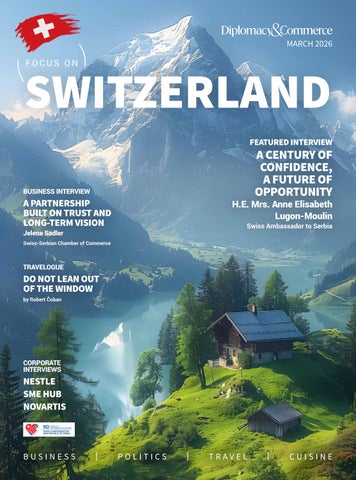
Focus on
March 2026
BUSINESS INTERVIEW
A PARTNERSHIP BUILT ON TRUST AND LONG-TERM VISION
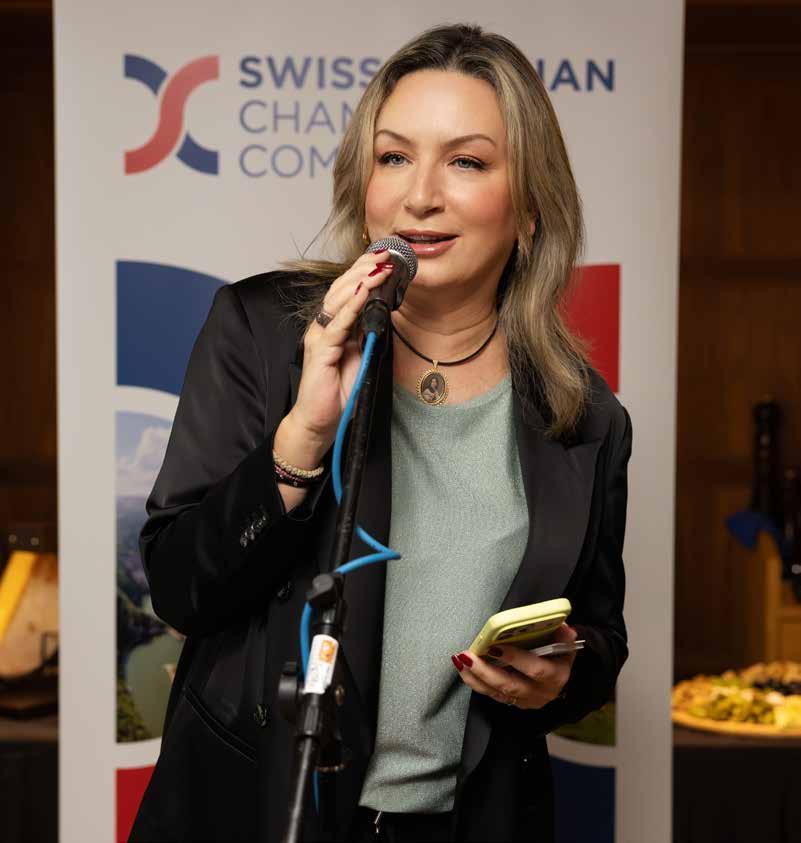
Jelena Sadler
Swiss-Serbian Chamber of Commerce
TRAVELOGUE
DO NOT LEAN OUT OF THE WINDOW by Robert Čoban
CORPORATE INTERVIEWS
NESTLE SME HUB
NOVARTIS

FEATURED INTERVIEW A CENTURY OF CONFIDENCE, A FUTURE OF OPPORTUNITY
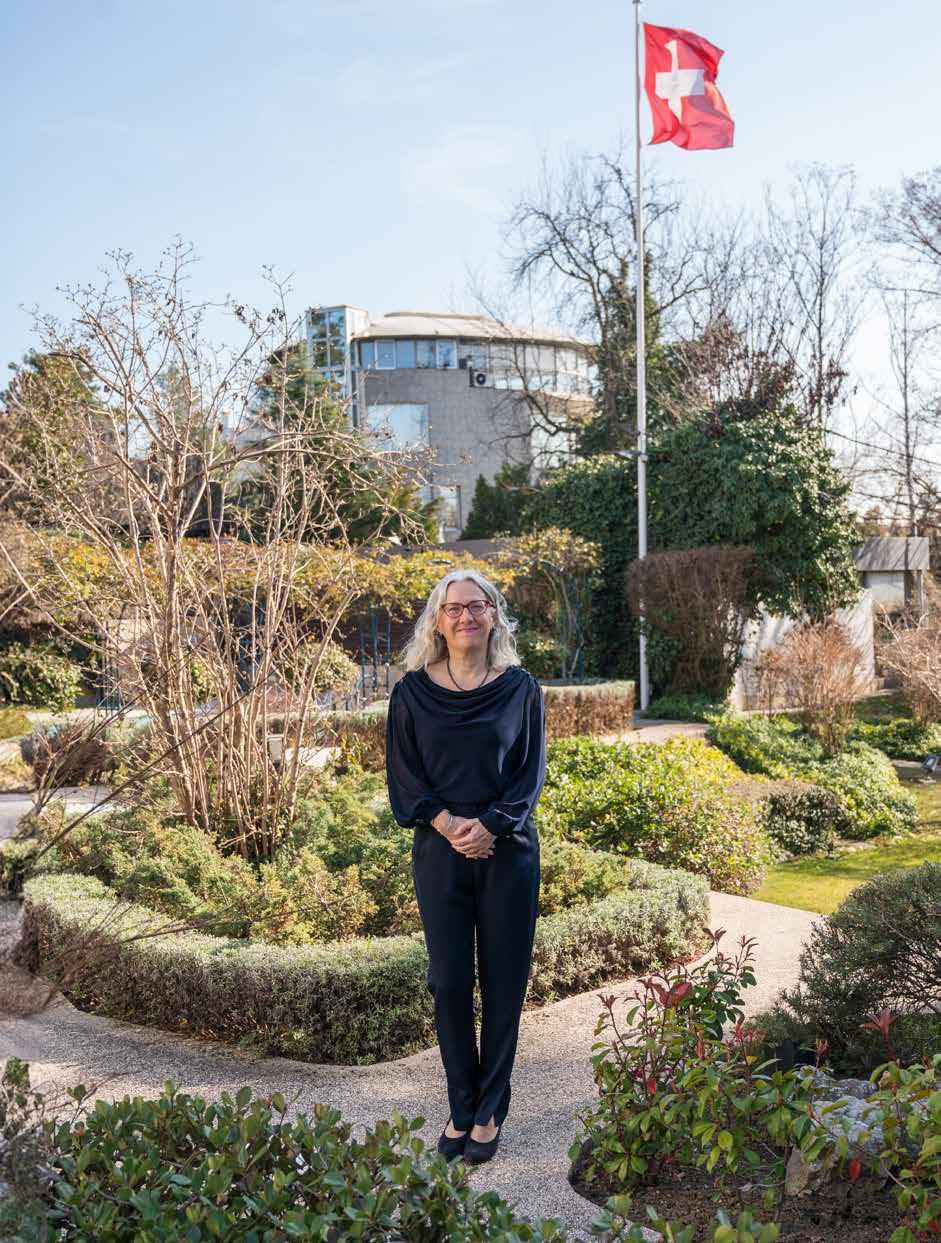
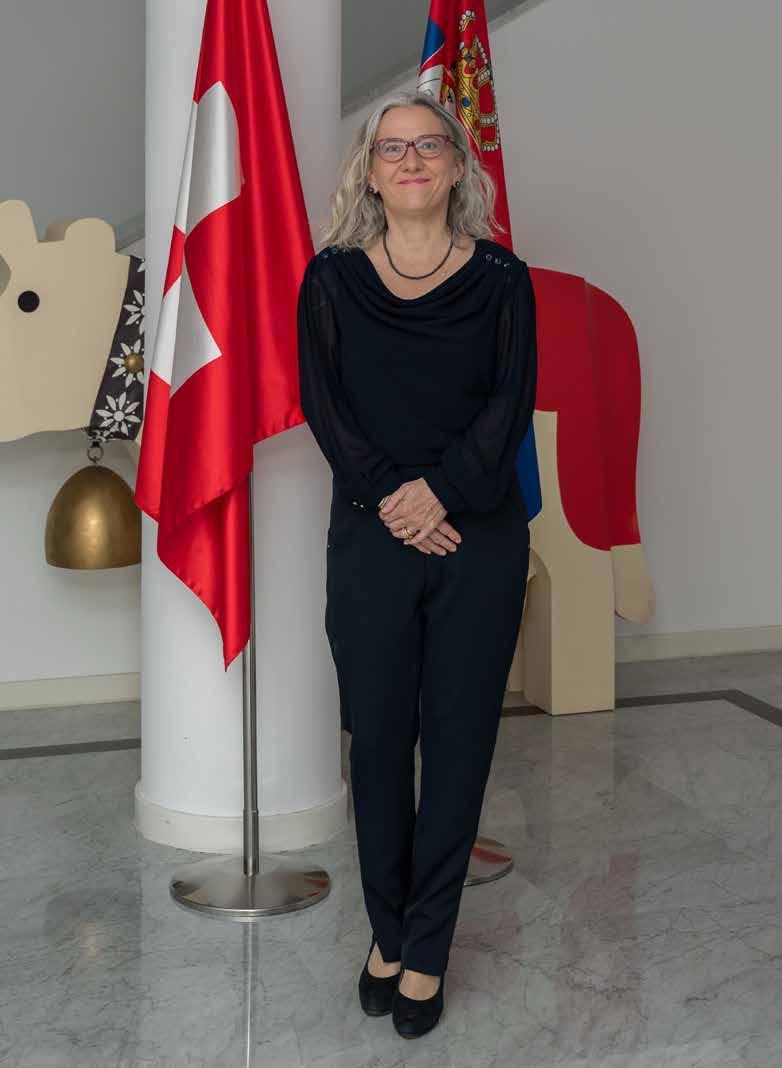
H.E. Mrs. Anne Elisabeth Lugon-Moulin
Swiss Ambassador to Serbia
A long-standing relationship shaped by shared values, economic cooperation and a forward-looking agenda
Marking 110 years of diplomatic relations between Switzerland and Serbia, H.E. Anne Lugon-Moulin, Swiss Ambassador to Serbia, reflects on the depth of bilateral ties, their historical foundations and the evolving partnership shaped by economic cooperation, innovation and shared values.
You have served in various countries, including Côte d’Ivoire, Liberia, and Guinea. How has serving in such diverse locations shaped your diplomatic perspective and your approach to diplomacy?
One of the beauties of diplomatic work is encountering diverse cultures and interacting with an infinite variety of people. While keeping in mind and defending the interests of the country one represents, a diplomat must adapt to the local context and negotiate with consideration for the other party’s sensitivities. Building bridges between personalities and cultures is a fundamental aspect of the job. This holds true everywhere.
I have also noticed that we face similar challenges, albeit in varying degrees, in many countries, and that the values that unite us are not so different from one country to another. Economic prosperity, good governance, human rights, security, and environment: these issues are present everywhere. And thus they lay the foundation for much of our work.
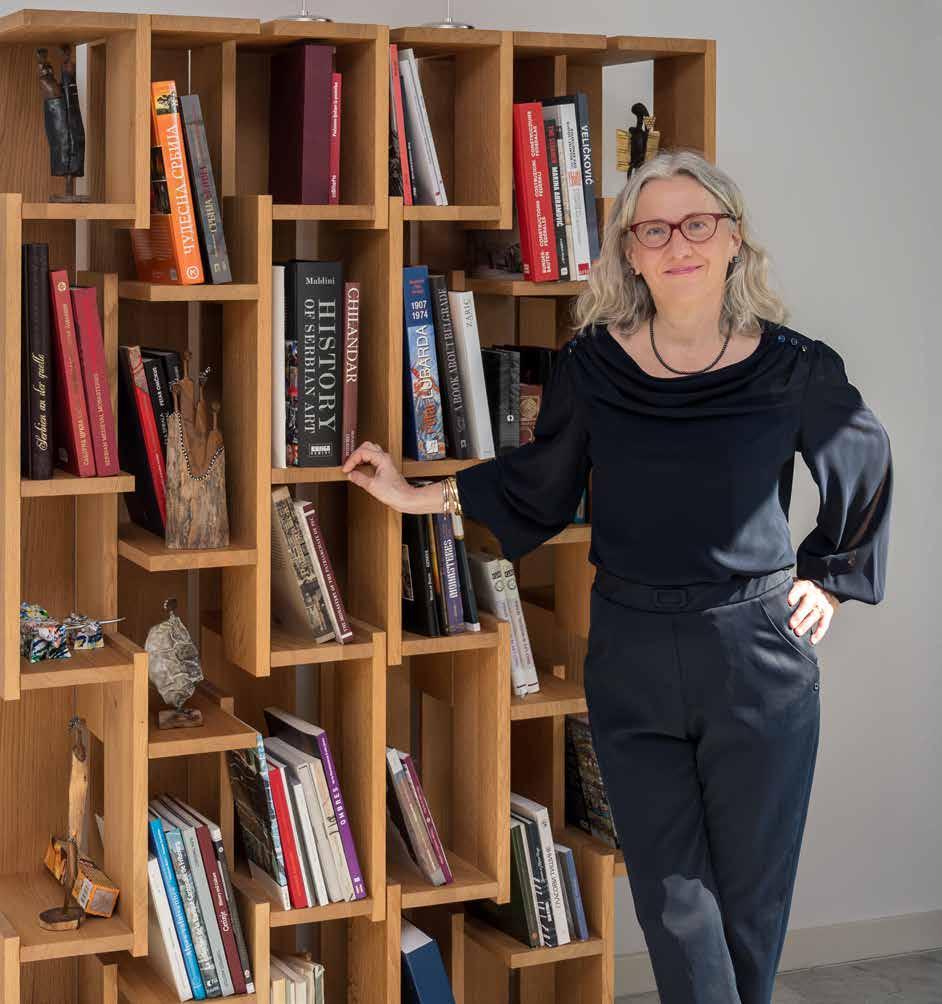
You are the first female Swiss Ambassador to Serbia. What does this mean to you personally, and does it point to broader shifts within the field of diplomacy?
I am proud to be the first female Ambassador to Serbia, a country that is of great importance to Switzerland. I was also the first one in Côte d’Ivoire. In the Swiss Federal Department of Foreign Affairs, about 35% of our ambassadors posted abroad are women.
The role of women in diplomacy has significantly evolved over the past decades. More women than ever before are representing their countries, leading negotiations, and shaping global policies. However, despite this progress, challenges remain. Women continue to be underrepresented in senior
MUTUAL RESPECT, SOLIDARITY AND SHARED HISTORY DEFINE OUR RELATIONS
diplomatic positions, and gender biases still exist in some aspects of international relations. The key to further progress lies in ensuring equal opportunities, promoting mentorship, and fostering inclusive policies that advance women in diplomacy. The Swiss Federal Department of Foreign Affairs provides those tools and internal policies.
At a personal level, believing in my own abilities, being bold, assertive and resilient has helped me from an early stage. Additionally, diplomacy requires
strong analytical and operational skills, adaptability, excellent communication skills, and outstanding intercultural understanding. Finally, I think that seeing challenges as opportunities for success, seeking out mentors, and building a strong professional network are also key takeaways from my professional life so far.
Serbia and Switzerland are celebrating 110 years of diplomatic relations this year. How do you assess these relations today, and how have they evolved throughout history? Looking back, what can we identify as the foundations for the future relationship between our two countries? Switzerland and Serbia have always cherished good relations. The fact that the Swiss government officially accepted Serbia’s government request to nominate an Envoy in Switzerland in 1916, during World War I (while the Serbian government was in exile in Corfu), reflected a clear sign of friendship and mutual trust. In November 1916, regent Prince Alexander Karadjordjevic nominated Mr Slavko Grujic as Envoy Extraordinary and Plenipotentiary to Switzerland. The very origin of the relationship between the two countries dates back to 1888, when the Swiss government agreed to appoint a Serbian honorary consul in Zurich. The Swiss Embassy in Belgrade was fully set up in 1925.
The relation between the two countries has always been marked by mutual respect, solidarity and a sense of shared history through the diaspora. During the Yugoslav wars in the 1990s, Switzerland was among the few actors that launched a humanitarian aid programme in Serbia, a strong testimonial of solidarity. This programme has continually evolved and is now a comprehensive portfolio of projects supporting economic development, innovation, the green agenda, and good governance. Today, all those projects are geared towards helping Serbia in undertaking the necessary reforms on its path to European integration. This evolution shows how friendship can transform over decades and adapt to new realities; nowadays, we support start-up funds, the innovation ecosystem in Serbia, and supply chains from SMEs to major international companies.
The strength of the Swiss private sector in Serbia also represents a strong foundation on which we will build the future. I see numerous opportunities for deepening cooperation. Innovation, sustainability, and investment in human capital will be key focus areas of our work, whether through our development cooperation portfolio or the private sector. The Expo 2027 Belgrade will also hopefully offer opportunities to Swiss companies.
One of the largest Serbian diasporas in Europe resides in Switzerland. How do you view the Serbian community’s contribution to Swiss society?
The large Serbian diaspora in Switzerland (roughly 60000 people) is a well-integrated and dynamic community that has made substantial contributions to my country across multiple sectors, including business, academia, medicine, sports, and culture. Its hard work and entrepreneurial spirit have enriched Swiss society in countless ways.
Many Serbian expatriates maintain strong ties to their homeland by sending remittances, investing in businesses, and fostering economic cooperation. I am also amazed to see how many cultural projects bridging our two societies are emerging from Serbian people living in Switzerland and Swiss citizens who join forces. Our Embassy also tries to offer them expanded visibility.
Those bonds are an invaluable link between our two countries, and they clearly enrich my work here in Belgrade. I will give two examples. Last year, I visited the Centre for the Protection of Infants, Children, and Youth in Zvečanska as part of a donation organised by a Swiss Rotary branch, led by a member of the Serbian diaspora in Switzerland. He had been highly successful in his professional life in Switzerland, and now, at the age of retirement, he focuses on charity work in Serbia. More recently, a Swiss-based construction company has opened an office in Belgrade; the top executive who came from Switzerland for the opening and for cutting the ribbon with me was of Serbian origin. Those moments can be very emotional and meaningful.
Switzerland is one of the largest foreign investors in Serbia, with over 500 Swiss companies operating here. Which sectors do you see as the most promising for future economic cooperation?
According to the data from the Business Registers Agency, there are actually more than 600 Swiss companies operating in Serbia today. This includes major corporations such as Nestlé and Roche, which are listed on the Swiss stock exchange, as well as small and medium-sized enterprises (SMEs).
Switzerland has a strong presence in Serbia, particularly in services, pharmaceuticals, large industries and IT. In recent years, there has been a growing interest in digital transformation, biotech, and large-scale industries.
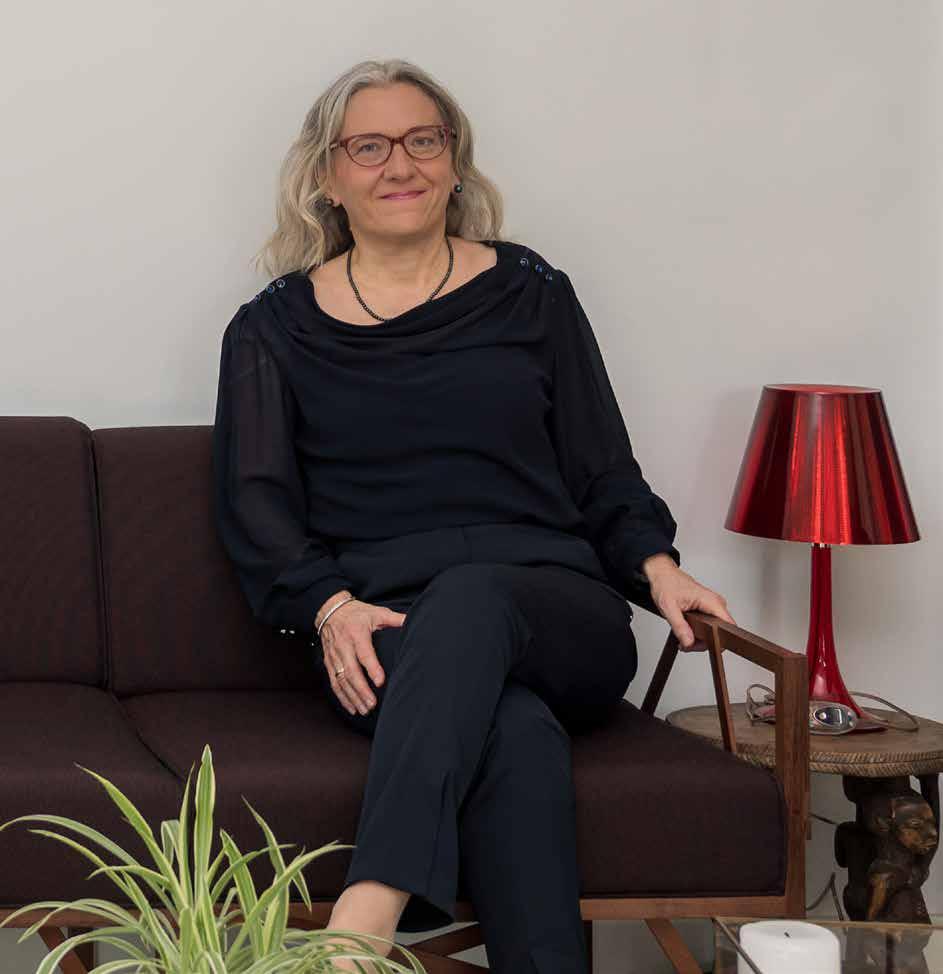
Swiss companies appreciate Serbia’s skilled workforce, strategic location, and business-friendly environment. Furthermore, macroeconomic indicators are good and stable. Trade relations between Serbia and Switzerland have been steadily growing over the past five years, making Switzerland one of Serbia’s key economic partners, particularly in the services sector, where we rank as Serbia’s fourth-largest partner worldwide.
There is still potential for expansion, especially in IT, technology-driven sectors and renewable energy. Serbia’s startup ecosystem is developing rapidly. Real estate is also a new sector that has recently attracted Swiss investment
Serbia and Switzerland cooperate successfully in sectors such as banking, pharmaceuticals, and manufacturing. What initiatives are in place to further deepen this economic cooperation?
Let us look at this from three perspectives. Firstly, the Swiss government manages a development cooperation programme here with an annual budget of roughly €20 million, making it Serbia’s third-largest bilateral “donor”. Within this programme, we maintain an economic development portfolio
that includes support for startups and incubators, Serbian SMEs, and capacity-building programmes for various government entities, designed to foster a favourable macroeconomic framework.
Secondly, bilateral economic agreements between Serbia and Switzerland are of great value. I am glad that we already have the most important ones: a Free Trade Agreement, an agreement on the protection and promotion of investments, and a double-taxation-avoidance agreement. Those three treaties provide an excellent framework for Swiss investors in Serbia and, reciprocally, for Serbian investors in Switzerland.
Finally, it is up to the Swiss companies to decide about their plans in Serbia. The Swiss administration is liberal and, in that sense, allows private-sector actors to choose where they think their business will be most profitable and sustainable. What matters to them are sound business conditions, the above-mentioned bilateral agreements, transparency and predictability. Open and fair public procurement processes, in particular, play a key role in attracting new Swiss actors to the country.
Switzerland has long been renowned for its neutrality. However, since the Russian invasion of Ukraine, Switzerland has joined those nations imposing sanctions on Russia, sparking a debate regarding a revision of its neutral status. Is this merely an adjustment to the geopolitical situation, or does it signal a fundamental shift in your country’s policy? No, it is not a shift. Switzerland is neutral permanently. My country has always been firmly committed to respecting international law and the principles upon which our common security is based. This is why we have condemned this war. We continue to support Ukraine with a huge humanitarian and reconstruction programme.
THE SERBIAN DIASPORA IN SWITZERLAND IS A WELL-INTEGRATED AND DYNAMIC COMMUNITY
As a depositary state of the Geneva Conventions (International Humanitarian Law Conventions), Switzerland strongly condemns all attacks on the civilian population, civilian objects, and infrastructure essential to the population’s survival. International humanitarian law must be respected by all parties at all times. Switzerland remains resolutely committed to a comprehensive, just, and lasting peace for Ukraine based on international law, including the UN Charter and the Helsinki Principles. It is always ready to offer its good offices. This is consistent with its neutrality. Talks among Russia, Ukraine, and the United States were held very recently in Geneva.
Dropping international sanctions is not new for Switzerland. We had already adopted UN sanctions during previous conflicts. In other instances, we have aligned our policies with EU sanctions, for example, in 2002 in the case of Zimbabwe.
What is Switzerland’s position regarding the current conflict in the Middle East?
Switzerland is concerned by the military operations conducted by the parties to the conflict in the Middle East, which violate international law, in particular the prohibition on the use of force. It demands full respect for international law, including the Charter of the United Nations and international humanitarian law. It calls on all parties to exercise the utmost restraint and requests that the civilian population and civilian infrastructure be protected. De-escalation and a return to diplomacy are urgently needed (answer provided on March 12)
Before your career in diplomacy, you worked for Transparency International on anti-corruption and asset recovery. What can Serbia learn from the Swiss approach to governance and transparency?
At the beginning of my career, some 30 years ago, I launched the Swiss chapter of Transparency International. Later on, I led the Basel Institute on Governance, a well-known Swiss NGO that provides expertise in anticorruption and asset recovery from a practitioner and policy perspective. The Institute is active mostly in foreign countries.
In Serbia, we have been supporting local governance projects for decades. As Switzerland is a highly decentralised country, we have particularly engaged at the local level in Serbia in fostering citizen participation, transparency in public spending, and public oversight mechanisms. In doing so, we have always worked and helped all involved actors: the respective Ministry in designing the system, the Standing Conference of Towns and Municipalities for fostering intermunicipal exchanges and best practices, as well as some
local CSOs and NGOs to enhance public participation. In addition, we will soon be launching a new anti-corruption project with the Council of Europe, the OSCE, and Transparency International. We are also contemplating working with municipalities and different independent state authorities. All this should lead to a more efficient and more transparent administration.
In my home country, transparency, federalism, and the subsidiarity principle are of paramount importance. Citizens’ participation in political life and in decision-making processes is viewed as an instrument for democracy and stability. This model has proved successful, but we are well aware that it cannot simply be copied and pasted into other contexts.
The Embassy of Switzerland in Serbia has been actively supporting cultural initiatives. How do these projects contribute to strengthening mutual understanding between the two countries?
The Embassy and the Pro Helvetia Foundation support a wide spectrum of initiatives, ranging from partnerships with museums and visual artists to film festivals, photography, dance, music, and the creative industries. These activities bring together Swiss and Serbian creators. Private Swiss companies operating in Serbia also make an important contribution through the Swiss Cultural Fund. What is particularly encouraging is that many initiatives evolve organically and continue well beyond their initial phase, which shows that cooperation does not end with a single event.
Both Serbian and Swiss artists are highly dynamic and frequently take the initiative themselves to deepen collaboration, while Swiss creators are increasingly aware of Serbia’s vibrant and diverse cultural landscape.
As an example, we are currently marking the Month of Francophonie, which celebrates values that Switzerland strongly promotes: cultural diversity, openness, multilingualism, and dialogue among countries.This week at the Yugoslav Film Archive we presented a Swiss film as part of the Francophonie programme. We are also engaged with the upcoming Belgrade Film Festival.
How is Switzerland engaged in urban development and sustainability initiatives in Serbia, and what impact has it had?
Our support for sustainable urban development, renewable energy, and energy efficiency reflects the belief that environmental sustainability and economic prosperity can go hand in hand. In the energy sector, Switzerland has helped introduce renewable energy auctions as a transparent, market-based mechanism to attract investment. Serbia’s first two renewable energy auctions have awarded around 1.36 GW of wind and solar capacity, helping the country scale up renewable energy, mobilise private investment, and strengthen energy security.
Decarbonising district heating systems is another key contribution. A biomass project completed in 2024 across four municipalities increased the share of renewable energy in the heating sector, and the ongoing project in ten municipalities is expected to raise it further through geothermal, solar, and heat pump solutions. Emissions are significantly reduced and air quality improved.
The EU Green Agenda project, significantly supported by Switzerland, has backed 77 innovative green projects since 2022, with €4 million in co-financing, mobilising €22 million, and delivering measurable benefits, including reduced greenhouse gas emissions, expanded renewable energy, improved energy efficiency, and better industrial wastewater management. This approach reflects an important principle guiding Swiss environmental policy: prevention is better than cure.
How business cooperation, innovation and sustainability are shaping the next phase of Swiss–Serbian relations
Jelena Sadler, President of the SwissSerbian Chamber of Commerce, speaks about the strength of long-standing ties between Serbia and Switzerland, the Chamber’s role in supporting business cooperation, and the opportunities emerging from digital transformation, innovation, and sustainable development.
This year marks the 110th anniversary of diplomatic relations between Switzerland and Serbia. How does the Swiss-Serbian Chamber of Commerce contribute to celebrating this milestone, and how important is such a long tradition for the confidence of Swiss investors?
The celebration of 110 years of diplomatic relations between Switzerland and Serbia is an important milestone that confirms the long-standing partnership between our two countries. The Swiss-Serbian Chamber of Commerce (SSCC) actively contributes to marking this anniversary by organising events, business meetings and dialogue platforms among companies, institutions and the diplomatic community.
Recently, during the Kopaonik Business Forum, we organised the “Swiss Way” reception, where, together with our members and partners, we celebrated this significant anniversary. This is also an important year because several of our distinguished member companies are celebrating major milestones. Roche has been present in Serbia for 35 years, Nestlé for more than 20 years, and Ringier for over 30 years.
These companies represent exactly the values we want to highlight in Serbia, because for Swiss investors, tradition and continuity carry great importance. Swiss business culture is strongly rooted in stability, long-term planning, and trust. The fact that relations between our two countries have endured for more than a century sends a strong message of security and predictability to companies considering investing in Serbia or already operating here.
What are the current priorities of the Swiss-Serbian Chamber of Commerce when it comes to supporting its members, and how does the Chamber facilitate the entry of new Swiss companies into the Serbian market?
As the newly appointed Executive Director of the Chamber, my vision is to respect this long tradition while positioning the Chamber as the most modern and agile bilateral business association in the region, using stability as a foundation for accelerated digital and green transition. This means my focus is on making the Chamber faster, more digital and environmentally conscious so that we can provide better business support to our members in the future.
The Swiss-Serbian Chamber of Commerce serves as a platform connecting companies, institutions and the wider business community. Our goal is to provide concrete business value to our members through networking, exchange of experience, institutional support and the promotion of best business practices.
SWISS BUSINESS CULTURE IS STRONGLY ROOTED IN STABILITY, LONG-TERM PLANNING, AND TRUST
For companies entering the Serbian market, the Chamber represents an important first point of contact. We assist them by connecting them with relevant institutions, legal and financial advisors, and by helping them understand the local business environment. Through events, business forums, and thematic discussions, new companies can quickly build their networks and gain valuable market insights.
Switzerland has been among the leading foreign investors in Serbia for many years, particularly in services and high-tech sectors. In which areas do you see the greatest potential for further cooperation in the coming years?
Switzerland has been one of Serbia’s most important investors for many years, and the potential for further cooperation remains significant. We see particular opportunities in digital technologies, innovation, the pharmaceutical and healthcare industries, and sustainable energy.
There is also increasing focus on the startup ecosystem, research and development, and collaboration between universities and companies. Switzerland has a strong reputation in innovation and knowledge transfer, while Serbia has a highly talented and well-educated workforce, especially in the IT sector. This combination represents a major opportunity for new projects and investments.
Switzerland is globally recognised for its dual education model, and the Chamber has supported the introduction of similar principles in Serbia. What results have been achieved so far, and how important is education reform for retaining Swiss companies in Serbia?
Dual education is one of the key pillars of Switzerland’s economic success. This model allows young people to acquire both theoretical knowledge and practical skills simultaneously, making them wellprepared for the labour market. In Serbia, important progress has been made in recent years in implementing this system, with support from international partners including Switzerland. An increasing number of companies are participating in dual education programs, and results show that students who complete these programs have greater employment opportunities. For Swiss companies operating in Serbia, the availability of qualified talent is extremely important. Therefore, developing an education system aligned with the needs of the economy is a key factor for the long-term sustainability of investments.

THE
The Swiss economy is known for innovation and strong environmental standards (ESG). How does the Chamber encourage the transfer of knowledge and technology related to the green transition to local companies?
One of the important goals of the Swiss-Serbian Chamber of Commerce is to promote knowledge exchange between Swiss and Serbian companies, particularly in innovation and sustainable development.
Swiss companies are global leaders in implementing ESG standards, energy-efficiency measures, and circular-economy principles. Through conferences, thematic workshops, and cooperation with institutions and international organisations, the Chamber promotes best practices and encourages companies to adopt more sustainable business models. We believe that the green transition is not only an environmental necessity but also a major economic opportunity for the development of new technologies and investments.
Specifically, we are planning a series of webinars on “Swiss energy efficiency standards in manufacturing” to help Serbian small and mediumsized enterprises understand how ESG standards can improve their competitiveness in the European market, where many of our member companies play a key role.
Based on your communication with member companies, what do Swiss businesses see as the main advantages of operating in Serbia, and where do they still see room for regulatory improvement?
Swiss companies operating in Serbia often highlight several key advantages. First of all, there is the availability of a highly skilled and talented workforce, competitive operating costs and Serbia’s strategic geographic position, which provides access to regional markets.
On the other hand, as in many developing markets, there is still room for improvement in administrative procedures, regulatory predictability and further simplification of bureaucratic processes. Continuous dialogue between the business community and institutions is essential for improving the business environment.
Our role as a Chamber is to maintain regular dialogue with the Government of Serbia and, through formal recommendations, advocate for further digitalisation of permitting procedures and stricter adherence to the rule of law, as regulatory predictability is an absolute prerequisite for longterm Swiss investment.
What are the most important events and projects the Chamber is planning by the end of the year that could further strengthen ties between Belgrade and Bern?
By the end of the year, we plan to hold several events to strengthen business ties between Serbia and Switzerland. These include business forums, sector-focused workshops and meetings with Swiss business delegations visiting Serbia.
A special focus will be placed on promoting Serbia’s investment opportunities to Swiss companies and on connecting Serbian businesses with the Swiss market. We are also planning events dedicated to innovation, sustainability and cooperation in education. As a Chamber, our mission is to serve as a bridge between the two economies and to strengthen cooperation through concrete projects and initiatives.
We also see this period as a valuable opportunity to further strengthen Swiss–Serbian cooperation. Switzerland demonstrated strong confidence early on by being the first country to formalize its participation in Expo 2027. The Chamber is currently working closely with the Presence Switzerland delegation in the preparation phase, with the aim of supporting a highly visible, innovative, and impactful Swiss presence.
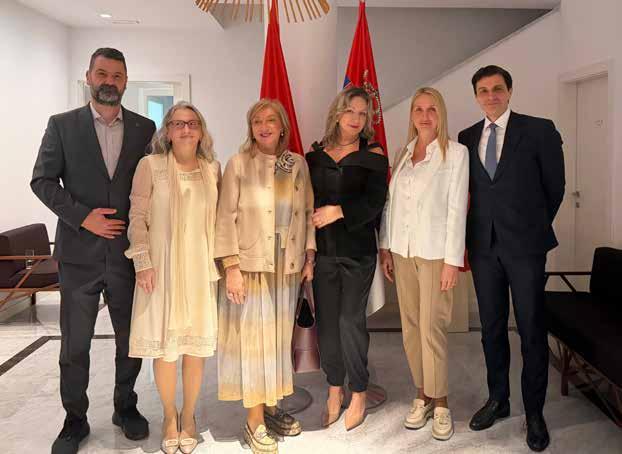
Brunch at the Kopaonik Business Forum: 110 Years of Diplomatic Relations Between Serbia and Switzerland
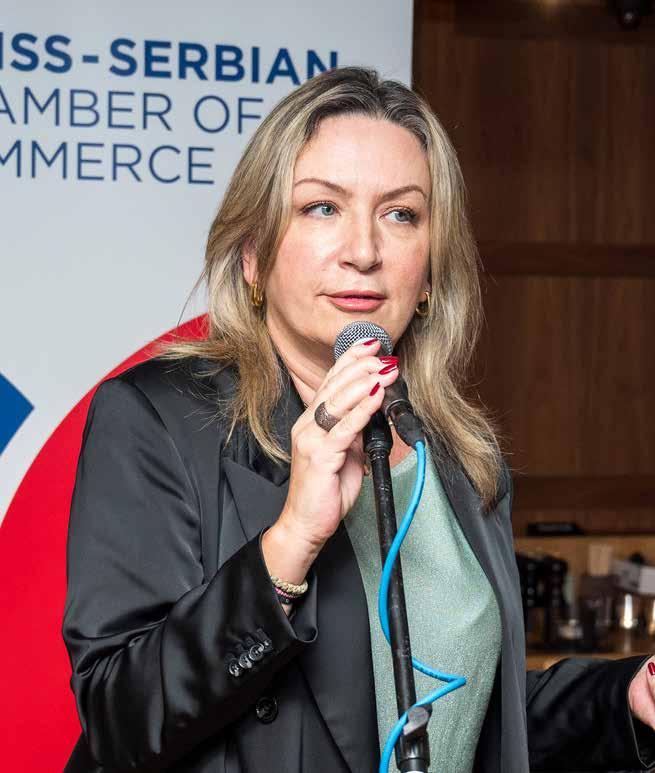
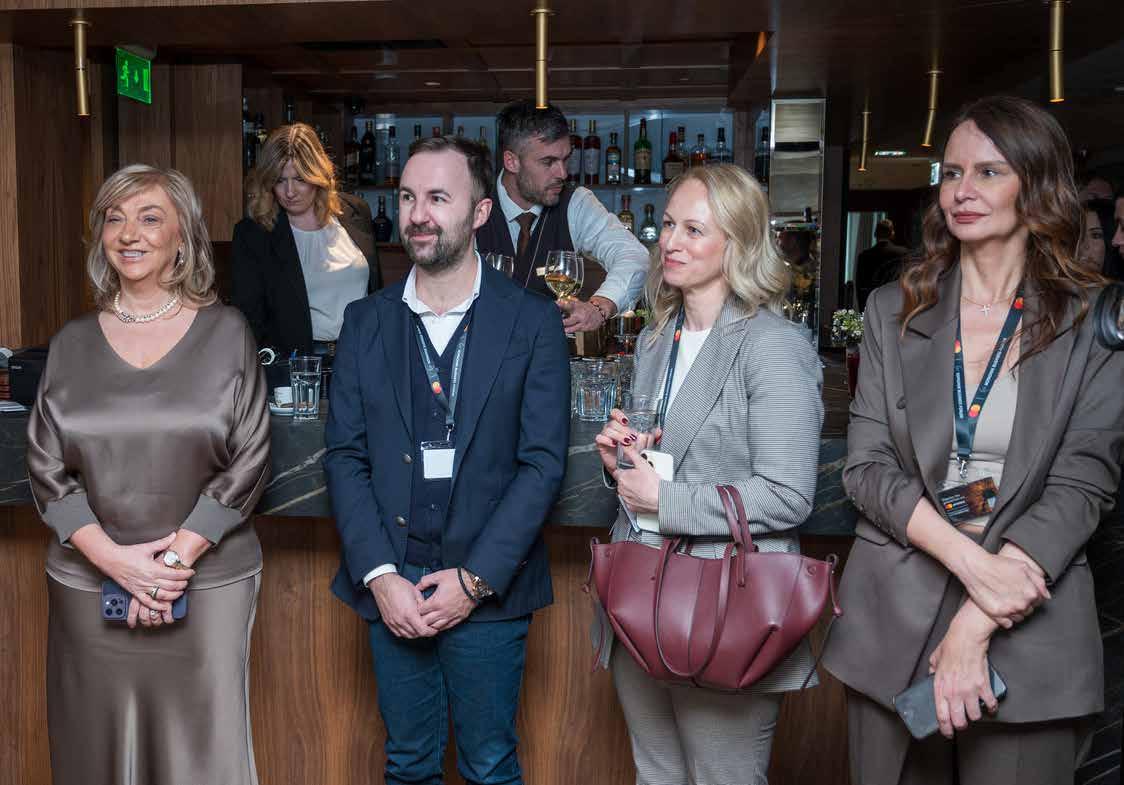
As part of the 33rd Kopaonik Business Forum, the SwissSerbian Chamber of Commerce hosted the “Swiss Way” brunch. The event marked 110 years of diplomatic relations between Serbia and Switzerland, while also highlighting significant business milestones for Swiss companies in
Serbia: 20 years of Nestlé’s presence, 30 years of Ringier, and 35 years of Roche. The brunch brought together representatives of Swiss companies, members of the diplomatic corps, and local business leaders. Organisers emphasised that the presence of such long-standing investors reflects both stability and confidence in the Serbian economy and promotes Swiss
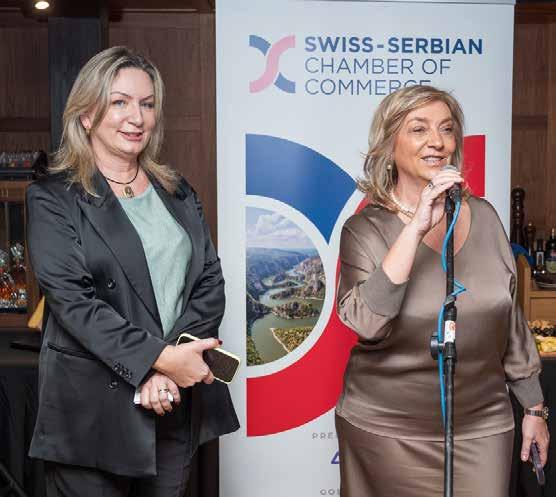
business standards—transparency, innovation, and quality.
The event also served as a platform for networking and exchanging experiences, reaffirming the importance of the Kopaonik Business Forum as a space where diplomats, investors, and entrepreneurs jointly explore new opportunities and strategic initiatives that can further strengthen bilateral relations.
THE EVENT MARKED 110 YEARS OF DIPLOMATIC RELATIONS BETWEEN SERBIA AND SWITZERLAND
SANJA PANJESKOVIĆ IGIĆ External Affairs Head, Novartis Serbia and Montenegro
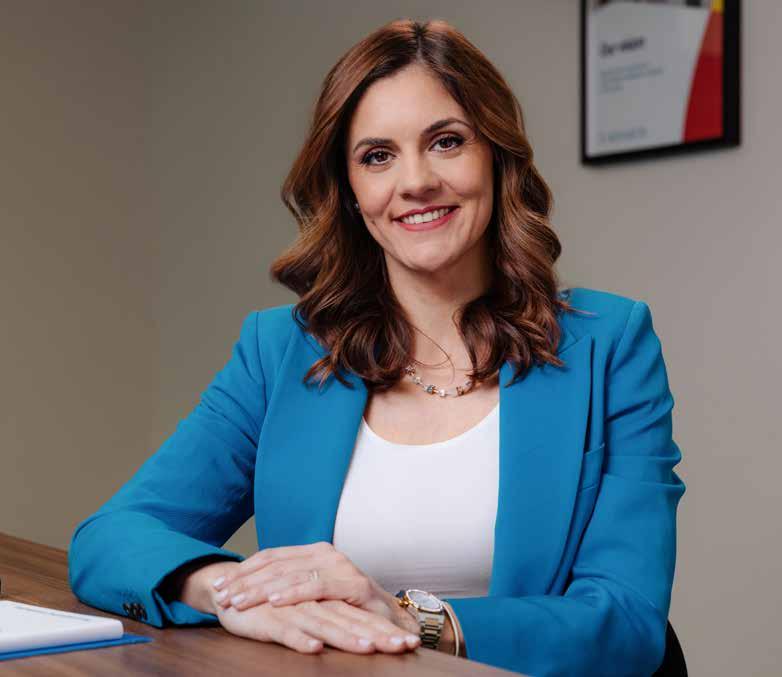
In this interview, Sanja Panjesković Igić, External Affairs Head at Novartis Serbia and Montenegro, speaks about the intersection of science, communication and patient care, and how healthcare innovation can bring tangible improvements to people’s lives.
Your work sits at the intersection of science, society and deeply human experiences. What inspires you to do this work?
For me, this work is about people, individuals whose lives genuinely improve when the healthcare system is responsive and effective. In Serbia, for example, healthcare investments have contributed to an additional five years of life expectancy since 2000 − reflecting the impact that even gradual, steady improvements can have on people’s lives.
Working across oncology, cardiology, immunology, neurology and hematology - and witnessing the impact of technologies like radioligand therapy, gene and cell therapy and RNA-based medicines - strengthens my belief that science can genuinely transform the future of care. As a company, we are committed to expanding access to innovative medicines in Serbia and Montenegro, so that patients here can benefit from the same progress seen in the world’s most advanced healthcare systems.
On a personal level, I am deeply aware that the progress we push for in healthcare ultimately protects all of us - our families, our neighbours, our colleagues. We live in this system too, and every improvement becomes a shared safety net for the whole community.
The Swiss foundation of our company - built on scientific excellence, precision and longterm commitment - provides an additional source of inspiration. It sets a standard that we strive to reflect in Serbia and Montenegro every day.
You lead communications and patient advocacy. How do these areas create value for people?
I have learned that clear, compassionate communication can completely change how a person experiences illness. It helps people understand their health, make informed decisions, act earlier, and move forward with more confidence and less fear. Advocacy strengthens this by helping patients move from passive recipients of care to active partners in their treatment − ensuring that their needs, priorities, and perspectives shape each decision that affects them.
At Novartis, we bring this to life through awareness initiatives, partnerships, patient education and support programmes that help ensure scientific progress becomes something people can actually access and benefit from.
And when people receive the right care at the right
BETTER CARE BEGINS WITH UNDERSTANDING PATIENTS, NOT JUST TREATING DISEASE
moment, the impact extends far beyond the clinical setting. Timely, effective treatment keeps people active, prevents complications and reduces the need for costly Late-stage care - something increasingly important in aging societies. Health innovation also carries broader societal value: every dollar invested in life sciences generates about three dollars in GDP
Taken together, communication and advocacy enhance not only patient outcomes but, also family resilience, community strength, and the country’s broader economic stability.
Serbia is accelerating its innovation agenda. Where do you see opportunities?
The key opportunities lie in strengthening prevention, using healthcare data more effectively, scaling screening programmes and ensuring timely access to advanced therapies. Today, patients in Serbia wait an average of 799 days for access to new medicines − reducing this gap is essential for progress. With a focus on early intervention, outcome-based models, and cross-sector collaboration, the country can advance rapidly and sustainably.
As a company, we contribute by supporting initiatives such as newborn SMA screening, partnering with the Bio4 Campus to advance cardiovascular prevention and expand the use of data and digital tools, such as clinical decision support systems, and developing prevention projects like Cardio4Cities. Together, these efforts show how innovation can translate into real improvements for patients.
You often highlight the importance of your team. Why is this central to Novartis leadership?
Real impact always starts with people. I am fortunate to work with teams whose curiosity, judgment and integrity show up in everything they do - from oncology and cardiovascular programmes to datadriven health projects. Being recognised as a Top Employer in both Serbia and Montenegro confirmed the culture we have intentionally built: one that values trust, development and engagement. And I believe that culture directly strengthens the value we deliver to patients and partners.
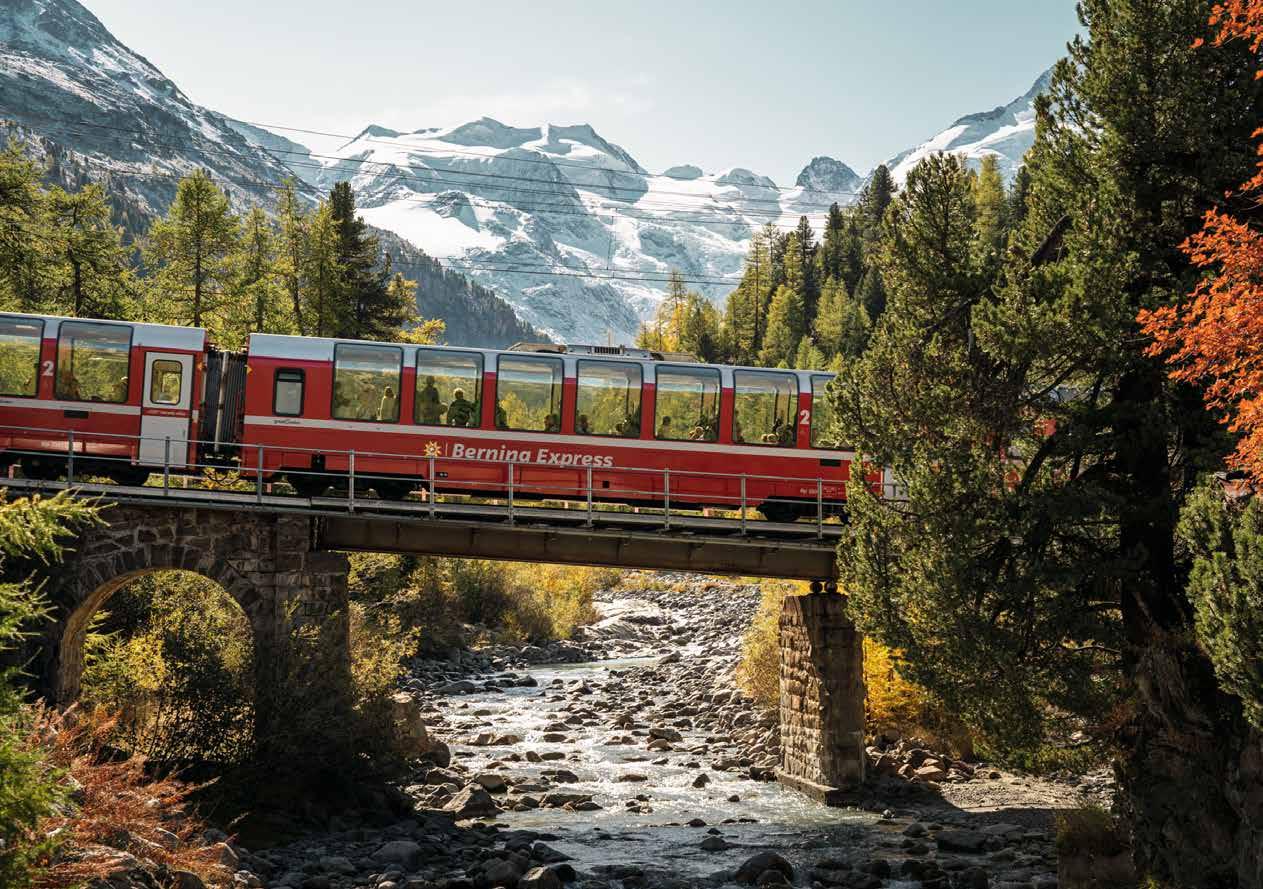
A
winter rail journey that turns logistics into poetry, revealing the Alps as both an engineering marvel and an unforgettable spectacle
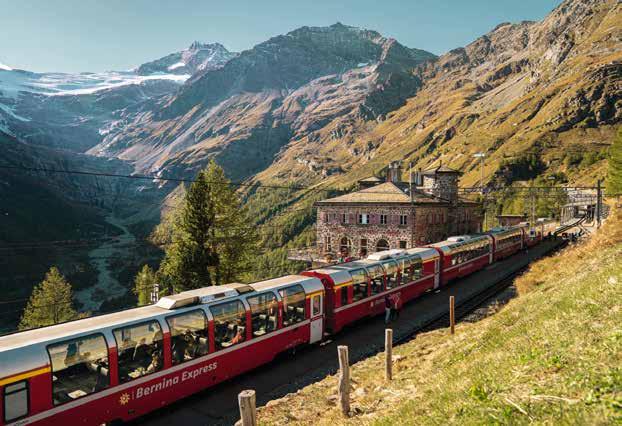
On the route between Tirana and St. Moritz, the Bernina Express passes through 55 tunnels and over 196 bridges and viaducts.
If you travel on a sunny winter day, you will see some of the most spectacular views in the Alps.
An Instagram advert caught my attention. An unregistered travel agency in Serbia was offering a three-day package for €299 per person, including a ride on the famous Bernina Express train from Tirano, Italy, to St. Moritz, Switzerland.
The scenes of the journey through idyllic, snow-covered Alpine landscapes looked almost unreal, so I decided to analyse the elements of this trip. For a slightly higher amount (€399), I put together a three-day tour for the eight of us, which, as my fellow travellers say, we will all remember for the rest of our lives.
A return ticket with the low-cost airline Wizz Air from Belgrade to Bergamo, with limited luggage (a small backpack with personal items and a cabin suitcase up to 10 kilograms, which is perfectly sufficient for a threeday trip), will cost between €70 and €100 depending on the travel dates.
A return bus ticket from Bergamo Airport to Milano Centrale railway station costs €24. Buses run every half hour, operated by several companies, and the journey takes around 50 minutes. A decent three- or four-star hotel near Milan’s railway station, suitable only for an overnight stay, will cost around €100 for a double room.
A return train ticket to Tirano, a small Italian town on the Swiss border, costs €25. The journey takes 2.5 hours, and trains run every hour. A good four-star hotel in the centre of Tirano costs us €160 for a double room, including an abundant breakfast, while a return ticket for the Bernina Express to St. Moritz costs €80.
That is enough about prices and logistics. Now, a few words about the experience. Most things about Milan and its charms are already well known, so in a separate report, I will write about an interesting museum located in the railway station’s basement.
We arrived in Tirano in the early evening and walked for about ten minutes from the railway station to our hotel, located next to the bridge over the River Adda. Over its entire 194-kilometre course, the river flows through Lombardy before eventually joining the famous Po, well known from crossword puzzles. Today, the town has around 9,000 inhabitants.
THE BERNINA EXPRESS IS NOT JUST A TRAIN RIDE, BUT A MOVING GALLERY
WHERE EVERY WINDOW FRAMES A NEW ALPINE MASTERPIECE
In the park on Marinoni Square stands an obelisk with plaques on all four sides bearing the names of soldiers from the town who were killed in the First World War. There is also a smaller plaque listing the names of residents who died in the Second World War.
At dawn on 29 September 1504, the Virgin Mary is said to have appeared on this very spot to Mario Omodei, a resident of Tirano. A basilica was later built here, today known as Madonna di Tirano. On the church altar, believers leave gifts to the Virgin Mary as a sign of gratitude for healing. The 17th-century organ, with its 2,200 pipes, is among the largest in Europe.
IN CHASING THE CHEAPEST ROUTE, MANY TRAVELLERS MISS THE VERY MAGIC THEY CAME TO SEE
If you travel on the Bernina Express, keep in mind that Tirano has two railway stations. One dates from 1902 and is where you arrive on the train from Milan, while the other, built in 1908, is the departure point for the Bernina Express to St. Moritz. The Bernina Express also offers a return first-class ticket at double the price (€160). Still, my recommendation is to take the second-class ticket for €80, as those carriages have windows that open, giving you much better opportunities for photography.
Of course, “Selma, don’t lean out of the window” still applies, along with the necessary precautions, since the route between Tirano and St. Moritz includes as many as 55 tunnels and 196 bridges and viaducts.
In 2008, the Bernina Express was added to the UNESCO World Heritage List. One section of the line was opened in 1908, the stretch between Celerina and St. Moritz was connected a year later, and the entire railway line was completed in 1910. In the beginning, the railway operated only during the summer months, but from 1913 it also began running in winter. This became possible after a large number of avalanche barriers were installed, as avalanches are common in these mountainous areas.
In its early years, the railway was constantly on the brink of bankruptcy until, in 1943, in the midst of the Second World War, it was taken over by the Rhaetian Swiss Railway company, which invested substantial funds in its modernisation. From the mid-1980s onwards, the line became a major attraction, drawing tourists from all over the world.
In October 2011, this route became the first railway line in the world to be photographed and placed on Google Street View. Towards the end of winter, when the danger of snow avalanches is at its highest, the Swiss authorities even use artillery
to trigger controlled snow slides, preventing them from occurring “at the wrong moment”, just as a train is passing.
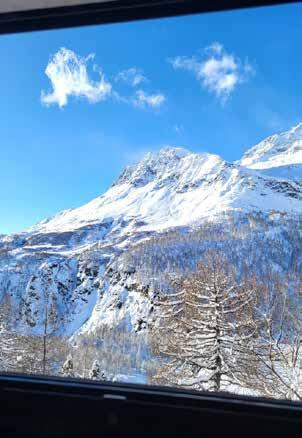
We departed from Tirano at 9.00 a.m. and were fortunate that when we travelled (in late January), there was plenty of snow and the day was sunny, so the scenery truly looked like something from a postcard.
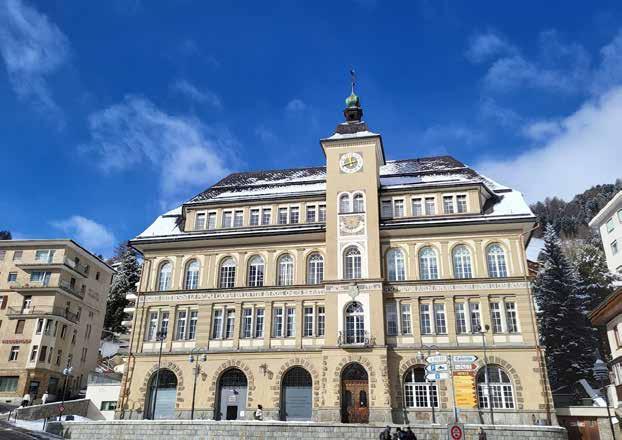
After a little over two and a half hours, we arrived at the St. Moritz railway station, located on the edge of the lake, whose frozen surface becomes the stage every January for the Snow Polo World Cup. This glamorous event, featuring luxury-car exhibitions, gathers wealthy and famous guests from all over the world each year. We arrived on Monday, the day after it had ended, so the tents and supporting structures on the frozen lake were already being dismantled.
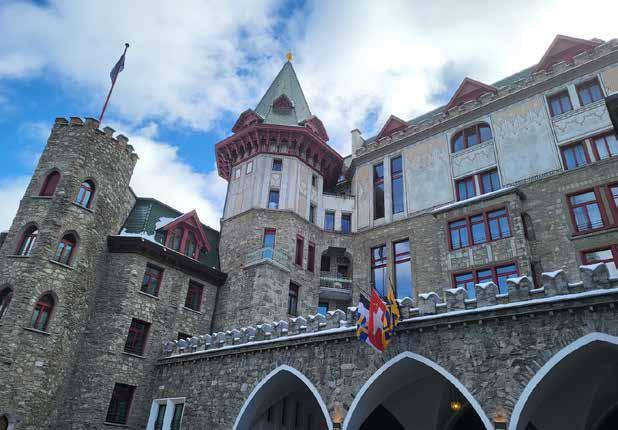
We walked up to the famous Badrutt’s Palace Hotel, one of the most expensive hotels in the world. You will not even be allowed into its lobby for a cup of tea unless you have a table reservation.
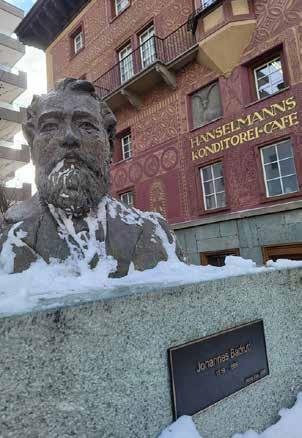
Johannes Badrutt (1819–1889), whose bust stands in the central square of St. Moritz, was a Swiss businessman and hotelier who transformed this small town into what it is today. In the mid-19th century, he brought the first English tourists to the town. In 1855, he opened the Kulm Hotel, while in 1896, his son Caspar Badrutt opened the famous Badrutt’s Palace Hotel.
While carefully walking across the frozen pavements, digesting the cheese from our fondue, we ran into two girls from Belgrade who had bought the package from the agency mentioned at the beginning of this text. They were miserable. They had woken up at 4 a.m., travelled by bus for six hours from Milan to St. Moritz, were given only an hour and a half of free time in the town, and would return in the afternoon, in the dark, on the Bernina Express to Tirano, where a bus would again be waiting for them. In practice, they would miss almost all the scenery we had enjoyed during the sunny morning hours.
Travel agencies, in their attempt to make some profit from cheap packages, often end up depriving their passengers of precisely the experience that was the main reason for the trip.
Switzerland today, after more than a century of bilateral relations, stands as one of Serbia’s most important partners and a significant investor, with more than 500 companies operating in our market and employing tens of thousands of people.
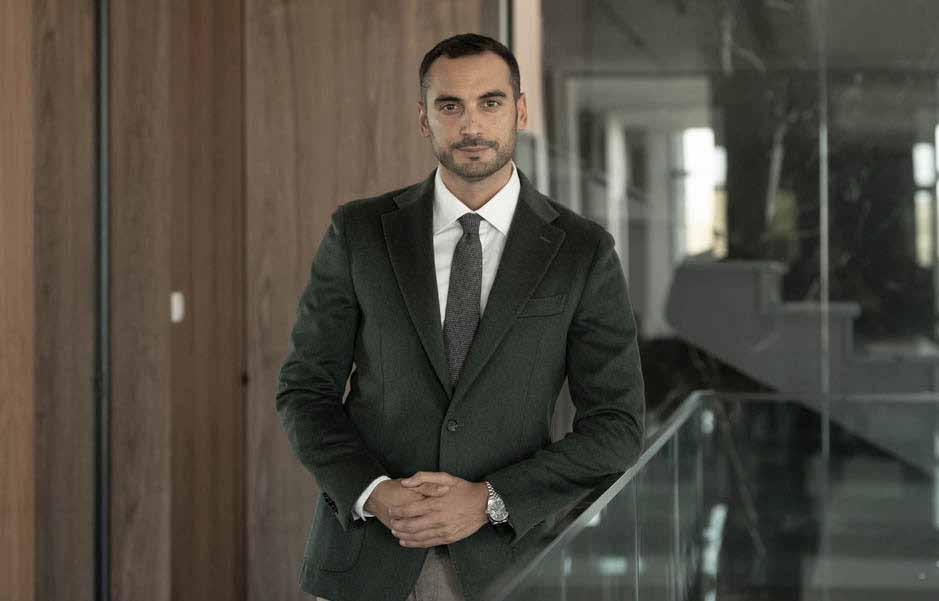
ALEKSANDAR GORAČINOV
SME HUB Director
The strength and continuity of this partnership are further confirmed by Switzerland’s early confirmation of its participation in Expo 2027 in Belgrade, one of the most important international events that Serbia will host in the coming years. Such moves clearly demonstrate trust and a long-term commitment to developing cooperation between the two countries. What makes this cooperation particularly valuable is its strategic and long-term nature, its focus on strengthening institutions, improving the business environment, and empowering the domestic economy and enterprises.
A contemporary example of this approach is the SME HUB initiative, established as a partnership between the Government of Switzerland, represented by the Swiss Agency for Development and Cooperation (SDC), and Serbia’s ICT Hub. The initiative aims to support small and medium-sized enterprises in improving their operations and becoming part of global supply chains, through a combination of financial and expert support, as highlighted by SME HUB Director Aleksandar Goračinov.
Serbia and Switzerland are marking 110 years of bilateral relations this year. How does this cooperation look from your perspective today? Relations between Serbia and Switzerland are a strong example of a longterm partnership built on trust, mutual respect, and a shared vision of development. Over more than a century, this cooperation has gone through different phases, yet it has always remained stable and focused on strengthening economic and social ties. Today, Switzerland is one of Serbia’s most important partners, both in development cooperation and in investment and trade.
SME HUB TURNS LOCAL POTENTIAL INTO GLOBAL COMPETITIVENESS
What makes this cooperation particularly valuable is its long-term character. Swiss support has consistently been directed towards creating sustainable solutions, such as strengthening institutions, improving the business environment, and supporting the
development of the domestic economy. In this context, initiatives like SME HUB represent a natural continuation of this approach, focusing on capacity building and the long-term competitiveness of local companies.
How important was the support of Switzerland and the Swiss Agency for Development and Cooperation (SDC) for the development of SME HUB?
The support of Switzerland and the SDC has been crucial for the development of the SME HUB initiative. Swiss development policy is known for its thoughtful and strategic approach, in which programmes are not seen as short-term interventions but as investments in long-term development. SME HUB is precisely such a model.
Our goal is not only to provide support to businesses but also to contribute to the creation of a stronger, more competitive business ecosystem in Serbia. Switzerland has recognised both the potential of domestic small and medium-sized enterprises and the challenges they face when seeking to cooperate with large systems. Through SME HUB, a combination of financial support, expertise, and methodology has been provided, enabling companies to undergo a comprehensive business transformation.
How important is the cooperation with the Swiss Embassy and representatives of the SDC in Serbia?
It is extremely important. What characterises our cooperation is a strong sense of partnership and mutual understanding. Since she arrived in Serbia, H.E. Ambassador Anne Lugon-Moulin has shown a strong understanding of and interest in economic development and projects that support small and medium-sized enterprises. Her support and openness to dialogue provide additional momentum to initiatives such as SME HUB.
At the same time, cooperation with Deputy Head Katrin Ochsenbein and her team at the Swiss Agency for Development and Cooperation in Serbia represents a key element of this initiative’s success. Their experience in development programmes, combined with a deep understanding of the local context, has enabled SME HUB to function in a way that truly responds to the real needs of the business community.
More than 500 Swiss companies are currently operating in Serbia. How important is this for the development of the domestic economy?
The presence of more than 500 Swiss companies in Serbia clearly demonstrates the strength and maturity of economic relations between the two countries. These companies represent not only investments and job creation, but also bring business standards, new technologies, and a different organisational culture.
For the domestic economy, this is of great importance, as it opens up opportunities for cooperation and for integrating local suppliers into their production and logistics chains. It is precisely in this space that we see significant potential for small and medium-sized enterprises in Serbia. SME HUB aims to support domestic companies in becoming ready for such cooperation.
Once SMEs reach certain standards, they can become reliable partners to large multinational companies operating in Serbia and the wider region.
What is the core idea behind SME HUB?
The core idea of SME HUB is to help small and medium-sized enterprises take the next step in their development. In Serbia, there are many high-quality manufacturing companies with strong knowledge, experience, and products. Yet, they often lack certain organisational and managerial capacities needed to become part of global supply chains.
What makes SME HUB distinctive is its approach, which involves significantly fewer administrative procedures and less bureaucracy compared to traditional support programmes. While formal processes do exist, the focus is on efficiency, agility, and, above all, on hands-on work with companies and the tangible results they achieve through business improvement.
Through SME HUB, we work precisely on that. We support companies in improving their processes, professionalising their organisations, upgrading standards, and building sustainable systems so they are ready to collaborate with large domestic and multinational companies. In this way, SME HUB serves as a mechanism that connects SMEs, large companies, and
consulting experts from key fields, helping drive business transformation and strengthen competitiveness within global supply chains.
What results has SME HUB achieved so far?
The results we are seeing today confirm that this kind of support model has been much needed by the domestic economy. So far, more than 30 companies have entered and gone through a comprehensive business transformation process with the support of SME HUB.
It is important to emphasise that, in this case, transformation is not merely formal or administrative. It involves very concrete work on improving business operations, from corporate governance, financial planning, and legal structuring, to digitalisation, optimisation of production processes, and the introduction of international standards.
The impact of this approach is also visible in market outcomes. Companies that have gone through the process have secured new or expanded commercial contracts worth more than CHF 1.1 million, created new jobs, and developed more sustainable, long-term partnerships with large domestic and multinational companies.
How visible are the results through concrete examples of companies that have gone through this process?
The best way to understand the value of SME HUB is to look at specific examples of companies that have undergone transformation. One such example is Umprom, a manufacturer of plastic packaging, which worked with SME HUB on improving production organisation, planning, and operational processes. Through this process, the company further strengthened its capacities and created conditions for more stable growth and business expansion.
Konalek, a producer of technologically advanced assemblies, primarily for the aviation industry, is another strong example of how a structured transformation approach can deliver tangible results. In cooperation with consultants through SME HUB, the company improved its internal processes, business organisation, and quality standards, enabling it to further develop partnerships with major clients and position itself as a reliable supplier in more demanding business environments.
A similar development trajectory can be seen in Kolor Press, which, through this process, enhanced its planning, organisation, and overall business management. Such changes are not always immediately visible from the outside, but in the long run, they form the essential foundation for stable growth and sustainable development.
What changes most often occur in companies that go through SME HUB transformation?
What is particularly interesting is that the transformation primarily relates to mindset and the overall approach to doing business. Through cooperation with consultants, companies begin to introduce more systematic planning, clearly defined processes, more modern management models, and a longer-term development strategy. These are changes that may not always be visible at first glance, but they have a significant impact on long-term competitiveness.
For us at SME HUB, it is especially important to see that companies become more ambitious and more confident in their own capacities after this process. That is perhaps the most valuable outcome of all, the creation of businesses that are ready to think globally and compete on equal footing in the international market.
What, from your perspective, is the greatest value of SME HUB in the broader context of cooperation between Serbia and Switzerland?
The greatest value of SME HUB lies in demonstrating the true potential of domestic companies when they are given the right support and access to knowledge. When the experience and methodology of Swiss development programmes are combined with the energy and entrepreneurial spirit of local businesses, the result is companies that are capable of competing on the international market.
This is precisely why cooperation between Serbia and Switzerland is so important. It shows how a long-term partnership, built on trust and shared values, can contribute to the development of an entire economy. SME HUB is one example of such cooperation, but also a strong confirmation of the significant results that can be achieved when development support, expertise, and local potential are effectively aligned and implemented.
by
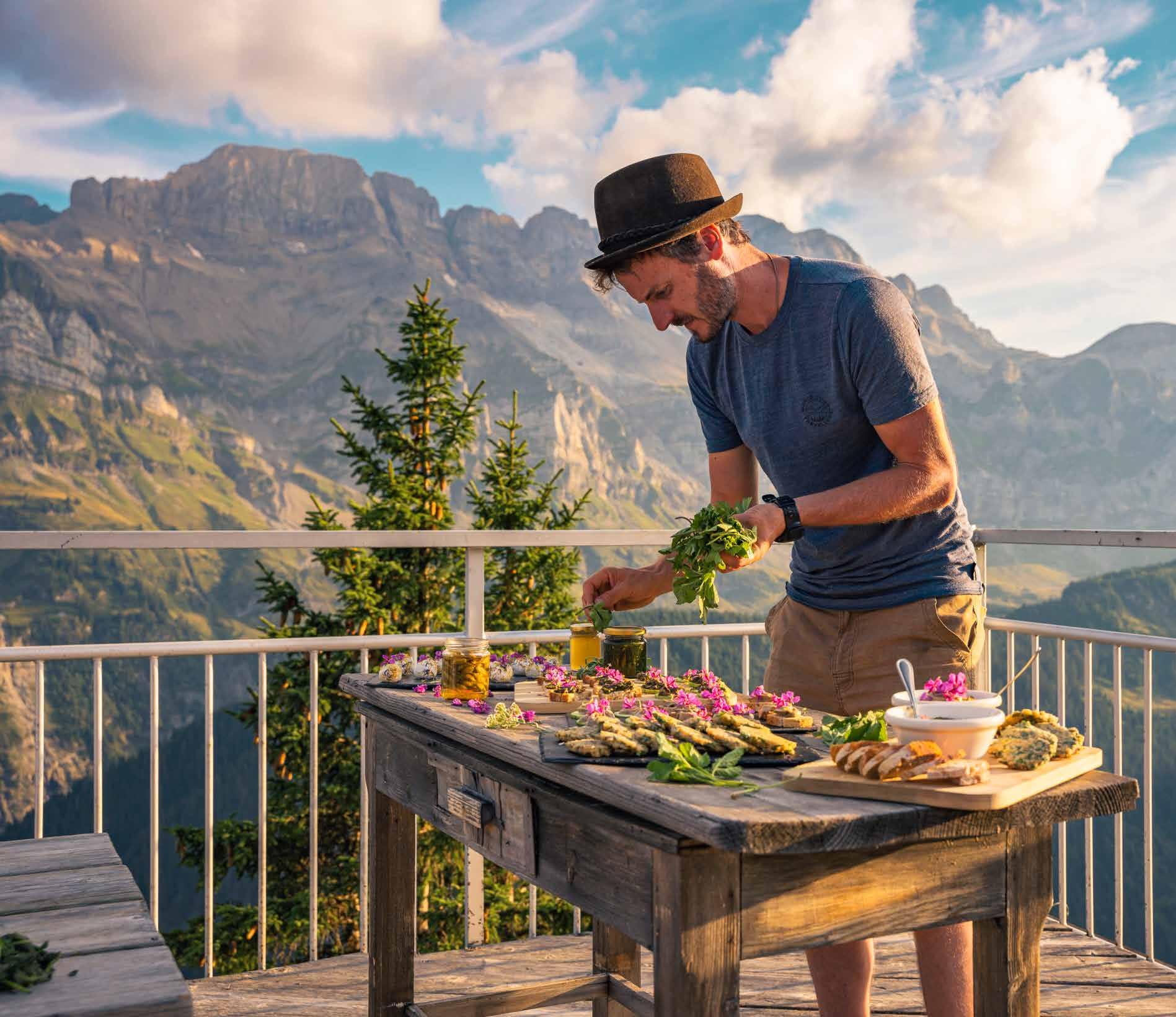
A playful journey through Switzerland’s culinary identities, where geography shapes taste and every meal feels like crossing a border
When I was a kid, there was a prize contest on Yugoslav television. The first prize was a trip to Mexico, and the second was a trip to Switzerland. My sister said she would rather choose the latter, and I just laughed at her. How could you not choose exotic Mexico, I wondered, naively believing that Switzerland held no such wonders. Many years later, life brought me to this “ordinary” place known only from the atlas several times. I must admit, I am very happy to have been so wrong; every single visit exceeded all my expectations.
SWITZERLAND IS NOT DIVIDED INTO CANTONS ON A MAP, BUT INTO WORLDS ON A PLATE
Once, when some locals asked me what I thought of their cuisine—expecting me to praise their specific regional dishes—I replied diplomatically that the country is not divided into twenty-six cantons, but rather into three: The Canton of Polenta, the Canton of Wurst, and the Canton of Raclette. They were delighted. In one breath, I acknowledged both their local patriotism for melted cheese and the
perfectly fitting diversity that makes this country beautiful.
Travelling through Switzerland means constantly switching personas, as if you become someone else with every passing kilometre. In just a few hours by train, you can transition from Mediterranean nonchalance to Germanic efficiency, or fall into an Alpine trance where time stands still.
In the Canton of Polenta—officially known on the map as Ticino—the mountains look like a backdrop for a Fellini film. The sun shines brighter here, and the people are louder. Polenta here successfully resists Swiss prices but retains the precision that gives Swiss watches their name. While its appearance is as wild as the Alps, polenta is perfectly
creamy and as soft as the clouds above them. If you think you’ve gotten off cheap in this canton, just remember you’ll need to pay 15 francs an hour for parking after lunch.
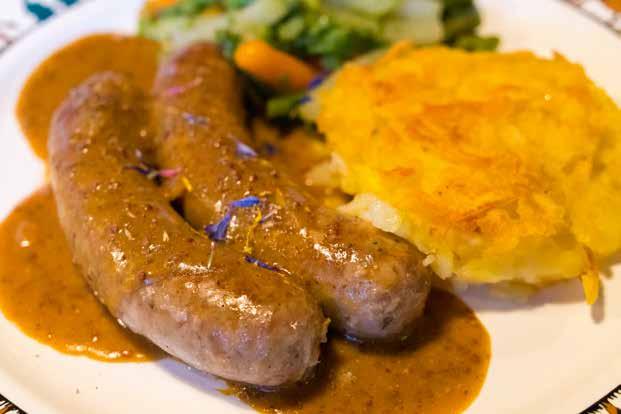
As soon as you cross the St. Gotthard heading north, you enter the Canton of Wurst, where work, order, and mustard are held in high regard. Rösti—the beloved grated potatoes— is practically treated as a strategic mineral resource. However, this strict canton carries serious risks for visitors. If you dare ask for mustard with your Bratwurst in St. Gallen, you might, at best, get a cold shoulder; if you’re truly unlucky, you might be banished. The sausage here is perfect on its own, much like the federal railway timetable. You must not insult it by asking for condiments. It should be consumed exclusively with a mug of beer as heavy as your backpack.
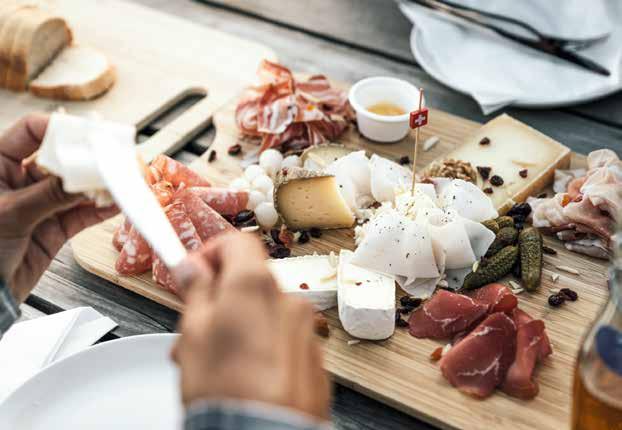
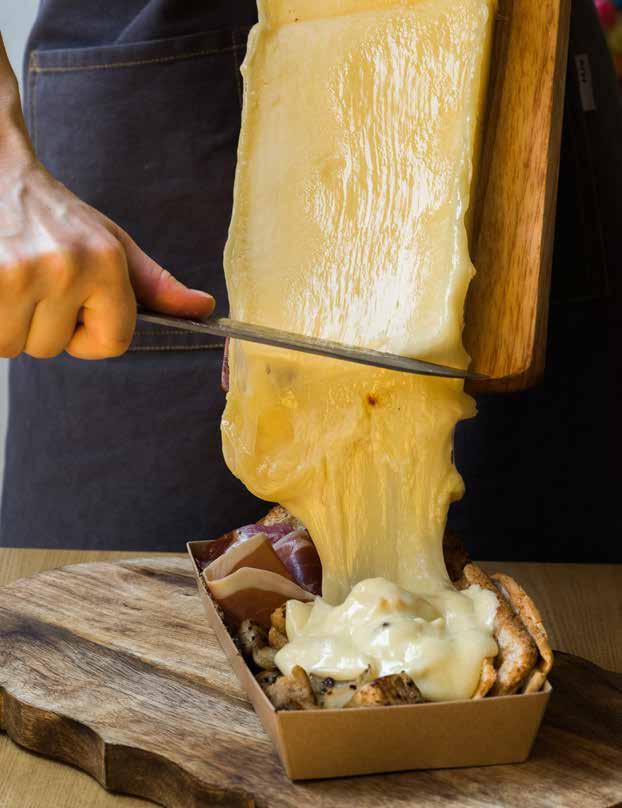
Finally, let me introduce the Canton of Raclette. Please forgive my personal bias, but the heart wants what it wants. In the Frenchspeaking part of Switzerland, cheeses are gods, and feasts are rituals of hedonism. A rustic tin pot full of melted cheese is served to the whole table. Everyone dips their crusty baguette into the hot fondue that melts hearts and stops time.
Then there is the Zeus of cheeses—Raclette, a true emotional volcano. A wheel of Raclette is heated over a low flame until it “cries,” and aromatic yellow tears begin to flow over hot potatoes and spicy gher-
FROM POLENTA TO WURST TO RACLETTE, EVERY KILOMETRE REWRITES YOUR APPETITE AND YOUR CHARACTER.
kins. Whatever you do, do not drink cold water with Raclette—you will be banned from the restaurant immediately. Instead of water, order a white Fendant wine or a simple warm tea. Otherwise, the melted cheese in your stomach will turn into a rubber ball.
Switzerland is the only country in the world where you can have breakfast according to German protocol, lunch with Italian passion, and dine in a French cloud of cheese—all while wondering how a single coffee can cost as if it were created through alchemy.
Whether you are in the zone of sausage, polenta, or cheese, one thing is certain: the bill will always be in the “red canton” (the red), but your heart— and your stomach—will be full.
MARJANA DAVIDOVIĆ
Country Manager of Nestlé for Serbia, Montenegro and North Macedonia
How responsible sourcing, education and circular production are reshaping the food industry across the region
In this interview, Marjana Davidović reflects on how Nestlé is embeding sustainability into everyday practice, shaping both industry standards and consumer habits across the region.
Nestlé in Serbia often emphasises that sustainability is not merely a strategy, but a way of working. How do food donations and support for vulnerable groups directly shape the company’s identity in the markets of Serbia, Montenegro and North Macedonia? We work closely with food banks and civil society organisations to ensure that food reaches the right hands – those who need it most. In this way, over the past five years alone, we have donated Nestlé products across all categories with a total value exceeding RSD 150 million. Responsible management of food surpluses is also crucial from an environmental perspective, as improper disposal of food waste in landfills increases greenhouse gas emissions.
As a long-standing educational initiative promoting healthy nutrition among children, “ZdravoRastimo” has become something of a benchmark in our schools. As the generations who have gone through the programme are now becoming young adults, what long-term changes in consumer habits have you observed?
The “ZdravoRastimo” programme is part of the broader global initiative “Nestlé for Healthier Kids”, which aims to educate children, as well as teachers and parents, about the importance of healthy nutrition and physical activity for proper growth and development. This year, we are marking 15 years of the programme in Serbia, and so far, more than 300,000 primary school pupils have taken part in the educational activities.
The true measure of the programme’s success lies in behavioural changes that parents notice at home – for example, when children independently suggest breakfast ideas, ask for a glass of water instead of juice, or understand that sweets are “for occasional treats”. This growing awareness is increasingly reflected in the habits of adults as well, who are paying more attention to the composition, origin, quality and nutritional value of the products they purchase. Our response is clear, direct and transparent communication, helping consumers make informed choices when selecting food products.
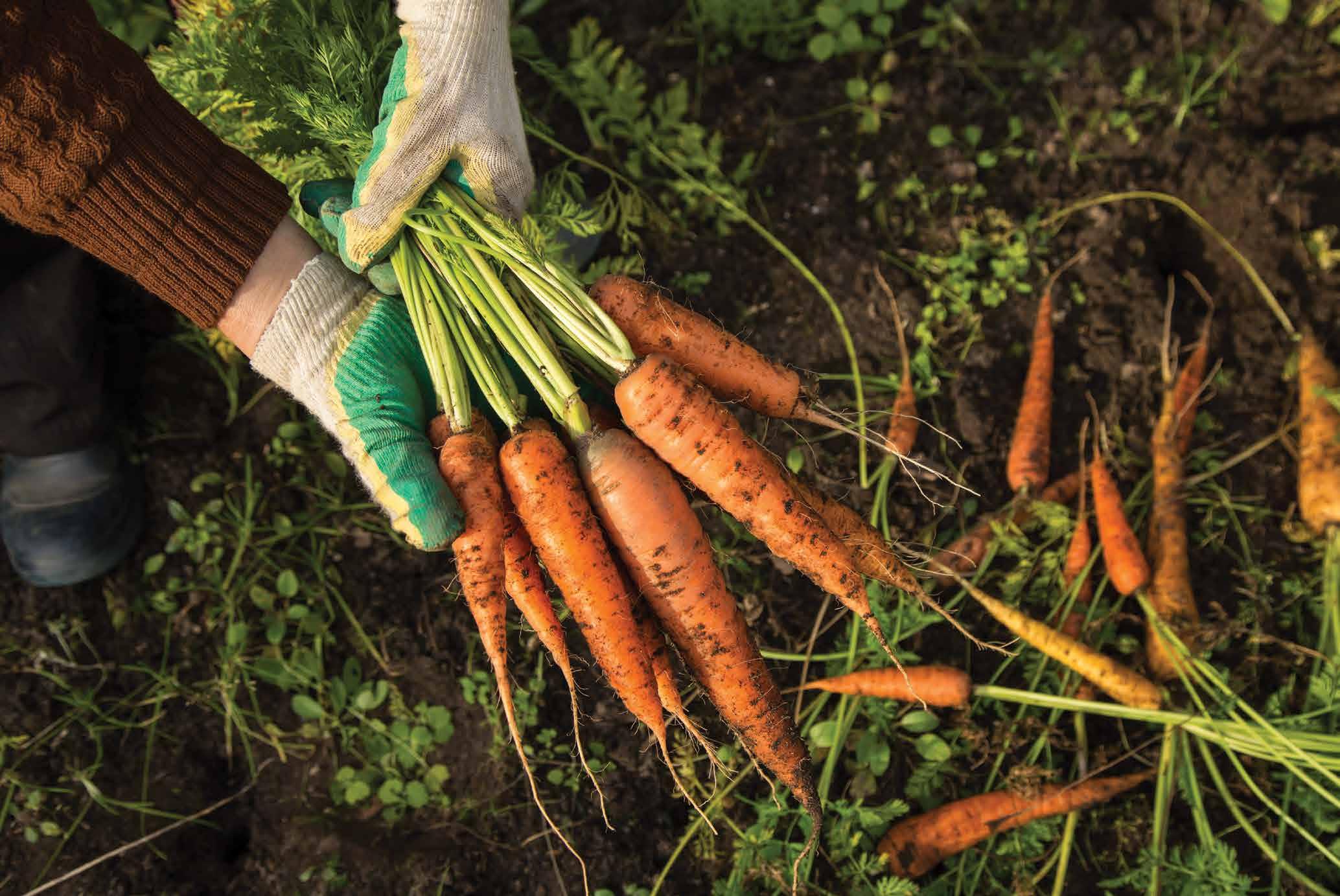
The transition from conventional to regenerative agriculture – including practices such as strip-till technology and the use of drones – requires a significant shift in farmers’ mindset. How challenging was it to convince local partners that “less soil disturbance” can actually lead to higher profitability and greater resilience to climate change?
When we launched our regenerative agriculture programme in Serbia in 2021, the concept was largely unfamiliar to our suppliers, and we did not initially have their full attention and trust. Today, after investing more than CHF 3 million and providing extensive education, they understand how vital soil health is not only for crop sustainability but also for the long-term viability of their businesses. Increasingly, they are able and willing to meet the demands of large systems in terms of raw material quality and production methods. This shift did not happen overnight – it has been a gradual, carefully guided process.
An additional challenge was technical in nature, as the transition to regenerative methods requires new equipment and adjusted agricultural calendars. The transition period itself can also be demanding, as visible results from these practices often take three to five years, along with continued investment in training, monitoring and supplier support. From the outset, our approach has been based on close collaboration with partners and adapting requirements to their realistic capacities. The programme has been implemented among suppliers of dried vegetables, sunflower oil and soy, currently involving 13 farms, with nearly 5,000 hectares covered by the end of the last season.
The Surčin factory is recognised as a “Zero Waste to Landfill” facility. What does waste management look like in practice at a plant producing tens of thousands of tonnes annually, and how challenging is it to maintain this standard within the local infrastructure environment?
As early as 2019, Nestlé Surčin became the first food production facility in Serbia to completely stop disposing waste to municipal landfills. Instead, waste is repurposed for the production of biofuels, fertilisers and eco-insulation panels, while non-recyclable waste is used for energy recovery. The company has also invested €1.2 million in a state-of-the-art wastewater treatment plant, which processes around 24,000 cubic metres of water annually and returns it clean to the natural environment in Serbia.
Nestlé standards are stringent – and, I can say openly, financially demanding – but they ensure product quality and maintain consumer trust. At the same time, further improvements in regulation, particularly in the area of waste taxation, as well as the development of recycling infrastructure, would significantly support and accelerate the adoption of circular business models across the entire industry.













March 2026