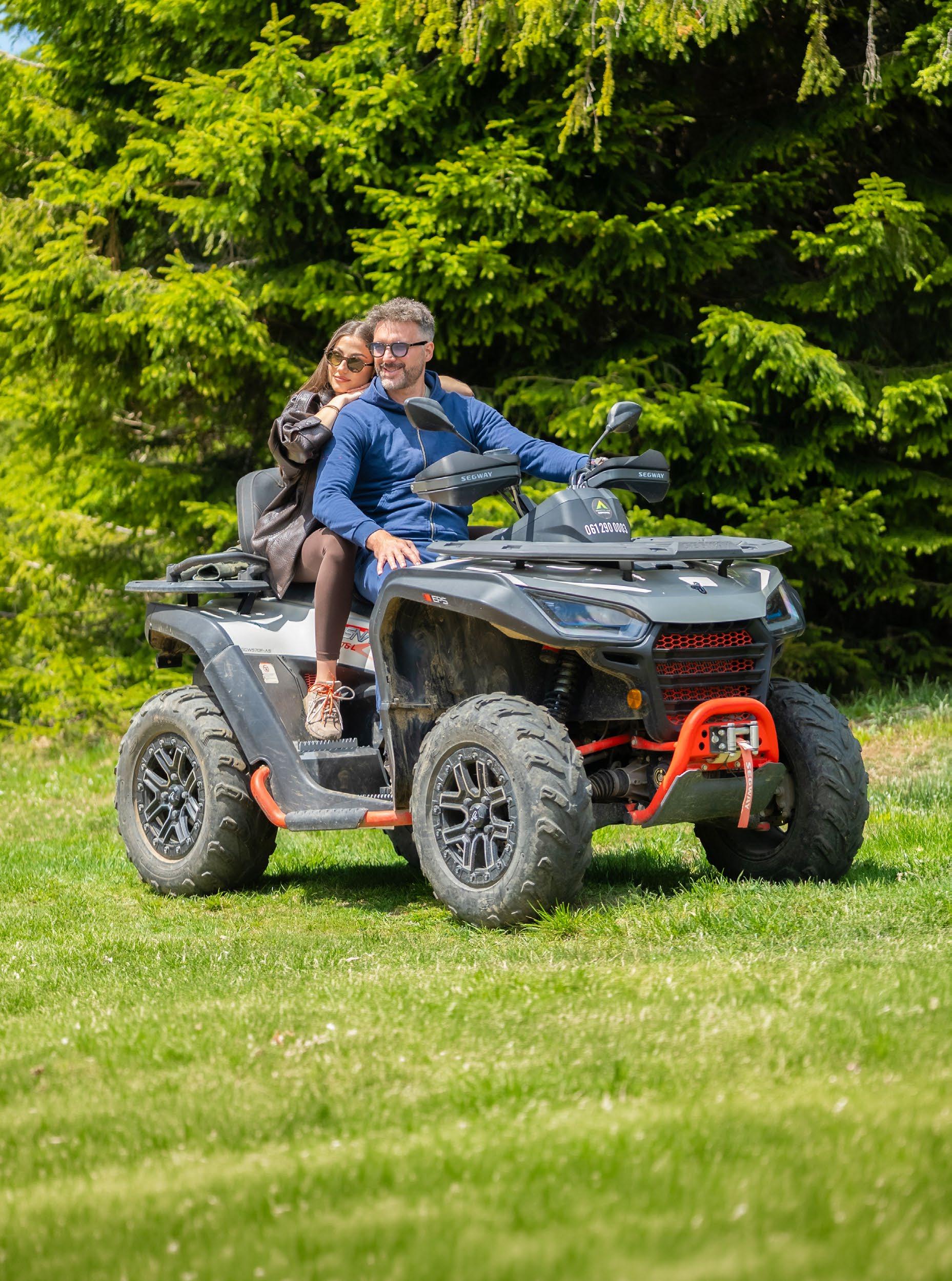
It’s not always BLACK OR WHITE but it’s a mountain reset for all senses!
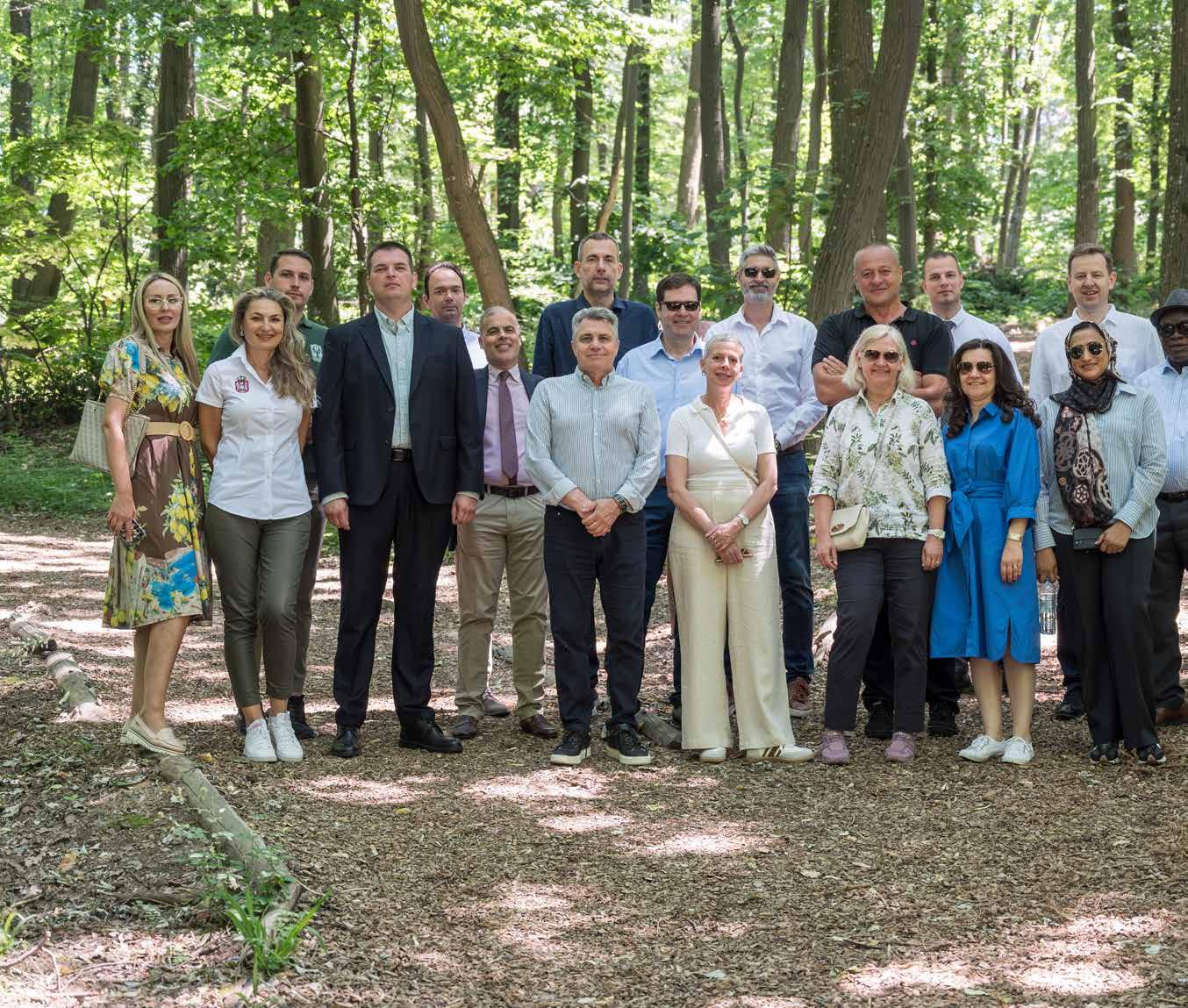
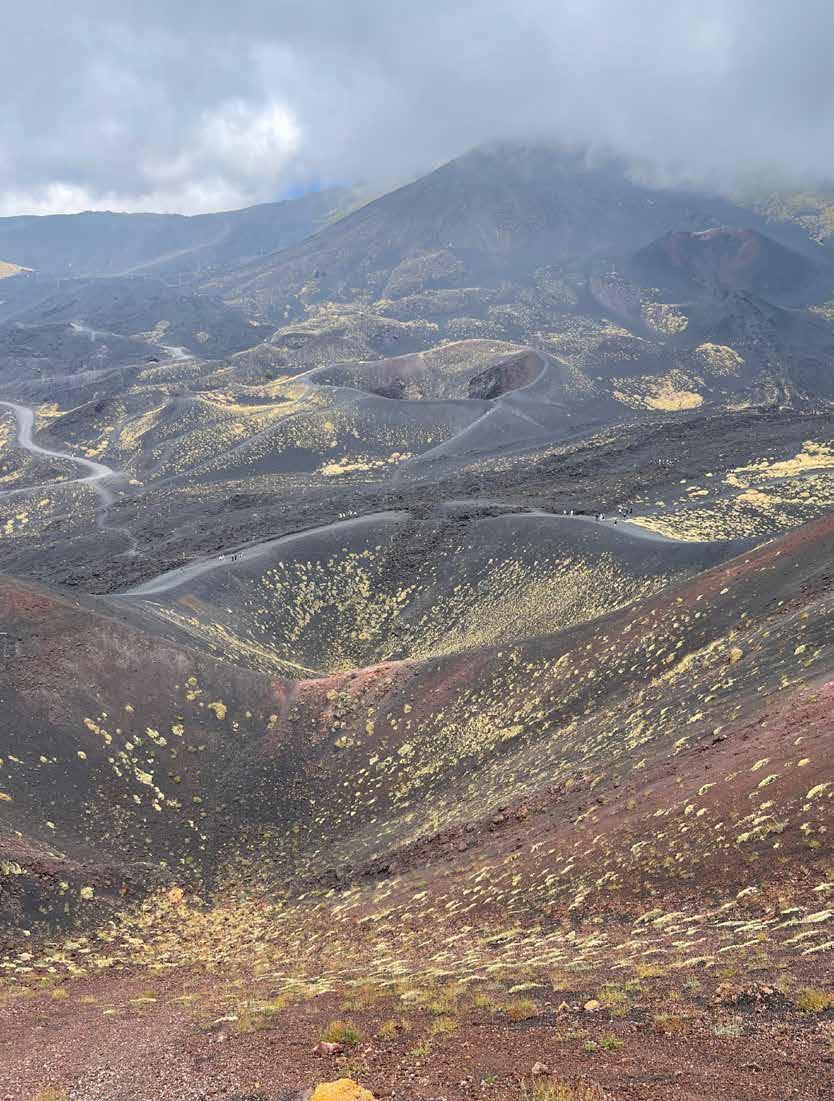
Serbia’s highest and most storied mountain is not a winter-only destination. Come summer, Kopaonik reveals a quieter, richer self. The season invites hiking, cycling, foraging, and long mornings doing absolutely nothing.
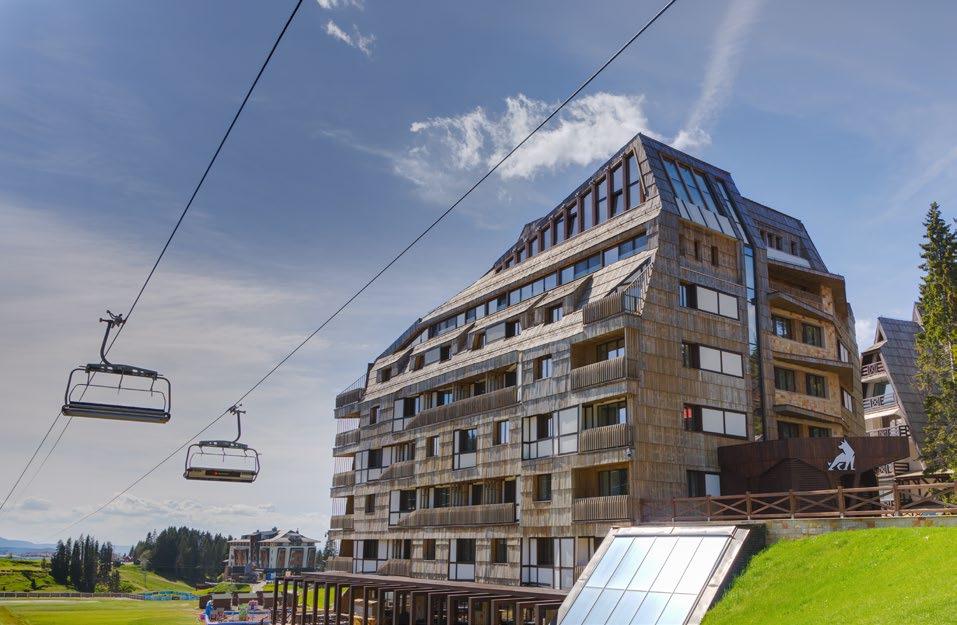
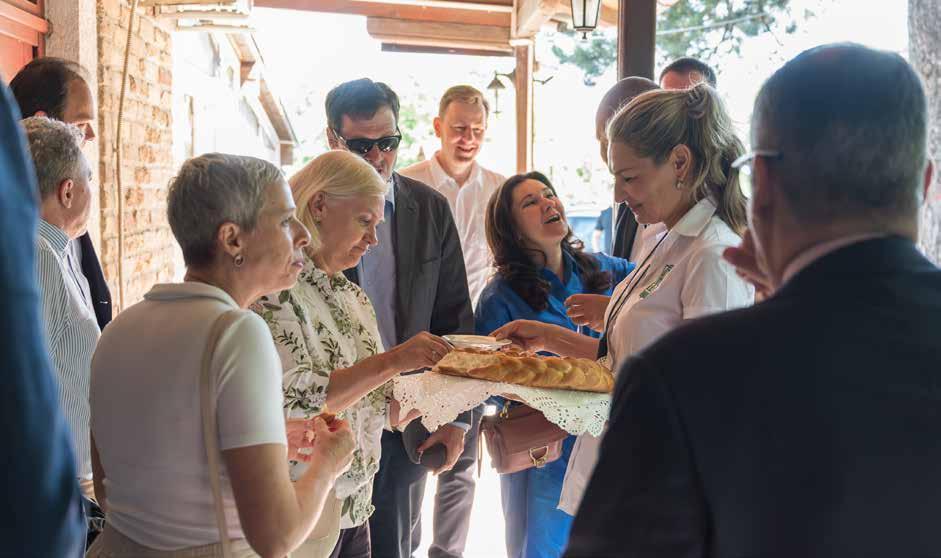
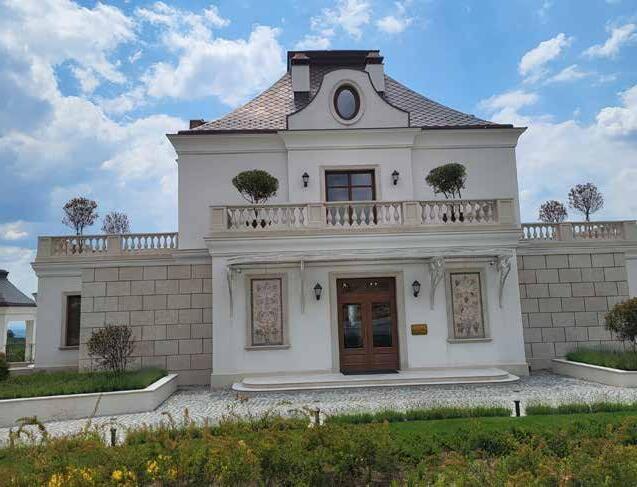
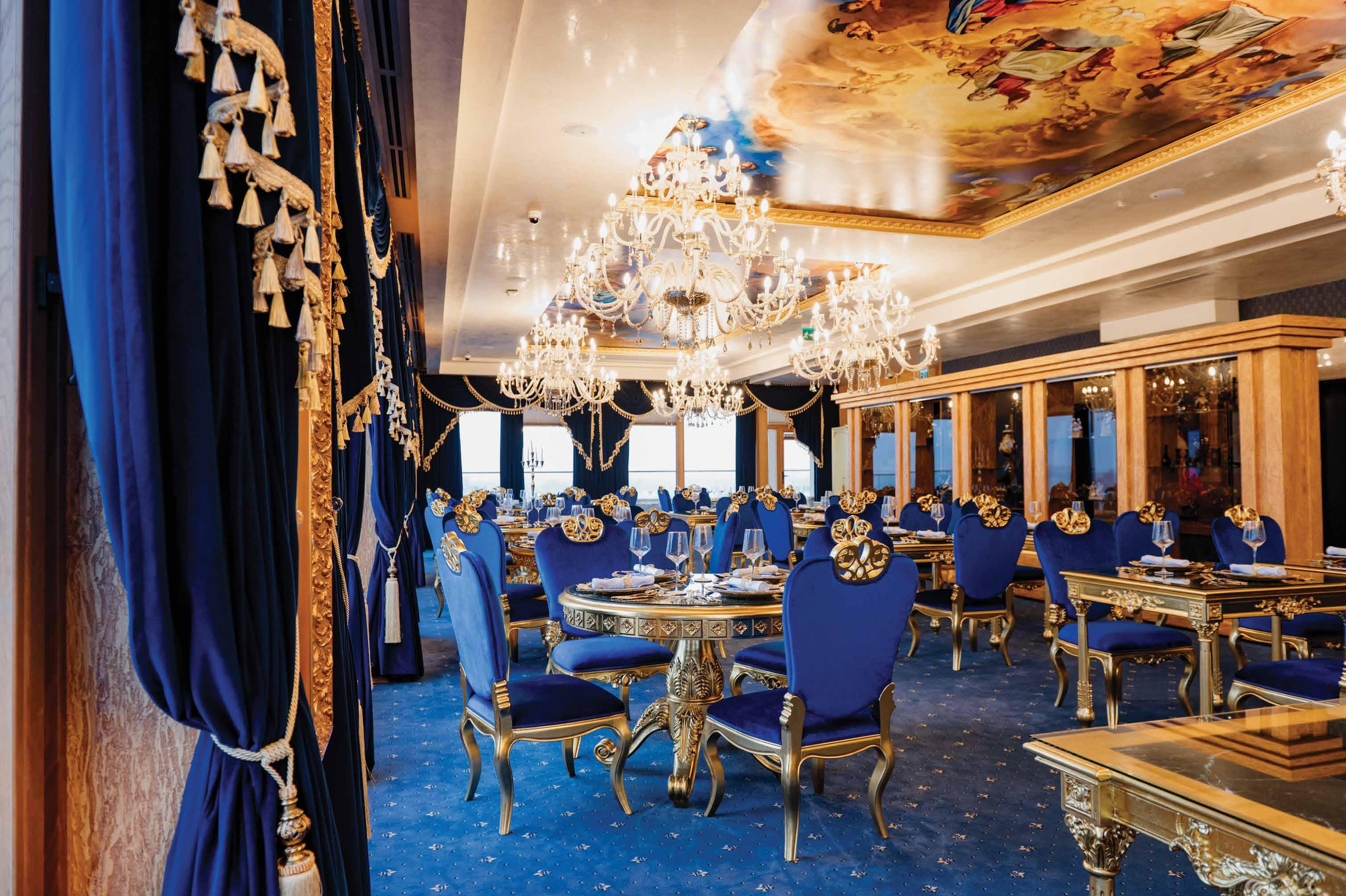
At the heart of this landscape sits Grey Hotel, a five-star boutique jewel positioned at the foot of the Karaman Greben ridge. Designed with Italian furniture and ceramics, a two-level restaurant with terrace views, and a full spa operating year-round, Grey is less a hotel than an epitome of what a mountain stay can be.
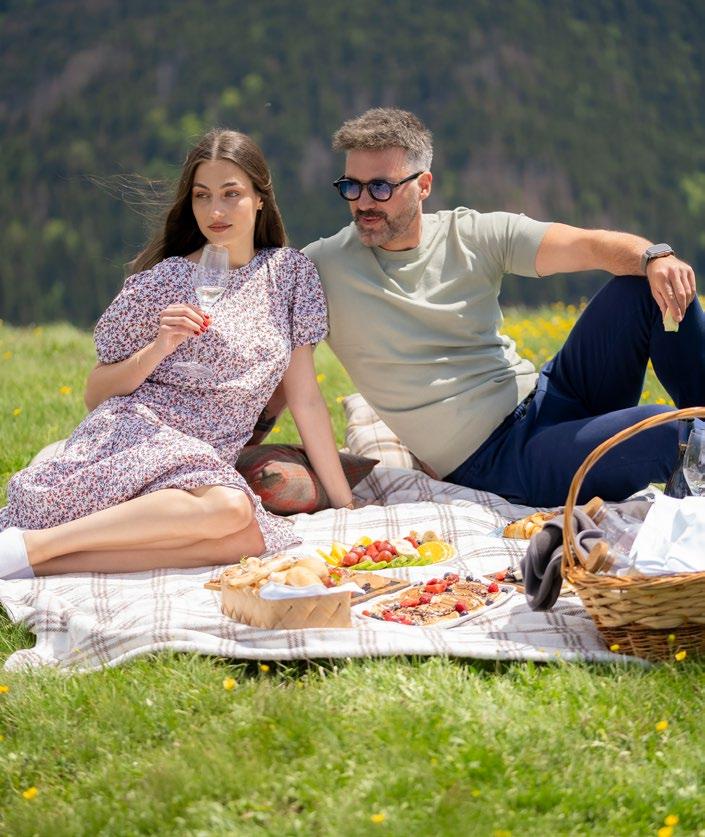
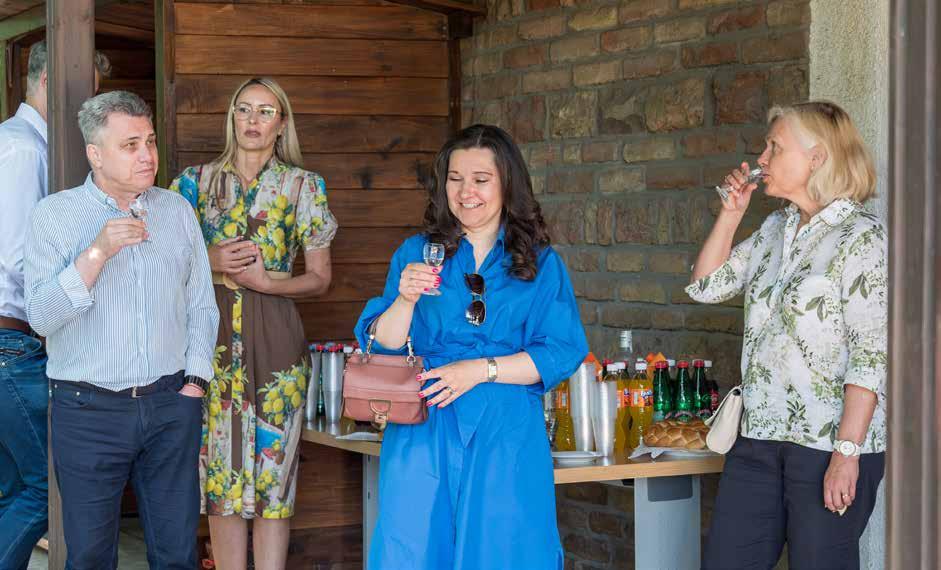
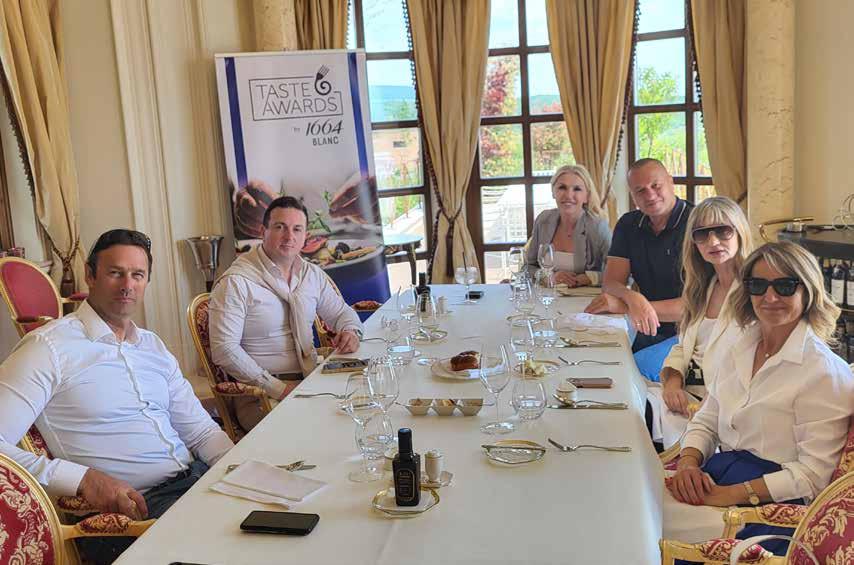
Few pleasures rival a well-composed picnic on the slopes of Kopaonik — a blanket spread across an alpine meadow, the kind of silence that only comes at a high altitude, and a table’s worth of flavor drawn entirely from the surrounding region. Grey is happy to arrange exactly that. Think a wedge of aged mountain cheese, sharp and crumbly from upland pastures; thin slices of air-dried prosciutto, cured in the clean winds that sweep the ridge; and a bottle chosen from the small producers of the nearby Župa or Toplica valleys, whose wines carry the mineral character of the land they come from. It is, at its best, a reminder that the finest meal on the mountain requires no kitchen, only good ingredients, open air, and the unhurried time to enjoy both.
This summer, Grey introduces Grey Rituals, precisely a Detox ritual (July 1–August 31) which is best described as a curated wellness package that pair regenerative spa treatments by certified Beauty imagini therapists with the mountain’s natural restorative properties. Each ritual is sitespecific: designed for this air, this altitude, this pace.
Whether you are a family seeking a summer base camp or a professional in need of a genuine reset, Grey offers something increasingly rare, an unhurried place that already knows what you need before you even ask.
AMBASSADOR’S INTERVIEW
CUBA’S COASTS SING BEYOND SANCTIONS
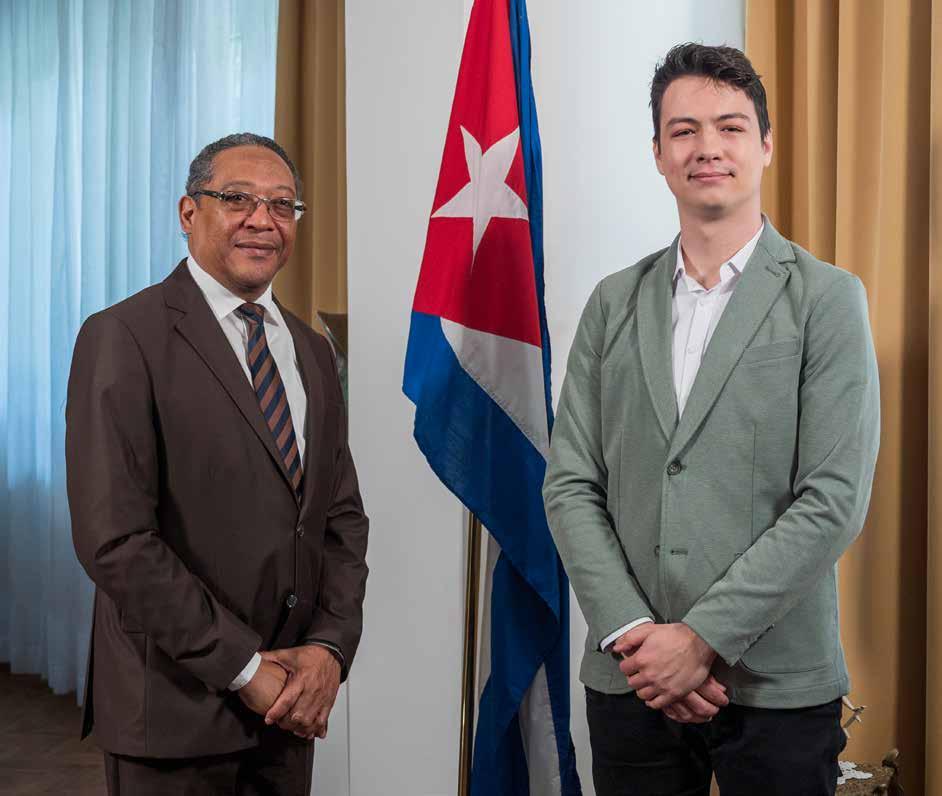
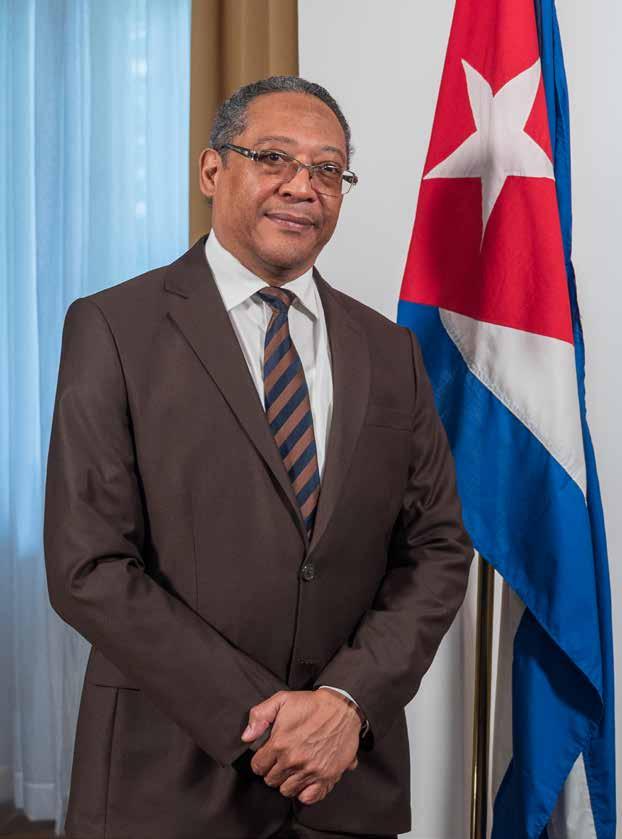
H.E. PAVEL ORENSIO DÍAZ
HERNÁNDEZ
Ambassador of the Republic of Cuba to Serbia MAGAZINE #115 / JUNE 2026
10
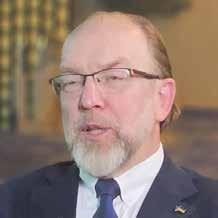
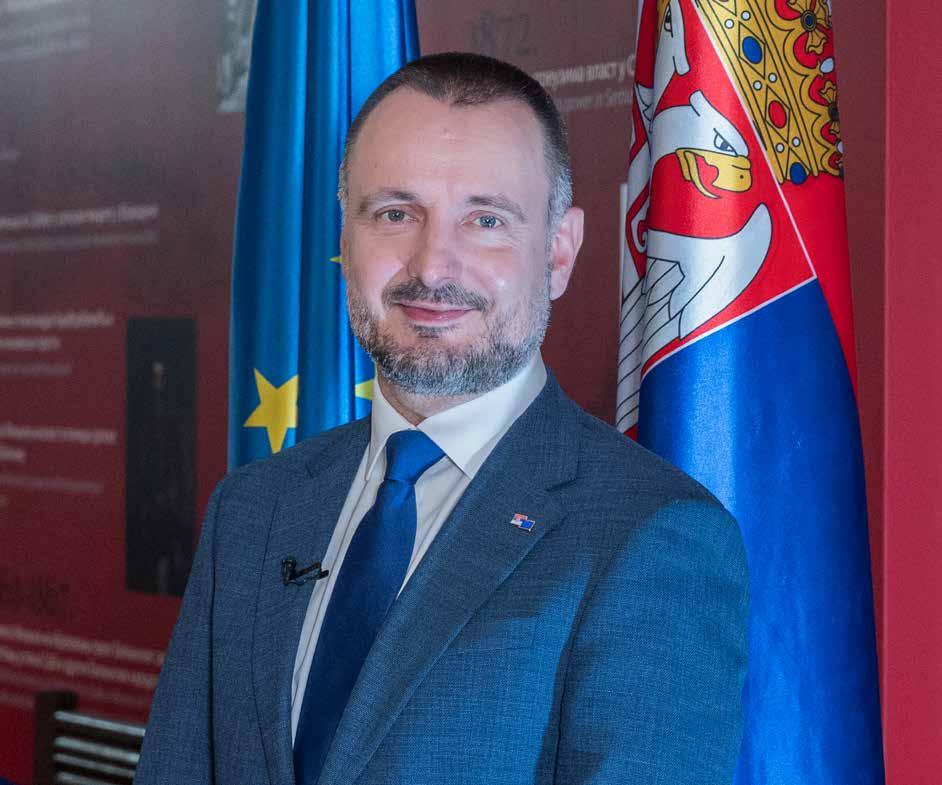
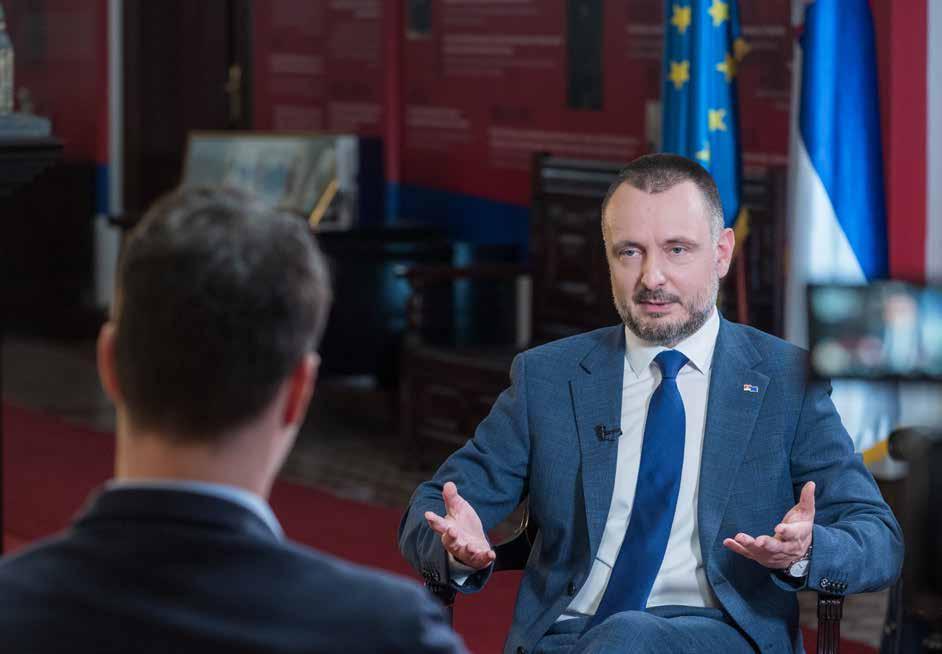
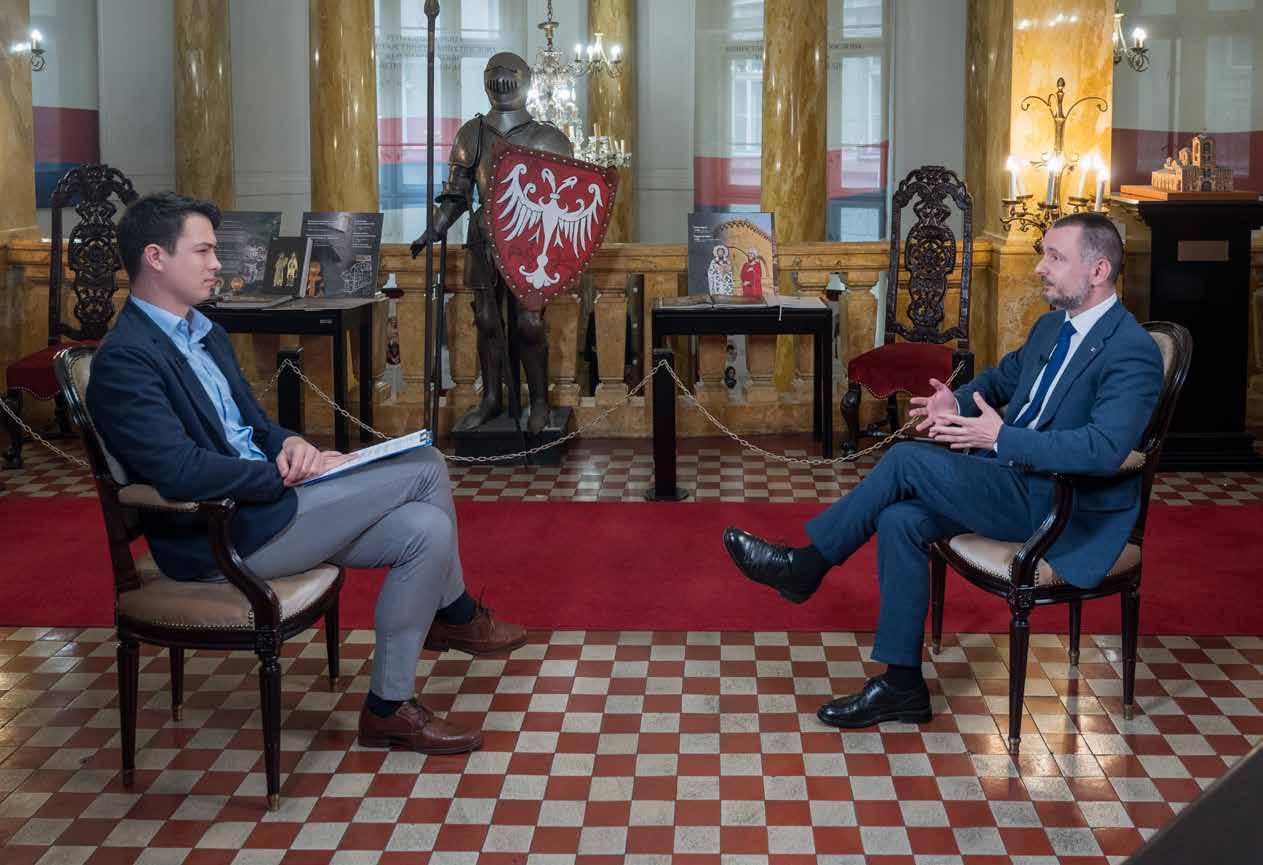
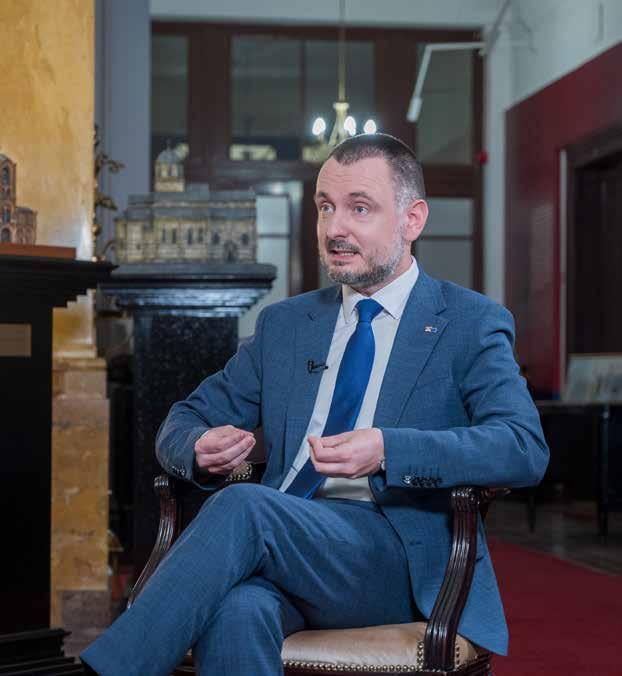
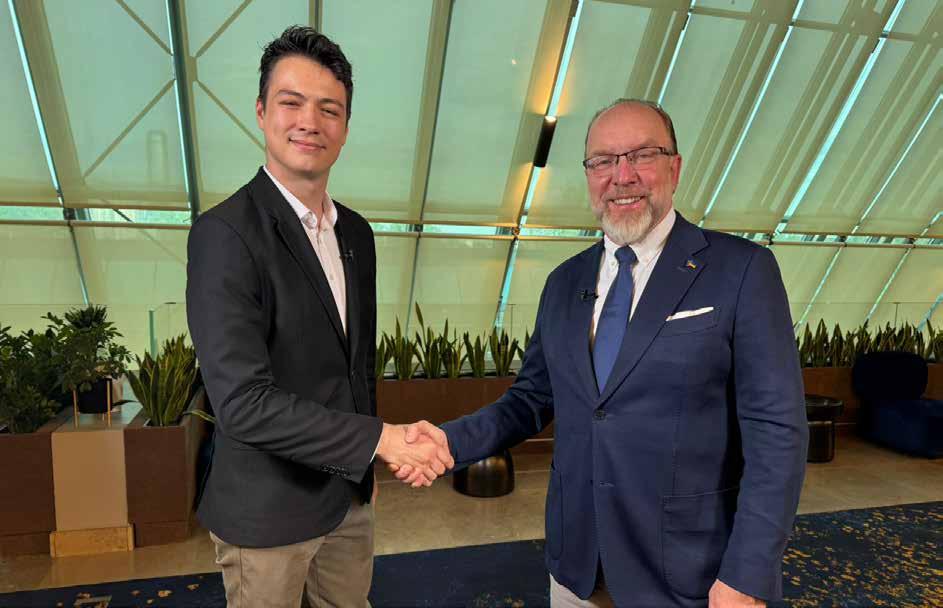
FEATURED INTERVIEW I SEE SERBIA IN THE EUROPEAN UNION H.E. DANIJEL APOSTOLOVIĆ
Ambassador of Serbia to the European Union and Head of the Operational Team for EU Accession
14
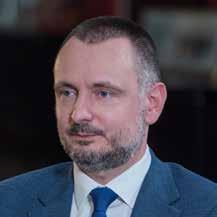
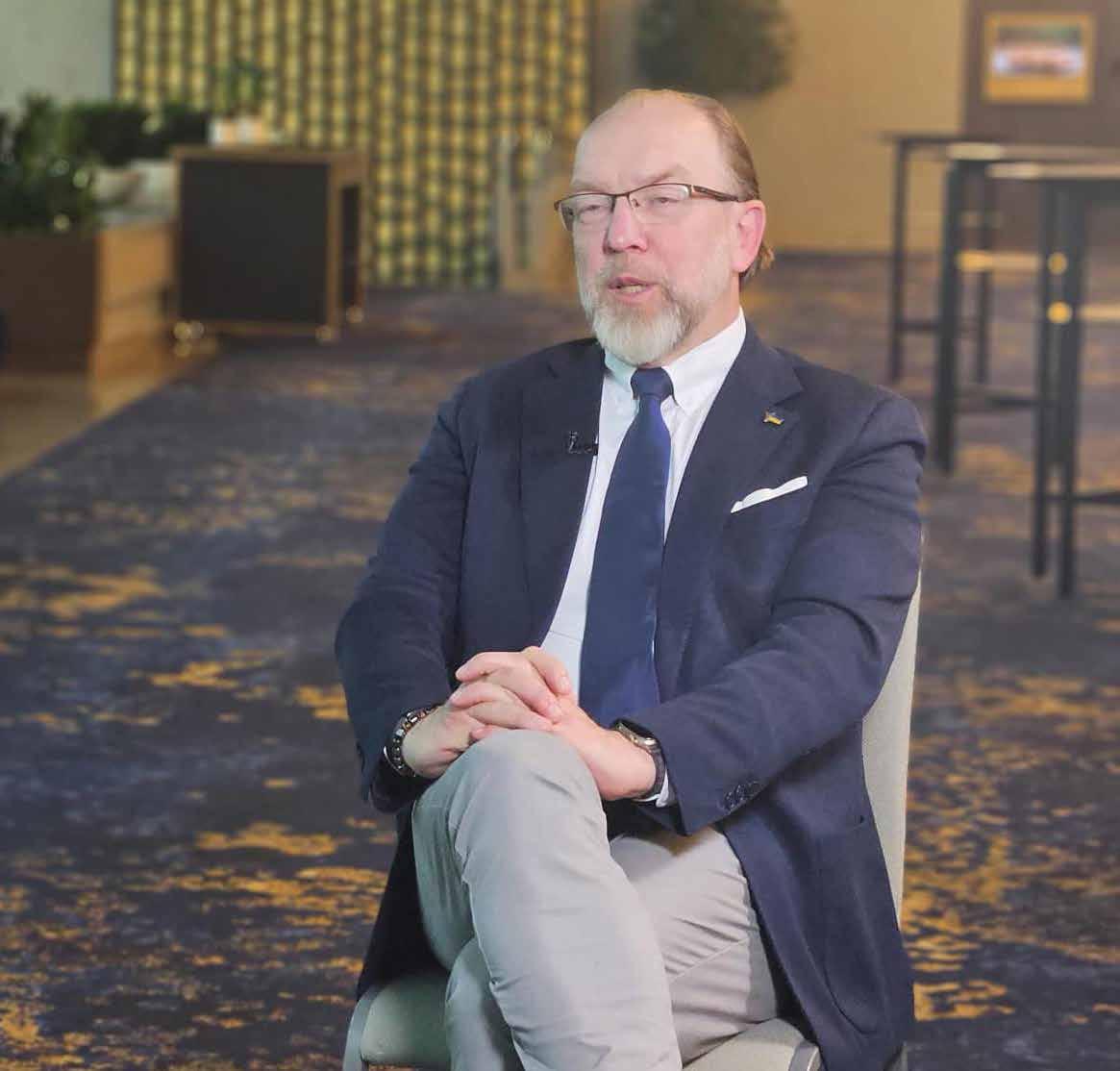
BUSINESS INTERVIEW INSIDE UKRAINE’S MODERN BUSINESS PHENOMENON GENNADIY CHIZHIKOV
The President of the Ukrainian Chamber of Commerce and Industry
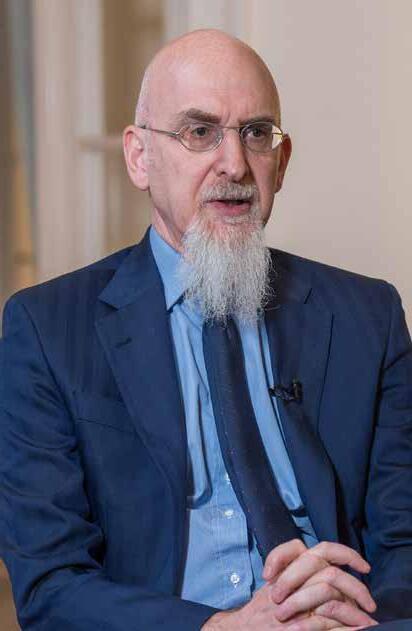
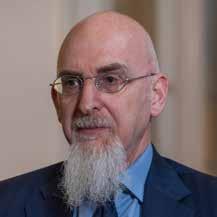
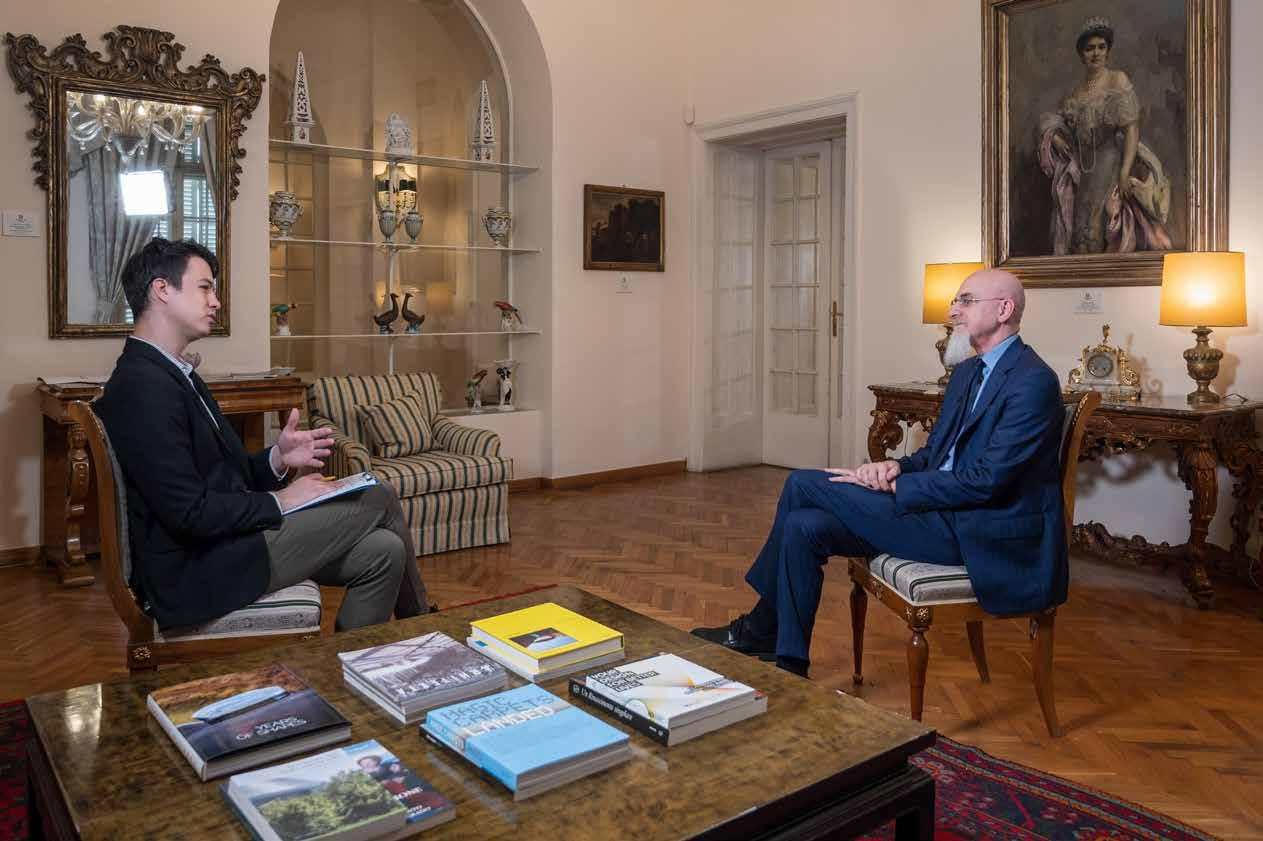
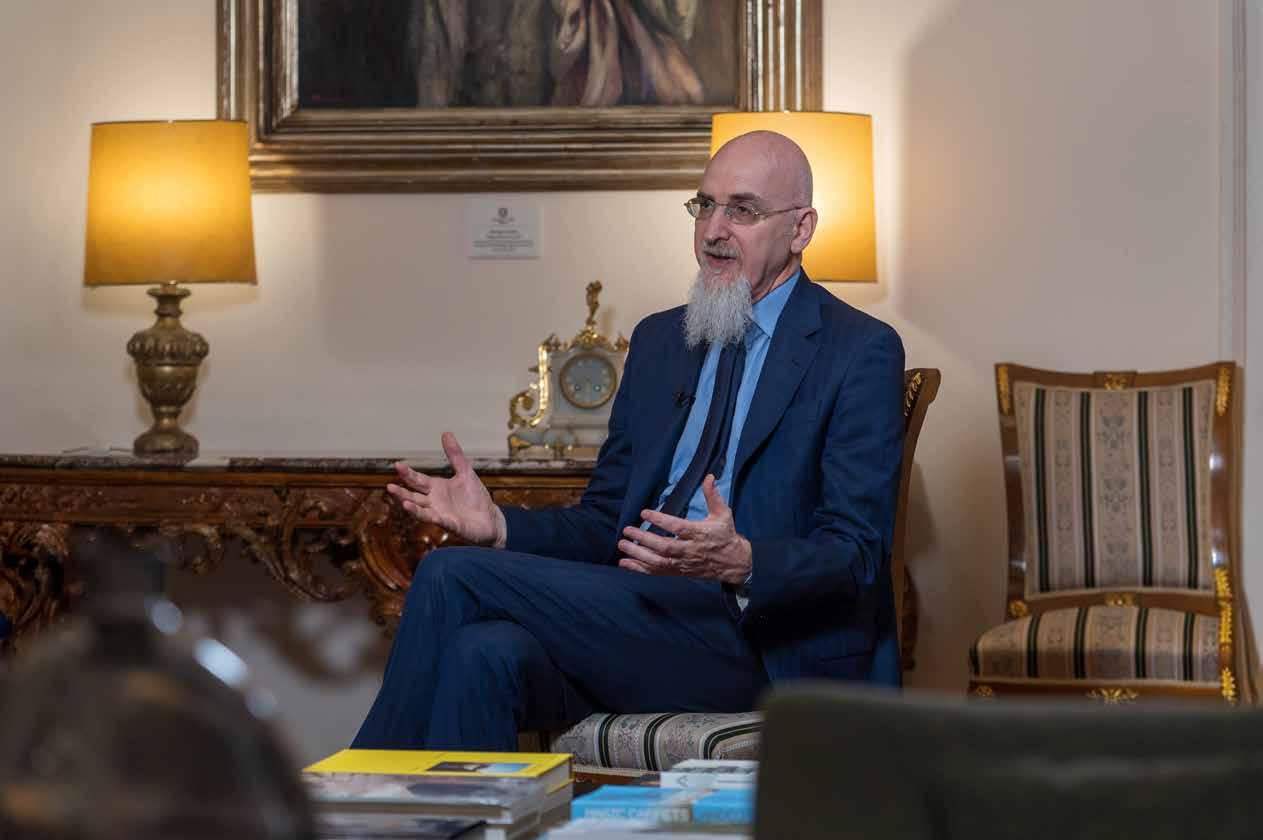
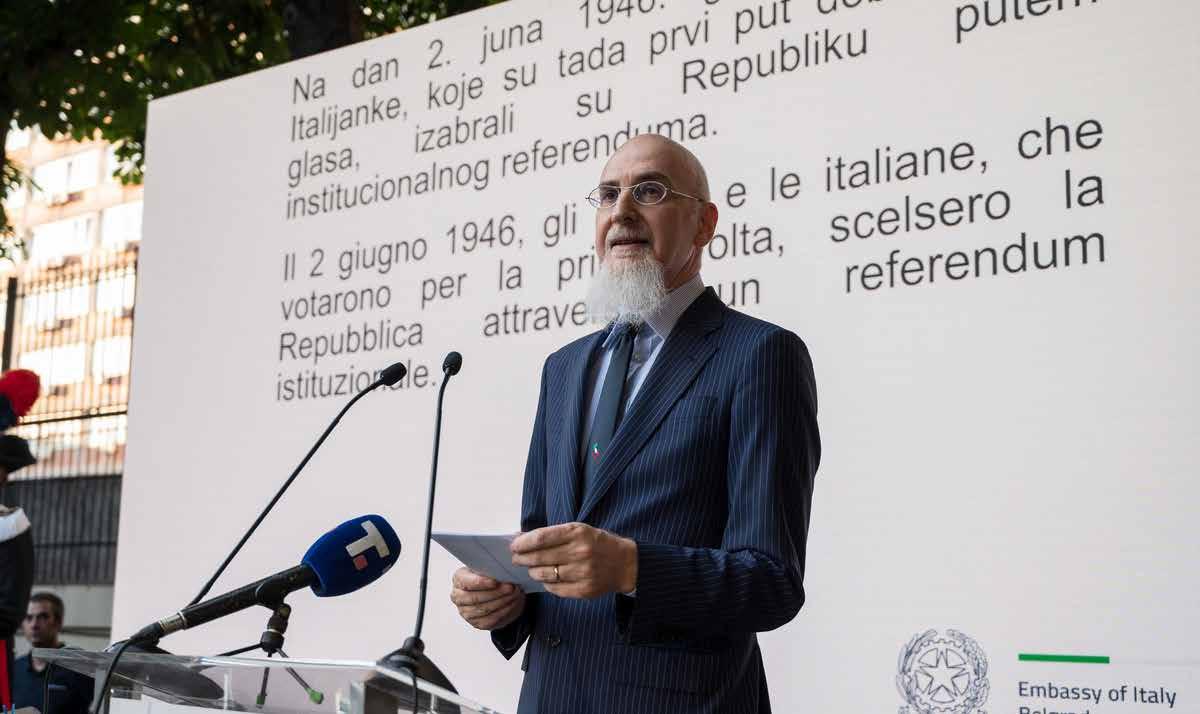
AMBASSADOR’S INTERVIEW THE PROCESS OF EU INTEGRATION OF SERBIA MUST REMAIN ALIVE
H.E. LUCA GORI
Ambassador of the Italian Republic to Serbia
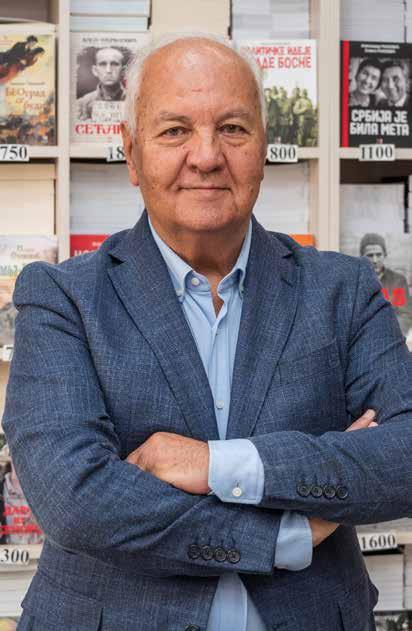
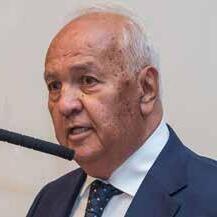
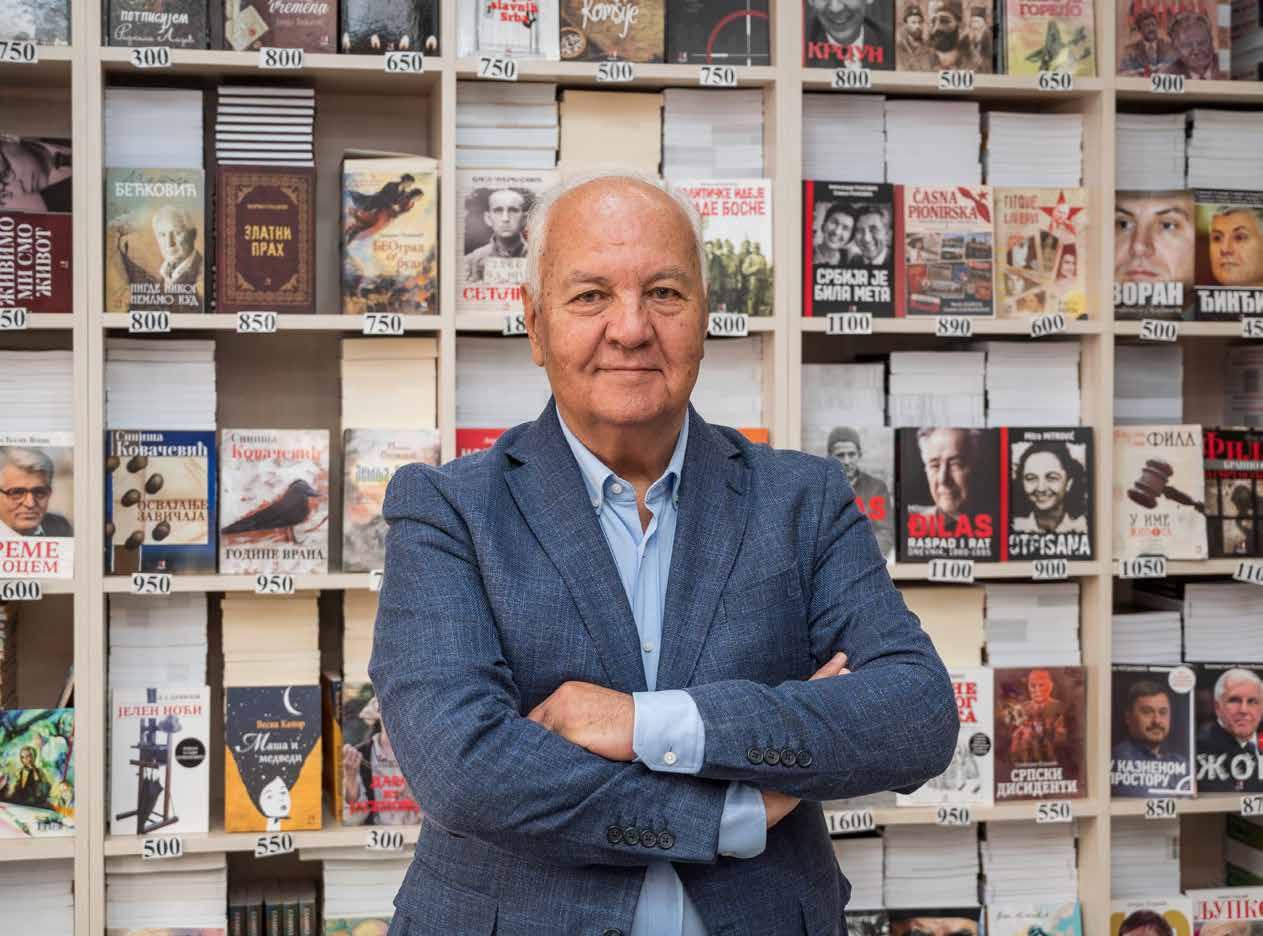
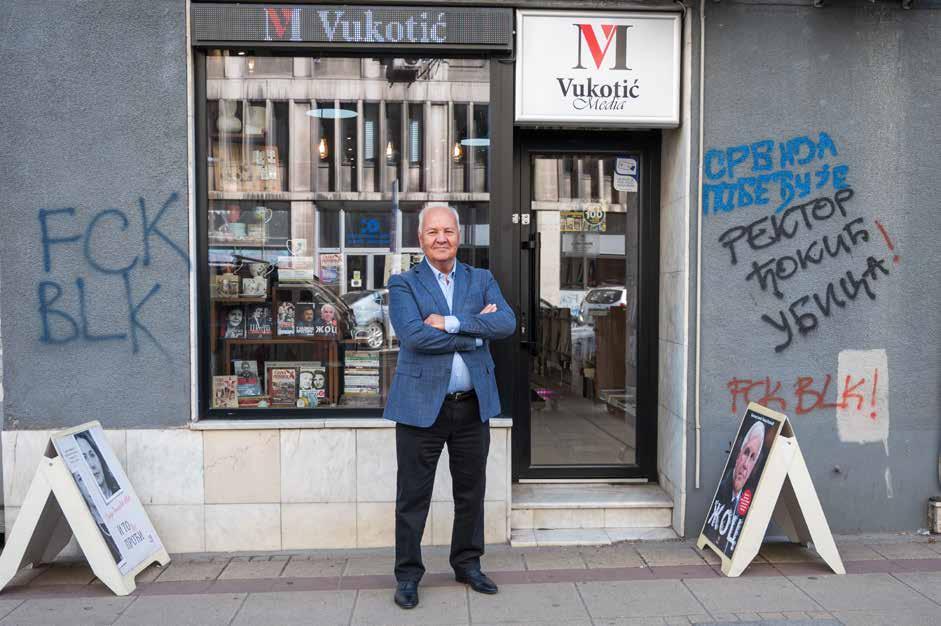
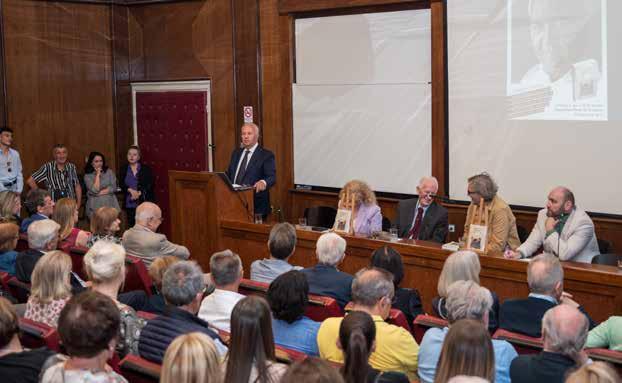
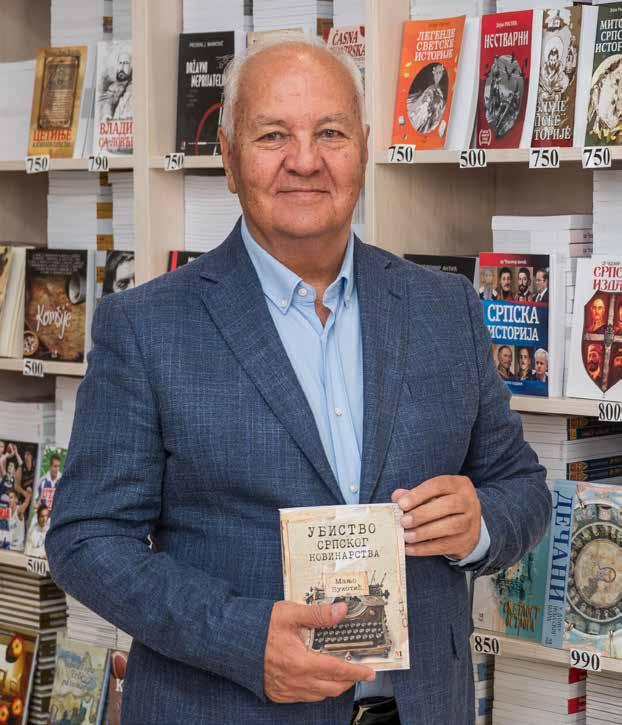
JOURNALISTS MUST BE WARRIORS MANJO VUKOTIĆ
Vukotić Media publishing
PEETERS
BAČIĆ
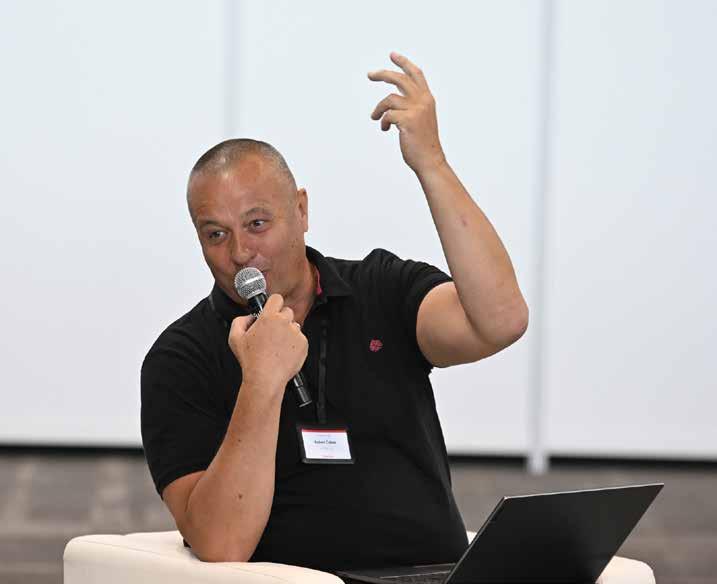
Contributors CHARLOTTE SEMMELIN ROBERT ČOBAN LAZAR JOVANOVIĆ
Distribution PRETPLATA D.O.O. office@pretplata.rs +381 11 314 99 21
Poljem se širi miris ljiljana...
The fragrance of Lilies Fills The Field...
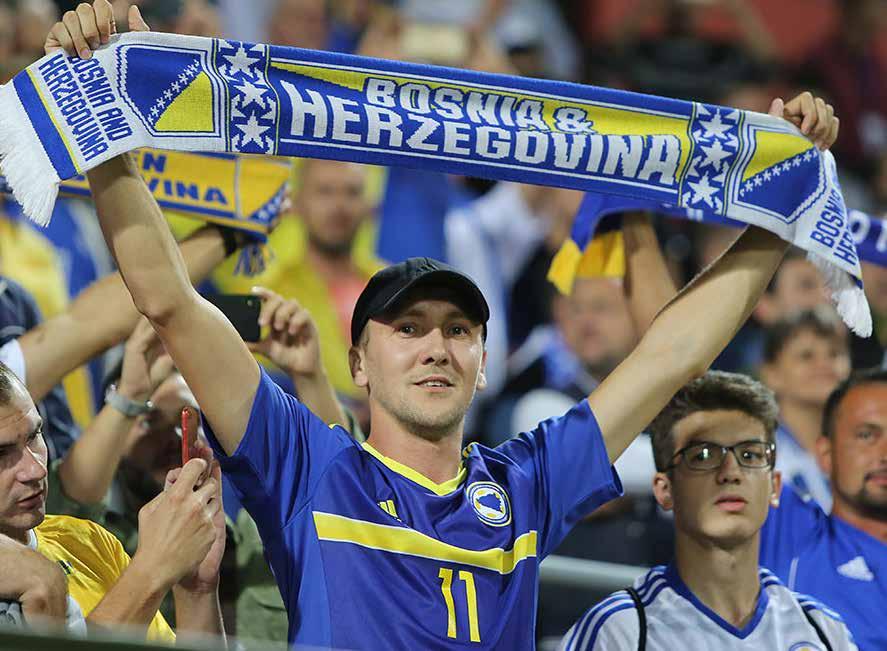
At the FIFA World Cup, the national team of Bosnia and Herzegovina, a country that, 31 years after the end of the war, still often finds itself suffocated by the toxic rhetoric of politicians, is led by Sergej Barbarez. He grew up in a mixed-marriage family. In Mostar, he was raised by his father, Ljubo, a Serb and a well-known local footballer, and his mother, Zlata, who was half Croat and half Bosnian Muslim and played handball. The national team includes Bosniaks, Croats and Serbs, and there is a certain poetic justice in the fact that it was a Serb, Jovo Lukić, who scored the country’s first-ever World Cup goal.
Standing 193 centimetres tall, he would have been an ideal point guard or shooting guard on a basketball court, yet Jovo Lukić, born in Šabac, chose a different calling in life: centre-forward. His journey took him through Doboj, Krupa and Banja Luka before arriving in Romania. He first played for Universitatea Craiova, where he scored only two
league goals, but it was at another club bearing the same university name that he became a prolific goalscorer. Last season, while wearing Universitatea Cluj’s shirt, he finished as the Romanian league’s top scorer with 18 goals. That was enough to earn a call-up from Sergej Barbarez and secure his place in the squad travelling to the World Cup in Canada. At the age of 28, he also became Bosnia and Herzegovina’s first goalscorer at the greatest stage in world football. What a way to write your name into history. Then there are the supporters of Bosnia and Herzegovina, singing songs such as Halid Bešlić’s “Poljemseširi miris ljiljana” and traditional sevdalinka melodies in the streets before matches and inside the stadiums. No banners bearing the names and faces of war criminals. No chants of hatred echoing from the stands. An example worthy of emulation for neighbours on all sides.
It is also proof of how little it takes for ordinary people to feel united and happy, without turning that happiness into hostility towards others. And how could it be otherwise when the manager is Sergej and the scorer of the first goal is Jovo?
If the international community could find a way to reward this Bosnia and Herzegovina, the Bosnia and Herzegovina of ordinary people, of Serbs, Croats, Bosniaks and everyone else, a country where human qualities and achievements matter more than the colour of a flag or the counting of bloodlines, then perhaps there is still hope that our region of the Western Balkans may one day become part of the truly civilised world.
Robert Čoban
Cuba’s Coasts Sing Beyond Sanctions
How Cuba Navigates Sovereign Diplomacy in a Divided World
H.E. PAVEL ORENSIO DÍAZ HERNÁNDEZ
Ambassador of the Republic of Cuba to Serbia
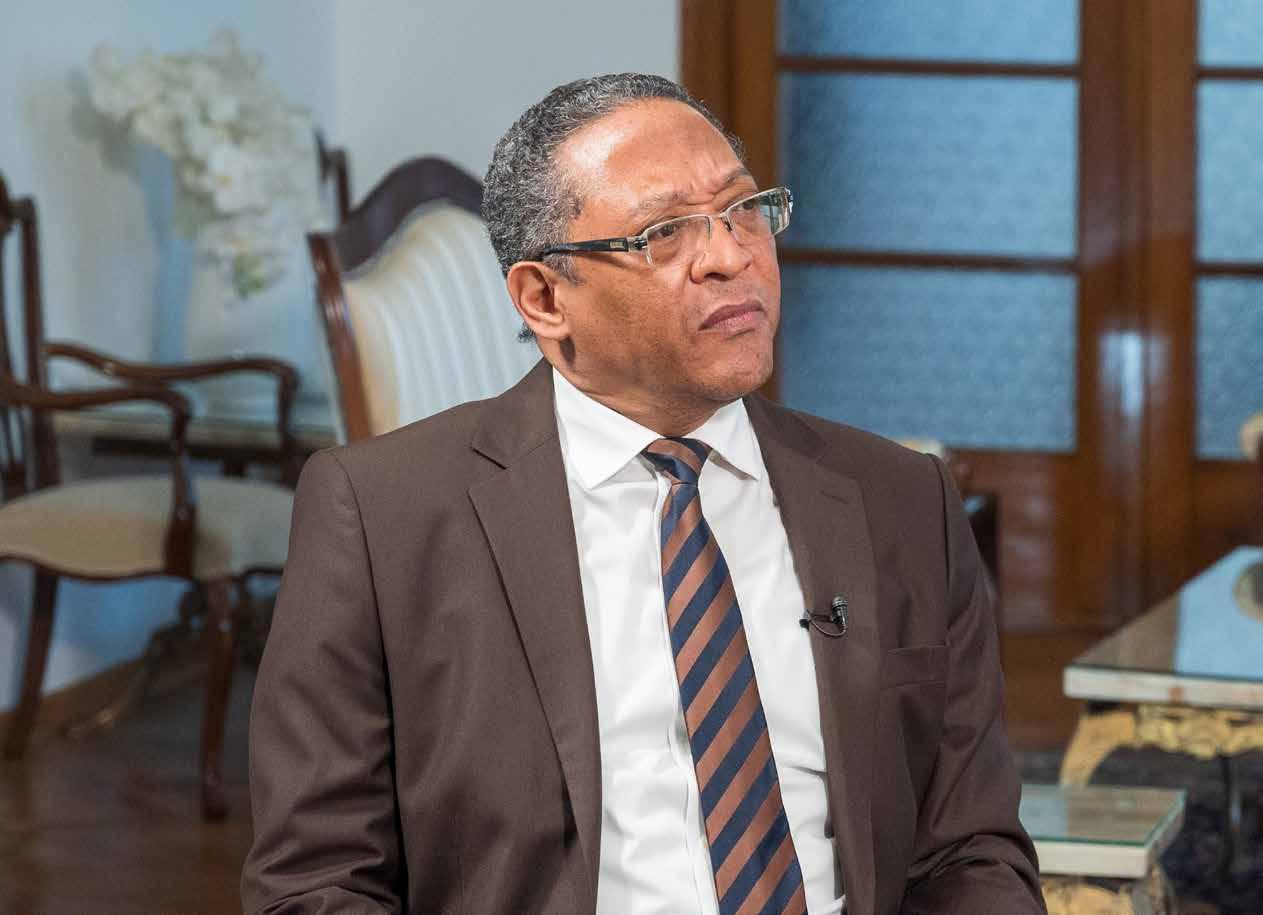
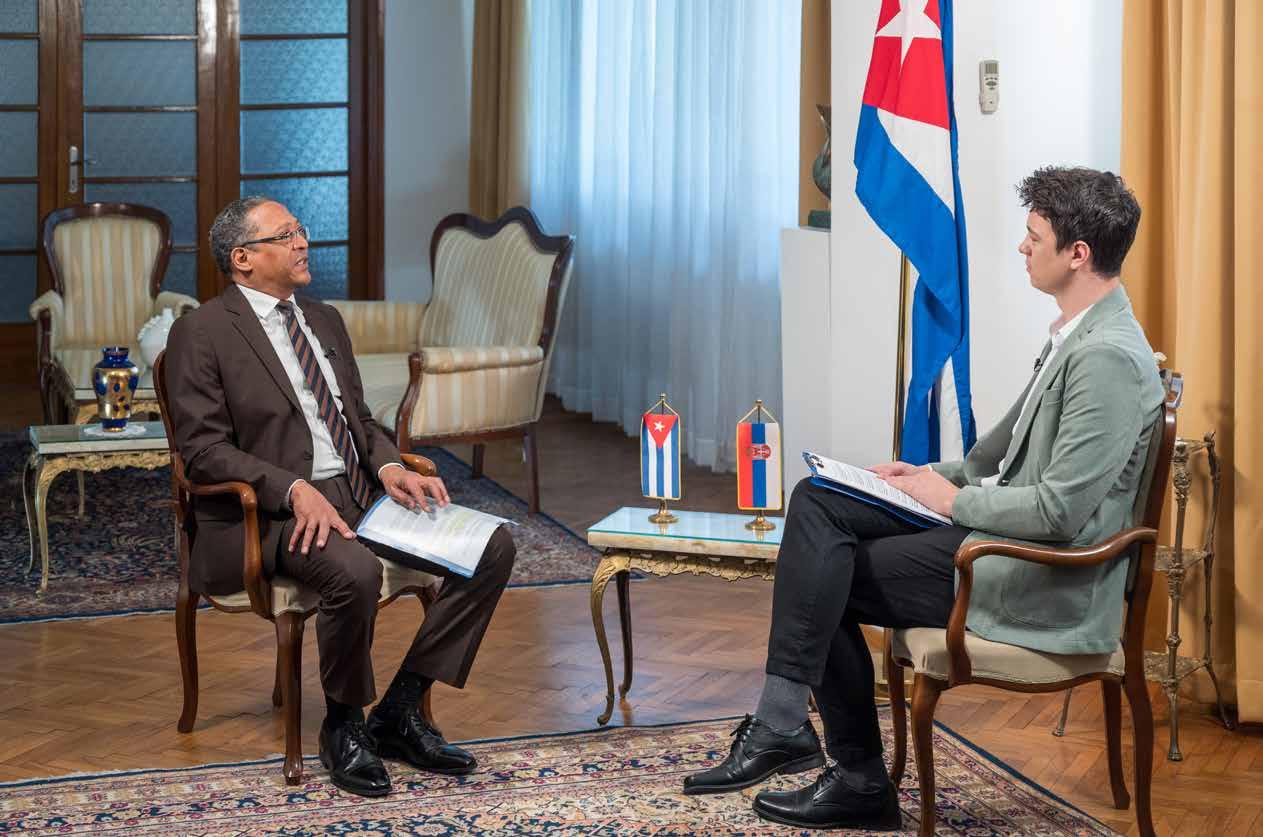
This illuminating edition of Diplomata features an in-depth dialogue with His Excellency Pavel Orensio Díaz Hernández, Ambassador of the Republic of Cuba to Serbia Despite vast geographical distances and complex global shifts, Havana and Belgrade maintain deep historical ties rooted in mutual respect, shared principles, and structural adaptability. The interview explores Cuba’s economic survival strategies under modern restrictions, bilateral pipelines in biotechnology and agriculture, and its highly anticipated showcase at EXPO 2027.
You presented your credentials in December, giving you some time—though not too much—to acclimatise here. Could you share your initial impressions of Serbia, and most importantly, its people?
Allow me to say this: I must admit that when I was appointed to Serbia, I felt exceptionally good and highly comfortable. I accepted this new deployment with immense enthusiasm. This is my first time in the Balkans and my first time in a country that Cuba— and Cubans—hold in very high regard. In Cuba, wherever you ask about Serbia or Yugoslavia, everyone speaks of it with great warmth and enthusiasm.
Arriving here and having the opportunity to walk through the streets of Serbia and Belgrade has, in a way, revealed that genuine
WE WILL NEVER SURRENDER OUR SOVEREIGNTY
affection and unique sympathy toward Cuba. I think that is the most fascinating thing I have witnessed so far. Beyond that, other elements stand out: the way Serbians and the people of Belgrade are organised, and the sheer discipline with which they confront daily challenges—it is truly something special. It mirrors the very resilience we in the Caribbean recognise when we look at Serbia as a nation with a profoundly rich history. Beneath and behind all of that, you discover a deeply grounded
culture, striking modernity, and innate warmth. It is precisely because of this environment that one can feel incredibly comfortable stepping into this new role.
Could you outline your core priorities during your diplomatic mandate here?
Cuba and Serbia have constructed a long highway of cooperation across diverse fields. I would say that in recent years, we have successfully established an excellent framework of legal instruments that are vital to expanding relations between the two nations. I arrived at the perfect juncture to translate that collective goodwill and those strategic blueprints into concrete actions. Every grand plan, after all, originates on paper. You must possess the proper
legal instruments and a structural framework to enable execution. I believe we have a vast amount of terrain to cover.
There are numerous mutual interests and projects already envisioned where we can make rapid headway. I would specifically highlight biotechnology, science, and agriculture. Many of these avenues were previously analysed and identified as fertile common ground for cooperation. These will certainly rank high among my core priorities.
Furthermore, we are looking forward to a monumental event that will transform Belgrade into a global capital, not just a regional or European focal point—EXPO 2027. It is a distinct privilege for an ambassador to be stationed here during an event of this magnitude. Cuba attaches great importance to this exhibition and has a profound interest in it. It is an objective I intend to focus on with immense energy and dedication, serving as one of our main operational pillars moving forward.
Serbia and Cuba—historically Yugoslavia and Cuba—have maintained formal diplomatic relations for over 120 years. These ties did not merely survive the Cold War; they weathered the complex geopolitical shifts of the 21st century. In your view, what allows Belgrade and Havana to remain so closely aligned despite such immense geographical distance?
I would argue there is nothing inherently transactional about being a voice for the Global South, or striving to be. To be perfectly candid, we never set that out as a self-serving target of our foreign policy. In truth, every nation should contribute to the chorus of the Global South. Cuba stands entirely ready, as it always has, to defend principles we consider sacrosanct: state sovereignty, the right to self-determination, national independence, and peaceful coexistence.
I would summarise all of this into three pillars. The first is active diplomacy. Cuba has done this for a long time across all multilateral forums, consistently defending dialogue, solidarity, values, and peaceful relations among states rather than war. The second pillar is that you build relations with all countries, regardless of whether they are large or small. However, the foundation of those relations must be mutual respect
and respect for the other side’s interests. In that sense, we have succeeded, and continue to succeed today, in developing relations with major allies like China and Russia. We also maintain normal relations with the European Union and with states across the Global South.
If we recall the period of the COVID-19 pandemic, Cuba was very active and present in various countries that were facing immense difficulties. Cuba sent medical brigades to countries such as Italy, a First World nation and a member of the European Union. Our foreign policy does not depend on a country’s size or power. And the third thing, I would say, is the resilience of the Cuban people. We will never surrender the principles I mentioned earlier, from independence to the effort to remain a sovereign state that makes its own decisions, free from other countries imposing their will.
Cuba is widely recognised globally as a resonant voice for the Global South in an increasingly fractured world. How does Cuba manage to balance relations with major global superpowers while remaining thoroughly uncompromising on its principles of national sovereignty?
THE BLOCKADE IS A COLLECTIVE PUNISHMENT
I would argue there is nothing inherently transactional about being a voice for the Global South, or striving to be. However, if the price of defending the core values and principles we believe in is to elevate our voice, we embrace that responsibility fully. Cuba stands entirely ready, as it always has, to defend principles we consider sacrosanct: state sovereignty, the right to self-determination, national independence, and peaceful coexistence. I would summarise all of this into three pillars. The first is active diplomacy. Cuba has done this for a long time across all multilateral forums, consistently defending dialogue, solidarity, values, and peaceful relations among states rather than war.
The second pillar is that you build relations with all countries, regardless of whether they are large or small. However, the foundation of those relations must be mutual respect and respect for the other side’s interests. We also maintain normal relations with
the European Union and with states across the Global South. If we recall the period of the COVID-19 pandemic, Cuba was very active and present in various countries that were facing immense difficulties. Cuba sent medical brigades to countries such as Italy, a First World nation and a member of the European Union. And the third thing, I would say, is the resilience of the Cuban people. We will never surrender the principles I mentioned earlier, from independence to the effort to remain a sovereign state that makes its own decisions, free from other countries imposing their will.
Cuba currently faces not just long-standing sanctions, but a series of intensified measures. United Nations experts have explicitly described these compounding pressures as a form of “energy starvation”. In a modern globalised economy, fuel dictates everything—from the cold-chain transport of basic food supplies to the execution of life-saving surgeries. How does Cuba manage to function under such restrictive conditions? First and foremost, we view these deliberate measures against Cuba, whose goal is to strangle the country and block access to crude
oil, which every economy today must have, as an act of war. It is an aggression. It amounts to collective punishment inflicted upon ten million Cuban citizens.
Because no one can genuinely believe that blocking a country from obtaining oil will only affect a few people or the state’s leadership, as they like to say. It actively ravages the entire population because it destroys every single tier of daily existence, social life, economic productivity, and everyday welfare. Today, more than 12,000 children are awaiting surgical interventions.
This represents an enormous structural investment in human capital because the individual is the absolute centrepiece of our society. It is deeply painful to see surgeries postponed solely due to rolling power blackouts caused by an engineered energy crunch.
Historically, systemic blockades have claimed more lives than traditional hot wars. Cuba has endured this suffocating environment for more than six decades. The latest rounds of energy blockades represent an exceptionally aggressive escalation designed to force economic chaos and societal collapse.
The root of this strategy dates back to 1960, when US foreign policy documents explicitly noted that the most effective way to alienate internal support for the government was through economic dissatisfaction, hardship, and hunger. The vast majority of our population has known no other reality; over 85% of Cubans were born under the shadow of this blockade.
Enduring blackouts that last up to 20 or 24 hours a day is harrowing. Food preservation, pharmaceuticals, transport systems, and our flagship biotechnology and medical manufacturing sectors all suffer under these manufactured power deficits.
I often joke in diplomatic circles that the only real threat Cuba poses to the USA is that their citizens are legally barred from visiting our shores to enjoy a fresh mojito or light a Cuban cigar, which remains the finest on earth. They are denied the simple freedoms the rest of the world enjoys, and the underlying logic of these extra-territorial laws is to punish international investors and sovereign nations who choose to cooperate with us. This is a blatant violation of international law, free maritime navigation, and open trade.
I want to quote an incredibly poignant statement you made during a recent lecture in Belgrade: “Cuba does not trade bread for dignity and sovereignty.” That message resonates deeply with the Serbian public. How do you balance such a high, unyielding ideal with the gruelling, practical everyday needs of the Cuban people?
It is less of an abstract philosophical principle and more of a definitive declaration of survival. For Cubans, national sovereignty and independence are structurally inseparable from our basic survival needs. A peaceful, sovereign framework is precisely what allows a state to implement policies tailored to its citizens’ best interests. The single greatest hurdle to maximising our food production and economic distribution is the blockade. Cuba relies heavily on food and fuel imports; our historic model relied on exporting our specialised goods to purchase what we lacked.
This struggle did not begin in 1959. It spans our entire history, from the colonial era through the neocolonial period between 1902 and 1959, when constitutional
Concurrently, we are rapidly migrating to solar power to achieve decentralised energy independence. Thanks to extensive bilateral agreements with China, we have already constructed over 50 solar parks that now generate 180 megawatts of power, accounting for a significant portion of Cuba’s electrical output, with plans underway to expand to more than 60 parks quickly.
Finally, we are building a more agile tourism infrastructure to maximise our natural geographic advantages. The island’s sun, beaches, and world-class hospitality cannot be blockaded. While fuel crunches have prompted some international airlines to adjust their flight frequencies, tourism remains a robust economic pillar, drawing thousands of international travellers, including a steadily growing number of visitors from Serbia.
It is highly impressive to see how methodically Cuba adapts to such severe constraints. Returning to bilateral affairs: where do you see the next major catalyst for Serbian-Cuban relations? How do we advance beyond traditional commerce to forge a more resilient economic partnership?
CUBA DOES NOT TRADE BREAD FOR DIGNITY AND SOVEREIGNTY
amendments explicitly granted an external power the legal right to intervene in our domestic affairs by military force. Historically, Cuba has imported substantial food supplies; even a few years ago, we spent over two billion dollars annually on basic food imports to sustain our system of equal distribution.
When we say we do not trade bread for sovereignty, we mean that sovereignty is the only protective shield that allows a government to enact policies for long-term human development. Faced with these crises, Cuba is actively engineering its own internal, highly creative structural reforms. Regarding the private sector, we are focusing heavily on its prioritisation and integration to stimulate internal market dynamics, purposefully expanding its reach from traditional service industries directly into domestic production lines.
The blueprint lies in focusing squarely on sectors where both nations possess world-class expertise. We must target science, technological innovation, digitalisation, and specialised agriculture. A prime example is the recent partnership agreement signed between the autonomous province of Vojvodina and Cuba’s western Artemisa province, focusing on targeted trade and product exchange.
Serbia is an agricultural powerhouse with an impressive trade surplus even with the European Union, which speaks volumes about the quality, output, and technological sophistication of Serbian farming. We can absorb immense knowledge here. Conversely, Cuba possesses unique items that have garnered significant interest in Vojvodina, such as our exotic fruits and specific traditional agricultural products integrated into specialised culinary sectors.
Our current operational challenge is devising creative, modern financial and logistical mechanisms to bypass the international banking and shipping restrictions imposed upon us. But the momentum, enthusiasm, and political will are fully present. Our overarching goal as diplomats is
to elevate our commercial and economic exchange to the same elite level as our political dialogue. Politically and multilaterally, we are perfectly synced. Now is the moment to channel that capital into mutually lucrative economic ventures, stepping far beyond the traditional trade models of the past. The foundation is ready, and the timing is ideal.
You highlighted EXPO 2027 earlier. Cuba was among the first nations to officially confirm its participation. The global theme is “Play for Humanity.” How does Cuba intend to synthesise sports, art, and culture for the millions of global visitors descending upon Belgrade?
We prioritised this event from the moment it was announced, allocating top-tier national resources to ensure Cuba delivers an unforgettable showcase. The underlying theme fits our national ethos perfectly; it allows us to showcase the very best of our triumphs in human development. Athletics, scientific innovation, and rich cultural expression are deeply embedded in Cuba’s DNA. We are designing a highly creative, interactive pavilion.
THE ISLAND’S SUN, BEACHES, AND HOSPITALITY CANNOT BE BLOCKADED
When it comes to sport, we will try to bring our best athletes, those who are known here and around the world, our champions. Cuba has very strong schools in many sports, such as boxing, athletics, and volleyball, and we will make sure to connect all of that to the events taking place there.
The same applies to culture. I can imagine Cuban bands playing here, dancing, and bringing that carnival spirit that you can feel on the streets of Cuba. And when we talk about innovation, I think it will be an excellent opportunity to present the very best of what we have achieved in the biotechnology and pharmaceutical industries. It is very important to us to show the world the latest medicines developed by our scientists.
I think it will also be a great opportunity to establish contacts with other partners regarding
trade and business cooperation. We see EXPO 2027 as a huge opportunity that no one should miss. We have great enthusiasm and optimism for what Cuba can achieve at this important and special event.
Cuba truly has an extraordinary portfolio to present, and Belgrade eagerly anticipates your showcase.
In closing, Your Excellency, looking ahead, how do you see the trajectory of Serbian-Cuban relations unfolding in the coming years?
I think we have already partially spoken about that. If we manage to realize those ideas and goals I talked about and to set in motion things that we haven’t been able to achieve yet—meaning questions that are still open—I am sure that a future awaits us not only of shared principles and values, which we spoke about at the beginning of the interview, but also a future of even greater friendship, stronger economic ties, and more concrete results for both countries.
Maybe one day here in Serbia, I will be able to buy large Cuban avocados or mangoes. Maybe
in Cuba, there will be a Serbian restaurant where Cubans will try ćevapi and other delicious Serbian dishes. Cubans will certainly enjoy trying rakija—all types of rakija you have—and the mojito will be even more present in restaurants and bars in Belgrade.
But I am sure that a future awaits us with more friendship, more cooperation, more closeness, and more mutual sympathy. And, of course, a future of shared principles, because Serbia’s history has shown how deeply these people respect genuine values. And that is something that Cuba also highly values and shares. That is what we would like to see in the future, and I will personally work on it with all my strength.
The full interview is available on our website
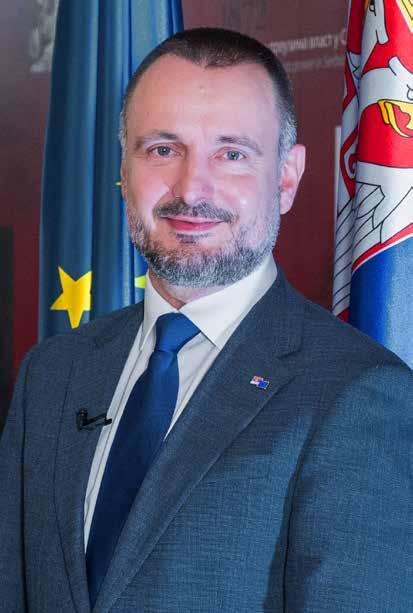
I See Serbia in the European Union
The reality of managing complex transitional benchmarks amidst shifting EU accession criteria
H.E. DANIJEL APOSTOLOVIĆ
Ambassador of Serbia to the European Union and Head of the Operational Team for EU Accession
In this edition of Diplomata, H.E. Danijel Apostolović, Ambassador of Serbia to the European Union and Head of the Operational Team for EU Accession, outlines Serbia’s path toward EU membership, the ongoing reform process, and the key challenges on the road to 2030.
As a former journalist, you know every good story needs a strong headline. What headline would you choose for Serbia’s current EU accession process?
That is a difficult and interestingly thought-out question. I would say that in journalism, a good headline is often half the story. When it comes to our relationship with the European Union, in film-genre terms, I would say it has probably moved through various cinematic styles.
Of course, it depends on the angle of the viewer, meaning the observer. For some, it is an action film; for some, a thriller; for some, a comedy; for some, a tragedy; and for some, perhaps even a romance—those who view the European Union in an enchanted way. But I would say it is, above all, an adventure. An adventure that has been going on for more than 20 years now, with various ups and downs, depending on our internal circumstances and foreign policy and geostrategic conditions.
As for the headline itself, in the context of the operational team’s work, the headline would be: Acceleration and Fulfilment ofSerbia’sObligationstothe European Union.
You recently took over the operational team for Serbia’s EU accession. How challenging is it to lead this process while balancing responsibilities between Belgrade and Brussels?
ACCELERATION AND FULFILMENT OF SERBIA’S OBLIGATIONS TO THE EUROPEAN UNION
It is challenging; I will not lie to you. This operational team was formed on the initiative of the President. His idea was for me to be the head of this team since I have been in this process for a long time. I would say that the position of Ambassador of Serbia to the European Union is challenging in its own right. Now, in the context of being the chief negotiator and head of the operational team, this new role is highly complementary.
The job of an ambassador to the EU in Brussels involves my communication with all ambassadors and permanent representatives
of the member states to the EU, as well as with ambassadors in the Political and Security Committee, where geostrategic issues are frequently discussed, including, of course, the dialogue on the normalisation of relations between Belgrade and Priština. On the other hand, it requires communication with European institutions, the European Commission, various directorates, primarily the Directorate-General for Neighbourhood and Enlargement Negotiations (DG NEAR), as well as others, depending on the issue. It also involves the European External Action Service (EEAS),
which is effectively the EU’s ministry of foreign affairs, and the European Parliament, with which our cooperation is most challenging. Naturally, I also maintain good contacts with ambassadors from third countries and from the region.
Now, when talking about the operational team and the chief negotiator’s role, that is a challenge in itself. As an operational team, we have set highly ambitious goals. The primary objective is to prepare the remaining clusters for opening so that we are fully ready on our side. We are talking about Cluster 2, which relates to the Internal Market; Cluster 5, covering Agriculture, Cohesion, and Resources; and Cluster 6, which concerns External Relations.
I would note that, in this context, Cluster 6 is among the most
complicated, even though it was the easiest for other candidates. Certain member states refuse to give their consent to the screening report for this chapter because they believe Serbia is not sufficiently aligned with the Common Foreign and Security Policy, meaning, primarily, that we have not imposed sanctions on Russia. I would say we are closest to completing preparations for the opening of Cluster 2, which relates to the internal market, a highly vital cluster. Following that, a major challenge is moving toward the transitional benchmarks for the rule-of-law chapters, namely Chapters 23 and 24. For every candidate, this is the most complicated issue, and the same is true for us. We have 91 transitional benchmarks for these two critical chapters.
Another priority of the operational team on which we are working heavily is, in any case, the European Commission’s annual report, specifically the recommendations for each chapter. We are literally going through every single chapter and every recommendation to define where we stand right now, where we will be in June, and where we will be by the end of August or the beginning of September, which is the cut-off date. I want the next European Commission report to be significantly better than this one.
Additionally, one of this team’s main priorities is the reform agenda under the European Union’s Growth Plan for the Western Balkans. Consequently, we have created a definitive list of obligations that Serbia needs to execute in the coming period. We have a solid plan. The plan has been agreed upon with the European Commission, including the specific timelines for completion. So, it is a demanding but highly rewarding job.
You certainly have your hands full, but I am definitely interested in how you view the tempo of Serbia’s Euro-integration so far compared to previous years, while taking into account the numerous geopolitical changes that have occurred on European soil.
As I said at the beginning, our relationship with the European Union has gone through different phases. I noted that it is an adventure spanning 20 years. It seems to me that, back when we possessed an immense desire and more favourable foreign policy
WE HAVE 91 TRANSITIONAL BENCHMARKS FOR THESE TWO CRITICAL CHAPTERS
circumstances existed, enlargement was less popular within the European Union. The member states themselves even avoided mentioning the very word “enlargement” in declarations at EUWestern Balkans summits. Yet we deeply desired it back then, even taking on the heaviest obligations, for instance, in the dialogue on the normalisation of relations with Priština. I am speaking specifically about the years 2013, 2014, 2015, 2016, 2017, and 2018, when geopolitical circumstances were also more favourable to us.
However, back then, even when we did everything correctly, Serbia would open two, three, or at best four chapters under the old enlargement methodology. Today, by contrast, you have candidates who open all negotiating chapters within a single year.
Thus, we see a completely different dynamic—what they call a “new momentum” in Brussels jargon—though I believe our momenta have not fully aligned. This new momentum within the European Union, unfortunately, arose with the war in Ukraine, and for that reason, the accession negotiation process for many candidates has been accelerated. Unfortunately, this is not the case for Serbia. Moreover, our
process has been slowed down, practically blocked to an extent over the last four to five years, considering that we opened our last cluster in December 2021. The European Commission states in five of its reports that Serbia is ready to open Cluster 3. It is the member states that have disagreed with this, primarily because Serbia has not imposed sanctions on Russia.
I would say this relationship has moved through various phases, and I hope I have illustrated this well. For example, in 2018, the European Commission published an enlargement strategy on the initiative of then-President Jean-Claude Juncker. At that time, Serbia and Montenegro were designated as the leading countries, the “frontrunners”. In that strategy, we were given 2025 as a potential year of membership for Serbia and Montenegro, naturally on the condition that we fulfilled all obligations and fully aligned with European legislation. As we know, 2025 has already passed. We are where we are, but we believe that in the coming period, we can significantly intensify this process and initiate an even better strategic dialogue with the European Union. That remains an undeniable fact.
True, back then we were grouped with Montenegro, as you mentioned. However, we recently heard an address by Marta Kos in which Serbia was grouped more closely with Georgia, while Montenegro and Albania were cited as countries making exceptional progress. As the chief negotiator, how do you comment on that assessment? I do not agree with that statement. It is not a correct statement. Why do I say this? Because my team and I have conducted a thorough analysis. Within the European Union’s annual report, you have two types of grades. One grade evaluates your progress over the past twelve months. On that front, the results were admittedly not the brightest because we had a fairly complicated year behind us, with protests, and institutions like the parliament did not function as they should have. A lot of things were essentially blocked. However, there is a second type of grade that measures a candidate’s overall readiness for a specific chapter. My team and I analysed this, prompted by research and an analysis done essentially by an NGO. We ran the data ourselves, and when summing up the grades in terms of overall readiness to assume the obligations of membership, we established that Montenegro is in first place, Serbia is in second place, North Macedonia is in third place, and only then come Albania, Bosnia and Herzegovina, and so forth.
It tells you that our long history of negotiations and extensive time in the Euro-integration process have not been in vain. When you look at our country’s overall readiness — for example, in the field of transport — I recently attended a working breakfast in Brussels and felt proud: on every slide concerning transport policy, Serbia was in first place. In terms of full alignment, we are better than Montenegro in Chapter 14 (Transport Policy). I want to emphasise that this long-lasting process is yielding structural results. When you read the annual report carefully, you will always see two distinct metrics: year-on-year progress and the cumulative alignment achieved throughout the accession negotiations. Therefore, I disagree with Commissioner Marta Kos on this matter, and I intend to share the analysis my team and I completed with her in the coming period.
You also mentioned the Growth Plan, and concerns have begun to surface in public that Serbia might lose 1.5 billion euros in funds from this EU Growth Plan. What are the exact requirements
I WANT THE NEXT EUROPEAN COMMISSION REPORT TO BE SIGNIFICANTLY BETTER THAN THIS ONE
that Serbia must fulfil by the end of this year to prevent that from happening?
There has been a lot of speculation on that topic by both Brussels and domestic media, and it has proven to be incorrect. They were announcing that Commissioner Marta Kos would state this, that a suspension would occur, and so on. What is vital for me to convey to you and your viewers is that no formal decision of any kind has been made by the European Commission in that regard, and we, as a state, absolutely will not allow ourselves to end up in that situation.
What we have stated we will do—and this is our absolute priority in the coming weeks—is to fully comply with the Venice Commission’s recommendations regarding the set of judicial laws adopted at the end of January. I expect we will finalise all of this
by the end of May. We will also work on, and are already working extensively on, the ODIHR recommendations regarding the electoral cycle, with plans to finalise them by late May or early June at the latest. This is an election year for us, and we must conclude this. These are the issues we are intensively processing.
Naturally, we are executing all of these steps in a transparent, inclusive manner. The European Commission, the Venice Commission, and ODIHR are all fully involved. What the European Commission criticised about the judicial laws adopted in late January was that we did not hold a public debate and failed to consult the Venice Commission and the European Commission in advance. I agree that we made a misstep there, as we, as a candidate country in the midst of accession negotiations, were obliged to consult both the Venice
Commission and the European Commission regarding this legislation. In the coming weeks, that mistake will be completely corrected.
Furthermore, within the reform agenda, we have many steps with varying completion deadlines, spanning the rule of law and energy. Believe me, we are working seriously on all of this, even though the internal landscape and cooperation with non-governmental organisations are highly challenging. For instance, one of the reform steps we need to take is to adopt the Law on Internal Affairs. There was a recent public debate on that topic, and you saw significant resentment among NGOs. In any case, to ensure we do not lose the funds allocated for this law as well, we need to adopt it in June, and I believe that will happen. I trust that in the coming period, we can achieve much better communication overall as a society and as a state, because I believe Eurointegration is vital for all of us.
You just mentioned that the Serbian government will respect all recommendations of the Venice Commission.
We received some of them a couple of days ago. Who exactly within the Government of the Republic of Serbia makes that decision, and how quickly can amendments be implemented if required?
The Minister of Justice, Mr Vujić, has already formed a working group that includes various stakeholders, including the judiciary, the prosecution, and others. This working group is fully operational. In the coming days, they will practically integrate all of the Venice Commission’s recommendations into the set of judicial laws. Within days, we will know precisely when we will resubmit everything to the Venice Commission for a final opinion, after which we will simultaneously forward it to the European Commission. This will be followed by adoption in the National Assembly of the Republic of Serbia, and in this manner, we will have resolved that problem.
The Government of the Republic of Serbia recently issued a directive instructing all state organs to pay special attention to aligning regulations with the EU acquis when drafting laws and to ensure that proposals are pre-consulted with the European Commission. Tell us, hadn’t this type of mechanism already existed as a rule, given Serbia’s long-standing status as an EU candidate?
It did, but we frequently encountered situations in which the European Commission itself told us that, for certain laws, it was not necessary to consult it or send them for comment. Those laws do not align directly with European legislation and directives. However, our agreement with the European Commission now is to send them practically all laws so that they can tell us definitively, even where we have a dilemma or think it might not be required, to ensure we are 100% certain it is not.
So, if I understand correctly, all laws now fall under that criterion from the start? That is correct, all of them fall under it initially. If they tell us there is no need for a specific law, we do not wait for the European Commission and proceed to adopt it. In any case, we want to avoid any situation in which a law goes to the National Assembly of the Republic of Serbia for adoption without first receiving the European Commission’s green light. That is why we have now
I SEE SERBIA IN THE EUROPEAN UNION BY 2030
established an even more rigorous mechanism. The Ministry for European Integration now holds a crucial, binding role; its opinion will also be mandatory, ensuring that this type of problem will absolutely not occur in the coming period.
One of the vital factors regarding Serbia’s role in the European Union is, naturally, public support. We have seen various polls and surveys that fluctuate, often ranging from 40% to 50%, depending on who conducted them. What interests us is whether, if a referendum on Serbia’s entry into the European Union were held tomorrow or in the near future, your operational team would engage with the issue to boost public support. Certainly. The operational team, all institutions, the entire state, and the European Union itself. I think we all must work seriously on this, hand in hand with the EU. The European Union and its member states must also prepare the ground in their own public opinion for future EU membership.
Now, these surveys do vary. Last year, for instance, the
if we wish to increase that percentage in the coming period.
Tell us how you see the future of Serbia’s Euro-integration and what optimal scenario you expect?
European Union conducted a Eurobarometer survey, which showed what was perhaps the lowest level of support for Eurointegration and Serbia’s membership in the EU at 33%, a very low and concerning figure. However, the latest surveys show that support for membership ranges from 45% to 47%, depending on who conducted the research. What is promising is that the level of support among young people is quite high, around 63%, if I am not mistaken. Ultimately, the conclusion is that we all must work seriously on this in the coming period. We must also be aware that everything happening around us, as well as the messages we receive from the European Union, directly impacts public opinion. Any negative messaging reflects on it. You already know how many negative messages have arrived in the context of the dialogue on the normalisation of relations with Priština, in which we have absolutely fulfilled everything within our power since 2013. In contrast, the Priština side has never implemented its core obligation to form the Community of Serb Municipalities to this day, even though the European Union guaranteed us with its signature that this would happen. Therefore, many unilateral moves by Priština, coupled with a lukewarm reaction from the European Union, exert an influence. We must all take this into account collectively
I see Serbia in the European Union. You know yourself that speculating on specific dates is highly ungrateful, as they have repeatedly proven inaccurate— take, even, what I mentioned earlier regarding the European Commission’s 2018 strategy, where 2025 is already behind us. I believe Serbia can become a member state of the European Union by 2030. I believe we can fulfil all our obligations well before that, but again, it is not entirely up to us. There is a lot of politics involved; enlargement has always been a political decision at the end of the day. That was the case with the admission of Bulgaria and Romania, who had not fulfilled all necessary conditions at the time and were subsequently kept under the so-called Cooperation and Verification Mechanism for more than a decade. Thus, various modalities exist.
The European Union also recently initiated discussions about potentially redefining the existing enlargement methodology, primarily in the context of a leaked peace plan for Ukraine. Back then, there was talk of “reversed membership,” if you recall, which would imply that as a candidate, you achieve a certain minimum of standards in the field of the rule of law to become a member state, albeit without full voting rights initially. Then, as you fully align in a specific sector, you integrate into that field and gain voting rights for it. However, the European Commission’s concept and proposal immediately met with considerable dissatisfaction among numerous member states, and it has now been set aside. What will happen in the coming period remains to be seen, but I am certainly an optimist, and I see Serbia as a member of the European Union.
The full interview is available on our website
Inside Ukraine’s Modern Business Phenomenon
Why waiting for conflicts to end is a missed strategic window for regional businesses
GENNADIY CHIZHIKOV
The President of the Ukrainian Chamber of Commerce and Industry
This compelling conversation explores the robust economic ties between Ukraine and Serbia despite the profound challenges of the ongoing regional conflict. Guest speaker Gennadiy Chizhikov, the President of the Ukrainian Chamber of Commerce and Industry, outlines strategic pathways for bilateral trade, the upcoming Ukrainian-Serbian Business Forum, and structural opportunities for future reconstruction projects.
Many wonder how the Chamber of Commerce functions amid the complex circumstances of the war in your country. Chambers of commerce, more or less everywhere in the world, have very similar activities. First of all, the organisation supports the economy. This implies different types of services. For example, force majeure certificates. Certificates of origin of goods. But even more importantly, opening new markets and finding partners. And on the other hand, the Chamber is a kind of representative. A real representative of the economy in negotiations with the state and institutions. It is practically the same everywhere.
For me, a strong state is a very simple formula. If you have a strong chamber and strong business associations, you also have a strong economy and a strong state. That is why it is a great honour for me to work for this organisation and to be a part of the modern history of the Ukrainian economy in this very difficult time. But at the same time, it is a huge opportunity to find new partners and new countries. And despite this critical situation, we continue to work and open new markets. As you can see, I am here in Belgrade today. So—it is really happening.
UKRAINE RECORDED GDP GROWTH. INFLATION IS MORE OR LESS UNDER CONTROL
It is important to mention the reason for your visit. One of the reasons —at least one of the main ones —is the central event: the Ukrainian-Serbian Business Forum being held here. Can our audience expect agreements, partnerships, or maybe even memoranda of understanding and cooperation between our countries in the future?
Of course. I am sure that the history of Serbia and Ukraine shows
a great love for freedom, a strong economy, and cooperation. We are here as a business delegation to find new opportunities at this critical moment of our history, at a time of war. We want to show that Ukraine is a country that can offer European states many opportunities for cooperation, investment, and future joint projects.
We are here to organise meetings between the Ukrainian economy and your economy. I am
also here to meet with colleagues from the Chamber of Commerce and Industry of Serbia. For me, the Chamber of Commerce and Industry of Serbia is a bridge between the two countries and our economies. For us, it is very important that officials and representatives of our governments also support this process. I am sure that we have a huge potential for cooperation. And one of my roles is to reveal to the new generation of Serbian businesspeople the huge opportunities in Ukraine. Ukraine is a big country, large in terms of territory. Almost like France, with a large population and huge potential. And we have
many new opportunities for cooperation. I like to say that we are not here to beg for help. No. We are here to talk to the Serbian economy in the language of business. We want to work together on a “win-win” principle. That is why we will have a big forum tomorrow. A large number of official meetings with government officials are scheduled. On our side, the Deputy Prime Minister, Mr Taras Kachka, will also come.
I very much hope that all this will be a very important step toward bringing our economies closer together. Business people are always looking for such opportunities. If we show interest, why not? And I also want to learn more about how to do business in Ukraine and Serbia. I want to be here today and maybe again next time. And on our side, it will be a great pleasure to invite the fantastic Serbian business community to Ukraine as well.
Can you tell us more precisely how you assess the current economic cooperation between Ukraine and Serbia? Are there any opportunities you mentioned, and which specific areas could further improve cooperation between our countries in the future?
In my opinion, we have great opportunities and great potential for the future. I think that last year, due to the war and logistical problems, trade exchange dropped slightly, but then it started to grow again. But in my opinion, $ 400 million in trade between our countries is not the level we should have. I believe that we have potential for much greater trade cooperation.
Ukraine is, in my opinion, one of the leaders in Europe and around the world when it comes to agriculture. Ukraine is a world leader in the production of sunflower oil. We are leaders in many other areas of agricultural production as well—including wheat, corn, and numerous other crops. We also have opportunities in agricultural mechanisation, information technology, logistics, and many other areas. On the other hand, Serbia is a significant economic leader in the Western Balkan region and has strong potential in agriculture, the pharmaceutical industry, and the IT sector. Your IT sector is known not only in Europe, but also around the world. That is why I think we need to sit at the table, talk, and develop cooperation step by step.
THE
RESILIENCE OF THE UKRAINIAN ECONOMY HAS BECOME A PHENOMENON
But it is very important that Serbia can become a kind of hub for us — for Ukraine —for doing business in this part of Europe, in the Balkan region, and with many other countries—if we build an even better mutual understanding. And for Serbian ambitions, the possibility of realising quality work and profit in Ukraine would also be very beneficial.
How could existing arrangements, such as free trade agreements, help companies more easily overcome disruptions caused by the war? And are there perhaps successful examples that you could share with our audience?
We live in a time in which, I would say, we should remove all obstacles. Obstacles to cooperation. First of all, we are part of Europe. We understand that, of course. Both Serbia and Ukraine are on the path to the European Union. We are ready to help—not only in the humanitarian field, but also in many other directions of business development. That is why I think that it is, of course, more of a political issue. We need to sit at the table and find solutions on how to connect our countries and facilitate business between them. We very much hope that in the near future we will see positive economic signals.
On our side, as the Chamber of Commerce, we are very interested in attracting as many Ukrainian companies as possible to cooperate with Serbia. This is no secret. During this difficult war period, Ukrainian companies started opening offices and enterprises in neighbouring countries—Poland, Slovakia, Bulgaria, and Romania. In my opinion, if we find effective solutions through agreements between our countries, Serbia could also become a very good place for the development of Ukrainian business. And for Serbian companies, doing business in our country would also be very beneficial. That is why I look very positively at the future of our cooperation. We have to do it.
Can you tell us how the war in Ukraine, both currently and in the long term, affects overall economic stability—not only in Europe but also here in the Western Balkans? And what role, in your opinion, should chambers of commerce play in adapting and navigating in such circumstances?
The war affects not only Ukraine, but we see its consequences in the Persian Gulf region, for example. We see how it affects the prices of fuel, fertilisers, and agricultural products. Of course, every war has a bad effect on economic
development. One of the very interesting things is that the Ukrainian business, despite the war, continues to develop. Ukraine recorded GDP growth. Inflation is more or less under control.
That is why, when I visit colleagues abroad, I am very often asked, and this has now become almost a typical question, not so much about the current situation, but about the fact that Ukraine today is one of the leaders in the production of military technology, such as drones and other equipment or weaponry. But the second question that is always asked is, as I put it, the export, so to speak, of the recipe for the resilience of the Ukrainian economy. Many businessmen and numerous officials ask me: “Gennadiy, we don’t understand how this is possible. Four years of missile attacks, electricity shortages, and numerous difficulties, and the Ukrainian economy still functions, finds new solutions, thinks about new ideas and ways of development.”
In my opinion, in the near future, this will become a real phenomenon that many business schools will study. That is why we, as Ukraine, are ready to share with friends and colleagues the experience of how to stay strong in very unpredictable circumstances.
In Ukraine, despite occasional very difficult energy problems, the economy has begun investing in the energy sector. We are thinking about the decentralisation of the energy system. We are thinking about green energy and many other things.
Whenever we face restrictions or problems, Ukrainian businesses try to find new solutions and ideas. During the war, more than 500 new companies producing military technology, drones, and other equipment were established in Ukraine. Before the war, we produced about 5,000 drones a year; today, more than 8 million.
We want to show what Ukrainian companies, and international companies in general, can achieve. But generally speaking, that resilience is a phenomenon that allows us to view the future positively.
How does the Chamber of Commerce view Ukraine’s future reconstruction? And in what way can Serbia help Ukraine in that process?
I would very much like it if your country got involved in the reconstruction of Ukraine. I always carry in my mind the image of the best builders, precisely from this region. I still remember that impression from the past. Maybe today it sounds a bit like an image from earlier times, but I am completely sure that the quality of your engineers, construction products, and workforce and builders is very high. And that is precisely one of the opportunities for cooperation.
But if we look more broadly, Ukraine, together with its partners, is already thinking about the country’s reconstruction. During 2024 and 2025, the Ukraine Recovery Conference will be held in Gdańsk, where we will bring together thousands of companies from all over the world in one place to discuss new opportunities. And in my opinion, that is precisely why we are here—not to wait for the war to end to start working in Ukraine. We are ready to work right now.
We have very good relations with your Chamber of Commerce and would like to organise a visit by a delegation from your country as soon as possible. We are ready to present concrete opportunities for your companies to get involved in the reconstruction and restructuring of Ukraine and to help them find their place in that process. And I am sure that tomorrow, during our conference, many of your companies will better understand how much potential and what opportunities exist for their businesses.
It is certainly good to hear that there is an active partnership between our countries on both
IT IS NOT THE BEST SOLUTION TO WAIT FOR THE WAR TO END
sides. In that sense, are there currently concrete negotiations or perhaps joint projects in development that could significantly strengthen bilateral trade between our countries in the near future?
On the one hand, that is a question at the level of states. We very much hope that there will be some memoranda that will enable us to cooperate and trade more proactively and to build even closer relations. On our side, the chambers of commerce of Ukraine and Serbia are considering how to build even stronger bridges between our countries in the interest of the economy. We work together under the auspices of Eurochambres. We also have joint ideas on how to further bring our countries closer to European integration and how to work together in that direction.
In addition, we have a joint Serbian-Ukrainian Business Council, through which businesspeople from the two countries periodically have the opportunity to cooperate and develop contacts. There is a memorandum
of cooperation and other agreements between our chambers. On the one hand, all this may seem a bit bureaucratic, but on the other hand, that is precisely what is very important for long-term relations and very useful for the economy. In my opinion, the economy must always know that if it is looking for a partner in Serbia or Ukraine, the easiest way is to turn to the nearest chamber of commerce or business organisation with strong international capacities.
Of course, for me, the Chamber of Commerce comes first, because I come from that system. You come and say: “I am looking for a partner, help me.” That is our job. That is our everyday job. And it will be a great pleasure for us, based on our memorandums, agreements, and the Business Council, to be very useful and proactive in supporting the economy of both countries.
What is your main message to Serbian businesspeople who want to collaborate with Ukrainian partners in the future? I am here to show that Ukraine not only lives but also fights for
its future and wants to be a strong country on the map of Europe. And in my opinion, cooperation between Serbia and Ukraine, in which both sides win, would be very useful in the interest of our states. We are here to open a window through which people will be able to see Ukraine with different eyes—not only through the prism of difficult and crisis moments, but also through the huge opportunities that exist. And I am completely sure that there is a huge potential for cooperation between our peoples and our states.
I am here to invite the Serbian business community to see Ukraine as a country where it can do business well and successfully expand its operations. And I will be very glad if, already tomorrow and in the near future, we see more and more business delegations from your fantastic country in Ukraine, as well as Ukrainian delegations here in Serbia. In my opinion, it is not the best solution to wait for the war to end. We are sure that every war ends one day. But I think that right now is the right time to start exploring the market, finding partners, and developing business ideas in the interest of both countries. I am sure that we have a very good perspective, because together we are stronger.
I’M STILL STANDING
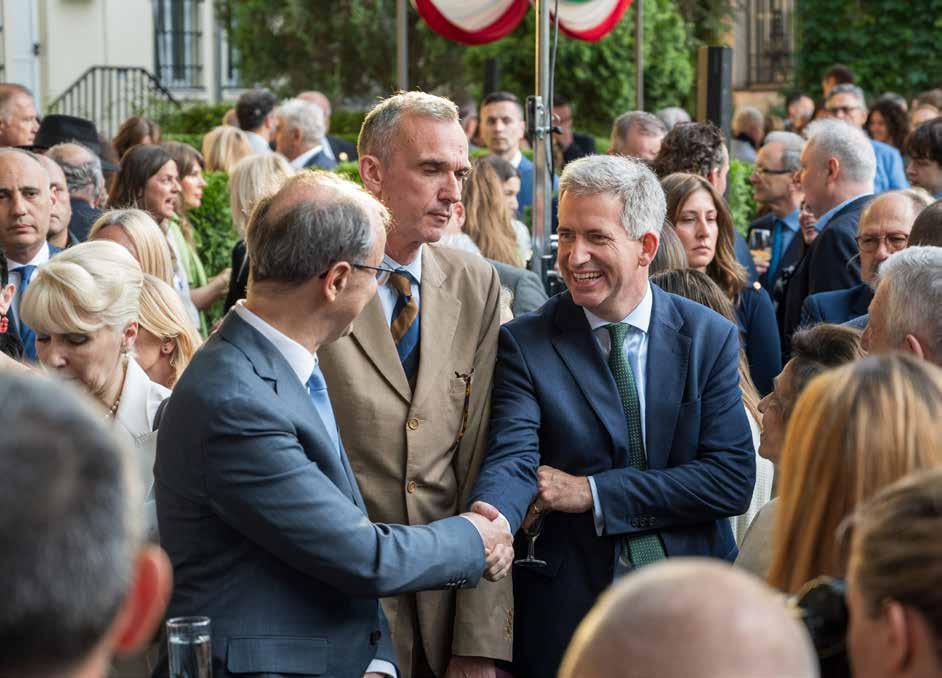
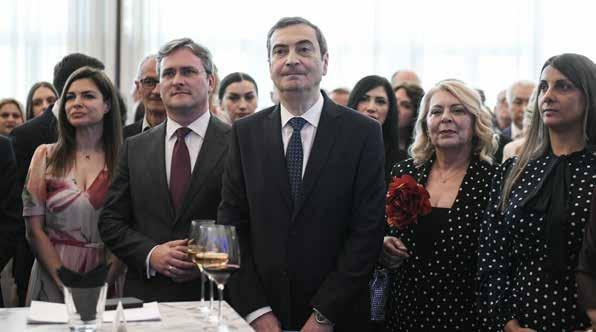
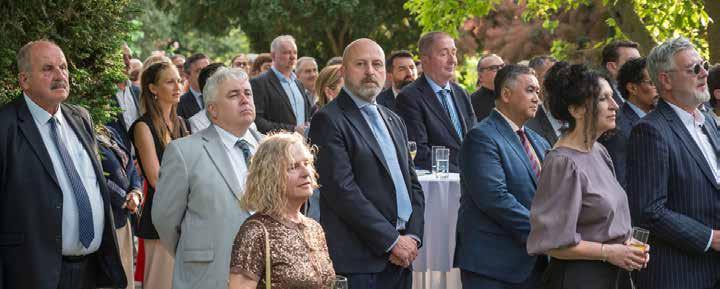
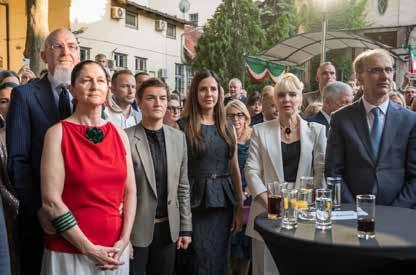
Serbian Prime Minister Đuro Macut, member of Royal Privy Council Dušan Babac and UK ambassador to Serbia Edward Ferguson, Italian National Day, Italian Embassy, 2 June
SO WHAT? IT WAS ON SALE
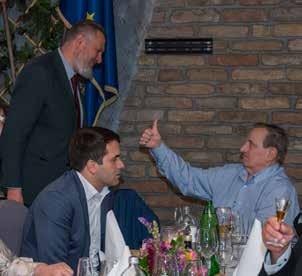
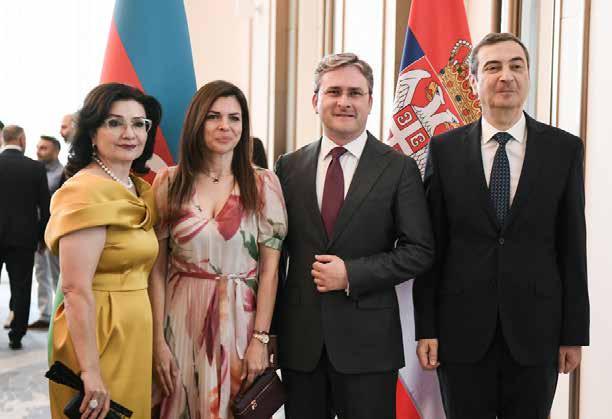
Ambassador of Azerbaijan to Serbia Kamil Khasiyev and Serbian ministers, National Day of Azerbaijan, St Regis Hotel, 28 May
NO REFUGEE CRISIS ON THE ULSTER BORDER
Soufiane Adjali, UNHCR and Irish ambassador to Serbia, Kevin Colgan, National Day of Sweden, Serbian Business Club “Privrednik”, 3 June
YOU ARE DOING WELL
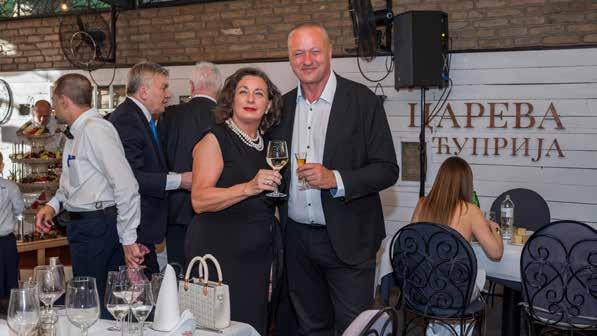
Ambassador of Ukraine to Serbia Oleksandr Lytvynenko and Ambassador of Croatia to Serbia Hido Biščević, Croatian National Day, “Careva ćuprija”, 28 May
BULGARIAN CONNECTION
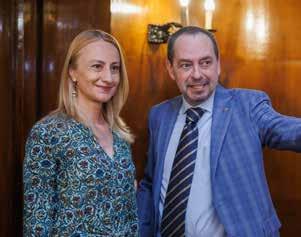
Deyana Kostadinova, UNICEF and Angel Angelov, Bulgarian ambassador to Serbia, Saints Cyril and Methodius Day Celebration, Bulgarian Embassy, 25 May
THE ABRAHAM ACCORDS ROW
Ambassador of Israel to Serbia, Avivit Bar-Ilan, and Ambassador of the UAE to Serbia, Ahmed Almenhali, in the row at the National Day of Argentina Reception, Argentinian Residence, 25 May
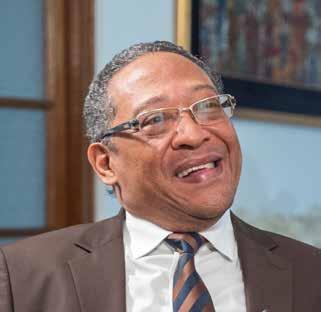
His Excellency Yousef Jabra serves as the Ambassador of Lebanon to the Republic of Serbia, having presented his credentials in October 2025. He succeeded H.E. Nada Al Akl and continues to work on strengthening the longstanding friendship and cooperation between Lebanon and Serbia.
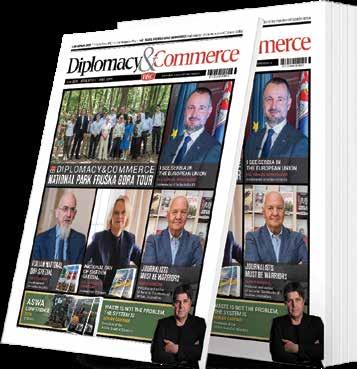
On the occasion of the 10th anniversary of Diplomacy&Commerce, Ambassador Jabra highlighted the magazine’s role in connecting the international community and providing valuable insight into the work of the diplomatic corps. He noted that Diplomacy&Commerce has become an important platform for
presenting the events, people, and stories shaping the international environment in Belgrade and Serbia, while also offering readers a broader understanding of cultures, traditions, and business opportunities worldwide.
Reflecting on his own experience with the magazine, Ambassador Jabra expressed appreciation for the opportunity to present Lebanon’s rich history and culture, as well as the strong and friendly ties between Lebanon and Serbia. He extended his congratulations to the Diplomacy & Commerce team, wishing the publication continued success and many more anniversaries to come.
H.E.
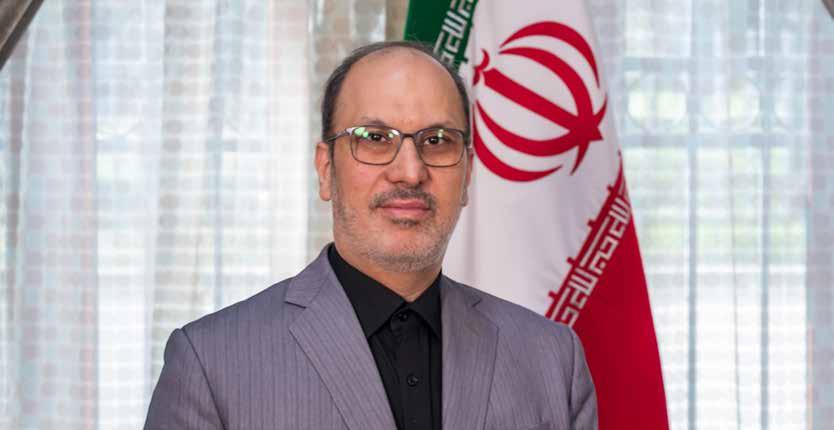
On behalf of the Embassy of the Islamic Republic of Iran in Belgrade, we extend our warmest congratulations to Diplomacy & Commerce magazine on the landmark occasion of your tenth anniversary.
Over the past decade, your publication has established itself as an invaluable forum for the diplomatic community, business leaders, and cultural analysts across the region. By consistently delivering insightful reporting,
fostering constructive dialogue, and bridging diverse global perspectives with local realities, Diplomacy & Commerce has played an essential role in enhancing mutual understanding and promoting international cooperation.
We deeply appreciate your dedication to giving a voice to cultural and economic diplomacy. As we celebrate this significant milestone, we wish the editorial team and management continued success, inspiration, and prosperity in the decades to come.
H.E. YOUSEF JABRA
Ambassador of Lebanon in Serbia
MOHAMMAD SADEGH FAZLI Ambassador of Iran to Serbia
18 MAY 2026
Indonesia and Malaysia Host Joint Event in Belgrade on Palm Oil and the Food Industry
The Embassy of the Republic of Indonesia in Belgrade and the Embassy of Malaysia in Belgrade organised the “Indonesia–Malaysia Joint Strategic Palm Oil Awareness and Engagement with Relevant Stakeholders in the Republic of Serbia” at the Radisson Collection Hotel, Old Mill Belgrade.
The initiative was organised in the context of ongoing changes within the global and European food industries aimed at
enhancing transparency and improving ingredient disclosure, while also recognising the importance of protecting domestic agricultural production and consumer rights.
The programme brought together representatives of relevant institutions, industry stakeholders, and Serbian companies involved in the importation and utilisation of palm oil, as well as participating companies and representatives from Indonesia and Malaysia.
24 MAY 2026
Bulgaria Celebrates the
AWelcoming remarks were delivered by H.E. Ambassador Andreano Erwin, Ambassador of the Republic of Indonesia. At the same time, remarks were also delivered by Mrs Carmallia Budiaty Bt Che Embi, Chargé d’Affaires of the Embassy of Malaysia.
The agenda included expert briefings, industry-sharing sessions, and a live culinary demonstration to highlight the versatility and practical applications of palm oil.
Day of Education, Culture and Slavic Literacy
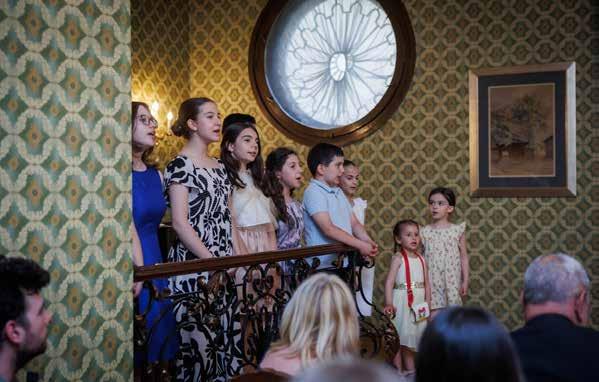
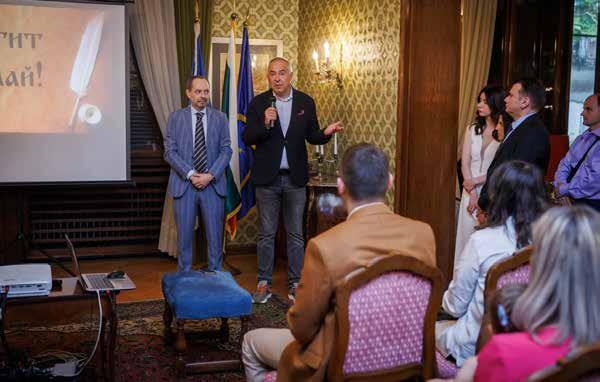
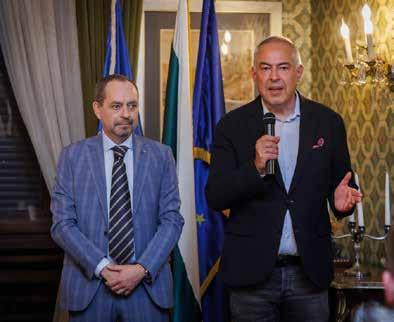
ceremonial reception was held at the Embassy of the Republic of Bulgaria in Belgrade to mark the Day of Bulgarian Education, Culture and Slavic Literacy.
The event was hosted by H.E. Angel Angelov, Ambassador of Bulgaria to Serbia, who emphasised in his address the importance of preserving the cultural and spiritual heritage of the Slavic peoples, as well as the vital role of education and literacy in contemporary society. Celebrated annually on 24 May, the Day of Bulgarian Education, Culture and Slavic Literacy is dedicated to
the legacy of Saints Cyril and Methodius, the creators of the Glagolitic alphabet and pioneers of Slavic literacy. The holiday holds a special place in Bulgarian tradition and is regarded as one of the country’s most significant national celebrations.
The 24 May holiday honours the contribution of Saints Cyril and Methodius to the development of literacy, education, and culture among Slavic nations. It stands as a symbol of respect for knowledge, learning, and cultural identity, reflecting values that continue to shape and inspire generations across the Slavic world.
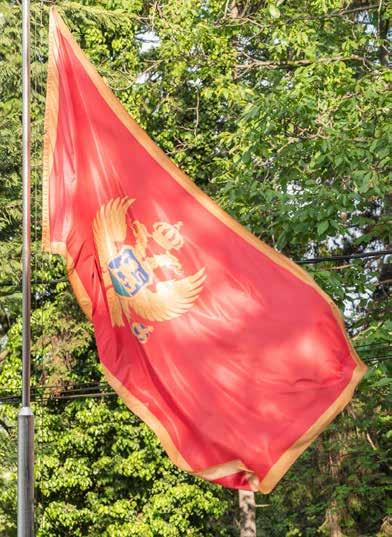
Twenty Years On Montenegro Celebrates Its Independence
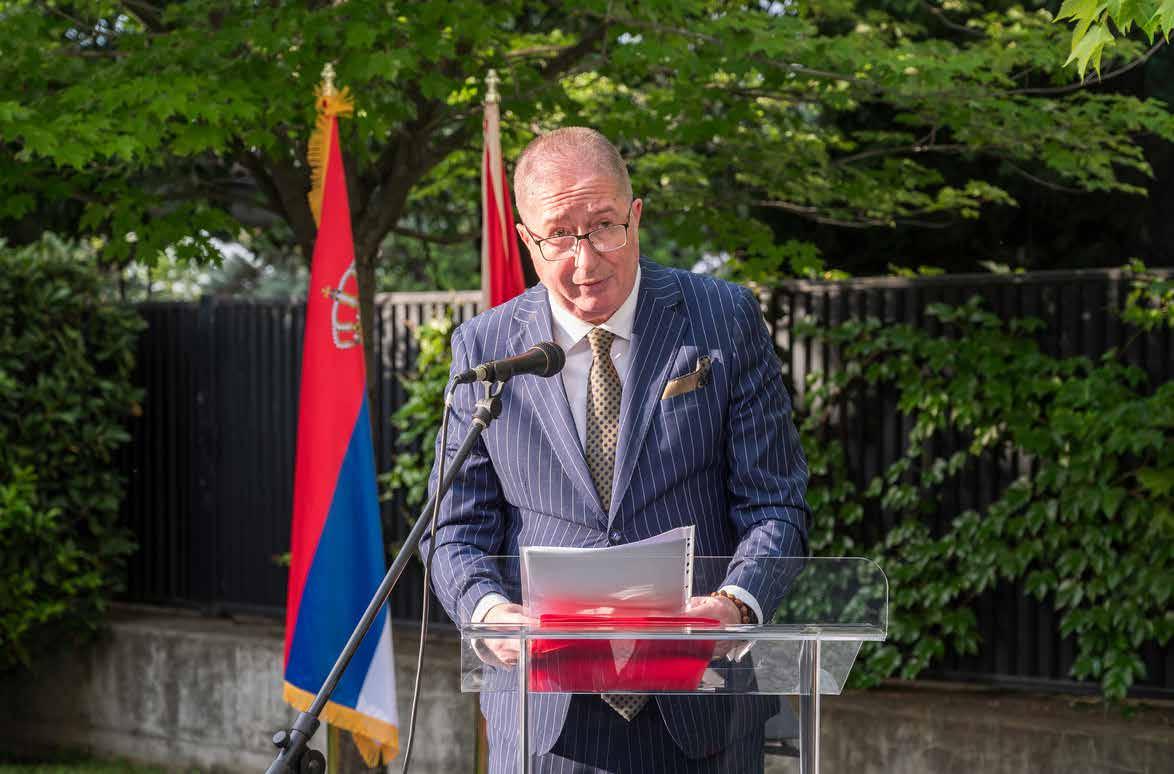
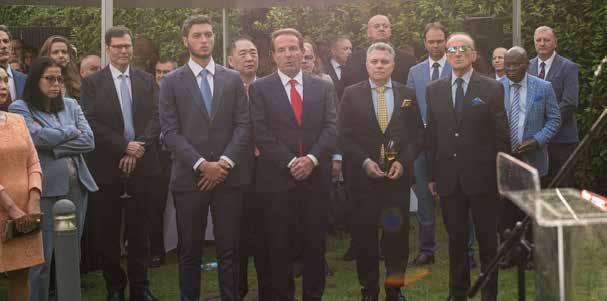
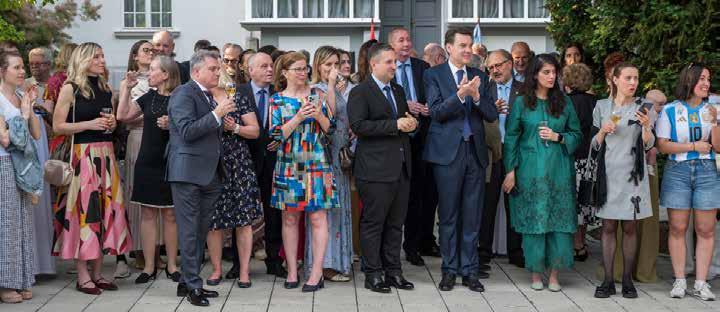
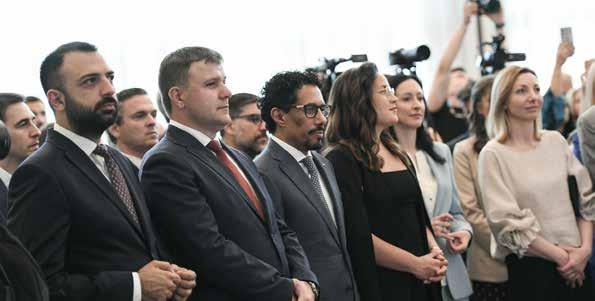
Areception held at the Montenegrin House in Belgrade marked the 20th anniversary of Montenegro’s independence. H.E. Nebojša Đoković, Ambassador of Montenegro to Serbia, welcomed guests, including nearly the entire diplomatic corps accredited in Belgrade.
Montenegro restored its independence following a referendum held on 21 May 2006, when 55.5 per cent of voters supported the country’s departure from the State Union of Serbia and Montenegro. The result narrowly exceeded the 55 per cent threshold set by the European Union for the referendum to be considered valid. Montenegro formally proclaimed independence on 3 June 2006, becoming one of the youngest sovereign states in Europe.
The country had previously enjoyed internationally recognised independence
from the late 19th century, having been acknowledged as a sovereign state at the 1878 Congress of Berlin. Following the First World War, Montenegro became part of the Kingdom of Serbs, Croats and Slovenes, later Yugoslavia, before regaining its statehood in the 21st century.
The absence of Serbian Government representatives was widely noted, particularly given the significance of the anniversary. Among politicians from the ruling coalition, only Bogoljub Karić attended the reception. While Montenegro views the 2006 referendum as the restoration of its statehood, the
issue continues to carry political sensitivities in relations between the two neighbouring countries, despite their close economic and cultural ties.
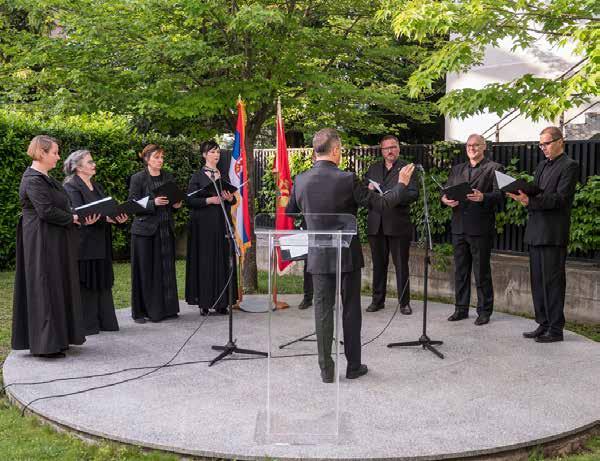
The reception also featured a cultural programme during which a choir performed songs characteristic of various regions of Montenegro, from the mountainous north, through the central region including Podgorica, Nikšić and Cetinje, and concluding with the coast and the Bay of Kotor. The musical selection reflected the country’s rich regional diversity and cultural heritage, shaped by centuries of influence from both the Balkans and the Mediterranean.
“Over the past two decades, Montenegro has pursued a path of Euro-Atlantic integration, joining NATO in 2017 and advancing its negotiations for membership in the European Union.” THE NEXT EU MEMBER
Africa Day Celebrated in Belgrade
Africa Day is traditionally commemorated in honour of the founding of the Organisation of African Unity on 25 May 1963
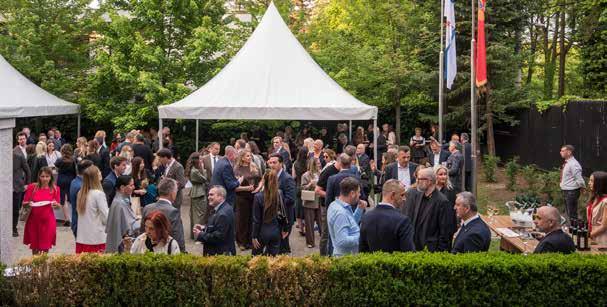
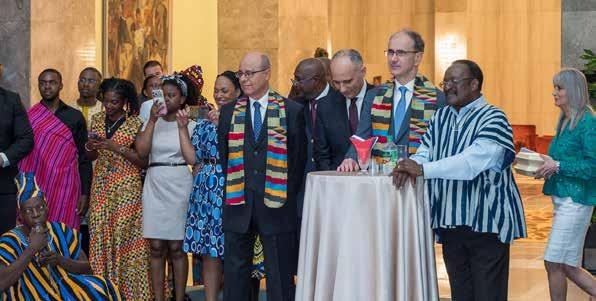
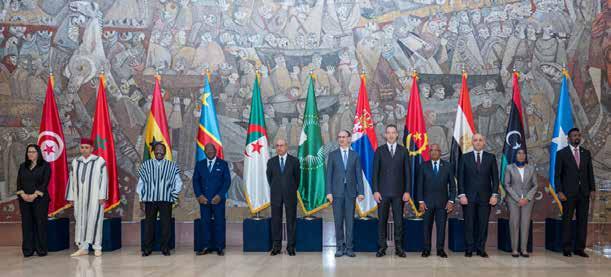
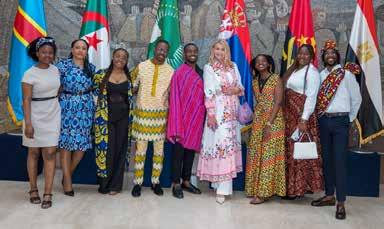
Africa Day was celebrated on 22 May at the Palace of Serbia, with ambassadors of African countries accredited to Serbia, members of the diplomatic corps, representatives of state institutions, and numerous distinguished guests in attendance.
The event was organised by the Group of African Ambassadors accredited to Serbia and served as an opportunity to reaffirm the long-standing ties between Serbia and African nations, rooted in decades of cooperation and friendship. The celebration also highlighted the growing importance of political dialogue, economic cooperation, educational exchanges, and cultural connections between African countries and Serbia.
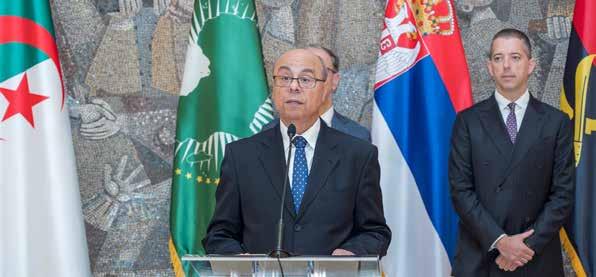
Addressing the guests, H.E. Fatah Mahraz, Ambassador of Algeria to Serbia and Dean of the Group of African Ambassadors, underlined the significance of Africa Day as a symbol of unity, solidarity, and
FOR SERBIA, AFRICA DAY CARRIES ADDITIONAL SIGNIFICANCE DUE TO THE HISTORICAL TIES DEVELOPED THROUGH THE NON-ALIGNED MOVEMENT
cooperation among African nations. He also emphasised the importance of strengthening partnerships between African countries and Serbia, particularly in trade, investment, education, science, and cultural exchange.
Africa Day is traditionally commemorated in honour of the founding of the Organisation of African Unity on 25 May 1963 in Addis Ababa, Ethiopia. Established by 32 independent African states, the organisation played a crucial role in supporting decolonisation and promoting cooperation across the continent. In 2002, it was succeeded by the African Union, which today brings together 55 member states and remains the principal platform for political
and economic integration in Africa.
For Serbia, Africa Day carries additional significance due to the historical ties developed through the NonAligned Movement, whose first summit was held in Belgrade in 1961. Those links continue to shape relations between Serbia and many African countries, reflected in regular diplomatic exchanges and cooperation across a range of sectors.
Among those attending the celebration were Serbian Prime Minister Đuro Macut and Minister of Foreign Affairs Marko Đurić, who addressed the guests and extended their greetings to the hosts and ambassadors of African countries accredited to Serbia.
29 MAY 2026
The Book “Light Imprints of
Algeria” Presented at the Museum of African Art
At the Museum of African Art, the Society of Friends of Algeria presented the book “Light Imprints of Algeria: Algeria through the Lens of an Engineer / Empreintes lumineuses d’Algérie : Algérie à travers l’objectif d’un ingénieur” by Milena Antić.
The departing Algerian ambassador, Fatah Mahraz, addressed the audience, thanking all friends of Algeria who have helped strengthen ties between the two nations. He reflected on the long-standing friendship and cooperation between Serbia and Algeria, dating back to Algeria’s struggle for national liberation.
Photo:
Uroš
Matović
25 MAY 2026
The Spirit of Buenos Aires in Belgrade
Marking the Anniversary of the May Revolution in a Spirit of Argentine Culture and Friendship
On the occasion of the anniversary of the May Revolution, a formal reception was held in Belgrade, bringing together representatives of state institutions, the diplomatic corps, the business community, civil society, and cultural institutions, as well as numerous members of the Argentine community in Serbia.
The event was organised to commemorate May Revolution Day, one of the most important dates in Argentina’s history, observed on 25 May, which symbolises the beginning of the process that led to the establishment of self-governance in Buenos Aires in 1810.
THE MAY REVOLUTION REMAINS A SYMBOL OF ARGENTINA’S PATH TOWARD SELF-GOVERNANCE AND NATIONAL IDENTITY
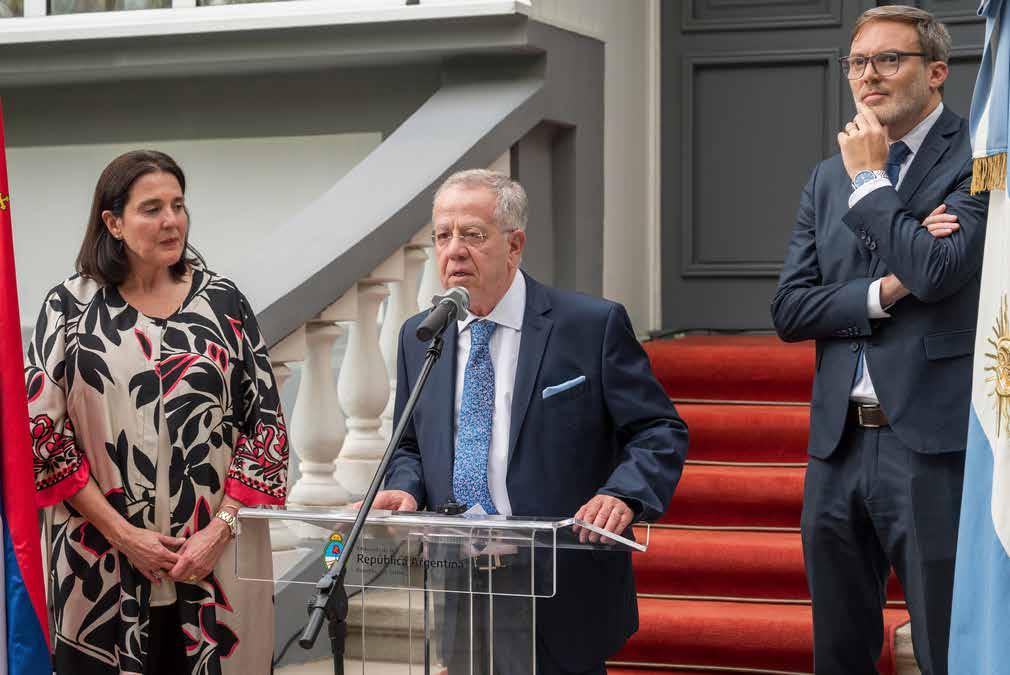
The Ambassador of Argentina to Serbia, H.E. Osvaldo Narciso Marsico, addressed the gathering and highlighted the significance of the May Revolution, emphasising the
importance of preserving cultural ties and strengthening friendly relations between the two countries.
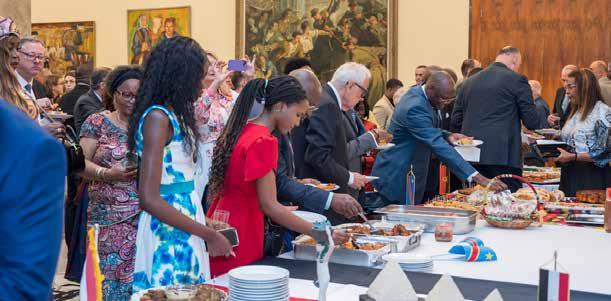
Throughout the evening, guests had the opportunity to reflect on the historical importance of the occasion while enjoying a rich cultural program dedicated to Argentine tradition. The reception featured traditional empanadas and an engaging tango performance that added to the festive atmosphere. The artistic segment of the evening was presented by the ensemble Tango Natural, which brought the authentic spirit of Argentine tango closer to the audience and contributed to the event’s elegant atmosphere.
The organisers expressed their gratitude to all guests for their attendance, emphasising the importance of such gatherings in further strengthening cultural ties and the friendship between Argentina and Serbia.
A Celebration of Statehood and Shared European Values
Croatian Statehood Day and Armed Forces Day Celebrated at a Formal Reception in Belgrade
The Embassy of the Republic of Croatia in the Republic of Serbia ceremonially marked Statehood Day and the Day of the Armed Forces of the Republic of Croatia with a traditional reception that gathered numerous high-ranking guests and representatives of public, political, and social life.
The formal reception also served as an opportunity for brief reflections on the situation in this part of Europe, during which Ambassador of the Republic of Croatia to the Republic H.E. Hidajet Biščević, emphasized that “despite the still-present state of unfinished peace, as well as often unclear or even
WE REMAIN CONFIDENT IN THE FUTURE OF COOPERATION IN A DEMOCRATIC CLIMATE, BASED ON MUTUAL RESPECT AMONG STATES
conflicting views among leading global actors, we remain confident in the future of cooperation in a democratic climate, based
on mutual respect among states and noninterference in internal affairs, grounded in the rule of law and with a European perspective.”
The event brought together numerous representatives of the host country, the diplomatic corps, religious institutions, and the business community. Particularly noteworthy was the attendance of representatives of the Croatian community in the Republic of Serbia, who, through their activities, actively contribute to preserving Croatian identity, culture, and tradition.
The celebratory atmosphere and official program were further enriched by a performance by the klapa “Krunik” from Kučine, whose appearance – as well as the entire cultural program – was made possible with the support of the Ministry of Foreign and European Affairs of the Republic of Croatia. Through their outstanding performance, the members of the klapa brought a touch of Croatian musical tradition and delighted all the guests.
MAY 2026
Strategic Partners, Trusted Friends
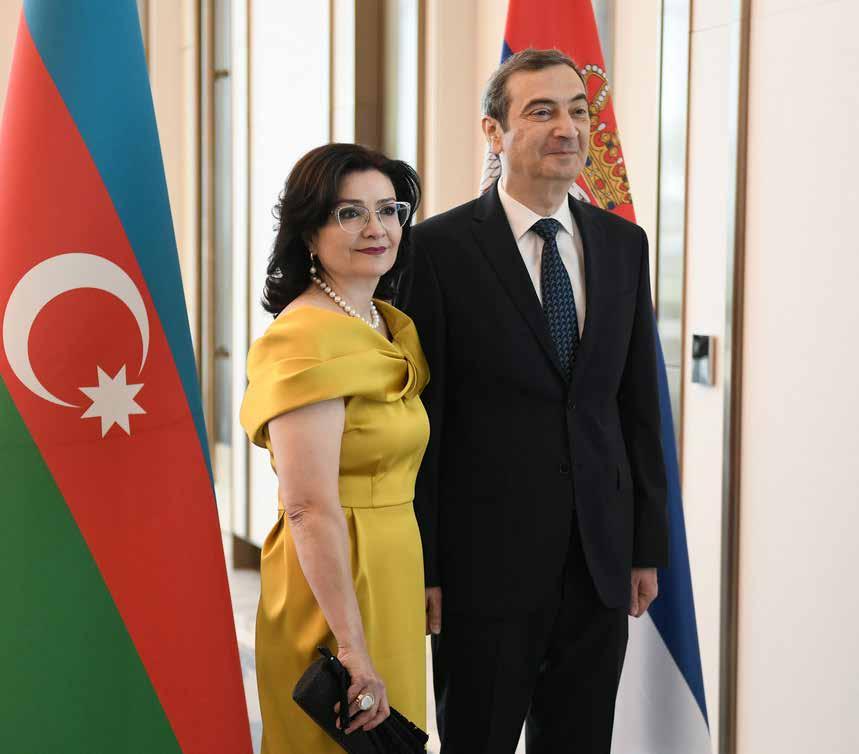
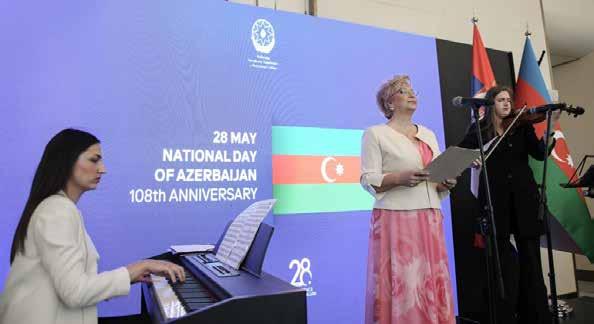
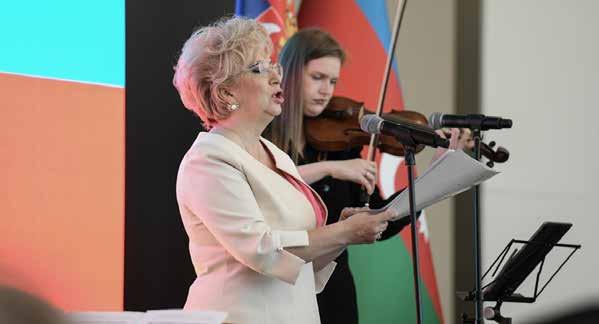
Azerbaijan’s Independence Day celebration in Belgrade
The Ambassador of Azerbaijan to Belgrade, H. E. Kamil Khasiyev, together with his wife Leyla Khasiyeva, hosted a reception to commemorate Azerbaijan’s Independence Day.
According to Tanjug, Ambassador Khasiyev stated that relations between Azerbaijan and Serbia have developed successfully across all sectors in recent years, reaching the level of a strategic partnership. He emphasised that the leadership and personal commitment of the two countries’ presidents, Ilham Aliyev and Aleksandar Vučić, have played a key role in advancing bilateral ties.
“Today, the Republic of Serbia is one of Azerbaijan’s closest friends and most reliable partners on the European continent,” Khasiyev said.
He noted that President Aliyev’s official visit to Belgrade in February marked
TODAY, THE REPUBLIC
OF SERBIA IS ONE OF AZERBAIJAN’S CLOSEST FRIENDS AND MOST RELIABLE PARTNERS ON THE EUROPEAN CONTINENT
an important milestone in the history of bilateral relations, while President Vučić’s recent visit to Baku provided an opportunity to review the implementation of decisions reached in Belgrade, particularly in energy cooperation.
The Ambassador also highlighted the success of the World Urban Forum, organised under the auspices of the UN-Habitat
programme and concluded in Baku last week, which attracted a record 60,000 participants.
“We were especially honoured by President Vučić’s participation in the summit,” Khasiyev said. The Ambassador expressed particular gratitude to Minister of Culture Nikola Selaković, who co-chairs the Serbia–Azerbaijan Intergovernmental Commission on Trade and Economic Cooperation, praising his dedication and effective leadership.
In addition to Selaković, the reception was attended by ministers Nenad Vujić, Dragan Glamočić, Snežana Paunović, Aleksandra Sofronijević, Zoran Gajić, Sara Pavkov, Jelena Žarić Kovačević, Tatjana Macura, and Husein Memić. Azerbaijan’s Independence Day is a national holiday commemorating the establishment of the Azerbaijan Democratic Republic in 1918.
The republic was the first secular and democratic state in the Muslim world. However, its existence was short-lived, ending with the establishment of Soviet rule in Azerbaijan in 1920.
Azerbaijan restored its statehood following the dissolution of the Soviet Union in 1991.
Eighty Years of Diplomatic Relations between Serbia and Mexico
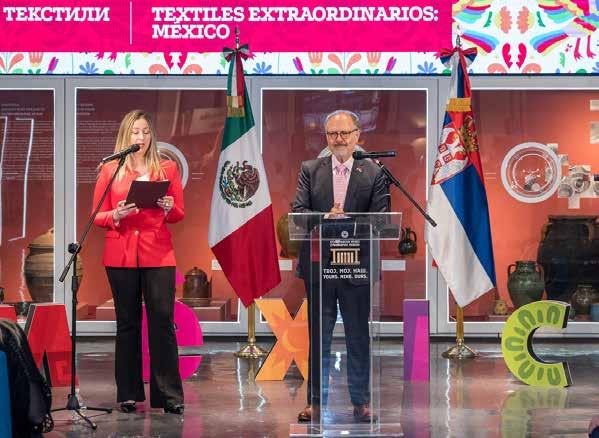
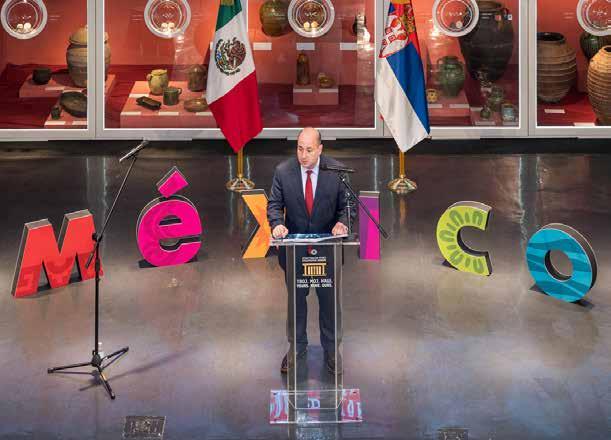
Colours, Tradition, and Identity at the “Extraordinary Textiles: Mexico” Exhibition
The Ethnographic Museum of Belgrade will host the temporary exhibition “Extraordinary Textiles: Mexico” from 22 May to 22 June, as part of the commemoration of the 80th anniversary of diplomatic relations between Mexico and Serbia, established on 24 May 1946.
This presentation also coincides with the 125th anniversary of the Ethnographic Museum’s founding, one of the oldest and most prestigious cultural institutions in Serbia.
Organised by the Embassy of Mexico and the Ethnographic Museum of Belgrade, in collaboration with the ministries of Foreign Affairs and Culture of Mexico and Serbia, as well as the Unit of Living Cultures, Intangible Heritage and Interculturality (UCUVI), the exhibition brings together thirty-four ensembles of traditional attire and two representative pieces from the collection of the National Museum of Popular Cultures.
The garments represent sixteen states of the country and the heritage of diverse indigenous peoples: Ralámuli and Comcaác in the north; Wixárica, Purépecha, Otomí, and Nahua in the centre; and Triqui, Zapotec, Mazatec,
TEXTILES ARE AMONG THE MOST SIGNIFICANT EXPRESSIONS OF MEXICO’S CULTURAL HERITAGE
Chinantec, Maya, Tsotsil, Tseltal, Chonta, Tacuate, and Amuzgo in the south. The exhibition also includes mestizo costumes from Baja California Sur and Colima, a Saltillo sarape from Coahuila, and a monumental Otomí embroidery from Tenango de Doria, Hidalgo.
The exhibition in Belgrade offers the Serbian public an opportunity to discover the richness and cultural plurality of Mexican heritage, as well as the outstanding work of women and men who keep alive the textile knowledge passed down through generations.
Textiles are among the most significant expressions of Mexico’s cultural heritage, inscribing memory, identity, and tradition in a visual language that distinguishes communities and reflects their history.
Mexico stands as a living testimony of friendship and cooperation between Mexico and Serbia, a bridge woven with threads of culture and understanding, inviting the Serbian public to immerse themselves in the colours, textures, and stories that inhabit the textile traditions of Mexico’s diverse regions and communities.
16 JUNE 2026
Postage Stamp Celebrates 80 Years of Friendship Between Serbia and Mexico
Serbia Post today unveiled a personalised postage stamp issued to commemorate the 80th anniversary of diplomatic relations between Serbia and Mexico.
At a ceremony held at the PTT Museum and attended by numerous distinguished guests, Serbia Post Director Zoran Anđelković and the Ambassador of Mexico, H.E. Carlos Félix Corona, presented the stamp, which features the buildings of the National Museum of Serbia and Mexico’s National Opera House.
Ambassador Corona described the stamp as a symbol of “eight decades of friendship, cooperation, and mutual respect,” emphasising that the two countries continue to enjoy a strong relationship and deep mutual understanding after 80 years.
He also highlighted that Mexico has consistently expressed its full support for Serbia’s territorial integrity regarding the southern Serbian province of Kosovo and Metohija.
“Over these 80 years, our peoples have developed a unique cultural partnership through music, football, telenovelas, and a wide range of academic exchanges. This is one of the most significant bonds in our bilateral relations,” Ambassador Corona said.
Strategic Partners, Trusted Friends
Azerbaijan’s Independence Day celebration in Belgrade
The Ambassador of Azerbaijan to Belgrade, H. E. Kamil Khasiyev, together with his wife Leyla Khasiyeva, hosted a reception to commemorate Azerbaijan’s Independence Day.
According to Tanjug, Ambassador Khasiyev stated that relations between Azerbaijan and Serbia have developed successfully across all sectors in recent years, reaching the level of a strategic partnership. He emphasised that the leadership and personal commitment of the two countries’ presidents, Ilham Aliyev and Aleksandar Vučić, have played a key role in advancing bilateral ties.
“Today, the Republic of Serbia is one of Azerbaijan’s closest friends and most reliable partners on the European continent,” Khasiyev said.
SLOVAK BRUSHES – SELF-PORTRAITS FROM THE COLLECTION OF VOJTECH LÖFFLER
He noted that President Aliyev’s official visit to Belgrade in February marked an important milestone in the history of bilateral relations, while President Vučić’s recent visit to Baku provided an opportunity to review the implementation of decisions reached in Belgrade, particularly in energy cooperation.
The Ambassador also highlighted the success of the World Urban Forum, organised under the auspices of the UN-Habitat
programme and concluded in Baku last week, which attracted a record 60,000 participants.
“We were especially honoured by President Vučić’s participation in the summit,” Khasiyev said. The Ambassador expressed particular gratitude to Minister of Culture Nikola Selaković, who co-chairs the Serbia–Azerbaijan Intergovernmental Commission on Trade and Economic Cooperation, praising his dedication and effective leadership. In addition to Selaković, the reception was attended by ministers Nenad Vujić, Dragan Glamočić, Snežana Paunović, Aleksandra Sofronijević, Zoran Gajić, Sara Pavkov, Jelena Žarić Kovačević, Tatjana Macura, and Husein Memić. Azerbaijan’s Independence Day is a national holiday commemorating the establishment of the Azerbaijan Democratic Republic in 1918.
The republic was the first secular and democratic state in the Muslim world. However, its existence was short-lived, ending with the establishment of Soviet rule in Azerbaijan in 1920.
Azerbaijan restored its statehood following the dissolution of the Soviet Union in 1991.
Where Camões Meets the Danube
Portugal’s National Day celebration in Belgrade highlighted the enduring ties between Portuguese heritage and Serbian friendship
Aformal reception was held in Belgrade at the Konak of Princess Ljubica to mark Portugal’s National Day, celebrated on 10 June as the “Dia de Portugal, de Camões e das Comunidades Portuguesas.”
The host of the reception was H.E. José Velez Caroço, Ambassador of Portugal and the event was organised by the Embassy of Portugal in the Republic of Serbia. Members of the diplomatic corps, representatives of Serbian institutions, and figures from the country’s cultural life attended the reception.
10 June holds deep historical and cultural significance for Portugal. It marks the
UM SÓ POVO, MUITAS COMUNIDADES
anniversary of the death of the great Portuguese poet Luís Vaz de Camões, who died in 1580. He is the author of the epic “Os Lusíadas”, one of the most important works in Portuguese literature, celebrating the era of maritime discoveries and national history. Due to his literary and cultural contribution, this date has become a symbol of Portuguese identity.
Over time, the holiday evolved from a commemoration of Camões into a national celebration with broader meaning, honouring the Portuguese state, its history, culture, and its communities around the world.
In this spirit, the reception at the Konak of Princess Ljubica carried symbolic significance as a meeting point of two cultures and a reaffirmation of the friendly relations between Serbia and Portugal, marked through the celebration of one of Portugal’s most important national holidays. Reception Held in Belgrade Marking Portugal’s National Day.
Over time, the holiday evolved from a commemoration of Camões into a national celebration with broader meaning, honouring the Portuguese state, its history, culture, and its communities around the world. In this spirit, the reception at the Konak of Princess Ljubica carried symbolic significance as a meeting point of two cultures and a reaffirmation of the friendly relations between Serbia and Portugal, marked through the celebration of one of Portugal’s most important national holidays.
DIPLOMACY & COMMERCE NATIONAL PARK FRUŠKA GORA TOUR
In the Footsteps of History, Monasteries and Fine Wines
A diplomatic journey through Fruška Gora revealed the region’s unique blend of nature, spirituality, history, and winemaking tradition.
In cooperation with the National Park Fruška Gora, Diplomacy & Commerce magazine organised a oneday tour showcasing the natural,
cultural, historical, and wine heritage of Fruška Gora and the Srem region
Following previous ambassadorial tours held in Apatin, Kikinda,
Jagodina, Zlatibor, Vrnjačka Banja, and Šid, Diplomacy & Commerce, in partnership with the National Park Fruška Gora, hosted another exclusive visit for members of the
diplomatic corps. The tour offered participants a unique opportunity to discover the rich natural beauty, cultural treasures, and historical legacy of this remarkable part of Serbia.
IN THE FOOTSTEPS OF HISTORY, MONASTERIES AND FINE WINES
The program began at the National Park Fruška Gora Information Centre, where guests were welcomed by representatives of the National Park, led by Director Dragan Vidović, along with representatives of Diplomacy & Commerce magazine and Colour Press Group. Following a traditional Serbian welcome featuring bread, salt, and homemade rakija, participants toured part of
FRUŠKA GORA PRESERVES CENTURIES OF SPIRITUAL, CULTURAL AND HISTORICAL HERITAGE
the park’s natural history collection and learned more about its work and conservation efforts.
The visit continued with a walk along a forest fitness trail leading to the Freedom Monument at
WHERE
NATURE, HISTORY AND DIPLOMACY MEET
Iriški Venac, an impressive memorial created by sculptor Sreten Stojanović in 1951. During the visit, ambassadors learned about key historical events in Vojvodina during the Second World War, the anti-fascist movement in Srem, and the hardships endured by the local population throughout the war years.
The delegation then visited the monasteries of Novo Hopovo and
Staro Hopovo, two of Fruška Gora’s most important spiritual, cultural, and historical landmarks. At Novo Hopovo Monastery, guests were introduced to its rich history dating back to the 15th century and to the sacred relics preserved there, including those of Saint Theodore Tyro. At Staro Hopovo, members of the monastic community
A JOURNEY FROM MEDIEVAL MONASTERIES TO CONTEMPORARY SERBIAN WINES
offered insights into daily monastic life and the centuries-old traditions still nurtured within the monastery.
During their stay in Irig, the delegation visited the birthplace and memorial house of renowned Serbian
writer, playwright, and academic Borislav Mihajlović Mihiz, which was opened to the public in 2019. Ambassadors had the opportunity to learn more about the life and work of one of Serbia’s most influential intellectuals of the 20th century, as well as to view the unique collection of reverse-glass icons now housed in the property. This part of the program was attended by Tihomir Stojaković, President of the Municipality of Irig, who presented the history and tourism potential of this picturesque municipality in the Srem region.
The tour concluded with a visit to La Gora Winery, where ambassadors enjoyed a wine tasting accompanied by local gastronomic specialities and a viewing of artworks exhibited throughout the winery. Guests were welcomed by Katarina Babić, co-owner of the winery, who presented the family business’s development and highlighted Fruška Gora’s longstanding winemaking tradition.
Once again, the tour demonstrated the value of such initiatives in promoting Serbia’s natural attractions, cultural heritage, historical legacy, and wine tourism among members of the diplomatic corps and the wider international community.
Photo: La Gora Winery
The New Face of Corporate Responsibility
ESG Standards and Responsible Business at the Forefront of Social Change and Partnerships
Organised by Color Media Communications, the “CSR Serbia 2026” conference was held on 27 May at the Chamber of Commerce and Industry of Serbia in Belgrade, bringing together representatives of the business community, public institutions, and civil society to promote corporate social responsibility, sustainable development, and the strategic implementation of ESG standards
One of the key topics of this year’s conference was how to position ESG standards in the modern corporate environment, particularly amid geopolitical instability and the ongoing energy crisis.
Addressing the audience on behalf of the organisers, Robert Čoban, President of Color Press Group, reminded attendees that the
THE TRUE CHARACTER OF COMPANIES IS REVEALED IN TIMES OF CRISIS
“CSR Serbia” conference has been held continuously since 2015.
“Over the course of more than a decade, a great deal has changed – both globally and here in our country. We have gone through numerous crises, the greatest of which was certainly the pandemic. During that period, we had the opportunity to see how different societies responded to crises, and it became clear that some, even more developed than ours, managed them less successfully. It is precisely in such moments that the true character of companies is revealed and how they respond when faced with crises,” said the head of Color Press Group.
As he further emphasised: “Today, we often hear that the global situation is uncertain, that the energy crisis is forcing
companies to cut budgets, reduce investments in marketing, or withdraw support for local communities, sports clubs, and various social initiatives. That is why it is important to ask how we can preserve the continuity of corporate social responsibility and ensure that it does not remain merely a dead letter on paper,” Čoban stated.
The conference was officially opened by Danilo Golubović, Advisor to the Minister for European Integration.
“Today’s conference is important because it brings together all key stakeholders, the government, the business sector, international partners, and civil society, with the shared goal of transforming partnerships into tangible social impact,” Golubović stated.
According to him, through its reform process and accession negotiations with the European Union, particularly within Cluster 4 – Green Agenda and Sustainable Connectivity, Serbia continues to raise standards in social policy, labour rights, environmental protection, and sustainable development.
Serbia’s European integration process is not merely about harmonising legislation. Still, it represents a profound transformation of society toward greater respect for human rights, improved working conditions, stronger social security, and a greener economy.
Milan Antonijević, Commissioner for the Protection of Equality, emphasised that the essence of corporate social responsibility lies in the quality of the working environment and the trust built within organisations.
Speaking about European practices and standards, Milan Antonijević highlighted the European Union Pay Transparency Directive, noting that it is an important step toward strengthening fairness and equal treatment in employment.
He added that, through dialogue with the business community, issues related to various forms of unequal treatment in the world of work are increasingly being raised, which is why the Office of the Commissioner is preparing a special report on discrimination based on membership in political, trade union, and other organisations.
Edward Ferguson, Ambassador of the United Kingdom to Serbia, speaking about corporate social responsibility and the importance of connection with local communities, gave an example of the
THE INTERNET SHOULD NOT BE A PRIVILEGE, BUT A RIGHT FOR EVERY CHILD
construction of the first Serbian Orthodox church in the United Kingdom.
He noted that in a small British town, the Serbian community and workers of Serbian origin jointly raised £5,000 in 1962 to build a church. Recognising their solidarity and commitment, the landowner ultimately decided to donate the plot free of charge for the construction.
The British Ambassador emphasised the importance of
strong legal frameworks that protect people from exploitation in global supply chains, such as the UK Modern Slavery Act, which requires companies to demonstrate greater transparency and accountability in their operations.
Carole Vignaud, Deputy Representative of UNICEF in Serbia, spoke about the importance of partnerships in creating a sustainable and safer future for children and young people.
“Today, partnerships are more important than ever, because the decisions we make shape the future our children will inherit. No government, organisation, or company can respond alone to the challenges of modern society,” Vignaud emphasised.
During the conference, two panels were organised. The first panel, titled “Partnerships as Drivers of Social and Systemic Change,” was held in cooperation with the UNICEF office in Serbia.
The discussion raised the question of how partnerships can evolve into long-term models of cooperation that do not depend on short-term campaigns but rather on a strategic approach to
community development and the strengthening of social resilience.
On the panel moderated by Jelena Kovačević from UNICEF, the speakers included Dijana Prohaska from Grundfos, Milica Begenišić from Yettel, Marko Milanković from Nelt, and Aleksandar Milosavljević, a distinguished Serbian athlete and highaltitude climber.
Jelena Kovačević from UNICEF emphasised that: “Wars, conflicts, climate change, economic instability, compromised mental health, and the mismatch between education and labour market needs are not the scenario of some dystopian film, but the reality we live in.”
She raised the question of how young people perceive the current moment, noting that they often experience it even more intensely than adults.
According to the latest research published in The Lancet, conducted on a sample of 10,000 young people aged 16 to 25 across ten countries, as many as 75% of Generation Z respondents consider the future frightening. In contrast, only 36% believe that the lives of future generations will be better than those of today.
However, as Jelena Kovačević emphasised, despite these concerning data, there are responsible individuals and companies whose actions set a different example and demonstrate that it is possible to build a more optimistic and sustainable future.
One of the inspiring examples is high-altitude climber Aleksandar Milosavljević, who is preparing to ascend the world’s eighth-highest peak, standing
ESG MUST NOT REMAIN A DEAD LETTER ON PAPER
8,123 meters tall—not because he has to or out of obligation, but because around 4,000 babies are born prematurely every year in Serbia. He wants to carry that message to the very top of the world.
As examples of good practice, Nelt was cited for contributing to education system reform across four countries, Grundfos for developing innovative solutions in water management, and Yettel for its mission to ensure that the internet is not a privilege, but an accessible right for every child and young person.
The second panel was titled “Social Responsibility and Contribution to the Local Community.” The panel was
moderated by Nikola Božić from the Faculty of Applied Ecology “Futura.”
The participants included Ivana Vasić from Vojvodinašume, Sanja Bunić from the Chamber of Commerce and Industry of Serbia, Jovan Milićević from Rio Sava Exploration, Valentina Gagić from Lisca, Vera Vuković from Coris Assistance, and Željko Bačkulić from Carlsberg.
Jovan Milićević spoke about the importance of socially responsible campaigns in building trust with local communities and institutions, and how this process can sometimes feel like a race against time.
He emphasised that such campaigns are the foundation of every good relationship and are today a
necessity, especially in the mining industry. However, the times we live in are setting new rules.
“The company had 15 years of continuous, transparent communication through quarterly meetings with residents, schools, and local community councils, as well as through addressing complaints, discussing ongoing issues, providing updates on project development, and supporting the resolution of infrastructure problems such as roads and water supply. However, even today we still encounter situations where the feedback is often the question: ‘why was there silence and why did no one say anything,’” Milićević noted.
He assessed that we live in a time of accelerated communication, in which people have less and less attention to read and inform themselves, and instead often react emotionally and rely on short-form content on social media, such as videos lasting only a few seconds, rather than developing a detailed understanding.
As he emphasised, this was an experience from which the company learned a great deal, including the need to move away from a strictly traditional corporate communication model that relies on long procedures and multiple layers of approval. Instead, he stressed that it is essential today to be flexible, adaptable, honest, and transparent, because otherwise communication becomes ineffective and, consequently, all efforts to work with local communities are pushed into the background.
UNICEF Serbia, the Chamber of Commerce and Industry of Serbia, Carlsberg Serbia, and Rio Sava Exploration supported the “CSR Serbia 2026” conference.
June 2026
ITALY FESTA DELLA REPUBBLICA
SPECIAL
AMBASSADOR’S INTERVIEW THE PROCESS OF EU INTEGRATION OF SERBIA MUST REMAIN ALIVE
H.E. Luca Gori
Ambassador of the Italian Republic to Serbia
BUSINESS
INTERVIEW
KNOW-HOW AND EXPERIENCE
BUILD TRUST
Natalija Racković
V+O Communication
TRAVELOGUE SICILY
Between Fire and Sea by Lazar Jovanović
The Process of EU Integration of Serbia Must Remain Alive
Why geographical, historical, and cultural synergy demands a unified European focus
H.E. LUCA GORI
Ambassador of the Italian Republic to Serbia
This compelling edition of Diplomata features an expansive dialogue with the Ambassador of the Italian Republic to Serbia, H.E. Luca Gori. Operating within a complex, multipolar European framework where traditional multilateral structures are shifting, Rome and Belgrade continue to safeguard an incredibly stable, high-capital political and economic alliance. The
WHEN I LOOK AT SERBIA FROM A HISTORICAL, CULTURAL, AND ECONOMIC PERSPECTIVE, I SEE A EUROPEAN COUNTRY
conversation delves into Italy’s proactive diplomatic manoeuvres for Serbia’s European Union integration, a modern transformation of bilateral trade toward advanced technologies, and pioneering digital, supercomputing, and cultural initiatives.
It is no secret that historical ties exist between Belgrade and Rome. How have relations between our countries developed over time, especially in light of current geopolitical circumstances?
We live in a very difficult time, in a very complex geopolitical environment, in a world where real multilateralism no longer exists. Therefore, we are living in a multipolar world without effective multilateralism. We have somewhat lost our sense of international order. This strongly affects all countries, particularly Europe. And not only Europe, to be honest, because of the conflicts taking place around us in the Middle East and Ukraine, we really have to take this new reality into account, which causes concern for all of us.
This also has a major impact on the economy and trade relations. So, we face numerous obstacles that we must overcome.
In such complex circumstances, relations between Italy and Serbia remain very stable. They remain friendly. We have invested a great deal of political capital in them. Because of this, there is a very substantial political dialogue. There are very dynamic economic, trade, and investment relations. We are also making progress in scientific cooperation between our two countries. And finally, when it comes to culture, of course, we are always ready to share projects and to encourage a culture of dialogue between our countries. So, despite the complex circumstances surrounding us, our bilateral relations remain very important and stable.
As you mentioned, we live in a world of shifting alliances. How does Italy view Serbia’s role on the international diplomatic stage?
We are well aware of Serbia’s approach to foreign policy. Serbia wants to pursue a multipolar foreign policy. It is ready to cooperate with various international partners, not only with Europe and European countries, not only with the European Union, but also with Washington, Beijing, Moscow, the Emirates, Turkey, and others. This is nothing new. This is something deeply connected to Belgrade’s foreign policy tradition dating back to the era of Yugoslavia. Therefore, we understand this principle very well.
At the same time, I always encourage our friends in Serbia to focus their attention on Europe. Because history, geography, and culture are not a matter of choice. When I look at Serbia from a historical or cultural perspective, or through the lens of economic relations and trade interests, I see a European country. That is why I truly encourage Serbia to prioritise relations with Europe.
You emphasised exactly that, together with Foreign Minister Marko Đurić, at a recent meeting, when you pointed out how important it is for Serbia to continue making progress on its path toward the European Union. Can you tell us how Italy advocates for Serbia’s interests in Brussels regarding our membership in the European Union?
We are among the most active advocates for Serbia in Brussels regarding the European Union
IT IS OF UTMOST IMPORTANCE THAT SERBIA’S EUROPEAN INTEGRATION PROCESS REMAINS ALIVE AND DELIVERS CONCRETE RESULTS
accession process. Last year, we made a great effort to try to open Cluster 3. Italy, together with France, conducted bilateral diplomatic activities with all European Union member states to facilitate the opening of Cluster 3. Unfortunately, we did not succeed in the end. I must admit that openly.
But we gave it our best, and we will continue to do so. We believe it is of utmost importance that Serbia’s European integration process remains alive and yields concrete results. Our intention is, on one hand, to continue working with European Union member states to convince them of the importance of Serbia’s further progress on the European path. And,
of course, we must also cooperate with Belgrade to encourage the implementation of necessary reforms so that everyone is ready to support the opening of new clusters and the negotiation of chapters.
We mentioned Italy’s role, but how do you see Serbia’s role in fulfilling these obligations in the future?
Of course, there is still a lot of work ahead for Serbia, and we should speak about that openly. I would say there are three key issues in the coming weeks and months. The first relates to the preparation of elections, which, by all accounts, will be held by the end of the year. Serbia has already
adopted several regulations to implement ODIHR recommendations on the electoral process, and we greatly appreciate this. However, a few regulations still need to be adopted and applied. That is why we primarily encourage Serbia to continue down that path.
The second issue concerns the Venice Commission’s recommendations regarding the recently adopted amendments to judicial laws. Here, we truly encourage Serbia to fully implement the Venice Commission’s recommendations. I consider this crucial to convincing European Union member states that it is time to continue the integration process.
And finally, there is the broader reform process. We have Ambassador Apostolović, who is now heading the new coordination body. He has brought new energy to Serbia’s reform efforts. He presented a very ambitious reform plan for the coming months, and we truly encourage Serbia to
continue in that direction and implement the reforms it has set for itself as soon as possible.
You mentioned that Italy is one of Serbia’s most important economic partners. What are the key factors behind this success, and is there untapped potential for even more intensive economic cooperation in the future?
Exactly. We have very strong economic and trade relations.
Commodity exchange between our two countries reached five billion euros last year, which, in my opinion, is a very significant result. However, there is a need to renew our economic cooperation and adapt it to new circumstances. As you probably know, most Italian companies entered the Serbian market in the early 2000s and were primarily focused on traditional manufacturing sectors.
Today, we are encouraging our companies to turn much more toward new fields with a stronger technological component. Therefore, we pay special attention to agrotech and agriculture in general, energy transition, and the diversification of energy sources.
WE ARE LIVING IN A MULTIPOLAR WORLD WITHOUT EFFECTIVE MULTILATERALISM
Serbia is launching a very important energy diversification process, and I believe many opportunities are opening up here for Italian companies as well. Of course, there are also artificial intelligence, digitalisation, and all other sectors in which we can successfully cooperate.
This also aligns with the Italian Embassy in Belgrade’s recent activities, which have just launched the “Play With IT” festival. Can you explain how this event fits into the preparations for EXPO 2027? That is a really beautiful initiative. Every year, the Ministry of Foreign Affairs of Italy selects three cities worldwide to serve as capitals of Italian creativity. For the year 2026, Belgrade was chosen, and we are very proud of that. We proposed Belgrade with the “Play With IT” project, a festival of Italian creativity in Serbia.
The idea is to announce the Expo somehow and create a sort
of “Expo before the Expo”. The name plays with different meanings. “Play with IT” means playing with Italy, with technology, but also with music, food, and sports. Last weekend, we organised a great event here at the Embassy and at the NAVAK track together with Ducati, one of the most famous Italian companies. So, the idea is to engage with Serbia and our Serbian friends through all the areas we can imagine.
One topic stands out in particular when we talk about the economy of the future: the green transition, which is one of Europe’s priorities. How can Italy and Serbia cooperate in the field of renewable energy sources and sustainable development? And can you tell us more about the Innovation Forum you are organising in June?
Of course. The energy transition represents one of the key elements of our economic
cooperation. Over the last three years, we have organised five business forums, and at each, energy and the green economy were among the main topics. Today, that is simply inevitable Today, that is simply inevitable. It is one of the key elements of our common agenda. We held the last business forum together with the Chamber of Commerce and Industry of Serbia last week. It was dedicated to infrastructure and energy. We discussed all those issues precisely.
The Innovation Forum is part of the “Play With IT” initiative. This time, the focus will be on technology. We will bring a large number of Italian companies, startups, incubators, and representatives of institutions dealing with technological innovation to Belgrade. We will pay special attention to robotics and smart cities. In addition, we will organise two hackathons. A large number of students from Serbia will participate in them. So, our goal is for the Innovation Forum to be as open and inclusive as possible and, through it, to highlight further the importance of this area to relations between our countries.
Bearing in mind everything we have talked about, do you see opportunities for joint research between Italian and Serbian institutions in the fields of artificial intelligence, biotechnology, or advanced manufacturing?
Yes, certainly. Just last week, an important memorandum of understanding was signed between the Office for Information Technologies and Electronic Government of Serbia, headed by Mihailo Jovanović, and the Centre for Data, Artificial Intelligence, and Quantum Computing in Bologna, managed by Professor Zoccoli. Professor Zoccoli travelled to Belgrade to sign the memorandum of cooperation in these areas, particularly between the State Data Centre in Kragujevac and the supercomputing and data centre in Bologna.
So, very intensive cooperation lies ahead of us in this sector. In recent years, we have also organised two scientific forums. We have launched several cooperation programs in this area. I think we are currently in a very good position in artificial intelligence, data management, and supercomputing.
OUR RELATIONS REST ON SINCERE FRIENDSHIP, COMMON INTERESTS, AND THE IMPORTANCE THAT THIS FRIENDSHIP HAS FOR BOTH COUNTRIES
Additional efforts have been made in that direction as well. More than a thousand students from Serbia attended the “Study in Italy” event. This shows how important education and science are for the relations between our two countries. What role do such events and education in general play in strengthening bilateral ties?
They play an extremely important role, to be honest. I was not surprised, but I was very happy when I saw that more than a thousand students came to the Italian Cultural Institute on a very rainy Saturday morning to get more information about studying at Italian universities. We notice that more and more students from Serbia are going to Italy to study. Primarily because they appreciate the quality of Italian universities, but also because
they enjoy the quality of life that Italy offers.
Especially in smaller towns. Not just in Milan or Rome. In other cities with reputable universities, it is possible not only to get a quality education but also to lead a very pleasant and fulfilling student life. For us, of course, this is also an important instrument for promoting the Italian language. The Italian language represents one of the priorities of our work.
Just yesterday evening, here at the residence, we organised an important event called “Aperitivo italiano”. We invited everyone in Serbia who speaks Italian to spend time together and dedicate an evening to a great Italian writer. That was another way to encourage the learning and knowledge of the Italian language.
How do you see the future of relations between Italy and
Serbia? When we spoke a year ago, you seemed optimistic. Is that optimism still present? What are your expectations? Well, as a diplomat, I am paid to be an optimist. But even beyond that, despite all the difficulties surrounding us, I still look to the future with optimism. We are facing serious challenges globally. There are conflicts in the Middle East and Ukraine. There are also problems in international trade, including customs barriers and growing trade tensions. Europe is also facing numerous challenges as it must respond to intense competition from other major global players.
But despite all that, I believe that a bright future awaits relations between Serbia and Italy. The reason is simple. These relations rest on sincere friendship. They rest on common interests. They rest on the importance of the friendship between our two peoples to both countries. That is something that will remain. And exactly that will guarantee that Serbia and Italy, regardless of all the challenges surrounding us, will remain friends and continue to develop successful and fruitful cooperation.
The Spirit of the Italian Republic
Italy’s Republic Day Celebrated in Belgrade
Italy’s Republic Day was marked with a reception at the Italian Embassy in Belgrade. Italian Ambassador H.E. Luca Gori said he was convinced that democracy, the rule of law, dialogue, international cooperation, and peace are values deeply shared by both Italy and Serbia, according to Tanjug
Among the guests attending the ceremony were Speaker of the National Assembly Ana Brnabić, Serbian Prime Minister Đuro Macut, government ministers Adriana Mesarović, Jagoda Lazarević, Tatjana Macura, Nenad Vujić, Dejan Vuk
Stanković, and Usame Zukorlić, as well as Tamara Vučić, the wife of the President of Serbia.
The event was also attended by Vojvodina Provincial Government President Maja Gojković, Commissioner for the Protection of Equality Milan Antonijević, Head of the EU Delegation to Serbia and EU Ambassador Andreas von Beckerath, Prince Aleksandar and Princess Katarina Karađorđević, ambassadors, members of the armed forces, and representatives of public life.
This year’s celebration carried special significance as it marked
the 80th anniversary of the historic referendum held on June 2, 1946. On that day, the Italian people including women, who were voting for the first time chose a republican form of government, ushering in a period of profound political and civic renewal for the country.
In his address, Ambassador Gori emphasized that over the past eight decades Italy has overcome numerous challenges through the hard work and creativity of its citizens. He noted that the country has grown into Europe’s second-largest manufacturing economy and secondlargest agricultural producer,
while also becoming the world’s fourth-largest exporter. As a result, the “Made in Italy” label has become a global symbol of quality and excellence.
The ambassador also reflected on the current international landscape, warning that the world is experiencing a period of growing uncertainty and fragmentation, with the risk of losing an effective multilateral system and shared principles. In such circumstances, he said, Italy remains committed to preserving the lessons of its history and investing in dialogue rather than power politics and coercive diplomacy.
SEC NEWGATE & V+O COMMUNICATION GROUP
Know-how and Experience Build Trust
Strategic communication starts with understanding the bigger picture
NATALIJA RACKOVIĆ
General Manager of V+O
Communication Serbia
Since 2024, V+O Communication Group has been part of SEC Newgate, one of the world’s leading strategic communications and advocacy groups, recognized for its research-driven approach, deep insights method and strategic understanding of business, political and societal trends. We spoke with Natalija Rackovic, General Manager of V+O Communication Serbia, about how companies deal with changed and complex environments, why integrated communications matter more than ever, and how the role of communications professionals continues to evolve.
Understanding those needs of top management, we have developed different kinds of intelligent reporting with the aim of supporting companies’ business and communication positioning in a more complex environment.
Since we have become part of the SEC Newgate network, we have access to research and insights from multiple markets, also enabling us to view local challenges within a broader context.
TRUST IS EARNED EVERY DAY THROUGH ACTIONS AND DATA-DRIVEN COMMUNICATION
What is the biggest challenge companies face today?
In the past, it was enough for a company to offer a quality product or service and maintain a strong market position. Today, clients expect much more. They want to know how a company operates, what values it stands for, how it treats its employees, and what impact it has on society.
On top of that, today’s business environment is shaped by geopolitical developments, regulatory shifts, constant technological progress and rising stakeholder expectations. In such a context, reacting to change and assumptions is no longer enough to make important business decisions.
Companies must anticipate and understand the wider context, and organizations have to be more open to investing in research, data analysis, politics, markets and stakeholder insights.
V+O Communication is often described as a “thinking agency.” What does that mean in practice?
Our work begins not with communication itself, but with understanding the business itself, the industry in which the company operates and the challenges a client is trying to solve. Communications cannot be separated from business strategy, and we do not simply provide communication solutions. We are here to think about and with our clients. We help them understand the environment in which they operate, identify risks and opportunities, support them to recognize with whom to communicate, when and how, and finally to make betterinformed decisions.
Our goal is not only to create visibility but also to help clients build relevance, reputation, and
long-term trust. We believe that successful communication is always the result of strategic thinking, research, and a deep understanding of the bigger picture, and probably that is why clients gave us the epithet “thinking agency”.
How important are integrated communications today?
More important than ever. Audiences no longer distinguish between public relations, digital channels, internal communications, or executive communications. For them, there is only one experience of a company.
That is why we insist on integrated communications. A strong campaign alone is not enough if its message is not aligned with the experiences of employees, customers, or business partners. The most successful and trustworthy organizations are those that build a consistent narrative across every stakeholder touchpoint.
Last year, you won an IPRA Golden World Award. What do such recognitions say about the industry, and what trends will shape the future?
International awards demonstrate that communication
solutions developed in our market can meet the highest global standards. We are particularly proud of the IPRA Golden World Award 2025 for “Welcome, Baby: On the Journey Through Parenthood,” a campaign developed for Rosa Water with the support of the Ministry of Health of the Republic of Serbia.
This year, we were also shortlisted for an IPRA Golden World Award for the Zijin Hotel Belgrade project in reputation management, and we are waiting for the final results.
We are equally proud of our long-standing partnerships with Titan Cementara Kosjerić, which is celebrating 50 years of operations in Serbia, and HELLENiQ ENERGY, with whom we successfully navigated challenges during the global energy crisis.
These recognitions and collaborations demonstrate that communications are not a one-off activity, but long-term partnerships built on trust, know-how and experience. Looking ahead, companies will need to be more transparent, agile, and open to dialogue, as trust is earned every day through actions and datadriven communication.
Between Fire and Sea
An island that thrives on contrasts while somehow transforming them into harmony
Sicily does not reveal itself all at once. From the moment the island appears beneath the wing of an airplane, surrounded by the endless blue of the Mediterranean, it feels less like a destination and more like a meeting point of different worlds. Europe and Africa, antiquity and modernity, fire and water all somehow seem to converge at this piece of land tucked between the seas. Journey through Catania, Taormina, Syracuse, Mount Etna, and Palermo became a gradual discovery of an island that thrives on contrasts while somehow transforming them into harmony.
The adventure began in Catania, a city that lives under the constant gaze of fuming Mount Etna. Few places wear their history as openly. Earthquakes and volcanic eruptions have repeatedly reshaped the city, yet Catania never feels burdened by its past.
The historic center is built largely from dark volcanic stone, giving the city somewhat of a theatrical appearance. Black lava rock forms the foundation of elegant Baroque buildings whose pale limestone ornaments glow in the Sicilian sunlight. It is a city where destruction has somehow become part of the aesthetic.
At the heart of Catania lies Piazza del Duomo, where the famous Elephant Fountain, known locally as Liotru, stands as an unlikely symbol of civic pride. The small elephant, carved from volcanic stone and carrying an ancient obelisk on its back, captures the city’s character perfectly: resilient, eccentric, and impossible to forget. Nearby rises the Cathedral of Saint Agatha, dedicated to the city’s patron saint. Inside, the atmosphere shifts dramatically. The noise of the streets fades into silence, replaced by filtered light and centuries of religious devotion.
THE SAME FORCE CAPABLE OF DEVASTATION ALSO CREATES AN ABUNDANCE OF LIFE
Yet the true soul of Catania is found not in its monuments but in its daily life. Nowhere was this more evident than at La Pescheria, the famous fish market. Calling it a market almost feels inadequate. It is part commerce, part theater, and part social gathering. Vendors shout prices with the abundance of enthusiasm while customers inspect swordfish, octopus, shrimp, and countless other treasures of the sea. The scent of saltwater mingles with citrus fruits and fresh herbs. Conversations
overlap like musical lines in an improvised symphony. Walking through the market felt like stepping into the heartbeat of Sicily itself.
Food quickly became one of the defining pleasures of the journey. In Catania, arancini appeared everywhere—golden fried rice balls filled with ragù, cheese, or pistachio cream. One bite revealed why Sicilians speak of them with such affection. Equally memorable was Pasta alla Norma, a deceptively simple combination of pasta, eggplant, tomato sauce, basil, and ricotta salata. Like many Sicilian dishes, it demonstrated how a few excellent ingredients can create something extraordinary. And, while you`ll find excellence in food almost everywhere, do allow yourself to stray away from the main streets. Hidden Trattorias hide the most exquisite pleasures for the palate.
As evening descends, Catania transforms. The lava-stone buildings absorb the warm glow of streetlights, echoes of the cafés filled with conversation, and families gathered in squares for leisurely walks. As always, above everything stands Mount Etna, sometimes visible and sometimes hidden behind clouds, yet always inevitably present. The volcano seems less like a geographical feature and more like a silent narrator observing the city’s daily stories.
From Catania, the road climbs north toward Taormina. The journey itself is spectacular, especially if you take the train. The Ionian Sea stretched endlessly below while cliffs, coves, and hillside villages unfolded along the coastline. Taormina occupies one of the most dramatic settings in Sicily, perched high above the water like a balcony suspended between the sea and the sky.
For centuries, travelers, artists, and writers have fallen in love with this place, and it is only too easy to understand why. Narrow streets lined with flowers wind through the historic center, opening unexpectedly onto panoramic viewpoints. Balconies are overflown with colors, and every corner seems designed for a postcard. Yet despite its carefully modeled beauty, Taormina never feels
artificial. It remains a living town where residents continue their daily routines amid the admiration of visitors.
The jewel of Taormina is undoubtedly the Ancient Theatre. Built by the Greeks and later expanded by the Romans, it occupies a location so perfect that it almost defies belief. From the stone seats, one can see both Mount Etna and the shimmering sea. The scenery becomes part of the architecture itself. Standing among the ruins, one finds it difficult to decide what is more impressive: the ancient engineering in such a geographically defying place or the surrounding landscape. The theatre serves as a reminder that the Greeks understood not only architecture and drama but also the art of choosing the right view.
Walking along Corso Umberto, the town’s main street, offered a different pleasure. Cafés spilt onto the pavement, boutiques displaying local ceramics, and church bells echoing softly between historic buildings are all an important part of this dream-like experience. The pace feels somewhat slower than in Catania. Here, beauty encouraged lingering rather than rushing.
One of the most memorable experiences in Taormina is visiting Isola Bella, a small island often described as the “Pearl of the Ionian Sea.”
Connected to the mainland by a simple, narrow strip of sand that appears and disappears with the tides, it seems almost suspended between land and water. Surrounded by crystalclear turquoise waters and lush Mediterranean vegetation, the island possesses an almost dreamlike beauty. Looking down from the viewpoints above, the contrast between the deep blue sea, the rocky coastline, and the tiny green island created one of the most iconic and unforgettable scenes of the entire journey.
THE THEATRE SERVES AS A REMINDER THAT THE GREEKS UNDERSTOOD THE ART OF CHOOSING THE RIGHT VIEW
If Taormina captivates through scenery, Syracuse fascinates through history. Once among the most powerful cities of the ancient Greek world, it preserves its past with remarkable clarity. The historic island of Ortigia, connected to the mainland by bridges, forms the heart of the city. Walking through Ortigia feels like entering a place where time moves differently.
The narrow streets twist between honeycolored stone buildings, opening suddenly onto quiet piazzas and waterfront promenades. Laundry hangs from balconies, fishing boats rock gently in the harbor, and cats sleep lazily in patches of sunlight. It is impossible not to slow down and take in the moment.
One of the city’s greatest treasures is the Cathedral of Syracuse. At first glance, it appears to be a magnificent Baroque church. A closer look reveals something even more remarkable: the walls incorporate the columns of an ancient Greek temple dedicated to Athena. The building is a visual discourse between civilizations, a reminder that history here is meticulously layered rather than just rewritten through time.
Nearby stands the Fountain of Arethusa, linked to one of Syracuse’s most famous myths. Surrounded by papyrus plants, the spring possesses a kind of hypnotic power. Here, mythology and reality seem perfectly comfortable sharing the same space.
The Archaeological Park of Neapolis provided further insight into Syracuse’s former importance. The Greek Theatre remains monumental in scale, while the famous Ear of Dionysius, a limestone cave renowned for its acoustics, continues to inspire stories and speculation. Standing inside, even a whisper seems to travel farther than expected. Whether the legends are true hardly matters. The place
itself feels mysterious enough to just cherish its existence.
No journey through eastern Sicily would be complete without visiting Mount Etna, Europe’s highest and most active volcano. Visible from much of the island, Etna dominates both the landscape and the imagination. Its presence is constant, shaping not only geography but also local identity.
The ascent revealed a sequence of changing landscapes. Urban neighborhoods gave way to vineyards and orchards. Forests appeared, then gradually thinned. Finally, the scenery became specifically volcanic. Black lava fields stretched across the slopes like frozen rivers. One of the most often comments you`ll hear, and with a good reason, is that the area feels almost lunar.
Etna is not merely a mountain; it is a reminder that the Earth remains alive. Walking across volcanic ground produces a strange awareness that the landscape itself is still being created. Craters, lava flows, and fields of ash testify to forces operating on a scale
IT GIVES A LOT TO YOU, BUT ALSO TAKES A BIT FOR ITSELF
far beyond human experience or influence. Catanians, however, don`t even seem to be slightly worried about the constant vapors from the craters. Instead, they seem to draw strength from it. As locals say – Do not worry when Etna is whispering. Rather fear when the mountain is silent.
The silence up there is particularly striking. Wind moves across the dark terrain, carrying fine volcanic dust. Beyond that, there is little sound. Standing among the craters, feeling the heat of the ground, surrounded by black rock and vast skies, you suddenly feel that you are standing on no ordinary mountain. It becomes easy to understand why ancient peoples attributed divine significance to this place.
Yet Etna is not only a symbol of destruction. The fertile volcanic soil supports vineyards, fruit groves, olive trees, and pistachio plantations. The same force capable of devastation also creates an abundance of life. This coexistence of opposites seemed to summarize Sicily itself.
The final destination, Palermo, is a city that encapsulates the complexity of the entire island. Palermo is energetic, exotic, chaotic, beautiful, and impossible to reduce to a single impression. Every civilization that passed through Sicily appears to have left a mark here.
The city’s historic center is one of the largest in Europe. Exploring it feels like wandering through a vast open-air museum that never closes for ordinary life. Laundry hangs from balconies beside centuries-old palaces. Scooters weave past churches and markets. History remains visible, but it is never separated from the present.
The Palermo Cathedral reflects the city’s multicultural past, blending Norman, Gothic, and later architectural influences. Even more impressive is the Palatine Chapel, whose golden mosaics rank among Sicily’s greatest artistic achievements. Byzantine craftsmanship, Islamic decorative traditions, and Norman ambition combine to create something extraordinary.
Equally memorable were Palermo’s markets. Ballarò, Capo, and Vucciria overflow with life. Vendors display colorful fruits, fresh seafood, spices, and local delicacies while conversations and negotiations create a constant soundtrack. The markets reveal Palermo at its most authentic: energetic, social, yet proudly connected to its traditions.
Street food in Sicily reaches its peak here. Arancine, panelle, crocchè, and sfincione transform simple meals into cultural experiences. Every bite seems connected to centuries of culinary exchange. Sicily’s history is often told through architecture and monuments, but it can also be tasted.
As the journey draws to a close, certain images remain vivid: the black stone streets of Catania, the breathtaking views of Taormina, the timeless elegance of Ortigia, the volcanic landscapes of Etna, and the vibrant markets of Palermo. Yet the true essence of Sicily extends beyond individual sights. It lies in the atmosphere created by centuries of history, in the generosity of its cuisine, in the rhythm of its streets, in the constant dialogue between nature and civilization, but most importantly – inside the warm charisma that makes local people define the atmosphere of this place.
Sicily rewards curiosity. It is in so many ways a true, typical Italy, as much as it is not in so many other aspects. It invites travelers to linger in piazzas, wander through side streets, admire ancient ruins, and share long meals. Like one of its famous mosaics, the island is composed of countless individual pieces. Viewed separately, each possesses its own beauty. Together they create something richer, more complex, and far more memorable: an island suspended between fire and sea, endlessly captivating and impossible to forget. It gives a lot to you, but also takes a bit for itself – a part of your soul, bound to always long to come back.
A SENSORY DELIGHT on the Slopes of Fruška Gora
Members of the Taste Awards by “1664 Blanc” jury visited La Gora Winery, a 2025 laureate, and enjoyed the venue’s exceptional cuisine, wines, breathtaking views, art collection, and distinctive architecture. Founded in 2020, La Gora Winery offered guests the opportunity to taste three of its wine labels: “Aria”, “Lupo”, and “Belo”.
The guests were particularly impressed by the culinary delicacies, especially the desserts prepared by young Russian chef Yegor, who found a new home in Serbia after 2022.
In addition to its gastronomic specialities and wines, La Gora Winery is currently hosting the exhibition “New Forms of Retrospection” by artist Nikola Kolja Božović, which opened on 15 May. At the opening, attendees were addressed
by La Gora Winery’s Creative Director, Budimir Knežević; curator Saša Janjić; and the artist himself, who spoke about the exhibition’s concept and its approach to retrospection as an open and evolving process.
The exhibition was presented as a unique synthesis of Božović’s artistic work to date, bringing together various media and spatial interventions that actively interact with the winery’s surroundings. Visitors can explore works in various formats and media, ranging from large-scale paintings and sculptures to installations and video pieces. Displayed throughout the winery’s distinctive spaces, the artworks transform the venue itself into an integral part of the exhibition.
Particular attention is drawn to the spatial installations, which turn the winery’s
architecture into an active exhibition element, creating new relationships between art, space, and the audience.
“New Forms of Retrospection” remains open to the public until the end of June. The exhibition can be visited from Thursday to Sunday, between 1:00 PM and 8:00 PM.
In addition to the winery and the La Gora restaurant building, which houses two spacious presidential suites, the property is currently expanding its hospitality offering. Just a few metres away, among the vineyards, construction is underway on new accommodation units, a swimming pool, and a spa centre, further enhancing the visitor experience and transforming La Gora into a comprehensive wine, gastronomy, and wellness destination.
Jury Visits Mioni Mineral Water Plant
Members of the Taste Awards by 1664 Blanc jury visited the production facilities of Mioni, a company operating within Delta Holding, in the village of Ključ near Mionica. Last year, the company’s Aqua Gala brand received the award in the Natural Mineral Water category.
Mioni, a producer of mineral water and carbonated soft drinks, is one of the most
advanced water bottling facilities in the region. Since 2007, the company has been engaged in bottling natural mineral water and carbonated beverages. Located at the foothills of Mount Maljen in Mionica, the factory operates six separate filling lines for PET and glass packaging, with capacities ranging from 0.25 to 6 litres. Under its own Aqua Gala brand, Mioni produces both still and sparkling water, and provides contract bottling services for still
and sparkling water, as well as non-alcoholic soft drinks, for retail chains, making it the undisputed market leader in Serbia and the wider region.
Following a presentation on the history and development of Mioni, guests toured the production facilities and later enjoyed local culinary specialities at Vodenica Dren, an idyllic traditional restaurant located near the factory.
June 2026
ASWA CONFERENCE
ENVIRONMENT
A PARTNER FOR SUSTAINABLE WASTE MANAGEMENT
FCC in Serbia
FEATURED INTERVIEW WASTE IS NOT THE PROBLEM, THE SYSTEM IS Goran Čabradi President of the ASWA Board of Directors
Waste Is Not the Problem, the System Is
Serbia needs long-term policies, predictable regulations, and stronger cooperation between the public and private sectors to turn waste into a resource and accelerate its green transition
GORAN ČABRADI President of the ASWA Board of Directors
Goran Čabradi, President of the ASWA Board of Directors, discusses Serbia’s path towards a circular economy, the challenges of waste management, and the importance of building a predictable and sustainable environmental system
Waste management is one of the key issues of Europe’s green transition. Realistically, where does Serbia stand today in meeting European standards in this field?
Over the past several years, Serbia has made progress toward European standards, but we still lack continuity and consistency in implementing the laws and strategic documents already adopted. We often see situations where significant steps forward are followed by steps backwards, slowing down the overall process. What is encouraging is that awareness of the importance of the green transition is much greater today than it was ten or twenty years ago. However, we still lack a broad enough social consensus that environmental protection and waste management should be among Serbia’s key development priorities. And they should be.
A great deal is said about the green transition, sustainable development, and European standards, yet we still lack a clear, longterm societal agreement on the direction we want to take. As long as priorities continue to shift from one political mandate to another, it will be difficult to achieve the results we aspire to.
There is often talk about the lack of environmental awareness among citizens, but to what extent is the real problem rooted in the system, infrastructure, and the absence of a long-term strategy?
I believe that the phrase “insufficient environmental awareness among citizens” is often used to explain problems whose causes are much deeper. My experience suggests that people in Serbia are far more aware of the importance of environmental protection than
is often portrayed in public discourse. The real challenge, in my view, lies in the lack of consistency within the system, long-term planning, and the implementation of policies that would enable citizens to translate their environmental values into everyday practice.
Through the work of ASWA and our cooperation with leading companies and experts across the region, we see that similar challenges exist even in far more developed countries. There is always a small percentage of people who do not follow the rules. When we speak about “insufficient environmental awareness,” we are often referring to perhaps 5% of the population who create the problem. Such people exist everywhere. The difference between successful and unsuccessful systems lies not in those 5%, but in how the system responds to them.
In Serbia, one of the key issues is that penalties are either ineffective or inconsistently enforced. As a result, that 5% often gives the impression of representing the majority. That is why I believe the key lies in building a stable, longterm, and self-sustaining circular economy system, supported by
WASTE IS A RESOURCE, NOT A BURDEN
clear rules and their equal application to everyone.
In recent years, deposit return schemes, recycling centres, and the circular economy have been discussed more frequently. Which models do you believe would be the most applicable in Serbia?
Deposit return schemes have undoubtedly delivered positive results in many European countries, and their advantages should not be overlooked. However, every solution must be adapted to the economic and social circumstances of the country in which it is implemented.
Personally, I believe Serbia should currently focus on strengthening circular-economy principles, expanding recycling
infrastructure, and developing systems that encourage resource reuse. There is no serious debate about the effectiveness of deposit return schemes. The real question is whether Serbia is prepared to bear the cost of such efficiency and how much of that cost will ultimately be passed on to citizens through higher product prices. This is a discussion we need to have openly.
The most important thing is that any solution we introduce is sustainable in the long term, financially justified, and capable of delivering measurable results. It is not enough to copy models from other countries; they must be applicable and sustainable within our own circumstances.
ASWA brings together public utility companies, experts, and businesses from the waste management sector. How important is cooperation between the public and private sectors in achieving real progress today?
The importance of cooperation between the public and private sectors is perhaps best illustrated through the activities of ASWA itself. The private sector brings investment, innovation, flexibility, and operational efficiency, while the public sector defines strategic goals and safeguards the public interest.
At the most recent ASWA conference, we brought together more than 200 representatives of public utility companies, local governments, businesses, and experts from across the region. We were particularly pleased to welcome representatives from the embassies of Sweden, Italy, and Slovenia, demonstrating that waste management and the green transition have become issues that extend beyond national borders and increasingly form part of international cooperation. The conference gathered representatives from 48 cities and municipalities across the region that collectively provide utility services to approximately 5.5 million residents. Those citizens generate around 6,000 tonnes of waste every day.
How well equipped are local governments in Serbia to respond to growing environmental challenges, and
SUCCESS
BEGINS WHEN WASTE STOPS BEING A PROBLEM
where do the biggest problems usually arise?
The capacities of local governments vary considerably. We have cities and municipalities that have made significant progress and can serve as examples of good practice. Still, we have communities struggling with shortages of qualified professionals, financial resources, and technical capacity. The biggest challenge is often not a lack of willingness, but a lack of people capable of managing complex environmental protection and waste management projects. At the same time, many municipalities lack sufficient funds even for basic investments, such as purchasing vehicles for regular waste collection or modernising existing equipment.
We often focus on large-scale projects while overlooking the fact that some local governments struggle to finance the basic functioning of their systems. That is why it is important to approach environmental protection as a long-term priority and to ensure that support for local governments is systematic rather than project-based. For this reason, I believe that in the coming years, knowledge-sharing, education, and cooperation among local governments will be just as important as investments in infrastructure itself.
Environmental protection is often reduced in public discourse to clean-up campaigns or symbolic awareness initiatives.
Do we lack a more serious social and political consensus on environmental issues?
Clean-up actions and awareness campaigns certainly have value, but on their own, they cannot solve systemic problems. The state must clearly define long-term objectives and provide a predictable environment for all stakeholders within the system. Businesses cannot plan investments without clear and stable operating conditions. In recent years, there has been significant uncertainty about the future financing model for the recycling industry, understandably causing concern among businesses. That is why I have repeatedly pointed out that it is not beneficial when important decisions are postponed or when the sector lacks a clear understanding of what lies ahead in the coming years.
At the same time, I believe it is important to welcome the announced introduction of an auction-based system and the definition of a transitional support model for recyclers. This represents a step towards a more transparent and market-oriented framework, while finally providing businesses with a certain degree of predictability. I am convinced that predictability and transparency will be key drivers of the further development of Serbia’s recycling sector.
Today, the recycling industry employs around 15,000 people and represents an important part of Serbia’s green economy. That
is why policy continuity, regulatory predictability, and open dialogue between the state and the business community are just as important as investments in environmental protection itself.
These are precisely the topics we will discuss at the next ASWA conference, where we aim to bring together representatives of government institutions, local authorities, businesses, and the expert community to seek sustainable solutions jointly.
When we talk about the future, what would be the clearest sign to you that Serbia has made a genuine breakthrough towards a more sustainable and cleaner society?
A true breakthrough will not be measured by the number of campaigns, projects, or strategies adopted, but by results visible to every citizen. I will know we have succeeded when waste management is no longer an issue that attracts attention only when something goes wrong. When citizens take it for granted that the system works, that cities are clean, and that waste is treated as a resource rather than a burden, then we will be able to say that we have achieved a meaningful civilisational step forward.
For me, success will come when environmental protection ceases to be discussed only in connection with incidents, illegal dumpsites, or pollution and instead becomes an integral part of the everyday functioning of the state, the economy, and society. That is the goal we should strive for: a society in which environmental protection is not a separate issue but a standard that guides how government, businesses, and citizens operate.
Turning Waste Challenges into Sustainable Solutions
12th Regional ASWA Conference Held as Part of ASWA EXPO 2026
The 12th Regional ASWA Conference was held on 28 and 29 April at the Master Centre of the Novi Sad Fair, as part of ASWA EXPO 2026. The two-day event brought together more than 100 directors of public utility companies, representatives of cities, institutions, and businesses from across the region. The conference focused on improving municipal waste management, advancing green technologies, and strengthening regional cooperation in the utilities sector.
The conference was opened by Goran Čabradi, Chairman of the ASWA Board of Directors; Slobodan Cvetković, Director of the Novi Sad Fair; Srđan Budimčić, founder of the Vojvodina Food Bank; and Dr Slobodan Šešum, Ambassador of Slovenia to Serbia. The official opening and closing address was
CLEANER CITIES REQUIRE SMARTER SYSTEMS
delivered by Charlotte Sammelin, Ambassador of Sweden to Serbia.
Speaking about the importance of environmental protection, Ambassador Sammelin emphasised that environmental issues are among the key priorities for all countries. She highlighted Sweden’s long-standing support for Serbia in aligning with European Union environmental standards and implementing adopted environmental strategies.
The first day featured an Ambassadors’ Panel moderated by Robert Čoban of Color Press Group, with the participation of Ambassador
Charlotte Sammelin, Ambassador Dr Slobodan Šešum, and Niccolò Rossi, Head of the Economic Department at the Embassy of Italy in Serbia.
Particular attention was drawn to the presentation by Menarini S.p.A., Bologna, on sustainable solutions in public transport and the development of electric buses, delivered by Danilo Martelli.
A panel dedicated to regional waste management centres featured Dino Perović of EKO d.o.o. Zadar, Nemanja Vuković of Komunalno Nikšić, and Tibor Nađ of the Subotica Regional Waste Management Centre, moderated by Aleksandra Anić-Vučinić of HUGO Zagreb.
Addressing the challenges of waste management in Serbia, Petar Filipović stressed that the development of municipal infrastructure is a prerequisite for improving environmental conditions. He underlined the need to establish
modern regional waste management centres and gradually replace inadequate local dumpsites with sustainable solutions.
The second day of the conference included a panel organised by the Chamber of Commerce and Industry of Serbia, focusing on the regulatory framework, investments, and the circular economy. The discussion was moderated by Dalibor Joknić and featured Bojana Perić of EKOSTAR PAK, Nikola Uskoković of JKP Higijena Pančevo, and Dr Radmilo Savić of JKP Beogradske elektrane.
Municipal management and investment challenges were discussed by Davor Vić of Zagreb Holding, Irena Stamenković of JKP Mediana Niš, and Vidak Krtolica, Vice President of the Municipality of Nikšić. The panel was moderated by Saša Valjarević of JKP Požarevac.
MODERN INFRASTRUCTURE IS THE FOUNDATION OF A GREENER FUTURE
Slobodan Cvetković, Director of the Novi Sad Fair, noted that growing urbanisation requires increasingly sophisticated municipal systems. He emphasised the importance of knowledge exchange, public education, and the adoption of innovative technologies that can contribute to more efficient waste management and cleaner cities.
The Industrial Leaders Panel, moderated by Veselin Šturanović of FORS Montenegro, showcased innovations and development solutions for the municipal sector. Speakers included Zoran
Keleman of Nova Oprema, Stefan Milanović of Gradatin Tim d.o.o., and Mitja Semen of Atrikod.
Ambassador Dr Slobodan Šešum highlighted that effective environmental protection depends on the simultaneous development of education, industry, and a strong legislative framework. He stressed that cooperation among institutions, businesses, and citizens is essential for achieving long-term sustainable results.
In addition to the conference programme, participants had the opportunity to visit the EXPO exhibition area, attend equipment presentations, and establish valuable business connections through networking activities.
ASWA EXPO 2026 also highlighted the importance of corporate social responsibility through its cooperation with the Vojvodina Food Bank, aimed at reducing food waste and supporting local communities.
FCC in Serbia A Partner for Sustainable Waste Management
With nearly two decades of experience in Serbia and more than 120 years of international expertise, FCC supports the development of modern, efficient and environmentally responsible waste management solutions
Waste management is one of the most important issues in environmental protection and sustainable development today. Beyond its impact on citizens’ quality of life, an efficient waste management system plays a significant role in the development of local communities, the preservation of natural resources, and the overall improvement of a country’s environmental performance.
As part of FCC Environment, one of Europe’s leading waste management and environmental services companies, FCC in Serbia has been contributing to the development of modern and sustainable solutions in this field for nearly two decades. The company has operated in Serbia since 2007, drawing on more than 120 years of international experience and expertise, and upholding high operational and environmental standards.
An important part of the company’s operations is the sanitary landfills in Kikinda and Lapovo, which operate in accordance with European standards and provide safe and controlled waste disposal. Both sites hold IPPC permits, confirming compliance with the highest environmental standards and the application of best available techniques in environmental protection. Thanks to its existing capacities and strategic positioning, FCC is well placed to support local authorities and businesses in establishing more efficient waste management systems.
At a time when Serbia is working to develop regional waste management infrastructure further, cooperation between the public and
sustainable solutions through its expertise, experience, and infrastructure.
A SUCCESSFUL WASTE MANAGEMENT SYSTEM
DEPENDS NOT ONLY ON INFRASTRUCTURE, BUT ALSO ON THE RESPONSIBLE BEHAVIOUR OF INSTITUTIONS, BUSINESSES AND CITIZENS
private sectors is of particular importance. FCC sees its role in this process as that of a reliable partner, capable of contributing to improving existing practices and implementing
At the same time, the company believes that a successful system depends not only on infrastructure, but also on the responsible behaviour of all stakeholders, including institutions, businesses, and citizens. For this reason, the FCC continuously supports initiatives that help raise awareness of the importance of proper waste management and environmental protection.
Guided by its mission, “Service for the Future,” FCC continues to develop solutions that contribute to a cleaner, more sustainable environment and to be a long-term partner in building a sustainable waste management system in Serbia.
Photo: FCC
Journalists Must Be Warriors
Sympathy is permissible, partisanship is dangerous, and obedience is fatal
MANJO VUKOTIĆ
Owner of Vukotić Media publishing house and author of the book
The Murder of Serbian Journalism
Few people have witnessed the rise, transformation, and decline of Serbia’s media landscape as closely as Manjo Vukotić. A veteran editor, publisher, and one of the most recognisable figures in Serbian journalism, he reflects on decades of political influence, privatisation, tabloidisation, and the erosion of professional standards in his new book The Murder of Serbian Journalism. In this conversation, Vukotić speaks candidly about the state of the media, the pressures facing journalists, and whether
there is still hope for the revival of independent and responsible journalism in Serbia.
The book’s title is quite strong and accusatory. Why did you choose the phrase The Murder of Serbian Journalism? In your view, who pulled the trigger?
has been placed on its deathbed, surrounded by coroners, while many are already lighting memorial candles.
I set out to find those responsible—the killers. And I have evidence that the government did it. The current one. It not only pulled the trigger and fired the first shot,
SERBIAN JOURNALISM HAS BEEN PLACED ON ITS DEATHBED
The title is neither harsh nor accusatory. The harsh word is murder. But it accurately reflects the dramatic state of Serbian journalism. Because it is being killed, it
but through years of sustained fire from every available weapon, it has riddled journalism with bullets, gravely wounded it, and left it crippled.
There is not a single part of its body that remains healthy, untouched by the cancer that gnaws away at it, dissolves it, and grinds it down. The government brought down a canopy on what was already not a particularly strong organism, Serbian journalism, crushing its marble pillars: freedom, truth, and facts.
You have witnessed several very different eras of media development. At what point did you first realise that journalism was not merely heading in the wrong direction, but was being systematically destroyed? The introduction of a multiparty system ended communist one-party rule. The first roses of
democracy began to bloom. The media started to breathe more freely, though never with their lungs fully open. Alongside other changes, the newly established major political parties in all the republics of the former Yugoslavia quickly took over the leading newspapers and television stations and turned them into loyal servants.
Even so, despite the authorities’ desire to control much of public life, independent media flourished: newspapers, television channels, and radio stations. By the mid-1990s, independent and democratically oriented publications such as Blic, Vreme, NIN, Telegraf, and Borba had a combined circulation of around 600,000 copies, exceeding the total circulation of pro-government media. Yet all of them were tenants in state-owned buildings and printed in state-owned printing houses.
Studio B and TV B92 shone as beacons of truth. Many opposition media outlets also emerged from what was then called the provinces. Progress came in waves, followed by setbacks. Not once did Serbia experience even a full decade of genuine media freedom. At best, there were a few isolated years. Today, everything has collapsed.
In your book, you speak about the division between “patriots” and “traitors” in the media landscape. Is it still possible today to be simply a journalist, without being forced into one camp or the other?
Unfortunately, it is very difficult. These two hemispheres, pro-government and independent media, are waging a war unlike anything Serbian journalism has seen before. One side is labelled “patriotic,” the other “treasonous.” Yet those self-proclaimed patriots are, in fact, the greatest traitors. They have betrayed the core values and defining virtues of journalism: freedom, truth, morality, ethics, and dignity.
They have become servants of the government. They have allowed the authorities to place “ankle monitors” on them, limiting their freedom of movement and defining the boundaries within which they operate. They walk on crutches, sustained by state budgets and other sources of government support.
At the same time, they have exhausted every insult in the Serbian language to discredit
TABLOIDS
ARE THE REGIME’S MOST EFFECTIVE SERVANTS
independent media. They complain that this group is undermining the state. Yet the media conglomerate they long referred to as the “Šolak group” consists of just two daily newspapers and one weekly magazine in Serbia, with a combined circulation that barely exceeds 10,000 copies. If such outlets truly have the power to destabilise the state, then the state itself must be very fragile.
Independent media have been weakened in countless ways. The authorities refuse to speak with them, exclude them from meetings and public events, deny them advertising revenue, and their journalists are sometimes subjected to police intimidation. State agencies produce so-called
documentaries portraying independent editors and journalists as foreign mercenaries, extremists, or propagandists.
Is it possible, under such circumstances, to remain independent, objective, and impartial? Very difficult. And that is why a beautiful old journalistic principle has been suffocated: sympathy is permissible, partisanship is dangerous, and obedience is fatal.
What is the biggest problem facing journalism today: political pressure, the economic dependence of media outlets, or the fact that audiences increasingly reward sensationalism over quality?
The biggest problem is political pressure. The ruling party has come to identify itself with the state. Criticism of politicians and government officials in independent media is treated as an attack on the state itself.
If a government minister says that “the police have the right to beat and kill students,” and journalists call out the minister for such a statement, that is portrayed as an attack on the government. On the state. As an act of betrayal. If another minister tells parents not to enrol their children at “blockader faculties” because “one day they may receive them back in coffins,” and journalists question that inhumane absurdity, that too is labelled an attack on the state.
Journalists become enemies. It is as if journalists are no longer allowed to ask questions. Not whether a kilometre of motorway through Šumadija indeed costs €22.5 million, while in mountainous Norway it costs €8 million and in Italy €10 million. Not why the tallest tower in Belgrade Waterfront remains largely unoccupied and serves as a giant illuminated advertisement. Not why Serbia needs a stadium costing one billion euros.
Most remain obediently silent, while those who do ask questions are left without answers. This government, though previous ones were not much different, fails to understand a simple truth: state-controlled media have no value, party media have
no value, and paid-for media have no value. The media are not part of the government. The media are not part of the opposition. The media are honest, objective, and critical reporters and analysts of the society in which they operate.
Many young journalists have never worked in the kind of newsrooms you once knew. What is the greatest professional value that journalism has lost over the past thirty years?
Good media cannot be built on party uniformity. Nor on sterile opposition activism. Nor through diktats, improvisation, handpicked personnel, waiting for better circumstances, or taking shortcuts. It is a long, difficult, but deeply rewarding journey, marked by both successes and failures.
Journalists must be warriors. Warriors for the truth. In most cases, they have lost that quality. Words themselves are disappearing, along with the written tradition that sustained the Gutenberg civilisation for more than six centuries. Take tabloids as an example. Tabloidisation has suffocated Serbian journalism. Tabloids are the regime’s most effective propagandists and servants. They receive the largest share of funding and advertising revenue. Within them thrive both censorship and selfcensorship, two poisonous snakes that corrode the very organism of journalism.
Add to that the criminal privatisations carried out under political protection, and the evidence becomes clear. Serbian journalism is being killed.
What are the consequences of political control, privatisation, tabloidisation, and the division of the media into two hostile camps? First, newspaper circulation has collapsed. All ten Belgrade daily newspapers together sell only around 100,000 copies per day. Second, only 20 per cent of Serbian citizens trust the media, placing the country near the bottom of the European rankings. Third, Serbia ranks 96th out of 180 countries in terms of media freedom, far behind all of its neighbours. Fourth, the neglect of education, culture, literacy, and science in the media has contributed to a situation in which 65 per cent of Serbian citizens do not read a single book per year, including 75 per cent of men. It is a devastating picture.
THE ESSENCE OF JOURNALISM IS IN THE MIND. IN CONVICTION.
IN KNOWLEDGE
If you were twenty-five years old today and just entering the profession, would you choose journalism again?
Yes, I would. It is a wonderful profession. It opens up a vast field of curiosity, ideas, perspectives, encounters, conversations, and investigation: work, work, and more work. Journalism is not for the hesitant or the deserters.
Even today in Serbia, especially outside the major cities, some highly committed journalists resist local and other centres of power. They keep the professional fist raised. And three fingers as well: freedom, objectivity, and justice.
How much responsibility for the state of the media lies with politics, and how much with journalists and editors themselves, who have often accepted compromises?
As I have said before, the primary responsibility lies with those in power, with politics. The authorities have established control over the overwhelming majority of media outlets, including many that were once powerful pillars of professional
Did anyone protest against this destruction and corruption? Hardly a voice was heard. Did journalists and employees resist? Instead, many quietly welcomed the new owner. Most of the best professionals left journalism altogether.
That is why there are no towering editorial figures, no great journalistic names today. No Tijanić, Tirnanić, Grizelj, Đurić, or Vukadinović. Instead, the media scene is crowded with an army of false columnists and commentators, merchants of illusion, self-proclaimed patriots, party freelancers, financial opportunists, and people lacking even the most basic knowledge. And that, too, is one of the most dangerous diseases afflicting Serbian journalism today.
Despite the title of your book, is there anything that still gives you hope that Serbian journalism can recover? What would be the first step toward its “revival”?
It is difficult to be optimistic. Too much has collapsed, right down to the foundations. It will take a great deal of work, inspiration, innovation, and new models adapted to modern life to restore the basic principles of professional journalism.
journalism. Under their watch, a series of criminal privatisations took place.
Take the publishing houses Borba and Politika, once true media giants. In its prime, the Borba publishing house produced more than 200 million copies of its various publications annually. What happened to them? Both companies were eventually acquired, one after the other, by a small-time produce merchant from the vicinity of Smederevo. First came the newspapers, which were subsequently shut down. Then the printing presses were reportedly sold for scrap and melted down at the Chinese-owned steel plant in Smederevo. The final act was the purchase of the 17-storey Politika building, with the Borba headquarters, at 27,000 square metres, likely to follow.
What does such a buyer need newspapers for? Where did the money come from? The answer seems obvious: someone from the political establishment stands behind him, or rather, in front of him, guiding the process. The real objective is not the newspapers themselves, but the takeover of two highly valuable properties in the very centre of Belgrade.
The enormous waves of the new digital civilisation have swept across the world, including Serbia. They have brought falsehood, self-interest, and profit. Among the ten richest people in the world, six are individuals who created and continue to profit from these technological inventions. In the process, they have extinguished ideas, imagination, and investigative work. They have dried up journalism.
I do not believe in digital journalism. I do not believe in internet journalism, portal journalism, or journalism driven by artificial intelligence. That may sound conservative, but so be it. I believe that human intelligence will ultimately prevail over technology. The essence of journalism does not lie in the arrangement of words, in speed, haste, copying, translating, or repackaging content. The essence is in the mind. In conviction. In knowledge. In belief. In commitment.
Those are the values we must defend, so that one day we do not find ourselves writing another book, this time titled The Death of Serbian Journalism.
Unbounded Voices
The Strength and Legacy of Balkan Women Presented Through Photography and Authentic Stories
At the end of May, the Institut français in Belgrade hosted the opening of the photography exhibition “Unbounded Voices – Women of the Balkans: Strength and Legacy.”
This unique project by Agence France-Presse (AFP), supported by the L’Oréal Group, presents a powerful collection of photographs, audio recordings, and personal stories highlighting the lives of women across the region, from Belgrade and Sarajevo to Tirana and Banja Luka.
The exhibition was officially opened by Amos Reichman, Director of the French Institute;
BEING
A WOMAN COMES WITH STRENGTH AND A UNIQUE GIFT FOR EMBRACING LIFE
Camille Bouissou, Head of AFP’s Balkan Bureau and curator of the exhibition; Andrej Isaković, AFP’s Chief Photographer for the Balkans; and Sanja Burg, Communications and Engagement Director at L’Oréal Adria-Balkan.
Amos Reichman emphasised that the exhibition is fully aligned with the mission of the French Institute, which has been committed to promoting gender equality for decades.
stereotypes with reality, lived experiences, and the strength of Balkan women as they claim their rightful place in society.
Through images that follow them from mines to wine cellars, these women reveal their real lives, offering a nuanced portrait of the courage and complexity that define women’s heritage across the Balkans. Rather than speaking on their behalf, the authors sought to give them a platform to tell their own stories, serving as living proof of the strength that runs through the women of this region.
Andrej Isaković, AFP’s Chief Photographer for the Balkans, developed the project’s visual identity.
“This entire project, and ultimately the exhibition we opened tonight, grew out of my dear colleague Camille’s desire to portray the women of our region through stories and photographs exactly as they are: strong, authentic, dignified, and full of life. Every portrait you see here tonight is the result of trust and time spent with women who opened the doors to their world for us.
The support of the L’Oréal Group played a key role in bringing the entire project to life.
The “Unbounded Voices –WomenoftheBalkans:Strength and Legacy” project, documented through the lenses of AFP photographers and journalists from across the region, portrays nine women in their own authentic environments.
Camille Bouissou, curator of the exhibition and Head of AFP’s Balkan Bureau, explained that the exhibition aims to spark public debate and confront simplistic
“At the L’Oréal Group, we believe in beauty that moves the world forward, and that beauty is best reflected through authenticity, freedom, and courage. Supporting the Unbounded Voices project is a natural expression of those values, as we wanted to shine a light on a strength that too often remains hidden behind prejudice. These extraordinary women are proof that the true beauty of our region lies in its diversity and in its unbounded voices, and we are honoured to be part of this project. I am certain that tonight we are all proud to be women of the Balkans,” said Sanja Burg, Communications and Engagement Director at L’Oréal Adria-Balkan.
Following its Belgrade presentation, the exhibition will travel to Tirana and Sarajevo in autumn 2026.
Sanja Burg, Communications and Engagement Director at L’Oréal Adria-Balkan
Amos Reichman, Director of the French Institute
Andrej Isaković, AFP Chief Photographer for the Balkans
Camille Bouissou, Head of AFP's Balkan Bureau and Curator of the Exhibition
Remembering the Past, Understanding the Present
Robert Čoban, President of Color Press Group, delivered a lecture in Vršac on Saturday, 23 May, titled “The Perception of the Danube Swabians’ Position on Social Media.”
The event was organized by the German Humanitarian Association Gerhard from Sombor in cooperation with the local German Humanitarian Association Hennemann from Vršac. Using the demolition of the German Evangelical Church in Titel in November 2025 and the subsequent reactions on social media as a case study, Čoban explained current trends in public perception of the Danube Swabian community online. The discussion was moderated by Boris Mašić, founder of the Museum of the Danube Swabians in Apatin. Among the audience was 84-year-old Elizabeta, who shared her remarkable personal story. As a two-year-old child, she was interned with her grandmother in the Dužine camp for German civilians. After her grandmother died in 1946, she was transferred to the
“I WAS NOT ALLOWED TO SPEAK GERMAN UNTIL THE MID-1960S”
Gudurica camp, where her mother was being held. When her mother also passed away, she was rescued from the camp by her father’s first wife, a Hungarian woman who raised her as her own daughter.
Elizabeta was not allowed to speak German until the mid-1960s. She did not meet her father, who had survived captivity in the Soviet Union, until she was married and had children of her own.
The audience also heard the experience of a woman of German origin from Romania who later married and settled in Vršac. She spoke about the position of the German minority in Communist Romania under Nicolae Ceaușescu. Unlike the Germans in post-war Yugoslavia, they were neither expelled nor interned in camps. Most emigrated to Germany after the fall of Ceaușescu, when Romania opened up to the outside world. Nevertheless, significant German communities still exist in several parts of Romania. Despite their small numbers, they have remained highly influential. One notable example is Klaus Iohannis, an ethnic German and Lutheran, who served two terms as mayor of Sibiu before being elected President of Romania for two consecutive terms.
SVERIGES NATIONALDAG
SWEDEN’S NATIONAL DAY
SPECIAL
EDITORIAL
BUILDING EUROPE TOGETHER
H.E. Charlotte Semmelin
Ambassador of Sweden to the Republic of Serbia
HEALTH
SERBIA LOOKS TO SWEDEN TO IMPROVE Breast Cancer Survival Rates
AstraZeneca
MUSIC HOW SWEDEN TAUGHT THE WORLD TO SING by Žikica Milošević
Building Europe Together
A message to our readers from H.E. Charlotte Semmelin, Ambassador of Sweden to Serbia, on the occasion of Sweden’s National Day
Ambassador of Sweden to the Republic of Serbia
In a year when we celebrate Sweden’s National Day, we are once again reminded of how deep, dynamic, and meaningful the ties between Sweden and Serbia have become. What was once a relationship grounded primarily in exchange and mutual understanding has grown into a strong bridge of cooperation — institutional, economic, cultural, and human. For more than two
decades, Sweden has remained a consistent partner to Serbia, supporting its European path through reforms, institutional strengthening, and efforts to improve the quality of life for citizens.
This is why Sweden’s National Day in Belgrade is more than a celebration. It is a moment that reveals how concrete our cooperation has become, and how values such as innovation, sustainability, equality, and responsibility flow from Swedish society into joint projects, companies, and initiatives in Serbia.
Centar, Volvo Trucks, Medicon, Systemair, and Epiroc. Their presence is not only economic — it is a symbol of trust, longterm partnership, and a shared vision.
Sweden firmly and consistently supports Serbia’s European perspective. This support is not merely political; it is rooted in the belief that European integration brings stability, predictability, and sustainable growth. Reforms are not a formality — they are an investment in a society that strives to be competitive, just and resilient. Serbia’s recent entry into the SEPA system is already transforming the daily lives of citizens and businesses, demonstrating how European integration delivers tangible benefits.
The strongest connection between Sweden and Serbia continues to be the people — especially the vibrant Serbian diaspora in Sweden, whose presence has shaped lasting cultural and social ties between our two countries. Their contribution, both to Swedish society and to the relationship we celebrate today, remains one of the most meaningful links in our partnership.
During my travels across Serbia — from Subotica to
THE GREATEST ASSET IN SERBIA IS ITS PEOPLE
The business community holds a particularly important place in this story. Today, around 150 Swedish or Swedenrelated companies operate in Serbia, creating highquality jobs, introducing advanced technologies, and setting standards that elevate entire sectors. Among them are 17 companies that made a special contribution to this year’s celebration: AstraZeneca, Ericsson, Sandvik, IKEA, Securitas, Absolut Vodka, Lindex, EuroCons Group, Nordic Bridge Capital, Volvo
Preševo, from Loznica to Bor — I have encountered another dimension of this connection. Meetinglocal communities, entrepreneurs, artists, innovators, and representatives of civil societies has shown me a country rich in talent, creativity, and resilience. Everywhere I went, I met people whose energy and dedication reaffirmed that the greatest asset in Serbia is its people. No wonder the Swedish businesses continue to find inspiration and new opportunities here.
This year’s celebration is therefore more than an event. It is a space for meeting, exchanging ideas, and opening new possibilities. In a time of global challenges, when the international order faces significant pressures, cooperation built on trust, shared values, and longterm vision becomes more important than ever.
Sweden and Serbia share that vision — a vision of a stable, prosperous, and European future.
H.E. CHARLOTTE SEMMELIN
Photo: Zoran Stojičić
A Swedish Summer Evening in Belgrade
Celebrating Sweden’s National Day in Belgrade
The Embassy of Sweden in Belgrade marked Sweden’s National Day with a festive reception, celebrating one of the most important dates in the country’s history H.E. Charlotte Sammelin, Ambassador of Sweden to the Republic of Serbia, hosted the reception.
Observed annually on June 6, Sweden’s National Day
commemorates the election of King Gustav Vasa in 1523, a milestone regarded as the foundation of the modern Swedish state, as well as the adoption of the Constitution of 1809.
On this occasion, the Embassy of Sweden expressed its sincere gratitude to the many guests, colleagues, partners, and friends whose presence contributed to the success of the celebration
and helped make the event truly memorable.
Special appreciation was extended to the Embassy’s longstanding partners and friends within the Swedish business community. Through their investments, business achievements, and commitment to corporate social responsibility, Swedish companies operating in Serbia continue to play an
important role in strengthening economic, commercial, and social ties between Sweden and Serbia.
The celebration of Sweden’s National Day once again highlighted the close and friendly relations between the two countries, as well as their shared commitment to further enhancing cooperation across a wide range of areas of mutual interest.
Serbia Looks to Sweden to Improve Breast Cancer Survival Rates
How Swedish Prevention and Innovation Are Helping Shape Serbia’s New Cancer Strategy
Serbia is preparing a new phase in the fight against breast cancer, drawing inspiration from one of Europe’s most successful healthcare models. As part of the Healthcare Academy by Serbia and Sweden initiative, launched in November 2024, a delegation of Swedish and Serbian experts met in Malmö on October 1 and 2 last year to exchange knowledge and explore ways to improve breast cancer prevention, diagnosis, treatment, and survival rates in Serbia.
The initiative brings together Serbia’s Ministry of Health, the Embassy of Sweden, Business Sweden – The Swedish Trade and Invest Council, and AstraZeneca, with the shared goal of strengthening cancer care and improving patient outcomes.
The visit to Sweden provided Serbian experts with direct insight into a healthcare system that has achieved some of the best breast cancer outcomes in Europe. Sweden records participation
rates in organised breast cancer screening of around 80 per cent, while nine out of ten women diagnosed with breast cancer survive the disease. These results were among the key reasons why the Serbian Ministry of Health chose to deepen cooperation with
cancers found through screening are diagnosed at an early stage.
Inspired by these results, Serbia is now considering several important measures, including the revision of its national breast cancer strategy, the invitation of one million women to participate in
NINE OUT OF TEN WOMEN DIAGNOSED WITH BREAST CANCER IN SWEDEN SURVIVE THE DISEASE
Swedish institutions and experts.
During the visit, Serbian oncologists, radiologists and screening coordinators learned how Sweden has built a comprehensive system focused on prevention and early detection. In Sweden, all women aged 40 to 74 are invited to undergo mammography screening every 18 to 24 months. Nearly half of all breast cancer cases are detected through screening programs, while 96 per cent of
screening programs over the next two years, and the development of a national quality registry that would allow healthcare professionals to monitor outcomes and improve care delivery.
One of the most discussed topics during the Malmö meeting was the use of artificial intelligence in breast cancer screening. Swedish experts presented evidence showing that AI-supported screening can detect 29 per cent
more cancers while reducing radiologists’ workload by 44 per cent, creating opportunities for more efficient and accessible healthcare services.
The Swedish delegation included leading experts in cancer policy, screening programs, healthcare registries and AIsupported diagnostics, among them Dr Mef Nilbert, Government Cancer Strategy Investigator; Helena Brändström from the Swedish Association of Local Authorities and Regions; Malin Berggrund from the National Board of Health and Welfare; Dr Irma Fredriksson of Karolinska University Hospital; Dr Niklas Loman from the Swedish Breast Cancer Group; Dr Joakim Ramos from Region Västmanland; and Dr Kristina Lång of Lund University.
The Serbian delegation consisted of specialists from the Institute for Oncology and Radiology of Serbia, University Clinical Centres in Niš, Vojvodina and Kragujevac, as well as representatives of AstraZeneca.
Photo: AstraZeneca
PREVENTION AS THE FOUNDATION OF SUCCESS
Experts agree that improving cancer outcomes requires more than better treatment. A broader shift toward prevention, public awareness and health literacy is equally important.
According to OECD data, European countries that invest in prevention and quality assurance achieve lower breast cancer mortality rates. Organised screening remains one of the most effective tools for detecting cancer early and improving survival.
The Swedish experience demonstrates how a long-term strategy can produce measurable results. Sweden adopted its national cancer strategy in 2009 with the goals of reducing cancer risks, improving the quality of care, increasing survival rates and ensuring equal access to healthcare regardless of geographic location.
A national breast cancer screening program has been in place since the 1980s. Since 2016, screening has been provided free of charge. Women receive written invitations with pre-scheduled appointments and can easily reschedule online or by phone. Reminder text messages are sent before appointments, helping maintain exceptionally high participation rates.
Sweden has also invested heavily in public information campaigns to educate citizens about the benefits of early detection and to encourage participation among underrepresented groups. Mobile screening units help reach women in remote and sparsely populated areas.
SERBIA PLANS TO INVITE ONE MILLION WOMEN TO BREAST CANCER SCREENING OVER THE NEXT TWO YEARS
As a result, breast cancer mortality among women aged 30 and older fell by 19 per cent between 2006 and 2019.
REGISTRIES AND DATA-DRIVEN HEALTHCARE
Another cornerstone of Sweden’s success is its advanced system of healthcare registries.
The National Cancer Registry, established in 1958, requires healthcare providers to report cancer cases by law. Complementing this system, the National Quality Register for Breast Cancer, introduced in 2008, collects detailed information on diagnostics, treatment pathways, surgical procedures, therapies and patient follow-up.
Today, the registry covers 99.7 per cent of all breast cancer cases in Sweden. It serves as a powerful tool for benchmarking healthcare institutions, improving the quality of care and supporting research.
For Serbian healthcare professionals, the Swedish model demonstrates how prevention, organised screening, quality registries and innovative technologies can work together to improve outcomes and save lives.
The lessons extend beyond breast cancer alone. Sweden’s broader approach to cancer prevention, including extensive vaccination and screening programs, has made the country a European leader in public health. Swedish health authorities have also achieved some of the world’s highest HPV vaccination rates. They are pursuing the ambitious goal of eliminating cervical cancer through a combination of vaccination, screening and early intervention. Today, around 90 per cent of girls and 85 per cent of boys in Sweden receive HPV vaccination, illustrating the country’s commitment to prevention as the most effective healthcare strategy.
For Serbia, the Malmö visit represented more than a study tour. It marked another step toward adopting proven international practices and building a healthcare system where more cancers are detected early, more patients survive, and prevention becomes a central pillar of national health policy.
How Sweden Taught the World to Sing: From ABBA to Spotify
Five Decades of Melodies That Conquered the World
When I was doing a student internship in Finland, my hosts once told me: “Swedesareflamboyantandcheerfulpeople.Youcantellbytheir music.” Swedes? Flamboyant? One of the northernmost nations in Europe is among the most joyful. And their music supposedly proves it? Surprisingly, yes.
Another Scandinavian anecdote goes something like this: Finns are often described as dark, introspective souls with a fondness for melancholic melodies and heavy metal. Norwegians are seen as wild and equally devoted to metal. Danes tend to be portrayed as slightly more introverted lovers of catchy pop tunes. Swedes, meanwhile, are the cheerful ones: melodic, romantic, and effortlessly sensual. Whichever way you look at it, the Swedes are, as their remarkable record at the Eurovision Song Contest confirms, the undisputed kings and queens of pop. If one were to compile a list of the countries that have had the
SWEDEN’S GREATEST EXPORT IS NOT STEEL OR TECHNOLOGY. IT IS A MELODY
greatest influence on popular music over the past half-century, most people would immediately name the United States or the United Kingdom. Yet among these musical superpowers stands a nation of just over ten million people, located far in the north of Europe. Over the last fifty years, Sweden has become one of the world’s leading exporters of pop music, shaping the sound of entire generations and leaving its mark everywhere from radio stations to streaming platforms.
What makes this success particularly fascinating is that it was no accident. Behind it lies decades of investment in education, culture, music infrastructure, and production, combined with an almost scientific dedication to crafting the perfect pop song. Sounds a little too serious? Perhaps. But there is also something else at play: a
unprecedented prosperity, social mobility, and a sense of security. Music education became widely accessible, while financial stability allowed young people to pursue artistic ambitions without the pressures faced elsewhere. At a time when Britain was experiencing class tensions and economic uncertainty, Sweden offered fertile ground for creativity, optimism, and melodic pop music.
A third element was cultural. The 1970s were an era of social liberation, colour, and experimentation. Sweden, already one of Europe’s most socially liberal societies, was among the first to embrace a more relaxed and modern outlook on life. The country’s artists brought a new sense of confidence, glamour, and sensuality to popular culture. Together, these ingredients created a uniquely Swedish formula. And then came ABBA.
For most of the world, the story of Swedish pop begins in 1974, when ABBA won the Eurovision Song Contest with “Waterloo”. It was a moment that transformed not only Swedish music but also the way global audiences perceived European pop. ABBA quickly became an international phenomenon. Songs such as “Dancing Queen”, “Mamma Mia”, “The Winner Takes It All”, and “Gimme! Gimme! Gimme!” captivated millions of listeners around the world.
unique blend of cultural heritage, social conditions, and maybe even a touch of Nordic DNA.
IT ALL STARTED WITH ABBA... OR DID IT?
Not quite. Yet ABBA was the first to show the world what Sweden was capable of.
The first factor was language. While many European musical powers largely sang in their native tongues, the Swedes made a different choice. They embraced English, a language closely related to their own, which they learned with remarkable ease. Their pronunciation was so natural that listeners often struggled, and still do, to distinguish a Swedish band from a British one.
The second factor was economic and social. The Swedish welfare model of the 1970s brought
Although some initially dismissed their music as little more than catchy disco, time has revealed the extraordinary craftsmanship behind those songs. Their melodies, arrangements, and production standards helped define modern pop. More importantly, ABBA proved that a nonEnglish-speaking country could conquer the global music market, provided it spoke the language of international pop. Sweden suddenly gained both confidence and a blueprint that future generations of artists, songwriters, and producers would follow.
If there is one characteristic that connects almost every major Swedish hit, it is an obsession with melody. Swedish songwriters have long argued that, within their musical tradition, melody matters more than lyrics. While Anglo-American music often places greater emphasis on storytelling and lyrical content, Swedish writers perfected the art of crafting choruses that stay with listeners after a single play. Perhaps that is the true secret of their success. From ABBA to contemporary pop, Swedish creators
Photo: Stefano Chiacchiarini ‘74 / Shutterstock
have developed an extraordinary ability to transform complex emotions into simple, irresistible melodies that transcend language and cultural boundaries.
The real Swedish pop explosion arrived in the late 1980s and early 1990s. First came Europe, whose anthem-like “The Final Countdown” became a global phenomenon and remains a staple of sporting events to this day. Roxette soon followed, growing into one of the world’s most successful pop-rock acts and dominating the American charts. Around the same time, Ace of Base emerged as one of the defining symbols of European pop in the 1990s.
They were followed by artists such as The Cardigans, Neneh Cherry, Eagle-Eye Cherry, Robyn and many others, all reinforcing the impression that something special was happening in Sweden.
There was also plenty of humour and self-awareness. Army of Lovers embraced camp aesthetics long before they became fashionable. Stakka Bo cheerfully mocked both himself and pop culture in “Here We Go”, while later building a successful career as a director, even earning an Emmy Award for his work on the television series Chernobyl. And then there was Rednex, whose “Cotton Eye Joe” has remained lodged in collective memory for more than three decades.
While many European countries occasionally produced a single global star, Sweden seemed to do it again and again. The world gradually began to realise that these successes were not isolated accidents. Behind the hits stood an entire ecosystem designed to create them.
MAX MARTIN: THE MAN WHO WROTE THE SOUNDTRACK OF THE LAST 30 YEARS
If there is one person who embodies Sweden’s dominance in pop music, it is producer and songwriter Max Martin. His name may not be familiar to the average listener, but his songs certainly are. He has written or produced hits for artists such as Britney Spears, Backstreet Boys, Katy Perry, Taylor Swift, The Weeknd, Ariana Grande and dozens of other global stars. Over the course of his career, he has accumulated so many chart-topping songs that many consider him the most successful pop songwriter in history.
In many ways, Max Martin represents the ultimate expression of the Swedish model. He is not a
THE SWEDES PERFECTED THE ART OF CRAFTING CHORUSES THAT STAY WITH LISTENERS AFTER A SINGLE PLAY
star in the traditional sense. Rather, he is an engineer of pop music, a craftsman who has refined the process of creating hit records to an almost scientific level.
The story began at the legendary Cheiron Studios, where the pioneering producer Denniz Pop took the young Max Martin under his wing. Together, they helped transform Ace of Base into an international phenomenon and laid the foundations for what would become Sweden’s global songwriting empire.
The formula was already there: unforgettable melodies, precise production, and an instinctive understanding of what makes listeners press the replay button. Unlike many successful hit-making factories that flourished briefly and then disappeared, Sweden’s model proved remarkably durable. While Britain’s famous Stock Aitken Waterman production team dominated a particular era, the Cheiron approach evolved, adapted, and ultimately came to define mainstream
pop for decades. More than thirty years later, its influence can still be heard at the top of the charts.
WHY SWEDEN? AND WHERE DOES SPOTIFY FIT IN?
The question often asked is simple: how did a country with a relatively small population become such a global music powerhouse?
The answer lies in a combination of factors. Sweden has long maintained a strong system of music education and an extensive network of local music schools. For decades, public support for culture ensured that young people had access to instruments, rehearsal spaces, and professional training. At the same time, the country’s exceptionally high level of English proficiency allowed Swedish songwriters to write for a global audience. Unlike many other European countries, they were never confined by the limits of a local language market.
There is also a distinct cultural ingredient at work: a unique blend
of Nordic melancholy and pop optimism. Many critics have noted that even the brightest Swedish hits often contain a subtle undertone of sadness, making them feel more universal and emotionally enduring.
Other Nordic countries embraced elements of the Swedish model as well. Norway gave the world the hugely successful A-ha, Denmark produced Aqua, and Finland contributed the darkly romantic sound of HIM. The Finns, of course, had to make it darker. Yet the common thread remained remarkably consistent: memorable melodies and flawless Englishlanguage delivery. Even when lyrics took a back seat, as in Avicii’s music, the melodies carried the emotional weight.
BUT SWEDEN’S INFLUENCE DID NOT STOP AT SONGWRITING.
In the early twenty-first century, Sweden became the birthplace of Spotify, the platform that fundamentally changed the way the world consumes music. Instead of buying CDs or downloading MP3 files, millions of listeners embraced streaming. In doing so, Sweden not only continued to create music that conquered the world but also helped reinvent the entire music industry. A country that surprised the world in the 1970s with a fourpiece pop group had evolved into a nation shaping how music is written, distributed, discovered, and consumed.
While many countries remained focused on protecting their domestic markets and languages, the Swedes effectively said, “Let’s go global.”
Germany became a powerhouse of electronic music and a source of countless new trends, while also producing a handful of internationally successful pop acts built on a similar formula. Other countries fell in love with hip-hop or remained loyal to guitar-driven rock. Sweden delivered those sounds as well. Bands such as The Hives, The Sounds and Mando Diao offered something heavier, rawer, or more indie-oriented. Yet even there, the Swedish trademark remained unmistakable: the hook, the melody, the song you cannot quite get out of your head.
Perhaps that is why Sweden’s greatest export of the last fifty years has often gone unnoticed. It is not steel. It is not automobiles. It is not even technology.
It is a melody. And the world, it seems, is still listening.
Photo:
Swedish Heritage of Innovation and Responsibility
Tetra Pak as a Partner in the Sustainable Transition
When discussing Sweden’s contribution to global industry, few examples connect the Swedish tradition of innovation, responsibility and longterm vision as clearly as Tetra Pak. Founded in Sweden, the company grew from a simple yet ambitious idea – that packaging should protect what is good, with the lowest possible impact on the environment. Today, that idea continues to evolve through a constant question: how to create packaging solutions that protect food quality, use responsibly sourced resources and support the transition to a circular economy at the same time.
For Tetra Pak, packaging sustainability does not begin and end with the choice of a single material. It covers the entire product life cycle – from design, raw material selection and the development of innovations with a lower carbon footprint, to the system that enables for packaging to be collected, sorted and recycled after use. This is where industrial innovation, the regulatory framework and infrastructure meet – areas that will increasingly determine the competitiveness of companies in the food industry and of markets as a whole.
A good example of this approach is liquid packaging carton, which is designed to ensure food safety while enabling the efficient use of resources. On average, around 70% of the packaging is made of cardboard sourced from responsibly managed FSC™-certified forests, while Tetra Pak continuously works to increase the share of renewable and recycled materials. Innovation is not limited only to the base material, but extends to all packaging components. One example is new solutions such as LightWing30 caps, made from 100% certified recycled plastic, which further contribute to reducing the use of new fossil-based materials. At the same time, it is important to address the common misconception that liquid packaging carton cannot be recycled. On the contrary, it is recyclable – but its full potential depends on a developed system for collection, sorting and recycling. This is precisely why Tetra Pak, in addition to developing innovative packaging, also supports the improvement of infrastructure and cooperation among all participants in the value chain.
SUSTAINABLE PACKAGING CANNOT BE VIEWED SEPARATELY FROM THE SYSTEM IN WHICH IT EXISTS
In the European regulatory context, this topic is becoming increasingly important. New requirements in the field of packaging and packaging waste are steering the market towards making all packaging recyclable in an economically sustainable way by 2030. For countries such as Serbia, which are aligning with European rules and standards, this means that the circular economy is no longer only an environmental issue, but also an economic and development issue. Predictable material flows, clear targets, efficient collection and the development of recycling capacities
are becoming prerequisites for competitiveness.
“Sustainable packaging cannot be viewed separately from the system in which it exists. What packaging is made of is important, but what happens to it after use is equally important. That is why we believe that clear rules, developed infrastructure and cooperation among all stakeholders are key to keeping materials in use and enabling the circular economy to truly take root in practice,” says Andrea Radonjić, Head of Government Relations and Public Affairs for East Europe at Tetra Pak.
In this sense, Tetra Pak supports solutions that can increase collection rates and contribute to more efficient management of packaging waste, including a deposit return system that would cover all types of packaging. Such an approach reduces fragmentation, makes it easier for consumers to participate and ensures more predictable material flows for industry and recyclers.
Tetra Pak’s Swedish heritage in Serbia also has a concrete local foundation. Production of packaging under a Tetra Pak license in Gornji Milanovac began more than 50 years ago, and in 1997 the factory became part of Tetra Pak. Since then, it has been continuously modernized and developed, becoming an important part of the company’s production network and the local industrial community. This longterm presence shows how global standards, local production and investments in more advanced technologies can be part of the same business model.
It is precisely this ability to connect global expertise with local markets that is important for the next phase of the sustainable transition. For Tetra Pak, the future of packaging will not depend only on innovations in materials and technology, but also on how successfully industry, regulators and the recycling sector can create the conditions in which packaging, after use, remains part of circular flows. This reflects the continuity of the Swedish industrial model: innovation that does not only respond to today’s market needs, but lays the foundations for a more efficient, sustainable and resilient economy tomorrow.
by Tetra Pak
Andrea Radonjić / Head of Government Relations and Public Affairs East Europe
The World Behind the Sketch
The art of storytelling across genres
BENOÎT PEETERS
Writer
French writer, essayist, screenwriter, professor and one of the leading contemporary authors in the field of graphic novels, Benoît Peeters, was a guest speaker at this year’s Molière Days, organised by the Institut français in Serbia. The author of numerous novels, essays and biographies, Peeters gained international recognition through his longstanding collaboration with Belgian artist François Schuiten on the acclaimed Obscure Cities series, as well as through his landmark works on Hergé and philosopher Jacques Derrida. In this interview, Peeters reflects on the boundaries between fiction and non-fiction, the evolution of the graphic novel, the challenges of writing biographies, and the place of literature in an age increasingly shaped by digital technologies and artificial intelligence.
You have worked across novels, essays, biographies, cinema and graphic novels. Which medium feels closest to your true voice as an author, and what is the most difficult thing about swaying to another mindset and writing approach when switching through different genres of literature?
Very interesting question. I like diversity, certainly. When I was young, I studied philosophy and literature and wrote two short novels as a student. And I dreamed, I would say, about literature and movies. This was my major interest. But I was a very good friend with a young artist, a young Belgian artist, François Schuiten. He was very talented. When we were kids, we were in the same school and class. And we met again when we were 20. And we began a collaboration on what was then called bande dessinée and what we now call a graphic novel.
EVERY BIOGRAPHY IS AN ADVENTURE
So I went from comics to graphic novels, but it’s the same work. So we began a collaboration that has been very successful and is still ongoing. I was lucky enough to make a living with my writing. However, I always wanted to continue with some more, let’s say, intellectual work. So I wrote essays and especially biographies. Every
biography is an adventure for me because I have to discover so much, study things and then write about them. It’s so different from writing fiction, and I think both activities together are a perfect combination for me.
That is my pleasure, at least. But certain people are very surprised that the same person can write a biography of a very serious philosopher and then graphic novels as well. In some countries, they even thought that it was two different people with the same name, when it was, in fact, only me.
How would you place the significance of comics in today’s society and literature, specifically compared to the influence and popularity that comics once had at the end of the previous century?
There were so many transformations. We can say one is internationalisation. Then there were different specific worlds of comics, such as manga. Now we have a sort of international language, with a lot of communication through festivals, publications, and the internet, of course.
There is now also the question of women, specifically in European comics, whereas it was more of a male affair earlier. It was intended for boys and young men, but now we have many female artists and very interesting female characters.
The third point is certainly a transformation from childhood to adult stuff, and now with a large part of non-fiction comics, because of which we use the term “ graphic novels. Some are good, some are bad, but it certainly gives a new audience and new possibilities, and we see that it’s a complex language. It’s not just a language for telling adventure stories or comic stuff; it can be used in many more directions. And this specific combination of text and drawing gives something very important to the world. There is also this artistic form in art galleries - the interest for the original artwork, which also gives another dimension, a more artistic dimension, besides the literary dimension.
In connection to that, some of your most famous works are Tintin and the World of Herge - An Illustrated History, and Derrida, a biography. As these are not inherently books written for a general audience, most admirers of the subject would have had high expectations when reading them. What amount of responsibility do you carry on your mind when working on a project like this, and what is more difficult, finding the essence of the subject or the form to contain all of it? Also, an interesting question, thank you. When I enter a subject, let’s say, like the biography of Jacques Derrida, or a book about Ferenczi, but also the book about Herge, the biography, in a way, always seems too difficult. But I try to incorporate everything and to work responsibly. So there are some aspects of it that I approach like a historian, some aspects like a detective, and some aspects as a writer. I have to combine these different things to learn as much as possible, meet as many people as possible, read as many documents as possible, and then write a narration, finding a nice way to introduce a problem or subject, which can sometimes be difficult. For example, with Derrida or Ferenczi, some people would say, “Oh yes, I know it’s important, but it’s too difficult for me.” I’m not a philosopher, I’m not a psychoanalyst,
never accepted this border totally between fiction and non-fiction.
I LIKE CHALLENGES. I WANT TO SEE IF I CAN DO IT
and my job as a writer is to make it readable and accessible, not only for specialists but also for colleagues.
As a philosopher, for example, there are certainly many people more experienced than I am, but I can combine different talents to write a novel that people will enjoy.
Each time I felt a bit of, “oh, maybe it’s too difficult, or maybe people will hate me, or maybe a psychoanalyst will not support this person who is not a psychoanalyst but writes about a high figure like Ferenczi”. But then I tried, and it worked. For example, Derrida`s biography was translated into, I think, 12 languages and appreciated in different countries.
So I also tried to provide keys for, let’s say, Japanese or Russian readers to understand the background of this person and his work. So it’s a challenge, yes, and I like challenges. I guess everybody likes to say, “I want to see if I can do it,” and then try.
Literary criticism is one of the most specific areas of literature, and maybe one of the toughest to write in. How difficult is it to find the boundary between objective and subjective, since literature is a kind of art and mostly not measurable by strict criteria or patterns?
I think that in the 20th century we have made a strong difference between literature related to fiction and, let’s say, critical work. And I
When I read people like Paul Valéry, a famous French thinker and poet, or Derrida, they are great thinkers and great writers. And I think that you can try to combine those two things, that there is a very close coexistence.
When we look to the past, we can see many philosophers who were great writers, and writers who wrote about political subjects, art, music, and so on. So why do we have to make a big difference? I was lucky enough to study with Roland Barthes, who was considered a critic at the time. But now that I have read his work, I also admire him as a writer.
Considering that, in some areas of literature, such as comics and biographies, we can say they are nowadays less commercial genres, what is a key asset for staying authentic and visible?
What is the main tool to stay authentic, but still visible to the readers in the vast field of everything that’s been written today, both good and bad, since we have hyper-production taking over everything and literature as well?
We have to say that in France and Belgium, the countries where I lived, graphic novels, for example, are not considered a minor genre. Biographies, yes, maybe, but it depends more on the person you choose than on the way you do it. I want to be really free, so if I’m really interested in a subject, I don’t think so much about the possible success.
Of course, I like to have many readers, as every writer probably does, but I’m not obsessed with this question. Some of my books were very successful, some were
very confidential, but my pleasure was the same. One book with its success helped me work for two, three years on a more specific subject, and I was lucky, I must say, because this freedom is a luxury in a way, to choose your subject and also to work with publishers that you like and who believe in you. I never had a major bestseller, but I don’t care. It was not my project. Books are related to memory, and with libraries, people find a book years and years after it was discreetly published, or a translation can come. When your life is long enough, you enjoy it, and it’s so incredible that in another country with a different culture, people can read and appreciate your book three decades after it was created.
Comparing your today’s self to the writer you were at the beginning of your career, what advice would you give to this younger version of yourself, and knowing all that you know about the world of books and literature today?
I would say in a way, don’t doubt, continue. But in a way, when I began, books were central to many people, including the students around me. And now, sometimes, I’m afraid that paying attention to books and literature is less and less important.
And I don’t know if I would give the same advice to a young person in their twenties now. I’m optimistic about myself, but I’m a little pessimistic when I consider the whole world of writing, AI, and all this stuff, and how it always pushes you to keep your smartphone close by and so on. So I want to be optimistic, but sometimes I doubt.
Dragan
Nikolić
Knowledge Is the New Power
Why scientific knowledge, technological innovation and trust in facts are becoming strategic assets in an increasingly fragmented world
ALEXIS ROIG
Researcher at the United Nations University
As science, technology and innovation increasingly shape international relations, science diplomacy is becoming an important tool of global influence. Alexis Roig, researcher at the United Nations University (UNU), professor at Pompeu Fabra University (UPF) and CEO of SciTech DiploHub, Barcelona’s science and technology diplomacy hub, discusses how scientific cooperation can strengthen international dialogue, why trust in knowledge is becoming a strategic issue for democracies, and what opportunities countries such as Serbia have in an increasingly knowledgedriven world.
Can you tell us more about science diplomacy?
When we talk about science diplomacy, we refer to the use of science and scientific knowledge in international relations. One dimension is diplomacy for science. This refers to the way traditional diplomatic relations between countries can facilitate scientific cooperation and exchange. Another dimension is science for diplomacy. Scientific cooperation can help maintain links and communication even when political or diplomatic relations between countries are strained. A third dimension is science in diplomacy. Many international agreements and treaties require scientific knowledge and expertise. This is particularly evident when addressing major challenges such as climate change, ocean conservation or the governance of artificial intelligence. These three dimensions represent the main branches of science diplomacy. In practice, science diplomacy is developed through the combined efforts of ministries of foreign affairs, ministries of science and scientific institutions.
KNOWLEDGE HAS BECOME A TOOL OF INFLUENCE AND POWER
You often argue that science is no longer merely a matter of academic cooperation, but increasingly a question of power, sovereignty and resilience. In the decades ahead, will scientific and technological capacity become one of the key factors defining global influence and geopolitical hierarchy?
In the last century, the most powerful countries exerted their influence primarily through military strength, economic power and control over trade. This has changed significantly in recent years. Nation-states remain the main actors in international
relations, but science and technology have become important tools that allow smaller countries to gain greater influence. A country may have a limited diplomatic network, yet through its contributions to science and technology, it can operate on a level comparable to that of much larger players.
This is closely linked to global challenges such as artificial intelligence, climate change and global health. These issues do not stop at national borders, which is why scientific knowledge is becoming increasingly central to international relations.
At a time of growing geopolitical tensions, can science serve as a bridge between countries when traditional diplomatic relations become strained or even break down?
I believe that scientific cooperation can serve as a powerful engine for trust when traditional diplomacy or political relations are under strain. Even when governments disagree or formal diplomatic channels become limited, scientists often continue to work together, maintaining connections that can prove invaluable in the future.
History provides many examples of this. During the Cold War, despite intense rivalry between the Soviet Union and the United States, scientific cooperation continued, with the Apollo-Soyuz mission becoming one of the
most symbolic achievements of that era. Another important example is the Antarctic Treaty, which established Antarctica as a space dedicated to scientific research and international cooperation.
More recent examples can be found in the Middle East. In Jordan, a large-scale research facility similar to CERN is jointly supported by countries such as Jordan, Israel, Palestine, Turkey and Pakistan. Despite political differences, they continue to cooperate because the project’s scientific value is too important to ignore.
One concept closely associated with your work is “epistemic sovereignty” — the ability of societies to preserve trust in knowledge and scientific institutions. How dangerous is it for modern democracies when facts themselves become politically negotiable?
This is one of the greatest challenges we face today. Digital technologies have created a world in which it is increasingly difficult to distinguish between what is true and what is false. Today, whether we turn on the television, open a newspaper or scroll through social media, we are confronted with an overwhelming amount of information. For citizens trying to think critically, it is often difficult to determine which sources are reliable.
As a result, people increasingly consume information that confirms what they already believe. This creates a serious risk because, if every fact is treated as a matter of opinion, the same logic eventually extends to science. The fundamental principle of science is that people can disagree about policies, priorities or solutions while still agreeing on the facts. Once facts themselves become negotiable, meaningful debate becomes almost impossible because everyone operates within their own version of reality.
If science is reduced to just another opinion, scientific institutions lose credibility. If trust in scientists, scientific institutions and scientific evidence erodes, democracy itself is put at risk. The problem of misinformation, therefore, extends far beyond politics. It affects the foundations of both democracy and science. We can already see examples of this in attacks on scientists working on climate change, vaccination and public health, as well as in the growth of movements that reject well-established scientific facts altogether.
How can we know what the truth is?
Citizens can improve their chances of identifying reliable information by consulting diverse sources rather than relying only on content that confirms their existing beliefs or is selected by social media algorithms. Some governments have proposed fact-checking mechanisms to address misinformation. While such initiatives may be beneficial, they also raise concerns because systems designed to determine what is true and what is false can be misused if they become subject to political influence.
While there is no single answer to this problem, strengthening critical thinking, improving education and promoting responsible information ecosystems will be essential if citizens are to make informed decisions in an increasingly complex information environment.
In a world increasingly shaped by private capital and geopolitical competition, how can science remain a public good rather than becoming merely another instrument of power and profit?
We are moving away from a world in which international relations were shaped almost exclusively by nation-states. Today, the global landscape is becoming increasingly multipolar, with smaller countries, international organisations, philanthropic foundations and private companies all playing a significant role.
Many corporations make valuable contributions to scientific and technological progress. A significant share of investment in new medicines, technologies and innovation comes from the private sector, creating incentives for further research and development. At the same time, as the influence of private actors grows, societies need to define appropriate rules
SCIENTISTS CAN SOMETIMES PLAY A ROLE SIMILAR TO THAT OF DIPLOMATS
and responsibilities, particularly in areas of strategic importance. Space exploration is a good example. Once dominated by governments, it now relies increasingly on companies such as SpaceX, Blue Origin and Virgin Galactic, whose activities are reshaping both technology and geopolitics.
As this trend continues, new forms of governance and regulation will become necessary. Just as the international community developed agreements for Antarctica and the oceans, it may eventually need comparable frameworks for outer space. A similar debate is emerging in medicine, where artificial intelligence is accelerating the development of new treatments. While this creates enormous opportunities, it also raises questions about access and equity. The challenge for governments is to encourage innovation while ensuring that scientific progress remains fair, accessible and aligned with the broader public interest.
If you were advising Serbia today on building a serious and practical science diplomacy strategy, what would be the first concrete step the country should take immediately, rather than ten years from now?
Serbia has a significant opportunity to use science diplomacy to increase its international influence. Today, influence is not determined solely by GDP, military power, or a country’s size. Scientific knowledge, technological innovation and research excellence have become important sources of global relevance. If I were to highlight one priority, it would be to build a science diplomacy ecosystem rather than wait for a formal government strategy. Universities, research institutes, scientific associations and innovation centres should be the real pioneers of science diplomacy, building international partnerships and connecting researchers long before governments adopt formal strategies.
Government support can later add significant value through diplomatic networks, embassies, funding mechanisms and international agreements. However, scientific communities do not need to wait for political institutions to take the first step. My message is simple: Serbia already possesses the talent, expertise and institutions needed to strengthen its international presence through science. The most important thing is to act as a connected ecosystem and make the most of the opportunities that already exist.
The Quiet Vanishing
Ten Countries Losing Population the Fastest by 2050
For decades, humanity feared overpopulation. Crowded megacities, exploding birth rates and dystopian visions of endless urban sprawl dominated the global imagination. But somewhere between late capitalism, tiny apartments, burnout, expensive childcare and infinite scrolling, a strange reversal began. Entire nations are now quietly shrinking. And no, this is not some post-apocalyptic movie plot. It is already happening - especially across East Asia and Eastern Europe, where empty schools, abandoned villages and “ghost apartments” are becoming normal parts of the landscape. By 2050, several countries are expected to lose large portions of their populations, creating bizarre demographic situations: nations with infrastructure but too few young people to keep it running. Imagine shiny metro systems transporting mostly pensioners, or kindergartens transformed into nursing homes. Globally, 59 countries are projected to experience population decline by 2050. Here are some of the sharpest examples.
Romania is expected to lose 14-22% of its population through low fertility and migration. Entire villages already consist mostly of elderly residents, while younger generations build new lives in Italy, Spain or Germany. Ironically, economic integration with Europe also accelerated the emptying of Eastern Europe itself. Hungary introduced aggressive pro-family policies, tax incentives and housing subsidies to reverse demographic decline. Yet projections still show the population falling from around 9.6 million to 8.5 million by 2050 - a loss of roughly 13% (some estimates say 15%). It turns out money
alone cannot fully solve existential exhaustion. Serbia faces the familiar triangle of low birth rates, ageing populations and emigration. Smaller towns continue losing young residents to Belgrade or abroad. Across the Balkans, there is a strange paradox: cafés remain full, but maternity wards are increasingly quiet. Estimates suggest Serbia could lose around 16% of its population by 2050. Japan has been shrinking for years already. Entire rural towns are disappearing, while millions of homessome estimates say 10 million - sit abandoned in the countryside. One of the world’s cleanest, safest and most technologically advanced societies is also one of the loneliest. In some years, more adult diapers are sold than baby diapers. Around 17% of Japan’s population may disappear by 2050. Ukraine faced demographic decline even before the war, but the conflict accelerated everything dramatically. Millions left the country, birth rates dropped further, and the future population structure remains uncertain. Even optimistic forecasts predict a 20% population loss, making Ukraine one of the greatest demographic and economic losers of the post-Soviet transition. Lithuania represents another paradox of modern Europe: beautiful old towns, fast internet, growing tech sectors - and fewer people every year. The country is projected to become roughly 21% emptier by 2050. Neighbouring Latvia has quietly been shrinking for decades. Young professionals moved westward, fertility rates remained low and rural areas hollowed out. Riga still looks modern and vibrant, while parts of the countryside feel as if civilisation is slowly retreating northward. The harsh laws towards its Russian-speaking
minority don’t help either. Bulgaria remains the biggest demographic loser in Europe. Low birth rates combined with mass emigration emptied many towns and villages. Some regions feel frozen in time: beautiful mountains, Soviet apartment blocks and schools with only a handful of students left.
And finally - Asia. Possibly the most dramatic case on Earth is South Korea, which has one of the lowest fertility rates ever recorded, often below 0.8 children per woman. Every generation is becoming almost half the size of the previous one. Seoul’s futuristic skyline hides a society exhausted by extreme work culture, brutal housing prices and educational pressure intense enough to make university admissions resemble “The Hunger Games”. Despite dominance in K-pop, robotics, and AI, South Korea could lose 13–15% of its population by 2050. Then comes China. It may not lose the highest percentage, but in raw numbers, the decline could become historically enormous. After decades of the One-Child Policy and crushing urban costs, China entered demographic decline far earlier than expected. Young Chinese increasingly reject the “996” lifestyle - working from 9 AM to 9 PM, six days a week - while many cannot afford urban family life anymore.
In the end, the world may not run out of space. It may run out of people willing - or able - to build a future inside it. Somewhere in a silent rural town in East Asia or the Balkans, an old playground slowly rusts beneath apartment blocks built for children who were never born. Or they will be repopulated by the Africans and South Asians. You never know.