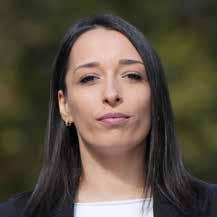
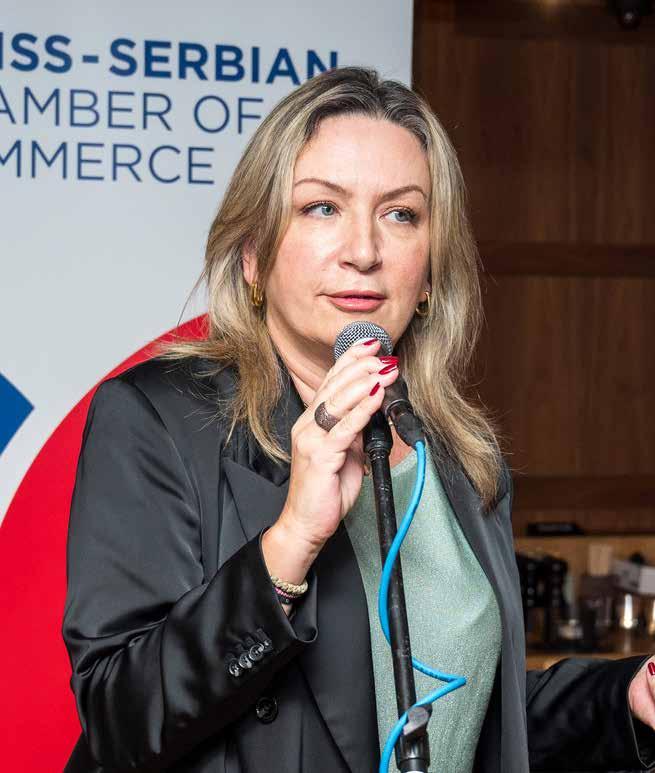
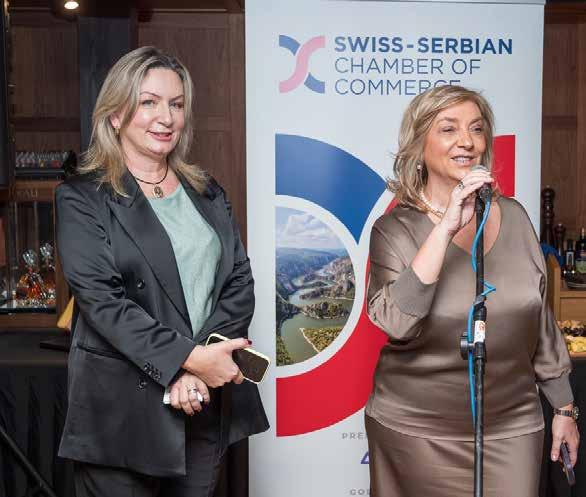
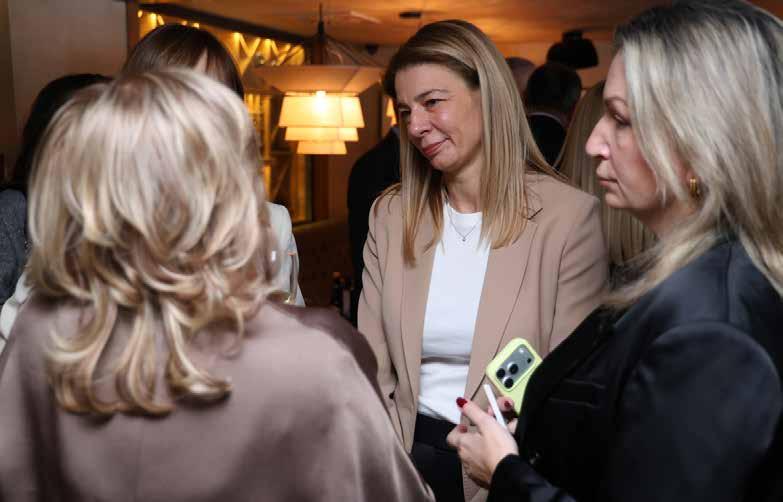
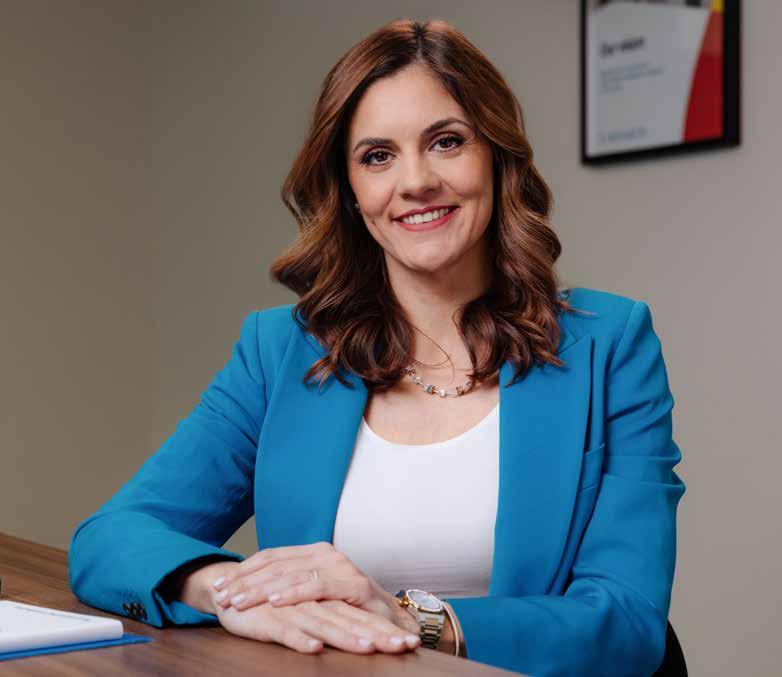
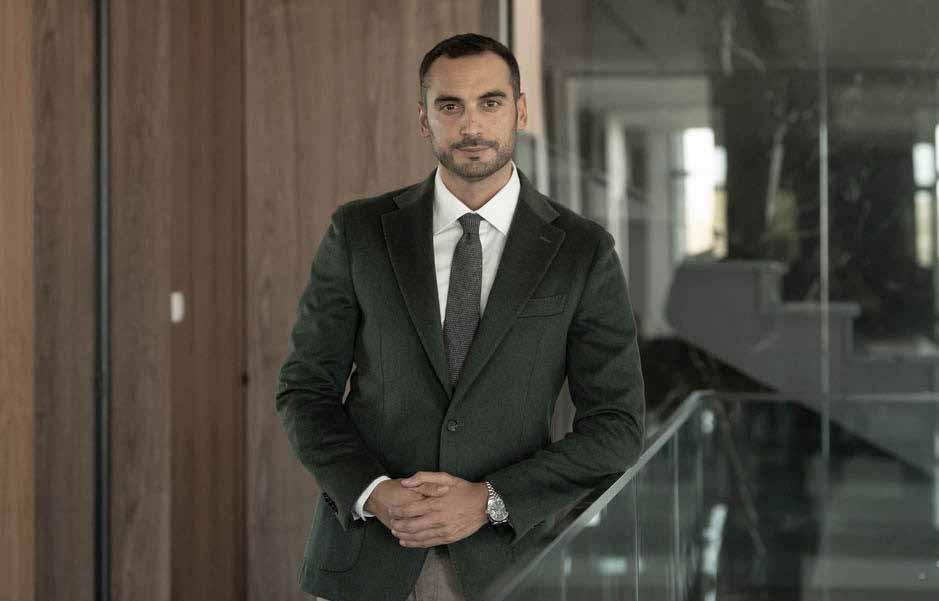
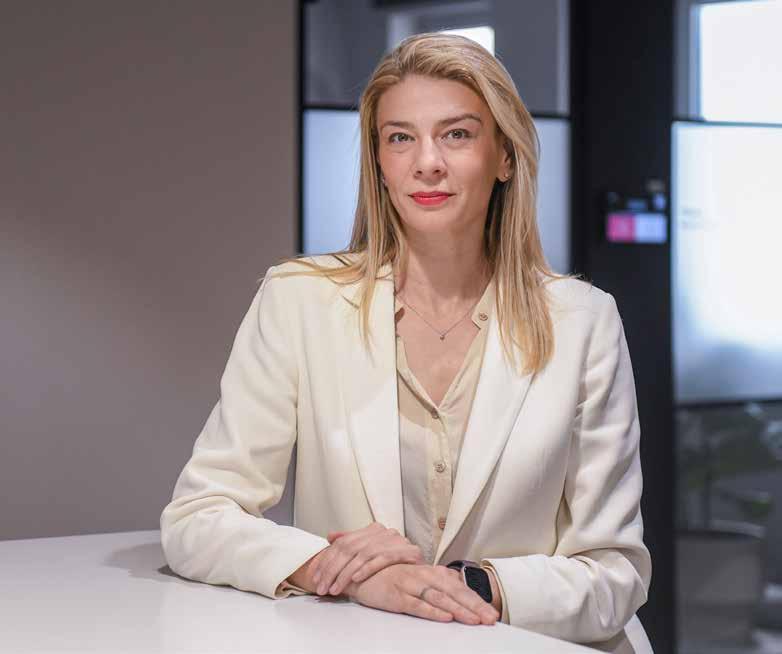
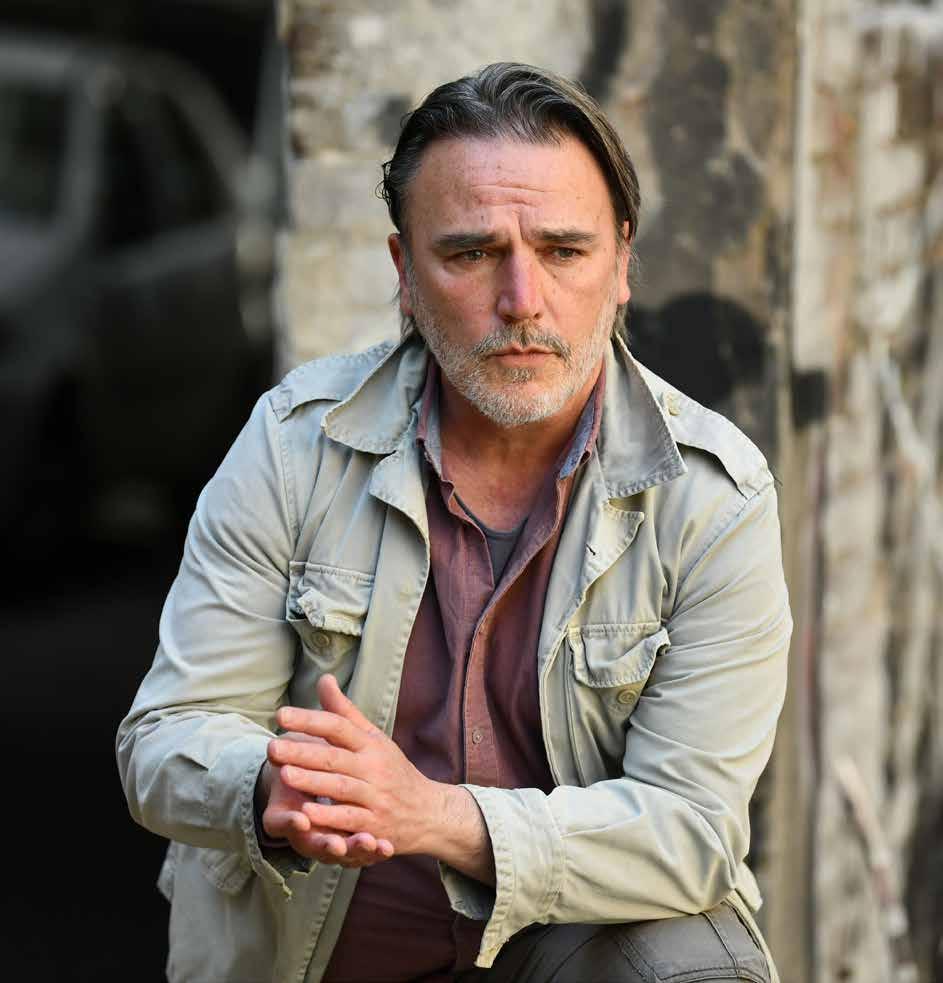
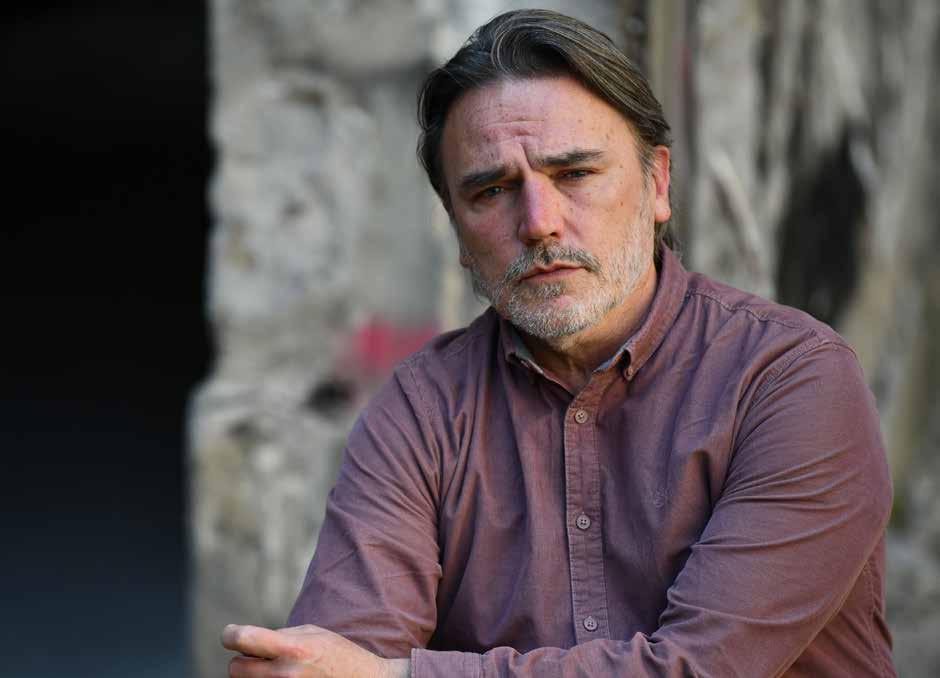
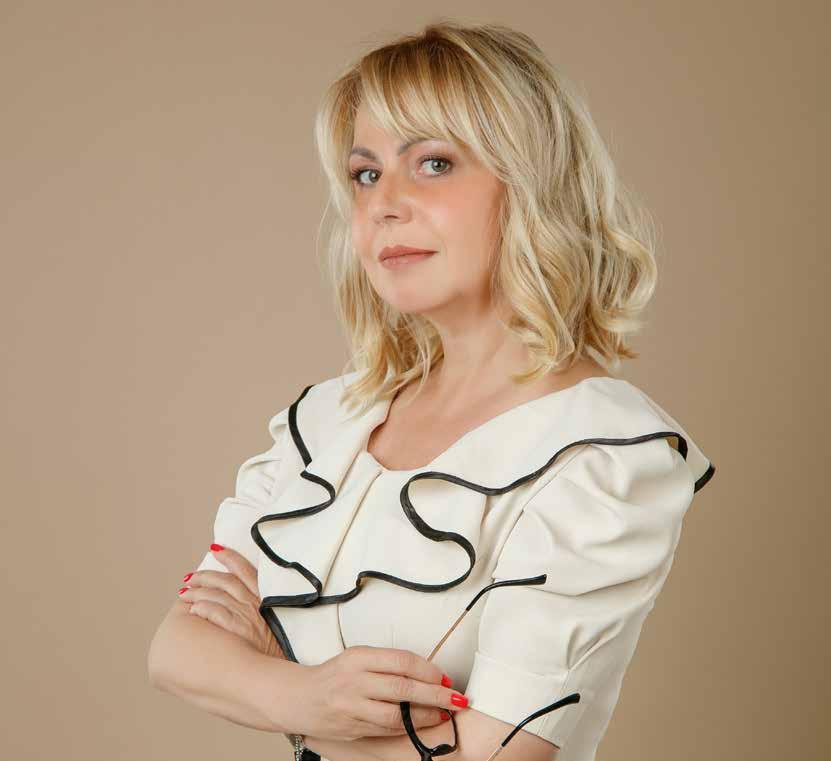
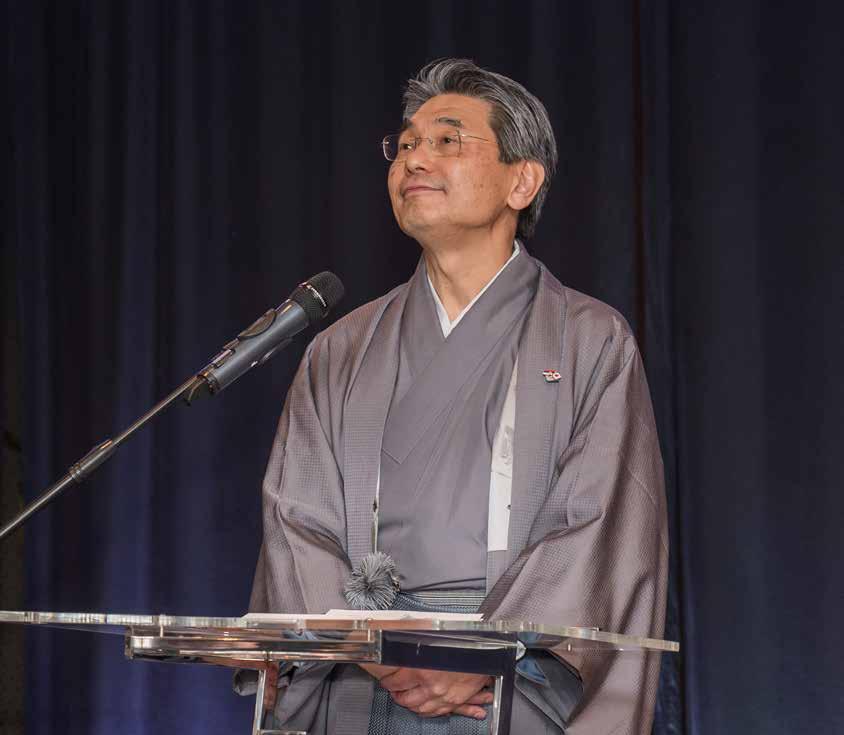
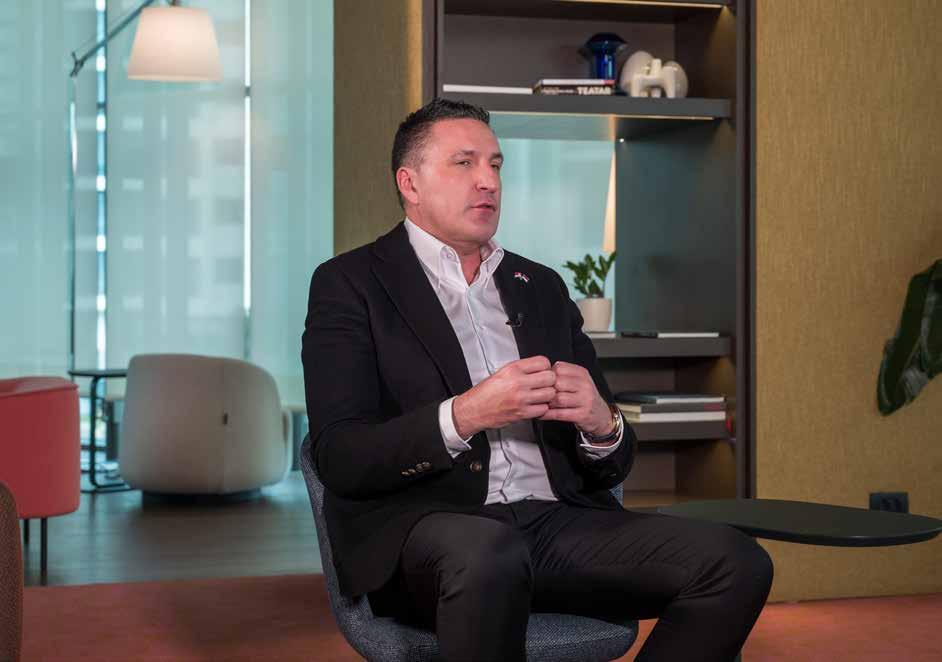
BUSINESS INTERVIEW A PARTNERSHIP BUILT ON TRUST AND LONG-TERM VISION
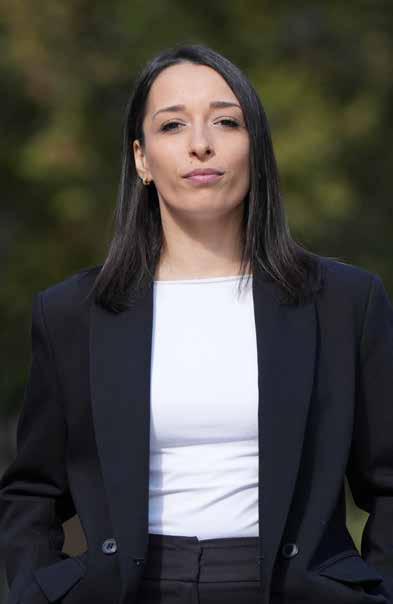
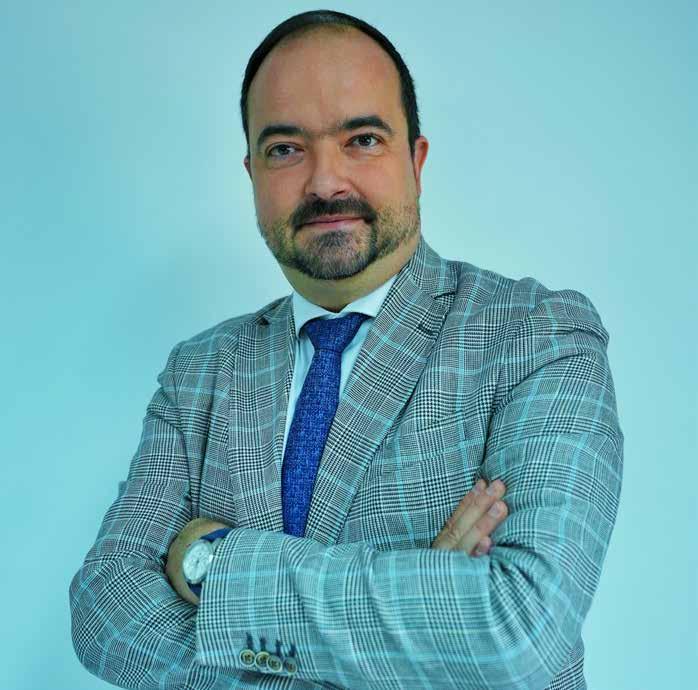
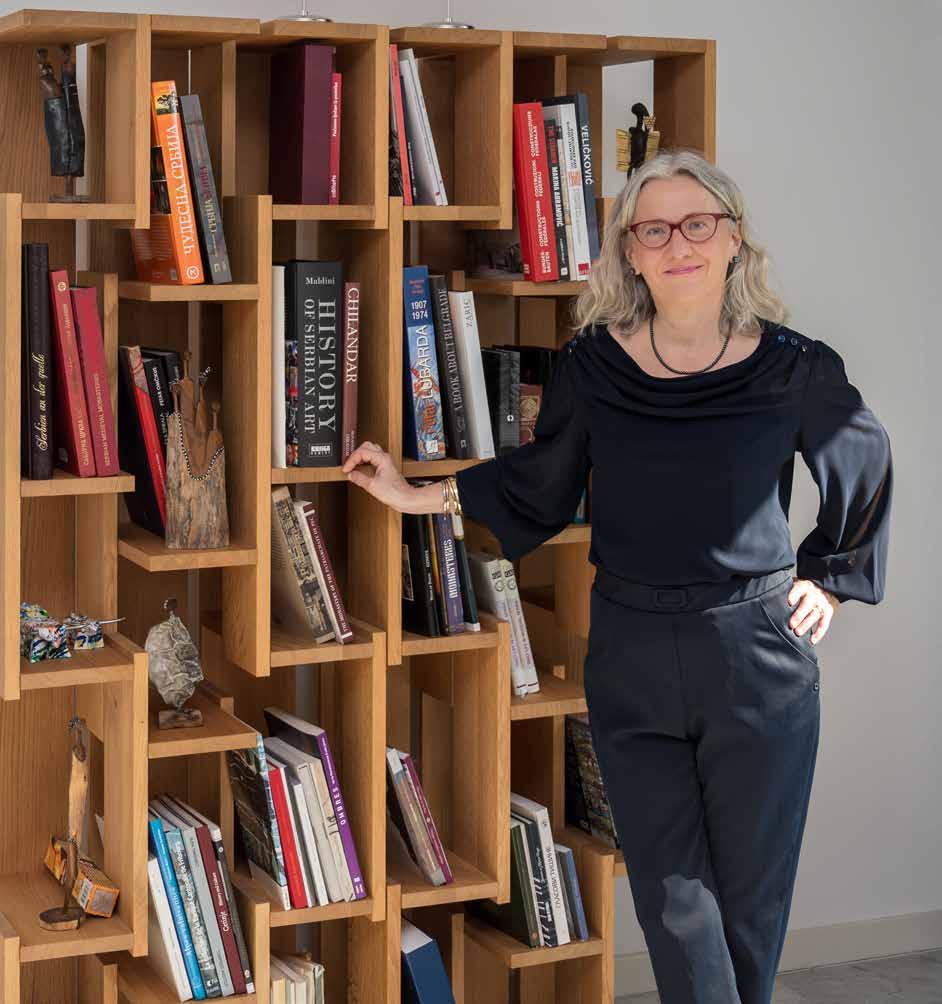
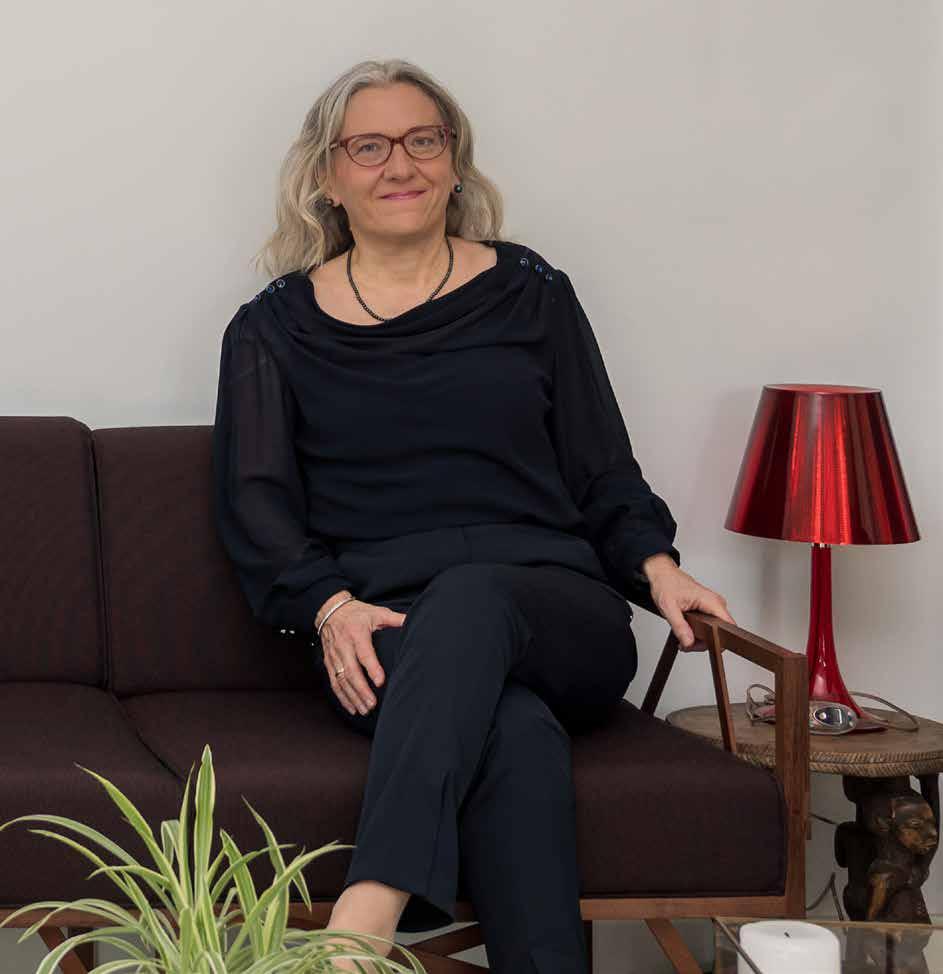
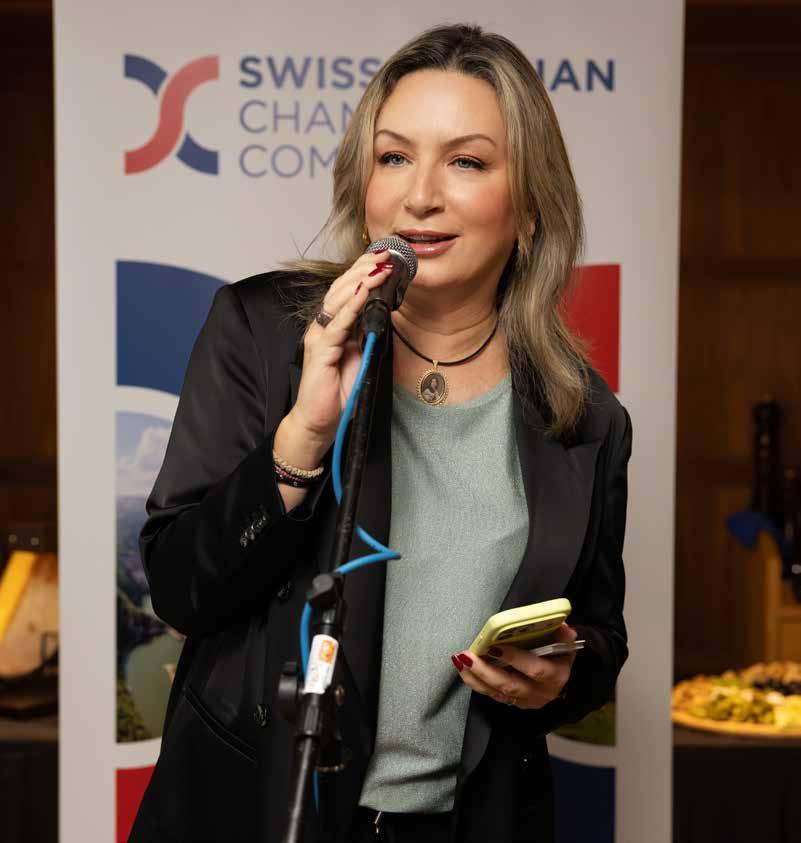
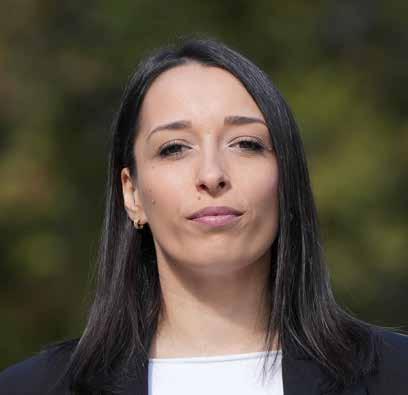
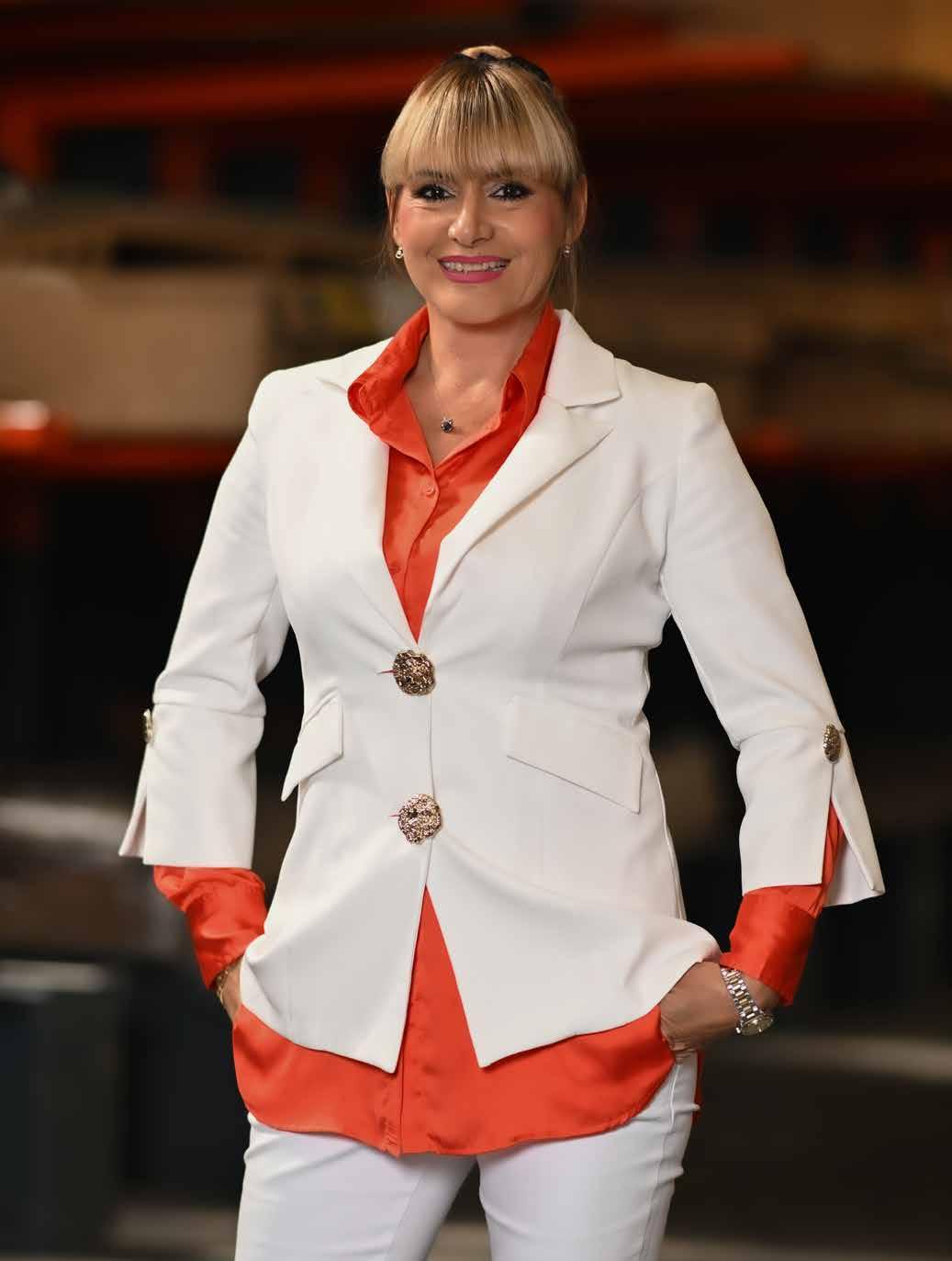
JELENA SADLER
President of the Swiss-Serbian Chamber of Commerce
42
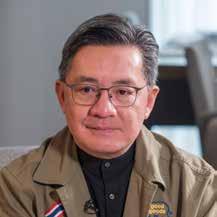
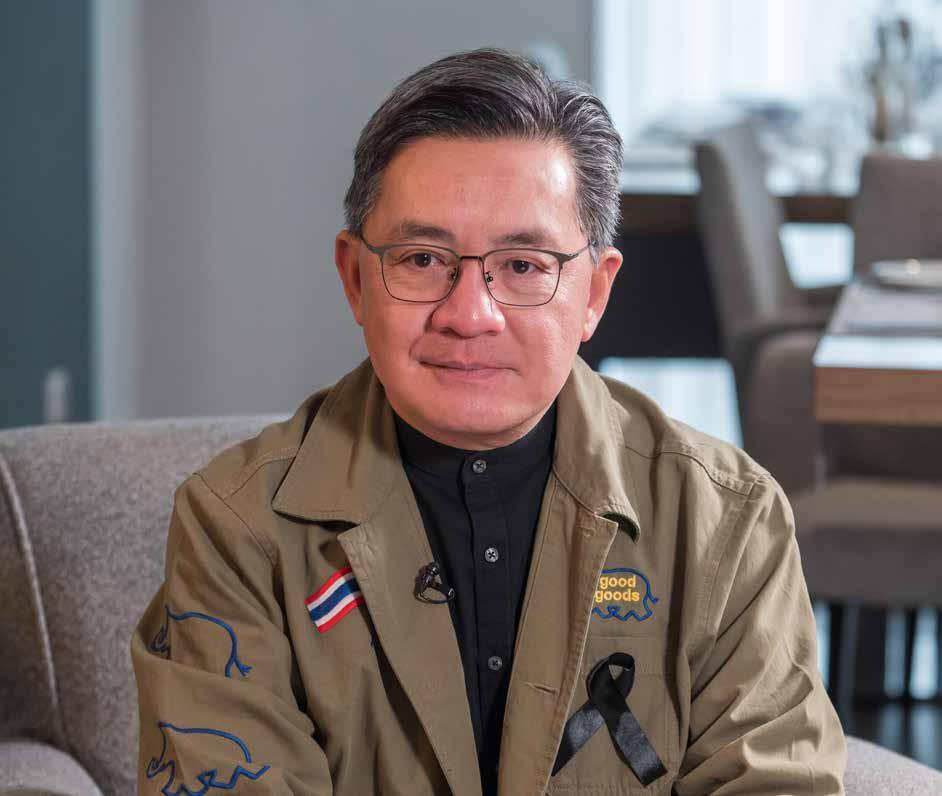
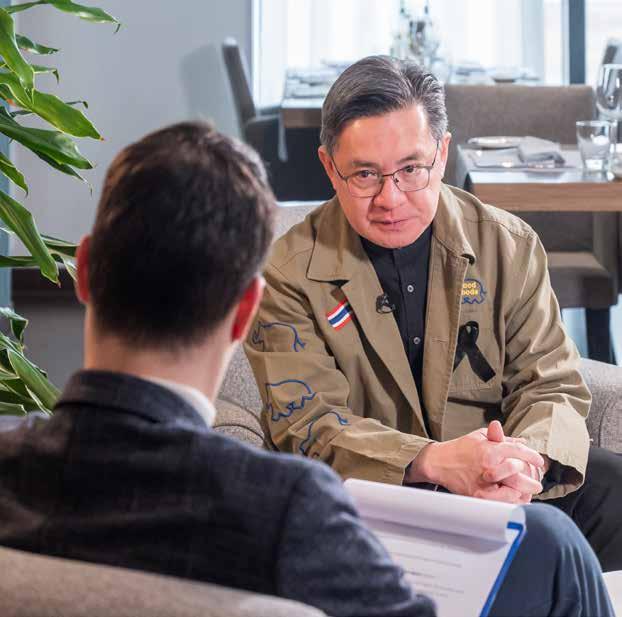
AMBASSADOR’S INTERVIEW SOFT POWER IN A CHANGING WORLD
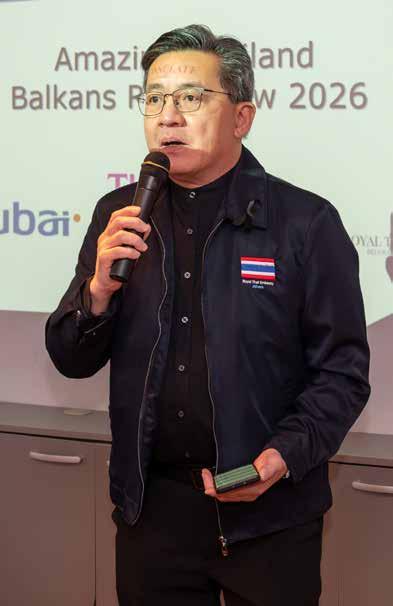
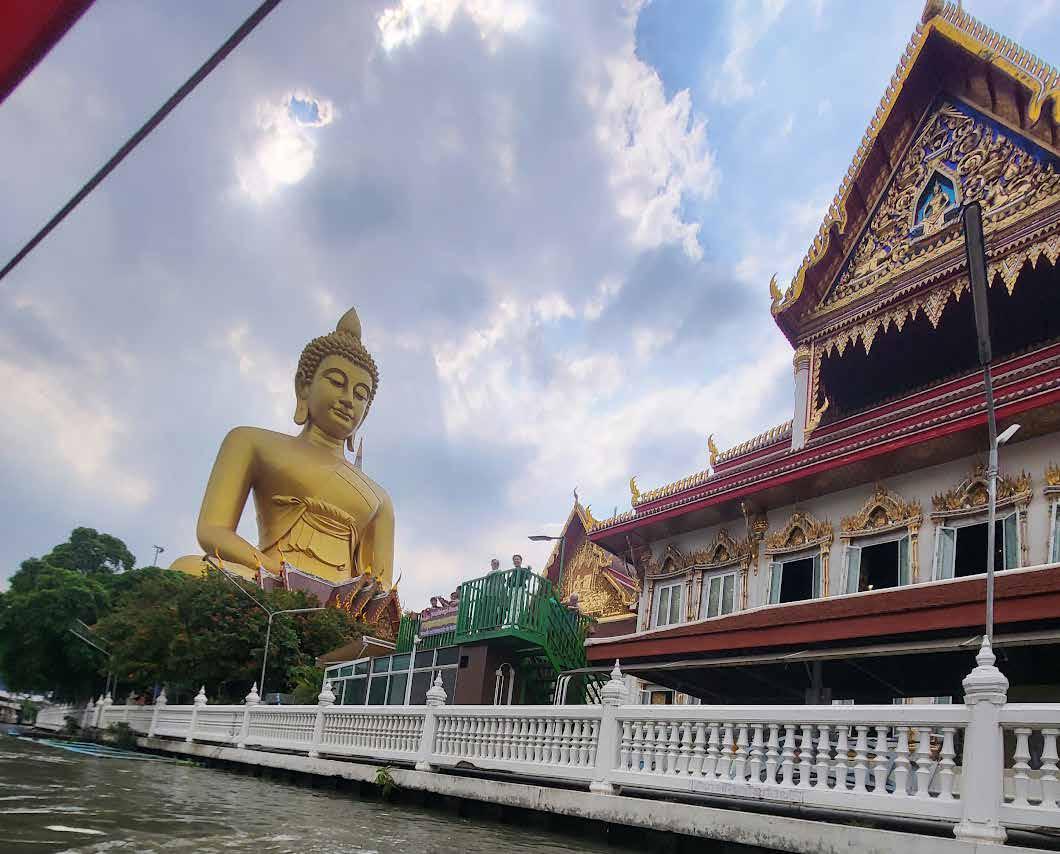
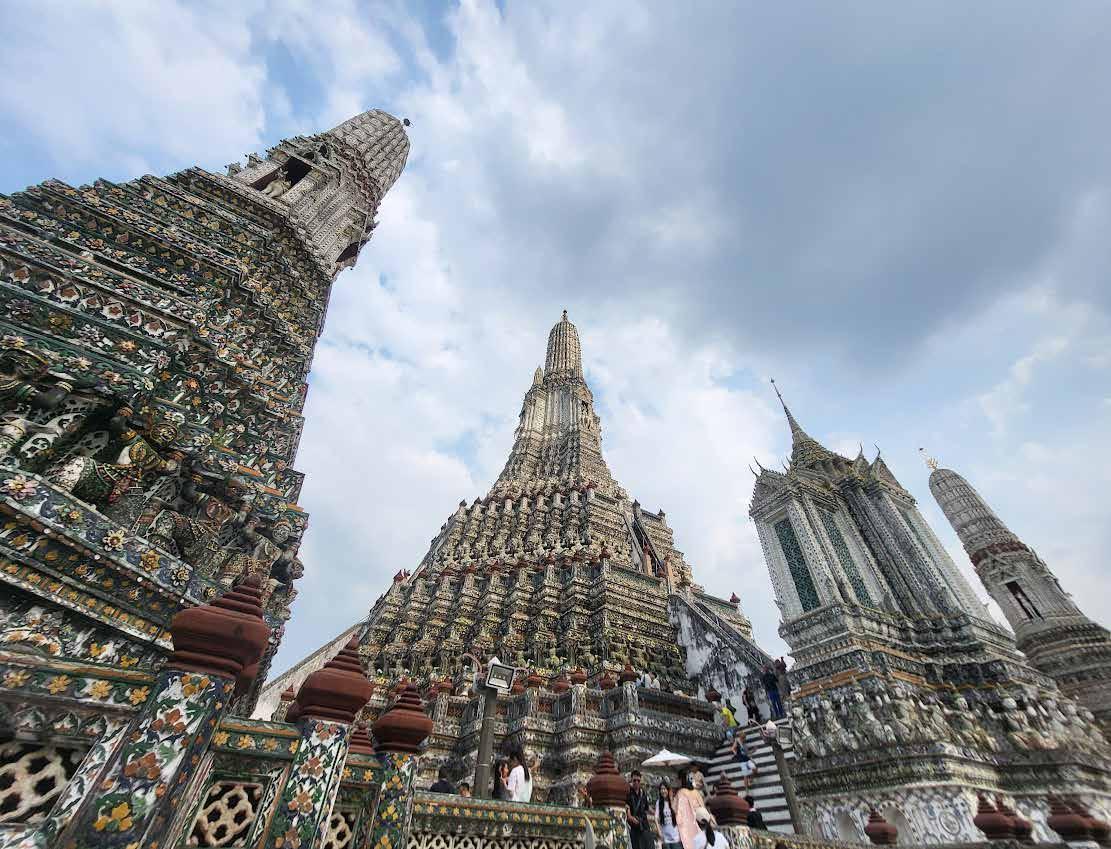
H.E. SATHANA KASHEMSANTA NA AYUDHYA
Ambassador of the Kingdom of Thailand to Serbia
MEDIA INTERVIEW WAR ON JOURNALISM MILAN RADONJIĆ Radar
54
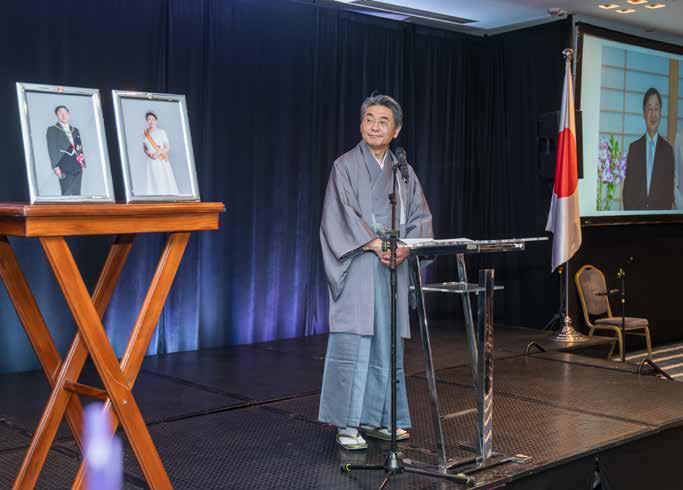
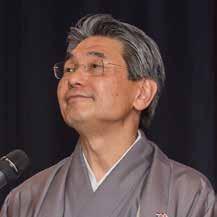
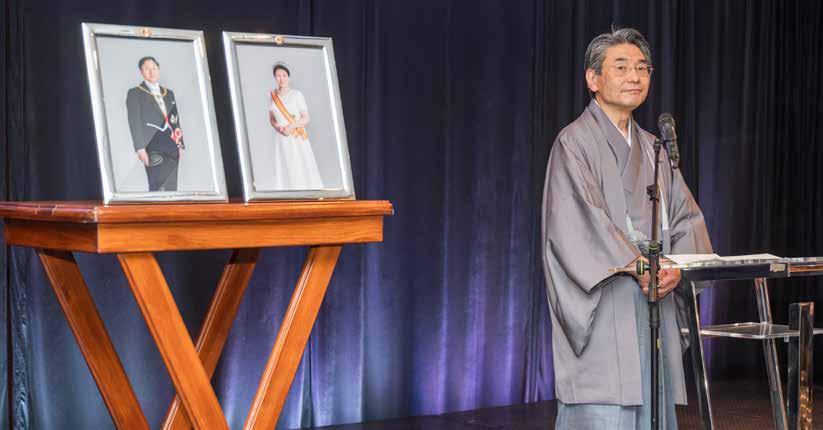
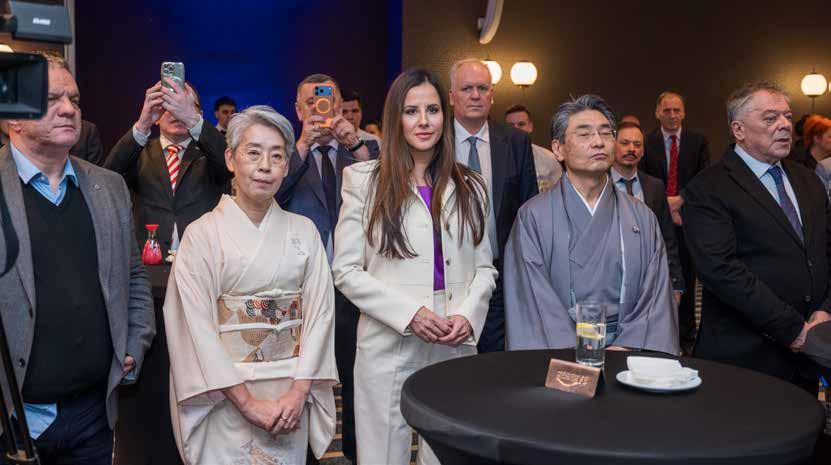
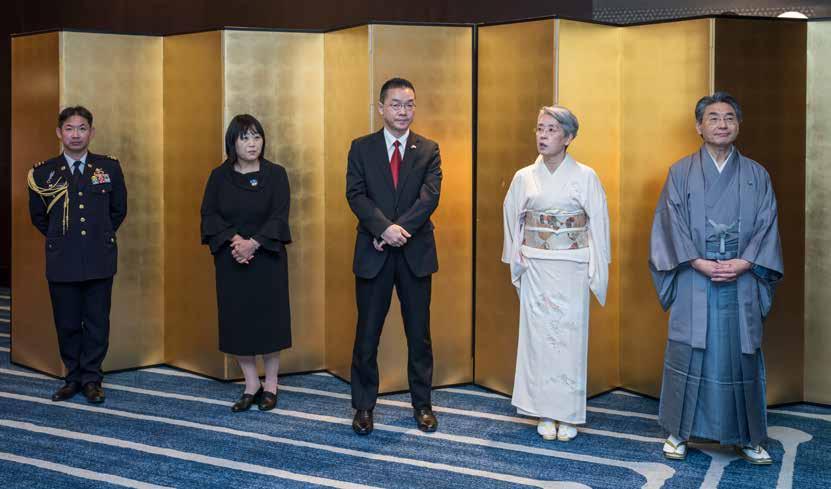
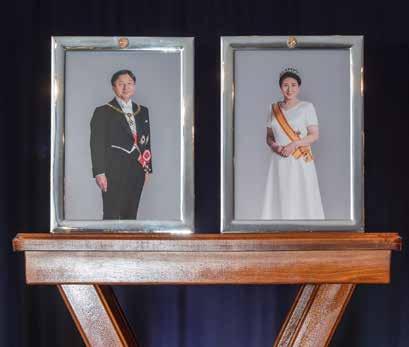
JAPAN THE 66TH BIRTHDAY OF EMPEROR NARUHITO OF JAPAN
64
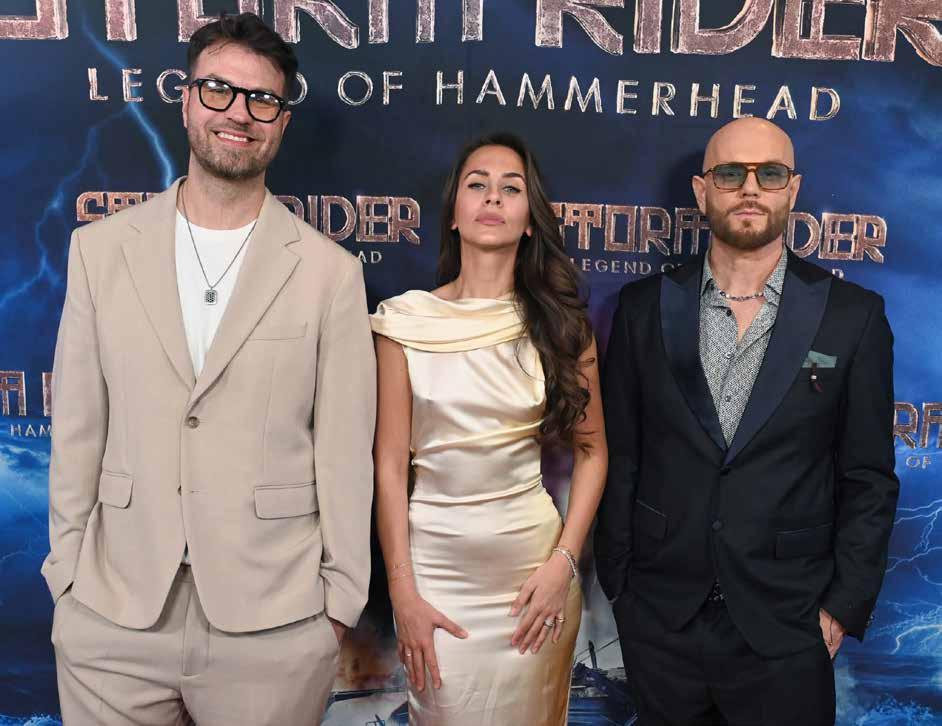
CULTURAL INTERVIEW STORM RIDER GOES GLOBAL ZORAN LISINAC Film Director
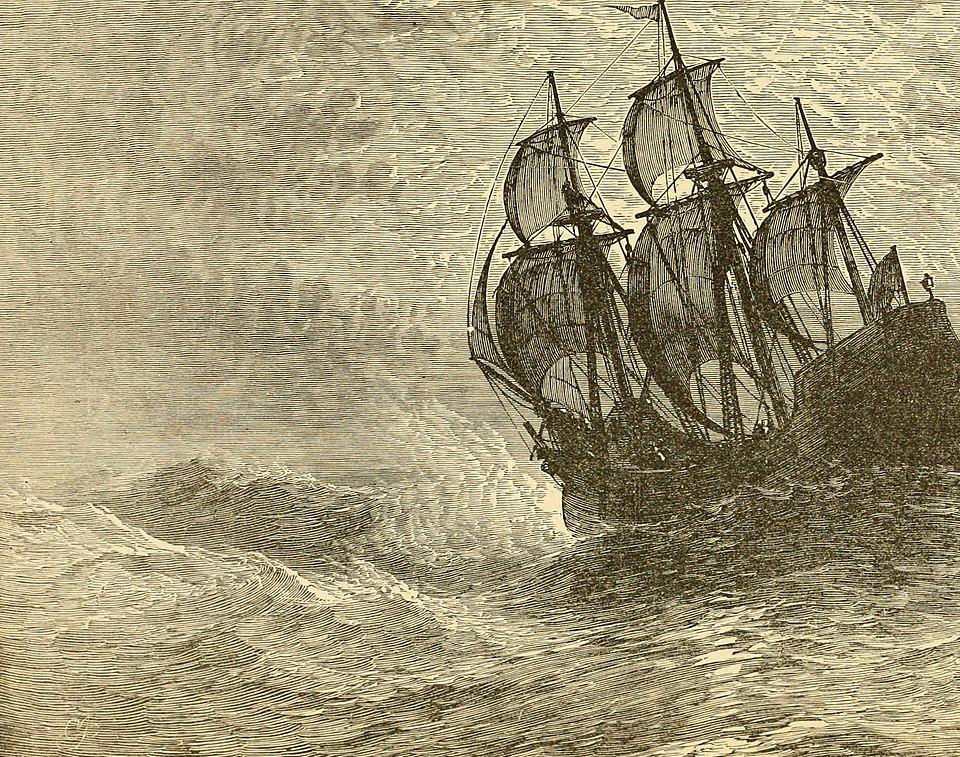
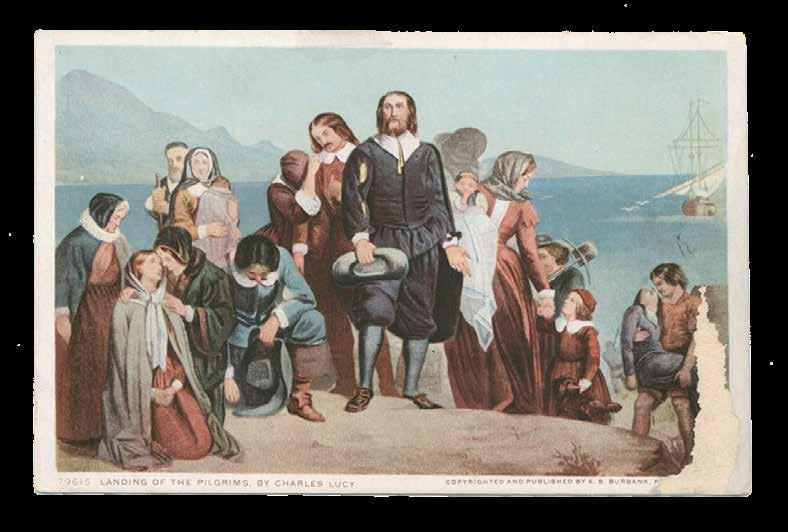
From “Mayflower” to MAGA
If it hadn’t been for migrants, there would be no America from those first settlers who landed at Cape Cod aboard the Mayflower in 1660, to those today who swim across the Rio Grande or arrive by boat on the shores of Florida. There would be no Nikola Tesla, no Elon Musk, no Steve Jobs, no Arnold Schwarzenegger. There would be neither Broadway nor Hollywood without the millions of Jews from Eastern Europe who arrived in the late 19th and early 20th centuries.
I am always struck by people from our region living in the United States who almost invariably advocate the most right-wing ideas, nearly all of them aligning with Trump and the MAGA movement. And yet, had the MAGA movement had its way, their grandfathers would have remained on Ellis Island, never allowed to set foot in Manhattan.
More broadly, people from these parts (Serbia, Croatia, Montenegro, Bosnia…) not only in the U.S. but also across Western Europe overwhelmingly vote for right-wing and
anti-immigration parties — for Le Pen in France, and for the far right in Germany and Austria.
Where does this hypocrisy stem from? Perhaps from the very same “diagnosis” offered more than a decade ago by the then U.S. Ambassador to Belgrade:
“Serbs are somewhat schizophrenic — your heart pulls you East, but your head directs you West. There is confusion about that choice. You will continue to have friends in both the East and the West; you have them now in both the U.S. and Russia. However, this is no longer a question of friends, but of Serbia’s interests. You must implement all the reforms necessary to move closer to the European Union. Everything else is a false choice,” Kirby said in April 2015.
Since then, three U.S. ambassadors have changed in Belgrade (Kyle Scott, Anthony Godfrey, and Christopher Hill). We have now reached a point where there has been no U.S. ambassador in Belgrade for more than a year. As for everything else that has happened over these past eleven years — take stock yourself and see just how right Ambassador Kirby was back in 2015.
Robert Čoban
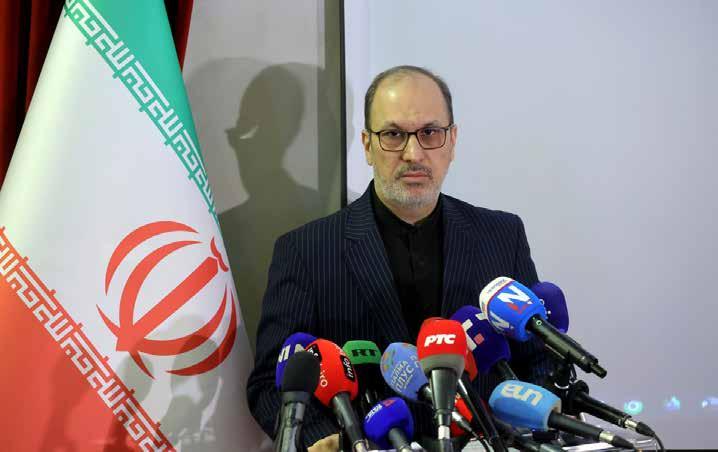
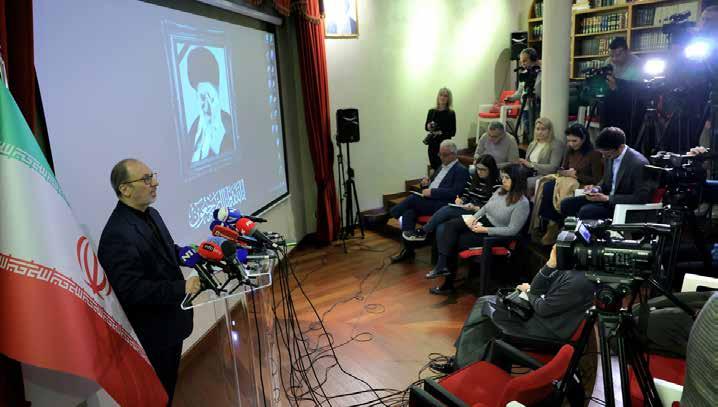
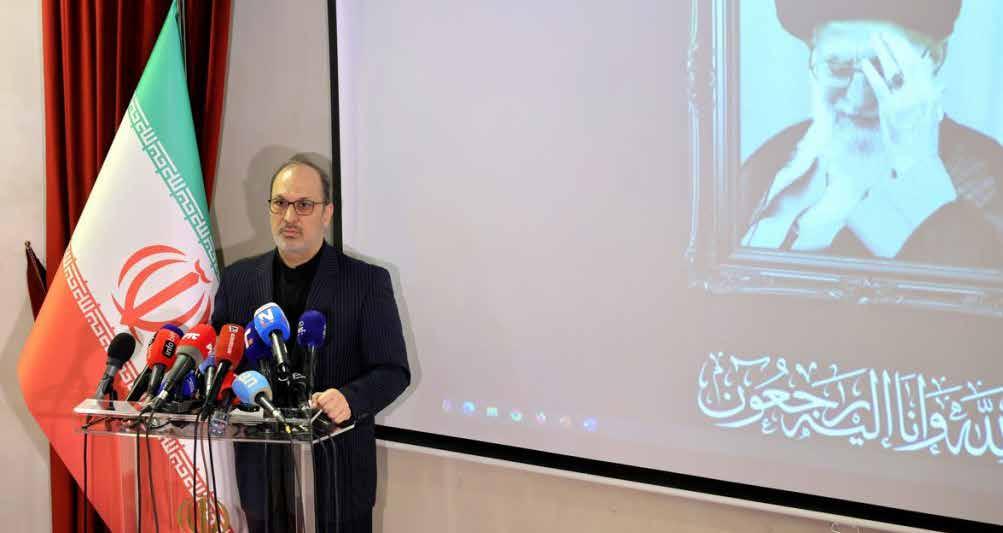
Iran’s Ambassador to Serbia on the Attack on Ayatollah Khamenei and Iran’s Right to Self-Defence
Belgrade, 02 March 2026
Iran’s Ambassador to Serbia, H.E. Mohammad Sadek Fazli, stated on Monday, 2 March, that Iran’s Supreme Leader, Ayatollah Ali Khamenei, was cowardly attacked in his home, which he described as an act of targeted terror against the leader of a UN member state, Tanjug reports.
Speaking to journalists at the Iranian Embassy in Belgrade about the US-Israeli attack on his country, Fazli called on the United Nations to fulfil its obligations in maintaining global peace and security.
“Such an act is not only a military aggression, but a terrorist act of the highest order. This sets a dangerous precedent in international relations, making national leaders targets of military operations. If this becomes normal, there will be no limits,” Fazli said. He added that Iran retains the right to defend itself, and that its legitimate targets are any countries from which attacks on Iran originate, while emphasising that Iran remains open to negotiations and diplomatic solutions.
Fazli also expressed concern that the attack occurred amid ongoing diplomatic efforts between Iran and the US, and stressed that Iran has not abandoned the path of dialogue despite clear signs of threat.
“We have remained at the negotiating table to demonstrate our positions and good intentions to the international community and to show that Iran does not seek war. The response to our good intentions has been a military attack,” the ambassador said, noting that this action is not only an attack on Iran but also an assault on the principle of diplomacy and the credibility of international mechanisms for peaceful dispute resolution.
He emphasised that they expect the United Nations, the Security Council, and the UN Secretary-General to fulfil their duty to uphold international peace and security, warning that silence in the face of aggression undermines the very foundations of the post-World War II order.
“We call on all UN member states, especially countries in the region, Islamic nations, and members of the NonAligned Movement, to unequivocally condemn this act. This is not just about Iran. The question is whether the principle prohibiting the use of force still holds or not,” Fazli said.
The ambassador stressed that Iran is ready for both diplomacy and defense, and that these are not contradictory.
“We have not started any war, but we will not hesitate to defend ourselves. The Armed Forces of the Islamic Republic of Iran will use all their capabilities to protect the country and its people,” Fazli stated, as reported by Tanjug.
He added that Iran does not seek to expand the war or destabilise the region, advocating instead for collective security based on mutual respect. Fazli underlined that the assassination attempt on Iran’s leader will not divide the Iranian people, but will instead strengthen their national resolve to “preserve independence, dignity, and the right to determine their own destiny.”
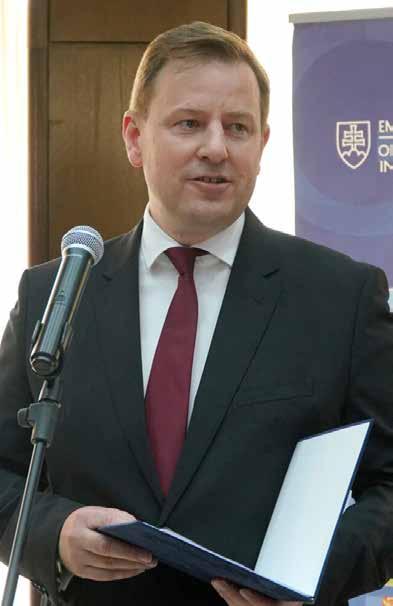
Shared roots, shared future
Political dialogue is gaining new momentum as cooperation expands from energy and business to culture and the European path for the entire region
H.E. MICHAL PAVÚK
Ambassador of the Slovak Republic to Serbia
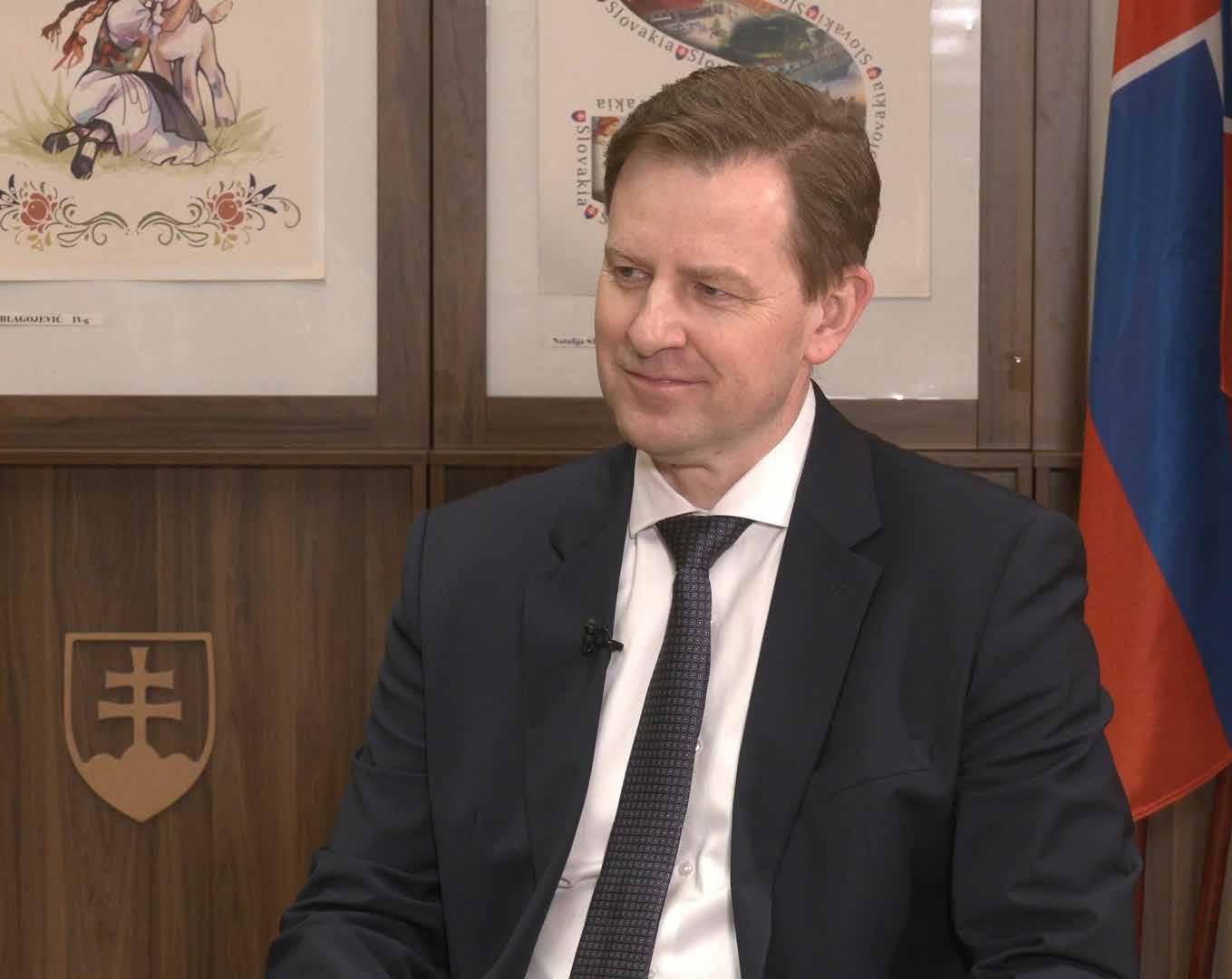
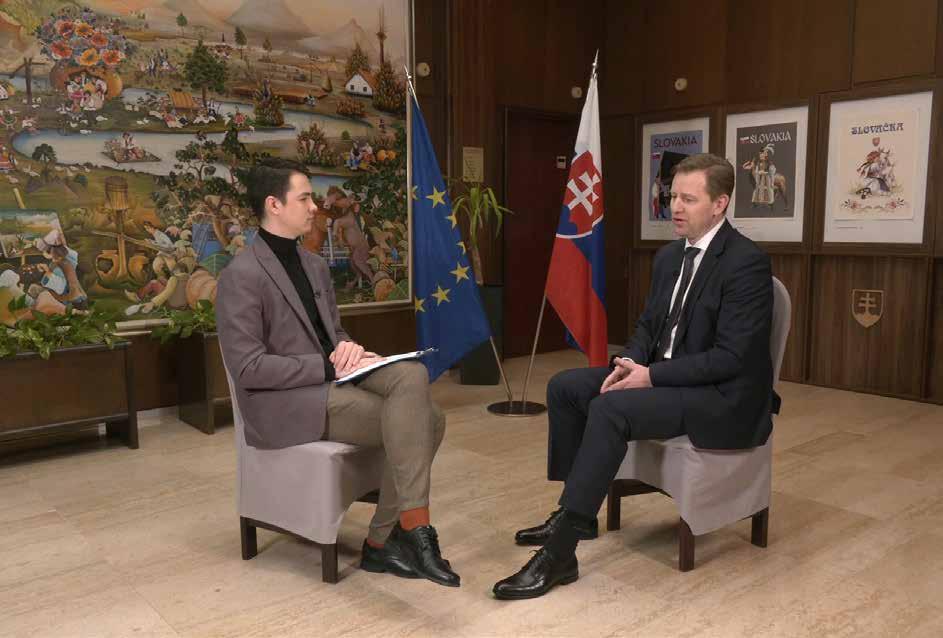
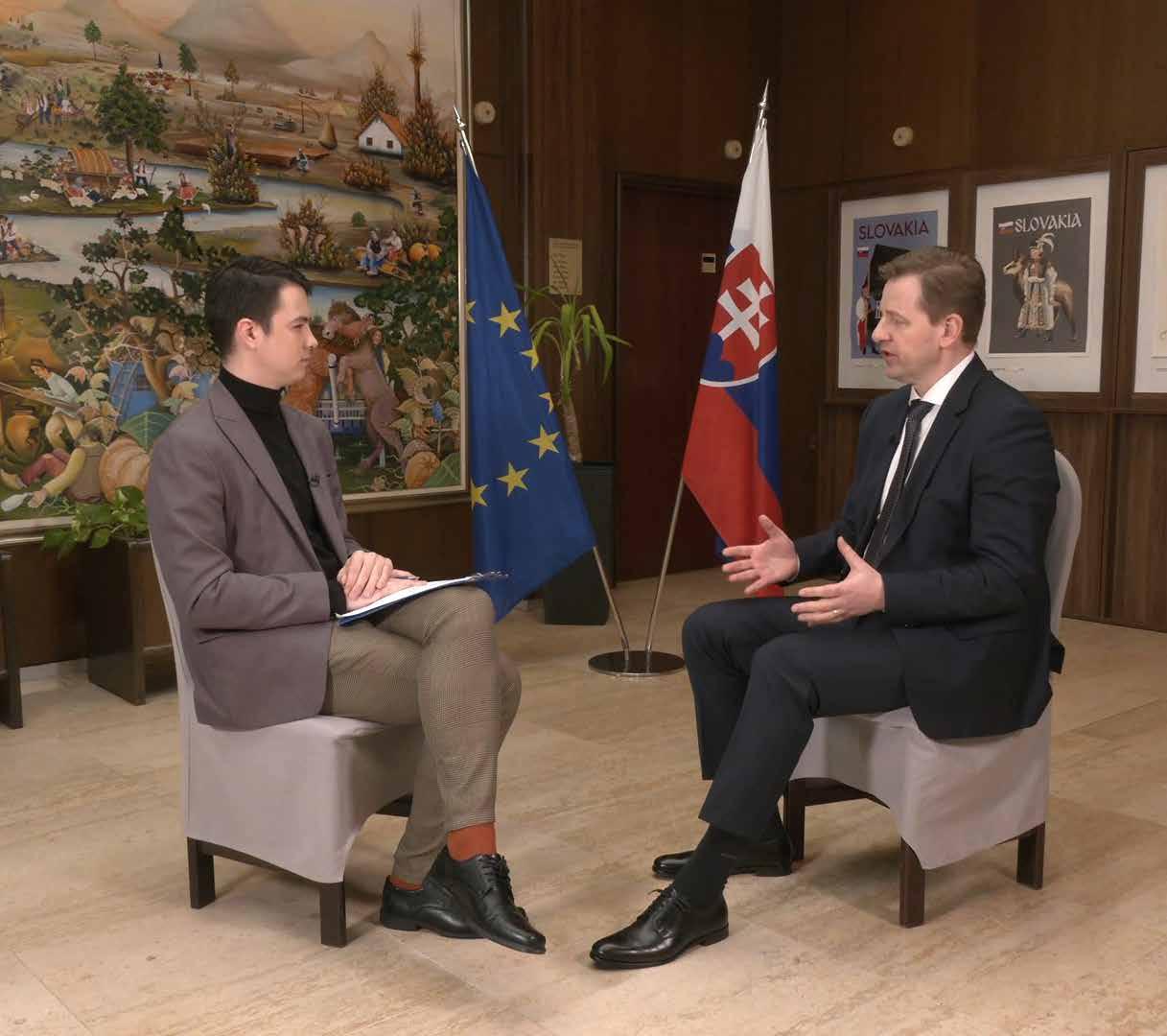
In an interview for Diplomata, a TV programme produced by Diplomacy & Commerce magazine in cooperation with Euronews Serbia, H.E. Michal Pavúk, Ambassador of the Slovak Republic to Serbia, spoke about the strengthening political dialogue between the two countries, Slovakia’s support for Serbia’s European path, economic cooperation and the importance of the Slovak community in Serbia.
Throughout your career, you have held key leadership positions in the Slovak government’s Ministry of Foreign and European Affairs. Which experiences have shaped your approach to your mission here in Serbia?
Over the past 25 years in the diplomatic service, I have gained extensive experience. The experiences we had at home, in Bratislava, at the ministry’s headquarters, and during postings in Washington, Brussels, and Ankara truly changed my view of things and my approach to diplomatic
OUR SUPPORT FOR SERBIA’S EUROPEAN PATH IS ROOTED IN OUR OWN EXPERIENCE OF WHAT EU MEMBERSHIP HAS BROUGHT TO SLOVAKIA
work. Of course, each assignment prepares you for the next one. That was also the case for me.
I served in those positions during the period when Slovakia was in the process of accession, joining the European Union, entering the Schengen Area, and becoming a member of NATO.
During that entire period, I had the opportunity to work in those positions. But I also spent several years at the European External Action Service. I worked for a European institution, which gave me a very interesting perspective. In the end, all of that came together in my appointment as Political Director, and later as Ambassador to Serbia, which
in a way completes a full circle, because my very first job at the Ministry of Foreign Affairs was as a desk officer responsible for Serbia.
Serbia and Slovakia have intensified their political dialogue, which includes discussions on the importance of Serbia’s path towards the European Union and its territorial integrity. With that in mind, what is your view of Slovakia’s role in supporting Serbia on its path towards the EU? You are absolutely right. Especially over the past two or three years, the intensification of bilateral dialogue with Serbia has been tangible and visible. The number of visits and the level of those visits have increased enormously. I am truly proud to have been part of this during this period.
In that sense, it is also one of the most important moments in relations between the two countries in the past 24–28 months, a period that has truly brought an intensification of dialogue. We had the visit of Prime Minister Fico in November 2024, which brought new energy and a new approach, and we began to consider new areas of cooperation, expanding the political dialogue into areas we had not previously paid much attention to. The number of ministerial visits has increased several times. The Slovak Minister of Foreign Affairs was here some time ago, as were the Ministers of Defence, Health and the Interior.
There have been many contacts which, when such dialogue exists, open the door to other pillars of cooperation as well. For us, this primarily relates to work in the field of the economy, improving economic relations, which we can discuss in more detail. There is also, of course, the role of the Slovak minority in bilateral relations, the role of mutual political support between the governments of Slovakia and Serbia in the geopolitical and multilateral context, and, naturally, European integration, as you mentioned.
For us, this is one of the key pillars of our relations with Serbia. It is rooted in our own experience and in what EU membership has brought to Slovakia in terms of benefits — not only in the economic sense, but also in opportunities for development, education, research and development cooperation, and the simple possibility of seeing one another and meeting.
Especially after a long period when it was very difficult for Slovaks and citizens of Czechoslovakia to travel across Europe, the possibility of travelling freely and living in any country in the European Union is truly remarkable. These are wonderful things that we believe in and that we would like Serbia, if it so chooses, to enjoy as well. Of course, I believe the past two or three years have created a new opportunity to accelerate the accession process across the entire region. We hope that the countries of the region, including Serbia, will take advantage of this opportunity.
According to the 2022 census, more than 40,000 Slovaks live in Serbia. The Slovak language is also one of the officially recognised languages in Vojvodina. How important is this link between our two countries, and what is the significance of the Slovak community living here?
It is very pleasant to be an ambassador in a country that has such a large Slovak community. I am always surprised when I visit a local municipality — Bački Petrovac, Kovačica, Stara Pazova, Kulpin,
Selenča. I also speak Slovak, and sometimes I cannot believe it. It truly feels like being at home. Of course, the local Slovak language is somewhat enriched with Serbian expressions and has not developed in the same way as contemporary Slovak in Slovakia. But essentially, it is a reminder that the Slovak community and the Slovak nation do not live only within the territory of Slovakia. We also have these very valuable communities, particularly here in Serbia, which have existed for almost 300 years and have their own distinct culture and traditions.
I believe that over those 300 years, this community has contributed to the country’s economy and social development. Of course, originally this was within the Austro-Hungarian Empire, but later, for more than 100 years, within the Republic of Serbia. All of them are citizens of Serbia — I believe proud citizens of Serbia — and therefore we are very grateful to the Government of Serbia for providing support and ensuring the conditions that allow the Slovak community not only to survive and continue its traditions, education and economic life, but also to
THE SLOVAK COMMUNITY IN SERBIA IS A BRIDGE THAT HAS CONNECTED OUR TWO COUNTRIES FOR ALMOST 300 YEARS
build the foundations for its future development.
This year, Serbia established a framework with its European partners regarding the green agenda and sustainable development. How can Slovakia, which has its own experience in this area, help Serbia achieve that mission?
In many ways. This is also one of the pillars of our economic agenda on which we are strongly focused. Slovakia’s energy transition and sustainability agenda align with the European Union’s goals. The commitment to the 2050 targets, as well as to around 25% decarbonisation by 2030, is part of the Slovak government’s activities. In that sense, we are very much aligned with what other EU Member States are doing.
We have gone through our own transition. Slovakia, for example, has closed all of its coal-fired power plants. I believe the last one was closed last year. We have endured the economic and social challenges that this decision brought. I think this explains why the Slovak government is more vocal in emphasising that environmental protection and sustainable energy are very important — but that is only one of the challenges.
The other challenge is the economy’s sustainability. Without one, the other is essentially not possible, or if it is possible, it cannot be fully achieved. That is why, in discussions, we perhaps speak somewhat more strongly about
this second element, about this second challenge in this debate, which I believe is healthy. I believe that in the end, we will work on tailored solutions that will allow us to move forward in achieving climate goals and responding to climate change, which is, of course, evident to everyone living on this planet. But this cannot be done ideologically. It must be done with awareness of people and their needs, of workers and jobs, of the economy and social life.
What does cooperation between Serbia and Slovakia look like in this field?
I am convinced that we have a very good foundation for working together. We have already had several discussions in that direction. I believe that the energy sector is probably the most advanced area. Slovakia currently produces around 61% of its electricity from nuclear power plants. We are also working on completing another reactor that will increase the share of nuclear energy to around 70%. This gives us extensive experience in regulation, education, technology, and the safe operation of power plants.
These are the elements that we offer to Serbia. We know that discussions are currently taking place about the future of the energy sector in this country. If Serbia decides
THE FUTURE OF ENERGY MUST BE SUSTAINABLE, BUT IT ALSO HAS TO RESPECT PEOPLE, JOBS AND ECONOMIC REALITIES
to move in the direction of nuclear energy, an area in which we have significant experience, we are ready to assist and share our resources and knowledge to ensure that such a programme develops safely, efficiently, and with the least possible environmental impact. But this is not the only area.
We have investments in Serbia’s solar energy sector. For years, we have also been working on hydropower here. We also have several projects that help us manage plastic waste and other waste. In fact, tomorrow I am going to Novi Sad with an organisation founded by the government. They will launch a project there to analyse climate change and the impact of drought in the Vojvodina region, and to propose measures to manage the water cycle in Vojvodina better to protect the soil of this agricultural region in the future. So, in that sense, I believe we have many opportunities. We have contacts at the ministerial level on this, and I am sure you will have more information in the months to come.
What opportunities do you see for cooperation between the two countries and, more importantly, which sectors appear to be the most promising for development? We have already mentioned the green agenda, but what else is there?
The economy is the next pillar we are trying to strengthen, underpinned by strong political relations. For the moment, looking at the figures, the volume of trade exchange exceeds €1.2 billion. That is not a small figure. When I look at the statistics, and I am very close with my British colleague, it is roughly equal to the trade exchange that the United Kingdom has with Serbia.
The issue is that, in bilateral economic relations, the predominant share of trade consists of transactions between multinational companies. It is trade between Stellantis here and Stellantis in Slovakia, as well as with other multinational companies. While we are very pleased that this is the case and we continue to support it, let me be clear: we also want to help increase the exchange of products
and investments between companies headquartered in Serbia and Slovakia. These are truly capital and companies with a domestic base.
This concerns different areas, and, as you mentioned, during the Prime Minister’s visit in November 2024, we had the largest Slovak business delegation ever to come to Serbia, and it was the second-largest delegation in the history of Slovakia.
This shows Slovakia’s interest in developing economic ties with Serbia. We are also working on other ideas, such as establishing a SlovakSerbian Business Association in Belgrade to bring together all economic actors from Slovakia already present in Serbia. There are already a number of good examples. But we are also expanding the areas of cooperation. We have already spoken about energy. We are also continuing to cooperate in areas such as mechanical engineering.
We have a very successful company producing railway wagons in Subotica, Tatravagonka Bratstvo, which took over a firm in difficulty and turned its operations around. We also have other investments like that. We are also looking at the healthcare sector, including high-value healthcare technologies. We have companies from that sector observing the market and, I believe, bringing technologies that will help Serbia address healthcare
challenges that are important to this country and the region.
We also want to make progress in the ICT sector. Both countries, Serbia and Slovakia, currently chair the GPAI movement and organisation. Serbia is known for having very strong foundations in ICT, and I see opportunities there. We also want to look at more traditional sectors such as agriculture. We are close to each other. Vojvodina is an agricultural region, and we have a long agricultural tradition. We want to develop this across a broader spectrum.
I should not forget that traditionally, Serbia, and previously Yugoslavia, as well as Slovakia, formerly Czechoslovakia, were strong in the defence industry. I see very good opportunities to revive the partnership between Slovakia and Serbia, especially now, to leverage the knowledge in that field and the existing production capacities, so that both countries can benefit.
Serbia and Slovakia jointly emphasised the importance of cultural heritage and education at the UNESCO General Conference held in Samarkand. How do you
see the continuation of those initiatives and new cultural exchange projects that may be in preparation?
In a way, it is very pleasant and interesting to deal with the culture of Slovakia and Serbia, Slavic countries with similar roots, sharing similar views on things, close traditions, and related languages. You also mentioned the existence of the Slovak community in Serbia. All of this means that Serbian culture is not foreign to us. It is something we can understand. We can understand its nuances, which is very important in culture, and I believe the same applies in the other direction.
Of course, the challenge I face in Serbia is that wherever you go, especially south of Belgrade, when you say Slovak culture, everyone immediately thinks of naïve art from Kovačica. Therefore, my task is to
present Slovakia’s culture to Serbia in a broader context. There are visual arts, both contemporary and traditional, music, theatre, books and literature. So my team and I are working intensively to respond to that challenge, but also to preserve something that is very special and of which we are very proud – the culture and traditions of the Slovak community in Vojvodina.
When speaking about cooperation and culture, I really must mention Kovačica once again, because in December 2024, Slovak naïve art from Kovačica was inscribed on the UNESCO list. This project shows how we can work together. It was originally a nomination by the Government of Serbia. I believe, in my view, that this is the first time in the world that a country has nominated the culture of a national minority.
WE SEE STRONG OPPORTUNITIES FOR DEEPER COOPERATION IN ENERGY, ICT, AGRICULTURE AND THE DEFENCE INDUSTRY
Slovakia joined that process. So it was a joint success that ultimately highlighted both a traditional culture and a beautiful part of the cultural mosaic of Vojvodina and Serbia. Culture is, therefore, a challenge, but we invest a great deal of time to ensure it is presented correctly. This year, we have several projects planned. We are also working with our European friends to present certain programmes, particularly in the field of visual arts. We will bring a classical guitar ensemble that will perform here, as well as at the next Guitar Festival in Belgrade and at several other events. We also have the traditional Days of Slovak Culture at Gallery 73 in Čukarica. You will certainly hear more from us. We are truly proud of our cultural work.
How do you see the future of relations between Slovakia and Serbia, particularly potentially, perhaps even within the same European family?
Relations have traditionally been very good and are based on principles that we share. We have spoken a great deal in the past and continue to speak today about the protection of international law, support for multilateralism, and the need to ensure that the principles of sovereignty and territorial integrity are respected and protected.
Because we may sometimes think of ourselves as large, we are, in reality, relatively small countries. And small countries like ours must find their footing in those principles to secure a safe future for themselves. So we share a similar foundation for viewing the world. That is why my vision for the future of our relations is positive: we share common roots. We have many shared interests. We have a positive connection through the Slovak community. And we have hope for both countries, a vision that both will be part of the developed, democratic European world.
In that sense, I believe that our relations will continue to develop and strengthen in the future. The months and years ahead will only confirm this, not only through political contacts and high-level meetings, but also through an increasing number of business partnerships emerging in both Slovakia and Serbia. There will be more cultural exchanges, and we will have more projects, such as inscribing the naive art of Kovačica on the UNESCO list. And finally, I believe that the citizens of our two countries will feel even closer to one another in the future.
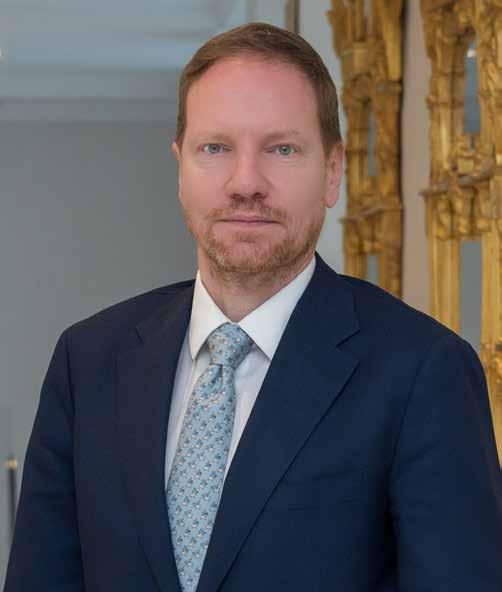
Equality Beyond the Law
Ensuring fairness in practice, strengthening institutions, and safeguarding independence in a polarised society
In a society where equality is formally guaranteed but not always fully realised, the role of independent institutions is more important than ever. In this interview, Milan Antonijević, Commissioner for the Protection of Equality, speaks about key challenges in applying antidiscrimination laws, safeguarding institutional independence, and advancing equality in everyday practice.
Given Serbia’s modern legal framework in the field of gender equality, including the Law on Gender Equality and other relevant legislation, where, in your experience, do we fall behind the most in implementing the principle of equality, and what are the key challenges faced by the Commissioner’s institution in ensuring these laws are effectively applied in practice?
LAWS ARE EASIER TO CHANGE THAN ATTITUDES
When it comes to gender equality, it has proven significantly easier to change laws and establish formal equality than to change attitudes towards women and the
expectations society continues to place upon them. However, regulations exist for a reason and must be respected. First and foremost, institutions need to apply the laws consistently to all other stakeholders, while ensuring that women are provided with the conditions necessary to exercise, in practice, the rights guaranteed to them by law. Of course, laws are not perfect and need to be improved, but it is not good when
that process takes too long, as is the case with the Law on Gender Equality, which has been struck down by the Constitutional Court. Among the greatest challenges are gender-based violence in all its forms, as well as economic inequality. Women still earn, on average, less than men for the same work, while at the same time bearing a disproportionate burden of household duties and family care, which affects their career advancement. This is precisely where the so-called pay gap originates, and it persists throughout women’s lives. It is therefore crucial to ensure equal opportunities for employment and promotion, salary transparency, greater support for working women and those starting their own businesses, and, of course, stronger representation of women in decision-making positions. In this regard, the Commissioner’s institution submitted an initiative last year to introduce quotas of at least 40% for the underrepresented gender in company management bodies.
Since taking office as Commissioner, how many complaints have been submitted to your institution, and what do they most commonly relate to? When it comes to the number of complaints, we are currently recording a slight increase, which is likely the result of a series of visits to local communities and national councils of national minorities since I assumed the position of Commissioner.
Over the past three months, 280 complaints have been submitted, with 43 of them citing discrimination on multiple grounds. The largest number of complaints concerns discrimination based on health status, religious or political beliefs, and membership in political, trade union, and other organisations, as well as marital and family status. Most frequently, violations of the right to equality are reported in the context of employment procedures or in the workplace, as well as in proceedings before public authorities.
An overview of the complaints submitted by citizens in 2025 is available in our Regular Annual Report, which has just been submitted to the National Assembly of the Republic of Serbia. It provides a detailed account of the institution’s work and offers an analysis of the state of equality across all areas of society over the past year.
DISCRIMINATION DOES NOT RECOGNISE BORDERS
What are your main priorities and initiatives during your mandate aimed at improving equality in practice?
The institution I lead will insist on improving the legal framework, ensuring consistent implementation of all anti-discrimination regulations, strengthening oversight mechanisms, and providing ongoing education for all stakeholders, while also enhancing institutional capacities in equality and the fight against discrimination. We aim to become more accessible to citizens through closer cooperation with local self-governments, and we are also planning to open new regional offices of the Commissioner for the Protection of Equality.
We will work to highlight unfavourable treatment, inconsistent practices in the application of laws, and legal gaps that need to be addressed. These include
ensuring an adequate number of personal assistants, teaching assistants and health mediators; providing financial support during pregnancy and after childbirth for female athletes who do not have employment contracts with sports organisations; revising the conditions for granting financial assistance for care and support of another person; and adjusting the tax treatment of food donations to food banks, soup kitchens and other humanitarian organisations. We will also continue to advocate for the legal recognition of same-sex partnerships, as well as for the introduction of specific criminal offences related to the abuse and dissemination of sexually explicit content and femicide.
In addition, preparations are underway for a study on men’s perceptions of gender equality, as well as for reports on the position of national minorities and on discrimination based on political affiliation.
What role do the media and public voice play in advancing gender equality, and how does the Commissioner’s institution cooperate with the media?
We strive to maintain strong cooperation with the media, as our work would be unimaginable without them. They play a key role in advancing gender equality by shaping public opinion, highlighting issues, opening space for discussions on inequality, and helping to break down stereotypes. Responsible reporting helps make issues of discrimination and equality more visible and easier for the wider public to understand.
The Commissioner’s institution works with the media through regular communication, the provision of expert opinions and recommendations, the response to cases of discrimination in the public sphere, and joint campaigns and educational activities aimed at promoting equality and raising public awareness. Over the years, we have organised several training sessions for media professionals on reporting on discrimination, fostering sensitivity, using appropriate terminology, and understanding the harmful effects of sensationalism and hate speech. We are also proud of our Media Award for Tolerance, which we have been presenting for almost ten years in cooperation with the OSCE Mission to Serbia.
Upon taking office as Commissioner, your appointment drew strong reactions from parts of the political sphere and the broader public. In such circumstances, how do you plan to build trust in the institution and establish your personal credibility?
Precisely through my work. Over the past 15 years, the institution of the Commissioner has built a solid level of credibility, and it is now my responsibility, as the person at its helm, to further strengthen its work in protecting the rights of all citizens of Serbia.
I have nothing against criticism. On the contrary, I consider it desirable, as no one is without fault in their work. However, it is neither easy nor pleasant to be subjected to a barrage of insults, which have been far more frequent. Unfortunately, this kind of communication, if it can even be called that, has become commonplace in the public sphere, with little awareness of the harm it causes to society as a whole. I stand for the opposite – for respect towards those who think differently, for well-argued criticism and dialogue, and for the genuine application of the principles of equality and tolerance, to which I will remain fully committed in my role as Commissioner.
In a deeply politically polarised society, how can the institution of the Commissioner preserve the perception of full independence?
Preserving the perception of the Commissioner’s independence is a matter of responsibility towards citizens, as well as consistency and integrity in everyday work. The most important foundation of credibility lies in the public’s belief that the institution acts as a safeguard against injustice, rather than as a tool of any political option.
This primarily refers to adherence to the legal framework, including the Law on the Prohibition of Discrimination and other relevant regulations of the Republic of Serbia, as well as independence in practice. For the public to perceive the institution as impartial, the Commissioner must not yield to pressure but must apply the same standards to all, regardless of whether the perpetrator or the victim of discrimination is.
Trust is also built through open communication and clearly reasoned decisions. This means publicly presenting positions grounded in facts and
INSTITUTIONS MUST APPLY THE SAME STANDARDS TO EVERYONE
arguments, pointing out shortcomings and problems, even when doing so makes the institution a target of those in power,
and being willing to accept criticism of our own work.
Working in the field of human rights carries great responsibility, as it concerns real people and their lives. When an institution demonstrates that it operates in the interest of all citizens and responds promptly, the perception of its independence grows naturally, as a result of visible outcomes rather than political rhetoric.
In your opinion, what are the greatest benefits and the main obstacles in cooperation with international partners in the field of equality?
Cooperation with international partners is extremely valuable and represents an important part of our work. The very establishment of the Commissioner for the Protection of Equality is part of Serbia’s European integration process, and we are well
connected with most national equality bodies, both through the Equinet network and through regional and international projects. We also work closely with key European institutions, including the OSCE, the Council of Europe, the European Commission, and United Nations agencies.
The fight for equality takes place at the national level, but it has a distinctly international dimension. In many ways, discrimination does not recognise borders, as certain social groups, such as persons with disabilities, women, and Roma communities, face unequal treatment across different countries. The main differences lie in the implementation of regulations, institutional practices and competences, and, in some cases, public awareness, which is why international cooperation is so valuable. We exchange information, experiences and advice, support one another, and build strong partnerships.
The greatest challenge arises when it becomes clear that some solutions are actually quite simple, yet lack political will. At the same time, we also recognise that in certain areas we are ahead of others, which brings us back to the essence of equality itself – there are no more or less valuable individuals; everyone is part of the broader picture we are striving to achieve.
Which examples of good practice from around the world do you find particularly inspiring in the field of equality, and how can Serbia learn from these experiences?
Although we share many challenges with other countries, circumstances often differ, so solutions cannot simply be transferred or copied. They must be adapted to local capacities and the broader social context. Nevertheless, the exchange of experiences is invaluable, as it often brings inspiration and ideas that can be applied in different environments. In this regard, Serbia is largely aligned with European standards regarding the work of institutions for equality and protection against discrimination. There is also the new European Union directive aimed precisely at ensuring the full independence of equality bodies, which we recently discussed within the Equinet network.
Such exchanges of experience take place, for example, during the sessions of the United
EQUALITY MUST BECOME PART OF EVERYDAY DECISION-MAKING
Nations Commission on the Status of Women in New York, where discussions unfold just as intensively in the main hall, where the UN General Assembly will convene in the autumn, as they do in the corridors of the United Nations.
This year, particularly interesting examples came from the Scandinavian countries, which have been developing models of gender-responsive budgeting for years, an approach that Serbia is gradually adopting as well. The idea is simple yet powerful: every public policy and budget programme is analysed in advance to assess its impact on women and men. In this way, equality moves beyond being merely declarative and becomes an integral part of everyday public resource management.
In New York, several local initiatives were also presented, demonstrating how equality can be promoted through economic measures. Cities in the United States have developed support programmes for women entrepreneurs, including dedicated
channels for participation in public procurement and access to financial funds. These programmes show that equality is not only a matter of rights, but also of access to markets, capital and opportunities.
A particularly interesting example was presented at a side event organised by the Serbian delegation, specifically by the cabinet of Minister without portfolio Tatjana Macura, where the United Arab Emirates showcased its programmes aimed at increasing women’s participation in science, technology and innovation. Through investment in education, research and the tech sector, the UAE demonstrates how equality policies can be linked to the development of a knowledge-based economy and the creation of new professional opportunities for women.
Significant attention was also drawn to projects focused on the digital empowerment of women and girls in Africa and Asia. Programmes that provide access to digital skills, technological education and financial literacy have shown how quickly they can transform women’s position in the labour market and within local communities.
What was the focus of your meetings in New York, and did you have the opportunity to present examples from the
practice of the Commissioner’s institution?
During my stay at the United Nations headquarters, I had the opportunity to deliver several addresses and to actively participate in discussions on new, often complex topics that are increasingly shaping global equality policies. Among them was a discussion on surrogacy, organised by Italy and the Holy See. In that context, I also presented an analysis of the implementation of the Beijing Declaration and Platform for Action in Serbia, prepared by the Commissioner for the Protection of Equality with the support of UNDP. This analysis attracted considerable interest among participants as an example of institutional monitoring of progress in gender equality.
Such gatherings are not only an opportunity to learn from others. The Serbian delegation, of which I was a member, also presented several examples of good practice from our country, ranging from the institutional system of protection against discrimination and cooperation with local self-governments to concrete programmes aimed at improving the position of women in public and economic life. It is precisely this kind of exchange that demonstrates how progress is achieved when countries not only listen to one another but also share their own solutions and results.
The Prince – Trump’s Dice of Life
Peace in the Middle East is on the White house menu.
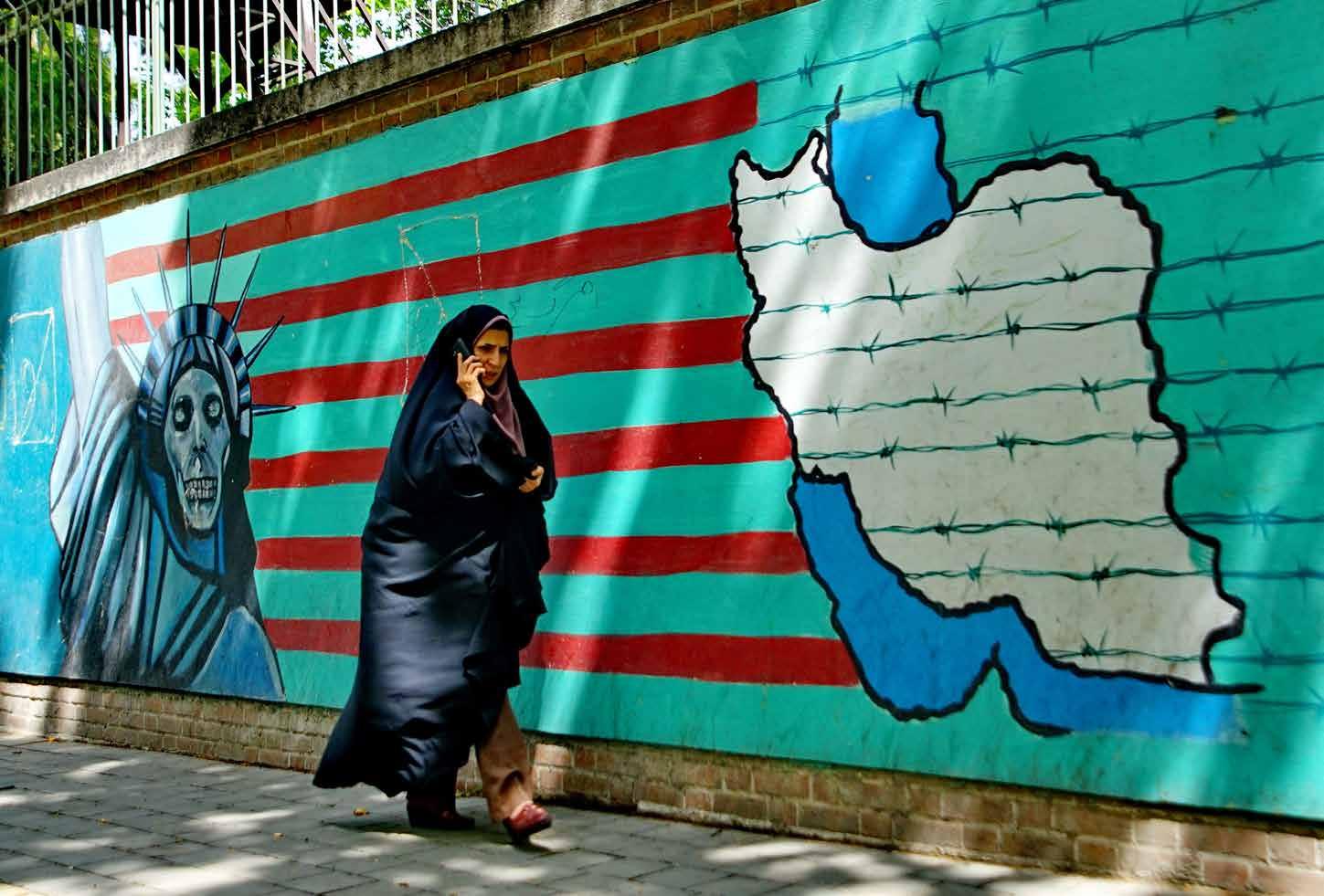
The focus on analysing the attack on Iran should not be the pretext. Whether Donald Trump sent bombs believing that, as in Venezuela, he could change the regime overnight, or whether he is playing against Russia and China with a “preventive strike”. Whether he seeks to seize territory or perform a supposed good deed by “destroying a repressive regime, defending the world from potential Iranian evil, and granting freedom to its people”. Freedom is not achieved through the deaths of children, and that is the essence of the matter. The focus of this story should be the way in which the objective is pursued. If it becomes natural that the end justifies the means, we are living in Machiavellianism.
Ever since the Renaissance diplomat Niccolò Machiavelli shocked readers with
his work The Prince, describing the politics of rule at any cost, in which the end justifies the means and stands in opposition to ethical and Christian perspectives, actions freed from human principles for the sake of maintaining power have been defined by the pejorative term “Machiavellianism”. It would seem that The Prince, once considered an ethical disgrace in political theory, is becoming our reality.
The attack on Iran is a dangerous precedent in international law that threatens to turn the trampling of international norms and all codes, including the rules of war, into a standard. Death has become part of the entertainment industry, fuel for deranged visions, a tool of election campaigns, a way to raise approval ratings and preserve power.
WHO WILL TOMORROW BELIEVE ANYONE, ESPECIALLY THE UNITED STATES, WHEN IT SAYS IT WILL RESPECT INTERNATIONAL NORMS? WHO WILL BELIEVE IN NEGOTIATIONS?
Photo:
Seree Tansrisawat / Shutterstock
DIPLOMACY AND CREDIBILITY HAVE BEEN SPAT IN THE FACE OF.
The United States attacked Iran without the green light from Congress. Iran was struck in the middle of negotiations held in Geneva. Trump’s operation “Epic Rage” was spreading death while the parties were sitting at the negotiating table. In international terminology, that is a war crime. An attack during negotiations is a criminal offence. It is well known that even during an active fire, when negotiators appear with white flags, everything stops. Moreover, Iran, let us not forget, is under an international monitoring regime and has signed the Treaty on the Non-Proliferation of Nuclear Weapons, dating back to the period of Obama’s presidency.
And the pretext is neither freedom, nor the “evil ayatollah”, nor nuclear threats. Quite simply, this is the most convenient moment to strike, particularly in the context of American military power. The United States is using its existing capabilities because, in the future, it will no longer be able to rely on them in the same way. More precisely, it will not be as strong as it is now, because everyone else will be stronger. Regardless of who occupies the White House, America will increasingly enter conflicts because in ten years, it will be far less able to do so. For Israel, this is an existential question regarding the balance of power in the Middle East and whether Iran will possess nuclear weapons. Through the rhetoric of “freedom for the people”, the United States seeks access to the Caspian Sea, which Russia, Iran, Azerbaijan, Kazakhstan and Turkmenistan share. Trump himself said that he does not care whether Iran becomes a military or a democratic country. What interests him is a Tehran that will secure the interests of the United States.
AN ODE TO ABSURDITY
Last year, after the twelve-day war he waged against Iran, Trump said that Iran’s nuclear programme had been destroyed. Now he claims that the attack aims to destroy a programme that has already been destroyed. He says Iran is a threat to Americans, even though US security experts themselves state that Tehran does not have the capability, even if it had the intention, to attack anyone, at least not for the next ten years. The term “preventive strikes in self-defence”, now invoked by Israel and the United States, was already worn thin in George W. Bush’s famous narrative before the invasion of Iraq over weapons of mass destruction that did not exist. The occupant of the White House calls on Iranians to take to the streets and win their freedom while raining bombs upon them. There is mass resistance to the regime, but no one in Iran today is cheering for those who are killing them. The psychology of every strike against a state in the name of regime change, including the one our country experienced in the late 1990s, produces the same effect: people rally under their own flag. No one wants to pay for freedom with children killed in a school. Iranians remember what happened after the invasion of Iraq, how people dreamed of freedom after the “Arab Spring” (a revolution that did not bring democracy), how the people “welcomed” freedom in Libya and Syria. Trump claims he is “stabilising the region”, yet the balance of power
in the Middle East has dramatically shifted precisely because of his approach during his first term, when he unilaterally withdrew from the agreement with Iran, increasing the risks of a nuclear race in the Gulf and strengthening conservatives in Tehran.
AMERICAN DREAMS AND OTHER NIGHTMARES
Ayatollah Ali Khamenei has been killed, but the system of the Islamic Republic has not collapsed because it is complex. Once the dust settles, militant structures will seek even greater influence. The choice of his son, Mojtaba, sends a message in the context of war through the actions of the Iranian Revolutionary Guard. Their key priority is the survival of the regime. If the regime survives, the leader, whoever he may be, will play a largely symbolic role. If the United States fails to change the regime, the next Iran will be more radical and stronger in opposing US interests across the entire region.
THE AMERICAN DREAM OF DOMINATION IN THE MIDDLE EAST HAS BECOME A
PLANETARY NIGHTMARE.
In Venezuela, changing the state apparatus seemed as simple as arresting Nicolás Maduro in a scenario fit for Hollywood directors. In Iran, however, the slain ayatollah, because of his immense authority and long-established power, has been proclaimed a martyr, and a fatwa has been issued calling for “jihad” against the United States and Israel, declaring revenge a religious duty for Muslims everywhere. The attack on the American embassy in Oslo and the strike against a Jewish school in Amsterdam are only the first tremors of “sleeping wolves” awakening. Let us not forget that many Shiites support the current regime in Iran, from Beirut to Iraq and Pakistan.
ANGELA, COME BACK
Europe as a global actor does not exist because it does not act like one. It sounds like a badly tuned orchestra. It longs for a new Angela Merkel, who once led a strong European Union in its response to the war in Syria and the refugee crisis. Emmanuel Macron could have played that role, yet France, for some reason, does not. Paris has not even managed to maintain its positions in Africa and is struggling with serious internal problems. The only loud voice is Spanish Prime Minister Pedro Sánchez, who said “no” to Trump and reminded the public that the United States had “dragged” Spain into the war in Iraq in 2003, a conflict which, he says, “unleashed the greatest wave of insecurity in Europe since the fall of the Berlin Wall”. For that reason, he refuses to be part of history repeating itself. In doing so, Sánchez, who faces elections, awakened
a sense of pride among citizens. After fifteen days of war, Switzerland provided the first impetus by rejecting two US requests to fly military reconnaissance aircraft over its territory.
THE KARMA OF THE PEACOCK THRONE
To understand Iran, we must touch the roots of Iranian-American relations, which go further back than the time when American and British intelligence services participated in the overthrow of Prime Minister Mohammad Mosaddegh after he nationalised Iran’s petroleum wealth. Understanding the context in which the Islamic Revolution in Iran emerged, especially in relation to the United States, Russia and Great Britain, and how it connects to the present situation, is impossible without returning to the birth of the Pahlavi dynasty at the beginning of the twentieth century. Equally important are the constant attempts to establish control over Iranian oil. Among the population, resentment towards American influence was strengthened by the arrogance and repression of Mohammad Reza Pahlavi, once admired but overthrown in 1979. His popularity collapsed because of his absolute obedience and alliance with the United States. The enormous corruption and wealth that surrounded him further fuelled anti-American sentiment.
The National Museum in Tehran preserves numerous objects from his era, adorned with rubies and other precious stones, which serve as witnesses to the unimaginable luxury that surrounded him, set against stark poverty. A look at the Peacock Throne reveals, better than anything else, the past, present, and future of this nation, as well as the character and destiny of the heirs of the Persian Empire. We observed the Shah’s throne (a journalistic team from Belgrade visited Tehran in 2017 after Trump, during his first term, lifted the first package of sanctions against Iran), weighing more than a ton of pure gold and decorated with more than 20,000 of the finest pearls and rubies. The museum preserves the splendour of the Shah’s life: diamonds, crowns, tiaras, jewellery and furniture adorned with rubies. The Peacock Throne alone, together with a globe made of gold and precious stones, is said to guarantee the entirety of Iran’s external debt. Such splendour carries the same weight as the animosity toward the Pahlavi dynasty and everything associated with American influence. Yet Trump says he is bringing them freedom and fulfilling a vision.
During the Iranian Revolution of 1979, the French philosopher Michel Foucault, after witnessing events in the country first-hand, posed one of the most important questions of that time: “What is the vision of the Iranian people?” Today, as the Islamic Revolution approaches the end of its fifth decade, this question, buried under American bombs, is more relevant than ever. A society torn between conservatism and democracy, between the chador and Twitter, once again has a common arch-enemy. While the Revolutionary Guard plans how to preserve the regime that part of society opposes, Reza Pahlavi, heir to the last king mentioned above, looks toward the Peacock Throne from exile in Washington.
“MACEDONIAN WINE IS BETTER!”
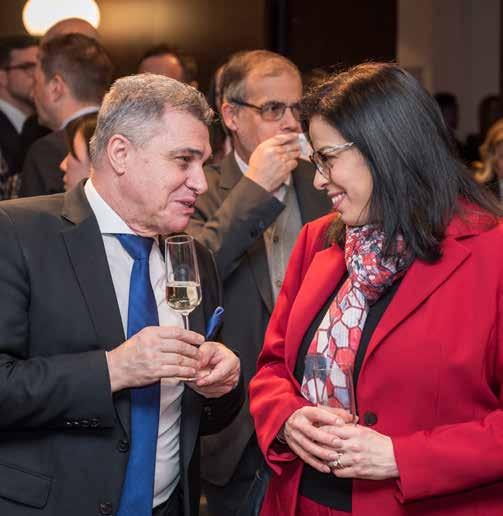
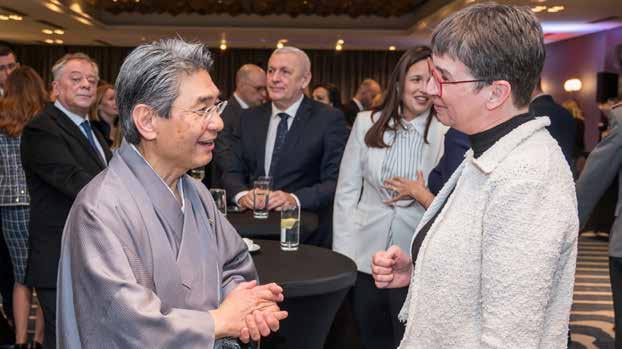
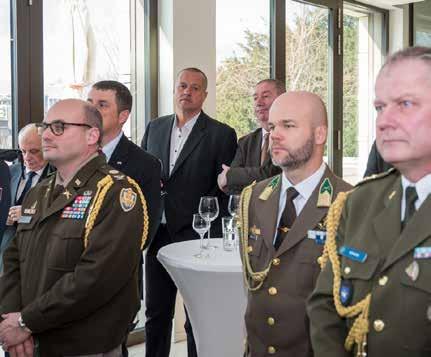
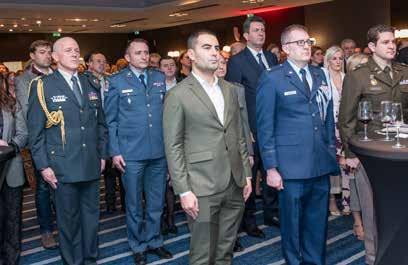
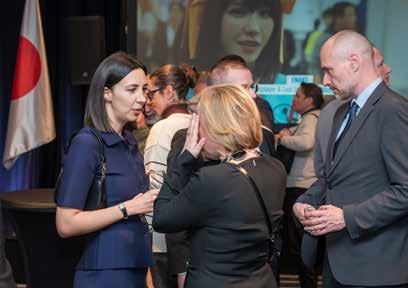
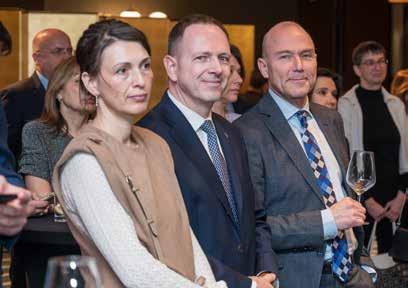
Nikola Tupančevski, Ambassador of North Macedonia, and Imen Laajili Ammari at the reception marking the 66th birthday of Emperor Naruhito of Japan, Hotel Metropol Palace, 23 March
“IF NECESSARY, SLOVENIA WILL SEND BOTH ITS BATTALIONS TO GREENLAND”
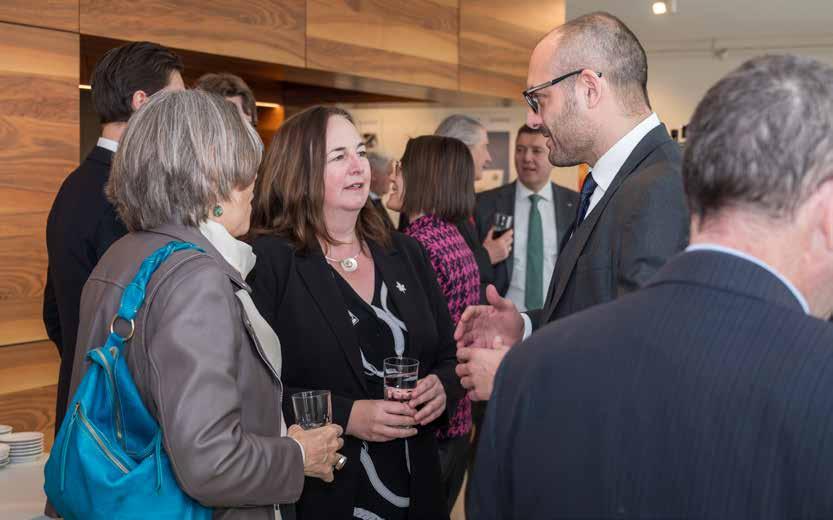
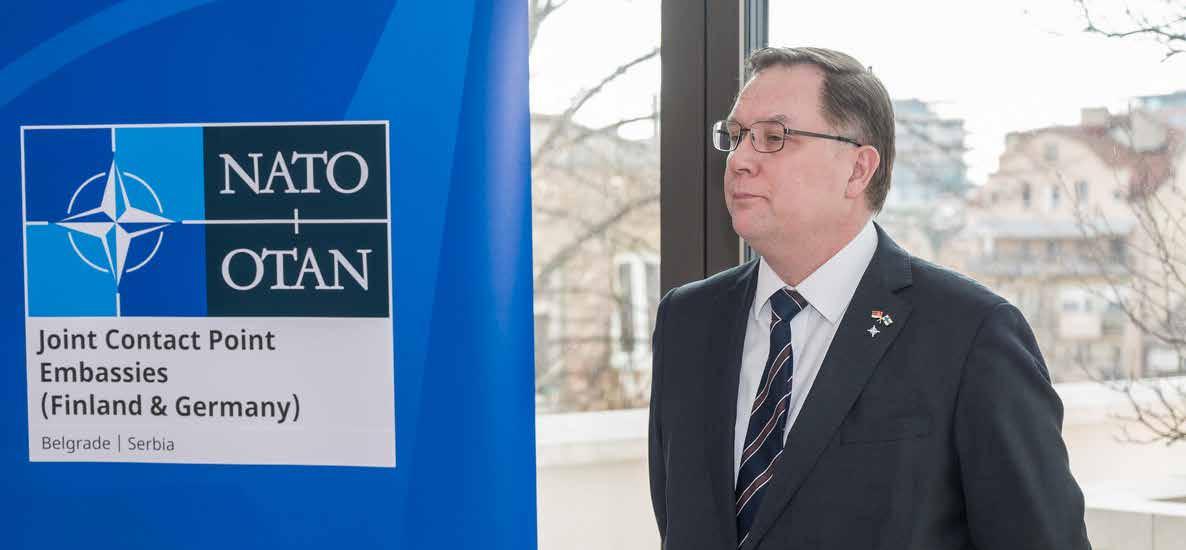
Slobodan Šešum, Ambassador of Slovenia, with the Ambassadors of Denmark and Canada at the reception marking Germany and Finland beginning their second year as NATO Contact Point Embassies in Serbia, German Embassy, 25 February
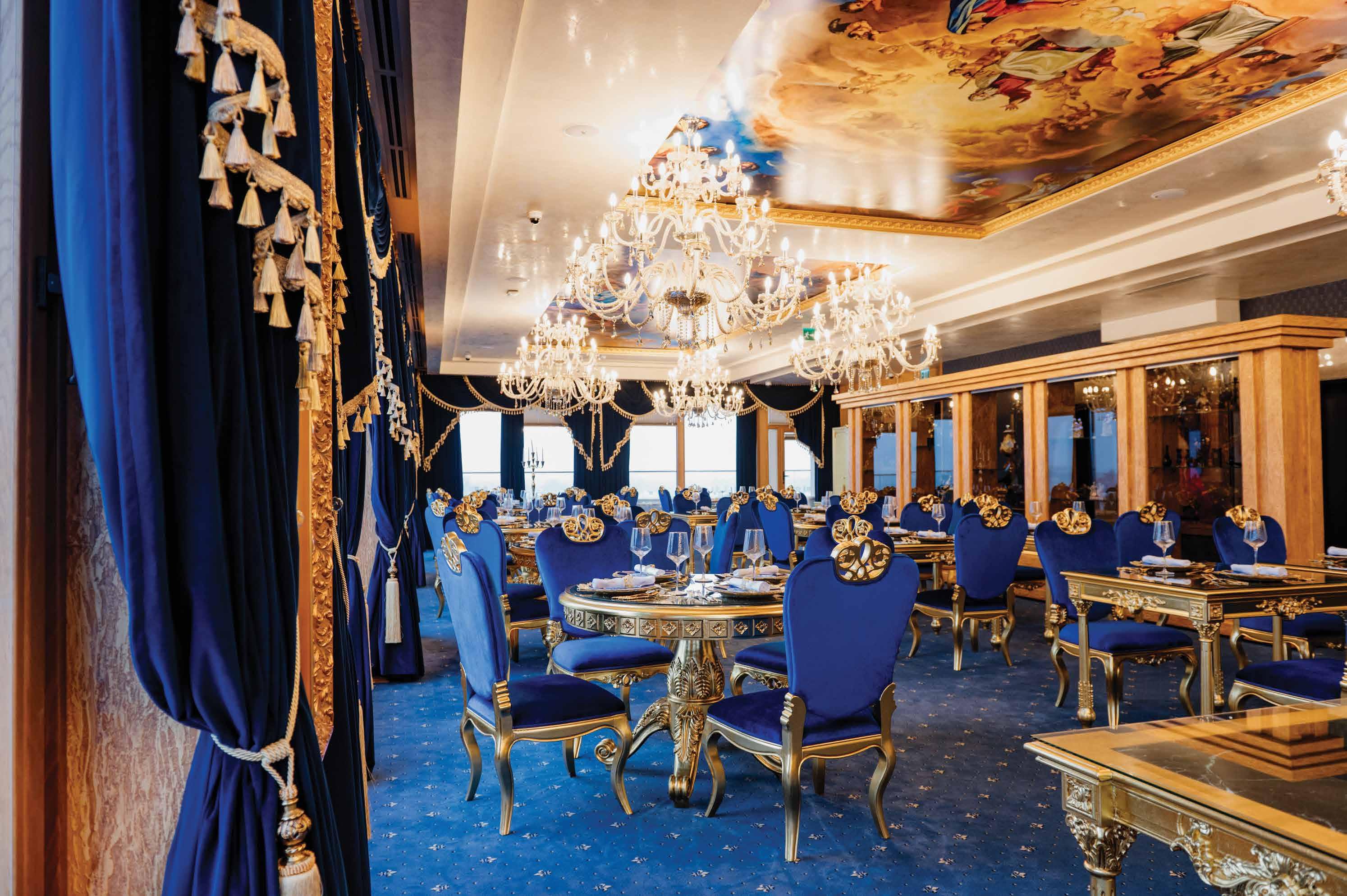
BEHIND THE CANDELABRA
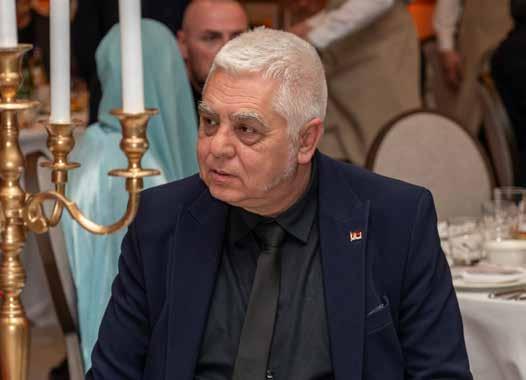
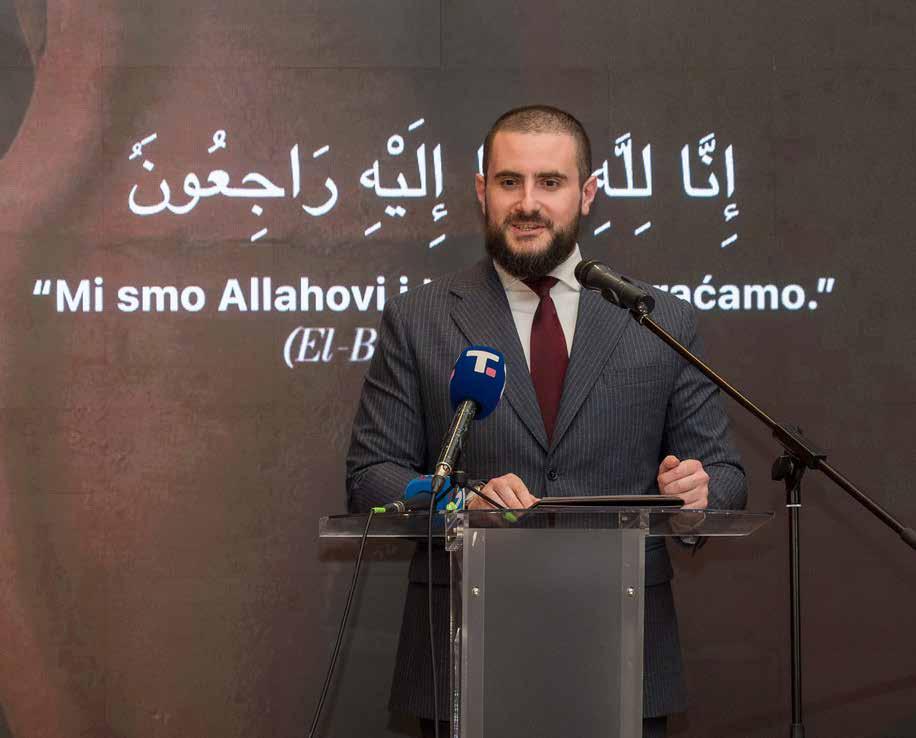
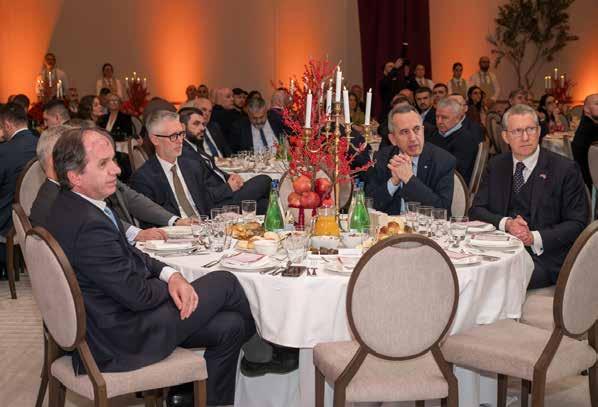
Boris Bratina, Minister of Information and Telecommunications, at the Peace Iftar hosted by the Cabinet of Usame Zukorlić, Minister responsible for Reconciliation, Regional Cooperation and Social Stability, Hyatt Regency, 9 March
ALLIES
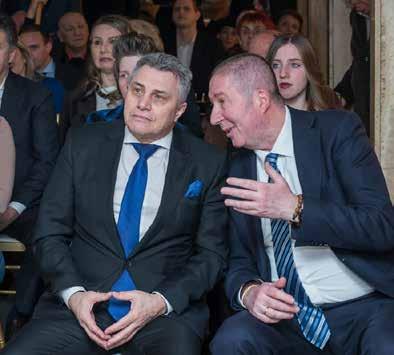
German Ambassador Anke Konrad and Japanese Ambassador Naohiro Tsutsumi at the reception marking the 66th birthday of Emperor Naruhito of Japan, Hotel Metropol Palace, 23 March
“SO… SHALL WE FORM A COALITION AGAIN? OR NOT?”
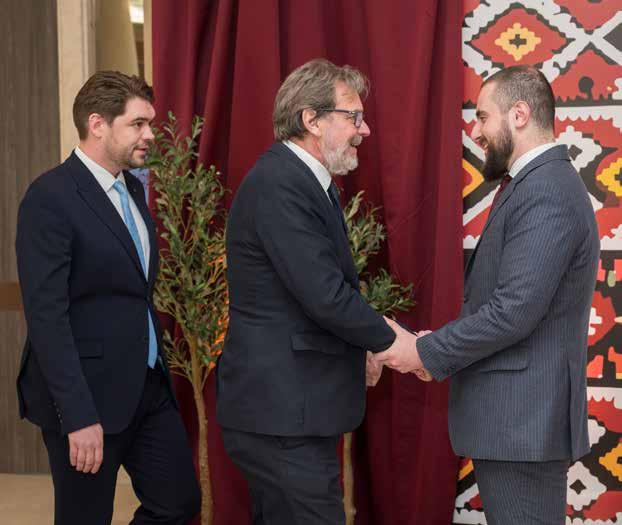
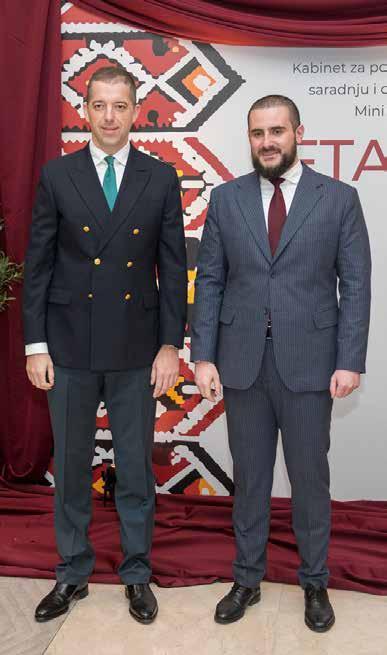
Tomislav Žigmanov, Vice-President of the Provincial Government of Vojvodina, at the Peace Iftar hosted by the Cabinet of Usame Zukorlić, Minister responsible for Reconciliation, Regional Cooperation and Social Stability, Hyatt Regency, 9 March
12 FEBRUARY 2026
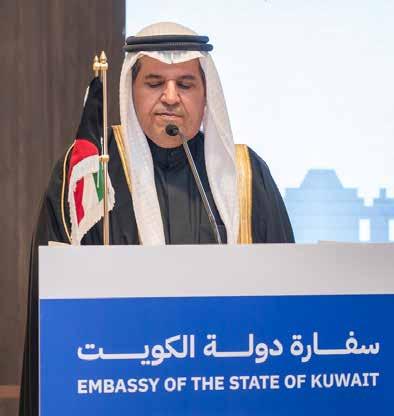
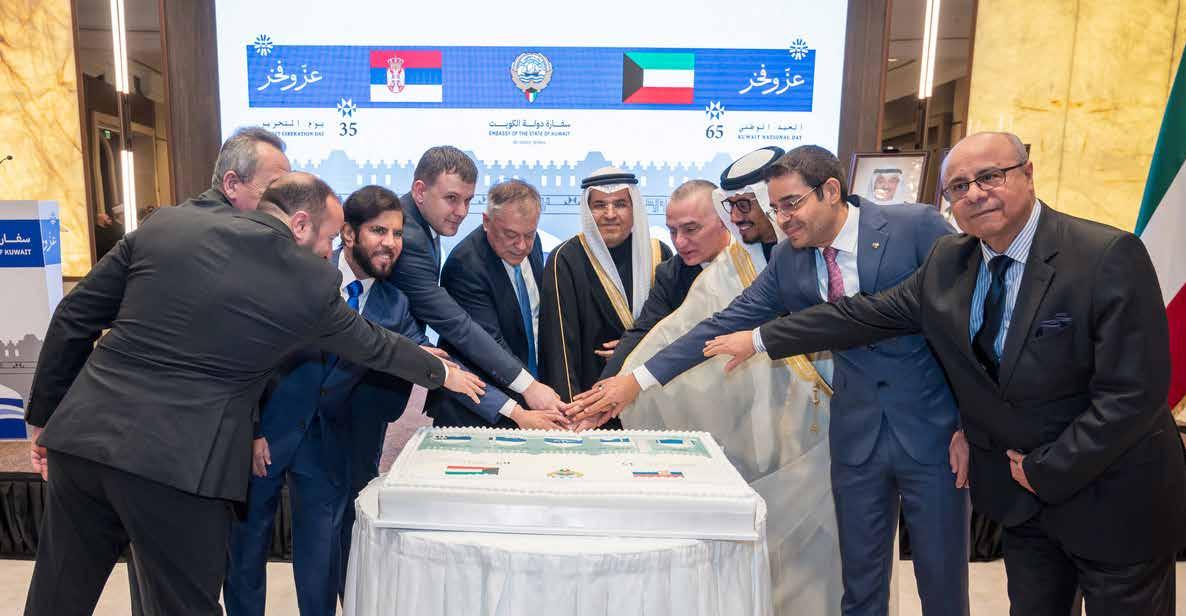
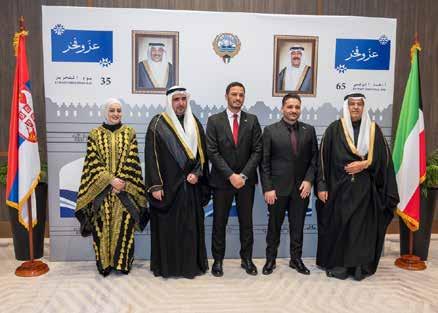
Kuwait Marks National Day and Liberation Day in Belgrade
The Embassy of the State of Kuwait in Belgrade hosted a formal reception to celebrate the country’s national holidays, National Day and Liberation Day
The event commemorated the 65th anniversary of the country’s founding and the 35th anniversary of its liberation from the Iraqi invasion during the Gulf War in 1991, with the reception held at the Hyatt Hotel in Belgrade.
H.E. Fayez Mujbel Sulaiman Almutairi, Kuwait’s Ambassador to Serbia, highlighted at the reception that his country continues to develop steadily and comprehensively across all sectors.
Kuwait gained independence in 1961, and Serbia, as the legal successor of the former Socialist Federal Republic of Yugoslavia (SFRY), established bilateral relations with the Gulf state in 1963.
24 FEBRUARY 2026
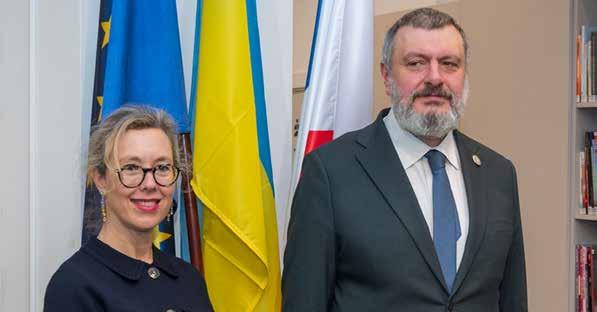
Joint
Statement
Mby the Embassies of Ukraine and France in Serbia
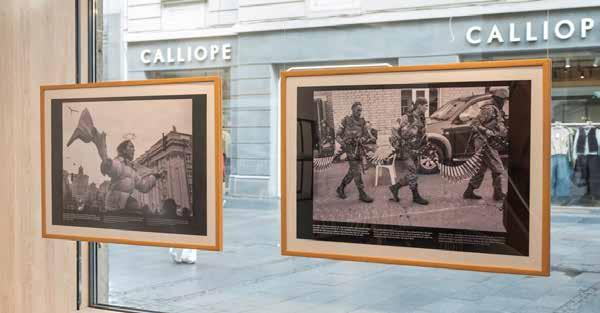
arking the beginning of Russia’s war of aggression against Ukraine on 24 February 2022, exactly four years ago, the French Institute in Serbia has presented an exhibition by renowned Ukrainian photographer Oleksandr Hliadelov entitled “REGARDE L’UKRAINE/ПOГЛЯД НA УКРAЇНУ/LOOK AT UKRAINE/POGLEDAJ UKRAJINU”.
The photographs take visitors on a powerful journey through Ukraine, from its independence in 1991 to the present-day war. It is a story of numerous mobilisations and trials that have shaped Ukrainian society, in which women, men, and families face the daily challenge of defending their territory, language, and culture.
Ambassador Florence Ferrari reiterated that France and its partners support Ukraine and have imposed sanctions on Russia in order to increase the cost of war for Moscow and bring the conflict to an end. Russia deliberately and systematically targets Ukrainian civilians on a daily basis, which constitutes a blatant violation of international humanitarian law. “France condemns the war crimes committed by Russia and supports all investigations aimed at documenting and legally qualifying them, as well as prosecuting and punishing those responsible,” Ambassador Ferrari stated.
Ambassador of Ukraine Dr Oleksandr Litvinenko expressed his deep gratitude to the French government and international partners for their support of Ukraine. “We are entering
the fifth year of our struggle for Ukraine’s sovereignty, independence, and territorial integrity. Brave Ukrainians can endure this war and will continue fighting for a just and lasting peace. Firm guarantees that such a war can never be launched again are of utmost importance today,” Ambassador Litvinenko said.
The exhibition “Look at Ukraine” is a call for firm and lasting solidarity with a society that, despite the challenges, continues to create, resist, and affirm its identity. It is part of a program held throughout France, organised by the French Institute and the Ukrainian Institute from December 2025 to March 2026. The French Ministry for Europe and Foreign Affairs has sent the exhibition to its diplomatic missions worldwide.
20 FEBRUARY 2026
Balkans Roadshow 2026:
Strengthening Tourism and Business Ties Between Thailand and Serbia
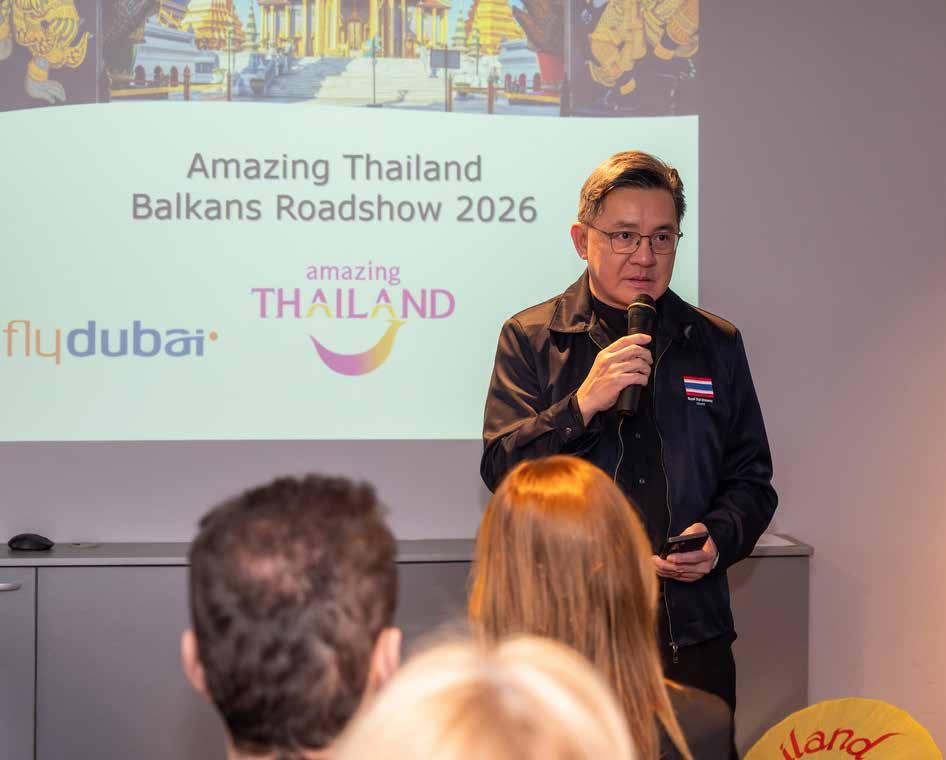
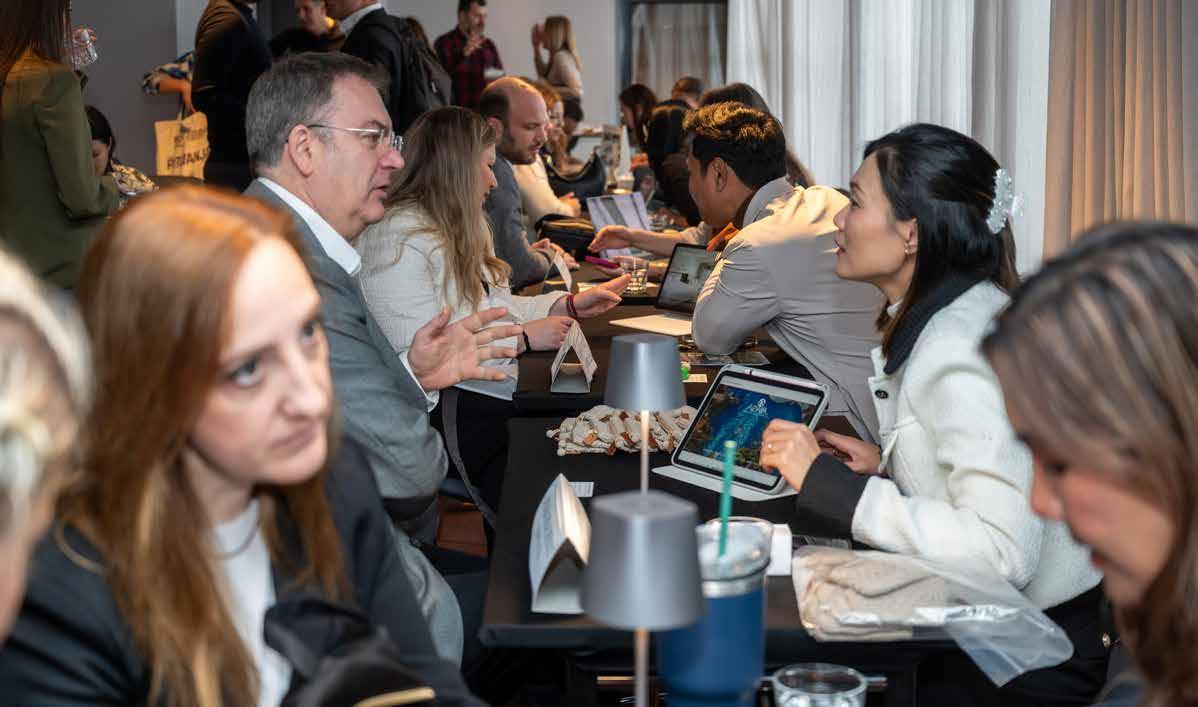
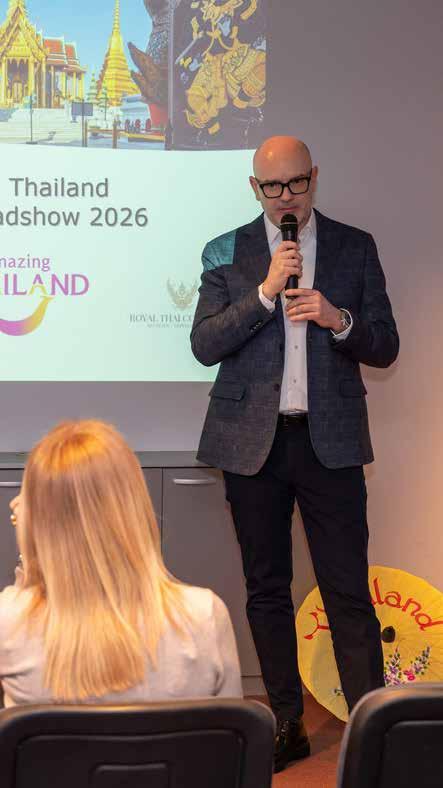
The “Balkans Roadshow 2026” was held in Belgrade as a business and promotional event to enhance cooperation and unlock business and tourism potential between partners from the Kingdom of Thailand and the Serbian market, as well as the wider region.
The gathering brought together representatives of the diplomatic corps, the tourism industry, the aviation sector, and the business community, confirming a mutual interest in deepening economic and tourism relations.
The event was opened by Zoran Đukanović, Honorary Consul of the Kingdom of Thailand in the Republic of Serbia.
During the program, H.E. Sathana Kashemsanta Na Ayudhya, Ambassador of the Kingdom of Thailand, addressed the attendees, emphasising the importance of continuously strengthening bilateral relations and increasing tourist exchange between the two countries. The latest information on Thailand’s tourism offer and the destination’s development directions was presented by a representative of the Tourism Authority of Thailand (TAT).
A special segment was dedicated to enhancing air connectivity, with a presentation by flydubai that showcased opportunities to connect the region with Thailand.
The central part of the program consisted of B2B meetings, designed as a platform for direct discussions and the establishment of concrete business contacts between Thai suppliers and partners from Serbia and the region.
Balkans Roadshow 2026 represents an important contribution to the further development of tourism and economic cooperation, with a focus on institutional support, direct market stakeholder engagement, and longterm partnership between Thailand and Serbia.
20 FEBRUARY 2026
Germany and Finland Continue Their Mandate as NATO Contact Embassies in Belgrade
The German Ambassador to Serbia, Anke Konrad, and the Finnish Ambassador, Niklas Lindqvist, marked the beginning of the second year of their embassies’ mandate as NATO contact points in Serbia.
The event in Belgrade brought together members of the diplomatic corps and other relevant stakeholders. The mandate aims to continue fostering cooperation and dialogue between Serbia and the NATO alliance,
26 FEBRUARY 2026
including regional stability and partnership activities through programs such as Partnership for Peace.
Throughout 2026, the German and Finnish embassies will continue activities that support communication, collaboration, and information exchange between Serbia and NATO, and will also organise events and programs involving both diplomatic and civil society partners.
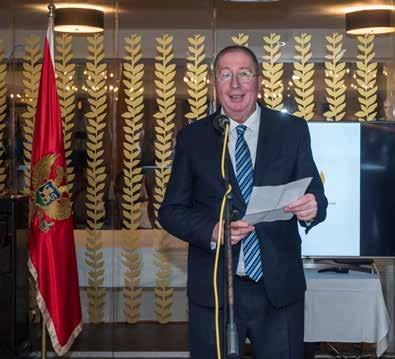
Montenegrin Embassy in Belgrade Hosts Fundraising Evening for Mladost Children’s Home
The Embassy of Montenegro in the Republic of Serbia hosted a fundraising evening in Belgrade in support of the Mladost Children’s Home from Bijela, aiming to raise funds to improve the living conditions of children without parental care.
According to the Embassy, the event was intended not only to provide financial support but also to further strengthen the institution’s work, which has for many years cared for children and youth lacking adequate parental guidance.
The Montenegrin Ambassador to Serbia, H.E. Nebojša Đoković, emphasised that
attendees gathered to collectively offer the children of Mladost what is most important to them – security, stability, and support.
“Your presence and selfless dedication to this noble mission testify to the power of solidarity and humanity. Engagement such as yours demonstrates that shared responsibility can truly change lives,” Ambassador Đoković stated.
Marela Savić, Director of the Mladost Children’s Home, expressed her gratitude to the Embassy and all donors for their support and solidarity.
The evening’s humanitarian character was further enriched by donations of
artwork from renowned painters, displayed during the event and available for purchase, with all proceeds directed to the Children’s Home. The program also included cultural and artistic performances, creating an atmosphere that highlighted community, solidarity, and social responsibility toward children in need of support.
In its statement, the Embassy affirmed that the Montenegrin diplomatic mission in Serbia will continue to support initiatives that promote humanity and social responsibility, confident that collective action can help build a safer and brighter future for the youngest members of society.
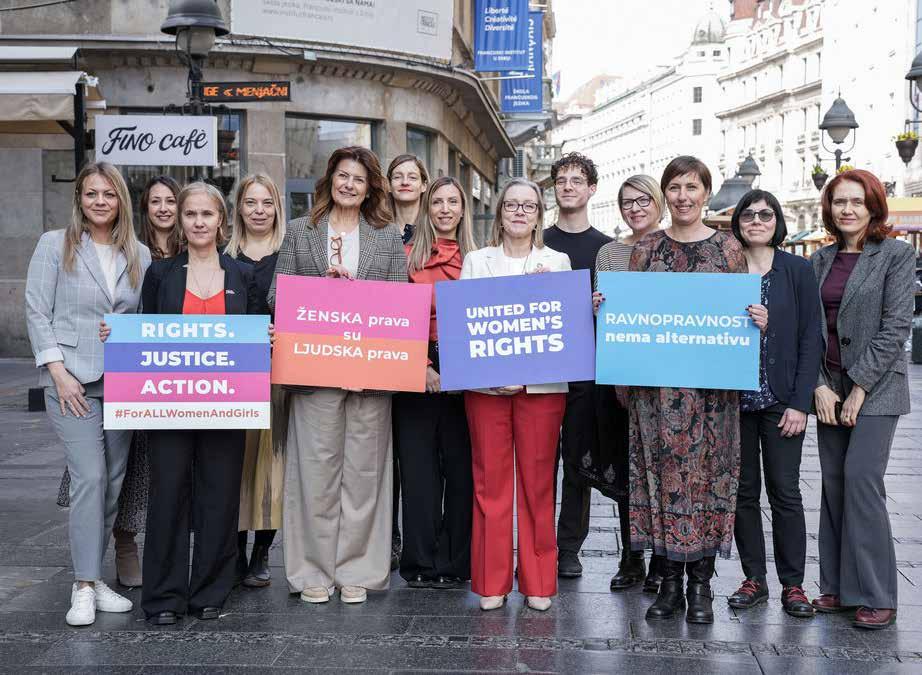
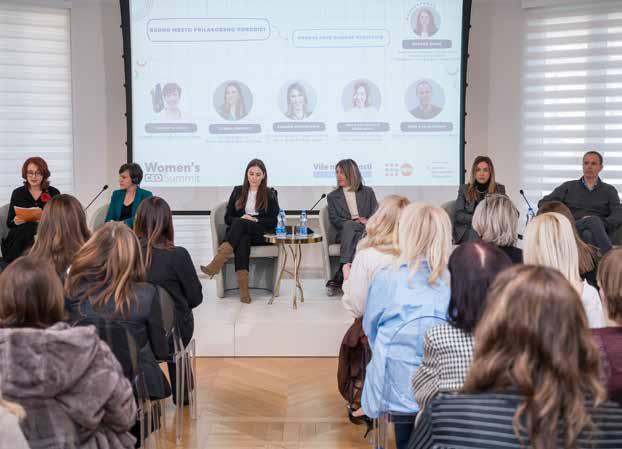
International Women’s Day 2026: From Global Commitments to Everyday Equality
Marking International Women’s Day, leaders from national institutions, the European Union and the United Nations reaffirmed their shared commitment to advancing gender equality in practice. The discussion highlighted the importance of coordinated action and continued cooperation to ensure that progress benefits all women and girls.
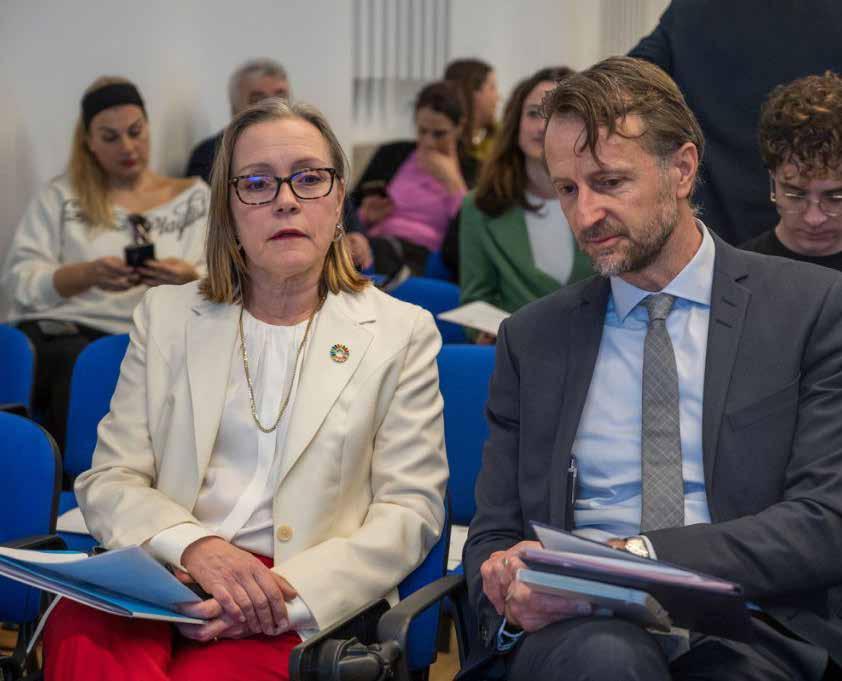
The event, titled “From Global Commitments to Everyday Equality”, focused on how established standards and policy frameworks translate into tangible results in everyday life. At the centre of the discussion was the recently finalised Country Gender Equality Profile (CGEP) 2025, a joint
analytical reference developed by the United Nations Country Team in Serbia.
Ambassador of the European Union to Serbia, Andreas von Beckerath, stated: “The EU is one of the best places in the world to be a woman. But we are not perfect, and we continuously work to make the lives of our women and girls fairer and more equal. Ahead of International Women’s Day, the European Commission will adopt the Gender Equality Strategy 2026–2030, which will outline concrete measures to advance gender equality and address key issues, including combating gender-based violence, narrowing gender pay and employment gaps, and promoting
gender-sensitive policies in the digital and green transitions. In Serbia, the last Annual Report of the European Commission has noted a set of recommendations which, if implemented, provide guidelines for improving gender equality, and the EU will continue to support Serbia in achieving them.”
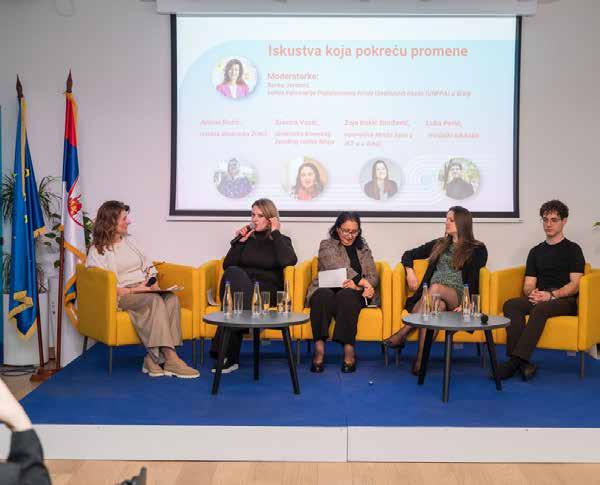
The event concluded with a panel discussion titled “Experiences that Drive Change”, featuring women and young leaders supported through UN programmes in areas such as economic empowerment, Roma women’s rights and choices, digital skills development and youth engagement in preventing gender-based violence.
09 MARCH 2026
“Iftar
of Peace” in Belgrade: Islamic and Christian Fasts Taking Place at the Same Time as a Message of Coexistence
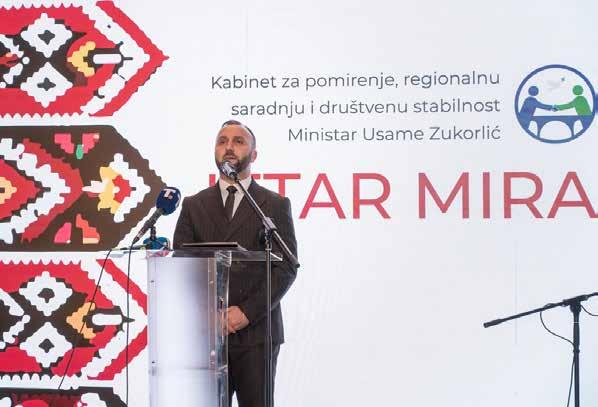
The ceremonial dinner “Iftar of Peace” was held last night in Belgrade as part of the observance of Ramadan.
The event was organised by Minister without portfolio Usame Zukorlić, who emphasised on that occasion that Muslims and Christians in this region have been sharing and respecting each other’s religious holidays for more than six centuries, according to the website of the Cabinet for Reconciliation, Regional Cooperation and Social Stability.
“I would especially like to highlight that Novi Pazar, the city I come from, is known for the mutual respect shown toward sacred sites. This iftar could easily be called a fast of peace as well, because we have the Ramadan
fast, the Orthodox fast, and the Catholic fast — all taking place at the same time,” Zukorlić said in his address to the guests.
Speaking about contemporary global challenges, Zukorlić pointed to deep divisions worldwide and the suffering of civilians in the Middle East, stressing that in such circumstances, prayers are offered for the preservation of peace and stability in the Balkans.
The “Iftar of Peace” event was organised to mark Ramadan, the holiest month for Muslims in Serbia and around the world. Among the guests were the Serbian Minister of Foreign Affairs, Marko Đurić, and the Minister of Information, who attended together with four other ministers from the Government of the Republic of Serbia.
The ceremony was also attended by Mirsad Azemović, Minister of Diaspora of Montenegro, and Ernad Suljević, Minister of Regional Investment Development and Cooperation with Non-Governmental Organizations of Montenegro, as well as numerous diplomatic representatives, members of the Islamic Community and the Serbian Orthodox Church, and many public figures from Serbia, Bosnia and Herzegovina, Montenegro, North Macedonia, and the wider region.
The Ramadan fast is one of the fundamental pillars of Islam and involves abstaining from food, drink, and physical pleasures from dawn until sunset, when the fast is broken with iftar, the evening meal.
13 MARCH 2026
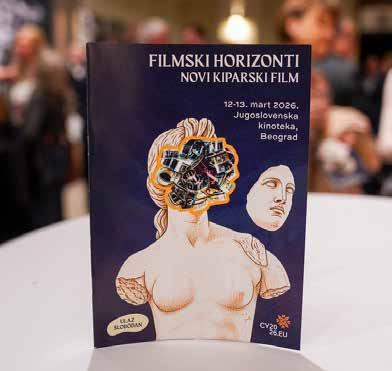
Cypriot Cinema in Focus During the Presidency of the Council of the European Union
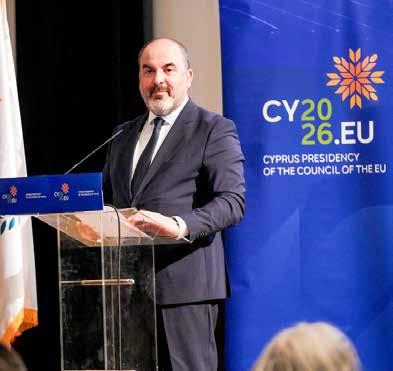
Belgrade hosted the programme “Cinematic Horizons – New Cypriot Cinema” on 12 and 13 March, dedicated to contemporary Cypriot filmmaking. The programme was inaugurated by the Ambassador of the Republic of Cyprus to Serbia, H.E. Andreas Photiou, who emphasised the importance of cultural cooperation and the showcasing of contemporary Cypriot cinema within the framework of Cyprus’s Presidency of the Council of the European Union.
20 MARCH 2026
The programme introduced audiences in Belgrade and across Serbia to a selection of contemporary Cypriot films, including Find Me Falling, directed by Stelana Kliris, and Boy on the Bridge, directed by Petros Charalambous.
Among the featured titles was also the internationally acclaimed film Smuggling Hendrix, directed by Marios Piperides, as well as Citizen in the Third Age by Marinos Kartikkis.
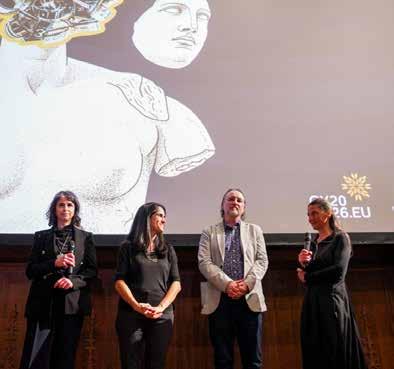
In addition to the screenings, a discussion with the filmmakers was organised to focus on the development of contemporary Cypriot cinema and its growing international presence.
The programme “Cinematic Horizons –New Cypriot Cinema” forms part of a broader initiative presenting the creative and cultural potential of Cyprus during its Presidency of the Council of the European Union, highlighting the role of culture as a bridge of cooperation among European societies.
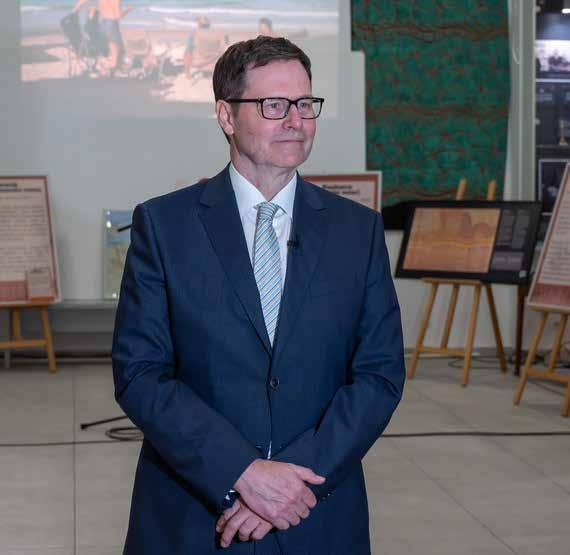
The Ambassador of Australia to Belgrade Opens Exhibition of Aboriginal
Women’s Textiles
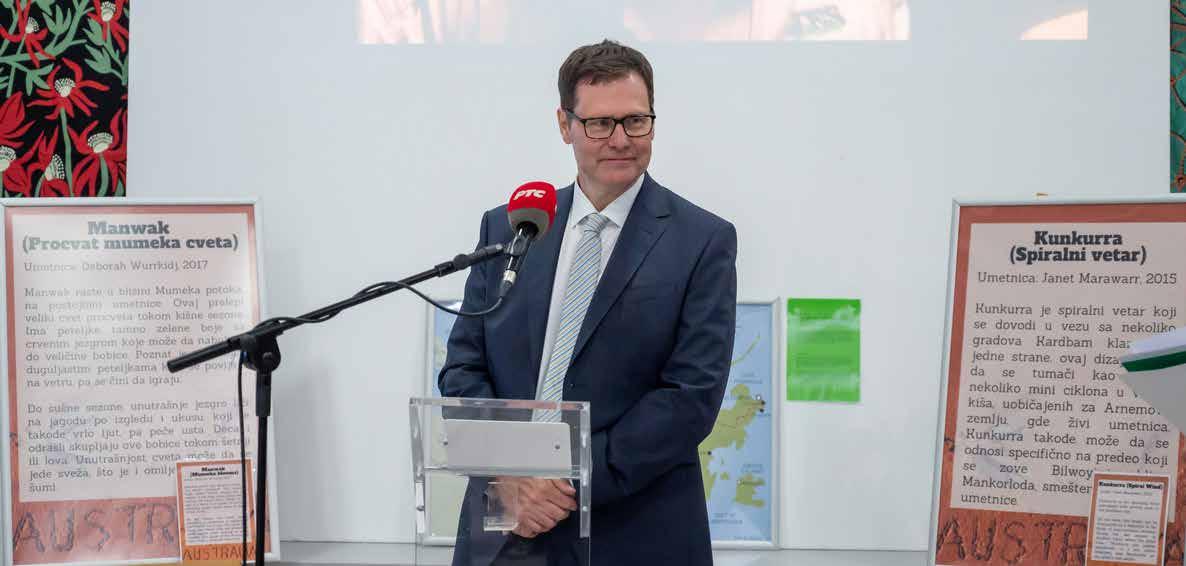
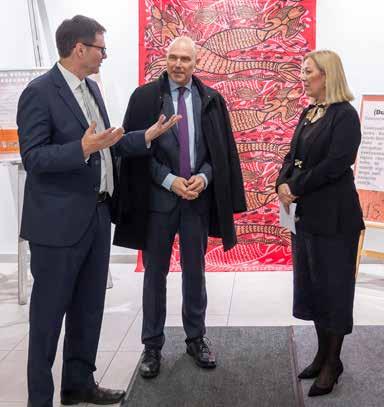
An exhibition of textiles dedicated to the culture of the Aboriginal peoples of Arnhem Land was opened last night at the RTS Club.
The exhibition was opened by the Ambassador of Australia to Belgrade, H.E. Peter Truswell.
The display features carefully selected, hand-printed textiles from the women’s centre “Bábbarra Designs,” which, through their motifs and ornaments, convey ancestral stories and the cultural heritage of the Aboriginal peoples of the Arnhem Land region.
The Bábbarra Women’s Centre was established in 1983 as a safe haven for women, and today operates as a recognised art centre with a strong focus on the professional development and empowerment of women artists. Its textile division, “Bábbarra Designs,” is one of the oldest continuously operating Indigenous textile enterprises in Australia. Bábbarra Designs textiles are held in the collections of major institutions across Australia and are exported worldwide.
Investing in Employee Knowledge Is a Company’s Strength
NIKOLA BOŽIĆ Senior Educational Consultant
At a time when technologies change faster than organisational charts and markets evolve more quickly than annual plans, companies face a quiet but decisive choice: will employee education remain an “occasional activity” or become a systemic part of the business? The difference is substantial. In the first case, the organisation is reactive. In the second, it builds the capacity to anticipate, adapt and lead.
Nikola Božić on why learning must become a system
For a long time, training was viewed as a benefit primarily for employees. Today it forms part of a company’s infrastructure. The environment has become more complex: hybrid teams, accelerated growth, shifting customer needs, increasing regulation and growing reputational risks. In such a world, competence is not a state but a process. That is why organised support for learning is one of the most pragmatic investments top management can make.
The best test of the value of education is simple: does it change the way work is done afterwards? The signals are clear. Meetings become shorter and produce clear outcomes. People reach agreements faster because they know who makes decisions. Feedback is not postponed “until there’s time”. Responsibility is clear, leaving no room for shifting the blame. Taken together, these “small” changes make a significant difference in both productivity and corporate culture.
Why should education be systematic and organised? First, because learning must have purpose and proportion. It is not “just another training session”, but a change in behaviour as its outcome: clearer one-to-one conversations, better delegation, more precise goals, quicker agreements, more constructive feedback and greater innovation. Second, learning must have rhythm, exercises based on real cases, support between sessions and continuous feedback. Third, learning must be embraced as personal development rather than a task. Fourth, learning must be connected with the
LEARNING IS NOT AN EVENT. LEARNING IS A SYSTEM.
institution and its systemic solutions, the way goals are set, performance is assessed, development conversations are conducted, and succession is planned. The best organisations develop leadership as a habit: training, practice, feedback, and routines. Charisma is a bonus. Consistency is the standard.
The most common misconception is that leadership and management are “soft” topics. In reality, they are the hardest mechanisms within an organisation and its processes: the quality of meetings, the way decisions are made, the management of conflicts, the setting of priorities, conversations about performance and the introduction of innovation. When this is left to chance, organisations rely on individuals’ talent. When a system is developed, it gains stability and scalability, even as teams grow, change, or work remotely.
ESG further reinforces the need for education. It is no longer merely a report or a communication exercise. Today it represents a
form of managerial literacy: how risks are assessed, how trust is built, how people and resources are protected and how consistency is demonstrated. Companies that treat ESG as a “story” quickly fall into the trap of attractive language with little evidence. Those that translate ESG into practice through management education, from policy to behaviour, build credibility that becomes visible: in procurement, in safety, in relations with the community, and in how performance is measured and rewarded. ESG education for management is the shortest path from policy to behaviour.
Finally, an important issue is people. Generation Z is entering the labour market with a radar for authenticity. They expect purpose, transparency and accountability, particularly when it comes to environmental protection. For them, there is no separation between “what a company says” and “how a company operates”. If organisations want to attract and retain talent, they need management capable of leading honest conversations, connecting business with impact and translating values into everyday decisions. Young people are especially quick to notice the difference between “green talk” and genuine commitment.
Another reason development is often postponed lies in a flawed calculation of return on investment. Training is frequently seen as a cost rather than as a way to reduce mistakes, accelerate decision-making and improve retention. The loss of a key employee, a poorly escalated issue, or a month of confusion over priorities and lack of innovation often costs more than an entire development programme. When education is tied to concrete business situations such as negotiations, projects, organisational changes, or performance conversations, knowledge remains within the company as standard rather than as memory.
Learning is not an event. Learning is a system. And systems, when well designed, become both the best strategy for growth and the most reliable support in times of uncertainty.
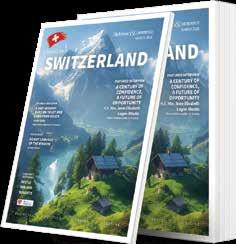
FOCUS ON
SWITZERLAND
BUSINESS INTERVIEW
A PARTNERSHIP BUILT ON TRUST AND LONG-TERM VISION
Jelena Sadler
Swiss-Serbian Chamber of Commerce
TRAVELOGUE
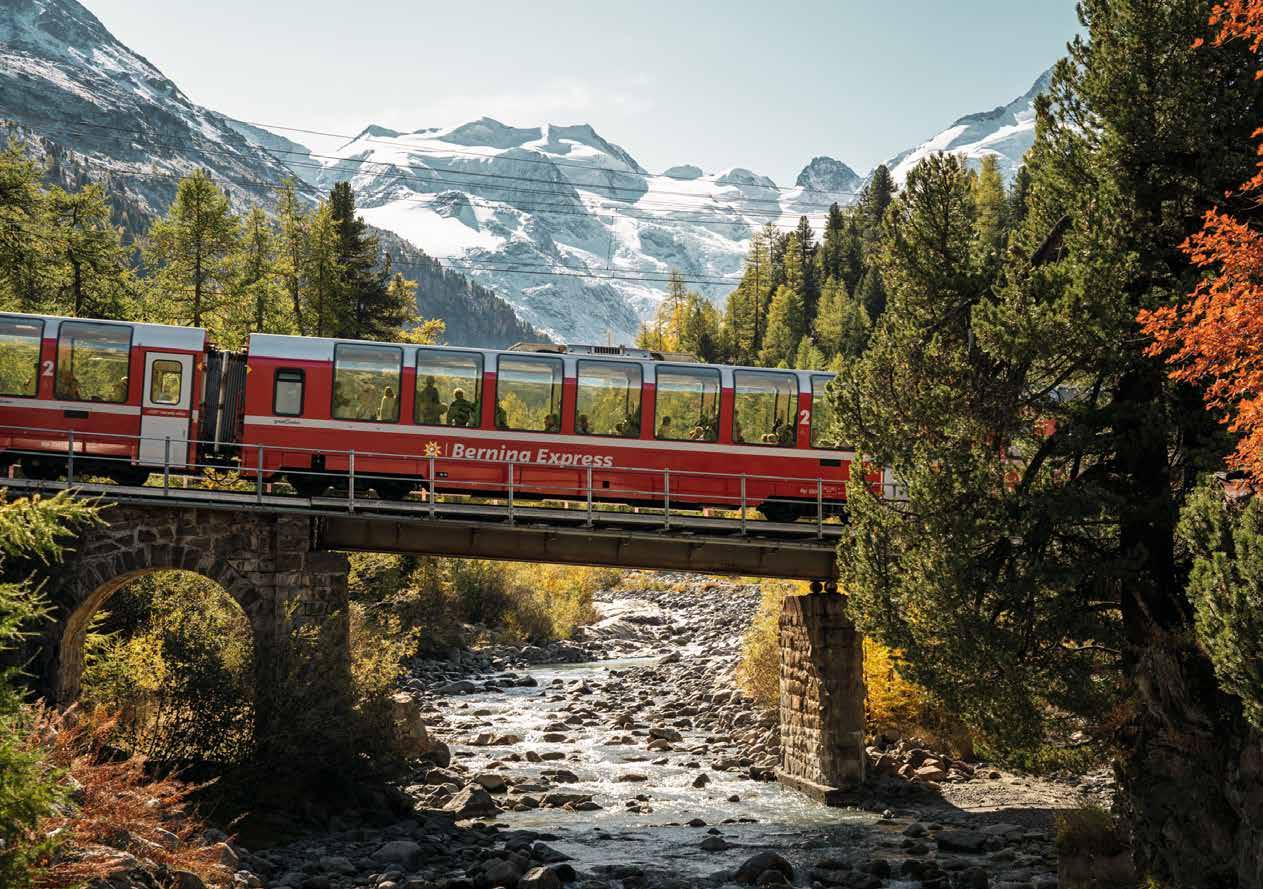
DO NOT LEAN OUT OF THE WINDOW by Robert Čoban
CORPORATE INTERVIEWS
NESTLE SME HUB
NOVARTIS
FEATURED INTERVIEW A CENTURY OF CONFIDENCE, A FUTURE OF OPPORTUNITY
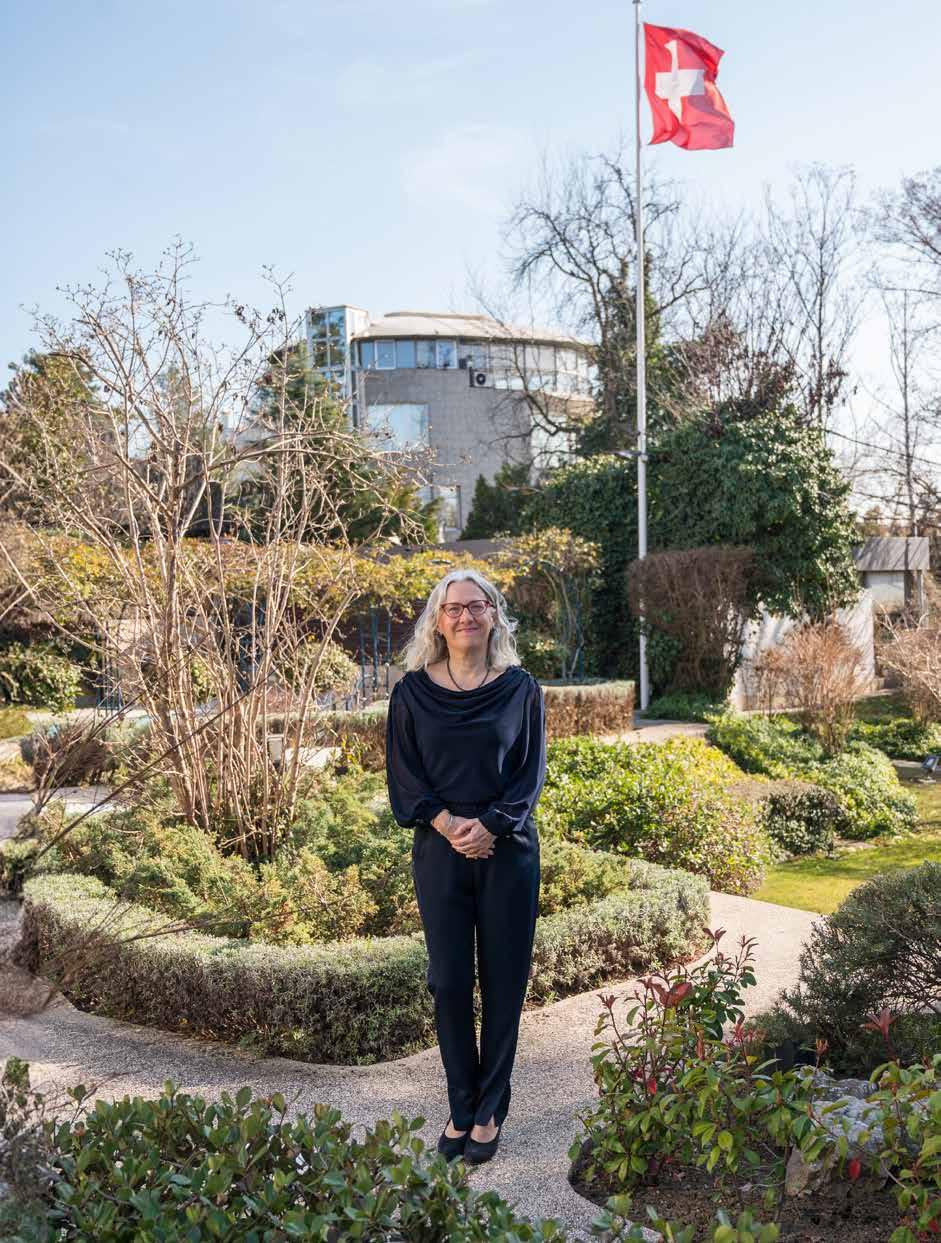
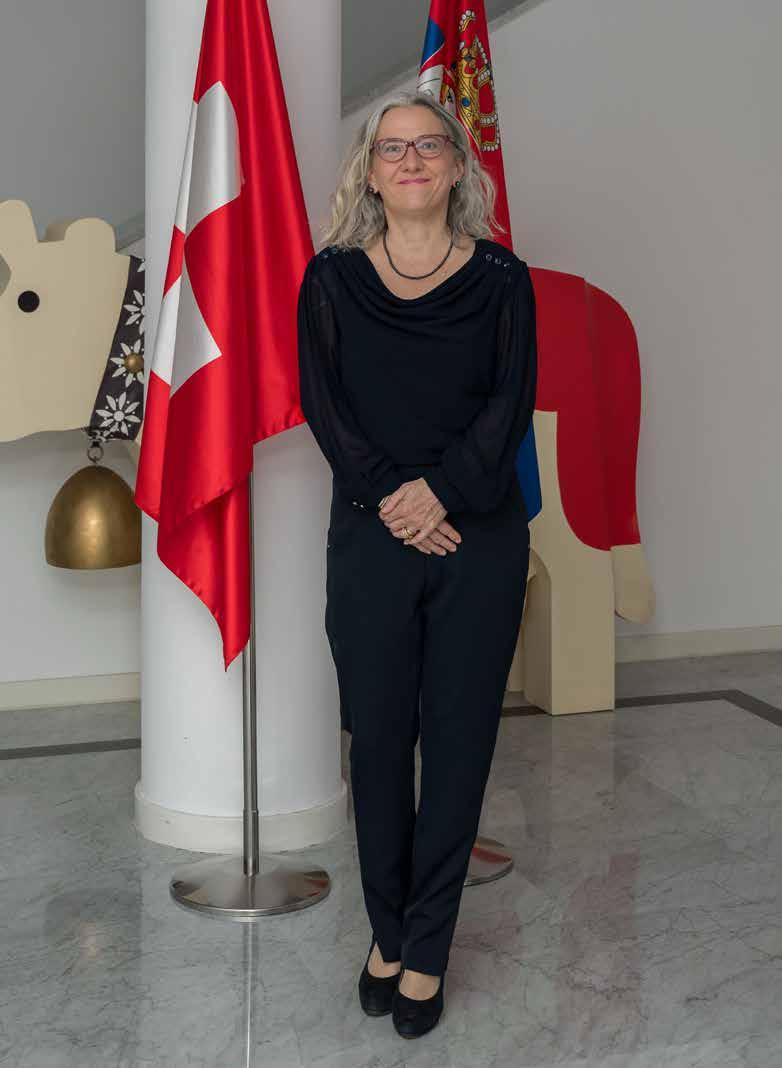
H.E. Mrs. Anne Elisabeth Lugon-Moulin
Swiss Ambassador to Serbia
A CENTURY OF CONFIDENCE, A FUTURE OF OPPORTUNITY
A long-standing relationship shaped by shared values, economic cooperation and a forward-looking agenda
Marking 110 years of diplomatic relations between Switzerland and Serbia, H.E. Anne Lugon-Moulin, Swiss Ambassador to Serbia, reects on the depth of bilateral ties, their historical foundations and the evolving partnership shaped by economic cooperation, innovation and shared values.
You have served in various countries, including Côte d’Ivoire, Liberia, and Guinea. How has serving in such diverse locations shaped your diplomatic perspective and your approach to diplomacy?
One of the beauties of diplomatic work is encountering diverse cultures and interacting with an in nite variety of people. While keeping in mind and defending the interests of the country one represents, a diplomat must adapt to the local context and negotiate with consideration for the other party’s sensitivities. Building bridges between personalities and cultures is a fundamental aspect of the job. This holds true everywhere.
I have also noticed that we face similar challenges, albeit in varying degrees, in many countries, and that the values that unite us are not so di erent from one country to another. Economic prosperity, good governance, human rights, security, and environment: these issues are present everywhere. And thus they lay the foundation for much of our work.
You are the rst female Swiss Ambassador to Serbia. What does this mean to you personally, and does it point to broader shifts within the eld of diplomacy?
I am proud to be the rst female Ambassador to Serbia, a country that is of great importance to Switzerland. I was also the rst one in Côte d’Ivoire. In the Swiss Federal Department of Foreign A airs, about 35% of our ambassadors posted abroad are women.
The role of women in diplomacy has signi cantly evolved over the past decades. More women than ever before are representing their countries, leading negotiations, and shaping global policies. However, despite this progress, challenges remain. Women continue to be underrepresented in senior
MUTUAL RESPECT, SOLIDARITY AND SHARED HISTORY DEFINE OUR RELATIONS
diplomatic positions, and gender biases still exist in some aspects of international relations. The key to further progress lies in ensuring equal opportunities, promoting mentorship, and fostering inclusive policies that advance women in diplomacy. The Swiss Federal Department of Foreign A airs provides those tools and internal policies.
At a personal level, believing in my own abilities, being bold, assertive and resilient has helped me from an early stage. Additionally, diplomacy requires
H.E. ANNE LUGON-MOULIN
Swiss Ambassador to Serbia
strong analytical and operational skills, adaptability, excellent communication skills, and outstanding intercultural understanding. Finally, I think that seeing challenges as opportunities for success, seeking out mentors, and building a strong professional network are also key takeaways from my professional life so far.
Serbia and Switzerland are celebrating 110 years of diplomatic relations this year. How do you assess these relations today, and how have they evolved throughout history? Looking back, what can we identify as the foundations for the future relationship between our two countries? Switzerland and Serbia have always cherished good relations. The fact that the Swiss government o cially accepted Serbia’s government request to nominate an Envoy in Switzerland in 1916, during World War I (while the Serbian government was in exile in Corfu), re ected a clear sign of friendship and mutual trust. In November 1916, regent Prince Alexander Karadjordjevic nominated Mr Slavko Grujic as Envoy Extraordinary and Plenipotentiary to Switzerland. The very origin of the relationship between the two countries dates back to 1888, when the Swiss government agreed to appoint a Serbian honorary consul in Zurich. The Swiss Embassy in Belgrade was fully set up in 1925.
The relation between the two countries has always been marked by mutual respect, solidarity and a sense of shared history through the diaspora. During the Yugoslav wars in the 1990s, Switzerland was among the few actors that launched a humanitarian aid programme in Serbia, a strong testimonial of solidarity. This programme has continually evolved and is now a comprehensive portfolio of projects supporting economic development, innovation, the green agenda, and good governance. Today, all those projects are geared towards helping Serbia in undertaking the necessary reforms on its path to European integration. This evolution shows how friendship can transform over decades and adapt to new realities; nowadays, we support start-up funds, the innovation ecosystem in Serbia, and supply chains from SMEs to major international companies.
The strength of the Swiss private sector in Serbia also represents a strong foundation on which we will build the future. I see numerous opportunities for deepening cooperation. Innovation, sustainability, and investment in human capital will be key focus areas of our work, whether through our development cooperation portfolio or the private sector. The Expo 2027 Belgrade will also hopefully o er opportunities to Swiss companies.
One of the largest Serbian diasporas in Europe resides in Switzerland. How do you view the Serbian community’s contribution to Swiss society?
The large Serbian diaspora in Switzerland (roughly 60000 people) is a well-integrated and dynamic community that has made substantial contributions to my country across multiple sectors, including business, academia, medicine, sports, and culture. Its hard work and entrepreneurial spirit have enriched Swiss society in countless ways.
SWITZERLAND IS NEUTRAL PERMANENTLY AND REMAINS COMMITTED TO INTERNATIONAL LAW
Many Serbian expatriates maintain strong ties to their homeland by sending remittances, investing in businesses, and fostering economic cooperation. I am also amazed to see how many cultural projects bridging our two societies are emerging from Serbian people living in Switzerland and Swiss citizens who join forces. Our Embassy also tries to o er them expanded visibility.
Those bonds are an invaluable link between our two countries, and they clearly enrich my work here in Belgrade. I will give two examples. Last year, I visited the Centre for the Protection of Infants, Children, and Youth in Zvečanska as part of a donation organised by a Swiss Rotary branch, led by a member of the Serbian diaspora in Switzerland. He had been highly successful in his professional life in Switzerland, and now, at the age of retirement, he focuses on charity work in Serbia. More recently, a Swiss-based construction company has opened an o ce in Belgrade; the top executive who came from Switzerland for the opening and for cutting the ribbon with me was of Serbian origin. Those moments can be very emotional and meaningful.
Switzerland is one of the largest foreign investors in Serbia, with over 500 Swiss companies operating here. Which sectors do you see as the most promising for future economic cooperation?
According to the data from the Business Registers Agency, there are actually more than 600 Swiss companies operating in Serbia today. This includes major corporations such as Nestlé and Roche, which are listed on the Swiss stock exchange, as well as small and medium-sized enterprises (SMEs).
Switzerland has a strong presence in Serbia, particularly in services, pharmaceuticals, large industries and IT. In recent years, there has been a growing interest in digital transformation, biotech, and large-scale industries.
Swiss companies appreciate Serbia’s skilled workforce, strategic location, and business-friendly environment. Furthermore, macroeconomic indicators are good and stable. Trade relations between Serbia and Switzerland have been steadily growing over the past ve years, making Switzerland one of Serbia’s key economic partners, particularly in the services sector, where we rank as Serbia’s fourth-largest partner worldwide.
There is still potential for expansion, especially in IT, technology-driven sectors and renewable energy. Serbia’s startup ecosystem is developing rapidly. Real estate is also a new sector that has recently attracted Swiss investment.
Serbia and Switzerland cooperate successfully in sectors such as banking, pharmaceuticals, and manufacturing. What initiatives are in place to further deepen this economic cooperation?
Let us look at this from three perspectives. Firstly, the Swiss government manages a development cooperation programme here with an annual budget of roughly €20 million, making it Serbia’s third-largest bilateral “donor”. Within this programme, we maintain an economic development portfolio
that includes support for startups and incubators, Serbian SMEs, and capacity-building programmes for various government entities, designed to foster a favourable macroeconomic framework.
Secondly, bilateral economic agreements between Serbia and Switzerland are of great value. I am glad that we already have the most important ones: a Free Trade Agreement, an agreement on the protection and promotion of investments, and a double -taxation-avoidance agreement. Those three treaties provide an excellent framework for Swiss investors in Serbia and, reciprocally, for Serbian investors in Switzerland.
Finally, it is up to the Swiss companies to decide about their plans in Serbia. The Swiss administration is liberal and, in that sense, allows private-sector actors to choose where they think their business will be most pro table and sustainable. What matters to them are sound business conditions, the above-mentioned bilateral agreements, transparency and predictability. Open and fair public procurement processes, in particular, play a key role in attracting new Swiss actors to the country.
Switzerland has long been renowned for its neutrality. However, since the Russian invasion of Ukraine, Switzerland has joined those nations imposing sanctions on Russia, sparking a debate regarding a revision of its neutral status. Is this merely an adjustment to the geopolitical situation, or does it signal a fundamental shift in your country’s policy? No, it is not a shift. Switzerland is neutral permanently. My country has always been rmly committed to respecting international law and the principles upon which our common security is based. This is why we have condemned this war. We continue to support Ukraine with a huge humanitarian and reconstruction programme.
THE SERBIAN DIASPORA IN SWITZERLAND IS A WELL-INTEGRATED AND DYNAMIC COMMUNITY
As a depositary state of the Geneva Conventions (International Humanitarian Law Conventions), Switzerland strongly condemns all attacks on the civilian population, civilian objects, and infrastructure essential to the population’s survival. International humanitarian law must be respected by all parties at all times. Switzerland remains resolutely committed to a comprehensive, just, and lasting peace for Ukraine based on international law, including the UN Charter and the Helsinki Principles. It is always ready to o er its good o ces. This is consistent with its neutrality. Talks among Russia, Ukraine, and the United States were held very recently in Geneva.
Dropping international sanctions is not new for Switzerland. We had already adopted UN sanctions during previous con icts. In other instances, we have aligned our policies with EU sanctions, for example, in 2002 in the case of Zimbabwe.
What is Switzerland’s position regarding the current con ict in the Middle East?
Switzerland is concerned by the military operations conducted by the parties to the con ict in the Middle East, which violate international law, in particular the prohibition on the use of force. It demands full respect for international law, including the Charter of the United Nations and international humanitarian law. It calls on all parties to exercise the utmost restraint and requests that the civilian population and civilian infrastructure be protected. De-escalation and a return to diplomacy are urgently needed (answer provided on March 12)
Before your career in diplomacy, you worked for Transparency International on anti-corruption and asset recovery. What can Serbia learn from the Swiss approach to governance and transparency?
At the beginning of my career, some 30 years ago, I launched the Swiss chapter of Transparency International. Later on, I led the Basel Institute on Governance, a well-known Swiss NGO that provides expertise in anticorruption and asset recovery from a practitioner and policy perspective. The Institute is active mostly in foreign countries.
In Serbia, we have been supporting local governance projects for decades. As Switzerland is a highly decentralised country, we have particularly engaged at the local level in Serbia in fostering citizen participation, transparency in public spending, and public oversight mechanisms. In doing so, we have always worked and helped all involved actors: the respective Ministry in designing the system, the Standing Conference of Towns and Municipalities for fostering intermunicipal exchanges and best practices, as well as some
local CSOs and NGOs to enhance public participation. In addition, we will soon be launching a new anti-corruption project with the Council of Europe, the OSCE, and Transparency International. We are also contemplating working with municipalities and di erent independent state authorities. All this should lead to a more e cient and more transparent administration.
In my home country, transparency, federalism, and the subsidiarity principle are of paramount importance. Citizens’ participation in political life and in decision-making processes is viewed as an instrument for democracy and stability. This model has proved successful, but we are well aware that it cannot simply be copied and pasted into other contexts.
The Embassy of Switzerland in Serbia has been actively supporting cultural initiatives. How do these projects contribute to strengthening mutual understanding between the two countries?
The Embassy and the Pro Helvetia Foundation support a wide spectrum of initiatives, ranging from partnerships with museums and visual artists to lm festivals, photography, dance, music, and the creative industries. These activities bring together Swiss and Serbian creators. Private Swiss companies operating in Serbia also make an important contribution through the Swiss Cultural Fund.
What is particularly encouraging is that many initiatives evolve organically and continue well beyond their initial phase, which shows that cooperation does not end with a single event.
Both Serbian and Swiss artists are highly dynamic and frequently take the initiative themselves to deepen collaboration, while Swiss creators are increasingly aware of Serbia’s vibrant and diverse cultural landscape.
INNOVATION, SUSTAINABILITY AND HUMAN CAPITAL WILL SHAPE OUR FUTURE COOPERATION
As an example, we are currently marking the Month of Francophonie, which celebrates values that Switzerland strongly promotes: cultural diversity, openness, multilingualism, and dialogue among countries.This week at the Yugoslav Film Archive we presented a Swiss lm as part of the Francophonie programme. We are also engaged with the upcoming Belgrade Film Festival.
How is Switzerland engaged in urban development and sustainability initiatives in Serbia, and what impact has it had?
Our support for sustainable urban development, renewable energy, and energy e ciency re ects the belief that environmental sustainability and economic prosperity can go hand in hand. In the energy sector, Switzerland has helped introduce renewable energy auctions as a transparent, market-based mechanism to attract investment. Serbia’s rst two renewable energy auctions have awarded around 1.36 GW of wind and solar capacity, helping the country scale up renewable energy, mobilise private investment, and strengthen energy security.
Decarbonising district heating systems is another key contribution. A biomass project completed in 2024 across four municipalities increased the share of renewable energy in the heating sector, and the ongoing project in ten municipalities is expected to raise it further through geothermal, solar, and heat pump solutions. Emissions are signi cantly reduced and air quality improved.
The EU Green Agenda project, signi cantly supported by Switzerland, has backed 77 innovative green projects since 2022, with €4 million in co- nancing, mobilising €22 million, and delivering measurable bene ts, including reduced greenhouse gas emissions, expanded renewable energy, improved energy e ciency, and better industrial wastewater management. This approach re ects an important principle guiding Swiss environmental policy: prevention is better than cure.
A PARTNERSHIP BUILT ON TRUST AND LONG-TERM VISION
How business cooperation, innovation and sustainability are shaping the next phase of Swiss–Serbian relations
Jelena Sadler, President of the SwissSerbian Chamber of Commerce, speaks about the strength of long-standing ties between Serbia and Switzerland, the Chamber’s role in supporting business cooperation, and the opportunities emerging from digital transformation, innovation, and sustainable development.
This year marks the 110th anniversary of diplomatic relations between Switzerland and Serbia. How does the Swiss-Serbian Chamber of Commerce contribute to celebrating this milestone, and how important is such a long tradition for the con dence of Swiss investors? The celebration of 110 years of diplomatic relations between Switzerland and Serbia is an important milestone that con rms the long-standing partnership between our two countries. The Swiss-Serbian Chamber of Commerce (SSCC) actively contributes to marking this anniversary by organising events, business meetings and dialogue platforms among companies, institutions and the diplomatic community.
Recently, during the Kopaonik Business Forum, we organised the “Swiss Way” reception, where, together with our members and partners, we celebrated this signi cant anniversary. This is also an important year because several of our distinguished member companies are celebrating major milestones. Roche has been present in Serbia for 35 years, Nestlé for more than 20 years, and Ringier for over 30 years.
These companies represent exactly the values we want to highlight in Serbia, because for Swiss investors, tradition and continuity carry great importance. Swiss business culture is strongly rooted in stability, long-term planning, and trust. The fact that relations between our two countries have endured for more than a century sends a strong message of security and predictability to companies considering investing in Serbia or already operating here.
What are the current priorities of the Swiss-Serbian Chamber of Commerce when it comes to supporting its members, and how does the Chamber facilitate the entry of new Swiss companies into the Serbian market?
As the newly appointed Executive Director of the Chamber, my vision is to respect this long tradition while positioning the Chamber as the most modern and agile bilateral business association in the region, using stability as a foundation for accelerated digital and green transition. This means my focus is on making the Chamber faster, more digital and environmentally conscious so that we can provide better business support to our members in the future.
The Swiss-Serbian Chamber of Commerce serves as a platform connecting companies, institutions and the wider business community. Our goal is to provide concrete business value to our members through networking, exchange of experience, institutional support and the promotion of best business practices.
SWISS BUSINESS CULTURE IS STRONGLY ROOTED IN STABILITY, LONG-TERM PLANNING, AND TRUST
For companies entering the Serbian market, the Chamber represents an important rst point of contact. We assist them by connecting them with relevant institutions, legal and nancial advisors, and by helping them understand the local business environment. Through events, business forums, and thematic discussions, new companies can quickly build their networks and gain valuable market insights.
Switzerland has been among the leading foreign investors in Serbia for many years, particularly in services and high-tech sectors. In which areas do you see the greatest potential for further cooperation in the coming years?
Switzerland has been one of Serbia’s most important investors for many years, and the potential for further cooperation remains signi cant. We see particular opportunities in digital technologies, innovation, the pharmaceutical and healthcare industries, and sustainable energy.
There is also increasing focus on the startup ecosystem, research and development, and collaboration between universities and companies. Switzerland has a strong reputation in innovation and knowledge transfer, while Serbia has a highly talented and well-educated workforce, especially in the IT sector. This combination represents a major opportunity for new projects and investments.
Switzerland is globally recognised for its dual education model, and the Chamber has supported the introduction of similar principles in Serbia. What results have been achieved so far, and how important is education reform for retaining Swiss companies in Serbia?
Dual education is one of the key pillars of Switzerland’s economic success. This model allows young people to acquire both theoretical knowledge and practical skills simultaneously, making them wellprepared for the labour market. In Serbia, important progress has been made in recent years in implementing this system, with support from international partners including Switzerland. An increasing number of companies are participating in dual education programs, and results show that students who complete these programs have greater employment opportunities. For Swiss companies operating in Serbia, the availability of qualied talent is extremely important. Therefore, developing an education system aligned with the needs of the economy is a key factor for the long-term sustainability of investments.
THE GREEN TRANSITION IS NOT ONLY AN ENVIRONMENTAL NECESSITY BUT ALSO A MAJOR
ECONOMIC OPPORTUNITY
The Swiss economy is known for innovation and strong environmental standards (ESG). How does the Chamber encourage the transfer of knowledge and technology related to the green transition to local companies?
One of the important goals of the Swiss-Serbian Chamber of Commerce is to promote knowledge exchange between Swiss and Serbian companies, particularly in innovation and sustainable development.
Swiss companies are global leaders in implementing ESG standards, energy-e ciency measures, and circular-economy principles. Through conferences, thematic workshops, and cooperation with institutions and international organisations, the Chamber promotes best practices and encourages companies to adopt more sustainable business models. We believe that the green transition is not only an environmental necessity but also a major economic opportunity for the development of new technologies and investments.
Speci cally, we are planning a series of webinars on “Swiss energy efciency standards in manufacturing” to help Serbian small and mediumsized enterprises understand how ESG standards can improve their competitiveness in the European market, where many of our member companies play a key role.
Based on your communication with member companies, what do Swiss businesses see as the main advantages of operating in Serbia, and where do they still see room for regulatory improvement?
Swiss companies operating in Serbia often highlight several key advantages. First of all, there is the availability of a highly skilled and talented workforce, competitive operating costs and Serbia’s strategic geographic position, which provides access to regional markets.
On the other hand, as in many developing markets, there is still room for improvement in administrative procedures, regulatory predictability and further simpli cation of bureaucratic processes. Continuous dialogue between the business community and institutions is essential for improving the business environment.
Our role as a Chamber is to maintain regular dialogue with the Government of Serbia and, through formal recommendations, advocate for further digitalisation of permitting procedures and stricter adherence to the rule of law, as regulatory predictability is an absolute prerequisite for longterm Swiss investment.
What are the most important events and projects the Chamber is planning by the end of the year that could further strengthen ties between Belgrade and Bern?
By the end of the year, we plan to hold several events to strengthen business ties between Serbia and Switzerland. These include business forums, sector-focused workshops and meetings with Swiss business delegations visiting Serbia.
A special focus will be placed on promoting Serbia’s investment opportunities to Swiss companies and on connecting Serbian businesses with the Swiss market. We are also planning events dedicated to innovation, sustainability and cooperation in education. As a Chamber, our mission is to serve as a bridge between the two economies and to strengthen cooperation through concrete projects and initiatives.
We also see this period as a valuable opportunity to further strengthen Swiss–Serbian cooperation. Switzerland demonstrated strong con dence early on by being the rst country to formalize its participation in Expo 2027. The Chamber is currently working closely with the Presence Switzerland delegation in the preparation phase, with the aim of supporting a highly visible, innovative, and impactful Swiss presence.
SWISS WAY
Brunch at the Kopaonik Business Forum: 110 Years of Diplomatic Relations Between Serbia and Switzerland
As part of the 33rd Kopaonik Business Forum, the SwissSerbian Chamber of Commerce hosted the “Swiss Way” brunch. The event marked 110 years of diplomatic relations between Serbia and Switzerland, while also highlighting signi cant business milestones for Swiss companies in
Serbia: 20 years of Nestlé’s presence, 30 years of Ringier, and 35 years of Roche. The brunch brought together representatives of Swiss companies, members of the diplomatic corps, and local business leaders. Organisers emphasised that the presence of such long-standing investors re ects both stability and con dence in the Serbian economy and promotes Swiss
business standards—transparency, innovation, and quality.
The event also served as a platform for networking and exchanging experiences, rea rming the importance of the Kopaonik Business Forum as a space where diplomats, investors, and entrepreneurs jointly explore new opportunities and strategic initiatives that can further strengthen bilateral relations.
THE EVENT MARKED 110 YEARS OF DIPLOMATIC RELATIONS BETWEEN SERBIA AND SWITZERLAND
Photo: Mitar Mitrović
SANJA PANJESKOVIĆ IGIĆ
External A airs Head, Novartis Serbia and Montenegro
SCIENCE THAT REACHES PEOPLE
How innovation, communication and patient advocacy shape better healthcare outcomes
In this interview, Sanja Panjesković Igić, External A airs Head at Novartis Serbia and Montenegro, speaks about the intersection of science, communication and patient care, and how healthcare innovation can bring tangible improvements to people’s lives.
Your work sits at the intersection of science, society and deeply human experiences. What inspires you to do this work?
For me, this work is about people, individuals whose lives genuinely improve when the healthcare system is responsive and e ective. In Serbia, for example, healthcare investments have contributed to an additional ve years of life expectancy since 2000 − re ecting the impact that even gradual, steady improvements can have on people’s lives.
Working across oncology, cardiology, immunology, neurology and hematology - and witnessing the impact of technologies like radioligand therapy, gene and cell therapy and RNA-based medicines - strengthens my belief that science can genuinely transform the future of care. As a company, we are committed to expanding access to innovative medicines in Serbia and Montenegro, so that patients here can bene t from the same progress seen in the world’s most advanced healthcare systems.
On a personal level, I am deeply aware that the progress we push for in healthcare ultimately protects all of us - our families, our neighbours, our colleagues. We live in this system too, and every improvement becomes a shared safety net for the whole community.
The Swiss foundation of our company - built on scienti c excellence, precision and longterm commitment - provides an additional source of inspiration. It sets a standard that we strive to re ect in Serbia and Montenegro every day.
You lead communications and patient advocacy. How do these areas create value for people?
I have learned that clear, compassionate communication can completely change how a person experiences illness. It helps people understand their health, make informed decisions, act earlier, and move forward with more con dence and less fear. Advocacy strengthens this by helping patients move from passive recipients of care to active partners in their treatment − ensuring that their needs, priorities, and perspectives shape each decision that a ects them.
At Novartis, we bring this to life through awareness initiatives, partnerships, patient education and support programmes that help ensure scienti c progress becomes something people can actually access and bene t from.
And when people receive the right care at the right
BETTER CARE BEGINS WITH UNDERSTANDING PATIENTS, NOT JUST TREATING DISEASE
moment, the impact extends far beyond the clinical setting. Timely, e ective treatment keeps people active, prevents complications and reduces the need for costly Late-stage care - something increasingly important in aging societies. Health innovation also carries broader societal value: every dollar invested in life sciences generates about three dollars in GDP
Taken together, communication and advocacy enhance not only patient outcomes but, also family resilience, community strength, and the country’s broader economic stability.
Serbia is accelerating its innovation agenda. Where do you see opportunities?
The key opportunities lie in strengthening prevention, using healthcare data more e ectively, scaling screening programmes and ensuring timely access to advanced therapies. Today, patients in Serbia wait an average of 799 days for access to new medicines − reducing this gap is essential for progress. With a focus on early intervention, outcome-based models, and cross-sector collaboration, the country can advance rapidly and sustainably.
As a company, we contribute by supporting initiatives such as newborn SMA screening, partnering with the Bio4 Campus to advance cardiovascular prevention and expand the use of data and digital tools, such as clinical decision support systems, and developing prevention projects like Cardio4Cities. Together, these e orts show how innovation can translate into real improvements for patients.
You often highlight the importance of your team. Why is this central to Novartis leadership?
Real impact always starts with people. I am fortunate to work with teams whose curiosity, judgment and integrity show up in everything they do - from oncology and cardiovascular programmes to datadriven health projects. Being recognised as a Top Employer in both Serbia and Montenegro con rmed the culture we have intentionally built: one that values trust, development and engagement. And I believe that culture directly strengthens the value we deliver to patients and partners.
DO NOT LEAN OUT OF THE WINDOW
A winter rail journey that turns logistics into poetry, revealing the Alps as both an engineering marvel and an unforgettable spectacle
On the route between Tirana and St. Moritz, the Bernina Express passes through 55 tunnels and over 196 bridges and viaducts.
If you travel on a sunny winter day, you will see some of the most spectacular views in the Alps.
An Instagram advert caught my attention. An unregistered travel agency in Serbia was o ering a three-day package for €299 per person, including a ride on the famous Bernina Express train from Tirano, Italy, to St. Moritz, Switzerland.
The scenes of the journey through idyllic, snow-covered Alpine landscapes looked almost unreal, so I decided to analyse the elements of this trip. For a slightly higher amount (€399), I put together a three-day tour for the eight of us, which, as my fellow travellers say, we will all remember for the rest of our lives.
A return ticket with the low-cost airline Wizz Air from Belgrade to Bergamo, with limited luggage (a small backpack with personal items and a cabin suitcase up to 10 kilograms, which is perfectly su cient for a threeday trip), will cost between €70 and €100 depending on the travel dates.
A return bus ticket from Bergamo Airport to Milano Centrale railway station costs €24. Buses run every half hour, operated by several companies, and the journey takes around 50 minutes. A decent three- or four-star hotel near Milan’s railway station, suitable only for an overnight stay, will cost around €100 for a double room.
A return train ticket to Tirano, a small Italian town on the Swiss border, costs €25. The journey takes 2.5 hours, and trains run every hour. A good four-star hotel in the centre of Tirano costs us €160 for a double room, including an abundant breakfast, while a return ticket for the Bernina Express to St. Moritz costs €80.
That is enough about prices and logistics. Now, a few words about the experience. Most things about Milan and its charms are already well known, so in a separate report, I will write about an interesting museum located in the railway station’s basement.
We arrived in Tirano in the early evening and walked for about ten minutes from the railway station to our hotel, located next to the bridge over the River Adda. Over its entire 194-kilometre course, the river ows through Lombardy before eventually joining the famous Po, well known from crossword puzzles. Today, the town has around 9,000 inhabitants.
THE BERNINA EXPRESS IS NOT JUST A TRAIN RIDE, BUT A MOVING GALLERY
WHERE EVERY WINDOW FRAMES A NEW ALPINE MASTERPIECE
In the park on Marinoni Square stands an obelisk with plaques on all four sides bearing the names of soldiers from the town who were killed in the First World War. There is also a smaller plaque listing the names of residents who died in the Second World War.
At dawn on 29 September 1504, the Virgin Mary is said to have appeared on this very spot to Mario Omodei, a resident of Tirano. A basilica was later built here, today known as Madonna di Tirano. On the church altar, believers leave gifts to the Virgin Mary as a sign of gratitude for healing. The 17th-century organ, with its 2,200 pipes, is among the largest in Europe.
IN CHASING THE CHEAPEST ROUTE, MANY TRAVELLERS MISS THE VERY MAGIC THEY CAME TO SEE
If you travel on the Bernina Express, keep in mind that Tirano has two railway stations. One dates from 1902 and is where you arrive on the train from Milan, while the other, built in 1908, is the departure point for the Bernina Express to St. Moritz. The Bernina Express also o ers a return rst-class ticket at double the price (€160). Still, my recommendation is to take the second-class ticket for €80, as those carriages have windows that open, giving you much better opportunities for photography.
Of course, “Selma, don’t lean out of the window” still applies, along with the necessary precautions, since the route between Tirano and St. Moritz includes as many as 55 tunnels and 196 bridges and viaducts.
In 2008, the Bernina Express was added to the UNESCO World Heritage List. One section of the line was opened in 1908, the stretch between Celerina and St. Moritz was connected a year later, and the entire railway line was completed in 1910. In the beginning, the railway operated only during the summer months, but from 1913 it also began running in winter. This became possible after a large number of avalanche barriers were installed, as avalanches are common in these mountainous areas.
In its early years, the railway was constantly on the brink of bankruptcy until, in 1943, in the midst of the Second World War, it was taken over by the Rhaetian Swiss Railway company, which invested substantial funds in its modernisation. From the mid-1980s onwards, the line became a major attraction, drawing tourists from all over the world.
In October 2011, this route became the rst railway line in the world to be photographed and placed on Google Street View. Towards the end of winter, when the danger of snow avalanches is at its highest, the Swiss authorities even use artillery
to trigger controlled snow slides, preventing them from occurring “at the wrong moment”, just as a train is passing.
We departed from Tirano at 9.00 a.m. and were fortunate that when we travelled (in late January), there was plenty of snow and the day was sunny, so the scenery truly looked like something from a postcard.
After a little over two and a half hours, we arrived at the St. Moritz railway station, located on the edge of the lake, whose frozen surface becomes the stage every January for the Snow Polo World Cup. This glamorous event, featuring luxury-car exhibitions, gathers wealthy and famous guests from all over the world each year. We arrived on Monday, the day after it had ended, so the tents and supporting structures on the frozen lake were already being dismantled.
We walked up to the famous Badrutt’s Palace Hotel, one of the most expensive hotels in the world. You will not even be allowed into its lobby for a cup of tea unless you have a table reservation.
Johannes Badrutt (1819–1889), whose bust stands in the central square of St. Moritz, was a Swiss businessman and hotelier who transformed this small town into what it is today. In the mid-19th century, he brought the rst English tourists to the town. In 1855, he opened the Kulm Hotel, while in 1896, his son Caspar Badrutt opened the famous Badrutt’s Palace Hotel.
While carefully walking across the frozen pavements, digesting the cheese from our fondue, we ran into two girls from Belgrade who had bought the package from the agency mentioned at the beginning of this text. They were miserable. They had woken up at 4 a.m., travelled by bus for six hours from Milan to St. Moritz, were given only an hour and a half of free time in the town, and would return in the afternoon, in the dark, on the Bernina Express to Tirano, where a bus would again be waiting for them. In practice, they would miss almost all the scenery we had enjoyed during the sunny morning hours.
Travel agencies, in their attempt to make some pro t from cheap packages, often end up depriving their passengers of precisely the experience that was the main reason for the trip.
Photo: Schweiz Tourismus/André.Meier
Photo: Robert Čoban
Photo: Robert Čoban
Photo: Robert
Čoban
Photo: Robert Čoban
SWISS SUPPORT DRIVING THE GROWTH OF SERBIAN SMES
Switzerland today, after more than a century of bilateral relations, stands as one of Serbia’s most important partners and a signi cant investor, with more than 500 companies operating in our market and employing tens of thousands of people.
ALEKSANDAR GORAČINOV
SME HUB Director
The strength and continuity of this partnership are further conrmed by Switzerland’s early con rmation of its participation in Expo 2027 in Belgrade, one of the most important international events that Serbia will host in the coming years. Such moves clearly demonstrate trust and a long-term commitment to developing cooperation between the two countries. What makes this cooperation particularly valuable is its strategic and long-term nature, its focus on strengthening institutions, improving the business environment, and empowering the domestic economy and enterprises.
A contemporary example of this approach is the SME HUB initiative, established as a partnership between the Government of Switzerland, represented by the Swiss Agency for Development and Cooperation (SDC), and Serbia’s ICT Hub. The initiative aims to support small and medium-sized enterprises in improving their operations and becoming part of global supply chains, through a combination of nancial and expert support, as highlighted by SME HUB Director Aleksandar Goračinov.
SME HUB TURNS LOCAL POTENTIAL INTO GLOBAL COMPETITIVENESS
Serbia and Switzerland are marking 110 years of bilateral relations this year. How does this cooperation look from your perspective today? Relations between Serbia and Switzerland are a strong example of a longterm partnership built on trust, mutual respect, and a shared vision of development. Over more than a century, this cooperation has gone through di erent phases, yet it has always remained stable and focused on strengthening economic and social ties. Today, Switzerland is one of Serbia’s most important partners, both in development cooperation and in investment and trade. What makes this cooperation particularly valuable is its long-term character. Swiss support has consistently been directed towards creating sustainable solutions, such as strengthening institutions, improving the business environment, and supporting the
development of the domestic economy. In this context, initiatives like SME HUB represent a natural continuation of this approach, focusing on capacity building and the long-term competitiveness of local companies.
How important was the support of Switzerland and the Swiss Agency for Development and Cooperation (SDC) for the development of SME HUB?
The support of Switzerland and the SDC has been crucial for the development of the SME HUB initiative. Swiss development policy is known for its thoughtful and strategic approach, in which programmes are not seen as short-term interventions but as investments in long-term development. SME HUB is precisely such a model.
Our goal is not only to provide support to businesses but also to contribute to the creation of a stronger, more competitive business ecosystem in Serbia. Switzerland has recognised both the potential of domestic small and medium-sized enterprises and the challenges they face when seeking to cooperate with large systems. Through SME HUB, a combination of nancial support, expertise, and methodology has been provided, enabling companies to undergo a comprehensive business transformation.
How important is the cooperation with the Swiss Embassy and representatives of the SDC in Serbia?
It is extremely important. What characterises our cooperation is a strong sense of partnership and mutual understanding. Since she arrived in Serbia, H.E. Ambassador Anne Lugon-Moulin has shown a strong understanding of and interest in economic development and projects that support small and medium-sized enterprises. Her support and openness to dialogue provide additional momentum to initiatives such as SME HUB.
At the same time, cooperation with Deputy Head Katrin Ochsenbein and her team at the Swiss Agency for Development and Cooperation in Serbia represents a key element of this initiative’s success. Their experience in development programmes, combined with a deep understanding of the local context, has enabled SME HUB to function in a way that truly responds to the real needs of the business community.
More than 500 Swiss companies are currently operating in Serbia. How important is this for the development of the domestic economy?
The presence of more than 500 Swiss companies in Serbia clearly demonstrates the strength and maturity of economic relations between the two countries. These companies represent not only investments and job creation, but also bring business standards, new technologies, and a di erent organisational culture.
consulting experts from key elds, helping drive business transformation and strengthen competitiveness within global supply chains.
What results has SME HUB achieved so far?
The results we are seeing today con rm that this kind of support model has been much needed by the domestic economy. So far, more than 30 companies have entered and gone through a comprehensive business transformation process with the support of SME HUB.
It is important to emphasise that, in this case, transformation is not merely formal or administrative. It involves very concrete work on improving business operations, from corporate governance, nancial planning, and legal structuring, to digitalisation, optimisation of production processes, and the introduction of international standards.
The impact of this approach is also visible in market outcomes. Companies that have gone through the process have secured new or expanded commercial contracts worth more than CHF 1.1 million, created new jobs, and developed more sustainable, long-term partnerships with large domestic and multinational companies.
How visible are the results through concrete examples of companies that have gone through this process?
The best way to understand the value of SME HUB is to look at speci c examples of companies that have undergone transformation. One such example is Umprom, a manufacturer of plastic packaging, which worked with SME HUB on improving production organisation, planning, and operational processes. Through this process, the company further strengthened its capacities and created conditions for more stable growth and business expansion.
Konalek, a producer of technologically advanced assemblies, primarily for the aviation industry, is another strong example of how a structured transformation approach can deliver tangible results. In cooperation with consultants through SME HUB, the company improved its internal processes, business organisation, and quality standards, enabling it to further develop partnerships with major clients and position itself as a reliable supplier in more demanding business environments.
A similar development trajectory can be seen in Kolor Press, which, through this process, enhanced its planning, organisation, and overall business management. Such changes are not always immediately visible from the outside, but in the long run, they form the essential foundation for stable growth and sustainable development.
What changes most often occur in companies that go through SME HUB transformation?
TRANSFORMATION
For the domestic economy, this is of great importance, as it opens up opportunities for cooperation and for integrating local suppliers into their production and logistics chains. It is precisely in this space that we see signi cant potential for small and medium-sized enterprises in Serbia. SME HUB aims to support domestic companies in becoming ready for such cooperation.
Once SMEs reach certain standards, they can become reliable partners to large multinational companies operating in Serbia and the wider region.
What is the core idea behind SME HUB?
BEGINS WITH MINDSET AND ENDS WITH MARKET RESULTS
The core idea of SME HUB is to help small and medium-sized enterprises take the next step in their development. In Serbia, there are many high-quality manufacturing companies with strong knowledge, experience, and products. Yet, they often lack certain organisational and managerial capacities needed to become part of global supply chains.
What makes SME HUB distinctive is its approach, which involves signicantly fewer administrative procedures and less bureaucracy compared to traditional support programmes. While formal processes do exist, the focus is on e ciency, agility, and, above all, on hands-on work with companies and the tangible results they achieve through business improvement.
Through SME HUB, we work precisely on that. We support companies in improving their processes, professionalising their organisations, upgrading standards, and building sustainable systems so they are ready to collaborate with large domestic and multinational companies. In this way, SME HUB serves as a mechanism that connects SMEs, large companies, and
What is particularly interesting is that the transformation primarily relates to mindset and the overall approach to doing business. Through cooperation with consultants, companies begin to introduce more systematic planning, clearly de ned processes, more modern management models, and a longer-term development strategy. These are changes that may not always be visible at rst glance, but they have a signi cant impact on long-term competitiveness.
For us at SME HUB, it is especially important to see that companies become more ambitious and more con dent in their own capacities after this process. That is perhaps the most valuable outcome of all, the creation of businesses that are ready to think globally and compete on equal footing in the international market.
What, from your perspective, is the greatest value of SME HUB in the broader context of cooperation between Serbia and Switzerland?
The greatest value of SME HUB lies in demonstrating the true potential of domestic companies when they are given the right support and access to knowledge. When the experience and methodology of Swiss development programmes are combined with the energy and entrepreneurial spirit of local businesses, the result is companies that are capable of competing on the international market.
This is precisely why cooperation between Serbia and Switzerland is so important. It shows how a long-term partnership, built on trust and shared values, can contribute to the development of an entire economy. SME HUB is one example of such cooperation, but also a strong con rmation of the signi cant results that can be achieved when development support, expertise, and local potential are e ectively aligned and implemented.
by Dragan Nikolić
A TALE OF THREE CANTONS
A playful journey through Switzerland’s culinary identities, where geography shapes taste and every meal feels like crossing a border
When I was a kid, there was a prize contest on Yugoslav television. The rst prize was a trip to Mexico, and the second was a trip to Switzerland. My sister said she would rather choose the latter, and I just laughed at her. How could you not choose exotic Mexico, I wondered, naively believing that Switzerland held no such wonders. Many years later, life brought me to this “ordinary” place known only from the atlas several times. I must admit, I am very happy to have been so wrong; every single visit exceeded all my expectations.
SWITZERLAND IS NOT DIVIDED INTO CANTONS ON A MAP, BUT INTO WORLDS ON A PLATE
Once, when some locals asked me what I thought of their cuisine—expecting me to praise their speci c regional dishes—I replied diplomatically that the country is not divided into twenty-six cantons, but rather into three: The Canton of Polenta, the Canton of Wurst, and the Canton of Raclette. They were delighted. In one breath, I acknowledged both their local patriotism for melted cheese and the
perfectly tting diversity that makes this country beautiful.
Travelling through Switzerland means constantly switching personas, as if you become someone else with every passing kilometre. In just a few hours by train, you can transition from Mediterranean nonchalance to Germanic e ciency, or fall into an Alpine trance where time stands still.
In the Canton of Polenta—o cially known on the map as Ticino—the mountains look like a backdrop for a Fellini lm. The sun shines brighter here, and the people are louder. Polenta here successfully resists Swiss prices but retains the precision that gives Swiss watches their name. While its appearance is as wild as the Alps, polenta is perfectly
creamy and as soft as the clouds above them. If you think you’ve gotten o cheap in this canton, just remember you’ll need to pay 15 francs an hour for parking after lunch.
As soon as you cross the St. Gotthard heading north, you enter the Canton of Wurst, where work, order, and mustard are held in high regard. Rösti—the beloved grated potatoes— is practically treated as a strategic mineral resource. However, this strict canton carries serious risks for visitors. If you dare ask for mustard with your Bratwurst in St. Gallen, you might, at best, get a cold shoulder; if you’re truly unlucky, you might be banished. The sausage here is perfect on its own, much like the federal railway timetable. You must not insult it by asking for condiments. It should be consumed exclusively with a mug of beer as heavy as your backpack.
Finally, let me introduce the Canton of Raclette. Please forgive my personal bias, but the heart wants what it wants. In the Frenchspeaking part of Switzerland, cheeses are gods, and feasts are rituals of hedonism. A rustic tin pot full of melted cheese is served to the whole table. Everyone dips their crusty baguette into the hot fondue that melts hearts and stops time.
Then there is the Zeus of cheeses—Raclette, a true emotional volcano. A wheel of Raclette is heated over a low ame until it “cries,” and aromatic yellow tears begin to ow over hot potatoes and spicy gher-
FROM POLENTA TO WURST TO RACLETTE, EVERY KILOMETRE REWRITES YOUR APPETITE AND YOUR CHARACTER.
kins. Whatever you do, do not drink cold water with Raclette—you will be banned from the restaurant immediately. Instead of water, order a white Fendant wine or a simple warm tea. Otherwise, the melted cheese in your stomach will turn into a rubber ball.
Switzerland is the only country in the world where you can have breakfast according to German protocol, lunch with Italian passion, and dine in a French cloud of cheese—all while wondering how a single coffee can cost as if it were created through alchemy.
Whether you are in the zone of sausage, polenta, or cheese, one thing is certain: the bill will always be in the “red canton” (the red), but your heart— and your stomach—will be full.
Photo: Schweiz Tourismus / Lorenz Richard
Photo: Shutterstock
Photo: Shutterstock
Photo: Schweiz Tourismus/Christian Meixner
MARJANA DAVIDOVIĆ
Country Manager of Nestlé for Serbia, Montenegro and North Macedonia
SUSTAINABILITY IN PRACTICE
How responsible sourcing, education and circular production are reshaping the food industry across the region
In this interview, Marjana Davidović re ects on how Nestlé is embeding sustainability into everyday practice, shaping both industry standards and consumer habits across the region.
Nestlé in Serbia often emphasises that sustainability is not merely a strategy, but a way of working. How do food donations and support for vulnerable groups directly shape the company’s identity in the markets of Serbia, Montenegro and North Macedonia? We work closely with food banks and civil society organisations to ensure that food reaches the right hands – those who need it most. In this way, over the past ve years alone, we have donated Nestlé products across all categories with a total value exceeding RSD 150 million. Responsible management of food surpluses is also crucial from an environmental perspective, as improper disposal of food waste in land lls increases greenhouse gas emissions.
As a long-standing educational initiative promoting healthy nutrition among children, “ZdravoRastimo” has become something of a benchmark in our schools. As the generations who have gone through the programme are now becoming young adults, what long-term changes in consumer habits have you observed?
The “ZdravoRastimo” programme is part of the broader global initiative “Nestlé for Healthier Kids”, which aims to educate children, as well as teachers and parents, about the importance of healthy nutrition and physical activity for proper growth and development. This year, we are marking 15 years of the programme in Serbia, and so far, more than 300,000 primary school pupils have taken part in the educational activities.
The true measure of the programme’s success lies in behavioural changes that parents notice at home – for example, when children independently suggest breakfast ideas, ask for a glass of water instead of juice, or understand that sweets are “for occasional treats”. This growing awareness is increasingly re ected in the habits of adults as well, who are paying more attention to the composition, origin, quality and nutritional value of the products they purchase. Our response is clear, direct and transparent communication, helping consumers make informed choices when selecting food products.
The transition from conventional to regenerative agriculture – including practices such as strip-till technology and the use of drones – requires a signicant shift in farmers’ mindset. How challenging was it to convince local partners that “less soil disturbance” can actually lead to higher pro tability and greater resilience to climate change?
When we launched our regenerative agriculture programme in Serbia in 2021, the concept was largely unfamiliar to our suppliers, and we did not initially have their full attention and trust. Today, after investing more than CHF 3 million and providing extensive education, they understand how vital soil health is not only for crop sustainability but also for the long-term viability of their businesses. Increasingly, they are able and willing to meet the demands of large systems in terms of raw material quality and production methods. This shift did not happen overnight – it has been a gradual, carefully guided process.
An additional challenge was technical in nature, as the transition to regenerative methods requires new equipment and adjusted agricultural calendars. The transition period itself can also be demanding, as visible results from these practices often take three to ve years, along with continued investment in training, monitoring and supplier support. From the outset, our approach has been based on close collaboration with partners and adapting requirements to their realistic capacities. The programme has been implemented among suppliers of dried vegetables, sun ower oil and soy, currently involving 13 farms, with nearly 5,000 hectares covered by the end of the last season.
The Surčin factory is recognised as a “Zero Waste to Land ll” facility. What does waste management look like in practice at a plant producing tens of thousands of tonnes annually, and how challenging is it to maintain this standard within the local infrastructure environment?
As early as 2019, Nestlé Surčin became the rst food production facility in Serbia to completely stop disposing waste to municipal land lls. Instead, waste is repurposed for the production of biofuels, fertilisers and eco-insulation panels, while non-recyclable waste is used for energy recovery. The company has also invested €1.2 million in a state-of-the-art wastewater treatment plant, which processes around 24,000 cubic metres of water annually and returns it clean to the natural environment in Serbia.
Nestlé standards are stringent – and, I can say openly, nancially demanding – but they ensure product quality and maintain consumer trust. At the same time, further improvements in regulation, particularly in the area of waste taxation, as well as the development of recycling infrastructure, would signi cantly support and accelerate the adoption of circular business models across the entire industry.
Soft Power in a Changing World
Tourism, culture and people-to-people contacts are shaping the growing relationship between Thailand and Serbia.
H.E. SATHANA
KASHEMSANTA NA AYUDHYA
Ambassador of the Kingdom of Thailand to the Republic of Serbia
In an interview for Diplomata, a TV programme produced by Diplomacy & Commerce magazine in cooperation with Euronews Serbia, H.E. Sathana Kashemsanta Na Ayudhya, Ambassador of the Kingdom of Thailand to Serbia, discussed bilateral relations, tourism and cultural exchange. Based in Athens, he serves on a non-resident basis covering Greece, Serbia and Malta.
The Ministry of Foreign Affairs actively supports Thai community associations around the world. How large is the Thai community in Greece today, and how many Thai citizens live here in Serbia?
There are not many Thais in either of the two countries. According to official data, there are around 700 permanent residents of Thai origin in Greece. Of course, we also have tourists and people who go to Greece temporarily, but not permanently. As for Serbia, I am still checking the official figures with the Serbian authorities
How important is soft power today for a country like Thailand in a changing world?
In my view, soft power has always been important. Today, we see many examples where military power is very visible. But soft power remains extremely important. Countries need to use soft power to advance their relations. It often produces more positive and stable results than military power. Such results tend to be longer-lasting, more sustainable and better for mutual benefit.
Thailand is often a filming location for many Hollywood films and series, such as The Serpent, The Beach, Hangover 3 and Brokedown Palace. In these films, Thailand is portrayed as exotic, but sometimes also dangerous. Yet in 2025, Bangkok was the most visited city in the world with around thirty million visitors. Does this mean that tourists are not afraid of such portrayals of your country?
Films need to include exciting elements to attract audiences. Bangkok, as well as Thailand as a whole, has many different aspects. Some things are not part of everyday life, but that is the case in every country. We have something for everyone. If you are looking for adventure in Thailand, we have it. If you want peace and relaxation, we have that too. And if you are looking for family entertainment, we offer that as well.
Do you have data on how many Serbian tourists visited Thailand in 2025?
According to data from the Tourism Authority of Thailand, around thirteen thousand Serbian citizens visited Thailand in 2025. This is a good figure given Serbia’s population size, and the trend has been increasing for several
regarding the current situation, but previously, we knew there were perhaps around 100 Thai citizens.
In Serbia, this is indeed a very small number. As for the Thai Community Association in Greece, the Thai government always supports Thai associations worldwide because we work together to assist our citizens who may need help or support from the government and the community. It is not a large budget, but it is symbolic support and a sign of appreciation for the joint work in helping Thai people around the world.
SOFT POWER OFTEN PRODUCES MORE POSITIVE AND LASTING RESULTS THAN MILITARY POWER
years. We will continue working to make that number even higher. Still, of course, we would also like to see more Thai visitors in Serbia, especially next year when Serbia will host the specialised
Expo exhibition, which will be an excellent opportunity for Serbia to present itself to the world.
Apart from tourism, what is the most important area of cooperation between Thailand and Serbia?
I would say that our two countries have many areas in which we can develop cooperation. People from our countries know each other to some extent, but that is not enough. First of all, we should improve knowledge about one another and mutual understanding, and encourage people-to-people contacts. I believe that greater people-to-people exchange will lead to increased trade and more investment.
For that reason, my embassy, together with the Tourism Authority of Thailand, recently completed a project inviting Serbian media representatives to Thailand. In this way, they can become more familiar with Thailand. At the same time, the Thai public, through Serbian media, can learn more about Serbia. Initiatives like this are, in my opinion, very important because they bring the people of our two countries closer together and allow them to understand each other better. From this, many areas of cooperation can further develop, bringing benefits to both sides.
What were your first impressions of Serbia?
Honestly, I have not yet had enough time to explore Serbian cuisine in greater detail. But my most positive impression certainly relates to the people. Everyone I have met, starting with the staff at the hotel where I am staying, has been exceptionally kind and pleasant. I can say that their hospitality feels genuine. It is a very strong and very positive impression. When people travel to different countries, it is often their encounters with local people that remain in their memory the longest — either positively or negatively, depending on the experience. In my case, the Serbian people will remain in my memory in a very positive light.
Thailand was the only independent country in the region that did not fall under colonial rule by powers such as Great Britain, France or the Netherlands. That certainly could not have been easy to avoid. How did that happen?
It depended on several factors, but above all on diplomacy. As you know, we have had a monarchy for around 700 years, and the country’s leaders have played a crucial role.
The historical context of the colonial era was also important, as European powers came to Asia and competed with one another. During that period, the major powers colonised all the countries surrounding Thailand. Our leaders, particularly King Rama IV and King Rama V, foresaw that we had to take action to avoid the fate of neighbouring countries.
A major step was to learn more about European countries and to help them better understand Thailand. It was about mutual understanding.
We are not a large country. We are a small kingdom, but we have our dignity, pride and a peaceful nature. When European powers came to know Thailand better, they realised that we could be partners and friends rather than enemies.
One of the most important steps was King Rama V’s two official visits to many European countries. At that time, such journeys lasted for months and were extremely demanding, but they were worth the effort because European countries came to understand Thailand and
its monarchy better. They realised that we could cooperate. The monarchy became a key element of Thai diplomacy, enabling the country to survive to this day without being colonised.
Thailand’s geographical position also played a role. Surrounded by colonies, we managed to remain a buffer state between the major powers. But it was not easy. We had to sacrifice part of our territory to preserve our sovereignty. Nevertheless, we endured.
One of our colleagues who visited Thailand noticed that photographs of the late Queen Mother Sirikit, who passed away last October, are displayed in many public and private places. How important was she to your country and your people?
Queen Mother Sirikit was Queen of Thailand for sixty-six years. That is a very long period. She was not only a queen — she was much more than that for the Thai people.
Together with the King, she carried out numerous projects to support the people. She also had her own initiatives in areas such as environmental protection, the textile industry, the development of local communities and many other fields.
GREATER PEOPLE-TO-PEOPLE EXCHANGE WILL NATURALLY LEAD TO MORE TRADE AND INVESTMENT
For the people, she was like the country’s mother. Her birthday, on 12 August, is celebrated as Thailand’s official Mother’s Day. When she passed away last year at an advanced age, it was a great sadness for the whole nation.
Thailand is a monarchy that continues to exist in the 21st century, which makes it a rather unique case. How does Thailand sustain its monarchy in the 21st century?
Today, there are many different ideas around the world about systems of governance and how countries should be run. But as I mentioned earlier, the monarchy is a key element of Thailand’s sovereignty, and it will remain so. Thailand is a constitutional monarchy. The people elect the government, so we are a democracy.
However, the monarchy remains the backbone of the state, bringing together all layers of society — the rich, the poor and the middle class. The monarchy stands above politics. Governments come and go, political parties come and go, but the monarchy, the King and the Queen remain the pillar of unity in the country.
I would say that this is part of our culture and tradition, and the monarchy will remain a very important element of the people and the state. Most importantly, the Thai monarchy is a people’s monarchy. Members of the royal family work extensively for the people. In our country, everyone has their role — the government, the monarchy and the citizens — but we are all part of the same state.
Are there any plans to reopen the Royal Thai Embassy in Belgrade? And can we expect an invitation when that happens? We previously had an embassy in Belgrade, but there were certain limitations. Budget is always an important factor when opening an embassy or a diplomatic mission abroad.
I hope that we will reopen the embassy in Belgrade. At the same time, we would also like Serbia to open an embassy in Bangkok. At the moment, Serbia has only one embassy in Southeast Asia that covers many countries. Bangkok is ready to host your embassy. There are many embassies and international organisations there, and the city has excellent connections with the rest of the region. We hope that in the near future, both countries will have embassies in each other’s capitals.
From the “Mouse house” to the Dragon’s Belly: Navigating the Contrasts of Bangkok
One Night in Bangkok
For years, the Thai capital has firmly held the world record for the highest number of international arrivals—clocking in at 30.3 million last year. From the “mouse house” within the Jim Thompson House and the iconic filming locations of The Hangover Part II, to the sensory overload of Chinatown, where worms and scorpions remain menu staples, these are but a few reasons behind the global obsession with Bangkok.
“One night in Bangkok and the world’s your oyster...” These lyrics, crooned by Mike Tyson at the end of The Hangover Part II, echoed in my mind as I watched our flight path on the seatback screen approach the runway of the Thai capital. I have been here several times, the last in 2013; since then, the city has cemented its status as the world’s most visited destination, welcoming a staggering 30.3 million visitors last year. The song “One Night in Bangkok,” originally recorded in 1984 for the musical Chess, has seen many iterations, though few are as unlikely as the heavyweight champion’s rendition.
Sathana Kashemsanta Na Ayudhya, the Thai Ambassador in Athens whose remit includes Serbia, was on my mind as I prepared for an interview. I couldn’t help but note the plethora of Hollywood films and series set here—Brokedown Palace, The Serpent, The Beach, The Influencer, 1 Million Followers, The White Lotus, The Hangover Part II—most of which paint the country as a place of peril and fatal intrigue. Yet, this cinematic danger has done nothing to deter the tourists who descend upon this Southeast Asian kingdom year after year. Notably, it remains the only nation in the region never to have been colonised by the British, French, Dutch, Portuguese, Spanish, or Americans, who for centuries subjugated the peoples of Indochina and Indonesia.
En route from the airport to our hotel in the city centre, the presence of the Queen Mother, Sirikit, was omnipresent. Though she passed away on 24 October last year, the nation remains in mourning; condolence books are still being signed, and her portrait adorns countless billboards and grand displays in front of both government buildings
and private residences. Born in 1932 as Mom Rajawongse Sirikit Kitiyakara, she met the late King Bhumibol in Paris, where her father served as the Thai Ambassador. They married in 1950, just before Bhumibol’s coronation, and had four children: Ubol Ratana, Vajiralongkorn (the current King Rama X), Sirindhorn, and Chulabhorn.
Jim Thompson was the 20th century’s pre-eminent collector of Southeast Asian antiquities, a spy, and a figure of enduring controversy. He vanished in Malaysia in 1967 and was officially declared dead in 1974, leaving behind the Jim Thompson House—a Bangkok museum housed in his former residence, showcasing a collection amassed over decades. In his bedroom, one particular object caught my eye: a lavishly carved wooden box fronted by a glass pane. “That is a mouse house,” our hosts explained—a sort of precursor to the television. A white mouse would be released to scamper through the corridors, staircases, and floors of the miniature wooden dwelling, while the master of the house, reclining on his bed, would find relaxation in watching the creature’s movements through the glass “screen.”
Adjacent to Thompson’s residence stands a new museum building where contemporary artists exhibit their work. Today, the estate is managed by the James H. W. Thompson Foundation, established by his nephew. We reached it via two transfers on the SkyTrain. This elevated railway system serves as a flawless alternative to the underground, much like those in Dubai and other Asian metropolises I have visited.
THE ONLY NATION IN THE REGION THAT HAS NEVER BEEN COLONISED
By late afternoon, the timing was perfect for the King Power Mahanakhon SkyWalk— Thailand’s highest observation deck. Perched atop the Mahanakhon Building at a height of 314 metres, it is reached by an elevator that completes the ascent in a mere 15 seconds. As you rise, digital silhouettes of the Statue of Liberty, the Eiffel Tower, and other global landmarks flicker across the lift walls, marking the heights this vantage point has surpassed. Naturally, my mind drifted back to The Hangover Part II, though that particular scene was filmed atop the Lebua State Tower, which stands at a “mere” 214 metres.
Our hosts from the Tourism Authority of Thailand escorted us to Poomjai Garden, a setting where we were expected to prepare our own dinner. Green curry was on the menu. The four of us representing the Serbian media, joined by two influencers, set to work chopping vegetables, kneading coconut flakes with water, and simmering chicken. The result was a remarkably tasty meal, which we followed with the local favourite for dessert: mango sticky rice.
A
WHITE MOUSE SCAMPERING THROUGH CORRIDORS WAS THE PRECURSOR TO TELEVISION
A boat trip through the famous canals that criss-cross the city followed. We glided past temples, gargantuan statues of the Buddha, private residences, and schools—all punctuated by the omnipresent portraits of the late Queen Mother. Our destination was Wat Arun Ratchawararam Ratchawaramahawihan, or simply Wat Arun, situated on the west bank of the Chao Phraya River. The temple takes its name from the Hindu god Aruna, often personified as the radiance of the rising sun.
As Thai temples forbid entry with bare shoulders or exposed knees, our hosts opted to have us fully costumed in traditional Thai attire. Dozens of rental boutiques, similar to those I had encountered at the temples in Kyoto, Japan, exist solely for this purpose. Beyond the garments, women are provided with authentic Thai hairstyling. Fortunately, the transformation did not extend to a facial tattoo, unlike that of one of the characters mentioned earlier in the film.
We drew the day to a close in Chinatown, one of the largest and oldest in the world, dating back to 1782. Passing through the Chinatown Gate, one enters Yaowarat Road, the heart—or more accurately, the belly—of the district. This street is often referred to as the “belly of the dragon” due to the abundance of exotic delicacies on offer. My colleague Igor summoned the courage to sample roasted scorpions and fried worms from a street stall. For my part, the lingering sweetness of the mango sticky rice from dinner was quite enough to end the day with dignity.
ONE NIGHT IN BANGKOK AND THE WORLD’S YOUR OYSTER
Thailand has enticed global travellers for decades, though their motivations vary wildly. Some come to explore the temples, palaces, and storied remnants of this kingdom’s rich heritage. For others, the primary draw is the languid indulgence offered by the beaches of Phuket, Pattaya, Koh Samui, and other exotic resorts. It is no secret, however, that the sex tourism industry draws a significant number. As we observed Western men in their sixties and seventies strolling along the Pattaya promenade a few days later, accompanied by Thai girls barely of legal age, the “Epstein files”—which dominated the headlines at the time—felt unavoidable.
In the sixties and seventies, Bangkok served as the final stop on the legendary “Hippie Trail.” Hundreds of thousands of young seekers, yearning for Eastern wisdom and experience, trekked from Europe and America in rented
vans adorned with flower-power symbols. Their journey took them through Kathmandu, Nepal, Goa, India, and as far east as Bangkok. Americans often began their pilgrimage via Icelandic Air—the original low-cost carrier— flying from JFK to Luxembourg via Iceland. There, they would rent vans and traverse Europe, Turkey, Syria, Iraq, Iran, Afghanistan, and Pakistan to reach their Eastern meccas. The series The Serpent chronicles this era, specifically the true story of Charles Sobhraj, known as “The Serpent,” who, along with his partner, preyed upon and murdered international backpackers. As Svetlana Slapšak once remarked to me: “To my generation in the late sixties, the West held no allure. No one wanted to go to London, Paris, or New York. We all dreamt only of the East!”
It is a striking historical irony that the countries along that route were once remarkably liberal; women wore miniskirts in Tehran, cannabis was smoked openly on the streets of Kabul, and peace prevailed across the region. Then, in 1979, the trail went cold. The Islamic Revolution in Iran, the Soviet invasion of
Afghanistan, and the subsequent Iran-Iraq War turned the region into a landscape that has been bathed in blood for nearly half a century. During the heyday of the Hippie Trail, the rest of Indochina—Cambodia, Laos, and Vietnam— was enduring two decades of wartime hell. Eventually, the two regions “traded places”: Indochina became a tourism powerhouse, while the Near and Middle East became “dangerous territory.”
The film Brokedown Palace depicts the harrowing Thai prison experience of two young American women arrested at Bangkok airport after drugs were planted in their backpacks. More recent films, such as The Influencer and 1 Million Followers, explore the modern perils awaiting Western influencers—a contemporary iteration of the hippies from Sobhraj’s era, equally idealistic and naive, with the only difference being the smartphone in their hands.
On our final evening in Bangkok, we had the honour of being hosted by a delegation from the Thai Ministry of Foreign Affairs at a riverside restaurant facing Wat Arun. Despite being just three days away from the country’s parliamentary elections, the officials were far from a “frenetic campaign” mode; instead, they sat calmly by the river, engaging with journalists and influencers from Southeast Europe about the geopolitical situation in a region thousands of miles away. We only briefly touched upon their upcoming elections and the recent border skirmishes with Cambodia, which Donald Trump has claimed to have “successfully resolved.”
As we dined on local cuisine accompanied by Australian wines (the only reputable vineyards in the vicinity), I grew curious about how much Thailand’s impressive tourism figures owe to decades, and indeed centuries, of peace, independence, and capitalism. This has not been the case for neighbouring states, all of which were under foreign rule and many of which later succumbed to the ravages of war and totalitarian regimes—from the military
INDOCHINA BECAME A TOURISM POWERHOUSE, WHILE THE MIDDLE EAST BECAME
“DANGEROUS TERRITORY”
juntas in Myanmar to the bloody reign of Pol Pot’s Khmer Rouge in Cambodia. Thailand’s trajectory is unique on the global stage. Iran (Persia) also maintained centuries of independence but has been under Islamic theocracy since 1979, mired in constant conflict and economic hardship. Similarly, Ethiopia and Liberia were the only independent nations in
Africa during the 19th and early 20th centuries, yet both have been scarred by decades of civil war and totalitarianism. Among the nations of the so-called Third World, only Thailand has managed to preserve its independence, monarchy, peace (for the most part), democracy, and capitalist system. The results of that stability were plain for us to see.
Jelena Banjac, a special education professional, family counsellor and a member of the Belgrade City Assembly representing the Pokret slobodnih građana (PSG, Movement of Free Citizens), outlines in this opinion piece ten issues that, in her view, most significantly affect everyday life in the Serbian capital. From the condition of kindergartens and social services to traffic, infrastructure and air pollution, she highlights problems that require greater attention from the city authorities.
1THE STATE OF PUBLIC KINDERGARTENS
For several years now, I have been pointing out the poor condition of preschool institutions across the City of Belgrade. In the past year alone, three kindergartens were closed due to safety concerns, while leaking roofs, dampness, mould, and poor nutrition have become common in the capital’s childcare facilities. As someone who works professionally with children, I believe that kindergartens must be modernly equipped, in line with European standards and, above all, with the needs and interests of children. Only in such conditions can every child reach their full potential.
Ten Problems in the City of Belgrade
Ten issues that reflect the everyday reality of Belgrade’s citizens
2A 15 MILLION DINAR CLOCK THAT (DOESN’T) WORK
By now, everyone has surely seen the newest “symbol” of the City of Belgrade, a clock that does not work. While the clock is sent for repairs after just one week, pupils at the school in Veliko Borko must attend classes in a neighbouring school because the roof of their own building is leaking and there is no money for its repair. I have nothing against the modernisation of the city. It should and must continue to develop. But this cannot come at the expense of citizens’ everyday needs. Those needs must be the priority, especially the needs of children and their families.
3(NON)SENSE ROUNDABOUTS
Belgrade seems to be turning into a city of roundabouts that have been appearing over the past few years, sometimes where they are needed, but increasingly where they are not. In the city centre alone, within just a few hundred metres, there are already three roundabouts. City authorities are announcing
Photo:
that more will follow, even though it is becoming increasingly clear that many of them are unnecessary. Some have even been renovated shortly after being built, such as the one at Terazije, while the roundabout near Ušće regularly causes kilometre-long traffic jams. In practice, this shows that a city must be led by competent and dedicated professionals, not by self-proclaimed visionaries.
4NOT ENOUGH DAY CARE PLACES FOR CHILDREN WITH DEVELOPMENTAL DISABILITIES
After leaving the education system, children with developmental disabilities are often left without adequate support and largely rely on their families, as there are not enough places in day care centres. As a result, many of them remain at home, often leaving one parent unable to work. This creates a vicious circle in which the quality of life for these families is seriously affected.
A day care centre for children with developmental disabilities in Zemun was supposed to open four years ago, which would have significantly reduced the already long waiting lists. To this day, not even the foundation stone has been laid. Care for the most vulnerable members of society must be a priority, because it is precisely in such situations that a society’s maturity is revealed.
5INSUFFICIENT NUMBER OF PUBLIC KINDERGARTENS
Although the situation regarding places in public kindergartens has been somewhat eased by the introduction of subsidies for private kindergartens, it is evident that not enough new facilities are being built, or that completed buildings are not opening on time due to administrative procedures. For example, a kindergarten in Braće Jerković has stood empty for a year because it has not received an occupancy permit, and the same situation applies to a kindergarten on the left bank of the Danube, in Borča. Such circumstances place additional pressure on an already strained preschool education system. I have asked why these kindergartens have not received their occupancy permits, but no answer has been provided. It appears that communication between the city and the national authorities is not functioning particularly well.
6AIR POLLUTION
During the winter season, Belgrade ranks among the most polluted cities in the world, which significantly affects the quality of everyday life for its citizens. One solution is to replace the heating systems used by public companies and institutions, and to switch to cleaner energy sources in district heating plants. Citizens should also be supported in transitioning from individual solid-fuel heating to more environmentally friendly alternatives through subsidies. It is equally important to expand existing parks, develop new green areas and ensure a better balance between green spaces and the city’s urbanised zones.
7ĆACILEND
Although the unsanitary settlement has been partially removed and traffic in this part of the city has now resumed, some of its residents are still living in Pionirski Park. Despite numerous complaints, tents remain in what was once one of Belgrade’s most beautiful parks. It is clear what its purpose was during the largest protests in Serbia’s history. However, the question remains: why has Ćacilend not been completely removed, and what purpose do the people who still live there serve?
8TRAFFIC CONGESTION
For years, citizens of Belgrade have identified traffic as one of the city’s biggest problems. There is no longer a clear morning or afternoon rush hour. It has become almost impossible to move anywhere in the city without getting stuck in traffic. The removal of the Old Sava Bridge has increased traffic, resulting in daily congestion at the well-known roundabout near Ušće. One of the proposed solutions is to construct a metro system. However, this will not happen any time soon, even though Aja Jung was selling metro tickets during the pre-election campaign. Now there is neither Aja Jung nor a metro.
9LACK OF SEWERAGE INFRASTRUCTURE
Belgrade is not only its city centre. A large number of citizens live in suburban municipalities that often lack basic infrastructure such as sewerage systems or access to drinking water. A well-known example is the sewerage system in Borča, which residents have been waiting for for several decades. With every new election comes a new promise that the sewerage system will finally be built, but that is usually where it ends. Citizens in both central and suburban municipalities must have equally good living conditions, and basic infrastructure should never be treated as a luxury but as something that is taken for granted.
10(LACK OF) CARE FOR THE MOST VULNERABLE
Recently, drop-in centres for children were forced to close due to insufficient funding to maintain the service. Although citizens once again showed solidarity and willingness to help those most in need, this is unfortunately not enough, as these centres have been funded through short-term projects for the past 20 years, which is unsustainable. It is necessary to secure funding from the city budget to ensure financial stability and uninterrupted operations. At the next session of the City Assembly, I will request that funds be reallocated from the budget so that the most vulnerable children can continue to rely on this service.
by Dragan Nikolić
War on Journalism
Independent media under pressure in Serbia
In this interview, journalist Milan Radonjić of Radar speaks about pressure on independent media, the climate for investigative journalism in Serbia and the growing challenges for professional reporting.
We are witnessing intense changes and speculation surrounding the leadership of United Media. How do you assess these developments in the context of the upcoming elections? Is this the regime’s final attempt to shut down the last “bastions” of free journalism and push Serbia into a complete media blackout?
The recent management changes, namely the transfer of editorial teams from United Media to the newly established Adria News Network, would not in themselves cause concern were it not for the broader context in which they are taking place. We are now hearing loud cheering, and even explicit announcements, coming from pro-government paramedia
as well as from government officials themselves, suggesting that some of the leading figures of the government’s propaganda machinery will soon take up senior positions in our media and introduce “their standards” of journalism here.
The constant demonisation of professional media outlets and of journalists who remain outside
MILAN RADONJIĆ Radar
All photos: Vesna Lalić
the government’s influence forms another piece of this puzzle. The election context, combined with the ruling party’s declining approval ratings, intensifies their need to control the narrative and eliminate any information that might be unfavourable to them, whether through pressure, threats, or inducements.
What we are dealing with is a corrupt, clientelist system that is absolutely unwilling to hear differing opinions, or even to acknowledge plain facts when they do not suit it. This kind of blindness resembles the mindset of religious fanatics or political extremists. In their case, however, there is no ideology they truly support except the single idea of remaining in power.
Since the plan to take over professional media outlets does not appear to be progressing as intended, the authorities are trying to maintain their media dominance through increasingly intense attacks on dissenting voices, while simultaneously establishing dozens, or even hundreds, of new paramedia outlets. The aim is to drown the public sphere in noise, divert public attention, and delay their inevitable decline.
Radar often addresses topics that pro-government media choose to ignore. In such an environment, how difficult is it to remain immune to labels such as “traitors” or “foreign mercenaries”, which the authorities and tabloids close to them regularly attach to journalists from your newsroom?
Recently, we witnessed a situation in which a GONGO organisation published a list of journalists it plans to “deal with”. That list includes two of our colleagues from Radar, Milan Ćulibrk and Vuk Cvijić. Many journalists from our newsroom, as well as from other investigative outlets, have already been the subject of attacks in these paramedia, featured in special programmes or even portrayed in films, as was the case with Veran Matić, director of ANEM.
Although the level of aggression continues to rise in proportion to the decline in the government’s approval ratings, it has, in a rather specific way, become a kind of social recognition to be labelled a traitor by such a system or to be publicly crucified by pro-government paramedia.
INVESTIGATIVE JOURNALISM IN SERBIA TODAY IS, IN MANY WAYS, LIFE ON THE FRONT LINE
Even though there is strong support within the newsroom, each journalist ultimately has to face the possibility of being defamed, attacked or otherwise discredited. The regime is in a state of profound insecurity and has long linked its survival in power with its ability to remain free. As a result, it has increasingly turned to personally targeting individuals it perceives as threats, using all the state’s resources. This is not something that can be taken lightly.
In the context of investigative journalism, it also requires special precautions to protect sources and safeguard whistleblowers, whom this government relentlessly pursues.
Is there any journalistic solidarity in Serbia today beyond the narrow circles of independent newsrooms? Can the journalistic community resist pressure if the trend of “takeovers” or the silencing of critical voices through changes in ownership structures continues?
Unfortunately, there is far too little solidarity in our society, and journalism is no exception. There are many reasons for this, but the most important one is the systematic dismantling of trade unions across all industries, including the media sector.
In an environment where the authorities control virtually all financial flows, it becomes even
harder for many journalists to preserve their professional integrity. Some justify their decisions by pointing out that they have housing loans to repay and cannot risk losing their jobs.
When it comes to financial control, it is almost absolute. For example, although Radar is a political weekly with by far the largest circulation in Serbia, no company can advertise in our pages. If they were to do so, they would likely face an extraordinary inspection the very next day, followed by various controls and numerous problems in their future business operations.
It is also telling that the President of the Republic, in one of his countless television interviews, publicly rebuked the owner of one of the supposedly “private” national television stations, saying bluntly that the state pays all television stations in Serbia.
When the entire state infrastructure is mobilised to eliminate professionalism and reward
obedience, and when there is no functioning journalists’ union, solidarity is reduced to individual acts rather than a collective stance.
By covering sensitive topics in the society section, you are often on the front line. How is the price of free speech measured in Serbia today, and do institutions such as the prosecution service still offer any protection to journalists investigating corruption and farright extremism?
As the years of this government’s dominance pass, it has increasingly begun to flirt with the far right, seeing its greatest threat to remaining in power coming from that direction. At the same time, it has also been drawing closer to criminal circles, seeking their assistance in intensifying repression within society.
Journalism, as a profession dedicated to protecting the public interest, has lost much of its prestige. Yet, that prestige remains in certain newsrooms and among audiences who continue to follow those outlets. I regard the opportunity to work in a newsroom such as Radar as an honour and a privilege.
On the other hand, practising investigative journalism in Serbia today is, in many ways, equivalent to living on the front line, as you put it. In that regard, my experience suggests that prosecution offices, particularly those dealing with high-tech and organised crime, are increasingly recognising the need to be more open to the public. However, genuine protection for journalists who face attack or pressure remains lacking.
When the state apparatus itself actively participates in this repression and encourages it among citizens loyal to the authorities, the burden placed on prosecutors becomes extremely heavy. Nevertheless, in recent months, we have begun to see certain shifts, with a growing number of prosecutors realising that they are, in fact, in the same boat as professional journalists.
In that context, how do you view everything that has been happening with the Prosecutor’s Office for Organised Crime (TOK)?
Although over the past decade in our country, not a single case of so-called high-level corruption has been prosecuted, in recent months we have begun to see a
IN A CORRUPT CLIENTELIST SYSTEM, THE ONLY REAL IDEOLOGY IS STAYING IN POWER
shift and a clear intention on the part of the Prosecutor’s Office for Organised Crime to make progress in that direction. I believe this should be supported in every possible way, especially given the fact that TOK is facing serious and open obstructions, the likes of which are virtually unheard of in the civilised world.
The fact that members of the executive branch publicly refer to prosecutors as criminals and mafiosi is, in my view, a sufficient illustration of how far the process has gone in which representatives of the ruling regime identify themselves with positions of power, while simultaneously believing that this places them beyond the reach of the law.
Personally, I believe it is of exceptional importance that TOK has decided to apply the law strictly. Unfortunately, however, their silence lasted for a long time, allowing crime to take deep root in Serbia. In a situation where hundreds of thousands of people are demanding the rule of law, the prosecution is effectively compelled to remain silent, making silence complicity. I believe that, at least when it comes to TOK, the office has now chosen to stand on the side of the rule of law. That is
precisely why the attack s against it have escalated.
I also believe that prosecuting the most significant cases of high-level corruption is the only way for Serbia to emerge from its current social and political crisis peacefully.
You often report on street crime, racketeering, the destruction of Belgrade, corruption and the erosion of institutions. Is what we are experiencing today merely a continuation of the social collapse that began some thirty years ago? In short, are we still living in the Nineties?
Unfortunately, that is indeed the case, not only from Belgrade’s perspective. Very often, when Serbia is discussed or thought about in Europe and the wider Western world, the reference point remains the 1990s, as if nothing had existed in this region before those years.
In many ways, we are still living with the consequences of the civil wars and the bloody disintegration of Yugoslavia, which continue to weigh heavily on Serbia. The bills for the way Serbia exited the Yugoslav state, which it helped create, are still arriving.
Today, that conflict continues, although in a different form. I
would say that the authorities in Belgrade are now at war with their own society. There is far too much violence in the government’s public discourse and far too much lawlessness in its actions. That violence and disregard for the law inevitably spill over into the wider society.
If the pessimistic forecasts about the shutdown of independent media channels ahead of the elections were to come true, where would citizens be able to obtain information?
I believe that this scenario will ultimately not materialise. The authorities in Serbia face very few external constraints or incentives to reduce their repression of society, yet there is still a line they cannot cross. The complete elimination of professional media is one such line, just as an explicit renunciation of European integration would be.
I believe that either of these steps would trigger an escalation of events that could quickly lead to the government’s downfall. This is a government of simulacra and mimicry, and it will therefore do everything possible to preserve the illusion that it continues to move in a European direction.
At the same time, the prevailing conviction among a large portion of Serbia’s citizens is that the time of this government has, in fact, already run its course.
PR pr
Protected Data, Productive Teams, Lower Costs: Leadership Challenge or Opportunity?
Subtitle Subtitle
ANGELINA VUČKOVIĆ
Director of Canon CEE Rep. Office Belgrade and Area Manager B2B Adria
CTyber threats are rising and regulations are tightening. At the same time, organisations must automate, digitise and control operational costs. For business leaders, these priorities are connected.
What looks like a challenge is, in reality, a leadership opportunity. The technologies and expertise to secure, automate and optimise are already here — the next move belongs to those ready to use them.
We spoke with Angelina Vučković, Director of Canon CEE Rep. Office Belgrade and Area Manager B2B Adria, about how security, digitisation and cost optimisation — especially in print document security — are reshaping the workplace.
Security dominates boardroom discussions. Is it the main priority?
Security is critical, but it doesn’t stand alone. Companies must protect data, comply with NIS2, improve productivity and reduce costs. Manual and fragmented workflows are inefficient and exposed. Improving productivity and strengthening security often start with structuring information flow — including how documents are printed and accessed.
Where is risk underestimated?
In everyday document handling — particularly in printing.
Unsecured print environments create exposure points: unattended printouts, uncontrolled device access and limited visibility of print activity. These operational gaps can lead to serious consequences.
According to Quocirca’s Print Security Landscape 2025, 56% of organisations experienced data losses due to unsecure printing. Print infrastructure remains one of the most overlooked risks in corporate security.
Print document security is not an IT detail. It is a leadership issue.
How does regulation change the situation?
The NIS2 Directive makes management directly responsible for risk control and reporting. GDPR remains applicable. Cybersecurity is now a board-level concern.
Digital reporting and e-invoicing requirements also accelerate automation. Compliance increasingly depends on controlled, traceable document workflows — including secure print processes.
Without secure print document controls, organisations leave a compliance gap.
What role does digitisation play in productivity?
A decisive one.
Organisations are increasing investment in automation. Infosource estimates €4.7 billion will be invested in Intelligent Document Processing in EMEA by 2028, reflecting strong growth in document automation.
Digitisation reduces manual handling and repetitive tasks. When workflows — including print workflows — are structured and secured, teams work faster, errors decrease and visibility improves.
And how does this connect to cost optimisation?
Cost optimisation is about long-term control.
The true cost of document infrastructure includes energy, consumables, IT support, downtime and risk exposure. Many of these costs are hidden.
Canon devices are engineered for low longterm cost of ownership. Long-life components reduce replacements. High-yield consumables lower cost per page. Energy-efficient design reduces power use. Fewer service interventions mean less downtime and lower IT involvement.
Secure print management also reduces financial exposure linked to data breaches.
The largest savings often come from process efficiency: fewer errors, fewer reprints and less wasted time.
How does Canon address these pillars together?
Our approach is integrated, with print document security at its core.
Secure-by-design devices such as imageFORCE, combined with uniFLOW Online and Therefore, create controlled and traceable print environments. Access is managed. Sensitive documents are protected. Print activity is governed.
The result is stronger security, higher efficiency and lower total cost of ownership.
Organisations that integrate security, digitisation and cost control — including print document security — will operate with greater resilience and performance.
To register for Canon Inspiration Days 2026 on 2nd April in Belgrade, please contact angelina.vuckovic@canon.rs
A Toast to Continuity and Respect
Marking the Emperor’s Birthday, Japan highlights strong ties with Serbia and a shared vision for the future
H.E. NAOHIRO TSUTSUMI
Ambassador of Japan to the Republic of Serbia
My name is Naohiro Tsutsumi, Ambassador of Japan to the Republic of Serbia. It is a great honour for me to welcome you all this evening on the occasion of the celebration of the birthday of His Majesty Emperor Naruhito. His Majesty celebrated his 66th birthday on 23 February, and it is with great pleasure that we mark this auspicious occasion today.
His Majesty the Emperor is the symbol of Japan and of the unity of the Japanese people. For those of us living abroad, the celebration of His Majesty’s birthday is a special opportunity to offer our sincere prayers for the peace and prosperity of our country.
I want to express my heartfelt gratitude to the members of the Japanese community in Serbia who are here with us this evening. I also extend my deepest appreciation to the people of Serbia and to all our partners who nurture ties with Japan. Furthermore, I would like to sincerely thank President Aleksandar Vučić and the Government of the Republic of Serbia. I had the honour of presenting my credentials to President Vučić on 3 February, which enabled me to host this reception in celebration of His Majesty’s birthday.
Ladies and Gentlemen, allow me to share with you my goals for my tenure. I have set three priorities. The first is the safety of Japanese citizens. The second is the further strengthening of bilateral relations and friendship between Japan and Serbia, as well as between our two peoples. The third is to expand and deepen citizens’ understanding of Japan in Serbia.
I understand that Serbia is a safe country, which is also my personal impression. If
RELATIONS
BETWEEN JAPAN AND SERBIA ARE CURRENTLY AT AN EXCEPTIONALLY HIGH LEVEL
we look at the relations between Japan and Serbia, they are currently at an exceptionally high level. A symbolic milestone was the successful visit of President Aleksandar Vučić to Japan in 2025. Looking ahead, Japan is committed to participating in Expo 2027 in Belgrade, which will provide an excellent opportunity to present Japanese culture and values.
In our social relations, there is a value that we Japanese particularly cherish: treating everyone with sincerity and respect, and striving together to make the best possible decisions for one another. I believe that this very value has nurtured the deep friendship between Japan and Serbia. As a representative of Japan, I am committed to upholding the principles of sincerity and mutual respect, and to achieving the best possible outcomes for both our countries.
Ladies and Gentlemen, the friendship between Japan and Serbia first emerged nearly 150 years ago. For an even brighter future over the next 100, even 200 years, let us join forces and continue moving forward together.
Let us raise a toast to the long life and good health of His Majesty the Emperor. To His Majesty the Emperor.
Japan and Serbia Mark the Emperor’s Birthday in Belgrade
A reception in Belgrade marked Emperor Naruhito’s 66th birthday, highlighting strong bilateral relations
The Embassy of Japan organised a reception in Belgrade to celebrate the 66th birthday of Emperor Naruhito of Japan
The event was attended by Serbia’s First Lady Tamara Vučić, as well as Minister of Education Dejan Vuk Stanković and Minister without Portfolio Novica Tončev.
Also present at the reception, hosted by the Embassy of Japan in Serbia, were members of the Japanese community in Serbia, representatives of the diplomatic corps, the Serbian Orthodox Church, and prominent figures from public life.
The host of the celebration, Japanese Ambassador to Serbia H.E. Naohiro Tsutsumi, expressed his gratitude to Tamara Vučić for
JAPAN IS COMMITTED TO PARTICIPATING IN EXPO 2027 IN BELGRADE, PRESENTING ITS CULTURE AND VALUES TOTHE WORLD
attending, as well as to President Aleksandar Vučić, the Serbian government, and the people of Serbia for fostering strong ties with Japan and the Japanese people.
Ambassador Tsutsumi recalled that he presented his credentials to President Vučić on 3 February and outlined three priorities for his
tenure in Serbia: “First, the safety of Japanese citizens. Second, the enhancement of bilateral relations and friendship between Serbia and Japan, as well as between our two peoples. Third, the expansion and deepening of understanding of Japan among the citizens of Serbia,” Tsutsumi said, according to Tanjug.
Highlighting the strong relations between Japan and Serbia, Tsutsumi noted that a symbolic milestone in these ties was President Vučić’s visit to Japan in 2025.
“Looking ahead, Japan is committed to participating in Expo 2027 in Belgrade, which will provide an excellent opportunity to showcase Japanese culture and values,” he added.
Emperor Naruhito celebrated his 66th birthday on 23 February.
Aleksandar Bućan – From Slavonia to Dorćol
Savouring the Flavours of Texas, Ireland, Spain and Indonesia
Located in Galerija Shopping Centre in Belgrade Waterfront, T.I.S.I. restaurant received the 2025 Taste Award for Best International Cuisine Restaurant. This week, the Taste Awards jury visited T.I.S.I. and presented them with a sticker recognising the quality of service they provide.
The restaurant represents a fusion of diverse cultures, cuisines and aesthetic elements, brought together into a harmonious and innovative gastronomic and ambient experience. The acronym T.I.S.I. stands for the cuisines featured here: Texas, Ireland, Spain, and Indonesia. Some might say that this “union of the seemingly incompatible” has, in the case of T.I.S.I., resulted in a place where you can enjoy the best paella in the city, as well as an excellent Irish shepherd’s pie.
On this occasion, members of the Taste Awards jury were joined by colleagues from Podgorica representing Diplomacy&Commerce Montenegro magazine. The new general sponsor of the Taste Awards was also introduced – the brand 1664 Blanc by Carlsberg Serbia.
The “Taste Awards by 1664 Blanc” jury visited Mona Plaza Belgrade hotel on Friday, 27 February, where Executive Chef Aleksandar Bućan was recognised as the 2025 laureate in the category “The Best Chef”. Members of the jury had the opportunity to enjoy the flavours of this modern gastronomic concept at Šonda Gastro Bar, located within the hotel, which successfully combines contemporary techniques with authentic regional tastes.
Born in Slavonia, Aleksandar Bućan developed a passion for cooking from an early age. His professional career began in Sremska Mitrovica, but ambition soon took him to Belgrade, where he gained extensive experience
and became a recognised name in the world of gastronomy. With more than 15 years of experience, Aleksandar has worked across various segments of the hospitality industry, taking part in the opening of as many as three hotels in Belgrade. His ability to identify emerging culinary trends and blend them with traditional flavours has set him apart as one of the most creative chefs in the region.
Today, as Executive Chef at Mona Plaza Belgrade, Aleksandar leads a team of talented professionals and continuously raises the standards of hotel gastronomy.
The general sponsor of the national “Taste Awards” for food quality is the brand 1664 Blanc by Carlsberg Serbia.
Colourful Parade Delights Visitors
Petrovaradin was once again filled with masks, music and vibrant colours on Saturday, 14 February 2026
The traditional Petrovaradin Carnival brought together numerous participants and visitors, with the central event – the Grand Carnival Parade –setting off at 13:00 from the entrance to Molière Park, bringing the spirit of carnival, colourful costumes and the joy of shared celebration to the streets of Petrovaradin.
The carnival was revived in 2023 by the Croatian Cultural and Educational Society “Jelačić” from Petrovaradin and the citizens’ association Petrovaradin Media, with the aim of restoring a recognisable carnival festivity to the town. Since then, the event has grown year by year, attracting visitors, associations and guests from various cities across Serbia and the wider region.
At the beginning of the programme, Mirko Turšić, President of the Croatian Cultural and Educational Society “Jelačić” in Petrovaradin, welcomed all participants and guests, emphasising that the carnival each year demonstrates how community spirit, creativity and joy can bring people together.
In keeping with tradition, the parade was led by a horse-drawn carriage carrying two princesses, proudly followed by members of the Petrovaradin Volunteer Fire Brigade, who took part with both their junior and senior teams. Their presence added to the festive tone of the event.
This was followed by imaginative and lively performances by carnival groups:
• The Croatian Cultural Society “Tomislav” from Golubinci appeared as “Court Jesters”, accompanied by the recognisable tune Entryof the Gladiators. Their colourful costumes and cheerful spirit reminded the audience of the power of humour and freedom of expression.
• The Croatian Reading Room Fischer from Surčin made its first appearance on the Petrovaradin carnival stage as “Fischer’s Bees”. With music and engaging costumes, the participants brought smiles, energy and a touch of spring.
• The Serbian-Czech association “Beseda Petrovaradin”, through its performance “Beseda’s Creatives”, introduced a rich
palette of colours and imagination, accompanied by the song Ta naša pisnička česka, demonstrating how different cultures can together create a beautiful picture of community life.
• The Croatian Cultural and Artistic Society “Stanislav Preprek” from Novi Sad performed to the songs Crne oči dobro vide and Da mi dano dečke izbirati, accompanied by accordion, creating a warm and cheerful atmosphere that connected performers and the audience alike.
• The hosts from HKPD “Jelačić” appeared as “Nutcrackers”, lively and joyful, symbolically bringing good wishes and smiles to everyone present. Their performance served as a powerful reminder of the richness of traditional customs and carnival festivities. Following the presentation of the carnival groups, the HKPD “Jelačić” tamburitza ensemble delivered a memorable musical performance, further lifting the atmosphere and bringing the programme to a close in the spirit of song and dance.
Once again, the carnival confirmed that Petrovaradin knows how to celebrate life, creativity and community, sending a message that this carnival story will continue to grow in the years ahead.
Women Leaders Balancing Careers, Family and Social Responsibility
Diplomacy, business and leadership through a female lens
Organised by Color Media Events, the Women’s CEO Summit 2026 brought together prominent women leaders, representatives of international organisations, members of the diplomatic corps and the business community to exchange experiences, empowering women and promoting modern models of leadership.
The conference was held at the Madlena Arts Palace in Belgrade This venue once again provided an appropriate platform for dialogue on topics that strongly shape the contemporary corporate and social environment of Serbia and the wider region.
At the beginning of the conference, participants were welcomed by Robert Čoban, President of Color Press, who noted that the Women’s CEO Summit is being organised for the third consecutive year and that gender equality should be discussed throughout the entire year, rather than only traditionally on 8 March
He reminded the audience that the Women’s CEO Summit 2026 focuses on three key segments: women in diplomacy, the balance between professional and family life, and women leaders successfully working in traditionally “male-dominated” industries.
Before the conference was officially opened, Princess Ljubica Karađorđević was the first to break the ice and address the participants.
“When we talk about the position of women, we usually speak about rights, equal pay, statistics… but it seems to me that the main
question is much deeper. It is this: do women in Serbia today truly have freedom of choice, not the one on paper, but in everyday life?”
As a woman in a royal dynasty, she emphasised, she was from the very beginning confronted with pre-formed expectations. Some were traditional, some modern, and very often contradictory.
“I am expected to be dignified, approachable, quiet, yet also outspoken. Over time, I realised that this is not only my position, but the reality for most women in Serbia. In my case, perhaps the magnifying glass is simply a bit larger.”
The Princess stressed that the modern woman does not play just one role, but many, and that society, and often women themselves, expect all those roles to be performed flawlessly, and with a smile.
“The struggle for equality is no longer only a struggle for a seat at the same table, but a struggle for women to truly have the possibility to choose without feeling guilty.”
The conference was officially opened by Milan Antonijević, Commissioner for Equality, who began his address with the question:
“If women make up half of the population, why do they not make up half of those who make decisions? If they are the pillar of the family, why are they not also the pillar of economic decisionmaking? Why do we still see them only as the future?”
Antonijević emphasised that women today remain one of the most discriminated social groups, often exposed to multiple forms of discrimination based on gender, age, disability, nationality or sexual orientation. The highest level of inequality, he noted, is still visible in the field of work and employment.
He pointed out that one-third of entrepreneurs are women founders. In contrast, only a quarter of women hold decision-making positions in companies, and the gender pay gap relative to men remains at 12.8%
As a positive example, Antonijević highlighted the growing representation of women in local self-government units, but warned that their presence in city and municipal councils is still insufficient.
“There is still much work ahead of us, and we must continue the fight for true equality in all segments of society,” he concluded.
WOMEN IN DIPLOMACY
The panel “Women’s Voice in Diplomacy, Men’s Perspective” brought together representatives of the international community and the diplomatic corps. The discussion was moderated by Plamena Halačeva, Deputy Head of the Delegation of the European Union to Serbia.
The panel featured Soufiane Adjali, Director of UNHCR in Serbia; H.E. Jan Bondy, Ambassador of the Czech Republic to Serbia; H.E. Carlos Félix Corona, Ambassador of Mexico to Serbia; and H.E. Peter Tesch, Ambassador of Australia to Serbia.
CEO TALKS FAMILYFRIENDLY WORKPLACE MODEL
The panel on family-friendly workplace models opened a discussion on the balance between professional and private life and on the role of men in parenting.
Organised in cooperation with the international partner UNFPA, the conversation focused on concrete policies that encourage gender equality, flexible working arrangements and support for parenthood. It was emphasised that family-friendly practices are not merely a matter of corporate reputation, but a strategic investment that contributes to long-term stability through employee loyalty, higher productivity and a healthier organisational culture.
Miša Stojiljković, journalist and host of the podcast “Tata, ti si lud”, noted:
“There is no universal recipe for achieving the perfect balance between work and family. However, experience shows that men today increasingly want to be actively involved in their children’s early development, and some are even
willing to risk the security of their jobs to be with their children from the very first day. The first months of a child’s life affect not only women, but fathers as well, on a deep and lasting emotional and professional level.”
The panel also highlighted that, despite significant progress in this field, society still largely operates within a patriarchal framework, which continues to create additional challenges.
HR CASE STUDY RIO TINTO SAVA PRACTICAL EXAMPLES
Đurđa Kovač from Rio Sava Exploration presented an HR case study on the company’s practices for creating an inclusive, family-friendly working environment.
Although she acknowledged the negative connotations the Rio Tinto project carries for the
Serbian public, Kovač emphasised that the company operates globally, with 64,000 employees in 34 countries across six continents, and that its mission is to build a supportive environment for people, families and an inclusive workplace culture.
CEO TALKS WOMEN IN BUSINESS
The final segment of this year’s Women’s CEO Summit brought together successful CEOs and entrepreneurs from various sectors, including the public sector, corporate environment and private business.
Bojana Božanić from JP Gondola, fashion designer Suzana Perić, and Valentina Gagić, who heads Lisca Lingerie Serbia, shared their experiences, discussing the challenges, responsibilities, and everyday decisions that shape their professional journeys.
NETWORKING AND EXCHANGE OF EXPERIENCE
In addition to the formal programme, the conference also provided space for networking, informal conversations and connections among participants from different sectors. This segment further highlighted the importance of cross-sector cooperation and the exchange of experience as key drivers of progress.
This year’s Women’s CEO Summit 2026 once again confirmed that, despite persistent prejudices and everyday challenges, women in the modern world play a significant role in shaping business development, diplomacy and public policy. Through open discussions, examples of good practice and an international perspective, the conference shed light on issues that influence today’s labour market and the evolving corporate culture.
Leadership Built on Trust
Why long-term strategy, strong teams and market credibility matter more than short-term marketing effects
MELANIJA PAVLOVIĆ CEO JAF Srbija
Melanija Pavlović, CEO of JAF Serbia, leads one of the region’s prominent companies in the distribution of interior and construction materials. In this interview, she speaks about building strong brands, the evolving role of leadership in today’s business environment, and the changes that digitalisation and sustainable materials are bringing to the industry. She also reflects on the importance of trust in business, team building and the way leaders make strategic decisions in times of rapid change.
How important is it for someone in a leadership position to build a personal brand alongside the company’s brand?
In today’s business environment, the line between personal and corporate branding is becoming increasingly blurred. A leader is often the first point through which a company is recognised.
LONG-TERM SUCCESS IN BUSINESS IS ALWAYS THE RESULT OF THE TRUST YOU BUILD WITH PEOPLE, WHETHER WITH YOUR TEAM, PARTNERS OR CLIENTS
Through their energy, values, and way of thinking, the public comes to understand the organisation’s culture. For this reason, I believe that a leader’s personal brand should not be seen as something separate from the company’s brand, but rather as its natural extension.
Photo: JAF
Authenticity is essential in this process. People quickly recognise whether a leader is consistent with their values or trying to project an image that does not reflect reality. In the long run, authority is not built on a title, but on knowledge, integrity and results.
When it comes to women in business, indeed, their public image is often subject to greater scrutiny than that of men. However, I believe it is far more important to build a professional identity based on competence, clear positions and consistency. Authority grounded in trust and credibility is always stronger than authority derived solely from formal hierarchy.
Today, leadership also implies a certain level of public responsibility. The way we communicate, the decisions we make, and the values we stand for influence not only business results but also the organisation’s reputation.
What is the guiding idea behind your approach to business, and how have you managed to make every brand you lead recognisable in the market?
My guiding idea in business is quite simple: the long-term success of any company is always the result of the trust you build with people, whether with your team, partners or clients. A brand is not just a logo or a marketing campaign. A brand is the experience people have with your company.
In every business I have been involved in, I have tried to establish clear foundations: product quality, a professional relationship with clients, and a team that understands the company’s long-term strategy. When these three elements are stable, a brand begins to develop naturally and gradually builds its reputation in the market.
It is also important to understand that a brand is not built only through communication, but through the everyday decisions a company makes. The way you solve problems, how you respond in crises, and how you treat employees and partners all
eventually become part of the brand’s identity.
In the industry we operate in, which includes interior and construction materials, trust is particularly important. Clients often choose a partner with whom they will collaborate for many years on major projects and investments. That is why I believe that the stability of the company, the expertise of the team and a long-term vision are far more important than short-term marketing effects.
Another important element is innovation. Markets today change much faster than they once did, and brands that want to remain relevant must constantly evolve. This includes new products, digital tools, and openness to new ways of doing business.
In the end, I believe the most important thing is for a leader to have a clear vision and communicate it to the team. When people believe in the direction the company is taking, they become the brand’s best ambassadors.
Who is JAF, and what does the company you lead do?
JAF is an international company with a long tradition in the distribution of wood-based panel materials, flooring and interior materials. As part of the international JAF Group, JAF Serbia operates within a wide European network that connects manufacturers, the furniture industry, architects, carpenters, construction companies and investors.
Our business covers a broad range of products, from panel materials such as chipboard, plywood, MDF and veneer, to parquet, laminate, decking and other flooring solutions, as well as a variety of materials used in interior design and furnishing. Our key partners include furniture manufacturers, carpenters, architects, construction companies and investors working on projects across the region.
What sets us apart in the market is not only our wide product range but also our team’s expertise. At JAF Serbia, we employ ten engineers, supported by a strong logistics infrastructure and long-term partnerships with
well-known European manufacturers. Our goal is to offer clients not only materials but also a reliable partner in the realisation of their projects.
In recent years, the industry we operate in has been undergoing a significant transformation. Digitalisation, sustainable materials, and new technologies are changing how architectural and interior projects are developed. That is why our focus remains on the continuous development of our product offering, improvements in logistics and the strengthening of partnerships across the market.
IN MODERN BUSINESS, SOMETIMES THE GREATEST RISK IS NOT TAKING ANY RISK AT ALL
How do you balance intuition and data when making strategic decisions in a time of uncertainty and rapid change? Today’s business environment is defined by rapid change and an overwhelming amount of available information. Data has become a key tool in decision-making, but on its own, it is not enough. It provides structure and an objective basis for thinking, while experience and intuition often help us understand the broader picture.
In my professional experience, the best results come from combining analytics and intuition. Intuition in a business context is not something mystical. It is the result of years of work, observing the market and understanding people.
Courage in leadership has no gender. It is the ability to take responsibility for a decision even when you do not have all the answers. In modern business, sometimes the greatest risk is not taking any risk at all.
How do you build a team based on trust and responsibility?
A team is not built simply by hiring good professionals. It is built through a culture of trust, clear expectations and a shared sense of responsibility.
I believe people perform best when they have clear goals, but also enough space for initiative and creativity. A leader must be ready to listen, but also prepared to make decisions.
Conflicts are a natural part of any professional environment. What matters is that they are addressed openly and constructively, because different perspectives often lead to the best ideas.
When asked whether it is more important to be liked or respected, I would say that respect is the foundation of leadership. However, when a leader guides a team with integrity and fairness, it is often possible to achieve both.
How do you see the future of leadership over the next ten years?
Over the next decade, leadership will change significantly. The boundaries between the so-called “male” and “female” principles of leadership will become increasingly irrelevant. Successful leaders will be those who can combine strategic thinking, emotional intelligence, analytical skills and a readiness for continuous learning.
The interior and construction materials industry is undergoing a major transformation. Digitalisation, sustainability and new technologies are changing the way construction materials are produced, distributed and used.
Artificial intelligence will not replace leaders, but it will change the way leaders work. Those who learn to combine technological tools with a human understanding of markets and organisations will have a clear advantage.
If I could send a message to my younger self at the beginning of my career today, I would tell her to be braver and to trust her intuition.
The most important thing is never to stop learning, because learning is where every leader finds their greatest freedom.
A Season of Snow and New Capital
On Jahorina’s record winter, major hotel investments, and the region’s shifting political landscape
In an interview for Diplomata, a TV programme produced by Diplomacy & Commerce magazine in cooperation with Euronews Serbia, Nedeljko Elek, Honorary Consul of Belarus in Bosnia and Herzegovina and President of the Supervisory Board of the Olympic Centre Jahorina, spoke about the current winter season on Jahorina, new investment plans for the mountain, energy challenges in the region and the broader political and economic context in Bosnia and Herzegovina.
The season on Jahorina is already well underway. What are your expectations for this year, especially considering that this winter has been colder than the previous two seasons? You are right, we may even be at the peak of the season now. We mainly rely on the markets of Serbia and Croatia, with a significant number of visitors also
coming from Slovenia. Because of the holidays – Sretenje and Easter – a large share of the Serbian market is currently with us. As a result, all 15,000 beds are occupied, and the season has exceeded expectations. Over the past two years, the region experienced socalled “green winters”, but now we have real sub-zero temperatures, snowfall and excellent conditions, so we are very satisfied.
Every change brings new ideas and fresh energy. We are currently in talks with one of the region’s largest investors, Sheikh Khalidi from Saudi Arabia. Investments from the Arab world are already present across the region, from Belgrade Waterfront to Porto Montenegro, and there is now interest in investing in Jahorina as well. Plans include
ALL 15,000 BEDS ON JAHORINA ARE CURRENTLY OCCUPIED, AND THE SEASON HAS EXCEEDED EXPECTATIONS THANKS TO REAL WINTER CONDITIONS AFTER TWO ‘GREEN’ WINTERS
A new management team has recently been appointed at the Olympic Centre Jahorina. What are the plans for attracting new investments?
the construction of a large hotel and a shopping centre, to have everything ready by the start of the next construction season.
You also mentioned the hotel project by the company Galens. That’s right. The Galens Hotel will be the largest and most luxurious winter hotel in Europe. We are proud that such a facility will be located in Republika Srpska, on Jahorina. I want to thank the company Galens for the excellent cooperation. New investments from Arab countries are already arriving, and we are also in discussions with a global hotel chain about a franchise. We will also focus on summer tourism, as a large number of tourists from Arab countries visit Jahorina during the summer season.
Energy is also an important issue for the region. As the director of Sarajevo Gas, how do you see the current situation? They say there is no energy sector without politics. We have a favourable arrangement with the Russian Federation and currently perhaps the best gas price
in Europe. In Republika Srpska, we are launching a gasification project worth more than one billion euros – the largest energy infrastructure project so far. We have support from Russia, the United States, Hungary and Azerbaijan, and everything goes through Serbia. The infrastructure is expected to be completed by 2028, while from whom the gas will ultimately be purchased will depend on political and market conditions.
How do you view global relations in the region, particularly in Bosnia and Herzegovina?
Bosnia and Herzegovina is intertwined with various interests – Turkish, Russian and European. President Dodik has good relations with Russia, and we are now also seeing a thaw in relations with the United States. I believe that the end of the RussianUkrainian conflict will also reduce tensions in our region. The economy must be guided by economic interests – affordable energy sources, good prices and efficient transport – while politics should remain in the hands of politicians.
At the end of last year, the OFAC office removed Milorad Dodik from its sanctions list. His son, Igor Dodik, a member of the Bosnia and Herzegovina Presidency, Željka Cvijanović, a member of the Bosnia and Herzegovina Presidency, Nenad Stevandić, President of the
WE ARE LAUNCHING A GASIFICATION PROJECT WORTH MORE THAN ONE BILLION EUROS, THE LARGEST ENERGY INFRASTRUCTURE PROJECT IN REPUBLIKA SRPSKA SO FAR
National Assembly of Republika Srpska, as well as another 45 politicians, associates, and companies linked to the Dodik family, were also removed from the list. What does this mean for the stability of Republika Srpska and relations in Bosnia and Herzegovina?
It means a great deal, believe me. Those sanctions were personal measures against individuals, and the previous US administration described them as such. They always said they had nothing against Republika Srpska or the Serbian people, but rather against certain officials. However, the
sanctions had a serious impact on Republika Srpska’s economy. Creditors were closing their doors to us; the IMF did not sign an arrangement; the IBRD suspended its projects; the World Bank reduced its cooperation; and smaller financial institutions withdrew. These were significant pressures. Thanks to President Dodik, we managed to overcome those obstacles. He is the only person who was on the blocklist and has now been removed from it, which represents a serious political step forward.
All of our officials have now been removed from the list. The situation is now far more relaxed and considerably better. I hope that the entire region will feel the effects of this stabilisation, because you cannot observe anything in isolation – everything is interconnected. Republika Srpska and the Federation of Bosnia and Herzegovina are highly dependent on Serbia. If Serbia is unstable, and it has been unstable over the past year and a half, that inevitably reflects on both Republika Srpska and the Federation. Likewise, if problems arise in Croatia, they are felt in Bosnia and Herzegovina and Montenegro across the whole region.
I believe we are now entering a period of stabilisation. I hope that the new relations Republika Srpska has with the United States will result in greater American investments. There is interest in investing in gas pipelines and airport concessions. The entry of capital from companies such as Bechtel, one of the world’s largest construction companies, would significantly help ease the overall situation.
Master of the Storm Goes Global
A regional production with international actors enters the American cinema market
Film director Zoran Lisinac is attracting growing international attention with his new project Gospodar oluje, a visually ambitious production that brings together regional actors and international talent while targeting a global audience. Following its Hollywood premiere and distribution in more than 300 cinemas across the United States, the film is now arriving in theatres in the United States as well. In this interview, Lisinac discusses the challenges of directing a project for the global market, working with international casts and crews, and the creative dynamics behind large-scale film productions.
Your new film, Gospodar oluje, is achieving historic success, with screenings in more than 300 cinemas across the United States. What is it about this story that managed to “translate” our sensibility into a language that global audiences understand, something that regional projects often struggle to achieve?
perspective. Our sensibility is often rawer, more emotional and more immediate than in many Western productions. When you combine that kind of energy with a universal genre and a grand visual world, you get something that is local in spirit yet global in the language of cinema.
WE DID NOT TRY TO BECOME A ‘SMALL HOLLYWOOD’, BUT TO MAKE A BIG FILM FROM OUR OWN PERSPECTIVE
I believe we succeeded because we did not try to become a “small Hollywood”, but instead tried to make a big film from our own
You worked on the hit Toma, which became an emotional phenomenon across the Balkans, and now you are
presenting a project with Hollywood actors and the major production of Nebo Chupin. How does the directing process change when working for a domestic audience compared with working under the scrutiny of the American film industry?
The difference is that in this case, we were not making just a film, but an IP. That means you think about the world, the characters and the story’s potential on a much broader scale than within a single narrative or a single market. Projects like that are usually built more slowly and require far more patience. Still, they have the potential to last much longer and to evolve across multiple films or media, sometimes over decades.
ZORAN LISINAC
Film Director
In the film, we see a regional “dream team” of actors (Ivana Dudić, Sergej Trifunović, Goran Bogdan). How do their American colleagues on set respond to the energy and the particular acting tradition that comes from our region?
It is refreshing when an accent is not a handicap for an actor. In many American productions, our actors often end up in a very narrow type of role, such as Russian criminals or similar characters, because their accent defines their background. The advantage of a genre like this is that the film’s world is quite abstract and somewhat removed from our reality, so the accent becomes irrelevant. That gave our actors the freedom to play their characters. I think everyone adapted extremely well, and the American colleagues very quickly recognised the energy and discipline that our actors bring to the set.
You directed the film together with Croatian director Domagoj Mazuran. In practice, how does that creative division of work function, and how important is it for Serbian-Croatian collaboration in cinema to stop being an “exception” and become the standard for high-quality coproductions?
Domagoj and I are, in a way, American citizens and a pair of creative “schizophrenics” whom only Los Angeles could have brought together. There, the only real borders that exist are the borders of one’s own creativity. In such an environment, it is completely natural for authors from different backgrounds to work together. I believe it would be beneficial if this kind of collaboration became a normal practice in our
IN THIS CASE WE WERE NOT MAKING JUST A FILM, BUT BUILDING AN IP THAT CAN GROW THROUGH MULTIPLE FILMS AND MEDIA OVER DECADES
cinematography as well, because strong stories and ambitious projects often emerge precisely when different perspectives come together.
Without revealing too much of the plot, what was the greatest directorial challenge in shaping the visual world of Gospodar
oluje? Is the focus more on the inner drama of the characters or on the technological spectacle that modern cinema demands? It was quite a challenge to film boat races reaching speeds of up to 200 kilometres per hour across the sea, in the middle of a strong bura wind and during a traffic ban on the bridge on the island of Pag.
We did that at our own responsibility. The characters in the film are quite “comic book” in nature, almost antique in that sense. You are collaborating with Naba Chupin, a producer who successfully balances business and art between the United States and Croatia. How important is it today for a director to have a producer who thinks “out of the box” and is not afraid of the risks that come with the large American market? It is extremely important. Throughout history, it has always been that way. Michelangelo had the Pope, and Mozart had Emperor Joseph. There have always been people willing to invest in creative work, not necessarily because it is a great business opportunity, but because they understand that art is something the human spirit needs.
After its Hollywood premiere on 13 March, the film is arriving in Belgrade. What are your expectations of the domestic audience, who know you through completely different genres? Is the stage fright greater before the red carpet in Los Angeles or in your hometown?
Well, I’m not sure… I think the audience for this film will probably be people who haven’t watched any of my previous productions, apart from my family, who don’t really have much of a choice.
European Club Champions? SPAIN ALL AROUND!
As we approach the final battles of yet another UEFA Champions League season, people are increasingly revisiting some fascinating historical facts about the competition. The recent debacle, with English clubs conceding a “zillion” goals against Spanish sides (and PSG), has cast doubt on the long-standing claim that the Premier League is the best in the world. Historical statistics from the Champions League suggest otherwise –Spain holds that title.
A bit of history: the Champions League is not merely a football competition. It is a kind of European mythology in which new legends are written each year. Its roots date back to 1955, when it was launched as the European Champion Clubs’ Cup, a tournament reserved exclusively for national league winners. The idea was simple yet revolutionary: bring together the best clubs from across the continent and determine the absolute ruler of Europe through a knockout format.
The first winner was Real Madrid, a club that would become synonymous with dominance in this competition. The Spanish giants won the first five editions in a row (1956–1960), led by legends such as Alfredo Di Stéfano and Ferenc Puskás, setting a benchmark that remains difficult to match even today. In the decades that followed, the trophy was claimed by various giants – Benfica (twice in succession
immediately after Real), Inter, Ajax, Bayern, Liverpool and Milan – each ruling their era with a distinct style and football philosophy.
From 1963 to 1969, Italian defensive football held sway, with brief interruptions when Celtic and Manchester United claimed their first titles, and another triumph for Real Madrid. This was followed by the “Dutch era” and the rise of “Total Football” between 1970 and 1974 (Feyenoord and Ajax), before German dominance took over with Bayern Munich (1974–1976). Between 1977 and 1984, English clubs seized control, winning seven out of eight trophies (Aston Villa, Nottingham Forest, Liverpool), a streak that might have continued had it not been for the tragedy at Heysel. The late 1980s and early 1990s saw an opening that allowed the first two “socialist” clubs, Steaua Bucharest and Red Star Belgrade, to lift the trophy.
In 1992, a key transformation took place: the competition was rebranded as the Champions League and introduced a group stage, significantly boosting both its appeal and commercial power. From that moment on, the Champions League became a global brand, followed by billions worldwide, with its iconic anthem sending chills even before the ball rolls from the centre spot.
Up until 2008, the list of winners was a colourful mix: Olympique Marseille, Borussia
Dortmund, Porto and Manchester United, alongside established powers such as Bayern, Milan and Liverpool. Each proved that top-level football could be played in different styles –from tiki-taka to the disciplined, machine-like efficiency of German football. Then came the era after 2009, marked by Spanish dominance: out of 16 titles, nine were won by Spanish clubs. The period from 2014 to 2018 stands out, when Real Madrid claimed four titles in five seasons, including three consecutive triumphs – an unprecedented feat in the modern game.
Interestingly, the Champions League is not just a story of favourites. Its history also remembers sensational underdogs: Nottingham Forest, who won back-to-back titles in the late 1970s, or Porto in 2004 under the then-young José Mourinho. These stories remind us that, despite money and statistics, football remains a game of unpredictability.
Today, the famous “big-eared” trophy represents the pinnacle of club football – a symbol of prestige, tradition and global power. Each season brings new heroes, fresh drama and unforgettable moments that enter the collective memory of fans. Because, in the end, the Champions League is not only about who is the best, but also about the journey that led them there.
And on 30 May, we await a new spectacle –and a new (or perhaps familiar) champion.