dilemma
Who pays?:
> AWS on the electricity bill debate
Water of life:
> Are data centers having a hydro moment?
> Ammonia and hydrogen power Sponsored
Cracking the code:
Reliable power for AI-scale operations
The data center power train: Managing energy from grid to chip
AI workloads create rapid load swings and higher rack densities. Power trains now use higher-voltage distribution, grid-interactive UPS systems, and lithium-ion storage to respond faster and maintain stable power from utility to chip.



Contents
Critical thinking
As data center power demands continue to rocket, the conversation about where this energy comes from - and who pays for it - has never been more important.
Across the United States, and in other countries around the world, policymakers are grappling with the impact of gigawatt scale campuses on the power grid, and discussing new ways to ensure operators pay their fair share.
4 8 10
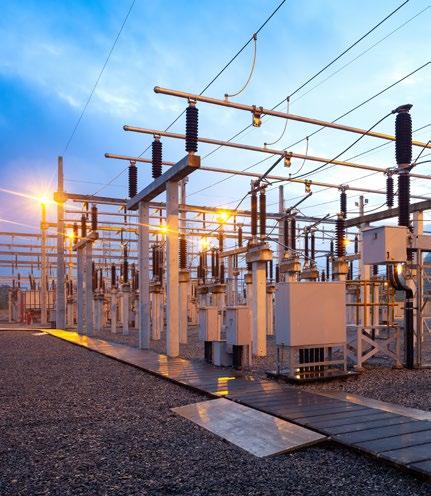
It is understandable why data center developers are facing backlash. Utility bills continue to rise in the US against a backdrop of daily stories about massive data center campuses springing up, accompanied by equally massive energy requirements.
For data center companies, it makes sense to try and avoid creating unnecessary grid pressure, not least because rising energy bills are a surefire way to anger the communities in which they operate.
In this supplement, we take a look at the issue of rising electricity bills with Brandon Oyer from Amazon Web Services, Amazon’s public cloud platform and one of the most prolific builders of data centers in the world.
Oyer’s contention is that his company’s data centers don’t cause rates to rise for ordinary people, and says he has research to back this up. But while it may be the case for Amazon’s data centers, the overall picture is a lot less clear.
Novel sources of power are
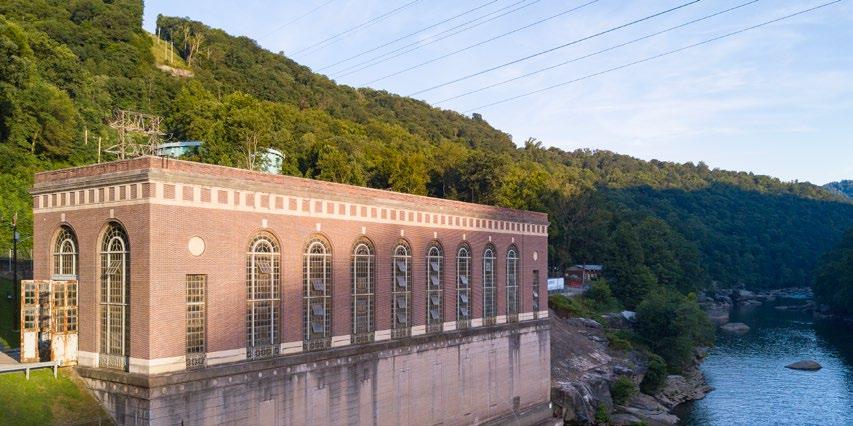
growing in popularity among data center companies, as firms look for ways to quickly electrify their campuses. Hydro power is one avenue being pursued by some companies, but so far take up from data centers has been limited, with much of the energy generated on waterways, particularly in the US, tied up in long-term utility supply agreements.
But the expiration of some of these deals has presented an opportunity for data center firms, and both Google and Digital Realty have sealed major contracts in recent months to offtake hydro power. Zach Skidmore takes a look at this evolving market, and asks if data centers are having a hydro moment.
Elsewhere, Zach profiles the role ammonia could play in the supply of hydrogen, long touted as a clean and plentiful energy source for data centers.
Most commonly used in the agricultural sector, ammonia contains hydrogen, which can be extracted through an inefficient and energy-intensive process known as cracking. Now a company, Amogy, believes it has streamlined the cracking process, making ammoniaderived hydrogen a potential power source for industrial users including data centers.
Amogy has partnered with another company, Kinetics, to deploy its technology at an off-shore floating powerplant, with more commercial pilots set to follow.
Haber-Bosch to hyperscale: Is ammonia the answer to data centers' power woes
Are ammonia-to-power systems poised to power the data center sector?

Zachary
Skidmore
Senior Reporter, Energy & Sustainability
F“Jurong Island provides an industrial environment to evaluate low-carbon technologies under real operating constraints,”
Professor Lim Keng Hui, A*Star
or many, the vision of a hydrogenpowered future has begun to fizzle out. According to recent analysis by the IEA, 2025 saw approximately 50 hydrogen projects cancelled, with even more languishing in the pilot phase. While much of the furor has concerned electrolyzer technology and the commercial potential of green hydrogenhydrogen created solely through low-carbon auspices - another form of hydrogen power could be flying under the radar, which could have big implications for the data center sector.
Ammonia is a colorless, reactive gas composed of nitrogen and hydrogen. First synthesised in the early 20th century as part of the Haber-Bosch process, it has historically been used in the agricultural sector to produce fertilizers. However, over recent years, its potential as a fuel for power
generation has gained traction due to its position as a major hydrogen carrier.
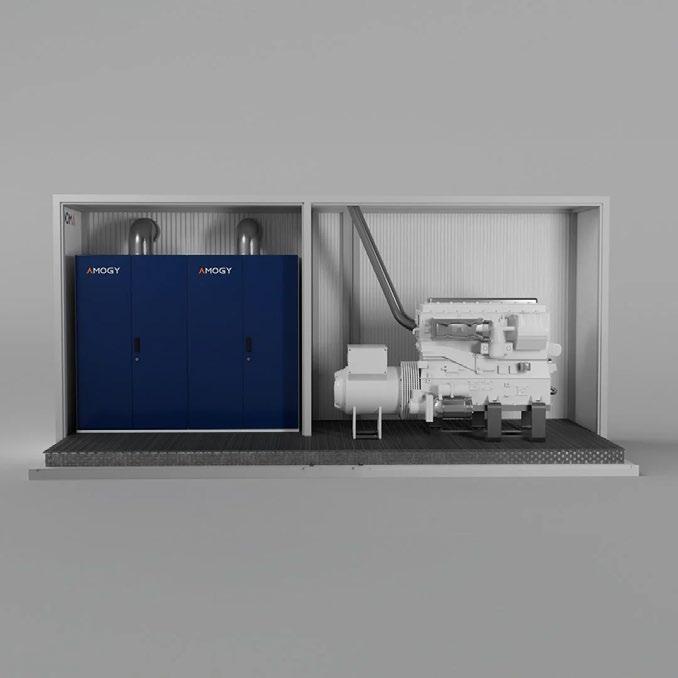
One company at the forefront of this new wave is Amogy. Founded five years ago, under the stewardship of MIT alumni Seonghoon Woo, the company has developed a proprietary ammonia cracking technology that converts ammonia into hydrogen, which is then used in engines or fuel cells to generate energy. While its early research and deployments initially focused on developing power systems for drones, tractors, trucks, and ships, it has recently cast its eye on the data center market.
Cracking
Ammonia is composed of 82 percent nitrogen and 18 percent hydrogen. While scientists have recognized its role as a hydrogen carrier as early as the 18th century, its identification as a potential fuel and energy source is a recent phenomenon.

To access hydrogen from ammonia, a process called hydrogen cracking is used. First developed in 1978, the process involves a system that typically comprises a reactor vessel and other components, such as heating elements, catalyst beds, and temperature and flow controls. Within the vessel, the ammonia is heated to a high temperature, decomposing it to its base elements in the presence of a catalyst, which causes the ammonia molecule to split, allowing hydrogen to be extracted. Subsequently, the hydrogen is fed into a hydrogen fuel cell system or into a hydrogencompatible engine to generate power.
“In our system, ammonia is cracked into hydrogen and nitrogen using a catalyst. The nitrogen is released back into the atmosphere, while the hydrogen is used in engines or fuel cells to generate electricity — all within a single, integrated system,” says Woo.
The biggest bottleneck in cracking technologies' commercialization has been catalyst efficacy, which determines the reaction rate and the energy required to initiate the reaction. Historically, it has required temperatures of more than 900ºC (1,652°F) to elicit the reaction; neccesitating huge amounts of energy. However, Amogy claims that its process, which utilizes ruthenium as a catalyst, can be 30 percent more efficient, offering a potentially cost-effective option.
Woo argues that due to its much higher efficiency, Amogy might have transformed hydrogen cracking from a scientific oddity into a scalable, more efficient alternative to traditional hydrogen production. Much of ammonia’s potential lies in its energy density, says Woo, with the carrier boasting up to 2.5 times the energy density of traditional hydrogen.
“Ammonia has the highest energy density among non-carbon fuels, even higher than liquid hydrogen, and it can be stored at room temperature,” he says. In addition, Woo contends, unlike conventional hydrogen production, which lacks a mature supply chain, there is already a global infrastructure for ammonia production, including pipelines, terminals, and ships.
The final advantage, claims Woo, is the system's 24/7 baseload power profile, which allows it to be used not only as a backup generator or peaking unit but also as a prime power option. This makes it an attractive proposition for large-scale, always-on applications such as industrial power, maritime operations, and of course, data centers.
As a result, despite volatility in the hydrogen markets, Amogy has been able to secure significant economic backing for its system, raising approximately $320 million to date, including $100m in the past year alone, from strategic investors such as Amazon, Aramco, Mitsubishi, SK, and others.
This backing, says Woo, has spurred a highly aggressive strategy for the company, expecting to deploy multimegawatt commercial pilots in 2026–2027 and scale to tens of megawatts by 2028–2029. Long-term, Woo claims, the technology could scale to hundreds of megawatts by combining hydrogen turbines with larger ammonia crackers. While the company has so far cut its teeth in the transportation sector, late
last year it took aim at the data center market.
Floating power
As the demand for compute continues to grow, access to reliable power has fast become the biggest constraint. In many developed markets, constructing new power infrastructure is often a laborious process, hampered by permitting and other factors. This is especially true across the Asia Pacific, where power generation development in countries such as Singapore, Japan, and South Korea is stymied by land scarcity, long permitting timelines, and commitments to decarbonization, which has begun to stifle data center development.
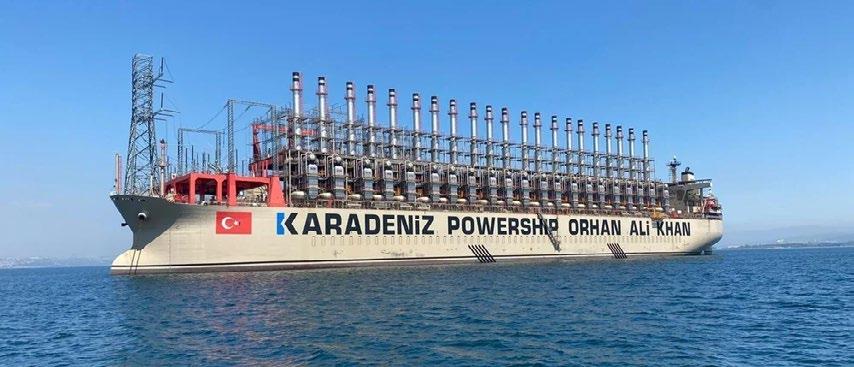
In recognition of this bottleneck, late last year Amogy partnered with UK-based firm Kinetics, a subsidiary of Turkush firm Karpowerships, in what could be its first foray into the data center market. However, unlike most conventional power deals, this one comes with a twist, with the companies looking to deploy the solution offshore.
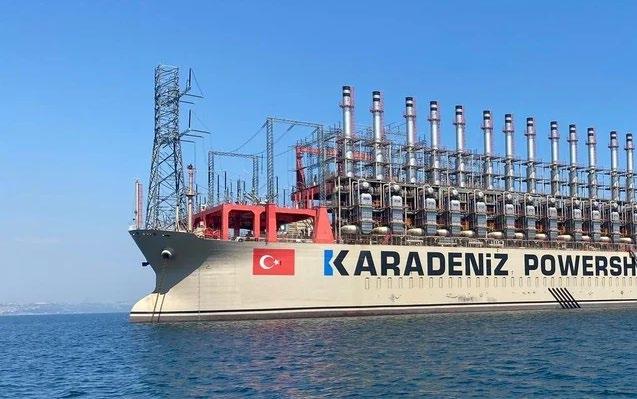
Karpowerships is a developer of floating power plants, also known
as Powerships. The company has more than 40 operational plants within its fleet, powered predominantly by fossil fuels, with some boasting capacities of up to 500MW. However, as the importance of decarbonized systems grows, especially in the digital infrastructure space, the company turned to Amogy to decarbonize its offshore power options.
“Kinetics was excited about our technology and went on to invest in the company, which has led to an even closer collaboration between us,” Woo says.
Under the partnership, the companies envision integrated offshore platforms that combine power generation and data center infrastructure. “The expectation is that it will be an integrated solution in which ammoniato-power systems are installed directly on the vessel, along with modular data center units.
Alternatively, two vessels could be paired, with one supplying clean power to the other,” Woo explains.
The major advantage of siting offshore, says Woo, is its flexibility, offering several deployment routes that circumvent some of the traditional challenges data centers face in securing reliable power.
“The beauty of this solution is its flexibility. You can deploy both power generation and data centers offshore, or build the data center onshore and use the offshore system solely to provide power,” he contends.
Amogy is not the only firm to explore the potential of offshore data centers tied to ‘low carbon’ energy systems. Notable recent examples include a consortium of Japanese companies' proposal floated last year to build an offshore floating data center demonstration project off the coast of Yokohama. The data center would be powered by solar and battery storage facilities, located on a minifloat moored at Yokohama Port’s Osanbashi Pier.
The floating data center concept was pioneered by US developer Nautilus, which has deployed two floating data center projects in Stockton, California, and Limerick, Ireland.
The concept is particularly relevant for smaller, densely populated countries such as Singapore, where demand for data center capacity continues to rise while land availability and renewable energy siting options remain limited.
“Floating power is becoming a very valuable option for countries like Singapore and Korea, where land is constrained and permitting onshore power plants can take five to six years,” says Woo. “Offshore power can be deployed in two to three years, and when
“Ammonia has the highest energy density among noncarbon fuels, even higher than liquid hydrogen, and it can be stored at room temperature,”
Seonghoon Woo, Amogy
combined with ammonia, it provides clean, fast, and reliable electricity.”
As a result, Singapore has become a crucial focus for Amogy in scaling its technology, and in order to scale its R&D efforts, it has partnered with the country’s Agency for Science, Technology, and Research (A*Star).
Singapore bets on hydrogen
Singapore is very much an anomaly. Despite being one of the smallest states on earth, it is also considered one of the most technologically advanced.
However, its efforts to become a “Smart Nation” have been increasingly hampered by simple geographical constraints, which have not only stifled power generation development but also led to a de facto moratorium on new data center builds since 2019, which was partially eased in 2022. While the country has signed several interconnection deals with neighboring Malaysia to supply renewable power, it has increasingly bet on hydrogen as a potential, crucial power source to drive nationwide data center growth.
To support the growth of the hydrogen sector, the country has launched a National Hydrogen Strategy that aims to have hydrogen supply up to 50 percent of the country’s power demand by 2050. The strategy aligns directly with the country’s Green Data Centre Roadmap, which aims to help the data center sector deploy at least 300MW of additional capacity in the near term, while encouraging greater adoption of low-carbon technologies such as hydrogen.
This alignment led A*Star to partner with Amogy last year under a non-binding MoU to explore the potential of ammoniabased technologies. While discussions are ongoing on the exact deployment details, the agreement is expected to include a demonstration project on Jurong Island. The deal could prove to be the platform that

Amogy requires to advance its solution from concept to commercialization.
Jurong test bed
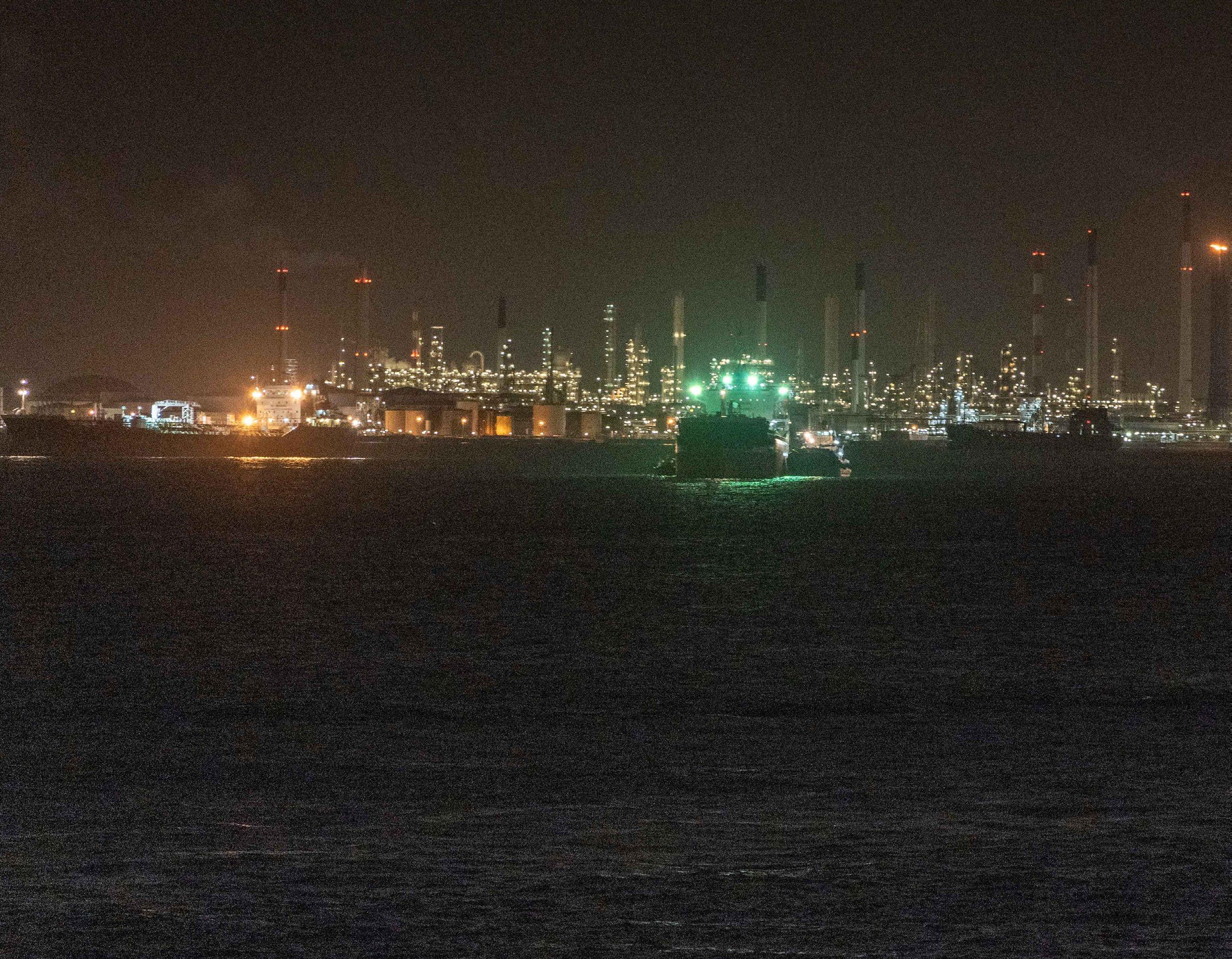
Jurong Island is Singapore’s integrated petrochemical and energy hub, designed to serve as a test bed for companies in the chemicals, refining, and advanced manufacturing sectors. The island is set to play a starring role in Amogy and A*Star’s partnership, providing the hydrogen firm with a test bed to support its R&D and commercialization efforts.
“Jurong Island provides an industrial environment to evaluate low-carbon technologies under real operating constraints,” Professor Lim Keng Hui, assistant chief executive, Science & Engineering Research Council, A*Star, tells DCD. “Under the MoU, Amogy and A*STAR will explore opportunities for piloting ammonia-to-power systems on Jurong Island, with a focus on validating performance in real-world conditions and clarifying safety, integration, and scaleup requirements.”
For A*Star, the partnership with Amogy is not merely a vehicle for downstream deployment but also an opportunity to drive high efficiency in the technology itself. Much of this centers on improving catalyst performance while reducing its cost, which is crucial to supporting the technology's commercialization.
“We collaborated with Amogy to explore ammonia-to-power as a potential low or zero-carbon pathway, while addressing the real engineering requirements for safe deployment and scale-up,” Keng Hui says.
Expected to be operational by the end of 2027, the demonstration project is designed to bridge the gap between
lab-scale research and pilot-scale demonstration, enabling technologies like Amogy’s to be tested in a real industrial environment. According to the partners, the collaboration will focus on pilot-scale demonstrations, digital modeling, and workforce training to ensure the technology can operate safely and efficiently in dense urban environments.
For Woo, gaining access to the Jurong Island test bed could prove catalytic in supporting the company to scale its solution. While admitting the technology is “still at the beginning of its industry lifecycle,” Woo argues that the Jurong Island project will provide the company access to A*Star’s world-class R&D capabilities and national mandate, which he claims will allow the company “to accelerate innovation, especially in core technologies like catalysts, and align with Singapore’s decarbonization goals.”
Barriers and bottlenecks
While there is confidence that the test bed in Jurong could prove transformational in supporting efforts to commercialize the system, as with any emerging technology, significant concerns remain.
Ammonia cracking faces numerous challenges as it seeks commercialization. The biggest being its high energy demand and efficiency losses, which are compounded by the need for costly purification steps and the difficulty of scaling advanced catalysts. The technical hurdles are joined by physical ones, with ammonia highly toxic and corrosive, adding complexity and cost constraints to widespread deployment.
The trepidation is shared in Singapore, which, despite being bullish on the potential, has yet to fully commit to ammonia as a fuel of the future. Despite the attention paid to ammonia as a hydrogen carrier, the country remains agnostic about its technology choices, with ammonia seen as promising but still requiring extensive assessments of technological readiness and overall safety.
Safety and handling risks are central to those evaluations, alongside questions about how the ammonia supply chain would develop at scale. As a result, Government agencies are studying not only how ammonia could be produced and transported reliably, but also how
“The expectation is that it will be an integrated solution in which ammoniato-power systems are installed directly on the vessel, along with modular data center units,”
Seonghoon Woo, Amogy
risks would be mitigated in the event of an incident.
At the same time, Singapore is closely watching developments in neighboring countries and exploring regional cooperation. According to sources, discussions are already underway on importing renewable hydrogen from abroad, reflecting a broader ambition to build a crossborder hydrogen economy across Southeast Asia.
Woo, for one, isn't concerned about the supply chain. “There are about 200 million tons of ammonia produced annually today. What’s exciting is the surge in green ammonia, especially from countries like India and China, at prices approaching conventional gray ammonia, which gives real confidence in long-term supply,” he says.
While supply may not be a problem, hydrogen cracking technology must still reduce its operating costs to make it a viable alternative for industrial offtakers like data centers. In addition, concerns are mounting about the technology's net-zero credentials. Despite many in the sector vaunting it as a low or even zero-carbon source of power, at present more than 95 percent of the world's ammonia is produced via fossil fuels. As a result, despite not producing CO2 during the cracking process, the sector is likely to be saddled with significant Scope 3 emissions, which could ultimately scupper its potential as a clean baseload energy source.
Ultimately, it seems likely that the promise of hydrogen cracking as a future source of energy for data center providers will remain in its infancy in the foreseeable future; however, if the Jurong Island pilot proves successful, and with further backing, it could potentially spur significant uptake across the data center sector and beyond.
Managing AI workloads with advanced UPS controls
By implementing advanced controls, datacenter operators can bring greater stability and performance levels to high-performance computing environments
Modern artificial intelligence (AI) computing environments present new power management challenges. Rather than the steady, predictable power draws of legacy enterprise workloads, graphics processing unit (GPU) clusters can drastically fluctuate between idle and full load in milliseconds.
To maintain resilience in these highdensity environments, the industry must look beyond simple hardware capacity increases. It must also apply solutions with advanced control algorithms that can transform uninterruptible power supply (UPS) systems from a passive safeguard device into an active component to manage the AI load dynamic behavior.
Vertiv has addressed this challenge through a specialized suite of UPS features. These include Battery Shield to minimize unnecessary battery cycling at the load interface and Input Power Smoothing (IPS) to protect upstream electrical infrastructure.

“By actively managing rapid load fluctuations, advanced UPS controls help stabilize both the power train and the infrastructure connected to it.”
Giovanni Zanei, Vertiv
In parallel, the patented Vertiv™ AI Load Simulator enables validation and optimization of the power train by accurately replicating AI workload dynamics.
Managing stability in AI power trains
AI workloads are characterized by fast and dynamic power swings. As large language models (LLMs) transition rapidly, the power demand can jump from zero to 100 percent in milliseconds.
UPS systems are positioned directly between the load and the upstream infrastructure, making them exposed to variability introduced by AI applications. When GPU clusters produce rapid load fluctuations, it is essential for the UPS to use advanced firmware controls to either mitigate these changes through energy storage to protect the utility, or pass them to the upstream network to protect the batteries. By actively managing rapid load fluctuations, advanced UPS controls help stabilize both the power train and the
Giovanni Zanei Vice president, Large Power Conversion at Vertiv
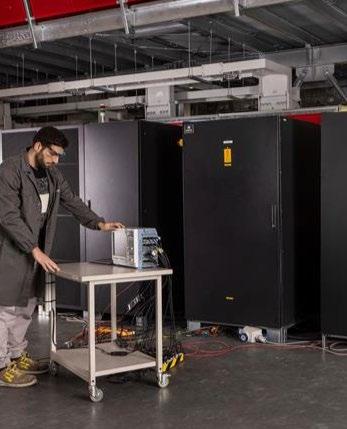
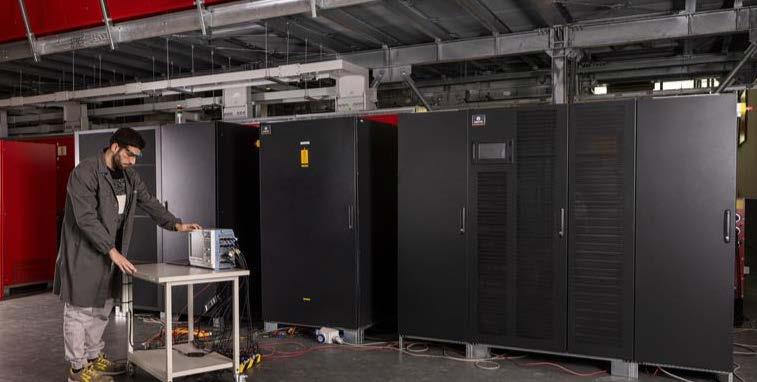
Vertiv™ PowerUPS 9000 paired with the AI Load Simulator for advanced power testing
infrastructure connected to it.
In the absence of advanced control strategies, increased battery cycling and stress on UPS converters may occur, or high input power variability may impact generators and grid stability. AI workloads redefine the role of the UPS from solely providing protection to serving as an integral component of active power management.
Protecting energy storage with Battery Shield
With Battery Shield, power steps of AI workloads are managed internally in the UPS without engaging batteries. This allows the UPS to absorb 0-100 percent of these power steps directly, protecting the energy storage systems from unnecessary stress.
The benefits of this control feature include:
• Extended battery life: Minimizing micro-discharges preserves the chemical health of the energy storage system
• Reliable battery backup when it’s truly needed during mains failures
• Reduced total cost of ownership: Lowering the frequency of battery replacements and maintenance interventions.
Safeguarding the grid and generators with Input Power Smoothing
Managing the impact of AI dynamic workloads on the upstream power source and on generators is an important operational necessity, as the collective power swings of high-density GPU clusters can become significant enough to destabilize a local grid, or can easily overcome a generator’s dynamic response.
For example, when a training model
“AI workloads redefine the role of the UPS from solely providing protection to serving as an integral component of active power management.”
Giovanni Zanei, Vertiv
initiates a cycle, demand can spike from 10 to 100 percent capacity in milliseconds, then ramp down just as quickly when the task concludes. Without Vertiv’s Input Power Smoothing (IPS), these violent swings would be reflected on the upstream infrastructure, potentially causing generators to fail or tripping utility breakers.
When the GPU cluster suddenly demands a massive surge of energy, the UPS pulls the difference from its batteries rather than the grid. Conversely, when demand drops instantly, the UPS continues to draw a steady average from the utility to recharge the batteries.
Without it, a generator might struggle to maintain the tight frequency tolerances required by IT equipment, potentially triggering a cascading failure where the generator trips and the site loses power. Vertiv’s algorithms are designed to manage the battery’s SOC during this process, facilitating smoother operations without compromising the system’s backup function.
Validating the AI Factory
As the industry’s need for intelligent control architectures grows, validation becomes key to verify system performance and stability. The complexity of AI load patterns means that standard ‘burn-in’ tests, which involve running new server hardware, are no longer sufficient. To verify that a data center is AI-ready, the infrastructure must be tested against the specific GPU profiles it will support.
Recognizing this need, Vertiv has developed the AI load simulator. This innovative patented system allows engineers to replicate the amplitude, frequency and duty cycle of AI training and inference workloads. By using high-speed switching SCR and digital control, the simulator can mimic the behavior of thousands of synchronized GPUs. These insights are critical for optimizing design, supporting research and development (R&D) and tailoring to customer-specific requirements and demonstrations.
First deployed at Vertiv’s Global Power Customer Experience Center in Bologna, the AI Load Simulator is now being extended globally, including
deployments at customers’ sites, as a critical tool to validate infrastructure readiness for AI workloads. It enables proactive stress testing and tuning of power architectures to meet the real-world requirements of modern AI clusters ─ mitigating risk, reducing overengineering and enhancing system resilience.
The future of AI power protection
High-performance computing (HPC) environments, particularly those housing massive GPUs, are no longer characterized by the steady, predictable power of legacy enterprise workloads. Instead, the modern AI data center introduces dynamic load volatility, creating electrical stress that threatens the longevity of the infrastructure and the stability of the grid.
To maintain resilience in these highdensity environments, the industry must look beyond raw hardware capacity. Through firmware advanced controls, Vertiv’s large power portfolio of solutions, including Vertiv™ Trinergy™ and Vertiv™ PowerUPS 9000 systems, provides the tools needed to manage dynamic loads and protect critical loads.
As the world’s computational demands continue to soar, these control architectures maintain and support the mission-critical infrastructure to keep it running, resilient, efficient, and futureready. Furthermore, as data centers move towards a more environmentally responsible future, these controls play a vital role. By extending equipment life and stabilizing the grid, Vertiv helps operators reduce their carbon footprint and increase the efficiency of their operations.
What’s clear is that AI workloads will not be powered by hardware alone, but by the intelligence that governs how that hardware interacts with the world around it. It is this intelligence that Vertiv is bringing to high-performance computing, safeguarding both stability and optimal performance levels.
Man versus machine
The data center utility debate, and how AWS is handling the balancing act

Georgia Butler Senior Reporter, Energy & Sustainability
There is a shared anxiety bubbling in the US.
The AI data center buildout is continuing to ramp up, and the high power requirements of each new campus are starting to make people nervous.
The concept of the data center moratorium always felt very “unAmerican,” but with data center projects coming to every city, town, and village across the country, it seems, attempts to stifle developments are growing.
In recent months, we have seen not only the shift towards local moratoriums or attempts to slow down or stymie data center projects, but a move towards state-wide cancellations.
though it is hard to pin down whether data centers actually cause energy price increases for residential customers.
“These things last a long time, but they don’t last forever, and something like 70 percent of the US’ power lines were built more than 25 years ago.”
Brandon Oyer, AWS
Michigan state representative Jennifer Wortz announced in February 2026 that she was penning a bill to impose a state-wide one-year moratorium, and other similar proposals are being considered in the established data center markets of Georgia and Virginia, as well as other states such as Oklahoma and Maryland.
A common concern for data center opponents is whether there is the necessary grid capacity available to support these projects, and if there isn’t, who is going to pay for the cost of network upgrades?
Many worry the ultimate bill payer will be the regular consumer. Rising utility prices have been a concern frequently raised at the planning meetings of data center projects,
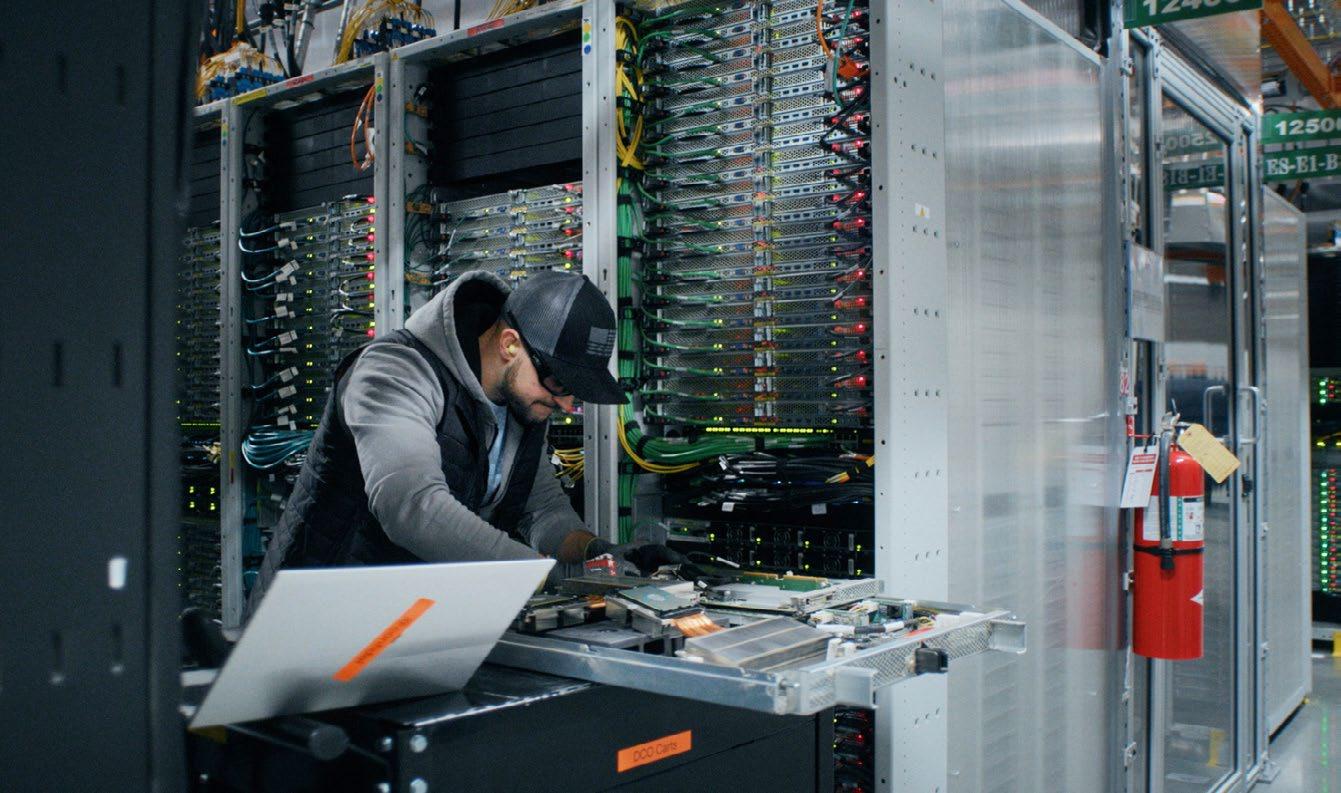
In December 2025, DCD met Brandon Oyer, head of Americas power and water at Amazon Web Services, to talk about how the cloud platform works with the utility companies when it is planning data center campuses.
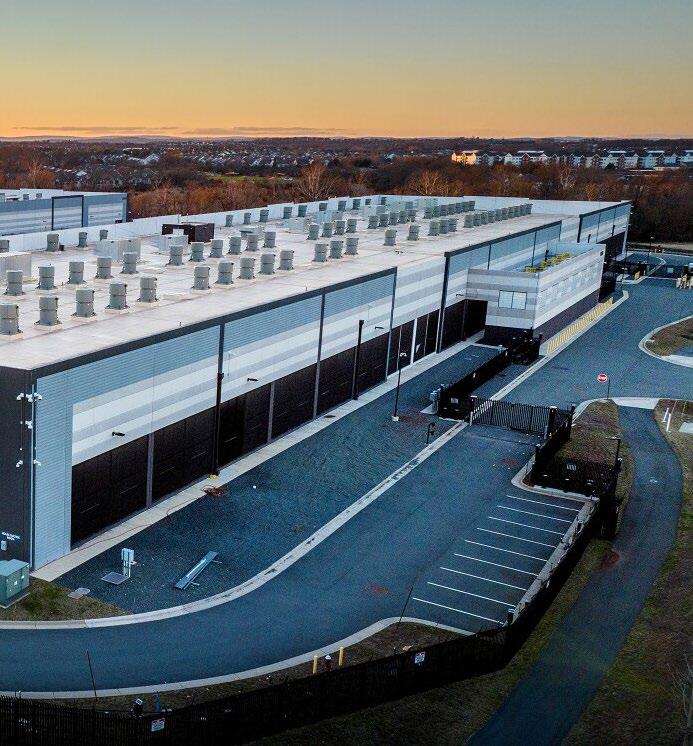
AWS, while by no means the only data center developer in the US, is one of the biggest builders of digital infrastructure globally. In 2025 alone, the company stood up 3.8GW of data center capacity, and a leaked report released last year claimed AWS operates more than 900 data centers around the world, though the company has not confirmed this.
On the subject of increasing utility bills, Oyer has a clear stance; the data centers are only a small part of the puzzle.
“There are a lot of things that go into a consumer’s electric bill,” he says. “One of the main drivers is fixed cost recovery, the wires, the generation, the transformers, and breakers - all the things that people don’t really pay attention to.
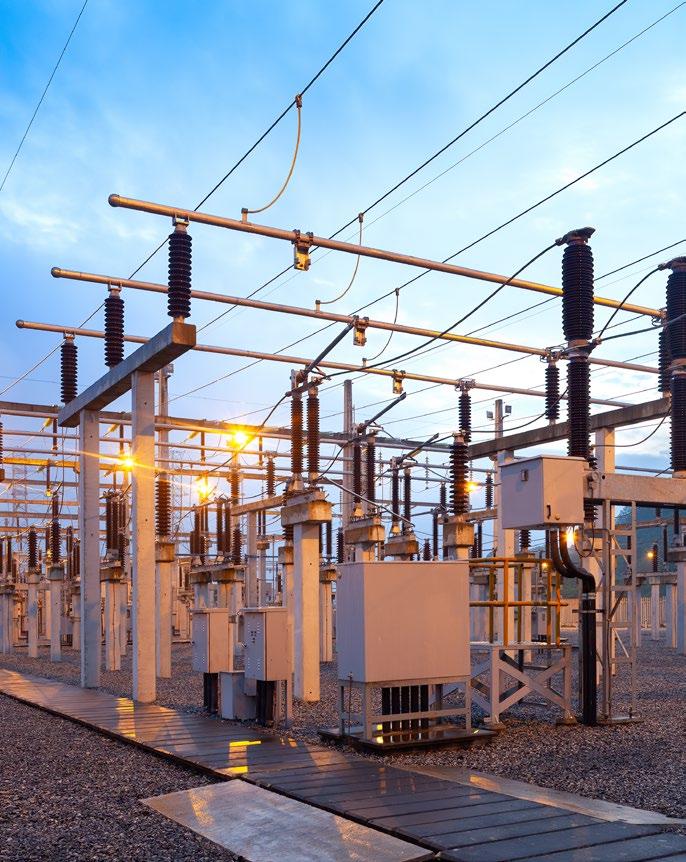
“All that stuff is capital-intensive and needs to have a fixed cost recovery. These things last a long time, but they don’t last forever, and something like 70 percent of the US’ power lines were built more than 25 years ago.”
Utility companies also have to factor in elements such as extreme weather events, natural gas price volatility related to the Ukraine war, and even shrinking customer demand. These “esoteric things,” as Oyer calls them, are “constantly putting pressure on the system.”
He continues: “It's easy to point to data centers as a large load that's causing rates to go up, but it's also important to remember that there are a lot of things that are increasing load, and it's not increasing load that directly correlates to an increase in residential electric rates.”
Such comments from Oyer and other figures in the data center industry are unlikely to quell the questions and worries of residents contemplating new data centers springing up in their neighborhoods. This means that, increasingly, moratoria get discussed.
With the prospect of moratoria looming large, AWS commissioned a report from Energy + Environmental Economics (E3) to look into whether data centers were impacting utility bills.
Despite Oyer’s reaffirmations that the study was independent despite being AWS funded, the findings of that report unsurprisingly found that data centers are “not burdening other ratepayers with their costs, rather they provide a benefit,” through grid modernization and income from the data centers themselves.
E3’s case studies covered four utility areas: Pacific Gas & Electric (California), Umatilla Electric Cooperative (Oregon), Dominion Energy (Virginia), and Entergy (Mississippi).
The report states that there is an inherent cost to serve that varies widely between utilities, but “represents the expenses incurred to provide reliable electricity service to customers, including costs associated with
modernizing existing infrastructure, constructing new generation, operations and maintenance, required return on investment, and other items.”
Utilities in the US have a regulated “Return on Equity,” or amount that they can earn from infrastructure investments. This is set by state commissions and Federal Energy Regulatory Commission, and varies by region and year, and can also be reduced during periods with elevated electricity costs. It is typically in the range of nine to 11 percent.
With this in consideration, when new capacity is brought onto the grid and the grid operator is required to pay for the upgrades, provided there are new customers using the capacity and paying for it, the rate shouldn’t change noticeably - the “cost to serve” has already been considered, and the cost for the utility to add, say, 500MW of data center capacity, should be offset by the income from the new user.
Explicitly looking at AWS and Amazon data centers, E3 said that Amazon’s data centers are projected to generate “$33,500 per MW of surplus value in 2025 that utilities can use for the benefit of their other customers.”
“Assuming a typical data center is 100MW, this implies $3.4 million in value per facility that utilities can use to reduce rates for other ratepayers, but how this potential benefit is realized will differ across jurisdictions.”
This is not always immediate. As E3 notes: “Marginal supply costs can increase and raise costs for customers until more supply is added and the system regains equilibrium,” which can happen even if data centers pay their “fair share of costs” and is “not an explicit source of inequity.” E3 further adds that this dynamic only occurs “at a system-wide level beyond any individual data center,” something which is not covered in the report.
It is here that we reach an impasse. We are no longer able to look at data centers as individual projects, and have to instead consider their collective impact on the power network.
In October 2025, a report by S&P Global found that data centers across the US market will require 22 percent more grid-based power by the end of 2025 compared to the year prior.
This trajectory has continued now for the past few years - more or less
“Anywhere you're seeing a massive takeoff in load growth, the most likely cause is data centers, and that is almost certainly going to have an impact on electric rates.”
Cathy Kunkel
since the so-called “AI boom” - with the number of data center projects growing and also the capacity of each data center skyrocketing.
The Virginia Joint Legislative Audit and Review Commission (JLARC) report, published in 2024, addressed data from 2023. A single data center campus under construction today could be equivalent to ten large data centers in 2023.
US news publication Axios published a report in August 2025 comparing residential energy prices between May 2024 and May 2025, citing data from the US Energy Information Administration.
That report found that five states saw no change or a price reduction over the year: Iowa, North Dakota, Montana, Nevada, and Hawaii. The rest all saw utility bills rising, with Connecticut, New York, Louisiana, Utah, and Maine at the higher end. Maine saw the greatest increase at 36.3 percent.
Cathy Kunkel, energy consultant at the Institute for Energy Economics and Financial Analysis, told Axios: “Anywhere you're seeing a massive takeoff in load growth, the most likely cause is data centers, and that is almost certainly going to have an impact on electric rates.”
AWS’s Oyer is unconvinced by these reports.
“I think some of the negative articles have been based in hypothesis and less on data,” he says. “It's taken time to collect the data and do the analysis to say that, adding growth in an electrical system, contrary to popular belief, does not increase rates.
“I think a lot of people apply ‘Econ 101’ to the electricity system, but it isn’t a simple supply and demand.”
And so, the data is conflicting. Regardless of the AWS study findings, utility bills are climbing for most people in the US, and data centers are getting the blame.
At the start of this year, President Donald Trump revealed that the administration was working with data center companies to ensure that households would not pay more for electricity due to the AI buildout.
"I never want Americans to pay higher electricity bills because of data centers," the President said. "Therefore, my administration is working with major American technology companies to secure their commitment to the American people, and we will have much to announce in the coming weeks."
Shortly after, Microsoft released a blog post, promising that the company would “pay its own way,” including a promise to pay utility rates high enough to cover its electricity costs to “ensure our data centers don’t increase your electricity prices," as well as an agreement to not to take tax incentives which are often offered by state governments to data center developers to encourage them to build in a specific location.
OpenAI, similarly, published its own piece promising that “across all of our Stargate Community plans, we commit to paying our own way on energy, so that our operations don’t increase your electricity prices.”
Oracle has also followed suit, writing: “Yes, AI data centers require more power, but they are either built with their own onsite power generation sources on or near the campus, or we’re paying for any grid
upgrades we require in partnership with the local utility. Oracle is committed to paying our own way on energy.”
At the time of writing, AWS has yet to comment directly on the issue. DCD has reached out to see if there is an update on its stance, and discussed some of the company’s strategies to keep utility bills in check with Oyer.
He was keen to impress that the issue is something AWS takes seriously: “We've always wanted to pay our fair share,” Oyer says. “We never wanted to place the burden of our infrastructure onto the residential customers around us. This is because we think it's just generally the right thing to do, and a lot of those residents around us are our customers, and perhaps our employees.”
Some areas and utilities have begun placing ‘minimum use’ agreements on large load users. In other words, if they ask for 100MW, they have to pay for a certain portion even if they don’t use all of it.
“I'm supportive of the structure for the minimum take or pay,” Oyer says. “If a company is going to commit capital to meet the demand, then we should be accountable for paying for that.” He notes, however, that when it starts going to 75-80 percent commitments, “I have a hard time justifying the economics.”
He adds: “At Amazon, we are trying to continuously drive towards structures that are fair and equitable, towards the rate payer, fair and equitable towards the utility, and fair and equitable towards Amazon.” But, he says, the company is “not here to build the entire US electric
“We've always wanted to pay our fair share. We never wanted to place the burden of our infrastructure onto the residential customers around us.”
- Brandon Oyer, AWS
grid on our own back. We will contribute, and we have done so.”
It is undeniable that Amazon has indeed contributed to the grid.
In the US, Oyer cited the company’s November 2025 agreement with NIPSCO, one of Indiana’s largest natural gas and electric companies. Under that agreement, Amazon will pay fees to use existing power lines and cover the costs for any new power plants, power lines, or equipment needed to serve its new data centers. The agreement could add up to 3GW of new capacity, beyond the 2.4GW Amazon said it will require.
“NIPSCO is responsible for building those assets,” Oyer explains to DCD. “We both share risk. If they execute and perform well, they get to generate a higher rate of return than they would have if it were a regulated utility. If they don't perform, then their return lowers because they've delayed our business.” Should all 3GW be developed, 600MW would be made available to Hoosians, paid for by Amazon.
In addition, Amazon has invested in small modular nuclear reactor (SMR) company X-energy. It is hoped the nascent technology, profiled by DCD in the December 2025 edition of our magazine, will be able to help meet the power needs of hyperscale data centers with an abundant supply of low-carbon energy. However, SMRs remain some years away from becoming a reality.
Resolving the question of whether data centers are ramping up consumer utility costs remains challenging. The sheer multiplicity of data, the manifold variables, and the conflicting opinions create a whirlwind of confusion.
What cannot be denied is that the US grid is currently experiencing some growing pains, and with major data center developers seeking to cover their own costs, it can only be hoped that once the transition is resolved, all users will be able to benefit from a stronger, modernized, grid.
Figure 1: US Historic and Forecasted Data Center Load Growth
Against the current
Are we having a hydro moment in the
data center sector?
Zachary Skidmore Senior Reporter, Energy & Sustainability
For most of human history, we have relied on the power of rivers to drive industry, evolving from rudimentary water wheels to grind grain to industrial water mills during the Middle Ages to today, where colossal dams can generate several gigawatts of power.
Big hydro
“We’ve built a strong wind and solar portfolio, but hydropower operates 24/7, 365 - which mirrors how our facilities run”
Aaron Binkley, Digital Realty
The vast appetite of data centers for power has led operators to explore numerous alternative energy sources, from geothermal power to advanced nuclear microreactors. However, despite hydropower's maturity, there have been very few instances of data center companies investing in or directly procuring power from plants outside traditional utility agreements. Bucking trends, 2025 saw two major offtake agreements signed in the hydropower sector, with Google and Digital Realty inking deals to offtake hydropower. The agreements offered two starkly different approaches, with Google purchasing power from large legacy hydroelectric assets, and Digital supporting the development of new small-scale hydroelectric plants.
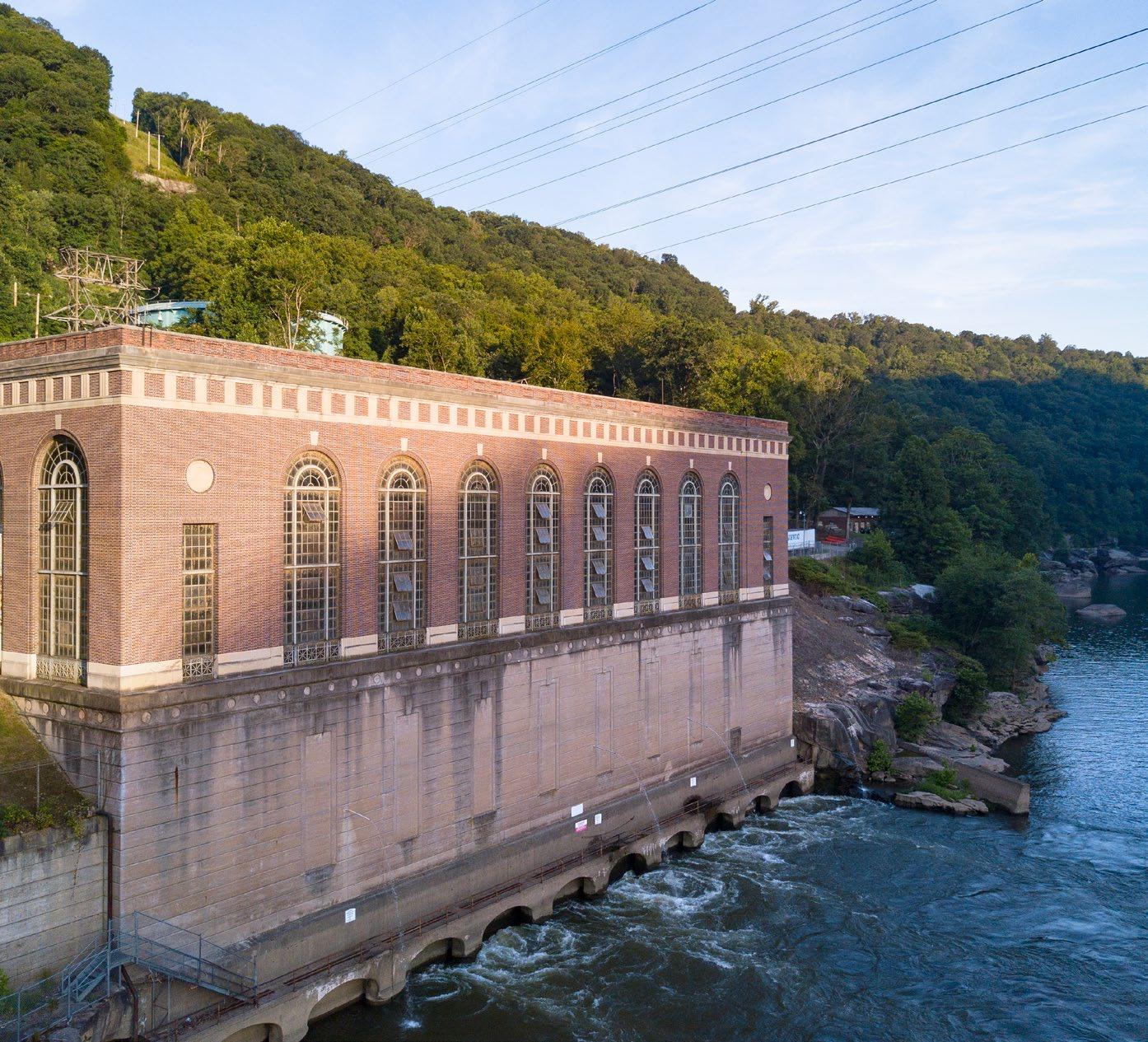
When we think of hydropower, we think big. Hydropower facilities account for four of the five largest power plants by capacity globally, the largest being the Three Gorges Dam in China, with a whopping capacity of 22.5GW. However, big hydro, especially in the US market, has a problem: it is effectively tapped out. At present, approximately 80 percent of the economically feasible traditional hydropower potential in the US has already been developed.
This means new large dams are effectively off the table, and matters have been compounded by environmental concerns, permitting hurdles, and public opposition. The US fleet is also particularly aged. The approximately 80GW of hydropower generating capacity in the US has an average age of 60 years, and while efficiency improvements can be made, the potential for new large hydropower facilities in the near future seems unlikely. Therefore, for data center developers, the opportunity to secure direct offtake agreements with hydropower facilities has, until now, been a pipedream.
Once in a lifetime
Brookfield Renewables US is one of North America's premier hydroelectric power producers.
“We have about 6GW of hydro assets across the US and Canada, and are the largest private owner of hydro licenses in the US,” its CEO, Stephen Gallagher, tells DCD
Historically, most, if not all, of this huge capacity has been tied up in long-term utility supply agreements, leaving little wiggle room for private offtake agreements. However, over the past few years, a rare opportunity has arisen.
“Many of these assets had been contracted to utilities for decades, and as those long-term contracts rolled off, they became merchant for the first time in 20 or 30 years,” Gallagher says. “That created a rare opportunity to structure new long-term agreements with companies like Google.”
The aforementioned Google deal, signed in July of last year, was one of the largest in the sector's history. In what was described as a first-of-its-kind Hydro Framework Agreement (HFA), Brookfield committed to deliver up to 3GW of hydro power across the
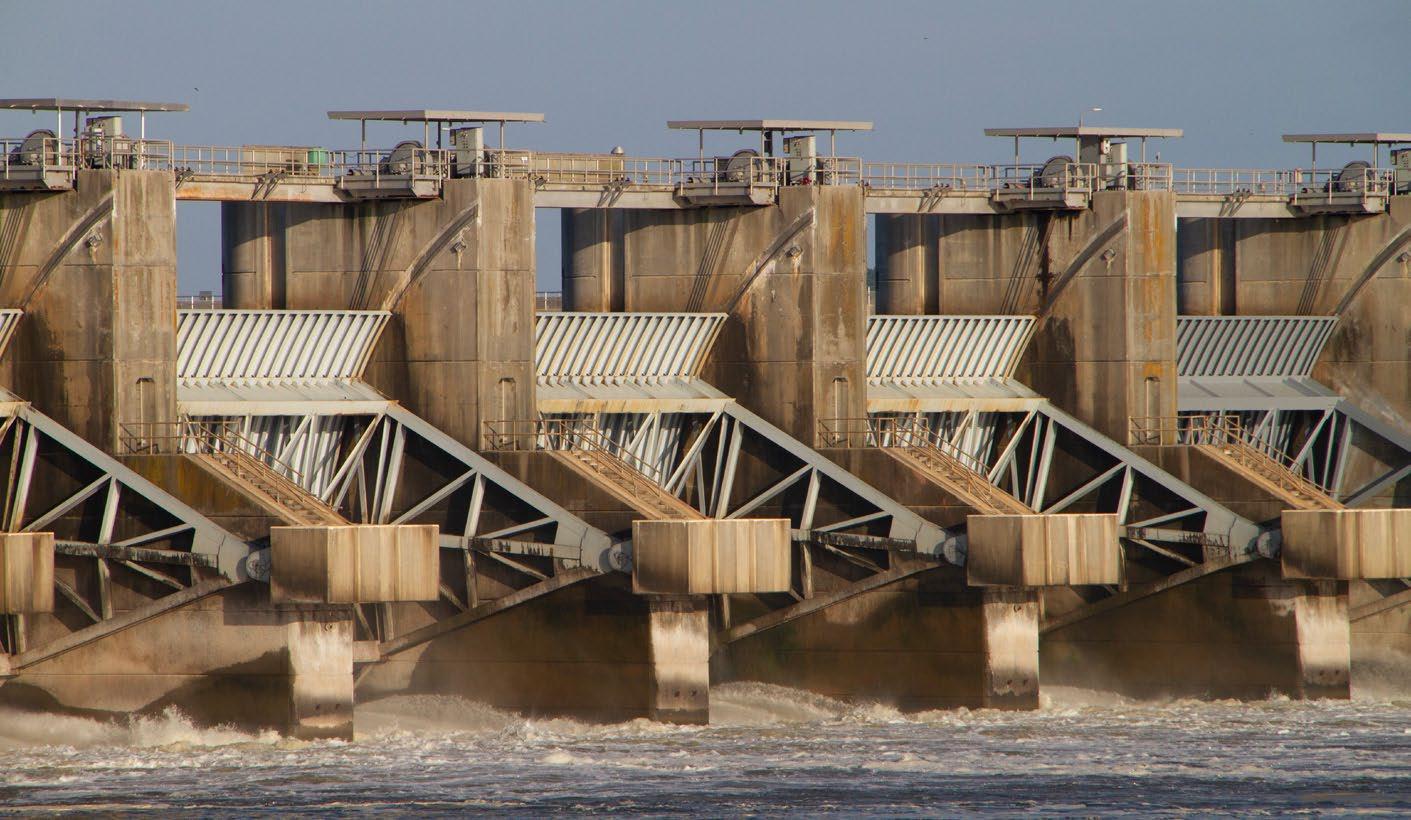
US directly to the hyperscaler.
For Gallagher, the deal reflected an evolution in the market, with hyperscalers moving away from buying power project by project towards large-scale, strategic procurement.
“The question became: who can reliably deliver 500MW, 1GW, or even 5GW, on time and at scale?” He tells DCD. And with its 6GW of installed capacity, Brookfield certainly could.
The first contracts to be executed under the agreement will be the 670MW Holtwood and Safe Harbor hydroelectric facilities in Pennsylvania, with power delivered via a virtual power purchase agreement (vPPA) with Google, which will purchase the environmental attribute credits (EAC) tied to the project.
While critics would point to EAC's obvious flaws, the reality remains that, when dealing with such vast capacity, it's impossible to have a direct power line. Even if there were, there would likely be unbridled opposition in the states where these hydroelectric dams operate, mirroring what we have seen in the nuclear sector.
The real attraction of the assets, Gallagher argues, outside of the combination of 24/7 base-load power, low-cost electricity, and zeroemission credentials, is their potential to complement the hyperscaler's vast portfolio of wind and solar assets.
Google, along with the majority of the other hyperscalers, has committed to match its electricity consumption in all places, at all times, a practice known as 24/7 matching. Therefore, by adding such a vast baseload power source, the company could feasibly better match its load profile in specific geographies.
“In Pennsylvania, for example, we have about 670MW of hydropower that is highly complementary to Google’s data center
footprint in the region,” says Gallagher. While the deal definitely represented a historical opportunity for the data center market, it may also prove crucial in helping Brookfield maintain and extend the life of its hydro assets for years to come.
Maintaining the flow
Hydropower facilities are both engineering behemoths and long-life assets, requiring heavy investment each year by operators. According to the International Renewable Energy Agency, operation and maintenance costs typically range from 1-4 percent of annual investment costs. Therefore, securing a creditworthy offtaker such as Google is crucial for underwriting the upkeep of the facilities, notes Gallagher. “That long-term certainty allows us to reinvest in these assets, fund relicensing, and extend their operating lives by decades,” he says.
This desire is reflected in the longterm nature of the deals, with vPPAs signed for 15 to 25 years to provide cash flow certainty to maintain the plants and fund relicensing. Relicensing is one of Brookfield's biggest concerns. While there “has been welcome federal policy support in recent years,” says Gallagher, “more support is needed at the federal and state levels to streamline relicensing and spur investment to ensure the nation’s hydro power fleet is able to meet growing electricity demand.”
At present, the process can take more than five to six years to complete and requires significant capital investments in environmental upgrades, such as fish passage and ecosystem protection. Therefore, by aligning with the major hyperscalers, Brookfield aims not only to ensure stable capital flows but also to give it the time to navigate the licensing and maintenance processes for its facilities.
Even with improvements, capacity from large hydropower facilities is expected to remain fairly static in energy production, meaning that deals like Google’s are likely to remain the exception rather than the prevailing trend.
Little hydro
Of the roughly 90,000 dams in operation across the US, fewer than three percent are powered. The majority of the facilities, which dot the country’s waterways, are used for a single purpose, be it irrigation, water supply, flood control, or navigation. While much smaller than large hydroelectric plants, these dams still have generation potential, and over recent years, several companies have emerged from the woodwork looking to retrofit them for power generation. The potential capacity is rather staggering, with up to 12GW available in the US alone, according to the US Department of Energy.
For data center firms always on the lookout for clean power generation, this has piqued interest, offering a potential new power source on their doorsteps. One company to jump at the opportunity is colocation provider Digital Realty. For Digital, the allure of hydro mirrors that of the hyperscalers, aligned with its shifting outlook on renewable procurement from annual renewable energy credit matching towards 24/7 renewable energy matching. “We’ve built a strong wind and solar portfolio,” notes VP of sustainability Aaron Binkley, “but hydropower operates 24/7, 365 days a year, which mirrors how our facilities run.”
While recognizing its potential, Digital was deliberate in its approach to procurement, says Binkley, taking several years to vet potential developers. Its search culminated in September of last year, when it inked a deal with Current Hydro LLC for 500GWh of hydropower from three retrofit projects on the Ohio River.
Against the Current
Launched in 2013, Current Hydro is a hydropower developer with a specific focus on adding power generation to existing lock-and-dam infrastructure along US waterways. Rather than focusing on constructing new dams, the company works with existing navigation structures, particularly those operated by the US Army Corps of Engineers, to generate power.
Its CEO, Jeremy King, who joined the company in August of 2024, recognized the potential these facilities could have in adding reliable baseload power to the grid.
“We evaluated many renewable energy sources and asked: what does the grid need most right now? The answer was clean, firm power - something reliable and non-intermittent,” he says. “With so much intermittent generation coming online, we saw a clear opportunity in non-powered dams, particularly existing lock and dam structures.”
Unlike traditional hydropower developers, which often focus on peaking power and maximizing nameplate capacity, Current Hydro is taking a different approach, says King.
“We design smaller facilities with higher capacity factors. That means more consistent, firm energy output with a smaller physical footprint, lower environmental impact, and minimal interference with the Army Corps of Engineers’ navigation mission,” he contends.
None of its announced projects exceeds 30MW in projected capacity. King claims that this allows the company to avoid the capital risks of owning dams, as it works with existing navigational infrastructure that already has known hydrology, established transmission access, and defined operational constraints.
“We felt like adding hydropower to those existing assets was one of the fastest, lowest-risk ways to deliver and bring new, clean, firm generation online at scale,” he says.
Despite the smaller scale, the work to transform the dam is still substantial, but pales in comparison to a major hydroelectric project.
The retrofit process involves building a concrete powerhouse - a reinforced structure where turbines, generators, and control systems are housed - adjacent to the existing structure. As a result, water that would normally spill over the dam is redirected through these turbines to generate electricity, while maintaining navigation and river flow.
According to King, the retrofit process is considerably faster than many comparable schemes, with the company expecting to bring the first projects online by 2029.
“Once you have shovels in the ground, we’re seeing anywhere from a 24-36 month construction duration. Dewatering and excavation take the longest, and concrete can only cure so fast,” he says.
Despite these lofty claims, Current has yet to actually complete one of its retrofit projects, with the three projects tied to the Digital Realty deal its first. However, several other companies have demonstrated proof of concept, the first being the Red Rock Project in Iowa, which was completed in 2021. Even if the first three Current dam conversions do come to fruition, ensuring long-term success will depend on a scalable, repeatable process.
“Many of these assets had been contracted to utilities for decades, and as those long-term contracts rolled off, they became merchant for the first time in 20 or 30 years,”
- Stephen Gallagher, Brookfield Renewables US
Scalable and repeatable
For Current, the deal with Digital Realty is merely the beginning of what King calls a scalable model. The scalability is centered on the repeatability of its construction process.
“Holistically, we focus on building a scalable platform rather than pursuing one-off projects,” King says. “Pike Island and New Cumberland are identical projects, and that repeatability is really core to our model.”
At present, the company has 20–25 projects in its development pipeline, primarily on large industrial waterways east of the Mississippi, including the Ohio, Mississippi, Arkansas, and Alabama rivers. King argues that if the first three projects are successfully deployed, they could be scalable nationwide, delivering hundreds of megawatts over the next decade.
“We see a pathway to 250MW, 400MW, potentially up to 500MW over the next eight to ten years, and we definitely think this will be scalable beyond these first three projects.”
The environmental impact of hydro has historically been its biggest barrier to deployment, with large dams at risk of disrupting ecosystems and reshaping river systems. King claims that Current Hydro’s model aims to avoid this by working exclusively with existing dams and navigational structures; it does not create new impoundments or significantly alter river flows.
Even so, permitting remains complex. Projects must comply with federal, state, and local regulations, including environmental impact assessments, waterway protections, and coordination with the US Army Corps of Engineers. While retrofits face fewer obstacles than greenfield dams, they remain capital-intensive and time-consuming to permit, which could affect deployments.
While data centers were not the original target market, the company sees strong alignment between its clean, firm power generation and the growing demand from hyperscalers and digital infrastructure providers. The deal with Digital Realty is seen as particularly important to the company’s future prospects. “This partnership enabled a long-term offtake with a very high-quality, mature investment-grade counterparty, and we felt that was important for these first three projects as the cornerstone for our business.”
For Digital, the deal came at the most opportune time, says Binkley. “Hydropower has not historically been the most competitive price, but as wind and solar prices have increased, it’s become more attractive — especially given its firm, baseload characteristics,” he affirms.
Therefore, if the Current Hydro model proves scalable, it could create a new low-carbon power stream for data center operators across the US. Whether that stream can evolve into a raging torrent, however, is yet to be determined.
Modular critical power protection
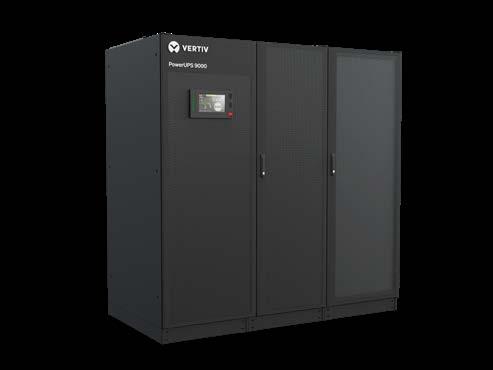
AI-driven workloads are pushing power systems harder than ever. With stable performance, 125 kVA scalable blocks, up to 97.5% e iciency, and capacity from 250–1250 kVA/kW, this UPS supports growth while o ering flexible battery options for resilient operation.