


Sovereignty washing
The Emperor's New Cloud?
AI goes global Telecom adds sovereign trust
Intergalactic issues Europe's satellite struggle





SDx Data Xplainer
The essential data for all things sovereignty
Sovereignty: Design principle, or the Emperor's New Cloud?
Operational risk strategy versus geopolitical marketing hype
A global view of sovereign ventures in the AI era 10
In digital sovereignty, T stands for trust and telecom
US and China domination has the EU on the back foot 6 4 13 16
Can cloud-native concepts help conquer AI-driven sovereignty concerns?
Visualizing a virtualized sovereignty nirvana
Satellite-based communication underscores space sovereignty struggles
Schwarz Digits/STACKIT
Orange, 1%
Telecom Italia, 1%
OVHcloud, 2%
Deutsche Telekom, 2%
SAP, 2%
IBM Cloud, 3%
Salesforce, 4%
Oracle Cloud, 5%
Google Cloud, 15%
Source: Synergy Research, 2024
4-5%
of global cloud infrastructure is Europe-owned (European Software and Cyber Dependencies report, The European Parliament, 2025)
Alibaba Cloud, 1%
Other, 8%
Amazon Web Services, 30%
Microsoft Azure, 25%
of the leading large language models (LLMs) were made in the U.S. (The 2025 AI Index Report, Stanford HAI)
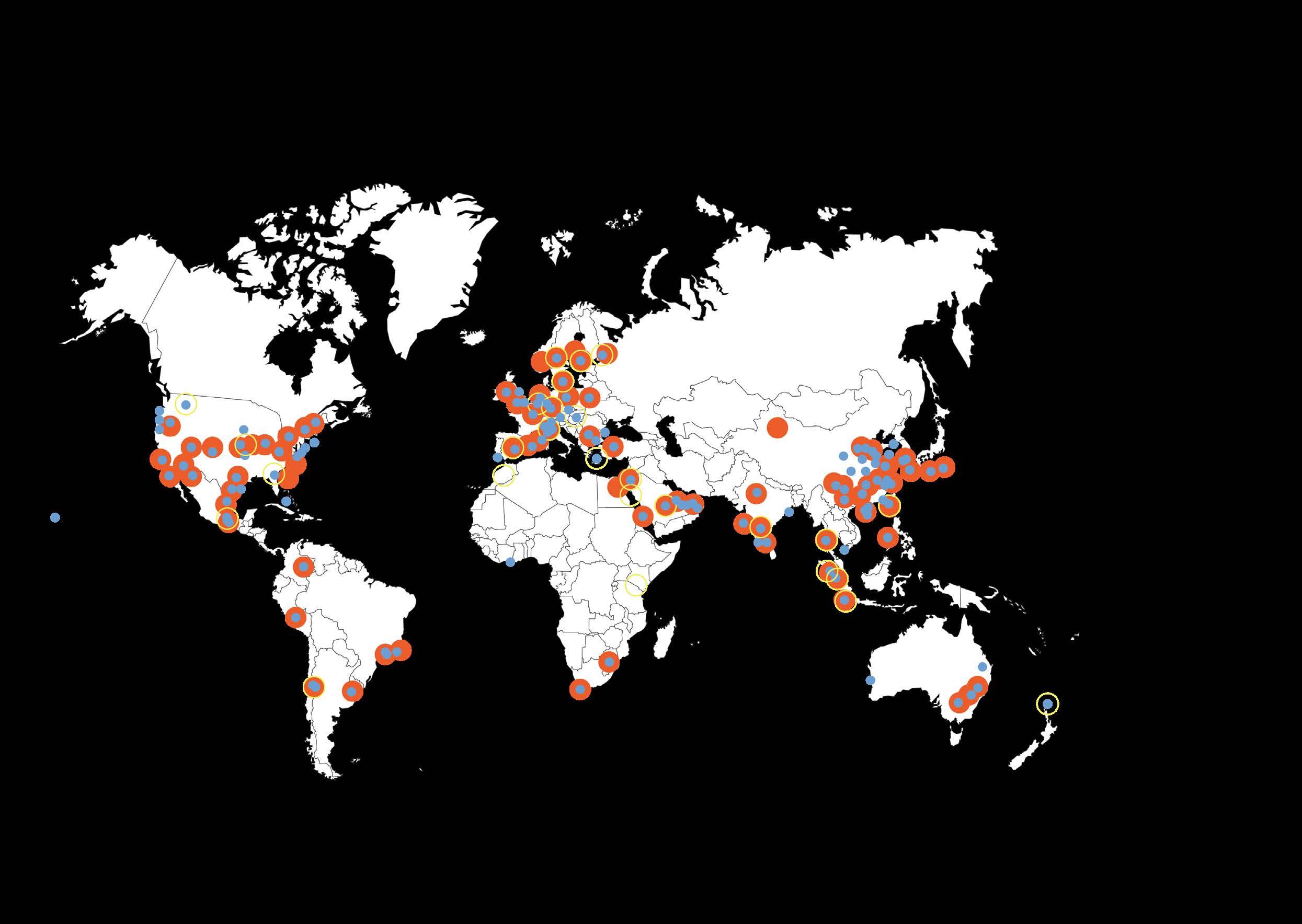
Counts of cataloged rocket bodies and orbital debris objects, as of 22 February 2024 Source:

Ben Wodecki Senior Editor
On a mild June morning in Paris, France, the definition of ‘sovereignty’ was put starkly into question when Anton Carniaux, Microsoft’s legal director in the country, told lawmakers under oath that it could not guarantee citizens' data held through public contracts would remain protected from U.S. authorities without local consent.
To some IT providers and business leaders, Carniaux’s comments forced a can of worms out into the open, filled with fears that true power over data was, in fact, an illusion. Others, however, had long been privy to this idea, with the specter of the U.S. CLOUD Act (Clarifying Lawful Overseas Use of Data Act) looming large, and ultimately lending credence to Noam Chomsky’s 2010 observation: “History shows that, more often than not, loss of sovereignty leads to liberalization imposed in the interests of the powerful.”
In the weeks and months since Carniaux’s comments, the drumbeat of sovereignty as it pertains to the digital domain grew ever louder, culminating in leading European connectivity providers framing it as a means to obtain more favored regulatory, pro-investment support from Brussels during Mobile World Congress.
Of course, we’ve been through similar before, like with the General Data Protection Regulation (GDPR), and its predecessor, the Data Protection Directive of 1995, along with the Electronic Commerce Directive from the turn of the century, and even the OECD Guidelines on the Protection of Privacy and Transborder Flows of Personal Data from the 1980s. These four horsemen of the sov-pocalypse, then, are the ultimate precursors to the concept of digital self-determination we seem to once again find ourselves wrangling with in the wake of Carniaux’s continent-conquering comments.
So why are we talking about this so much now? And to what end are we actually talking about
genuine sovereignty? Or are we just victims of the latest geopolitically-induced marketing ploy?
On the one hand, recent politically charged diatribes about sovereignty have left some, like IDC’s Rahiel Nasir, viewing it as a “distraction” from the true core of digital sovereignty.
“Leave the politics to Brussels,” the analyst firm’s research director for cloud and infrastructure services said in conversation with SDxCentral, adding: “If you're in the IT industry, and you're a technologist, you want a technical solution to a technical problem.”
He argued that the discourse has left vendors feeling they have to offer a “sovereignty solution” in order to do business in Europe, forcing them to build offerings to ultimately make the problem fit the solution, instead of building to solve actual customer problems.
But on the customer side itself, Nasir said purchasers of solutions are being left feeling they need to have some kind of sovereign solution because they’re being told they need one, even when the specific offering may not address their actual needs.
“15 months ago, organizations that had never uttered the words digital sovereignty have been coming out of the woodwork and are now suddenly saying, ‘Hey, we've got a solution for digital sovereignty.’ And you lift the lid, what is it? It is just data localization and data residency.”
He acknowledged such offerings fit partly under the overall umbrella of sovereignty, but not the be-all and end-all, with security a huge, often overlooked, part.
“A lot of organizations conflate security and sovereignty,” Nasir said, “You can have security without sovereignty, but you can't have sovereignty without security.”
A key example the IDC research director referenced was the war in the Middle East, with

A lot of organizations conflate security and sovereignty. You can have security without sovereignty, but you can't have sovereignty without security.”
-
multiple Amazon Web Services (AWS) data centers targeted and physically damaged by drone strikes from Iranian forces. That flashpoint, he argued, was a true example of how organizations should be viewing sovereignty: as a means to ensure resiliency.
“We used to call it business continuity and disaster recovery. And if you haven't got all your ducks in a row and you haven't got good policy initiatives in place to carry on with your operations, then that's poor IT practice. That's not a new thing. It's a war today. It was a pandemic yesterday. It's cyberattacks tomorrow, which are going to continue. So, what have you got in place to prevent and continue operations in the event of anything? We talk about it in the context of sovereignty, but it's everybody, whether they want sovereignty with solutions or not; you need to think about resilience today.”
Nasir wasn’t the only one who used the war in the Middle East as a wake-up call for resilience, rather than sovereignty, as Posetiv Cloud CEO Mark Butcher argued that the drone strikes on AWS facilities exposed just how dangerously concentrated and fragile global banking’s cloud dependencies had become.
“If you think about it quite literally, if they really wanted to, the hyperscalers could basically cut out global banking in a heartbeat,” Butcher said. “The attacks actually led a lot of financial services institutions to realize they had a massive dependency on one or two regions for the transit of huge amounts of their traffic globally. And even worse, none of them even considered it, and all their competitors had the same flaw –creating a gigantic, targeted risk vector with absolutely total dependency.”
So while sovereignty is supposedly on everyone’s lips, for firms potentially in the actual firing line, Butcher argues the real problem is the tangible legal and risk issues from becoming entirely too dependent on global hyperscalers. And that dependence isn’t confined to infrastructure, with even supposedly “sovereign” AI services quietly bursting beyond national borders.
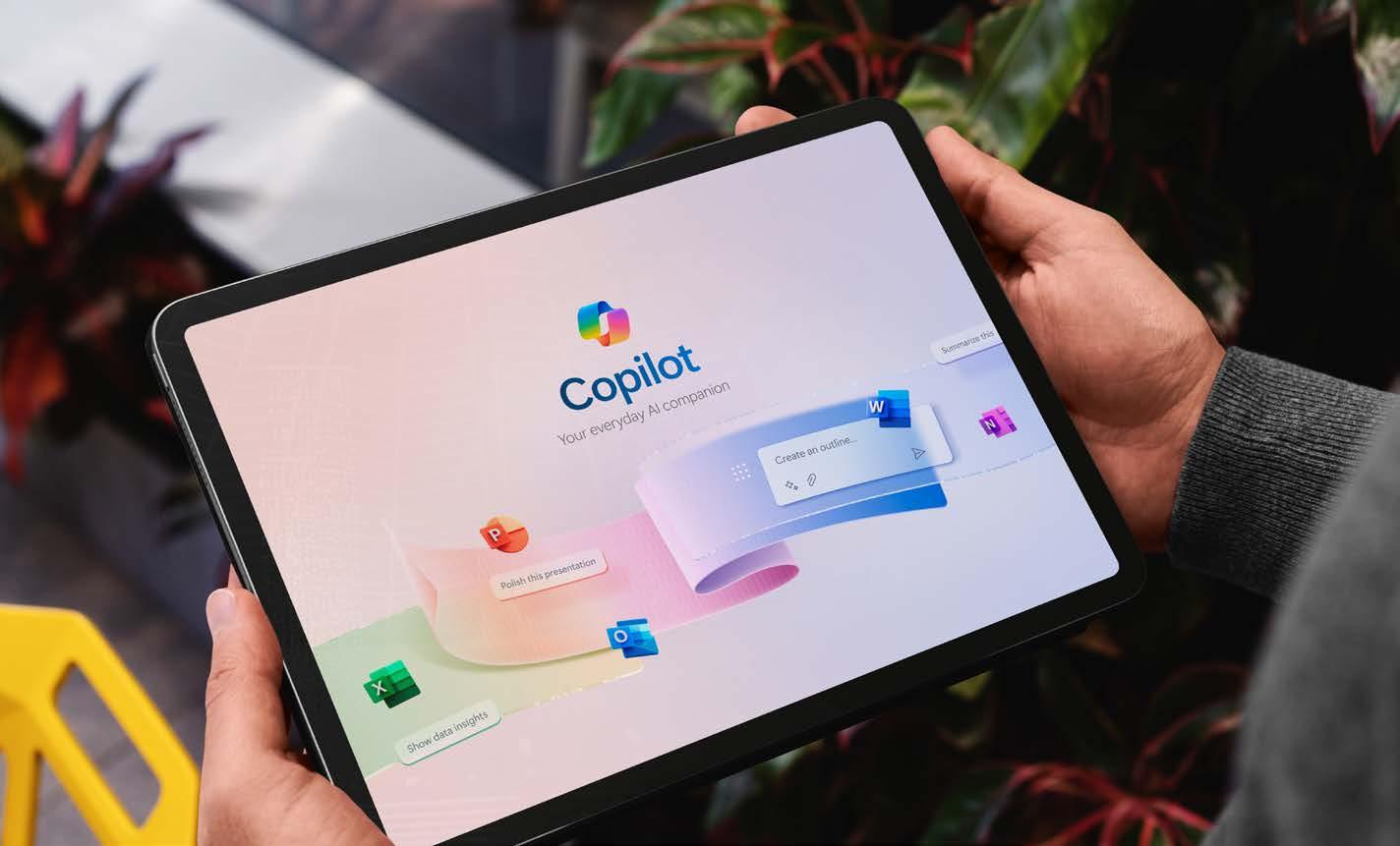
Butcher points to Microsoft’s Copilot as another example. Sold to governments and enterprises as region-bound, the chatbot tool is yet able to spill workloads into other regions should capacity run short, and, in the case of frontier models, sometimes
running only from the U.S.
In the case of Copilot, then, Butcher argued it was the most visible symptom of a deeper problem, with sovereignty marketed as a feature, where, in fact, it is delivered as a fiction: “You actually have no controls over what your users are doing, and that your users are going to be dumping customer and personally sensitive data out into a region where it has no controls, where there's no protection and no governance, that aligns with how we need to protect things.
“Everywhere we look, we're littered with sovereign risks, and no one's willing to stand up to the hyperscalers and actually hold them accountable.”
One of the few bastions to the contrary, it seems, at least in the view of Nasir, is France.
The Macron government has made moves against U.S. technology, with public officials barred from using videoconferencing platforms like Google Meet, Zoom, and Teams in favor of software designed by the country’s Interministerial Digital Authority that runs on infrastructure from local cloud provider Outscale.
The IDC analyst pointed to another example from the European crown jewel of hyperscale hassling: OVHcloud. But in the view of Nasir, sovereignty isn’t as high on the French cloud computing company’s agenda, with OVHcloud feeling that sovereignty is a narrative they've been telling for several years and that it no longer needs to be as high as it used to be on their agenda, despite Nasir believing they still have a strong story to tell and should be making more of it.
"If you think about it quite literally, if they really wanted to, the hyperscalers could basically cut out global banking in a heartbeat,”
- Mark Butcher, Posetiv Cloud
Butcher is more ambivalent, acknowledging France is at least pointed in the right direction, but doing it “in the usual French militant way,” more interested in the ideological gesture than building something that lasts.
Another example Nasir offered that’s actually making some strides is T-Systems – the IT arm of Deutsche Telekom. In the IDC analyst’s view, they’re central to the European sovereignty story, but not in an “opposition” role, instead acting as more of a bridge or custodian than someone standing up to hyperscalers.
“T-Systems is a great example,
because if you look at exactly what T-Systems has done, and years ago, Microsoft beat a path to T-Systems’ door because they thought they'd stumbled upon this idea before we were all talking about sovereignty the way we're talking about it now, they thought you can be our custodians of data … Now when the hyperscalers think about Germany, they all want to partner with T-Systems [because] it’s partnerships that are the success to any ‘sovereignty solution’ in Europe.”
As a result, the German player has secured tie-ups with Microsoft, AWS, and Google Cloud. The IDC analyst highlights that, for all of the continental wrangling, European cloud customers don't actually want to abandon the U.S. providers, but nor do they want to go 100% with the local providers, revealing results of the analyst firm’s surveys of customers wanting solely local providers being in the single digits, around just 7-8%.
For Nasir, the problem ultimately comes down to who gets to define the term.
“Sovereignty is in the eye of the beholder,” he said. “For too long, we've let the vendors define what sovereignty is, and what they've ended up doing is creating 'sovereignty cloud solutions' that make the problem fit the solution, rather than the solution fitting the problem.”
"Sovereignty is not a SKU one can buy,” he told SDxCentral. “It's not a one-anddone kind of situation. It is more of a scale where you have trade-offs.”
- Logan Wolfe, Kyndryl’s Consult
Gartner’s taxonomy of three distinct pillars: data sovereignty, operational sovereignty, and technical sovereignty. Progress, he argues, is genuinely achievable on the first two. Customercontrolled encryption keys, locally hosted data, and regionally credentialed operating teams, none of which is smoke and mirrors. Where it gets difficult, he concedes, is the third pillar: hardware and software supply chains that, if you pull the thread far enough, inevitably end up somewhere uncomfortable.
His analogy is instructive.
Cybersecurity, he notes, has always been a trade-off against usability. You could make your iPhone completely secure by turning it off, locking it in a safe, and dropping it to the bottom of the Pacific … but then you can't use it. He argues that sovereignty should work the same way. The question isn't whether you can achieve it in absolute terms, but how far along that spectrum your risk appetite demands you go.
“Many of the hyperscalers who have now launched sovereign cloud solutions in Europe do so via a dedicated ‘sovereign’ region and/or a spectrum of offerings that vendors. While most vendors acknowledge ‘one-size does not fit all’, customers seeking sovereignty need to select from a portfolio of products that meet their precise needs; they end up trying to make the problem fit the solution, rather than the other way around.”
Not everyone is ready to write off the concept entirely, however. For Logan Wolfe, a cybersecurity veteran and a senior leader within Kyndryl’s Consult practice, the problem isn't that digital sovereignty is a concept that’s fiction, but more that too many people are looking for it in the wrong places.
“Sovereignty is not a SKU one can buy,” he told SDxCentral. “It's not a one-and-done kind of situation. It is more of a scale where you have trade-offs.”
The Kyndryl exec defines sovereignty as “the ability to operate a business or critical business functions, missioncritical systems independently of undue foreign influence or disruptions.”
But beyond a standard one-line definition, Wolfe resisted binary thinking and instead leaned on
That framing matters because it shifts the conversation away from the binary that vendors have been happy to exploit in the wake of Carniaux’s comments.
So instead of asking whether sovereignty is real or not, Wolfe argues organizations should be exploring what level of sovereignty is appropriate for their specific situation, and then demanding evidence, not slogans.
The Kyndryl exec expressed cautious optimism, arguing the talk around sovereignty was in fact maturing, becoming more sophisticated, and moving beyond being a mere buzzword.
The catalyst for that maturity, in Wolfe's view, compared to prior sovereign-like precursors, has been AI. By embedding decisions and capabilities into mission-critical workflows, it has moved sovereignty from a policy question into an operational risk that business leaders can no longer afford to abstract away.
That shift, if it does hold, is precisely what the skeptics have been demanding. Whether the market has the appetite to follow through is another question entirely.
“Leaders have kind of realized that we now need controls and evidence, not slogans. And so it's really becoming a design discipline, much less so than a cloud feature or an architecture approach … It's a fundamental risk operating principle. I just think it's kind of here to stay.”

A global view of sovereign ventures in the AI era

Giacomo Lee News Editor
In a recent Accenture survey of almost 2,000 business and government leaders, 61% said they were more likely to seek sovereign technology solutions with the rise of AI and geopolitical risks. But while sovereignty is often associated with efforts from Europe to protect the continent’s digital backbone, the survey’s results consisted of data from 28 countries, spanning the Middle East, Africa (EMEA), North America, and Asia.
“Sovereignty is not a European-only phenomenon,” said Surya Mukherjee, Accenture's head of technology research for Europe. The researcher pointed to Stanford AI Index research revealing “meteoric, exponential rise” in incidents of AI referenced in U.S. regulation and legislative documents.
Gartner, meanwhile, predicts 65% of countries in the world will build sovereignty regulations by 2028. Mukherjee, though, told SDxCentral that this is a conservative estimate, believing the same number has already built up sovereign protections in light of Europe’s lead on GDPR “rubbing off” on the rest of the world.
Accenture’s report labels telecom operators as frontliners in this brave new world, with locally recognized national champions that can meet public sector trust requirements and run government-endorsed industry or cross-industry solutions. This has led to operators taking the lead in digital sovereignty through their enterprise arms, with Deutsche Telekom’s business unit, T-Systems, becoming one of the first vendors to appoint a chief sovereignty officer. Shortly after,
BT Business announced a platform promising sovereignty services for the U.K. private and public sectors, spanning connectivity, voice, cloud, and AI.
For Simon Ranyard, managing director for Northwest Europe at Orange Business, connectivity is the key differentiator when it comes to telecom’s business arms versus other system integrators (SIs).
“As a telecom company, that's our heritage. And connectivity is critical in this, because you need to basically move the data around in an efficient way … and giving visibility of where that data is going,” said Ranyard.
Bleu, red, and white
Orange arguably fired the starting pistol in the sovereignty space with Bleu, the platform it formed in 2024 with French SI Capgemini, which provides a Microsoft Azure-based sovereign cloud within France. Ranyard said that while the U.K. is still less focused on sovereign cloud than mainland Europe, he has been surprised as of late by growing British business awareness and interest when it comes to projects like Bleu.
This reflects a view from Simon Dumbleton, European CTO for World Wide Technology (WWT), a systems integrator with considerable experience building clouds for telecom. The CTO said the firm is seeing more interest from British and fellow European firms in heavy hyperscaler usage in sovereign solutions.
Steve Knibbs, director, Vodafone Business Security Enhanced (VBSE), went one step further, saying sovereignty is at the heart of procurement for the U.K. government, defense, critical infrastructure, financial services, and healthcare, as driven by strict regulations in the country.
“Performance matters, especially for things like industrial 5G, but it won’t be chosen over trust or transparency,” Knibbs said. “Customers demand operational control to remain within U.K. borders, and, when necessary, physical separation. In these highly sensitive domains, certificates of compliance alone do not suffice; clients require tangible evidence of sovereign control, encompassing governance, operational processes, and cryptographic custody, all anchored firmly within the U.K.”
In other words, even though the U.K. is no longer part of the EU, it has yet to
become a Wild West of deregulation, especially as it introduces new regulations such as the Cyber Security and Resilience Bill. This arguably gives extra market opportunities for telecom players like Vodafone to flex their trustworthy prowess over greenhorn AI incumbents.
Going back to geopolitical risk, Europe is also seeing a sovereign drive separate from its Brussels bureaucratic core.
Speaking on geopolitics in the Nordics, Orange’s Ranyard said: "I would say they are quite nervous about their northern border, and the people that sit on the other side of that northern border."
This drive for sovereignty saw Finnish IT firm Tieto sign up to a sovereign cloud framework from Orange Business. As announced in February, the agreement centers around Cloud Avenue, Orange's sovereign cloud offering for the European market, with the agreement covering the entire Tieto group as it expands across the Nordics and Europe.
Tieto’s footprint can be found in Norwegian critical infrastructure, working as it does with Siemens to manage Nordic power grids through the Gridscale X platform. Its Tieto Banktech arm, meanwhile, provides cloud-based core banking and payment platforms for the region.
"International organizations operating all over the world can be very happy with being in a hyperscaler environment in terms of all the technological advancements that you get quickly, because obviously they develop new products and tools very
"International organizations operating all over the world can be very happy with being in a hyperscaler environment in terms of all the technological advancements that you get quickly, because obviously they develop new products and tools very quickly.”
- Simon Ranyard,
Orange
quickly," Ranyard said. "But there are other companies, particularly ones that are part of the critical national infrastructure, who do not want to be in that environment and want to be in a more classical, private cloud environment where they know exactly where that data is, where they can tell the government where that data is, if at any point the government wanted to know."
Proving Accenture’s point somewhat, Orange is also seeing Europe’s lead rub off elsewhere in the world. Miguel Alvarez, chief data & AI officer at Orange Business, pointed to the example of Morocco, where Orange recently launched a sovereign AI platform by the name of Live Intelligence.
Alvarez said it was “supremely important” for the African nation to have its own digital strategy, as opposed to a “satellite” one. The exec also believes that sovereignty is driven partly by the company's fear of vendor lock-in, now amplified to a nation-state scale.
“It's important for them that we are a local player in Morocco, that we
invest in our skills there, and that we can support our companies there,” said Alvarez, leaning in on the telecom tenet of trust. “So I think this is not just a European thing. For me, it goes beyond the threats or the risk that some people perceive due to the geopolitical situation, but also about making sure that you are not stuck in a situation where you don't have any good choices."
This pragmatism, often associated with cloud and software-as-a-service (SaaS), is also increasingly being applied to AI software. As a result, there has been a growing clamour for AI sovereignty, which Accenture’s Mukherjee defined as comprising the entire tech stack.
"Where does the AI decide, what data does it use, and what does it throw up? So those are two layers," Mukherjee said. "Then there's security on a granular, fine level, looking at the model itself: which country produced it, where was it produced. It's something that you need to think very deeply about as a country as well as a company."
Indonesia is one country thinking about this problem in depth. Tencent Cloud’s Europe GM Fred Sun told this title that the Chinese giant helps telco customers in the nation to build their own sovereign cloud. The main partnership has been on public and hybrid cloud ventures from Telkomsel, as well as building AI tools for B2B and B2C use cases, bolstering the mobile operator’s lead in national AI.
“We also have Indonesian customers who used to run their critical workload on hyperscaler data centers in other countries, and they're sort of repatriating that data back to their own country,” said Sun.
In a recent Forrester report, Tencent Cloud was distinguished as the only Chinese hyperscaler to maintain a "consistently deliberate" sovereign cloud strategy, catering to the specific regulatory demands of its primary markets.
For its part, Accenture has supported AI sovereignty efforts from telecom operators in Asia, such as another Indonesian player, Indosat Ooredoo Hutchison, which is building the country’s first sovereign AI cloud with both the consulting giant and Nvidia. The venture aims to support

local startups and government clients while keeping national data onshore.
Beyond Asia, Accenture’s sovereign AI footprint can be found in the UAE with operator Du, and Australia in partnership with Telstra. Similarly, Nvidia has joined a sovereign AI project for Latin America with Brazilian operator Claro to help develop national large language models (LLMs), while its technology powers a sovereign AI factory for Canadian telco Telus, as also established with Accenture assistance.
Chris Madan, product VP and head of Telus AI Factories, commented that telecom companies have been “trusted stewards of data and the critical infrastructure that society depends on for decades,” believing its sovereign offering to be a natural evolution of that responsibility.
The VP added that Canada's regulatory and geopolitical environment created both the strategic imperative and opportunity for Telus, noting that under the U.S. CLOUD Act, data stored on American cloud providers, even when physically in Canada, can be compelled by U.S. authorities. As such Canadian customers, he argued, need infrastructure that's genuinely under Canadian jurisdiction and control.
“True sovereignty, and the trust that comes with it, requires end-toend control across every layer of the technology stack,” explained Madan. “The response has been exceptional. We’re seeing strong market demand and our Rimouski facility is close to
reaching full capacity within months of opening.”
Explaining the global rise in sovereign AI ventures, Vodafone’s Knibbs noted that with most leading AI labs being international, the speed of innovation is making it harder for countries to keep control over their critical data and models.
“When sovereignty really matters, the preference is for AI solutions where both data and models stay fully within the U.K., sticking to U.K. standards for security and regulation,” said Knibbs, giving the British business perspective.
WWT’s Dumbleton echoed this view, noting that while it’s impossible for countries in Europe to have a 100% sovereign infrastructure, SIs can “build that infrastructure and put sovereign controls around it."
Capping off the deal is a sprinkle of that telco trust assurance. As Knibbs puts it, operators should see digital sovereignty “as much more than just local hosting - it’s about strong control and clear governance across all tech, including AI.”
“Boards are also extra alert now that generative AI is booming, worried that confidential data could cross borders during training or use, especially if global platforms are involved,” he said. “As AI gets used more for things like secure comms and threat detection, keeping both data and models sovereign is vital for trust.”
"What's
so interesting about Europe is they have these huge fleets of, effectively, cloudnative data centers or virtualization.”
- Stephen Watt, Red Hat


Dan Meyer Executive Editor
Virtualized compute platforms have been a boon in allowing enterprises to more easily shift workloads between different cloud environments, but that shifting ease could also grant organizations greater flexibility as they face increasingly stringent data sovereignty laws, especially when it comes to growing use of AI in operations.
Virtualized compute platforms have allowed for the disaggregation of compute outcomes from compute resources, a motion that has also led to the disaggregation of those compute outcomes into their own parcels of code that can be plugged into different application environments. This model has fostered the rapid development of the cloud-
native ecosystem, where platforms have been formed to fill in the management and control of this new composable environment.
As such, cloud-native platforms like containers and the subsequent Kubernetes orchestration platform are increasingly being used to construct and manage sandbox environments for application development. This allows development to take place somewhat off the grid, but also by their nature allows for the data to run those applications to be plucked from different cloud environments and then transferred easily into production via different cloud architectures.
This is great for the development of new services, but can cause a headache when it comes to data sovereignty rules that can require
strict line-of-sight into where those composable data pieces come from. Even one piece of data from the wrong cloud environment could cause an application to run afoul of the myriad of sovereignty regulations.
Bola Rotibi, research director for software development at CCS Insights, noted this challenge was core to many discussions at the recent KubeCon Europe 2026 event, stating the “most useful line of the week was that sovereignty shouldn’t mean fragmented codebases. It builds sovereign deployments on shared global commons.”
Real geopolitics at play
But that remains a challenge heightened by current geopolitical tensions, and one that is forcing organizations to more deeply consider their cloud and data-hosting arrangements.
Dan Ciruli, VP and GM for cloud native at Nutanix, explained during the vendor’s recent .NEXT event that this problem is outsized, depending on location.
“This is not so much true in the United States. It is definitely true pretty much everywhere else,” Ciruli said. “That is causing people to think about moving workloads, especially if they're in one of the major cloud providers, moving them somewhere. Could be [on-premises], could be a [local] service provider.”
Nutanix, for its part, has tried to broaden the deployment architecture for its platforms toward solving this challenge.
“The big goal of ‘run anything anywhere’ is assuring our customers that should they need to put a workload someplace different, they'll have the ability to do that,” Ciruli explained later. “What are the factors that go into them? It might be cost, it might be just regulatory, or it might be risk. … Fundamentally, that's up to them to decide.”
That decision could be required to adhere to sovereignty rules and how those tie into broader regional requirements, something that is shaping how those regions tailor their cloud infrastructure laws.
Stephen Watt, VP and distinguished engineer at Red Hat's Office of the CTO, explained this to SDxCentral, pointing specifically to the oft-
referenced European Union (EU) model in comparison to its opposite in China.
“China has plenty of access to land. Europe, not so much, only in certain places and there's legislative impediments there, so even if there is access to land, Europe, I would argue, is one of our global leaders in driving the sustainability agenda, and they've put all different kinds of laws in the EU around ensuring our planet's going to be in a better place for future generations, but those same laws make it tough to build new data centers in Europe,” Watt said. “And so, Europe, I think, is going to go into this challenge of, do they want to support the sustainability agenda or do they want to stay current with providing their citizen populaces with the AI infrastructure they need?”
These questions are only expected to intensify as power demands increase. Watt noted that the most recent Nvidia Vera Rubin architecture provides for a lot of processing capabilities but also requires significant power and cooling.
“So, the question is, can Europe deploy those?” Watt said. “And it turns out if you actually take a look at what's going on in Europe, there's this thing called the ‘sovereign paradox,’ where they don't actually have the capacity in country. Specific countries that are running into this are Germany, the Netherlands, Republic of Ireland, where they're struggling to find the capacity to find data centers that can run these new architectures. And what they're doing is they're giving up national sovereignty in view of regional sovereignty with EU, and so they're looking at the Nordics, especially Finland, and in Finland, and you're having essentially these giant [colocations] that actually house the sovereign infrastructure of multiple nations inside the EU.”
While this model could solve some of that EU-based sovereignty concern, it does open up what Watt said was “a big single point of failure.”
Some of that can be mitigated by cloud-native architectures, which could reduce the compute resources needed to run smaller, composable data sets.
“What's so interesting about Europe is they have these huge fleets of, effectively, cloud-native data centers or virtualization,” Watt said. “This is back to the time of the data center you built for your [virtual machines]. Can one of
"AI is making it easier than ever to write applications, and it is increasing the number of people who can write applications. And what that means is we've seen a steady increase in the rate of new applications in my entire lifetime … and AI is going to make that increase fast.”
- Dan Ciruli, Nutanix
those things run fleets of CPUs? … If you can't deploy the latest GPUs, wouldn't it be great if you could choose the tens of thousands of CPUs that you already have in place and scale the amount of concurrent inference cores you have available that way?”
Watt did admit that while there could be a solution to the physical challenge, there remains a learning curve toward greater use of cloud-native platforms like Kubernetes. This is especially the case for enterprises that are coming from more traditional models that run applications like high-performance computing (HPC) or are using a simple Linux utility for resource management (Slurm) to manage applications running temporarily in HPC environments.
“Slurm isn't sort of built with these strong reliability and failover guarantees that Kubernetes was designed around, and so there's this, what I would just call an educational growth that's happening, of like, ‘hey, look, my expertise is around Slurm. It was doing this kind of thing in it.’ You still need that for sovereign AI. There will be people pretraining models. There will be people post-training models. But the inference piece, the Kubernetes piece, is new to this game,” Watt explained. “It's not easy for somebody new to wrap their heads around, and there needs to be a strong incentive to actually move over to that. And so, there's a learning path, the maturity path, where they basically start understanding why and how you use Kubernetes to support the inference workloads.”
Watt’s inference reference is directly related to the growing challenge around AI-fueled application development, a rapidly evolving front that has conveniently found a home within containerized environments.
“AI is making it easier than ever to write applications, and it is increasing

the number of people who can write applications. And what that means is we've seen a steady increase in the rate of new applications in my entire lifetime … and AI is going to make that increase fast,” Ciruli said. “For the last five years, container has been kind of the de facto way you develop any new application. It’s to be deployed into the container. All the new applications are ready to go into containers, and all the AI applications are going to be new applications; they're going to be running in containers. All the new things are running in containers, and all the things that run in containers are running in Kubernetes.”
The Cloud Native Computing Foundation’s (CNCF) most recent Annual Cloud Native Survey showed 66% of respondents reported their organization was using Kubernetes to host generative AI workloads. This was deemed as illustrating “how Kubernetes has become the common denominator for cloud native scale, stability, and innovation, especially as organizations bring AI workloads into production environments.”
“Over the past decade, Kubernetes has become the foundation of modern infrastructure," CNCF executive director Jonathan Bryce noted in a statement. “Now, as AI and cloud native
converge, we're entering a new chapter. Kubernetes isn't just scaling applications; it's becoming the platform for intelligent systems. This community has the expertise to shape how AI runs at scale, and we have a massive opportunity to build something open, powerful, and impactful for the next 10 years.”
However, the survey also clarified that only 7% of organizations were deploying AI models “daily” and 47% deploying “occasionally,” with 44% of respondents stating they did not yet run AI or machine learning workloads on Kubernetes, “underscoring the early stage of AI production maturity.”
That early-stage opportunity was also highlighted by a recent Spectro Cloud survey that found enterprises using Kubernetes are twice as likely to scale so-called “edge AI” applications and 20% more confident presenting return-oninvestment plans to company leadership.
Ciruli agreed, noting that this AI angle remains nascent, but interest is surging.
“We are in a state right now that 95% of the conversations we have involve AI at some point, but I would say probably fewer than 5% of the workloads that are running today are actually using AI,” Ciruli said. “It is a place where we talk about it a lot, but most of these deployments are still in the future.”
Analysts have also linked this
Kubernetes-orchestrated AI opportunity to broader use cases.
ABI Research Senior Research Director Dimitris Mavrakis recently noted that operators need platforms that “combine Kubernetes automation with telco-grade security, observability, and lifecycle management.”
The analyst firm linked this shift to operators preparing their networks to better support what it termed the “next phase of the AI supercycle,” which it claims will be the distribution of AI inferencing across the network.
Looking ahead, CNCF said the next wave of Kubernetes-linked AI innovation “will hinge on resolving cultural adoption barriers, investing in platform engineering, and evolving security and observability standards.”
"Enterprises are aligning around Kubernetes because it has proven to be the most effective and reliable platform for deploying modern, productiongrade systems at scale – including AI – and because of the ecosystem and community that support it," Hilary Carter, SVP of research at Linux Foundation Research, explained. "This year's data shows that the next phase of cloud-native evolution will be as much about people and platforms as it is about the tech itself. Organizations that invest in both will have a clear advantage."
US and China domination has the EU on the back foot

Dan Meyer Executive Editor
Sovereignty is logically viewed through the prism of national borders, a notion that is simple in character but exceedingly complex in the digital era, a complexity that only grows when taken to space, where it’s become a celestial challenge that nations are having to grapple with in real time.
One angle of this challenge is playing out over satellite constellations. Satellites have been a point of national pride for decades, ushering in the space race that saw the U.S. and the Soviet Union (USSR) spend unlimited finances and untold lives on being the first to have a metal object orbit overhead.
That race also ushered in the need for rules on space sovereignty, which evolved into the United Nations-housed Outer Space Treaty and was adopted in 1966. Article II of that treaty states: “Outer space, including the moon and other celestial bodies, is not subject to national appropriation by claim of sovereignty, by means of use or occupation, or by any other means.”
Sixty years later, and that phrase now seems quaint. Not because nations have overtly attempted to appropriate outer space or the
physical bodies rotating in that space, but because control of the uncontrollable has shifted toward satellites occupying those locations, and more specifically, which nations control those satellites.
There are approximately 17,000 “satellites” orbiting the Earth at various heights and speeds. Those are basically grouped into three orbiting categories:
• Geostationary orbit (GEO) at around 22,000 miles at a speed that matches the speed of the Earth’s rotation, which means those GEO satellites maintain a single position relative to the Earth. This orbit is typically used for weather data, broadcast television, and some low-data communications.
• Medium-Earth orbit (MEO) between 3,100 miles and 12,000 miles above Earth has typically been the home of GPS and navigation-focused services.
• Low-Earth orbit (LEO) between 100 miles and 1,200 miles, which is the most densely populated region and home to rapidly expanding connectivity services like SpaceX’s Starlink and Amazon’s Leo.

While the orbiting location of these satellites is directly tied to their capabilities, there is a growing focus on the “location” of those entities that are either launching satellites into space or of the entities that control the actual satellites.
The U.S. is the dominant player based on its long-standing NASA program, which for most of its history tagged each satellite to specific U.S. government control. Reports indicate that around 75% of satellites in orbit are from the U.S. or U.S.-based entities.
But, most of those currently orbiting satellites are controlled by private companies like SpaceX that have taken it upon themselves to launch thousands of communication satellites into space, with a growing focus on using their own launch vehicles. The extent of SpaceX’s interest in space was outlandishly highlighted by the company recently gaining Federal Communications
Commission (FCC) approval to launch up to one million satellites, each of which would operate as part of an “orbital data center system” orbiting at an altitude of between 310 miles and 1,240 miles and be “within orbital shells spanning up to 31 miles (50 km) each.”
Most of the remaining 25% of orbiting satellites are from China and the Commonwealth of Independent States (Russia), with the latter being noted for rapidly expanding its satellite efforts.
Analysys Mason noted in a recent report that a handful of China-based companies have overseen more than 100 launches that have placed thousands of satellites into various orbits.
Analysys Mason’s Christopher Baugh, in a separate report tied to LEO deployments, summed up the impact of this regional dominance, noting “LEO sovereignty is now closely tied to national interests; yet LEO viability can still appear distant given technical, financial, and regulatory considerations.”
"The real-time effects of overdependence on a single operator and the network are becoming clear.”
- Andrew Cavalier, ABI Research
This current sovereignty discrepancy is driving concern for those outside of the big three, with analysts pointing to the biggest concern coming from the European Union, which could provide regional satellite operators with an opportunity.
“The real-time effects of overdependence on a single operator and the network are becoming clear. This implies operational and legal control, not necessarily domestically built infrastructure or industrial independence,” ABI Research Principal Analyst Andrew Cavalier noted in a recent report. “In this way, geostationary Earth orbit (GEO) and multi-orbit operators like Société Européenne des Satellites (SES), Astranis, Telesat, Eutelsat-OneWeb are distinctive and commercially viable in a market now largely dominated by SpaceX, where they can sell a new tier of sovereignty as a product even when manufacturing is done elsewhere.”
One of those looking to take advantage of that opportunity is Parisbased Eutelsat. The long-standing firm currently counts more than 600 LEO and 31 GEO satellites in orbit.
Eutelsat CEO Jean-François Fallacher told an audience during a keynote at the recent Mobile World Congress (MWC) event that a LEO constellation is “technology Europe should master, and technology on which we cannot be dependent [on] from other nations. It's true that the current geopolitical environment is pushing us even more toward that.”
Fallacher did claim a tailwind in Eutelsat’s efforts toward constructing a viable European alternative, a breeze tied to the recent ability for outside nations to control satellite connectivity within the EU.
“[With the] geopolitical situation, people realize … a concept of sovereignty can be sometimes extremely concrete when one of our competitors – that I will not name here – decides to cut the services of our given country,
"These satellite constellations are not, let's say, delivering broadband services by themselves. They need a field of fixed antennas, and we have 41 fields of eight to 12 huge antennas across all continents.”
-
Jean-François Fallacher, Eutelsat
you know that marks the spirit and [therefore] people realize what it means being dependent,” Fallacher said, brazenly hinting at Elon Muskled SpaceX’s management of Starlink coverage in Ukraine.
That “dependent” need was recently highlighted when Eutelsat was prevented from selling terrestrial parts of its satellite ground network architecture.
“These satellite constellations are not, let's say, delivering broadband services by themselves. They need a field of fixed antennas, and we have 41 fields of eight to 12 huge antennas across all continents,” Fallacher said. “This is … interconnected by a huge, redundant fiber network. And we were about to sell that, and we got the no-go from our government because they are considering that we
are a strategic object for Europe, that we are a sovereign object, and they simply didn't want a fund to invest in that, probably could have sold back these assets.”
Fallacher’s financial note also points to overhanging operational challenges for sovereign-focused satellite efforts, something Cavalier said continues to serve operational headwinds.
“The irony of the sovereignty push is that it cuts both ways for the incumbent market,” Cavalier wrote. “On one hand, single GEO satellites can be dedicated to single customers with specific requirements, enabling dedicated capacity, security, and control with no ‘shared’ infrastructure.”
Cavalier explained that this could include GEO operators providing “GEO-slicing,” which he described basically as a satellite version of traditional network slicing.
“In theory … effectively carving out a slice of their GEO network as a logically isolated, customer-controlled environment with local infrastructure, encryption, dedicated spectrum, and local subsidiaries, functionally delivering sovereignty without outright customer ownership,” Cavalier wrote.

However, current GEO models could make it difficult for such services to meet future sovereignty requirements.
“On the other hand, the push toward dedicated national space assets will threaten the long-standing shared-capacity wholesale model that GEO operators have long relied on. Leasing capacity may no longer be viewed as enough, and another layer of control is desired,” Cavalier added. “Furthermore, a managed service agreement … may not be perceived as actual control, where owning the satellite outright eliminates dependency.”
Cavalier noted this has seen incumbent GEO players “trying to occupy a middle-tier in the sovereignty market, more sovereign than leasing capacity on a shared satellite, but less sovereign than owning a dedicated asset. This will introduce cost constraints on incumbent business models as they will now have to grapple with a market that is no longer shopping for a leased or shared asset, breaking the revenue streams of selling unused transponders on satellites.”
Eutelsat’s Fallacher outlined that, at least from an EU angle, there needs to be more cooperation from the region to build scale if it truly wants to tackle this sovereignty challenge.
“We have in our business, which is these LEO constellations, giants in front of us. I mean American giants, Chinese giants, and [as such] we need scale in Europe,” Fallacher said. “And the fact is, I'm not blaming [anyone]. I'm French. I'm European by nature. I spent all my career in different countries in Europe: Spain, Romania, [and] Poland, so I'm deeply European, but still, what I see on a daily basis is that we are a collection of 27 countries; we are not, unfortunately, yet, behaving like one country.
“There is always a temptation of what I call fragmentation. There is always a temptation that each of us is willing or wanting to build its own local, national [infrastructure]. I understand that temptation. But I believe it would be a big pitfall, and that's why we are really advocating to get all the European countries united … to have these sovereign constellations striving in the future.”

May 2026