DCD is accredited by the International Accreditors for Continuing Education and Training (IACET) and offers IACET CEUs for its learning events that comply with the ANSI/IACET Continuing Education and Training Standard
IACET is recognized internationally as a standard development organization and accrediting body that promotes quality in continuing education and training Read more here
Introduction
Once an enigmatic industry requiring only a few roles to keep operations running, data centers have evolved into colossal enterprises that can’t hire fast enough. The challenge is twofold: a shortage of qualified individuals skilled in managing these complex systems, compounded by declining interest among young people in practical, hands-on careers.
At the same time, the rise of high-performance computing and AI has created an insatiable demand for power, pushing data center owners and operators to their limits.
In response to these challenges, this eBook sheds light on the workforce needs of data centers. It takes readers inside the industry to highlight the transferable
skills in demand – not only in traditional roles but also within the emerging career landscape shaped by AI. Furthermore, it examines strategies to attract and retain a diverse workforce, empowering the next generation to consider exciting opportunities within the world of data centers.
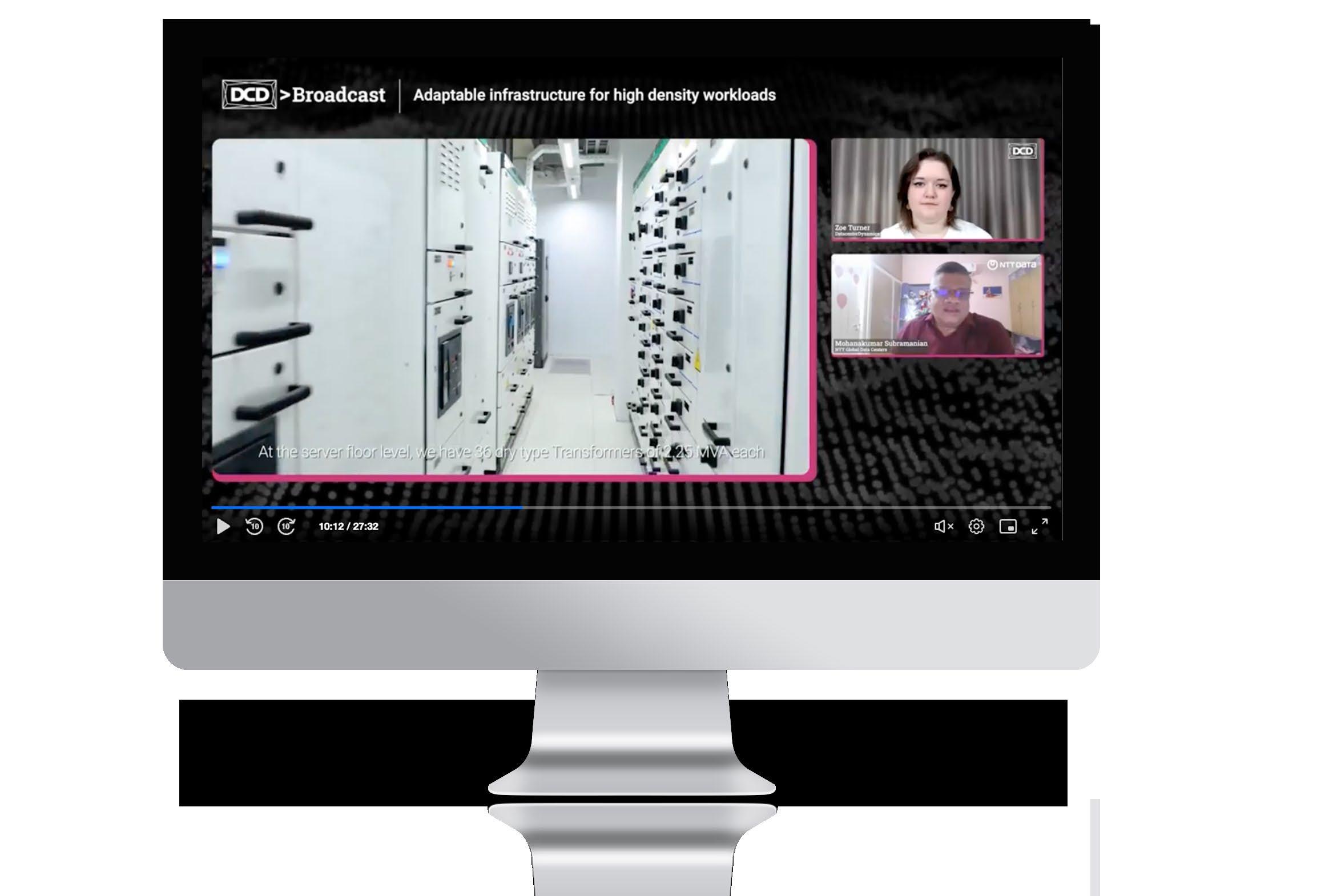
NTT Global facility tour: What are we building?
With Mohanakumar Subramanian, NTT Global Data Centers
Open the door to the inner workings of some of NTT Global Data Center facilities throughout India, and the innovations from design to construction. This facility tour will showcase the completed Mumbai Nav center, highlighting how liquid cooling systems are being leveraged for next-generation workloads. Additionally, we explore the Bangalore project, still in development, to demonstrate their adaptive approach to deployment to ensure the integration of the latest technologies. Expert speakers will discuss:
Catering to the nuances of different regions and workloads
Strategies for building adaptive infrastructure
Power considerations: Supply, renewables and backup options
How are innovative cooling technologies being leveraged
Scaling connectivity and overcoming network capacity constraints
Bridging the skills gap: Insights from DCD>Academy
In this Q&A, DCD>Academy tackles the data center skills shortage with insights on innovative training, industryrecognized certifications, and initiatives that inspire the next generation of professionals
Darren McGrath Global Managing Director, DCD>Academy
Could you briefly explain what DCD>Academy is, its mission, and how it benefits both the data center industry and those outside of it?
DCD>Academy works with organizations across the data center ecosystem to build training programs that target all areas of their missioncritical workforce. From sales and marketing teams to design, construction, and hands-on operational staff, DCD>Academy develops targeted training plans that address the specific needs of each group.
Can you summarize the evolution of DCD>Academy and explain why it was created?
• DCD>Academy was founded in 2009 to spread best practices around a very young industry
• We pioneered e-learning with our “Fundamentals of Mission Critical Infrastructure” platform
• Our courses are available and delivered in multiple languages, including Spanish, Portuguese, and Japanese
• We have partnerships with major institutions, such as Mexico’s UNAM University, where we help develop graduate and post-graduate programs
• We are accredited by national organizations, including IACET, Singapore's SkillsFuture (SSG) and other engineering bodies
• All of our courses are recognized for Continuing Professional Development (CPD) hours globally
As a branch of DCD specializing in training, how is the skills shortage impacting the data center industry?
The industry is facing a wellknown skills shortage, with an aging workforce that lacks diversity. At the same time, companies are experiencing unprecedented growth, while the sector is becoming more regulated at various levels.
There’s a broader talent development issue, and many feel that learning and development (L&D) has been somewhat overlooked. Research suggests that the industry will face a gap of 300,000 staff by 2025, but with the rise of AI, this could be a conservative estimate. Service providers need to explore non-traditional methods of identifying and onboarding talent, whether from adjacent industries, relevant education backgrounds, or those entirely new to critical infrastructure. Wherever this new talent comes from, strong onboarding
and robust L&D programs will be essential.
What is DCD>Academy doing to help close the skills gaps needed for the industry to thrive?
Companies have recognized the need to invest more in the right training solutions, as they understand that traditional training methods need to evolve. Not everyone within their organization requires the same training, and the post-pandemic shift in work environments has also changed how people are trained.
At DCD>Academy, we’re addressing key trends by offering more personalized training and developing mixedmode learning solutions. This is driven by a diagnostic tool that enables our clients to benchmark their staff knowledge and confidence, and compare against industry data. We also provide team managers and L&D leaders with greater visibility into what’s effective and what
isn’t. This means we’re on a technological journey, as well as an educational one, adapting to the industry’s evolving needs.
What are some of the core qualifications offered by DCD>Academy specific to the data center industry?
We focus on three main disciplines:
1 Business Support
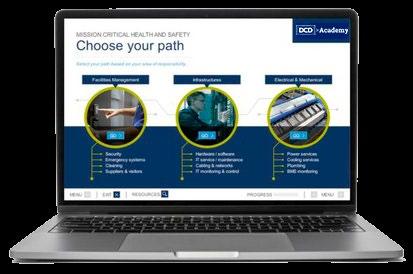
Our Business Support track is designed for nontechnical staff within data center operators and the broader supply chain, including technology vendors and construction teams. This track centers around ‘The Business of Data Centers,’ an 8-hour e-learning course that helps professionals, including
those transitioning from other sectors, build a solid understanding of the data center industry.
2
Critical Operations
Our Operations track is based on our ‘Fundamentals of Mission Critical Infrastructure’ e-learning platform, which prepares learners for certification. Graduates can earn the ‘Data Center Technician’ credential, showcasing their competency in data center operations.
3 Engineering Design
The Design track offers advanced learning through live classroom sessions led by industry experts. These courses focus on engineering design and prepare learners for the ‘Data Center Practitioner’ and ‘Data Center Specialist’ credentials.
Are DCD>Academy's certifications and qualifications recognized within the industry?
Yes, DCD>Academy offers a recertification pathway for credential holders, ensuring that certifications like Data Center Technician (DCT), Data Center Practitioner (DCP), and Data Center Specialist (DCS) remain valid and industryrecognized. Credential holders with less than 12 months of remaining validity can access our e-learning library to complete the required recertification hours from the modules of their choice.
Once the necessary hours are completed before the credential expires, learners
"Experts bring our public and in-house classrooms to life, helping learners solve real-world problems through their insights and expertise"
Darren
McGrath
Global Managing Director
will receive an updated digital badge and social certificate, extending their credential for an additional two years.
How does DCD>Academy deliver its courses and training?
DCD>Academy has developed a global network of subject matter experts, all with firsthand experience in the data center environment, who also participate in our train-thetrainer program to become expert instructors.
Our instructors include engineering consultants working on major data center design projects, energy consultants helping operators improve efficiency, the head of cybersecurity for Banco Santander, and the former head of data centers for the National Australia Bank. We even collaborate with university professors. These experts bring our public and in-house classrooms to life, helping learners solve real-world problems through their insights and expertise.
How does DCD>Academy inspire the next generation of data center professionals?
DCD>Academy offers global scholarships in countries like Spain, Mexico, and Italy to address the growing need for skilled professionals in the data center sector. These scholarships are open to
recent graduates and finalyear students in fields such as industrial, electromechanical, and manufacturing engineering. To learn more about our programs click here .
We also play a key role in the DCD>Next-Gen Workforce Development Program, recently held at DCD Connect New York, where we partnered with local colleges and universities. This student outreach program brought together students
and industry experts to raise awareness of the data center industry and educate the next generation on the career opportunities available in this exciting field.
Is there anything our audience should be looking out for regarding upcoming developments at DCD>Academy?
At DCD>Academy, we continuously adapt to the rapid pace of change in the market, regularly updating our course materials. Additionally, we recently launched a new Market Trends library, so keep an eye out for new learning activities focused on AI, its broader impact on data center design, sustainability, and much more.
What feedback has DCD>Academy received from its clients and participants?
Testimonials
“This is a great course for anyone who wants to get insights into the data center industry - it covers the basics of who, what, where, when, why, and how data centers are built plus much more. I’ve definitely gained new knowledge from this course.”
“The content within this course was great! It provided me with fundamental information about how to design data centers and how to give the best solutions to my clients.”
Yuda Pratama, Electrical Engineer | RHDHV
“The course was really useful - the knowledge I have gained has enabled me to speak with owners and operators with greater confidence than ever before.”
Stuart Newman, Sales Engineer | Victaulic
“As an engineer from a non-electrical background, this course provided an intense, fast-paced deep dive into electrical engineering. I learned a lot about sine waves, phase shift, impedance, electrical topology, energy storage, all topics which I am now more fluent in.”
Sean Foppen, Senior Data Center Operations Engineer | Booking.com
The transformative role of AI in data centers: Key functions and the importance of staff education
Advancements in artificial intelligence (AI) have revolutionized data center operations. By introducing evolutionary shifts in operational strategies and technology adoption, AI has driven significant changes in the way data centers function. Below, we explore the key AI-powered functions, how they enhance operations, and why educating staff on AI optimization is critical.
Predictive maintenance
AI-powered predictive maintenance has transformed the way data centers address equipment failures. By analyzing sensor data and system information, AI can predict potential issues before they arise. This proactive approach minimizes unplanned downtime, extends the lifespan of critical equipment, and reduces unexpected repair costs. With these benefits, predictive maintenance plays a key role in ensuring smooth and reliable operations.
Educating staff on how to optimize predictive maintenance systems is essential. Employees trained in using AI tools can interpret alerts effectively, enabling quick and accurate responses that maximize equipment uptime and operational efficiency.
Resource optimization
Resource optimization is another area where AI has a profound impact. AI dynamically manages computing power, storage, and network resources in response to real-time and anticipated workloads. This includes automating workload distribution and data movement between storage tiers based on usage patterns. These capabilities enhance server utilization, reduce energy waste, and ensure that resources are allocated efficiently to meet demands.
To fully leverage these advantages, staff must be well-versed in using AI-driven resource management tools. Proper training ensures they can adapt to dynamic changes and maintain peak performance across data center operations.
Energy management and cooling optimization
AI has significantly improved energy efficiency in data centers by optimizing energy usage and cooling systems. By analyzing energy consumption patterns and environmental conditions, AI can adjust cooling parameters in real time to match workload demands. This not only reduces energy consumption but also minimizes water usage and operational costs, supporting sustainability goals
Educating staff on these systems allows them to monitor and fine-tune energy management solutions effectively. Trained employees can oversee AI-powered cooling and energy-saving initiatives, ensuring that operations remain efficient and environmentally responsible.
Security enhancement
AI has become a critical tool for enhancing data center security. It detects anomalies in real-time, identifies potential threats, and automates incident responses.
These capabilities significantly reduce the time required to contain security incidents and prevent vulnerabilities from escalating into major issues. Staff education is crucial in this area. Employees who are trained to operate AIdriven security tools can better interpret insights, enabling a proactive approach to cybersecurity. This enhances the overall security posture of the data center and protects valuable data assets from emerging threats.
AI-driven analytics provide a deeper understanding of data center operations by delivering actionable insights. These insights optimize workload management, improve system performance, and identify operational trends. Additionally, AI automates routine tasks, freeing up employees to focus on more strategic activities.
Proper training ensures that staff can interpret these insights effectively. With a clear understanding of AI-generated analytics, employees can make informed decisions that improve overall operations and strategic planning.
Infrastructure planning and management
AI also supports infrastructure planning by forecasting capacity needs and identifying trends that guide hardware upgrades. This aligns with the evolutionary shifts AI brings to data center operations, allowing for better long-term scalability and resource allocation. This enables data centers to scale efficiently and remain prepared for future technological advancements. By fostering evolutionary shifts in operational strategies and leveraging advanced AI tools and a knowledgeable workforce, organizations can maintain a competitive edge while driving innovation and sustainability in the digital age.
| London 2024: Addressing talent challenges in data centers
Industry leaders share strategies for attracting and retaining data center talent, emphasizing education, career development, and engagement. Experts Michillay Brown (Stack Infrastructure) and Brenda St John Brown (kW Mission Critical Engineering) address the talent shortage and workforce sustainability
The data center sector faces two interlinked talent challenges. First, a significant portion of the workforce is approaching retirement, leaving a critical need to plan for the succession of leadership roles. Second, the sector lacks the workforce
size to meet the rising demand for services, which threatens to limit growth if the talent pipeline cannot be expanded.
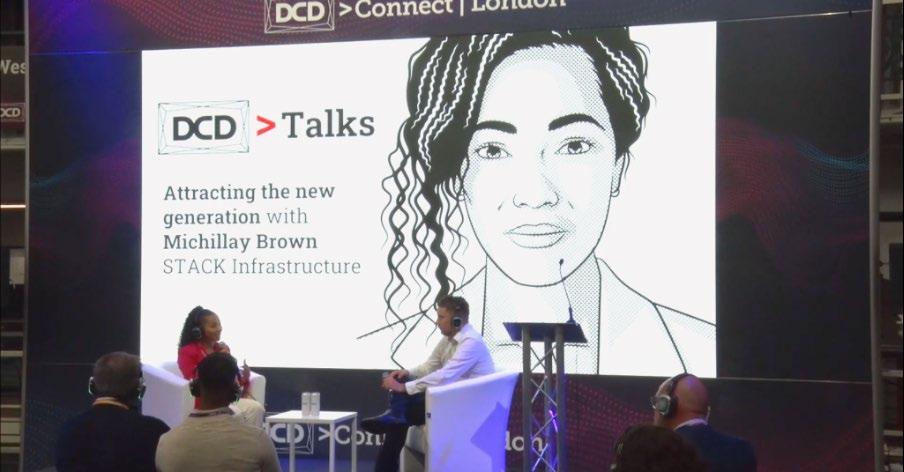
At DCD>Connect | London 2024, DCD’s Tom Liddy sat down with Michillay Brown, vice president of ESG (Environmental, Social, and Governance) at Stack
Infrastructure, on the Talks Stage to discuss strategies for attracting the next generation of data center professionals.
Reflecting on her career journey, Brown highlighted the pivotal role education plays in enhancing diversity, equity, and inclusion while also increasing awareness of
career opportunities in the data center industry to address talent shortages.
One of Brown’s key insights was the importance of recognizing transferable skills when attracting new talent. She shared her own experience transitioning from the Mining and Metals industry to data centers, underscoring how Stack identified the value she could bring from her previous roles:
“That’s not something we speak about enough – when we’re recruiting talent, how are we assessing skills that can be adapted to our industry? That’s
one of the things Stack saw in me. On my side, the appeal was the opportunity to work in a fast-paced, mission-critical industry that underpins our digital world. At the same time, I want to contribute to solving some of the pressing social challenges we face.”
Representation matters
Diversity, equity, and inclusion remain significant challenges in the data center industry. As Michillay Brown points out, there’s a noticeable lack of women and minority groups in both technical and leadership roles. While companies like Stack are making strides –
women currently make up 23 percent of their workforce, compared to the industry average of less than 10 percent – there’s still much work to be done.
“I’d like to make sure there is representation, that people feel like they have an opportunity within this industry. It’s a significant challenge, but one we’re determined to tackle,” says Brown.
She doesn’t claim to have all the answers but emphasizes that Stack has been working hard to develop a comprehensive education strategy to address this gap.
Training
Going into schools, influencing curricula, and building an understanding of what data center knowledge entails.
“Many schools have little to no exposure to this field, and that’s a gap we need to bridge. Whether it’s high schools, trade schools, or other platforms, we’re determined to get our message across. Visibility is essential.”
Working with organizations, NGOs, and local institutions that align with values to help spread the message.
“In our regions, we’ve established strong partnerships, but we’re always looking to grow. Beyond that, we’re also fostering collaborations with our suppliers and clients. Everyone in this ecosystem faces similar challenges, so solving them in isolation doesn’t make sense. By understanding client needs and involving suppliers, we can create a united approach.”
Training is critical to ensuring that new entrants to the data center industry are equipped with the skills and confidence to succeed.
“Imagine being a student learning about this field and doubting your ability to meet its demands. That’s where we come in. It’s our responsibility to provide sufficient training, mentoring, and ongoing development to set individuals up for success. Without these elements, we risk setting them up to fail.”
Brown firmly believes that outreach, partnerships, and training are the cornerstones of building a strong and diverse pipeline of talent for the data center industry.
…And retaining
With the industry in the midst of a labor shortage, conversations on the issue naturally go towards how the sector can attract new talent. But what use is attracting talent if we can't keep them?
For data center companies across the ecosystem, addressing the often ‘hidden’ challenge of talent retention and reducing staff turnover can lead to substantial cost savings, enhanced operational performance, and notable competitive advantages.
But how do you improve talent retention?
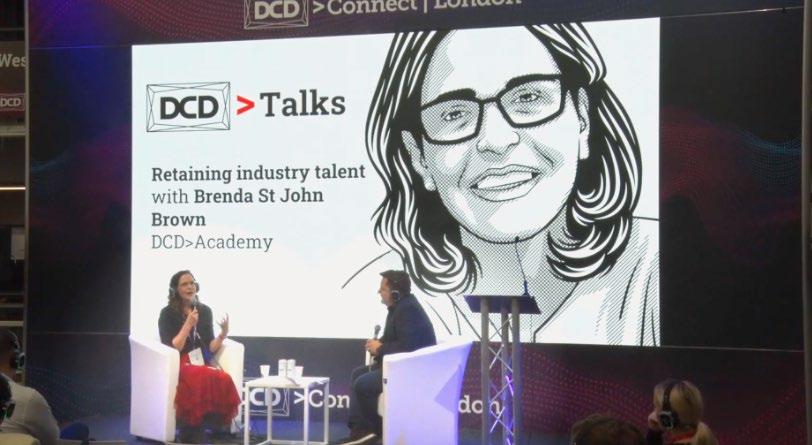
At DCD>Connect | London, DCD’s Darren McGrath spoke to Brenda St John Brown, dean of mission-critical education at kW
Mission Critical Engineering, a WSP company, about different approaches to the issue, from structured onboarding and talent development, to improving culture and employee engagement.
St John Brown reveals that she began her career as an English major and teacher, including teaching in Japan, before transitioning into the data center industry 20 years ago at EYP in New York (later acquired by Hewlett-Packard). After her role was outsourced, she joined DCD, where she helped expand training programs from a single design course to include power, cooling, and an online course catalog.
“When my husband’s job took us to Chester, UK, remote work wasn’t common, so I took a break and even wrote romance novels. Later, a former colleague from EYP approached me on LinkedIn about building an education program at kW Mission Critical Engineering. What started as casual
conversations turned into a job offer, and I spent a year there before kW was acquired by WSP.”
“Today, I lead education initiatives, from program management and onboarding to working with subject matter experts and vendors.”
Employee retention is often viewed as an invisible problem because its impacts are not immediately obvious. St John Brown shares that for some, when transitioning from small companies to larger ones through acquisitions, such changes can naturally lead to attrition as some employees may not want to remain in the new structure.
“Training, in particular, is often viewed as something we know we need but hesitate to invest in due to budget concerns. Yet, when you compare the cost of attrition to the investment in a strong training program that supports retention, it’s clear that training is actually the more costeffective solution,” she states.
Key points about employee retention:
Importance of onboarding:
Effective onboarding is critical for creating a sense of purpose and focus for new hires. Poor onboarding experiences, where employees feel unprepared and undervalued, can lead to early disengagement.
Continuous career development conversations:
Regular check-ins between employees and managers – ideally quarterly – help keep employees on track with career goals and prevent disengagement.
5
4
Flexible working arrangements:
Companies need to adapt to generational expectations, particularly those of Gen Z, who prioritize flexibility and remote work options. While in-office interactions are valuable for mentorship and learning, rigid return-to-office policies may drive employees away.
All in all, St John Brown emphasizes the importance of investing in education and establishing structured career pathways to foster growth. Regular development conversations are crucial to maintaining employee engagement and alignment with company goals. Additionally, flexible work policies and mentorship programs play a key role in strengthening retention strategies and ensuring longterm success.
2 1
3
Career development frameworks:
Providing clear career pathways helps employees understand what skills they need to develop to progress. These frameworks facilitate focused conversations between employees and managers, ensuring clarity and direction.
Mentorship and leadership programs:
Programs like mentorship and initiatives for “next-generation” leaders help retain talent by recognizing and developing high-potential employees.
Future workforce needs
The dynamic data center industry has experienced immense growth with the rise of AI, as established roles evolve into emerging ones, supported by transferable skills that unlock opportunities both within and beyond this vital field
Transferable skills
Existing career progression Design Engineering
Data center operations lead
Data center manager
Capacity planning manager
Critical environment manager
Cybersecurity engineer
Management
& Sustainability Emerging roles
Cloud infrastructure architect
Edge computing specialist
AI/ML infrastructure engineer
Data center sustainability lead
Renewable energy consultant
Cloud security engineer
The women powering the data center
Despite being underrepresented in the data center industry, breaking barriers and redefining this traditionally male-dominated feature celebrates their journeys, challenges and the impact
My career started in sales with a box of customer record cards and keys to a Peugeot 309. I discovered a passion for solving client problems and evolved into account management roles, then sales team management, and I eventually entered the world of ‘business turnaround’ work as a sales and marketing director. Wanting a change and more of a challenge, I decided I wanted to enter operations and to grow my project and delivery skills. Unfortunately, no one would hire me as they refused to believe my skill set was transferable. So, I decided to start my own business doing all the things I wanted to learn, and supplementing it with what I was already experienced in.
I spent three very happy years consulting, coaching, designing and delivering sales and leadership management programs, and generally feeding my need to learn, before realising that it wasn’t problem solving I loved – it was building something – and to do that effectively I needed to go back into the world of corporate business . My timing was terrible, however, as I came to this realisation around eight weeks before Covid hit, leaving me on furlough from my own company and with
I decided to start my own business
Catriona Shearer Global Head of Data Centre Consulting, JLL
most companies pausing their hiring. I’m a practical person, so I was open to any opportunity that would be interesting, but not necessarily at the level I would usually work at, and that’s exactly what came along. I entered the data center industry managing three sites, then moved to mobilise a huge campus, then moved into the role of head of data center operations.
My career trajectory has led me to my current role as the global head of data center consulting at JLL where I get to use all my skills from all of my roles – and I couldn’t be happier!
I am thrilled to be celebrating 30 years in the data center infrastructure space in 2025, but I could never have imagined the dynamic changes that have unfolded on this wild ride. Comparing a 1995 data center to today’s landscape of AI deployments and high-density workloads, it feels like we’ve lived through it in warp speed – like a real-life sci-fi movie. We no longer measure space in square feet but in megawatts and gigawatts, and terms like artificial intelligence are not just buzzwords – they’re fundamental to our industry’s growth.
Back in the mid-90s, data centers were built with a completely different mindset. Cooling strategies were rudimentary, power densities were low, and redundancy was still evolving. The conversations we have today about sustainability, liquid cooling, and energy efficiency would have sounded like fiction back then. Yet, here we are – pushing the limits of technology every day.
When I attended my first trade show in 1996, I was one of the very few women on the floor. It gave me a lot of pride then, but even more now as I see the industry evolve with strong women’s gatherings
industry, women are male-dominated field. This impact they’re making. 10% 90%
How do we lead the way?
Allison Boen President and immersion cooling advisor and advocate, Alcatex
and mentorship programs. The conversations have shifted from “How do we fit in?” to “How do we lead the way?” Seeing this transformation has been one of the most rewarding aspects of my career. My latest chapter in this ecosystem has been about driving change – building better data centers through immersion cooling technology. The opportunity to advocate for something so transformative, so necessary for the future of data center efficiency, has been an incredible journey. But I can’t help but wonder – what would 1995 Allison have thought of all this? No doubt, she’d say it was straight out of a sci-fi movie. And honestly, she wouldn’t be wrong.
At CO2Efficient, I serve as vice president and executive director of the Liquid Cooling Coalition (LCC), a new industry forum dedicated to advancing the adoption of liquid cooling for a more sustainable data center future. I launched LCC in early 2024 and, within a year, grew the organization to include 10 companies. On behalf of the LCC, I have advocated numerous US AI-related federal policies, published blogs, and presented at conferences and webinars to promote liquid cooling. In addition to leading the LCC, I also support CO2Efficient’s other AI infrastructure-related workstreams.
Before joining CO2Efficient, I led The Green Grid (TGG), an industry coalition focused on data center energy efficiency. I also ran multiple industry committees at a premier tech trade association, where I successfully advocated for regulatory changes with state, federal, and international governments.
Prior to my work in the tech sector, I spent more than two decades as a US diplomat driving global policy change. During my diplomatic career, I supported US-China climate
Women in data center workforce
Women Men
Source: Uptime Institute
I advocated for regulatory changes
Erica Thomas Vice president and executive director of the liquid, cooling coalition (LCC), CO2Efficient
negotiations that helped pave the way for the Paris Climate Agreement , led an air quality monitoring program credited with preventing more than 4 million deaths globally, and organized US engagement that contributed to ending the SARS epidemic in Taiwan.
I hold a Bachelor of Arts in International Relations and Environmental Studies from the University of Pennsylvania and a Master of Arts in Public Policy from Princeton University.
Empowering the future: Insights from a DCD>Academy Trainer
Navid Golshani discusses his journey from service engineer to electrical project technical lead at Stantec, emphasizing key industry trends, challenges, and the critical role of continuous learning in shaping the future of data centers
Navid Golshani Project Technical Lead at Stantec
Overview of professional background and path to current field
My professional journey in the data center industry began as a service engineer, where I installed and commissioned Uninterruptible Power Supply (UPS) systems in data centers. This foundational experience gave me a practical understanding of the critical nature of reliable power systems and sparked a deep interest in the data center sector. Motivated by this passion, I pursued further education and training to transition into the design side of the industry, where I could have a greater impact on overall infrastructure efficiency and reliability.
I have had the opportunity to work on various stages of data center projects, from conception to completion, including roles on both the consultant and contractor sides, and even for a short while in operations on the client side. This diverse experience has given me a comprehensive view of the data center lifecycle, allowing me to understand the unique challenges and requirements at each phase.
Today, I work at Stantec as an Electrical Project Technical Lead, specializing in mission-critical services for the data center industry. In this role, I lead projects from a technical standpoint, ensuring that our designs meet the highest standards of performance and resilience. My role involves working closely with multidisciplinary teams to develop innovative solutions that align with the evolving demands of digital infrastructure. Additionally, I am an instructor at DCD
Academy, where I enjoy sharing my knowledge and experience with the next generation of data center professionals.
The current state of the data center industry
The data center industry is experiencing a period of significant growth and transformation. We’re seeing a shift towards edge computing, which allows data to be processed closer to its source, reducing latency and improving speed. There's also a major push towards
sustainability, with innovations in cooling technology and power management that reduce energy consumption and carbon footprint. From my perspective, one of the most exciting developments is the integration of AI and machine learning, which is being used to optimize data center operations, predict maintenance needs, and improve overall efficiency.
Additionally, the explosive growth in artificial intelligence (AI) applications has driven a trend towards larger hyperscale data centers. As AI requires
substantial computational power, hyperscalers are expanding their facilities to accommodate the increased workload, leading to bigger and more complex data center environments. This trend is pushing the boundaries of design and operational efficiency, with a strong emphasis on scalability, power management, and innovative cooling solutions.
Anticipated significant changes in the industry
Over the next 5-10 years, I anticipate a strong emphasis on sustainability in the data center industry. This could potentially involve the adoption of innovative energy sources like Small Modular Reactors (SMRs), which offer a low-carbon, reliable power supply. As one of the lowest carbon footprint energy options available, SMRs can help data centers achieve their sustainability goals, particularly in regions where renewable energy is less accessible or grid stability is a concern.
Another key development will be the shift from traditional air cooling methods to more efficient liquid cooling techniques, such as directto-chip cooling and liquid immersion cooling. These methods are significantly more effective at removing heat from servers, reducing overall energy consumption, and improving Power Usage Effectiveness (PUE).
By enhancing cooling efficiency, data centers can operate at higher densities and reduce their environmental impact, making these technologies critical for future sustainability.
We will also see continual growth in modular and prefabricated data centers, particularly for edge computing in regional areas and standard data centers. These solutions provide rapid deployment, scalability, and flexibility, enabling operators to respond quickly to changing demands
As one of the lowest carbon footprint energy options available, SMRs can help data centers achieve their sustainability goals, particularly in regions where renewable energy is less accessible or grid stability is a concern
Navid Golshani Stantec
and expand capacity where needed. Prefabricated data centers will also support the increased need for localized data processing brought about by IoT devices and AI applications, further reinforcing their importance in the evolving landscape.
Challenges facing
industry professionals today, and the data center skills shortage
One of the critical challenges in the data center industry today is managing the skills gap. As we move towards more complex, high-density data centers, there’s a demand for professionals who understand not just electrical and mechanical engineering but also the nuances of digital infrastructure, sustainability practices, and advanced cooling
techniques. Attracting and retaining talent is particularly challenging in a competitive market, and there is a need for continuous training to keep up with rapidly evolving technologies and regulations. Another challenge is balancing the increasing demand for data processing power with sustainability goals, particularly in regions with stringent energy efficiency regulations.
The importance of training and upskilling
Training and upskilling are fundamental to overcoming these challenges. As a DCD Academy Instructor, I emphasize the importance of both technical and soft skills development. For instance, I focus on bridging the gap between theoretical knowledge and practical application by providing
hands-on training and realworld scenarios. I encourage professionals to pursue certifications and stay current with the latest technological trends and industry best practices. Upskilling is not just about acquiring new knowledge; it’s about being agile and ready to adapt to new challenges and opportunities as they arise.
Cross-collaboration
Collaboration is key to the successful delivery of data center projects. I typically work closely with multidisciplinary teams, including mechanical engineers, architects, and project managers, to ensure a holistic approach to design and implementation. Open communication, regular coordination meetings, and the use of collaborative tools are essential for aligning goals,
mitigating risks, and ensuring seamless project execution. I also believe in fostering strong relationships with clients and stakeholders to fully understand their needs and deliver solutions that meet their expectations.
Key messages for this eBook, the data center industry, and beyond
The data center industry is experiencing unprecedented growth, particularly driven by the increasing demand for higher power-dense data centers to support artificial intelligence (AI) applications. AI workloads require substantial computational power, leading to a need for data centers that can accommodate high-density servers and specialized hardware like GPUs and AI accelerators. This trend is pushing the limits of traditional infrastructure, necessitating innovative design and cooling strategies, more efficient power management, and advanced energy solutions to handle the increased heat output and power consumption.
The industry must evolve rapidly to meet these challenges, focusing on scalability, sustainability, and operational efficiency. As a professional in this field, I aim to highlight the importance of continuous learning, development, and adaptability in navigating these changes. It is essential for those in the industry to embrace new technologies, upskill regularly, and work collaboratively to design solutions that not only meet current demands but are also future-proof.
Ultimately, my message is clear: the future of the data center industry will be shaped by those who are prepared to adapt, learn, and drive forward with purpose and passion.
DCD>Academy on:
The future of data center training
Vlad-Gabriel Anghel, solutions
engineering director at DCD>Academy,
shares his views on shaping the future of data center training
Technology is transforming how we prepare for the challenges of the real world. Today, more than ever, people rely on online resources for learning and skill development. But can digital learning alone prepare us for hands-on experiences, or does it risk leaving gaps in practical readiness?
Consider learning to drive as an example. In-person driving lessons have been a constant for decades, but how drivers interact with the road has changed with the rise of Satellite Navigation (Sat Nav) systems. Recognizing this shift, regulatory bodies like the DVLA updated theory exams to include scenarios involving Sat Nav usage. These updates demonstrate the importance of aligning online learning with practical realities.
The same need for balance applies to industries like data centers. How can we ensure online learning informs and equips workers to use their skills effectively in the field?
Cracking the code: Bridging awareness and skills gaps
One of the data center industry’s greatest challenges is simply getting noticed. While technical roles are somewhat understood, the sector's discretion makes it harder to attract new talent.
This issue is even more pronounced for non engineering roles. Many potential candidates are unaware of the diverse opportunities available in the industry, ranging from operations to IT to management. Meanwhile, younger generations, especially those under 35, often bring
valuable tech skills honed through experiences like gaming or exploring networks. Despite this, they frequently overlook the data center sector due to a lack of visibility and defined education pathways.
To tap into this talent pool, the industry must make itself more accessible, promoting clear career pathways and formalized training programs that align with modern expectations.
Smart training for a diverse workforce
Our operations library provides 64 hours of learning content to help teams grow their expertise. Rolling this out across a workforce of 100-200 employees reveals a common challenge: employees have vastly different knowledge levels. Some are seasoned experts, others know parts of
the material, and new hires may be starting from scratch.
This highlights the need for training that adapts to individual knowledge levels. For instance, experienced engineers don’t need to revisit foundational concepts like Ohm’s Law, while new team members require that groundwork. Tailoring training ensures employees feel valued and engaged rather than frustrated by irrelevant material.
Our solution is a nextgeneration diagnostics platform. Unlike traditional multiplechoice tests – where guessing can yield a 25 percent success rate – our platform uses multiple situational response diagnostic benchmarks participants engage with realistic scenarios, choosing whether they agree, disagree, or are uncertain while rating their confidence in their answers.
Mapping knowledge gaps and building confidence
By analyzing diagnostic benchmark results, we create personalized skill maps that
reveal strengths, gaps, and areas for improvement. This approach identifies those who know the correct answers but lack confidence, as well as those who confidently hold incorrect or misapplied knowledge.
For example, a data center technician receives a tailored breakdown of their knowledge gaps and a set of recommended courses to address them. This personalization ensures the training is both relevant and impactful.
We also reassess employees at regular intervals – three, six, and nine months – to measure progress and determine whether the learning has truly “stuck.” This ongoing evaluation provides a clear return on investment in training while pinpointing what works and what needs adjustment.
Curiosity drives innovation At the heart of learning is curiosity and the drive to ask questions and seek answers is fundamental. If someone approached me wanting to
break into the data center industry but didn’t know where to start, I’d hand them a course and encourage them to dive in.
Everyday experiences can spark curiosity. When playing an online game, ask yourself, “How does this work?” During a video call, wonder, “What makes this possible?” The more we ask, the more we learn –and often, the answers lead us to surprising discoveries.
A bright future for data centers
Just as computing was the industry of the future 60 years ago, data centers are now at the heart of the digital age. As the backbone of global connectivity, their importance will only grow.
Barring a catastrophic event like a solar flare wiping out electricity – an event that would bring bigger concerns – the data center industry isn’t going anywhere. Now is the time to be part of this transformative field, as its significance continues to expand.
DCD>Academy: Resources and references
DCD>Academy is the ultimate destination for professionals looking to elevate their careers in the data center industry, offering an impressive range of resources and cutting-edge training programs. Here's a glimpse of what we have to offer:
Training programs
Instructor-led courses:
These courses provide in-depth knowledge on various aspects of data center operations, design, and management.
E-learning modules:
Flexible online courses designed to accommodate the schedules of busy professionals, covering a wide range of topics pertinent to data center management.
Credentials and certifications
A
Targeted
Additional resources
Organizational learning & development: Industry partnerships:
Customized training programs to meet the specific needs of organizations within the data center sector.
Collaborations with key industry players to ensure that the training content remains relevant and up-to-date with current industry standards and practices.
What feedback has DCD>Academy received from its clients and participants?
DCD>Academy has an extensive and very specialized framework, which represents a perfect match to all the in-house training we already provide. We're sending our new staff on public DCDA courses when they join and are investing in in-house courses for our specialists.
With in-house training, you can focus on your real needs and objectives of the company. In an open classroom, you discover first-hand what data center managers in different sectors are thinking about.
>Academy Infrastructure Evolution Series
This comprehensive learning program offers an in-depth exploration of critical topics shaping the future of data centers. Covering Alternative Power Generation, Greenfield vs. Brownfield Deployments, Liquid Cooling, and Generative AI and Data Centers, the program equips learners with the knowledge and skills to design, implement, and manage cutting-edge data center solutions.