Chamber Music Recital
Zach Gray, flute
Julianne Choe, oboe
Oscar Delgado, horn
Natalie Eddings, clarinet
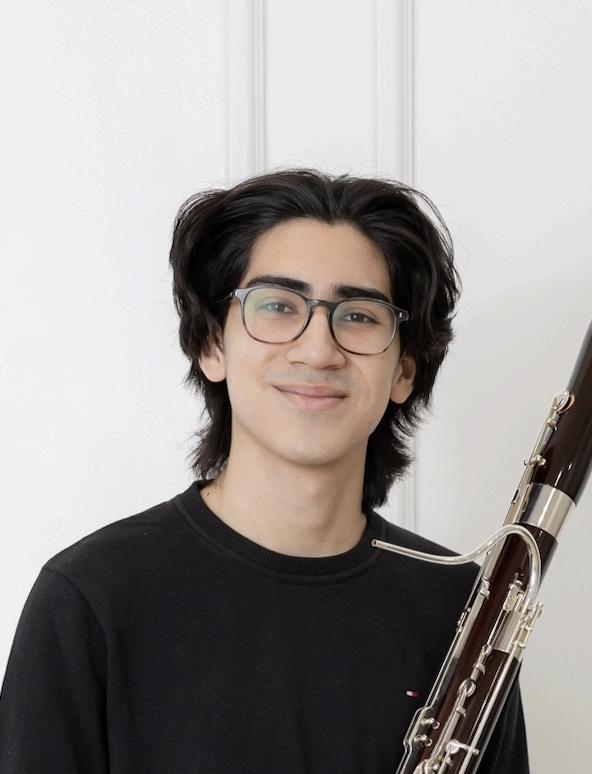
Damián Carrasco, bassoon
Friday, July 17th, 2026
7:30pm Forest Oaks Community Center
Humoreske……………...
Zemlinsky (1871-1942)
Le Tombeau de Couperin…………………………………………………………………………..Maurice Ravel
I. Prelude (1875-1937)
II. Fugue arr. Mason Jones
III. Menuet
IV. Rigaudon
Carmen Suite . .Georges Bizet Aragonise (1838-1875)
Habanera arr. Jean-François Taillard Séguedille
Les Dragons d’ Alcala Toréador
Afro-Cuban Concerto Valarie Coleman Afro (b.1970)
Musicians
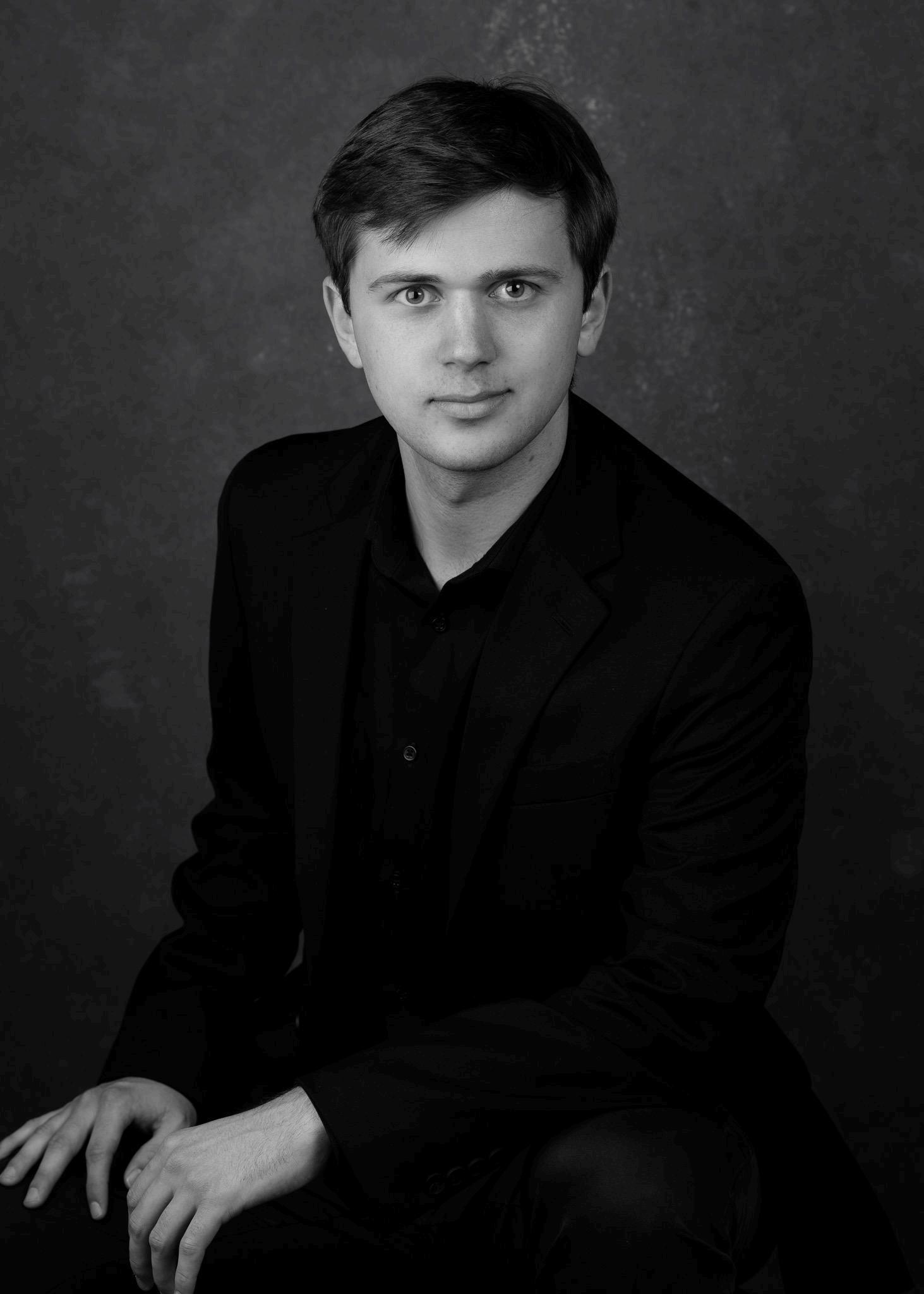
Zachary Gray is a composer, flutist, and educator from Austin, Texas, currently studying composition at the University of Texas at Austin. He has performed with ensembles such as the UT Wind Ensemble, UT Opera Orchestra, and Longhorn Marching Band. His fascination with music extends into all facets of his life, whether it be through flute beatboxing, singing barbershop tags with friends, or cranking up the speakers in his car and jamming out to Kendrick Lamar. Zach also believes strongly in the importance of passionate and accessible music education, a belief strengthened by his work with KMFA, Austin Chamber Music Center, and Floot Fire. In his free time, he enjoys running, juggling, and having long conversations with his imaginary friends.
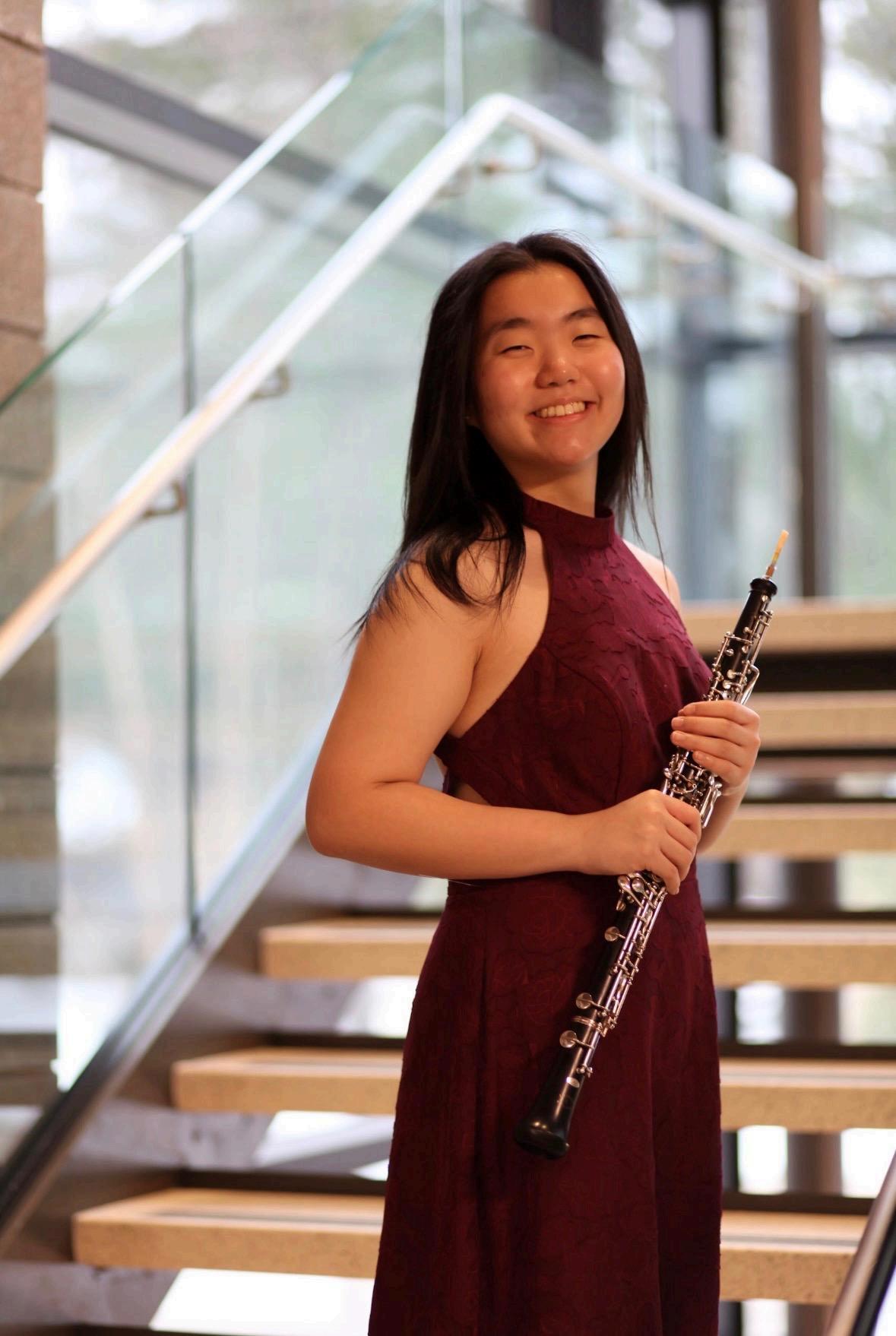
Julianne Choe began playing the oboe after hearing the iconic "Duck Theme" from Peter and the Wolf. A recent graduate of Interlochen Arts Academy, she will begin a dual degree in Oboe Performance and Psychology at Rice University this fall She has enjoyed her summers at programs such as Hidden Valley Music Seminar and Domaine Forget de Charlevoix, and has performed as principal oboe with the Interlochen Orchestra, Austin Youth Orchestra, and the TMEA All-State Symphony Orchestra Outside of music, Julianne enjoys baking, sleeping, spending time with friends, and is a proud Minions enthusiast. She hopes you enjoy today's performance!
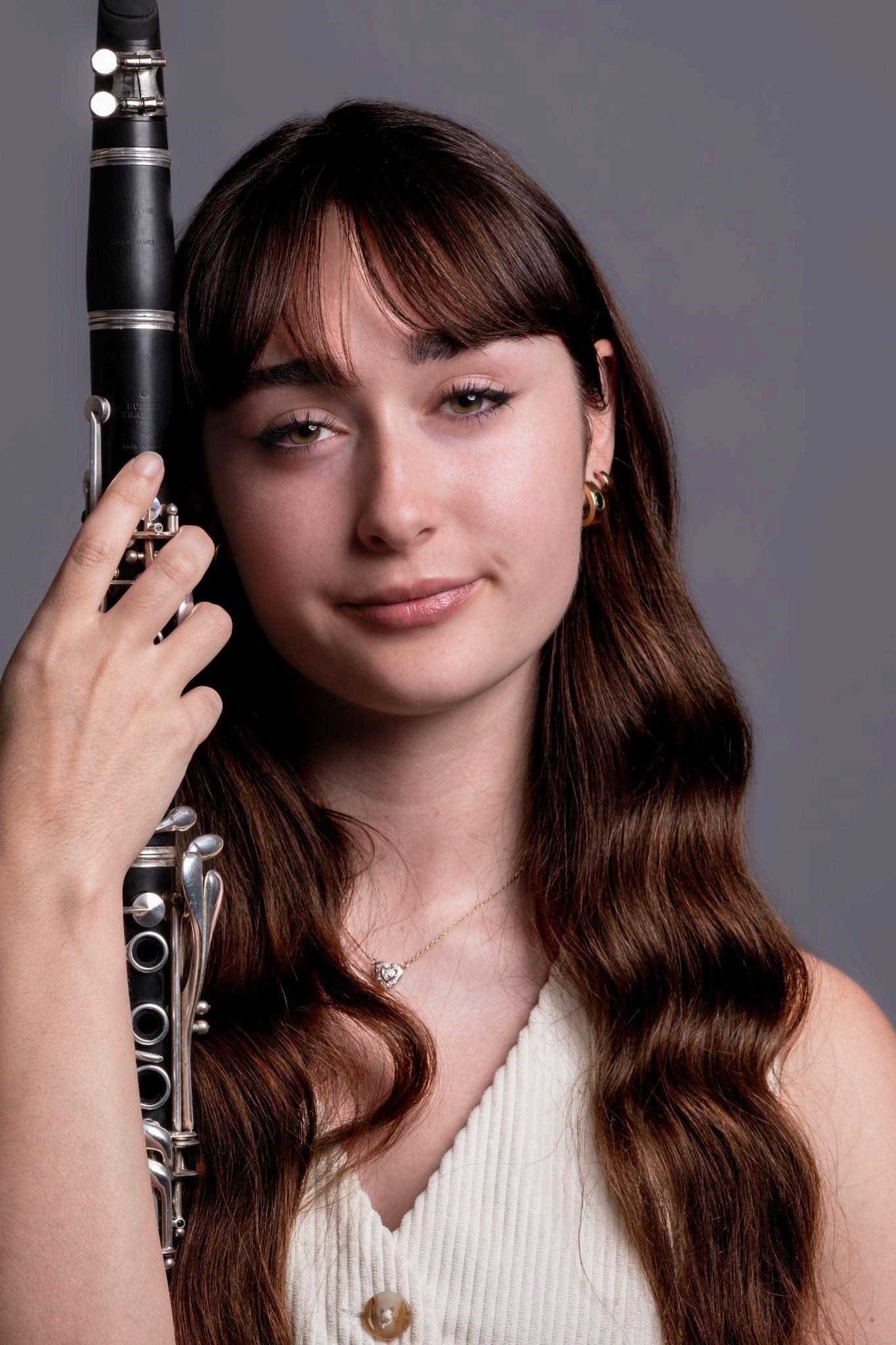
Natalie Eddings grew up in Cedar Park, Texas, and is currently studying Music Education at The University of Texas at Austin's Butler School of Music. She has been a member of the UT clarinet studio for the past two years, studying under Dr. Tyler Webster and the incredible Professor Jonathan Gunn. While her primary focus is becoming an educator, Natalie is a music scholarship recipient and has performed with numerous ensembles, including the UT Chamber Orchestra, UT Wind Ensemble, chamber ensembles, and the UT Clarinet Choir, with which she performed at the Texas Music Education Association Convention. She is currently teaching private lessons and working as a marching band technician at Cedar Park High School, drawing on her experience as a former member of the
Boston Crusaders drum and bugle corps. Natalie dreams of becoming an inspiring teacher, and someday living with her future dog and cat, Maple and Syrup!
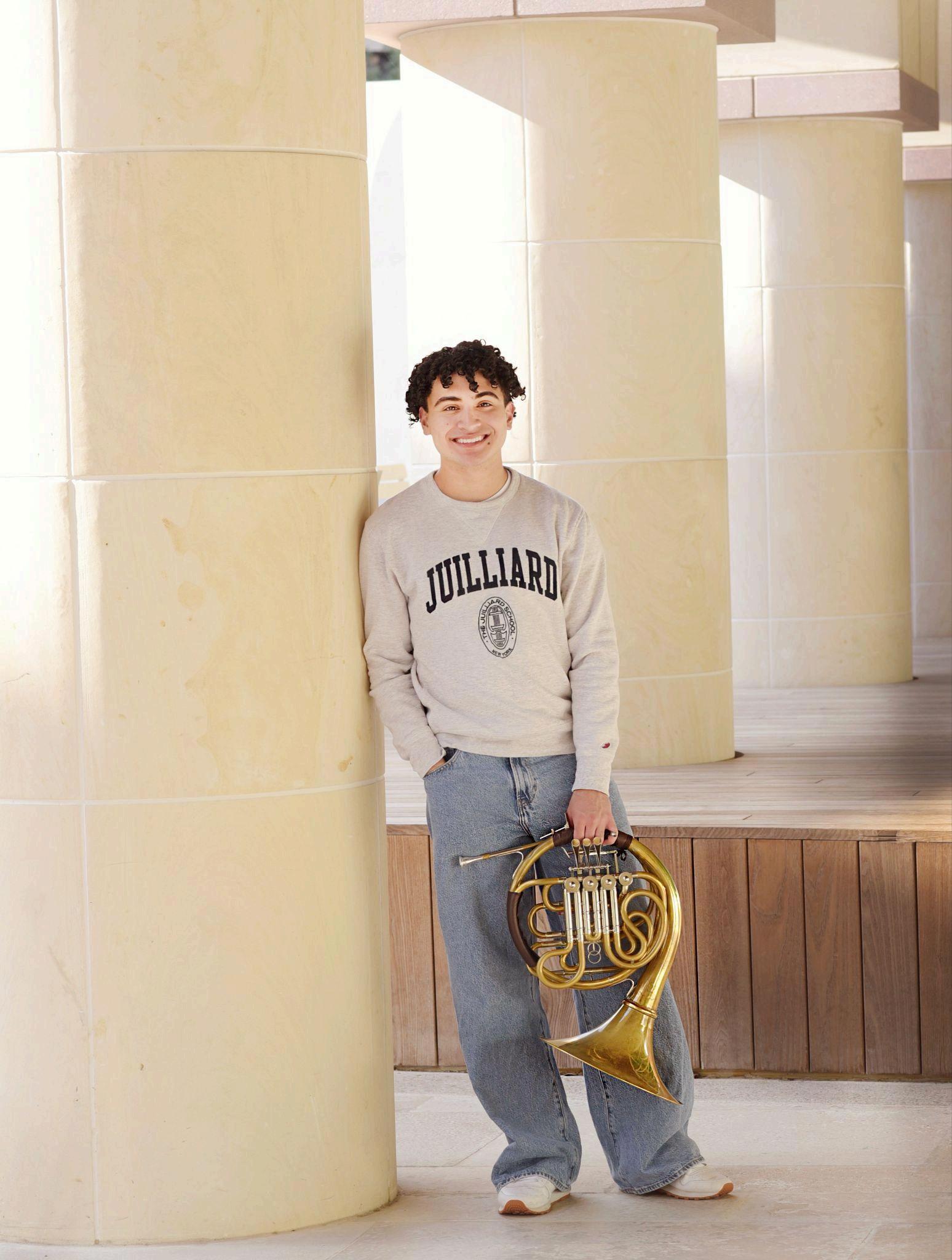
ar Delgado is currently a third year undergraduate at the liard School studying under Erik Ralske. Oscar is a proud pient of a Jerome L. Greene Fellowship at The Juilliard School is looking forward to the opportunities to grow as a musician ughout the coming years. In his free time when he is not cticing, he enjoys spending time in nature, running, listening to ic, and talking with his friends.
Damián Carrasco is a bassoonist from Cedar Park, Texas currently studying bassoon performance at the Curtis Institute under Daniel Matsukawa and Julia Harguindey Prior to that, he graduated from the Interlochen Arts Academy where he studied with bassoonist, Dr Eric Stomberg He's performed with numerous youth orchestras, including being selected to the National Youth Orchestra of the United States of America for their 2026 European tour and serving as principal of the World Youth Symphony Orchestra and the Austin Youth Orchestra. A passionate chamber musician, he's created and joined groups performing both nationwide and internationally. He's attended festivals such as Le Académie du Domaine Forget de Charlevoix and the Interlochen Arts Camp. In his free time, Damián likes using his height to his advantage while playing extremely competitive afternoon pickup pickleball.
Program Notes
Alexander von Zemlinsky (1871-1942)
“Humoreske”
Humoresque was among the last works composed by Alexander von Zemlinsky before his death in 1942. Conceived as “school pieces” for the sole purpose of earning financial support, the work’s light-heartedness and charm are a far cry from the usual depth and darker themes explored in his music; the production of his opera Kandaules was cancelled by the Metropolitan Opera due to its explicit sexual content. Zemlinsky and his wife fled Vienna at the onset of the Anschluss in 1938 and spent their exile years struggling to make a living in the United States. Displaced from his homeland, Zemlinsky also had difficulty finding acceptance from his fellow composers.
Maurice Ravel (1875-1937)
Le Tombeau de Couperin arr. Jones
Ravel’s Le tombeau de Couperin represents a rich tapestry of layered meanings Composed as a six-movement suite for solo piano between 1914-17, Ravel originally intended this work to be an homage to the 18th-century French composer François Couperin But his motivations changed dramatically having witnessed the horrors of WWI first-hand as a military nurse ’ s assistant. Ravel dedicated each movement of the suite to a fellow soldier who was killed in the war. The title takes on a double meaning in that Tombeau literally translates as “tomb”, but also refers to a collection of works in memorial to a deceased person. One might be surprised to hear Ravel’s tribute to the fallen as music of such sprightly and seemingly light-hearted character. As surmised by Marguerite Long, a pianist whose husband was among the work’s dedicatees, she wrote the following in defense of Ravel’s untraditional compositional approach:
“The dead are unhappy enough as they are. Is it necessary to dedicate laments to them forever? When a musician of genius gives them the best of himself and at the same time something they would have enjoyed, isn’t that the most moving tribute he can make?”
Indeed, this beautiful collection of movements captures a very personal and poignant perspective. Ravel celebrates the joy and warmth of his departed friends’ memories through the influence of traditional baroque dance styles. In 1970, Mason Jones, former principal horn of the Philadelphia Orchestra, re-orchestrated selections from the piano and orchestral versions for the wind quintet. This work is amongst the most frequently played transcriptions for the quintet ensemble, which speaks well for the idea of reinvention. Both
performer and listener alike are given a wealth of musical material to explore; with every new arrangement, Le tombeau de Couperin simply continues to explore new meaning and depth.
Georges Bizet (1838-1875)
Suite from “Carmen” arr. Jean-François Taillard
Carmen is an opera in four acts by the French composer Georges Bizet. The libretto was written by Henri Meilhac and Ludovic Halévy, based on the novella of the same title by Prosper Mérimée. The opera was first performed by the Opéra-Comique in Paris on 3 March 1875, where its breaking of conventions shocked and scandalised its first audiences. Bizet died suddenly after the 33rd performance, unaware that the work would achieve international acclaim within the following ten years. Carmen has since become one of the most popular and frequently performed operas in the classical canon; the "Habanera" and "Seguidilla" from act 1 and the "Toreador Song" from act 2 are among the best known of all operatic arias.
The opera is written in the genre of opéra comique with musical numbers separated by dialogue. It is set in southern Spain and tells the story of the downfall of Don José, a naïve soldier who is seduced by the wiles of the fiery gypsy Carmen. José abandons his childhood sweetheart and deserts from his military duties, yet loses Carmen's love to the glamorous torero Escamillo, after which José kills her in a jealous rage. The depictions of proletarian life, immorality, and lawlessness, and the murder of the main character on stage, broke new ground in French opera and were highly controversial.
Valarie Coleman (b. 1970)
“Afro” from the Afro-Cuban Concerto
Afro-Cuban Concerto is a work that focuses on Afro-Cuban rhythms, the feel of Santeria worship, and the virtuosity of wind instruments (Santeria worship has its origins in the Caribbean and is based on the Bantu and Yoruba beliefs of Western Africa combined with elements of Roman Catholicism). Often mistaken for a ‘neo-classic’ work due to its harmonic structure, the essence within the Concerto is purely African and Cuban. All African-derived music has a basic structure from which all music from every genre (including classical) has benefitted. It is the feel of spirituality, passion, and rhythmic precisions that brings the essence of Afro-Cuban music to life in this piece.