



Kevin Parker, DCA Executive Vice President

Kevin Parker, DCA Executive Vice President
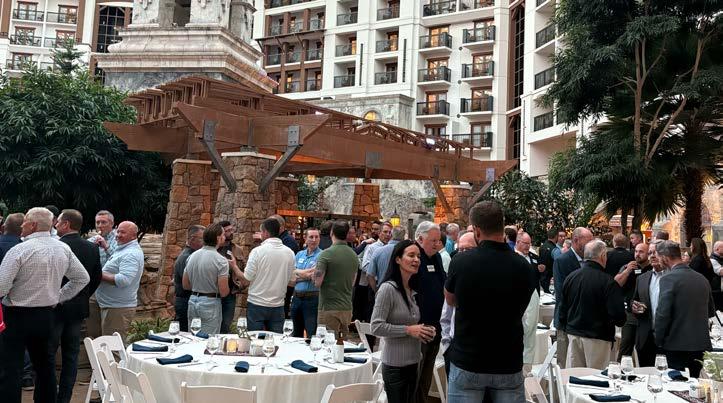
The DCA concluded its final major meeting of the year, the Fall Meeting in Grapevine, Texas, hosted at the Gaylord Texan Resort & Conference Center. The property’s expansive, glass-covered atrium—modeled after the San Antonio Riverwalk—offered a comfortable environment for members to connect and close out the year’s business.
The Welcome Dinner on Wednesday, October 29, took place on the patio outside where members gathered for networking and a Texas-style barbecue dinner. The Gaylord Texan provided consistently strong hospitality throughout the event, earning positive feedback from attendees.
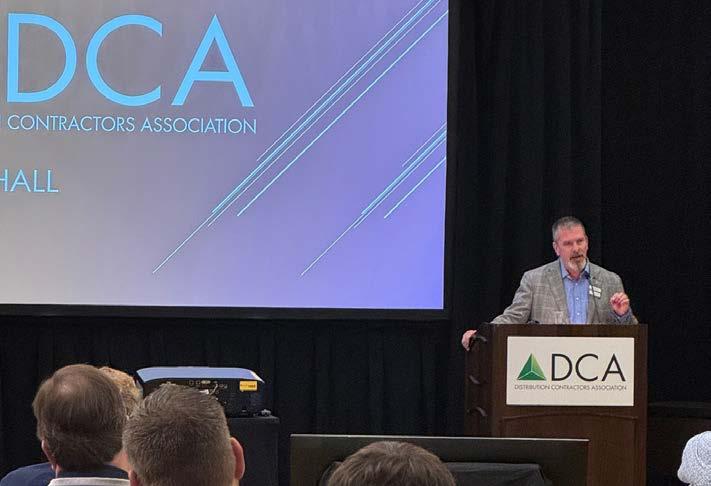
Business began with the Town Hall and Business Session on Thursday morning, where long-time member and DCA Past President Kevin Parker was introduced as the new executive vice president of the DCA. Parker offered comments on his history with the DCA and its impact
on his life and his family, earning a round of applause. After a brief review of membership notes, and upcoming events, Parker introduced the morning’s keynote speaker.
Gene Marks is no stranger to the DCA, having spoken at past gatherings to much acclaim for the CPA and columnist’s unique blend of humor and practical insight on matters economic. In “Beyond 2025: How to Thrive, Not Just Survive in 2026 and Beyond,” Marks began with a bit of trivia on things that are old, drawing an unsettling connection between Pharaoh Ramses II and Rolling Stones guitarist Keith Richards. Tying that in to Marks’ obsession with centuries-old businesses, he observed that the secret to their long-term survival is looking farther ahead as they plan for the future. Giving some perspective on the sheer size of the U.S. economy, he advised focusing on real, reliable data to make projections. Sources ran the gamut from the Institute for Supply Management (ISM), the American Institute
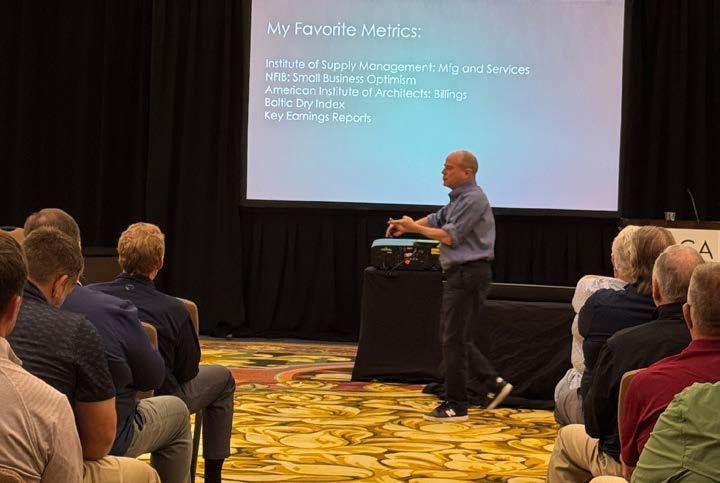
of Architects’ monthly billings index, and the Baltic Dry Index to Alan Greenspan’s personal favorite — stats on men’s underwear sales. Knowing what the world is really buying more or less of in hard times is an excellent clue for navigating forward through a crisis.
Looking at general indicators for the U.S. economy, Marks pointed out that the banks remain strong, and the retail sector is still optimistic. Jobs are down, but pay is up, and the labor market remains steady. Tax benefits from Republicans’ “Big Beautiful Bill” are generally good for business owners and individuals, with many credits and deductions made permanent. Regarding immigration, he advised business owners to get their paperwork ready, as Immigration & Customs Enforcement (ICE) will be increasing worksite enforcement.
True to his practical side, Marks came with a list of actions for the audience to take:
• With health insurance growing at about 9%/yr., get a level-funded plan.
• Leverage secure tax credits, loans, Roth IRAs, etc.
• Evaluate flexibility.
• Set up same-day pay.
• Do succession planning (more than half of all business owners are over 55) – employee stock ownership plans (ESOP), real estate, whole life insurance, etc.
• Go after more government work: (www.apexaccelerators.us).
• Invest in new technologies – artificial intelligence (AI), augmented reality, drones, robots, autonomous vehicles, etc.
As always, Marks’ advice was sound, logical, timetested, and delivered with just the right dose of humor. He will no doubt be welcomed back to DCA as the world continues to change.
The Future Leaders Committee, as sponsors of the DCA Deep Dive discussion series, volunteered to abbreviate their meeting to make room in the schedule for DCA’s first live Deep Dive session. After some brief tips on rideshare safety and the benefits of participation in
Deep Dives, they yielded the floor to the Trenchless/ HDD Committee, which provided the speakers for the Deep Dive: Siggi Finnsson (Digital Control Incorporated) and Cory Maker (Ditch Witch). After some housekeeping notes and brief subcommittee updates, Finnsson and Maker took center stage.
This session’s Deep Dive focused on “HDD Best Practices: Interference Happens – But It Doesn’t Have to Derail Your Readings.” More than 100 attended in person, with another 25 or so online. The presenters began with an overview of the equipment used to detect underground objects, how data signals work and what they reveal, and the importance of proper training on the equipment (preferably hands-on) to use it to its maximum potential. A round of questions about training, equipment capabilities, and potential errors followed. Finnsson and Maker then went into greater depth about the nature of interference: what it is, potential sources, passive vs. active, frequency vs. signal strength, and recognizing problems. Finnsson finished up with a few illustrative scenarios, such as no clock or pitch, or varying depth readings, and discussed mitigation techniques the contractors could have used in each case. The next Deep Dive session was scheduled for Dec. 9, 2025.
The Membership and Engagement Committee took up the subjects of recognizing at-risk members, succession planning for company representatives, and possible recruiting of non-gas utility contractors. The committee also debuted a new recruiting postcard, which had already garnered some notice on the tables at the Welcome Dinner the night before.
The Safety and Risk Management Committee discussed new items in the benchmark survey, the safety director awards, and traffic control practices.
Temporary suspension of the Leadership Development Program due to low enrollment led the topics at the Workforce Development Committee meeting, leading to some alternate suggestions for training opportunities. Partnership with vocational/technical schools and military and prison transition programs also generated some productive feedback from the audience. A proposal to merge this committee with Future Leaders was tabled for the time being.
The Innovation and Technology Committee presented the results of its artificial intelligence (AI) prompt comparisons between the prominent platforms Claude, Grok, and ChatGPT. All three produced usable output when given industry-specific prompts, including
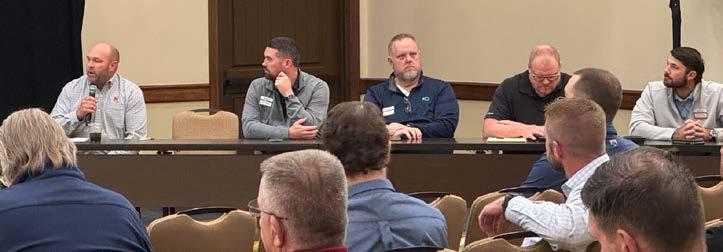
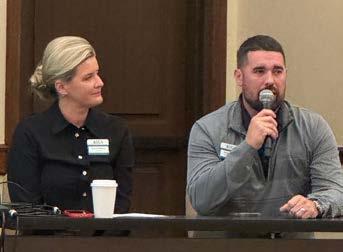
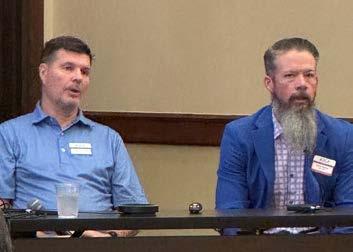
several suggested on the spot by the members, and the committee resolved to determine next steps for implementation. They also noted increasing talk of automation at equipment and trade shows and interest in all-electric drilling rigs coming out of Europe.
The Government Relations Committee took its nowcustomary place as the final business meeting of the day, reviewing plans for the Southeast and Southwest regional group Washington, D.C., fly-in coming up on November 18. A Northeast group fly-in is still in the planning stages for some time this winter. The Pipeline Safety Reauthorization update showed progress in the House and Senate, but GIS recommendations are still being left out and more pressure is needed. The committee also discussed possible ramifications of the SPEED Act, permitting problems on the West Coast, OSHA heat
standards, and the effectiveness of the Muster software for grassroots advocacy.
The meeting concluded with a cocktail reception once more on the Yellow Rose Pavilion. Many members lingered a while to muse over the day’s events before going their separate ways in search of dinner.
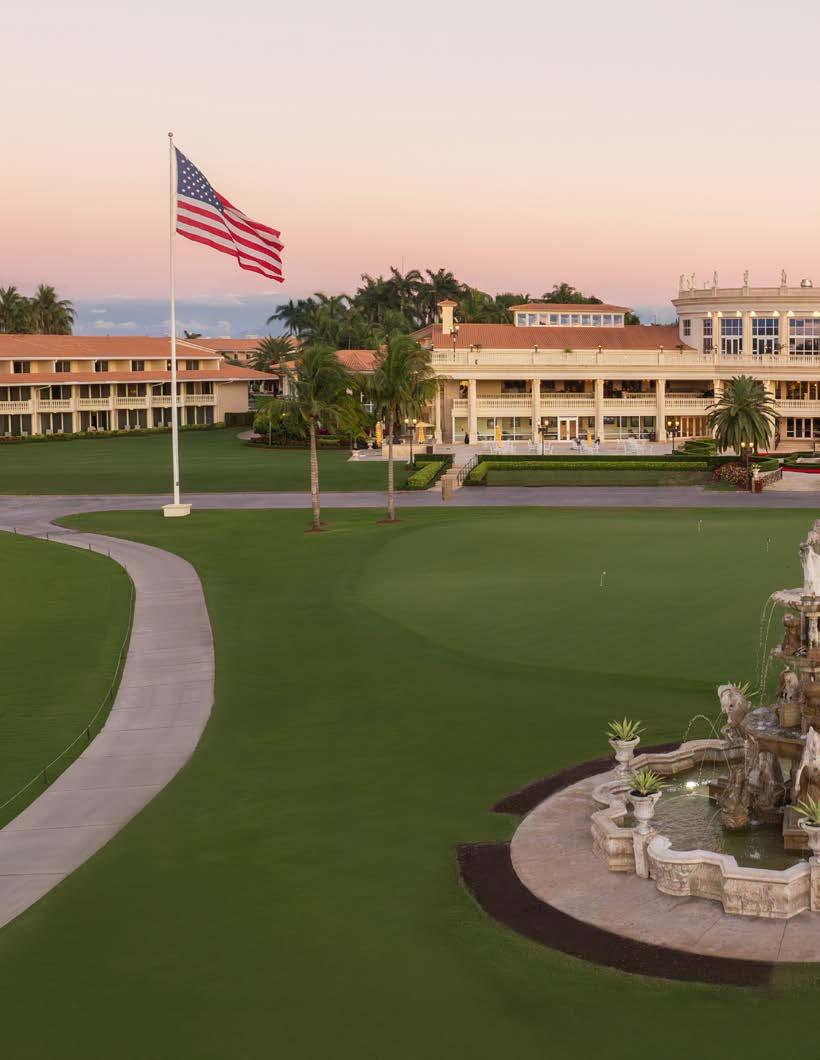
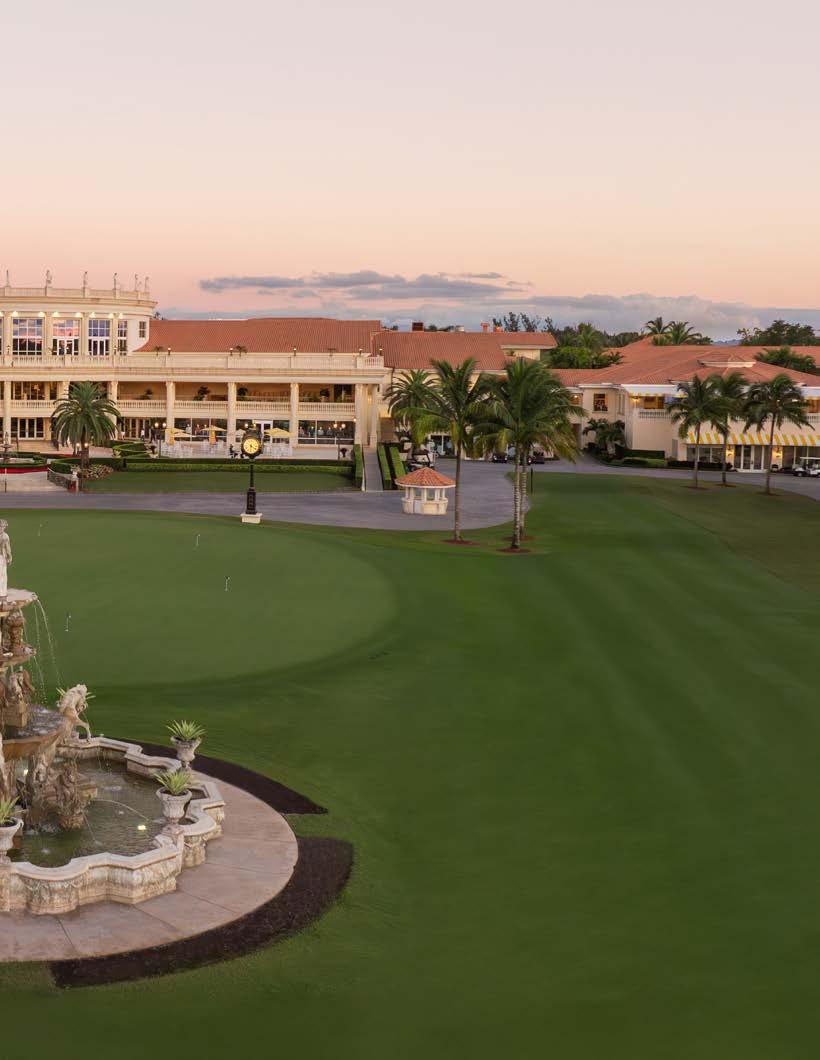
The DCA will convene again next for the 65th Annual Convention at the Trump National Doral Miami in Florida, February 23–27, 2026. s
October 29 – 31, 2025 Meetings

The DCA Board of Directors and its seven working committees convened October 29–31, 2025, to advance key initiatives in safety, workforce development, innovation, advocacy, and member engagement. Discussions throughout the week reinforced DCA’s strategic priorities and the essential role committees play in shaping the industry’s future.
The 2025 DCA Board of Directors met on Friday, October 31. The BOD discussed a wide range of subjects primarily pertaining to next year, 2026. A status report was provided on the ongoing transition of leadership at the DCA, along with updates on the 2026 Annual Convention in Miami, Safety Congress, and Mid Year Meetings.
Leadership: As stated in the previous DCA News, Doug Reeves (Primoris Services Corporation) took on the role of DCA President when Dan Carson stepped down in July. Reeves will turn the president’s gavel over to Andy Miller (Alex E. Paris Construction) at the 2026 Annual
Convention. The Nominating Committee met at the Fall Meeting and nominated Chad Davis (Miller Pipeline) as the incoming Vice President. He will take Miller’s current role. The committee nominated Rob Hotz (ECI Contracting) as incoming treasurer.
Convention schedule: Discussions took place as to the changes to the 2026 Convention schedule, in particular to the committee meeting structure and allocation of time now that the convention is one day shorter than previous years.
A quick review of the planning status for the 2026 Safety Congress to be held in Savannah, Georgia, took place, as well as an update on the planning for the 2026 Mid Year meeting in Lake Tahoe, California. All planning is on or ahead of schedule.
The BOD also decided to hold the 2026 Fall Meeting in Dallas; however, the location of the host hotel will likely change. DCA staff will be working on a new location over the coming months.
Finally, a lengthy discussion took place on the working committees focused on possible duplication of efforts by some of the committees and the time allocation for each meeting, as several committees are slotted for one hour and often finish up early.
The Future Leaders Committee focused on strengthening networking, enhancing professional development, and improving accessibility for first-time attendees. Laura Mason welcomed participants and reiterated the committee’s commitment to creating an approachable environment that supports emerging leaders. Members reviewed the continued success of the DCA Deep Dive webinars, noting strong participation and positive momentum across sessions featuring topics such as AI, mental health, and leadership. Attendees were encouraged to suggest future webinar themes for 2026 and to volunteer as presenters.
Networking tools and mentorship opportunities were also explored. Members were reminded to update DCA app profiles to strengthen connections within the community, and the committee explored developing a formal mentorship initiative to support new and returning attendees at DCA events. These efforts reflect a growing emphasis on cultivating leadership, broadening engagement, and fostering collaboration across the association.
The Government Relations Committee reviewed significant legislative and regulatory issues shaping the underground infrastructure sector. Updates on pipeline safety legislation highlighted the need to advocate for GIS-grade mapping practices, included in the House version of the bill but absent from the Senate version. Upcoming fly-ins will focus on advancing these provisions and strengthening relationships with lawmakers and allied partners.
Permit reform remained a central topic, with discussion on the SPEED Act and persistent challenges posed by state-level delays. Members also examined changes in EPA authority over waterways, noting the operational and financial impacts on state agencies and utilities.
The committee addressed growing energy demands driven by AI and data-center expansion, emphasizing natural gas as a critical resource in meeting future load requirements. Members also reviewed grassroots advocacy strategies, including the use of Muster software to mobilize personalized communications. The session concluded with concerns about forthcoming OSHA heat exposure regulations and the need for a consistent,
practical approach that accounts for existing employerled safety measures.
The Innovation & Technology Committee centered its discussion on the growing use of AI in safety communications, training materials, and operational decision-making. Committee leaders demonstrated how different AI engines respond to prompts related to toolbox talks, equipment protocols, and safety standards. Members acknowledged the promise of AI while noting limitations in accessing manufacturer-specific manuals and the need for models trained on company-approved content.
Broader conversations highlighted the acceleration of automation technologies across the industry, including advancements in small-diameter fusion equipment and workflow management tools that integrate AI for project tracking and data analysis. Attendees also shared insights from the 2025 Utility Expo in Louisville, Kentucky, underscoring the value of collective intelligence in identifying emerging trends.
Looking ahead, the committee plans to restructure its subcommittees to focus more deeply on AI, automation, and field-ready innovation. Members were encouraged to contribute ideas and participate in upcoming Deep Dive webinar topics that tie directly into these advancements in technology.
The Membership & Engagement Committee concentrated on recruitment and retention strategies to expand and strengthen the association’s membership base. The group reviewed trends in meeting attendance and emphasized the importance of succession planning and engaging younger professionals within respective member companies. Members recommended developing more accessible reporting tools to track engagement patterns.
Ongoing declines in contractor membership since the COVID-19 pandemic were discussed, along with the need for proactive outreach to non-renewing members to better understand their reasons for disengagement. Participants endorsed invitations for potential members to attend DCA events at no initial cost, believing firsthand exposure to the community strengthens recruitment value.
A new promotional flyer featuring member testimonials and a QR code was introduced to support outreach efforts. To access the new flyer or to share DCA’s
(continued on pg. 10)
membership application with prospects, please visit: https://dcaweb.org/membership
The committee also discussed the importance of maintaining balanced leadership within the group, noting the need to fill an upcoming contractor co-chair vacancy. Members were reminded to submit jobsite photos to info@dcaweb.org for promotional use as DCA expands its visibility at industry events.
The Safety & Risk Management Committee addressed several critical topics, including increasing participation in the annual benchmarking study and Safety Awards submissions. Members discussed strategies to raise survey engagement — targeting 70-75% participation — and emphasized the importance of ensuring that safety directors and managers receive communications directly.
The committee also reviewed updates to the Safety Person of the Year and Safety Director of the Year awards, including whether foremen should be recognized within the program or through a separate category. It was determined that foremen are qualified to submit for the Safety Person of the Year award and that a separate category would not be developed at this time. The nomination period for both awards is open through Friday, February 20, 2026. For more information, contact Jacob Adams Mireles (jadams@dcaweb.org).
Data normalization processes for utility damages and clarity in vehicle incident reporting were also discussed, reinforcing DCA’s commitment to transparency and meaningful benchmarking. Members highlighted the need for updated safety resources on the website, as well as feedback on HDD incidents, traffic control practices, and potential training and certification priorities for future Safety Congress programming. DCA staff is exploring the accreditation process for CEUs to be offered at the 2026 Safety Congress in Savannah, Georgia, scheduled to take place April 8-10, 2026, at The Kimpton Brice Hotel. Registration for the Safety Congress will open in February 2026.
The Trenchless & HDD Committee focused on website updates, best-practice development, and long-term planning. Javen Moore called for volunteers to help modernize the committee’s web content with new images and current information. Siggi Finnsson (Digital Control Inc.) reported that work is underway on a white paper addressing HDD best practices, with completion targeted before the Annual Convention in February.
Members expressed support for the committee discussing the consolidation of two existing
subcommittees to improve alignment and reduce duplication. Priorities for the 2026 charter update were also reviewed, along with actions to support ongoing education for engineers and strengthen safety-related initiatives. The meeting was shortened to accommodate a hybrid offering of DCA’s Deep Dive Webinar series broadcast live from Grapevine. Finnsson and Cory Maker (Ditch Witch) presented an insightful discussion on how to overcome interference in walkover locating systems with engaging questions from members both online and in the room at the Fall Meeting.
The Workforce Development Committee addressed major workforce challenges and reviewed updates to leadership training programs. Due to low enrollment, the Leadership Development Program has been paused, and short, skills-focused leadership sessions will be piloted at the Mid Year Meeting in 2026. These sessions will be open to all attendees, including spouses, with participant feedback guiding future programming.
The committee reviewed national workforce trends, including SkillsUSA’s ongoing development of an energy cluster and opportunities for DCA involvement once the program expands. Members discussed engagement with events such as the MEA natural gas rodeo and emerging training partnerships with community colleges, including San Diego Community College and Wabash Valley College.
Significant time was devoted to the need for improved outreach to high school students, many of whom are unaware of career paths in natural gas and underground construction. Members emphasized greater collaboration with unions and technical schools, highlighting successful models that transition military personnel and students into trade careers. Updates were also provided on the association’s workforce program tracking spreadsheet and ongoing efforts to maintain visibility of gas-related training programs nationwide.
DCA’s working committees continue to drive progress on the association’s strategic objectives by addressing evolving challenges, strengthening industry collaboration, and advancing safety, workforce, and innovation priorities. Their work ensures that DCA remains a trusted voice for quality contractors and a catalyst for industry improvement.
The next meetings of the Board of Directors, Leadership Council, and working committees will take place at the 65th Annual Convention, February 23-27, 2026, in Miami, Florida. To learn more, please visit: https:// dcaweb.org/events/convention s

Please mark your calendars for the 2026 DCA Safety Congress, taking place April 8–10, 2026 at The Kimpton Brice Hotel in historic Savannah, Georgia.
This annual gathering brings together safety directors, field leaders, operational excellence teams, and industry innovators for two days dedicated to strengthening safety performance across the distribution and underground construction sector.
Why shouldn’t safety professionals miss this event?
The DCA Safety Congress is where the industry moves safety forward. Attendees can expect:
• High-impact sessions on emerging risks, SIF prevention, HECA, human performance, and energy-based hazard recognition
• Programming that connects safety, productivity, and workforce engagement
• Expert-led discussions from leading safety practitioners and manufacturers
• Real-world case studies and tools ready for immediate field application
• Unmatched peer collaboration, where contractors share trends, insights, and lessons learned
• Recognition of industry leadership: Safety Director of the Year and Safety Person of the Year
• NEW in 2026: The planning committee is coordinating with BCSP guidelines to ensure your participation in the 2026 Safety Congress can be counted as Category 6 points for your renewal needs.
DCA’s Annual Safety Congress is a “must-attend” event for safety professionals each year. The two-day event attracts safety professionals from across the country and industry to discuss different challenges and problems utility contractors face with projects, from creative training ideas to managing a safety culture within your company. More details, registration information, and the full agenda will be released by February 1st. Please contact DCA’s Director of Membership, Jacob Adams Mireles at jadams@dcaweb.org for additional details. s
By Robert Carpenter, Editor-in-Chief
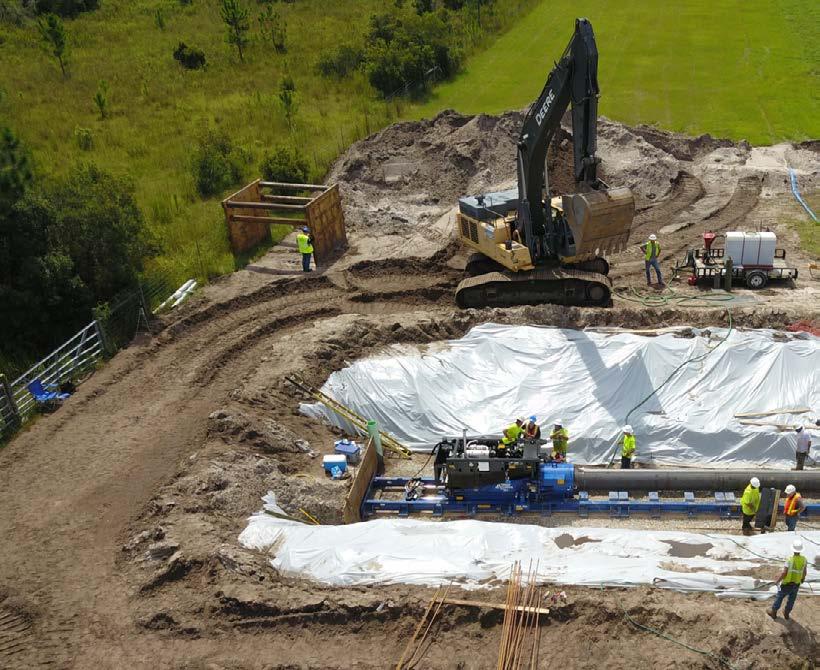
A year ago, the horizontal directional drilling (HDD) market was in the midst of accelerating through another very strong year – for small-to-medium rig operators. Fiber construction continued to push to another level of demand and HDD, the construction medium seemingly made for fiber installation, was desperately trying to keep up with booming project appetites across America.
Further, investments by power utilities to strengthen their grid meant that many overhead lines were being transferred underground for both distribution and even transmission lines. All this added more pressure to perform for the HDD industry.
Yet, the large rig segment of the HDD industry remained tentative, largely due to struggling energy markets. Pipelines were stuck in malaise of energy politics
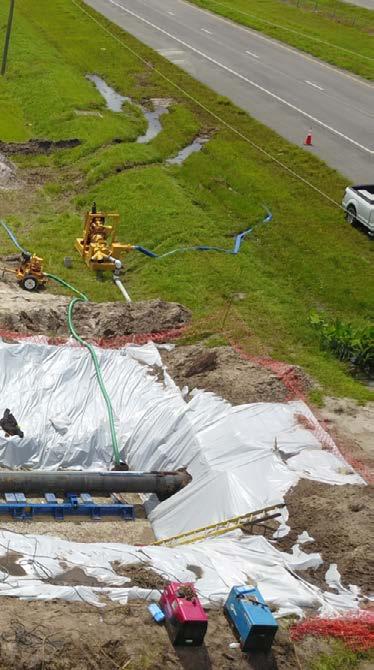
resulting in little to no new pipeline construction. Large rig work was surviving, depending on water, electric transmission and a host of other applications. But to prosper, energy pipeline projects were the missing ingredient for the large rig market.
Fast forward to the pending summer of 2025 and in many ways, not a lot has changed. Small rig operators are being stretched to their limits even as new contractors are entering the HDD market in hopes of riding the fiber wave to prosperity. The good news is that large rig activity is gearing back up with the rebirth of pipeline construction opportunities.
“Like any industry, HDD has challenges and issues. But overall, it is a very active industry with opportunities,” said this Mountain states contractor. “It’s a good time to be a driller.”
But 2025 carries different dynamics. The distribution chain for construction equipment has leveled out from previous problems. Most small rig contractors, primarily working with fiber and power, report they are working at near capacity and turn-around time in the supply chain for fiber installation equipment is sometimes a little slower than they would like, but fortunately it is improving. Overall, contractors believe they are keeping pace with the speed of construction demanded by fiber owners.
However, one of the problems existing contractors report is that filling some of the excess capacity needed to keep fiber installation rolling are new contractors, just entering the market.
“There are enough new companies jumping into fiber work that the market remains too competitive,” observed this Southwest contractor. “The problem is too many of the new guys don’t yet have the business savvy for HDD and are leaving money on the table, rushing jobs and not working safe. That hurts everyone as it keeps margins
(continued on pg. 14)
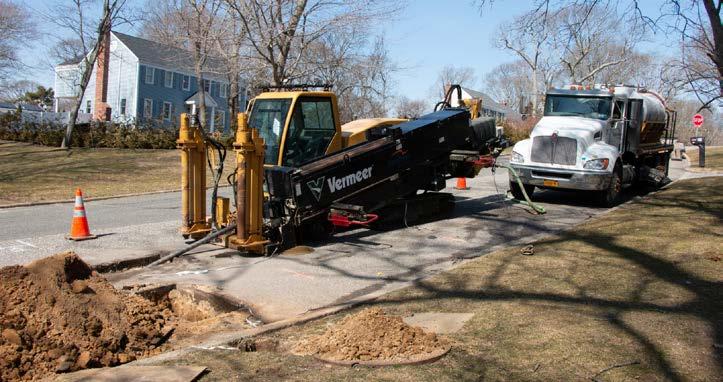
too tight and it can be really hard to stay profitable. The fiber companies don’t seem to care about maintaining a safe industry and high quality work; they just wanted fiber in the ground – now!”
For more than 27 years, Underground Infrastructure has been conducting research into the unique technology and applications of HDD and its impacts upon the utility and pipeline markets. This research effort was conducted during March, April and early May of 2025. It polled U.S.
contractors that actively own and operate HDD units to enable a statistical portrayal of the market, from small rigs to large and jumbo models.
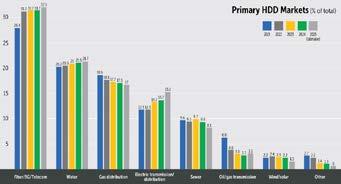
The primary HDD markets are fiber/5G with a 32.5 percent market share, water at 21.7 percent share. Gas distribution fell slightly to 17 percent, electric work grew to 15.1 percent, sewer fell to 8.1 percent, oil and gas transmission pipelines drilling is expected to experience an increase to 3.2 percent, wind and solar work fell to about 1.5 percent of the market and finally, all other applications comprise .9 percent of the market.
The workforce problem that has plagued the HDD market in recent years is still a major issue, though most contractors report a slight easing of the labor pool tightness. “Is it [labor] still a big problem? Sure, but nothing like it has been,” reported this contractor from the Southeast. Another contractor from the Southwest reports that “finding good labor is always a challenge and we’re having to be creative – like everyone – to attract good help. But by and large, we’re getting by.” And yet another contractor from the Midwest stressed that “in our region, people see HDD crews installing fiber everywhere. That’s actually brought us several inquiries from people looking for a better paying career.”
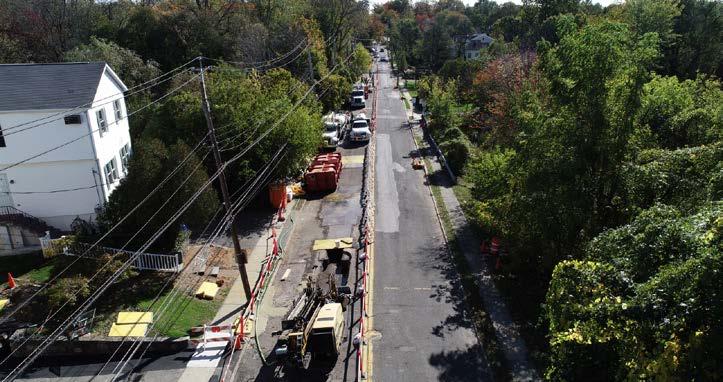
Big rigs return
Now, too, the large rig contractors are gearing up with new projects emerging and a positive outlook that the
pipeline market will be strong – at least in the near future. The past four years were marked by a variety of factors that negatively impacted the large rig HDD segment. Most pronounced was the President Biden administration heavily emphasizing environmental and government control through regulation over the energy industry. In essence, alternative energy options received staunch support through federal funding, tax incentives and favorable rules/regulatory support, while traditional forms of energy ran into increasing numbers of road-
blocks via incessant litigation, regulation, restrictions and layers of red tape. Famously, there was even a court case that allowed a previously approved, constructed and up-and-running pipeline to be shut down for renewed EPA evaluation.
However, the re-election of Donald Trump as the nation’s 47th president has brought major changes for the pipeline and energy markets. Inhibitors to growth have largely been lifted and alternative energy markets are no longer subsidized. The energy playing field has been leveled, resulting in pipeline work pushing ahead for the first time in four years. Shelved pipeline projects are being reconsidered and even reintroduced, while new opportunities are explored. However, for now, most of the work is primarily to allow delivery of oil and gas wells and reserves that have been pent up since 2021.
Rig manufacturing is approaching full recovery from the market supply upheaval brought on by COVID in 2020. Only minor slowdowns exist and those are rapidly fading away. For the fiber and power markets, with their white-hot project demands, rig and equipment manufacturers now operate with double shifts and some have even added third shifts. Conventional lead times are now in place for the many contractors looking to secure replacement equipment or growing their fleets.
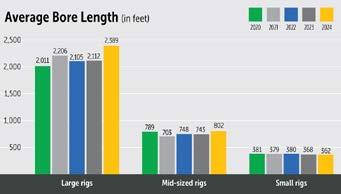
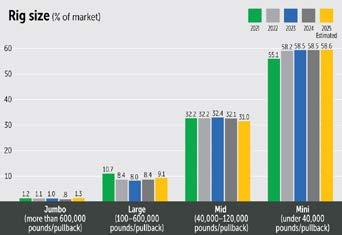
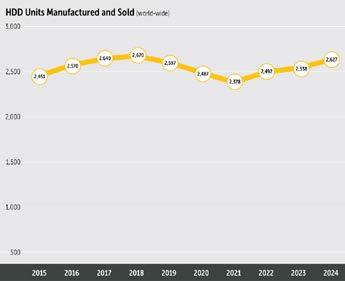
To that end, overall rig sales increased 3.4 percent in 2024, and projections are for sales to climb even further to 3.9 percent in 2025 with a world-wide total of 2,734 rigs expected to reach the market. This will be the most rigs sold, globally, all sizes since the record boom year of 2000.
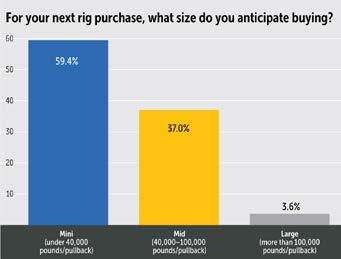
In addition to fiber, other markets are displaying strength, such as electric and gas distribution, water and even sewer applications. These sectors generally utilize smaller rigs (40,000 pounds or less of pullback force) and should continue to account for 59.4 percent of all rig production in 2025. Rig manufacturing in mid-sized units (40,000 to 100,000 pounds of pullback) remains stable at 37.0 percent of the market. Large rig sales (ranging in size from 100,000 pounds to in excess of 1 million pounds of pullback force) are expected to see improved growth of 3.6 percent.
Large rig contractors have proven to be resilient and adaptable. The survey revealed that contractors continue to diversify their work from prototypical oil and gas pipelines to all kinds of utility and even alternative energy projects. Large rigs seem to have found a sweet spot for those willing to stick their toes into the waters of diversification.
It’s not just the rigs themselves that are requiring record levels of work by industry manufacturers. Various accessories, such as mud systems, downhole tools, drill pipe, trackers, etc., have all combined with rig demand to force many manufacturers/suppliers to add workforce, operating plants around the clock to ensure steady delivery as they struggle to meet demand.
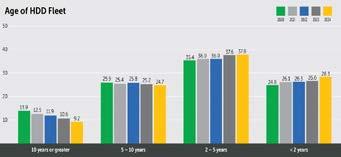
The overall rig fleet continues to get younger. Rigs more than 10 years old comprise 9.2 percent of the market; 24.7 percent are five to 10 years of age; 37.8 percent are two to 5 years old; and 28.3 percent of active rigs are less than two years old.
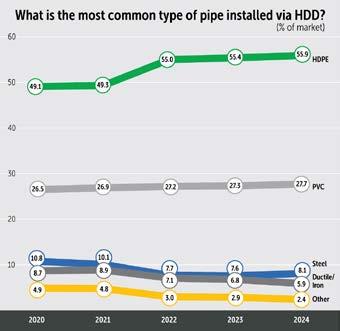
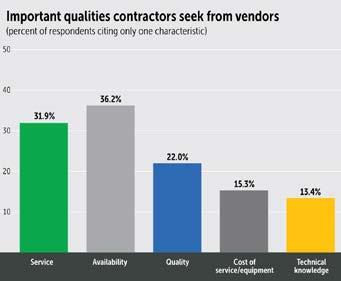
The survey historically asks contractors about the most important characteristics and needs they seek from their manufacturer and supplier partners. Predictably, in 2024, availability/field support of equipment was at the top of the list, as noted by 36.2 percent of the survey respondents. Service remained a strong desirable characteristic of vendors at 31.9 percent. Quality was third place at 22.0 percent, followed by cost of service/ equipment at 15.3 percent and technical knowledge at 13.4 percent.
The good news is that manufacturing recovery seems virtually complete from the horrific distribution and parts inaccessibility in the post-COVID years. Manufacturers and distributors report relatively normal or rapidly returning to normal parts accessibility in reasonable timelines. Good news, indeed, for contractors with pressing projects as fiber and power owners continue to pursue active projects.
In essence, the HDD market is:
• Booming for fiber
• Strong and growing for:
• Power (both distribution and transmission)
• Water
• Strengthening with opportunities emerging for energy pipelines
• Experimenting for all kinds of uses continues at a high rate
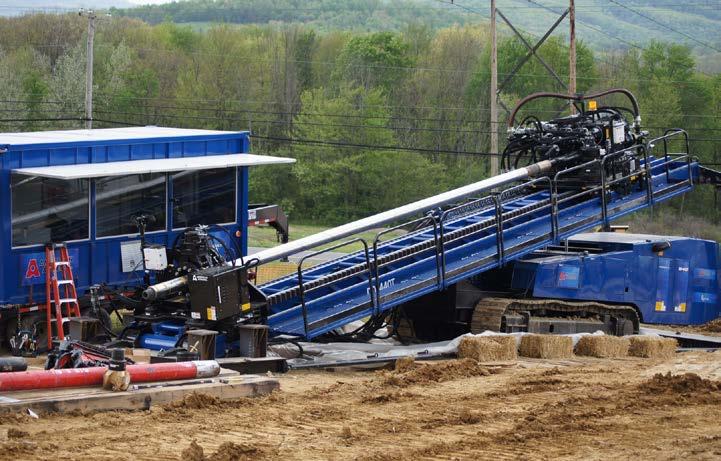
How long will the overall strong HDD market last? Short answer is indefinitely. HDD is a technology that continues to evolve. There now is rarely any kind of soil or rock that can’t be effectively and successfully drilled while
accuracy increases regularly, efficiency steadily improves and cost effectiveness, along with practicality, drive the use of HDD in every corner of utility infrastructure work.
And in 2025, as it has been for the past few years, fiber continues to power the HDD market forward. While private investment has led the fiber wave for years – and still does – now federal Broadband Equity, Access, and Deployment (BEAD) Program money (a byproduct of the Infrastructure Investment bill) is pumping more funding into the pot – $42.5 billion.
While some of that money can now be spent on satellite infrastructure, the majority is still being plowed into the more reliable and faster land systems. States and localities are desperate to build and enhance their fiber engines for economic development. Subsequently, local funding and supporting steps from states are accelerating in order to embrace and deliver fiber networks. All this as fiber systems technology continues to evolve, advance, achieves diversity and becomes more of a fit – an affordable fit – for smaller markets.
(continued on pg. 18)
The electric power market is just getting started. The Infrastructure Bill provided billions for utilities to “harden,” or strengthen, their lines and weatherproof against extreme weather. Research has shown that the best way to harden utilities is to take them underground. While not a foolproof solution, it is imminently better than overhead lines that take the full brunt of a weather event, be it a tornado, hurricane or ice storm.
Still, far too many utilities are going the cheaper route of hardening overhead lines in lieu of moving those lines underground. But with each passing year and every disaster that befalls the nation, the absolute need to take power cable out of harm’s way grows and gains momentum. At some point, all power utilities will be facing a determined and angry set of city and state governments for not having moved utilities underground – no matter the cost (real or perceived).
While President Trump has been a huge supporter of conventional energy drilling for oil and gas, his push to “Drill Baby, Drill” may be slow to materialize. Oil companies like to raise the bar on what they need to make a reasonable profit. Lower prices based upon the West Texas Crude benchmark typically deter additional drilling. Of course, extraction technology keeps getting better and locating high-yield oil and gas sources keeps reducing drilling risks which, in theory, allows higher profits at lower overall prices.
However, Saudi Arabia and OPEC are an example of different benchmarks. They are maintaining higher production rates in an effort to gain market share. Regardless, oil and gas work is strengthening in the U.S. for probably up to four years, if only to accommodate pent-up demand held in check by onerous Biden era rules and regulations. In 2028, a new administration will play a key role on whether or not that will continue.
The potable water market for HDD has taken on a life of its own. Pressurized mains have been converted to PVC or HDPE pipe for decades now and HDD has proven to be an effective technology fit to accomplish that transformation and growth. Plus, HDD is more environmentally favorable. Survey figures indicate that industry expects the HDD water market to expand, yet again, in 2025.
The sewer market is still hit and miss. Force mains remain a viable option for specific HDD opportunities, but gravity sewers typically demand tight installation tolerances. While those kinds of tolerances can sometimes be obtained through HDD, it requires more time and effort and are rarely profitable ventures. When the technology of HDD to achieve those very tight line and grade tolerances is discovered – profitably – another market to rival water will explode. s
FEBRUARY 11-15
2026 PLCA Convention Arizona Biltmore Phoenix, Arizona www.plca.org
FEBRUARY 19-20
2026 HDD Academy Arizona State University SkySong Center Scottsdale, Arizona academy.trenchlesstechnology.com
FEBRUARY 23-27
DCA Annual Convention Trump National Doral Miami, Florida dcaweb.org
MARCH 3 – 7
CONEXPO-CON/AGG Las Vegas Convention Center Las Vegas, Nevada www.conexpoconagg.com
APRIL 8 – 10
Safety Congress
The Kimpton Brice Hotel Savannah, Georgia dcaweb.org
2026 (cont.)
APRIL 20-24
Pipe Line Contractors Association of Canada (PLCAC) Convention Hyatt Regency Maui Resort & Spa Maui, Hawaii www.pipeline.ca
JUNE 22 – 26
SkillsUSA TechSPO Georgia World Congress Center Atlanta, Georgia info@skillsusa.org
JULY 20 – 23
DCA Mid Year Meeting Everline Resort & Spa Olympic Valley (Lake Tahoe), California dcaweb.org
FEBRUARY 22-27
DCA Annual Convention Terranea Resort Rancho Palos Verdes, California dcaweb.org
ATTENTION ALL DCA MEMBERS!
So you do not miss out on future meeting and event notices, please have your company’s IT representative whitelist all emails from dcaweb.org. If you have any questions, please contact Jacob Adams Mireles at jadams@dcaweb.org.
February 23 - 27, 2026
Trump National Doral ★ Miami, Florida

The U.S. Environmental Protection Agency (EPA) and the U.S. Army Corps of Engineers recently announced a proposed rule intended to establish a clear, durable, common-sense definition of “waters of the United States” (WOTUS) under the Clean Water Act (CWA). After literally decades of back and forth on how to define which water bodies and wetlands are federally protected under the CWA, the proposal follows a Supreme Court decision referred to as Sackett v. Environmental Protection Agency. Proponents say it delivers on the Trump Administration’s approach to protecting America’s waters while providing regulatory certainty for our nation’s businesses and farms.
Those in favor of expanding CWA permit requirements argue that science demonstrates how activities affecting small or seemingly isolated upstream waters can have significant impacts downstream on larger waters, such as rivers and lakes. According to certain public health and environmental organizations, a comprehensive federal rule is needed to ensure uniform protection across the country, preventing a patchwork of state-specific regulations that could lead to “pollution havens.”
Meanwhile, the vast majority of business organizations have said that expanding the definition of WOTUS would infringe on private property rights and what has been traditional authority afforded to states to manage their own land resources. Industries such as construction,
energy production, and farming/agriculture face significant costs, legal risks, and project delays if subject to a broader federal definition — especially when vague language leaves uncertainty about what is and is not regulated. This has prompted calls for durable and clear definitions of WOTUS.
Skeptics of expanding the definition of WOTUS also contend that the original intent of the CWA was to regulate only traditionally “navigable waters,” and that expansive definitions go far beyond the scope intended by Congress. Many states and tribal organizations have argued that they are better equipped to manage local, site-specific water issues and should be the primary regulators for non-navigable waters.
The proposed WOTUS definition would fully implement the Supreme Court’s direction by focusing on relatively permanent, standing or continuously flowing bodies of water — such as streams, oceans, rivers, and lakes — and wetlands that are connected and indistinguishable from such waterbodies.
Released in November 2025, key revisions proposed by EPA and the U.S. Army Corps of Engineers include:
• Defining key terms like “relatively permanent,” “continuous surface connection,” and “tributary” to appropriately delineate the scope of WOTUS consistent with the CWA and the Supreme Court precedent provided in the Sackett case
• Establishing that jurisdictional tributaries must connect to traditional navigable waters either directly or through other features that provide predictable and consistent flow
• Reaffirming that wetlands must be indistinguishable from jurisdictional waters through a continuous surface connection, which means they must touch a jurisdictional water and hold surface water for a certain duration year after year
• Preserving and clarifying exclusions for certain ditches, prior converted cropland, and waste treatment systems
• Strengthening state and tribal decision-making authority by providing clear regulatory guidelines while recognizing their expertise in local land and water resources
• Adding a new exclusion for groundwater
• Incorporating locally familiar terminology, such as “wet season,” to help determine whether a water body qualifies as WOTUS
In addition, the limitation to wetlands that have surface water at least during the wet season and are related to a jurisdictional water body will further limit the scope of wetlands that are considered to have a continuous surface connection under the proposed rule.
The proposal also recognizes seasonal and geographic variability by including waters that flow uninterrupted throughout the wetter months in the proposed definition of relatively permanent waters, based on pre-proposal feedback.
If finalized, the rule would potentially cut red tape and provide predictability, consistency, and clarity for a range of American industries. EPA was clear about the reasons behind the proposed new approach.
“When it comes to the definition of ‘waters of the United States,’ EPA has an important responsibility to protect water resources while setting clear and practical rules of the road that accelerate economic growth and opportunity,” said EPA Administrator Lee Zeldin. “Democrat administrations have weaponized the definition of navigable waters to seize more power from American farmers, landowners, entrepreneurs, and families. We heard from Americans across the country who want clean water and a clear rule. No longer should America’s landowners be forced to spend precious money hiring an attorney or consultant just to tell them whether a Water of the United States is on their property. EPA is delivering on President Trump’s promise to finalize a revised definition for WOTUS that protects the nation’s navigable waters from pollution, advances cooperative federalism by empowering states, and will result in economic growth across the country.”
The WOTUS definition has significant impacts on implementing the CWA in general. American businesses, farmers, and landowners must secure permits before they can pursue important infrastructure projects. Having a durable, consistent, and clear definition of WOTUS is essential to lowering costs and accelerating economic growth while protecting human health and the environment.
EPA and the U.S. Army Corps of Engineers will host two public meetings on the proposed new definition while working to develop a final rule. DCA and our industry allies will work to ensure a final rule does not subject overly burdensome permitting requirements on projects simply because of wet weather events.
(continued on pg. 24)
This hopefully marks the next step in providing a permanent WOTUS definition that protects American waterways and allows important projects to get off the ground in a more efficient way.
As previously reported, the Occupational Safety and Health Administration (OSHA) proposed a federal rule in 2024 that would have forced a broad swath of employers under OSHA jurisdiction, including companies in construction, manufacturing, agriculture, maritime, and other industries, to follow rigid, one-size-fits-all, federal workplace standards based on predetermined temperature thresholds, regardless of existing safety protocols already present in current law and industry practices.
The proposed rule would affect a wide range of employers whenever workers are exposed to conditions OSHA classifies as high heat — based on heat index or other formulas — that can equate to as little as 80°F for more than 15 minutes in an hour. State governments already have the authority to establish their own occupational safety and health standards and are required to have their plans be “at least as effective” as federal OSHA standards.
As is currently drafted, the Biden Administration heat rule would:
• place redundant and egregious requirements with little variance considered for industry-specific outdoor and indoor heat variables and differences in outdoor climates among all 50 states
• fail to recognize employers who already have heat injury prevention measures in place
• mandate federal intervention when small businesses do not comply with the new standard
• remove the ability of state governments to create targeted heat rules that are specific to their climate and local industries
As an active member of both the Coalition for Workplace Safety and the Construction Industry Safety Coalition, DCA has weighed in on OSHA’s proposed heat standard several times since it was introduced.
The fact that OSHA’s proposal has made it this far in President Trump’s second term has many Washington insiders perplexed. Fortunately, friends in Congress are not waiting for executive action from the White House to address this issue. Rep. Mark Messmer (R-Ind.) recently announced the introduction of the “Heat Workforce Standards Act of 2025” in the House. Rep. Messmer’s legislation would repeal OSHA’s sweeping and unworkable heat standard that threatens to impose unnecessary mandates and excessive federal penalties upon American businesses and institutions.
“As a small business owner myself, I’ve seen how unwarranted, heavy-handed regulations can crush innovation, increase costs, and undermine the productivity of American institutions,” said Rep. Messmer. “The Biden heat rule was never about safety, but was rather, unsurprisingly, focused upon expanding federal bureaucratic control over hard working Americans. My Heat Workforce Standards Act empowers employers to maintain safe and realistic workplace standard parameters, which allow for both their workers and the business to thrive.”
Rep. Messmer said he supports creating a better working environment for all American businesses and institutions by eliminating unwarranted red tape and regulations. Enactment of this legislation would provide a step in the right direction, and DCA thanks Rep. Messmer for his leadership on this issue.
Following four hearings in three congressional committees in 2025, DCA’s efforts to help enact pipeline safety reauthorization continue to show measurable progress after legislation in the previous Congress died a slow death. The House Transportation and Infrastructure (T&I) Committee approved the Promoting Innovation in Pipeline Efficiency and Safety Act of 2025 (HR 5301), otherwise known as the “PIPES Act of 2025,” in September, and the Senate Commerce, Science, and Transportation Committee introduced and approved its own pipeline safety reauthorization bill, known as the PIPELINE Safety Act of 2025 (S 2975), a few weeks later.
DCA and several industry allies support language in HR 5301 that would improve state damage prevention
programs by setting additional criteria for states to consider when applying for PHMSA damage prevention grants. Specifically, states that implement or can show they are moving toward implementation of several ‘recommended practices’ as part of their programs would stand a better chance of securing PHMSA damage prevention dollars. These practices include:
• identifying and eliminating exemptions from 811 laws
• requiring locating and marking of all lines and laterals (including municipal lines and laterals)
• requiring a “positive response” from the facility owner prior to excavation
• encouraging better training of contract locators
• requiring use of commercially available technologies to locate underground facilities, such as geographic information systems (GIS)
The PIPES Act would also expand existing criminal penalties to those who knowingly and willfully damage a pipe, pump, compressor, or valve under construction or disrupt the operation of a pipeline by the unauthorized turning of a valve. This has been a longtime priority at DCA, and we were encouraged to see the language included in this year’s House bill.
However, although the Senate Commerce Committee’s “Pipeline Integrity, Protection, and Enhancement for Leveraging Investments in the Nation’s Energy (PIPELINE) Safety Act of 2025” (S 2975) includes much of the damage prevention language in the House bill, it omits the critical leading practices regarding reducing and eliminating exemptions in the damage prevention process and required use of modern locating technologies such as GIS mapping.
In addition, the Senate measure includes a provision that would impose additional qualifications or training requirements on trenchless excavators that are not subject to other excavators who comply with federal pipeline safety regulations. Because trenchless excavators are subject to the same pipeline safety regulations as other excavators, DCA is pushing for removal of this language in S 2975.
The House Energy & Commerce (E&C) Committee, which shares jurisdiction on pipeline safety with the House T&I Committee, was expected to introduce its own bill in the coming weeks and months, as it did in the last Congress. The E&C bill in the 118th Congress included the damage prevention language supported by DCA, but also included provisions related to project permit reform and language that would prohibit government entities from enacting policies that would restrict the accessibility and use of natural gas or any available fuel source.
While most construction organizations (including DCA) support permit reform and policy that ensures “fuel choice,” we do not want to see these issues pushed in a pipeline safety bill. Doing so would likely hamper and even kill pipeline safety legislation again in the 119th Congress, and DCA is encouraging E&C Committee members to avoid conflicts with problematic language that would only continue to hamper enactment of a final pipeline safety bill.
DCA’s regional advocacy efforts continue to advance the association’s positions, as several regional teams traveled to the nation’s capital to weigh in on the aforementioned issues in dozens of offices in both the House and Senate. More regional fly-in events are in the works going into 2026 and the second session of the 119th Congress. s

Eben M. Wyman Principal eben@wymanassociates.net

Mi-Tech and J.D. Hair & Associates Announce Strategic Merger to Expand Service Capabilities
J.D. Hair & Associates, Inc., a trusted leader in trenchless, geotechnical and structural engineering, has merged with Mi-Tech Services, Inc., a full-service engineering, design, and construction services firm. The combined organization will operate under the Mi-Tech name and immediately deliver an expanded suite of services to clients.
This strategic merger marks a major milestone, combining decades of expertise across trenchless, structural, utility and infrastructure engineering, design, and construction. United under the Michels Family of Companies, an international leader in energy and infrastructure construction, the combined firm is positioned to deliver unmatched capabilities and value to clients.
“By joining forces, we are not only expanding Mi-Tech’s technical capabilities, but we are also enhancing the value we deliver to customers through broader service offerings and increased opportunities for advanced alternative delivery solutions,” said Pat Michels, President and CEO of Michels Corporation.
Mi-Tech was founded in 1985 as Data-Tel Communications. In 1999, Michels acquired Data-Tel and renamed it Mi-Tech Services, Inc. Since then, Mi-Tech has grown to more than 200 employees across eight offices and has expanded its services to include telecommunications, energy design, surveying, land services, laboratory services, and a variety of construction services.
J.D. Hair & Associates was founded in 1987 and is widely recognized as a pioneer in trenchless engineering and design, specializing in horizontal directional drilling (HDD) and underground infrastructure solutions. J.D. Hair & Associates was acquired by Michels in 2021 and has since expanded its portfolio to include geotechnical and structural engineering services. The firm has grown to 35 employees across four offices and was recently recognized by Trenchless Technology as one of the Top 50 Trenchless Engineering Firms in North America.
The newly integrated firm is positioned to deliver comprehensive support across multiple industries, with a sharp focus on efficiency, constructability, and long-term value.
As part of the Michels Family of Companies, Mi-Tech partners with an internationally respected team to provide end-to-end solutions for complex, multi-faceted projects, upholding the highest standards of safety, quality, and performance.
Tim Babich, previously Vice President of Engineering at Michels, has been appointed President of Mi-Tech. Since joining Michels in 2018, Babich has brought nearly two decades of engineering and construction expertise to the organization. Most importantly, all employees from both firms have been retained and unified within the combined organization, ensuring seamless continuity of service and safeguarding the deep institutional knowledge that clients trust and depend on.
“Merging J.D. Hair & Associates with Mi-Tech is a natural evolution of our shared commitment to quality, safety, and sustainability” Babich said. “Together, our team brings complementary expertise that enables us to address complex utility and infrastructure challenges with greater resources, efficiency, and innovation.”
Established in 1959 in Brownsville, WI, Michels is an international leader in energy and infrastructure design and construction. Through organic growth, strategic acquisitions, and an understanding of our customers’ current and future needs, Michels has expanded into the civil, energy, energy transition and renewables, foundations, marine, mission critical, transportation, and water and wastewater industries. Our Core Values of safety, environment, dedication and teamwork, integrity, social responsibility, and sustainable operations guide our actions, regardless of the type of work being performed. We build solutions for safe, modern infrastructure throughout the world. Our engineering, design, procurement, and construction services are supported by 9,000 people, 18,000 pieces of heavy equipment, more than 50 offices in the United States, and operations in Canada, Australia, and Europe. In 2025, Michels was named the 38th largest contractor on the Engineering News-Record (ENR) Top 400 list.
For additional information, contact Jill Badzinski, Senior Communications Manager, at jbadzins@michels.us or 262-353-3359.
and Tecniwell Partner for High-Pressure Pump
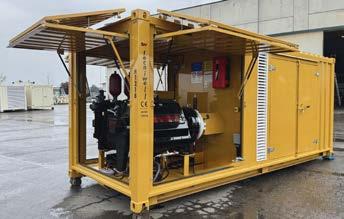
Vermeer has announced a global expansion of its distribution partnership with Tecniwell s.r.l., a leading manufacturer of high-pressure pump systems. Building on a successful partnership in the Europe, Middle East, and Africa (EMEA) region, this agreement makes select Tecniwellbranded, high-pressure pump packages for the horizontal directional drilling (HDD) industry exclusively available through the Vermeer dealer network worldwide.
This expanded alliance enhances the Vermeer pipeline product lineup, offering contractors a comprehensive solution that includes maxi rig drills, reclaimers, and high-pressure pump packages.
“Expanding this partnership allows us to offer a more complete equipment solution to pipeline contractors globally,” said Benny Melse, product manager for Vermeer. “Tecniwell has a proven track record of producing robust, high-performance pumps. By pairing their pumps with Vermeer drills and reclaimers, our dealers can provide customers with a packaged solution backed by the localized service and support they expect.”
At launch, the product offering includes the Tecniwell HDD 1500 and HDD 2500 high-flow triplex mud pumps. The HDD 2500 delivers a continuous flow rate of up to 754 gal/min (2,850 L/min) and pressure of up to 1400 psi (95 bar). The smaller HDD 1500 can produce a maximum flow rate of 322 gal/min (1,215 L/min) and up to 1450 psi (100 bar). Both models are available with multiple diesel and electric power options to meet regional regulations and jobsite needs.
The partnership leverages Tecniwell’s 37 years of expertise in developing pumps for demanding applications like jet grouting. This engineering is now optimized to meet the specific demands of HDD applications.
“Vermeer is a leader in the HDD industry, and we are excited to grow our partnership with their extensive global dealer network,” said Paolo Ferrari, sales manager at Tecniwell. “This alliance allows us to bring our specialized HDD pump packages to a wider market, helping contractors work more efficiently.”
Products will be manufactured at the Tecniwell facility in Italy and will feature the Vermeer yellow and black color scheme. The pumps come with an industry-leading standard one-year/1,800-hour warranty, and the triplex pump body is backed by a three-year, 6,000-hour warranty.
For more information, please contact your local Vermeer dealer specializing in pipeline HDD equipment.
Herrenknecht Expands HDD Fleet, Service Capabilities, and Trenchless Solutions in North America
Herrenknecht continues to expand its footprint in the North American HDD market with new rig availability, a growing service infrastructure, and proven trenchless technologies moving into international energy projects.
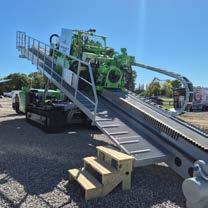
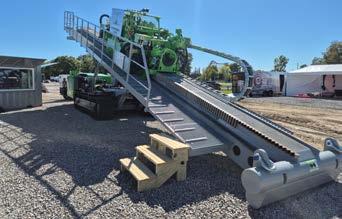
A key highlight is the introduction of the new HK300C HDD rig, which was successfully presented at Utility Expo 2025 in Kentucky and is now available in the United States for rental or purchase. The rig is currently located at Herrenknecht’s Houston Service Hub, where customers are welcome to visit at any time to inspect, test, and experience the machine firsthand. The HK300C delivers a pullback force of 660,000 lbs. and 88,500 ft-lbs of rotary torque, powered by an onboard CAT diesel engine. The 20-ft operator’s cabin provides excellent visibility, the latest software and data-logging features, and a safe, ergonomic working environment — making the rig well suited for long crossings and demanding utility or pipeline installations. To meet growing demand, two additional
(continued on
HK300C rigs are planned to enter the U.S. fleet by mid2026.
The HDD business in the United States is supported by the Herrenknecht Service Hub in Houston, where spare and wear parts as well as service technicians are available. This ensures fast response times, reduces downtime, and reliable jobsite support for HDD projects and micro tunnelling operations across the region.
In general, Herrenknecht’s HDD rental fleet provides contractors with greater flexibility by offering not only drilling rigs but also pipe thrusters, high-pressure mud pumps, mobile breakout systems, and auxiliary HDD equipment. Herrenknecht designs and manufactures maxi and mega HDD rigs with pullback capacities ranging from 100,000
to 1,110,000 lbs. and torques from 17,700 to 132,800 ft-lbs. Available in frame, trailer-mounted, crawler (tracked), or modular configurations, Herrenknecht HDD systems are engineered to deliver efficient, reliable, and job-specific solutions for today’s complex crossings.
For further information please contact Dennis Reep, Sales Manager Pipeline - North America Herrenknecht Tunneling Systems USA at Reep.Denny@Herrenknecht.com or 253-241-3709. s


GROEBNER is proud to celebrate 50 years of serving the natural gas industry with integrity, quality, and expertise. What began as a small operation rooted in trust and personal service has grown into a respected partner for utilities, contractors, and manufacturers across the country. Through five decades of change, one thing has remained constant: GROEBNER’s dedication to building lasting relationships and helping customers succeed.
This milestone marks not only a half-century of progress but a continued commitment to the values that shaped the company from the beginning: doing what’s right, standing behind every product, and putting people first.
In 1976, Chuck Groebner started the business out of the trunk of his Oldsmobile. His goal was simple but ambitious: ensure the natural gas industry had dependable access to quality distribution products and trusted expertise to support them. With integrity, hard work, and a deep sense of service, Chuck built a reputation one relationship at a time.
When his son, Joe Groebner, joined the business, it became more than a company; it became a family endeavor. Together, Chuck and Joe grew GROEBNER from that humble beginning into a respected industry partner, expanding its capabilities to include warehousing, distribution, and training services that met the evolving needs of customers.
Their shared vision established the standard for what partnership in the natural gas industry should look like: personal, knowledgeable, and built on trust. Those principles continue to guide GROEBNER today, shaping every relationship and every decision.
“My dad built this company on integrity and hard work, and I always felt a responsibility to honor that. Every decision we made came back to doing right by our customers and our team,” 2nd Generation President, Joe Groebner, said.
As GROEBNER expanded its reach through the 1980s and 1990s, the mission never wavered. Growth came through listening to customers, manufacturers, and employees – and then acting on what was learned. New locations were opened to better serve regional markets, and longterm manufacturer relationships were built on mutual respect and shared goals.
Each milestone reflected thoughtful growth, not just expansion. Training programs deepened technical expertise, and new investment in logistics and technology made it easier for customers to get the products and support they needed. Every decision was rooted in one guiding principle: relationships come first.
“GROEBNER has always believed that success isn’t about how big we become, it’s about how well we serve our communities,” President and third-generation owner, Carissa Skorczewski, said. “Our customers and partners trust us because they know we’ll do what’s right, every time.”
As leadership transitioned to the third generation, GROEBNER remained true to its roots while embracing the challenges and opportunities of a modern energy landscape. Under Carissa’s guidance, the company continues to balance tradition with innovation, staying adaptable and ready to meet customer needs with speed and precision.
Being privately held, family-owned, and woman-owned gives GROEBNER the flexibility to listen closely and act with purpose. Decisions are shaped by experience, collaboration, and a culture where every perspective matters. This structure allows teams to move with clarity, lead with honesty, and stay focused on doing what’s right for customers without losing sight of quality and service. It reflects a long-standing belief at GROEBNER: people truly make the difference.
“Carrying on my family’s legacy means respecting what came before while continuously raising the bar for how we serve,” Skorczewski said. “Our customers and partners rely on us for thoughtful guidance, technical knowledge, and a deep understanding of natural gas solutions they can trust.”
GROEBNER’s story has always been about more than supplying products. The company’s singular focus on natural gas allows its team to bring unmatched expertise to every project. From specialized fittings and polyethylene piping systems to advanced fusion equipment, GROEBNER helps customers select the right products and ensures they know how to use them safely and effectively.
(continued
That support doesn’t end with delivery. GROEBNER offers in-depth training before, during, and after installation, ensuring that customers have the confidence and knowledge to get the job done right. This approach, grounded in experience and partnership, sets GROEBNER apart.
Through collaboration with manufacturers, engineers, and utilities, GROEBNER helps build systems that make communities safer and more efficient. Every project becomes an opportunity to share knowledge, strengthen relationships, and reinforce the company’s belief that success is shared.
Fifty years of success are measured not in transactions, but in relationships that last decades. Many of GROEBNER’s partners and customers have grown alongside the company, evolving together through industry changes and market shifts. These relationships are built on trust, communication, and a shared commitment to doing things the right way.
As GROEBNER marks its 50th anniversary, the celebration is about more than a milestone; it’s about the people who built it and the values that continue to guide it. The company’s journey reflects the strength of family ownership, the power of relationships, and the importance of staying focused on what you know best.
Fifty years later, GROEBNER remains committed to natural gas, to its partners and customers, and to the belief that integrity and expertise will always matter. The story of GROEBNER is one of progress without losing purpose, proof that when you build on strong relationships, your foundation only grows stronger with time.
About GROEBNER: As a third-generation, family-and women-owned company, GROEBNER is proud to focus exclusively on the natural gas industry. For 50 years, we’ve built strong partnerships by doing more than supplying products. We work closely with utilities and contractors to share knowledge, offer hands-on training, and provide technical expertise every step of the way. s