Toempowereverystudenttodeveloptheirfullpotentialandachieve personal excellence in all endeavours, enabling them to lead successful,fulfillinglivesandenrichtheworld.
Our DBIS Mission is enacted through our values of Courage, Respect and Integrity.
Our Core Values
Courage
We embrace challenges, persevere and work hard to reach our full potential.Weareresilientandalwaysstrivingtolearnandgrow.
Respect
We value our diverse community, appreciating their unique contributions, needs and rights. We foster positive relationships throughkindnessandempathy,embracingaglobalmindset.
Integrity
We act with honesty and make responsible choices, understanding the impact of our actions on ourselves and others. We are self-aware,compassionateandaccountable.
Welcome to Our Secondary School
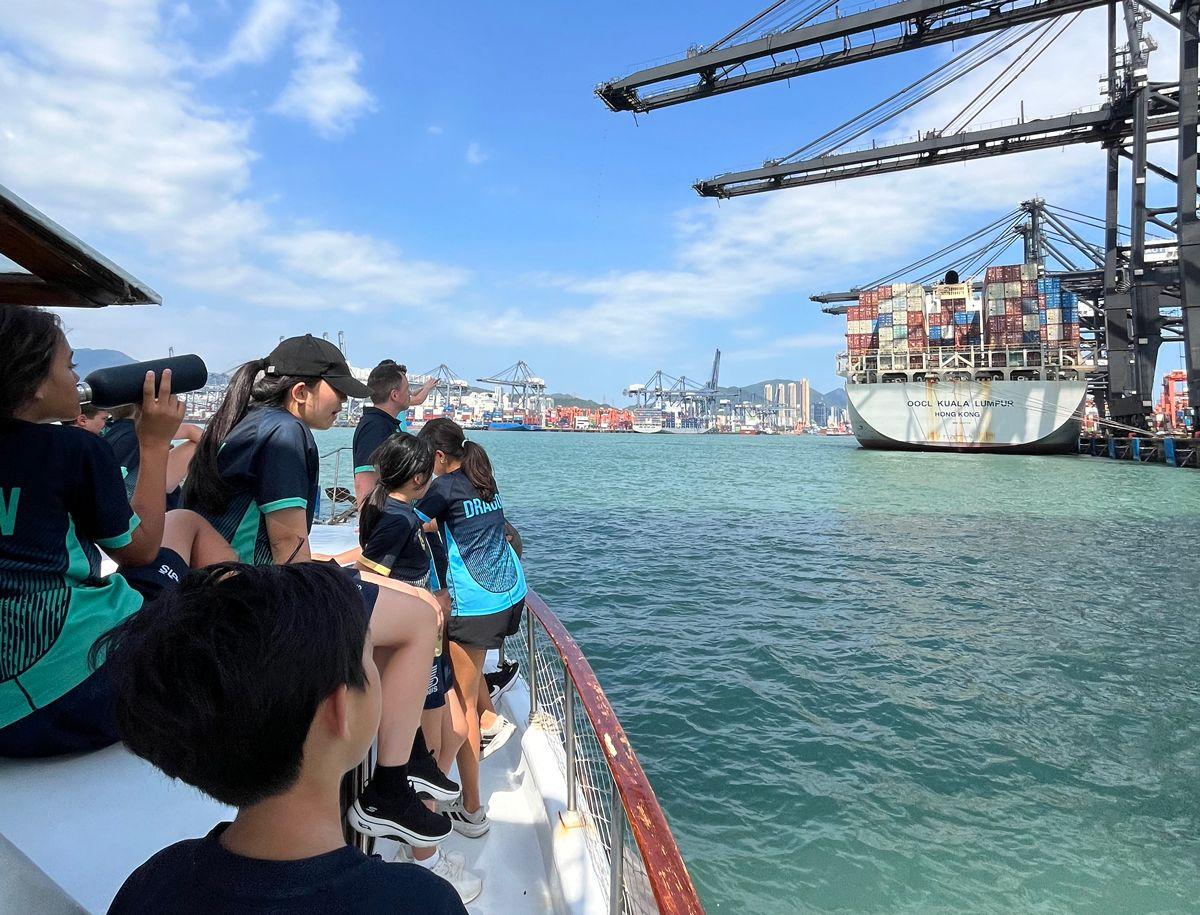
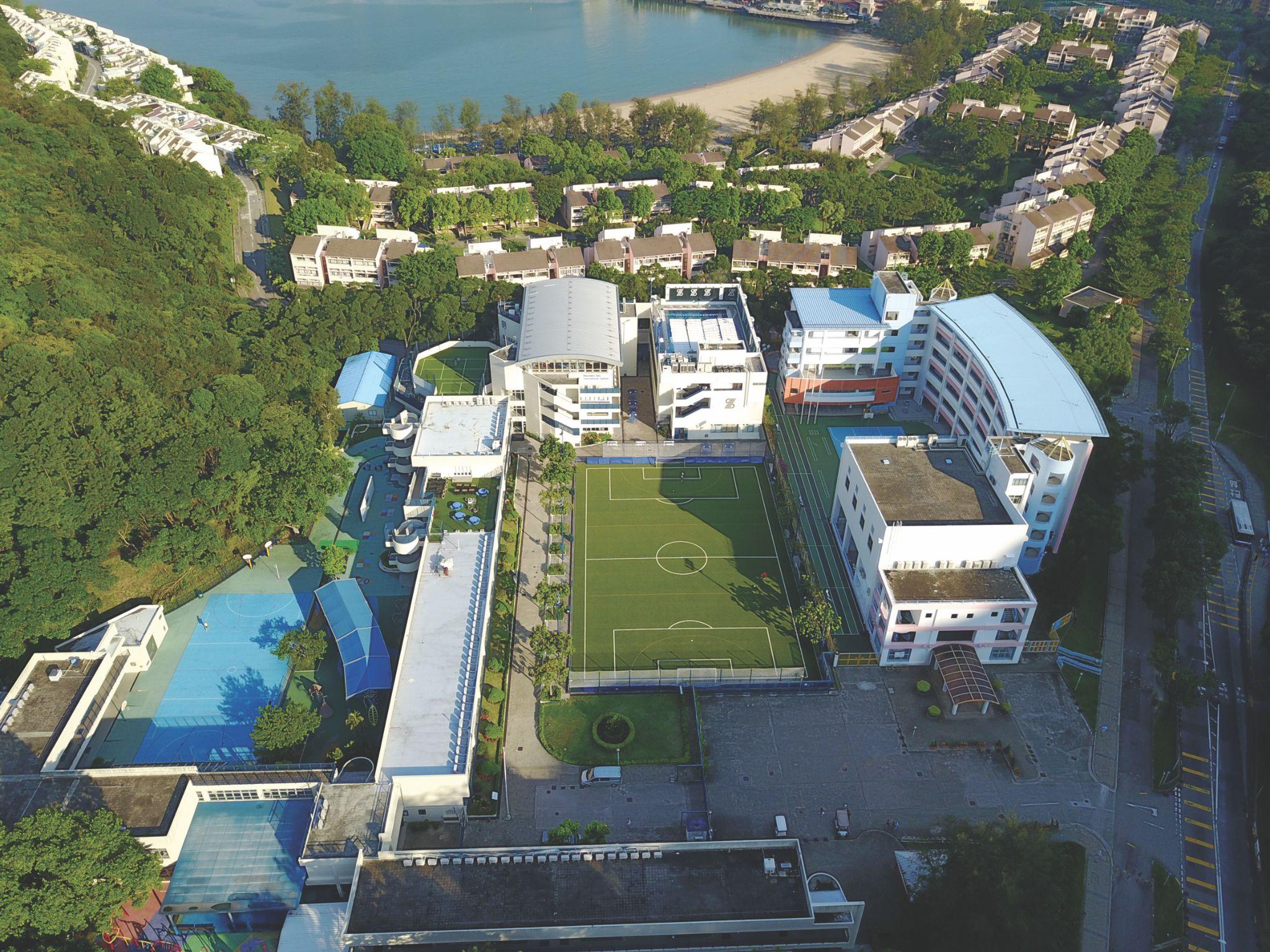
WewarmlyintroduceyoutotheDiscoveryBayInternationalSchool(DBIS)Curriculum Handbook for Years 7–8. We are a truly unique school in Hong Kong, with an established culture of excellence in teaching and learning and an inclusive philosophy. We are wonderfully situated in Discovery Bay on Lantau island, with the sea, hills and beaches right on our doorstep, which allows us to offer a truly experientiallearningenvironmentforourstudents.
The first few years of Secondary School are a key developmental stage for our young people. We understand that students are best placed to achieve their full academic potential when they are settled, happy and confident, and we proactively work to support the wellbeing of every student. As part of this, we are focused on supporting our students, and their families, as they transition into this phase of the school, whether they are coming into Year 7 from DBIS Primary or into Year 7 or 8 from elsewhere.
The curriculum that our Year 7–8 students follow is engaging, challenging and rigorous, with an added emphasis on concept and inquiry learning, whilst our small class sizes ensure that we are well placed to tailor learning to the individual academic needs of each child.
These curriculum foundations assist our children in developing into critical thinkers, problem solvers and independent learners in readiness for their later years at DBIS and beyond. Across these important years, our students broaden their knowledge of the core subjects of English, Mathematics and Science whilst also studying Mandarin. Our 2026–27 Year 8 cohort also study Spanish. By drawing from many subject areas, including Geography, History, Business, Media Studies and Psychology, our expansive Humanities curriculum demonstrates one of the clear strengths of our inquiry-based approach.
Additionally, our students enjoy instruction in the Creative and Performing Arts (Drama, Art and Music), Technology (Design & Technology and Computer Science), as well as regular Physical Education (PE) lessons. Their Learning for Life sessions promote their personal growth and wellbeing, and their Discovery lessons allow them to actively work on their information literacy and inquiry skills through bespoke collaborative projects.
The following pages will provide you with more insight into the excellent programme that we offer here for our Year 7–8 students in the various subject areas. Please note that our curriculum is reviewed regularly and may therefore evolve to ensure that we continue to tailor provision, applying up-to-date pedagogical approaches to support our students’ development.
SecondarySeniorLeadershipTeam
Key Personnel
Name Role Email
Jason Broderick Deputy Head of Secondary jbroderick@dbis.edu.hk
Alexander Kilford Assistant Head of Secondary akilford@dbis.edu.hk
David Coburn Assistant Head of Secondary dcoburn@dbis.edu.hk
Rebecca Boddington Assistant Head of Secondary rboddington@dbis.edu.hk
Louise Tyrrell Head of Year 7 ltyrrell@dbis.edu.hk
Nicholas Moore Head of Year 8 nmoore@dbis.edu.hk
Graham Glew Head of Mathematics gglew@dbis.edu.hk
Amy Hii Head of English ahii@dbis.edu.hk
Alexander Jamali Head of Science ajamali@dbis.edu.hk
Tom Boddington Head of Humanities tboddington@dbis.edu.hk
Myra Mi Head of Chinese & Modern Foreign Languages mmi@dbis.edu.hk
Nicolas Ng Head of Computing & Learning Technologies nng@dbis.edu.hk
Christopher Preddy Head of Music cpreddy@dbis.edu.hk
Nicola Culican Head of Art and Design & Technology nculican@dbis.edu.hk
James Lugg
Head of Physical Education & Sport jlugg@dbis.edu.hk
CURRICULUM
The Year 7–8 Curriculum
The bespoke Year 7–8 Curriculum, which incorporates principles of Concept-Based Curriculum and Instruction (CBCI) into the learning experience, is underpinned by the rigour of the English National Curriculum. The curriculum allows students to build the necessary skills, competencies and Learner Profile dispositions to successfully transition to their (I)GCSEs or equivalent.
TIMETABLE STRUCTURE
Students study a broad range of subjects in Years 7 and 8, across a two-week timetable, with five lessons per day. Each lesson is one hour long. Students are given printed copies of their timetable on the first day of the academic year. These are transferred into the student diary for quick reference, and parents are able to access their children’s timetables through the Parent Portal.
Subject Areas
ENGLISH
OVERVIEW
In English, students learn key critical-thinking and analytical skills that are transferable over the study of various text types. The texts are increasingly challenging, and students read a wide range of fiction and non-fiction, including short stories, poems, and plays, providing a solid foundation for IGCSE English Language and English Literature. Students learn how to identify and write for different genres, audiences and purposes and become equipped with a vast range of vocabulary and techniques to express their ideas in an accurate, fluent and articulate manner, both verbally and in writing.
LEARNING FOCUS
Term 1
Y7
● Descriptive Writing
● Biography
Y8
● An Introduction to Media: Shrek
● An Introduction to Drama: Frankenstein
Term 2
● Call of the Wild Poetry Study
● The Giver Novel Study
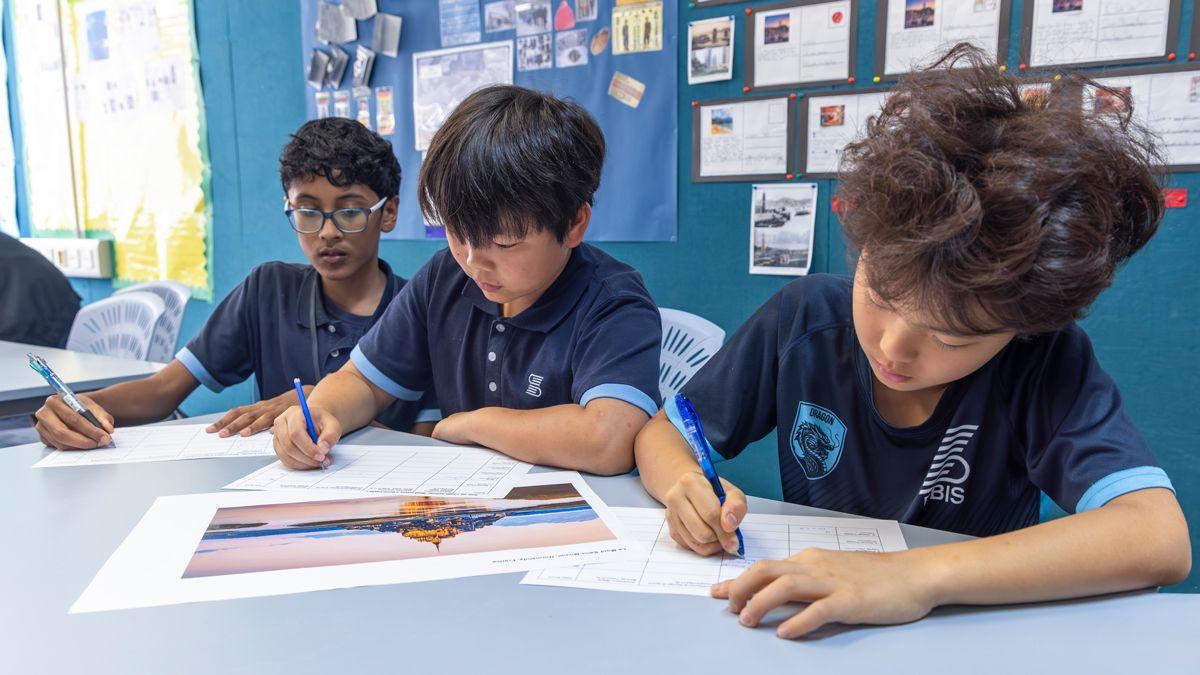
● Ekphrastic Poetry Study
● The Boy in the Striped Pyjamas Novel Study
Term 3
● The Princess Bride Media Study
● Travel Writing – Around the World & Exciting Spaces!
MATHEMATICS
OVERVIEW
In Years 7 and 8, our Mathematics curriculum provides students with a strong foundation across the key strands of number, algebra, geometry, data and problem-solving. The programme is designed to develop both fluency and reasoning, encouraging students to think critically, make connections and approach challenges with confidence. Lessons balance practice with exploration, ensuring students gain the skills they need while also experiencing the creativity and depth of mathematical thinking.
As students move into Year 8, topics build directly upon the knowledge established in Year 7 while also introducing more advanced concepts to prepare them for the next stage of study. Progress is measured through a combination of regular formative quizzes and more formal assessments, which provide clear feedback on individual strengths and areas for improvement. Challenge is built into the curriculum for all, with opportunities for students to extend themselves further through participation in Mathematics competitions and problem-solving activities.
LEARNING FOCUS
Term 1
Y7
● Working With Numbers
● Introducing Algebra
● Lines & Angles
● The Probability Scale
● Powers, Roots & Rounding
● Order of Operations
● Formulae, Sequences & Rules
Y8
● Linear Equations With Unknowns on Both Sides
● Parallel, Alternate & Corresponding Angles
● Sets & Unions
● Percentages
● Sequences & Relationships
● Symmetries & Constructions
Term 2
Concepts
● Linear Equations
● Using Measurements
● Representing & Interpreting Data
Term 3
● Properties of Shapes & Solids
● Ratio
● Graphs of Linear Functions
● Congruence & Scale Drawings
● Calculate Using Written & Mental Methods
● Using Averages, Range & Relationships to Describe Data
● Multiples, Factors & Primes
● Linear Equations (Graphically & Algebraically)
● Accuracy With Perimeter, Area & Volume
● Dividing Quantities Into Ratios
● Algebraic Expressions
● Translations, Rotations & Reflections
SCIENCE
OVERVIEW
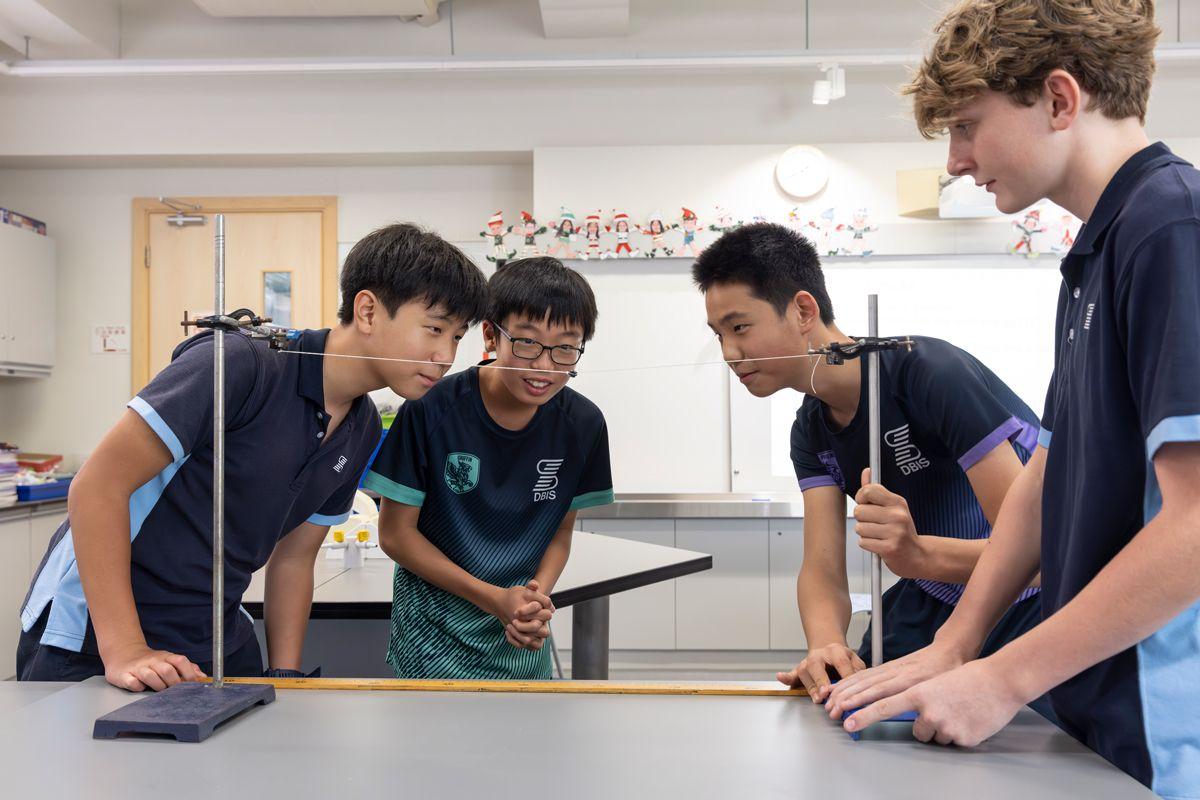
At DBIS, we want our students to have a thorough and deep knowledge of Science with the key skills needed to access Science within the modern world. This has led to the development of a broad Science curriculum with scientific skills at its heart. Students learn about Biology, Chemistry and Physics through topics that develop their ability to link knowledge from each field.
In Year 7, students explore an ‘Introduction to Science’, which involves them studying Biology, Chemistry and Physics through wider topics that link all three together. There is a focus on developing skills and cultivating scientifically curious minds.
In Year 8, students focus on ‘Working Scientifically’, which further develops their scientific skills. Again, they study broader topics that link Biology, Chemistry and Physics together. The course is designed to prepare students with the requisite knowledge and skills before they start their IGCSEs in Year 9.
LEARNING FOCUS
Term 1
Term 2
Y7 Introduction to Science
● Unit 1: Introduction to Science
● Unit 2: Introduction to Energy
● Unit 3: Introduction to the Human Body
● Unit 4: Introduction to Atoms
Y8 Working Scientifically
● Unit 1: Working Scientifically
● Unit 2: Working with Life Processes
● Unit 3: Working with Chemicals
● Unit 4: Working with Forces
Term 3
● Unit 5: Introduction to the Earth
● Unit 6: Introduction to Space
● Unit 5: Working with Materials
● Unit 6: Working with Fluids
GEOGRAPHY
OVERVIEW
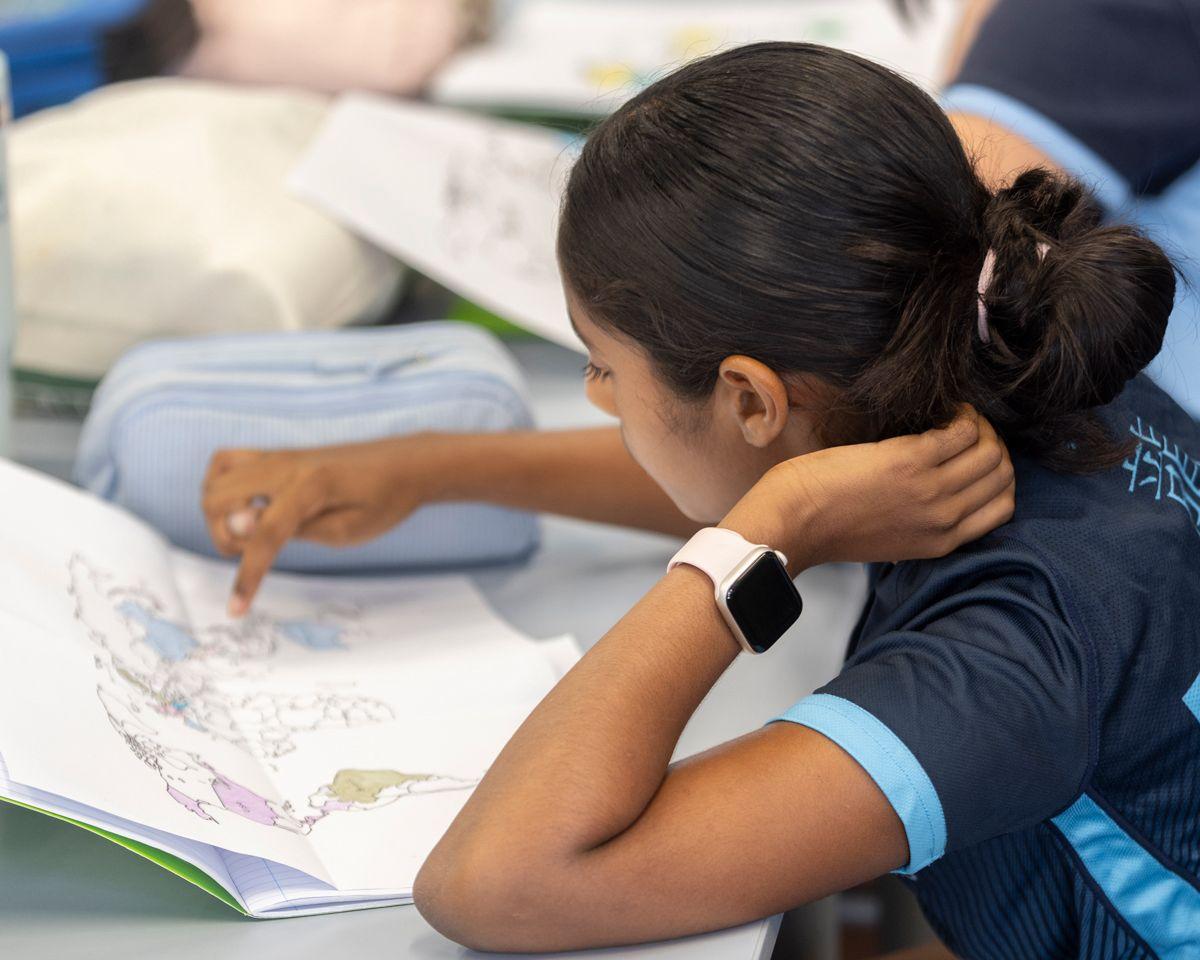
In Years 7 and 8, students explore key concepts in Geography while developing essential knowledge and skills. Throughout this curriculum, they are challenged to become great critical thinkers, effective speakers, and skilled researchers.
In Year 7, students start with a synoptic study of Hong Kong's geography, exploring population dynamics, land use, tectonic theory, and the region's coastline, mangroves and key industries. This first term includes hands-on fieldwork, allowing students to connect theory with real-world observations. The curriculum continues with an examination of natural hazards, their impacts on Hong Kong, and strategies for mitigation. In the final term, students gain an appreciation for Earth's natural resources, understanding their significance and the importance of sustainable management.
Year 8 introduces students to the concepts of globalisation and development, with fieldwork that investigates Hong Kong's global interconnectedness. The curriculum then shifts focus to polar biomes, discussing the threats they face and their critical role in sustaining life. Finally, students engage in project-based inquiries into environmental issues such as palm oil production, coltan mining and coral bleaching. This exploration enhances their research, critical-thinking and presentation skills, preparing them for future challenges in environmental stewardship.
LEARNING FOCUS
Term 1
Y7
Y8
● How Diverse is Hong Kong?
● Physical Features & Processes
● Population, Inequality & Land Use
● Environmental Conflicts
● Fieldwork & Practical Application
Term 2
● How Hazardous is Hong Kong?
● Hong Kong's Climate & Extreme Weather
● Associated Hazards & Management
● Comparative Hazard Analysis
● Climate Change & Future Hazards
Term 3
● How do Earth's Natural Resources Shape Our World?
● Essential Resources: Water, Soil & Trees
● Resource Interdependence & Global Patterns
● Ecological Footprints & Consumption
● Sustainable Resource Management
● How Globalised is Hong Kong?
● Globalisation Explained
● Hong Kong: A Trade Powerhouse
● Development & Inequality
● How Significant are Polar Biomes?
● Polar Environments
● Climate Change Impacts
● Human Activities in Polar Regions
● The Future of the Poles
● How do Human Activities Impact the Earth?
● Exploring Case Studies Explaining the Extraction, Production & Uses of Materials & Their Environmental Consequences
● Connecting the Dots –Linking Case Studies to Broader Geographical Concepts
● Earthshot Prize Project
HISTORY
OVERVIEW
Our Year 7–8 History course offers students a comprehensive exploration of pivotal moments, fostering a deep understanding of the forces that have shaped our world. Students embark on a journey spanning continents and centuries, connecting past events to our present realities through a variety of historical lenses.
The journey begins at home by exploring the significant changes and events throughout Hong Kong’s history that have shaped its present-day identity. By providing this local lens, students can better understand broader historical themes through the familiar context of their own city.
The curriculum then transports students to the Middle Ages, a captivating era of knights, castles and profound societal change. While exploring daily life, medieval professions and early medicine, students also investigate ‘East Meets West: The Silk Roads’. This study examines the vital network of trade routes and the rich cultural exchange they facilitated between global civilisations.
The exploration continues by tracking the evolution of crime and punishment across different historical periods. By analysing how laws, justice and societal values have shifted over time, students establish a thematic bridge between the medieval world and the modern era.
The Year 7–8 History programme culminates in a crucial study of World War II, where students analyse the causes and major events of the global conflict. A significant portion of this study is dedicated to a sensitive exploration of the Holocaust, examining the persecution of Jewish people, the experiences of victims and survivors, and the liberation of the camps. This final pillar of the course allows for a deeper understanding of human resilience and the enduring importance of remembrance.
LEARNING FOCUS
Term 1
Y7
● My Hong Kong
● The Opium Wars
● WWII & the Invasion of China
● WWII & the Occupation of Hong Kong
● The Kowloon Walled City
● Significant Figures in Hong Kong
Term 2
● The Middle Ages
● What Was it Like to Live in the Middle Ages?
● Medieval Jobs
● Castles & Medieval Warfare
● Diseases in the Middle Ages
● Medieval Medicine
Term 3
● East Meets West: The Silk Roads
● Students will learn that the Silk Roads were not a single road, but a network of ancient trading routes connecting east & west, primarily from China to the Mediterranean
● An Understanding of the Types of Goods Traded
● Exchange of Cultures
Y8
● Crime & Punishment in the Middle Ages
● Crime & Punishment in Medieval Europe
● Crime & Punishment in Different Regions Around the World
● Witchcraft & Witch Trials in the Middle Ages
● World War II
● The Causes of WWII
● Advancements in Technology & Military Tactics in WWII
● Life on the Home Fronts Around the World
● Pearl Harbour
● WWII in Asia
● D Day
● The Dropping of the Atomic Bomb
● The Holocaust
● The Persecution Against Jewish People, from Discrimination & Loss of Rights
● The Experiences of Victims & Survivors, Including Their Resilience, Resistance & the Individual Stories of Those Affected
● The Liberation of the Camps & the Aftermath of the Holocaust
MANDARIN AS A FOREIGN LANGUAGE
OVERVIEW
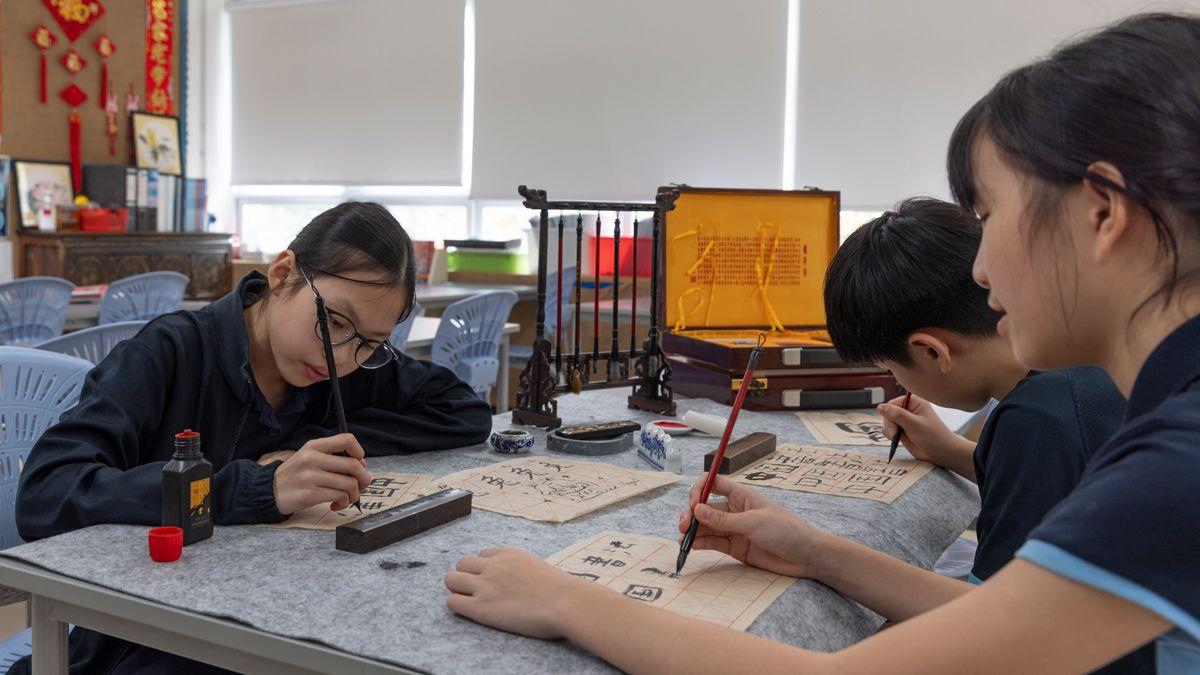
In Mandarin Chinese, the curriculum is entirely tailored to students’ needs so that they will be able to manipulate Mandarin Chinese as a foreign language, second language or first language. The main objective of this curriculum is for students to gain a sound knowledge of vocabulary and an understanding of grammar before the start of the three IGCSE Mandarin Chinese courses that are offered in Years 9–11. Students explore a wide range of topics related to the Mandarin Chinese language and culture, which help them develop listening, speaking, reading and writing skills and become Confident Communicators and
The table below shows an example of the curriculum coverage of a Mandarin as a Foreign Language (MFL) class in which students have some degree of Mandarin learning experience. The progress and topics coverage will be different in each set as students will be following different pathways of Mandarin as a foreign language, second language or first language.
The Chinese as a Second Language curriculum is designed to help nearly-native students of Chinese develop their language skills in listening, speaking, reading and writing. The curriculum covers a range of topics related to Chinese culture, society and daily life, and aims to enable students to communicate effectively in Chinese and understand Chinese culture.
The main objective of this curriculum is for students to gain a solid knowledge of vocabulary and an understanding of the grammar before the start of the IGCSE Chinese as a Second Language curriculum offered in Years 9–11. Students explore a wide range of topics related to the Chinese language and culture, which help them develop listening, speaking, reading and writing skills and become Confident Communicators and Responsible Citizens.
The table below shows an example of the curriculum coverage of a Chinese as a Second Language (CSL) class in which students are required to meet the curriculum expectations through a variety of learning activities.
LEARNING FOCUS
Term 1
Y7
● My School Life
● Buying Stationery
● Shopping
Y8
● Review Year 7 Content
● Birthday Celebrations
● The Mid-Autumn Festival
Term 2
● My Relatives
● CNY Inquiry Project: New Year Celebrations Around the World
● CNY Flower Market Trip
● Spring Festival
● CNY Inquiry Project: Traditional Chinese Clothing & Traditional Activities
Term 3
● Household Chores
● Keeping Pets
● End-of-Year Project: Family Album
● Asking for Directions
● My Holidays
● End-of-Year Project: Oral Presentation – My Summer Vacation
CHINESE AS A FIRST LANGUAGE
OVERVIEW
The Chinese as First Language curriculum is designed to help native students of Chinese develop their language skills in listening, speaking, reading and writing. The curriculum covers a range of topics related to Chinese culture, society and daily life, and aims to enable students to communicate effectively in Chinese and understand Chinese culture.
The main objective of this curriculum is for students to gain a solid knowledge of vocabulary and an understanding of the grammar before the start of the IGCSE Chinese as First Language curriculum offered in Years 9–11. Students explore a wide range of topics related to the Chinese language and culture, which help them develop listening, speaking, reading and writing skills and become Confident Communicators and Responsible Citizens.
The table below shows an example of the curriculum coverage of a Chinese as First Language (CFL) class in which students are required to meet the curriculum expectations through a variety of learning activities.
LEARNING FOCUS
Term 1
Y7
● 春/朱自清
● 济南的冬天/老舍
● 雨的四季/刘湛秋
● 差不多先生 / 胡适
● 刷子李 / 冯骥才
Y8
● 《世说新语》二则
● 从百草园到三味 书屋 / 鲁迅
● 再塑生命的人 / 海伦凯 勒
Term 2
● 古代诗歌四首
● 春节由来、活动
Term 3
● 咏雪 / 刘义庆
● 陈太丘与友期行 / 刘义 庆
● 《论语》十二章
● 课外古诗词诵读
● 春节活动
● 散步 / 莫怀戚
● 走一步、再走一步 /莫顿 亨特
● 诫子书 / 诸葛亮
ART
OVERVIEW
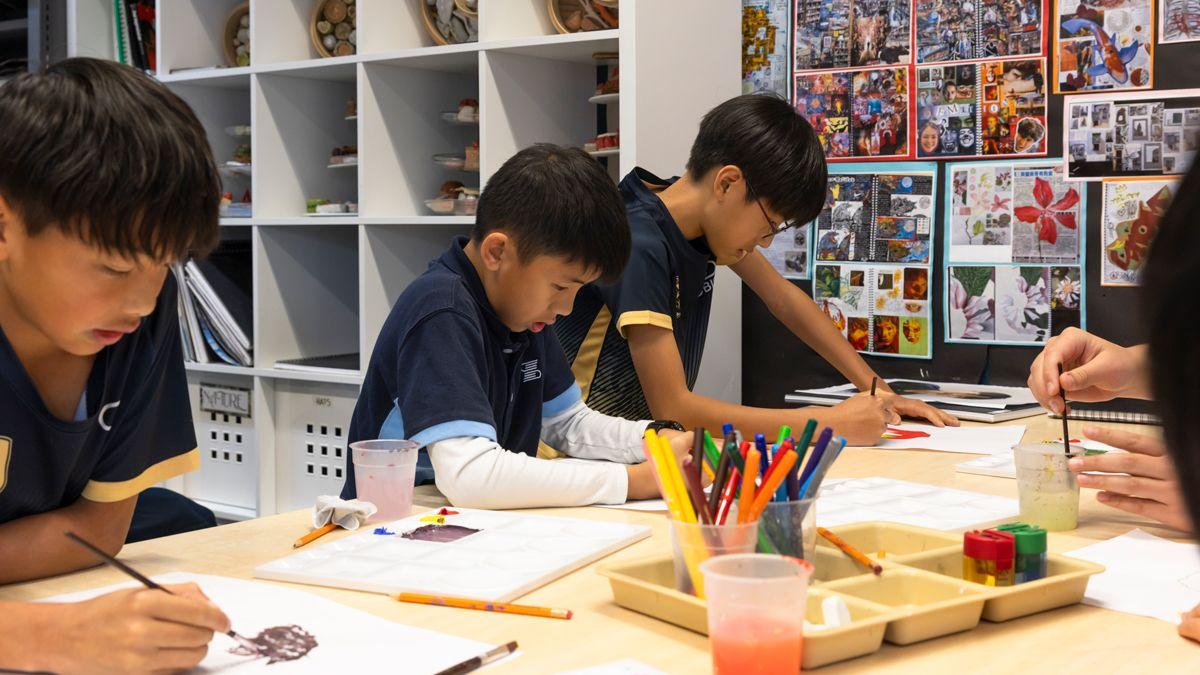
Through the Year 7 and 8 Art programme at DBIS, students develop knowledge and understanding of art, art making skills, creativity and conceptual thinking, which will help them grow not only as artists but also as the creative thinkers of the future.
The programme exposes students to a wide range of artists, both historical and contemporary, and introduces them to cultural and social contexts of art. Artists and/or socio-cultural factors inform all projects, and these change on a yearly basis and from class to class.
Creativity and conceptual thinking are introduced from Year 7 and built upon through Key Stage 3 and into GCSE, where they become an important part of the development of ideas and artworks.
Drawing is seen as the foundation of art, not only to represent the world around us but also to support the development process within each chosen area of study. It forms a core element of the practice of artists, craftspeople and designers. With this in mind, we dedicate a large section in every project to drawing.
In Years 7 and 8, students explore a range of art media, artists, culture and the development of ideas (design process) and have the opportunity to work both individually and collaboratively. Skills taught throughout the two years include drawing, painting, printmaking, sculpture, photography and graphics.
LEARNING FOCUS
Term 1
Y7
● Introduction to the Art Elements
● Drawing
● Colour
Y8
● Drawing
● Painting
Term 2
● Painting
● Printmaking
● Mixed Media
● Printmaking
● Mixed Media
Term 3
● Sculpture
● Sculpture
● Digital Design
COMPUTER SCIENCE
OVERVIEW
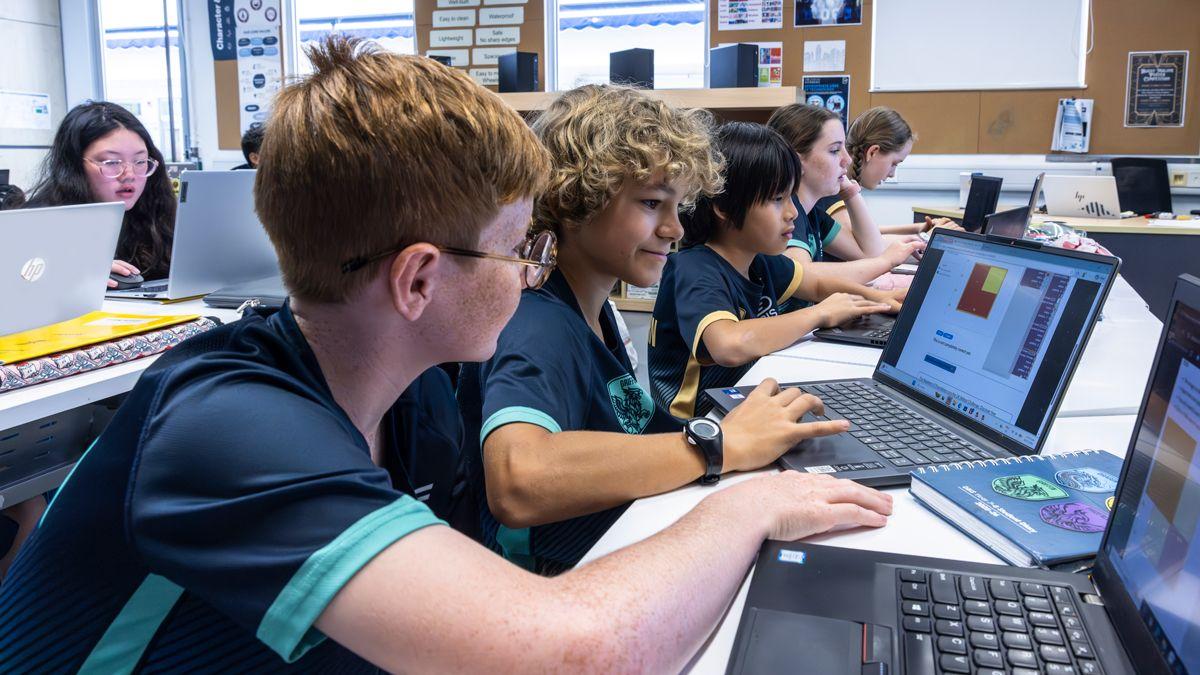
In Years 7 and 8, students move beyond being passive users of technology to become active creators and logical architects of the digital world. Our curriculum is built upon the four pillars of computational thinking: decomposition (breaking down problems), pattern recognition (identifying trends), abstraction (focusing on essential information) and algorithms (designing step-by-step solutions). These pillars provide a powerful mental tool kit that enables students to tackle complex challenges with confidence and logic.
Students explore the principles of information and computation, gaining a deep understanding of how digital systems function. This theoretical foundation is brought to life through hands-on programming, where students translate logic into functional code. Beyond the screen, we foster an environment where students are encouraged to think creatively, communicate clearly and balance independent problem-solving with collaborative projects, ensuring they can apply their technical knowledge in versatile, real-world contexts.
A core priority is ensuring students navigate the digital landscape securely and responsibly. We move beyond basic ICT skills to develop a sophisticated understanding of digital safety, covering online privacy and the management of digital footprints. Students also investigate cybersecurity to recognise common threats and evaluate digital wellbeing, ensuring they grow into resilient, ethical and informed digital citizens.
LEARNING FOCUS
Term 1
Y7
● AI & I
● Autonomous Systems Engineering
Y8
● Artificial Intelligence & Machine Learning
● Logic & Data Processing
Term 2
● Digital Data Representation
● Network Engineering
● Physical Computing
● Introduction to Python
Term 3
● Algorithmic Thinking
● Digital Literacy & Ethics
● Innovative Technologies
● The Digital World & Society
DESIGN & TECHNOLOGY
OVERVIEW
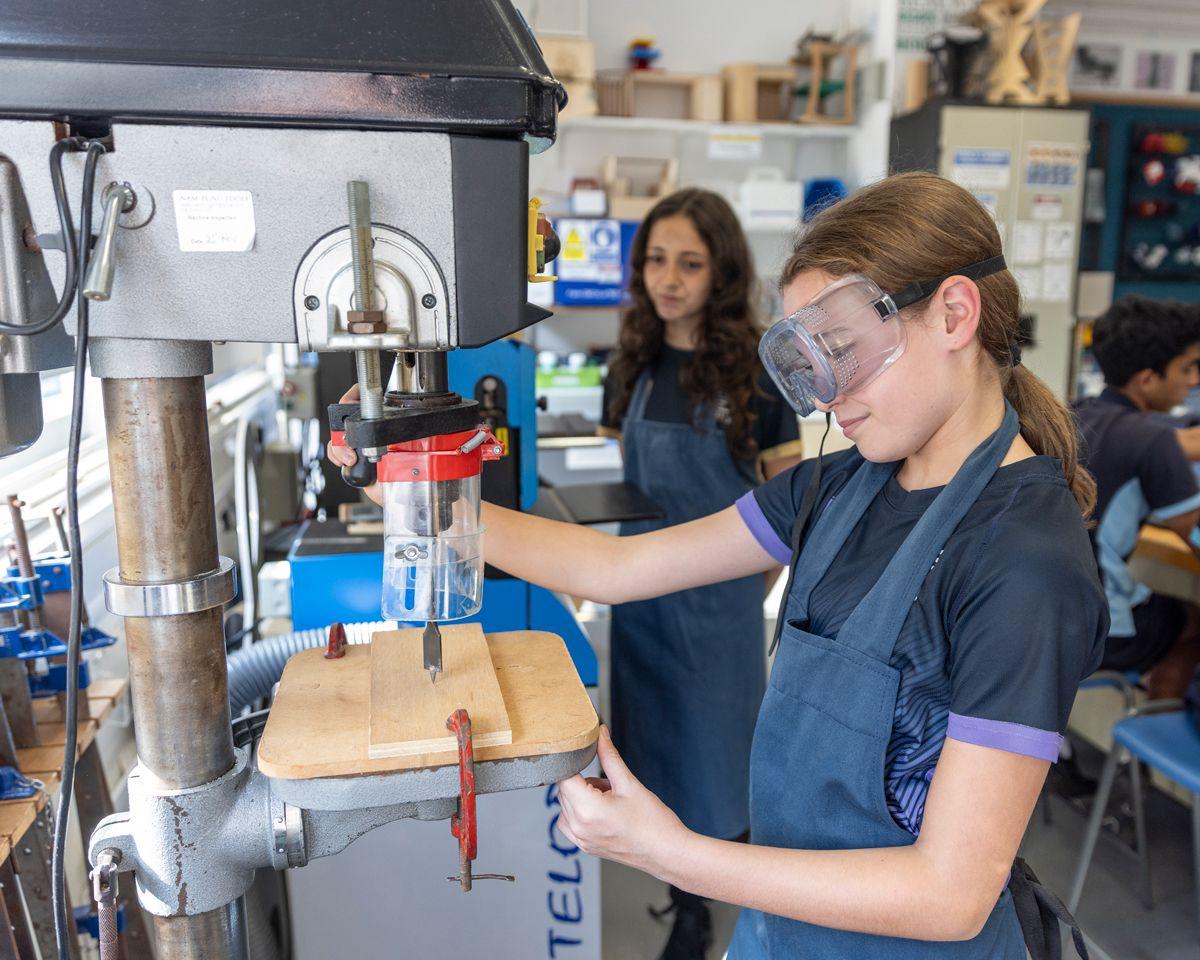
The Year 7–8 Design & Technology (D&T) curriculum has been designed to prepare students for the IGCSE D&T Resistant Materials course. The curriculum enables students to acquire fundamental material and design knowledge and skills, which are then secured through practical application. Students have the opportunity to work with plastics, metals and woods throughout Years 7–8 and develop their practical skills with both modern and traditional workshop processes. During the Year 7–8 experience, students are encouraged to think creatively, communicate clearly, problem-solve independently, work collaboratively and take risks. The assessed competencies centre around researching, designing, developing, manufacturing, evaluating and technical knowledge, which align with the IGCSE assessment criteria.
LEARNING FOCUS
Term 1
Y7
Y8
● Introduction to 2D Design (CAD)
● Introduction to the Laser Cutter
● Introduction to Additional Drawing Techniques
● Introduction to the Vacuum Former
Term 2
● Introduction to Materials
● Working With Wood & Acrylic
● Introduction to User-Centred Design
● Developing 3D Drawing Skills (by Hand) & Using Software
Term 3
● Introduction to 3D Drawing & CAD
● Introduction to the 3D Printer
● Introduction to Metals
● Working With Metals
● Introduction to Orthographic Drawing
DRAMA
OVERVIEW
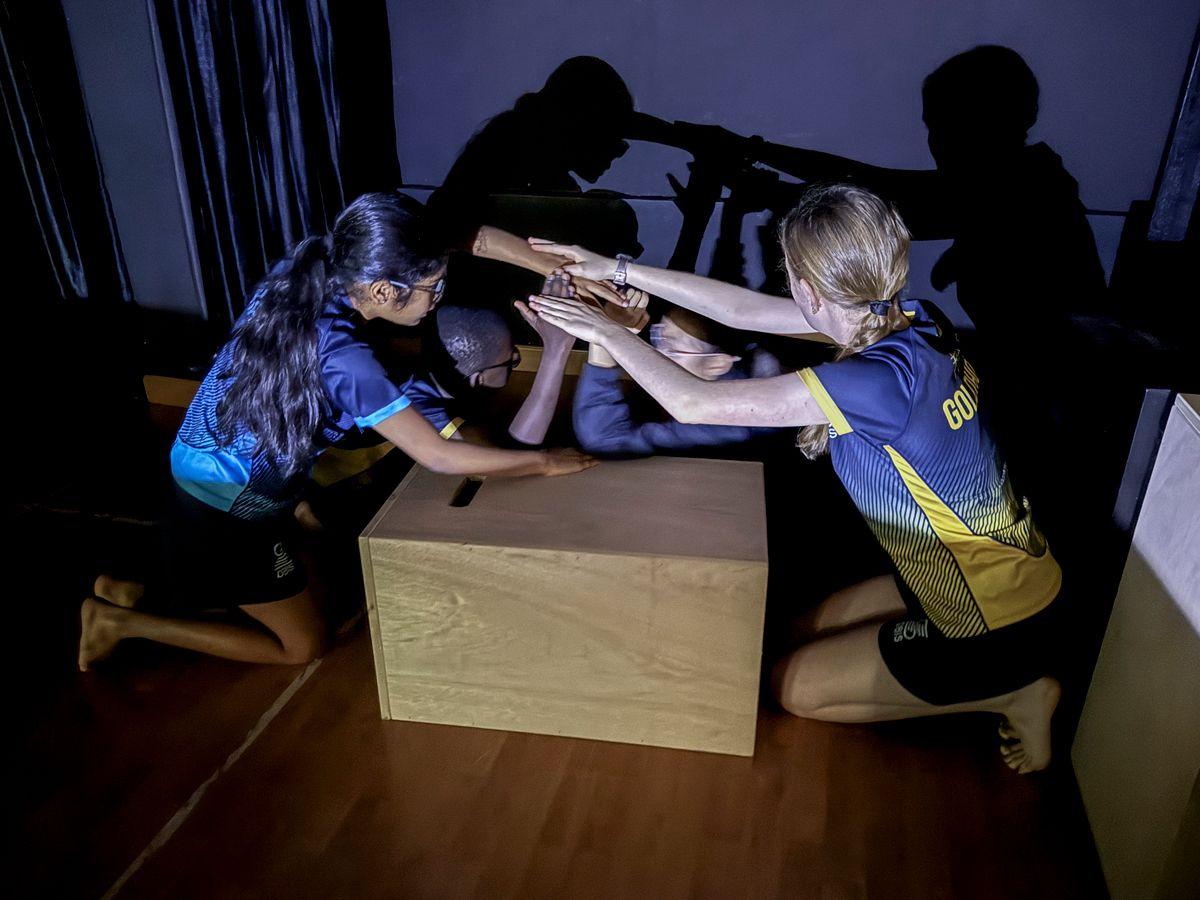
Through practical and theoretical study, Year 7–8 Drama encourages students to understand and enjoy Drama. Students do this by developing their performance skills, both individually and in groups. Students learn to understand the role of actor, director and designer in creating a piece of theatre, considering ways in which ideas and feelings can be communicated to an audience. They discover the performance possibilities of published plays while also being given an opportunity to devise performances of their own.
In Years 7–8, Drama is a practical and collaborative subject. Students are therefore expected to work with each other, developing key skills such as the ability to collaborate in an effective way, as well as creative thinking and leadership skills.
LEARNING FOCUS
Term 1
Y7 ● Introduction to Drama
● Exploring the Ensemble
● Creating Characters
Term 2
● Puppetry
Term 3
● Exploring Script
Y8 ● Silent Movies ● Building Tension ● Exploring Script
MUSIC
OVERVIEW
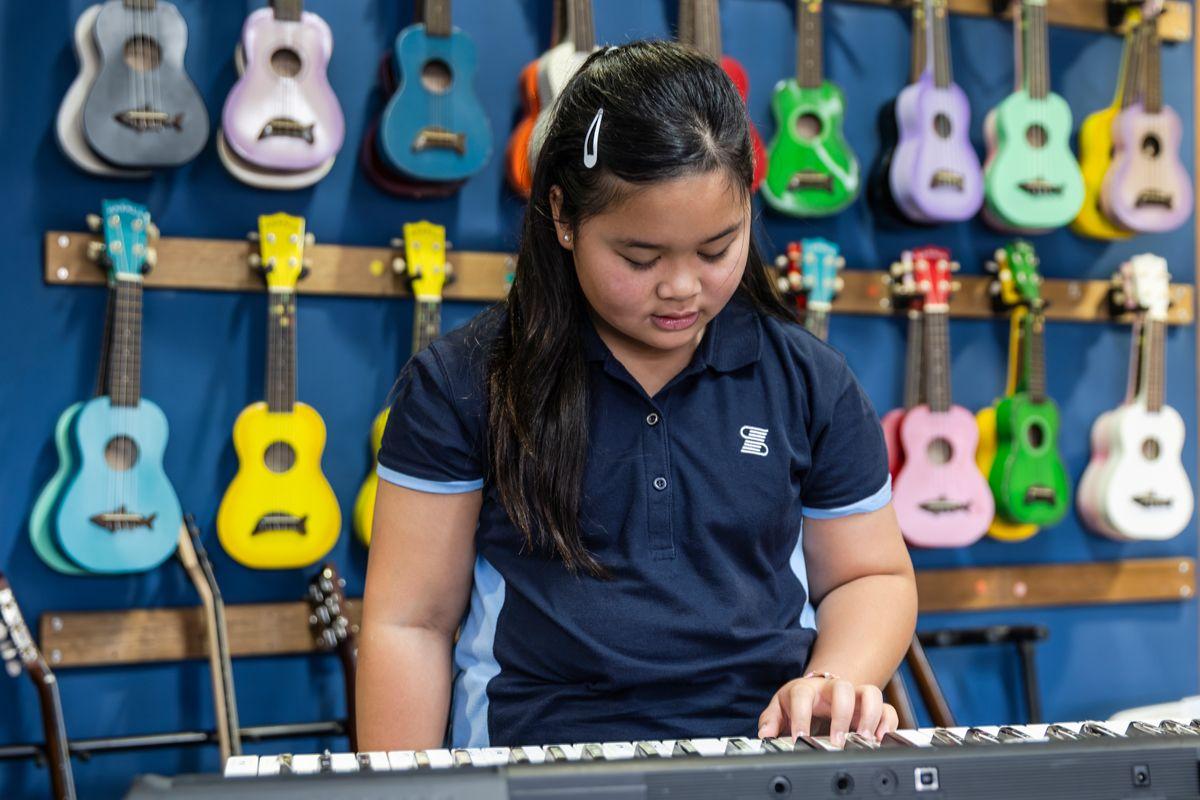
In Music, students listen to, analyse, perform and compose in a wide range of genres, styles and traditions. Students perform both as soloists and as part of small and whole-class ensembles. When composing, students use a range of music technology platforms to annotate and refine ideas. Close listening to and analysis of musical elements and key style indicators involve close technical study of music and are incorporated into every lesson.
LEARNING FOCUS
Term 1
Y7 ● Musical Elements
This unit equips students with the ability to identify and comprehend the elements of music through listening to & appraising diverse musical works, culminating in the composition of an original piece.
Y8 ● Band Unit
In this unit, students rehearse, refine their instrumental skills on a chosen instrument & perform.
Term 2
● Blues & Jazz
Students begin exploring the history of blues and jazz music in the 20th century and learn to perform their own piece by the end of the unit.
Through exploring techniques of the genre, such as the major and minor blues scales, circle of 5ths, ii-V-I progressions and syncopation, students cover simple blues and jazz pieces in small groups.
● Music & Film
This unit introduces students to the purpose & challenges of film music composition, focusing on the use of leitmotifs to represent characters & situations through the manipulation of musical elements, culminating in students composing music for a film clip.
Term 3
● Dance Music
This unit introduces students to diverse forms of dance music, exploring their stylistic commonalities & differences, cultural/historical contexts & basic harmony theory.
● Computer & Video Game Music
This unit introduces students to character themes in video game music, exploring their development for various scenarios & incorporating characteristic musical features through composition & performance tasks.
PHYSICAL EDUCATION
OVERVIEW
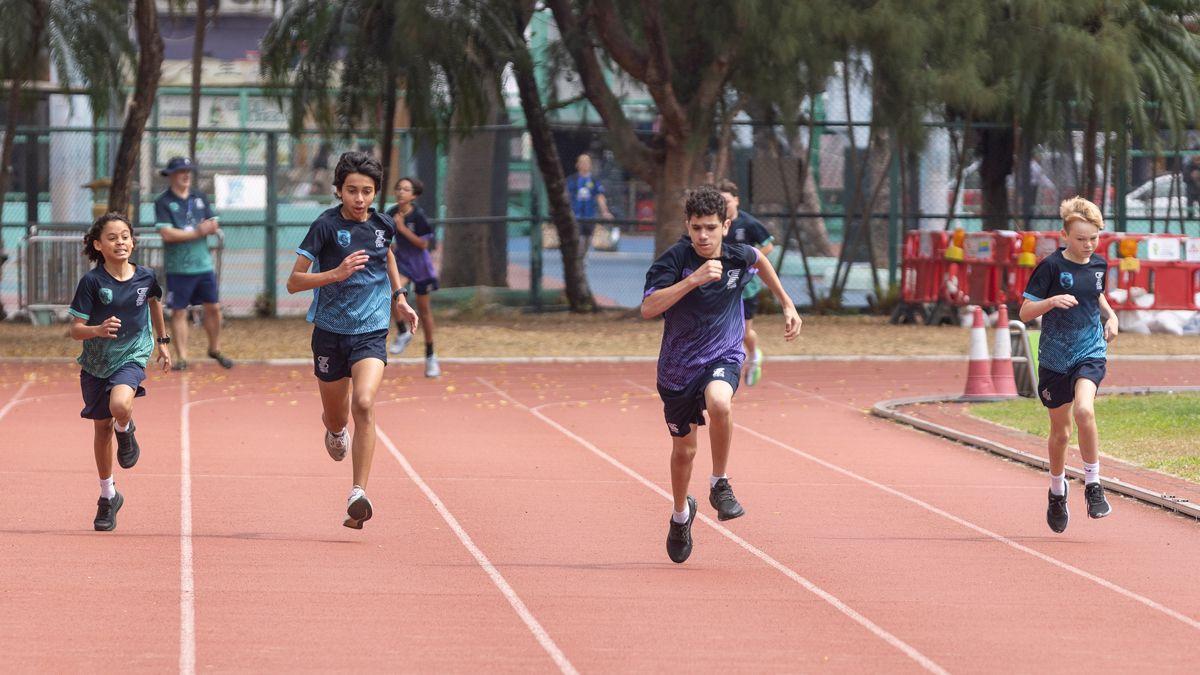
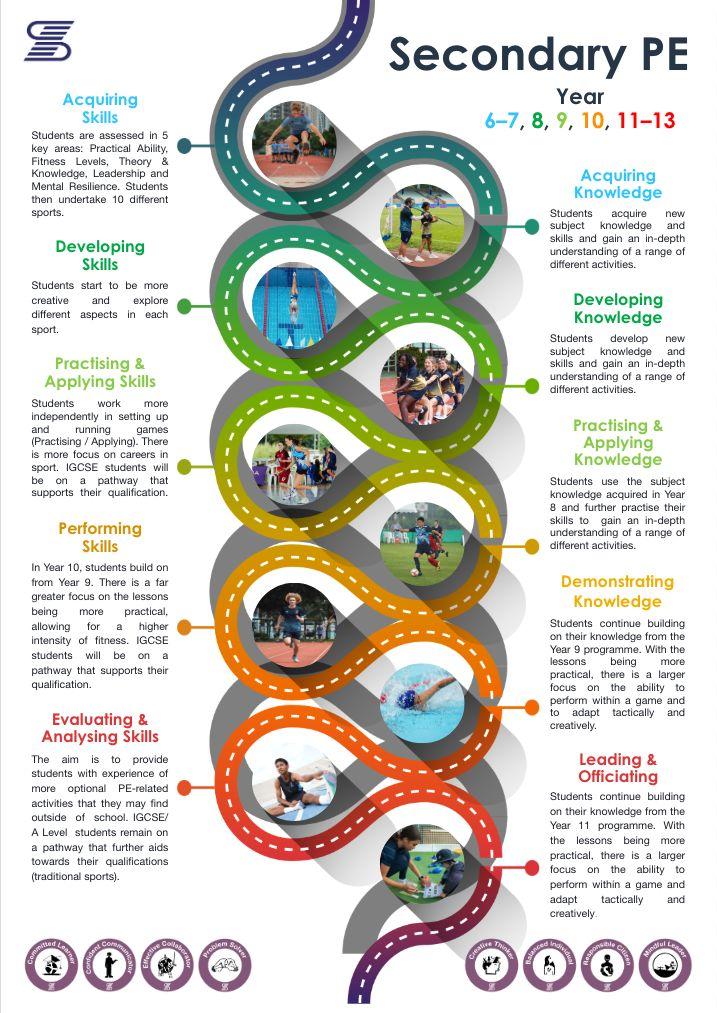
Students are encouraged to develop the DBIS Learner Profile Attributes throughout all areas of Physical Education (PE) study. During the Health-Related Fitness module, they learn how to be a Balanced Individual by developing a healthy, active lifestyle in order to maintain and promote wellbeing. In the Sports Education module, students are given the opportunity to develop their Mindful Leader qualities by planning and leading activities in small groups. During the Invasion and Net Games units, students learn to be Effective Collaborators and Confident Communicators, working in pairs or small-sided teams. They develop as Problem Solvers and Creative Thinkers as they develop tactics and strategies. Students are encouraged to show that they are Committed Learners by taking part in extracurricular activities in order to further develop their skills, knowledge and understanding in PE and sport.
LEARNING FOCUS
Term 1
Y7
● Basketball
● Netball
● Swimming
● Water Polo
Y8
● Basketball
● Netball
● Swimming
● Water Polo
Term 2
Acquiring Skills & Knowledge
● Personal Survival
● Badminton
● Gymnastics
● Handball
Term 3
● Cricket
● Health & Fitness
● Table Tennis
● Hockey
Developing Skills & Knowledge
● Personal Survival
● Badminton
● Gymnastics
● Handball
● Cricket
● Health & Fitness
● Table Tennis
● Hockey
LEARNING FOR LIFE
OVERVIEW
Learning for Life (L4L) is a non-academic subject through which students develop the knowledge, skills and attributes they may need to manage their lives, now and in the future. It helps children and young people to stay healthy and safe, while preparing them to make the most of life and work.
L4L addresses both students’ current experiences and preparation for their future. The programme of study therefore provides a spiral curriculum to develop knowledge, skills and attributes, where prior learning is revisited, reinforced and extended year on year. This is grounded in the established evidence base for effective practice within PSHE (Personal, Social, Health and Economic Education) and the UNESCO education framework. More on this and other relevant research can be found in the evidence and research section of the PSHE Association website.
LEARNING FOCUS
Term 1
Health & Wellbeing
Y7
● Transition to Year 7
● My Identity
● Evaluating Self & Others
Y8
● Managing Change
● Food & Health
● Coping Strategies
Term 2
Term 3
Living in the Wider World Relationships
● Personal Finances
● Basic First Aid
● Diversity ● E-Safety
● Radicalisation
● Democracy
● Core Values
● Communication
● Relationships & Sex Education (RSE)
● Language & Behaviour
● Complex Forms of Bullying
● Relationships & Sex Education (RSE)
DISCOVERY
OVERVIEW
Discovery in Years 7–8 has some similarities with its Primary counterpart in that it is inquiry led and provides students with the opportunity to develop information literacy skills and key skills associated with an inquiry and conceptual approach to learning. Students have great autonomy with their learning, which often begins with a big idea or question. Teachers act as facilitators, using carefully considered approaches to support, question and guide. This is followed by students investigating, reflecting and connecting what they have learnt and found out to the real world. Discovery is about the process and the transferable skills that are being developed, and investigation is the key.
LEARNING FOCUS
Project 1 (Term 1)
Y7 & 8 Students have a directed focus on either the UN Sustainable Development Goals and/or the theme of Sustainability. Emphasis is placed on an inquiry project outcome that is impactful and facilitates a strong opportunity for transformation/technology/ action/service and/or education that meets an apparent need.
Project 2 (Terms 2 & 3)
Y7 & 8 Students have the agency to decide what they would like to inquire into and to make a difference through action resulting from the inquiry. Below is a list of common themes that can (and have) been explored.
Sustainability
Students explore this concept and how it focuses on meeting the needs of the present without compromising the ability of future generations to meet their needs.
Helper Community in DB
The month of May is traditionally marked as ‘Helper Appreciation Month’. Could this month of wonderful events inspire something that could happen more than just in May?
STEAM
Students identify a real-world problem that needs a solution – either through innovating an existing solution or inventing something entirely new that can solve the problem.
School Issues
Students consider what problems or issues they encounter at school and ask whether there are aspects they want to change or make better.
Own Interest
Students think about what they have a passion for, what makes them wonder and drives their curiosity, and whether they have an interest that could result in a difference and help drive action.
Learning Enhancement & English as an Additional Language
In line with our philosophy of supporting students in their individual development, we offer a great deal of additional support both inside the classroom and through personalised courses of study.
Students who have English as an Additional Language (EAL) needs will be supported in acquiring further English skills to ensure they are able to access the curriculum. This will take the form of educational assistant (EA) provision during classes as well as additional EAL classes, where necessary.
Students who require learning enhancement will be provided with a structured plan from the Learning Enhancement team and their subject teachers. It is our commitment as a school that all students reach their individual potential, and learning support forms an element of this commitment.
Secondary Parent Handbook
We encourage you to read through our Secondary Parent Handbook, which includes an overview of the day-to-day information that will be applicable to your child’s life at DBIS. The handbook will provide you with access to additional information, including links to Secondary School policies and procedures.
We are extremely proud of everything the DBIS Year 7–8 curriculum has to offer all our students, and we warmly welcome you to our unique school community.
Should you have any questions, or if you would like any further information, please don’t hesitate to contact us.
Jason Broderick
Deputy Head of Secondary jbroderick@dbis.edu.hk
David Coburn
Assistant Head of Secondary dcoburn@dbis.edu.hk
Alexander Kilford
Assistant Head of Secondary akilford@dbis.edu.hk
Rebecca Boddington
Assistant Head of Secondary rboddington@dbis.edu.hk