To empower every student to develop their full potential and achieve personal excellence in all endeavours, enabling them to leadsuccessful,fulfillinglivesandenrichtheworld.
Our DBIS Mission is enacted through our values of Courage, Respect and Integrity.
Our Core Values Courage
We embrace challenges, persevere and work hard to reach our full potential.Weareresilientandalwaysstrivingtolearnandgrow.
Respect
We value our diverse community, appreciating their unique contributions, needs and rights. We foster positive relationships throughkindnessandempathy,embracingaglobalmindset.
Integrity
Weactwithhonestyandmakeresponsiblechoices,understanding the impact of our actions on ourselves and others. We are self-aware,compassionateandaccountable.
Welcome to Our Secondary School
This handbook is for students who entered the two-year (I)GCSE programme in Year 10 in August 2025 and gives you an overview of the key skills and content covered in their courses until their exams at the end of Year 11. Our (I)GCSE and BTEC Level 2 curriculum offering is engaging and challenging and is intended to ensure that students are fully equipped to navigate the rigours of their personal programme of study, developing the skills, knowledge and competencies to succeed. The qualifications we afford our learners are highly reputable, with courses primarily examined by Pearson Edexcel International or Cambridge. This ensures access (upon satisfaction of our entry requirements) to our A Level/BTEC Level 3 programme of study in Sixth Form.
Whilst a student’s individual programme of study is specific to them, all students undertake core subjects that we believe are integral to their development and that provide a fundamental platform for academic, personal and social progress.
Core Subjects
● English Language & Literature
● Mathematics
● Science
● Learning for Life*
● Physical Education*
*Non-examined subjects
Please take the time to read through this document and use it to discuss learning priorities and progress with your child as they work through their courses. By working in partnership with your child, you can make a big difference in promoting positive learning behaviours, and sharing high aspirations can be of great benefit to the students as they undertake this important phase of their educational journey.
Please don’t hesitate to reach out to myself, your child’s teachers or the relevant Head of Department/Year with any queries you may have about learning at DBIS Secondary –together we can support your child in excelling with their studies.
Secondary Senior Leadership Team
Key Personnel
Name Role Email
Jason Broderick Deputy Head of Secondary jbroderick@dbis.edu.hk
Alexander Kilford Assistant Head of Secondary akilford@dbis.edu.hk
David Coburn Assistant Head of Secondary dcoburn@dbis.edu.hk
Rebecca Boddington Assistant Head of Secondary rboddington@dbis.edu.hk
Amrith Prabhu Head of Year 10 aprabhu@dbis.edu.hk
Bobby Wilson Head of Year 11 bowilson@dbis.edu.hk
Graham Glew Head of Mathematics gglew@dbis.edu.hk
Amy Hii Head of English ahii@dbis.edu.hk
Alexander Jamali Head of Science ajamali@dbis.edu.hk
Tom Boddington Head of Humanities tboddington@dbis.edu.hk
Myra Mi Head of Chinese & Modern Foreign Languages mmi@dbis.edu.hk
Nicolas Ng Head of Computing & Learning Technologies nng@dbis.edu.hk
Christopher Preddy Head of Music cpreddy@dbis.edu.hk
Nicola Culican Head of Art and Design & Technology nculican@dbis.edu.hk
James Lugg Head of Physical Education & Sport jlugg@dbis.edu.hk
How to Use This Document
This document is intended to provide additional insight (complementing the relevant (I)GCSE/BTEC Level 2 options booklet) into each examined subject area, outlining the course content studied in each term and academic year.
Where applicable, pertinent deadlines are included for subjects that involve coursework or non-examined assessment (NEA) components. The timelines are designed to help ensure students can successfully manage their key learning commitments.
Coursework dates are given, where possible, to advise deadlines as the students move through Years 10 and 11, from 2025 through to 2027. Please note coursework dates may be subject to change.
EXAMINED SUBJECTS
IGCSE ENGLISH LANGUAGE & ENGLISH LITERATURE
Pearson Edexcel International 4XEA1 & Pearson Edexcel International 4XET1
OVERVIEW
The IGCSE English programme of study covers both English Language and English Literature. The aims of the course are to enable students to:
● Study the language, form, structure, style and viewpoint of prescribed texts;
● Write for a range of purposes;
● Undertake sustained deep studies of English Language and English Literature through modular examinations;
● Engage creatively/critically with a range of language text types and literary genres;
● Develop and apply knowledge of literary analysis and evaluation;
● Develop comparative skills;
● Explore the contexts of texts.
LEARNING FOCUS
Term 1
Y10
Y11
● Language Unit 2: Poetry & Prose, & Imaginative Writing
Term 2
● Literature Unit 2 – Drama: Macbeth
Term 1–2
● Literature Unit 2 Drama: An Inspector Calls
Term 2–3
● Language Unit 1 – Language: Non-Fiction Texts & Transactional Writing
● Spoken Language Endorsement
● Exam Revision
Term 1
● Language: Pearson Anthology Texts
● Literature: Pearson Poetry Anthology
Term 2
● Literature Novel Study –Of Mice and Men
Term 3
● Revision for Unit 1 Language and Unit 1 Literature
MODULAR EXAMINATIONS
2025–26 (Year 10)
Language Unit 2: Poetry & Prose, & Imaginative Writing - November 2025
Literature Unit 2: Drama - May/June 2026
2026–27 (Year 11)
Language Unit 1: Non-Fiction Texts & Transactional Writing - May/June 2027
Literature Unit 1: Poetry & Modern Prose - May / June 2027
IGCSE MATHEMATICS
Pearson Edexcel International 4MA1
OVERVIEW
The IGCSE in Mathematics is a linear qualification. It consists of two examinations available at either foundation or higher tier. Both examinations must be taken in the same series at the end of the course of study. This qualification enables students to:
● Develop their knowledge and understanding of mathematical concepts and techniques;
● Acquire a foundation of mathematical skills for further study in the subject or related areas;
● Enjoy using and applying mathematical techniques and concepts, and become
LEARNING FOCUS
Term 1
Y10
● Proportion
● Probability Calculations for More Than One Event
● Angles
● Numbers & Accuracy
Y11
● Bearings
● Further Sequences
● Statistics & Data Representation
● Combining Transformations
COURSEWORK
Term 2
Concepts
● Linear Algebra
● Set Notation & Venn Diagrams
● Grouped Frequency Data Representation
● Graphs of Equations
● Circles
● Angles in Polygons
● Functions
● Circles
● Vectors
● Transformation of Functions
There is no coursework for IGCSE Mathematics.
Term 3
● Trigonometry
● Measures & Units
● Quadratic Equations
● HCF, LCM, & Prime Factors
● Ratio & Similarity
● Inequalities
● Proof
● Advanced Area & Volume
● Calculus
IGCSE SCIENCE
Pearson Edexcel International
OVERVIEW
The IGCSE Science programme aims to extend students’ knowledge and understanding by broadening and deepening skills. Students develop the ability to:
● Investigate the practical nature of Science and develop experimental skills based on correct and safe laboratory techniques;
● Apply understanding of scientific concepts and principles to a range of scientific
● Investigate the practical nature of Science and develop experimental skills based on correct and safe laboratory techniques;
● Analyse, interpret and evaluate data and experimental methods, drawing conclusions that are consistent with evidence from experimental activities and suggesting possible improvements and further investigations;
● Evaluate experimental methods within Science;
● Present scientific ideas clearly and logically, using scientific vocabulary, definitions and conventions;
● Develop a logical approach to problem solving in a wider context.
LEARNING FOCUS
Term 1
YI0
● Reproduction & Inheritance
● Inorganic Chemistry
● Radioactivity
Y11
● Biological Resources
● Physical Chemistry
● Astrophysics
● Waves
COURSEWORK
Term 2
● Ecology & the Environment
● Organic Chemistry
● Energy Resources & Transfers
● Electricity
● Revision (Double Candidates)
● Triple Biology/ Chemistry & Physics
● Electromagnetism
There is no coursework for IGCSE Science.
Term 3
● Use of Biological Resources
● Physical Chemistry
● Solids, Liquids & Gases
● Revision (Double Candidates)
● Triple Biology/ Chemistry & Physics, & Revision
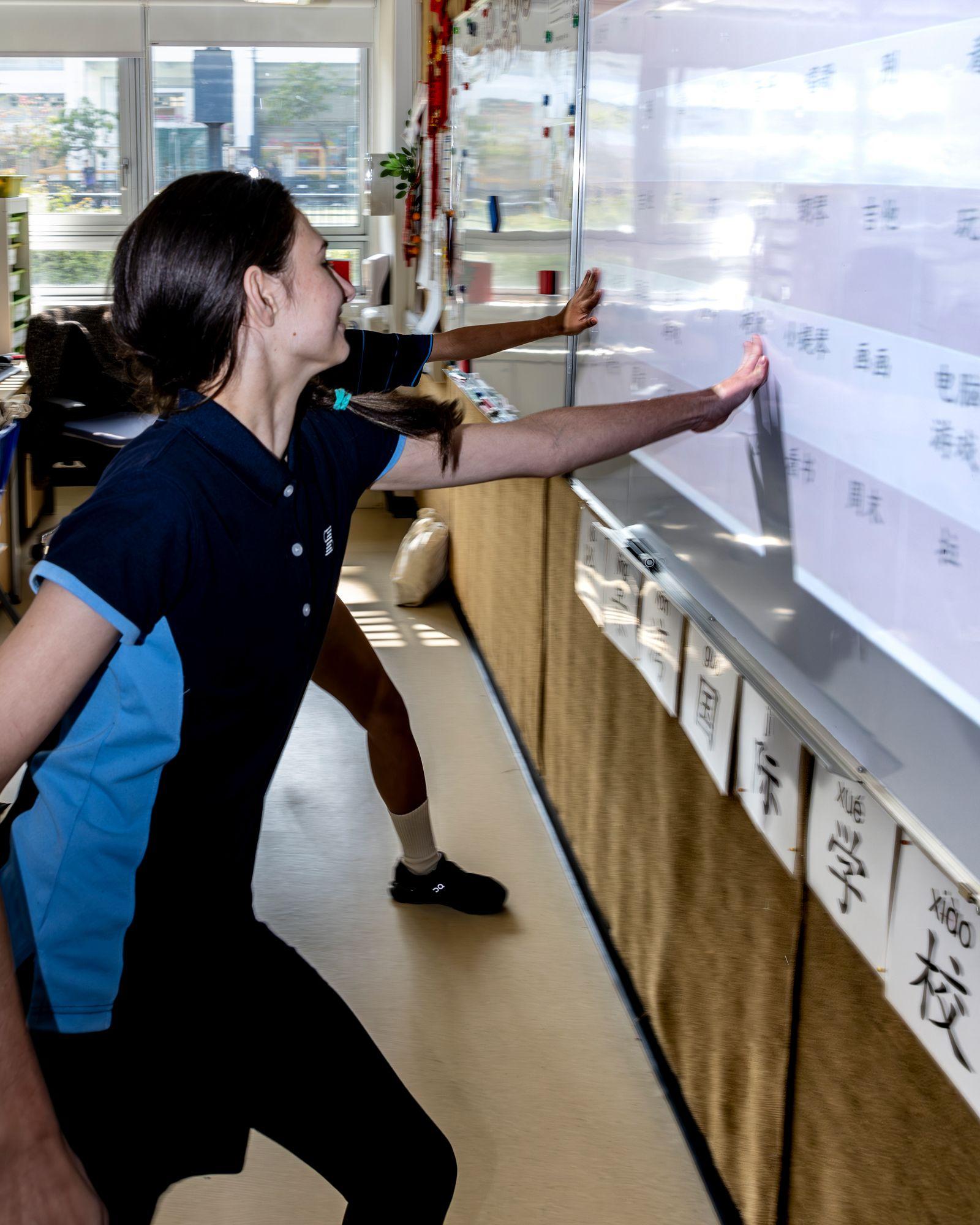
IGCSE CHINESE Mandarin as a Foreign Language
Cambridge IGCSE Mandarin as a Foreign Language 0547
OVERVIEW
The subject content of the IGCSE Mandarin as a Foreign Language course is organised around five broad topic areas which provide contexts for the acquisition of vocabulary and the study of grammar and structures. Through the study of these topic areas, students gain insight into target language countries and communities.
Topic Areas:
● Everyday Activities
● Personal & Social Life
● The World Around Us
● The World of Work
● The International World
LEARNING FOCUS
Term 1
Y10
● Hobbies
● Eating & Drinking
● Health & Fitness
Term 2
● Festival: CNY Culture Study – New Year Traditions
● Home Life
● Living Environment
Y11
● School Routine
● School Facilities
● Learning Chinese as a Foreign Language
● Weather & Climate
● Transportation
DATE TO NOTE
2026–27 (Year 11)
● Holiday Experience & Planning
● Future Education & Career Plans
● The World of Work
● Speaking Exams
Term 3
● Mock Preparation & Speaking Assessment
● Mock Exam
● Clothes
● Shopping
● Technology & Social Media
● Revision
The speaking exam takes place in late March/early April 2027 (TBC).
Chinese as a Second Language
Cambridge IGCSE Chinese as a Second Language 0523
OVERVIEW
Through the IGCSE Chinese as a Second Language course, students learn to select relevant details, understand the difference between what is directly stated and what is implied, and practise writing for different purposes and audiences. Students listen to a range of spoken material, including talks and conversations, in order to develop listening skills. In both written and spoken Chinese, students respond to factual information as well as abstract ideas. They also engage in conversations on a variety of topics and develop their skills in expressing their viewpoints with a degree of accuracy and clarity. Texts and questions are printed in both traditional and simplified characters on the question papers. Students choose the form they prefer in the examination and may write their answers in either traditional or simplified characters. The speaking test is assessed in Mandarin Chinese only.
LEARNING FOCUS
Term 1
Y10
● Revision
● School & Education
● Future Career Plans
● Friendship
● Peer Pressure/Conflict
Y11
● Urban & Rural Life
● Travel
Term 2
● Generation Gap
● Young People
● Healthy Eating
● Sports & Exercises
● Film & the Media
● Hometown & Surrounding Areas
● Pollution
● Recycling
● Global Warming
● Festivals & Celebrations
DATE TO NOTE
2026–27 (Year 11)
Term 3
● Hobbies
● New Means of Communication
● Social Networking
● Learning Technology
● Customs & Traditions
● Culinary Diversity
● Formal Speaking Exam
● Exam Preparation
The speaking exam takes place in late March/early April 2027 (TBC).
Chinese as a First Language
Cambridge IGCSE Chinese as a First Language 0509
OVERVIEW
The IGCSE Chinese as a First Language course offers students the opportunity to respond knowledgeably to a range of reading passages. Students use some of these passages to inform and inspire their own writing and write in a variety of text types for different audiences. The passages cover a range of genres and types, including fiction and non-fiction, and may also include other forms of writing, such as essays, reviews and articles. Students have the opportunity to read classical Chinese prose texts to help deepen their knowledge of Chinese culture. We encourage students to become appreciative and critical readers and writers of Chinese.
The speaking exam takes place in late March/early April 2027 (TBC). Term
Exam Preparation
IGCSE FRENCH
Pearson Edexcel International 4FR1
OVERVIEW
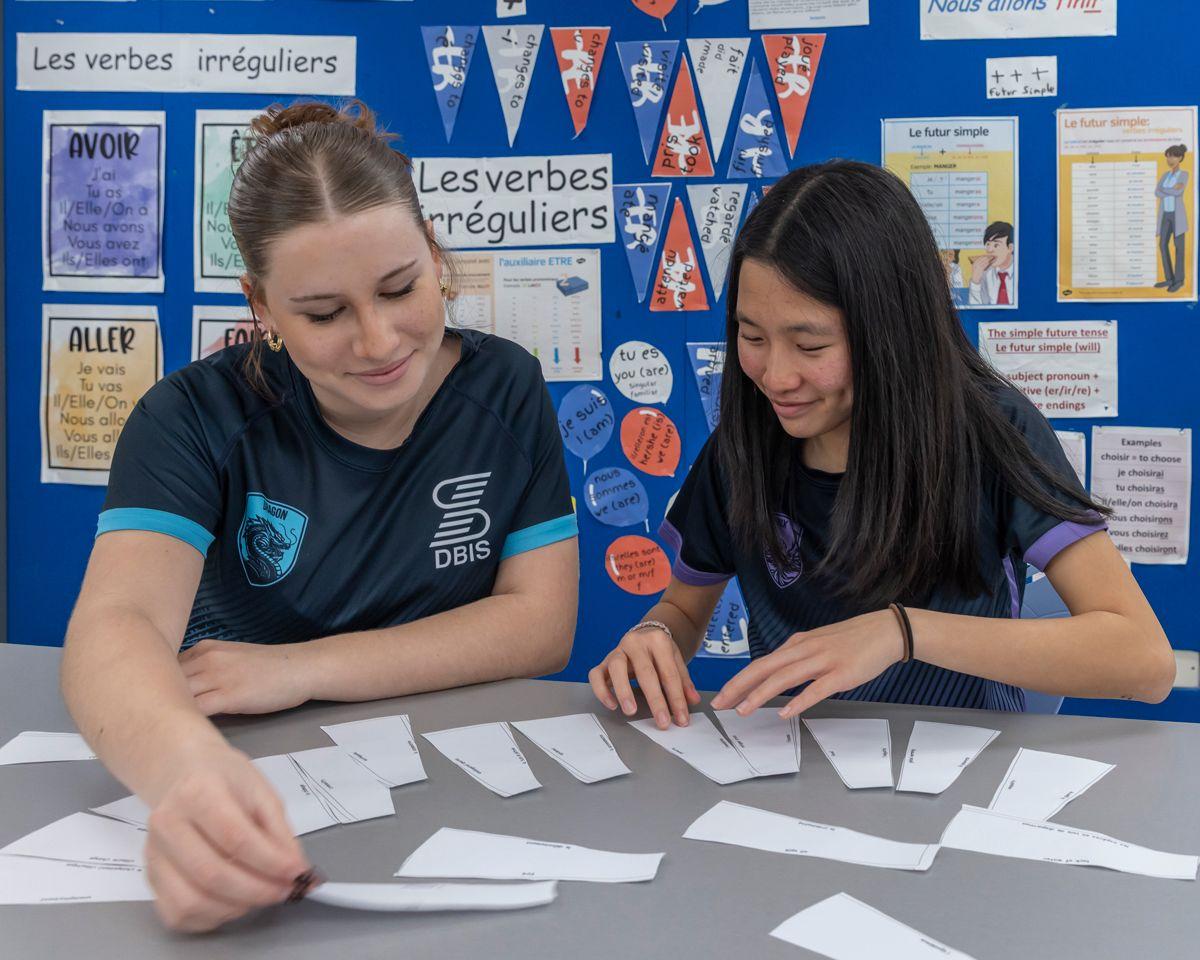
The IGCSE French course is designed for students learning French as a foreign language. The aim is to develop the ability to use the language effectively for the purposes of practical and meaningful communication. The course is assessed according to the language skills of listening, reading, speaking and writing, and these are taught through lively, interesting and motivating materials as students progress through the topics. The syllabus also aims to offer insights into the culture and civilisation of countries where the language is spoken, thus encouraging positive attitudes towards language learning and towards speakers of foreign languages.
LEARNING FOCUS
Term 1
Y10
Y11
● My Friends & Family: Family Members, Relationships, Friendships
● Life At Home, & Hobbies: Routine, Time, Helping at Home, Hobbies
● My Town: What Is/Isn’t in My Town, Directions, Problems in Town, Town vs Country
● Global Issues & Environment: Global Issues, Solutions, Benefits & Risks of Technology/ Social Media, Mobile Phones/Laptops
DATE TO NOTE
2026–27 (Year 11)
Term 2
● Life at School: School Subjects, Timetables, School Facilities, School Rules, Ideal School
The speaking exam takes place in late March/early April 2027 (TBC).
IGCSE SPANISH
Pearson Edexcel International 4SP1
OVERVIEW
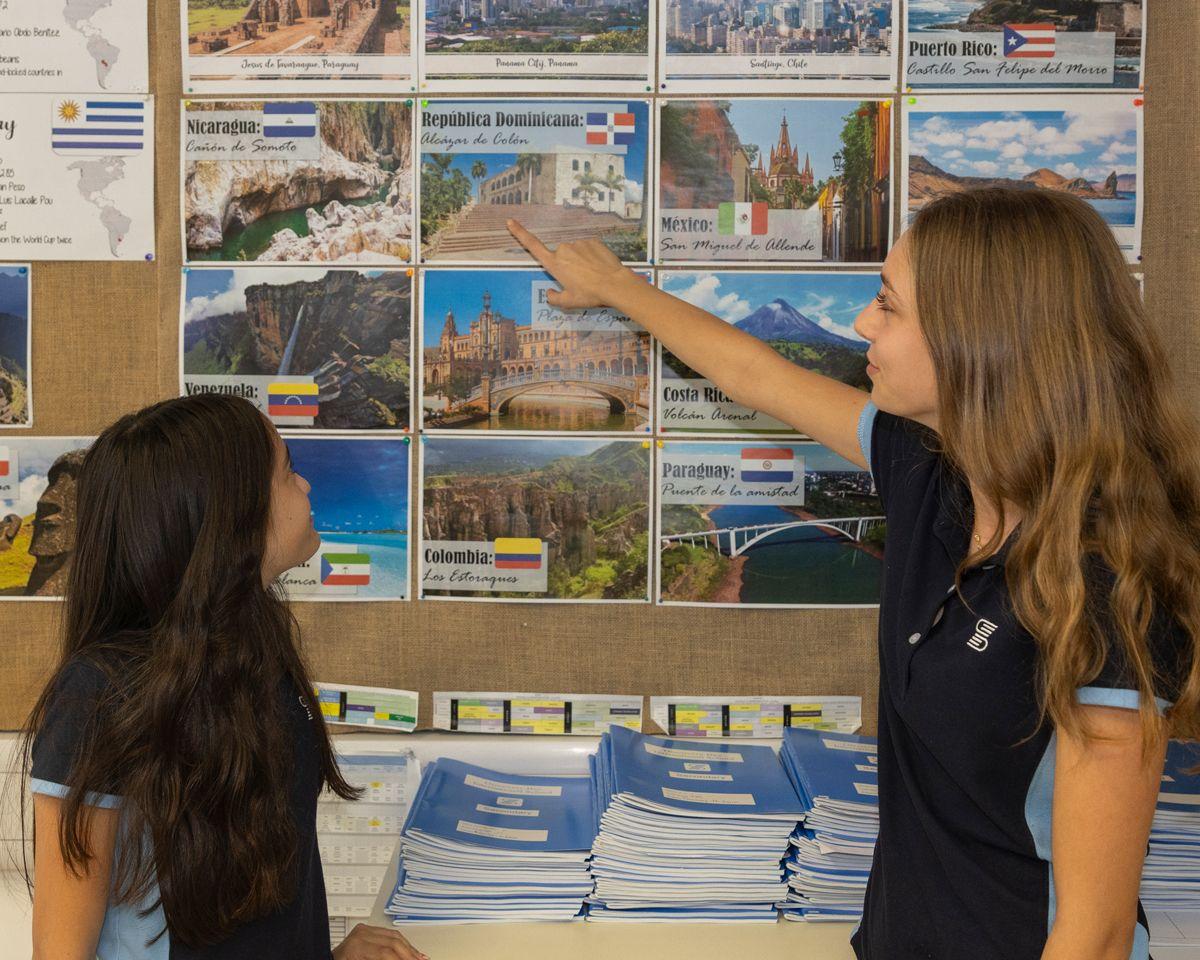
The IGCSE Spanish course is designed for students learning Spanish as a foreign language. It encourages students to develop lifelong skills, including:
● The ability to use a foreign language as a means of practical communication;
● An insight into the culture and civilisation of Spanish-speaking countries;
● A positive attitude towards language learning and other cultures and civilisations;
● Learning techniques which can be applied to other areas of learning;
● A sound foundation for progression to employment or further study.
The course is assessed equally across the four skills of listening, speaking, reading and writing, and these are taught using a combination of traditional and audiovisual resources.
LEARNING FOCUS
Term 1
Y10
Y11
● My Friends & Family: Family Members, Relationships, Friendships
● Life At Home, & Hobbies: Routine, Time, Helping at Home, Hobbies
● My Town: What Is/Isn’t in My Town, Directions, Problems in Town, Town vs Country
● Global Issues & Environment: Global Issues, Solutions, Benefits & Risks of Technology/ Social Media, Mobile Phones/Laptops
DATE TO NOTE
2026–27 (Year 11)
Term 2
● Life at School: School Subjects, Timetables, School Facilities, School Rules, Ideal School
The speaking exam takes place in late March/early April 2027 (TBC).
GCSE ART & DESIGN
Pearson Edexcel Art & Design 1AD0
OVERVIEW
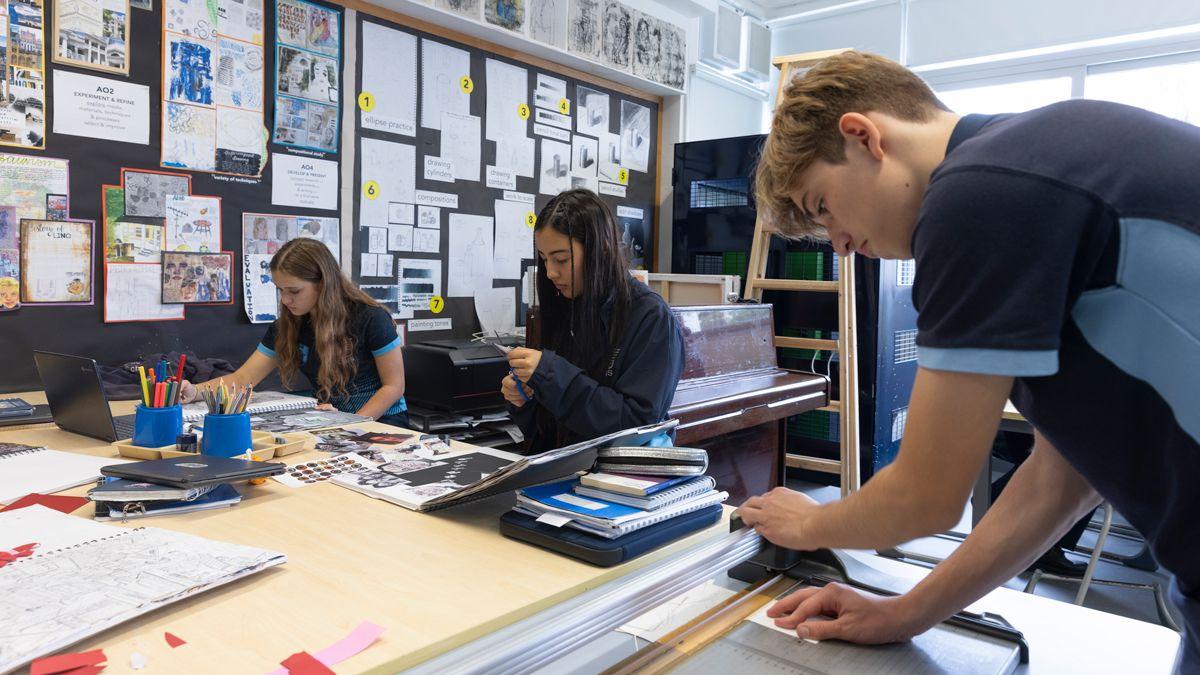
The GCSE Art and Design course consists of coursework (60%) and an externally set exam (40%).
In Year 10, students begin their project based on ‘Textures and Surfaces’. In Year 11, they take this project in a more independent direction, and it culminates in the January mock exam. Students are given the paper for the externally set exam in January 2028; this concludes in the April/May, when they sit the 10-hour final exam.
Course elements:
● Investigative Approach: Students start with a theme or brief, developing their skills in research and experimentation to a deeper and more personal level.
● Key Techniques: The course covers a broad range of artistic skills, including drawing from observation, painting, printmaking, photography, sculpture and digital media.
● Sketchbook Development: A central part of the course involves maintaining a detailed sketchbook to document the creative process, refine techniques, and analyse artists' work.
● Exhibition: The work culminates in a fine art exhibition, which celebrates the students' final outcomes and is moderated by a visiting examiner.
LEARNING FOCUS
Term 1
Y10
Y11
Term 2
● Component 1 (coursework – students working with the theme ‘Textures and Surfaces’)
● Component 1 Continues
● Component 1 Concludes in the Year 11 Mock Exam (10 hours – timed piece)
The aims of the IGCSE Business Studies course are to enable students to:
● Apply their knowledge and critical understanding to current issues and problems in a wide range of business contexts;
● Make effective use of relevant terminology, concepts and methods, and recognise the strengths and limitations of the ideas used in business;
● Distinguish between facts and opinions and evaluate qualitative and quantitative data in order to help build arguments and make informed judgements;
● Appreciate the perspectives of a range of stakeholders in relation to the business environment, individuals, society, government and enterprise;
● Develop knowledge and understanding of the major groups and organisations within and outside business, and consider ways in which they are able to influence objectives, decisions and activities;
● Develop knowledge and understanding of how the main types of businesses are organised, financed and operated and how their relations with other organisations, consumers, employees, owners and society are regulated;
● Develop skills of numeracy, literacy, inquiry, selection, use of relevant sources of information, presentation and interpretation;
● Develop an awareness of the nature and significance of innovation and change within the context of business activities;
● Acquire a foundation for further study of Business or other subjects.
LEARNING FOCUS
Term 1
YI0 ● Understanding Business Activity
Term 2
People in Business
Term 3
Marketing
Y11 ● Operations Management & Financial Information & Decisions ● External Influences on Business Activity ● Exam Technique & Revision
COURSEWORK
There is no coursework for IGCSE Business Studies.
BTEC BUSINESS
OVERVIEW
The Edexcel BTEC Level 2 qualification in Business is designed to provide students with a comprehensive understanding of the fundamental principles and practices of the business world. This vocational qualification is widely recognised and respected by employers and educational institutions alike.
The course covers a broad range of topics, allowing students to develop essential skills and knowledge in various areas. The curriculum typically includes units on business communication, customer service, marketing, finance and teamwork. These units are carefully designed to provide a well-rounded understanding of the business environment and its operations.
LEARNING FOCUS
Term 1
Y10
Y11
● Begin Business Purposes: The Understanding of Ownership & Different Environments in Which Businesses Operate
Term 2
● Finish Business Purposes: The Understanding of Ownership & Different Environments in Which Businesses Operate
● Begin Business Organisations: Business Aims & Objectives; Functional Areas & Their Interaction
Term 3
● Finish Business Organisations: Business Aims & Objectives; Functional Areas & Their Interaction
● Begin Financial Forecasting for Business: Exploring the Costs & Revenue of a Business, to Calculate Profit, Break-Even Analysis & Cash-Flow Forecasting
● Finish Forecasting for Business: Exploring the Costs & Revenue of a Business, to Calculate Profit, Break-Even Analysis & Cash-Flow Forecasting
● Begin Marketing Concepts: Marketing Involves Understanding Customer Needs & Promoting Products/ Services to Achieve Business Goals
COURSEWORK (Dates are approximate)
2025–26 (Year 10)
Unit 1 Deadline: February 2026
Unit 2 Deadline: June 2026
2026–27 (Year 11)
Unit 3 Deadline: November 2026
Unit 4 Deadline: April 2027
● Finish Marketing Concepts: Marketing Involves Understanding Customer Needs & Promoting Products/ Services to Achieve Business Goals
IGCSE COMPUTER SCIENCE
Cambridge 0478
OVERVIEW
The aims of the IGCSE Computer Science course are to enable students to develop:
● Computational thinking skills;
● An understanding of the main principles of solving problems using computers;
● The skills necessary to solve computer-based problems using a high-level programming language;
● An understanding of the component parts of computer systems and how they interrelate;
● An understanding of the internet as a means of communication – and its associated risks;
● An understanding of the development and use of automated and emerging technologies.
LEARNING FOCUS
Term 1
Y10
Y11
Term 2
● Data Representation ● Data Transmission ● Hardware
There is no coursework for IGCSE Business Studies.
IGCSE DESIGN & TECHNOLOGY
Cambridge 0445
OVERVIEW
The aims of the IGCSE Design & Technology (D&T) course are to enable students to:
● Develop creative thinking in areas relevant to Design & Technology;
● Apply problem-solving skills to practical and technological problems;
● Develop the communication skills central to design, realisation and evaluation;
● Gain knowledge and understanding of Design & Technology;
● Develop skills in research and investigation;
● Design and make products, taking into consideration sustainability and the wider impact on society;
● Develop the ability to make aesthetic, economic, ethical and technical value judgements.
LEARNING FOCUS
Term 1
Y10
Y11
● Structures & Skill Development
● Stool Project
● Pewter Tag & Metal Theory
● General Theory
● Development Modelling (continued)
● Testing
● Materials & Construction
● Plan for Production
● Final Design Drawing
Term 2
● Start Coursework –Research
● Design Criteria
● Existing Product
● Specification
● Initial Ideas
● Manufacturing Diary
● Prototype
● Product Testing
● Evaluation Against Specification
● Opinions
● Strengths & Weaknesses
● Final Conclusion
● Improvements
COURSEWORK
2025–26 (Year 10)
Coursework Starts: November 2025
2026–27 (Year 11)
Manufacturing Deadline: End of January 2027
Product Testing & Evaluation Deadline: End of February 2027
Term 3
● Idea Development
● Development Modelling
● Detailed Development
● Exam Preparation
IGCSE DRAMA
Cambridge 0411
OVERVIEW
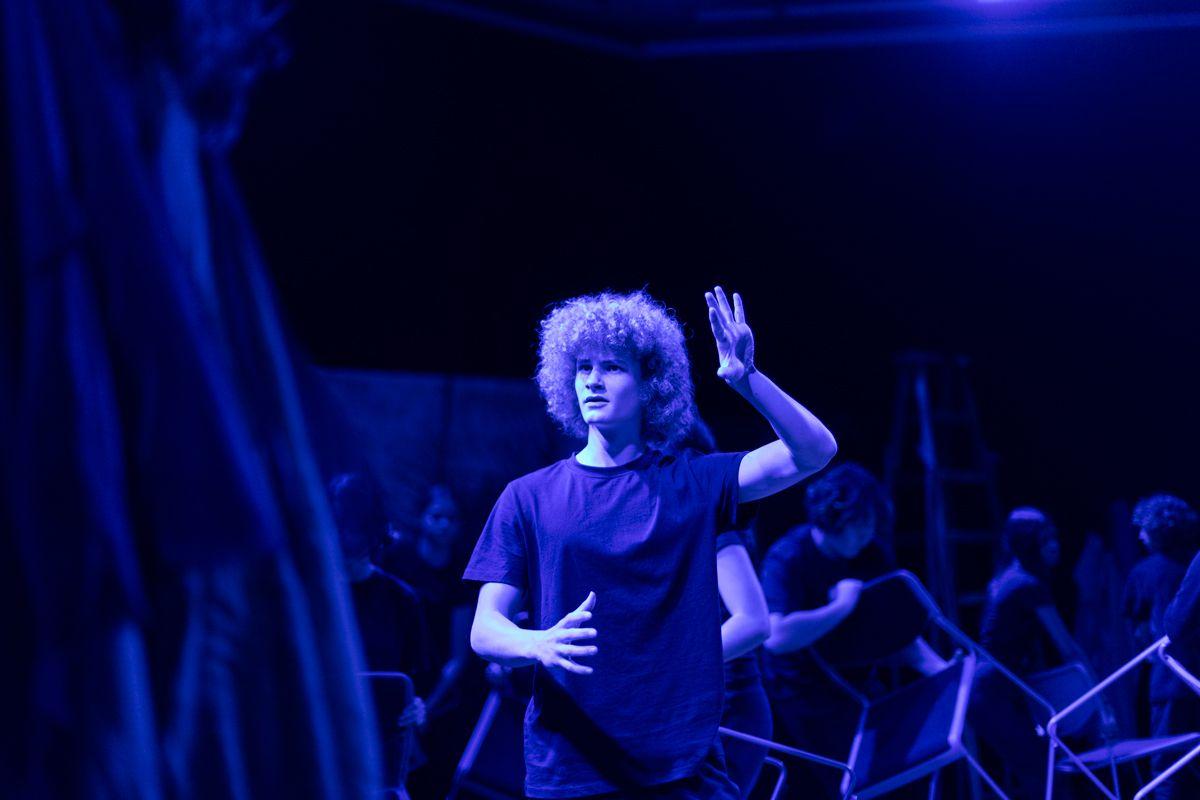
In the IGCSE Drama course, students study the elements of practical Drama, learning how to effectively work with extracts from published plays as actors, directors and designers. They also develop the skills to devise, develop and structure their own original dramatic material using various stimuli such as short titles, poems, pictures, songs, historical events and stories. Students learn to evaluate their contributions to the devising process and assess the success of the final piece. Additionally, they explore the use of staging and design as integral components of a dramatic performance. The course also focuses on developing both individual and group performance skills, emphasising their application in creating compelling characters and effectively communicating meaning to an audience.
The aims of the course are to enable students to develop:
● An interest in and enjoyment of Drama and theatre;
● An understanding of the dramatic process of moving from script to performance skills in devising original Drama;
● Practical performance skills as individuals and within a group;
● An understanding of, and engagement with, the role of actor, director and designer in creating a piece of Drama;
LEARNING FOCUS
Term 1
YI0
Y11
● Exploration of Theatre Practitioners, Styles & Genres
● Introduction to Monologues
● Group-Devised Performance
● Monologue
● Written Exam Preparation
COURSEWORK
Term 2
● Group Scripted Performance
Term 3
● Group-Devised Performance
● Written Exam Preparation
● Written Exam
Where possible, parents/guardians, peers and teachers are invited to form an audience for the coursework pieces.
2025–26 (Year 10)
Group Scripted Performance - Term 2
Group-Devised Performance - Term 3
2026–27 (Year 11)
Group-Devised Performance - Term 1 Monologue (Individual Performance) - Term 1
IGCSE GEOGRAPHY
Cambridge 0460
OVERVIEW
The aims of the IGCSE Geography course are to enable students to develop:
● An understanding of location on a local, regional and global scale;
● An awareness of the characteristics, distribution and processes affecting contrasting physical and human environments;
● An understanding of the ways in which people interact with each other and with their environment;
● An awareness of the contrasting opportunities and constraints presented by different environments;
● An appreciation of and concern for the environment; An appreciation of Earth, including its people, places, landscapes, natural processes and phenomena.
LEARNING FOCUS
Term 1
Y10
● Population
● Migration
● Rivers
Y11
● The Challenge of Development
● Economic Challenge
● Resource Provision
COURSEWORK
Term 2
● Earthquakes & Volcanoes
● Changing Towns & Cities
● Coastal Environments
● Climate Change
● Changing ecosystems
There is no coursework for IGCSE Geography.
Term 3
● Fieldwork
● Tourism
● Fieldwork
● Consolidation & Revision
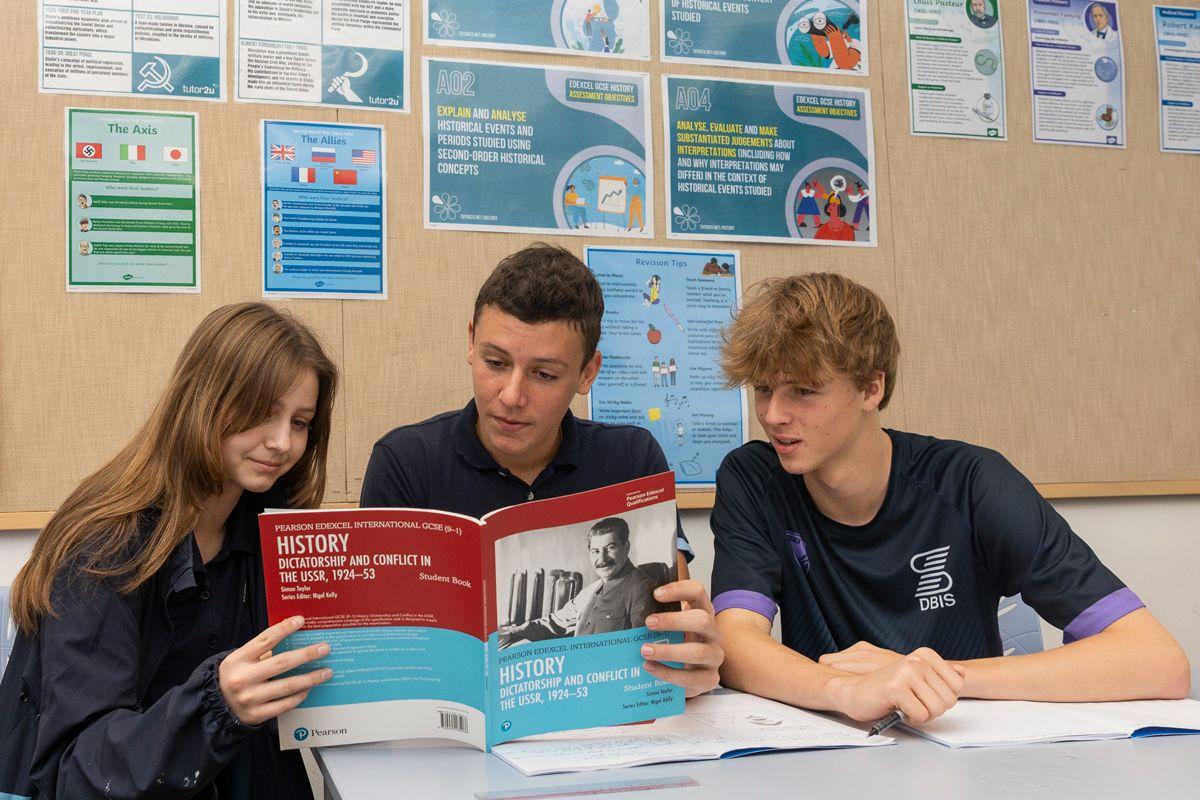
IGCSE HISTORY
Pearson Edexcel 4HI1
OVERVIEW
The aims of the IGCSE History course are to enable students to:
● Develop and extend their knowledge and understanding of specified key events, periods and societies in history; and of the wide diversity of human experience;
● Engage in historical inquiry to develop as independent learners and as critical and reflective thinkers;
● Develop the ability to ask relevant questions about the past, investigate issues critically and make valid historical claims by using a range of sources in their historical context;
● Develop an awareness that different people, events and developments have been accorded historical significance, and understand how and why different interpretations have been constructed about them;
● Organise and communicate their historical knowledge and understanding in different ways and reach substantiated conclusions.
LEARNING FOCUS
Term 1
Y10
Y11
● Germany: The Rise of a Dictatorship
● Continue: Russia, 1905–24
COURSEWORK
Term 2
● Changes in Medicine
● Russia, 1924–53
There is no coursework for IGCSE History.
Term 3
● Begin: Russia, 1905–24
● Revision
GCSE MEDIA STUDIES
AQA Media Studies 8572
OVERVIEW
The GCSE Media Studies course engages students in the in-depth study of media products in relation to the four areas of the theoretical framework:
● Media Language
● Media Representation
● Media Industries
● Media Audiences
Students are required to study media products from all of the following media forms:
● Television
● Film
● Radio
● Newspapers
● Magazines
● Advertising & Marketing
● Online, Social & Participatory Media
● Video Games
● Music Videos
In addition to the broad coverage of all nine media forms, students must engage in the in-depth study of at least one audio-visual, one print and one online social and participatory media form. Each in-depth study (Close Study Product) links the specified media form to all four areas of the theoretical framework.
The Close Study Products address the requirement that students engage with products which:
● Possess cultural, social and historical significance in terms of critical acclaim and/or audience popularity;
● Reflect and illuminate the theoretical framework for the study of media;
● Demonstrate contrasts in terms of perceived quality, form and structure;
● Provide rich and challenging opportunities for interpretation and analysis, enabling students to develop a detailed understanding of how the media communicate meanings;
● Are from different historical periods;
● Are intended for different audiences;
● Demonstrate emerging, future developments of the media;
● Are not necessarily the type of products with which students would normally engage.
LEARNING FOCUS
Term 1
Y10
● Newspapers
Term 2
Term 3
● Magazines ● Advertising & Marketing ● Online/Social Media & Video Games ● Film Industry
Television
Y11
● Radio
● Music Videos ● Coursework ● Coursework ● Close Study Product Recap
COURSEWORK
2026–27 (Year 11)
● Revision & Exam Preparation
Coursework Due: March 2027. Students will choose from a selection of five briefs which changes annually.
IGCSE MUSIC
Cambridge 0410
OVERVIEW
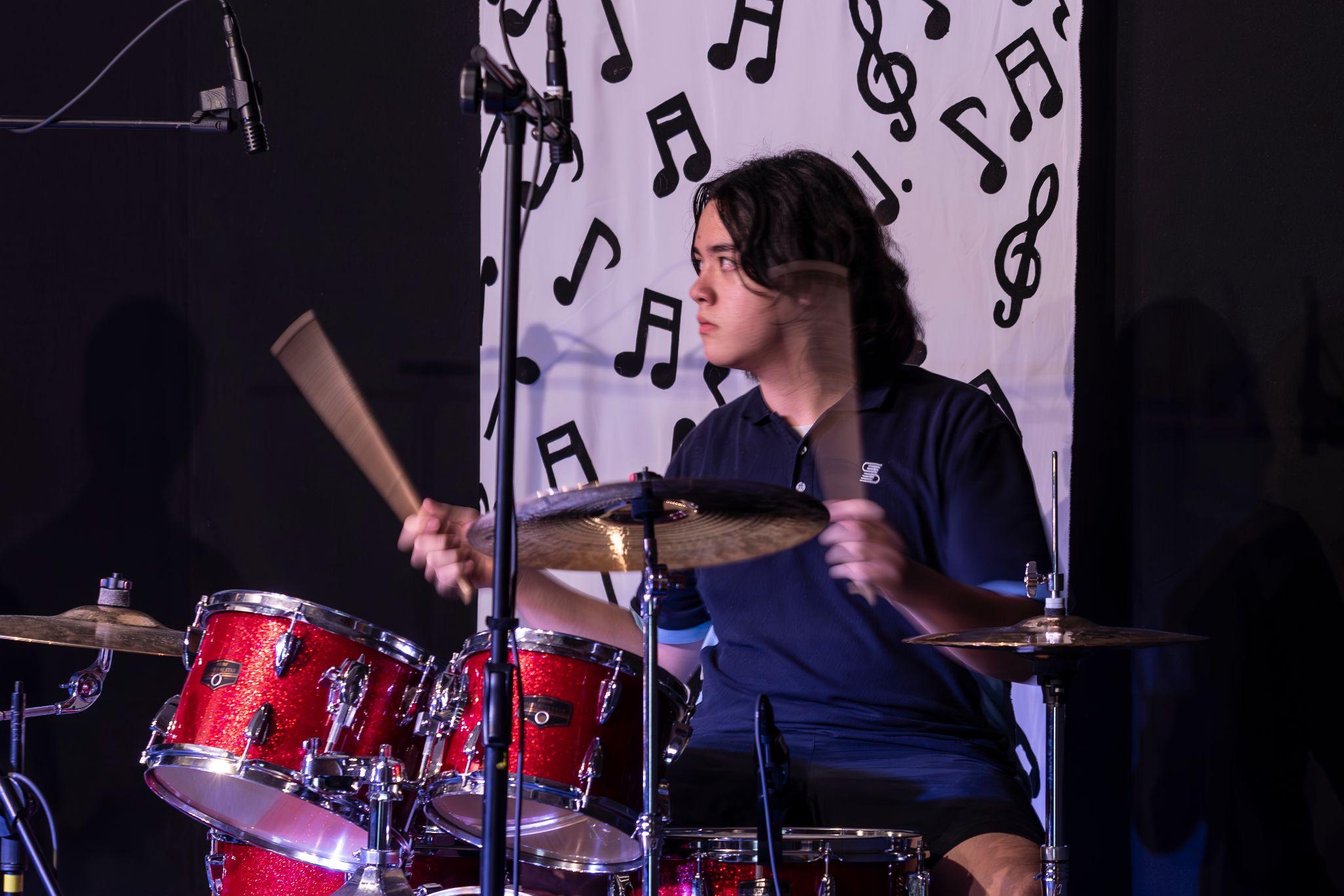
When studying the IGCSE Music syllabus, students listen to, perform and compose music, which encourages aesthetic and emotional development, self-discipline and, importantly, creativity. As a result, students enhance their appreciation and enjoyment of music, an achievement that forms an ideal foundation for future study and enhances lifelong musical enjoyment. Students study music of all styles; each style is placed in its historical and cultural context, and students are encouraged to be perceptive, sensitive and critical when listening. Although the majority of the syllabus examines Western European music, the music of other cultures is always represented.
The aims of the course are to:
● Enable students to acquire and consolidate a range of basic musical skills, knowledge and understanding, through the activities of listening, performing and composing;
● Help students develop a perceptive and critical response to the main historical periods and styles of western music;
● Help students to recognise and understand the music of selected non-western traditions, and thus to form an appreciation of cultural similarities and differences;
● Provide a foundation for the development of an informed appreciation of music;
● Provide a foundation for further study in Music at a higher level.
Record Solo & Ensemble Performances: February 2027
Term 3
● Music for Small Ensembles
● Composition 1
● Revision
Submit Final Drafts of Composition 1 and Composition 2: March 2027
IGCSE PHYSICAL EDUCATION
Cambridge 0413
OVERVIEW
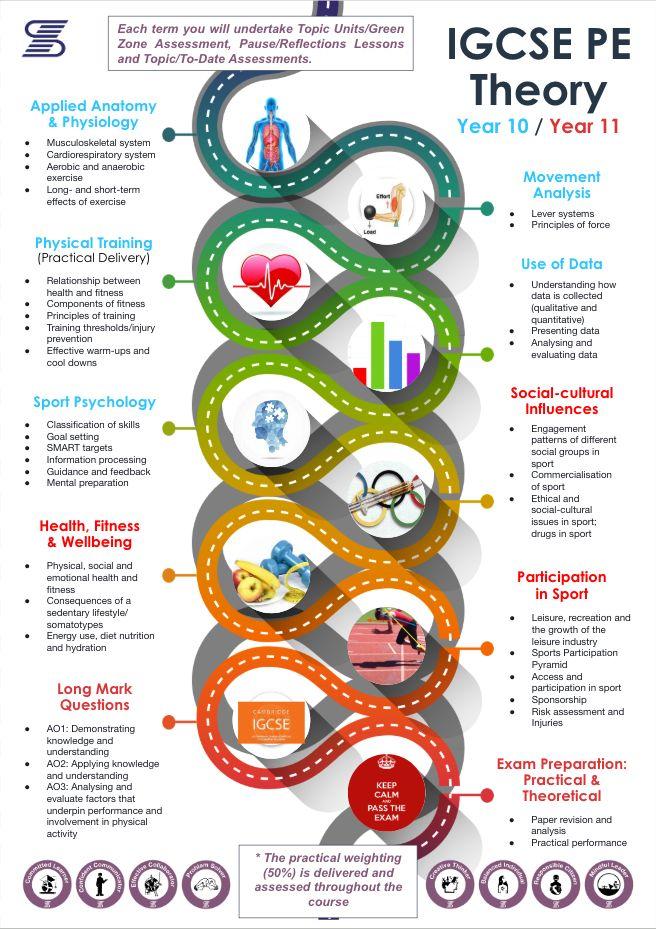
The IGCSE Physical Education (PE) syllabus provides students with an opportunity to study both the practical and theoretical aspects of Physical Education. It is also designed to foster enjoyment in physical activity. The knowledge gained should enable students to develop an understanding of effective and safe physical performance.
Students study all of the following topics:
● Anatomy & Physiology
● Health, Fitness & Training
● Skill Acquisition & Psychology
● Social, Cultural & Ethical Influences
Students also undertake four different physical activities chosen from at least two of seven categories (please see the Cambridge exam board specification, as linked from the relevant options booklet).
LEARNING FOCUS
Term 1
Y10
● Applied Anatomy & Physiology
● Movement Analysis Part 1
Term 2
● Movement Analysis Part 2
● Physical Training Part 1
Term 3
● Physical Training Part 2
● Use of Data
Y11
● Sports Psychology
● Social & Cultural Influences
● Practical Final Moderations
COURSEWORK
2026–27 (Year 11)
● Participation in Sport
● Health & Wellbeing
● Injuries & Risk Assessments
Final Filming of Practical Performance: March 2027
Final Submission of Practical Performance: April 2027
● Exam Preparation
NON-EXAMINED SUBJECTS
PHYSICAL EDUCATION
OVERVIEW
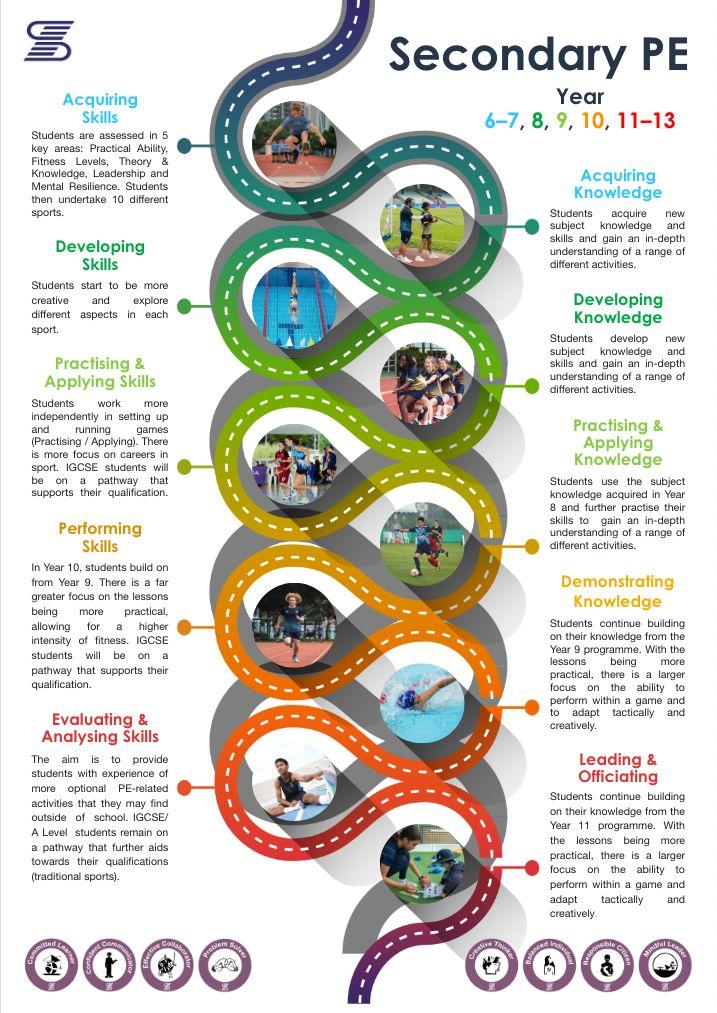
Students are given the opportunity to develop and sustain a healthy, active lifestyle and become lifelong learners. We strive to raise the levels of participation and commitment to sport across all phases of the school. Students are encouraged to work together in order to develop a variety of skills, including teamwork, resilience and sportsmanship. Our PE department challenges students to perform at their best, celebrates their achievements and supports them throughout their learning journey. We harness the value of sport and PE in promoting wellbeing for all members of the DBIS community.
Water Polo ● Cricket/Softball ● Table Tennis ● Racket Games
Aquatics
LEARNING FOR LIFE
OVERVIEW
Learning for Life (L4L) is a non-academic subject through which students develop the knowledge, skills and attributes they may need to manage their lives, now and in the future. It helps children and young people to stay healthy and safe, whilst preparing them to make the most of life and work.
LEARNING FOCUS
Terms 1, 2 & 3
Y10 & 11 Our approach to the Learning for Life (L4L) curriculum is designed to be more than just a series of lessons; it is a framework that prepares students for the complexities of both their current lives and their future endeavors. By leveraging the Wellio platform, we bring these concepts to life through immersive, contextual scenarios that resonate with students' lived experiences.
The foundation of L4L is built on a spiral curriculum. Rather than covering a topic once and moving on, we ensure that knowledge, skills and attributes are revisited and reinforced as students mature through:
● Revisiting: Returning to core themes periodically to ensure retention.
● Reinforcing: Strengthening understanding by applying it to increasingly complex situations.
● Extending: Introducing new layers of depth that challenge students year on year.
This methodology is grounded in the established evidence base from the PSHE Association and the UNESCO education framework, ensuring our practice meets international standards for personal and social development.
A significant portion of our learning opportunities focuses on ‘managing’ or ‘responding to’ challenging scenarios. These aren't just abstract ideas; they are practical life skills. Depending on the context, students learn:
● Strategy: Application in real-world scenarios;
● Risk Identification: Spotting warning signs before a situation escalates;
● Pressure Resistance: Developing the internal strength to resist peer or societal expectations;
● Informed Decision-Making: Evaluating options and consequences before acting;
● Exit Strategies: Planning safe ways to remove oneself from uncomfortable or unsafe environments;
● Help-Seeking: Knowing exactly whom to ask for help and how to report concerns effectively.
Learning Enhancement & English as an Additional Language
In line with our philosophy of supporting students in their individual development, we offer a great deal of additional support both inside the classroom and through personalised courses of study.
Students who have English as an Additional Language (EAL) needs are supported in acquiring further English skills to ensure they are able to access the curriculum. This takes the form of educational assistant (EA) provision during classes as well as additional EAL classes, where necessary.
Students who require learning enhancement are provided with a structured plan from the Learning Enhancement team and the student’s subject teachers. It is our commitment as a school that all students reach their individual potential, and learning support forms an element of this commitment.
Secondary Parent Handbook
We encourage you to read through our Secondary Parent Handbook, which includes an overview of the day-to-day information that will be applicable to your child’s life at DBIS. The handbook provides you with access to additional information, including links to Secondary School policies and procedures.
We are extremely proud of everything the DBIS Year 10–11 curriculum has to offer all our students, and we warmly welcome you to our unique school community.
Should you have any questions, or if you would like any further information, please don’t hesitate to contact us.
Jason Broderick
Deputy Head of Secondary jbroderick@dbis.edu.hk
David Coburn
Assistant Head of Secondary dcoburn@dbis.edu.hk
Alexander Kilford
Assistant Head of Secondary akilford@dbis.edu.hk
Rebecca Boddington
Assistant Head of Secondary rboddington@dbis.edu.hk