
On the Brink:
Europe’s Battle to Stave off Recession
A Brief History: Euro Zone Constituents:
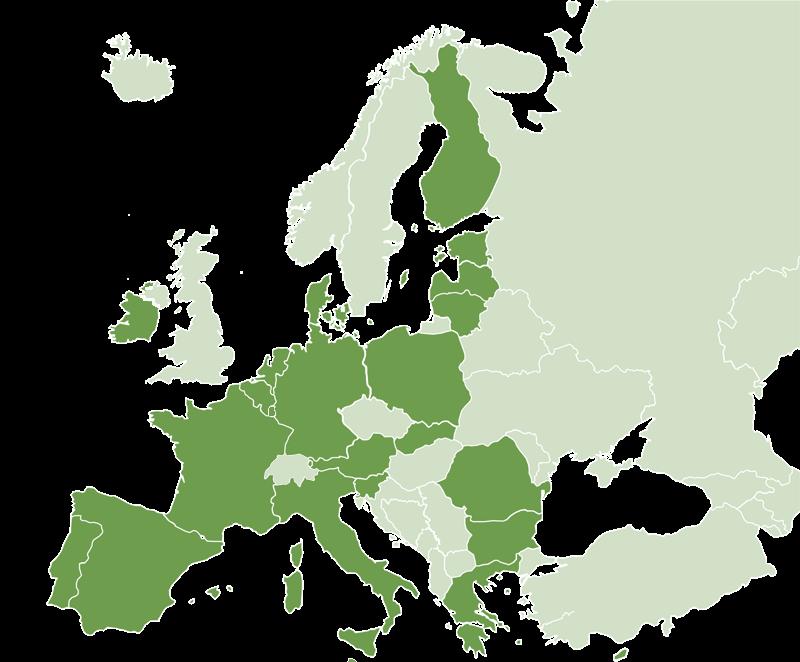
Formally started on January 1, 1999 with 11 members - the Euro Zone is a monetary union of 18 countries in Europe that have adopted the Euro (€) as their currency. With the exception of the U.K. and Denmark – all other European Union States are required to adopt the Euro and join the Euro Zone upon meeting convergence criteria drawn out by the Euro Zone charter.
• Austria
• Belgium
• Cyprus
• Estonia
• Finland
• France
• Germany
• Greece
• Ireland
• Italy
• Latvia
• Lithuania
• Luxembourg
• Malta
• The Netherlands
• Portugal
• Slovakia
• Slovenia
• Spain
National Target Dates forAdoption
Romania 01-01-2019

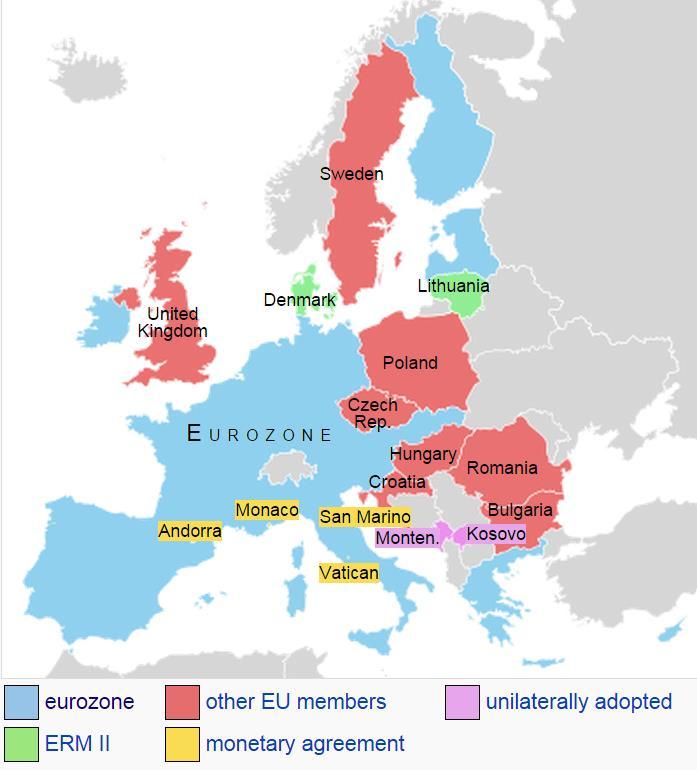
Bulgaria, Croatia, Czech Republic, Hungary, Poland and Sweden do not currently have a target date for adoption of the euro.
Current Macroeconomic Picture
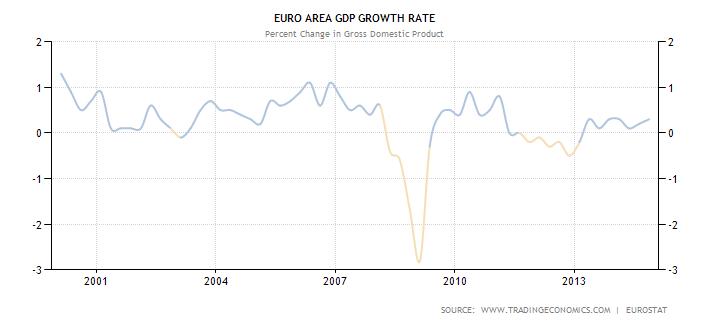
• GDPGrowth has been anemic at best across the Euro Zone since its inception. The nature of the slow growth is due primarily to the diverse constituents that make up the zone. It has proven a difficult task for the ECB to implement a monetary regime that incites growth across all countries equally.
• Euro-Area Unemployment at 11.3% is near its highest levels since the inception of the union – surpassing even levels seen during the global financial crisis.
• Youth Unemployment remains one of the most alarming statistics in the region, with nearly a quarter of those 18-24 years old unable to find work.

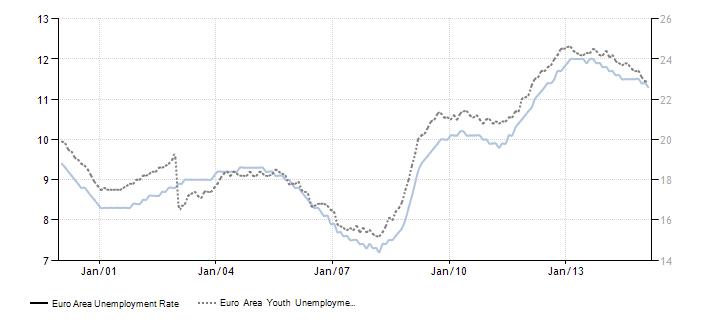
Euro-Area Total Unemployment vs. Youth Unemployment
Current Macroeconomic Picture
• Lackluster growth combined with historically high unemployment levels has contributed to fears of runaway deflation across the Euro-Area.
• Deflation is a prime concern in the eyes of the ECB; as shown in the chart on the right –currently 37% of members are experiencing deflation, with 84% of the region experiencing inflation below 1%.
• Unlike inflation which can be remedied with higher interest rates, deflation is notoriously more difficult to fix. If the general price level is falling, consumers will delay purchases because they believe that the price of those items will decrease in the future. This decrease in consumer spending can actually create more deflationary pressure on the economy.

Currency Effect: The Euro (€)
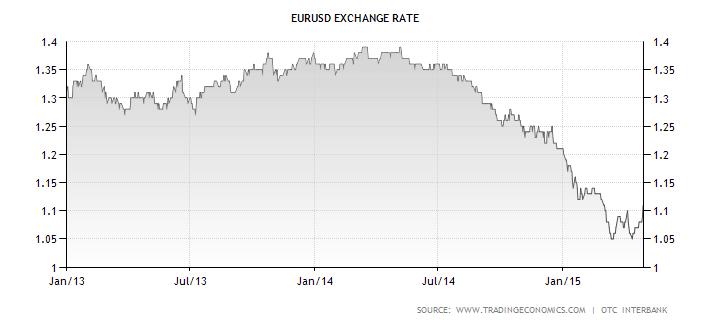
• The recent news of slower-than-expected growth, and the implementation of a Fed-style QE program have driven down the Euro to a one-year low versus the USD. If the monetary policy instituted by the ECB has a similar effect to the one implemented by the Fed, we expect the Euro-Dollar trade to unwind back to normal levels.
• In the mean time – the lower Euro should act as a boost to large exporters who will benefit from increasing affordability of their goods. This includes large auto manufacturers like Daimler, BMW, and VW. As well as consumer product companies like Luxottica and LVHM.
Monetary Response: Super Mario to the Rescue
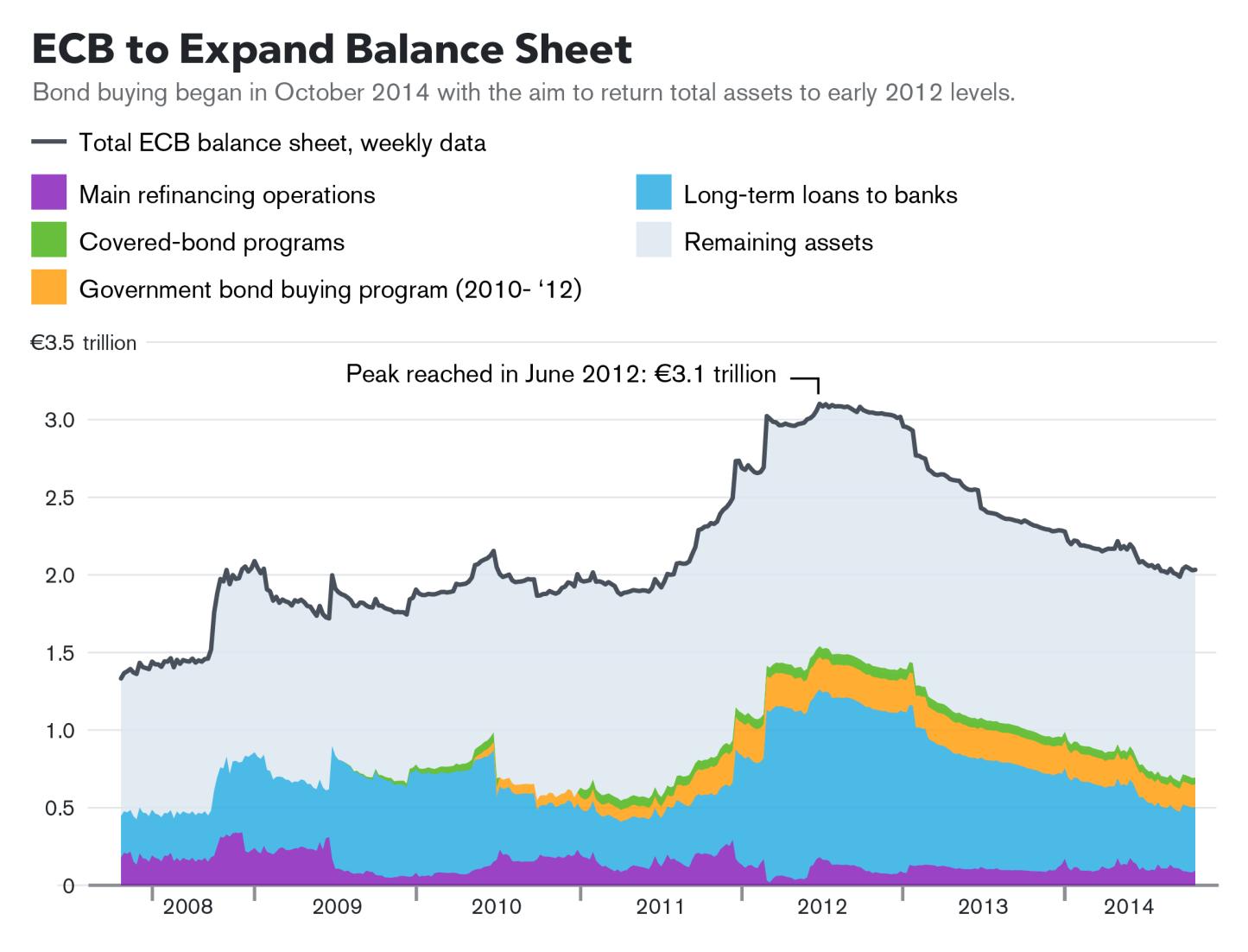
• In September of 2014 the ECB unexpectedly lowered its interest rate targets, while further lowering its already negative deposit rate to -20 bps.
• It also initiated a program to purchase covered bonds from various countries in the euro zone including: Italy, Germany, Portugal, and France.
• The purpose of the program is to reduce refinancing costs for banks and increase lending to the real economy.
• On March 9, 2015 it was announced that the ECB would begin a massive €1.1 trillion asset-purchase program with the goal of encouraging capital investment and staving off deflation.
• If the program has a similar effect to QE conducted by the U.S. Federal Reserve, we could see an increase in the appetite for European risk assets like Equities and High-Yield Debt.

The Market Response: Risk Assets Rally
• The perception that the ECB would take extraordinary measures to ensure that the Euro-Zone does not fall into another recession has caused European risk assets to rally and outperform a majority of developed countries thus far in the year.
U.K. (FTSE 100): + 5.59%
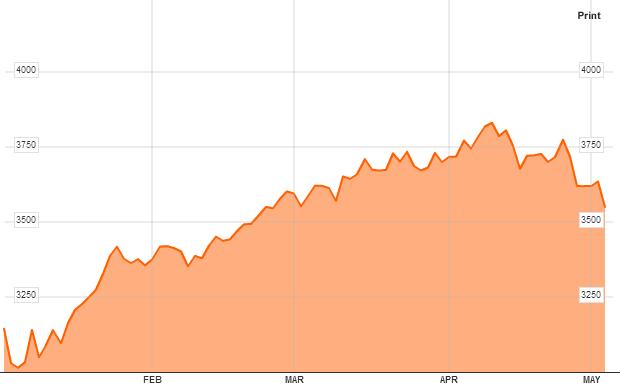
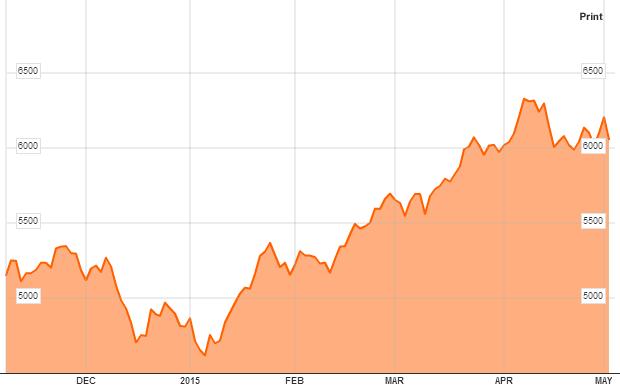
Euro-Zone YTD Returns by Country
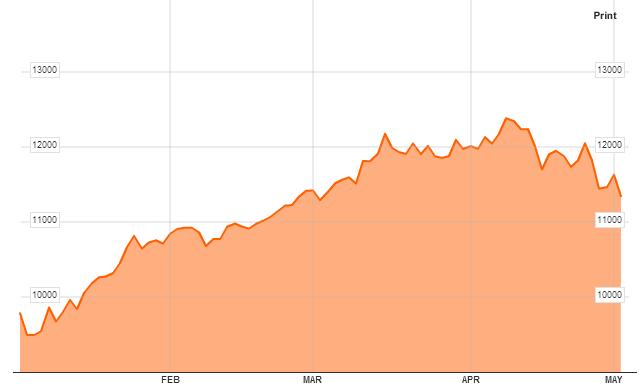
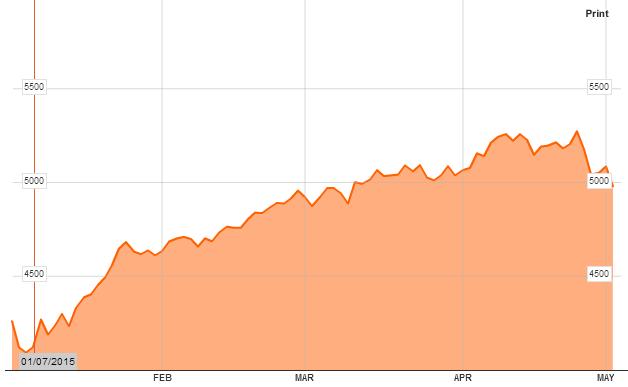
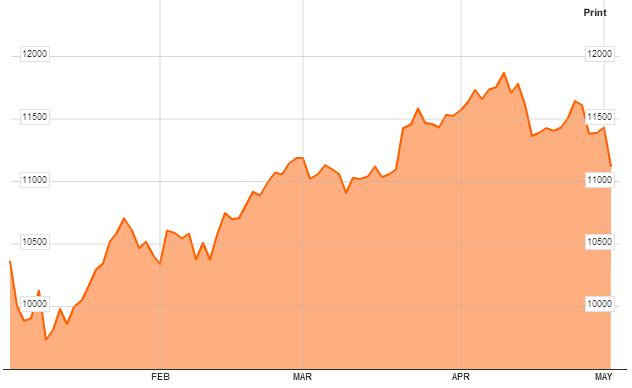
Spain (IBEX 35): + 8.59%
France (CAC 40): + 16.64%
Germany (DAX): + 15.75%
Portugal (PSI 20): + 25.98%
The Market Response: Risk Assets Rally
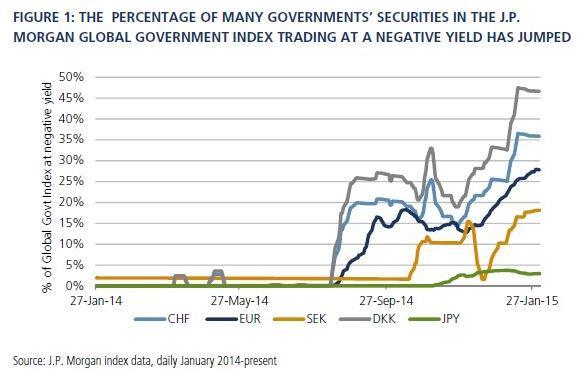
• 2015 has brought a rather unprecedented change in the sovereign debt markets in Europe. For the first time in modern history there are European nations with negative short-term sovereign debt yields. These include, but are not limited to: German 5-year bonds, Swiss 7-year bonds, and Finnish 5-year bonds.
• What this means is that an investor who purchases these securities is essentially paying these governments a fee to hold their assets. The reason investors are willing to make this seemingly counterintuitive trade is two-fold:
1. Extraordinary monetary policy, combined with alreadynegative deposit rates in a world where the supply of bonds is slightly less than demand can push yields below zero.
2. Fears that growth in the Euro-Zone is not only slowing, but actually contracting. This contraction along with the looming threat of deflation causes investors to pay more now for an asset if they believe the price of goods will fall at a rate greater than what they are paying for those assets. In this type of scenario, the return on money becomes less important than the return of money.
Will Europe Fall into Recession?

With anemic inflation across a majority of the countries in the Euro Zone, outright deflation in seven of the 18 members, and rising unemployment ratesprospects for a full recovery in the near term look bleak at best.
Couple this with soaring Debt/GDP levels in most of the constituent countries, risk assets that are priced on par or richer than their counterparts around the globe, and you have an environment that is extremely hostile to investment.
So will Europe fall into another recession?
Given the stated commitment of the ECB to promote growth by any means necessary, all-out recession seems less likely. But not impossible.