SWT/KWS Tsavo Veterinary Unit Report for February 2026
SWT/KWS TSAVO MOBILE VETERINARY UNIT
FEBRUARY 2026
20 Cases in February 2026 3 Poaching Cases 7 Elephant Cases
February Report by Dr. Campaign Limo and Dr. Lawi Kimutai
The conservation area received less precipitation compared to past months. A few water pans are full, and the vegetation is quickly drying up though some few areas still have lush vegetation. Both grazers and browsers have enough food and are in good body condition. The Unit attended to 20 cases, with a marked decrease in poaching cases with the majority of cases attended to being natural in nature or postmortems deemed to be due to natural causes. There was also 1 Human-Wildlife Conflict, a rescue and 2 collarings.
Acknowledgement
TMVU would like to thank all stakeholders that aided in reporting and monitoring cases that required veterinary intervention. Special thanks to SWT for the continuous support and KWS for technical advice to the unit.
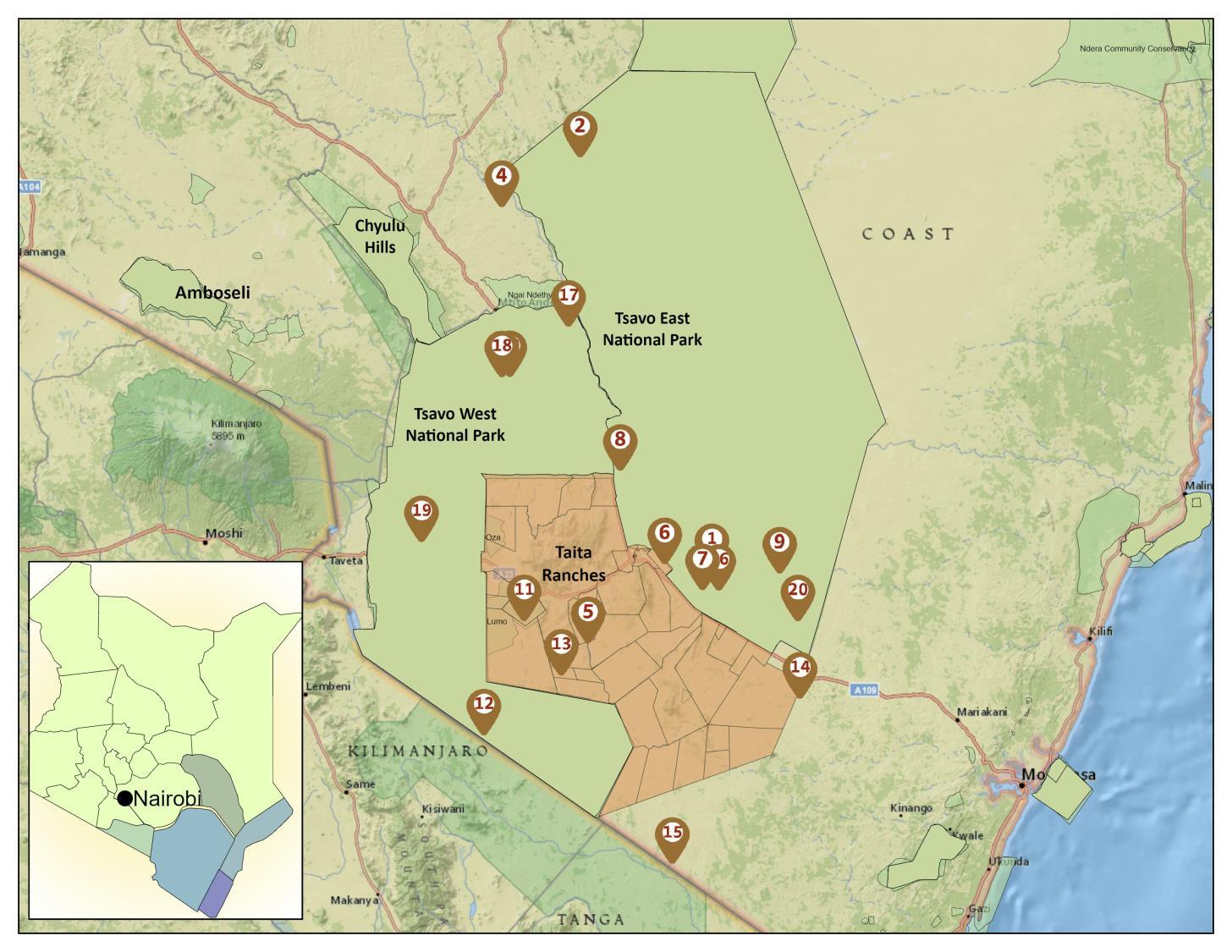
SWT/KWS Tsavo Mobile Vet Unit Treatment Locations
February 2026
Case Details
4-Feb-26
5-Feb-26
6-Feb-26
6-Feb-26
7-Feb-26
Tsavo West NP
Causes The injury was suspected to be a predatorprey inflicted Successfully Treated
Causes Examination revealed a shallow septic fight wound to the right rump Successfully Treated
Tsavo East NP Postmortem The cause of death of these carcasses could not be determined Died
Tsavo East NP Postmortem The cause of death of these carcasses could not be determined Died
Taita Ranches Snared A plain wire snare was tightly bound around the head through the mouth Successfully Treated 9-Feb-26
Tsavo East NP Natural Causes A firm swelling on the right flank area Successfully Treated 11-Feb-26
17-Feb-26
Tsavo East NP
Tsavo East NP
Tsavo East NP
Causes The injury was suspected to have been inflicted by a buffalo during a hunt Successfully Treated
Causes Examination revealed a complete open fracture of the right 3rd metacarpal
Causes A deep septic wound on the right hoof due to interdigital dermatitis. Successfully Treated 14-Feb-26 Wild Dog Tsavo West NP Collared
Ranches
Causes An open complete fracture of the carpal joint of the left forelimb Died
17-Feb-26 Cheetah Tsavo West NP Natural Causes The right tibia and fibular were protruding and the knee joint was dislocated Died
18-Feb-26 Lion Taita Ranches HWC Trapped inside an18 feet septic pit from late hours of the previous night Task Successful
19-Feb-26 Elephant Taita Ranches Postmortem Postmortem to confirm cause of death Died
20-Feb-26 Lion Tsavo East NP Natural Causes Claw marks on the perineal area and a laceration on the right testicle Successfully Treated
20-Feb-26 Zebra Kaluku Snared
22-Feb-26 Wild Dog Tsavo West NP Collared
Examination revealed a snare wire tied slightly tight around her neck Successfully Treated
Monitoring in an effort to study pack interactions and landscape used Task Successful
25-Feb-26 Elephant Tsavo West NP Postmortem Died of cardiopulmonary compromise due to longstanding age-related heart issue Died
19-Feb-26 Elephant Tsavo East NP Spear A penetrating wound on the left caudodorsal region of the abdomen Successfully Treated
.
Lion
Natural Causes
Aruba, Tsavo East National Park
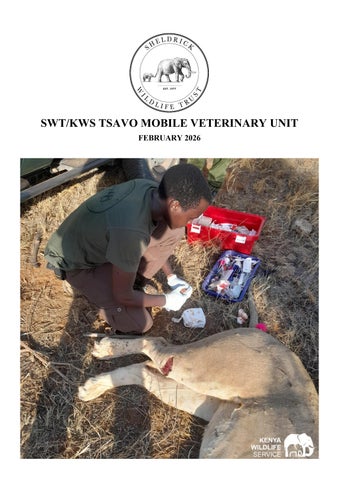
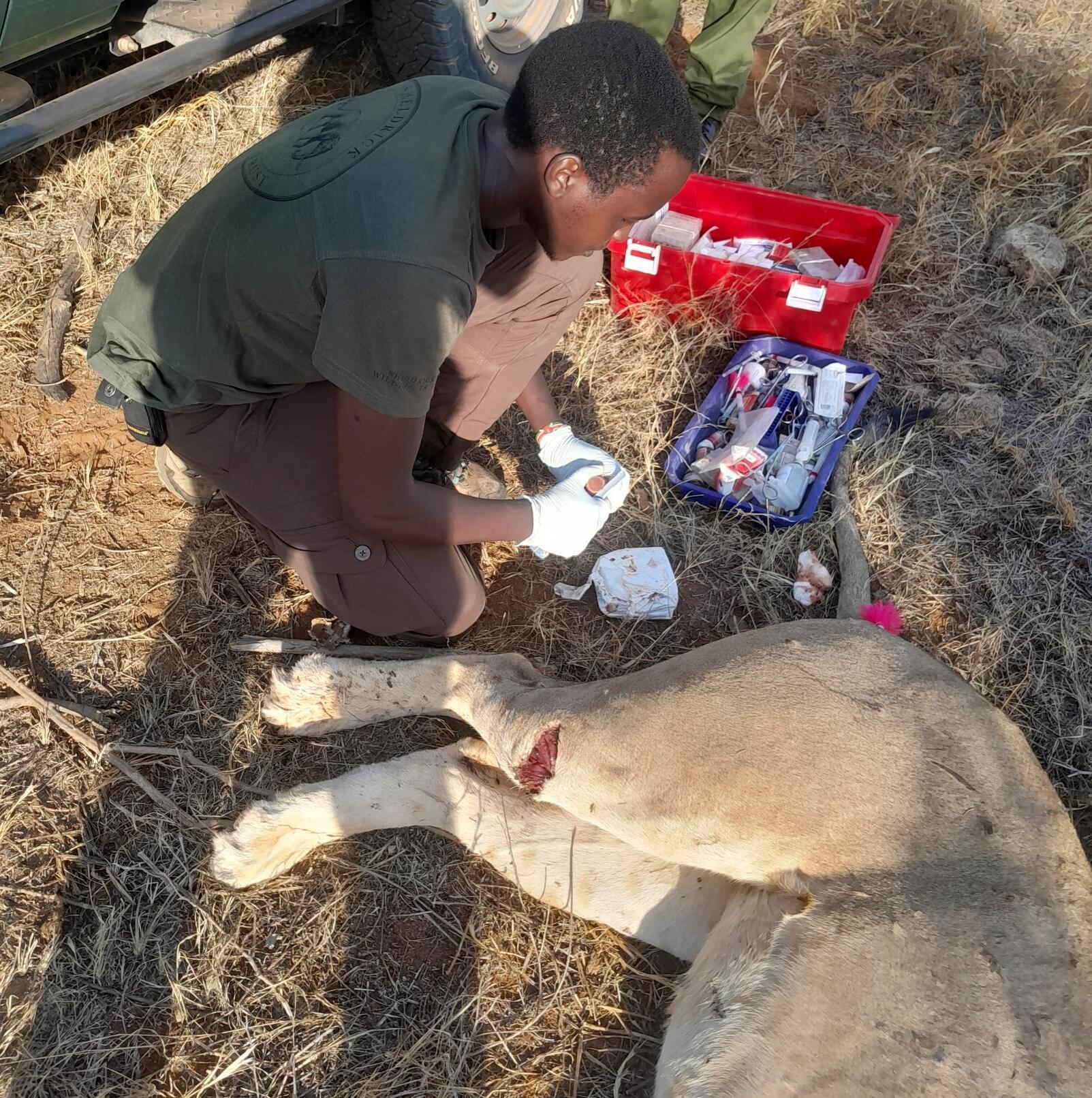
Tourists around the water pan in Aruba area spotted the lioness limping on her right hind limb and reported.
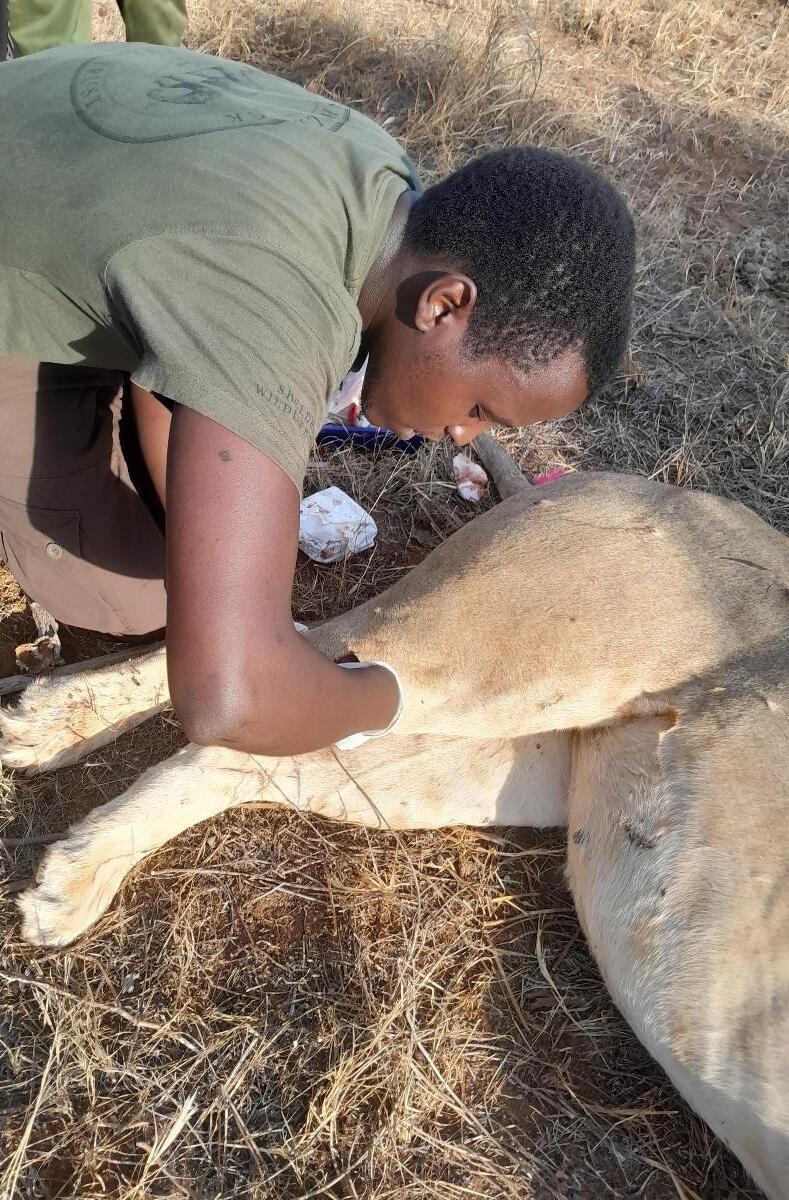
Immobilisation, examination and treatment
The lioness was immobilized successfully using a combination of 6mg Medetomidine and 200mg Ketamine delivered remotely in a 3 cc Dan inject dart. Darting was done from the vehicle, and it took 10 minutes for the anaesthesia to have full potential.
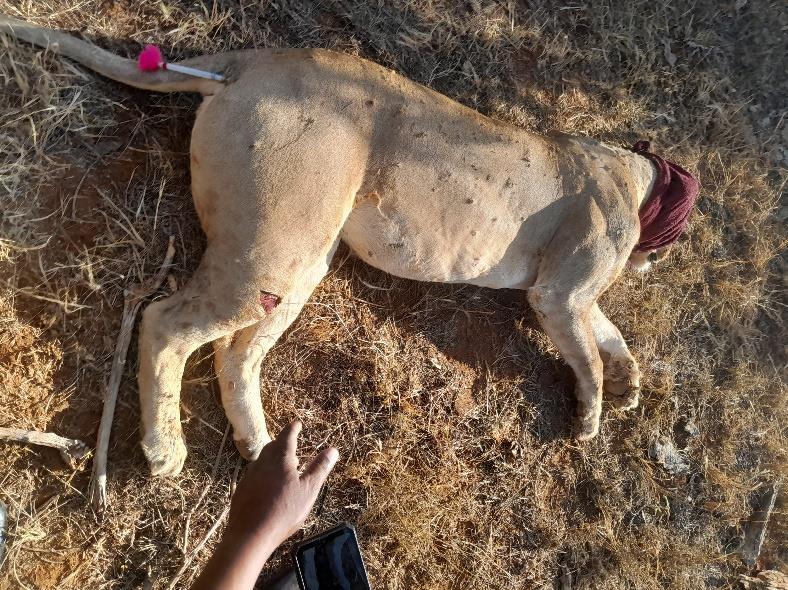
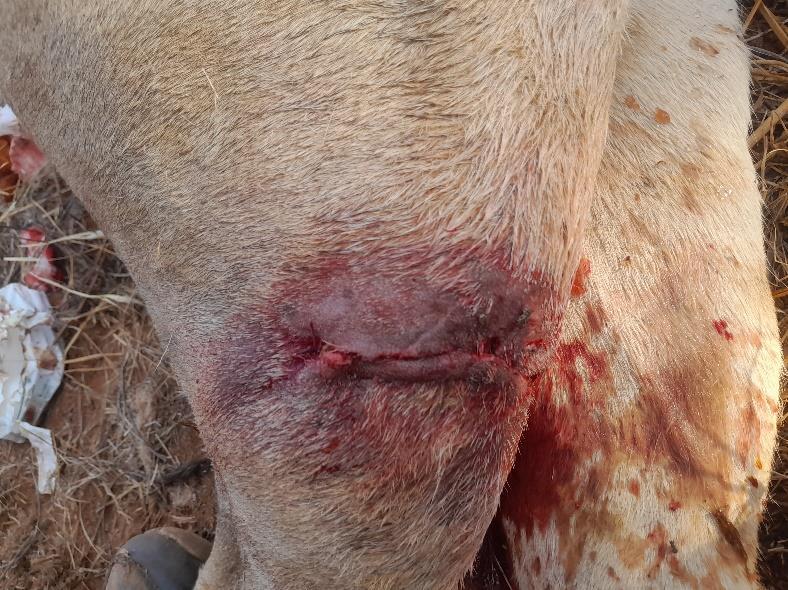
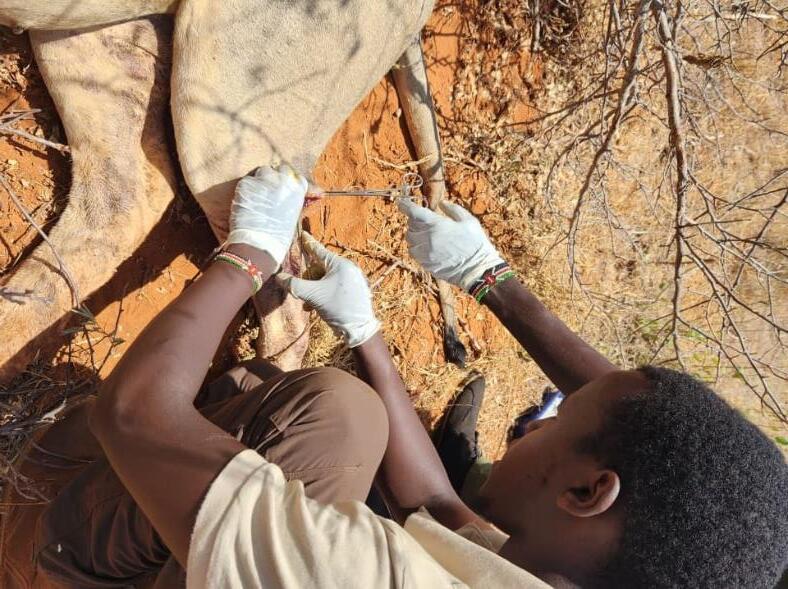
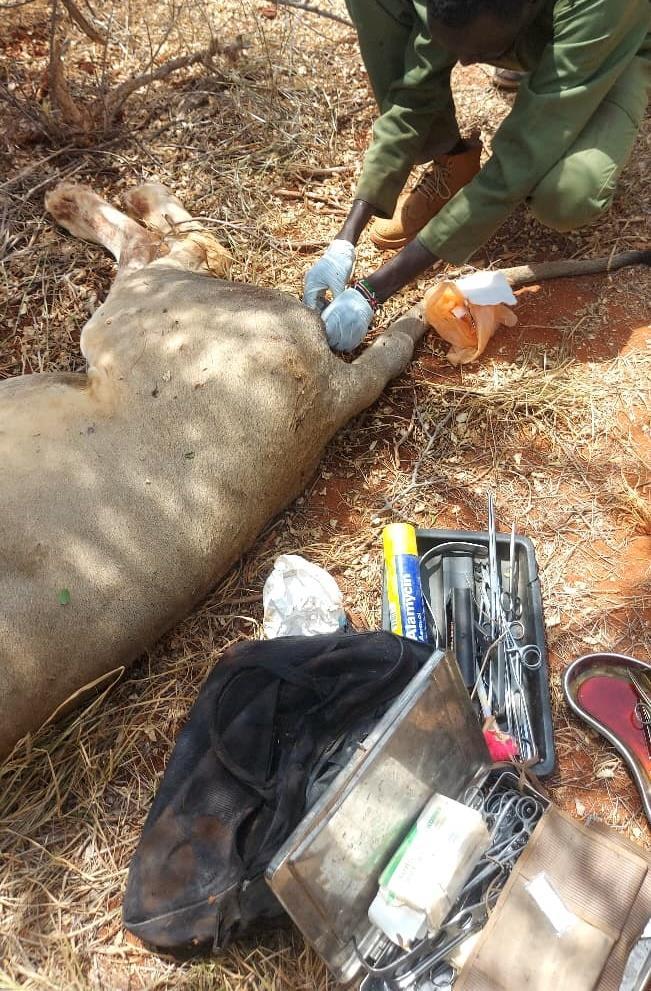
Examination revealed a fresh deep cutting wound on the proximal aspect of stifle joint on the right hind limb. The injury was suspected to be a predator-prey inflicted injury. The wound was thoroughly cleaned with water, infused with tincture of Iodine and thereafter sutured well. A topical antibiotic spray was thereafter applied on the sutured wound.
Additionally, Amoxicillin antibiotics and Meloxicam were administered parenterally.
Prognosis
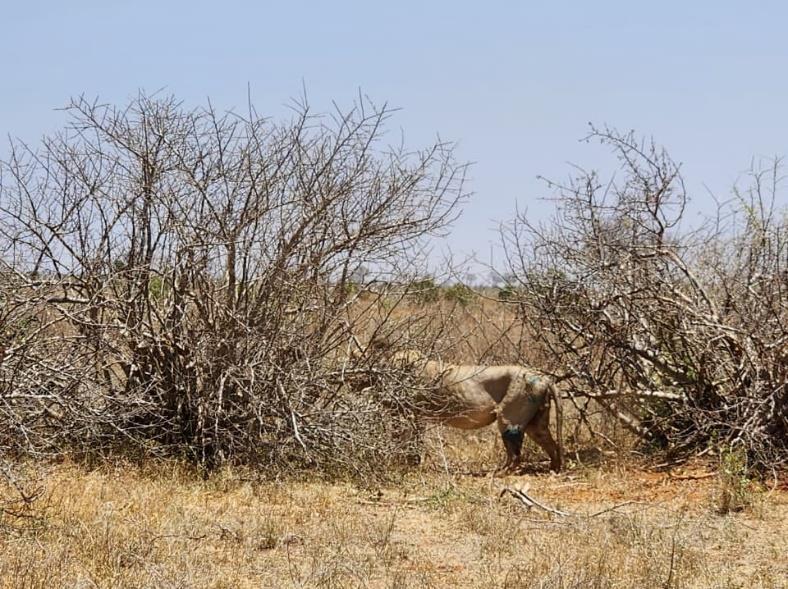
An Atipemazole of 30mg was administered intramuscularly to reverse the anaesthesia and she rose and walked away after few minutes with a good prognosis.
Elephant Natural Causes Ithumba, Tsavo East National Park
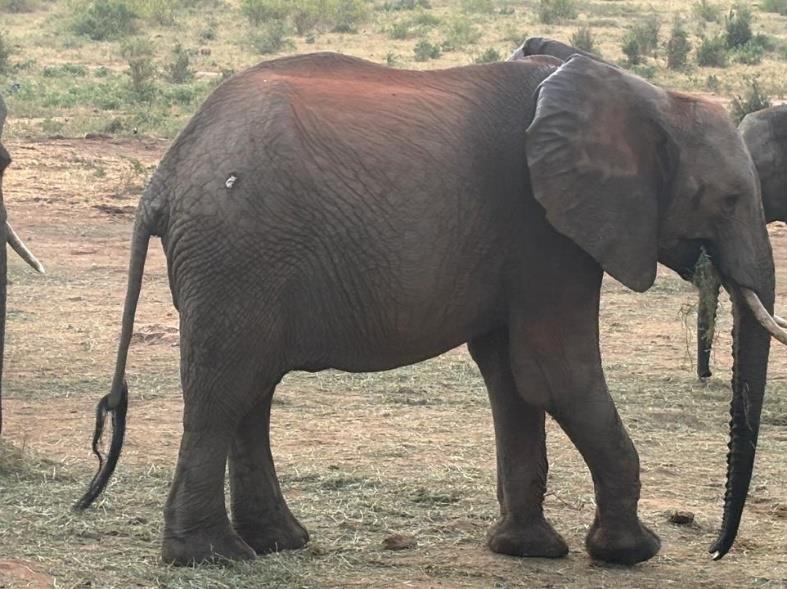
This injured elephant was seen by elephant keepers at the Ithumba stockades. He had a septic wound on the right rump.
Immobilisation, examination and treatment
This bull was successfully immobilized using 8mg Etorphine hydrochloride delivered in a 1.5cc Dan- inject dart. Darting was done on foot, and it took 6 minutes for full anaesthesia to be achieved.
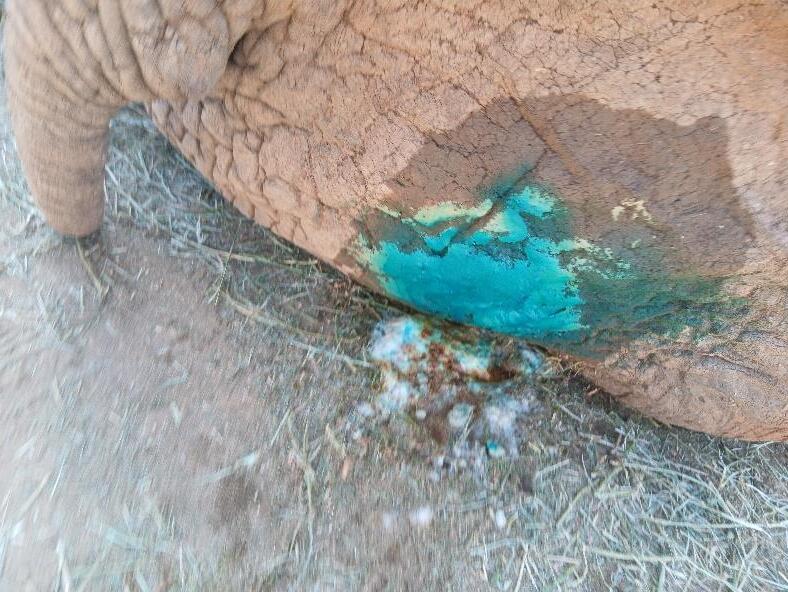
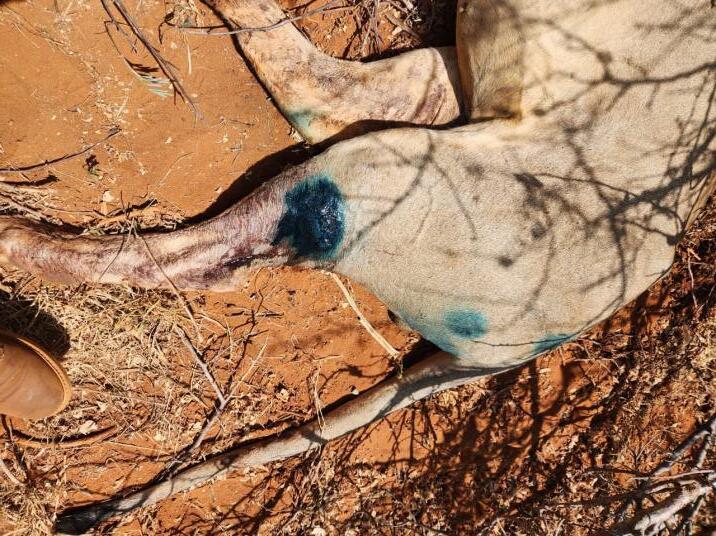
Examination revealed a shallow septic fight wound to the right rump. The wound was debrided, flushed with Hydrogen peroxide, rinsed with clean water and infused with tincture of Iodine. Green clay was applied on the wound followed by topical antibiotic spray.
The bull was additionally given parenteral Amoxicillin antibiotics.
Relocation, revival and prognosis
The animal was then put on a stretcher and loaded onto a pick-up and transported to another paddock about 2 kilometres away to help evade any potentially parasite contaminated paddocks.
Elephant Postmortem Gazi, Tsavo East National Park
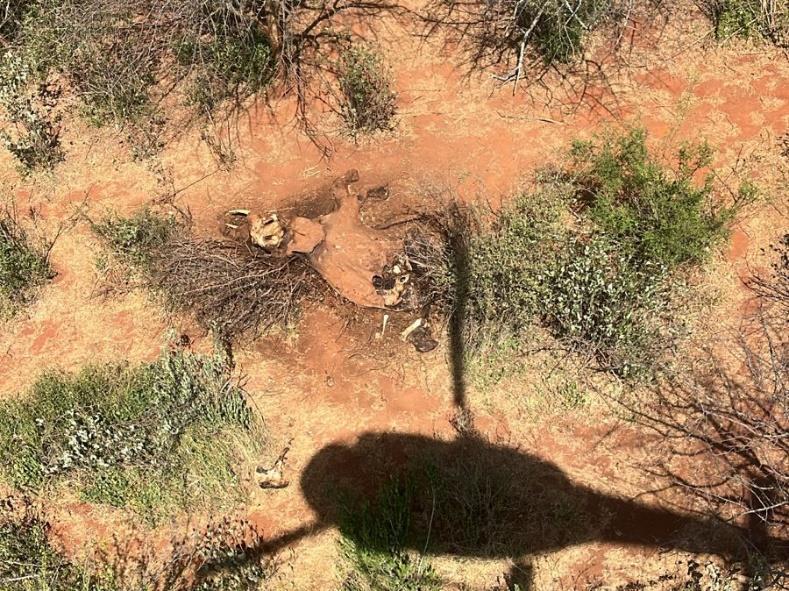
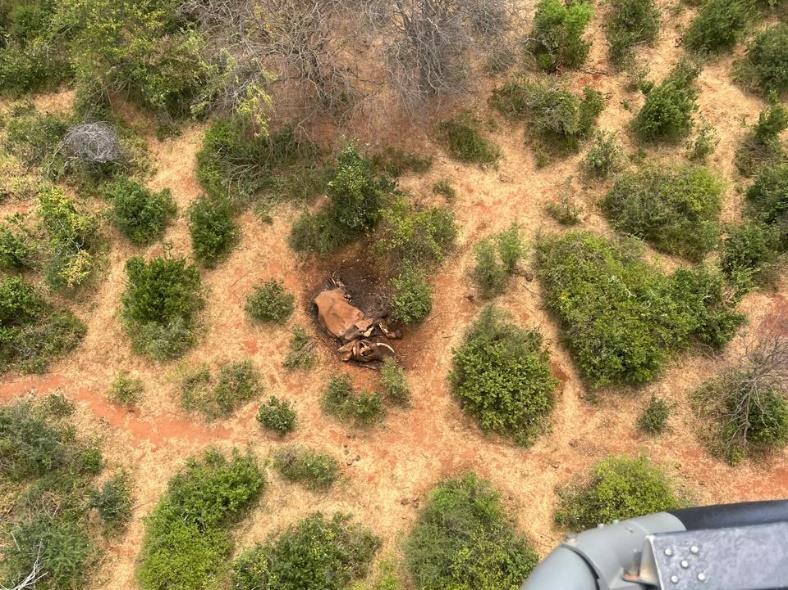
Two adult male elephant carcasses were sighted by the SWT pilot during routine patrols in Gazi.
Postmortem examination
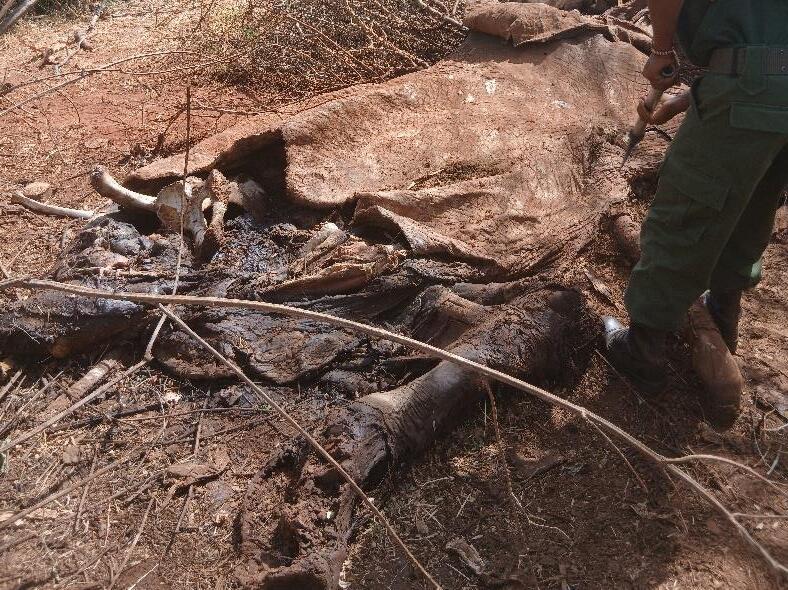
The carcasses were approximately 100 meters apart and did not show any signs of struggle before death.
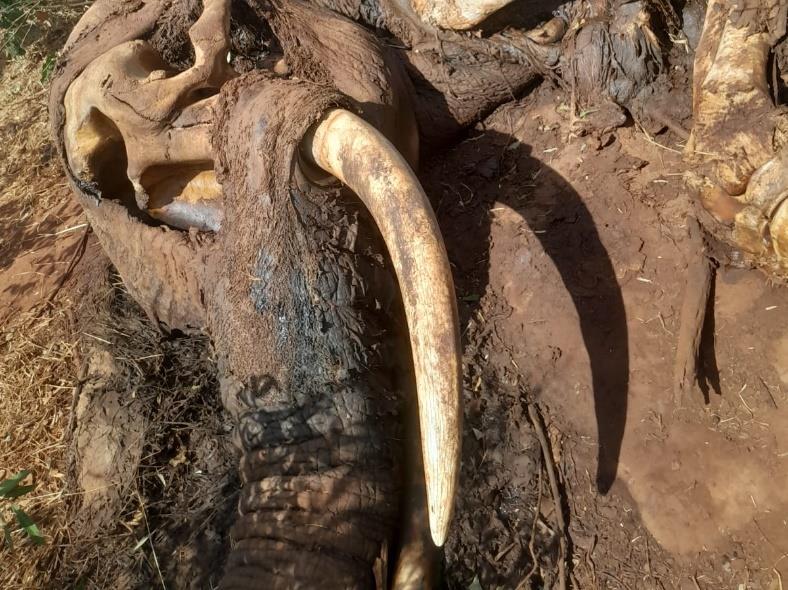
The first carcass was on right lateral recumbency and was approximately 35-40 years old. The post-death interval was approximately 2 weeks. The carcass was in advanced stages of decomposition with significant scavenger activity. The second carcass was approximately 30- 35 years and was in left lateral recumbency. This carcass had a post death interval of approximately 3-4 weeks. There was advanced decomposition and scavenging on the carcass. The entomology hierarchy on both carcasses was advanced with tissue fluids produced maximally. Metal detector readings on both carcasses were negative.
Cause of death
The cause of death of these carcasses could not be determined due to the advanced stage of decomposition and the scavenger activity on the carcasses. .
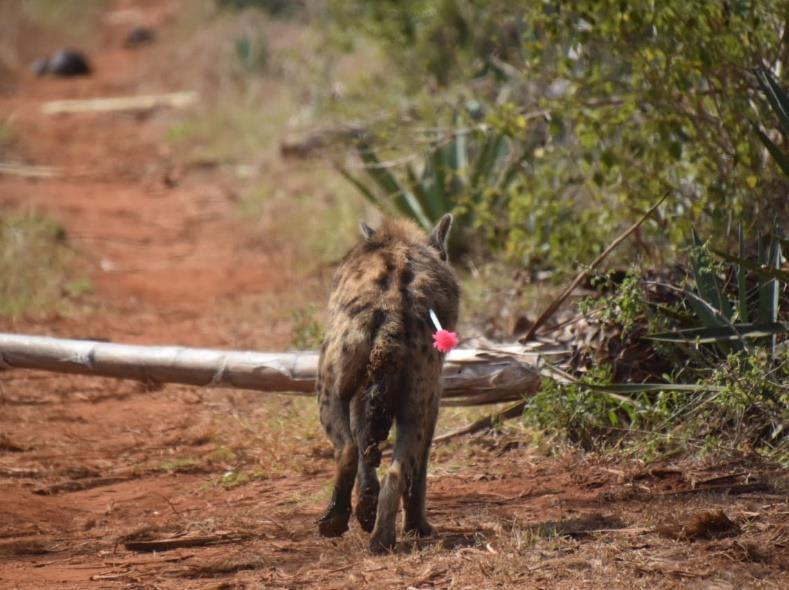
Hyena Snared Sisal, Taita Ranches
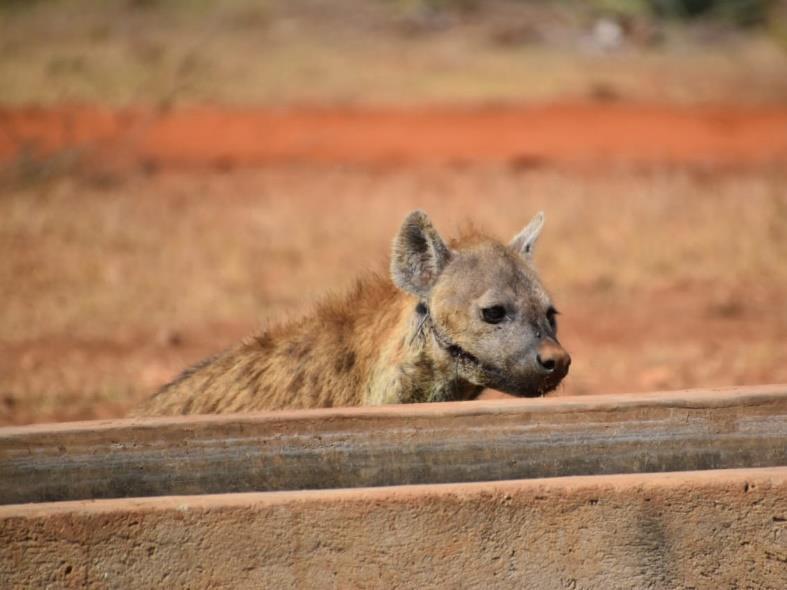
This snared hyena was spotted in the Taita sisal plantation by the staff at the farm. He had a wire snare on the head and mouth.
Immobilisation, examination and treatment
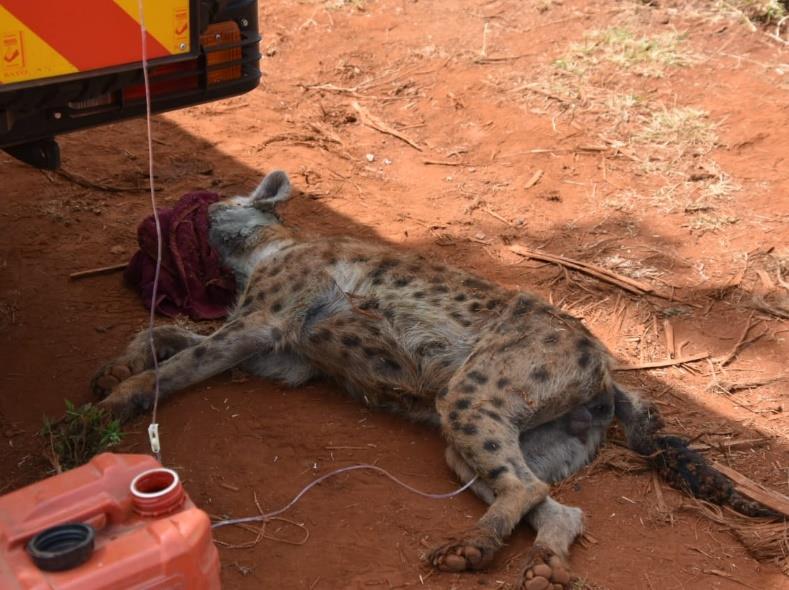
This hyena was successfully immobilized using a combination of 2mg Medetomidine and 130mg Ketamine. This was delivered remotely in a 3cc Dan inject dart. Darting was done from foot, and it took 10 minutes for full anaesthesia to be achieved.
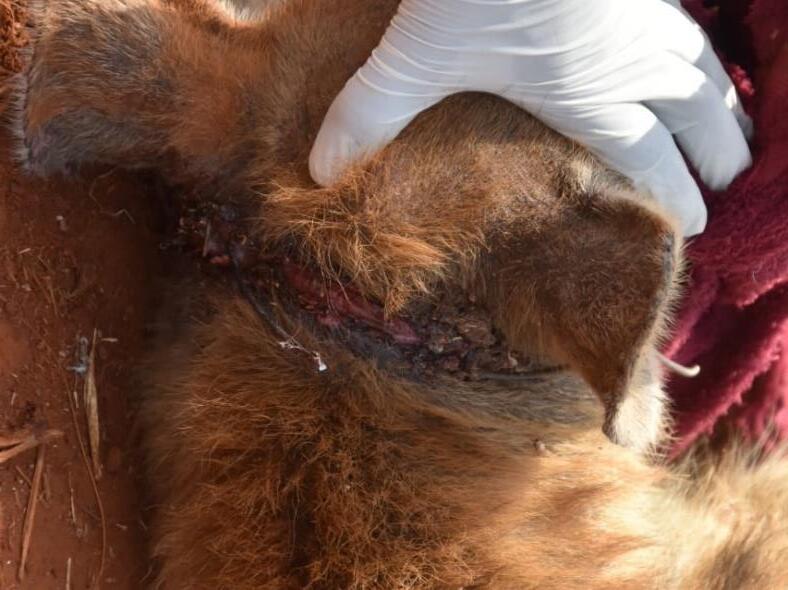
Examination revealed a plain wire snare tightly bound around the head through the mouth. The wire had inflicted injuries on the site and obstructing the mouth making feeding difficult. The wire was cut using wire cutters and carefully removed. Resultant wounds were cleaned thoroughly and infused with tincture of Iodine. Topical antibiotic spray was also applied on the wounds. He also was given Amoxicillin antibiotics and Meloxicam anti-inflammatories parenterally.
Prognosis
He recovered well from the anaesthesia and walked away slowly with a good prognosis.
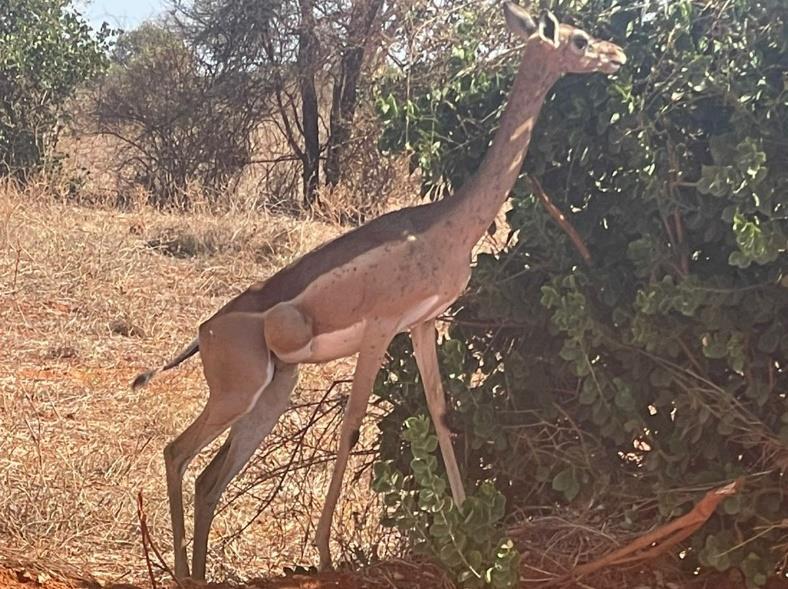
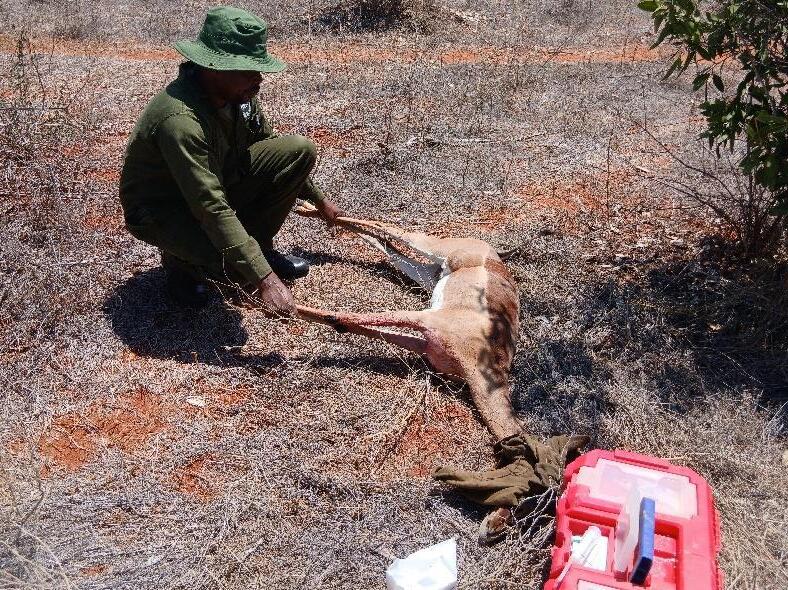
Gerenuk Natural Causes Ndololo, Tsavo East National Park
This injured gerenuk was spotted by visitors in the park. She had a large swelling on her right flank.
Immobilisation, examination and treatment
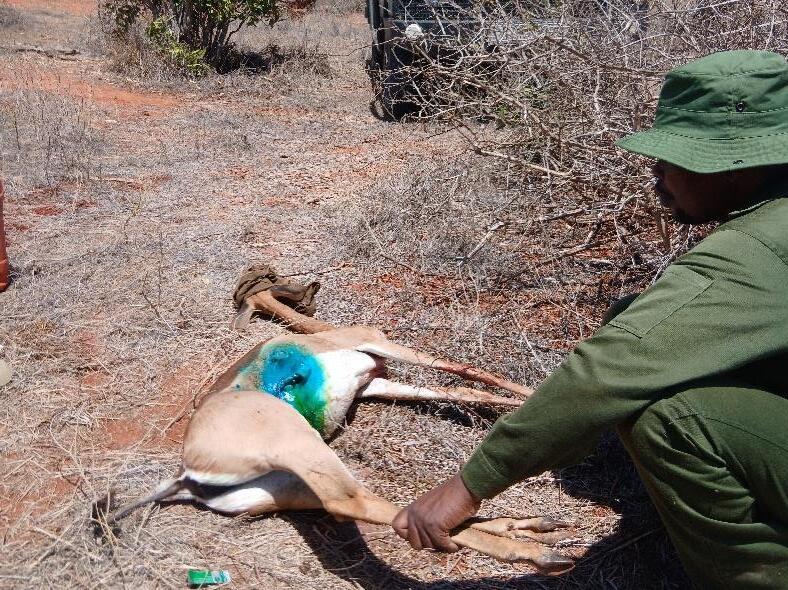
The gerenuk was darted from a vehicle and successfully immobilized using a combination of 3mg Etorphine hydrochloride and 25mg Azaperone delivered remotely in a 1.5 cc Dan inject dart and it took 7 minutes for full anaesthesia to be achieved.
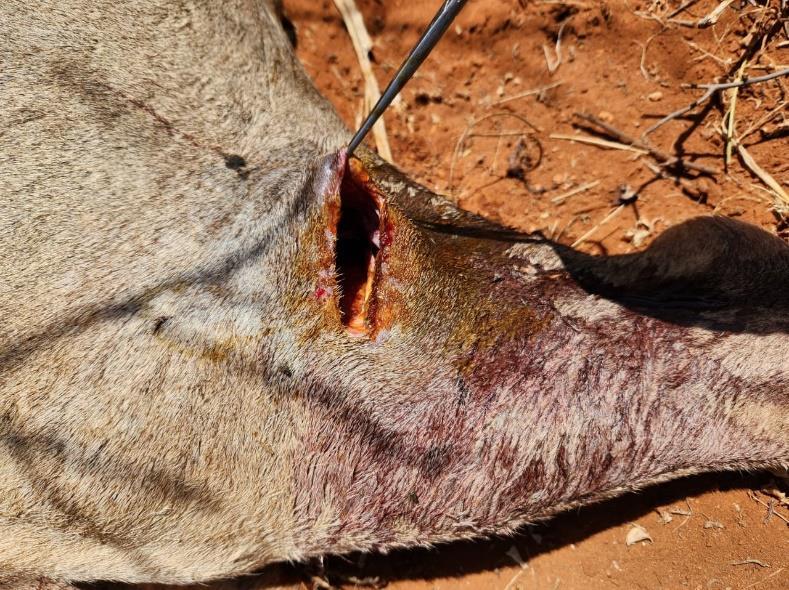
Examination revealed a firm swelling on the right flank area. Aspiration of the contents of the swelling yielded pus. The swelling was lanced and its contents evacuated. The pocket was flushed with Hydrogen peroxide, rinsed with water and infused with tincture of Iodine. Topical antibiotic spray was applied on the wound.
She additionally was given parenteral Amoxicillin antibiotics.
Prognosis
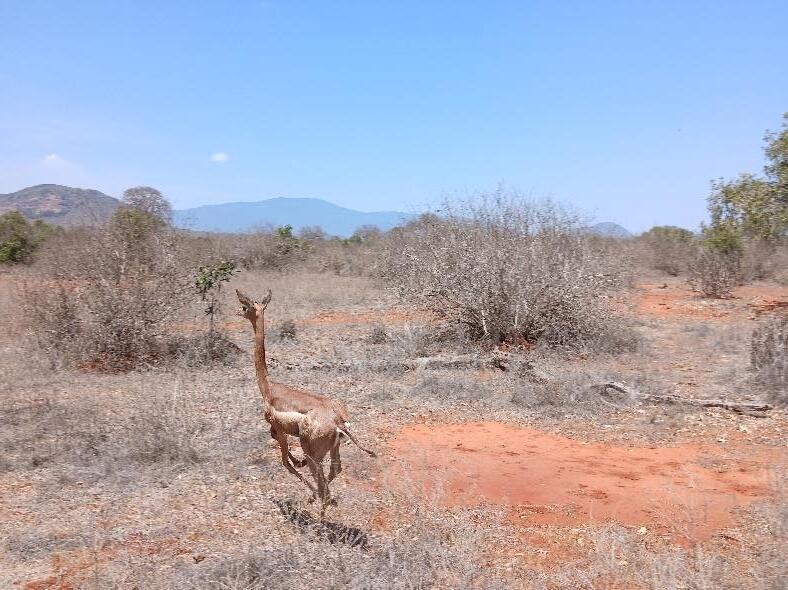
She was revived from anaesthesia using 30mg Naltrexone hydrochloride given intravenously via the jugular vein. She rose and dashed away 2 minutes later with a good prognosis.
Case
Lion Natural Causes
Dida Harea, Tsavo East National Park
The TMVU was notified for assistance regarding an injured lion and responded immediately.
Immobilisation, examination and treatment
The lion was successfully immobilized using a combination of 7mg Medetomidine and 240mg Ketamine delivered remotely in a 3 cc Dan inject dart. Darting was done from the vehicle, and it took 10 minutes for the lion to be fully anaesthetized.
Examination revealed a severe deep septic wound on the distal lateral aspect of the left thigh. The injury was suspected to have been inflicted by a buffalo during a hunt. The wound was thoroughly cleaned with water, Hydrogen peroxide then infused with a tincture of Iodine and an antibiotic powder applied to the wound. The wound was then sutured accordingly and then sprayed with a topical antibiotic.
Additionally, he was given Amoxicillin antibiotics and Meloxicam parenterally.
Prognosis
He was reversed from anaesthesia using 35mg of Atipamezole given intramuscularly. He rose few minutes later and walked away with a good prognosis.
Zebra Natural Causes
Manyani, Tsavo East National Park
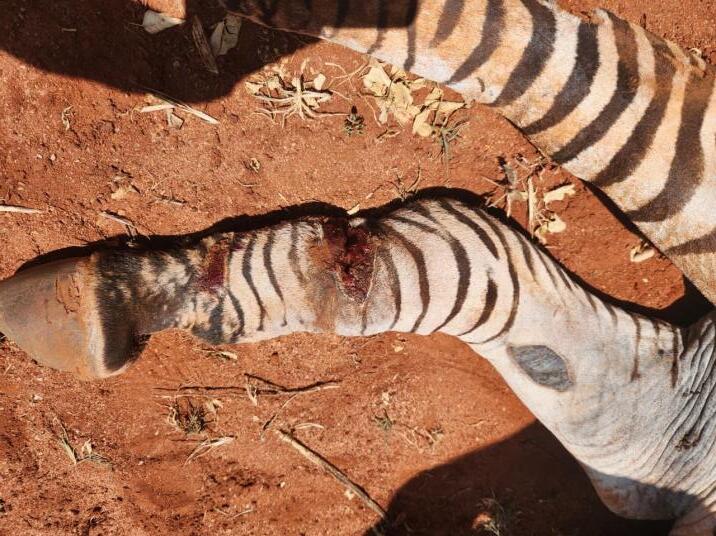
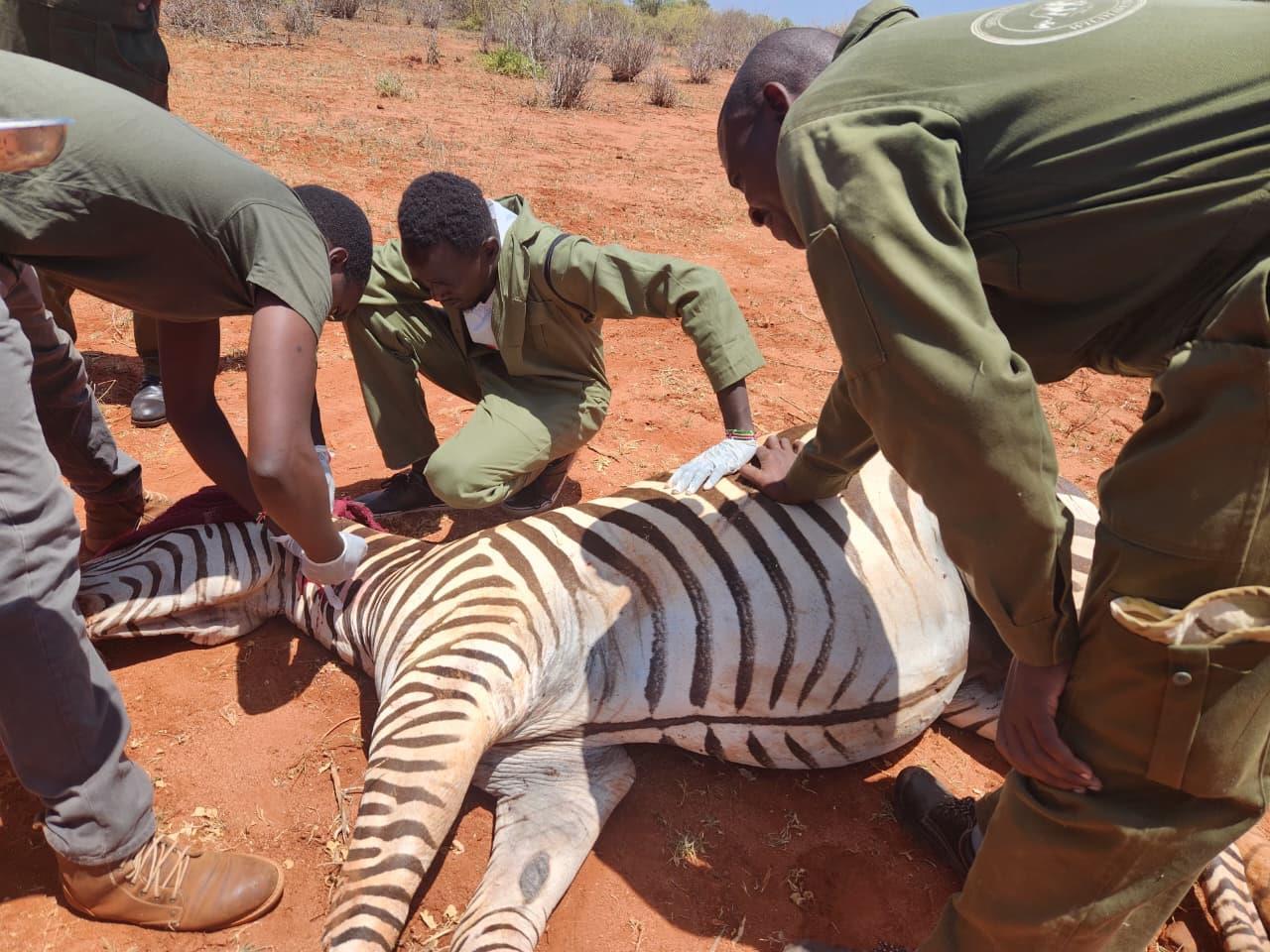
This injured zebra was reported to have injured her right forelimb and was limping. TMVU team was notified and went to attend to the zebra.
Management
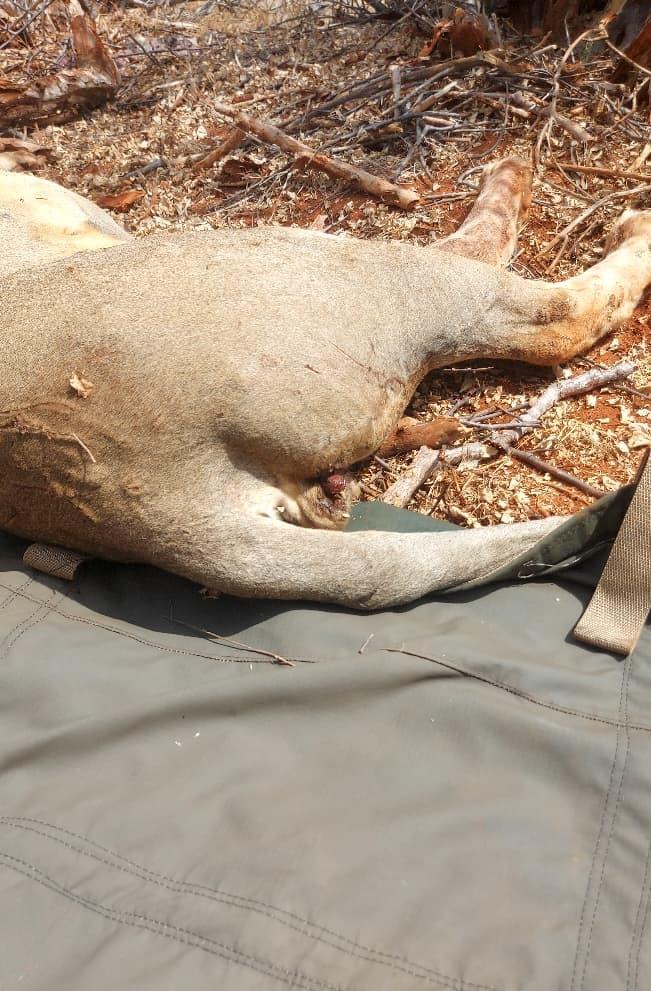
Examination revealed a complete open fracture of the right 3rd metacarpal. The zebra was euthanized on animal welfare grounds to alleviate her from further suffering.
Impala Natural Causes Satao Camp, Tsavo East National Park
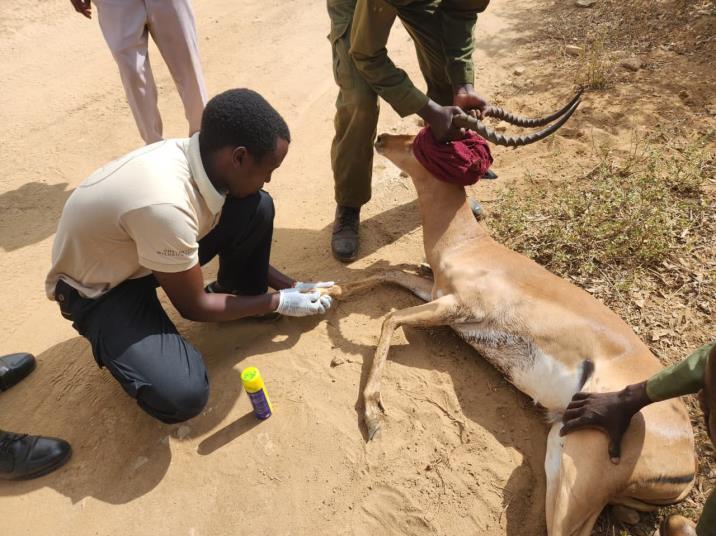
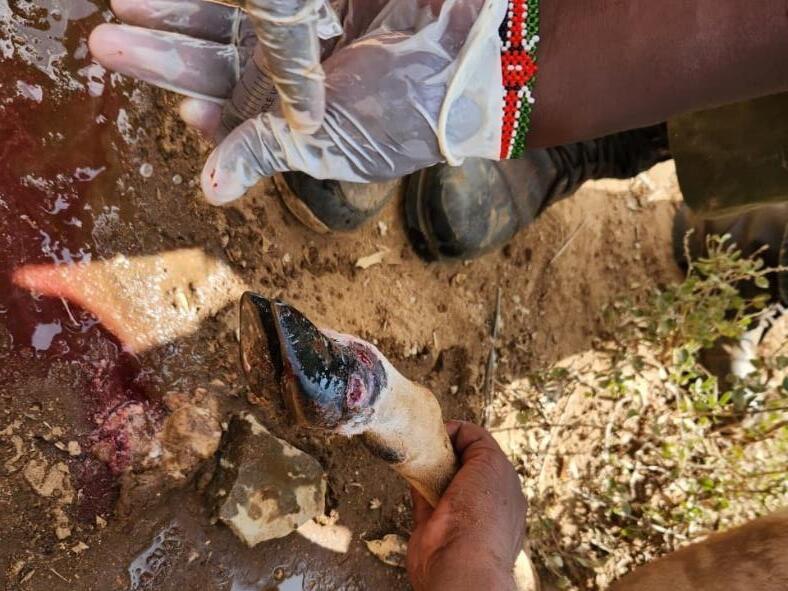
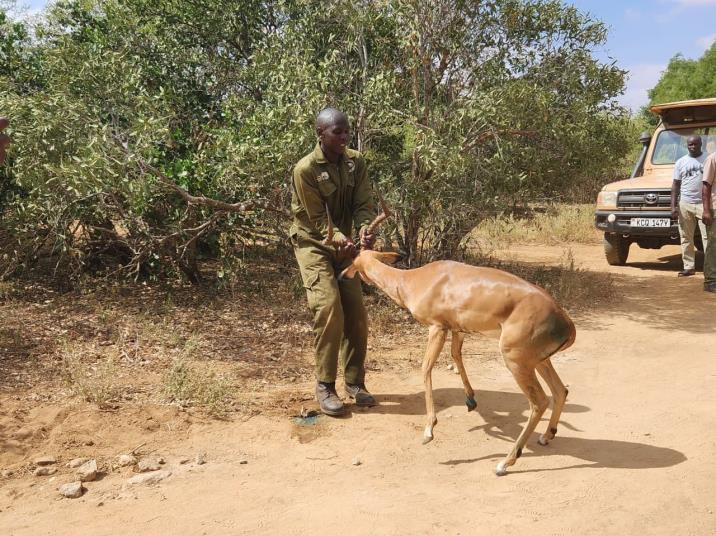
The Impala was reported to have an injury on his right forelimb and was favouring the left forelimb.
Immobilisation, examination and treatment
The impala was darted from foot and successfully immobilized using a combination of 4mg Etorphine hydrochloride and 30mg Azaperone delivered remotely in a 3 cc Dan inject dart, and it took 8 minutes for the impala to be fully anaesthetized.
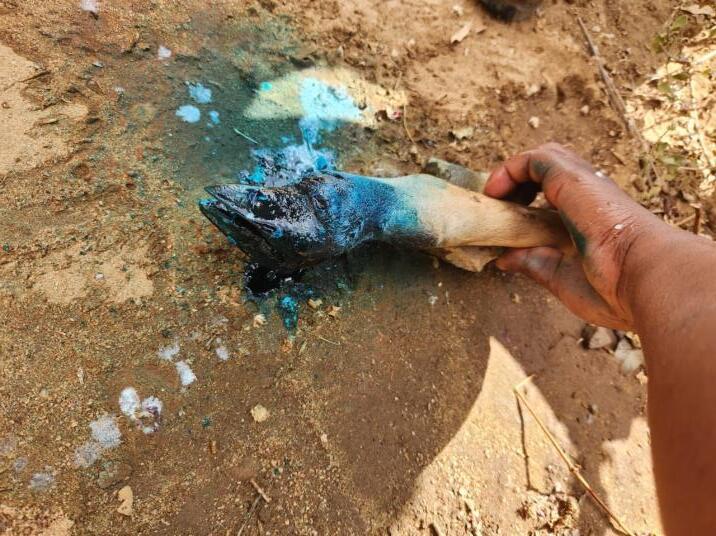
Examination revealed a deep septic wound on the right hoof confirmed to be as a result of interdigital dermatitis. The wound was thoroughly cleaned with water, drained of pus, flushed with Hydrogen peroxide, infused with a tincture of Iodine and then sprayed topically with a topical antibiotic. Additionally, he was given Amoxicillin antibiotic and flunixin parenterally.
Prognosis
He was reversed from anaesthesia using 40mg of Naltrexone hydrochloride given intravenously via the jugular vein. He rose a few minutes later and walked away with a good prognosis.
Case
Wild Dog Collaring Tsavo West National Park
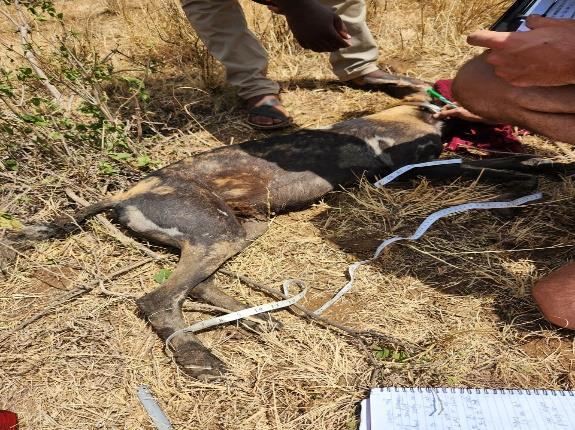
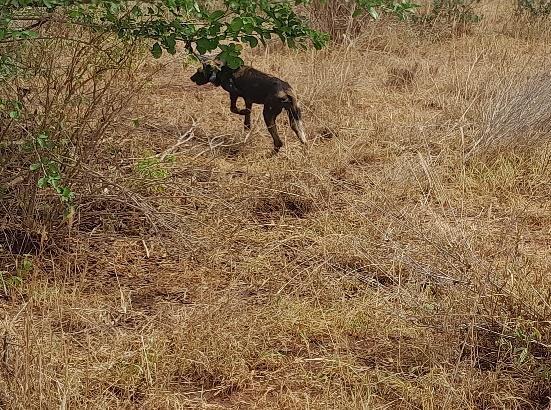
KWS in collaboration with ZSL undertook an activity to collar wild dogs in Tsavo West National Park ecosystem for monitoring in an effort to study pack interactions and landscape use by wild dogs.
Immobilisation and collaring
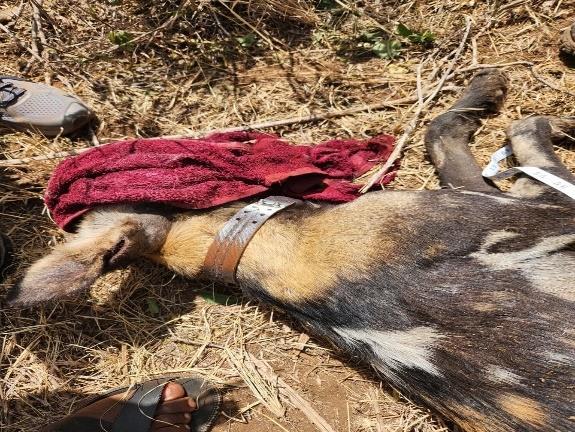
This wild dog was successfully immobilized using a combination of 0.8 mg Medetomidine and 50 mg Ketamine delivered in a 3cc Dan inject dart. Darting was done from the vehicle and 10 minutes later he was under anaesthesia.
He was fitted with an AWF-VHF collar.
Prognosis
He was reversed from anaesthesia using 4 mg of Atipamezole given intramuscularly. He rose few minutes later and slowly walked away. There were no complications so the task was successful.
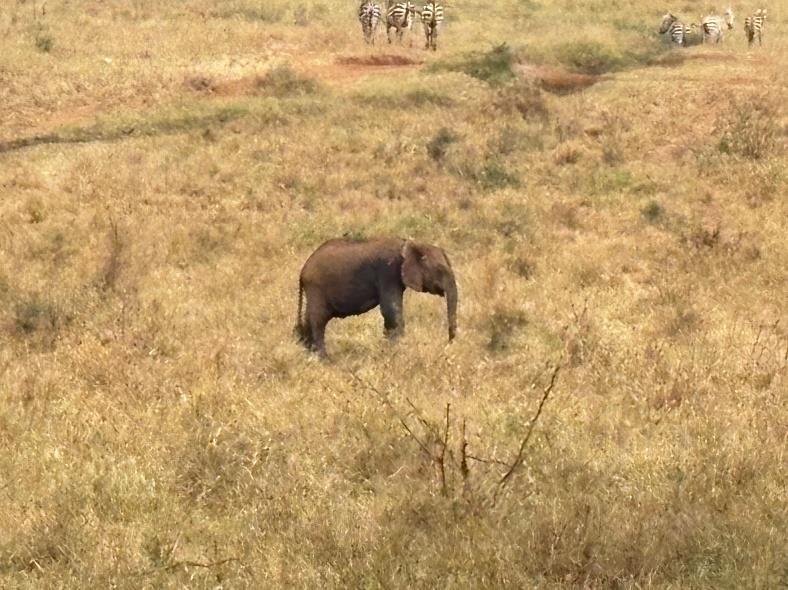
Elephant Rescue
Taita Hills, Taita Ranches
This calf was spotted in the same place in the sanctuary by the rangers in the area. He looked weak and was alone in a predator dense sanctuary.
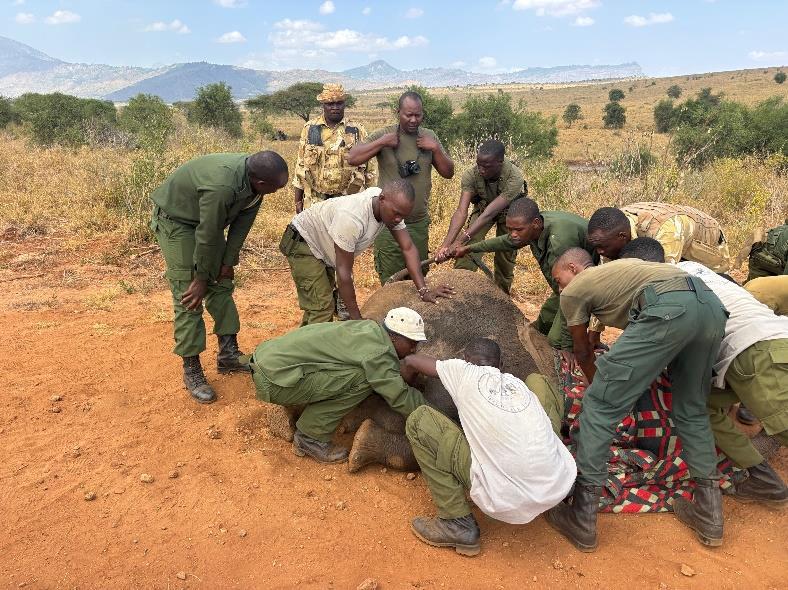
Immobilisation and rescue
The calf was physically restrained with ease due to his weak state.
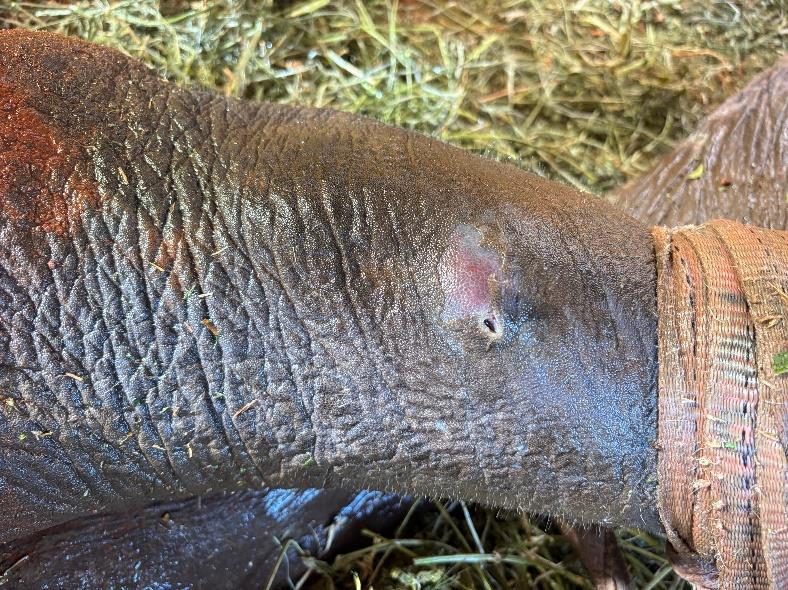
Examination revealed that the calf had a small puncture wound on the right lateral tarsus. The wound was cleaned thoroughly, flushed with Hydrogen peroxide, rinsed with water and infused with tincture of Iodine. Topical antibiotic spray was also applied on the wound.
He was given Amoxicillin antibiotics and anti-inflammatories parenterally.
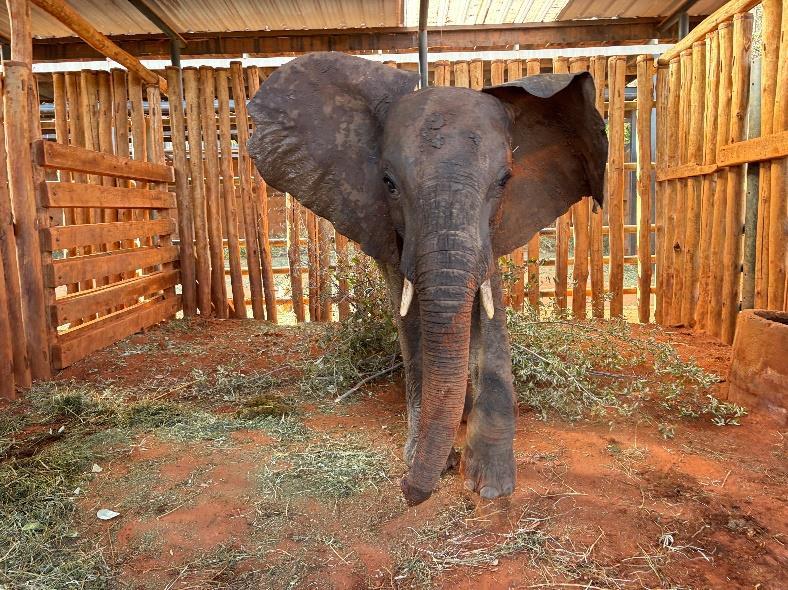
The team assessed the calf’s situation and recommended rescue due to the high risk of predation in the area and risk of malnutrition due to abandonment.
Prognosis
The calf was rescued and moved to Voi stockades for rehabilitation and further treatment.
Lion
Natural Causes
Kasigau Ranch, Taita Ranches
The lion was spotted and reported in the Kasigau Ranch by Wildlife Works Rangers to have an injury on his left forelimb and was recumbent for some time. He was also abandoned by his pride.
Immobilisation and examination
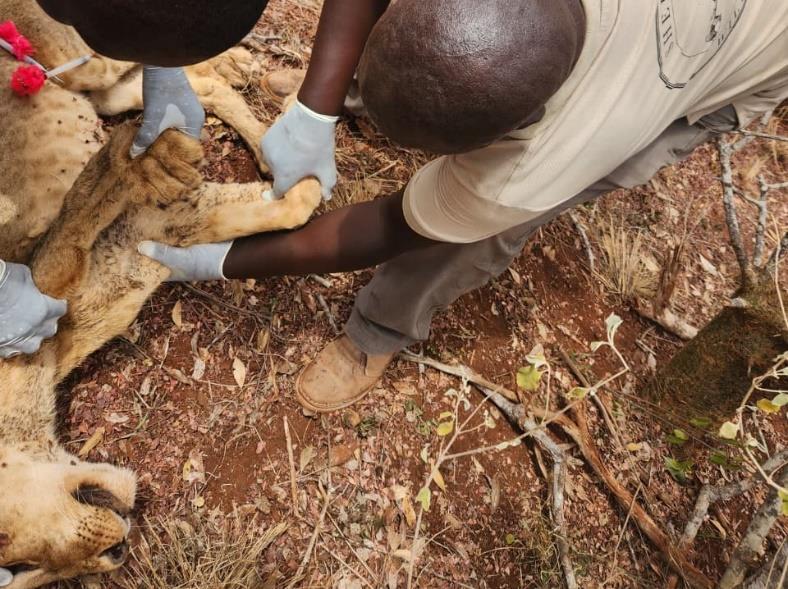
The lion was successfully immobilized using a combination of 2mg Medetomidine and 100mg Ketamine delivered remotely in a 3 cc Dan inject dart. Darting was done from foot, and it took 10 minutes for the lion to be fully anaesthetized.
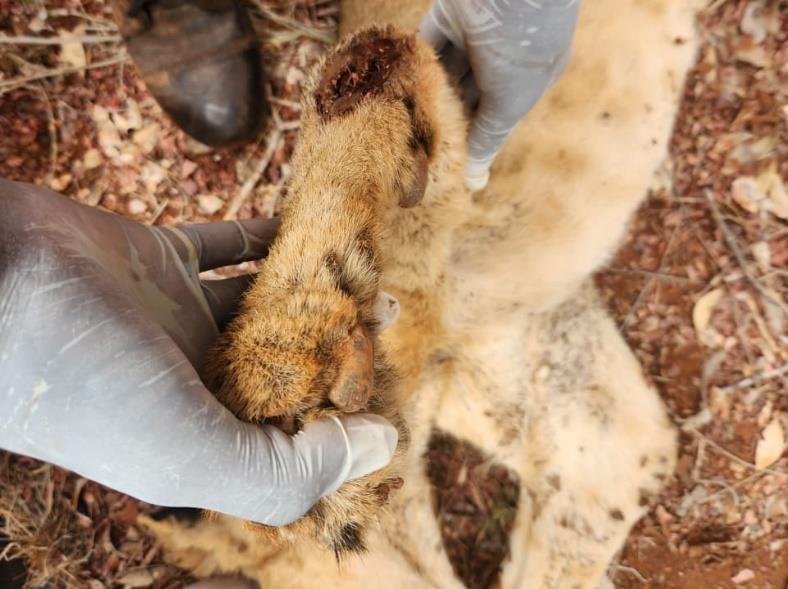
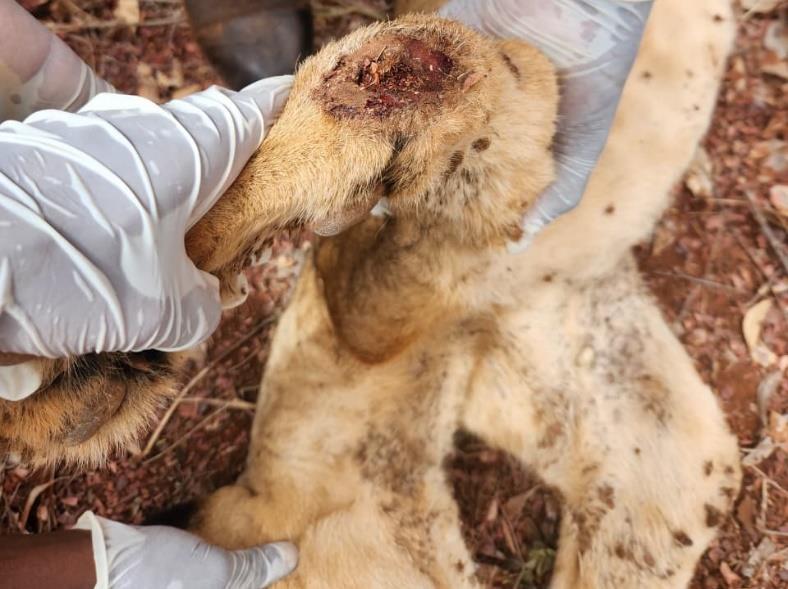
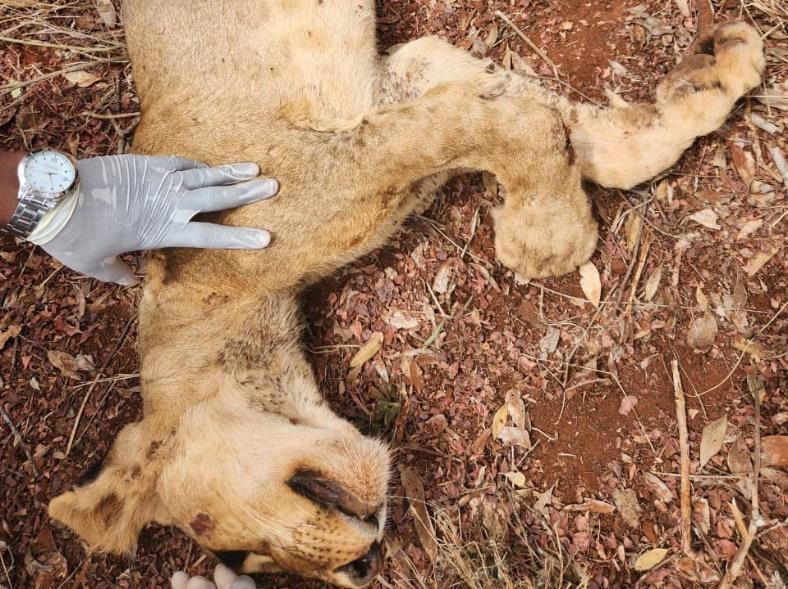
Examination revealed that the lion had a congenital deformity on the left forelimb and an open complete fracture of the carpal joint. The right elbow joint had previously sustained an injury which had ultimately healed with marked soft tissue swelling. He also had poor body condition.
Prognosis
The prognosis was grave, with no chance of survival. The lion was euthanized on grounds of animal welfare to alleviate him from further pain and suffering.
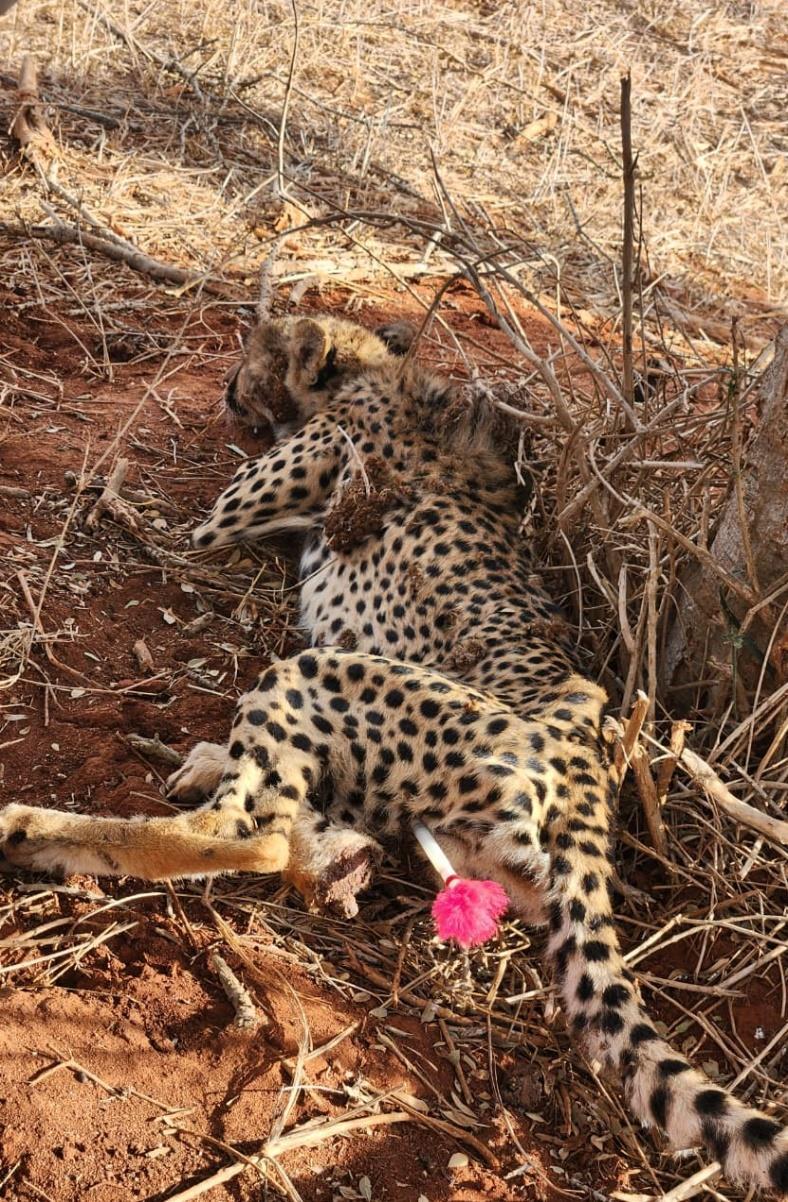
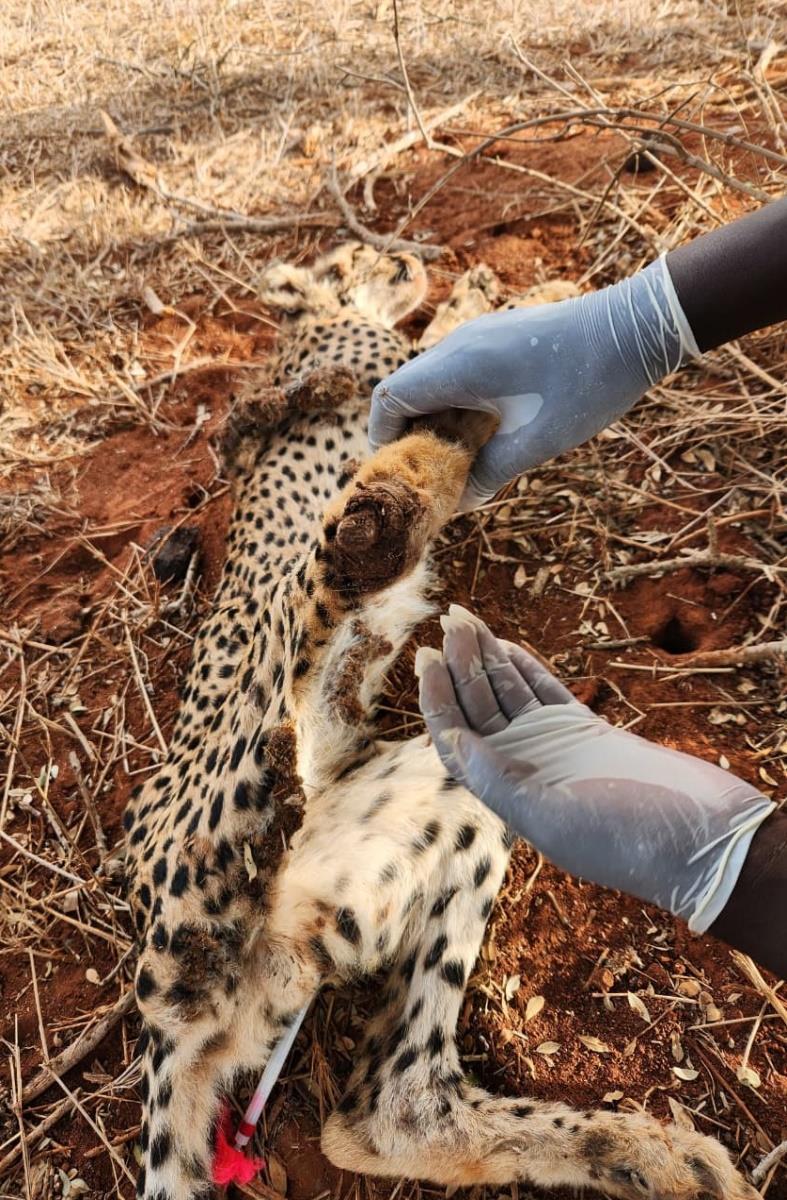
Case 13 – 17th February 2026
Cheetah Natural Causes
Kutima Ranch, Taita Ranches
The cheetah was reported by Kutima Ranch Rangers to have been injured on his right hindlimb and was in a very poor condition.
Immobilisation and examination
He was successfully immobilized using a combination of 1.25mg Medetomidine and 100mg Ketamine delivered remotely in a 3 cc Dan inject dart. Darting was done from foot, and it took 6 minutes for the drugs to achieve full potential.
Examination revealed that the cheetah was very emaciated and the right tibia and fibular were protruding and the knee joint had completely dislocated.
Prognosis
The cheetah, being a solitary animal who depends solely on speed to hunt and couldn’t anymore, had to be euthanized on animal welfare grounds.
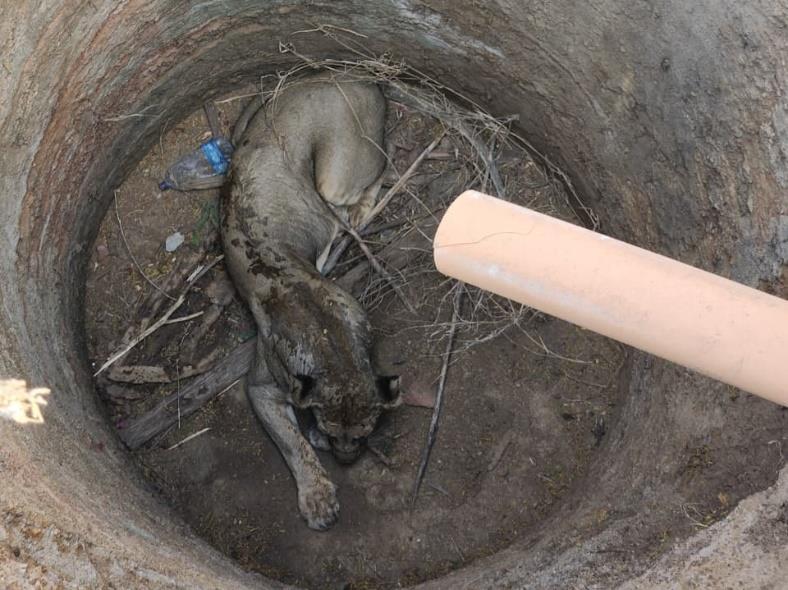
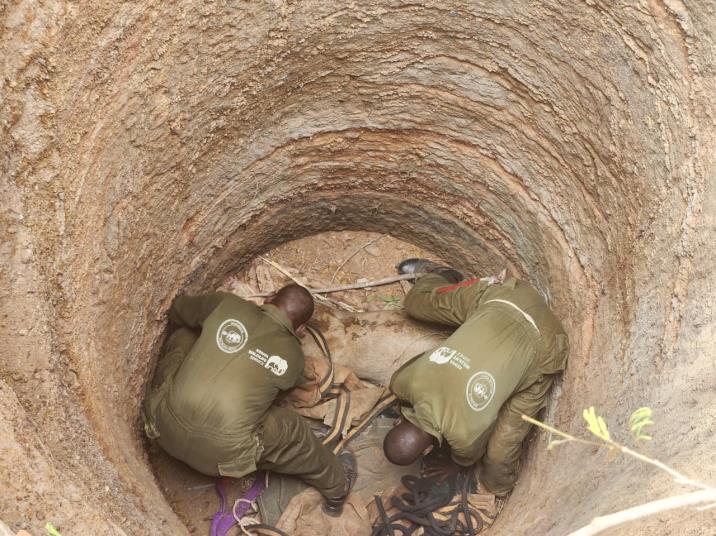
Case 14 – 18th February 2026
Lion
Human-Wildlife Conflict Mackinnon, Taita Ranches
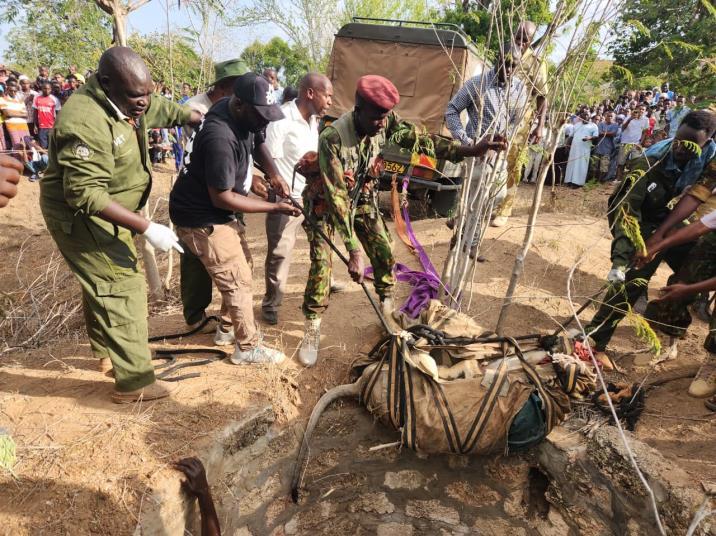
This lioness was reported by community members and MacKinnon police to have been trapped inside an 18foot septic pit from late hours of the previous night.
Immobilisation and rescue
The lioness was darted in the pit, from foot, with a combination of 6mg Medetomidine and 200mg Ketamine delivered remotely in a 3 cc Dan inject dart. It took 10 minutes for the animal to be anesthetized fully.
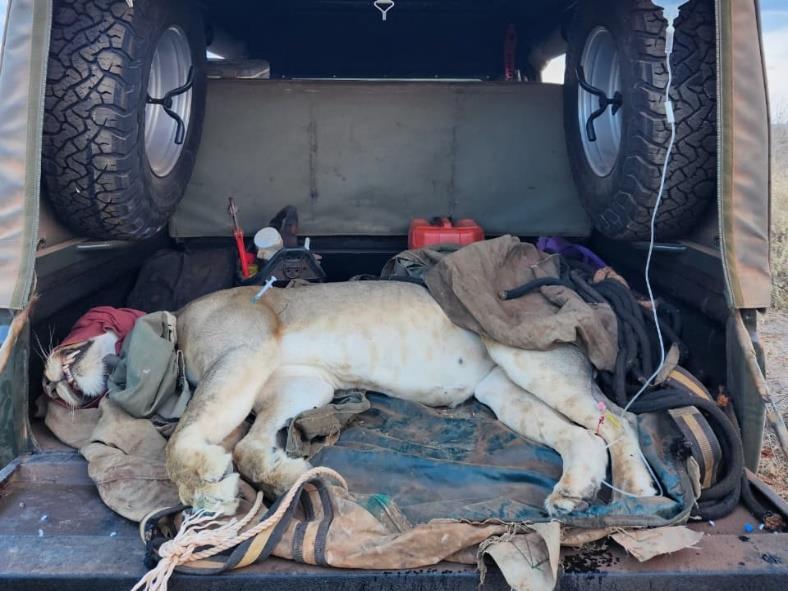
The lioness was successfully extracted from the deep pit after a team effort of the KWS rangers who climbed down to retrieve her. Examination revealed that the animal was in good condition with minor wounds on the footpad. The wounds were sprayed with a topical antibiotic and she was also given rehydration fluids.
Prognosis
She was carried on to the back of the vehicle and relocated back to Tsavo East National Park. She was reversed with 20mg Atipamezole given intramuscularly. She rose minutes later and walked away.
Case
Elephant Postmortem
Kuranze Ranch, Taita Ranches
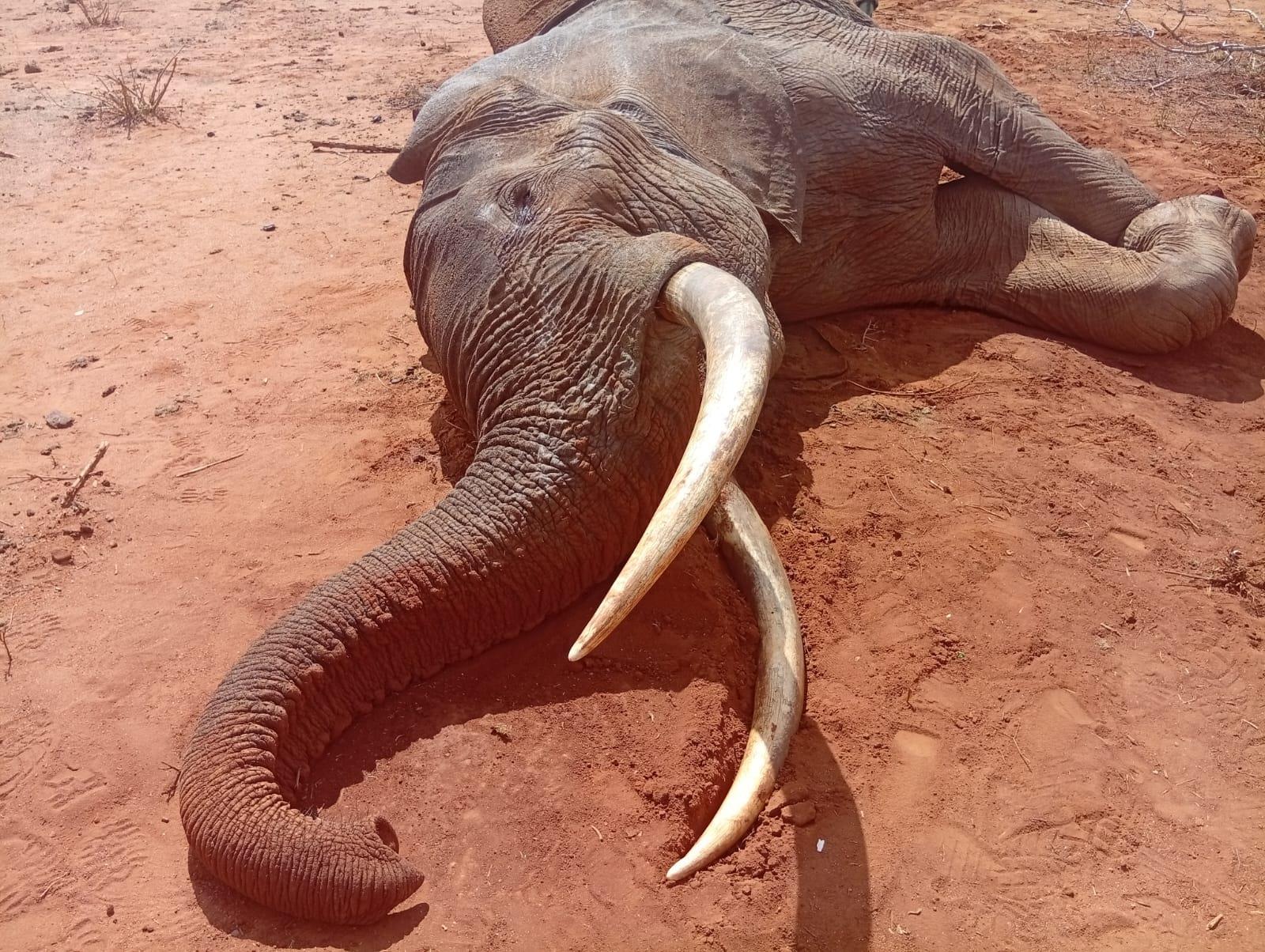
The elephant was reported by the T5 who were patrolling Silanga area and came across the carcass near Silanga dams. The elephant was aged to be between 45-50 years old and was reported to had been seen roaming and causing chaos in the area and was once chased away from the Kuranze camp. The locals also reported seeing her drinking water from the water dam earlier that day before she was later found dead.
Postmortem examination
• The fresh carcass was lying on the right lateral recumbency
• The body score was 3.5 out of 5
• There were no external injuries.
• There were signs of struggling on the ground she died on
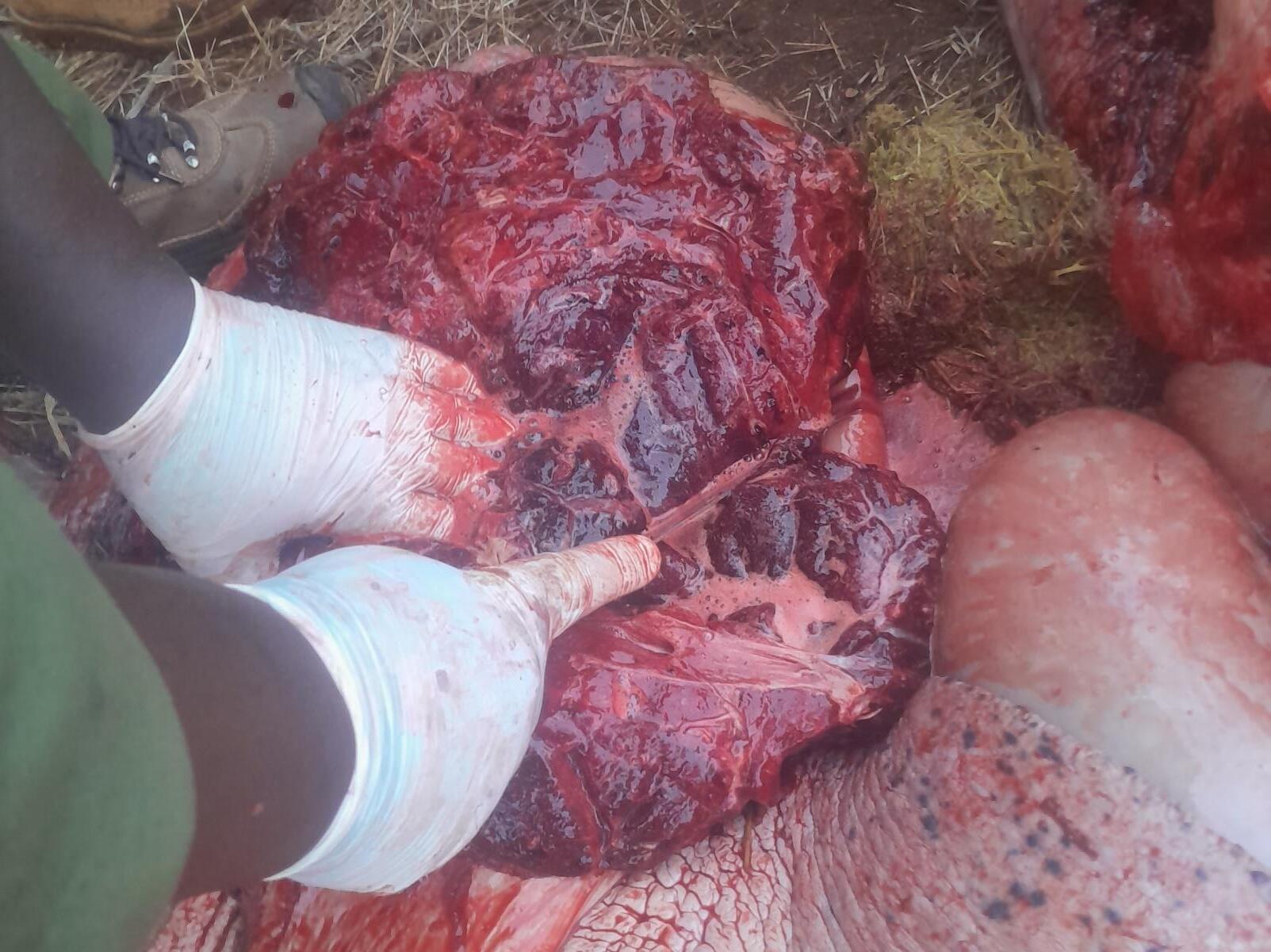
• The right lung was congested, oedematous and the trachea, bronchioles and alveoli were heavily filled with froth
• The left lung was heavily congested and oedematous like the right lung and also had a little froth
Cause of death
It was concluded that the immediate cause of death was acute respiratory failure due to severe pneumonia.
Case 16 – 20th February 2026
Lion
Natural Causes
Tsavo East National Park
The Tsavo Simba Research Project Team in their daily round activities spotted a lion walking uncomfortably and had wound on the genitals and reported immediately.
Immobilisation, examination and treatment
The lion was immobilized successfully using a combination of 7mg Medetomidine and 220mg Ketamine delivered remotely in a 3 cc Dan inject dart. Darting was done from the vehicle, and it took 10 minutes for the anaesthesia to have full effect.
The examination revealed some claw marks on the perineal area and a laceration on the right testicle with the testicle exposed. The wound was dirty and infected so the testicle could not be retracted back. The wound was thoroughly cleaned with water and due to the severe trauma, unilateral orchiectomy was performed and topical antibiotic spray applied on the wound. In addition, Amoxicillin and Dexamethasone were administered parenterally.
Prognosis
Prognosis is good.
Case 17 – 20th February 2026
Zebra Snared Kaluku, Tsavo
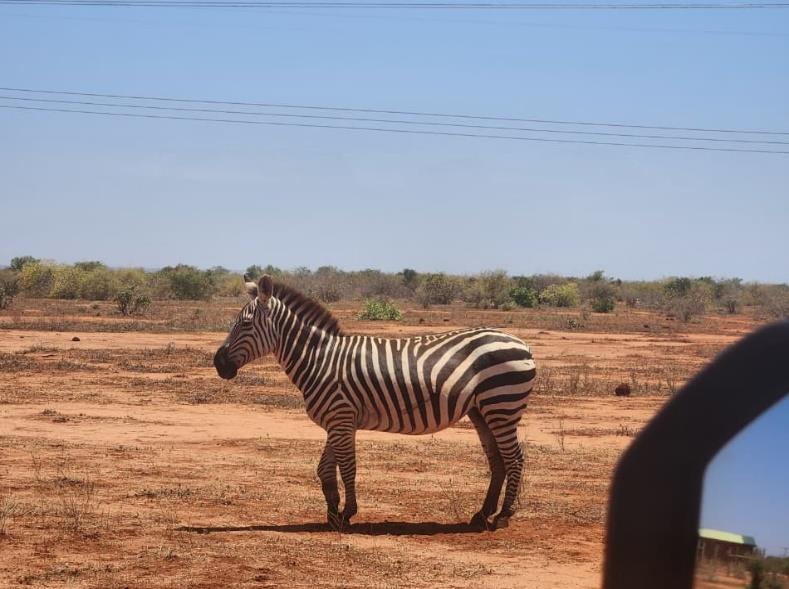
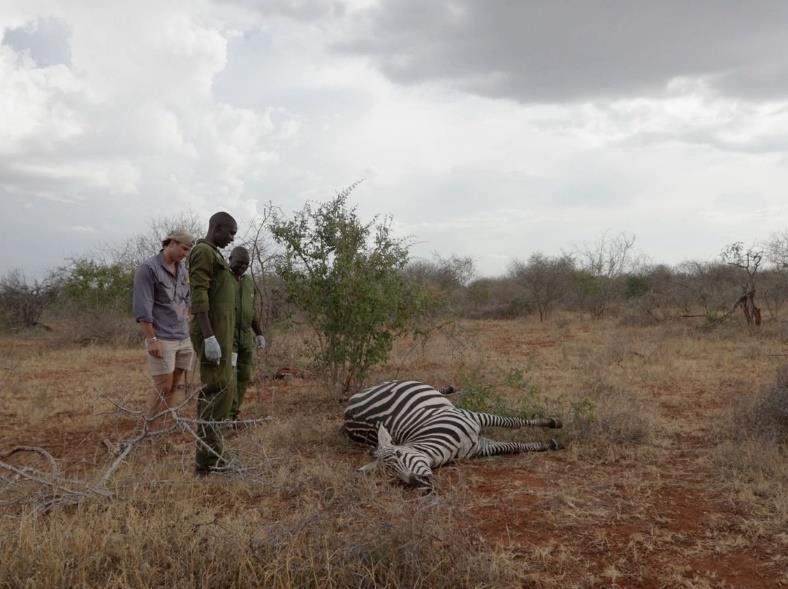
This zebra was spotted by the SWT to be having a winch wire snare on her neck in Kaluku area and reported.
Immobilisation, examination and treatment
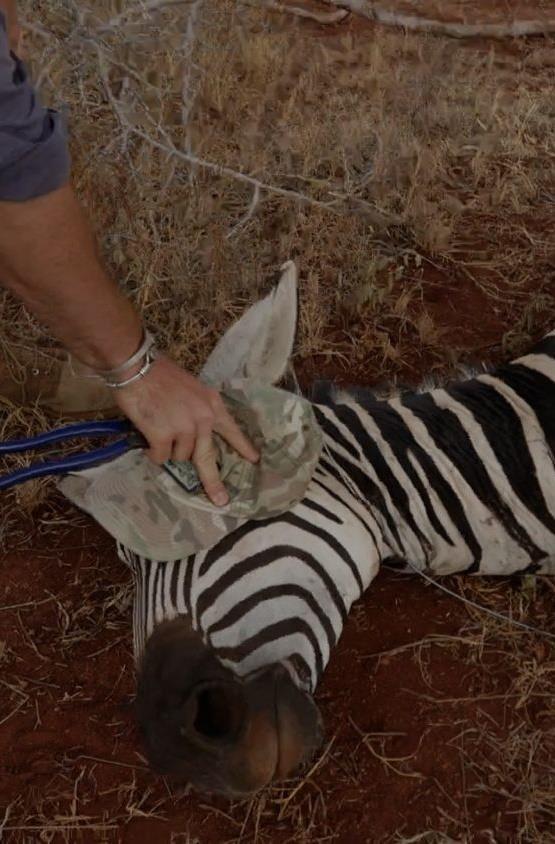
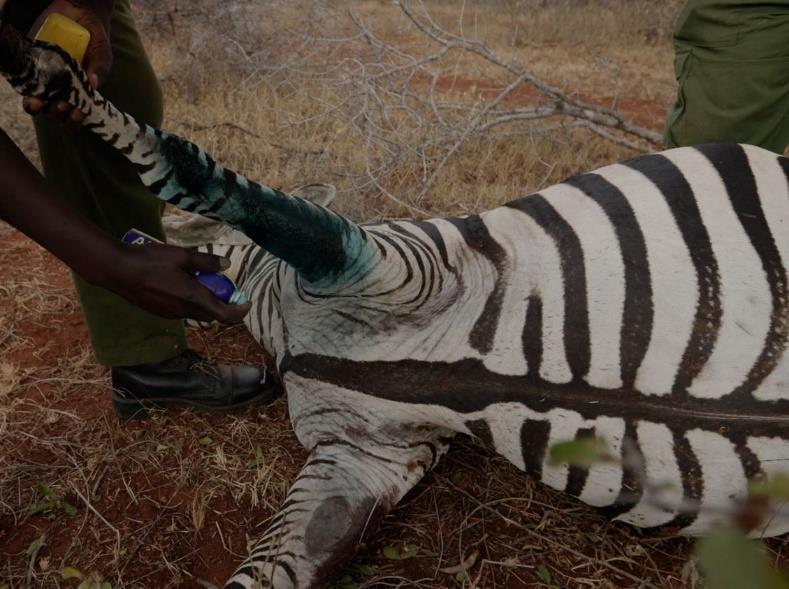
The zebra was darted from a helicopter and was immobilized successfully using a combination of 6mg Etorphine hydrochloride and 60mg Azaperone delivered remotely in a 3 cc Dan inject dart. It took 8 minutes for the animal to be fully anesthetized.
Examination revealed a snare wire tied slightly tight around her neck. The wire was cut using a wire cutter and there were no injuries to raise concern around the neck.
Prognosis
The animal was reversed using 60 mg Naltrexone hydrochloride administered intravenously via the jugular vein and she woke up after 3 minutes and walked way.
Case 18 – 22nd February 2026
Wild Dog Collaring Tsavo West National Park
KWS in collaboration with ZSL undertook an activity to collar wild dogs in Tsavo West National Park ecosystem for monitoring in an effort to study pack interactions and landscape use by wild dogs.
Immobilisation and collaring
The wild dog was immobilized successfully using a combination of 1mg Medetomidine and 50mg Ketamine delivered in a 3cc Dan inject dart. Darting was done from the vehicle and after 8 minutes the animal was anesthetized fully.
The wild dog was in a healthy condition and raised no concern.
AWF-VHF collar was fitted around the neck thereafter.
Prognosis
Reversal was done using 3.5mg Atipamezole and he woke up after 3 minutes. He walked thereafter to join the pack which was in the near bushes
Case 19 – 25th December 2024
Elephant Postmortem
Tsavo West National Park
The Tsavo West National Park Rangers in their daily patrol early in the morning, came across the carcass in Ele losoito area and reported immediately. The elephant who was very old and a mother to a 3-year-old calf had been seen the previous day in an emaciated condition with her family around the area she died on.
Postmortem examination
• The carcass was fresh and in right lateral recumbency.
• The body score was 2/5
• There were no external injuries
• Low muscle cover
• Cachexic fibrotic heart
• Both lungs were oedematous and frothy
• Firm and turgid congested liver
Cause of death
The elephant died of cardiopulmonary compromise related to longstanding age-related heart issue. Notably, there was severe lung oedema and thickened heart muscles This was a progressive age-related problem.
Case 20 – 26th February 2026
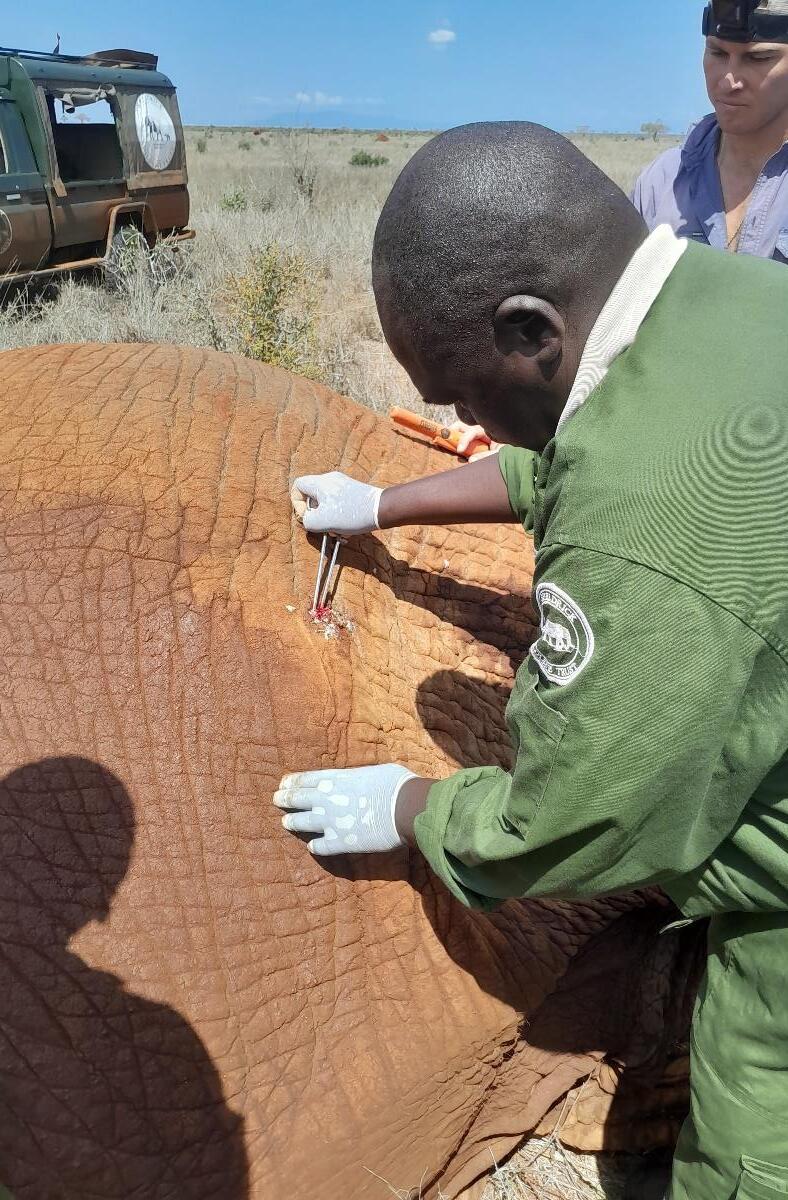
Elephant Spear Dakota, Tsavo East National Park
The SWT pilot doing surveillance spotted the young bull elephant oozing pus in the abdominal region in Dakota area and reported.
Immobilisation, examination and treatment
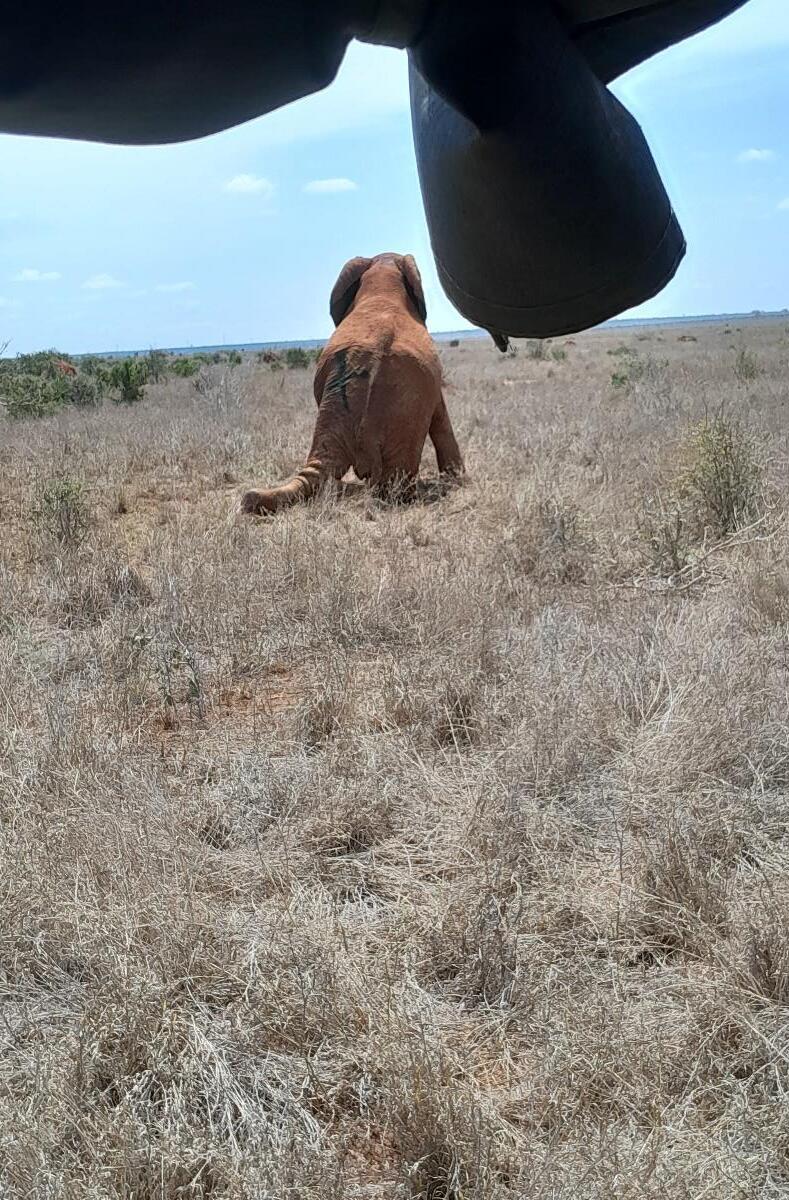
The bull was successfully immobilized using 20mg Etorphine hydrochloride delivered in a 3cc Dan inject dart. Darting was done from the vehicle, and it took 10 minutes for the drugs to achieve its full potential.
Examination revealed a penetrating wound on the left caudodorsal region of the abdomen with little pus oozing out. The wound was scanned for any metal or foreign object but there were none. A drainage was created. The wound was then cleaned thoroughly with water and debrided completely then flushed with Hydrogen peroxide and infused with tincture of Iodine. Antibiotic pessaries were thereafter packed in the wound followed by topical antibiotic spray.
In addition, Amoxicillin antibiotic was administered parenterally.