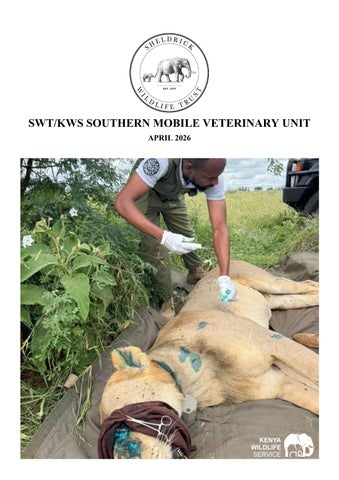

SWT/KWS Southern Veterinary Unit Report April 2026

Page 1


APRIL 2026

April Report by Dr.

Poaching Cases

The conservation area received less rainfall in comparison with the previous month. Most water pans are full with good vegetation cover. Both grazers and browsers have enough food and are in good body condition.

The Unit attended to 5 cases during April involving a snared buffalo, a lion with fight injuries, an elephant with spear injuries, the postmortem of a zebra and vaccination of 6 zebras in Bora Bora Park, Diani on the Southern coast.

Acknowledgement

The Southern Mobile Veterinary Unit would like to appreciate all stakeholders that reported and monitored the cases that required veterinary intervention. Special thanks to SWT for facilitation of the Unit and KWS for the technical support to the Unit. 5 Cases in April 2026

Case Details

April 2026
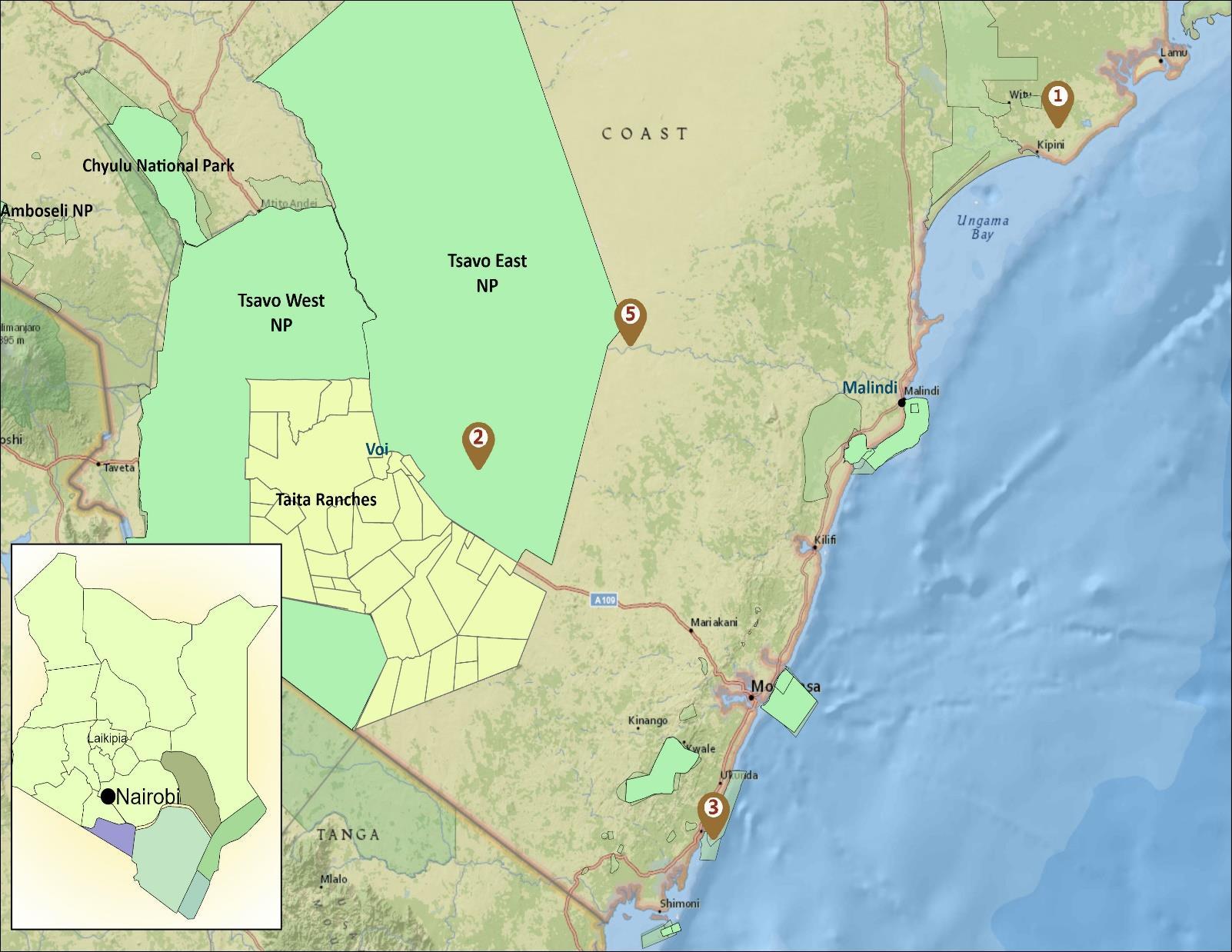
Case 1 – 6

April 2026

Buffalo

Snared Kipini Conservancy, Coast

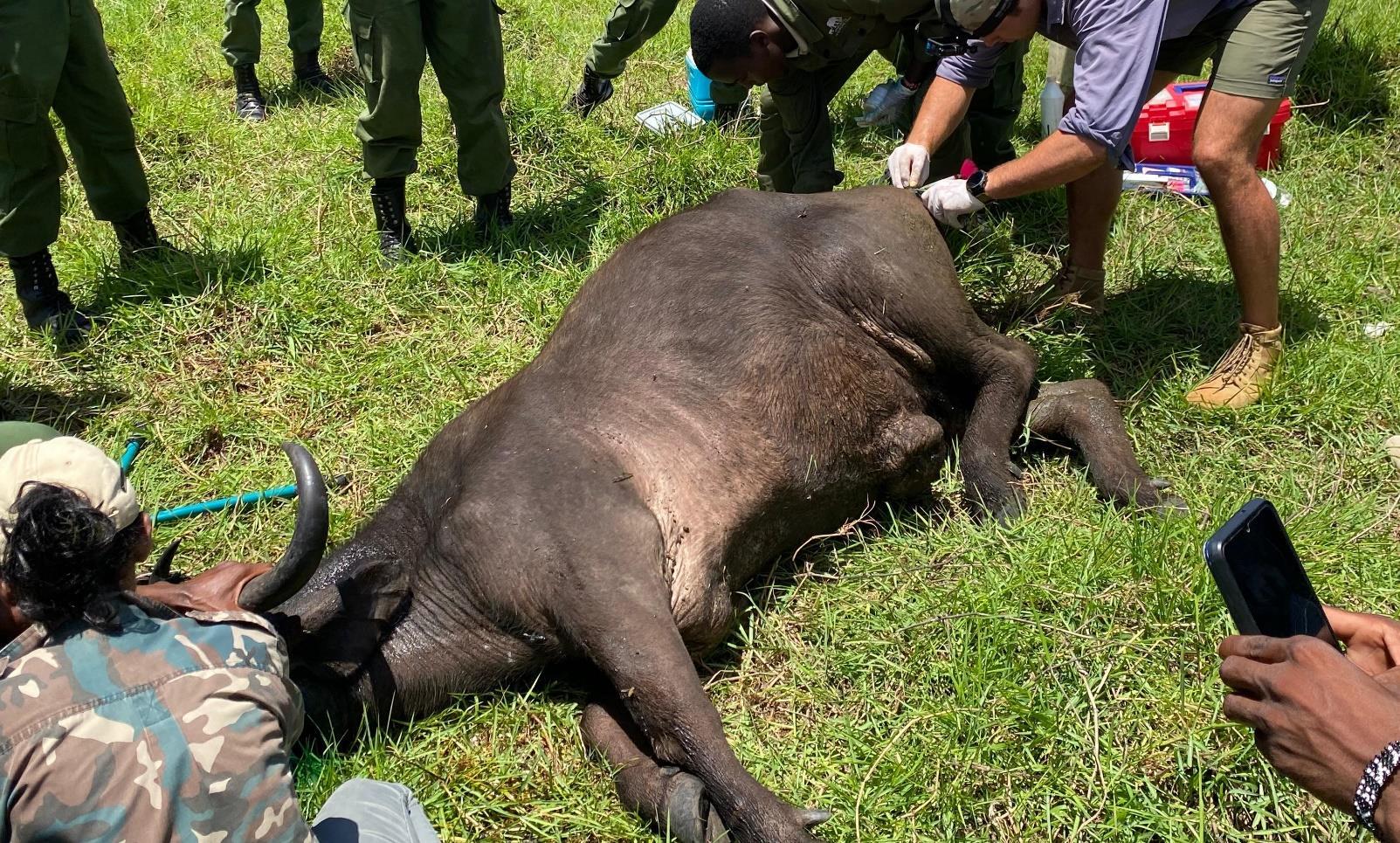
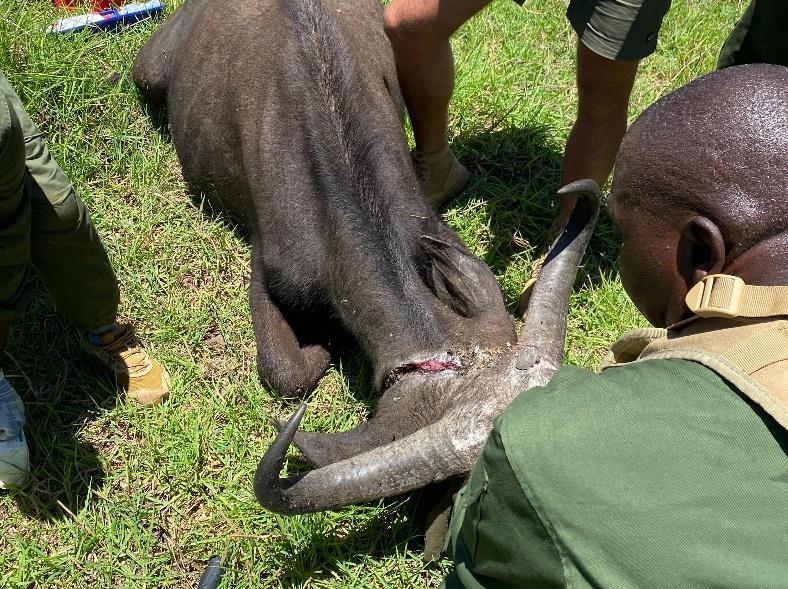
This snared buffalo was spotted by the SWT pilot during routine patrols in the conservancy. The Southern Veterinary Team was notified and airlifted to attend to the buffalo.

Immobilisation, examination and treatment

This buffalo was successfully immobilized using a combination of 5mg Etorphine and 50mg Azaperone delivered in a dart from the helicopter and it took 6 minutes for full anaesthesia to be achieved.

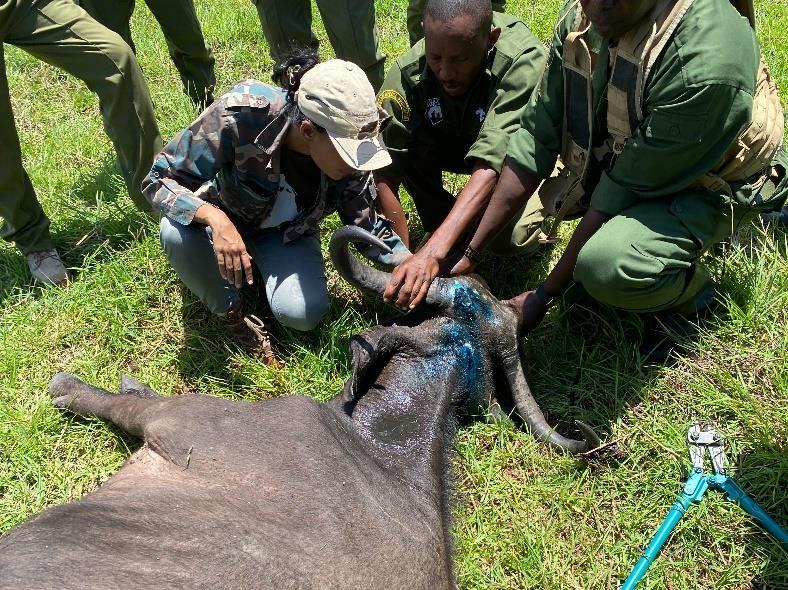
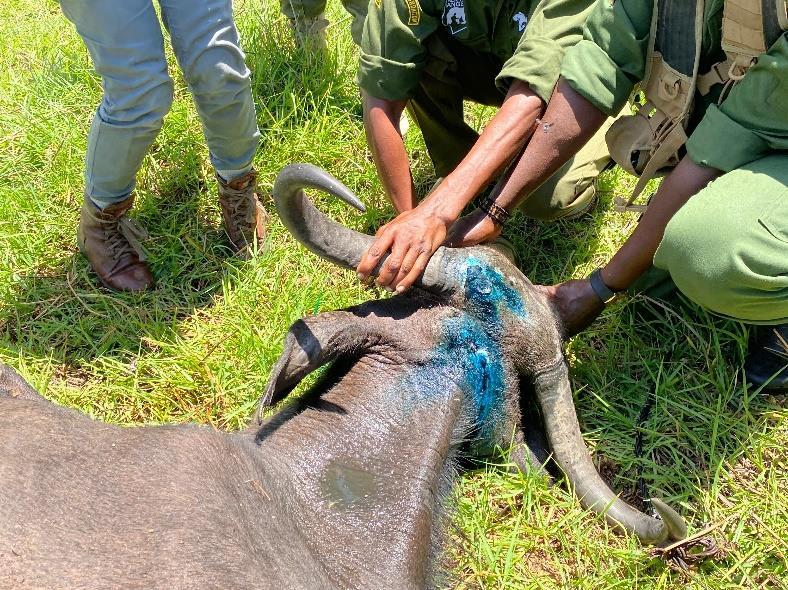
Examination revealed a thick winch wire snare tightly bound around the neck of the buffalo. The snare had inflicted a deep wound on the ventral neck, partially severing the trachea. The snare was cut using wire cutters and the resultant injuries cleaned thoroughly. The wound was then infused with tincture of Iodine followed by a topical antibiotic spray.

She was additionally given Amoxicillin antibiotics and Meloxicam anti-inflammatories parenterally.

Prognosis

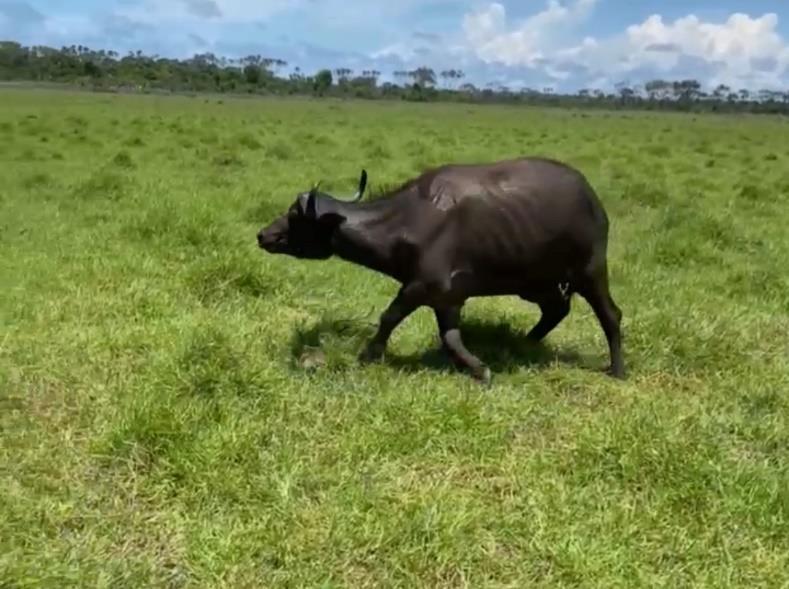
She rose 3 minutes after the anaesthetic was reversed and dashed to join her herd. Prognosis is fair. .

Lion

Natural Causes

Aruba, Tsavo East National Park

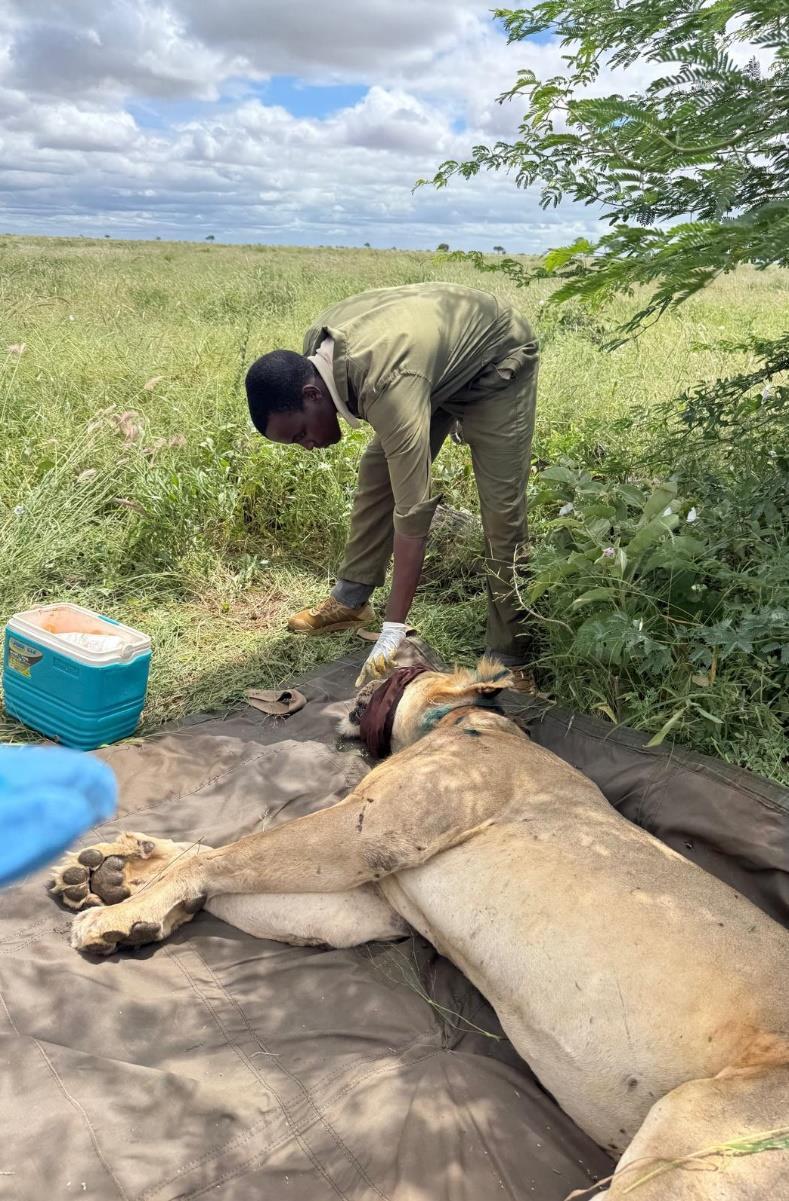
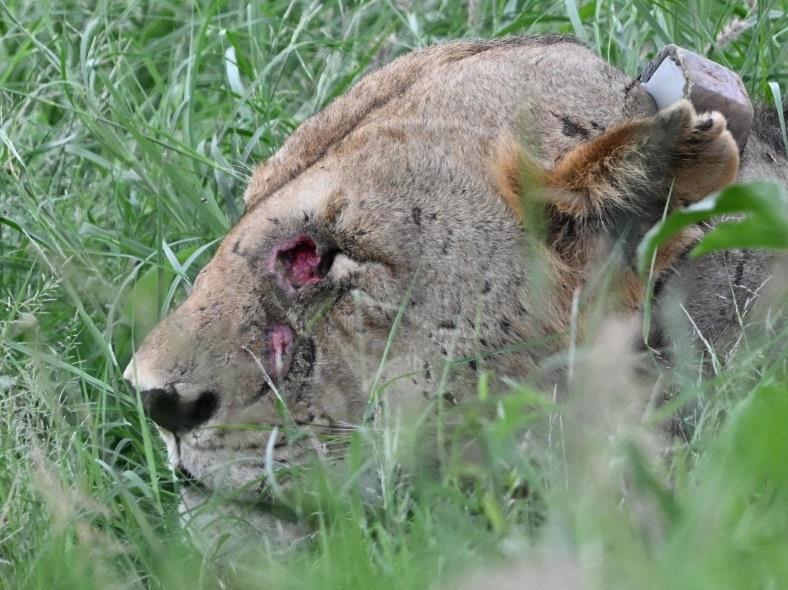
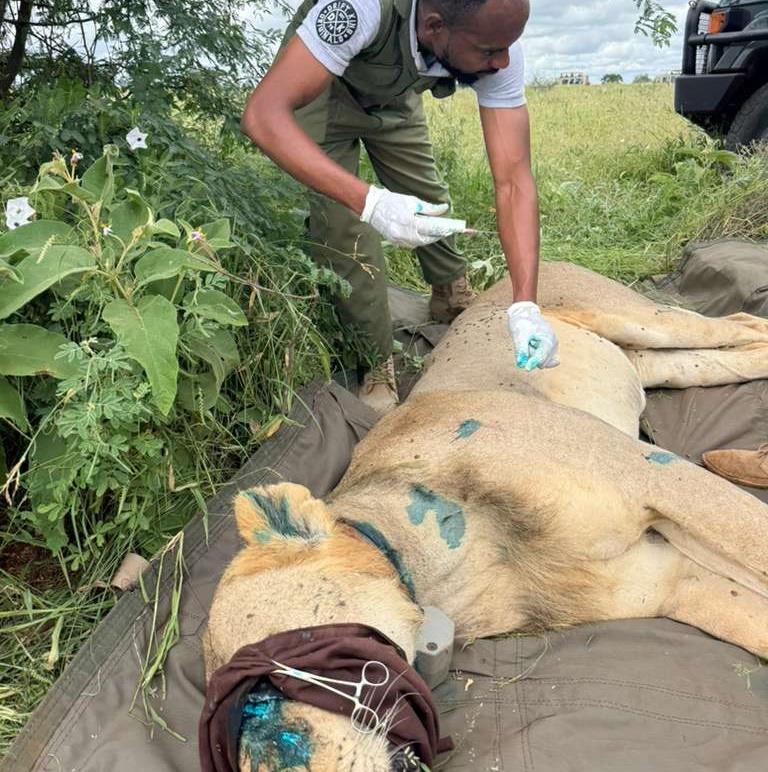
This injured lion was spotted by the Tsavo Simba research team, he had a wound close to his left eye.

Immobilisation, examination and treatment

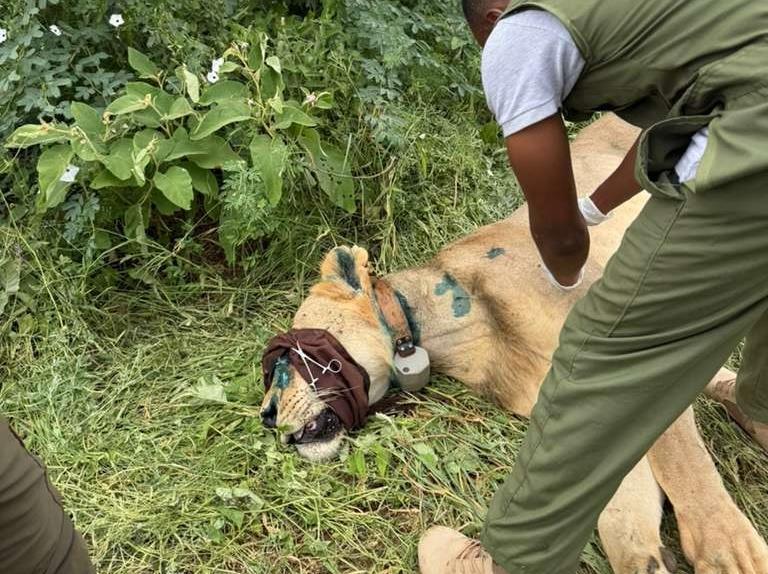
This adult lion was successfully immobilized using 200mg Ketamine HCL and 5mg Medetomidine delivered remotely using a 3cc Dan inject dart. Darting was done from a vehicle and it took 10 minutes for the drug to achieve its full effects.

Examination revealed a deep wound that resulted from a suspected intraspecific fight. The wound was septic and had begun healing. The wound was thoroughly cleaned using clean water, swabbed with sterile gauze and infused with dilute povidone Iodine. Antibiotic cream was also infused in the wound.

Additionally, Amoxicillin antibiotics and Meloxicam anti-inflammatories were administered parentally.

Prognosis

The anaesthetic was reversed and he rose 10 minutes later and slowly walked away. Prognosis is good

.

Zebra Technical Case Bora Bora Wildlife Sanctuary, Coast

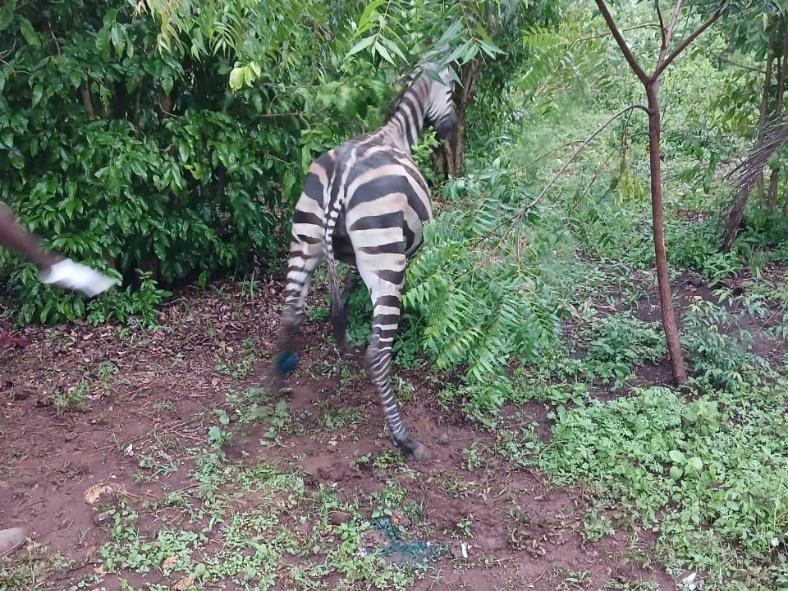
These zebras had been relocated to Bora-bora from Naivasha close to a month before, 3 of them showed progressive loss of body condition, un-thriftiness and anorexia. One of the zebras was recumbent.

Immobilisation, examination and treatment

Three adult zebras [2 females and 1 male] were successfully immobilized using a combination of 5mg Etorphine HCL and 50mg Azaperone. Examination revealed the zebras had a general poor body condition score of 2.5/5 with a rough hair coat.

All zebras received prophylactic dose of Isometamedium chloride against suspected trypanosomiasis infection due to the prevalence of this Tsetse fly borne disease in the South coast. The three remaining zebras were given the prophylaxis remotely via darting. One female zebra was treated for an ulcerated fibroma on the left distal hindlimb. Additionally, supportive treatment with systemic oxy-tetracycline antibiotics and metabolic stimulants were also administered.

Prognosis

Prognosis is fair.

Zebra

Postmortem

Bora Bora Wildlife Sanctuary, Coast

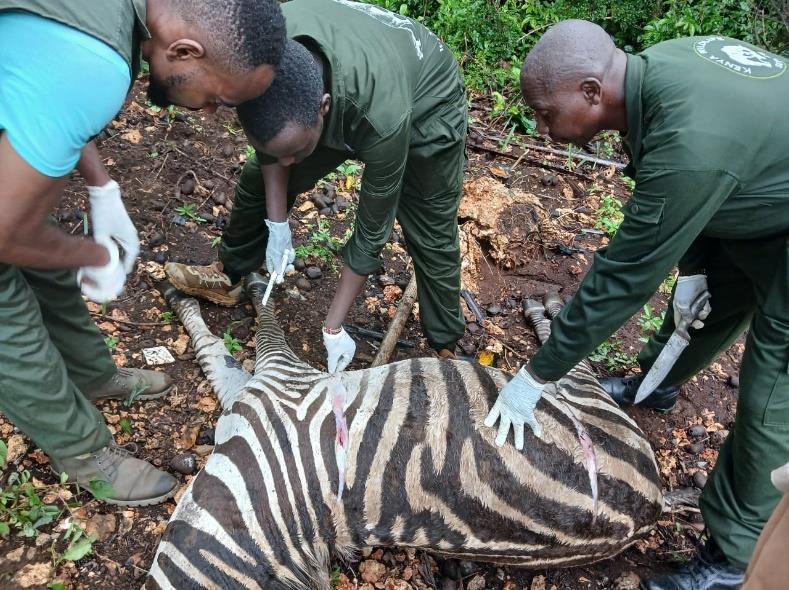
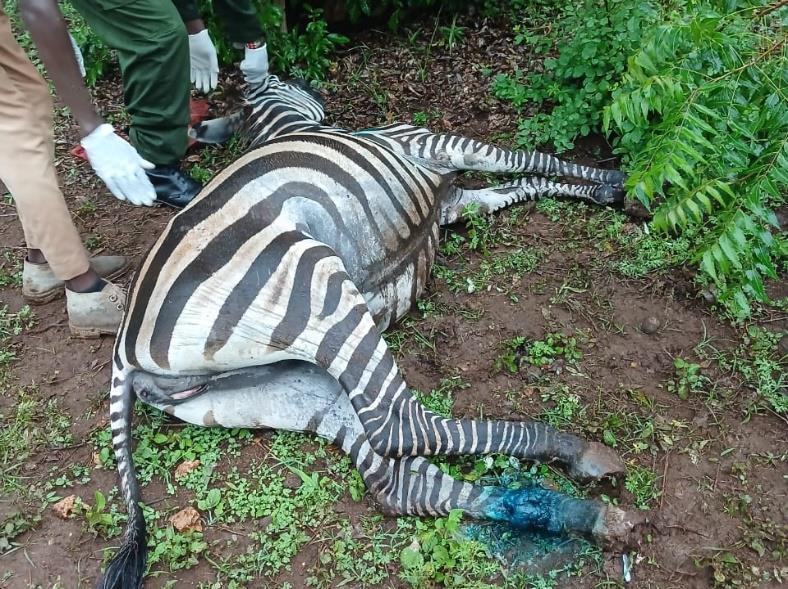
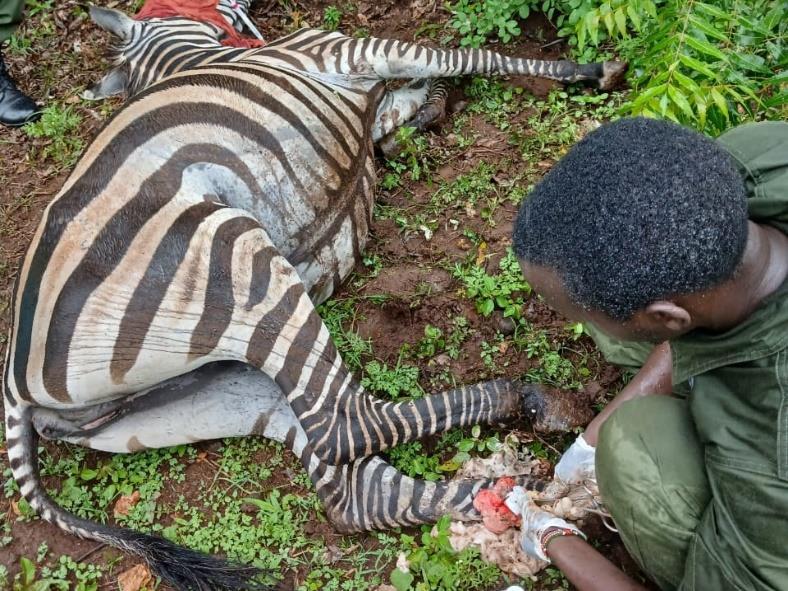
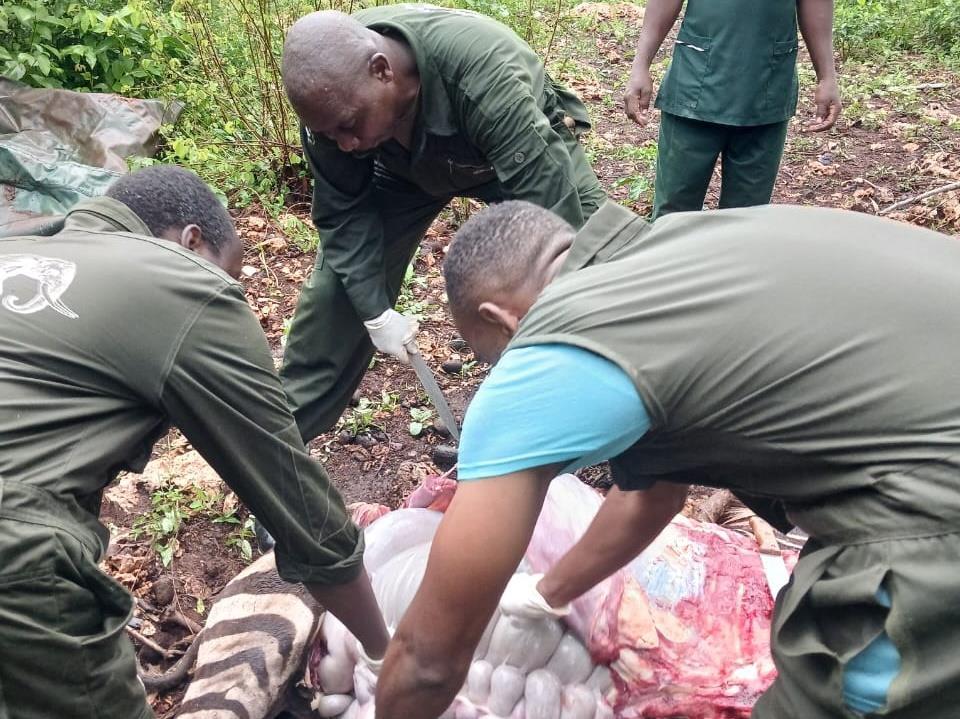
This zebra was among the translocated zebras from Naivasha. He was reported to be unthrifty, anorexic, and recumbent. The keepers also reported 2 other zebras were also showing similar signs. The zebra later died, and a postmortem was conducted.

Postmortem examination

The carcass had a distended abdomen and was in poor body condition score of 2.5 in a scale 1 – 5.

The carcass had pale mucous membranes [ Both the ocular and oral]. There was gelatinization of subcutaneous and pericardial fat. There was significant Hydro-pericardia. Presence of adult worms in the trachea, bronchi, and bronchioles. Froth was present on the bronchioles There was a significant amount of straw-coloured intra-peritoneal fluid (approximately 1000ml). Both kidneys were congested. Generalized enlargement of the mesenteric lymph nodes. The urinary bladder was full of urine.

Cause of death

The cause of death was multifactorial in nature. The postmortem finding highlights evidence of verminous pneumonia, malnutrition and suspected trypanosomiasis infection.

.

Elephant Spear

Lali,

East National Park

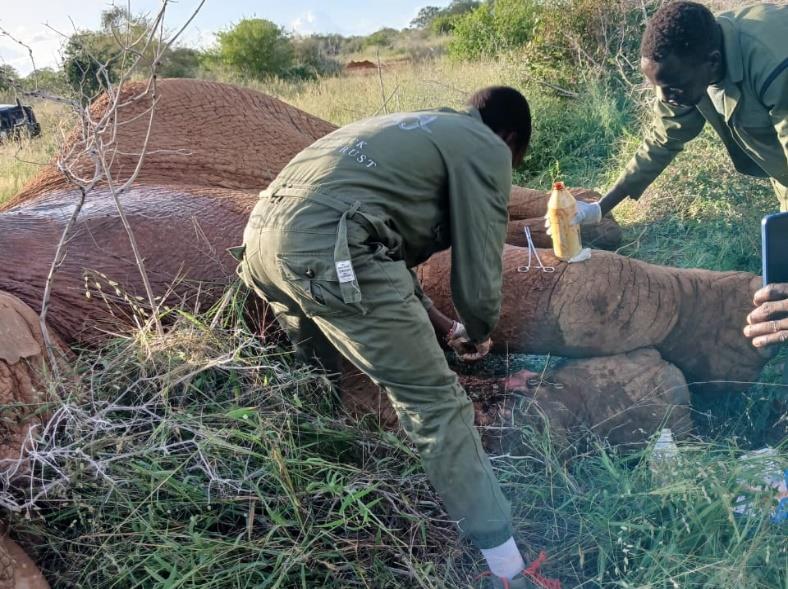
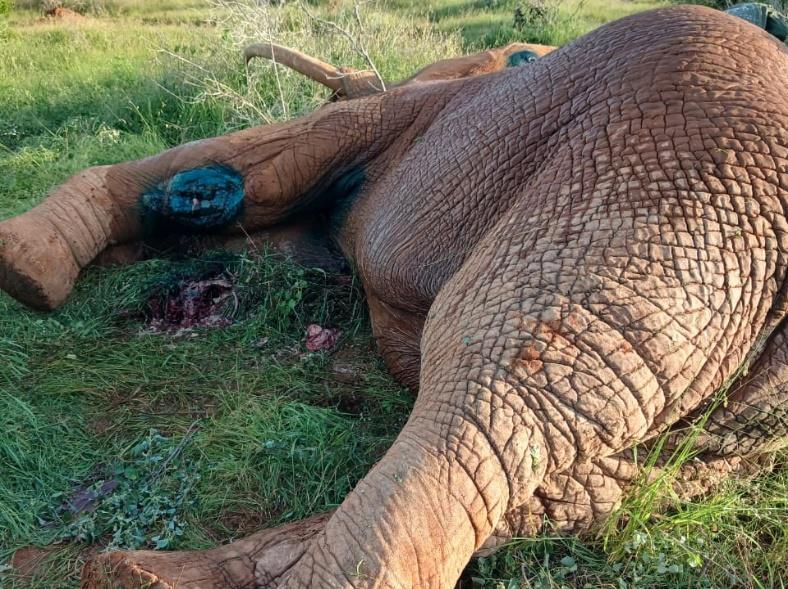
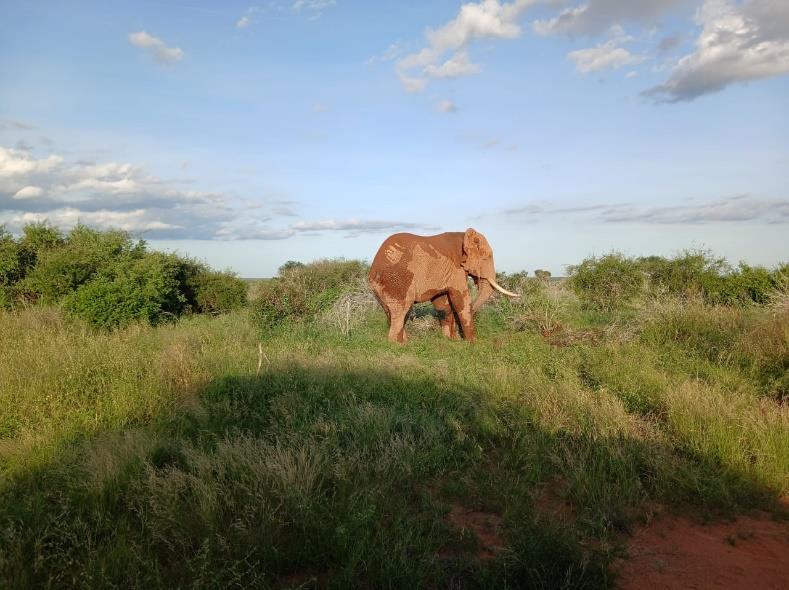
A report came in of an adult male elephant that had a wound on the right forelimb at the elbow region, the animal exhibited signs of lameness and was seen limping.

Immobilisation, examination and treatment

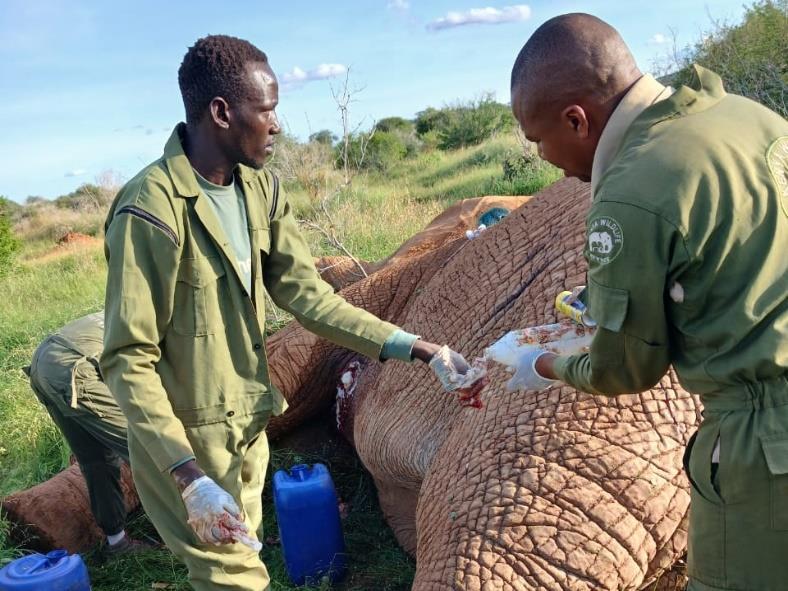
The adult bull elephant was successfully immobilized using 20mg Etorphine HCL. Darting was done from the vehicle and it took 10 minutes for the anesthesia to achieve full potential.

Examination revealed a deep septic fight wound on the right dorsal neck region with pus. Two more septic wounds were observed on the left axillary area and a through and through spear wound slightly below the left elbow. The wounds were thoroughly debrided, flushed with Hydrogen peroxide, rinsed with water, infused with tincture of Iodine and packed with antibiotic pessaries and green clay. A topical antibiotic spray was applied on the wounds. Additionally, Amoxicillin antibiotics and Flunixin meglumine anti-inflammatories were administered parentally.

Prognosis

Prognosis is fair.

Tsavo

Turn static files into dynamic content formats.

Create a flipbook
SWT/KWS Southern Veterinary Unit Report April 2026 by Sheldrick Wildlife Trust - Issuu