SWT/KWS Meru Veterinary Unit Report February_March 2026
SWT/KWS MERU MOBILE VETERINARY UNIT
FEBRUARY – MARCH 2026
Introduction
9 Cases
2 Poaching Cases
February and March Report by Dr. Michael Njoroge
5 Elephant Cases
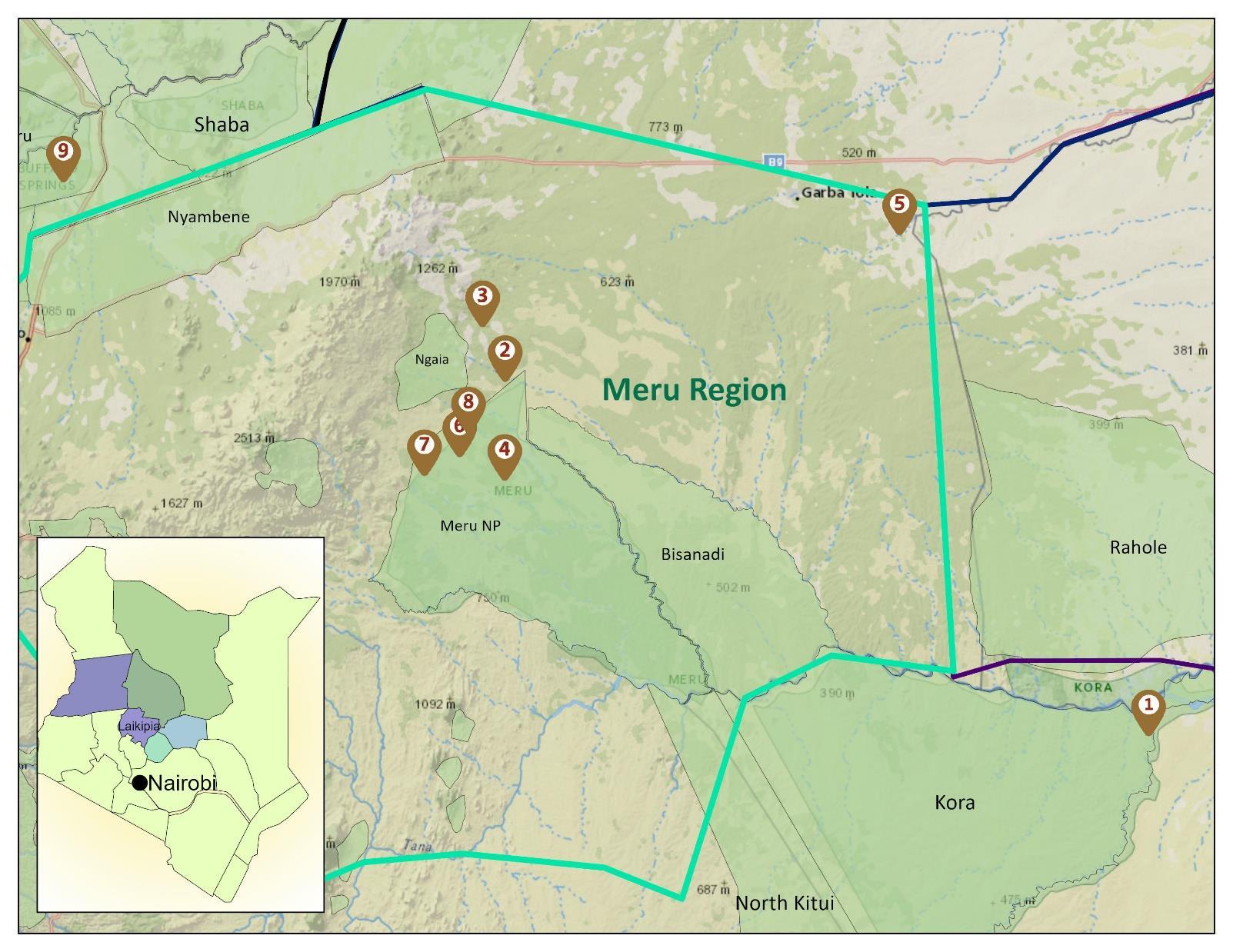
The Unit attended to 9 cases in February and March, including 2 elephants with bullet wounds. The remaining cases were all natural including 3 postmortems where the animals died of natural causes. One of the elephants with a bullet wound succumbed whilst the other was given a guarded prognosis. The majority of cases were attended to in the Meru region, but the Unit also travelled to Samburu, the Tana River region and Garissa in Northeastern Kenya.
Acknowledgement
We sincerely thank Sheldrick Wildlife Trust (SWT) for support, resources & sponsorship of the Rift We extend our sincere gratitude to Sylvie Chantecaille and the Sheldrick Wildlife Trust for their unwavering support of the Meru Mobile Veterinary Unit. Their generous funding continues to play a vital role in safeguarding the health and survival of wildlife within the Meru ecosystem. We also acknowledge the Kenya Wildlife Service for its exemplary leadership and coordination. The strategic guidance provided by the KWS Head of Veterinary Services and the Senior Assistant Director of the Eastern Conservation Area has been instrumental in strengthening conservation efforts and advancing the welfare of wildlife across the region.
Case Details
February – March 2026
Case 1 – 3rd February 2026
Elephant Bullet Wound Kora National Park, Tana River
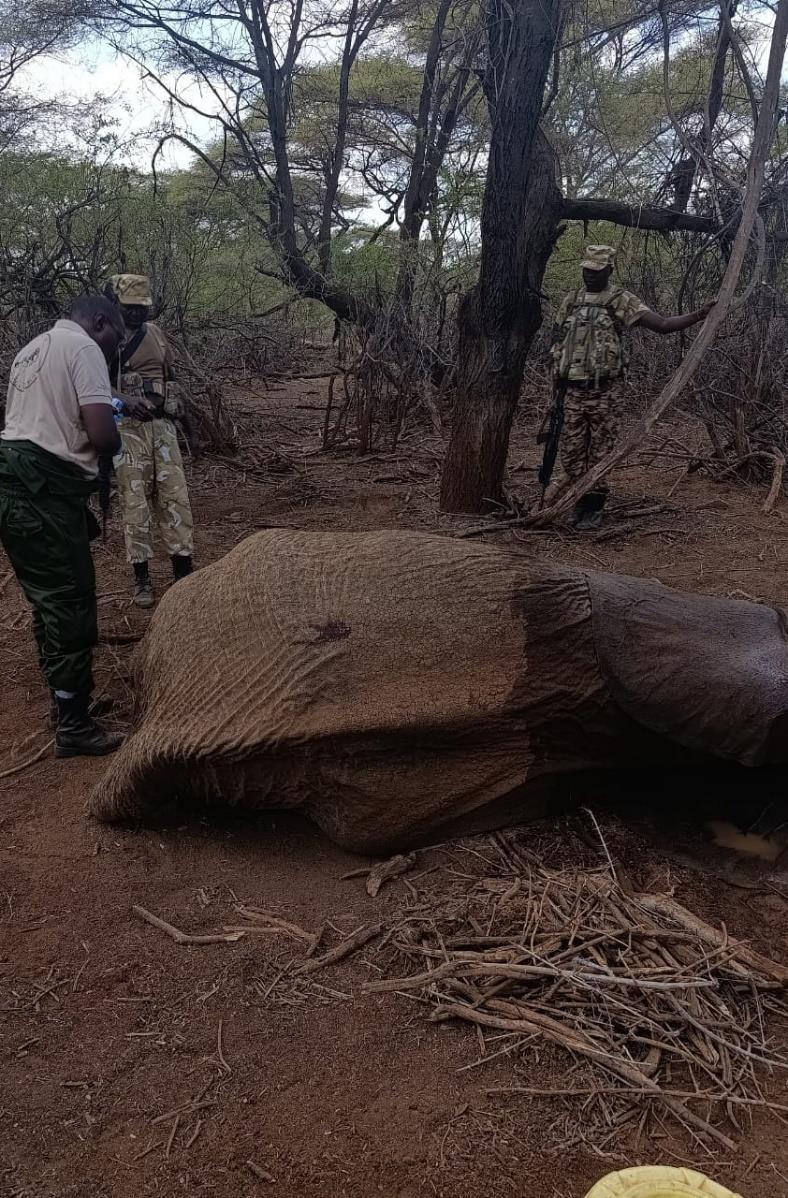
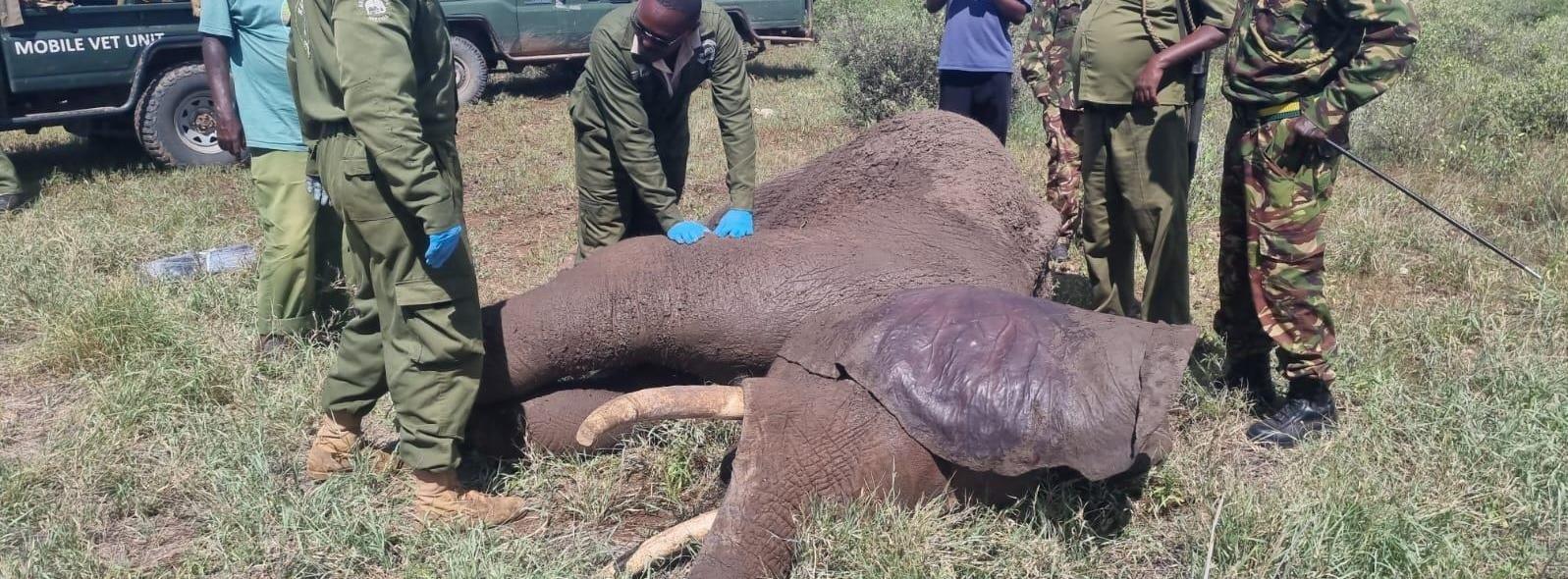
The Meru Mobile Vet unit attended to reported case of an injured a sub-adult female elephant at Moju-Kora. The elephant was found recumbent on arrival, the reports from the monitoring teams indicate that the elephant had been up and weakly ambulating a few hours earlier.
Immobilisation, examination and treatment
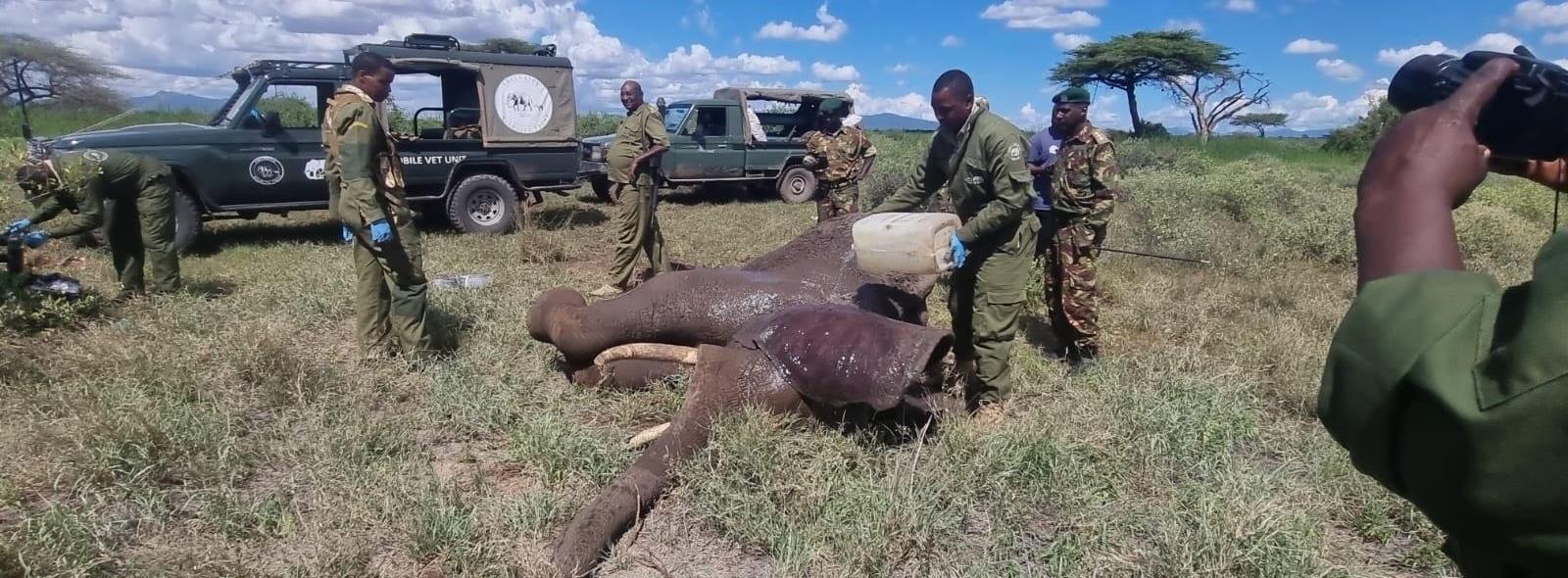
The elephant was immobilized with 12mg Etorphine hydrochloride intramuscularly in the hip muscles using the Dan-inject system from a vehicle. The elephant was safely immobilized within 5 minutes post-darting and went to lateral recumbency.
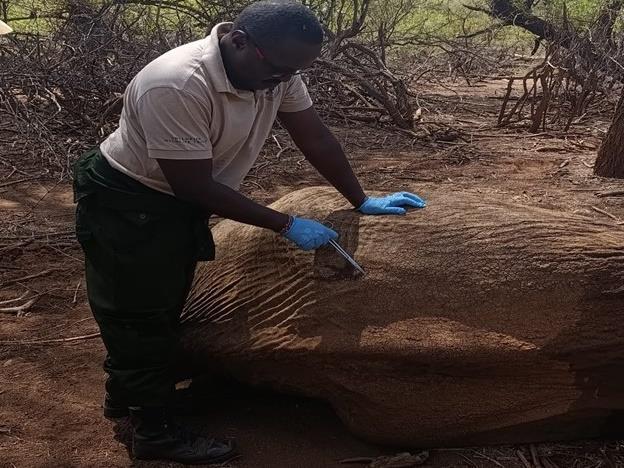
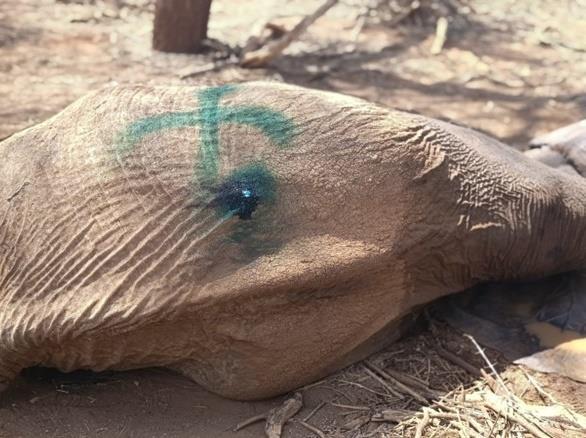
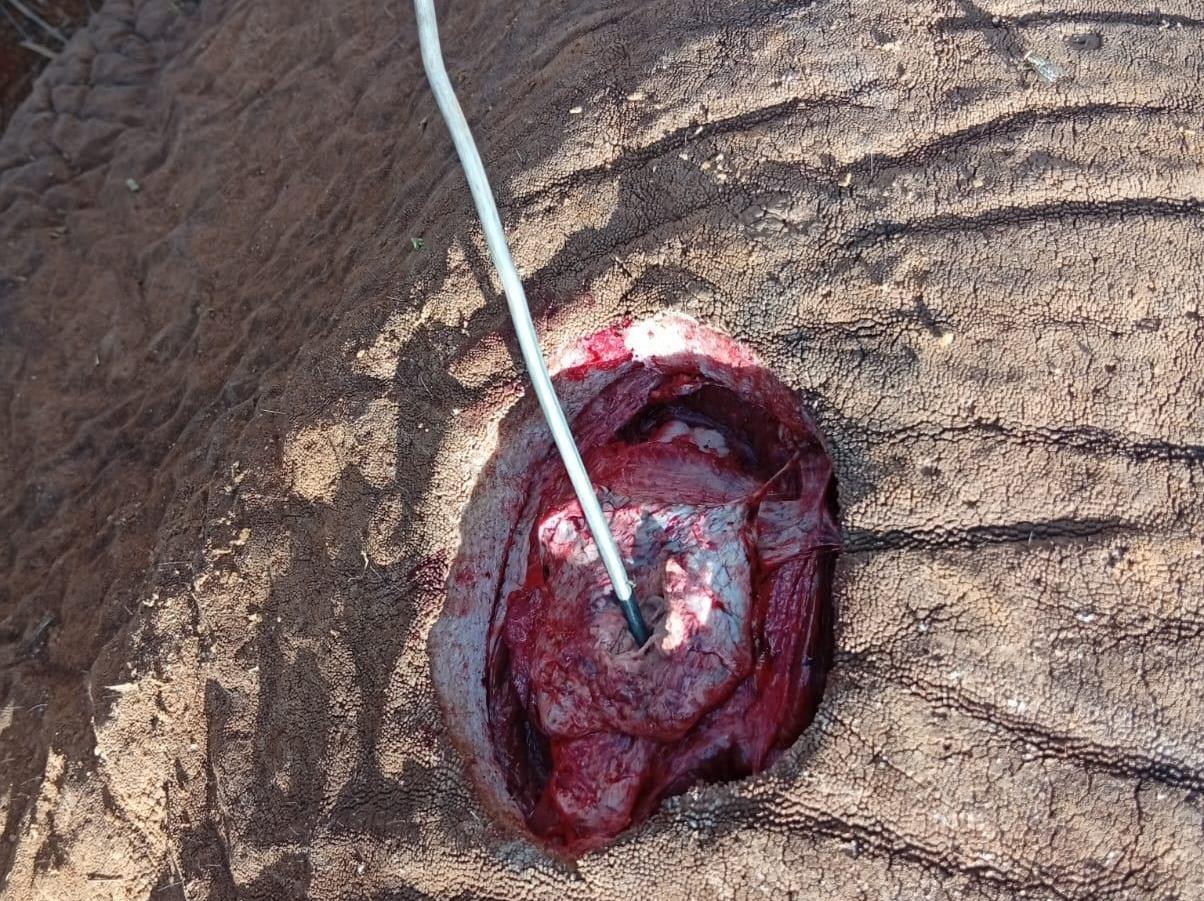
Clinical examination revealed a penetrating wound on the left flank, some traces of blood-tinged urine from the external genitalia, which suggested that a bullet wound had penetrated from the flank region via the lumbar-sacral region injuring the bladder. The wounds were thoroughly cleaned with clean water and Hydrogen peroxide, then flushed with a tincture of povidone-iodine and sprayed with Oxytetracycline. The elephant was also administered 2,000mgs Flunixin Meglumine and 25,000 mgs Amoxicillin Intramuscularly.
Prognosis
Prognosis is poor to fair. Close monitoring was recommended to the Rangers.
Elephant
Natural Causes
Kinna, Meru
The Vet Unit attended to a reported case of an injured adult elephant that was limping and stranded in one area for more than 24 hours at Kinna community in Meru by the Community members and the Rangers.
Immobilisation, examination and treatment
Upon arrival to the site, the elephant was in rough terrain that prompted the examination be done from foot. The elephant was also wild, necessitated the observation be made from a safe distance. Observation revealed a minor soft tissue injury of the left hind limb, good body condition, and good demeanour.
Owing to the mild soft tissue injury and the rough terrain of the area where the elephant was located challenging the immobilization for safety reasons, a decision was made for close monitoring both by the rangers and the Kinna community members.
Prognosis
The prognosis is fair to good.
Recommendation
Close monitoring of the elephant on the progression rate, mobility rate, body condition and demeanour of the elephant was recommended. Should the condition deteriorate then veterinary intervention will be provided timely and accordingly. We are grateful for the Rangers for timely reporting to the veterinary team.
Unfortunately, there are no pictures for this case
Case 3 – 20th February 2026
Elephant Postmortem
Kinna, Meru
The Vet Unit attended to a case of an elephant carcass reported by the herders in the Gubi Hoke Area. Both tusks were intact which were retrieved by KWS. No other animal mortalities were reported in the area.
Postmortem Examination
• The carcass was fresh with minimal decomposition
• The body condition of the carcass was fair, with bilateral abdominal distension
• No external injuries, snare marks, or evidence of external trauma
• No external discharges or any signs of poisoning recorded
• No significant traumatic or pathological lesions observed
• Organs examined grossly were normal
• No evidence of infectious, transmissible, or notifiable diseases
• Based on the above findings, it was consistent with a per-acute condition
Cause of death
The cause of death was determined to be natural, caused by an acute disease or physiological condition leading to rapid death. and wounded by a long wire snare on the right hind leg. We (Alamycin® 9,000mg Damox (Amoxicillin), 300mg Flumeg,
Case 4 – 20th February 2026
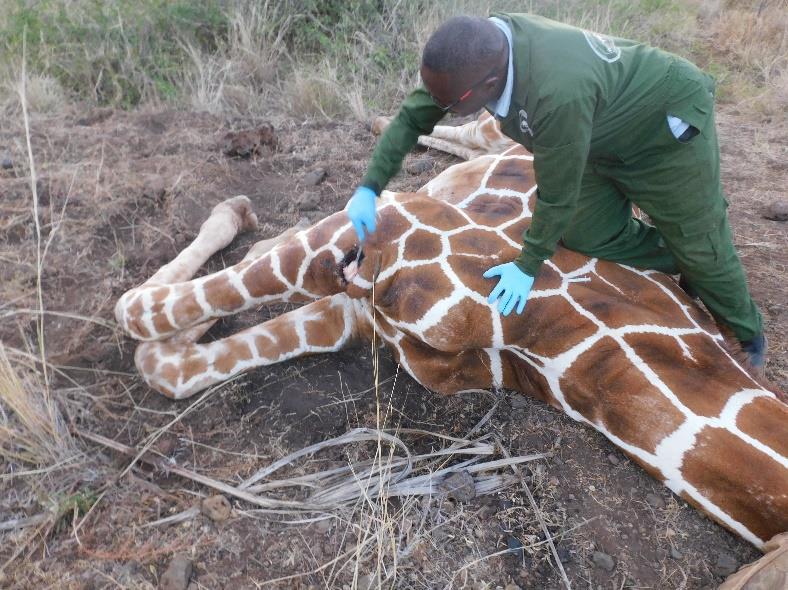
Giraffe Natural Causes
Meru National Park
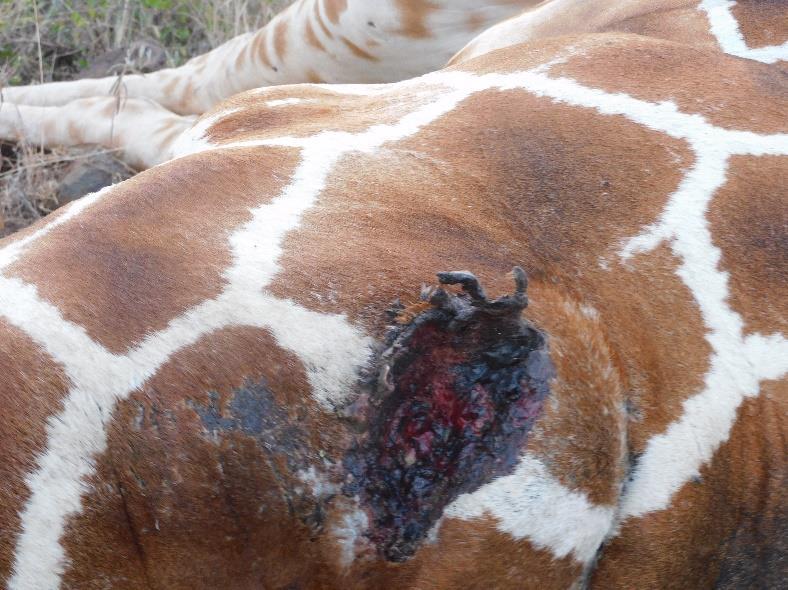
An iadult male giraffe was seen exhibiting discomfort with a visible injury at the glenohumeral joint. The injury was presumed to have been sustained following an attempted predation and worsened by Ox peckers
Immobilisation, examination and treatment
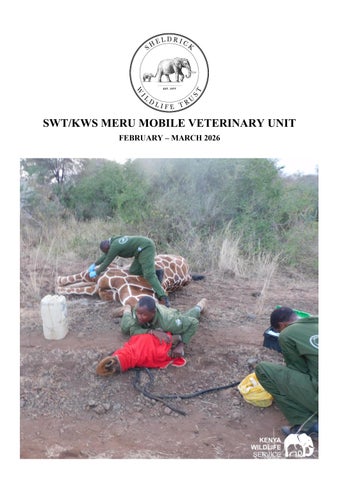
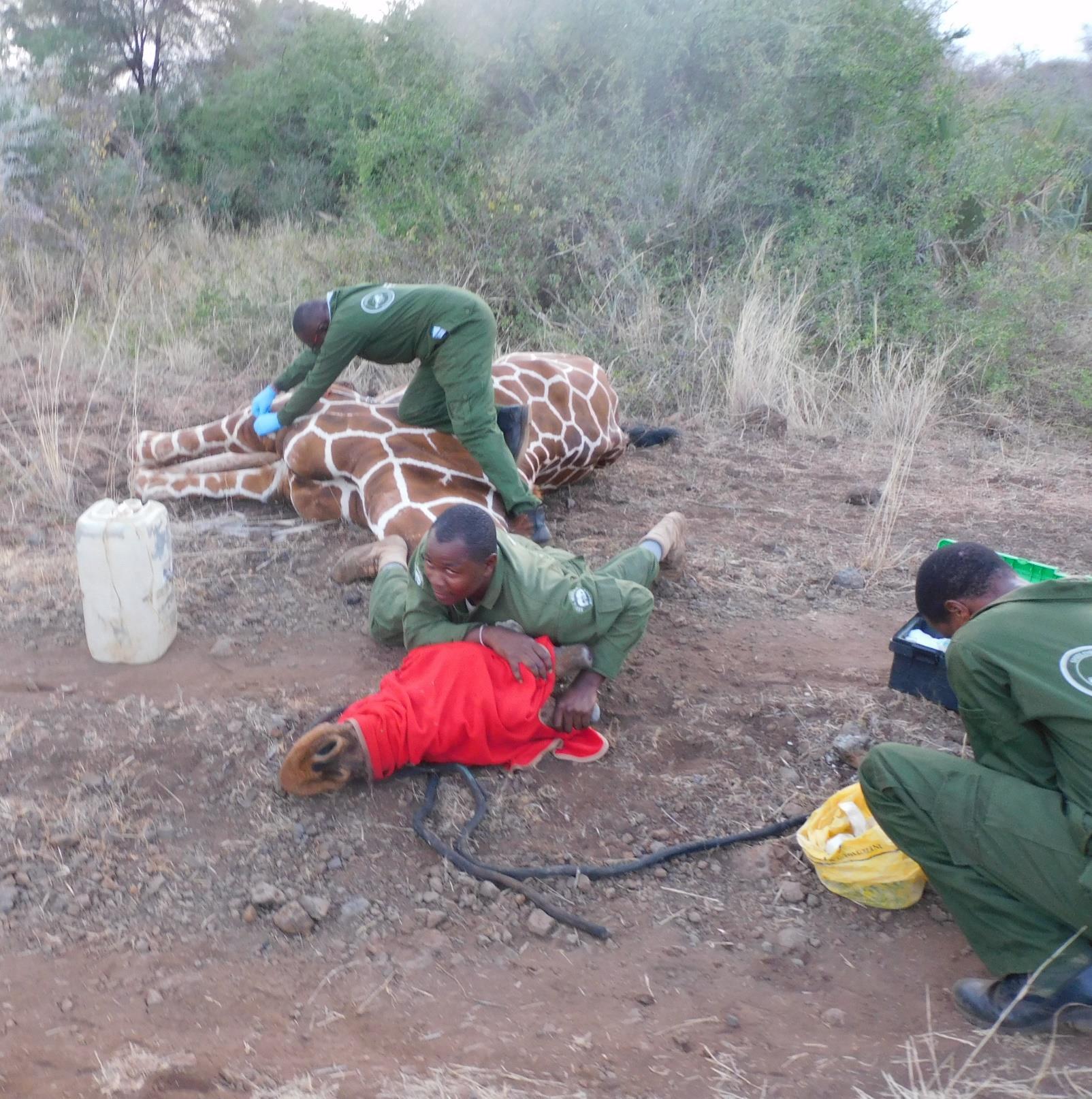
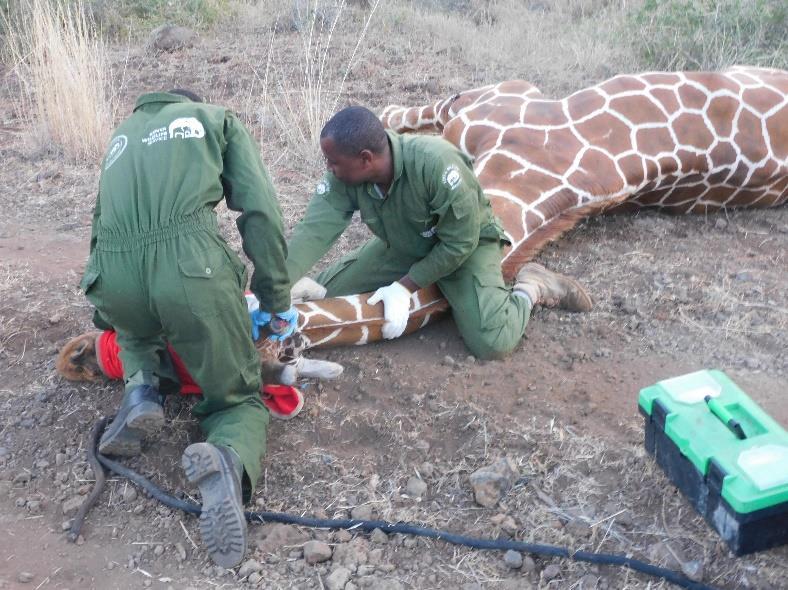
The giraffe was immobilized using a combination of 15mg Etorphine and 30mg Azaperone. The drugs were administered with a dart gun aimed at the left shoulder muscles from a safe distance. It took approximately 5 minutes for the giraffe to reach full sedation. The giraffe was guided into left lateral recumbency with the help of experienced ground personnel using ropes to prevent injury. The giraffe was quickly revived with 300mg Naltrexone The giraffe was kept on the ground by manually pinning its head and neck.
Clinical examination revealed a large wound at the glenohumeral joint of the right forelimb. The wound was debrided and cleaned using clean water to remove debris, lavaged with Hydrogen Peroxide, disinfected with Iodine and sprayed with Oxytetracycline then coved with Bentonite clay. Long-acting broad-spectrum antibiotic: Amoxicillin 20,000 mgs and Anti-inflammatory 600 mgs Dexamethasone were administered.
Prognosis
Prognosis is fair to good.
Elephant Bullet Wound
Garissa County
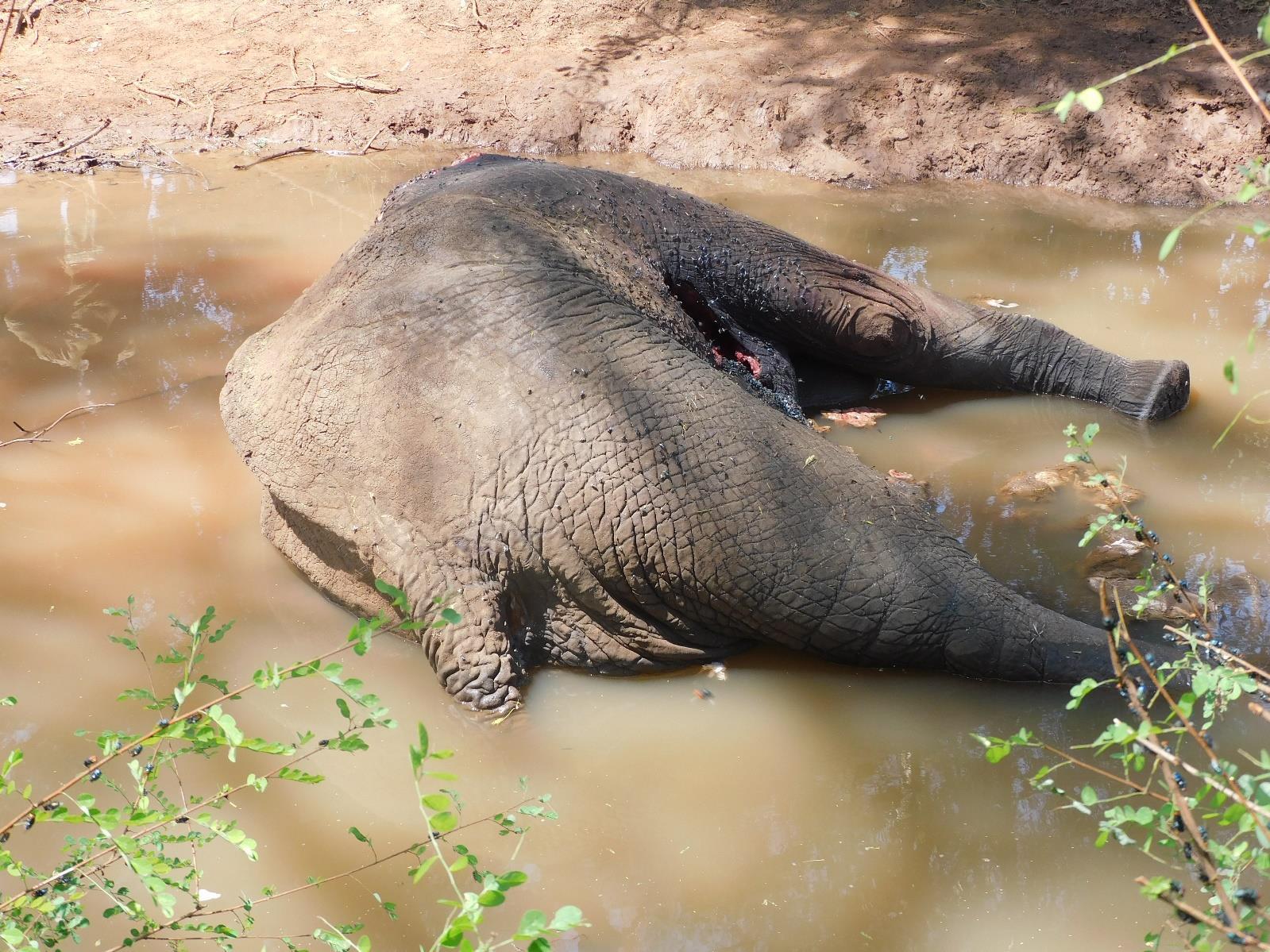
The Unit received a report from the Benane location in Lagderra subcounty, Garissa County regarding a dead elephant. The Meru veterinary team attended the scene to conduct a postmortem.
Postmortem examination
• The carcass appeared fresh and estimated to be approximately one day old with fair body condition
• Both tusks were present and intact then retrieved by KWS.
• A huge penetrating gunshot injury at the left dorsal lumbar region extending towards the abdomen
• No exit wounds or projectiles were recovered during necropsy examination
• The injury is suspected to have penetrated toward the thoracic cavity and lungs, likely resulting in acute death due to gunshot trauma
• No other significant external injuries were observed
• The carcass was disposed of accordingly after completion of the necropsy
Cause of death
Penetrating projectile injury suspected to have punctured thoracic organs, leading to acute death.
The Vet team attended to reported case of a White rhino that had previously been treated in January 2026 after sustaining injuries during a territorial fight. During a recent observation, the rhino was sighted with a wound at the previously affected site.
Immobilisation, examination and treatment
Observation revealed presence of a visible wound but no active bleeding or signs of infection. Gait and feeding behaviour were normal.
Diagnosis was superficial wound injury, limited to a muscular tissue.
No immediate intervention was given due to the previous treatments and progressive wound healing.
Prognosis
Favorable prognosis. Due to the superficial nature of the wound.
Close monitoring was recommended, for any signs of swelling, pus discharge, lameness and feeding.
Unfortunately, no pictorials are available for this case
White Rhino Natural Causes
Meru National Park
Case 7 – 21st March 2026
White Rhino Postmortem
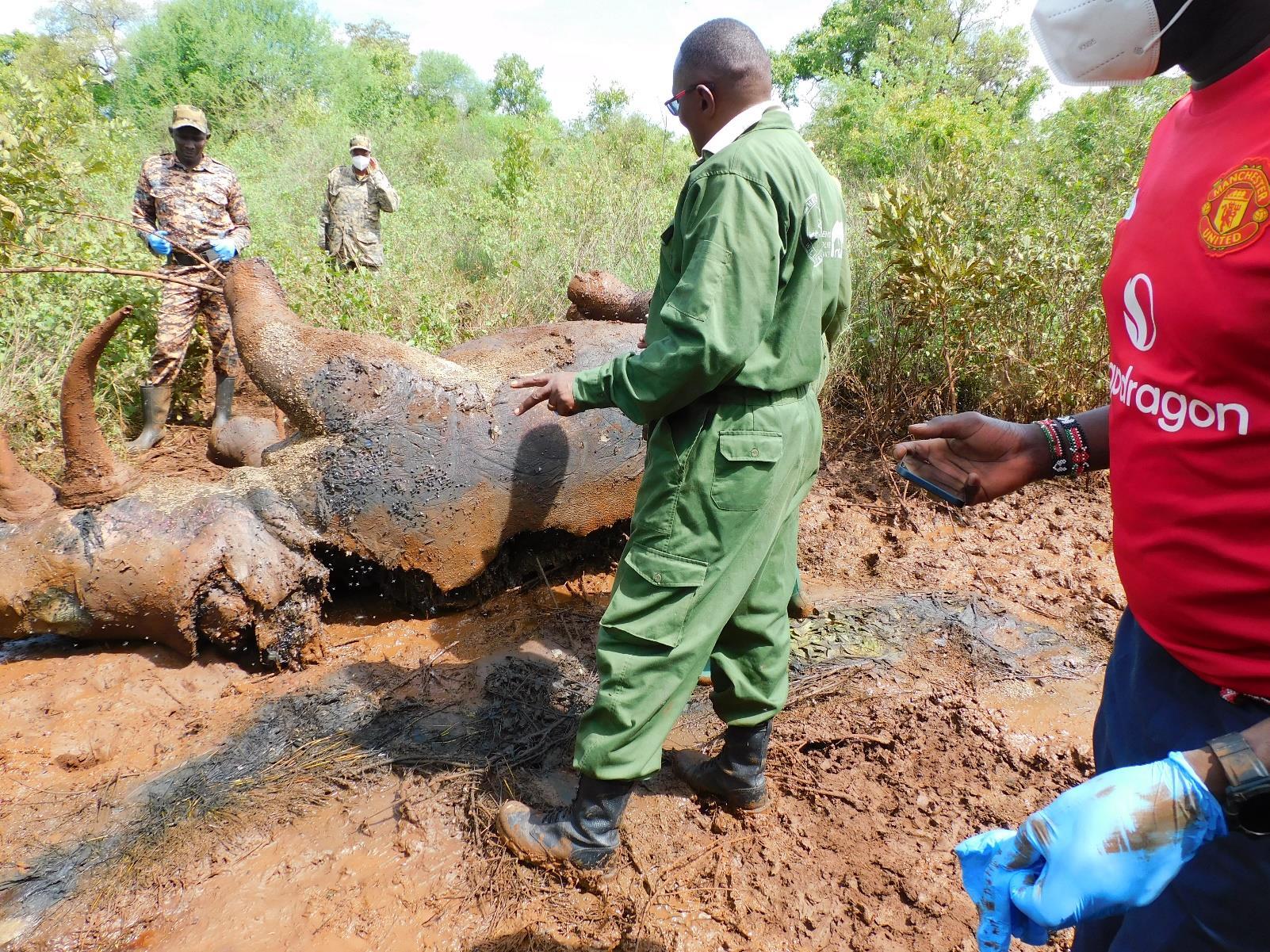
The male adult rhino was last seen alive on 03/19/2026. The carcass was found along the Kanjoo River. No other animals in the area were reported to be affected.
Postmortem examination
• Moderate decomposition accelerated by the heat with evidence of hyena scavenging
• Other possible injuries obscured due to scavenging limiting examination
• Trauma on the rear left hindlimb Suspected internal haemorrhage
• Skin discoloration suggestive of haemorrhage on the rear left limb
• Likely involvement of rear left abdominal region and thoracic region
• Both horns were intact
• Findings consistent with a territorial fight
• No evidence of infectious or poisoning
Cause of death
Severe traumatic injury with suspected internal haemorrhage, likely resulting from a territorial fight. Primary cause of death was determined to be hypovolemic shock resulting from excessive internal haemorrhage
Meru National Park
Lion
Postmortem
Meru National Park
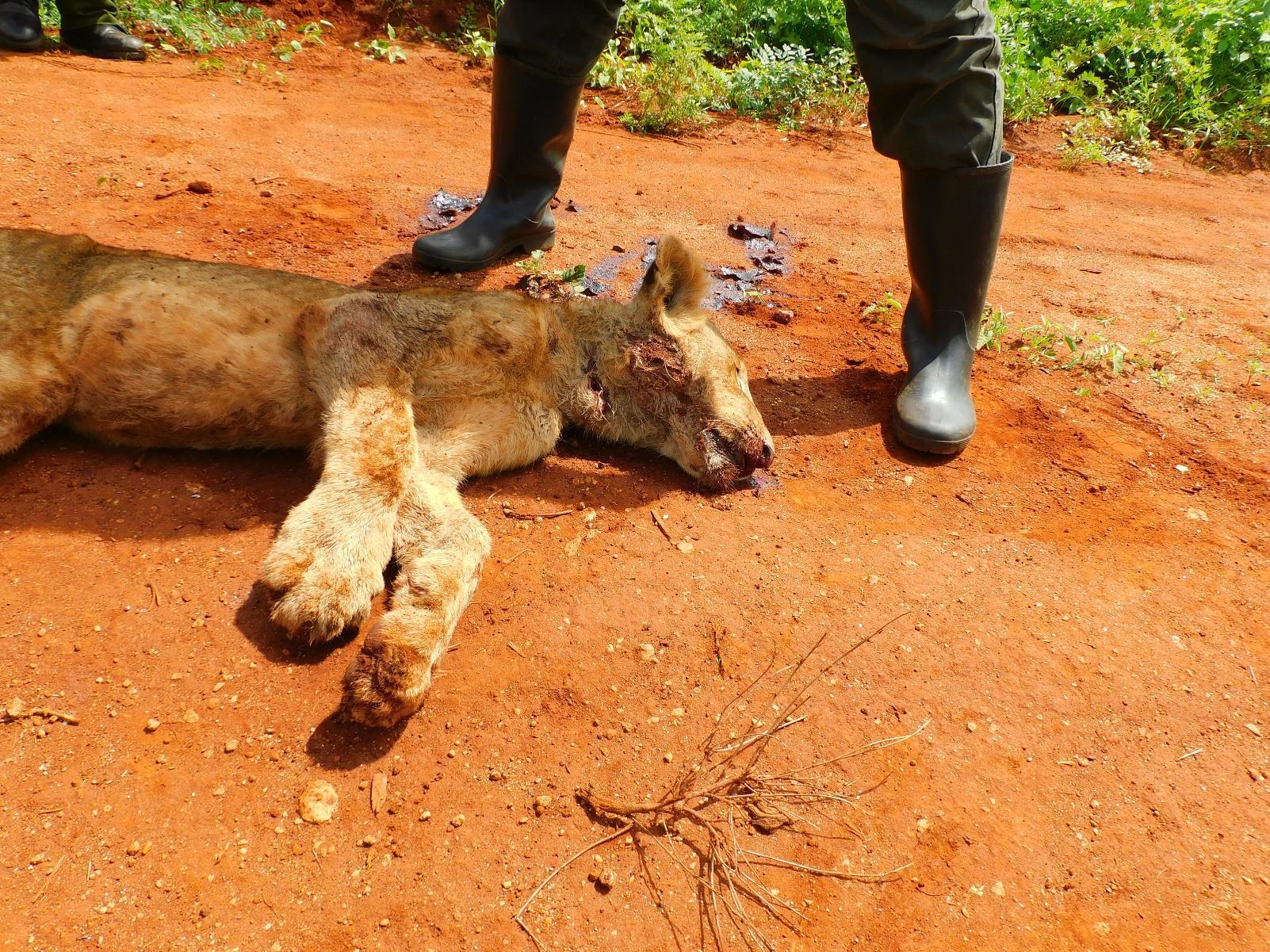
Rangers on site had witnessed a territorial fight, during which the juvenile lioness sustained injuries. Death occurred approximately 24 hours before necropsy.
Postmortem examination
• Body condition score 3/5
• Fresh carcass with minimal decomposition, approximately 24 hours post-mortem interval
• Evidence of extensive trauma around the neck region
• External signs suggestive of bite wounds consistent with intraspecific aggression
• Severe trauma to the trachea, including tissue disruption and extensive haemorrhage within and around the tracheal region
• Evidence of a compromised airway in the thoracic cavity consistent with acute traumatic death
• No evidence of human interference e.g. snares, poisoning, or gunshot wounds
Cause of death
Died of natural causes, specifically due to a territorial fight. Trauma to the trachea resulted in massive haemorrhage, airway obstruction, and asphyxiation leading to rapid suffocation and death
Elephant Natural Causes
Buffalo Springs, Samburu
The elephant was observed to have difficulty bearing weight on the right forelimb and exhibited signs of pain and reduced mobility. The injury was suspected to have resulted from an accidental fall, leading to trauma.
Immobilisation, examination and treatment
The elephant was immobilized with 12mg Etorphine intramuscularly at the shoulder musculature using the Dan-inject system from a vehicle. The elephant was safely immobilized within 5 minutes post-darting and went onto lateral recumbency. The trunk was extended to be patent to avoid obstruction.
The clinical examination with a severe dislocation of the elbow joint of the right forelimb, with a significant soft tissue inflammation. The elephant was administered:
• 2,000 mgs Flunixin Meglumine Intramuscularly for inflammation
• 25,000 mgs Amoxicillin Intramuscularly to manage infection
Prognosis
The severity of the joint dislocation, combined with the elephant’s weight, and reliance on the affected limb, presents significant challenges to full recovery. Close monitoring is advised.