SWT/KWS MARA MOBILE VETERINARY UNIT MAY 2026

9 Cases in May 2026
May Report by
Dr. Aminga Duncan
5 Poaching Cases
2 Elephant Cases
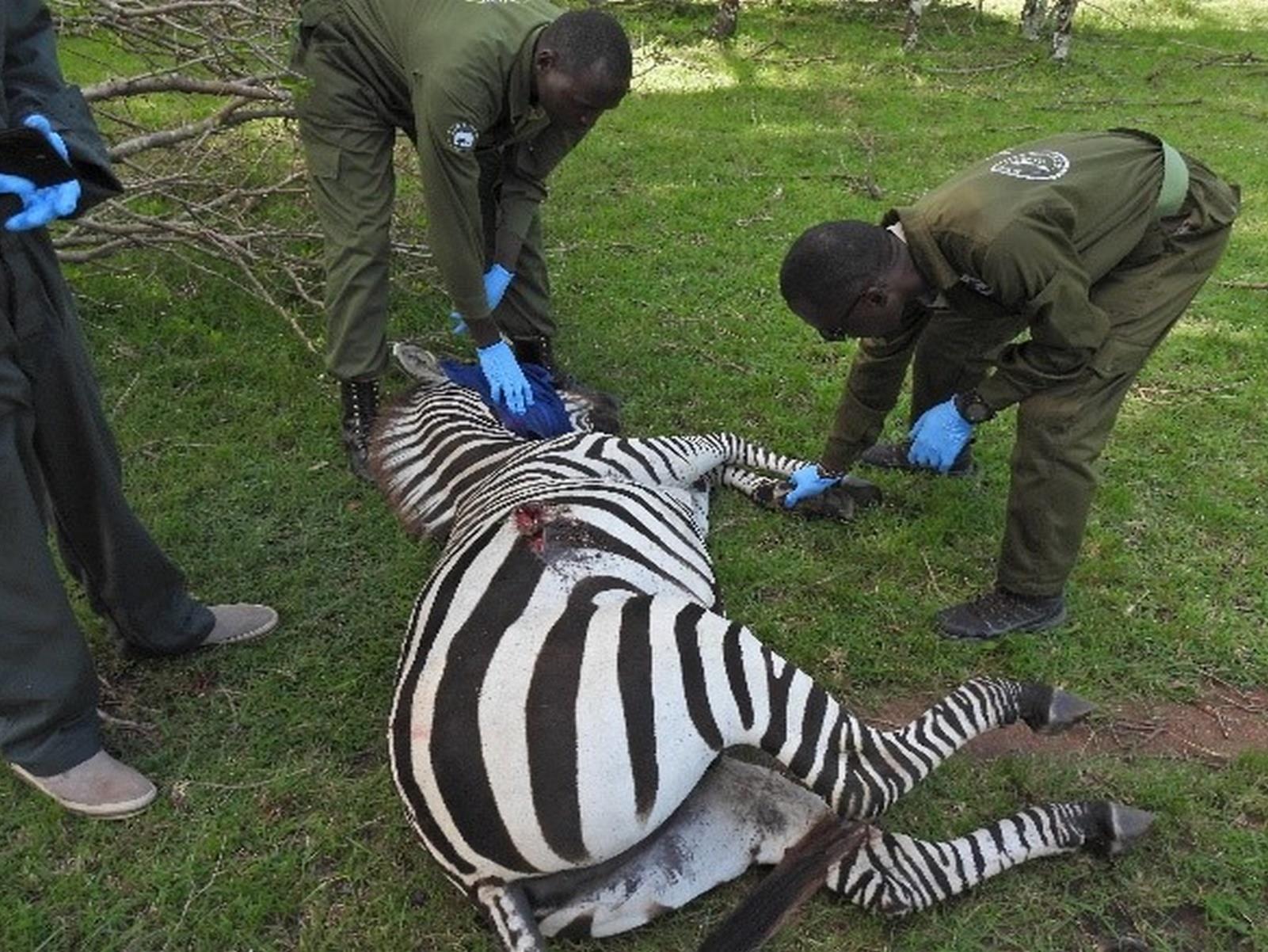
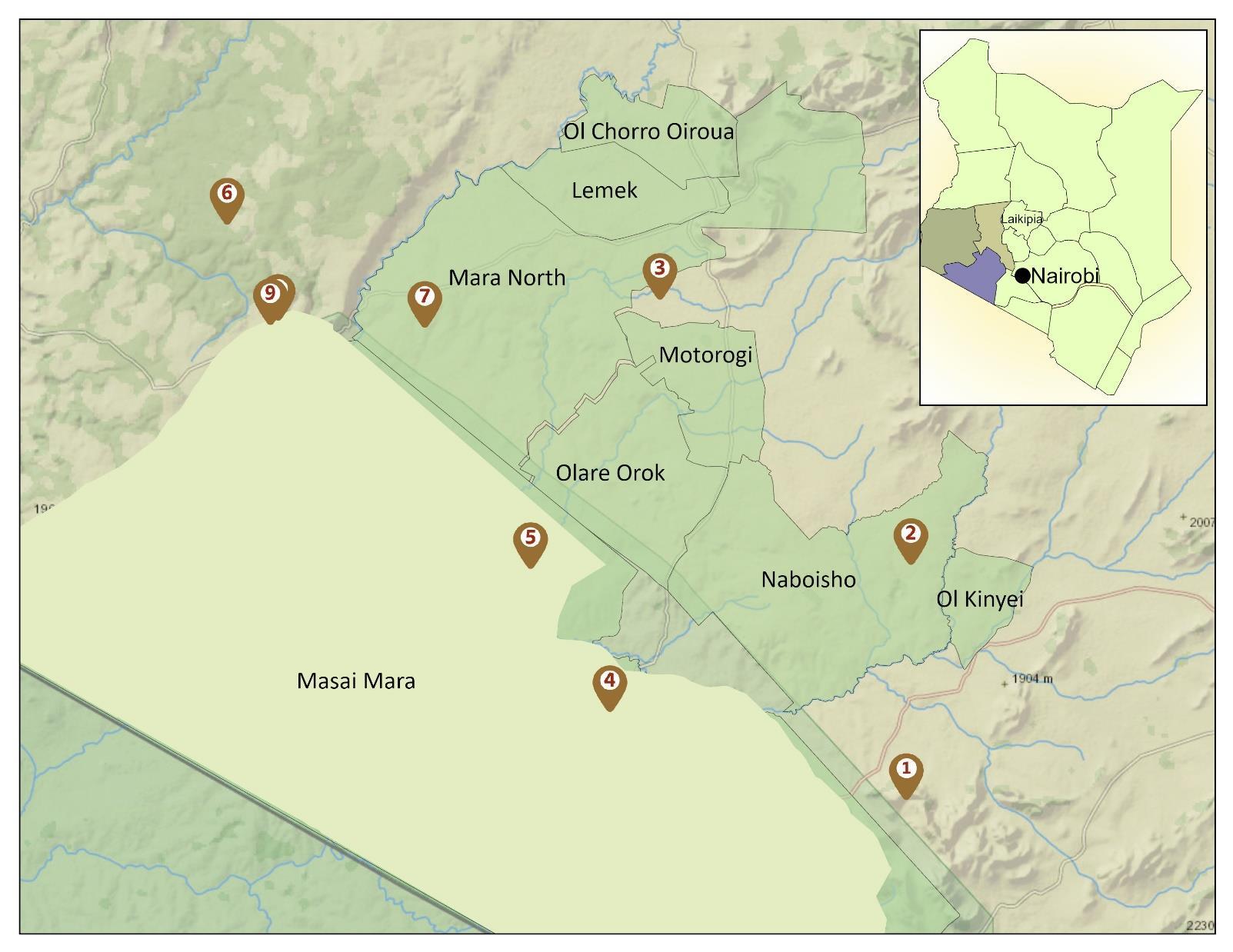
The month of May was characterized by a decline in rainfall across the Mara ecosystem, with only intermittent showers recorded. Strong winds were also experienced toward the end of the month. During this period, there was a notable increase in wildlife cases attended compared to the previous month. In total, the SWT/KWS Mara Mobile Veterinary Unit attended to 9 wildlife cases, including 2 giraffes with arrow wounds, 3 zebras with snare injuries and an elephant speared due to human-wildlife conflict (HWC).
Acknowledgement
We extend our heartfelt gratitude to Elizabeth Scarlett for her consistent and generous financial backing of the Mara Mobile Veterinary Unit under the Sheldrick Wildlife Trust. . We would also like to convey our deep appreciation to the Kenya Wildlife Service. Their essential managerial oversight through the Assistant Director; KWS-Narok Station and the Head of the KWS-Veterinary Services Department, have played a crucial role. We extend our profound gratitude to all our fellow collaborators in conservation, as well as to the individuals who reported the cases and have always shown steadfast support during our interventions. The realization of our endeavours owes much to your assistance. Blessings!!
Case Details
9-May-26
10-May-26
11-May-26
12-May-26
13-May-26
Mara NR
Mara NR
Causes
mid-lumbar region
small incision was made, and the arrow was carefully extracted
multiple puncture wounds probably sustained during a territorial fight Successfully Treated
collaring exercise on Nenkai, an adult lioness from the Topi Breakaway Pride Task Successful
Forest Snared
22-May-26
a single-strand wire snare tightly encircling the neck Successfully Treated
Forest Snared Examination revealed he had suffered a complete dislocation of the fetlock joint Poaching Death
May 2026
Elephant Human – Wildlife Conflict
Siana Conservancy
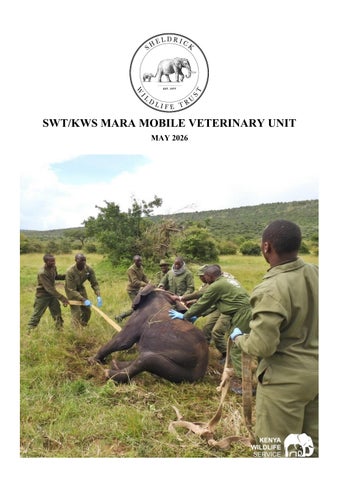
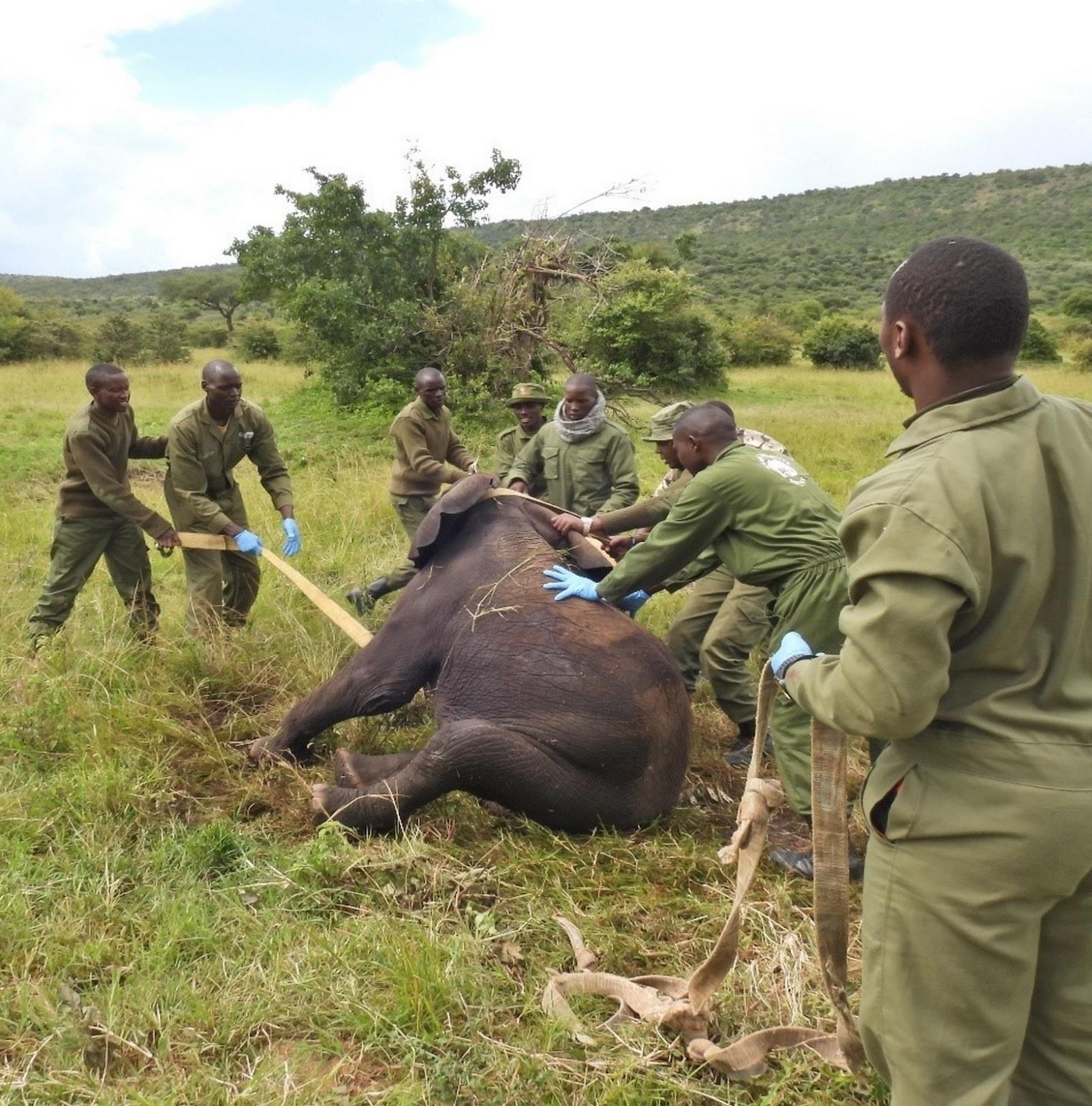
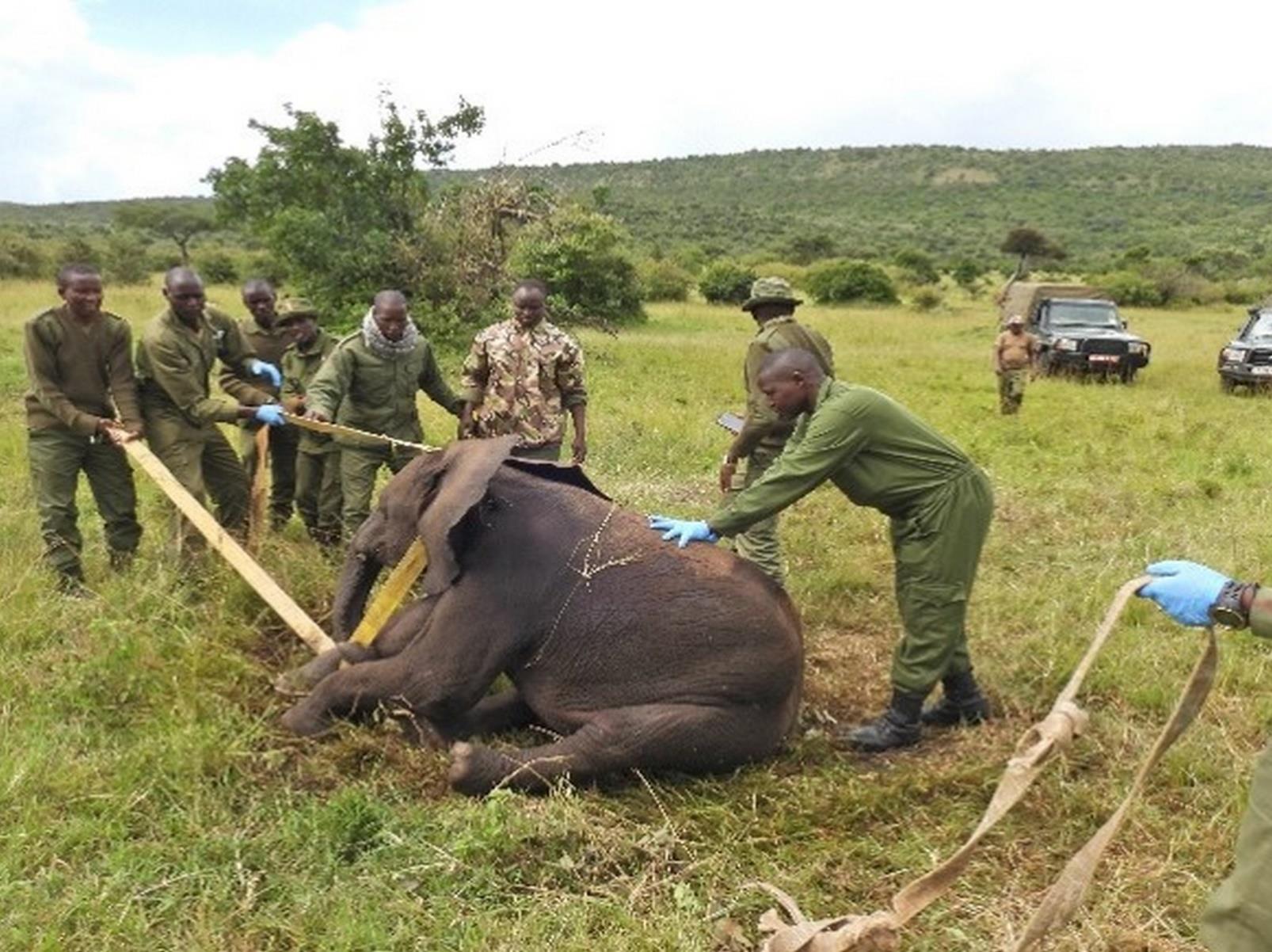
The Vet Unit received a report of a juvenile male elephant that had become trapped in a small riverbed within WWF Siana Conservancy. The calf was safely extricated onto dry ground. However, a post-rescue assessment indicated that the animal was unable to stand or walk. The teams were advised to monitor him overnight with the expectation that recovery from exhaustion, stress, might allow the calf to regain mobility.
Examination and treatment
Regrettably, the calf remained recumbent despite being alert, responsive, and in good body condition. Multiple attempts were made to assist the calf into a standing position; however, all efforts were unsuccessful. Motor function appeared to be present only in half of the body and a deep penetrating spear wound was found in the mid-lumbar region, with a suspected vertebral fracture and associated spinal cord trauma. Neurological assessment of the hindlimbs demonstrated absence of deep pain sensation and lack of response to external stimuli Gastrointestinal motility was also markedly compromised, as evidenced by abdominal distension, impaired passage of faeces, and inability to expel gas, consistent with severe paralysis.
Prognosis
The grave prognosis for recovery, and consideration of the animal’s welfare, a decision was made to humanely euthanize the calf to prevent further suffering.
Giraffe Arrow Naboisho Conservancy
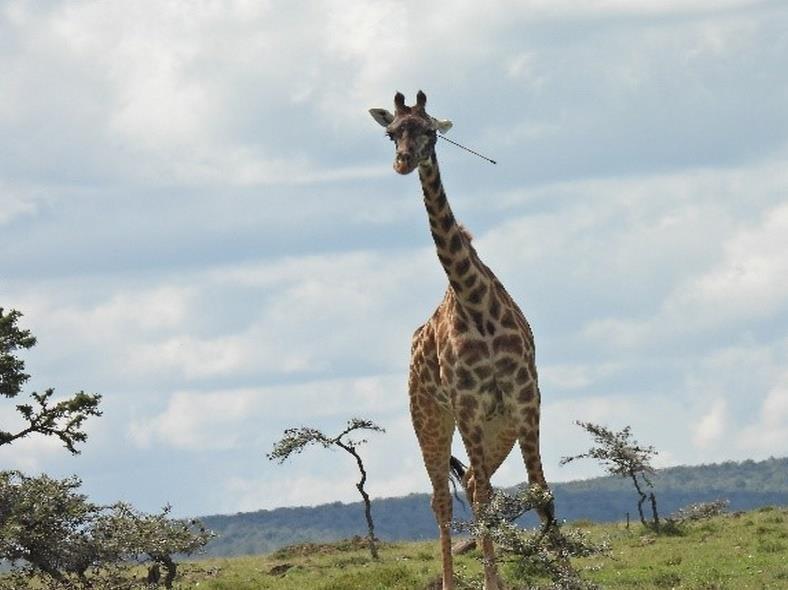
The Mara MVU received a distress call from the Naboisho Conservancy Manager regarding the sighting of a female Maasai giraffe with an arrow lodged at the base of her left ear
Immobilisation, examination and treatment
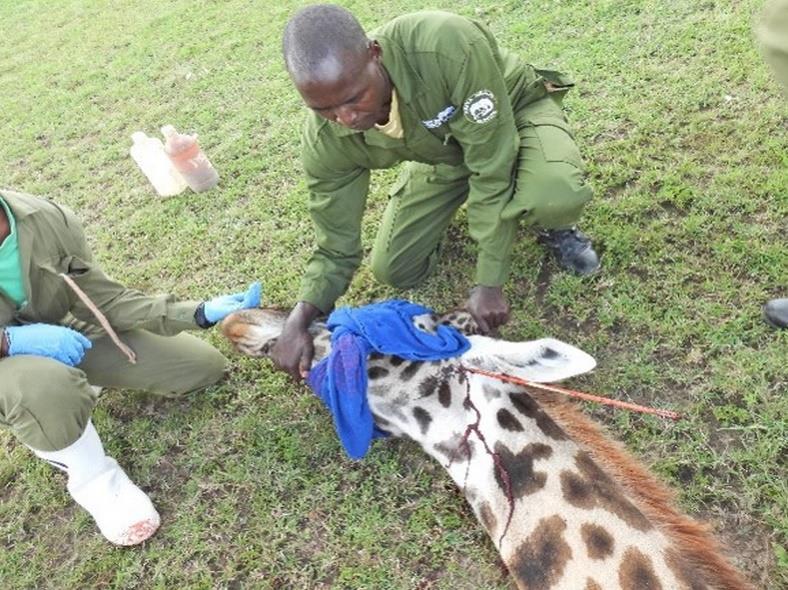
The giraffe was found browsing on some acacia trees and was slowly approached with a vehicle. She remained highly skittish during each approach and repeatedly moved away She was successfully darted after a short chase with 13mgs Etorphine and 30mgs Azaperone. As the drugs took effect, she was carefully guided into an open area, roped down, and secured for treatment. A small incision was made, and the arrow was carefully extracted. Significant haemorrhage was encountered but was effectively controlled through ligation and sustained pressure. Once haemostasis was achieved, the wound was thoroughly flushed with Iodine, infused with an antibiotic ointment, and packed with green clay to support healing. An antibiotic aerosol was also applied to deter flies and aid post-treatment monitoring. Systemically, the giraffe received 3,000mgs Flunixin and 9,000mgs Amoxicillin intramuscularly to manage inflammation and prevent secondary infection.
Prognosis
She was also administered metabolic stimulants before release. She regained her feet and moved off slowly, with a good prognosis for full recovery. Subsequent sightings indicate that she has been doing well.
Giraffe Arrow
Mara North Conservancy
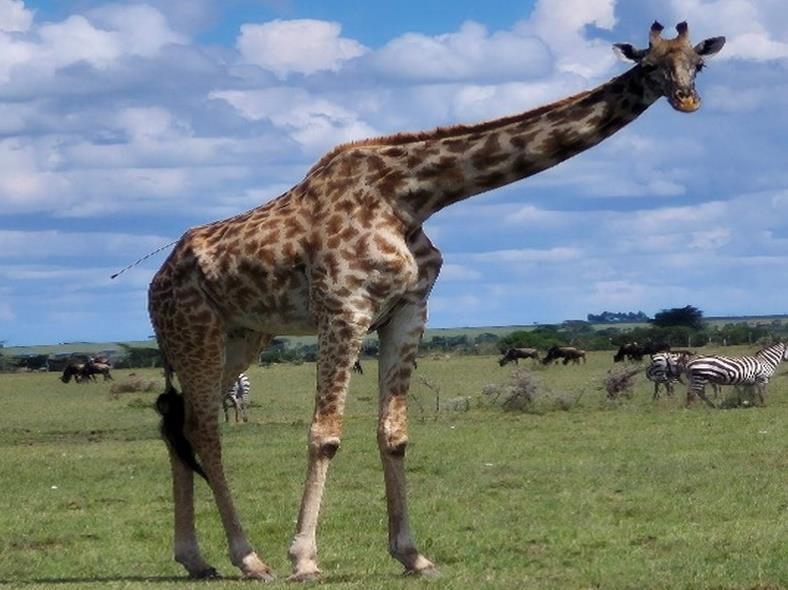
The Mara Mobile Vet Unit received a report from the Warden Mara North Conservancy regarding a female giraffe sighted with an arrow lodged in the hip area of her right hindleg.
Immobilisation, examination and treatment
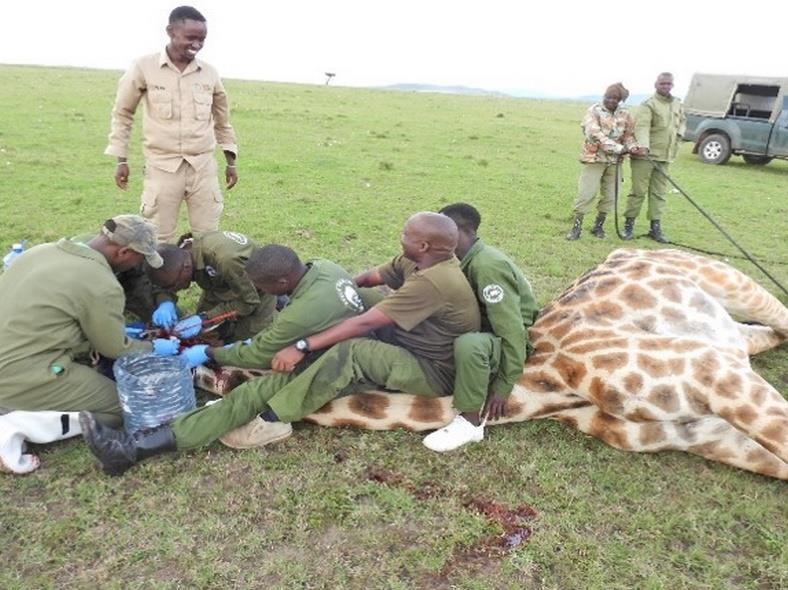
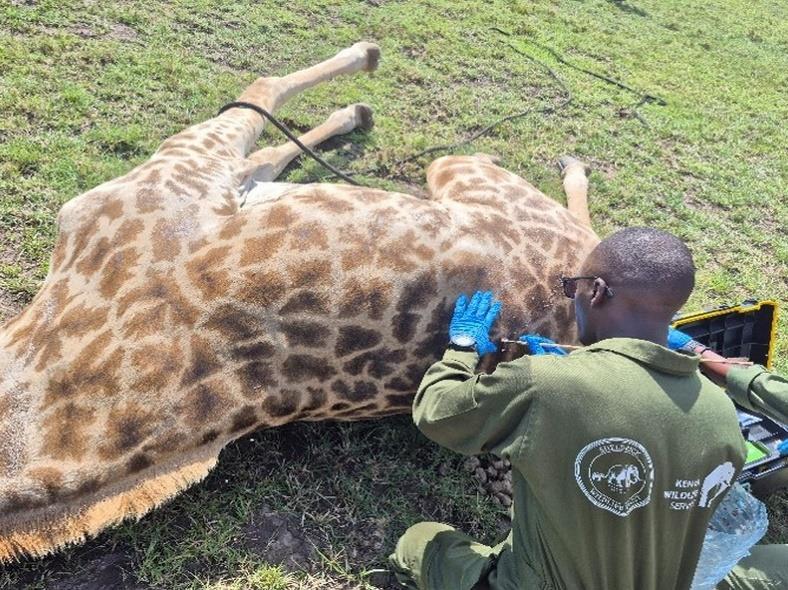
The injured giraffe was found within a tower of approximately 30 individuals. She was carefully approached with a vehicle and successfully darted with a combination of 13mgs Etorphine and 30mgs Azaperone. The drugs took effect rapidly, and she was guided into left lateral recumbency and secured on the ground.
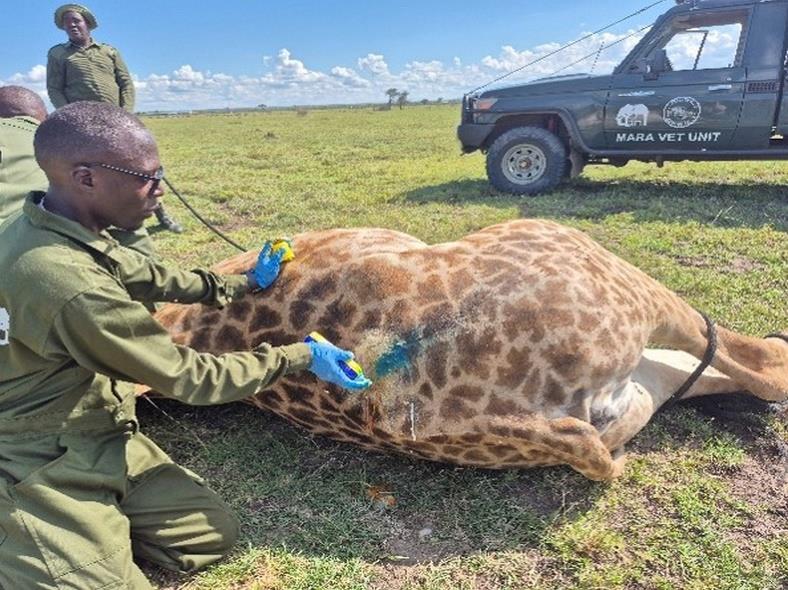
The arrow was carefully removed, and the resultant wound was thoroughly cleansed with water, debrided using Hydrogen peroxide, and flushed with Iodine before being packed with green clay to support healing. Systemically, she received 40mgs Dexamethasone and 4,000mgs Oxytetracycline to manage inflammation and prevent bacterial infection.
Prognosis
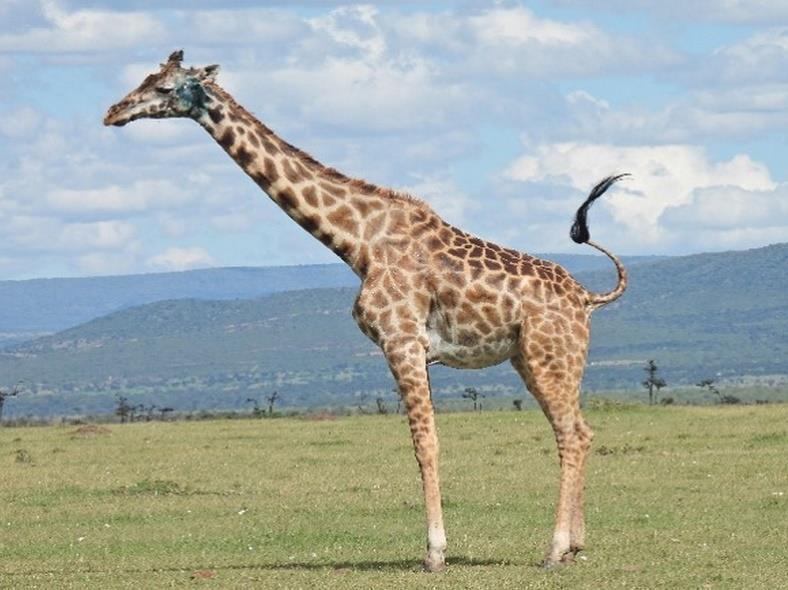
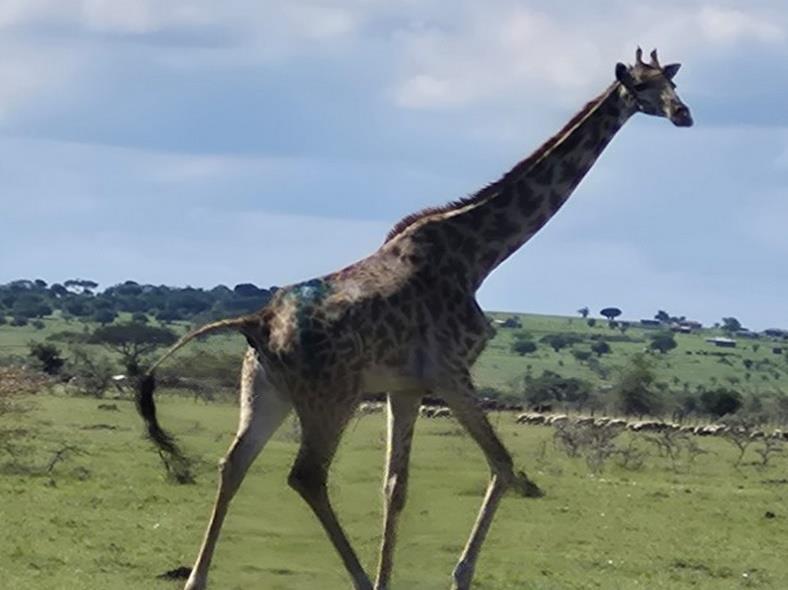
The giraffe was released approximately 15 minutes later, rose, and rejoined her tower. She was in good condition with a favourable prognosis. Subsequent sightings confirm that the wound healed well
Lion
Natural Causes
Masai Mara National Reserve
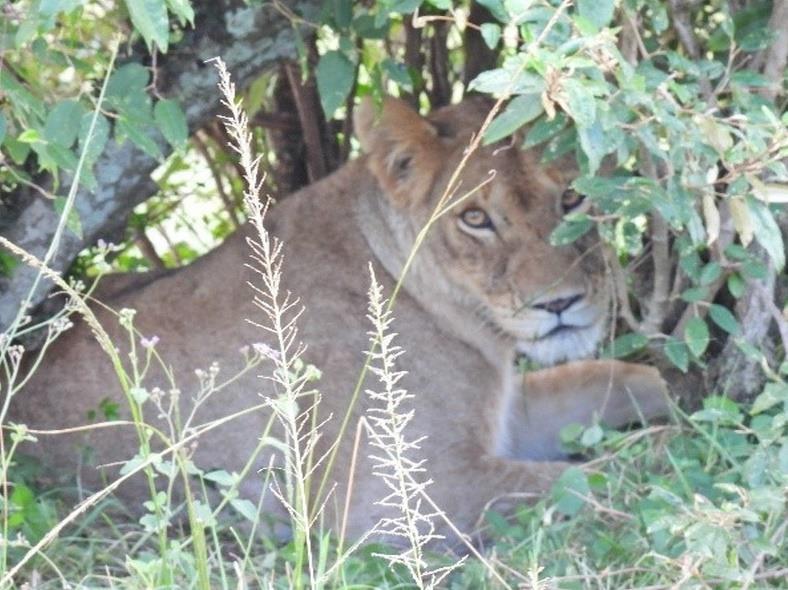
The Mara MVU received a report of a lone injured sub-adult female lioness believed to be a member of the Simba pride sighted resting in some dense bushes within the Maji ya Fisi area.
Immobilisation, examination and treatment
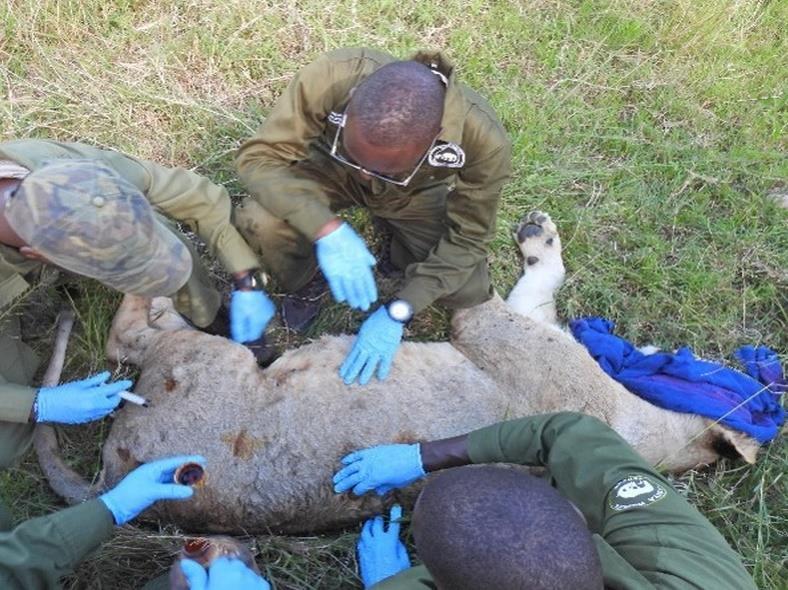
The veterinary team found the lion resting in a shade and she was darted with a combination of 4mgs Medetomidine and 280mgs Ketamine. After 15 minutes, she was full sedated. Since darting was done in a dense area, she was carefully retrieved to an open area to allow for ease of examination and treatment. She was found to have suffered multiple bite wounds from a territorial fight. The wounds were cleaned with water, debrided with Hydrogen peroxide, flushed with Iodine, infused with an antibiotic cream before applying an antibiotic aerosol to keep off flies. Intramuscularly, she received 100mgs Meloxicam and 3,000mgs Amoxicillin for the management of inflammation/pain and bacterial infections. She also received 5mgs Ivermectin subcutaneously for the management of endoparasites.
Prognosis
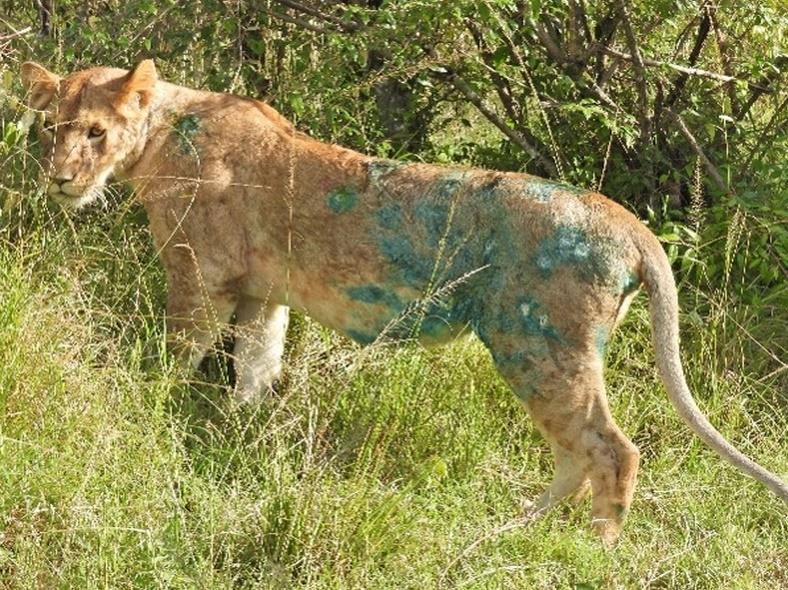
The anaesthesia was reversed and she regained sensory functions 10 minutes later and slowly walked back into the bush with a good prognosis for recovery.
Lion Collaring
Incidents of human wildlife conflict have continued to rise due to increasing pressure on wildlife habitats and growing livestock encroachment into protected areas. Apex predators such as lions are particularly vulnerable, often resulting in injury, retaliatory killings, or displacement.
Immobilisation, examination and collaring
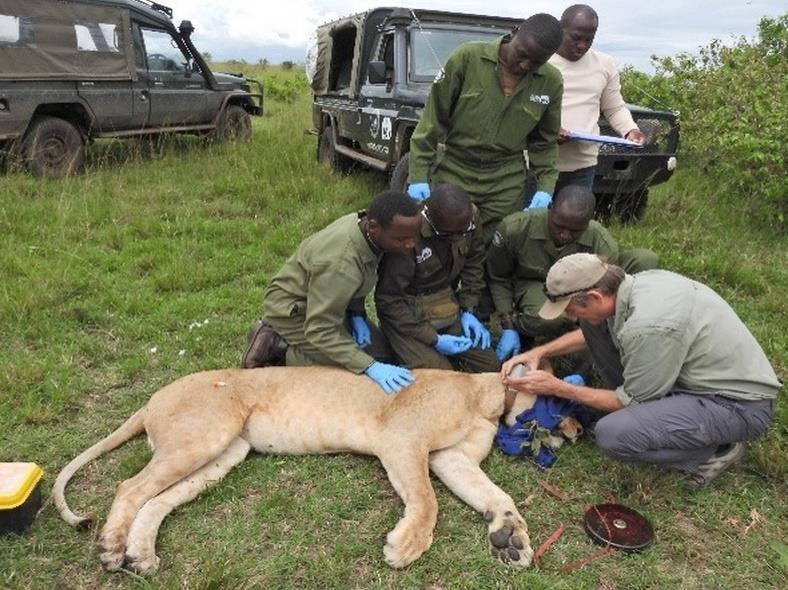
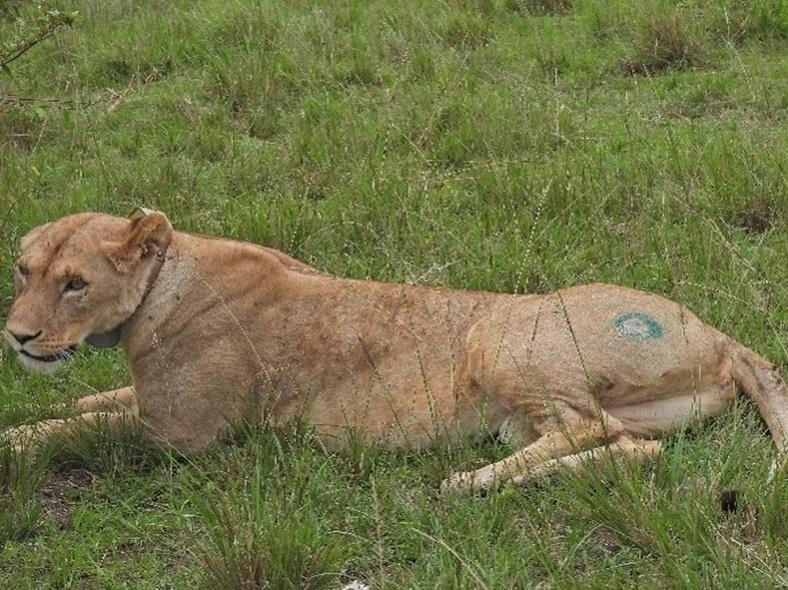
In response to this escalating challenge, the Mara Vet Unit, in collaboration with WTRI, the Mara Predator Conservation Programme and the Maasai Mara National Reserve Management, carried out a collaring exercise on Nenkai, an adult lioness from the Topi Breakaway Pride. The intervention forms part of an ongoing conservation initiative aimed at strengthening wildlife monitoring, improving rapid response to conflict situations, and supporting long-term ecological research and management within the Mara ecosystem.
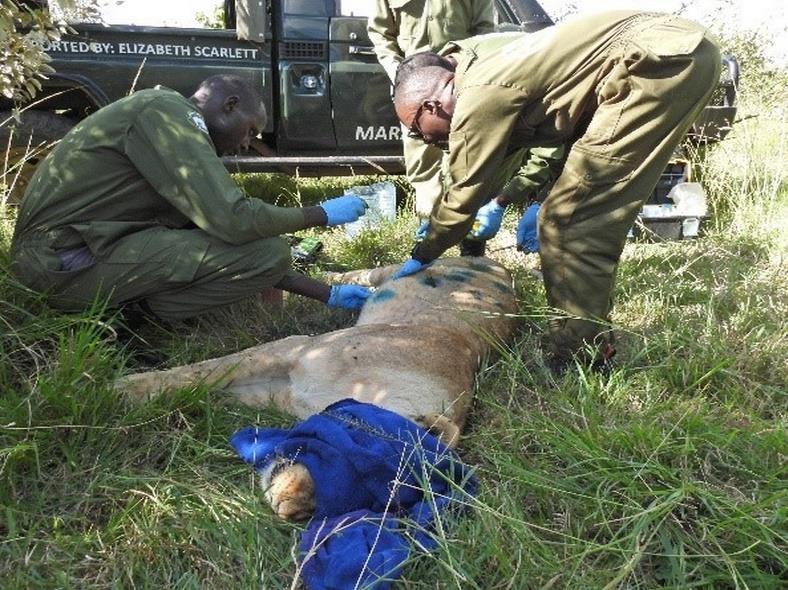
The lioness was darted from a vehicle using a combination of 6mgs Medetomidine and 280mgs Ketamine. Induction occurred smoothly within approximately 15 minutes, after which the animal assumed left lateral recumbency. Since the initial darting site was within dense vegetation, the lioness was carefully retrieved and repositioned to a shaded open area to facilitate examination
The lioness was examined and found to be in good overall health, with a body condition score of 3.5/5. No visible injuries or abnormalities were noted. Additional procedures carried out included the collection of morphometric measurements and tick samples for laboratory analysis. A tracking collar was successfully fitted after ensuring appropriate size and positioning to avoid discomfort or interference with natural movement.
Recovery from the anaesthetic was smooth and uneventful. The lioness regained full mobility and walked back into nearby bushes. Following the procedure, the lioness was later sighted with members of her pride with no signs of distress or complications and no disruption to her normal social interactions or behaviour.
Elephant
Postmortem
Nyekweri Forest
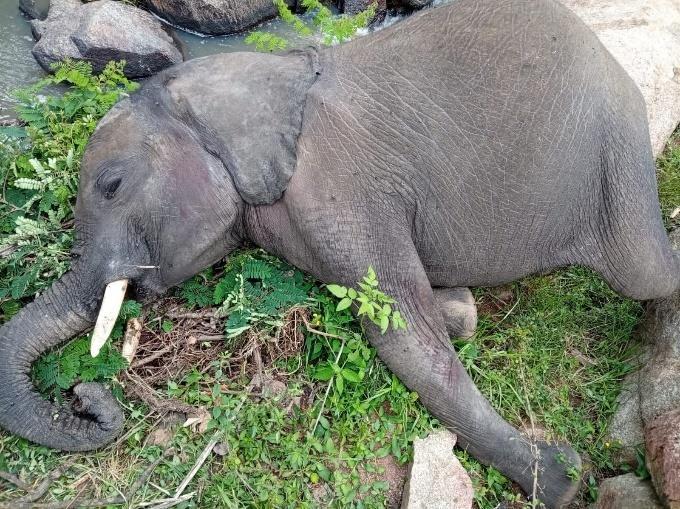
The Mara Mobile Veterinary Unit received a report regarding the sighting of a juvenile female elephant carcass in Pusangi area within Nyekweri Forest ecosystem.
Postmortem examination
The carcass was discovered in right lateral recumbency adjacent to a small stream, with both tusks intact. It was in good body condition (3/5), characterized by moderate musculature, absence of visible rib prominence, and adequate subcutaneous fat reserves.
Examination of the integumentary system on both sides revealed no evidence of ante-mortem trauma or external injuries. The intestines showed severe inflammation, congestion, and haemorrhages, accompanied by marked bruising in the hindquarter and pelvic regions. Early decomposition changes were also observed, including the presence of larvae. The findings are consistent with severe underlying internal pathology.
Cause of death
Based on the findings, the elephant is suspected to have died from multiple internal pathological conditions, with acute gastroenteritis being the most pronounced, potentially of natural origin.
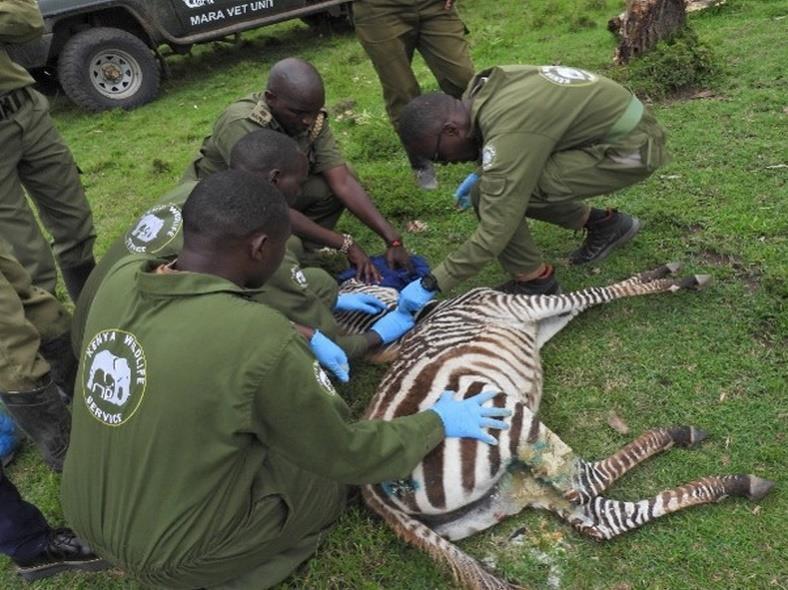
Zebra Snared
Mara North Conservancy
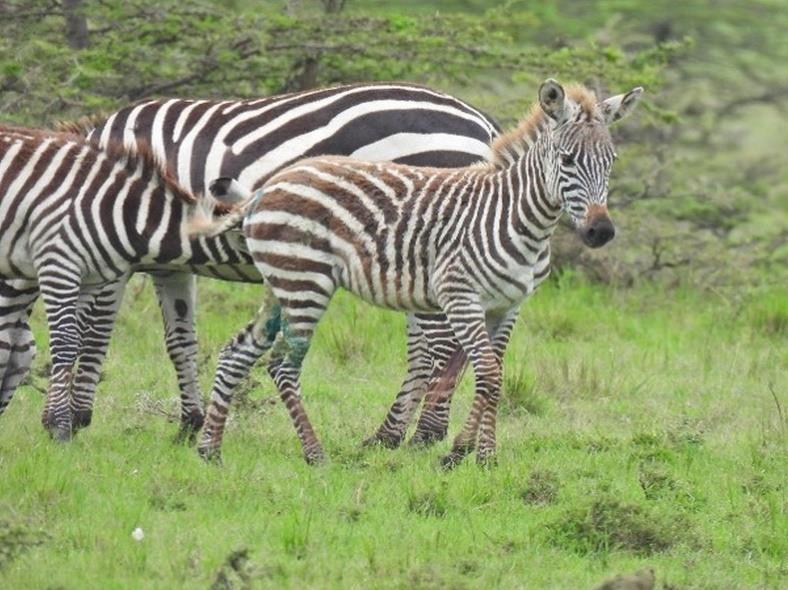
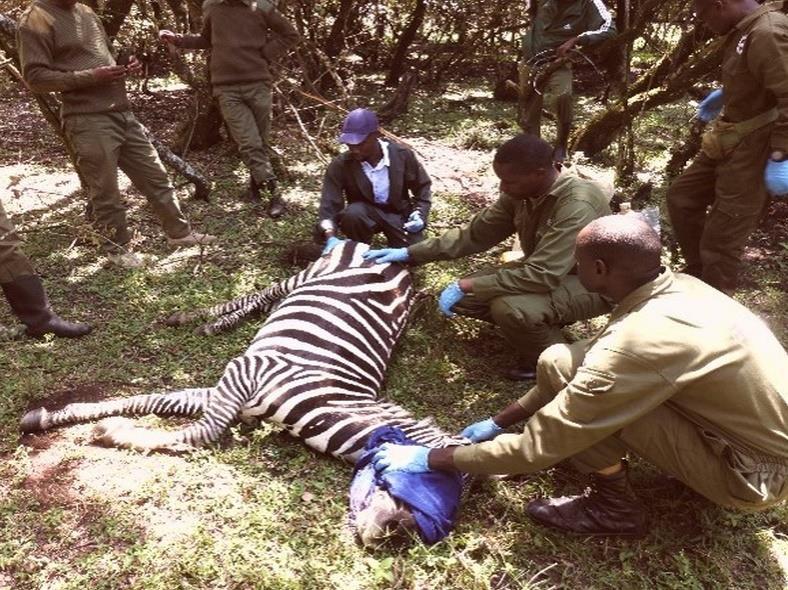
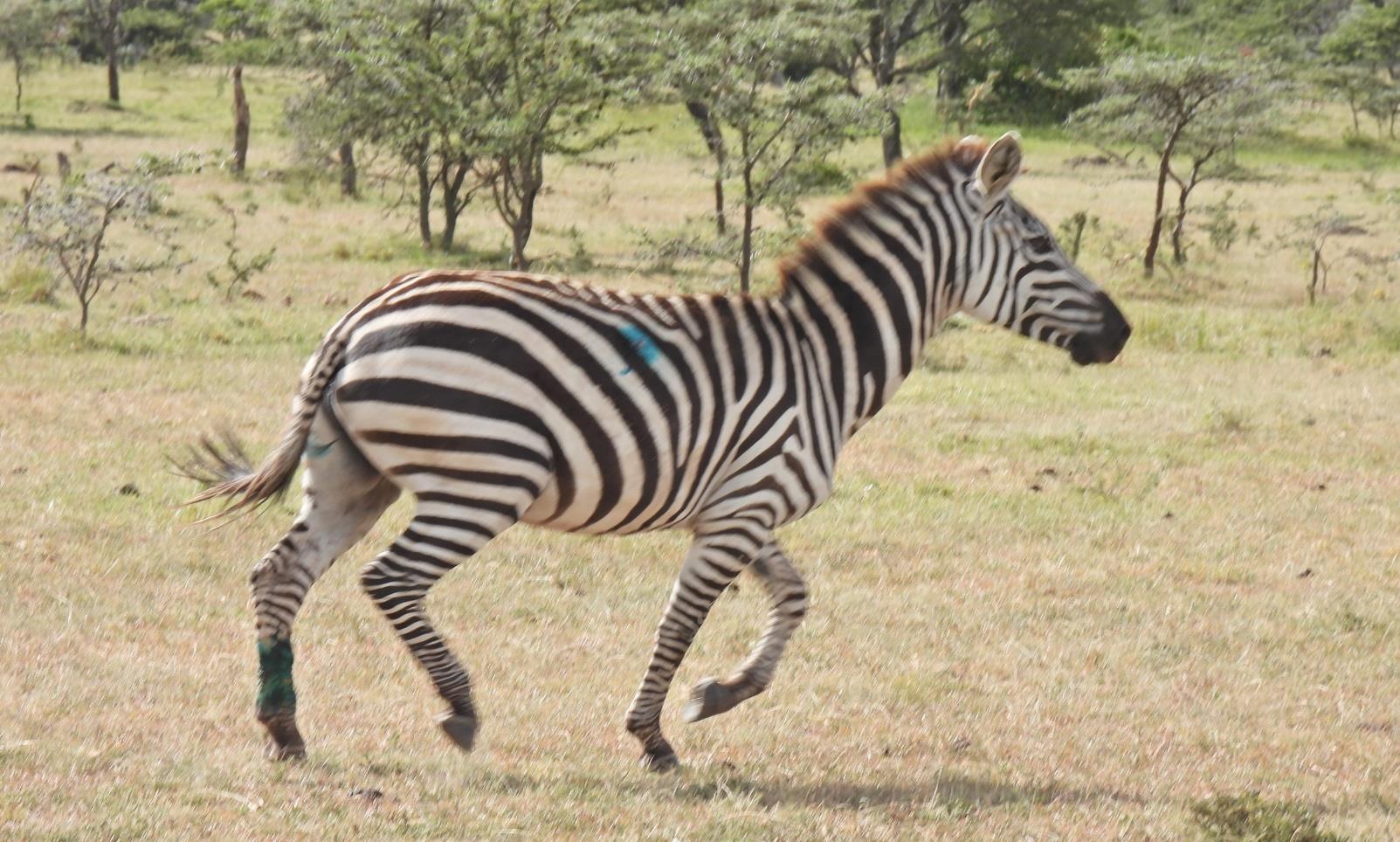
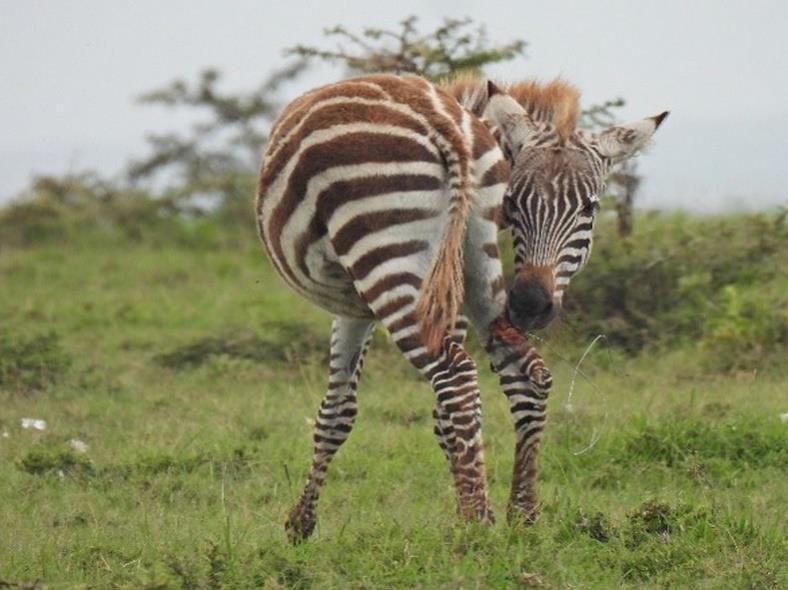
The Mara MVU received a report of a snared common zebra foal in Mara Rianta area within Mara North Conservancy that was in pain and having difficulties keeping up with the rest of the herd.
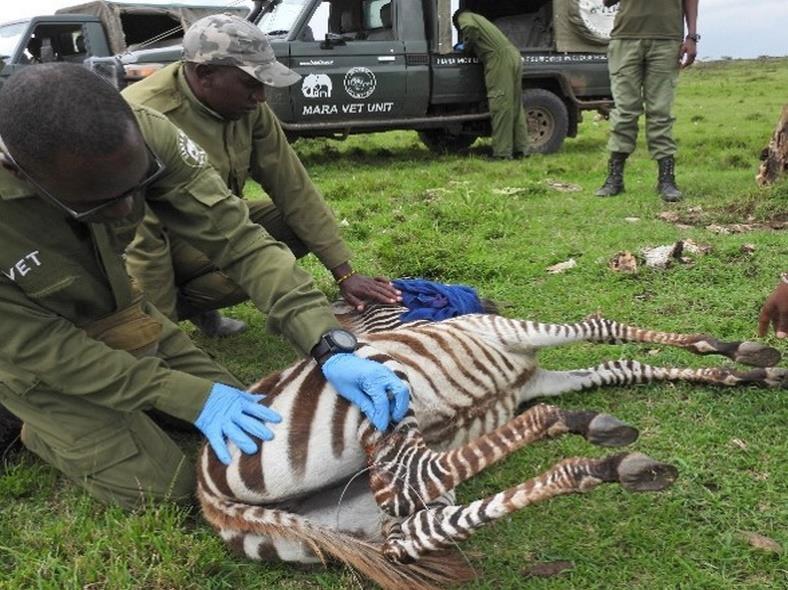
Immobilisation, examination and treatment
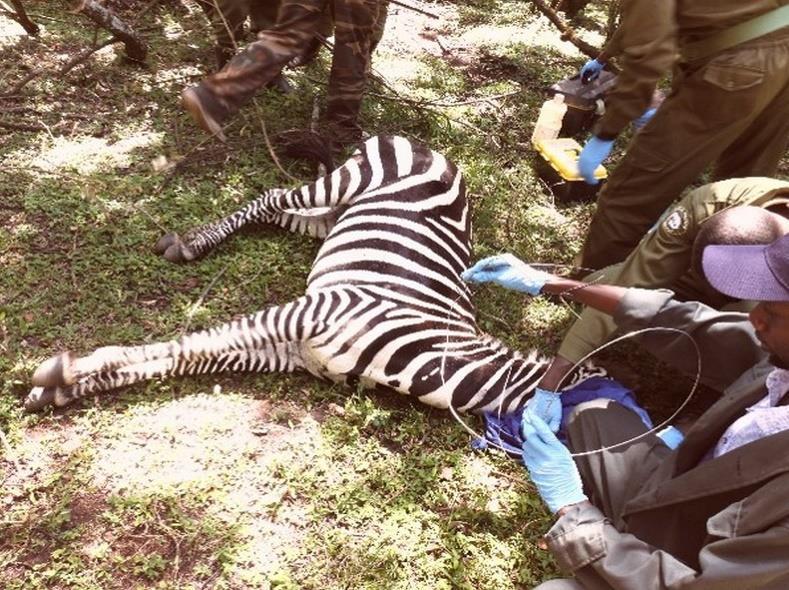
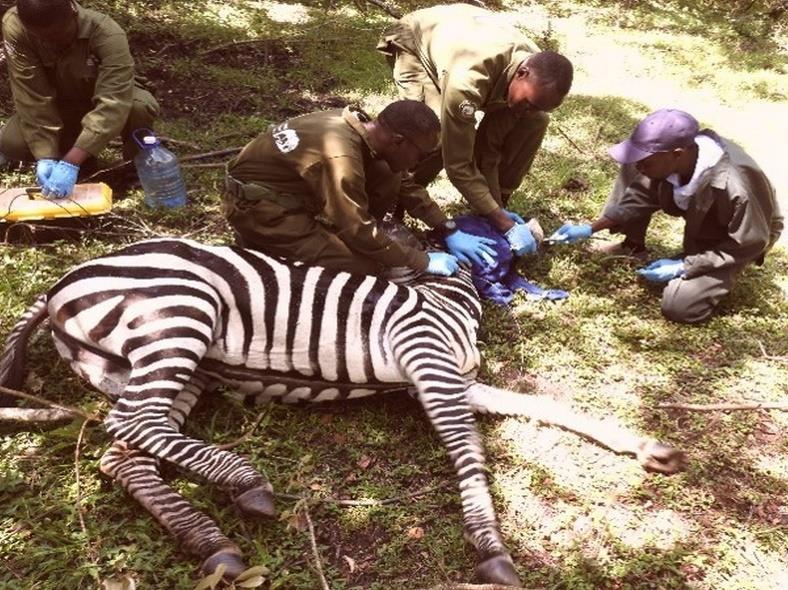
She was found in the company of a stallion with a single strand wire snare tightly wound around the hock region of her right hind leg. She was slowly approached with a vehicle and darted on the right rump with a combination of 3mgs Etorphine and 20mgs Azaperone.
The wire snare had burrowed deep into the flesh but fortunately it had not severed the superficial digital flexor tendon or other associated structures. The wire was carefully removed, and the wound was thoroughly cleaned with water, debrided with Hydrogen peroxide and flushed with Iodine. It was also sealed with green clay for its wound healing properties and covered with an antibiotic aerosol. Intramuscularly, the foal received 500mgs Flunixin meglumine and 1,500mgs Amoxicillin for management of inflammation and bacterial infections. She also received metabolic stimulators.
Prognosis
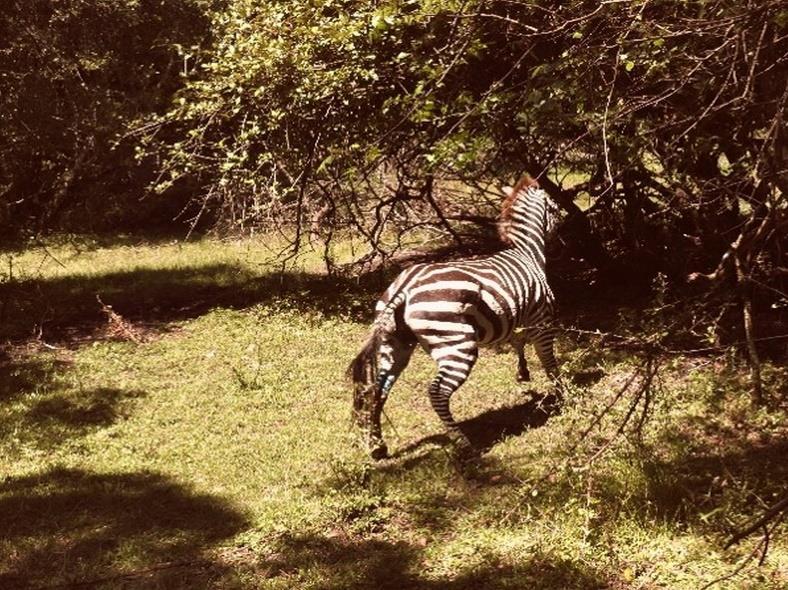
Following the reversal of the anaesthetic, the foal rejoined the herd, much relieved, with a good prognosis.