SWT/KWS MARA MOBILE VETERINARY UNIT
JUNE 2026


3 Cases in June 2026
June Report by Dr.
Aminga Duncan
1 HWC Case
1 Elephant Case
June was characterised by dry seasonal conditions across the Mara ecosystem. The roar of vehicle engines across the landscape would often be followed by large brown clouds of dust billowing into the air. These conditions influenced wildlife distribution, with herbivores concentrating in areas that still supported short green grasses. Towards the end of the month, the first groups of migratory wildebeest and zebras were seen crossing from Serengeti into the Mara ecosystem, marking the onset of the annual migration.
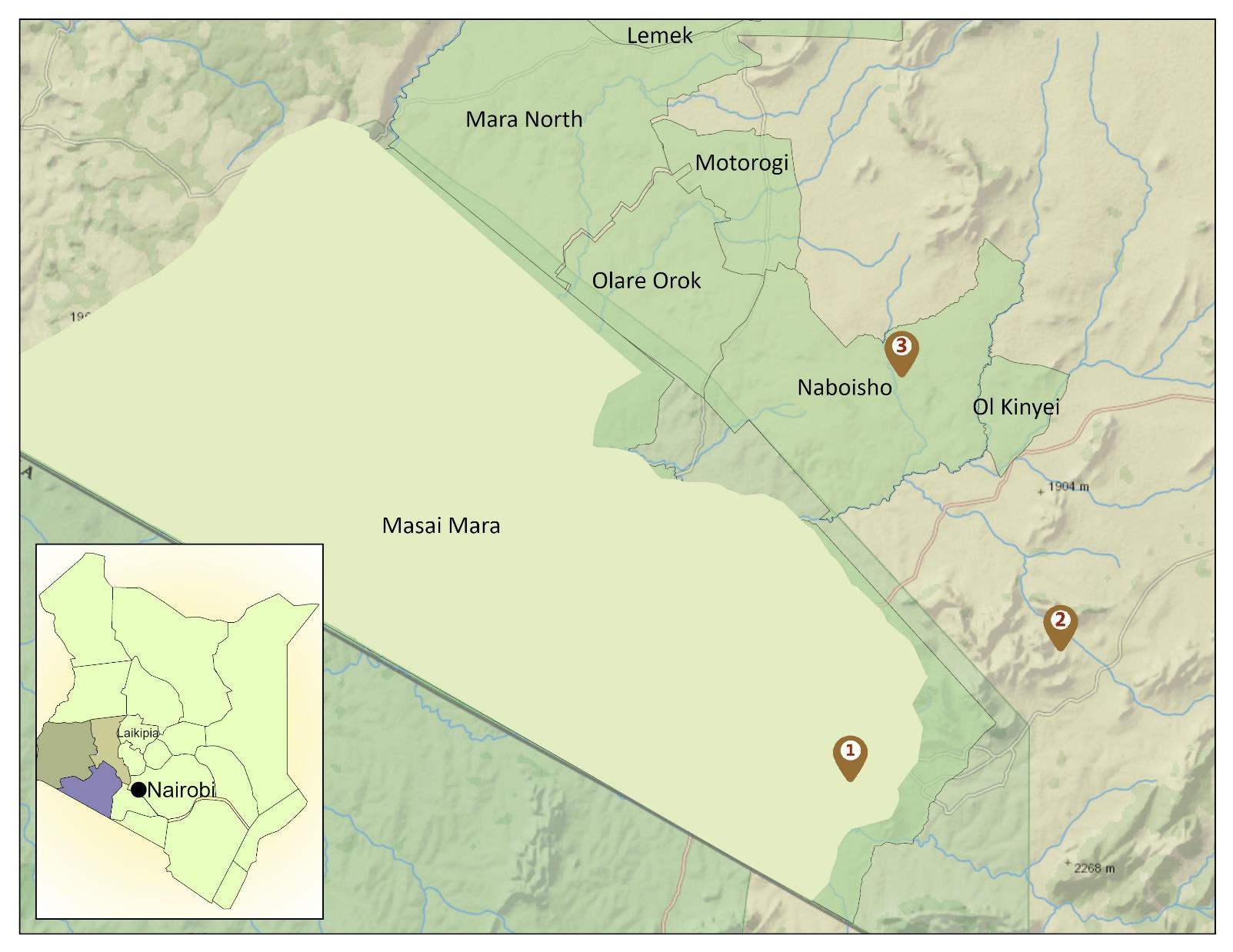
During June, there was a drop in the number of field cases, with SWT/KWS Mara Mobile Veterinary Unit attending to 3 wildlife emergency cases as most of the reports didn’t warrant direct veterinary intervention. In Maasai Mara National Reserve, an adult lioness from the Sopa Pride was treated for severe territorial fight injuries to the back and is expected to recover fully. In Naboisho Conservancy, a sub-adult lioness suffered severe spinal injuries following a territorial fight and was humanely euthanized due to a grave prognosis. The team also treated an adult elephant bull in Kijirjir area for lameness caused by a spear injury associated with human-wildlife conflict, with a good prognosis for recovery.
Acknowledgement
The Mara Mobile Veterinary Unit remains deeply grateful to Elizabeth Scarlett and the Sheldrick Wildlife Trust for their unwavering support which continues to enhance our capacity to respond to wildlife emergencies across the Mara ecosystem. We also appreciate Kenya Wildlife Service for the continued leadership, guidance and administrative support through the Assistant Director, Narok County, and the Head of Veterinary Services. Special appreciation to the Conservancy Managers, Rangers and all stakeholders who promptly reported wildlife incidents and assisted during field operations. Their collaboration and commitment remain invaluable in ensuring timely veterinary interventions.
Case Details
June 2026
Case
Lion
Natural Causes
Masai Mara National Reserve
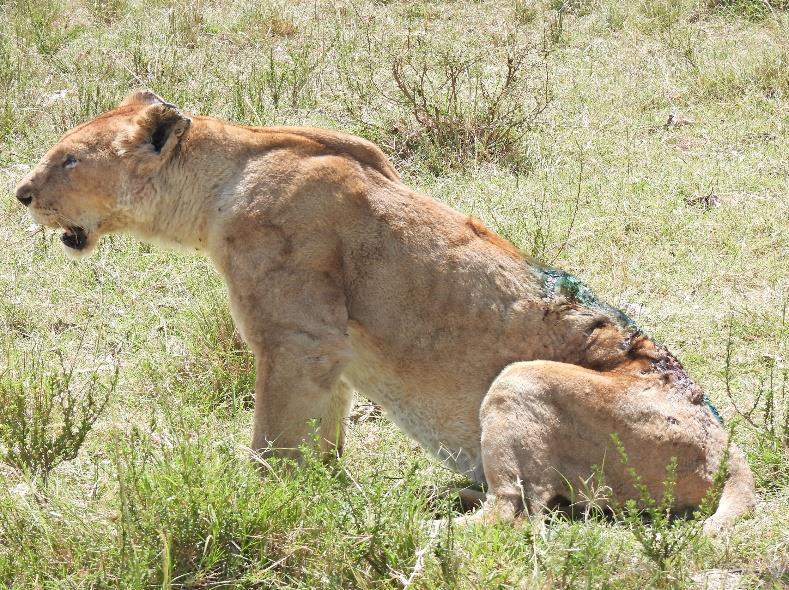
The Mara Mobile Vet Unit received a distress report from the MMNR Rangers regarding the sighting of a severely injured adult female lioness from the Sopa Pride in Makari general area within the reserve.
Immobilisation, examination and treatment
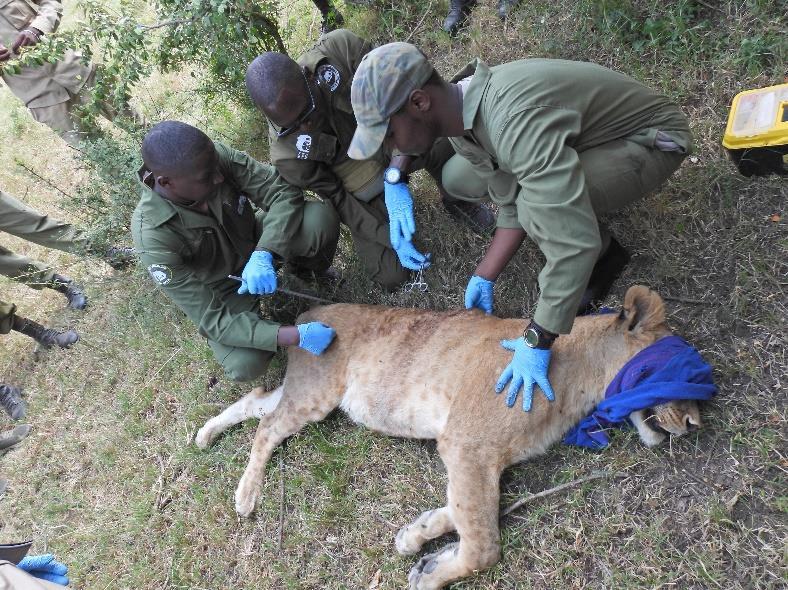
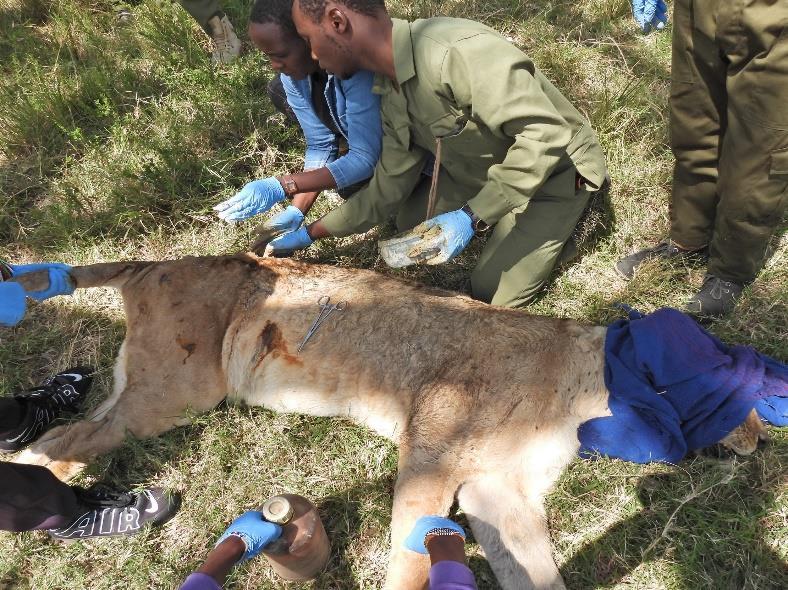
The lion was approached cautiously with a vehicle and darted with 4mg Medetomidine and 280mg Ketamine. She was started and retreated into thick bush. The team found her sedated 15 minutes later and moved her with the landcruiser to a more suitable open area.
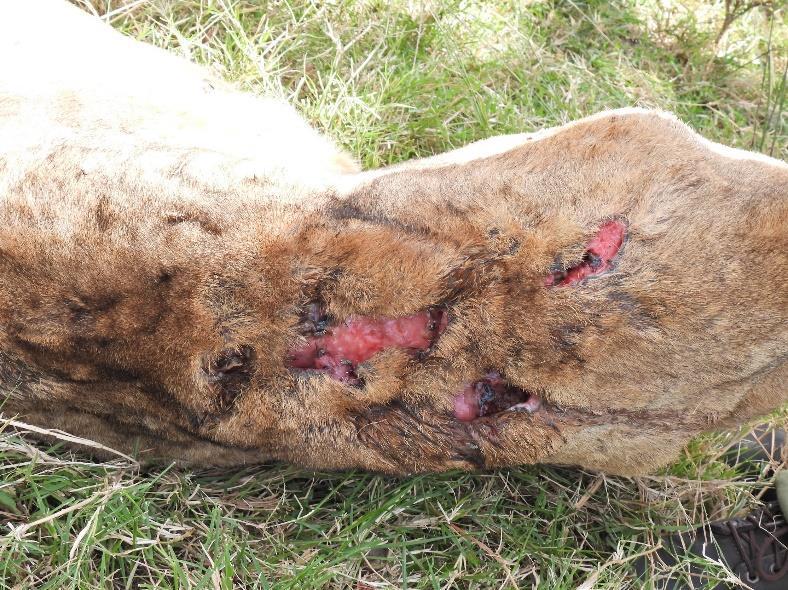
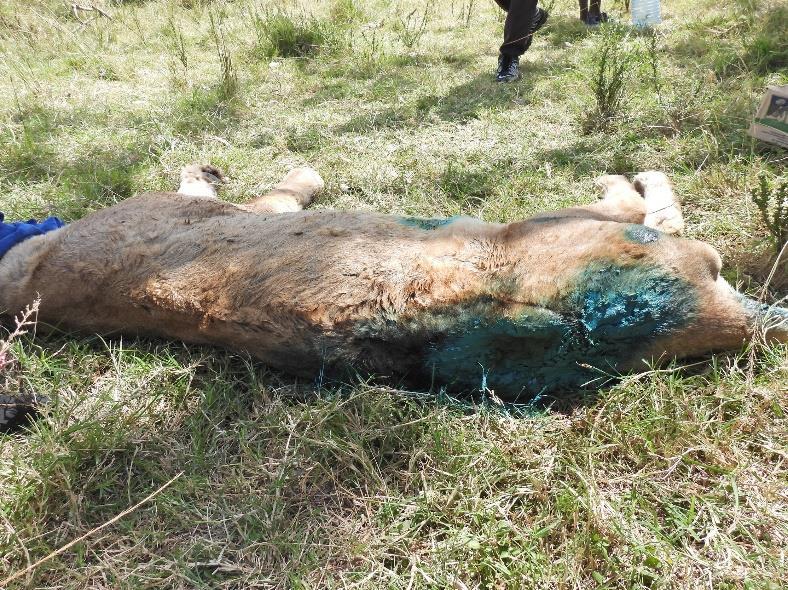
She had suffered severe bite wounds to the mid lumbar region suspected to have been inflicted following a territorial fight. Luckily, the spine was not affected though the wounds were heavily infested with maggots. The wounds were thoroughly cleaned with water, maggots manually removed before being flushed with Hydrogen peroxide and Iodine solution. An antibiotic ointment was infused into the wounds which were then packed with green clay. To manage systemic infections, pain and inflammation, she received 3,000mgs of Amoxicillin, 100mgs Meloxicam, metabolic stimulators plus 5mgs Ivermectin to protect against parasites.
Prognosis
The anaesthetic was reversed the rejoined her pride. Prognosis is good. .
Case 2 – 15th June 2026
Elephant Spear Kijirir, Siana Conservancy
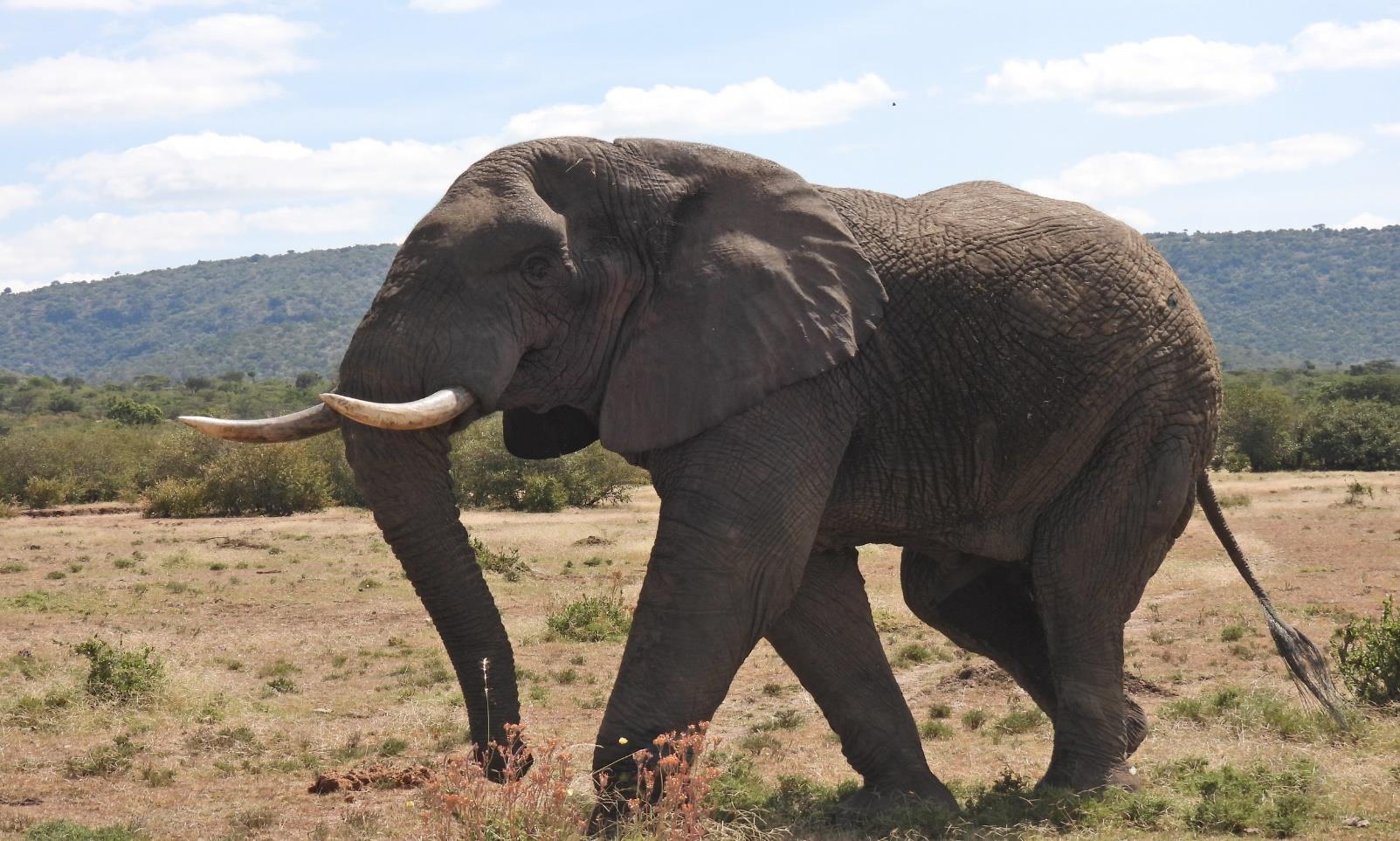
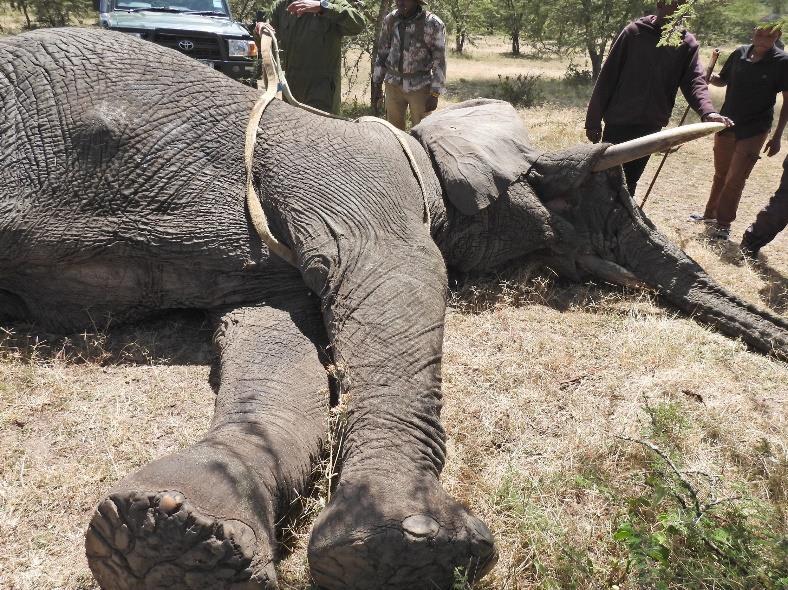
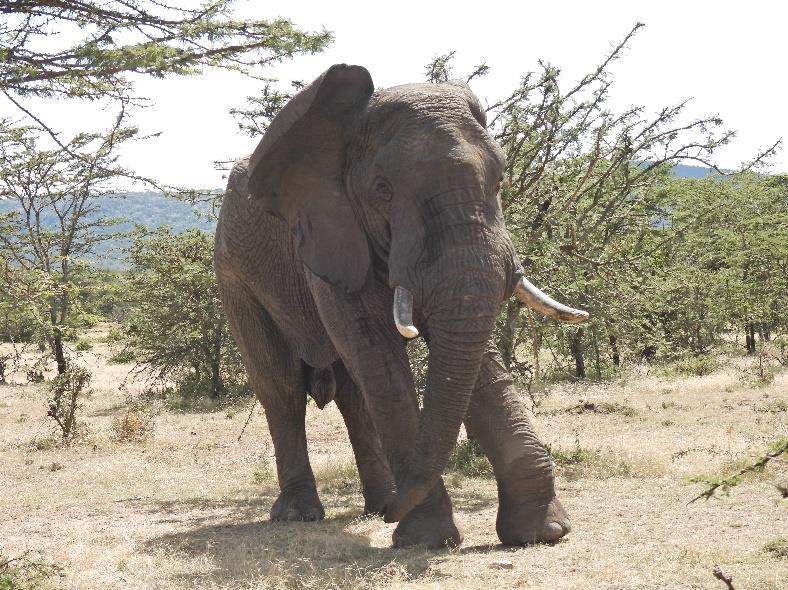
The SWT/KWS Mara Mobile Vet Unit received a report of an adult male elephant sighted with ambulatory difficulties with a suspected spear wound to the carpal joint area of his front leg. The vet team visited the elephants reported location but unfortunately he vanished. Extensive search efforts were made using drones and ground teams from Mara Elephant Project. By morning the next day he was found in a small dense area.
Immobilisation, examination and treatment
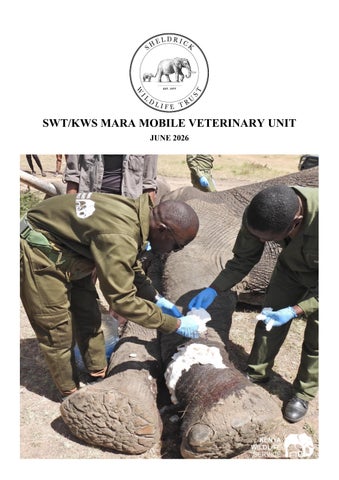
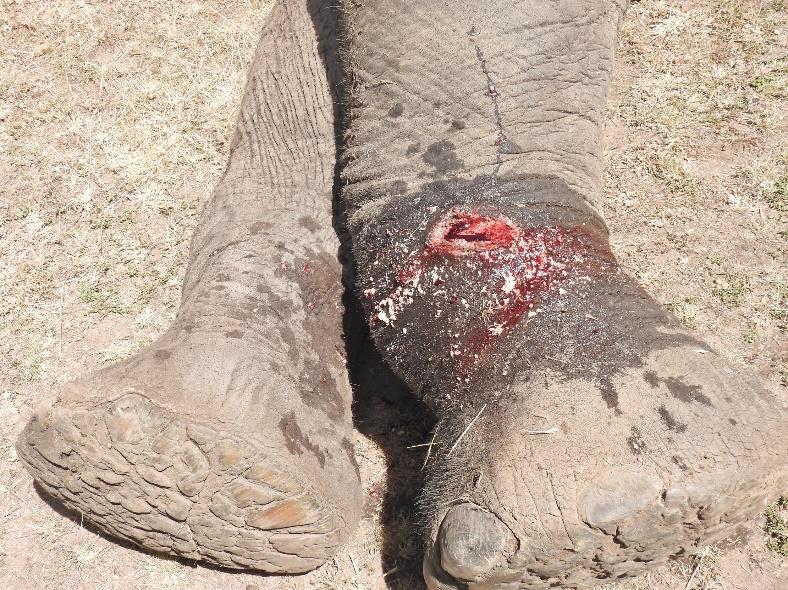
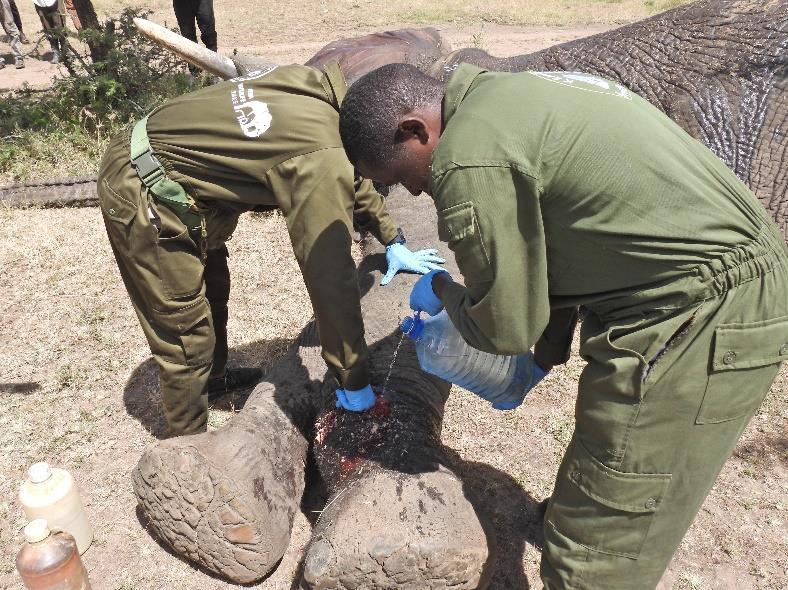
The elephant was in a dense environment, so accessibility by vehicle or on foot was a challenge. A drone and ground personnel were used to push the elephant into a slightly open space where he was darted with 17mgs Etorphine. The first dart malfunctioned necessitating a second dart with an equal volume of drugs. The elephant was startled following the second dart and broke through a surrounding fence while running and went down 12 minutes later, Examination revealed he had suffered a spear injury to the carpal joint region of the left forelimb suspected to have been due to Human-wildlife conflict. The pain and swelling of the limb had resulted in ambulatory difficulties. The wound was cleaned with water, Hydrogen peroxide and Iodine then packed with Antibiotic pessaries and covered with green clay. For management of infection, pain and inflammation the elephant was given 15,000mgs Amoxicillin and 2,750mgs Flunixin.
Prognosis
Prognosis is good duet to timely wound management and the joint tissues wasn’t compromised.
Case 3 – 18th June 2026
Lion Natural Causes
Naboisho Conservancy
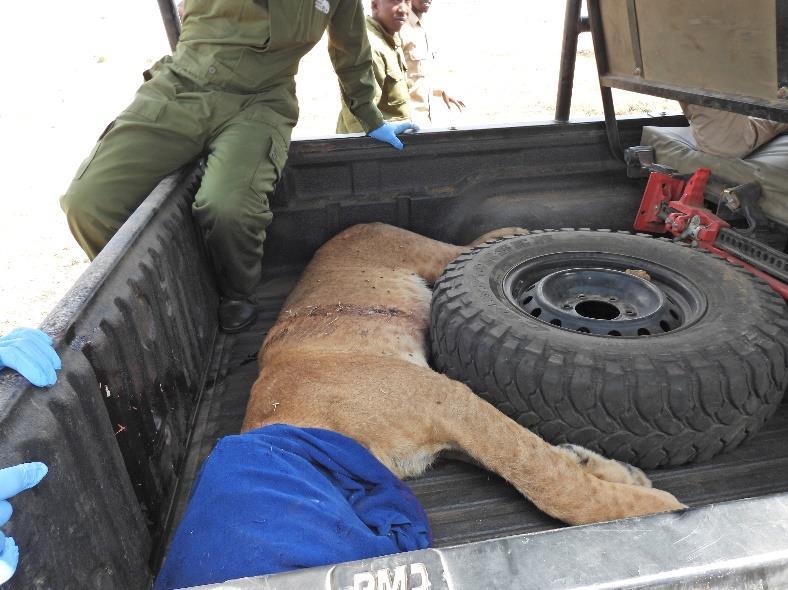
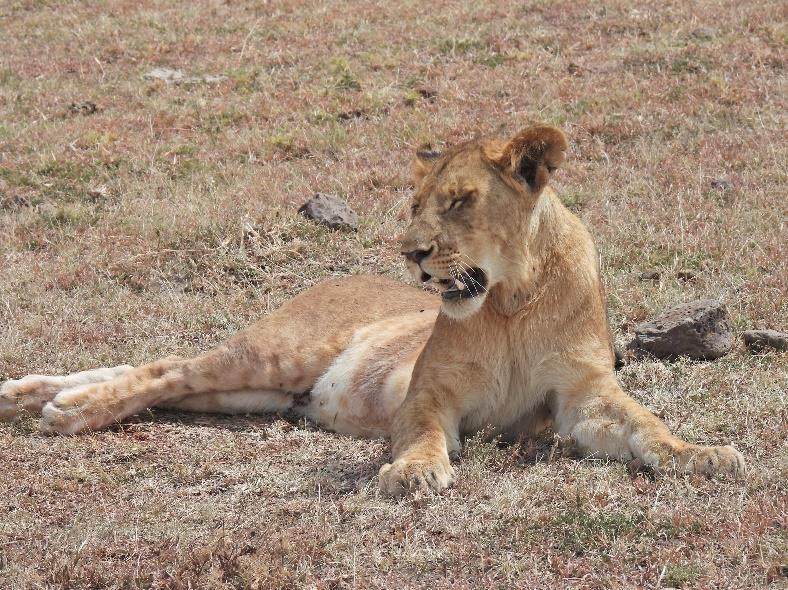
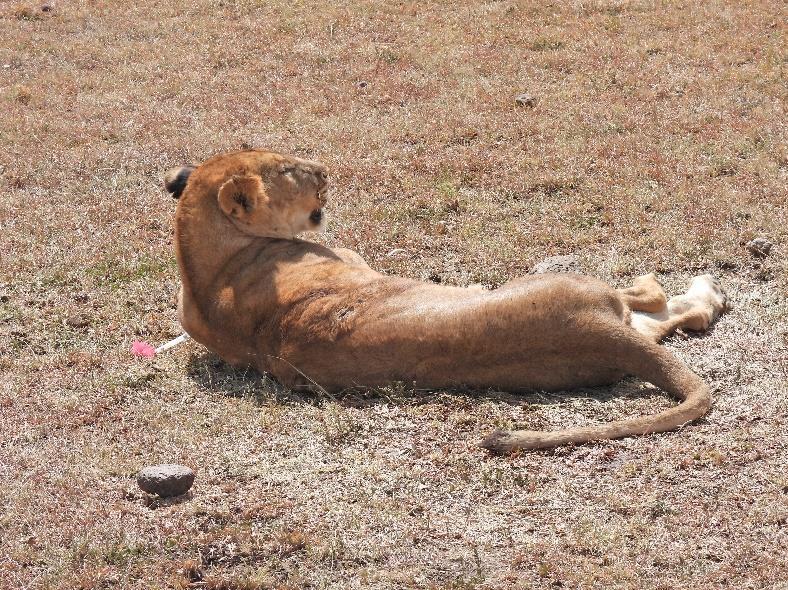
The Mara Mobile Vet Unit received a report from the Naboisho Conservancy Manager regarding a sub-adult female lioness sighted to have been injured in the back during a territorial fight and was unable to stand
Immobilisation and examination
The lioness was found in an open area with visible signs of heat stress due to the scorching sun. She was noted to have puncture wounds at the mid-thoracic vertebrae with visible bleeding. Mobility was localized to the frontal half of the body, and she had difficulties getting up on her feet. To allow for further examination, she was darted with a combination of 4mgs Medetomidine and 280mgs Kketamine. Once the drugs took effect she was carried to a shaded area for examination. Examination revealed she had sustained severe spinal cord injuries with complete hindlimb paralysis and loss of deep pain sensation.
Prognosis
Due to the grave prognosis, as she couldn’t walk or hunt from the severity of the injuries and in consideration of her welfare, she was humanely euthanized. An autopsy confirmed she had sustained an overriding complete fracture at the mid-thoracic vertebrae as well as multiple fractured ribs. These injuries were responsible for the observed paralysis and impaired mobility.